
Los Angeles
Los Angeles LGBT Center opens new huge Center South in Leimert Park
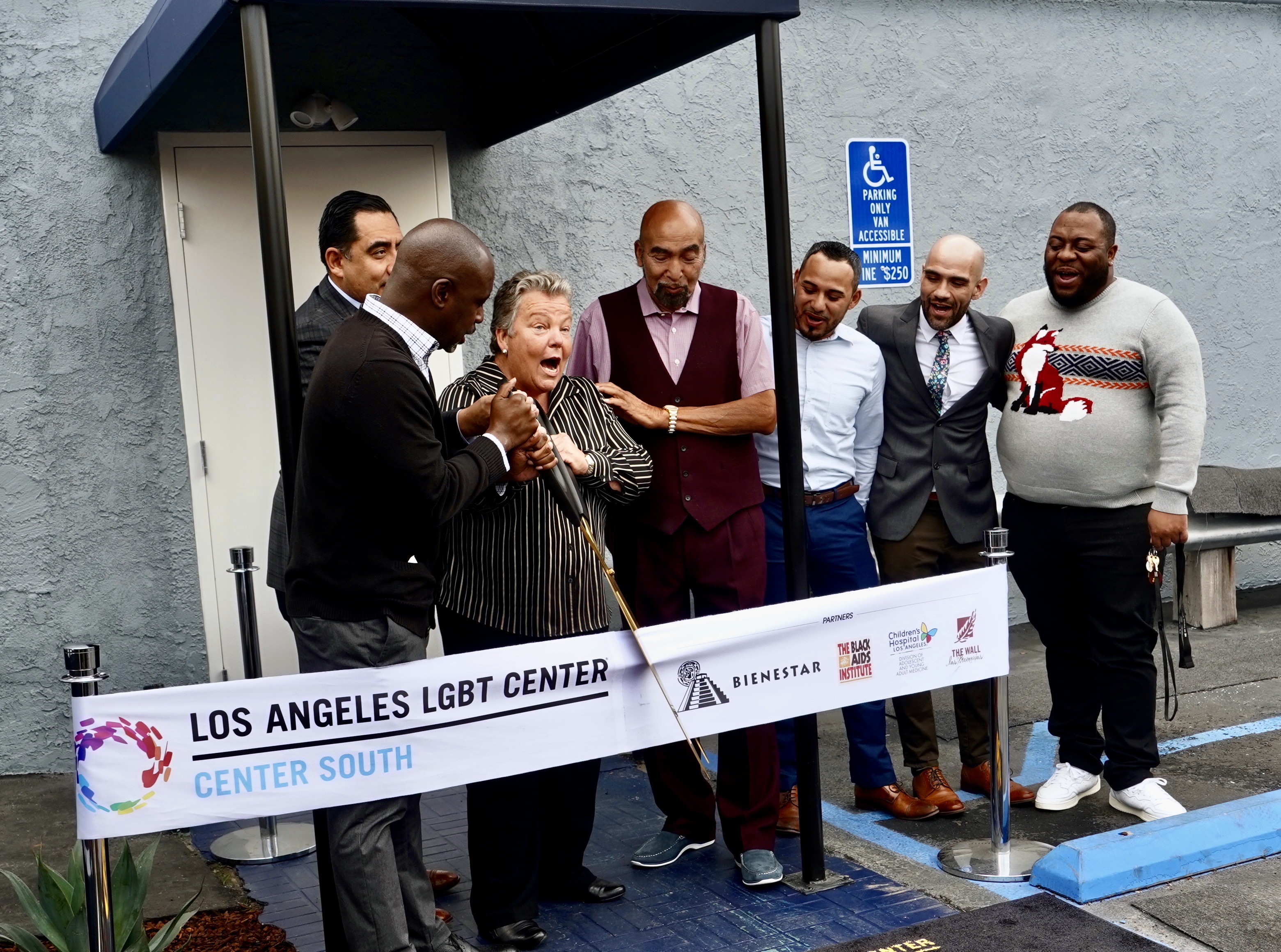
Balloons, soul food, a giant game of Jenga and a cut ribbon signaled a celebration near the corner of Martin Luther King, Jr. Blvd and Arlington Ave. in Leimert Park on Jan. 11. The opening of the Los Angeles LGBT Center’s new 5,500-square-foot Center South facility in South LA is a huge stride for LGBTQ people of color who have often found themselves steps behind the queer Center milestones in Hollywood and West Hollywood.
“Human progress is neither automatic nor inevitable,” Martin Luther King, Jr. once said. “Every step toward the goal of justice requires sacrifice, suffering and struggle, and the tireless excursions and passionate concerns of dedicated individuals.”
So said Mario J. Perez, Director of the LA County division of STD and HIV programs, commemorating Center South, funded in part by the Department of Public Health. “It is our hope and commitment that the Center’s new programming will further advance efforts to stem the tide of HIV and STDs and help eliminate stubbornly persistent health inequalities.”
The department’s 2017 Annual HIV Surveillance Report shows that South LA had the second highest rate of HIV diagnoses in LA County. Center South’s services are provided for free or at low cost, with a special focus on at risk gay and bisexual men of color ages 12 to 29.
“I’m half black, and I’m half Mexican,” said Ryan Wooten, who lives in South LA and also identifies as young and queer. He was diagnosed HIV-positive in 2013. In order to get basic medical services, Wooten had to take two buses and a train to get to the LA LGBT Center’s health headquarters in Hollywood. “[I spent] hours on trains, being embarrassed, wondering, why isn’t there something in this neighborhood?”
Despite the arduous travel, Wooten appreciated the facility. “To be able to go to a center and to be able to always see a rainbow flag when I walk into a building and to see smiling faces and know that not everybody there is getting paid to be there — it resonated with me and it made me feel a sense of family and community,” he told the Los Angeles Blade.
Dr. Wilbert Jordan, founder of the Oasis Clinic, also celebrated the opening. He has been on the frontlines of HIV/AIDS in South LA since before the epidemic was identified by the Center for Disease Control in 1981. “I saw my first patient in 1979,” said Jordan. “I didn’t know what he had.”
Jordan has seen the fight against the disease progress from the time when patients had to take dozens of pills a day to now, when a single dose of PrEP can help prevent infection.
“It think the hardest thing was seeing a young man in the 80s and 90s,” he said, “because in my mind I would wonder — what is he going to look like a year from now? And will he still be alive two years from now? So we have come a long way.”
Lorri L. Jean, CEO of the Los Angeles LGBT Center, spoke of the journey to Center South. In 2008, a new long-term strategic plan was approved by the Center’s board of directors focused on how the non-profit could best meet the coming needs of the LGBTQ community.
“One message that came through loud and clear,” said Jean, “was that while we did need more services in the Hollywood area, we also needed to expand our services to a much wider geographical area,” she said.
These efforts led to the Mi Centro center in Boyle Heights, which came through a partnership with Latino Equality Alliance. The Trans Wellness Center in Koreatown followed. Center South is the next step in the initiative. It comes in partnership with the Black AIDS Institute, Beinastar Human Services, the Wall Las Memorias Project and the Children’s Hospital Los Angeles. These organizations will help provide linkage to care and auxiliary programs, as well as training and creative opportunities.
“Together we are going to be able to serve a wider array of people and do it better than we would on our own,” said Jean.
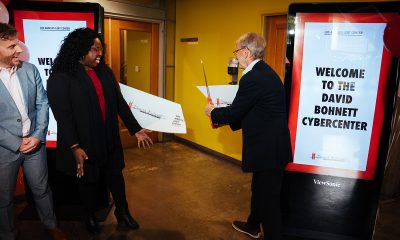
In addition HIV/STD health care, Center South will have mental health services, a CyberCenter computer lab and printer, funded by the David Bohnett Foundation, as well as hosting social networking groups and providing a safe drop-in space.
“Leimert Park has a thriving community of LGBTQ people of color, and I would like to welcome the Los Angeles LGBT Center to South Los Angeles as they continue their 50-year-plus history of life-changing and life-saving work,” said LA Council Member Marqueece Harris-Dawson.
Harris-Dawson also paid tribute to the history of the building in which Center South is housed. The Jeffersons actress Marla Gibbs once used the site for her restaurant, Marla’s Memory Lane.
“[This was a] place where [Gibbs] trained African American actors, writers and directors to go on,” said Dawson. “It is the spirit of activism that is in the very bones and the cement and all the wood and all the materials — activism and resistance is in the very essence of where you are today.”
Center South is located at 2313 W. Martin Luther King, Blvd. For more information, go to www. lalgbtcenter.org.
Photos by Betsy Martinez, courtesy the Los Angeles LGBT Center from left to right: Los Angeles City Councilmember Marqueece Harris-Dawson; Los Angeles County Department of Public Health – Division of HIV and STD Programs Director Mario J. Pérez; Center CEO Lorri L. Jean; Oasis Clinic’s Dr. Wilbert C. Jordan who received an award from the Center and the City for his longtime work on HIV and AIDS; Center client Ryan Wooten; Center South’s Senior Program Manager David Flores; and Center South’s Program Supervisor Percival Pandy.
Here’s a transcript of Lorri Jean’s remarks, minus introduction of speakers:
There are so many people who have played a role in making today a reality. I thank each and every one of you. But I especially want to mention Percy, David, Bryan Toynes, Dustin Kerrone and the Health Services team as well as Stephen Burn and Jessica Stoneham and the facilities team. Would all of you who were actively involved in turning this dream into a reality please raise your hands. THANK YOU. These folks have worked incredibly hard for a very long time and had to contend with tons of red tape to get this location open. I also want to acknowledge the members of the Center’s board who are with us today, including our co-chairs Dr. Marki Knox and David Bailey. If you’re on the board, please raise your hands. Our board has been supportive of this expansion every step of the way. In fact, David Bailey actually negotiated the lease on this space.
I’ll have a few more thanks in a moment. But, first I wanted to share with you a little bit of the history that has led to this very exciting grand opening. In early 2008, 12 years ago, our board of directors approved an ambitious new Long Term Strategic Plan that was focused on the future and how the Los Angeles LGBT Center would best meet the needs of our community. And we didn’t just gaze at our navels to find the answers. Of course we surveyed the landscape of need and what was already being provided or not being provided. But even more important than that, we talked to our community. We surveyed thousands of people. The answers to that survey were critical in helping us to set our future direction. In addition to our already-existing programs, that plan included initiatives like becoming a Federally Qualified Health Center. Providing housing for LGBT seniors. Dramatically increasing our housing for LGBTQ youth experiencing homelessness. Enhancing our policy efforts. And one message that came through loud and clear was that while we needed more services in Hollywood, we also needed to expand our services to a wider geographical area.
People come to the Los Angeles LGBT Center from all corners of the county. Tens of thousands of people every month. Many even come from outside the county. More than 60% of our clients are people of color and most are of low or moderate income. That folks come to our largest Hollywood locations from all over Los Angeles is an indication of how desperate LGBTQ people are for high quality, culturally competent services which are available in precious few locations. But not everyone can travel a long way to come to us. In fact, in our community survey, many asked us to consider expanding our reach. So, our first effort in that regard was a little over 4 years ago when we opened Mi Centro in Boyle Heights with the Latino Equality Alliance. Our second was slightly under 2 years ago when we opened our Trans Wellness Center in Koreatown with a handful of partners.
Today we’re thrilled to be opening Center South. And we’re proud to once again be doing so with wonderful partners: the Black AIDS Institute, Bienestar, the Wall Las Memorias and Children’s Hospital. Together, here, we will serve a wider array of folks than we’re now doing separately. Most important, among our areas of focus will be the people who are most vulnerable for new HIV infections: young gay and bi black and latino men and trans women of color. We intend for this location to be an especially welcoming place for them.
And, of course, we wouldn’t be here if it weren’t for the support of Los Angeles County and Mario Perez. Often our County officials don’t get the credit they deserve for persuading the powers that be about critical initiatives. Mario has worked very hard to focus county resources on services in this area and, specifically, this project. Thank you, Mario!
The County agreed to fund a new location in South Los Angeles where we could focus on HIV prevention, testing and treatment among gay and bisexual men of color. But we knew we wanted to do much more than that. We wanted to do more than HIV work here; we wanted this to be a mini-service center, a gathering place, for all LGBTQ people in the area. So, we’ve been raising money to help us do even more in this wonderful, historic new location. We hope to deliver a wide array of Center services here. The first example is that the David Bohnett Foundation is sponsoring a new Cyber Center here. Paul Moore from the Bohnett Foundation is with us here today and when I called him about whether they might be willing to support a Cyber Center here, I got the fastest “YES!” I think I’ve ever received. Thank you, Paul!
Today is the realization of a dream of many years, but today is just the beginning. By working with our partner organizations and local community leaders, I have no doubt that, together, we’ll ensure that Center South becomes a vibrant, vital and beloved part of our South Los Angeles community.
Of course, we owe a tremendous debt of gratitude to Los Angeles County and to our next speaker who, for many years, has been an invaluable supporter in the fight against HIV and AIDS. Please join me in thanking and welcoming Mario Perez, Director of the County Division of HIV and STD Programs.
Jean introduces various speakers, then returns with special recognitions:
Percy and David and their team hasn’t just been working on getting ready to open in the last few weeks. They have been spending months and years getting ready, including connecting with local community members and leaders. We have been very aware of the fact that while the Center has been serving people from South Los Angeles for 50 years, we haven’t been doing it HERE. We have great respect for those who have been doing it here for decades, including some of our partners. We know that we’re following in the footsteps of too many from our community to mention. Including giants like Jewel Thais Williams, Phill Wilson, Oscar de la O, Archbishop Carl Bean, and so many more. Our next guest is a giant in his own right—a man who has been making a difference in the fight against HIV/AIDS for decades, in L.A. and in South L.A.. We felt that this grand opening would be a perfect opportunity to acknowledge and honor him.
Of course, I’m talking about Dr. Wilbert Jordan. Anyone who has spent any time working in HIV/AIDS in Los Angeles knows of Dr. Jordan. And his renown extends across the country. That’s because Dr. Jordan is a pioneer. Back in 1979, before the term AIDS had even been coined, he founded the Oasis Clinic. That’s when he treated his first AIDS patient, without knowing the symptoms were related to the disease. It wasn’t long before he was treating people with HIV by the dozens and the hundreds and eventually by the 1000’s. In 1984 he founded the AIDS clinic at King-Drew Medical Center, now called the Oasis Clinic. He has worked tirelessly for more than 40 years to care for people with HIV/AIDS—often people that few others wanted to care for: addicts, gay and bisexual men, transgender women. Dr. Jordan was always there for them, for us, caring for us, advocating for us, treating us with dignity and respect. He spent many years on the L.A. County HIV Planning Council, including years as chair. He has too many honors to count, including receiving the Surgeon General’s Award in 2000 for his pioneering work.
Today we recognize Dr. Wilbert Jordan as a home town hero. To properly inaugurate this new Center, we could think of no more deserving person in whose spirit we could begin than Dr. Jordan. We have a proclamation for him

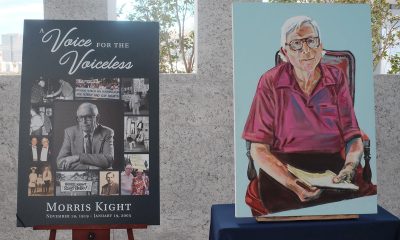


Los Angeles
LGBTQ+ community calls out Radio Korea over host’s homophobic comments; station acknowledges but skirts accountability
On Nov. 3rd, Radio Korea host Julie An claimed that “gay people began the spread of AIDS” on a talk show broadcast by the station.
On Monday, Nov. 3rd, Radio Korea aired its regular morning talk show program, where one of its hosts, Julie An, discussed her lack of support for the LGBTQ+ community, citing her religious beliefs. She also went on to comment that gay people spread HIV and AIDS, and that conversation therapy — which has been linked to PTSD, suicidality, and depression — is a viable practice. Clips of this have since been taken down.
Radio Korea offers Korean language programming to engage local Korean American and Korean immigrant community members. Its reach is broad, as Los Angeles is home to the largest Korean population in the U.S, with over 300,000 residents. As An’s words echoed through the station’s airwaves, queer Korean community members took to social media to voice their concern, hurt, and anger.
In a now-deleted Instagram post, attorney, activist, and former congressional candidate David Yung Ho Kim demanded accountability from the station. Writer and entertainer Nathan Ramos-Park made videos calling out Radio Korea and An, stating that her comments “embolden” people with misinformation, which has the ability to perpetuate “violence against queer people.”
Community health professional Gavin Kwon also worries about how comments like An’s increase stigma within the Korean immigrant community, which could lead to increased discrimination against queer people and their willingness to seek health care.
Kwon, who works at a local clinic in Koreatown, told the Blade that comments like An’s prescribe being gay or queer as a “moral failure,” and that this commonly-held belief within the Korean immigrant community, particularly in older generations, strengthens the reticence and avoidance clients hold onto when asked about their gender or sexual orientation.
“When you stigmatize a group, people don’t avoid the disease — they avoid care,” Kwon explained. “They avoid getting tested, avoid disclosing their status, and avoid talking openly with providers. Stigma pushes people into silence, and silence is the worst possible environment for managing any infectious disease.”
For weeks, Radio Korea did not offer a direct response to the public criticism. Its Instagram feed continued to be updated with shorts, featuring clips of its various hosts — including An.
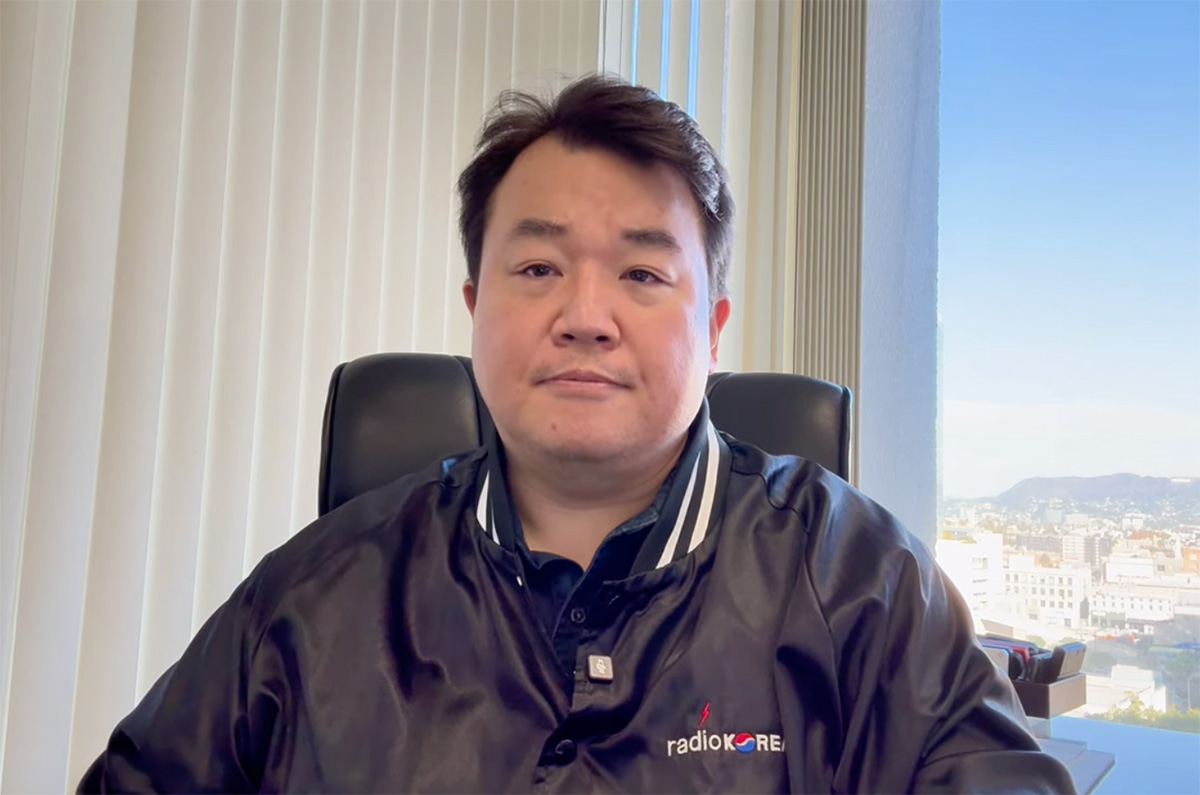
On Friday, Radio Korea CEO Michael Kim released an official statement on the station’s YouTube page. In this video, Kim stated that An’s comments “included factual inaccuracies” and that the station “does not endorse or share the personal opinions expressed by individual hosts.” Kim also stated that Radio Korea “welcomes members of the LGBT community to share their perspectives” in order to deepen understanding through dialogue.
Afterwards, Kim continued that though he acknowledges the “pain” felt by queer community members, he concluded: “I don’t think Radio Korea needs to apologize for what was said any more than Netflix should apologize for what Dave Chappelle says, or any more than Instagram or TikTok should apologize for what people say on their platforms.”
Kim then offered a justification that An’s statements were “not part of a news report,” and that he was “disappointed” that David Yung Ho Kim, specifically, had been vocal about An’s comments. Kim stated that he was the first person to interview David in 2020 during his congressional campaign, and that he had provided the candidate a platform and opportunity to educate listeners about politics.
“After all these years, the support Radio Korea has given him,” said Kim, “the support I personally gave him, even the support from other Radio Korea members who donated or even volunteered for him — he dishonestly tried to portray Radio Korea as being an anti-gay organization.”
Kim went on to criticize David’s purported “hurry to condemn others,” and also questioned if David has disowned his father, who he states is a pastor. “What kind of person is David Kim, and is this the kind of person we want in Congress?” Kim asked viewers, noting that Koreatown is “only about three miles from Hollywood, and some people just like to perform.”
At the end of the video, Kim stated that his duty is to guard the legacy of the station. “My responsibility is to protect what was built before me and ensure that Radio Korea continues serving this community long after today’s momentary controversies disappear,” Kim said.
For community members and advocates, this response was unsatisfactory. “The overall tone of the statement felt more defensive than accountable,” Kwon wrote to the Blade. “Instead of a sincere apology to the LGBTQ+ community that was harmed, the message shifts into personal grievances, political dynamics, and side explanations that don’t belong in an official response.”
Kim’s portrayal of the criticism and calls to action by community members as a “momentary controversy” paints a clearer picture of the station’s stance — that the hurt felt and expressed by its queer community members is something that will simply pass until it is forgotten. An continues to be platformed at Radio Korea, and was posted on the station’s social media channels as recently as yesterday. The station has not outlined any other action since Kim’s statement.
Kristie Song is a California Local News Fellow placed with the Los Angeles Blade. The California Local News Fellowship is a state-funded initiative to support and strengthen local news reporting. Learn more about it at fellowships.journalism.berkeley.edu/cafellows.
Los Angeles
Forgetting queer pioneer Morris Kight is “impossible”: Advocates and friends share stories at remembrance
On Saturday, Nov. 22nd, Kight’s ashes were interred at Hollywood Forever Cemetery.
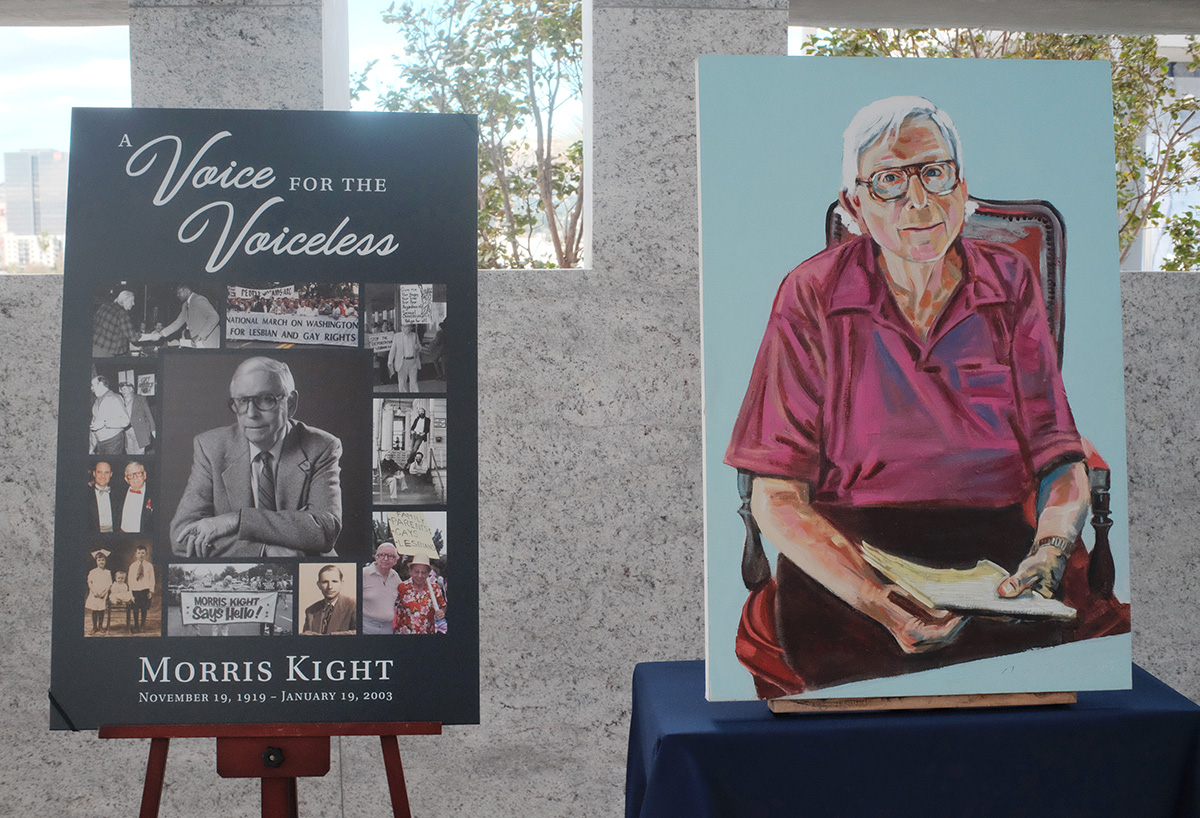
Over 50 people made their way to the rooftop chapel at Hollywood Forever Cemetery’s Gower Mausoleum on Saturday afternoon, taking in sweeping views of the city as a gentle wind began to envelop the space — a wind that some thought signaled the presence of Morris Kight. Hosted by local nonprofit AIDS Healthcare Foundation (AHF), this reception provided longtime friends, fellow activists, and anyone else impacted by Kight’s legacy with the opportunity to share some of their most memorable stories about the LGBTQ+ vanguard.
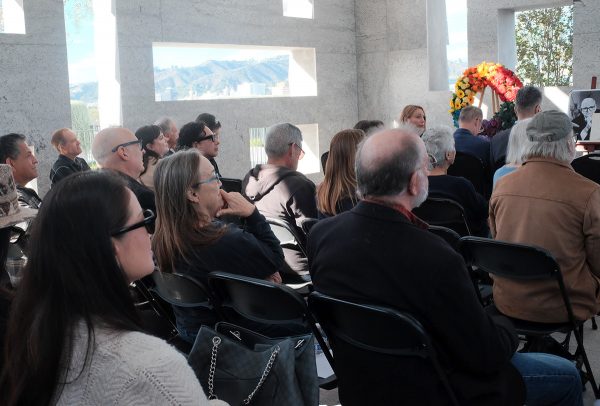
Kight died on January 19, 2003, after decades of leading peaceful, bold, and outspoken action against oppressive systems that targeted marginalized communities. As Congresswoman Maxine Waters declared at the remembrance event: “You have to be a hell of somebody to be memorialized 22 years after.”
Kight co-founded the Los Angeles LGBT Center in 1969, first known as the Gay Community Services Center, where so many queer youth and adults found the courage and empowerment to seek education, resources, and comfort. It became the place where they could fully embrace themselves.
At 19, AHF president Michael Weinstein found himself at the front steps of the Center, afraid but compelled. This is where his and Kight’s lives would intertwine, setting him on his own path of liberatory leadership. This first encounter and relationship “cemented” his identity, Weinstein told the crowd, after an arduous search for belonging and internal understanding.
The impact Kight had on Weinstein and innumerable other queer folks was not just a consequence of his work, but the purpose for it all. “We were his payment. We were his reward,” said Miki Jackson, Kight’s longtime friend and another instrumental voice in early LGBTQ+ movements. “Morris cared that we were loud enough, we were out enough, we were visible enough that a child in Kansas in elementary school would know about it. He cared about where people were wounded the most.”
Kight projected his voice in hopes it would reach those who were silenced, becoming the face of several important movements, including the Gay Liberation Front. He raised money for people with AIDS, co-founded the Stonewall Democratic Club, and pushed for L.A.’s first pride parade in 1970 — unabashedly fighting for the visibility of LGBTQ+ people as they were met with societal violence and rejection.
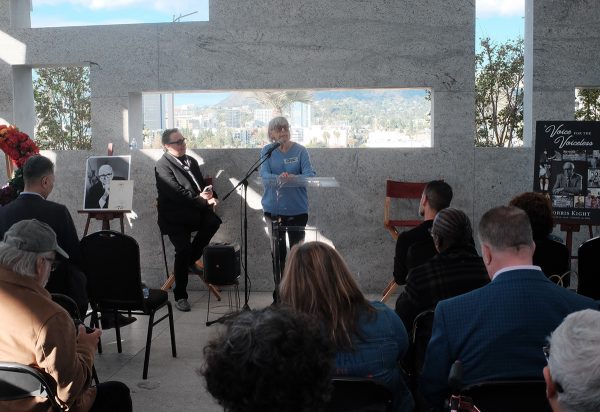
“The idea of forgetting a Morris Kight is basically impossible,” said Terry DeCrescenzo, one of the founders of the Gay Academic Union. She recounted fond memories with Kight, including a story tied with her roots of protesting. Together, they blocked the streets of Sunset and Larrabee and sang the civil rights anthem “We shall overcome.” At first, DeCrescenzo was in disbelief. “I thought, ‘I went to Catholic school for 17 years to sit on the sidewalk singing We shall overcome?’ And the answer is yes. He showed me a way of doing things — of approaching life — that I didn’t dream I was capable of. So I thank you, Morris. I love you. I miss you.”
Kight’s ashes have been officially interred at Hollywood Forever Cemetery, granting him a final resting place. In life, he built sites of belonging for queer people, and today, this ground joins a tender catalog of spaces that contains a trace of what his loved ones hope he is remembered for: the fierce kindness with which he led his life. His endless stories. His desire to be with and fight for the people he loved.
Saturday’s remembrance event also offered a moment of deep reflection for the future of local queer activism. “We’re what we have left,” said Jackson, a queer elder who marched alongside Kight in the country’s early days of LGBTQ+ protesting — and who paved a path for younger advocates like Congressman and Equality Caucus Chair Mark Takano to continue the fight. “May we honor Morris by carrying his fire forward until every LGBTQ+ person in this country can live safely, open and unafraid,” said Takano.
Kristie Song is a California Local News Fellow placed with the Los Angeles Blade. The California Local News Fellowship is a state-funded initiative to support and strengthen local news reporting. Learn more about it at fellowships.journalism.berkeley.edu/cafellows.
Los Angeles
The Los Angeles LGBT Center has reopened and upgraded its community tech hub
The David Bohnett CyberCenter provides free access to important tech resources for LGBTQ+ community members.
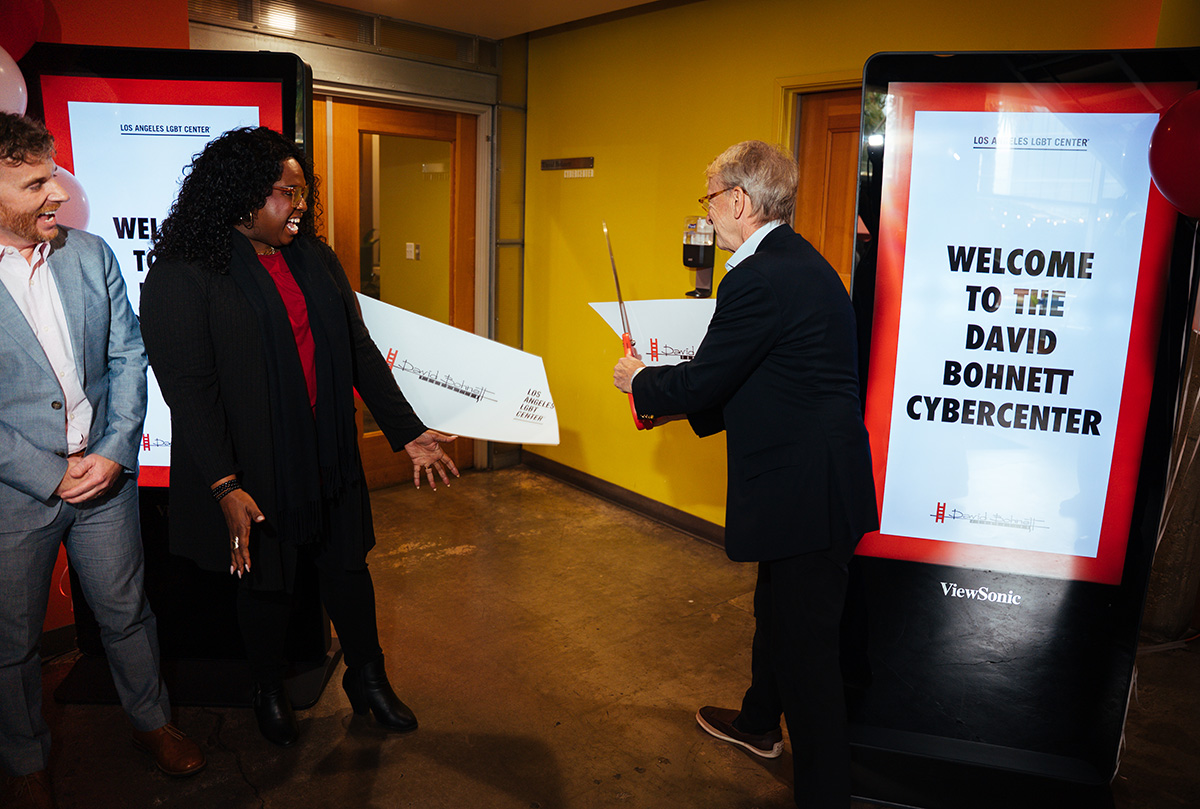
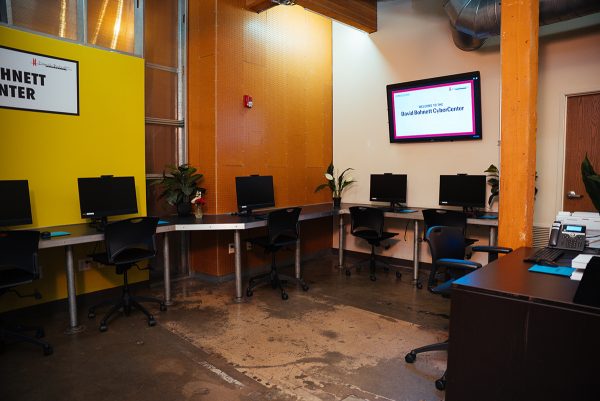
On Thursday, community leaders and advocates gathered at the Los Angeles LGBT Center for a joyous ribbon-cutting event that ushered in the organization’s revamped tech hub. For 27 years, the organization’s David Bohnett CyberCenter has provided local residents a safe space to utilize computers, printers, scanners, and attend workshop opportunities to build their tech literacy skills, stay connected, discover joy, and research important opportunities.
Here, individuals can safely surf the web, complete online benefits and services forms, apply for jobs, as well as make progress towards educational programs. It’s a safe space where LGBTQ+ community members can reliably use technology that can provide them with vital avenues into improving and living their lives.
The CyberCenter is funded by the David Bohnett Foundation, which provides grants to various LGBTQ+ initiatives and social programs nationally in order to improve equity for different marginalized communities. In 1998, the foundation established its first tech hub at the Los Angeles LGBT Center, so that queer community members would not be shut away as technological advancements made online access increasingly necessary. “The idea was simple but urgent,” Bohnett said at yesterday’s ceremony. “[It was meant] to ensure that LGBTQ+ people had access to the technology that could open doors to education, employment, and connection.”
Yesterday, this CyberCenter’s updated facilities were welcomed with warm applause, cheer, and a celebratory banner that was cut by Bohnett himself. It marked an evolving growth towards the foundation and the Center’s shared commitment to the hub’s initial promise: to guarantee equitable technological access to the county’s queer residents.
“Our community members regularly share how missing even one piece of access—a computer, a quiet place to work, a stable connection—can stall their progress,” said Sydney Rogers, senior program manager at the Trans Wellness Center. “For so many, technology isn’t just a tool—it’s the gateway to opportunity. Résumés, job searches, online trainings, interview prep—all of it depends on having access to reliable equipment and an environment where people feel safe and supported.”
For Bohnett, what began as a room with a “handful of computers” has grown into over 60 CyberCenters nationwide — and they are all “rooted in the belief that digital access is not a luxury, but a lifeline,” said Bohnett. “Every time I’m back here, I’m reminded that the Los Angeles LGBT Center was the first to bring that vision to life.”
The David Bohnett CyberCenter is open from Tuesdays to Thursdays, from 10 a.m. to 1 p.m., and from 2-5 p.m. More information about its location and services can be found here.
Los Angeles
This queer, Latine-led organization is protecting residents against SNAP cuts and immigration raids
The weeks-long delay in SNAP benefits left food insecure residents stranded. Community centers like Mi Centro worked to help them.
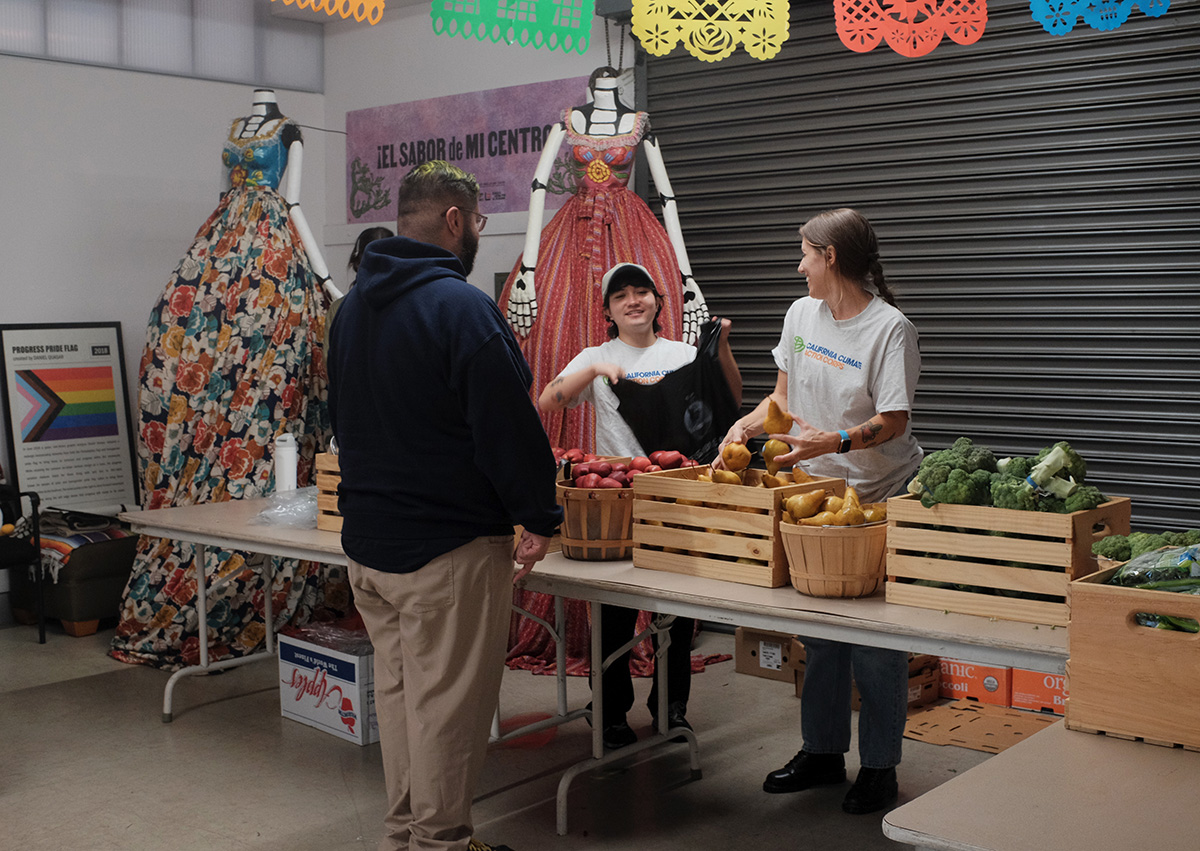
Light rain and mist loomed over the quiet Boyle Heights Neighborhood on Friday morning as residents made their way towards a free farmer’s market at Mi Centro, a community center on South Clarence Street. There, they were greeted with a warm“buenos días” by program coordinator Norma Sánchez and guided into an adjacent room with crates of fresh produce and a table with mental health resources.
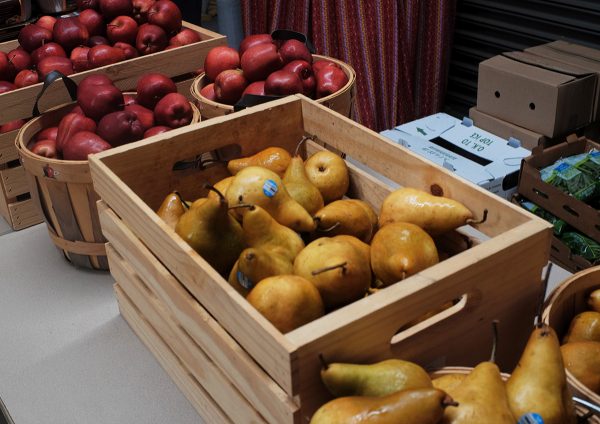
Created in collaboration with team members from both the Los Angeles LGBT Center and the Latino Equality Alliance, Mi Centro doubles as a hub for information and resources as well as a sanctuary of respite and comfort for its Latine community members. It provides immigration services, legal clinics, housing rights panels, and a monthly free farmers’ market. This November, Mi Centro has organized an additional market with the support of collaborating organizations, including food justice ministry Seeds of Hope, to step up for community members after SNAP benefits were cut at the beginning of the month.
Combined with the increased presence of federal immigration agents in the county since June, this cut in essential funding has created additional strain for local Latine community members when it comes to accessing food and feeling safe when stepping outside. For staff members at Mi Centro, these issues impact the livelihoods and safety of the people and spaces most familiar and important to them. “This is the community where my family immigrated to,” Caín Andrade, Mi Centro’s program manager, told the Blade. “Now I feel like it’s not only my duty, but my pleasure and my privilege to come back to the same community and help.”
At Friday’s market, Andrade noted that it yielded one of the “biggest turnouts” despite the weather, and explained that Mi Centro has seen a steady increase in the need for food and resource assistance in the last couple of months. Several community members showed up to access groceries and look through the other resource tables at the market. One of these tables included information about benefits and insurance enrollment, and another included pamphlets from local health nonprofit QueensCare about free health screenings. All written materials were provided in both Spanish and English, and Sánchez made sure to speak with each resident about their needs.
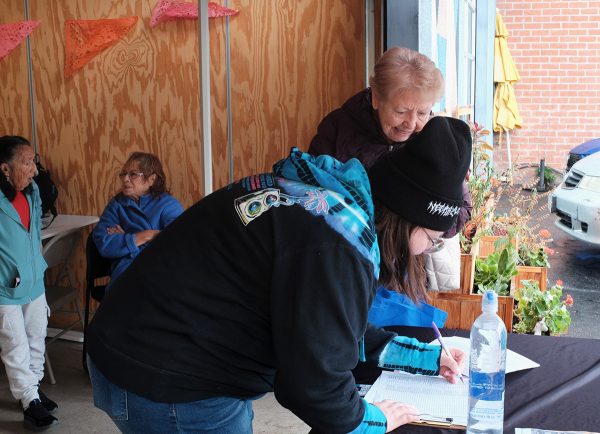
“We really curated Mi Centro as a community center where people can feel like they belong,” said Andrade. “[We] provide a space that feels a little bit more like home to them: that’s warm, that’s got flowers and art, a couch to sit on, and just have somebody that listens to you — somebody that can speak Spanish and give them the opportunity to articulate what they’re going through in their language. We can see the sighs of relief.”
Andrade also emphasizes the intergenerational teamwork that happens at Mi Centro: a synergy that is guided by “young, queer Latino community” voices that have been embedded within the neighborhood. Mi Centro’s queer staff are deeply shaped by these communities that have long been home to them — and they, in turn, are shaping these spaces to be more inclusive: where LGBTQ+ visibility is embraced and cherished.
With a team that “represents the entire rainbow,” residents see the advocates working to support them as “our kids, our nephews, our grandkids,” Andrade said. “We are equally protective of them. We want to make sure that they are being given access to everything that other communities might have easy access to.”
Mi Centro’s next free farmer’s market takes place on Friday, Nov. 21st. More information can be found here.
Los Angeles
LA Assessor Jeffrey Prang to be honored by Stonewall Democrats
Prang is among America’s longest-serving openly gay elected officials
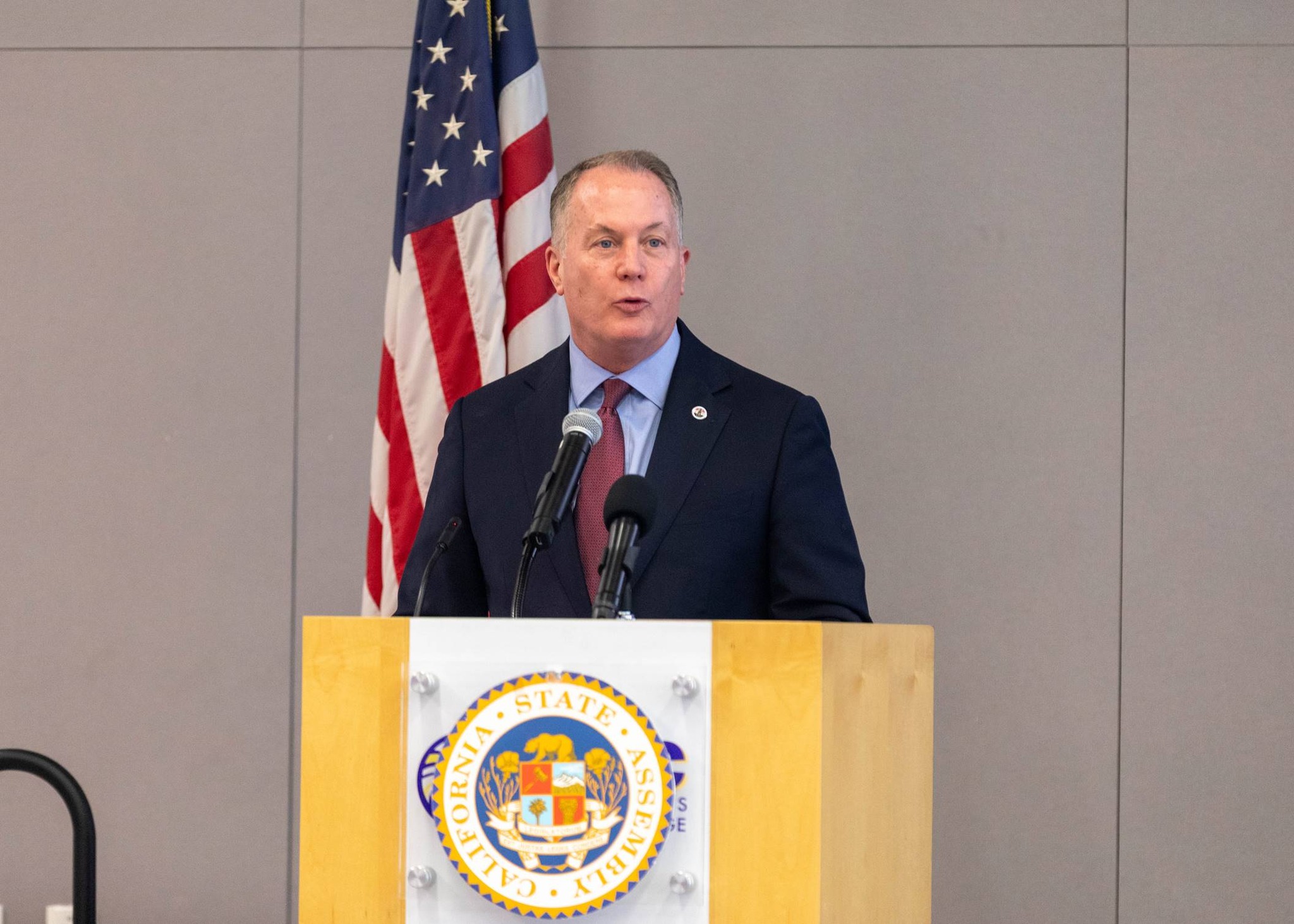
You may not be too familiar with LA County Assessor Jeffrey Prang. You’ve probably never heard of the office of the LA County Assessor, or you might only have a vague notion of what it does.
But with a career in city politics spanning nearly thirty years, he’s among the longest-serving openly gay elected officials in the United States, and for his work serving the people of Los Angeles and championing the rights of the city’s LGBTQ people, the Stonewall Democratic Club is honoring him at their 50th Anniversary Celebration and Awards Night Nov 15 at Beaches Tropicana in West Hollywood.
Prang moved to Los Angeles from his native Michigan after college in 1991, specifically seeking an opportunity to serve in politics as an openly gay man. In 1997, he was elected to the West Hollywood City Council, where he served for 18 years, including four stints as mayor.
“I was active in politics, but in Michigan at the time I left, you couldn’t really be out and involved in politics… My life was so compartmentalized. I had my straight friends, my gay friends, my political friends, and I couldn’t really mix and match those things,” he says.
“One of the things that was really impactful was as you drove down Santa Monica Boulevard and saw those rainbow flags placed there by the government in the median island. That really said, this is a place where you can be yourself. You don’t have to be afraid.”
One thing that’s changed over Prang’s time in office is West Hollywood’s uniqueness as a place of safety for the queer community.
“It used to be, you could only be out and gay and politically involved if you were from Silver Lake or from West Hollywood. The thought of being able to do that in Downey or Monterey Park or Pomona was foreign. But now we have LGBTQ centers, gay pride celebrations, and LGBT elected officials in all those jurisdictions, something that we wouldn’t have thought possible 40 years ago,” he says.
Prang’s jump to county politics is emblematic of that shift. In 2014, amid a scandal that brought down the previous county assessor, Prang threw his name in contention for the job, having worked in the assessor’s office already for the previous two years. He beat out eleven contenders in the election, won reelection in 2018 and 2022, and is seeking a fourth term next year.
To put those victories in perspective, at the time of his first election, Prang represented more people than any other openly gay elected official in the world.
Beyond his office, Prang has lent his experience with ballot box success to helping get more LGBT people elected through his work with the Stonewall Democrats and with a new organization he co-founded last year called the LA County LGBTQ Elected Officials Association (LACLEO).
LACLEO counts more than fifty members, including officials from all parts of the county, municipal and state legislators, and members of school boards, water boards, and city clerks.
“I assembled this group to collectively use our elected strength and influence to help impact policy in Sacramento and in Washington, DC, to take advantage of these elected leaders who have a bigger voice in government than the average person, and to train them and educate them to be better advocates on behalf of the issues that are important for us,” Prang says.
“I do believe as a senior high-level official I need to play a role and have an important voice in supporting our community,” he says.
Ok, but what is the LA County assessor, anyway?
“Nobody knows what the assessor is. 99% of people think I’m the guy who collects taxes,” Prang says.
The assessor makes sure that all properties in the county are properly recorded and fairly assessed so that taxes can be levied correctly. It’s a wonky job, but one that has a big impact on how the city raises money for programs.
And that wonkiness suits Prang just fine. While the job may seem unglamorous, he gleefully boasts about his work overhauling the office’s technology to improve customer service and efficiency, which he says is proving to be a role model for other county offices.
“I inherited this 1970s-era mainframe green screen DOS-based legacy system. And believe it or not, that’s the standard technology for most large government agencies. That’s why the DMV sucks. That’s why the tax collection system sucks. But I spent $130 million over almost 10 years to rebuild our system to a digitized cloud-based system,” Prang says.
“I think the fact that my program was so successful did give some impetus to the board funding the tax collector and the auditor-controller to update their system, which is 40 years behind where they need to be.”
More tangible impacts for everyday Angelenos include his outreach to promote tax savings programs for homeowners, seniors, and nonprofits, and a new college training program that gives students a pipeline to good jobs in the county.
As attacks on the queer community intensify from the federal government, Prang says the Stonewall Democrats are an important locus of organization and resistance, and he encourages anyone to get involved.
“It is still an important and relevant organization that provides opportunities for LGBTQ people to get involved, to have an impact on our government and our civic life. If you just wanna come and volunteer and donate your time, it provides that, if you really want to do more and have a bigger voice and move into areas of leadership, it provides an opportunity for that as well,” he says.
Los Angeles
SNAP benefits remain delayed — local leaders are creating their own solutions
Assemblymember Mark González has announced a $7.5 million partnership with the YMCA’s FeedLA food distribution program.
Today marks the 37th day of the current government shutdown, the longest witnessed in the country’s history. As a result, people who receive federal Supplemental Nutrition Assistance Program (SNAP) benefits have not received their monthly aid for November. In Los Angeles, over 1.5 million people rely on these funds to purchase groceries.
On Oct. 28th, Governor Gavin Newsom announced that California joined over 20 other states in suing the administration over its “unlawful refusal” to provide SNAP aid even though it has the funds to do so. Two federal judges ruled in favor of the lawsuit, though when and how much aid will be distributed remains inconclusive.
At a press briefing on Tuesday, White House press secretary Karoline Leavitt stated that the administration is “fully complying” with the court order. “The recipients of the SNAP benefits need to understand: it’s going to take some time to receive this money because the Democrats have forced the administration into a very untenable position,” Leavitt continued. “We are digging into a contingency fund that is supposed to be for emergencies, catastrophes, for war.”
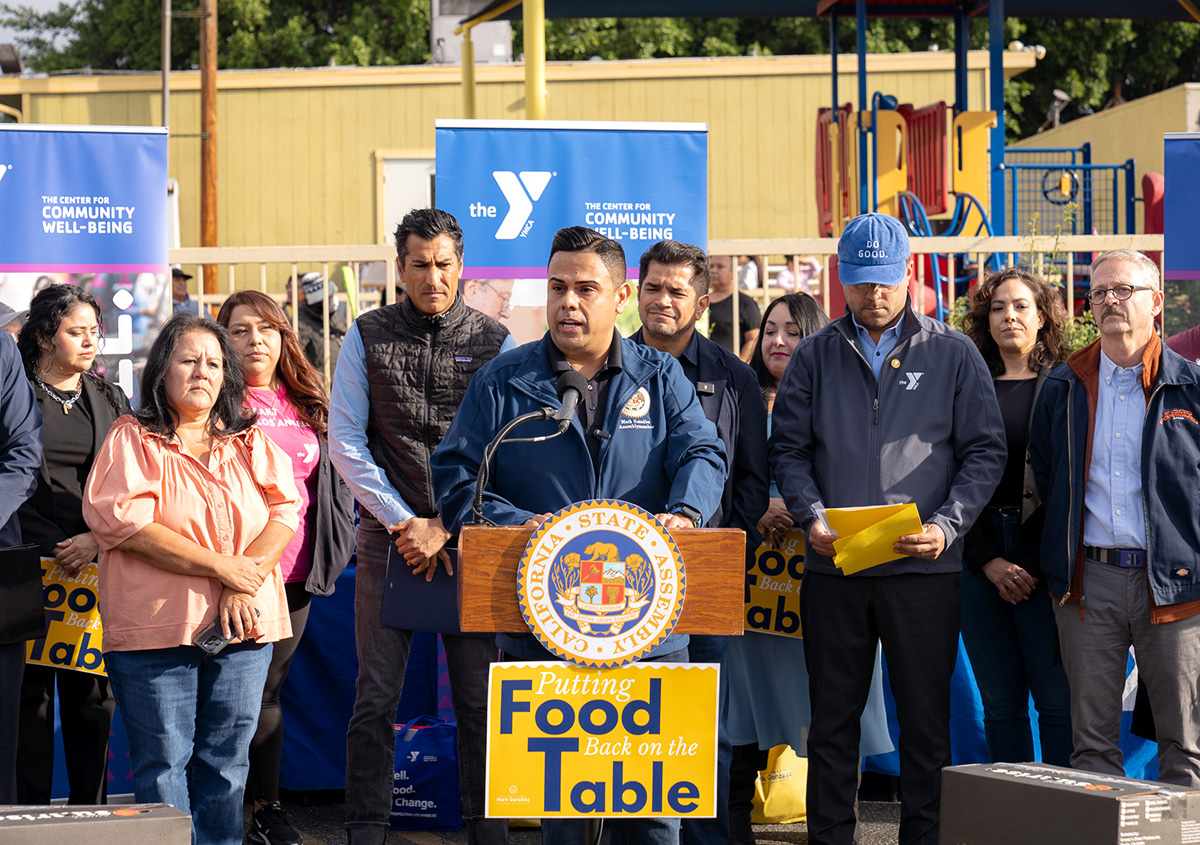
On Wednesday morning, local leaders in Los Angeles held their own press conference at the Weingart East Los Angeles YMCA to denounce the administration’s inaction and to discuss alternative efforts that are trying to fill the gap as SNAP aid remains suspended. “We’re here today because the federal government has turned its back on millions of families, and we refuse to stay silent,” said District 54 Assemblymember Mark González. “This is more than a press conference. This is a plea for sanity, a demand for humanity, and a call to action…California is stepping up to do what Washington will not, and that’s to feed our people.”
Alongside a number of other local leaders and advocates, including Assemblymember Jesse Gabriel, Speaker of the California State Assembly Robert Rivas, Boyle Heights community leader Margarita “Mago” Amador, Congressman Jimmy Gomez, YMCA president Victor Dominguez, and Food Forward founder Rick Nahmias, González announced a partnership with the YMCA’s FeedLA program. $7.5 million has been secured to fund food distribution efforts across the county’s 29 YMCA sites.
Residents do not need to have a YMCA membership to take part. Resources like groceries, warm meals, and home deliveries will be available at various times throughout the week. There are currently no weekend distribution dates listed.
This announcement comes in the midst of other local efforts bolstering on-the-ground SNAP relief. On Tuesday, the Los Angeles County Board of Supervisors approved a motion that will strengthen the Office of Food Systems (OFS), a partnership between county leaders and local philanthropic organizations aiming to create equitable food systems for residents. The motion would establish deeper connections between OFS and all County departments, as well as strengthen state and federal food policy coordination.
The county has also funded a $10 million contract with the Los Angeles Regional Food Bank, which will allow the organization to purchase more produce and create additional pantry and food distribution pop-up sites.
For many, these solutions offer a temporary landing pad as they hold out for their benefits to be reinstated. “Food pantries are not just places where a bag of food is handed out. They are a bridge of hope for our most vulnerable communities,” said Amador, at Wednesday’s press conference. “When a family comes to a pantry, many times they don’t just bring an empty bag. They also bring worries, stress and [the] fear of not being able to feed their children. They leave with a bag of food [and] they take with them a bit of dignity, relief, and a feeling that they are not alone.”
Los Angeles
Queer communities will face disproportionate harm when SNAP ends
The Blade spoke with researchers, local leaders and food distribution organizers to discuss the impact on LGBTQ+ people
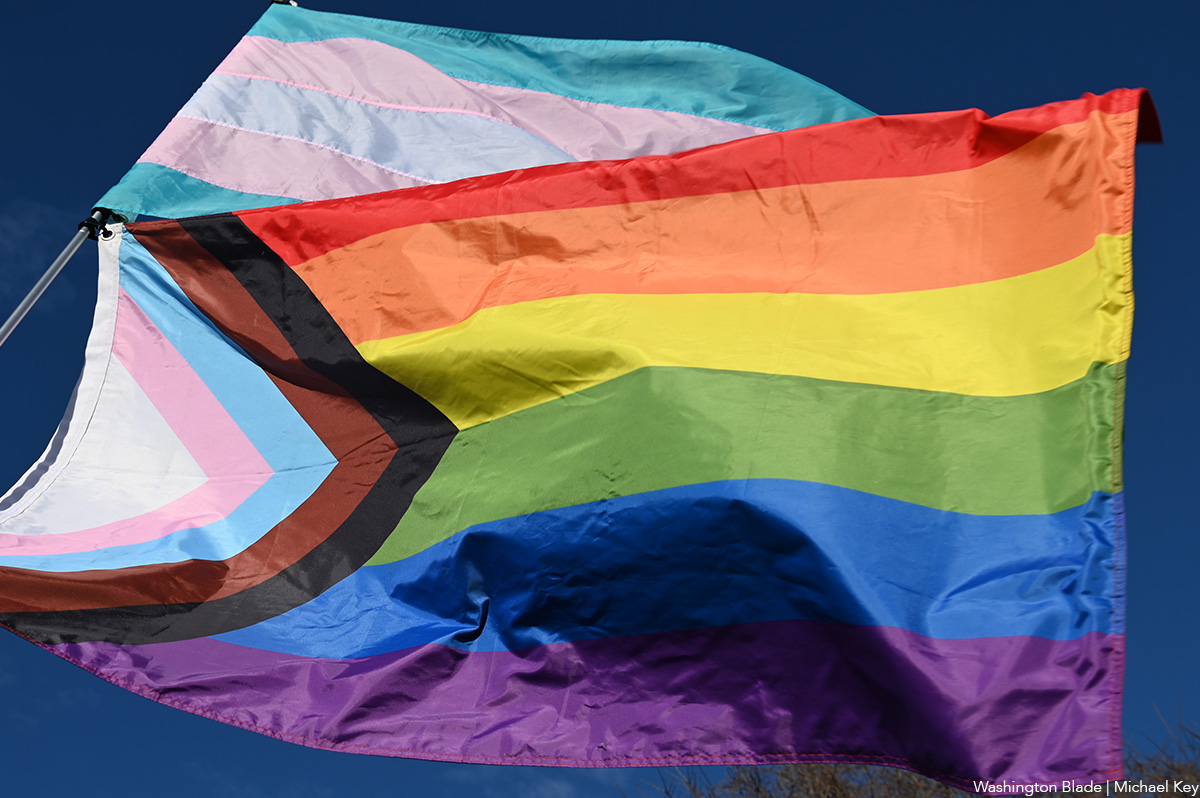
On Oct. 1st, the previous federal budget expired, and the government entered a shutdown after being unable to reach an agreement on how different government services would be funded moving forward. Namely, democratic officials are arguing for more affordable healthcare as well as a reversal of President Trump’s cuts to Medicaid and health agencies, as proposed in H.R. 1 — otherwise known as the “One Big Beautiful Bill Act.” Without a compromise that Trump will agree to, several essential federal services remain stalled.
Now, the federal Supplemental Nutrition Assistance Program (SNAP), formerly known as food stamps, will be indefinitely halted beginning Nov. 1st. This affects over 1.5 million Los Angeles residents who rely on CalFresh, the state’s equivalent of SNAP. BenefitsCal, the portal Californians can use to access and manage benefits that include food assistance, announced on Oct. 27th that “the U.S. Department of Agriculture (U.S.D.A.) is not sending money to states for November CalFresh (SNAP) benefits. This means your county cannot add money to your EBT card until federal funding is restored.”
For LGBTQ+ community members, this impact will be particularly damaging.
Over 665,000 LGBTQ+ adults live in Los Angeles County, and 32% of this population reported experiencing food insecurity from 2023 to 2024, according to data analysis completed by researchers at the Williams Institute. In comparison, 23% of non-LGBTQ+ adults reported experiencing food insecurity.
“I think it’s important to realize that many people who are on SNAP are either disabled and can’t work, or they’re caretaking for young children — and those tend to be the groups of people in the LGBTQ community,” Brad Sears, the Rand Schrader Distinguished Scholar of Law and Policy at the Williams Institute, told the Blade. “Over 60% of LGBTQ people on SNAP are disabled, and about 46% are raising children…There aren’t a lot of options for them in meeting their basic needs, [like] providing food for themselves and their families, besides SNAP benefits.”
How can LGBTQ+ community members access food assistance in November?
Sears pointed out how, in times of social struggle, queer communities have turned to each other for support. He states that it is important, now more than ever, for local organizations and food distribution programs to stand in solidarity with LGBTQ+ people — many of whom face barriers to seeking resources due to various factors like the fear of discrimination. “This is an important time to send that message that they are inclusive, that their services are inclusive, and that everyone, including LGBTQ people, are welcome to access their resources,” Sears told the Blade.
The Hollywood Food Coalition is one of these spaces. The organization rescues and redistributes food through a community exchange program, and also provides hundreds of dinners to community members every day of the year. “We are open to anyone hungry. We’re proud to serve many LGBTQ+ guests and to offer a welcoming space where everyone can share a meal and feel safe, seen, and cared for,” Linda Pianigiani, the organization’s interim director of development, told the Blade.
The Los Angeles LGBT Center is also partnering with food justice organization Seeds of Hope to provide more free farmers’ markets this upcoming month. For Giovanna Fischer, the Center’s chief equity officer, this is an opportunity to champion intersectional queer empowerment in the midst of the administration’s actions. For marginalized community members, including those who are trans, disabled, or immigrants, organizers are thinking about multidimensional approaches as they support community members through crises like the indefinite end to SNAP benefits.
“Now we’re looking at an issue [that can be] compounded three times simply because of who that person is and the experience that they have in their life,” Fischer told the Blade. “There’s no single-issue analysis of anything that’s coming up for our community, because we’re not living single-issue lives…How are we thinking through things in a layered way to ensure that people with these intersectional identities have access to the things that they need?”
How is the state and county responding?
On Tuesday, Governor Newsom announced that California is joining 20 other states in suing the administration for its “unlawful refusal” to continue funding SNAP. Los Angeles County Supervisor Lindsey Horvath also stated in a press release that the county is working to fund a $10 million contract with the Los Angeles Regional Food Bank to expand food purchasing capabilities and create more food assistance pop-up sites and community pantry locations.
L.A. Care Health Plan is also investing up to $5.4 million to fund countywide food security and distribution efforts, as well as provide aid to nonprofit organizations that distribute fresh produce.
The limitations we’re facing
While these efforts are instrumental in delivering necessary food aid in SNAP’s absence, Sears is worried about the long-term strain the suspension of federal food assistance will have on LGBTQ+ communities and the organizations trying to support them. “A number of state and local governments are going to try to temporarily fill the gap, but…the resources to do that will likely be overwhelmed without SNAP benefits,” Sears told the Blade. “Nonprofit organizations are already feeling the pressure of funding cuts from the Trump administration.”
Pilar Buelna, chief operations officer of the Hollywood Food Coalition, is seeing this pressure in real time. She notes that the increase in the need for local food assistance has been growing since the summer, and will only continue to grow with the quickly-approaching end to SNAP benefits. “Yesterday, actually, we ran out of food,” Buelna told the Blade, after the coalition gave out 300 meals but were still met with individuals in need of food. “We are concerned that the need is going to increase so much that we’re not going to be able to keep up…We are sending out a call to action to the community to donate food and funding. We need [these] to continue our operations.”
The Blade will be shadowing various food distribution programs and efforts throughout November to track the impact of the end of SNAP on queer Angelinos, and the community-led efforts being organized to support them.
Los Angeles
Anger, resistance and unity coursed through L.A. City Hall “No Kings” protest
The Blade photographed Saturday’s demonstration as thousands mobilized and marched
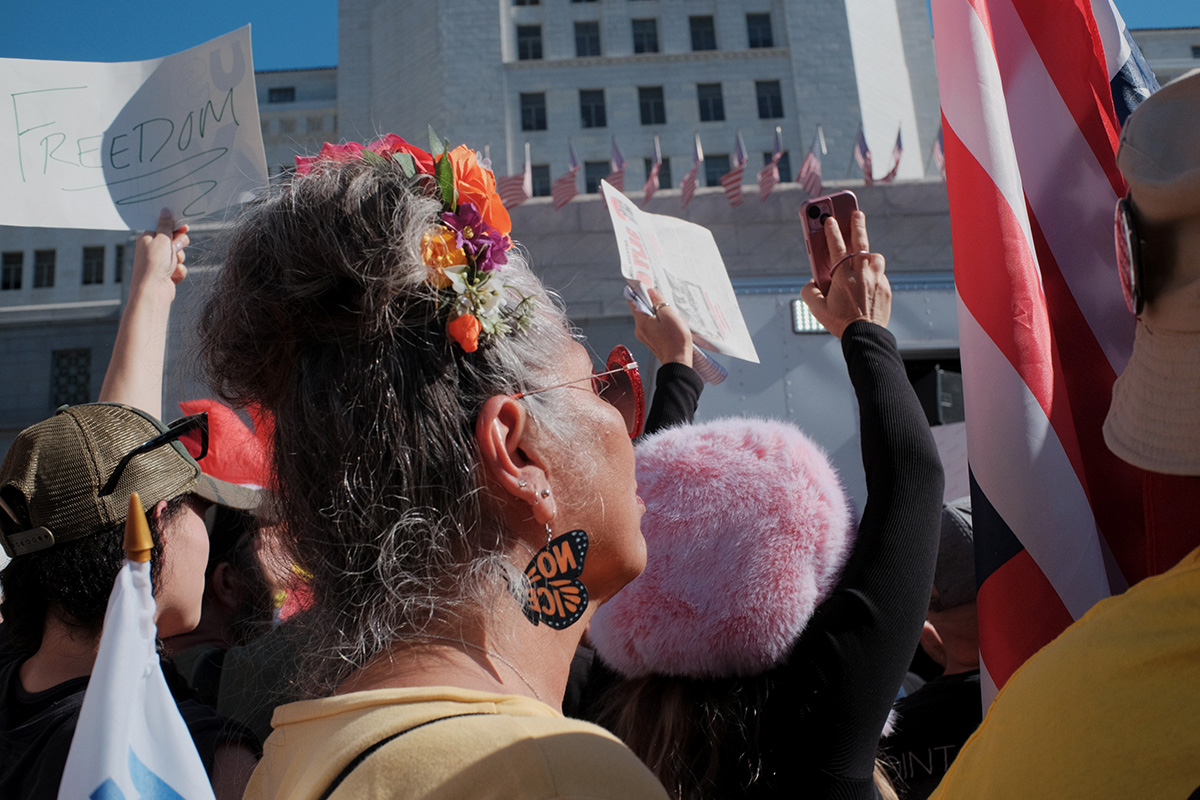
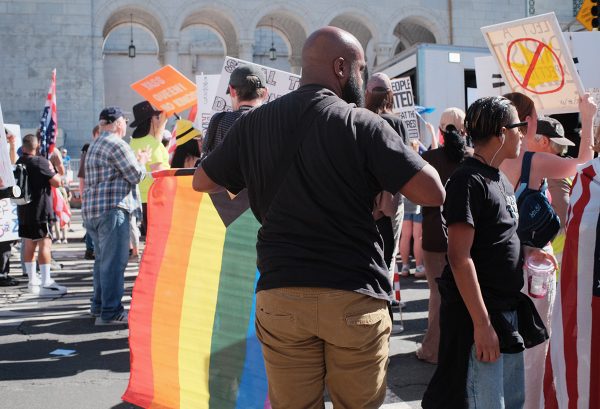
On Oct. 18th, a mosaic of Angelinos across generations and cultural backgrounds gathered outside of city hall as they proudly lifted handmade signs decrying President Trump and the current administration. This march was one of several rallies organized just within the city, and one of thousands others organized across the nation.
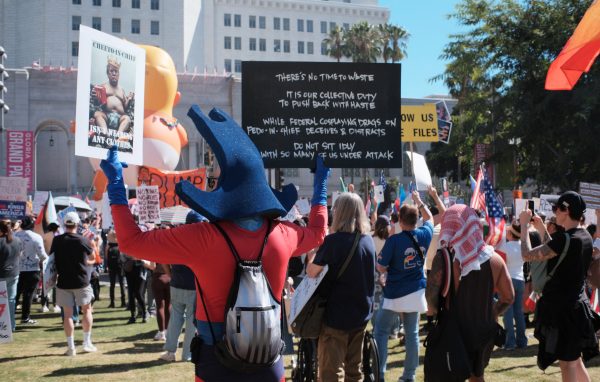
The protest was packed, with people standing nearly shoulder to shoulder as a number of local leaders including Black Women for Wellness Action Project policy analyst LaKisha Camese, TransLatin@ Coalition president Bamby Salcedo and Assemblymember Isaac Bryan, made rousing speeches and led passionate chants before the march began. Speakers like political commentator Brian Tyler Cohen did not hold back when they addressed the crowd. “[They are] so desperate to rebrand this thing as a ‘Hate America’ rally. But do you know what hating America looks like?,” asked Cohen.
Image captures by Blade reporter Kristie Song
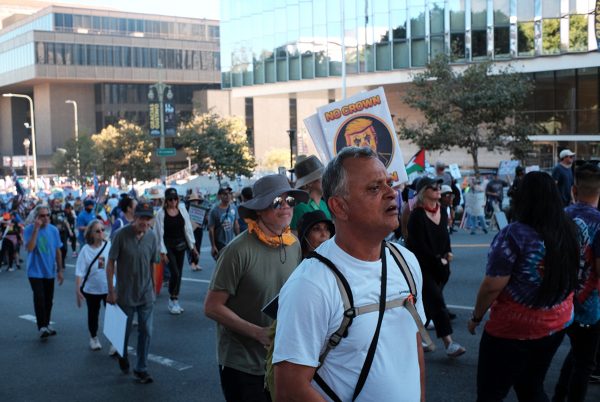
“It looks like sending secret police accountable to no one into our cities…It looks like keeping the government closed because you are so hell bent on stripping away health care from 24 million Americans and trying to get their costs to double, triple or quadruple. So if you’re looking for the ‘Hate America’ rally, might I suggest the White House.”
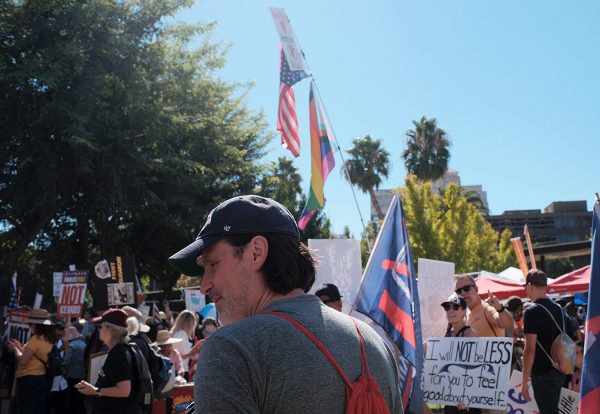
Protestors cheered at the top of their lungs with each passing speech, and each clear and explicit denouncement of the current administration. “There’s no rally like what’s happening here in Los Angeles,” said Assemblymember Bryan. “This is where Black, brown, poor, indigenous, everyday people come together…Washington D.C. doesn’t care about us, and we know that. But, we care about each other, don’t we? We believe that health care is a human right, don’t we? We believe that housing is a human right, don’t we? We will stand up to authoritarianism, won’t we? Because when we fight together, what happens? We win!”
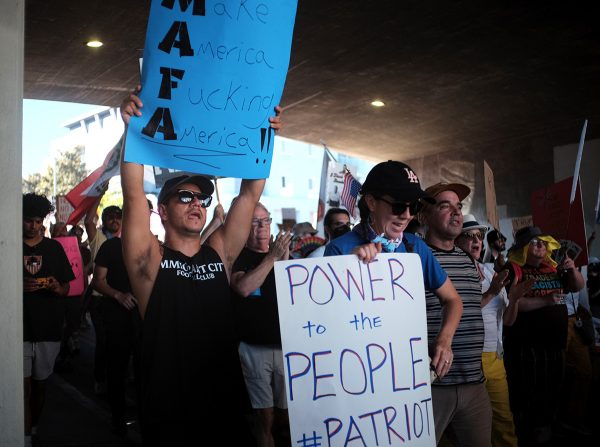
As people began to grow restless, the march finally began, taking them to a highway overpass.
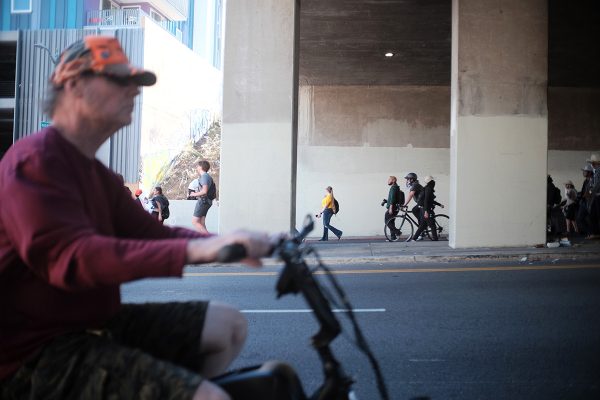
As residents boarded a bus at Cesar E. Chavez and Broadway, they were halted by blocked roads as large congregations marched by. Transit riders looked on into the crowds, their faces mere inches from some of the passing protestors. Separated by a layer of window glass, one nodded along as protestors lifted their signs above their heads and chanted “ICE out of LA!” Some waved to people inside the stalled bus, inviting solidarity from those who weren’t marching alongside them.
When the road cleared, their calls could still be heard for a little longer.
Los Angeles
L.A. County Supervisors vote to declare local emergency in support of immigrant community members
What does this declaration mean, and what’s next?
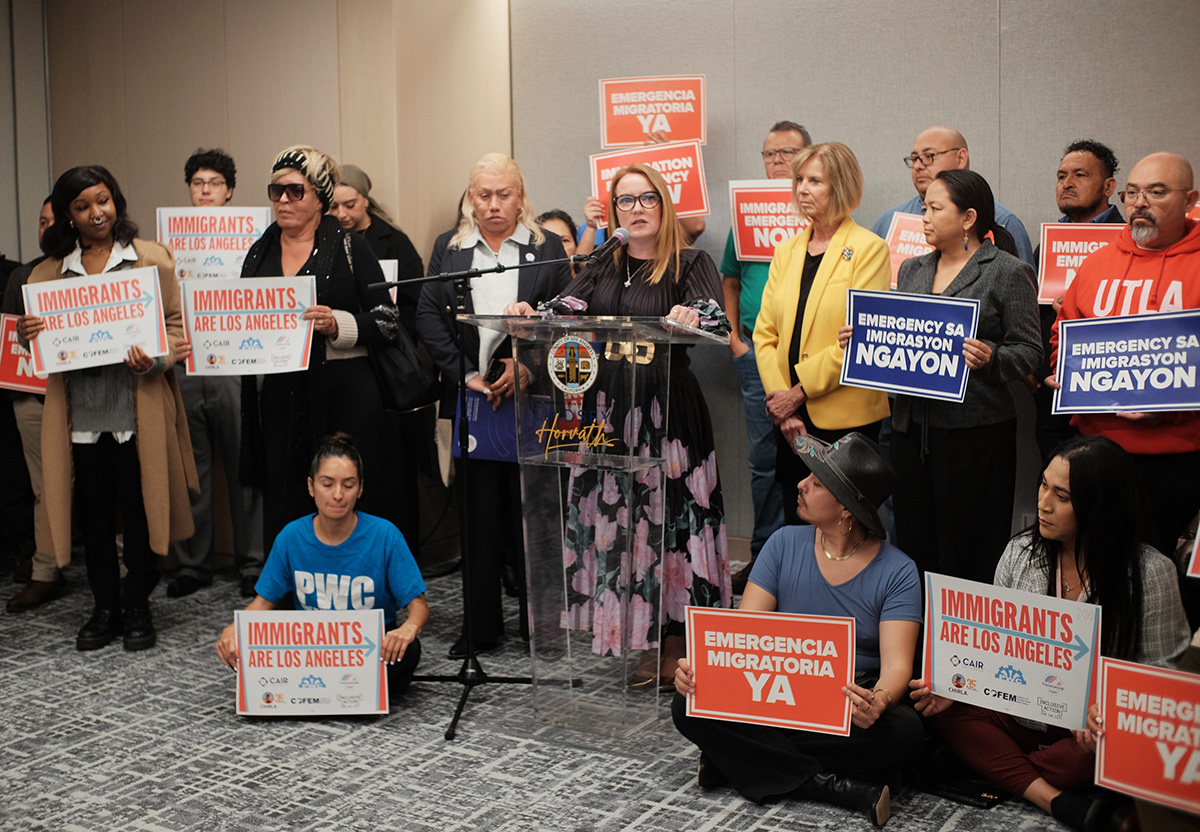
On Tuesday morning, a downpour loomed heavy over the Kenneth Hahn Hall of Administration as leaders and supporters from grassroots coalitions like Immigrants are LA and the TransLatin@ Coalition gathered inside Room 140C. They were present for a press conference with County Supervisors Lindsey P. Horvath and Janice Hahn, who together co-authored a motion to proclaim a local emergency in Los Angeles County in regards to the federal government’s actions targeting immigrant communities.
The press conference offered a moment of solidarity before the Board of Supervisors meeting happening immediately after, where the motion would be voted upon. “One of the grounds for declaring this emergency is that we can’t do it alone, and we know that county government cannot protect our residents alone,” Horvath told the Blade. “We need our cities to join with us. We need the state to join with us. That’s why declaring the state of emergency is so critical. That way, they know this isn’t business as usual. We need help.”
In the last four months, immigration operations and raids have become widespread in Los Angeles and throughout the country. In January, President Trump declared a national emergency targeting a “catastrophic immigration crisis” before issuing a proclamation “restricting the entry of foreign nationals” on the basis of national security in June. Three months later, the Supreme Court voted to pause restraining orders that would have limited immigration operations that, as advocates argued, violated civil rights.
In response to this, Supervisors Horvath and Hahn deemed it necessary to move forward with a proclamation of their own. But what does codifying and declaring a local emergency do?
“Clearing a local emergency allows the county to promulgate orders and regulations to provide for the protection of life and property,” explained Senior Assistant County Counsel Thomas J. Faughnan at the Board of Supervisors meeting. “It allows the county to request assistance from the state. It permits mutual aid to any affected area. It provides the county with certain legal immunities for emergency actions taken, and it permits the county to obtain vital supplies and equipment needed for the protection of life and property and the ability to require emergency services of county personnel.”
Supervisor Horvath also stressed that the declaration would allow local officials to accelerate various processes in locating and delivering support services to immigrant community members. “This is about action and speed. It means Los Angeles County can move faster. We can coordinate better. We can use every tool available to support and stabilize our communities,” Horvath said at the press conference. “Today, we declare an emergency — not from a place of panic, but from a place of purpose.”
It would be several hours before the proclamation was addressed at the board meeting. Still, over 10 people were waiting to be patched through on the phone so they could voice their opinions. Over 10 more people waited in person, and 79 others submitted their public comments online.
Many residents who spoke voiced their support for the declaration, echoing the importance of providing protections to their immigrant neighbors. There were also a few individuals who expressed opposition and hesitation about the potential consequences of relief efforts. One person, who only identified themself as “Doreen,” opposed potential eviction relief that could follow the declaration’s passing. “I disagree with the consideration of an eviction moratorium for those who are vulnerable. I truly believe the Board of Supervisors is operating on emotions and retaliation,” said Doreen. “So you mean to tell me that you would like to bend the law to conform to those who are here illegally?”
Amongst the five supervisors, there was general support for the declaration — but also some apprehension about what would come from it. “We see citizens and municipalities taking real, meaningful, tangible action against these federal agents being in their communities,” said Supervisor Holly J. Mitchell. “Is there anything in this declaration that would empower us to take similar action?”
While these actions can only become clearer with the passing of the declaration, other matters were clarified through this discussion. For one, the declaration will not lead to requests to the federal government for mutual aid. Additionally, the Constitution’s Supremacy Clause — which states that, if conflicting with one another, federal laws take precedence over state laws — will not hold up in the instance of illegal actions committed by federal agents during their immigration operations.
After deliberation, the motion was passed, with the only “no” vote coming from Supervisor Kathryn Barger. This declaration of local emergency remains in effect until terminated by the Board of Supervisors, and a press release from Supervisor Horvath’s office states that county departments will be able to take “necessary emergency actions to protect and stabilize” impacted communities.
The Blade will follow up with further stories as these emergency actions are developed and rolled out.
Los Angeles
Trans and nonbinary immigrants experience greater levels of poverty, new report finds
A recent study looks into the disproportionate rates of homelessness and poverty trans and nonbinary immigrants face in L.A.
In a new report published by the Williams Institute, a local research center focused on conducting studies around LGBTQ+ communities and public policy, analysts reviewed data from the 2023-2024 L.A. County Trans and Nonbinary Survey and concluded that transgender and nonbinary immigrants face significantly greater rates of unemployment and homelessness than trans and nonbinary Angelinos who are not immigrants.
Created in partnership with the TransLatin@ Coalition (TLC), an organization that works to defend and advance the rights of trans, gender-expansive, and intersex (TGI) community members, and co-authored by TLC president Bamby Salcedo, the report looks more deeply into the 98 trans and nonbinary immigrants surveyed from a broader pool of 322 respondents in the initial 2023-2024 survey.
What were the key findings?
73% of the trans and nonbinary immigrants — and 80% of trans Latine immigrants — who were surveyed live at or below the federal poverty level, compared to 44% of trans and nonbinary non-immigrants surveyed. These numbers are not meant to pit these communities against one another, but rather to highlight the disproportionate amounts of poverty that trans and nonbinary people of color and immigrants face in the city.
39% of the trans and nonbinary immigrants polled also reported being unhoused, compared to 19% of the non-immigrant participants. 47% of the immigrant participants reported that they were unemployed, compared to 22% of non-immigrant participants.
Another wide discrepancy is revealed in access to educational resources. 30% of the TGI immigrant respondents, including 41% of TGI Latine immigrants, reported having less than a high school or GED level of education, compared to 8% of non-immigrants. Nearly half of the trans and nonbinary immigrants surveyed reported that they were unemployed, and 30% reported that they lacked health insurance and thus delayed seeking necessary medical care over the last year.
“It is essential that these communities are included in county-wide problem-solving and policymaking,” said Salcedo, in a press release about the study. Last month, the Blade reported on the TLC’s launch of its TGI: Housing Initiative, a campaign that would allow the organization to work with the county’s affordable housing solutions agency, LACAHSA, to invest funds into homelessness prevention resources for transgender, gender-expansive, and intersex community members. TLC members advocated for the initiative at LACAHSA’s board meeting on Sept. 17th. There have yet to be updates on whether or not the agency will support the initiative.
Another related Williams Institute report is set to be published later this month.

A bad romance is brought to light in ‘300 Letters’

Study shows ‘pervasive mistreatment of LGBTQ people by law enforcement’

C.I.T.Y. x1 Youth Group empowers queer youth at free holiday dinner this Sunday

LA Blade & Hyperion LA Studios partner with CinedPride Film Festival for the return of Queer Room, a free, entertainment industry mixer for the queer community

“Still Standing” uplifts Black, queer voices in annual World AIDS Day event

Administration refused to honor World AIDS Day; residents gathered with defiance, grief and love

Spoken solidarity: The linguistic tactics of queer communities in the Middle East
“Still Standing” uplifts Black, queer voices in annual World AIDS Day event

Exploring a different side of Los Angeles influencer Javonte Rose
Study shows ‘pervasive mistreatment of LGBTQ people by law enforcement’
-
 West Hollywood5 days ago
Administration refused to honor World AIDS Day; residents gathered with defiance, grief and love
-
 Commentary3 days ago
Spoken solidarity: The linguistic tactics of queer communities in the Middle East
-
 Events3 days ago
“Still Standing” uplifts Black, queer voices in annual World AIDS Day event
-
 a&e features5 days ago
Exploring a different side of Los Angeles influencer Javonte Rose
-
 National1 day ago
Study shows ‘pervasive mistreatment of LGBTQ people by law enforcement’
-

 a&e features4 days ago
Drag queen Kennedy Davenport dishes on her new comedy special
-
 Bars & Parties3 days ago
LA Blade & Hyperion LA Studios partner with CinedPride Film Festival for the return of Queer Room, a free, entertainment industry mixer for the queer community
-
 Events2 days ago
C.I.T.Y. x1 Youth Group empowers queer youth at free holiday dinner this Sunday
-
 Movies1 day ago
A bad romance is brought to light in ‘300 Letters’