
California
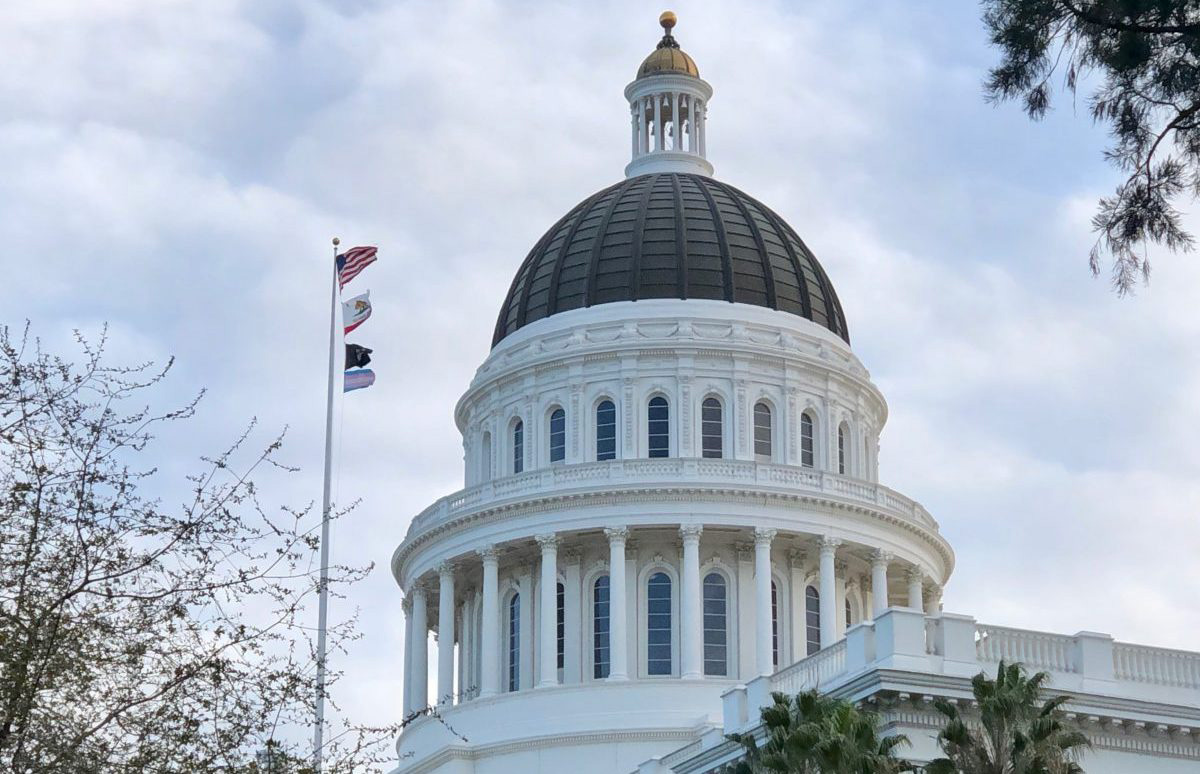
Calif. transgender student laws draws backlash
Gov. Gavin Newsom signed bill on July 15
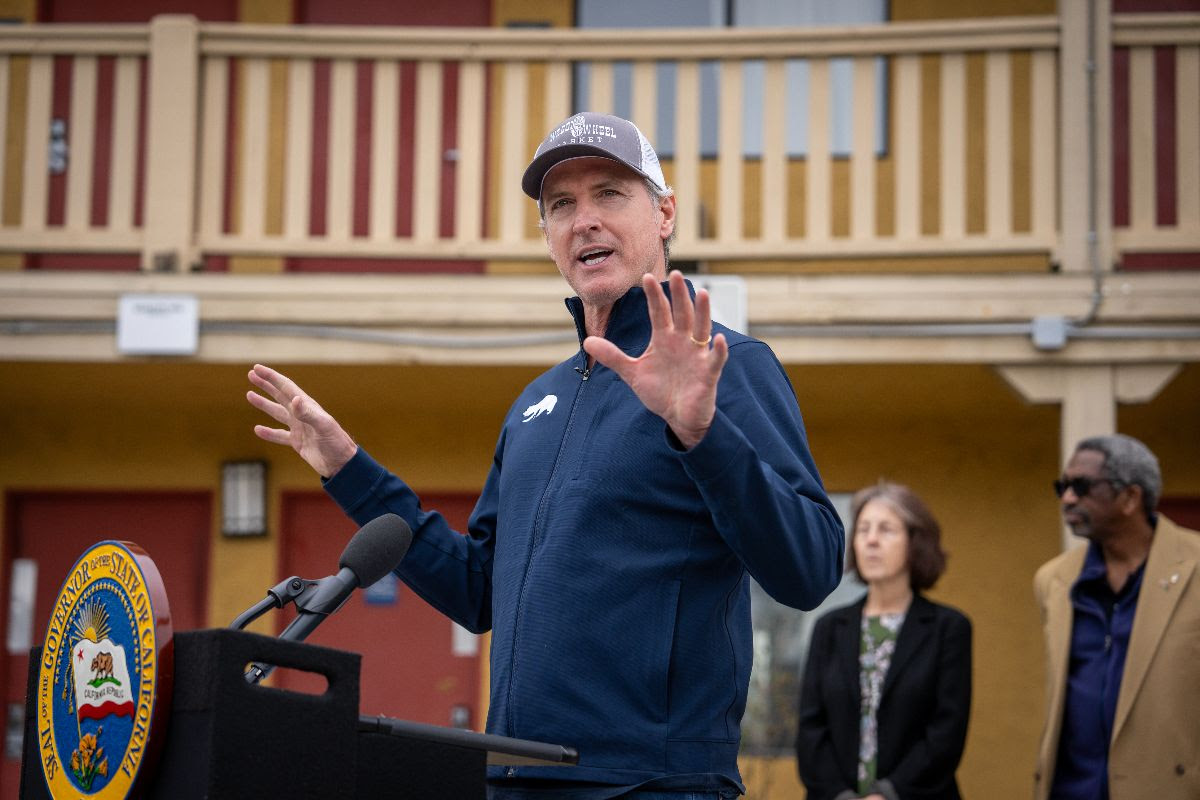
BY DIANA LAMBERT AND MONICA VELEZ | LAist — A trailblazing state law prohibiting California school boards from passing resolutions that require teachers and school staff to notify parents if they believe a child is transgender isn’t likely to put an end to this polarizing issue.
The Support Academic Futures and Educators for Today’s Youth, or SAFETY Act, was signed by Gov. Gavin Newsom on July 15. It will prohibit school districts from requiring staff to disclose to parents’ information related to a student’s sexual orientation or gender identity, and will protect school staff from retaliation if they refuse to notify parents of a child’s gender preference. The legislation, which will go into effect Jan. 1, also provides additional resources and support for LGBTQ students at junior high and high schools.
“California is the first state to pass a law explicitly prohibiting school districts from enacting forced outing policies in the nation,” said Mike Blount, spokesperson for the author of the bill, Assemblymember Chris Ward (D-San Diego).
The legislation was passed in response to the more than a dozen California school boards that proposed or passed parental notification policies in just over a year. The policies require school staff to inform parents if a child asks to use a name or pronoun different from the one assigned at birth, or if they engage in activities and use facilities designed for the opposite sex. At least seven California school districts passed the controversial policies, often after heated public debate.
First lawsuit filed
By Tuesday evening, the conservative nonprofit Liberty Justice Center said it had filed a lawsuit challenging the new law on behalf of Chino Valley Unified, which passed a parental notification policy last year.
“School officials do not have the right to keep secrets from parents, but parents do have a constitutional right to know what their minor children are doing at school,” said Emily Rae, senior counsel at the Liberty Justice Center in a press release. “Parents are the legal guardians of their children, not Gov. Newsom, Attorney General (Rob) Bonta, or Supt. (Tony) Thurmond. We will continue to defend parents’ rights and children’s well-being by challenging invasive laws like AB 1955 in court, at no cost to taxpayers.”
Other opponents, including Assemblyman Bill Essayli (R-Riverside) indicated that the issue will be settled in court. He is “committed to challenging the bill in court, and he’s confident he’s on the right side constitutionally,” said Shawn Lewis, Essayli’s chief of staff. Essayli plans to work with a coalition of advocates to challenge the bill, Lewis said.
Election issue
Parental rights is the overarching issue for the Republican Party, but right now it is focused on the parental notification issue, Essayli said in an August interview with EdSource. “This is an issue we want to run on in 2024,” he said.
The newly passed legislation also resulted in a flurry of press releases and social media comments from opponents and supporters. Even Tesla CEO Elon Musk weighed in, calling the new law the “final straw” in his decision to move the headquarters for X, formerly known as Twitter, to Texas.
“I did make it clear to Gov. Newsom about a year ago that laws of this nature would force families and companies to leave California to protect their children,” Musk wrote on X.
Proponents of the parental notification policies have said that parents have the right to know what is going on with their children at school and that minors do not have a right to privacy. Opponents say these policies could endanger already vulnerable students who should be able to decide when they want to come out to their parents.
Chino Valley Unified in San Bernardino County, Murrieta Valley Unified, and Temecula Valley Unified in Riverside County, in Orange County, in Anderson Union High School District in Shasta County, and Rocklin Unified and Dry Creek Joint Elementary School District in Placer County are among the districts that have passed parental notification policies.
California’s parental notification board policies have their origin in Assembly Bill 1314, proposed by Essayli, which was denied a committee hearing at the state Capitol last year. After that, Essayli, parents’ rights groups and attorneys wrote a model board policy for school boards.
On Monday, Essayli released a statement about the new law: “Today, Gov. Gavin Newsom defied parents’ constitutional and God-given right to raise their children by signing AB 1955 which codifies the government’s authority to keep secrets from parents,” he said. “AB 1955 endangers children by excluding parents from important matters impacting their child’s health and welfare at school. Governor Newsom signing AB 1955 is both immoral and unconstitutional, and we will challenge it in court to stop the government from keeping secrets from parents.”
Eight states have passed laws requiring school districts to inform parents if their children ask to use names or pronouns associated with another gender, according to the Movement Advancement Project.
LGBTQ rights threatened
School parental notification policies have impacted the mental health of LGBTQ students and can lead to bullying, harassment, and discrimination, according to a press release from Ward’s office.
“Politically motivated attacks on the rights, safety, and dignity of transgender, nonbinary, and other LGBTQ+ youth are on the rise nationwide, including in California,” said Ward, who introduced the legislation along with the California Legislative LGBTQ Caucus.
“While some school districts have adopted policies to forcibly out students, the SAFETY Act ensures that discussions about gender identity remain a private matter within the family,” he said. “As a parent, I urge all parents to talk to their children, listen to them, and love them unconditionally for who they are.”
The California Teachers Association and its members have been major opponents of parental notification policies, saying that they drive a wedge between educators and students, and endanger already vulnerable students. Teachers working in districts with parental notification policies have worried they could lose their jobs if they do not comply with the district requirement or end up in court if they disobey federal and state laws and policies.
“This historic legislation will strengthen existing protections against forced outing and allow educators to continue to create a safe learning environment where all students feel accepted, nurtured, and encouraged to pursue their dreams,” said California Teachers Association President David Goldberg. “As educators, we are charged with providing a high-quality education to every student. No educator should experience retaliation or have their livelihood jeopardized for following the law and providing safe and supportive learning environments for our students.”
Policies spawn lawsuits
Attorney General Rob Bonta has said parental notification policies break California state law and violate students’ civil rights and their right to privacy. He issued warnings to districts and filed a lawsuit against Chino Valley Unified in San Bernardino County last year.
A lawsuit was also filed against Temecula Valley Unified by a coalition of students, teachers and parents who oppose the district’s parental notification policy, along with a policy that bans “critical race theory.”
California courts have had differing opinions. In San Diego, U.S. District Judge Roger Benitez last year ruled that Escondido Union School District violated parents’ rights when it followed California state policy and allowed students to decide whether to tell their parents they identify as transgender.
In Sacramento earlier that year, U.S. District Judge John Mendez dismissed a lawsuit against Chico Unified. The suit claimed that district policies allowed school staff “to socially transition” students and prohibited staff from informing parents of the change. Mendez said students have a right to tell their parents about their gender and sexuality on their own terms.
The new law will also require districts to provide support or affinity groups and safe spaces for LGBTQ students; anti-bullying and harassment policies and complaint procedures; counseling services; anti-bias or other training to support LGBTQ students and their families; suicide prevention policies and procedures; and access to community-based organizations to support LGBTQ students as well as local physical and mental health providers with experience in treating and supporting families of LGBTQ youth.
California Legislative LGBTQ Caucus Chair Susan Eggman said the legislation reaffirms California’s position as a leader and safe haven for LGBTQ youth.
“I am also deeply grateful for all the parents, teachers, youth, LGBTQ+ leaders, and so many other groups who came together to support this bill,” Eggman said. “Their support reaffirmed what this caucus already knew: Safe and supportive schools for all our children should be our top priority. And at the end of the day, that’s what this bill does, ensures our K-12 campuses remain safe and affirming places for our youth no matter how they identify.”
California
Trans woman says Kyle Brazeal used anti-trans slur, threw purse at her in 2024
WeHo City Council candidate denies he said ‘tranny’ during argument at Gym Bar
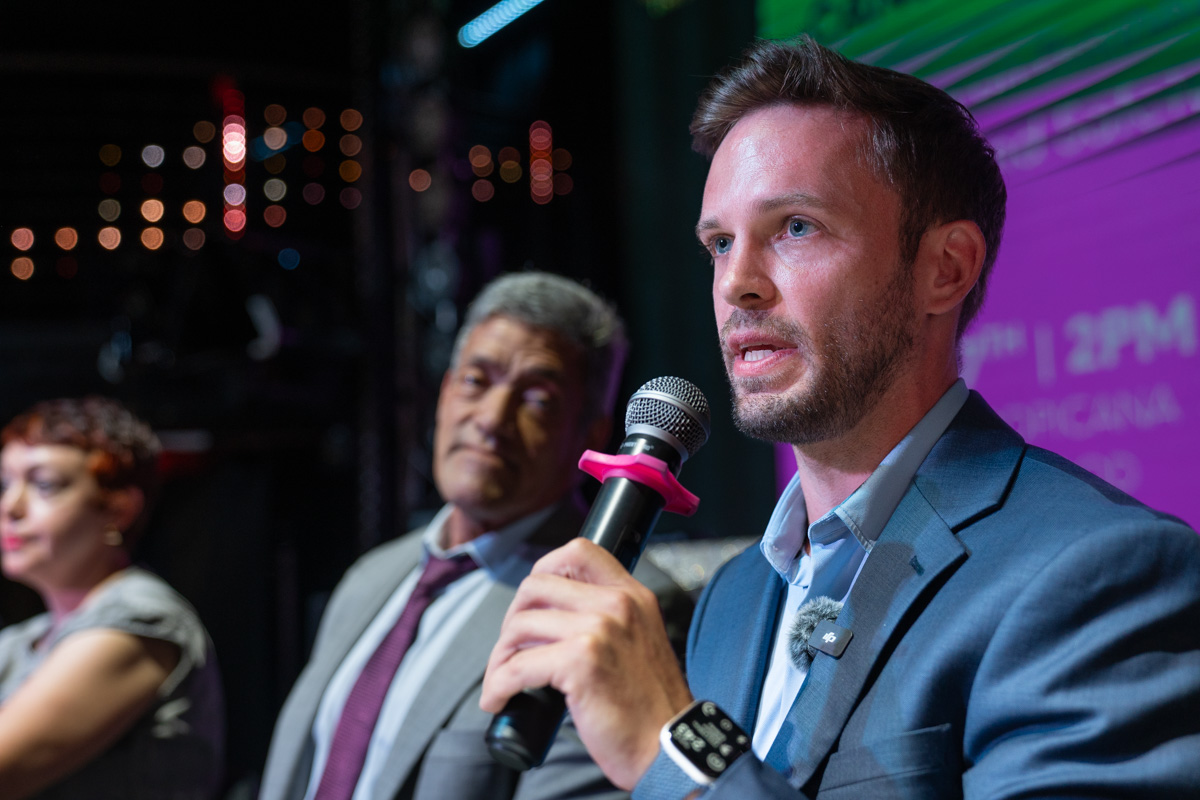
A transgender woman claims that West Hollywood City Council candidate Kyle Brazeal called her a “tranny” and threw a purse at her at Gym Bar in 2024.
The Los Angeles Blade spoke with the alleged victim and two people who say they witnessed Brazeal’s actions that night. The Blade has also obtained timestamped video that places Brazeal at Gym Bar that evening and text messages from the following day describing in detail what allegedly occurred on Sunday, Dec. 29, 2024.
Brazeal said in a written statement that “I categorically deny the allegations.” He added that while he was involved in “a disagreement” at Gym Bar that night, that “this incident is being deliberately misrepresented and weaponized for political purposes in the final weeks of this election.” Addressing the transgender community in West Hollywood, Brazeal said, “I will continue to stand with you as a Council member, just as I did before I was a candidate,” citing his donation to a GoFundMe for gender affirming surgery as evidence of his support.
Upon requesting comment, Brazeal referred the Blade to Rolandos Liatsos, a friend of Brazeal’s who was with him at Gym Bar that evening. Liatsos gave his account of the night and said he never witnessed Brazeal use any slurs or throw the purse.
‘Get out of my way, tranny’
On Dec. 29, 2024, Amber says she went to Gym Bar with a group of friends, including Tommy Craven and Rick Turpin. Amber’s real name is not being used to protect her privacy.
The group arrived at Gym Bar around 5 p.m. The evening started out well. “Just being around friends that night was really good,” Amber said. “There was no problem whatsoever.”
Turpin also recalls having fun. “We were having a good time,” he said. Amber came out as trans a few years earlier and was still adjusting to life as an out transgender woman. “It was nice to see [Amber] embracing her transition and … it seemed like she was feeling herself,” Turpin said.
After chatting with her friends for an hour or so, Amber left to use the bathroom. At the time, Gym Bar had only two single-occupancy restrooms, so there was a line of people waiting to use them. After a few minutes, the line advanced and Amber went into an open restroom.
Soon after entering, Amber said she heard knocking on the bathroom door. She yelled, “Hey, there’s someone in here.” A minute later, the knocking began again. It was a “really rude knock,” Amber said. “So, I felt like I needed to rush through. I felt really uncomfortable.”
For Amber, the situation was especially stressful because of her identity. “I’ve had situations in the past as a trans woman where I have been attacked for using the ‘inappropriate restroom,’” she told the Blade.
Flustered, Amber said she quickly left the bathroom, leaving her purse inside. After exiting, she asked the line of people waiting, “Who was knocking?” she said.
“Me,” she said a man replied while looking down at his phone. He then brushed past her and entered the bathroom while saying, “Get out of my way, tranny,” Amber said. She said she later learned the man’s name was Kyle Brazeal.
Amber was stunned. She had faced transphobia before but not at an LGBTQ bar. Not in West Hollywood.
“I was in a full moment of just frustration, anger,” she said. Amber said she slammed her palm on the bathroom door and stormed off, going back to her friends who were still chatting at their table.
Amber’s friends saw she was upset. “I sat down, and my friends knew something was wrong,” she said. Then Amber told her friends she was called a slur.
“They were, like, wait, what?” she said. “Everybody was in fun-drinking mode, so they didn’t understand what had occurred.”
Amber sat watching the bathroom. As soon as Brazeal exited, she walked over to confront him about what he said.
“What did you call me?” Amber loudly asked him.
At this point, Craven and Turpin heard the yelling coming from the restrooms. The two walked toward the commotion to see what was happening. They saw Amber confronting Brazeal by the door to the bathroom. Craven knew Brazeal beforehand from other community spaces they were both involved with. “I could recognize him right away,” he said. Turpin also said he recognized Brazeal.
Amber said that Brazeal took the purse that she left inside the bathroom and threw it at her, saying, “You left your tranny purse in there.” Craven and Turpin both corroborated Amber’s account of the events, saying that they heard Brazeal use the slur and saw him throw the purse at Amber.
After Brazeal threw the purse and used the anti-trans slur, Amber shoved him and the two got into a shouting match, according to Amber. Craven also recalled seeing “shoving” but did not specify who did what. The two were soon separated by security and staff.
Craven quickly called the owners of Gym Bar, Erik Braverman and Jonathan Cottrell, to inform them of what happened. (Cottrell is also currently running for West Hollywood City Council). Craven had known Cottrell and Braverman for years and considered them friends. The owners then told Gym Bar’s general manager about the incident.
Soon, the general manager spoke with Brazeal and “Kyle was asked to leave the bar,” Craven said. Upon being asked to leave, Brazeal began yelling profanities and “used the word ‘tranny’ toward Amber again,” Craven said. Turpin also recalls Brazeal using the slur as he was asked to leave. “He kept saying ‘tranny,’” according to Turpin.
Video footage taken by Tommy Craven shows Kyle Brazeal outside Gym Bar on Dec. 29, 2024. Craven says the video shows Brazeal after he was asked to leave by security.
The incident left Amber shaken. Afterwards, she sat down with her friends, and Craven and Turpin tried to cheer her up by making jokes about the situation. It didn’t improve her spirits.
“She was jarred; it happened at a bar that she considers a safe space,” Craven said. He described Amber as “a very private person” and said that she was satisfied with how Gym Bar handled the situation and did not file any complaints with law enforcement.
Amber said that time constraints also factored into her decision to not speak to the police. She was living in a housing program with an enforced 10 p.m. curfew, meaning she had to leave the bar soon after the incident occurred to get home in time.
Amber took an Uber to go home and did not see Brazeal again.
‘No throwing of the bag, no hate speech or anti-trans stuff’
But according to Rolandos Liatsos, the incident that evening played out very differently. Liatsos said he went to Gym Bar with Brazeal and a few others to celebrate a friend’s birthday. The two have known each other for more than a decade and are good friends.
According to Liatsos, after hanging out at the bar, Brazeal went to get in line for the bathroom and was on the phone. Once Brazeal entered the bathroom he saw Amber, whom he had never met before, return to a table with her friends. She seemed very upset.
Brazeal soon exited the restroom, carrying the purse Amber had left. Brazeal walked up to the table and attempted to hand the purse back to Amber but was stopped by her friends who moved to stand between them. Then they started arguing and yelling at each other.
But never at any point did Brazeal throw the purse, according to Liatsos. “There [was] no throwing of the bag, no hate speech or anti-trans stuff,” Liatsos said.
He also claims that he did not see anyone get shoved, or the two parties getting physical in any way. “There was no physical contact,” he said.
After the arguing between Brazeal and Amber’s friends, Gym Bar staff asked Brazeal and his friends to leave. “Good, let’s just go, … let’s defuse the situation,” Liatsos recalled thinking. Soon after, he, Brazeal, and their friends left the bar.
Liatsos later learned from Brazeal that he knocked on the bathroom door as Amber was inside, which he believed upset her. “I see this as a situation escalating from knocking at the door, feeling rushed,” and nothing more, Liatsos said.
He said the claims of transphobic and aggressive behavior were not consistent with what he saw that night and contrary to who he knows Brazeal to be. “I’ve known Kyle for so many years and we’ve been out so many times,” Liatsos said. “I’ve never seen him attacking … any individual.”
Aftermath
The next morning, Dec. 30, Craven sent a text message to a group chat that included Jonathan Cottrell describing what happened and naming the alleged perpetrator as “Kyle (seen in video),” referring to the video that shows Kyle Brazeal outside Gym Bar on Dec. 29.
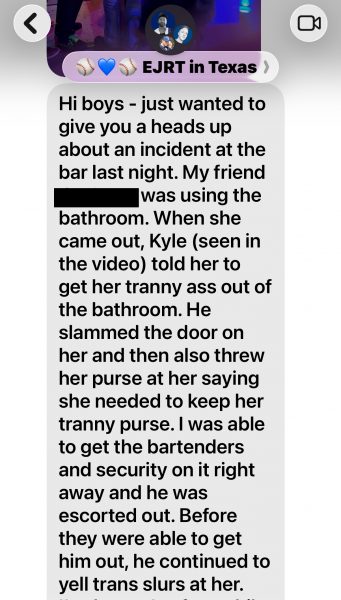
Screenshot of an excerpt of the message sent by Tommy Craven to a group chat with Jonathan Cottrell on Dec, 30, 2024. Identifying details have been redacted.
Braverman and Cottrell told Craven that Brazeal was banned from Gym Bar. However, both Craven and Turpin claim to have seen him at the establishment multiple times after the incident. Cottrell said in a written statement that “it was a temporary ban,” but would not discuss why or when the ban was lifted because Gym Bar “(doesn’t) share internal incident matters.”
This temporary ban is contradictory to a message from Cottrell’s Instagram account that was sent to Amber on Dec. 30, 2024. In it, he states that he would make sure that the “individuals” involved in the incident “don’t ever come back” to Gym Bar.
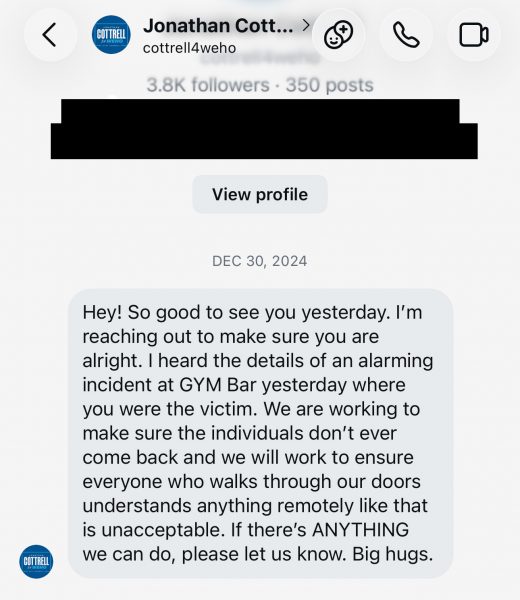
Screenshot of a message sent by Jonathan Cottrell’s Instagram account to Amber’s account on Dec. 30, 2024. Identifying details have been redacted.
The race for City Council
Brazeal announced his candidacy for City Council in April 2026. Craven heard about his campaign in June. “I was aware it was the same person,” he said, immediately recognizing him as the man who allegedly berated his friend a year and a half ago.
Later that month, Craven reached out to Braverman and Cottrell, who had recently announced his own campaign for City Council, to inform them that Brazeal was the same man from the night. “They were definitely surprised by it,” Craven said.
After being made aware that Brazeal was allegedly the same man from the transphobic incident at their bar, the owners did not state anything publicly, following Amber’s wishes. Cottrell has not mentioned anything on the campaign trail even as he and Brazeal have been endorsed by some of the same organizations like Equality California and Sunset West Alliance.
“At the time of the incident, our staff asked the woman involved whether she wanted us to take any further action, and she said she did not,” Cottrell said in a written statement. “This was never our story to tell. Gym Bar has always been a safe space for everyone in our community, and that will never change.”
Craven and Turpin waited to talk publicly about the incident because they wanted to keep their friend’s experience private.
“Ricky and I thought … something [else] would be said to kind of give light to the kind of person that Kyle is without us having to use our friend’s story,” Craven said. “But now because it’s closer to the election [and] stuff has not come to light, I feel the community would be safer knowing.”
Amber did not hear about Brazeal’s candidacy for City Council until last week, when she was informed by friends that a reporter for the Los Angeles Blade was investigating allegations of a transphobic incident involving him. These days, she splits her time between the Los Angeles area and other parts of the country so she has not been following local politics closely. But when she looked up his campaign, she instantly realized that this was the same man from that night. “I saw the face and pictures … and I made the connection,” she said.
“This is something that I need to address,” she added. She said that it can feel “impossible” as a trans woman to call out people who express bigotry without facing “repercussions.” Brazeal’s bid for City Council motivated Amber’s decision to speak publicly about the incident. “He is seeking a position of power in the city,” she said. “He needs to understand that this is stuff that just doesn’t go away.”
Reflecting on the incident, Amber said she’s still shocked and upset. “I was floored that he would use that word in that bar,” she said. By speaking out, she hopes to heal some of the pain caused by Brazeal’s alleged actions and regain her confidence.
“Words do matter and they do hurt and the T-word [used] toward me hurt,” Amber said. “Now I’m trying to use my words to share my story.”
California
‘A disgusting attempt to exploit lesbian intimacy for political attention’: suggestive Steve Hilton ad draws criticism
Steve Hilton’s newest ad aimed at liberal voters flops with LGBTQ advocates and conservatives, but for different reasons

Two women sit on a bed, a Pride flag hanging behind them. One is nervous; the other tells her to be calm and that she’ll do “all the work.” The music swells. The two hold hands and — fill out a ballot voting for Steve Hilton?
This is the new advertisement from the Hilton Gubernatorial campaign that is drawing rebuke from both sides of the aisle, but for very different reasons.
Jorge Reyes Salinas, the communications director at Equality California, said the ad was an insult to the queer community. “This ad is a disgusting attempt to exploit lesbian intimacy for political attention,” he said. The advertisement plays on media tropes that Salinas says “reduce lesbian and bisexual women… to sexual entertainment,” rather than showing them as well-rounded characters. “Any group of the LGBTQ+ community deserves the same dignity and respect as everyone else,” he said.
The ad is truly hyper-sexualized. It ends with one woman telling the other, “Now lick it.” The two pause and stare before she reveals an envelope to send the ballot, and large text pops up saying, “Just try it!”
Salinas characterized the ad as a desperate attempt to get attention from a candidate who is trailing far behind in the polls in heavily Democratic California. The Democratic Candidate Xavier Becerra, who is endorsed by Equality California, holds a 25-point lead over Hilton according to recent polling by the UC Berkeley Institute of Governmental Studies.
Conservatives have also criticized the ad. Influential evangelical Pastor Jack Hibbs thought the ad was distasteful and said, “lesbianism among college girls and some high school girls that right now is an actual pandemic of social ill.” Republican AG candidate Michael Gates said it undermines “the sanctity of the relationship between parents and their children.” This criticism is rather confusing because although the ad features two relatively young women, they both appear to be adults, not minors.
“The comments from Pastor Jack Hibbs should be criticized because there is nothing wrong with two women being attracted to each other,” Salinas said. “We’re calling out the ad’s stereotypes, while also rejecting the homophobia in the response to it … by other Republicans.”
The backlash from Hilton’s own party and supporters shows that an advertisement full of queer innuendo was ill-considered, considering the national GOP’s attacks on LGBTQ people in recent years. Hilton himself has been campaigning against transgender girls and women competing in school sports and using locker rooms that correspond with their gender identity. This context might be why Hilton’s political base responded to the ad just as poorly as the liberal voters he was attempting to court.
Hilton says the ad is part of a new series rolling out before Election Day, showing stereotypical California liberal archetypes voting for Hilton. He claims these ads are authentically filmed with real actors, as opposed to being A.I. generated, like many of his previous ads. One other advertisement has been released so far by the campaign showing a man at a spiritual retreat also being swayed to vote for Hilton, although it is notably absent of sexual innuendo.
Caleb Kaufman is a California Local News Fellow placed with the Los Angeles Blade. The California Local News Fellowship is a state-funded initiative to support and strengthen local news reporting. Learn more about it at fellowships.journalism.berkeley.edu/cafellows.
AIDS and HIV
AIDS Walk Los Angeles set for 42nd year amid growing challenges
APLA Health CEO Craig E. Thompson talks with the Blade about how the fight against HIV/AIDS continues

The 42nd annual AIDS Walk Los Angeles will take place on Sunday, October 18th at West Hollywood Park. Participants are set to march a two-mile loop around West Hollywood and hear speeches from organizers and HIV/AIDS advocates.
The Los Angeles Blade spoke with Craig E. Thompson, CEO of APLA Health, the event’s organizer, about the continued importance of the fundraising event and the challenges facing AIDS research, healthcare, and advocacy.
“The idea that HIV is over is the most dangerous myth out there,” Thompson said in a written statement. According to Thompson, increased options for HIV treatment and prevention have created a public perception that AIDS is no longer a pressing issue and have led to a decrease in participation and fundraising at AIDS Walk LA. “HIV fundraisers across the country are seeing this decline,” he said.
But recent federal cuts and policy changes have created new obstacles to ending the HIV and AIDS epidemic. Congress has proposed cuts that would strip away nearly one billion dollars in HIV funding, mainly impacting prevention and outreach. And earlier this year, the Trump-Vance administration ended nearly 100 community organizations’ HIV-prevention grants, opting instead to direct the money to state and local health departments.
These funding cuts have been felt by APLA Health, which last year was one of the California HIV prevention groups impacted by a 20 million dollar funding freeze. The freeze was eventually overturned, but Thompson still fears future cuts from the federal administration. “Over the past year we took cuts to our food pantry program, PrEP navigation, housing, and more,” he said. “Thanks to relentless advocacy and partners at the state and county who stepped up, much of that funding has been restored,” adding, “but restored is not the same as safe.”
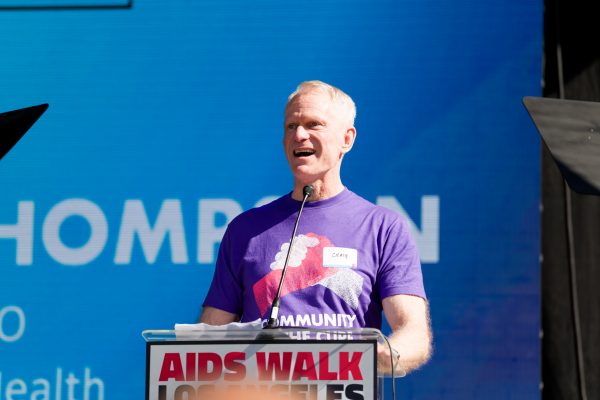
Craig E. Thompson speaks at AIDS Walk Los Angeles 2025. (Photo courtesy of Craig Allyn)
Thompson fears that continued divestment from HIV healthcare and prevention could harm vulnerable communities. “The burden once again lands on the shoulders of those with the least power and the least access to care,” he said. “New infections fall hardest on people of color, transgender women, and those in low-income communities. Every one of those diagnoses could have been prevented.”
Non-HIV-specific federal policies also pose harm to APLA Health’s clients, the biggest of which is cuts and decreased eligibility for Medi-Cal, the state’s Medicaid program. “Medi-Cal is how a huge share of our patients get care, and the federal cuts will hit hard,” Thompson said. “California is covering much of the cost through next summer, … but a patch is not a plan,” he added. And a new policy starting in 2027 will mean that some Medi-Cal recipients will soon have to recertify their coverage twice a year instead of once. “That’s a mountain of paperwork,” Thompson said. “It’s a way of quietly cutting people off without having to say it out loud.”
Despite these current challenges, Thompson sees this year’s AIDS Walk LA as an effective way to help those living with HIV and AIDS at a time when they need support the most. “Funds raised by AIDS Walk LA stay in Los Angeles County and pay for wraparound HIV care and prevention,” he said. This includes funding medical care, PrEP prevention, housing, food pantries, and more. “These programs form the safety net that keeps our community healthy, and the Walk helps hold it together,” Thompson said. Last year, the walk raised over a million dollars for APLA Health to fund its services.
“Fighting back works.” Thompson said. “Come angry, come joyful, come exactly as you are. We’ll celebrate our progress and turn that energy into action. Then [we’ll] carry it to the polls 16 days later.”
Registration for the walk is still open.
Caleb Kaufman is a California Local News Fellow placed with the Los Angeles Blade. The California Local News Fellowship is a state-funded initiative to support and strengthen local news reporting. Learn more about it at fellowships.journalism.berkeley.edu/cafellows.
California
Governor Newsom signs 6 pro-LGBTQ bills, vetoes 1
Newsom signs all but one Pro-LGBTQ bills into law, claiming legislative overreach.

Last week, California Governor Gavin Newsom signed and vetoed a slew of bills into state law. Among them were seven pertaining to California’s LGBTQ community. Newsom signed six while vetoing one. His actions drew applause and scorn from advocacy groups in the state.
The 6 Signed Bills:
Assembly Bill 1775 allows transgender veterans, who were banned from service last year by the Trump-Vance administration, to access housing assistance, use California’s discharge upgrade assistance program, and get support for gaining employment.
Assembly Bill 1930 strengthens privacy protections for healthcare patients and providers by creating clear guidelines for California agencies, individuals, and corporations to respond to out-of-state subpoena requests relating to abortion or gender-affirming care. This includes a requirement to contact the California Attorney General at least 7 days prior to responding to the subpoena or providing legal documents. This should add additional protection to those residing in California from investigations in states where abortion or gender-affirming care has more restrictions.
Senate Bill 934 targets conversion therapy in California and increases the amount of time a patient has to bring a medical malpractice lawsuit against a provider for attempting to change the patient’s sexual orientation or gender identity. The bill takes aim at the widely debunked practice that treats queerness as a mental disorder that could be cured through psychotherapeutic methods. Conversion therapy has been illegal in California since 2012; however, a recent Supreme Court decision threw the ban into question, prompting lawmakers to write this new bill that legally defines it as medical malpractice.
Senate Bill 1023 expands access to PrEP, Pre-Exposure Prophylaxis, a medication that protects people from contracting HIV. The bill requires insurers to cover the drug through the medical benefit and the pharmacy benefit pathways, allowing for more providers to give patients PrEP.
Senate Bill 1114 strengthens privacy protections for voluntary self-identification data about sexual orientation and gender identity. The bill limits when California government agencies can share this data and bars it from being disclosed outside of the state government, with few exceptions.
Senate Bill 1328 expands support for LGBTQ students and staff in California colleges. The bill requires any institution of higher education to designate an employee at any campus, satellite campus, branch campus, or outreach center to support the needs of LGBTQ individuals.
Equality California, the largest statewide LGBTQ civil rights group in the country, commended the Governor for his support of legislation that protects and supports the queer community amid escalating threats, attacks, and rollbacks from the federal government.
Executive Director Tony Hoang said in a written statement, “California is once again demonstrating that when LGBTQ+ people are targeted, our state will respond with action,” adding, “We are grateful to Governor Newsom for signing these measures.”
The Vetoed Bill:
Assembly Bill 2164 would have banned California from extraditing anyone residing in California for providing abortions or gender-affirming care in another state. Governor Newsom vetoed this bill despite agreeing with its principles, claiming in a written statement that “extradition is an exclusively executive function” and that he did not want to limit the “executive authority of an incoming Governor.”
This bill was created in response to Louisiana’s attempt to extradite a California physician for allegedly sending abortion pills in the mail to a Louisiana woman. Governor Newsom responded forcefully to the extradition request, publicly denying it and stating, “We will not allow extremist politicians from other states to reach into California and try to punish doctors based on allegations that they provided reproductive health care services.”
In a written statement responding to the veto, Lizzy Hinkley, the legal director of the bill’s lead sponsor, Abortion Coalition for Telemedicine, criticized Newsom, stating, “[the] outgoing Governor’s principled stance is cold comfort to Californians living and working in the real world post-Dobbs. A high-brow, academic justification for refusing to codify legal protections only reveals an ignorance for the lived reality of patients and providers – and does nothing to help them.”
Caleb Kaufman is a California Local News Fellow placed with the Los Angeles Blade. The California Local News Fellowship is a state-funded initiative to support and strengthen local news reporting. Learn more about it at fellowships.journalism.berkeley.edu/cafellows.
California
‘Embracing your identity can be a form of resistance’: Councilmember Byers highlights Bisexual Awareness Week
Councilmember Byers discusses the importance of the celebratory week
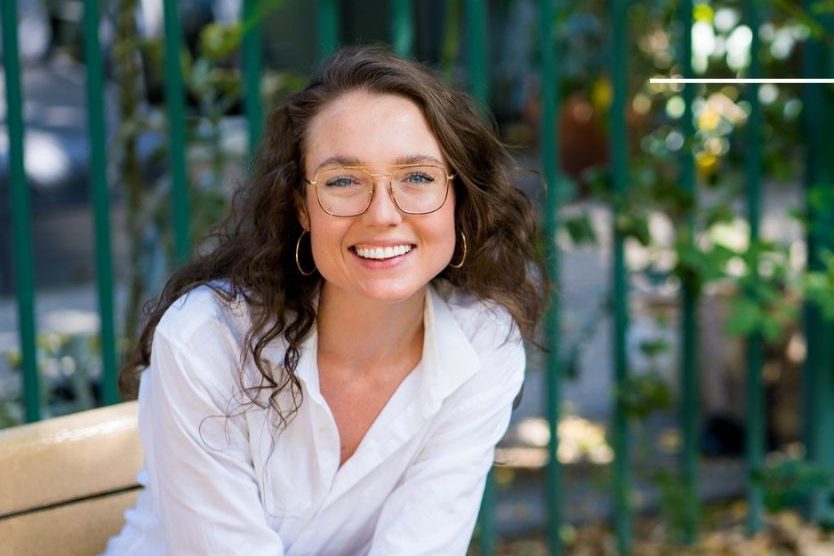
As Bisexual Awareness Week comes to a close this Wednesday, the Los Angeles Blade sat down with West Hollywood Councilmember Chelsea Byers to talk about how the city celebrated. Byers, a Councilmember since 2022 and an openly bisexual woman, discussed the importance of the celebratory week, challenges facing the bi community, and how living openly can be a form of resistance.
“Every year the city recognizes Bisexual Awareness Week as a week of action,” Byers said. The city coordinates special events to mark the occasion, this year featuring a workshop from Rewrite the BiLine, a group that aims to improve bisexual representation in media, and programming from the Los Angeles Bi+ Task Force, a nonprofit that promotes education and meetups for the bisexual community.
Byers believes that being a bisexual representative has allowed her to “feel a sense of connection” to these organizations and consequently make better programming. “I think that sort of goes to show that when you have more representation in these elected offices, the policies truly do follow,” she said.
Byers also talked about challenges that impact bisexuals even from within the LGBTQ community. “I can say, in my own personal experience as a bi woman who has been dating a man for more than a decade now, many people make the assumption that I’m a straight woman,” she said, adding, “I feel that and experience that even within the queer community.”
This can create a feeling of imposter syndrome, or a sense that deep down a bisexual person really just wants to swing one way or the other. “It can get exhausting having to constantly reinforce who you are, even if at times it’s not how you’re passing or understood in community. … and I hear [bisexual] people express that often,” Byers said.
However, there is data to show that acceptance of bisexuality is on the rise. According to polling from the HRC, 31% of young people between the ages of 18 and 24 identify as LGBTQ. People identifying as bisexual make up the largest portion of that increase when compared to other age groups. A 2023 poll from Gallup shows that 15% of Gen Z is bisexual, in comparison to the 5.6% who are gay or lesbian.
This trend of younger generations being more comfortable to explore and be open about their sexual identities is incredibly inspiring for Byers. “It’s so moving and encouraging to know that people are feeling a greater sense of safety, … that there are more people who will accept them, that there is more awareness and even more pushback to the hate that LGBTQ queer people have been experiencing,” she said.
“Embracing your identity can be a form of resistance,” Byers said, continuing, “People can find a lot of joy in that feeling of self-expression. And I think there’s a sense of empowerment that comes from just saying, ‘you know, this is something I can do. I can take care of who I am.’”
AIDS and HIV
United States Conference on HIV/AIDS grapples with federal budget cuts
The largest conference on HIV and AIDS in the nation convened in SoCal amid increased cuts to federal HIV programs and research.
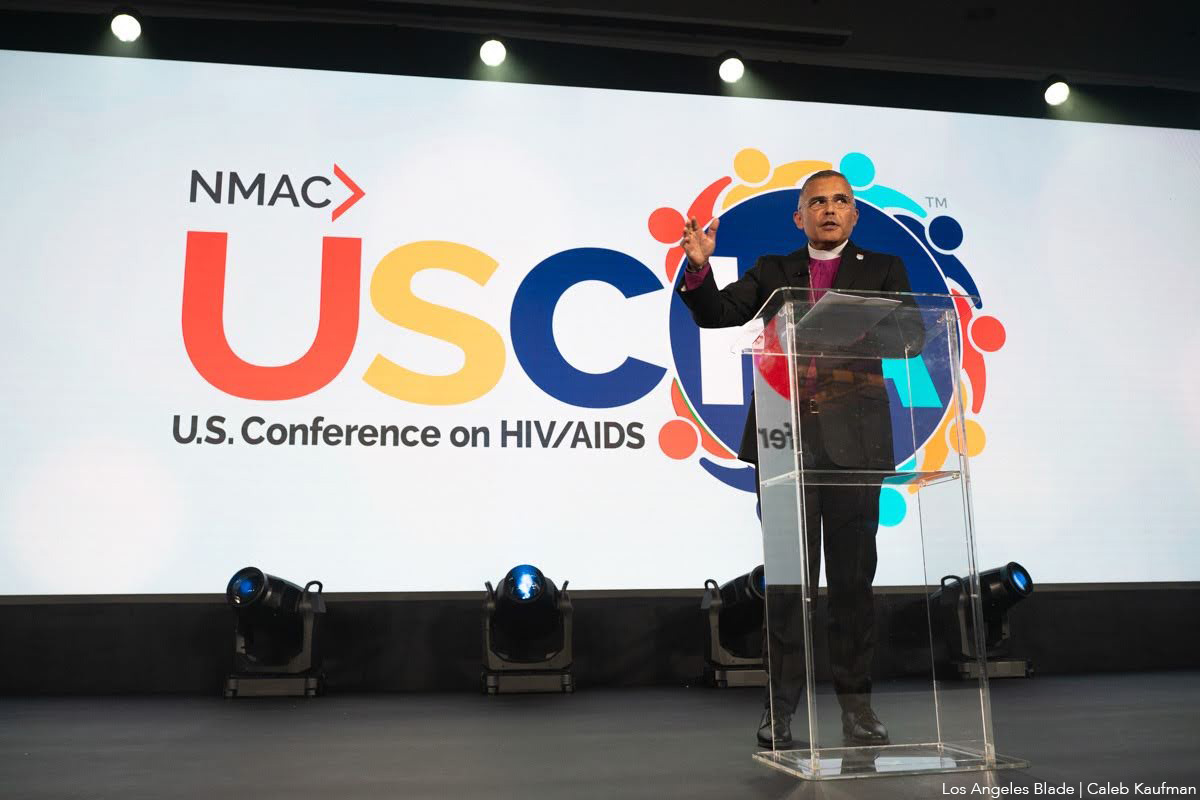
Advocates, public health experts, and healthcare providers gathered for the United States Conference on HIV/AIDS on Sept. 17 in Anaheim.
The conference is the largest of its kind in the nation and came amid a wave of new challenges for HIV research and treatment. Since the beginning of the second Trump-Vance administration, federal spending cuts have targeted HIV/AIDS programs, including the gutting of the U.S. Agency for International Development and proposed cuts to PEPFAR, which supports HIV testing and treatment globally, in 2025.
Last year, Congress maintained funding for HIV programs after proposed cuts faced opposition from advocacy groups and bipartisan criticism. Yet, this year Congress has proposed similar cuts to many of the same programs, which would cut nearly one billion dollars in HIV funding. The majority of the cuts would impact HIV prevention and outreach, which includes ending nearly all Centers for Disease Control and Prevention HIV prevention activities.
“If we continue down this path,” said Jeremiah Johnson, the executive director of PrEP4ALL, an advocacy group that supports expanding access to HIV prevention. “We’re going to see more people falling off treatment. We’re going to see more wait lists. That’s going to lead to more people dying from AIDS-related complications.”
Cuts and Challenges
The funding cuts loomed over the conference and inspired protest from activists.
On the first day of USCHA, activists with Save HIV Funding organized a mock funeral outside the convention center. Advocates living with HIV wrote eulogies for themselves, meant to show the consequences of diminished access to treatment. Then activists marched through the conference carrying fake coffins.
Johnson, who helped organize the protest, said that “the Trump administration has eviscerated global aid … and the fears that many of us are just talking about hypothetically for ourselves at the moment are already happening [internationally]. And so we wanted to place that front and center at this conference.”
The attacks on funding for HIV research and outreach come at a complicated time for the movement to end the AIDS epidemic. While options for prevention and treatment have never been more accessible, such as PrEP and antiretroviral therapy, there have been some concerning upticks in infections, particularly among communities of color.
Southern states account for the majority of new HIV infections in the country, despite making up only 38 percent of the population. And these infections impact disproportionately Black and Latino communities. According to the CDC, even as overall HIV infections decreased from 2018 to 2022, diagnoses of HIV among Latinos grew by 17 percent, with a majority of this increase happening in the South.
Stigma is still the biggest barrier for people seeking out HIV treatment, said Guillermo Chacón, president of the Latino Commission on AIDS.
“The progress that we [made] in the past two years has been demolished,” he said.
Chacón blames the federal government for stigmatizing HIV treatment by using harmful rhetoric about queer people.
“The level of homophobia and transphobia right now is even higher because it has been used as a political message to create fear and division in our country,” he said.
Chacón believes that research and outreach must be done to reverse the rising HIV infections among Latinos. However, this is exactly the type of research that the Trump-Vance administration is targeting most intensely. Research into “health disparities” — why some health problems impact certain communities more than others — has been heavily criticized by the White House, along with other research that it considers “woke” and claims is not supported by science.
Impact Felt at Conference
The opening plenary for the conference addressed some of the funding challenges the movement was facing but tried to shift the focus to the victories the movement has seen over the years. Speakers highlighted historic successful activist campaigns like ACT UP, and recent improvements in medical care and access to treatment.
Randevyn Pierre, head of U.S. external affairs at ViiV Healthcare, the sponsor of the plenary, took the stage to celebrate the success of the U = U campaign (undetectable viral load = untransmittable HIV virus), and ViiV’s investment of $33 million in HIV community organizations across the U.S. This comes as the Trump-Vance administration has made moves to end direct funding of community-based organizations, opting to give the funding to state healthcare agencies.
The speakers at the conference discussed reducing stigma for those living with HIV and the joy of living authentically. They also emphasized the diverse groups of people that are impacted by HIV and how they can come together to fight for a cure. Longtime AIDS activist Rae Lewis Thorton exclaimed, “When they tell me there’s a cure to HIV, I’m gonna take off my 4-inch heels and put on gold slippers,” to applause from the audience.
The opening plenary also featured song and dance from a variety of artists, many of whom spoke about how HIV has impacted their own lives and how advocacy has uplifted their spirits. However, the joyous atmosphere at the conference would not last.
On the final day of USCHA, Geri Donenberg, the associate director of AIDS research at the National Institutes of Health, took the stage to address the conference.
As she spoke, phones began to buzz around the room with breaking news: the Trump-Vance administration was drafting an executive order to create an external board to oversee NIH grants and screen them for political content. NMAC CEO Harold Philips took the stage after Donenberg to address the crowd. “It’s up to us,” Philips said, “to hold NIH accountable.” He added that HIV advocates “have supporters inside NIH who are struggling and working to do the right thing. We have to have their back.”
Chants of “stand up, fight back, fight AIDS” erupted from the crowd as Philips spoke. “We do have to fight back. We do have to continue to fight,” Philips replied.
Caleb Kaufman is a California Local News Fellow placed with the Los Angeles Blade. The California Local News Fellowship is a state-funded initiative to support and strengthen local news reporting. Learn more about it at fellowships.journalism.berkeley.edu/cafellows.
California
Grand marshals announced for 2026 Greater Palm Springs Pride
Palm Springs has announced the grand marshals for this year’s event and the theme: “Be Included.”

Palm Springs is celebrating its 40th anniversary of Pride and has announced the grand marshals for this year’s event. The annual Palm Springs Pride Parade will take place on Sunday, November 8, 2026, with the theme “Be Included.”
The grand marshals for this year were selected for their contributions to uplifting LGBTQ community and efforts to expand equality.
Comedian, writer, and actor Fortune Feimster was named the National Grand Marshal for the parade. Feimster is widely known for her stand-up specials and will be performing her special, Fortune Feimster: Takin’ Care of Biscuits (Encore), at the Plaza Theater on November 8th at 8:00 pm. Her extensive acting career includes starring roles in Netflix’s hit series The Hawk alongside Will Ferrell and Molly Shannon, FUBAR with Arnold Schwarzenegger, The Mindy Project, and feature films like Barb and Star Go to Vista Del Mar and Apple’s The Dink. She is also a co-host of the award-winning podcast Handsome and co-host of SiriusXM’s What A Joke Radio.
Actor and singer Cheyenne Jackson will serve as the Celebrity Grand Marshal. Jackson is known for his acclaimed work across stage, screen, and concert hall, being recognized for his work in Broadway productions, earning an Emmy nomination for Julie and the Phantoms and a Grammy nomination for the cast recording of West Side Story. He was seen on Broadway in productions such as XANADU, Into the Woods, All Shook Up, and Finian’s Rainbow. On screen, he’s had prominent roles in American Horror Story, 30 Rock, Glee, The Morning Show, and Julie and the Phantoms. Jackson will perform live in Palm Springs on Sunday, November 8, at 6:00 PM at the McCallum Theatre.
Dottie DuBois, also known as Marshal Percy, was named Pride Royalty for Life to honor the legacy of Les Dames Du Soleil, a drag troupe from the Coachella Valley that raised over two million dollars for DAP Health.
Gary Moline will receive the Community Service Award in celebration of his twenty-plus years of work with the Pride Bands Alliance and extensive civic engagement. Moline served as Artistic Director, board member, and national delegate to the Pride Bands Alliance. His extensive community work includes serving on the Greater Palm Springs Pride Board, the Desert Business Association, and as a California State Council Member of the Rail Passengers Association.
The pride parade will begin at 10:00 am on November 8, starting at Palm Canyon Drive at Tachevah and marching to the official entrance of the Pride Festival. The parade is free and open to the public.
For more information regarding the 40th Anniversary Celebration of Pride in Palm Springs, parade route updates, and festival schedules, please visit pspride.org.
Caleb Kaufman is a California Local News Fellow placed with the Los Angeles Blade. The California Local News Fellowship is a state-funded initiative to support and strengthen local news reporting. Learn more about it at fellowships.journalism.berkeley.edu/cafellows.
California
San Francisco, long a queer safe haven, remains competitive for homebuyers
AI boom has boosted market as housing shortages continue

LGBTQ people have a variety of housing options when they’re lucky enough to be able to afford property. In San Francisco – long considered a safe haven for the queer community – individual needs have to be weighed both against the city’s chronic housing shortage and a competitive but often lucrative job market.
After a lull of several years, the city’s real estate market has heated up in recent months, driven by the city’s economic recovery post-COVID lockdowns and the artificial intelligence boom.
For Rick Page, 68, and Anthony Farace, 57, both gay men, the job market was a top reason to move back to the city after they’d left the Bay Area five years ago.
Page said the couple had left behind a “huge home in a town called Oakhurst, on the way to Yosemite.” When moving back to San Francisco they wanted to balance suburban and downtown vibes, Farace said, leading them to settle in Diamond Heights, a tiny neighborhood built atop three hills above Noe Valley, that has suburban sensibilities but isn’t too far from downtown.
“In the summer it’s a little foggy but it’s nicer up here the rest of the time, and where it felt like you aren’t downtown where it’s just concrete and buildings,” Farace said.
Added Page, “It sounds goofy, but if there’s a tsunami, it won’t get all the way up here.”
Page said that in the spring the couple initially bought a relatively small studio in Diamond Heights. But they found that it didn’t meet their needs and purchased a second studio unit nearby that did. They closed on the larger condo unit in October.
“It just didn’t have any kind of patio or outdoor thing for the dog,” Page said of their first studio, “so we saw something upgraded with a kitchen redone, nice hardwood floors, a fireplace, a sunny patio, so it was much nicer. We bought that one, now we have to figure out what to do with the first one.”
The first unit was $450,000 and the second $520,000, they stated.
The couple also mentioned a lack of some of the downtown, South of Market, and Mission District street disorder that garnered negative headlines in the past several years. The couple also noted that Diamond Heights is more affordable than traditionally high-priced Russian Hill, which is closer to downtown.
Nevertheless, “The employment, the social life is better” in San Francisco, Page added.
Federal data shows many LGBTQ people want to own a home.
Fannie Mae, the government sponsored enterprise that buys home loans, does have some LGBT data, according to research from 2023 that was published in 2024. The data is the result of sexual orientation and gender identity identifiers in the National Housing Survey. It did not ask about queer representation.
According to the report, 8.6% of respondents identified as lesbian, gay, bisexual, and transgender – similar to the U.S. Census Bureau’s Household Pulse Survey. The survey included responses from a weighted total of 12,363 people 18 years and older, with a weighted total of 1,059 identifying as LGBT.
The research found the LGBT homeownership rate to be 46%, which is much lower than the overall U.S. homeownership rate of 65%.
The latest available data from The Urban Institute reveals that the homeownership rate for individuals identifying as LGBTQ+ stands at 51%, in contrast to 71% for those who identify as both straight and cisgender. According to the U.S. Census Bureau, at least 1.3 million same-sex couples reside in the U.S., meaning a significant number of LGBTQ people in this country do not own their own homes.
In San Francisco, the Diamond Heights neighborhood is just a half-hour walk from the Castro, and even shorter on the bus.
Charlie Mader is a gay man who has been a Realtor in San Francisco for “just under 25 years,” with a particular emphasis on Diamond Heights, the Castro, and Noe Valley. He said that while many LGBTQ people want to live relatively close to a queer neighborhood, such as the Castro, “It’s not like it used to be.”
Even in spite of a recent backlash to LGBTQ equality in the mid-2020s, leading to a number of federal policies largely targeting transgender and gender-nonconforming people, Mader said that since marriage equality, “You hear ‘There’s no need for us to live together in a gay ghetto,’ and we’re interspersed throughout the community and the country.”
Marriage equality became legal in California in June 2013, two years before the U.S. Supreme Court made same-sex unions legal nationwide in 2015.
Mader said marriage equality helped incentivize more LGBTQ home-buying due to an old Clinton administration tax law that gave married couples favorable tax incentives versus single homebuyers.
But even within the City-by-the-Bay, the distinction between neighborhoods is not as stark.
“I hear the Mission is just as gay as the Castro is, and the food is better,” Mader said. “I can’t argue with that.”
Angel Carney, a lesbian Realtor, has also been in the Castro area for decades. She said the threshold of home ownership there has risen dramatically.
“When I first started,” which was in 2002, she said, “I had teachers, I had nurses, I had a doctor … It was diverse in terms of who was buying. Everybody had a way to get into the market.”
Now, “with tech, they blew out everybody,” she added, saying first-time homebuyers are sometimes competing with tech employees making six-figure salaries from their early 20s due to their economic opportunities.
Carney said that even so, “It’s mostly a two-income household who’s buying in the Castro,” largely people in their 30s.
“LGBTQ is more of a rarity,” she added. “I’ve seen more non-LGBTQ, I would say, couples buying in the Castro.”
One reason is because while it is such an iconic epicenter of the LGBTQ community, it is “definitely a transit hub, and it’s geographically central, so if you work on the Peninsula, you go over Diamond Street and you’re on [Highway] 280. You can get to BART, to the airport, it definitely is transit centric for work, for traveling, if you’re a tech worker.”
Understanding that unhoused people are often part of San Francisco neighborhoods such as the Castro is also a factor, Mader said.
“Because gays are so tolerant, it draws a magnet for people who you know are distressed and so you see more antisocial behavior, begging on the street, people just getting high because they know they can get away with it,” he said. That can impact people’s desire to buy a forever home in one neighborhood or another.
Indeed, the Castro has experienced fewer open-air drug scenes than other parts of the city, such as Sixth Street or the Civic Center Plaza, which are both near the downtown core. Such activity has, however, remained a persistent complaint of Castro merchants. In early December, Sophie Marie, a legislative aide to gay Board of Supervisors President Rafael Mandelman, who represents the neighborhood as District 8 supervisor, noted that “a lot” of unhoused people have recently moved into the Castro as they leave South of Market and Civic Center amid an increase in law enforcement activity and attention from city government there.
The Castro is among those neighborhoods seeing building height limits increased as a result of Mayor Daniel Lurie’s family zoning plan that, after much rancor, passed the Board of Supervisors for the final time on December 9. The plan is intended to increase the city’s housing stock to meet state housing goals.
San Francisco’s median home sale price rose nearly 6% to $1.85 million, its highest amount since 2022, earlier this year, as the San Francisco Standard reported.
Mader said that nonetheless, “There are empty condos everywhere for sale,” and that market is down 20% from its peak.
“Right now I’m selling for $625,000 – I’ve sold for $100,000 more than that,” Mader noted.
Carney agreed that condos are very available right now.
“If you’re thinking about entering the market, think about condos,” she advised. “When interest rates go down, prices will go up, so get in now on a condo. People say they’re waiting for the market to drop – well, the market dropped on condos. Those are a great buy right now.”
The Fannie Mae data showed that homeownership aspirations are high among LGBT consumers, with 83% saying they “would like to buy at some point” or “continue to own,” the report stated. This share is comparable to non-LGBT consumers, the report stated. LGBT consumers also believe there are more obstacles to owning a home than their non-LGBT peers.
Those obstacles include that over 70% of LGBT respondents said it was difficult to get a home mortgage today, compared to only 55% of non-LGBT respondents, according to the research. LGBT consumers were more concerned about closing costs, credit score or history, current debt, and insufficient income for monthly payments.
The Federal Reserve on December 10 lowered interest rates for the third time this year. The recent reduction was by a quarter of a percentage point, as the New York Times reported. The new range is between 3.25% to 3.75%. But CNBC noted that mortgage rates may remain higher because they are less impacted by the Fed. The average rate for a 30-year, fixed-rate mortgage is currently about 6.35%, the network reported December 10.
Nationally, the real estate market is dealing with the same uncertainty as the rest of the economy, now almost one year into President Donald Trump’s second term.
“Everyone is afraid of another Trump recession,” Mader said. “People are not buying houses especially in places like Florida, where they’re having all kinds of issues with insurance.”
Florida is the nation’s most expensive state for home insurance due to natural disasters like hurricanes.
California is also experiencing insurance issues, particularly in areas prone to wildfires, as the San Francisco Chronicle reported. Most of the Bay Area is not as affected as other parts of the state, though insurance premiums are rising for home insurance.
Not everyone wants to live in a big city.
Mark Kliem, who’s part of the LGBTQ Real Estate Alliance, focuses on the North Bay, encompassing Solano, Napa, and Sonoma counties.
“Consumers can contact the alliance no matter where they live and connect with the nearest LGBTQ agent close to their area whether they are buyers or sellers,” Kliem, who is gay, said.
Kliem lives in the Solano County city of Vallejo, where the real estate market took a dive during the Great Recession.
“A lot of investors swooped in and bought up as many of those places as they could, so there was a lot of investing in property through that, and a lot of flippers,” he said, referring to people who buy a property, fix it up, and then sell it for a profit.
Now, the area is one of the country’s hottest real estate markets, he said, because it’s near San Francisco, has warmer weather and is more affordable long-term.
“It’s a good place location wise – we’re on a bay, we have a ferry service to downtown San Francisco. We don’t have BART, so it’s a little problematic to get to the nearest BART, but our weather gets even warmer, less fog, than Oakland. Throughout the year, it’s a five-degree difference from San Francisco.”
Ultimately, the Golden State and the Bay Area in particular are poised to remain competitive for buyers of all sexual orientations and gender identity – despite the fact that that leads to so many barriers to entry. Gay Realtor Anthony Waite, 30, explained why.
“A lot of people who moved to Austin, Texas [during the COVID pandemic lockdowns] said there’s not a lot to do,” Waite said. “In San Francisco, you could find something to do every single corner every hour, day and night. Texas doesn’t offer that.”
(Editor’s note: This article was originally published by the Bay Area Reporter and is part of a national initiative exploring how geography, policy, and local conditions influence access to opportunity. Find more stories at economicopportunitylab.com .)
California
Calif. governor’s race spotlights Becerra’s LGBTQ advocacy
Former HHS secretary to face Republican Steve Hilton
California voters selected its two front runners for the state’s open governor seat following the second election of Gavin Newsom.
Last week former U.S. Secretary of Health and Human Services Xavier Becerra became the Democratic nominee for governor, setting up a general election matchup against Republican nominee Steve Hilton, a former political adviser in the UK and Fox News commentator.
Becerra, the son of Mexican immigrants, has spent nearly three decades in public service. Over the course of his career, he has served as California attorney general, U.S. secretary of Health and Human Services, a member of the U.S. House of Representatives, and a member of the California Assembly.
Hilton comes from a very different background.
Raised by Hungarian parents who fled communism and settled in the UK, Hilton entered politics after graduating from Oxford University. He worked within the Conservative Party — beginning during the era of former Prime Minister Margaret Thatcher and later served as Director of Strategy for Prime Minister David Cameron. After relocating to California in 2012 with his wife, Hilton taught at Stanford University, became a U.S. citizen, and later established himself as a Fox News political commentator.
As the race enters the general election phase, policy questions surrounding healthcare, civil rights, and the future of LGBTQ protections in California are expected to feature prominently in both campaigns. The Washington Blade sat down with former Biden-Harris administration health officials who worked under Becerra’s leadership and also with LGBTQ advocates. Both paint a clear picture of Becerra — a longtime ally whose support for LGBTQ rights and health equity has spanned multiple decades and offices.
“For Equality California, he has been a staunch ally over his decades of service serving California. From his time in Congress to attorney general to HHS secretary, he’s been a partner to the LGBTQ community at large, and specifically to Equality California, advancing LGBTQ equality,” Tony Hoang, executive director of Equality California told the Blade. “As he’s been the front-runner making the top two, we’re excited to get behind him in the race so that he wins the general election in November.”
Hoang argued that California’s next governor will play a critical role in protecting LGBTQ rights amid continued attacks from the Trump-Vance administration.
“It is critical that California remains a bulwark against what’s happening from the Trump administration. That’s why we were so supportive of Secretary Becerra’s campaign for governor,” Hoang said. “He has been there in that fight. When he was attorney general, he sued the Trump administration over 100 times, including a lawsuit where Equality California was an organizational plaintiff around the transgender military ban. Over the remainder of Trump’s term, it’s critical that California continues to fight to stand up for our values, including LGBTQ people in all facets of equality.”
Former HHS official Adrian Shanker, who oversaw LGBTQ health initiatives during the Biden-Harris administration, pointed to Becerra’s emphasis on health equity as one of the defining characteristics of his leadership.
“As Secretary, Xavier Becerra required all of us to include a health equity lens in all policies. No matter what the policy was, he wanted health equity to be centered. Health equity means ensuring that all people can attain their highest levels of health,” Shanker explained. “One of his priorities was clinical trial diversity. He wanted to make sure that new drug modalities and treatments were studied on all kinds of bodies, including populations that had historically been excluded from research.”
Shanker also emphasized that while leading HHS, Becerra consistently relied on scientific expertise rather than political considerations when making policy decisions.
“He really believed that we can’t politicize science. We have to let science drive the policy. He established a very strong scientific integrity policy for the department. That’s important for LGBTQ health, but it’s also important for everyone’s health.”
Shanker expanded on the multiple HIV prevention efforts including making the medication covered by nationwide subsidy programs allowing for americans of all income levels to get this life saving healthcare during Becerra’s tenure at HHS.
“We worked to make PrEP free for anyone on Medicare. The secretary trusted the scientists in the department to determine what was safe and effective and then championed the results,” Shanker said.
For many LGBTQ advocates, California’s role as a refuge state has become increasingly important as Republican-led states enact restrictions affecting transgender people and LGBTQ healthcare access.
Admiral Rachel Levine (ret.), the first openly trans person confirmed by the U.S. Senate and Becerra’s former assistant secretary for health, said California’s next governor will be central to those fights.
“We have an increasingly hostile federal environment against the LGBTQIA community in general, but particularly against the transgender and nonbinary communities. They have targeted the most vulnerable among us, especially trans youth, their families, and their medical providers. California is a refuge, and no one is a stronger supporter of our broader community and our transgender community than Secretary Xavier Becerra,” she told the Blade.
“He articulated his strongest and most enthusiastic support for our community throughout his time at HHS. Health equity was really principle number one for Secretary Becerra, and that includes health equity for our LGBTQIA+ community.”
Levine, who worked directly under Becerra, also praised his leadership style.
“Xavier Becerra really is an outstanding leader. I worked for him and with him when he was secretary and I was assistant secretary for health. He’s so down to earth and unassuming, and he talks a lot about his background, his parents, and his family. He exhibits all the traits you would want in a leader. He is personable, always professional, always compassionate, organized, and knowledgeable.
“I think that he will make an outstanding governor of California. He has local experience in California, where he served as attorney general, and he also has experience in Washington as a member of Congress and as Secretary of Health and Human Services. His background and his character make him an outstanding choice for governor.”
Shanker similarly pointed to Becerra’s engagement with LGBTQ communities and transgender advocates during his time at HHS as one of his strong suits — one that shows he is willing to commit to the right thing even if it is what some in higher powers, disagrees with.
“Secretary Becerra visited LGBT centers. He spoke at our HHS Pride Summit each year. He met directly with transgender health leaders and advocates.”
One meeting in particular stood out to Shanker– where Becerra’s leadership and tenacious dedication to committing to serving the American public.
“He said that his policy is to never do anything mild. He wanted actual policy change that advances the health and well-being of all Americans. He wasn’t looking for small, little tweaks. He wanted structural improvements.”
Shanker went on explaining that Becerra’s approach to all things — but especially very trivialized trans healthcare thoughts remained rooted in scientific evidence.
“He wasn’t reading the tea leaves to determine what policy we should enact. He was trusting the science and wanted to do the right thing for the people affected by our decisions,” Shanker said.
Hoang said that commitment to the evidence — and what LGBTQ advocates have point blanked asked from him has continued throughout Becerra’s gubernatorial campaign.
“I will say that he has done everything that we’ve asked of him and continues to speak proudly in support of the trans community. Full stop. We were lucky enough to work with him during his time as attorney general, but also as HHS secretary, ensuring that decisions are based upon science versus the rhetoric coming from MAGA extremists.”
As a recent example, Hoang pointed to Becerra’s support for trans student-athlete AB Hernandez.
“Just last week, he put out a statement that was read at the track meet for AB Hernandez, the trans athlete who was competing in the track and field championships.”
He added: “He has been a staunch ally, a proven staunch ally, of the LGBTQ community and specifically trans people.”
Levine said the importance of the California governor’s race extends far beyond state borders.
“I think it’s very important because states like California, New York, Massachusetts, Oregon, Washington, and others are ground zero for these battles. They serve as places of refuge, particularly for trans youth and nonbinary youth who may have to leave their states because of these attacks and hateful laws,” she said. “The governors of those states, including the governor of California, could not be more important. We could have no better defender than Xavier Becerra.”
For Hoang, the stakes of this election are difficult to overstate.
“I think because we see that the stakes are high. It’s trite to say, but this is truly one of the elections of our lifetimes, where you are seeing access to essential health care being denied to trans youth, having billions of federal dollars being up for grabs, and ensuring life-saving programs. Ensuring that LGBTQ Californians understand what’s at stake in this governor’s race is really critical, and we’re going to do all that we can to ensure that Xavier is our next governor.”
Hoang said many LGBTQ Californians are feeling anxious about the current political climate.
“It’s all over the place. I think in this time where it is a relentless onslaught of attacks from the federal government, folks feel disillusioned and feel scared.
“That is why it’s imperative that we ensure that LGBTQ people and our allies understand that even though there’s so much misinformation out there, it’s critical that folks turn out to vote — not just for the governor’s race — but ensuring that we take back Congress into pro-equality hands, and that they have strong champions in state legislatures all the way down to school boards.”
Looking ahead, both advocates pointed to healthcare access as a major challenge facing LGBTQ Californians.
“One area that we’re working on now, and that we know will continue, is backfilling dollars from the state government to the extent that the federal government continues to strike funding from things like HIV prevention programs, funding for trans health care, among others,” Hoang said.
“Ensuring that California does not let our communities get thrown under the bus is critical. Particularly when you have some folks in the broader Democratic Party who think that our rights are expendable, ensuring that the governor continues to step up and work with the state legislature to advance pro-equality legislation and budget priorities.”
Levine specifically pointed to the closure of some gender-affirming care programs in California.
“Even though California has tried to protect access to gender-affirming care for youth, a number of academic medical centers have closed their programs. It would be great for a governor to work with those programs, universities, deans, and presidents to see if they can reopen them.
Levine clarified that although there is currently no legislation in California restricting gender-affirming care, there is always a chance with the strike of the president’s pen or a conservative legislator to bring that to California.
“There is no law or regulation currently forcing those programs to close. There are threats—threats from executive orders, threats involving Medicaid—but those matters are still being fought through the courts.”
She concluded:
“Secretary Becerra is a fighter for health equity. He’s a fighter for disadvantaged communities, and I’m sure that he will take this on.”
Asked why LGBTQ voters should trust Becerra, both Shanker and Hoang pointed to his record.
“Actions speak louder than words. He has a record of action in terms of advancing the health and well-being, and in prior roles, the legal rights, of LGBTQI people,” Shanker said.
“It’s easy to say what you think you need to say to win political office. It’s harder to point to a record of results, which is what he can do because of his years in Congress, his years as attorney general, and his four years as secretary of Health and Human Services.”
Hoang offered a similar assessment.
“Especially in this moment, where there are a lot of platitudes out there, we have a candidate who has shown proven leadership in support of our community when it wasn’t popular. Looking back to his days in Congress, when he was one of 67 members of Congress who voted against the Defense of Marriage Act, and when he stood up to the Trump administration as attorney general by suing over LGBTQ rights, he has shown time and time again that he will reach out to the most vulnerable and use his platform to serve.”
Levine, meanwhile, declined to weigh in on political strategy but reiterated her confidence in Becerra’s support for LGBTQ Americans.
“I’m not a politician. I’ve always been a physician and public health professional. Even though I was in a politically appointed position, my job was health equity and the protection of public health. It’s hard for me to comment on the politics of it. But all I can tell you is that there’s no bigger supporter of our community than Xavier Becerra.”
The Blade reached out to both the Becerra and Hilton campaigns seeking comment on their LGBTQ policy platforms, including how they would address trans rights in California as the federal government has taken an increasingly adversarial approach toward transgender Americans. Neither campaign responded to requests for comment by press time.
Arts & Entertainment
LA Blade’s Best of LA 2026 winners announced!
The top names from SoCal’s LGBTQ community, as voted on by LA Blade Readers, are honored for the 9th annual Best of LA.
This week marks the Los Angeles Blade’s 9th Annual Best of LA Award Show, honoring leading members from the community as voted on by readers of the Blade. Presented in part by MISTR and Visit West Hollywood, the community gathered on Thursday, March 26th, at The Abbey, to celebrate the winners:
Best Drag Performer
Cake Moss
Kyra Jete, Runner-up
Best Drag Show
Rocc-ettes at Mattie’s
Hamburger Mary’s Weho. Runner-up
Local Influencer of the Year
Rose Montoya
Lucas Dell, Runner-up
Best LGBTQ Bar
Gym Bar
The Abbey, Runner-up
Best Happy Hour
Motherlode
Hi-Tops, Runner-up
Go-Go of the Year
Steven Dehler
Prince Joshua, Runner-up
Best Restaurant
Bottega Louie
WeHo Bistro, Runner-up
Best Radio or TV Station
REVRY
KTLA, Runner-up
Best Cannabis Retailer/Lounge
Green Qween
Artist Tree Lounge, Runner-up
Best LGBTQ Owned Business
MISTR
Green Qween, Runner-up
Best LGBTQ Social Group
Gay Men’s Chorus of Los Angeles
Dark Circle Film Society, Runner-up
Best House of Worship
Hollywood United Methodist
Congregation Kol Ami, Runner-up
Activist of the Year
Maebe A. Girl
Rose Montoya, Runner-up
Public Official of the Year
John Erickson
Lindsey Horvath, Runner-up
Best Local Pro Sports Team, co-presented by Pride House LA/West Hollywood
LA Dodgers
LA Lakers, Runner-up
Local Ally of the Year
Kevin De Nicolo
Jessica Steinman, Runner-up
Best Doctor/Medical Provider
AIDS Healthcare Foundation
LA LGBT Center, Runner-up
Most LGBTQ-Friendly Workplace
Los Angeles LGBT Center
City of West Hollywood, Runner-up
Non-Profit of the Year
Los Angeles LGBT Center
Trans Lifeline, Runner-up
Best Local Actor
Annie Reznik
Matthew Scott Montgomery, Runner-up
Best Local Theatre
Celebration Theatre
Pasadena Playhouse, Runner-up
Local Musical Artist of the Year
Prince Joshua
Ross Alan, Runner-up
Best LGBTQ Event
Outloud Music Festival at Weho Pride
GLAAD Awards, Runner-up
Best Regional Pride
WeHo Pride
Long Beach Pride, Runner-up
Best Promoter of the Year
Beau Byron
Paul Nicholls, Runner-up
LGBTQ Professional of the Year
Erik Braverman
Michael Ferrera, Runner-up
Best Bartender
Danny Hernandez
Michael Susi, Runner-up
Best DJ
Boy Apocalypse
DJ Les Ortiz, Runner-up
Best Local LGBTQ Podcast
BabyGay
On The Rocks, Runner-up
Best Salon/Spa
Shorty’s Barber Shop
The Massage Company WEHO, Runner-up
Best Music Venue
The Hollywood Bowl
The Troubadour, Runner-up
Best Fitness/Workout Spot
LA Fitness, Hollywood
Barry’s WEHO, Runner-up
Best Hotel
Hotel Ziggy
SoHo House, Runner-up
This year’s Local Hero Award goes to Genevieve Morrill in honor of her role as an ally, serving as president and CEO of the West Hollywood Chamber of Commerce.
Gus Kenworthy received the first-ever Los Angeles Blade Athlete Legacy Award, co-presented by Pride House LA/West Hollywood.
Los Angeles Blade publisher Alexander Rodriguez shared, “In light of the year we’ve had to contend with as the queer community, it is imperative that we take moments to share the accomplishments and resilience of our local family of activists, leaders, and allies. Honoring our nominees and winners this year is proof of the power of queer joy. Until next year!”

Trans woman says Kyle Brazeal used anti-trans slur, threw purse at her in 2024

Lu Corporan on designing the darkroom

Victory Institute to honor Nancy Pelosi at D.C. conference

Ahead of the midterms, Meta has paid at least 29 anti-LGBTQ+ accounts for their posts

‘Come Out for the Games’ gets Los Angeles excited for the 2028 Olympics

Through the blaze: Author Deborah Samuel talks about survival, healing, and ‘Grace Through Fire’

On Republican Long Island, gay Democrat Chris Gallant bets on public service over politics

Report: LGBTQ+ exclusion costs Japanese economy billions a year

Horror genre has evolved into space to explore queer identity

Annie Andrews denounces trans athletes after Trump targets her
-
 Books4 days ago
Through the blaze: Author Deborah Samuel talks about survival, healing, and ‘Grace Through Fire’
-
 Politics4 days ago
On Republican Long Island, gay Democrat Chris Gallant bets on public service over politics
-
 Japan4 days ago
Report: LGBTQ+ exclusion costs Japanese economy billions a year
-
 Arts & Entertainment3 days ago
Horror genre has evolved into space to explore queer identity
-
 Congress4 days ago
Annie Andrews denounces trans athletes after Trump targets her
-

 Turkey3 days ago
‘Governments that attack LGBTQ+ rights learn from each other’
-

 Hungary2 days ago
Hungarian lawmakers approve bill to remove anti-LGBTQ+ provisions from ‘child protection’ law
-
 Politics2 days ago
JD Vance takes swipe at James Talarico’s sexuality during Texas rally
-
 Features4 days ago
Diane Anderson-Minshall’s coming out evolution as a mixed white/Indigenous American, bisexual, lesbian, queer, married to a trans man
-
 a&e features3 days ago
Exposing the realities of influencer culture with Bran Flakezz