
Movies
‘The Rocky Horror Picture Show’: Michael Varrati on why the queer, camp classic still resonates 50 years later
“You got to let your freak flag fly,” says Varrati
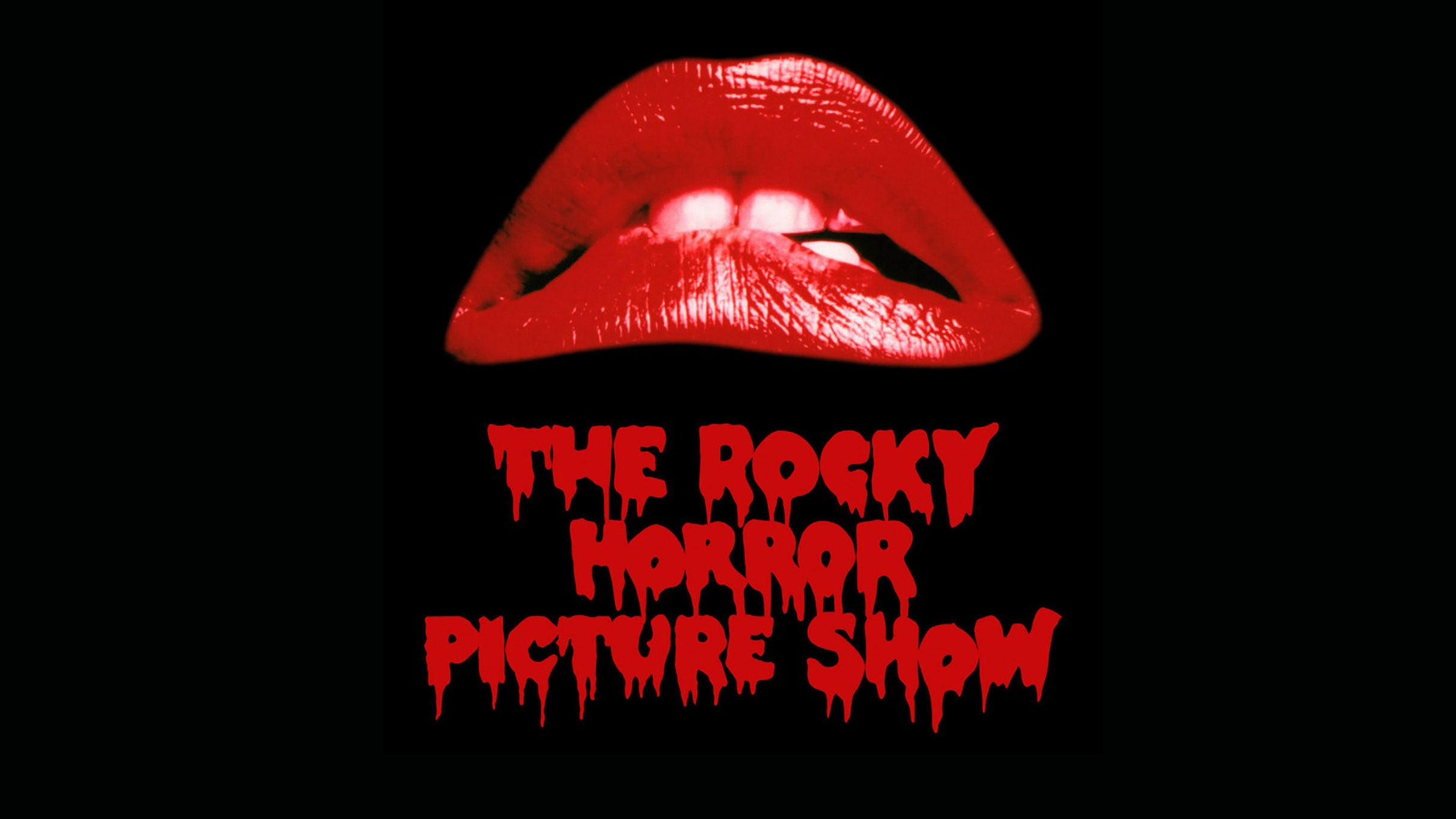
As the Halloween season approaches, many queer horror fans will surely be revisiting The Rocky Horror Picture Show. And given its 50th anniversary, the timing couldn’t be better, with a new restored version in 4K courtesy of Disney, and several events and screenings happening in Los Angeles.
To discuss the many merits of Rocky Horror, you’d be hard pressed to find somebody more passionate than screenwriter, producer and filmmaker Michael Varrati (credits include Christmas with You, The Wrong Stepmother and The Boulet Brothers’ Dragula). He’s also the co-host of the biweekly podcast Midnight Mass alongside Peaches Christ, where they dig into their favorite cult movies and bring on guest stars.
Varrati sat with the Blade and recalls the first time he watched The Rocky Horror Picture Show in his rural hometown, dishes on the film’s specific impact on the LGBTQ+ community, and explains why 50 years later, we’re still talking about Dr. Frank-N-Furter.
Where did you first discover Rocky Horror, and how did that influence your career and overall taste in film?
When you think of cult fandom, especially in the film space, in the movie space, Rocky Horror is very singular. In so many ways, it led the charge. My first sort of interaction with Rocky was when MTV was doing coverage of one of the anniversaries — I imagine it was probably for the 20th or around that time. I was a teenager living in rural Pennsylvania and I would see this coverage around Halloween, and I was fascinated as much by the movie as I was by the fact that people were dressing up and going to the cinema to participate. And when you’re living in small town America where there are no theaters to be found doing that, there was some sort of sense of the forbidden, or it was just out of reach. But I obsessed about it, so I got a copy of the movie on VHS, and I used to gather friends — probably the theater kids, the drama club, any associated weirdos. And I say this lovingly, because I was one of those weirdos! And we would watch it in friend’s living rooms and in basements, and we would try and do our own version of celebrating the movie in a theater style at home. It wasn’t until I went to college at Kent State University that I started going to the midnight screenings in Cleveland at the Cedar Lee Theatre, and I immediately connected with the vibe of what was going on. I loved that this was more than just a movie to the people who gathered. In many ways, that fundamentally helped me understand that the art we connect to can be so much more than a passive experience.
I actually recently graduated from Ithaca College, and they always had midnight screenings around Halloween. I got to go to one of those and it was really fun. I’ve never quite had an experience like that.
They really are one of a kind. Obviously, midnight movies existed before Rocky, and now exist sort of in the wake of Rocky. I believe the original midnight movies were Night of the Living Dead, El Topo, Pink Flamingos. But Rocky was sort of the first time when that programming became a tangible experience. People were going to the movies, they were dressing up as the characters, they were shouting at the screen, and people weren’t getting mad about it. They were shouting too! And it created this interesting economy of celebration that we see a lot of other places and films try and mimic. We’ve seen it kind of rise up for other movies, but it’s never quite caught the way that Rocky did. And I think the reason Rocky is singular is that it was totally organic. You can’t manufacture the experience after the fact. People found the movie and the movie found them.
Especially knowing the iconic place it has within the LGBTQ+ community, and the aspect of people dressing up and going to see these shows in full costume. Could you speak to that?
When I think about the significance of Rocky, I, of course, love the movie. But I think one of the most powerful things about it, especially for a particular moment in time, was that it provided a communal space a lot of people didn’t otherwise have. It’s really easy in the modern era, even in rural places, to use the internet to connect with your community if you know where to look. We know now about queer spaces and platforms and sites, but at a specific time when those were not readily available — and in many places, it was very scary to go looking for those things because you didn’t know how you were going to be met — there were few places that felt like safe harbors. And when Rocky Horror started becoming that space, I think that became really significant to its history because it became a gathering point for LGBTQ+ people. For punks, for goths, for anyone who felt marginalized or othered by society. When you walked through those theater doors, you belonged, and everybody accepted you, and the thing that made you feel like a freak was celebrated. You got to let your freak flag fly, and so I think for so many people of a certain generation, Rocky was the first place where they got to go find chosen family. They got to find and develop a sense of community. Because for so many, it was not a viable option. And to the outside world who maybe didn’t connect with that aspect of the movie, it was a good way to fly under the radar if you didn’t want people to fully know why you were going because you’re just going to a midnight movie. It’s not like you’re going to the gay bar that everyone in town knows or vilifies… you’re just going out with some friends to a movie. But secretly, you’re finding your community.
I think that’s a great way of putting it. The movie is celebrating its 50th anniversary this year, and there’s quite a few events happening, including an Academy Museum screening on the 26th with some of the cast. Could you speak to the legacy of this film over time and why people are still finding so much enjoyment in it?
In so many ways, it is as bold as ever. There are aspects of it, of course, to the modern audience that maybe haven’t aged as well or are problematic. But nonetheless, there are things about the movie that are so celebratory. This movie isn’t just a place where outsiders can celebrate — the movie itself, in the pantheon of film, is sort of an outsider. It is this subversive anomaly. It was a critical failure, and it was kind of a commercial failure, yet somehow it persisted. Its persistence is, in a lot of ways, akin to resistance. The idea that queer joy is an act of resistance. Queer persistence is an act of resistance. By being the strange movie, by thriving in spite of an industry that said it couldn’t, it’s something people really appreciate that history of and continue to gravitate to. But then for newer audiences who see it, the music’s fun, the characters are fun, and it still feels pretty audacious as ever. But also, the message of “Don’t dream it, be it,” is timeless.
I’m curious to hear about this movie’s relationship to camp, because now I think that word gets overused a lot, and some films try to manufacture it. And as you said, this film was able to capture an experience so organically.
There is, to some folks, a prevailing idea that you can’t intentionally make camp. But I don’t know that that’s entirely true, because we see people like John Waters — he can intentionally make camp. There are folks who get the DNA of what camp is. But a lot of times, camp happens by accident. Because I think most camp, all camp, in a lot of ways, is born out of earnestness. And I think that’s what happens when people try to manufacture camp and it fails because they’re missing the fundamental element of earnestness. If you look at any of these movies that have become camp classics, they’re not winking at you. They’re not trying to say, “Hey, this is so bad, it’s good!” They’re not trying to make you know that they’re in on the joke. They’re presenting something with their whole chest and they believe in what they’re putting out there, and it just is what it is. And we find the ridiculousness through the heightened presentation. Rocky is really special in that it is truly camp, because it is, in so many ways, an homage to classic monster movies, classics and drive-in cinema. It is through the experience of these two small town people who are sheltered and are now experiencing something that they consider to be so other and overwhelming — but for everybody inside the castle, that’s every day. A really fun way to experience Rocky is understanding that the camp is not necessarily intentional, but also absolutely intentional. It’s sort of a lampooning of the normalcy of the world outside, because the truth is normalcy is the ultimate camp, because it’s a fallacy. Nobody’s normal. What is normal? What’s it mean? Brad and Janet, when they finally get to be themselves, are just as freaky as everybody else inside of the castle. It’s a revealing of truth, and I think part of that revealing of truth is what makes the movie so special to people.
Recently, there was a CBS Sunday Morning Special featuring Tim Curry, but of course not all of the actors are with us to promote the anniversary. What do you think of the cast’s relationship to this film over the years and what performers like Curry are able to do for new generations?
I love that Barry Bostwick, when he speaks about this movie, says there’s no happier place to be than a midnight screening of Rocky Horror. I think that there’s something significant about somebody who made this, who can see that it has gone beyond him, but has created so much love, community and celebration for people. A couple years ago on Midnight Mass, we had Patricia Quinn, who plays Magenta. But of course, when you’re talking to Patricia Quinn, Rocky Horror invariably comes up. From my perspective, it seems that she is constantly amused and grateful for the fact that this movie rings perennial in her life. It is a constant. The cast’s overall embracing of this film has been crucial to its success as well. We often see folks who make these movies that are initially rejected by culture at large (Faye Dunaway and Mommie Dearest is a great example) not get to appreciate the celebration and reappraisal as it’s happening. And so I almost feel bad because they miss out on this thing that has become important and meant so much to so many people. It’s really great to know that so many cast members of Rocky Horror, from the beginning, saw the movie didn’t do super great, and then became a thing within five years, and they just said, “Hey, it’s going to be what it’s going to be, and we’re along for the ride.”
Lastly, as someone who loves film, what are some other projects that you feel have been especially inspired by Rocky Horror and authentically embraced its spirit?
You know what’s funny? I think about the influence of Rocky Horror in the landscape of cinema, especially cult cinema, often because — I think directly or indirectly — we see the film’s impact through the work of people who were probably at one time audience members. For example, Darren Stein, the writer and director of Jawbreaker (which itself is a cult classic) is a huge fan of Rocky Horror, and has spoken openly about Rocky‘s influence on him and how it creeps its way into his work. And when you watch Jawbreaker, Courtney, the character played by Rose McGowan, has an energy akin to Frank-N-Furter, and some of the lines that she delivers are verbatim Frank-N-Furter lines. I’m sure that was intentional on Darren’s part, but there’s so much of that in pop culture. I know that when Richard O’Brien was doing voices on Phineas and Ferb, of all things, something that’s so far from Rocky Horror, when they would do Halloween episodes, the creators — themselves Rocky Horror fans — would include commentary and easter eggs into this Disney show that relate back. And so whether it’s through direct cast involvement or creators, I see the level of influence it’s had. And even in shorthand, I remember talking to someone recently about the movie Showgirls and the comment came up that Elizabeth Berkley’s commitment to performance was a Frank-N-Furter level commitment — that’s become a shorthand for how we describe certain performances. And that, to be clear, was a complimentary comparison. For people who are invested in these kinds of movies, to be compared to something like Rocky Horror with its longevity is maybe one of the greatest compliments of all, because no one’s ever going to make a cult film like Rocky Horror, right?



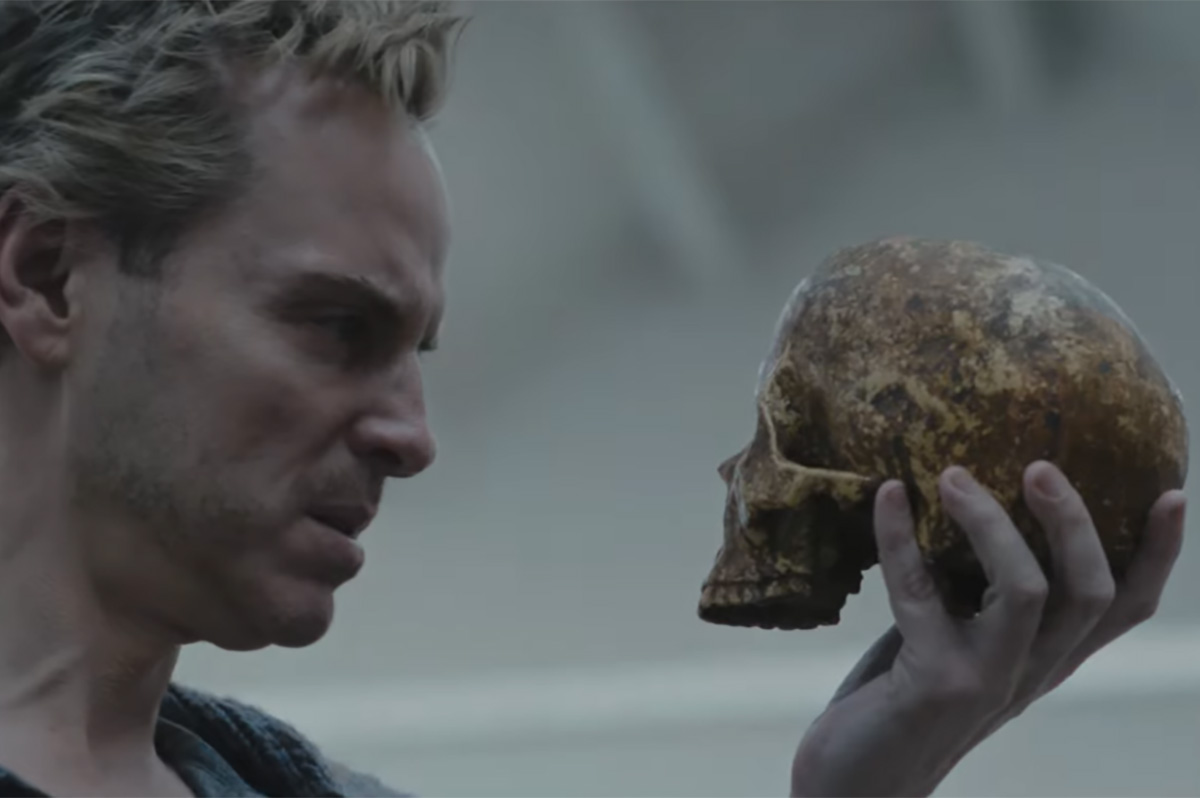
Some movies carry their power through an overall vision – the inspirations of its writers and directors, the great themes and influences from which they are shaped, the creative unity of all its collaborative talent – while some derive it from the contributions of their most visible asset. “Elsinore,” it might be said, does both; but by the very nature of the true story it tells, it hinges on the second factor, because without the powerhouse talent entrusted with its central role, it might be no more than a run-of-the-mill biopic.
Considering the pre-release buzz that surrounds it, most cinema enthusiasts – especially those with an interest in queer storytelling – are doubtless already aware that director Simon Stone’s film (and its screenplay by Stephen Beresford) is a showcase for the talents of lead actor Andrew Scott, the out-and-proud gay Irish actor who rose to international fame as twisted genius archnemesis Moriarty opposite Benedict Cumberbatch’s modernized “Sherlock” and the “Hot Priest” in “Fleabag” before going on to achieve renown for his powerfully authentic performances in such queer-centric hits as Netflix’s “Ripley” and filmmaker Andrew Haigh’s beautifully bittersweet “All of Us Strangers.” To be sure, the buzz is well-deserved, to the point that it feels nearly impossible for him not to be the favored Best Actor nominee in all of the year’s “award season” races – but that doesn’t mean the film itself exists only as a vehicle for his star power, formidable though it may be. Rather, his performance becomes the vehicle not only for the movie’s deeply affecting celebration of an unsung queer hero, but an expression of the resilience and determination that helped an entire queer generation turn tragedy into triumph by standing tall against the horror of AIDS and simply refusing to “go gentle into that good night” without putting up an almost unimaginable fight.
“Elsinore,” a title that refers to the Danish castle that serves as the setting for Shakespeare’s “Hamlet,” tells the story of the final few months in the life of Ian Charleson, a Scots actor who gained international recognition in two Oscar-winning Best Pictures (“Chariots of Fire” and “Gandhi”) but who achieved his greatest acclaim onstage in the London theater scene. Openly gay to his circle of colleagues and friends, he was – like most other queer actors of his era – closeted in the public eye, but his film career faltered, nevertheless.
Stone’s film picks up his story in 1989, when Charleson, frustrated by a movie career that has devolved from award-worthy epics to formulaic Z-movie crime thrillers, is offered the chance of any actor’s lifetime: an opportunity to return to the stage with the title role in “Hamlet” at London’s National Theatre, after the abrupt mid-performance departure of superstar thespian Daniel Day-Lewis. The timing is both synchronistic and terrible; Charleson is already exhibiting advanced symptoms, including the tell-tale lesions of Kaposi’s Syndrome, and his health is far from up to the challenge of taking on Shakespeare’s most demanding role – both in terms of psychological intensity and physical endurance – through several weeks of rehearsal, let alone weeks of nightly performances after the show opens before a live audience.
Despite the daunting challenges, however, he seizes his chance; embracing it as a path toward the artistic and professional transcendence that has so far eluded him, as well as a way to achieve triumph and fulfillment in the last chapter of his life. He persuades his doctor – Margaret Johnson (Olivia Colman), a pioneer in Britain’s battle against the AIDS crisis – to help him stay healthy enough to do it, despite her misgivings about the impact it will have on his condition, and he begins the ordeal of preparing for the role through the filter of his own health status while keeping his condition a secret from his fellow cast members, knowing full well that the effort will take more from his failing body than it has to give.
Recognizing that it’s a true and well-documented chapter of queer history, “Elsinore” doesn’t bother to frame Charleson’s heroic struggle as a “will he or won’t he” scenario; instead, it focuses its attention on the theme of living life to its fullest; indeed, while the specter of AIDS hovers over everything that happens, and the film takes pains to evoke the grim reality of the days when a diagnosis was a promise of death, Beresford’s screenplay hones in on Charleson’s determination to turn his own final days into a story of personal victory. Drawing inspiration from the “sports mortgage” style that has fueled so many inspirational films about athletes, Stone’s direction does the same for actors, honing in on the process of bringing a character — and the entire world of a play, illuminated wholly by the real-life circumstances that surround it – to tangible and authentic life.
Yet the movie refrains from making the eternal touchstone of “Hamlet” – “To be or not to be” notwithstanding – the central inflection point of its narrative. Yes, there are plenty of scenes in which Scott – who has himself played Hamlet on the English stage to great acclaim – connects the play’s immortal language to Charleson’s personal journey, but it’s only in service to the meaning it provides to the real-life context of the story; faced with the reality of Charleson’s imminent death, Shakepeare’s words take on added significance, refracting their power through the lens of his circumstance in a way that underscores their universal resonance but never threatens to take the spotlight away from the personal story being told.
Of course, it’s Scott’s gifts as an actor, capable of both negotiating the epic scope of that classic text and embodying the deeply intimate nuance of personal experience, that make “Elsinore” work. He disappears into the character, emphasizing quiet authenticity over classical bombast, and honors a deeply personal story of queer experience by never letting us forget that this is a movie about a man determined to live life to its fullest instead of simply disappearing into oblivion as just another victim of the plague. It’s not a “showy” performance, full of bombast and histrionic intensity; instead, it’s a showcase of quiet, honest dignity, in which the epic scope of a classical tragedy merges with the simple struggle to exist on one’s own terms, and in so doing honors the real-life tragedy of a generation of queer men forced to suffer in the shadows in a time when they were expected to make their peace with death and be quiet about it.
“Elsinore” is one of those movies that is defined by the performance of its star – and Scott rises to the occasion flawlessly – but it also features a strong supporting cast, quietly precise direction by Stone, and a literate, loving screenplay from Beresford; and while it might be seen as a kind of “prestige tearjerker,” it’s a movie that contains as much celebration and joy – not to mention a healthy dose of gallows humor – as it does heartbreak. In any case, in a year that’s shaping up to be one of the best in recent memory for queer films and filmmaking, it’s a standout, and it will haunt you – in a good way – long after the final credits roll.
Movies
‘You Can See Everything’ confronts an enigma by becoming one itself
One of the most successful documentaries of all time
Documentaries about famous people are typically perceived as being more truthful than a scripted biopic simply because they are, by definition, expected to be non-fiction.
That’s not necessarily the case, obviously; any film, factual or not, must be shaped and edited into something that flows like a narrative, and that process necessitates interpretation on the part of the person who is doing the shaping and editing. Even the most scrupulously neutral documentaries are influenced by interpretation, simply because everything they show us is the result of a creative decision by the people who make them; this doesn’t mean that all the information they contain is untrue or tainted in some way, but the way the information is presented to us inevitably influences the way we perceive it.
When the documentary is made with the participation of a living subject, the situation gets even dicier; this is why profiles of popular entertainers and other cultural figures are often little more than “puff pieces” designed to cast them in a favorable light.
That, in fact, may well have been the intention when Elizabeth Holmes – the now-imprisoned founder of home med-tech developer Theranos, who was found guilty of investor fraud in 2022 for raising $700 million through false claims about her company’s product – and her partner, hotel heir Billy Evans, approached documentarians Nathan Fielder and Lance Oppenheim about a film that would allow her to show the public her “true” nature as a counter to the treatment and portrayal she had received in the media during her notorious trial and conviction. Whatever the reason for her choice to document the last month of her life before surrendering herself to custody at Bryan Federal Prison Camp in Texas for the next 11.25 years of her life, the result is “You Can See Everything,” which has surpassed expectations to become one of the most financially successful documentaries of all time.
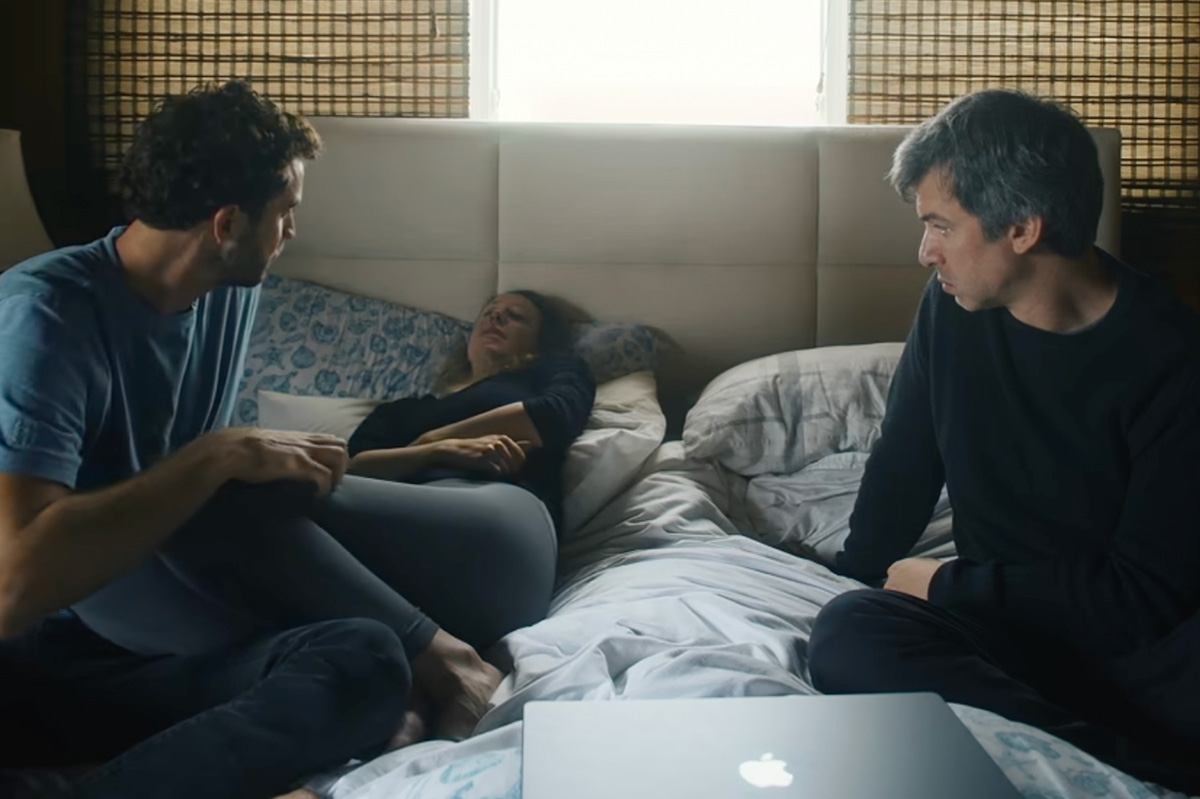
Nearly three hours in length and divided into two sections filmed years apart, it documents the home life of Holmes and Evans (along with their two children) at a rented beach house in Del Mar, Calif., with Fielder, Oppenheimer, and their crew present to capture it all on film. Fielder becomes the on-camera face of the team, engaging the couple in conversations and asking questions that are unable to penetrate Holmes’s insistence of innocence nor her claim that she never lied about the defective Theranos home blood-testing unit she convinced her investors to support, but was instead misinterpreted through semantics. At the same time, his interactions with Evans become increasingly charged as the latter attempts to exert control over the narrative being explored in the film. Despite the challenges, he begins to develop a kind of fascination with Holmes, despite the seeming gap between her own self-perception and what most of the rest of the world views as, well, reality.
In the second section, Holmes is incarcerated, and Fielder faces even more discord as Evans – who now controls Holmes’s social media presence and has been granted power of attorney over her affairs for the duration of her imprisonment – continues to manage his access and stonewall his efforts to communicate directly with her. To resuscitate the stalled project, he connects with actress Amanda Seyfried – who won an Emmy (among other awards) for playing Holmes in the 2022 Hulu miniseries, “The Dropout” – and enlists her to help him by filming “re-enactments” of conversations he had been unable to film. Meanwhile, he begins to question his own objectivity over his growing sympathy for Holmes and his inability to discern whether she truly believes in her own innocence or simply pretending for the camera. Through it all, both Evans and Holmes continue to focus on getting investors for a new start-up – Haemanthis, launched by Evans – that doubles down on the same discredited home medical technology that destroyed Theranos and turned Holmes into the most despised woman in America.
“You Can See Everything” has become a cultural sensation since its theatrical release in October, and it’s only partly due to the dual enigma that is Elizabeth Holmes and Billy Evans. Her conversations with Fielder border on the surreal, at times seeming too boldly manipulative to be believed and at others suggesting some kind of mental impairment that makes her even more of a tragic figure. In addition, as the film goes on, Evans – already an unpleasantly arrogant personality – exhibits increasingly toxic attitudes and behavior, especially in his barely concealed efforts to dominate Holmes and exert control over the documentary itself. There’s the air of overinflated grandiosity to him that manifests in eyebrow-raising moments all the way through, from that now-famous full-frontal shot as he showers near the beginning of the film to the blatant “gaslighting” he increasingly deploys in his attempt to steer perspectives throughout.
But if his preferred characterization of events never quite seems to convince, neither does Holmes’s implausible innocent act nor her insistence that she’s been misunderstood. Ultimately left on the shoals of uncertainty, Fielder and Oppenheimer never really deliver a moment that can define or unlock the truth behind Holmes and Evans’ carefully-guarded door, instead leaving us mesmerized, haunted, and deeply shook by the psychological hall of mirrors into which they’ve taken us, and implying a cold recognition that, sometimes, it’s impossible to know the “truth” when the concept of truth itself becomes uncertain.
Yet what makes “You Can See Everything” such and electrifying statement for our era is not so much the question of Holmes’s guilt or innocence as it is the picture it paints of a certain kind of elite class “business” mentality that appears to view ethics as optional, and makes “getting that fucking money,” no matter what you have to say or do, the only thing that matters. Whatever may be revealed (or not) about the Theranos scam or the woman who perpetrated it, or even the nebulous nature of truth itself, it’s a movie that underscores the ruthless “greed is good” practices that have thrived over the last decade or so of increasingly unfettered greed and corruption around the top of the financial ladder. You might walk away feeling unexpected sympathy for Elizabeth Holmes, or questioning your own ability to gauge the “truth” in a twisted labyrinth of lies and obfuscations, but what lingers is the film’s awareness of a broken system run amok, in which grift is the game and all it takes to keep the victims lining up is the willingness to lie – even if you have to convince yourself you’re not lying in order to do it.
In a world reeling from the impact of one-percenter corruption, sold to us with the promise of benefits that never arrive, it’s a film that hits harder than we expect it to. Hypnotic, engrossing, and deeply engaging throughout its near three-hour running time, it’s a surprise “movie of the year” you’ll be trying to unpack for days afterward – but that ultimately remains as eerily inscrutable as its subject herself.
Movies
Epic ‘La bola negra’ delivers powerful romance for the ages
The must-see queer film of the year
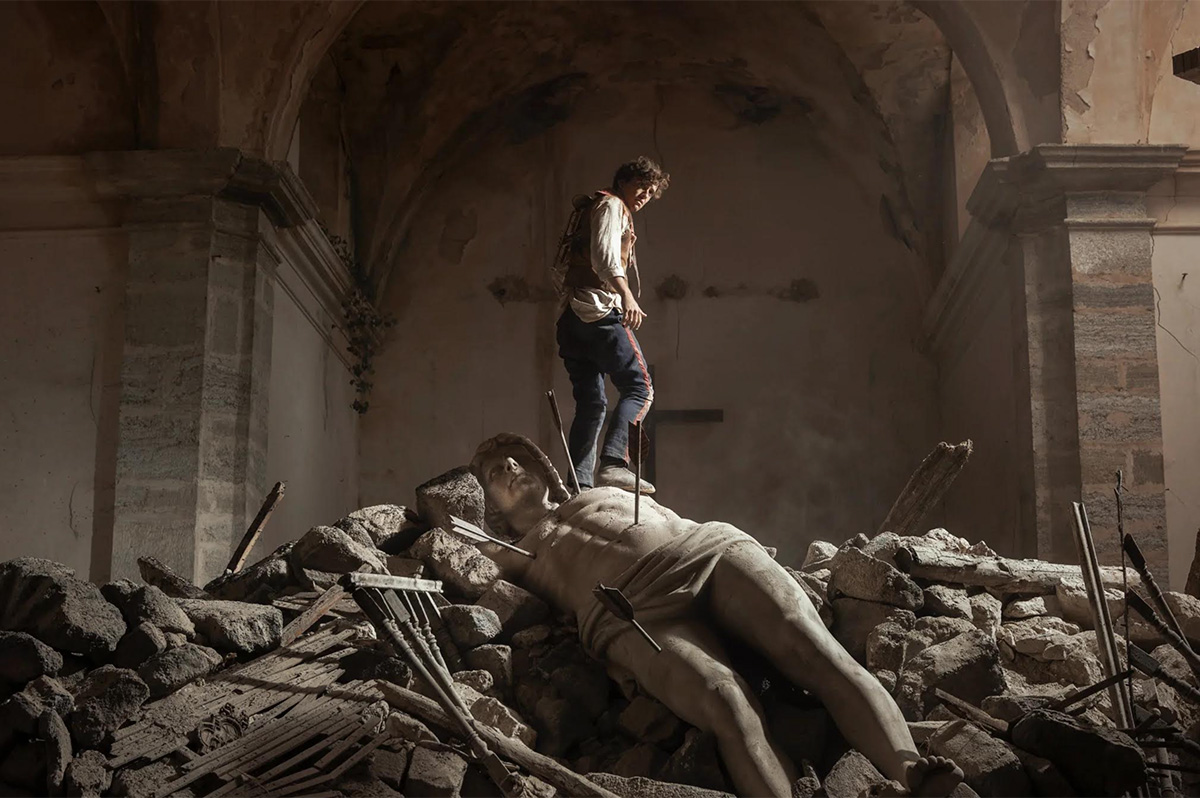
It’s rare for a film reviewer to feel as if they’re being gifted – by the accidental fortune of being alive in a particular time and present in a particular place – the opportunity to see a future cinema classic before it becomes one.
I’ve certainly had the experience of seeing such movies; I’ve been around long enough to see a few of them embraced as classics as years went by, but I didn’t foresee it at the time. I may have had a feeling about a few of them, and occasionally I might even have been right, but never have I known, as I watched it, that it would become one.
Never, that is, until seeing “La bola negra.”
It’s not as if I went into it expecting it to be anything less than excellent. After its glowing premiere at Cannes in May, where it took the festival’s “Best Director” prize for Javier Ambrossi and Javier Calvo (known collaboratively as “Los Javis”), the buzz began to spread; it won further accolades throughout the festival circuit, the major studios had a bidding war over its American release rights, it became the third and by the time fall arrived there were already people in the cinematic web-osphere floating the possibility that it could win Oscars. Even so, I have learned from experience to be wary of “buzz,” and I approached the film with a touch of reserved skepticism.
I dropped that pose only a few minutes into the opening sequence. Immersed in a visceral experience of the Spanish Civil War and forced to confront the cold absurdities of war itself, I had no space available for such intellectual baggage. Instead, I found myself drawn – almost without noticing it – into a multi-generational saga constructed like a puzzle, expressed with passion and style, and executed with the kind of grandeur that conjures comparisons to some of cinema’s greatest epics.
Inspired – and haunted – by an unfinished play from queer Spanish poet, playwright, theater artist, surrealist, and revolutionary Federico García Lorca, it tells a sweeping story that transverses three timelines – 1932, 1937, and 2017 – to intertwine the lives of three queer men into a fictional exploration of queer experience and its omission (or erasure) from history, where it can often be gleaned only through the hidden implications of secret lives that ended long ago.
In one of them, the young scion of a wealthy family (Milo Quifes) is “black-balled” (hence the title) from membership to a prestigious social club, rejected over rumors of his homosexuality, and is forced to choose between denying his own identity or leaving his family in disgrace for a life of free expression in the theater. In the second, Sebastián, a young Nationalist soldier (Guitarricadelafuente) falls in love with Rafael, a wounded Republican prisoner (Miguel Bernardeau) he has been assigned to guard, awakened to his own homosexual desires in an impossible scenario where the notion of a “happy ending” is all but unimaginable. In the third, a disillusioned queer historian (Carlos González) is informed of an inheritance from his estranged grandfather, leading him to discover a link in his family’s past that has been obscured by secrets, trauma, and resentment. In each of them, a grounded humanism becomes the connecting thread, and it’s impossible not to feel the pull of emotional resonance as the connections grow increasingly clear. Throughout these interwoven narratives, we confront the inevitable recognition that the history of queer experience is something that must be unearthed, whether in honor of the lives of those who came before us or in celebration of having survived in spite of it all.
Ambrossi and Calvo – along with Alberto Conejero, with whom they co-wrote the screenplay, expanding his play “La piedra oscura” into a larger narrative that merges it with the surviving fragments of Lorca’s to create an imaginative work of speculative fiction – accomplish an inventive feat of cinema, building something that feels almost mystical in scope from a conceit built on the real-life historical mysteries surrounding Lorca’s death (he was reportedly assassinated by Nationalist forces in 1936 but his body was never found) and expanded into an unforgettable epic romance that confronts the monstrosities of fascist oppression and the madness of warfare while celebrating the resilience of queer truth that, somehow, manages to exist “between the lines” and transcend the horror and tragedy that surround it. Combining a flowing, florid, and fantastical sensibility with an unvarnished realism that refuses to soften its sting for the sake of emotional comfort, one might almost call it “bittersweet” if that term were not inadequate to encompass the symphonic heights toward which it successfully aspires in its stubborn belief in the long-reaching arm of redemption.
They also create a visually stunning masterpiece of cinematic art, blending the harsh realities of life under the turmoil of militarily-enforced oppression with the elegant poetry of resilience to build a film that invites favorable comparison to the most beloved epic films in our history, from the expansive-but-intimate humanity of “Lawrence of Arabia” (also, by the way, a story of queer experience) to the surreal darkness of “Apocalypse Now,” with cinematographer Gris Jordana delivering a movie that feels “vintage” yet distinguishes itself as a distinctly modern – and anti-nostalgic – reinvention of stylistic imagery, filling its margins with echoes of the past while remaining firmly rooted in a contemporary mindset that continually reminds us of a heritage, both artistic and sociological, that exists as a sort of generational lifeline constructed from imagery, association, and emotional wisdom.
Naturally, the ensemble cast provides a crucial element in making it all work. As the film’s romantic center, Guitarricadelafuente (an actor/musician who rose to Spanish fame by self-posting videos during Covid) and Bernardeau are heartbreakingly tender and infinitely relatable to any queer person who has ever had to navigate the difficulties of attraction in a circumstance of enforced distance, and Quifes captures the kind of fatalistic self-determination that has probably fueled queer rebellion since it first became “a thing.” Spanish superstar Penelope Cruz lends invaluable support as a” cupletista” performer who introduces Sebastián to the underground world of campy queer performance, and González delivers the perfect mix of resigned cynicism and reluctant hope as the modern historian, while Glenn Close provides stolid gravitas as an expert on Garcia Lorca who guides him toward a final revelation.
It’s worth mentioning that a handful of critics have been put off by the film’s romanticism, complained about its ”melodramatic” emotions, or quibbled about its historical re-imagination of Lorca and his legacy to brand it as disingenuous. Respectfully, I disagree. By the end of this remarkable film, I, as a queer man, felt not only as if I had been “seen” and acknowledged, but as if my own life was somehow part of its story.
I’m willing to wager that millions of other queer moviegoers will feel the same way, so I’m calling “La bola negra” the must-see queer film of the year – and yes, I could be wrong (I have been so many times before), but I’m fairly certain that you, like me, will recognize an instant classic when you see one.
Movies
AFI Fest 2026: Five best queer films to put on your watchlist
‘La Gradiva,’ ‘Mouse’ among this year’s standouts
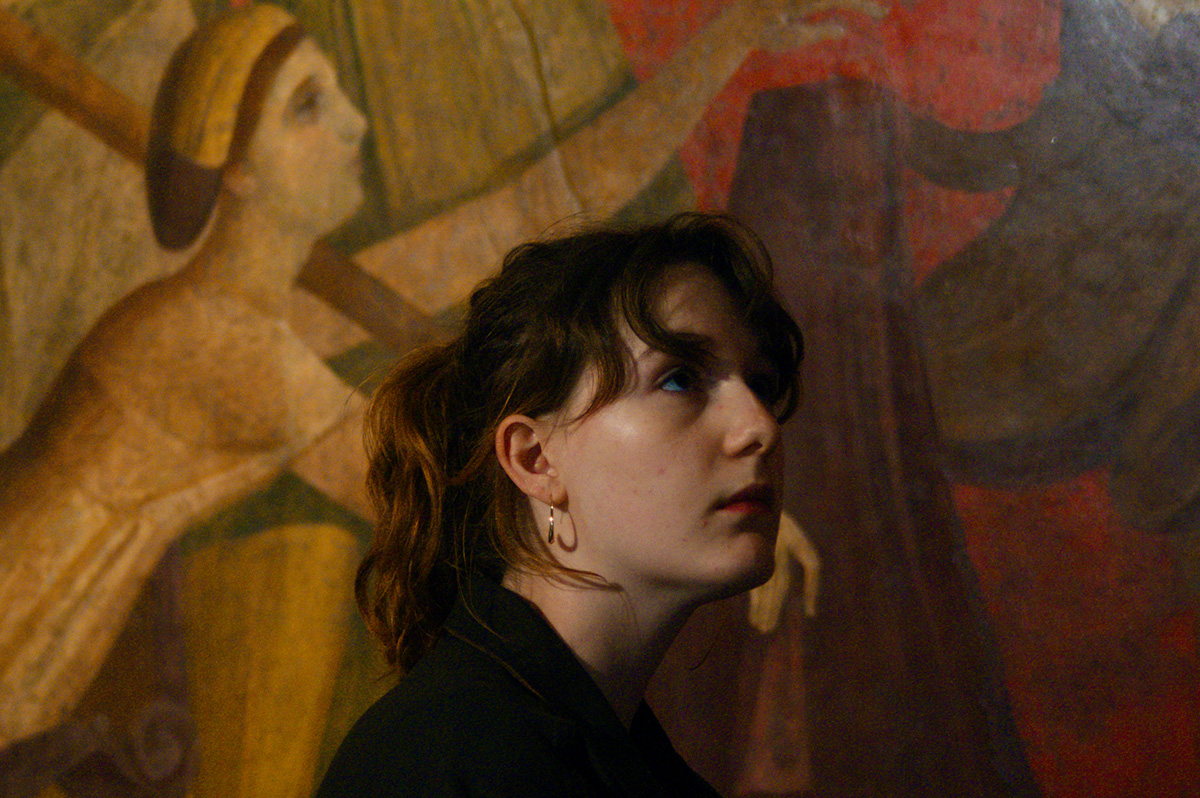
AFI Fest returned to Los Angeles last week for its 40th edition, ushering in a new group of queer filmmakers, writers and actors into the spotlight during the busy award season. The line-up brought expected heavyweights like “Elsinore” starring Andrew Scott and “The Man I Love” from beloved auteur Ira Sachs. But the five-day, star-studded festival also provided an opportunity for audiences to check out smaller indie films that are more likely to go under the radar come Oscar nomination morning.
“It’s important for a festival like AFI Fest that is more generalized and not specialized to still have such a great showing of queer films, films about marginalized people. Obviously, specialized LGBTQ+ film festivals or those with other focuses are so important for the community,” AFI Fest feature films programmer Anna Li told The Blade prior to the festival. “Queer films are not just for queer people; it’s universal, and it’s intersectional.”
Read below for the Blade’s picks for the standout queer films of this year’s AFI Fest, many of which are (quite impressively!) directorial debuts.
“La Gradiva”
It’s hard to believe you’re watching a directorial debut when you sit down for Marine Atlan’s tender but heartbreaking first feature, which won the Grand Prize at the Cannes Film Festival as part of the Critics’ Week selections. The film completely sweeps us into the lives of a group of high school kids taking their final school trip right before college admissions start to roll in. It’s a transformational trip to Naples near the Pompeii explosion, of all places, and the film centers the awkwardness of growing up, searching for belonging and discovering intimacy at a young age. Beyond the film’s picturesque cinematography that makes each museum visit, each trip the class takes in Naples feels larger than life, Atlan’s real gift as a director is in working with the first-time actors that make up just about the entire cast. Colas Quignard (who nabbed a well-deserved Gotham nomination for his work earlier this week) and Mitia Capellier-Audat are two standouts in the cast as Toni and James, two characters with an unbreakable, intimate male bond that no one around them can ever fully register. By the end, it feels like we’ve known these two for years after watching them on-screen for merely two-and-a-half hours.
“Tangles”
Leah Nelson’s directorial debut made quite the impression earlier this year when it premiered at Cannes, instantly becoming one of the year’s must-see animated features. Filmed entirely in black-and-white and adapted from Sarah Leavitt’s 2010 graphic novel, “Tangles”tells the story of a young queer woman named Sarah (Abbi Jacobson) as she travels back home to her conservative town to take care of her mother (Julia Louis-Dreyfus) after she’s been diagnosed with Alzheimer’s disease. The exceptional voice cast includes the talents of Louis-Dreyfus, Bryan Cranston, Seth Rogen and Beanie Feldstein, all of whom bring Sarah’s chaotic family to life in distinct, memorable ways. While the film is emotional and hard to watch at times, as the synopsis implies, Nelson embeds Sarah’s unique sense of humor into her visual style. The expressive 2D animation is modeled after Sarah’s own magazine illustrations in the film, painting a vivid, ever-changing portrait of an artist’s inner world and how she makes sense of an emotionally draining period in her family life. It’s a film that is easy to recommend to just about anyone… perhaps with a box of tissues ready to go.
“Mouse”
Alex Thompson and Kelly O’Sullivan follow up their tender 2024 indie “Ghostlight”with another quiet but graceful drama that explores the way adults and adolescents grapple with grief in different, often unexplainable ways. Starring Sophie Okonedo (also in “Clarissa,” another AFI Fest selection) and Katherine Mallen Kupferer (who starred in “Ghostlight”) this coming-of-age drama follows a high school student, Minnie (Mallen Kupferer) during her senior year of high school as she navigates the sudden death of her best friend (Chloe Coleman). Minnie and Helen (Okonedo) strike up a surrogate mother-daughter relationship, much to the dismay of Minnie’s own mother (Tara Mallen). Okonedo, in particular, is a standout in the cast, as is Kupferer’s depiction of a young girl fighting for her voice. Among many things, what’s remarkable about this film is how naturally Minnie’s queerness is explored — it’s never a point of conflict or contention, but simply a part of who she is. Thompson and O’Sullivan have delivered another remarkable, warm film that thrives on the simple gestures.
“Elephants in the Fog”
Abinash Bikram Shah makes a strong statement with this moving family drama (chosen to represent Nepal at the 2027 Oscars after winning the Un Certain Regard Jury prize at Cannes) that quickly evolves into an unpredictable, time-ticking thriller. Set in a small Nepalese village on the outskirts of society, “Elephants in the Fog”follows a group of trans women who belong to the Kinnar community, complete with their own rituals and tribulations around the wild elephants that roam their lands. After Pirati’s (Pushpa Thing Lama) daughter goes missing, she finds her values challenged as she confronts society’s prejudices against her family, as well as her own prejudices against her daughter’s sexual activities. Lama (an activist in her daily life) brings this complicated lead character to life with so much nuance, it’s hard to believe she’s never acted before. The film turns a story of found family on its head, which is precisely why Shah is able to leave us breathless by the end.
“Flesh & Fuel”
Sometimes the simplest stories can be the most emotionally nuanced and textured. Pierre le Gall’s directorial debut, which premiered at Cannes as part of the Critics’ Week selections, stars Alexis Manenti (the French actor known for starring in and co-writing Oscar nominee “Les Misérables”) and Julian Świeżewski as two truck drivers who strike up a romance while making pit stops. Gall shoots the sex scenes and labor scenes with the same sense of intimacy, a decision that feels key to the film’s statement on the inherent conflict between the time we dedicate to work and the time we dedicate to the people we love. While there’s another layer of emotional heartbreak the film could’ve unlocked with more time devoted to developing the central romance, “Flesh & Fuel”mostly thrives in isolation. And as much as the film is proudly a swooning love story, it’s also a story about labor that asks the audience to consider the tangible impact truck drivers have on our lives in a consumerist culture.
Movies
‘Wicker’ delivers a delicious dish of macabre irony
Shrewd messaging under guise of fantasy makes us willing to believe
What if there were magic in the world, and it could give us the power to attain the things we long for in this life?
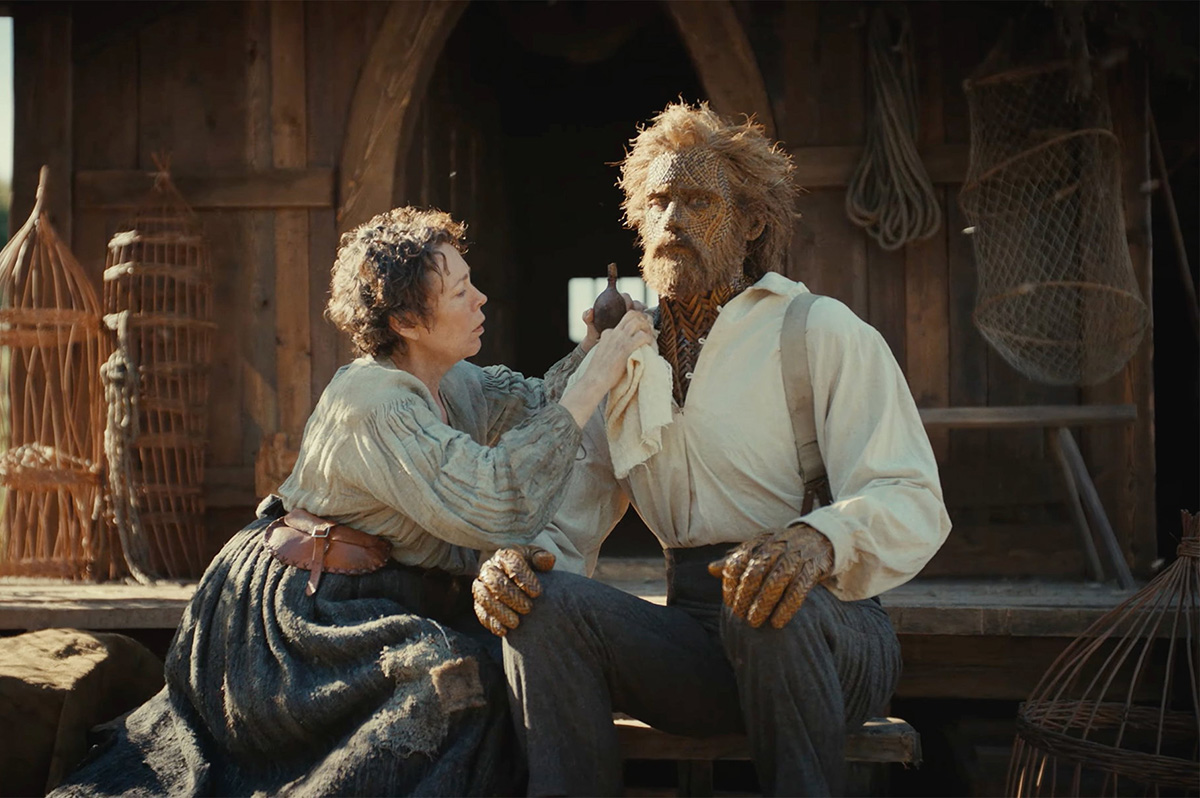
That’s the question we are asked to contemplate in “Wicker,” the new film from co-writer/directors Alex Huston Fischer and Eleanor Wilson, which adapts Ursula Witts’ short story “The Wicker Husband” into a feature-length fable; transporting us to the timeless “olden days” of fairy tales and fantasies, it’s a tale of longing, love, and the power of intention, set in a small village on the edge of the forest where an aging Fisherwoman (Olivia Colman) sells her daily catch to the townsfolk who ostracize her for her lowly trade and the fishy odors that go along with it.
Tired of her lonely existence, the Fisherwoman goes to the town’s Basket Maker (Peter Dinklage) — another community outsider, known for his skill and for a certain “witchy” ability to endow his creations with purpose — and pays him to make her a husband. He delivers on the deal, providing her with a man made of wicker (Alexander Skarsgård) who claims that he exists solely to love her. The arrangement quickly turns out to be better than she imagined, bringing not just companionship but comfort and joy into her once-isolated life. When the townspeople meet the Wicker Husband, however, they are unsettled by his presence; his care and devotion to the Fisherwoman allows her to blossom, and their happiness begins to spark jealousy and dissatisfaction among the other wives and husbands in the town. Unhappy with the change in the status quo, the Tailor’s Wife (Elizabeth Debicki), the de facto keeper of the town’s social order, sets out to eliminate the problem as she is herself unhappy with her domestic situation. She sets about to correct the imbalance by sowing the seeds of mistrust.
Shot in a lush and evocative style by cinematographer Lol Crawley, “Wicker” succeeds in capturing the primal mysticism of nature that pervades in so many of the folk tales and forest myths of the pagan past, as well as satisfying more “sophisticated” modern tastes with a sense of self-aware irony — and a considerable amount of whimsical-yet-bawdy imagination. Yet the “weird” ways of a bygone age are granted new potency by tapping into contemporary awareness of gender and social inequality, while a subtle focus on the real-life “magical” power of words implies their ability to alter our perceptions and influence our actions.
Indeed, words (or rather, the power of words) are a key element in the story’s darkly humorous parable. Language — and the intention with which it is used — takes on a decidedly important role in the story; from the simple sincerity of the Wicker Husband’s stolid declarations of adoration toward his wife to the tactical deployment of misinformation in an effort to assert power over non-conformity, and even to the subtle conveyance of nuance between the lines to reveal key elements that otherwise go unspoken. Spoiler alert: queer audiences can score bonus points by counting the spoken clues that Dinklage’s Basket Maker — who, with his occult knowledge and mysterious talents, serves as the architect of the entire narrative — is gay.
None of which is to say that “Wicker” comes off as being “talky” or depends merely on words to convey its story; on the contrary, Fischer and Wilson provide an immersive, fully-realized world for the setting of their Brothers Grimm-ish fantasy, along with a strong sense of visual storytelling that conveys a great deal without relying on words at all. Sometimes, it’s an economy of language that makes the strongest impact, understatement that delivers the deepest meaning, and silence that speaks volumes, and this is a film that knows how to utilize all those approaches; more than that, it knows how to employ understatement, letting a “less is more” simplicity govern the proceedings and relying on the skills of the performers to convey volumes within dialogue that feels deceptively simple.
In fact, it could be argued that the greatest strength of “Wicker” comes from its cast, who from bottom to top capture the rarified combination of tones — the inscrutable wisdom, the fantastical whimsy, the earthy humor, and the observational candor — in its presentation of human social mechanisms, even through its fairy-tale lens, to provide a smart, winning, and unexpectedly profound piece of entertaining cinematic myth-making. Colman is, as always, endearing in her down-to-earth willingness to fully inhabit her character, giving the Fisherwoman’s transformation from curmudgeonly misanthrope to fully-actualized woman in command of her own power a tangibly authentic ring; Skarsgård, his hunky, handsome form coming through despite being obscured through the remarkably well-realized cinema magic that weaves it under a wooden skin, has never been more effective, nor more romantically appealing; Dinklage manifests the charming trickster with a kind of noble integrity as the Basket Weaver, and the rest of the cast and the remainder of the cast embody the frailty and foibles of the various townspeople with as much compassion as possible in a story that is ultimately about the tendency of human society to conform with — and enforce — an unbalanced social “norm” over its own better nature.
In the end, “Wicker” resolves with the kind of darkly ironic “comeuppance” that feels apropos of the Halloween season, with trickster magic balancing the scales and the townsfolk getting exactly what they deserve in a deliciously ironic — and wickedly macabre — reversal of fortune dictated by karma itself (with a little help from the Basket Maker), making it a cautionary tale in exactly the spirit of esoteric irony that defines all the classic fables we know while adding a kind of modern savvy to the mix that somehow drives the point home even more obviously and effectively.
It’s smart, infused with the kind of magic that feels natural instead of supernatural, and it reminds us that human society is never to be entirely trusted. For us, that makes “Wicker” one of the most delicious surprises of the film year so far, and earns it a hearty recommendation for anyone who enjoys a little Wiccan magic with their romantic fantasies, if only for the sake of feeling that there is an order to things that keeps us all in balance.
Whether or not that’s actually true, it’s the belief itself that makes it feel that way —- and “Wicker,” with all its shrewd-and-subtle messaging under the guise of pure fantasy, makes us willing to believe.
Movies
With exquisite 4K restoration, ‘The Devils’ finally gets its due
The only devils are those who want to ‘Make France Catholic Again’
It’s rare for a movie that was made over a half-century before to somehow become one of the most anticipated film releases of the year, but thanks to Ken Russell’s “The Devils,” we know that it does happen.
It’s true that Russell’s legendarily controversial 1971 period horror drama might not be a familiar title to most mainstream movie-goers these days, but to the cinephile crowd, it’s something approaching the Holy Grail. The dramatization of a real-life 1634 incident that took place in the French city of Loudun, it crossed boundaries and broke taboos with its depictions of grotesque violence, unfettered nudity, and “blasphemous” imagery – so much so that objections from UK censors led Warner Bros. (which had financed the British production of the film) to remove several of its most provocative scenes before release. Though Russell was riding the wave of a successful career that had resulted in worldwide renown, he was given no say in the matter, and the edited version – which was still widely banned in parts of the UK and other countries, and released in the U.S. with even further cuts – was lambasted by most critics as over-the-top, sensationalized, or even “obscene.”
Even so, there were many critics and viewers alike who recognized the daring vision behind all that on-screen depravity; through the years, calls for the un-edited “director’s cut” of the film began to grow as various other truncated versions continued to circulate, gaining new fans with each new generation of movie buffs. Russell himself, before his death in 2011, created a restored print of the version he had intended, but Warner Bros. refused to allow its distribution.
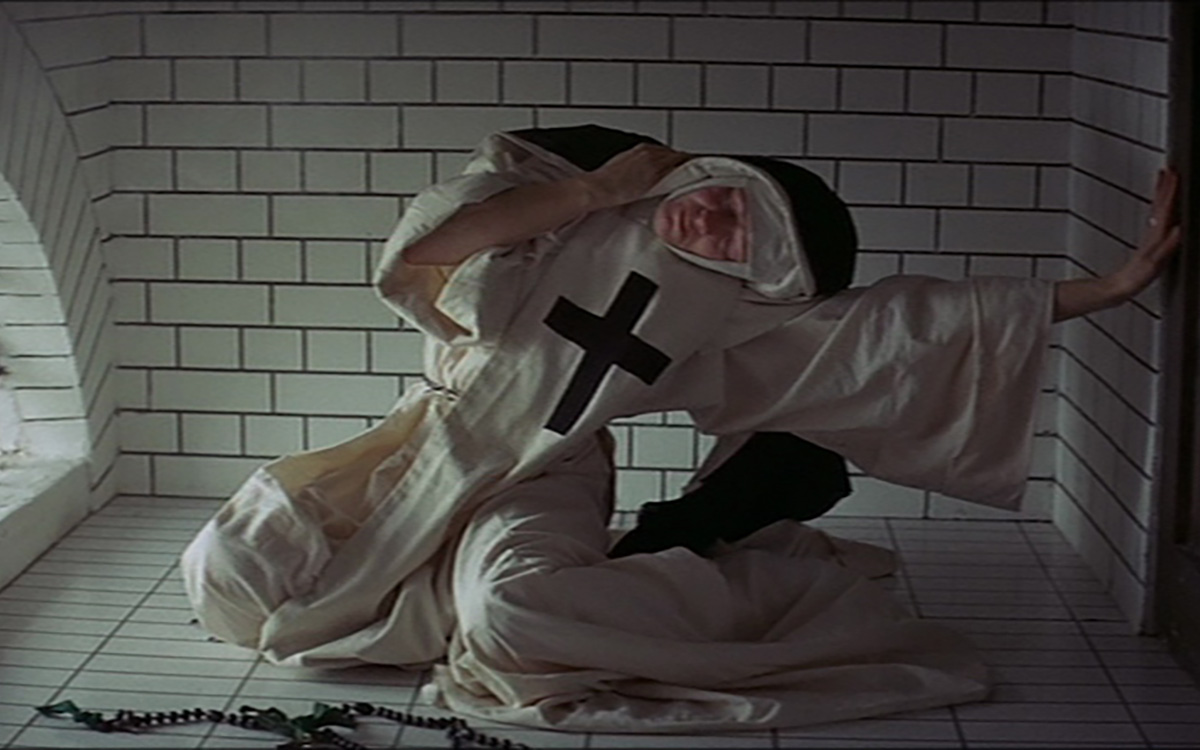
Now, the seemingly repentant studio – under the auspices of its newly branded Warner Clockwork label – has finally come around, and “The Devils” has returned with a newly restored 4K cut (created directly from the film’s original camera negatives) that not only rejuvenates its visuals – such as the brilliance of the visual design, dominated by the oppressively white architecture of Loudun as designed by future pioneering queer filmmaker Derek Jarman – but restores the material that was cut; it reveals the brilliance of a film that had, until now, felt disjointed despite its obvious promise – and the timing could not be more perfect, because it’s also a film that feels perfect for our time.
Full of superb performances and an immersive sense of period oppression, it tells the story of Urbain Grandier (played by Oliver Reed, here at the peak of his brooding-but-charismatic appeal after a series of high-profile hits), a high-ranking local priest who, as de facto leader of his town, stood up against the French government – then controlled by an alliance between aristocratic royalty and the powerful church – in its ongoing effort to purge the kingdom of Protestants and restore Catholic rule over France during the Huguenot Wars of the 17th century. Proud, rational, and heretical in his beliefs (especially around sex), Grandier is widely known for his affairs with noblewomen of the town, and rumors of his beauty and sexual prowess spread even into the cloistered halls of the town’s convent, where the Mother Superior, hunchbacked Sister Jeanne (Vanessa Redgrave), is overwhelmed with lustful thoughts about him. Consumed by jealousy when she learns of his secret (and technically illegal) marriage to another woman, she accuses him of making a pact with the Devil and causing the demonic possession of herself and many of her nuns – a claim which puts him in the crosshairs of his political enemies in the larger world, where ambitious Cardinal Richelieu (Christopher Logue) has dreams of imposing Catholic rule over France by consolidating the church with the government of frivolous King Louis XIII (Graham Armitage). Determined to stand firm with his conscience against the accusations against him, Grandier endures a “show trial” that becomes more public spectacle than justice, with the supposedly possessed nuns (and other opportunistic denizens of the town) indulging in orgiastic demonstrations of their afflictions before the court. Ultimately convicted and sentenced to be burned at the stake, he becomes (spoiler alert) a martyr for enlightenment in the most horrific way imaginable, and his young bride (Gemma Jones) is left to wander the macabre no-man’s land wrought by Theocratic Nationalism on her own as the final credits role.
It’s a pretty bleak picture, and that bleakness has nothing to do with the excesses we’ve seen before it — the performative histrionics of the possessed nuns or the feverish sexually repressed fantasies of Sister Jeanne, or even the callous brutality of the ruling authority – personified not only by Armitage’s brilliantly vapid Louis XIII, a fey and foppish hedonist who opens the film with a macabrely campy ballet depicting the birth of Venus (played by himself), but by the “enforcers” tasked with carrying out his will, like Dudley Sutton’s callously officious Baron de Laubardemont and Michael Gothard’s gleefully sadistic chief “witch hunter,” Father Pierre Barre, who might easily be a popular conservative influencer on TikTok today.
Nor does the film’s sense of ominous dread come from the trappings of excess and occultism that surround Grandier’s ordeal. Yes, the imagery is outrageous, and aggressively in-your-face; there are scenes of explicit nudity, and orgiastic sex, of rape, torture, the ravages of disease and sickening violence, all delivered with a blood-drenched relish that feels shocking even today, and it all culminates in a horrific finale that’s sure to leave you with nightmares for at least a few days afterward; the real horror comes from recognizing the patterns at work as Grandier attempts to protect his town and preserve its independence from the forces of theocratic autocracy, because at this point they have become all too shockingly familiar.
It’s a frank depiction of political corruption, a candid examination of the tactics of fascism (yes, THAT word) in a true story that takes place centuries before the term was ever coined. It explores the ease with which mass hysteria can be created among the ignorant, brainwashed, and attention-starved, and the cruelty of mankind upon itself under the flimsy pretense of ideology, all in the bald-faced pursuit of power and control. In 2026, all of that feels much more disturbing than any of the supposed “supernatural” horrors of which Grandier is accused. In the end, the only devils in “The Devils” are the human ones who want to “Make France Catholic Again.”
Movies
40 years later, AFI Fest continues to offer a robust selection of queer and international films
This year’s line-up includes ‘Elsinore,’ ‘The Man I Love’ and ‘A Long Winter’
As AFI Fest celebrates its 40th anniversary, the Los Angeles-based festival is gearing up for another star-studded event. But behind the red carpet galas, receptions and talent that draw eyeballs to the historic TCL Chinese Theatre this time of year, the real heart of the festival is its robust selection of queer and international cinema.
Running Oct. 21-25, this year’s line-up includes Elsinore, The Man I Love, Prosecution, Mouse, Clarissa, Bitter Christmas, Tangles, Elephants in the Fog, Iván & Hadoum, Flesh and Fuel and A Long Winter, among others. Many of the filmmakers and talent behind these projects will also be in attendance for post-screening Q&As, including Ira Sachs, Sophie Okonedo and Leah Nelson.
For feature films programmer Anna Li, who identifies as lesbian, offering a diverse line-up is an extra personal mission. “I remember the first film I watched that made me feel seen, made me feel like I wasn’t alone as a baby gay,” she says. “As queer people, we all have that memory; if any of these films that we program can change someone’s mind or opinion, or change the way they think about themselves or others or their family, or someone has that baby gay life-changing moment of eureka, that’s a job well done by us. That’s why we do what we do.”
Notably, the festival has the North American premiere of Céline Sciamma’s new film Tutti Frutti, a mid-length documentary that explores the Portrait of a Lady on Fire filmmaker’s aspirations after stepping back from the spotlight. “It’s really a major new work and direction for the director,” Li says.
The seasonal staffers at AFI Fest come together in May, right after the Cannes Film Festival, to start screening films and planning the line-up. Over the years, the festival has become a go-to stop for Oscar hopefuls, especially international films that wind up making the best international feature film shortlist.
“That’s something that we definitely care very deeply about and keep in mind when we’re programming our titles,” Li says, with this year’s international line-up featuring awards-hopefuls All of a Sudden, Gentle Monster, Possible Love, Everytime and La Gradiva. “We try to play everything that most people want to see, from looking at Berlin, Cannes or TIFF; they’ve compiled their list of films that they want to watch. We want to make sure they get the chance.”
Li points out that AFI Fest has partnered with queer-specific L.A. festivals like Outfest in years past. But she also sees the value of a broader, less defined festival in today’s media landscape.
“It’s important for a festival like AFI Fest that is more generalized and not specialized to still have such a great showing of queer films, films about marginalized people. Obviously, specialized LGBTQ+ film festivals or those with other focuses are so important for the community,” Li says. “Queer films are not just for queer people; it’s universal, and it’s intersectional.”
Movies
From ‘La Bola Negra’ to ‘Coward,’ here are this award season’s must-watch queer films
Los Javis, Andrew Scott and Jordan Firstman are already in the Oscar conversation
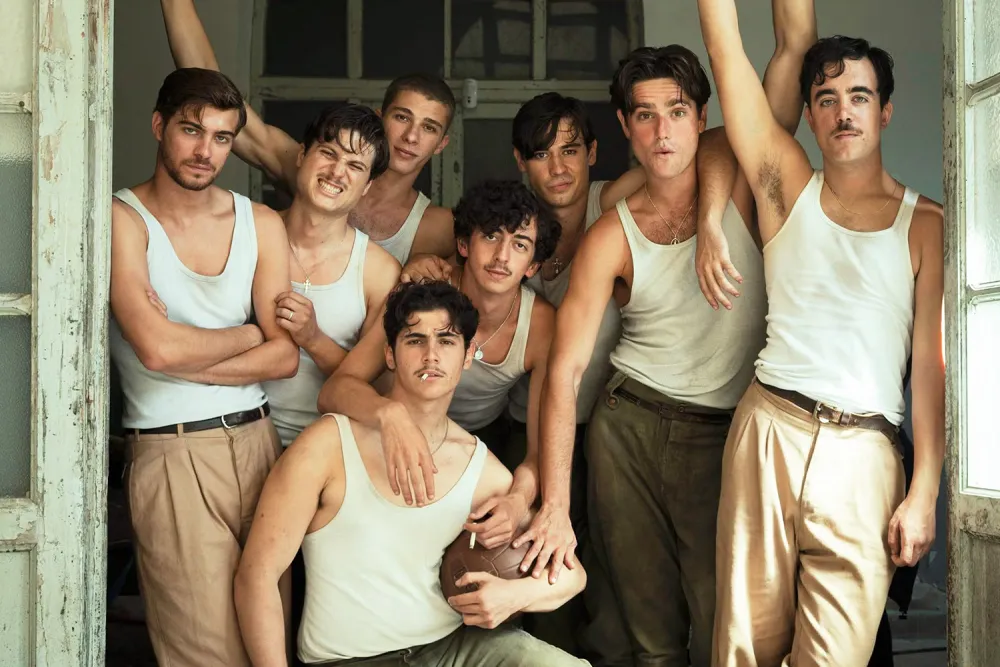
At this year’s Cannes Film Festival, multiple queer directors cemented their projects as ones to watch this awards season. From La Bola Negra to Club Kid to Coward, 2026 is poised to be a breakthrough year for queer cinema.
La Bola Negra, directed by former Drag Race judges Javier Ambrossi and Javier Calvo — collectively known as Los Javis — was the breakout film at Cannes, tying for the best director prize with Paweł Pawlikowski and most recently winning the coveted TIFF People’s Choice Award. The ambitious, decades-spanning historical drama starts in 1930s Spain and ends in 2017, connecting the lives of three men as they confront their identity during fractured points in history. Based on the raves the film has received from critics and audiences, it’ll likely be one of the biggest contenders for the Best Picture Oscar, with performances from Penélope Cruz, Glenn Close, Julio Torres, Guitarricadelafuente and Lola Dueñas. It will release in theaters Oct. 16 and drop on Netflix Dec. 2.
Jordan Firstman made the unexpected leap from internet personality to breakthrough filmmaker with his directorial debut Club Kid, which he also stars in. The film follows a leader in New York’s club scene (Firstman) who discovers he has a 10-year-old son (Reggie Absolom) who he never knew about, completely throwing his life’s priorities into disarray. The film features Cara Delevingne and was shot by The Invite cinematographer Adam Newport-Berra. A24 is set to release the film in theaters on Nov. 6.
Four years after Close scored a best international feature nomination, director Lukas Dhont is back in the awards race with his historical drama Coward, which won the best actor prize at Cannes (shared jointly by leads Emmanuel Macchia and Valentin Campagne). Set in the midst of World War I, the film follows a young Belgian soldier (Macchia) who starts a secret love affair and joins a theater troupe to bring joy and entertainment to his fellow soldiers. MUBI is set to release the film in theaters on Dec. 25.
The animated film Tangles also made a splash at Cannes. Directed by Leah Nelson and led by a voice cast featuring Julia Louis-Dreyfus, Bryan Cranston, Beanie Feldstein, Seth Rogen, Sarah Silverman and Bowen Yang, the film follows an activist living in ‘90s San Francisco who returns to her conservative hometown after her mom gets diagnosed with Alzheimer’s. Independent Film Company is set to release the film in select theaters before the end of the year, with a wider theatrical expansion in early 2027.
While Elsinore didn’t premiere at Cannes, the tearjerker has been making the rounds at fall festivals and recently won the TIFF International People’s Choice Award. Andrew Scott plays Ian Charleson, the actor known for starring in 1981’s Chariots of Fire, as he gives his final performance in a London rendition of Hamlet before dying of AIDS. The film also stars Oscar-winner Olivia Colman and Heartstopper star Joe Locke. Focus Features is set to release the film in theaters on Nov. 20.
Although his new film doesn’t have U.S. distribution quite yet, it’s worth calling out Ira Sachs’ The Man I Love, which stars Oscar-winner Rami Malek and recently had its Canadian premiere in Toronto. The musical film is set in ‘80s New York, a time period that Sachs returns to frequently in his work, following Malek as a performance artist taking on a new role while grappling with his AIDS diagnosis. The cast is rounded out by Rebecca Hall, Ebon Moss-Bachrach, Tom Sturridge and Luther Ford.
After last year saw noticeably few queer actors and directors in the Oscar conversation, this year’s awards race is already shaping up to bring a slew of exciting, new queer stories to audiences. Other queer films to look out for include A Long Winter from Andrew Haigh, Clarissa, and La Gradiva.
Movies
Essential queer horror classics for Halloween
‘Bride of Frankenstein,’ Bowie in ‘The Hunger,’ and more
Sure, this spooky season has blessed us with a lot of new horror on TV and at the movies, but when it comes to Halloween, you can never have too much horror to watch. With that in mind, we’ve put together a list of celebrated queer chillers that queer horror fans may know about but might not have seen, especially if you’re part of a younger generation of movie buffs looking to expand your experience with the genre beyond the contemporary crop that has turned the early 2000s into a renaissance of horror cinema.
Bride of Frankenstein (1935)
Yes, we know subtextualized queerness in horror feels like a cop-out in this day and age, but in the early days of Hollywood, it was the only way to sneak it past the censors – and that’s exactly what English expat director James Whale did as a defining force behind the success of Universal Studios’s classic horror “franchise” of the 1930s. More-or-less openly gay with a background in theater, he put those sensibilities to good use on film, and reached his queer pinnacle with “Bride of Frankenstein,” a sequel that expanded on the original with a wicked sense of humor and a “lavender” touch that was obvious to anyone who was in the know.
Skewering “monster movie” tropes and satirizing the conventional mentality of all those angry villagers, Whale also delivered a story of two men – Doctors Frankenstein and Pretorius (Colin Clive and Ernest Thesiger, respectively) – whose clandestine efforts to create a mate for Boris Karloff’s lonely monster read like a gay couple drawn together by “unnatural” obsessions. Thesiger’s unapologetically queer persona would likely dominate the entire film if not for Elsa Lanchester’s turn as the hissing, electrified title character, but the film’s true greatness lies in transforming Karloff’s “monster” into a full-fledged tragic hero, a primal avatar for “otherness” that emerges as the most sympathetic figure on the screen; and while it might not be that “scary” by modern standards, as one of the most boldly transgressive films of the Hollywood “golden era” it still packs a wickedly savage punch.
The Haunting (1963)
Based on Shirley Jackson’s novel of the same name and helmed by veteran director Robert Wise in the wake of his Oscar-winning screen adaptation of “West Side Story,” “The Haunting” is a film that looms large in the history of queer representation in American cinema, simply for the fact that it included an openly lesbian character during a time when anything beyond a subtle implication of non-heterosexual alignment was still very much considered taboo.
The character in question is a psychic named Theodora (Claire Bloom), one of a group of individuals invited by a paranormal researcher (Richard Johnson) to investigate an old New England house, which is reputed to be haunted in the wake of a long string of tragedies that have befallen the family that owns it. Although she’s something of a thorny personality, she’s framed as neither villain not victim, but her presence provides queer overtones that impact the rest of the story, particularly through the growing psychological agitation of its painfully repressed central character (Julie Harris) and the history of the house itself.
A classic “old, dark house” ghost story that deliberately avoids depicting anything definitively supernatural, it focuses instead on psychological tension and the power of suggestion to ramp up scares, which it does quite effectively, utilizing innovative camera and sound techniques to suggest, but never reveal, the dark forces that drive the story. Audiences of the time wanted more concrete thrills, so it was not a major hit; nevertheless, it has been consistently ranked as one of the best horror films of all time – and while it might not offer the blood-curdling terror modern viewers expect, its moody sense of dread and doom is enough to keep you on edge for the duration.
The Hunger (1983)
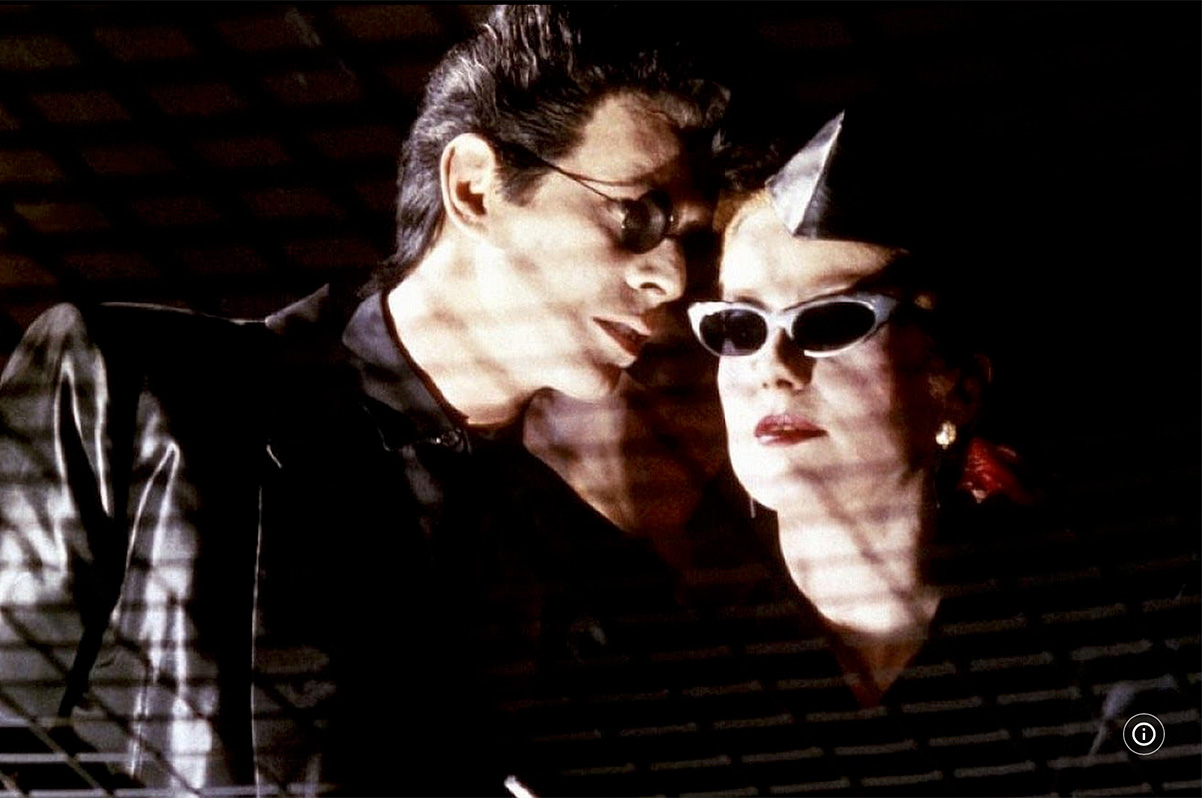
It’s hard to think of a horror film as openly sexy as this classic from director Tony Scott, which turns Whitley Streiber’s book about an ancient vampire (Catherine Deneuve) in modern New York, who grooms a scientist (Susan Sarandon) to be her new sexual companion for the ages as the old one (David Bowie) begins to rapidly age and decline. Dripping with 1980s cool (it opens with Bauhaus singing “Bela Lugosi’s Dead” in a nightclub) and leaning hard into the open eroticism of a more sexually permissive era, it doesn’t hide its sapphic supernatural love story in the subtext; instead, it gives us one of the steamiest love scenes between two women ever put on film. Critics of the time praised it for its style and its mood, but lamented what they perceived as an ultimately shallow story – but in retrospect, its pervading air of melancholy doom despite the glamorous elegance of its presentation serves as a fitting reminder that an eternal life of meaningless beauty and pleasure might not be as great an idea as we think it is.
Stranger by the Lake (2013)
French filmmaker Alan Giraudie delivers one of the sexiest – and scariest – gay thrillers – of all time – in this tale of a young man (Pierre Deladonchamps) who frequents a lakeside nude beach, which is a popular hook-up spot despite a recent series of unsolved killings in the area. He becomes infatuated with an attractive man (Christophe Paou) he meets there and they connect; later, he witnesses an incident that makes him suspect his new flame might be the murderer – but that doesn’t stop him from continuing to pursue their relationship, despite an increasing likelihood that he might end up as the next victim. It’s an obvious essay on the power of lust to pull us into danger, but it doesn’t moralize; instead it entices us deeper with scenes of graphic un-simulated sex and sparks nostalgic fantasies of a pre-Grindr era when the threat of encountering a serial killer was never enough to keep us away from our favorite cruising spot. Transgressive? Yes, and also terrifying.
We’re All Going to the World’s Fair (2021)
If you’re a horror fan in 2026, it’s likely you’ve already seen trans filmmaker Jane Schoenbrun’s critically lauded “I Saw the TV Glow,” as well as “Teenage Sex and Death and Camp Miasma,” which has emerged as one of the year’s most acclaimed movies so far. You might not, however, be familiar with their first feature film, in which a teenage girl (Anna Cobb), living an isolated life with an abusive single father, finds escape and connection on the internet; she participates in a “viral challenge” that requires her to post a video of herself performing a ritual chant, and then follow up with updates documenting the transformation she goes through as a result. Inspired by Schoenbrun’s own experience navigating the online world while struggling with gender dysphoria and other issues around their identity, it’s an unsettling and disorienting ride that keeps us wondering what will happen next – but the real horror comes from its observations about the way living our lives online can transform us all.
Movies
10 years later, we still can’t shake Barry Jenkins’ ‘Moonlight’
This past weekend, Barry Jenkins’ landmark queer film Moonlight returned to theaters with a remastered 4K edition to celebrate ten years. And it’s a film that hasn’t lost any of its staying power.
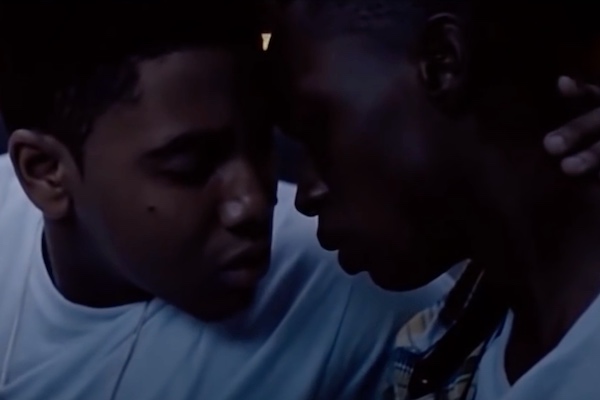
It all started back at the Telluride Film Festival, where Moonlight had its world premiere in 2016, kicking off a successful awards season run. It instantly became the year’s critical darling, and it wound up winning three Academy Awards, including Best Picture, Best Adapted Screenplay (for Jenkins), and Best Supporting Actor (for Mahershala Ali).
But there’s a world where an independently made film like Moonlight, featuring an all-Black cast with mostly unknown actors, and a story exploring how queerness intersects with toxic masculinity and race, gets easily overlooked. The fact that the film won Best Picture on Hollywood’s biggest stage not only cemented its place in film history, but helped the story reach more Black and queer people.
Adapted from Tarell Alvin McCraney’s unproduced, autobiographical play In Moonlight Black Boys Look Blue, Jenkins follows a boy named Chiron, introduced to the audience as Little, over the course of three pivotal moments in his upbringing. Set in Miami, the film tracks Chiron’s days as an outcast struggling to make it through elementary school, to his first sexual encounter with another boy, to his adult days making a living as a drug dealer. Chiron suffocates while living with his abusive, drug-addicted mother (Naomie Harris) and eventually finds refuge and safety in the home of surrogate parents Juan (Ali) and Teresa (Janelle Monáe) as he struggles to reckon with his queerness.
Jenkins’ images instantly became iconic: Juan holding Little in the ocean, a moment reminiscent of a young boy’s baptism; Chiron resting his head on Kevin’s (André Holland) shoulder as the two reconcile their love for one another; Little looking back at the audience as the waves crash.
The film mainly features locals from Miami. One of the smartest choices Jenkins and his casting director, Yesi Ramirez, made when shaping out Chiron’s journey was casting three different actors (Alex Hibbert, Ashton Sanders and Trevante Rhodes) to play the character as he physically comes of age. Jenkins deliberately never had the three actors meet despite portraying the same character — quite the atypical approach to casting.
“I wanted [that decision] to be a comment on the way of the world we live in, and how society has this effect on these young men who grow up in a community like the one depicted in the film,” Jenkins said in a Creative Screenwriting interview in February 2017. “To me, the best way to show that was to illustrate this change in the character, and what happens to the people who are playing him at each stage.”
In the decade since Moonlight’s release, dozens of filmmakers cite Jenkins as one of their biggest influences, including Joe Talbot (The Last Black Man in San Francisco). And you can see his film’s footprints all over Nickel Boys, If I Go Will They Miss Me and Waves, all films that use evocative imagery to tell grounded, Black-led stories.
To date, Moonlight remains the lowest-budget film to ever win Best Picture, made for a mere $1.5 million dollars. It was also the first film that A24, the indie distributor that was still building a name for itself back in 2016, fully financed and produced itself. Moonlight went on to gross over $60 million at the global box office, largely thanks to the Oscars platform.
In our current political and media landscape under the Trump administration, Moonlight has the potential to save even more lives. In the early days depicted in Chiron’s upbringing, he is taught to live with shame, to keep his head down at school. It’s all about survival. But by the end of the film, Chiron reconnects with Kevin and finds himself remembering all the emotions he felt after being touched by a man for the first time. It’s a small step, a small embrace, but a crucial one for Chiron to start coming to terms with himself.
Jenkins still gets emotional when watching scenes back from the film now. Speaking with Vanity Fair at this year’s Telluride Film Festival, where Moonlight screened for its 10th anniversary, Jenkins admitted he was a “crying mess” when revisiting the last 15 minutes of the film earlier in the year.
“Maybe over the next few months I’ll get some more understanding of it, but I think it was just how meaningful it was that we created this thing,” Jenkins said. “It’s not about the film itself, but just how meaningful it was that we actually did it.
In the decade since Moonlight’s release, Jenkins went on to direct another acclaimed film, If Beale Street Could Talk, and recently made Mufasa: The Lion King. He’s set to return to his more independent roots with Be My Baby starring Zendaya, which will also be distributed by A24, and an Alvin Ailey biopic. The Oscar winner continues to mentor emerging filmmakers and writers through the Sundance Labs, visiting colleges around the country to teach what he learned from making his breakout film.
Now that Moonlight is back in theaters, it’s the perfect opportunity for queer and Black people to experience this tender, intimate, nuanced film on the big screen. It’s a modern classic with the potential to continue making people feel seen and embraced for every aspect of their identity.

Andrew Scott triumphs again in ‘Elsinore’

The contradiction of the 2026 midterm election: why we must keep fighting for trans rights

Hakeem Jeffries poised to become House speaker

US votes against LGBTQ+-inclusive UN resolution

Supreme Court faces new questions over trans rights and equal protection

Top Lebanese newspaper calls for decriminalization of homosexuality

Gay man named Venezuelan foreign minister

Turkey’s anti-LGBTQ+ crackdown overshadows UN climate conference

WeHo honors Transgender Day of Remembrance Nov. 20
Supreme Court faces new questions over trans rights and equal protection
-
 Lebanon3 days ago
Top Lebanese newspaper calls for decriminalization of homosexuality
-
 Venezuela4 days ago
Gay man named Venezuelan foreign minister
-
 Turkey3 days ago
Turkey’s anti-LGBTQ+ crackdown overshadows UN climate conference
-
 West Hollywood3 days ago
WeHo honors Transgender Day of Remembrance Nov. 20
-
 U.S. Supreme Court2 days ago
Supreme Court faces new questions over trans rights and equal protection
-
 Commentary1 day ago
US votes against LGBTQ+-inclusive UN resolution
-
 Congress23 hours ago
Hakeem Jeffries poised to become House speaker
-
 Commentary5 hours ago
The contradiction of the 2026 midterm election: why we must keep fighting for trans rights
-
 Movies2 hours ago
Andrew Scott triumphs again in ‘Elsinore’