
Nepal
Nepalese Supreme Court issues landmark marriage equality ruling
Same-sex couples since 2023 allowed to marry under ‘temporary registration system’
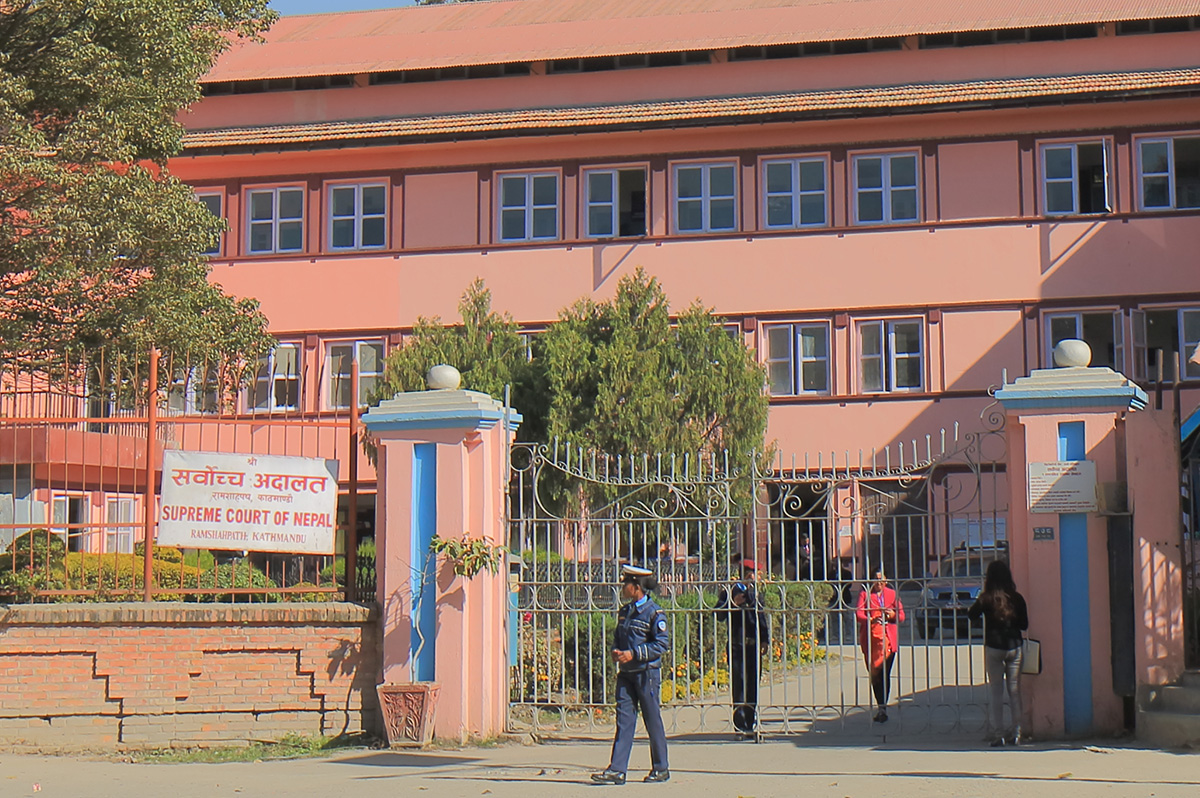
The Nepalese Supreme Court on June 18 ruled the country must extend full marriage rights to same-sex couples.
The Supreme Court in 2023 ordered the country’s government to allow same-sex couples to temporarily register their marriages, but this recognition did not guarantee full marriage rights to gays and lesbians.
“Since the Supreme Court’s landmark 2023 decision, dozens of same-sex couples have legally married in Nepal under a temporary registration system,” said the Blue Diamond Society, a Nepalese LGBTQ+ advocacy group, in a June 19 press release. “However, the lack of national legislation has created uncertainty and fear for couples who want to register their marriage.”
“Many couples have been denied marriage licenses by local clerks who claim there is no national law instructing them to register marriages of same-sex couples,” further noted the Blue Diamond Society. “Other couples have been forced to file legal cases and endure costly legal battles simply to register their marriage. And even among couples who have registered their marriages, there is concern that their marriages may not be respected when it comes to adoption, inheritance, and other important protections they need to care for their families.”
Thailand and Taiwan are among the countries that have extended full marriage rights to same-sex couples.
The Japanese Supreme Court in March said it will consider six marriage equality lawsuits. The South Korean marriage equality movement in recent years has gained momentum with several court rulings that recognized same-sex relationships.
The Blue Diamond Society in its press release notes the June 18 decision is the fourth time the Supreme Court has ruled in favor of marriage equality.
“Today is a day of celebration for LGBTQIA+ people and families across Nepal,” said Blue Diamond Society Executive Director Manisha Dhakal. “The Supreme Court has once again affirmed that same-sex couples deserve the same dignity, respect, and legal protections as any other couple.”
“We are grateful for the court’s continued leadership,” added Dhakal. “With a newly elected government more committed than ever to equality, now is the time to complete this important work by updating Nepal’s civil code and ensuring marriage equality is fully and clearly protected in law.”
Dhakal in the press release said the Blue Diamond Society “looks forward to working constructively with the government of Nepal, lawmakers, and civil society partners to ensure the court’s vision of equality is fully realized.”
“The Supreme Court has spoken clearly,” Dhakal said. “The government has expressed its support for equality. We are encouraged by that commitment and urge Parliament to act swiftly so that every LGBTQIA+ couple in Nepal can access marriage with certainty, dignity, and respect. Nepal has already taken a historic step. Now it is time to finish the job.”





Nepal
Two transgender women make history in Nepal
Honey Maharjan and Mouni Maharjan ran in local elections last month
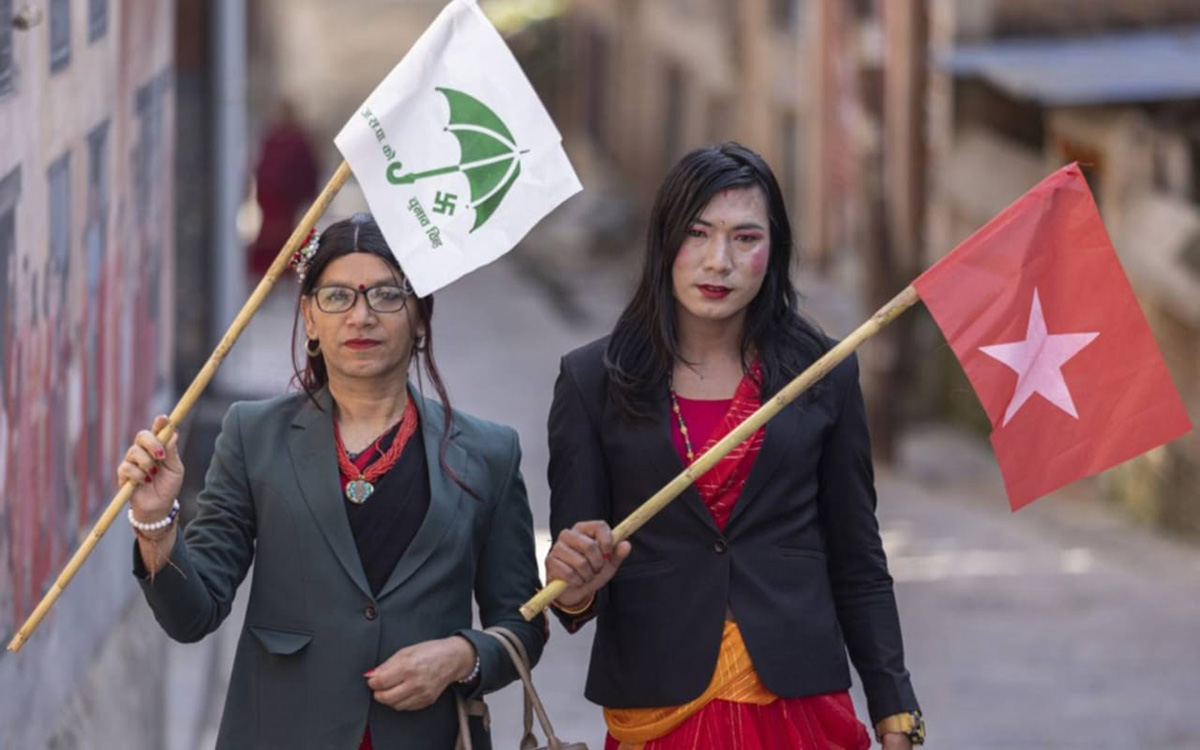
November 22 was a milestone for Nepal’s LGBTQ+ community.
Two transgender candidates, Honey Maharjan and Mouni Maharjan, members of the People’s Socialist Party-Nepal, ran in local elections. It marked the first time that trans people ran for office in the country.
Honey Maharjan ran for mayor in Kirtipur, a municipality outside Kathmandu, the Nepalese capital. Mouni Maharjan ran to become a ward chair in the same municipality. Although both candidates lost the election; experts, and activists consider their participation a significant milestone for LGBTQ+ representation in Nepalese politics.
Honey Maharjan, 44, is a former tour guide who faced discrimination because she is a trans woman. Maharjan nevertheless became a vocal advocate for LGBTQ+ rights.
Mouni Maharjan, 29, advocates for local infrastructure and LGBTQ+-inclusive education. Her campaign focused on introducing an LGBTQ+-inclusive curriculum in schools and creating employment opportunities for marginalized groups.
The Supreme Court in 2007 ruled the government must legally recognize a third gender. Six years later, in 2013, Nepal hosted its first-ever Pride parade, signaling growing visibility and acceptance of the LGBTQ+ community. The country’s new constitution, which ensures equal rights for LGBTQ+ people and all other Nepalese citizens, took effect in 2015.
The Supreme Court in 2018 issued a ruling that expanded protections for LGBTQ+ people in marriage, inheritance, social recognition, and other areas.
Sunil Babu Pant, founder of the Blue Diamond Society, a Nepalese LGBTQ+ rights group, in 2017 became the first openly gay person elected to parliament. Nepal since 2020 has allowed trans people to legally change their gender in official documents without surgery.
A study that UN Women and the Blue Diamond Society published in June 2023 found 81 percent of LGBTQ+ people in Nepal have faced physical violence, discrimination, and verbal abuse. Traditional societal norms and a lack of awareness make this situation worse.
Nepal is seen as a leader in LGBTQ+ rights in South Asia in terms of legal protections and a debate over marriage rights for same-sex couples. A large gap remains between policies and their implementation.
Political representation of LGBTQ+ people remains low.
Pant left office in 2023. There are currently no openly LGBTQ+ people in parliament or in the country’s policy-making policies.
During their campaign in Kirtipur, Honey Maharjan and Mouni Maharjan outlined key promises. They pledged to promote LGBTQ+ inclusion, especially in politics, and vowed to fight discrimination in education, healthcare, and employment.
Their campaigns also focused on ensuring equal rights and opportunities for marginalized groups. Honey Maharjan and Mouni Maharjan promised to raise awareness about LGBTQ+ issues to reduce stigma and discrimination in society.
Honey Maharjan told the Washington Blade said she was happy about running for office, and noted her family and friends supported her.
“Since Kirtipur has a large LGBTQ community still they did not come out to support me,” she said. “Nepal has other political parties like Congress, Communist Party of Nepal (Maoist Center) and many others, we did not had budget like theirs, so it was also our struggle. It is also challenging for us as people are not supporting us for what we are trying to do. They are supporting only prominent political parties in Nepal. So, these are our challenges as a transgender political candidate in Nepal.”
Honey Maharjan told the Blade she would have worked to provide education, health care, and better roads if she were elected.
“I did not win, so I am a little sad this time,” she said. “But I am happy that the media has covered my campaign, so I am grateful to all journalists.”
“Every community member needs to be inspired because we are not alone and we need to think that we have a large number of community members,” added Honey Maharjan. “If we do not come out, there will be difficulty, it’s our right.”
She also dismissed the idea that many trans people are sex workers.
“Many people are working in different sectors. I would request everyone to come out and support the transgender candidate in the next election,” said Honey Maharjan. “Elections are important because it creates awareness about the candidate otherwise everyone would think that transgender community is engaged in sex work only that is not true.”

Lula defeats Flávio Bolsonaro in second round of Brazilian presidential election

LGBTQ+ pioneer Rev. Troy Perry to young people: ‘Don’t be afraid’

With exquisite 4K restoration, ‘The Devils’ finally gets its due

Drag queens go from Send Noodz straight to the polls
Immunology gave HIV survivors the chance to grow old, Proposition 38 is the next step

Here’s your Palm Springs look at the weekend: Oct 23 – 25, 2026

New Zealand High Court strikes down puberty blocker ban

Allegations involving Ric Grenell raise questions about pay-for-play in White House

A Parvesh perspective: Actor Parvesh Cheena talks his roles in ‘Wives’

Common Sense Isn’t Political
-
 Palm Springs3 days ago
Here’s your Palm Springs look at the weekend: Oct 23 – 25, 2026
-
 New Zealand4 days ago
New Zealand High Court strikes down puberty blocker ban
-
 White House4 days ago
Allegations involving Ric Grenell raise questions about pay-for-play in White House
-
 a&e features4 days ago
A Parvesh perspective: Actor Parvesh Cheena talks his roles in ‘Wives’
-
 opinions3 days ago
Common Sense Isn’t Political
-

 Transgender4 days ago
Latin queer and trans history along the U.S.- Mexico border on display at UC Riverside event
-

 Theater3 days ago
‘WOOF’ worthy: Christopher Schellenger shares the unique challenges of playing a dog
-
Commentary3 days ago
Immunology gave HIV survivors the chance to grow old, Proposition 38 is the next step
-
 Features1 day ago
LGBTQ+ pioneer Rev. Troy Perry to young people: ‘Don’t be afraid’
-
 Movies1 day ago
With exquisite 4K restoration, ‘The Devils’ finally gets its due