
Chile
Santiago Pride march doubles as protest against new Chilean president
José Antonio Kast took office in March
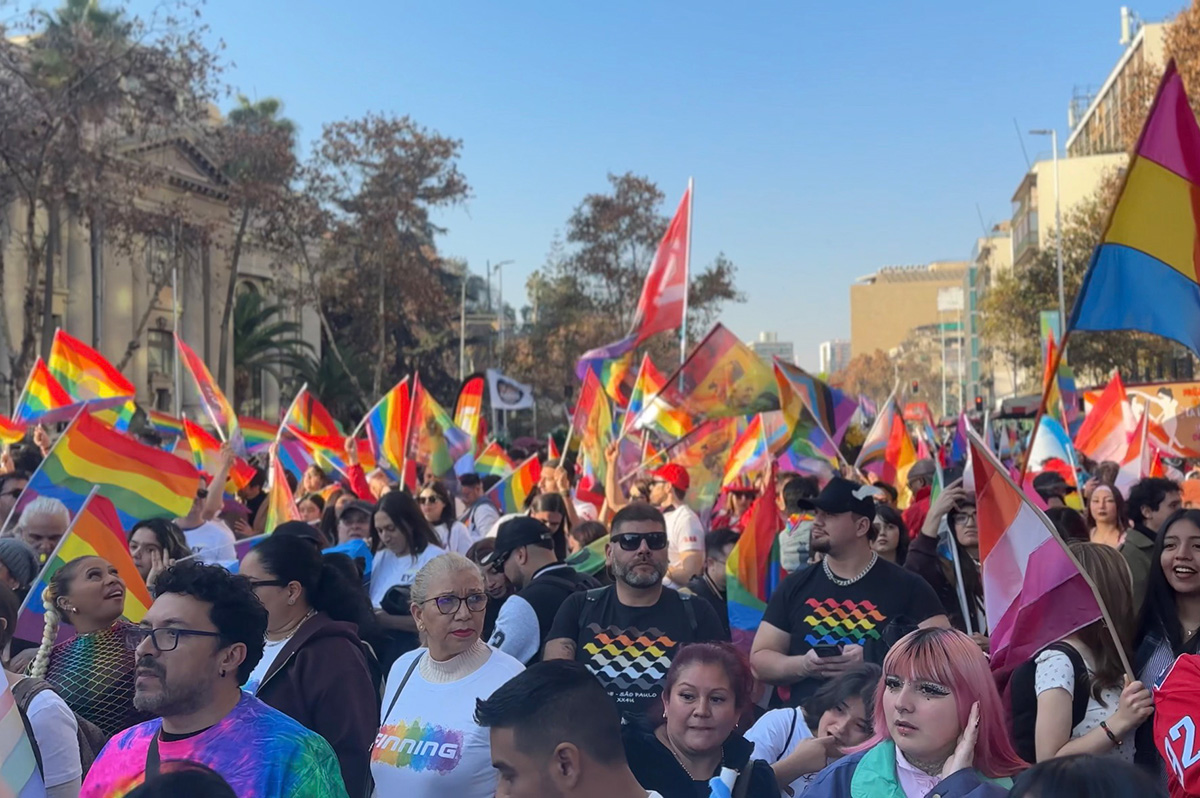
More than 100,000 people participated in the 26th Pride March in Santiago, Chile, one of the largest demonstrations by the LGBTQ+ movement in the South American country, on June 27.
The event, organized by the Movement for Homosexual Integration and Liberation and Fundación Iguales, proceeded along the Alameda, the capital’s main avenue, with flags, signs, and slogans in support of equality, against a backdrop of concern among organizations regarding the direction of President José Antonio Kast’s administration.
The march was preceded by speeches in Plaza Baquedano and included the participation of human rights organizations, families, activists, victims of discrimination, and representatives from various embassies. This year, the parade was also led by LGBTQ+ seniors from the group Años Rosados, part of Acción Gay, as a gesture of historical remembrance for those who lived through decades when publicly expressing one’s sexual orientation or gender identity could mean persecution, imprisonment, or social exclusion.
“This march demonstrates that the fight for equality is still alive and will not be pushed back into the closet,” said Movilh spokesperson Javiera Zúñiga. “We march with remembrance, with pride, and with the conviction that Chile cannot roll back the rights we have won.”
During the event, the organizations called upon the Chilean government to move forward with a comprehensive reform of the Zamudio Law — the anti-discrimination law in effect since 2012 — as well as to introduce penalties for hate speech and strengthen protections for LGBTQ+ people in education, health care, the workplace, and public spaces.
Movilh founder Rolando Jiménez noted that Chile between 1991 and 2022 made significant strides toward equality and nondiscrimination. He warned, however, that this progress has begun to lose momentum in recent years and that, under the current administration, the signs have become increasingly concerning.
“For decades, Chile forged a path of progress, with laws and public policies that expanded rights. Today we are marching because there are attacks aimed at weakening those protections and preventing further progress,” Jiménez stated.
The march took place place in a country that, in recent years, has established a robust legal framework for sexual and gender diversity. Chile has had a Civil Union Agreement since 2015, a transgender rights law since 2018, and marriage equality since 2022. For these organizations, this legal framework explains why recent decisions by the executive branch and Congress are viewed as signs of regression, not merely as administrative debates.
One of the main points of concern arose in March, when the Kast administration shortly after the new president took office decided not to endorse an Organization of American States’ LGBTQ+ rights declaration. The decision marked a departure from the stance taken by previous administrations and was interpreted by civil society organizations as a sign of a weakening of Chile’s foreign policy on human rights.
The Foreign Affairs Ministry, however, has maintained that Chile remains committed to promoting and protecting human rights without discrimination, and that the decision stemmed from differences regarding the document’s wording. That explanation has not fully dispelled the doubts of these organizations, which, during the march, demanded that the executive branch take a clear and consistent public stance.
One hundred days into the Kast administration, Fundación Iguales also presented the findings of its LGBTQ+ Radar, an ongoing monitoring initiative of government, legislative, and administrative measures that impact the rights of LGBTQ+ people in Chile.
According to the organization, of the nine measures recorded so far, five have been rated as unfavorable, three remain under evaluation, and only one has been considered favorable.
Among the adverse measures, Fundación Iguales identifies actions that, in its view, involve hostility, restriction, or elimination of previously existing public policies or safeguards. In this category, it includes the repeal of Circular 781, which protected LGBTQ+ students in educational institutions; Chile’s decision to abstain from the OAS LGBTQ+ declaration; the elimination of the section on diversity from the national household survey; the discontinuation of the inclusion training program for public officials; and alignment with the U.S. to restrict the definition of gender at the U.N.
The monitoring also includes three measures currently under evaluation whose final impact has not yet been determined: the National Human Rights Plan, the regulations on access to justice, and the regulations for the Adoption Law. In contrast, the only favorable measure identified so far is the enactment of the School Coexistence Law, which the foundation considers an action that expands or protects rights.
Fundación Iguales states that the LGBTQ+ Radar is updated in real time and that each measure includes its source, date, and the responsible institution. For the organization, the assessment of Kast’s first 100 days confirms that the signals from the executive branch are not isolated incidents but part of a pattern that must be monitored by civil society and the international community.
Another controversial move took place in the education sector. The Superintendency of Education repealed circulars related to school coexistence and internal regulations, including provisions addressing gender identity and nondiscrimination. However, a few days before the march, the Comptroller General’s Office upheld the legality of Circular 812, which protects the rights of trans students in the school system, rejecting the attempt to declare that regulation illegal.
For Fundación Iguales, this ruling was a significant signal amid an adverse political climate.
“The fact that organized groups have tried to eliminate this circular speaks volumes about the times we are living in. We celebrate that the Comptroller’s Office has clarified the matter, and we will remain vigilant to prevent setbacks,” said María José Cumplido, the organization’s executive director.
The debate also reached Congress.
The Chamber of Deputies amid Pride month approved a draft resolution calling on Kast to eliminate the use of inclusive language in public services. The initiative, backed by right-wing sectors, called for the repeal of administrative acts promoting these forms of communication and for a ban on what it defined as “grammatical distortions” based on gender, ethnicity, or other identity classifications.
For LGBTQ+ organizations, the measure is ideological in nature and fails to recognize that inclusive language has not been a widespread imposition, but rather a tool used in certain contexts to name historically excluded groups. At the march, this point was one of the most frequently cited examples of the new political climate that has taken hold under the Kast administration.
Despite this situation, the organizations also highlighted a positive institutional development: Senate President Paulina Núñez of Renovación Nacional, a more moderate right-wing ruling party, pledged in May to push for reform of the Zamudio Law and to serve as a bridge with the executive branch to advance the modernization of anti-discrimination legislation. The reform is currently stalled in Congress, despite years of criticism from human rights organizations regarding its limited effectiveness.
“The commitment to move forward with reforming the Zamudio Law is good news, because Chile needs effective anti-discrimination legislation, with real tools to protect victims and combat hate speech,” Movilh representatives stated.
The march culminated with a cultural event in Plaza Los Héroes, but the political message was clear from the start: the organizations not only celebrated the progress made but also warned that these rights require constant defense.
For the organizing groups, the country continues to have a strong legal foundation regarding sexual and gender diversity, but it faces a period of uncertainty under a conservative government that, in its first months, has sent mixed signals about the continuity of those commitments.
Chile already has legislation in place regarding gender identity, civil unions, and marriage equality. For this reason, the organizations believe that the setbacks they have observed are not merely symbolic but could undermine the safeguards that form part of the democratic framework the country has built over the past decades.




Chile
Chilean lawmakers back report that calls for suspension of program for trans children
Country’s first transgender congresswoman condemned May 15 vote
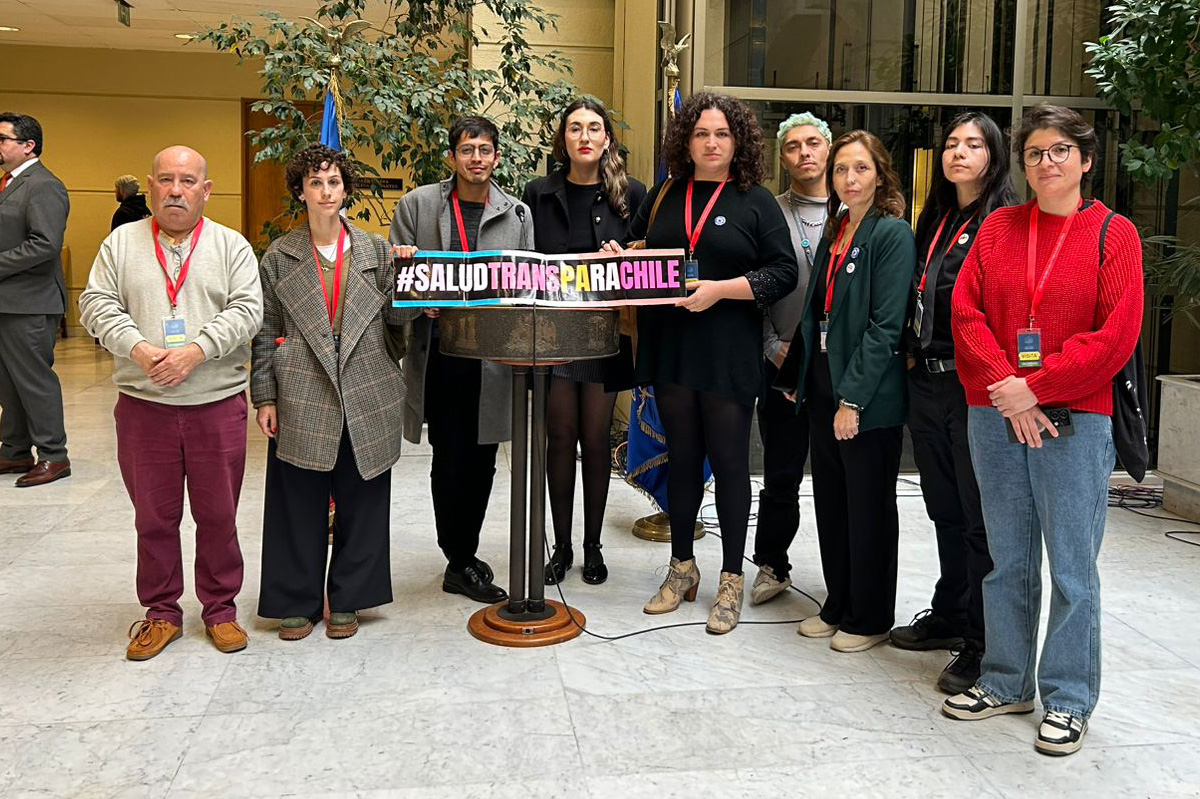
The Chilean Chamber of Deputies on May 15 approved a report that recommends the immediate suspension of a program that provides psychosocial support to transgender and gender non-conforming children and adolescents and their parents.
The 56-31 vote in favor of the Investigation Commission No. 57’s recommendations for the Gender Identity Support Program sparked outrage among activists in Chile and around the world. Six lawmakers abstained.
The report proposes the Health Ministry issue a resolution against puberty blockers, cross-hormonalization, and other hormonal treatments for minors, regardless of whether they have been diagnosed with gender dysphoria. The report also suggests Chilean educational institutions should not respect trans students’ chosen names.
The report, among other recommendations, calls for a review of the background of all minors who are currently receiving hormone treatments. The report also calls for the reformulation of hormone therapy guidelines and sending this background information to the comptroller general.
Report ‘sets an ominous precedent’
Frente Amplio Congresswoman Emilia Schneider, the first trans woman elected to the Chilean Congress and a member of the commission, sharply criticized her colleagues who voted for the report.
“Today in the Chamber of Deputies the report of hatred against trans people was approved; a report that seeks to roll back programs so relevant for children, for youth, such as the Gender Identity Support Program; a program that, in addition, comes from the government of (the late-President) Sebastián Piñera,” Schneider told the Los Angeles Blade. ”This is unacceptable because the right-wing yields to the pressures of the ultra-right and leaves the trans community in a very complex position.”
Schneider noted “this report is not binding; that is, its recommendations do not necessarily have to be taken into account, but it sets an ominous precedent.”
“We are going backwards on such basic issues as the recognition of the social name of trans students in educational establishments,” she said.
Ignacia Oyarzún, president of Organizing Trans Diversities, a Chilean trans rights group, echoed Schneider’s criticisms. commented to the Blade.
“We regret today’s shameful action in the Chamber of Deputies, where the CEI-57 report issued by the Republican Party was approved in a context of lies, misinformation and misrepresentation of reality,” Oyarzún told the Blade. “This only promotes the regression of public policies and conquered rights that have managed to save the lives of thousands of children in the last time.”
Oyarzún added the “slogan ‘children first’ proves to be an empty phrase without content used by those who today promote measures that push to suicide a significant number of children for the fact of being trans.”
The Movement for Homosexual Integration and Liberation, a Chilean LGBTQ+ rights group known by the acronym Movilh also condemned the approval of the report, calling it “transphobic” and accusing the commission of omitting the opinions of organizations and families that support the current policies.
Movilh notes lawmakers approved both the Gender Identity Law and Circular 812, which promotes respect for trans students’ rights, within the framework of an agreement with the Inter-American Commission on Human Rights.
“The text of the approved report is scandalous, because it seeks to take away the access to health to trans minors, including denying them the psychosocial accompaniment that also includes their respective families,” said María José Cumplido, executive director of Fundación Iguales, another Chilean LGBTQ+ advocacy group. “Likewise, it attempts against school inclusion, since it intends to eliminate something as essential as the use of the social name in educational spaces. In short, it takes away rights and freedoms to trans people, especially to minors.”
Cumplido, like Schneider, pointed out that “although its content is not binding, we will be alert to the political and legislative consequences that it may produce and we will continue working to avoid setbacks with respect to the rights of trans people.”
The report’s approval reflects a global trend that has seen neighboring Argentina, the U.S., and other countries reserve policies for trans and nonbinary young people. The Peruvian Health Ministry recently classified gender identity as a mental illness, and lawmakers have passed a law that prevents trans people from using public restrooms based on their identity.

photo by Michael K. Lavers)
Experts and human rights activists warn the suspension of Chile’s Gender Identity Support Program and other programs could adversely impact the mental health of trans and nonbinary children who already face high levels of discrimination and are at heightened risk to die by suicide.
“We will defend the Gender Identity Support Program and the right to exist of trans children and youth across the country,” said Schneider. “I want to reassure the trans families of our country that we will not rest until our rights are respected and that we can continue advancing because there is still much to be conquered.”
Chile
2024 was ‘year of regression’ for LGBTQ+ rights in Chile
Advocacy group blamed rise in ultra-right, government inaction

A report that a Chilean advocacy group released on Tuesday says 2024 was a “year of regression” for LGBTQ+ rights.
The Movement for Homosexual Integration and Liberation (Movilh)’s 23rd Sexual and Gender Diversity Human Rights report notes LGBTQ+ rights for the first time since democracy returned to Chile in 1990 not only stopped advancing, but saw significant rollbacks in the three branches of government.
The Movilh report describes 2024 as “the year of regression,” noting 23.5 percent of human rights violations against LGBTQ+ people over the last two decades occurred last year. A total of 2,847 discrimination complaints were reported in 2024, representing a 78.7 percent increase over the previous year.
The report documents two murders, 44 physical or verbal assaults, two incidents of violence in police stations, 89 reports of abuse in the workplace, and 65 incidents in educational institutions in 2024. The transgender community was particularly affected, with a 462.6 percent increase in discrimination cases compared to 2023.
The Movilh report notes the growing influence of the ultra-right, whose narratives have fostered hate speech, is one of the main factors behind the deterioration of LGBTQ+ rights in Chile. The advocacy group also criticizes authorities who have remained silent in the face of these attacks, even though they say they support the LGBTQ+ community.
The report specifically singles out the Executive Branch.
Movilh specifically highlights the prohibition of public funds for hormone treatments for trans minors and the postponement of these procedures in public hospitals. The government reversed course after intense pressure and judicial appeals.
The report also criticizes the judiciary.
The Oral Criminal Trial Court of San Antonio refused to classify the murder of a trans woman as a femicide, arguing her identity card still reflected the gender assigned to her at birth. The Court of Appeals of Santiago also ordered the removal of a homophobia complaint on social media, setting what NGOs have described as a dangerous freedom of speech precedent.

The report notes Valparaíso, Metropolitana, and Biobío are the three regions with the highest number of discrimination complaints, with 51.3 percent, 25.1 percent, and 5.8 percent respectively. Reported cases increased in 11 of Chile’s 16 regions, with Ñuble leading the way with a 300 percent increase.
Faced with this bleak panorama, advocacy groups have intensified their efforts to denounce the violence and demand LGBTQ+ rights are once again guaranteed. Movilh, along with other organizations, have approached the Inter-American Commission on Human Rights and the U.N. about the situation in Chile.
“We are seeing a reversal of rights that cost decades of struggle,” warns the report. “If the State does not act urgently, we run the risk of discrimination and violence becoming institutionalized.”
Chile
New face of Chilean politics includes LGBTQ+ rights agenda
Municipal and regional elections took place on Oct. 27
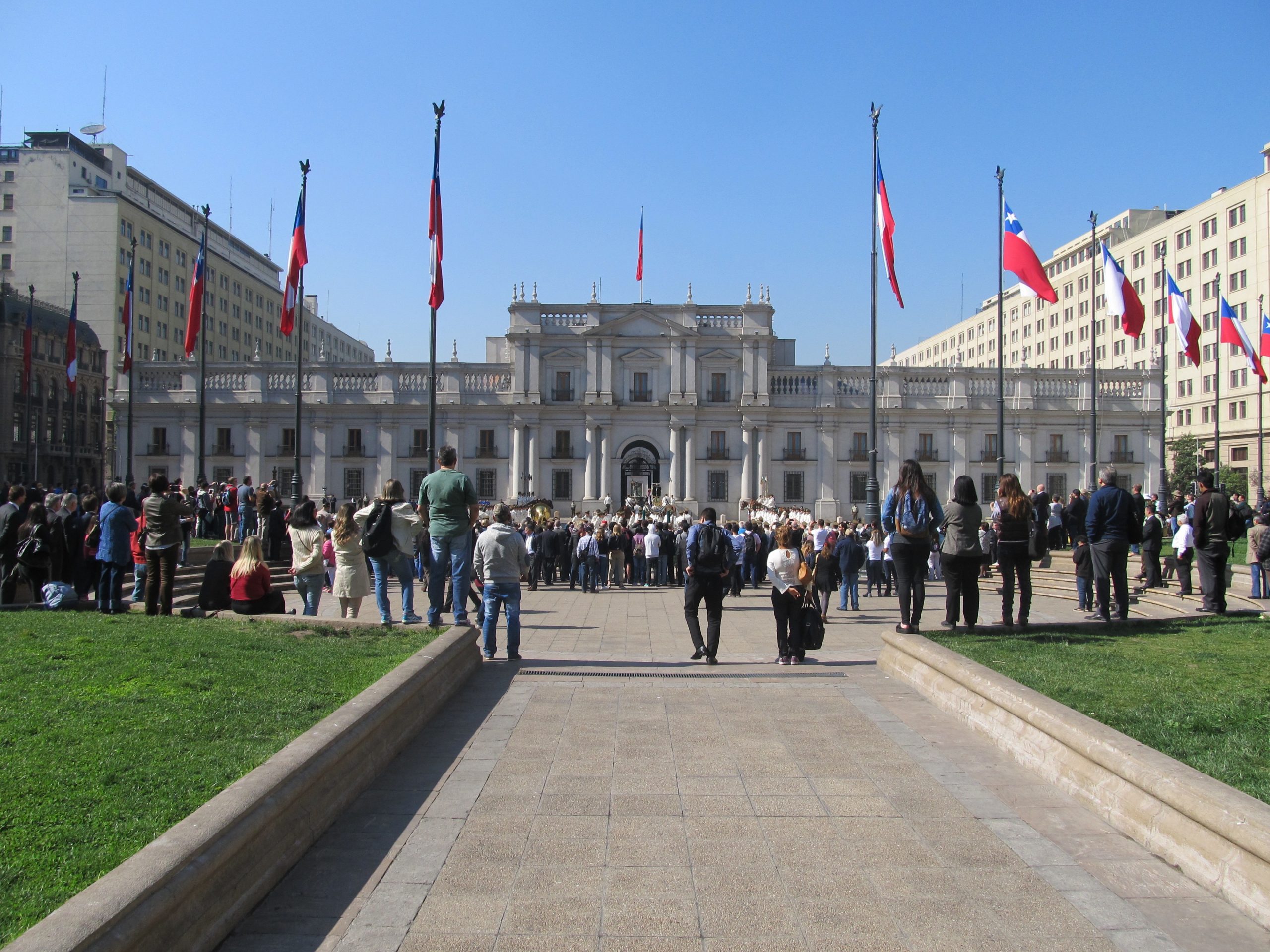
Chile’s municipal and regional elections that took place on Oct. 27 have brought with them a renewed focus on LGBTQ+ rights and diversity.
In a context where the center right has managed to stand out against the Republicans, political parties have incorporated into their platforms a commitment towards the inclusion of queer people. Some Chilean political scientists say the elections have shown a country inclined to vote for the opposition Chile Vamos coalition, even though the left governs Chile.
The ruling party, grouped in Contigo Chile Mejor, had a setback similar to what happened in the 2021 municipal and regional elections — it lost 39 communes that include Santiago, San Miguel, Ñuñoa, and Independencia.
Voters in Maipú, the country’s second most populous commune, re-elected Tomás Vodanovic from President Gabriel Boric’s Frente Amplio.
Frente Amplio also won in Viña del Mar, and other communes, and saw victory in others that include Valparaíso, where the Chilean Congress is located.
Openly LGBTQ+ candidates have emerged since 2012, and some of them have made history. These include Congresswoman Emilia Schneider, a Frente Amplio member who is transgender.
Several LGBTQ+ candidates have resonated with voters within the framework of these elections; not only highlighting their identity, but their commitment to the struggle for equal social rights.
Gloria Hutt, president of Evolución Política (Evópoli), a party that is part of the Chile Vamos coalition, stressed the importance of diversity in its agenda.
“Part of Evópoli’s agenda is inclusion and diversity, including the diversity of communities of different sexual identities. And in this election we had a dozen candidates who belong to sexual diversities, some of them won, others did not, but it is part of the agenda with which we are permanently working,” Hutt told the Washington Blade.
“We believe that it is also part of the freedom of people to deploy their life project without anything else interfering but their own identity and without prejudice preventing them from deploying that identity,” she added.
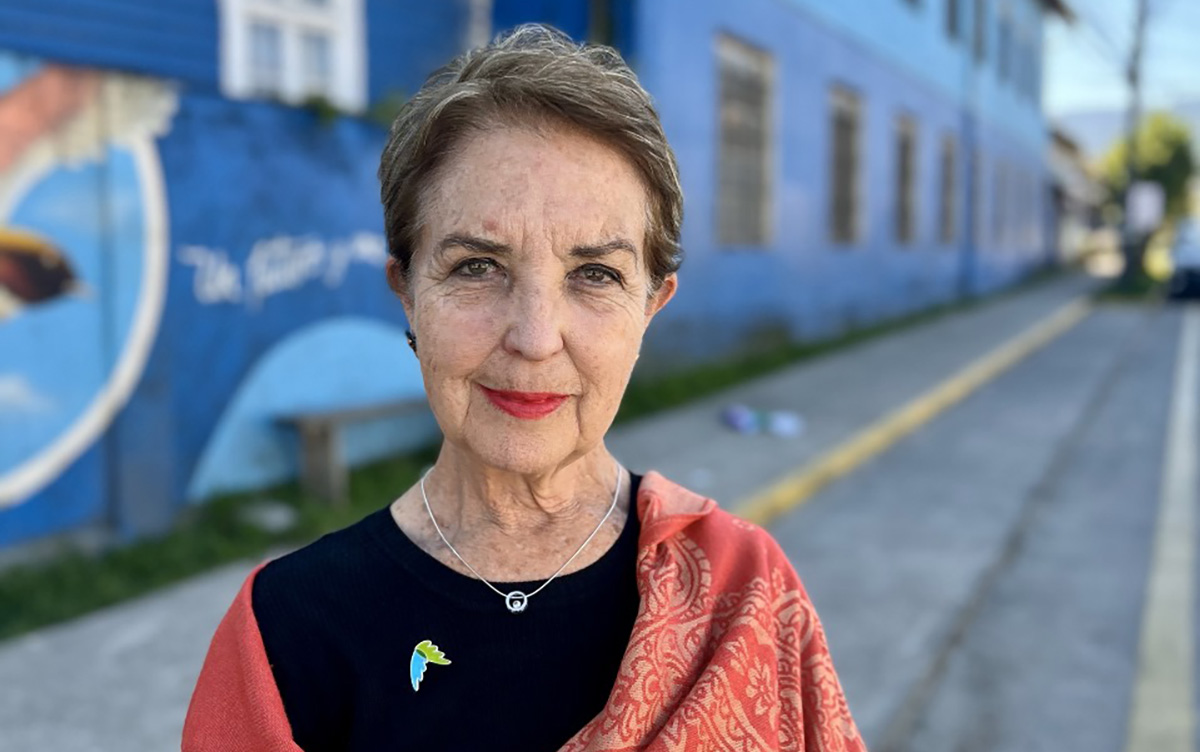
The reelection of figures, such as Viña del Mar Mayor Macarena Ripamonti, and Vodanovic’s success in Maipú reflect significant support for the progressive agenda.
“First of all I would like to emphasize that we saw an impeccable process where citizens were able to express their preferences,” Frente Amplio Secretary-General Andrés Couble told the Blade. “We believe that the results allow us to look to the future with optimism.”

Couble highlighted the importance of LGBTQ+ candidacies in decision-making spaces.
“We think it is important to promote them and that they reach elected positions, because they allow us to bring the struggles for equal rights and respect and promotion of diversity to institutional spaces,” he said.
Couble at the same time highlighted the victory of Bladymir Muñoz, the Chilean councilman who received the most votes, as an example of the advance towards a more inclusive representation.
Muñoz is a Frente Amplio member. He received 41,669 votes in Maipú.

The new “chosen family”: Suzanne Bangis on building a family through third-party reproduction

Actor Christian Tyler Dorey is a Jack of all trades

Trump uses anti-trans slur against Democratic Senate candidate

Michael Kearns has died six days before his planned return to the Celebration Theatre

‘A disgusting attempt to exploit lesbian intimacy for political attention’: suggestive Steve Hilton ad draws criticism

Lula, Flávio Bolsonaro to face off in second round of Brazilian presidential election

The California Gubernatorial Debate missed getting real

Transgender woman elected to Brazilian Chamber of Deputies

From bullying to bravo: Joey Zauzig talks finding yourself while making people feel seen

Evan Low is not the leader the Victory Fund needs at this moment
-
 Brazil4 days ago
Lula, Flávio Bolsonaro to face off in second round of Brazilian presidential election
-
 Commentary5 days ago
The California Gubernatorial Debate missed getting real
-
 Brazil4 days ago
Transgender woman elected to Brazilian Chamber of Deputies
-
 a&e features5 days ago
From bullying to bravo: Joey Zauzig talks finding yourself while making people feel seen
-
 Opinions4 days ago
Evan Low is not the leader the Victory Fund needs at this moment
-

 History4 days ago
Preserving the past: Robert Kesten on Stonewall & storytelling; LA Blade joins at the Abbey, Tuesday, October 6th at 6 pm
-

 opinions3 days ago
The facts about Victory Fund’s investigation and the path forward
-

 Television4 days ago
Engrossing ‘Tip Toe’ delivers tension and an ominous warning
-
 Georgia3 days ago
In Ga., 2 trans candidates believe voters are ready for them
-

 AIDS and HIV2 days ago
AIDS Walk Los Angeles set for 42nd year amid growing challenges