
New York
NYC lawmakers seek to repeal bathhouse ban
Current policy enacted in 1980s in response to AIDS crisis
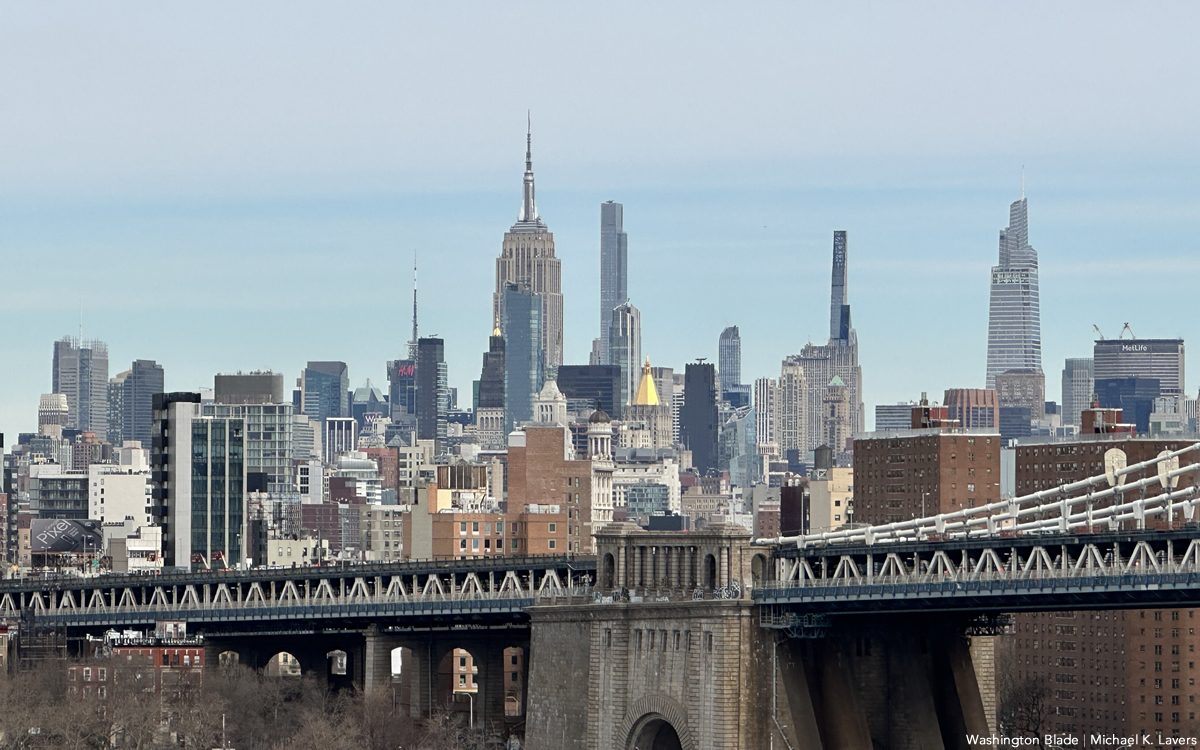
New York City lawmakers are pushing to repeal a decades-old prohibition on adult bathhouses, arguing the regulation was created during the height of the AIDS crisis and no longer reflects modern science or public health practices.
Erik Bottcher, the openly gay New York state senator who represents the 47th District that includes the Upper West Side, Chelsea, Hell’s Kitchen and portions of the West Village in Manhattan, is leading the charge to remove the decades-old ban. (Openly gay state Assemblymember Tony Simone has sponsored the repeal bill in the New York State Assembly.) Bottcher sat down with the Los Angeles Blade to discuss why he is advocating for more bathhouses in New York City.
“This is simply about ensuring that our public health policy is in line with today’s science,” he told the Blade. “The prohibition on adult bathhouses was put into place in 1985 at the height of the the AIDS epidemic, when there was very little information, very little treatment options, few treatment options, and great deal of fear. Science has changed. Treatment has changed, and the laws need to change too.”
The proposed legislation would direct the New York State Department of Health to repeal the 1985 regulation and establish a new framework for regulating bathhouses.
“Municipalities around the country and all around the world allow for adult bathhouses. There’s no reason why New York City alone needs to maintain this outdated prohibition. Our bill orders the New York State Department of Health to strike the 1985 regulation and replace it with a regulated public health framework that’s grounded in science.”
Under the proposal, bathhouses would operate as licensed and regulated facilities subject to health and safety standards. Backers of the proposal say that framework could also give public health officials greater access to people who may otherwise be difficult to reach through traditional health care settings.
“What the Department of Health would do is work with public health experts and advocates to develop a regulatory framework that allows licensed regulated facilities to operate under clear health and safety standards — and under this — it would allow public health agencies to have greater opportunities to provide STI and HIV prevention resources, connect people to testing and treatment, conduct instructions, and address legitimate health concerns.”
Supporters of the repeal also argue banning bathhouses does not eliminate the sexual activity that takes place in them or elsewhere. Instead, they say, it pushes those activities into the shadows, where public health officials have fewer opportunities to provide life-saving services that include STI and HIV testing.
“This is also about a safer alternative than pushing activity into unregulated settings where there’s little opportunity for public health engagement because these activities are happening, but they’re happening in the shadows,” Bottcher continued. “We know that the best public health policy is to establish clear public safe public health guidelines that allow for public health intervention.”
Demetre Daskalakis, a physician and longtime HIV prevention advocate who has worked to create sexual healthcare opportunities in bathhouses, also worked with Bottcher on the proposal.
Daskalakis was a high level Centers for Disease Control and Prevention employee until 2025, when he left federal health landscape after the Trump-Vance administration ousted then-CDC Director Susan Monarez. There he worked as director of the National Center for Immunization and Respiratory Diseases and was director of the Division of HIV Prevention at the National Center for HIV/AIDS, Viral Hepatitis, STD, and TB Prevention.
Daskalakis explained his experience has shown him the potential for these spaces to become points of contact for people who do not regularly access traditional health care.
“I’ve seen what happens when you push sex into the underground,” he said. “From my perspective, this is a great opportunity to be able to reach people who really will not come to normal clinical care and won’t go to normal routine places for testing or screening.”
“As a public health person, I look at it as a great opportunity,” added Daskalakis. “If there’s like regulation of those venues, and if there’s like a prevention plan that sort of sprouts in those places with really solid public health and clinical partners, I think it’s a great opportunity for public health good.”
Daskalakis said a regulated bathhouse could offer more than HIV and STI testing, potentially creating spaces where people could access prevention medications and other health services.
“The bottom line is if there is a good relationship between the government and the venues, we can develop spaces in the venues to actually deliver services,” he said. “It’s not just infectious disease services — I mean yes, you can do HIV testing, STI testing. You can provide doxypep and pre-exposure prophylaxis for people who are HIV negative and at risk for HIV.
“As an example, at Callen-Lorde Community Health Center (in New York City), where I’m the chief medical officer, we developed a prevention pack in a very low threshold way. We gave people enough doxypep and prep to get through Pride. You can also have Narcan and other things to reduce the risk of overdose.”
Daskalakis said that approach reflects what public health should be striving for: meeting the community where they are.
“If you have this sort of relationship with the government that’s not antagonistic, and the government, as New York is one to do, provides some regulatory oversight to these venues, I think what you’re going to have is a place that supports LGBTQ culture — which also which does include sexuality, and also creates a platform to be able to do like very solid prevention work.”
The public health landscape surrounding HIV has changed dramatically since the bathhouse regulation was adopted, Daskalakis said, pointing to advances in treatment and prevention.
“The bottom line is that HIV treatment and prevention have really converged. If you are someone living with HIV and you’re on HIV medicines and your viral load is undetectable, you don’t transmit HIV. That’s called undetectable is equal to untransmittable, or U = U. People who are on prep also have very low risk of acquiring HIV, and so you know the world is very different,” he said.
“Back in the 80s, when there was no way to impact transmission of HIV because we didn’t have effective ways to prevent it — or didn’t know very much about it at that point. It’s a very different world where we know a lot about HIV and have a lot of tools to be able to prevent transmission. Same with STIs,” added Daskalakis. “If you create a holistic strategy for prevention that is sex positive and aligned to these venues, you’re going to prevent HIV and STIs. Period.”
For supporters of the legislation, that public health argument is central to the effort to repeal the ban. Bottcher also sees the proposal as a way to restore LGBTQ+ community spaces at a time when many queer venues have disappeared and social interaction increasingly takes place online.
“In this era of social isolation created by social media and streaming services, people are desperate for third spaces,” Bottcher said. “Places for people to come together in person, to be together in person. That’s what this would help provide.”
Daskalakis echoed Bottcher’s point that bathhouses could transform from underground, tabooed spaces into venues that combine sexual health services with broader LGBTQ+ culture.
“When you make them illegal, they become seedy and dark. When you make them something that is allowed, they actually then become sites that may have sex on premises but also support other sorts of cultural things, and in a universe where people are trying to make LGBT folks seem invisible, creating a safe space for them is exactly what we need right now.”
That community-space argument is also tied to health disparities, Bottcher said, arguing that greater access to health education and prevention services could help people who are less likely to seek care through traditional medical settings.
“Creating opportunities for in-person public health education, prevention, treatment that will help improve health outcomes when you push people into less safe settings without any opportunities for education, prevention tools, or treatment. That’s when we see these disparities, these health disparities grow. So it’s very important that we be laser focused on opportunities to address these disparities and reduce them.”
He continued, explaining the proposed change is ultimately about updating public health policy as medical science evolves, just as other practices are updated when new information comes out.
“This is a matter of an outdated public health regulation and the government has a responsibility to continually revisit its public health regulation and ensure that they’re in line with modern day science,” Bottcher said. “Science and healthcare are continually evolving, and the HIV/AIDS prevention and treatment landscape has changed tremendously in the last few years. Our public health regulations need to keep pace with science.”
For LGBTQ+ New Yorkers who lived through the AIDS crisis, however, changing the policy could carry a different meaning.
Bottcher says the experiences of those who lived through the epidemic — one that killed nearly 300,000 gay men since the 1980s — should inform how any new system is implemented, rather than being dismissed.
“These are in order to help prevent the spread of HIV and AIDS and other STIs,” Bottcher said. “We have to bring people engaging in these activities out of the shadows and into safe settings that provide the opportunity for public health entities to engage with education, treatment, prevention — that’s what this would do.”
Daskalakis said those concerns should be approached through what he described as trauma-informed care.
“My response is that of trauma-informed care,” Daskalakis said. “We have totally been through it, but we need to sort of move past the trauma and realize that the science has changed. I’s not it’s not the ’80s anymore, but we definitely need to look at those folks who have gone through the experience (of the HIV/AIDS crisis) to make sure that what we’re building, from a public health perspective, are effective programs.”
“There’s a great opportunity to learn from folks with experience rather than to alienate them,” he added.
Bottcher also pointed out this policy revision and effort to bring regulations in line with modern science is not only happening in New York. Multiple other cities across the U.S. have moved away from bathhouse prohibitions.
“Minneapolis just passed their ordinance in June,” he said. “San Francisco, despite the fact that they repealed their prohibition some years ago, they are still working to change the policy … However, around the country, even in red states, they have bathhouses … and they haven’t presented a detriment to public health in any way.”
The proposed change could also revive a part of New York’s LGBTQ+ cultural history, Bottcher said.
“Bathhouses were a big part of gay culture for decades. We all know the legendary stories of Bette Midler and Barry Manilow performing at the Continental Baths. I envision a resurgence of bathhouse culture that includes things like live music, arts, and entertainment. So it’s exciting to think about.”
And if that resurgence happens, Bottcher already has a dream performer in mind to be the first to take the stage.
“Oh, that’s such a good question … Cher.”
Daskalakis picked a similarly essential female singer of gay culture that he’d like to see in the bathhouses of today.
“I feel like my list could be so long, but I think that would be a great place for Madonna.”
The debate over New York’s bathhouse regulation ultimately reflects a broader question about how public health policy should respond as science, medicine, and LGBTQ+ communities change.
For Bottcher, regulation, rather than prohibition, would give health officials more opportunities to provide prevention and treatment while allowing LGBTQ+ people to gather openly.
For Daskalakis, the central lesson from his extensive healthcare work in bathhouses is that pushing sexual activity underground will make public health outreach more difficult — the opposite of what the government and healthcare providers should be doing.
“The opportunity to create safe spaces means that we’ll have more opportunities to reach people, not just for public health, but for so many other things … The strategy of banning things that are natural really doesn’t tend to help you very much. It ends up creating misalignment between the community and policymakers.”


Netherlands
Dutch prime minister visits Stonewall Inn
Rob Jetten is the Netherlands’ first openly gay prime minister
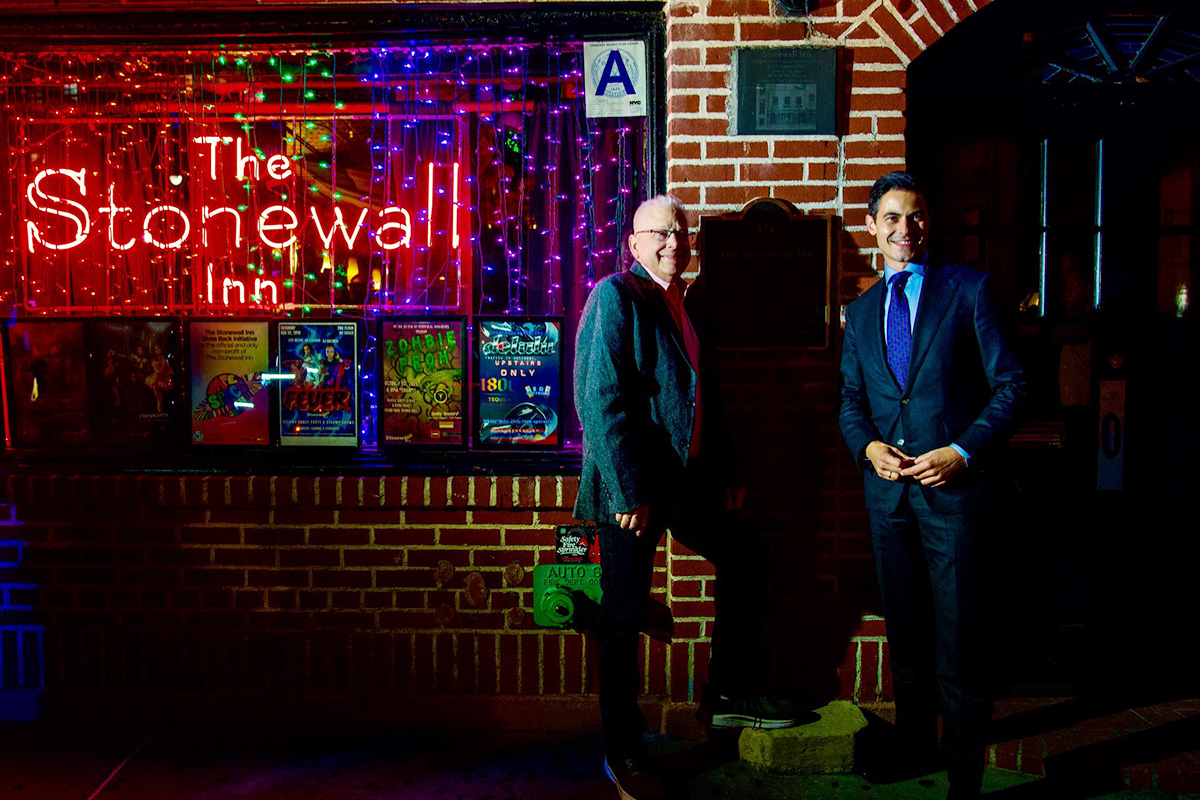
Dutch Prime Minister Rob Jetten on Monday visited the Stonewall Inn in New York.
“The Stonewall Inn is not just a gay bar in New York, but the place where in 1969 riots took place as a reaction to years of discrimination and police violence,” wrote Jetten on X. “This is seen as the starting point of the global LGBTIQ+ emancipation and activism. Nowadays, the bar is a national monument, dedicated to the LGBTIQ+ rights movement.”
“For me, it is impressive and moving to be here tonight. And also fitting, because the defense of human rights is an important part of our foreign policy,” he added. “The Netherlands stands alongside the Stonewall Inn community when it comes to everyone’s right to live openly, safely, and with pride, no matter who you are or who you love.”
De Stonewall Inn is niet zomaar een gay bar in New York, maar de plaats waar in 1969 rellen plaatsvonden als reactie op jarenlange discriminatie en geweld van de politie. Dit wordt gezien als startpunt van de wereldwijde lhbtiq+-emancipatie en activisme. Tegenwoordig is de bar… pic.twitter.com/hJmFYjF91Z
— Rob Jetten (@MinPres) September 23, 2026
Jetten in February became the Netherlands’s first openly gay prime minister.
He opened last month’s World Pride Human Rights Conference in Amsterdam. Jetten also participated in a panel with former Irish Prime Minister Leo Varadkar, former San Marino Captain Regent Paolo Rondelli, and other current and former heads of government who are gay or lesbian.
Jetten is scheduled to speak to the U.N. General Assembly on Thursday.
(Editor’s note: Jetten visited New York’s LGBT Community Center with New York City Mayor Zohran Mamdani before he left the city.)
New York
Judge blocks DOJ from obtaining transgender patients’ medical records
Advocacy groups sued White House
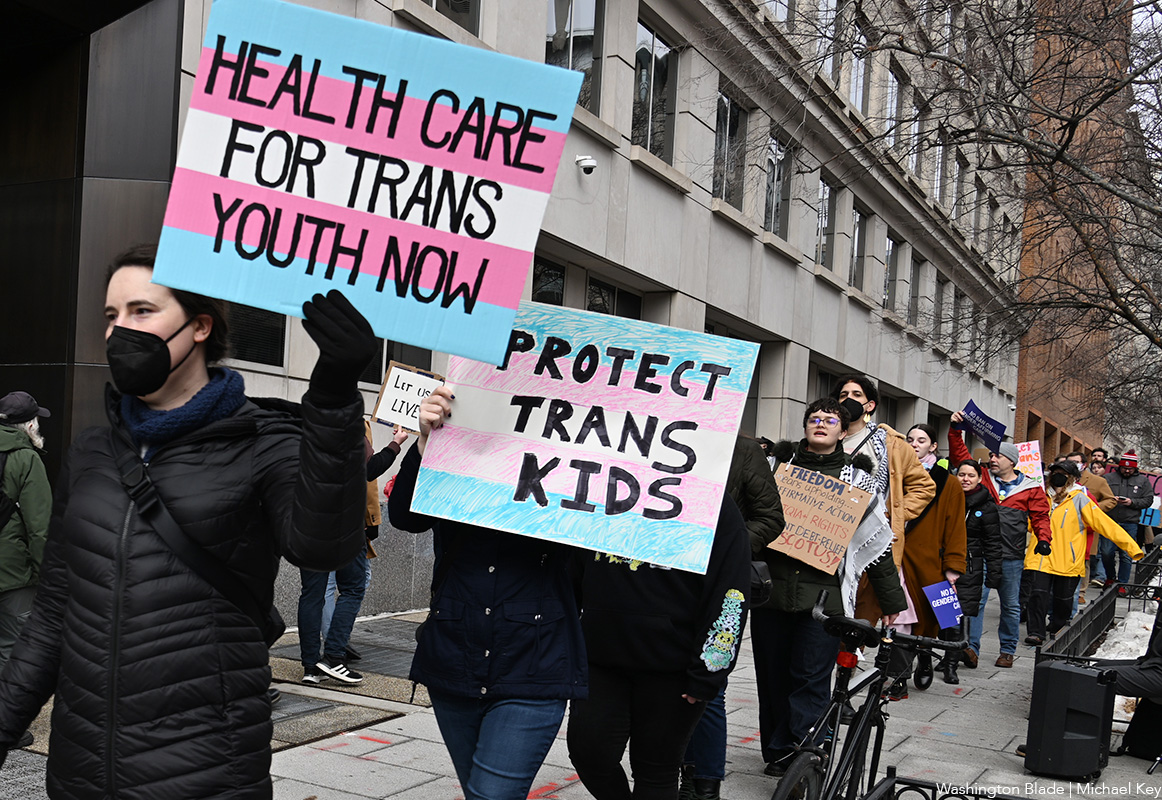
A judge for the U.S. District Court for the Southern District of New York has granted a request from multiple transgender people for a temporary restraining order, blocking the disclosure of plaintiffs’ and class members’ medical information to the Justice Department.
Judge Katherine Polk Failla approved the Temporary Restraining Order and Provisional Class Certification, preventing any further information from being provided to the Trump-led DOJ.
The medical data was requested through subpoenas issued by the Trump-Vance administration’s DOJ to multiple hospitals in New York City — most notably NYU Langone — which halted its Transgender Youth Health Program in May following a federal push to stop providing trans minors with gender-affirming care.
In May 2026, NYU Langone Hospitals received a subpoena from a federal grand jury in Fort Worth, Texas, demanding that the hospitals turn over the identities and sensitive health information of any patient who had received medical treatment for gender dysphoria while under the age of 18 at NYU Langone between January 2020 and May 2026.
Lambda Legal, the American Civil Liberties Union, and the New York Civil Liberties Union filed a lawsuit, “Coe, et al. v. Blanche, et al.,” against the Trump-Vance administration on behalf of three families with trans youth and two trans young adults who were minors when they began care, in June 2026.
The lawsuit requests a temporary restraining order blocking the DOJ from violating the patients’ constitutional privacy rights by obtaining identifying and sensitive health information as part of its investigation into unspecified health offenses. The DOJ issued subpoenas to NYU Langone and other similar healthcare institutions in New York City, including Mount Sinai, that provide or have provided gender-affirming medical care to trans minors. All plaintiffs have filed under pseudonyms to maintain their privacy and anonymity.
Multiple leaders of organizations that helped push for the restraining order provided quotes about the ongoing situation and what it means for the fight for trans children’s access to healthcare in the U.S.
“Today’s order from the court is a victory for the basic privacy of our clients and all families like theirs across New York City. It is no secret that this administration will use every lever in its power to attack transgender people and fulfill its misguided goal to ‘end’ gender-affirming medical care — care that is legal and protected in New York State. Using subpoenas to attain the identities and sensitive health information of transgender young people to effectuate such goals should send chills down the spine of every American. Our laws and our Constitution recognize that we all have a right to confidentiality about the most intimate and private information about ourselves,” said Omar Gonzalez-Pagan, senior counsel and health care strategist at Lambda Legal. “Whether a young person receives any type of medical care is a decision for that patient, their family, and their doctor, not for political appointees to decide, interfere with, or know. The government cannot abuse its powers to violate the constitutional rights of transgender young people and their families. It is an enormous relief for these families that the court has stopped them from doing so as this case proceeds.”
“We’re thankful the court has granted our emergency request to protect the privacy interests of transgender New Yorkers and their families,” said Chase Strangio, co-director of the ACLU’s LGBTQ & HIV Rights Project. “Patients and families trust their doctors with their most intimate, private information and should trust in turn that this information will be protected from impermissible and harassing demands for disclosure from the federal government or anyone else. For the past year, the Trump administration has not only decided that it knows better than these families and their doctors what their medical needs are, but has also sought to obtain troves of sensitive information about patients in New York. We will continue to fight on behalf of these families and the fundamental liberty of all transgender New Yorkers and those who come here to seek needed medical care.”
“New York’s laws recognize that transgender youth deserve fundamental privacy protections for their sensitive medical records and unobstructed access to the care they need,” said Bobby Hodgson, deputy legal director at the New York Civil Liberties Union. “As the Trump administration tries to bully transgender youth, scare families, and intimidate healthcare providers into dropping their patients, we’re thankful the court found these tactics are likely unconstitutional and put a stop to them here in New York.”
New York
N.Y. governor’s race presents stark contrast on LGBTQ+ rights
Democratic Gov. Kathy Hochul expected to face Republican Bruce Blakeman
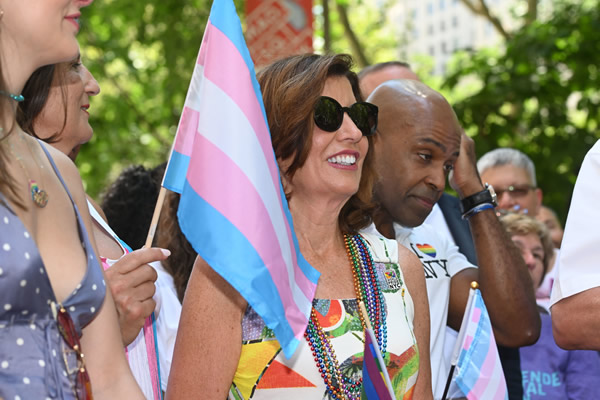
As states across the country grapple with a rapidly changing federal landscape under President Donald Trump, governors have increasingly become the first line of defense — or enforcement — on issues ranging from healthcare and education to LGBTQ+ rights.
Nowhere is that more apparent than in New York, Trump’s home state, where the 2026 gubernatorial race is shaping up as a high-profile battle over the future of LGBTQ+ protections.
Incumbent Democratic Gov. Kathy Hochul is seeking a second full term as New York’s 57th governor and the state’s first female governor. She enters the race with strong support from LGBTQ+ advocates and organizations, including an endorsement from the Stonewall Democrats of New York City. Earlier this year, Hochul was also endorsed by progressive leaders like New York City Mayor Zohran Mamdani and U.S. Rep. Alexandria Ocasio-Cortez. She is running alongside New York City Council Speaker Adrienne Adams as her lieutenant governor candidate.
Throughout her tenure, Hochul has signed a series of measures aimed at strengthening protections for LGBTQ+ New Yorkers, particularly transgender residents.
Among the most notable is New York’s “Trans Safe Haven Act,” which protects out-of-state trans youth, their parents, and medical providers who travel to New York to access legally protected gender-affirming care. Hochul has also signed legislation requiring health insurance plans to cover HIV prevention medications, including PrEP and Post-Exposure Prophylaxis (PEP), without out-of-pocket costs.
Additionally, Hochul signed a Long-Term Care Bill of Rights that prohibits discrimination against LGBTQ+ seniors and people living with HIV in long-term care facilities.
“As the birthplace of the LGBTQ+ rights movement, New York has long been at the forefront of advancing equality,” Hochul said in a statement during Pride month. “During Pride month, we celebrate New York’s vibrant LGBTQ+ community and acknowledge the importance of protecting the rights and freedoms of LGBTQ+ New Yorkers. This month and every month, we proudly stand with the LGBTQ+ community and remain committed to building a more inclusive and equitable future for all where everyone can live freely with dignity, safety, and respect.”
On the Republican side, Nassau County Executive Bruce Blakeman has emerged as the party’s leading candidate. Blakeman is running with Madison County Sheriff Todd Hood as his lieutenant governor pick.
Blakeman, Nassau County’s 10th county executive, was first elected in 2021 after defeating Democratic incumbent Laura Curran. He previously served as a commissioner of the Port Authority of New York and New Jersey, a Nassau County legislator, and a Hempstead town councilman.
A longtime supporter of Trump, Blakeman appeared alongside the president during a 2024 event honoring slain NYPD Officer Jonathan Diller.
LGBTQ+ advocates have frequently criticized Blakeman for his positions on trans issues, particularly his opposition to trans women participating in women’s sports.
In February 2024, Blakeman signed an executive order barring women’s sports teams that include trans women from using Nassau County athletic facilities. The policy applies to youth, collegiate, and professional teams. Teams that include trans men were not affected. The order has since been halted by the New York State Appellate Division swiftly issued an injunction halting enforcement while the plaintiffs appeal the decision
Ahead of announcing the order, Blakeman repeatedly referred to trans women as “biological males” and argued they should compete on men’s or co-ed teams. LGBTQ+ rights groups condemned the policy, saying it discriminates against trans athletes and contributes to the marginalization of trans youth.
Trump endorsed Blakeman’s gubernatorial campaign in December 2025, shortly after U.S. Rep. Elise Stefanik (R-N.Y.) announced she would not seek the Republican nomination. The president made his endorsement via Truth Social that “Bruce is MAGA all the way, and has been with me from the very beginning.”
The Los Angeles Blade contacted Blakeman’s campaign seeking comment on his LGBTQ+ policy priorities and views on issues including nondiscrimination protections, trans rights, and healthcare access. The campaign did not respond.
The race highlights two sharply different approaches to LGBTQ+ policy in a state widely regarded as the birthplace of the modern LGBTQ+ rights movement, home to the 1969 Stonewall uprising that helped launch the contemporary movement for LGBTQ+ equality.
Despite the ideological contrast, early polling suggests Hochul remains the clear favorite. Most public surveys show the incumbent holding a double-digit advantage over her potential Republican challengers, with some polls placing her lead at roughly 20 percentage points ahead of the November election.
New York
Pride flag removed from Stonewall Monument as Trump targets LGBTQ landmarks
The new NPS policy targets Pride flags amid consistent efforts from the Trump administration to minimize LGBTQ history
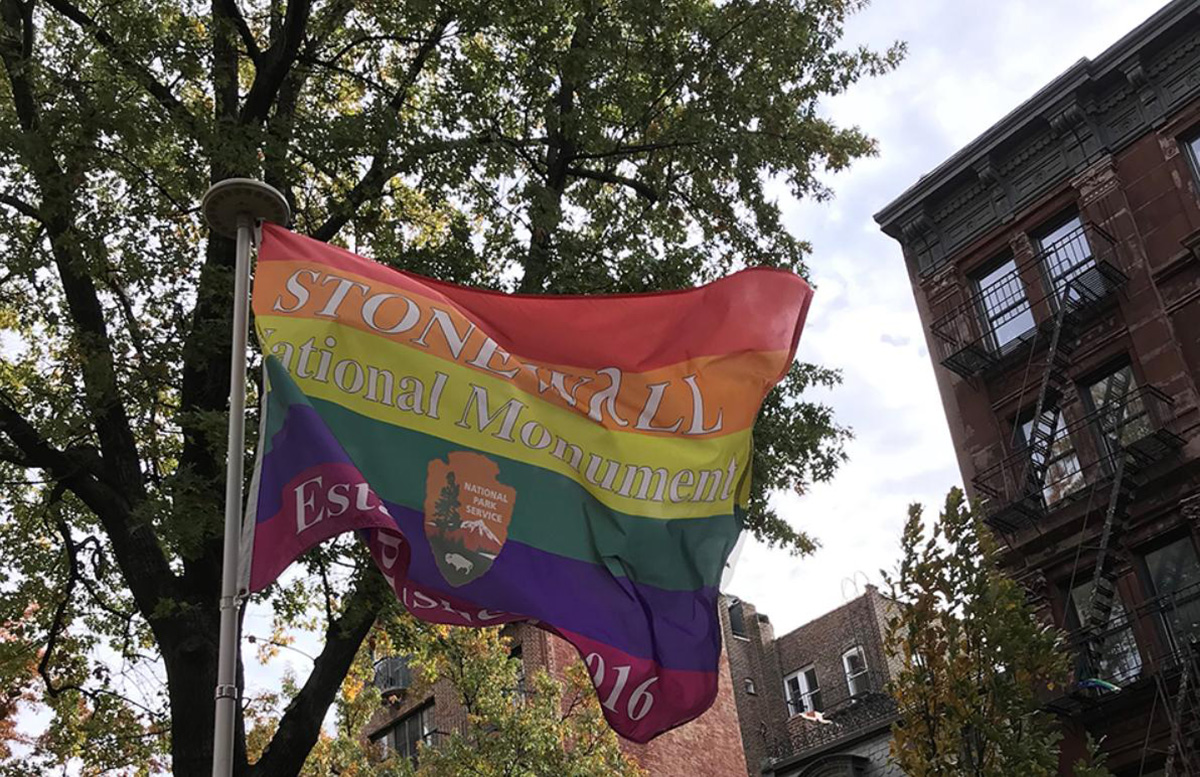
A rainbow Pride flag flying at the Stonewall National Monument in New York was removed at the direction of Trump administration officials at the National Park Service, according to a source familiar with the matter who spoke to the Blade on condition of anonymity.
The source said the move had been in the works for weeks and is part of ongoing efforts by the Trump-Vance administration to erase LGBTQ identity from federally controlled landmarks.
In response to the Blade’s request for information about the new flag policy, the National Park Service provided the following statement:
“Current Department of the Interior policy provides that the National Park Service may only fly the U.S. flag, Department of the Interior flags, and the Prisoner of War/Missing in Action flag on flagpoles and public display points. The policy allows limited exceptions, permitting non-agency flags when they serve an official purpose. These include historical context or reenactments, current military branch flags, flags of federally recognized tribal nations affiliated with a park, flags at sites co-managed with other federal, state, or municipal partners, flags required for international park designations, and flags displayed under agreements with U.S. Citizenship and Immigration Services for Naturalization ceremonies.”
The statement also included official guidance on the display of non-agency flags issued by Trump-appointed National Park Service Director Jessica Bowron.
The Blade reached out to other organizations to confirm the status of the Pride flag last week, including the Stonewall National Monument Visitor Center, the NYC Landmarks Preservation Commission, and the National Parks Conservation Association. None were able to provide details about whether the flag was still flying at that time but it has since been removed.
This action aligns with other moves targeting and erasing LGBTQ history. In September, the Blade reported that three organizations originally slated to receive more than $1.25 million from the National Park Service’s Underrepresented Communities Grant Program would no longer receive funding: In Washington, D.C., the Preservation League had been awarded $75,000 to document LGBTQ+ historic resources. In Providence, R.I., the Preservation Society was slated for $74,692 to conduct an LGBTQ+ survey and prepare a National Register nomination. And in New York, the Fund for the City of New York, Inc., had been awarded $32,000 to nominate the residence of Bayard Rustin — the iconic civil rights and LGBTQ activist — as a National Historic Landmark.
New York
Pride flags vandalized at Stonewall National Monument – again
The Stonewall National Monument, the first U.S. national monument dedicated to LGBTQ+ history, was dedicated in 2016
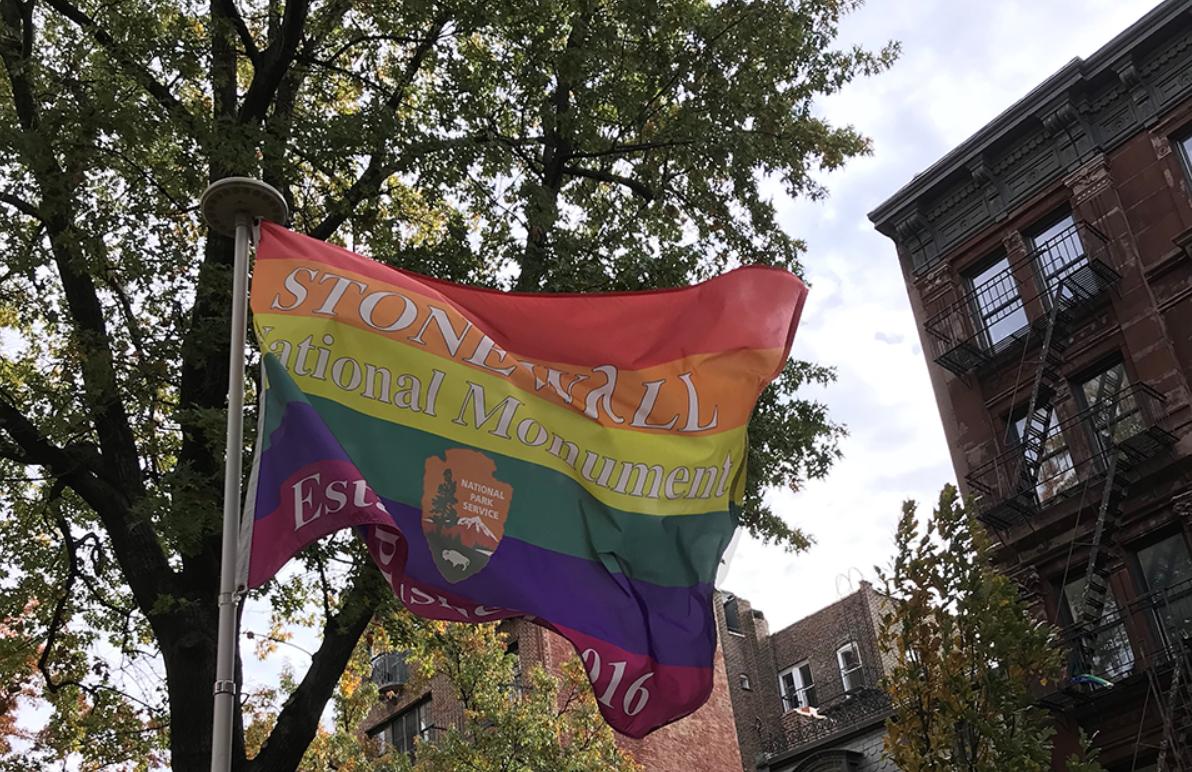
WEST GREENWICH VILLAGE, NY – During Pride month every June, Stonewall National Monument volunteers put up 250 LGBTQ+ Pride Flags on the Black iron decorative picket fence that rings the Christopher Street park.
This year, according to a statement from an New York Police Department spokesperson, 160 of the flags were torn down and damaged between Thursday evening and Friday morning. The NYPD said that no arrests have been made and that the vandals climbed over the Black iron decorative picket fence that rings the Christopher Street park to gain access to the monument.
This is the second year in a row for an vandalism incident on the Stonewall National Monument. In 2023, Park volunteers found at least 70 of those flags torn down and damaged in what the New York Police Department‘s Hate Crimes Task Force investigated as a hate crime and later arrested three men.
Openly gay New York City Councilmember Erik Bottcher, whose district includes West Greenwich Village, posted photos of the snapped flags on Instagram and X on Friday.
“Last night, bigots vandalized the Stonewall National Monument, snapping flag sticks & stealing 3/4 of the flags around the permitter of the park. Also, someone burned Pride decorations at 22nd St. in Chelsea. Anyone who thinks this will intimidate our community is badly mistaken,” Bottcher wrote.
Last night, bigots vandalized the Stonewall National Monument, snapping flag sticks & stealing 3/4 of the flags around the permitter of the park. Also, someone burned Pride decorations at 22nd St. in Chelsea. Anyone who thinks this will intimidate our community is badly mistaken. pic.twitter.com/x6K033UXBL
— Erik Bottcher (@ebottcher) June 14, 2024
Reacting to the vandalism at Stonewall, New York City Mayor Eric Adams in a statement said that “hate has no place in our city.” The mayor added “Our administration wants every member of our LGBTQ+ community to know: we are here for you and our administration will always have your back,” Adams said. “We will work in close coordination with the NYPD to identify and hold accountability whoever committed this heinous act.”
The Stonewall National Monument, the first U.S. national monument dedicated to LGBTQ+ history, was dedicated in 2016. It encompasses a park across the street from the Stonewall Inn, a bar where patrons fought back against a police raid on June 28, 1969, and helped spark the contemporary LGBTQ+ rights movement.
In a graphic published Saturday by NBC News, over twenty acts of hate against LGBTQ+ Pride have occurred so far this month:
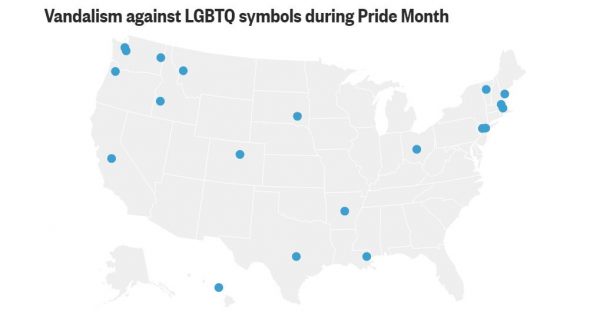
| City | State |
|---|---|
| Arvada | Colo. |
| Boise | Idaho |
| Burien | Wash. |
| Carlisle | Mass. |
| Cedar Park | Texas |
| German Village | Ohio |
| Kennebunk | Maine |
| Little Rock | Ark. |
| Madison | N.J. |
| Mandeville | La. |
| Merced | Calif. |
| Missoula | Mont. |
| Mitchell | S.D. |
| Moretown | Vt. |
| New York | N.Y. |
| Newberg | Ore. |
| Poulsbo | Wash. |
| Spokane | Wash. |
| Wailuku | Hawaii |
| Walpole | Mass. |
New York
WABC’s Up Close | Stonewall Inn’s revival & NYC’s equity efforts
WABC-TV Channel 7 is showcasing stories of Pride with a special edition of the Up Close podcast with host Bill Ritter

NEW YORK, N.Y. – As the 55th anniversary of the queer uprising at the Stonewall Inn in West Greenwich Village, WABC 7 news anchor Bill Ritter interviews Ronald Porcelli, the director of the NYC Unity Project, Mayor’s Office of Equity & Racial Justice, and the co-owners of the Stonewall Inn, Stacy Lentz and Kurt Kelly.
According to Ritter on his podcast WABC Up Close, Lentz and Kelly share the stories of what inspired them to buy the Stonewall Inn 18 years ago, what the process of reviving it entailed, the challenges they face and what the future holds for this institution, while sharing their own stories of embracing their identities and living their truths.
Porcelli gives listeners and viewers a rare look into how City Hall is working with diverse communities to make New York a more equitable and fair place for all of its people during a time of heightened societal polarization.
Watch:
For readers & viewers in the Tri-State area watch Up Close on Sunday mornings at 11:00 on Channel 7, WABC-TV.
New York
NYC subway station to be renamed in honor of Stonewall Inn
NYC Subway to mark the role the West Village tavern and park had in launching the modern LGBTQ+ rights movement
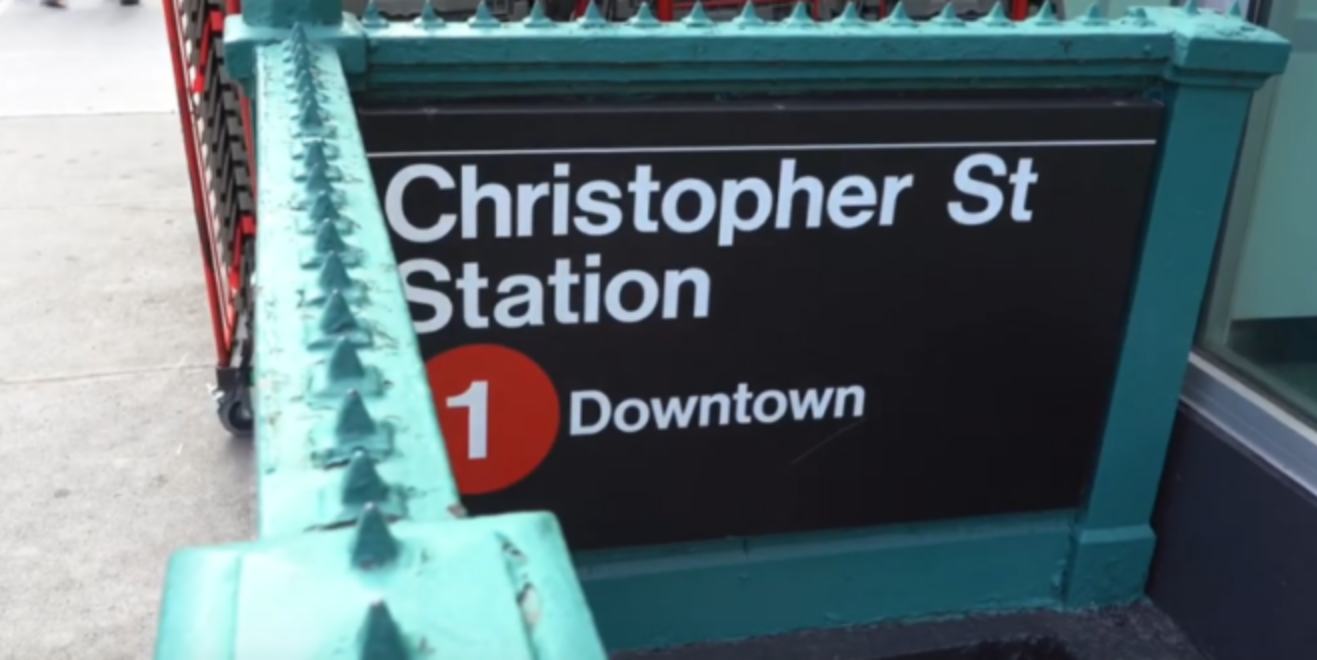
NEW YORK – The Christopher Street-Sheridan Square subway station in West Greenwich Village, a local station on the IRT Broadway–Seventh Avenue Line of the New York City Subway, has entrance/exit points located adjacent to the Christopher Street Park and steps from the historic Stonewall Inn, scene of the 1969 LGBTQ+ uprising.
Assembly Bill A8970A, a bill sponsored by Sen. Brad Hoylman-Sigal and Assembly Member Deborah Glick, gained final passage of the New York State Senate on Wednesday, which directs the MTA to rename the station to “Christopher Street-Stonewall National Monument Station” marking the role the West Village tavern and park played in launching the modern LGBTQ+ rights movement.
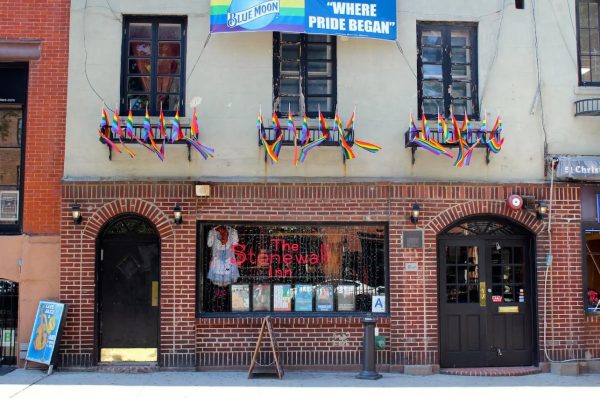
“This change will memorialize the history of the modern LGBTQ civil rights movement and inspire NY to demand justice and equality for all,” Hoylman-Sigal said in a post on X (formerly Twitter). “Happy Pride!”
The Senate passed the bill AM Glick and I share to rename the Christopher St 1 station after the Stonewall National Monument. This change will memorialize the history of the modern LGBTQ civil rights movement and inspire NY to demand justice and equality for all.
— Senator Brad Hoylman-Sigal (@bradhoylman) June 5, 2024
Happy Pride! pic.twitter.com/Z9GOdj9NqX
Designated a national monument for its role in the early LGBTQ+ fight for equality by President Barack Obama in 2016, Stonewall is the first national monument dedicated to LGBTQ rights and history.
New York real estate industry trade publication 6sqft reported that in June 2022, Pride Live, an LGBTQ+ advocacy group, broke ground on the Stonewall National Monument Visitor Center, the first LGBTQ+ visitor center within the National Park Service’s system. The center sits directly next to the historic Inn and provides a space to learn about the Stonewall Rebellion in its original location.
New York
NY Court: County exec exceeded authority with transphobic order
The New York Civil Liberties Union had filed a lawsuit challenging Blakeman’s executive order on behalf of the Long Island Roller Rebels
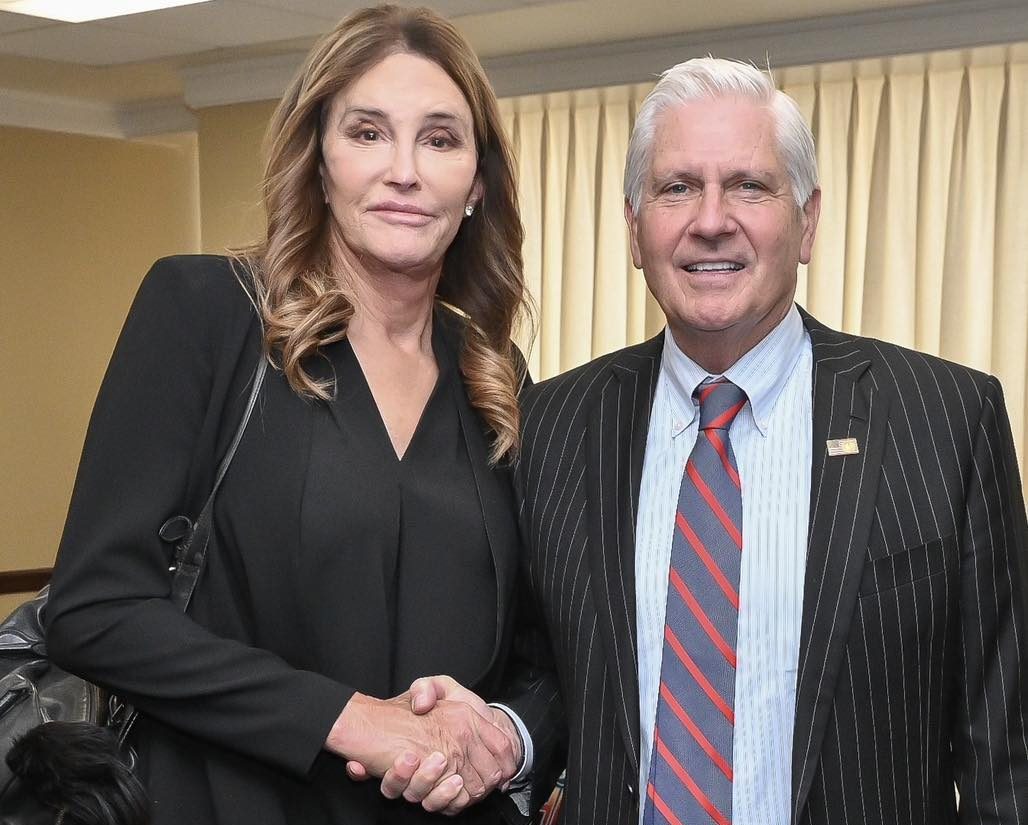
MINEOLA, N.Y. – A judge from the Nassau County Supreme Court has struck down Nassau County Executive Bruce Blakeman’s February 22, 2024 executive order banning transgender girls and women from participating in girls’ and women’s sports at county-run facilities.
In March, the New York Civil Liberties Union filed a lawsuit challenging Blakeman’s executive order on behalf of the Long Island Roller Rebels, a Nassau County recreational women’s flat track roller derby league. Under the executive order, the league, which welcomes trans women, was barred from using Nassau County’s facilities.
The lawsuit argues that the policy violates New York’s Human Rights Law and Civil Rights Law, which explicitly prohibit discrimination based on gender identity following passage of New York’s Gender Expression Non-Discrimination Act (GENDA).
This past Friday, Nassau County Supreme Court Judge Francis Ricigliano ruled that Blakeman did not have the authority to issue such an order. “In doing so, this Court finds the County Executive acted beyond the scope of his authority as the Chief Executive Officer of Nassau County,” Ricigliano wrote.
Judge Ricigliano also noted that Blakeman could not act without corresponding action by the Nassau County Legislature. It includes representatives from each of the county’s 19 districts.
Reacting Blakeman responded in a statement, saying, “Lack of courage from a Judge who didn’t want to decide the case on its merits. Unfortunately, girls and women are hurt by the Court.”
“We are gratified the court has struck down a harmful policy that belongs in the dustbin of history,” said Gabriella Larios, staff attorney at the New York Civil Liberties Union. “The ruling deals a serious blow to County Executive Blakeman’s attempt to score cheap political points by peddling harmful stereotypes about transgender women and girls. We will continue to ensure that the attacks against LGBTQ+ rights that are sweeping the nation will not stand in New York.”
“Today’s decision is a victory for those who believe that transgender people have the right to participate in sports just like everyone else. It sends a strong message that transphobic discrimination cannot stand,” said Curly Fry, president of Long Island Roller Rebels. “As a league welcoming trans women and committed to providing a safe space for everyone to be their full selves, County Executive Blakeman’s order tried to punish us just because we believe in inclusion and stand against transphobia. Trans people belong everywhere including in sports, and they will not be erased.”
In early April, U.S. District Court Judge Nusrat Choudhury, who is on the bench of the U.S. District Court for the Eastern District of New York, denied Blakeman’s request for a temporary restraining order against New York Attorney General Letitia James.
On March 1st, the New York State Attorney General sent a order of cease and desist to Blakeman demanding that the Republican Nassau County Executive rescind his February 22 directive within five days or else face additional legal actions.
“The law is perfectly clear: you cannot discriminate against a person because of their gender identity or expression. We have no room for hate or bigotry in New York,” the Attorney General wrote. “This executive order is transphobic and blatantly illegal. Nassau County must immediately rescind the order, or we will not hesitate to take decisive legal action.”
The Nassau County Executive then announced he was filing a lawsuit over the Attorney General’s actions.
New York
New York AG Letitia James sued by transphobic county exec
“You cannot discriminate against a person because of their gender identity or expression. We have no room for hate or bigotry in New York”
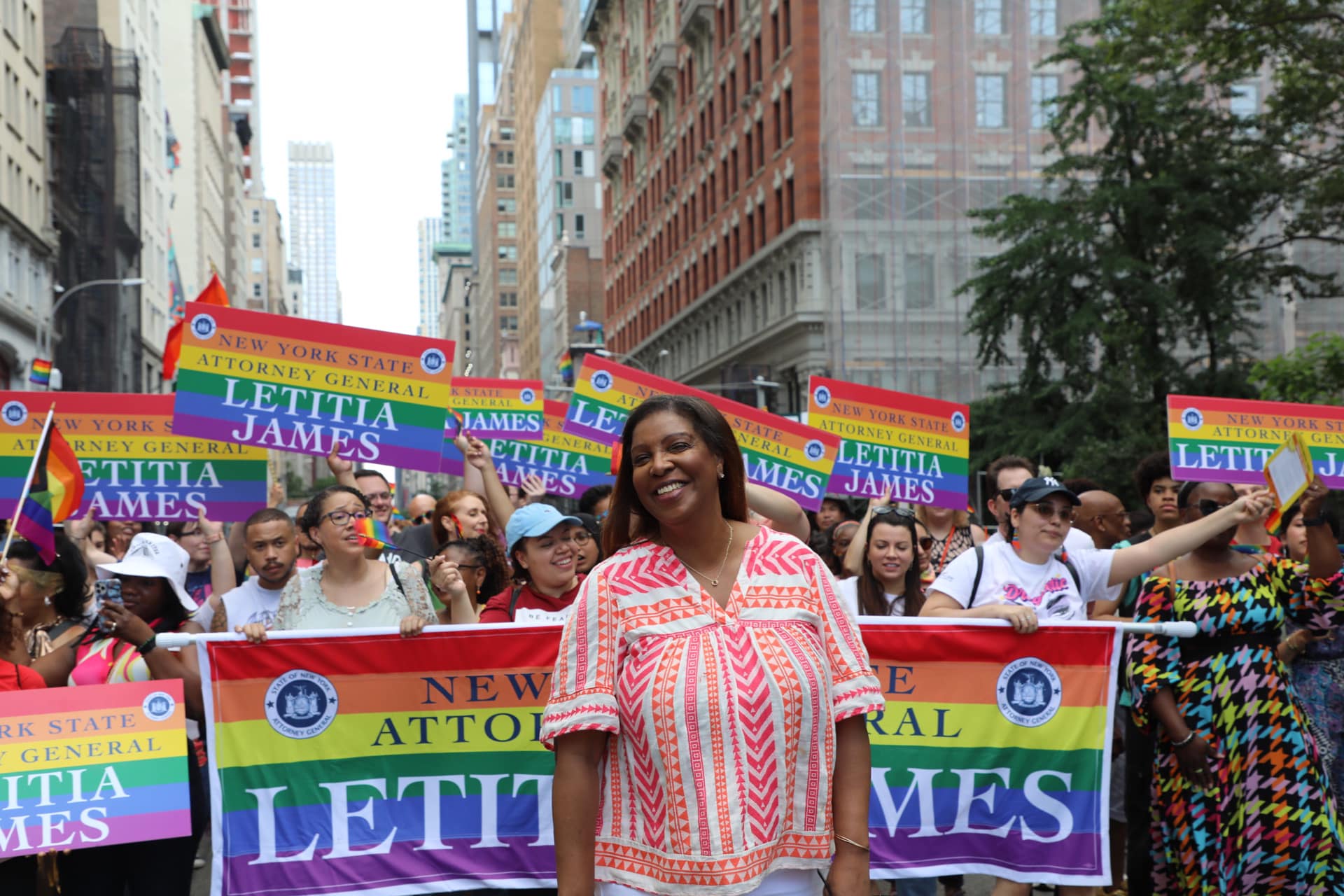
MINEOLA, N.Y. – Nassau County Executive Bruce Blakeman announced Wednesday in a press conference that he has filed a lawsuit against New York Attorney General Letitia James defending his transphobic executive order barring the Nassau County Department of Parks, Recreation, and Museums from issuing permits to any women’s or girls’ sports team with transgender players.
On March 1st, Attorney General James sent a order of cease and desist to Blakeman demanding that the Republican Nassau County Executive rescind his February 22 directive within five days or else face additional legal actions.
“The law is perfectly clear: you cannot discriminate against a person because of their gender identity or expression. We have no room for hate or bigotry in New York,” the Attorney General wrote. “This executive order is transphobic and blatantly illegal. Nassau County must immediately rescind the order, or we will not hesitate to take decisive legal action.”
In his filing in the U.S. District Court for the Eastern District of New York, the Nassau County Executive argues that New York State Human Rights Law does not extend to transgender people. The suit also cites the 14th Amendment claiming the “cease and desist” letter issued by the Attorney General violates the U.S. Constitution’s “equal protection” clause, which is enshrined in the 14th Amendment.
According to the Office of the Attorney General: “Under New York law, it is illegal to discriminate against an individual based on their sex or gender identity or expression. In addition to violating basic civil and human rights, the executive order will impose undue increased scrutiny on women’s and girls’ teams and leagues and will also subject all athletes on women’s and girls’ sports teams to intrusive and invasive questioning and other verification requirements.”
Blakeman told reporters: “We don’t want 6-foot, 210-pound males competing against women and girls who are not that big, they’re not that strong. That’s an unfair competition. It’s dangerous. And we also don’t want biological males in the same locker rooms as biological females.”
When pressed by journalists Blakeman could not cite an instance of a transgender athlete trying to play on a female team in the Long Island county, instead referencing controversy other transgender athletes in other states and “interest” from constituents. He has insisted he is being proactive to prevent it from happening, WNBC 4 News reported.
“We’re taking action now because it’s happening around the country and we don’t want it to happen here,” he said. He argued the Attorney General’s actions to force him to rescind his order denies “biological females’ right to equal opportunities in athletics” as well as their “right to a safe playing field” by exposing them to increased risk of injury if they’re forced to compete against transgender women.
In a press release the James’ office noted: The executive order forces sports teams and leagues to make an unfair and unnecessary choice: openly discriminate against transgender women and girls in violation of state law, or find somewhere else to play. The executive order applies to more than 100 venues, including general playing fields in parks, baseball, football, and soccer fields, basketball and tennis courts, indoor and outdoor swimming pools, and ice rinks. This discriminatory order will not only impact Nassau County-based teams and leagues but will also undoubtedly deter teams from other counties from participating in Nassau County games and sporting events.
David Kilmnick, PhD, a leading advocate within New York’s LGBTQ+ communities and the founder and President/CEO of the New York LGBT Network referred to Blakeman’s executive order as “just a complete waste of time and a political stunt.” In an interview with WNBC 4 Kilmnick called Blakeman’s actions illegal and dangerous. “We need to get real here: The bullying that is taking place is on trans youth.”
New York
NYPD seeks public’s assistance in homophobic hate crime assault
The NYPD has released surveillance footage of a number of the suspects and asked the public’s help identifying them and tracking them down

NEW YORK, N.Y. – Investigators with the New York Police Department’s Hate Crime Task Force are seeking four unidentified teen males responsible for a hate crime last February in Queens.
According to an NYPD spokesperson, the quartet of adolescents attacked two gay men on Broadway near 33 Street throwing hard objects at the men while yelling homophobic epithets and slurs. Detectives with the NYPD’s 114th precinct initially interviewed the two victims who stated that the teens began punching one of the victims a 36 year-old man repeatedly in the face, causing swelling and bruising.
On Sunday the NYPD released surveillance footage of a number of the suspects in the Feb. 8 hate crime and asked the public’s help identifying them and tracking them down.
The NYPD stated: Do you have information about this crime? Provide it to us anonymously and receive UP TO $3500 for a tip that leads to an arrest and indictment. Call 800-577-TIPS. Calls are CONFIDENTIAL! Or visit the website: CrimeStoppers.NYPDonline.org
WANTED for Assault/ Hate Crime Broadway near 33 Street #Queens @NYPD114pct on 2/8/2024 @ 7:30 PM four unidentified males began throwing hard objects at the men while using anti LGBTQIA+ statements. They then punched one of the victims repeatedly in the face. 1-800-577-TIPS pic.twitter.com/REbLWrohBe
— NYPD Crime Stoppers (@NYPDTips) March 3, 2024
Immunology gave HIV survivors the chance to grow old, Proposition 38 is the next step

Common Sense Isn’t Political

‘WOOF’ worthy: Christopher Schellenger shares the unique challenges of playing a dog

Here’s your Palm Springs look at the weekend: Oct 23 – 25, 2026

Latin queer and trans history along the U.S.- Mexico border on display at UC Riverside event

Meet the voice of Palm Springs: an interview with KGAY 103.1’s John Taylor

Fortune Feimster has always taken representation through comedy seriously

EXCLUSIVE: Democrats seek answers on EEOC settlement affecting LGBTQ+ workers

A quick visitor’s guide to Palm Springs before the winter

VIDEO: Interview with executive director of VoteLGBT (Institute for Full Citizenship) in Brazil
-
 Palm Springs4 days ago
Meet the voice of Palm Springs: an interview with KGAY 103.1’s John Taylor
-
 a&e features4 days ago
Fortune Feimster has always taken representation through comedy seriously
-
 Federal Government3 days ago
EXCLUSIVE: Democrats seek answers on EEOC settlement affecting LGBTQ+ workers
-
 Palm Springs4 days ago
A quick visitor’s guide to Palm Springs before the winter
-
 Brazil3 days ago
VIDEO: Interview with executive director of VoteLGBT (Institute for Full Citizenship) in Brazil
-
 Puerto Rico4 days ago
Annual National Trans Visibility March takes place in Puerto Rico
-

 AIDS and HIV4 days ago
AIDS Walk Los Angeles takes to the streets in West Hollywood while raising money for HIV/AIDS Care
-

 Television4 days ago
New ‘Carrie’ attempts to reinvent a classic for new generation
-

 California3 days ago
Nithya Raman makes her case for LGBTQ voters in the race for LA Mayor
-
 Texas2 days ago
How anti-trans backlash to James Talarico spread like wildfire