Investigations
Trick or treat! Is it ICE?
City of West Hollywood will not say who watches you at Carnaval

by Nik Roybal
More than 100,000 people will fill Santa Monica Boulevard between Doheny Drive and La Cienega Boulevard Saturday night for West Hollywood’s Halloween Carnaval, in a city that calls itself a sanctuary.
Records show that West Hollywood’s Flock automatic license plate reader network is shared with the California Highway Patrol, whose accounts have run searches labeled “ICE case.” This week, when asked which agencies will have access to the cameras, drones and data watching the Carnaval crowd, the City declined to answer.
For most of October, federal immigration agents have been sweeping through Southern California. Advocates describe a 45-day statewide crackdown that began early this month, which they call “Operation Safe California.” In the Northeast San Fernando Valley, Los Angeles City Councilmember Imelda Padilla has described agents “crashing into cars, blocking roads and causing chaos.” Immigrant rights groups say the raids are timed to keep voters from the polls on Nov. 3.
A federal judge in California on Oct. 21 barred Homeland Security Investigations from field operations aimed at suspected noncitizen voters in nine states, California among them, through election night, finding that the government relied on “flawed” data and that its efforts likely violated the Voting Rights Act.
The raids have come within a few miles of West Hollywood. Izzy Ramirez, a Los Angeles journalist who compiles daily community reports in his SoCal ICE Tracker, logged an ICE sighting at Santa Monica Boulevard and Western Avenue in East Hollywood on the morning of Oct. 14, and a detention at El Centro Avenue and Afton Place in Hollywood that same morning. Ramirez photographed ICE agents outside Twin Towers, the Los Angeles County jail the Sheriff’s Department runs downtown, on Oct. 26. The next day, a food vendor was taken on Sunset Boulevard in Echo Park. By Ramirez’s count, that was day 509 of what he calls the “ICE siege” of Los Angeles.
Los Angeles County Board Chair Hilda L. Solis said Wednesday that reports that immigration agents were operating in the parking lot of the East Los Angeles Sheriff’s Station “raised serious concerns,” citing County policy that bars county property from being used as a “staging area for immigration enforcement.” The Sheriff’s Department is the same agency that operates West Hollywood’s surveillance cameras.
West Hollywood has not been untouched. Federal agents raided Santa Palm Car Wash on Santa Monica Boulevard, the street Carnaval fills, on July 4, 2025, and detained workers. Silvestre Jiménez Gómez, 65, who had worked in the community for more than three decades, was deported to Mexico. Alberto Cabral, 73, a gardener with heart disease and diabetes who had tended West Hollywood properties for years, chose to self-deport rather than remain in detention. ICE detained Alex Pereira-Alves, a longtime West Hollywood resident living here legally under a judge’s order, in August, when he reported for what he was told was a routine check-in downtown.
Twelve questions, no answers
The City’s Oct. 22 Carnaval notice lists street closures, shuttle routes, bag rules and a ban on attendee drones. It says nothing about the surveillance systems the City pays for and the Los Angeles County Sheriff’s Department’s West Hollywood Station operates: 39 Flock Safety license plate reader cameras; 54 Flock Condor pan-tilt-zoom cameras that stream and record live video and zoom 25 times; a Flock Mobile Security Trailer with two more Condor cameras, a 360-degree camera, an audio talk-down speaker and a blue deterrence light; a Real-Time Watch Center that integrates those feeds; and a City-funded drone program whose target launch date was Oct. 31, the night of Carnaval; a City official said Monday the program is not active.
I sent the City’s public information officer, Sheri A. Lunn, 12 questions on Oct. 24: nine about this year’s Carnaval and three about last year’s. I asked which systems would be operating along the route, whether the Watch Center would be activated, whether drones would fly over the crowd, how long footage and plate reads would be kept, and whether any agency besides the West Hollywood Station, “including mutual-aid, state or federal personnel, or a fusion center,” would have access to the feeds or the City’s Flock data that night.
Lunn replied Oct. 28. “As you know from your past reporting about the City of West Hollywood, public safety is the City’s highest priority,” she wrote. “As a matter of public safety and operational security, the City and its public safety partners do not disclose specific tactical or deployment information when doing so could negatively affect the security environment for an event.”
“For that reason, the City will not provide event-specific operational details in response to these questions, nor does the City publish a detailed inventory of security measures that will be in place during the event,” she wrote. “This approach is not intended to limit transparency regarding the City’s public safety programs.”
Lunn wrote that “many” of the questions sought details that could compromise operations. The City answered none of them, including questions about standing policy, such as how long data is kept and whether it is shared, and all three questions about the 2025 Carnaval, an event that ended a year ago.
The City has used that reasoning before. In July, I asked the City under the California Public Records Act for the locations of its Flock cameras, their installation dates and its data-sharing logs. Community Safety Director Danny Rivas told the Council on Aug. 17 that the locations were being withheld “for the safety of the cameras themselves.” The next day, the City denied the request in writing, citing exemptions for security and law enforcement records.
The Sheriff’s Department and Flock were sent questions Oct. 29 with a deadline of noon Oct. 30. This story will be updated with their responses.
“Other public safety agencies and partners”
Lunn’s reply confirmed one thing. Planning and operations for Carnaval, she wrote, “involve coordination among the City, the Los Angeles County Sheriff’s Department, and other public safety agencies and partners.” She did not name them.
The City has answered part of that question in public. At the Oct. 26 Public Safety Commission meeting, during commissioner remarks about two hours and 20 minutes in, Chair Brandon Blau asked Public Safety Manager Anita Shandi whether the West Hollywood Station’s drone would be deployed for Carnaval. “For event-specific drone usage, it’s different than what the city uses to respond to emergency calls,” Shandi said. “So the drone as a first responder program is not active. But in terms of drones being used for Halloween, sometimes our fire department will deploy, use things just specific to the event if there’s an incident.” Blau asked whether “the Special Enforcement Bureau or something will have their drone, potentially.” “Yeah, correct,” Shandi said. The Special Enforcement Bureau is the Sheriff’s Department’s tactical unit. Shandi also said that before the City’s drone program launches, the City will roll out a public dashboard, is working with its communications staff, and will show the public how the program works. She gave no launch date.
The Sheriff’s Department’s own drone policy states that “a LASD station must implement a community outreach plan before using UAS,” according to the 2025–26 Los Angeles County Civil Grand Jury. I asked whether the West Hollywood Station has one. The City did not say.
What the cameras can do
Flock told the City its Condor cameras zoom 25 times and can read a license plate from 585 feet. In a Sept. 8, 2026 letter to Sen. Josh Hawley, Flock stated that its cameras, other than plate readers, can be searched for people by visible traits, such as shirt color or glasses. I asked whether operators would search Carnaval footage for people by appearance, zoom in to identify individuals, or use the trailer’s speaker on the crowd, and whether each use would be logged. The City did not answer.
The network may reach beyond the City’s own cameras. Flock’s 2024 sole-source letter, which the City produced in response to my records request, lists among Flock’s proprietary features access to “cameras purchased by Flock’s HOA and private business partners.” The City’s executed contract describes Flock’s software as a “single-pane real-time crime center” and its Wing Livestream product as integrating “publicly or privately owned livestream security cameras.” The Sheriff’s Department’s own Watch Center at Lost Hills requires a camera owner’s explicit written permission before the Department connects a private camera, according to the Civil Grand Jury. The City has not said whether privately owned cameras, including those of homeowners associations and businesses, feed West Hollywood’s Watch Center, or what rules govern them.
The City’s notice says Security Ambassadors “will be present and available to ensure a safe event.” The program is run by Allied Universal, whose subsidiary G4S has provided vehicles and armed guards to ICE, according to The Lever. At a Sept. 22 Council meeting, Councilmember John Erickson asked whether Allied Universal holds Homeland Security or ICE contracts; the question went unanswered. I asked whether Ambassadors would have access to the Watch Center, camera feeds or Flock alerts during Carnaval. The City did not say.
The routes to federal agencies
Who can reach West Hollywood’s data matters because of how the Flock system is built. According to the City’s March 16, 2026 staff report, one Flock account covers all Sheriff’s stations and contract cities. Decisions about who sees West Hollywood’s data appear to be made in an account that spans dozens of cities.
The records appear to show two accounts. Flock sharing records released by the California Highway Patrol and the City of Santa Ana list a network labeled “City of West Hollywood (LASD).” Santa Ana’s records also list a separate, department-wide account in the Sheriff’s Department’s own name, “Los Angeles County CA SD.” When I reviewed Santa Ana’s Flock transparency portal on Oct. 21, it listed the two as separate entries among the organizations with access to its data. Santa Ana’s May 4 export shows the department-wide account sharing the Paramount, La Cañada Flintridge and Pico Rivera networks, each marked “(LASD),” with Santa Ana, and CHP’s records list West Hollywood’s network among those the Department’s account shares with CHP. The City’s staff report describes one account. It does not say which of the two decides who can search West Hollywood’s cameras.
The Sheriff’s Department’s own oversight does not appear to reach either one. Its written license plate reader privacy policy, two-year retention rule, and semiannual audits were built for the Motorola Vigilant system the Department owns. Its Sept. 23, 2026 audit reviewed 300 of 77,562 queries, all from Vigilant, and does not mention Flock. At a Civilian Oversight Commission forum on May 6, a Sheriff’s commander said the Department contracts only with Vigilant and that Flock cameras may exist where cities contracted directly, LAist reported. That statement does not account for the department-wide Flock account that carries the Department’s name. West Hollywood’s Flock system is one of them, and the West Hollywood Station operates it.
Records from other agencies show where that account connects.
The Highway Patrol. Flock sharing settings released by the California Highway Patrol through a public records request list the “City of West Hollywood (LASD)” network among the networks the Sheriff’s Department account shares with CHP. Eighteen Sheriff’s contract-city networks appear on CHP’s sharing lists. The reach of CHP’s searches grew over the year: the median search reached about 630 networks in December 2024 and about 1,950 by November 2025. CHP’s search audits from December 2024 through November 2025 record 473,263 searches. A CHP account ran two lookups of one license plate at 8:47 p.m. on April 22, 2025, with the stated reason “ICE case” and no case number. One reached 845 networks. Other searches cited “Border Patrol info” and “hsi escape,” a reference to Homeland Security Investigations. The audits show how many networks each search reached, not which ones, so they do not show whether West Hollywood’s cameras were among them. The labels alone do not establish that any search was unlawful.
Fusion centers. Santa Ana’s Flock records, released under the California Public Records Act, show that a California fusion center, the Northern California Regional Intelligence Center, ran more than 27,000 searches reaching Santa Ana’s network in six months, at least 80 of them for the U.S. Department of Justice and its components, including the FBI, ATF, DEA and U.S. Marshals, according to reporting by Inadvertent. Every organization Santa Ana shared its network with was a California agency. A California agency on the list ran the searches for federal ones. San Francisco police cut off the fusion center’s access in June after finding hundreds of searches run for federal and out-of-state agencies. Santa Ana’s Flock transparency portal lists “City of West Hollywood CA (LASD)” among the organizations granted access to Santa Ana’s data. The records do not show whether West Hollywood’s cameras can be searched from Santa Ana.
Flock’s federal pilots. In August 2025, 404 Media reported that U.S. Customs and Border Protection had access to more than 80,000 Flock cameras nationwide and could run lookups itself. Flock’s CEO confirmed the company had run “limited pilots” with CBP and Homeland Security Investigations and said they had been paused. The City’s own audit window, December 2023 to February 2026, covers that period. Its March staff report does not say whether either agency could reach the account holding West Hollywood’s cameras.
Sharing already found. In June 2025, CalMatters reported that records showed California agencies searching plate-reader data on behalf of ICE in violation of state law, including six agencies in Los Angeles County. It named the Los Angeles Police Department and found the Orange County and San Diego County Sheriff’s departments had run searches for Border Patrol. It did not name the other Los Angeles County agencies.
ICE as a buyer. ICE signed a blanket purchase agreement with Thomson Reuters Special Services on Sept. 17, 2026, with a $125 million ceiling running through 2031, for monitoring that includes “geolocation and license plate recognition data.”
California law bars sharing plate-reader data with federal and out-of-state agencies, and the Attorney General’s guidance says that bar extends to vendor databases. The records above show how data can travel anyway: through a California agency that searches on a federal agency’s behalf.
What the City has said
The City has made its own disclosures. Its March 16 staff report found that 14 out-of-state agencies had accessed West Hollywood’s Flock data without the City being notified. One was federal: the U.S. Postal Inspection Service. The report said staff found “no evidence City data was shared directly with ICE.” In a February 2026 email to the City’s Community Safety Director, a Flock executive described a company statement outlining “the fact that we do not work with ICE.” In July, the City amended its Condor contract to exclude ICE and CBP from data sharing, “absent a court order.” That phrase does not match the Sheriff’s Department’s own policy, which bars disclosure for civil immigration enforcement except under a “judicial warrant” or where State or County law expressly requires it. The City has not said which standard controls West Hollywood’s data.
None of those statements address the indirect routes. Sharing through the Highway Patrol, a fusion center, or a nationwide lookup is exactly the kind of access a “direct” search would not catch.
An ordinance that stops at the parking lot
The East Los Angeles report Solis described this week is the kind of activity Los Angeles County wrote an ordinance to prevent. Solis co-authored the Board of Supervisors’ “ICE Free Zones” motion, and County Counsel drafted Chapter 13.02 to bar unauthorized use of County property as an immigration staging area.
West Hollywood copied it. The City Council took up Item D.1 on Oct. 19, adding Chapter 9.10 to the Municipal Code, “Preserving City Property for City Purposes.” It bars law enforcement from using City property as a staging area, processing location or operations base without City authorization.
Every use the ordinance covers is physical. Under its text, an immigration agent cannot park a van in a City lot without permission. It says nothing about the license plate readers, the Condor cameras, the trailer, the drones, the Watch Center, or the data they collect.
A comparison of the two texts shows that Chapter 9.10 is, nearly word for word, County Counsel’s February draft with the County’s name replaced by the City’s, and that the substitution dropped several of the County’s safeguards: a business-hours limit on approved uses, a cutoff date for existing agreements, an express civil enforcement action, and a severability clause. The County’s required sign names “civil immigration enforcement.” West Hollywood’s sign never mentions immigration.
I raised those gaps in a written public comment before the meeting and asked the Council to extend the ordinance to the City’s surveillance data, barring its use for civil immigration enforcement and requiring a judicial warrant for any federal access.
The Council moved the item to its consent calendar and approved it unanimously on first reading, without discussion. Both of the City’s Flock contracts were approved the same way.
The only explanation on the record came after the vote. According to the Oct. 19 minutes, Mayor Heilman asked the City Attorney to clarify the ordinance the Council had just approved. City Attorney Lauren Langer said it addressed “large-scale staging operations” and was not intended to interfere with “immediate law enforcement needs.” Neither phrase appears in the ordinance.
The ordinance returns for second reading Nov. 2, two days after Carnaval, as Ordinance 26-12. Its text is identical to what the Council approved on Oct. 19. It still says nothing about the cameras or their data.
A question from 2023
West Hollywood’s first sanctuary promise was about information. Resolution No. 129, adopted Nov. 25, 1985, states the Council’s desire “not to expend city resources or taxpayer dollars, beyond the requirements of federal law, in voluntarily assisting or cooperating with investigations of alleged violations of immigration law by Salvadoran, Guatemalan or other refugees, or in gathering or disseminating information on the citizenship status of those residing in the City of West Hollywood.”
In December 2016, the City declared it would “not participate in any effort to deport immigrants” and announced it was directing the West Hollywood Sheriff’s Station “not to provide assistance to federal agencies who are attempting to harass, arrest, or deport undocumented workers or immigrants.”
At an Aug. 14, 2023 joint meeting of the City Council and Public Safety Commission on the surveillance program, then-Mayor Sepi Shyne said that “as a sanctuary City she required reassurance that outside agencies would not use data collected by this pilot program,” according to the minutes. She “requested a report back on whether stored data would have to be surrendered to out-of-state agencies.” The Station’s captain “affirmed he would report back.” I have found no record that he did.
The staff report for that meeting recommended Flock’s platform as “the single centralized platform that houses all drone, fixed camera, gunshot audio detection, and ALPR camera data,” and stated that “City staff will not have access to any of the software/video components and all public records act requests will be managed by the LASD.” It did not mention sanctuary status, immigration, or sharing with outside agencies. Shyne had asked for policies that “enable the City to have full control.”
In 2016, the Sheriff’s Department publicly disclosed that a helicopter with a video downlink would monitor Carnaval and that cameras had been added in the event area. The City’s 2025 and 2026 Carnaval notices mentioned no surveillance systems at all, and the City will not say what was used last year.
Three years after a mayor asked who could reach this data, the people on Santa Monica Boulevard Saturday night still cannot get an answer.
Nik Roybal is a freelance investigative journalist, writer, and fourth-generation Angeleno based in West Hollywood, who has investigated the City’s surveillance program since July 2026. Their work has appeared in the Los Angeles Blade, LA Taco, WeHo Times, and Q Voice News. Nik holds an MFA in writing from CalArts.


Investigations
Former employees of The Ruby Fruit speak out about sudden closure
‘There’s way more to the story’
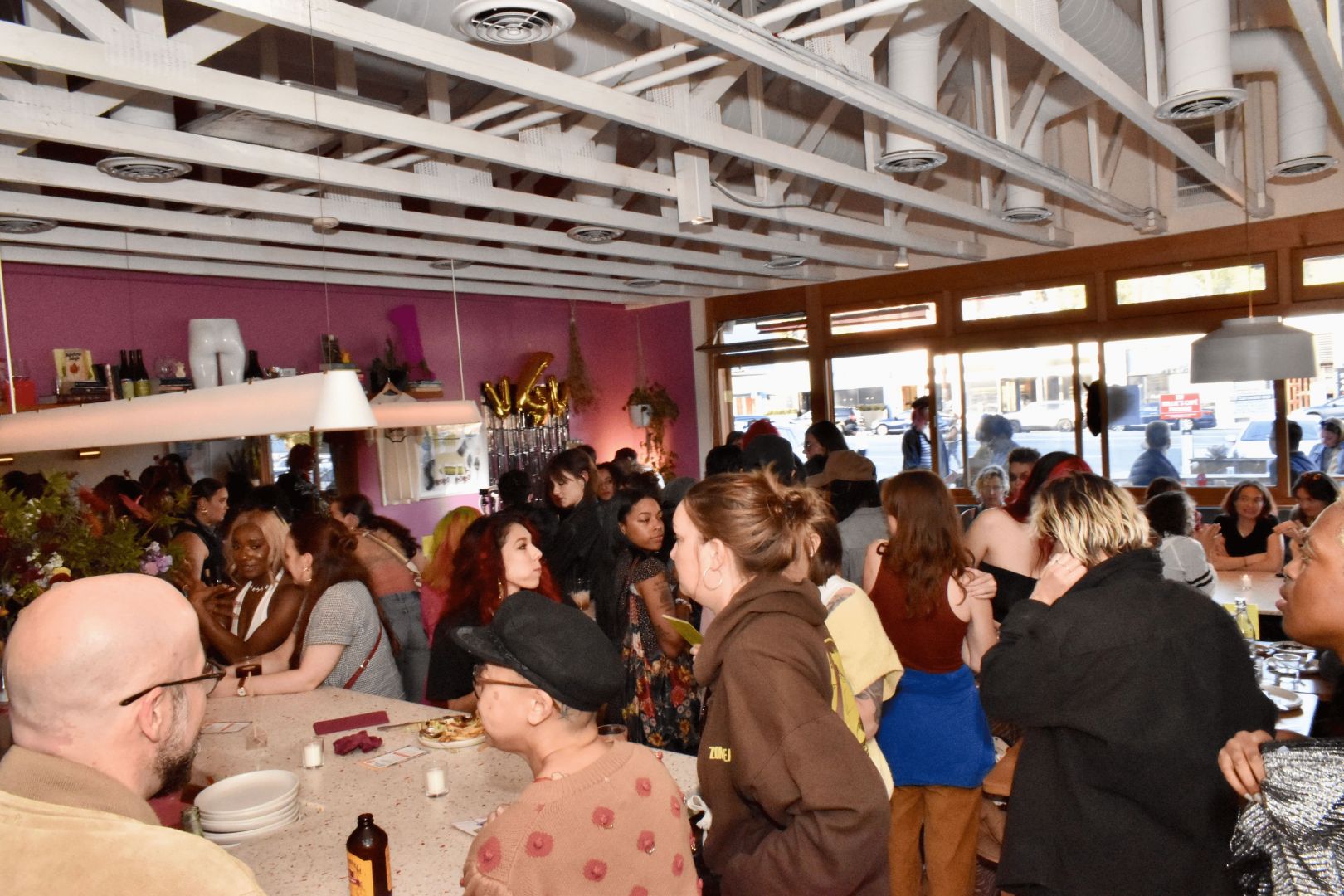
Owners Emily Bielagus and Mara Herbkersman announced The Ruby Fruit, one of only 37 lesbian bars left in the United States, was closing its doors in a now-deleted Instagram post.
The restaurant opened its doors in 2023 and quickly became a community space marketed heavily toward being a ‘sapphically-inclined,’ restaurant, event space and bar.
During its peak, the Silverlake restaurant was filled with a plethora of mingling queers from all over Los Angeles and beyond. As only one of two lesbian-forward bars in L.A., many people in the community were thrilled to finally have a space to feel safe and welcomed in.
Then a series of Instagram posts amid the recent fires that devastated parts of Los Angeles, began to raise eyebrows. At first, the posts suggested the owners and staff were safe from the fires, as well as the business itself. Then, they stated that the fires were the cause of unforeseen financial impact to the business.
The Ruby Fruit announced its closure through a series of posts on Instagram, first posting about their commitment to staying open and providing mutual aid for the community, to then asking for it in order to stay open.
Within two weeks of them posting that they were committed to staying open and continuing to employ their staff, they posted that they were closing and all sixteen of the employees were left without work.
The public and now-deleted IG account for the restaurant with over 34 thousand followers, made their first post about the fires on Jan. 9. The first post regarding the fires was posted shortly after large-scale fires first began burning through Pacific Palisades, Altadena and parts of Pasadena neighborhoods, affecting many members of the LGBTQ+ community.
The restaurant posted about welcoming donations as a well-intentioned effort to aid the community and provide support.
That same day, they also posted a shot of the crew of a handful of their employees with a caption that again mentioned their support for the community and asked for donated items to support those affected by the fires.
On Jan. 10, The Ruby Fruit got over a thousand likes on an IG post that had a ‘by the numbers,’ infographic explaining the latest updates.
The caption states: “We feel beyond lucky to report that none of our employees’ homes were damaged by the fires.”
Then the post reads: “In the face of extreme disaster and with a profound sense of grief, The Ruby Fruit remains committed to staying open in order to serve our community however we can and to provide our staff with steady employment.”
Shortly after, they posted again stating the ‘current natural disaster’ as the reason for its closure and within a moment’s notice, the restaurant closed its doors.
“We have come to the heartbreaking decision that at this time, operating The Ruby Fruit is no longer possible due to financial impact from the current natural disaster,” read the now-deleted Instagram post. The post then went on to say that they hope this is “not goodbye, but a “see ya later.”
Hundreds of community members grieving the loss of the space flocked to the comment section of the post to express their condolences and offer financial support in an effort to crowd-fund enough money to keep the closure from happening.
The post also stated that it was ‘unsustainable for them during this time to continue running a business, all while experiencing the grief and loss of this disaster.’
To many members of the community, including their former employees, this did not add up.
Former employees and event producers speak out
“I think ultimately, my goal is to make it clear that the issues that The Ruby Fruit had are not because of the fires and that the issues that they’ve had have been persistent since the day they opened,” said Jordan Grasso Ph.D, LGBTQ+ researcher and former employee of The Ruby Fruit.
Grasso explained that they initially made contact with the owners back in 2023, when TRF was first opening up shop. The owners reached out to the community to find a security guard who would help keep the space safe from people who might target the brick-and-mortar because it specifically catered to the sapphic community. Grasso stepped in, not only as security guard, but also as someone who was actively doing research in preserving queer spaces in the United States. They also previously worked for Gossip Grill, a successful lesbian bar in San Diego.
“From my prior experience and ongoing conversations with people who left after me and some of the people who were impacted by the immediate closure, there’s way more to the story,” said Grasso in an interview with LA Blade.
After announcing the closure, TRF started a GoFundMe with a goal of raising $15,000 dollars for their sixteen employees who had been suddenly left without a job. On IG, the owners stated that they would be designating a beneficiary to handle the funds and distribute them accordingly and they confirmed at the time of the interview with LA Blade.
“In the meantime, we want to re-amplify the GoFundMe we created on behalf of our employees to help them as we navigate this transition. In full transparency, these donations will be managed by the beneficiaries, who will ultimately distribute the funds how best serves them collectively,” reads their IG post from Jan. 14.
Grasso believes from their own experience, that the owners did not establish any safeguards to ensure that their business would be financially sustainable and that was apparent to them from the very beginning. They also state that if the owners were being entirely transparent during this time, they would have more community support rather than having people speak out against them for lack of communication to their now-former employees.
According to Grasso, everything down to the way the business owners wanted them to refer to the business, did not make sense. The space was marketed as a lesbian bar and is even still currently listed as a lesbian bar on Google, but the owners and TRF website refer to the space as ‘sapphically-inclined,’ meaning that they were trying to use language that was more inclusive to avoid discrimination lawsuits. However, this made it easier for people from outside of the community to feel welcome, making it feel like less of a safe space for people within the community.
According to many members of the community, who have been very vocal on TRF’s IG posts, have said that many who identify as trans and as people of color, did not feel welcomed there.
Former employees reached out to LA Blade for comment after the LA LGBT Center posted an event flyer on their IG, promoting an event in collaboration with The Ruby Fruit. The event titled ‘Leather & Lace: A Ruby Fruit Fundraiser,’ was originally set for Feb. 22 and was going to feature The L Word: Gen Q’s Jacqueline Toboni, comedian Ever Mainard, activist Janaya Future Khan, and more. The individual party tickets were going for $150, while the VIP tables were set at $500, $1,000 and $1,500 with an open bar, Hors d’oeuvres and table service.
Though the IG post was updated to say the event is canceled before they completely deleted their account, the Resy link for the event says all tickets are sold out and the website said the fundraiser was still open.
The post originally had a caption that promoted the event, asking the community to donate to take part in saving The Ruby Fruit, also promoting the #SaveTheRubyFruit hashtag and it has now been changed to say the event was canceled and The LA LGBT Center was removed as a collaborator. They were asking the community for $100,000 in donations to save the bar, which many customers and community members say was heavily over-priced for low-quality food and drinks.
“If you are in a position of power, part of that role is that you [have to be] willing to set aside for a second and acknowledge that you don’t have all the answers and that’s okay,” said Grasso. “You have to be willing to listen to people and reflect and learn from it.”
Other former employees also reached out for comment on the issue and wished to remain anonymous due to fear of retaliation, which is illegal under Municipal Code Section 188.04.
“The Ruby Fruit was a necessary and aspirational project that never lived up to its potential because of the lack of leadership skills of the owners. Their stubborn refusal to integrate feedback from employees and customers alike created an environment oriented by scarcity, individualism, exclusion and rigidity. While it is devastating that Los Angeles has lost one of its two lesbian bars, we deserve better than The Ruby Fruit led by Mara and Emily. The sadness I feel about the closure of the bar is much smaller compared to the disappointment and hurt I experienced working there,” said one former employee who wished to remain anonymous.
A second employee came forward and posted publicly on their IG stories about their experience.
“The space was a labor of love and took a lot of hands and sacrifice to make it work. We deserve more than being laid off and being told it was because of the ‘fires,’ when that was clearly untrue. We deserve more than a $15k [GoFundMe] that they made without consulting us and rarely posted. And we deserved more transparency about their financial situation when they knew [TRF] could close at any moment,” read the statement of the second employee who also wished to remain anonymous.
A third person who decided to come forward about the treatment they experienced, was a community leader who hosted monthly events at TRF.
“We had a really good run for about six months and then there were some red flags like lack of communication – I would be left on read for two or three weeks,” said the event producer.
The event producer who hosted their events there would host events that would bring in so many people, they would reach and at times – exceed capacity. They say they consistently dealt with issues when it came to getting paid. First, it began with a change in the overall amount and way to be paid out as an event producer hosting an event at TRF. What began as an agreed-upon flat rate, turned into a contract stating the event producer would get a 7% cut from what the bar made on the night of the events hosted by the producer. They had to trust that the amount they were being paid was correct because there was no transparency about the profit amounts or any other numbers involved.
According to the event producer, the invoices would be paid out late, sometimes even accruing over time after multiple events would be hosted.
“I dealt with all of these logistical red flags and where I felt less and less appreciated as the time went on,” they said.
After some time, they weren’t budging on their 7% and the event producer says they feel as though they could no longer afford to take that pay and had to make the tough decision to walk away.
“And of course, I also noticed the patterns of how they treated my friends and treated POC people and how they treated trans folks,” said the event producer.
Other employees have also reached out and offered their statements regarding mistreatment.
Though the owners have said the aforementioned Leather & Lace event is cancelled, the community still has questions about the intentions of the owners and many have even referenced a similar situation that happened back in 2023, with the sudden disappearance of Hot Donna’s Clubhouse – a lesbian-oriented event promoter who asked for $30,000 from the community to open a brick-and-mortar and then disappeared with the money.
Many community members are anxious about what comes next and former employees are struggling to find employment.
The owners respond
“I think it’s important to understand that all of these feelings of like sadness and devastation and anxiety and like all of these feelings of mourning a space like we are feeling all of these as well, you know?” said Herbkersman, co-owner of TRF. “And I think, it’s important to, I think, understand, that through all of this Emily and I are individuals and humans as well and I just don’t want that to be forgotten.”
In a four-way call with co-owners Emily and Mara, their PR agent and the Blade, Emily also spoke about her perspective on the restaurant’s closure.
“And really, the truth is, and we can tell you the numbers, we’ve been very open with the numbers everywhere. On like day two, day three of the wildfires, you know, after business truly came to a grinding halt, and I completely understood what the city was going through and it still is, such an unprecedented crisis,” said Bielagus, co-owner of TRF.
“Our business completely stopped and we had about $11,000 in our account and that was exactly the amount of payroll up to that moment,” continued Bielagus.
In light of the recent fires that devastated parts of Los Angeles, many businesses have benefitted from the ordinances set forth by the city in light of the natural disaster to assist and preserve businesses.
GoFund Me accounts have seen donation goals reached in record-breaking time due to the recent natural disasters affecting people, their businesses and their homes directly. It is up to the community to hold each other accountable, so that well-intentioned efforts are not taken advantage of.
As an LGBTQ+ news editor and fellow sapphic, it sincerely pains me to spend time, energy and resources investigating the decisions and attitudes that led to this restaurant’s closure. During this particularly vulnerable and politically oppressive time, I would much rather be using my time, energy and resources holding people in positions of power from outside of our community accountable for their actions against us. I love my community and hope trust is not lost, but rather gained and that this can become the opportunity for more open and honest conversations.
The Better Business Bureau is designated to help with resources if you have experienced mistreatment in the workplace as an employee, or in a business as a patron.

Trick or treat! Is it ICE?

The Rumpus, under new ownership by writer wives Roxane Gay and Debbie Millman, aims to expand storytelling options

Remembering Dolores Huerta, AHF’s Michael Weinstein on his friend and upcoming midterms

‘Wicker’ delivers a delicious dish of macabre irony

Could this be the new Weho? Jeff McMullen and The Rainbow Village

City Attorney candidate Marissa Roy to Children’s Hospital L.A.: ‘You still have to comply with state law’

LGBTQ+ pioneer Rev. Troy Perry to young people: ‘Don’t be afraid’

Lula defeats Flávio Bolsonaro in second round of Brazilian presidential election

With exquisite 4K restoration, ‘The Devils’ finally gets its due
Could this be the new Weho? Jeff McMullen and The Rainbow Village
-
 California2 days ago
City Attorney candidate Marissa Roy to Children’s Hospital L.A.: ‘You still have to comply with state law’
-
 Features4 days ago
LGBTQ+ pioneer Rev. Troy Perry to young people: ‘Don’t be afraid’
-
 Brazil4 days ago
Lula defeats Flávio Bolsonaro in second round of Brazilian presidential election
-
 Movies4 days ago
With exquisite 4K restoration, ‘The Devils’ finally gets its due
-
 Real Estate1 day ago
Could this be the new Weho? Jeff McMullen and The Rainbow Village
-
 Commentary1 day ago
Judges: Our frontline troops fighting corruption, defending democracy
-
 a&e features1 day ago
From the bedroom to Broadway: Sterling Tull and the many faces of ‘Rocky Horror’
-
 Movies5 hours ago
‘Wicker’ delivers a delicious dish of macabre irony
-

 Theater2 days ago
Her royal ‘Travesty’: Sasha Velour dishes on her new show
-
 Obituary4 hours ago
Remembering Dolores Huerta, AHF’s Michael Weinstein on his friend and upcoming midterms