
News
VIDEO: For John Duran, time’s up — or is it?
As WeHo City Council votes to censure, city attorney says ‘not so fast’
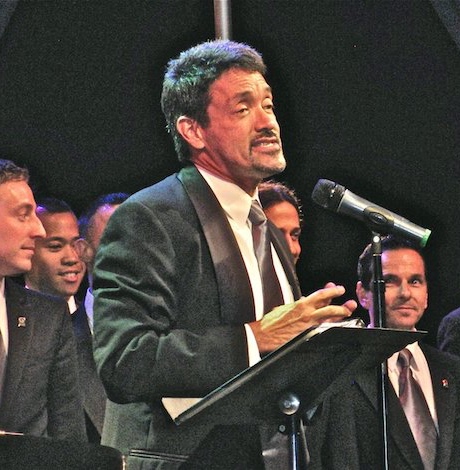
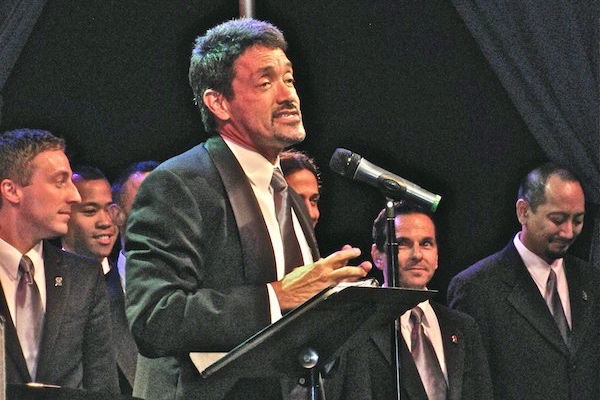
Former Mayor John Duran says he will not resign his Council seat. (Photo by Karen Ocamb)
After a sometimes contentious public meeting session, the West Hollywood City Council voted 4-0 Monday, March 4 to have City Attorney Mike Jenkins and city staff draft a resolution for the Council to censure city councilman John Duran for what the Council in its public remarks deemed inexcusable personal behaviors “which reflected badly on the city’s reputation.”
Duran resigned his ceremonial post as mayor earlier Monday in a Facebook post followed by a communique to fellow Council members and the city manager. He has consistently maintained his innocence in the sexual assault allegations first levied against him by members of the Gay Men’s Chorus of Los Angeles (GMCLA) over the past several months.
In his public social media statement, Duran did not heed numerous public calls for his resignation from his City Council seat. Instead, he declared he would serve out the remainder of his current term, which ends in 2020, but didn’t indicate if he would stand for reelection.
In his post Duran wrote, “handing the Mayor’s gavel to my friend John D’Amico… to fill the remaining two months of my Mayor’s term.” He added, “I am not resigning from council and will complete this term which expires in November of 2020.”
The former mayor wrote that the need to focus on his health was the reason for his decision. “My sobriety and God come first. My health comes next.” Duran then added: “I continue to work with my doctors to try and get my blood and body in the right balance. I am supposed to slow down to half speed and rest for the next 30 days.”
The motion to censure came after public comments from city residents and community business leaders who expressed their frustrations with Duran’s alleged sexual behaviors and public statements deemed inappropriate attributed to him.
Several of the public members queued up from the audience present in the Council chambers to speak including businessman Will Hackner, founder and CEO of the WeHo-based national LGBTQ+ Recreational Sports League organization, Varsity Gay League LLC, who called upon the city council to remove Duran from all offices to include his council seat. Under California state law governing the type of incorporation of WeHo as a general-law city, it is impossible for the council to remove a sitting member from office.
When a young Gay Men’s Chorus of Los Angeles member alleged that Duran made an unwanted sexual overture in October 2019, the incident, even though dismissed after an investigation found no evidence of wrongdoing, revived public sentiments about other well known incidents involving the Council member. In 2016, Duran and the city government had been sued by a former city deputy, Ian Owens, over his claim of sexual harassment by Duran.
An out-of-court settlement of $500,000 was paid by the city’s insurer to Owen though neither the city nor Duran admitted any wrongdoing. At the time Duran was not filling the mayoral role.
Owens, prior to filing the lawsuit, had been suspended from his position over an accusation of bugging the phone conversations of fellow deputy Fran Solomon, and of sharing her email correspondences with other city employees.
During the investigation, he insisted he had been a “whistleblower” over inappropriate campaign funding activity by Solomon on behalf of then-Mayor John Heilman, and that he had acted in part because his boss, Duran, had been unwilling to listen to his assertions, which he believed was because of his own rejection of Duran’s sexual advances.
Duran met Owens on the gay dating mobile app Grindr in 2012 and had sex with him prior to his employment with the city.
Duran insisted that had no bearing on Owens being hired as his deputy and that there had been nothing inappropriate about his relations with Owens while Owens was an employee. The resulting scandal led to the dismantling of the city’s deputy program in 2015.
The Owens affair resulted in numerous city residents and some business owners to call for Duran’s resignation or for punitive measures be taken by the council at that time.
Duran was re-elected to his seat after the Owens scandal was made public.
In February of this year, as the sexual misconduct allegations against Duran from three former members of the GMCLA against the backdrop of the #MeToo movement, Duran’s critics renewed their calls for him to step down.
As the city prepared for the election on Tuesday March 5, in which three incumbent Council members, John D’Amico, Lindsey Horvath and Lauren Meister, were standing for reelection, the resulting allegations spurred a heated public controversy.
On Feb. 11, the vice chair of the city’s Safety Commission, Robert Oliver, unexpectedly resigned from his post during the commission’s Public Safety meeting in protest of what he perceived as the council’s inaction over the allegations against Duran.
“I have been honored to serve on this commission with you, but I cannot continue to serve on a commission that stays silent on issues of such importance” Oliver said.
The next day on Feb. 12, three members of the Council — Horvath, D’Amico, and Meister — posted on Facebook calling for Duran’s resignation.
“First and most importantly, I condemn in the strongest terms sexual harassment and assault in all its forms. No matter whether it is perpetrated against a woman or man or gender non-conforming person, this behavior is wrong and it is unacceptable.” Horvath wrote adding, “Our City cannot focus on the work of the people when we have to address new and numerous allegations of sexual misconduct, including whether our Mayor used his title to solicit sexual favors. It is not fair to the people of this City to continue seeing ‘West Hollywood’ in the same sentence as these allegations. Our City deserves better.”
D’Amico, in his post, noted the allegations were “dividing” the Council and pulling its “attention“ away from “the long list of good, regular city business we can accomplish every day.”
“To get our city back on track,” he said, “John Duran needs to step away from being Mayor immediately and consult his conscience about what happens next.”
In her statement, Council member Meister wrote: “West Hollywood as a city is suffering as a result of the numerous and repeated allegations against Mayor Duran,” […] “he should step down from the position of mayor, and perhaps, step away from the council position so that he can focus on these issues and the city can focus on moving forward.”
In the time slotted for public comment during the Feb. 18 Council meeting one city resident Tai Sunnanon, a seated member of the city’s Public Facilities Commission, told the Council: “Lately, I have been exhausted, and I have been embarrassed, I have to defend this city with relatives and friends who live out of state because we have not sought the proper due justice to two black men who have died in our neighborhoods,” he said. “I am also exhausted and embarrassed by a mayor who uses gay and sexual liberation as a front with undue and unnecessary behavior that is really unbecoming of this city.”
As the calls for his resignation grew, Duran himself became combative. In an interview with the Los Angeles Times the following day, Duran, referring to his fellow Council members told the paper, “If the three of them are talking about this, and it sounds like they are, that’s a violation of the Brown Act, and the district attorney should investigate. You can’t have meetings outside of public view. Do I think that they all got the idea to put up their statements, all three, at the exact same time without talking to each other? No.”
In a phone call with WeHo city attorney Mike Jenkins on Feb. 20, the Los Angeles Blade was told that the statements posted on Facebook “reflect the individual views of each council member and are not the result of a coordinated effort.”
The Los Angeles Blade then learned that a complaint had been lodged last week alleging a violation of California’s Brown Act with the office of Los Angeles County District Attorney Jackie Lacey against Horvath, D’Amico, and Meister, for their Facebook posts.
In an email statement, Shiara Davila-Morales, a spokesperson for the District Attorney’s office responded writing; “We have received a complaint, and it is being reviewed.”
According to Council members and public comment during the March 4 Council meeting, Duran’s own Facebook posts showed that he was out of touch with the realities of today’s climate regarding sexual assault and victimization.
Duran responded to the calls for his departure with his own Facebook post, writing, “I have never hidden from any of you that I am a fully fledged sexual being… We fought too hard in the 70’s and 80’s for the right to be, the right to create a gay male subculture, the right to maintain sexuality in the midst of plague and to come out on the other side into marriage equality. To express yourselves sexually just like any other subculture in America.”
He added, “Now, I understand that the ground has shifted in a tectonic way with the ‘Me Too’ movement. I get that. But the pendulum swings too far when accusation is treated as truth.”
“So, will I resign? HELL NO,” he said. “If my colleagues shorten my Mayoral term, so be it. I didn’t wage this fight for 40 years to cower now.”
With his resignation from the ceremonial position of mayor Monday morning, Duran in effect negated proposed actions by the rest of the Council to remove him. That action had been one of five items listed on the published City Council agenda on the city’s website under Council new business section 5C as prepared by the city attorney Mike Jenkins and city staff.
All of the items had been directed by the council during the February 19 session to be placed on the March 4 agenda. Duran had not be physically present for that session as he had been hospitalized for a blood clot condition. As a result the council delayed actions to remove him from the mayoral role.
Other suggested actions included denying Duran travel funds and reimbursement for funds for any travel associated with city business. Removal from one or all of the subcommittees he serves on as a city official. Denying him reimbursement for any expenses incurred in the performance of city business or his conducting official business on behalf of the city.
The last of the five items was preparation of a motion to censure him. Council member John Heilman initially had argued against censure.
“What we’re essentially inviting is another public meeting with all the people who think he should resign, all the people who think he should be censured,” he said. “John will have his supporters there as well.”
Heilman asked his fellow other three Council members to defer any decision on censuring Duran. He also pointed out that remarks made during the discussions regarding the agenda item by Horvath, D’Amico, and Meister, stating that their viewpoint Duran’s behavior had also made it quite clear they were issuing a censure of his behavior. Heilman then commented that Duran should have an opportunity to review the censure resolution before the Council adopted it, which would make for quite an awkward public session.
The discussion was intensified when city attorney Jenkins then objected to being ordered to draft a censure resolution strongly articulating his viewpoint that allegations of sexual misconduct by Duran have not been proved.
Horvath interrupted noting that allegations were in fact documented by an independent investigator investigating previous complaints of sexual harassment alleged by Duran’s former deputy Ian Owens. She conceded that while the investigator was unable to substantiate those accusations of sexual harassment by Owens, he did report back that Duran had made inappropriate comments to city staff personnel.
Following Horvath’s remarks, D’Amico suggested that Jenkins should consider public statements made in recent weeks by Duran that indicated inappropriate behavior, alluding to the former mayor’s Facebook posts.
After Jenkins indicated that he would draft the proposal but cautioned the language may not be ready until April.
Heilman, after the other actions taken by council regarding stripping Duran of most duties and included the a clause inserted by Horvath that a city staff person would always be present at any meeting between Duran and others while in the course of conducting city business, then joined in the final unanimous vote to censure Duran.
The council then elected D’Amico mayor to serve until the new Council was seated after the certification of the election results on April 15 along with Horvath to serve as mayor pro tempore.
(Additional reporting by John Paul King and the staff of the Los Angeles Blade)



National
For lesbian victims of domestic violence, competent care is scare
Heteronormative assumptions, funding cuts contribute to lack of resources for survivors

Uncloseted Media published this story on Sept. 22.
By EMMA PAIDRA | Claire, a 25-year-old Los Angeles resident, distinctly remembers the night she and her ex-girlfriend broke up.
“She was strangling me in a CVS parking lot,” Claire recalls, adding how she was gasping for air as bystanders looked on. “I made eye contact with one man who just kept walking, and we were right behind a car that was trying to reverse out of a parking spot. No one got out of the car. They didn’t honk; they didn’t do anything.”
Claire, who asked to use a pseudonym due to safety concerns regarding her ex, says she managed to fight her way out of her then-girlfriend’s grasp. It was at this moment in 2024 she realized things had reached a breaking point.
While research on intimate-partner violence has traditionally focused on opposite-sex couples, two recent reports found that queer women, like Claire, are not immune to this type of abuse. An international research review published last year in the Journal of Media Critiques found “IPV rates in same-sex relationships are comparable to or exceed those in heterosexual relationships,” with up to 46 percent of lesbians encountering such abuse, compared to 36 percent of straight women. A separate review published earlier this year found that nearly 27 percent of lesbians surveyed had experienced IPV.
Despite the prevalence of IPV in lesbian relationships, heteronormative and outdated assumptions have left many queer women feeling like they have nowhere to turn for competent services and support, according to experts, advocates and victims interviewed by Uncloseted Media.
“Queer folks are joining the conversation to say, ‘This is happening in our communities, too, and we need the same resources and support services that straight women are offered,’” Tori Stranges, a professor of women’s studies at the University of British Columbia, told Uncloseted Media.
A frequently overlooked problem
Stranges says the false notion that only men are domestic abusers can result in violent same-sex relationships not being taken seriously.
“People assume that violence is perpetrated by men against women,” she says, adding that this “has left queer people out of the conversation.”
“If it was a man that was doing all these things, and people heard and saw it, I’m sure I would have been taken seriously,” says Claire. “People saw a 5-foot-7 woman who didn’t look that strong — and above all, she was a woman. Men, especially, don’t really see that as a threat. So they’re like, ‘If I’m not threatened, then I’m sure it’s not a big deal.’”
Outdated assumptions about IPV can even result in victims themselves overlooking their abuse.
“When it comes to abuse in heterosexual relationships, there are national campaigns, there are resources that you can access,” Stranges says. “There are people coming into the school systems to talk about relationship violence. We don’t have similar recognition and the same conversations about queer people.”
Claire says the violence she was subjected to was paired with moments of intense affection, which made it harder for her to recognize the abuse.
“We would get into a fight, and she would physically abuse me, and then apologize. She was actually also very gentle with me sometimes,” Claire recalls. “That kind of cycle can be really addicting. I would always wait for the good parts.”
The role of mental illness
K.P., a 47-year-old lesbian living in Maine, was with her abusive ex-girlfriend for five years before ending the relationship in 2023. During their time together, K.P. says her ex, who struggled with panic disorders, ADHD and depression, experienced a decline in her mental health, which contributed to more frequent outbursts of rage. When it comes to the link between rage and violence, one 2022 meta-analysis found that “anger was a significantly stronger correlate of IPV perpetration for women than men.”
K.P., who was working from home at the time and felt like she had no escape, says her ex’s verbal abuse spiraled into physical violence.
“I was on the couch with my laptop, trying to work, and she was just being belligerent,” recalls K.P., who asked to be identified by only her initials because of safety concerns. “I tuned her out, but when she realized I wasn’t giving her the attention that she expected, she went to the kitchen, grabbed two knives and started coming at me.”
K.P. ran outside, trying to get away. Her ex ran after her and then chased her back inside to avoid being seen by neighbors.
Once inside, her partner hid her phone. K.P. used this brief window to message a co-worker on her laptop, asking him to call the police.
“I was confused and afraid,” K.P. told Uncloseted Media. “I’d never been chased with a knife before, let alone by someone who I cared about.”
Research shows LGBTQ people have higher rates of mental health conditions than their non-LGBTQ+ peers. A study published last year in JAMA Network Open found sexual and gender minorities had “significantly higher odds of at least four of 10 commonly diagnosed mental health conditions,” including post-traumatic stress disorder and bipolar disorder.
IPV may also contribute to negative mental health effects, with research finding that victims experience an increase in depression, anxiety and PTSD and a reduction in life satisfaction.
“After we broke up, I was messed up,” K.P. says. “It took me a good six or eight months to feel like I could breathe again.”
Trapped in a ‘double closet’
In addition to mental health, the stigma of being queer may affect a victim’s response to being in an abusive relationship. When Claire first came out to her family, she says they kicked her out of their home until she returned to the proverbial closet. They eventually accepted her sexuality, but Claire says the residual shame she carried afterwards led her to avoid the added stigma she feared she’d experience if she admitted to being in an abusive relationship.
“All of that combined made me feel so trapped. I just thought, ‘Oh my god, I’m being judged from every single angle,’” she says. “There was just nowhere to go.”
Letícia Yuki de Araujo Furukawa, a clinical psychologist specializing in supporting survivors of IPV, says this kind of thinking is not uncommon among queer women in abusive relationships.
“Sometimes lesbian women who are experiencing IPV relationships start to isolate themselves, to prevent themselves from the shame and judgment they think they are going to suffer,” she says.
Furukawa says this impulse is rooted in the layers of stigma queer women face.
“It comes down to two things that make it like a double closet: We have the closet of being a lesbian, and you have the other one that comes from being in a violent relationship.”
According to Furukawa, having a supportive family can decrease the risk of entering an abusive relationship. Unfortunately, strained familial relationships are common among queer people: A 2022 study in the Journal of Marriage and Family found that 32 percent of gay and lesbian adult children — compared to 22 percent of their heterosexual counterparts — were estranged from their fathers.
Because of the shame Claire faced from her family when she came out, she was reluctant to admit there was a problem in her relationship when her mother and sister expressed concern. She worried that if her family knew her lesbian relationship was abusive, they would stop accepting her queer identity.
“My mom and sister would say to me during the relationship that they thought my ex looked evil, and that I changed so much. I used to be such a bubbly girl, and my personality made a complete 180,” she remembers. “In my head, I was like, ‘I can’t admit that it’s true.’”
‘Gaps in, policy, care, and services’
When queer women have the courage to report IPV, some don’t receive the response they’re hoping for. When police arrived at K.P.’s home following the knife-wielding incident, she says they opened a case file and wrote an incident report but said there was nothing else they could do because her ex had fled the scene.
“It was a little frustrating that since my ex-girlfriend drove away, the police couldn’t do anything,” K.P. explains.
Laura Elizabeth, an assistant professor of criminal justice at Virginia Union University who researches IPV, says there may have been additional steps police could have taken to support K.P., including connecting her with resources for domestic-violence survivors.
“It is vital that [police] make the proper referrals, and that it not just be limited to handing the victim a brochure,” she says. “There needs to be an active discussion with victims about what their options are in terms of who they can reach out to, who can offer what services.”
Kimberley Jackson, an associate professor at the Arthur Labatt Family School of Nursing at Western University, says lack of research on same-sex domestic violence also impacts the support services available to lesbian victims.
“The intersection of IPV and the LGBTQ community is really not well understood,” Jackson told Uncloseted Media. “What we can tell you based on really limited evidence, is that there are huge gaps in policy, care and services. And with respect to shelters, we haven’t really moved the needle very far.”
One area in which shelters may be failing lesbian victims has to do with both the perpetrator and the victim being able to access the same shelter.
“This issue is further compounded in rural areas, where there’s likely only one shelter,” Jackson says. “There’s a chance they won’t be able to turn someone away, even if they’re the perpetrator.”
Jackson says queer victims of domestic violence who aren’t open about their sexuality may face additional obstacles.
“With respect to anonymity, in a lot of rural places, you’re going to know people in the community,” she says. “There are issues with accessing help if you’re worried about outing yourself.”
Calls for change
Experts and victims say LGBTQ+ training for shelter workers and law enforcement, as well as funding for research, could help prevent same-sex IPV and address the damage done by such abuse.
But under the Trump-Vance administration, these funding resources are slipping away. In March of last year, the administration canceled at least 68 grants, totaling nearly $40 million, that were focused on LGBTQ+ health. A second round of cuts followed two months later, during which $800 million worth of grants dedicated to researching LGBTQ+ health were terminated.
Rebecca Hobbs, co-executive director of Through These Doors, a domestic violence resource and advocacy center in Portland, Maine, says LGBTQ+ training materials are essential to ensuring shelters can support lesbian victims.
“LGBTQ people will not come to us unless they see themselves reflected in our materials,” Hobbs says. “We want our advocates to be well versed in understanding the additional barriers and challenges that LGBTQ people might experience.”
Advocates say police departments could also benefit from LGBTQ+-awareness training.
The state of California and a number of large cities — including Atlanta, Chicago, Los Angeles, Houston, New Orleans, New York, Philadelphia, and D.C. — have implemented some form of LGBTQ+-sensitivity training.
But Greg Miraglia, founder and CEO of Out to Protect, a national organization supporting LGBTQ+ police officers and equipping all officers to serve queer people, says these programs are the exception, not the rule.
“Most other states do not require any type of LGBT awareness training,” Miraglia, a retired police officer who is based in California., told Uncloseted Media “There are over 18,000 law enforcement agencies out there, and I don’t think we’ve scratched the surface.”
“The problem comes about when law enforcement goes into a domestic violence incident with a same-sex couple without any training, carrying a lot of stereotypes that are common,” Miraglia adds. “They’re not picking up the fact that this is a couple that’s involved in an intimate relationship, and therefore domestic violence laws in that state apply.”
Claire says she wishes someone had intervened when her ex abused in the CVS parking lot and on her college campus. “The police had the biggest missed opportunity to intervene, as well as campus security,” she says. “A lot of our fights were in public, and she would get very loud. I made a promise to myself that if I ever saw anything like that in public, I would say something, because that’s all I needed at the time.”
United Nations
UN human rights chief sounds alarm over ‘comprehensive onslaught’ against LGBTQ+ rights
Volker Türk on Monday spoke at UN LGBTI Core Group event
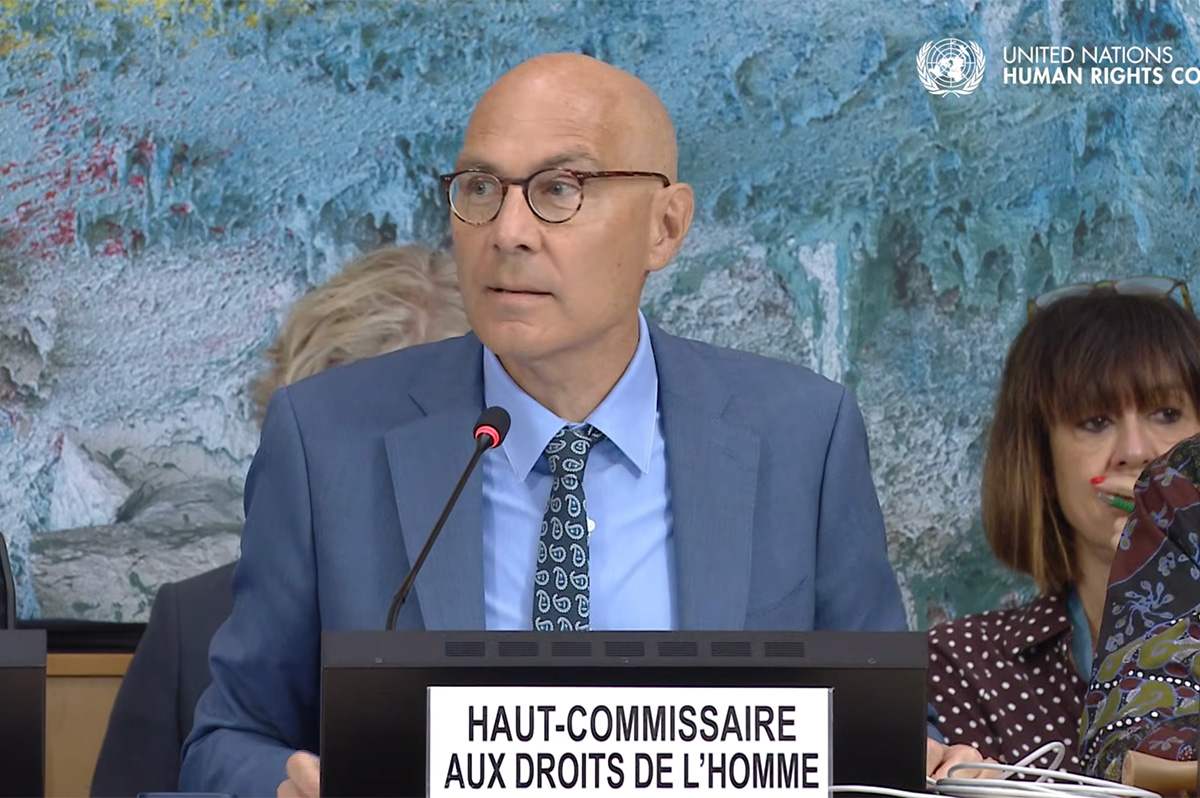
UNITED NATIONS — U.N. High Commissioner for Human Rights Volker Türk on Monday said there is a “comprehensive onslaught” against LGBTQ+ and intersex rights around the world.
“We know that progress for human rights has never been linear … but today’s backlash is deep and it is coordinated and the persecution of LGBTIQ+ people around the world is escalating at an alarming rate,” he said during an U.N. LGBTI Core Group event that took place on the sidelines of the U.N. General Assembly.
The Core Group is a group of U.N. member states that have pledged to support LGBTQ+ and intersex rights.
Mexico and Norway are the current co-chairs. The U.S. withdrew from the Core Group shortly after the Trump-Vance administration took office in 2025.
“We know that across every region, LGBTIQ+ people continue to live and to love in the face of hostility and exclusion,” said Türk. “Their rights, safety, well-being are under attack … it’s a comprehensive onslaught.”
The event took place days after Turkish authorities carried out raids in Istanbul and in other cities across the country that targeted the country’s LGBTQ+ community.
Türk in his remarks specifically referenced Turkey and Senegal, which further criminalized consensual same-sex sexual relations earlier this year. He also noted some countries have deemed LGBTQ+ and intersex rights groups as “terrorists, extremists, or national security threats.”
The Trump-Vance administration’s anti-terrorism strategy that it released in May specifically references “radically pro-transgender” groups.
Türk noted “more and more candidates and political parties … use bigotry in order to promote anti-LGBTIQ+ sentiments” during election campaigns. He pointed out trans people and women are often targeted.
“These attacks are designed to confuse and to distract,” said Türk. “They cloak bigotry in the language of decency and morality. They evoke the protection of children against manufactured threats, while real and growing dangers to children’s lives and futures, including those linked to technology, to inequality and to the climate disaster remain unaddressed.”
“More broadly those who seek to erase difference and independent thought, expression, and voices from our societies often begin this by erasing LGBTIQ+ people from books and classrooms, from film and culture and from our streets,” he added. “So, this is always the beginning. It’s a wedge issue that unfortunately is used politically to erase other portions of society eventually.”
90 percent of LGBTQ+, intersex groups have lost funding since 2025
The event took place less than two weeks after Outright International released a report that found 90 percent of LGBTQ+ and intersex rights groups around the world have lost funding since January 2025.
The Trump-Vance administration froze nearly all U.S. foreign aid shortly after it took office.
Secretary of State Marco Rubio in March 2025 announced 83 percent of U.S. Agency for International Development contacts had been cancelled, and the State Department would administer the remaining programs. USAID officially shut down on July 1, 2025.
Rubio issued a waiver that allowed PEPFAR and other “life-saving humanitarian assistance” programs to continue to operate during the funding freeze. The Los Angeles Blade has previously reported PEPFAR-funded programs in Kenya and other African countries have been forced to suspend services and even shut down because of gaps in U.S. funding.
Dutch Foreign Trade and Development Cooperation Minister Sjoerd Sjoerdsma in his remarks at the Core Group event noted his government — openly gay Prime Minister Rob Jetten took office in February — will pledge €50 million ($57.29 million) to support LGBTQ+ groups around the world. British Under Secretary of State Chris Elmore pointed out his government has pledged £21 million ($28.05) from 2026-2029 to bolster LGBTQ+ and intersex rights around the world.
“Equality benefits everyone,” said Elmore.
Mexican Foreign Affairs Secretary Roberto Velasco Álvarez, Norwegian International Development Minister Åsmund Aukrust, Icelandic Foreign Affairs Minister Þorgerður Katrín Gunnarsdóttir, Maltese Foreign and European Affairs Minister Chris Fearne, Brazil’s National Secretary for the Promotion and Defense of the Rights of LGBTQIA+ People Symmy Larrat, Irish State Minister for International Development and Diaspora Neale Richmond, South African Department of International Relations and Cooperation Director-General Zane Dangor, Uruguayan Multilateral Affairs Director María Noel Beretta, French Ambassador-at-Large for Human Rights Isabelle Rome, Cabo Verdean Permanent U.N. Representative Tania Romualdo, Estonian Department of International Organizations and Human Rights Director General Käthlin Saluveer, and Swedish International Development Cooperation Director-General Camilla Nevstad Bruzelius also spoke at the event that Outright International Executive Director Maria Sjödin moderated.
Other speakers included Jon Tilli of Deutsche Bank, UN Women Civil Society Division Director Lopa Banerjee and two activists: Gloria Quaye of Ghana and Nhuun Wannapong Yodmuang of Thailand.
Quaye was among the 21 people who Ghanaian authorities arrested in 2021 during a human rights workshop for LGBTQ+ activists. She was detained for three weeks until a court dropped the charges.
“In times of adversity, countries can often be tempted to turn inward at precisely the moment when international cooperation is needed the most,” said Sjödin. “The United Nations, of course, brings together sovereign states, but sovereignty cannot be used to decide whose rights count.”
Then-first lady Jill Biden in 2024 spoke at a Core Group event that took place on the sidelines of that year’s U.N. General Assembly. Then-Vice President Joe Biden in 2016 headlined the Core Group event that coincided with that year’s U.N. General Assembly.
The U.S. did not send any representatives to this year’s event.
Jessica Stern, the former special U.S. envoy for the promotion of LGBTQ+ and intersex rights under the Biden-Harris administration, and former U.S. Ambassador to Bosnia and Herzegovina Eric Nelson were among those from the U.S. who attended.
“The movement for the equal rights of LGBTIQ+ people has much to teach the world, particularly at this moment, but some seek to erase or reject those lessons,” said Türk. “The history of the movement for the equal rights is full of courage, dignity, and solidarity and it is an integral part of the human rights movement.”
“It’s not something separate; it’s an integral part of the full human rights movement,” he added. “In claiming their freedom, the LGBTIQ+ communities helped free our societies. We need to see it as a broader strive for freedom.”
National
Long-time DignityUSA executive director announces retirement
Marianne Duddy-Burke has been with LGBTQ+ Catholic group for decades
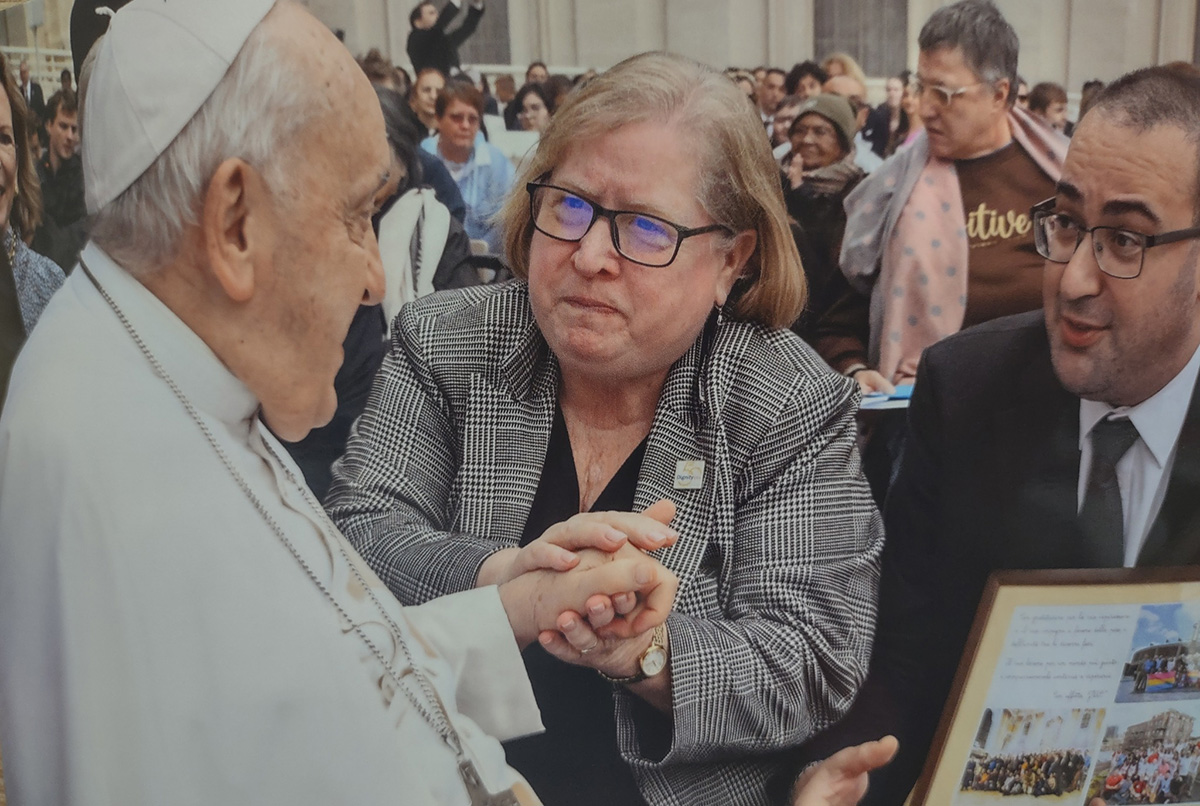
The executive director of the world’s oldest LGBTQ+ Catholic organization has announced she will retire once her successor has been chosen.
Marianne Duddy-Burke has been with DignityUSA for more than four decades. She has been the group’s executive director since 2007.
DignityUSA announced Duddy-Burke’s retirement on Sept. 17.
Duddy-Burke during her tenure has urged the Vatican to do more to welcome LGBTQ+ Catholics. She has also, among other things, championed marriage equality and advised the State Department on LGBTQ+-specific issues. (The Trump-Vance administration’s decision to freeze nearly all U.S. foreign aid shortly after it took office in January 2025 has had a devastating impact on the global LGBTQ+ and intersex rights movement and efforts to fight HIV/AIDS around the world. A report that Outright International released earlier this month notes 90 percent of LGBTQ+ and intersex rights groups around the world have lost funding since 2025.)
Duddy-Burke met with Pope Francis in 2023.
She traveled to Rome in 2025 for the papal conclave to choose the Argentine-born pope’s successor. Pope Leo XIV, who was born in Chicago, succeeded Francis.
DignityUSA in the press release that announced Duddy-Burke’s retirement notes she expressed “particular appreciation to people who spoke honestly about the reality of being a queer Catholic or family member.”
“I have been inspired every day by your stories and have done my best to lift them up,” said Duddy-Burke. “It is your lives, your faith, your struggles, your hopes that I have strived to reflect in my work, and doing this has been a great honor.”
DignityUSA President Meli Barber praised Duddy-Burke.
“It is almost impossible to sum up the scope and depth of Marianne’s achievements and contributions to DignityUSA over her more than four decades of service,” said Barber. “Under her wisdom and leadership, DignityUSA has only grown in stature as an advocate for LGBTQIA+ Catholics and as a visionary thought leader for LGBTQIA+ ministry and spirituality.
“Marianne has been more than an extremely able executive director,” added Barber. “Her care for and ministry to chapters, her deep personal relationships with countless Dignity members, her connections to LGBTQIA+ Catholics around the world, the relationships she has built with other progressive Catholic organizations, her skill as a public representative, the respect with which she is universally regarded, and her tireless devotion to service all leave an indelible mark. It is not an exaggeration to say that she has shaped not only Dignity but a generation of LGBTQIA+ Catholics.”
Barber said DignityUSA will “soon begin a search for a new executive director.” Barber added Duddy-Burke “will assist with the transition.”
Politics
From the desk of Equality California: the latest political news for CA and beyond as we head into the midterms
With the November midterm elections inching ever closer, Equality
California is preparing to release our final round of endorsements for local
candidates
With the November midterm elections inching ever closer, Equality California is preparing to release our final round of endorsements for local candidates, as well as prepare for major get-out-the-vote operations.
We’re also still waiting on Governor Newsom to sign our 2026 legislative package. The governor has until September 30 to sign or veto hundreds of bills from this legislative session. That means we have just a short window to make our voices heard and ensure these vital protections become law. And with the onslaught of attacks from the Trump administration, particularly against transgender youth and their families, the stakes couldn’t be higher. LGBTQ+ people deserve strong laws that affirm our dignity and protect our rights. Send an email to his office and tell him to stand up for LGBTQ+ Californians by signing our bills today!
To read more stories, join our mailing list, and sign up for the weekly Equality Brief, visit eqca.org/equalitybrief.
DOLLY PARTON: ICON. ARTIST. UNAPOLOGETIC LGBTQ+ ALLY.
We are deeply saddened by the loss of musical icon and humanitarian Dolly Parton. As legendary for her exaggerated glamour as her hit songs — “It costs a lot to look this cheap,” she often joked — Dolly was a longtime ally and supporter of the LGBTQ+ community whose message of love without limits crossed generational and political lines. In addition to her iconic musical legacy (and still the only musician to ever have their own theme park, Dollywood), Dolly also founded the Imagination Library, which promotes childhood literacy and provides free books to children from birth to kindergarten. And at the height of the COVID pandemic, she personally donated $1 million to Vanderbilt University to help with development of vaccines. If ever anyone embodied the phrase “angel on earth,” it was Dolly Parton.
Dolly, we will always love you.
- Equality California Endorses in 8 Ballot Proposition Campaigns:
Equality California announced its positions on eight statewide ballot propositions appearing on the November midterm election ballot. “Our positions reflect our commitment to advancing equality, protecting civil rights and building a California where every LGBTQ+ person can live with dignity, safety and opportunity,” said Executive Director Tony Hoang. Read the statement announcing the endorsements here. - Federal Judge Upholds Injunction Against Chino Valley Anti-Trans Policy:
A federal judge in San Bernardino County denied a request from Chino Valley Unified School District to dissolve his previous injunction blocking them from enforcement of a policy that requires school employees to forcibly out students if they identify as transgender or use different names and pronouns at school. Chino, whose board is led by anti-LGBTQ+ extremist Sonja Shaw, brought the challenge following the Supreme Court’s ruling in Mirabelli v. Bonta, where a majority of Justices ruled a school cannot purposely withhold information about a student’s identity from a parent. Because there is no such withholding requirement in the Chino case, Judge Michael Sachs allowed the injunction to stand and specifically differentiated it from the Mirabelli case. - New Report From HHS Alarms Civil Rights Groups, Advocates:
A new HHS “study” — inherently untrustworthy, originating as part of the Trump administration — posits that those who support transgender people may be more likely to justify political violence. Experts are extremely skeptical of the study’s veracity and underlying methodology, noting that it uses disproven pseudoscience as a basis for its findings. This is just the latest in the administration’s messaging war to assign blame for violence, hate crimes, and similar incidents to what they refer to as “ support for transgender ideology.” - Federal Court: IRS Cannot Share Data with ICE
A federal appeals court unanimously upheld a lower court ruling to block the Internal Revenue Service from turning over confidential taxpayer information of non-citizens who pay taxes to Immigration and Customs Enforcement (ICE). The challenge, Center for Taxpayer Rights v. IRS, was supported by an amicus brief filed by 115 Members of the Congress including Senator Padilla and Reps Sánchez and Gomez of the California delegation. - Flailing Ahead of Midterms, Republicans Turn to Tried and True Transgender Attacks:
With their prospects for victory in the midterms growing dimmer by the day, far-right MAGA Republicans are turning to attacks on transgender people as a way to motivate their base to get out the vote. States including Missouri, Colorado, Washington and Arizona will have ballot issues around banning trans youth from sports and/or prohibiting healthcare access for transgender youth (in the case of Colorado, both are up for voter approval). The efforts smack of cynicism, and are reminiscent of anti-marriage equality attacks deployed to increase Republican turnout in 2004. - Federal Judge Strikes Down Texas Drag Ban:
On Wednesday, U.S. District Judge David Hittner struck down a 2023 Texas state law that sought to restrict drag shows. Judge Hittner ruled that Texas Senate Bill 12 was an overly broad, unconstitutional attack on free speech, offering in his ruling a solution to anyone opposed to drag shows: “Just don’t go.”
UPCOMING EVENTS
Our premier event of the year, the Los Angeles Equality Awards, is happening on Saturday, October 17, 2026 from 6:00-10:00 PM at the gorgeous Fairmont Century Plaza. And this year, we’re making Monét moves — Drag Race All-Stars winner, comedian, actor, and presenter Monét X Change will serve as emcee! We’ll also honor Asm. Rick Chavez Zbur with the Equality Leadership Award and entrepreneur Tristan Schukraft with the Equality Trailblazer Award. Tickets are on sale now!
Palm Springs
Here’s your Palm Springs look at the weekend: Sep 18-20, 2026

The cat is out of the bag: Alice B. is handing the reins over to Gertie permanently. You know I’m a Living Out resident and spokesperson, so I tend to know the inside scoop on what’s happening. While the announcement was released by Chef Susan and Mary Sue yesterday, it was in the works for some time.
In fact, Coachella Valley Independent food writer Charles Drabkin was in just last week to sample the new menu and talk with Living Out management about the permanent change. His column will appear soon with more clarification and a look at the changes under the new management.
I’ve known Susan and Mary Sue since my days in LA when they volunteered their time and food to Outfest each year. And I spent time with Susan as we recorded radio commercials for KGAY and did social media posts for Alice B. She had a vision that wasn’t always accessible to all. But creative differences are a thing in the culinary world just as they are in any creative endeavor.
It’s great to have recognition by the Michelin Guide, but making the space work for both residents of Living Out and the community was a challenge. There were only so many nights one could feast on Steak Diane. But it was a great experiment and there were many highlights including hosting Michelle Obama! Susan promises that there will be a Thanksgiving dinner-at-home offering, and they will still do catering under Border Grill.
The handoff to Gertie’s Salon & Bar has been seamless with most of the staff remaining. The live entertainment now in the dining room itself, the accessible and varied menu items and some decoration changes make it very welcoming.
We tend to react to news like this looking for a pattern: Does it indicate that other restaurants will close? How will “season” be this year” There’s always an ebb and flow, but times are difficult in our tourism economy today due to you-know-who. Our Canadian friends are going to continue to stay away, and international tourism is down across the USA.
Let’s continue to support our LGBTQ+ friendly spaces with our dollars and our recommendations to friends and visitors. We curate a list on the Dine & Sip section of GayDesertGuide.LGBT. Let’s let ’em know that you found them here.
Brad Fuhr, your K-Gay Desert Guide
Here’s what’s ahead in sunny Palm Springs!
Cinema Diverse 2026

Cinema Diverse 2026 runs all weekend at the Palm Springs Cultural Center. The LGBTQ+ film festival spans multiple days and screening blocks, celebrating queer storytelling through documentaries, narratives, comedies, dramas, and experimental shorts. Across three theatres, audiences can explore films that examine identity, chosen family, activism, romance, and the intersections of gender, sexuality, and community. The festival continues for a second long weekend, September 24–27. More info
Live! Laugh! Lust! Positively Aging Project Conference

The Live! Laugh! Lust! Positively Aging Project Conference takes place Saturday, September 19 from 9 am–3 pm at the Mizell Center. The day begins with registration and a complimentary breakfast at 9 am, followed by programming from 10 am–3 pm including a complimentary lunch. Attendees can visit resource tables featuring healthcare providers, nonprofits, advocacy groups, and support services. Keynote speakers Mark S. King, Shann Carr, and Nina Grace Ruedas explore aging, resilience, intimacy, and authentic living. More info
Contour Dermatology Day of Beauty

Contour Dermatology hosts its Day of Beauty on Saturday, September 19. This culmination of a weeklong celebration marks the practice’s 25th anniversary with casino‑themed specials, premium filler deals, discounts on esthetician services, skincare products, select procedures and more. Guests can enjoy virtual or in‑office consultations and Saturday’s Winning Look Jackpot Party from 9 am–1 pm features demonstrations and product showcases. John Taylor will be Out and About with the KGAY Prize Wheel from 10 am–Noon! The event benefits the McCallum Theatre. More info
Gay Days Anaheim 2026

Gay Days Anaheim 2026 runs Friday–Sunday, September 18–20 at Disneyland Resort, bringing shows, special theme park tickets, and LGBTQ+ community magic to The Happiest Place on Earth. Featured performances include Alyssa Edwards, Irene the Alien, Cheyenne Jackson, Zach Noe Towers, Jan Sport, Jackie Cox, and Kay Sedia. Attendees can explore Disneyland Park, Disney California Adventure Park, three resort hotels, and Downtown Disney, with access to limited‑time theme park ticket offers. More info
Greater Palm Springs Spa Month

Greater Palm Springs Spa Month unfolds across the Greater Palm Springs Area all month long, with exclusive wellness experiences throughout all nine resort cities. Slow down, breathe deeply, and embrace self‑care your way—whether through a mineral spring soak, a rejuvenating facial, a deeply relaxing massage, a sound bath under the desert sky, or a full day dedicated entirely to restoration. Participating resort spas, day spas, and hot springs spas offer limited‑time treatments and special packages all September. More info
Palm Springs Summit on Extreme Heat

The Palm Springs Summit on Extreme Heat happens Friday, September 18 from 9 am–5 pm at the Palm Springs Convention Center. Registration runs from 8–9 am before a full day of panels and discussions with climate experts, policymakers, healthcare professionals, and community leaders. The summit focuses on strategies for staying safe during extreme heat events and building a more resilient community, offering education, action planning, and local engagement. More info
Living Over the Rainbow

The Rainbow Connection hosts a special screening of Living Over the Rainbow on Friday, September 18 from 6–8 pm at the Spiritual Center of the Desert in Palm Desert. This exclusive showing features the NYC staged reading of the new original musical by Roz Esposito, inspired by true events. The story follows a slain transgender student guided through the afterlife to explore the cost and power of living authentically. Esposito will be present for the event, with a Q&A session following the screening. More info
SPEAK – A Collection of Five New Plays

At Spirit Animal at Hotel Zoso, SPEAK: A Collection of Five New Plays presents a new works showcase Friday, September 18 from 6–9 pm. Featuring five original plays performed by five casts, the evening blends comedy, drama, memory, and movement within a unified, ever‑shifting set. Pieces include The One About the Letter, Violet, Hide and Peace, Stay Right Here, and Miss Erica’s Acting Class. More info
Radical End of Summer Pool Party

The Radical End of Summer Pool Party splashes into the Palm Springs Surf Club Friday, September 18 from 6–10 pm. Guests can hang by the pool, dance to throwback hits from the ’80s and ’90s, and enjoy food and drinks throughout the night. This 21+ event invites attendees to bring a swimsuit and towel for a starry evening of music, friends, and community spirit. More info
Jason Graae, Miss Peggy Lee & The Judy Show!

The Purple Room packs a full weekend of cabaret brilliance from Friday, September 18 through Sunday, September 20, beginning with Jason Graae’s razor‑sharp wit and Broadway‑polished vocals in It’s a Graae Night for Singing! on Friday. Saturday brings Chuck Sweeney’s award‑winning homage FEVER! An Evening with Miss Peggy Lee, blending humor, nostalgia, and impeccable musicality. The weekend wraps with Michael Holmes’ iconic The Judy Show! on Sunday, a high‑camp, fast‑paced parody of Judy Garland’s 1964 variety series featuring surprise celebrity impressions and nonstop laughs. Each ticket includes an automatic dinner reservation. More info
Sketch Comedy Writing Intensive

Sharpen your comedic voice with a three‑day Sketch Comedy Writing Intensive at CVRep, running Friday, September 18 from 7–10 pm, and Saturday–Sunday, September 19–20 from 10 am–1 pm. Instructor Darren Held leads this collaborative, hands‑on workshop where participants learn to generate ideas, heighten effectively, and build strong sketch structure in a supportive writers’ room environment. You’ll explore character‑driven humor, complete five different types of sketches, and gain tools used at The Groundlings, Second City, Upright Citizens Brigade, and Held2gether. More info
Burgers, Boys & Brews Sunday BBQ

Burgers, Boys & Brews — Sunday BBQ returns Sunday, September 20 from 2:30–4:30 pm at The Social Cafe & Lounge. This weekly backyard‑style cookout features fresh‑grilled burgers, hot dogs, sides, bottomless mimosas, bottomless draft beer, great music, and live male entertainment. It’s a lively Sunday afternoon tradition where guests can eat, drink, and enjoy the atmosphere. More info
DUI Checkpoint Friday

The Palm Springs Police Department will conduct a DUI Checkpoint on Friday, September 18 from 8 pm–2 am at an undisclosed location, part of ongoing efforts to reduce impaired‑driving crashes in the city. Impairment can come from alcohol, certain medications, or marijuana, and a first‑time DUI can cost roughly $13,500 plus a suspended license.
- Films in the Gardens: Big Fish (2003) • Moviegoers enjoy a free outdoor screening presented in partnership with the Palm Springs International Film Society on Friday at 7:30 pm at Sunnylands.
- Coachella Valley Community Blood Drive • Donors support local patients and help strengthen the regional blood supply during a community drive on Saturday from 9 am–2 pm at the Palm Springs Police Department Training Center. Organized alongside LifeStream Blood Bank, each donation also generates support for FIND Food Bank.
- David Farnsworth Bon Voyage Party & Sale • Ceramicist David Farnsworth showcases new ceramics and paintings during a send-off exhibition on Saturday from 12–5 pm at Ernesto Ramirez Fine Art Gallery.
- Sloshed: Spelling Bee — A Musical Comedy Under the Influence • Performers present an unpredictable, improv-filled musical production of The 25th Annual Putnam County Spelling Bee on Saturday at 7 pm at Spirit Animal at Hotel Zoso. Audiences will enjoy interactive comedy, surprise competition moments, and nightlife fun where nothing goes according to plan.
- Unbuttoned, a Boylesque Social Experience • Dancer and choreographer Michael Silas blends dance, storytelling, and sharp comedic flair on Saturday from 7–8:30 pm at The Social Cafe & Lounge. The former Lady Gaga dancer delivers a bold boylesque performance designed specifically for Palm Springs audiences.
- Dance Ranch / Country Dance Saturdays • Country dancers of all skill levels join Jan Alden for a beginner waltz lesson and open dancing on Saturday from 7–9:30 pm at Step by Step Dance Studio.
- Tommy Emmanuel, CGP • Virtuosic acoustic guitarist Tommy Emmanuel performs a solo concert showcasing pop, jazz, classical, and roots influences on Saturday from 7–10 pm at Palm Springs Plaza Theatre.
- The Who Generation – A Tribute to The Who • Tribute band The Who Generation channels guitar-driven energy and classic rock anthems on Saturday from 8–11 pm at Agua Caliente Casino Cathedral City.
- Matt Mathews: Not What I Ordered World Tour • Stand-up comedian Matt Mathews brings his signature raw humor to the stage on Saturday at 8 pm at The Show at Agua Caliente Casino Resort Spa Rancho Mirage. Enjoy an evening of unapologetic comedy from this fast-rising Southern star.
- NSFW – New Season of Work • Featured artists Russ White, T. Young, Merick Reed, Don Fisher, and Terrence Payne showcase exciting contemporary artwork through September 30 at Rubine Red Gallery.
- A Queer Arcana: Art, Magic, and Spirit • An intergenerational group of artists explores esoteric knowledge, sacred power, and alternative spiritual traditions through October 18 at Palm Springs Art Museum (currently open Thursday–Sunday).
Congress
Jeremy Moss looks to bring LGBTQ+ advocacy from Lansing to Capitol Hill
Congressional candidate would represent Detroit suburbs if elected
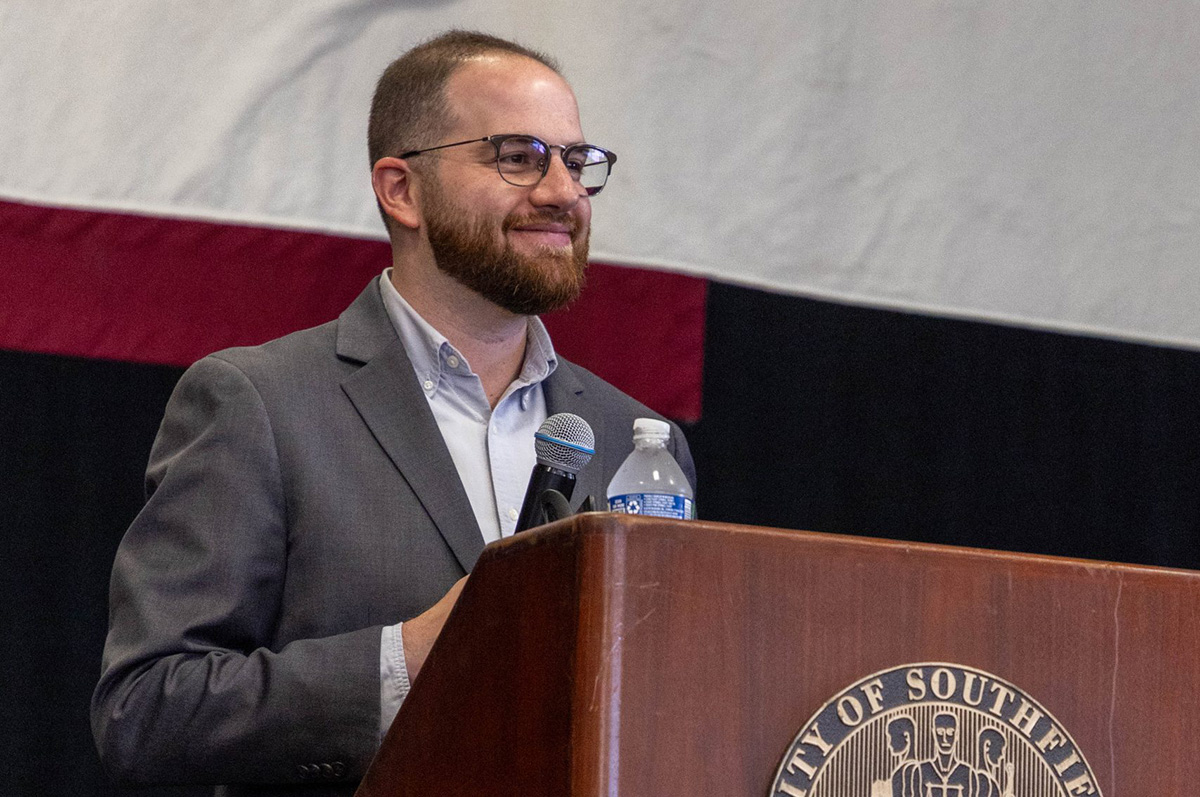
With fall comes swapping out T-shirts for sweaters, raking leaves and, of course, elections. The summer’s primaries have narrowed the playing field in a slew of races, but the big ones — the actual races for seats in federal and local elections — are still to come.
Jeremy Moss is one of those people running for a congressional seat in Michigan. Despite his young age, Moss has quickly learned the ropes of politics in the state, already serving terms in the Great Lakes State’s House of Representatives and Senate.
Moss sat down with the Los Angeles Blade to discuss his history in Michigan politics, his experience as an openly LGBTQ+ legislator and his vision for a better America as he looks toward Congress.
He currently represents Michigan’s 7th Senate District, but now he is setting his sights beyond Lansing toward Capitol Hill to represent Michigan’s 11th Congressional District, which includes Detroit’s northern suburbs.
Moss earned his bachelor’s degree in journalism from Michigan State University, where just a few years later he made history as the first openly gay person elected to the Michigan Senate and the first to serve as its president pro tempore.
His political experience stretches across multiple offices.
Moss worked in the offices of Southfield Mayor Brenda Lawrence, who also served in the U.S. House of Representatives, and State Rep. Paul Condino.
Moss, at age 25, was elected to the Southfield City Council in 2011, becoming the youngest member elected in the body’s history. He then switched over to the state legislature, representing Michigan’s 35th House of Representatives District in the Michigan House of Representatives from 2014-2018, becoming the second openly gay member elected to the Michigan legislature.
He then moved from Michigan’s House to its Senate in 2018, elected to represent the 11th Michigan Senate District and becoming the Assistant Democratic Leader. Moss started his second term in the Michigan Senate in 2023, this time representing District 7.
He currently has a long list of priorities listed on his campaign website, many of which have become standard for Democrats running across the country, with a particular focus on minimizing — and cleaning up — issues that the Republican-controlled federal government has created under President Donald Trump.
Those goals include lowering healthcare costs, tackling the cost of living crisis, holding U.S. Immigration and Customs Enforcement accountable and fixing the broken immigration system, restoring national voting rights, protecting rights — with a particular focus on abortion access and LGBTQ+ rights — combating corruption in politics, preventing gun violence and strengthening gun safety, empowering Michigan workers, and preserving the environment.
Why Moss is running for Congress
When asked why he wants to run for Congress, Moss pointed to his lengthy resume in state leadership, with a clear voice arguing that if he can do it in Lansing, he can get it done in Washington.
“I’ve served 12 years in the legislature and have ascended into leadership as president pro tem of the Senate,” Moss explained to the Blade. “We flipped our state legislative chamber to a Democratic majority for the first time in 40 years in 2022, and we passed some big, generational-changing, consequential Democratic wins that had languished for a generation, but had improved people’s lives in our state.
“We’ve passed the first gun safety laws in a generation that are saving lives. We protected the right to vote amidst attacks from Donald Trump and other conspiracies. We pushed forward and finally put LGBTQ rights in our state civil rights law. We provided free school meals and lunches for all public school children in the state of Michigan.
“The problems from Washington, D.C., aren’t getting less severe over time,” he continued. “They’re getting more severe. So this district unexpectedly opened up due to a series of retirements and it was just a great opportunity for me to continue to advocate for big change that we’ve already achieved here in the state legislature.”
“I’m a product of this district. I grew up here. I’ve represented a bulk of the district already in the state legislature, and I knew that I was going to earn grassroots support to be able to wage this campaign. We sought it out, we earned it, including some premier endorsements from Gov. (Gretchen) Whitmer, among many others, and were highly successful in the primary because we were in tune to the needs of this district.”
Moss has been endorsed by a slew of Democratic leaders and organizations, including, as he pointed out, by Whitmer.
Other endorsements include former Gov. Jim Blanchard, Secretary of State Jocelyn Benson, Attorney General Dana Nessel, the Equality PAC, the Human Rights Campaign, the Unity Fund, and the LGBTQ+ Victory Fund.
His political identity and the Democratic Party
Moss described himself as being “on the liberal end of the spectrum,” but argued that the Democratic Party’s internal divisions should not be the central focus.
“I’m certainly on the liberal end of the spectrum, but I don’t even think it necessarily has to be this progressive versus establishment fight that we’ve seen play out,” Moss said when asked about various elements of in-party disagreements. “It has to be between action and, and inaction, fighters versus folders.”
He said that distinction between action and inaction is central to how he would approach Washington.
“At this moment, I think we need to demonstrate that we are ready to take on Donald Trump and MAGA chaos with boldness and effectiveness. I’ve been saying all along our campaign trail, we can no longer be the party that shows up to the knife fight carrying a pie chart, and so I think we have to be showing that we have spine and we have punch, and we’re really ready to be tough fighters for, for Michiganders and the American people.”
“We can’t walk on eggshells anymore. We can’t pull our punches,” he added. “We can’t fear that we’re offending someone, you know, one way or another with how we act. People are expecting a bold party to take on MAGA, and I think that’s exactly what the Democratic Party needs.”
Becoming an LGBTQ+ legislator
Moss also reminisced with the Blade about his first run for elected office — at a time when Michigan had no openly LGBTQ+ members serving in the state legislature — and how that experience became deeply connected to his identity and his approach to LGBTQ+ politics.
In 2014, Michigan was in the pre-marriage equality era, and the state had no openly LGBTQ+ members serving in the legislature.
“12 years ago in 2014 — this was pre-marriage, the pre-marriage equality era — we had zero people from our community serving in the legislature, and still they were talking about us.
“The big topic then in Michigan was whether or not to expand our civil rights law to include LGBTQ protections, so that people from our community would no longer face discrimination in housing and employment. And they were talking about us regardless of whether or not we were at the table.”
Moss eventually helped lead the effort to expand Michigan’s civil rights protections to include LGBTQ+ people, a measure that passed with bipartisan support.
He said his experience as an openly gay lawmaker allowed him to make the case for LGBTQ+ protections in terms that extended beyond LGBTQ+ issues.
“One thing I definitely aligned with Gov. Whitmer at the time was making the case that discrimination was not only morally wrong, but it was bad for business,” he said. “By not having these protections for our LGBTQ neighbors and family members and friends and community members, we were actually holding back our economy. We were essentially allowing people to be kicked out of Michigan as consumers and workers, because of who they are and how they identified.”
That led to various efforts — including committee hearings and meetings with advocates, businesses and the public — that helped make Michigan what the Movement Advancement Project deems the 16th most LGBTQ+-friendly state, solidly above other states due to its robust LGBTQ+-related legislation.
“I wanted to meet everybody where they were, including those who may have not been involved with or engaged with the LGBTQ community as legislators, but understood that we couldn’t sustain the economic impact of discriminating against our community,” Moss said. “And as I’ve said all along, discrimination is bad for business. That’s something I think helped broaden the vote and earn some bipartisan support for it.”
Representation and LGBTQ+ youth
For Moss, the importance of LGBTQ+ representation also comes from his own experience growing up.
“I think about when I was younger, when I was 18 years old. It was in 2004, and, you know, there are certain things that really shaped me in that time … Michigan had a ballot proposal that passed to have the strictest language banning marriage equality in our state constitution. We didn’t even allow civil unions in that language in our constitution to exist, and there were scandal-plagued LGBTQ politicians.”
“It was the same year that Jim McGreevey was forced to resign as he came out,” he said. “So it really was a signal to me that, you know, you don’t have a future. Not just you don’t have a future in politics; you might not even have a future. Period, and it was pretty defining for me.”
Despite those fears, Moss continued to pursue public office.
“And you can’t be what you can’t see, and so to be able to break the barriers at the state level and at this congressional level, I think is a signal to anybody who is struggling with wondering where their place is?”
“I think that visibility is incredibly important, and it’s something that I needed when I was much younger, and it’s something that I’ve been honored to be able to provide for the, for the next generation of emerging leaders.”
His LGBTQ+ priorities in Congress
When asked what LGBTQ+ issues he would prioritize in Congress, Moss emphasized the importance of growing the number of LGBTQ+ lawmakers while also expanding federal nondiscrimination protections.
“To have a caucus in the legislature has made all the difference because you can, you know, run these issues across the field. You can have somebody take on marriage. You can have somebody take on trans rights. You can have somebody take on LGBTQ youth. You can have somebody take on discrimination protections.”
He sees much of the work he wants to get done on Capitol Hill as a direct follow-up to his work in Lansing — most importantly, the passage of the Equality Act. The legislation has been debated in some form for more than 50 years at the federal level, with the goal of protecting LGBTQ+ people from discrimination under federal law.
“I think the Equality Act is incredibly important. That’s kind of the, the counterpart to what we’ve done in the state legislature, ensuring discrimination protections for the LGBTQ community,” he said.
“I think housing and, and workplace discrimination is, is everything, you know, to protect our community so that they can have a safe place to call home and earn a living … That’s incredibly important across the board. And I would really want to take a leading role in telling the story of how we were able to do it in Michigan after 50 years since this act was first written — and finally finished the job federally to ensure their federal protections in, in, in, in employment and housing.”
LGBTQ+ political organizations and Congress
Moss said the LGBTQ+ political organizations that have supported his political career from its early stages have helped him along the way.
“Obviously, I’ve been affiliated with Victory Fund since I first ran for office, and they were early endorsers, but Equality PAC, which is the political arm of the LGBTQ caucus in Congress, has been an incredible part of my support system. From day one they helped me out.
“I’ve been getting to know a lot of the members of Congress who are LGBTQ, really over the last year of this campaign. So I’m eager to join them. I’m eager to be one of the players on the field here to be able to advocate and advance our issues.”
Voting rights
Voting rights are another major focus for Moss, an issue he said dates back to his experience during the 2004 campaign over marriage equality.
“Something I’m very passionate about is voting rights, and it really does go back to that 2004 campaign where it was very evident that elections can determine your future.
“Elections can determine what rights you do have and don’t have, and so I’ve been very laser focused on increasing access to the ballot box, making sure our democracy remains whole and accessible.”
He explained how Trump’s recent attacks on voting legitimacy and mail-in voting have only made his desire to help that much stronger.
“We went through a real trial of that in 2020 with, with Michigan’s presidential election, with Donald Trump and Rudy Giuliani — as he jetted into Michigan and tried to overturn our valid and accurate election results. We were kind of the spotlight of the nation in that stop this deal movement that led to Jan. 6.”
That, according to Moss, spurred direct action on his end.
“I took the helm as chair of the Senate Elections Committee, and we wrote the law to implement pieces of that ballot proposal, including drafting the law that implemented nine days of early voting here in Michigan, increased access to absentee ballot. We further secured our canvassing and certifications so that nobody could jet in with an alternative slate of electors and send them to Congress on Jan. 6.”
“So I’ve been on the front lines in Michigan on defending our election systems and strengthening protections for both voters to access the ballot box and protections against those who want to overturn our election results.”
Those issues are still present today, he explained.
“He’s pushing for suppressive tactics like the Save Act. The Supreme Court has eroded the federal Voting Rights Act,” Moss said. “I want to really get into Congress as an election expert, we have a Michigan story to tell. I wrote a lot of that story, and, and I think the most urgent thing that we could pass is the John Lewis Voting Rights Act to make sure that there’s no pocket of discrimination anywhere in our country, and that people have the ability to exercise their constitutionally guaranteed right to vote.”
What he would do differently in Washington
Moss also shared that he believes Democrats should communicate differently in Washington, with an emphasis on getting things done.
“Yeah, again, we’ve, we’ve seen politics evolve in this Trump era, and I think that Democrats need to communicate differently.
“He talks so brazenly, and how proud he is that he’s renamed the Gulf of Mexico or Lake Ontario. I put that in the stupid category.
“He’s also done things in the harmful category that he boasts about, like cutting Medicaid and cutting SNAP. And of course, he’s doing things in the dangerous category, but proud of it, like trying to overturn our elections or suppressing the vote.
“What we’re doing is both popular and good for people, whether it’s growing our economy from the middle class outward, whether it’s lowering costs, whether it’s making healthcare more affordable, whether it’s strengthening the core functions of our democracy, we have to be talking about it with the same gusto and confidence that MAGA talks about their agenda.
“I think this is a party that needs more spine and more punch, and really meet this moment because I think that’s what people are looking for, and that’s really what I think a new generation will bring into this next Congress.”
Turkey
More than 150 people detained outside Istanbul courthouse
Protesters gathered after raids targeted Turkey’s LGBTQ+ community

Turkish authorities on Tuesday detained more than 150 people who gathered outside an Istanbul courthouse to protest raids that targeted the country’s LGBTQ+ community.
CNN reported the protesters had planned to speak with reporters outside the city’s Caglayan courthouse, but authorities prevented them from doing so.
Turkish authorities over the weekend detained dozens of people in Istanbul and in other cities during raids that were part of the government’s “My Family is Safe” campaign.
A statement from a group of Turkish advocacy groups the Washington Blade received on Tuesday notes “at least 112 people have been detained in connection with the operations.” The organizations said 43 of those taken into custody are “LGBTI+ rights defenders,” and “at least” 62 of those detained “have been arrested, while judicial proceedings remain ongoing in Istanbul.”
“Among those arrested, at least 16 are LGBTI+ activists or individuals connected to LGBTI+ associations, including founders and members of association bodies,” reads the statement. “Per press statements by the prosecutor’s offices, dissolution cases will also be launched against associations.”
“The majority of those arrested are trans women who are charged with prostitution-related offences,” it adds. “While authorities have framed the operations as part of investigations into alleged crimes such as obscenity, prostitution and child exploitation, human rights defenders and civil society organizations have raised serious concerns regarding the use of criminal law mechanisms and public morality narratives to target legitimate LGBTI+ rights activities. Civil society views the ‘My Family is Safe’ narrative as a smokescreen to distract the public from deep economic crises and actual domestic violence, weaponizing moral panic to scapegoat LGBTI+ rights defenders, who have long been targeted by the government.”
The raids have sparked outrage among LGBTQ+ activists in Europe and elsewhere around the world.
The Congressional Equality Caucus and U.S. Rep. Carlos Giménez (R-Fla.) are among those who have publicly condemned them in the U.S. The Council for Global Equality on Friday is scheduled to hold a rally in support of Turkey’s LGBTQ+ community in front of the Turkish Embassy in Washington.
National
Advocate, Out parent company adds Trump supporter to board, prompting outrage
Online backlash against EqualPride grows
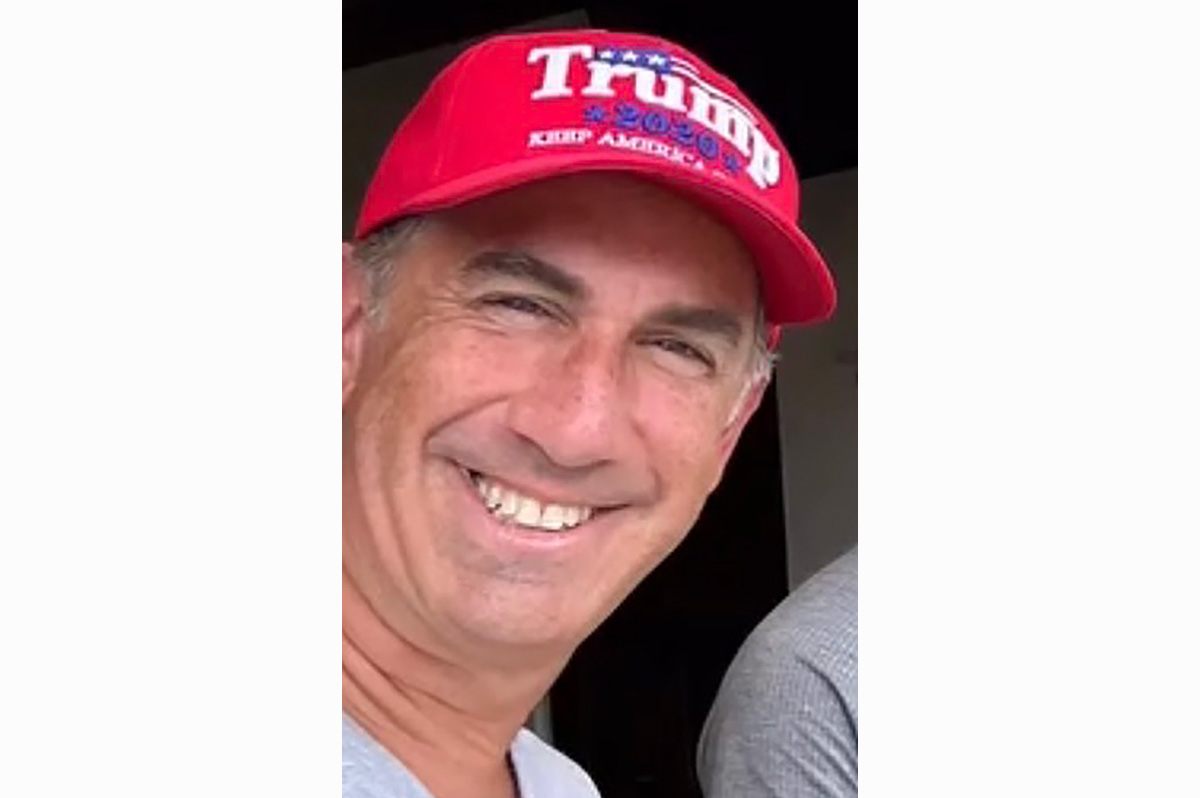
(UPDATE: Since this story was posted, EqualPride announced that Jay Katari has resigned from the board as of Tuesday afternoon. “I have decided to step down from the Board of Directors of equalpride,” Katari said in a statement shared by EqualPride CEO Mark Berryhill. “My intention was simply to volunteer my time and experience to support the incredible team and the important work they do for the LGBTQ+ community.”)
EqualPride, a prominent LGBTQ+ media company that owns the Advocate and Out magazines, has added a Trump supporter to its board of directors.
Jay Katari, an entrepreneur and investor who now serves as EqualPride’s “Strategic Advisor, Growth & Innovation,” also sits on its official leadership team.
EqualPride’s website describes his role as “focused on helping the company expand its reach, strengthen its commercial partnerships, and develop new sources of recurring revenue.”
This change in leadership has caused an outcry of concern from LGBTQ+ media consumers, people working at the outlets published under EqualPride, and LGBTQ+ advocates who seem unsure of how a Trump supporter will fare on the board of one of the most important LGBTQ+ media organizations in the country.
The story was first reported by Kevin Ortega-Rojas, a freelance writer and podcaster who specializes in covering social issues. His resume includes a number of connections to the world of LGBTQ+ media — particularly under EqualPride — including being a former rapid response reporter for GLAAD and host of “The Advocate Weekly,” a queer news podcast produced by The Advocate magazine.
Earlier this year, EqualPride laid off staff across its existing publications, including senior editors and writers. That move, followed by the addition of a Trump supporter to its board, has created concern among LGBTQ+ consumers.
According to his Instagram, Katari is married to a woman and still has posts showing him wearing Trump MAGA-branded merchandise. He also follows members of the Trump family, including President Donald Trump, his sons Donald Trump Jr. and Eric Trump, Lara Trump, and his daughter Ivanka Trump. He also follows an account with the username donaldtrump.hq titled “Donald Trump Fans.”
This apparent endorsement of Trump and MAGA politics, which includes restricting the rights of transgender people as well as rolling back protections for LGBTQ+ people more broadly, seems to be in direct conflict with EqualPride’s mission statement.
“Our mission is to provide content of inspiration, hope, community, equality and love through our platforms that reach a vast majority of the American LGBTQ+ audience every month and increasingly women and people of color,” a statement on EqualPride’s website from 2023 said. “We are a diverse community of storytellers, innovators, and influencers who believe in giving a voice to all people!”
The Los Angeles Blade reached out to Christopher Wiggins, the politics and news editor at EqualPride, but was directed to the already publicly available joint statement made by editors of the largest publications represented by EqualPride.
In the Instagram post, the editorial teams of The Advocate, Out, Them, PRIDE.com, Out Traveler and Plus all co-signed the statement, assuring readers that Katari being on the board has not — so far — impacted any of their reporting and implying EqualPride needs to expand on what Katari’s role will be for the organization.
“Our editors became aware of concerning reports this morning that Jay Katari — one of the board members of our parent company, equalpride — may have espoused beliefs that are antithetical to the mission of our brands, per a new article from journalist Kevin Ortega-Rojas.
“The editorial teams only recently learned of Katari’s expanding role and had no information about his background or past political statements prior to this week.
“Please know that Katari’s position has not influenced our reporting.
“In an initial meeting today, we urged management to provide further clarification about Katarı and hıs role at equalpride, and are awaiting information.
As queer and trans journalists, we are committed to independent reporting that serves the LGBTQ+ community — and to getting answers on this critical matter.”
Nearly 200 comments were made online under a joint post made by multiple EqualPride publication accounts, including Them, The Advocate, and Out.
Gisselle Palomera, a Future of Queer Media fellow for The Advocate and former local news reporter at the Blade, commented under the post, questioning how much leadership actually knew about Katari.
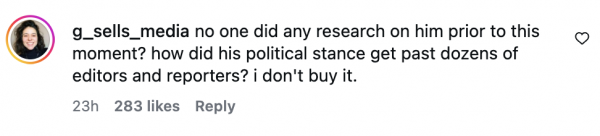
“No one did any research on him prior to this moment? How did his political stance get past dozens of editors and reporters? I don’t buy it,” they said in the now most liked Instagram comment under the announcement, with 283 likes.
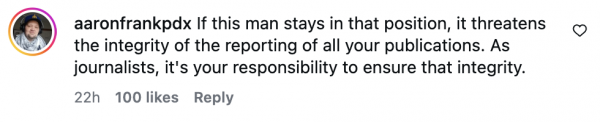
Another Instagram user, Aaron Frank Duncanson, who goes by the username aaronfrankpdx, pointed out how the situation looks and expressed fears for the future if Katari stays on the board.
“If this man stays in that position, it threatens the integrity of the reporting of all your publications,” Duncanson wrote. “As journalists, it’s your responsibility to ensure that integrity.”
The Blade reached out to Katari, and to Tony Morrison of Morrison Media Group— who is working with EqualPride, according to Wiggins— but did not hear back in time for publication.
EqualPride CEO Mark Berryhill issued a statement after Katari resigned.
“I want to clarify Jay Katari’s involvement with equalpride, which was limited to business growth, revenues and the company’s long-term sustainability,” said Berryhill. “Under our investment agreements, our lead investor group held the right to appoint two board members without separate votes or approval by the CEO or management. Jay joined the board through that process. Going forward, the investor group has provided me with the right to appoint future board members.”
Berryhill then noted Katari’s decision to resign and referred to his statement.
“Our focus now is on strengthening our brands, and continuing to support the stories of our LGBTQ community,” added Berryhill.
California
Grand marshals announced for 2026 Greater Palm Springs Pride
Palm Springs has announced the grand marshals for this year’s event and the theme: “Be Included.”

Palm Springs is celebrating its 40th anniversary of Pride and has announced the grand marshals for this year’s event. The annual Palm Springs Pride Parade will take place on Sunday, November 8, 2026, with the theme “Be Included.”
The grand marshals for this year were selected for their contributions to uplifting LGBTQ community and efforts to expand equality.
Comedian, writer, and actor Fortune Feimster was named the National Grand Marshal for the parade. Feimster is widely known for her stand-up specials and will be performing her special, Fortune Feimster: Takin’ Care of Biscuits (Encore), at the Plaza Theater on November 8th at 8:00 pm. Her extensive acting career includes starring roles in Netflix’s hit series The Hawk alongside Will Ferrell and Molly Shannon, FUBAR with Arnold Schwarzenegger, The Mindy Project, and feature films like Barb and Star Go to Vista Del Mar and Apple’s The Dink. She is also a co-host of the award-winning podcast Handsome and co-host of SiriusXM’s What A Joke Radio.
Actor and singer Cheyenne Jackson will serve as the Celebrity Grand Marshal. Jackson is known for his acclaimed work across stage, screen, and concert hall, being recognized for his work in Broadway productions, earning an Emmy nomination for Julie and the Phantoms and a Grammy nomination for the cast recording of West Side Story. He was seen on Broadway in productions such as XANADU, Into the Woods, All Shook Up, and Finian’s Rainbow. On screen, he’s had prominent roles in American Horror Story, 30 Rock, Glee, The Morning Show, and Julie and the Phantoms. Jackson will perform live in Palm Springs on Sunday, November 8, at 6:00 PM at the McCallum Theatre.
Dottie DuBois, also known as Marshal Percy, was named Pride Royalty for Life to honor the legacy of Les Dames Du Soleil, a drag troupe from the Coachella Valley that raised over two million dollars for DAP Health.
Gary Moline will receive the Community Service Award in celebration of his twenty-plus years of work with the Pride Bands Alliance and extensive civic engagement. Moline served as Artistic Director, board member, and national delegate to the Pride Bands Alliance. His extensive community work includes serving on the Greater Palm Springs Pride Board, the Desert Business Association, and as a California State Council Member of the Rail Passengers Association.
The pride parade will begin at 10:00 am on November 8, starting at Palm Canyon Drive at Tachevah and marching to the official entrance of the Pride Festival. The parade is free and open to the public.
For more information regarding the 40th Anniversary Celebration of Pride in Palm Springs, parade route updates, and festival schedules, please visit pspride.org.
Caleb Kaufman is a California Local News Fellow placed with the Los Angeles Blade. The California Local News Fellowship is a state-funded initiative to support and strengthen local news reporting. Learn more about it at fellowships.journalism.berkeley.edu/cafellows.
India
Indonesia’s top Muslim clerical body proposes criminalizing LGBTQ+ people, advocacy
Proposal underscores increased pressure against community

Indonesia’s top Muslim clerical body has proposed replacing the term “LGBT” with “LGSP,” grouping lesbian and gay people with sodomy and sexual abuse, as it prepares a proposed law that would criminalize conduct and advocacy it consideres prohibited.
Asrorun Niam Sholeh, head of the Indonesian Ulema Council’s Fatwa Commission, announced the proposal in Jakarta in late July, saying the council was preparing an academic paper and draft bill to submit to the government and MPs
The council in August also warned men against wearing women’s clothing during Independence Day festivities, despite a long-standing tradition in some Indonesian communities of men dressing in dresses and hijabs to play football as part of the annual celebrations. In a statement issued Aug. 7, the Fatwa Commission said such cross-dressing was “haram,” or forbidden under Islamic law, and linked the practice to what it described as a covert campaign by the “Lesbian, Gay, Sodomy and Obscenity (or LGSP) movement.
Indonesia on Aug. 17 marks its 1945 declaration of independence from the Netherlands with flag ceremonies, neighborhood gatherings, and a lively tradition of community competitions known as “lomba tujuhbelasan.” Children and adults take part in games ranging from sack races and cracker-eating contests to tug-of-war and “panjat pinang” — teams climb a greased pole to reach prizes at the top. Some communities also hold football matches in sarongs or “daster,” a loose-fitting house dress traditionally associated with women, turning the celebrations into an occasion for communal play and laughter.
The pressure extends beyond religious authorities.
In a report published in July, Human Rights Watch said attacks against LGBTQ+ university students had escalated during June’s Pride Month, while at least 10 public universities had recently adopted discriminatory regulations and curbed student media coverage and social media discussions about gender and sexual diversity. The rights group said the measures undermine freedom of expression and academic freedom.
Reacting to Pride Month celebrations, the Ulema Council called for “sexual deviation” to carry criminal penalties heavier than those for adultery and said it was preparing a draft law to criminalize LGBTQ+ conduct and campaigning.
President Prabowo Subianto in October 2025 signed Presidential Regulation No. 111 of 2025, which sets Indonesia’s General National Defense Policy for 2025–2029 and classifies the spread of LGBTQ+ culture as a non-military threat to the state. The provision places it among other perceived threats that include terrorism, radicalism, separatism, and the spread of prohibited ideologies.
The regulation drew public attention in July after Indonesian media reported on the provision, prompting Amnesty International Indonesia Executive Director Usman Hamid to warn that it could institutionalize discrimination against LGBTQ+ people.
“Amnesty International Indonesia unequivocally condemns these attacks and intimidation by both state and non-state actors based on perceived sexual orientation or gender identity,” said Amnesty International Indonesia. “We urgently call upon the Indonesian government to repeal this regulation and uphold its constitutional mandates and the international human rights treaties it has ratified.”
Indonesia on Jan. 2 began enforcing a new national criminal code, replacing the Dutch-era penal code that had governed the country for more than eight decades.
MPs had approved the 345-page code in December 2022 after years of debate and public protests over provisions concerning morality, religion, and individual rights. Among its new provisions is Article 411, which makes sexual intercourse outside marriage a criminal offense punishable by up to one year in prison.
Article 412 makes living together as husband and wife outside a legally recognized marriage punishable by up to six months in prison. The offenses can be prosecuted only after a complaint by a spouse, parent or child, but rights groups have warned that the provisions can disproportionately affect same-sex couples, whose relationships are not legally recognized in Indonesia.
Purba Widnyana, chairman of GAYa Nusantara, an Indonesian LGBTQ+ rights organization, told the Los Angeles Blade that the situation for LGBTQ+ people in Indonesia has become increasingly worrying.
Widnyana told the Blade that the concern extends beyond increasing violence, pointing to stronger anti-LGBTQ+ sentiment in public spaces, on social media and within educational institutions, as well as in politics, including Presidential Regulation No. 111 of 2025.
“The impact is not always in the form of physical violence. Many LGBT+ people, especially trans women, that mostly work in entertainment or other informal jobs, beginning to lose job opportunities because they are considered to pose a ‘risk’ to the event organizers,” Widnyana said. “There are also concerns that the rising stigma and fear could deter people from accessing health services, including HIV test and STI, due to the fear that their identity or sexual orientation might be revealed.”
Widnyana said the changing environment has placed an additional burden on LGBTQ+ organizations; making spaces for gatherings, educational activities, and public information campaigns increasingly sensitive.
“We are constantly in alert mode,” he said, adding that since the previous wave of anti-LGBTQ+ sentiment in 2016, organizations have developed security and risk-mitigation plans before holding events. Previously, he said, the primary concerns were physical attacks, raids and threats that could force venues to cancel events. Now, organizations also have to account for online attacks, including WhatsApp hijacking and social media account hacking, as well as the possibility of an event or organization being targeted after going viral.
“It’s been limiting our movements,” he said.
Asked about the proposed LGSP framework and its decision to replace the term LGBTQ+ with a classification combining sexual orientation with sexual conduct, Widnyana said the council was conflating fundamentally different concepts.
“I really don’t know where to begin. They are definitely confused by mixing identities, in this case sexual orientation, with sexual behavior and actions that are understood as violations or offenses, that are sodomy and sexual indecencies,” he said.
Widnyana said the change should not be viewed as merely a change in terminology.
“The change shifts how Indonesians understand or perceive LGBT+ issues, moving from identities, rights and existence to behavior, morality, and criminality,” he told the Blade. “We also see it in the context of narrative that has been for so long evolving that frames LGBT+ as the ‘product of the West’ or ‘Western propaganda’,” he said. “In this framework, LGSP can be interpreted as their effort in rejecting how LGBT+ people define themselves and changing it with a category that is defined by those who oppose the existence of LGBT+ people.”
Widnyana also pointed to Indonesia’s long history of diverse gender identities and expressions, citing traditions such as the “bissu,” “calalai,” “calabai,” and “waria,” as well as artistic traditions in which men perform female characters. He cautioned against imposing modern LGBTQ+ categories on those traditions, but said gender and sexual diversity are not foreign to Indonesian history.
Widnyana said his main concern was the lack of clarity around terms such as “campaigning,” “promoting,” and “spreading LGBT+ culture,” which he said could be interpreted broadly enough to affect legitimate work in education, health care, human rights, and community services. He cited HIV and sexual health information, legal assistance for victims of violence, discrimination research, training on sexual orientation, gender identity and expression, and sex characteristics, and academic discussion as examples. Widnyana also questioned whether a gay man publicly saying he is gay and demanding to live safely, or a transgender woman speaking about discrimination she has experienced, could be deemed “campaigning” or “spreading LGBT+ culture.” Such legislation, he warned, could turn existing social stigma into a tool for systematically limiting the lives, expression, services and LGBTQ+ organizations.
“For me, the situation is becoming more difficult. And I think we need to look beyond just what the law says. Because sometimes, when we talk about Indonesia, people say, ‘Well, being LGBTQ+ is not generally criminalized under the national criminal law,’” said Arisdo, outreach representative of Pelangi Nusantara, an LGBTQ+ community group in Indonesia advocating for love, equality, and the right to live with dignity. “technically, that’s an important distinction. But that’s not really what people on the ground are experiencing. What we’re seeing is more pressure. More harassment. More public shaming. More people being targeted simply because they are perceived to be LGBTQ+.”
Arisdo told the Blade that transgender women are facing escalating violence, citing Pelangi Nusantara’s documentation of 10 attacks in Bogor between March and July 2026 involving 45 victim-survivors. He said the emergence of “Boti Hunter” groups was particularly alarming, reflecting a shift from anti-LGBTQ+ rhetoric toward actively targeting people. He added that fear of being outed or attacked prevents many victims from reporting violence, while doxxing and online harassment are increasingly forcing LGBTQ+ organizations to limit their visibility.

‘Dolly Day’ officially made holiday in California: Rainbow District plans to celebrate

Trump to the people: F**k the free press

United States Conference on HIV/AIDS grapples with federal budget cuts

For lesbian victims of domestic violence, competent care is scare

UN human rights chief sounds alarm over ‘comprehensive onslaught’ against LGBTQ+ rights

Here’s your Palm Springs look at the weekend: Sep 18-20, 2026

Ross Alan gives permission for queer joy with new album, ‘Audible Serotonin’

Are you ready to ‘Rock Out’ with Dustin Lance Black?

Long-time DignityUSA executive director announces retirement
United States Conference on HIV/AIDS grapples with federal budget cuts
-
 Palm Springs5 days ago
Here’s your Palm Springs look at the weekend: Sep 18-20, 2026
-
 Music & Concerts5 days ago
Ross Alan gives permission for queer joy with new album, ‘Audible Serotonin’
-
 a&e features4 days ago
Are you ready to ‘Rock Out’ with Dustin Lance Black?
-
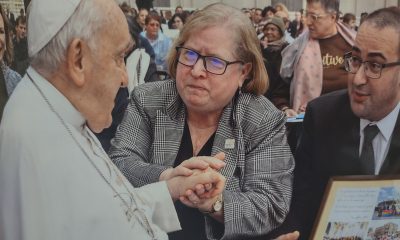 National2 days ago
Long-time DignityUSA executive director announces retirement
-
 AIDS and HIV16 hours ago
United States Conference on HIV/AIDS grapples with federal budget cuts
-
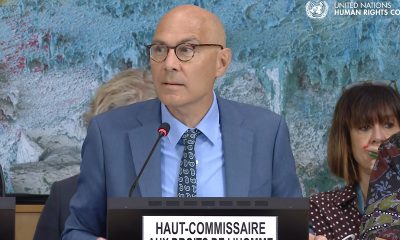 United Nations20 hours ago
UN human rights chief sounds alarm over ‘comprehensive onslaught’ against LGBTQ+ rights
-
 Events5 days ago
When pageantry meets purpose: Patrick Rush brings us Best in Drag Show
-
 EMMYS4 days ago
LA Blade was on the scene celebrating television’s biggest stars and luxury brands
-
 Politics3 days ago
From the desk of Equality California: the latest political news for CA and beyond as we head into the midterms
-

 Commentary4 days ago
Gratitude is sexy: When the gays are paying your straight bills, consider paying them some respect