
Los Angeles
Rep. Katie Porter and trans actor Angelica Ross talk COVID-19 money in Equality California fundraiser
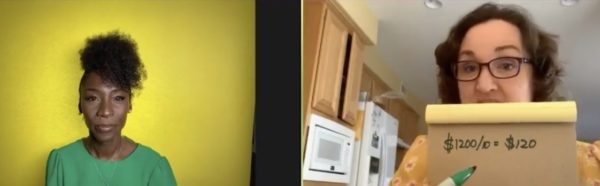
Equality California has almost an impossible task: rallying LGBTQ voters to help pro-equality Democrats retain the House, win back the Senate and oust the most incompetent, damaging president in U.S. history – while still keeping the organization afloat amidst a global pandemic and financial meltdown.
Several progressive politicos and celebrities understand the grave difficulty existing in the new COVID world and showed up for EQCA’s online “Evening for Equality,” hosted by WeHo fan favorite Queer Eye Culture guy Jai Rodriguez. Despite the awkward rigors of physical distancing, Sen. Tammy Baldwin, Reps. Adam Schiff, Katie Porter and Ted Lieu, and activists Chasten Buttigieg, Angelica Ross, Stephanie Miller, Pauley Perette, Margaret Cho, Daniel Franzese, Ariana Madix, Tom Sandoval and Billie Lee showed up in solidarity and Jason Mraz and CeCe Peniston lent support through song.
The show, which was produced with the kind of homey familiarity now common during the novel coronavirus physical distancing crisis, Equality California raised nearly $25,000 in donations ranging from $5 to $5,000, with more donations still coming. That’s in addition to the nearly $150,000 raised in the last two weeks.
As a contribution to the community, EQCA is offering to share what they learned about putting on a virtual fundraiser with smaller non-profits facing the same need to raise money in a new way.
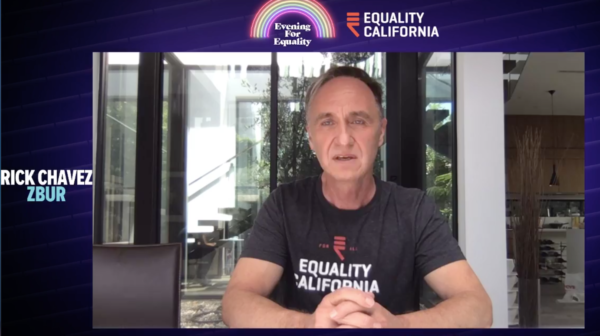
Equality California Executive Director Rick Chavez Zbur during EQCA event
“This is new territory for us — as it is for everyone — and I’m so grateful to the community for joining us and to so many of those who tuned in for stepping up and supporting our work,” Equality California Executive Director Rick Chavez Zbur told the Los Angeles Blade. “Like all nonprofits, we’re struggling right now, but we’re working to adapt to this new environment. Our goal was to provide some uplifting entertainment and engaging discussions, as well as an opportunity to come together virtually as a community. It was a success. We don’t necessarily have all the answers about virtual fundraising events, but we are committed to supporting other nonprofits that serve the LGBTQ+ community too, so we look forward to sharing some of the lessons we learned with our colleagues at partner organizations.”
Rodriguez opened as if he was engaged in a one-on-one with hundreds of fans and friends on his We Are Channel Q radio show. He laughed off a screwed up introduction that set the easy earnest tone for “live” from everyone’s comfortable Zoom-room.
Rodriguez set the tone but the leaders of Equality California and the Equality California Institute Board of Directors set the messaging.
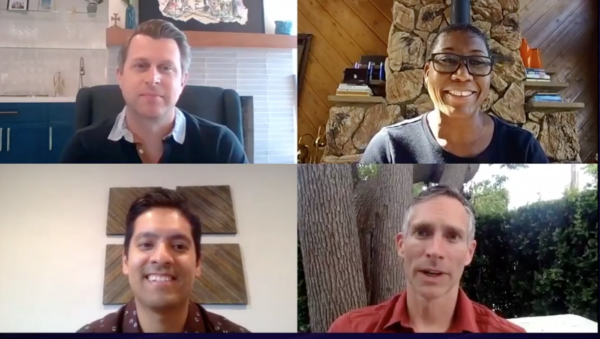
Joe Gregorich, Jackie Thomas, Scott Malzahn, Juan Camacho, Leadership for Equality California and the Equality California Institute Board of Directors.
“Our LGBTQ+ Community has been hit hard financially from this crisis and Equality California is a nonprofit organization that services our community is no exception,” said Scott Malzahn. “But tonight we’re choosing hope over fear.”
Trans actor and influencer Angelica Ross took over, not just introducing Rep. Katie Porter but joking about how Porter has become a viral super star through her sharp questions during congressional hearings.
Their instant connection and respect was moving, informative and illustrative of how to have a smart, engaging conversation that is also funny and entertaining.
“I loved your hilarious takedown on [Housing and Urban Development Sec.] Ben Carson not knowing the difference between an REO [‘real estate owned’ property] and an Oreo [cookie]. So, we have a question from one of our audience members, Michael from Laguna Beach, wants to know: were you born fierce or did something or someone make you that way?”
Speaking comfortably from her kitchen, Porter said she didn’t necessarily think of herself as fierce until the opportunity presented itself. However, family photos show that she was a “fairly strong-willed child.”
Porter’s also experienced the adversity “that made me realize that there are real harms going on in this society and that we have to look straight on at them, call them out and be willing to commit to fixing them. And so, I grew up during the farm crisis, I watched people lose their farms and their homes and I listened to Californians during the foreclosure crisis, losing their houses. And I was there to help lift up their voices and help them be successful and make ends meet and hang on to their house.”
Porter determined to run for elective office to “fix America,” she said. “So, I think I’m fierce because I care fiercely about this, about what we’re doing, and I want to actually get things done.”
Ross noted that unfortunately, other people “seem to be in it for other reasons that aren’t for the greater interest” of the people. She shifted not so subtly to Porter’s vanquished 2018 far right Republican opponent, Mimi Walters. The GOP wants that seat back in 2020.
“So, this district is still a Republican majority district, although we’ve made a lot of great progress with the help of Equality California and other groups in reaching out to folks and engaging voters,” said Porter. “But it’s still 2% more Republicans than Democrats. And virtually, all of my local elected and county elected officials are Republicans. So, I do have to really think about how can I connect with and communicate across party lines?”
Porter explained that she uses her previous position as a law professor at University of California, Irvine specializing in the Uniform Commercial Code to respectfully listen to questions, learn about constituents lives and challenges and then “trying to teach other people why we need to make this change in policy,” she said. “I think I love that element. I love that back and forth,” giving a shout out “to all the students who didn’t do their homework for preparing me to know how to take down witnesses who were ‘yahoos.’”
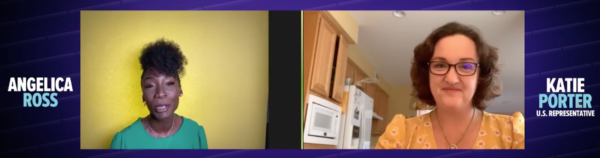
Ross, who exclaimed that she loves the Uniform Commercial Code, pointed out how the COVID-19 crisis has dramatically impacted the LGBTQ community.
“More than one out of five trans adults have at least one or more chronic conditions like HIV, diabetes, arthritis or asthma. I have asthma,” Ross said. “Fear of discrimination keeps many of us from going to the doctor and many of us work in the gig economy or other industries impacted by this economic fallout.”
Porter said she’s trying to address the disparities, having just sent a letter to the FDA “asking them to expedite the approval process that’s needed to implement the new rule that they pass the blood donations for men who have sex with men,” noting that the pandemic is causing a national blood shortage and science doesn’t support the FDA policy.
Porter also noted that May is the 12-month anniversary for the House passage of the Equality Act, which Senate Majority Leader Mitch McConnell refuses to bring up for a vote.
“It’s not enough to just pass these laws and give people symbolic victories. Equality is an abstract ideal, but it’s also something that manifests in people’s real lives,” Porter said. “And so they need these actual protections from unemployment, in public housing and education. And with this widespread labor market disruption with the pandemic and people losing housing, it is going to be more important than ever to have these protections in place as people have to seek new jobs and find different housing and the economic dislocation of this whole situation.”
Porter confessed that she got choked up and “a little teary” during the hearing on “the administration’s assault on religious liberty and LGBTQ rights” as a number of people talked about barriers to LGBTQ people adopting children or fostering children.
“One of my Republican colleagues — shortly before it was my turn to question — went on a little bit of a rant and rave about nontraditional families, that two-parent households are a family and these other things are not families,” Porter said. “And I don’t have any of their real life experiences that LGBTQ, trans people — I don’t walk in your shoes every day — but he literally erased my existence as a single parent. And what was he suggesting? That my children and I are not a family? I assure you. We are a family. We live together, we love each other. That is a family.
“And so it was important for me to push back at that moment because I’m so frustrated and exhausted with other people trying to impose their definition of family, their definition of love, their definition of wellbeing onto other people,” Porter said. “So, I was grateful for the opportunity to push back on that.”
Porter then turned the tables and asked Ross a question.
“A lot of people know you from your role as Candy on “Pose” or Donna Chambers on “American Horror Story,” but you’re also a very active advocate for trans equality,” Porter said. “And you are — I have this right, I’m so awed by this — you are a self-taught coder,” which resulted in Porter gushing over Ross as the real “bad ass” between them, asking about her firm helping trans people, TransTech Social Enterpries.
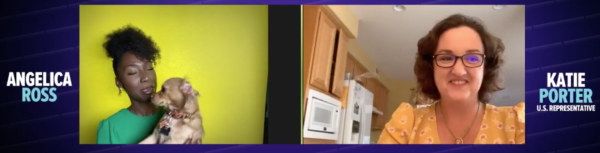
Ross first introduced her dog Hammer, a long-haired Chihuahua, confirming that she’s a self-taught coder with the goal of leveling the playing field around access and skills.
“I started with those simple codes of HTML and CSS and I took those skills and then started doing content management systems like WordPress and Drupal and Joomla,” Ross said. “And I started charging clients to build these small websites, content management sites. But the coding was a little bit beyond — there was more to learn. And so, what I did was build a business around building websites and hiring other people to do the more advanced coding.”
Ross went deeper:
“I wanted to make it clear that when I say tech, yes I mean coding, but I also mean being able to be a beauty influencer and run a YouTube channel, being able to be a photographer or do photo retouching. I have a lot of fans and a lot of people from the community who love the show ‘Pose’ and who keep thinking, ‘Well, how can I get started as an actor and how can I get involved?’ And one of the things that I always teach folks is how to make yourself a valuable asset to the industry because you love it.
So, not just wanting to be in front of the camera, but how can you make yourself valuable to the project? Can you run lights? Can you be a grip or a PA, a hairstylist or a makeup artist? So, what we do is we have an online and offline community. We meet in back channels and we help each other prepare for interviews. We share job leads, we help each other find freelance jobs. And then once a year, we have what we call the ‘Transect Summit,’ which happened two years in a row at the Groupon Headquarters in Chicago.
But since Covid-19, we’re taking it all online and we’re expanding it to be global. So we’ll have over 50 workshops worldwide over two days. And it’s going to be all free to … Our sponsors are going to help us make it free, but it’s going to be free for everyone to attend.”
“This Covid-19, if it hasn’t shown us anything else, it showed us all the things that people said were impossible are all of a sudden possible,” said Porter. “Look at that, us being innovative on how to connect.”
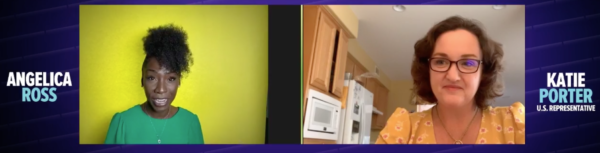
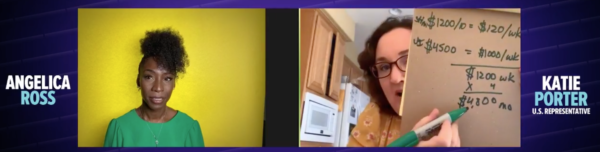
Ross asked Porter to use her famous whiteboard to explain the “absurd” confusion with the $1,200 stimulus check, as explained by Treasury Secretary Steve Mnuchin.
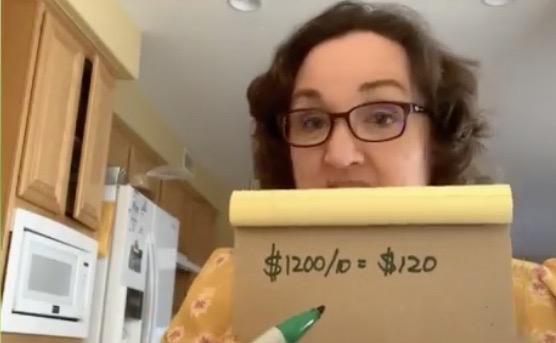
The whiteboard was unavailable so Porter went old school.
“Okay. So $1,200 divided by the 10 weeks that he’s estimating — and by the way, we’re going to be continuing to suffer for a lot more than 10 weeks, one, because we don’t have the virus under control but two, we don’t know when we’re supposed to get back —
So that works out to $120 additional dollars per week, if you assume this lasts 10 weeks. Then, when you step up California, even with the expansion of an additional $600 a week — which is a lot of extra on top of what California did, somebody in California — the maximum unemployment that you could get is $4,500 a month.
So again, if you go back to doing that a week, that’s the 10 weeks, this is over a month, you’re going to get two and a half, you’re going to come out to about a thousand dollars a week.
All right, so we’re being asked to live on about $1,200 a week — this works out to about $4,800 a month.”
Porter then explains why $4,800 a month is difficult to live on it California:
“The typical rent is going to easily subsume well more than 50% of that money. And rent is not something that people can do without, it’s not an easy expense to change. And so people are going to be spending half that money right off the top in rent.
And then that leaves them with $2,400 a month. And then you start figuring in things like food. And so when I walked [JP Morgan CEO] Jamie Dimon through all of this [in April 2019], I walked him through a budget for one adult and one child. And so the minimum food budget for that, if you ate Ramen Noodles, would take you down to over $400 a month. And then you start thinking about things like childcare. If you have one child and you’d be down even further. So, the bottom line is this is not going to be enough money.”
And the money mangers haven’t really done the math so they don’t understand “the challenges that working families face.”
The entire event was entertaining and informative, including “radio nerd” Stephanie Miller’s interview with House Intelligence Chair Adam Schiff, “congressional rock star who is clearly desperately in need of a drive-by hairdressing from some of the fabulous gay men in the audience tonight. Chairman, I know your daughter gave you your haircut and it does, it looks fine and your neck looks less like a pencil than ever. And I just say, I don’t care what the president says.”
Miller then asks if it’s OK to open with a gay joke for the gay event, to which Schiff responds, “I would welcome that.”
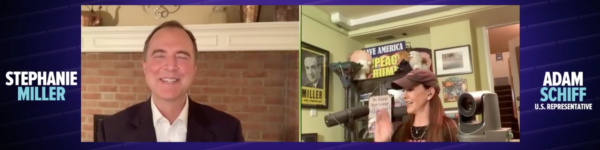
“My quarantine crushes, chairman, are currently the prime minister of New Zealand, the prime minister of Finland, and the prime minister of Iceland. It’s the first time in my life I’ve ever liked women with really flat curves. Said it because they flattened the curve. You see, because they believe in facts and science, and that’s hot. Is this on? Chairman, isn’t that true that we are doing the worst, probably, of any country in the world in flattening this curve?” Miller asked.
“Well, we have the most infections of anywhere in the world and we have, by far, the most deaths of anywhere in the world. And yet somehow the president and Jared Kushner think we’re doing just great and they’re very proud of our death total, as the president said today. I don’t even know what that means, except for those that have lost loved ones, it’s just additional salt in very open and painful wounds,” Schiff said. “But Stephanie, you’re right, the women leaders are doing really well, not a surprise. And we have to follow their example.”
Miller talked to Schiff about how his “brilliant speeches during the impeachment have come true,” how Trump has “brought us literally a Vietnam and a Great Depression in the space of six weeks, he has brought this country to its knees” and how the LGBTQ community, in particular, is hurting disproportionately without the Equality Act. “Everything under Trump is worse; racism, sexism, homophobia, all marginalized groups are having a harder time,” said Miller.
“It’s so true. And even now, during the midst of this pandemic, what is the administration doing? It is trying to roll back protections in the healthcare system to prevent discrimination against LGBTQ individuals,” said Schiff. “Right now, they are promulgating new regulations to repeal Obama era protections. It’s just awful. As it is, about one out of every 12 LGBTQ Americans gets turned away from healthcare because of their orientation or because of their gender identity. And so, the last thing we ought to be doing is going backward.
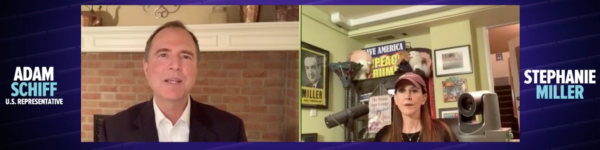
“But one thing I think this pandemic is revealing,” Schiff continued, “is when we get through it, we need to build back better. We need to build a more just more equitable, less discriminatory society than the one we have going into this pandemic.
“But while it goes on, we particularly need to make sure that we meet the healthcare needs of the most vulnerable. Communities of color are being devastated right now. 80% of the casualties in Georgia are African Americans,” Schiff said, “and when you take those in the African American community who were also LGBTQ, the potential for discrimination and the most severe of health consequences is even that more profound.”
They two reminded viewers about the importance of voting by mail and getting tested for COVID-19. “You know that your patriotism makes me go from gay to questioning every time I interview you, Chairman,” Miller said in closing.
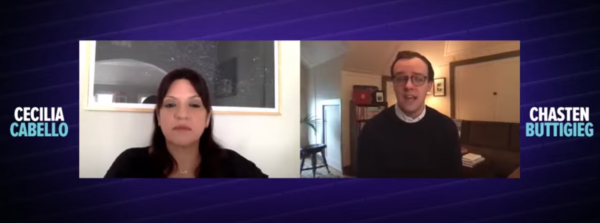
Cecilia Cabello, California Chair for former South Bend, Indiana Mayor Pete Buttigieg’s presidential campaign, interviewed the former mayor’s husband, Chasten. He joked how he was home with the dogs and how he was happy the house was split level so he could “get away” from Mayor Pete if he needs to.
But the thrust of Chasten Buttigieg’s interview was about how the coronavirus quarantine is impacting schools, which have been “a safe space for LGBTQ students, something they looked forward to.” Chasten said he is “a little worried” about how schools are adapting and how to give them a safe, warm and welcoming environment both digitally and virtually.
“Right now students are facing a community that is going through a lot of change and sometimes that means that schools aren’t willing to catch up to the change that we’re making as a society, especially with a public schools rolling back a lot of those Obama-era protections,” Chasten Buttigieg said. “Kids have to deal with a lot,” including hostile teachers and unsafe environments in school and home.
“40% of homeless youth in our country identify as LGBTQIA. So, there are a lot of issues facing young queer people in our country, said Chasten Buttigieg. “It’s important in all those spaces we make sure that they are safe and affirming.” Unfortunately, he added, “we have a lot of work to do there.”
Watch the one hour-forty minute Equality California event online.


Los Angeles
Los Angeles Metro officially opens D Line extension through Mid-City; Mayor Karen Bass claims it’s ‘built for the future’
U.S. Rep. Laura Friedman called out the nation’s capital for their “attack” on California and public transportation
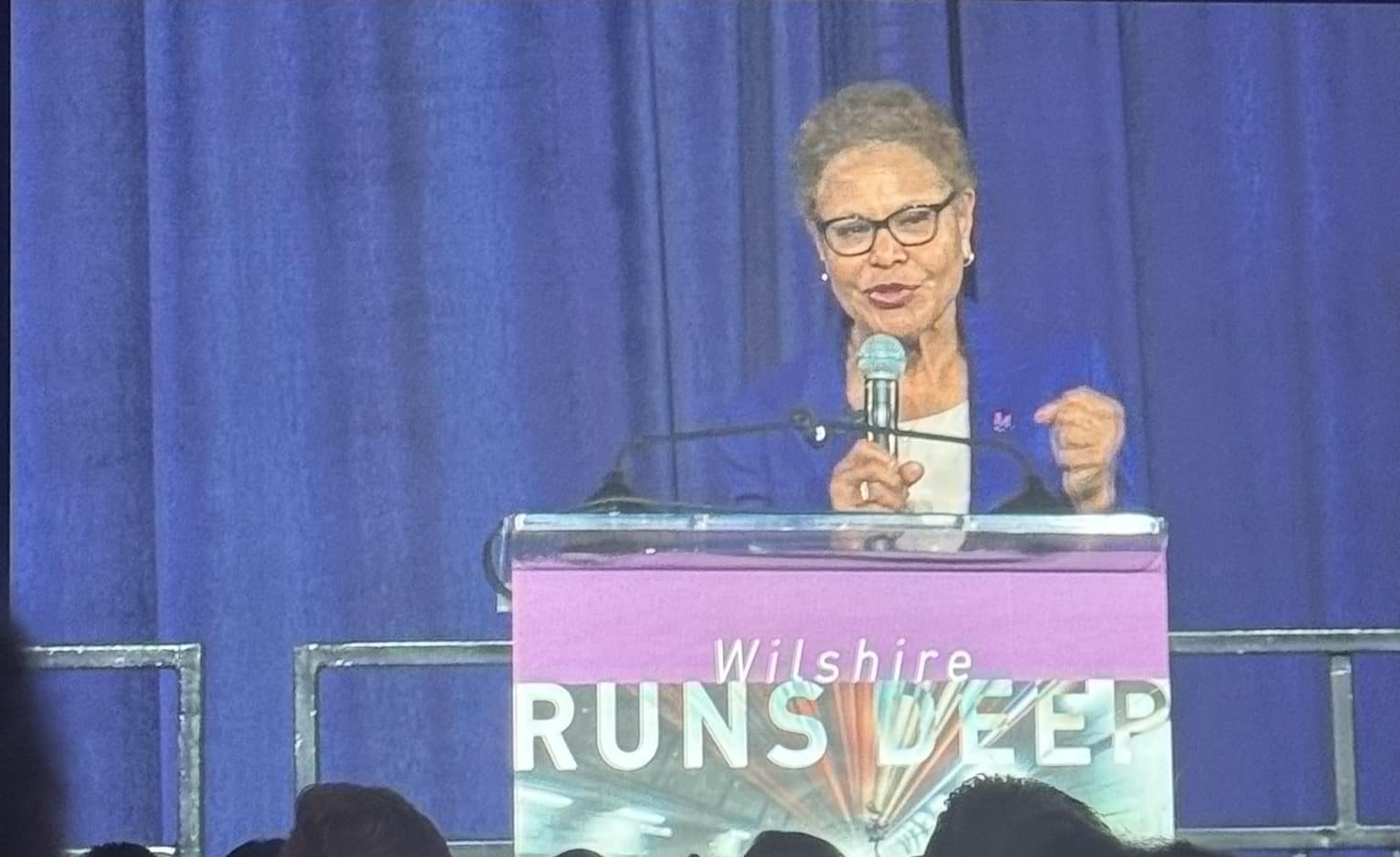
Getting around our car-infested city just got a little bit easier.
On Friday, May 8, hundreds of Metro board members and Los Angeles County officials gathered at the Petersen Automotive Museum to celebrate the D Line’s new service to three stations. It’s the latest effort – albeit a long overdue one – to expand L.A. public transportation through the heart of the city. LA Blade was on the scene.
With stations connecting Western Avenue to La Cienega Boulevard, the new line now makes travel from Beverly Hills to Downtown Los Angeles possible in 21 minutes, according to Metro officials. To celebrate the project’s commitment to connecting people to culture, the ribbon-cutting ceremony was followed by a celebratory outdoor event with local food vendors.
CEO Stephanie Wiggins addressed why the L.A. Metro “might just be having a moment” right now: “When gas prices are off the charts, traffic feels endless and parking costs are more than your lunch – $1.75 a ride that gets you pretty much anywhere in the region starts to look pretty smart.”
Getting to West Hollywood by transit – a vital spot for the city’s queer culture and nightlife – is another goal for the county. But there’s still a ways to go: construction on an official station isn’t expected to start until 2041.
While the D Line expansion was made possible by a grant from the federal government, L.A. Mayor Karen Bass said at the press conference that “we don’t wait for the federal government. We know we can’t depend on others. Obviously, we need the federal government and the state government, but Angelenos say we are going to tax ourselves to do what is needed.”
This expansion comes as L.A. invests billions of dollars in public transportation ahead of the 2026 FIFA World Cup, 2027 Super Bowl, and 2028 Olympics – all events placing an extra spotlight on one of the busiest cities in the country. Just last June, a metro stop opened at LAX, connecting residents and visitors to L.A’s main airport.
As L.A. tries to catch up with the public transportation infrastructure of major hubs like New York City, one speaker also took the opportunity to address tensions with the nation’s capital:
“I will tell you, being in D.C., there is such an attack against California coming from Washington right now, and against transit across the nation,” U.S. Rep. Laura Friedman said. “And we are here to show Washington that while you know who is tweeting at 3 a.m., we have Angelenos underground building things for this country. We are showing that transit is essential, and we are not going to let Washington defund our children’s future.”
Ongoing construction for the L.A. Metro continues as the city hopes to make big on its “28 Projects by 2028” promise. But for now, residents can enjoy free rides all weekend long, along with 60 days of activations and events at the three new stations.
“I am looking forward to being at the ribbon cutting in a few more years as we move forward and take this line all the way to Westwood,” Bass said. “We celebrate something that Angelenos deserve – a city that’s easier to move through, easier to connect in, and that’s built for the future.”
Los Angeles
LA LGBT Center’s first legacy cycling event raises over $800K
From April 24-26, 300 cyclists rode from Los Angeles to San Diego, raising funds and awareness for the Center’s LGBTQ+ serving programs.
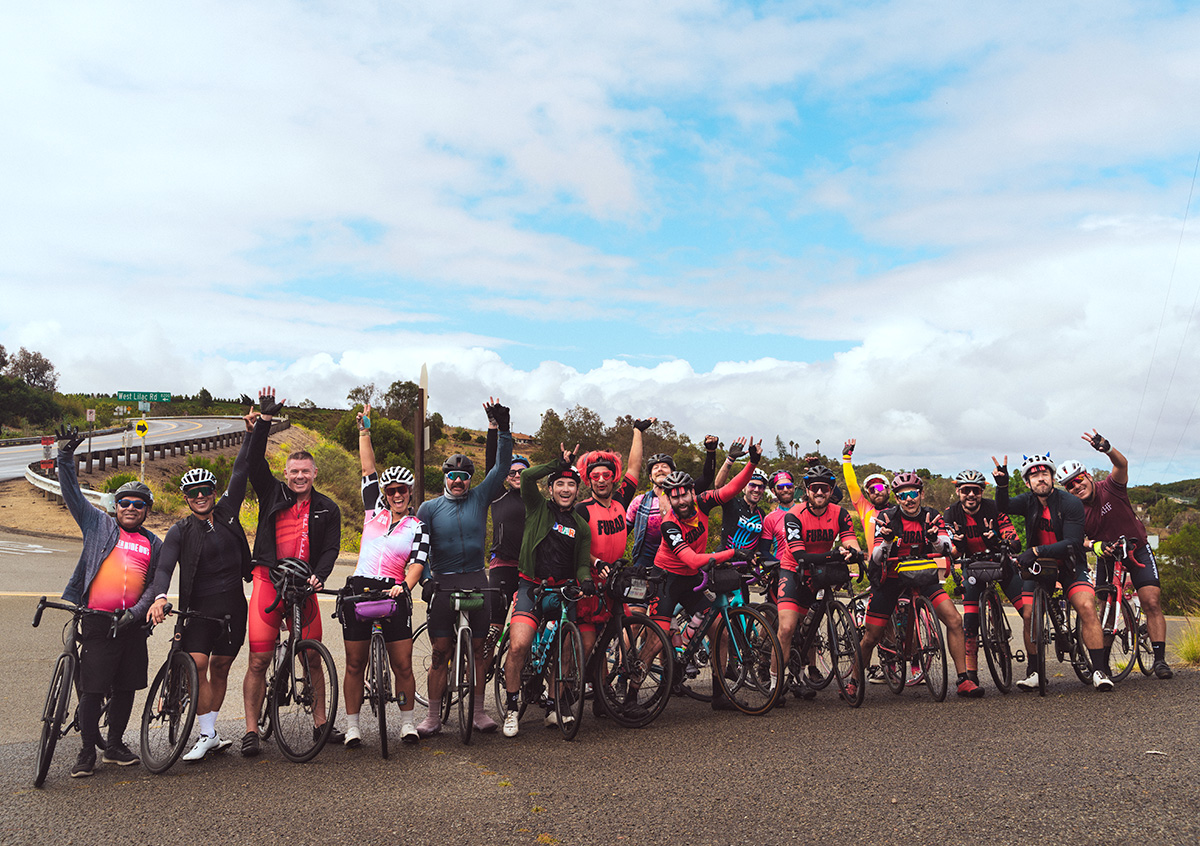
On Friday, April 24, 300 people gathered just before dawn, rolling their bicycles to a stop in Elysian Park. Against crisp morning air and dark, they donned vibrant orange and pink athletic wear, protective helmets, and sunglasses; while the rest of the city remained sleepy, the large group, which grew larger by the minute, hummed with excitement as they prepared to take off together on a three-day adventure towards the San Diego LGBT Community Center.
This was the start of the highly anticipated Center Ride Out, the first-ever AIDS/LifeCycle legacy event created by the Los Angeles LGBT Center. For over 30 years, AIDS/LifeCycle brought masses for a seven-day ride from San Francisco to L.A. and raised over $300 million for life-saving HIV and AIDS resources and services.
Center Ride Out was built in the lasting imprint and shadow of this event, and strived for a more accessible and joyous approach. “Center Ride Out carries forward the legacy of AIDS/LifeCycle, rooted in a time when our community came together to care for one another,” said LA LGBT Center CEO Joe Hollendoner, in a press release, who describes Center Ride Out as the beginning of a new legacy for LGBTQ+ cycling activism.
Described as a “queer summer camp,” the pared-down three-day journey began with a 110-mile trek towards Temecula’s Lake Skinner, where, after a night’s rest, cyclists could spend a day gathering with community over arts and crafts, massages, a dance party, games, and other activities reminiscent of summers spent simmering by the water.
On the third day, cyclists rode 87 miles to the San Diego LGBT Community Center, one of the event’s benefiting partners, rounding out a nearly 300-mile journey across Southern California. In total, cyclists raised $830,511 to support the LA LGBT Center’s vital LGBTQ+ healthcare, housing, educational, and advocacy programs and social services — a crucial accomplishment after the organization suffered a $9 million loss in federal funding in the last fiscal year.
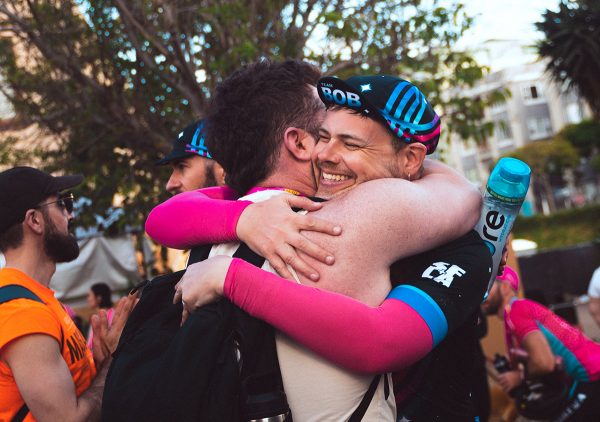
Sunday marked a victorious end to this first iteration of Center Ride Out, and cyclists raced towards each other upon reaching their final destination: sweaty, tired bodies embracing and entangling in pride and accomplishment. The monumental AIDS/LifeCycle has come to an end, but the joy that reverberated from this evening signaled the start of something just as great.
Registration has already begun for the next Center Ride Out, which returns April 23-25, 2027. Learn more at the Center’s website.
Kristie Song is a California Local News Fellow placed with the Los Angeles Blade. The California Local News Fellowship is a state-funded initiative to support and strengthen local news reporting. Learn more about it at fellowships.journalism.berkeley.edu/cafellows.
Los Angeles
LGBTQ+ mayoral candidate wants to revitalize a ‘limitless’ L.A. of the past
There’s no clear frontrunner in L.A.’s mayoral primary. Will queer candidate, Bryant Acosta, shake things up?
We are just a little over a month until the Los Angeles primary mayoral election takes place on June 2.
Incumbent mayor Karen Bass, District 4 councilmember Nithya Raman, and conservative reality star Spencer Pratt currently lead the race, but a poll released early this month by the UCLA Luskin School of Public Affairs indicates unsteadiness and volatility ahead. 40% of voters remain undecided — and without a majority vote, two leading candidates will have to face off in a runoff election on Nov. 3.
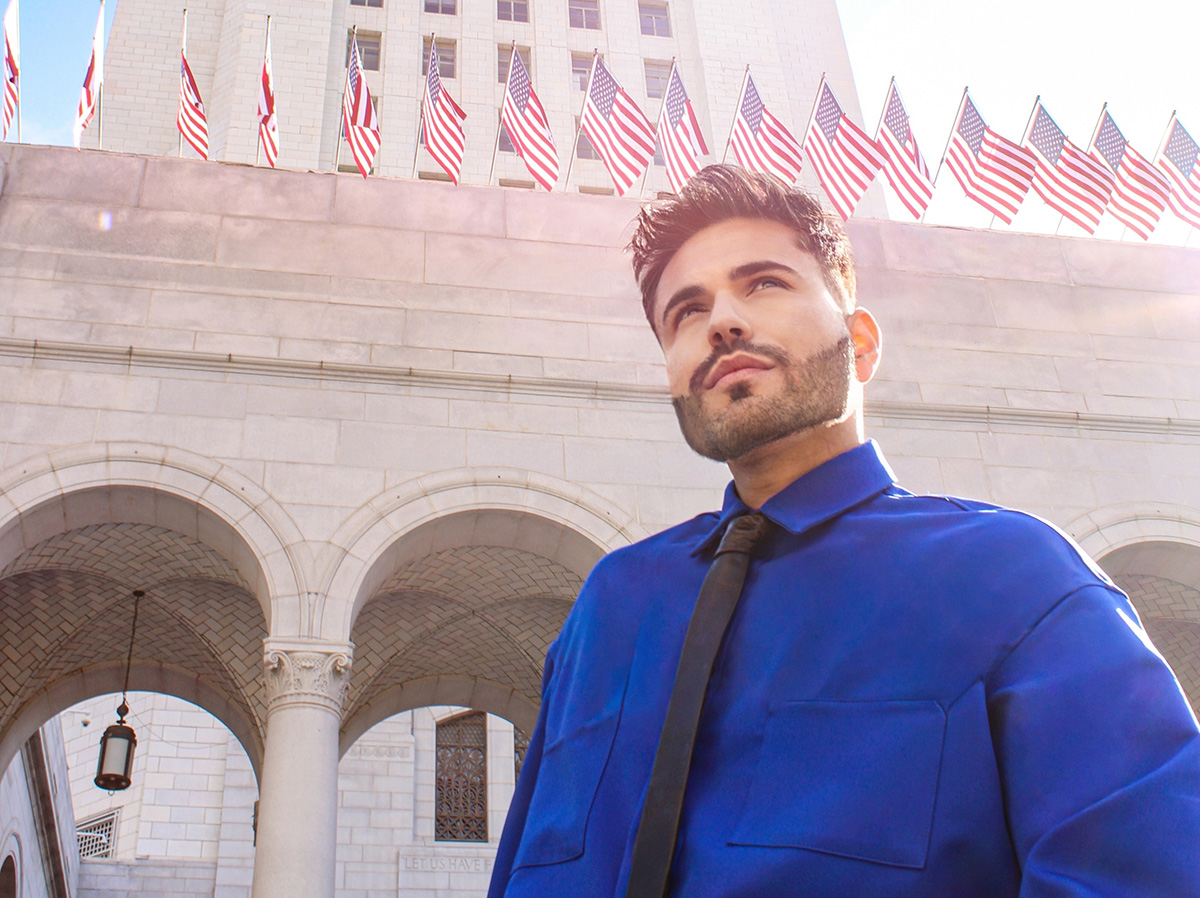
Some are hoping for an underdog to swoop in, and the Blade spoke with one of these contenders: LGBTQ+ artist and creative director, Bryant Acosta.
Born in West Covina, Acosta attended The Art Institute of California, Los Angeles in the early 2000s, where he experienced a bursting energy that defines the county’s reputation as a major hub and global beacon for success. “Everything felt limitless. There was so much opportunity,” Acosta told the Blade. “The city felt alive. You could feel the heart and soul of what L.A. was, and I just don’t see that anymore.”
Acosta hopes to revitalize the county with fresh perspectives, a creative tech-forward approach, and a reboot of how City Hall operates when it comes to transparency and efficiency. His career has spun through several evolutions: he’s been in charge of multi-million dollar budgets and large teams as a creative director, both in the corporate world and on his own terms.
The Blade sat down with Acosta to discuss his pledge for the county’s queer residents and other minority community members, his vision for an app that would streamline accessible city services, and how he sees his identity as a ‘superpower.’
What are your ideas about how you would concretely support queer communities? I was at City Hall a couple months ago when the TransLatin@ Coalition was there to ask for $4 million in direct funding from the county. There’s a big wave and throughline of struggle when it comes to queer communities having to advocate for themselves. How would you support them as Mayor?
Being queer myself…I just feel like you don’t have to shrink yourself to survive in the city, at least not on my watch. This campaign is for the people who have felt unseen, who have had to build their own community and opportunities. But it isn’t just about visibility, it’s about affordability, safety, and opportunity. Because what good is being seen if you can’t afford to live here or feel protected?
Education [is] a big [priority] because right now there’s so much misinformation — specifically around trans issues. I want to be able to bring people along on the journey of: Hey, this is who they are, this is what they’re asking for [and] make it so that people see them as humans. Being able to bridge that gap between the misinformation on social media and bridge it to actual science-based information so that people can really understand what it is to be trans and that they’re part of our community.
When I spoke with trans leaders and advocates, many explained that City Hall does not lack funds — it’s simply not prioritizing their organizations into the county’s budget.
I know Kenneth Mejia, our [City] Controller, has been working on having more visibility into the budget — but if we were able to have an application like my LA Now app idea where people can track every dollar [and] every penny spent, it’s not going to be a fight. This minority group of people is asking for this much money. It’s well within the budget. Why wouldn’t we do this? It’s an essential service for them. Just as the trash or the water are essential services for your neighborhoods, these are things that they’re asking for to continue to operate and be a part of our community. That’s why I’m making that my main touch point, because without accountability, transparency and trust in City Hall, we don’t have anything else.
Can you tell me more about your LA Now app idea and how it adds to your mission of transparency for LA county residents?
I worked in tech for a while, so I learned how to use technology to better…communications, advertising, and all of the things. So, I [thought]: I should be able to use that and be a really future-forward mayor.
I developed this app, where basically, you could have civics in the palm of your hand. You’d open the app, [and] you’d have a dashboard. Organizations will be loaded into it so that when you have problems with housing, the streets and anything in your community, it’ll geo-target your area so they’ll have all the services listed that you can contact.
You’d also be able to pay parking tickets. If you get towed by the city, it’ll give you a notification. So, there’s no more of those predatory towing fees. [You’d also be] able to get push notifications for jury duty, so it has a lot of those civics built in.
And with what Kenneth Mejia is doing right now — he’s giving us a full data dashboard of where the money’s going. I want to simplify that and make it more accessible so that, [for example], my mom and my cousins can read it. [I want to] really put it in the palm of your hand so we see every dollar, every penny spent in real time.
I created a section where, essentially, you can rate your leader. So basically it’d be like Yelp, but for leadership. So, when you see things like Nithya [Raman] spending a million dollars on bathrooms, that would trigger a warning to the Controller, and then we’d be able to see: Hey, what’s going on here? If leaders want to have five stars, they need to respond in real time. It would just keep that extra layer of accountability — a digital accountability on leadership.
Last but not least, I want to develop an anti-Amazon feature [on the app]. Essentially, we would have an E-commerce marketplace [that] only local businesses would be able to get on, so that they could maximize their profits.
Would the app include surveillance protections? With fears over ICE and online safety, would there be a way for people to feel secure while using the app?
How I’m thinking of this as an operating system is that we would use ID.me, which we use at the DMV, to be able to log in. So it already has all your information, and that way you’re not having to input everything a million times. But for people who are undocumented, you’d have a back portal where you’d have access to essential services. I [also] thought about people who don’t have cell phones. We could also have kiosks in public libraries, grocery stores, any place that has public access, so that everybody would have access to these data points and things that they may [need].
You’re forward about being at the intersection of marginalized identities, as a queer and Latino person. How does this affect how you think about the mayoral race and how you’re building connections with LA residents?
Being queer and Latino [doesn’t] hold me back. It’s actually a superpower for me. In some ways, it forced me to figure things out — not just to find a seat at the table, but to build my own. Understanding people [in] these kinds of ways is invaluable. Also, being first-generation American and openly gay, you see this country as both an opportunity and an exclusion at the same time. No matter how smart, accomplished, or creative you are, there’s still a ceiling you hit, especially when the system was never built with you in mind.
That perspective really changes how [I] lead because you don’t just want access to the system — you want to fix it so that it actually works for everyone.
To learn more about Bryant Acosta and his mayoral campaign, you can visit his social media page and website.
Kristie Song is a California Local News Fellow placed with the Los Angeles Blade. The California Local News Fellowship is a state-funded initiative to support and strengthen local news reporting. Learn more about it at fellowships.journalism.berkeley.edu/cafellows.
Los Angeles
The Connie Norman Transgender Empowerment Center opens full-service health clinic
Saturday marked the opening of the center’s new health clinic and another step forward in its “righteous rebellion” for trans equality.
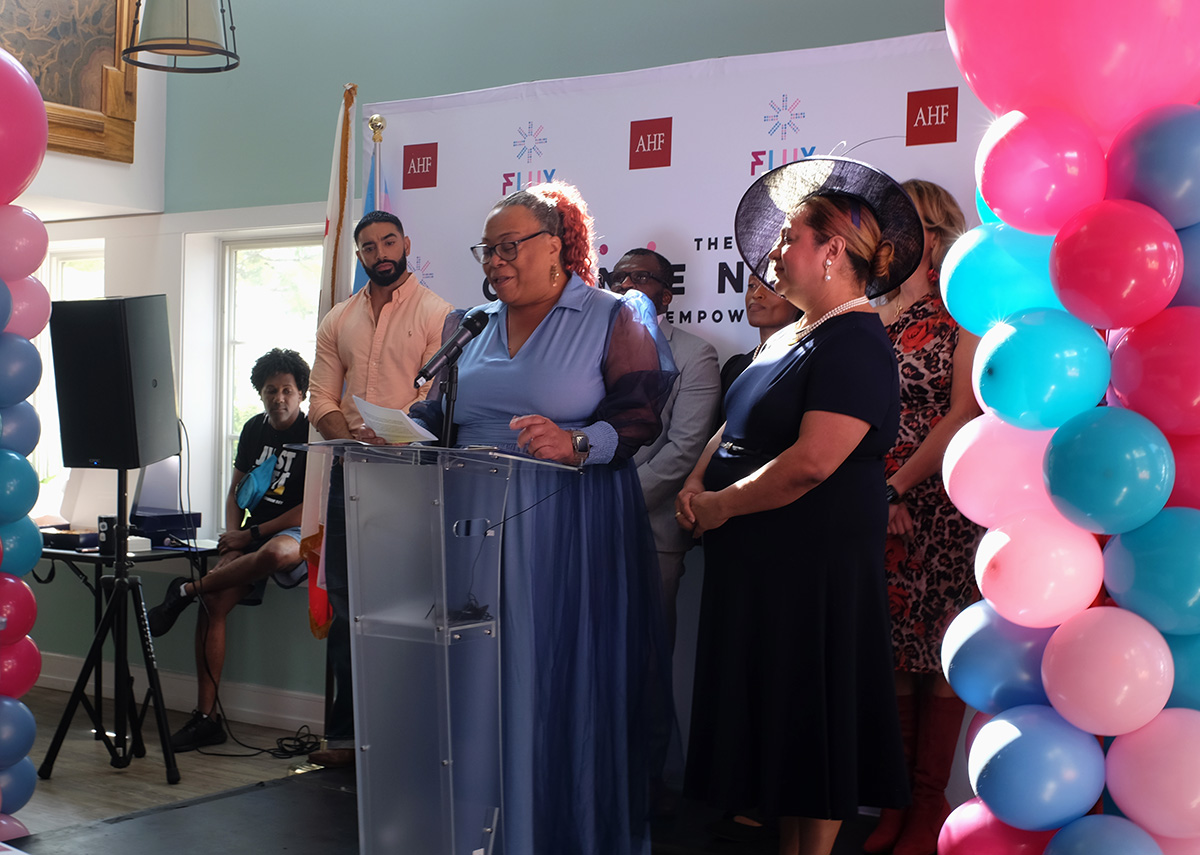
It’s warm on Saturday morning, and there’s joy in the air at the Connie Norman Transgender Empowerment Center (CONOTEC). By 10 a.m., community members have packed out the center’s first floor, waiting eagerly for the grand opening of its new healthcare clinic. It’s a historic moment that flows from the core of CONOTEC’s purpose: advocating for, creating pathways and uplifting the safety, resilience and wellbeing of trans and queer people.
Established by the AIDS Healthcare Foundation (AHF) in 2021, CONOTEC honors the legacy of its revered namesake, the “AIDS diva” Connie Norman: a trans activist who was at the frontlines of fighting against government inaction and negligence during the AIDS crisis of the 1980s. For five years, the center has been the home base for various local trans and queer organizations, providing a sanctuary for queer elders and advocates to expand and continue their advocacy.
Now, the center’s new health clinic takes this mission further. A collaborative effort between trans medical professionals, activists, and AIDS Healthcare Foundation leaders, the clinic offers an expansive breadth of services that covers primary care, HIV medicine and treatment, sexual health, cancer screenings, and vaccinations. It is open to everyone, regardless of gender and sexual identity, as well as one’s ability to pay.
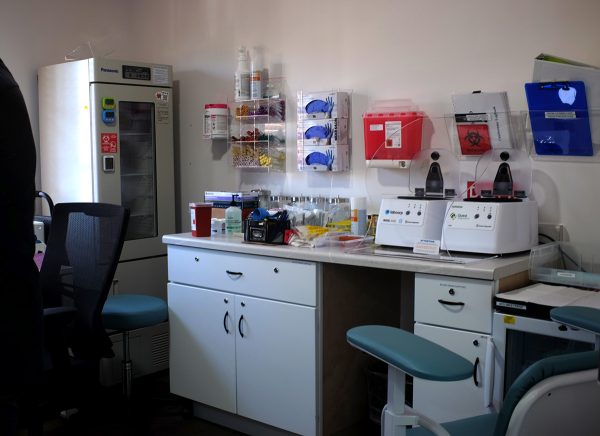
Advocates name the last few years as a major setback to trans health care, safety, and rights. As the federal administration targets this community by shuttering gender-affirming health clinics, writing laws that approve surveillance of and violence against trans people, the opening of this clinic is both an act of resistance and care. “We get to open doors instead of watching them close,” said Queen Chela DeMuir, who is vice president of AHF’s trans affinity group FLUX and the chief operating officer at CONOTEC.
Addressing the room with tenderness, DeMuir recounted the beginning of her transition. Her first hormone shot was administered by a queer elder she trusted, the medicine bought from a shop at a local swap meet. She remembered the confusion, the concern, the absence of professional care. But, like many other trans folks, she was willing to take these risks to actualize and make physical the person she always was.
The clinic removes the “guessing, fear, and barriers” DeMuir experienced, making sure trans people can receive the care they need in safe, affirming, and accessible spaces. “In this clinic…we care for everyone. We are building access with people who look like us, who understand us, and who carry a shared, lived experience…This is not just a ribbon-cutting. It’s a statement about who we are and what we deserve,” said DeMuir.
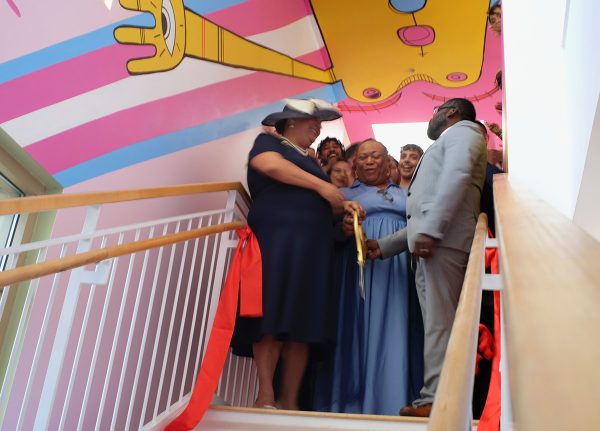
What trans and nonbinary community members deserve is easy access to healthcare and, thus, easy access to “justice, dignity and the right to live fully,” stated AHF chief medical officer Dr. Carl Millner. He reiterated that trans people, specifically trans women, are disproportionately impacted by HIV yet have fewer pathways to access care and support.
The clinic rewrites standard medical practice by centering trans lives in both their patient outreach and in their staff. Razan Alawadhi, an AHF nurse practitioner and trans woman, will bring nearly two decades of healthcare experience to help guide the clinic’s operations. “It is a dream of mine to establish this clinic,” said Alawadhi, who also hopes to advance studies and treatment in neglected research areas like sexual health for trans people.
On the other side, trans people who seek care are repeatedly met with varying levels of hostility and misunderstanding in health care spaces. “I remember going to an emergency room for a back injury — something unrelated to my transness — and being looked at like a freak,” said FLUX ambassador Laith Ashley, who described the humiliation with crystal clear detail. Those experiences don’t fade away; they leave lasting marks and create cycles of medical avoidance in trans and nonbinary communities.
“This [clinic] is here to help change experiences like that,” Ashley continued. “Here…providers recognize that affirming someone’s identity is not controversial. It’s compassionate medicine…So when we open a clinic like this, we are not just expanding health care services. We are expanding hope [and] sending the message that transgender people in this community are not alone.”
This message is not new. The fight for freedom was forged by trans ancestors, and is carried onward by present and future generations. It’s a “full-circle moment,” DeMuir explained to the Blade. “I knew that I was putting myself at risk when I was younger, so part of the work that I do is really making sure we make things better for those that come [after] us, and give them a sense of pride that they are seen.”
The fire beneath this fight for visibility blazes with the warmth and strength of its leaders and community. It’s just beginning. “I want to welcome you to the righteous rebellion,” said Queen Victoria Ortega, president of FLUX and the chief visionary officer of CONOTEC. “[This is] a place where doors will be open for folks…No one’s going to deport us. No one’s going to erase us off the earth. This is a place for [us] to have dignity and have access to health care for all.”
More information about the Connie Norman Transgender Empowerment Center can be found on their website.
Kristie Song is a California Local News Fellow placed with the Los Angeles Blade. The California Local News Fellowship is a state-funded initiative to support and strengthen local news reporting. Learn more about it at fellowships.journalism.berkeley.edu/cafellows.
Los Angeles
Nikko LaMere’s photo exhibit “JOY!” documents the euphoria of Black queer nightlife
Now available to view at the LA LGBT Center, “JOY!” is a raw preservation of Black queer nightlife, fantasy and self-discovery.
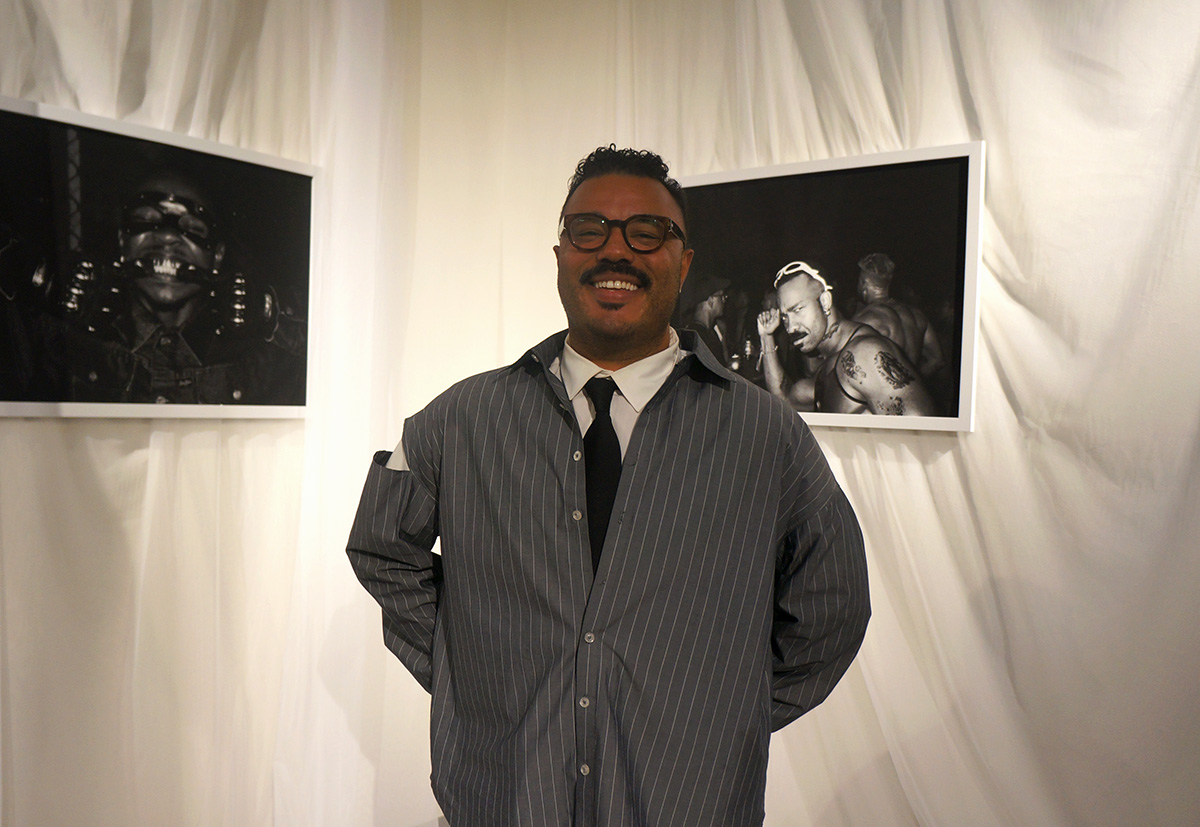
It’s 2018, inside queer dance party Ostbahnhof, and the floor is packed with a sweaty, hypnotic energy as people groove to the sexy, lush soundscapes of techno and deep house. Photographer and visual artist Nikko Lamere rushes to grab their disposable camera, accidentally spilling some of their whiskey ginger on someone, and snaps a couple of shots of their friends: immortalizing their uninhibited joy and movement forever.
Eight years later, these photos LaMere captured across various local queer dance parties comprise their newest and largest photo exhibition yet: “JOY!” Displayed at the Los Angeles LGBT Center, “JOY!” is a raw documentation of Black queer nightlife, fantasy, and euphoria. It includes two of LaMere’s major bodies of work and follows the artist’s queer journey and creative evolution.
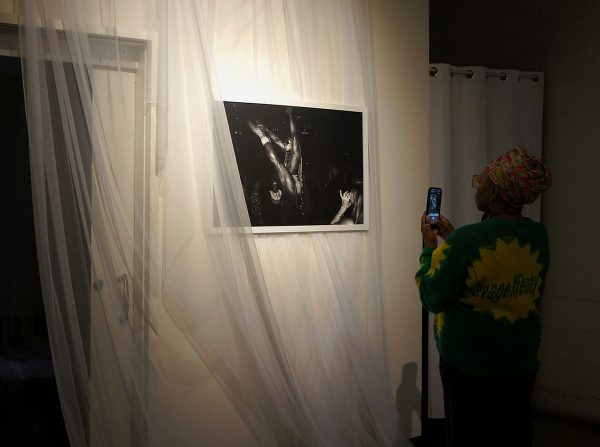
The exhibit’s opening on Feb. 13 is one of two events in the Center’s “Highly Favored” programming series that uplifts Black queer liberation every February. The next event comes this Saturday, and is a celebratory dance party akin to the ones documented in LaMere’s photos.
Prior to this exhibit, LaMere was most known for their saturated and stylized editorial work with contemporary music phenoms like Doja Cat, SZA, Latto, Billie Eilish and Kehlani. Propelled at a young age into flashy spaces with modern-day tastemakers and legends, LaMere sought refuge in photography throughout their adolescence. Their fascination with the camera began in elementary school while growing up in Culver City, when their grandmother gifted them a Nickelodeon-themed camera to take photos with.
Their eye and talent were reinforced with praise, and this love for the craft grew from curiosity to solace in high school. Bullied for being gay and femme, LaMere sought refuge at the library, where they first discovered the technicolor, surreal work of visionary photographer David LaChapelle. This became a direct pathway for LaMere’s own career: one that, though successful and fulfilling in its own way, led to a need for change.
For so long, the camera was a means to fulfill someone else’s vision. Now, LaMere began to use it as a tool for connection and raw documentation. In 2018, they didn’t set out to create what is now their “In the Night” photo series; they were simply trying to explore their own queer journey, and preserve the friendships and environments that made them feel comfortable in their own skin.
That vulnerable process of “becoming” is one they hadn’t touched upon in their previous work. For the first time, they couldn’t carefully and methodically create the shot; whatever they snapped was based purely on instinct, a fleeting moment of true and embodied tenderness, ecstasy, and freedom.
“To have this body of work shot all in black-and-white, for it to be so gay and Black — it feels really affirming,” LaMere said. “These are the most raw images and things I could create. There’s no Photoshop. There’s no retouching. It’s literally straight from the camera. It just is. I think part of joy is being able to just be, and that’s what these images are.”
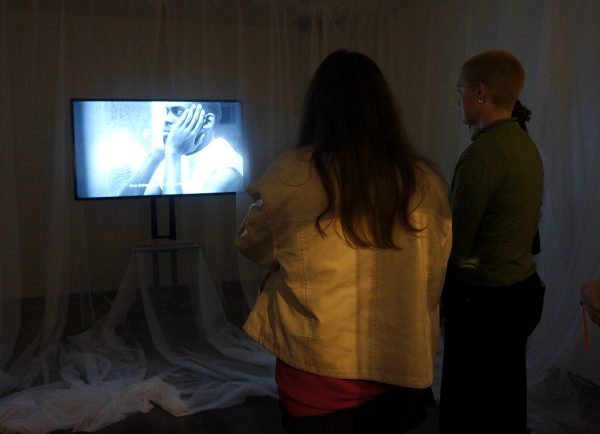
“JOY!” also includes LaMere’s work, “Queer Fantasy,” a collection of 40 black-and-white film portraits and interviews with local queer performers, artists, and everyday people. This newer project grew from the core of “In the Night,” and is another intentional project focused on highlighting the beauty and individuality of queer Angelenos. Each person is asked: “What is your queer fantasy?,” illustrating that queer fantasy is not only a transformative kind of rebirth: it is a process built by radical efforts to cultivate joy, success, and safety in the face of violence and discrimination.
For LaMere, “JOY!” is about this process and the moments of self-discovery found on the dance floor, where you can really feel tethered to the person you’re becoming while “the world is burning around you.” While speaking with LaMere, I am grounded by the words of DJ, artist and organizer Darryl DeAngelo Terrell.
“Here, in this space we as black people [are] forced to find liberation in our own bodies, it’s in us, deeper than melanin, and it is activated by bodily acts,” Terrell writes. “We Move* in ways that others can not fathom to understand. Through these acts, we find the most beautiful yet temporary forms of true freedom; we find joy, peace in these acts.”
“JOY!” is available to the public on Wednesdays and Thursdays from 11 a.m. to 4 p.m. More information about the exhibit and “Highly Favored” can be found here. This Saturday’s queer dance party will also honor special guests Hailie Sahar, a starlet on the revolutionary FX show Pose, as well as filmmaker and ballroom culture documentarian Elegance Bratton.
Kristie Song is a California Local News Fellow placed with the Los Angeles Blade. The California Local News Fellowship is a state-funded initiative to support and strengthen local news reporting. Learn more about it at fellowships.journalism.berkeley.edu/cafellows.
Los Angeles
A new “queer summer camp” cycling event rises from the legacy of AIDS/LifeCycle
The LA LGBT Center will host its first ever “Center Ride Out,” a 3-day community cycling adventure from Los Angeles to San Diego.
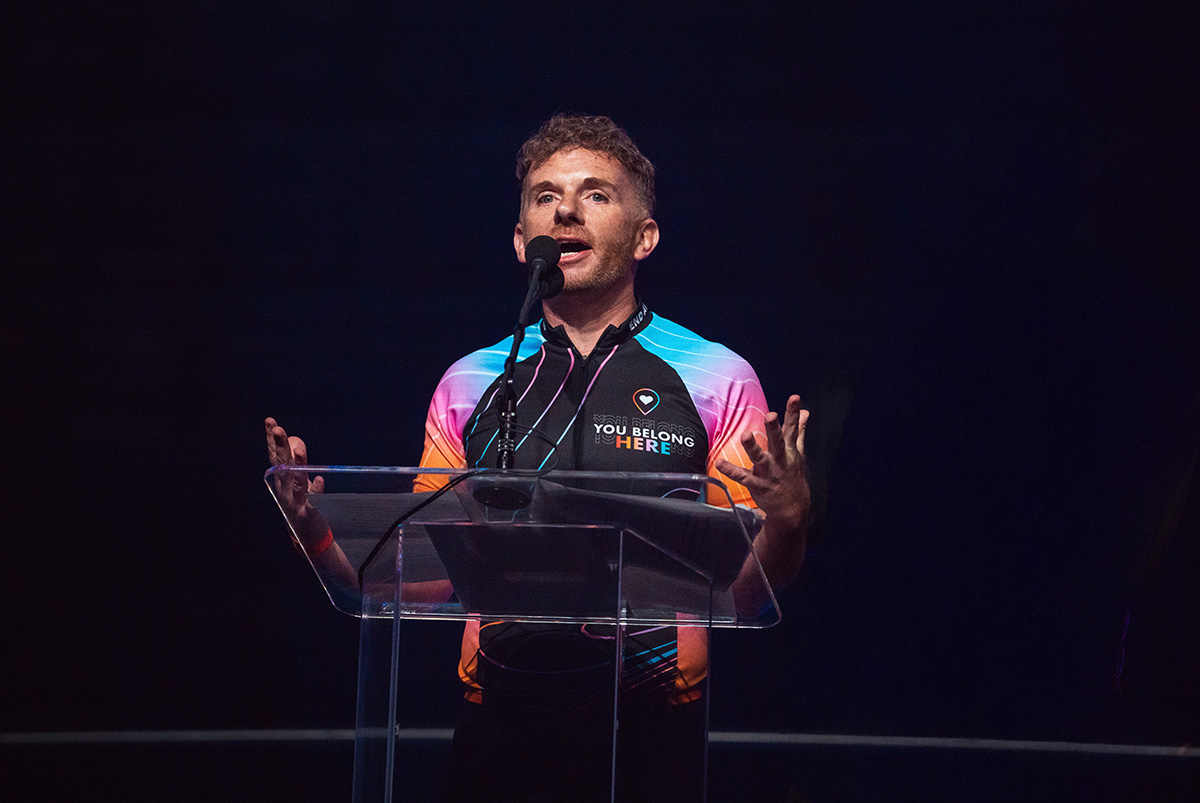
On April 24, 500 cyclists will meet at Elysian Park before dawn, stretching and preparing for a 110-mile ride through urban scenery and rolling hills. They will be part of the Los Angeles LGBT Center’s inaugural “Center Ride Out,” a 3-day journey that takes riders through Los Angeles and Temecula, reeling to a stop at the San Diego LGBT Community Center.
The cycling adventure is a rejuvenating, communal queer experience that taps into the importance of shared joy and advocacy in the fight to defend LGBTQ+ rights. Its roots are sacred for many queer elders: Center Ride Out rises from the legacy of the cherished AIDS/Life Cycle (ALC), a seven-day cycling adventure from San Francisco to L.A. that formed in 1994 and ended with its last ride in 2025.
In its 31-year run, ALC riders raised over $300 million for HIV and AIDS resources, services, and awareness. This year, Center Ride Out provides a new, exciting extension of this important event, allowing cyclers to raise funds in support of the LA LGBT Center, The San Diego LGBT Community Center, and the LGBTQ Community Center of the Desert.
This support is crucial as LGBTQ+ organizations face a new crisis: widespread defunding. In the last fiscal year, the LA LGBT Center lost $9 million in federal support, according to its CEO Joe Hollendoner. The funding raised by Center Ride Out’s participants will help offset this loss and keep the organization’s various programs and services, from gender affirming care and HIV prevention resources to LGBTQ+ senior and youth support, afloat. “We anticipate further divestment in our work by the Trump administration, [so Center Ride Out] allows people to align their own personal passions with our mission in a broader way,” Hollendoner told the Blade.
Altogether, Center Ride Out participants will cover nearly 200 miles of ground together. At the end of the first 110-mile day from L.A. to Temecula, where riders will get to look at historic landmarks and embark on a museum lunch stop together, the day culminates at campgrounds at Lake Skinner.
Here, riders can take a full rest day at their lakeside camp, where it will exude queer summer camp vibes. There will be massage and medical services, arts and crafts activities, dance parties, and time to relax and connect with the community. “Folks [can] build relationships, have some fun, and feel safe. That’s a feeling a lot of people [need] right now, especially our trans and nonbinary siblings,” Hollendoner said.
Day 3 ends with an 87-mile downhill, coastal ride through the town of Rainbow in northern San Diego County, before ending with a celebratory bash at the San Diego LGBT Community Center.
Hollendoner rode ALC five times while it was active and is excited to be part of this new legacy from its very beginning. “I’ve heard our community elders talk about how powerful it was to be at the start of AIDS/LifeCycle, and the idea that I can be here at the start of Center Ride Out, an event that I hope will go for three decades or longer…It feels really exciting to me,” Hollendoner said.
For newcomers and experienced cyclists alike, Center Ride Out aims to provide an accessible experience: paring down the initial weeklong ALC ride to three days. To take part, cyclists are expected to raise $2,500 by April 10. For those who may struggle to reach this minimum, staff members have established a community fund.
The community fund will also provide scholarships for BIPOC, trans, women, and femme participants — historically underrepresented communities at ALC — as well as microgrants for BIPOC and trans-led teams to encourage a diverse range of cyclists.
Come April, scores of queer cyclists will get to experience this adventure together: one that is both storied and fresh in its purpose, lineage, and joyful expression of queer togetherness. “Center Ride Out is providing an exciting opportunity for people to not only fight back and be in community with one another, but to build resiliency and be surrounded by people who share values around liberation,” Hollendoner said.
To learn how to register, donate to or volunteer for Center Ride Out, more information can be found here. The three-day adventure takes place from April 24 to April 26.
Kristie Song is a California Local News Fellow placed with the Los Angeles Blade. The California Local News Fellowship is a state-funded initiative to support and strengthen local news reporting. Learn more about it at fellowships.journalism.berkeley.edu/cafellows.
Los Angeles
Stonewall Young Democrats bounces back from “quiet year” with Hero Awards
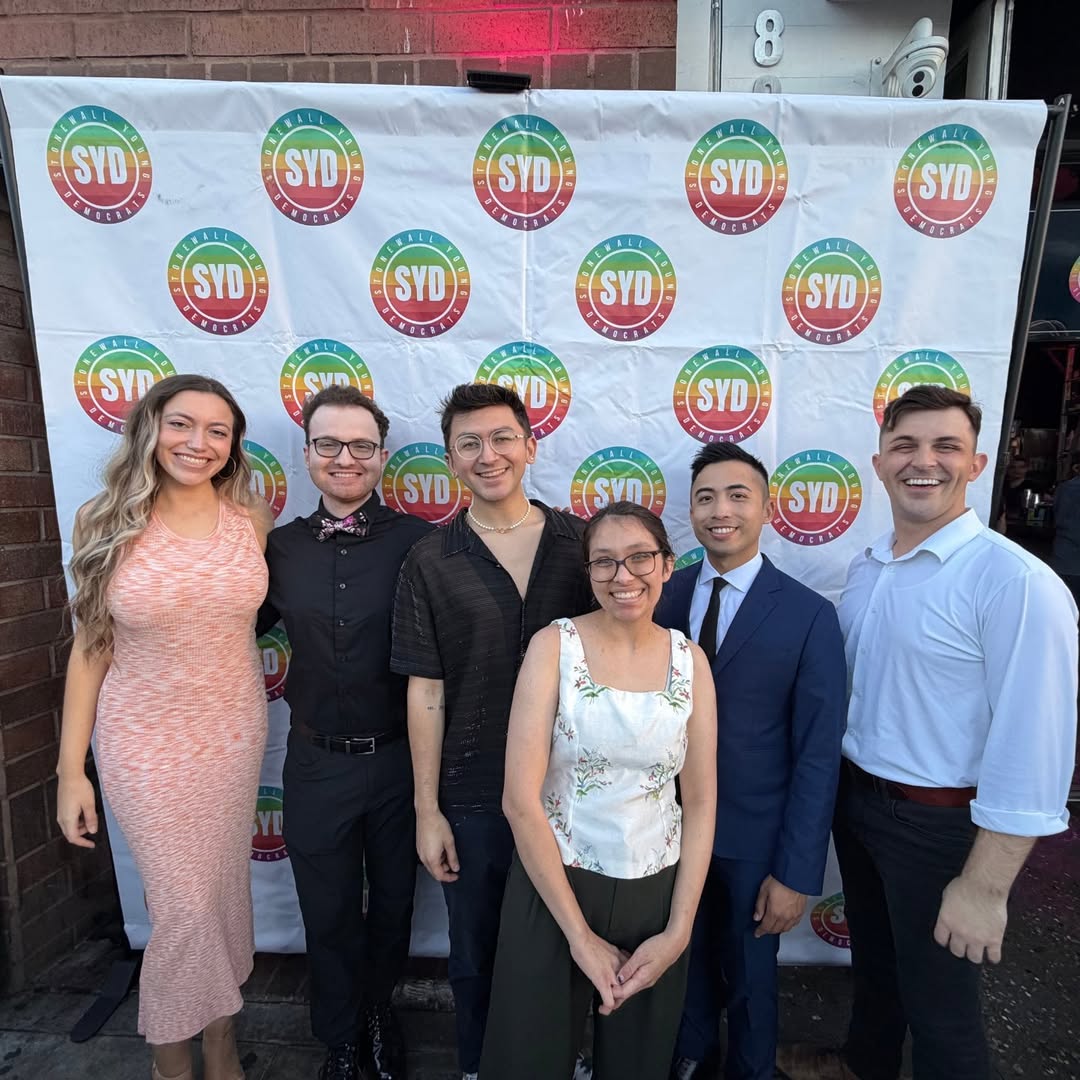
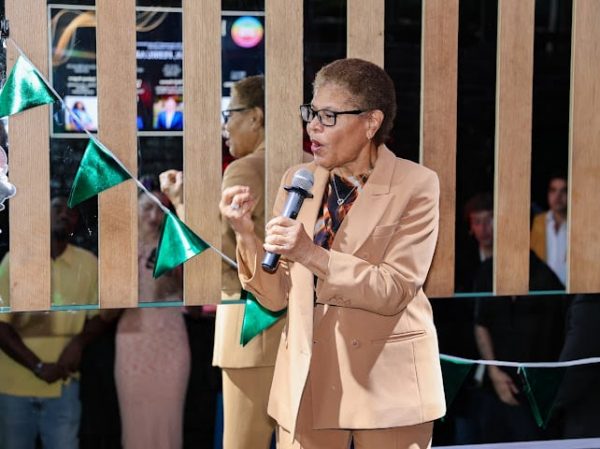
On Saturday, Feb. 7, the Stonewall Young Democrats (SYD), an organization that mobilizes and fosters community for young, LGBTQ+ people, hosted its “Hero Awards” ceremony at Beaches West Hollywood. Under luminous pink light, vibrant crowds of community members showed up to support and celebrate people and organizations spearheading LGBTQ+ visibility, change, and livelihood across L.A. County. Political figures filled the venue wall to wall, including LA Mayor Karen Bass, West Hollywood Mayor John Heilman, West Hollywood Council Member John Erickson, and California Assemblymember Rick Zbur.
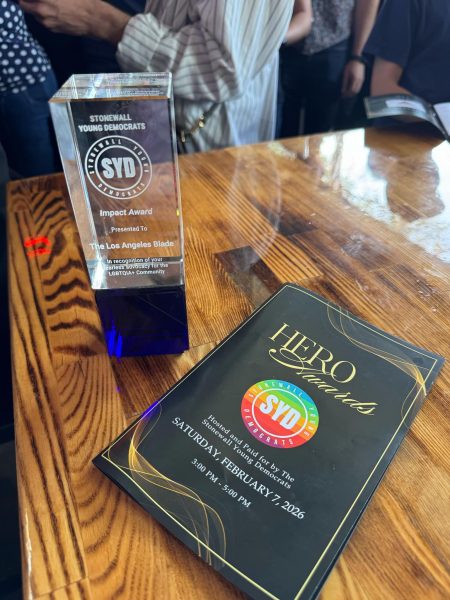
Several local advocates and politicians were honored for their queer advocacy and leadership, including City of Los Angeles LGBTQ+ community affairs liaison Carla Ibarra, L.A. Democratic Party Chair Mark Ramos, Congressman Mark Takano, and L.A. County LGBTQ Commission Chair Sydney Rogers. The Los Angeles Blade was also recognized with an Impact Award.
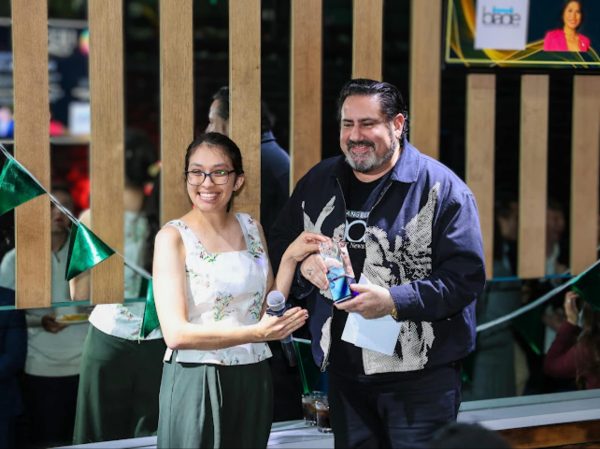
Los Angeles Blade publisher Alexander Rodriguez accepted the award. In his acceptance speech, Rodriguez shared, “We report on and share the struggles of our queer community. We also get to see the resilience and strength our community has, even in the face of adversity. We see firsthand the importance of the Stonewall Young Democrats and the amazing network of people they have put together, as seen here today.”
The Stonewall Young Democrats formed in 2004, immortalizing the 1969 Stonewall riots in its name. The decision to carry the legacies of early gay rights movements is poignant: queer resistance and their enduring battle against political and social marginalization and violence are seared into the organization’s core.
SYD’s President Kanin Pruter is keeping this link to the past alive; it’s a reminder of the interconnectedness of the queer community. “Our history is there for a reason,” Pruter told the Blade. “Without lesbians during the AIDS crisis, we would not be where we are today. And our movement was started by Black trans women.”
This recent Hero Awards marks SYD’s revitalization. After a relatively quiet year, its board is excited to grow its organization, recruit diverse and eager LGBTQ+ folks, and create fruitful opportunities for everyone in the organization to develop their political advocacy and organizing skills.
Most importantly, Pruter hopes that SYD can be a safe, inclusive, and accessible space for any LGBTQ+ person who has felt outcast before. “In a loving and joking way, we’re an island of misfit toys,” Pruter said, who is intentional about creating environments where queer folks who have experienced trauma, isolation, and exclusionary social politics can fit in and belong.
“I want folks to be open, vulnerable and leave any preconceived notions at the door. We come in here [and] we are who we are. We respect each other’s identity, and we’re here to foster a culture where everyone feels welcome.”
Pruter encourages young LGBTQ+ people who are interested in getting involved in SYD, to contact him and learn more about the organization. More information can be found here.
Kristie Song is a California Local News Fellow placed with the Los Angeles Blade. The California Local News Fellowship is a state-funded initiative to support and strengthen local news reporting. Learn more about it at fellowships.journalism.berkeley.edu/cafellows.
Los Angeles
Project Angel Food is now able to feed 10,000 people daily with expanded building
On Thursday, community gathered to celebrate Project Angel Food’s new kitchen and campus building, which allows them to serve more of the county’s critically ill community.
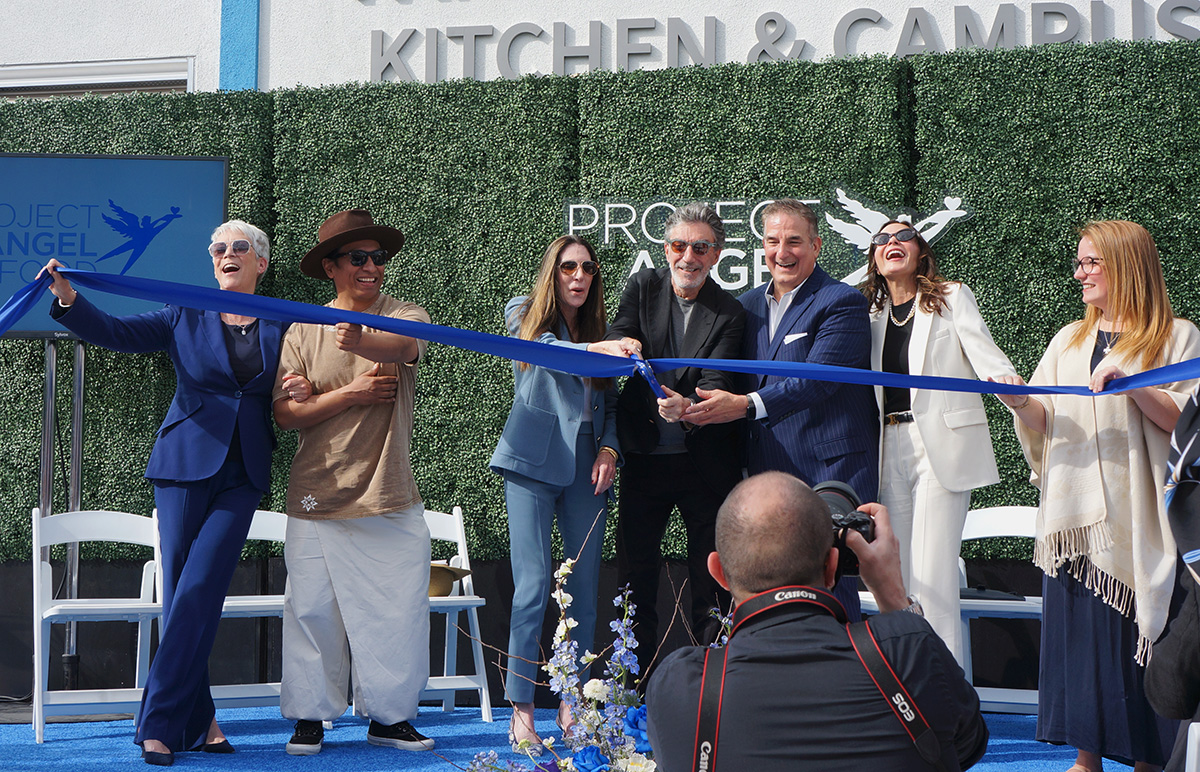
On Feb. 5, community members gathered at 922 Vine Street to celebrate the expansion of Hollywood-based non-profit Project Angel Food. That Thursday morning, the organization cut the ribbon for its Chuck Lorre Family Foundation Kitchen and Campus: one of two new buildings that greatly increase its capacity to provide healthy food and nutritional resources to the county’s critically ill community members.

Project Angel Food was founded in 1989 by author and activist Marianne Williamson and blossomed from a dire need to feed people impacted by HIV/AIDS during the epidemic. Today, the organization cooks and delivers over 1.5 million meals, tailored to specific needs that include chronic illnesses and gastrointestinal issues, to 5,000 people across Los Angeles.
In August 2023, the organization launched its “Rise to the Challenge” campaign, a multi-year expansion and renovation project backed by $51 million. Now, its first phase is complete, and its impact is expected to double.
With the new Chuck Lorre Family Foundation Kitchen and Campus, Project Angel Food’s kitchen staff — which, like the rest of the organization, is majorly powered by volunteers — has access to 16,000 square feet of expanded space, which includes more ovens, walk-in freezers, and hot cook lines than they’ve ever had access to previously. Project Angel Food CEO Richard Ayoub explained today that this will allow staff and volunteers to serve 10,000 people a day.
The organization’s executive chef, John Gordon, explained to the Blade that “space issues” were a major hindrance previously. Before the new kitchen was opened, staff worked out of a much smaller Lincoln Heights facility. “If you didn’t get the rack, you don’t have the sheet pans. If you got the sheet pans, you don’t have the last chiller,” Gordon said, explaining how difficult it was before to balance multiple tasks in the same space. Now, their team of seven chefs, 12 kitchen assistants, dishwashers, and volunteers can work in several cook lines at the same time.
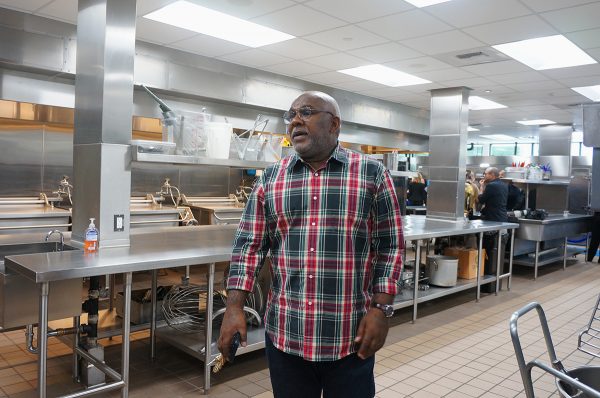
“We’re much more efficient this way,” Gordon continued. In the kitchen, the day begins at 8 a.m. Someone will pick music for the morning, setting a groove for staff as they sync up to review recipes, pack meals prepared from the day before, and cook meals for the next day ahead. After a lunch break, they continue to work until 4 p.m. to make sure they’re meeting the needs of the community they serve.
For locals like Celeste, a Project Angel Food client who is affected by multiple sclerosis, this service is crucial. On days the disability “really takes effect,” being able to receive nutritious meals customized to her needs makes a meaningful difference. “Some days, I’m not able to get up,” Celeste said. “Just that one meal [can] give me an extra boost [and] allow that sun to shine brightly even on my rainy days.”
For advocates and Project Angel Food supporters, Thursday’s celebration was also an act of resistance and a bold declaration against the federal administration. Jamie Lee Curtis, the honorary co-chair of the “Rise to the Challenge” campaign, spoke of the “love” that lay at the core of Project Angel Food’s foundation: a kind of love she finds completely absent in the federal administration.
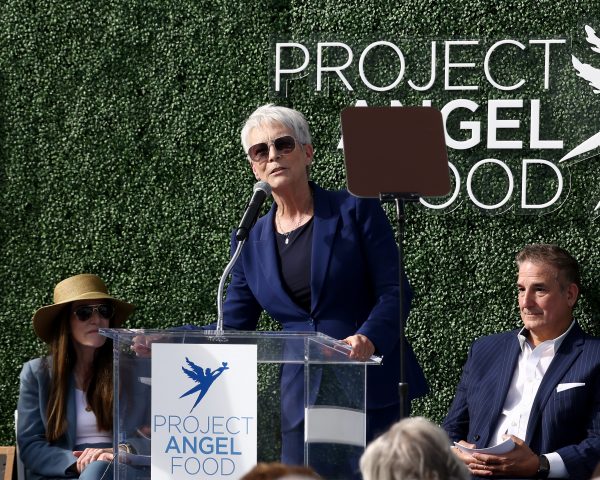
“We are a community here today the same way they are in Minnesota, and I feel like what they’re doing is what we’re doing,” Curtis said to the crowd, defiance firm in her voice. “And we’re only going to get any shit done if we do it together and defy these motherfuckers.”
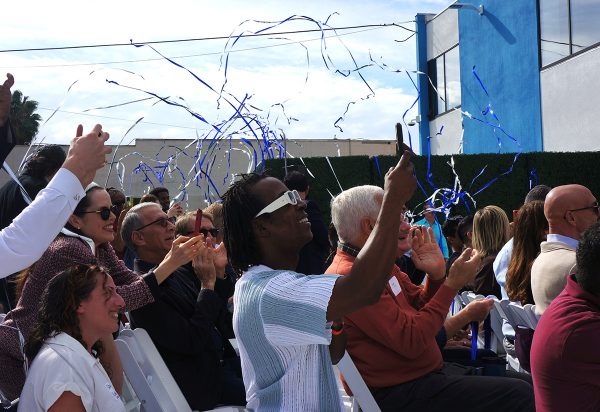
County supervisor Lindsey Horvath, a former delivery volunteer at Project Angel Food, affirmed this statement and guaranteed the county’s continued support in the organization. Horvath spoke of the government’s “glaring absence” during the HIV/AIDS epidemic: one that is “eerily similar” to its attitude now.
As the government mobilizes Immigration and Customs Enforcement (ICE) agents, sending immigrant communities spiraling into crisis, on-the-ground organizations like Project Angel Food are standing in firm support of their marginalized and ill community members. Horvath’s confirmation of county support is also rooted in this mission.
The building’s exterior also reflects the organization’s dedication to its residents. On the south side, a new large-scale mural painted by esteemed local muralist Robert Vargas highlights the stories of local volunteers and vendors who live and work in the neighborhood. Vargas explained that seeing these people in action “crystallized” the dedicated service and harmony that exists among the organization’s volunteers, clients, staff, and nearby community members.
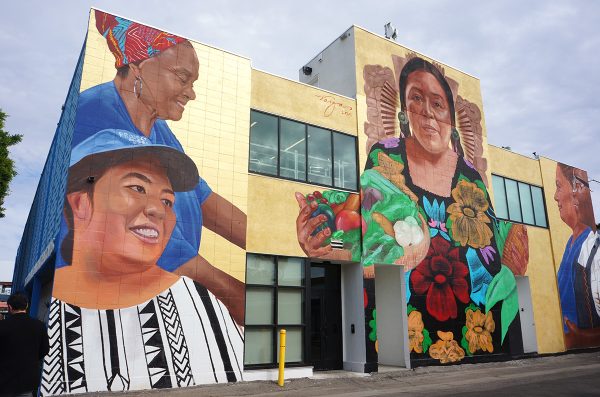
Next, the second building of the Chuck Lorre Family Foundation Kitchen and Campus begins construction this summer. This space will house the organization’s nutrition, volunteer, and client services and will also include its first department dedicated to research and policy. There will also be a training kitchen, where clients will be able to learn how to cook meals on their own.
As Project Angel Food’s growth continues, Ayoub hopes community members who are able to pitch in will do so. While public funding can feel unsteady, he explained, community strength and sustainment can fill those gaps of doubt. The organization is $2.3 million away from its goal in securing capital for this second building, and Lorre will match donations up to $1.5 million.
Kristie Song is a California Local News Fellow placed with the Los Angeles Blade. The California Local News Fellowship is a state-funded initiative to support and strengthen local news reporting. Learn more about it at fellowships.journalism.berkeley.edu/cafellows.
Los Angeles
Community members urge city council to invest in trans lives
Advocates introduced the TGI Wellness and Equity Initiative, a campaign that would direct crucial funding to trans, gender expansive and intersex community organizations.
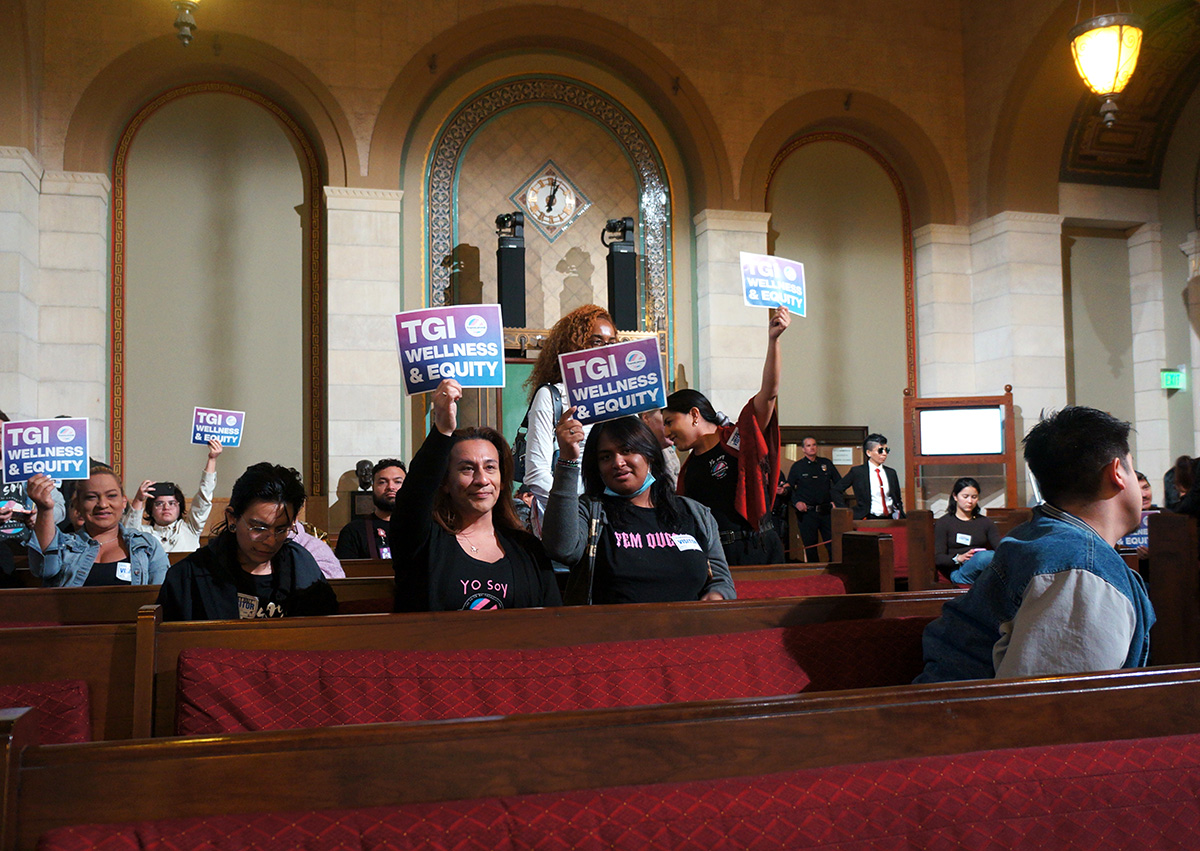
At 9 a.m. on Tuesday, ahead of L.A.’s regular city council meeting, a long procession of people wrapped around the entrance leading into the council chamber. Someone remarked that it was “unprecedented” to see so many people gathered, waiting to get inside. Several housing advocates and legal experts were waiting to make public comments about Measure ULA, otherwise known as the county’s “mansion tax.”
Another fifty or so transgender, gender expansive and intersex (TGI) advocates from the TransLatin@ Coalition (TLC), a long-standing organization that provides housing and meal support, legal services, mental health guidance and peer support groups, showed up to demand real, tangible support on behalf of themselves and their community members as the Mayor prepares the city’s budget on how funds will be allocated.
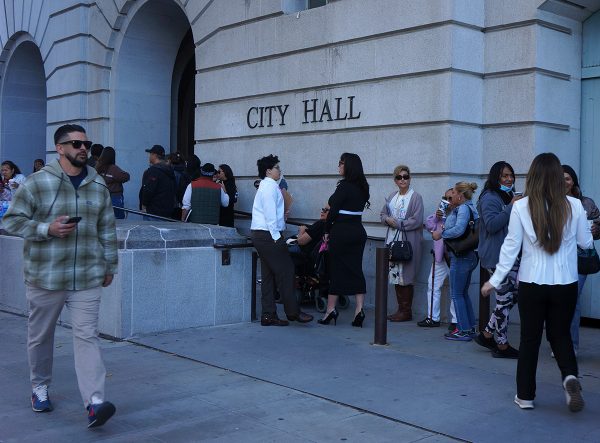
TLC advocates called on the city council to invest in their TGI Wellness and Equity Initiative (TGI WE), a two-year pilot program that would provide $4 million to five organizations that support the safety and rights of local TGI people. This money would expand each organization’s ability to hire more staff and expand their outreach, resources, and ability to serve a continually underserved community: TGI Angelenos who are multiply marginalized as violence against trans people and immigrants continues to increase.
During public comment, TLC president and CEO Bamby Salcedo requested that the council move forward with the initiative. Aside from general support, she asked that two council members act as co-sponsors and petitioners for the initiative. This way, TGI WE can be added as an official agenda item for future city council meetings, which would get the ball rolling for the initiative’s funding goals.
“Right now is the time to stand in solidarity with our community and stand against the federal government, who is attacking and trying to disappear trans people,” Salcedo told council members. Several other advocates, including TLC policy ambassador ChiChi Navarro, Christopher Street West board member NiK Kacy and Invisible Men director Jovan Wolf delivered passionate statements in support of TGI WE.
“Los Angeles is in a state of crisis, and our communities are running out of time,” Navarro told the council. They also spoke to the county’s growing investment in LAPD, while TGI organizations receive nothing. “This is not a resource shortage. It is a resource allocation choice [that] is costing lives. We need this council to introduce the TGI Wellness and Equity initiative immediately…We cannot wait. We need urgent investment today.”
TGI WE would fund community-run organizations that focus on individualized care that is facilitated with language support and sensitivity training, a kind of care that is crucial for TGI community members who often face criminalization and discrimination at the hands of law enforcement agents.
“We are their lifeline, and we demand your support,” Jovan echoed. “It’s time for the city of L.A. to make good on its promises to be for everyone…You and all of us know that we have been marginalized, pushed to the sidelines, and we continue to be an afterthought in your budgets and your agendas.”
When the meeting concluded, TLC members rallied together for a demonstration, calling out: “Support trans lives!” as council members filed out of the chambers.
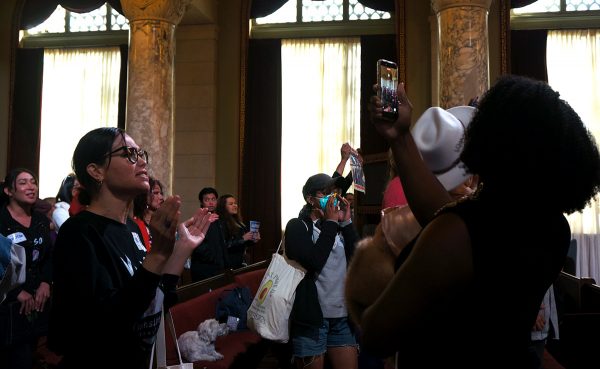
On the quiet walk back onto the street outside, Navarro reflected on the importance of this meeting and the effort community members made to be there. “A lot of the time, not just city council, [but] groups in general tend to forget trans people,” Navarro told the Blade. “Trans people are here. You saw today: clearly, we’re not a small pocket. I think we have to show them: we’re here [and] we’re not going anywhere.”
“It’s not great to be left in a place where you’re expected to continue to do the work, but without any actual support,” Navarro continued. Besides concrete funding, official citywide support for TGI WE would affirm that elected officials are willing to take a stance and take meaningful action when it comes to supporting TGI community members. “So it’s not just the money,” Navarro said. “L.A. has a motto, [that] L.A.’s for everyone. But I don’t know how you can say that when you’re not doing everything in your capacity to protect everyone.”
Kristie Song is a California Local News Fellow placed with the Los Angeles Blade. The California Local News Fellowship is a state-funded initiative to support and strengthen local news reporting. Learn more about it at fellowships.journalism.berkeley.edu/cafellows.
Los Angeles
UCLA’s long-standing LGBTQ+ alumni organization welcomes new president
The Blade sat down with paralegal studies professor and local advocate Bobby Rimas to talk about intersectional leadership and his goals for the UCLA Lambda Alumni Association.
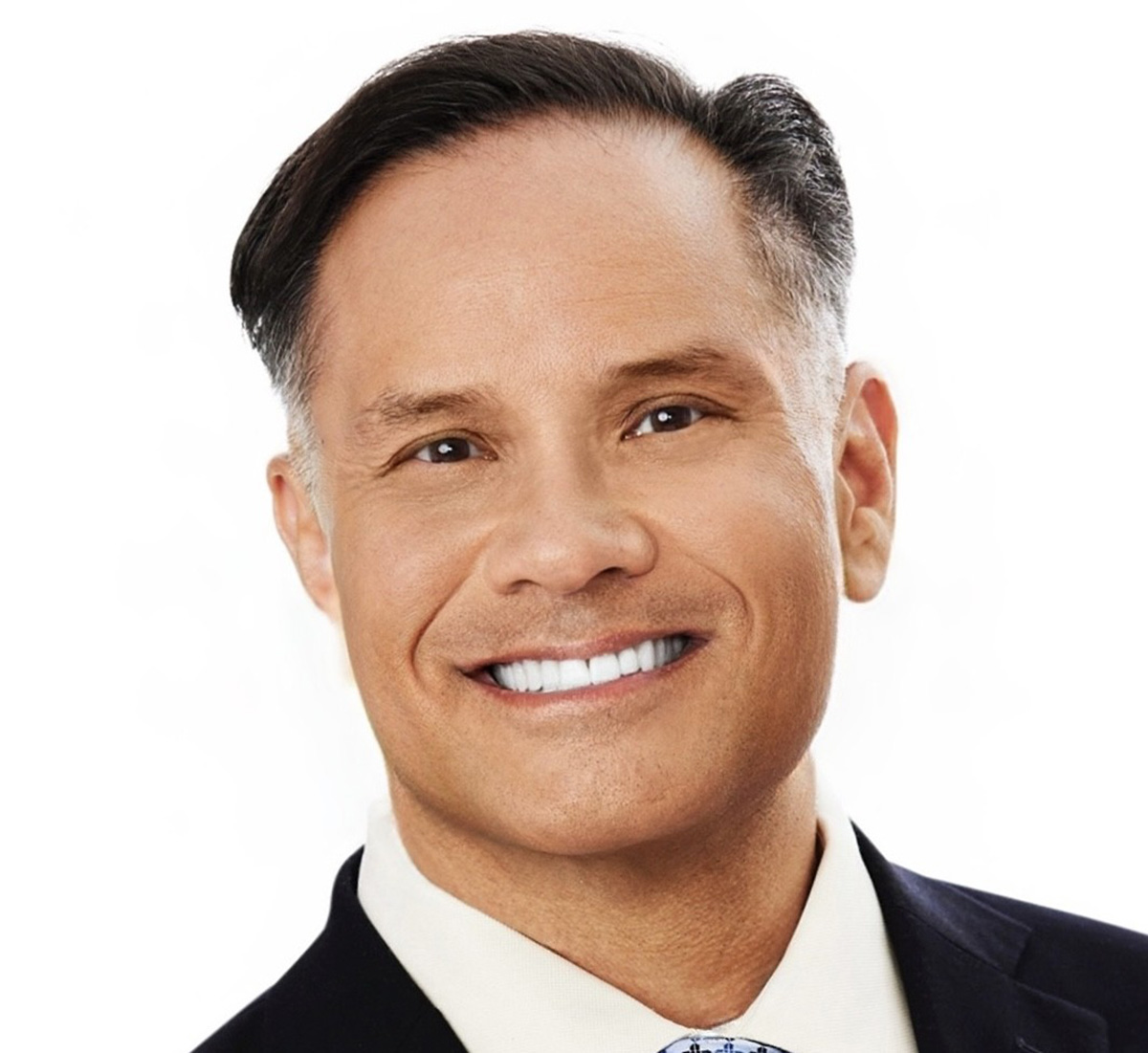
As a young student studying history at UCLA, Bobby Rimas was grounded by his growing desire to give back to his community. He worked as a tutor for low-income students and became invested in learning about the ways intersectionality impacts people’s access to education and resources. “My barriers may not be the same as yours, and your barriers may not be the same as mine,” Rimas told the Blade. “How do you apply that in leadership [and] in the classroom?”
After 15 years of service to UCLA’s various alumni networks, first beginning with the Pilipino Alumni Association, Rimas became president of the university’s Lambda Alumni Association on Jan. 1. The UCLA Lambda Alumni Association was formed in 1989 as a way to support LGBTQ+ students and graduates with professional development, scholarship opportunities, mentorship, and other outreach support.
UCLA has long been a local epicenter of queer activism and advancement. Students formed groups like the Gay Student Union and Lesbian Sisterhood in 1969 and 1973, respectively, to empower and connect queer students. Queer art and culture also thrived in this time, as students saw the launches of the queer campus paper, magazine, and a film festival that centered on LGBTQ+ stories.
Administratively, campus officials were taking a stance against LGBTQ+ discrimination. In 1975, UCLA Chancellor Charles E. Young banned departments and programs from discriminating on the basis of sexual orientation.
In the decades since, leaders like Rimas are working to preserve this history and also build upon it. How can we inspire students in and out of the classroom? How do we make sure they have access to valuable resources and can advocate for themselves in places that are not always inclusive of their needs and identities?
Rimas often ponders these questions, both as president of the Lambda Alumni Association and at Cal State LA, where he works as an associate professor of paralegal studies. There is often cross-pollination in the concerns he receives from alumni members as well as his students: How do they find employers who are accepting of LGBTQ+ people? How do they avoid being discriminated against in the workplace?
These are questions Rimas hopes to tackle more in his role as president of the UCLA Lambda Alumni Association and in his continued tenure as an educator. One of his first goals is to expand the board and bring on more diverse perspectives to the organization. “More people means more activity,” Rimas said, who hopes that the combined knowledge and resources of the board can better serve students and alumni.
Rimas also hopes to throw a large Gala event, one that mirrors the extravagant, celebratory 2019 bash he organized for the association when he was first brought onto the team. 100 people attended, creating a wave of awareness for the organization and increasing their scholarship funding.
What’s next? UCLA Lambda Alumni Association’s first board meeting is this upcoming Monday. Rimas hopes to discuss strategies to grow the organization’s presence beyond the campus’ reach, in other queer cornerstones like West Hollywood, elevating diverse LGBTQ+ voices, and improving ways they can professionally support their network’s members.
Kristie Song is a California Local News Fellow placed with the Los Angeles Blade. The California Local News Fellowship is a state-funded initiative to support and strengthen local news reporting. Learn more about it at fellowships.journalism.berkeley.edu/cafellows.

‘Star Trek: Strange New Worlds’ star Celia Rose Gooding breaks down that finale time travel twist

Colombia withdraws from Equal Rights Coalition

Caso Karlina: Una sentencia histórica contra las terapias de «conversión»

‘Embracing your identity can be a form of resistance’: Councilmember Byers highlights Bisexual Awareness Week

Dutch prime minister visits Stonewall Inn

UN human rights chief sounds alarm over ‘comprehensive onslaught’ against LGBTQ+ rights

United States Conference on HIV/AIDS grapples with federal budget cuts

Long-time DignityUSA executive director announces retirement

From the desk of Equality California: the latest political news for CA and beyond as we head into the midterms

For lesbian victims of domestic violence, competent care is scare
-
 United Nations3 days ago
UN human rights chief sounds alarm over ‘comprehensive onslaught’ against LGBTQ+ rights
-
 AIDS and HIV3 days ago
United States Conference on HIV/AIDS grapples with federal budget cuts
-
 National4 days ago
Long-time DignityUSA executive director announces retirement
-
 Politics5 days ago
From the desk of Equality California: the latest political news for CA and beyond as we head into the midterms
-
 National3 days ago
For lesbian victims of domestic violence, competent care is scare
-
 Movies5 days ago
‘Scorch Marks’: Brandon Shypkowski and Chris Salvatore play out post-apocalyptic ex drama in new horror film
-
 Theater5 days ago
Actor Ben Ubiñas is a whole different ‘Creed’
-

 Arts & Entertainment2 days ago
‘Dolly Day’ officially made holiday in California: Rainbow District plans to celebrate
-

 Fiji2 days ago
Spike in HIV cases prompts Fiji to declare national emergency
-
 Celebrity News2 days ago
Clavicular charged in alleged rape of teenage influencer