
Politics
Meet Shawn Harris who seeks to oust Marjorie Taylor Greene
“I wouldn’t be running unless I thought I could win,” Harris said. Up first is Georgia’s Democratic primary election on May 21
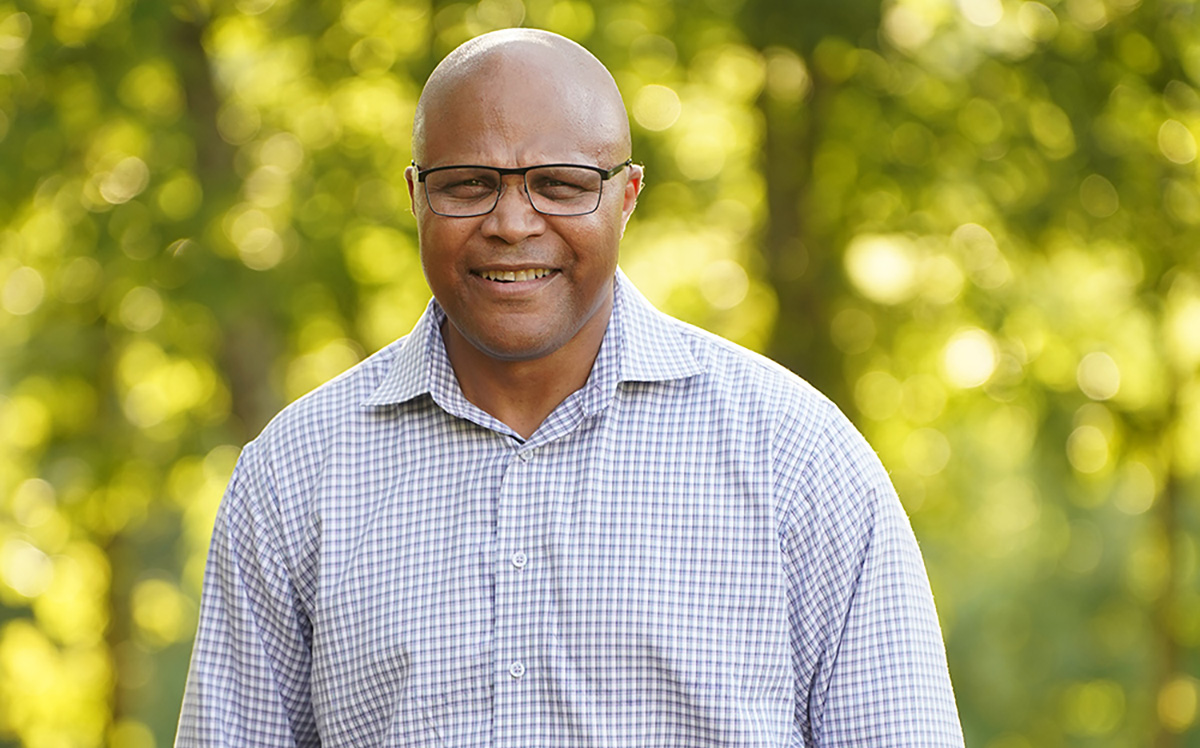
ROCKMART, Ga. – Shawn Harris, a cattleman in Northwest Georgia who served in the military for 40 years and retired as a U.S. Army brigadier general, is running for the congressional seat now held by far-right U.S. Rep. Marjorie Taylor Greene (R-Ga.).
He connected with the Washington Blade last week to discuss his candidacy as a Democrat in Georgia’s deep-red 14th Congressional District — and why his promise to deliver for constituents who have been failed by their current representative is resonating with voters across the political spectrum.
“As it stands today, I’m the lead candidate on the Democratic side,” Harris said, with “three other gentlemen running against me in the primary,” but “I am the lead candidate that has already received major endorsements,” including from Marcus Flowers, another Black veteran and Democrat who ran against Greene in 2022, and VoteVets, which is backed by more than 700,000 donors/supporters.
Harris said, “This race right now is in a situation where the district’s Democrats, Republicans, and independents are actually now truly looking at Marjorie Taylor Greene and saying, ‘she has been up there for three and a half years. What has she actually done for the district?’
He said voters are telling him, “‘I hear her always screaming about, you know, impeaching somebody, but I don’t know what she has actually done for the district.'”
A couple of weeks ago, Harris noted, Greene claimed credit for bringing millions of dollars in federal infrastructure investment to her district, only to retract the statement because the money came thanks to President Biden and the Biden-Harris administration through a bill she had voted against.
“Marjorie Taylor Greene has got herself in a situation where she’s in a civil war with the Republican Party,” he said. “She hates every Democrat that walks the face of the earth, and on top of that, she doesn’t have anything that she can stand on that says what she’s actually done here inside the district — so we have a clear path to actually beat her.”
“Based on information that we received from Marcus on what went right, what he thought he could improve, and how he raised the money, we have taken everything that he did right and brought it to our team,” Harris said. “Errors that he had, we looked at it and went with a different approach — so where I’m at right now, we’re going to every zip code in Northwest Georgia; we’re not overlooking anybody.”
Harris said he has secured support from Democrats, independents, “and we have figured out how to get Republicans to also vote for me.”
Voters can relate to Harris’s life and career
“I was military and I was high-level military,” he said. “So, it’s very easy for Republicans to Google my name and look at my history. My last assignment was in Israel. So that was a very high-level position.”
“The second piece,” Harris said, “is I raise cattle. I raise Red Angus cattle. I’m actually in my office looking out the window at them right now.”
He noted that agriculture dominates Georgia’s economy, particularly “cattle and wineries,” and also said he is an active member of the Georgia Cattlemen’s Association and U.S. Cattlemen’s Association.
“Most cattlemen, at least here in this area, are Republicans,” Harris said, so during the group’s meetings, “they get a chance to meet me just as Shawn, just as another cattleman.” At the same time, he said, “they come out here and visit me on the farm” and vice-versa.
“We help each other out” with challenges on the farm, and recently Harris said he has been hearing concerns about Greene’s opposition to the Farm Bill because it includes funding for SNAP (the Supplemental Nutrition Assistance Program) even though the legislation also “covers when farmers have drought, or hurricanes or tornadoes, or like the fires that just happened out in Texas; it helps them to replace whatever they lost.”
During “this past cattlemen’s association [meeting] two days ago, we all took up money to send to the farmers out there to try to help them get back on their feet,” Harris said. “What they’re saying to me is, ‘in three and a half years, Marjorie Taylor Greene has never been to a cattlemen’s association-type meeting anywhere.’ Okay? So you think about that.”
Harris added, “I just told you that the number one industry up here in North Georgia, northwest Georgia, is agriculture. Then on top of that, it’s cattle, and she don’t even come and talk to that particular group?”
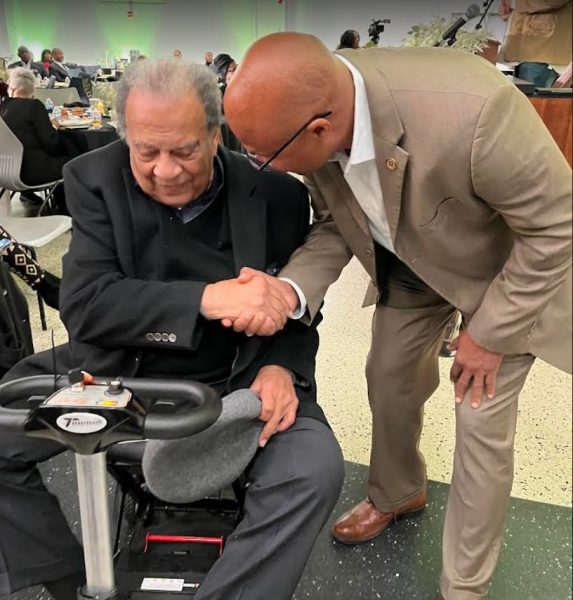
“I think she looks at it like that’s beneath her,” he said. “When you talk to cattlemen and cattlewomen, we are just everyday people, hard working everyday people, and we don’t get to sit around and watch the news and Twitter and all this kind of stuff — so in order to talk to them you’ve got to come out to their house and go out into the pasture and maybe help them with some things.”
When he visits other cattlemen and farmers, Harris said they often say, “‘you know, that guy was a general and he came over and helped you put your cow back in today.’ That is priceless. That is how you change hearts and minds.”
He hopes the experience will also “make them say, ‘OK, it’s OK to vote for Donald Trump'” but on “the second line [on the ballot] that will say Shawn Harris and Marjorie Taylor Greene,” these folks might choose to vote for the Democratic candidate or “if they skip it, the math starts going in my favor either way.”
“We have Republicans that have already come to me and are champing at the bit that are ready to start putting up signs, big signs in their pastures that will go out in mid-April that will say, ‘I’m voting for Shawn,'” Harris said.
He also discussed the significance of his military experience in the context of helping to better serve veterans in Northwest Georgia. “[We veterans are] just as diverse as everybody else,” Harris said. “And I’m going and talking to that group because I am a veteran, 100% disabled, so I know exactly what they’re going through,” particularly when it comes to challenges with getting healthcare and other services from the U.S. Department of Veterans Affairs.
“So, when I talk to my fellow brothers and sisters that are veterans,” Harris said, “I talk about those issues and say, ‘you know what? I’m going to help fix this problem, I’m going to join with Sen. [Jon] Ossoff and all of the senators to get at it, but that’s one of the things that Ossoff is really working on up here in Northwest Georgia.”
Harris said many of the policy positions outlined on his website were informed by his experience going out and talking to veterans, famers, cattlemen, teachers, and others.
“In some of the different places that we’ve been, the LGBT community has been there and asked me some questions on where I stand. And I made it very clear, just like when I was in the military, where I said ‘I believe across the board in diversity, and everybody should have a fair shake’ — that’s the same thing I believe out here northwest Georgia, and that is directly in contrast to Marjorie Taylor Greene,” he told the Blade.
Harris added that he has not yet had a formal meeting with members of the LGBTQ community, “but that community has already came to the other things and asked the question and I didn’t shy away from the question — that happened up there in Rome, Georgia.”
Asked whether, if elected, Harris might face blowback from conservative constituents over his support for LGBTQ rights, he was quick to say “no.”
“I’m not worried about any backlash or anything,” he said, because his voters “are picking me because I’m a leader,” which marks the “difference between Marjorie Taylor Greene and me — I’m going to listen to the people in my district, but I’m also going to vote and do the right thing for everybody in everybody in the district.”
Despite the efforts by Greene to “make everything seem like it’s to the extreme” including with respect to matters of LGBTQ rights, Harris said that in reality “most people out here — I don’t care if you’re Black, white, blue, or green — most people out here are laser focused on how they can get a high paying job so that they don’t have to drive to Atlanta or drive to Chattanooga, Tennessee, or drive all the way over to Huntsville, Alabama” for work.
Traveling these distances for work means “they stay over there for the week and come back on Friday,” Harris noted. “So in our area, we are breaking up the family dynamics, because either the husband or the wife is working two or three hours away from here, and so they are not here during the week.”
“What I’m trying to do,” Harris said, “and this is how I thread this needle, I’m trying to bring high-paying jobs here and generational jobs here so that people can still stay in this area, actually raise a family, and reach the American dream.”
Serving the needs of people in GA-14
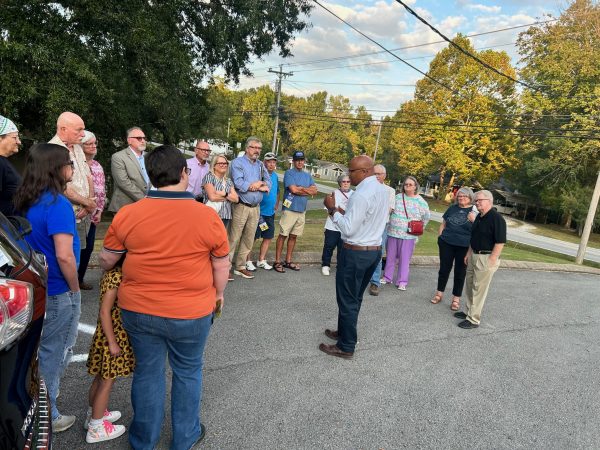
(Photo Credit: Shawn for Georgia Campaign congressional campaign)
Greene has discouraged investment in her district, Harris said, both by voting against legislation like federal infrastructure spending packages and by her extremism and refusal to work with Democrats as well as, in many cases, other Republicans.
“People are people,” he said, “and when you’re constantly out there screaming and saying negative things and saying whatever she’s saying all the time, when decision makers get a chance to make a decision, they’ve got to make whatever is the best decision for their organization. But if they say, ‘wait a minute, the person who is representing that area doesn’t seem like they want to be a team player,” then the calculus becomes, “‘where else can we take our business?'”
“What I plan to do,” Harris said, “is work very closely with the defense community and the space community and see what we can get moved from Huntsville — or whatever’s the next hot thing, to get that to be brought into the district.”
He recalled a conversation with former U.S. Sen. Richard Shelby, whom Harris was briefing in Israel, in which the Alabama Republican explained that “pretty much anything that we do in the military when it comes to defense industry or space, it all comes to Huntsville, Alabama.”
Shelby told Harris that “he wanted to make sure that in his district, no matter whether you had a GED or a Ph.D., everybody could get a high-paying job.”
“And that is what I’m trying to do for this district,” Harris said, “because we’ve got people that are already driving to these other places” to find this kind of work, so “why can’t we bring it right here? We’ve got plenty of land, plenty of space, and nothing but opportunity to make it happen — we just need the right representative to make people want to come here and do business with us.”
“I want to make sure that everybody has the same opportunities that Marjorie Taylor Greene had to have a company here, to do what they want to do with their lives,” Harris said, “and right now, Marjorie is cutting people off from opportunities.”
He added, “Her job in Washington, D.C., is to make sure that we get federal dollars into this area so that we don’t get left behind and that’s what worries me is if we continue to fight and argue, that opportunity is going to pass by our region of Georgia.”
Additionally, “Marjorie Taylor Greene is in a fight with Gov. [Brian] Kemp and that part of the Republican Party,” Harris noted. “Hence, when the state is doing certain things, we’re missing out on certain opportunities simply because Marjorie Taylor Greene is in a civil war with them.”
From the federal down to the state and the local level, the primary goal, Harris said, is “making sure we’re on the same sheet of music so that we can make things better for the people around here.”
How to beat MTG
“Marjorie Taylor Greene came in at the right time for whatever she’s trying to make herself out to be,” Harris said. “She basically came into the district — when I say came to the district, she moved from the Atlanta area into the district. And as Donald Trump was rising, she was one of the early ones that got in behind Donald Trump and rode his coattails.”
In the years since she began serving in Congress in 2021, he noted, Greene has managed to convince many rural constituents to believe what she is saying, “based on the information that she puts out here,” often through “soundbites.”
However, Harris said, often “because they have met me” or because they have moved to the area from elsewhere in the country, “people are starting to say, ‘wait a minute, what she’s telling us is not true. And we can do better.'”
“Marjorie Taylor Greene is my greatest asset,” he said. “She does something every day that actually helps me. She wants to oust the Speaker of the House for passing the budget to keep the government open. At the end of the day, here in our district, if the government shuts down — we’re not rich here, OK? We will feel it a lot faster than somebody running around New York City.”
“So, when Marjorie is saying them things, she is not even taking consideration of how this is going to affect the people in this district,” Harris said.
“Across the board, everybody is embarrassed on how she conducts herself up there in Washington, D.C., because it makes all of us down here in Northwest Georgia look like a bunch of idiots because she’s our representative,” he added.
“And if they get in behind me, and we win this thing, you would never ever have to deal with Marjorie Taylor Greene’s craziness again,” Harris said. “Because I don’t even want to repeat some of the crazy things that she has said about many communities, many communities, and that’s what gives me my energy every day to actually put things in place to actually beat her.”
The campaign, Harris said, is going to get ugly. “On social media is where I run into the Marjorie Taylor Greene people that are very bold.”
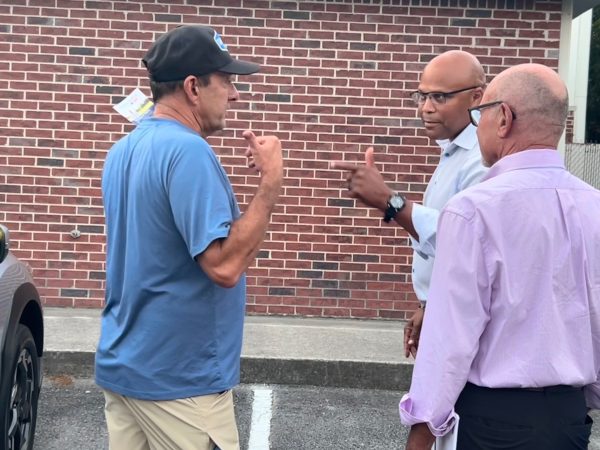
For instance, “Somebody took my picture and posted it and said, ‘hey, 90+ percent of the people that look like this guy here are the ones committing crimes.’ But guess what? Because I spent all those years in the military and I’m a leader, I did not get upset. I said, ‘you know what, OK, got it. Let’s come back positive.’ We came back positive. And the whole Twitter universe said, ‘Oh, that’s the leader that we want.'”
“I wouldn’t be running unless I thought I could win,” Harris said. Up first is Georgia’s Democratic primary election on May 21.
“In order for me — based on the people that come out to vote, based on who’s registered and all these kinds of things — the number for me to win the primary is 15,029,” Harris said, “And that gives me a 54% of the votes, so that’d be a decisive win” and position the campaign to “continue to work on more independents and more Republicans to come over to us.”
Looking ahead to the general election on Nov. 5, Harris said, “In order to beat Marjorie Taylor Greene, I need help throughout this country, because it’s going to take a lot of money to beat Marjorie Taylor Greene — and like I’ve already said, our area is not the richest part of Georgia.”
“So, in order to pull all of these things off, I’m actually appealing to the people on the ground; I’m talking to everybody face to face, going to every zip code,” he said. “But at the same time, if you go and look at me on social media, I’m on every platform out there. Every platform. So we’re fighting in the social media world and we fight face-to-face.”
“Marcus Flowers showed us, as Democrats, how to raise a lot of money into these types of races,” Harris added. “I am blessed that people are believing in me and actually want to give their hard earned dollars to our campaign and we’re being very smart and strategic about how we spend those dollars and trying to save as much as possible” because “we’ve got to get to the primary, but we try to save as much as possible so we have a war chest when we go over into the general.”
With respect to current fundraising targets, he said “we have a very good start right now.”
To win in November, however, “it’s going to take millions of dollars,” Harris noted. “So we’re constantly asking people, ‘please go to my campaign page, Shawnforgeorgia.com and donate; and if you can’t donate, just pray for us.'”
Harris pointed to Democratic Kentucky Gov. Andy Beshear’s successful reelection bid last year, after a challenging race in his “ruby red” state. “He talked about all the things that President Biden and Vice President Harris are doing with infrastructure and taking care of people — all those kinds of things, insulin, the whole nine — and he talked about those things,” Harris said. “That’s what I’m doing here.”
California
‘A disgusting attempt to exploit lesbian intimacy for political attention’: suggestive Steve Hilton ad draws criticism
Steve Hilton’s newest ad aimed at liberal voters flops with LGBTQ advocates and conservatives, but for different reasons

Two women sit on a bed, a Pride flag hanging behind them. One is nervous; the other tells her to be calm and that she’ll do “all the work.” The music swells. The two hold hands and — fill out a ballot voting for Steve Hilton?
This is the new advertisement from the Hilton Gubernatorial campaign that is drawing rebuke from both sides of the aisle, but for very different reasons.
Jorge Reyes Salinas, the communications director at Equality California, said the ad was an insult to the queer community. “This ad is a disgusting attempt to exploit lesbian intimacy for political attention,” he said. The advertisement plays on media tropes that Salinas says “reduce lesbian and bisexual women… to sexual entertainment,” rather than showing them as well-rounded characters. “Any group of the LGBTQ+ community deserves the same dignity and respect as everyone else,” he said.
The ad is truly hyper-sexualized. It ends with one woman telling the other, “Now lick it.” The two pause and stare before she reveals an envelope to send the ballot, and large text pops up saying, “Just try it!”
Salinas characterized the ad as a desperate attempt to get attention from a candidate who is trailing far behind in the polls in heavily Democratic California. The Democratic Candidate Xavier Becerra, who is endorsed by Equality California, holds a 25-point lead over Hilton according to recent polling by the UC Berkeley Institute of Governmental Studies.
Conservatives have also criticized the ad. Influential evangelical Pastor Jack Hibbs thought the ad was distasteful and said, “lesbianism among college girls and some high school girls that right now is an actual pandemic of social ill.” Republican AG candidate Michael Gates said it undermines “the sanctity of the relationship between parents and their children.” This criticism is rather confusing because although the ad features two relatively young women, they both appear to be adults, not minors.
“The comments from Pastor Jack Hibbs should be criticized because there is nothing wrong with two women being attracted to each other,” Salinas said. “We’re calling out the ad’s stereotypes, while also rejecting the homophobia in the response to it … by other Republicans.”
The backlash from Hilton’s own party and supporters shows that an advertisement full of queer innuendo was ill-considered, considering the national GOP’s attacks on LGBTQ people in recent years. Hilton himself has been campaigning against transgender girls and women competing in school sports and using locker rooms that correspond with their gender identity. This context might be why Hilton’s political base responded to the ad just as poorly as the liberal voters he was attempting to court.
Hilton says the ad is part of a new series rolling out before Election Day, showing stereotypical California liberal archetypes voting for Hilton. He claims these ads are authentically filmed with real actors, as opposed to being A.I. generated, like many of his previous ads. One other advertisement has been released so far by the campaign showing a man at a spiritual retreat also being swayed to vote for Hilton, although it is notably absent of sexual innuendo.
Caleb Kaufman is a California Local News Fellow placed with the Los Angeles Blade. The California Local News Fellowship is a state-funded initiative to support and strengthen local news reporting. Learn more about it at fellowships.journalism.berkeley.edu/cafellows.
Federal Government
Bessent says Trump chose him for his qualifications, not his sexuality
Treasury secretary spoke with Axios

Treasury Secretary Scott Bessent participated in an interview in which he said his sexuality had no impact on the president’s selection of him.
On Sunday, Axios co-founder Mike Allen interviewed Secretary Bessent, the 79th person to lead the Treasury Department, in the “Cash Room” in the Treasury building. The two talked for more than 40 minutes about issues related to the current administration’s efforts for Axios’s YouTube channel.
Bessent has been something of an anomaly during this administration, breaking what many consider the “gay glass ceiling.” He is the first openly gay person to lead the U.S. Treasury Department, the first openly gay Senate-confirmed Cabinet member in a Republican administration, and the highest-ranking LGBTQ+ government official in U.S. history.
The two covered various ground — about the state of the U.S. economy, the various AI approaches by the Trump-Vance administration, and the war in Iran. All things that have made President Donald Trump’s constant appraisal of the U.S. economy difficult to sell to the American people as the affordability crisis has worsened.
Toward the end of the interview, Allen asked Bessent about deciding not to attend the U.S. Naval Academy, knowing his sexuality would be a hindrance, and instead attending Yale University. Allen asked if his choice to attend the Ivy League school held him back in life.
“I don’t think it did at all, and it’s very difficult to talk about the counterfactual … but I don’t think going to Yale held me back,” Bessent said. “Maybe some people at other schools would think it might. But I think it makes you aware, and I’ve openly spoken about it before, too. I think maybe some of my career choices were influenced by it.”
The U.S. Naval Academy only began allowing openly LGBTQ+ students to apply — and be open about their sexuality — following the 2011 repeal of “Don’t Ask, Don’t Tell.” Prior to the policy’s removal, students could be removed from the school for violating the rules, including rules related to their sexuality.
“You said President Trump chose me because he believes I’m the best candidate, not because of my sexual preference or your green eyes … ,” Allen said.
“Exactly,” Bessent replied. “And I think that’s one of the reasons we have such a great team. The president makes his decisions all the time. You know, he’ll occasionally tell me, ‘You’re breaking my friends’ hearts.’ They see you on TV and they want an intro, and we have to break the news to them.”
Bessent has been married to former New York prosecutor John Freeman since 2011, and they have lived together in South Carolina. There, they had two children through surrogacy.
Despite being a member of the LGBTQ+ community, Bessent has publicly supported Trump’s policies, including some that have drawn criticism from LGBTQ+ advocates and organizations. These include reductions to PEPFAR funding, policies removing transgender service members from the military, recognizing only two sexes, removing LGBTQ+ protections from Title IX, and other policies that LGBTQ+ advocates argue come at the cost of LGBTQ+ safety and protections.
The Los Angeles Blade has reached out to the Treasury Department and Secretary Bessent’s team for comment and responses to these questions, including questions about how he views his identity and sexuality in relation to — and potentially at odds with — the policies and mission of the current administration. The Blade did not receive a response by publication time.
California
Governor Newsom signs 6 pro-LGBTQ bills, vetoes 1
Newsom signs all but one Pro-LGBTQ bills into law, claiming legislative overreach.

Last week, California Governor Gavin Newsom signed and vetoed a slew of bills into state law. Among them were seven pertaining to California’s LGBTQ community. Newsom signed six while vetoing one. His actions drew applause and scorn from advocacy groups in the state.
The 6 Signed Bills:
Assembly Bill 1775 allows transgender veterans, who were banned from service last year by the Trump-Vance administration, to access housing assistance, use California’s discharge upgrade assistance program, and get support for gaining employment.
Assembly Bill 1930 strengthens privacy protections for healthcare patients and providers by creating clear guidelines for California agencies, individuals, and corporations to respond to out-of-state subpoena requests relating to abortion or gender-affirming care. This includes a requirement to contact the California Attorney General at least 7 days prior to responding to the subpoena or providing legal documents. This should add additional protection to those residing in California from investigations in states where abortion or gender-affirming care has more restrictions.
Senate Bill 934 targets conversion therapy in California and increases the amount of time a patient has to bring a medical malpractice lawsuit against a provider for attempting to change the patient’s sexual orientation or gender identity. The bill takes aim at the widely debunked practice that treats queerness as a mental disorder that could be cured through psychotherapeutic methods. Conversion therapy has been illegal in California since 2012; however, a recent Supreme Court decision threw the ban into question, prompting lawmakers to write this new bill that legally defines it as medical malpractice.
Senate Bill 1023 expands access to PrEP, Pre-Exposure Prophylaxis, a medication that protects people from contracting HIV. The bill requires insurers to cover the drug through the medical benefit and the pharmacy benefit pathways, allowing for more providers to give patients PrEP.
Senate Bill 1114 strengthens privacy protections for voluntary self-identification data about sexual orientation and gender identity. The bill limits when California government agencies can share this data and bars it from being disclosed outside of the state government, with few exceptions.
Senate Bill 1328 expands support for LGBTQ students and staff in California colleges. The bill requires any institution of higher education to designate an employee at any campus, satellite campus, branch campus, or outreach center to support the needs of LGBTQ individuals.
Equality California, the largest statewide LGBTQ civil rights group in the country, commended the Governor for his support of legislation that protects and supports the queer community amid escalating threats, attacks, and rollbacks from the federal government.
Executive Director Tony Hoang said in a written statement, “California is once again demonstrating that when LGBTQ+ people are targeted, our state will respond with action,” adding, “We are grateful to Governor Newsom for signing these measures.”
The Vetoed Bill:
Assembly Bill 2164 would have banned California from extraditing anyone residing in California for providing abortions or gender-affirming care in another state. Governor Newsom vetoed this bill despite agreeing with its principles, claiming in a written statement that “extradition is an exclusively executive function” and that he did not want to limit the “executive authority of an incoming Governor.”
This bill was created in response to Louisiana’s attempt to extradite a California physician for allegedly sending abortion pills in the mail to a Louisiana woman. Governor Newsom responded forcefully to the extradition request, publicly denying it and stating, “We will not allow extremist politicians from other states to reach into California and try to punish doctors based on allegations that they provided reproductive health care services.”
In a written statement responding to the veto, Lizzy Hinkley, the legal director of the bill’s lead sponsor, Abortion Coalition for Telemedicine, criticized Newsom, stating, “[the] outgoing Governor’s principled stance is cold comfort to Californians living and working in the real world post-Dobbs. A high-brow, academic justification for refusing to codify legal protections only reveals an ignorance for the lived reality of patients and providers – and does nothing to help them.”
Caleb Kaufman is a California Local News Fellow placed with the Los Angeles Blade. The California Local News Fellowship is a state-funded initiative to support and strengthen local news reporting. Learn more about it at fellowships.journalism.berkeley.edu/cafellows.
Politics
From the desk of Equality California: the latest political news for CA and beyond as we head into the midterms
With the November midterm elections inching ever closer, Equality
California is preparing to release our final round of endorsements for local
candidates

With the November midterm elections inching ever closer, Equality California is preparing to release our final round of endorsements for local candidates, as well as prepare for major get-out-the-vote operations.
We’re also still waiting on Governor Newsom to sign our 2026 legislative package. The governor has until September 30 to sign or veto hundreds of bills from this legislative session. That means we have just a short window to make our voices heard and ensure these vital protections become law. And with the onslaught of attacks from the Trump administration, particularly against transgender youth and their families, the stakes couldn’t be higher. LGBTQ+ people deserve strong laws that affirm our dignity and protect our rights. Send an email to his office and tell him to stand up for LGBTQ+ Californians by signing our bills today!
To read more stories, join our mailing list, and sign up for the weekly Equality Brief, visit eqca.org/equalitybrief.
DOLLY PARTON: ICON. ARTIST. UNAPOLOGETIC LGBTQ+ ALLY.
We are deeply saddened by the loss of musical icon and humanitarian Dolly Parton. As legendary for her exaggerated glamour as her hit songs — “It costs a lot to look this cheap,” she often joked — Dolly was a longtime ally and supporter of the LGBTQ+ community whose message of love without limits crossed generational and political lines. In addition to her iconic musical legacy (and still the only musician to ever have their own theme park, Dollywood), Dolly also founded the Imagination Library, which promotes childhood literacy and provides free books to children from birth to kindergarten. And at the height of the COVID pandemic, she personally donated $1 million to Vanderbilt University to help with development of vaccines. If ever anyone embodied the phrase “angel on earth,” it was Dolly Parton.
Dolly, we will always love you.
- Equality California Endorses in 8 Ballot Proposition Campaigns:
Equality California announced its positions on eight statewide ballot propositions appearing on the November midterm election ballot. “Our positions reflect our commitment to advancing equality, protecting civil rights and building a California where every LGBTQ+ person can live with dignity, safety and opportunity,” said Executive Director Tony Hoang. Read the statement announcing the endorsements here. - Federal Judge Upholds Injunction Against Chino Valley Anti-Trans Policy:
A federal judge in San Bernardino County denied a request from Chino Valley Unified School District to dissolve his previous injunction blocking them from enforcement of a policy that requires school employees to forcibly out students if they identify as transgender or use different names and pronouns at school. Chino, whose board is led by anti-LGBTQ+ extremist Sonja Shaw, brought the challenge following the Supreme Court’s ruling in Mirabelli v. Bonta, where a majority of Justices ruled a school cannot purposely withhold information about a student’s identity from a parent. Because there is no such withholding requirement in the Chino case, Judge Michael Sachs allowed the injunction to stand and specifically differentiated it from the Mirabelli case. - New Report From HHS Alarms Civil Rights Groups, Advocates:
A new HHS “study” — inherently untrustworthy, originating as part of the Trump administration — posits that those who support transgender people may be more likely to justify political violence. Experts are extremely skeptical of the study’s veracity and underlying methodology, noting that it uses disproven pseudoscience as a basis for its findings. This is just the latest in the administration’s messaging war to assign blame for violence, hate crimes, and similar incidents to what they refer to as “ support for transgender ideology.” - Federal Court: IRS Cannot Share Data with ICE
A federal appeals court unanimously upheld a lower court ruling to block the Internal Revenue Service from turning over confidential taxpayer information of non-citizens who pay taxes to Immigration and Customs Enforcement (ICE). The challenge, Center for Taxpayer Rights v. IRS, was supported by an amicus brief filed by 115 Members of the Congress including Senator Padilla and Reps Sánchez and Gomez of the California delegation. - Flailing Ahead of Midterms, Republicans Turn to Tried and True Transgender Attacks:
With their prospects for victory in the midterms growing dimmer by the day, far-right MAGA Republicans are turning to attacks on transgender people as a way to motivate their base to get out the vote. States including Missouri, Colorado, Washington and Arizona will have ballot issues around banning trans youth from sports and/or prohibiting healthcare access for transgender youth (in the case of Colorado, both are up for voter approval). The efforts smack of cynicism, and are reminiscent of anti-marriage equality attacks deployed to increase Republican turnout in 2004. - Federal Judge Strikes Down Texas Drag Ban:
On Wednesday, U.S. District Judge David Hittner struck down a 2023 Texas state law that sought to restrict drag shows. Judge Hittner ruled that Texas Senate Bill 12 was an overly broad, unconstitutional attack on free speech, offering in his ruling a solution to anyone opposed to drag shows: “Just don’t go.”
UPCOMING EVENTS
Our premier event of the year, the Los Angeles Equality Awards, is happening on Saturday, October 17, 2026 from 6:00-10:00 PM at the gorgeous Fairmont Century Plaza. And this year, we’re making Monét moves — Drag Race All-Stars winner, comedian, actor, and presenter Monét X Change will serve as emcee! We’ll also honor Asm. Rick Chavez Zbur with the Equality Leadership Award and entrepreneur Tristan Schukraft with the Equality Trailblazer Award. Tickets are on sale now!
Congress
Jeremy Moss looks to bring LGBTQ+ advocacy from Lansing to Capitol Hill
Congressional candidate would represent Detroit suburbs if elected
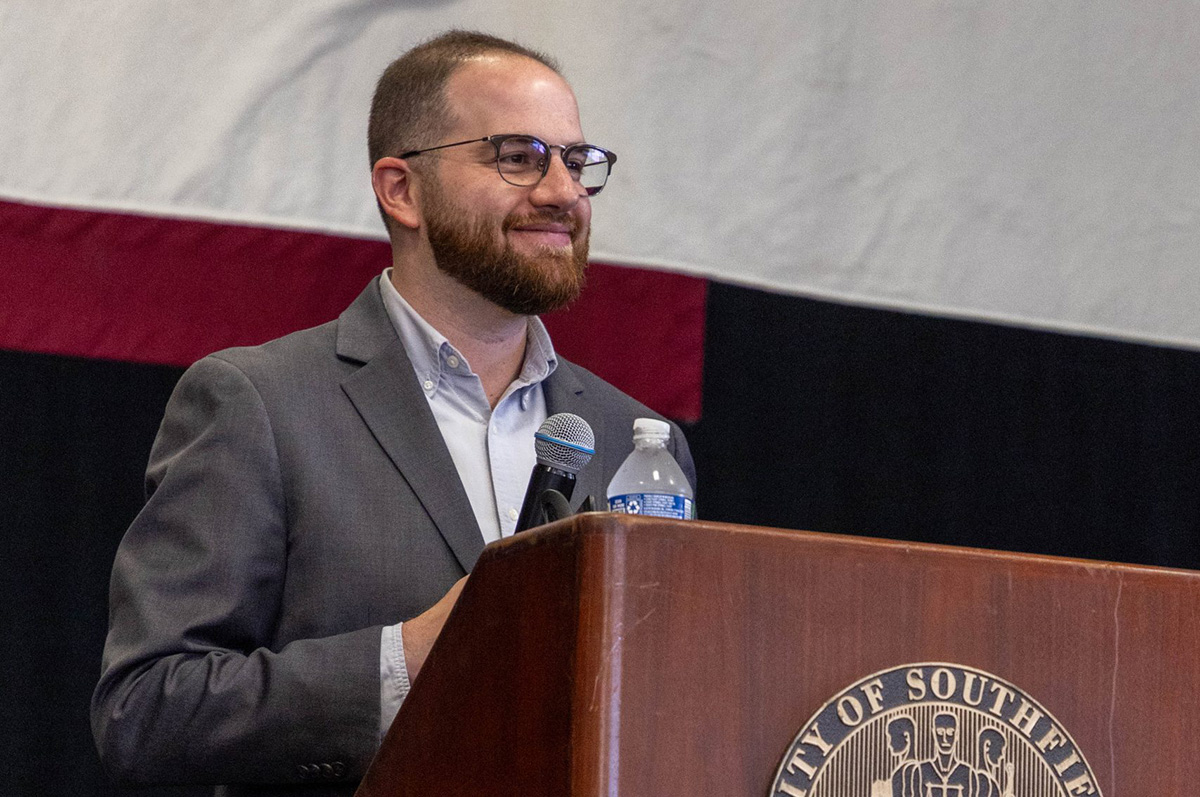
With fall comes swapping out T-shirts for sweaters, raking leaves and, of course, elections. The summer’s primaries have narrowed the playing field in a slew of races, but the big ones — the actual races for seats in federal and local elections — are still to come.
Jeremy Moss is one of those people running for a congressional seat in Michigan. Despite his young age, Moss has quickly learned the ropes of politics in the state, already serving terms in the Great Lakes State’s House of Representatives and Senate.
Moss sat down with the Los Angeles Blade to discuss his history in Michigan politics, his experience as an openly LGBTQ+ legislator and his vision for a better America as he looks toward Congress.
He currently represents Michigan’s 7th Senate District, but now he is setting his sights beyond Lansing toward Capitol Hill to represent Michigan’s 11th Congressional District, which includes Detroit’s northern suburbs.
Moss earned his bachelor’s degree in journalism from Michigan State University, where just a few years later he made history as the first openly gay person elected to the Michigan Senate and the first to serve as its president pro tempore.
His political experience stretches across multiple offices.
Moss worked in the offices of Southfield Mayor Brenda Lawrence, who also served in the U.S. House of Representatives, and State Rep. Paul Condino.
Moss, at age 25, was elected to the Southfield City Council in 2011, becoming the youngest member elected in the body’s history. He then switched over to the state legislature, representing Michigan’s 35th House of Representatives District in the Michigan House of Representatives from 2014-2018, becoming the second openly gay member elected to the Michigan legislature.
He then moved from Michigan’s House to its Senate in 2018, elected to represent the 11th Michigan Senate District and becoming the Assistant Democratic Leader. Moss started his second term in the Michigan Senate in 2023, this time representing District 7.
He currently has a long list of priorities listed on his campaign website, many of which have become standard for Democrats running across the country, with a particular focus on minimizing — and cleaning up — issues that the Republican-controlled federal government has created under President Donald Trump.
Those goals include lowering healthcare costs, tackling the cost of living crisis, holding U.S. Immigration and Customs Enforcement accountable and fixing the broken immigration system, restoring national voting rights, protecting rights — with a particular focus on abortion access and LGBTQ+ rights — combating corruption in politics, preventing gun violence and strengthening gun safety, empowering Michigan workers, and preserving the environment.
Why Moss is running for Congress
When asked why he wants to run for Congress, Moss pointed to his lengthy resume in state leadership, with a clear voice arguing that if he can do it in Lansing, he can get it done in Washington.
“I’ve served 12 years in the legislature and have ascended into leadership as president pro tem of the Senate,” Moss explained to the Blade. “We flipped our state legislative chamber to a Democratic majority for the first time in 40 years in 2022, and we passed some big, generational-changing, consequential Democratic wins that had languished for a generation, but had improved people’s lives in our state.
“We’ve passed the first gun safety laws in a generation that are saving lives. We protected the right to vote amidst attacks from Donald Trump and other conspiracies. We pushed forward and finally put LGBTQ rights in our state civil rights law. We provided free school meals and lunches for all public school children in the state of Michigan.
“The problems from Washington, D.C., aren’t getting less severe over time,” he continued. “They’re getting more severe. So this district unexpectedly opened up due to a series of retirements and it was just a great opportunity for me to continue to advocate for big change that we’ve already achieved here in the state legislature.”
“I’m a product of this district. I grew up here. I’ve represented a bulk of the district already in the state legislature, and I knew that I was going to earn grassroots support to be able to wage this campaign. We sought it out, we earned it, including some premier endorsements from Gov. (Gretchen) Whitmer, among many others, and were highly successful in the primary because we were in tune to the needs of this district.”
Moss has been endorsed by a slew of Democratic leaders and organizations, including, as he pointed out, by Whitmer.
Other endorsements include former Gov. Jim Blanchard, Secretary of State Jocelyn Benson, Attorney General Dana Nessel, the Equality PAC, the Human Rights Campaign, the Unity Fund, and the LGBTQ+ Victory Fund.
His political identity and the Democratic Party
Moss described himself as being “on the liberal end of the spectrum,” but argued that the Democratic Party’s internal divisions should not be the central focus.
“I’m certainly on the liberal end of the spectrum, but I don’t even think it necessarily has to be this progressive versus establishment fight that we’ve seen play out,” Moss said when asked about various elements of in-party disagreements. “It has to be between action and, and inaction, fighters versus folders.”
He said that distinction between action and inaction is central to how he would approach Washington.
“At this moment, I think we need to demonstrate that we are ready to take on Donald Trump and MAGA chaos with boldness and effectiveness. I’ve been saying all along our campaign trail, we can no longer be the party that shows up to the knife fight carrying a pie chart, and so I think we have to be showing that we have spine and we have punch, and we’re really ready to be tough fighters for, for Michiganders and the American people.”
“We can’t walk on eggshells anymore. We can’t pull our punches,” he added. “We can’t fear that we’re offending someone, you know, one way or another with how we act. People are expecting a bold party to take on MAGA, and I think that’s exactly what the Democratic Party needs.”
Becoming an LGBTQ+ legislator
Moss also reminisced with the Blade about his first run for elected office — at a time when Michigan had no openly LGBTQ+ members serving in the state legislature — and how that experience became deeply connected to his identity and his approach to LGBTQ+ politics.
In 2014, Michigan was in the pre-marriage equality era, and the state had no openly LGBTQ+ members serving in the legislature.
“12 years ago in 2014 — this was pre-marriage, the pre-marriage equality era — we had zero people from our community serving in the legislature, and still they were talking about us.
“The big topic then in Michigan was whether or not to expand our civil rights law to include LGBTQ protections, so that people from our community would no longer face discrimination in housing and employment. And they were talking about us regardless of whether or not we were at the table.”
Moss eventually helped lead the effort to expand Michigan’s civil rights protections to include LGBTQ+ people, a measure that passed with bipartisan support.
He said his experience as an openly gay lawmaker allowed him to make the case for LGBTQ+ protections in terms that extended beyond LGBTQ+ issues.
“One thing I definitely aligned with Gov. Whitmer at the time was making the case that discrimination was not only morally wrong, but it was bad for business,” he said. “By not having these protections for our LGBTQ neighbors and family members and friends and community members, we were actually holding back our economy. We were essentially allowing people to be kicked out of Michigan as consumers and workers, because of who they are and how they identified.”
That led to various efforts — including committee hearings and meetings with advocates, businesses and the public — that helped make Michigan what the Movement Advancement Project deems the 16th most LGBTQ+-friendly state, solidly above other states due to its robust LGBTQ+-related legislation.
“I wanted to meet everybody where they were, including those who may have not been involved with or engaged with the LGBTQ community as legislators, but understood that we couldn’t sustain the economic impact of discriminating against our community,” Moss said. “And as I’ve said all along, discrimination is bad for business. That’s something I think helped broaden the vote and earn some bipartisan support for it.”
Representation and LGBTQ+ youth
For Moss, the importance of LGBTQ+ representation also comes from his own experience growing up.
“I think about when I was younger, when I was 18 years old. It was in 2004, and, you know, there are certain things that really shaped me in that time … Michigan had a ballot proposal that passed to have the strictest language banning marriage equality in our state constitution. We didn’t even allow civil unions in that language in our constitution to exist, and there were scandal-plagued LGBTQ politicians.”
“It was the same year that Jim McGreevey was forced to resign as he came out,” he said. “So it really was a signal to me that, you know, you don’t have a future. Not just you don’t have a future in politics; you might not even have a future. Period, and it was pretty defining for me.”
Despite those fears, Moss continued to pursue public office.
“And you can’t be what you can’t see, and so to be able to break the barriers at the state level and at this congressional level, I think is a signal to anybody who is struggling with wondering where their place is?”
“I think that visibility is incredibly important, and it’s something that I needed when I was much younger, and it’s something that I’ve been honored to be able to provide for the, for the next generation of emerging leaders.”
His LGBTQ+ priorities in Congress
When asked what LGBTQ+ issues he would prioritize in Congress, Moss emphasized the importance of growing the number of LGBTQ+ lawmakers while also expanding federal nondiscrimination protections.
“To have a caucus in the legislature has made all the difference because you can, you know, run these issues across the field. You can have somebody take on marriage. You can have somebody take on trans rights. You can have somebody take on LGBTQ youth. You can have somebody take on discrimination protections.”
He sees much of the work he wants to get done on Capitol Hill as a direct follow-up to his work in Lansing — most importantly, the passage of the Equality Act. The legislation has been debated in some form for more than 50 years at the federal level, with the goal of protecting LGBTQ+ people from discrimination under federal law.
“I think the Equality Act is incredibly important. That’s kind of the, the counterpart to what we’ve done in the state legislature, ensuring discrimination protections for the LGBTQ community,” he said.
“I think housing and, and workplace discrimination is, is everything, you know, to protect our community so that they can have a safe place to call home and earn a living … That’s incredibly important across the board. And I would really want to take a leading role in telling the story of how we were able to do it in Michigan after 50 years since this act was first written — and finally finished the job federally to ensure their federal protections in, in, in, in employment and housing.”
LGBTQ+ political organizations and Congress
Moss said the LGBTQ+ political organizations that have supported his political career from its early stages have helped him along the way.
“Obviously, I’ve been affiliated with Victory Fund since I first ran for office, and they were early endorsers, but Equality PAC, which is the political arm of the LGBTQ caucus in Congress, has been an incredible part of my support system. From day one they helped me out.
“I’ve been getting to know a lot of the members of Congress who are LGBTQ, really over the last year of this campaign. So I’m eager to join them. I’m eager to be one of the players on the field here to be able to advocate and advance our issues.”
Voting rights
Voting rights are another major focus for Moss, an issue he said dates back to his experience during the 2004 campaign over marriage equality.
“Something I’m very passionate about is voting rights, and it really does go back to that 2004 campaign where it was very evident that elections can determine your future.
“Elections can determine what rights you do have and don’t have, and so I’ve been very laser focused on increasing access to the ballot box, making sure our democracy remains whole and accessible.”
He explained how Trump’s recent attacks on voting legitimacy and mail-in voting have only made his desire to help that much stronger.
“We went through a real trial of that in 2020 with, with Michigan’s presidential election, with Donald Trump and Rudy Giuliani — as he jetted into Michigan and tried to overturn our valid and accurate election results. We were kind of the spotlight of the nation in that stop this deal movement that led to Jan. 6.”
That, according to Moss, spurred direct action on his end.
“I took the helm as chair of the Senate Elections Committee, and we wrote the law to implement pieces of that ballot proposal, including drafting the law that implemented nine days of early voting here in Michigan, increased access to absentee ballot. We further secured our canvassing and certifications so that nobody could jet in with an alternative slate of electors and send them to Congress on Jan. 6.”
“So I’ve been on the front lines in Michigan on defending our election systems and strengthening protections for both voters to access the ballot box and protections against those who want to overturn our election results.”
Those issues are still present today, he explained.
“He’s pushing for suppressive tactics like the Save Act. The Supreme Court has eroded the federal Voting Rights Act,” Moss said. “I want to really get into Congress as an election expert, we have a Michigan story to tell. I wrote a lot of that story, and, and I think the most urgent thing that we could pass is the John Lewis Voting Rights Act to make sure that there’s no pocket of discrimination anywhere in our country, and that people have the ability to exercise their constitutionally guaranteed right to vote.”
What he would do differently in Washington
Moss also shared that he believes Democrats should communicate differently in Washington, with an emphasis on getting things done.
“Yeah, again, we’ve, we’ve seen politics evolve in this Trump era, and I think that Democrats need to communicate differently.
“He talks so brazenly, and how proud he is that he’s renamed the Gulf of Mexico or Lake Ontario. I put that in the stupid category.
“He’s also done things in the harmful category that he boasts about, like cutting Medicaid and cutting SNAP. And of course, he’s doing things in the dangerous category, but proud of it, like trying to overturn our elections or suppressing the vote.
“What we’re doing is both popular and good for people, whether it’s growing our economy from the middle class outward, whether it’s lowering costs, whether it’s making healthcare more affordable, whether it’s strengthening the core functions of our democracy, we have to be talking about it with the same gusto and confidence that MAGA talks about their agenda.
“I think this is a party that needs more spine and more punch, and really meet this moment because I think that’s what people are looking for, and that’s really what I think a new generation will bring into this next Congress.”
Congress
Chris Pappas wins NH Democratic Senate primary
Gay congressman running to succeed retiring U.S. Sen. Jeanne Shaheen
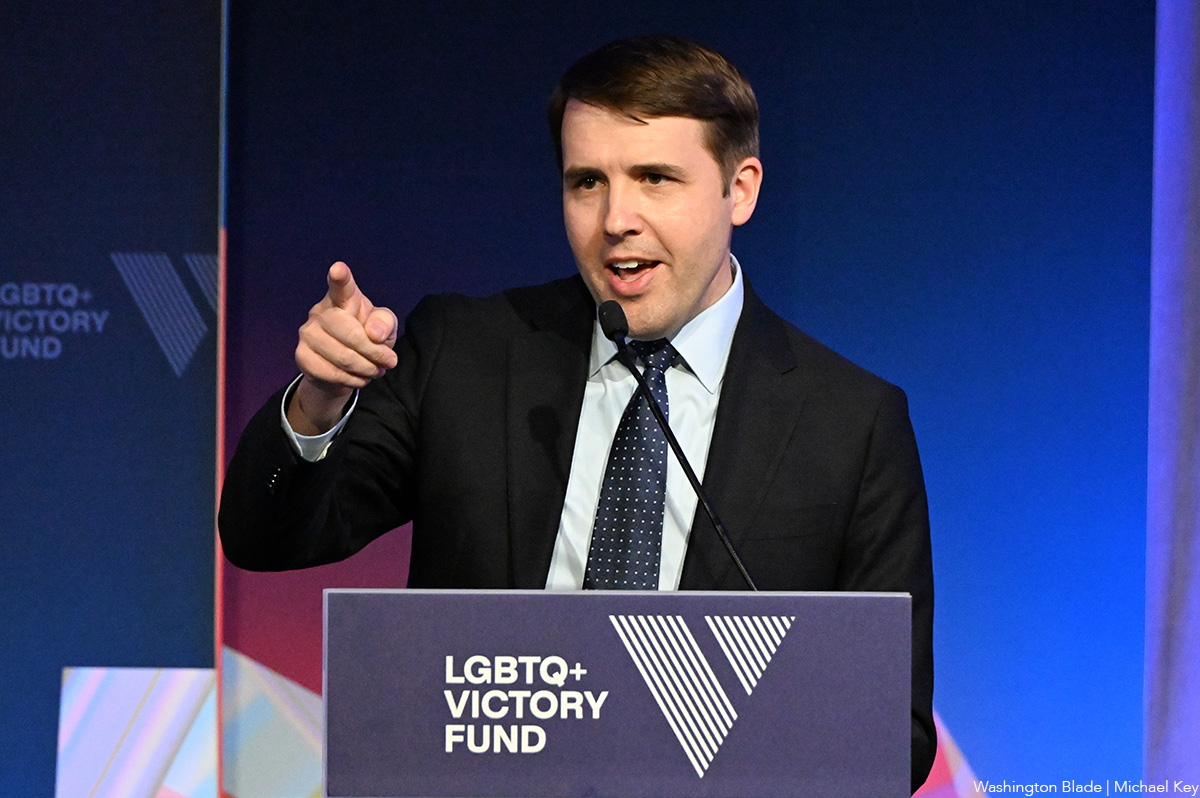
New Hampshire Congressman Chris Pappas on Tuesday won the Democratic primary in the race to succeed retiring U.S. Sen. Jeanne Shaheen (D-N.H.) in the U.S. Senate.
Pappas defeated Karishma Manzur, who was his primary challenger, by a 61.8-36.1 percent margin.
The gay congressman will face off against former U.S. Sen. John E. Sununu, who defeated former U.S. Sen. Scott Brown in the Republican primary.
“Tonight’s victory sends a clear message that voters are looking for leaders who will fight for their rights, their freedoms, and to be treated with dignity and respect,” said Human Rights Campaign President Kelley Robinson in a statement.
She campaigned for Pappas in Manchester, New Hampshire’s largest city, on Aug. 30.
“Chris Pappas has delivered results, stood up for equality, and showed up for the people he serves,” said Robinson in her statement. “HRC was proud to mobilize Equality Voters across New Hampshire to help power this win. We don’t have a second to waste between now and November. We look forward to continuing our work with Rep. Pappas as he drives toward victory in November so he can help return a pro-equality majority to the United States Senate.”
A poll the University of New Hampshire Survey Center released on Aug. 26 showed Sununu ahead of Pappas by a 45-43 percent margin if they were to face off in the general election. The margin of error is +/-2.1 percent.
Pappas would become the first openly gay man elected to the U.S. Senate if he were to win in November.
Congress
Everton Blair makes history as first openly gay congressman from Ga.
Former Gwinnett County Board of Education member to serve remainder of David Scott’s term
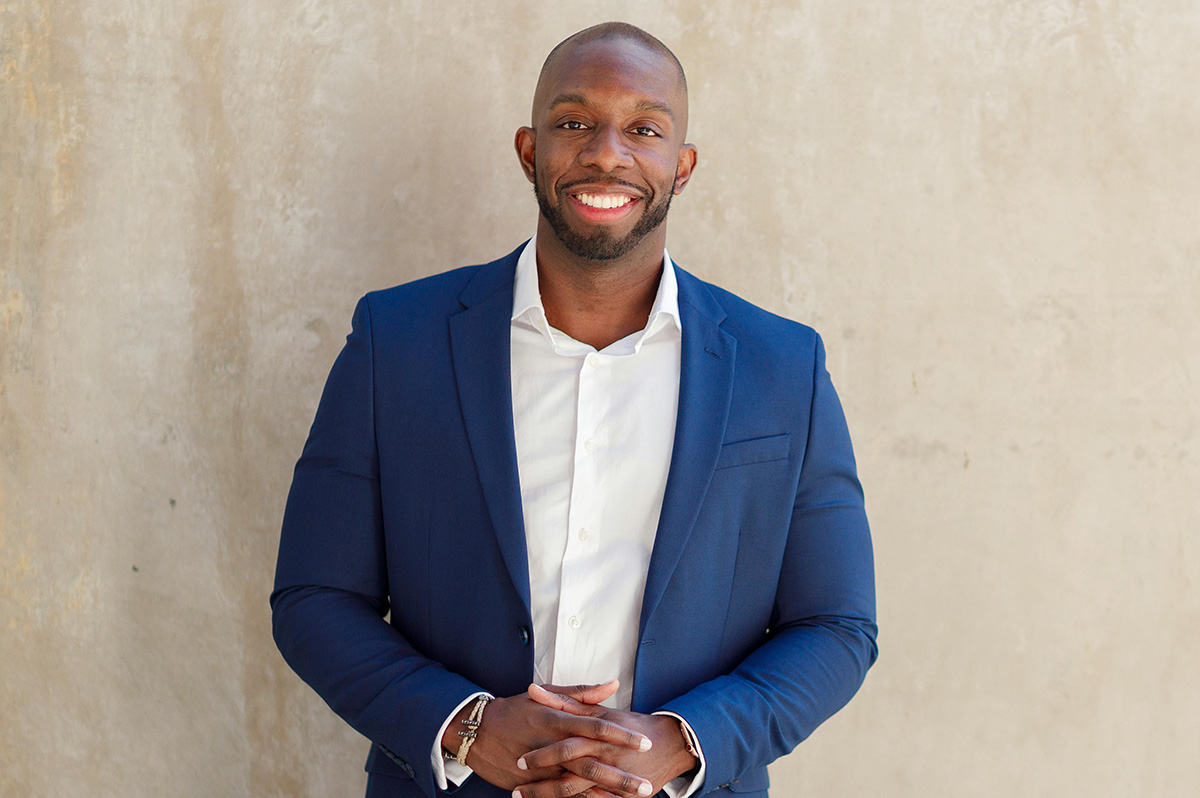
Georgia made history last week when Everton Blair, Jr., was sworn into the U.S. House of Representatives, becoming the state’s first openly LGBTQ+ member of Congress and the latest LGBTQ+ addition to the chamber.
Blair, who represents Georgia’s 13th Congressional District, was sworn in on Sept. 1 after winning a special election to fill the vacancy left by the late-Congressman David Scott. Blair defeated Marcye Scott, the late congressman’s daughter, in the Aug. 25 runoff, winning 53.2 percent of the vote to Scott’s 46.8 percent.
He will serve the remainder of Scott’s term through Jan. 3, 2027. Blair is not running in the November general election for a full term.
Blair brings a progressive platform to Congress.
The 34 year-old supports Medicare for All, a Green New Deal, raising the minimum wage, and universal gun background checks. His campaign platform also included positions on LGBTQ+ rights, reproductive freedom, workers’ rights, climate, and gun violence.
Since joining the House, Blair has joined the Congressional Black Caucus and Congressional Progressive Caucus. He is also a co-chair of the Congressional Equality Caucus.
Before joining the House, Blair served on the Gwinnett County Board of Education, where he became the first Black member and youngest-ever member elected to the board, as well as its first openly gay member. He was later unanimously selected as chair.
Blair also served as a fellow in President Barack Obama’s White House Initiative on Educational Excellence that focused on improving academic outcomes and expanding opportunities for minority students.
The son of Jamaican immigrants, Blair was born and raised in Georgia’s 13th Congressional District. He earned a bachelor’s degree in applied mathematics from Harvard University, a master’s degree in policy, organization, and leadership from Stanford University, and a Doctor of Education Leadership degree from Harvard.
Blair’s campaign received endorsements from a number of organizations, including the LGBTQ+ Victory Fund and progressive Democratic groups such as Future Democrats.
The Equality PAC, a political action committee dedicated to electing openly LGBTQ+ candidates to office, celebrated Blair’s victory and provided a statement to the Los Angeles Blade about the historic nature of his election.
“This is a historic election for Georgia, the South, and our entire country,” Equality PAC said in an email. “Everton Blair brings a strong record of public service and a deep commitment to making government work for working families.”
The group said Blair would “fight to lower costs, expand access to quality health care, create economic opportunity, and ensure every community has a voice in Washington.”
“At the same time, Everton understands the importance of standing up for equality and defending the rights and freedoms of LGBTQ Americans and every community facing discrimination,” Equality PAC said. “His historic election as Georgia’s first openly LGBTQ Member of Congress and the first openly LGBTQ man elected from the South is a powerful reminder of how far our country has come — and how much work remains.”
Equality PAC said it was “proud to welcome Everton to the House” and looked forward to working with him.
Pentagon
Pentagon expands testosterone screening as trans troops face hormone therapy restrictions
Defense Department says updated guidelines to be issued shortly

The Pentagon has announced that new clinical guidance will be released establishing mandatory testosterone deficiency screening for active-duty and reserve cisgender male service members ages 30 and older, advancing a policy that expands hormone-related care for cisgender troops.
The Defense Department said the existing clinical guidelines, which are not currently available on the Defense Health Agency’s website, are being updated and that the final guidance will be issued shortly.
The announcement comes amid a wave of anti-transgender policies from both the DoD and the Trump-Vance administration, which continue to prohibit trans men from receiving the same treatment.
Under the forthcoming guidance, men ages 30 and older will be forced to undergo testosterone blood tests as part of their medical care. Younger male service members will be tested if they request screening or if clinicians identify warning signs of low testosterone.
The new guidelines formalize a screening program Defense Secretary Pete Hegseth announced in July, when he said the Pentagon would begin testing service members to ensure that “you have the right testosterone levels to operate at your absolute best.”
“Taking care of your long-term health means ensuring you remain strong, resilient, and capable — not just for your next deployment, but for the rest of your life, so you can thrive long after you take off the uniform,” Hegseth said at the time.
The Defense Health Agency’s clinical guidance says the program is intended to address “hormonal and energy-availability issues.” Hegseth said in July that testosterone replacement therapy would remain voluntary for service members if treatment is recommended.
The Food and Drug Administration is also scheduled to hold a meeting later this month with experts to discuss the medical use of testosterone.
The Pentagon’s push to routinely test testosterone levels runs counter to current medical guidance, which generally recommends considering testosterone therapy only for men who have symptoms consistent with low testosterone and have documented low hormone levels on two separate blood tests.
Testosterone is a sex hormone naturally produced by people of all sexes. It plays a role in regulating muscle mass, bone density, and sex drive. Testosterone levels in men naturally decline with age and have been associated with symptoms including erectile dysfunction, low libido, mood changes and weight gain, although experts continue to debate when testosterone therapy is medically appropriate.
The policy has drawn scrutiny from LGBTQ+ advocates because the Pentagon and Hegseth have simultaneously cited hormone therapy as part of the rationale for removing trans service members from the military.
Under President Donald Trump’s 2025 executive order, “Prioritizing Military Excellence and Readiness,” the military has moved to bar trans people diagnosed with gender dysphoria from serving and has begun formal administrative separation proceedings against trans personnel.
The Pentagon continues to pursue implementation of the trans military ban as litigation over the policy proceeds. As a result, some trans service members have had their gender-affirming hormone therapy halted even as the Pentagon expands testosterone screening and potential treatment for cisgender service members.
SPARTA Pride, a nonpartisan nonprofit organization made up of trans service members, veterans and their allies, criticized the disparity to the Los Angeles Blade when Hegseth first announced the screening program.
“If hormone therapy helps warfighters perform at their best, then it cannot simultaneously be used as evidence that transgender service members are unfit to serve,” said Kara Corcoran, executive director of SPARTA Pride. “The same class of evidence-based medical treatment cannot be characterized as readiness-enhancing for one group and readiness-destroying for another.”
On June 1, the U.S. Court of Appeals for the D.C. Circuit ruled that trans service members already serving in the military could continue to do so while allowing the armed services to continue refusing to enlist new trans recruits.
The Blade reached out to the Pentagon when the testosterone screening program was first announced in July, asking why cisgender service members could receive testosterone therapy while transgender service members could not. The Pentagon did not respond.
Politics
How gay nerds will shape the midterm elections
HeadCount and NerdsVote are fighting to get LGBTQ+ geeks to the polls!
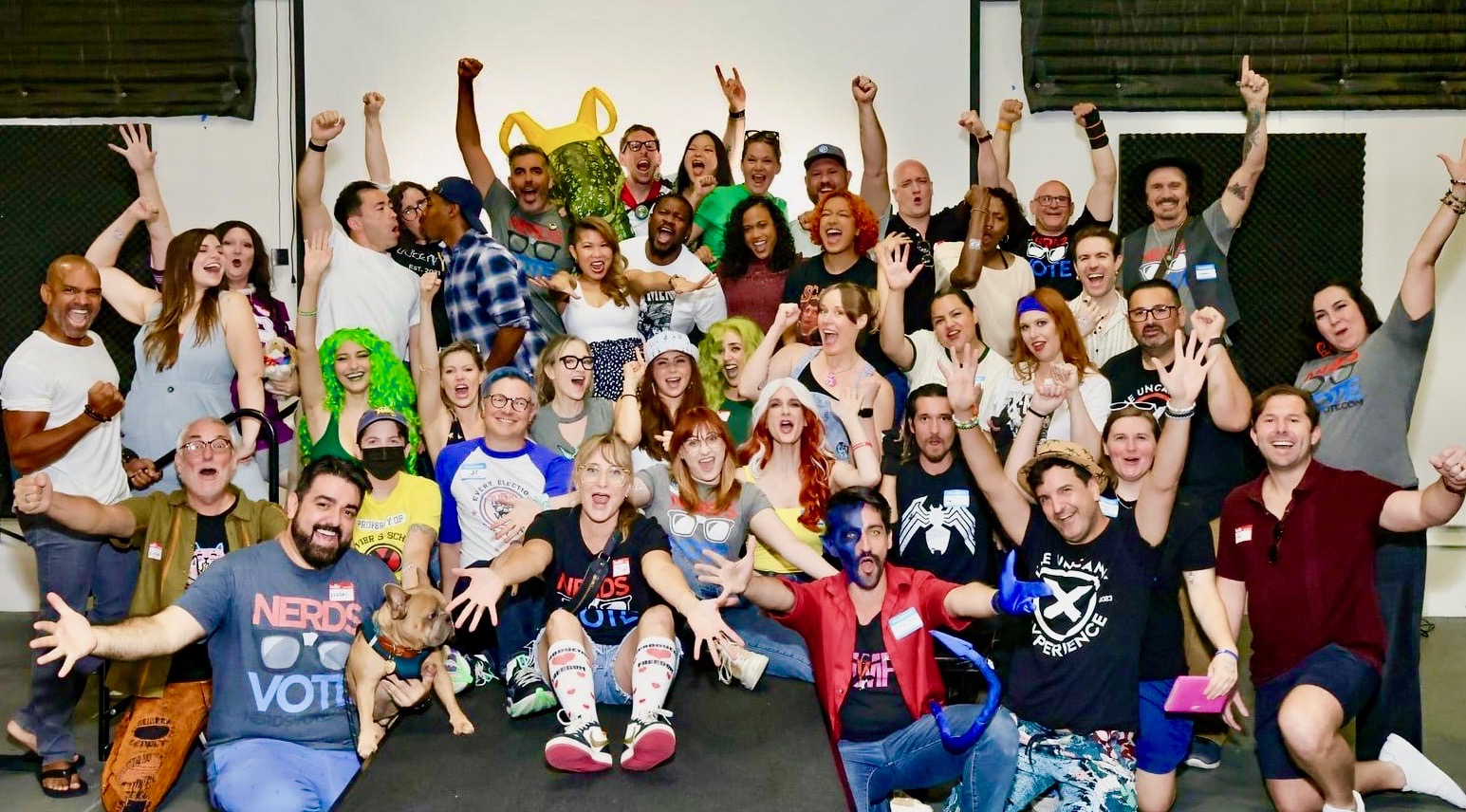
The nerd community is certainly a fierce fellowship.
These are the people completely dedicated to certain franchises, who express their love for these IPs at any given opportunity and are ready to defend them against anyone who can’t fathom their greatness. Whether it’s anime, video games, comic books or more, they know what it means to be a ‘real’ fan today. And, as the thousands of conventions hosted across the U.S. each year show, this community is only growing both in size and in social power every single day. This growth hasn’t come without issue; like any large group, nerds have faced intense struggles with online bullying and in-group harassment over the years. But these folks are united by their geeky love! And, especially when it comes to the many LGBTQ+ individuals who use their fandoms as an escape, most understand that these projects are best when you’re celebrating them with others just as heartfelt as you.
Theirs is a beautiful sense of community, one that inspired nonprofits HeadCount and NerdsVote to partner and help nerds rally around one of the best things this country has to offer: the right to vote.
Both HeadCount and NerdsVote help individuals flex their right to vote, though in very different ways; HeadCount specializes in hosting voter registration drives at large-scale events, usually concerts and festivals. While NerdsVote also supports people in the polling box, they focus on digital campaigns with nerd culture’s many celebrities to foster voter registration online. These groups recently announced that they’d be officially partnering to bring their missions into nerdy gatherings across the country, ensuring that any con-goer can leave an event not only with their favorite merch, but the knowledge that they’re ready to vote in any upcoming election.
“Our expanded partnership with NerdsVote comes at an exciting time, both as we lead up to the midterm elections but also as the comic-con community is rapidly growing,” said Tappan Vickery, Vice President of Program and Strategy at Headcount. “We are thrilled to bring voter engagement into the space, and look forward to supporting this fan-focused community.”
It’s a demographic that is especially important when it comes to voting; despite what early Hollywood will have you believe, nerd communities are some of the most diverse groups that the U.S. has to offer. Gone are the nonstop portrayals of nerds as cisgender, straight, and white, an archetype popularized in movies like Revenge of the Nerds. While those community members do exist, today’s fandoms are filled with queer folks and other marginalized identities who finally feel welcomed in these spaces. It’s a promising shift for these groups, and it’s why, now more than ever, it’s important they can vote for policies that support their rights (and against the politicians who see them as political fodder).
“From our experience working in games and animation, attending comic cons, the fans and fellow nerds we’ve met tend to be a wildly diverse, empathetic, problem-solving, and creative community,” said JP Karliak, a renowned voice performer (known for their work as Morph in X-Men ‘97) and Co-Founder of NerdsVote. “Who wouldn’t want more of them involved in our democracy?”
This partnership will see these groups set up voter registration tables at comic-cons, gaming expos, and any other nerdy festival they can find. It will offer not only vital education to the people in attendance, but a direct civic outreach that these populations don’t often receive. And, in the ultimate mission of this new partnership, it will turn America’s nerd community into the most active group of voters at the upcoming midterm elections.
NerdsVote and HeadCount are hitting the ground running with this partnership, already having tables planned for the upcoming Animate! Convention in Philadelphia and Galaxycon in St. Louis. They’ve assured their many supporters that these are only the beginning and are currently organizing for the hundreds of other nerd events 2026 still has in store. It’s hard work, but in the words of Courtenay Taylor, NerdsVote President, “[This] moves us closer to achieving my big dream of having voter registration booths at every Comic-Con in the United States!”
Congress
Markey’s primary win deemed success for LGBTQ+ activists
Mass. lawmaker champions transgender rights
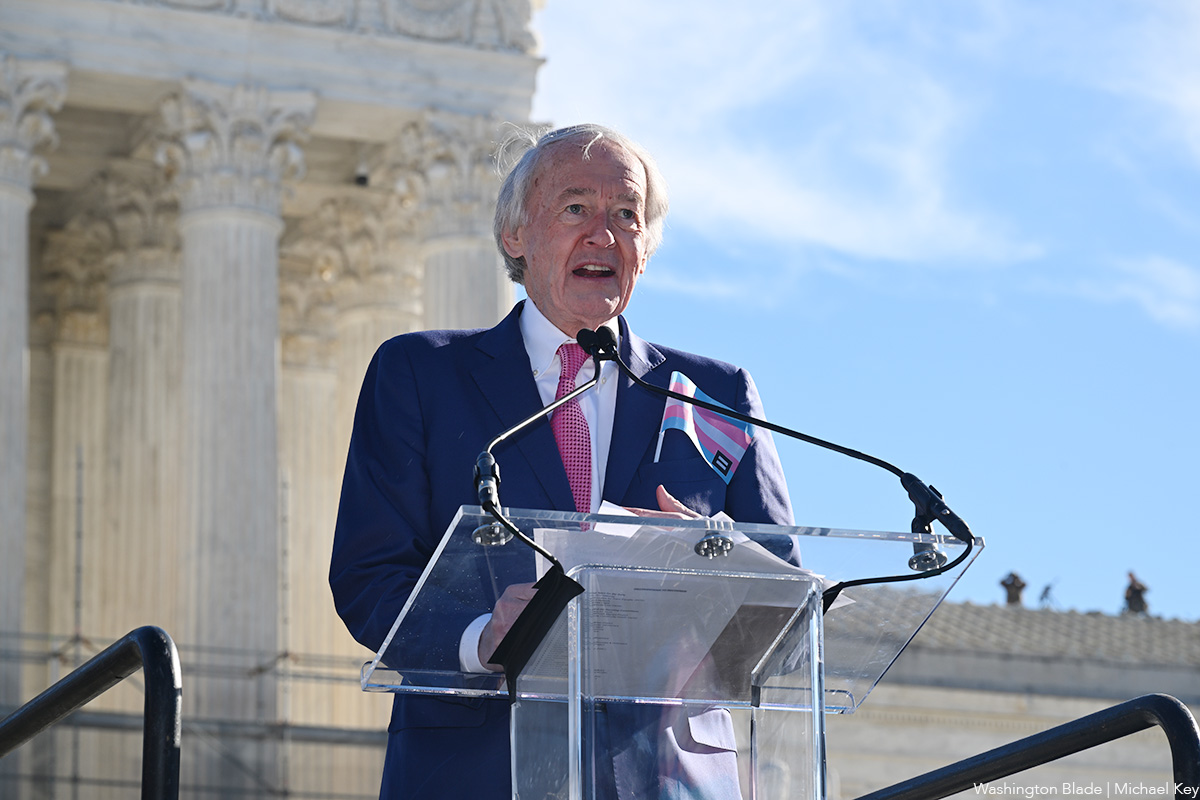
U.S. Sen. Ed Markey (D-Mass.) clinched the Democratic seat for his reelection campaign in Massachusetts’s primary election on Tuesday.
Markey won the deep-blue state with 64.8 percent of the vote, according to NBC News, triumphing over Marine Corps combat veteran and Congressman Seth Moulton, who received 35.2 percent of the vote.
Massachusetts’s primary election, which determined which Democratic candidate will head to the polls to face off against the Republican challenger in November, is being considered a victory for LGBTQ+-inclusive policy, as well as for a divisive pro-transgender rights candidate — both things Markey has become an outspoken champion of.
Markey has experience at multiple levels of government, from the state level, where he served three terms in the state House of Representatives, to his federal tenure, including 20 terms in the U.S. House of Representatives and is now serving his second term as a senator. He has become a fixture of a changing Democratic Party in one of the most consistently blue places in the U.S.
This primary — and much of the national discussion surrounding the Senate seat — focused a lot of campaigning power on fighting the growing sentiment, led mostly by Republicans, that the frustration many Americans feel lends itself to an anti-establishment and anti-incumbent attitude.
Markey ran his campaign using his past as a reflection of his commitment to constantly putting his best foot forward for Bay Staters — particularly with apprehension for issues younger and more progressive democrats have been righting for — including Green New Deal and “Medicare for All” while Moulton — who was also elected to federal office prior to this run — campaigned on being younger than Markey, arguing that he was not the same type of established politician.
Moulton also faced backlash for negative comments about trans athletes, sparking criticism for those who did want younger candidate but want for trans rights to be protected.
Markey’s track record of supporting the LGBTQ+ community is one of the most clear in federal politics, one that has garnered a “100 percent lifetime voting record” on the Human Rights Campaign’s PAC politician review scorecard.
That list of Markey’s actions includes being a cosponsor of the Equality Act, driving landmark legislation to ensure federal protections for LGBTQ+ Americans, and being one of the most vocal proponents for trans rights in the federal government — specifically in multiple appropriations bills and in the National Defense Authorization Act. He was also the lead sponsor of the Transgender Health Care Access Act and the Transgender Bill of Rights resolution.
Markey first introduced the Transgender Bill of Rights in the Senate in 2023, where it ultimately failed to be brought to law. He reintroduced the legislation this year once again. This was a direct response to the attitude pushed by many conservatives after 2021, when the push to minimize trans rights started to become a key part of their cause and has been constantly propped up by the Trump-Vance administration.
“Massachusetts needs a senator who stands up and fights back, a senator who never forgets who they are fighting for,” Markey said during his victory speech. “That has been the mission of my life, and it always will be.”
Following the calling of the primary, a slew of LGBTQ+ organizations rallied behind Markey, many pushing his past as an asset that puts his money where his mouth is through advocating for legislation specifically protecting the LGBTQ+ community.
Tyler Hack, the executive director of the Christopher Street Project, an organization dedicated to pushing for legal protections for trans americans, released a statement following Markey’s win. Hack argued that putting forward such a staunchly pro-trans candidate is a win for the community, especially after endorsing him earlier this year.
“Tonight, anti-trans politics lost. Massachusetts rejected the idea that attacking transgender people is a shortcut to political power. Voters chose a different path: one where equality is not negotiable, cruelty is not courage, and transgender people do not have to disappear for Democrats to succeed.”
The Human Rights Campaign also endorsed him as a candidate earlier this year and issued a statement via its president, Kelley Robinson.
“Ed Markey has spent decades fighting for LGBTQ+ equality, for working people, and for a more livable world,” Robinson said. “He knows why equality matters. He’s stood with us no matter what. We were proud to endorse him this year, and when a pro-equality majority takes back the Senate this fall, we will continue to count on him as a champion for our community.”
Markey is running for reelection against Republican John Deaton in November, where he is expected to win.

Essential queer horror classics for Halloween

Zaya Wade to be honored by LA LGBT Center with Model of Pride award

Carolyn Weathers: From mild-mannered to kick-ass lesbian activist in the L.A. gay liberation front

Veteran Broadway actor Laura Benanti bares all in her new show ‘Nobody Cares’

Here’s your Palm Springs look at the weekend: Oct 9-11, 2026

AIDS Walk Los Angeles set for 42nd year amid growing challenges

The facts about Victory Fund’s investigation and the path forward

10 years later, we still can’t shake Barry Jenkins’ ‘Moonlight’

‘A disgusting attempt to exploit lesbian intimacy for political attention’: suggestive Steve Hilton ad draws criticism

In Ga., 2 trans candidates believe voters are ready for them
-
 AIDS and HIV4 days ago
AIDS Walk Los Angeles set for 42nd year amid growing challenges
-
 opinions4 days ago
The facts about Victory Fund’s investigation and the path forward
-
Movies4 days ago
10 years later, we still can’t shake Barry Jenkins’ ‘Moonlight’
-
 California3 days ago
‘A disgusting attempt to exploit lesbian intimacy for political attention’: suggestive Steve Hilton ad draws criticism
-
 Georgia4 days ago
In Ga., 2 trans candidates believe voters are ready for them
-
 Obituary3 days ago
Michael Kearns has died six days before his planned return to the Celebration Theatre
-

 Federal Government4 days ago
Bessent says Trump chose him for his qualifications, not his sexuality
-

 Central America4 days ago
Alianza para la Inclusión fortalece la defensa de derechos LGBTQ+ en Centroamérica
-

 South Carolina3 days ago
Trump uses anti-trans slur against Democratic Senate candidate
-

 a&e features2 days ago
Actor Christian Tyler Dorey is a Jack of all trades