
World
Out in the World: LGBTQ news from Europe and Asia
Latvia’s civil unions law took effect Monday
LATVIA
Latvia’s law allowing same-sex couples to form civil unions came into effect Monday, and the first queer couples have already registered their unions in the Baltic nation.
Maksims Ringo and Janis Locs were the first same-sex couple to register their civil union. They did so in a ceremony at a legal office in the capital, Riga, where they exchanged silver rings, stating that they were saving gold rings for a date when Latvia legalizes same-sex marriage.
“I feel excited, kind of emotional about it as well because it is a really big step and not only for us, for the country itself. And being first, it’s all the publicity that comes with it as well. It kind of is a bit, I would say, a bit stressful, but at the same time I feel happy that we can finally do it,” Locs told Reuters.
Latvia amended its constitution to ban same-sex marriage in 2005, but in 2020, the Constitutional Court ruled that the state must give same-sex couples the same benefits that straight married couples have. In 2022, a deadline imposed by the court lapsed, and couples began applying to the courts to have their relationships recognized.
Last year, the Latvian parliament finally passed a law formalizing same-sex civil unions, but the compromise legislation has frustrated some LGBTQ activists in the country as it leaves out key rights demanded by same-sex couples. Latvia’s civil unions do not allow couples to adopt children, nor do they get key inheritance rights, they’re concluded at a notary office instead of at the civil registry, and the government still will not recognize foreign same-sex marriages.
The bill was also bitterly opposed by conservative, anti-LGBTQ groups. They attempted to force a referendum to block the bill but were unable to come up with the required signatures before the legal deadline.
With legal civil unions in Latvia, all but five EU countries recognize some form of same-sex union: Lithuania, Poland, Slovakia, Bulgaria, and Romania.
In neighboring Lithuania, a civil union bill awaits a final vote in parliament but has stalled amid infighting between liberal and conservative factions of the coalition government. This week, the liberal faction threatened to block the appointment of a European commissioner unless the conservatives agreed to pass the bill.
In Poland, the governing coalition appears to have finally agreed to pass a civil union bill, albeit one that has been watered down significantly. The resulting bill will not allow any adoption rights, nor a common surname, and will be concluded by notaries and without a ceremony rather than civil registries. The government hopes to bring the bill forward this month.
The European Court of Human Rights has ruled that all member states must provide some form of civil union to same-sex couples to be in compliance with the nondiscrimination and family rights guaranteed by the European Convention on Human Rights.
FRANCE
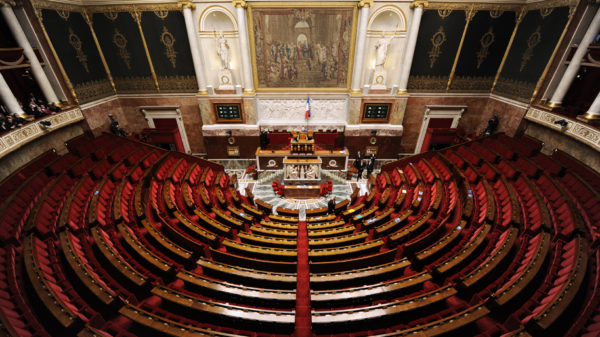
Voters gave a big boost to the far-right National Rally party in Sunday’s first-round parliamentary elections, with the Rally taking 33 percent of the vote, while the left-wing New Popular Front took 28 percent, and President Emmanuel Macron’s centrist Together bloc took 21 percent.
Parties are now jockeying for voter support in the second round, and NPF and Together have begun discussions at mutual endorsements to block the National Rally.
In France’s system, if no candidate in a given district wins 50 percent of the vote, the top two vote-getters, and any candidate who gets at least 12.5 percent of registered voters advances to the second round, which is decided by plurality vote. Because of higher-than-usual turnout of 67 percent, there are a large number of three-way races in the second round — over 300 according to official results, when the previous record was 76.
The left-wing NPF has announced it will withdraw any candidates who advanced and placed third on the ballot, in order to create a “republican front” against the National Rally. While Macron has not made a formal statement on withdrawing third-place candidates, his prime minister, Gabriel Attal, has called on third-place candidates to step aside.
The National Rally has a long history of campaigning against LGBTQ rights but has not made that central to its program in this election, where it has focused on pocketbook issues and rejection of immigration. The National Rally has long opposed same-sex marriage, and its current leader has campaigned and voted against allowing lesbians to access IVF and supports a bill to ban gender care for minors.
Several reports have emerged of National Rally supporters committing homophobic attacks in France.
A group of National Rally supporters allegedly attacked a gay teenager in Paris after the results of last month’s European Parliament elections were announced and National Rally was shown to win the largest number of sets. They were reported to have shouted “You’ll see when Bardella is in power and Hitler comes back!” and “In three weeks, we will be able to smash up f*gs as much as we like. I can’t wait.” The attackers were arrested.
GEORGIA
A package of extreme anti-LGBTQ bills sailed through first reading in the Georgian parliament on a 78-0 vote that was boycotted by most of the country’s opposition parties.
Georgia has been rocked by protests since the governing Georgian Dream party introduced a passed a “foreign agents” law, which requires any organization that receives funding from out of the country to register with the government as a foreign agent. The law was inspired by a similar law in Russia and was designed to undermine opposition groups, media, and nongovernmental organizations that are often critical of the government.
The anti-LGBTQ bills are an extreme package of legislation that was also inspired by Russia. The bills ban recognition of any same-sex relationships, forbid recognition of gender other than birth sex, forbid any medical treatment for gender change, and criminalize any advocacy for LGBTQ rights. The government says it hopes to pass the legislation by the fall ahead of national elections in October.
The bills are also designed to undermine the opposition, by forcing them to defend LGBTQ rights, which remain deeply controversial in the conservative Christian country. Opposition leaders have also made it clear that their boycott of the bill does not mean they support LGBTQ rights.
Both the anti-LGBTQ bills and the foreign agents bill have put the country on a collision course with the EU, which it has expressed a desire to join, and which granted it candidate status last year.
EU accession is very popular among the Georgian public, but the Georgian Dream party is more closely aligned with Russia, and frequently demonizes the EU by equating its values with LGBTQ rights.
Last week, EU candidates Moldova and Ukraine opened formal negotiations to join the bloc, although it is expected that it will be many years before membership is granted.
INDIA
The high court of India’s Kerala state upheld the right of LGBTQ people to live autonomously, as it rejected a petition from the parents of a 23-year-old who sought to have their daughter committed to a mental institution to “treat her sexual orientation.”
The young woman had fled her family and was living with her partner, a transgender man. Her family members repeatedly attempted to violently abduct her from her new home.
The court ruled that the woman has a right to live her life on her own terms and that sexual orientation is an innate part of a person’s identity.
The court also directed the parents to hand over all of their daughter’s personal documents, which they had been withholding, in an attempt to force her to return to them, and the court warned the family against committing violence against her.
Same-sex relationships are not illegal in India, although last year the Indian Supreme Court ruled that the government does not have to recognize same-sex marriage, leaving that question to parliament.
HONG KONG
Ten same-sex couples from Hong Kong were legally married in the U.S. over the internet this week, in a mass ceremony to celebrate Pride week.
The 10 couples took advantage of a program available through the state of Utah, which allows people to get married via an internet ceremony.
Utah has become a go-to destination for same-sex couples seeking to get married even though they live in countries that don’t recognize same-sex marriage. Utah allows couples to get married even if they’re not physically present in the state, while most states require couples to at least be present, if not resident in the state.
Hong Kong does not currently allow same-sex marriage, although last year its Court of Final Appeal ruled that the local government should offer some form of relationship recognition to same-sex couples within two years. That deadline comes up next September.
“In Hong Kong, there’s not yet a way to go to a marriage registry to get married, but there’s still this way we can offer for them to realize their dreams of getting married,” wedding organizer Kurt Tung told the Associated Press.




World
LGBTQ+ elected officials, activists around the world welcome U.S. election results
Chris Pappas’s election to the Senate is ‘particularly heartening’
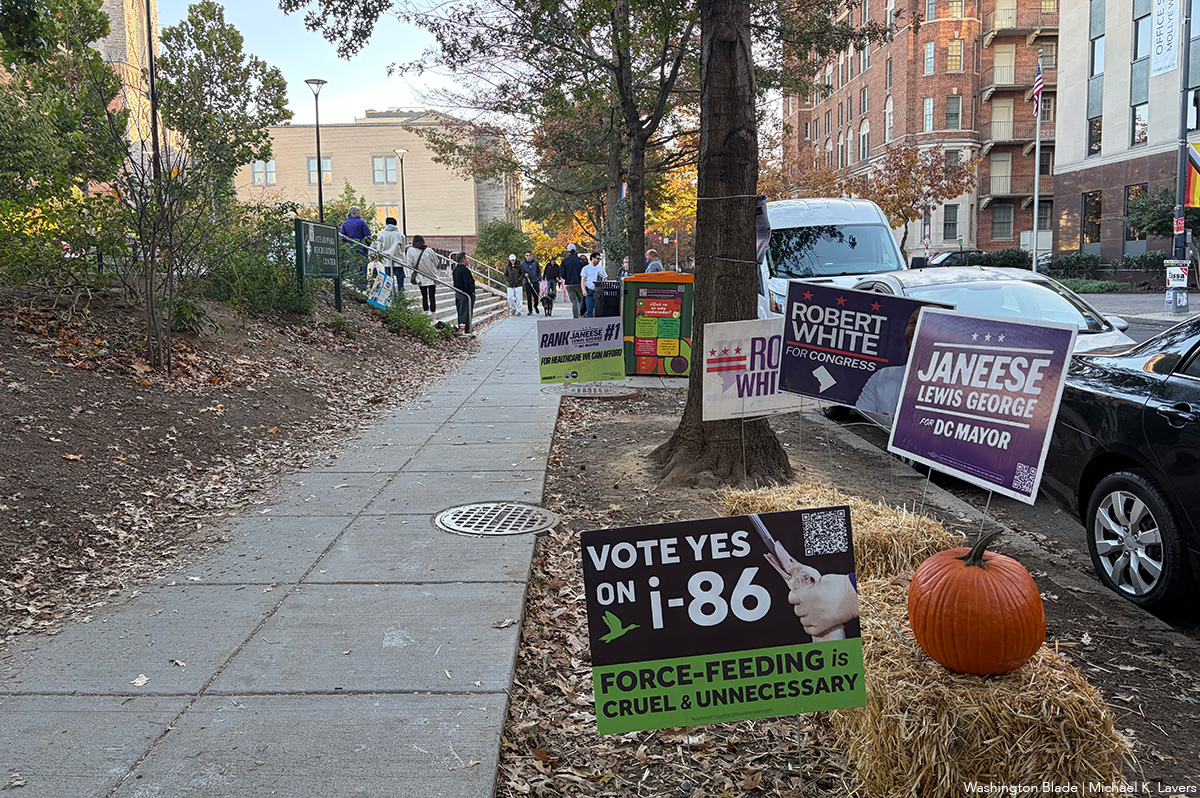
LGBTQ+ elected officials around the world have welcomed the U.S. midterm election results.
New Hampshire Congressman Chris Pappas on Tuesday became the first openly gay man elected to the U.S. Senate. He will join U.S. Sen. Tammy Baldwin (D-Wis.), who in 2012 became the first openly lesbian elected to the U.S. Senate, in the chamber once he takes office in January.
New York Congresswoman-elect Cait Conley, Michigan Congressman-elect Jeremy Moss, California Congresswoman Marni von Wilpert, and Indiana Congressman-elect J.D. Ford are among the 17 LGBTQ+ candidates who ran for federal office this year who won their races. Delaware Congresswoman Sarah McBride, who is the first openly transgender woman elected to Congress, won re-election.
“The U.S. election results remind us of a beautiful truth about democracy: power is borrowed, never owned — and voters occasionally demand it back with interest,” said Pornchai Witayalerdpan, who in 2024 became the first openly gay man elected to the Thai Senate. “Beyond the political shifts, I hope this signals a renewed commitment to accountability, decency, and common sense.”
Witayalerdpan described Pappas’s victory as “particularly heartening.”
“Becoming the first openly gay man elected to the U.S. Senate is historic, but the greater triumph is that his identity is no longer a barrier to his ambition,” said Witayalerdpan. “Another glass ceiling has shattered, and the world is a little brighter for it.”
“I sincerely hope Senator-elect Pappas will champion a bold new chapter of LGBTQ+ equality, help reverse the setbacks of Trump’s second administration, and turn the promise of equal rights into lasting protections for all,” he added.
Alex Greenwich, a gay member of the New South Wales Parliament in Australia, echoed Witayalerdpan.
“The U.S. midterms have filled progressives in Australia with hope,” Greenwich told the Los Angeles Blade. “We are experiencing a rise in the far right ahead of our election season, but the message from the U.S. is clear: if you put forward policies and plans that matter to people, and the reject culture war games, hope will prevail.”
Paolo Rondelli in 2022 became the world’s first openly gay head of state when he became Captain Regent of San Marino. He was his country’s ambassador to the U.S. from 2007-2016.
Rondelli on Thursday told the Blade the elections “mark a major achievement for the queer community and for queer politics — a trend that runs counter to the actions taken over the last two years regarding LGBTQAI+ rights.”
“Queer candidates have shown that it is possible to be effective politicians and to consistently demonstrate one’s own merit,” he said. “Now is not the time to take a single step back; rather, we must show — even more clearly and effectively — what we are capable of achieving to ensure greater rights and well-being for everyone.”
Tamara Adrián in 2015 became the first openly trans person elected to the Venezuelan National Assembly.
She described the election results as “an excellent triumph of diversity and its best form.” Adrián added they are “proof that Americans are not sectarians and exclusionary as the Trump administration has sought to portray.”
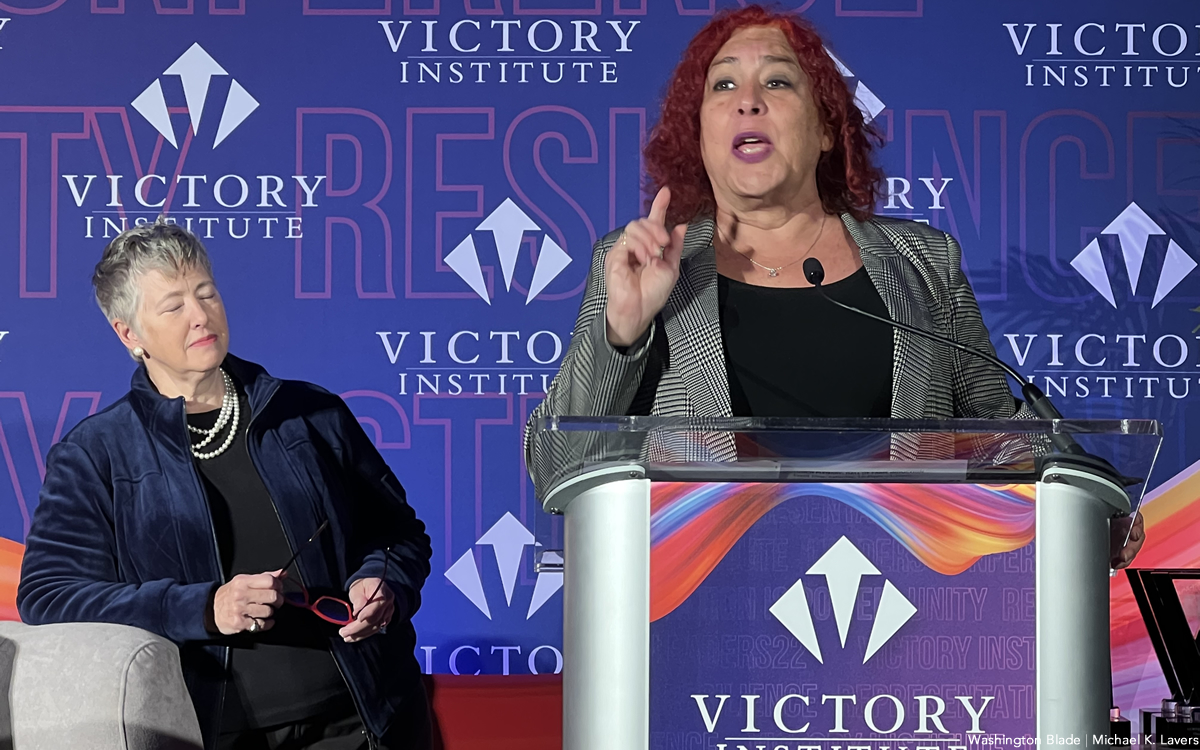
Former Irish Prime Minister Leo Varadkar in 2017 became his country’s first openly gay head of government.
He stepped down in 2020 after his center-right party, Fine Gael, lost parliamentary seats in that year’s general election. Varadkar was once again Ireland’s prime minister from 2022-2024.
Varadkar on Thursday said reaction to the U.S. election results in Europe “has been broadly positive.”
“It’s clear to us that most Americans do not support many of President Trump’s policies whether it’s the war in Iran which has driven up prices here too, trade tariffs, unconditional support for Israel or how far he has gone on immigration particularly the brutality of ICE,” he told the Blade. “There would be a concern that he might now double-down on foreign policy though given his party has lost control of Congress and not in a good way, more conflict than genuine peace initiatives.”
“It’s also been heartening to see a rainbow wave of gay, lesbian, and trans lawmakers getting elected and an understanding that with Democrats in charge of Congress and so many states, the roll back on rights will stall,” added Varadkar.

The global LGBTQ+ and intersex rights movement since the Trump-Vance administration took office in January 2025 has lost more than an estimated $50 million in funding because of foreign aid cuts, the dismantlement of the U.S. Agency for International Development, and other actions.
The Blade has previously reported PEPFAR-funded programs in Kenya and other African countries have been forced to suspend services and even shut down. A report that Outright International released in September notes 90 percent of LGBTQ+ and intersex rights groups around the world have lost funding since the Trump-Vance administration entered the White House.
“Outright International works in more than 80 countries, and governments and movements around the world are watching what the United States does next,” Outright International Executive Director Maria Sjödin told the Blade on Thursday. “Renewed U.S. engagement with the United Nations and a foreign policy that puts human rights into practice would make a difference far beyond U.S. borders. One early test will be whether Congress helps restore funding for HIV prevention and treatment, including for trans people, gay and bisexual men, and others who already face barriers to care.”
Gui Molhallem is the executive director of VoteLGBT (Institute for Full Citizenship), a group that seeks to increase LGBTQ+ and intersex representation in Brazilian politics.
They pointed out to the Blade that Congresswoman-elect Thabatta Pimenta, a trans woman from Rio Grande do Norte state in northeastern Brazil, is among the 35 LGBTQ+ candidates who won their respective races in their country’s Oct. 4 election. Incumbent President Luiz Inácio Lula da Silva defeated Sen. Flávio Bolsonaro in the second round of the Brazilian presidential election that took place on Oct. 25.
Molhallem said the U.S. election results for Brazilians “are a powerful reminder that the far right is not invincible, and that attacking LGBTQ+ people is not necessarily a winning electoral strategy.”
“Just weeks ago, Brazil elected a record 35 LGBTQ+ lawmakers,” they said. “Now, the U.S. has elected a record number of LGBTQ+ members of Congress. Across the Americas, we’re seeing something remarkable: our identities, once seen as political liabilities, are increasingly becoming electoral assets.”
“These victories also show that LGBTQ+ leaders can be unapologetically proud of who they are while building broad political coalitions around issues that affect everyone’s lives,” added Molhallem.
(Washington Blade video by Michael K. Lavers)
All Out Programs Director Mathias Wasik noted groups based in the U.S. for years “have exported anti-LGBT+ laws and talking points to Africa, Eastern Europe and beyond, selling the idea that America had turned against its LGBT+ citizens.”
“These (election) results tell a different story,” Wasik told the Blade. “American voters sent openly LGBT+ people to Congress, including the first openly gay man elected to the Senate. That matters to activists in Ghana, Uganda or Türkiye who are told that hostility toward LGBT+ people is the American way.”
Shadi Amin is the executive director of 6Rang | Iranian LGBT+ Network, an NGO that is incorporated in England and Wales. She told the Blade the U.S. election results are “truly historic.”
“Not only will the balance of power between political parties change, but the people representing Americans are also becoming much more diverse in terms of their backgrounds, sexual orientations, identities, and beliefs,” said Amin. “I think that’s incredibly important.”
Amin specifically celebrated Pappas’s election to the Senate, while adding she “would have loved to see a lesbian elected to such a position too.” (Baldwin has been in the U.S. Senate since 2013.)
“At the end of the day, as an Iranian, what matters most to me is that Americans can see the positive impact of their votes in their everyday lives and feel that their lives are getting better. We’re living through incredibly difficult times, and as an Iranian, I feel that very deeply,” said Amin. “But I also believe that now, more than ever, we need solidarity across borders and nationalities. We need a world where peace and security make it possible for people everywhere to live happy, fulfilling lives.”
Australia
Australia’s first gay state governor takes office
Thomas Bradley sworn in as Queenland’s premier on Sunday
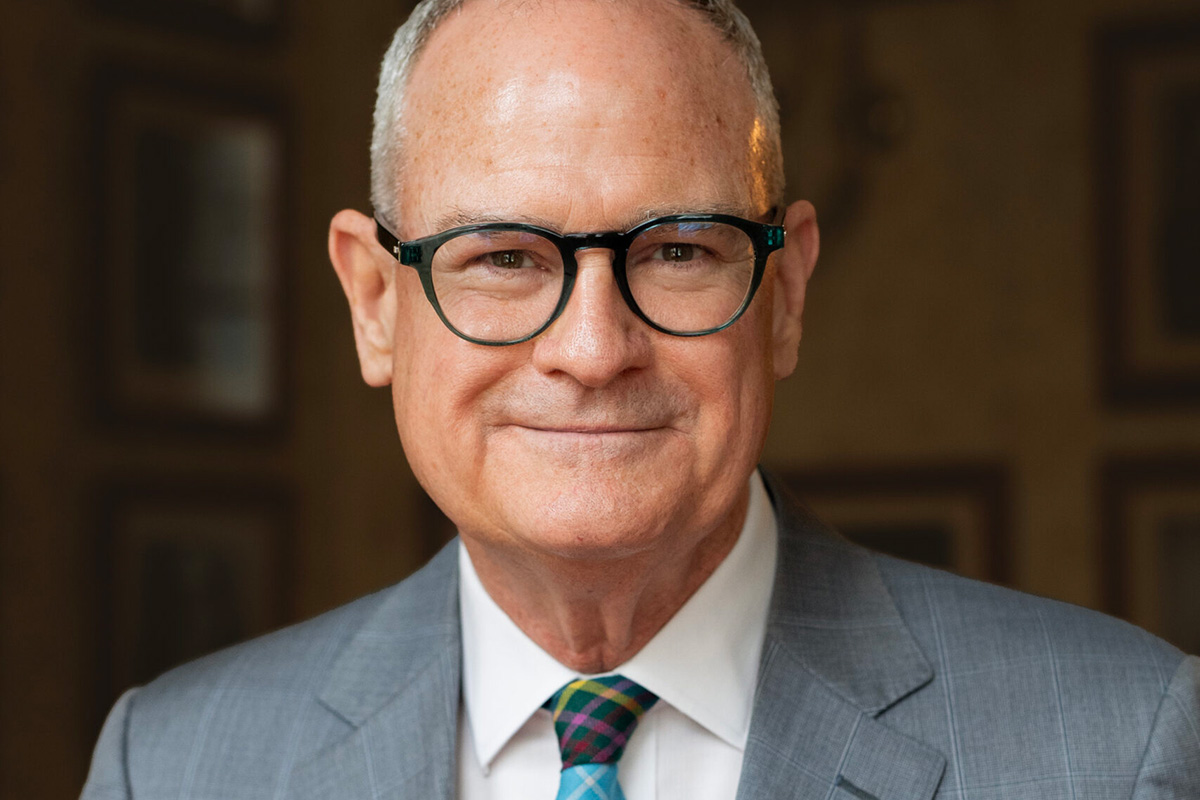
Thomas Bradley on Sunday became Australia’s first openly gay state governor.
Bradley took office as Queensland’s premier at a ceremony that took place at Parliament House in Brisbane, the state’s capital.
The former Court of Appeal judge succeeded Jeannette Young, whose term as governor ended, after King Charles III approved his appointment. (Australia is a member of the Commonwealth.)
The Star Observer, an Australian LGBTQ newspaper, noted Bradley’s partner, Matthew Yoong, attended Sunday’s swearing in ceremony.
“His Excellency has dedicated his life to service in the courts, service in the community, and his new role is the next step in a lifetime of service for this great state,” said Queensland Premier David Crisafulli. “On behalf of the people of Queensland, I congratulate His Excellency and wish him every success as Queensland’s 28th governor.”
Brazil
Lula defeats Flávio Bolsonaro in second round of Brazilian presidential election
First round took place on Oct. 4

Brazilian President Luiz Inácio Lula da Silva on Sunday defeated Sen. Flávio Bolsonaro in the second round of the country’s presidential election.
Lula beat Bolsonaro by a 51.79-48.21 percent margin with 100 percent of the votes counted. CNN Brasil declared Lula the winner shortly after 9 p.m. local time (5 p.m. PT.)
The runoff took place after neither man received a majority of votes in the first round that took place on Oct. 4.
Bolsonaro in the first round defeated Lula by a 47.03-45.16 percent margin. Several polls
The Brazilian Supreme Court on Sunday extended voting for two hours after voters in Bahia state in northeast Brazil had issues with public transportation that was to have taken them to their respective polling places and bad weather in the southern part of the country. Bolsonaro had called for them to be “annulled,” but later backtracked after his own right-wing Liberal Party acknowledged the results.
Congresswoman Erika Hilton, a travesti member of the leftist Socialism and Liberty (PSOL) party who won re-election on Oct. 4 with nearly 1.6 million votes, the most any female member of Congress has received in Brazilian history, was among those with Lula after he won the runoff. Natal Municipal Councilwoman Thabatta Pimenta, a member of the Green Party who became the first transgender woman from northeast Brazil elected to represent Rio Grande do Norte state in the country’s Chamber of Deputies on Oct. 4, and other LGBTQ+ elected officials also celebrated the incumbent president’s victory.
Bolsonaro’s father is former President Jair Bolsonaro.
Lula, who leads the Workers’ Party, in 2022 defeated Jair Bolsonaro in that year’s presidential election.
The Brazilian Supreme Court last year sentenced Jair Bolsonaro — who repeatedly targeted LGBTQ+ Brazilians and other groups while in office — to more than 27 years in prison for his role in an attempted coup that saw thousands of his supporters storm the Congress, presidential palace, and the Supreme Court itself on Jan. 8, 2023. Jair Bolsonaro is currently serving his sentence at his home in Brasília, the country’s capital, because of his poor health.
His son had pledged to pardon him if he were to become Brazil’s next president.
New Zealand
New Zealand High Court strikes down puberty blocker ban
Transgender advocacy group challenged government’s 2025 regulations
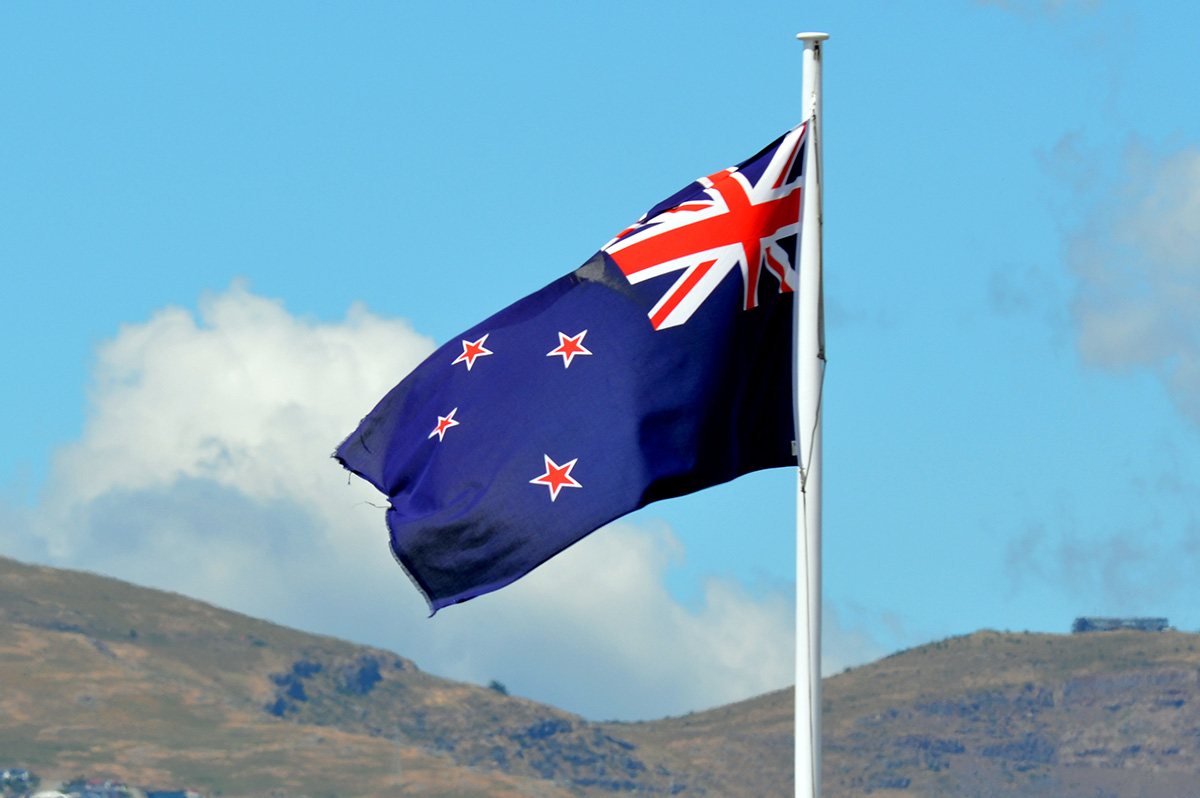
New Zealand’s High Court on Wednesday struck down regulations that banned new puberty blocker prescriptions for minors.
The Professional Association for Transgender Health Aotearoa Inc. challenged the Health Ministry over the regulations it adopted in 2025.
“The applicant successfully bought a claim for a breach of an obligation to consult under s 105 of the Medicines Act 1981 (Medicines Act),” says a press release that announced Justice Dale La Hood’s ruling. “The applicant was also successful in their claim that the minister unlawfully discriminated against young people with gender incongruence or gender dysphoria on the round of disability contrary to s 19 of the New Zealand Bill of Rights Act 1990 (Bill of Rights). The applicant’s claims that the minister abdicated his decision-making power to Cabinet and acted for an improper purpose were unsuccessful.”
“The court declined to separately determine the applicant’s claims that the minister made material mistakes of fact or that he reached an irrational decision,” added the press release. “The court also declined to determine whether there was discrimination on the basis of sex or whether the decision breached ss 8, 9 and 10 of the Bill of Rights.”
The Professional Association for Transgender Health Aotearoa welcomed the ruling.
“As clinicians, we see clearly the benefits of puberty blockers and the significant impact they have on the lives of young transgender people,” said Elizabeth McElrea, a doctor who is the advocacy group’s vice president, in a press release. “Decisions about this healthcare are best made by patients and their doctors. The removal of this regulation is crucial and puts that decision back in the consult room.”
“This judgment means that as clinicians we can continue to prescribe GnRH agonists in line with best practice and without fear of retribution for doing the right thing,” added McElrea.
Brazil
VIDEO: Interview with executive director of VoteLGBT (Institute for Full Citizenship) in Brazil
Second round of presidential election taking place on Sunday
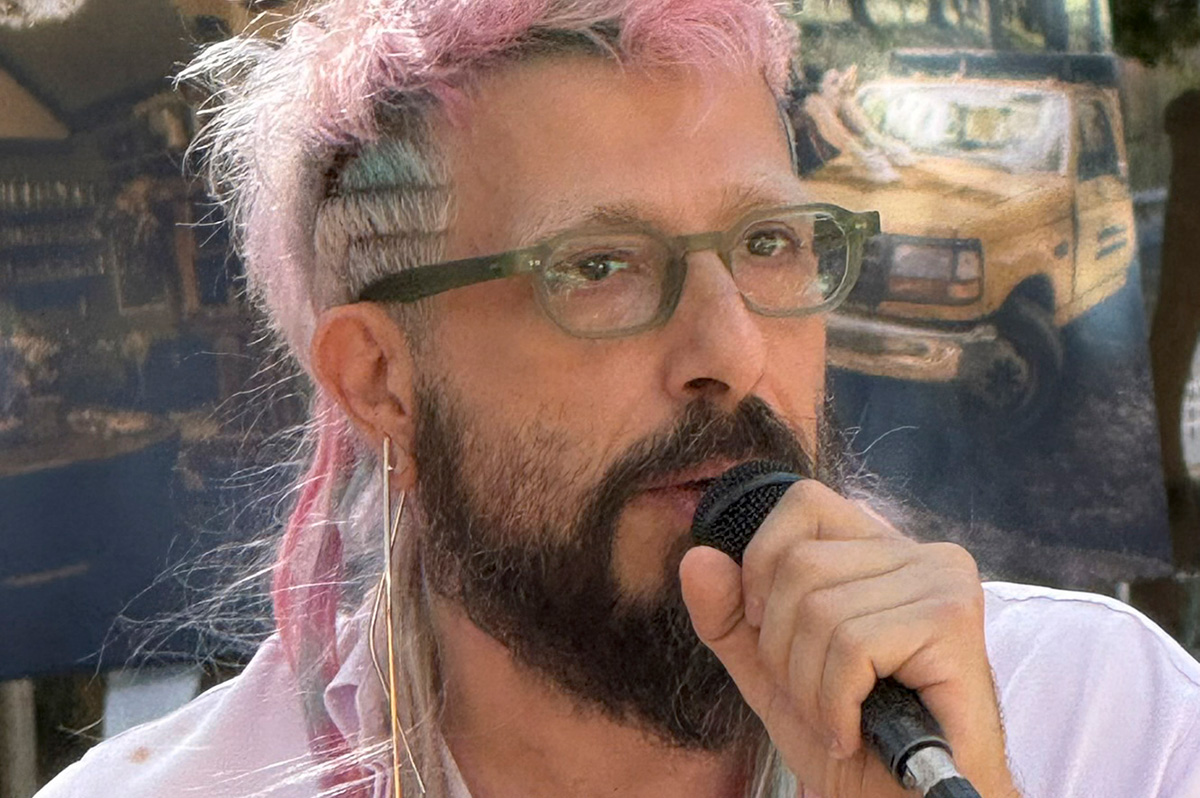
The Los Angeles Blade on Monday spoke with Gui Molhallem, the executive director of VoteLGBT (Institute for Full Citizenship), a group that seeks to increase LGBTQ+ and intersex representation in Brazilian politics.
Molhallem pointed out 35 LGBTQ+ candidates won their respective races in the Oct. 4 election. They include Natal Municipal Councilwoman Thabatta Pimenta, a member of the Green Party who became the first transgender woman from northeast Brazil elected to represent Rio Grande do Norte state in the country’s Chamber of Deputies.
Congresswoman Erika Hilton, a travesti member of the leftist Socialism and Liberty (PSOL) party on Oct. 4 won re-election with nearly 1.6 million votes, the most any female member of Congress has received in Brazilian history. Guilherme Cortes, a bisexual PSOL member from São Paulo state, and Rick Azevedo, a gay PSOL member from Rio de Janeiro state, are among the candidates who won their respective Chamber of Deputies races.

Samanda de Lula, a lesbian member of the leftist Workers’ Party, will represent Rio Grande do Norte in the Brazilian Senate.
Molhallem pointed out there will be 14 openly LGBTQ+ members of Congress once the candidates who won their races on Oct. 4 take office in February. This number is the highest of any country in the Americas.
President Luiz Inácio Lula da Silva will face off against Sen. Flávio Bolsonaro in the second round of the presidential election on Sunday after neither man received at least 50 percent of the vote on Oct. 4.

Lula, who leads the Workers’ Party, in 2022 defeated Bolsonaro’s father, then-President Jair Bolsonaro, in that year’s presidential election.
The Brazilian Supreme Court last year sentenced Jair Bolsonaro — who repeatedly targeted LGBTQ+ Brazilians and other groups while in office — to more than 27 years in prison for his role in an attempted coup that saw thousands of his supporters storm the Congress, presidential palace, and the Supreme Court itself on Jan. 8, 2023. Jair Bolsonaro is currently serving his sentence at his home in Brasília, the country’s capital, because of his poor health.
His son has pledged to pardon him if he becomes the country’s next president.
(Video by Michael K. Lavers for the Washington Blade)
Hungary
Hungarian lawmakers approve bill to remove anti-LGBTQ+ provisions from ‘child protection’ law
Prime Minister Peter Magyar’s government took office in May
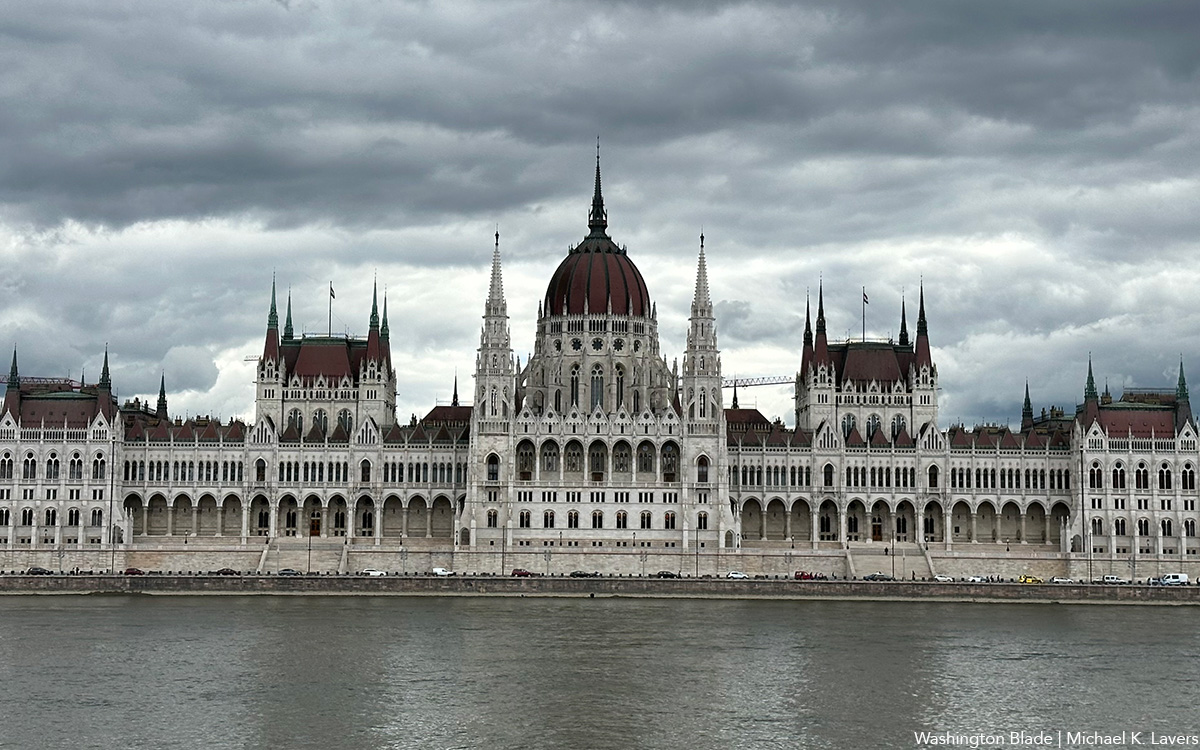
Hungarian lawmakers on Tuesday by a 139-51 vote margin approved a bill that would remove anti-LGBTQ+ provisions from a 2021 “child protection” law the country’s former prime minister championed.
“It shall be forbidden to make accessible to persons who have not attained the age of 18 years advertisement that depicts sexuality in a gratuitous manner or that propagates or portrays divergence from self-identity corresponding to sex at birth, sex change or homosexuality,” reads Act LXXIX of 2021 that MPs approved in 2021.
The European Commission in 2022 challenged the law. Sixteen EU countries eventually joined the lawsuit against it.
Then-Prime Minister Viktor Orbán’s government defended the law. The EU’s top court, the EU Court of Justice, earlier this year struck it down. The BBC reported the EU after Tuesday’s vote released €4.2 billion ($4.67 billion) in funds it froze while Orbán’s government was in office.
“We are very happy that this got adopted,” Tamás Dombos of the Háttér Society, a Hungarian LGBTQ+ rights group, told the BBC. “We’ve been fighting this so-called child protection law for five years. There have been problems with the bill submitted to parliament, but most of those problems have been fixed.”
Péter Magyar became the country’s prime minister in May after his center-right Tisza party defeated Orbán’s Fidesz-KDNP coalition in elections that took place on April 12.
The new Hungarian government in June allowed the annual Budapest Pride march to take place in the country’s capital without restrictions — MPs in 2025 passed a bill that banned Pride events, and amended the Hungarian constitution to prohibit public LGBTQ+ events.
Magyar last month announced his government would amend a law that essentially bans same-sex couples from adopting children.
Turkey
‘Governments that attack LGBTQ+ rights learn from each other’
Turkish authorities on Sept. 12 launched anti-LGBTQ+ ‘My Family Is Safe’ campaign
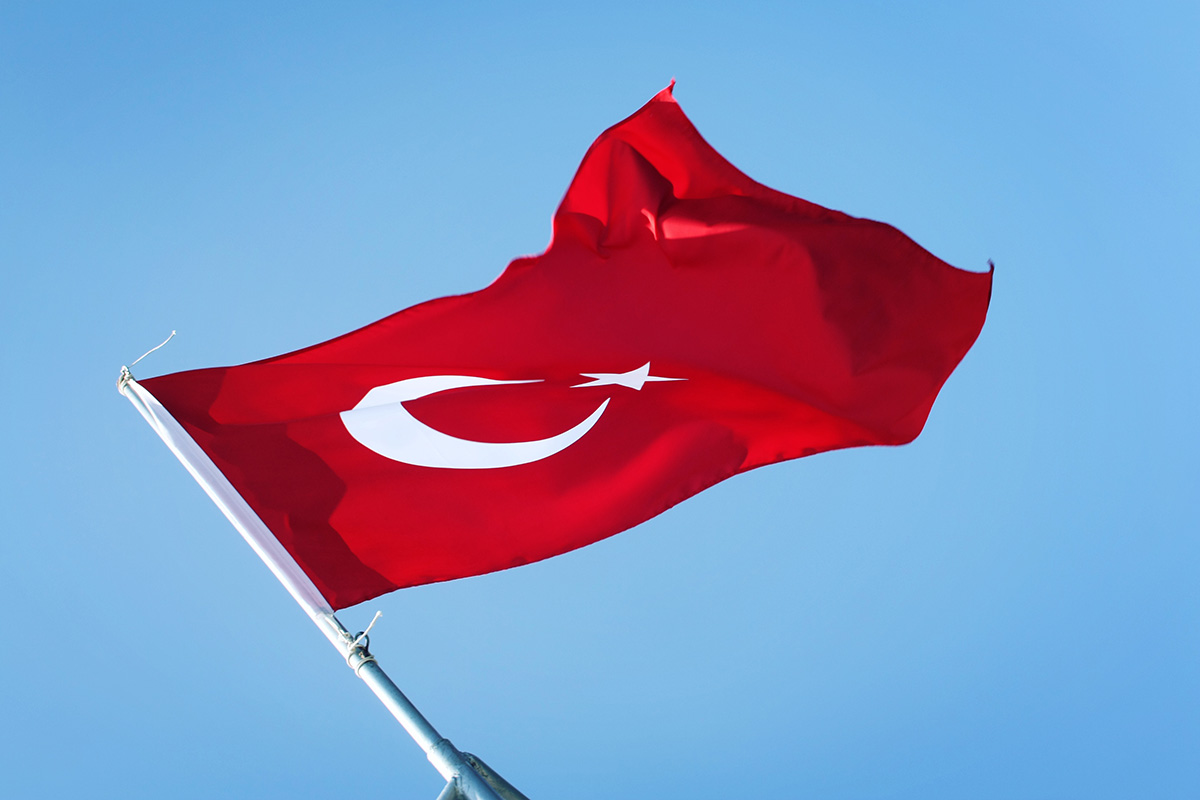
Sept. 12 is a solemn day for the people of Turkey. It is the anniversary of the 1980 coup d’état — when members of the National Security Council, along with the armed forces, dissolved the Turkish parliament, arrested hundreds of thousands of people, and entered a three-year period of martial law.
On Sept 12, the 46th anniversary of the 1980 coup, the country faced another wave of arrests; this time they targeted the LGBTQ+ community. The government launched the national “My Family Is Safe” campaign, which triggered mass raids and arrests of LGBTQ+ organization leaders, advocates, academics, and sexual health treatment centers for people with HIV. (These include EU-funded organizations launched by the Turkish government in 2005.) Since the nation has seen a decline in birthrate and a swelling economic crisis, this has allowed authoritarian President Recep Tayyip Erdoğan and conservatives in Turkey to use the LGBTQ+ community as the ideal scapegoat.
“This is the cruelest part. It was Erdoğan’s own party that made it easier to found NGOs in 2005 as an EU accession process, and that is how many LGBTI+ groups came to be officially registered.” Ali Yildiz, a linguistics graduate student at the University of Cologne in Germany, told the Los Angeles Blade. “Everything was legal, transparent and official. Now those same registrations are being used as arrest lists. The state is basically punishing those who trusted it. It sounds very much like the Nazis. They also used member lists of associations to persecute them later.”
Yildiz has witnessed the oppression of the Turkish government firsthand: in 2024, he moved to Germany. As one of the board members of a grassroots NGO that focuses on sexual health, Yildiz was at risk of arrest and prosecution.
As part of the “My Family Is Safe” operation on Sept. 12, police raided Yildiz’s family’s former home to find him.
In the aftermath of these raids in Turkey’s major cities, protestors have gathered at Turkish embassies across Europe and the U.S.
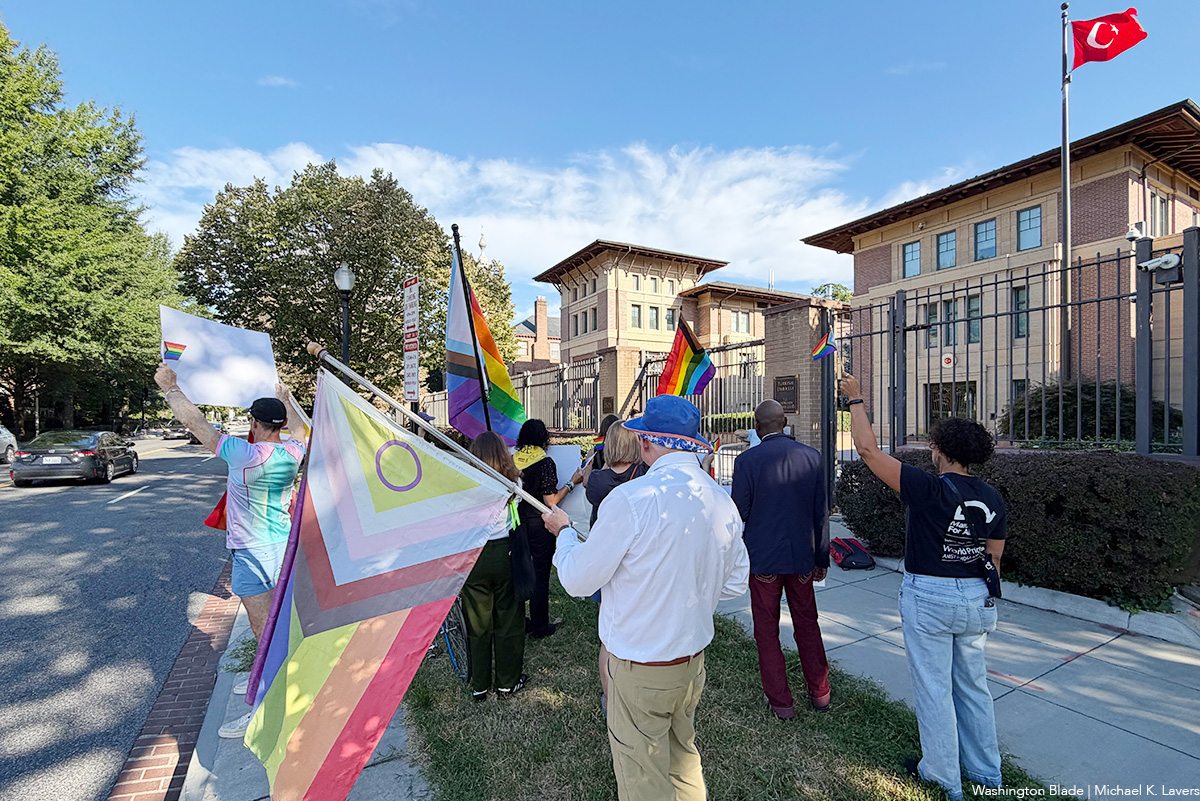
A critical discourse has also emerged as a response to the crackdown across international queer media: how should the West cover oppressive regimes abroad?
“From what I see, the Western reading of Turkey’s crackdown on LGBTI+ people usually goes: it’s a conservative, Muslim country, so this is what you’d expect. I believe that framing is incomplete, and it lets the people responsible off the hook. The Erdoğan regime is also heavily relying on this contextualization,” said Yildiz. “The government is not simply reacting to existing conservatism but is actively shaping it. Look at how operations are presented: raids on LGBTI+ organizations and activists come packaged with claims about drugs, obscenity, sex work, or organized crime on other groups in the news. The evil strategy is to link LGBTI+ people with criminality in the public mind.”
The LGBTQ+ community is not the only group that has been under the weight of oppression. Political opponents and descendants whom Erdoğan deems criminals are also charged with treason.
Istanbul Mayor Ekrem İmamoğlu, who is the leading candidate for the upcoming 2028 presidential elections for the opposition center-left Republican People’s Party, was arrested on terrorism charges in 2024. On the same day, he was nominated as the CHP’s presidential candidate.
For a while, X served as a platform to express discontent with the government, but that changed recently when Elon Musk blocked nearly 500 accounts in Turkey. The Turkish government also banned Grok after the AI system responded to a user’s question about Erdoğan, which government leaders found offensive.
The visibility of these pages has decreased. With a VPN, citizens can still access the pages because they were banned only in Turkey, not internationally.
Discontent with the government is increasing, but so is government oppression.
Not only have LGBTQ+ pages been shut down, but many journalists and academics have also had their pages banned.
The Blade spoke to an anonymous academic living in Ankara, the Turkish capital, who said Erdoğan, U.S. President Donald Trump, and other authoritarian leaders are constantly learning from each other.
“These anti LGBTQ+ policies are being created in the name of preserving traditional family values and are not only a threat to Türkiye,” they said. “It is also a global issue that threatens people everywhere. It should be perceived as an international problem. That is why we LGBTQ+ people need to act in solidarity internationally.”
Because of the compounding human rights crisis happening simultaneously around the globe, visibility has been advocates in Turkey’s main challenge.
Since 2022 there have been a series of crackdowns against opposition parties, academics, labor unions, student organizations, journalist and advocates. Another anonymous academic in Istanbul told the Blade that after the 2022 crackdown, “people were intimidated, and most people did not feel encouraged to organize.”
In the weeks following this recent crackdown, discontent with the Erdoğan government has increased along with inflation and unemployment, not helped by the war in Iran.
“Our leaders do not say anything about the financial crisis,” said the Istanbul academic.
High inflation, high unemployment rates, many factories, and businesses have left Türkiye and transferred their businesses to other countries. And because of the timing of these recent crackdowns, during this financial crisis, many people haven’t been paying attention.
Though for many queer and transgender Turks, post-Sept. 12 life has been radically different.
“I stopped doing drag in order to protect myself, and many queer performance artist friends of mine have also given up this part of their lives,” said one source who asked the Blade to remain anonymous.
“Everybody is not scared, but they simply bring their fear with them to the march and march courageously, because they believe they are on the right side of history,” they added. “However, I think it is important that people in Turkey are not represented only through their experiences of victimization. There should also be spaces where artists, activists, journalists, and other queer people can express themselves in their own words.”
The justification for this crackdown has been preserving “traditional family and conservative values.” The Turkish government has persecuted these offenses with raids, trials, and arrests that have gone beyond just the LGBTQ+ community. It targeted last year musicians, performers, and artists whom they deemed obscene or offensive.
In September 2025, the K-pop-inspired girl band Manifest was investigated for three months. Footage from their shows was banned from the internet, and the remainder of their tour was canceled. All seven members of the group faced 3 1/2 months prison sentences before the charges were ultimately dropped.
“I believe there is no pride for only some of us. Governments that attack LGBTQ+ rights learn from each other.” Yildiz tells the Blade, “Erdoğan borrows from Putin’s playbook, and parts of the Western right eagerly adopt the same rhetoric. This is a call for our community to see how important international solidarity is. People show up every single year for the Pride March, even though they know the police are going to attack. What I see in our community is pure courage.”
Japan
Report: LGBTQ+ exclusion costs Japanese economy billions a year
Open for Business findings coincide with marriage equality fight
LGBTQ+ exclusion may be costing Japan as much as ¥16.42 trillion ($10.35 billion) annually, according to a new report by Open for Business, which argues that greater inclusion could help address the economic pressures facing a country with a shrinking population and workforce.
Japan’s population is projected to decline from 126.15 million in 2020 to about 87 million by 2070, according to the National Institute of Population and Social Security Research. As the country confronts a shrinking workforce; the economic stakes of retaining talent, improving productivity, and ensuring that LGBTQ+ people can participate fully in the economy are becoming increasingly significant.
Open for Business estimates that the costs extend beyond lost earnings.
The organization attributes between $25.1 billion to $75.1 billion annually to the excess economic burden associated with depression, suicide and self-harm, cardiovascular disease and HIV/AIDS, and another $12.2 billion to $26.2 billion to lost earnings linked to the LGBTQ+ wage gap.
A 2026 survey by Dentsu Japan, the Japanese arm of global advertising and public relations company Dentsu Group, found that 10.6 percent of respondents aged 20-59 identified as LGBTQ+, up from 9.7 percent in 2023. The survey polled 46,658 people living in Japan.
The report argues that Japan already has the foundations for greater LGBTQ+ inclusion; pointing to public support, corporate leadership, and growing legal momentum. Progress on these fronts, it says, could reduce the economic costs of exclusion, strengthen workforce participation and help Japan remain competitive.
“For Japan, LGBTQ inclusion is not simply a question of fairness. It is part of the country’s economic resilience,” the report states.
Japan does not legally recognize same-sex marriages at the national level, but partnership systems have spread across local governments. As of 2024, municipalities operating such systems covered nearly 93 percent of Japan’s population. The certificates can help couples access certain services, but they do not carry the same legal status as marriage, including in areas such as inheritance and medical decision-making.
The absence of marriage recognition can leave same-sex couples facing uncertainty over hospital access, medical decisions, and survivor benefits. It can also complicate employers’ decisions about spousal health coverage, relocation assistance and family leave, particularly when policies depend on a marriage recognized under Japanese law.
Japan’s PRIDE Index, administered by the nonprofit Work with Pride since 2016, evaluates corporate initiatives related to LGBTQ+ employees across five categories, awarding Bronze, Silver or Gold ratings. In 2025, 931 companies headquartered in Japan were assessed, with 80 percent receiving the highest, Gold rating.
Despite progress in corporate inclusion, workplace practices remain uneven.
A 2026 workplace white paper by Nijiiro Diversity found that 55 percent of surveyed employees reported no concrete LGBTQ+ measures at their workplaces. A separate 2025 survey found that 30 percent of professionals had experienced workplace discrimination or bias based on sexual orientation, while 27 percent reported bias based on gender identity. Only about one-third said they felt comfortable disclosing their sexual orientation or gender identity at work.
The report also points to disparities in HIV and STI outcomes.
Men who have sex with men accounted for an estimated 82 percent of newly diagnosed HIV cases in Japan, according to the report. In a separate study at a Japanese gender-affirming clinic, researchers screened 275 transgender and gender-diverse patients and found that 6.2 percent tested positive for HIV or another sexually transmitted infection. All were asymptomatic when tested.
The report also estimates substantial losses from the LGBTQ+ wage gap.
It puts Japan’s total earned income at about $1.81 trillion, of which LGBTQ+ workers account for an estimated $175 billion, or 9.7 percent. Applying a wage gap of 7 to 15 percent, a range the report says is supported by OECD analysis, yields an estimated $12.3 billion to $26.3 billion in lost wages annually. Japanese research cited in the report also points to economic disparities among transgender workers, who are disproportionately represented in non-regular employment and lower-income groups.
“Public attitudes and many leading companies have moved considerably, but national frameworks and everyday workplace experience have not yet caught up. That creates both a challenge and an opportunity,” said Open for Business CEO Ken Janssens. “Japan’s population is projected to fall from roughly 125 million in 2020 to fewer than 87 million by 2070, while its working-age population is already contracting. The country ranks 14th globally for talent appeal but 55th for talent readiness, according to the report. In that context, Japan simply does not have talent to waste. Every worker who is less healthy, less productive, pushed into lower-paid work or unable to participate fully because of discrimination represents a cost that becomes harder to absorb as the labour force shrinks.”
Janssens further told the Los Angeles Blade that the report’s ultimate message is that LGBTQ+ inclusion is a question of fairness, but in Japan, it is increasingly a question of economic resilience as well. The foundations for further progress are already there. The challenge now is to convert visible corporate leadership and social momentum into consistent practice and clearer protections.
Akira Nishiyama, a spokesperson for the Japan Alliance for LGBT Legislation, told the Blade that Japan’s business sector has pushed for stronger legal protections for sexual and gender minorities.
In 2017, the Japan Business Federation, known as Keidanren, announced a policy calling for nondiscrimination based on sexual orientation and gender identity. Its chairperson also stressed the importance of legislation explicitly prohibiting such discrimination in 2023.
Nishiyama added Japan’s laws addressing workplace power harassment cover harassment based on sexual orientation and gender identity, outing someone without their consent, and forcing or pressuring someone to disclose or conceal their identity. Employers and local governments are required to take measures to prevent such harassment.
“While such legal frameworks and social momentum continue to advance, a law prohibiting discrimination based on SOGI has still not been enacted,” said Nishiyama. “In other words, legal measures to address discriminatory treatment, such as discriminatory hiring refusals, unreasonable transfers, and coerced resignations, are still insufficient. When legislations are needed to bridge this gap, I believe that initiatives promoted by the business sectors as well as the issuance of clear policies aimed at prohibiting discrimination, will serve as one of the major driving forces in this effort.”
Makiko Terahara, co-representative and leader of the business collaboration team at Marriage for All Japan, told the Blade that the figures are estimates and that the report does not claim legal reform alone would eliminate the economic losses.
“But the connection is real. Without marriage, same-sex couples have no spousal status for inheritance, tax, social security or medical decision-making. Without anti-discrimination legislation, employees have no clear legal remedy. This insecurity drives the concealment, stress and wage gaps that the report quantifies. So yes, I believe stronger legal protections would have a measurable impact on health, retention and Japan’s ability to attract talent,” she said.
Terahara also noted to the Blade the report cites a study finding that living in a municipality with a partnership system was not associated with better mental health. She said symbolic recognition without legal rights is not enough.
“The report confirms that Japanese society and business are already ahead of national law,” said Terahara. “Public opinion and leading companies have moved, and the remaining gap is in legislation. The report shows that marriage equality is not only a human rights issue but also an economic one, and that the cost of inaction is being paid now.”
The Open for Business report can be read here.
Afghanistan
ICC unseals arrest warrants for Taliban officials accused of persecuting LGBTQ+ people, women
‘For LGBTIQ+ people, this matters enormously.’
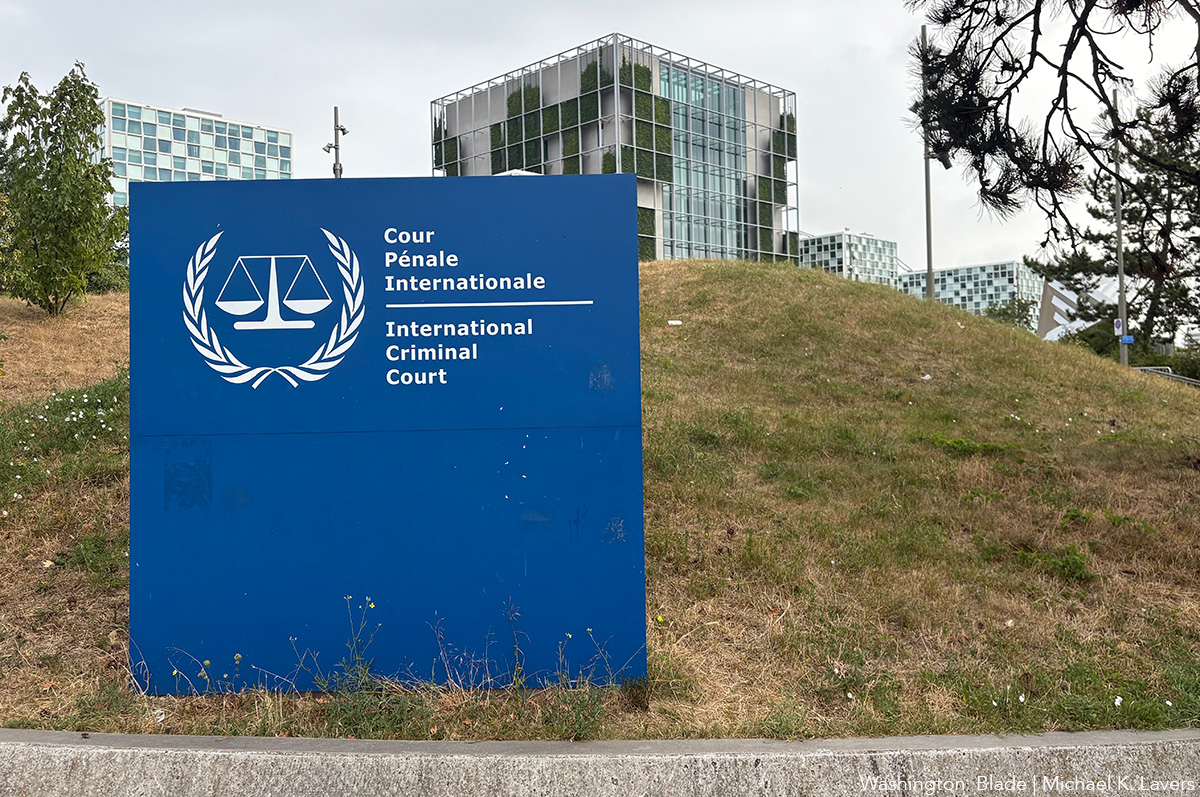
The International Criminal Court this week unsealed arrest warrants for four Taliban officials in Afghanistan accused of targeting LGBTQ+ people, women, and others who defy the group’s strict gender norms.
The warrants the ICC unsealed on Oct. 5 are for Hibatullah Akhundzada, the Taliban’s supreme leader, and Chief Justice Abdul Hakim Haqqani. The ICC also unsealed warrants for Education Minister Habibullah Agda and Higher Education Minister Neda Mohammad Nadim.
The ICC last year announced warrants for Akhundzada and Haqqani, as the Washington Blade previously reported.
“In the warrants of arrest, the (Pre-Trial) Chamber (II), in line with current developments in international law, found that the definition of ‘gender’ in the Rome Statute necessitates an interpretation that goes beyond a purely biological conception of sex,” reads the ICC’s Oct. 5 announcement. “It considered that it requires acknowledging the socially constructed roles, behaviors, expectations, and hierarchies traditionally associated with individuals on the basis of their sex. The Chamber considered that these societal constructs, commonly referred to as ‘gender norms,’ form part of the contextual lens through which acts amounting to gender-based persecution under article 7(1)(h) must be assessed.”
“It found that there are reasonable grounds to believe that the four suspects are criminally responsible for having ordered, induced or solicited the crime against humanity of persecution, under article 7(1)(h) of the Rome Statute, on gender grounds against girls, women, and other persons non-conforming with the Taliban’s policy on gender, gender identity or expression; and on political grounds against persons perceived as ‘allies of girls and women,’” it adds. “These crimes are believed to have been committed on the territory of Afghanistan since the Taliban seized power on Aug. 15, 2021, and have continued until at least Jan. 20, 2025.”
The Rome Statute established the ICC, which is in the Dutch city of The Hague, in 2002 after 60 countries ratified it.
The U.S. is among the countries that do not recognize the ICC. Secretary of State Marco Rubio on Friday announced U.S. sanctions against the ICC, which he described as a “rogue court.”
Then-ICC Chief Prosecutor Karim Khan in January 2025 announced a request for warrants against Taliban officials over their treatment of women and other groups since they regained control of Afghanistan in 2021. It marked the first time the ICC specifically named LGBTQ+ people as victims in a gender persecution case before it.
A report that Outright International released in 2023 notes Taliban officials have systematically targeted LGBTQ+ people — especially gay men and transgender women.
Taliban officials have subjected them to physical and sexual assault as well as arbitrary detention. The Outright International report also notes Taliban authorities have carried out public floggings for alleged same-sex sexual relations, and have collected intelligence on LGBTQ+ activists and community members.
Artemis Akbary, executive director of the Afghanistan LGBTIQ Organization, on Oct. 5 described the additional arrest warrants as “huge.”
“For LGBTIQ+ people, this matters enormously,” he said. “It strengthens the understanding that gender persecution can also capture persecution based on non-conformity with imposed gender roles, identities, and expressions.”
“This is an important development for accountability in Afghanistan, and potentially far beyond it,” added Akbary.
Central America
Alianza para la Inclusión fortalece la defensa de derechos LGBTQ+ en Centroamérica
Se implementa el proyecto en Guatemala, El Salvador y Honduras
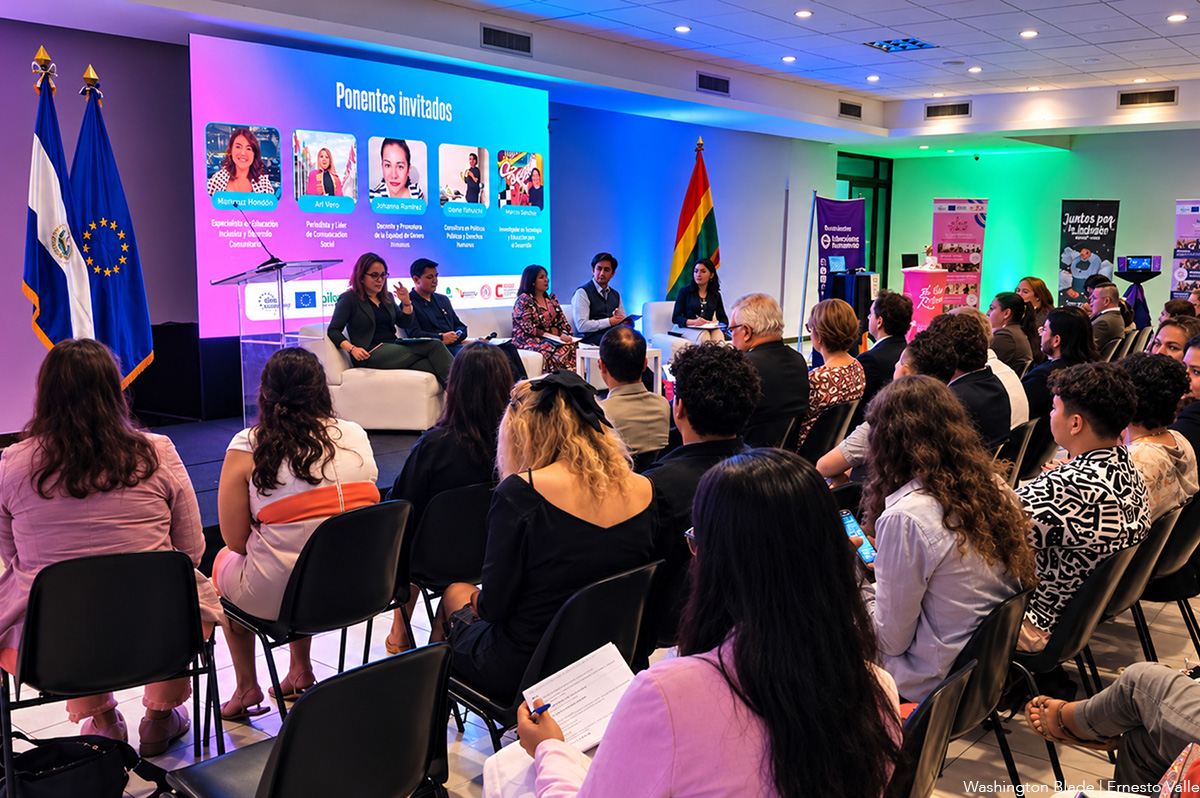
Promover, proteger y defender los derechos humanos de las personas LGBTQ+ en Centroamérica es el propósito del proyecto “Alianza para la Inclusión: hacia la promoción de derechos LGBTIQ+ en Centroamérica”, una iniciativa subvencionada por la Unión Europea, Global Gateway, Oikos Cooperação e Desenvolvimento y Camões — Instituto da Cooperação e da Língua, que articula esfuerzos en Guatemala, El Salvador y Honduras.
El proyecto, cuya implementación se desarrolla entre 2025 y 2028, busca fortalecer a organizaciones, liderazgos comunitarios y redes regionales frente a contextos marcados por la discriminación, la violencia y la reducción del espacio cívico.
A través de procesos de formación, atención integral, protección, fortalecimiento organizativo, incidencia y articulación regional, la iniciativa procura generar condiciones más seguras y dignas para que las personas LGBTQ+ puedan ejercer plenamente sus derechos.
Formación y fortalecimiento de liderazgos
Durante los primeros 18 meses de ejecución, el proyecto ha desarrollado acciones de formación y acompañamiento, otorgado subvenciones a colectivos comunitarios, impulsado estrategias de seguridad integral y respaldado procesos regionales de articulación e incidencia.
Uno de los resultados reportados es la participación de 489 personas LGBTQ+ de Guatemala, El Salvador y Honduras en procesos formativos relacionados con la desnaturalización de la violencia, organización e incidencia. Asimismo, 41 personas líderes LGBTQ+ de El Salvador y Guatemala fortalecieron sus capacidades para la formulación de proyectos.
Para Pedro Campos, coordinador de Oikos — Cooperação e Desenvolvimento en El Salvador, estos procesos tienen una dimensión que trasciende lo técnico.
“Desde hoy estamos cada día más convencidas y convencidos de que la gestión de proyectos más que técnica o administrativa es esencialmente humana. Nunca debemos olvidar que la persona en toda su diversidad es el centro de nuestro quehacer. Y si un día la empatía y el amor nos abandonan, habremos perdido la esencia de nuestro trabajo”.
La formación también ha significado una oportunidad para fortalecer liderazgos comunitarios. Josh Hernández, persona no binaria y codirectore de Espacios Seguros El Salvador, destaca el impacto que tuvo su participación.
“Esta experiencia me ha fortalecido como activista y como parte de una organización comunitaria, y me ha permitido ampliar mi visión y soñar con nuevas actividades que contribuyan a construir una cultura de paz en nuestra sociedad salvadoreña”, comenta Hernández.
Atención integral para personas LGBTQ+ en situación de vulnerabilidad
En El Salvador, uno de los componentes del proyecto se ha enfocado en brindar atención integral a personas que enfrentan situaciones de violencia, discriminación o vulnerabilidad.
A través de COMCAVIS TRANS, el proyecto permitió atender a 128 personas, mediante servicios psicosociales, legales y de resguardo temporal en su albergue.
La atención incluyó orientación para activar mecanismos de denuncia y medidas de protección, además de contención emocional, manejo de crisis y acompañamiento para la estabilización de condiciones básicas.
La experiencia también se ha extendido a Honduras. Loren López, directora ejecutiva de la Asociación de Mujeres Lesbianas y Bisexuales LITOS, resaltó el valor de generar espacios seguros para mujeres lesbianas, bisexuales y personas LTBQ (lesbianas, trans, bisexuales y queer).
“Me quedo con la satisfacción de haber contribuido a crear espacios donde una mujer LTBQ+ pueda sentirse segura, escuchada y reconocida, sin tener que esconder quién es. Esta experiencia fortaleció a LITOS y nos dejó nuevas herramientas y posibilidades para seguir trabajando por los derechos y la eliminación de la discriminación”, agrega López.
La seguridad integral como herramienta de protección
En contextos donde quienes defienden derechos pueden enfrentar diferentes tipos de riesgos, el proyecto ha incorporado la seguridad integral como un componente fundamental.
Durante 2026, 140 personas LGBTQ+ pertenecientes a seis organizaciones participaron en procesos de formación sobre seguridad integral, abordando dimensiones físicas, digitales y emocionales.
Como resultado, seis organizaciones elaboraron y consolidaron sus propios planes de seguridad integral, incorporando medidas de prevención y respuesta ante riesgos físicos y digitales, con especial énfasis en la protección de información sensible, el uso seguro de plataformas digitales y la gestión de incidentes en entornos virtuales.
Incidencia para transformar políticas y garantizar derechos
La iniciativa también ha acompañado procesos de incidencia y litigio estratégico en Guatemala.
La Asociación LAMBDA, junto con la Comisión Presidencial por la Paz y los Derechos Humanos (COPADEH), acompañó una consulta nacional con personas LGBTQ+ para contribuir a la elaboración de una Estrategia Nacional para las personas LGBTQ+, cuyo proceso se encontraba en elaboración y cuya aprobación se esperaba para finales de 2026.
Asimismo, en julio de 2026 fue presentada ante la Corte Constitucional de Guatemala una acción de inconstitucionalidad como parte de una estrategia nacional de litigio estratégico orientada a la aprobación del matrimonio igualitario. Al cierre de la actualización de resultados de este año, el proceso permanecía pendiente de resolución.
El acompañamiento jurídico también ha permitido apoyar procesos individuales relacionados con el reconocimiento de la identidad.
Uno de estos casos es el de Paula Escobar, mujer trans guatemalteca acompañada por LAMBDA en el proceso de cambio de nombre en sus documentos de identidad.
“Ha sido el paso más grande de mi vida, pues me libró de momentos incómodos y de dar explicaciones para ser reconocida como la mujer que soy”.
De acuerdo con el testimonio, la organización se encargó de la gestión legal y aproximadamente seis meses después obtuvo una respuesta favorable.
Redes regionales para ampliar el alcance de la defensa de derechos
La articulación regional constituye otro de los componentes del proyecto. La iniciativa ha apoyado a redes latinoamericanas que buscan fortalecer y posicionar el trabajo de organizaciones LGBTQ+.
Entre ellas se encuentra la Alianza Centroamericana y del Caribe de Hombres Trans, que articula organizaciones y personas transmasculinas de Guatemala, El Salvador, Honduras, Costa Rica y Panamá.
Durante su primer año, ALICAHT desarrolló su Plan Estratégico y Reglamento Interno 2025-2030, además de su identidad gráfica y sitio web.
Otro proceso regional respaldado fue el III Congreso Regional de CORPORA en Libertad, realizado en Guatemala en diciembre de 2025. El encuentro reunió esfuerzos orientados a fortalecer la defensa, promoción y garantía de los derechos humanos de las personas LGBTQ+ privadas y exprivadas de libertad en América Latina y el Caribe.
El espacio permitió fortalecer la articulación regional y compartir experiencias y estrategias frente a los desafíos que enfrentan las personas LGBTQ+ dentro y fuera de los sistemas penitenciarios.
Ari Vera, fundadora de CORPORA, ha destacado la importancia del trabajo en red como una herramienta para generar transformaciones y fortalecer las capacidades colectivas.
Inclusión más allá de las palabras
Durante el Foro “El Impacto de Incluir”, uno de los planteamientos centrales fue que la inclusión requiere transformaciones concretas y no únicamente el uso de conceptos o siglas.
Jason García, técnico PMA de Monitoreo, Evaluación y Aprendizaje para Oikos El Salvador, señaló una de las barreras que persisten en los proyectos. “Una de las barreras en los proyectos es que son binarios y no se reconocen las otras identidades”.
Desde esta perspectiva, un proyecto inclusivo no se limita a utilizar la palabra inclusión o incorporar las siglas LGBTQ+, sino que requiere revisar prácticas, metodologías, mecanismos de participación y formas de reconocer la diversidad.
Como parte de este proceso también se preparó una guía práctica que sistematiza instrumentos y mecanismos del Sistema Internacional de Derechos Humanos, destacando su importancia histórica en la ampliación y protección de derechos.
La compilación fue presentada en la X Conferencia de la Red ILGA LAC y en el 18º Encuentro de la Red Centroamericana de Intercambio Académico en Derechos Internacionales, realizado en la Universidad de El Salvador.
Cooperación centrada en las personas
Los resultados alcanzados durante los primeros 18 meses reflejan una estrategia que combina formación, atención directa, protección, fortalecimiento institucional, incidencia y construcción de redes.
Para la Unión Europea, colocar a las personas en el centro constituye un elemento fundamental de la cooperación. Duccio Bandini, embajador de la Unión Europea en El Salvador, expresó “Desde la Unión Europea seguiremos apostando para una cooperación que pone en el centro a las personas. Porque el verdadero impacto de influir se mide en vidas transformadas, en derechos conquistados y en sociedades que celebran con orgullo su diversidad”.
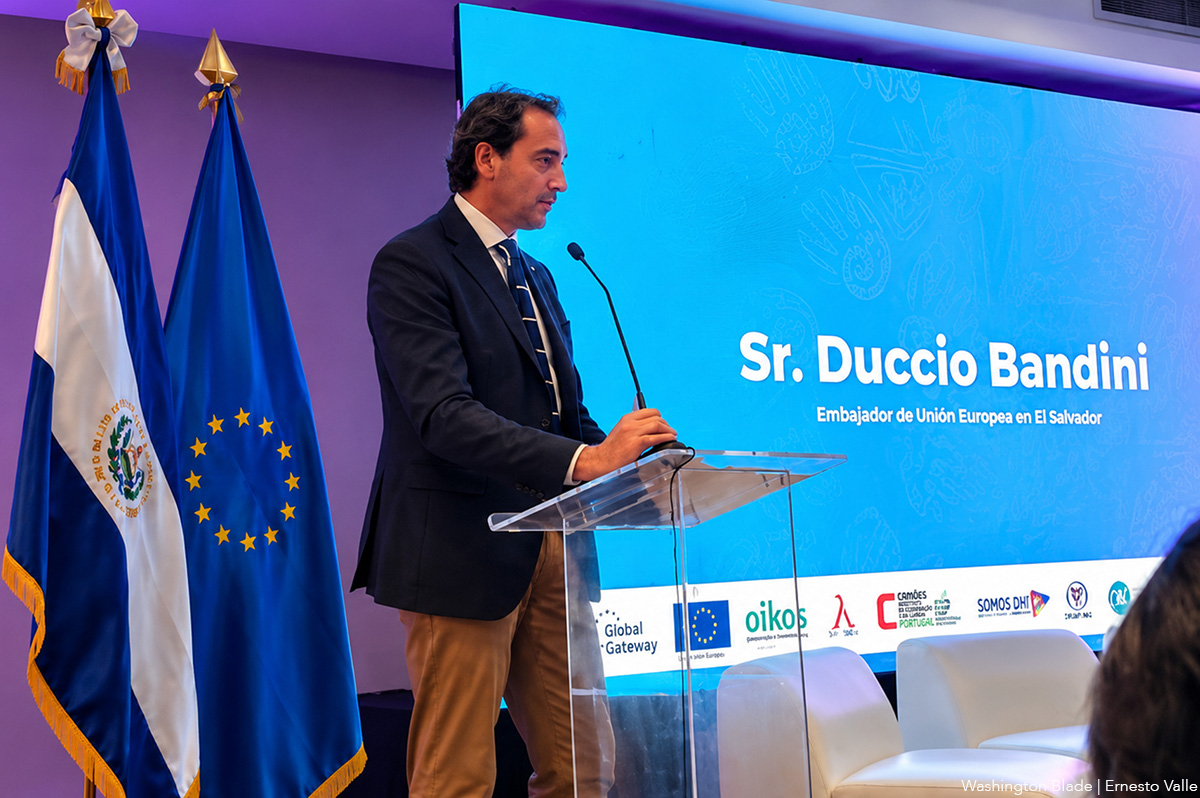
Con una implementación prevista hasta 2028, la Alianza para la Inclusión continúa articulando organizaciones nacionales y redes latinoamericanas para fortalecer capacidades y generar herramientas que permitan a las personas y organizaciones LGBTQ+ enfrentar los desafíos de sus contextos y avanzar en la promoción, protección y defensa de los derechos humanos.
Más allá de las cifras y los productos alcanzados, el proyecto coloca en el centro una premisa: la inclusión se construye cuando las personas pueden participar, organizarse, defender sus derechos y vivir su identidad con dignidad y seguridad.

LGBTQ+ elected officials, activists around the world welcome U.S. election results

Byers, Krieger win seats on WeHo City Council; race for third too close to call

Nithya Raman wins Los Angeles mayoral election, ousting Karen Bass

Record number of LGBTQ lawmakers elected to Congress in midterms

Democrats take control of Congress in historic rebuke of Donald Trump

Australia’s first gay state governor takes office

Are anti-trans campaigns lowering your cost of living?

L.A. LGBT Center used canvassing effort to reframe conversation around trans healthcare

How Georgia Oakley brought queer representation into ‘Sense and Sensibility’

Supreme Court weighs religious exemptions to LGBTQ+ nondiscrimination protections in Colo. preschool case
-
 Australia3 days ago
Australia’s first gay state governor takes office
-
 Commentary3 days ago
Are anti-trans campaigns lowering your cost of living?
-
 California3 days ago
L.A. LGBT Center used canvassing effort to reframe conversation around trans healthcare
-
 a&e features5 days ago
How Georgia Oakley brought queer representation into ‘Sense and Sensibility’
-
 U.S. Supreme Court2 days ago
Supreme Court weighs religious exemptions to LGBTQ+ nondiscrimination protections in Colo. preschool case
-
 Politics2 days ago
Democrats poised to flip House, opening door for expanded LGBTQ+ leadership
-
 California2 days ago
Xavier Becerra wins California governor’s race
-

 a&e features4 days ago
It’s time to get ‘Delulu’ with Ryan Lu
-

 Politics3 days ago
Michigan Senate race puts two sharply different LGBTQ+ records head to head
-
 New Hampshire2 days ago
Chris Pappas elected to U.S. Senate