Turkey
‘Governments that attack LGBTQ+ rights learn from each other’
Turkish authorities on Sept. 12 launched anti-LGBTQ+ ‘My Family Is Safe’ campaign
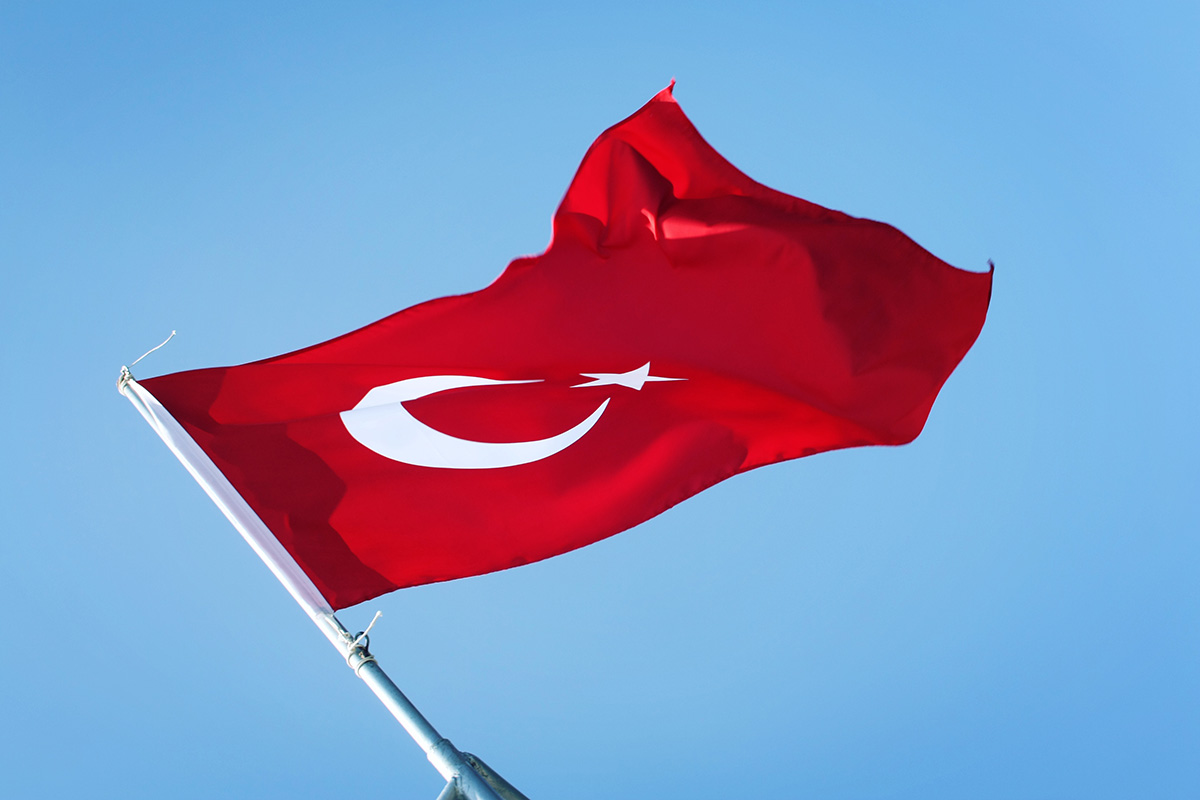
Sept. 12 is a solemn day for the people of Turkey. It is the anniversary of the 1980 coup d’état — when members of the National Security Council, along with the armed forces, dissolved the Turkish parliament, arrested hundreds of thousands of people, and entered a three-year period of martial law.
On Sept 12, the 46th anniversary of the 1980 coup, the country faced another wave of arrests; this time they targeted the LGBTQ+ community. The government launched the national “My Family Is Safe” campaign, which triggered mass raids and arrests of LGBTQ+ organization leaders, advocates, academics, and sexual health treatment centers for people with HIV. (These include EU-funded organizations launched by the Turkish government in 2005.) Since the nation has seen a decline in birthrate and a swelling economic crisis, this has allowed authoritarian President Recep Tayyip Erdoğan and conservatives in Turkey to use the LGBTQ+ community as the ideal scapegoat.
“This is the cruelest part. It was Erdoğan’s own party that made it easier to found NGOs in 2005 as an EU accession process, and that is how many LGBTI+ groups came to be officially registered.” Ali Yildiz, a linguistics graduate student at the University of Cologne in Germany, told the Los Angeles Blade. “Everything was legal, transparent and official. Now those same registrations are being used as arrest lists. The state is basically punishing those who trusted it. It sounds very much like the Nazis. They also used member lists of associations to persecute them later.”
Yildiz has witnessed the oppression of the Turkish government firsthand: in 2024, he moved to Germany. As one of the board members of a grassroots NGO that focuses on sexual health, Yildiz was at risk of arrest and prosecution.
As part of the “My Family Is Safe” operation on Sept. 12, police raided Yildiz’s family’s former home to find him.
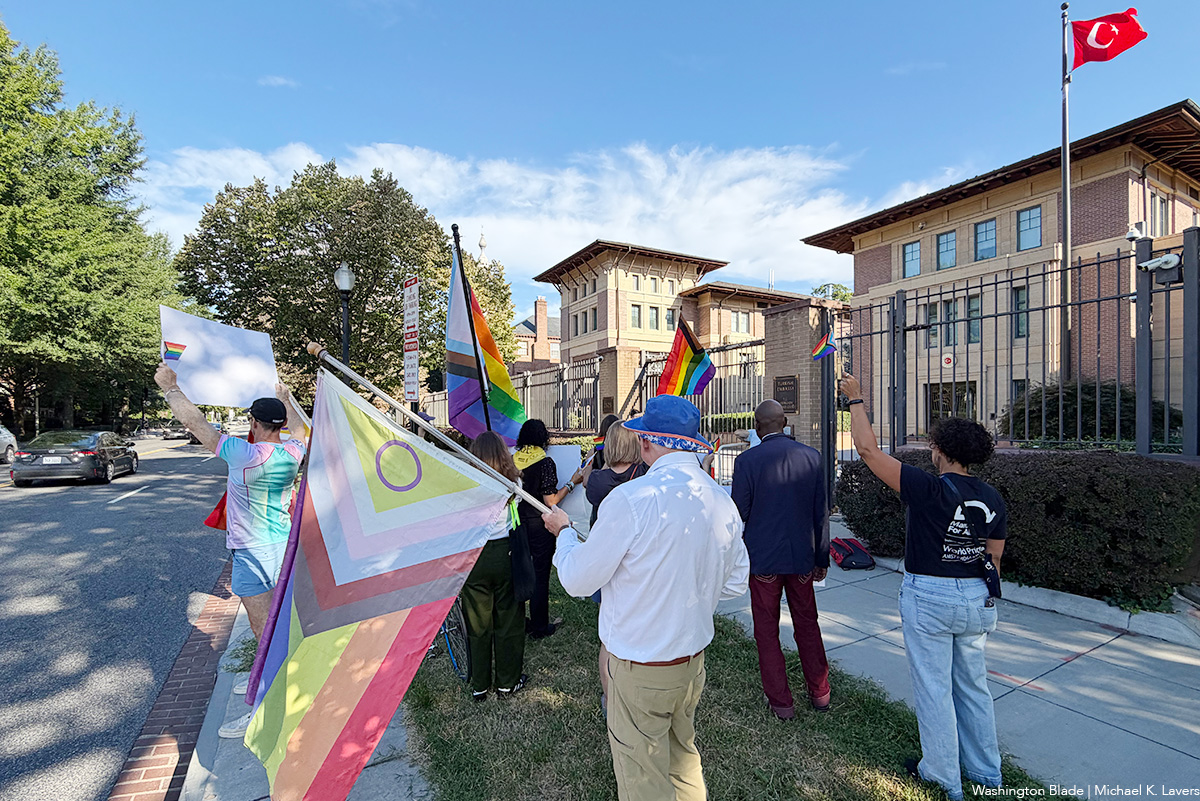
In the aftermath of these raids in Turkey’s major cities, protestors have gathered at Turkish embassies across Europe and the U.S.
A critical discourse has also emerged as a response to the crackdown across international queer media: how should the West cover oppressive regimes abroad?
“From what I see, the Western reading of Turkey’s crackdown on LGBTI+ people usually goes: it’s a conservative, Muslim country, so this is what you’d expect. I believe that framing is incomplete, and it lets the people responsible off the hook. The Erdoğan regime is also heavily relying on this contextualization,” said Yildiz. “The government is not simply reacting to existing conservatism but is actively shaping it. Look at how operations are presented: raids on LGBTI+ organizations and activists come packaged with claims about drugs, obscenity, sex work, or organized crime on other groups in the news. The evil strategy is to link LGBTI+ people with criminality in the public mind.”
The LGBTQ+ community is not the only group that has been under the weight of oppression. Political opponents and descendants whom Erdoğan deems criminals are also charged with treason.
Istanbul Mayor Ekrem İmamoğlu, who is the leading candidate for the upcoming 2028 presidential elections for the opposition center-left Republican People’s Party, was arrested on terrorism charges in 2024. On the same day, he was nominated as the CHP’s presidential candidate.
For a while, X served as a platform to express discontent with the government, but that changed recently when Elon Musk blocked nearly 500 accounts in Turkey. The Turkish government also banned Grok after the AI system responded to a user’s question about Erdoğan, which government leaders found offensive.
The visibility of these pages has decreased. With a VPN, citizens can still access the pages because they were banned only in Turkey, not internationally.
Discontent with the government is increasing, but so is government oppression.
Not only have LGBTQ+ pages been shut down, but many journalists and academics have also had their pages banned.
The Blade spoke to an anonymous academic living in Ankara, the Turkish capital, who said Erdoğan, U.S. President Donald Trump, and other authoritarian leaders are constantly learning from each other.
“These anti LGBTQ+ policies are being created in the name of preserving traditional family values and are not only a threat to Türkiye,” they said. “It is also a global issue that threatens people everywhere. It should be perceived as an international problem. That is why we LGBTQ+ people need to act in solidarity internationally.”
Because of the compounding human rights crisis happening simultaneously around the globe, visibility has been advocates in Turkey’s main challenge.
Since 2022 there have been a series of crackdowns against opposition parties, academics, labor unions, student organizations, journalist and advocates. Another anonymous academic in Istanbul told the Blade that after the 2022 crackdown, “people were intimidated, and most people did not feel encouraged to organize.”
In the weeks following this recent crackdown, discontent with the Erdoğan government has increased along with inflation and unemployment, not helped by the war in Iran.
“Our leaders do not say anything about the financial crisis,” said the Istanbul academic.
High inflation, high unemployment rates, many factories, and businesses have left Türkiye and transferred their businesses to other countries. And because of the timing of these recent crackdowns, during this financial crisis, many people haven’t been paying attention.
Though for many queer and transgender Turks, post-Sept. 12 life has been radically different.
“I stopped doing drag in order to protect myself, and many queer performance artist friends of mine have also given up this part of their lives,” said one source who asked the Blade to remain anonymous.
“Everybody is not scared, but they simply bring their fear with them to the march and march courageously, because they believe they are on the right side of history,” they added. “However, I think it is important that people in Turkey are not represented only through their experiences of victimization. There should also be spaces where artists, activists, journalists, and other queer people can express themselves in their own words.”
The justification for this crackdown has been preserving “traditional family and conservative values.” The Turkish government has persecuted these offenses with raids, trials, and arrests that have gone beyond just the LGBTQ+ community. It targeted last year musicians, performers, and artists whom they deemed obscene or offensive.
In September 2025, the K-pop-inspired girl band Manifest was investigated for three months. Footage from their shows was banned from the internet, and the remainder of their tour was canceled. All seven members of the group faced 3 1/2 months prison sentences before the charges were ultimately dropped.
“I believe there is no pride for only some of us. Governments that attack LGBTQ+ rights learn from each other.” Yildiz tells the Blade, “Erdoğan borrows from Putin’s playbook, and parts of the Western right eagerly adopt the same rhetoric. This is a call for our community to see how important international solidarity is. People show up every single year for the Pride March, even though they know the police are going to attack. What I see in our community is pure courage.”


Turkey
House Democrats urge White House to confront Turkish government over anti-LGBTQ+ crackdown
More than 60 lawmakers signed letter to Secretary of State Marco Rubio
More than 60 House Democrats on Thursday called upon the Trump-Vance administration to confront the Turkish government over its anti-LGBTQ+ crackdown.
Turkish authorities last month detained dozens of people during raids that targeted the country’s LGBTQ+ community, advocacy groups, and HIV/AIDS service organizations. Journalists were among those taken into custody outside an Istanbul courthouse on Sept. 15 during a protest against the raids that are part of the government’s “My Family Is Safe” campaign.
Council for Global Equality is among the groups that organized a protest outside the Turkish Embassy in D.C. on Sept. 18.
View on Threads
U.N. High Commissioner for Human Rights Volker Türk on Sept. 21 during a U.N. LGBTI Core Group event that took place on the sidelines of the U.N. General Assembly specifically referenced Turkey.
The Core Group is a group of U.N. member states that have pledged to support LGBTQ+ and intersex rights.
The U.S. withdrew from the Core Group after the Trump-Vance administration took office. The White House has not publicly commented on Turkey’s anti-LGBTQ+ crackdown.
“These developments warrant an urgent diplomatic response from the United States to protect the rights of freedom of expression, association, and assembly for all Turkish citizens, regardless of their sexual orientation or gender identity,” reads the letter the lawmakers sent to Secretary of State Marco Rubio. “We therefore urge you to use all available channels to raise these concerns directly with the Turkish government; press for the immediate release of those arrested and detained for their legitimate human rights activities; and ensure that the U.S. Embassy in Ankara closely monitors related judicial proceedings.”
“We further urge the Department to press Turkish authorities to cease efforts to criminalize LGBTQI+ organizations and advocacy and to affirm the right of all people to peacefully assemble,” it adds.
Arizona Congresswoman Yassamin Ansari and U.S. Rep. Dina Titus (D-Nev.) spearheaded the letter. House Speaker Emerita Nancy Pelosi (D-Calif.); House Foreign Affairs Ranking Member Gregory Meeks (D-N.Y.); Del. Eleanor Holmes Norton (D-D.C.); Delaware Congresswoman Sarah McBride, and U.S. Rep. Mark Takano (D-Calif.), who chairs the Congressional Equality Caucus, are among the 65 House Democrats who signed the letter.
“The United States must be a leader in defending human rights and what is happening in Turkey demands an urgent diplomatic response. It’s absolutely appalling to see LGBTQI+ people and the organizations that stand up for their rights be targeted by the (President Recep Tayyip) Erdogan regime,” said Ansari in a press release. “I stand proudly with the LGBTQI+ community here and abroad and will continue to fight for their right to live openly, freely, and without fear, anywhere and everywhere.”
The press release notes the Human Rights Campaign, the Council for Global Equality, and the Planned Parenthood Federation of America support the letter.
“Turkey’s attacks on its LGBTQI+ community are a disturbing reminder that the fight for equality and human rights does not stop at our borders. No one should be silenced or detained for simply being who they are or peacefully demanding dignity and freedom,” said HRC Government Affairs Senior Director Jennifer Pike Bailey. “We are grateful to Representatives Ansari and Titus for recognizing that the fight for LGBTQI+ equality is global and that, even amid the many challenges facing our community here at home, we cannot turn our backs on LGBTQI+ people facing persecution abroad.”
A State Department spokesperson on Friday told the Washington Blade that “as a matter of policy, we do not comment on congressional correspondence.”
Turkey
More than 150 people detained outside Istanbul courthouse
Protesters gathered after raids targeted Turkey’s LGBTQ+ community
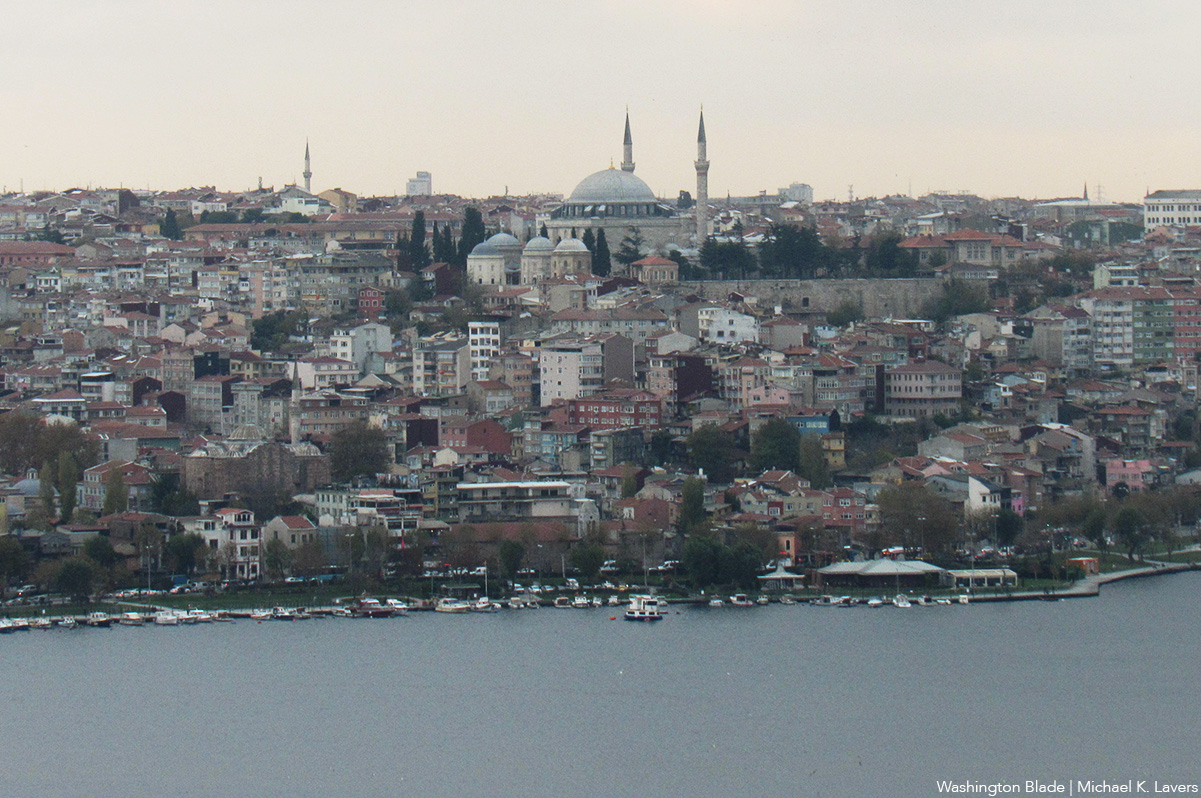
Turkish authorities on Tuesday detained more than 150 people who gathered outside an Istanbul courthouse to protest raids that targeted the country’s LGBTQ+ community.
CNN reported the protesters had planned to speak with reporters outside the city’s Caglayan courthouse, but authorities prevented them from doing so.
Turkish authorities over the weekend detained dozens of people in Istanbul and in other cities during raids that were part of the government’s “My Family is Safe” campaign.
A statement from a group of Turkish advocacy groups the Washington Blade received on Tuesday notes “at least 112 people have been detained in connection with the operations.” The organizations said 43 of those taken into custody are “LGBTI+ rights defenders,” and “at least” 62 of those detained “have been arrested, while judicial proceedings remain ongoing in Istanbul.”
“Among those arrested, at least 16 are LGBTI+ activists or individuals connected to LGBTI+ associations, including founders and members of association bodies,” reads the statement. “Per press statements by the prosecutor’s offices, dissolution cases will also be launched against associations.”
“The majority of those arrested are trans women who are charged with prostitution-related offences,” it adds. “While authorities have framed the operations as part of investigations into alleged crimes such as obscenity, prostitution and child exploitation, human rights defenders and civil society organizations have raised serious concerns regarding the use of criminal law mechanisms and public morality narratives to target legitimate LGBTI+ rights activities. Civil society views the ‘My Family is Safe’ narrative as a smokescreen to distract the public from deep economic crises and actual domestic violence, weaponizing moral panic to scapegoat LGBTI+ rights defenders, who have long been targeted by the government.”
The raids have sparked outrage among LGBTQ+ activists in Europe and elsewhere around the world.
The Congressional Equality Caucus and U.S. Rep. Carlos Giménez (R-Fla.) are among those who have publicly condemned them in the U.S. The Council for Global Equality on Friday is scheduled to hold a rally in support of Turkey’s LGBTQ+ community in front of the Turkish Embassy in Washington.
Turkey
Dozens detained after Turkish authorities raid LGBTQ groups, businesses
Raids targeted gay bars, activists’ homes
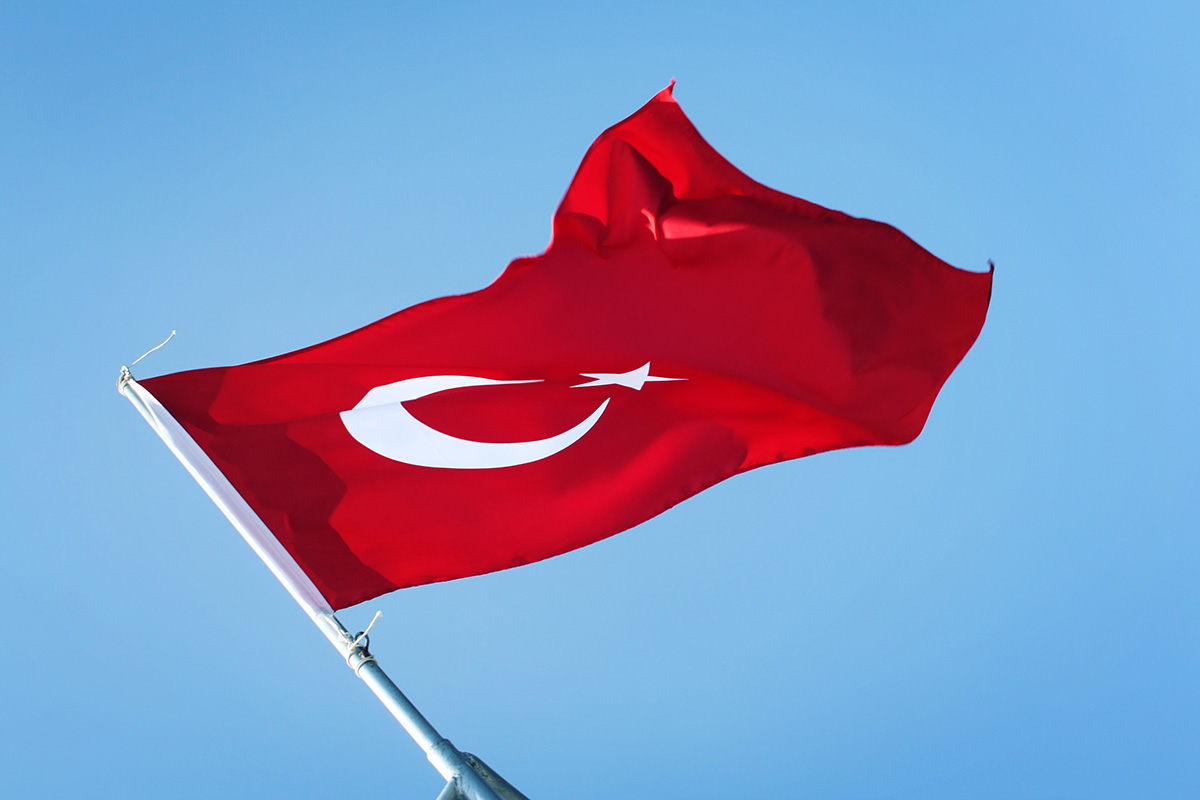
Authorities in Turkey over the weekend detained dozens of people during raids they carried out against gay bars and LGBTQ activists’ homes across the country.
The BBC reported the raids were part of the government’s “My Family is Safe” campaign.
A statement from a group of Turkish advocacy groups the Washington Blade received on Sunday noted Justice Minister Akın Gürlek said the operation included “162 individuals, nine associations, and 13 businesses across 15 provinces.” Prosecutors in Istanbul, Ankara, Izmir, Aydın, and Mersin are coordinating the campaign.
Kaos GL, one of the country’s largest advocacy groups, was among the targets.
“The authorities have referred to allegations including ‘obscenity,’ ‘facilitating prostitution or providing premises for prostitution,’ exposure of children to allegedly obscene content, drug-related offenses, and other morality-related offenses,” reads the press release the Blade received. “Information from the field indicates that additional allegations, including forming a criminal organization, may appear in some investigation files.”
“The reported inclusion of the offense of “establishing an organization for the purpose of committing crimes” under Article 220 of the Turkish Criminal Code is particularly alarming and, if confirmed, would mark a significant escalation in the criminalization of LGBTI+ human rights activism,” it added. “While LGBTI+ activists and organizations have recently faced and continue to face investigations and prosecutions on grounds such as ‘obscenity’ and alleged violations of the Law on Associations, the use of an organized-crime allegation represents a qualitatively more serious threshold, both in terms of the gravity of the accusation and the potential penalties involved.”
Turkish authorities under President Recep Tayyip Erdoğan’s government over the last decade have cracked down on LGBTQ and intersex activists in the country.
Police in 2015 used tear gas and water cannons against people who were about to participate in an Istanbul Pride march. Authorities in 2017 arrested nearly two dozen people who defied a ban on Pride events in the city.
Police in Ankara, the Turkish capital, in 2019, arrested 18 students and an academic who participated in a Pride march at the Middle East Technical University. They faced up to three years in prison, but a court in 2021 acquitted them. Police in 2022 violently broke up a Pride parade at the same Ankara university.
Turkish authorities in July refused to allow a gay cruise ship — the Scarlet Lady, a Virgin Voyage vessel that Atlantis Events chartered — to dock in Kusadasi, a resort town on the Aegean Sea.
Kusadasi is in Aydın Province, one of the provinces in which authorities conducted the raids. Turkish officials also refused to allow the Scarlet Lady to dock in Istanbul.
A Turkish source on Sunday told the Blade the “My Family is Safe” operation began on the 46th anniversary of a military coup that toppled the country’s government in 1980.
“The fact that this operation began on the night of Sept. 12 — the 46th anniversary of the 1980 coup — is highly significant in terms of the foundations of the prohibitive and repressive mindset directed at the LGBTI+ community,” they said. “Moreover, many LGBTI+ organizations had been subject to official inspections last week.”
“Conducting this operation on a Saturday night shortly thereafter also serves the purpose of heightening fear and anxiety within the community,” added the source.
The source asked the Blade not to reveal their identity.
ILGA-Europe in a statement described the raids as “the systematic dismantling of LGBTI civil society.” Paris Mayor Emmanuel Grégoire is among the European officials who have publicly condemned them.
The Blade will update this story with additional details as they become available.
Turkey
Turkish authorities refuse to allow gay cruise to dock in country
Atlantis Events-chartered ship included stops in Kusadasi, Istanbul
Update: Egyptian authorities on Wednesday blocked the ship from docking in Alexandria, a port city on the Mediterranean.
Turkish authorities have refused to allow a gay cruise to dock in the country.
The Scarlet Lady, a Virgin Voyages ship that Atlantis Events chartered, departed Athens on Sunday. The 10-day cruise is scheduled to end in Trieste, Italy, on July 15.
The ship had been scheduled to dock in Kusadasi, a Turkish resort town on the Aegean Sea, on Tuesday. It was then slated to sail to Istanbul on Wednesday.
Officials in Aydin Province in which Kusadasi is located on June 28 posted a statement on X that confirmed the decision not to allow the Scarlet Lady to dock in Turkey.
Authorities noted the “groups” behind the cruise are “known for behaviors that do not align with the structure of our society and our moral values.” The June 28 statement also says the scheduled docking “caused great discomfort in various segments of our society.”
BASIN AÇIKLAMASI
Basın yayın organları ve sosyal medya platformlarında gündeme gelen, toplumumuzun yapısıyla ve ahlaki değerlerimizle örtüşmeyen davranışlarıyla bilinen gruplarca kiralanan bir kruvaziyer gemisinin 7 Temmuz 2026 tarihinde Aydın Kuşadası Limanınına planlamış… pic.twitter.com/MHqN0NoXHI
— T.C. Aydın Valiliği (@AydinValiligi) June 28, 2026
Atlantis Events in a statement on its website said the company has “been informed by the Turkish authorities that Atlantis will not be permitted to dock in Kusadasi or Istanbul during this voyage.”
“As a result, we have had to alter our sailing itinerary somewhat,” it reads.
The statement notes the cruise will now stop in Alexandria, Egypt, and Crete.
“Both ports have excellent opportunities for exploration and enjoyment and have been favorites of ours for years,” it reads.
(Discrimination and persecution based on sexual orientation and gender identity is commonplace in Egypt. The Egyptian Football Association, along with the Football Federation Islamic Republic of Iran, objected to playing in the World Cup’s “Pride Match” that took place in Seattle on June 26.)

Patti LuPone, who is performing on the cruise, sharply criticized the Turkish government over its decision.
“The Atlantis cruise I am performing on next week, has been banned from entering Turkey,” she said on her Facebook page on July 2. “A ship — a magnificent ship — full of well-heeled gay men. And me. Denied entry to Turkey simply because of who is on board. I am furious, but I am sailing, as the ship will make other ports of call. I am ready to perform for all the wonderful men on this Atlantis cruise, who deserve so much better than this.”
Atlantis Events CEO Rich Campbell told the Washington Post that his company’s cruises have visited Turkey more than a dozen times over the last two decades.
“We’re there to shop, be great tourists, spend money,” he said. “It’s always a culturally respectful group.”
Campbell further noted Turkey could lose at least $1 million in tourism revenue over its decision.
“The bigger damage to Turkey is when you start picking and choosing who’s allowed to enter, and your economy depends on tourism, you’re creating a standoff between tourists and yourself,” he told the Post. “And you run the risk of alienating a lot of potential tourists.”
The Los Angeles Blade on Monday reached out to Campbell for additional comment.

‘Governments that attack LGBTQ+ rights learn from each other’

Horror genre has evolved into space to explore queer identity

Diane Anderson-Minshall’s coming out evolution as a mixed white/Indigenous American, bisexual, lesbian, queer, married to a trans man

Annie Andrews denounces trans athletes after Trump targets her

On Republican Long Island, gay Democrat Chris Gallant bets on public service over politics

Actor Christian Tyler Dorey is a Jack of all trades

Carolyn Weathers: From mild-mannered to kick-ass lesbian activist in the L.A. gay liberation front

ICC unseals arrest warrants for Taliban officials accused of persecuting LGBTQ+ people, women

Here’s your Palm Springs look at the weekend: Oct 9-11, 2026

The new “chosen family”: Suzanne Bangis on building a family through third-party reproduction
-
 a&e features5 days ago
Actor Christian Tyler Dorey is a Jack of all trades
-
 Features4 days ago
Carolyn Weathers: From mild-mannered to kick-ass lesbian activist in the L.A. gay liberation front
-
 Afghanistan4 days ago
ICC unseals arrest warrants for Taliban officials accused of persecuting LGBTQ+ people, women
-
 Palm Springs4 days ago
Here’s your Palm Springs look at the weekend: Oct 9-11, 2026
-
 Family5 days ago
The new “chosen family”: Suzanne Bangis on building a family through third-party reproduction
-

 a&e features4 days ago
Veteran Broadway actor Laura Benanti bares all in her new show ‘Nobody Cares’
-

 LGBTQ+ Youth Mental Health4 days ago
Zaya Wade to be honored by LA LGBT Center with Model of Pride award
-
 Japan22 hours ago
Report: LGBTQ+ exclusion costs Japanese economy billions a year
-

 Books20 hours ago
Through the blaze: Author Deborah Samuel talks about survival, healing, and ‘Grace Through Fire’
-
 Politics19 hours ago
On Republican Long Island, gay Democrat Chris Gallant bets on public service over politics