News
Los Angeles Blade’s top 10 news stories of 2017
Civil rights under attack, what do we do but fight back?
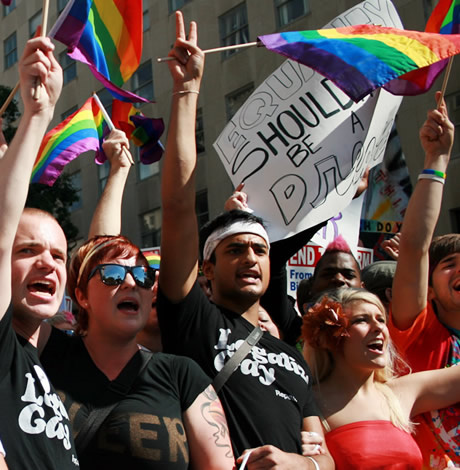
The year 2017 will go down as a watershed in human history with the apparent breaking apart of traditional European alliances, the rise of Russia, China and the nuclear threat of North Korea, as well as the resurgence of white identity populism, best signified by the disruptive presidency of Donald Trump. California became a bulwark for progressive values with the Los Angeles LGBT community reflecting both the ills of the larger society and serving as a bright beacon of hope. Here are our staff picks for the top 10 LA LGBT stories of the year.
10. LGBT AIDS invisibility
Donald Trump, whose mentor and attorney Roy Cohn died from AIDS, signed his first World AIDS Day Proclamation and failed to mention the LGBT community. Out scholar Masha Gessen compared it to Trump’s Holocaust Remembrance Day statement in which he neglected to mention Jews. The Centers for Disease Control reports that gay and bisexual men account for an estimated 70 percent of new HIV infections in the U.S.; an estimated 22 percent of transgender women have HIV. While Trump stated his commitment to ending the global HIV/AIDS pandemic, he’s threatened to cut the President’s Emergency Plan for AIDS Relief (PEPFAR) budget by $1 billion. Meanwhile in LA, AIDS Healthcare Foundation celebrated its 30th anniversary with a free concert for staff, board and volunteers at The Shrine Auditorium, featuring singer Mariah Carey. AHF now has 841,293 patients in care in 39 countries and provided generators, not paper towels, to devastated Puerto Rico.
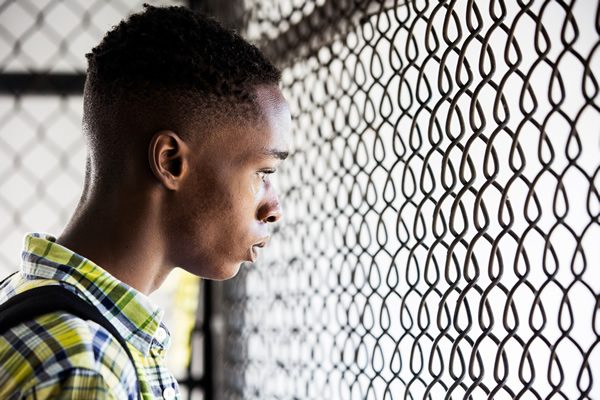
Despite the Moonlight win for Best Picture, Hollywood still lags when it comes to portraying LGBT lives. Ashton Sanders in ‘Moonlight.’ (Photo by David Bornfriend; courtesy A24)
9. Hollywood’s diversity problem
Feb. 26, 2017. Gasp! Oscar presenters Warren Beatty and Faye Dunaway accidentally name La La Land as best picture. “There’s a mistake. Moonlight, you guys won best picture. This is not a joke,” said La La Land producer Jordan Horowitz, beckoning the stunned winners onstage. “One of the things that I hope doesn’t get overshadowed is this was a $1.5 million indie film about a black, gay, poor man … and that’s a very significant thing,” director Ava DuVernay said later. “I’m proud of the Academy for honoring that.” Indeed, Hollywood applauded at the Oscars. But Moonlight was the only film in 2016 with a gay protagonist. An August 2017 USC-commissioned report analyzed the top 100 films of 2016 and found that only 1.1 percent of speaking characters were LGB with no trans speaking characters. Advocacy has been unsuccessful, concluded study author Professor Stacy L Smith. “Film paints a distressing portrait of exclusion.”
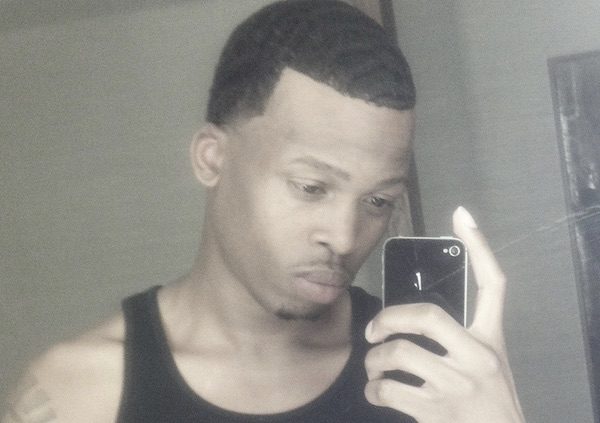
Gemmel Moore died July 27. (Photo from Facebook memorial page)
8. The death of Gemmel Moore
Gemmel Moore died on July 27 in the West Hollywood apartment of Stonewall Democratic Club donor/activist Ed Buck. The LA County coroner ruled Moore’s death an accidental overdose from crystal meth, prompting concerns about the silent meth crisis among black gay men. The Sheriff’s Department conducted an initial investigation and learned that Moore, a 26-year old escort, frequently visited Buck, 62. But local black activists and Moore’s mother were not satisfied with the findings and agitated for the Sheriff to investigate whether Buck, who is white, might have a sexual fetish: injecting young black escorts with drugs—raising the question of murder. Buck’s attorney vigorously denied their allegation, but Sheriff Jim McDonnell ordered Homicide detectives to reopen the investigation. “We felt it was our obligation to look into those issues,” McDonnell told the LA Blade. As of mid-December no new report was made public.
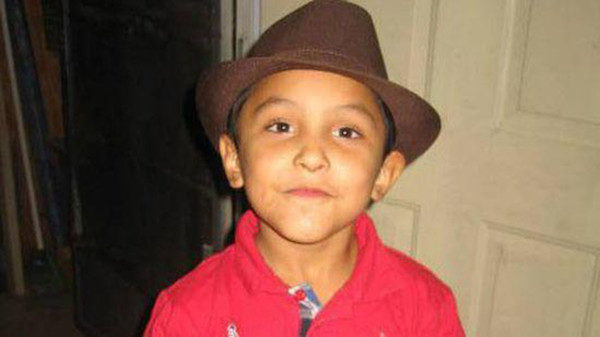
Gabriel Fernandez was murdered by his mother’s boyfriend who was convicted in 2017 and awaits a possible death sentence.
7. The murder of 8-year old Gabriel Fernandez
The torture-murder of 8-year-old Gabriel Fernandez was so disturbing, LA County was forced to reform its child-welfare system. “When paramedics arrived at the boy’s Palmdale home on May 22, 2013, Gabriel was unconscious and had a cracked skull, broken ribs, burned and bruised skin, missing teeth and BB pellets lodged in his groin. He died two days later after being removed from life support,” the LA Times reported. Months before his death, Gabriel was forced to eat cat feces and his own vomit. He slept in a small cabinet, his ankles handcuffed, hands bound and mouth gagged with a sock. On Nov. 15, Isauro Aguirre, 37, was convicted of first-degree murder for killing his girlfriend’s son, who he thought was gay. Jurors gave Aguirre the death penalty; he will be sentenced March 8. Gabriel’s mother and the negligent social workers still face trial.
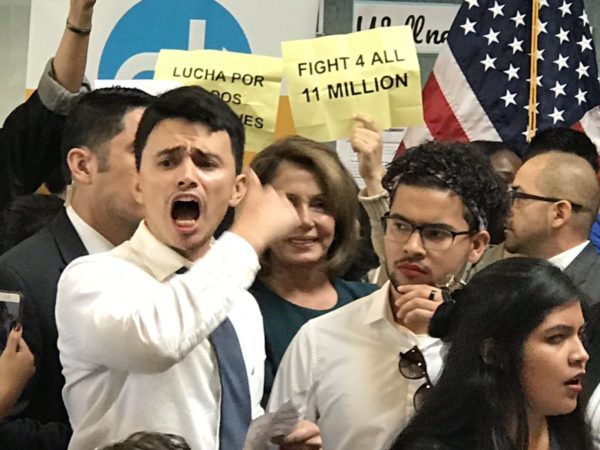
Democratic leader Nancy Pelosi shouted down (Photo from Doug Sovern’s twitter feed)
6. The plight of LGBT DREAMers
Donald Trump ran for president on a platform of hatred for immigrants. Building “the wall” and deporting anyone who is undocumented is a base rallying cry. But Democrats and some Republicans in Congress want to pass the DREAM Act of 2017 (Development, Relief, and Education for Alien Minors) to prevent undocumented young people, including LGBT youth, from being deported to countries where their lives are at risk from governmental and cultural homophobia and transphobia. A large percentage of LGBT DREAMers (28%) live in California and more than 75,000 young people identify as LGBT in Los Angeles—with nearly half of them actively participating in the upended Deferred Action for Childhood Arrivals (DACA) program, according to the Williams Institute at UCLA. “Deportation is comparable to a death sentence for LGBTQ people in many parts of the world,” says Dave Garcia, LA LGBT Center Director of Policy and Community Building.
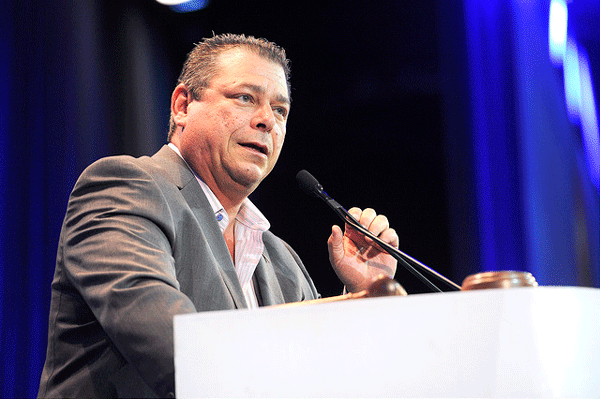
Eric Bauman, the out chair of the California Democratic Party
5. California Democratic Party run by gays
The Republican Party is now stained by white supremacy and its leader is perhaps beholden to the Russians. Aghast, Democrats want to break the conservative Republicans’ one-party rule by winning back the House in the 2018 midterm elections, with help from the California Democratic Party. At least six vulnerable GOP incumbents are up for reelection, including longtime anti-LGBT legislators Darrell Issa and Dana Rohrabacher. Leading the charge into electoral battle are Eric Bauman, the out chair of the CDP and Mark Gonzalez, the out chair of the LA County Democratic Party, both of whom have track records with electoral experience. Add to the leadership mix kickass Toni Atkins of San Diego, the first lesbian Assembly Speaker, who will become the first lesbian/woman President Pro Tem of the Senate next year. Get ready to rumble.
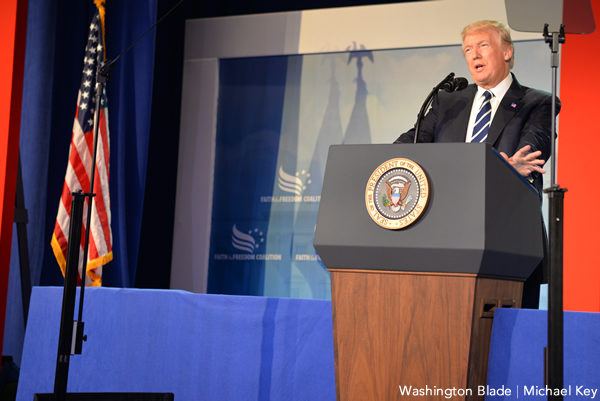
Donald Trump announced a ban on trans troops in a July tweet. (Photo by Michael Key)
4. Calif. groups oppose trans military ban
President Trump’s July 26 tweet announced that his administration “will not accept or allow transgender individuals to serve in any capacity in the U.S. Military.” The major policy shift was orchestrated by Vice President Pence with help from Family Research Council head Tony Perkins. Four lawsuits were quickly filed to stop the proposed ban from taking effect and to challenge its constitutionality. On Dec. 11, a federal judge in Washington State became the third court to rule the ban unconstitutional and issued a preliminary injunction, allowing trans service members to continue serving with admission of trans enlistees starting Jan. 1.The fourth lawsuit filed by Equality California, with the State of California as a plaintiff, is pending before a federal court in California—which has the most active duty and reserve military than any other state. “Marginalizing transgender service members or any transgender American who wishes to serve our country faithfully and courageously will not occur on our watch,” said Attorney General Xavier Becerra.
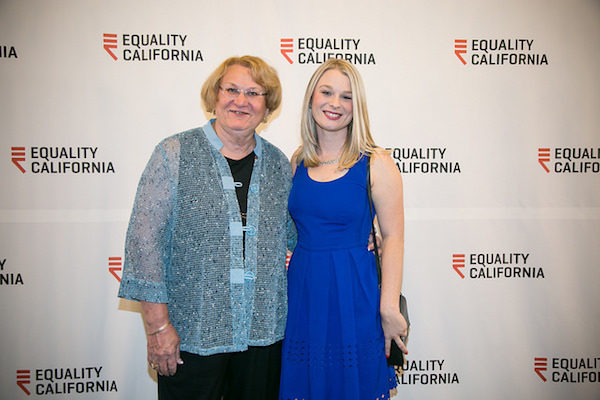
New Palm Springs City Councilmembers Lisa Middleton and Christy Holstege (Photo courtesy Equality California)
3. Transgender electoral wins
The battle for transgender civil rights was difficult in 2017— marked by an uptick in hate crimes against trans people — 31 reported in Los Angeles (30 were violent), a 72 percent increase from 2016 with the majority, 69 percent, against trans Latinas. But an unprecedented political outpouring yielded positive results: eight trans candidates won their elections around the country. Danica Roem’s election to the Virginia House of Delegates will make her the first openly transgender woman seated in legislative office; Minneapolis elected two trans people of color—Andrea Jenkins and Phillipe Cunningham—to their city council; Stephe Koontz, Raven Matherne, Tyler Titus, and Gerri Cannon also won their local elections. And in Palm Springs, Lisa Middleton, a lesbian, became the first transgender person elected to a non-judicial office in California. Her victory, with bisexual Christy Holstege, makes the Palm Springs City Council the first American city government with an all LGBT council.
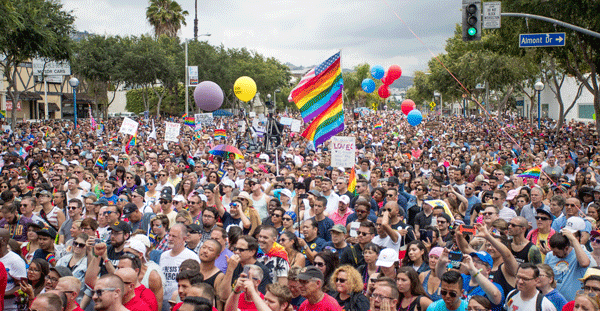
2. Resist!
Talk about taking back offensive words — the pink “pussy” hat, created by two LA-area-based women artists, was ubiquitous at the massive Women’s March, the day after Donald Trump’s ugly and sparsely attended inauguration. A multi-pronged grassroots resistance movement sprung up to protest Trump, his GOP cronies, and the white nationalist/supremacist ideas they stand for. Resistance morphed into action, exquisitely symbolized by the defeat of Trump/Steve Bannon Alabama candidate, accused pedophile Judge Roy Moore. Locally, resistance took the form of a refutation of CSW’s tone-deaf approach to transgender issues. The #ResistMarch, created by Brian Pendleton, started at Hollywood and Highland, invited everyone to join, and culminated in West Hollywood with lesbian Black Lives Matter co-founder Patrisse Cullors, House Minority Leader Nancy Pelosi, House Russia-investigation-hero Rep. Adam Schiff and impeachment-calling Rep. Maxine Waters underscoring how much is at stake with a Trump presidency. LA LGBT felt the #Resist!
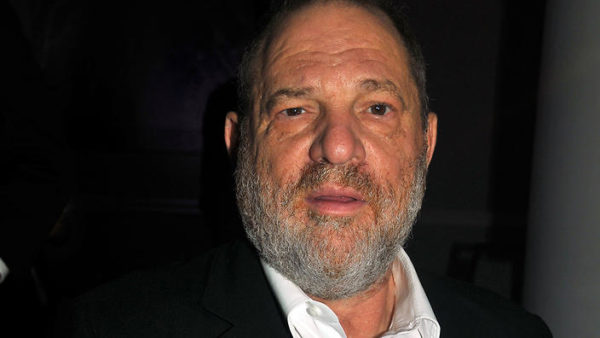
Harvey Weinstein’s downfall was followed by a flood of accusations against other powerful men in Hollywood and D.C.
1. A tipping point on sexual harassment
“Casting couch” allegations leveled against Hollywood heavyweights Bill Cosby and Harvey Weinstein scorched the traditional assumption that men have the innate right to sexually exploit women, which women endured to get or keep their jobs. While equally upset over the power dynamics of the economics of “consent,” the gay community grappled with more nuanced issues after gay actor Anthony Rapp revealed that closeted gay actor Kevin Spacey, then 26, tried to “seduce” him when Rapp was 14 years old. Old Gay Sexual Liberation assumptions were shaken: not all gay teens welcome sex with an older man as a rite of passage and groping is not equivalent to a handshake. What had been routinely dismissed as a gay bitchy grievance is now part of a movement for respect, boundaries, consideration and human dignity.

Texas
How anti-trans backlash to James Talarico spread like wildfire
Texas Democrat is challenging state Attorney General Ken Paxton
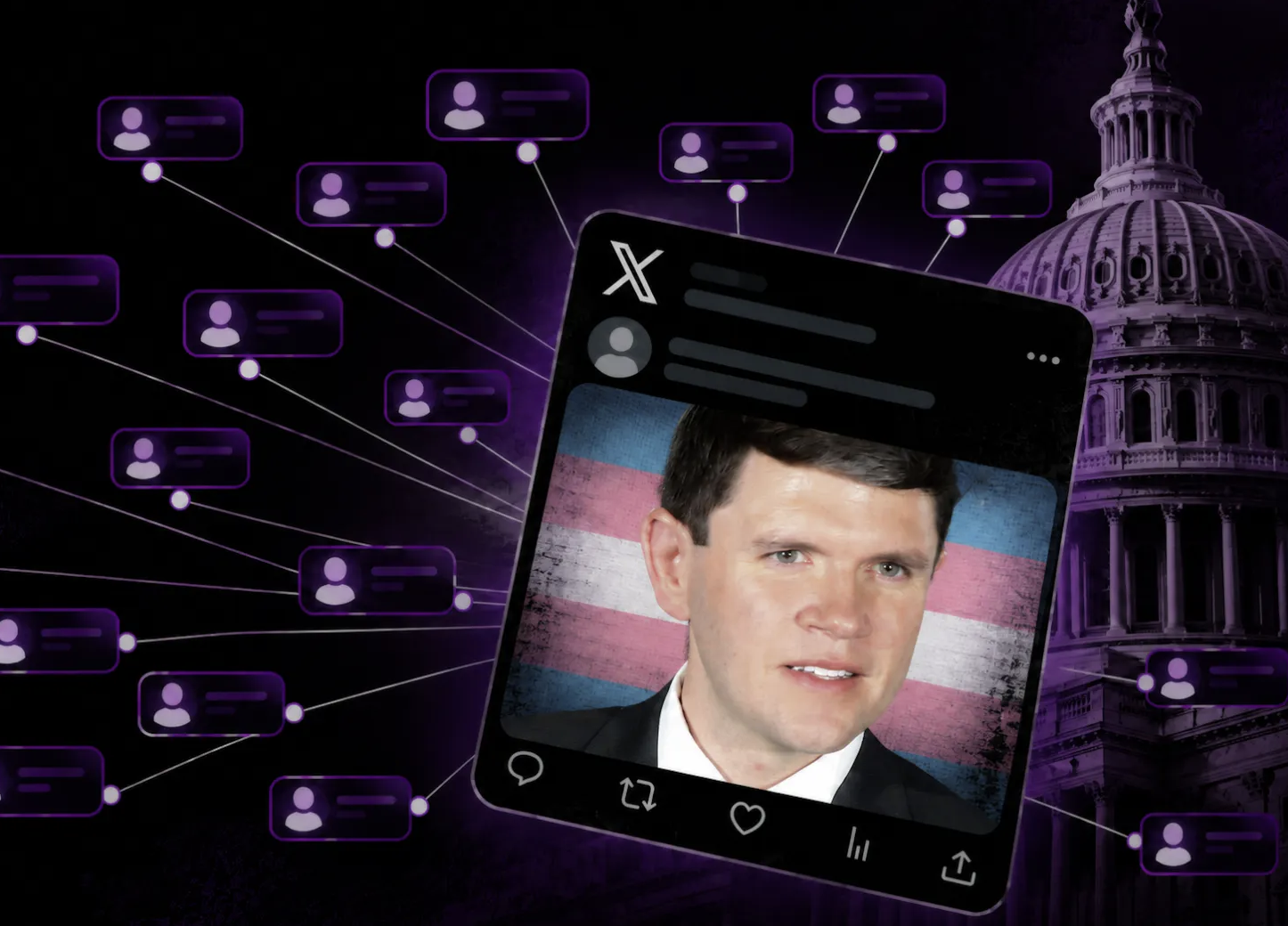
Uncloseted Media published this story on Oct. 21.
This story was reported in partnership with The 19th, a nonprofit newsroom reporting on gender, politics and policy.
By HOPE PISONI | Texas’s Senate race has become one of the most-watched elections of the year. MAGA Republican nominee Ken Paxton pulled off a rare primary defeat against a well-established 24-year incumbent, while challenger James Talarico has been polling well enough to ignite hopes of electing a Democrat to represent Texas in the Senate for the first time since 1993.
This election could have a major impact on issues like education and healthcare prices, which rank as Texas voters’ top priorities. But an outsized amount of coverage of the race has centered instead on transgender people. Paxton’s campaign and its supporters have run several AI-generated ads attacking Talarico’s pro-trans positions. That focus has shaped reporting on the race, both by right-wing media like Fox News and in mainstream outlets like The Washington Post, with many describing Talarico’s stances on trans issues as a liability. Talarico himself has walked back some of his positions in response to controversy, expressing support for some restrictions on trans athletes and rescinding a promise to co-sponsor the pro-LGBTQ+ Equality Act.
This outsized focus didn’t come out of nowhere — on March 3, when Talarico was declared the winner of the Democratic primary, there was a stunning increase in traffic on X related to his takes on trans issues.
In the three days leading up to his primary win, Uncloseted Media and The 19th could only find four posts about Talarico’s take on trans issues. But in just over 24 hours after Talarico won the primary, the newsrooms identified nearly 200 posts. Most of this was driven by three viral videos that were initially posted and amplified by GOP-affiliated politicians and strategists before being circulated by right-wing influencers, media personalities and activists. The spike shows how an army of accounts work together to amplify attacks that can shape the political debate in key races — and perpetuate harmful rhetoric.
“It is a match made in heaven, the business model of social media and people pushing hate,” Sarah Oates, a professor of communications at the University of Maryland, told Uncloseted Media and The 19th. “Because the social media companies know that these are the things that engage people.”
So how did the proliferation of this narrative happen? The following is a play-by-play of how the videos and their accompanying narrative spread in the 26 hours after Talarico’s primary win. The timeline is accompanied by analysis from experts in political communications and strategy.
What are people saying, and where did it come from?
Five minutes after election analyst Dave Wasserman calls the primary for Talarico, Republican Rep. Brandon Gill of Texas posts a clip from a 2021 debate in the Texas legislature where Talarico says that “God is nonbinary.” This is one of two clips which suddenly go viral despite having existed for years — the other, which comes from a 2021 hearing where Talarico says that there are “six really common biological sexes,” is posted by Gill the next morning to a similarly large reach. Talarico has since walked back both statements.
As Gill’s post spreads, the replies are increasingly filled with animus. In one reply, Lynn Conrad writes that “this false prophet speaks with a forked tongue and will lead many from the truth.”
Prior to Talarico’s win, these clips had gotten a small amount of media coverage and appeared in an attack ad by Terry Virts, one of Talarico’s primary opponents. However, Republicans seemingly waited to boost them further until after the primary. Matthew Sheffield, political analyst and a former right-wing political consultant, says this strategy is common.
“Sometimes candidates will decline to reveal [opposition research] that they have for other-party candidates until the general election,” Sheffield told Uncloseted Media and The 19th. “When that’s done, it’s usually because they perceive that the other-party candidate would be severely damaged by the disclosure and they actually want that person to win their party’s nomination.”
Eight minutes after Gill’s first post, the same clip is posted by Greg Price, a political consultant who held a leading role in President Donald Trump’s 2024 campaign and worked at the White House in 2025. Within the next hour, accounts with direct connections to the Republican Party and the Trump administration post the clip and spread anti-trans talking points. This includes the National Republican Senate Committee; their regional press secretary and senior adviser; and Steve Guest, Texas Sen. Ted Cruz’s former communications adviser, who posted the clip and wrote: “James Talarico is a radical trans activist who weaponizes Christianity to push a far-left agenda to mutilate children.” Overall, 12.1 percent of the posts we analyzed came from such accounts.
At least 23 other accounts go on to post Gill and Price’s version of the clips, helping their message go viral. The posts above are also reposted by accounts with millions of followers, including conservative writers Dinesh D’Souza and Ann Coulter, fundamentalist Christian radio host Jenna Ellis and an account called End Wokeness.
About an hour later, Andrew Kolvet, a spokesperson for Turning Point USA and the co-host of The Charlie Kirk Show, posts the “God is nonbinary” clip while calling Talarico a “beta male white boy” and a “compliant little lap dog.” Right-wing media figures are quick to jump on these talking points, with 18.7 percent of all the posts we analyzed coming from them.
Sheffield says that right-wing outlets scour the internet for stories that could “forward their narratives.”
“They do this not just with trans issues, they do this all the time with anyone who puts an argument forward that is helpful to them, and I personally experienced this myself,” says Sheffield, who entered into politics after his small anonymous right-wing website was covered by far-right heavyweights Rush Limbaugh and Bill O’Reilly mere days after its launch.
As the nonbinary video spreads like wildfire overnight, a new clip drops around 8 a.m. the morning after. This clip, which shows a sermon in which Talarico says that “our trans community needs abortion care too,” is the only one we analyzed which hadn’t surfaced prior to the Democratic primary. It’s first posted by ATX data, an anonymous account that bills itself as providing “conservative news and public policy covering local Austin and Texas issues.” While the account has less than 6,000 followers, the clip is picked up quickly: Fox News anchor Will Cain posts it within an hour and Kolvet and Price do so within two, allowing it to rack up over one million views.
Sheffield says that while Democratic leaders tend to prefer to establish rhetoric and positions in-house, Republican leaders more frequently look to grassroots supporters for talking points.
“That’s what this was an example of — they found something that seemed effective to conservatives, so they started picking it up and using it,” Sheffield says.
As lunchtime approaches, influencers and political commentators, who make up 18.1% of the posts analyzed, begin boosting the clips. Accounts with millions of followers, including Libs of TikTok, End Wokeness and podcast host Matt Walsh, help them go viral. The three aforementioned accounts rack up a combined 1.26 million views on their posts about Talarico.
Ashley St. Clair, the mother of a child with Elon Musk and a former MAGA influencer who has since left the right-wing online ecosystem and has spoken out about its “very coordinated” nature, says influencers are incentivized to repost right-wing talking points with momentum on social media because they can make bank from ad revenue, brand deals and practices like paid retweets.
“I worked with [Libs of TikTok], and that’s a business where she makes money hand over fist from this type of content,” St. Clair told Uncloseted Media and The 19th. “It’s become an obsession where she spends all day scouring the dark corners of the internet to make a minority seem like the rule.”
Libs of TikTok did not respond to a request for comment.
Between 10 p.m. on March 3 and 11 a.m. on March 4, Uncloseted Media and The 19th identified 48 posts about Talarico that use similar anti-trans talking points, including 26 separate posts of the three clips that would amass millions of combined views. In contrast, we identified zero pro-trans posts about Talarico in the same time period. Oates finds this sharp turn in the discussion suspicious.
“When you see a shift in a discourse on a particular platform that’s quite abrupt and moves from one side to another and then stifles all dissent, that’s generally gonna be inauthentic,” she says. “That’s generally gonna be led by people who are pushing propaganda or political messaging. … It’s not reflective of general public opinion on the issue.”
This perspective reflects statements by St. Clair. She told the Washington Post that she joined large group chats where influencers would receive “marching orders” from the Trump administration and congressional Republicans. She also shared direct messages with The Post that showed White House staffers asking her to boost talking points and Republican strategists offering her money to amplify posts. Based on Uncloseted Media and The 19th’s findings, she says it’s likely that the anti-trans attacks against Talarico were coordinated in this way.
“I’d be willing to bet there was money put behind it in a paid campaign, because this is how MAGA operates,” St. Clair says. “Most people don’t understand that a lot of these MAGA influencers have access to a dashboard through certain companies where they can just log on and see any campaign that they can sign on to … and all they have to do is push out messaging, which means they don’t have to disclose that they’re paid.”
Sheffield says that many right-wing actors have such closely aligned interests that they don’t need to work together to act in concert.
“Probably most of it is not intentional when you see something go big,” Sheffield says. “They all have a movement mentality on the right, so when they see something that looks effective, then they’re gonna repeat it.”
As the morning progresses, the same talking points are adapted to French, Portuguese and Spanish, the last of which 28.5 percent of Texans speak at home. Like in English, they’re primarily spread by right-wing actors, including political strategist Emmanuel Rincon, who has nearly 620,000 followers on X and is the first to post the sermon clip to a Spanish-speaking audience. By the end of the day, the Spanish news media had also picked up the story.
One especially viral post comes from Collin Rugg, co-owner of the right-wing news site Trending Politics. Rugg stitches together a video that includes numerous clips of Talarico speaking on different topics, including the three trans-focused clips. In his post, he incorrectly says that Talarico claimed there were six genders rather than “biological sexes,” a misquote later repeated in an article by the Daily Caller, Fox News anchor John Roberts, and later Trump.
Matthias Kettemann, a professor of internet law at the University of Innsbruck in Austria, says that social media optimized for engagement allows misinformation to spread easily.
“Untrue information is usually more emotionally charged, and therefore there is a prima facie advantage,” Kettemann told Uncloseted Media and The 19th.
Shortly after noon, these posts begin moving outside of X and social media. The Charlie Kirk Show, broadcast on the streaming and cable channel Real America’s Voice, airs the nonbinary and six sexes clips. Later in the day, anti-trans talking points about Talarico make it onto Newsmax’s “The Big Take,” “Ed Henry: The Briefing,” and “The Pulse” as well as Fox News’ “The Will Cain Show.” By 8:30 p.m., “Jesse Watters Primetime,” which is the second most-watched cable news show in America, discusses Talarico’s stances on trans issues to an audience of roughly 4 million.
Shortly after the clips air on The Charlie Kirk Show, the conservative print media starts picking them up. At 12:35 p.m., the Washington Examiner publishes an article titled “FLASHBACK: James Talarico said there are six sexes while opposing ban on men in women’s sports.” Later in the afternoon, the Daily Caller, the Daily Signal, The Gateway Pundit, and Voz all post articles about the clips, with three of them citing X posts from earlier in the day.
Howard Polskin, president and founder of TheRighting, a website that tracks and analyzes right-wing media, says that right-wing social media and traditional media narratives tend to support each other.
“It’s a virtuous cycle,” Polskin told Uncloseted Media and The 19th. “If something gets written about in an extremist right-wing website, it might be posted on social media, then more social media outlets will pick that up and it might go viral.”
Matt Whitlock, a former senior adviser to the National Republican Senate Committee and the current senior vice president at CRC advisers, a PR firm known for serving conservative organizations, plays a key role in getting these anti-trans talking points on TV. He is the first one to introduce them on Fox News and Newsmax.
“The problem for [Talarico] is he’s created so much incredible ad content already that if you look at [X] today, it is flooded with clips of [him] saying absolutely insane things,” Whitlock told the host of The Big Take on Newsmax.
Whitlock uses the fact that social media is “flooded” with clips of Talarico advocating for trans rights to legitimize his claims that Talarico is an unviable candidate, despite the fact that right-wing operatives like himself are the main ones responsible for the spread of those clips. Oates says this reflects a common strategy in propaganda campaigns.
“Social media has the opportunity to spread more outrage more widely and more freely, but it’s not as influential as mainstream media,” Oates says. “What’s worrying is when what’s going on on social media starts to shape discourse in the more influential mainstream media. … ‘The people are saying’ is a classic propaganda gambit.”
Whitlock did not respond to a request for comment.
What to make of this
All told, we tracked 182 anti-trans posts attacking Talarico on X in the 26 hours after he won the primary. Sixty-three included or referenced the nonbinary clip, 50 referenced the sermon clip and 35 referenced the sexes clip. Between these posts and the citations in the right-wing media, the talking points targeting Talarico’s pro-trans positions likely reached over 10 million people.
In the leadup to the midterms, some Democrats have walked back their positions on trans rights — candidates have come out against gender-affirming care for minors and trans inclusion in bathrooms or sports, with one Ohio representative running an ad opposing “gender ideology” in schools.
Oates says that the manufactured nature of this spread indicates that these anti-trans positions do not accurately reflect the feelings of the voter base. A recent poll of American adults by The 19th and YouGov found that 37 percent of respondents think that both Democrats and Republicans talk about trans issues too much, and trans issues ranked the lowest in terms of importance among respondents to a September CNN poll.
“It’s understandable that some politicians would limit what they say about trans rights, but I think it’s misguided,” Oates says.
Despite how successful these social media tactics can be for Republicans, Democrats rarely follow suit. Oates attributes this to the fact that Democratic narratives tend to be more factual and less inflammatory, making them less suited to virality. Kettemann adds that research has found that right-leaning people tend to be slightly more susceptible to online misinformation.
“There have been few examples of campaigns like you’ve described coming from the left,” he says. “One of the reasons is that people from the left, by and large, are more technologically savvy and don’t fall into the trap of this kind of messaging.”
These tactics endanger trans people
The spread of these posts endangers trans people. The spike in anti-trans rhetoric in the 2020s has increased rates of poor mental health and suicidality among trans people and incited violence against the community. Oates says X’s algorithm rewards hateful content, especially since Elon Musk removed several guardrails for content moderation, including replacing the site’s independent fact-checkers with a volunteer-based community note system.
Social media platforms have increasingly come under fire for the harmful consequences of their engagement-focused algorithms. In the U.S., legal accountability for tech platforms can be difficult to achieve due to laws protecting them from being liable for content on their websites. But in their current state, Oates says that social media platforms like X are not healthy for democracy.
“By participating [on X], you’re not participating in real civic discourse, you’re being used as a commodity by a social media company that not only doesn’t have your best interests at heart but is deliberately trying to inculcate hatred.”
Oates believes that moving beyond the midterms, we will see one of two paths in American politics: “One in which political power is defined by … campaign[ing] on fear,” and another where “people decide … to embrace news and information that’s actually based in reality.”
Additional data reporting by Andrew Norris.
California
Nithya Raman makes her case for LGBTQ voters in the race for LA Mayor
The mayoral candidate said she would use ‘every tool that the city has to protect trans Angelenos’
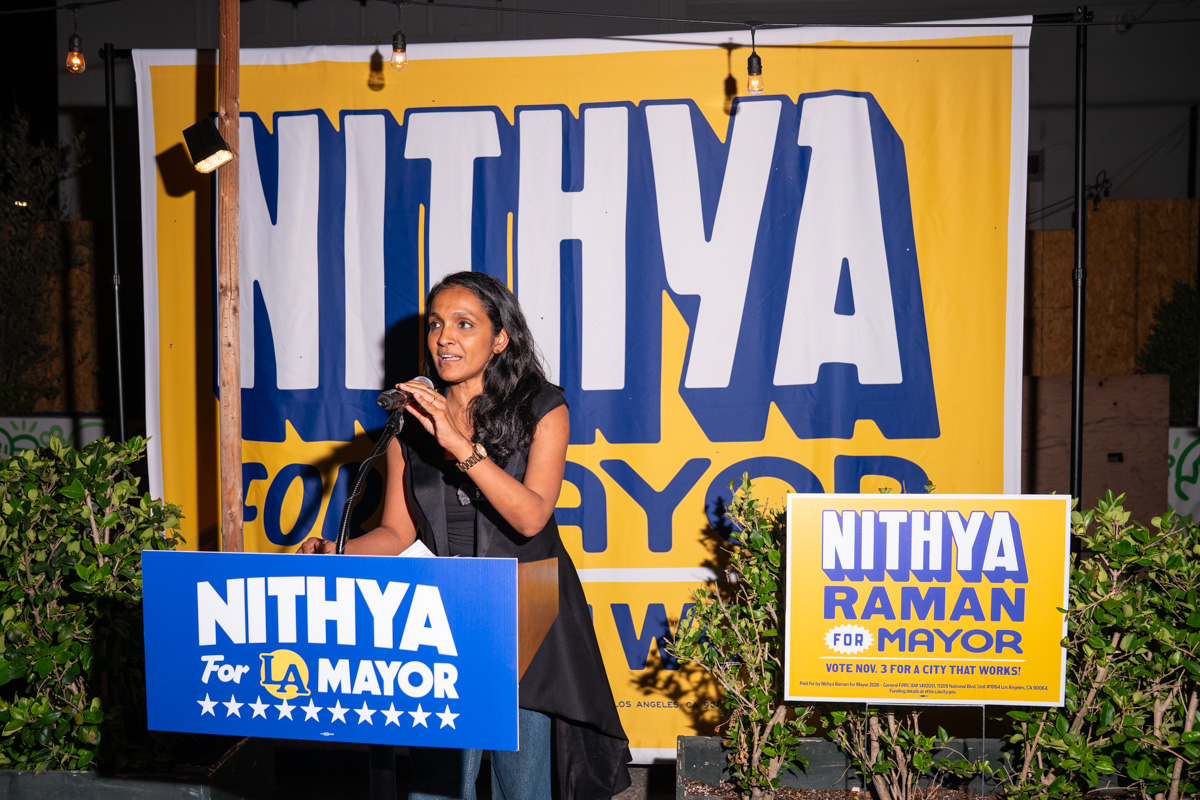
On a cool evening, around a hundred people gathered at the Black Cat’s outdoor seating area in Silverlake. The crowd was full of precisely trimmed mustaches, sleeveless cardigans, and colorful rainbow pins that read “Nithya Raman for Mayor of Los Angeles.”
This was the “Coming out for Nithya” LGBTQ fundraiser for Nithya Raman’s mayoral campaign.
The event which took place on October 8th, was hosted by gay comedian Joel Kim Booster and Pickles the Drag Queen. The pair encouraged the queer audience to support Raman and to donate money to her campaign. The event ended with over $20,000 raised to support Raman according to an organizer of the fundraiser.
Raman is locked in a tight race to become the next mayor of Los Angeles with current incumbent Karen Bass. After coming second in the mayoral primary in August, defeating right-wing provocateur and former reality TV star Spencer Pratt, Raman and Bass advanced to the general election. Since then, current City Councilmember Raman has been steadily gaining in the polls, with most showing her now maintaining a consistent lead over Bass. But the race is far from over, as many of the same polls show a large portion of voters are still undecided. Mayor Bass did not respond to multiple requests to comment on this story.
After an hour of the audience ordering drinks and snacking on appetizers, Raman took the stage. She addressed the audience in an impassioned speech where she invoked the history of the historic Black Cat venue where the event was taking place.
In the early hours of New Year’s Day 1967, undercover police officers raided the gay bar, arresting and beating patrons for kissing people of the same gender as the new year rolled in. The raid left many queer community members badly injured, and others were permanently placed on the sex offender registry. The bar would soon have its liquor license revoked and was forced to close only a few months later.
“Six weeks after the raid, hundreds of people stood right where we are right now on Sunset [Avenue] and peacefully protested,” Raman said in her speech. “In 1967 being seen on that sidewalk could cost you your job, it could cost you your home, it could cost you your family, and they showed up anyways,” she said. “How remarkably brave.”
She then tied the historic oppression of queer people in Los Angeles to contemporary issues, highlighting the Trump-Vance administration’s targeting of transgender people. “Right now, Donald Trump and the people around him are running a coordinated attack on trans people,” she said. Raman remarked on how this targeting of trans people has impacted Los Angeles. “Last year, under pressure from the Federal government, Children’s Hospital Los Angeles shut down the largest clinic for trans youth in the country,” she said, referring to Children’s Hospital Los Angeles’ decision to suspend gender affirming care services.
“As mayor, I will use every tool that the city has to protect trans Angelenos,” Raman said to ecstatic applause from the audience.
After her speech, Raman spoke with the Los Angeles Blade about the specific actions she would take to protect Angelenos from the federal government.
According to Raman, the federal administration is conditioning funding to the city “in ways that undercut some of the values of inclusiveness that we have here,” she said. “Going through the courts is very powerful… I would do more of that. This city has actually not filed as many cases as other cities have.”
Speaking about CHLA’s ending of gender affirming care services, Raman said, “There are other hospitals that have not stepped back from their services as quickly as CHLA did.” If elected as Mayor, Raman said she would “reach out to their board and speak to them about that decision and see how we can push them to do better [for] trans patients,” she said, adding that she doesn’t think “that outreach has happened yet” under Mayor Bass’ administration.
She added that her campaign’s focus on affordability and affordable housing is particularly important for queer people. She said that if elected, she would create “an office of tenant protections” to help renters most vulnerable to being priced out of the city.
“Housing is what makes LA a haven for people,” Raman said. “If you can’t afford to live here, then LA is not a place that is inclusive anymore.”
Caleb Kaufman is a California Local News Fellow placed with the Los Angeles Blade. The California Local News Fellowship is a state-funded initiative to support and strengthen local news reporting. Learn more about it at fellowships.journalism.berkeley.edu/cafellows.
Federal Government
EXCLUSIVE: Democrats seek answers on EEOC settlement affecting LGBTQ+ workers
Bobby Scott and Mark Takano want clarification on anti-discrimination protections

The U.S. Equal Employment Opportunity Commission agreed in August to a settlement with the Christian Employers Alliance that could limit the agency’s ability to pursue certain workplace discrimination claims involving gender identity. Now, Democratic lawmakers are questioning how far the agreement reaches — and whether it could constrain the commission’s enforcement decisions for years to come.
The Los Angeles Blade obtained an early version of a letter from U.S. Reps. Bobby Scott (D-Va.), the ranking member of the House Education and the Workforce Committee, and Mark Takano (D-Calif.), raising concerns about the settlement and its potential implications for workplace protections.
The agreement stems from a lawsuit the CEA filed challenging the Biden-Harris administration’s EEOC guidance on workplace harassment; including protections involving gender identity, pronouns, dress codes, and access to bathrooms and other facilities. The CEA argued that the guidance infringed on its members’ religious rights.
Under the settlement, the EEOC agreed not to pursue certain charges based on gender identity discrimination against the CEA and its member organizations. The agreement also covers future CEA members, provided the alleged conduct occurred while the employer was a member of the organization, raising questions about whether employers could receive protections from agency enforcement by joining the alliance.
Two Democratic congressional aides familiar with the EEOC’s work and workplace protections, who spoke to the Blade on the condition that they remain anonymous, said the agreement could restrict the commission’s ability to pursue discrimination complaints and potentially tie the hands of future administrations.
“They’re sort of swearing not to go after it and not exercising their own discretion, but they’re also purporting to bind future administrations with respect to exercising that discretion,” one aide said.
The aide said the agreement raises constitutional questions about whether the current administration can limit how future administrations exercise the EEOC’s enforcement authority.
In their letter to EEOC Chair Andrea R. Lucas, Scott and Takano question the legal authority for an agreement that they say would prevent future administrations from pursuing certain claims. They cite a 1986 Justice Department legal opinion concerning settlement agreements that constrain the discretion of future administrations and ask Lucas to explain the legal basis for the EEOC’s decision.
The lawmakers also ask whether the commission has entered into similar agreements, whether other federal agencies were consulted and whether the EEOC believes there are limits to its authority to make such commitments.
Scott also criticized the EEOC’s handling of workplace discrimination involving transgender and nonbinary people, arguing that the commission has failed to uphold its responsibilities under federal law.
“Discrimination against transgender and nonbinary people is a serious and ongoing issue. A recent survey found that despite the Bostock decision, 27 percent of transgender people experienced workplace discrimination in the past year. The EEOC was created under Title VII of the Civil Right Act of 1964 and charged with addressing discrimination against workers. Yet, under Chair Lucas’s leadership, the EEOC has abdicated this responsibility under the law when it comes to transgender and nonbinary workers,” said Scott.
The commission’s fiscal year 2026 litigation filings also reflect a shift in its enforcement priorities. The agency’s lawsuits largely tracked its National Enforcement Plan, which emphasizes religious discrimination, alleged anti-American bias, protections for women and purportedly unlawful diversity, equity, and inclusion practices.
The EEOC filed 16 religion-based lawsuits, pursued several cases involving alleged discrimination against majority-group members and continued to bring pregnancy and sex discrimination claims. However, its filings included no lawsuits brought on behalf of LGBTQ+ employees, underscoring questions about how the commission is prioritizing workplace discrimination claims under Lucas’s leadership. The filings suggest the NEP has served as a roadmap for the agency’s litigation decisions, rather than merely a statement of policy priorities.
The letter raises a further concern: whether the agreement could allow employers to obtain protection from certain discrimination claims simply by joining the CEA.
The congressional aides questioned what safeguards would prevent employers from joining the alliance primarily to shield themselves from discrimination claims, rather than because of a genuine commitment to the organization’s stated religious principles.
“What kind of oversight is going to exist to even ensure that these future employers who join […] could just lie, right?” one aide said, questioning whether employers could claim to share the CEA’s beliefs while seeking liability protection.
The aides also raised concerns about the financial incentives the agreement could create for the organization as it recruits new members.
“It’s more than a little gross that this alliance is attracting other employers to join their alliance and making a buck off of workers’ discriminations, you know, complaints not being adjudicated by EEOC,” one aide said.
Scott and Takano are asking the EEOC to explain what requirements employers must meet to qualify for CEA membership and what safeguards will ensure they continue to meet those criteria. They also want to know how the agency will handle complaints involving multiple forms of alleged discrimination when only some fall within the settlement’s terms.
The agreement does not prevent workers from filing complaints with the EEOC, according to the congressional aides. Workers may also retain the ability to pursue private lawsuits. But the aides said employees could lose the commission’s support in cases the settlement prevents it from pursuing.
“They will still have the right to bring private lawsuits, they just won’t have the EEOC in their corner,” one aide said.
The lawmakers are seeking answers about what happens when an employee files a complaint against a CEA-member employer and the employer claims the case is covered by the settlement. They ask how quickly the EEOC would issue a right-to-sue notice in such circumstances and whether workers would be told that the settlement was the reason the agency did not pursue their cases.
The letter also asks whether the EEOC has developed — or plans to develop — notices explaining when an investigation is closed or partially closed because of the agreement.
The aides said the agreement’s precise scope remains unclear, including how it could affect complaints involving conduct beyond the specific issues challenged in the CEA’s lawsuit. They also questioned whether its implications could extend to other forms of sex-based discrimination, such as discrimination based on an employee’s appearance or failure to conform to gender stereotypes.
“The scope of this seems really big. Well, actually, it seems undefined, which is really the scary part,” one aide said.
The lawmakers are also seeking information about the role of EEOC Chief of Staff Shannon Royce, who, according to the letter, was CEA president when the organization filed its lawsuit. They ask whether Royce participated in the settlement process, whether she recused herself and whether the commission will provide records of relevant communications and meetings.
Scott and Takano are requesting quarterly reports on the number of investigations involving the CEA and its members that the EEOC closes because they fall within the settlement’s terms. The aides said the letter is intended to establish a record of the lawmakers’ concerns and signal that they intend to continue scrutinizing the agreement.
One aide warned that the settlement could contribute to a broader chilling effect on LGBTQ+ workers.
“I think this is one more move by this administration to shove people back in the closet,” the aide said.
The Blade contacted the EEOC on Friday seeking comment on the settlement’s implications for workplace protections and responses to the questions raised by Scott and Takano. The EEOC has yet to respond.
Brazil
VIDEO: Interview with executive director of VoteLGBT (Institute for Full Citizenship) in Brazil
Second round of presidential election taking place on Sunday
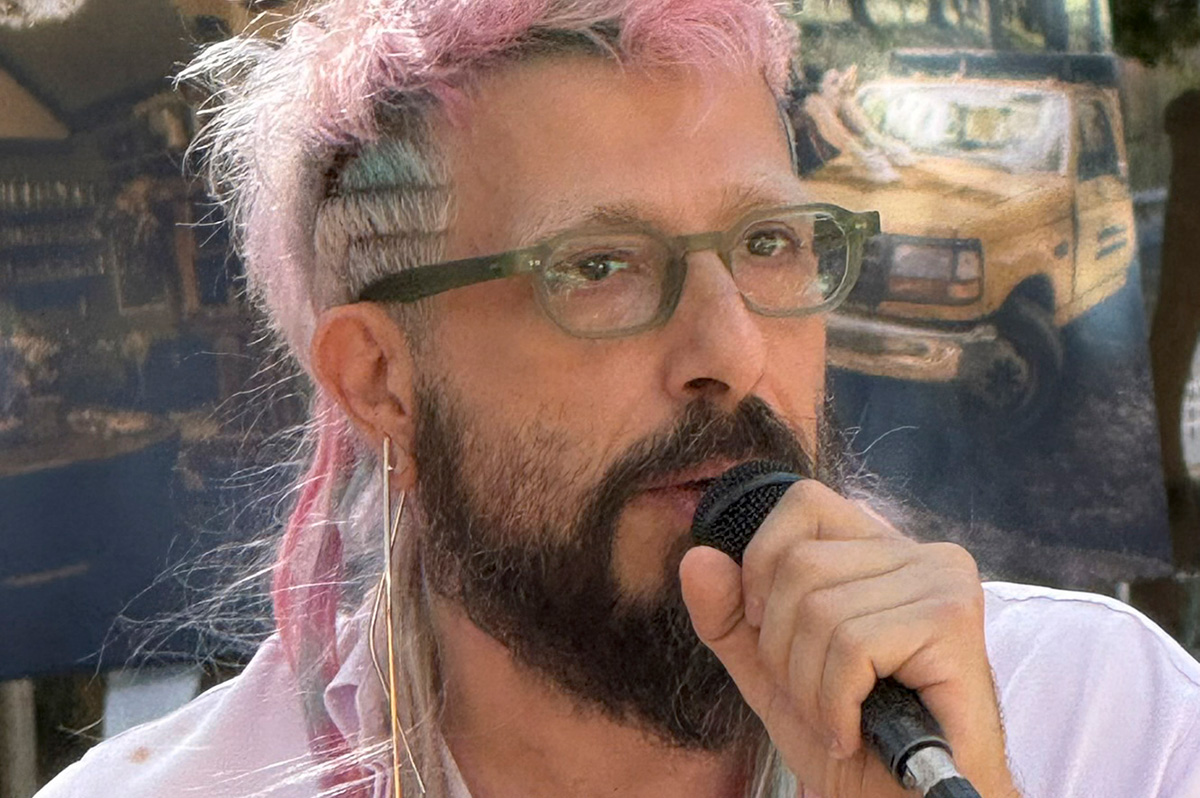
The Los Angeles Blade on Monday spoke with Gui Molhallem, the executive director of VoteLGBT (Institute for Full Citizenship), a group that seeks to increase LGBTQ+ and intersex representation in Brazilian politics.
Molhallem pointed out 35 LGBTQ+ candidates won their respective races in the Oct. 4 election. They include Natal Municipal Councilwoman Thabatta Pimenta, a member of the Green Party who became the first transgender woman from northeast Brazil elected to represent Rio Grande do Norte state in the country’s Chamber of Deputies.
Congresswoman Erika Hilton, a travesti member of the leftist Socialism and Liberty (PSOL) party on Oct. 4 won re-election with nearly 1.6 million votes, the most any female member of Congress has received in Brazilian history. Guilherme Cortes, a bisexual PSOL member from São Paulo state, and Rick Azevedo, a gay PSOL member from Rio de Janeiro state, are among the candidates who won their respective Chamber of Deputies races.

Samanda de Lula, a lesbian member of the leftist Workers’ Party, will represent Rio Grande do Norte in the Brazilian Senate.
Molhallem pointed out there will be 14 openly LGBTQ+ members of Congress once the candidates who won their races on Oct. 4 take office in February. This number is the highest of any country in the Americas.
President Luiz Inácio Lula da Silva will face off against Sen. Flávio Bolsonaro in the second round of the presidential election on Sunday after neither man received at least 50 percent of the vote on Oct. 4.

Lula, who leads the Workers’ Party, in 2022 defeated Bolsonaro’s father, then-President Jair Bolsonaro, in that year’s presidential election.
The Brazilian Supreme Court last year sentenced Jair Bolsonaro — who repeatedly targeted LGBTQ+ Brazilians and other groups while in office — to more than 27 years in prison for his role in an attempted coup that saw thousands of his supporters storm the Congress, presidential palace, and the Supreme Court itself on Jan. 8, 2023. Jair Bolsonaro is currently serving his sentence at his home in Brasília, the country’s capital, because of his poor health.
His son has pledged to pardon him if he becomes the country’s next president.
(Video by Michael K. Lavers for the Washington Blade)
AIDS and HIV
AIDS Walk Los Angeles takes to the streets in West Hollywood while raising money for HIV/AIDS Care
The annual fundraising event was attended by thousands and raised over $850,000
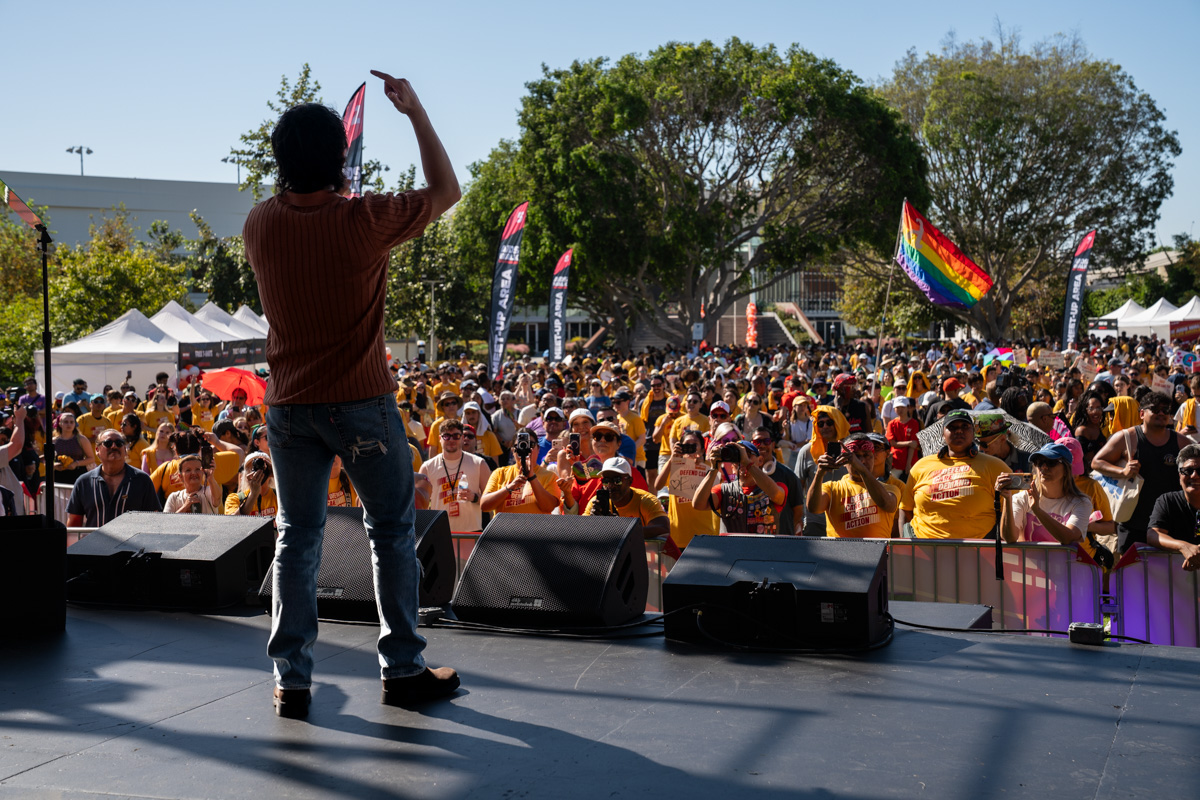
Hundreds of yellow shirts and thousands of people took over the streets of West Hollywood during AIDS Walk Los Angeles on Sunday, October 18th. Organized by APLA Health, the event raised over $850,000 for HIV/AIDS healthcare and prevention. Oakwood School raised the most money of any organization, with over $62,000 in donations.
Before the march began, participants gathered at West Hollywood Park, where speakers addressed the crowd from a large main stage. City officials and celebrity guests spoke before the march began, including Mayor John Heilman, County Supervisor Lindsay Horvath, comedian Joel Kim Booster, and singer David Archuleta.
CEO of APLA Health, Craig E. Thompson, took the stage and addressed the state of HIV and AIDS care in America. He spoke about the first AIDS Walk LA in 1985, which began when there was a “federal administration that stayed silent when thousands of our friends, partners, and neighbors were dying.” “We’ve been there before, and here we are again,” he said, referring to the federal cuts to HIV prevention programs, Medicaid, and more. According to Thompson, Medicare provides more healthcare to more people living with HIV than any other provider.
But despite these federal cuts, Thompson was hopeful for the future of HIV care, drawing on lessons learned early on in the epidemic by the original AIDS activists. “We didn’t wait for permission,” he said. “We showed up, we raised our voices, we walked, and we protected our community.”
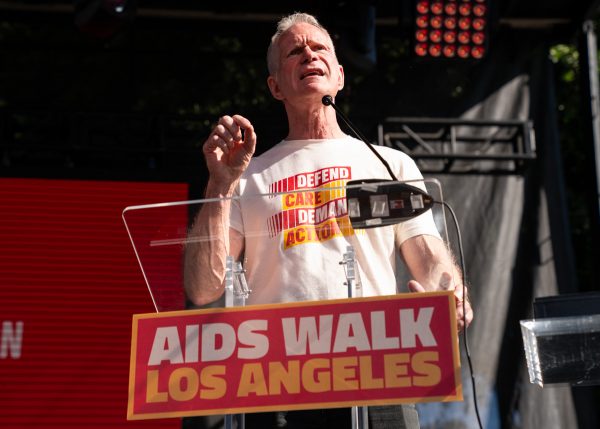
APLA Health CEO Craig E. Thompson speaks at AIDS Walk Los Angeles in West Hollywood Park on Sunday, October 18th, 2026.
Actress Michaela Jaé Rodriguez was honored with the first-ever Voice of Visibility Award for her work fighting stigma around HIV and AIDS. Known for her Golden Globe-winning performance as Blanca Evangelista in Pose, Rodriguez told the crowd that those living with HIV “are not statistics.”
“We are not disposable. Instead we’re daughters. We’re mothers. We’re sisters. We’re brothers. We’re fathers. We’re artists. We’re creators. We’re actors. We’re award winners,” she said to a roaring audience.
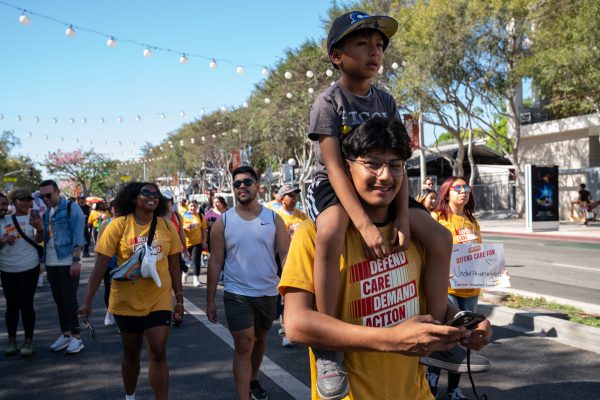
People walk down Santa Monica Boulevard during AIDS Walk Los Angeles on Sunday, October 18th, 2026.
The mood was joyful as the walk began. Many people carried signs with the names of loved ones living with HIV. Multiple musical groups performed, including a drumline, a pep band, and a mariachi group. People laughed, cheered, and danced as they strutted up and down Santa Monica Boulevard.
As the walk looped back to West Hollywood Park, people sat around talking with friends and community members. I walked past the lines for free ice cream and flu shots and wandered over to the AIDS Monument, which opened recently in 2025. Designed by artist Daniel Tobin, the monument is unlike most others. It is abstract, made up of tall and narrow metal poles and marble blocks.
A young tour guide in a baseball cap and chic sunglasses was giving a tour of the monument to a group of about five people. The guide’s name was Jude Schoenfeld, the Director of Public Programs for One Institute. Schoenfeld spoke, and the group walked through the metal beams emerging from the ground. At first, the poles were spread out organically like trees in a forest, but as the group wandered further, they unified into an organized grid towards the far end of the monument. This is where they stopped.
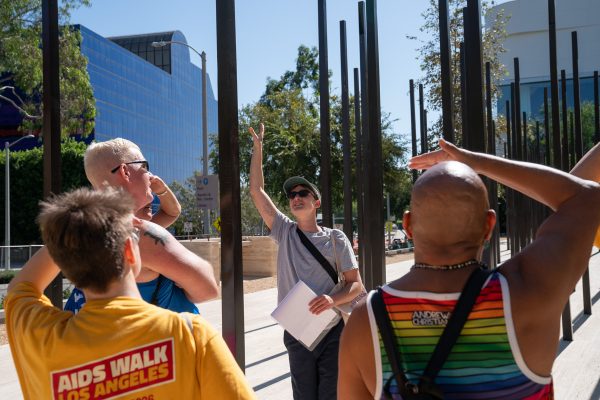
Jude Schoenfeld gives a tour at STORIES: The AIDS Monument after AIDS Walk Los Angeles in West Hollywood Park on Sunday, October 18th, 2026.
Quotes from the gay poets Gil Cuadros and Essex Hemphill were inscribed on a bronze plaque. Schoenfeld read them and remarked on how the artists died so young from complications with AIDS, both passing away in their late thirties. An older member of the tour group interjected, saying that living that long actually felt old for gay men at the time. “No one from that era that was gay expected to live beyond forty. We thought we were all gonna die of AIDS,” he said. “So thirties, that’s a whole life. We lost everybody when they were in their twenties.”
After the tour ended, I asked Schoenfeld what it’s like to give tours to people who lived through the early years of the AIDS epidemic, when you could lose a friend in a few months with hardly any warning. “Oftentimes, it’s emotional for people to be here,” they told me. “The great aspect of the tours is that they become a conversation and a place for folks to share memories.”
“People who’ve been in Los Angeles and West Hollywood for decades have just such a rich understanding of the history here. I’ve learned so much from just talking to folks who come on the tours,” Schoenfeld told me.
As we stood next to the monument with music blasting and kids playing a few hundred feet away, Schoenfeld told me about why they think it’s so important to learn the history of AIDS activism. “It’s never been more important,” they told me. “Especially as we’re seeing threats all around from different institutions that want to take funding away and want to take these resources that we’ve spent so long building.”
“I think this is a really important juncture in history,” they said. “We want this to be a site of continued activism.”
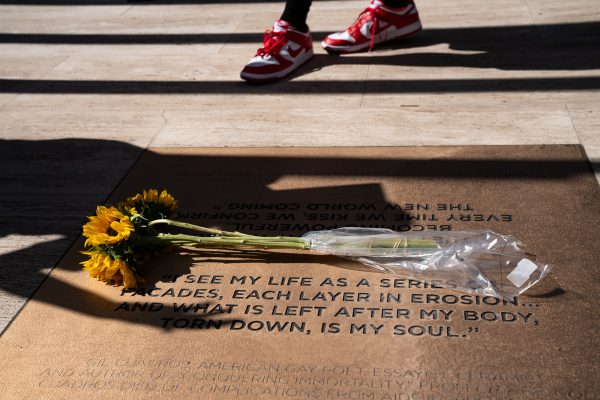
Flowers are laid on a plaque at STORIES: The AIDS Monument in West Hollywood Park on Sunday, October 18th, 2026.
Puerto Rico
Annual National Trans Visibility March takes place in Puerto Rico
Participants highlighted anti-trans laws in U.S. commonwealth
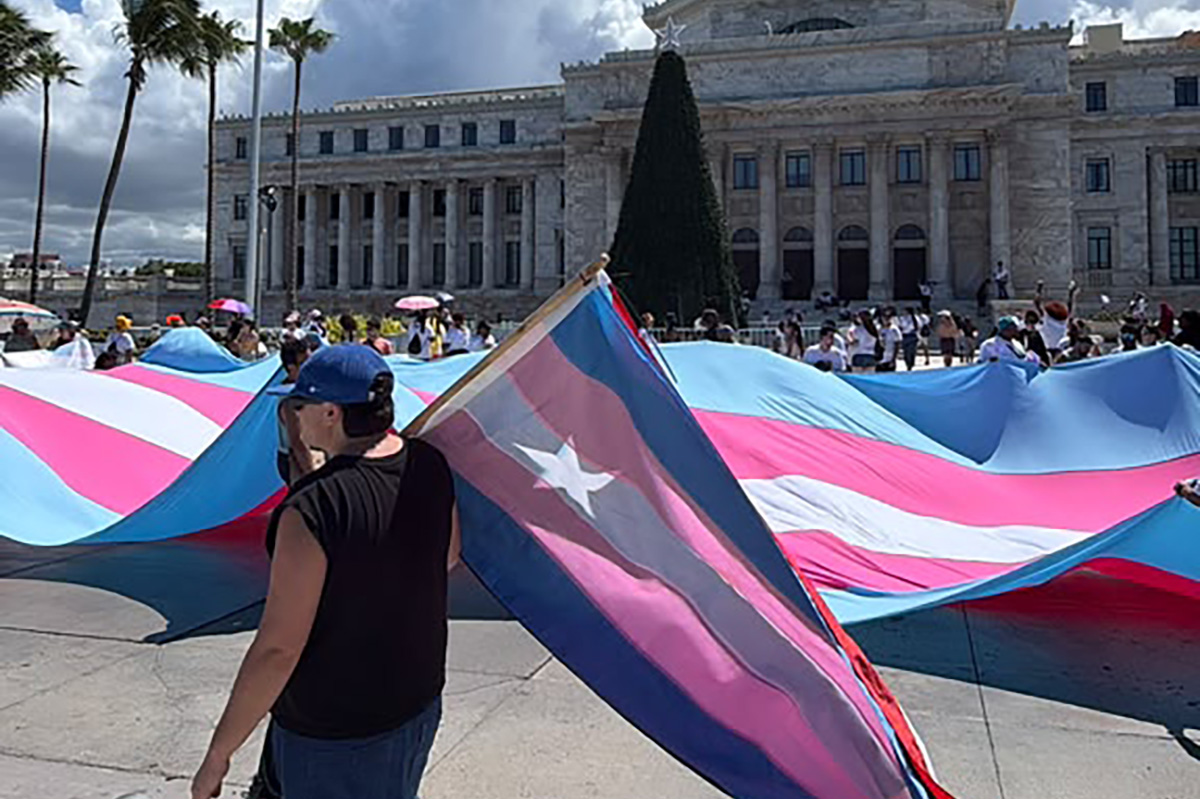
The annual National Trans Visibility March took place in Puerto Rico on Saturday.
The march ended at the Puerto Rican Capitol in San Juan, the U.S. commonwealth’s capital and largest city. Samy Nemir Olivares, a member of the Puerto Rico LGBTQ+ Federation’s board of directors who also works for Lambda Legal, is among those who spoke.
The march took place at the end of a three-day conference that took place in San Juan. Participants included:
• Ana Irma Rivera-Lassen, the first openly LGBTQ+ person elected to the Puerto Rican Senate
• Mila Hellfyre, a trans Puerto Rican activist
• Maru Rosa Hernández, a nonbinary plaintiff in Lambda Legal’s lawsuit that challenges the Puerto Rican government’s refusal to issue birth certificates with an “X” gender marker
• Peter Manuel Shepard Rivas, a Puerto Rican HIV/AIDS activist
• Lambda Legal Senior Counsel and Health Care Strategist Omar González-Pagán
Waves Ahead, Puerto Rico’s largest LGBTQ+ organization, is among the groups that sponsored the National Trans Visibility March and conference. Other sponsors included the TransLatin@ Coalition, the True Self Foundation, the Transgender Law Center, Advocates for Trans Equality, Human Rights Campaign, Gilead, the Georgetown University Law Center’s O’Neill Institute for National and Global Health Law, GLAAD, and the Hispanic Federation.
“Now it’s more important than ever to unite as an LGBTQ+ movement alongside our allies to protect the progress we have made in achieving trans and queer rights as both the federal and local governments attempt to erase and criminalize our identities,” said Olivares. “The president insists that trans identities don’t exist, yet they continue to attack our rights and existence through the laws.”
“But we are here, we are not going to be silenced or erased,” added Olivares. “As (with) any other Americans, trans and queer people deserve equal access to healthcare, housing, and nondiscrimination at the workplace and government services.”
Olivares in their comments noted the Puerto Rican government “has betrayed and undermined the LGBTQ community by signing into law more than” half a dozen anti-LGBTQ+ laws.
True Self Foundation Executive Director Miguel Vázquez-Rivera during a Congressional Hispanic Caucus briefing earlier this year noted these include a ban on gender-affirming healthcare for anyone under 21. Vázquez-Rivera also highlighted Law 26-2026, which prohibits the University of Puerto Rico and other “government facilities” from installing “mixed or gender-neutral multi-occupancy restrooms.”
Puerto Rico Gov. Jenniffer González, a Republican who is a member of the pro-statehood New Progressive Party, signed these laws after she took office in January 2025. González, who supports President Donald Trump, was Puerto Rico’s resident commissioner in the U.S. House of Representatives before she became governor.
Olivares told the Los Angeles Blade that National Trans Visibility March organizers decided to hold the annual event in Puerto Rico as a way to highlight the fact the commonwealth has “the most severe anti-trans legislation in the U.S.” and to stand in solidarity with local activists.
The first National Trans Visibility March took place in D.C. in 2019. Next year’s National Trans Visibility March is scheduled to take place in Atlanta.
Palm Springs
A quick visitor’s guide to Palm Springs before the winter
Traveler Ed Walks shares his Palm Springs highlights to check out this fall
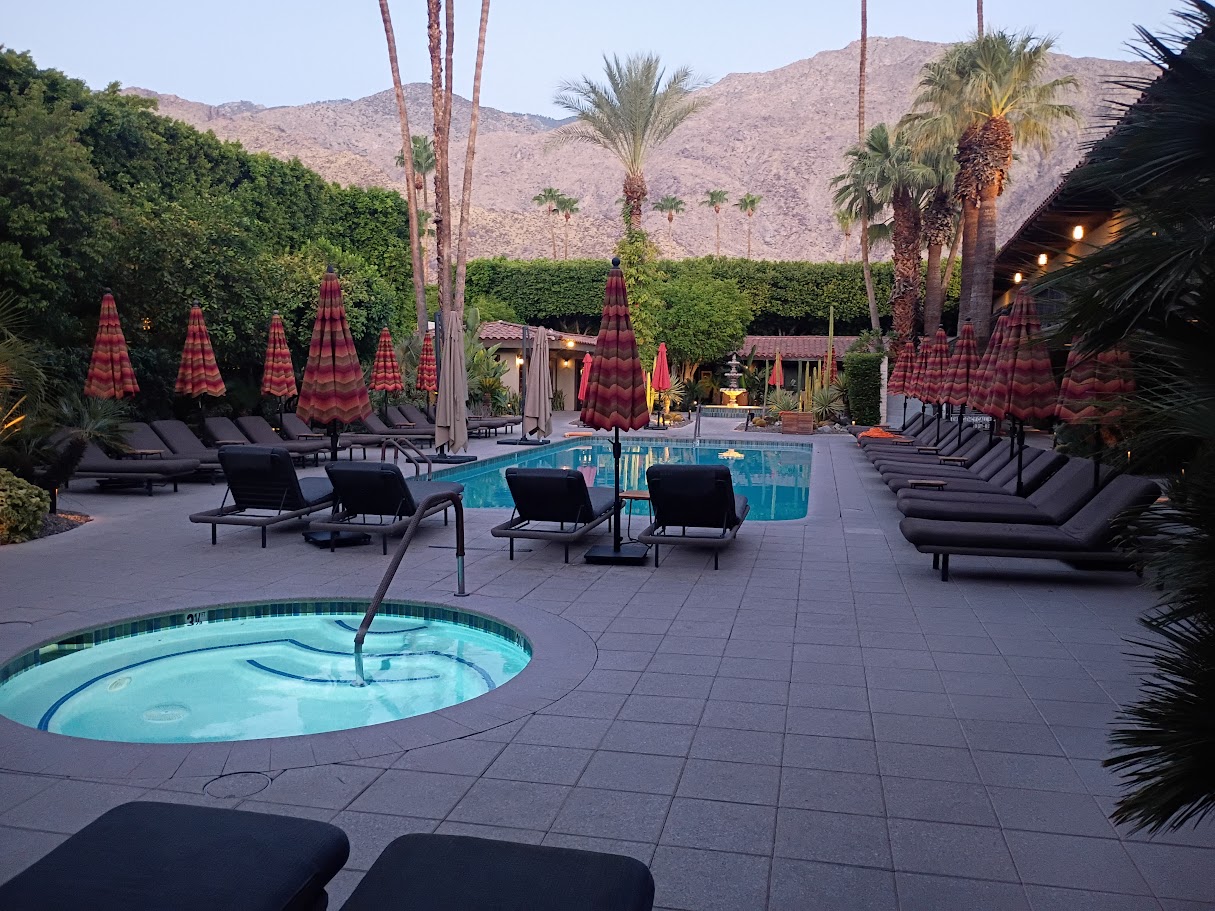
by Ed Walsh
Palm Springs is gearing up for a busy fall highlighted by the 40th anniversary of Pride planned for the weekend of Nov. 6-8th. The Pride festival on Saturday, Nov. 7 is free and the Pride parade steps off on Sunday, Nov. 8. If you can get there early, the Pride block party will be on Arenas road starting at 3 p.m. on Friday, Nov. 6.
Before Pride, women took center stage with The Dinah, which ran this year from Weds, Sept. 30 to Sun., Oct. 4. The Dinah 2026 included headliner Hayley Kiyoko, alongside Da Brat, Sasha Keable, and The Aces.
Leather Pride kicks off the weekend before Pride, Thurs. Oct. 29- Sun., Nov.1. Leather will overlap with Halloween this year. Arenas Road will host its annual Halloween block party on Saturday, Oct. 31, 4 p.m. to 10 p.m.
The desert rewards those who can brave the heat in September with the Greater Palm Springs Spa Month. Check out the Greater Palm Springs Website (visitgreaterpalmsprings.com) for the deals. If you have never been to Desert Hot Springs, spa month is a good time to relax in mineral water for which the city is named. Azure Palm Hot Springs Resort & Day Spa Oasis is one of the best with indoor and outdoor mineral baths and famous pebble-lined stream “reflexology” walkway giving you a foot massage and soak.
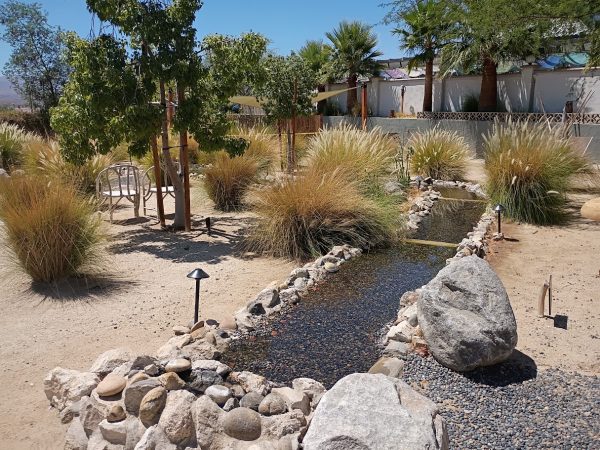
Another good day trip outside Palm Springs city limits is Indio. Its downtown is undergoing a major resurgence, highlighted by its new City Hall and library. Indio unveiled a public art installation last summer in the heart of downtown. The 65- and 75-foot colorful robot-like sculptures called “The Messengers” were first displayed at the Coachella music festival in 2023 and are now permanently on display in Indio. Be sure to check out “The Place.” It is an indoor collective of local, independent, and inspiring artists. Two of those artists are Indio native Adolfo Vasquez and his husband, former LA resident Vincent Sandoval. They run the Chicano Candle company, which includes a candle bar where you can put together a unique scent that inspires you.
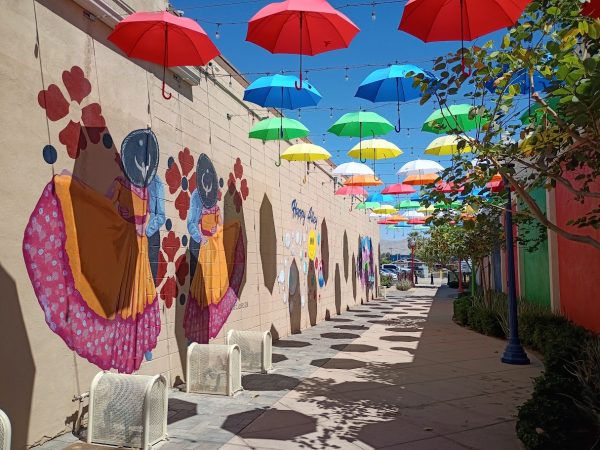
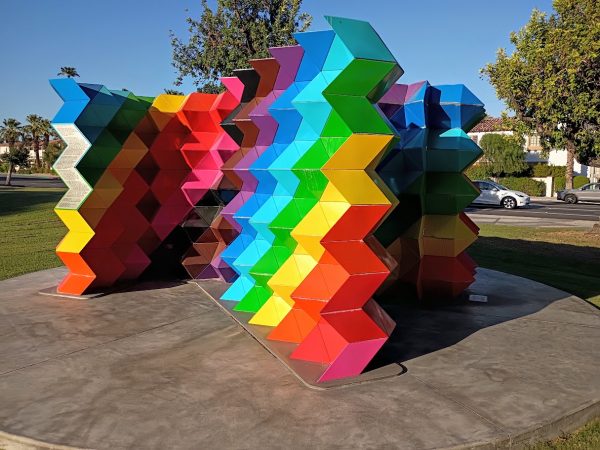
Palm Springs has two new queer landmarks put up over the past year. In October, a 65-foot Pride flagpole was installed at the corner of Arenas Road at Indian Canyon Drive, across from the Arenas District. Also in October 2025, the 8-foot-tall multicolored Pride Monument was unveiled at Frances Stevens Park at 500 N. Palm Canyon Drive, about a 15-minute walk from Arenas Road.
The Greater Palm Springs area has more gay resorts than any other place on the planet. Palm Springs offers 10 gay male resorts in city limits and neighboring Cathedral City has the largest resort in the area, Cathedral City Boys Club (CCBC). Sadly, Palm Springs’ only downtown gay resort, Canyon Club Hotel, closed in December and is being converted into a mainstream property.
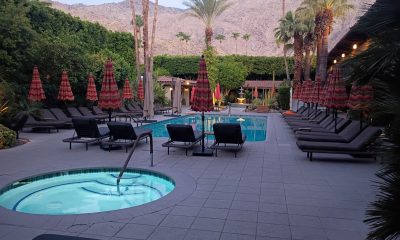
All the gay resorts are clothing optional. Most provide free continental breakfast and some throw in a free lunch. The fabulous Santiago resort has the largest pool of any of the gay resorts and like its sister resorts, Twin Palms and Descanso, has a 24-hour free canteen where guests can help themselves to snacks and beverages. All three properties offer a free lunch and are known for pampering guests.
The Triangle Inn is kitty-corner from Santiago and is an historic property in the mid-century modern motif for which Palm Springs is known. It has a well-deserved loyal following.
The other gay resorts are in the Warm Sands neighborhood and include Palm Springs first gay resort, El MIrasol Villas, Casa Oliver, Desert Paradise, Vista Grande, Hacienda Palm Springs and InnDulge. CCBC, Desert Paradise Resort and Casa Oliver are the only gay resorts that offer day passes.
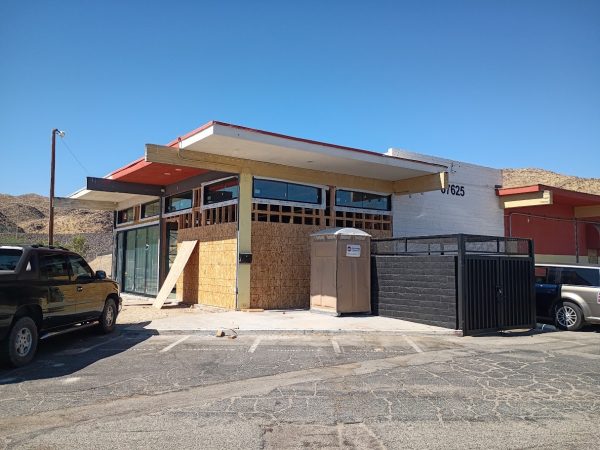
The space occupied by the legendary Barracks bar in Cathedral City will soon be reborn as the Cathedral City Eagle. Major construction has been underway at the property for months and it is scheduled to be open some time in October. Although the address is on E Palm Canyon Drive, it is a little hard to find even with GPS, because it is set back off the street behind the Arco station.
The other two gay bars in Cathedral City are One Eleven, Roost and Runway, which is part of CCBC. The nightlife on Arenas Road has remained stable and on the north end of town, Toucans Tiki Lounge is going strong on Thursdays through Sundays.
If you can get to Palm Springs by October 18, be sure to check out the exhibit “A Queer Arcana” at the Palm Springs Art Museum. The exhibit explores queer art and culture in the 20th and 21st centuries. The museum is free on Thursdays 5 p.m. to 8 p.m. You can combine it with a visit to the Palm Springs Village Fest street fair on Palm Canyon Drive that runs 7 p.m. to 10 p.m.
No visit to Palm Springs would be complete without a visit to the Palm Springs Aerial Tramway. The summit has great hiking trails where you can comfortably hike even in the summer with temperatures as much as 40 degrees cooler than the city.
The Palm Springs restaurant scene doesn’t disappoint. Boozehounds, on the north end of town, across from Toucans, is one of the more unique restaurants in town. They welcome dogs on the expansive patio, and the huge restaurant feels spacious even during the busiest times of the year. Be sure to try the pastrami sandwich.
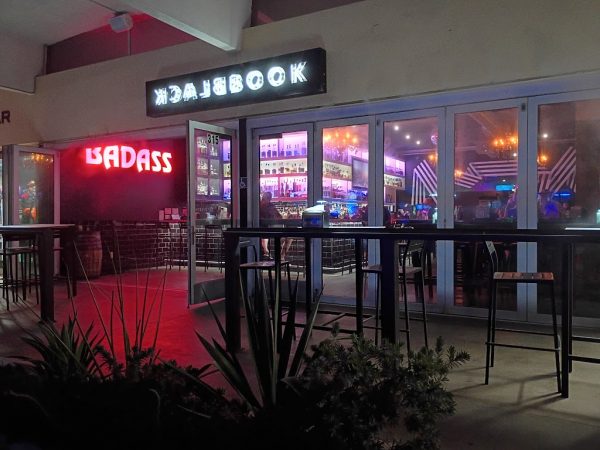
The other PS mainstays are the fab Trio, the upscale but down-to-earth Eight4Nine, and in the heart of downtown, Lulu’s, Pinocchio’s and the weekend drag brunches at Oscars, which is also famous for its Sunday Tea Dance. If you are looking for a late night bite, check out BlackBook on Arenas Road for casual gourmet bar food.
For a uniquely queer overall tour of Palm Springs, check out Drag & Fly Tours, which features stadium-style sideways seating on a bus. A drag queen shows off highlights and history of the city. Red Jeep Tours is another great option if you want to explore the desert’s natural beauty.
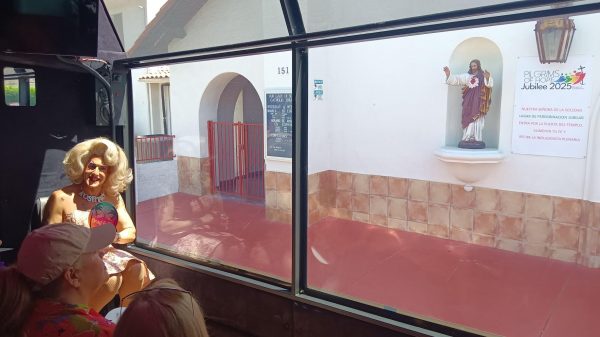
If you want to avoid crowds and enjoy lower hotel prices, summer through October is a good time to visit. It’s also slower in the desert in the weeks just after Thanksgiving. Crowds pick up in Christmas week through New Years and then things usually slow down in January until around Valentines Day.
For more information, the Greater Palm Springs official Web site is https://www.visitgreaterpalmsprings.com/
Palm Springs
Meet the voice of Palm Springs: an interview with KGAY 103.1’s John Taylor
KGAY’s John Taylor reflects back on his decades behind the mic, the evolution of broadcasting, and why queer community and connection remain at the heart of his mission.
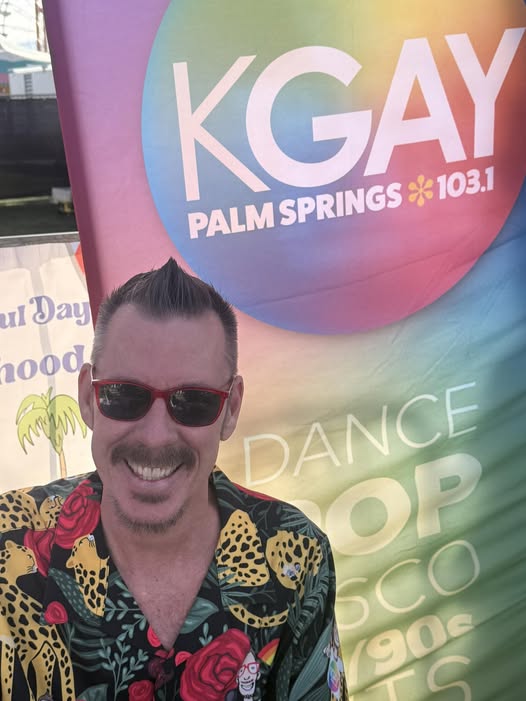
For decades, John Taylor has been a witness to the evolution of the art form that is radio, all while doing his part to help shape it. From his very first taste of broadcasting as a teenager (thank you, Tom Bergeron), to stepping into his role of that lovable voice gracing KGAY 103.1 in Palm Springs, Taylor has seen the industry transformed over the years by corporate consolidation, social media, and the seemingly endless ways folks eat up entertainment today. In this cacophony of captions and quips, one thing remains the same – Taylor’s steadfast belief that quality broadcasting involves connectivity.
Affectionately known as “the voice of Palm Springs,” Taylor continues today, providing the community with warm insights and positivity. Through his weekday morning show on KGAY, Taylor’s voice reaches far past the Coachella Valley to places around the world where simply existing authentically carries consequences. Whether he’s talking on local events, spilling the tea with celebs, or simply bringing some spoken sunshine to your morning, Taylor sees his work as something much larger than banter. In our interview, Taylor takes a beat to look back on his broadcasting journey, the changing and expanding world of media, and how keeping inclusion, community, and warmth at the core of the conversation matters now more than ever.
You have been donned the title of “voice of Palm Springs.” Can you share with our readers what this means to the Palm Springs community and what this means to you on a personal level?
Who “dons” these titles? I guess I’ll take it! Since I have a microphone weekday mornings 6-10 am at KGAY 103.1 Palm Springs, and since we’re a small, tight-knit community, I take the responsibility seriously. I know many of our listeners personally, so I know who I am letting down if I don’t do my best. Through our worldwide streaming at KGAYPalmSprings.com, we’re in earbuds around the planet in places where life isn’t easy for LGBTQ+ people.
We’re heard in Odesa and Kyiv, Ukraine, where Russian drones are pounding the population. We’re aired in Antalya, Turkey, a country that doesn’t allow gay cruises to dock, and where the Erdoğan regime is arresting LGBTQ+ activists. Singapore, a country that just decriminalized sex between men three years ago and does not recognize gay marriage, is listening too. Personally, if I can showcase the sense of community, inclusion, and FUN that typifies gay life in Palm Springs as a beacon of hope to the world, then my work has meaning.
You have a significant and deep history in broadcasting. What was your introduction to the industry, and what kept you in it for so long while witnessing changes in it over the years?
As a teen, a friend, Katya Sousa, saw my interest in radio and took me to see her favorite nighttime DJ, Tom, at WHEB FM in Portsmouth, New Hampshire. Tom put me on the air during his show to read a public service announcement, and a monster was created. “Tom” was Tom Bergeron, who went on to become a familiar face to TV viewers for decades as host of The Hollywood Squares, America’s Funniest Videos, and Dancing With The Stars. Blame Tom Bergeron.
What kept me in it so long? This is it; I don’t dance; I have no other skills. All seriousness aside, I have seen corporate greed and deregulation destroy my beloved industry. Thankfully, KGAY is locally LGBTQ+ owned and operated, and connection to the community is our priority.
While witnessing the rise of social media, podcasts, and so much more, what has been the most significant or undeniable transformation in the industry that you experienced?
For me, social media and podcasts provide more outlets to get the message out. When we interview a celebrity or go to a local event, we cover it on video as well as audio. We get the eyeballs of millions of people, not just the 48,000 earballs of our local radio listeners.
From your experience, what are the makings of great radio?
Passion in what you do is the key. It’s contagious, no matter the medium. As the host on KGAY, you are engaging with listeners who range from longtime valley folks to people experiencing Palm Springs for their first time.
What helps you to decide which stories and topics deserve the mic?
In my opinion, Palm Springs, per capita, has the highest concentration of brilliantly creative people. Telling their stories is fascinating to me. It’s like a lifelong continuing education course. I’m happy to shut up, listen, and learn.
Is there a celeb interview or talk from your career that has stayed with or changed you in any way? If yes, why?
Over the years, I interviewed Joan Rivers many times; I was always gobsmacked by how honest and forthcoming she was. I also got to witness how Joan operated offstage with fans and crew; she was truly a kind and caring person. It’s great when your heroes exceed your expectations in real life.
What is one of the more intriguing things you have learned about someone during an interview that listeners might never have expected or missed altogether?
I always like to zero in on the personal passions of an interview subject. Their spouse, their kids, their pets. The things that bring them joy. When you tap into a person’s passions, they will open up to you. Recently, one celebrity felt so comfortable with me, she spilled the beans on a project that legally couldn’t be announced. I had to edit out the references. I won’t say which celebrity it was. But her name “allegedly” rhymes with Bathy Biffen. I was happy to do it because I love Bathy!
How has Palm Springs changed from the time you first became familiar with the community to the Palm Springs we all know and love today?
Like everything, Palm Springs has gotten more expensive. We’ve seen some wonderful restaurants, bars, and resorts come and go. We’ve seen a drastic reduction in Canadian travellers, due to the idiotic policies of the current administration in Washington. On a truly positive note, I’ve seen a fantastic conversation develop between our LGBTQ+ community and our Palm Springs Police Department. In large part due to the policies and practices of our recently retired Police Chief Andy Mills. Incoming Chief Kyle Stjerne is extremely responsive and is continuing that constructive dialog. As a gay man, I have never felt safer anywhere.
You have seen broadcasting go through times of tremendous change and disruption. What worries you most about the future of radio, and what provides you with hope about its future?
FCC commissioner Brendan Carr’s threats to retaliate against broadcast entities that disagree with the current administration. Free speech is in jeopardy. What gives me hope? Voters turning out in a BLUE TSUNAMI in November.
When folks tune in and hear your voice on KGAY each day, what do you hope they take away with them?
I want them to know they have a friend, they are not alone, and everyone’s welcome in the Gayborhood!
Palm Springs
Making waves in the desert: How Brad Fuhr and KGAY keep the Coachella Valley connected
From building Palm Springs’ queer media scene to pushing back against social media censorship, Brad Fuhr is keeping the desert gay, connected, and on the air
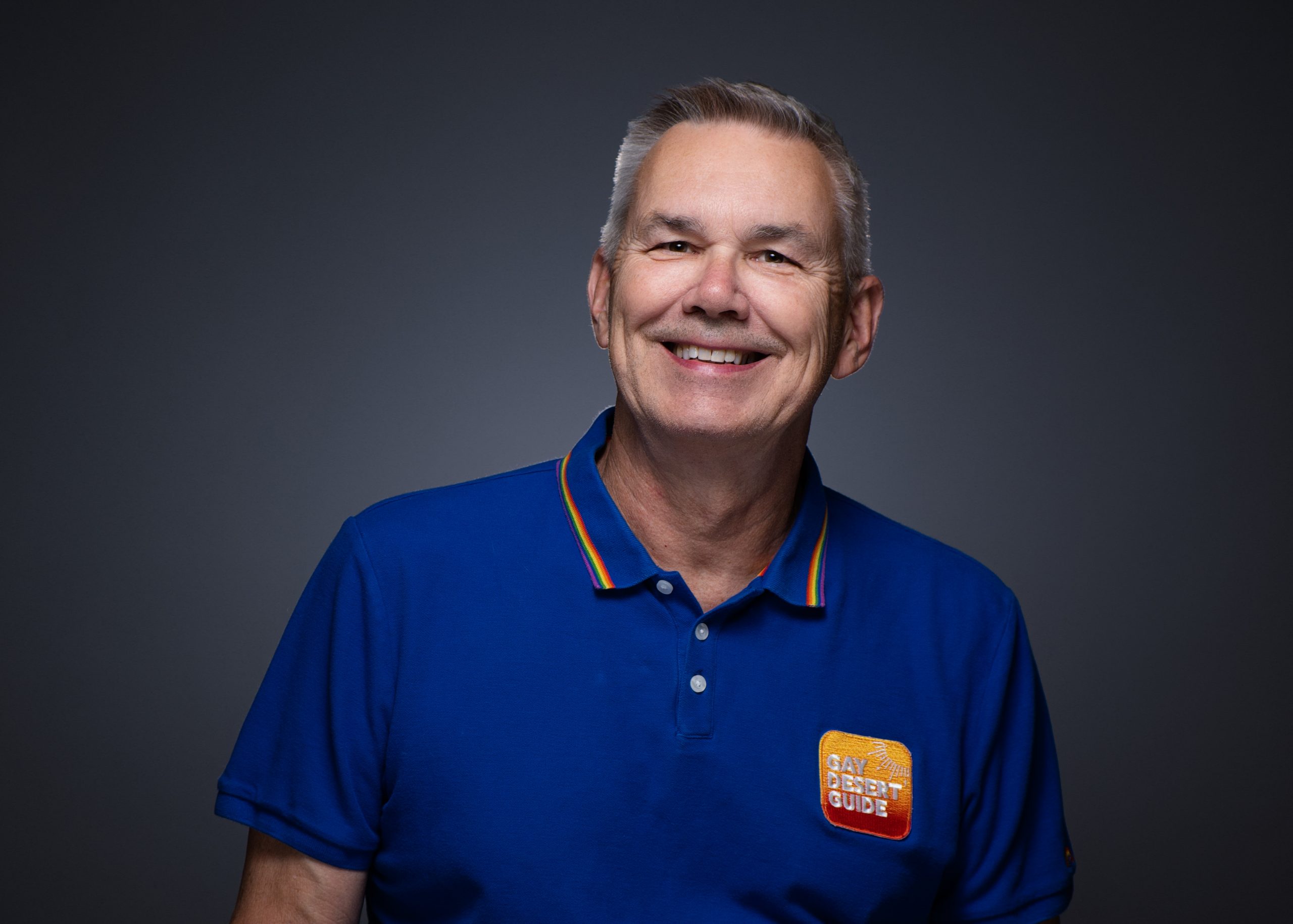
For many years now, Brad Fuhr has been helping LGBTQ+ voices find their frequency, from the radio waves of Chi-town to the evolving entertainment world of Los Angeles, and is now in his Palm Springs chapter. A true veteran of queer media who has spent his career connecting folks through broadcasting and storytelling, Fuhr seized the opportunity to provide the Coachella Valley’s LGBTQ+ community with a comprehensive outlet that goes above and beyond the average tourist brochure. Enter Gay Desert Guide, the digital destination Fuhr launched in 2013 to assist both locals and tourists alike in discovering the people, places, and experiences that make the Palm Springs queer community so very one of a kind.
In his role with KGAY, the LGBTQ+ radio station that made its comeback under his leadership in 2021, Fuhr has helped ensure that queer voices remain part of the local soundtrack. From navigating the seismic shifts in media consumption to taking on the realities of social media censorship, Fuhr has witnessed firsthand how technology can be used to bring communities together, as well as how it can divide them. We talked with Fuhr about fostering queer spaces and what it takes to keep Palm Springs’ vitality in an ever-changing media world.
You have spent decades in broadcasting and media, and now you’ve found yourself a major part of the Palm Springs queer community. What about Palm Springs first compelled you to start a new chapter in this LGBTQ+ desert oasis?
I had been working in LGBTQ media since the 90s in Chicago, where I managed LesBiGay radio and worked for Windy City Times. When I came to Los Angeles, I worked with the progressive talk radio station owned by Clear Channel Radio, then moved over to run Pride Radio, which was their LGBTQ streaming service. So I had a great background that included my years in radio.
After a 2009 downsizing, I went back to work for Emmis Interactive, where we consulted radio stations and print publications on digital strategy. Frontiers Magazine in Los Angeles and Palm Springs Life became clients, and I saw how quickly the media landscape was changing.
Palm Springs Life hired me to consult them in the summer of 2012. I brought the idea of Gay Desert Guide to them – a website focused on the large LGBTQ+ community that lived in and visited Greater Palm Springs. They declined, but said, “If you think it’s a good idea, you should go do it yourself!”
So I took nearly a year to build the site, populate it, and launched it Labor Day weekend 2013.
You also founded the Gay Desert Guide. What was missing in the Coachella Valley that you wanted to provide, and how have you seen it change over the years?
The print publications of the day were either going out of business or were so rudimentary as to not be useful except as “bar rags”. I had watched Frontiers Magazine start to decline as print fell out of favor and websites started being a primary source for discovery. That was true in Palm Springs, where we had some basic LGBT tourist information on the VisitPalmSprings.com site, but it wasn’t deep or broad enough for the amount of information that locals and visitors needed.
Frontiers never covered entertainment or destinations very well, but I knew that’s what people wanted to know about. So I set out to build a comprehensive website that was focused on how people could spend their leisure time. But I built a business directory so that consumers had a place to vet LGBTQ friendly businesses. That helped sustain the site from a revenue standpoint and became a big part of why people visit.
The biggest change has been the popularity of social media and for us to compete for eyeballs on those platforms. We had a huge Twitter/X platform – the #ILoveGay network created by Matt Skallerud and Pink Media. That was driving lots of site traffic until July 4 weekend two years ago when Elon and his people unceremoniously pulled the plug for “community standards violations”. We never got those accounts back.
Recently, Meta stopped allowing us to share content to any groups – obstinately for the same “violation”. Every time one of us shared to any group, we got put in Facebook jail for a longer period of time. We are still fighting it, but so far no luck.
KGAY is undoubtedly a significant voice for the LGBTQ+ community in the area. What was your initial goal for the station? Has this goal evolved over time?
The radio station came out of a nonprofit formed prior to my involvement called Qchella Media. It then recruited community members to be a part of its board of directors. With my experience in radio and my connection to the community, I was hired to be general manager of the station. In fact, I was the one who found the call letters KGAY and helped launch it in 2018. I brought on Chris Shebel as program director, as he had programmed successful dance music stations in Chicago and San Francisco. John Taylor was brought on as morning host, and we hired local DJs to do daily mix shows.
The initial goal of the nonprofit was to use the on-air signal for music and entertainment, and create a podcast platform for longer-form programming and interviews. After less than a year, “creative differences” between the board and station ownership caused us to resign en masse just before Pride 2019.
After the station languished through COVID-19, the owners approached me to purchase the station and keep it in LGBTQ hands. I brought back morning host John Taylor and program director Chris Shebel – we got the band back together and relaunched in July 2021. The station has grown significantly since then, with over 200,000 streaming listeners each month across the globe. Our biggest streaming market is Los Angeles.
On January 1, KGAY moved to 103.1, and I converted our 106.5 frequency to Sunny 106.5, an adult contemporary format which also has appeal in the LGBTQ community.
What are some of the biggest changes you’ve seen in Palm Springs as a whole? What makes the community here distinctive?
Palm Springs is such a unique market and setting in which to do business. We’re very seasonal – just the opposite of a summer vacation spot. So our summers are hot and less busy. But we have 9 splendid months of mostly great weather and opportunities to do so many outdoor activities.
Some of the biggest changes that I have seen include an overall modernization of the city and its infrastructure. Roads have improved, the mix of retail is much better, and we have exciting restaurants and bars that serve a wide swath of the community. We’ve also added new attractions like the Palm Springs surf club and the BMW performance racing track.
The city has become more sophisticated and provides a more elevated experience for tourists. That’s not to say someone on a budget can’t enjoy a quality weekend here; it still is affordable, especially in the shoulder seasons. Hiking trails, nearby Joshua Tree, and the plentiful gay resorts with day passes all make this place special.
As connected as you are in the local business community, what have you learned about doing business in Palm Springs that one could only learn from being involved in it?
I’ve seen so many “business people” come and go. They typically arrive with a splash, but like a shooting star, they flame out and are gone. It’s one of the recurring themes I see here. That’s not to say that someone with an entrepreneurial spirit won’t thrive, but it’s a matter of having humble beginnings and learning the community.
And when you approach it from how you can contribute to the community rather than how much you can take away, people notice and reward you with their patronage. We’ve also become polarized politically. There’s a Facebook group – Gay Men of Palm Springs CA – that is the de facto judge and jury for businesses that are not supportive of our community. That’s not a group to be on the wrong side of. A number of restaurants are purported to be MAGA-owned and have been boycotted by group members, which total over 17,000.
We have a directory on our GayDesertGuide.com website that has vetted local businesses for being supportive of our values, and we will not knowingly take advertising from unfriendly businesses.
Media as a whole has evolved exponentially since the start of your career. What lessons from your early years have remained with you as the industry changes?
In the early 2000s, I worked for a radio company whose CEO challenged us to determine whether the internet was a hobby or a business for our radio stations and magazines. Technology was evolving quickly, and we answered the call by creating engaging websites, loyal listener clubs, and marketing opportunities for the sites.
That resulted in a business unit of the company called Emmis Interactive that I worked for in Chicago at Q-101 radio and at Los Angeles Magazine. I’ve learned to carefully watch where consumer trends are going and to follow those – even at the expense of jettisoning some tried-and-true marketing ways. We’ve had to become much more social media-forward to the point that our Out & About remote broadcasts on KGAY are now video segments shared on our socials and aired on the station simultaneously.
Radio has survived television, podcasts, streaming, and social media. What do you think radio can offer other platforms cannot?
At our heart, we are a local medium with huge reach, and we’re free. No barrier of owning a cell phone or having internet service. More people listen to radio in a given week than use social media. The demographics are certainly different – radio is reaching an increasingly older audience. But that works fine for Palm Springs and for KGAY.
We can paint a picture in the minds of our listeners, and we can give voice to our community members who have a story to tell, a fundraiser that needs help, or a fun show to see in the Coachella Valley. We love having people on the air with us each day. And those interviews are typically also done with video so we can share on our socials.
In your experience, how does local radio impact its local community? Has this role it plays increased or become more significant today as opposed to 20 years ago?
We impact the community by attending vigils for our trans community, leading the Palm Springs Pride parade, and providing marketing support to our non-profits who can’t afford to advertise.
Radio done the right way can be as significant as it was 20 years ago. It’s just that most big corporate radio companies have cut their local on-air talent and their community involvement. I worked for iHeartRadio and was downsized on President Obama’s inauguration day along with over 1,200 others in the company. Those cuts have continued as these companies change focus to podcasting and digital advertising, but forget that the local on-air personality is what engaged people to listen in the first place.
What are some of the more pressing challenges that Palm Springs is facing today that you feel could be better addressed or deserve more attention?
Climate change is affecting us like the rest of the world. From dying Joshua Trees to flooding rains that damage infrastructure, we’re seeing that as a huge issue.
After 20 years of watching Palm Springs change and grow, what is one thing about the city that remains the same?
Palm Springs at its heart remains a small town of 44,000 people, with roughly half made up of LGBTQ+ citizens. I love that about our city – you can walk down the street and see people you know and have developed friendships with. But it feels like a big city when you factor in the 5 million people that pass through our city. So you get the best of both worlds – the small-town feel with big city entertainment, retail, and dining options.
Palm Springs
Here’s your Palm Springs look at the weekend: Oct 16-18, 2026
The sports they are a changin’. With apologies to Bob Dylan (whose concert at Acrisure was disappointing), the phrase describes how our valley is adapting to changing tastes in sports — both in participating and watching.
I’ve been learning about these changing trends and how they will positively affect tourism and our economy. When the LA Lakers announced a new Coachella Valley Lakers team as part of the NBA G League, it brought yet another sport to the area. There will be 24 regular-season home games, with the Acrisure staff doing some quick changes between Firebirds ice and the wooden court for basketball.
This comes at a time when the Firebirds are facing challenges with ticket sales as the current administration raises costs for families on everything from fuel to food. We’re all feeling the pinch and it’s not helping that we pissed off Canadians, too.
On Thursday, Visit Greater Palm Springs brought together many of the region’s biggest sporting events organizers at Acrisure for a dog and pony show. We know well how the BNP Paribas Open brings people and money to the valley, but new this year is the WTA Finals in November. The top 8 women of tennis will start on Pride Sunday, November 8th and be in town through the 15th, with the winner taking away one of the most prestigious trophies in tennis.
Greater Palm Springs used to be known for its golf tournaments. The LPGA Dinah Shore put us on the sports map long before the Indian Wells Tennis Gardens. And lesbians flocked here for a concurrent “The Dinah”. Both have gone through major changes with the golf tournament relocating to Texas and new promoters for The Dinah.
So while golf courses are turning into nature preserves, we are now trying to make the desert into a surfing destination? Counter-intuitive, I know. But the new Palm Desert DSRT Surf will host the ISA World Para Surfing Championship. Who knew?
Then there’s the proliferation of Pickleball, a favorite past time of our former police chief Andy Mills. It’s been growing for both participants and in drawing tournaments here. A major turning point occurred when the USA Pickleball Association (USAPA) partnered with Desert Champions to move the decade-old National Championships tournament to the Indian Wells Tennis Garden, bringing thousands of players and national broadcast attention.
And lest we forget there are the LGBTQ+ specific sports tournaments that come to the valley each year — from tennis to softball and hockey. There’s no doubt that the valley is changing with the times and drawing in new audiences that help contribute to our tourism economy. Game on!
Brad Fuhr, your K-Gay Desert Guide
Palm Springs Pride Equality Walk

Show your pride and support community equality at the Palm Springs Pride Equality Walk on Saturday, October 17. Gathering in the historic Arenas District with an official kickoff at 8:30 am, this inspiring community walk leads participants through downtown Palm Springs before returning to Arenas Road for a festive celebration with music, food, and drinks. The morning will also feature the City of Palm Springs’ proclamation of Palm Springs Desert Winds Day, honoring the Palm Springs Desert Winds Symphonic Band and its 25th Anniversary Season with a free performance by the PSDW Pop Band. The annual walk champions LGBTQ+ visibility and helps keep the upcoming November Pride Festival free and accessible to all. More info

Modernism Week – October

Midcentury architecture and design take center stage as Modernism Week – October returns October 15–18 with an expansive lineup featuring over 50 tours, talks, parties, and design-driven experiences. Highlights of this four-day festival include the Fall Dining Series, Modernism Week After Dark social events, and premier double-decker architectural bus tours. Attendees can also enjoy exclusive home tours, a new Palm Springs Aerial Tramway excursion, and a celebrity homes tour hosted by Bella da Ball. Many activities are free or low-cost, offering midcentury enthusiasts endless opportunities to celebrate iconic desert style at various venues across Palm Springs. More info
Randy Rainbow

Viral satirist and Emmy-nominated comedian Randy Rainbow brings his razor-sharp musical comedy to the McCallum Theatre on Saturday, October 17 at 8 pm and Sunday, October 18 at 7 pm. Performing live, Rainbow skewers current events, pop culture, and politics through glittering Broadway-style song parodies. Known worldwide for his hit web series and best-selling albums featuring collaborations with Marc Shaiman and Alan Menken, his show blends musical theater flair with hilarious stand-up comedy. More info
Center Stage 2026

Celebrate unity and community impact at The Center’s 2026 Center Stage gala on Friday, October 16 from 5:30–10 pm at the Palm Springs Air Museum. This powerful evening supports the essential, life-saving work of the Coachella Valley LGBTQ+ Community Center, with 100% of proceeds directly funding local programs. The event proudly honors the founders of The L-Fund—Betty Berrysmith, Barbara Carpenter, Ruth Debra, Sharon Siegel, and Kate Ullman—with the 2026 Legacy Award for their groundbreaking dedication to empowering cisgender, transgender, and queer lesbians. More info
Casual Concours – Swinging 60s on Route 66

Automotive enthusiasts can admire more than 170 classic automobiles at the 38th annual Casual Concours – Swinging 60s on Route 66 on Saturday, October 17 from 9 am–2 pm. Hosted by Great Autos of Yesteryear at Mission Hills Country Club, this year’s charity car show celebrates iconic 1960s vehicles and the 100th anniversary of Route 66. Guests can view vintage models ranging from the 1930s through the 2000s, enjoy free parking, and purchase lunch at the clubhouse. Proceeds benefit The LGBTQ Community Center of the Desert and Safe Schools Desert Cities. More info
Dracula: A Comedy of Terrors

Get ready for a hilarious, bloodthirsty night of entertainment as Revolution Stage Company kicks off its fourth season with Dracula: A Comedy of Terrors. Running October 15–31, this fast-paced, 90-minute gender-bending stage farce combines gothic horror with Python-esque humor. The story follows a meek British realtor who takes on a terrifying vampire client whose deep pockets are irresistible and whose attraction to his fiancée is concerning. Three women must navigate the chaos to stop the carnage in this dangerously sexy production. More info
Joseph and the Amazing Technicolor Dreamcoat

Joseph and the Amazing Technicolor Dreamcoat runs October 9–18 at Palm Canyon Theatre, bringing Andrew Lloyd Webber and Tim Rice’s beloved musical to life with humor, heart, and choreography. This family‑friendly production celebrates resilience, forgiveness, and the power of dreams through colorful characters and a score that has charmed audiences for decades. More info
Cat on a Hot Tin Roof

Cat on a Hot Tin Roof runs October 9–24, presented by THE BENT. Tennessee Williams’ Pulitzer Prize‑winning masterpiece holds deep significance for LGBTQ+ audiences, exploring repressed homosexuality, internalized homophobia, and the destructive nature of the closet. This production highlights the hidden desire between Brick and Skipper, offering a fresh interpretation of Williams’ groundbreaking work. More info
Desert X Pops Up

Join Desert X for the opening session of the Parker Sessions series on Friday, October 16 from 6:30–8:30 pm at Parker Palm Springs. The evening features board member and contemporary artist Nicholas Galanin in conversation with art collector Nancy Magoon, moderated by Artforum editor Bryan Barcena. Following the discussion, Nicholas Galanin performs live with his indie pop and electronic project, Ya Tseen, blending indigenous perspectives with contemporary soundscapes. Ticket proceeds benefit Desert X’s upcoming 10th anniversary celebration. Optional VIP tickets include an exclusive dinner hosted by leadership. More info
Shoshana Bean

Broadway star and Tony and Grammy Award winner Shoshana Bean graces the stage at McCallum Theatre on Friday, October 16 at 8 pm. Known for powerhouse roles in Broadway hits like Wicked, Hell’s Kitchen, Mr. Saturday Night, and Waitress, she brings her astounding vocal range and chart-topping artistry to Palm Desert. Audiences will be treated to a sensational concert featuring Broadway classics, jazz favorites, and soulful melodies from her Billboard #1 albums. More info
Chris Isaak

Singer, songwriter, and actor Chris Isaak brings his signature blend of rock ’n’ roll, smooth romance, and cinematic style to Rancho Mirage on Friday, October 16 at 8 pm. Performing at The Show at Agua Caliente Casino Resort Spa, the GRAMMY-nominated icon delivers a hit-filled set featuring multi-platinum favorites like “Wicked Game” alongside timeless tracks from his four-decade career. More info
Black Market Trust & Elvis: The Early Years

Enjoy world-class dining and live entertainment from Friday–Sunday, October 16–18 at The Purple Room Supper Club. On Friday and Saturday, October 16–17, vocal jazz quintet Black Market Trust returns with their high-energy blend of American crooner classics and Gypsy jazz guitar. Then on Sunday, October 18, it’s the return of Elvis: The Early Years, featuring Scot Bruce and his award-winning band. More info
No Kings Rally: Vote Early

Make your voice heard at one of five Coachella Valley locations participating in the No Kings – Vote Early! Rally on Saturday, October 17. Community members are invited to gather throughout the morning for peaceful civic engagement and solidarity. Whether you attend at Palm Springs City Hall, Smoketree, Cathedral City Hall, Monterey Avenue and Highway 111 in Palm Desert, or the Indio rally location, there are several opportunities to participate and encourage early voting.
- Palm Springs City Hall: 9 am–Noon
- Palm Springs Smoketree: 9–11 am
- Cathedral City Hall: 9–10:30 am
- Palm Desert (Monterey & Highway 111): 9–10 am
- Indio: 9–10 am
Bea Arthur: The Documentary – “I’ve Done Everything Except Porn”

Discover the remarkable life and career of a television and stage legend during a special encore film screening at the Palm Springs Cultural Center on Saturday, October 17 at 7 pm. Bea Arthur: The Documentary – “I’ve Done Everything Except Porn” features a never-before-seen interview with Bea Arthur herself, offering an intimate self-portrait alongside reflections from famous friends and colleagues. More info
Dolly – The Legacy Tour

Enjoy an evening of sparkling country music, humor, and classic hits when Dolly – The Legacy Tour comes to Rancho Mirage on Saturday, October 17 from 8–10 pm. Taking the stage at The Show at Agua Caliente Casino Resort Spa Rancho Mirage, acclaimed tribute artist Rhonda Medina captures the charm, warmth, and iconic vocals of Dolly Parton. With three decades of professional performance experience, Medina delivers heartfelt renditions of country favorites. Admission to this special tribute performance is completely free with general admission seating available on a first-come, first-served basis. More info
Journey On: Songs of Travel & Self Discovery

Embark on an inspiring musical voyage with Journey On: Songs of Travel & Self Discovery on Sunday, October 18 from 3–4:30 pm at the Palm Springs Cultural Center. Cabaret vocalist Bill Spera hosts an intimate afternoon concert exploring the thrill of new adventures and personal growth through song. He is joined by special guests Kevin Casey, Keith M. Cornell, Mark Duebner, Kim Schroeder Long, and Gene Strange, with musical direction by Chip Prince, Dominique Torres on drums, and Denise Briese on bass. More info
10,000 Maniacs

Legendary alternative rock group 10,000 Maniacs takes the stage on Sunday, October 18 from 7–10 pm for a career-spanning concert at the Palm Springs Plaza Theatre. The band celebrates 45 years of poetic songwriting, lush melodies, and folk-rock classics including “These Are Days,” “Like the Weather,” and “Because the Night.” Lead singer Mary Ramsey performs alongside founding members Jerome Augustyniak, John Lombardo, Dennis Drew, and Steven Gustafson, plus guitarist Ben Medina. More info
Burgers, Boys & Brews Sunday BBQ

Every Sunday from 2:30–4:30 pm, The Social Cafe & Lounge hosts Burgers, Boys & Brews, a backyard‑style cookout featuring fresh‑grilled burgers, hot dogs, sides, bottomless mimosas, bottomless draft beer, and live male entertainment. Come for great music, cold drinks, and a lively crowd ready for a fun, all‑inclusive brunch experience. More info
Native Painting, Ritual and Resilience in the 20th Century

The Agua Caliente Cultural Museum has unveiled A Beauty That Endures, a sweeping new exhibition curated by Tony Abeyta (Diné/Navajo) featuring more than 50 masterworks of 20th‑century American Indian painting. Spanning tribal traditions and artistic lineages shaped by boarding schools and mission institutions, the show highlights the resilience, innovation, and cultural continuity expressed through Native painters across the century. More info
It’s Final Round Voting Time — Best of CV

CV Independent’s Best of Coachella Valley 2026–2027 final voting round is now underway, and this is your chance to help crown the winners across the valley’s most‑loved radio stations, personalities, DJs (and many more categories). Thank you for showing us the love already with a strong nomination phase! Our finalists include KGAY 103.1 and Sunny 106.5 for Best Radio Station; John Taylor, E.J. Tyler and Patrick Evans for Best Local Radio Personality; and the dynamic DJ trio — DJ Galaxy, DJ Eric Ornelas, and MODGIRL — for Best Local DJ. Voting continues through Friday, October 23, so cast your vote and help celebrate your favorites in this year’s Best of Coachella Valley! Vote Today
- Second Annual La Quinta Fall Festival • Families can celebrate autumn with live music, children’s activities, face painting, and local food trucks on Friday from 4:30–8:30 pm at La Quinta Park.
- 1966! Time Capsule – Music Variety Show • Vocalist Tod Macofsky and The Gand Band perform a sing-along musical showcase on Friday from 7–8:30 pm at Spirit Animal at Hotel Zoso.
- Palm Springs Modernism Show • Design lovers and collectors can discover top-tier midcentury furniture, decorative arts, lighting, and contemporary creations from Friday–Sunday at Palm Springs Convention Center.
- Palm Springs Tram Road Challenge • Runners and walkers tackle a 3.7-mile course ascending nearly 2,000 vertical feet on Saturday at Palm Springs Aerial Tramway.
- Medicare Round Table • Insurance broker Charise Karjala leads an educational seminar answering health coverage questions on Saturday from 1–2:30 pm at her office in Palm Desert.
- Unbuttoned: A Boylesque Social Experience • Dancer Michael Silas, former performer for Lady Gaga, presents a bold boylesque show blending dance, storytelling, and comedy on Saturday from 7–8:30 pm at The Social Cafe & Lounge.
- Dance Ranch / Country Dance Saturdays • Dancers can enjoy two-step, waltz, swing, and line dancing on Saturday from 7–9:30 pm at Step by Step Dance Studio. The social evening begins with a Beginner Waltz lesson taught by Alicia Henneck.
- Indio Halloween Trunk or Treat Celebration • Families can celebrate Halloween with trunk-or-treating, bounce houses, face painting, and food trucks on Sunday from 9 am–12 pm at I-10 Auto Mall.
- Sips & Psychics • Guests can enjoy wine or coffee, delicious bites, and personal psychic readings on Sunday from 1–4 pm at Sottovoce Cafe. The fundraiser welcomes pets and supports the Coachella Valley Cat Club and Desert Paws Sanctuary.
- Charged Stillness Exhibition • Local artist Tina Roy showcases vivid paintings reflecting the beauty, drama, and delicate ecosystems of the wild desert from through October 29 at Rubine Red Gallery.
- A Queer Arcana: Art, Magic, and Spirit • An intergenerational group of artists explores esoteric knowledge, witchcraft, and spiritual traditions in a compelling exhibit on view through October 18 at Palm Springs Art Museum.

How anti-trans backlash to James Talarico spread like wildfire

Those dreadful ballot propositions are important

Nithya Raman makes her case for LGBTQ voters in the race for LA Mayor

Minding more than our own business: Marquita Thomas dishes on queer entrepreneurship amping up for the LGBTQ Mega Mixer

EXCLUSIVE: Democrats seek answers on EEOC settlement affecting LGBTQ+ workers

Trans woman says Kyle Brazeal used anti-trans slur, threw purse at her in 2024

Making waves in the desert: How Brad Fuhr and KGAY keep the Coachella Valley connected

Here’s your Palm Springs look at the weekend: Oct 16-18, 2026

Meet the voice of Palm Springs: an interview with KGAY 103.1’s John Taylor

How Orville Peck healed his inner child through ‘Street Fighter (2026)’
-
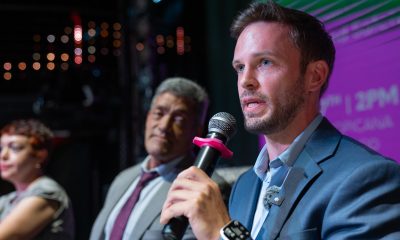 California5 days ago
Trans woman says Kyle Brazeal used anti-trans slur, threw purse at her in 2024
-
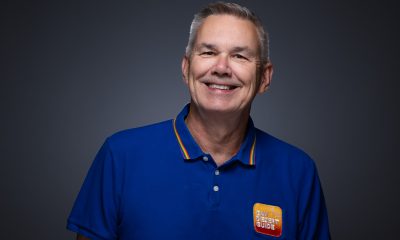 Palm Springs3 days ago
Making waves in the desert: How Brad Fuhr and KGAY keep the Coachella Valley connected
-
 Palm Springs5 days ago
Here’s your Palm Springs look at the weekend: Oct 16-18, 2026
-
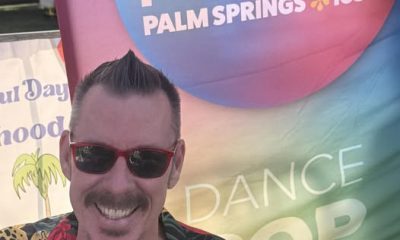 Palm Springs2 days ago
Meet the voice of Palm Springs: an interview with KGAY 103.1’s John Taylor
-
 a&e features5 days ago
How Orville Peck healed his inner child through ‘Street Fighter (2026)’
-
 a&e features2 days ago
Fortune Feimster has always taken representation through comedy seriously
-
 Commentary4 days ago
Key Midterm Election races as SoCal joins No Kings ‘Vote Early’ rallies on Saturday
-
 Movies3 days ago
From ‘La Bola Negra’ to ‘Coward,’ here are this award season’s must-watch queer films
-
 Dance4 days ago
‘Male Aesthetic’ challenges conventional tropes of masculinity through dance at Nickerson-Rossi Dance Company
-
 Brazil1 day ago
VIDEO: Interview with executive director of VoteLGBT (Institute for Full Citizenship) in Brazil