
News
Poll finds majorities in 44 states support same-sex marriage
The survey reports an increase in approval across ethnic, religious groups


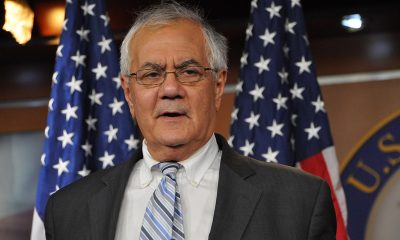
The Public Religion Research Institute’s recent survey reports an increase in support of same-sex marriage across ethnic, religious and political groups. (Photo via Bigstock)
A new poll has found that the majority of voters in 44 states support same-sex marriage.
The Public Religion Research Institute (PRRI)’s survey reports an increase in support of same-sex marriage across ethnic, religious and political groups with 61 percent of overall Americans supporting same-sex marriage while 30 percent oppose it.
According to the poll, the majority of voters in 44 states approve of same-sex marriage. The exceptions were the southern states of Alabama (41 percent), Mississippi (42 percent), Tennessee (46 percent), West Virginia (48 percent), Louisiana (48 percent) and North Carolina (49 percent).
63 percent of whites, 52 percent of blacks and 61 percent of Hispanics approve of same-sex marriage. Support from black voters increased 11 percent from 2013 to 2017 and increased 10 percent from the white and Hispanic communities.
Support from the majority of voters in major religious groups has also increased including white Protestants (67 percent); white Catholics (66 percent); Hispanic Catholics (65 percent); Orthodox Christians (66 percent); Muslims (51 percent); Buddhists (80 percent); Jewish Americans (77 percent) and Hindus (75 percent).
As for political parties, 73 percent of Democrats, 66 percent of independents and 42 percent of Republicans are in favor of same-sex marriage.
“The rise in support for same-sex marriage, particularly over the last few years, has led to a milestone: Today a majority of all racial and ethnic groups favor allowing gay and lesbian couples to marry legally,” the poll described its findings.





U.S. Supreme Court
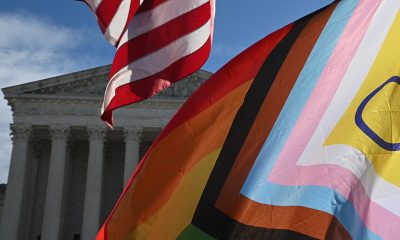
Supreme Court faces new questions over trans rights and equal protection
One case sent back to lower court as SCOTUS considers taking up another
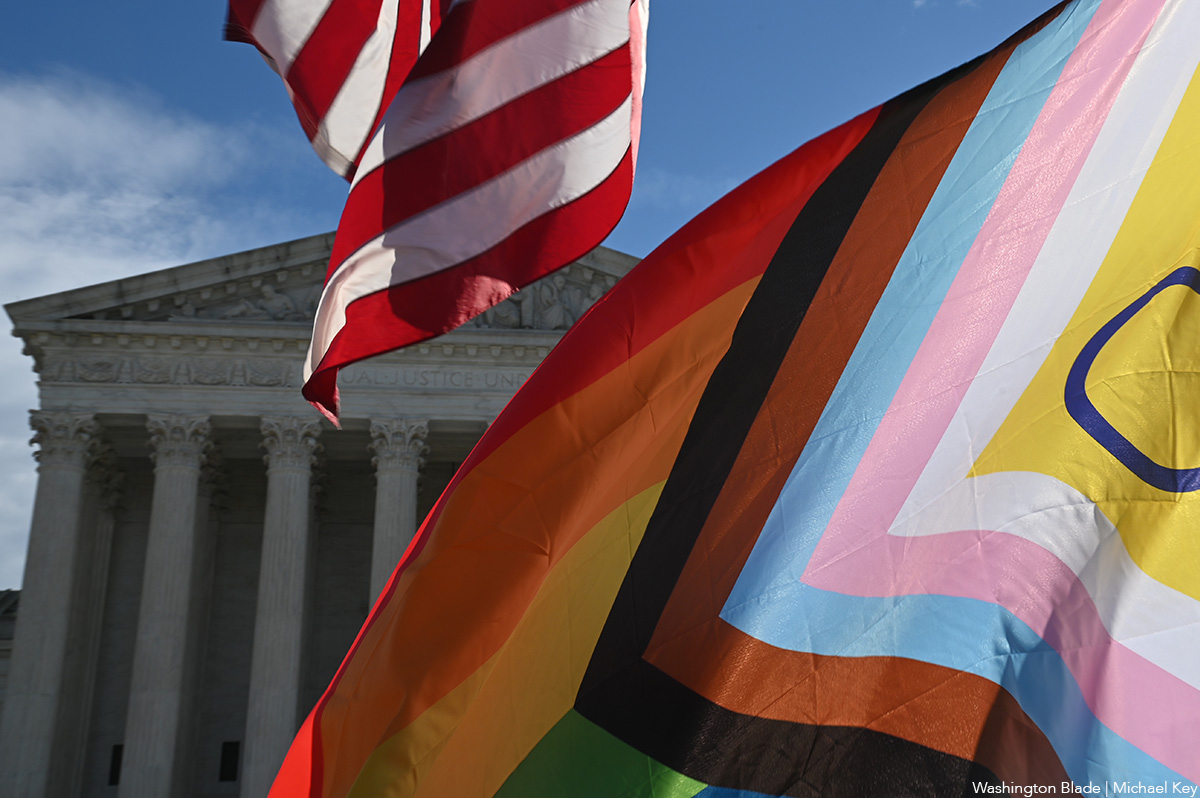
The U.S. Supreme Court has taken action in one case and is being asked to review another, two legal challenges that could have significant implications for transgender people in the United States, including those incarcerated in state prisons and serving in the U.S. military.
The cases, Roybal v. Griffith and Talbott v. USA, involve separate challenges to policies affecting trans people. Both raise questions about equal protection under the Constitution and the extent to which the government can impose restrictions based on trans identity.
Roybal v. Griffith
Roybal v. Griffith involves Darlene Griffith, a trans woman who was incarcerated in an El Paso County, Colo., prison in 2020.
Griffith, who was assigned male at birth, was forced to be held in a men’s prison despite identifying as a trans woman. She was also denied access to woman’s undergarments and strip-searched by a male officer, despite requesting a female officer.
On Nov. 9, 2026, the Supreme Court vacated the lower court’s judgment, or canceled what the lower court had argued, sending the case to the 10th U.S. Circuit Court of Appeals for further consideration following the recent decisions by the highest court in the land over West Virginia v. B.P.J. and United States v. Skrmetti. Both of those cases were considered a loss for the federal government stepping in to protect trans citizens.
These actions come directly after its June decision in West Virginia v. B.P.J., in which the justices addressed equal protection claims involving trans individuals and restrictions based on sex assigned at birth. The court sided with the exclusive policy holding that restricting female teams to biological females is substantially related to safety and competitive fairness.
In United States v. Skrmetti, the court held that policies restricting gender affirming care is on the basis of age — and not by sex (which has a higher standard to met) allowing the states to enact these laws, but not forcing them to do so.
Lawyers for the Trump-Vance administration, who submitted a brief supporting the Colorado prison, argued that the Supreme Court’s precedent on trans issues allows the government to separate biological males from female activities and spaces based on sex rather than gender identity.
“When a sex-based classification is justified as a constitutional matter’ – ‘for example,’ in ‘women’s and girls’ sports’ – then a state ‘may treat all biological males the same and treat all biological females the same’; it ‘is not constitutionally required to grant individualized exemptions to specific [persons] or subclasses,’” Solicitor General John Sauer wrote in a brief.
A lower federal court had previously found that Griffith’s equal protection rights were violated through her prison assignment and the prison’s failure to provide her with requested items. The court also disagreed with the prison’s strip-search policy.
Griffith’s attorneys pushed back against the administration’s arguments, saying the prison system already receives considerable deference from courts when making administrative decisions.
“The petition boils down to a plea for ‘administrative flexibility and deference,’ but prisons receive that regardless of the level of scrutiny applied to equal protection claims; deference in the unique context of prisons is baked into the analysis,” lawyers for Griffith wrote to the Supreme Court.
Talbott v. USA
Meanwhile, the Supreme Court is also being asked to take up Talbott v. USA, a case challenging the Trump-Vance administration’s categorical prohibition on trans military service.
President Donald Trump signed Executive Order 14183, titled “Prioritizing Military Excellence and Readiness,” on Jan. 27, 2025, directing the Department of Defense to adopt policies prohibiting trans, nonbinary, and gender-nonconforming people from serving in the military.
The administration’s policy asserts that trans people are inherently incapable of meeting the military’s “high standards of readiness, lethality, cohesion, honesty, humility, uniformity, and integrity,” citing a history or signs of gender dysphoria. According to the Defense Department, this creates “medical, surgical, and mental health constraints on [an] individual.”
Under the policy, trans applicants are considered less qualified than their cisgender peers, regardless of their physical or intellectual capabilities.
On Tuesday, the U.S. Court of Appeals for the D.C. Circuit denied the Trump-Vance administration’s request to halt a preliminary injunction blocking the military from discharging 27 trans service members who challenged the ban. The decision allows the injunction to take effect while the administration asks the Supreme Court to review the case.
Shannon Minter, legal director of the National Center for LGBTQ Rights, which represents the plaintiffs alongside GLAD Law and other law firms, said the ruling means the administration cannot enforce the ban against the 27 service members who brought the lawsuit.
“It immediately means that the Trump administration cannot enforce the ban against the plaintiffs in Talbott, against our 27 transgender service members who brought the case. They cannot be discharged from the military. They should be returned to active duty to their prior positions and, of course, permitted to adhere to the standards of their post-transition sex. They should be able to serve as themselves and be back at work.”
Minter said multiple federal courts have now found that the administration has failed to provide evidence justifying the ban, despite the government’s acknowledgment that the plaintiffs have served honorably and met military standards.
“We have had two federal district courts look at this issue and conclude that there is no evidence whatsoever to support a ban. The government concedes that the plaintiffs in these cases are serving honorably and meeting all standards. They’re doing, by any measure, an extraordinary job. There have been no issues with their service whatsoever.
“We’ve now had two federal appellate courts review those decisions and agree that the ban has no justification. The D.C. Circuit, for the second time, has looked at the evidence and concluded yet again that there’s no justification for the government to separate these individuals, who the government agrees have made our country safer.”
The Trump-Vance administration is still seeking Supreme Court intervention. Minter said the justices could consider the administration’s petition at their next conference in early December.
He argued that the administration’s legal strategy goes beyond trans military service and could establish a broader precedent giving the executive branch unchecked authority over military policy.
“The Trump administration is trying to get the Supreme Court to say that President Trump and the military can literally adopt any policies they wish, and that courts just have to defer to that. They’re betting that because this is a policy about a small, unpopular group, the Supreme Court is more likely to agree with that. But the impact of that would be much broader. It would be really devastating for our country if the Supreme Court held that Trump and Hegseth can literally impose any policy they wish on the military.”
Minter also disputed the administration’s characterization of the ban as a medical policy, arguing that it specifically targets trans people rather than evaluating service members individually based on their ability to perform their jobs.
“When you read the policy, it is very clear that the policy is targeted at transgender people because they are transgender. It has nothing to do with any medical condition.
“For every other medical condition, the military evaluates on an individual basis whether that has any bearing on someone’s ability to perform their job. One of the major goals of the military is to retain people once they’ve gone through the rigorous process of being screened and trained, as long as they can do the job.
“Gender dysphoria would be the only medical condition that results in immediate, automatic discharge, even for people who can continue to do the job. The policy is much broader than that, though. It says that everyone has to serve in their birth sex, which is just another way of saying you can’t be transgender.”
Nic Talbott, the trans service member whose name is attached to the military lawsuit, previously told the Washington Blade that being trans has never affected his ability to serve.
“Being transgender posed quite the obstacle to me achieving that dream,” Talbott told the Blade. “Not because it [being trans] had any bearing on my ability to become a soldier and meet the requirements of a United States soldier, but simply because of the policy changes that we’ve been facing as transgender service members throughout the course of the past decade … My being transgender had nothing to do with anything that I was doing as a soldier.”
Talbott also argued that having people with different backgrounds and experiences strengthens the military.
“I think the more diverse our military is, the stronger our military is … We need people from all different experiences and all different perspectives, because somebody is going to see that challenge or that problem in a way that I would never even think of … and that is what we need more of in the U.S. military.”
West Hollywood
WeHo honors Transgender Day of Remembrance Nov. 20
Ceremony reflects on those killed by anti-trans violence
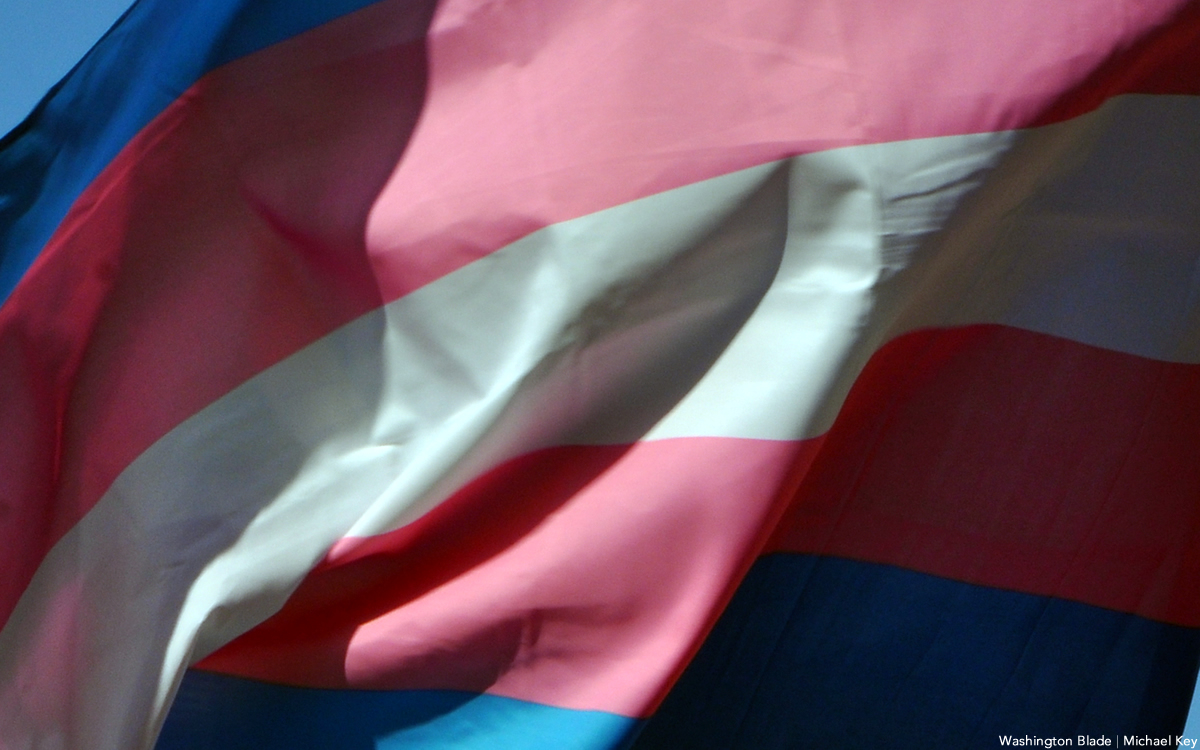
West Hollywood is hosting its annual Transgender Day of Remembrance ceremony this Friday, Nov. 20. Organized by the city’s transgender advisory board, the ceremony will take place in the city council chambers at 5 p.m. The event requires an online RSVP, which can be found using this link.
The event will begin with a peaceful march followed by a reception. The ceremony will be hosted by ChiChi Charlas, and will feature Rev. Valorie Spencer and transgender advisory board members Karina Samala and Shane Ivan Nash as speakers. There will be a reading of names commemorating those who lost their lives to anti-transgender violence.
Transgender Day of Remembrance was created in 1999 by a small group of trans activists to honor Rita Hester and Chanelle Pickett, transgender women who were murdered in Massachusetts the previous year. Since then, the annual commemoration has spread worldwide, honoring those harmed by anti-transgender violence and celebrating their lives.
Since 2017, 342 transgender people in America have been murdered, with 62% of them being Black transgender women according to EveryStat, which tracks gun violence using federal data. In 2024, the Human Rights Campaign reported that 36 transgender and gender expansive people had been the victims of fatal violence that year alone, further finding that 43% of them were killed by a person they knew, often a romantic partner or family member.
In a written statement from HRC President Kelley Robinson, she described the violence targeting transgender people as an “epidemic” and a “national tragedy,” connecting anti-transgender legislation and messaging to violent crimes against the trans community. “We’ve seen an explosion of violent and hateful rhetoric aimed at the LGBTQ+ community — words that make both physical violence and discriminatory legislation more palatable for those in need of a scapegoat,” she said.
This Friday, in commemoration of the ceremony at West Hollywood council chambers, the lanterns on Santa Monica Boulevard will shine blue, pink, and white to resemble the colors of the transgender flag.
Lebanon
Top Lebanese newspaper calls for decriminalization of homosexuality
Annahar published front-page editorial on Monday
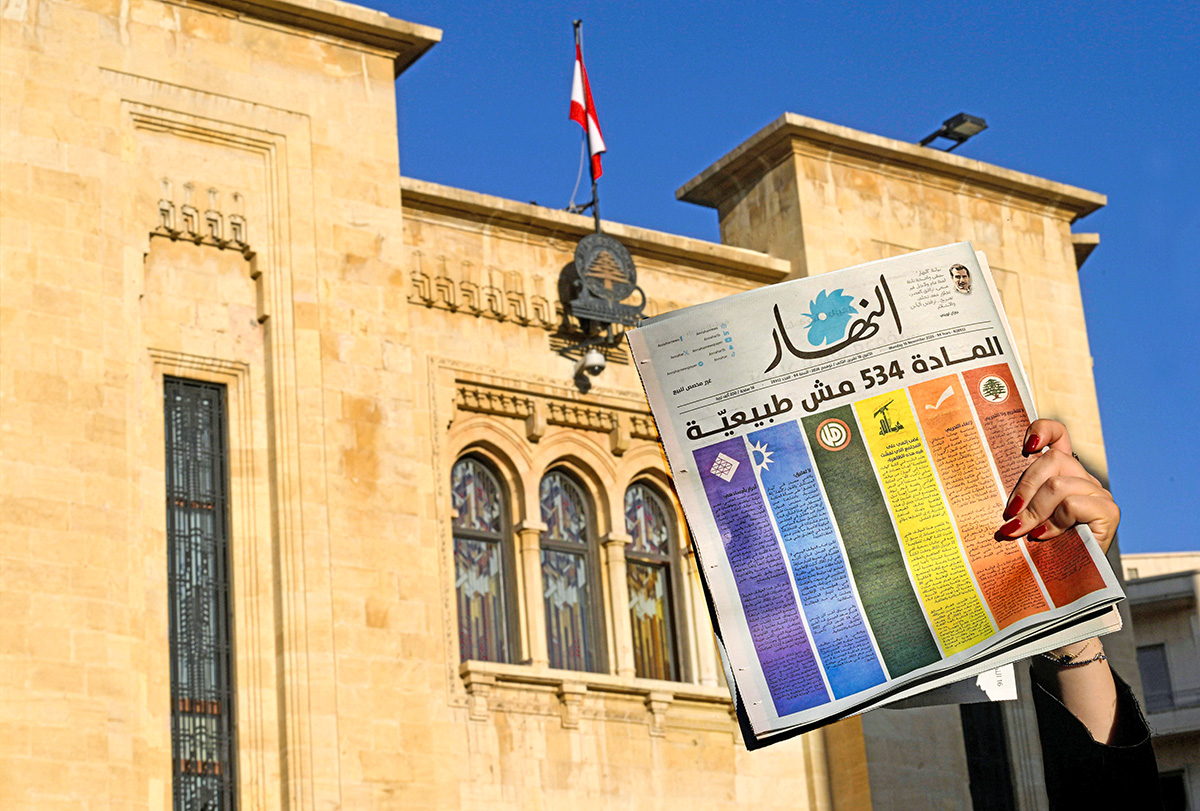
A leading Lebanese newspaper has called for the decriminalization of consensual same-sex sexual relations in the country.
Annahar on Monday published a front page editorial against Article 534 of Lebanon’s Penal Code. The newspaper also launched a social media campaign — “Put the Law on Trial, Not the People” — with the hashtag #abolish254.
“The issue goes beyond the possibility of prosecution, arrest, and imprisonment,” reads the editorial.
Article 534 states “any sexual intercourse contrary to the order of nature is punishable” by up to a year in prison.
Several judges in recent years have opted not to use Article 534 to prosecute LGBTQ+ people who have been charged under it. Helem and other Lebanese advocacy groups maintain authorities continue to use Article 534 as justification to target people based on their sexual orientation and gender identity.
“The debate is not about what positions society should adopt, but about what the state has the right to criminalize, and the limits of its authority when it comes to private life and consensual relationships between adults,” reads the Annahar editorial.
Turkey
Turkey’s anti-LGBTQ+ crackdown overshadows UN climate conference
COP31 taking place in Antalya
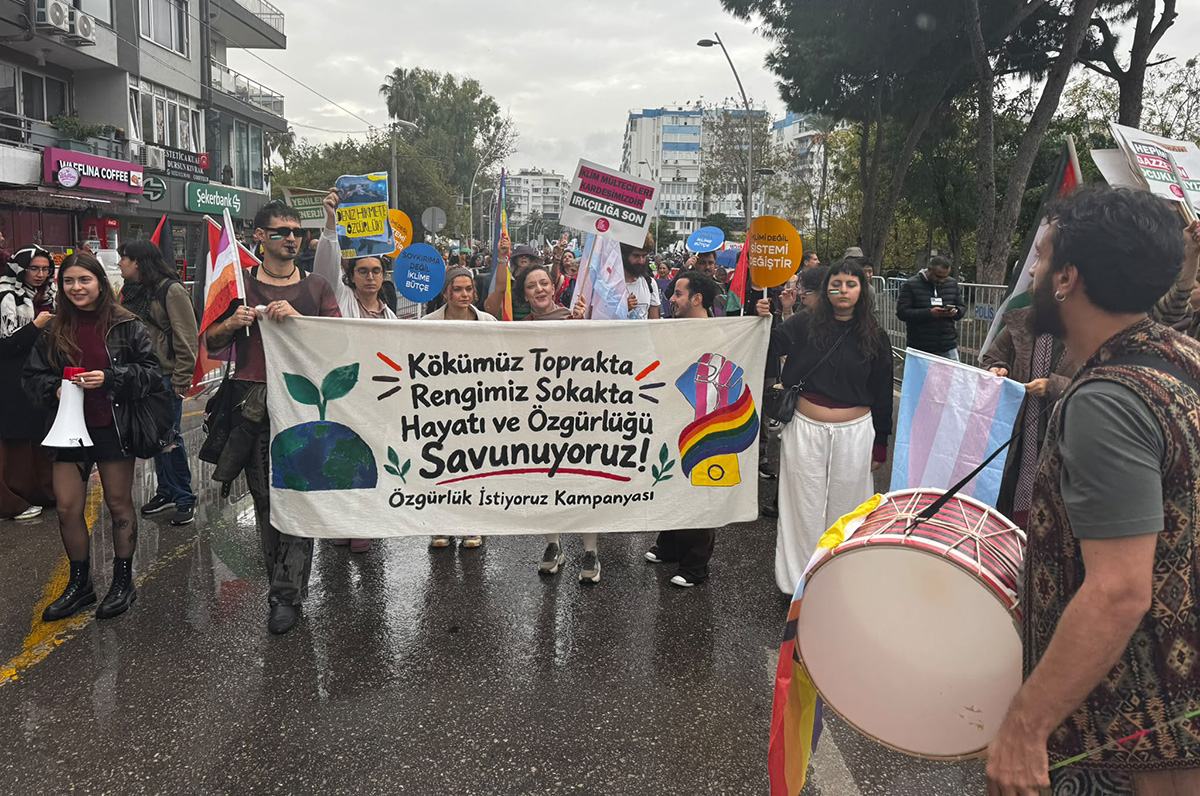
This year’s U.N. Climate Change Conference is taking place in the Turkish city of Antalya against the backdrop of the country’s anti-LGBTQ+ crackdown.
COP31 began on Nov. 9 and will end on Nov. 20. Turkey and Australia are the co-hosts.
The conference is taking place roughly two months after Turkish authorities detained dozens of people during raids that targeted the country’s LGBTQ+ community and advocacy groups and HIV/AIDS service organizations.
President Recep Tayyip Erdoğan’s government over the last decade has cracked down on LGBTQ+ and intersex activists in the country. The Sept. 12 raids were part of the “My Family Is Safe” campaign.
Authorities in Istanbul on Sept. 15 detained more than 150 people who gathered outside a courthouse to protest the raids. Journalists are among those who were taken into custody.
Advocacy groups in a Nov. 13 briefing noted 67 people — including 14 LGBTQ+ activists — who were arrested during the Sept. 12 raids “remain in pre-trial custody.” They also indicate subsequent raids have specifically targeted transgender women:
• 12 trans women were detained on Sept. 26.
• 12 trans women in Ankara, the Turkish capital, were among 45 people “detained in police operations” in seven provinces on Oct. 23. Ten of the trans women who were detained were arrested.
• 10 trans women were detained in Izmir on Nov. 3. Six of them were later arrested.
“Following the Sept. 12 operation, additional waves of harassment have continued to target the LGBTI+ community and particularly trans women, under charges of obscenity and facilitating prostitution,” notes the Nov. 13 briefing. “These aim to indirectly criminalize sex work, which is not a punishable offense under the Turkish criminal code, while also targeting the livelihood of many trans women already living under poverty.”
The briefing notes police in Istanbul on Nov. 11 “sealed and shut down” the offices of Lambda Istanbul, one of Turkey’s oldest LGBTQ+ advocacy groups, “under allegations that the association is running an unauthorized association locale.”
The first hearing in the criminal case against SPoD (Social Policy, Gender Identity and Sexual Orientation Studies Association), another Turkish advocacy group, is scheduled to take place on Wednesday in Istanbul. Hearings in criminal cases filed against two other organizations — Hevi LGBTI+ and Kaos — are scheduled to take place in Istanbul and Ankara in the coming weeks.
Advocacy groups also note those who were arrested during the Sept. 12 raids have been mistreated while in custody.
“Turkish authorities must drop all charges brought against these human rights defenders, immediately and unconditionally release everyone detained solely for exercising or defending human rights and end attempts to dissolve associations for their human rights work,” said Amnesty International Deputy Regional Director for Europe Esther Major on Tuesday in a statement.
U.N. High Commissioner for Human Rights Volker Türk is among those who have publicly criticized the crackdown. The Trump-Vance administration, for its part, has remained silent.
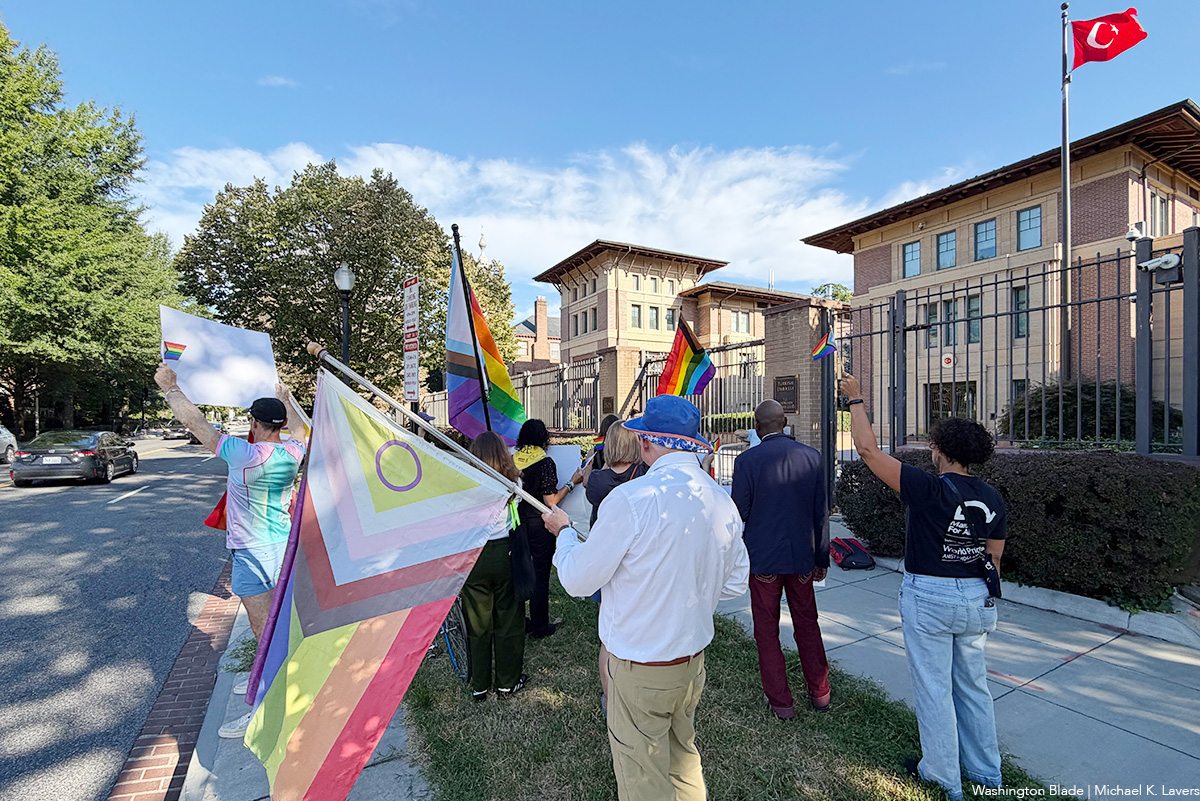
Bianet, an independent Turkish news agency, earlier this month reported authorities required COP31 participants to sign a declaration in which they promised their presentations in a so-called Green Zone that Turkey oversees would comply with “public morality.” Özlem Altıparmak, a Turkish lawyer who planned to attend COP31, spoke about the directive.
“The inclusion of the undefined condition of ‘public morality’ creates legitimate uncertainty over how statements concerning gender equality and LGBTI+ rights will be treated,” she told Bianet. “We cannot say that the text explicitly prohibits them, but it does not provide sufficient safeguards against arbitrary interpretation.”
The Los Angeles Blade on Monday asked a Turkish source how the government can enforce such a pledge.
“Good question,” they said.
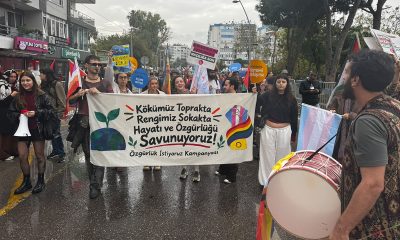
Activists, meanwhile, participated in the People’s Climate March that took place alongside COP31 in Antalya on Nov. 14.
Burak Deniz is an activist from Izmir who has advocated on behalf of LGBTQ+ people and Kurds in Turkey for 15 years.
He told the Blade on Tuesday that authorities tried to block the march, noting Antalya Provincial Gov. Hulusi Şahin’s office “told us that (Recep) Tayyip Erdoğan has LGBT+ sensitivity and they said that they would not allow anything with a flag or rainbow content in any way.” Deniz said members of the pro-Kurdish Peoples’ Equality and Democracy Party, known as the DEM Party, intervened on the activists’ behalf.
“We were able to get our flags into the area,” he told the Blade.
Deniz said he hopes the activists’ participation in the COP31 march raised visibility around the plight of Turkey’s LGBTQ+ community.
“I hope it will be created,” he told the Blade. “Our LGBTI+ march made a significant impact on public opinion.”
The Blade has reached out to U.N. Climate Change, which oversees COP31, for comment.
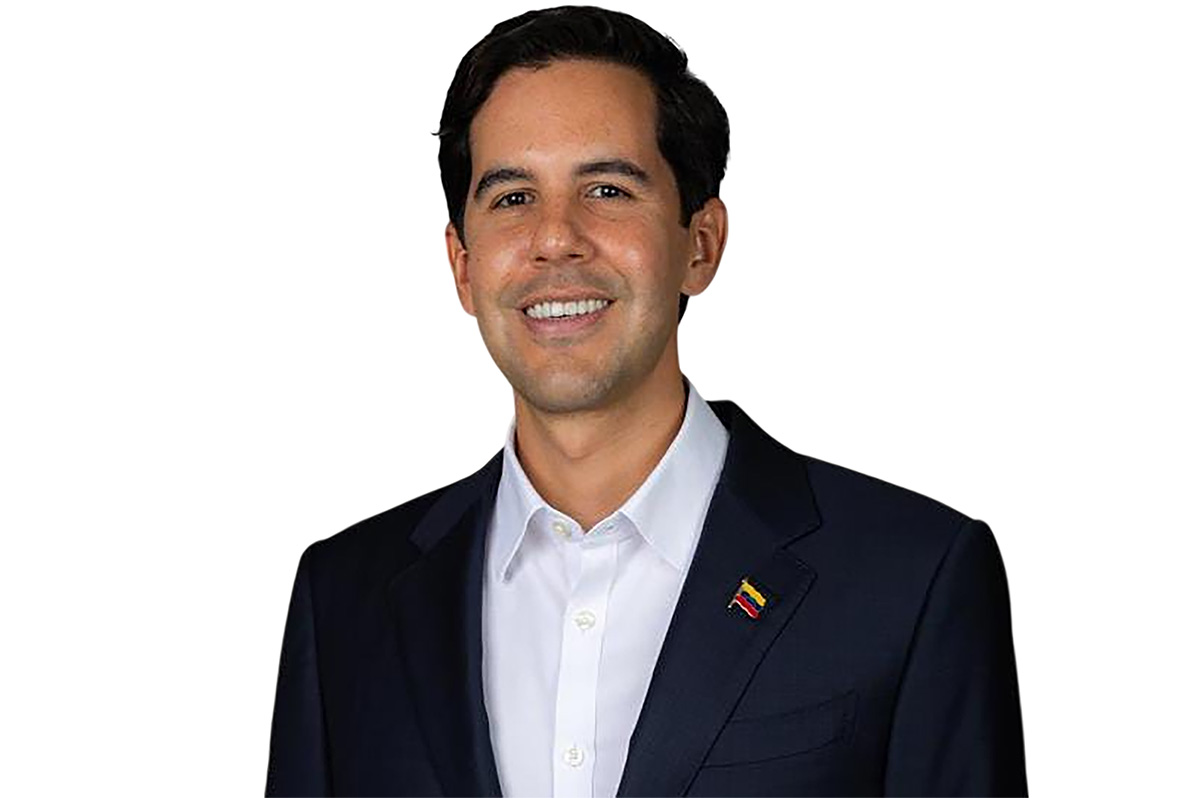
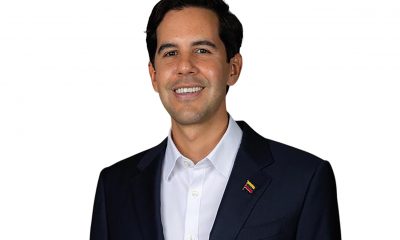
The Venezuelan government has appointed a gay man as its foreign affairs and international trade minister.
Interim President Delcy Rodríguez on Oct. 29 appointed Oliver Blanco to the position.
Blanco, 34, was Foreign Affairs Vice Minister for Europe and North America until he succeeded Félix Placencia, who is now the Rodríguez administration’s director of international affairs.
Blanco’s partner is Venezuelan Red Cross President Luis Farías. Reports indicate the two men attended a Nov. 5 reception with Spanish Queen Letizia that took place at the Royal Palace in Madrid during the XXX Ibero-American Summit.
Blanco’s appointment sparks debate among LGBTQ+ Venezuelans
American forces on Jan. 3, 2026, seized then-Venezuelan President Nicolás Maduro and his wife, Cilia Flores, at their home in Caracas, the country’s capital, during an overnight operation.
Maduro and Flores two days pleaded not guilty to federal drug charges in New York. The Venezuelan National Assembly the day before swore in Rodríguez, who was Maduro’s vice president, as the country’s acting president.
Hugo Chávez died in 2013, and Maduro succeeded him as Venezuela’s president.
Subsequent economic and political crises prompted millions of Venezuelans to leave the country. Two back-to-back earthquakes in June killed thousands of people and caused widespread damage in Caracas, La Guaira state on Venezuela’s Caribbean coast, and in other areas of the country.
Yonatan Matheus, a Venezuelan LGBTQ+ rights activist who currently lives in the U.S., on his website notes Blanco was previously a member of the opposition. Matheus also pointed out that Blanco came out as gay in 2021 during an interview with a Venezuelan radio station.
“Venezuela having an openly gay foreign minister may constitute a milestone in visibility,” wrote Matheus. “But it should not distract us from the State’s historical debts to the LGBTQIA+ community.”
Matheus further noted same-sex couples in Venezuela lack marriage rights, and transgender people “face obstacles when obtaining documents that correspond with their gender identity.” Matheus also pointed out Venezuela does not have an LGBTQ+-inclusive antidiscrimination law.
“The controversy surrounding the appointment reflects Venezuela’s political divisions, which are also present within LGBTQIA+ spaces,” noted Matheus. “Some voices highlight its historical significance and the possibility of opening opportunities for equality; others question celebrating a designation made by the current interim government.”
“This discussion raises a necessary question: is it possible to recognize the symbolic value of an openly gay person reaching the Foreign Ministry without interpreting this as political support for the government that appointed them,” he further questioned. “Recognizing an act of representation does not necessarily equate to legitimizing the interim government, just as politically questioning the appointment does not eliminate its potential significance for LGBTQIA+ visibility. Both perspectives can coexist without automatically invalidating each other.”
District of Columbia
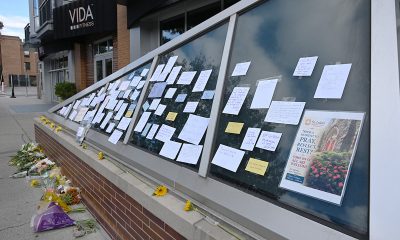
LGBTQ community responds with support after shooting at gay-owned VIDA Fitness
Owner David von Storch praised for longtime support of D.C. LGBTQ causes
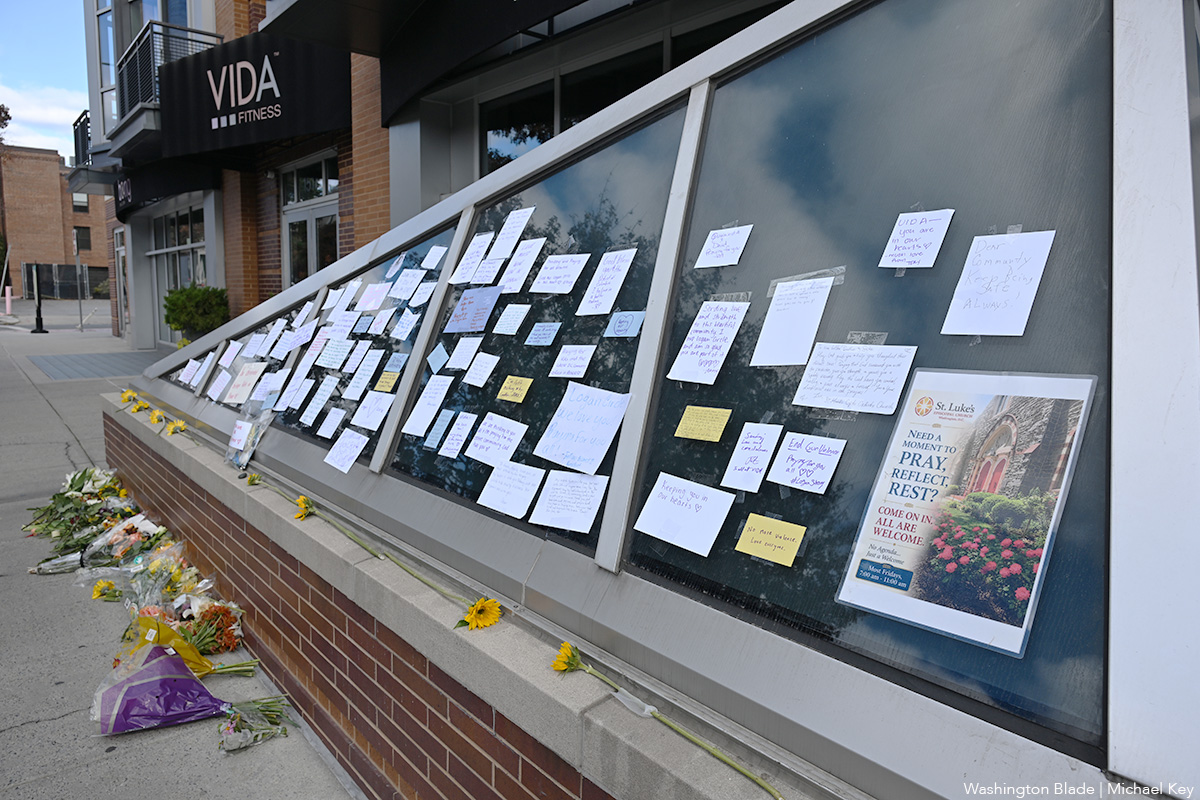
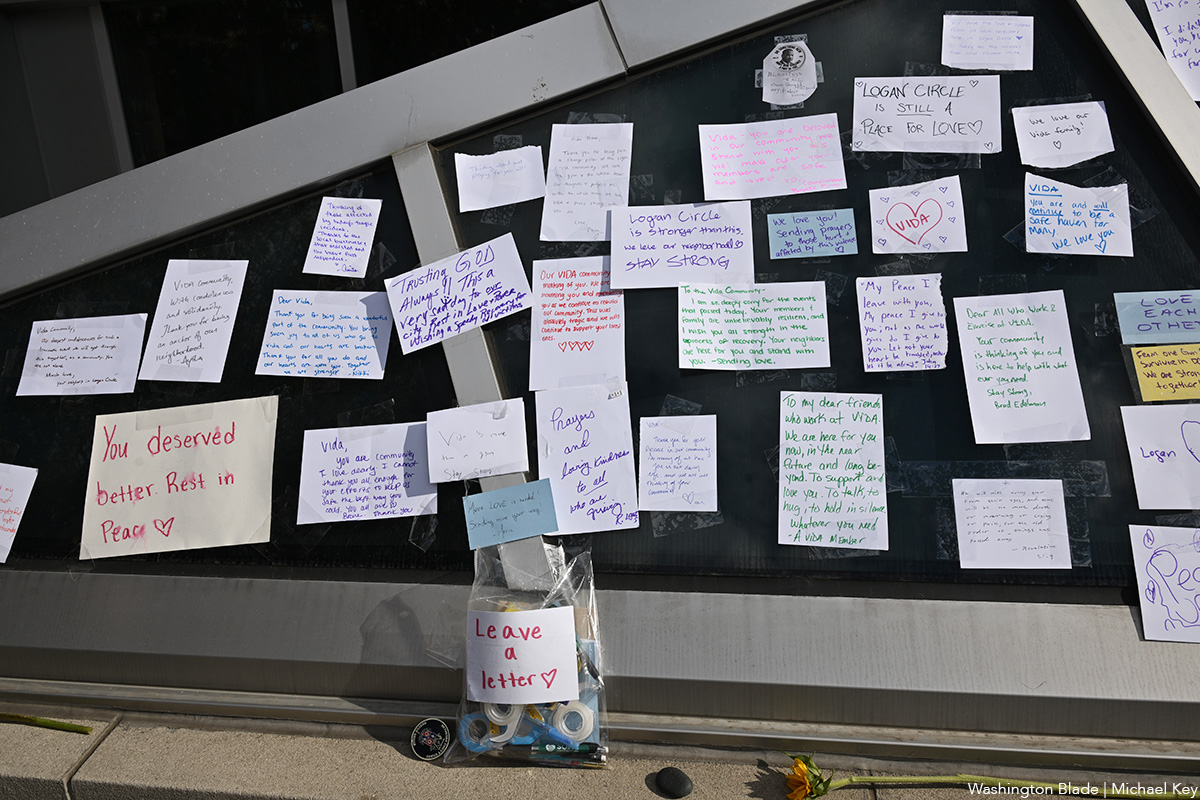
The Nov. 12 shooting at the VIDA Fitness gym and health spa, located in D.C.’s Logan Circle neighborhood, in which one person was shot to death and five others were wounded, one of whom remains in critical condition, has impacted the local LGBTQ community along with the community as a whole, according to local LGBTQ advocates.
The Logan Circle VIDA Fitness, located at 1517 15th St., NW, along with three other VIDA Fitness facilities in D.C. and another two in Northern Virginia, are owned by gay businessman David von Storch, who has been a longtime supporter of LGBTQ organizations and rights causes.
While noting that everyone is welcome at each of his VIDA Fitness gyms, von Storch told the Washington Blade that the Logan Circle gym and his nearby U Street gym have many LGBTQ members.
Interim D.C. Police Chief Jeffrey Carroll has confirmed that a lone gunman, identified as 55-year-old Dr. Matt Wade Lambert, fatally shot the building property manager of the Metropole condominium building in which VIDA Fitness is located on the ground floor, inside the gym shortly before 8 a.m. on Nov. 12.
Police have said that after the fatal shooting in the gym, Lambert, who lived in the condo building’s seventh floor penthouse apartment, barricaded himself in his apartment and began shooting from his balcony at people on the ground below, wounding five people. Police said a female victim was shot in the head and remains in stable but critical condition. Four others suffered non-life-threatening gunshot wounds, police said.
According to police and media reports, dozens of D.C. police, National Guard soldiers and other law enforcement officers rushed to the scene minutes after the shootings began. Shortly after D.C. police arrived at Lambert’s condo door after other officers reportedly spoke to him by phone to negotiate a possible surrender, he fired one of several guns at the door, but did not hit the officers. He then set his apartment on fire and shot himself to death.
Interim Chief Carroll disclosed that in their brief negotiating call with Lambert, he said he had a longstanding dispute with the condo association over his claims that his apartment had problems the association refused to fix, including mold. Police said that, among other things, he blamed the property manager for these alleged problems.
The incident’s impact on the LGBTQ community was heightened further when police identified the property manager who was shot to death as 46-year-old James Stuart, who also lived in the condo building. People who knew Stuart say he identified as a gay man who, among other things, was involved with the local LGBTQ Stonewall sports league.
“We are saddened by the shooting that occurred in our community this morning, close to where many of us live, work, and serve,” D.C.’s LGBTQ supportive medical clinic Whitman-Walker Health said in a statement. “Our hearts are with the people who were harmed, their loved ones, and everyone in our community who is feeling the weight of this violence,” the statement says.
Capital Pride Alliance, the group that organizers D.C.’s annual LGBTQ Pride events, posted a statement to social media, saying, “Our thoughts and hearts are with the victims, their friends and family, our VIDA Fitness family, and the Logan Circle community, who have been affected by today’s tragedy.”
DC Front Runners, an LGBTQ sports group, posted a statement on Instagram saying it, too, was deeply saddened over the shooting at VIDA Fitness.
“VIDA has been a long-time partner and supporter of DC Front Runners, many of our runners are members, and VIDA’s gyms have been welcoming spaces for the LGBTQ+ and athletic communities in the DMV region for many years,” the statement says.
Readers of the Washington Blade have voted to select VIDA Fitness as a winner in the Blade’s annual Best of LGBTQ D.C. awards at least 10 times in the category of “Best Fitness or Workout Spot.”
Von Storch told the Blade on Friday that the VIDA Fitness Logan Circle gym, which was shut down immediately at the time of the shooting incident remains closed and he is uncertain when it will be able to be reopened.
“There was extensive water damage when the sprinkler system went on due to the fire the shooter initiated,” he said, referring to police reports that shooter Lambert set his apartment on fire shortly before taking his own life.
“There was extensive water damage to the facility, and we’ve begun the process of cleaning it up,” von Storch said. “But we’re not sure how long that will take. There are some building systems that are still off and it’s still a crime scene,” he added. “We’re hoping it won’t be too long.”
Von Storch said he did not know property manager James Stuart but said he received messages from VIDA members who knew him shortly after the fatal shooting.
“I have been receiving multiple texts from members who knew and loved Jimmy and considered him part of our family,” von Storch told the Blade.
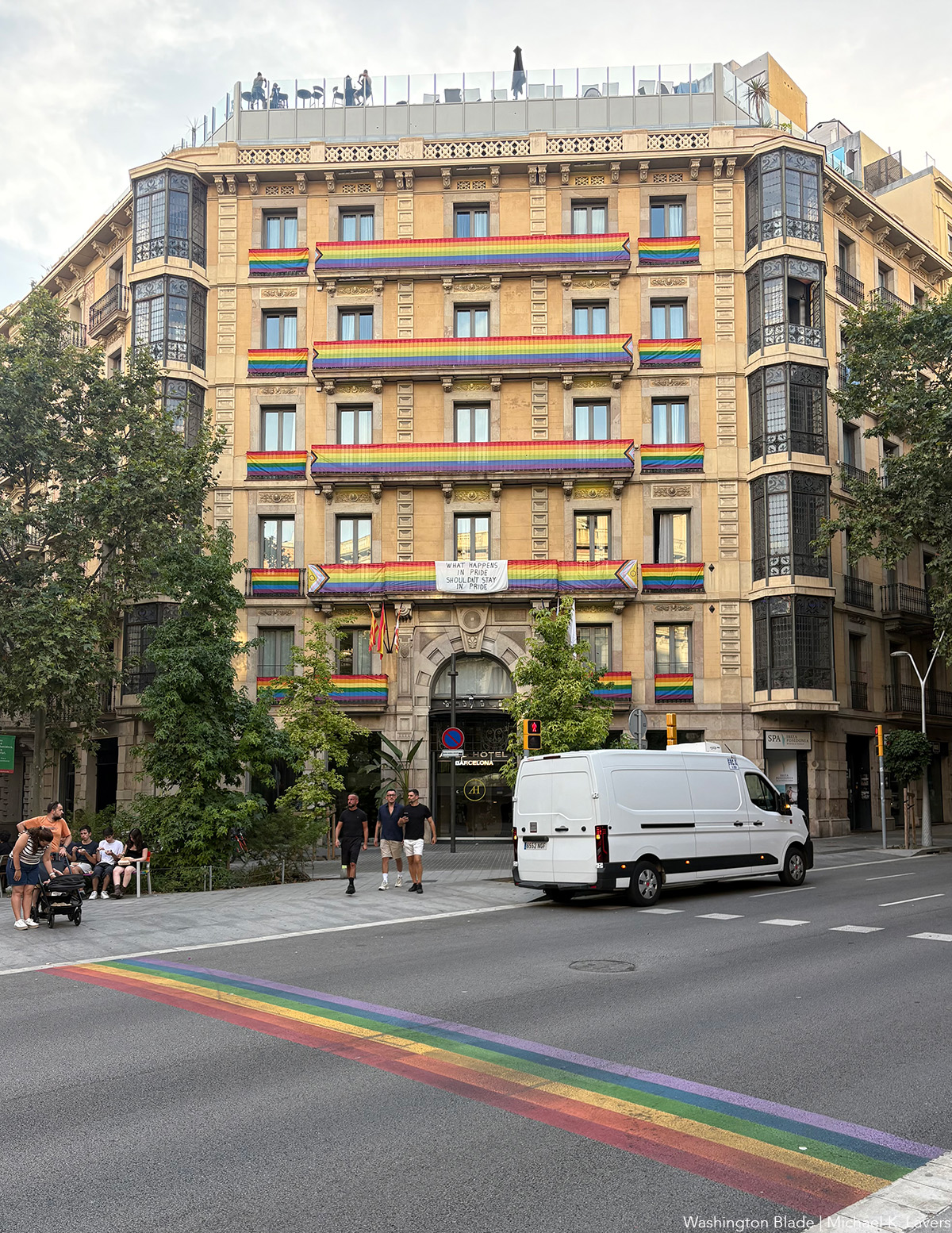
Barcelona will host WorldPride in 2030.
InterPride, the organization that coordinates WorldPride events, made the announcement on Thursday after its annual meeting that took place in Phuket, Thailand. Bangkok, the Thai capital, had also bid to host WorldPride in 2030.
Pride Barcelona celebrated the decision.
“This is not only a victory for a city,” it said in a statement. “It is the beginning of a new chapter to keep defending human rights, strengthening our global movement, and building a WorldPride that leaves a lasting legacy.”
Dozens of LGBTQ+ groups in Barcelona and in Catalonia, the region in which the city is located, backed the WorldPride bid. The Barcelona City Council and Catalonian government also supported it.
Madrid, the Spanish capital, hosted WorldPride in 2017.
WorldPride took place in D.C. in 2025.
Dutch Prime Minister Rob Jetten, who is his country’s first openly gay head of government, is among those who participated in this year’s WorldPride that took place in Amsterdam. WorldPride will take place in Cape Town, South Africa, in 2028.
News
West Hollywood creates registry for polyamorous relationships
New legal rights for those with multiple partners

The West Hollywood City Council voted unanimously on Nov. 2 to create a registry for those in “multi-partner domestic relationships.”
The measure gives those in polyamorous relationships the same legal rights afforded to monogamous couples. Those include visitation rights in hospitals and jails in West Hollywood and certain tenant protections.
In 1985, West Hollywood became the first city in the nation to recognize domestic partnerships between same-sex couples. Within a few decades, legal recognition of same-sex couples extended to many cities and states and in 2015 marriage equality was legalized nationally. Now, advocates for polyamory say that WeHo is starting another trend toward recognizing other non-nuclear family structures.
“The new law not only gives polyamorous unions legal recognition, I think it also gives people permission to imagine a future together and to plan their lives openly,” said Christina Fialho, president of Rewrite the BiLine, a non-profit organization that works to expand queer media representation that advocated for the measure. She hopes that as time passes, more cities and states will pass legislation that legally recognizes those outside of traditional monogamous relationships. “This is the first of many more wins to come, and we hope to see more cities adopt similar ordinances,” Fialho said. A few cities in Massachusetts also currently recognize multi-partner relationships.
Fialho said the growing prevalence of non-monogamous relationships will help create demand for more legal recognition. “In the United States, consensual non-monogamy is actually as common as owning a cat,” Fialho said, which amounts to around 5% of the population. They are particularly prevalent among LGBTQ people, with around “50% of LGBTQ+ people” having been in “consensually non-monogamous relationships,” according to Fialho.
Megan Katz, a West Hollywood resident and librarian is part of that 50%. Katz has practiced polyamory for years and is currently in a committed marriage while also dating outside of it. She views the ordinance as a major victory. “It is one more step toward legitimizing nontraditional relationships and specifically polyamorous relationships,” Katz said.
Katz does not plan on immediately using the registry, as one of her relationships “is not established enough,” but she “very much appreciates that the city is taking these steps.”
Katz considers herself lucky that she has not experienced much personal discomfort or discrimination due to her polyamorous relationship. “With my personal, private communities, and even just my personal circles, I really have not had any problems,” she said. But she thinks the ordinance will help curb larger cultural stigmas around polyamory and non-monogamy.
“I am polyamorous and I am very comfortable with that, but it’s not a concept that’s very well known culturally and is sort of vilified or looked down upon,” she said. “There’s nothing wrong with it when you’re engaged in it ethically.”
Politics
LGBTQ+ advocates look to new Congress for path forward on federal protections
Ricardo Martinez (GLAD Law) spoke about the future of LGBTQ protective policy under the 120th Congress
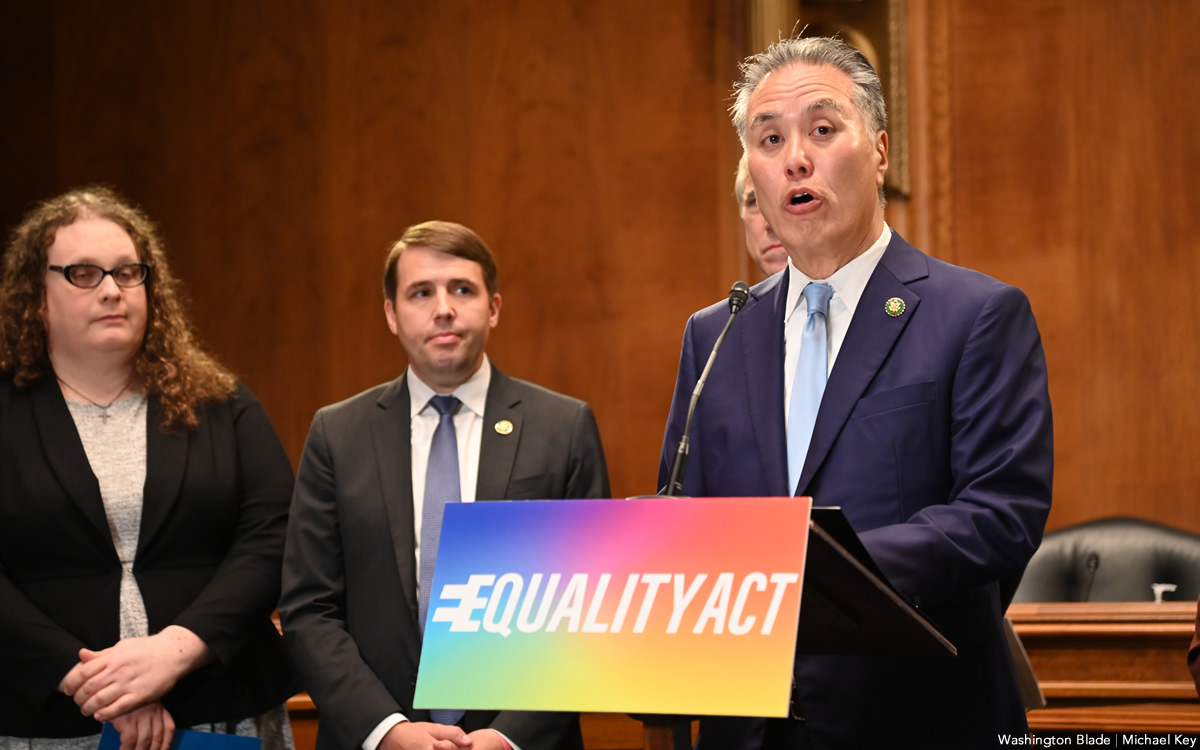
Following Democratic victories in the midterm elections, LGBTQ+ advocates are looking to the incoming Congress for renewed opportunities to pass pro-LGBTQ+ legislation.
For decades, advocates and lawmakers have pushed for a federal law prohibiting discrimination based on sexual orientation and gender identity. With Democrats set to take control of both chambers in January, advocates say the new majority could provide an opening to advance legislation that has repeatedly stalled in Congress, even as the Trump administration continues its efforts to roll back existing protections.
The Equality Act remains at the top of the legislative wish list. The legislation would amend the Civil Rights Act of 1964 and related federal laws to explicitly prohibit discrimination based on sexual orientation and gender identity in employment, housing, public accommodations, education, federally funded programs, credit, and jury service.
The latest version was introduced in the House by Equality Caucus Chair Rep. Mark Takano (D-Calif.) and in the Senate by Sen. Jeff Merkley (D-Ore.), with Sen. Ed Markey (D-Mass.) among its co-sponsors.
Other proposals include the Transgender Bill of Rights, reintroduced in February by Markey and Rep. Pramila Jayapal (D-Wash.), with Reps. Sara Jacobs (D-Calif.) and Takano among its co-sponsors. The resolution calls on the federal government to take steps to protect transgender and nonbinary people and ensure access to medical care, shelter, safety, and economic security.
Rep. Bonnie Watson Coleman (D-N.J.), a co-chair of the Congressional Equality Caucus, has also backed legislation aimed at addressing discrimination against LGBTQ+ people. She has co-sponsored the Therapeutic Fraud Prevention Act of 2025, which would prohibit commercial sexual orientation conversion therapy, as well as the Tyler Clementi Higher Education Anti-Harassment Act, which would require colleges and universities to establish policies addressing homophobia and transphobia on campus.
But while advocates see a Democratic-controlled Congress as an opportunity to advance those proposals, they are also approaching the next two years with an understanding of the political and legislative challenges ahead.
The Los Angeles Blade spoke with Ricardo Martinez, executive director of GLAD Law, about the future of federal LGBTQ+ policy under the new Congress and what the midterm results revealed about the priorities of American voters.
“The first thing that I think of when I think of the election is that this election showed that people are tired of division, and they want leaders who are focused on everyday concerns like healthcare, safety, economic security,” Martinez told the Blade by phone Tuesday. “I think a lot of people in the United States, including LGBTQ people, are hurting.”
Martinez said the incoming 120th Congress has tools to protect LGBTQ+ people, even if passing sweeping new federal protections proves difficult in the near term.
“Passing new federal protections for LGBTQ people specifically may be hard in the near term, and we are realistic about that,” Martinez said. “But still, Congress can lay the groundwork now, either through hearings or bill development.”
He pointed to healthcare and economic policy as areas where lawmakers could make progress that benefits LGBTQ+ people alongside the broader public.
“But there’s a lot Congress can do on healthcare minimum wage that would apply and benefit LGBTQ people,” he said. “Lasting progress has always depended on the support of both parties, so that’s a coalition that I think is worth building, and hopefully, in the not so near future, the Equality Act can be a thing that moves.”
Beyond passing legislation, Democrats are preparing to use their new majority to scrutinize the Trump administration. Rep. Robert Garcia (D-Calif.), the gay lawmaker who won reelection, is slated to chair the House Oversight Committee when Democrats take control of the chamber.
Garcia has pledged to investigate the administration and hold officials accountable for actions he believes violated the law. That promise has already drawn a response from the White House, where Trump administration officials have warned against efforts to intimidate or threaten executive branch employees.
In response to those warnings, the Democratic staff of the House Oversight Committee defended Congress’ authority to investigate the administration, arguing that its oversight powers come from the Constitution and do not depend on White House approval.
Martinez said that kind of oversight is particularly important when government actions affect personal privacy, healthcare, and community programs.
“Oversight of the executive branch is one of Congress’s basic responsibilities, no matter who is in office,” Martinez said. “So, recent federal actions on personal privacy and data cuts to healthcare, research, and community programs deserve careful review.”
He said the consequences extend beyond LGBTQ+ people, warning that government actions targeting one group’s privacy or access to services can threaten protections for everyone.
“Their effects reach Americans broadly, not only LGBTQ people,” Martinez said. “And when the government can single out one group’s privacy or services, everyone’s rights are less secure, and transparency protects all of us.”
Democrats could also use their control of congressional spending negotiations to push for funding for programs serving LGBTQ+ communities. Martinez specifically pointed to the Ryan White HIV/AIDS Program and said lawmakers should oppose discriminatory policy riders in federal spending bills.
According to the Human Rights Campaign, House Republicans introduced more than 50 anti-LGBTQ+ policy riders across federal funding bills over the past year. The proposed provisions sought to restrict gender-affirming care, permit discrimination against same-sex couples and undermine diversity, equity and inclusion (DEI) initiatives, which have been a longstanding target of the president’s agenda.
Separately, significant cuts have affected federal funding for HIV/AIDS programs. Under the Trump-Vance administration, funding shortfalls pushed by the administration have emerged in programs serving LGBTQ+ people and other vulnerable communities. The HIV and Hepatitis Policy Institute says $1 billion in cuts to domestic HIV prevention, surveillance, and support programs have left some of the communities most affected by HIV struggling to cover medical costs.
“Last year was full of disruptions in HIV prevention grants and services, which created great instability. Not only do we need to maintain current funding levels, but increases are urgently needed, particularly for the AIDS Drug Assistance Program (ADAP) due to rising enrollment and insurance premium costs,” said Carl Schmid, executive director of the HIV+Hepatitis Policy Institute, earlier this year.
Still, congressional oversight and funding decisions will not necessarily stop the administration from pursuing policies LGBTQ+ advocates oppose. Martinez said GLAD Law plans to continue challenging those actions in court.
“Our plan has always been and will remain consistent, which is we are in the process of a surge in litigation, which means that we’re going to try to stop as much of the bad as possible,” Martinez said.
The organization’s work will also extend to state governments, where many laws directly affecting LGBTQ+ people’s daily lives are passed. Martinez said GLAD Law will continue challenging harmful state policies while pursuing legislation to strengthen legal protections for LGBTQ+ families, including in adoption, assisted reproduction and parental recognition.
The election also offered hope on transgender rights, despite continued political attacks targeting transgender people. Martinez said advocates must continue challenging misinformation and helping Americans better understand the lives of LGBTQ+ people.
That message was echoed by U.S. Rep. Sarah McBride (D-Del.), the nation’s first transgender member of Congress, who pushed back against the idea that Democrats should abandon transgender people politically to win elections after winning her re-election last week.
Speaking during a HRC call Tuesday night, McBride argued that Democrats’ electoral gains were not built by sacrificing vulnerable communities.
“The majority was not built by throwing vulnerable people under the bus. This majority was built by people of principle, by candidates who have defended their voters and their constituents, all of them, regardless of their sexual orientation and gender identity,” McBride said.
She also pointed to her own re-election as evidence that voters were not rejecting transgender representation at the ballot box.
“I’m proud that at a time when Republicans seemingly made every single issue in some form or fashion about trans issues, that voters in my state returned the nation’s first out transgender member of Congress to office, with the largest number of votes of any candidate on the statewide ballot this year,” she said.
For Martinez, the work ahead will involve not only legislation and litigation, but also changing how Americans understand LGBTQ+ people, particularly transgender people.
“Accurate information also matters,” he said. “And we’re going to continue countering misinformation and disinformation, and helping more people understand LGBTQ people’s lives, especially transgender people.”
He said advocates must continue sharing their experiences and emphasizing their place in communities across the country.
“We are your neighbors. We are small business owners. We are, you know, your colleagues and coworkers, and that’s important for people to know,” Martinez said. “Familiarity is incredibly important, and at the heart of this is something very simple: that transgender people want to live their lives in peace, like everyone else, and that’s a value I think Americans share across party lines.”
Israel
LGBTQ+ ally tapped to form new Israeli government
Gadi Eisenkot was Benjamin Netanyahu’s main rival in Oct. 27 elections
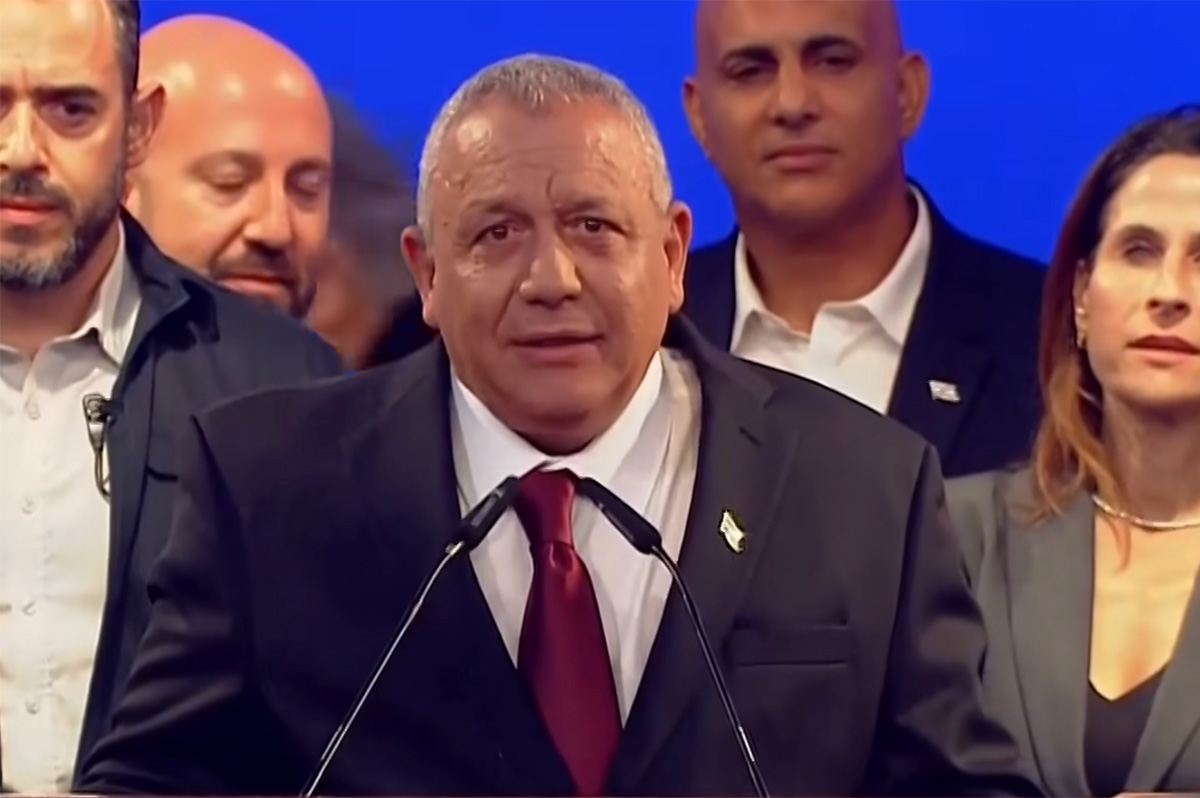
Israeli President Isaac Herzog has tapped Gadi Eisenkot to try and form a government after the country’s Oct. 27 elections.
Eisenkot was the Israel Defense Forces’ chief of staff from 2015-2019. He was a minister in Prime Minister Benjamin Netanyahu’s Cabinet after the Oct. 7, 2023, attacks — Eisenkot’s son, IDF Master Sgt. Gal Meir Eisenkot, died in combat in the Gaza Strip roughly two months after Hamas militants attacked Israel.
The International Criminal Court in 2024 issued arrest warrants for Netanyahu; former Israeli Defense Minister Yoav Gallant; former Hamas leader Yahya Sinwar; Mohamed Diab Ibrahim al-Masri, the head of Hamas’s military wing known as the Qassam Brigades; and Ismail Haniyeh, chair of the Hamas Political Bureau, after it accused them of committing war crimes and crimes against humanity in Gaza and Israel.
The Israeli government has strongly denied it has committed genocide in Gaza.
An Israeli airstrike on a compound in Khan Younis, a city in southern Gaza, on July 13, 2024, killed killed Deif, one of the alleged Oct. 7 masterminds. Israel less than three weeks later assassinated Haniyah in Tehran, the Iranian capital. IDF soldiers on Oct. 16, 2024, killed Sinwar in Rafah, a city in southern Gaza.

Gadi Eisenkot resigned in 2024. He founded Yashar!, a centrist party that means “Straight!” in Hebrew, in 2025.
Gadi Eisenkot was the main opposition candidate in the Oct. 27 elections.
Netanyahu, who chairs the right-wing Likud party, and his allies lost their majority in the 120-member Knesset.
The Likud bloc has 53 seats in the Knesset, compared to the 48 seats the Yashar! coalition has. Arab-led parties that could prove pivotal to Gadi Eisenkot’s efforts to form a government have 19 seats.
The new Knesset was sworn in on Tuesday.
Three MKs —Amir Ohana of Likud, Eitan Ginzburg of the center-right Beyachad party, and former Ramat Gan Mayor Israel Zari, a Yashad! member who is a former spokesperson for the Aguda, an Israeli LGBTQ+ rights group — are openly gay.
Ohana in 2022 became the Knesset’s first openly gay speaker and is the country’s first out Cabinet minister. The Knesset on Nov. 17 is scheduled to vote on who will will succeed Ohana in the post.
Gadi Eisenkot has six weeks to form a government. Herzog will then tap Netanyahu, who remains Israel’s caretaker prime minister, if Gadi Eisenkot fails. Another election could take place if neither man can form a new government.
Gadi Eisenkot’s party supports LGBTQ+ legislative package
Yashar!’s website states the “LGBT community is an integral part of Israeli society.”
“Its members bear the burden and are full partners in civic duties; but are not equal in rights and are exposed to violence, hatred, and incitement,” it reads.
The Yashar! website further states “the right to security is the right of every person,” but notes “those who serve, donate, and pay taxes feel threatened or discriminated against due to their sexual orientation and/or gender identity” and it “is a reality that cannot be accepted.” The party also says it “advocates for the right of every person to choose their lifestyle and to have equal rights as a citizen of the country, regardless of their sexual orientation or gender identity.”
“We will ensure that members of the LGBT community are safe in the public sphere, enjoy equal rights under the law, and receive all the social services that every citizen is entitled to by law,” it says.
Yashar! also supports the Sagi Laws for Equality, a package 10 legislative proposals that would expand rights to LGBTQ+ Israelis. They are named in honor of Sagi Golan, an IDF major who Hamas militants killed on Oct. 7 in Be’eri, a kibbutz that is near the Israel-Gaza border.
His fiancé, Omer Ohana, with the support of Israeli advocacy groups, successfully lobbied Israeli lawmakers to amend the country’s Bereaved Families Law to recognize LGBTQ+ widows and widowers of fallen servicemembers. A ban on so-called conversion therapy, stronger hate crimes and nondiscrimination laws, and civil marriage equality are among the other proposals in the Sagi Laws for Equality package.
The Aguda promoted it ahead of the Oct. 27 elections.
“Yashar! is committed to promoting equal rights for members of the LGBT community,” says Yashar! on its website, while reiterating its support of the legislative package to “restore the personal security of members of the LGBT community, to end existing discrimination in legislation, and to provide the necessary government responses in education, health, welfare, and all areas of life.”


Supreme Court faces new questions over trans rights and equal protection

WeHo honors Transgender Day of Remembrance Nov. 20

Top Lebanese newspaper calls for decriminalization of homosexuality

Turkey’s anti-LGBTQ+ crackdown overshadows UN climate conference

Gay man named Venezuelan foreign minister

LGBTQ community responds with support after shooting at gay-owned VIDA Fitness
Gay man named Venezuelan foreign minister
Top Lebanese newspaper calls for decriminalization of homosexuality
Turkey’s anti-LGBTQ+ crackdown overshadows UN climate conference

‘You Can See Everything’ confronts an enigma by becoming one itself
-
 District of Columbia5 days ago
LGBTQ community responds with support after shooting at gay-owned VIDA Fitness
-
 Venezuela2 days ago
Gay man named Venezuelan foreign minister
-
 Lebanon1 day ago
Top Lebanese newspaper calls for decriminalization of homosexuality
-
 Turkey1 day ago
Turkey’s anti-LGBTQ+ crackdown overshadows UN climate conference
-
 Movies3 days ago
‘You Can See Everything’ confronts an enigma by becoming one itself
-
 West Hollywood1 day ago
WeHo honors Transgender Day of Remembrance Nov. 20
-
 U.S. Supreme Court1 hour ago
Supreme Court faces new questions over trans rights and equal protection