
National
Antarctica will have its first ever Pride
The continent’s celebration takes place in June
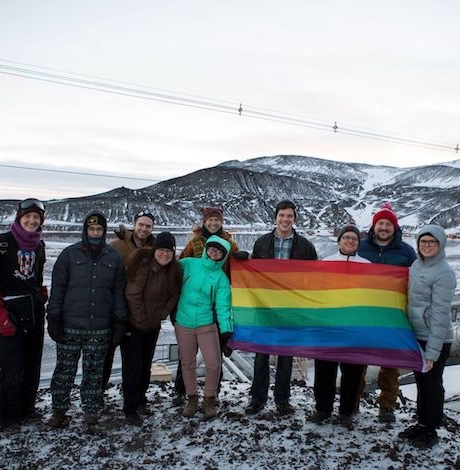
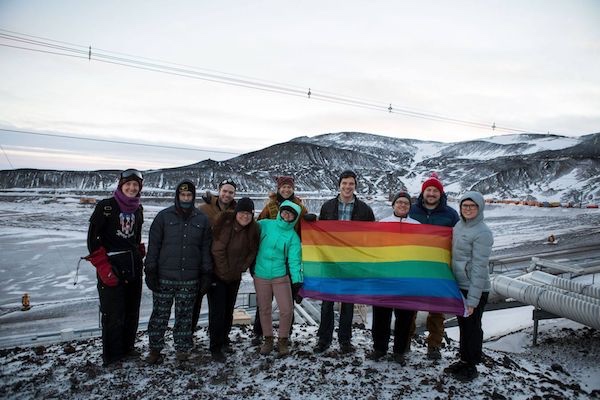
(Photo via Shawn Waldron / NewNowNext)
Antarctica will celebrate its first ever Pride this June.
The event will be held at McMurdo Station, Antarctica’s largest research station, located 850 miles from the South Pole. During Antarctica’s winter months (March-September) 133 people remain at the station. The number increases to around 900 employees when the summer begins in October.
Of the 133 employees, 10 identify as LGBT. Residents Evan Townsend and Shawn Waldron helped to organize the event. In an interview with NewNowNext, Waldron explained he was nervous about LGBT representation on the remote continent.
“My biggest fear before I left was, ‘I’m going to be the only gay person, there’s going to be no one else here,’” Waldron says. “I was wrong.”
Townsend, who brought the Pride flag with him to Antarctica and works in the galley, told NewNowNext other LGBT events have been planned in the warmer months.
“We had a few LGBTQ social events that people showed up to,” Townsend says. “Because it’s such a small community, it’s easy to find out who is and who isn’t in the LGBTQ community.”
Townsend organized to take a group photo with the Pride flag in April as there is less light on the continent in June.
“Why not take this photo and let people see that there’s queer representation — even at the end of the earth,” Townsend says.
Details on the Pride event are still being organized but Waldron told NewNowNext they are planning on a gay bar night and a movie night.
Advocacy group Planting Peace hailed Antarctica as the “world’s first LGBT friendly continent” in 2016.

U.S. Supreme Court
Supreme Court blocks White House anti-trans prison policy
Justices side with trans inmates who challenged Trump-Vance administration directive
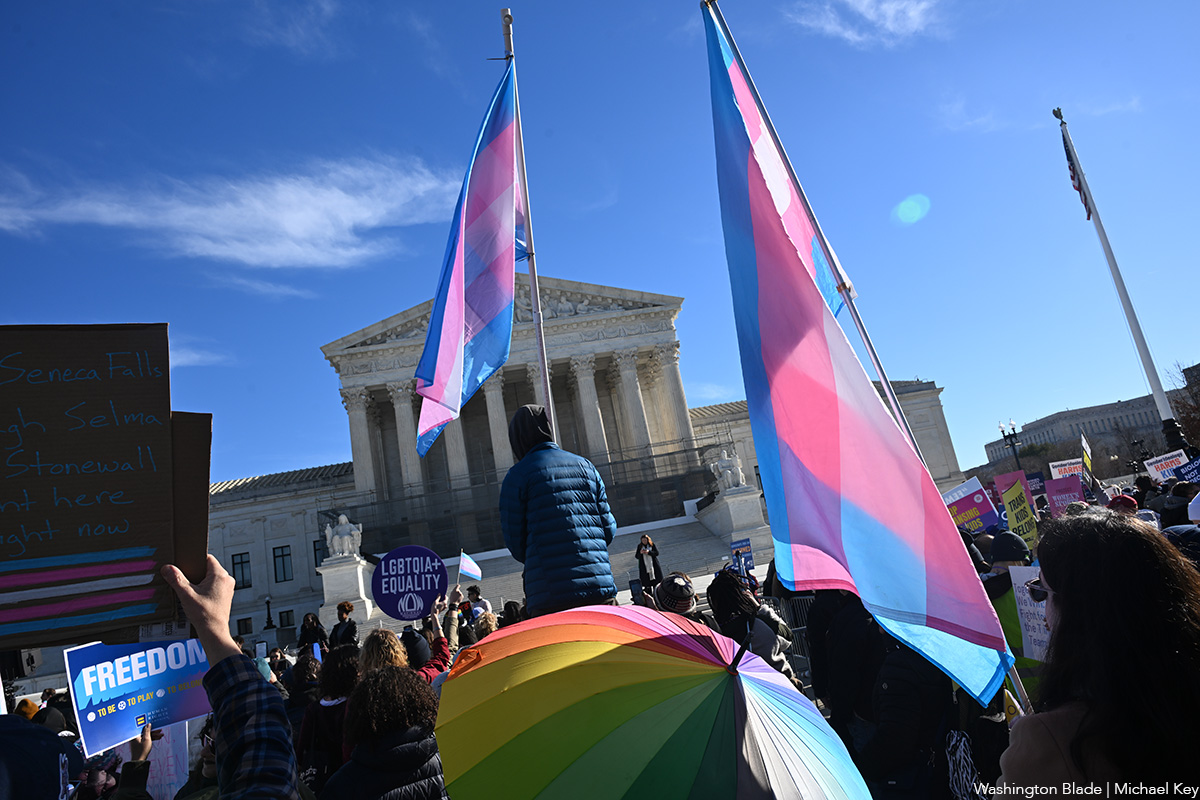
The U.S. Supreme Court has blocked a Trump-Vance administration policy that would have ended gender-affirming care for prisoners.
On Wednesday, the justices rejected an emergency application filed by the administration that would have allowed the Bureau of Prisons to restrict gender-affirming care for transgender inmates in federal prisons.
Three prisoners, Alishea Kingdom, Jas Kapule and Solo Nichols, have said they had been receiving hormone therapy for years as inmates and challenged the sudden policy change. They argued that the abrupt change to decades of policy would end treatment for nearly 1,000 people in custody. The assertion of security concerns within prisons, the American Civil Liberties Union told the Supreme Court, was odd “given that BOP has not pointed to a single security incident relating to its provision of this treatment over the past 30 years.”
According to the application, President Donald Trump’s order called on the Bureau of Prisons to revise its medical care policies so that federal funds aren’t spent “for the purpose of conforming an inmate’s appearance to that of the opposite sex.”
Two justices, Samuel Alito and Clarence Thomas, would have allowed the policy to be enforced but ultimately did not join the majority, marking a rare judicial win for trans people at the nation’s highest court.
This decision is in line with other anti-trans actions taken by the White House regarding inmate rights. In May, the Washington Blade first reported on letters from congressional Democrats condemning changes to official BOP policy regarding trans inmates to bring it in line with Trump’s Executive Order 14168, titled “Defending Women from Gender Ideology Extremism and Restoring Biological Truth to the Federal Government.”
The policy would require BOP staff to “refer to individuals by their legal name or pronouns corresponding to their biological sex,” ban the use of funds for any “items that align with transgender ideology,” and suspend clothing accommodations, pat-search accommodations, and support programs offered to trans individuals.
The BOP responded to the Blade’s request for additional information about its policy change, but BOP spokesperson Donald Murphy said the updated policy is “rooted in medical guidance” and “data-driven decision making,” despite the guidance running counter to what most doctors who specialize in trans health care would recommend.
In June, the court upheld state bans on trans athletes participating in women’s and girls’ sports. A year earlier, the court upheld state laws banning gender-transition treatments for trans youth.
The court has also allowed Trump to implement a ban on trans people serving in the military.
Human Rights Campaign President Kelley Robinson sent a statement to the Blade following the court’s decision.
“Today, trans people in federal prisons can keep getting the care they need. Denying access to critical medical care for incarcerated people simply because they are trans is discriminatory, cruel and flies in the face of our Eighth Amendment protections,” Robinson said via email. “Trump and MAGA extremists are obsessed with targeting our community and undermining access to essential healthcare, defying the recommendations of every major medical association in the country. This decision protects incarcerated trans people from the administration’s attempt to steamroll over constitutional rights for now, but the fight to uphold the dignity and respect our community deserves is far from over.”
The Blade reached out to the White House for a response on the Supreme Court’s ruling but did not hear back by publication time.
Texas
How anti-trans backlash to James Talarico spread like wildfire
Texas Democrat is challenging state Attorney General Ken Paxton
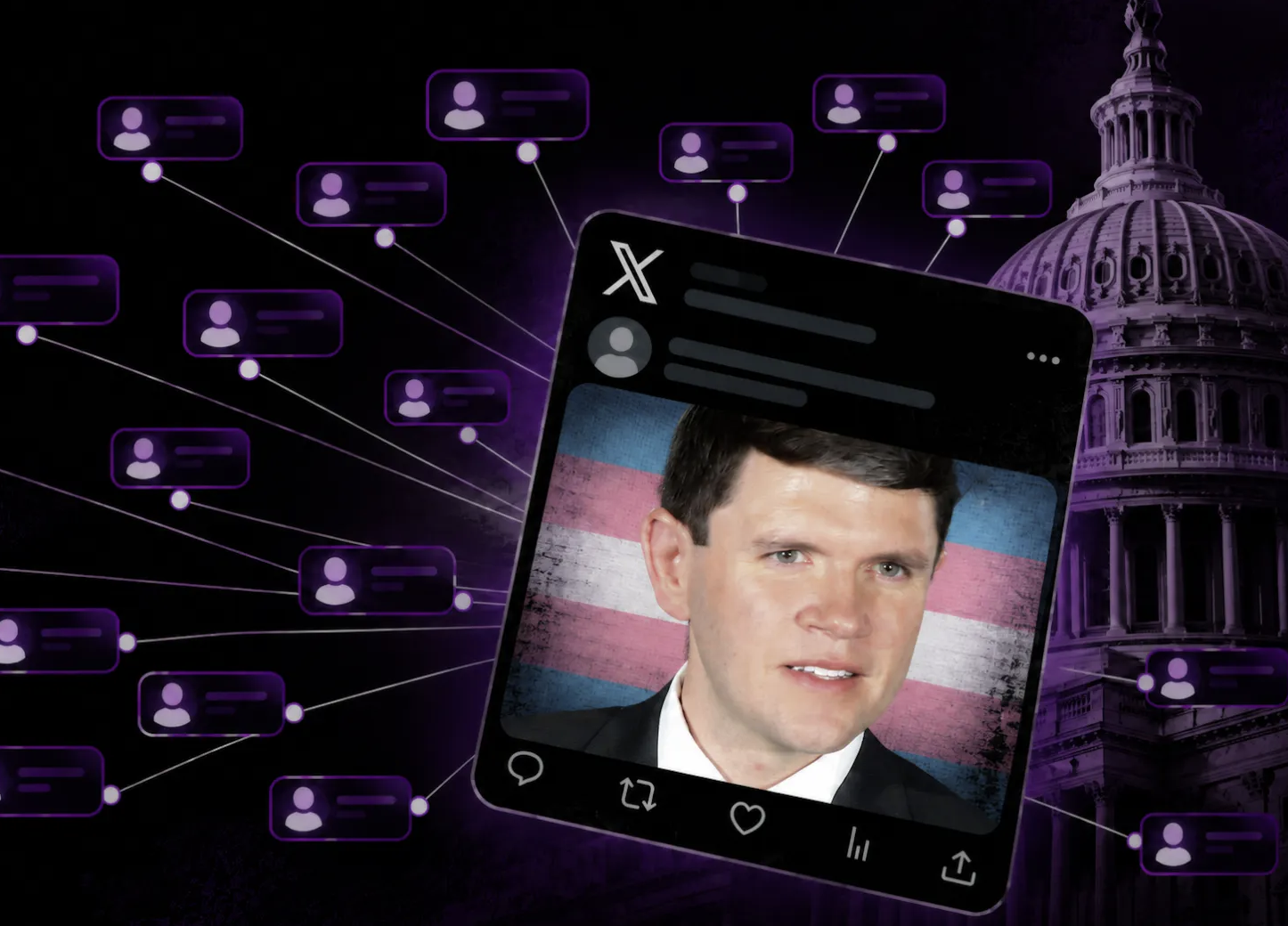
Uncloseted Media published this story on Oct. 21.
This story was reported in partnership with The 19th, a nonprofit newsroom reporting on gender, politics and policy.
By HOPE PISONI | Texas’s Senate race has become one of the most-watched elections of the year. MAGA Republican nominee Ken Paxton pulled off a rare primary defeat against a well-established 24-year incumbent, while challenger James Talarico has been polling well enough to ignite hopes of electing a Democrat to represent Texas in the Senate for the first time since 1993.
This election could have a major impact on issues like education and healthcare prices, which rank as Texas voters’ top priorities. But an outsized amount of coverage of the race has centered instead on transgender people. Paxton’s campaign and its supporters have run several AI-generated ads attacking Talarico’s pro-trans positions. That focus has shaped reporting on the race, both by right-wing media like Fox News and in mainstream outlets like The Washington Post, with many describing Talarico’s stances on trans issues as a liability. Talarico himself has walked back some of his positions in response to controversy, expressing support for some restrictions on trans athletes and rescinding a promise to co-sponsor the pro-LGBTQ+ Equality Act.
This outsized focus didn’t come out of nowhere — on March 3, when Talarico was declared the winner of the Democratic primary, there was a stunning increase in traffic on X related to his takes on trans issues.
In the three days leading up to his primary win, Uncloseted Media and The 19th could only find four posts about Talarico’s take on trans issues. But in just over 24 hours after Talarico won the primary, the newsrooms identified nearly 200 posts. Most of this was driven by three viral videos that were initially posted and amplified by GOP-affiliated politicians and strategists before being circulated by right-wing influencers, media personalities and activists. The spike shows how an army of accounts work together to amplify attacks that can shape the political debate in key races — and perpetuate harmful rhetoric.
“It is a match made in heaven, the business model of social media and people pushing hate,” Sarah Oates, a professor of communications at the University of Maryland, told Uncloseted Media and The 19th. “Because the social media companies know that these are the things that engage people.”
So how did the proliferation of this narrative happen? The following is a play-by-play of how the videos and their accompanying narrative spread in the 26 hours after Talarico’s primary win. The timeline is accompanied by analysis from experts in political communications and strategy.
What are people saying, and where did it come from?
Five minutes after election analyst Dave Wasserman calls the primary for Talarico, Republican Rep. Brandon Gill of Texas posts a clip from a 2021 debate in the Texas legislature where Talarico says that “God is nonbinary.” This is one of two clips which suddenly go viral despite having existed for years — the other, which comes from a 2021 hearing where Talarico says that there are “six really common biological sexes,” is posted by Gill the next morning to a similarly large reach. Talarico has since walked back both statements.
As Gill’s post spreads, the replies are increasingly filled with animus. In one reply, Lynn Conrad writes that “this false prophet speaks with a forked tongue and will lead many from the truth.”
Prior to Talarico’s win, these clips had gotten a small amount of media coverage and appeared in an attack ad by Terry Virts, one of Talarico’s primary opponents. However, Republicans seemingly waited to boost them further until after the primary. Matthew Sheffield, political analyst and a former right-wing political consultant, says this strategy is common.
“Sometimes candidates will decline to reveal [opposition research] that they have for other-party candidates until the general election,” Sheffield told Uncloseted Media and The 19th. “When that’s done, it’s usually because they perceive that the other-party candidate would be severely damaged by the disclosure and they actually want that person to win their party’s nomination.”
Eight minutes after Gill’s first post, the same clip is posted by Greg Price, a political consultant who held a leading role in President Donald Trump’s 2024 campaign and worked at the White House in 2025. Within the next hour, accounts with direct connections to the Republican Party and the Trump administration post the clip and spread anti-trans talking points. This includes the National Republican Senate Committee; their regional press secretary and senior adviser; and Steve Guest, Texas Sen. Ted Cruz’s former communications adviser, who posted the clip and wrote: “James Talarico is a radical trans activist who weaponizes Christianity to push a far-left agenda to mutilate children.” Overall, 12.1 percent of the posts we analyzed came from such accounts.
At least 23 other accounts go on to post Gill and Price’s version of the clips, helping their message go viral. The posts above are also reposted by accounts with millions of followers, including conservative writers Dinesh D’Souza and Ann Coulter, fundamentalist Christian radio host Jenna Ellis and an account called End Wokeness.
About an hour later, Andrew Kolvet, a spokesperson for Turning Point USA and the co-host of The Charlie Kirk Show, posts the “God is nonbinary” clip while calling Talarico a “beta male white boy” and a “compliant little lap dog.” Right-wing media figures are quick to jump on these talking points, with 18.7 percent of all the posts we analyzed coming from them.
Sheffield says that right-wing outlets scour the internet for stories that could “forward their narratives.”
“They do this not just with trans issues, they do this all the time with anyone who puts an argument forward that is helpful to them, and I personally experienced this myself,” says Sheffield, who entered into politics after his small anonymous right-wing website was covered by far-right heavyweights Rush Limbaugh and Bill O’Reilly mere days after its launch.
As the nonbinary video spreads like wildfire overnight, a new clip drops around 8 a.m. the morning after. This clip, which shows a sermon in which Talarico says that “our trans community needs abortion care too,” is the only one we analyzed which hadn’t surfaced prior to the Democratic primary. It’s first posted by ATX data, an anonymous account that bills itself as providing “conservative news and public policy covering local Austin and Texas issues.” While the account has less than 6,000 followers, the clip is picked up quickly: Fox News anchor Will Cain posts it within an hour and Kolvet and Price do so within two, allowing it to rack up over one million views.
Sheffield says that while Democratic leaders tend to prefer to establish rhetoric and positions in-house, Republican leaders more frequently look to grassroots supporters for talking points.
“That’s what this was an example of — they found something that seemed effective to conservatives, so they started picking it up and using it,” Sheffield says.
As lunchtime approaches, influencers and political commentators, who make up 18.1% of the posts analyzed, begin boosting the clips. Accounts with millions of followers, including Libs of TikTok, End Wokeness and podcast host Matt Walsh, help them go viral. The three aforementioned accounts rack up a combined 1.26 million views on their posts about Talarico.
Ashley St. Clair, the mother of a child with Elon Musk and a former MAGA influencer who has since left the right-wing online ecosystem and has spoken out about its “very coordinated” nature, says influencers are incentivized to repost right-wing talking points with momentum on social media because they can make bank from ad revenue, brand deals and practices like paid retweets.
“I worked with [Libs of TikTok], and that’s a business where she makes money hand over fist from this type of content,” St. Clair told Uncloseted Media and The 19th. “It’s become an obsession where she spends all day scouring the dark corners of the internet to make a minority seem like the rule.”
Libs of TikTok did not respond to a request for comment.
Between 10 p.m. on March 3 and 11 a.m. on March 4, Uncloseted Media and The 19th identified 48 posts about Talarico that use similar anti-trans talking points, including 26 separate posts of the three clips that would amass millions of combined views. In contrast, we identified zero pro-trans posts about Talarico in the same time period. Oates finds this sharp turn in the discussion suspicious.
“When you see a shift in a discourse on a particular platform that’s quite abrupt and moves from one side to another and then stifles all dissent, that’s generally gonna be inauthentic,” she says. “That’s generally gonna be led by people who are pushing propaganda or political messaging. … It’s not reflective of general public opinion on the issue.”
This perspective reflects statements by St. Clair. She told the Washington Post that she joined large group chats where influencers would receive “marching orders” from the Trump administration and congressional Republicans. She also shared direct messages with The Post that showed White House staffers asking her to boost talking points and Republican strategists offering her money to amplify posts. Based on Uncloseted Media and The 19th’s findings, she says it’s likely that the anti-trans attacks against Talarico were coordinated in this way.
“I’d be willing to bet there was money put behind it in a paid campaign, because this is how MAGA operates,” St. Clair says. “Most people don’t understand that a lot of these MAGA influencers have access to a dashboard through certain companies where they can just log on and see any campaign that they can sign on to … and all they have to do is push out messaging, which means they don’t have to disclose that they’re paid.”
Sheffield says that many right-wing actors have such closely aligned interests that they don’t need to work together to act in concert.
“Probably most of it is not intentional when you see something go big,” Sheffield says. “They all have a movement mentality on the right, so when they see something that looks effective, then they’re gonna repeat it.”
As the morning progresses, the same talking points are adapted to French, Portuguese and Spanish, the last of which 28.5 percent of Texans speak at home. Like in English, they’re primarily spread by right-wing actors, including political strategist Emmanuel Rincon, who has nearly 620,000 followers on X and is the first to post the sermon clip to a Spanish-speaking audience. By the end of the day, the Spanish news media had also picked up the story.
One especially viral post comes from Collin Rugg, co-owner of the right-wing news site Trending Politics. Rugg stitches together a video that includes numerous clips of Talarico speaking on different topics, including the three trans-focused clips. In his post, he incorrectly says that Talarico claimed there were six genders rather than “biological sexes,” a misquote later repeated in an article by the Daily Caller, Fox News anchor John Roberts, and later Trump.
Matthias Kettemann, a professor of internet law at the University of Innsbruck in Austria, says that social media optimized for engagement allows misinformation to spread easily.
“Untrue information is usually more emotionally charged, and therefore there is a prima facie advantage,” Kettemann told Uncloseted Media and The 19th.
Shortly after noon, these posts begin moving outside of X and social media. The Charlie Kirk Show, broadcast on the streaming and cable channel Real America’s Voice, airs the nonbinary and six sexes clips. Later in the day, anti-trans talking points about Talarico make it onto Newsmax’s “The Big Take,” “Ed Henry: The Briefing,” and “The Pulse” as well as Fox News’ “The Will Cain Show.” By 8:30 p.m., “Jesse Watters Primetime,” which is the second most-watched cable news show in America, discusses Talarico’s stances on trans issues to an audience of roughly 4 million.
Shortly after the clips air on The Charlie Kirk Show, the conservative print media starts picking them up. At 12:35 p.m., the Washington Examiner publishes an article titled “FLASHBACK: James Talarico said there are six sexes while opposing ban on men in women’s sports.” Later in the afternoon, the Daily Caller, the Daily Signal, The Gateway Pundit, and Voz all post articles about the clips, with three of them citing X posts from earlier in the day.
Howard Polskin, president and founder of TheRighting, a website that tracks and analyzes right-wing media, says that right-wing social media and traditional media narratives tend to support each other.
“It’s a virtuous cycle,” Polskin told Uncloseted Media and The 19th. “If something gets written about in an extremist right-wing website, it might be posted on social media, then more social media outlets will pick that up and it might go viral.”
Matt Whitlock, a former senior adviser to the National Republican Senate Committee and the current senior vice president at CRC advisers, a PR firm known for serving conservative organizations, plays a key role in getting these anti-trans talking points on TV. He is the first one to introduce them on Fox News and Newsmax.
“The problem for [Talarico] is he’s created so much incredible ad content already that if you look at [X] today, it is flooded with clips of [him] saying absolutely insane things,” Whitlock told the host of The Big Take on Newsmax.
Whitlock uses the fact that social media is “flooded” with clips of Talarico advocating for trans rights to legitimize his claims that Talarico is an unviable candidate, despite the fact that right-wing operatives like himself are the main ones responsible for the spread of those clips. Oates says this reflects a common strategy in propaganda campaigns.
“Social media has the opportunity to spread more outrage more widely and more freely, but it’s not as influential as mainstream media,” Oates says. “What’s worrying is when what’s going on on social media starts to shape discourse in the more influential mainstream media. … ‘The people are saying’ is a classic propaganda gambit.”
Whitlock did not respond to a request for comment.
What to make of this
All told, we tracked 182 anti-trans posts attacking Talarico on X in the 26 hours after he won the primary. Sixty-three included or referenced the nonbinary clip, 50 referenced the sermon clip and 35 referenced the sexes clip. Between these posts and the citations in the right-wing media, the talking points targeting Talarico’s pro-trans positions likely reached over 10 million people.
In the leadup to the midterms, some Democrats have walked back their positions on trans rights — candidates have come out against gender-affirming care for minors and trans inclusion in bathrooms or sports, with one Ohio representative running an ad opposing “gender ideology” in schools.
Oates says that the manufactured nature of this spread indicates that these anti-trans positions do not accurately reflect the feelings of the voter base. A recent poll of American adults by The 19th and YouGov found that 37 percent of respondents think that both Democrats and Republicans talk about trans issues too much, and trans issues ranked the lowest in terms of importance among respondents to a September CNN poll.
“It’s understandable that some politicians would limit what they say about trans rights, but I think it’s misguided,” Oates says.
Despite how successful these social media tactics can be for Republicans, Democrats rarely follow suit. Oates attributes this to the fact that Democratic narratives tend to be more factual and less inflammatory, making them less suited to virality. Kettemann adds that research has found that right-leaning people tend to be slightly more susceptible to online misinformation.
“There have been few examples of campaigns like you’ve described coming from the left,” he says. “One of the reasons is that people from the left, by and large, are more technologically savvy and don’t fall into the trap of this kind of messaging.”
These tactics endanger trans people
The spread of these posts endangers trans people. The spike in anti-trans rhetoric in the 2020s has increased rates of poor mental health and suicidality among trans people and incited violence against the community. Oates says X’s algorithm rewards hateful content, especially since Elon Musk removed several guardrails for content moderation, including replacing the site’s independent fact-checkers with a volunteer-based community note system.
Social media platforms have increasingly come under fire for the harmful consequences of their engagement-focused algorithms. In the U.S., legal accountability for tech platforms can be difficult to achieve due to laws protecting them from being liable for content on their websites. But in their current state, Oates says that social media platforms like X are not healthy for democracy.
“By participating [on X], you’re not participating in real civic discourse, you’re being used as a commodity by a social media company that not only doesn’t have your best interests at heart but is deliberately trying to inculcate hatred.”
Oates believes that moving beyond the midterms, we will see one of two paths in American politics: “One in which political power is defined by … campaign[ing] on fear,” and another where “people decide … to embrace news and information that’s actually based in reality.”
Additional data reporting by Andrew Norris.
Puerto Rico
Annual National Trans Visibility March takes place in Puerto Rico
Participants highlighted anti-trans laws in U.S. commonwealth
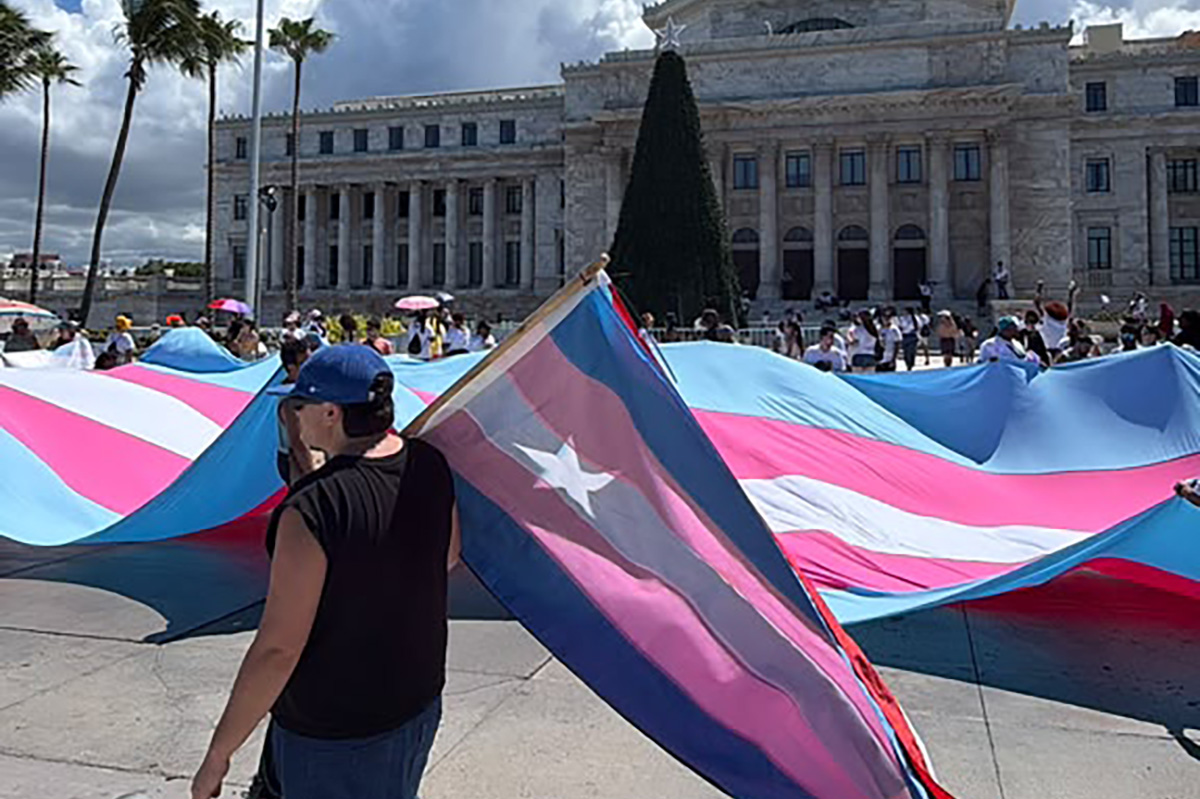
The annual National Trans Visibility March took place in Puerto Rico on Saturday.
The march ended at the Puerto Rican Capitol in San Juan, the U.S. commonwealth’s capital and largest city. Samy Nemir Olivares, a member of the Puerto Rico LGBTQ+ Federation’s board of directors who also works for Lambda Legal, is among those who spoke.
The march took place at the end of a three-day conference that took place in San Juan. Participants included:
• Ana Irma Rivera-Lassen, the first openly LGBTQ+ person elected to the Puerto Rican Senate
• Mila Hellfyre, a trans Puerto Rican activist
• Maru Rosa Hernández, a nonbinary plaintiff in Lambda Legal’s lawsuit that challenges the Puerto Rican government’s refusal to issue birth certificates with an “X” gender marker
• Peter Manuel Shepard Rivas, a Puerto Rican HIV/AIDS activist
• Lambda Legal Senior Counsel and Health Care Strategist Omar González-Pagán
Waves Ahead, Puerto Rico’s largest LGBTQ+ organization, is among the groups that sponsored the National Trans Visibility March and conference. Other sponsors included the TransLatin@ Coalition, the True Self Foundation, the Transgender Law Center, Advocates for Trans Equality, Human Rights Campaign, Gilead, the Georgetown University Law Center’s O’Neill Institute for National and Global Health Law, GLAAD, and the Hispanic Federation.
“Now it’s more important than ever to unite as an LGBTQ+ movement alongside our allies to protect the progress we have made in achieving trans and queer rights as both the federal and local governments attempt to erase and criminalize our identities,” said Olivares. “The president insists that trans identities don’t exist, yet they continue to attack our rights and existence through the laws.”
“But we are here, we are not going to be silenced or erased,” added Olivares. “As (with) any other Americans, trans and queer people deserve equal access to healthcare, housing, and nondiscrimination at the workplace and government services.”
Olivares in their comments noted the Puerto Rican government “has betrayed and undermined the LGBTQ community by signing into law more than” half a dozen anti-LGBTQ+ laws.
True Self Foundation Executive Director Miguel Vázquez-Rivera during a Congressional Hispanic Caucus briefing earlier this year noted these include a ban on gender-affirming healthcare for anyone under 21. Vázquez-Rivera also highlighted Law 26-2026, which prohibits the University of Puerto Rico and other “government facilities” from installing “mixed or gender-neutral multi-occupancy restrooms.”
Puerto Rico Gov. Jenniffer González, a Republican who is a member of the pro-statehood New Progressive Party, signed these laws after she took office in January 2025. González, who supports President Donald Trump, was Puerto Rico’s resident commissioner in the U.S. House of Representatives before she became governor.
Olivares told the Los Angeles Blade that National Trans Visibility March organizers decided to hold the annual event in Puerto Rico as a way to highlight the fact the commonwealth has “the most severe anti-trans legislation in the U.S.” and to stand in solidarity with local activists.
The first National Trans Visibility March took place in D.C. in 2019. Next year’s National Trans Visibility March is scheduled to take place in Atlanta.
South Carolina
Trump uses anti-trans slur against Democratic Senate candidate
President mocked Annie Andrews
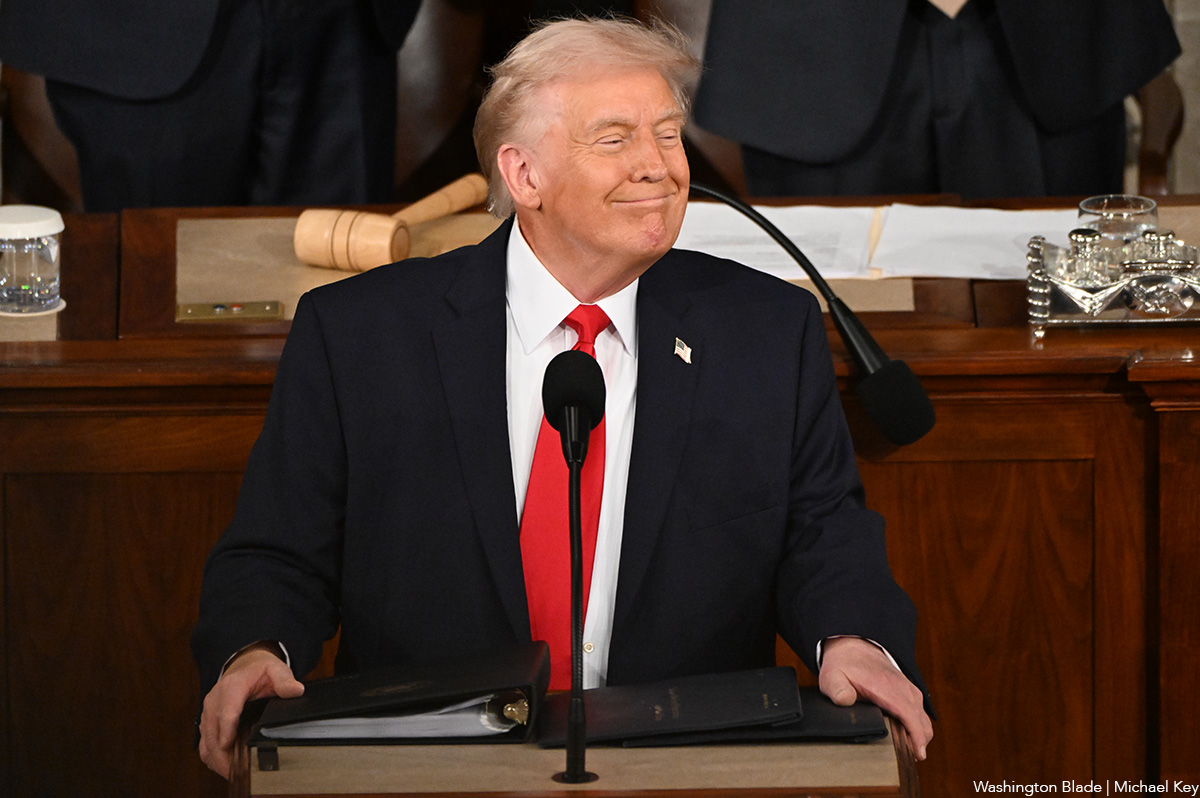
President Donald Trump used an anti-trans slur against Democratic South Carolina Senate candidate Annie Andrews on Monday as he sought to rally support for Republicans in the state’s Senate race.
In a post on Truth Social, Trump attacked Andrews three times, referring to her as “trannie” while promoting U.S. Sen. Darline Graham (R-S.C.)’s campaign.
Andrews is running against Graham for a Senate seat in the solidly Republican state.
Earlier this year, Graham was specially appointed to the seat following the death of her brother, Lindsey Graham, who represented South Carolina in the Senate from 2003 to 2026.
Andrews, the Democratic nominee from the state, is a pediatrician that lives in Charleston with her three children. She told NBC News that she will “work with anyone to put South Carolina first.”
“As a mom and a pediatrician, I’m in this race to fight for my patients, my three kids, and South Carolina,” Andrews said, adding that “lowering costs and making life better for families across our state is going to take all of us working together.”
Andrews used the attention from the president’s attack to emphasize what she described as a focus on policy issues rather than the culture wars that have dominated much of the political debate.
“If you care more about your bills than the politics in Washington, this campaign is for you,” she added.
Trump’s remarks have drawn criticism from leaders on both sides of the aisle.
Senate Minority Leader Chuck Schumer (D-N.Y.) condemned Trump’s words Monday night on social media, calling his attacks on Andrews “despicable.”
“Annie Andrews is a mom and pediatrician who’s always put her community first — and she’s exactly who South Carolina needs representing them in the Senate,” Schumer said on X.
Former South Carolina Gov. David Beasley, a Republican, also criticized the president’s attack on Andrews, urging voters to “reject politics based on division and hate.”
“This is abhorrent. Elections don’t have to be about cruelty and lies. South Carolina deserves better,” Beasley wrote Monday night on X.
South Carolina has not elected a Democratic senator in nearly three decades.
Andrews’s campaign website does not mention her positions on LGBTQ+ issues.
The Los Angeles Blade reached out to Andrews’s campaign for comment on Trump’s attack and her positions on transgender rights but did not hear back by time of publication.
Georgia
In Ga., 2 trans candidates believe voters are ready for them
Bentley Hudgins, Bella Bautista running for state House of Representatives
Uncloseted Media published this story on Oct. 6.
This story was reported in partnership with The 19th, a nonprofit newsroom reporting on gender, politics and policy.
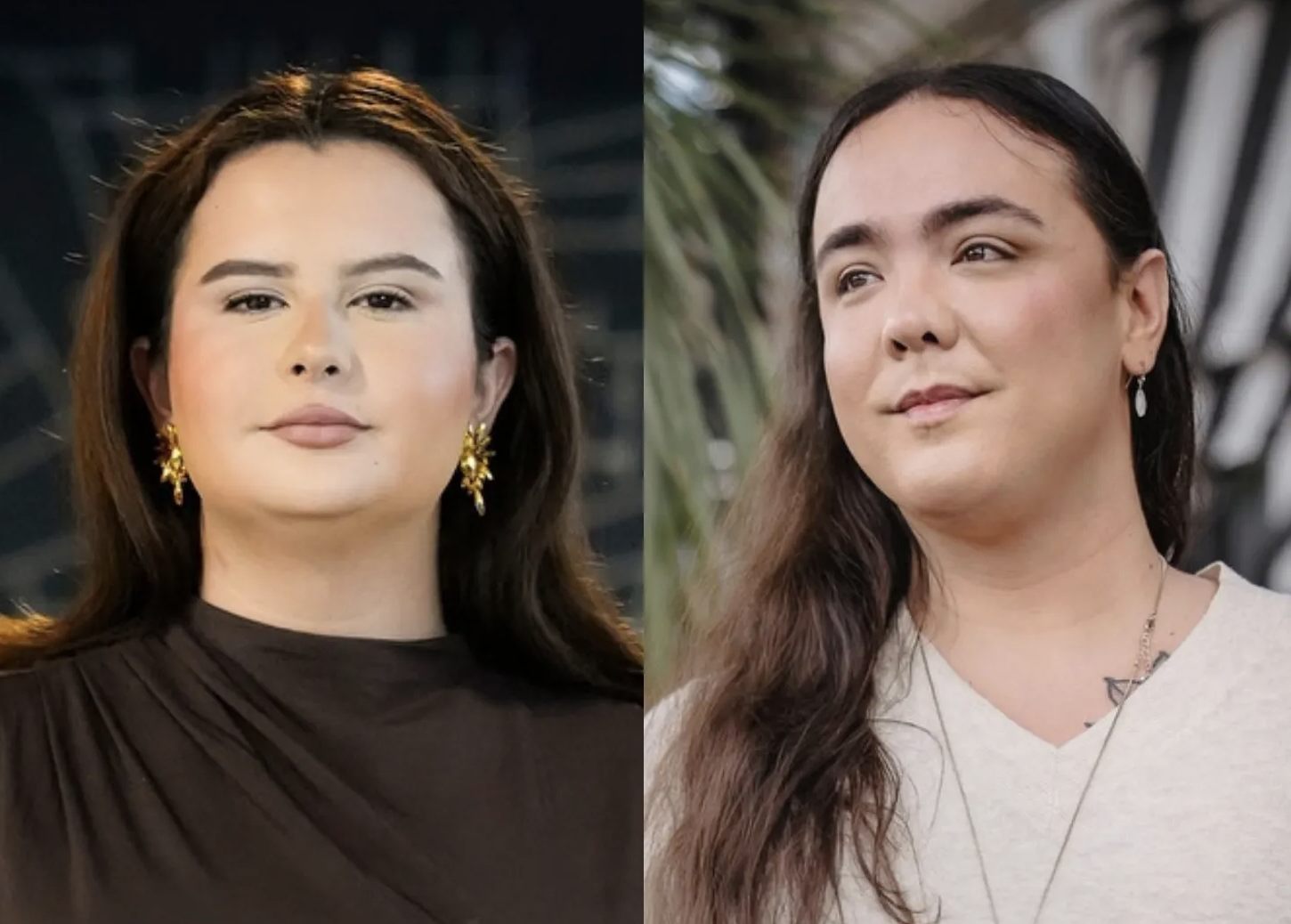
By ORION RUMMLER | Bentley Hudgins is a 33-year-old democratic socialist who spent the past three years advocating for LGBTQ+ rights in the Georgia statehouse.
Bella Bautista is 10 years younger, the first transgender woman to win a legislative primary in Georgia and head of a nonprofit distributing supplies to at-risk young adults.
Both are running for a spot in the Georgia House of Representatives, part of a cohort of Democrats who hope to shrink or end Republicans’ hold on the chamber. Both would make history as the first trans members of the body. Neither wants to discuss identity politics or pronouns — they want to talk about data centers, the price of groceries and healthcare.
But their districts are very different: Hudgins is running in a liberal stronghold in Atlanta with no serious Republican opposition and is all but certain to win in November. Bautista’s district is rural and deeply conservative; it hasn’t elected a Democratic state representative since 1996, and she’s the first to run for this seat since 2010. But Hudgins’s and Bautista’s bets are the same: Voters are looking for someone to fight for them. In Hudgins and Bautista’s view, something in the country is broken and no one else will fix it. So they stepped up.
“People around here just hate the government, and that’s why I’m running,” Bautista told Uncloseted Media and The 19th. “People have lost faith in the system as a whole.”
Hudgins’ mind is on the big picture: getting as many Democrats, especially progressives, in the statehouse as possible. Without that, they believe the future — especially for LGBTQ+ people and immigrants — isn’t certain.
“At the end of the day, we have to have the numbers,” Hudgins told Uncloseted Media and The 19th.
A deep red district in rural Ga.
In the hourlong drive from Atlanta to Cartersville, where Bautista grew up, suburbs fade away and the land expands into RV lots, farms, and houses on the edge of the woods. Bautista launched her campaign in this small town, at Noble & Main Coffee Co., across the street from a butcher shop that offers deer processing.
“It’s one of those hidden gems,” she says. “They’re friendly toward Democrats.”
It’s also not in the statehouse district she wants to represent. She’s running for office in the more rural side of the county, an area that’s about 80 percent white, mostly older and mostly conservative. And it’s been a challenge. Most people here vote Republican. Her opponent, the GOP incumbent Mitchell Scoggins, has not run against anyone since he first won a special election in 2018.
Lack of change is what spurred Bautista to run. And it’s not just Scoggins sailing unopposed to reelection every two years. Bartow County is one of a small handful of counties in Georgia with only one commissioner, who single-handedly decides the fate of everything from data center construction to new roads. The current commissioner has held the position for 14 years.
The issues facing her hometown can’t be left to one man, Bautista says. She wants to pass legislation for locals to vote on a board of commissioners, regulate Flock cameras, shield locals from data center pollution, conserve farmland and expand rural mental healthcare. She thinks these stances will appeal to voters who may otherwise vote Republican. But it’s still an uphill battle — and a lonely one.
“This is not a story about pride. It’s not a story about visibility,” she says. “It’s a story about challenges, difficulty. I don’t want to be the fucking first to do it, but I have no choice but to be the first.”
But Bautista says she’s struggling. This campaign has cost her privacy and peace, which doesn’t impact just her: She lives in her family home as the primary caretaker for her mom.
In May, during the primaries, someone came to her house twice, she says: once to put up a sign supporting President Donald Trump next to her own campaign sign in the front yard, and later to take down her sign.
“I literally live in the middle of nowhere,” she says. “That sent chills down my back, because I’m like, OK, that means someone physically went to my home, got out of their car, went up the hill, put up a Trump sign.”
Her neighbors, who she’s known her whole life and are Trump voters, assured her that they weren’t involved. But that fear hasn’t left her. Since then, more signs have gone missing: A few weeks after we met, hundreds of her campaign signs were taken down across the district. Those cost money to replace — money the campaign doesn’t have.
As a trans Latina, she belongs in Bartow County just as much as anyone else, she says. This is the only home she’s known. But campaigning in this district feels like being thrown into the ocean, she says. Online, people mock her and misgender her. It hurts. Often, they’re the same people she’s fighting for.
At one point during an interview at Noble & Main Coffee Co., Bautista started crying. Keeping her head above water means she doesn’t often take time to think about why she’s doing this.
“You’re just having to swim, swim, swim, swim and you never get any chance to look back and think, oh my gosh, why am I doing this, what does this mean to other people?”
Dramatically different districts
Hudgins launched their campaign at Joe’s Coffeehouse in East Atlanta Village, roughly 50 miles from Bautista’s district. This place, a local indie fixture, holds personal history for them: When they became homeless in 2017, it became a refuge as they couchsurfed and lived in their car. It took a year to find stable housing.
This neighborhood is where they got back on their feet after being kicked out of their apartment, something they know is common for queer people in the U.S., as well as in their own circles.
“Most of the queer electeds that I’m really close with are people who have experienced homelessness,” they say. “It just goes to show how prevalent this is for queer Southerners.”
And, years later, this same neighborhood is where they fell back in love with politics.
Being here makes Hudgins think about how the city is changing as people get priced out. Gay bars are closing and, as a former drag performer, they know of only three places still putting on shows. It’s all getting too expensive. Midtown isn’t the bustling queer neighborhood it used to be, they say, but the queers are still here: They’re just moving further into DeKalb County, East Point and southeast Atlanta, all in search of affordability.
That’s part of the problem. Hudgins sees solutions, though: raising the state minimum wage to $20 an hour or creating a state earned income tax credit to give money to lower-income families. Previous Democrat-sponsored bills to enact those policies have been blocked in the statehouse, and it’s those stalemates that are driving voters to push for something different, Hudgins says. Decades of Republican control have left people disillusioned.
“People’s political will and spirit has kind of been chipped away at,” they say. “Life can be better.”
The first time Hudgins ran for this seat in 2022, they were 28 and single, and the pandemic was still fresh. The previous year, Atlanta spa shootings targeting Asian women had taken place, and “Cop City,” the massive training ground for local police in DeKalb County, was formally proposed amid national protests against police brutality. Joe Biden was president, and from where Hudgins sat, the Democratic establishment was clamping down on progressive dissent.
They were angry — but that anger didn’t resonate with voters, they say.
“It was such a more agitated time in a lot of different ways, and this strong leftist point of view wasn’t as appreciated,” they say. “At that time, I was also angry. I was mad. And I think it came through.”
Their opener in their 2022 race was, “To be frank, I’m tired of my friends dying,” they say. They had lost friends to police violence, addiction, hunger and mental illness. One of their friends was left permanently disabled from a hate crime, they say. Hudgins had begun to get severe cluster headaches and was managing that while running their first campaign.
After losing that race, they reassessed if they wanted to do politics at all. They were broken-hearted, they say. A friend helped them get a job at a Laotian pop-up restaurant in East Atlanta Village, only a short walk from Joe’s Coffeehouse. But what they thought would be an escape from politics became a reeducation in why it mattered, they say. Surrounded by other Asian Americans, they learned about U.S. bombing campaigns in Laos and connected with their new friends’ working-class struggles.
“I really got to understand more about how my Southeast Asian neighbors and friends have experienced American identity,” they say.
If elected, Hudgins would be Georgia’s first Japanese American lawmaker. To them, it feels like that usually gets left out of their story as people instead focus on their gender identity.
They weren’t planning on running for office this year. Their wedding is in November. Until recently, they were lobbying against anti-LGBTQ+ bills as Georgia state director for Human Rights Campaign, a major LGBTQ+ advocacy group. But Saira Draper, who beat Hudgins in 2022 to represent House District 90, is running for the state Senate. That left the House seat open. And it left the door open for Hudgins to run again.
When three other Democrat contenders dropped out in the primary, Hudgins became the front-runner. Their opponent, Samantha Boston, received only about 500 votes in the Republican primary. Hudgins got over 7,000 in the Democratic contest.
Fearless advocates
On a muggy September night, Hudgins and Bautista were in full glam at the College Park Woman’s Club in Atlanta, gathered alongside activists, volunteers and political candidates at a fundraising gala for LGBTQ+ youth.
At her table, Bautista prepared to present a “fearless youth advocate” award to state Rep. Akbar Ali, sworn in last year at 21 as the youngest lawmaker in Georgia. Bautista won this same award last year for the work she does at her nonprofit, which primarily supports transgender and immigrant young adults. Seated with Ali and friends running for office in Bartow County, she read over her notes.
Democrats in the room buzzed with the possibility of reshaping the statehouse, and with nerves that Republicans’ now abandoned redistricting effort will resurface.
On stage, Bautista looked to a different future — one where trans visibility in politics is not a rarity in Georgia.
“To all my transsexual girls in the building, just know that I’m fighting for you, and that in two years it’s going to be one of y’all,” she said. “It’s going to be one of y’all running for governor. It’s going to be one of y’all running for state senator. It’s going to be one of y’all running for commissioner.”
But she knows that history recognizes the victors, people who make it past the finish line, regardless of how much work they put into the race.
“I stand before you in the middle of history, not on the other side of it,” she said on stage. “I keep going not because the water is calm, but because someone on the other side is waiting for proof that a person like them survived it.”
Hudgins watched from the front of the room. They sat next to Sam Park, the Georgia House minority whip, a longtime mentor.
“I’m incredibly proud of Bella’s leadership and her courage for stepping up,” Park told Uncloseted Media and The 19th in an interview a few days later. “Bella is giving her voters, her fellow neighbors, an option, a real choice to say enough is enough.”
Rural Democrats are craving someone willing to fight for them, says Courtney Bruder, chair of the Democratic committee of Cherokee County, where Bautista’s district also touches. But complacency has gotten in the way, she says.
“It’s been difficult to try to get someone to be willing to fight for a seat that’s going to be hard,” she told Uncloseted Media and The 19th. “It’s been a slow change to get Democrats in this area to run.”
Bautista hasn’t felt supported by the Georgia Democrats, she says. She has allies in the statehouse and in others running for office, but she still feels like the subliminal message from the party is that she just isn’t electable. She feels like she isn’t taken seriously because she’s not white, doesn’t have wealthy donors and isn’t running in a safe district for Democrats.
Democrats in leadership say she’s changed the game, though, and see her candidacy as a sign of a changing tide in Georgia.
A blue wave may be brewing in the Peach State. Georgia saw record-breaking engagement in the primaries, and an NBC analysis found that Democrats turned out in unusually high numbers across the state. But in Bartow County, where Bautista lives, Democrats make up just one-third of the vote in the gubernatorial primary, according to data from the Georgia Secretary of State’s elections office.
Bautista is positioning herself as an anti-establishment candidate first, and a Democrat second, to appeal to people who aren’t engaged in politics, she says.
It may not be enough to win. But for the past 16 years in this district, no one was willing to step into the ring at all. She still sees victory in that, and in the ways her campaign has gotten neighbors to care about what’s happening in their backyard.
‘I’m going to be who I am’
If elected, Hudgins would become the state’s first nonbinary lawmaker. But they don’t care if voters understand their gender or use the correct pronouns; they just want voters to understand the issues.
“I realized if I led with my identity, it would distract people from understanding what I had to say,” Hudgins says.
One moment in particular on the campaign trail, at Israel Missionary Baptist Church in April, changed their perspective on this.
“The deacon lays his hands on me. He’s like, ‘God, help her, help this person, help him, just help them be victorious.’ I wanted to laugh, but then I was really touched. This guy I’ve never met before … was just trying to be respectful,” they say.
If they win, a whole new set of challenges awaits them at the Georgia statehouse. The dress code is gendered; men must wear a coat and tie, while women are allowed a more nebulous “dignified dress.” But it’s not just the clothes; they would be joining an institution built around a gender binary they don’t adhere to.
Lawmakers are used to referring to each other as “Mr.,” “Mrs.” or “Miss,” per the rules. Although there are more formal options that could allow for a loophole, those are gendered too — members may identify each other by the district “he or she” represents or by the city of “his or her” residence. The bathroom is its own ordeal: if there is a gender-neutral bathroom, Hudgins has yet to find it. As a gender nonconforming person, if Hudgins takes office, they would be walking into a system designed to exclude them. And there are fines associated with breaking these rules.
They are still weighing how to respond to it. They want to be taken seriously as a legislator and build relationships that move bills, but if they don’t stand up for themselves, it sends a poor message, they say.
“I have a pesky knack for maintaining who I am regardless of what the rules say,” they say with a laugh. “If we have a Democratic majority, we can change the rules. If there is a Republican majority, I’m going to be who I am and I’m going to dress how I think is appropriate. And their problems, we’ll address them as well.”
National
988 restores crisis services for LGBTQ+ youth
The lifesaving 988 call-in number to help people experiencing mental health crises or suicidal thoughts has once again restored its specialized services for LGBTQ+ youth.
The lifeline, which used to have the option to “press 3” to be directly sent to specialized services for LGBTQ+ youth facing mental health crises or suicidal thoughts, was returned on Wednesday following an over-year-long battle with the Trump-Vance administration, which removed the service in May 2025.
The Press 3 option rolled out as a pilot program in 2022 through a government contract with the Trevor Project, a suicide prevention and crisis intervention organization for LGBTQ+ people.
Then, in June 2025, the federal government announced that the lifeline would be eliminated within a month. By July 2025, 988 Lifeline’s “Press 3” services were terminated.
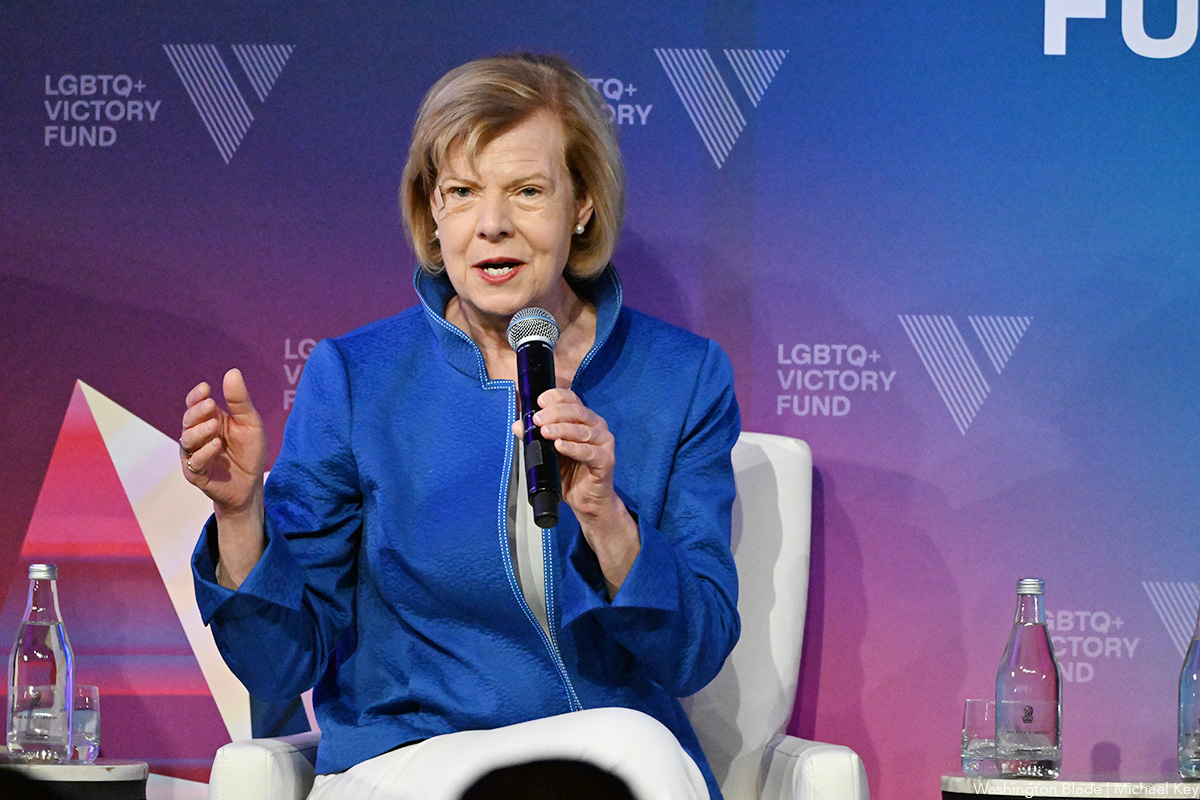
Openly gay U.S. Sen. Tammy Baldwin (D-Wis.) helped lead Congress in reversing the removal of the lifesaving resource from American phones. As a member of the Senatw Labor-HHS Appropriations Subcommittee, she started the process of securing $535 million for 988 — a $15 million increase — as well as dedicated funding for LGBTQ+ youth specialized services.
Then, in September 2025, Baldwin, along with U.S. Sen. Lisa Murkowski (R-Alaska), introduced bipartisan legislation in the Senate, the 988 LGBTQ+ Youth Access Act, to codify the 988 Lifeline’s specialized services for LGBTQ+ young people.
At the same time, U.S. Rep Raja Krishnamoorthi (D-Ill.) introduced the legislation in the House of Representatives alongside U.S. Reps. Michael Lawler (R-N.Y.) Sharice Davids (D-Kan.) Brian Fitzpatrick (R-Pa.) and Seth Moulton (D-Mass.)
The Senate passed Baldwin’s bipartisan funding bill in January 2026, funding the Department of Health and Human Services with explicit language mandating the return of 988’s LGBTQ+ youth specialized services.
In February 2026, Congress passed legislation mandating that the previously eliminated “Press 3” specialized services be restored and funded with $33,100,000 — but it was unclear if the Press 3 option would still be allowed under current executive orders, namely Executive Order 14168, or “Defending Women From Gender Ideology Extremism and Restoring Biological Truth to the Federal Government.”
Despite the securing of federal funding for the Press 3 resource, the battle to get the 988 LGBTQ+ Youth Access Act through Congress is ongoing — and would provide codafied protection from this removal ever happening again.
According to data on the Trevor Project’s website, LGBTQ+ young people are more than four times as likely to attempt suicide than their peers.
Baldwin’s office touts the immense help the lifeline provides to LGBTQ+ people in their moments of greatest need. The press release on the reinstatement of Press 3 highlighted the continued demand for the service:
“The volume of calls, texts, and chats 15 percent higher than a year earlier and nearly 50 percent higher than two years ago. Since the lifeline launched, it has received over 27 million contacts, including over 18 million calls, 4 million texts, and 3 million chats.”
Advocates for LGBTQ+ rights and mental health awareness have agreed with the increasing numbers and hailed the return as a win for everyone.
“Suicide and mental health struggles touch every community across our state, and that’s why creating the 988 crisis lifeline to make sure help is there for everyone is one of my proudest accomplishments,” said Baldwin said in a statement. “But, last year, the Trump administration decided to make these real struggles a political football and ripped away the specialized line that helped LGBTQ children. This was a deliberate choice. The Trump administration chose to put children’s lives on the line to score some political points.”
“I’ve fought tooth and nail to restore this lifesaving resource. When I realized the Trump administration was not going to do it on their own, I wrote it into federal law to require them to restore the Press 3 option,” the Wisconsin senator said. “This lifesaving resource never should have gone away in the first place, but I am glad the lifesaving support Press 3 provides is once again there for people who need it.”
“I’m proud that we secured the funding to restore this lifesaving LGBTQ+ crisis line and successfully pressured the Trump administration to bring the program back,” Krishnamoorthi said. “When an LGBTQ+ young person reaches out for help in a moment of crisis, they deserve to reach a counselor trained to understand and support them. This program should never have been taken away, and now we need to make sure it stays available for every young person who needs it. I’m grateful to the Trevor Project, NAMI Chicago, Equality Illinois, the American Foundation for Suicide Prevention, and all the advocates and young people who worked alongside us to bring these services back.”
Jaymes Black, CEO of The Trevor Project who works with the SAMHSA, in their press three operations celebrated the return of the resource.
“We are grateful to see that the 988 Suicide & Crisis Lifeline’s ‘Press 3’ specialized services for LGBTQ+ youth have been restored. Resuming this national resource will be critical in addressing the public health crisis of suicide among LGBTQ+ young people, and supporting the estimated more than 1.8 million LGBTQ+ youth who seriously consider attempting suicide in the U.S. each year,” Black said via a statement. “We are thankful for the large coalition of bipartisan lawmakers, mental health advocates, allies, and supporters who fought tirelessly for this restoration. We will monitor the launch and usage of these important services to ensure all LGBTQ+ youth are supported with clinically best standards.”
If you or someone you know needs mental health resources and support, please call, text, or chat with the 988 Suicide & Crisis Lifeline or visit 988lifeline.org for 24/7 access to free and confidential services. Trans Lifeline, designed for transgender or gender-nonconforming people, can be reached at (877) 565-8860. The lifeline also provides resources to help with other crises, such as domestic violence situations. The Trevor Project Lifeline, for LGBTQ+ youth (ages 24 and younger), can be reached at (866) 488-7386. Users can also access chat services at TheTrevorProject.org/Help or text START to 678678.
U.S. Federal Courts
Renee Good’s family files two federal lawsuits
ICE officer killed lesbian mother of three in Minneapolis in January

The family of lesbian woman who a U.S. Immigration and Customs Enforcement killed in Minneapolis in January have filed two federal lawsuits.
The Associated Press notes Renee Good’s partner, Becca Good, and her brother, Brent Ganger, in the lawsuits accuse the Trump-Vance administration and ICE officer Jonathan Ross of “unjustified and excessive use of force.”
Renee Good was a 37-year-old mother of three.
Ross on Jan. 7 shot and killed her in Minneapolis.
The shooting took place during the Trump-Vance administration’s so-called Operation Metro Surge that targeted Somalis and other immigrant groups in Minneapolis. U.S. Customs and Border Protection agents on Jan. 24 shot and killed Alex Pretti, a 37-year-old nurse who worked for the U.S. Department of Veterans Affairs, in Minneapolis.
Both shooting sparked outrage across the U.S. and around the world.
“Every morning, she is my first thought. I think about how the kids are growing up without their mama, and how I will grow old without the love of my life. I think about how we should have had 40 more years together. But I also think about what she would have wanted after all of this,” said Becca Good in a statement the Human Rights Campaign released after she and her partner’s family announced the lawsuits.
“As we have tried to navigate our own massive loss, I am also devastated by how many other lives have been destroyed in this darkest of times. So many other families are dealing with the loss of their loved ones; to everyone who has had to witness it — the pain of this moment extends far beyond our family,” added Becca Good. “What happened to us should never happen to any family. No child should grow up without a parent because of it. No one should lose their sister or their daughter. No one should have to live without their soulmate. Accountability — real accountability — is the only way to make sure that no other family has to go through what we have.”
HRC President Kelley Robinson in her own statement said the Good family “is one of our own — and today, the Human Rights Campaign joins them in demanding justice.”
“It has been eight months and 24 days since Renee was shot and killed by an ICE agent, and the United States government has failed to take responsibility for its actions,” said Robinson. “Her partner, Becca, and brother Brent, have made the brave and bold decision to hold the government accountable, and we stand with them. Like every person murdered by ICE, Renee should be alive today. The Goods were robbed of what every American family deserves: to be together.”
National
HRC report: LGBTQ+ students face ‘far greater challenges’ in non-supportive states
Survey finds anti-LGBTQ+ school harassment, bullying highest in 17 states
The Human Rights Campaign Foundation, the educational arm of the national LGBTQ+ advocacy organization Human Rights Campaign, has released a report showing LGBTQ+ public school students are more likely to face bullying, harassment, and “other barriers” in states that have less overall supportive LGBTQ+ laws and policies.
The report is based on the HRC Foundation’s National Educator Survey of School Climate and Bullying, which was released on Sept. 17.
“The report finds that harassment, bullying, and other barriers to LGBTQ+ inclusion are more prevalent in states with limiting policies, where educators report widespread restrictions on LGBTQ+ resources, visible expressions of support, and assistance for transgender students,” a statement released by HRC says.
“As just one example,” the statement adds, “while 59 percent of educators in states with limiting policies report restrictions on supporting their transgender students, just 6 percent to 8 percent of educators in states with supportive policies report the same, underscoring the impact of these policies on school climate, student well-being, and the stakes of the upcoming midterm elections for LGBTQ+ youth and inclusive classrooms.”
The report says the survey consisted of responses by 826 educators in 42 states who worked as teachers, principals, counselors, administrators, and others who worked in support services. All worked at schools with students from pre-kindergarten to 12th grade, most being public schools and a smaller number being charter schools, the report says.
It says the survey was conducted between April 15 and May 21, 2026, and included a survey questionnaire with about 55 questions covering a wide range of LGBTQ+ related school issues.
According to the report, its classification of LGBTQ+ supportive and non-LGBTQ+ supportive states is based on a detailed analysis of the LGBTQ+ related laws and policies of all 50 states, D.C., and U.S. territories conducted by the Movement Advancement Project, or MAP, which describes itself as an “independent, nonprofit thinktank.”
The report includes a chart consisting of 51 boxes representing the 50 states and D.C., with 32 plus D.C. colored as blue and said to have overall LGBTQ+ supportive policies. The 17 boxes colored in red are said to have overall non-LGBTQ+ supportive policies and laws, Each of the boxes has the initial of a state or D.C. printed inside it.
In addition to D.C., the chart shows Maryland, Virginia, New York, California, and Massachusetts as among the supportive states. Florida, Texas, West Virginia, and Ohio are among the states shown to be non-LGBTQ+ supportive.
The HRC statement includes these “key” findings from the survey:
- In states with restrictive LGBTQ+ inclusion policies, 59 percent of educators report restrictions on supporting transgender students, compared to just 6-8 percent of educators in states with supportive LGBTQ+ inclusion policies.
- In states with restrictive policies, nearly 50 percent of educators reported restrictions on LGBTQ+ books or resources, compared to just 7 percent of educators in states with supportive policies.
- Roughly 32 percent of educators in states with restrictive policies reported anti-LGBTQ+ harassment was a moderate or serious problem, compared with 11 percent of educators in states with supportive LGBTQ+ inclusion policies.
- In states with restrictive LGBTQ+ inclusion policies, 29 percent of educators were very worried about anti-LGBTQ+ harassment, compared to 15 percent in states with supportive LGBTQ+ inclusion policies.
- In states with restrictive LGBTQ+ inclusion policies, 36 percent of educators witnessed anti-LGBTQ+ student bullying, compared to 27 percent in states with supportive LGBTQ+ inclusion policies.
- In states with supportive LGBTQ+ inclusion policies, 75 percent of educators reported no restrictions on LGBTQ+-supportive displays, highlighting a substantially more supportive school environment than in states with restrictive policies.
- Educators in states with restrictive LGBTQ+ inclusion policies also reported significant harassment of students based on appearance (57 percent), race or ethnicity (43 percent), sexual orientation (42 percent), and gender identity or expression (39 percent). (No direct comparison figure from supportive-policy states is provided in the data above.)
“Every young person deserves to feel safe and supportive at school, but this report makes clear that fore too many LGBTQ+ students, especially transgender youth, are being failed by policies designed to exclude them,” said HRC President Kelley Robinson in the HRC statement.
“We know that when students feel seen, supported, and affirmed, they are more likely too thrive, but when schools become places of exclusion or hostility, young people pay the price through lower engagement, missed opportunities to learn, and poorer mental and physical health,” Robinson said.
The HRC statement notes that the survey findings come at a time when a growing number of states have passed laws targeting LGBTQ+ students and the school officials and teachers who support them. It says that for the first time, the survey found that “educators themselves are also experiencing anti-LGBTQ+ harassment, highlighting the growing impact of these policies on school staff as well as students.”
The full survey findings and report can be accessed here:
National
Education Department rolls back protections for LGBTQ+ students under Title IX
The DoE policy rescinds Biden-era protections
The Department of Education rolled back a Biden-era Title IX interpretation on Monday that secured sex-based discrimination protections for students on the basis of sexual orientation and gender identity.
Title IX was established in 1972 as landmark civil rights law. It prohibits sex-based discrimination in any school or any other education program that receives funding from the federal government.
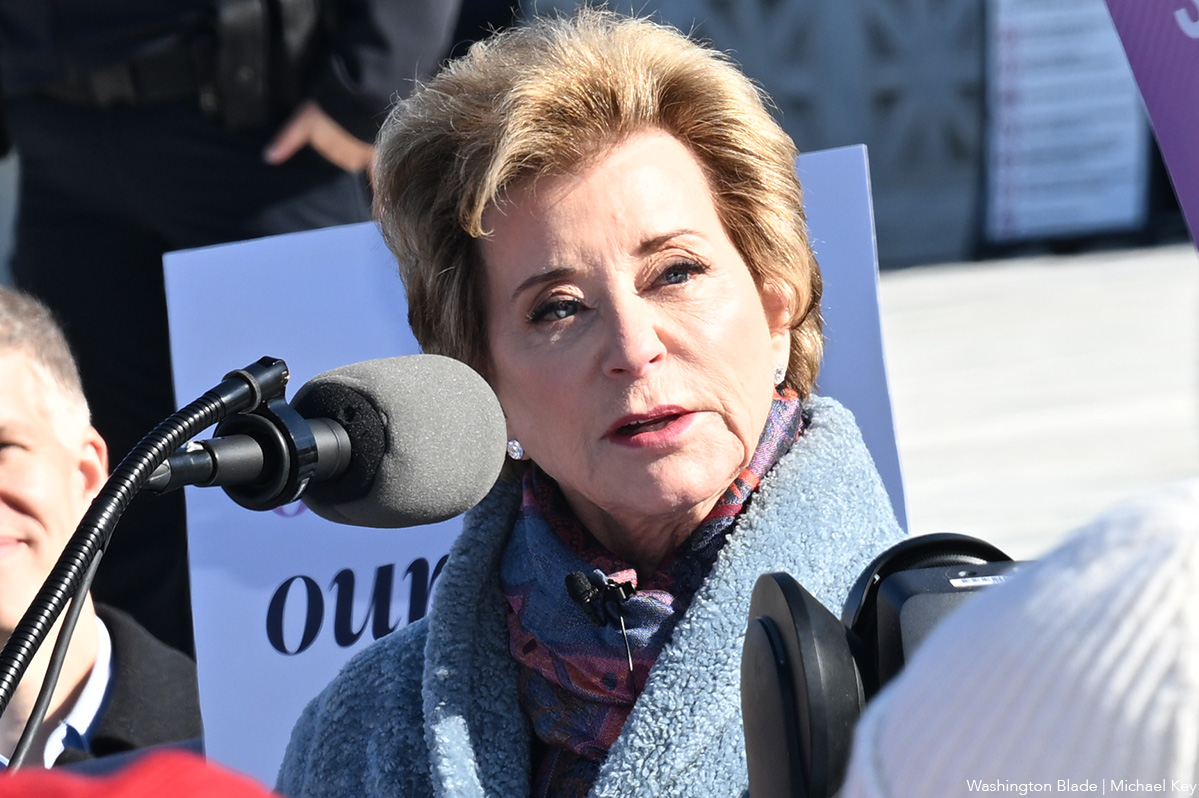
Education Secretary Linda McMahon spoke about the revision of the policy, claiming the decision would explicitly help “women and girls.”
“Thanks to today’s action, the published Title IX regulations faithfully reflect court orders and congressional intent — reducing confusion for parents, students, and educational institutions. We will continue to relentlessly champion equal opportunity for all Americans and hold accountable any school or college that violates the rights, privacy, or athletic opportunities of our women and girls,” McMahon said via press release.
Prior to her work under the Trump-Vance administration, McMahon was a World Wrestling Federation/World Wrestling Entertainment executive before resigning to pursue a career in politics. She was appointed to the Connecticut State Board of Education by then-Gov. Jodi Rell in January 2009, but resigned from her role shortly afterward to run what ultimately became two failed campaigns for Connecticut’s U.S. Senate seat in 2010 and 2012.
A “fact sheet” provided by the Department of Education also called the inclusive sexual assault and gender identity protections expanded under the Biden-Harris unlawful, saying, “This change is necessary to provide clarity in the Code of Federal Regulations so that institutions, administrations, students, and families can see the rules that are actually in force and to help eliminate public confusion about the Biden administration’s unlawful attempt to stretch Title IX’s legal protections to cover ‘sexual orientation’ and ‘gender identity.’”
This is not the first time this policy has faced judicial hurdles. While Biden was still in office, the plan was struck down in multiple courts in Republican states.
Opponents of the move say it will harm transgender athletes and weaken protections for sexual assault victims.
“Sexual harassment and assault continue to be pervasive in schools and, to the fullest extent possible, we should be working to enforce the laws that protect student survivors of sexual violence. Yet, Education Secretary Linda McMahon and the Trump administration have decided to ignore what survivors need, instead weaponizing Title IX to attack trans students,” said Shiwali Patel, senior director of education justice at the National Women’s Law Center.
This is a return to a first Trump term policy after Biden issued an executive order to attempt to curb discrimination for all — especially those with different sexual orientations and gender identities — that had been given a pass during Trump’s first term. Much of Title IX’s policy has a narrow vision of what sex protections look like that often and enthusiastically leave gender-diverse and non-heterosexual people out.
In March 2021, President Joe Biden signed Executive Order 14021, “Guaranteeing an Educational Environment Free From Discrimination on the Basis of Sex, Including Sexual Orientation or Gender Identity,” to attempt to undo some of the flagrantly anti-LGBTQ+ policy the Trump-Pence administration had set forth relating to Title IX protections for LGBTQ+ students and sexual assault survivors.
The secretary focused this “win” for the administration as one more step toward restricting transgender students from competing in women’s sports, but the 2020 rule, completed under former Education Secretary Betsy DeVos, didn’t explicitly ban trans students from participating on sports teams consistent with their gender identity. It did limit the types of sexual harassment and assault complaints that schools had to investigate and required live hearings so male students could respond to accusations.
McMahon didn’t discuss those aspects in her statement or in requests for comment. The 2020 rule drew praise from conservatives and intense opposition from advocates who said it downplayed sexual abuse and left victims unprotected.
In a statement, U.S. Rep. Tim Walberg (R-Mich.), who chairs the House Education Committee, said, “Returning to the 2020 regulations restores longstanding protections for women and girls that the Biden-Harris administration attempted to dismantle and realigns Title IX policy with court precedents.”
LGBTQ+ activists have called this decision a direct attack on LGBTQ+ safety — particularly for trans students who continue to face a barrage of legislative, executive, and judicial attacks in recent years from the Trump-Vance administration.
Kelley Robinson, president of the Human Rights Campaign, the largest LGBTQ+ advocacy group in the world, released a statement following the DoE’s announcement.
“Title IX is, quite simply, about protecting students and ensuring that they are safe from abuse, harassment, and discrimination while they pursue their education. But Donald Trump and his cronies aren’t interested in any of that,” Robinson said. “Donald Trump’s Department of Education has completely lost sight of that mission. Instead of enforcing protections for students, they’re rescinding them. They don’t care if sexual harassment and assault go unaddressed. And they’re happy to strip funding away from school districts and states that are actually trying to keep students safe.
“We know who will be hurt: women, girls, and others who are vulnerable to sexual harassment, assault and abuse — including LGBTQ+ students. The fact that they’re dropping this rule into place abruptly, without a comment period, denying families, educators, loved ones, and the students themselves a say in how they should be treated, shows how little they care about the safety of our students.
“This is a monstrous injustice, and it drives home how essential it is that we take action at the polls this November to start bringing some accountability to an administration that has turned its back on the very students Title IX was written to protect,” she added.
The Los Angeles Blade reached out to the DoE for comment and questions on whether Title IX protections still included LGBTQ+ students, but did not receive an answer.
Netherlands
Dutch prime minister visits Stonewall Inn
Rob Jetten is the Netherlands’ first openly gay prime minister
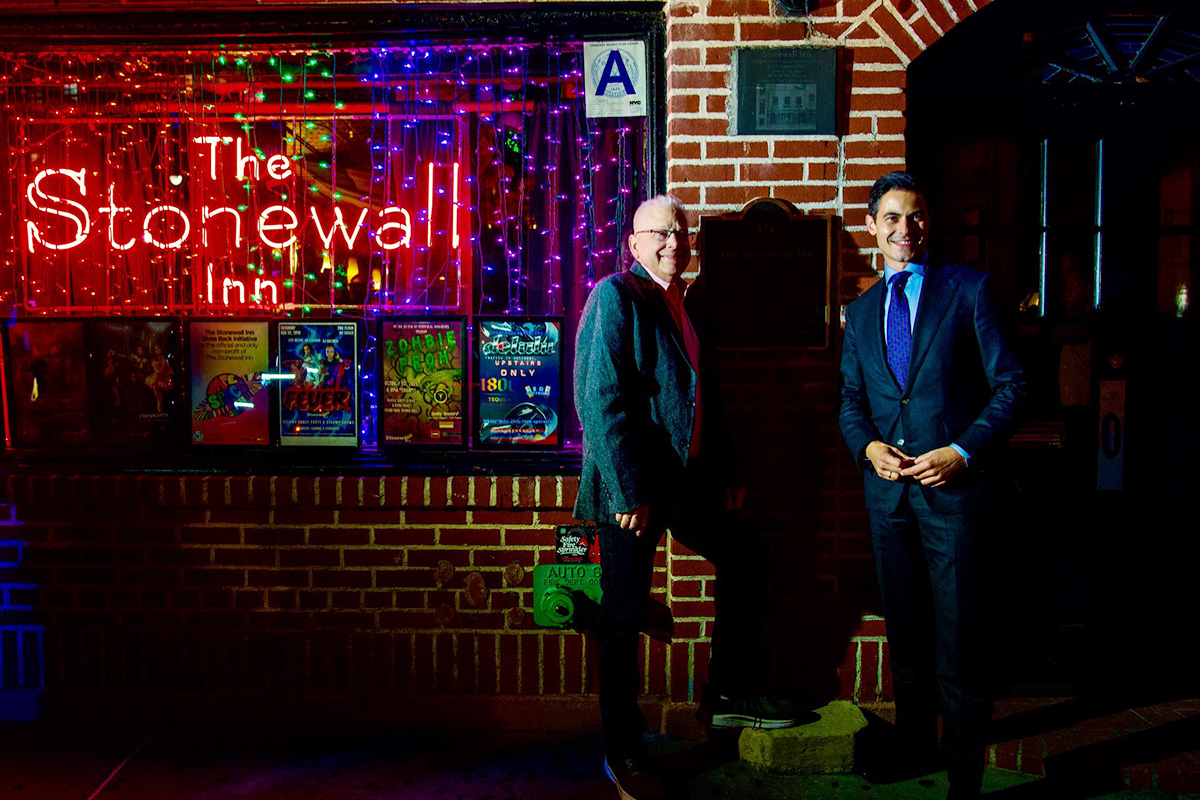
Dutch Prime Minister Rob Jetten on Monday visited the Stonewall Inn in New York.
“The Stonewall Inn is not just a gay bar in New York, but the place where in 1969 riots took place as a reaction to years of discrimination and police violence,” wrote Jetten on X. “This is seen as the starting point of the global LGBTIQ+ emancipation and activism. Nowadays, the bar is a national monument, dedicated to the LGBTIQ+ rights movement.”
“For me, it is impressive and moving to be here tonight. And also fitting, because the defense of human rights is an important part of our foreign policy,” he added. “The Netherlands stands alongside the Stonewall Inn community when it comes to everyone’s right to live openly, safely, and with pride, no matter who you are or who you love.”
De Stonewall Inn is niet zomaar een gay bar in New York, maar de plaats waar in 1969 rellen plaatsvonden als reactie op jarenlange discriminatie en geweld van de politie. Dit wordt gezien als startpunt van de wereldwijde lhbtiq+-emancipatie en activisme. Tegenwoordig is de bar… pic.twitter.com/hJmFYjF91Z
— Rob Jetten (@MinPres) September 23, 2026
Jetten in February became the Netherlands’s first openly gay prime minister.
He opened last month’s World Pride Human Rights Conference in Amsterdam. Jetten also participated in a panel with former Irish Prime Minister Leo Varadkar, former San Marino Captain Regent Paolo Rondelli, and other current and former heads of government who are gay or lesbian.
Jetten is scheduled to speak to the U.N. General Assembly on Thursday.
(Editor’s note: Jetten visited New York’s LGBT Community Center with New York City Mayor Zohran Mamdani before he left the city.)

Lula defeats Flávio Bolsonaro in second round of Brazilian presidential election

LGBTQ+ pioneer Rev. Troy Perry to young people: ‘Don’t be afraid’

With exquisite 4K restoration, ‘The Devils’ finally gets its due

Drag queens go from Send Noodz straight to the polls
Immunology gave HIV survivors the chance to grow old, Proposition 38 is the next step

Here’s your Palm Springs look at the weekend: Oct 23 – 25, 2026

New Zealand High Court strikes down puberty blocker ban

40 years later, AFI Fest continues to offer a robust selection of queer and international films

Allegations involving Ric Grenell raise questions about pay-for-play in White House

A Parvesh perspective: Actor Parvesh Cheena talks his roles in ‘Wives’
-
 Palm Springs3 days ago
Here’s your Palm Springs look at the weekend: Oct 23 – 25, 2026
-
 New Zealand4 days ago
New Zealand High Court strikes down puberty blocker ban
-
 Movies5 days ago
40 years later, AFI Fest continues to offer a robust selection of queer and international films
-
 White House4 days ago
Allegations involving Ric Grenell raise questions about pay-for-play in White House
-
 a&e features4 days ago
A Parvesh perspective: Actor Parvesh Cheena talks his roles in ‘Wives’
-

 Transgender4 days ago
Latin queer and trans history along the U.S.- Mexico border on display at UC Riverside event
-
 opinions3 days ago
Common Sense Isn’t Political
-

 a&e features5 days ago
Actor Kal Penn on the real lesson of ‘Trust Me, I’m a Doctor’
-

 Theater3 days ago
‘WOOF’ worthy: Christopher Schellenger shares the unique challenges of playing a dog
-
Commentary3 days ago
Immunology gave HIV survivors the chance to grow old, Proposition 38 is the next step