
World
Out in the World: LGBTQ+ news from Europe & Asia
LGBTQ+ news and events from Europe and the Middle East including Iran, Russia, Italy, Serbia, England, and Ireland
IRAN
FRANKFURT, Germany – Shadi Amin, the executive director of Germany-based Iranian LGBTQ+ network 6rang (Iranian Lesbian and Transgender Network), grew up in Iran thinking she was “sick” because she’s queer. In a recent interview with PinkNewsUK, Amin reflected on the death of 22-year-old Mahsa Amini for allegedly not wearing a headscarf properly by Iran’s dreaded “morality police.”
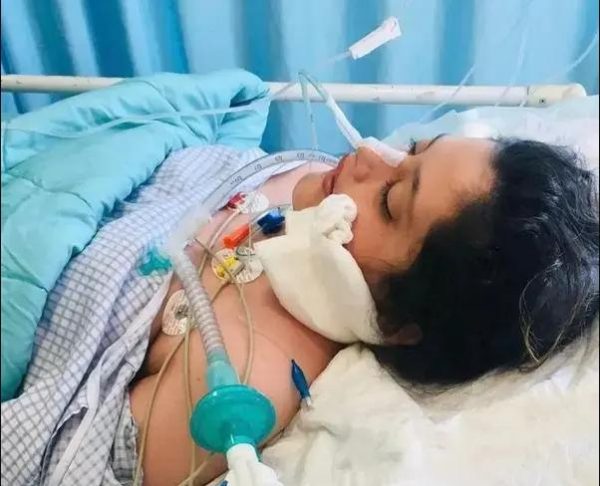
The death of the young Iranian-Kurdish woman on September 16, 2022 touched off massive protests across the Islamic Republic, especially in its capital city of Tehran. But Amin points out that those protests over Amini’s death led to become a rally call to fight for the rights of women, LGBTQ+ folks and other marginalized groups in Iran.
“[LGBTQ+ people] are one of the most active and involved groups in these demonstrations and protests last year … We saw everywhere when there was a demonstration [there was] the rainbow flag, even if sometimes the people didn’t agree with that and they said go back,” Amin told PinkNewsUK.
“They tried to put us out of the demonstration, but I think our LGBTI youth community is really powerful and they try to bring their demands in this movement,” she added.
Over 22,000 people were arrested and hundreds killed, including some who were executed by the Iranian government in an effort to crush dissent through violence.
Read the entire interview here: [Link]
SERBIA
BELGRADE – Earlier this month several hundred LGBTQ+ people and the allies marched in the Serbian capital marking the celebration of a Pride march that was unmarred by violence in this religious conservative Balkan nation.
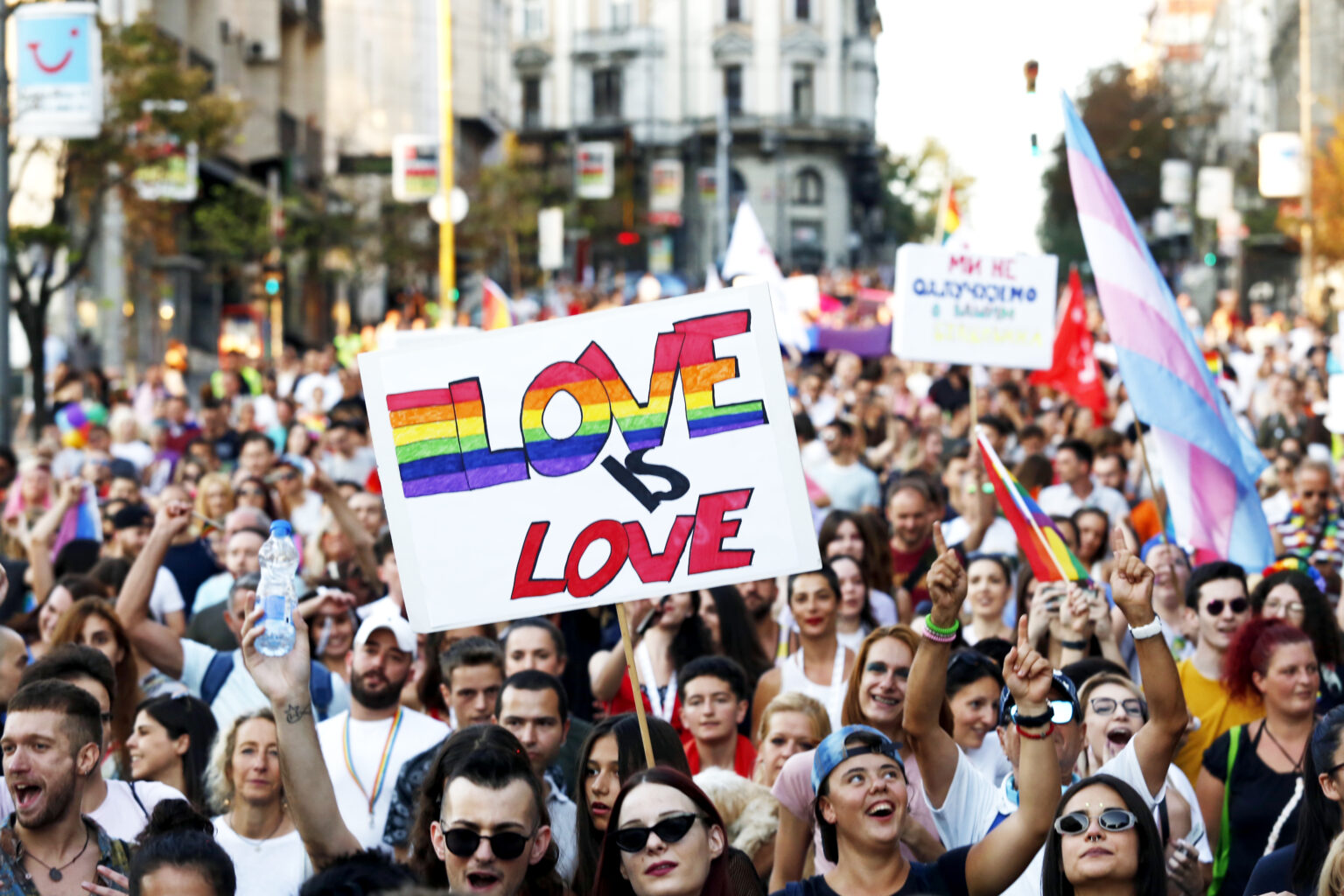
Radio Free Europe noted that in a similar event last year, at least 21 people were arrested in connection with attacks against police, with most of them suspected of being far-right hooligans protesting against the LGBTQ+ pride march.
In 2022, the government of Serbian President Aleksandar Vucic reversed its late August decision to ban the international EuroPride parade event Thursday, Serbian state media reported.
On September 12, officials from EuroPride and Belgrade Pride, commemorated the start of EuroPride 2022 in the Serbian capital city of Belgrade with a ceremonial flag raising. On Friday led by the Dutch Embassy, members of the European Union and other non-EU states issued a joint statement applauding the Serbian government’s roll-back of the ban.
UNITED KINGDOM

MANCHESTER – A 29-year-old man was arrested by Greater Manchester Police in connection with the vandalistic attacks on the Clonezone store on Sackville Street in the heart of Manchester Center. The store is the UK’s first & favorite Queer Superstore.
The suspect also being held on suspicion of 24 motor vehicle thefts and remains in custody for questioning.
Clonezone has been attacked five times this year, with the latest incident on Sunday 10 September 2023 at approximately 2pm. Two men approached the shop on a bike on Sunday and attempted to smash the windows before throwing an object at the doors.
Chief Inspector Steve Wiggins, of GMP’s City Centre Neighbourhood Team, said: “This is the second arrest in connection with this series of disturbing incidents but the investigation is still very much ongoing.
“The attacks are very specific with offenders arriving on bikes and causing significant damage.
“We are keen to find out the motivations behind the attacks and believe that will help us trace those responsible and bring them to justice.
“We have a dedicated team investigating these incidents, so if anybody knows anything about these attacks I would urge them to call police.”
Information can be passed on to police by calling 0161 856 3345 or via 101, or anonymously through Crimestoppers on 0800 555 111.
LONDON- American fast food chain Chick-Fil-A announced its plans to open five new franchise stores around Britain in as yet to be disclosed locations the BBC reported Friday, September 15.
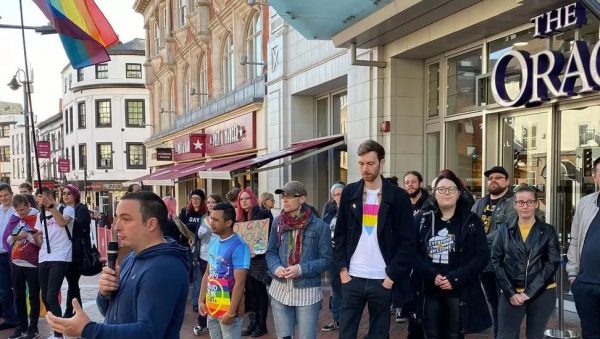
Chick-fil-A had previously launched a pop-up store for a six-month lease in The Oracle shopping center in Reading in 2019, but was met with severe opposition and its lease wasn’t renewed. British LGBTQ+ rights activists protested the College Park, Georgia-based food chain’s donations to groups that have a record of being opposed to LGBTQ+ rights.
During the 2019 protests in Reading, the BBC noted that Reading Pride spokesperson Kirsten Bayes told protesters: “Companies like this have no place here in Reading and they have no place anywhere.
“We are standing in solidarity with campaigners across the United States… for justice and freedom for LGBT people.”
A local elected official, Reading Labour councilor Sarah Hacker said: “We can make sure that they don’t spread their hatred across the UK.”
The fast food chain firm is run by the Cathy family, who have publicly stated their opposition to same-sex marriage and other LGBTQ+ issues. In 2020, the firm softened its stance and shifted its focus, hiring a diversity vice-president. The BBC reported that the company changed its approach to charitable giving, focusing on education and hunger alleviation, moving away from donations directed at anti-LGBTQ organizations, including several of those listed as extremist hate groups by the Southern Poverty Law Center.
“From our earliest days, we’ve worked to positively influence the places we call home and this will be the same for our stores in the UK,” Joanna Symonds, Chick-Fil-A’s head of UK operations told the BBC.
“We encourage our operators to partner with organizations which support and positively impact their local communities, delivering great food and wider benefits to those around them,” she added.
In announcing the new UK investment, the chain highlighted its current charitable work, which include a $25,000 one-off donation to a local non-profit organization when a Chick-fil-A restaurant is opened, and donations of surplus food to local shelters, soup kitchens and food charities. Those policies would apply to its UK branches too, it said.
IRELAND
CORK CITY – The apparent rebranding of a beloved LGBTQ+ bar and safe space and make-over provoked protests by the local queer community.
Irish LGBTQ+ publication GCN reported that in recent weeks, people began to notice a change in the appearance of Chambers Bar, no longer recognizable as an LGBTQ+ space. A new sign had been displayed above the doorway with the name ‘Sinners’ in black and white, a stark contrast to the venue’s once vibrant appearance.
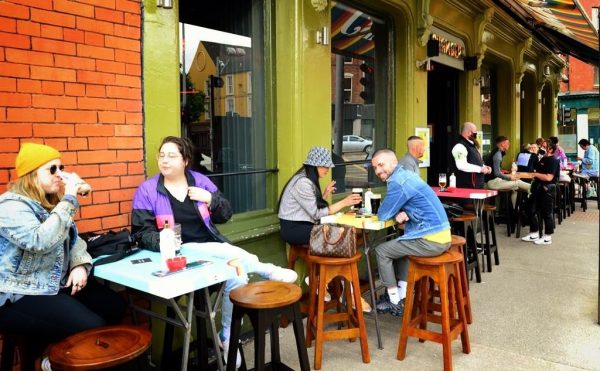
This name is nothing new to people in Cork, as Chambers Bar has been hosting student nights under this name for a number of years. Even so, this year was the first time that, in addition to hosting a student night for ‘Freshers’ Week, all Pride flags, rainbow curtains and posters for upcoming drag shows were also taken down.
However, the catalyst for sparking an onslaught of backlash seems to have come from the cancellation of a weekly drag show. This was to be hosted by Cork drag queen Krystal Queer, who took to Instagram to express her disappointment in a video that now has over 300,000 views.
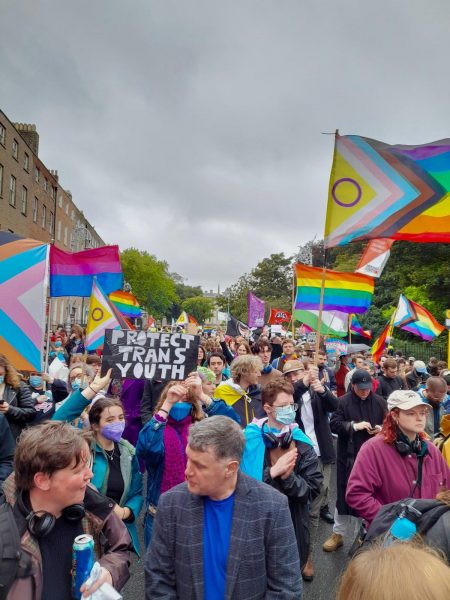
DUBLIN- In stark contrast to the small group of anti-Trans protesters gathered in Dublin to hear anti-LGBTQ+ TERF Kellie-Jay Keen aka Posie Parker speak at her ‘Let Women speak rally’ at Merrion Square, Trans & Intersex Pride Dublin had nearly a thousand supporters turn out to counter demonstrate.
The Irish Times reported that a large Gardai [police] presence was visible in and around the square and metal barriers were erected to create a space between the rival demonstrations.
The counter demo by Trans and Intersex Pride Dublin assembled outside the Dail [ Dáil Éireann is the lower house, and principal chamber, of the Oireachtas the Irish legislature ] on Kildare Street ahead of marching into Merrion Square.
Leading pro trans activist Jenny Maguire told the crowd: “We as queer people are forced into a world that’s not meant for us.
“We do everything we can to force a world that accepts us and that can love us all unapologetically, and it is them that wants to reverse any progress we’ve made so far and pull us back into the Dark Ages.”
ITALY
ROME – Italy’s right-wing Prime Minister Giorgia Meloni has demanded local councils only list biological parents on birth certificates, flinging hundreds of same-sex couples into a legal morass, France 24 News reported Thursday.
Journalist Lara Bullens reported that after same-sex civil unions were legalised in Italy in 2016, and in the absence of any clear legislation on parental rights for same-sex couples, a handful of city councils across the country started listing parents of the same gender on their children’s birth certificate.
This led to a situation of creating a host of ‘ghost parents.’
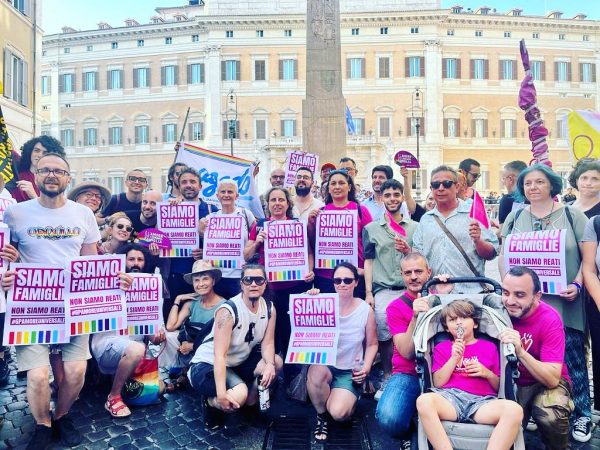
But in recent months, Italy’s right-wing government has been cracking down on city councils to stop listing same-sex parents on birth certificates, France 24 reported. Led by the hardline traditionalist Meloni, the ministry of interior issued a directive in January 2023 instructing Italian mayors to stop automatically registering the births of children conceived or born abroad through assisted reproductive methods.
It cited a case from December 2022, in which Italy’s top court ruled that a child of a gay couple who was conceived through surrogacy abroad shouldn’t have their birth certificate automatically transcribed in Italy.
Though the directive primarily concerned surrogacy, which is banned in Italy and now even a crime for those seeking surrogacy abroad, its interpretation by local councils has disproportionally affected LGBTQ families – including those who resort to other reproductive methods.
Italy’s Minister for the Family Eugenia Roccella told Italian newspaper Corriere della Serra: “In Italy, one becomes a parent in only two ways – either by biological relationship or by adoption,” and urged same-sex parents to follow the adoption procedure.
Currently the support for LGBTQ+ families on this issue is being provided by the LGBTQ+ rights organization, Famiglie Arcobaleno working alongside Rete Lenford, which is committed to advocacy for LGBTI+ rights as an association of lawyers, lawyers, practitioners, scholars , students and people with experience in the issues surrounding LGBTQ+ rights.
Both Rete Lenford and Famiglie Arcobaleno, are representing hundreds of cases of the affected LGBTQ+ families in court.
RUSSIA
(The following article is from Human Rights Watch)
STRASBOURG, France – Last week the European Court of Human Rights handed down a ruling in the case of Maxim Lapunov, the only victim of Chechnya’s vile 2017 anti-gay purge who dared seek justice for the torture he suffered at the hands of local law enforcement.
The court found Lapunov was “detained and subjected to ill-treatment by State agents,” which “amounted to torture” and was perpetrated “solely on account of his sexual orientation.”
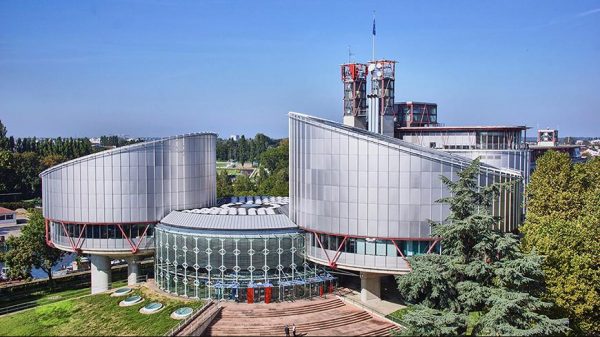
Lapunov took his case to the European Court in May 2019 because the Russian authorities had failed to investigate his assault. Despite great personal risk, Lapunov had been eager to cooperate with Russia’s investigative authorities through the assistance of his persistent lawyers from the Committee Against Torture, a leading Russian human rights group.
Tanya Lokshina, the Associate Director, Europe and Central Asia Division for Human Rights Watch noted:
“I first met Lapunov nearly six years ago, when I moderated a news conference in Moscow at which he publicly told his story for the first time. Lapunov, then 30, described to a roomful of journalists how he had been rounded up and tortured along with dozens of others. His hands shook as he detailed the horrific experience. He stopped several times to regain composure but kept going.”
A Russian from Siberia who had traveled to Chechnya for work, Lapunov did not have to face what every Chechen man caught in the purge feared: being targeted by his own relatives or exposing his entire family to overwhelming stigma because of his homosexuality. His captors threatened to kill him if he spoke out, but he refused to be silent. “We all have rights …,” he said at the news conference. “If we just let it be [in Chechnya],… we’ll never know whose son or daughter will be taken next.”
At the time, Russian authorities claimed they could not investigate the purge because no victims stepped up to testify. When Lapunov provided his staggering testimony, they still failed to investigate. In early 2019, Chechen police rounded up and tortured more men because of their presumed sexual orientation. Realizing they would never get the Russian authorities to do their job and investigate, Lapunov and his legal team filed their complaint with the European Court of Human Rights. Today, they won.
After Russia’s full-scale invasion of Ukraine, Russia lost its Council of Europe membership and there is no hope that the Russian authorities will implement this ruling anytime soon. Yet it sets the record straight. This, I hope, will serve to support all survivors of the purge.
Additional reporting from PinkNewsUK, BBC, Agence France-Presse, GCN Ireland, The Irish Times and Human Rights Watch.
*****************************************************************************************




Colombia
Colombia withdraws from Equal Rights Coalition
International LGBTQ+ group ‘not a priority’ for country’s new government
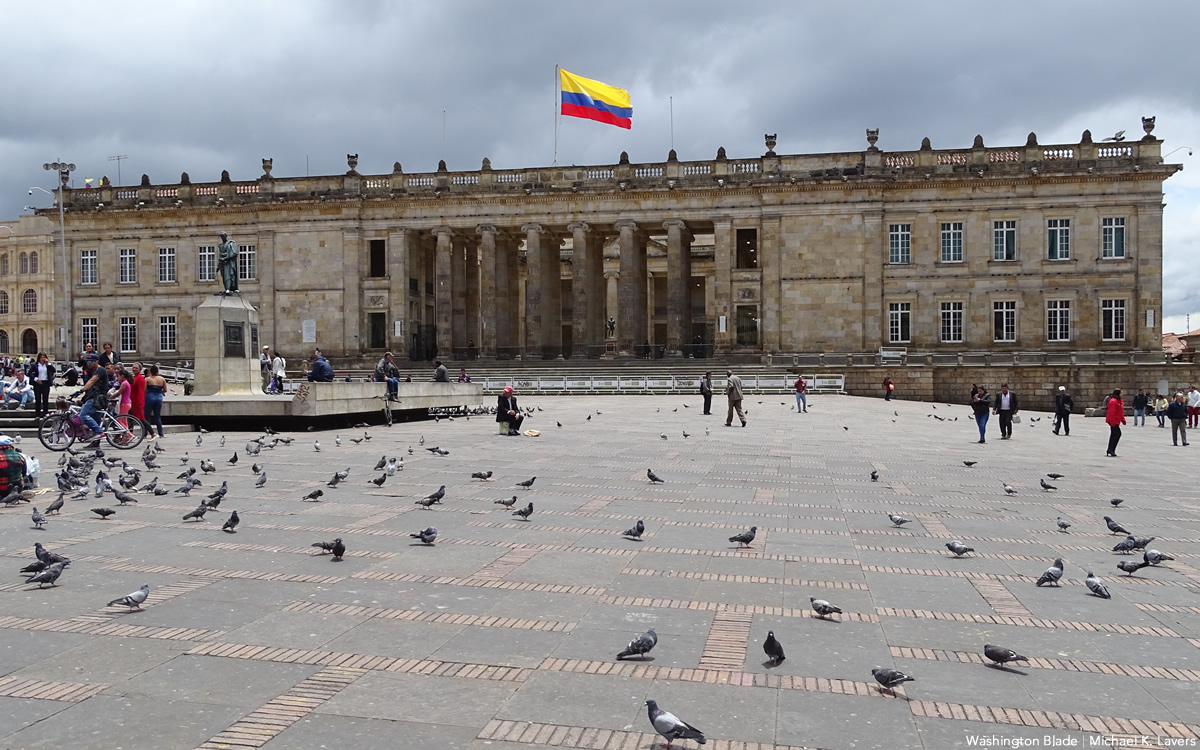
Colombia last week withdrew from a coalition of more than 40 countries that pledges to champion LGBTQ+ and intersex rights.
The Bogotá Post, an English-language news website in the Colombian capital, reported the country officially withdrew from the Equal Rights Coalition on Sept. 17.
The Equal Rights Coalition formed in 2016.
The group’s current members are Albania, Argentina, Australia, Austria, Belgium, Brazil, Canada, Cabo Verde, Chile, Costa Rica, Cyprus, the Czech Republic, Denmark, Ecuador, Estonia, Finland, France, Germany, Greece, Iceland, Ireland, Israel, Italy, Lithuania, Luxembourg, Malta, Mexico, Montenegro, Netherlands, New Zealand, North Macedonia, Norway, Portugal, Serbia, Slovenia, Spain, Sweden, Switzerland, Thailand, Ukraine, the U.K., and Uruguay. Civil society organizations from Colombia and dozens of other countries, including the U.S., work with the Equal Rights Coalition.
Colombia had co-chaired the group alongside Spain.
The decision to withdraw from the Equal Rights Coalition took place less than two months after far-right Colombian President Abelardo de la Espriella took office.
El Páis, a Spanish newspaper, reported Colombian Vice Minister for Consular and Migration Affairs Pedro Agustín Roa said the Equal Rights Coalition “is not a priority” for his government and the country’s participation in it was “something from a previous government.”
Caribe Afirmativo is a Colombian LGBTQ+ advocacy group that works with the Equal Rights Coalition. Wilson Castañeda, its director, criticized his country’s withdrawal from it.
Ecuador
Caso Karlina: Una sentencia histórica contra las terapias de «conversión»
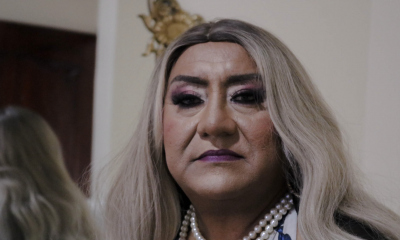
Karlina Quiroz, una mujer trans de Chone, fue internada contra su voluntad
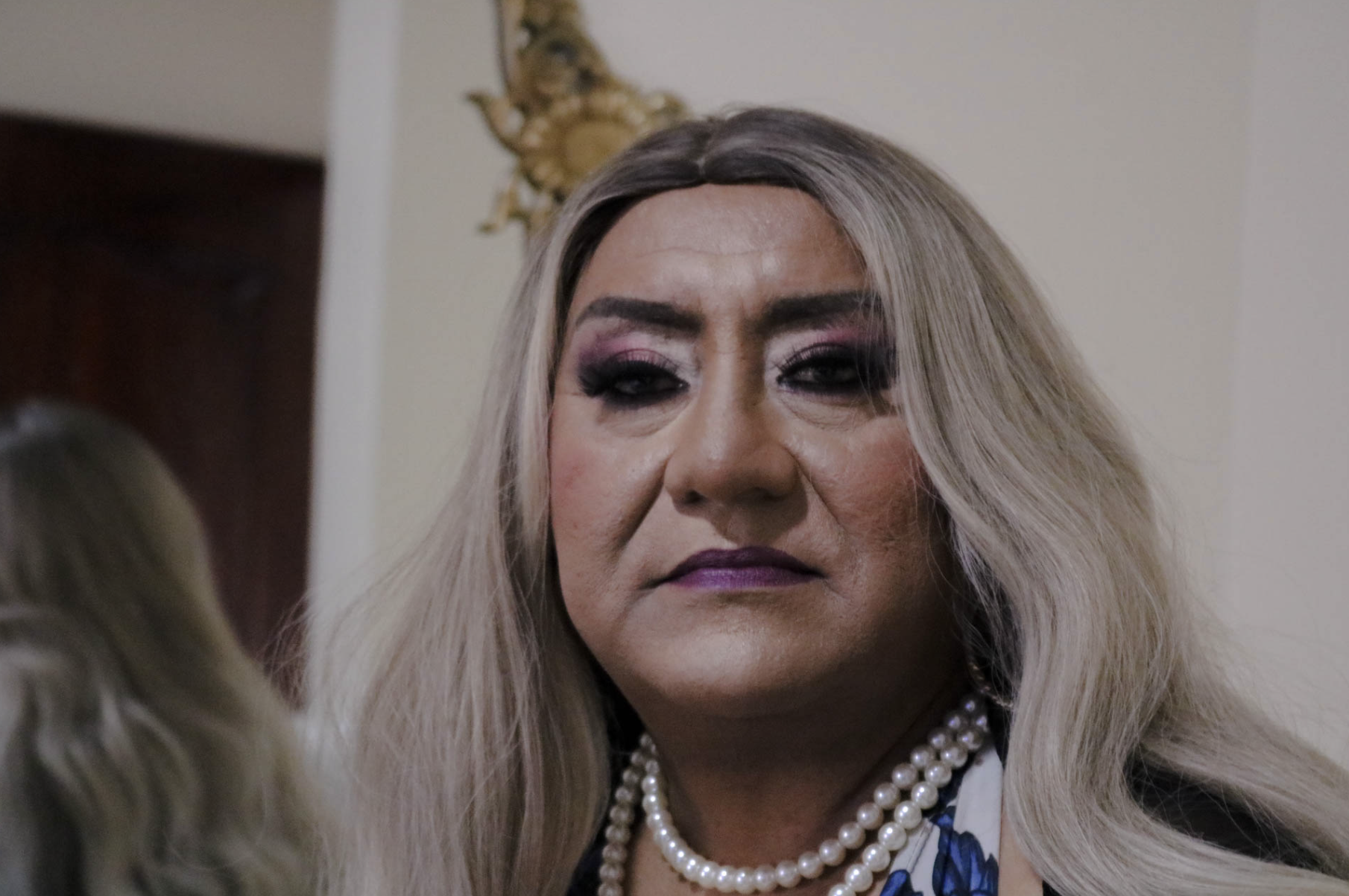
La última vez que Karlina Quiroz, una mujer trans de 57 años, salió sola a la calle en Chone, terminó encerrada contra su voluntad en un centro de rehabilitación donde intentaron “corregir” su identidad de género mediante humillaciones, amenazas y agresiones.
Han pasado cinco años desde ese episodio, ocurrido en 2021; y el 11 de septiembre de 2026 Karlina por fin obtuvo justicia.
La Fiscalía informó, el 14 de septiembre, que el Tribunal de Garantías Penales de Chone sentenció a seis personas por actos de odio contra Karlina, al ser víctima de violencia basada en su identidad de género.
Entre los seis sentenciados están sus dos hermanos, que —según la denuncia de Karlina— ordenaron su encierro a este centro.
El caso de Karlina refleja el odio y la violencia hacia personas trans en Ecuador y vuelve a poner bajo la lupa la existencia de centros conocidos como clínicas de “deshomosexualización” o espacios de “terapias de conversión”.
De acuerdo con la denuncia presentada por Karlina, en julio de 2021 fue interceptada por varios hombres y trasladada contra su voluntad a un centro para el tratamiento de adicciones ubicado en Chone, Manabí, en la vía a Pedernales. Allí permaneció retenida y sometida a tratos degradantes, violencia psicológica y agresiones físicas.
Según su testimonio, durante el encierro recibió insultos relacionados con su identidad de género y amenazas orientadas a “modificarla”.
Karlina denunció, además, que esta no habría sido la primera vez. Según su relato, en 2019 permaneció aproximadamente tres meses internada de manera forzada en otro centro de rehabilitación, también ubicado en la vía a Pedernales, en Chone. Durante ese período habría sido sometida a dinámicas similares de aislamiento, control y presiones dirigidas a modificar su identidad y expresión de género.
Según información de la Fiscalía, en septiembre de 2021, como parte de las diligencias investigativas, se allanó el centro clandestino en Chone. Allí se recabaron indicios relacionados con el internamiento forzoso de Karlina durante tres meses.
Con esos y otros elementos de convicción obtenidos durante la investigación, la Fiscalía inició un proceso penal contra las seis personas, quienes fueron luego llamadas a juicio.
El proceso, explicó Karlina, incluyó los dos casos: el de 2019 y 2021. “El crimen se investigó desde que comenzó la primera gota de sangre”, señaló Karlina, en alusión a la violencia física que sufrió en su primer encierro.
De los seis sentenciados, tres fueron condenados como autores directos a cuatro años de pena privativa de libertad. Se trata de los dos hermanos de Karlina y un sobrino, por ordenar su encierro al centro de adicciones.
Los otros tres recibieron una pena de dos años, como cómplices.
De acuerdo con Karlina, uno de ellos es el director del primer centro al que fue ingresada contra su voluntad en 2019 por tres meses, y los otros dos son quienes la interceptaron la segunda ocasión, en julio de 2021, para llevarla al centro. Ella los señala como “capturadores” de las personas que son recluidas en los centros.
“Cuando recibí la noticia (el viernes 11 de septiembre durante la audiencia de juzgamiento) no podía creerlo. Las piernas me temblaron y las lágrimas se me salieron. Estoy tranquila y satisfecha”, señaló Karlina en una llamada telefónica.
Para Pedro Gutiérrez, abogado especialista en derechos humanos, la sentencia es importante no solo por reconocer un delito de odio, sino también por las características de los hechos: el ingreso (por orden de sus hermanos) a un centro de “deshomosexualización” en el que se cometen actos de tortura y violencia física.
Durante la audiencia, constó el testimonio de Karlina. La Fiscalía también presentó el informe de reconocimiento del lugar de los hechos, la inspección ocular técnica, el levantamiento de evidencias y los testimonios de personas que confirmaron que los actos de violencia por perjuicio hacia su identidad de género fueron ejecutados de manera reiterada por los ahora sentenciados.
El caso volvió a poner la atención sobre las llamadas terapias de conversión en Ecuador, prácticas ampliamente cuestionadas por organismos internacionales de derechos humanos y señaladas como formas de tortura o violencia psicológica. Aunque el Estado ecuatoriano ha realizado operativos y clausuras de algunos centros en los últimos años, organizaciones sociales sostienen que estos espacios continúan funcionando de manera clandestina o bajo otras denominaciones.
La legislación ecuatoriana penaliza los actos de tortura con la intención de modificar la orientación sexual o identidad de género, pero no existe una sanción contra los centros que ofrecen las denominadas terapias de conversión.
En 2020, la Asamblea aprobó el Código Orgánico de Salud y una de sus disposiciones fue prohibir expresamente este tipo de terapias, pero fue vetado totalmente por el expresidente Lenín Moreno en medio de una campaña de sectores antiderechos.
La sentencia también dispuso, como reparación integral a favor de Karlina, tratamiento psicológico e indemnizaciones por daños materiales e inmateriales.
Gutiérrez considera que la reparación para Karlina es limitada, pues -por ejemplo- no hay llamados de atención al Ministerio de Salud o disculpas públicas a la víctima.
“Mi nombre es Ariel Karlina Zambrano, soy una mujer trans de Chone, Manabí. Desde niña supe que quería ser mujer, quería ser bonita, libre. Pero mi familia nunca lo aceptó. Mis hermanos y mi padre, profundamente machistas, me maltrataban constantemente”, contó Karlina en un testimonio en 2025 que recogió el Comité Permanente por la Defensa de los Derechos Humanos (CDH).
Para activistas y defensores de derechos humanos, el caso de Karlina evidencia además un patrón de violencia que suele permanecer oculto dentro de círculos familiares, religiosos y comunitarios. En muchos casos, explican, los internamientos forzados son promovidos bajo la idea de “corregir” orientaciones sexuales o identidades de género consideradas inaceptables.
Karlina intentó vivir en Chone, creyendo que con la denuncia y las medidas cautelares estaba a salvo, pero su hermano le pagaba a personas para que la acosaran, según su relato. Por ello, tuvo que esconderse por meses.
Las personas trans en Ecuador enfrentan altos niveles de discriminación, violencia y exclusión social, especialmente fuera de las grandes ciudades. Según la Encuesta Nacional sobre las Condiciones de Vida de la Población LGBTI+ del INEC, el 53,5 por ciento de las personas LGBTQ+ mayores de 18 años en el país ha sufrido algún tipo de discriminación o violencia a lo largo de su vida, siendo el entorno familiar uno de los principales espacios de agresión.
En materia de violencia letal, organizaciones como Asociación Silueta X y el Observatorio Runa Sipiy documentaron 30 asesinatos de personas LGBTQ+ y transfemicidios en Ecuador durante 2025. De esos casos, alrededor del 70 por ciento corresponden a mujeres trans, lo que las posiciona como el grupo más expuesto a crímenes de odio y violencia extrema.
Diversas organizaciones de derechos humanos han advertido además sobre la persistencia de centros de “deshomosexualización” o internamientos forzosos, prácticas denunciadas desde hace más de una década en Ecuador pese a prohibiciones estatales y operativos de control insuficientes.
El caso de Karlina pone a prueba algo más grande que una sentencia individual: si Ecuador está dispuesto o no a reconocer que estas prácticas siguen existiendo y que la violencia contra personas LGBTQ+ continúa ocurriendo, muchas veces con la complicidad o el silencio de sus propios entornos familiares.
“Con mi caso, debe quedar un precedente. Debemos luchar contra el odio que podemos encontrarlo dentro de nuestras propias familias. Por nuestra libertad y derechos, debemos luchar”, indicó Karlina.
Netherlands
Dutch prime minister visits Stonewall Inn
Rob Jetten is the Netherlands’ first openly gay prime minister
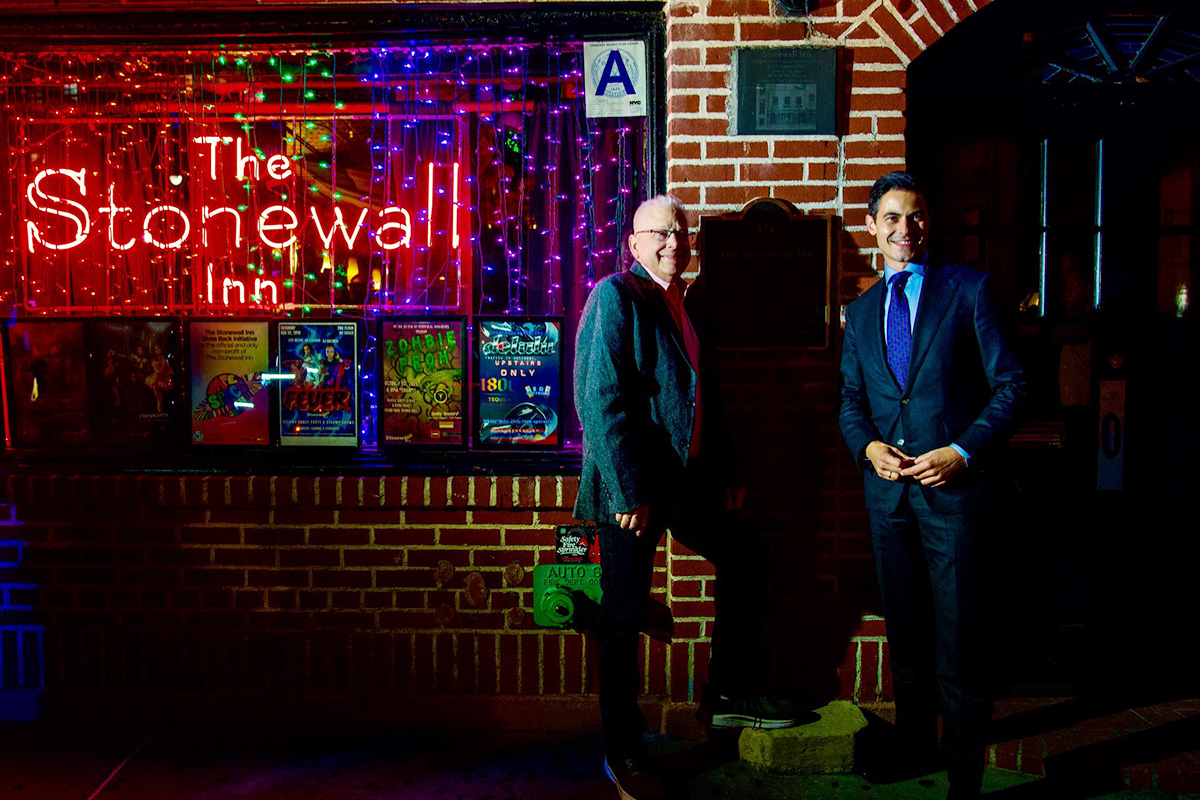
Dutch Prime Minister Rob Jetten on Monday visited the Stonewall Inn in New York.
“The Stonewall Inn is not just a gay bar in New York, but the place where in 1969 riots took place as a reaction to years of discrimination and police violence,” wrote Jetten on X. “This is seen as the starting point of the global LGBTIQ+ emancipation and activism. Nowadays, the bar is a national monument, dedicated to the LGBTIQ+ rights movement.”
“For me, it is impressive and moving to be here tonight. And also fitting, because the defense of human rights is an important part of our foreign policy,” he added. “The Netherlands stands alongside the Stonewall Inn community when it comes to everyone’s right to live openly, safely, and with pride, no matter who you are or who you love.”
De Stonewall Inn is niet zomaar een gay bar in New York, maar de plaats waar in 1969 rellen plaatsvonden als reactie op jarenlange discriminatie en geweld van de politie. Dit wordt gezien als startpunt van de wereldwijde lhbtiq+-emancipatie en activisme. Tegenwoordig is de bar… pic.twitter.com/hJmFYjF91Z
— Rob Jetten (@MinPres) September 23, 2026
Jetten in February became the Netherlands’s first openly gay prime minister.
He opened last month’s World Pride Human Rights Conference in Amsterdam. Jetten also participated in a panel with former Irish Prime Minister Leo Varadkar, former San Marino Captain Regent Paolo Rondelli, and other current and former heads of government who are gay or lesbian.
Jetten is scheduled to speak to the U.N. General Assembly on Thursday.
(Editor’s note: Jetten visited New York’s LGBT Community Center with New York City Mayor Zohran Mamdani before he left the city.)
Fiji
Spike in HIV cases prompts Fiji to declare national emergency
Country recorded 2,016 new diagnoses in 2025
Fiji, a small Pacific island nation, on Sept. 15 declared a national emergency as it confronted one of the sharpest increases in new HIV infections globally.
The surge had been building for years, prompting the government to begin intensifying its response two years before the emergency declaration.
In 2024, the government adopted a four-year HIV Surge Strategy, covering 2024 through 2027, and later put in place a national plan to respond to the outbreak. UNAIDS and the World Health Organization have supported that effort.
The scale of the crisis is stark.
An estimated 9,100 people were living with HIV in Fiji in 2025, according to UNAIDS — a 12-fold increase from 2010. HIV has no cure, but effective treatment can suppress the virus, allowing people living with HIV to live long, healthy lives, and preventing sexual transmission when the virus remains undetectable.
In announcing the emergency, Health and Medical Services Minister Ratu Atonio Lalabalavu said the country recorded 2,016 new HIV diagnoses in 2025, the highest annual total on record. He called the figures a sign of the “seriousness of the epidemic and the urgent, coordinated response our country now needs.”
The crisis is also affecting children.
Save the Children Fiji said this week that a two-month-old baby is currently the youngest patient in the country living with both HIV and tuberculosis. The organization said 59 babies acquired HIV through mother-to-child transmission in 2025, while 67 new HIV cases were recorded among children under 15.
Five years ago, about one in every 167 people in Fiji was estimated to be living with HIV, according to government figures cited by the Associated Press. Since then, Fiji has also emerged as an important transit point in the regional drug trade, with international criminal networks moving narcotics from Latin America and Asia toward markets including Australia and New Zealand. Some of those drugs are also reaching Fiji’s domestic market, where injecting drug use has become an increasingly important route of HIV transmission.
Sexual transmission has continued to fuel the outbreak, with health officials pointing to inconsistent condom use and gaps in HIV testing. Stigma and misinformation have made the problem harder to confront, according to UNAIDS Pacific adviser Renata Ram, who has warned that limited knowledge about HIV can discourage people from seeking testing and care.
In a statement to the Los Angeles Blade, Eamonn Murphy, UNAIDS’ regional director for Asia and the Pacific and Eastern Europe and Central Asia, cautioned against viewing Fiji’s epidemic through the lens of a single behavior or community. Among cases where the mode of transmission is known, he said, more than half are linked to sexual transmission and more than 42 percent to injecting drug use.
“The rise in infections among women and infants also shows that HIV has reached more widely across society,” Murphy said. “What stands out is how quickly the epidemic changed compared with the pace of the response. Access to PrEP and harm reduction remained limited, Fiji did not yet have a needle and syringe programme, and stigma and policy barriers continued to keep some people away from services.”
Murphy noted only 39 percent of people with HIV in Fiji knew their status in 2025, and only 22 percent of them were receiving treatment. He also pointed out a wider system-level problem.
“COVID-19 and the years that followed disrupted services, shifted attention and resources, and left community-led outreach operating below the scale that was increasingly needed,” said Murphy. “The epidemic moved faster than the response.”
Murphy said the immediate challenge is to bring HIV prevention and treatment closer together and make both easier to access at scale. He said PrEP, condoms, testing and harm reduction — including Fiji’s planned needle and syringe program — need to reach people earlier. At the same time, people diagnosed with HIV need a clear path into same-day treatment, care and support that helps them remain in treatment.
The tool at the center of the harm-reduction debate is hardly new.
Needle and syringe programs provide people who inject drugs with sterile equipment, helping them avoid sharing needles and reducing the risk of HIV and other blood-borne infections. Decades of evidence have found that NSPs reduce HIV transmission without increasing drug use, and WHO describes them as a proven and cost-effective public health intervention. Such programs operate in more than 90 countries worldwide. Yet Fiji, even as injecting drug use has become an increasingly important route of HIV transmission, is only now moving toward introducing one.
“Trust is just as important as access,” Murphy told the Blade. “People most affected by HIV are more likely to use services when they are confidential, respectful and connected to organisations they already know. Community groups and peer workers are increasingly part of Fiji’s response, including the rollout of free PrEP, and that closer link with the health system can make a real difference.”
“As UNAIDS has stated, the national crisis declaration is ‘a call for action, not fear,’” he added. “Fiji has the tools to change the trajectory; the priority now is to turn political commitment into rapid, coordinated action that reaches people at scale. The UN Joint Team is working to support the national response.”
Joeli Colati, executive director of Fiji Network Plus, a nongovernmental support and advocacy network established by and for people living with HIV, told the Blade that HIV affects people in ways that extend far beyond their health. Some people are afraid to get tested because they fear being judged or worry that others will discover their HIV status. Others fear the consequences for their families, jobs and relationships, as well as stigma and gossip. For LGBTQ+ people and other vulnerable populations, Colati said, those fears can be even harder to navigate because some already face discrimination. When people do not feel safe, he said, they may avoid testing, treatment and other HIV services.
Fiji does not have a reliable national count of its broader LGBTQ+ population.
UNAIDS estimates that about 16,000 men who have sex with men and transgender people live in the country, though that figure should not be treated as an estimate of the entire LGBTQ+ community.
“We are also seeing a lot of HIV misinformation, especially on social media. This includes people sharing wrong information about how HIV is spread, how it is treated, and what it means to live with HIV,” said Colati. “Another serious concern is the increase in herbal healers claiming they can cure HIV. There is currently no cure for HIV. These claims can be dangerous if they make people stop or delay their HIV treatment. Herbal medicine should never be promoted as a replacement for antiretroviral therapy (ART).”
Colati said HIV peer counselors and NGO outreach workers are helping people at the community level, from supporting those newly diagnosed and helping them stay in care to reaching people who may not visit clinics, providing accurate information and connecting them with testing and treatment. He said people are often more comfortable seeking help from someone who understands what they are going through.
“As someone living with HIV myself for 19 years, I know that a person who is newly diagnosed needs more than medicine. They also need support, correct information and hope. With treatment, people living with HIV can live long and healthy lives,” Colati said. “We also need people to understand undetectable equals untransmittable, or U=U: when a person living with HIV takes treatment and maintains an undetectable viral load, they do not sexually transmit HIV. That is both a prevention message and a powerful message against stigma. Fiji Network Plus, the national network for people living with HIV, reinforced this message in our response to Fiji’s national HIV crisis.”
Asaeli Sinusetaki, acting chief executive of Rainbow Pride Foundation, an LGBTQ+ advocacy group based in Suva, the Fijian capital, in a statement to the Blade said the organization welcomed the government’s declaration because it showed officials now recognized the seriousness of the situation.
“It is unfortunate that it took this long to respond, because the warning signs were always there,” Sinusetaki added.
“For LGBTQ+ people, experiences can differ depending on how comfortable they are accessing services,” Sinusetaki said. “At the same time, LGBTQ+ communities in Fiji have been one of the driving forces behind prevention efforts. Yes, accessing services independently can be a challenge because of fear, particularly stigma and discrimination. But because many LGBTQ people are also part of the Peer Outreach Worker network, they have established trust within their communities and networks to help people access information and services.”
Sinusetaki said access to HIV testing remains a major challenge, with testing unavailable at many local health centers, forcing some people to travel to sexual and reproductive health clinics or hospitals. He said that can be a significant barrier in a country where people often do not seek medical care unless they are already sick, making it unlikely that someone would make a separate trip simply to get an HIV test.
“The emergency has also highlighted that HIV cannot be treated as a stand-alone issue,” said Sinusetaki. “LGBTQ people need access to a broader package of sexual and reproductive health services, STI screening and treatment, mental health and psychosocial support, prevention information, condoms and lubricants, PrEP and PEP and, where relevant, harm-reduction services.”
“For people who receive a positive diagnosis, the challenge does not end with testing,” Sinusetaki added. “We need to ensure that they are linked rapidly to treatment, supported to remain in care and treated with dignity throughout that journey.
The Blade reached out to Lalabalavu multiple times for comment, but did not receive a response.
United Nations
UN human rights chief sounds alarm over ‘comprehensive onslaught’ against LGBTQ+ rights
Volker Türk on Monday spoke at UN LGBTI Core Group event
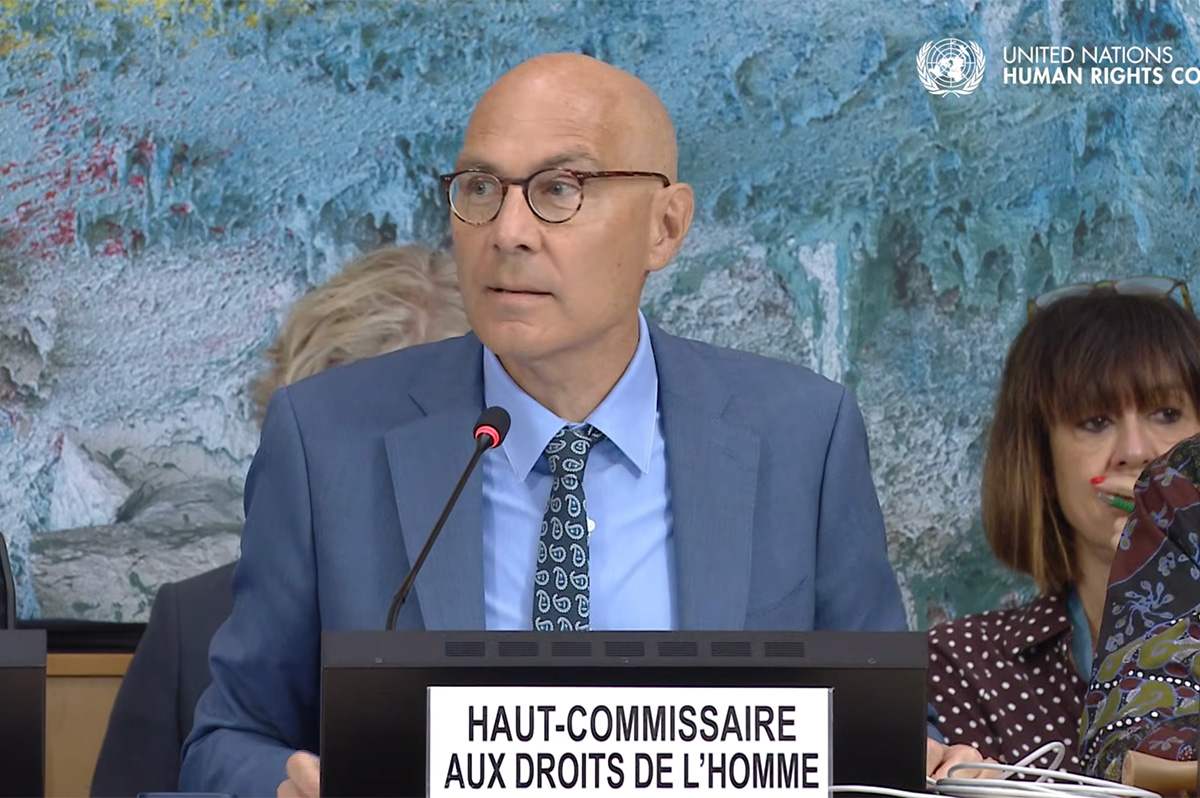
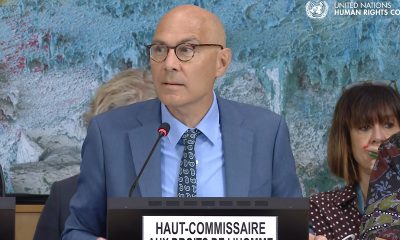
UNITED NATIONS — U.N. High Commissioner for Human Rights Volker Türk on Monday said there is a “comprehensive onslaught” against LGBTQ+ and intersex rights around the world.
“We know that progress for human rights has never been linear … but today’s backlash is deep and it is coordinated and the persecution of LGBTIQ+ people around the world is escalating at an alarming rate,” he said during an U.N. LGBTI Core Group event that took place on the sidelines of the U.N. General Assembly.
The Core Group is a group of U.N. member states that have pledged to support LGBTQ+ and intersex rights.
Mexico and Norway are the current co-chairs. The U.S. withdrew from the Core Group shortly after the Trump-Vance administration took office in 2025.
“We know that across every region, LGBTIQ+ people continue to live and to love in the face of hostility and exclusion,” said Türk. “Their rights, safety, well-being are under attack … it’s a comprehensive onslaught.”
The event took place days after Turkish authorities carried out raids in Istanbul and in other cities across the country that targeted the country’s LGBTQ+ community.
Türk in his remarks specifically referenced Turkey and Senegal, which further criminalized consensual same-sex sexual relations earlier this year. He also noted some countries have deemed LGBTQ+ and intersex rights groups as “terrorists, extremists, or national security threats.”
The Trump-Vance administration’s anti-terrorism strategy that it released in May specifically references “radically pro-transgender” groups.
Türk noted “more and more candidates and political parties … use bigotry in order to promote anti-LGBTIQ+ sentiments” during election campaigns. He pointed out trans people and women are often targeted.
“These attacks are designed to confuse and to distract,” said Türk. “They cloak bigotry in the language of decency and morality. They evoke the protection of children against manufactured threats, while real and growing dangers to children’s lives and futures, including those linked to technology, to inequality and to the climate disaster remain unaddressed.”
“More broadly those who seek to erase difference and independent thought, expression, and voices from our societies often begin this by erasing LGBTIQ+ people from books and classrooms, from film and culture and from our streets,” he added. “So, this is always the beginning. It’s a wedge issue that unfortunately is used politically to erase other portions of society eventually.”
90 percent of LGBTQ+, intersex groups have lost funding since 2025
The event took place less than two weeks after Outright International released a report that found 90 percent of LGBTQ+ and intersex rights groups around the world have lost funding since January 2025.
The Trump-Vance administration froze nearly all U.S. foreign aid shortly after it took office.
Secretary of State Marco Rubio in March 2025 announced 83 percent of U.S. Agency for International Development contacts had been cancelled, and the State Department would administer the remaining programs. USAID officially shut down on July 1, 2025.
Rubio issued a waiver that allowed PEPFAR and other “life-saving humanitarian assistance” programs to continue to operate during the funding freeze. The Los Angeles Blade has previously reported PEPFAR-funded programs in Kenya and other African countries have been forced to suspend services and even shut down because of gaps in U.S. funding.
Dutch Foreign Trade and Development Cooperation Minister Sjoerd Sjoerdsma in his remarks at the Core Group event noted his government — openly gay Prime Minister Rob Jetten took office in February — will pledge €50 million ($57.29 million) to support LGBTQ+ groups around the world. British Under Secretary of State Chris Elmore pointed out his government has pledged £21 million ($28.05) from 2026-2029 to bolster LGBTQ+ and intersex rights around the world.
“Equality benefits everyone,” said Elmore.
Mexican Foreign Affairs Secretary Roberto Velasco Álvarez, Norwegian International Development Minister Åsmund Aukrust, Icelandic Foreign Affairs Minister Þorgerður Katrín Gunnarsdóttir, Maltese Foreign and European Affairs Minister Chris Fearne, Brazil’s National Secretary for the Promotion and Defense of the Rights of LGBTQIA+ People Symmy Larrat, Irish State Minister for International Development and Diaspora Neale Richmond, South African Department of International Relations and Cooperation Director-General Zane Dangor, Uruguayan Multilateral Affairs Director María Noel Beretta, French Ambassador-at-Large for Human Rights Isabelle Rome, Cabo Verdean Permanent U.N. Representative Tania Romualdo, Estonian Department of International Organizations and Human Rights Director General Käthlin Saluveer, and Swedish International Development Cooperation Director-General Camilla Nevstad Bruzelius also spoke at the event that Outright International Executive Director Maria Sjödin moderated.
Other speakers included Jon Tilli of Deutsche Bank, UN Women Civil Society Division Director Lopa Banerjee and two activists: Gloria Quaye of Ghana and Nhuun Wannapong Yodmuang of Thailand.
Quaye was among the 21 people who Ghanaian authorities arrested in 2021 during a human rights workshop for LGBTQ+ activists. She was detained for three weeks until a court dropped the charges.
“In times of adversity, countries can often be tempted to turn inward at precisely the moment when international cooperation is needed the most,” said Sjödin. “The United Nations, of course, brings together sovereign states, but sovereignty cannot be used to decide whose rights count.”
Then-first lady Jill Biden in 2024 spoke at a Core Group event that took place on the sidelines of that year’s U.N. General Assembly. Then-Vice President Joe Biden in 2016 headlined the Core Group event that coincided with that year’s U.N. General Assembly.
The U.S. did not send any representatives to this year’s event.
Jessica Stern, the former special U.S. envoy for the promotion of LGBTQ+ and intersex rights under the Biden-Harris administration, and former U.S. Ambassador to Bosnia and Herzegovina Eric Nelson were among those from the U.S. who attended.
“The movement for the equal rights of LGBTIQ+ people has much to teach the world, particularly at this moment, but some seek to erase or reject those lessons,” said Türk. “The history of the movement for the equal rights is full of courage, dignity, and solidarity and it is an integral part of the human rights movement.”
“It’s not something separate; it’s an integral part of the full human rights movement,” he added. “In claiming their freedom, the LGBTIQ+ communities helped free our societies. We need to see it as a broader strive for freedom.”
Turkey
More than 150 people detained outside Istanbul courthouse
Protesters gathered after raids targeted Turkey’s LGBTQ+ community
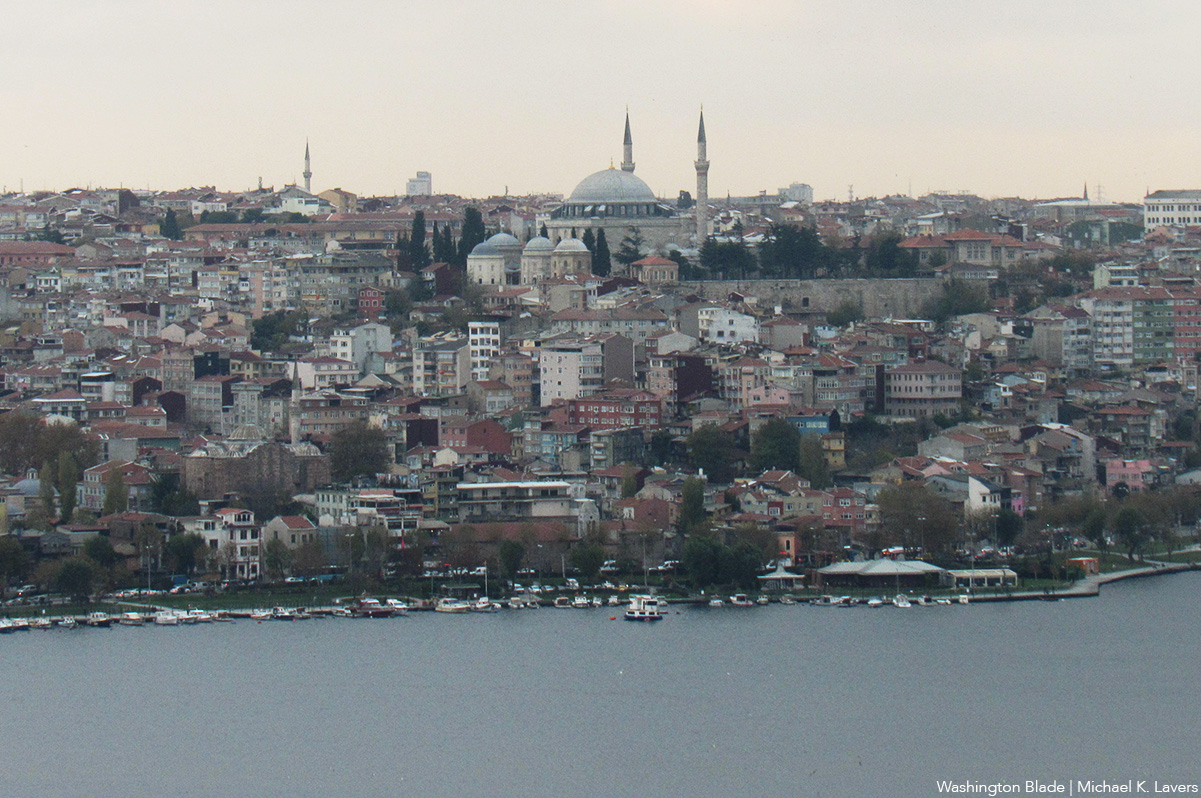
Turkish authorities on Tuesday detained more than 150 people who gathered outside an Istanbul courthouse to protest raids that targeted the country’s LGBTQ+ community.
CNN reported the protesters had planned to speak with reporters outside the city’s Caglayan courthouse, but authorities prevented them from doing so.
Turkish authorities over the weekend detained dozens of people in Istanbul and in other cities during raids that were part of the government’s “My Family is Safe” campaign.
A statement from a group of Turkish advocacy groups the Washington Blade received on Tuesday notes “at least 112 people have been detained in connection with the operations.” The organizations said 43 of those taken into custody are “LGBTI+ rights defenders,” and “at least” 62 of those detained “have been arrested, while judicial proceedings remain ongoing in Istanbul.”
“Among those arrested, at least 16 are LGBTI+ activists or individuals connected to LGBTI+ associations, including founders and members of association bodies,” reads the statement. “Per press statements by the prosecutor’s offices, dissolution cases will also be launched against associations.”
“The majority of those arrested are trans women who are charged with prostitution-related offences,” it adds. “While authorities have framed the operations as part of investigations into alleged crimes such as obscenity, prostitution and child exploitation, human rights defenders and civil society organizations have raised serious concerns regarding the use of criminal law mechanisms and public morality narratives to target legitimate LGBTI+ rights activities. Civil society views the ‘My Family is Safe’ narrative as a smokescreen to distract the public from deep economic crises and actual domestic violence, weaponizing moral panic to scapegoat LGBTI+ rights defenders, who have long been targeted by the government.”
The raids have sparked outrage among LGBTQ+ activists in Europe and elsewhere around the world.
The Congressional Equality Caucus and U.S. Rep. Carlos Giménez (R-Fla.) are among those who have publicly condemned them in the U.S. The Council for Global Equality on Friday is scheduled to hold a rally in support of Turkey’s LGBTQ+ community in front of the Turkish Embassy in Washington.
India
Indonesia’s top Muslim clerical body proposes criminalizing LGBTQ+ people, advocacy
Proposal underscores increased pressure against community
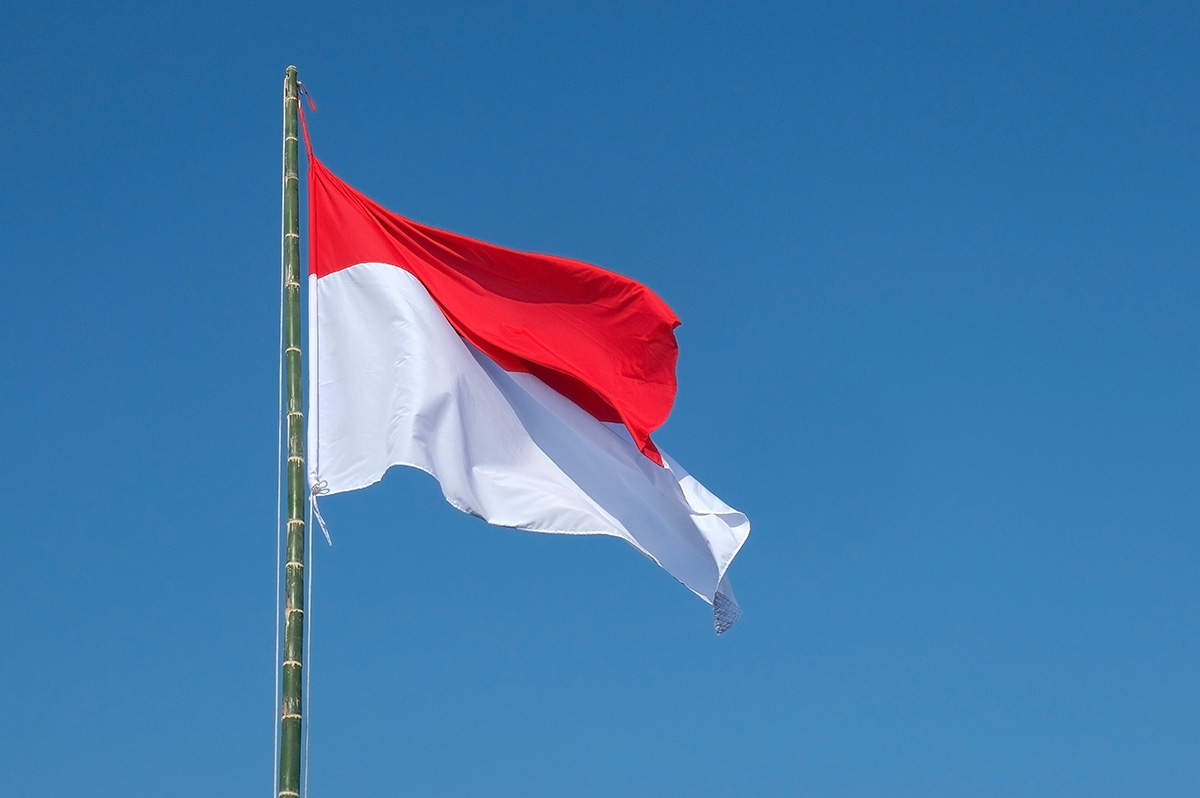
Indonesia’s top Muslim clerical body has proposed replacing the term “LGBT” with “LGSP,” grouping lesbian and gay people with sodomy and sexual abuse, as it prepares a proposed law that would criminalize conduct and advocacy it consideres prohibited.
Asrorun Niam Sholeh, head of the Indonesian Ulema Council’s Fatwa Commission, announced the proposal in Jakarta in late July, saying the council was preparing an academic paper and draft bill to submit to the government and MPs
The council in August also warned men against wearing women’s clothing during Independence Day festivities, despite a long-standing tradition in some Indonesian communities of men dressing in dresses and hijabs to play football as part of the annual celebrations. In a statement issued Aug. 7, the Fatwa Commission said such cross-dressing was “haram,” or forbidden under Islamic law, and linked the practice to what it described as a covert campaign by the “Lesbian, Gay, Sodomy and Obscenity (or LGSP) movement.
Indonesia on Aug. 17 marks its 1945 declaration of independence from the Netherlands with flag ceremonies, neighborhood gatherings, and a lively tradition of community competitions known as “lomba tujuhbelasan.” Children and adults take part in games ranging from sack races and cracker-eating contests to tug-of-war and “panjat pinang” — teams climb a greased pole to reach prizes at the top. Some communities also hold football matches in sarongs or “daster,” a loose-fitting house dress traditionally associated with women, turning the celebrations into an occasion for communal play and laughter.
The pressure extends beyond religious authorities.
In a report published in July, Human Rights Watch said attacks against LGBTQ+ university students had escalated during June’s Pride Month, while at least 10 public universities had recently adopted discriminatory regulations and curbed student media coverage and social media discussions about gender and sexual diversity. The rights group said the measures undermine freedom of expression and academic freedom.
Reacting to Pride Month celebrations, the Ulema Council called for “sexual deviation” to carry criminal penalties heavier than those for adultery and said it was preparing a draft law to criminalize LGBTQ+ conduct and campaigning.
President Prabowo Subianto in October 2025 signed Presidential Regulation No. 111 of 2025, which sets Indonesia’s General National Defense Policy for 2025–2029 and classifies the spread of LGBTQ+ culture as a non-military threat to the state. The provision places it among other perceived threats that include terrorism, radicalism, separatism, and the spread of prohibited ideologies.
The regulation drew public attention in July after Indonesian media reported on the provision, prompting Amnesty International Indonesia Executive Director Usman Hamid to warn that it could institutionalize discrimination against LGBTQ+ people.
“Amnesty International Indonesia unequivocally condemns these attacks and intimidation by both state and non-state actors based on perceived sexual orientation or gender identity,” said Amnesty International Indonesia. “We urgently call upon the Indonesian government to repeal this regulation and uphold its constitutional mandates and the international human rights treaties it has ratified.”
Indonesia on Jan. 2 began enforcing a new national criminal code, replacing the Dutch-era penal code that had governed the country for more than eight decades.
MPs had approved the 345-page code in December 2022 after years of debate and public protests over provisions concerning morality, religion, and individual rights. Among its new provisions is Article 411, which makes sexual intercourse outside marriage a criminal offense punishable by up to one year in prison.
Article 412 makes living together as husband and wife outside a legally recognized marriage punishable by up to six months in prison. The offenses can be prosecuted only after a complaint by a spouse, parent or child, but rights groups have warned that the provisions can disproportionately affect same-sex couples, whose relationships are not legally recognized in Indonesia.
Purba Widnyana, chairman of GAYa Nusantara, an Indonesian LGBTQ+ rights organization, told the Los Angeles Blade that the situation for LGBTQ+ people in Indonesia has become increasingly worrying.
Widnyana told the Blade that the concern extends beyond increasing violence, pointing to stronger anti-LGBTQ+ sentiment in public spaces, on social media and within educational institutions, as well as in politics, including Presidential Regulation No. 111 of 2025.
“The impact is not always in the form of physical violence. Many LGBT+ people, especially trans women, that mostly work in entertainment or other informal jobs, beginning to lose job opportunities because they are considered to pose a ‘risk’ to the event organizers,” Widnyana said. “There are also concerns that the rising stigma and fear could deter people from accessing health services, including HIV test and STI, due to the fear that their identity or sexual orientation might be revealed.”
Widnyana said the changing environment has placed an additional burden on LGBTQ+ organizations; making spaces for gatherings, educational activities, and public information campaigns increasingly sensitive.
“We are constantly in alert mode,” he said, adding that since the previous wave of anti-LGBTQ+ sentiment in 2016, organizations have developed security and risk-mitigation plans before holding events. Previously, he said, the primary concerns were physical attacks, raids and threats that could force venues to cancel events. Now, organizations also have to account for online attacks, including WhatsApp hijacking and social media account hacking, as well as the possibility of an event or organization being targeted after going viral.
“It’s been limiting our movements,” he said.
Asked about the proposed LGSP framework and its decision to replace the term LGBTQ+ with a classification combining sexual orientation with sexual conduct, Widnyana said the council was conflating fundamentally different concepts.
“I really don’t know where to begin. They are definitely confused by mixing identities, in this case sexual orientation, with sexual behavior and actions that are understood as violations or offenses, that are sodomy and sexual indecencies,” he said.
Widnyana said the change should not be viewed as merely a change in terminology.
“The change shifts how Indonesians understand or perceive LGBT+ issues, moving from identities, rights and existence to behavior, morality, and criminality,” he told the Blade. “We also see it in the context of narrative that has been for so long evolving that frames LGBT+ as the ‘product of the West’ or ‘Western propaganda’,” he said. “In this framework, LGSP can be interpreted as their effort in rejecting how LGBT+ people define themselves and changing it with a category that is defined by those who oppose the existence of LGBT+ people.”
Widnyana also pointed to Indonesia’s long history of diverse gender identities and expressions, citing traditions such as the “bissu,” “calalai,” “calabai,” and “waria,” as well as artistic traditions in which men perform female characters. He cautioned against imposing modern LGBTQ+ categories on those traditions, but said gender and sexual diversity are not foreign to Indonesian history.
Widnyana said his main concern was the lack of clarity around terms such as “campaigning,” “promoting,” and “spreading LGBT+ culture,” which he said could be interpreted broadly enough to affect legitimate work in education, health care, human rights, and community services. He cited HIV and sexual health information, legal assistance for victims of violence, discrimination research, training on sexual orientation, gender identity and expression, and sex characteristics, and academic discussion as examples. Widnyana also questioned whether a gay man publicly saying he is gay and demanding to live safely, or a transgender woman speaking about discrimination she has experienced, could be deemed “campaigning” or “spreading LGBT+ culture.” Such legislation, he warned, could turn existing social stigma into a tool for systematically limiting the lives, expression, services and LGBTQ+ organizations.
“For me, the situation is becoming more difficult. And I think we need to look beyond just what the law says. Because sometimes, when we talk about Indonesia, people say, ‘Well, being LGBTQ+ is not generally criminalized under the national criminal law,’” said Arisdo, outreach representative of Pelangi Nusantara, an LGBTQ+ community group in Indonesia advocating for love, equality, and the right to live with dignity. “technically, that’s an important distinction. But that’s not really what people on the ground are experiencing. What we’re seeing is more pressure. More harassment. More public shaming. More people being targeted simply because they are perceived to be LGBTQ+.”
Arisdo told the Blade that transgender women are facing escalating violence, citing Pelangi Nusantara’s documentation of 10 attacks in Bogor between March and July 2026 involving 45 victim-survivors. He said the emergence of “Boti Hunter” groups was particularly alarming, reflecting a shift from anti-LGBTQ+ rhetoric toward actively targeting people. He added that fear of being outed or attacked prevents many victims from reporting violence, while doxxing and online harassment are increasingly forcing LGBTQ+ organizations to limit their visibility.
Hungary
New Hungarian government to scrap anti-LGBTQ+ adoption law
Prime Minister Peter Maygar ousted Viktor Orbán in April
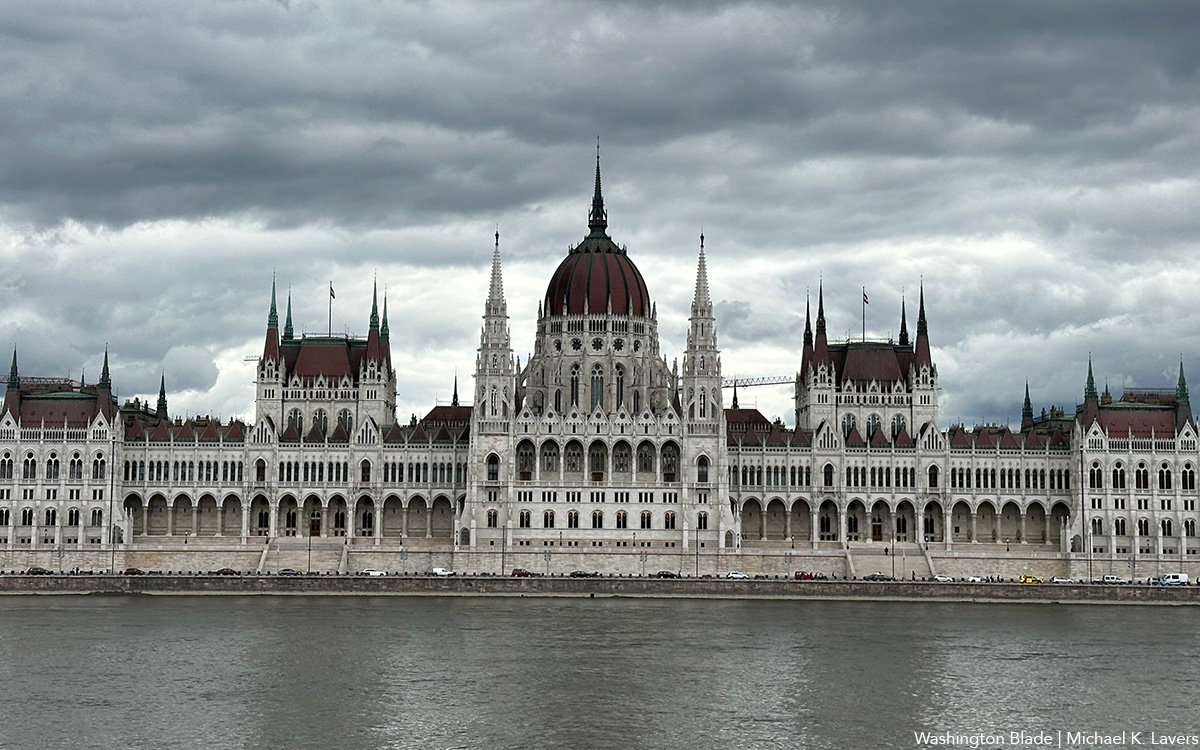
Hungarian Prime Minister Peter Maygar has said his government will amend a law that essentially bans same-sex couples from adopting children.
Lawmakers approved the effective adoption ban in 2020, when then-Prime Minister Viktor Orbán’s government was in power. Maygar announced plans to amend the law on Saturday when he was speaking to supporters in Budapest, the Hungarian capital.
Orbán and his government faced widespread criticism over its anti-LGBTQ+ crackdown that also included laws banning Pride events.
Maygar in April ousted Orbán in Hungary’s elections.
Turkey
Dozens detained after Turkish authorities raid LGBTQ groups, businesses
Raids targeted gay bars, activists’ homes
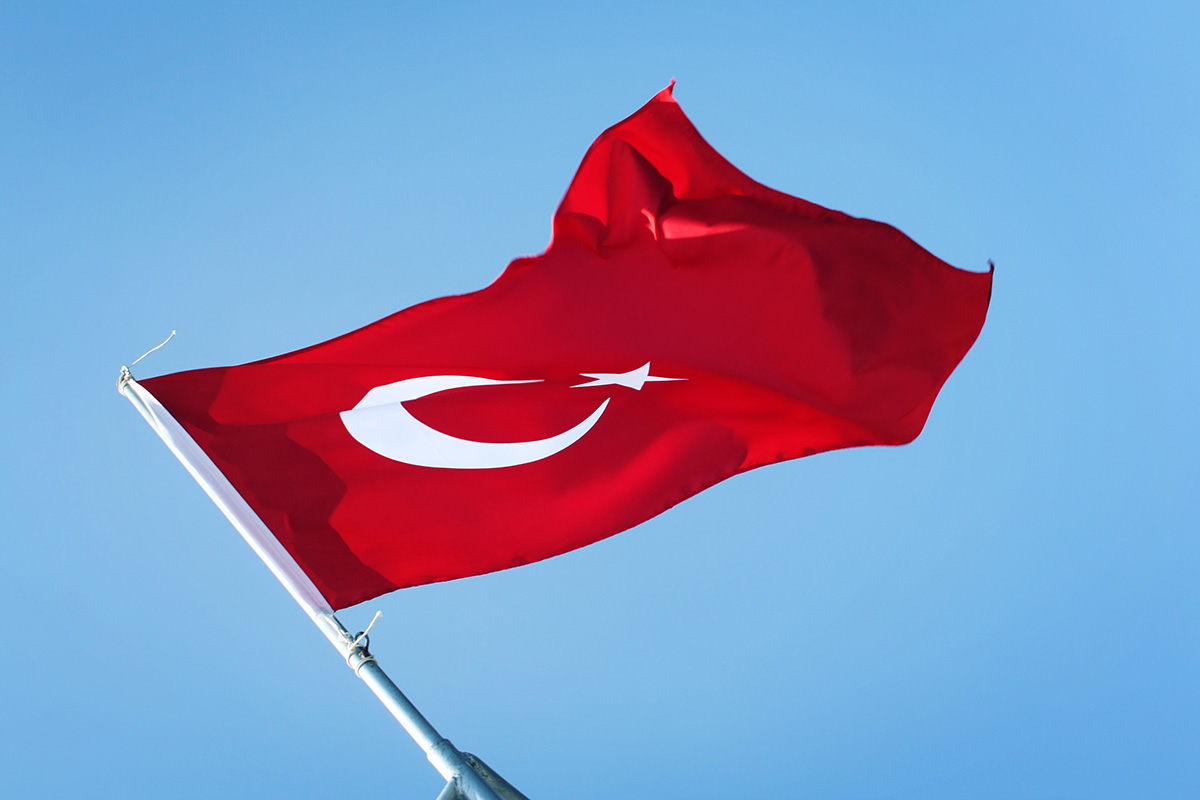
Authorities in Turkey over the weekend detained dozens of people during raids they carried out against gay bars and LGBTQ activists’ homes across the country.
The BBC reported the raids were part of the government’s “My Family is Safe” campaign.
A statement from a group of Turkish advocacy groups the Washington Blade received on Sunday noted Justice Minister Akın Gürlek said the operation included “162 individuals, nine associations, and 13 businesses across 15 provinces.” Prosecutors in Istanbul, Ankara, Izmir, Aydın, and Mersin are coordinating the campaign.
Kaos GL, one of the country’s largest advocacy groups, was among the targets.
“The authorities have referred to allegations including ‘obscenity,’ ‘facilitating prostitution or providing premises for prostitution,’ exposure of children to allegedly obscene content, drug-related offenses, and other morality-related offenses,” reads the press release the Blade received. “Information from the field indicates that additional allegations, including forming a criminal organization, may appear in some investigation files.”
“The reported inclusion of the offense of “establishing an organization for the purpose of committing crimes” under Article 220 of the Turkish Criminal Code is particularly alarming and, if confirmed, would mark a significant escalation in the criminalization of LGBTI+ human rights activism,” it added. “While LGBTI+ activists and organizations have recently faced and continue to face investigations and prosecutions on grounds such as ‘obscenity’ and alleged violations of the Law on Associations, the use of an organized-crime allegation represents a qualitatively more serious threshold, both in terms of the gravity of the accusation and the potential penalties involved.”
Turkish authorities under President Recep Tayyip Erdoğan’s government over the last decade have cracked down on LGBTQ and intersex activists in the country.
Police in 2015 used tear gas and water cannons against people who were about to participate in an Istanbul Pride march. Authorities in 2017 arrested nearly two dozen people who defied a ban on Pride events in the city.
Police in Ankara, the Turkish capital, in 2019, arrested 18 students and an academic who participated in a Pride march at the Middle East Technical University. They faced up to three years in prison, but a court in 2021 acquitted them. Police in 2022 violently broke up a Pride parade at the same Ankara university.
Turkish authorities in July refused to allow a gay cruise ship — the Scarlet Lady, a Virgin Voyage vessel that Atlantis Events chartered — to dock in Kusadasi, a resort town on the Aegean Sea.
Kusadasi is in Aydın Province, one of the provinces in which authorities conducted the raids. Turkish officials also refused to allow the Scarlet Lady to dock in Istanbul.
A Turkish source on Sunday told the Blade the “My Family is Safe” operation began on the 46th anniversary of a military coup that toppled the country’s government in 1980.
“The fact that this operation began on the night of Sept. 12 — the 46th anniversary of the 1980 coup — is highly significant in terms of the foundations of the prohibitive and repressive mindset directed at the LGBTI+ community,” they said. “Moreover, many LGBTI+ organizations had been subject to official inspections last week.”
“Conducting this operation on a Saturday night shortly thereafter also serves the purpose of heightening fear and anxiety within the community,” added the source.
The source asked the Blade not to reveal their identity.
ILGA-Europe in a statement described the raids as “the systematic dismantling of LGBTI civil society.” Paris Mayor Emmanuel Grégoire is among the European officials who have publicly condemned them.
The Blade will update this story with additional details as they become available.
World
Report: 90 percent of LGBTQ+ groups around the world have lost funding since 2025
Trump-Vance administration cut US support after it took office
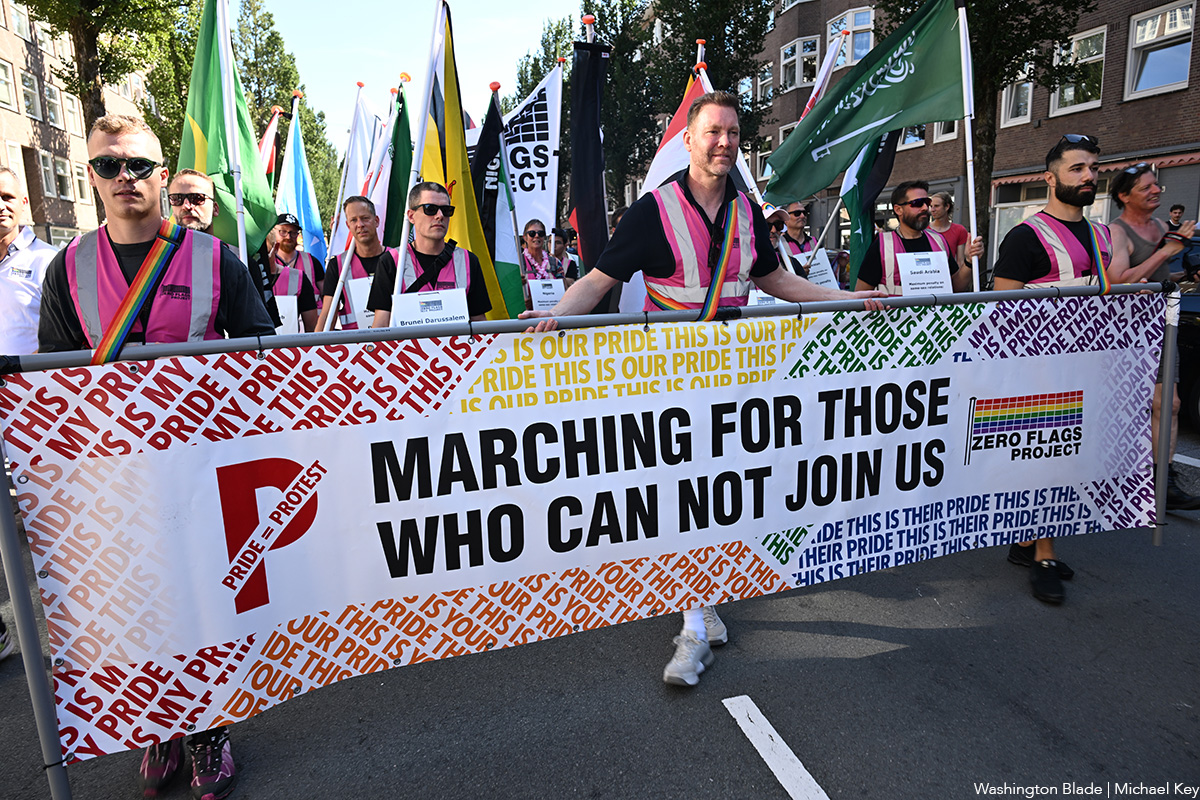
A new report that Outright International released on Thursday notes 90 percent of LGBTQ+ and intersex rights groups around the world have lost funding since January 2025.
The New York-based global advocacy group surveyed 229 LGBTQ+ and intersex rights groups in 94 countries.
Forty-nine percent of the organizations that responded said they have lost more than half of their total budget since January 2025 — 75 percent of the groups said they lost more than a quarter of their total funding.
“For nearly half of the respondents, the cuts removed most of the resources that sustained the organization,” reads the report.
When asked which funders “had reduced, suspended, or withdrawn support,” more than half of the responding groups “pointed to a source tied to the United States government, including USAID (U.S. Agency for International Development), the President’s Emergency Plan for AIDS Relief (PEPFAR), and the Department of State.”
“No other funder came close,” notes the report.
‘What was initially framed as a temporary freeze has become a structural disruption’
The Trump-Vance administration froze nearly all U.S. foreign aid shortly after it took office on Jan. 20, 2025.
Secretary of State Marco Rubio in March 2025 announced 83 percent of USAID contacts had been cancelled, and the State Department would administer the remaining programs. USAID officially shut down on July 1, 2025.
Rubio issued a waiver that allowed PEPFAR and other “life-saving humanitarian assistance” programs to continue to operate during the funding freeze. The Los Angeles Blade has previously reported PEPFAR-funded programs in Kenya and other African countries have been forced to suspend services and even shut down because of gaps in U.S. funding.
(Washington Blade video by Michael K. Lavers)
The Outright International report notes the State Department under the Trump-Vance administration “terminated the programs of the Global Equality Fund, the public-private partnership it launched in 2011 with allied governments, companies, and foundations, which distributed more than $100 million in its first decade to LGBTIQ organizations and human rights defenders in over 100 countries.” The Trump-Vance administration, among other things, has withdrawn the U.S. from the U.N. LGBTI Core Group, a group of U.N. member states that have pledged to support LGBTQ+ and intersex rights.
Outright International Executive Director Maria Sjödin in an op-ed the Blade published on Jan. 28, 2026, wrote the global LGBTQ+ and intersex rights movement since January 2025 lost more than $125 million — or 30 percent of its total annual funding.
“What was initially framed as a temporary freeze has become a structural disruption,” notes the Outright International report. “The effects have cascaded far beyond U.S. government funding: corporate, institutional, and philanthropic donors have also shifted, stalled, or quietly withdrawn, often without public scrutiny.”
“The broader environment in which LGBTIQ movements operate has continued to deteriorate — with democratic backsliding, anti-NGO legislation, rising violence, coordinated legislative attacks on trans and intersex people’s rights, and emboldened anti-rights actors filling the space left by the retreat of U.S. global leadership.”
The report contains specific examples that include:
• Iraqi lawmakers in 2024 passed a law that criminalized consensual same-sex sexual relations and transgender people. Funding cuts forced IraQueer, an Iraqi advocacy group, to stop offering safety and security trainings and workshops to activists and LGBTQ+ rights organizations in the country.
• An intersex-led organization in West Africa can no longer maintain office space or pay its staff.
• An Ecuadorian group that operated a community center for a decade was “forced to close” it on Feb. 1, 2026. “It has been a true loss for the LGBTIQ+ communities in our city and the country as a whole, as we were a model of self-management and resistance in one of Ecuador’s most conservative cities,” said the group in the report.
• An “LGBTIQ-led refugee organization” in Uganda “has lost the emergency relocation support that once moved people facing immediate violence to safer locations.”
• An advocacy group in Ukraine that lost funding said it was “forced to stop paying some of our specialists and reduce our hours for handling inquiries … We used to be able to respond promptly to requests and support people throughout the entire process of resolving their issues, whereas now we are forced to limit ourselves to one-time consultations or refuse assistance altogether due to a lack of resources.”
• The Tonga Leitis Association in the report said a lack of funding has forced it to reduce “the number of activities the organization can run and erodes the prevention infrastructure behind” the country’s low HIV rate.
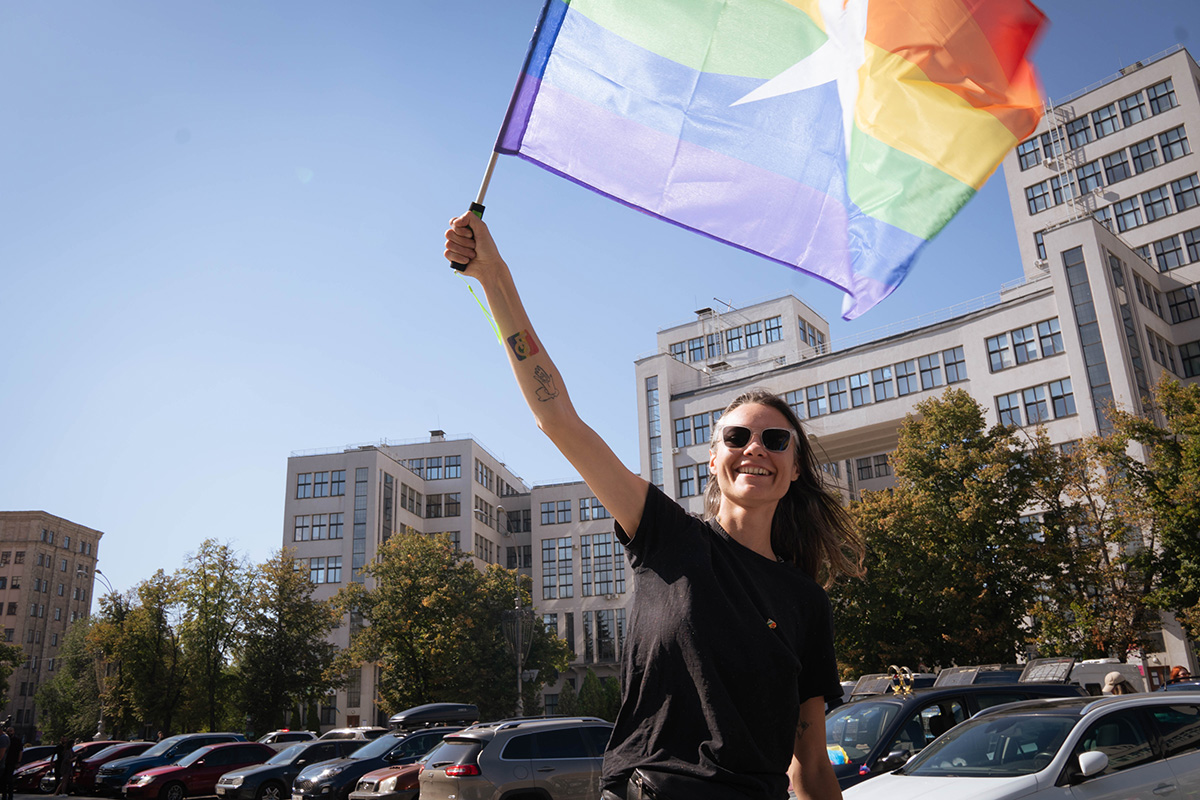
The Outright International report notes “global LGBTIQ funding had begun to fall even before the current U.S. administration took office.”
It further cites statistics from the Human Rights Funders Network that project “rights-focused development assistance will fall by between” $1.4-$1.9 billion a year by 2026, “with movements for LGBTIQ people’s rights and gender equality among the hardest it.”
“At the same time, LGBTIQ organizations have not stood still,” reads the Outright International report. “They have continued to resist, adapt, and serve their communities under extraordinary pressure, often absorbing the costs of these funding shocks in ways that remain largely invisible.”
“This report is an effort to make those costs — and that resilience — visible,” it adds.

Turning grief into advocacy: Debbie Allen shares on loss, love, and the power of speaking out

The trans Handy Ma’am helps where it matters most – at home

‘Lizzie Borden’ might be the best ‘Monster’ yet

Dallas Pride was a weekend of unabashed joy for Texas’ queer community

Embracing queer exploration with actress Rosslyn Luke

United States Conference on HIV/AIDS grapples with federal budget cuts

‘Dolly Day’ officially made holiday in California: Rainbow District plans to celebrate

Spike in HIV cases prompts Fiji to declare national emergency

Clavicular charged in alleged rape of teenage influencer

Trump to the people: F**k the free press
-
 AIDS and HIV5 days ago
United States Conference on HIV/AIDS grapples with federal budget cuts
-
 Arts & Entertainment5 days ago
‘Dolly Day’ officially made holiday in California: Rainbow District plans to celebrate
-
 Fiji4 days ago
Spike in HIV cases prompts Fiji to declare national emergency
-
 Celebrity News4 days ago
Clavicular charged in alleged rape of teenage influencer
-
 Commentary5 days ago
Trump to the people: F**k the free press
-
 Netherlands4 days ago
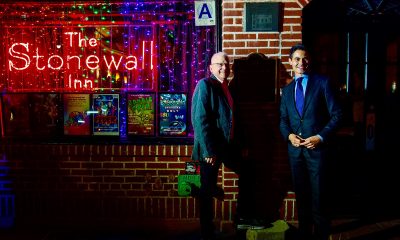
Dutch prime minister visits Stonewall Inn
-

 Features4 days ago
‘Embracing your identity can be a form of resistance’: Councilmember Byers highlights Bisexual Awareness Week
-

 a&e features3 days ago
‘Star Trek: Strange New Worlds’ star Celia Rose Gooding breaks down that finale time travel twist
-
 Ecuador4 days ago
Caso Karlina: Una sentencia histórica contra las terapias de «conversión»
-

 Palm Springs2 days ago
Here’s your Palm Springs look at the weekend: Sep 25-27, 2026