Cannabis Culture
The LA Blade’s ‘Loud and Proud’ showed the queer history of cannabis in the U.S.
Who knew a little green plant could mean so much to queer liberation?
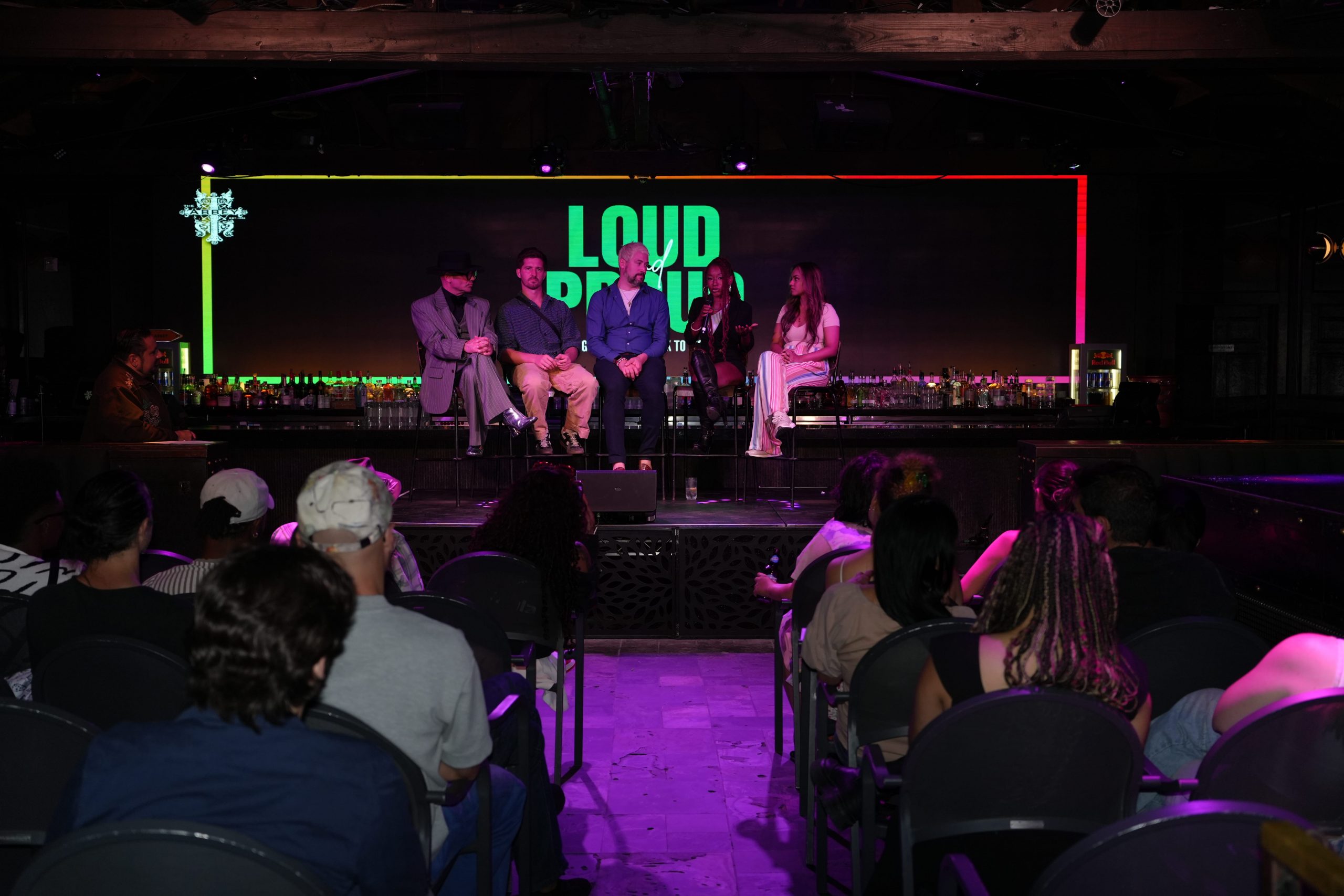
It’s often forgotten how integral cannabis culture has been to Queer liberation, a little-known aspect of our LGBTQ+ history that August 28th’s Loud and Proud event worked hard to spotlight.
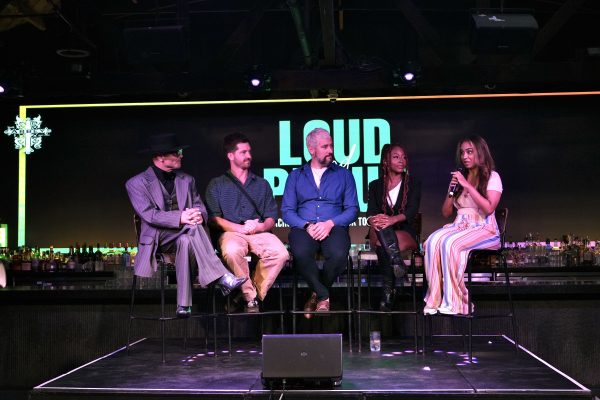
Co-sponsored by the Los Angeles Blade, Culture Machine, and Last Prisoner’s Project, this evening of discussion brought vital knowledge to West Hollywood’s The Abbey. Beyond an invigorating ambience — due largely to stellar performances by Maris and S.I.A.T. — the event was something that most attendees didn’t expect: a call to action. Loud and Proud’s goal was to do more than just inform them about what the marijuana industry looks like in LA. It charted the intricate ways that the advancement of cannabis has been tied to the fight for LGBTQ+ rights. And, by helping fight for its decriminalization, folks can assist thousands of unjustly imprisoned people all across this country.
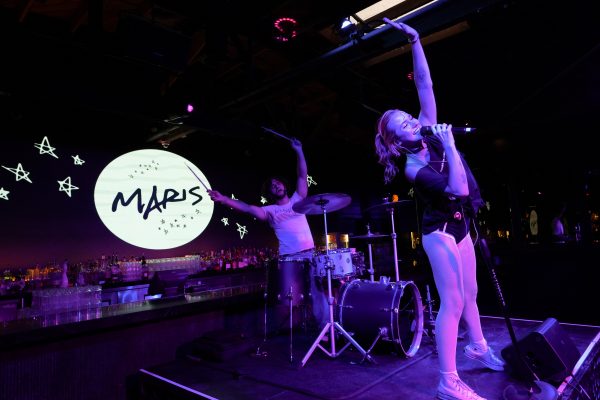
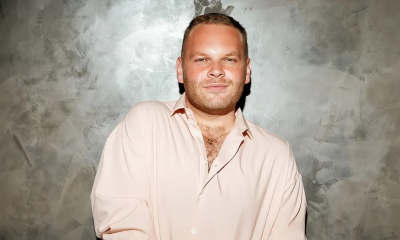
“Our history as queer people is directly tied to the cannabis industry,” explained West Hollywood City Councilman John Erickson, a member of the event’s all-star panel (moderated by LA Blade publisher Alexander Rodriguez). In tandem with fellow cannabis advocates Maha Haq and Andrés Rigal, the speakers explained how not only has marijuana been used globally for centuries, but in the U.S., it was vital in helping survivors during the AIDS crisis. This time saw the earliest instances of weed being used medically, helping those struggling with the nausea of HIV treatment actually want to eat the food their bodies needed to heal. It proved integral in abetting the suffering of countless patients — so what made politicians decide to launch entire media wars against its usage? Along with the corporate greed of billionaires, Erickson clarified exactly why so many lawmakers were scared of queer folk using marijuana: “Cannabis [always broke] through the ‘medical glass ceiling’ — and it was criminalized because you fear the things that you can’t control.”
Loud and Proud attendees were lucky to hear from Steven Post of Last Prisoner’s Project (TLPP), a nonprofit dedicated to freeing the people still incarcerated due to marijuana in the U.S. “This is something that has been going on for over 50 years,” said Post, when breaking down how Ronald Reagan — a President whose discriminatory policies prolonged the lethal AIDS crisis — escalated the “war on drugs” as an excuse to increase policing against Black and Brown communities. He describes how, even though cannabis has not only been legalized in many states but is now a booming industry, there are still thousands of folks in prison for these crimes that are no longer illegal in the U.S. This is a criminalization that has disproportionately targeted queer and Black communities, leaving the populations that revolutionized this drug to suffer while primarily White, cisgender owners profit through their own dispensaries. But though this history is extremely disappointing, Post reminds guests, “There’s a lot of work that still needs to be done….anything you can do, whether it’s sharing a social media post, donating or taking action in your own community, [anything you can do] is really important.” Organizations like TLPP are fighting every single day to free folks imprisoned for cannabis and make it legal for all, a fight that the panelists remind everyone they can join right now.
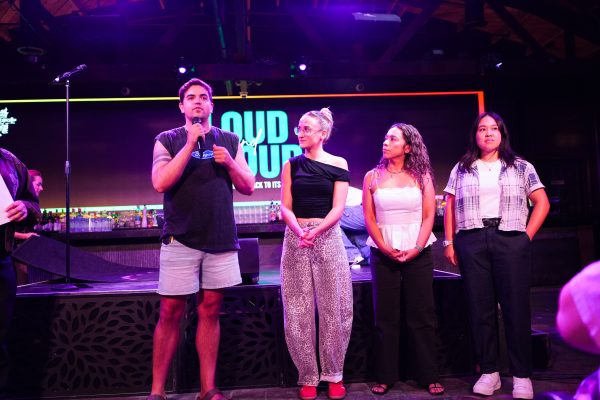
Cannabis has always been utilized not only to help queer folks but give them the wellness tools they need in the ongoing fight for liberation. It’s a usage that isn’t often discussed, but these panelists raise awareness of through their work. “We’re showing consumers that there’s a beautiful, conscious way to understand cannabis,” said Vanessa Oliver, whose company Cloud9 Studios works to inform people about the benefits of cannabis in a wellness-focused, educational way. Along with Luke Anderson, creator of the innovative cannabis company Cann, they emphasize that guests shouldn’t be defeated by the many ways cannabis criminalization is used against their communities. Rather, they should learn from cannabis pioneers like Dennis Peron and Brownie Mary — those who recognized the benefits of this drug and how it could help bring health equity to the communities that so often are denied this human right.
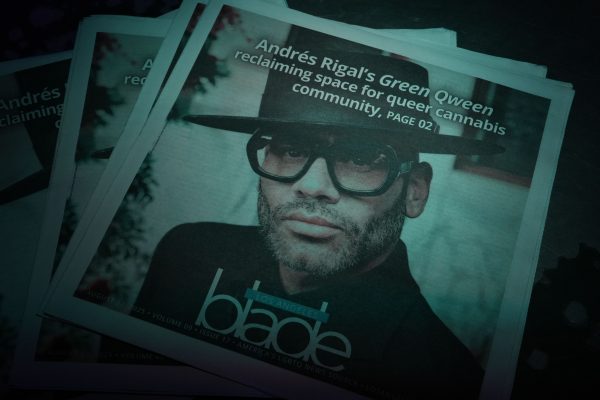
The Loud and Proud panelists made it clear: the fight for queer liberation through cannabis is still alive and strong. Whether it be through nonprofits like The Last Prisoners Project or inclusive business models, these advocates work to free those in prisons and ensure there won’t be any others who face unjust policing due to cannabis. “We’re building off of these stepping stones because we believe this is compassionate care,” clarified Oliver. She and the rest of the panel encourage everyone listening to spread this message, to get involved in the local politics that often determine cannabis laws, and help create a culture where people can benefit from its use safely.
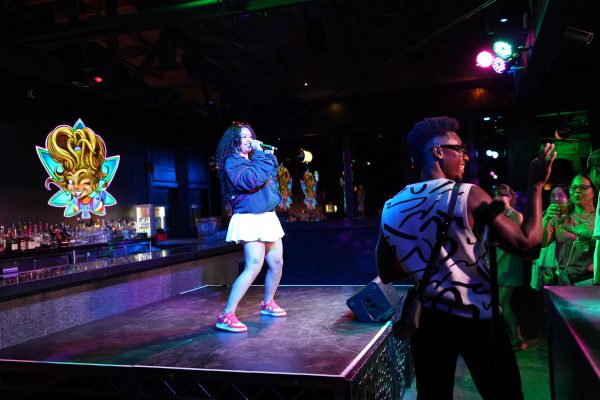
Rousing finale by S.I.A.T. / Photo: Culture Machine
And, most of all, whether it be through community events like Loud and Proud or other ways of community education, to learn about how marijuana usage has always been essential in the fight for queer rights. Because once people understand that, they’ll realize that by fighting to uplift queer Cannabis culture, they’ll be fighting to uplift the entire LGBTQ+ community today.
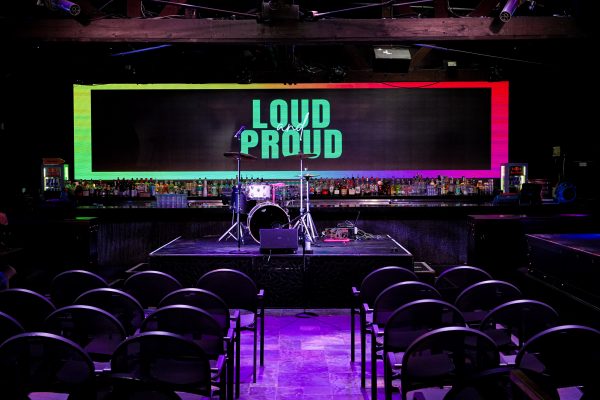
A special thank you to the staff and event team at The Abbey for hosting us, our presenting sponsor, Emerald Village, and contributors TreeXLines and BEBOE.


Arts & Entertainment
LGBTQ+ people, weed, and mental health: what you need to know
Community uses marijuana at much higher rates than general population
Uncloseted Media published this story on May 7.
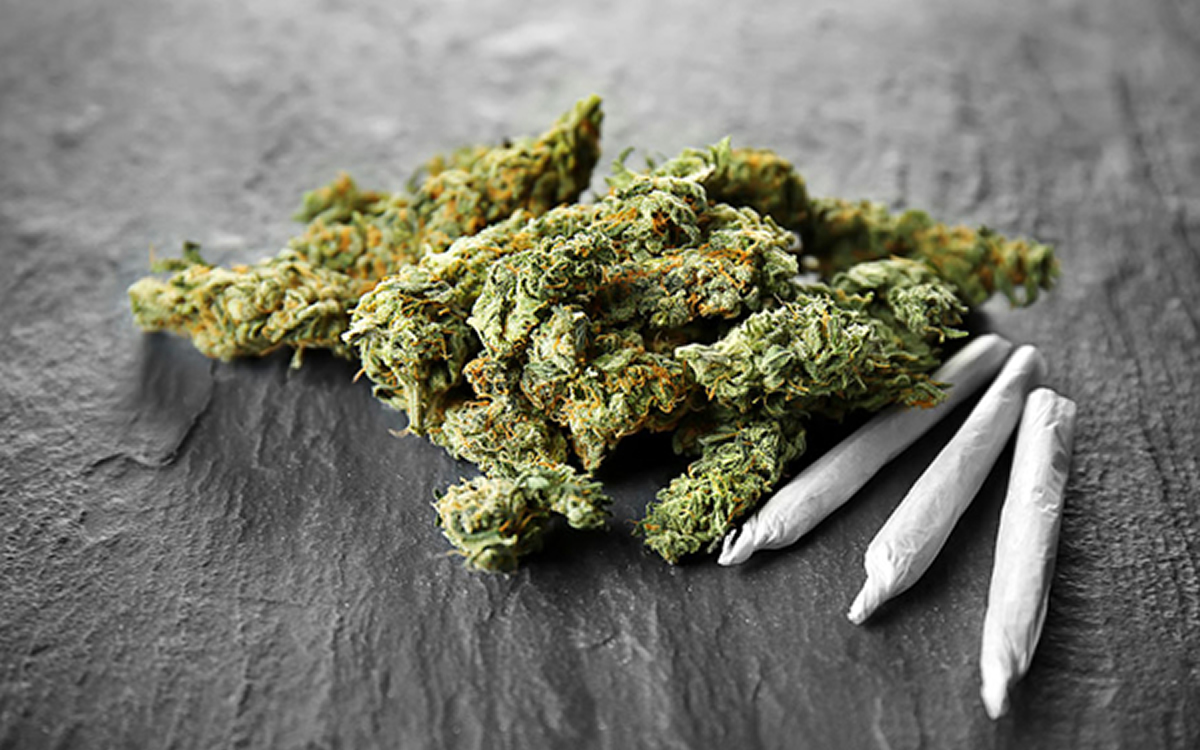
By SPENCER MACNAUGHTON | In 2025, the global cannabis market size was valued at nearly $103 billion. By 2034, that number is expected to explode by roughly 1,400 percent to more than $1.43 trillion.
In short, as an increasing number of countries legalize marijuana use, everyone is starting to consume a lot more weed. And LGBTQ+ people tend to use cannabis at much higher rates than the general population. One study found that 55 percent of lesbian and 45 percent of gay young adults use marijuana, compared to about 33 percent and 37 percent, respectively, of their straight counterparts.
As LGBTQ+ people face a mental health crisis, the mainstream stereotypes that depict weed as an antidote for anxiety, panic and depression aren’t painting the full picture. And that could be exacerbating the mental health struggles so many queer people, and especially youth, face.
Here’s what the research demonstrates about marijuana and its effects on mental health:
- Multiple studies suggest a link between marijuana use and an increased risk of mental health disorders, including schizophrenia, depression and anxiety in individuals who are genetically predisposed.
- One study found that daily marijuana use, especially among younger people, makes some individuals seven times more likely to develop psychosis.
The increase in higher-potency strains of marijuana could pose unknown risks. In 1995, the average content of Tetrahydrocannabinol (THC) in confiscated marijuana was less than 4 percent. In 2022, it was more than 16 percent. Researchers don’t know the full extent of the impact that these higher concentrations can have on mental health and especially on younger people whose brains are still developing.
- A systematic review of studies published between 2013 and 2025 found damning results for the mental health of young cannabis users:
They were 51 percent more likely to experience depression, 58 percent more likely to experience anxiety, between 50 and 65 percent more likely to experience suicidal ideation and 80 to 87 percent more likely to have attempted suicide.
- While the above stats paint a grim picture, there is also some research that suggests benefits of cannabis use:
- A 2025 systematic review found that “medicinal” weed showed some efficacy in relieving withdrawal symptoms of opioid use disorder. THC use has been associated with improvement of post-traumatic stress disorder symptoms, bipolar symptoms and sleep quality.
- Other studies found that THC administered in a controlled setting was associated with a decrease of symptoms and adverse effects for a range of mental health disorders, including schizophrenia, psychotic symptoms, and anorexia nervosa.
Beyond what we pulled from academia, there is an astounding lack of information about the interplay between weed and mental health. As we dive deeper into Mental Health Awareness Month, I hope advocacy organizations, influencers and news outlets ramp up their coverage of this important topic that affects the countless LGBTQ+ weed smokers, many of whom are already struggling.
Arts & Entertainment
Los Angeles Blade, Culture Machine, and Last Prisoner Project present ‘Loud and Proud,’ a free night celebrating queer joy and cannabis culture
A night celebrating queer joy and cannabis culture, featuring live performances and a panel on queer joy, resistance, and cannabis history.
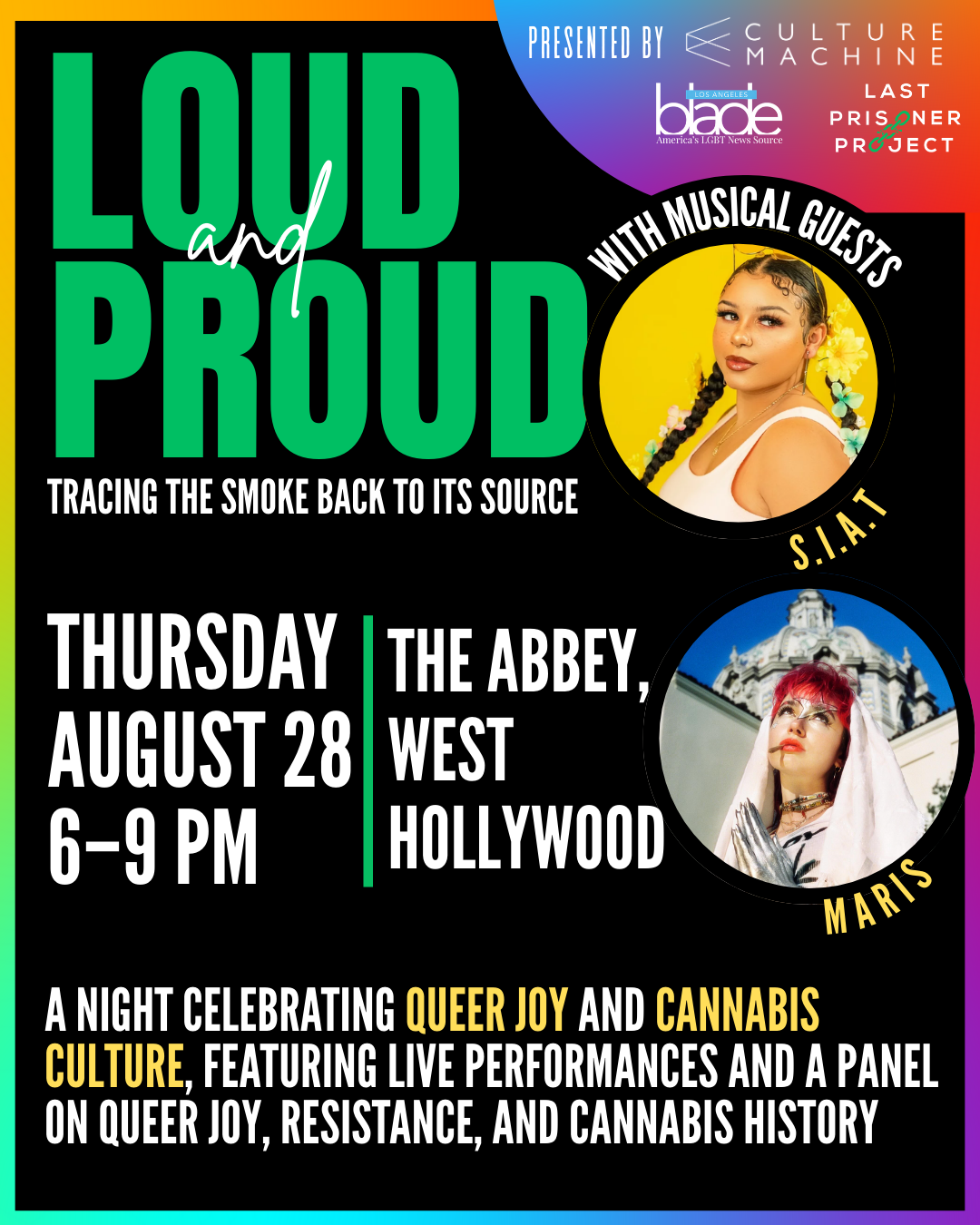
On Thursday, August 28th, 6 pm at the Abbey in West Hollywood, the business, political, and entertainment community will come together to celebrate queer joy and the cannabis culture for “Loud and Proud.” The event is free.
The connection between cannabis and the LGBTQIA+ community is rooted in activism, care, and survival. During the height of the AIDS crisis in the 1980s and ’90s, queer activists and allies fought to decriminalize and legalize medical cannabis as a vital tool for pain relief, appetite stimulation, and quality of life for those living with HIV/AIDS. Figures like Brownie Mary and Dennis Peron risked arrest to provide cannabis to patients, sparking the movement that led to California’s Proposition 215 — the first law in the U.S. legalizing medical marijuana.
This evening will also celebrate the “Loud & Proud” digital docuseries produced by
Culture Machine, in collaboration with The Last Prisoner Project, spotlighting the intersection
of queer identity, activism, and cannabis culture — celebrating joy as resistance and honoring the communities that built the movement. Featuring prominent voices such as Laganja
Estranja, Jorgeous, Justin Simien, Luke Anderson, and other leaders in the space, “Loud &
Proud” blends history, storytelling, and cultural commentary to highlight how cannabis has been used as a tool for healing, protest, and liberation.
This event at The Abbey brings that mission to life, with live performances, a panel discussion, and a community gathering, to celebrate the past, uplift the present, and inspire the future of cannabis justice.
The evening will feature live performances by Maris and S.I.A.T. Los Angeles Blade publisher Alexander Rodriguez will moderate the evening and feature panelists Andrés Rigal (co-founder of Green Qween), Maha Haq (cannabis educator, consultant, and activist, founder of UCLA’s Cannaclub, Head Coach for Social Equity Development at the LA Department of Cannabis Regulation), Vanessa Oliver (CEO of Cloud9 Studios and founder of the Cannabis Wedding Expo), and West Hollywood City Councilman John Erickson.
The event is FREE, RSVP HERE.
“Loud and Proud,” Thursday, August 28th, 6 – 9 pm,
The Abbey: 692 N ROBERTSON BLVD, WEST HOLLYWOOD
Arts & Entertainment
Andrew Max Modlin Invites West Hollywood “Through the Brush”
From an iPad in Amerstand to a Canvas in Amsterdam: Modlin Presents “Through the Brush”

It is rare to step into a room where the walls ripple with Icelandic wind, hum with the volcanic heat of Hawaii, and pulse with a wide-eyed color of an Amsterdam trip. This June, West Hollywood becomes a gateway to this world with the arrival of Through the Brush, a pop-up solo exhibit by Los Angeles-based painter Andrew Max Modlin.
The show, curated by renowned critic Peter Frank, opens Saturday, June 7, with an artist’s reception from 4 p.m. to 9 p.m. and runs through June 21 in a studio located at 411 N. La Cienaga Blvd.
Expectations are high — featuring large-scale landscapes, a DJ set, libations and above all, the possibility of escape.
The paintings themselves are immersive 60” x 72” dreamscapes that pull directly from Modlin’s travels to Iceland, Hawaii, Mexico and Amsterdam. They serve as both visual memories and portals to another place in the world, inspired by his travels.
“Traveling is one of the most important things to me because it allows you to see outside your bubble and understand how diverse the world really is,” said Modlin.
He considers the places he visits as extensions of home.
“I immerse myself in what palette the location makes me feel and that immediately comes out in my drawings. It’s bringing that experience back to my studio that makes each painting so diverse because it really has the essence of that location in it.” As the show coincides with Amsterdam’s 750-year anniversary, Modlin says many of the works will be grounded in the city’s distinctive atmosphere.
To understand the intention behind Modlin’s paintings, it helps to understand the artist himself. Modlin is an openly queer artist best known as the co-founder and brand designer behind the cannabis dispensary MedMen and Kreation Organic Juicery. Though successful in business, the pull towards painting never left.
“The fact that I wasn’t painting haunted me all those years because I always felt like that was my life calling,” he said. For a change of pace, Modlin made a drastic change and relocated to Amsterdam. “In that time, I developed how I draw digitally on the iPad.”
That iPad plays an essential role in Modlin’s creative process. His digital sketches are more than rough drafts — they are explosive playgrounds.
“The iPad is where I get to be reckless,” said Modlin. “There’s something precious about a blank canvas but that sense of preciousness doesn’t exist on the iPad.” Without the fear of failure, Modlin can “rapidly sketch with colors that would take much longer to mix by hand,” pushing beyond the limits of traditional materials.
Back in Los Angeles, he focused on translation — how to bridge the digital and physical. “Once I move to the canvas,” explained Modlin. “The process shifts. It becomes more about the physicality of the paint and the act of painting itself than the original composition.”
That act is deliberate and cumulative. “My paintings are a slow, layered process where each brushstroke is a response to the one before it,” said Modlin. “The final piece becomes a record of that dialogue between gesture, surface, and duration.” His works aren’t meant to be consumed all at once — they reveal themselves slowly. Up close, hidden details emerge; from afar, emotions stir. “I hope the viewer starts by getting lost within the painting,” stated Modlin.
Modlin doesn’t see painting as a hobby — it’s a deep expression of self as his work resonates with lived experience. “I’ve always believed in the power of starting things within our own community.” That ethos led Modlin to open MedMen in West Hollywood, making him the first queer dispensary owner in the neighborhood. “With my debut solo exhibition,” said Modlin. “It felt just as important to me that it take place in West Hollywood, the community I live in and care deeply about.”
Through the Brush may feel like a breakthrough, but for Modlin, it’s just the beginning. “For me, success now means seeing my work shown around the world, in spaces that elevate and challenge it.” As Modlin imagines his next chapter, the invitation is clear: “I’d love for that visibility to open the door to working even larger on a scale that allows for something deeply expressive and immersive.”
Arts & Entertainment
LOUD & PROUD: LGBTQ+ cannabis activists ‘put their lighters up’ for pride
New campaign recognizes LGBTQ people who have been disproportionately policed, prosecuted and punished over cannabis

This Pride Month, we’re turning up the volume and the visibility with Loud & Proud — a bold new campaign from Culture Machine in collaboration with Last Prisoner Project, produced by Izzi Cavotta, Kaylen Ng and Merari Chavarría. Featuring beloved drag artists like LaGanja Estranja, Jorgeous, Sabiyana and many others, Loud & Proud celebrates the queer legacy of cannabis activism while demanding a future where no one is incarcerated for a plant and no one is punished for being proud.
At first glance, it might seem that the cannabis legalization movement and the LGBTQ rights movement are two separate struggles. But when you trace the smoke back to its source, you’ll find that queer liberation and cannabis justice have long burned from the same flame.
Before California became the first state to legalize medical marijuana in 1996 through Prop 215, its roots of resistance began with queer activists who were already leading the charge. Prop 215 would not have passed without the efforts of HIV/AIDS activists, many of them queer, who demanded compassionate access to cannabis as medicine. Dennis Peron, a gay man who lost his partner to AIDS, co-authored Prop 215. His earlier work on San Francisco’s Prop P in 1991 helped pave the way, allowing doctors to recommend cannabis for medical purposes.
But the history runs deeper. In 1978, Harvey Milk — California’s first openly gay elected official — pushed a ballot initiative urging the San Francisco District Attorney to stop prosecuting marijuana possession. This was decades before either movement found mainstream support, but Milk and Peron knew what too many still forget: the systems that criminalize queerness and cannabis use are one and the same.
Today, more than 575 pieces of anti-LGBTQ legislation are circulating in statehouses across the country. And while cannabis is legal in some form in most U.S. states, the criminalization of the plant still ensnares marginalized communities — especially queer and trans people.
LGBTQ folks have always had to navigate systems that criminalize their survival. Often shut out of traditional employment and housing due to stigma and discrimination, many have turned to criminalized economies — including cannabis — for community, income and healing. As a result, they’ve been disproportionately policed, prosecuted and punished.
According to the Prison Policy Initiative, in 2019 gay, lesbian, and bisexual individuals were more than twice as likely to be arrested as their straight peers. One in five trans women has been incarcerated. Nearly half of all Black trans people have faced imprisonment. And while hard data on cannabis-specific charges is limited (a data gap that speaks volumes), we know anecdotally and statistically that LGBTQ folks are overrepresented in the system.
To this day, mainstream cannabis rhetoric rarely accounts for these intersectional realities. And when queer folks are included, it’s often in tokenized marketing — not in leadership, policy spaces, or commutation campaigns.
The Loud & Proud campaign isn’t just about rainbow-wrapped pre-rolls and glittery photo ops (though we love those, too). It’s about honoring the queer elders, like Brownie Mary, who fought for our rights to exist and medicate. It’s about amplifying the voices of those still behind bars. And it’s about claiming space — in the streets, on the stage, and in the industry — for those who’ve been systematically shut out.
From drag stages to protest marches, from poetry to policy, our community has always used creativity as a form of resistance. This campaign is no different. Together, we’re using joy as protest. We’re using glamour as grit. And yes, we’re putting our lighters up — for every queer person who’s ever been arrested for weed, every trans woman locked away for surviving, and every drag artist who uses cannabis as both healing and defiance.
Cannabis companies: if you’re profiting off Pride or cannabis, you need to be funding queer liberation and cannabis clemency work. Consumers: ask who’s on the board, who’s in leadership and who’s still in prison. And to everyone: show up, not just during Pride month, but all year long.
As we celebrate how far we’ve come, we must remember who helped get us here — and who’s still waiting for their freedom.
This Pride, let’s be LOUD & PROUD. Let’s put our lighters up in their honor. Let’s fight for their release. Let’s demand justice, together.
Stephen Post is a Strategic Communications Manager at the Last Prisoner Project (LPP), a national, nonpartisan nonprofit dedicated to freeing everyone still incarcerated for cannabis and helping them rebuild their lives. He also serves the City of West Hollywood as a Public Safety Commissioner.

Here’s your Palm Springs look at the weekend: Oct 16-18, 2026

Trans woman says Kyle Brazeal used anti-trans slur, threw purse at her in 2024

How Orville Peck healed his inner child through ‘Street Fighter (2026)’

Lu Corporan on designing the darkroom

Victory Institute to honor Nancy Pelosi at D.C. conference

On Republican Long Island, gay Democrat Chris Gallant bets on public service over politics

Through the blaze: Author Deborah Samuel talks about survival, healing, and ‘Grace Through Fire’

Horror genre has evolved into space to explore queer identity

Report: LGBTQ+ exclusion costs Japanese economy billions a year

Annie Andrews denounces trans athletes after Trump targets her
-
 Politics5 days ago
On Republican Long Island, gay Democrat Chris Gallant bets on public service over politics
-
 Books5 days ago
Through the blaze: Author Deborah Samuel talks about survival, healing, and ‘Grace Through Fire’
-
 Arts & Entertainment4 days ago
Horror genre has evolved into space to explore queer identity
-
 Japan5 days ago
Report: LGBTQ+ exclusion costs Japanese economy billions a year
-
 Congress5 days ago
Annie Andrews denounces trans athletes after Trump targets her
-
 California24 hours ago
Trans woman says Kyle Brazeal used anti-trans slur, threw purse at her in 2024
-

 Turkey4 days ago
‘Governments that attack LGBTQ+ rights learn from each other’
-

 Hungary3 days ago
Hungarian lawmakers approve bill to remove anti-LGBTQ+ provisions from ‘child protection’ law
-
 Politics3 days ago
JD Vance takes swipe at James Talarico’s sexuality during Texas rally
-
 Sports3 days ago
‘Come Out for the Games’ gets Los Angeles excited for the 2028 Olympics