
California
Calif. governor’s race spotlights Becerra’s LGBTQ advocacy
Former HHS secretary to face Republican Steve Hilton

California voters selected its two front runners for the state’s open governor seat following the second election of Gavin Newsom.
Last week former U.S. Secretary of Health and Human Services Xavier Becerra became the Democratic nominee for governor, setting up a general election matchup against Republican nominee Steve Hilton, a former political adviser in the UK and Fox News commentator.
Becerra, the son of Mexican immigrants, has spent nearly three decades in public service. Over the course of his career, he has served as California attorney general, U.S. secretary of Health and Human Services, a member of the U.S. House of Representatives, and a member of the California Assembly.
Hilton comes from a very different background.
Raised by Hungarian parents who fled communism and settled in the UK, Hilton entered politics after graduating from Oxford University. He worked within the Conservative Party — beginning during the era of former Prime Minister Margaret Thatcher and later served as Director of Strategy for Prime Minister David Cameron. After relocating to California in 2012 with his wife, Hilton taught at Stanford University, became a U.S. citizen, and later established himself as a Fox News political commentator.
As the race enters the general election phase, policy questions surrounding healthcare, civil rights, and the future of LGBTQ protections in California are expected to feature prominently in both campaigns. The Washington Blade sat down with former Biden-Harris administration health officials who worked under Becerra’s leadership and also with LGBTQ advocates. Both paint a clear picture of Becerra — a longtime ally whose support for LGBTQ rights and health equity has spanned multiple decades and offices.
“For Equality California, he has been a staunch ally over his decades of service serving California. From his time in Congress to attorney general to HHS secretary, he’s been a partner to the LGBTQ community at large, and specifically to Equality California, advancing LGBTQ equality,” Tony Hoang, executive director of Equality California told the Blade. “As he’s been the front-runner making the top two, we’re excited to get behind him in the race so that he wins the general election in November.”
Hoang argued that California’s next governor will play a critical role in protecting LGBTQ rights amid continued attacks from the Trump-Vance administration.
“It is critical that California remains a bulwark against what’s happening from the Trump administration. That’s why we were so supportive of Secretary Becerra’s campaign for governor,” Hoang said. “He has been there in that fight. When he was attorney general, he sued the Trump administration over 100 times, including a lawsuit where Equality California was an organizational plaintiff around the transgender military ban. Over the remainder of Trump’s term, it’s critical that California continues to fight to stand up for our values, including LGBTQ people in all facets of equality.”
Former HHS official Adrian Shanker, who oversaw LGBTQ health initiatives during the Biden-Harris administration, pointed to Becerra’s emphasis on health equity as one of the defining characteristics of his leadership.
“As Secretary, Xavier Becerra required all of us to include a health equity lens in all policies. No matter what the policy was, he wanted health equity to be centered. Health equity means ensuring that all people can attain their highest levels of health,” Shanker explained. “One of his priorities was clinical trial diversity. He wanted to make sure that new drug modalities and treatments were studied on all kinds of bodies, including populations that had historically been excluded from research.”
Shanker also emphasized that while leading HHS, Becerra consistently relied on scientific expertise rather than political considerations when making policy decisions.
“He really believed that we can’t politicize science. We have to let science drive the policy. He established a very strong scientific integrity policy for the department. That’s important for LGBTQ health, but it’s also important for everyone’s health.”
Shanker expanded on the multiple HIV prevention efforts including making the medication covered by nationwide subsidy programs allowing for americans of all income levels to get this life saving healthcare during Becerra’s tenure at HHS.
“We worked to make PrEP free for anyone on Medicare. The secretary trusted the scientists in the department to determine what was safe and effective and then championed the results,” Shanker said.
For many LGBTQ advocates, California’s role as a refuge state has become increasingly important as Republican-led states enact restrictions affecting transgender people and LGBTQ healthcare access.
Admiral Rachel Levine (ret.), the first openly trans person confirmed by the U.S. Senate and Becerra’s former assistant secretary for health, said California’s next governor will be central to those fights.
“We have an increasingly hostile federal environment against the LGBTQIA community in general, but particularly against the transgender and nonbinary communities. They have targeted the most vulnerable among us, especially trans youth, their families, and their medical providers. California is a refuge, and no one is a stronger supporter of our broader community and our transgender community than Secretary Xavier Becerra,” she told the Blade.
“He articulated his strongest and most enthusiastic support for our community throughout his time at HHS. Health equity was really principle number one for Secretary Becerra, and that includes health equity for our LGBTQIA+ community.”
Levine, who worked directly under Becerra, also praised his leadership style.
“Xavier Becerra really is an outstanding leader. I worked for him and with him when he was secretary and I was assistant secretary for health. He’s so down to earth and unassuming, and he talks a lot about his background, his parents, and his family. He exhibits all the traits you would want in a leader. He is personable, always professional, always compassionate, organized, and knowledgeable.
“I think that he will make an outstanding governor of California. He has local experience in California, where he served as attorney general, and he also has experience in Washington as a member of Congress and as Secretary of Health and Human Services. His background and his character make him an outstanding choice for governor.”
Shanker similarly pointed to Becerra’s engagement with LGBTQ communities and transgender advocates during his time at HHS as one of his strong suits — one that shows he is willing to commit to the right thing even if it is what some in higher powers, disagrees with.
“Secretary Becerra visited LGBT centers. He spoke at our HHS Pride Summit each year. He met directly with transgender health leaders and advocates.”
One meeting in particular stood out to Shanker– where Becerra’s leadership and tenacious dedication to committing to serving the American public.
“He said that his policy is to never do anything mild. He wanted actual policy change that advances the health and well-being of all Americans. He wasn’t looking for small, little tweaks. He wanted structural improvements.”
Shanker went on explaining that Becerra’s approach to all things — but especially very trivialized trans healthcare thoughts remained rooted in scientific evidence.
“He wasn’t reading the tea leaves to determine what policy we should enact. He was trusting the science and wanted to do the right thing for the people affected by our decisions,” Shanker said.
Hoang said that commitment to the evidence — and what LGBTQ advocates have point blanked asked from him has continued throughout Becerra’s gubernatorial campaign.
“I will say that he has done everything that we’ve asked of him and continues to speak proudly in support of the trans community. Full stop. We were lucky enough to work with him during his time as attorney general, but also as HHS secretary, ensuring that decisions are based upon science versus the rhetoric coming from MAGA extremists.”
As a recent example, Hoang pointed to Becerra’s support for trans student-athlete AB Hernandez.
“Just last week, he put out a statement that was read at the track meet for AB Hernandez, the trans athlete who was competing in the track and field championships.”
He added: “He has been a staunch ally, a proven staunch ally, of the LGBTQ community and specifically trans people.”
Levine said the importance of the California governor’s race extends far beyond state borders.
“I think it’s very important because states like California, New York, Massachusetts, Oregon, Washington, and others are ground zero for these battles. They serve as places of refuge, particularly for trans youth and nonbinary youth who may have to leave their states because of these attacks and hateful laws,” she said. “The governors of those states, including the governor of California, could not be more important. We could have no better defender than Xavier Becerra.”
For Hoang, the stakes of this election are difficult to overstate.
“I think because we see that the stakes are high. It’s trite to say, but this is truly one of the elections of our lifetimes, where you are seeing access to essential health care being denied to trans youth, having billions of federal dollars being up for grabs, and ensuring life-saving programs. Ensuring that LGBTQ Californians understand what’s at stake in this governor’s race is really critical, and we’re going to do all that we can to ensure that Xavier is our next governor.”
Hoang said many LGBTQ Californians are feeling anxious about the current political climate.
“It’s all over the place. I think in this time where it is a relentless onslaught of attacks from the federal government, folks feel disillusioned and feel scared.
“That is why it’s imperative that we ensure that LGBTQ people and our allies understand that even though there’s so much misinformation out there, it’s critical that folks turn out to vote — not just for the governor’s race — but ensuring that we take back Congress into pro-equality hands, and that they have strong champions in state legislatures all the way down to school boards.”
Looking ahead, both advocates pointed to healthcare access as a major challenge facing LGBTQ Californians.
“One area that we’re working on now, and that we know will continue, is backfilling dollars from the state government to the extent that the federal government continues to strike funding from things like HIV prevention programs, funding for trans health care, among others,” Hoang said.
“Ensuring that California does not let our communities get thrown under the bus is critical. Particularly when you have some folks in the broader Democratic Party who think that our rights are expendable, ensuring that the governor continues to step up and work with the state legislature to advance pro-equality legislation and budget priorities.”
Levine specifically pointed to the closure of some gender-affirming care programs in California.
“Even though California has tried to protect access to gender-affirming care for youth, a number of academic medical centers have closed their programs. It would be great for a governor to work with those programs, universities, deans, and presidents to see if they can reopen them.
Levine clarified that although there is currently no legislation in California restricting gender-affirming care, there is always a chance with the strike of the president’s pen or a conservative legislator to bring that to California.
“There is no law or regulation currently forcing those programs to close. There are threats—threats from executive orders, threats involving Medicaid—but those matters are still being fought through the courts.”
She concluded:
“Secretary Becerra is a fighter for health equity. He’s a fighter for disadvantaged communities, and I’m sure that he will take this on.”
Asked why LGBTQ voters should trust Becerra, both Shanker and Hoang pointed to his record.
“Actions speak louder than words. He has a record of action in terms of advancing the health and well-being, and in prior roles, the legal rights, of LGBTQI people,” Shanker said.
“It’s easy to say what you think you need to say to win political office. It’s harder to point to a record of results, which is what he can do because of his years in Congress, his years as attorney general, and his four years as secretary of Health and Human Services.”
Hoang offered a similar assessment.
“Especially in this moment, where there are a lot of platitudes out there, we have a candidate who has shown proven leadership in support of our community when it wasn’t popular. Looking back to his days in Congress, when he was one of 67 members of Congress who voted against the Defense of Marriage Act, and when he stood up to the Trump administration as attorney general by suing over LGBTQ rights, he has shown time and time again that he will reach out to the most vulnerable and use his platform to serve.”
Levine, meanwhile, declined to weigh in on political strategy but reiterated her confidence in Becerra’s support for LGBTQ Americans.
“I’m not a politician. I’ve always been a physician and public health professional. Even though I was in a politically appointed position, my job was health equity and the protection of public health. It’s hard for me to comment on the politics of it. But all I can tell you is that there’s no bigger supporter of our community than Xavier Becerra.”
The Blade reached out to both the Becerra and Hilton campaigns seeking comment on their LGBTQ policy platforms, including how they would address trans rights in California as the federal government has taken an increasingly adversarial approach toward transgender Americans. Neither campaign responded to requests for comment by press time.
California
Queer advocates see hope in midterm election results after two difficult years
‘I am very excited about the new city administration’
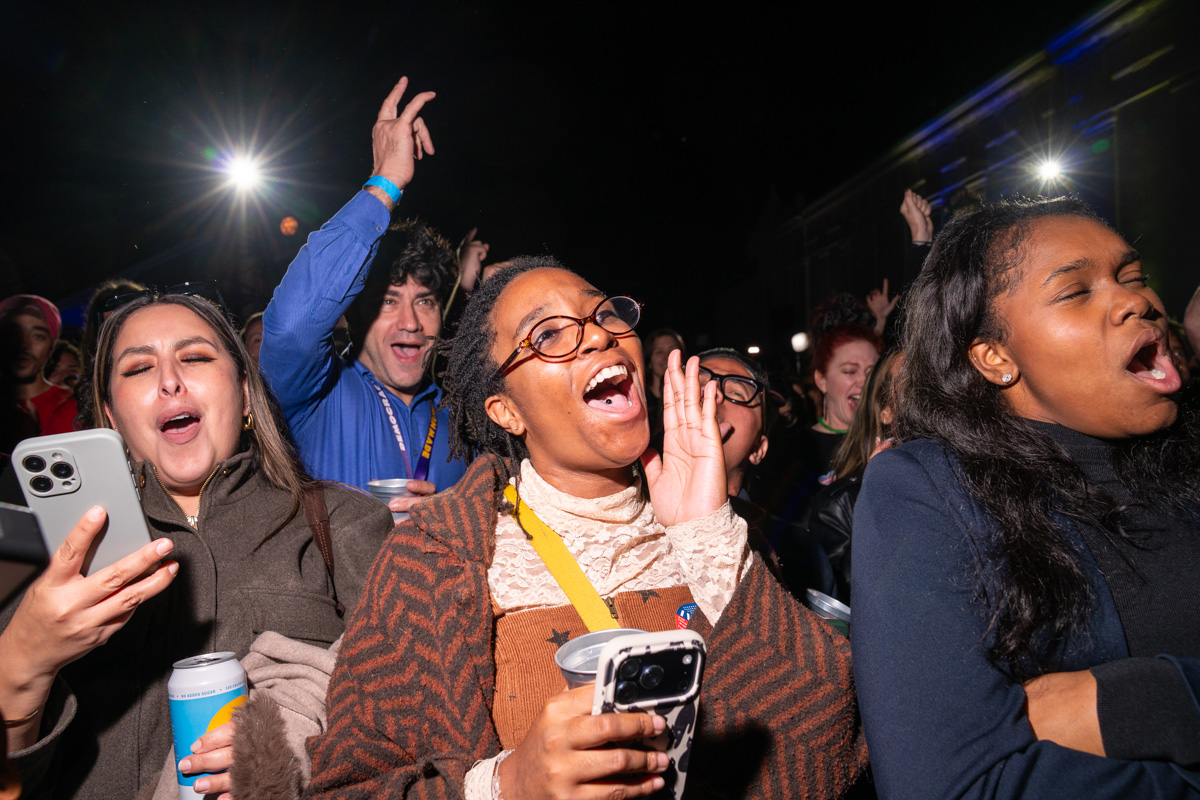
Democrats won big in this year’s midterms, earning large majorities in both the House and Senate. The results have created an opportunity for pro-LGBTQ legislation, like the Equality Act, to be passed by Congress, although President Donald Trump still wields veto power. Nonetheless, queer advocates see the results as a rebuke of the culture war issues that fueled Trump’s ascension to power and are hopeful that politicians elected in the blue wave can create lasting policy changes, both nationally and locally.
Progressive Victory in L.A.
In Los Angeles, elections saw big wins for progressives, with Democratic Socialists of America backed candidates like Nithya Raman, Marissa Roy, and Angela Gonzales-Torres all decisively beating their more moderate opponents.
“I am very excited about the new city administration, excited to see some progressives enter these spaces,” said Maebe Pudlo, a non-binary transgender politician, activist, and drag queen, better known by her drag name Maebe A. Girl. “I’m more hopeful now than I was a month ago,” she said of the election results. Pudlo is a current member of the Silver Lake Neighborhood Council and recently ran for a state Senate seat but lost in the primary.
Pudlo was initially elected to the Silver Lake Neighborhood Council in 2019, making her the first known drag queen to serve as an elected official in the United States. A year later, Nithya Raman was elected to represent City Council District 4, which represents Silver Lake. Pudlo speaks highly of Raman from their experiences working together and Raman’s attentiveness to the public.
“Nithya and her office have always been willing to hear me out, to hear out the neighborhood council, and to address our concerns accordingly,” Pudlo said. “So that ultimately gives me confidence in Nithya as mayor.”
However, Pudlo’s main hope for the new city administration is very specific: “I would like to see our city officials advocate for local hospitals to bring gender-affirming healthcare back,” Pudlo said, referring to Children’s Hospital Los Angeles, which closed its gender-affirming care clinic in 2025 following federal pressure from the Trump-Vance administration.
This was echoed by every LGBTQ advocate and organization the Los Angeles Blade interviewed for this article.
Children’s Hospital Los Angeles
CHLA stopped providing gender-affirming care to minors in June 2025, following dozens of different health systems across the country taking similar action due to an executive order by President Trump and threats from Health & Human Services Secretary Robert F. Kennedy. Jr. and then-Attorney General Pam Bondi.
However, gender-affirming care for minors has remained legal in many states where health systems suspended their services, including California, and is still being administered by other healthcare providers. CHLA’s Center for Transyouth Health and Development was the largest clinic in the country that provided gender affirming care to patients. When it shut down, nearly 3,000 patients had their care abruptly ended.
“Even now, a year and a half later, families are still scrambling for care,” said Farrah Dodes, president of PFLAG Los Angeles, the L.A. chapter of a national organization that advocates for queer rights. “At PFLAG, we work with a lot of these families,” Dodes said. “They found some care, they’ve piecemealed it together, but it’s not the same holistic care that was offered by CHLA.”
Both Mayor-elect Raman and City Attorney-Elect Roy said on the campaign trail that they would use their positions to pressure CHLA to reverse its decision and reinstate gender-affirming care. Now advocates want them to act.
Colin Campbell, an activist with Protect Trans Youth LA, has been actively protesting against CHLA’s closure of their gender affirming care clinic for well over a year. Campbell was frustrated by a lack of action from Mayor Karen Bass and City Attorney Heidi Feldstein-Soto, who he says “haven’t done crap” to pressure CHLA to provide gender-affirming care.
Because of this, Campbell made an effort to meet Raman and Roy on the campaign trail, speaking with them about CHLA and advocating for healthcare for trans youth. He believes that they will follow through with their commitments to reopen the clinic. “I think they’re going to help us,” he said.
Many advocates believe that the fact that gender-affirming care for minors is legal in California shows that CHLA capitulated to the Trump-Vance administration in an effort to avoid protracted legal battles and reputational damage.
“All hospital and health care systems that have ceased the provision of gender-affirming care were engaging in pre-compliance with the Trump administration,” said Joe Hollendoner, CEO of the Los Angeles LGBT Center.
“This is legal and medically necessary care,” he said. “If you look at the law here in California… [it is] discriminatory not to provide the care.”
This is a view that City Attorney-Elect Marissa Roy seems to agree with. Speaking with the Los Angeles Blade last month, Roy said as City Attorney she would tell CHLA “to comply with state law, which bans that discrimination.”
Tony Hoang, executive director of Equality California, the state’s largest LGBTQ civil rights organization, said he was encouraged by Roy’s commitment to using her office to protect trans youth. “We appreciate that the City Attorney-Elect is willing to use every tool in their arsenal to protect our community,” said Hoang.
National Impact on LGBTQ Organizations
Democrats won in the most decisive election since 2008, winning in districts and states that have long been thought of as securely Republican.
Many Democratic candidates were relentlessly smeared with anti-transgender attacks, with President Trump going as far as calling South Carolina Sen.-Elect Dr. Annie Andrews “Tranny Annie” on the campaign trail (Andrews is cisgender). While Andrews and other Democrats ultimately triumphed over their Republican opponents, it was not always without concessions.
In Andrews’s case, following these anti-transgender attacks, she released a campaign ad stating that she does not support transgender women, who she referred to as “biological men,” playing in women’s sports. She also stated she does not support gender-affirming surgery for minors and never performed gender-affirming surgery in her career as a pediatrician. Gender-affirming surgery is very rarely performed on minors nationally.
Even with some Democratic backtracking, queer advocates are hopeful culture war attacks surrounding LGBTQ people are on the decline.
“Voters got trans attack fatigue,” Dodes said, adding that people wanted politicians who focused on material concerns over cultural wedge issues.
Hoang echoed this view, saying “The Trump administration and their allies overreached in a really drastic way, constantly attacking trans kids and getting into foreign wars without paying attention to their one issue, which was affordability. That’s what got Trump elected.”
Advocates also expressed optimism that the cultural shift signaled by the election results could ease the financial problems that have hit queer organizations, non-profits, and businesses over the last two years.
After President Trump returned to office, he immediately ended all federal diversity, equity, and inclusion programs and heavily encouraged companies in the private sector to do the same. This environment led to a dramatic decline in support for LGBTQ groups, with many local Pride organizations losing corporate sponsors and facing funding shortages. Advocacy groups saw a similar decline in sponsors and corporate donations.
“I think for most advocacy groups, it’s been terrible. Our partners just lost so much funding. They’ve lost support,” said Dodes. “People are not as vocal. Because it’s like you’re touching a third rail.”
Hoang said Equality California experienced a similar decline. “We had a number of partners that had been long-term partners in a very significant way either step back completely or go silent in their support,” he said.
Hoang is hopeful that companies and donors will view the midterm election results as a sign that President Trump’s crusade against DEI and marginalized communities is unpopular and resume their support for queer organizations. “We hope this shows partners, particularly in business, that it is OK to come back and fully embrace LGBTQ+ equality,” he said.
Hollendoner is more skeptical. “For those institutions and corporations that stepped away from the LGBTQ community during this moment of political pressure or culture war, I really question whether or not they are true allies and how we as a movement would welcome them back into supporting our work,” Hollendoner said, but acknowledged an increase in support is needed.
Affordability impacts LGBTQ people
A large part of why Democrats won so decisively this election is because of their focus on affordability issues. Many advocates who spoke with the Blade highlighted how these issues are not insular from the LGBTQ community.
“I am deeply worried about the impact affordability is having on our community more generally,” Hollendoner said. As people need to stretch their paychecks further to make ends meet, he is concerned that many people who make donations to support LGBTQ organizations might stop because of “the current expense of life.”
“What I want elected officials to do right now is to walk and chew gum at the same time,” Hollendoner said. “I want them to be able to hold the Trump administration accountable… and at the same time, I need them to focus on affordability, I need them to focus on solving homelessness, I need them to focus on ensuring access to healthcare.”
In L.A., Pudlo similarly hopes that the new mayoral administration can solve some of the affordability issues that have plagued the city. She believes action taken to lower costs has a major impact on queer people, many of whom come to Los Angeles from around the country for its vibrant LGBTQ culture and acceptance.
“When you create more affordable housing, when you create additional systems of support and create more permanent supportive housing, that impacts the LGBTQIA community in a positive way,” Pudlo said.
California
Stephen Post wins final seat on WeHo City Council
Edges past Duran, Brazeal to join Byers, Krieger
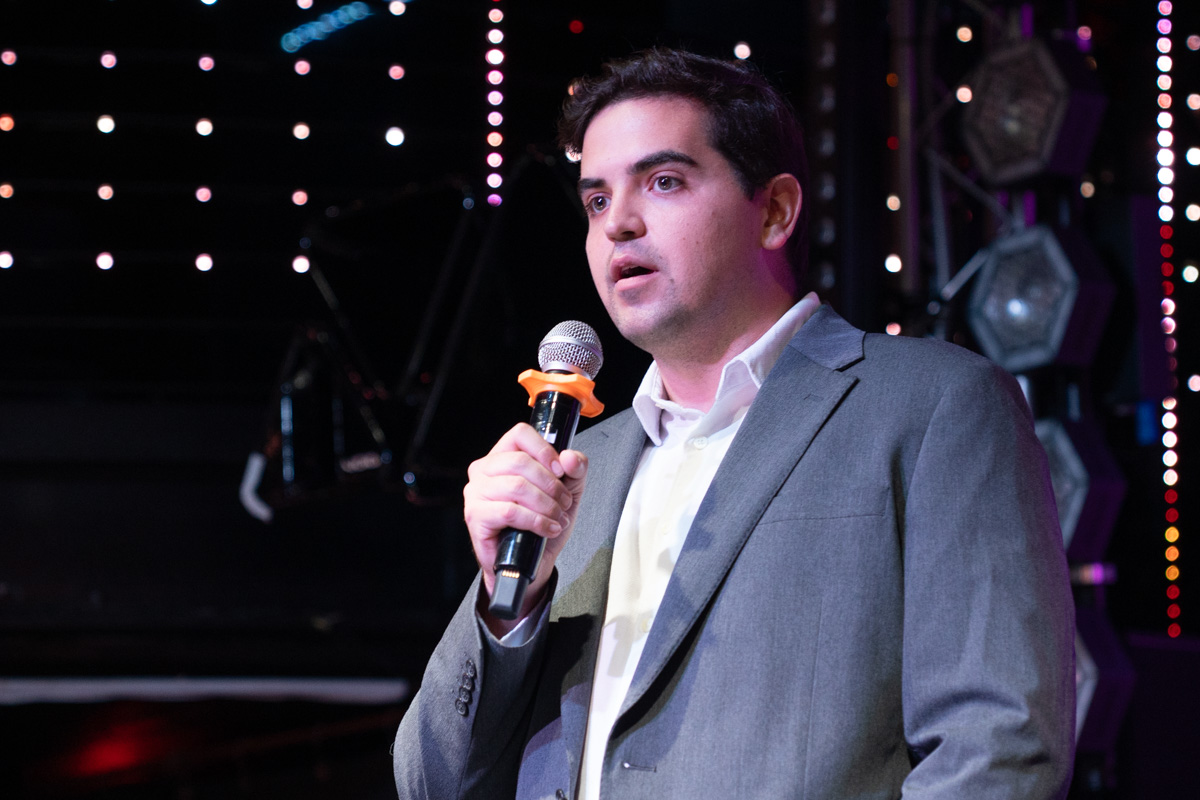
Stephen Post has won the final seat on the West Hollywood City Council, joining Chelsea Byers and Helen Krieger as the winners of this election cycle. Post beat out candidates John Duran and Kyle Brazeal in the tight race for third. While ballots are still being counted, Post leads fourth place Duran by nearly 500 votes and his lead has been growing with each new vote count. Duran conceded to Post on Saturday morning.
In Los Angeles County, younger and more progressive voters tend to cast their ballots closer to Election Day, meaning they often get counted later. This is what caused Post’s seeming comeback victory, although this is more a factor of California’s slow ballot counting process.
Post ran a progressive campaign, focusing on an aggressive opposition to Flock cameras, which he said posed serious privacy concerns for WeHo residents, amounting to mass surveillance. He also supported the plan for bike lanes on Fountain Avenue and building more housing in WeHo, including in large apartment buildings. Post was the only candidate endorsed by the Los Angeles chapter of the Democratic Socialists of America, whose members vigorously canvassed for him and helped him reach voters.
Post is a newcomer to politics as City Council will be his first time in elected office. He works as a business improvement district manager and previously was a non-profit advocate for criminal justice reform.
These election results illustrate a progressive sweep of the Council, with Byers and Krieger supporting many of the same policies as Post. All winning candidates were endorsed by the Unite Here! Local 11 union, which has become a powerful player in Los Angeles campaigns, as they also backed the successful campaign of Mayor-elect Nithya Raman. More moderate candidates like Duran, Brazeal, and Larry Block all placed in fourth, fifth, and sixth place respectively.
With Council member John Erickson staying on the Council after losing his state Senate election to Brian Goldsmith, progressives will have a 4-1 majority meaning they will be able to pass their agenda with relative ease. Vice Mayor Danny Hang is more moderate but has often collaborated with Erickson and Byers on a case-by-case basis.
The voters have spoken and a progressive agenda is coming to West Hollywood. Younger and first time candidates have won out over experienced WeHo political figures.
Caleb Kaufman is a California Local News Fellow placed with the Los Angeles Blade. The California Local News Fellowship is a state-funded initiative to support and strengthen local news reporting. Learn more about it at fellowships.journalism.berkeley.edu/cafellows.
California
Nithya Raman wins Los Angeles mayoral election, ousting Karen Bass
Mayor-elect commits to protecting queer Angelenos from Trump attacks
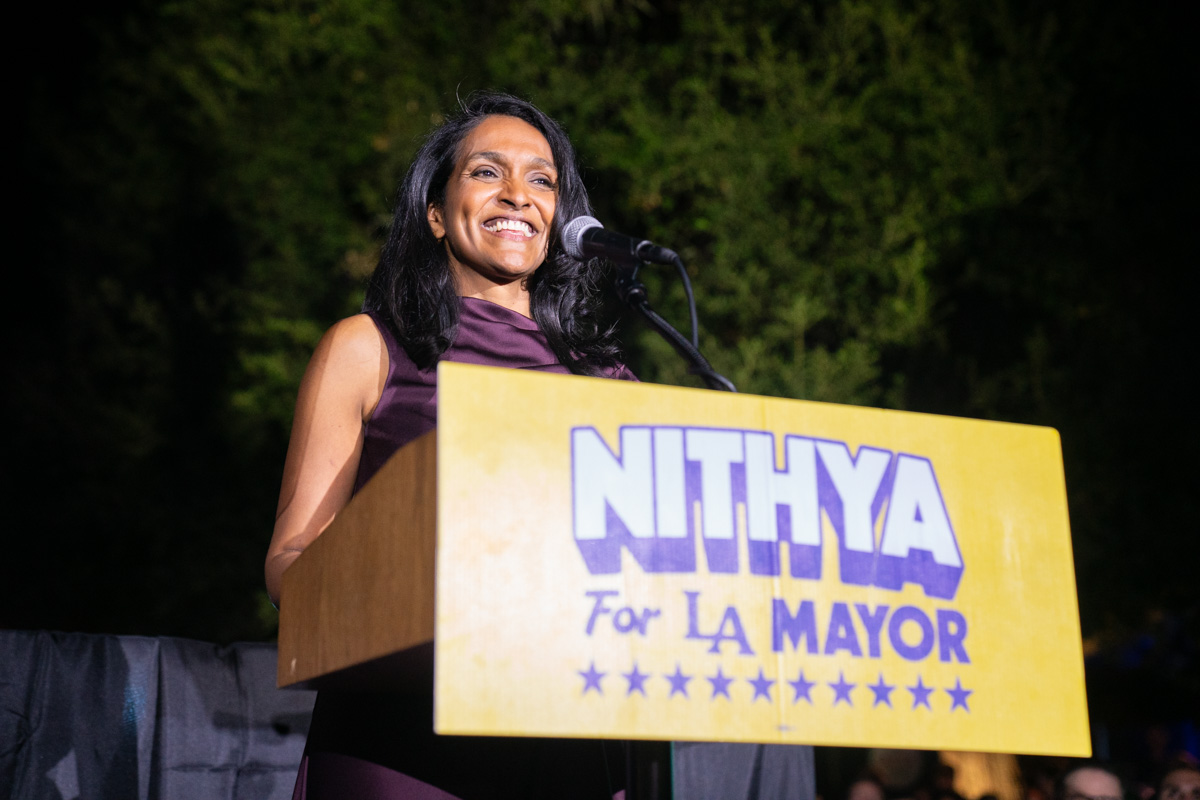
Nithya Raman is the projected winner of the Los Angeles mayor’s race, beating out incumbent Karen Bass in a contentious campaign to lead the second largest city in the nation. Raman has won 52% of the vote with 75% of precincts reporting.
Earlier in the year, City Council member Raman’s chances of pulling off a victory seemed slim. Mayor Bass won handily in the June mayoral primary, and Raman came in a distant second, inching out the bombastic former reality TV star Spencer Pratt to secure a spot in the runoff.
Raman ran on a progressive platform that promised to address chronic issues in Los Angeles, like homelessness, affordability, and lack of housing supply. Raman made the case that the Bass administration had not confronted these challenges effectively and that Los Angeles needed new leadership that could.
A newcomer to politics, Raman first ran for office in 2020 when she won a seat on the Los Angeles City Council, the first time a challenger had defeated an incumbent for a city council seat in nearly two decades. Her election was a shock to the L.A. political establishment and taught Raman how to effectively organize a grassroots campaign, a skill that would be invaluable to her 2026 mayoral victory.
Despite lacking establishment backing, earning no endorsements from her fellow council members, Raman was supported by many progressive organizations and unions, including the L.A. chapter of the Democratic Socialists of America, Unite Here! Local 11, and the Western States Carpenters union. They provided her with thousands of eager canvassing volunteers and organizers. These canvassing efforts helped sway public opinion and introduce Raman to voters who had likely never heard of her.
Homelessness was a particular flashpoint in the election. In April, reporting by the L.A. Times showed 40% of the people who participated in Mayor Bass’s signature anti-homelessness program ended up back on the streets within a year, and overall homelessness levels increased across the city in the last year. Raman pointed to her district’s near 50% decline in unsheltered homelessness between 2025 and 2026 as proof she could confront the issue more effectively. But time will tell if she can translate this success city-wide.
Mayor Bass served a hectic and tumultuous term as the first woman mayor of Los Angeles. In early 2025, she had to deal with the fallout of the Palisades fires, one of the most destructive wildfires the city has ever seen. Only a few months later, Immigration and Customs Enforcement raids shocked immigrant communities around L.A. and subsequent protests shut down the city. In response, President Trump deployed the National Guard to the streets in a move many saw as federal overreach, further inflaming tensions.
These remarkable challenges ingrained anti-incumbent sentiment among some voters who believed Mayor Bass could have done more to help Angelenos in both instances.
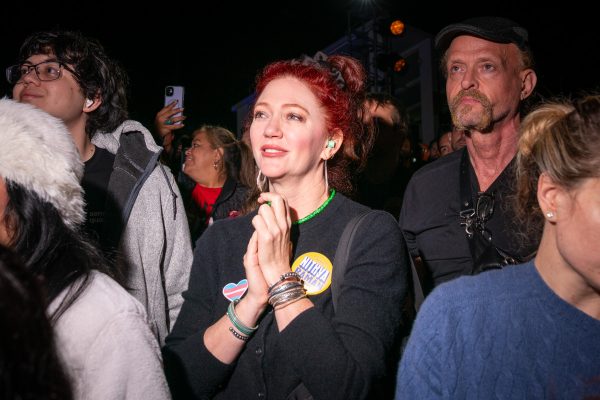
Raman spent her campaign painting the mayor as insufficiently proactive in countering the policies of the Trump-Vance administration. Raman has promised to protect L.A.’s queer community from federal actions that could harm them, especially emphasizing her support for the transgender community, which has been the target of numerous attacks from President Trump.
The Mayor-elect said she would pressure Children’s Hospital Los Angeles to reevaluate its ending of gender-affirming care services. The hospital’s center for Transyouth Health closed in 2025 following federal pressure to end trans healthcare for minors, impacting more than 2,000 patients who were receiving care when the closure occurred. Despite federal threats, gender-affirming care remains legal in California.
Speaking with the Blade last month, Raman said she would “reach out to [CHLA’s] board and speak to them about that decision and see how we can push them to do better [for] trans patients,” outreach she said had not happened under the Bass administration.
In her election night speech to an energized crowd at the Greek Theater, Raman reiterated her support for the queer community, committing to “show up for our gay and trans siblings,” across Los Angeles.
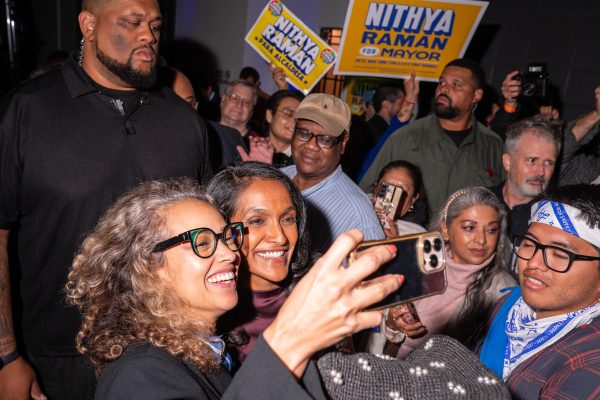
Caleb Kaufman is a California Local News Fellow placed with the Los Angeles Blade. The California Local News Fellowship is a state-funded initiative to support and strengthen local news reporting. Learn more about it at fellowships.journalism.berkeley.edu/cafellows.
California
Xavier Becerra wins California governor’s race
Governor-elect has long track record of LGBTQ support

Just minutes after polls closing, Democratic candidate Xavier Becerra was named the projected winner of California’s governor’s race by the Associated Press, beating out the Republican Steve Hilton. Becerra has a long history in elected office, serving as a congressman representing parts of Los Angeles and East LA, then as California Attorney General, and most recently as the Secretary of Health and Human Services under President Joe Biden. He also has a long history of supporting pro-LGBTQ policies.
As a congressman, he voted against the 1996 Defense of Marriage Act, which banned same-sex marriage on the federal level. As California attorney general, he sued the Trump-Pence administration in 2017 over a policy that aimed to ban transgender people from serving in the military. As HHS Secretary, he publicly defended access to gender-affirming care for transgender patients, including for minors, noting that it has been shown to reduce suicidality among transgender youth. This is a major contrast to the current HHS Secretary Robert F. Kennedy Jr., who has since made the agency’s official policy that it “rejects gender ideology and condemns the harms it causes to children.”
In his campaign for governor, Becerra has continued to support gender-affirming care, saying in a statement on X that “as Governor, I will stand firm to secure California’s status as a sanctuary state for trans youth and their families,” and posting an image with the phrase “protect trans youth.”
Becerra’s opponent Steve Hilton made LGBTQ issues a small but loud part of his campaign.
He opposed transgender participation in women’s sports, attending and speaking at a “Save Girl’s Sports” rally that called for a ban on transgender people playing in women’s sports in California. In an interview with the San Francisco Standard, Hilton was asked about his favorite girl’s sport, responding “I don’t follow girl’s sports,” and declined to make any commitments to further women’s competition in sports beyond calling for an end to transgender participation.
Hilton came under further criticism from the LGBTQ community for releasing an innuendo-laced campaign advertisement in October that appeared to show two women in an intimate setting before revealing that one is trying to convince the other to vote for Hilton. Jorge Reyes Salinas, communications director at Equality California, called the ad “a disgusting attempt to exploit lesbian intimacy for political attention” in an interview with the Blade. It was also unpopular among conservatives, with Evangelical Pastor Jack Hibbs stating that the ad was distasteful and that “lesbianism among college girls and some high school girls right now is an actual pandemic of social ill.”
Becerra’s victory in the governor’s race is no surprise in California where registered Democrats outnumber registered Republicans nearly 2:1. The real challenge was making it past the primary election. After former Congressman Eric Swalwell dropped out of the Democratic primary amid allegations of sexual misconduct, Becerra seized on the opportunity and became the frontrunner. He later beat out billionaire Tom Steyer in the June primary to become the Democratic nominee.
In the general election, Becerra ran a quiet campaign for governor, counting on support from the overwhelmingly Democratic California electorate. As a result, Becerra has been sparse on many specific policy commitments on the campaign trail. However, his track record indicates that California’s next governor will likely support pro-LGBTQ policies.
Caleb Kaufman is a California Local News Fellow placed with the Los Angeles Blade. The California Local News Fellowship is a state-funded initiative to support and strengthen local news reporting. Learn more about it at fellowships.journalism.berkeley.edu/cafellows.
California
L.A. LGBT Center used canvassing effort to reframe conversation around trans healthcare
‘Gender affirming care access as part of health care access for all’
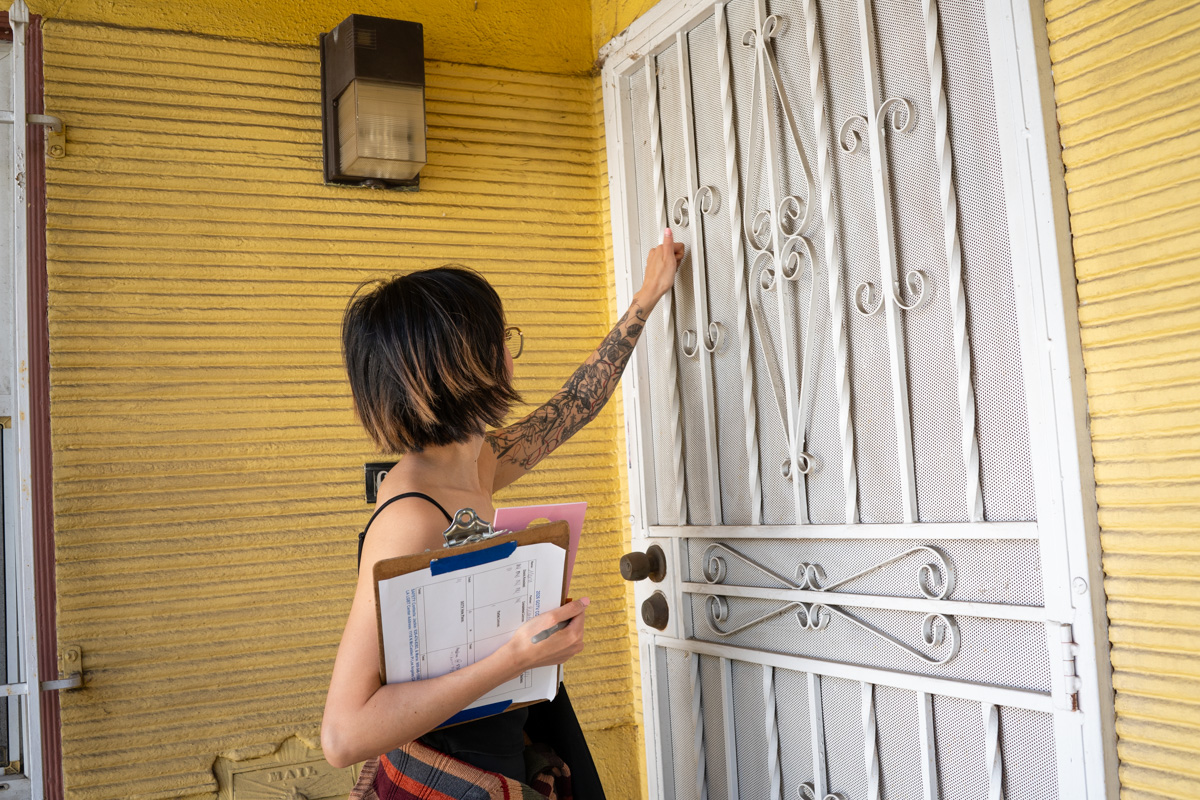
The Los Angeles LGBT Center has seen the impact of fearmongering rhetoric about transgender people firsthand so it set out to change the narrative.
The L.A. LGBT Center this year began a new deep canvassing initiative to combat misconceptions about transgender healthcare. The volunteer canvassers are encouraged not only to share facts and voting information, but also to connect with voters by using personal experiences to frame their political engagement. “The key components of deep canvassing involve getting vulnerable and curious with the voter and exchanging stories to show how political issues are tied to personal real lived experience,” said Maria Do, the community mobilization manager at the L.A. LGBT Center.
The campaign focused on speaking to voters in the San Gabriel Valley, a working class and ethnically diverse area on the far east side of Los Angeles County. The deep canvassing campaign targeted the city of Monterey Park in particular, a neighborhood home to large Chinese, Vietnamese, and Cambodian immigrant populations. The goal was to connect with infrequent voters who may be uninformed or misinformed about LGBTQ issues. They focused mainly on informing voters about gender affirming care and then encouraging them to vote in the upcoming midterm elections.
“There have been a lot of attacks and just a lot of misinformation around gender affirming care,” Do said. This campaign aimed to dispel misconceptions about transgender care and to treat it like any other kind of healthcare. “We’re trying to frame gender affirming care access as part of health care access for all,” Do said.
Deep canvassing
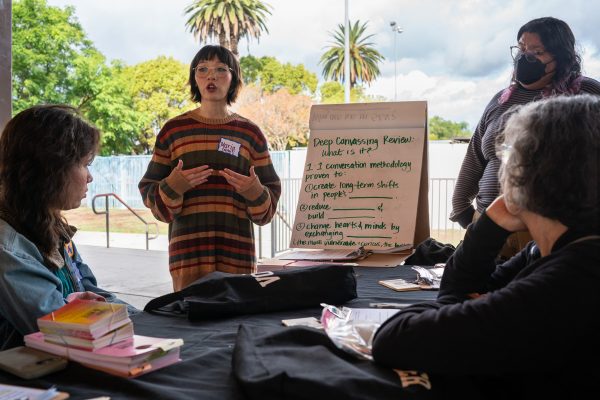
Deep canvassing at the LGBT Center has its origins in the political battle over the 2008 ballot proposition to ban gay marriage in the state of California. After the ballot proposition passed, the center organized volunteers to knock on doors and have conversations with voters who supported it. These conversations surprised advocates.
“Concerns voters had about same-sex marriage weren’t rooted at all in lived experience, but were fed through media misinformation and their own biases,” Do said. This convinced organizers at the LGBT Center that having face-to-face interactions with voters would be the most productive way to combat narratives that dehumanized and politicized queer rights. This same technique is being utilized by the center today to target rising anti-trans sentiment and policy.
Do says that many people are unaware of reduced access to gender affirming care and threats against health systems, patients, and providers from the federal government. Many did not know that Children’s Hospital Los Angeles shut down the largest gender affirming care clinic for trans youth in the country following pressure from the Trump-Vance administration. When canvassers inform people about these challenges, they often get into conversations about a voter’s own struggles with healthcare access.
“They have shared a lot of stories about Medi-Cal access being cut,” Do said. Voters have also expressed concerns over Immigration and Customs Enforcement (ICE) officers in their communities. These similar concerns over healthcare access and federal overreach can help build solidarity across demographic communities. “To share that attacks are also happening on the transgender community has allowed space to sort of see the through line between different efforts to help protect various marginalized communities,” Do said.
What’s on the ballot
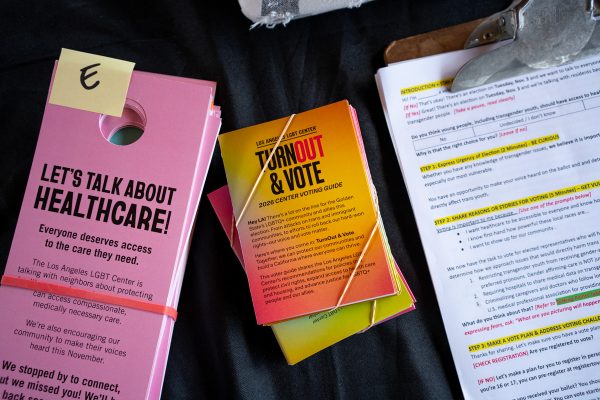
The L.A. LGBT Center is non-partisan and has not officially endorsed any candidates on the ballot. But the organization still views this election as consequential for queer people across the state and decided to weigh in on six of the statewide ballot propositions, emphasizing an opposition to Proposition 44.
The proposition would mandate that community health clinics spend 90% of their annual income on patient care. While proponents of the measure say that it would ensure that clinics are prioritizing services over profits, critics say that its definition of patient care is too narrow, that 90% is an unrealistic goal, and it would end up hurting patients more than helping them.
LGBT Center officials have said that it would harm community clinics around the state, including others that specialize in queer healthcare.
“Community clinics who fall short [of spending 90% of revenue on program expenses]… would face severe penalties, an estimated $1.7 billion in the first year alone. At a time when the federal government is seeking to strip people of healthcare, this measure will lead clinics to close and make matters worse,” the L.A. LGBT Center’s director of advocacy Joey Hernández said in a written statement.
“It isn’t always going to be a win”
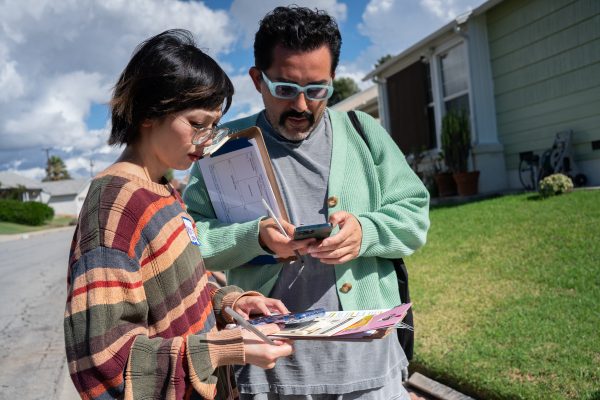
Ricardo Sebastiań has volunteered for two of the deep canvassing actions with the LGBT Center and said it is an effective way to change people’s minds.
“Canvassing is a tried and true tactic for advocacy,” Sebastián said.
They think that a face-to-face conversation with someone can humanize what can otherwise feel like abstract political issues. “Even if you’re meeting somebody who has a different worldview, there is an opportunity there to find middle ground, and that shifts people. You never know the type of impact you’re going to have on somebody when you’re having an open dialogue,” Sebastián said.
Do said that volunteers have spoken with people who had never met a transgender person before and that these conversations around trans healthcare can drastically change these people’s perspectives. “Folks started to see themselves and started to empathize,” when they spoke about transgender healthcare with canvassers with the LGBT Center, Do said.
When out knocking on doors, the most common response for canvassers is, well, nothing. Most of the time, knocks go unanswered and volunteers simply leave behind pamphlets provided by the LGBT Center. And even when canvassers get someone to the door, they can often be preoccupied and dismissive. But this doesn’t discourage volunteers like Sebastián. They feel like the productive conversations they have make it all worth it.
“It isn’t always going to be a win,” Sebastián said. “There’s always going to be somebody who doesn’t want to talk to you or doesn’t care or is very staunch in opposing views. But you can’t let that discourage you from getting to the next door.”
Caleb Kaufman is a California Local News Fellow placed with the Los Angeles Blade. The California Local News Fellowship is a state-funded initiative to support and strengthen local news reporting. Learn more about it at fellowships.journalism.berkeley.edu/cafellows.
California
City Attorney candidate Marissa Roy to Children’s Hospital L.A.: ‘You still have to comply with state law’
Roy said CHLA’s ending of trans healthcare could be illegal under California law that bars discrimination on the basis of gender identity
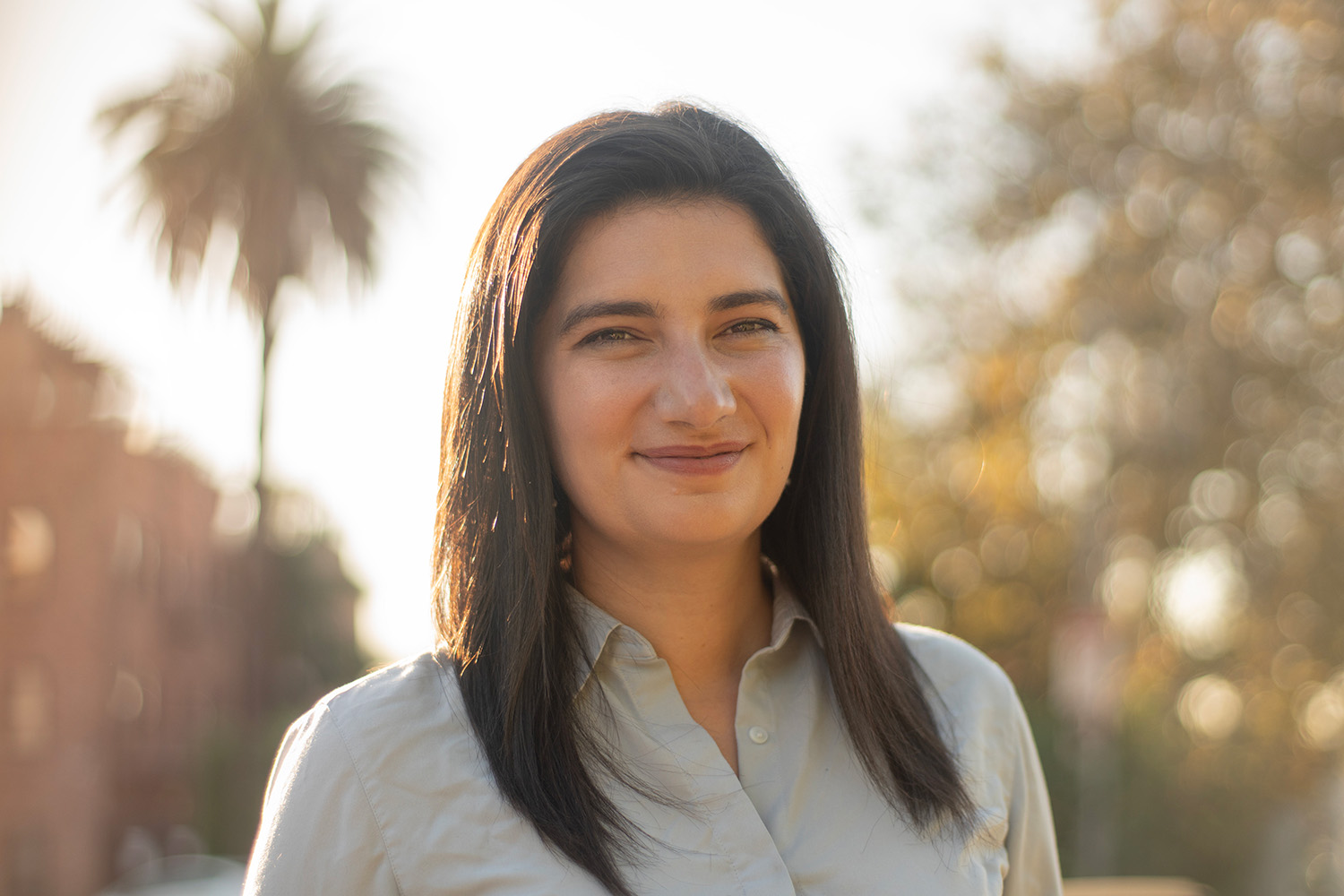
California Deputy Attorney Gen. Marissa Roy is in a race against Deputy District Attorney John McKinney to be the next City Attorney of Los Angeles. The election for City Attorney has been overshadowed by L.A.’s Mayoral election and the national midterms that will determine control of both chambers of Congress. However, the City Attorney has the power to interpret national, state, and local laws in Los Angeles, set guidelines for enforcement of laws, and represent the city in civil and misdemeanor capacities. This means the winner of the election will shape the city’s legal priorities from law enforcement to civil rights and consumer protection.
Roy spoke with the Los Angeles Blade in an exclusive interview discussing her campaign priorities and her plans if elected as the L.A.’s next City Attorney.
First and foremost, Roy views Los Angeles as a city under siege by the Trump-Vance administration and believes that the current City Attorney, Hydee Feldstein Soto, could have done more to insulate the city from harm.
“I think the thing to remember with the Trump administration at the end of the day is that they’re bullies,” Roy said. She believes that the city should be fighting the Trump-Vance administration in court more aggressively and more frequently. “We need to be really active in this litigation because it is what works,” she said, adding that when the National Guard was deployed in L.A. amid protests against Immigration and Customs Enforcement, California state sued for their removal, not the city.
A particularly prominent example of the Trump-Vance administration’s policies impacting Los Angeles came last year when Children’s Hospital L.A. ended its gender-affirming care services amid federal pressure. Roy said that if elected, she would work to get the hospital to reinstate the “life-saving care” the hospital provided for transgender youth. She said that regardless of executive orders to end gender affirming care for minors, it still remains legal in California and that it may be a violation of the California Unruh Civil Rights Act to deny trans patients care on the basis of their gender identity.
“As city attorney, I would want to work with the California Department of Justice to say that you still have to comply with state law, which bans that discrimination,” Roy said. She also said that the city could join numerous other lawsuits against the Trump-Vance administration, as it has targeted gender-affirming care and transgender rights across the country, something current City Attorney Feldstein Soto has not yet done.
Roy said another priority of her campaign was to wield the City Attorney’s office to protect Angelenos from predatory employers, landlords, and companies. She wants to scale up the public rights branch of the City Attorney’s office from 25 to 100 lawyers to help the city proactively prosecute workers’ rights, tenant rights, and consumer protection cases. When the city wins these cases, they not only get back pay and restitution for the litigants, they also get civil penalties from whoever violated the law, which can then go towards fighting more cases. “These are revenue-generating sections, and they operate based on the penalties they win, so that is how we are able to scale up the work,” Roy said.
But more important than any individual issue, Roy wants to show Angelenos that the city is actively working for them, not just waiting and watching. “I know that this office can be a fighter and that people deserve their government to be fighting with them,” Roy said. “It shouldn’t always fall on their shoulders … this should be an office that is your lawyer.”
For more information, head to www.MarissaRoy.com.
Caleb Kaufman is a California Local News Fellow placed with the Los Angeles Blade. The California Local News Fellowship is a state-funded initiative to support and strengthen local news reporting. Learn more about it at fellowships.journalism.berkeley.edu/cafellows.
California
Nithya Raman makes her case for LGBTQ voters in the race for LA Mayor
The mayoral candidate said she would use ‘every tool that the city has to protect trans Angelenos’
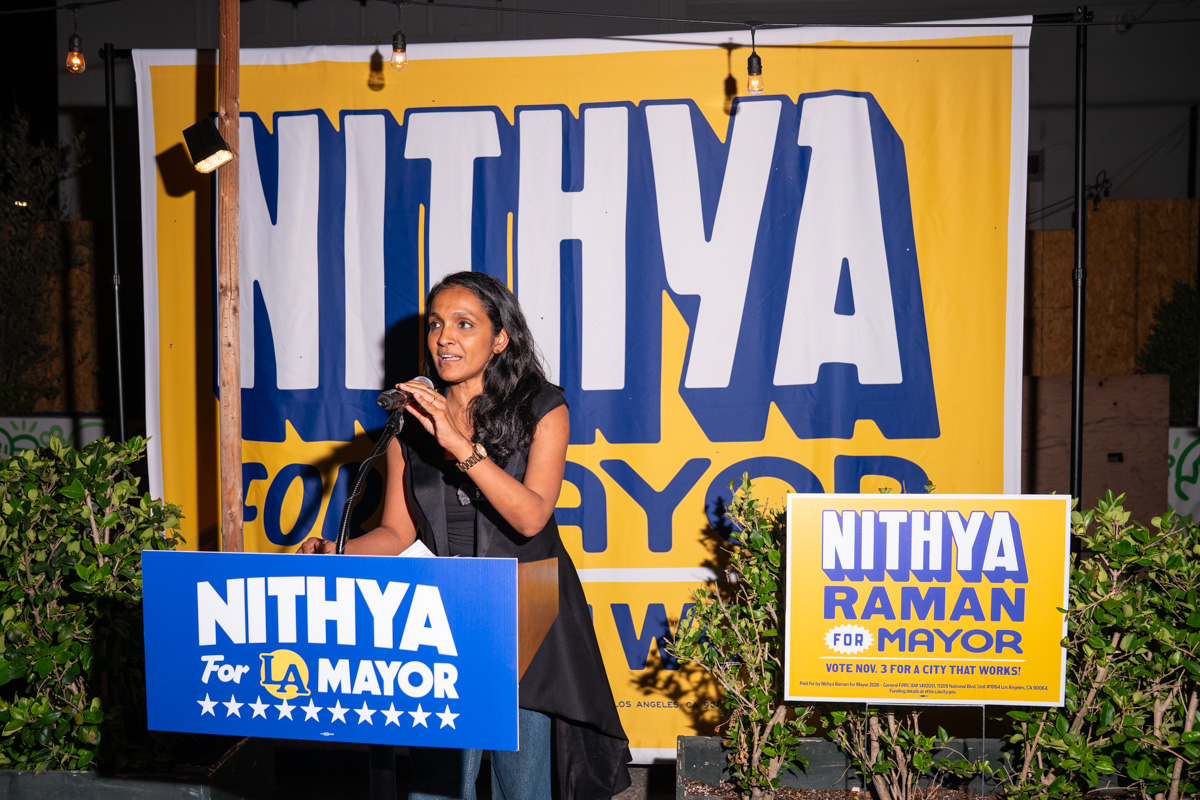
On a cool evening, around a hundred people gathered at the Black Cat’s outdoor seating area in Silverlake. The crowd was full of precisely trimmed mustaches, sleeveless cardigans, and colorful rainbow pins that read “Nithya Raman for Mayor of Los Angeles.”
This was the “Coming out for Nithya” LGBTQ fundraiser for Nithya Raman’s mayoral campaign.
The event which took place on October 8th, was hosted by gay comedian Joel Kim Booster and Pickles the Drag Queen. The pair encouraged the queer audience to support Raman and to donate money to her campaign. The event ended with over $20,000 raised to support Raman according to an organizer of the fundraiser.
Raman is locked in a tight race to become the next mayor of Los Angeles with current incumbent Karen Bass. After coming second in the mayoral primary in August, defeating right-wing provocateur and former reality TV star Spencer Pratt, Raman and Bass advanced to the general election. Since then, current City Councilmember Raman has been steadily gaining in the polls, with most showing her now maintaining a consistent lead over Bass. But the race is far from over, as many of the same polls show a large portion of voters are still undecided. Mayor Bass did not respond to multiple requests to comment on this story.
After an hour of the audience ordering drinks and snacking on appetizers, Raman took the stage. She addressed the audience in an impassioned speech where she invoked the history of the historic Black Cat venue where the event was taking place.
In the early hours of New Year’s Day 1967, undercover police officers raided the gay bar, arresting and beating patrons for kissing people of the same gender as the new year rolled in. The raid left many queer community members badly injured, and others were permanently placed on the sex offender registry. The bar would soon have its liquor license revoked and was forced to close only a few months later.
“Six weeks after the raid, hundreds of people stood right where we are right now on Sunset [Avenue] and peacefully protested,” Raman said in her speech. “In 1967 being seen on that sidewalk could cost you your job, it could cost you your home, it could cost you your family, and they showed up anyways,” she said. “How remarkably brave.”
She then tied the historic oppression of queer people in Los Angeles to contemporary issues, highlighting the Trump-Vance administration’s targeting of transgender people. “Right now, Donald Trump and the people around him are running a coordinated attack on trans people,” she said. Raman remarked on how this targeting of trans people has impacted Los Angeles. “Last year, under pressure from the Federal government, Children’s Hospital Los Angeles shut down the largest clinic for trans youth in the country,” she said, referring to Children’s Hospital Los Angeles’ decision to suspend gender affirming care services.
“As mayor, I will use every tool that the city has to protect trans Angelenos,” Raman said to ecstatic applause from the audience.
After her speech, Raman spoke with the Los Angeles Blade about the specific actions she would take to protect Angelenos from the federal government.
According to Raman, the federal administration is conditioning funding to the city “in ways that undercut some of the values of inclusiveness that we have here,” she said. “Going through the courts is very powerful… I would do more of that. This city has actually not filed as many cases as other cities have.”
Speaking about CHLA’s ending of gender affirming care services, Raman said, “There are other hospitals that have not stepped back from their services as quickly as CHLA did.” If elected as Mayor, Raman said she would “reach out to their board and speak to them about that decision and see how we can push them to do better [for] trans patients,” she said, adding that she doesn’t think “that outreach has happened yet” under Mayor Bass’ administration.
She added that her campaign’s focus on affordability and affordable housing is particularly important for queer people. She said that if elected, she would create “an office of tenant protections” to help renters most vulnerable to being priced out of the city.
“Housing is what makes LA a haven for people,” Raman said. “If you can’t afford to live here, then LA is not a place that is inclusive anymore.”
Caleb Kaufman is a California Local News Fellow placed with the Los Angeles Blade. The California Local News Fellowship is a state-funded initiative to support and strengthen local news reporting. Learn more about it at fellowships.journalism.berkeley.edu/cafellows.
AIDS and HIV
AIDS Walk Los Angeles takes to the streets in West Hollywood while raising money for HIV/AIDS Care
The annual fundraising event was attended by thousands and raised over $850,000
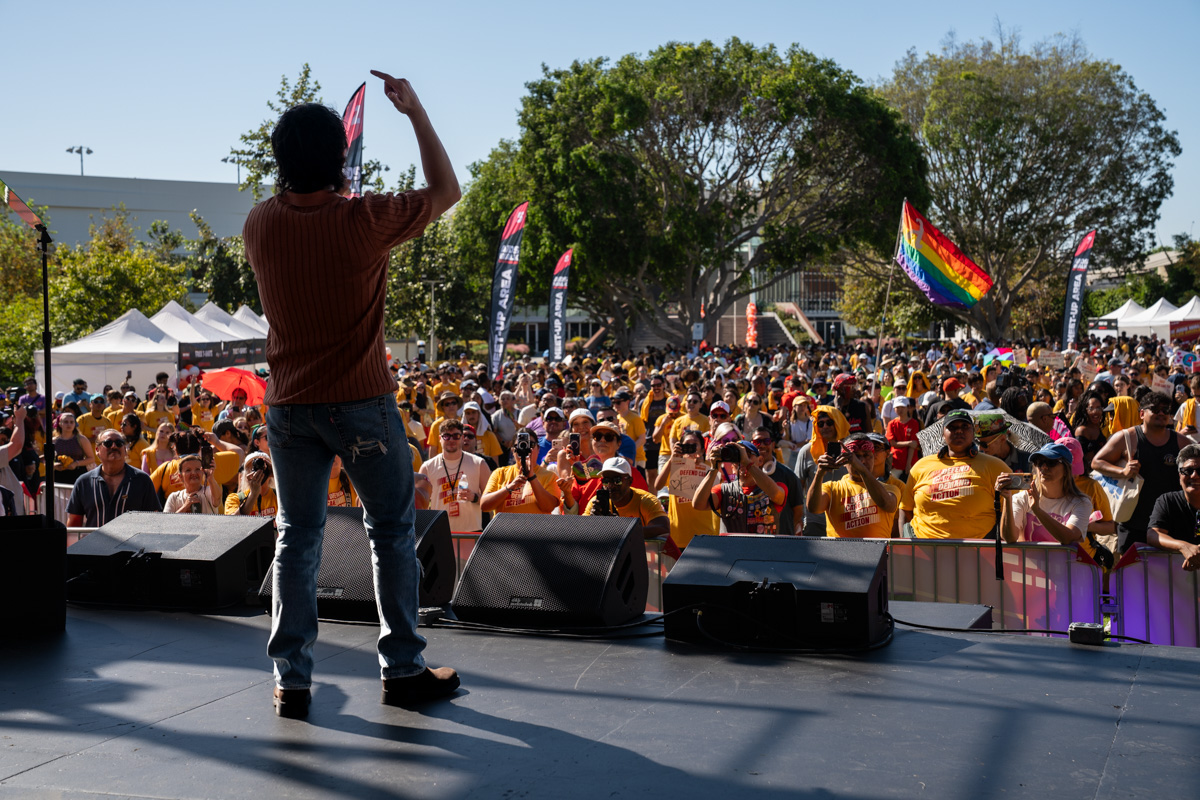
Hundreds of yellow shirts and thousands of people took over the streets of West Hollywood during AIDS Walk Los Angeles on Sunday, October 18th. Organized by APLA Health, the event raised over $850,000 for HIV/AIDS healthcare and prevention. Oakwood School raised the most money of any organization, with over $62,000 in donations.
Before the march began, participants gathered at West Hollywood Park, where speakers addressed the crowd from a large main stage. City officials and celebrity guests spoke before the march began, including Mayor John Heilman, County Supervisor Lindsay Horvath, comedian Joel Kim Booster, and singer David Archuleta.
CEO of APLA Health, Craig E. Thompson, took the stage and addressed the state of HIV and AIDS care in America. He spoke about the first AIDS Walk LA in 1985, which began when there was a “federal administration that stayed silent when thousands of our friends, partners, and neighbors were dying.” “We’ve been there before, and here we are again,” he said, referring to the federal cuts to HIV prevention programs, Medicaid, and more. According to Thompson, Medicare provides more healthcare to more people living with HIV than any other provider.
But despite these federal cuts, Thompson was hopeful for the future of HIV care, drawing on lessons learned early on in the epidemic by the original AIDS activists. “We didn’t wait for permission,” he said. “We showed up, we raised our voices, we walked, and we protected our community.”
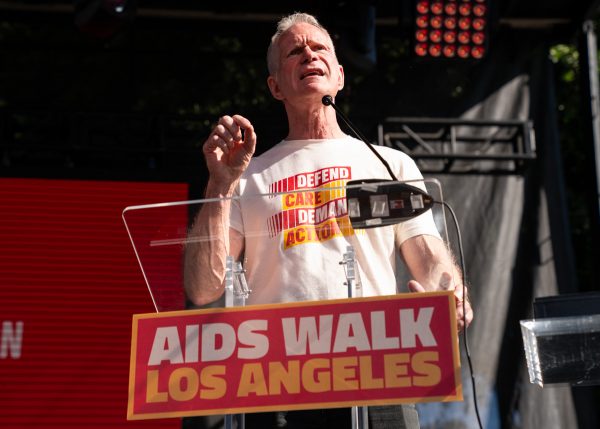
APLA Health CEO Craig E. Thompson speaks at AIDS Walk Los Angeles in West Hollywood Park on Sunday, October 18th, 2026.
Actress Michaela Jaé Rodriguez was honored with the first-ever Voice of Visibility Award for her work fighting stigma around HIV and AIDS. Known for her Golden Globe-winning performance as Blanca Evangelista in Pose, Rodriguez told the crowd that those living with HIV “are not statistics.”
“We are not disposable. Instead we’re daughters. We’re mothers. We’re sisters. We’re brothers. We’re fathers. We’re artists. We’re creators. We’re actors. We’re award winners,” she said to a roaring audience.
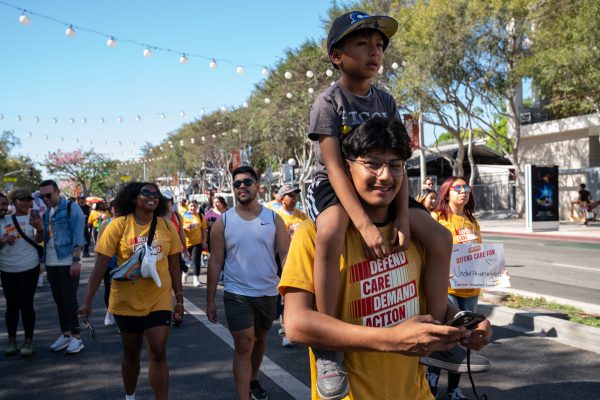
People walk down Santa Monica Boulevard during AIDS Walk Los Angeles on Sunday, October 18th, 2026.
The mood was joyful as the walk began. Many people carried signs with the names of loved ones living with HIV. Multiple musical groups performed, including a drumline, a pep band, and a mariachi group. People laughed, cheered, and danced as they strutted up and down Santa Monica Boulevard.
As the walk looped back to West Hollywood Park, people sat around talking with friends and community members. I walked past the lines for free ice cream and flu shots and wandered over to the AIDS Monument, which opened recently in 2025. Designed by artist Daniel Tobin, the monument is unlike most others. It is abstract, made up of tall and narrow metal poles and marble blocks.
A young tour guide in a baseball cap and chic sunglasses was giving a tour of the monument to a group of about five people. The guide’s name was Jude Schoenfeld, the Director of Public Programs for One Institute. Schoenfeld spoke, and the group walked through the metal beams emerging from the ground. At first, the poles were spread out organically like trees in a forest, but as the group wandered further, they unified into an organized grid towards the far end of the monument. This is where they stopped.
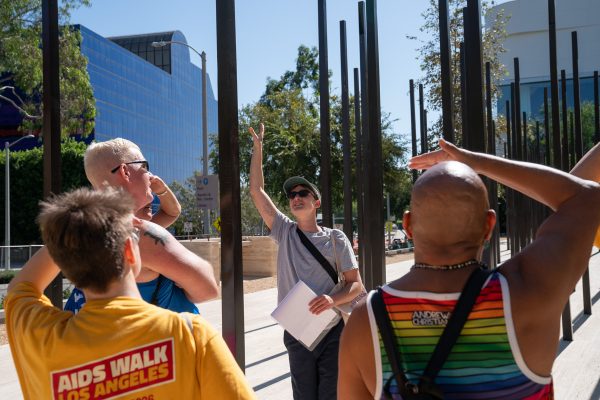
Jude Schoenfeld gives a tour at STORIES: The AIDS Monument after AIDS Walk Los Angeles in West Hollywood Park on Sunday, October 18th, 2026.
Quotes from the gay poets Gil Cuadros and Essex Hemphill were inscribed on a bronze plaque. Schoenfeld read them and remarked on how the artists died so young from complications with AIDS, both passing away in their late thirties. An older member of the tour group interjected, saying that living that long actually felt old for gay men at the time. “No one from that era that was gay expected to live beyond forty. We thought we were all gonna die of AIDS,” he said. “So thirties, that’s a whole life. We lost everybody when they were in their twenties.”
After the tour ended, I asked Schoenfeld what it’s like to give tours to people who lived through the early years of the AIDS epidemic, when you could lose a friend in a few months with hardly any warning. “Oftentimes, it’s emotional for people to be here,” they told me. “The great aspect of the tours is that they become a conversation and a place for folks to share memories.”
“People who’ve been in Los Angeles and West Hollywood for decades have just such a rich understanding of the history here. I’ve learned so much from just talking to folks who come on the tours,” Schoenfeld told me.
As we stood next to the monument with music blasting and kids playing a few hundred feet away, Schoenfeld told me about why they think it’s so important to learn the history of AIDS activism. “It’s never been more important,” they told me. “Especially as we’re seeing threats all around from different institutions that want to take funding away and want to take these resources that we’ve spent so long building.”
“I think this is a really important juncture in history,” they said. “We want this to be a site of continued activism.”
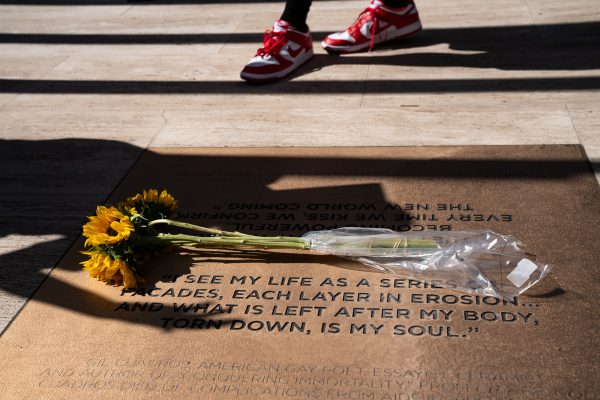
Flowers are laid on a plaque at STORIES: The AIDS Monument in West Hollywood Park on Sunday, October 18th, 2026.
California
Trans woman says Kyle Brazeal used anti-trans slur, threw purse at her in 2024
WeHo City Council candidate denies he said ‘tranny’ during argument at Gym Bar
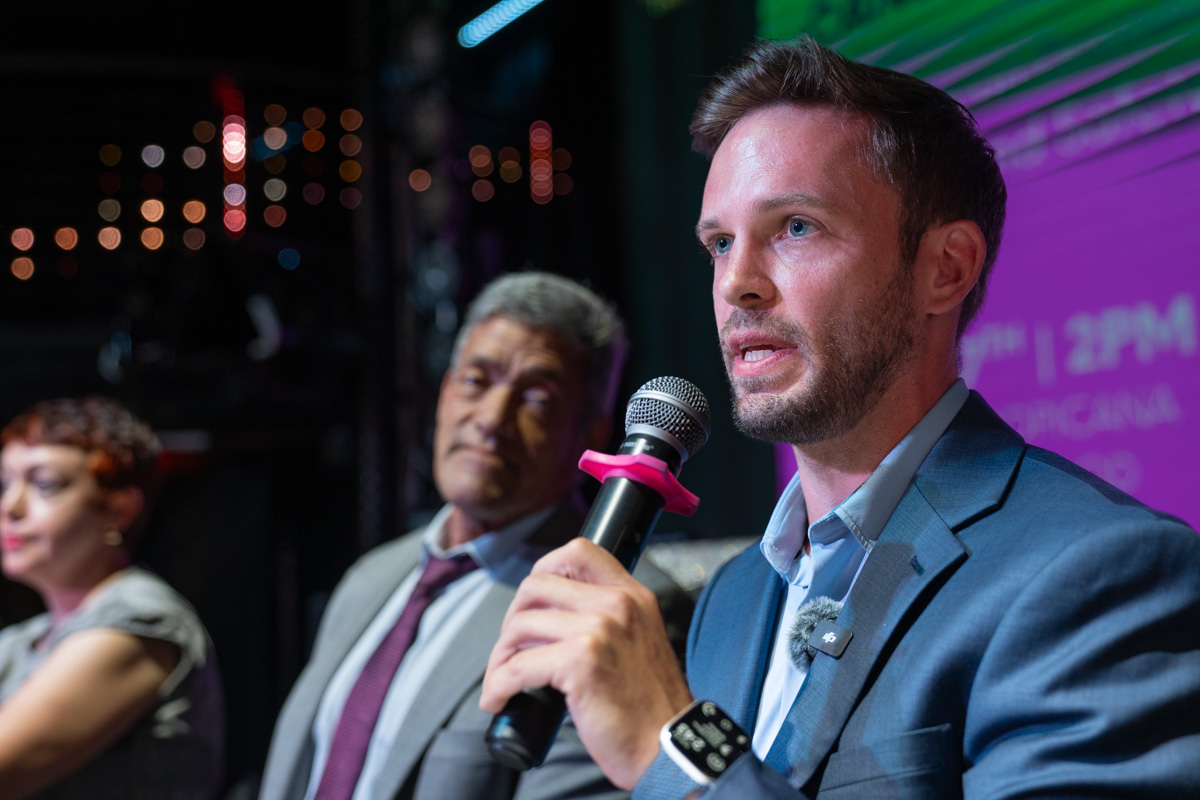
A transgender woman claims that West Hollywood City Council candidate Kyle Brazeal called her a “tranny” and threw a purse at her at Gym Bar in 2024.
The Los Angeles Blade spoke with the alleged victim and two people who say they witnessed Brazeal’s actions that night. The Blade has also obtained timestamped video that places Brazeal at Gym Bar that evening and text messages from the following day describing in detail what allegedly occurred on Sunday, Dec. 29, 2024.
Brazeal said in a written statement that “I categorically deny the allegations.” He added that while he was involved in “a disagreement” at Gym Bar that night, that “this incident is being deliberately misrepresented and weaponized for political purposes in the final weeks of this election.” Addressing the transgender community in West Hollywood, Brazeal said, “I will continue to stand with you as a Council member, just as I did before I was a candidate,” citing his donation to a GoFundMe for gender affirming surgery as evidence of his support.
Upon requesting comment, Brazeal referred the Blade to Rolandos Liatsos, his current campaign treasurer and friend of Brazeal’s who was with him at Gym Bar that evening. Liatsos gave his account of the night and said he never witnessed Brazeal use any slurs or throw the purse.
‘Get out of my way, tranny’
On Dec. 29, 2024, Amber says she went to Gym Bar with a group of friends, including Tommy Craven and Rick Turpin. Amber’s real name is not being used to protect her privacy.
The group arrived at Gym Bar around 5 p.m. The evening started out well. “Just being around friends that night was really good,” Amber said. “There was no problem whatsoever.”
Turpin also recalls having fun. “We were having a good time,” he said. Amber came out as trans a few years earlier and was still adjusting to life as an out transgender woman. “It was nice to see [Amber] embracing her transition and … it seemed like she was feeling herself,” Turpin said.
After chatting with her friends for an hour or so, Amber left to use the bathroom. At the time, Gym Bar had only two single-occupancy restrooms, so there was a line of people waiting to use them. After a few minutes, the line advanced and Amber went into an open restroom.
Soon after entering, Amber said she heard knocking on the bathroom door. She yelled, “Hey, there’s someone in here.” A minute later, the knocking began again. It was a “really rude knock,” Amber said. “So, I felt like I needed to rush through. I felt really uncomfortable.”
For Amber, the situation was especially stressful because of her identity. “I’ve had situations in the past as a trans woman where I have been attacked for using the ‘inappropriate restroom,’” she told the Blade.
Flustered, Amber said she quickly left the bathroom, leaving her purse inside. After exiting, she asked the line of people waiting, “Who was knocking?” she said.
“Me,” she said a man replied while looking down at his phone. He then brushed past her and entered the bathroom while saying, “Get out of my way, tranny,” Amber said. She said she later learned the man’s name was Kyle Brazeal.
Amber was stunned. She had faced transphobia before but not at an LGBTQ bar. Not in West Hollywood.
“I was in a full moment of just frustration, anger,” she said. Amber said she slammed her palm on the bathroom door and stormed off, going back to her friends who were still chatting at their table.
Amber’s friends saw she was upset. “I sat down, and my friends knew something was wrong,” she said. Then Amber told her friends she was called a slur.
“They were, like, wait, what?” she said. “Everybody was in fun-drinking mode, so they didn’t understand what had occurred.”
Amber sat watching the bathroom. As soon as Brazeal exited, she walked over to confront him about what he said.
“What did you call me?” Amber loudly asked him.
At this point, Craven and Turpin heard the yelling coming from the restrooms. The two walked toward the commotion to see what was happening. They saw Amber confronting Brazeal by the door to the bathroom. Craven knew Brazeal beforehand from other community spaces they were both involved with. “I could recognize him right away,” he said. Turpin also said he recognized Brazeal.
Amber said that Brazeal took the purse that she left inside the bathroom and threw it at her, saying, “You left your tranny purse in there.” Craven and Turpin both corroborated Amber’s account of the events, saying that they heard Brazeal use the slur and saw him throw the purse at Amber.
After Brazeal threw the purse and used the anti-trans slur, Amber shoved him and the two got into a shouting match, according to Amber. Craven also recalled seeing “shoving” but did not specify who did what. The two were soon separated by security and staff.
Craven quickly called the owners of Gym Bar, Erik Braverman and Jonathan Cottrell, to inform them of what happened. (Cottrell is also currently running for West Hollywood City Council). Craven had known Cottrell and Braverman for years and considered them friends. The owners then told Gym Bar’s general manager about the incident.
Soon, the general manager spoke with Brazeal and “Kyle was asked to leave the bar,” Craven said. Upon being asked to leave, Brazeal began yelling profanities and “used the word ‘tranny’ toward Amber again,” Craven said. Turpin also recalls Brazeal using the slur as he was asked to leave. “He kept saying ‘tranny,’” according to Turpin.
Video footage taken by Tommy Craven shows Kyle Brazeal outside Gym Bar on Dec. 29, 2024. Craven says the video shows Brazeal after he was asked to leave by security.
The incident left Amber shaken. Afterwards, she sat down with her friends, and Craven and Turpin tried to cheer her up by making jokes about the situation. It didn’t improve her spirits.
“She was jarred; it happened at a bar that she considers a safe space,” Craven said. He described Amber as “a very private person” and said that she was satisfied with how Gym Bar handled the situation and did not file any complaints with law enforcement.
Amber said that time constraints also factored into her decision to not speak to the police. She was living in a housing program with an enforced 10 p.m. curfew, meaning she had to leave the bar soon after the incident occurred to get home in time.
Amber took an Uber to go home and did not see Brazeal again.
‘No throwing of the bag, no hate speech or anti-trans stuff’
But according to Rolandos Liatsos, the incident that evening played out very differently. Liatsos said he went to Gym Bar with Brazeal and a few others to celebrate a friend’s birthday. The two have known each other for more than a decade and are good friends. Liatsos is also Brazeal’s campaign treasurer.
According to Liatsos, after hanging out at the bar, Brazeal went to get in line for the bathroom and was on the phone. Once Brazeal entered the bathroom he saw Amber, whom he had never met before, return to a table with her friends. She seemed very upset.
Brazeal soon exited the restroom, carrying the purse Amber had left. Brazeal walked up to the table and attempted to hand the purse back to Amber but was stopped by her friends who moved to stand between them. Then they started arguing and yelling at each other.
But never at any point did Brazeal throw the purse, according to Liatsos. “There [was] no throwing of the bag, no hate speech or anti-trans stuff,” Liatsos said.
He also claims that he did not see anyone get shoved, or the two parties getting physical in any way. “There was no physical contact,” he said.
After the arguing between Brazeal and Amber’s friends, Gym Bar staff asked Brazeal and his friends to leave. “Good, let’s just go, … let’s defuse the situation,” Liatsos recalled thinking. Soon after, he, Brazeal, and their friends left the bar.
Liatsos later learned from Brazeal that he knocked on the bathroom door as Amber was inside, which he believed upset her. “I see this as a situation escalating from knocking at the door, feeling rushed,” and nothing more, Liatsos said.
He said the claims of transphobic and aggressive behavior were not consistent with what he saw that night and contrary to who he knows Brazeal to be. “I’ve known Kyle for so many years and we’ve been out so many times,” Liatsos said. “I’ve never seen him attacking … any individual.”
Aftermath
The next morning, Dec. 30, Craven sent a text message to a group chat that included Jonathan Cottrell describing what happened and naming the alleged perpetrator as “Kyle (seen in video),” referring to the video that shows Kyle Brazeal outside Gym Bar on Dec. 29.
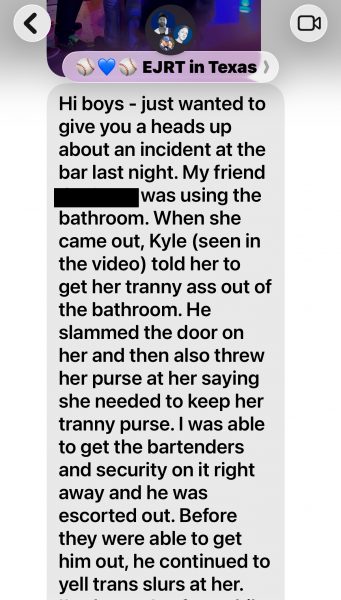
Screenshot of an excerpt of the message sent by Tommy Craven to a group chat with Jonathan Cottrell on Dec, 30, 2024. Identifying details have been redacted.
Braverman and Cottrell told Craven that Brazeal was banned from Gym Bar. However, both Craven and Turpin claim to have seen him at the establishment multiple times after the incident. Cottrell said in a written statement that “it was a temporary ban,” but would not discuss why or when the ban was lifted because Gym Bar “(doesn’t) share internal incident matters.”
This temporary ban is contradictory to a message from Cottrell’s Instagram account that was sent to Amber on Dec. 30, 2024. In it, he states that he would make sure that the “individuals” involved in the incident “don’t ever come back” to Gym Bar.
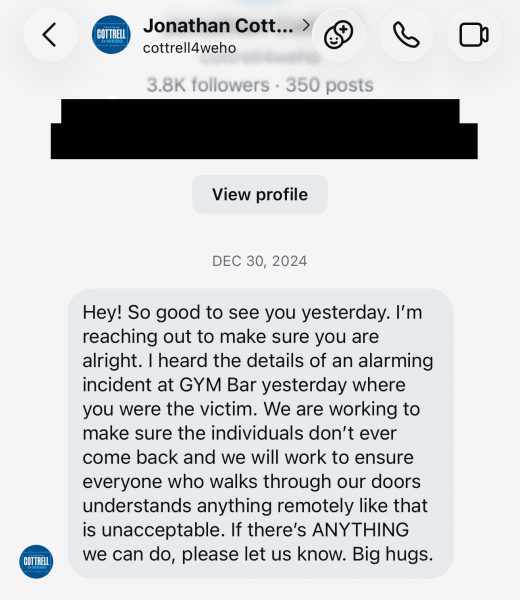
Screenshot of a message sent by Jonathan Cottrell’s Instagram account to Amber’s account on Dec. 30, 2024. Identifying details have been redacted.
The race for City Council
Brazeal announced his candidacy for City Council in April 2026. Craven heard about his campaign in June. “I was aware it was the same person,” he said, immediately recognizing him as the man who allegedly berated his friend a year and a half ago.
Later that month, Craven reached out to Braverman and Cottrell, who had recently announced his own campaign for City Council, to inform them that Brazeal was the same man from the night. “They were definitely surprised by it,” Craven said.
After being made aware that Brazeal was allegedly the same man from the transphobic incident at their bar, the owners did not state anything publicly, following Amber’s wishes. Cottrell has not mentioned anything on the campaign trail even as he and Brazeal have been endorsed by some of the same organizations like Equality California and Sunset West Alliance.
“At the time of the incident, our staff asked the woman involved whether she wanted us to take any further action, and she said she did not,” Cottrell said in a written statement. “This was never our story to tell. Gym Bar has always been a safe space for everyone in our community, and that will never change.”
Craven and Turpin waited to talk publicly about the incident because they wanted to keep their friend’s experience private.
“Ricky and I thought … something [else] would be said to kind of give light to the kind of person that Kyle is without us having to use our friend’s story,” Craven said. “But now because it’s closer to the election [and] stuff has not come to light, I feel the community would be safer knowing.”
Amber did not hear about Brazeal’s candidacy for City Council until last week, when she was informed by friends that a reporter for the Los Angeles Blade was investigating allegations of a transphobic incident involving him. These days, she splits her time between the Los Angeles area and other parts of the country so she has not been following local politics closely. But when she looked up his campaign, she instantly realized that this was the same man from that night. “I saw the face and pictures … and I made the connection,” she said.
“This is something that I need to address,” she added. She said that it can feel “impossible” as a trans woman to call out people who express bigotry without facing “repercussions.” Brazeal’s bid for City Council motivated Amber’s decision to speak publicly about the incident. “He is seeking a position of power in the city,” she said. “He needs to understand that this is stuff that just doesn’t go away.”
Reflecting on the incident, Amber said she’s still shocked and upset. “I was floored that he would use that word in that bar,” she said. By speaking out, she hopes to heal some of the pain caused by Brazeal’s alleged actions and regain her confidence.
“Words do matter and they do hurt and the T-word [used] toward me hurt,” Amber said. “Now I’m trying to use my words to share my story.”
Caleb Kaufman is a California Local News Fellow placed with the Los Angeles Blade. The California Local News Fellowship is a state-funded initiative to support and strengthen local news reporting. Learn more about it at fellowships.journalism.berkeley.edu/cafellows.
California
‘A disgusting attempt to exploit lesbian intimacy for political attention’: suggestive Steve Hilton ad draws criticism
Steve Hilton’s newest ad aimed at liberal voters flops with LGBTQ advocates and conservatives, but for different reasons

Two women sit on a bed, a Pride flag hanging behind them. One is nervous; the other tells her to be calm and that she’ll do “all the work.” The music swells. The two hold hands and — fill out a ballot voting for Steve Hilton?
This is the new advertisement from the Hilton Gubernatorial campaign that is drawing rebuke from both sides of the aisle, but for very different reasons.
Jorge Reyes Salinas, the communications director at Equality California, said the ad was an insult to the queer community. “This ad is a disgusting attempt to exploit lesbian intimacy for political attention,” he said. The advertisement plays on media tropes that Salinas says “reduce lesbian and bisexual women… to sexual entertainment,” rather than showing them as well-rounded characters. “Any group of the LGBTQ+ community deserves the same dignity and respect as everyone else,” he said.
The ad is truly hyper-sexualized. It ends with one woman telling the other, “Now lick it.” The two pause and stare before she reveals an envelope to send the ballot, and large text pops up saying, “Just try it!”
Salinas characterized the ad as a desperate attempt to get attention from a candidate who is trailing far behind in the polls in heavily Democratic California. The Democratic Candidate Xavier Becerra, who is endorsed by Equality California, holds a 25-point lead over Hilton according to recent polling by the UC Berkeley Institute of Governmental Studies.
Conservatives have also criticized the ad. Influential evangelical Pastor Jack Hibbs thought the ad was distasteful and said, “lesbianism among college girls and some high school girls that right now is an actual pandemic of social ill.” Republican AG candidate Michael Gates said it undermines “the sanctity of the relationship between parents and their children.” This criticism is rather confusing because although the ad features two relatively young women, they both appear to be adults, not minors.
“The comments from Pastor Jack Hibbs should be criticized because there is nothing wrong with two women being attracted to each other,” Salinas said. “We’re calling out the ad’s stereotypes, while also rejecting the homophobia in the response to it … by other Republicans.”
The backlash from Hilton’s own party and supporters shows that an advertisement full of queer innuendo was ill-considered, considering the national GOP’s attacks on LGBTQ people in recent years. Hilton himself has been campaigning against transgender girls and women competing in school sports and using locker rooms that correspond with their gender identity. This context might be why Hilton’s political base responded to the ad just as poorly as the liberal voters he was attempting to court.
Hilton says the ad is part of a new series rolling out before Election Day, showing stereotypical California liberal archetypes voting for Hilton. He claims these ads are authentically filmed with real actors, as opposed to being A.I. generated, like many of his previous ads. One other advertisement has been released so far by the campaign showing a man at a spiritual retreat also being swayed to vote for Hilton, although it is notably absent of sexual innuendo.
Caleb Kaufman is a California Local News Fellow placed with the Los Angeles Blade. The California Local News Fellowship is a state-funded initiative to support and strengthen local news reporting. Learn more about it at fellowships.journalism.berkeley.edu/cafellows.

Queer advocates see hope in midterm election results after two difficult years

Monét X Change shares the key to her success

Georgian LGBTQ+ rights group forced into exile

Qommittee launches first national fundraising campaign

Advocacy groups file amicus brief in third country deportation case

Hakeem Jeffries poised to become House speaker

The contradiction of the 2026 midterm election: why we must keep fighting for trans rights
Qommittee launches first national fundraising campaign
Advocacy groups file amicus brief in third country deportation case

Andrew Scott triumphs again in ‘Elsinore’
-
 Congress5 days ago
Hakeem Jeffries poised to become House speaker
-
 Commentary4 days ago
The contradiction of the 2026 midterm election: why we must keep fighting for trans rights
-
 National5 hours ago
Qommittee launches first national fundraising campaign
-
 U.S. Supreme Court1 day ago
Advocacy groups file amicus brief in third country deportation case
-
 Movies4 days ago
Andrew Scott triumphs again in ‘Elsinore’
-
 Georgia3 hours ago
Georgian LGBTQ+ rights group forced into exile
-
 a&e features3 hours ago
Monét X Change shares the key to her success
-

 Books2 days ago
Raised to be straight
-

 Autos2 days ago
Gifts for the car lovers in your life
-
 California2 hours ago
Queer advocates see hope in midterm election results after two difficult years