
Politics
How Stonewall Democratic Club retaliated against critics of its president
Stonewall Democratic Club is a powerful force in local politics, especially in the LGBTQIA+ enclave of West Hollywood.
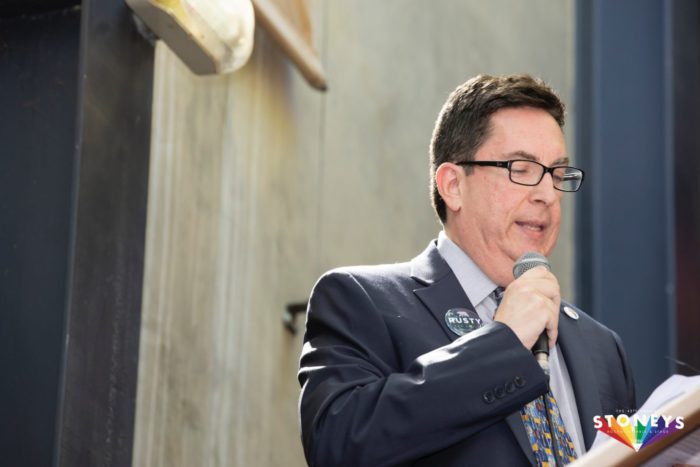

By Kate Gallagher | LOS ANGELES – “I know the ugly side of politics quite well. Any endeavor that involves human beings, there’s going to be mischief somewhere,” said Lauren Buisson. “The system feeds on cronyism and self-dealing, and that’s what I saw at Stonewall.”
Buisson was a member of Stonewall Democratic Club’s Steering Committee until she was dismissed from her position in October 2018. Her capital offense was calling out the racist, transphobic, and otherwise inappropriate Facebook posts made by the organization’s president, Lester Aponte — whose current campaign for a third term as Stonewall president has the support of dozens of elected officials and Democratic Party leaders.
Stonewall Democratic Club is a powerful force in local politics, especially in the LGBTQIA+ enclave of West Hollywood. The organization’s leadership includes high-ranking members of the local, state, and national Democratic Party. Each election cycle, candidates for everything from the Santa Monica School Board to the U.S. Senate vie for Stonewall’s endorsement, a symbolic stamp of approval from the LGBTQIA+ community.
But beneath the veneer of progressivism, several current and former Stonewall members describe a toxic environment of harassment, bigotry, and abuses of power, where dissent is silenced and misconduct is swept under the rug.
“It’s just a really twisted culture about personal gain, personal access, and nothing about advancing LGBT standards of living,” said Craig Scott, a lifelong LGBTQIA+ activist who served on Stonewall’s Steering Committee from 2017 to 2018. “
Sean Kolodji was an enthusiastic young activist when he joined Stonewall in 2009. He soon got involved in the membership team, where he was responsible for recruiting and credentialing new members. By 2015, he’d been appointed to the Steering Committee as Membership Chair. “I felt like we’re really fighting for something,” he said. “We’re fighting for LGBT rights, fighting for the trans community, fighting for diversity, and I was passionate.”
But cracks in the facade quickly started to show. In April 2017, Kolodji won a Stoney Award — the organization’s annual award ceremony/fundraiser — for Member of the Year. Eric Bauman, longtime Stonewall president and then-LACDP Chair, was also there to accept the Public Official of the Year Award.
Bauman, who later resigned as CDP Chair amid sexual misconduct allegations, was “very handsy with everyone,” Kolodji recalled. At one point during the dinner, Bauman began massaging Kolodji’s 20-year-old guest while still seated at the table.
According to several former members, Bauman’s inappropriate behavior was an open secret at Stonewall. None of the club’s leadership ever intervened.
“The pain that we experienced in dealing with the way Eric Bauman interacted — what example did he set for us about how we get power?” Kolodji said. “I feel like there was a structural problem, where we didn’t set the ground rules and say, look, within a professional space we can’t do this.”
That summer, Kolodji was elected to Stonewall’s Executive Team as Communications Vice President. Just days later, Gemmel Moore was found dead in the home of prominent Democratic donor and Stonewall Steering Committee member Ed Buck.
Kolodji, Scott, and Alex Paris, who served as Social Media Chair, pushed the club to publicly disavow Buck’s behavior, and to donate $500 (the cost of Buck’s lifetime Stonewall membership) to Moore’s funeral expenses. They received pushback from several other Steering Committee members, including Aponte, Garry Shay (who serves as the parliamentarian for both Stonewall and the LACDP), and John Erickson, now a member of West Hollywood City Council.
“There were a lot of people in the party that just wanted to be quiet,” Kolodji said. He recalled that, when Black activists posted on Stonewall’s Facebook page asking where the organization stood on Buck’s behavior, Aponte asked that the posts be deleted.
Even once the Steering Committee voted to put out a statement regarding Moore’s death, Aponte fought to soften the statement’s language and frame it around the dangers of drug addiction, rather than Buck’s suspicious role in Moore’s overdose.
“They didn’t want to kick [Buck] out because he gave so much money to the club,” said Scott. “Lester was always like, we can’t jump to conclusions, we need more information.”
Although Buck soon resigned from the Steering Committee, Moore’s death, and the tepid reactions from the rest of the club’s leadership, was a tipping point for Kolodji. “Those experiences together radicalized me a little bit,” he said. “This organization has something rotten at its core, and I can’t just go along with it.”
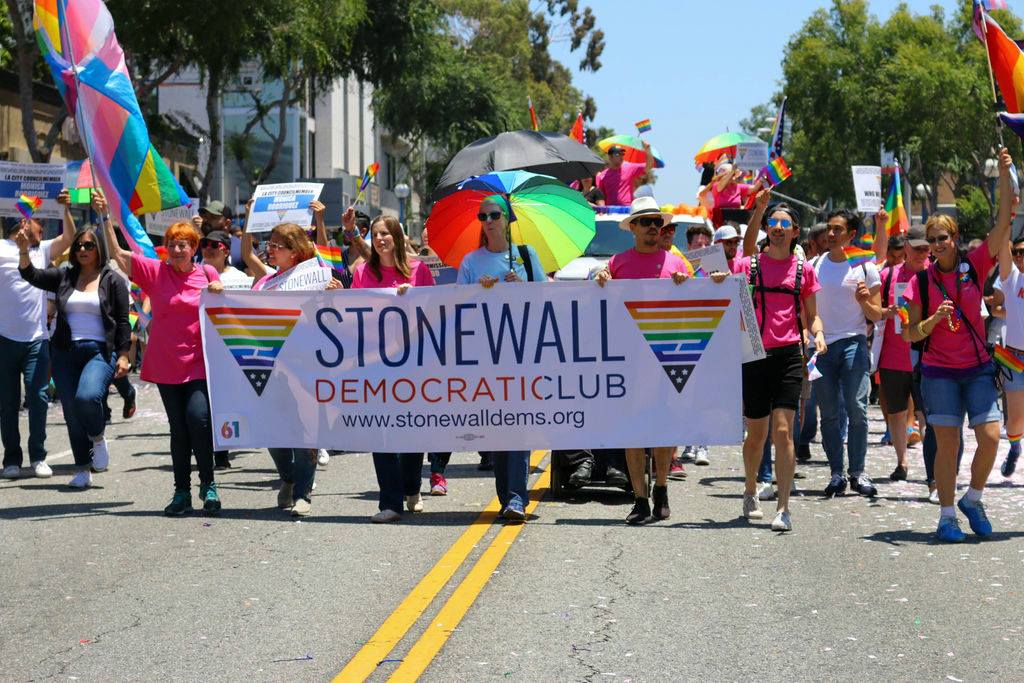
Lauren Buisson joined Stonewall in the summer of 2017, just after the Ed Buck scandal broke. “I actually went to some other [organizations’] events, and of all the ones I went to, the only person who chatted me up as a potential recruit was Sean.”
Kolodji and Buisson met at the annual Stonewall BBQ, hosted at the family home of State Assemblymember Reggie Jones-Sawyer. Buisson soon signed on to join Kolodji and Alex Paris on Stonewall’s communications team, where she managed the club’s social media and led writing and production on the Stonewall Spotlight podcast.
“Alex, Sean, and I worked really, really well together. We had the same social justice driven agenda,” Buisson recalled. “[But] I noticed the problems in the organization almost from the jump. And it especially became clear when the first crisis in the assembly happened.”
In late October 2017, Assemblymember Raul Bocanegra was accused of sexual misconduct. Just a week later, similar allegations surfaced against state Senator Tony Mendoza. After the news broke, Buisson, Paris, and Kolodji led an effort to convince the Steering Committee to draft a statement condemning the two officials’ behavior.
However, Eric Bauman, who at that point was no longer a member of Stonewall’s Steering Committee, stepped in and cautioned them not to move forward with the statement. Buisson found his involvement alarming.
“You had this guy who was himself a serial sexual harasser stepping into club business when he was no longer supposed to be involved,” she said. “Parts of the California Democratic Party like to assert that they have no control or association with the clubs. They absolutely do.”
The statement, drafted by Buisson, was eventually approved by a majority of the Steering Committee, over the objections of Aponte, Garry Shay, and Political Vice President Jane Wishon. As soon as the votes were in, Kolodji sent out the statement.
Immediately afterwards, Aponte confronted Kolodji for “going behind his back” by releasing the statement without his prior approval. Kolodji was baffled, since Aponte had put him in charge of counting the votes for the motion. “It showed that Lester and Garry and the power in the organization were uncomfortable with this kind of rebellion of the grassroots,” he said.
In the coming months, Buisson, Kolodji, Paris, and Scott frequently came into conflict with the rest of the Steering Committee. They were the only four Steering Committee members to vote against accepting a donation from Wells Fargo Bank, which had recently been rocked by a storm of scandals. Aponte ultimately decided to decline the donation after Kolodji leaked the news to LA Health Commissioner and former Stonewall Steering member Susie Shannon, who vagueposted about it on Facebook.
It gradually became clear to Paris that Stonewall’s leadership was “completely ignoring the important mission that this organization was started for… They’re more concerned with consolidating power, more concerned with glad-handing politicos and influence sharing than they are with actually helping LGBT people.”
The political disagreements sometimes turned personal. While discussing endorsements for the 2018 election, Scott, a longtime San Francisco resident, criticized Sen. Dianne Feinstein’s history of moderate positions and suggested that the octogenarian was getting too old to do her job effectively. In response, Erickson criticized Scott’s comments as “ageist” and sent an email to the Executive Team suggesting that Scott should be removed.
“We looked at it, and we were like, okay, this isn’t… this is silly, right?” Kolodji recalled.
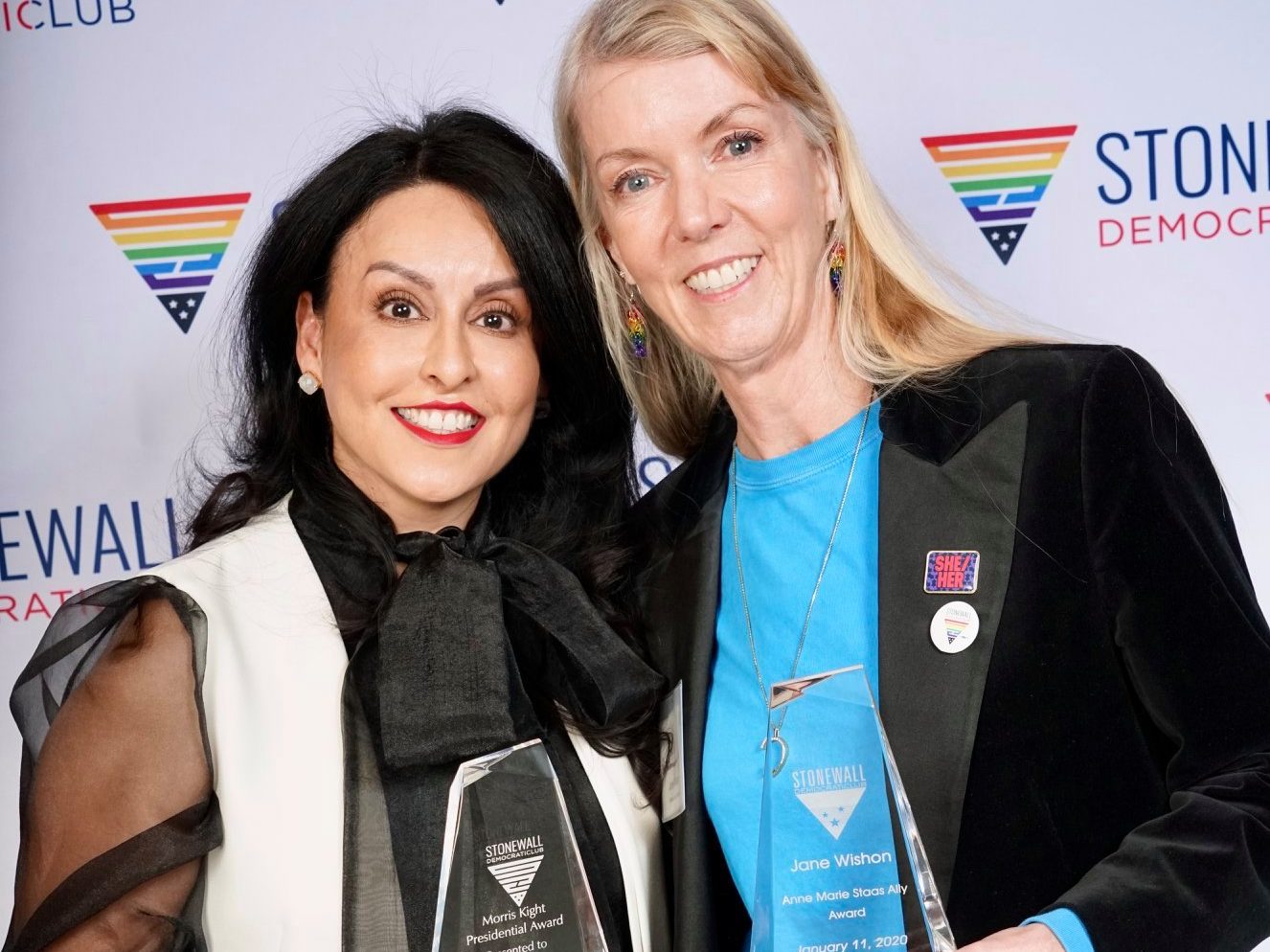
A more serious point of contention was the lack of diversity in Stonewall’s leadership. Of the eight elected officers, there’s currently only one who isn’t a cisgender man — Jane Wishon, who is a straight white woman. While officer positions are open to anyone, including straight allies, the lack of representation for LGBTQIA+ women within the club’s leadership is reflective of a larger problem, not just at Stonewall but in politics and LGBTQIA+ spaces in general.
In 2010, Aponte was on the board of a pro-marriage-equality organization called “Love, Honor, Cherish,” which crafted a failed ballot measure to overturn Proposition 8. The organization, which was entirely composed of cisgender gay men, failed to include any mention of gender identity in the measure.
In response to a Facebook post about the lack of trans-specific language, Aponte said that none of the over 100 activists who were involved in the discussions ever raised any concerns. He seemingly recognized the problem with the group’s lack of diversity without claiming any responsibility for fixing that problem, simply saying, “Obviously we needed some of you in the room. The door has always been open.”
To Hannah Howard, this sounded like a cop-out. Howard, who is trans, attended one Stonewall meeting in 2005, but decided not to engage further after being repeatedly misgendered during the meeting. She was surprised when, just a few years ago, a Stonewall member made a Facebook post about the reasons why trans people have trouble engaging with the movement — and Aponte responded with incredulity.
When Howard commented sharing her experience at the 2005 Stonewall meeting, Aponte “was shocked, disbelieving that such a thing could happen, but talking about [how] they were such great allies now,” she said.
However, according to current Steering Committee member Mackenzie Hussman, not much has actually changed. She recalled that, during a Pride event in 2018, a newer member of the Steering Committee, who is a trans woman, was working at Stonewall’s booth. An older man on the Steering Committee didn’t recognize her, and accused her of stealing from the booth. The incident was addressed awkwardly at the next Steering Committee meeting.
“Lester gave some sort of wash-overstatement like, ‘Oh we try to be inclusive of everyone.’ And then he proceeded to ask this trans woman how she would like to be treated,” Hussman recalled. “It just felt so insensitive. We’re an LGBT club, we should already know how to welcome trans members into our community. And she was publicly singled out in front of 30 people. It was embarrassing.”
In another example of Stonewall’s lukewarm commitment to inclusion, two Black LGBTQIA+ candidates, Steve Dunwoody and Ashley Marie Preston, intended to run in the 2018 special election for Assembly District 54. However, Wishon, as Vice President of Politics, made the decision that Stonewall shouldn’t endorse or support either candidate, because it would be “too divisive for us to choose between a Black gay man and a Black trans person,” according to Kolodji. In the end, neither candidate even made it onto the ballot.
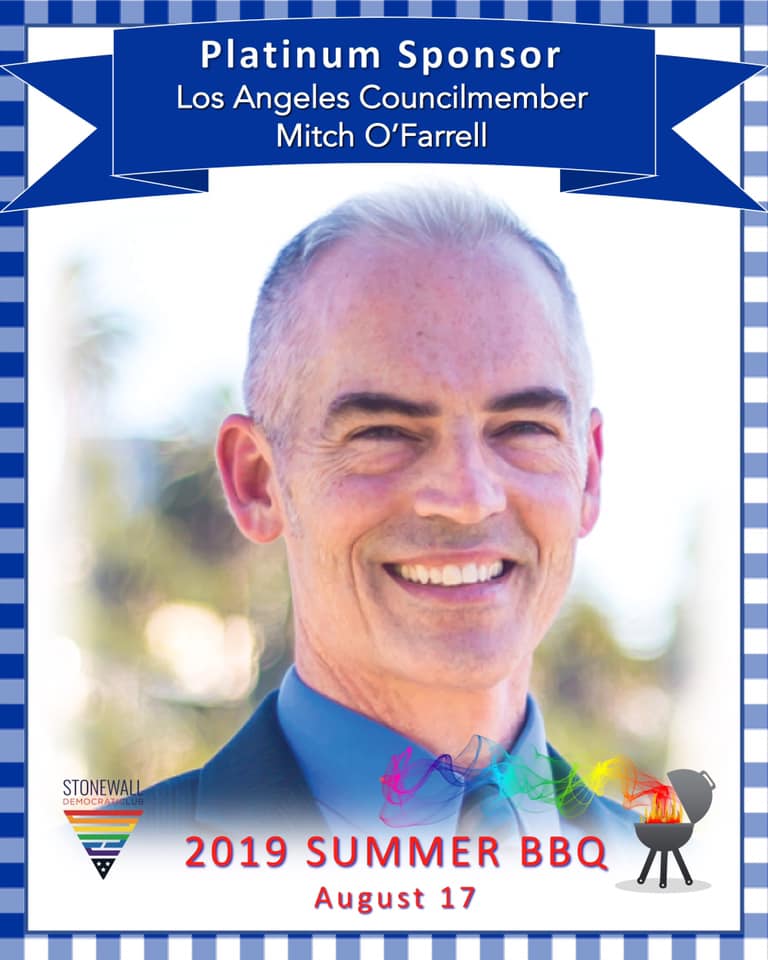
In April 2018, Buisson posted an article to the Steering Committee’s private Facebook group about the need for more Black women in Democratic Party leadership. All hell broke loose.
Shay replied that Buisson’s post was “not productive,” and instructed Operations Vice President Steve Bott to remove the post. When Buisson noticed it was gone, she posted the article again. It was removed again, and Buisson was blocked from further posting in the group.
“I’m 6’1″ and 245 pounds. I don’t let men tell me when I can talk and when I can’t,” said Buisson. “You could throw a brick and not hit a person of color at these general meetings. This was a problem we needed to address internally. And they refused.”
Buisson brought her concerns to Kolodji, who raised the issue with the rest of the Executive Team, including Aponte, Shay, Wishon, and Bott. All four replied that any criticism of the Democratic Party is unwelcome on the Steering Facebook page.
Kolodji repeatedly pointed out the irony of silencing a Black woman for calling out the Party’s silencing of Black women. Aponte, who is Puerto Rican, is the only person who responded to this point — he replied mystifyingly, “The real irony is that the only ethnic minority in this thread is me.”
At the time, Stonewall had no official grievance process — if Buisson wanted to press the issue further, it would be judged by the Steering Committee, which was overwhelmingly white and male.
Interestingly, Wishon had said that “no one is trying to censor Lauren on her own page,” and Aponte agreed that Buisson and Scott (whom no one else had mentioned) had “the entire wide world web” to post whatever they wanted. They quickly changed their stance on this.
Just a few weeks later, Scott shared a link to a video on his personal Facebook page with the comment, “Fag hags need to be checked so often.” The video depicted a brawl between a group of intoxicated white women and a group of queer men of color in an alley in West Hollywood.
However, the Executive Team interpreted Scott’s comment differently. Within hours, the officers had been looped into an email with the subject line “URGENT: Regarding post encouraging violence against women.”
Scott insisted that his comment was meant to condemn the violence. “There’s this ongoing debate within the LGBT, especially gay men, culture about the appropriateness of straight women and bridal showers going to gay spaces,” he told Knock LA. “So I just said you got to check your fag hags because you don’t want them beating up on queer people. I basically saw it as a gay bashing.”
Shay recommended that the board should immediately ask for Scott’s resignation. Wishon agreed. Attaching a screenshot of an unrelated Facebook comment by Buisson, she added, “And Lauren…”
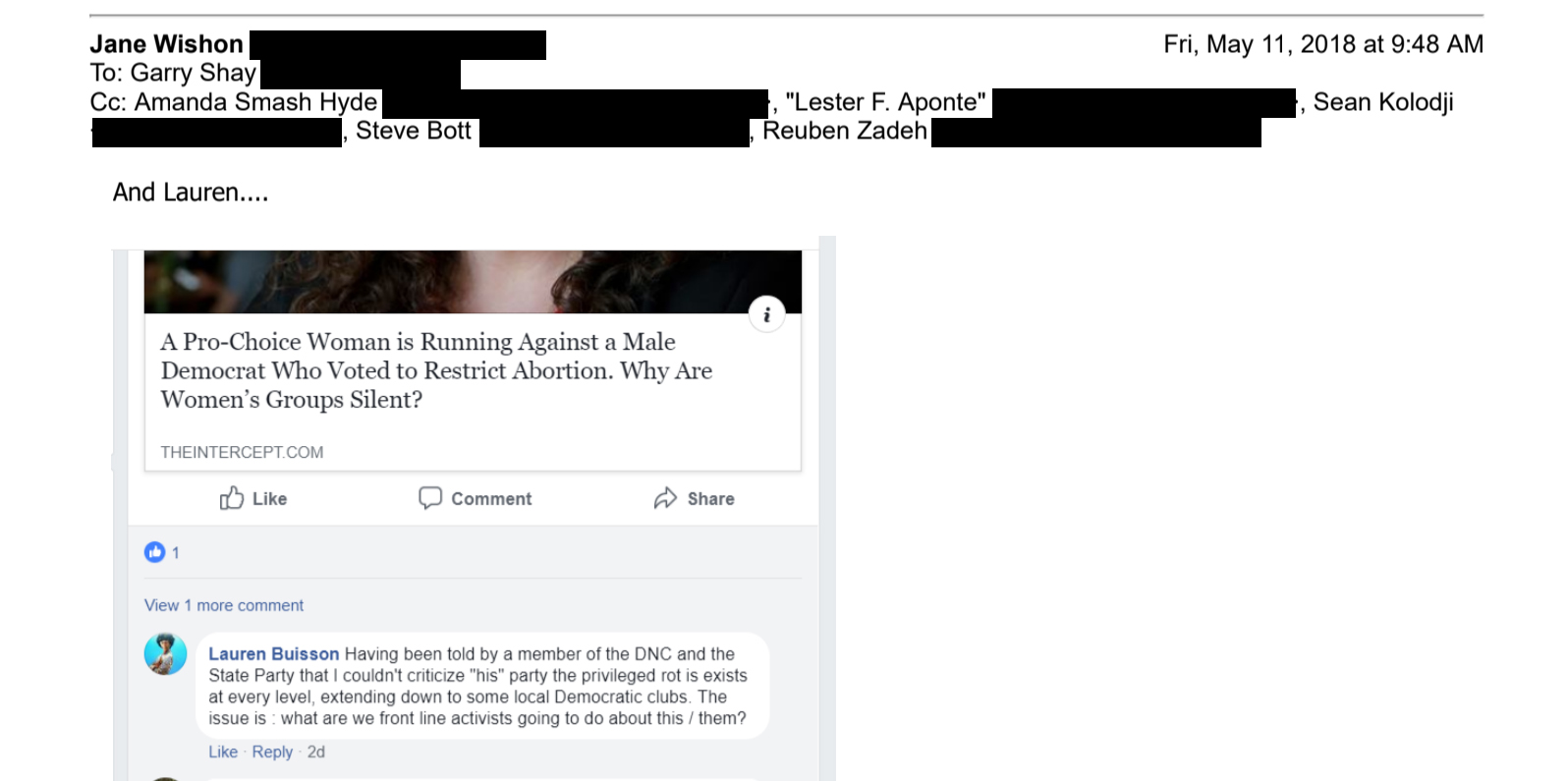
By the next day, seven of the eight officers had signed a letter calling for Scott’s resignation. Kolodji was the only one who dissented. While he agreed that Scott’s post was “in very poor taste,” he told the rest of the Executive Team that he didn’t feel it was a resignation-worthy offense.
Neither did Scott, who deleted the post but refused to resign. At that point, the Executive Team (except Kolodji) motioned for the formation of an investigation committee to address the issue.
The committee presented its findings at Stonewall’s June 25 general membership meeting. The room was packed. “They called all the members who don’t normally show up, describing [Scott] as this misogynist who’s endorsing violence against women,” Buisson said.
LACDP Chair Mark Gonzalez was brought in to preside over the session. DNC member Laurence Zakson served as Parliamentarian. Scott himself chose not to attend the meeting, but Buisson led the defense on his behalf.
“It was a circus,” Kolodji said. One LACDP leader described the proceedings as “absurd.” At one point, West Hollywood City Councilmember John Heilman called impatiently from the back of the room, “Let’s vote already!”
In the end, the members voted, 48 to 14, to remove Scott from the Steering committee. That was the end of his involvement with Stonewall.
Regardless of whether or not Scott’s post should have been considered grounds for dismissal, the affair revealed a glaring double standard for whose inappropriate behavior is, or isn’t, punished. Just a year earlier, Stonewall had vigorously supported Eric Bauman’s campaign for CDP Chair, despite his well-known sexual misconduct.
“They all jumped on [Scott] because they wanted to get rid of a critical voice,” Buisson concluded.
Throughout the controversy, Kolodji had warned the rest of the Executive Team that “people in glass houses shouldn’t throw stones, so to speak. Be careful pursuing this with Craig, because this is an abuse of power, and you’re setting a precedent that is going to come back.”
Kolodji had been Facebook friends with Aponte for years, and he was aware of several posts Aponte had made that were just as offensive, if not worse than the comment that led to Scott’s removal. He mentioned this to Buisson, who began combing through Aponte’s most problematic posts.
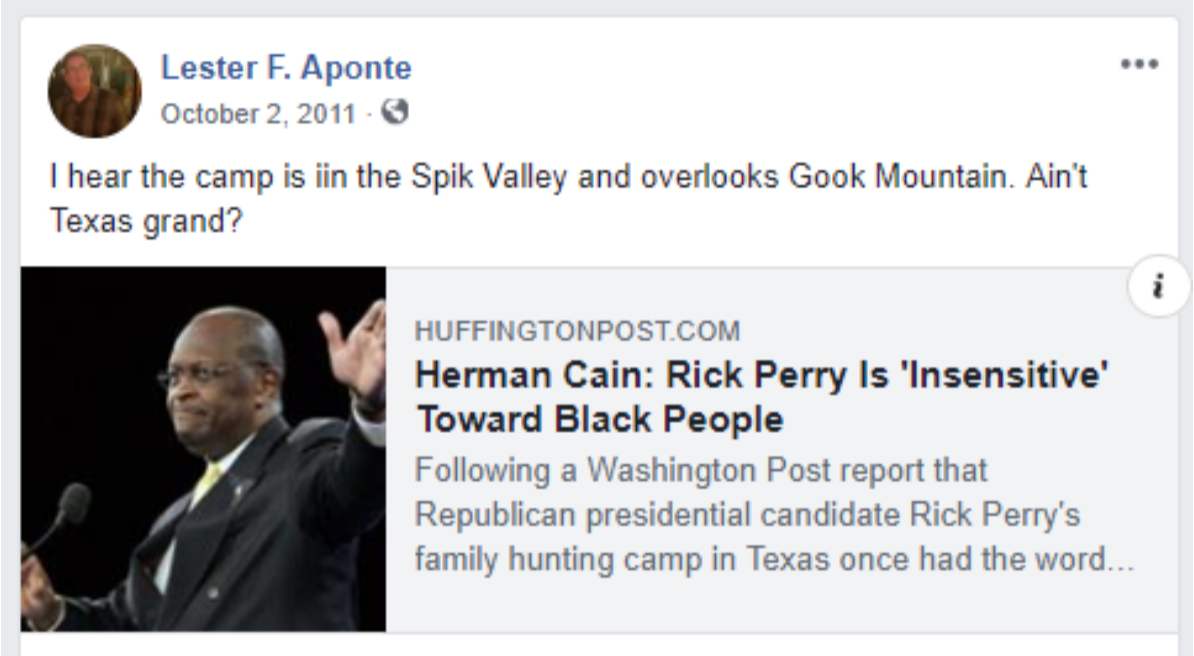
In October 2011, Aponte posted a link to an article about Hermain Cain with the comment, “I hear the camp is iin [sic] the Spik Valley and overlooks Gook Mountain. Ain’t Texas grand?”
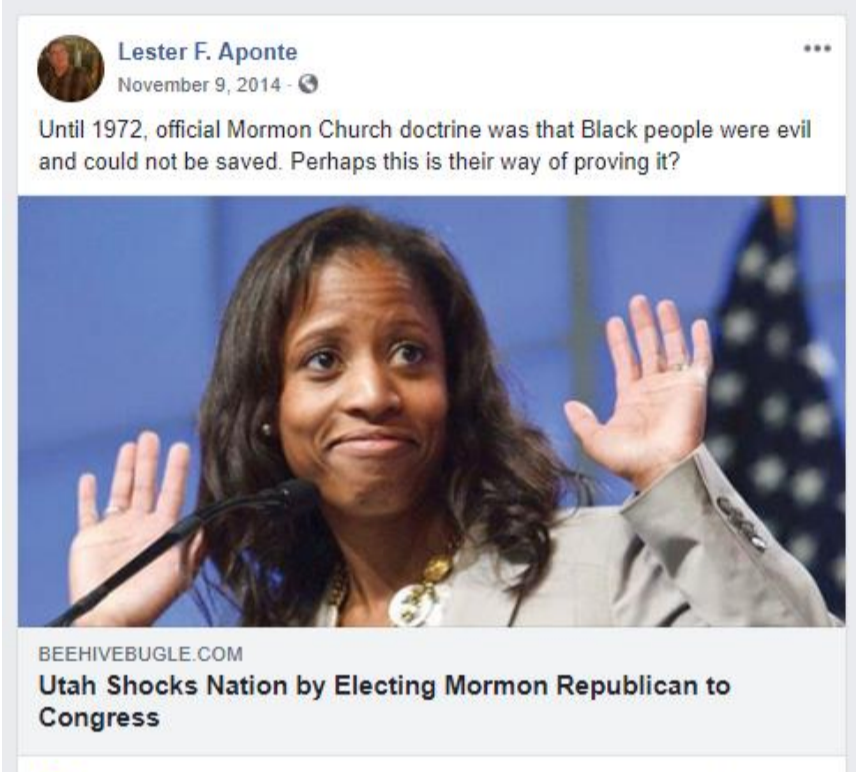
In November 2014, he posted an article about Mia Love, a Black Mormon Republican recently elected to Congress, commenting: “Until 1972, official Mormon Church doctrine was that Black people were evil and could not be saved. Perhaps this is their way of proving it?”
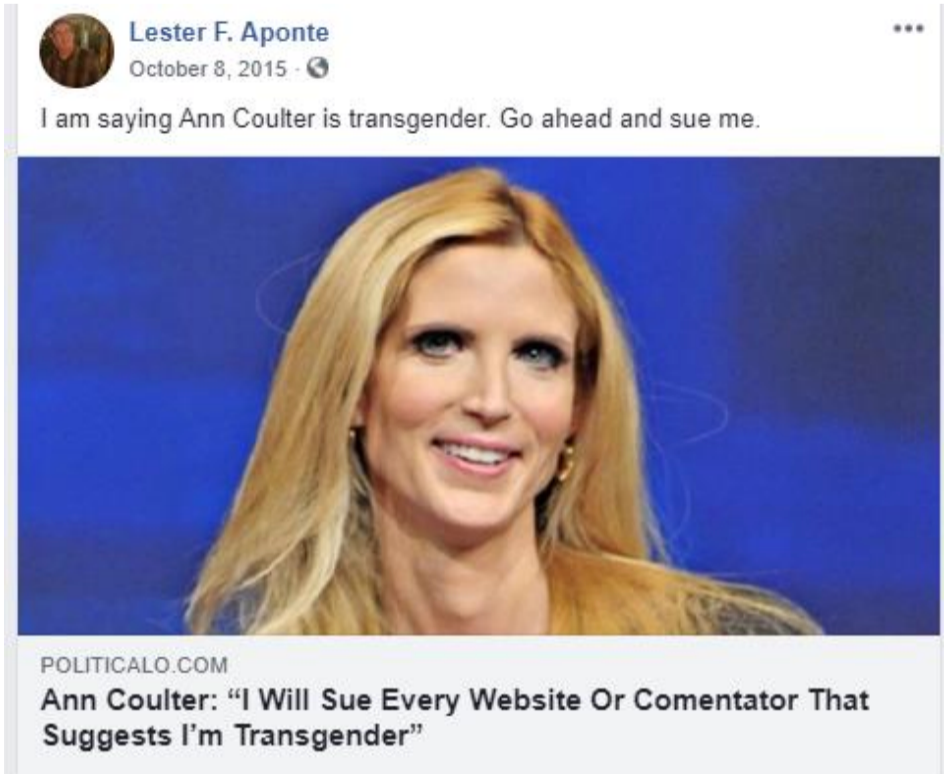
In 2015, he deliberately misidentified Ann Coulter as trans: “I am saying Ann Coulter is transgender. Go ahead and sue me.” The comments on the post became filled with vitriolic anti-trans and misogynistic remarks. Aponte did nothing to stop the hateful discussion.
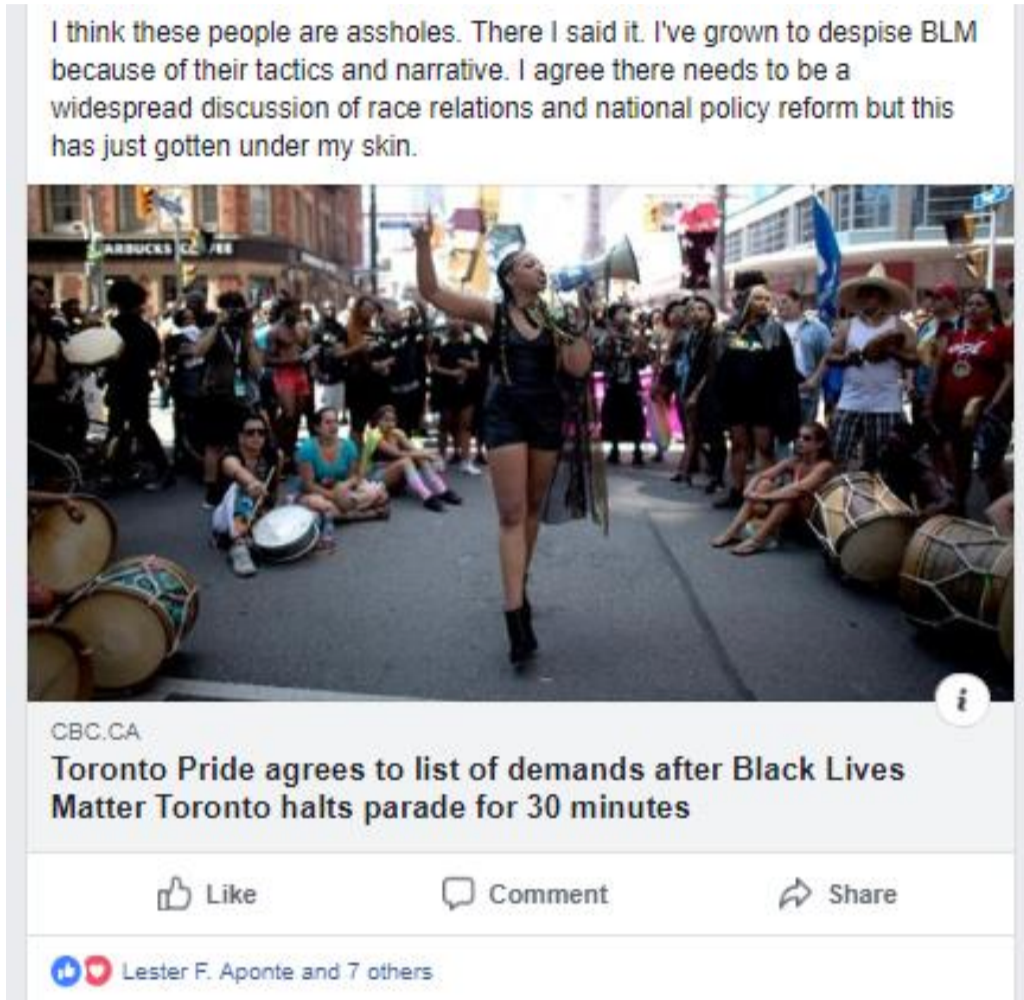
In 2016, Aponte liked an anti-BLM post that said, “I think these people are assholes. There I said it. I’ve grown to despise BLM because of their tactics and narrative.”
In 2017, he joked that immigrant activists should be deported.

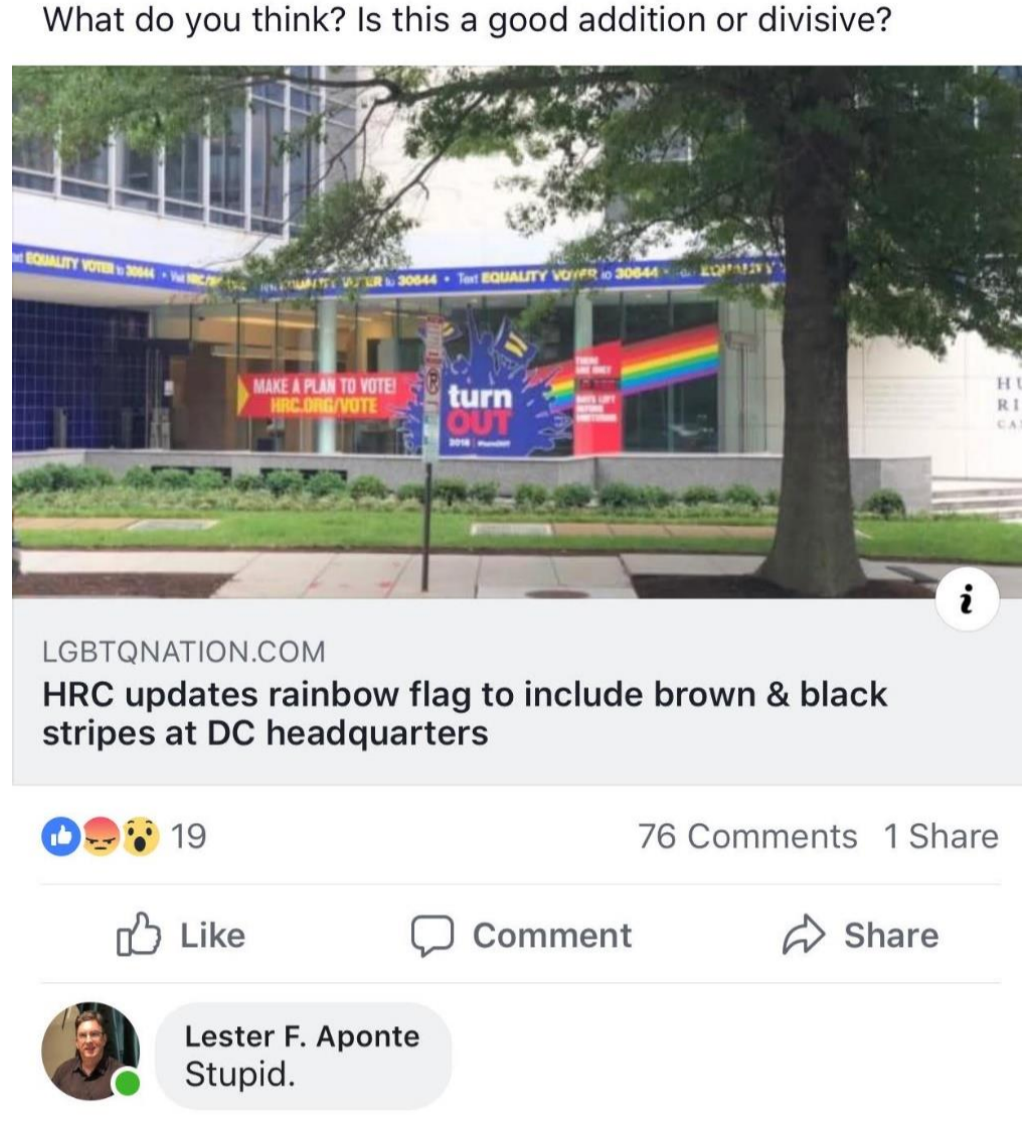
In 2018, Aponte described the Inclusive Pride Flag as “stupid.”
Buisson compiled 18 pages of screenshots of these and other inappropriate remarks. It was already clear to her that taking her concerns to the Steering Committee would be futile.
“It was not just about this one bigoted individual,” Buisson said. “It was infecting. You could see it in who was in the club, who was in leadership positions, who spoke from whom, who was excluded, the whole system was infected. And in my view at the time, that fish was rotting from the head.”
So, rather than rely on the club’s leadership to discipline themselves, Buisson sent the offending posts to several elected officials, asking them to withdraw their support for Stonewall until Aponte resigned.
Not a single official responded.
One of the recipients was Assemblymember Reggie Jones-Sawyer, host of the annual Stonewall BBQ — which was coming up in just a few weeks.
“My feeling was, as somebody with a reputation for advocating for the Black community, this man might be a little bit pissed off about these racist things,” Buisson said. “It would be no problem for him to say, this event is canceled until you resign. You’re out of Stonewall or doesn’t go forward.”
Jones-Sawyer’s office did reach out to Stonewall’s leadership — but not to demand Aponte’s resignation. Instead, they passed along Buisson’s letter, fingering her as a whistleblower.
A few weeks after her letter-writing campaign began, Buisson suddenly found herself locked out of Stonewall’s digital assets and social media accounts. Paris, who chaired the social media team, called Aponte in confusion. Aponte informed him that Buisson was no longer allowed to serve on the communications team.
“I said, what are you talking about, you’re just [removing] her?” Paris recalled. “And [Aponte] is like, ‘yeah, I can do that, I’m president.’ I was like… pretty sure you can’t.”
When Aponte realized that he could not, in fact, unilaterally remove Buisson from her Steering Committee position, he told Paris and Kolodji to ask for her resignation. They refused.
On September 26, Aponte sent an email to the full Steering Committee revealing that Buisson had sent letters to several elected officials accusing him of making “racist and bigoted statements.” Without revealing any details about the “statements” in question, Aponte called Buisson’s accusations “false and defamatory… harmful, not just to my personal reputation, but the reputation and public standing of our organization.” He asked that the Steering Committee vote on whether to expel Buisson from her position.
In stark contrast to Scott’s widely-publicized hearing, Buisson’s removal was handled quietly at a Steering Committee meeting on October 4. So quietly, apparently, that Wishon told Knock LA she didn’t remember the meeting had even happened — although the minutes confirm she was in attendance.
“There were wild allegations and actual shouting matches at this meeting,” Paris recalled. “That was an absurdly fireworks meeting over an issue that was not taken seriously.”
Buisson chose not to attend the meeting, but Paris and Kolodji argued on her behalf that the real problem at hand was Aponte’s behavior, not Buisson’s. Even if the committee didn’t feel that Aponte’s Facebook posts were grounds for resignation, his attempt to retaliate against Buisson was itself an abuse of power that warranted investigation.
However, other Steering Committee members said that Buisson should have brought the issue directly to them — which Kolodji found ludicrous, given their handling of Buisson’s previous complaints. “We tried to deal with this stuff internally,” he said. “But it seemed like their side was kind of like, ‘we’re gonna use our power — and we have more power — to essentially drive you out.”
The Steering Committee ultimately voted, 17 to 3, to remove Buisson from her position. Paris resigned the same day in protest. Kolodji soon disengaged from Stonewall as well.
“The organization just seemed destined to be an unredeemable mess,” Kolodji said. “Is there no shame, to just ruthlessly try to target someone that we need as a leader in queer spaces? And instead, what do we get?”
As a parting shot, Kolodji and Paris motioned for a separate investigation into Aponte’s Facebook posts. The motion was approved, and an Ad Hoc Incident Review Committee was formed to review the posts. The five-member committee included Aponte’s longtime ally, Garry Shay.
Knock LA obtained a copy of the investigation’s report, which was finalized in June 2019 and sent only to the eight members of the Executive Team. In Aponte’s statement to the committee, he defends each of his insensitive posts, which he maintains are not “racist [or] bigoted.” He claims Buisson only called out his comments because of a “personal vendetta.”
The committee’s assessment notes that Aponte’s posts are in “poor taste” and that each of the committee members would “know better than to make these kind of comments.” However, they largely accept Aponte’s justifications, some of which strain credulity (in one example, he insists that his sarcastic use of racial slurs “was in no way meant to condone the use of racial slurs in place names, but rather the opposite.” He doesn’t elaborate further.)
Ultimately, the committee decides that the posts are not grounds for Aponte’s removal. The report concludes: “What appears most important now is to move forward from this point.”
It’s unclear whether the investigation’s findings were ever revealed to the full Steering Committee or the membership at large. Wishon claims the investigation’s report was presented at a general membership meeting; however, Knock LA reviewed the minutes for every meeting from 2018 to June 2021, and there is no mention of the incident review committee’s existence.
According to a current Steering Committee member, at some point Aponte made a brief apology and deleted the Facebook posts, but that’s where the consequences ended. In May 2019, Aponte was nominated, unopposed, for a second term as president. Three of the five members of the official nominating committee were also involved in the incident review committee, whose investigation into Aponte was still ongoing.
Ultimately, Aponte was reelected, and his now-deleted racist Facebook posts were seemingly never mentioned again. During this same time, however, Stonewall was implicated in a wave of controversies that weren’t so easily swept under the rug.
In November 2018, Eric Bauman resigned as CDP Chair after an onslaught of sexual harassment allegations. In January 2019, a second body was found in Ed Buck’s apartment. Later that year, a third victim narrowly escaped from Buck’s home alive, and Buck was finally arrested. He was eventually indicted on nine counts by a federal grand jury, and his trial is currently underway.
Meanwhile, in November 2020, John Erickson, a major player in several of Stonewall’s internal scandals, was elected to West Hollywood City Council, thanks in part to the resources that came along with his endorsement by Stonewall. Notably, four of the eight eligible candidates were inexplicably barred from participating in Stonewall’s endorsement process, and although two council seats were open, Stonewall’s membership voted to endorse only Erickson — Sepi Shyne, an LGBTQIA+ woman of color, failed to reach the 60% vote threshold for endorsement.
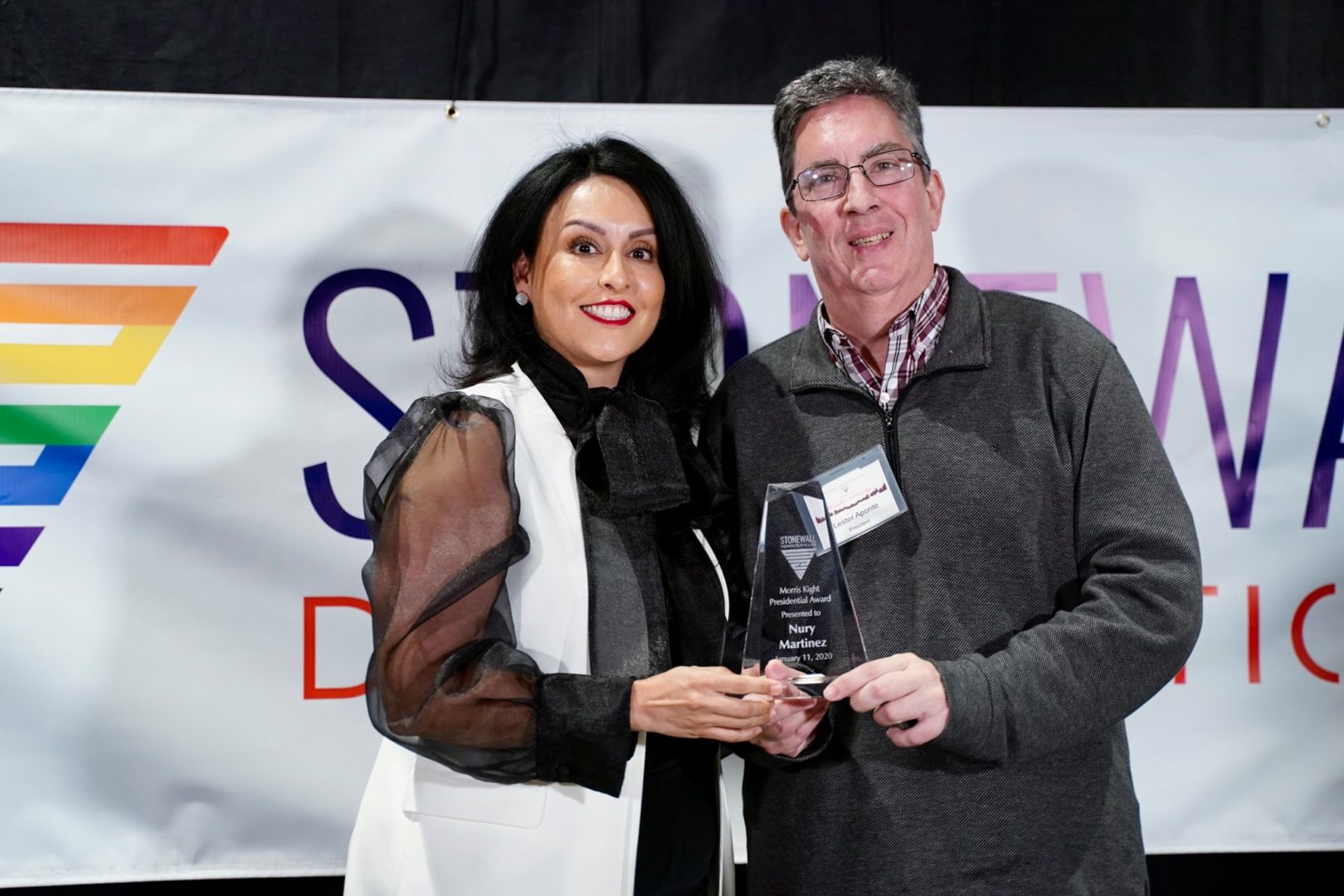
On May 24, Aponte announced his candidacy for a third term as Stonewall president. Interestingly, the same day as his announcement, he changed his Facebook cover photo to the Inclusive Pride flag that he previously decried as “stupid.” His slate, which is running on a platform of diversity and inclusion, includes five men and one straight woman (Wishon).
This time, however, Aponte isn’t the only candidate in the running — although he was chosen by the official nominating committee, another Stonewall member submitted a nomination for Alex Mohajer, who currently serves as Chair of Public and Media Relations.
According to Mackenzie Hussman, this year’s election has been tense from the very beginning, when the nominating committee itself was being chosen. “I felt rushed,” she said. “They were trying to put select people through who would nominate whoever [the current officers] wanted to.”
When other Steering Committee members spoke up and suggested different names for the nomination committee, there was procedural confusion. “They were just shocked that people would not go with what they were saying,” Hussman said. “It’s just been very key prominent people running this club without check or challenge, and now there’s people challenging them. You can tell they feel threatened.”
Hussman notes that Aponte has personally blocked several Steering Committee members on Facebook, ostensibly for opposing his campaign for reelection. In a blast of deja vu, Hussman, who is Chair of Social Media, and another communications team member were both inexplicably locked out of Stonewall’s social media accounts on July 12 with no explanation, although their access was restored when the issue was brought to Operations VP Bott’s attention.
According to Hussman, the only people who could have revoked the access are Bott, Aponte, and Wishon. When Knock LA asked Wishon about the incident, she explained vaguely, “The Operations team examined all our permissions on the website and socials. Two members were moved to different permissions on [Facebook], but as soon as Operations was made aware that the previous level was required in order to stream they were moved back to their original levels.”
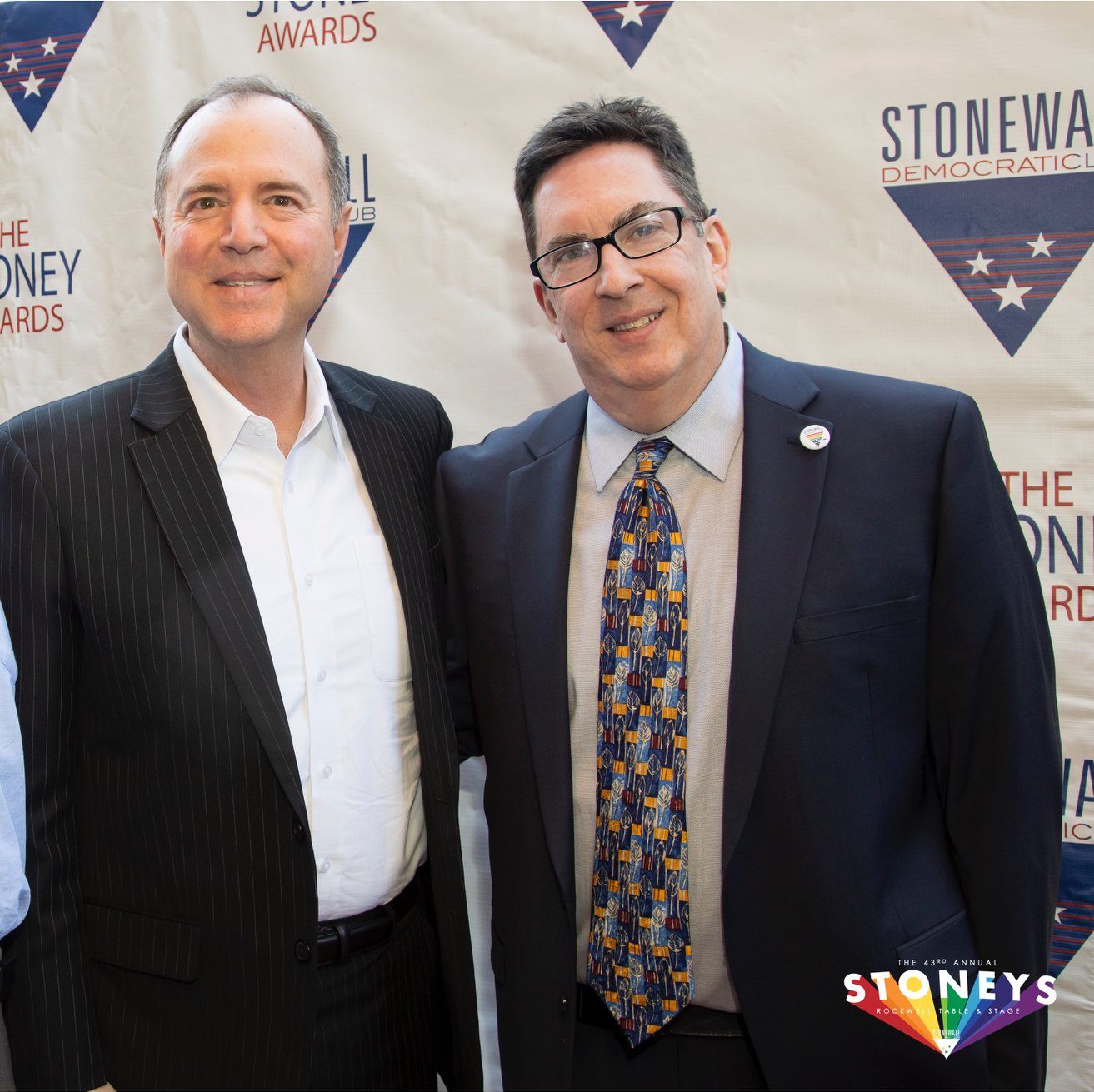
Despite the internal dissent, Aponte still enjoys widespread support from the Democratic establishment. His reelection campaign has been endorsed by John Erickson; West Hollywood Mayor Lindsey Horvath; State Assemblymembers Reggie Jones-Sawyer, Laura Friedman, Jesse Gabriel, and Isaac Bryan; State Senators Ben Allen, Anthony Portantino, and Sydney Kamlager; LA City Councilmembers Paul Koretz and Mike Bonin; LA County Supervisor Holly Mitchell; LACDP Chair Mark Gonzalez; CDP Executive Director Yvette Martinez; and at least six DNC members.
As this roster of supporters suggests, the implications of Stonewall’s internal drama extend far and wide through state and local politics.
To Buisson, the problems at Stonewall are emblematic of a larger problem with how the Democratic Party treats marginalized communities, particularly the Black women on whose votes and volunteer labor they rely. She notes that the refusal to prioritize the needs of diverse communities could be an existential threat to the Party’s survival.
“Juneteenth does not make up for George Floyd. And Kamala Harris does not make up for all the slights that women of color suffer,” she said. “[Last year], the entire region went ultra progressive. We had a record turnout. And yet they’re still trying to preach to us, you know, what the well-heeled people want. You think that they would realize where this is headed… The younger voters are willing to suffer through a Republican administration to teach the Democrats a lesson.”
But perhaps one of the most worrying consequences of Stonewall’s toxic culture is the impact on the LGBTQIA+ community. “I don’t want these creeps mentoring our queer youth. I don’t want them jaded and cynical after their first election,” Buisson said. “We can’t have vulnerable people having weak leaders or corrupt leaders. That does harm to our children and makes them even more isolated.”
“I think at the end of the day, this is about restoring the important place that organizations like Stonewall play in the progressive movement,” Paris added. “We can sit by and let the party apparatus do what it’s going to do to protect its insular interests, or we can stand up and fight back for the interests of the people that the party proclaims that it is in service of.”
Buisson believes the first step is to expel Aponte, not just from Stonewall, but from the CDP, where he currently serves as co-chair of the LGBT Caucus. Beyond that, she suggests that the LACDP should temporarily revoke Stonewall’s charter — essentially disaffiliating the organization from the Democratic Party — until the internal issues are addressed.
This seems unlikely to happen, given that the LACDP’s executive director and parliamentarian are both members of Stonewall’s Executive Team, and LACDP Chair Mark Gonzalez has endorsed Aponte’s reelection campaign. But Buisson is hopeful that public pressure from elected officials could be enough to turn the tide and hold Aponte accountable.
“It’s one call from one of them… to the chair of the state party, to expel him, and to sanction Stonewall,” Buisson said. “It’s one call [from] one elected. That’s all it takes. And I’m laying down that gauntlet. Which one of you is it going to be?”
Knock LA contacted Aponte, who responded with a completely blank email. Garry Shay declined to comment. John Erickson didn’t respond to requests for comment.

Kate Gallagher is a freelance journalist and writer based in Los Angeles. She is also a Senior Content Writer for Parcast Studios on Spotify.
Gallagher is a graduate of the University of Iowa with a Bachelor of Arts degree in English Language and Literature.
The preceding article was published at KnockLA, a Los Angeles based non-profit community journalism project and is republished by permission.


Politics
From the desk of Equality California: the latest political news for CA and beyond as we head into the midterms
With the November midterm elections inching ever closer, Equality
California is preparing to release our final round of endorsements for local
candidates

With the November midterm elections inching ever closer, Equality California is preparing to release our final round of endorsements for local candidates, as well as prepare for major get-out-the-vote operations.
We’re also still waiting on Governor Newsom to sign our 2026 legislative package. The governor has until September 30 to sign or veto hundreds of bills from this legislative session. That means we have just a short window to make our voices heard and ensure these vital protections become law. And with the onslaught of attacks from the Trump administration, particularly against transgender youth and their families, the stakes couldn’t be higher. LGBTQ+ people deserve strong laws that affirm our dignity and protect our rights. Send an email to his office and tell him to stand up for LGBTQ+ Californians by signing our bills today!
To read more stories, join our mailing list, and sign up for the weekly Equality Brief, visit eqca.org/equalitybrief.
DOLLY PARTON: ICON. ARTIST. UNAPOLOGETIC LGBTQ+ ALLY.
We are deeply saddened by the loss of musical icon and humanitarian Dolly Parton. As legendary for her exaggerated glamour as her hit songs — “It costs a lot to look this cheap,” she often joked — Dolly was a longtime ally and supporter of the LGBTQ+ community whose message of love without limits crossed generational and political lines. In addition to her iconic musical legacy (and still the only musician to ever have their own theme park, Dollywood), Dolly also founded the Imagination Library, which promotes childhood literacy and provides free books to children from birth to kindergarten. And at the height of the COVID pandemic, she personally donated $1 million to Vanderbilt University to help with development of vaccines. If ever anyone embodied the phrase “angel on earth,” it was Dolly Parton.
Dolly, we will always love you.
- Equality California Endorses in 8 Ballot Proposition Campaigns:
Equality California announced its positions on eight statewide ballot propositions appearing on the November midterm election ballot. “Our positions reflect our commitment to advancing equality, protecting civil rights and building a California where every LGBTQ+ person can live with dignity, safety and opportunity,” said Executive Director Tony Hoang. Read the statement announcing the endorsements here. - Federal Judge Upholds Injunction Against Chino Valley Anti-Trans Policy:
A federal judge in San Bernardino County denied a request from Chino Valley Unified School District to dissolve his previous injunction blocking them from enforcement of a policy that requires school employees to forcibly out students if they identify as transgender or use different names and pronouns at school. Chino, whose board is led by anti-LGBTQ+ extremist Sonja Shaw, brought the challenge following the Supreme Court’s ruling in Mirabelli v. Bonta, where a majority of Justices ruled a school cannot purposely withhold information about a student’s identity from a parent. Because there is no such withholding requirement in the Chino case, Judge Michael Sachs allowed the injunction to stand and specifically differentiated it from the Mirabelli case. - New Report From HHS Alarms Civil Rights Groups, Advocates:
A new HHS “study” — inherently untrustworthy, originating as part of the Trump administration — posits that those who support transgender people may be more likely to justify political violence. Experts are extremely skeptical of the study’s veracity and underlying methodology, noting that it uses disproven pseudoscience as a basis for its findings. This is just the latest in the administration’s messaging war to assign blame for violence, hate crimes, and similar incidents to what they refer to as “ support for transgender ideology.” - Federal Court: IRS Cannot Share Data with ICE
A federal appeals court unanimously upheld a lower court ruling to block the Internal Revenue Service from turning over confidential taxpayer information of non-citizens who pay taxes to Immigration and Customs Enforcement (ICE). The challenge, Center for Taxpayer Rights v. IRS, was supported by an amicus brief filed by 115 Members of the Congress including Senator Padilla and Reps Sánchez and Gomez of the California delegation. - Flailing Ahead of Midterms, Republicans Turn to Tried and True Transgender Attacks:
With their prospects for victory in the midterms growing dimmer by the day, far-right MAGA Republicans are turning to attacks on transgender people as a way to motivate their base to get out the vote. States including Missouri, Colorado, Washington and Arizona will have ballot issues around banning trans youth from sports and/or prohibiting healthcare access for transgender youth (in the case of Colorado, both are up for voter approval). The efforts smack of cynicism, and are reminiscent of anti-marriage equality attacks deployed to increase Republican turnout in 2004. - Federal Judge Strikes Down Texas Drag Ban:
On Wednesday, U.S. District Judge David Hittner struck down a 2023 Texas state law that sought to restrict drag shows. Judge Hittner ruled that Texas Senate Bill 12 was an overly broad, unconstitutional attack on free speech, offering in his ruling a solution to anyone opposed to drag shows: “Just don’t go.”
UPCOMING EVENTS
Our premier event of the year, the Los Angeles Equality Awards, is happening on Saturday, October 17, 2026 from 6:00-10:00 PM at the gorgeous Fairmont Century Plaza. And this year, we’re making Monét moves — Drag Race All-Stars winner, comedian, actor, and presenter Monét X Change will serve as emcee! We’ll also honor Asm. Rick Chavez Zbur with the Equality Leadership Award and entrepreneur Tristan Schukraft with the Equality Trailblazer Award. Tickets are on sale now!
Congress
Jeremy Moss looks to bring LGBTQ+ advocacy from Lansing to Capitol Hill
Congressional candidate would represent Detroit suburbs if elected
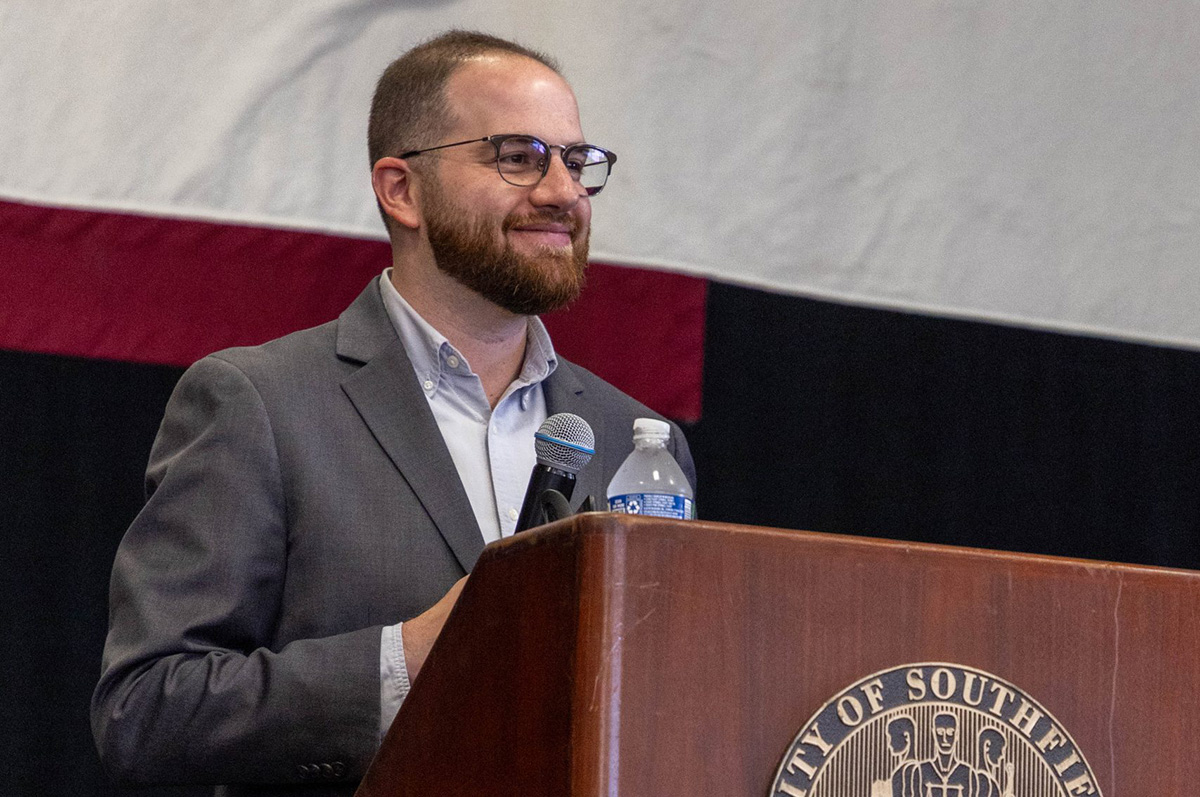
With fall comes swapping out T-shirts for sweaters, raking leaves and, of course, elections. The summer’s primaries have narrowed the playing field in a slew of races, but the big ones — the actual races for seats in federal and local elections — are still to come.
Jeremy Moss is one of those people running for a congressional seat in Michigan. Despite his young age, Moss has quickly learned the ropes of politics in the state, already serving terms in the Great Lakes State’s House of Representatives and Senate.
Moss sat down with the Los Angeles Blade to discuss his history in Michigan politics, his experience as an openly LGBTQ+ legislator and his vision for a better America as he looks toward Congress.
He currently represents Michigan’s 7th Senate District, but now he is setting his sights beyond Lansing toward Capitol Hill to represent Michigan’s 11th Congressional District, which includes Detroit’s northern suburbs.
Moss earned his bachelor’s degree in journalism from Michigan State University, where just a few years later he made history as the first openly gay person elected to the Michigan Senate and the first to serve as its president pro tempore.
His political experience stretches across multiple offices.
Moss worked in the offices of Southfield Mayor Brenda Lawrence, who also served in the U.S. House of Representatives, and State Rep. Paul Condino.
Moss, at age 25, was elected to the Southfield City Council in 2011, becoming the youngest member elected in the body’s history. He then switched over to the state legislature, representing Michigan’s 35th House of Representatives District in the Michigan House of Representatives from 2014-2018, becoming the second openly gay member elected to the Michigan legislature.
He then moved from Michigan’s House to its Senate in 2018, elected to represent the 11th Michigan Senate District and becoming the Assistant Democratic Leader. Moss started his second term in the Michigan Senate in 2023, this time representing District 7.
He currently has a long list of priorities listed on his campaign website, many of which have become standard for Democrats running across the country, with a particular focus on minimizing — and cleaning up — issues that the Republican-controlled federal government has created under President Donald Trump.
Those goals include lowering healthcare costs, tackling the cost of living crisis, holding U.S. Immigration and Customs Enforcement accountable and fixing the broken immigration system, restoring national voting rights, protecting rights — with a particular focus on abortion access and LGBTQ+ rights — combating corruption in politics, preventing gun violence and strengthening gun safety, empowering Michigan workers, and preserving the environment.
Why Moss is running for Congress
When asked why he wants to run for Congress, Moss pointed to his lengthy resume in state leadership, with a clear voice arguing that if he can do it in Lansing, he can get it done in Washington.
“I’ve served 12 years in the legislature and have ascended into leadership as president pro tem of the Senate,” Moss explained to the Blade. “We flipped our state legislative chamber to a Democratic majority for the first time in 40 years in 2022, and we passed some big, generational-changing, consequential Democratic wins that had languished for a generation, but had improved people’s lives in our state.
“We’ve passed the first gun safety laws in a generation that are saving lives. We protected the right to vote amidst attacks from Donald Trump and other conspiracies. We pushed forward and finally put LGBTQ rights in our state civil rights law. We provided free school meals and lunches for all public school children in the state of Michigan.
“The problems from Washington, D.C., aren’t getting less severe over time,” he continued. “They’re getting more severe. So this district unexpectedly opened up due to a series of retirements and it was just a great opportunity for me to continue to advocate for big change that we’ve already achieved here in the state legislature.”
“I’m a product of this district. I grew up here. I’ve represented a bulk of the district already in the state legislature, and I knew that I was going to earn grassroots support to be able to wage this campaign. We sought it out, we earned it, including some premier endorsements from Gov. (Gretchen) Whitmer, among many others, and were highly successful in the primary because we were in tune to the needs of this district.”
Moss has been endorsed by a slew of Democratic leaders and organizations, including, as he pointed out, by Whitmer.
Other endorsements include former Gov. Jim Blanchard, Secretary of State Jocelyn Benson, Attorney General Dana Nessel, the Equality PAC, the Human Rights Campaign, the Unity Fund, and the LGBTQ+ Victory Fund.
His political identity and the Democratic Party
Moss described himself as being “on the liberal end of the spectrum,” but argued that the Democratic Party’s internal divisions should not be the central focus.
“I’m certainly on the liberal end of the spectrum, but I don’t even think it necessarily has to be this progressive versus establishment fight that we’ve seen play out,” Moss said when asked about various elements of in-party disagreements. “It has to be between action and, and inaction, fighters versus folders.”
He said that distinction between action and inaction is central to how he would approach Washington.
“At this moment, I think we need to demonstrate that we are ready to take on Donald Trump and MAGA chaos with boldness and effectiveness. I’ve been saying all along our campaign trail, we can no longer be the party that shows up to the knife fight carrying a pie chart, and so I think we have to be showing that we have spine and we have punch, and we’re really ready to be tough fighters for, for Michiganders and the American people.”
“We can’t walk on eggshells anymore. We can’t pull our punches,” he added. “We can’t fear that we’re offending someone, you know, one way or another with how we act. People are expecting a bold party to take on MAGA, and I think that’s exactly what the Democratic Party needs.”
Becoming an LGBTQ+ legislator
Moss also reminisced with the Blade about his first run for elected office — at a time when Michigan had no openly LGBTQ+ members serving in the state legislature — and how that experience became deeply connected to his identity and his approach to LGBTQ+ politics.
In 2014, Michigan was in the pre-marriage equality era, and the state had no openly LGBTQ+ members serving in the legislature.
“12 years ago in 2014 — this was pre-marriage, the pre-marriage equality era — we had zero people from our community serving in the legislature, and still they were talking about us.
“The big topic then in Michigan was whether or not to expand our civil rights law to include LGBTQ protections, so that people from our community would no longer face discrimination in housing and employment. And they were talking about us regardless of whether or not we were at the table.”
Moss eventually helped lead the effort to expand Michigan’s civil rights protections to include LGBTQ+ people, a measure that passed with bipartisan support.
He said his experience as an openly gay lawmaker allowed him to make the case for LGBTQ+ protections in terms that extended beyond LGBTQ+ issues.
“One thing I definitely aligned with Gov. Whitmer at the time was making the case that discrimination was not only morally wrong, but it was bad for business,” he said. “By not having these protections for our LGBTQ neighbors and family members and friends and community members, we were actually holding back our economy. We were essentially allowing people to be kicked out of Michigan as consumers and workers, because of who they are and how they identified.”
That led to various efforts — including committee hearings and meetings with advocates, businesses and the public — that helped make Michigan what the Movement Advancement Project deems the 16th most LGBTQ+-friendly state, solidly above other states due to its robust LGBTQ+-related legislation.
“I wanted to meet everybody where they were, including those who may have not been involved with or engaged with the LGBTQ community as legislators, but understood that we couldn’t sustain the economic impact of discriminating against our community,” Moss said. “And as I’ve said all along, discrimination is bad for business. That’s something I think helped broaden the vote and earn some bipartisan support for it.”
Representation and LGBTQ+ youth
For Moss, the importance of LGBTQ+ representation also comes from his own experience growing up.
“I think about when I was younger, when I was 18 years old. It was in 2004, and, you know, there are certain things that really shaped me in that time … Michigan had a ballot proposal that passed to have the strictest language banning marriage equality in our state constitution. We didn’t even allow civil unions in that language in our constitution to exist, and there were scandal-plagued LGBTQ politicians.”
“It was the same year that Jim McGreevey was forced to resign as he came out,” he said. “So it really was a signal to me that, you know, you don’t have a future. Not just you don’t have a future in politics; you might not even have a future. Period, and it was pretty defining for me.”
Despite those fears, Moss continued to pursue public office.
“And you can’t be what you can’t see, and so to be able to break the barriers at the state level and at this congressional level, I think is a signal to anybody who is struggling with wondering where their place is?”
“I think that visibility is incredibly important, and it’s something that I needed when I was much younger, and it’s something that I’ve been honored to be able to provide for the, for the next generation of emerging leaders.”
His LGBTQ+ priorities in Congress
When asked what LGBTQ+ issues he would prioritize in Congress, Moss emphasized the importance of growing the number of LGBTQ+ lawmakers while also expanding federal nondiscrimination protections.
“To have a caucus in the legislature has made all the difference because you can, you know, run these issues across the field. You can have somebody take on marriage. You can have somebody take on trans rights. You can have somebody take on LGBTQ youth. You can have somebody take on discrimination protections.”
He sees much of the work he wants to get done on Capitol Hill as a direct follow-up to his work in Lansing — most importantly, the passage of the Equality Act. The legislation has been debated in some form for more than 50 years at the federal level, with the goal of protecting LGBTQ+ people from discrimination under federal law.
“I think the Equality Act is incredibly important. That’s kind of the, the counterpart to what we’ve done in the state legislature, ensuring discrimination protections for the LGBTQ community,” he said.
“I think housing and, and workplace discrimination is, is everything, you know, to protect our community so that they can have a safe place to call home and earn a living … That’s incredibly important across the board. And I would really want to take a leading role in telling the story of how we were able to do it in Michigan after 50 years since this act was first written — and finally finished the job federally to ensure their federal protections in, in, in, in employment and housing.”
LGBTQ+ political organizations and Congress
Moss said the LGBTQ+ political organizations that have supported his political career from its early stages have helped him along the way.
“Obviously, I’ve been affiliated with Victory Fund since I first ran for office, and they were early endorsers, but Equality PAC, which is the political arm of the LGBTQ caucus in Congress, has been an incredible part of my support system. From day one they helped me out.
“I’ve been getting to know a lot of the members of Congress who are LGBTQ, really over the last year of this campaign. So I’m eager to join them. I’m eager to be one of the players on the field here to be able to advocate and advance our issues.”
Voting rights
Voting rights are another major focus for Moss, an issue he said dates back to his experience during the 2004 campaign over marriage equality.
“Something I’m very passionate about is voting rights, and it really does go back to that 2004 campaign where it was very evident that elections can determine your future.
“Elections can determine what rights you do have and don’t have, and so I’ve been very laser focused on increasing access to the ballot box, making sure our democracy remains whole and accessible.”
He explained how Trump’s recent attacks on voting legitimacy and mail-in voting have only made his desire to help that much stronger.
“We went through a real trial of that in 2020 with, with Michigan’s presidential election, with Donald Trump and Rudy Giuliani — as he jetted into Michigan and tried to overturn our valid and accurate election results. We were kind of the spotlight of the nation in that stop this deal movement that led to Jan. 6.”
That, according to Moss, spurred direct action on his end.
“I took the helm as chair of the Senate Elections Committee, and we wrote the law to implement pieces of that ballot proposal, including drafting the law that implemented nine days of early voting here in Michigan, increased access to absentee ballot. We further secured our canvassing and certifications so that nobody could jet in with an alternative slate of electors and send them to Congress on Jan. 6.”
“So I’ve been on the front lines in Michigan on defending our election systems and strengthening protections for both voters to access the ballot box and protections against those who want to overturn our election results.”
Those issues are still present today, he explained.
“He’s pushing for suppressive tactics like the Save Act. The Supreme Court has eroded the federal Voting Rights Act,” Moss said. “I want to really get into Congress as an election expert, we have a Michigan story to tell. I wrote a lot of that story, and, and I think the most urgent thing that we could pass is the John Lewis Voting Rights Act to make sure that there’s no pocket of discrimination anywhere in our country, and that people have the ability to exercise their constitutionally guaranteed right to vote.”
What he would do differently in Washington
Moss also shared that he believes Democrats should communicate differently in Washington, with an emphasis on getting things done.
“Yeah, again, we’ve, we’ve seen politics evolve in this Trump era, and I think that Democrats need to communicate differently.
“He talks so brazenly, and how proud he is that he’s renamed the Gulf of Mexico or Lake Ontario. I put that in the stupid category.
“He’s also done things in the harmful category that he boasts about, like cutting Medicaid and cutting SNAP. And of course, he’s doing things in the dangerous category, but proud of it, like trying to overturn our elections or suppressing the vote.
“What we’re doing is both popular and good for people, whether it’s growing our economy from the middle class outward, whether it’s lowering costs, whether it’s making healthcare more affordable, whether it’s strengthening the core functions of our democracy, we have to be talking about it with the same gusto and confidence that MAGA talks about their agenda.
“I think this is a party that needs more spine and more punch, and really meet this moment because I think that’s what people are looking for, and that’s really what I think a new generation will bring into this next Congress.”
Congress
Chris Pappas wins NH Democratic Senate primary
Gay congressman running to succeed retiring U.S. Sen. Jeanne Shaheen
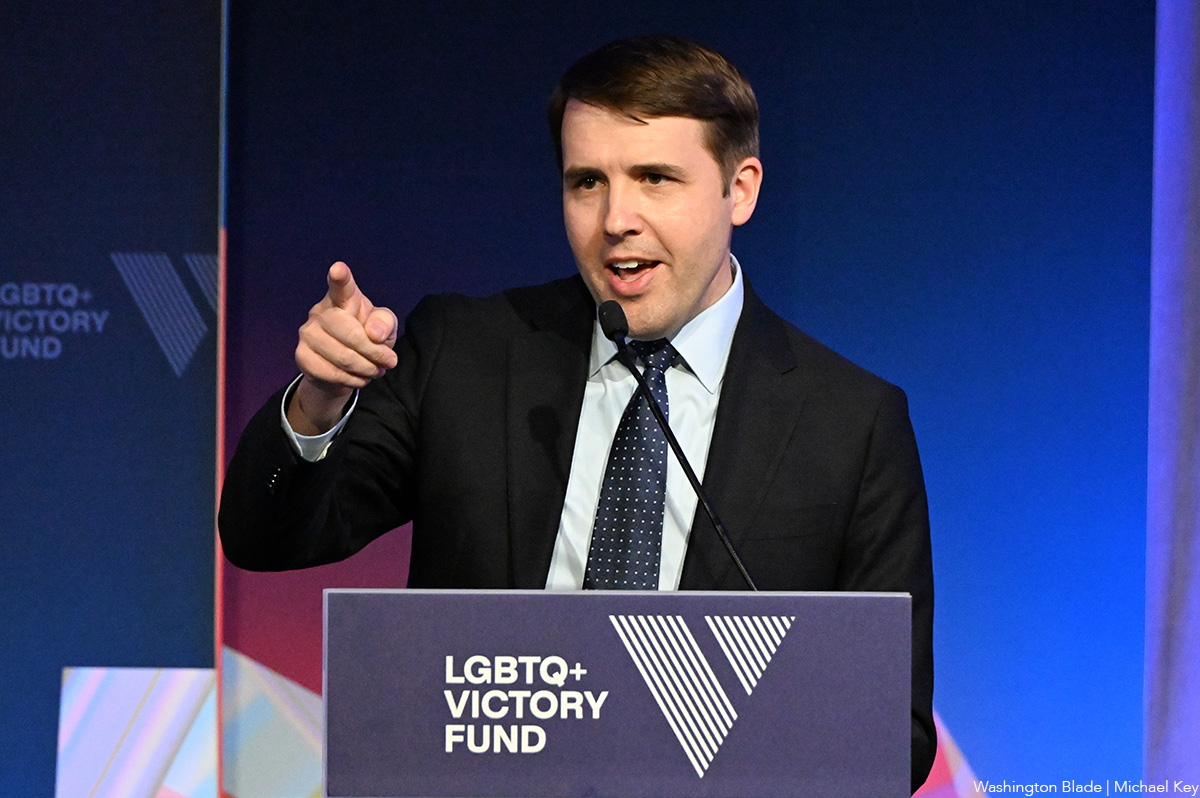
New Hampshire Congressman Chris Pappas on Tuesday won the Democratic primary in the race to succeed retiring U.S. Sen. Jeanne Shaheen (D-N.H.) in the U.S. Senate.
Pappas defeated Karishma Manzur, who was his primary challenger, by a 61.8-36.1 percent margin.
The gay congressman will face off against former U.S. Sen. John E. Sununu, who defeated former U.S. Sen. Scott Brown in the Republican primary.
“Tonight’s victory sends a clear message that voters are looking for leaders who will fight for their rights, their freedoms, and to be treated with dignity and respect,” said Human Rights Campaign President Kelley Robinson in a statement.
She campaigned for Pappas in Manchester, New Hampshire’s largest city, on Aug. 30.
“Chris Pappas has delivered results, stood up for equality, and showed up for the people he serves,” said Robinson in her statement. “HRC was proud to mobilize Equality Voters across New Hampshire to help power this win. We don’t have a second to waste between now and November. We look forward to continuing our work with Rep. Pappas as he drives toward victory in November so he can help return a pro-equality majority to the United States Senate.”
A poll the University of New Hampshire Survey Center released on Aug. 26 showed Sununu ahead of Pappas by a 45-43 percent margin if they were to face off in the general election. The margin of error is +/-2.1 percent.
Pappas would become the first openly gay man elected to the U.S. Senate if he were to win in November.
Congress
Everton Blair makes history as first openly gay congressman from Ga.
Former Gwinnett County Board of Education member to serve remainder of David Scott’s term
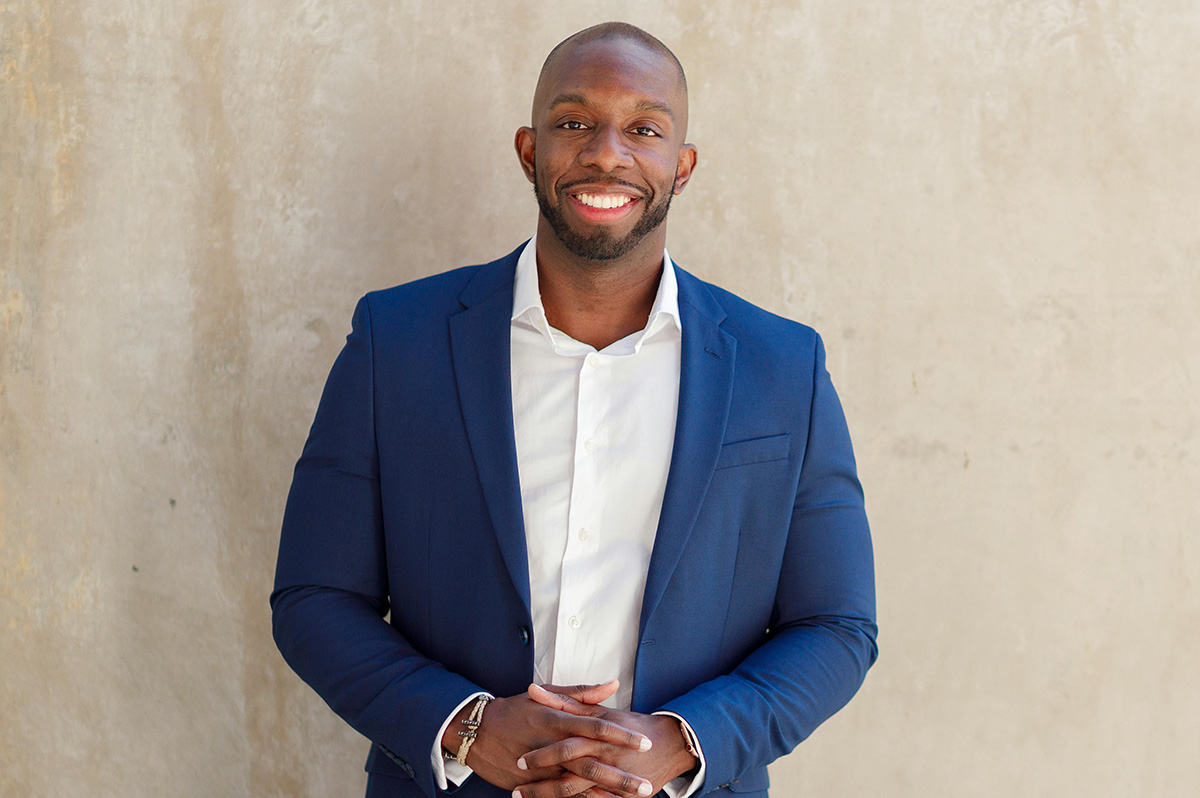
Georgia made history last week when Everton Blair, Jr., was sworn into the U.S. House of Representatives, becoming the state’s first openly LGBTQ+ member of Congress and the latest LGBTQ+ addition to the chamber.
Blair, who represents Georgia’s 13th Congressional District, was sworn in on Sept. 1 after winning a special election to fill the vacancy left by the late-Congressman David Scott. Blair defeated Marcye Scott, the late congressman’s daughter, in the Aug. 25 runoff, winning 53.2 percent of the vote to Scott’s 46.8 percent.
He will serve the remainder of Scott’s term through Jan. 3, 2027. Blair is not running in the November general election for a full term.
Blair brings a progressive platform to Congress.
The 34 year-old supports Medicare for All, a Green New Deal, raising the minimum wage, and universal gun background checks. His campaign platform also included positions on LGBTQ+ rights, reproductive freedom, workers’ rights, climate, and gun violence.
Since joining the House, Blair has joined the Congressional Black Caucus and Congressional Progressive Caucus. He is also a co-chair of the Congressional Equality Caucus.
Before joining the House, Blair served on the Gwinnett County Board of Education, where he became the first Black member and youngest-ever member elected to the board, as well as its first openly gay member. He was later unanimously selected as chair.
Blair also served as a fellow in President Barack Obama’s White House Initiative on Educational Excellence that focused on improving academic outcomes and expanding opportunities for minority students.
The son of Jamaican immigrants, Blair was born and raised in Georgia’s 13th Congressional District. He earned a bachelor’s degree in applied mathematics from Harvard University, a master’s degree in policy, organization, and leadership from Stanford University, and a Doctor of Education Leadership degree from Harvard.
Blair’s campaign received endorsements from a number of organizations, including the LGBTQ+ Victory Fund and progressive Democratic groups such as Future Democrats.
The Equality PAC, a political action committee dedicated to electing openly LGBTQ+ candidates to office, celebrated Blair’s victory and provided a statement to the Los Angeles Blade about the historic nature of his election.
“This is a historic election for Georgia, the South, and our entire country,” Equality PAC said in an email. “Everton Blair brings a strong record of public service and a deep commitment to making government work for working families.”
The group said Blair would “fight to lower costs, expand access to quality health care, create economic opportunity, and ensure every community has a voice in Washington.”
“At the same time, Everton understands the importance of standing up for equality and defending the rights and freedoms of LGBTQ Americans and every community facing discrimination,” Equality PAC said. “His historic election as Georgia’s first openly LGBTQ Member of Congress and the first openly LGBTQ man elected from the South is a powerful reminder of how far our country has come — and how much work remains.”
Equality PAC said it was “proud to welcome Everton to the House” and looked forward to working with him.
Pentagon
Pentagon expands testosterone screening as trans troops face hormone therapy restrictions
Defense Department says updated guidelines to be issued shortly
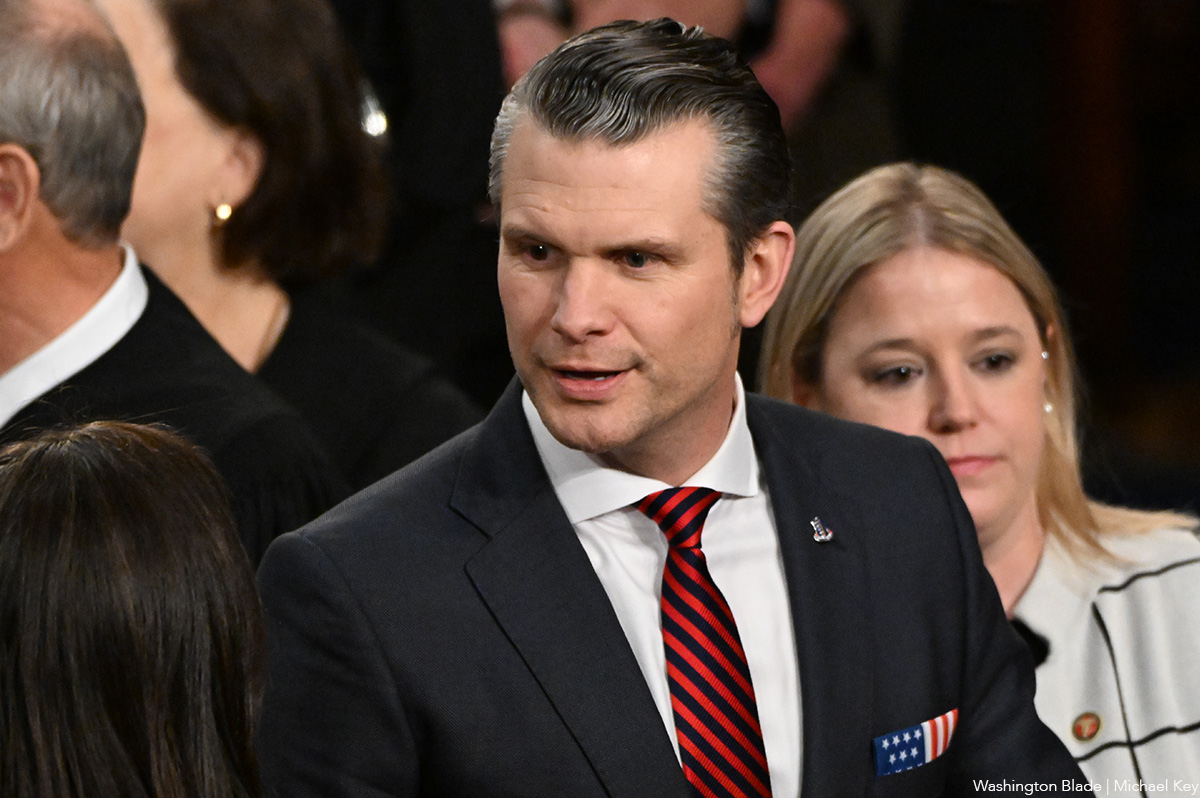
The Pentagon has announced that new clinical guidance will be released establishing mandatory testosterone deficiency screening for active-duty and reserve cisgender male service members ages 30 and older, advancing a policy that expands hormone-related care for cisgender troops.
The Defense Department said the existing clinical guidelines, which are not currently available on the Defense Health Agency’s website, are being updated and that the final guidance will be issued shortly.
The announcement comes amid a wave of anti-transgender policies from both the DoD and the Trump-Vance administration, which continue to prohibit trans men from receiving the same treatment.
Under the forthcoming guidance, men ages 30 and older will be forced to undergo testosterone blood tests as part of their medical care. Younger male service members will be tested if they request screening or if clinicians identify warning signs of low testosterone.
The new guidelines formalize a screening program Defense Secretary Pete Hegseth announced in July, when he said the Pentagon would begin testing service members to ensure that “you have the right testosterone levels to operate at your absolute best.”
“Taking care of your long-term health means ensuring you remain strong, resilient, and capable — not just for your next deployment, but for the rest of your life, so you can thrive long after you take off the uniform,” Hegseth said at the time.
The Defense Health Agency’s clinical guidance says the program is intended to address “hormonal and energy-availability issues.” Hegseth said in July that testosterone replacement therapy would remain voluntary for service members if treatment is recommended.
The Food and Drug Administration is also scheduled to hold a meeting later this month with experts to discuss the medical use of testosterone.
The Pentagon’s push to routinely test testosterone levels runs counter to current medical guidance, which generally recommends considering testosterone therapy only for men who have symptoms consistent with low testosterone and have documented low hormone levels on two separate blood tests.
Testosterone is a sex hormone naturally produced by people of all sexes. It plays a role in regulating muscle mass, bone density, and sex drive. Testosterone levels in men naturally decline with age and have been associated with symptoms including erectile dysfunction, low libido, mood changes and weight gain, although experts continue to debate when testosterone therapy is medically appropriate.
The policy has drawn scrutiny from LGBTQ+ advocates because the Pentagon and Hegseth have simultaneously cited hormone therapy as part of the rationale for removing trans service members from the military.
Under President Donald Trump’s 2025 executive order, “Prioritizing Military Excellence and Readiness,” the military has moved to bar trans people diagnosed with gender dysphoria from serving and has begun formal administrative separation proceedings against trans personnel.
The Pentagon continues to pursue implementation of the trans military ban as litigation over the policy proceeds. As a result, some trans service members have had their gender-affirming hormone therapy halted even as the Pentagon expands testosterone screening and potential treatment for cisgender service members.
SPARTA Pride, a nonpartisan nonprofit organization made up of trans service members, veterans and their allies, criticized the disparity to the Los Angeles Blade when Hegseth first announced the screening program.
“If hormone therapy helps warfighters perform at their best, then it cannot simultaneously be used as evidence that transgender service members are unfit to serve,” said Kara Corcoran, executive director of SPARTA Pride. “The same class of evidence-based medical treatment cannot be characterized as readiness-enhancing for one group and readiness-destroying for another.”
On June 1, the U.S. Court of Appeals for the D.C. Circuit ruled that trans service members already serving in the military could continue to do so while allowing the armed services to continue refusing to enlist new trans recruits.
The Blade reached out to the Pentagon when the testosterone screening program was first announced in July, asking why cisgender service members could receive testosterone therapy while transgender service members could not. The Pentagon did not respond.
Politics
How gay nerds will shape the midterm elections
HeadCount and NerdsVote are fighting to get LGBTQ+ geeks to the polls!
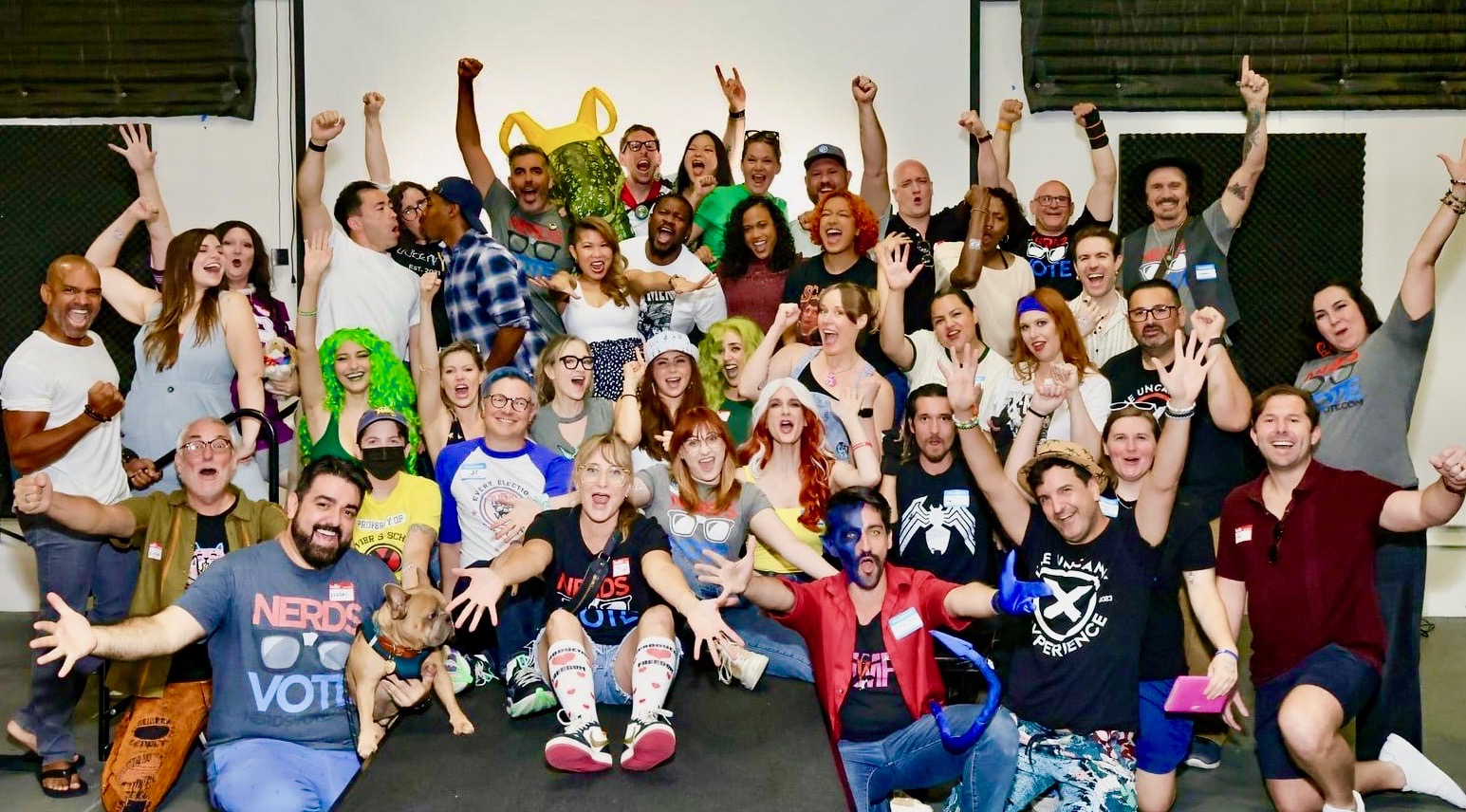
The nerd community is certainly a fierce fellowship.
These are the people completely dedicated to certain franchises, who express their love for these IPs at any given opportunity and are ready to defend them against anyone who can’t fathom their greatness. Whether it’s anime, video games, comic books or more, they know what it means to be a ‘real’ fan today. And, as the thousands of conventions hosted across the U.S. each year show, this community is only growing both in size and in social power every single day. This growth hasn’t come without issue; like any large group, nerds have faced intense struggles with online bullying and in-group harassment over the years. But these folks are united by their geeky love! And, especially when it comes to the many LGBTQ+ individuals who use their fandoms as an escape, most understand that these projects are best when you’re celebrating them with others just as heartfelt as you.
Theirs is a beautiful sense of community, one that inspired nonprofits HeadCount and NerdsVote to partner and help nerds rally around one of the best things this country has to offer: the right to vote.
Both HeadCount and NerdsVote help individuals flex their right to vote, though in very different ways; HeadCount specializes in hosting voter registration drives at large-scale events, usually concerts and festivals. While NerdsVote also supports people in the polling box, they focus on digital campaigns with nerd culture’s many celebrities to foster voter registration online. These groups recently announced that they’d be officially partnering to bring their missions into nerdy gatherings across the country, ensuring that any con-goer can leave an event not only with their favorite merch, but the knowledge that they’re ready to vote in any upcoming election.
“Our expanded partnership with NerdsVote comes at an exciting time, both as we lead up to the midterm elections but also as the comic-con community is rapidly growing,” said Tappan Vickery, Vice President of Program and Strategy at Headcount. “We are thrilled to bring voter engagement into the space, and look forward to supporting this fan-focused community.”
It’s a demographic that is especially important when it comes to voting; despite what early Hollywood will have you believe, nerd communities are some of the most diverse groups that the U.S. has to offer. Gone are the nonstop portrayals of nerds as cisgender, straight, and white, an archetype popularized in movies like Revenge of the Nerds. While those community members do exist, today’s fandoms are filled with queer folks and other marginalized identities who finally feel welcomed in these spaces. It’s a promising shift for these groups, and it’s why, now more than ever, it’s important they can vote for policies that support their rights (and against the politicians who see them as political fodder).
“From our experience working in games and animation, attending comic cons, the fans and fellow nerds we’ve met tend to be a wildly diverse, empathetic, problem-solving, and creative community,” said JP Karliak, a renowned voice performer (known for their work as Morph in X-Men ‘97) and Co-Founder of NerdsVote. “Who wouldn’t want more of them involved in our democracy?”
This partnership will see these groups set up voter registration tables at comic-cons, gaming expos, and any other nerdy festival they can find. It will offer not only vital education to the people in attendance, but a direct civic outreach that these populations don’t often receive. And, in the ultimate mission of this new partnership, it will turn America’s nerd community into the most active group of voters at the upcoming midterm elections.
NerdsVote and HeadCount are hitting the ground running with this partnership, already having tables planned for the upcoming Animate! Convention in Philadelphia and Galaxycon in St. Louis. They’ve assured their many supporters that these are only the beginning and are currently organizing for the hundreds of other nerd events 2026 still has in store. It’s hard work, but in the words of Courtenay Taylor, NerdsVote President, “[This] moves us closer to achieving my big dream of having voter registration booths at every Comic-Con in the United States!”
Congress
Markey’s primary win deemed success for LGBTQ+ activists
Mass. lawmaker champions transgender rights
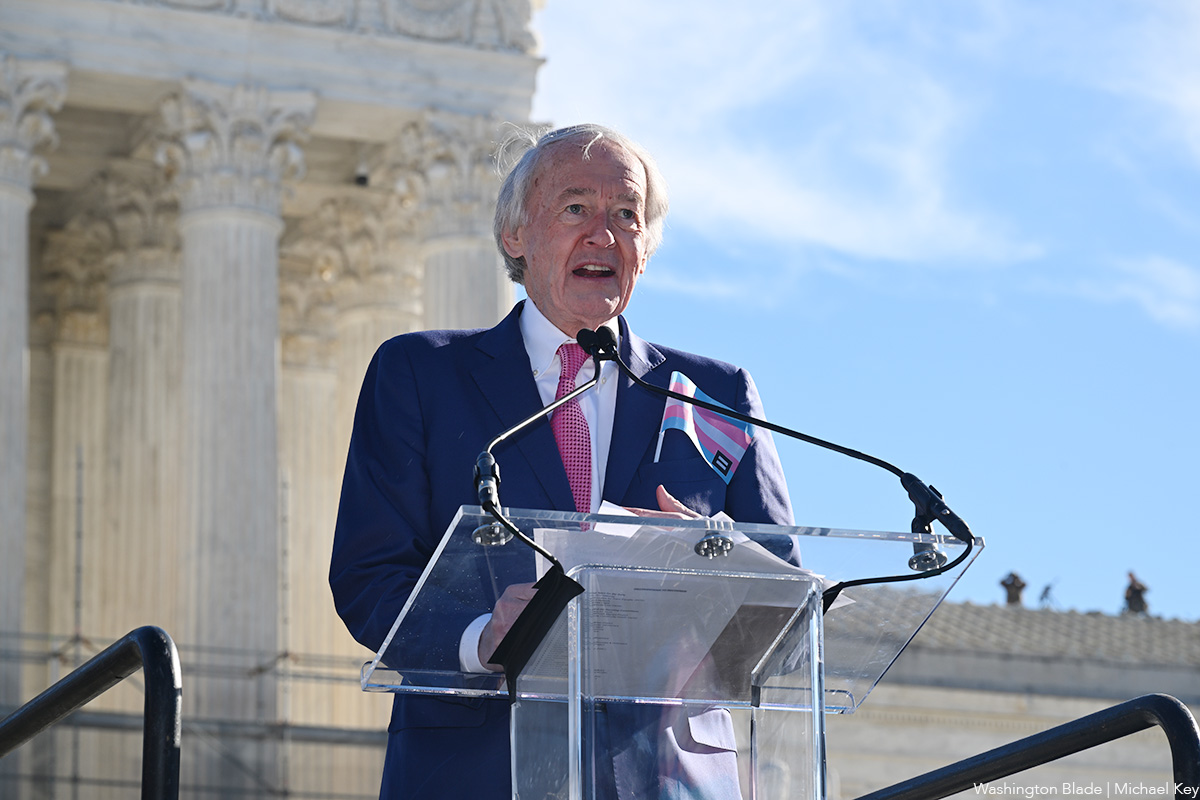
U.S. Sen. Ed Markey (D-Mass.) clinched the Democratic seat for his reelection campaign in Massachusetts’s primary election on Tuesday.
Markey won the deep-blue state with 64.8 percent of the vote, according to NBC News, triumphing over Marine Corps combat veteran and Congressman Seth Moulton, who received 35.2 percent of the vote.
Massachusetts’s primary election, which determined which Democratic candidate will head to the polls to face off against the Republican challenger in November, is being considered a victory for LGBTQ+-inclusive policy, as well as for a divisive pro-transgender rights candidate — both things Markey has become an outspoken champion of.
Markey has experience at multiple levels of government, from the state level, where he served three terms in the state House of Representatives, to his federal tenure, including 20 terms in the U.S. House of Representatives and is now serving his second term as a senator. He has become a fixture of a changing Democratic Party in one of the most consistently blue places in the U.S.
This primary — and much of the national discussion surrounding the Senate seat — focused a lot of campaigning power on fighting the growing sentiment, led mostly by Republicans, that the frustration many Americans feel lends itself to an anti-establishment and anti-incumbent attitude.
Markey ran his campaign using his past as a reflection of his commitment to constantly putting his best foot forward for Bay Staters — particularly with apprehension for issues younger and more progressive democrats have been righting for — including Green New Deal and “Medicare for All” while Moulton — who was also elected to federal office prior to this run — campaigned on being younger than Markey, arguing that he was not the same type of established politician.
Moulton also faced backlash for negative comments about trans athletes, sparking criticism for those who did want younger candidate but want for trans rights to be protected.
Markey’s track record of supporting the LGBTQ+ community is one of the most clear in federal politics, one that has garnered a “100 percent lifetime voting record” on the Human Rights Campaign’s PAC politician review scorecard.
That list of Markey’s actions includes being a cosponsor of the Equality Act, driving landmark legislation to ensure federal protections for LGBTQ+ Americans, and being one of the most vocal proponents for trans rights in the federal government — specifically in multiple appropriations bills and in the National Defense Authorization Act. He was also the lead sponsor of the Transgender Health Care Access Act and the Transgender Bill of Rights resolution.
Markey first introduced the Transgender Bill of Rights in the Senate in 2023, where it ultimately failed to be brought to law. He reintroduced the legislation this year once again. This was a direct response to the attitude pushed by many conservatives after 2021, when the push to minimize trans rights started to become a key part of their cause and has been constantly propped up by the Trump-Vance administration.
“Massachusetts needs a senator who stands up and fights back, a senator who never forgets who they are fighting for,” Markey said during his victory speech. “That has been the mission of my life, and it always will be.”
Following the calling of the primary, a slew of LGBTQ+ organizations rallied behind Markey, many pushing his past as an asset that puts his money where his mouth is through advocating for legislation specifically protecting the LGBTQ+ community.
Tyler Hack, the executive director of the Christopher Street Project, an organization dedicated to pushing for legal protections for trans americans, released a statement following Markey’s win. Hack argued that putting forward such a staunchly pro-trans candidate is a win for the community, especially after endorsing him earlier this year.
“Tonight, anti-trans politics lost. Massachusetts rejected the idea that attacking transgender people is a shortcut to political power. Voters chose a different path: one where equality is not negotiable, cruelty is not courage, and transgender people do not have to disappear for Democrats to succeed.”
The Human Rights Campaign also endorsed him as a candidate earlier this year and issued a statement via its president, Kelley Robinson.
“Ed Markey has spent decades fighting for LGBTQ+ equality, for working people, and for a more livable world,” Robinson said. “He knows why equality matters. He’s stood with us no matter what. We were proud to endorse him this year, and when a pro-equality majority takes back the Senate this fall, we will continue to count on him as a champion for our community.”
Markey is running for reelection against Republican John Deaton in November, where he is expected to win.
Politics
Out combat vet Cait Conley fights Trump flunkie for New York’s flippable 17th Congressional District
Conley on GOP’s big money: “Outspent. Not Outfought.”
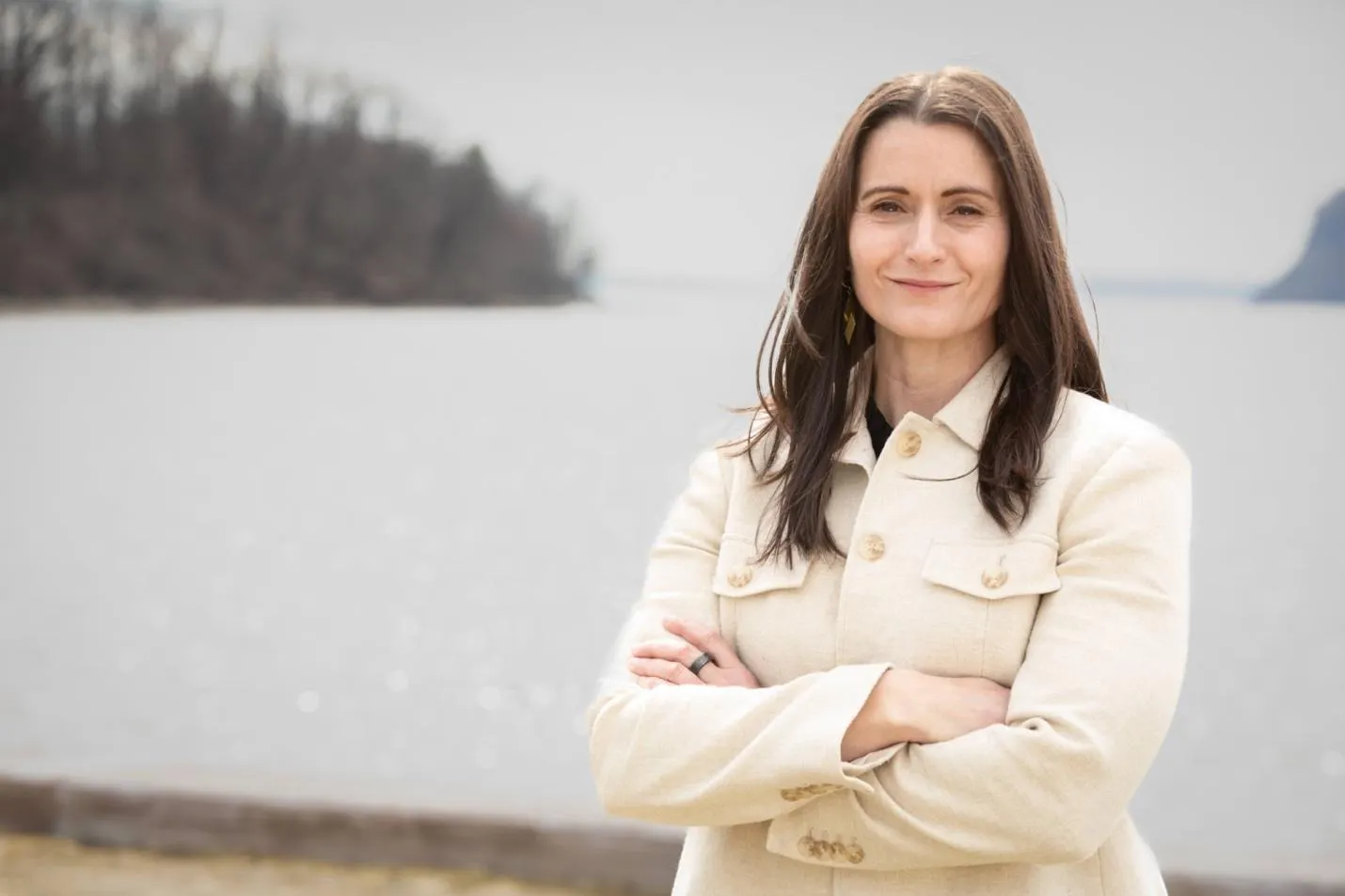
Consider the timing. Two weeks before the 25th anniversary of the Sept. 11, 2001, terrorist attacks and two months before the midterm elections, top U.S. military leaders alert the public that Donald Trump and Defense Sec. Pete Hegseth’s bellicose incompetence is dangerously weakening national security.
On Sunday, Aug. 30, The Washington Post reported that the heads of the Army, Navy and Air Force and the four-star commanders overseeing U.S. operations throughout Europe, Asia and Latin America warned Hegseth directly that “prolonging large-scale operations against Iran is unsustainable and risks weakening their ability to confront threats elsewhere, including the U.S. homeland, according to people familiar with a recent assessment prepared for the Pentagon chief.”
Pentagon spokesperson Sean Parnell responded on X, trying to discredit the reporting without disputing Hegseth’s plan to keep more than 50,000 U.S. troops in the Middle East through September, with some deployments possibly extended into 2027.
“Publishing highly classified assessments from the Secretary’s orders book is a crime,” he wrote. “We are in great shape around the world. This story isn’t about readiness. It’s TDS and PDS – they hate President Trump and Secretary Hegseth more than they love America.”
On Monday, Army Sec. Dan Driscoll resigned “amid reports of heightened discord with Secretary of Defense Pete Hegseth,” Military Times has learned, adding that “the Army is effectively leaderless. Hegseth fired Army Chief of Staff Gen. Randy George in April and has yet to nominate a replacement for the Army’s top uniformed post.”
The Post notably experienced government pushback 55 years ago when the Nixon administration tried but failed to stop or criminalize publication of the Pentagon Papers, the leaked “top secret” report on U.S. policymaking in Vietnam showing that two presidents promised victory while knowingly sending thousands of soldiers to fight an unwinnable war.
In 1971, the Supreme Court ruled against President Richard Nixon’s claim of executive authority, with Justice Hugo Black writing, “The press was to serve the governed, not the governors.” This Trump-loving Supreme Court, however, granted the convicted felon president broad immunity for official acts, which Trump has exploited with the complicity of a feckless Republican majority in Congress.
On Sunday, after a month’s respite in the six-month failed war against Iran, the U.S. military struck Iranian rocket launchers on the Strait of Hormuz that a U.S. Central Command spokesperson told the Associated Press were prepared to replace cleared sea mines in the international shipping routes. Iran retaliated for the “deadly attack.”
Five-time draft dodger Donald Trump may be “bored” with the war he started, but the rest of the world is scrambling. Treasury Secretary Scott Bessent is meeting with world finance ministers faced with aggressive tariffs on major allies. And then there’s the $40 trillion debt.

This is the “everything-all-at-once” existential crisis in which Americans must consider candidates for the Nov. 3 midterms. After the deep DOGE cuts of national and cybersecurity experts, conscientious voters should consider candidates with trustworthy, reality-based experience. Unfortunately, polls and donations are still considered the key barometers for victory.

Axios, for instance, recently reported that House Democrats are quietly helping Republican Rep. Mike Lawler’s re-election campaign against combat vet and national security expert Cait Conley by not fighting hard enough in New York’s 17th Congressional District, considered the most vulnerable House seat in the country.
The battleground seat in the Lower Hudson Valley area could decide which party controls the House next year. But it took the Democratic Congressional Campaign Committee more than two weeks after Conley dusted her four opponents in the June primary, winning 51.4 percent of the vote, to include her in its “coveted” Red-to-Blue program.
The designation is “signaling that the DCCC is invested in providing Conley, a top-tier candidate, with the support needed to continue building a winning campaign as she runs for New York’s 17th Congressional District,” according to the committee.
The University of Virginia’s Center for Politics and the Cook Political Report subsequently shifted the race from “Leans Republican” to “Toss-up.”
However, the “Lawler campaign has a commanding advantage in available funds and booked media,” which includes “millions” from Elon Musk, according to the Conley campaign. Trump, Cabinet secretaries, and House leaders like House Majority Leader Steve Scalise (R-La.) have campaigned for Lawler.
Democrats still seem soft. “If you’re going to have a Republican, it’s the kind of Republican we want in the Congress,” a Democratic source told Axios of Lawler.
“I don’t think Lawler is beatable,” a senior House Democrat told Axios.
When asked by The Hudson Independent about the money disparity, “The response by West Point graduate Conley: ‘Outspent. Not Outfought.’”
Conley says she lives by the Special Ops saying, “run to the sound of the guns.” But Lawler and his Republican friends think calling her “scaredy-cat” for “chickening out” by not meeting his challenge to debate on CNN or NBC makes him look strong.
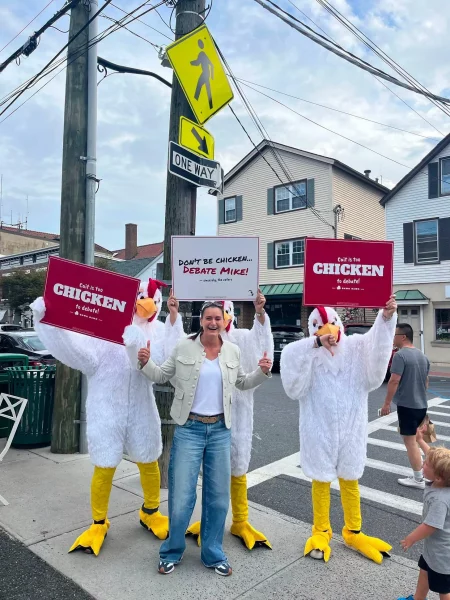
Both are 39 years old, so consider how their life experiences may fit today’s needs.
Conley, a fourth-generation Hudson Valley native from a working-class family, was a junior at Pine Bush High School when the Twin Towers fell on 9/11. The next day, she began her application to West Point, where she graduated in the top 2% of her class. She later received advanced degrees from MIT and Harvard, accruing expertise in national security.
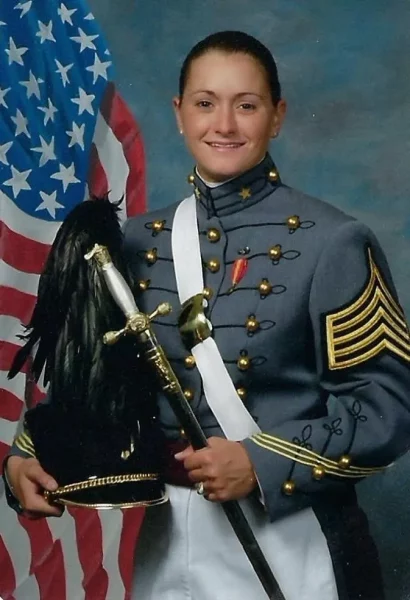
Conley served for more than 16 years as an active-duty Army officer, deploying six times to combat zones, including Iraq and Afghanistan, where she became one of the first women to serve in Special Operations leadership. She received three Bronze Stars and a stellar reputation for exceptional leadership under pressure.
Conley subsequently served as director for counterterrorism on the National Security Council at the White House. She transferred to the Cybersecurity and Infrastructure Security Agency, where she helped safeguard critical infrastructure and election systems – always defending the integrity of the people and American democracy.
Lawler never served in the military nor worked to protect national security. According to his campaign website, he grew up in Rockland County, graduated from Suffern High School, and was valedictorian at Manhattan College in the Bronx, where he majored in finance and accounting.
Lawler served as deputy town supervisor of Orangetown, senior advisor to the Westchester County Executive, and executive director of the New York State Republican Party, and he founded a successful government affairs and public relations firm. He was then elected to the New York State Assembly. He touts his 2022 Congressional victory over the gay chair of the Democratic Congressional Campaign Committee.
In 2024, Lawler won a congressional district that Democratic presidential candidate Kamala Harris won. “In that race,” his website says, “he outperformed the presidential ballot by nearly 7 points, a testament to his bipartisan, pragmatic approach to governing and his broad appeal among Democrats and Independents.”
Lawler has voted five separate times to back Trump’s Iran war, about which, he told News Nation, he had privately been given information about an “imminent” nuclear threat. Six months later, he believes the war is “absolutely worth it,” though gas prices are above $4.15 per gallon.
Conley has an impressive list of endorsements – most of whom are local. So VoteVets launched a $1 million dollar ad buy for Conley, highlighting Lawler’s record of voting with Trump “100% of the time.”
The VoteVets ad, “Valley Home,” highlights Conley’s roots, her working-family background, her commitment to serve after the 9/11 terrorist attacks, and her military leadership.
In an interview with Trudy Ring for LGBTQ+ Freedom Fighters, Conley likened her decision to challenge Lawler to her decision to join the military.
“The reason I’m in this fight to take back New York 17, flip it from red to blue, and get Mike Lawler out of here, and is the same reason that over 20 years ago I decided to serve this country after the terror attacks of 9/11,” she said. “It is love for this country and a feeling of responsibility to our community in this country to fight for it.”
“Washington has grown increasingly corrupt, especially under this administration, which has just set a whole new bar for a willingness to exploit the federal government for personal gain, to use the federal government as a weapon against political opposition, and the level of corruption that we are seeing from the White House and [Donald] Trump himself, his family making $2 billion while he’s in office, right?” she added.
“The shamelessness—it’s straight up un-American, and it has been enabled by cowards in Congress like Mike Lawler, and so we have to stop it, and that’s what this fight’s about. No one else is going to come in and save us. This is our fight, and that’s why I’m proud to take it on,” Conley said.
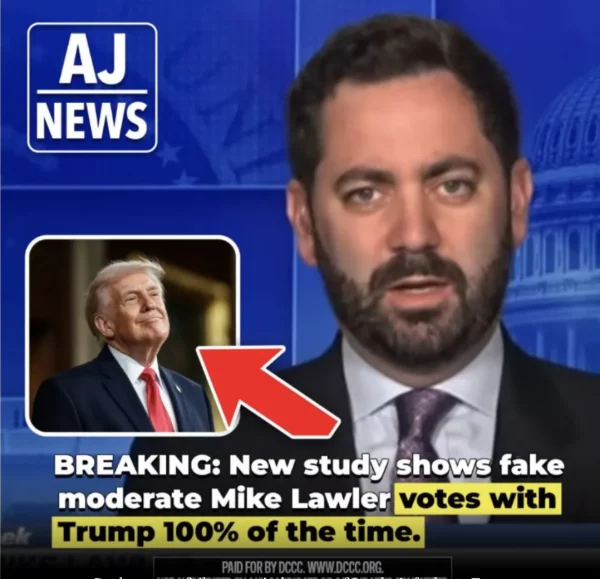
Lawler touts himself as a moderate, but he “has voted 100 percent of the time with Donald Trump,” Conley said. “What does that mean? Well, it means voting eight times for reckless tariffs that have jacked up the price of goods on everything from prescriptions to groceries in the middle of an affordability crisis. It has cost an average household $4,200 for the same goods because of these tariffs.”
“There is no line Mike Lawler will not cross for Donald Trump. When Donald Trump says jump, Mike Lawler’s response is ‘how high?’ People here in the Hudson Valley deserve a hell of a lot better.”

If elected, Conley’s priorities will include lowering costs of health care and other necessities, investing in education, addressing climate change by promoting clean energy, codifying reproductive rights, reforming the immigration system and reining in Immigration and Customs Enforcement (ICE), fighting cuts to Medicare, Medicaid, and Social Security, championing LGBTQ+ rights, and generally combating the policies of the Trump administration.
Caring about the military is also a priority.
Pete Hegseth is incompetent and should never have been confirmed as Secretary of Defense, Conley said. He’s depriving the military of talent by kicking out transgender service members, women, people of color, and those who simply disagree with him. Trans military members, she noted, “are men and women who have more courage in their big toe than Donald Trump and Pete Hegseth have combined.”
She has also decried the mistreatment of troops such as those who’ve been at sea on the USS Lincoln for nearly nine months, facing food shortages and generally horrific conditions that have led to mental health crises.
Asked about Trump’s recent decision to reduce joint military exercises with South Korea and to meet with North Korean dictator Kim Jong Un, Conley said, “I’m at a loss of words sometimes. … We should be standing by our allies like South Korea. We should be standing by our allies like NATO and Europe. We should be standing by our allies like Ukraine. But instead, because our president has this bizarre affinity for dictators,” he prefers countries that are our “strategic adversaries,” like North Korea and Russia.
Conley’s been called a war hero, but she doesn’t refer to herself that way.

“What I would say is I’ve proudly served,” she said, noting the personal sacrifice of serving in silence as a lesbian under “Don’t Ask, Don’t Tell.”
“You saw brave service members who are willing to make the ultimate sacrifice for this country but had to live in fear,” she said. “That’s not America.”
Later, as director for counterterrorism on the National Security Council (NSC), she got banned from Russia, along with such big names as former President Obama and comedian Stephen Colbert, something of which she’s proud. Since the list was alphabetical in English, as a “huge fan,” Conley said it was “one of the coolest things” seeing her name listed after Colbert’s.

Immigration reform is another priority. “It has broken my heart, as someone who loves this country, to watch, on American streets, American federal agents … literally killing the very people they’re sworn to serve and protect, and there’s no accountability. That’s not a partisan issue. That’s a straight American issue.”
Conley’s district has the second-highest number of Haitian immigrants in the U.S., and Trump recently revoked their Temporary Protected Status (TPS), a status that meant they were legally cleared to work and wouldn’t be deported. Since many work in health care, deporting them would hurt the immigrants and the communities they serve. This is another example of the “cruelty and corruption” of the Trump administration, Conley said.
She also noted that 37,000 people in her district will lose health insurance due to Medicaid cuts and the revocation of certain tax credits for premiums on Affordable Care Act plans. She favors a public option for health insurance.

“I talk to families all across this district, and what I hear is people, regardless of political affiliation, are sick of the dysfunction and partisanship that is tearing communities and families apart, and they want to get back to doing what is right for our future and focusing on solving the very real problems,” Conley said.
If Conley is elected, it would be sweet revenge for the LGBTQ+ community; Lawler has previously beaten two gay candidates, five-term Congressman Sean Patrick Maloney and former Congressman Mondaire Jones.

“Third time’s the charm, and let me tell you, he has never had to face someone like me before,” Conley said. “Yes, absolutely a proud member of the LGBTQ community, but also a woman veteran… It’s about our future, and so folks are coming together. There’s a generation of us that are hungry to get in there and root out the corruption that I feel like has taken root in Washington, to root it out and to really deliver.”
This article is cross-posted from Karen Ocamb’s Substack LGBTQ+ Freedom Fighters.
Congress
HRC president campaigns for Chris Pappas in NH
Gay congressman running to succeed retiring U.S. Sen. Jeanne Shaheen
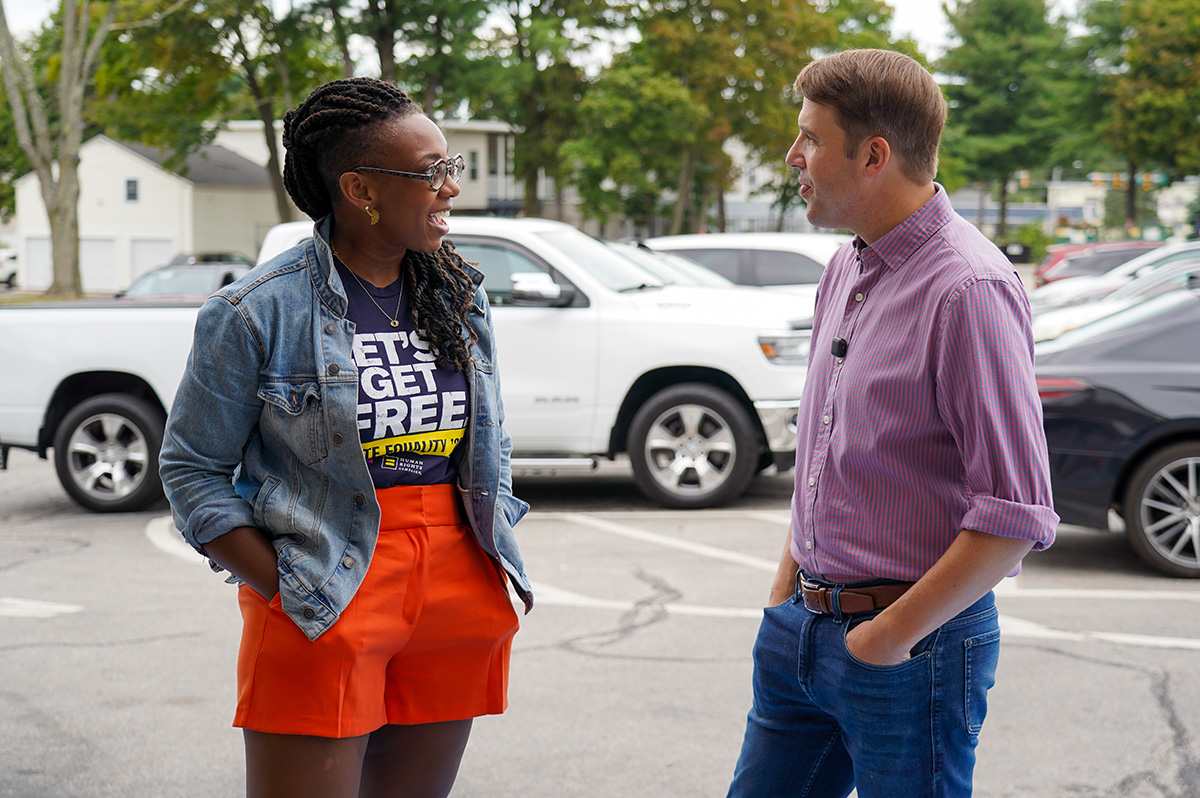
Human Rights Campaign President Kelley Robinson on Sunday campaigned for U.S. Rep. Chris Pappas (D-N.H.) in New Hampshire.
Robinson traveled to Manchester, the state’s largest city, nine days before the Sept. 8 primary that will determine who will vie for retiring U.S. Sen. Jeanne Shaheen (D-N.H.)’s seat.
We’re hitting the pavement across New Hampshire to fight for a freer, fairer future for everyone.
Glad to have Human Rights Campaign President @KelleyJRobinson join us for a canvass launch in Manchester today. pic.twitter.com/XWCEaQxy4o
— Chris Pappas (@ChrisPappasNH) August 30, 2026
Former U.S. Sen. John E. Sununu, who represented New Hampshire in the U.S. Senate from 2003-2009, will face off against former U.S. Sen. Scott Brown, who represented Massachusetts in the U.S. Senate from 2010-2013, in the Republican primary.
Karishma Manzur is among the Democrats challenging Pappas.
A poll the University of New Hampshire Survey Center released on Aug. 26 shows Sununu is ahead of Brown. The same survey shows Pappas ahead of Manzur and his other Democratic challengers.
The UNH Survey Center poll shows Sununu ahead of Pappas by a 45-43 percent margin if they were to face off in the general election. The margin of error is +/-2.1 percent.
Pappas would become the first openly gay man elected to the U.S. Senate if he were to win in November.
Politics
From the desk of Equality California: End of August top political news for California’s LGBTQ
Equality California is busy
as ever, continuing to endorse pro-equality
candidates up and down the ballot, and working to move our priority legislation
through final votes and to the governor’s desk.
From the Desk of Equality California:
As we hurdle toward the November midterm elections, Equality California is busy as ever preparing for our fall events season, continuing to endorse pro-equality candidates up and down the ballot, and working to move our priority legislation through final votes and to the governor’s desk.
We’re also accepting applications for our final Leadership Academy of the year. This special Gender Equity Edition will help prepare lesbian, bisexual and queer women, as well as transgender and nonbinary people, to run for office and serve their communities.If you’re interested in applying or know someone who’d be a great fit, learn more!
To read more stories, join our mailing list, and sign up for the weekly Equality Brief, visit eqca.org/equalitybrief.
- Trump Administration Denies Trevor Project Proposal to Run ‘Press 3’ Crisis Line:
As the Department of Health and Human Services prepares to reinstate specialized crisis services for LGBTQ+ youth at the national 988 Crisis Line, they have formally denied a proposal from the Trevor Project — who helped initially create and launch the service — to help with administration. The toll-free 988 Lifeline’s “press 3” hotline, which provides confidential assistance by trained counselors, originally launched in 2022. - Survey: 12% of Adult U.S. Population Identifies as LGBTQ+:
A recent analysis of data collected from the U.S. Census Bureau’s Household Plus Survey between 2021-24 shows that 12%, or nearly 26.5 million adults, identify as part of the LGBTQ+ community. This was the last effort by the federal government to collect information on sexual orientation and gender identity before the Trump administration removed such questions on hundreds of federal surveys. The majority of the respondents — 53% — fall between ages 18-34. - Trump Administration Finalizes Discriminatory Rule Targeting Transgender Healthcare:
The Trump administration finalized a cruel and discriminatory rule blocking federal Medicaid and CHIP payments to providers for medically necessary healthcare for transgender young people, putting access to care at risk — particularly for young people from low-income families. The rule is scheduled to take effect October 13, but it does not make transgender healthcare illegal in California or prevent the state from using its own funding to cover care. Equality California and our partners secured a historic $26 million investment in the state budget to protect access to care and stabilize California’s transgender healthcare provider network. - Pentagon Uses Secretive Separation Boards to Expel Transgender Servicemembers:
A New York Times investigation revealed how the Pentagon is using closed-door separation boards to remove transgender servicemembers from the military, often regardless of their records of exemplary service. The proceedings have no cameras or public transcripts, and some servicemembers have been barred from their own hearings after refusing to cut their hair or wear uniforms corresponding with their sex assigned at birth. One attorney who has represented dozens of transgender troops reported losing 27 of 28 cases before the boards. - Trump Justice Department Violates Federal Order; Judge Considering Sanctions:
In just the latest flouting of a legal ruling, the Trump Justice Department violated U.S. District Judge Royce C. Lamberth’s order preventing transgender women in federal custody from being moved into segregated housing. Issued in May, Lamberth’s order arose from a case challenging the constitutionality of a Trump executive order requiring federal inmates be housed on the basis of their sex at birth. The legal challenge is still active, with Lamberth ruling earlier this year the case could proceed as a class-action lawsuit. When questioned by Judge Lamberth, Justice Department attorneys claimed they were in compliance while plaintiffs’ attorneys argue the spirit of the order was clearly violated. Lamberth is now considering potential sanctions, as well as how best to ensure enforcement of his order. - House Passes 2027 NDAA With Anti-LGBTQ+ Amendments, Anti-Trans Military Effort Defeated:
By a vote of 216-212, the House passed the 2027 National Defense Authorization Act (NDAA), an annual Defense Department appropriations bill, with two anti-LGBTQ+ provisions attached. The first provision prohibits funding for transition-related healthcare for active-duty troops, while the second targets healthcare for transgender servicemembers and their dependent children under TRICARE, the military’s primary health provider system. One particularly ugly amendment offered by anti-LGBTQ+ extremist Rep. Lauren Boebert (R-CO) sought to codify a Trump executive order — currently undergoing a legal challenge — barring transgender people from enlisting in the military and discharging active-duty transgeneder servicemembers, but was defeated. The bill now moves to the Senate, where passage is not guaranteed. - Federal Employees and Their Families Sue Trump Administration Over Transgender Healthcare Exclusion:
Federal employees and their families have joined a class-action lawsuit challenging the Trump administration’s decision to exclude medically necessary transgender healthcare from federal employee health plans. The lawsuit argues that the blanket exclusion, which applies to people of all ages, violates federal protections against sex discrimination. According to the Williams Institute, at least 39,400 people enrolled in federal health plans are affected by the policy.
STATE LEGISLATIVE UPDATE
Equality California’s priority sponsored legislation continues to move through the legislative process. A handful of our bills have been transmitted to the governor’s desk, while others await final action in the legislature. To view our entire 2026 state legislative package, visit eqca.org/legislation
2026 SAFE AND SUPPORTIVE SCHOOLS REPORT CARD
Earlier this month, Equality California Institute released the fourth iteration of the Safe and Supportive Schools Report Card. The survey measures how well California’s Unified School Districts adhere to state education law around inclusive curriculum and anti-bullying policies, as well as their overall support for LGBTQ+ students. While there were some highlights, overall the data presented more challenges and opportunities as opposed to outright successes. Read the full Report Card on our Schools hub.
UPCOMING EVENTS
Our premier event of the year, the Los Angeles Equality Awards, is happening on Saturday, October 17, 2026 from 6:00-10:00 PM at the gorgeous Fairmont Century Plaza. And this year, we’re making Monét moves — Drag Race All-Stars winner, comedian, actor, and presenter Monét X Change will serve as emcee! We’ll also honor Asm. Rick Chavez Zbur with the Equality Leadership Award. More details will be announced soon, but tickets are on sale now! Don’t miss out!

Dallas Pride was a weekend of unabashed joy for Texas’ queer community

Embracing queer exploration with actress Rosslyn Luke

Here’s your Palm Springs look at the weekend: Sep 25-27, 2026

‘Star Trek: Strange New Worlds’ star Celia Rose Gooding breaks down that finale time travel twist

Colombia withdraws from Equal Rights Coalition

UN human rights chief sounds alarm over ‘comprehensive onslaught’ against LGBTQ+ rights

United States Conference on HIV/AIDS grapples with federal budget cuts

Long-time DignityUSA executive director announces retirement

For lesbian victims of domestic violence, competent care is scare

‘Dolly Day’ officially made holiday in California: Rainbow District plans to celebrate
-
 United Nations3 days ago
UN human rights chief sounds alarm over ‘comprehensive onslaught’ against LGBTQ+ rights
-
 AIDS and HIV3 days ago
United States Conference on HIV/AIDS grapples with federal budget cuts
-
 National4 days ago
Long-time DignityUSA executive director announces retirement
-
 National3 days ago
For lesbian victims of domestic violence, competent care is scare
-
 Arts & Entertainment3 days ago
‘Dolly Day’ officially made holiday in California: Rainbow District plans to celebrate
-

 Fiji2 days ago
Spike in HIV cases prompts Fiji to declare national emergency
-

 Celebrity News2 days ago
Clavicular charged in alleged rape of teenage influencer
-

 Commentary3 days ago
Trump to the people: F**k the free press
-

 Netherlands2 days ago
Dutch prime minister visits Stonewall Inn
-

 Features2 days ago
‘Embracing your identity can be a form of resistance’: Councilmember Byers highlights Bisexual Awareness Week