
World
Out in the World: LGBTQ+ news from Europe & Asia
LGBTQ+ stories from around the globe including Nepal, Malaysia, The Vatican, the United Kingdom, Ireland & Russia
NEPAL
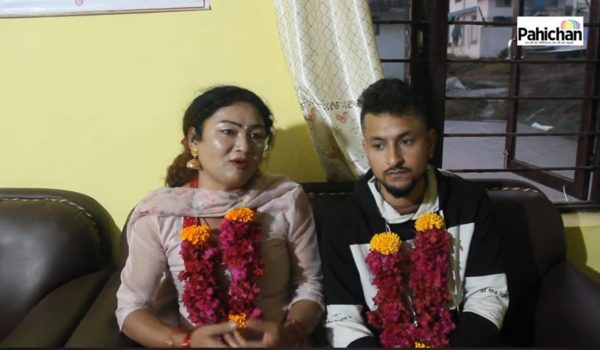
KATHMANDU, Nepal – The marriage between Maya Ram Bahadur Gurung and Surendra Pandey this past week in the Nepalese capital city is being hailed by the country’s LGBTQ+ rights activists. Gurung, a transwoman and Pandey, who is gay was registered by the local municipality ward office four months after the Himalayan nation’s highest court legalized same-sex marriages in an interim order.
The former Executive Director/CEO and founder of the Blue Diamond society, first LGBTQ+ rights organization in Nepal, Sunil Babu Pant, who has also served in the country’s parliament was present for the civil ceremony telling the Associated Press: “After 23 years of struggle, we got this historic achievement, and finally, Maya and Surendra got their marriage registered at the local administration office,” Pant said.
In a later interview with Naya Prakashan news Pant noted. “A wedding in Nepal today can become the signpost in South Asia for a more equal tomorrow.”
Human Rights Watch (HRW) reported that Gurung, a transgender woman who is legally recognized as male, and Pandey, a cisgender gay man, held a Hindu wedding ceremony in 2017. They first attempted to legally register their marriage in June this year at the Kathmandu District Court, following an interim order by Nepal’s Supreme Court instructing authorities to register same-sex marriages while considering a case that argues for marriage equality across the country.
When that court rejected their registration, saying it did not need to recognize a couple that was not one legal male and one legal female, they appealed to the Patan High Court in September.
But the high court judges rejected the appeal, saying that it was the responsibility of the federal government to change the law before the lower authorities could register such marriages, HRW reported.
Nepal’s civil code currently only recognizes marriages between one man and one woman. The Supreme Court attempted to rectify that by ordering the creation of an interim registry for nontraditional marriages until parliament changes the law. The two lower courts then reversed the logic by claiming that the national law must be changed first.
MALAYSIA
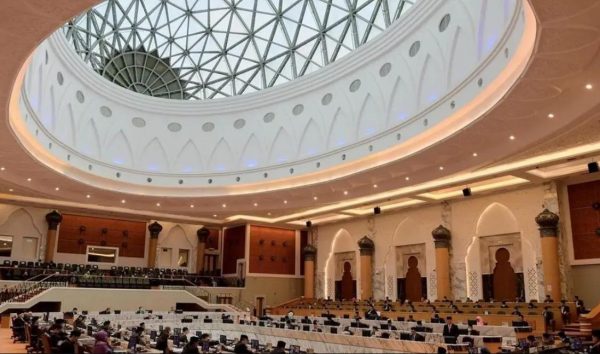
JOHOR, Malaysia – Malaysian LGBTQ+ rights activists are decrying efforts by the Johor state government to establish a “rehab” centre for “people in same-sex relations,” which would use the globally debunked conversion therapy to change sexual orientation.
Malaysian society is predominately Muslim and conservative. Human Rights Watch has noted that the government authorities in the Malay Archipelago are willing to enforce the rigid gender roles by which they compel all Malaysians to abide with few exceptions.
Speaking at the Johor state assembly on Wednesday, the state’s Islamic Religious Affairs Committee chairman Mohd Fared Mohd Khalid said 400,000 ringgit ($86,000 USD) has been allocated for the rehabilitation center, which was expected to open in July next year the South China Morning Post reported.
“This rehabilitation center is established … for them to get back on the right path,” Fared told the assembly.
Aside from same-sex individuals, Fared proclaimed that the center would also house “those who are deemed deviant” from the state-prescribed religious Islamic orthodoxy, which includes the Ahmadiyya Muslim Community and Baha’i among some 42 groups, the state’s religious affairs body has identified as “deviant.”
The Malaysian government relies on the force of law to prohibit expression and conduct that fall outside of a heterosexual, cisgender norm. It is one of only a handful of countries that explicitly makes gender nonconformity a criminal offense.
Reacting to the rehab news, transgender rights group Justice for Sisters told the South China Morning Post that detaining people was a violation of the Malaysian constitution, which safeguards personal liberty, privacy, dignity, equality and prohibits discrimination on the basis of gender.
“Detaining people on the grounds of changing their SOGIE – sexual orientation, gender identity and gender expression – amounts to torture without a doubt,” said the group’s spokesperson Thilaga Sulathireh.
Malaysia also criminalizes consensual same-sex conduct at both the federal and state levels. Its officials frequently insist that the laws criminalizing lesbian, gay, bisexual and transgender (LGBT) people are intended not primarily to punish, but rather to return them to “the right path,” statements echoed this past week by Johor’s Islamic Religious Affairs Committee chairman.
Human Rights Watch notes that officials under successive Malaysian governments have typically coded their approach to sexual and gender diversity in a logic of “prevention” and “rehabilitation,” backed by the threat of punishment. Former Prime Minister Muhyiddin Yassin, who was in office between March 2020 and August 2021, described LGBT people as a threat to Islam, backed by “foreign influences,” and a “disorder” that requires counseling.
THE VATICAN
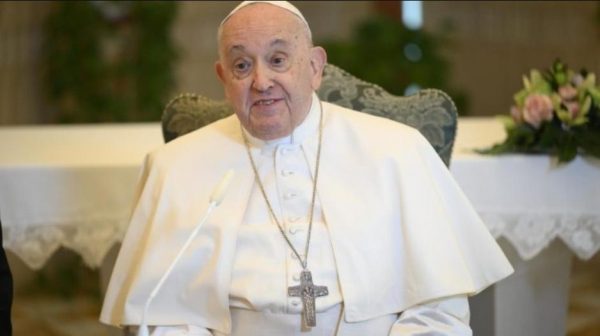
VATICAN CITY – Pope Francis this past week further disciplined another American prelate, retired Cardinal Raymond Burke, who has publicly critiqued Francis over the Pope’s ongoing efforts for reforming the Catholic Church, especially over issues centered on LGBTQ+ Catholics and the LGBTQ+ community.
The Associated Press reported that Pope Francis revoked Burke’s subsidized Vatican apartment and retirement salary, according to sources because he was a source of “disunity” in the church.
The move is “unprecedented in the Francis era”, Christopher White, a Vatican observer who writes for the National Catholic Reporter, told the BBC.
“Typically, retired cardinals continue to reside in Rome after stepping down from their positions, often remaining active in papal liturgies and ceremonial duties,” he said. “Evicting someone from their Vatican apartment sets a new precedent.”
Burke, who spends much of his time in the U.S. at the Our Lady of Guadalupe shrine he founded in his native Wisconsin, has not yet been notified of the Pope’s actions according to the AP.
At the end of October, the Pope convened a month long conference, known as a Synod of Bishops, followed an unprecedented two-year canvassing of rank-and-file Catholics. During the conference Jesuit Fr. James Martin, a popular spiritual author and editor of the LGBTQ Catholic publication Outreach, noted that on LGBTQ+ issues, “There were widely diverging views on the topic,” he said.
In early November, Bishop Joseph Strickland of Eastern Texas was “relieved” of his position as head of the Diocese of Tyler, Texas by Pope Francis after Strickland’s refusal to resign in a dispute over the Church’s LGBTQ+ inclusion in Catholic practices. Strickland often had echoed Cardinal Burke’s positions.
Although retired in 2014, Burke had an incredibly anti-LGBTQ public record since, especially in vocalizing his opposition to plans to be inclusive of the LGBTQ+ community. Burke was once a high-ranking U.S. archbishop and head of the Apostolic Signatura, the Vatican court, but was repeatedly demoted under Pope Francis and then forced to retire.
In March of 2020, Burke laid blame on the coronavirus pandemic on the LGBTQ+ community. As churches were forced to close during the lock-downs ordered by health officials, Burke wrote:
“Worship is particularly needed now because of ‘how distant our popular culture is from God,’ he wrote, noting abortion and euthanasia, then attacking the LGBTQ equality movement, particularly activism for recognition of transgender identity.
“‘We need only to think of the pervasive attack upon the integrity of human sexuality, of our identity as man or woman, with the pretense of defining for ourselves, often employing violent means, a sexual identity other than that given to us by God,’ he said. ‘With ever greater concern, we witness the devastating effect on individuals and families of the so-called “gender theory.”‘ Burke went on to say, ‘There is no question that great evils like pestilence are an effect of original sin and of our actual sins.’”
Burke once compared lesbian, gay, and bisexual people to murderers.
UNITED KINGDOM
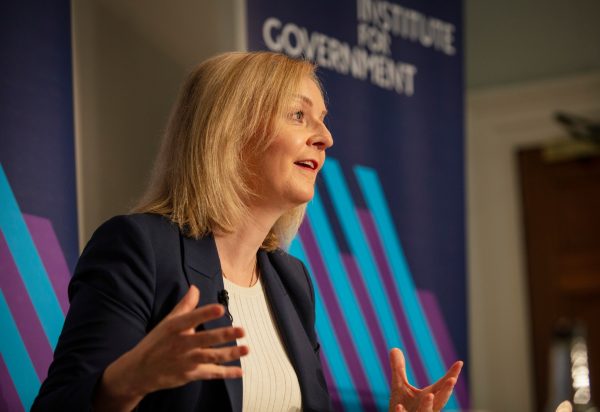
LONDON, UK – Former British Prime Minister Liz Truss is said to be backing a private bill to be introduced into the House of Commons that will ban minor children under the age of 18 from accessing hormone therapy and block the National Health Service and the UK government from recognizing their social transition.
After Truss was one of 20 backbencher MPs to be selected to bring forward a bill, a source reportedly said she chose the legislation because she believes under-18s need to be protected from “making irreversible decisions about their bodies.”
PinkNewsUK pointed out that argument fails to consider the fact that trans under-18s are typically prescribed physically reversible puberty blockers and are only permitted to do so after lengthy medical checks.
Physically reversible puberty blockers are also typically only given to teenagers over the age of 16. It is exceptionally rare for under-16s to be prescribed puberty blockers.
Despite this, Truss is expected to formally present the bill on Wednesday (6 December) during a House of Commons hearing where its MP backers will also attend, PinkNewsUK also reported.
A spokesperson for the UK government said in a statement: “This government is clear on the fundamental importance of biological sex.
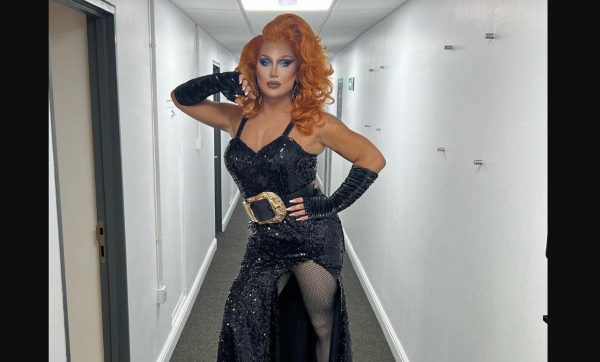
LIVERPOOL – A magistrate’s court found a fifty-one-year-old man guilty of a hate crime in an assault on Drag Race UK star The Vivienne this past June at a local McDonald’s. Alan Whitfield told the court that he had struck James Lee Williams, aka The Vivienne, in the face claiming that his actions were not motivated by homophobia but by what he described as “banter.”
During his testimony, 31-year-old Williams said he was subjected to a “barrage of abuse” from Whitfield after entering the fast food restaurant PinkNewsUK reported.
“He [Whitfield] carried on, then after the fourth ‘look at the state of you’ I said ‘look at the state of you’, I said ‘look at the state of your face’, to which he said ‘I’ve got skin cancer’ and then punched me straight in the face.”
PinkNewsUK reported that the RuPaul’s Drag Race UK star, who took home the crown in the first series in 2018, argued that the attack was motivated by homophobia because there were “countless other people” in the McDonald’s at the time.
Whitfield maintained throughout the proceedings that the assault “was nothing to do with him [Williams] being gay”, reiterating that he has LGBTQ+ members of his family.
After court deliberation, Justice Anthony Canning said that Whitfield’s evidence was “not credible”.
“Having considered this incident from beginning to end, we believe beyond reasonable doubt that the hostility shown by yourself from that outset was motivated and down to the perceived sexuality of the complainant and this was homophobic in nature.”
Whitfield will be sentenced in January 2024.
IRELAND
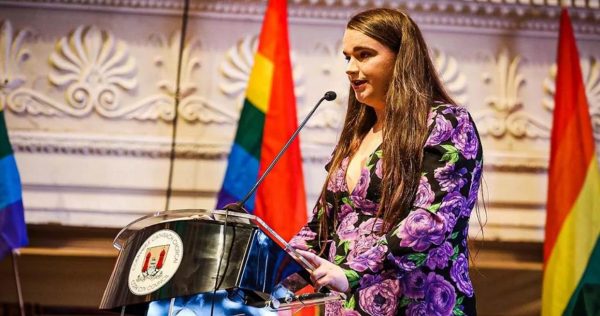
CORK CITY, Ireland – A 25-year-old 2nd year Law student at the University College Cork is set to make history as the first openly transgender person in history to run for local election in the Republic of Ireland.
Saoirse Mackin, who co-founded Trans+ Pride Cork in 2022, was nominated by the Social Democrats to run in Cork City North West’s 2024 election. Mackin, who transitioned in 2017, told LGBTQ+ media outlet GCN – Ireland, that if elected, one of her top priorities will be eliminating the excessive healthcare barriers that are in place for transgender women in Ireland.
Mackin also advocates for better cycling infrastructures, as well as affordable housing and improved public services GCN noted.
She said, “If elected, my priority areas will include the provision of more affordable housing, improved public services, universal access to healthcare and the development of quality cycle infrastructure in Cork. I will also campaign for better local amenities, such as upgraded parks, green spaces, playgrounds and sports facilities.”
In addition to being a transgender activist, Mackin is also a law student and community organizer who has bravely spoken up against the growing far-right movement in Ireland. She was also named in the Irish Examiner‘s 100 Women of 2022 list.
RUSSIA
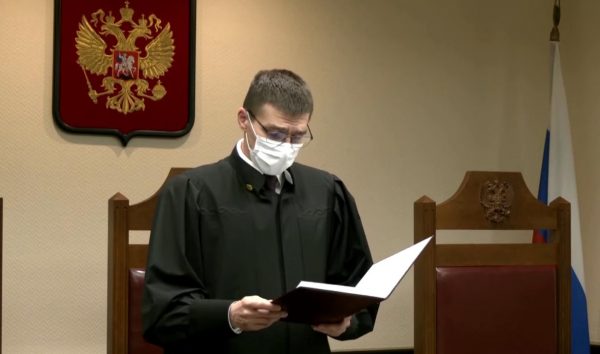
MOSCOW – Russia’s Supreme Court this past week on Thursday ruled that “the international LGBTQ movement” is “extremist” which, legal experts and human rights advocates say will lead to all LGBTQ groups and organizations in Russia being banned.
The Russian Ministry of Justice had lodged an administrative legal claim with the High Court to recognize the International LGBTQ public movement as extremist and ban its activity in Russia. Russian Justice Minister Konstantin Chuychenko did not specify whether it was seeking the closure of any specific groups or organizations, or if the designation would apply more broadly to the LGBTQ community, causes and individuals.
Speaking with Agence France-Presse, the head of the Sphere human rights group, which advocates for the Russian LGBTQ community, had criticized Minister Konstantin Chuychenko actions.
“Russian authorities are once again forgetting that the LGBTQ+ community are human beings,” said Sphere head Dilya Gafurova, who has left Russia.
Authorities “don’t just want to erase us from the public field: They want to ban us as a social group,” Gafurova told AFP. “It’s a pretty typical move for repressive non-democratic regimes — the persecution of the most vulnerable. We will continue our fight,” he added.
UN High Commissioner for Human Rights Volker Türk in a statement issued from Geneva, Switzerland after the ruling said:
“This decision exposes human rights defenders and anyone standing up for the human rights of LGBT people to being labeled as ‘extremist’ – a term that has serious social and criminal ramifications in Russia,” said the High Commissioner.
“No one should be jailed for doing human rights work or denied their human rights based on their sexual orientation or gender identity.”
“I call on the Russian authorities to repeal, immediately, laws that place improper restrictions on the work of human rights defenders or that discriminate against LGBT people. The law must uphold and defend the principles of equality and non-discrimination. The law must never be used to perpetuate inequality and discrimination,” Türk added.
Laws that must be reformed include those prohibiting gender-affirming medical and administrative procedures, and banning so-called “LGBT propaganda”,which made it illegal to discuss LGBT issues in Russia on penalty of substantial fines, Türk said.
The High Commissioner also pointed out the wide use of the “extremist” label is more generally used to prosecute all those perceived as opponents, including politicians, journalists, human rights defenders and others.
“LGBTIQ people exist in every country, and a legal ban on the undefined ‘international LGBT movement’ will result in more violence, discrimination, and isolation of LGBTIQ people in Russia, who are already targeted for being who they are,” said Maria Sjödin, Executive Director at Outright International.
“Russia, which has already restricted access to information about LGBTIQ issues, is yet again violating the human rights of LGBTIQ people by restricting freedoms of association and expression. This is a great concern not just for human rights defenders focused on protecting the rights of LGBTIQ people but for everyone who believes in human rights for all,” Sjödin added.
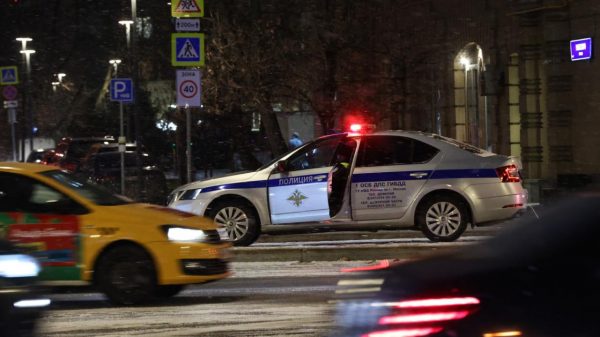
Within 48 hours of the High Court’s ruling, multiple Russian law enforcement agencies executed a series of raids at multiple queer venues in the Russian capital. At one club located on Ulitsa Malaya Yakimanka street in the center of the city, there were approximately 300 people gathered when Russian security forces burst in under the pretext of searching for drugs in the establishment. Several persons were detained.
“In the middle of the party, they stopped the music and began to enter the halls [the police]. There were also citizens of other countries at the party. At the exit, they photographed passports without permission to do so,” an LGBTQ rights activist who had previously spoken to other media outlets told the Blade in a phone call Sunday.
The raids took place in at least four venues, and were reportedly expected by the clubs management and owners.
Security forces arrived at an establishment near the Avtozavodskaya metro station and a themed strip club for guys near the Polyanka metro station in central Moscow. The administration of the clubs warned visitors about the events in advance, the Moscow Times reported.
According to an eyewitness to the police raid on Mono, a bar also located in the city’s central district on Pokrovsky Boulevard, “there was the usual party, then the owner came out and said that within an hour law enforcement would arrive in connection with the recent ruling by the Supreme Court. Within 20 minutes the dance floor started to empty,” Ostorozhno Novosti, an independent Russian news outlet reported.
The Moscow Times could not independently verify Ostorozhno Novosti’s reporting, and employees from at least two of the clubs believed to have been targeted on Friday denied the reports, which they called “fakes.”
“I wake up… and I’m reading the news, and, of course, it’s hilarious. Where was [this raid] when we had nothing going on?” the manager of the club Mono said in a video posted on social media Saturday.
The Blade has also been unable to verify Ostorozhno Novosti’s reporting on the Mono bar raid but in a series of phone calls and Telegram chats was able to determine that multiple raids had in fact taken place across central Moscow and that gay clubs and LGBTQ+ safe spaces were targeted.
In the Baltic city of St. Petersburg, the largest gay club, Central Station, according to independent news outlet Sota, reported the club’s management said that they were denied further rental of the site due to the “new law.”
Additional reporting from Pahichan Media, the South China Morning Post, Human Rights Watch, The BBC, PinkNewsUK, Agence France-Presse, The Moscow Times, GCN Ireland, The Vatican News and The Associated Press.
Commentary
US votes against LGBTQ+-inclusive UN resolution
Declaration identified groups at heightened risk of extrajudicial killings

On Nov. 13, the United Nations General Assembly Third Committee reviewed a draft resolution identifying groups that are at greater risk of targeted violence and murder, including journalists, Indigenous people, religious groups, and people with diverse sexual orientation and gender identities. The latter, which recognizes that according to a Williams Institute at the UCLA School of Law study LGBTQ+ people are five times more likely to experience violence compared to their straight, cisgender peers, has been affirmed twice in 2002 and 2012.
But this year, Egypt proposed an amendment on behalf of the Organization of Islamic Cooperation that would remove references to sexual orientation and gender identity in this resolution. This amendment aimed to replace “their sexual orientation or gender identity” with “any considerations that make them at heightened risk of extrajudicial, summary or arbitrary executions.” This is a pointed and purposeful deletion. This is not about making this language more expansive, it’s about denying the very real targeted killing of LGBTQ+ people around the world and making member nations less responsible for recognizing and taking steps to address anti-LGBTQ+ violence and murder.
Outright International Global Researcher Ohotuowo Ogbeche explained, “replacing ‘sexual orientation or gender identity’ with ‘any other considerations’ makes these victims invisible.”
For the first time since language surrounding violence and murder on the basis of sexual orientation and gender identity was added in 2002, the United States voted for this amendment and against the inclusion of this language. It’s no surprise because the current U.S. Ambassador to the U.N. Mike Waltz has an anti-LGBTQ+ track record.
Although he was one of 47 GOP representatives who in 2022 voted to pass the Respect for Marriage Act, which required the federal government and states to recognize same-sex marriage, he voted against the Euuality Act to prohibit discrimination on the basis of sexual orientation and gender identtiy in 2021 and in 2024, supported the National Defense Authorization Act which banned TRICARE, the military’s healthcare program, from covering gender-affirming healthcare for the children of American servicemembers. During his tenure as U.S. ambassador to the U.N., he also voted against gender and human rights, with the U.S. being the only nation to vote against the annual conclusions of the U.N. Commission on the Status of Women. This track record — which also includes defunding U.N. LGBTQ+ education programs — is markedly different from the U.S.’s broader voting record at the U.N.
In fact, the United States led the campaign to restore language surrounding sexual orientation to the resolution in 2010, after the Third Committee stripped it. After the Third Committee approved a proposal presented by member states groups composed of some Arab and African member states to remove “sexual orientation” from the resolution and replace it with language recognizing “discriminatory reasons on any basis,” Then-U.S. Ambassador to the U.N. Susan Rice announced that the U.S. would introduce an amendment to restore this language.
Thankfully, the United Nations General Assembly rejected the amendment with a nailbiting 74 to 69 vote, with 24 members abstaining and 26 choosing not to vote. But this margin of support for LGBTQ+ rights is getting smaller, down from a vote of 78 to 47 in 2024. It signals a growing global backlash against LGBTQ+ rights driven largely by Christian nationalist movements. Far right organizations are also gaining traction through transnational networks, such as the World Congress of Families, that rally support. This includes anti-trans contingents in the United States, Europe, and Central and South America.
This anti-LGBTQ backlash builds on existing bans and criminalization of same-sex orientation and gender identity around the world. Of the 193 U.N. member states, only 63 (33 percent) legally recognize violence and murder on the basis of sexual orientation as hate crimes, with only 40 (21 percent) recognizing hate crimes on the basis of gender identity. These bans, which include death penalties for same-sex intimacy, are part of a wider pattern of targeted violence against LGBTQ+ people, documented in an Outright International report released last month.
According to this report, there were more than 230 targeted killings of LGBTQ+ people between January 2020 and July 2026, with 18 targeted murders of children. And these are just the killings that have been documented; many more killings on the basis of gender identity and sexual orientation likely occurred but have gone unreported.
“Behind every case in our report is a grieving family and community, often still waiting for an investigation or justice. This resolution is a source of hope for them: that they can legitimately look to their governments to help give them answers,” Ogbeche continued.
But the problem lies not just in states that impose capital punishment for same-sex conduct but also in countries like the United States where an anti-trans genocide is currently occurring. In January, the Lemkin Institute for Genocide Prevention and Human Security identified the U.S. as an in the “early-to-mid stages of a genocidal process against trans and nonbinary and intersex people.” In 2026, 840 anti-trans bills were introduced across the country in 43 states, with 63 passing. Despite the recent “blue wave” of the Midterms, four states — three of them majority Democratic — voted to pass measures that restrict trans people’s access to sports and public spaces. These measures, which restrict trans people from equal access to public life, perpetrate transphobia and more specifically transphobic violence, especially against trans women.
“While states that sanction executions on the basis of sexual orientation or gender identity are a minority, the reality facing lesbian, gay, bisexual, transgender, intersex, and queer (LGBTIQ) people is that most states have not done enough to prevent identity-motivated killings,” the authors of the report write. “This failure stems from the criminalization of same-sex sexual acts in 65 countries, inadequate state responses to queerphobic violence, and widespread, often institutionalized, stigma, and discrimination.”
Along with institutionalized stigma, LGBTQ+ people are increasingly at risk in contexts of war, conflict, and migration, especially in detention facilities, prisons, and refugee camps. In the United States, trans people in U.S. Immigration and Customs Enforcement detention face ongoing mistreatment and barriers to medical access, especially after the Department of Homeland Security rescinded ICE’s 2015 Transgender Care Moratorium.
Outright International’s report urged the U.N. to decriminalize consensual same-sex acts and repeal laws that criminalize same-sex relationships, as the first steps to destigmatize LGBTQ+ peoples. Outright also urges the U.N. to enact and enforce laws that recognize the murder of LGBTQ+ as hate crimes that are properly investigated and prosecuted. Along with collecting and publishing data on anti-LGBTQ+ violence and murder, Outright urges member groups to implement measures that will address not just consequences of this violence but their root cause and also establish independent oversight programs and committees that can hold member states accountable and urge them to reform their policing and prosecution strategies to more accurate recognize the ways that anti-LGBTQ+ violence is often overlooked.
The first, perhaps the easiest step, is to vote against this amendment, something that Waltz, representing the United States, did not do.
To remove language identifying LGBTQ+ as people especially targeted by and vulnerable to violence, it removes member states’ liability and denies the very real history of authoritarian governments targeting and mass killing gay, bisexual, lesbian, and transgender people. When murder on the basis of sexual orientation and gender identity is not considered a hate crime, people committing war crimes against queer and trans people cannot be held accountable by the U.N., arguably one of the largest and most important international regulatory agencies.
Without the amendment that would strip language about sexual orientation and gender identity, the resolution itself was adopted by the Third Committee and will move forward for a plenary vote in the General Assembly in December. As Maria Sjödin, executive director of Outright International explained, “the U.N.’s Third Committee narrowly rejected an attempt to remove explicit recognition of people killed because of their sexual orientation or gender identity. … When the full Gender Assembly votes in December, governments must keep that language intact and make clear that the right to life belongs to everyone.”
Lebanon
Top Lebanese newspaper calls for decriminalization of homosexuality
Annahar published front-page editorial on Monday
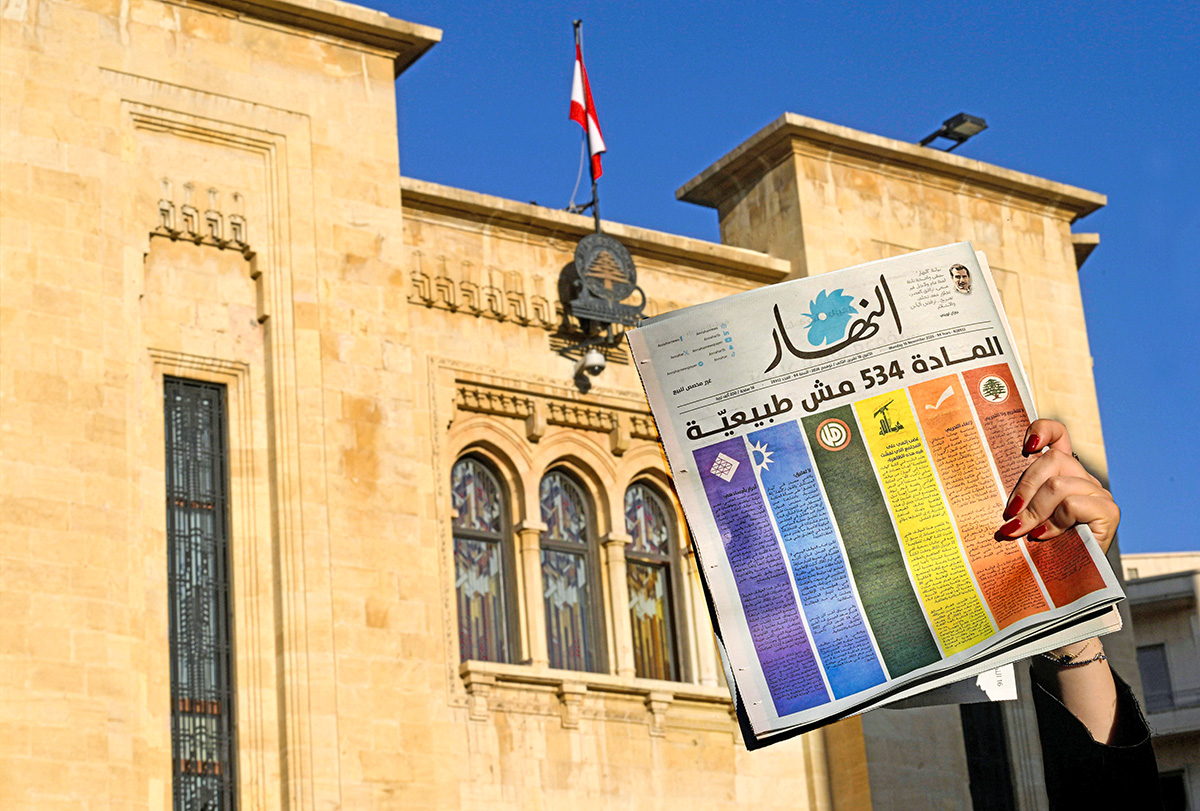
A leading Lebanese newspaper has called for the decriminalization of consensual same-sex sexual relations in the country.
Annahar on Monday published a front page editorial against Article 534 of Lebanon’s Penal Code. The newspaper also launched a social media campaign — “Put the Law on Trial, Not the People” — with the hashtag #abolish254.
“The issue goes beyond the possibility of prosecution, arrest, and imprisonment,” reads the editorial.
Article 534 states “any sexual intercourse contrary to the order of nature is punishable” by up to a year in prison.
Several judges in recent years have opted not to use Article 534 to prosecute LGBTQ+ people who have been charged under it. Helem and other Lebanese advocacy groups maintain authorities continue to use Article 534 as justification to target people based on their sexual orientation and gender identity.
“The debate is not about what positions society should adopt, but about what the state has the right to criminalize, and the limits of its authority when it comes to private life and consensual relationships between adults,” reads the Annahar editorial.
Turkey
Turkey’s anti-LGBTQ+ crackdown overshadows UN climate conference
COP31 taking place in Antalya
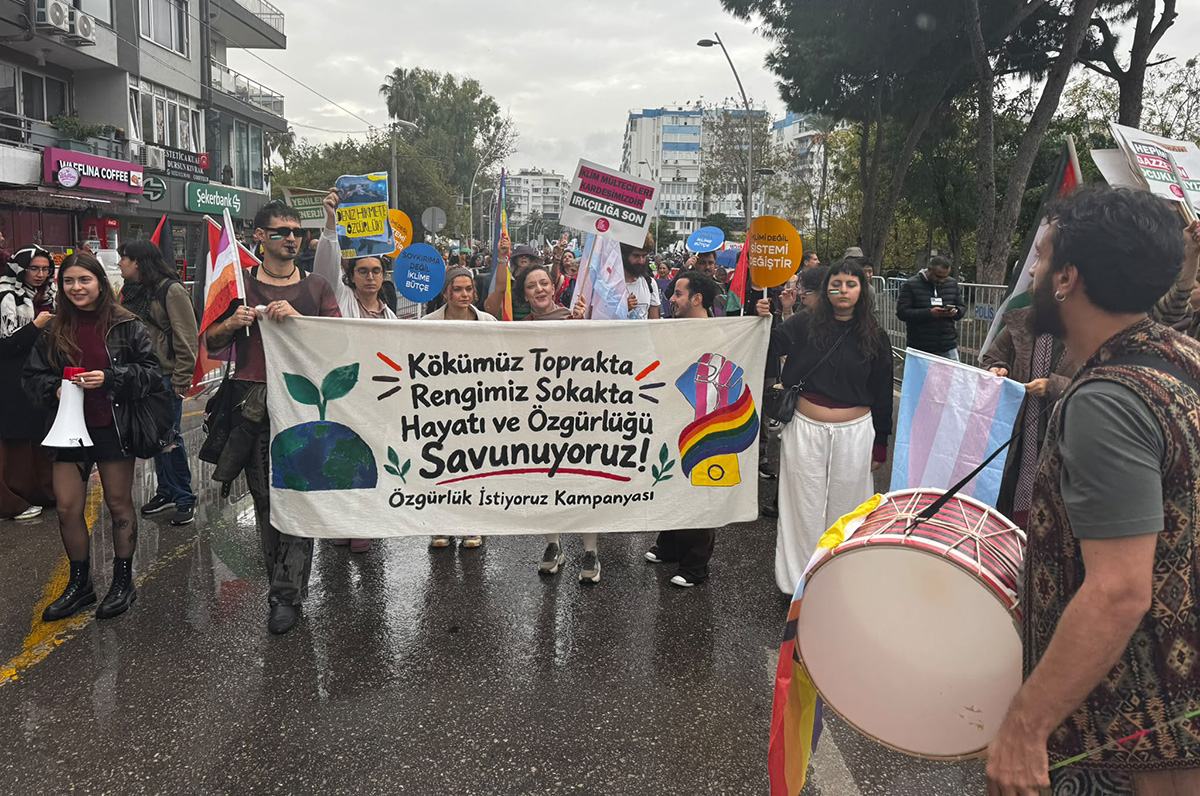
This year’s U.N. Climate Change Conference is taking place in the Turkish city of Antalya against the backdrop of the country’s anti-LGBTQ+ crackdown.
COP31 began on Nov. 9 and will end on Nov. 20. Turkey and Australia are the co-hosts.
The conference is taking place roughly two months after Turkish authorities detained dozens of people during raids that targeted the country’s LGBTQ+ community and advocacy groups and HIV/AIDS service organizations.
President Recep Tayyip Erdoğan’s government over the last decade has cracked down on LGBTQ+ and intersex activists in the country. The Sept. 12 raids were part of the “My Family Is Safe” campaign.
Authorities in Istanbul on Sept. 15 detained more than 150 people who gathered outside a courthouse to protest the raids. Journalists are among those who were taken into custody.
Advocacy groups in a Nov. 13 briefing noted 67 people — including 14 LGBTQ+ activists — who were arrested during the Sept. 12 raids “remain in pre-trial custody.” They also indicate subsequent raids have specifically targeted transgender women:
• 12 trans women were detained on Sept. 26.
• 12 trans women in Ankara, the Turkish capital, were among 45 people “detained in police operations” in seven provinces on Oct. 23. Ten of the trans women who were detained were arrested.
• 10 trans women were detained in Izmir on Nov. 3. Six of them were later arrested.
“Following the Sept. 12 operation, additional waves of harassment have continued to target the LGBTI+ community and particularly trans women, under charges of obscenity and facilitating prostitution,” notes the Nov. 13 briefing. “These aim to indirectly criminalize sex work, which is not a punishable offense under the Turkish criminal code, while also targeting the livelihood of many trans women already living under poverty.”
The briefing notes police in Istanbul on Nov. 11 “sealed and shut down” the offices of Lambda Istanbul, one of Turkey’s oldest LGBTQ+ advocacy groups, “under allegations that the association is running an unauthorized association locale.”
The first hearing in the criminal case against SPoD (Social Policy, Gender Identity and Sexual Orientation Studies Association), another Turkish advocacy group, is scheduled to take place on Wednesday in Istanbul. Hearings in criminal cases filed against two other organizations — Hevi LGBTI+ and Kaos — are scheduled to take place in Istanbul and Ankara in the coming weeks.
Advocacy groups also note those who were arrested during the Sept. 12 raids have been mistreated while in custody.
“Turkish authorities must drop all charges brought against these human rights defenders, immediately and unconditionally release everyone detained solely for exercising or defending human rights and end attempts to dissolve associations for their human rights work,” said Amnesty International Deputy Regional Director for Europe Esther Major on Tuesday in a statement.
U.N. High Commissioner for Human Rights Volker Türk is among those who have publicly criticized the crackdown. The Trump-Vance administration, for its part, has remained silent.
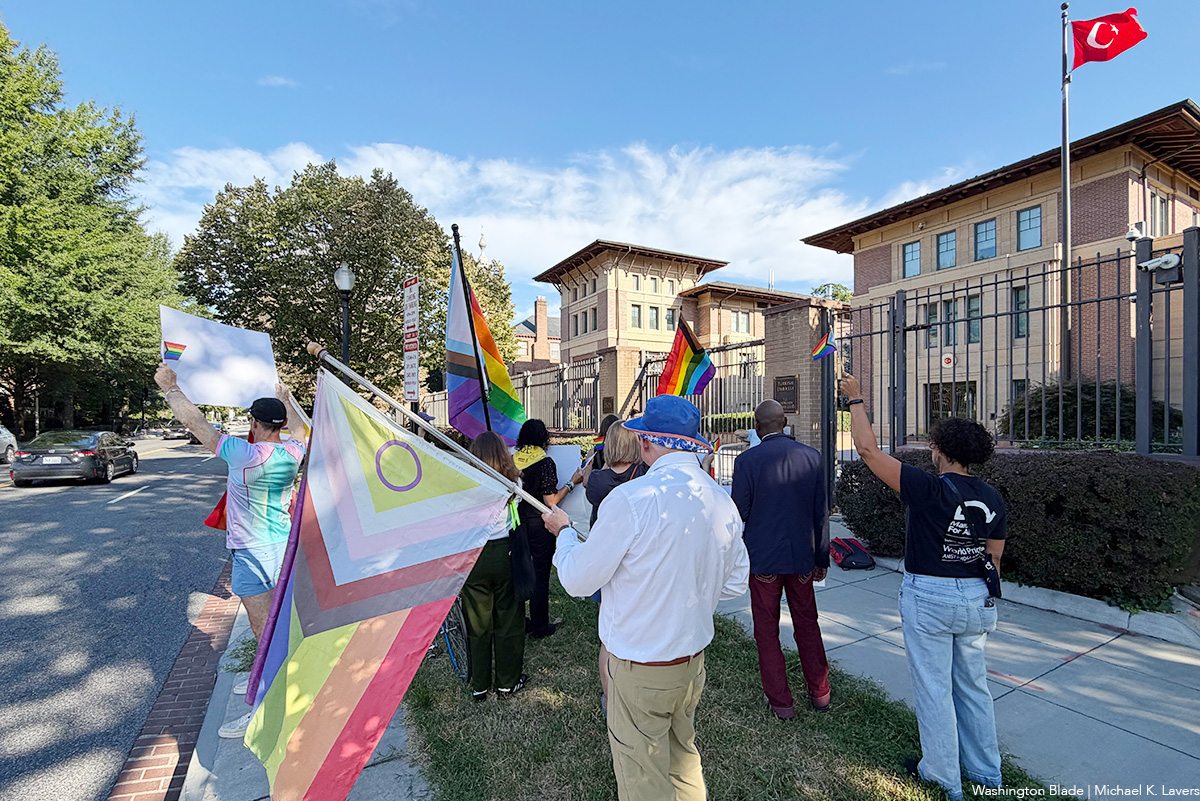
Bianet, an independent Turkish news agency, earlier this month reported authorities required COP31 participants to sign a declaration in which they promised their presentations in a so-called Green Zone that Turkey oversees would comply with “public morality.” Özlem Altıparmak, a Turkish lawyer who planned to attend COP31, spoke about the directive.
“The inclusion of the undefined condition of ‘public morality’ creates legitimate uncertainty over how statements concerning gender equality and LGBTI+ rights will be treated,” she told Bianet. “We cannot say that the text explicitly prohibits them, but it does not provide sufficient safeguards against arbitrary interpretation.”
The Los Angeles Blade on Monday asked a Turkish source how the government can enforce such a pledge.
“Good question,” they said.
Activists, meanwhile, participated in the People’s Climate March that took place alongside COP31 in Antalya on Nov. 14.
Burak Deniz is an activist from Izmir who has advocated on behalf of LGBTQ+ people and Kurds in Turkey for 15 years.
He told the Blade on Tuesday that authorities tried to block the march, noting Antalya Provincial Gov. Hulusi Şahin’s office “told us that (Recep) Tayyip Erdoğan has LGBT+ sensitivity and they said that they would not allow anything with a flag or rainbow content in any way.” Deniz said members of the pro-Kurdish Peoples’ Equality and Democracy Party, known as the DEM Party, intervened on the activists’ behalf.
“We were able to get our flags into the area,” he told the Blade.
Deniz said he hopes the activists’ participation in the COP31 march raised visibility around the plight of Turkey’s LGBTQ+ community.
“I hope it will be created,” he told the Blade. “Our LGBTI+ march made a significant impact on public opinion.”
The Blade has reached out to U.N. Climate Change, which oversees COP31, for comment.
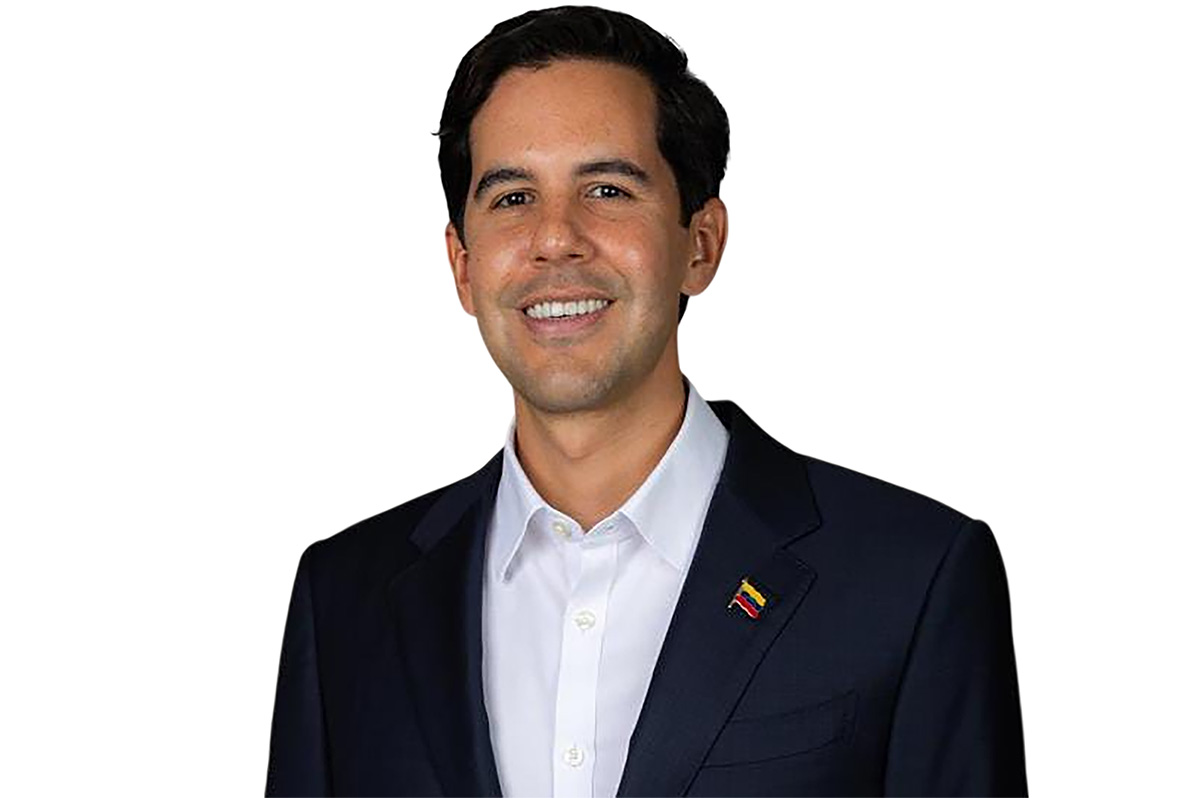
The Venezuelan government has appointed a gay man as its foreign affairs and international trade minister.
Interim President Delcy Rodríguez on Oct. 29 appointed Oliver Blanco to the position.
Blanco, 34, was Foreign Affairs Vice Minister for Europe and North America until he succeeded Félix Placencia, who is now the Rodríguez administration’s director of international affairs.
Blanco’s partner is Venezuelan Red Cross President Luis Farías. Reports indicate the two men attended a Nov. 5 reception with Spanish Queen Letizia that took place at the Royal Palace in Madrid during the XXX Ibero-American Summit.
Blanco’s appointment sparks debate among LGBTQ+ Venezuelans
American forces on Jan. 3, 2026, seized then-Venezuelan President Nicolás Maduro and his wife, Cilia Flores, at their home in Caracas, the country’s capital, during an overnight operation.
Maduro and Flores two days pleaded not guilty to federal drug charges in New York. The Venezuelan National Assembly the day before swore in Rodríguez, who was Maduro’s vice president, as the country’s acting president.
Hugo Chávez died in 2013, and Maduro succeeded him as Venezuela’s president.
Subsequent economic and political crises prompted millions of Venezuelans to leave the country. Two back-to-back earthquakes in June killed thousands of people and caused widespread damage in Caracas, La Guaira state on Venezuela’s Caribbean coast, and in other areas of the country.
Yonatan Matheus, a Venezuelan LGBTQ+ rights activist who currently lives in the U.S., on his website notes Blanco was previously a member of the opposition. Matheus also pointed out that Blanco came out as gay in 2021 during an interview with a Venezuelan radio station.
“Venezuela having an openly gay foreign minister may constitute a milestone in visibility,” wrote Matheus. “But it should not distract us from the State’s historical debts to the LGBTQIA+ community.”
Matheus further noted same-sex couples in Venezuela lack marriage rights, and transgender people “face obstacles when obtaining documents that correspond with their gender identity.” Matheus also pointed out Venezuela does not have an LGBTQ+-inclusive antidiscrimination law.
“The controversy surrounding the appointment reflects Venezuela’s political divisions, which are also present within LGBTQIA+ spaces,” noted Matheus. “Some voices highlight its historical significance and the possibility of opening opportunities for equality; others question celebrating a designation made by the current interim government.”
“This discussion raises a necessary question: is it possible to recognize the symbolic value of an openly gay person reaching the Foreign Ministry without interpreting this as political support for the government that appointed them,” he further questioned. “Recognizing an act of representation does not necessarily equate to legitimizing the interim government, just as politically questioning the appointment does not eliminate its potential significance for LGBTQIA+ visibility. Both perspectives can coexist without automatically invalidating each other.”
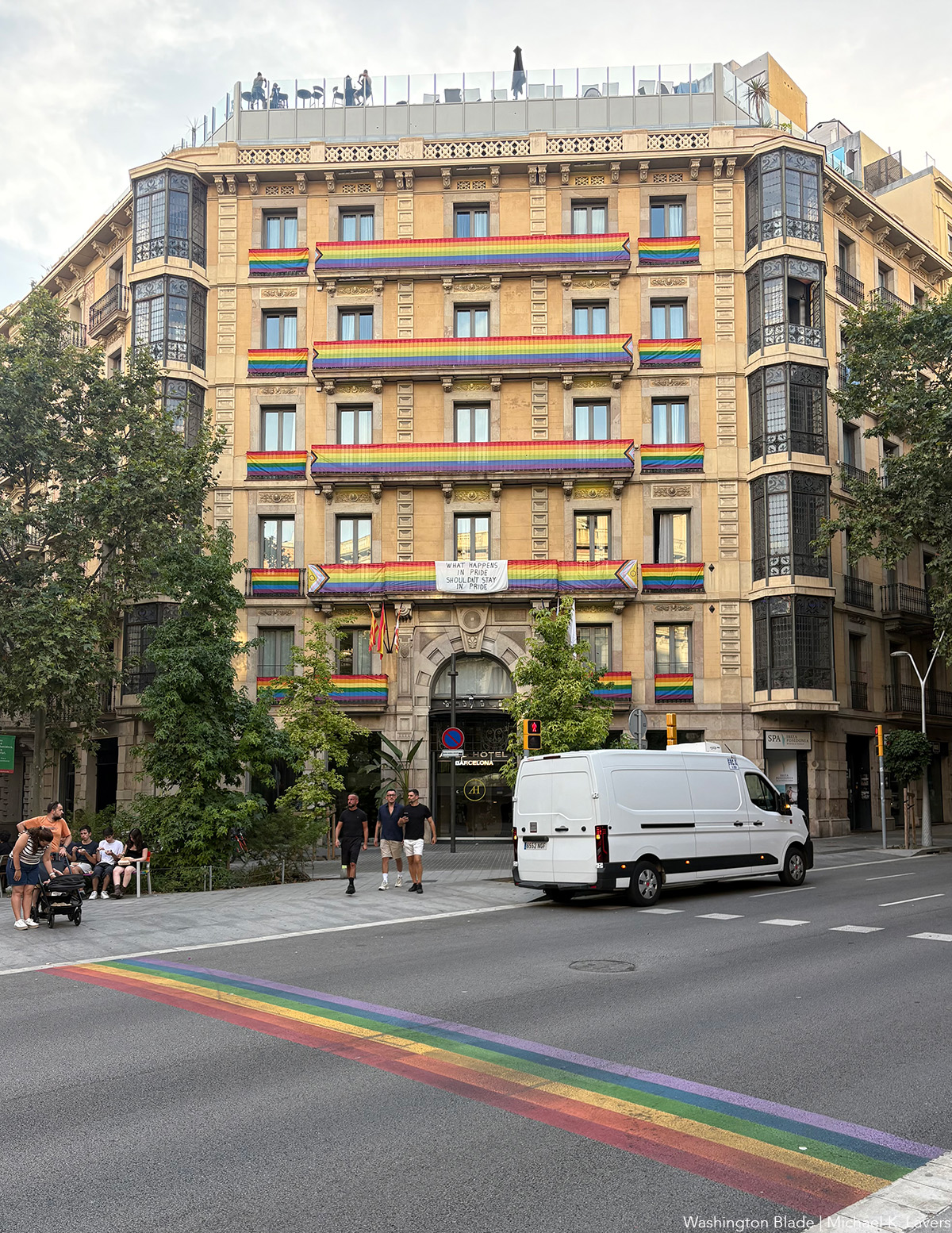
Barcelona will host WorldPride in 2030.
InterPride, the organization that coordinates WorldPride events, made the announcement on Thursday after its annual meeting that took place in Phuket, Thailand. Bangkok, the Thai capital, had also bid to host WorldPride in 2030.
Pride Barcelona celebrated the decision.
“This is not only a victory for a city,” it said in a statement. “It is the beginning of a new chapter to keep defending human rights, strengthening our global movement, and building a WorldPride that leaves a lasting legacy.”
Dozens of LGBTQ+ groups in Barcelona and in Catalonia, the region in which the city is located, backed the WorldPride bid. The Barcelona City Council and Catalonian government also supported it.
Madrid, the Spanish capital, hosted WorldPride in 2017.
WorldPride took place in D.C. in 2025.
Dutch Prime Minister Rob Jetten, who is his country’s first openly gay head of government, is among those who participated in this year’s WorldPride that took place in Amsterdam. WorldPride will take place in Cape Town, South Africa, in 2028.
Israel
LGBTQ+ ally tapped to form new Israeli government
Gadi Eisenkot was Benjamin Netanyahu’s main rival in Oct. 27 elections
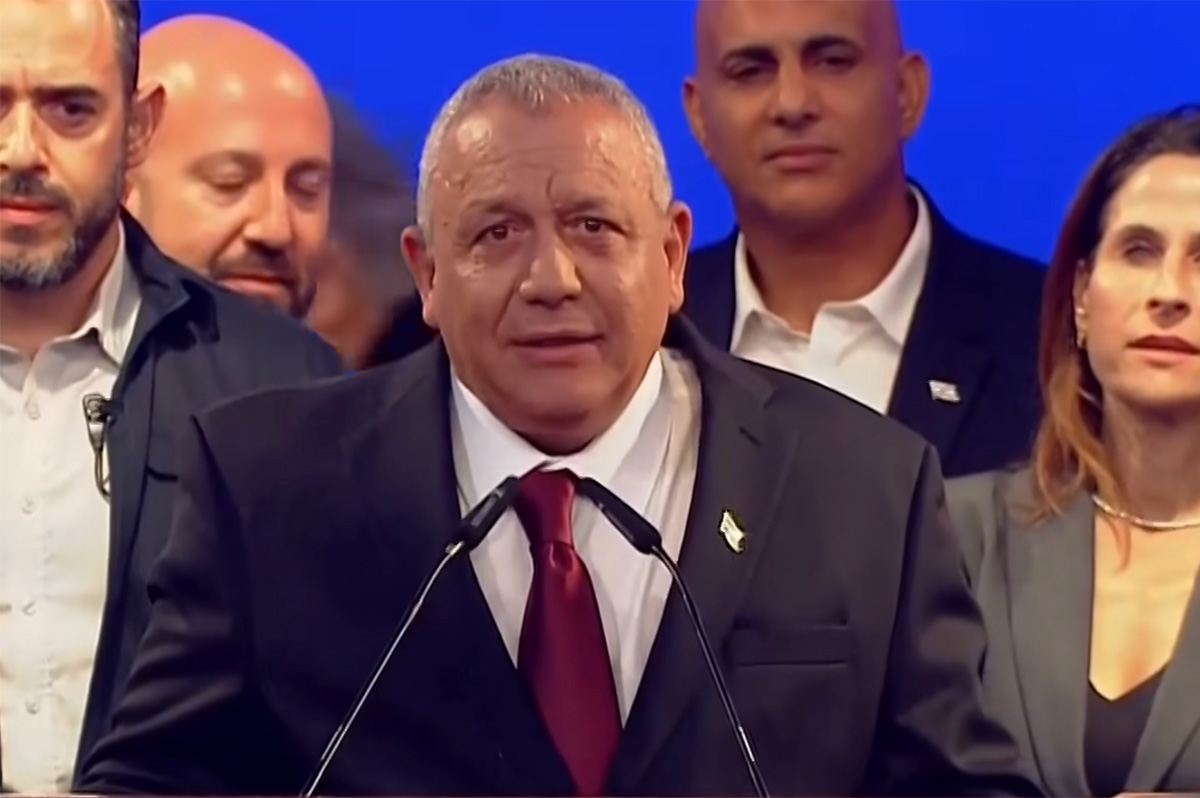
Israeli President Isaac Herzog has tapped Gadi Eisenkot to try and form a government after the country’s Oct. 27 elections.
Eisenkot was the Israel Defense Forces’ chief of staff from 2015-2019. He was a minister in Prime Minister Benjamin Netanyahu’s Cabinet after the Oct. 7, 2023, attacks — Eisenkot’s son, IDF Master Sgt. Gal Meir Eisenkot, died in combat in the Gaza Strip roughly two months after Hamas militants attacked Israel.
The International Criminal Court in 2024 issued arrest warrants for Netanyahu; former Israeli Defense Minister Yoav Gallant; former Hamas leader Yahya Sinwar; Mohamed Diab Ibrahim al-Masri, the head of Hamas’s military wing known as the Qassam Brigades; and Ismail Haniyeh, chair of the Hamas Political Bureau, after it accused them of committing war crimes and crimes against humanity in Gaza and Israel.
The Israeli government has strongly denied it has committed genocide in Gaza.
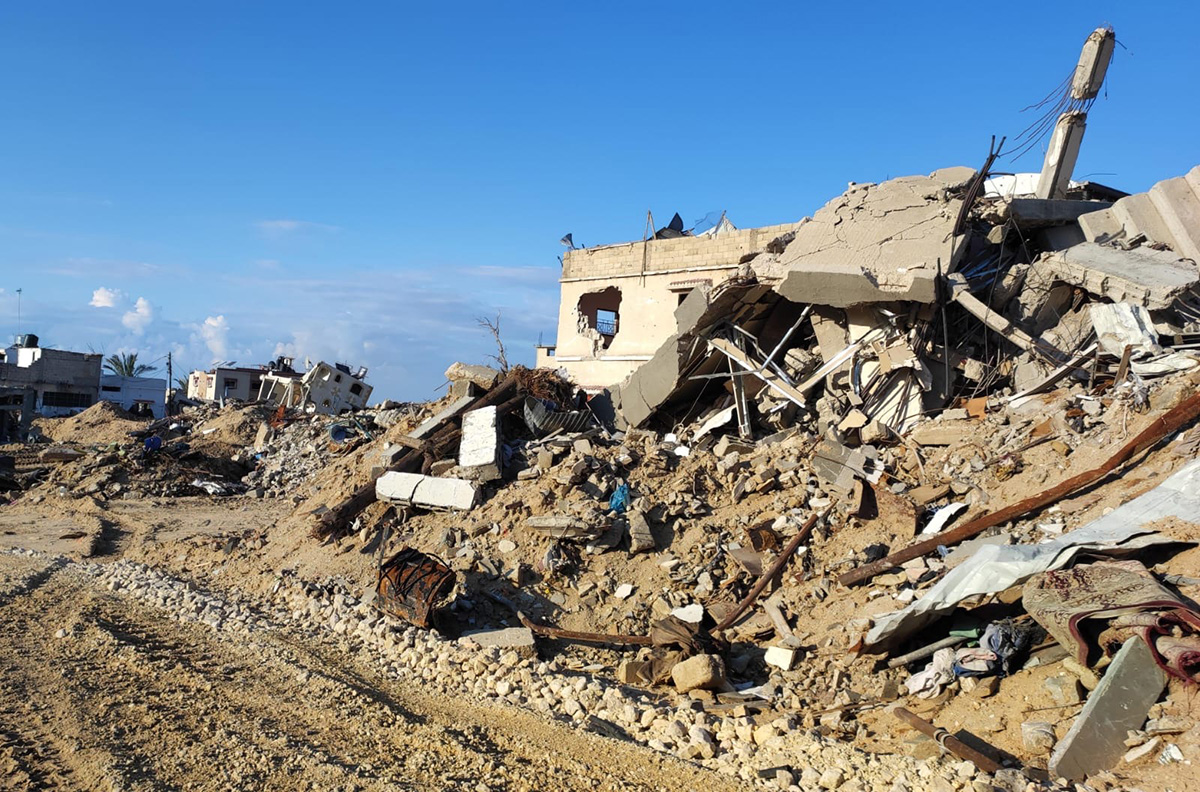
An Israeli airstrike on a compound in Khan Younis, a city in southern Gaza, on July 13, 2024, killed killed Deif, one of the alleged Oct. 7 masterminds. Israel less than three weeks later assassinated Haniyah in Tehran, the Iranian capital. IDF soldiers on Oct. 16, 2024, killed Sinwar in Rafah, a city in southern Gaza.
Gadi Eisenkot resigned in 2024. He founded Yashar!, a centrist party that means “Straight!” in Hebrew, in 2025.
Gadi Eisenkot was the main opposition candidate in the Oct. 27 elections.
Netanyahu, who chairs the right-wing Likud party, and his allies lost their majority in the 120-member Knesset.
The Likud bloc has 53 seats in the Knesset, compared to the 48 seats the Yashar! coalition has. Arab-led parties that could prove pivotal to Gadi Eisenkot’s efforts to form a government have 19 seats.
The new Knesset was sworn in on Tuesday.
Three MKs —Amir Ohana of Likud, Eitan Ginzburg of the center-right Beyachad party, and former Ramat Gan Mayor Israel Zari, a Yashad! member who is a former spokesperson for the Aguda, an Israeli LGBTQ+ rights group — are openly gay.
Ohana in 2022 became the Knesset’s first openly gay speaker and is the country’s first out Cabinet minister. The Knesset on Nov. 17 is scheduled to vote on who will will succeed Ohana in the post.
Gadi Eisenkot has six weeks to form a government. Herzog will then tap Netanyahu, who remains Israel’s caretaker prime minister, if Gadi Eisenkot fails. Another election could take place if neither man can form a new government.
Gadi Eisenkot’s party supports LGBTQ+ legislative package
Yashar!’s website states the “LGBT community is an integral part of Israeli society.”
“Its members bear the burden and are full partners in civic duties; but are not equal in rights and are exposed to violence, hatred, and incitement,” it reads.
The Yashar! website further states “the right to security is the right of every person,” but notes “those who serve, donate, and pay taxes feel threatened or discriminated against due to their sexual orientation and/or gender identity” and it “is a reality that cannot be accepted.” The party also says it “advocates for the right of every person to choose their lifestyle and to have equal rights as a citizen of the country, regardless of their sexual orientation or gender identity.”
“We will ensure that members of the LGBT community are safe in the public sphere, enjoy equal rights under the law, and receive all the social services that every citizen is entitled to by law,” it says.
Yashar! also supports the Sagi Laws for Equality, a package 10 legislative proposals that would expand rights to LGBTQ+ Israelis. They are named in honor of Sagi Golan, an IDF major who Hamas militants killed on Oct. 7 in Be’eri, a kibbutz that is near the Israel-Gaza border.
His fiancé, Omer Ohana, with the support of Israeli advocacy groups, successfully lobbied Israeli lawmakers to amend the country’s Bereaved Families Law to recognize LGBTQ+ widows and widowers of fallen servicemembers. A ban on so-called conversion therapy, stronger hate crimes and nondiscrimination laws, and civil marriage equality are among the other proposals in the Sagi Laws for Equality package.
The Aguda promoted it ahead of the Oct. 27 elections.
“Yashar! is committed to promoting equal rights for members of the LGBT community,” says Yashar! on its website, while reiterating its support of the legislative package to “restore the personal security of members of the LGBT community, to end existing discrimination in legislation, and to provide the necessary government responses in education, health, welfare, and all areas of life.”

Trinidad and Tobago
British appellate court strikes down Trinidad and Tobago sodomy law
Jason Jones challenged ruling that recriminalized homosexuality in Commonwealth country
A British appellate court on Tuesday struck down a Trinidad and Tobago law that criminalizes consensual same-sex sexual relations.
Jason Jones, an LGBTQ+ activist from Trinidad and Tobago who currently lives in the U.K., in 2017 challenged Sections 13 and 16 of the country’s Sexual Offenses Act.
High Court Justice Devindra Rampersad in 2018 found them unconstitutional. The country’s government appealed the ruling, and the Trinidad and Tobago Court of Appeal in 2025 overturned it in a 2-1 ruling.
Jones appealed the decision to the Privy Council, an appellate court for British territories that can also consider cases from Commonwealth countries. (King Charles III is not Trinidad and Tobago’s head of state, but the country remains part of the Commonwealth.) The Privy Council heard the case in July.
“I won,” Jones told the Los Angeles Blade. “Nobody believed it was possible and made the impossible possible.”
Antigua and Barbuda, St. Kitts and Nevis, Barbados, and Dominica are among the countries that have decriminalized consensual same-sex sexual relations in recent years. (All four Caribbean nations are former British colonies.)
The Inter-American Commission on Human Rights in 2021 issued a decision that said Jamaica must repeal its colonial-era sodomy law. The Jamaican Supreme Court in 2023 ruled against a gay man who challenged it.
A judge on St. Vincent and the Grenadines’s top court in 2024 dismissed two cases that challenged the country’s sodomy laws.
U.N. Commissioner for Human Rights Volker Türk in his statement that celebrated the Trinidad and Tobago ruling urged other Caribbean countries to decriminalize consensual same-sex sexual relations.
“This would align with the strong regional trend of repealing outdated and harmful colonial laws and with the principle of equal treatment for everyone, regardless of who they are or whom they love,” he said.
Botswana
Botswana’s marriage equality case and the politics of family values
High Court heard same-sex couple’s litigation last week
Last week, the High Court heard the case of Bonolo Selelo and Tsholofelo Kumile, whom the Department of Civil Registration refused to register and recognize their marriage. Supported by LEGABIBO as the third applicant, the applicants challenge the refusal to register their intended marriage and the constitutionality of provisions of the Marriage Act that exclude same-sex couples from civil marriage.
The case raises questions about equality, dignity, nondiscrimination, and the extent to which the law can exclude people from a fundamental civil institution because of whom they love. The hearing highlighted a bigger struggle of religion, gender, reproduction, and who makes up a family in Botswana.
But as I followed the proceedings and reflected on the arguments advanced, I kept returning to a question that goes beyond interpreting the Marriage Act. Why does the possibility of two women of age getting married consensually provoke such a strong response from people who are not being asked to marry them?
This is not a question about whether religious organizations are entitled to hold their beliefs. They are. It is about what happens when those beliefs determine the civil rights of people who do not share them and when religious arguments become the basis for deciding which families deserve recognition and protection under the law. For me, this is where the marriage equality case becomes much bigger than marriage. It becomes a conversation about power.
When marriage becomes a battleground
One thing that stood out in this case was the language used to defend what opponents describe as the proper or traditional understanding of marriage. The Evangelical Fellowship of Botswana, House of Prayer and Transformation, and the Dingwetsi Association of Botswana oppose recognizing same-sex marriages in Botswana.
Their arguments are grounded in Christian beliefs, customary understandings of marriage and concerns about the implications of recognizing same-sex unions. The state has also argued that the existing legislation does not provide for marriage between people of the same sex.
Marriage is presented as a “holy” institution that is under threat. The heterosexual family becomes something that must be protected. A particular Christian understanding of marriage is elevated into a standard that should govern everyone, including people who do not subscribe to Christianity. Suddenly, two adult women asking for access to civil marriage are no longer simply two people seeking legal recognition. They are portrayed as a “challenge” to religion, culture, tradition, procreation, and the African family values. We can even take it a step further to say that they are destabilizing the walls of patriarchy.
What exactly is being threatened by allowing two consenting adults to enter into a civil marriage? How does recognizing their relationship prevent a heterosexual couple from marrying? Why should the legal recognition of one family require excluding another?
The argument is not merely that the Evangelical Fellowship of Botswana, House of Prayer and Transformation, and the Dingwetsi Association of Botswana believe same-sex marriage is inconsistent with their Christian faith. It is that this belief must affect the legal status of people outside that faith and the protections available to them as citizens. That is where the discussion shifts from religious conviction to this group’s exercise of public power over everyone.
The politics of religion and the anti-gender movement
I have become increasingly interested in how opposition to LGBTIQ+ rights is connected to a wider set of anti-gender and anti-human rights narratives across Africa. The anti-rights actors are a group of globally coordinated actors pushing rollbacks on sexual and reproductive health rights, comprehensive sexual education, LGBTIQ+ rights and civic space across multiple countries at once. They frame these narratives as “protecting the African child and African family values,” “preserving African family sovereignty,” and “restoring the moral fabric of society.” These translate into restrictive laws, hate speech, misinformation, disinformation, and harassment of sexual and gender minorities. The language sounds familiar because it appeals to concerns that matter to people. But how these values are interpreted, who gets to define them, and whose rights matter in the process?
In anti-gender politics, the concept of gender is often presented as a threat to biological sex, the family and social order. Dr Haley McEwen’s article, “Nuclear power: the family in decolonial perspective and ‘pro-family’ politics in Africa,” published in “Development Southern Africa” in 2017, examines how the heteronormative nuclear family functions as a colonial and political construct. She writes that “in centering the importance of the ‘nuclear family’ model and heterosexuality, pro-family discourses exceptionalize the family as a social institution capable of carrying the lion’s share of responsibility for ensuring the (re)production and maintenance of healthy and prosperous societies. This discourse resonates with neoliberal efforts to deflect responsibility for social and economic policy away from the state and towards individuals. In positioning the heterosexual nuclear family unit as the custodian of a ‘moral,’ healthy and economically thriving society, the state is able to outsource its responsibility towards its citizenry.” In this framing, defending the family becomes a justification for restricting the rights of people whose relationships do not fit a prescribed model.
The marriage equality case in Botswana sits within this broader contest over who gets to define gender, sexuality, and family life. We should be careful not to assume that every religious objection is part of a coordinated anti-gender movement. Nor should we treat religious communities as a single political bloc. But we should recognize the overlap between arguments that defend one supposedly natural family structure and broader efforts to limit the recognition of sexual and gender diversity.
Perhaps one of the most revealing aspects of debates about marriage equality is the appeal to procreation and biological complementarity. This push seeks to redefine marriage, who it is for and its purpose. That marriage is between a man and a woman because their biological differences make reproduction possible. From this perspective, marriage’s purpose is closely tied to the possibility of producing children.
If the ability to reproduce is what makes a marriage legitimate, what happens to heterosexual couples who cannot have children? What about couples who are infertile, older couples or people who marry and decide not to have children? Are their marriages less deserving of legal recognition? Yet when same-sex couples seek marriage equality, reproduction is suddenly presented as the defining feature of the institution.
Marriage is also a legal relationship that creates rights, responsibilities, and protections between spouses. It provides a framework for property ownership, inheritance, maintenance, next-of-kin recognition, and family security. These protections matter whether a couple has biological children or not.
It takes a village
We must realize that reproduction is not the same thing as parenting and biological connection is not the only basis on which families are formed. In Botswana, children are commonly raised by grandparents, aunts, uncles, siblings, and the community. Some children grow up in households where one parent is absent. After all, it takes a village.
When religious arguments enter the courtroom
The Evangelical Fellowship of Botswana, House of Prayer and Transformation, and the Dingwetsi Association of Botswana’s presence in this case also raises an important question about the relationship between faith and the constitutional state. Religious organizations are entitled to participate in litigation, make arguments, and express their views. Their participation is not, in itself, evidence of wrongdoing. In a constitutional democracy, people must be free to disagree about difficult questions.
But participation in a legal process does not automatically mean a party’s arguments should determine the outcome. A court must consider the law, the Constitution, the rights at stake, and the arguments presented by all parties. It must distinguish between a religious conviction and a constitutional justification for restricting another person’s rights. That distinction matters because civil marriage and religious solemnization are not identical questions.
Recognizing a same-sex civil marriage does not require every religious institution to change its doctrine. Nor does it require every person to approve of same-sex relationships. It asks whether the civil law should deny a couple the legal status and protections available to other couples because of the sex of the people they wish to marry.
Bradley Fortuin is a human rights activist. This article was first published in The Botswana Guardian newspaper.
Noticias en Español
Escritora trans venezolana reivindica una fe sin exclusiones ante la visita del papa a Sudamérica
León XIV viajará a Uruguay, Argentina y Perú
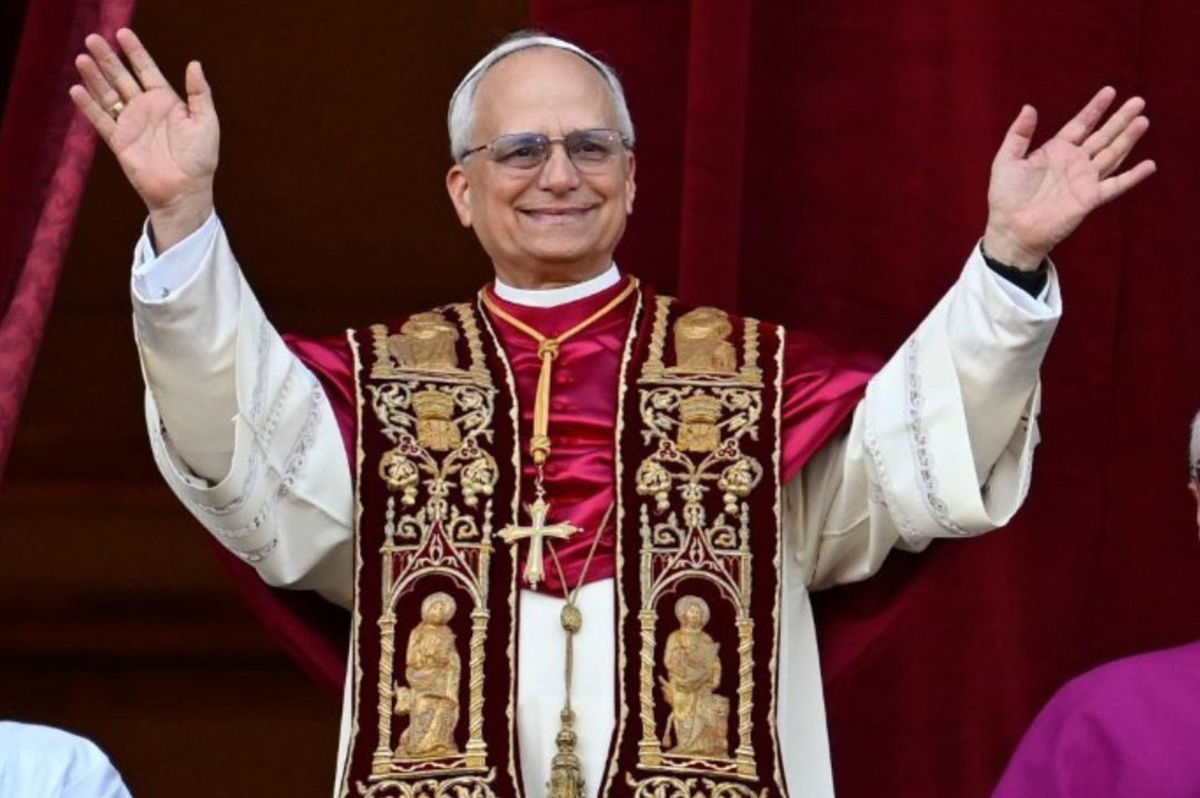
La visita del papa León XIV a Sudamérica, prevista para noviembre, ofrece un contexto para abordar una cuestión que atraviesa el testimonio de la escritora venezolana Marisol Johana Díaz Reyes de Córdova: el lugar de las personas trans en las comunidades de fe.
Radicada en Uruguay, Díaz de Córdova reúne en su libro “Vida Trans: Porque la sociedad nos ha separado hasta de Dios” su experiencia como mujer trans y migrante, su participación política y su relación con la espiritualidad.
La Santa Sede anunció que León XIV visitará Uruguay del 6 al 8 de noviembre de 2026, antes de continuar por Argentina y Perú. El recorrido sudamericano está previsto del 6 al 17 de noviembre.
Ante ese horizonte, la autora reivindica el amor al prójimo y la fraternidad como fundamentos de una convivencia que reconozca la dignidad de las personas trans. Su planteamiento encuentra un antecedente en el mensaje del fallecido papa Francisco a las personas LGBTQ+.
En una respuesta escrita al sacerdote jesuita James Martin, publicada por Vatican News en mayo de 2022, Francisco afirmó: «Dios es Padre y no reniega de ninguno de sus hijos». En el mismo intercambio defendió una Iglesia que convocara a todos sus hijos y rechazó una concepción selectiva de la comunidad eclesial.
Díaz de Córdova relaciona ese mensaje con el mandamiento evangélico de amarse unos a otros. Desde su experiencia personal, sostiene que reconocerse como hermanos e hijos de Dios debe traducirse en respeto hacia quienes han vivido rechazo por su identidad.
Su obra ya ha generado debate público. La presentación de Vida Trans en un ámbito vinculado al Partido Nacional motivó un planteamiento del Consejo de Representatividad Evangélica del Uruguay ante las autoridades partidarias. CBN Nicaragua recogió el episodio en agosto.
La organización evangélica precisó que su preocupación se centraba en el contexto institucional de la actividad y que no cuestionaba el derecho de la autora a escribir, publicar o presentar el libro. Esa distinción permite situar el desacuerdo sin atribuirle una prohibición de la obra.
El recorrido de la escritora ofrece un punto de partida para un reportaje internacional sobre migración, diversidad y pertenencia religiosa. Su testimonio plantea cómo se vive la fe desde una identidad que puede convertirse en motivo de exclusión y qué respuestas encuentran esas experiencias dentro de las comunidades creyentes.
La próxima visita papal aporta el contexto de actualidad. La voz de Díaz de Córdova aporta la dimensión humana: una autora que escribe sobre su relación con Dios y reivindica que el reconocimiento de la dignidad alcance también a las personas trans.
World
LGBTQ+ elected officials, activists around the world welcome U.S. election results
Chris Pappas’s election to the Senate is ‘particularly heartening’
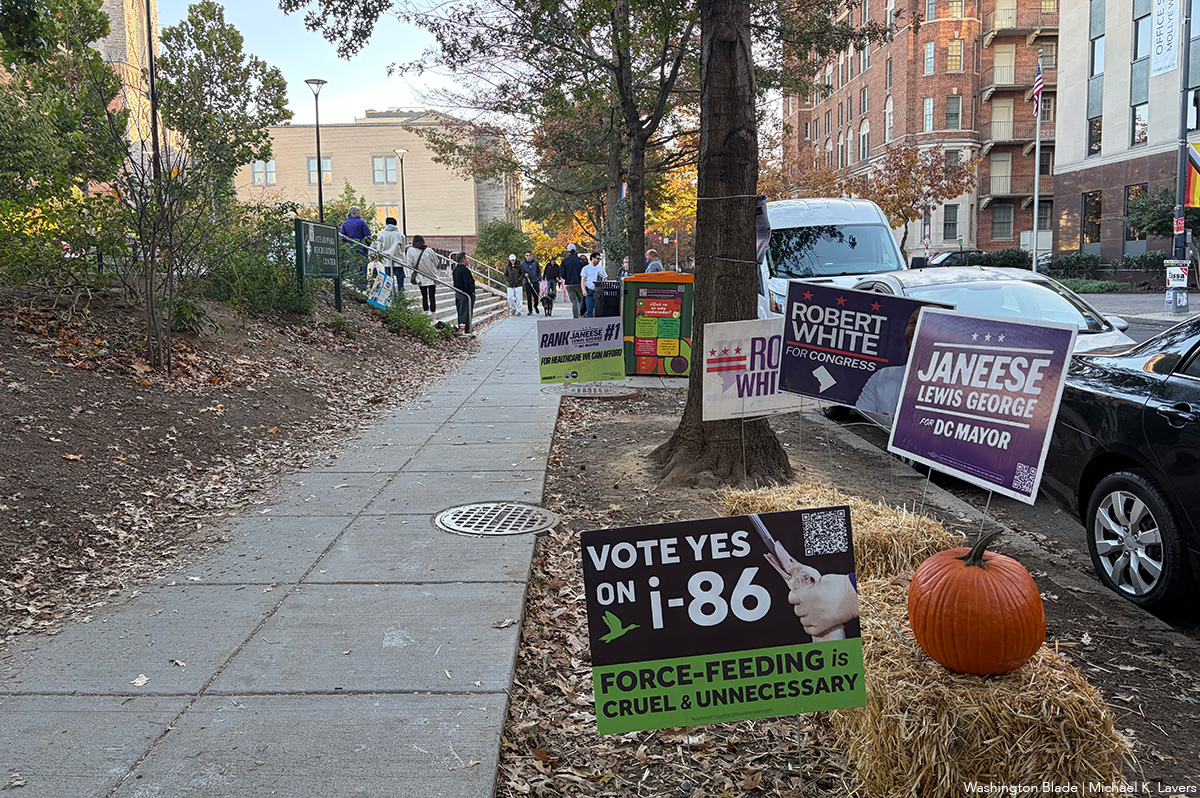
LGBTQ+ elected officials around the world have welcomed the U.S. midterm election results.
New Hampshire Congressman Chris Pappas on Tuesday became the first openly gay man elected to the U.S. Senate. He will join U.S. Sen. Tammy Baldwin (D-Wis.), who in 2012 became the first openly lesbian elected to the U.S. Senate, in the chamber once he takes office in January.
New York Congresswoman-elect Cait Conley, Michigan Congressman-elect Jeremy Moss, California Congresswoman Marni von Wilpert, and Indiana Congressman-elect J.D. Ford are among the 17 LGBTQ+ candidates who ran for federal office this year who won their races. Delaware Congresswoman Sarah McBride, who is the first openly transgender woman elected to Congress, won re-election.
“The U.S. election results remind us of a beautiful truth about democracy: power is borrowed, never owned — and voters occasionally demand it back with interest,” said Pornchai Witayalerdpan, who in 2024 became the first openly gay man elected to the Thai Senate. “Beyond the political shifts, I hope this signals a renewed commitment to accountability, decency, and common sense.”
Witayalerdpan described Pappas’s victory as “particularly heartening.”
“Becoming the first openly gay man elected to the U.S. Senate is historic, but the greater triumph is that his identity is no longer a barrier to his ambition,” said Witayalerdpan. “Another glass ceiling has shattered, and the world is a little brighter for it.”
“I sincerely hope Senator-elect Pappas will champion a bold new chapter of LGBTQ+ equality, help reverse the setbacks of Trump’s second administration, and turn the promise of equal rights into lasting protections for all,” he added.
Alex Greenwich, a gay member of the New South Wales Parliament in Australia, echoed Witayalerdpan.
“The U.S. midterms have filled progressives in Australia with hope,” Greenwich told the Los Angeles Blade. “We are experiencing a rise in the far right ahead of our election season, but the message from the U.S. is clear: if you put forward policies and plans that matter to people, and the reject culture war games, hope will prevail.”
Paolo Rondelli in 2022 became the world’s first openly gay head of state when he became Captain Regent of San Marino. He was his country’s ambassador to the U.S. from 2007-2016.
Rondelli on Thursday told the Blade the elections “mark a major achievement for the queer community and for queer politics — a trend that runs counter to the actions taken over the last two years regarding LGBTQAI+ rights.”
“Queer candidates have shown that it is possible to be effective politicians and to consistently demonstrate one’s own merit,” he said. “Now is not the time to take a single step back; rather, we must show — even more clearly and effectively — what we are capable of achieving to ensure greater rights and well-being for everyone.”
Tamara Adrián in 2015 became the first openly trans person elected to the Venezuelan National Assembly.
She described the election results as “an excellent triumph of diversity and its best form.” Adrián added they are “proof that Americans are not sectarians and exclusionary as the Trump administration has sought to portray.”
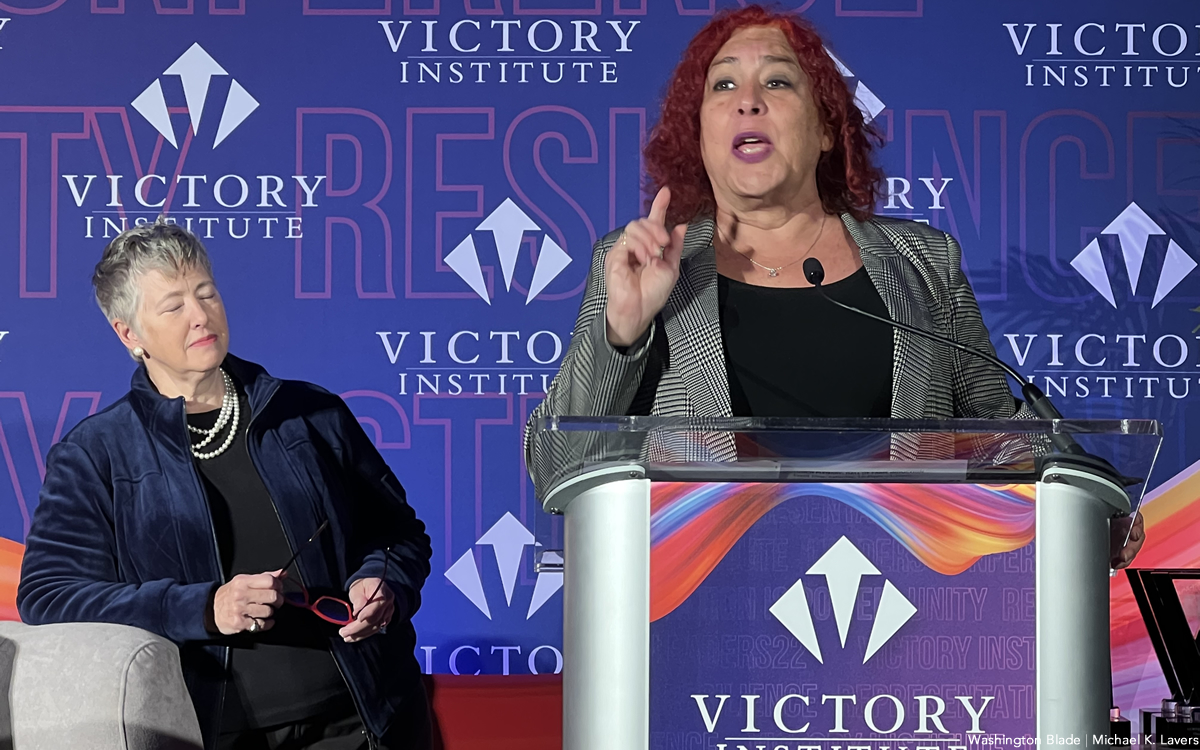
Former Irish Prime Minister Leo Varadkar in 2017 became his country’s first openly gay head of government.
He stepped down in 2020 after his center-right party, Fine Gael, lost parliamentary seats in that year’s general election. Varadkar was once again Ireland’s prime minister from 2022-2024.
Varadkar on Thursday said reaction to the U.S. election results in Europe “has been broadly positive.”
“It’s clear to us that most Americans do not support many of President Trump’s policies whether it’s the war in Iran which has driven up prices here too, trade tariffs, unconditional support for Israel or how far he has gone on immigration particularly the brutality of ICE,” he told the Blade. “There would be a concern that he might now double-down on foreign policy though given his party has lost control of Congress and not in a good way, more conflict than genuine peace initiatives.”
“It’s also been heartening to see a rainbow wave of gay, lesbian, and trans lawmakers getting elected and an understanding that with Democrats in charge of Congress and so many states, the roll back on rights will stall,” added Varadkar.

The global LGBTQ+ and intersex rights movement since the Trump-Vance administration took office in January 2025 has lost more than an estimated $50 million in funding because of foreign aid cuts, the dismantlement of the U.S. Agency for International Development, and other actions.
The Blade has previously reported PEPFAR-funded programs in Kenya and other African countries have been forced to suspend services and even shut down. A report that Outright International released in September notes 90 percent of LGBTQ+ and intersex rights groups around the world have lost funding since the Trump-Vance administration entered the White House.
“Outright International works in more than 80 countries, and governments and movements around the world are watching what the United States does next,” Outright International Executive Director Maria Sjödin told the Blade on Thursday. “Renewed U.S. engagement with the United Nations and a foreign policy that puts human rights into practice would make a difference far beyond U.S. borders. One early test will be whether Congress helps restore funding for HIV prevention and treatment, including for trans people, gay and bisexual men, and others who already face barriers to care.”
Gui Molhallem is the executive director of VoteLGBT (Institute for Full Citizenship), a group that seeks to increase LGBTQ+ and intersex representation in Brazilian politics.
They pointed out to the Blade that Congresswoman-elect Thabatta Pimenta, a trans woman from Rio Grande do Norte state in northeastern Brazil, is among the 35 LGBTQ+ candidates who won their respective races in their country’s Oct. 4 election. Incumbent President Luiz Inácio Lula da Silva defeated Sen. Flávio Bolsonaro in the second round of the Brazilian presidential election that took place on Oct. 25.
Molhallem said the U.S. election results for Brazilians “are a powerful reminder that the far right is not invincible, and that attacking LGBTQ+ people is not necessarily a winning electoral strategy.”
“Just weeks ago, Brazil elected a record 35 LGBTQ+ lawmakers,” they said. “Now, the U.S. has elected a record number of LGBTQ+ members of Congress. Across the Americas, we’re seeing something remarkable: our identities, once seen as political liabilities, are increasingly becoming electoral assets.”
“These victories also show that LGBTQ+ leaders can be unapologetically proud of who they are while building broad political coalitions around issues that affect everyone’s lives,” added Molhallem.
(Washington Blade video by Michael K. Lavers)
All Out Programs Director Mathias Wasik noted groups based in the U.S. for years “have exported anti-LGBT+ laws and talking points to Africa, Eastern Europe and beyond, selling the idea that America had turned against its LGBT+ citizens.”
“These (election) results tell a different story,” Wasik told the Blade. “American voters sent openly LGBT+ people to Congress, including the first openly gay man elected to the Senate. That matters to activists in Ghana, Uganda or Türkiye who are told that hostility toward LGBT+ people is the American way.”
Shadi Amin is the executive director of 6Rang | Iranian LGBT+ Network, an NGO that is incorporated in England and Wales. She told the Blade the U.S. election results are “truly historic.”
“Not only will the balance of power between political parties change, but the people representing Americans are also becoming much more diverse in terms of their backgrounds, sexual orientations, identities, and beliefs,” said Amin. “I think that’s incredibly important.”
Amin specifically celebrated Pappas’s election to the Senate, while adding she “would have loved to see a lesbian elected to such a position too.” (Baldwin has been in the U.S. Senate since 2013.)
“At the end of the day, as an Iranian, what matters most to me is that Americans can see the positive impact of their votes in their everyday lives and feel that their lives are getting better. We’re living through incredibly difficult times, and as an Iranian, I feel that very deeply,” said Amin. “But I also believe that now, more than ever, we need solidarity across borders and nationalities. We need a world where peace and security make it possible for people everywhere to live happy, fulfilling lives.”

Andrew Scott triumphs again in ‘Elsinore’

The contradiction of the 2026 midterm election: why we must keep fighting for trans rights

Hakeem Jeffries poised to become House speaker

US votes against LGBTQ+-inclusive UN resolution

Supreme Court faces new questions over trans rights and equal protection

Top Lebanese newspaper calls for decriminalization of homosexuality

Gay man named Venezuelan foreign minister

Turkey’s anti-LGBTQ+ crackdown overshadows UN climate conference

WeHo honors Transgender Day of Remembrance Nov. 20
Supreme Court faces new questions over trans rights and equal protection
-
 Lebanon3 days ago
Top Lebanese newspaper calls for decriminalization of homosexuality
-
 Venezuela4 days ago
Gay man named Venezuelan foreign minister
-
 Turkey3 days ago
Turkey’s anti-LGBTQ+ crackdown overshadows UN climate conference
-
 West Hollywood3 days ago
WeHo honors Transgender Day of Remembrance Nov. 20
-
 U.S. Supreme Court2 days ago
Supreme Court faces new questions over trans rights and equal protection
-
 Commentary1 day ago
US votes against LGBTQ+-inclusive UN resolution
-
 Congress1 day ago
Hakeem Jeffries poised to become House speaker
-
 Commentary6 hours ago
The contradiction of the 2026 midterm election: why we must keep fighting for trans rights
-
 Movies3 hours ago
Andrew Scott triumphs again in ‘Elsinore’