
New Zealand
New Zealand High Court strikes down puberty blocker ban
Transgender advocacy group challenged government’s 2025 regulations

New Zealand’s High Court on Wednesday struck down regulations that banned new puberty blocker prescriptions for minors.
The Professional Association for Transgender Health Aotearoa Inc. challenged the Health Ministry over the regulations it adopted in 2025.
“The applicant successfully bought a claim for a breach of an obligation to consult under s 105 of the Medicines Act 1981 (Medicines Act),” says a press release that announced Justice Dale La Hood’s ruling. “The applicant was also successful in their claim that the minister unlawfully discriminated against young people with gender incongruence or gender dysphoria on the round of disability contrary to s 19 of the New Zealand Bill of Rights Act 1990 (Bill of Rights). The applicant’s claims that the minister abdicated his decision-making power to Cabinet and acted for an improper purpose were unsuccessful.”
“The court declined to separately determine the applicant’s claims that the minister made material mistakes of fact or that he reached an irrational decision,” added the press release. “The court also declined to determine whether there was discrimination on the basis of sex or whether the decision breached ss 8, 9 and 10 of the Bill of Rights.”
The Professional Association for Transgender Health Aotearoa welcomed the ruling.
“As clinicians, we see clearly the benefits of puberty blockers and the significant impact they have on the lives of young transgender people,” said Elizabeth McElrea, a doctor who is the advocacy group’s vice president, in a press release. “Decisions about this healthcare are best made by patients and their doctors. The removal of this regulation is crucial and puts that decision back in the consult room.”
“This judgment means that as clinicians we can continue to prescribe GnRH agonists in line with best practice and without fear of retribution for doing the right thing,” added McElrea.






New Zealand
New Zealand blood donation rules shift
One-size-fits-all assumptions about gay, bi, and takatāpui men to end
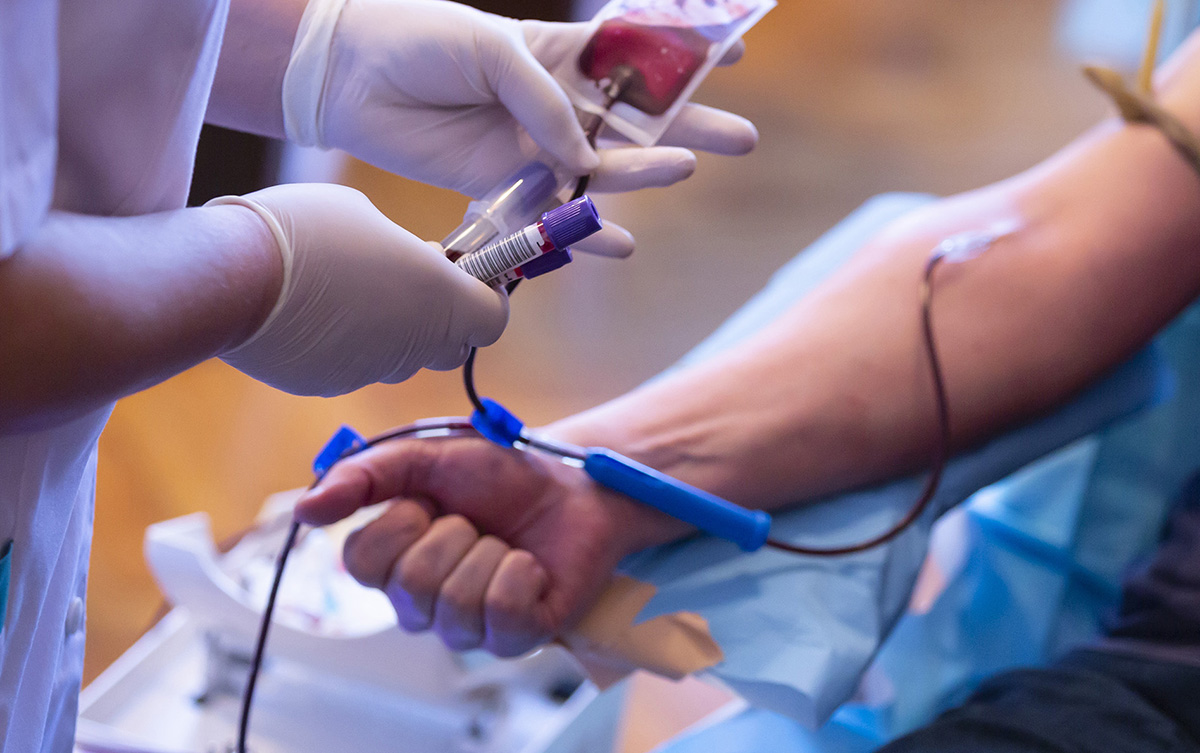
More gay, bi, and takatāpui men in Aotearoa may soon be able to donate blood, with New Zealand Blood Service changing its sexual activity screening rules in a move that shifts the focus away from sexuality and on to specific recent behavior.
For many queer people, the change represents a move away from treating all men who have sex with men as a single risk category. Instead, all donors will be asked the same questions about new or multiple sexual partners in the past three months, and whether they have had anal sex with those partners.
Under the new approach, donors who have had anal sex with a new or multiple partners in the past three months will still face a three-month deferral. But those who have not — and who meet all other eligibility criteria — will be able to donate. Donors will also be asked whether they have had gonorrhea or any other sexually transmitted infection in the past three months, with a three-month wait applying after treatment and recovery.
That change could open the door for some gay, bisexual, takatāpui and other men who have sex with men who were previously excluded from giving blood. In particular, men who have had anal sex with only one partner in the past three months, where that sexual contact has been ongoing for longer than three months, may now be eligible to donate, including those in long-term single-partner relationships.
For years, blood donation rules have been experienced not just as a public health measure, but as a blunt and often stigmatizing signal that queer men were viewed differently from everyone else. This change suggests a more nuanced approach, one that looks at what people do, rather than who they are, based on findings from the Sex and Prevention of Transmission Study (SPOTS) and international evidence supporting behavior-based screening.
New Zealand Blood Service says the new model will maintain the safety of the blood supply while making donation more inclusive.
Still, the new rules are not a complete removal of the restrictions, and some will see them as progress rather than full equity. The three-month deferral remains in place for donors who have had anal sex with a new or multiple partners, even if they are taking PrEP or using condoms. New Zealand Blood Service says that while PrEP is highly effective for HIV prevention, it can mask low levels of HIV during testing, and condoms are not considered completely fail-safe.

New Zealand High Court strikes down puberty blocker ban

Actor Kal Penn on the real lesson of ‘Trust Me, I’m a Doctor’

40 years later, AFI Fest continues to offer a robust selection of queer and international films

Supreme Court blocks White House anti-trans prison policy

How anti-trans backlash to James Talarico spread like wildfire

Making waves in the desert: How Brad Fuhr and KGAY keep the Coachella Valley connected

Meet the voice of Palm Springs: an interview with KGAY 103.1’s John Taylor

From ‘La Bola Negra’ to ‘Coward,’ here are this award season’s must-watch queer films

Fortune Feimster has always taken representation through comedy seriously

Key Midterm Election races as SoCal joins No Kings ‘Vote Early’ rallies on Saturday
-
 Palm Springs4 days ago
Making waves in the desert: How Brad Fuhr and KGAY keep the Coachella Valley connected
-
 Palm Springs3 days ago
Meet the voice of Palm Springs: an interview with KGAY 103.1’s John Taylor
-
 Movies4 days ago
From ‘La Bola Negra’ to ‘Coward,’ here are this award season’s must-watch queer films
-
 a&e features3 days ago
Fortune Feimster has always taken representation through comedy seriously
-
 Commentary5 days ago
Key Midterm Election races as SoCal joins No Kings ‘Vote Early’ rallies on Saturday
-

 Dance5 days ago
‘Male Aesthetic’ challenges conventional tropes of masculinity through dance at Nickerson-Rossi Dance Company
-
 Puerto Rico3 days ago
Annual National Trans Visibility March takes place in Puerto Rico
-

 Brazil2 days ago
VIDEO: Interview with executive director of VoteLGBT (Institute for Full Citizenship) in Brazil
-

 Federal Government2 days ago
EXCLUSIVE: Democrats seek answers on EEOC settlement affecting LGBTQ+ workers
-

 Palm Springs3 days ago
A quick visitor’s guide to Palm Springs before the winter