Local
Rainbow flag stomped outside congressman’s office
Capitol Police investigating incident
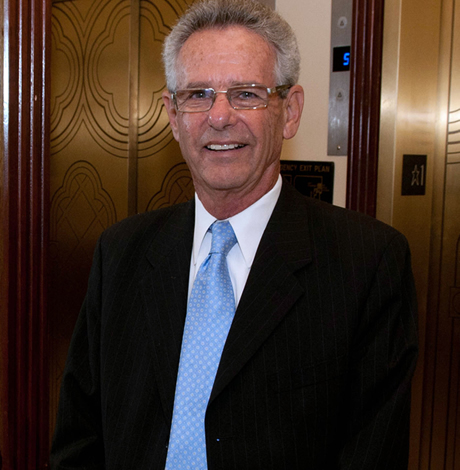

Rep. Alan Lowenthal (D-Calif.) displays a Pride flag outside his office. (Photo by Thomas Wasper; courtesy Wikimedia Commons)
U.S. Capitol Police are investigating an incident on March 15, in which a visitor to a congressional office building in Washington removed a rainbow flag hanging from the wall beside the door to the office of Rep. Alan Lowenthal (D-Calif.) and repeatedly stepped on the flag.
The unidentified male visitor acted on his displeasure with the flag minutes after he entered Lowenthal’s office and “angrily exclaimed his belief that the Pride flag outside the office was inappropriate alongside the American flag,” according to a statement released by Lowenthal’s office.
“The man left the Congressman’s office, removed the Congressman’s Pride Flag from its holder, threw it to the ground, and proceeded to repeatedly stomp on it,” the statement says. “Other visitors in the hallway verbally reprimanded him and after he left, replaced the flag,” it says.
“They then notified the Congressman’s staff, who caught up to the man, verified he was the one who had stomped on the flag before escorting him into the custody of Capitol Police officers,” the statement states.
Eva Malecki, a spokesperson for the Capitol Police, told the Washington Blade the matter was under investigation. She said Capitol Police have a policy of not releasing additional details about ongoing investigations, including the name of an individual being investigated.
Keith Higginbotham, Lowenthal’s communications director, said the sympathetic visitors who witnessed the incident at the Cannon House Office Building told Lowenthal staff members that the attacker was visiting from North Carolina and was with his family members when the incident unfolded.
Higginbotham noted that the rainbow flag, which his office refers to as the “Pride Flag,” has been displayed outside Lowenthal’s Capitol Hill office since 2013 along with an American flag and a California state flag.
Lowenthal represents California’s 47th congressional district, which includes the city of Long Beach, located about 25 miles south of Los Angeles. He is a longtime LGBT rights supporter and has marched in LGBT Pride parades in his district beginning when he served previously as a state senator and assemblyman and as a Long Beach City Council member, Higginbotham said.
“This shocking demonstration of hate is just another example of the shadows of intolerance that have grown longer in recent days,” Lowenthal said in a statement.
“Bomb threats called into Jewish community centers, desecrations of Jewish cemeteries, hate crimes against minorities and the transgender community, and horrifically racist statements from a member of Congress,” he said in the statement. “To all our brothers and sisters who endure through these hateful acts: we stand with you, and we will continue to fight for you.”



Palm Springs
Here’s Your Palm Springs Weekend: Jul 31-Aug 2, 2026 by LA Blade x Gay Desert Guide

“Seasons of Love,” the masterful song from Rent sings “Five thousand twenty-five thousand six hundred minutes” to describe the value of a year in human life. It’s a moving song that to this day brings me to tears when I hear it.
It will be 2,628,000 minutes that I’ve owned KGAY. So as I reflect on five years of operating KGAY Palm Springs, it’s with a combination of nostalgia, pride and determination.
August 1 is the actual date that I took over from the previous owners who had tried – unsuccessfully – to build a non-profit model around radio and podcasting. I was brought on along with other community members to make it happen. After less than a year managing the station and being on the board of directors, me and our staff including John Taylor, Shann Carr and Chris Shebel walked out en masse just prior to Pride. We went to Streetbar to day drink and lick our wounds.
I continued to operate GayDesertGuide, as it had been my passion project prior to KGAY. Shann, John and I created the #ILoveGayPalmSprings podcast – over 100 episodes worth that we are finally uploading to YouTube this summer for posterity. Then, COVID struck. As the virus waned and lockdown came to an end, one of the owners with whom I had a good relationship offered the station to me for purchase. I took over August 1, 2021. A few years later, we leased a signal at 92.1 to expand our reach into the east valley.
In the ensuing years, I’ve successfully combined the entities and was able to purchase our former competitor, Channel Q, and move KGAY to that stronger signal at 103.1. Then, 106.5 FM became Sunny 106.5 at Christmastime.
So as we reach the five year mark today, I have an announcement: Starting Monday, we’ll bring back KMEE MeTV FM music at 92.1. That’s the format of Timeless and Memorable music from the 60s and 70s with a little bit of 50s and 80s thrown in for good measure. (I’m having my proverbial tubes tied and calling quits on birthing any more radio stations, I’ve promised myself!)
So five years on from the rebirth of KGAY, I’ve taken on another “project” by giving life to all the great oldies music of my youth. The format was popular when we had it on 103.1. So now, 92.1 MeTV FM will debut Monday morning when you wake up.
And while I still do a radio show each Saturday on Sunny 106.5, my “first born” is my favorite child. Yes, they are all pretty and I’m proud of each of our radio stations. But KGAY will remain my crowning achievement in life. It’s means so much to me that KGAY means so much to you. And with this platform, Gay Desert Guide, it’s been a great way to help promote our beautiful Coachella Valley and inform our LGBTQ+ community.
As always, I thank you for supporting all of our entities, whether as an advertisers, a non-profit partner or a patron. Here’s to many more years ahead!
Brad Fuhr, your K-Gay Desert Guide
Here’s what’s up ahead in sunny Palm Springs!
Dancing with the Stars Con 2026

The inaugural Dancing with the Stars Con 2026 brings the glitter and excitement of the ballroom to Acrisure Arena for the ultimate fan convention and live show from Friday–Sunday, July 31–August 2. Fans can enjoy live dance performances, interactive panels, and photo experiences featuring beloved pros and Mirrorball champions like Val Chmerkovskiy, Jenna Johnson, and Joey Graziadei. Legendary judges Carrie Ann Inaba and Bruno Tonioli are also scheduled to appear. The three-day celebration invites fans to immerse themselves in the world of the hit television series with Q&A sessions, exclusive merchandise, and unique exhibits. More info
Superfuzz Saturday Nights

Superfuzz Saturday Nights returns to CCBC Resort for an evening of poolside entertainment on Saturday, August 1 from 8 pm–12 am. The event features all-vinyl DJs spinning classic sets under the stars, surrounded by the venue’s iconic pool and resort atmosphere. Guests are invited to bring their friends, enjoy the good vibes, and grab a drink from the Runway Bar. Mark your calendar also for upcoming Superfuzz Saturdays: August 15 & 19. More info
Lesbian & Queer Women Tea Dance and Pool Party

The Lesbian & Queer Women Tea Dance and Pool Party brings a full day of community, music, and sun‑soaked celebration to Arrive Hotel on Sunday, August 2 at 3 pm. This lively gathering features high‑energy beats from DJ Ay‑Lex Song, inviting guests to dance, float, mingle, and cool off in the pool. It’s a welcoming space for queer women and friends to connect, splash, and share an unforgettable poolside experience. Bring your crew, bring your best energy, and dive into a celebration made for community joy. More info
Night Swim at Palm Springs Surf Club

Cool off under the desert stars at Night Swim, the ultimate after‑hours pool party happening every Saturday from 6–10 pm at The Palm Springs Surf Club. Dive into the Island Pool and Lazy River, sip cocktails at the Island Bar, and dance to a new DJ every week. It’s a high‑energy, 21+ event where the lights shimmer off the water and the beats keep the night alive. Bring your towel, your crew, and your best summer vibe — this is Palm Springs nightlife at its most refreshing. More info
MJ The Tribute

MJ The Tribute – A Tribute To Michael Jackson takes the stage at Agua Caliente Casino Cathedral City on Saturday, August 1 at 8 pm. This electrifying performance celebrates the music, movement, and showmanship of Michael Jackson through a professional live production. Experience signature choreography and iconic costumes while hearing timeless hits including “Billie Jean,” “Beat It,” and “Thriller.” More info
Taste of Summer / Rancho Mirage

Taste of Summer / Rancho Mirage is underway, running through August 16 — and now, the fun goes even further with the Passport Game. The annual program invites residents and visitors to explore specials, cool treats, and flavorful experiences while supporting restaurants and local nonprofits. Wristbands unlock exclusive offers throughout the season, and your official passport turns the whole adventure into a delicious scavenger hunt across thirty participating restaurants. Whether you’re competing with friends, planning weekly outings, or savoring a few standout stops, the Passport Game makes summer dining more playful, more social, and even more rewarding. More info
Modernism Week October Ticket Sales Open

Modernism Week October is just a couple months away — and tickets go on sale Saturday, August 1 at 12 pm. With more than 50 events running October 15–18, this year’s lineup is one of the most exciting yet, blending fan‑favorite tours with brand‑new experiences that spotlight midcentury architecture, design, dining, and nightlife across Palm Springs. Expect curated dinners, nighttime socials, exclusive home tours, immersive performances, and even a first‑ever Modernism Week–produced excursion to the Palm Springs Aerial Tramway. Many events are free or low‑cost, and the most popular tours sell out fast. More info
Jake Owen

Country music superstar Jake Owen a night of country music to The Show at Agua Caliente Casino Resort Spa on Friday, July 31 at 8 pm. The chart-topping artist and ACM award winner takes the stage is known for his laid-back style and signature hits like “Barefoot Blue Jean Night” and “Beachin’.” Owen has achieved ten No. 1 singles and earned multiple gold and platinum records and amassed over 2.5 billion on-demand streams in the U.S. alone. More info
International Classical Concerts

The acclaimed Latsos Piano Duo headlines International Classical Concerts at the Palm Springs Plaza Theatre. This magical musical event takes place Sunday, August 2 from 7–10 pm. The husband and wife team will perform an eclectic program of piano duets, including works by Schubert, Mendelssohn, and Kapustin. The performance also features compositions by local resident Joe Giarrusso, performed by renowned cellist John Walz. Attendees will enjoy a sophisticated program that spans from famous fantasies to fiery and virtuosic sinfoniettas in a historic venue. More info
ALSO THIS WEEKEND
- Exotica Tribute to Dizzy Gillespie • Bandleader Skip Heller and his Voodoo 5 perform a tropical jazz tribute featuring the sultry vocals of Lena Marie Cardinale on Friday from 7–8:30 pm at Agua Caliente Casino Palm Springs.
- Jessica Rosas Comedy Show • Comedian Jessica Rosas takes the stage for a 90-minute performance of sharp, sassy stand-up on Friday from 8–9:30 pm at Spotlight 29 Casino.
- Palm Springs Certified Farmers’ Market • This weekly market is indoors during the summer season to offer a climate-controlled environment for local shoppers, bringing together regional vendors to celebrate fresh food and local products on Saturday from 8 am–1 pm at Palm Springs Pavilion.
- Welcoming Yoga at The Center • Facilitator Marci Stonehedge leads this non-intimidating, slow basic practice designed to increase circulation and improve flexibility. Open to all skill levels, the non-judgmental class focuses on gentle stress for connective tissues on Saturday from 4–5:15 pm at The LGBTQ Community Center of the Desert.
- Annual Back-to-School Backpack Drive & Resource Fair • The City of Palm Springs Department of Parks & Recreation helps students prepare for a successful school year with this free community event. Registered attendees receive free backpacks, supplies, resource fair access, swim center passes, and limited haircuts on Saturday from 11 am–3 pm at Palm Springs Leisure Center.
- Kings of Chaos • “Rock’s Greatest Supergroup” performs a live musical set during this special engagement at the Show in Rancho Mirage on Saturday from 8–10:30 pm. Featuring Richie Sambora (Bon Jovi), Kevin Cronin (REO Speedwagon), Matt Sorum (Guns ‘N’ Roses), and more.
- Dance Ranch / Country Dance Saturdays • This country western dance event features a line dance lesson with Andrew Jimenez and a request hour. Serving the LGBTQ+ community, the group hosts a night of waltz, two-step, and swing dancing for all levels on Saturday from 6–9:30 pm at Step by Step Dance Studio.
- The Rack Pack: Weekly Men’s (Chinese) Mahjong Meet-Up • Men of all experience levels are invited to join this relaxed weekly gathering for friendly games of Chinese Mahjong on Sunday from 4–6 pm. The meet-up emphasizes social connection and good vibes, with participants encouraged to enjoy food and drinks at ACE Hotel & Swim Club.
- A Queer Arcana: Art, Magic, and Spirit • This exhibition features an intergenerational group of artists exploring how magic and esoteric knowledge have shaped queer culture. Drawing on the mystical meaning of “arcana,” the works highlight alternative spiritual practices as paths of survival and liberation within the LGBTQ+ community. Thursday–Sunday at Palm Springs Art Museum through October 18.
Palm Springs
Here’s Your Palm Springs Weekend: Jul 24-26, 2026 by LA Blade x Gay Desert Guide
When you receive ads for, say, a new car, it’s because the internet has tracked you through thoughts, speech and searches so that you’re dogged with messages until you buy or they give up.
But sometimes things still come up serendipitously and at random. And you wonder, is the universe trying to tell me something?
And so it is with the word and color pink. This week, I met with the Desert Cancer Foundation, the organizers behind “Paint El Paseo Pink” to help them with their annual Fall event. (We’ll be hosting a team this year.)
But then, on my way back from the meeting, I was hearing a song by Pink! on the radio. And today a headline caught my attention that the saxophonist behind “The Pink Panther” theme from the 1963 film had passed. Pink was clearly on my mind.
Pink is a color that we in the LGBTQ+ community co-opted from Nazi Germany. During the 1930s and 1940s, prisoners in concentration camps were categorized using color-coded inverted cloth triangles on their uniforms. Prisoners wearing the pink triangle were singled out for particularly brutal treatment by camp guards and isolated from other inmates.
In the early 1970s, West German gay rights groups began rediscovering this history—bolstered by the publication of The Men with the Pink Triangle, a survivor’s memoir. ACT UP intentionally reclaimed the badge of shame, transforming the inverted pink triangle paired with the iconic slogan “SILENCE = DEATH”.
But were it not for a shortage of pink fabric, our six color rainbow flag would have been an eight stripe flag including hot pink. Gilbert Baker created the flag in 1978 at the urging of Harvey Milk and others to serve as a symbol for our movement in its early days.
According to Wikipedia, “Gilbert Baker created a nine-stripe version of the flag in March 2017, adding a lavender stripe to symbolize diversity. Baker created the flag in response to the 2016 election of Donald Trump.”
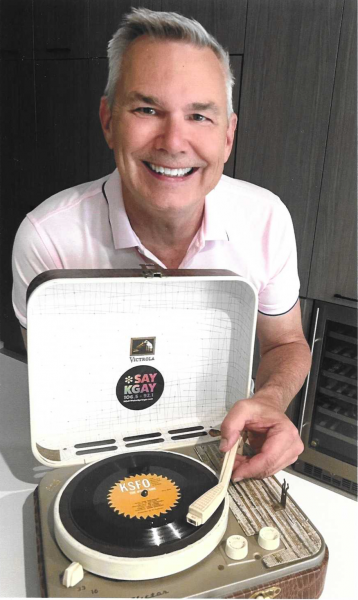
So there’s your history lesson on how pink became “our” color, courtesy of paying attention to what the universe was telling me. Now, you pay attention today. Pink will likely enter your field of vision and psyche too. (P.S. The shirt in my photo above is also pink!)
Brad Fuhr, your K-Gay Desert Guide
Here’s what’s up ahead in sunny Palm Springs!
Taste of Summer / Rancho Mirage
Taste of Summer / Rancho Mirage launched this week, running through August 16, kicking off a multi‑week celebration of local dining. The annual program invites residents and visitors to explore specials, cool treats, and flavorful experiences while supporting restaurants and local nonprofits. Wristbands unlock exclusive offers throughout the season. More info
Living Out Art Walk 6

Living Out Art Walk 6 transforms Living Out Palm Springs into an expansive three-story art gallery on Sunday, July 26 from 4–6 pm. This art party features more than 450 original works representing over 75 LGBTQ+ artists from the Coachella Valley. Guests are invited to browse the art while enjoying music from the amazing Gennine Francis, who performs starting at 5 pm. Gertie’s Salon and Bar will be open with a cash bar to enhance the festive atmosphere. This free celebration offers a unique opportunity to see local art, have a cocktail, and enjoy entertainment in a vibrant community setting. More info
One Night of Queen

Experience a world‑class rock ’n’ roll spectacle as Gary Mullen & The Works bring One Night of Queen to the Palm Springs Plaza Theatre. This high‑energy tribute concert, happening Sunday, July 26 at 7 pm, channels the electrifying showmanship, theatrical flair, and iconic sound of Queen. With Gary Mullen paying tribute to Freddie Mercury’s iconic vocals and the band recreating the magic of a true stadium‑style performance, audiences can expect to be dancing in the aisles as they relive the unforgettable energy of one of rock’s greatest acts. More info
The Wizard of Oz

The Wizard of Oz at Palm Canyon Theatre runs July 17–26, inviting audiences to follow the yellow brick road into a world of magic, adventure, and timeless songs. This cherished musical brings Dorothy and her unforgettable companions to the stage in a story filled with heart, imagination, and classic moments like “Over the Rainbow.” Perfect for dreamers of all ages. More info
Wanderlust Food Truck Festival at Sunrise Park

The Wanderlust Food Truck Festival brings more than 20 rotating food trucks and vendors to Sunrise Park on Saturday, July 25 from 5–10 pm. Guests can enjoy gourmet street food, sweet treats, and globally inspired flavors in a relaxed outdoor setting designed for gathering and connection. The event is designed to be more than a quick stop—it’s a place to stay, relax, and connect, with lawn games, open seating, and a community‑driven atmosphere. More info
Bill Burr Live

Bill Burr performs at The Show at Agua Caliente Casino Resort Spa on Friday, July 24 at 8 pm, delivering his Grammy‑nominated signature blend of sharp cultural commentary and fearless humor. Known for specials like Paper Tiger and Live at Red Rocks, Burr’s stand‑up is celebrated for its honesty, precision, and ability to provoke laughter while challenging perspectives. More info
Dance Ranch / Country Dance Saturdays

Dance Ranch’s Country Dance Saturdays takes place at Step by Step Dance Studio on Saturday, July 25 from 7–9:30 pm, offering two‑step, waltz, swing, line dancing, and more for the LGBTQ+ community and friends. The evening includes a 7 pm lesson followed by social dancing, welcoming participants of all levels. This week features Beginner Waltz with Lise Baadh, adding a fresh skill‑building opportunity. More info
Desert Sound Sessions

Desert Sound Sessions offers a restorative wellness experience at the Kimpton Rowan Palm Springs Hotel on Sunday, July 26 from 9:45–11 am. The session begins with tea and community gathering before transitioning into a guided sound journey featuring crystal singing bowls. This immersive experience invites you to slow down, soften, and reconnect through a meditative sound journey, encouraging balance, clarity, and deep relaxation inspired by the desert’s spaciousness. More info
ALSO THIS WEEK
- A Queer Arcana: Art, Magic, and Spirit • Palm Springs Art Museum presents this intergenerational exhibition exploring how magic, spirituality, and esoteric knowledge shape queer culture, open Thursday–Sunday. The show highlights alternative spiritual paths within LGBTQ+ struggles for liberation.
- Jesus Sepulveda Comedy Show • Performers Jesus Sepulveda and a full lineup of all-star comedians visit the Cascade Lounge for a night of stand-up on Friday from 7–8:30 pm. Known for his HBO specials, Jesus shares hilarious takes on family and culture.
- Teacher’s Gone Bad Comedy Show • Seasoned educators trade lesson plans for punchlines on Friday from 8–9:30 pm. This nationally touring comedy act at Spotlight 29 Casino features stories about school politics and burnout.
- Political Implications of Humanism: Wealth Inequality • Participants gather at The LGBTQ Center of the Desert on Saturday from 11 am–12:30 pm to discuss how wealth inequality impacts the flourishing of humanity. The discussion explores potential solutions, such as a wealth tax or democratic socialism.
- Country Nation • Enjoy modern country music hits in a high-energy tribute concert at Desert Hot Springs City Hall on Saturday from 6–10 pm. The block party features food trucks and artisan vendors.
- The Beaver Trilogy • Queer Eyes Cinema Club hosts a free screening of director Trent Harris’s film at Festival Theaters on Saturday from 4–6:30 pm. Following the movie, film scholar Esther Schwartz moderates a live Q&A with Harris.
- Twin Peaks: Fire Walk With Me • Celebrate David Lynch’s masterpiece at Festival Theaters on Saturday from 7–9:15 pm. This one-night event features appearances from original cast members and a live drag performance by Anita Rose, Bellamy Cain, Fey Sunshine Ghost, and Alexander Coutour.
For all things Palm Springs, head to GayDesertGuide.com.
West Hollywood
West Hollywood flooded, LADWP and the City respond
The Sunset Strip rocked by a water main break
When you think of ruckus on the Sunset Strip at 5 am, maybe it’s some unruly band having a late night after playing at the Viper Room or the Whisky a Go Go. Instead, local residents were met with a cacophony of helicopters around 5 and 6 am this morning. The reason: a water main burst at the crowded intersection of Sunset Blvd and Holloway Drive.
Los Angeles Department of Water and Power (LADWP), after addressing the flood damage, has located the rupture of a 36-inch LADWP steel main. There are traffic closures on Sunset Blvd. between Larabee Street and LaCienega Blvd, as well as nearby streets for public safety because the pavement is literally shattered under the water pressure.
LADWP has confirmed that no water service interruptions are anticipated for residents or businesses, and water in the City of West Hollywood is clean and safe to drink. It’s likely traffic may be a recurring issue as the city works to repair a major intersection in the heart of the West Hollywood/Sunset Strip area.
West Hollywood Mayor John Heilman says, “We are grateful that no injuries have been reported as a result of this significant water main break. We are working closely with the Los Angeles Department of Water and Power, the Los Angeles County Sheriff’s Department, and our regional partners to respond to this incident as quickly and safely as possible.”
West Hollywood is making quick work of it and offering periodic updates at:
https://www.weho.org/Home/Components/News/News/12208/23
Heilman continues, “I want to thank our Public Works, Community Safety, and Parking teams, along with all first responders, for their swift and coordinated efforts. We know these road closures and traffic impacts are disruptive, and we appreciate everyone’s patience as crews work to stabilize the area, assess the damage, and begin repairs.”
Traffic remains heavy; be sure to plan accordingly if navigating through West Hollywood.
Residents, property owners, tenants, and business owners who have experienced property damage or other losses related to the water main break may submit a claim directly to LADWP. Details: www.LADWP.com/claims
Local
Todd Gloria elected US Conference of Mayors president
Gay San Diego mayor spoke with the Blade in D.C.
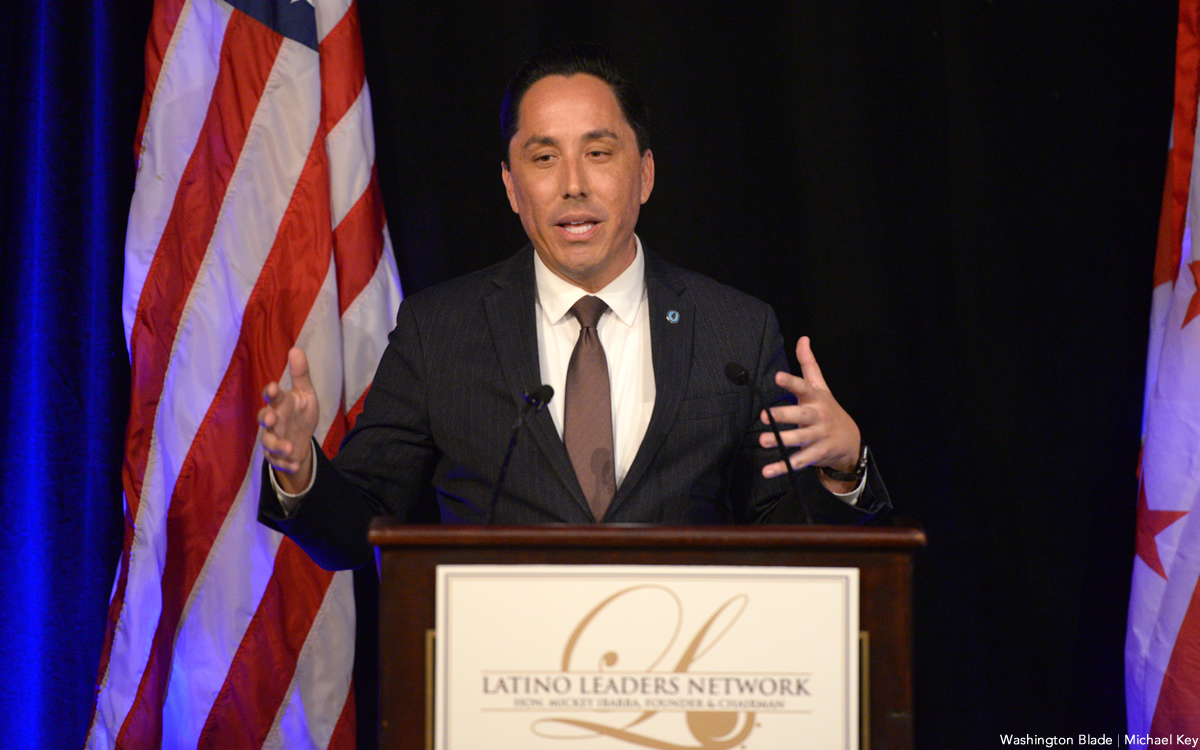
Todd Gloria has had a whirlwind two decades as a public servant.
Beginning with his successful 2008 San Diego City Council election, followed up by his second successful campaign in 2012 — this time as president of the San Diego City Council — Gloria has been strapped to a rocket headed to public servant fame that would make Leslie Knope’s head spin, with no signs of slowing down.
Just one year into his tenure as president of the San Diego City Council, Bob Filner, the then-mayor of the city, resigned from his role following multiple allegations of sexual harassment. In that moment of political uncertainty, Gloria stepped up, becoming the interim mayor of San Diego, and the leader of one of the largest cities in the U.S. .
While his term as interim mayor — lasting from August 2013 to March 2014 — was not long, it was a sign to the people of San Diego — and to himself — that Gloria could do good things for San Diego. When the newly elected Mayor Kevin Faulconer was sworn in in March 2014, Gloria continued working hard to keep the city he grew up in in caring hands.
Gloria started to look past “America’s Finest City” and began looking toward Sacramento. It was there that some of the state’s most capable minds were attempting to tackle problems that the entire Golden State faced. In 2016, he ran for the California State Assembly’s 78th District seat, representing San Diego, where he won with an impressive margin and started championing the city’s climate action plan. Shortly after assuming office, he was chosen to become a member of the Democratic leadership — as assistant majority whip — where he helped pass his and the Democratic Party’s legislative goals in the most populous state in the nation.
It should be no surprise that, with a growing reputation as someone bent on making his city better for the more than 400,000 residents who live within the 78th District, Gloria won re-election in 2018 with more than 70 percent of the vote in both the primary and general elections. There, he was tapped once again to be an integral part of the Democratic Party’s legislative mission and was, in January 2018, made majority whip.
In 2019, Gloria announced he would no longer seek the 78th District seat when his term was up, but would return from Sacramento to San Diego — this time as mayor. He ran his campaign on issues that San Diegans faced: the housing crisis, affordability, public transportation, and climate change.
In November 2020, Gloria was elected mayor of the city he grew up in, where he broke barriers — his win also made him the first Native American and the first Filipino American to hold this position in a U.S. city with more than a million people, becoming San Diego’s first mayor of color. He was also the city’s first openly gay mayor.
The Los Angeles Blade sat down with Gloria when he visited Washington earlier this month for the U.S. Conference of Mayors, where he was elected president of the organization. The presidency lasts for one year and alternates between political parties to ensure bipartisanship.
Gloria, has served as mayor of San Diego since 2020, will lead the nearly century-old bipartisan organization as a proud out gay man at a time when many LGBTQ+ Americans are concerned about the future of their rights and protections.
“Well, a lot. I think the first thing that comes to mind is that this time that we’re all living in, the stakes feel particularly high, and I think number one, I’d want your readers to understand that this is a conference of bipartisan mayors from all across the country who supported me to lead the organization that’s nearly 100 years old,” he explained.
“I think at a time when we definitely wonder, as queer people, where we sit in our nation and in our society, that my fellow mayors of all different political stripes are willing to allow me to be their voice as leader of this organization. I hope it somehow validates the notion that we are still making progress, that particularly the political process is still possible.”
Gloria framed his election as evidence that progress remains possible, even amid growing political polarization. He noted that the U.S. Conference of Mayors was founded during the Great Depression, another period when local leaders stepped forward to address challenges they felt were not being adequately addressed at the federal level.
Throughout the interview, Gloria repeatedly emphasized the unique role cities can play in advancing LGBTQ+ equality. He pointed to the U.S. Conference of Mayors’ long history of supporting civil rights, HIV/AIDS advocacy, and LGBTQ+ inclusion, and his belief that mayors often find common ground on issues where Washington remains divided as a clear thesis to his presidency.
“It’s building on the history. It’s one of the reasons I’m very proud of this organization. Why I’ve been an active member for years now is that it has this storied history of speaking up and helping to advance change in this country. Everything from direct aid to cities in the Great Depression to civil rights in the 1960s to equality, HIV/AIDS advocacy during a time of great stigma and shame,” Gloria said. “This conference, again a bipartisan organization, has been willing to sort of be able to find a common ground that maybe isn’t always possible in Washington.”
Gloria also highlighted San Diego’s own LGBTQ+ political history, noting that the city has maintained continuous LGBTQ+ representation on its City Council since the early 1990s. He credited generations of local activists for helping create a political environment where LGBTQ+ elected officials have been able to thrive.
With Pride Month unfolding amid continued battles over LGBTQ+ rights nationwide, Gloria argued that cities remain important centers of progress and power, even when state and federal politics become more hostile.
“We have quite a bit [of power] because we can often do things within our own communities, but also we can band together and lend our voices to try and either stop bad things from happening or help advance good things that we’d like to see come to pass.”
He added that cities provide opportunities to continue advancing equality — even when, at a national level, conditions seem unfavorable.
“Cities provide avenues to say ‘No, we can actually make progress, maybe not at the scale, maybe not as broad as we would like, but it can still happen.’”
While Gloria has championed LGBTQ+ rights throughout his political career, he said housing affordability has emerged as the defining civil rights challenge facing many communities, including LGBTQ+ residents.
“The biggest civil rights issue right now is housing,” Gloria said.
He argued that many LGBTQ+ people can now legally live and work openly in places like San Diego, but increasingly struggle to remain in those communities because of rising housing costs.
“You know, we are a very affirming city. We have a gay mayor. 1/3 of our city council is LGBT. We have all of the protections that you would hope a city would provide in a state that provides those same protections, but we’re horrifically expensive, and our housing costs are unattainable to so many people of all walks of life.”
As president of the U.S. Conference of Mayors, Gloria said he hopes to elevate housing affordability as a national issue and encourage local leaders to adopt policies that increase housing production and reduce costs.
On LGBTQ+-specific initiatives, Gloria pointed to his work co-chairing the organization’s LGBTQ Alliance alongside Madison, Wis., Mayor Satya Rhodes-Conway. Under their leadership, the alliance created a municipal toolkit designed to help mayors implement LGBTQ+-inclusive policies, ranging from Pride Month proclamations to nondiscrimination protections and fair housing measures.
“We have a lot of allies and come to our meetings, we meet four times a year, and you want to be supportive of the community. This is what this looks like.”
Beyond policy, Gloria described the alliance as an important support network for LGBTQ+ elected officials navigating increasingly hostile political rhetoric.
“When the attacks on trans people, specifically trans children start happening, that was an issue that we discussed at length in the alliance.”
Despite his optimism, Gloria acknowledged that recent years under the current federal leadership have challenged assumptions many LGBTQ+ Americans once held about the inevitability of continued progress — and the idea that rights gained were forever.
“I think for someone who you know came up in the movement in the 90s and early 2000s you know, I’ve seen marriage equality, I’ve seen the progress with HIV and AIDS, you know, ability to work and live where you want, you know, all that stuff. It kind of felt like, for me, it felt like it was inevitable that we would keep ascending to greater and greater equality,” he said. “Obviously, recent years have made you not only stop some of that progress, but really question if we’re not going to start falling backwards.”
Still, Gloria urged LGBTQ+ Americans not to retreat from civic engagement or get quiet about the problems they face, given the constant barrage of attacks — both executive and cultural — that leaves some feeling as if the battle for equality is waning.
“This is not a time to back away. This is not a time to fold inward. We have to truly double down and continue forward doing the work. Leaning forward will mean that the progress may be less than what we want, but still progress will be made.”
Gloria also said he has noticed a change in the tone of political discourse directed at elected officials, including LGBTQ+ leaders. While he said hostile rhetoric has increased, he views his position as an opportunity to model resilience for younger LGBTQ+ people.
“You can either absorb it the way I did in middle school and feel kind of crummy and maybe a little bit sorry for myself, or you can realize that every time I’m called that, there’s a young person in a school who does not have the perspective I have, and they’re counting on me to figure out some way forward.”
As he begins his year leading the U.S. Conference of Mayors, Gloria said his priorities will focus on housing affordability, public safety, and economic issues affecting cities nationwide — issues he is familiar with. Success, he said, will ultimately be measured not by political messaging or narratives spun, but instead by tangible results.
Results that matter — even if they aren’t seen as glamorous. These are results that show the city is being effectively run for its citizens, he explained.
“The question is, did the garbage get picked up? Did the road get paved? Did the homeless person find housing?”
Addressing the relationship between cities and the Trump-Vance administration, Gloria said local leaders have had to navigate a political environment defined by unpredictability.
“The only thing that’s certain about this administration is the uncertainty,” he said, though he was clear that such uncertainty does not give the administration a pass to act unjustly. “My city has sued the Trump administration, I believe, eight times at this point, and we’ll continue to do that when it’s necessary or appropriate.”
Even so, Gloria maintained that mayors are uniquely positioned to cut through political rhetoric because residents judge them on day-to-day outcomes rather than partisan talking points.
“I think we are a bit more pragmatic, I think, a bit more focused on making sure that what we’re doing is improving people’s lives, not harming it.”
For Gloria, that practical focus — and the willingness of mayors from across the political spectrum to work together — offers reason for optimism despite the challenges ahead.
When asked what he thinks about the future of not only San Diego, but of the country given the increasingly hostile political climate, he provided a chance to peer into his mind: the mind of a public servant who is determined to make his place better than the day before, even if it does boil down to ensuring trash is collected and housing is affordable for all.
“Being an elected official is in itself an act of optimism. It’s a belief that you can help make things better, and it’s difficult to be in this line of work and be pessimistic.”
That goes hand-in-hand with making every city a better place for those who will enjoy the fruits of the labor sewn well after the mayors at this year’s conference have come and gone. That is why Gloria is doing what he is doing.
“I think for every kid, wherever they are, they’re wondering if they can be their full selves.It’s incumbent on us to do, because every one of these terrible headlines that we see may be frustrating to those of us that have seen some of that progress,” he said. “I think it could be devastating for these young people who have not known anything different, and we owe it to them to find better headlines to give them, both in the short and long term.”
California
Calif. governor’s race spotlights Becerra’s LGBTQ advocacy
Former HHS secretary to face Republican Steve Hilton
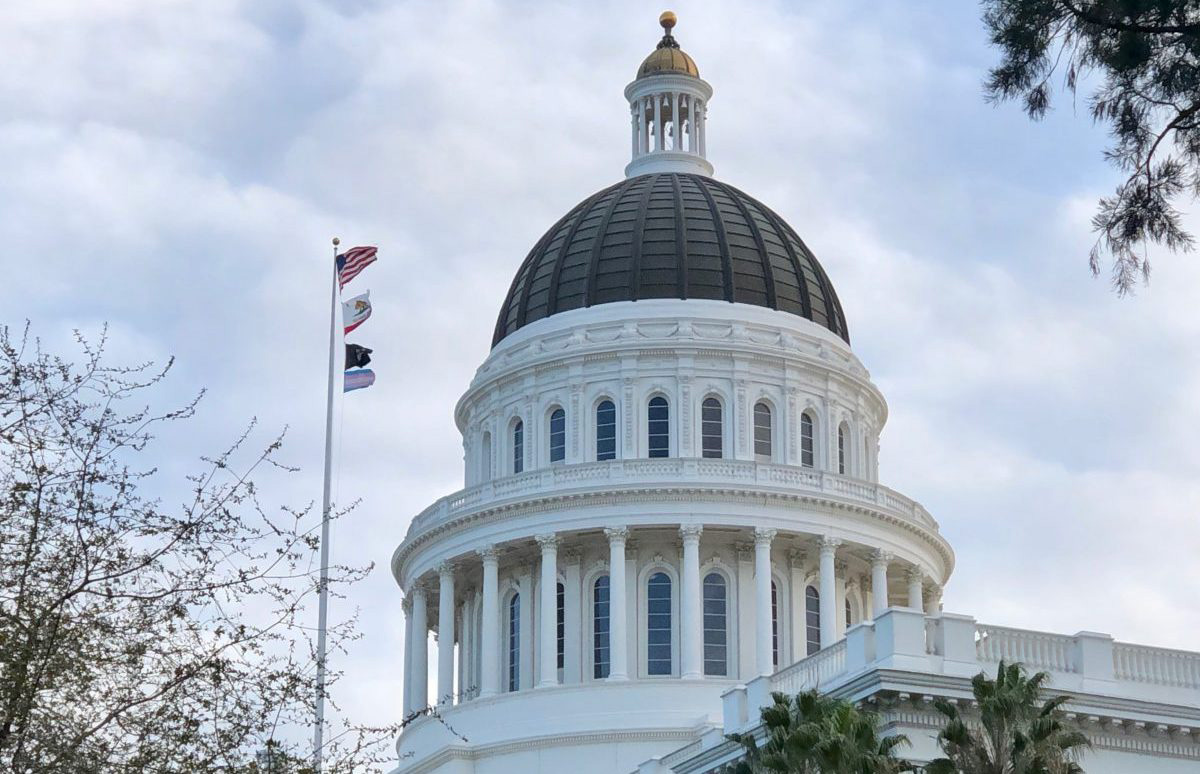
California voters selected its two front runners for the state’s open governor seat following the second election of Gavin Newsom.
Last week former U.S. Secretary of Health and Human Services Xavier Becerra became the Democratic nominee for governor, setting up a general election matchup against Republican nominee Steve Hilton, a former political adviser in the UK and Fox News commentator.
Becerra, the son of Mexican immigrants, has spent nearly three decades in public service. Over the course of his career, he has served as California attorney general, U.S. secretary of Health and Human Services, a member of the U.S. House of Representatives, and a member of the California Assembly.
Hilton comes from a very different background.
Raised by Hungarian parents who fled communism and settled in the UK, Hilton entered politics after graduating from Oxford University. He worked within the Conservative Party — beginning during the era of former Prime Minister Margaret Thatcher and later served as Director of Strategy for Prime Minister David Cameron. After relocating to California in 2012 with his wife, Hilton taught at Stanford University, became a U.S. citizen, and later established himself as a Fox News political commentator.
As the race enters the general election phase, policy questions surrounding healthcare, civil rights, and the future of LGBTQ protections in California are expected to feature prominently in both campaigns. The Washington Blade sat down with former Biden-Harris administration health officials who worked under Becerra’s leadership and also with LGBTQ advocates. Both paint a clear picture of Becerra — a longtime ally whose support for LGBTQ rights and health equity has spanned multiple decades and offices.
“For Equality California, he has been a staunch ally over his decades of service serving California. From his time in Congress to attorney general to HHS secretary, he’s been a partner to the LGBTQ community at large, and specifically to Equality California, advancing LGBTQ equality,” Tony Hoang, executive director of Equality California told the Blade. “As he’s been the front-runner making the top two, we’re excited to get behind him in the race so that he wins the general election in November.”
Hoang argued that California’s next governor will play a critical role in protecting LGBTQ rights amid continued attacks from the Trump-Vance administration.
“It is critical that California remains a bulwark against what’s happening from the Trump administration. That’s why we were so supportive of Secretary Becerra’s campaign for governor,” Hoang said. “He has been there in that fight. When he was attorney general, he sued the Trump administration over 100 times, including a lawsuit where Equality California was an organizational plaintiff around the transgender military ban. Over the remainder of Trump’s term, it’s critical that California continues to fight to stand up for our values, including LGBTQ people in all facets of equality.”
Former HHS official Adrian Shanker, who oversaw LGBTQ health initiatives during the Biden-Harris administration, pointed to Becerra’s emphasis on health equity as one of the defining characteristics of his leadership.
“As Secretary, Xavier Becerra required all of us to include a health equity lens in all policies. No matter what the policy was, he wanted health equity to be centered. Health equity means ensuring that all people can attain their highest levels of health,” Shanker explained. “One of his priorities was clinical trial diversity. He wanted to make sure that new drug modalities and treatments were studied on all kinds of bodies, including populations that had historically been excluded from research.”
Shanker also emphasized that while leading HHS, Becerra consistently relied on scientific expertise rather than political considerations when making policy decisions.
“He really believed that we can’t politicize science. We have to let science drive the policy. He established a very strong scientific integrity policy for the department. That’s important for LGBTQ health, but it’s also important for everyone’s health.”
Shanker expanded on the multiple HIV prevention efforts including making the medication covered by nationwide subsidy programs allowing for americans of all income levels to get this life saving healthcare during Becerra’s tenure at HHS.
“We worked to make PrEP free for anyone on Medicare. The secretary trusted the scientists in the department to determine what was safe and effective and then championed the results,” Shanker said.
For many LGBTQ advocates, California’s role as a refuge state has become increasingly important as Republican-led states enact restrictions affecting transgender people and LGBTQ healthcare access.
Admiral Rachel Levine (ret.), the first openly trans person confirmed by the U.S. Senate and Becerra’s former assistant secretary for health, said California’s next governor will be central to those fights.
“We have an increasingly hostile federal environment against the LGBTQIA community in general, but particularly against the transgender and nonbinary communities. They have targeted the most vulnerable among us, especially trans youth, their families, and their medical providers. California is a refuge, and no one is a stronger supporter of our broader community and our transgender community than Secretary Xavier Becerra,” she told the Blade.
“He articulated his strongest and most enthusiastic support for our community throughout his time at HHS. Health equity was really principle number one for Secretary Becerra, and that includes health equity for our LGBTQIA+ community.”
Levine, who worked directly under Becerra, also praised his leadership style.
“Xavier Becerra really is an outstanding leader. I worked for him and with him when he was secretary and I was assistant secretary for health. He’s so down to earth and unassuming, and he talks a lot about his background, his parents, and his family. He exhibits all the traits you would want in a leader. He is personable, always professional, always compassionate, organized, and knowledgeable.
“I think that he will make an outstanding governor of California. He has local experience in California, where he served as attorney general, and he also has experience in Washington as a member of Congress and as Secretary of Health and Human Services. His background and his character make him an outstanding choice for governor.”
Shanker similarly pointed to Becerra’s engagement with LGBTQ communities and transgender advocates during his time at HHS as one of his strong suits — one that shows he is willing to commit to the right thing even if it is what some in higher powers, disagrees with.
“Secretary Becerra visited LGBT centers. He spoke at our HHS Pride Summit each year. He met directly with transgender health leaders and advocates.”
One meeting in particular stood out to Shanker– where Becerra’s leadership and tenacious dedication to committing to serving the American public.
“He said that his policy is to never do anything mild. He wanted actual policy change that advances the health and well-being of all Americans. He wasn’t looking for small, little tweaks. He wanted structural improvements.”
Shanker went on explaining that Becerra’s approach to all things — but especially very trivialized trans healthcare thoughts remained rooted in scientific evidence.
“He wasn’t reading the tea leaves to determine what policy we should enact. He was trusting the science and wanted to do the right thing for the people affected by our decisions,” Shanker said.
Hoang said that commitment to the evidence — and what LGBTQ advocates have point blanked asked from him has continued throughout Becerra’s gubernatorial campaign.
“I will say that he has done everything that we’ve asked of him and continues to speak proudly in support of the trans community. Full stop. We were lucky enough to work with him during his time as attorney general, but also as HHS secretary, ensuring that decisions are based upon science versus the rhetoric coming from MAGA extremists.”
As a recent example, Hoang pointed to Becerra’s support for trans student-athlete AB Hernandez.
“Just last week, he put out a statement that was read at the track meet for AB Hernandez, the trans athlete who was competing in the track and field championships.”
He added: “He has been a staunch ally, a proven staunch ally, of the LGBTQ community and specifically trans people.”
Levine said the importance of the California governor’s race extends far beyond state borders.
“I think it’s very important because states like California, New York, Massachusetts, Oregon, Washington, and others are ground zero for these battles. They serve as places of refuge, particularly for trans youth and nonbinary youth who may have to leave their states because of these attacks and hateful laws,” she said. “The governors of those states, including the governor of California, could not be more important. We could have no better defender than Xavier Becerra.”
For Hoang, the stakes of this election are difficult to overstate.
“I think because we see that the stakes are high. It’s trite to say, but this is truly one of the elections of our lifetimes, where you are seeing access to essential health care being denied to trans youth, having billions of federal dollars being up for grabs, and ensuring life-saving programs. Ensuring that LGBTQ Californians understand what’s at stake in this governor’s race is really critical, and we’re going to do all that we can to ensure that Xavier is our next governor.”
Hoang said many LGBTQ Californians are feeling anxious about the current political climate.
“It’s all over the place. I think in this time where it is a relentless onslaught of attacks from the federal government, folks feel disillusioned and feel scared.
“That is why it’s imperative that we ensure that LGBTQ people and our allies understand that even though there’s so much misinformation out there, it’s critical that folks turn out to vote — not just for the governor’s race — but ensuring that we take back Congress into pro-equality hands, and that they have strong champions in state legislatures all the way down to school boards.”
Looking ahead, both advocates pointed to healthcare access as a major challenge facing LGBTQ Californians.
“One area that we’re working on now, and that we know will continue, is backfilling dollars from the state government to the extent that the federal government continues to strike funding from things like HIV prevention programs, funding for trans health care, among others,” Hoang said.
“Ensuring that California does not let our communities get thrown under the bus is critical. Particularly when you have some folks in the broader Democratic Party who think that our rights are expendable, ensuring that the governor continues to step up and work with the state legislature to advance pro-equality legislation and budget priorities.”
Levine specifically pointed to the closure of some gender-affirming care programs in California.
“Even though California has tried to protect access to gender-affirming care for youth, a number of academic medical centers have closed their programs. It would be great for a governor to work with those programs, universities, deans, and presidents to see if they can reopen them.
Levine clarified that although there is currently no legislation in California restricting gender-affirming care, there is always a chance with the strike of the president’s pen or a conservative legislator to bring that to California.
“There is no law or regulation currently forcing those programs to close. There are threats—threats from executive orders, threats involving Medicaid—but those matters are still being fought through the courts.”
She concluded:
“Secretary Becerra is a fighter for health equity. He’s a fighter for disadvantaged communities, and I’m sure that he will take this on.”
Asked why LGBTQ voters should trust Becerra, both Shanker and Hoang pointed to his record.
“Actions speak louder than words. He has a record of action in terms of advancing the health and well-being, and in prior roles, the legal rights, of LGBTQI people,” Shanker said.
“It’s easy to say what you think you need to say to win political office. It’s harder to point to a record of results, which is what he can do because of his years in Congress, his years as attorney general, and his four years as secretary of Health and Human Services.”
Hoang offered a similar assessment.
“Especially in this moment, where there are a lot of platitudes out there, we have a candidate who has shown proven leadership in support of our community when it wasn’t popular. Looking back to his days in Congress, when he was one of 67 members of Congress who voted against the Defense of Marriage Act, and when he stood up to the Trump administration as attorney general by suing over LGBTQ rights, he has shown time and time again that he will reach out to the most vulnerable and use his platform to serve.”
Levine, meanwhile, declined to weigh in on political strategy but reiterated her confidence in Becerra’s support for LGBTQ Americans.
“I’m not a politician. I’ve always been a physician and public health professional. Even though I was in a politically appointed position, my job was health equity and the protection of public health. It’s hard for me to comment on the politics of it. But all I can tell you is that there’s no bigger supporter of our community than Xavier Becerra.”
The Blade reached out to both the Becerra and Hilton campaigns seeking comment on their LGBTQ policy platforms, including how they would address trans rights in California as the federal government has taken an increasingly adversarial approach toward transgender Americans. Neither campaign responded to requests for comment by press time.
Long Beach
Long Beach Pride canceled hours before start time, the community reacts
The City-funded and produced Pride Parade will continue as planned, but the community still wants answers
SoCal’s queer social media exploded into a frenzy when Long Beach Pride took to Facebook and Instagram to announce that the City of Long Beach had taken action to cancel this year’s Pride Festival, hours before Teen Pride, the kick-off event for the weekend, was to begin. Tonya Martin, President “Lez Prez,” called on the mayor and the City to move ahead with the Festival, using the current wave of national anti-LGBTQ sentiment as a reason to stand firm. The community wasn’t buying it and wanted more answers from Long Beach Pride.
In a statement made on social media, Martin shared, “Long Beach Pride is deeply disappointed by the City’s decision to cancel the Long Beach Pride Festival, a long-standing community institution built by volunteers, sustained by love, and rooted in the belief that every person deserves to live openly, safely, and with dignity.”
Martin appealed to queer activism as a reason for keeping the Festival going. “This decision comes at a moment when LGBTQ+ people are facing escalating attacks from the current federal administration and from political forces across the country. At a time when our community is being targeted and made vulnerable, Long Beach should be doing more to protect and uplift us, not taking away one of the most visible and meaningful expressions of inclusion our city has.”
Martin further called on the Mayor and the City to rethink the cancellation, “We call on the City of Long Beach to immediately engage in good faith with Long Beach Pride, community leaders, public safety partners, and elected officials to identify a path forward that preserves the festival and protects the community. We call on our Mayor Rex Richardson and the city council members to make the Pride Festival happen. We ask that our city leaders stand with the community at this critical moment and help ensure that Long Beach remains a beacon of equality, safety, and pride.”
It didn’t take long for the local news to show up.
The City was clearly being called out, the statement inciting the community to rally and demand the Festival take place. This year marks the 43rd Long Beach Pride. The Festival is a 100% volunteer organization, supported by allies, business owners, and the community at large.
Is the City the villain here? The City was quick to make an official statement, and the truth behind the cancellation became clear. “The Long Beach Pride Festival will not be able to take place this year as sufficient information to safely permit the event has not been made available by the event organizers.”
The statement further clarified that the decision was wholly due to the inability of the Festival to comply with City requirements, despite the fact that this event has taken place 42 times prior with the same needs in place.
“Over the past several months, the City of Long Beach’s Special Events team has worked closely with Long Beach Pride, the private organizers of the annual Pride Festival, to support their efforts to safely produce this year’s event, which was scheduled to take place on May 15, 16 and 17. While the City now manages and funds the Long Beach Pride Parade, the Pride Festival remains an independently organized, ticketed event that requires the submission of detailed operational, construction and public safety plans in order to be permitted to ensure safety of the attendees.
Despite continued collaboration and multiple deadline notices, the City did not receive the required documentation needed to complete safety reviews, inspect critical event infrastructure, such as the stage, electrical systems and tent, and emergency exiting plans to ensure compliance with public safety standards. With event programming scheduled to begin today, May 15 at 5 p.m. with Teen Pride and essential information still outstanding, there is no longer sufficient time to safely permit the festival this year.”
The statement also clarified that the Festival was alerted on Thursday that requirements had not been met, and that the City worked tirelessly with the volunteer organization up until the last minute, with the Festival still being unable to get everything in place. The City also made a promise to refund any businesses that had purchased special licenses or Health permits.
So the truth was out. The fact that the Festival intended to vilify the City and use the community’s spirit of activism to force the City’s hand in moving forward with a weekend that could be unsafe to attendees did not go over well. Social media comments on the Festival’s posts want more answers and they want the Festival to hold itself accountable. How has the Festival gone on for more than four decades prior without a cancellation, why this year? What happened? Yes, credit needs to be given for a volunteer organization to be able to produce the Festival year after year, but when an organization is 100% volunteer based, it is hard to hold people accountable.
But there are always at least two sides to a story. Local drag queen Twiggy D. Warhol took to social media to hold the Festival responsible.
An apparent committee member responded, saying all permits were sent:
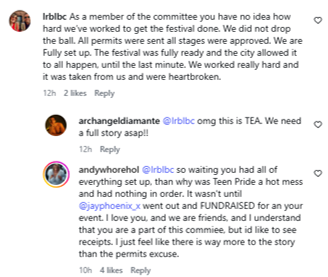
As all of this just came to light less than 24 hours ago, there will be more facts that will need to be shared from both the City and the Festival.
As much as local media picked up on the cancellation of the Festival, news channels and social media have also been promoting that the Pride Parade, funded and organized by the City of Long Beach, is still going on, along with five City-approved events.
Visit Long Beach posted a fun video, assuring the community that Pride is still going strong, despite the Festival cancellation. The bars will be open, featuring their own Pride programming and no doubt the streets will be flooded with the community proving that nothing can keep us down. ,
As many social media comments stated that Pride as a movement can never be canceled, and no one can ever take our spirit away. Where there is a will, there is a way. No doubt many more facts about the Festival cancellation will come to light. Perhaps this is the hiccup the Festival needs to reorganize and revitalize. And maybe this is the hiccup the Festival needs for the community to see that it needs more support from us to ensure this doesn’t happen again.
See you at the Pride parade!
Los Angeles
Los Angeles Metro officially opens D Line extension through Mid-City; Mayor Karen Bass claims it’s ‘built for the future’
U.S. Rep. Laura Friedman called out the nation’s capital for their “attack” on California and public transportation
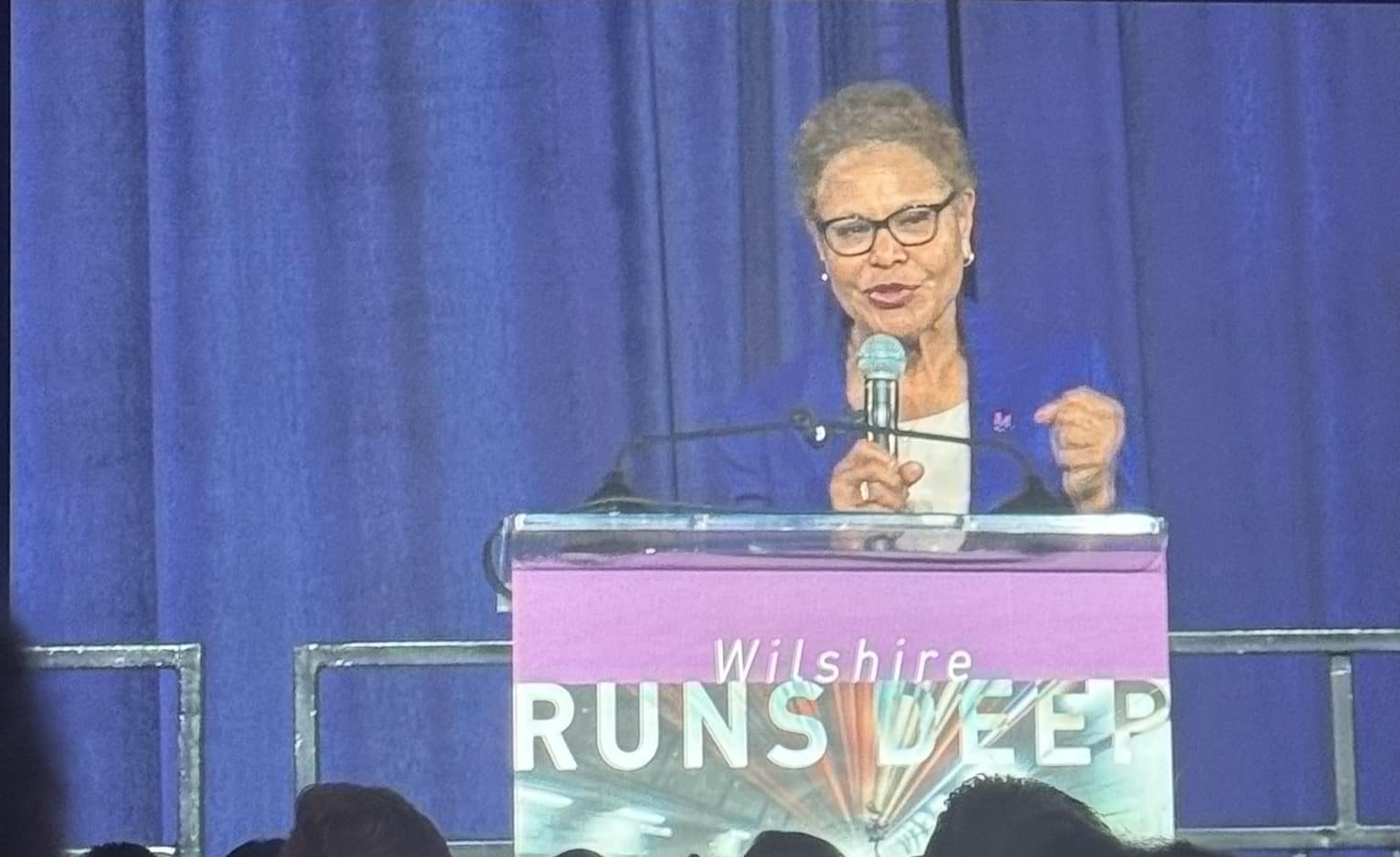
Getting around our car-infested city just got a little bit easier.
On Friday, May 8, hundreds of Metro board members and Los Angeles County officials gathered at the Petersen Automotive Museum to celebrate the D Line’s new service to three stations. It’s the latest effort – albeit a long overdue one – to expand L.A. public transportation through the heart of the city. LA Blade was on the scene.
With stations connecting Western Avenue to La Cienega Boulevard, the new line now makes travel from Beverly Hills to Downtown Los Angeles possible in 21 minutes, according to Metro officials. To celebrate the project’s commitment to connecting people to culture, the ribbon-cutting ceremony was followed by a celebratory outdoor event with local food vendors.
CEO Stephanie Wiggins addressed why the L.A. Metro “might just be having a moment” right now: “When gas prices are off the charts, traffic feels endless and parking costs are more than your lunch – $1.75 a ride that gets you pretty much anywhere in the region starts to look pretty smart.”
Getting to West Hollywood by transit – a vital spot for the city’s queer culture and nightlife – is another goal for the county. But there’s still a ways to go: construction on an official station isn’t expected to start until 2041.
While the D Line expansion was made possible by a grant from the federal government, L.A. Mayor Karen Bass said at the press conference that “we don’t wait for the federal government. We know we can’t depend on others. Obviously, we need the federal government and the state government, but Angelenos say we are going to tax ourselves to do what is needed.”
This expansion comes as L.A. invests billions of dollars in public transportation ahead of the 2026 FIFA World Cup, 2027 Super Bowl, and 2028 Olympics – all events placing an extra spotlight on one of the busiest cities in the country. Just last June, a metro stop opened at LAX, connecting residents and visitors to L.A’s main airport.
As L.A. tries to catch up with the public transportation infrastructure of major hubs like New York City, one speaker also took the opportunity to address tensions with the nation’s capital:
“I will tell you, being in D.C., there is such an attack against California coming from Washington right now, and against transit across the nation,” U.S. Rep. Laura Friedman said. “And we are here to show Washington that while you know who is tweeting at 3 a.m., we have Angelenos underground building things for this country. We are showing that transit is essential, and we are not going to let Washington defund our children’s future.”
Ongoing construction for the L.A. Metro continues as the city hopes to make big on its “28 Projects by 2028” promise. But for now, residents can enjoy free rides all weekend long, along with 60 days of activations and events at the three new stations.
“I am looking forward to being at the ribbon cutting in a few more years as we move forward and take this line all the way to Westwood,” Bass said. “We celebrate something that Angelenos deserve – a city that’s easier to move through, easier to connect in, and that’s built for the future.”
Los Angeles
LA LGBT Center’s first legacy cycling event raises over $800K
From April 24-26, 300 cyclists rode from Los Angeles to San Diego, raising funds and awareness for the Center’s LGBTQ+ serving programs.
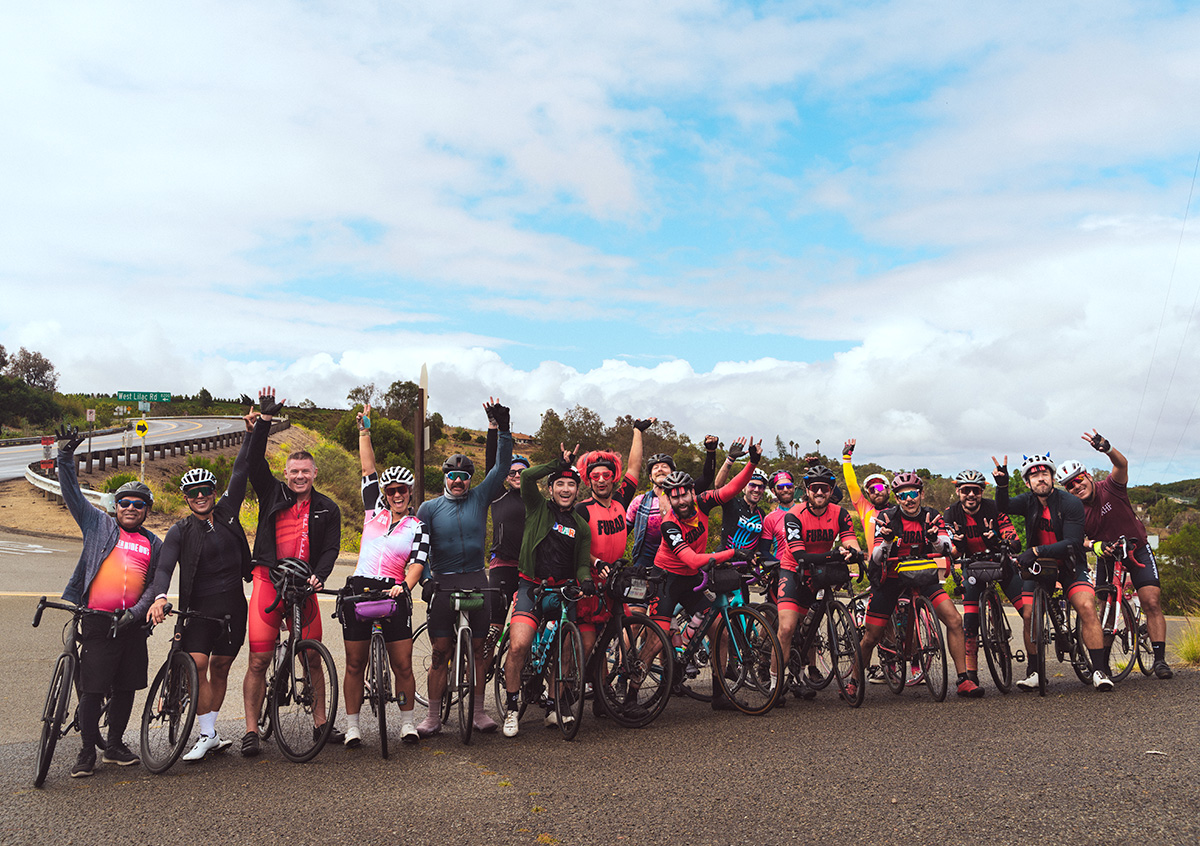
On Friday, April 24, 300 people gathered just before dawn, rolling their bicycles to a stop in Elysian Park. Against crisp morning air and dark, they donned vibrant orange and pink athletic wear, protective helmets, and sunglasses; while the rest of the city remained sleepy, the large group, which grew larger by the minute, hummed with excitement as they prepared to take off together on a three-day adventure towards the San Diego LGBT Community Center.
This was the start of the highly anticipated Center Ride Out, the first-ever AIDS/LifeCycle legacy event created by the Los Angeles LGBT Center. For over 30 years, AIDS/LifeCycle brought masses for a seven-day ride from San Francisco to L.A. and raised over $300 million for life-saving HIV and AIDS resources and services.
Center Ride Out was built in the lasting imprint and shadow of this event, and strived for a more accessible and joyous approach. “Center Ride Out carries forward the legacy of AIDS/LifeCycle, rooted in a time when our community came together to care for one another,” said LA LGBT Center CEO Joe Hollendoner, in a press release, who describes Center Ride Out as the beginning of a new legacy for LGBTQ+ cycling activism.
Described as a “queer summer camp,” the pared-down three-day journey began with a 110-mile trek towards Temecula’s Lake Skinner, where, after a night’s rest, cyclists could spend a day gathering with community over arts and crafts, massages, a dance party, games, and other activities reminiscent of summers spent simmering by the water.
On the third day, cyclists rode 87 miles to the San Diego LGBT Community Center, one of the event’s benefiting partners, rounding out a nearly 300-mile journey across Southern California. In total, cyclists raised $830,511 to support the LA LGBT Center’s vital LGBTQ+ healthcare, housing, educational, and advocacy programs and social services — a crucial accomplishment after the organization suffered a $9 million loss in federal funding in the last fiscal year.
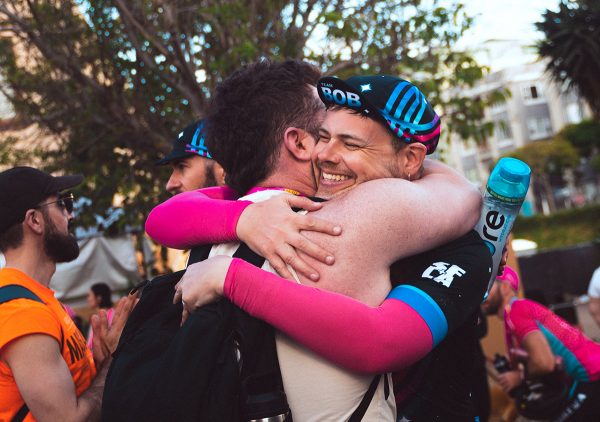
Sunday marked a victorious end to this first iteration of Center Ride Out, and cyclists raced towards each other upon reaching their final destination: sweaty, tired bodies embracing and entangling in pride and accomplishment. The monumental AIDS/LifeCycle has come to an end, but the joy that reverberated from this evening signaled the start of something just as great.
Registration has already begun for the next Center Ride Out, which returns April 23-25, 2027. Learn more at the Center’s website.
Kristie Song is a California Local News Fellow placed with the Los Angeles Blade. The California Local News Fellowship is a state-funded initiative to support and strengthen local news reporting. Learn more about it at fellowships.journalism.berkeley.edu/cafellows.
Los Angeles
LGBTQ+ mayoral candidate wants to revitalize a ‘limitless’ L.A. of the past
There’s no clear frontrunner in L.A.’s mayoral primary. Will queer candidate, Bryant Acosta, shake things up?
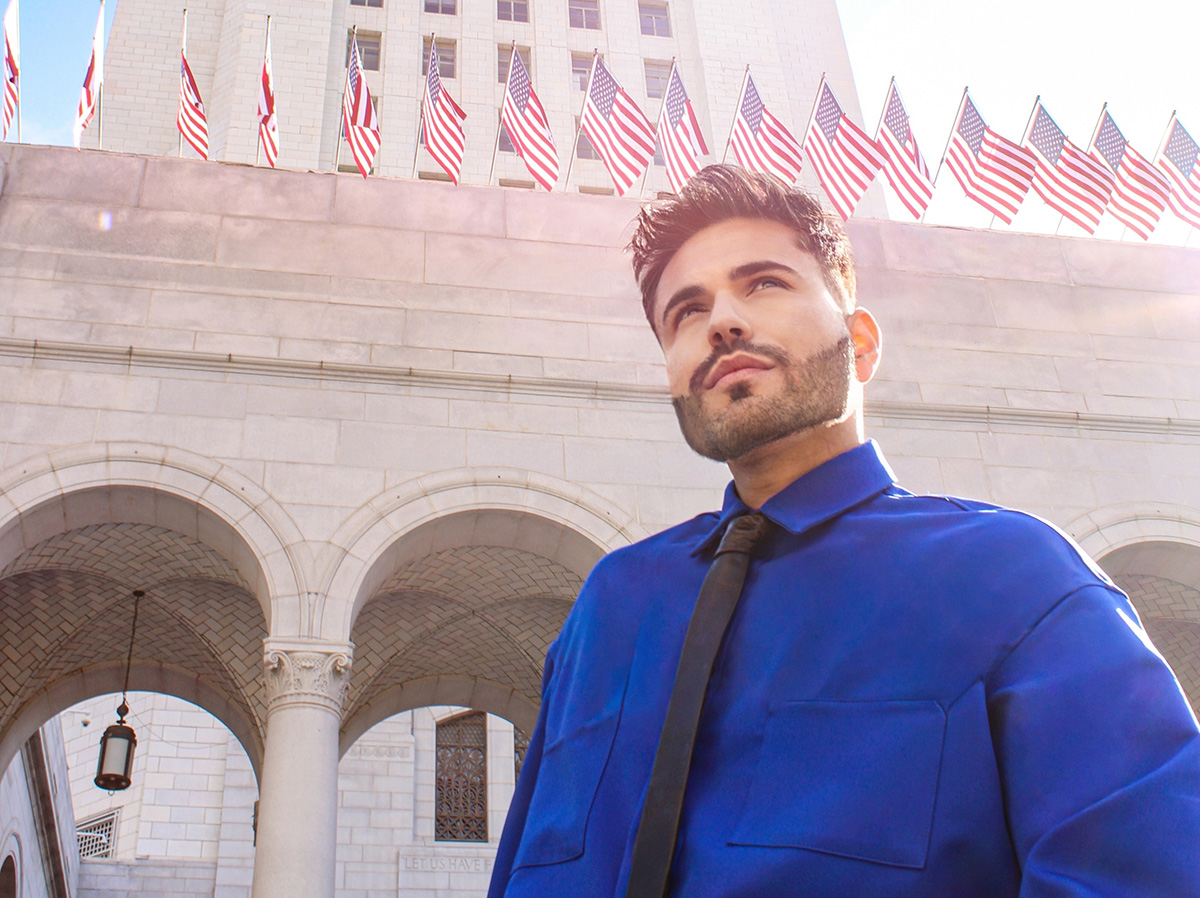
We are just a little over a month until the Los Angeles primary mayoral election takes place on June 2.
Incumbent mayor Karen Bass, District 4 councilmember Nithya Raman, and conservative reality star Spencer Pratt currently lead the race, but a poll released early this month by the UCLA Luskin School of Public Affairs indicates unsteadiness and volatility ahead. 40% of voters remain undecided — and without a majority vote, two leading candidates will have to face off in a runoff election on Nov. 3.
Some are hoping for an underdog to swoop in, and the Blade spoke with one of these contenders: LGBTQ+ artist and creative director, Bryant Acosta.
Born in West Covina, Acosta attended The Art Institute of California, Los Angeles in the early 2000s, where he experienced a bursting energy that defines the county’s reputation as a major hub and global beacon for success. “Everything felt limitless. There was so much opportunity,” Acosta told the Blade. “The city felt alive. You could feel the heart and soul of what L.A. was, and I just don’t see that anymore.”
Acosta hopes to revitalize the county with fresh perspectives, a creative tech-forward approach, and a reboot of how City Hall operates when it comes to transparency and efficiency. His career has spun through several evolutions: he’s been in charge of multi-million dollar budgets and large teams as a creative director, both in the corporate world and on his own terms.
The Blade sat down with Acosta to discuss his pledge for the county’s queer residents and other minority community members, his vision for an app that would streamline accessible city services, and how he sees his identity as a ‘superpower.’
What are your ideas about how you would concretely support queer communities? I was at City Hall a couple months ago when the TransLatin@ Coalition was there to ask for $4 million in direct funding from the county. There’s a big wave and throughline of struggle when it comes to queer communities having to advocate for themselves. How would you support them as Mayor?
Being queer myself…I just feel like you don’t have to shrink yourself to survive in the city, at least not on my watch. This campaign is for the people who have felt unseen, who have had to build their own community and opportunities. But it isn’t just about visibility, it’s about affordability, safety, and opportunity. Because what good is being seen if you can’t afford to live here or feel protected?
Education [is] a big [priority] because right now there’s so much misinformation — specifically around trans issues. I want to be able to bring people along on the journey of: Hey, this is who they are, this is what they’re asking for [and] make it so that people see them as humans. Being able to bridge that gap between the misinformation on social media and bridge it to actual science-based information so that people can really understand what it is to be trans and that they’re part of our community.
When I spoke with trans leaders and advocates, many explained that City Hall does not lack funds — it’s simply not prioritizing their organizations into the county’s budget.
I know Kenneth Mejia, our [City] Controller, has been working on having more visibility into the budget — but if we were able to have an application like my LA Now app idea where people can track every dollar [and] every penny spent, it’s not going to be a fight. This minority group of people is asking for this much money. It’s well within the budget. Why wouldn’t we do this? It’s an essential service for them. Just as the trash or the water are essential services for your neighborhoods, these are things that they’re asking for to continue to operate and be a part of our community. That’s why I’m making that my main touch point, because without accountability, transparency and trust in City Hall, we don’t have anything else.
Can you tell me more about your LA Now app idea and how it adds to your mission of transparency for LA county residents?
I worked in tech for a while, so I learned how to use technology to better…communications, advertising, and all of the things. So, I [thought]: I should be able to use that and be a really future-forward mayor.
I developed this app, where basically, you could have civics in the palm of your hand. You’d open the app, [and] you’d have a dashboard. Organizations will be loaded into it so that when you have problems with housing, the streets and anything in your community, it’ll geo-target your area so they’ll have all the services listed that you can contact.
You’d also be able to pay parking tickets. If you get towed by the city, it’ll give you a notification. So, there’s no more of those predatory towing fees. [You’d also be] able to get push notifications for jury duty, so it has a lot of those civics built in.
And with what Kenneth Mejia is doing right now — he’s giving us a full data dashboard of where the money’s going. I want to simplify that and make it more accessible so that, [for example], my mom and my cousins can read it. [I want to] really put it in the palm of your hand so we see every dollar, every penny spent in real time.
I created a section where, essentially, you can rate your leader. So basically it’d be like Yelp, but for leadership. So, when you see things like Nithya [Raman] spending a million dollars on bathrooms, that would trigger a warning to the Controller, and then we’d be able to see: Hey, what’s going on here? If leaders want to have five stars, they need to respond in real time. It would just keep that extra layer of accountability — a digital accountability on leadership.
Last but not least, I want to develop an anti-Amazon feature [on the app]. Essentially, we would have an E-commerce marketplace [that] only local businesses would be able to get on, so that they could maximize their profits.
Would the app include surveillance protections? With fears over ICE and online safety, would there be a way for people to feel secure while using the app?
How I’m thinking of this as an operating system is that we would use ID.me, which we use at the DMV, to be able to log in. So it already has all your information, and that way you’re not having to input everything a million times. But for people who are undocumented, you’d have a back portal where you’d have access to essential services. I [also] thought about people who don’t have cell phones. We could also have kiosks in public libraries, grocery stores, any place that has public access, so that everybody would have access to these data points and things that they may [need].
You’re forward about being at the intersection of marginalized identities, as a queer and Latino person. How does this affect how you think about the mayoral race and how you’re building connections with LA residents?
Being queer and Latino [doesn’t] hold me back. It’s actually a superpower for me. In some ways, it forced me to figure things out — not just to find a seat at the table, but to build my own. Understanding people [in] these kinds of ways is invaluable. Also, being first-generation American and openly gay, you see this country as both an opportunity and an exclusion at the same time. No matter how smart, accomplished, or creative you are, there’s still a ceiling you hit, especially when the system was never built with you in mind.
That perspective really changes how [I] lead because you don’t just want access to the system — you want to fix it so that it actually works for everyone.
To learn more about Bryant Acosta and his mayoral campaign, you can visit his social media page and website.
Kristie Song is a California Local News Fellow placed with the Los Angeles Blade. The California Local News Fellowship is a state-funded initiative to support and strengthen local news reporting. Learn more about it at fellowships.journalism.berkeley.edu/cafellows.
West Hollywood
Lesbian cinema, from the archives and beyond, lead this short film festival
This Saturday, the June L. Mazer Lesbian Archives celebrates Lesbian Visibility Week with archival and contemporary sapphic shorts.

At the June L. Mazer Lesbian Archives in West Hollywood, Alisha Graefe and Kymn Goldstein are rummaging through a treasure trove of unknown lesbian films. Large, neon orange bins sit at their feet, filled to the brim with VHS tapes donated by queer filmmaker Rosser Goodman, who in the late 90s and early 2000s programmed the underground lesbian screening series “Film Fatale.”
Her monthly event provided a safe haven and experimental ground for lesbian film in L.A., shining light on new voices, stories, and perspectives that explored the nuances of living life as a queer woman.
This Saturday, April 25, Graefe and Goldstein are paying homage to Goodman’s legacy with a cinema-centered event of their own: a short film festival that brings together an eclectic, curated mix of archival works and newly submitted pieces from emerging lesbian filmmakers around the world. These works, accompanied by panel discussions, will screen all day in three different blocks at the Pacific Design Center’s Silver Screen Theater.
Like “Film Fatale,” this festival is not just a showcase of resonant, timely art: it’s an opportunity for queer people to intentionally gather, reflect on their history, joy, and resilience, and to soak in spaces that celebrate them.
“The archives are full of history, but every single day we make history,” Goldstein, who is the archive’s executive director, told the Blade. “This festival is an act of creating history. [We’re] bringing people together to celebrate Lesbian Visibility Week and to watch these films. [And] you know what, every week is Lesbian Visibility Week at the archive.”
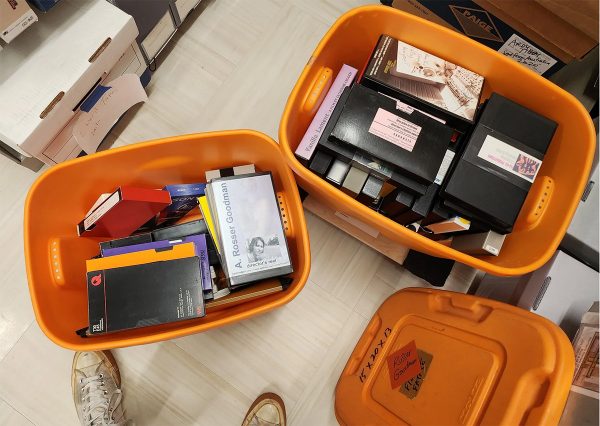
When they were first planning out the film festival together, Goldstein and Graefe — who serves as the Mazer’s full-time archivist — sifted through Goodman’s collection, letting the sounds of static, VCR clicking, and tape-scrubbing fill the room. One of the films they watched, and which will screen at Saturday’s festival, is Goodman’s own 14-minute short, “Life’s a Butch!”: a silent comedy about a woman’s antics to impress her new femme crush with clumsy, masc charm.
It was made over 25 years ago, but its tenderness and whimsy are still palpable today. This, and the other films in the festival, speak to both singular and universal emotions and experiences lesbian, queer, and sapphic people have experienced and will continue to experience across time and space.
This interconnectedness in films, communities, and shared memories between past and present excites Goldstein. “The stories of coming out, of crushes, of losing love…[They] are the same topics and subjects that come up today, especially the political things we’re going through. There’s a continuity across all of it.”
And where there’s continuity, there are clues and maps that pinpoint paths of resistance, dialogue, and survival. When people see their lives, or the lives of others in their communities, reflected on screen and in narratives they can interact with, they are able to draw upon history to craft their own ways forward.
The film festival also offers local community members an entryway into the archive, a longstanding community space that houses journals, photographs, books, films, letters — all tangible materials that people are encouraged to touch and engage with, whether it’s to further their research, spark ideas, or simply be more intimately in conversation with the past.
“There are tons and tons of stories,” Goldstein said, who is focused on maintaining and growing the archive’s collection of ephemera and other personal materials from the community. “It’s living, breathing history in a variety of forms, all hidden in different-sized boxes that you just have to open to see what’s inside.”
To support and learn more about the archive’s upcoming film festival, collections, and other events, visit their website.
Kristie Song is a California Local News Fellow placed with the Los Angeles Blade. The California Local News Fellowship is a state-funded initiative to support and strengthen local news reporting. Learn more about it at fellowships.journalism.berkeley.edu/cafellows.

‘X-Men ’97’: Is it a 9 or a 7?

TransCanWork helping the trans community thrive in the workplace

Buttigieg indicates he may run for president in 2028

My evening with Madonna

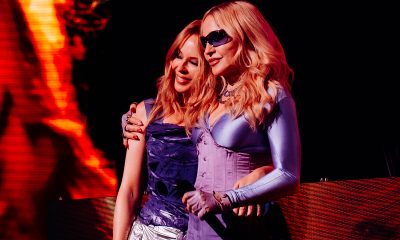
Madonna headlines World Pride Music Festival in Amsterdam

West Hollywood sold you discretion. Then it sold you out.

Veteran journalist Karen Ocamb continues the good fight with the launch of her podcast

Here’s Your Palm Springs Weekend: Jul 31-Aug 2, 2026 by LA Blade x Gay Desert Guide

What can we learn from group sex?

Poland’s top court rejects recognition of same-sex marriages from other EU countries
-
 Commentary4 days ago
West Hollywood sold you discretion. Then it sold you out.
-
 Features5 days ago
Veteran journalist Karen Ocamb continues the good fight with the launch of her podcast
-
 Palm Springs5 days ago
Here’s Your Palm Springs Weekend: Jul 31-Aug 2, 2026 by LA Blade x Gay Desert Guide
-
 Commentary3 days ago
What can we learn from group sex?
-
 European Union4 days ago
Poland’s top court rejects recognition of same-sex marriages from other EU countries
-
 Celebrity News2 days ago
Madonna headlines World Pride Music Festival in Amsterdam
-
 Taiwan5 days ago
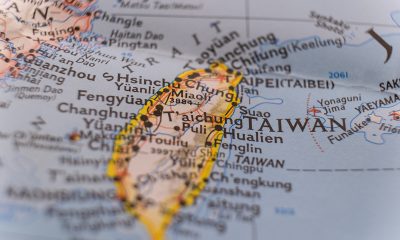
Taiwan’s government has failed to update process to change gender markers on ID documents
-
 Features3 days ago
Preserving our stories: Dr. Lydia Otero on memory, community, and queer history
-
 Politics17 hours ago
Buttigieg indicates he may run for president in 2028
-
 LGBTQ Non-Profit Organizations9 hours ago
TransCanWork helping the trans community thrive in the workplace