
Local
Lara could become first LGBT candidate elected statewide
Insurance commissioner hopeful spotlights core values
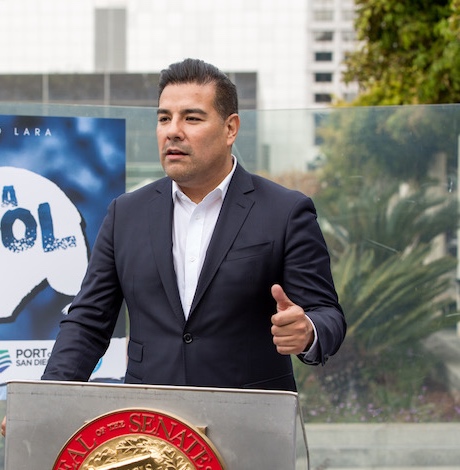
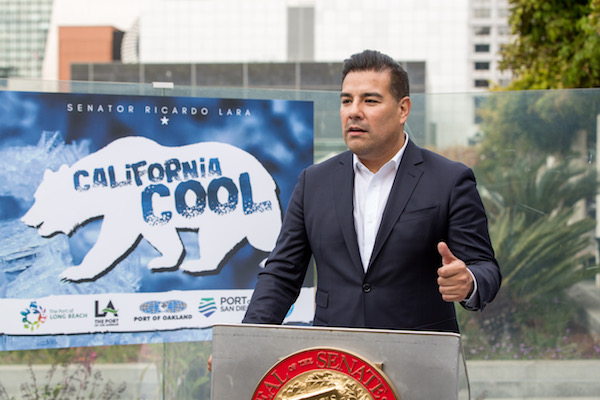
Sen. Ricardo Lara at the 2018 Global Climate Action Summit. (Photo courtesy Lara)
Ricardo Lara has an easy smile, a warm, embracing smile that puts the uncomfortable quickly at ease. It’s a smile that may lure cynics into thinking the handsome 43-year-old gay man is tangoing his way into the California Insurance Commissioner job.
But when Lara’s smile fades and he gets serious, politely but intensely explaining how this position would be his next step in helping marginalized minorities like his immigrant parents and his poorer friends with HIV/AIDS and children in need of healthcare—attention must be paid.
“I’m running to be California’s next state insurance commissioner because I believe at my core that California needs a strong defender, and a counterpuncher, who will stand up to fight our bullying president, Donald Trump, and his increasingly reckless federal government on issues from healthcare access to economic security and more,” Lara said in a statement on March 21, 2017.
This is no small next step; Lara is a fervent fighter for human rights stepping up to protect his extended family. And while he would become the first openly LGBT person elected statewide if he wins, the job itself is historically critical to LGBT people.
Prior to 1988, the state insurance commissioner was a political appointee of the governor. That year it was Republican George Deukmejian, the governor who in 1986 vetoed a bill seeking AIDS non-discrimination in housing and employment because “the provisions of this bill dealing with discrimination are unnecessary. They establish an inappropriate precedent of placing a physical condition in statute that is better left to a more flexible administrative process,” according to the Los Angeles Times.
And in November 1988, Deukmejian endorsed Prop. 102, a radical right-wing initiative that would require doctors and blood banks to report anyone they have ”reasonable cause to believe” is infected with HIV to state and local authorities and require the HIV positive person to identify their sexual partners.
In that November 1988 election, voters rejected Proposition 102 but approved Proposition 103, making Insurance Commissioner an elected position, expanding the areas of regulation and giving the commissioner new powers, including “prior approval” of any insurance rate increase. Accustomed to unfettered power in a Republican-controlled marketplace, the insurance companies challenged the measure in court. Pro-gay Attorney General John Van de Kamp won his case before the California Supreme Court and pro-gay Democrat John Garamendi won the post in 1990, becoming the first elected commissioner in 1991. It was an important victory: 1991 was the year Republican Gov. Pete Wilson vetoed the gay rights bill AB 101 and the California State Legislature turned even more deeply red and anti-LGBT.
The non-partisan office has changed political hands, with current progressive Democrat Dave Jones succeeding Republican businessman Steve Poizner—who is trying for a comeback against Lara. This time, however, Poizner is running as an independent, though his policy positions still smell of GOP potpourri. And while Lara may be winning voters with his smile, he cautions that Poizner is seducing no-party preference and Republicans disinclined to vote for a Democrat.
“Recent polling shows that this race is actually tighter and it’s gonna be tough,” Lara told the Los Angeles Blade in a recent phone interview. “The fact is—Poizner has essentially gone back in the closet, hiding his true Republican ideals, and is running now as an independent. And in many counties, San Diego County, for example, there is a larger bloc of non-party preference voters than there are Republicans.”
This is “a new Republican strategy,” Lara says, “to run people as independents or no-party preference because they know they can’t win otherwise statewide as Republicans. It’s truly sad but we can’t assume that this is a done deal. We can’t rest on our laurels.”
Lara says he’s going up and down the state “reminding our voters how Poizner “has flip-flopped back and forth on a woman’s right to choose” and “wanted to deny immigrant children health insurance.” Lara, on the other hand, passed legislation “to insure that any child, regardless of where they come from, their economic income status, or their immigration status, will have access to full scope Medical health insurance in California.”
That’s the big difference between them, Lara says: “I get things done. I make sure that we help our most vulnerable Californians instead of trying to spread hate and divisiveness, which is no longer a part of our tenor here in California.” In some states, he notes, “insurance companies are denying access to PrEP to our community because they consider that risky behavior.”
The Insurance Commissioner position “is one of the most vital positions in the state because it touches every aspect of your life. And some people can even argue in utero, if your mother doesn’t have access to health insurance while she’s pregnant,” Lara says. “And when it comes to privacy, when it comes to data breeches, when it comes to cannabis regulation, autonomous vehicles—these are all regulations that are pending through the Department of Insurance. And the most important thing is that we keep our insurance industry honest and accountable so that they can pay out the claims to make sure people can move on with their lives. That is the basic work of the Insurance Commissioner.”
It was the unexpected fate of a Lara bill that prompted him to run for Insurance Commissioner. He was working on a bill to allow immigrants to pay into the Affordable Care Act since the more people that pay into the system helps stabilize premiums for everyone.
“We know that immigrants are younger, they’re healthier and are working—so why not allow them to pay into a system to make sure that we continue to offer the services to folks who actually need it now? It’s an important investment,” he says.
Gov. Jerry Brown signed the bill. But while Lara was working on the waiver with the Obama administration, “unfortunately President Trump got elected and one of the requirements under that administration was that—if we moved forward—they wanted the names and addresses of the people who were going to be paying into the Affordable Care Act,” Lara says. “I had to withdraw the waiver.”
On that plane ride back from D.C., “I was so angry and felt so defeated, that that’s when I decided to leave the Senate early and run for Insurance Commissioner,” he says, “because I have to continue to fight to get a single payer system, that we get universal healthcare in California. I want to be part of those discussions as Insurance Commissioner.”
Lara says the issue with SB 562, the bill he co-authored with out Sen. Toni Atkins to provide policy goals for a universal healthcare plan, ran into deadline issues while they were waiting for a study from the University of Massachusetts at Amherst — experts on health care funding — to get back with funding formula. They needed to “keep the momentum going” while they worked on a separate bill to get federal waivers, discussed constitutional amendments with the nurses regarding Prop 98 requirements and figure out spending limits. SB 562 was part of a not quite fully-cooked four-part plan that was sent to the Assembly to start discussions.
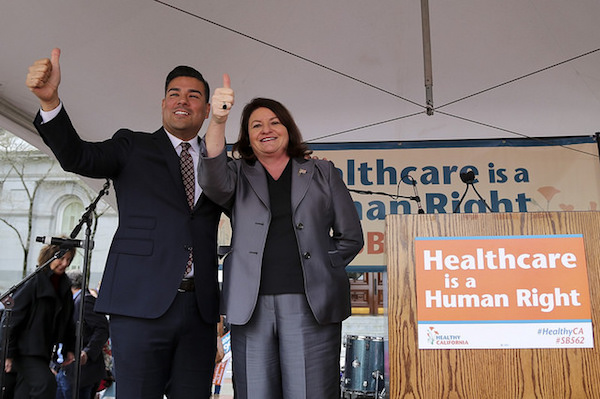
State Sens. Ricardo Lara and Toni Atkins promoting their universal healthcare bill. (Photo courtesy Lara)
“Unfortunately, we fell victim to the legislative timeline of having to move this bill or else it would’ve died. But there is no doubt in my mind that the work that Toni and I started really has been the emphasis of now the Assembly engaging in a way that they’ve never engaged before, in terms of talking about healthcare,” Lara says. “Hopefully I’m going to be part of those discussions as the Insurance Commissioner.”
As commissioner, Lara would also have oversight of some fraud-related issues, including investigating the “troubled teen industry.” In 2015 and 2016, Lara worked with the LA LGBT Center and Survivors of Institutional Abuse to pass SB 524, “Protecting Youth from Institutional Abuse Act”— a bill with no religious exemptions that Brown signed in Oct. 2016.
“To the victims that have been victims of this type of abuse in these so-called ‘troubled teen’ camps or through ‘conversion therapy,’ we are going to be very vigilant as the Insurance Commissioner to make sure that we not only investigate but we seek out these individuals who are causing our community harm and hold them to justice,” Lara says. “We’ll work with our Attorney General to make sure that we bring justice to so many victims and we weed out these shams that we know only serve to harm our community.”
But first Ricardo Lara must be elected.
“To our LGBT community in California, we have come a long way in such a short amount of time because we remain vigilant, we remain steadfast and more importantly we remain united. The work that we’ve been able to champion in the state senate, through our LGBT Caucus and through my work is really a testimony to how diverse we are and how much influence we yield to make positive change for the next generation in our community,” Lara says.
“It’s time now for us to unite—to make sure we can elect somebody statewide that comes from our community, that understands our issues, and most importantly, understands where we need to be in the future to continue to protect our community and insure that the next generation of LGBTQI individuals have an opportunity to thrive and succeed in California, regardless of who is in the White House.”
For more, see ricardolara.com.



Local
Todd Gloria elected US Conference of Mayors president
Gay San Diego mayor spoke with the Blade in D.C.
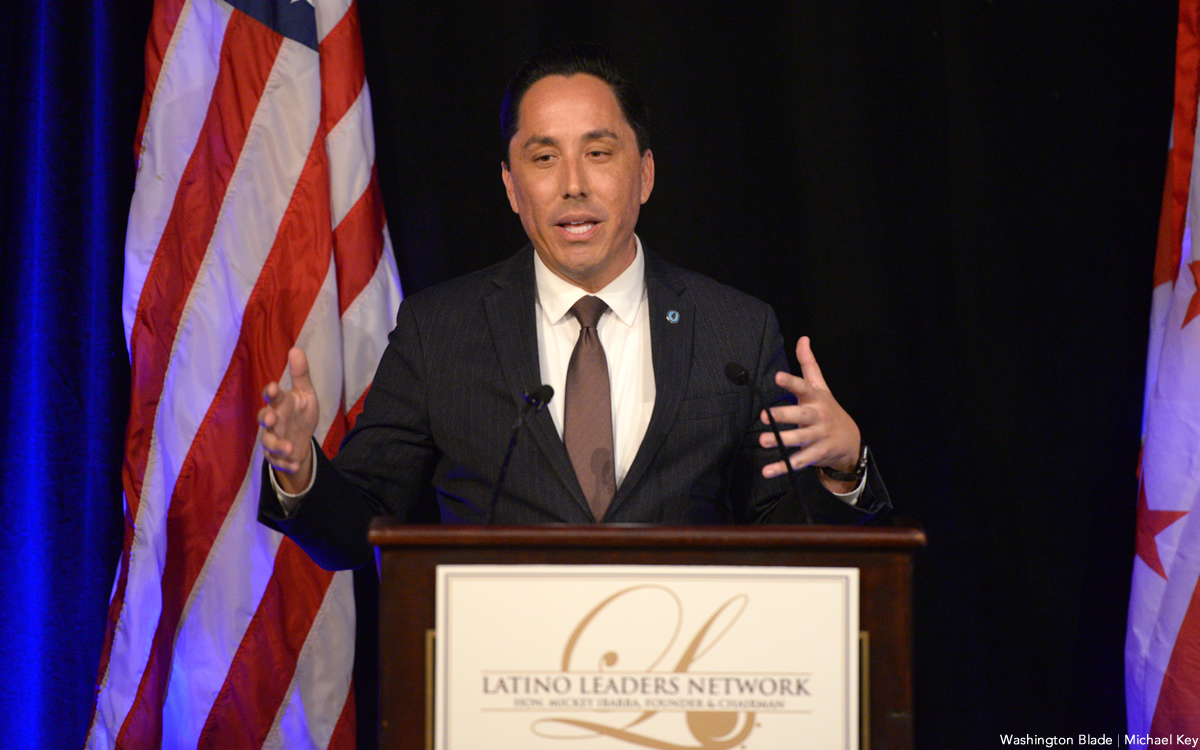
Todd Gloria has had a whirlwind two decades as a public servant.
Beginning with his successful 2008 San Diego City Council election, followed up by his second successful campaign in 2012 — this time as president of the San Diego City Council — Gloria has been strapped to a rocket headed to public servant fame that would make Leslie Knope’s head spin, with no signs of slowing down.
Just one year into his tenure as president of the San Diego City Council, Bob Filner, the then-mayor of the city, resigned from his role following multiple allegations of sexual harassment. In that moment of political uncertainty, Gloria stepped up, becoming the interim mayor of San Diego, and the leader of one of the largest cities in the U.S. .
While his term as interim mayor — lasting from August 2013 to March 2014 — was not long, it was a sign to the people of San Diego — and to himself — that Gloria could do good things for San Diego. When the newly elected Mayor Kevin Faulconer was sworn in in March 2014, Gloria continued working hard to keep the city he grew up in in caring hands.
Gloria started to look past “America’s Finest City” and began looking toward Sacramento. It was there that some of the state’s most capable minds were attempting to tackle problems that the entire Golden State faced. In 2016, he ran for the California State Assembly’s 78th District seat, representing San Diego, where he won with an impressive margin and started championing the city’s climate action plan. Shortly after assuming office, he was chosen to become a member of the Democratic leadership — as assistant majority whip — where he helped pass his and the Democratic Party’s legislative goals in the most populous state in the nation.
It should be no surprise that, with a growing reputation as someone bent on making his city better for the more than 400,000 residents who live within the 78th District, Gloria won re-election in 2018 with more than 70 percent of the vote in both the primary and general elections. There, he was tapped once again to be an integral part of the Democratic Party’s legislative mission and was, in January 2018, made majority whip.
In 2019, Gloria announced he would no longer seek the 78th District seat when his term was up, but would return from Sacramento to San Diego — this time as mayor. He ran his campaign on issues that San Diegans faced: the housing crisis, affordability, public transportation, and climate change.
In November 2020, Gloria was elected mayor of the city he grew up in, where he broke barriers — his win also made him the first Native American and the first Filipino American to hold this position in a U.S. city with more than a million people, becoming San Diego’s first mayor of color. He was also the city’s first openly gay mayor.
The Los Angeles Blade sat down with Gloria when he visited Washington earlier this month for the U.S. Conference of Mayors, where he was elected president of the organization. The presidency lasts for one year and alternates between political parties to ensure bipartisanship.
Gloria, has served as mayor of San Diego since 2020, will lead the nearly century-old bipartisan organization as a proud out gay man at a time when many LGBTQ+ Americans are concerned about the future of their rights and protections.
“Well, a lot. I think the first thing that comes to mind is that this time that we’re all living in, the stakes feel particularly high, and I think number one, I’d want your readers to understand that this is a conference of bipartisan mayors from all across the country who supported me to lead the organization that’s nearly 100 years old,” he explained.
“I think at a time when we definitely wonder, as queer people, where we sit in our nation and in our society, that my fellow mayors of all different political stripes are willing to allow me to be their voice as leader of this organization. I hope it somehow validates the notion that we are still making progress, that particularly the political process is still possible.”
Gloria framed his election as evidence that progress remains possible, even amid growing political polarization. He noted that the U.S. Conference of Mayors was founded during the Great Depression, another period when local leaders stepped forward to address challenges they felt were not being adequately addressed at the federal level.
Throughout the interview, Gloria repeatedly emphasized the unique role cities can play in advancing LGBTQ+ equality. He pointed to the U.S. Conference of Mayors’ long history of supporting civil rights, HIV/AIDS advocacy, and LGBTQ+ inclusion, and his belief that mayors often find common ground on issues where Washington remains divided as a clear thesis to his presidency.
“It’s building on the history. It’s one of the reasons I’m very proud of this organization. Why I’ve been an active member for years now is that it has this storied history of speaking up and helping to advance change in this country. Everything from direct aid to cities in the Great Depression to civil rights in the 1960s to equality, HIV/AIDS advocacy during a time of great stigma and shame,” Gloria said. “This conference, again a bipartisan organization, has been willing to sort of be able to find a common ground that maybe isn’t always possible in Washington.”
Gloria also highlighted San Diego’s own LGBTQ+ political history, noting that the city has maintained continuous LGBTQ+ representation on its City Council since the early 1990s. He credited generations of local activists for helping create a political environment where LGBTQ+ elected officials have been able to thrive.
With Pride Month unfolding amid continued battles over LGBTQ+ rights nationwide, Gloria argued that cities remain important centers of progress and power, even when state and federal politics become more hostile.
“We have quite a bit [of power] because we can often do things within our own communities, but also we can band together and lend our voices to try and either stop bad things from happening or help advance good things that we’d like to see come to pass.”
He added that cities provide opportunities to continue advancing equality — even when, at a national level, conditions seem unfavorable.
“Cities provide avenues to say ‘No, we can actually make progress, maybe not at the scale, maybe not as broad as we would like, but it can still happen.’”
While Gloria has championed LGBTQ+ rights throughout his political career, he said housing affordability has emerged as the defining civil rights challenge facing many communities, including LGBTQ+ residents.
“The biggest civil rights issue right now is housing,” Gloria said.
He argued that many LGBTQ+ people can now legally live and work openly in places like San Diego, but increasingly struggle to remain in those communities because of rising housing costs.
“You know, we are a very affirming city. We have a gay mayor. 1/3 of our city council is LGBT. We have all of the protections that you would hope a city would provide in a state that provides those same protections, but we’re horrifically expensive, and our housing costs are unattainable to so many people of all walks of life.”
As president of the U.S. Conference of Mayors, Gloria said he hopes to elevate housing affordability as a national issue and encourage local leaders to adopt policies that increase housing production and reduce costs.
On LGBTQ+-specific initiatives, Gloria pointed to his work co-chairing the organization’s LGBTQ Alliance alongside Madison, Wis., Mayor Satya Rhodes-Conway. Under their leadership, the alliance created a municipal toolkit designed to help mayors implement LGBTQ+-inclusive policies, ranging from Pride Month proclamations to nondiscrimination protections and fair housing measures.
“We have a lot of allies and come to our meetings, we meet four times a year, and you want to be supportive of the community. This is what this looks like.”
Beyond policy, Gloria described the alliance as an important support network for LGBTQ+ elected officials navigating increasingly hostile political rhetoric.
“When the attacks on trans people, specifically trans children start happening, that was an issue that we discussed at length in the alliance.”
Despite his optimism, Gloria acknowledged that recent years under the current federal leadership have challenged assumptions many LGBTQ+ Americans once held about the inevitability of continued progress — and the idea that rights gained were forever.
“I think for someone who you know came up in the movement in the 90s and early 2000s you know, I’ve seen marriage equality, I’ve seen the progress with HIV and AIDS, you know, ability to work and live where you want, you know, all that stuff. It kind of felt like, for me, it felt like it was inevitable that we would keep ascending to greater and greater equality,” he said. “Obviously, recent years have made you not only stop some of that progress, but really question if we’re not going to start falling backwards.”
Still, Gloria urged LGBTQ+ Americans not to retreat from civic engagement or get quiet about the problems they face, given the constant barrage of attacks — both executive and cultural — that leaves some feeling as if the battle for equality is waning.
“This is not a time to back away. This is not a time to fold inward. We have to truly double down and continue forward doing the work. Leaning forward will mean that the progress may be less than what we want, but still progress will be made.”
Gloria also said he has noticed a change in the tone of political discourse directed at elected officials, including LGBTQ+ leaders. While he said hostile rhetoric has increased, he views his position as an opportunity to model resilience for younger LGBTQ+ people.
“You can either absorb it the way I did in middle school and feel kind of crummy and maybe a little bit sorry for myself, or you can realize that every time I’m called that, there’s a young person in a school who does not have the perspective I have, and they’re counting on me to figure out some way forward.”
As he begins his year leading the U.S. Conference of Mayors, Gloria said his priorities will focus on housing affordability, public safety, and economic issues affecting cities nationwide — issues he is familiar with. Success, he said, will ultimately be measured not by political messaging or narratives spun, but instead by tangible results.
Results that matter — even if they aren’t seen as glamorous. These are results that show the city is being effectively run for its citizens, he explained.
“The question is, did the garbage get picked up? Did the road get paved? Did the homeless person find housing?”
Addressing the relationship between cities and the Trump-Vance administration, Gloria said local leaders have had to navigate a political environment defined by unpredictability.
“The only thing that’s certain about this administration is the uncertainty,” he said, though he was clear that such uncertainty does not give the administration a pass to act unjustly. “My city has sued the Trump administration, I believe, eight times at this point, and we’ll continue to do that when it’s necessary or appropriate.”
Even so, Gloria maintained that mayors are uniquely positioned to cut through political rhetoric because residents judge them on day-to-day outcomes rather than partisan talking points.
“I think we are a bit more pragmatic, I think, a bit more focused on making sure that what we’re doing is improving people’s lives, not harming it.”
For Gloria, that practical focus — and the willingness of mayors from across the political spectrum to work together — offers reason for optimism despite the challenges ahead.
When asked what he thinks about the future of not only San Diego, but of the country given the increasingly hostile political climate, he provided a chance to peer into his mind: the mind of a public servant who is determined to make his place better than the day before, even if it does boil down to ensuring trash is collected and housing is affordable for all.
“Being an elected official is in itself an act of optimism. It’s a belief that you can help make things better, and it’s difficult to be in this line of work and be pessimistic.”
That goes hand-in-hand with making every city a better place for those who will enjoy the fruits of the labor sewn well after the mayors at this year’s conference have come and gone. That is why Gloria is doing what he is doing.
“I think for every kid, wherever they are, they’re wondering if they can be their full selves.It’s incumbent on us to do, because every one of these terrible headlines that we see may be frustrating to those of us that have seen some of that progress,” he said. “I think it could be devastating for these young people who have not known anything different, and we owe it to them to find better headlines to give them, both in the short and long term.”
California
Calif. governor’s race spotlights Becerra’s LGBTQ advocacy
Former HHS secretary to face Republican Steve Hilton
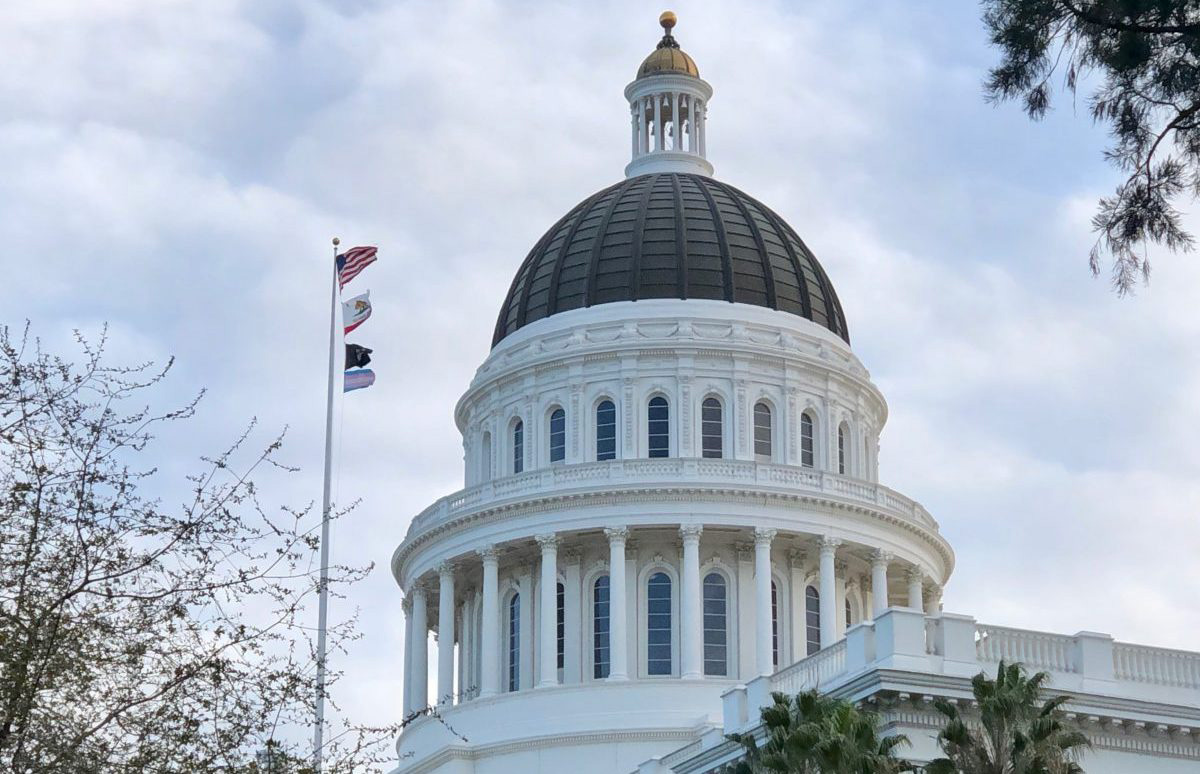
California voters selected its two front runners for the state’s open governor seat following the second election of Gavin Newsom.
Last week former U.S. Secretary of Health and Human Services Xavier Becerra became the Democratic nominee for governor, setting up a general election matchup against Republican nominee Steve Hilton, a former political adviser in the UK and Fox News commentator.
Becerra, the son of Mexican immigrants, has spent nearly three decades in public service. Over the course of his career, he has served as California attorney general, U.S. secretary of Health and Human Services, a member of the U.S. House of Representatives, and a member of the California Assembly.
Hilton comes from a very different background.
Raised by Hungarian parents who fled communism and settled in the UK, Hilton entered politics after graduating from Oxford University. He worked within the Conservative Party — beginning during the era of former Prime Minister Margaret Thatcher and later served as Director of Strategy for Prime Minister David Cameron. After relocating to California in 2012 with his wife, Hilton taught at Stanford University, became a U.S. citizen, and later established himself as a Fox News political commentator.
As the race enters the general election phase, policy questions surrounding healthcare, civil rights, and the future of LGBTQ protections in California are expected to feature prominently in both campaigns. The Washington Blade sat down with former Biden-Harris administration health officials who worked under Becerra’s leadership and also with LGBTQ advocates. Both paint a clear picture of Becerra — a longtime ally whose support for LGBTQ rights and health equity has spanned multiple decades and offices.
“For Equality California, he has been a staunch ally over his decades of service serving California. From his time in Congress to attorney general to HHS secretary, he’s been a partner to the LGBTQ community at large, and specifically to Equality California, advancing LGBTQ equality,” Tony Hoang, executive director of Equality California told the Blade. “As he’s been the front-runner making the top two, we’re excited to get behind him in the race so that he wins the general election in November.”
Hoang argued that California’s next governor will play a critical role in protecting LGBTQ rights amid continued attacks from the Trump-Vance administration.
“It is critical that California remains a bulwark against what’s happening from the Trump administration. That’s why we were so supportive of Secretary Becerra’s campaign for governor,” Hoang said. “He has been there in that fight. When he was attorney general, he sued the Trump administration over 100 times, including a lawsuit where Equality California was an organizational plaintiff around the transgender military ban. Over the remainder of Trump’s term, it’s critical that California continues to fight to stand up for our values, including LGBTQ people in all facets of equality.”
Former HHS official Adrian Shanker, who oversaw LGBTQ health initiatives during the Biden-Harris administration, pointed to Becerra’s emphasis on health equity as one of the defining characteristics of his leadership.
“As Secretary, Xavier Becerra required all of us to include a health equity lens in all policies. No matter what the policy was, he wanted health equity to be centered. Health equity means ensuring that all people can attain their highest levels of health,” Shanker explained. “One of his priorities was clinical trial diversity. He wanted to make sure that new drug modalities and treatments were studied on all kinds of bodies, including populations that had historically been excluded from research.”
Shanker also emphasized that while leading HHS, Becerra consistently relied on scientific expertise rather than political considerations when making policy decisions.
“He really believed that we can’t politicize science. We have to let science drive the policy. He established a very strong scientific integrity policy for the department. That’s important for LGBTQ health, but it’s also important for everyone’s health.”
Shanker expanded on the multiple HIV prevention efforts including making the medication covered by nationwide subsidy programs allowing for americans of all income levels to get this life saving healthcare during Becerra’s tenure at HHS.
“We worked to make PrEP free for anyone on Medicare. The secretary trusted the scientists in the department to determine what was safe and effective and then championed the results,” Shanker said.
For many LGBTQ advocates, California’s role as a refuge state has become increasingly important as Republican-led states enact restrictions affecting transgender people and LGBTQ healthcare access.
Admiral Rachel Levine (ret.), the first openly trans person confirmed by the U.S. Senate and Becerra’s former assistant secretary for health, said California’s next governor will be central to those fights.
“We have an increasingly hostile federal environment against the LGBTQIA community in general, but particularly against the transgender and nonbinary communities. They have targeted the most vulnerable among us, especially trans youth, their families, and their medical providers. California is a refuge, and no one is a stronger supporter of our broader community and our transgender community than Secretary Xavier Becerra,” she told the Blade.
“He articulated his strongest and most enthusiastic support for our community throughout his time at HHS. Health equity was really principle number one for Secretary Becerra, and that includes health equity for our LGBTQIA+ community.”
Levine, who worked directly under Becerra, also praised his leadership style.
“Xavier Becerra really is an outstanding leader. I worked for him and with him when he was secretary and I was assistant secretary for health. He’s so down to earth and unassuming, and he talks a lot about his background, his parents, and his family. He exhibits all the traits you would want in a leader. He is personable, always professional, always compassionate, organized, and knowledgeable.
“I think that he will make an outstanding governor of California. He has local experience in California, where he served as attorney general, and he also has experience in Washington as a member of Congress and as Secretary of Health and Human Services. His background and his character make him an outstanding choice for governor.”
Shanker similarly pointed to Becerra’s engagement with LGBTQ communities and transgender advocates during his time at HHS as one of his strong suits — one that shows he is willing to commit to the right thing even if it is what some in higher powers, disagrees with.
“Secretary Becerra visited LGBT centers. He spoke at our HHS Pride Summit each year. He met directly with transgender health leaders and advocates.”
One meeting in particular stood out to Shanker– where Becerra’s leadership and tenacious dedication to committing to serving the American public.
“He said that his policy is to never do anything mild. He wanted actual policy change that advances the health and well-being of all Americans. He wasn’t looking for small, little tweaks. He wanted structural improvements.”
Shanker went on explaining that Becerra’s approach to all things — but especially very trivialized trans healthcare thoughts remained rooted in scientific evidence.
“He wasn’t reading the tea leaves to determine what policy we should enact. He was trusting the science and wanted to do the right thing for the people affected by our decisions,” Shanker said.
Hoang said that commitment to the evidence — and what LGBTQ advocates have point blanked asked from him has continued throughout Becerra’s gubernatorial campaign.
“I will say that he has done everything that we’ve asked of him and continues to speak proudly in support of the trans community. Full stop. We were lucky enough to work with him during his time as attorney general, but also as HHS secretary, ensuring that decisions are based upon science versus the rhetoric coming from MAGA extremists.”
As a recent example, Hoang pointed to Becerra’s support for trans student-athlete AB Hernandez.
“Just last week, he put out a statement that was read at the track meet for AB Hernandez, the trans athlete who was competing in the track and field championships.”
He added: “He has been a staunch ally, a proven staunch ally, of the LGBTQ community and specifically trans people.”
Levine said the importance of the California governor’s race extends far beyond state borders.
“I think it’s very important because states like California, New York, Massachusetts, Oregon, Washington, and others are ground zero for these battles. They serve as places of refuge, particularly for trans youth and nonbinary youth who may have to leave their states because of these attacks and hateful laws,” she said. “The governors of those states, including the governor of California, could not be more important. We could have no better defender than Xavier Becerra.”
For Hoang, the stakes of this election are difficult to overstate.
“I think because we see that the stakes are high. It’s trite to say, but this is truly one of the elections of our lifetimes, where you are seeing access to essential health care being denied to trans youth, having billions of federal dollars being up for grabs, and ensuring life-saving programs. Ensuring that LGBTQ Californians understand what’s at stake in this governor’s race is really critical, and we’re going to do all that we can to ensure that Xavier is our next governor.”
Hoang said many LGBTQ Californians are feeling anxious about the current political climate.
“It’s all over the place. I think in this time where it is a relentless onslaught of attacks from the federal government, folks feel disillusioned and feel scared.
“That is why it’s imperative that we ensure that LGBTQ people and our allies understand that even though there’s so much misinformation out there, it’s critical that folks turn out to vote — not just for the governor’s race — but ensuring that we take back Congress into pro-equality hands, and that they have strong champions in state legislatures all the way down to school boards.”
Looking ahead, both advocates pointed to healthcare access as a major challenge facing LGBTQ Californians.
“One area that we’re working on now, and that we know will continue, is backfilling dollars from the state government to the extent that the federal government continues to strike funding from things like HIV prevention programs, funding for trans health care, among others,” Hoang said.
“Ensuring that California does not let our communities get thrown under the bus is critical. Particularly when you have some folks in the broader Democratic Party who think that our rights are expendable, ensuring that the governor continues to step up and work with the state legislature to advance pro-equality legislation and budget priorities.”
Levine specifically pointed to the closure of some gender-affirming care programs in California.
“Even though California has tried to protect access to gender-affirming care for youth, a number of academic medical centers have closed their programs. It would be great for a governor to work with those programs, universities, deans, and presidents to see if they can reopen them.
Levine clarified that although there is currently no legislation in California restricting gender-affirming care, there is always a chance with the strike of the president’s pen or a conservative legislator to bring that to California.
“There is no law or regulation currently forcing those programs to close. There are threats—threats from executive orders, threats involving Medicaid—but those matters are still being fought through the courts.”
She concluded:
“Secretary Becerra is a fighter for health equity. He’s a fighter for disadvantaged communities, and I’m sure that he will take this on.”
Asked why LGBTQ voters should trust Becerra, both Shanker and Hoang pointed to his record.
“Actions speak louder than words. He has a record of action in terms of advancing the health and well-being, and in prior roles, the legal rights, of LGBTQI people,” Shanker said.
“It’s easy to say what you think you need to say to win political office. It’s harder to point to a record of results, which is what he can do because of his years in Congress, his years as attorney general, and his four years as secretary of Health and Human Services.”
Hoang offered a similar assessment.
“Especially in this moment, where there are a lot of platitudes out there, we have a candidate who has shown proven leadership in support of our community when it wasn’t popular. Looking back to his days in Congress, when he was one of 67 members of Congress who voted against the Defense of Marriage Act, and when he stood up to the Trump administration as attorney general by suing over LGBTQ rights, he has shown time and time again that he will reach out to the most vulnerable and use his platform to serve.”
Levine, meanwhile, declined to weigh in on political strategy but reiterated her confidence in Becerra’s support for LGBTQ Americans.
“I’m not a politician. I’ve always been a physician and public health professional. Even though I was in a politically appointed position, my job was health equity and the protection of public health. It’s hard for me to comment on the politics of it. But all I can tell you is that there’s no bigger supporter of our community than Xavier Becerra.”
The Blade reached out to both the Becerra and Hilton campaigns seeking comment on their LGBTQ policy platforms, including how they would address trans rights in California as the federal government has taken an increasingly adversarial approach toward transgender Americans. Neither campaign responded to requests for comment by press time.
Long Beach
Long Beach Pride canceled hours before start time, the community reacts
The City-funded and produced Pride Parade will continue as planned, but the community still wants answers
SoCal’s queer social media exploded into a frenzy when Long Beach Pride took to Facebook and Instagram to announce that the City of Long Beach had taken action to cancel this year’s Pride Festival, hours before Teen Pride, the kick-off event for the weekend, was to begin. Tonya Martin, President “Lez Prez,” called on the mayor and the City to move ahead with the Festival, using the current wave of national anti-LGBTQ sentiment as a reason to stand firm. The community wasn’t buying it and wanted more answers from Long Beach Pride.
In a statement made on social media, Martin shared, “Long Beach Pride is deeply disappointed by the City’s decision to cancel the Long Beach Pride Festival, a long-standing community institution built by volunteers, sustained by love, and rooted in the belief that every person deserves to live openly, safely, and with dignity.”
Martin appealed to queer activism as a reason for keeping the Festival going. “This decision comes at a moment when LGBTQ+ people are facing escalating attacks from the current federal administration and from political forces across the country. At a time when our community is being targeted and made vulnerable, Long Beach should be doing more to protect and uplift us, not taking away one of the most visible and meaningful expressions of inclusion our city has.”
Martin further called on the Mayor and the City to rethink the cancellation, “We call on the City of Long Beach to immediately engage in good faith with Long Beach Pride, community leaders, public safety partners, and elected officials to identify a path forward that preserves the festival and protects the community. We call on our Mayor Rex Richardson and the city council members to make the Pride Festival happen. We ask that our city leaders stand with the community at this critical moment and help ensure that Long Beach remains a beacon of equality, safety, and pride.”
It didn’t take long for the local news to show up.
The City was clearly being called out, the statement inciting the community to rally and demand the Festival take place. This year marks the 43rd Long Beach Pride. The Festival is a 100% volunteer organization, supported by allies, business owners, and the community at large.
Is the City the villain here? The City was quick to make an official statement, and the truth behind the cancellation became clear. “The Long Beach Pride Festival will not be able to take place this year as sufficient information to safely permit the event has not been made available by the event organizers.”
The statement further clarified that the decision was wholly due to the inability of the Festival to comply with City requirements, despite the fact that this event has taken place 42 times prior with the same needs in place.
“Over the past several months, the City of Long Beach’s Special Events team has worked closely with Long Beach Pride, the private organizers of the annual Pride Festival, to support their efforts to safely produce this year’s event, which was scheduled to take place on May 15, 16 and 17. While the City now manages and funds the Long Beach Pride Parade, the Pride Festival remains an independently organized, ticketed event that requires the submission of detailed operational, construction and public safety plans in order to be permitted to ensure safety of the attendees.
Despite continued collaboration and multiple deadline notices, the City did not receive the required documentation needed to complete safety reviews, inspect critical event infrastructure, such as the stage, electrical systems and tent, and emergency exiting plans to ensure compliance with public safety standards. With event programming scheduled to begin today, May 15 at 5 p.m. with Teen Pride and essential information still outstanding, there is no longer sufficient time to safely permit the festival this year.”
The statement also clarified that the Festival was alerted on Thursday that requirements had not been met, and that the City worked tirelessly with the volunteer organization up until the last minute, with the Festival still being unable to get everything in place. The City also made a promise to refund any businesses that had purchased special licenses or Health permits.
So the truth was out. The fact that the Festival intended to vilify the City and use the community’s spirit of activism to force the City’s hand in moving forward with a weekend that could be unsafe to attendees did not go over well. Social media comments on the Festival’s posts want more answers and they want the Festival to hold itself accountable. How has the Festival gone on for more than four decades prior without a cancellation, why this year? What happened? Yes, credit needs to be given for a volunteer organization to be able to produce the Festival year after year, but when an organization is 100% volunteer based, it is hard to hold people accountable.
But there are always at least two sides to a story. Local drag queen Twiggy D. Warhol took to social media to hold the Festival responsible.
An apparent committee member responded, saying all permits were sent:
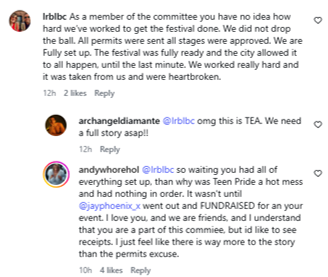
As all of this just came to light less than 24 hours ago, there will be more facts that will need to be shared from both the City and the Festival.
As much as local media picked up on the cancellation of the Festival, news channels and social media have also been promoting that the Pride Parade, funded and organized by the City of Long Beach, is still going on, along with five City-approved events.
Visit Long Beach posted a fun video, assuring the community that Pride is still going strong, despite the Festival cancellation. The bars will be open, featuring their own Pride programming and no doubt the streets will be flooded with the community proving that nothing can keep us down. ,
As many social media comments stated that Pride as a movement can never be canceled, and no one can ever take our spirit away. Where there is a will, there is a way. No doubt many more facts about the Festival cancellation will come to light. Perhaps this is the hiccup the Festival needs to reorganize and revitalize. And maybe this is the hiccup the Festival needs for the community to see that it needs more support from us to ensure this doesn’t happen again.
See you at the Pride parade!
Los Angeles
Los Angeles Metro officially opens D Line extension through Mid-City; Mayor Karen Bass claims it’s ‘built for the future’
U.S. Rep. Laura Friedman called out the nation’s capital for their “attack” on California and public transportation
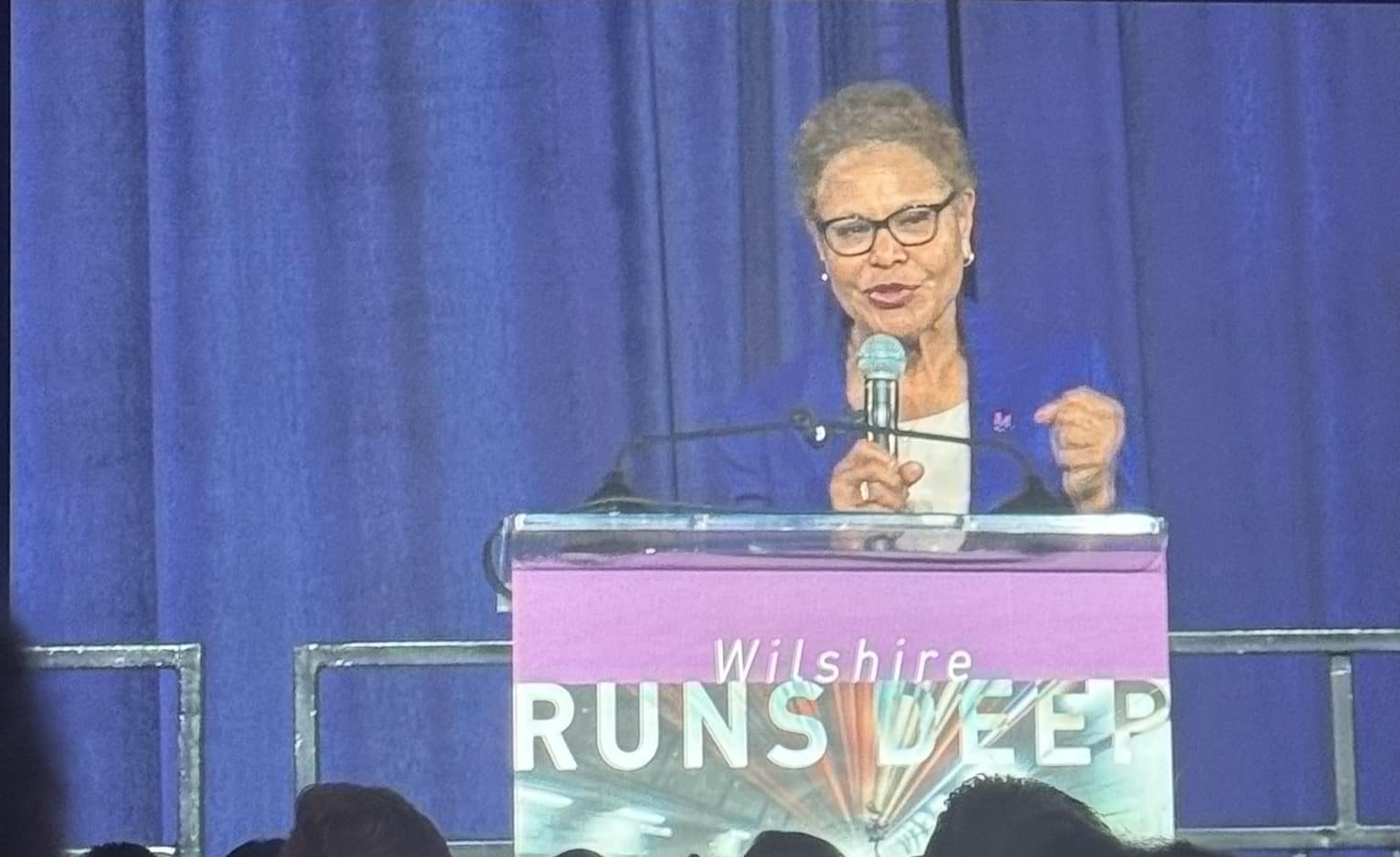
Getting around our car-infested city just got a little bit easier.
On Friday, May 8, hundreds of Metro board members and Los Angeles County officials gathered at the Petersen Automotive Museum to celebrate the D Line’s new service to three stations. It’s the latest effort – albeit a long overdue one – to expand L.A. public transportation through the heart of the city. LA Blade was on the scene.
With stations connecting Western Avenue to La Cienega Boulevard, the new line now makes travel from Beverly Hills to Downtown Los Angeles possible in 21 minutes, according to Metro officials. To celebrate the project’s commitment to connecting people to culture, the ribbon-cutting ceremony was followed by a celebratory outdoor event with local food vendors.
CEO Stephanie Wiggins addressed why the L.A. Metro “might just be having a moment” right now: “When gas prices are off the charts, traffic feels endless and parking costs are more than your lunch – $1.75 a ride that gets you pretty much anywhere in the region starts to look pretty smart.”
Getting to West Hollywood by transit – a vital spot for the city’s queer culture and nightlife – is another goal for the county. But there’s still a ways to go: construction on an official station isn’t expected to start until 2041.
While the D Line expansion was made possible by a grant from the federal government, L.A. Mayor Karen Bass said at the press conference that “we don’t wait for the federal government. We know we can’t depend on others. Obviously, we need the federal government and the state government, but Angelenos say we are going to tax ourselves to do what is needed.”
This expansion comes as L.A. invests billions of dollars in public transportation ahead of the 2026 FIFA World Cup, 2027 Super Bowl, and 2028 Olympics – all events placing an extra spotlight on one of the busiest cities in the country. Just last June, a metro stop opened at LAX, connecting residents and visitors to L.A’s main airport.
As L.A. tries to catch up with the public transportation infrastructure of major hubs like New York City, one speaker also took the opportunity to address tensions with the nation’s capital:
“I will tell you, being in D.C., there is such an attack against California coming from Washington right now, and against transit across the nation,” U.S. Rep. Laura Friedman said. “And we are here to show Washington that while you know who is tweeting at 3 a.m., we have Angelenos underground building things for this country. We are showing that transit is essential, and we are not going to let Washington defund our children’s future.”
Ongoing construction for the L.A. Metro continues as the city hopes to make big on its “28 Projects by 2028” promise. But for now, residents can enjoy free rides all weekend long, along with 60 days of activations and events at the three new stations.
“I am looking forward to being at the ribbon cutting in a few more years as we move forward and take this line all the way to Westwood,” Bass said. “We celebrate something that Angelenos deserve – a city that’s easier to move through, easier to connect in, and that’s built for the future.”
Los Angeles
LA LGBT Center’s first legacy cycling event raises over $800K
From April 24-26, 300 cyclists rode from Los Angeles to San Diego, raising funds and awareness for the Center’s LGBTQ+ serving programs.
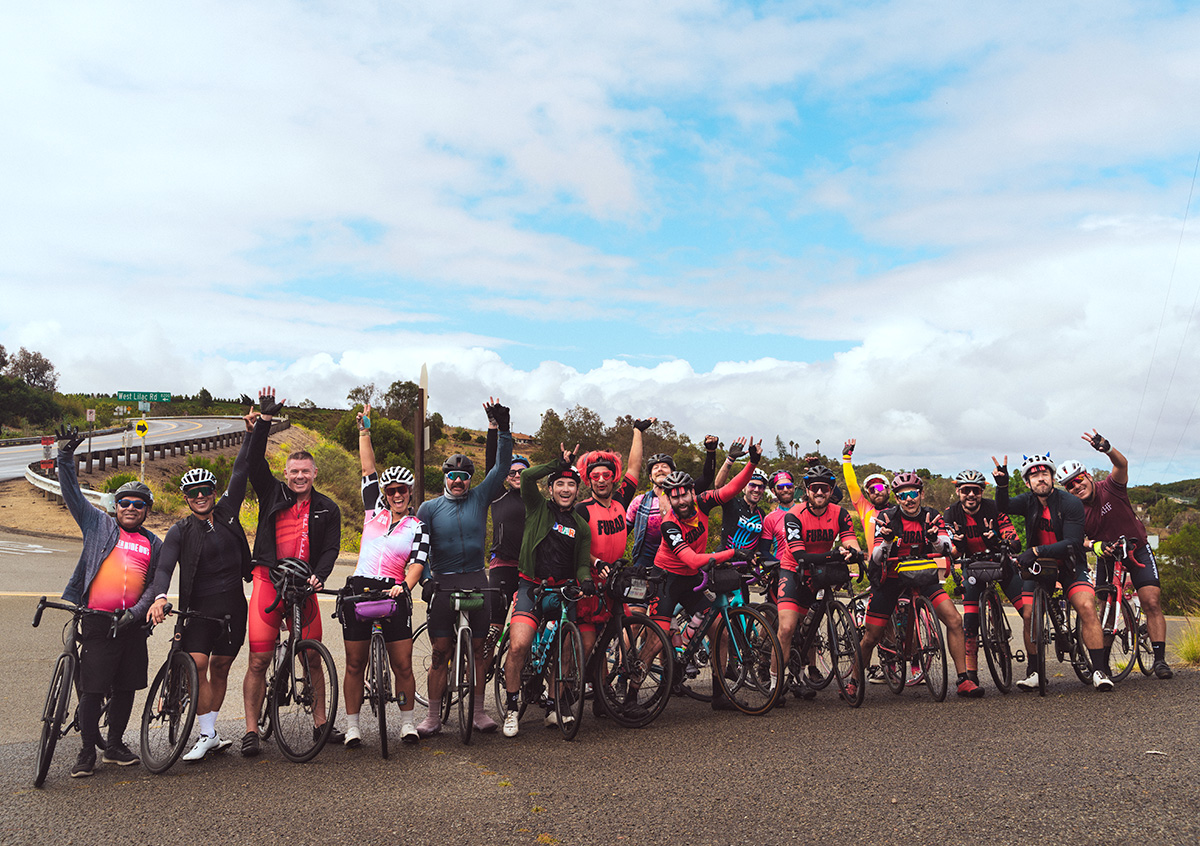
On Friday, April 24, 300 people gathered just before dawn, rolling their bicycles to a stop in Elysian Park. Against crisp morning air and dark, they donned vibrant orange and pink athletic wear, protective helmets, and sunglasses; while the rest of the city remained sleepy, the large group, which grew larger by the minute, hummed with excitement as they prepared to take off together on a three-day adventure towards the San Diego LGBT Community Center.
This was the start of the highly anticipated Center Ride Out, the first-ever AIDS/LifeCycle legacy event created by the Los Angeles LGBT Center. For over 30 years, AIDS/LifeCycle brought masses for a seven-day ride from San Francisco to L.A. and raised over $300 million for life-saving HIV and AIDS resources and services.
Center Ride Out was built in the lasting imprint and shadow of this event, and strived for a more accessible and joyous approach. “Center Ride Out carries forward the legacy of AIDS/LifeCycle, rooted in a time when our community came together to care for one another,” said LA LGBT Center CEO Joe Hollendoner, in a press release, who describes Center Ride Out as the beginning of a new legacy for LGBTQ+ cycling activism.
Described as a “queer summer camp,” the pared-down three-day journey began with a 110-mile trek towards Temecula’s Lake Skinner, where, after a night’s rest, cyclists could spend a day gathering with community over arts and crafts, massages, a dance party, games, and other activities reminiscent of summers spent simmering by the water.
On the third day, cyclists rode 87 miles to the San Diego LGBT Community Center, one of the event’s benefiting partners, rounding out a nearly 300-mile journey across Southern California. In total, cyclists raised $830,511 to support the LA LGBT Center’s vital LGBTQ+ healthcare, housing, educational, and advocacy programs and social services — a crucial accomplishment after the organization suffered a $9 million loss in federal funding in the last fiscal year.
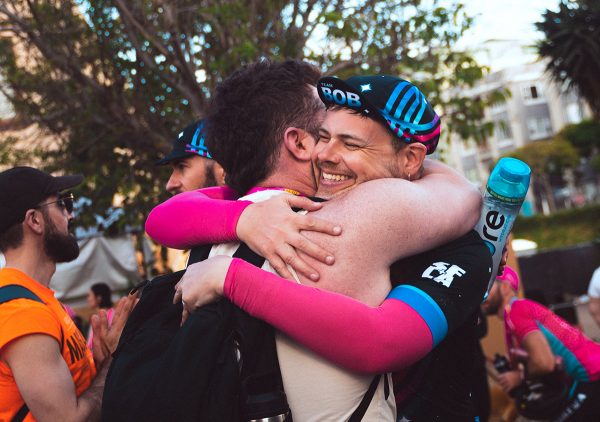
Sunday marked a victorious end to this first iteration of Center Ride Out, and cyclists raced towards each other upon reaching their final destination: sweaty, tired bodies embracing and entangling in pride and accomplishment. The monumental AIDS/LifeCycle has come to an end, but the joy that reverberated from this evening signaled the start of something just as great.
Registration has already begun for the next Center Ride Out, which returns April 23-25, 2027. Learn more at the Center’s website.
Kristie Song is a California Local News Fellow placed with the Los Angeles Blade. The California Local News Fellowship is a state-funded initiative to support and strengthen local news reporting. Learn more about it at fellowships.journalism.berkeley.edu/cafellows.
Los Angeles
LGBTQ+ mayoral candidate wants to revitalize a ‘limitless’ L.A. of the past
There’s no clear frontrunner in L.A.’s mayoral primary. Will queer candidate, Bryant Acosta, shake things up?
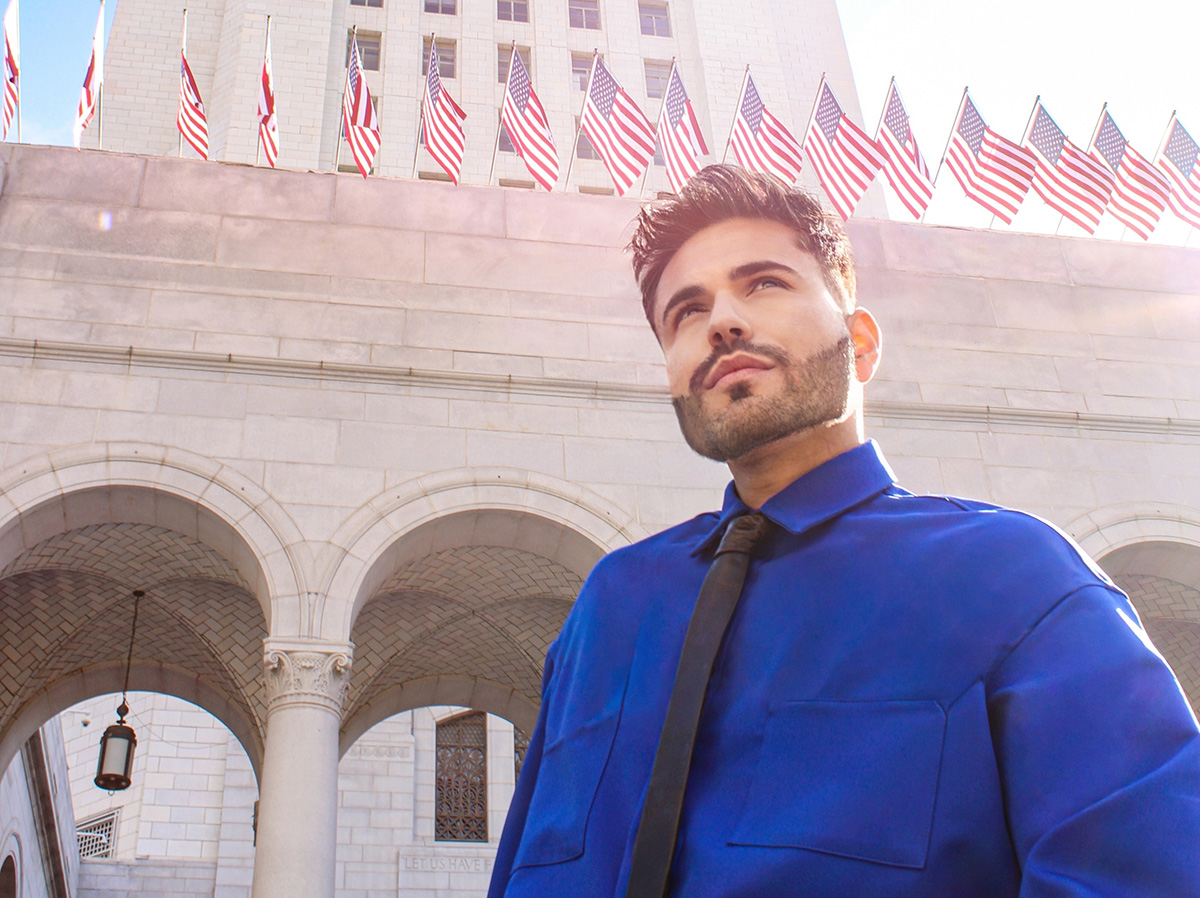
We are just a little over a month until the Los Angeles primary mayoral election takes place on June 2.
Incumbent mayor Karen Bass, District 4 councilmember Nithya Raman, and conservative reality star Spencer Pratt currently lead the race, but a poll released early this month by the UCLA Luskin School of Public Affairs indicates unsteadiness and volatility ahead. 40% of voters remain undecided — and without a majority vote, two leading candidates will have to face off in a runoff election on Nov. 3.
Some are hoping for an underdog to swoop in, and the Blade spoke with one of these contenders: LGBTQ+ artist and creative director, Bryant Acosta.
Born in West Covina, Acosta attended The Art Institute of California, Los Angeles in the early 2000s, where he experienced a bursting energy that defines the county’s reputation as a major hub and global beacon for success. “Everything felt limitless. There was so much opportunity,” Acosta told the Blade. “The city felt alive. You could feel the heart and soul of what L.A. was, and I just don’t see that anymore.”
Acosta hopes to revitalize the county with fresh perspectives, a creative tech-forward approach, and a reboot of how City Hall operates when it comes to transparency and efficiency. His career has spun through several evolutions: he’s been in charge of multi-million dollar budgets and large teams as a creative director, both in the corporate world and on his own terms.
The Blade sat down with Acosta to discuss his pledge for the county’s queer residents and other minority community members, his vision for an app that would streamline accessible city services, and how he sees his identity as a ‘superpower.’
What are your ideas about how you would concretely support queer communities? I was at City Hall a couple months ago when the TransLatin@ Coalition was there to ask for $4 million in direct funding from the county. There’s a big wave and throughline of struggle when it comes to queer communities having to advocate for themselves. How would you support them as Mayor?
Being queer myself…I just feel like you don’t have to shrink yourself to survive in the city, at least not on my watch. This campaign is for the people who have felt unseen, who have had to build their own community and opportunities. But it isn’t just about visibility, it’s about affordability, safety, and opportunity. Because what good is being seen if you can’t afford to live here or feel protected?
Education [is] a big [priority] because right now there’s so much misinformation — specifically around trans issues. I want to be able to bring people along on the journey of: Hey, this is who they are, this is what they’re asking for [and] make it so that people see them as humans. Being able to bridge that gap between the misinformation on social media and bridge it to actual science-based information so that people can really understand what it is to be trans and that they’re part of our community.
When I spoke with trans leaders and advocates, many explained that City Hall does not lack funds — it’s simply not prioritizing their organizations into the county’s budget.
I know Kenneth Mejia, our [City] Controller, has been working on having more visibility into the budget — but if we were able to have an application like my LA Now app idea where people can track every dollar [and] every penny spent, it’s not going to be a fight. This minority group of people is asking for this much money. It’s well within the budget. Why wouldn’t we do this? It’s an essential service for them. Just as the trash or the water are essential services for your neighborhoods, these are things that they’re asking for to continue to operate and be a part of our community. That’s why I’m making that my main touch point, because without accountability, transparency and trust in City Hall, we don’t have anything else.
Can you tell me more about your LA Now app idea and how it adds to your mission of transparency for LA county residents?
I worked in tech for a while, so I learned how to use technology to better…communications, advertising, and all of the things. So, I [thought]: I should be able to use that and be a really future-forward mayor.
I developed this app, where basically, you could have civics in the palm of your hand. You’d open the app, [and] you’d have a dashboard. Organizations will be loaded into it so that when you have problems with housing, the streets and anything in your community, it’ll geo-target your area so they’ll have all the services listed that you can contact.
You’d also be able to pay parking tickets. If you get towed by the city, it’ll give you a notification. So, there’s no more of those predatory towing fees. [You’d also be] able to get push notifications for jury duty, so it has a lot of those civics built in.
And with what Kenneth Mejia is doing right now — he’s giving us a full data dashboard of where the money’s going. I want to simplify that and make it more accessible so that, [for example], my mom and my cousins can read it. [I want to] really put it in the palm of your hand so we see every dollar, every penny spent in real time.
I created a section where, essentially, you can rate your leader. So basically it’d be like Yelp, but for leadership. So, when you see things like Nithya [Raman] spending a million dollars on bathrooms, that would trigger a warning to the Controller, and then we’d be able to see: Hey, what’s going on here? If leaders want to have five stars, they need to respond in real time. It would just keep that extra layer of accountability — a digital accountability on leadership.
Last but not least, I want to develop an anti-Amazon feature [on the app]. Essentially, we would have an E-commerce marketplace [that] only local businesses would be able to get on, so that they could maximize their profits.
Would the app include surveillance protections? With fears over ICE and online safety, would there be a way for people to feel secure while using the app?
How I’m thinking of this as an operating system is that we would use ID.me, which we use at the DMV, to be able to log in. So it already has all your information, and that way you’re not having to input everything a million times. But for people who are undocumented, you’d have a back portal where you’d have access to essential services. I [also] thought about people who don’t have cell phones. We could also have kiosks in public libraries, grocery stores, any place that has public access, so that everybody would have access to these data points and things that they may [need].
You’re forward about being at the intersection of marginalized identities, as a queer and Latino person. How does this affect how you think about the mayoral race and how you’re building connections with LA residents?
Being queer and Latino [doesn’t] hold me back. It’s actually a superpower for me. In some ways, it forced me to figure things out — not just to find a seat at the table, but to build my own. Understanding people [in] these kinds of ways is invaluable. Also, being first-generation American and openly gay, you see this country as both an opportunity and an exclusion at the same time. No matter how smart, accomplished, or creative you are, there’s still a ceiling you hit, especially when the system was never built with you in mind.
That perspective really changes how [I] lead because you don’t just want access to the system — you want to fix it so that it actually works for everyone.
To learn more about Bryant Acosta and his mayoral campaign, you can visit his social media page and website.
Kristie Song is a California Local News Fellow placed with the Los Angeles Blade. The California Local News Fellowship is a state-funded initiative to support and strengthen local news reporting. Learn more about it at fellowships.journalism.berkeley.edu/cafellows.
West Hollywood
Lesbian cinema, from the archives and beyond, lead this short film festival
This Saturday, the June L. Mazer Lesbian Archives celebrates Lesbian Visibility Week with archival and contemporary sapphic shorts.

At the June L. Mazer Lesbian Archives in West Hollywood, Alisha Graefe and Kymn Goldstein are rummaging through a treasure trove of unknown lesbian films. Large, neon orange bins sit at their feet, filled to the brim with VHS tapes donated by queer filmmaker Rosser Goodman, who in the late 90s and early 2000s programmed the underground lesbian screening series “Film Fatale.”
Her monthly event provided a safe haven and experimental ground for lesbian film in L.A., shining light on new voices, stories, and perspectives that explored the nuances of living life as a queer woman.
This Saturday, April 25, Graefe and Goldstein are paying homage to Goodman’s legacy with a cinema-centered event of their own: a short film festival that brings together an eclectic, curated mix of archival works and newly submitted pieces from emerging lesbian filmmakers around the world. These works, accompanied by panel discussions, will screen all day in three different blocks at the Pacific Design Center’s Silver Screen Theater.
Like “Film Fatale,” this festival is not just a showcase of resonant, timely art: it’s an opportunity for queer people to intentionally gather, reflect on their history, joy, and resilience, and to soak in spaces that celebrate them.
“The archives are full of history, but every single day we make history,” Goldstein, who is the archive’s executive director, told the Blade. “This festival is an act of creating history. [We’re] bringing people together to celebrate Lesbian Visibility Week and to watch these films. [And] you know what, every week is Lesbian Visibility Week at the archive.”

When they were first planning out the film festival together, Goldstein and Graefe — who serves as the Mazer’s full-time archivist — sifted through Goodman’s collection, letting the sounds of static, VCR clicking, and tape-scrubbing fill the room. One of the films they watched, and which will screen at Saturday’s festival, is Goodman’s own 14-minute short, “Life’s a Butch!”: a silent comedy about a woman’s antics to impress her new femme crush with clumsy, masc charm.
It was made over 25 years ago, but its tenderness and whimsy are still palpable today. This, and the other films in the festival, speak to both singular and universal emotions and experiences lesbian, queer, and sapphic people have experienced and will continue to experience across time and space.
This interconnectedness in films, communities, and shared memories between past and present excites Goldstein. “The stories of coming out, of crushes, of losing love…[They] are the same topics and subjects that come up today, especially the political things we’re going through. There’s a continuity across all of it.”
And where there’s continuity, there are clues and maps that pinpoint paths of resistance, dialogue, and survival. When people see their lives, or the lives of others in their communities, reflected on screen and in narratives they can interact with, they are able to draw upon history to craft their own ways forward.
The film festival also offers local community members an entryway into the archive, a longstanding community space that houses journals, photographs, books, films, letters — all tangible materials that people are encouraged to touch and engage with, whether it’s to further their research, spark ideas, or simply be more intimately in conversation with the past.
“There are tons and tons of stories,” Goldstein said, who is focused on maintaining and growing the archive’s collection of ephemera and other personal materials from the community. “It’s living, breathing history in a variety of forms, all hidden in different-sized boxes that you just have to open to see what’s inside.”
To support and learn more about the archive’s upcoming film festival, collections, and other events, visit their website.
Kristie Song is a California Local News Fellow placed with the Los Angeles Blade. The California Local News Fellowship is a state-funded initiative to support and strengthen local news reporting. Learn more about it at fellowships.journalism.berkeley.edu/cafellows.
Arts & Entertainment
LA Blade’s Best of LA 2026 winners announced!
The top names from SoCal’s LGBTQ community, as voted on by LA Blade Readers, are honored for the 9th annual Best of LA.
This week marks the Los Angeles Blade’s 9th Annual Best of LA Award Show, honoring leading members from the community as voted on by readers of the Blade. Presented in part by MISTR and Visit West Hollywood, the community gathered on Thursday, March 26th, at The Abbey, to celebrate the winners:
Best Drag Performer
Cake Moss
Kyra Jete, Runner-up
Best Drag Show
Rocc-ettes at Mattie’s
Hamburger Mary’s Weho. Runner-up
Local Influencer of the Year
Rose Montoya
Lucas Dell, Runner-up
Best LGBTQ Bar
Gym Bar
The Abbey, Runner-up
Best Happy Hour
Motherlode
Hi-Tops, Runner-up
Go-Go of the Year
Steven Dehler
Prince Joshua, Runner-up
Best Restaurant
Bottega Louie
WeHo Bistro, Runner-up
Best Radio or TV Station
REVRY
KTLA, Runner-up
Best Cannabis Retailer/Lounge
Green Qween
Artist Tree Lounge, Runner-up
Best LGBTQ Owned Business
MISTR
Green Qween, Runner-up
Best LGBTQ Social Group
Gay Men’s Chorus of Los Angeles
Dark Circle Film Society, Runner-up
Best House of Worship
Hollywood United Methodist
Congregation Kol Ami, Runner-up
Activist of the Year
Maebe A. Girl
Rose Montoya, Runner-up
Public Official of the Year
John Erickson
Lindsey Horvath, Runner-up
Best Local Pro Sports Team, co-presented by Pride House LA/West Hollywood
LA Dodgers
LA Lakers, Runner-up
Local Ally of the Year
Kevin De Nicolo
Jessica Steinman, Runner-up
Best Doctor/Medical Provider
AIDS Healthcare Foundation
LA LGBT Center, Runner-up
Most LGBTQ-Friendly Workplace
Los Angeles LGBT Center
City of West Hollywood, Runner-up
Non-Profit of the Year
Los Angeles LGBT Center
Trans Lifeline, Runner-up
Best Local Actor
Annie Reznik
Matthew Scott Montgomery, Runner-up
Best Local Theatre
Celebration Theatre
Pasadena Playhouse, Runner-up
Local Musical Artist of the Year
Prince Joshua
Ross Alan, Runner-up
Best LGBTQ Event
Outloud Music Festival at Weho Pride
GLAAD Awards, Runner-up
Best Regional Pride
WeHo Pride
Long Beach Pride, Runner-up
Best Promoter of the Year
Beau Byron
Paul Nicholls, Runner-up
LGBTQ Professional of the Year
Erik Braverman
Michael Ferrera, Runner-up
Best Bartender
Danny Hernandez
Michael Susi, Runner-up
Best DJ
Boy Apocalypse
DJ Les Ortiz, Runner-up
Best Local LGBTQ Podcast
BabyGay
On The Rocks, Runner-up
Best Salon/Spa
Shorty’s Barber Shop
The Massage Company WEHO, Runner-up
Best Music Venue
The Hollywood Bowl
The Troubadour, Runner-up
Best Fitness/Workout Spot
LA Fitness, Hollywood
Barry’s WEHO, Runner-up
Best Hotel
Hotel Ziggy
SoHo House, Runner-up
This year’s Local Hero Award goes to Genevieve Morrill in honor of her role as an ally, serving as president and CEO of the West Hollywood Chamber of Commerce.
Gus Kenworthy received the first-ever Los Angeles Blade Athlete Legacy Award, co-presented by Pride House LA/West Hollywood.
Los Angeles Blade publisher Alexander Rodriguez shared, “In light of the year we’ve had to contend with as the queer community, it is imperative that we take moments to share the accomplishments and resilience of our local family of activists, leaders, and allies. Honoring our nominees and winners this year is proof of the power of queer joy. Until next year!”
Los Angeles
The Connie Norman Transgender Empowerment Center opens full-service health clinic
Saturday marked the opening of the center’s new health clinic and another step forward in its “righteous rebellion” for trans equality.
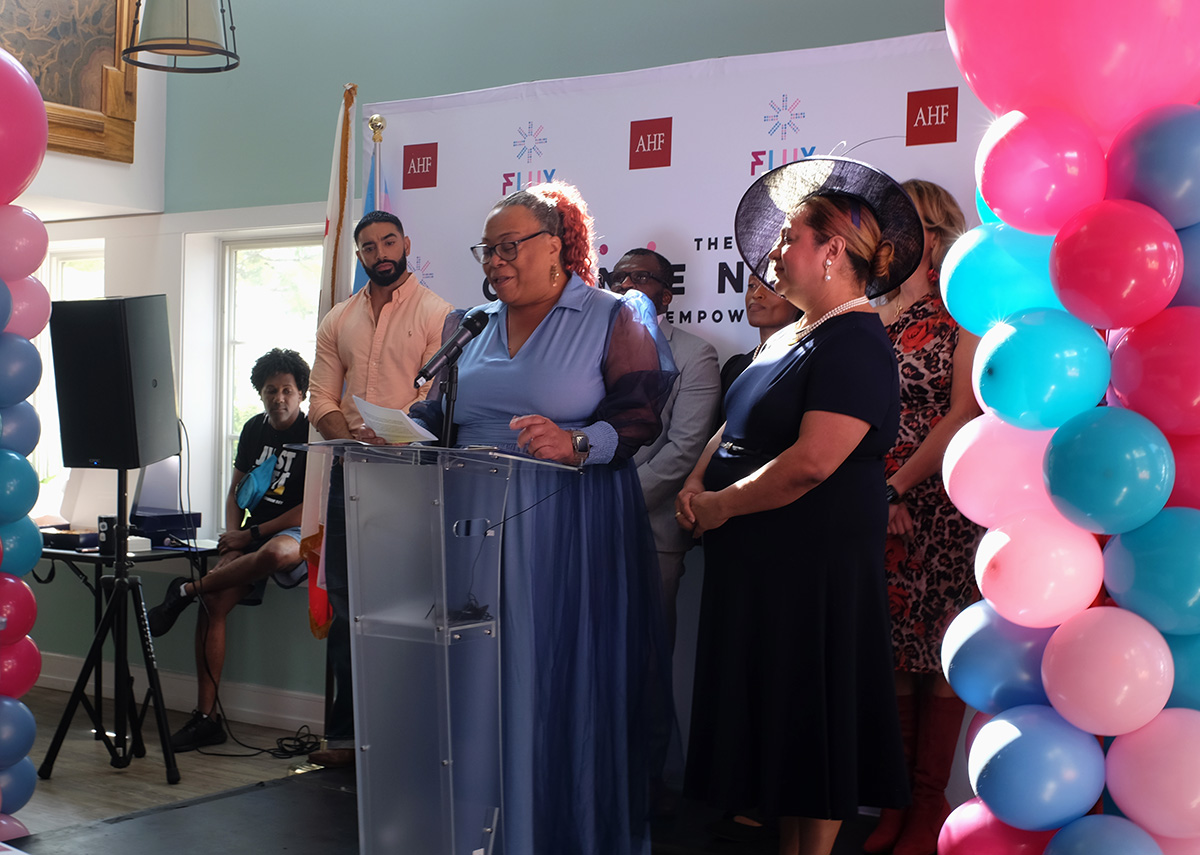
It’s warm on Saturday morning, and there’s joy in the air at the Connie Norman Transgender Empowerment Center (CONOTEC). By 10 a.m., community members have packed out the center’s first floor, waiting eagerly for the grand opening of its new healthcare clinic. It’s a historic moment that flows from the core of CONOTEC’s purpose: advocating for, creating pathways and uplifting the safety, resilience and wellbeing of trans and queer people.
Established by the AIDS Healthcare Foundation (AHF) in 2021, CONOTEC honors the legacy of its revered namesake, the “AIDS diva” Connie Norman: a trans activist who was at the frontlines of fighting against government inaction and negligence during the AIDS crisis of the 1980s. For five years, the center has been the home base for various local trans and queer organizations, providing a sanctuary for queer elders and advocates to expand and continue their advocacy.
Now, the center’s new health clinic takes this mission further. A collaborative effort between trans medical professionals, activists, and AIDS Healthcare Foundation leaders, the clinic offers an expansive breadth of services that covers primary care, HIV medicine and treatment, sexual health, cancer screenings, and vaccinations. It is open to everyone, regardless of gender and sexual identity, as well as one’s ability to pay.
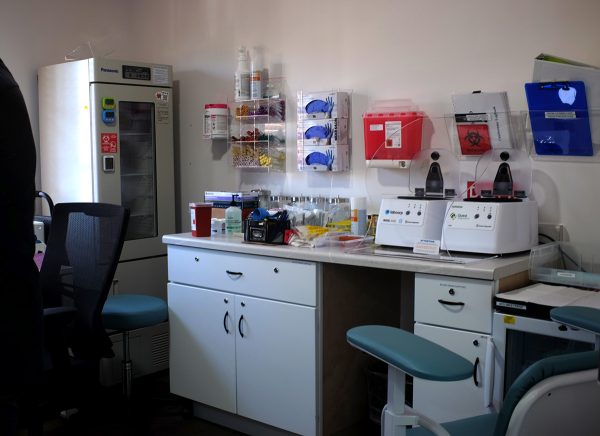
Advocates name the last few years as a major setback to trans health care, safety, and rights. As the federal administration targets this community by shuttering gender-affirming health clinics, writing laws that approve surveillance of and violence against trans people, the opening of this clinic is both an act of resistance and care. “We get to open doors instead of watching them close,” said Queen Chela DeMuir, who is vice president of AHF’s trans affinity group FLUX and the chief operating officer at CONOTEC.
Addressing the room with tenderness, DeMuir recounted the beginning of her transition. Her first hormone shot was administered by a queer elder she trusted, the medicine bought from a shop at a local swap meet. She remembered the confusion, the concern, the absence of professional care. But, like many other trans folks, she was willing to take these risks to actualize and make physical the person she always was.
The clinic removes the “guessing, fear, and barriers” DeMuir experienced, making sure trans people can receive the care they need in safe, affirming, and accessible spaces. “In this clinic…we care for everyone. We are building access with people who look like us, who understand us, and who carry a shared, lived experience…This is not just a ribbon-cutting. It’s a statement about who we are and what we deserve,” said DeMuir.
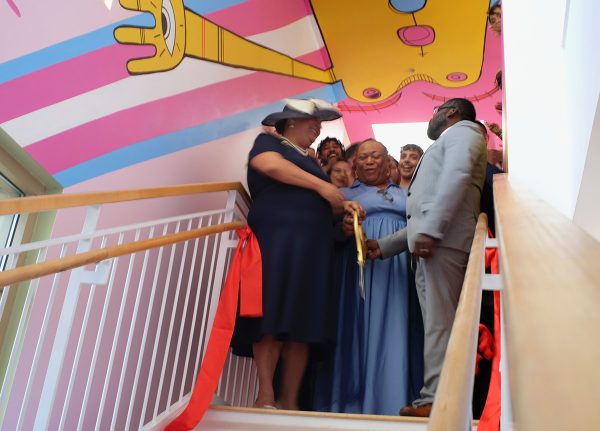
What trans and nonbinary community members deserve is easy access to healthcare and, thus, easy access to “justice, dignity and the right to live fully,” stated AHF chief medical officer Dr. Carl Millner. He reiterated that trans people, specifically trans women, are disproportionately impacted by HIV yet have fewer pathways to access care and support.
The clinic rewrites standard medical practice by centering trans lives in both their patient outreach and in their staff. Razan Alawadhi, an AHF nurse practitioner and trans woman, will bring nearly two decades of healthcare experience to help guide the clinic’s operations. “It is a dream of mine to establish this clinic,” said Alawadhi, who also hopes to advance studies and treatment in neglected research areas like sexual health for trans people.
On the other side, trans people who seek care are repeatedly met with varying levels of hostility and misunderstanding in health care spaces. “I remember going to an emergency room for a back injury — something unrelated to my transness — and being looked at like a freak,” said FLUX ambassador Laith Ashley, who described the humiliation with crystal clear detail. Those experiences don’t fade away; they leave lasting marks and create cycles of medical avoidance in trans and nonbinary communities.
“This [clinic] is here to help change experiences like that,” Ashley continued. “Here…providers recognize that affirming someone’s identity is not controversial. It’s compassionate medicine…So when we open a clinic like this, we are not just expanding health care services. We are expanding hope [and] sending the message that transgender people in this community are not alone.”
This message is not new. The fight for freedom was forged by trans ancestors, and is carried onward by present and future generations. It’s a “full-circle moment,” DeMuir explained to the Blade. “I knew that I was putting myself at risk when I was younger, so part of the work that I do is really making sure we make things better for those that come [after] us, and give them a sense of pride that they are seen.”
The fire beneath this fight for visibility blazes with the warmth and strength of its leaders and community. It’s just beginning. “I want to welcome you to the righteous rebellion,” said Queen Victoria Ortega, president of FLUX and the chief visionary officer of CONOTEC. “[This is] a place where doors will be open for folks…No one’s going to deport us. No one’s going to erase us off the earth. This is a place for [us] to have dignity and have access to health care for all.”
More information about the Connie Norman Transgender Empowerment Center can be found on their website.
Kristie Song is a California Local News Fellow placed with the Los Angeles Blade. The California Local News Fellowship is a state-funded initiative to support and strengthen local news reporting. Learn more about it at fellowships.journalism.berkeley.edu/cafellows.
California
Equality California has sponsored 12 bills to advance LGBTQ+ rights in the state
On Feb. 27, the LGBTQ+ civil rights organization announced its 2026 legislative priorities, which cover trans healthcare and queer education.
Nationally, queer and trans people are facing a crisis. Last July, the Trump administration defunded the 988 suicide prevention lifeline for LGBTQ+ youth. Anti-trans hate crimes are on the rise, specifically those targeting Black and brown trans women. Just last week, trans people living in Kansas who had changed their gender designations in the past received abrupt letters stating that their driver’s licenses were no longer valid.
Federal and statewide legislation is targeting LGBTQ+ rights, creating a social landscape that is reverting to sanctioned violence against these communities. In response, LGBTQ+ civil rights organization Equality California has sponsored 12 new bills that are fighting to strengthen queer people’s rights, safety, and sense of stability.
This means “being able to access health care, live free from discrimination, gather safely, and trust that our personal information will not be weaponized against us,” said Equality California’s executive director, Tony Hoang, in a press release. Hoang also states that these bills offer Governor Newsom an “opportunity to define real leadership” and set himself and the state apart from the proliferation of anti-LGBTQ+ rhetoric amongst the most politically elite.
What are the bills and what would they do?
The 12 priority bills Equality California has sponsored span various areas, from healthcare to the criminal justice system and from schools to emergency hotlines.
AB 1876 (Dawn Addis): Protecting transgender patients from discrimination
Introduced on Feb. 12, AB 1876 would prohibit health insurers and plans from discriminating against people based on sexual orientation, gender identity, or sex characteristics. This would help advance the rights of trans, gender diverse/expansive, and intersex (TGI) people across California, allowing them greater accessibility when seeking the healthcare they need.
AB 1930 (Rick Zbur): Protecting transgender patient privacy from out-of-state investigations
Introduced on Feb. 13, this bill was written by Assemblymember and former Equality California executive director Rick Zbur. It focuses on protecting transgender patients who have received gender-affirming care, abortions, or any other form of trans health care in California. AB 1930 will place greater protections on confidential, private medical information, barring out-of-state agencies from readily obtaining these records and using them against trans people.
SB 1114 (Christopher Cabaldon): Protecting LGBTQ+ data privacy
California-based agencies continue to champion research on LGBTQ+ communities, collecting data related to gender and sexual identity. However, there are concerns that federal officials will try to surveil, shut down, or extract this data. SB 1114 would counter this by limiting when state agencies can share this sensitive data and barring the disclosure of such data outside of California.
AB 1540 (Mark González): Restoring the youth crisis support hotline
Since last year, after the administration ended the 988 Suicide and Crisis Lifeline’s specialized services for queer youth, L.A. officials have been advocating for its revitalization. AB 1540 was introduced this January by prominent LGBTQ+ Assemblymember Mark González, and the bill calls for the restoration of the “Press 3” option for queer youth struggling with their mental health. Many have lauded the service’s necessity, urging officials to recognize and take action to address the broader mental health crisis of young LGBTQ+ people across the country.
SB 934 (Scott Weiner): Advocating for conversion therapy survivors
SB 934 aims to extend the statute of limitations so conversion therapy survivors can pursue legal claims against licensed mental health professionals who have subjected them to conversion therapy practices.
In other states, victories against conversion therapy have taken a step backwards. In 2023, conversion therapy was legally banned, to prevent the “horrific practice” from continuing to harm LGBTQ+ youth. This past December, the ban was blocked, on the grounds that it violated First amendment rights for therapists and counselors — even if they engaged in the practice.
AB 1775 (Chris Ward) — Supporting transgender veterans
In January 2025, the Trump administration issued an executive order that barred trans people from serving in the military, stating that the forces had been “afflicted with radical gender ideology.” As a result, tens of thousands of active-duty service members, veterans, and their family members were abruptly cut off from a steady income, putting them at risk of homelessness and financial instability. AB 1775 will make sure trans veterans impacted by the executive order can access housing assistance, employment support, and be able to correct their military orders.
AB 1836 (Jesse Gabriel): Protecting safety of LGBTQ+ community events
This bill intends to expand the state’s Nonprofit Security Grant Program so that organizations can access funding for security efforts when hosting LGBTQ+ community events. Currently, the grant program provides funding for LGBTQ+ community centers and nonprofit facilities, but does not cover off-site events. For queer people celebrating their joy in public, which can be its own act of resistance, the possibility of retaliation leaves in many a remnant of fear and apprehension. This bill combats these fears by creating funding opportunities to ensure proper protections can be accessed at such events.
SB 1023 (John Laird): Creating greater access to injectable PrEP
Assemblymember Laird’s bill proposes improved insurance coverage and reimbursement practices so that healthcare providers can offer long-acting injectable PrEP without being slowed down by financial or administrative barriers.
Community clinics often face the brunt of ineffective insurance reimbursement practices, which blockade and clog their ability to provide HIV preventative medicine. SB 1023 aims to make these processes smoother, ensuring that clinics and providers can provide PrEP in a timely, equitable manner.
AB 908 (Jose Solache): Ensuring LGBTQ+ curriculum is meaningfully adapted
This bill would require California’s Department of Education to make sure school districts are complying with the state’s FAIR Education Act, which calls for curricula to cover the histories and contributions of various marginalized communities, including Black, brown, indigenous, and LGBTQ+ people.
The FAIR Education Act was signed into law in 2011, but AB 908 calls attention to the fact that only 37% of school districts actually implement meaningful LGBTQ+ education in their curricula. The bill reaffirms what has already been legally mandated for 15 years: that school systems concretely cover LGBTQ+ history and contemporary advancement for their students.
SB 1328 (Sabrina Cervantes): Creating more LGBTQ+ outreach for higher-ed students
This bill would require higher education institutions to designate specific confidential employees at satellite campuses, outreach centers, and other external branch facilities to support the needs of LGBTQ+ students and staff.
LGBTQ+ “points of contact” can be found at various primary campuses, and this bill calls for the same measures to be taken at outreach centers related to higher education institutions. SB 1328 argues that more should be done for queer students, faculty, and staff who are present at an institution’s various locations — not just its main campus. It highlights a need for intention and care for queer people’s needs within the education system: cursory attempts at inclusion are not enough.
AB 2014 (Sade Elhawary) — Preventing gender bias in criminal trials
The California Committee on Revision of the Penal Code released its 2025 annual report in December and identified that an important point of reform was the way gender-based evidence is treated in court. AB 2014 would require courts to apply heightened scrutiny — a more demanding form of review that requires substantial evidence — before hearing arguments based on harmful gender-based stereotypes.
SB 1149 (Maria Durazo) — Expand Bereavement Leave for Chosen Family
This bill expands the definition of work-protected bereavement leave to include chosen and extended family members. Currently, California law restricts bereavement leave to immediate family, and does not take into account that queer people are often piecing their own families together after abandonment, estrangement, or fear for their safety and health.
The pain of losing a chosen family member can be just as, if not more, searing and altering than the loss of a blood relative. SB 1149 would protect workers experiencing this kind of grief.
Kristie Song is a California Local News Fellow placed with the Los Angeles Blade. The California Local News Fellowship is a state-funded initiative to support and strengthen local news reporting. Learn more about it at fellowships.journalism.berkeley.edu/cafellows.

SunCienega Success Lab launches to empower local entrepreneurs with free resources

Silky Nutmeg Ganache talks sex and dating, gender, politics, weight loss journey

Madonna roundup: Reviews, sales, and love for ‘Danceteria’

Three overlooked court rulings limited White House anti-trans policies

Turkish authorities refuse to allow gay cruise to dock in country

The new documentary ‘Corps Man’: Remembering the overlooked queer servicemen’s history with veteran Dave Lara

Disney Animator Andreas Wessel-Therhorn talks being queer in animation and preserving the hand-drawn technique for the future

Absolut Tabasco Celebrates ‘Confessions II’ with the Queen of Pop: Absolut-ly spicy!

An activist says he’ll stand for trans rights, even if he’s standing alone

Former council member John Duran is running for one last term
-
 Movies3 days ago
The new documentary ‘Corps Man’: Remembering the overlooked queer servicemen’s history with veteran Dave Lara
-
 a&e features2 days ago
Disney Animator Andreas Wessel-Therhorn talks being queer in animation and preserving the hand-drawn technique for the future
-
 Music & Concerts4 days ago
Absolut Tabasco Celebrates ‘Confessions II’ with the Queen of Pop: Absolut-ly spicy!
-
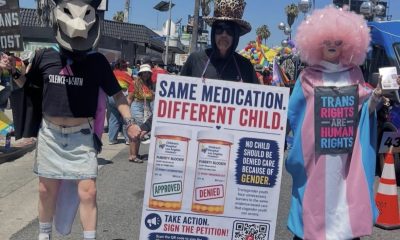 Features1 day ago
An activist says he’ll stand for trans rights, even if he’s standing alone
-
 Politics4 days ago
Former council member John Duran is running for one last term
-

 Sports3 days ago
Where to stay in LA for the 2026 World Cup: Area guide
-
 Books4 days ago
‘Transcendent’ a tough but important read
-
 Politics2 days ago
In Trump’s divided America, Michael Weinstein’s AHF responds
-
 Commentary2 days ago
When a church fears the rainbow
-
 U.S. Federal Courts13 hours ago
Three overlooked court rulings limited White House anti-trans policies