
a&e features
Former Scissors Sisters frontman Jake Shears on his book, tour, album and gay life in the Big Easy
Glam gender-bender plays two nights at the El Rey Theatre this weekend
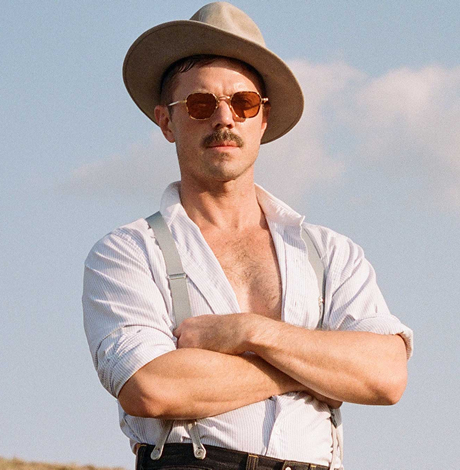
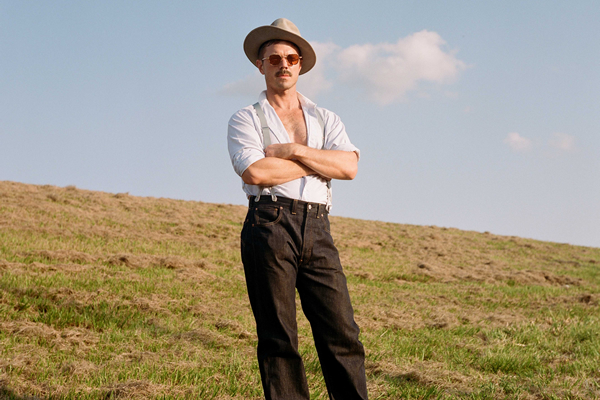
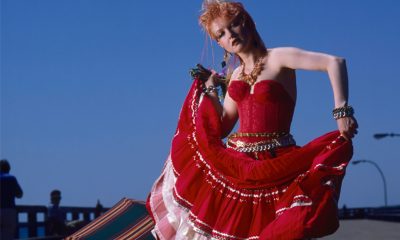
Jake Shears says it took time to find his creative footing after the Scissor Sisters parted ways six years ago. (Photo by Greg Gorman)
Jake Shears needed some time to find his footing.
“After more than a decade as one of pop music’s most cocksure and buoyant frontmen,” his press bio says, “Shears suddenly found himself alone and adrift a few years ago, nursing a broken heart and staring down an uncertain future.”
Since the early 2000s, Shears had anchored Scissor Sisters, the glam-pop band known for hits like “Filthy/Gorgeous,” “I Don’t Feel Like Dancin,’” “Fire with Fire” and “Let’s Have a Kiki.” They went on indefinite hiatus after the 2012 album “Magic Hour” but it took some time for Shears, who found himself single in 2015 after the demise of a decade-plus relationship, to figure out what was next.
After relocating to New Orleans in search of inspiration, he’s come roaring back in 2018 with a January stint as Charlie in “Kinky Boots” on Broadway, the February release of his memoir “Boys Keep Swinging” and his eponymous debut solo album, which came out last month to solid reviews. He wraps his solo tour with two shows at The El Rey Theatre this weekend.
He spoke to the Blade by phone in early September (just prior to turning 40 in October) from his apartment in New Orleans. His comments have been slightly edited for length.
LOS ANGELES BLADE: Was it hard adjusting to the humidity?
JAKE SHEARS: No, I love it. I’m heading to London tonight and I’m just thinking like, “Oh God, I can’t just walk outside in a tank top and gym shorts 24 hours a day there.” I love it down here so much. It’s a pretty good life.
BLADE: So you live in New Orleans pretty much all the time now when you’re not touring?
SHEARS: Yeah, I’m walking into my apartment right now. I split my time. I end up all over the place but it’s where I am for long stretches of the year. … I spend about a third of the year here.
BLADE: Do you get recognized much there when you’re just out doing your normal routine?
SHEARS: Well it’s like a small town here so you kind of get to know everybody anyway and then on weekends, like Decadence was last weekend and there were lots of gays in town so yeah. But other than that, not really. It’s just a really small town here so everybody already kind of knows one another.
BLADE: What’s gay life like in the South? Just with friends, dating, sex — all that.
SHEARS: Well down here you don’t necessarily want to date other locals. … If you do sleep with somebody down here, you’re gonna see them for the rest of your life so you have to really think about whether you want that or not. But it’s just a funny little thing. It’s a sexy place to be. There’s always a huge influx of tourists so there’s always fresh faces and not only that, it’s people who are happy to be here and it’s a good vibe overall. It’s a very romantic city. You don’t have to wear a lot of clothes. It kind of fosters romance and flirtiness.
BLADE: You said in another interview you went there seeking inspiration. How long were you there before that really hit and the songwriting started?
SHEARS: About a week, maybe two weeks. It was pretty early on. I think it was more about the decisions I’d made in my life. I was making some big decisions just for myself that I needed to make. I really needed to change my life and once I made the decision to do that, moving to New Orleans was kind of symbolic and was part of that. And, you know, when that happens, when I’m happy and on the right path, I start writing songs. It didn’t take very long.
BLADE: I read that you recorded the album in live takes straight through and said that was nerve wracking. Now that it’s all done, was it worth it?
SHEARS: Oh my God, yeah. I couldn’t be happier with this thing. It’s been a big project and it’s nerve wracking in a way because just over the whole thing, I put a lot on the line. I hope I get to make a record like this again someday — just making a record exactly the way I want to. As far as the cost/benefit analysis, it cost me a lot. Just financially and time wise and all that stuff, but the benefit on the other side is that I’ve made something I’m just incredibly happy with and proud of.
BLADE: Was it hard to keep it fresh doing take after take in the studio?
SHEARS: No, no, no, no. When you’re recording like that, everybody was so rehearsed. It was really exciting. It never got boring, that’s for sure.
BLADE: When you were writing and/or recording “Creep City,” did you have a hunch it would be the first single or did that come later?
SHEARS: You know, it was really a toss up. I don’t think there was a really obvious first single on this record. I think it could have been a whole bunch of songs. I chose that song because I felt it was really good overall and I felt it really represented the whole album just sonically and I just felt like it was a great liftoff for the record. … I could also visualize a video for it. It’s one of my favorites on the record. It just sort of represented the whole thing in a way.
BLADE: Would you say this is your breakup album? That’s such a thing, were you conscious of wanting to avoid any cliches?
SHEARS: I don’t know if I can answer that. I don’t think it feels like a breakup album. I mean, this isn’t Beck’s “Sea Change.” It’s a pretty fun record. I don’t think it’s really about a breakup, I think it’s more about reassessing myself and sort of rediscovering who I am in this moment in time and I think it has less to do with a breakup necessarily, although that’s in there. Would you say that?
BLADE: Well, listening to it, I felt it was very bombastic and joyous so I was surprised when I read the lyrics and saw how dark some of it is.
SHEARS: Yeah, I love that and that’s one of my favorite things to do. I have like a real big dark streak in me and I love making happy, really fun music that has heavier themes to it. I just love that juxtaposition. That’s absolutely there, but it was really important to me to make, you know, a fun record with different colors to it. I love making my ballads too. That’s definitely part of what I do.
BLADE: Why did you feel now was the time for a memoir?
SHEARS: I wrote the book at the same time I was making the album and I thought it was really good as I was sort of reassessing where I am and who I am now, I had to go back and reassess where I’ve been and what I’ve done and I think they both kind of informed each other and it was sort of a good way to put certain things to bed in a way and make peace with certain things. It’s kind of a cliche to say it was good therapy but in a way it was good to reevaluate parts of my life while I was making this new thing and it was awesome to get to do both of them together.
BLADE: Would you like to do more Broadway or was “Kinky Boots” a one-off?
SHEARS: No, I do, I do. I love it so much. I mean, theater is a world I love being in. I love writing theater and making musicals. Now I love being in them. I definitely am going to continue. Now that’s part of my DNA and I absolutely would love to be in another show and I’m going to be writing more shows.
BLADE: How vocally taxing was it compared to your regular stuff?
SHEARS: I gotta say, it was really hard. Those Cyndi Lauper songs are no joke. They’re really tough and I worked and worked really hard at it. You know, your voice gets stronger and everything but doing eight shows a week like that, it’s also cumulatively exhausting and so by the end — I did about a hundred performances — I was really having to crank up the engine to get that final high note and the big punch at the end of the song. So it was super challenging, yeah.
BLADE: When you’ve been off the grid for awhile, do you have to get back in shape or do you always stay pretty trim?
SHEARS: Goodness (laughs). I’ve got my moments. I’m a Libra so I have a lot of balance in my life. I work really, really hard and I play really, really hard. I really try to keep a balanced existence. I’m constantly just trying to take care of myself in the midst of the chaos of what I do.
BLADE: But you never just put on 20 pounds when you’re off the road for a year or something like that?
SHEARS: Oh, I’ve had moments of not being as in shape as I wanna be but I’m doing the best to take care of myself when I’m eating well or whether that’s just getting enough sleep and not drinking too much. I just do my best to try to feel as good as I can because otherwise life just isn’t much fun.
BLADE: Where did that cool vintage car in the “Big Bushy Mustache” video come from?
SHEARS: It’s my neighbor’s, LeRoy. I’m looking out right now at his back yard. He’s in the video too. The videos you see from this album are basically community productions. I made those videos out of my pocket on a shoestring and everybody from the locations to the costumes — everything that you see, people pitched in, everybody got together and it was so much fun. It took over a hundred people to make those videos and that’s one of the things that really warms my heart. It was a whole bunch of people banding together. The “Creep City” video — that’s just a snapshot of the New Orleans community.
BLADE: Has it been hard sequencing in Scissor Sisters material with the new stuff on tour?
SHEARS: No. I’ve just done a bunch of shows in the U.K. and it’s a really good pace I’ve got with the Scissors stuff. I’ve chosen certain songs very strategically and it’s fun mixing them up. I went out of my way to make sure this new stuff is part of the same body of work. I wanted it to feel that way and I wanted to be able to present it all as my body of work. In the show, it definitely goes together.
BLADE: Are you touring with people who played on the album?
SHEARS: Oh yeah. Mr Hudson is on bass, Craig Pfunder is on guitar who does all the music director stuff, he plays guitar on my record. Mr Hudson, I wrote a bunch of songs with. Right now I’ve got Patrick Hallahan from My Morning Jacket on drums and I’ve got this amazing saxophonist, this awesome guy named Stephen J. Gladney on sax. So this is a pretty cracker jack band. It’s a great band.
BLADE: Was it an easier transition to the stage than usual since you recorded these songs live in the studio?
SHEARS: In a way because a lot of these songs were originally written with either guitar or piano. When you start small with a song then make it bigger, it just makes it easier. It was written in a very different way from the way I normally always wrote stuff. It’s been fun to play it from the top. It hasn’t been a huge challenge.
BLADE: I know it’s a much different style of music, but do you feel much kinship with Rufus Wainwright? For so many years, you two were about the gayest thing we had pretty much.
SHEARS: Oh my God, absolutely. I think you can hear, he’s a huge influence on my music and we’ve always been friends and I think he’s amazing, just a one-of-a-kind person. I think he’s brilliant and hilarious and I just love him a lot and I’m proud — if he’s my peer and part of my generation of music or if we’re viewed on any kind of level together, then I’m really proud of that.
BLADE: Lots of male pop singers today are doing the falsetto thing like you. Who has the best male falsetto voice?
SHEARS: You mean right now?
BLADE: Any era.
SHEARS: I would just have to say the Gibbs. You know, I was just listening to “Nights on Broadway” last week and it’s just so good. There are moments where they could do it perfect, then they could also do it ragged and imperfect as well and it just sounded so good. So I mean, I feel like they’re kind of the kings of that.
BLADE: Have you heard Troye Sivan’s new record?
SHEARS: Just the singles. I gotta sit down and listen to the whole thing. I’m really excited about it. What do you think?
BLADE: I like it. It’s so nice to see someone singing about gay life so unabashedly.
SHEARS: Seriously. I’m so happy about it. I love the singles and it seems like people are absolutely loving the album. I’m glad you reminded me of it. I’m gonna give the whole thing a listen today. But yeah, I want to see that really go through the roof. He deserves it and it’s just time. I just think we’ve waited long enough. It’s time for a big, queer just pop star and yeah, I just think it’s time so I’m very excited.
BLADE: Do you have any pet peeves about celebrity culture of the way it’s covered in media?
SHEARS: There’s nothing I hate more than a headline that says somebody is “clapping back” at so and so. Or so and so, “claps back.” Basically just news stories about people fighting on Twitter. That’s a pet peeve of mine. It’s just the snake eating itself.
BLADE: Why do you think the Scissors were bigger in the U.K. than the U.S.? Does the Hot 100 here just reflect more of the hetero, rednecky parts of the country?
SHEARS: Well I think it was just a narrative that took hold and I can pinpoint the top of that narrative. I talk about it in my book. We were over there working for like six months before we broke over there and at that time, album releases were staggered so we released in the U.K. in February and we didn’t come out in the U.S. until July so we broke in the U.K. in June. So when we put out our record, we were just getting started again and the New York Times wrote a little sidebar with the headline that said, “Scissor Sisters hot over there, cool over here” and I credit that one thing in the New York Times, that really snarky little piece to starting that narrative. I think that’s why I still get that question. I don’t think we entirely got a fighting chance over here but over the years, it kind of leveled out. By the time we put our our fourth record, we were at the Palladium two nights, we were at Terminal 5 two nights, so the whole thing leveled out. We had extraordinary success over there, the kind of success that barely anybody has anywhere, so I don’t necessarily — I just think it was an extraordinary moment and I’ve never ever felt we were less successful over here at all. … It doesn’t really bother me. But I think that’s the origins of it, this tale of the Scissor Sisters on both sides of the Atlantic.
BLADE: Did you ever think about doing a solo album when the Scissors were together or was there just not really time? It’s not unheard of.
SHEARS: It never really crossed my mind as something I realy wanted to do. I always thought a solo record would feel really sort of narcissistic. I never really thought of myself as a solo performer. I was always kind of shy about that. Even when I would do appearances without the band, I would always feel very much like, “Why am I here, I don’t really belong here.” I’ve always kind of had that self doubt thing when I was by myself. So no, I don’t really. But it’s been a little bit of a personal — I hate the word journey — but it’s been like a little bit of a road to get to the spot where I can, you know, feel like there’s a reason for me to be singing on my own.
BLADE: You’ve played a lot with genderfuck in photos and magazine shoots. Do you like to wear dresses or paint your nails in your regular life?
SHEARS: Oh, I love wearing big frilly dresses (laughs). Especially in New Orleans. Like for Decadence, I have a naughty nurse uniform. Everybody was in harnesses and I have my little candy striper outfit. So, I don’t know, it’s just that I have a good time wearing a dress sometimes. I don’t even really think about it. I’m just kind of drawn to what feels good.
BLADE: Do you think there will be deluxe reissues of the Scissor Sisters albums eventually? Are there many outtakes from those sessions? B-sides and alternate takes and stuff like that.
SHEARS: My dream for the 10th anniversary of “Night Work” is to do — there’s a whole album that’s attached to that that was scrapped. There’s this whole lost record to that that I would love to put out in 2020. I’m hoping Babydaddy and I can get together to do that. I would love for people to hear that stuff. Just great songs.
BLADE: This is all just sitting on a hard drive somewhere?
SHEARS: Yeah, yeah, yeah. Totally. And there’s a lot of it. There’s hundreds of songs.
BLADE: What was the longest or most arduous video shoot you ever did?
SHEARS: The “Comfortably Numb” video. It was two days in a big water tank in Devon, England and …. it was a very, very, very tough video to shoot. I got very sick afterwards.
BLADE: You’ve talked about enjoying the freedom the solo record has afforded you but it also seemed like you held an enormous amount of influence in Scissors. I know you dug in your heels about the controversial Mapplethorpe butt photo for “Night Work,” for example. So how strong was that itch really?
SHEARS: Well the thing about being a band is you just want everybody, yeah, you’ve got your vision and what not but also you want everybody to be happy and you want everybody to feel like they’re represented. I definitely had my own vision for the band that was implemented in many ways, but at the same time, the thing that’s nice about doing stuff by myself is that I don’t have to worry about making everybody happy. … All I have to worry about is making myself happy and that’s an amazing feeling creatively and it’s made me feel very liberated in a lot of ways.
BLADE: Are you seeing anybody now?
SHEARS: No, I’m not. I wish I could but I’m not physically in the same place enough now to really be able to spend enough time with anybody that it would really make sense. I don’t know if it’s gonna be possible for me for awhile because (of that) which is kind of a bummer. I’d love to be in a relationship. I’m definitely romantic and I get lonely and I would definitely love to have that connection with somebody. But it wouldn’t be fair to somebody else to not be around.
BLADE: Do you have a type?
SHEARS: I used to think I did but now I’m really only truly attracted to somebody when I spend a lot of time with someone and get to know them. Maybe it’s just a thing about getting older but it’s a lot more about personality to me now and I can get surprised by somebody. I’ll always realize that somebody can be right in front of you and you don’t even know it yet. So my thing is just about getting to know somebody and that’s what I’m into. It could be any kind of type, but it’s just more about who somebody is.
BLADE: Are you and your ex on speaking terms? Were you able to salvage any friendship out of that?
SHEARS: Oh yeah, absolutely. I love him very much and I’m proud of him and he’s an amazing person. He was actually just calling my phone a few minutes ago when we were talking. But yeah, absolutely. And we co-parent a little border terrier so we’re very much still connected.
BLADE: Were there any epiphanies about yourself that surprised you writing the book and album?
SHEARS: I think the main thing that I learned from all of it is I used to kind of think that there was always some kind of a deadline all the time and I think I just really learned, just as far as the work itself, I just want to make good stuff that I love and that’s totally satisfying to me. So whether it takes another five years for me to write another record now, I really don’t care just as long as it’s something that I love and that means something to me. That’s the most important thing about putting stuff out in the world. And by the way, that’s a lesson I keep learning over and over and over again since day one. It’s always something I keep realizing.
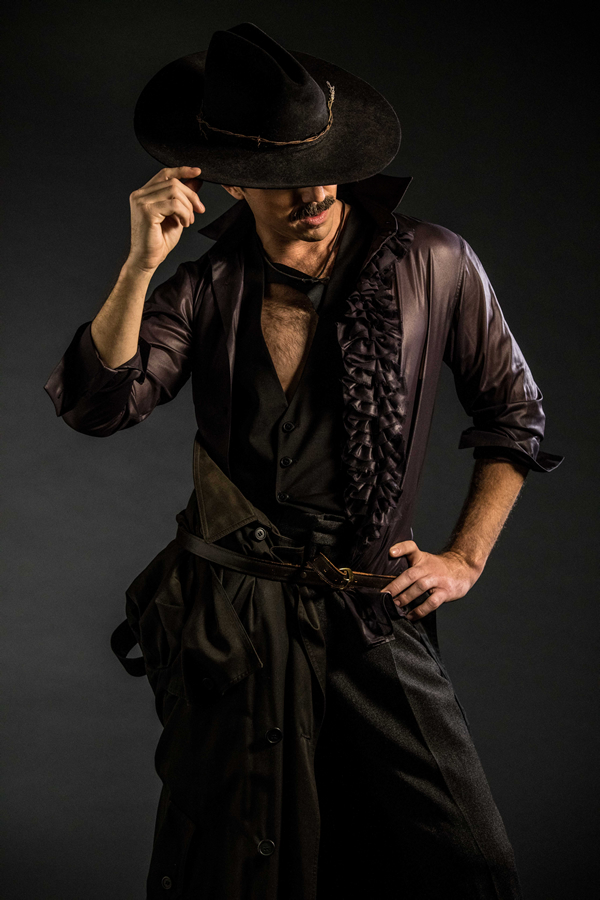
Jake Shears plays two nights at the El Rey Theatre this weekend. (Photo by Raphael Chatelain)




a&e features
From bullying to bravo: Joey Zauzig talks finding yourself while making people feel seen
Joey Zauzig went from being bullied for being gay to becoming “the internet’s best friend,” and now he’s sharing with us a glimpse into the life lessons and self-love that got him there
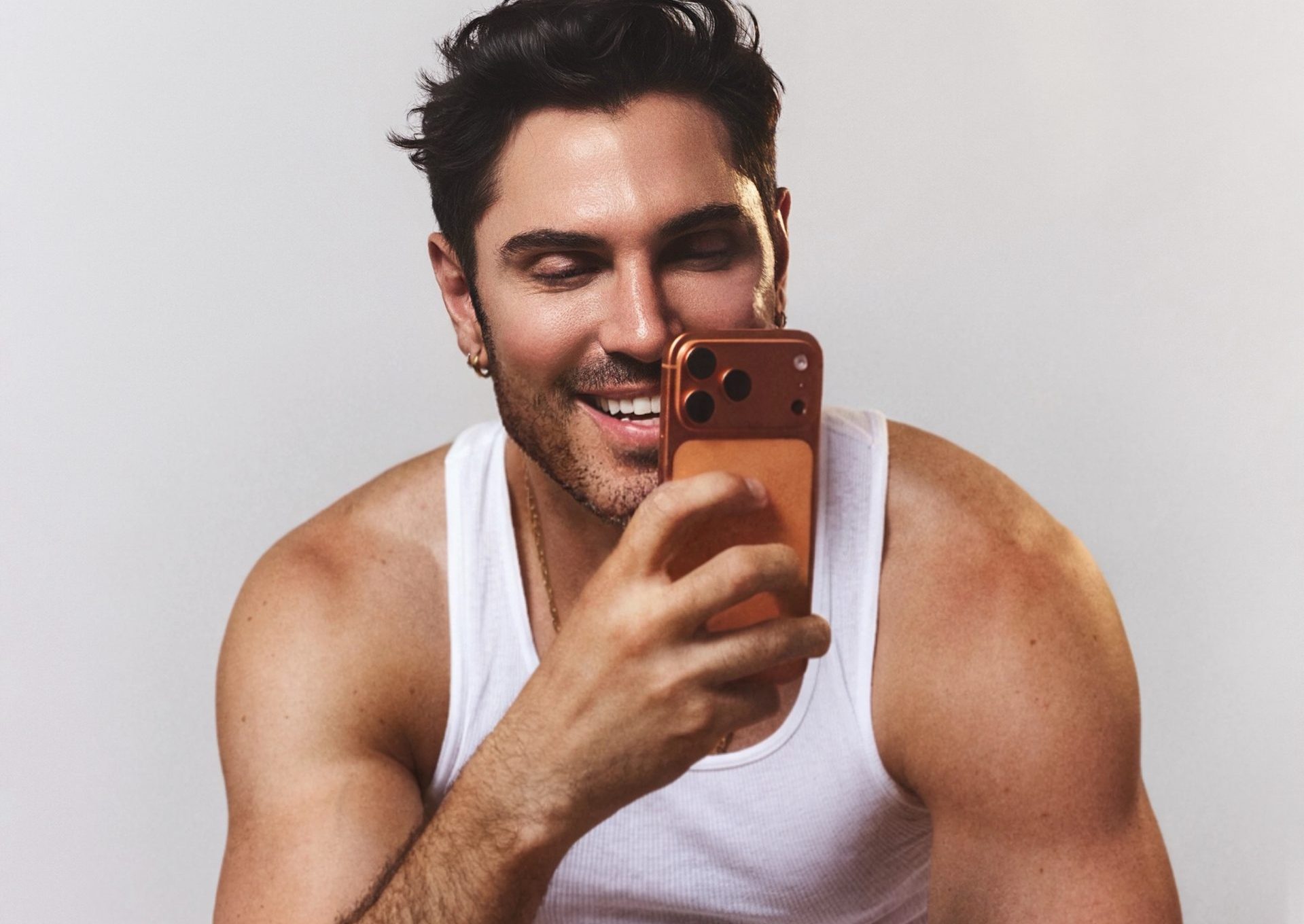
In his career, Joey Zauzig has built a unique space in our online community. Self-branded as “the internet’s best friend,” a title that stuck after an appearance on Good Morning America, Zauzig has created a digital place where humor, food, fashion, and advice all come together. Whether he’s encouraging someone to leave a relationship that no longer serves them, sharing a skinty recipe, or making his audience giggle, Joey has a way of keeping folks engaged. At the core of it all is the idea that showing up as yourself and making others feel less alone can be impactful.
Having experienced bullying for being gay before he was ready to come out, Zauzig understands what it means to search for acceptance and not find it when you need it most. Rather than allowing those experiences to own him, he has transformed them into a commitment to creating the kind of supportive space he wished he had growing up. In our conversation, Zauzig reflects on finding purpose through his platform while staying authentic and continuing to evolve. He also shares his love of food, his dream collab (you’ll have to read to find out), and what folks can look forward to as he takes his next big step with Bravo.
What does that title “the internet’s best friend” mean to you personally, and how did it come about?
It was coined when I was on Good Morning America a few years back and it just stuck. I love giving advice and being a virtual shoulder to lean on for my audience. I hope that people feel like I am a safe space for them when they come to my page and make them feel good and that I’m a friend they can rely on to be there for them.
You were bullied for being gay before you were ready to come out. In hindsight, how did these experiences impact the person and creator that you’ve become?
Those were some really tough periods in my life, but looking back, they shaped so much of who I am today. Going through that helped me develop a stronger sense of who I was and taught me the importance of accepting myself, even when it feels like the world isn’t ready to. I also didn’t have someone I felt I could look up to or turn to during those years. Because of that, I’ve always wanted to create the kind of space I wish I’d had growing up, where people feel safe, supported, and accepted exactly as they are. If sharing my experiences helps even one person feel a little less alone, then those difficult moments have found a greater purpose.
Instead of allowing those painful experiences to overtake your narrative, you’ve built a platform centered on positivity and empowerment. Was there a specific moment when you realized your story could help other folks?
I wouldn’t say there was one moment in time, but overall, as I went through these times, I found myself always wanting to make people feel good and smile. I have been so fortunate to have a platform where I’m able to give that to people, and I can’t wait for it to grow into something even bigger.
What’s the biggest responsibility that comes with being someone that thousands of people genuinely turn to for support?
I think the biggest responsibility has been being intentional with the content I make and finding a balance between putting out content that resonates with people and staying true to myself. I don’t want people to follow me because they think I have life figured out. I want them to feel like they’re hanging out with a friend who’s figuring it out too.
What’s the most meaningful message you’ve ever received from someone whose life was changed by one of your videos?
I receive messages every day, and it truly is the most meaningful part of what I do and makes it worth it. Those messages remind me that content is about so much more than entertainment. You never really know what’s happening on the other side of the screen, and it’s incredible to think that something as simple as making someone laugh, sharing a meal, or being honest about your own experiences can make another person feel seen.
You often encourage people to leave unhealthy relationships and believe in themselves. What’s one piece of advice you wish someone had given you when you were a wee one?
I wish someone had told me that the way people treat you is never a measure of your worth. When you’re young, it’s so easy to think that being rejected, judged, or made to feel like you’re “too much” or “not enough” means there’s something wrong with you. It took me a long time to realize that other people’s opinions are usually a reflection of where they are, not who you are. The right people will never require you to shrink to be loved. They’ll celebrate who you already are.
How do you protect your own mental health while constantly giving emotional support to others online?
I’ve learned that I can’t be there for everyone if I’m not taking care of myself first. I try to set healthy boundaries, spend time with the people I love, and remember that social media isn’t real life. I care deeply about the messages people send me, but I’ve also accepted that I can’t solve every problem. The best thing I can do is show up authentically, offer encouragement, and remind people, including myself, that it’s okay to ask for help and protect your own peace.
Your Skinty recipes have developed a fan base of their own. Where did that idea come from, and what makes a recipe Skinty?
Skinty came from me wanting to enjoy the foods I love while making them the healthiest version possible. I’ve never believed that eating well has to mean giving up the meals you’re craving. To me, a recipe is “Skinty” when it feels balanced. It’s satisfying, packed with flavor, made with better-for-you ingredients where it makes sense, and still feels indulgent enough that you actually want to make it again. That’s always been the goal: healthy without feeling restrictive.
Your content blends humor, fashion, dating, wellness, and food. How do you stay creative while producing content that feels green and not yet seen every day?
I think the biggest thing is that I create from my actual life instead of chasing trends. If something makes me laugh, inspires me, or feels like a conversation I’d have with my friends, that’s usually where the best content comes from. I also don’t put pressure on myself to reinvent the internet every day. I just try to tell familiar stories in my own way. If it feels authentic to me, it’ll feel fresh because no one else has my perspective.
You’ve covered plenty of viral food trends. What’s your humble opinion on folks queuing up for the latest candy-coated culinary creation sweeping TikTok?
I honestly love that food brings people together. If standing in line for the latest viral dessert or trying a crazy new food trend makes someone happy, I’m all for it.
I think the best meals are usually the ones you keep coming back to, not just the ones getting millions of views. I’ll always try the viral spot, but I’m just as excited to find those hidden gems that deserve the same attention. At the end of the day, if it tastes good, brings people together, and creates a fun memory, that’s what really matters.
Social media has blurred the line between creators and their audiences. What’s your take on parasocial relationships, and how do you balance being authentic without feeling like you owe followers access to every part of your life?
I think it’s a really interesting balance. I’m incredibly grateful that people feel connected to me; that’s honestly one of the best parts of what I do. If someone feels like they’re catching up with a friend when they watch my videos, I’ve done my job. At the same time, I’ve learned that authenticity doesn’t mean sharing everything. Some parts of my life are just for me, my family, and the people closest to me. I think it’s possible to be open, honest, and genuine while still having healthy boundaries. The goal has never been to let people into every part of my life. It’s to make people feel seen, entertained, and connected without losing myself in the process.
If you could collab with any celebrity chef or food personality, who would you be stepping into the kitchen with?
Without a doubt, Martha Stewart. She’s an absolute icon. I feel like we’d be the perfect duo; she’d be teaching me the proper way to do everything, and I’d be over there trying to convince her to make a Skinty version of one of her legendary recipes. If I could leave with one hosting tip, one recipe, and maybe an invite to Thanksgiving, I’d consider it a successful day.
Without giving away any surprises of course, what can your followers expect from you over the next year that they haven’t seen before?
Lots of exciting things are coming. You can expect to see me on Bravo, which I’m incredibly excited about. Beyond that, I’m continuing to expand my brand and platform.
a&e features
The trans Handy Ma’am helps where it matters most – at home
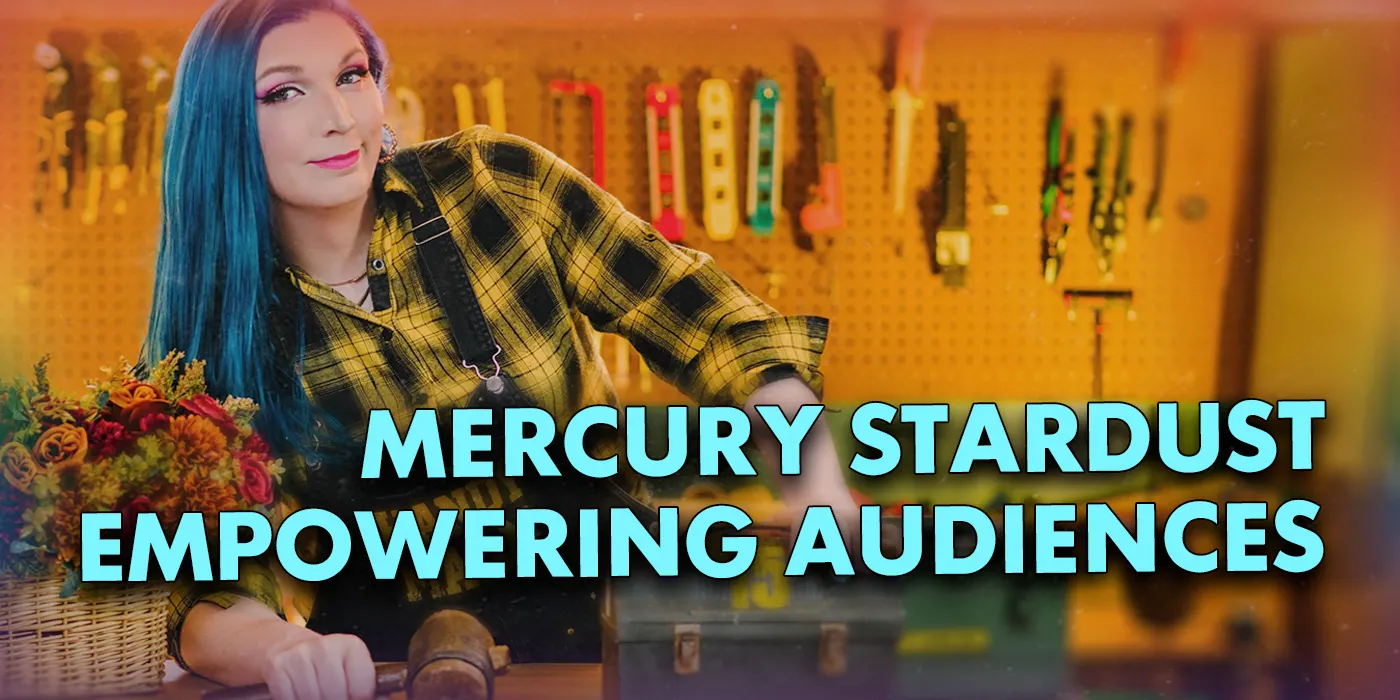
Mercury Stardust teaches DIY to empower vulnerable renters and homeowners
With the midterms fast approaching and Donald Trump’s malignant whimsy dictating the American agenda, many of us feel unsafe as scraps of hard economic and political news randomly swirl around our lives like debris in the swelling tornado outside Dorothy’s Wizard of Oz window. What’s happening? Will I get hit? Who can I trust to help me?
But all may not be what it seems. As America faces a reckoning with Trumpism and Trump’s cratering approval ratings, new leaders are emerging, standing in the breach to help reclaim our common humanity.
Anti-trans political spots blight the airwaves, for instance, driven by Elon Musk’s America PAC, “which has dropped $100 million on anti-transgender ads targeting Democrats,” trans columnist Erin Reed writes in her Erin in the Morning Substack.
The ads are proving largely ineffective. “Anti-trans ads may scare Democratic candidates, but among the general public, polls consistently show that voters rank transgender issues among the lowest-priority issues they care about and vote on, with less than 1% of respondents naming ‘wokeness/transgender issues’ as a top issue,” Reed notes.
However, by saturating the airwaves, trans people are constantly bombarded by “hateful messaging” that also hits unsuspecting viewers.
“They paint transgender people as predatory and disgusting to a national audience in a cheap attempt to win votes, and every viewing raises the temperature of the hate and abuse directed at a community that is already a target,” Reeds writes.
While trans people make conscious existential choices every day, many also live fulfilling lives and seek to be of service in unexpected ways and places.
Take the purple state of Wisconsin. Out lesbian Sen. Tammy Baldwin has won 17 general election races since 1986. Out trans candidate Dina Nina Martinez-Rutherford recently won her Democratic primary for a State Assembly seat representing the 76th District in Madison. And TikTok star and New York Times best-selling author Mercury Stardust, an expert in home repair, also lives in Madison with her trans spouse.
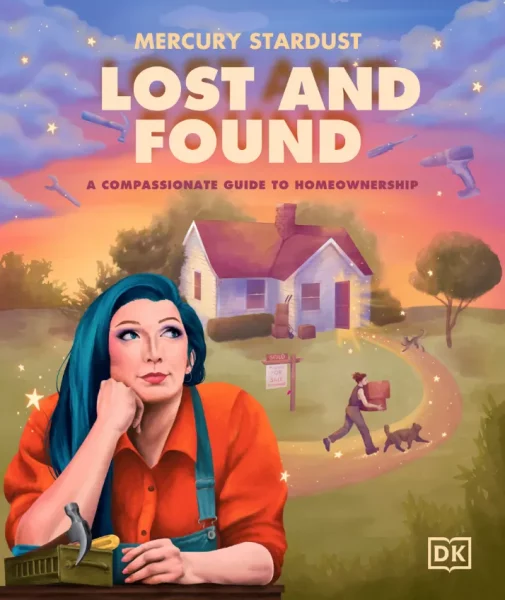
“I was a burlesque and drag entertainer, and I was also a maintenance technician for a property management company and for various companies in tropical Madison, Wisconsin,” Stardust says during an interview while on a book tour for her second book, Lost and Found, A Compassionate Guide to Home Repair.
She became well known on the internet for helping strangers learn how to fix their pipes and drywall, helping a lot of renters – which led to her first book, Safe and Sound: A Renter-Friendly Guide to Home Repair.
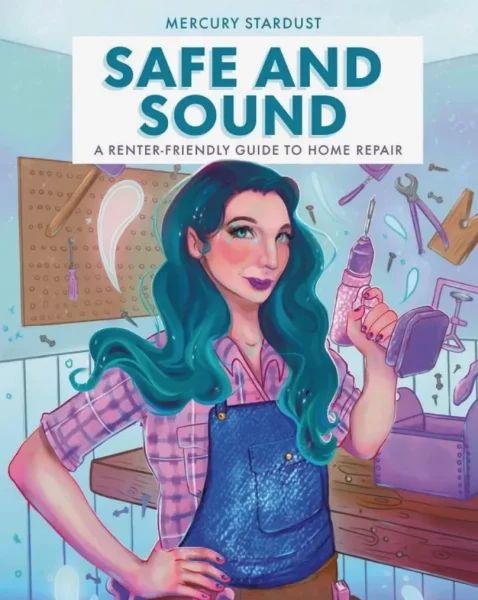
Stardust now lives in a home in Madison with her “wonderful spouse, Mouse ZZ” to whom she has been married for 10 years. ZZ (Ari) was also born and raised in Wisconsin, went to Cleveland, Ohio, for their undergraduate college degree, and returned home to get their master’s degree at UW-Madison.
“My trans journey is a fairly small part of my entire journey as a content creator, but I have kind of been really public about me raising money for gender-affirming care and helping other trans people access gender-affirming care” through Point of Pride, Stardust says.
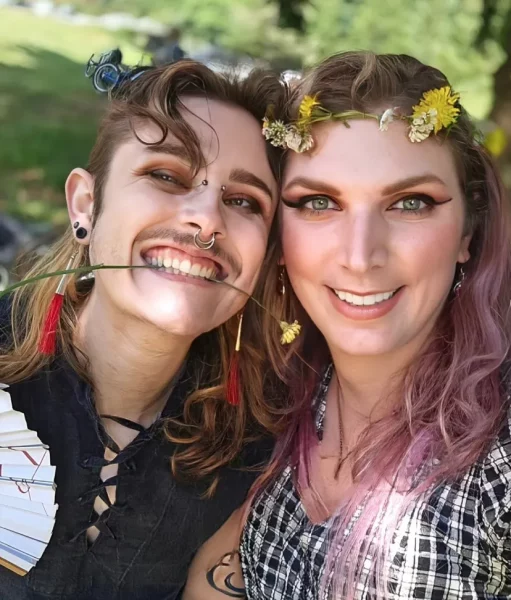
The couple came out together a few months after they were married. “We’ve kind of been living that trans T-4-T life ever since.”
Stardust grew up on a rural family farm with lots of cows. She acknowledges that Wisconsin has a strong sense of conservatism and is also “very pro-union, very pro progressive.”
“The whole motto of Wisconsin is ‘forward,’” she says. “It’s a purple state for a reason.”
A burlesque performer for 15 years, she founded the Wisconsin Burlesque Association.
By running “the only weekly drag and burlesque show (Five Star Tease) in all of Wisconsin for five years,” she says, “I was able to find out who I was. And we built a really strong, like-minded community that made it comfortable and safe to be able to come out as who we were.”
They built community by showing up.
“I think that people have an idea of rural America as if it’s only a certain demographic,” Stardust says. “But a lot of people and I grew up queer in rural Wisconsin, in rural places of the world. It doesn’t necessarily have to be where, ‘Oh, wow! I should be afraid to come out because I’m the one of only a million,’ right? That isn’t really the reality, right? There are a lot of people who are queer in those places, and all you have to do in order to make those communities is show up.”
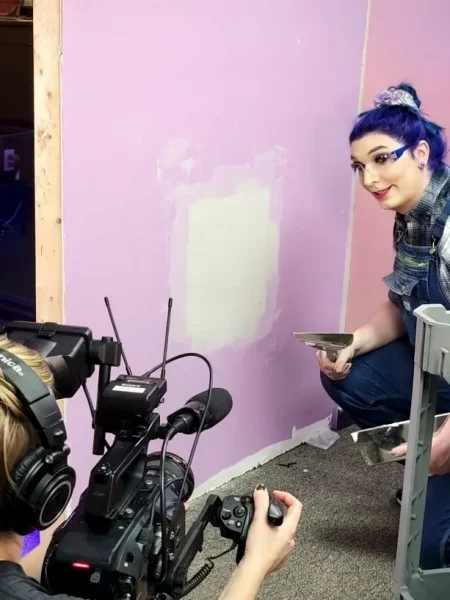
And with confidence, you get to show up as all of who you are. “It’s like being a maintenance technician in those spaces, you know? And there is no joke there. It’s like, this is a real aspect of who I am,” Stardust says, “where I’m gonna show up as who I am and just live my life the way that anyone would, because I’m just a human being. There’s nothing necessarily uniquely special about that. It’s just the fact that I’m also a trans person who happens to be really good at maintenance and is also very good at educating people” on DIY home repairs.
But Mercury Stardust’s big laugh and positive attitude, teaching DIY as The Trans Handy Ma’am, is also quietly empowering, building confidence for vulnerable people that they can fix something and not have to rely on a landlord or strangers. And if the need for maintenance is greater than their capabilities, learning how to pick professional help is important, too.
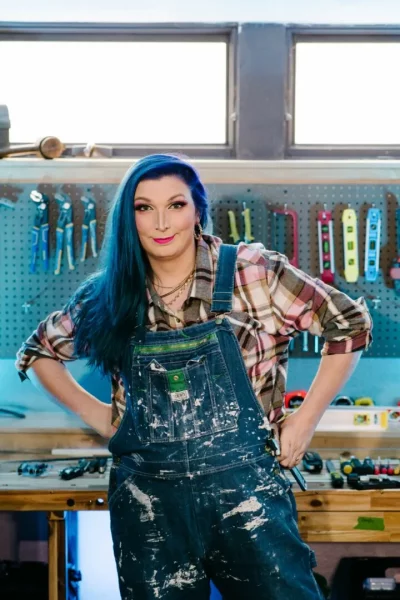
Practicing self-confidence and showing up safely can also be developed as skills to help build community at this dangerously precarious time when more and more tornadoes, real and imagined, increasingly swirl around us.
The tornadoes are a shared common problem that supersedes petty divisiveness while at the same time elevating and listening to the intersectional experience of those hit the hardest.
Here are some scraps of hard news swirling around in today’s tornadoes, issues we all have to deal with now and whenever Trump crashes.
In the last two years, the Trump administration’s enforcement of Project 2025 has resulted in trans people receiving greater hostile visibility and political scapegoating, in addition to shared cold, hard healthcare issues, food insecurity, housing insecurity, and high home heating and gasoline prices.
Right now, it’s hard to know who’s telling the truth and who’s offering credible ideas and solutions.
Since his first term, Donald Trump’s Orwellian version of truth as “alternative facts” has poisoned the well of discourse and promoted cruelty and division. Journalists were finally forced to call him a liar, question his mental stability and acuity, and peg him as a wannabe dictator.
“We do now live in a country that has an authoritarian leader in charge. We have a consolidating dictatorship in our country,” out MSNBC anchor Rachel Maddow said Monday night, Aug. 4, 2025. “The question is no longer how to prepare for this risk or how to try to avert it, but rather how to fight it now that it is here and in effect.”
Just over a year later, Trump banned broadcast TV press pool coverage from the White House campus while his Justice Department essentially lied for him in court proceedings. Trump launched his own authoritarian-like Trump TV programing to try to control the narrative. On Sept. 24, a Trump-appointed judge issued a temporary restraining order requiring the restoration of press passes.
But with the specific issue of pool coverage still unresolved, the Oval Office meeting between Trump and China’s dictator Xi Jinping was covered by Chinese state media but not covered live by US cameras, with BBC reporters noting, “we’re not sure exactly what they spoke about.” Reminder: at a two-hour private meeting with Russian dictator Vladimir Putin in 2018, Trump told the press that he believed Putin over US Intelligence.
Vice President JD Vance’s announcement of the administration’s intention to remove 760,000 Affordable Care Act enrollees from public healthcare exchanges adds to the five million people who dropped their ACA insurance after Trump and the Republican Congress let premium prices skyrocket. “Give us another chance — or, give us another couple of years to continue to work on the amazing things that we’ve been doing for the past two years,” Vance said on the All In podcast.
Meanwhile, more than 4 million people lost access to critical food aid between last July and April — many of whom are children – because of cuts to the Supplemental Nutrition Assistance Program (SNAP/food stamps), which the White House called “bloated.” More cuts are expected by the end of 2026, NPR reported last month.
Meanwhile, more than 160,000 pounds of raw meat with fake USDA inspection labels were recalled on Sept. 24; the CDC reports that as of September 17, 2026, 3,471 confirmed* measles cases were reported in the United States in 2026; and university scientists think outbreaks of infectious diseases like Ebola, hantavirus, bird flu and COVID-19 are on the rise.
And as Trump’s war of choice in Iran expands throughout the Middle East, home heating oil and gas and diesel prices continue to climb. An estimated 4 million to 5 million households use heating oil for homes during the winter, according to the U.S. Energy Information Administration. Massachusetts is already reporting that for the week of Sept. 21, 2026, the average retail price for heating oil hit $6.15 per gallon. That’s a 74.7% jump compared to last year, or a $6,000 bill compared to previous years of maybe a $3,500 or $4,000 bill.
And what’s going to happen when the nor’easter storms hit the East Coast? California Gov. Gavin Newsom has already declared a state of emergency to prepare for being the epicenter for a predicted “historically intense El Niño,” according to a news release from the governor’s office. There’s a 75% chance this super storm will become the strongest since 1950, according to the latest reliable forecast.
While Trump is bored with the war and calls the affordability crisis a hoax, community grassroots organizations such as Indivisible help produce No Kings protests nationwide, and individuals like Mercury Stardust help empower people to show up as who they are where they live.
Maybe they will also show up and share common ground over a common issue and create a new kind of real equality-based intersectional democracy, a more perfect union, in the process.
This is a cross-post from Karen’s LGBTQ+ Freedom Fighters Substack.
a&e features
Embracing queer exploration with actress Rosslyn Luke
The actress speaks about her coming out journey and making wedding plans with Scarlett Johansson.
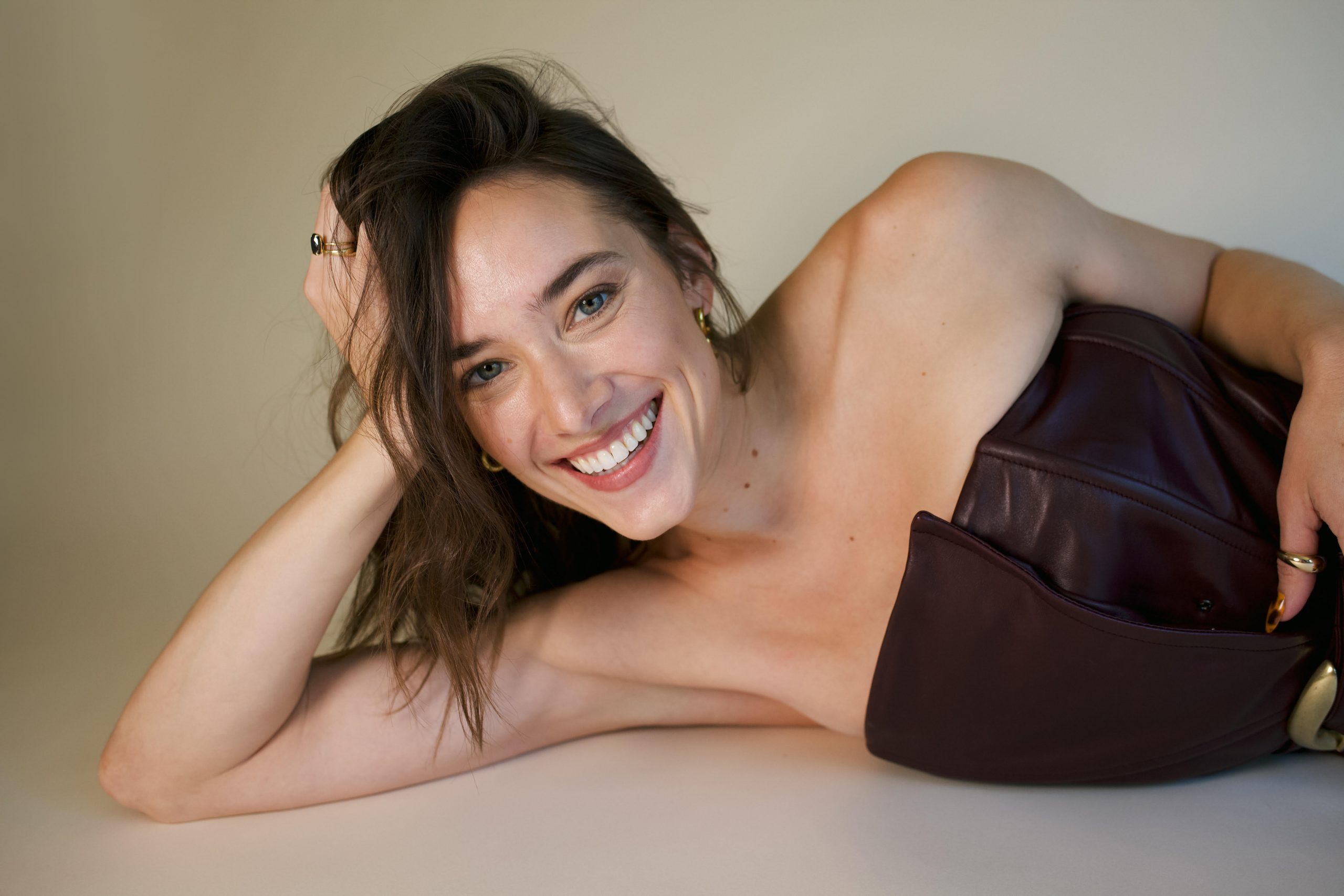
For most of history, performers have been forced to hide their queer identity to succeed — Rosslyn Luke is determined to do the exact opposite.
The past few years have been a professional whirlwind for the actress; she just starred in NEON’s Paper Tiger alongside Scarlett Johansson, Adam Driver, and Miles Teller. This comes after almost a decade of Rosslyn making a name for herself in the indie filmmaking world. It’s promising to be the first in a new wave of large-scale features, with Luke being announced alongside Emma Roberts and Leslie Bibb for a new film focused on renowned advocate Hal Donaldson.
It’s been amazing for Luke’s many longtime fans to see the actress finally receive the appreciation she deserves. And, especially for LGBTQ+ film-lovers, it’s so much better when viewers learn she’s doing all of this while being openly, proudly queer.
“Getting the role in Paper Tiger was a dream come true,” raved Luke. “My first day on set, I was sitting at a kitchen table with Scarlett Johansson and Adam Driver — my heart still kind of races when I think about it — and there was very much a feeling of, ‘Oh, I’ve done it.’”
It was a defining success for Rosslyn’s long career, with the actress joking about her first big role: starring in her Washington state elementary’s school’s Christmas play. Little Luke instantly fell in love with the versatility that acting entailed, a passion she still feels in every role today, saying, “I think it’s the exploration…I’m really curious about what makes everyone who they are. I really enjoy research and trying to figure out who my characters are, and all of the humanity that exposes me to. I think that is a huge gift.”
This sense of exploration not only fuels Rosslyn’s love for acting but also helped her realize and embrace her truest self when she came out seven years ago.
“I didn’t come out until I was 30,” the actress reminisced, thinking about the journey it took to understand her sexuality. “And the exploration it took to get there [is] a lot like the exploration I do through roles. I would take characters that weren’t necessarily gay and twist them to have queer backstories. And I think that was…my way of exploring in this safe world as an actor, before bringing it into the real world.”
And since bringing it into the real world, Luke has refused to hide her sexuality. She remembers that moment at the table with Driver and Johansson and how invested each actor was in her upcoming nuptials, with Rosslyn laughing, “It was very present in the room, my queerness. They both asked a gazillion questions — Adam was extremely invested in my engagement and how I was going to do the proposal. Yeah, it was very sweet!”
Luke’s genuine excitement over being able to pursue these large roles as an out queer woman is refreshing within an entertainment industry that still struggles with homophobia. It’s a fact that may shock some viewers; we’ve been lucky to see many queer-centric projects in the last few years. But there is still a great stigma against LGBTQ+ performers and creatives, with these people not only facing immense hurdles, but outright discrimination when trying to get their art made while being open about who they are. These lingering stigmas are ones that Rosslyn knows well and refuses to put up with in this new phase of her career, stating, “It’s such a big part of my identity, being a queer woman. And I feel like every time it’s ignored, it’s kind of… it feels like this huge boulder that I have to go around as I’m talking about myself.”
“As a queer person now, you know, years after coming out, I’ve spent so much time rediscovering who I am. Re-finding bits of myself that I now understand better. And that just brings so much more clarity to each of my performances and each of my characters. Because I feel like the more that I understand myself. the more that I can understand the world around me, and hopefully represent it in a…more accessible way.”
Luke’s deeper understanding and love for her sexuality clearly show in the powerful performances she’s offered in recent years, ones that are gaining her more attention than she’s ever had before. It’s clear that the actress is preparing for a whole new wave of big features like the ones she’s been proud to work on. And Rosslyn knows that not only do these projects mean so much to her, but also to the many viewers who want nothing more than to see an LGBTQ+ person winning today.
To these fans, Rosslyn says, “I hope…I hope they feel seen. I hope that I can present an authentic version of myself as I go out into the world, as I move forward in my career. And I hope that having my performances be respected and grounded in reality will allow other girls to know that they can do whatever they want to do. Even if they’re gay, even if they’re from a small town in Washington where there’s not a lot of representation. You can do it…you can kind of be whatever you want to be.”
And then, after thinking a moment, Rosslyn laughed and added, “You might have to get out of that town, though.”
a&e features
‘Star Trek: Strange New Worlds’ star Celia Rose Gooding breaks down that finale time travel twist
The Season 4 finale gives Gooding the ultimate showcase as a performer
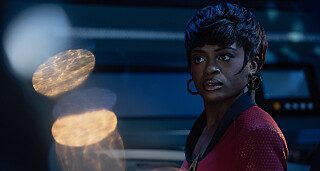
At long last, Celia Rose Gooding can talk about the Star Trek: Strange New Worlds Season 4 finale. And it’s a finale that belongs almost exclusively to her.
In the finale episode, now available to stream on Paramount+, communications officer Nyota Uhura (Gooding) comes face-to-face with an older version of herself.
In order to save Scotty (Martin Quinn), Uhura must uncover a mystery and confront the leader she was always destined to be.
It’s one step closer to Strange New Worlds closing the gap between The Original Series, where fans were first introduced to Uhura through Nichelle Nichols’ iconic performance back in 1966.
“We see them confront each other and love each other in a way that can only breed more self-acceptance, self-understanding and self-actualization, which is what fans have been hungry for this whole time,” Gooding says of Uhura’s interaction between past and future self.
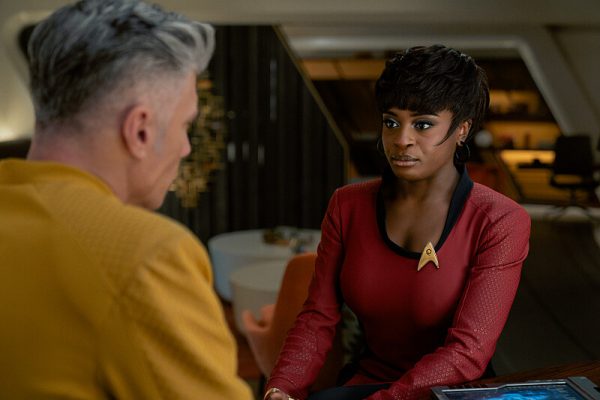
Gooding spoke with The Blade to break down the emotional final episode, why she was hesitant to pay homage to Nichelle Nichols’ beehive hairdo, and her hopes for the future of Black and queer representation on Star Trek amid the Paramount-Warner Bros. merger. This interview has been edited and condensed.
I know you’ve already finished filming the upcoming fifth and final season, so first of all, congratulations! This finale is such an exciting showcase for you. Can you break down this time travel twist and how you approached playing these two different versions of Uhura?
So much of what this episode meant to me was about honoring everything Uhura means — not just to me, but to Trekkies across the world, to people who’ve seen themselves in Uhura, and most importantly to Nichelle Nichols. I didn’t get the opportunity to meet her, although I’m desperate to have had that. But I think there’s something really special and unique about being able to have a conversation with a version of yourself that you no longer recognize in the past, and also a version of yourself that you do not recognize in the future. So much of the conversation between the two Uhuras in the beginning is filled with tension; they’re not super fond of each other just because they are so different. There’s so much growth and separation between their two mentalities. Given the stakes of the episode, Strange New Worlds is hearing things and is called on in a way that she does not understand. And so much of Uhura’s job, as a communications officer, is to understand — especially the things that she’s hearing, the conversations that are going on. When she is detached from that understanding, she’s left floating in this really uncomfortable space. The first thing that she can reach out and grab onto is something that should not be happening; she should not be able to speak to a version of herself that exists in the future. It breaks so many directives; she is breaking a lot of rules about time travel and temporal anomalies.
And then on the flip side, we have TOS [The Original Series] Uhura, who gets back on this mission, and something has gone terribly wrong. That tenacity, that perseverance, that reminiscent characteristic between both of these Uhuras is that they’re not going to give up. I love that in Uhura’s mind, if something doesn’t make sense to her, it’s because something is wrong. And not because she is incapable of understanding what’s happening; it’s that something has happened and it must be corrected. I love the confidence that we see in TOS Uhura of talking to her friends and crewmates and being like, “You aren’t listening to me. You need to listen to me!”
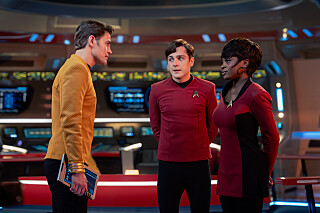
What was the most challenging part of playing these two parts?
The time jump between the two of them. Originally, it was three years, but now in the edit it’s just one. And playing Strange New Worlds Uhura, who knows all of this time has passed but doesn’t know what’s in it that makes her future self so unrecognizable — at first, I was trying really hard to make sense of that tension, trying to establish something. I kept coming up against the obstacle of, “How can I make this make sense?” Even when we only had 16 hours until shooting, I was down to the wire. I had conversations with director Chris Fisher, and he really implored me to not focus so hard on trying to make it make sense; the moment it makes sense is the moment we don’t have a story anymore. So much of the tension and conflict is that we don’t understand how this has happened; these two characters have to make it make sense together, and they do, because they always do! But it was a real challenge as an actor to live in that liminal, unknown, uncharted space and let that discomfort be the fuel for the engine that is the story. Even as I talk about it now, I fear that I’m not making any sense!
Finally, I think fans of Uhura have been so hungry for her to just inch closer and closer and close that gap, and I think while [the Season 4 finale] doesn’t completely close that gap all the way, we see them confront each other and love each other in a way that can only breed more self-acceptance, self-understanding, and self-actualization, which is what fans have been hungry for this whole time.
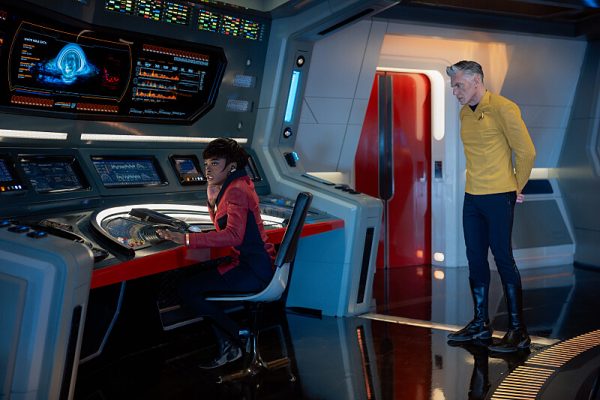
And you get to pay homage to Nichelle Nichols with that iconic beehive hairdo.
Story-wise, it was important for us to give the audience a way to immediately recognize who was talking because they’re both me, with my face. And it wasn’t just my hair that established the timeline change — it was the lighting, color grading, and everyone else’s different looks and costume changes. But the conversation around that iconic beehive- at first, I was a little resistant. I’m not gonna lie to you. I didn’t love the idea of recreating this iconic hairstyle because I have such admiration for Nichelle Nichols. God, I owe her so much for this era of my career. It is all thanks to her and what she has done, and so it felt like blasphemy, sacrilege. I was like, “I don’t know if this is right, guys; I think some things are just meant to be precious.” And then I saw it on camera, and I was like, “You know what? Maybe there’s a reason why they’re the showrunner, and maybe I should just do my part and let everybody else do their part.” It’s so recognizable, iconic, and immediately present.
I’m just filled with pride. I’ve been holding on to this episode for so long. I’ve been dying to talk about this episode because we shot it a year and four months ago, in June 2025. And I’m just really excited for fans to see it. It was a labor of love. It is an ode to Nichelle, but it’s also an ode to the version of Celia that said yes to playing Uhura because she had no idea what she was fucking in for. She had no idea, and just as Uhura held her hands and said, “You’re doing great,” I just want to hug that version of myself who was so hard on themselves, the same way the Strange New Worlds Uhura is, and just tell her to exhale and be like, “Baby, you got it. The hard part is behind you now. You get to just show up, do your job, and learn the lessons day-by-day.
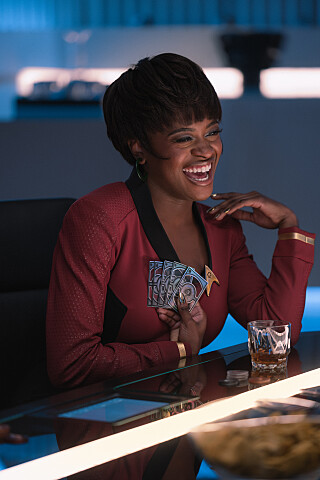
As we’re celebrating Star Trek’s 60th anniversary this year, it’s been a moment to recognize the show’s diversity and inclusion. There are, naturally, some fears about what the future of the show will look like considering where the industry is going amid the Paramount merger. As a queer person, how do you feel about the potential for the show to continue embracing diversity and perspective?
I know my publicist is holding her breath right now! I am really excited to be surprised about the future of Trek because right now, realistically, there is no Trek in production. We have another season of Starfleet Academy to release, and another season of Strange New Worlds to release, and then it gets quiet for live-action Star Trek. I know there’s a Nickelodeon show coming; there’s a lot of animated Trek happening, but when it comes to Gene Roddenberry’s vision, I don’t know what the future holds. The unknown can mean so many different things, and I am really excited about what I’ve been able to donate to this franchise. I’m so excited about what it means as a dark-skinned, Black queer individual to exist in Trek, to have my vessel that Uhura lives on in, and what it means for me and my community.
I can’t imagine that Strange New Worlds is going to be the last of Trek. I hope that is not the case because Trek has done so much for how people think about the future and how people embrace the future. There is so much positivity and diversity embraced in Trek, and the world is only going to get more diverse, despite what the powers that be want you to believe. We’re not going back, and I am excited for Star Trek to continue to be at the forefront of the stories that are told about how we do not go back, about how we move forward and embrace each other and embrace the unknown, embrace the diversity of opinion and experience. I’m just really excited to be surprised. I want to wake up one day and be like, “I could never have imagined this for Trek!”
a&e features
Are you ready to ‘Rock Out’ with Dustin Lance Black?
The filmmaker speaks about his new documentary, queer punk rock, and Dolly Parton.
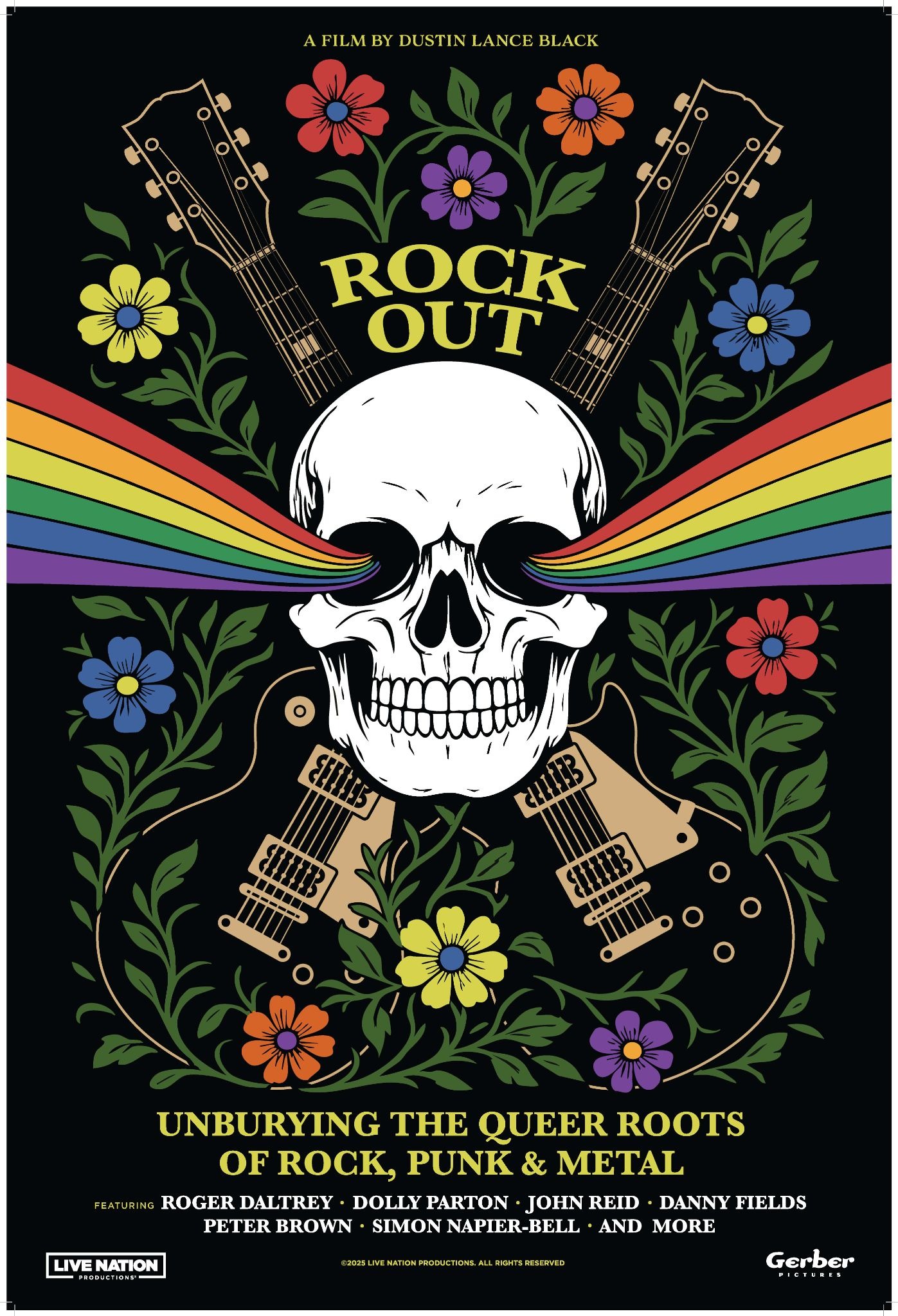
It’s hard to imagine modern music without the LGBTQ+ community. Whether it’s the wild rhythms of pop or the beautiful tones of R&B, almost every genre owes a huge debt to this culture and how it sculpted this industry into the global powerhouse it is today. Every musical style has been shaped in some way by queer people throughout history, a fact that is especially true for rock, punk, and heavy metal.
These three genres are explored beautifully in Dustin Lance Black’s Rock Out, a four-part docuseries that shows how queer folks of the 60s and 70s continue to shape the music that audiences love today. It delves into the closeted musicians, gay managers, and LGBTQ+ fans who helped shape contemporary music, finally remembering the queer people that so many want you to forget. And all of this hard work can be owed to one person: Dustin Lance Black’s brother, Marcus.
“Rock Out started with a question that my brother asked me,” said Black, speaking about the project with the LA Blade. “He was really into rock and roll, punk, heavy metal — he really surprised us when he came out. He was feeling like an outsider, even in the gay community, and he’d asked, ‘Are there gay people like me, who are into this kind of music and this scene?’ I…I told him I didn’t know.”
Unfortunately, these feelings of living as an imposter led to Marcus taking his own life at a young age. It was a loss that continues to shape Dustin and his career as a filmmaker, with the man creating many award-winning queer films like Milk and Rustin to inspire new generations with the stories of those who came before. But while he’s worked on various projects documenting LGBTQ+ narratives, none have been as personal as Rock Out, with this exploration of queer people in music honoring Marcus and the many other young people struggling to find somewhere they belong today, with Black explaining, “I think that [Marcus] not having a place in the music that was the center of his world led to his early death. And this [documentary] was an opportunity for me to answer the question: were we there? Is there a place for us there now? And if we were there to begin with, what did we do? And the answers were so shocking to me.”
These answers are shown across Rock Out’s four episodes, with Black taking film crews across the United States and the UK to discover the queer stories that kickstarted punk, heavy metal, and rock so many years ago. He discovered how queer ‘transgression’ was key to many artists’ success; audiences were drawn to musicians who shirked societal norms. From the flamboyancy of Prince to The Beatles’ signature hairstyles, so many performers adopted queer mannerisms to attract fans, with the documentary showing how these legendary images were crafted by queer people working in the background. People who knew that, if their real identities ever came out, they’d be immediately blacklisted and booted from the industry they’d dedicated their lives to.
“I mean, Little Richard, who is the father of rock and roll, would eventually come out — but the backlash was so strong, he would go back in!” Exclaimed Dustin. “Jobriath was one of the biggest talents, but he tried to play as an openly gay rock star, so no one bought the records. The documentary…it does start off sad, because some of these artists tried to come out before the world was ‘ready’ to receive them. But [Rock Out] also tells the story of how queer people finally broke through.”
It’s a bittersweet evolution that Dustin documents through a mixture of never-before-seen archival footage and interviews with musicians from that era — including Dolly Parton, with Rock Out featuring one of the final interviews the country singer gave before her passing in August 2026. Black spoke about what an honor it was to speak with her, saying, “She was managed by Sandy Gallin, a gay man, and she talks about what an advantage it was to have a gay manager at the time. It was really moving to hear the interview, because she supported LGBT people very early on…I think we owe her. It will be very hard to find someone to fill her shoes.”
It’s through conversations like these and highlighting the music industry’s many LGBTQ+ changemakers that Dustin Lance Black hopes to honor his brother, with Rock Out sending a very important message to all watching: yes, you belong. In fact, not only do you belong, but by tracing the roots of heavy metal, punk, and rock, he discovered that any LGBTQ+ fan should be proud, knowing that their queer ancestors made these songs the chart-topping genres they are today. He hopes that this documentary assures them that they are not alone in their love for this music, saying, “Loneliness and isolation can lead to young people making some pretty dire decisions. And what helps prevent that is having easily accessible stories of foremothers and forefathers who came before, so that you know we have always existed, and that they were fighting for them. Fighting for them to have a better life.”
It’s a message that people like Marcus need to hear, and it’s one that Dustin gives to audiences with every song, single, and note of Rock Out.
Rock Out premieres on Revry on September 20th, 2026.
a&e features
Cameron Esposito will make you laugh (and cry) on ‘King of Drag’ season 2
The new host of this historic series breaks down why we need it today
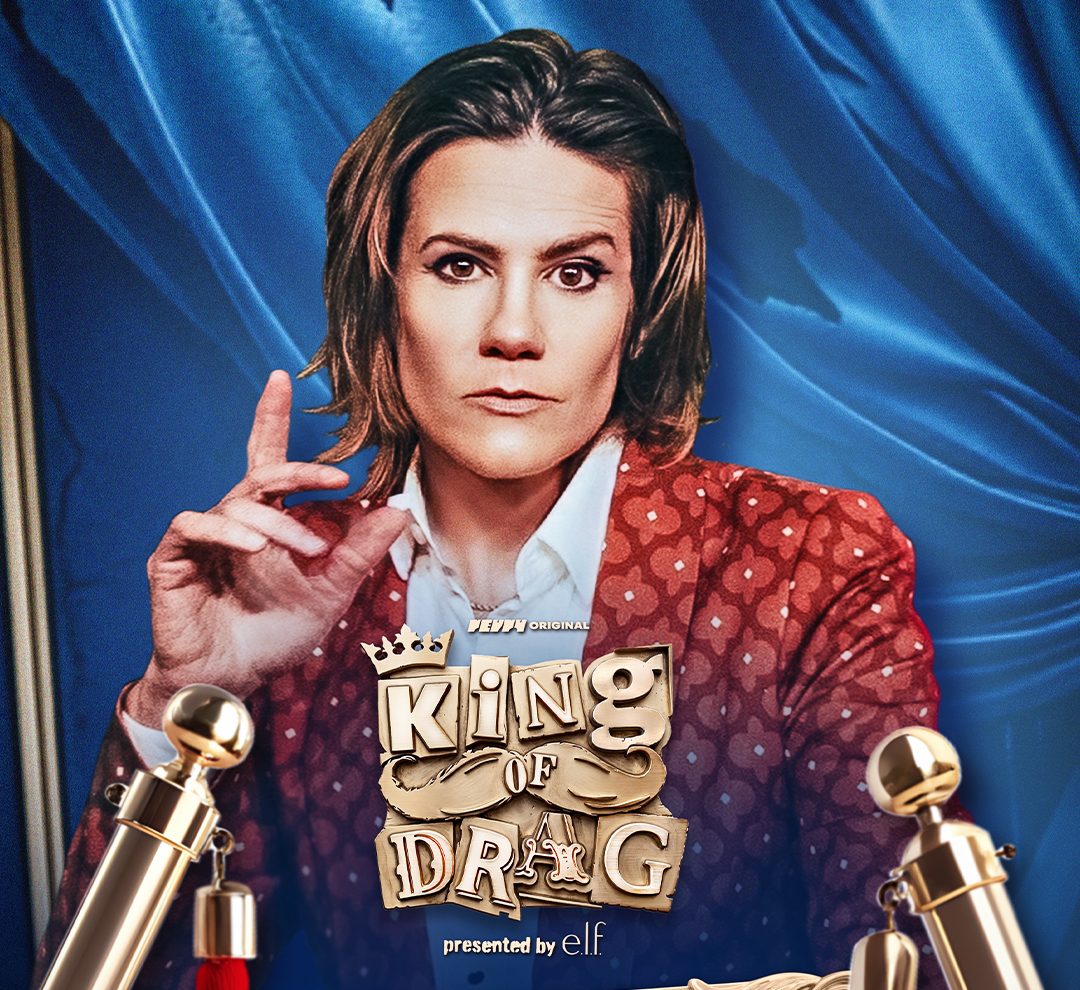
Drag enthusiasts — and fans of LGBTQ+ excellence in general — were thrilled in 2025 when Revry debuted the first-ever drag king competition show, King of Drag.
Joining the pantheon of drag-themed reality series like RuPaul’s Drag Race, this new program finally gave the kings of our community the attention they deserve, introducing viewers to a group of stellar performers who’d been flexing their artistry for years in communities across the country. Filled with a judging panel of queer royalty, complex challenges, and jaw-dropping creations from each contestant, King of Drag ended season one to widespread acclaim and thousands of new fans all over the world.
These watchers were elated when it was announced that the show would be returning in 2026 for a second installment. And they were even more excited to find out who’d be taking over as its illustrious host: historic queer comedienne Cameron Esposito.
This comic has spent the past few decades proving why they’re the perfect person to host a show like King of Drag. Many will know Esposito from their hilarious (and often very twisted) comedy; her many stand-up specials, albums, and guest appearances have earned her numerous accolades. Pair this with her current standing as a vocal LGBTQ+ advocate, and many folks in the queer community regard Cameron as one of our funniest activists today, always ready with a joke and a lesson on why we need to come together and fight against hatred. With that reputation, it was no question that she’d be the best person to fill the shoes of former host Murray Hill, after he stepped away from the program after season one. And in conversation with the LA Blade about the new role, Esposito raved about how excited they were to take on this mantle, saying, “I started [my career] around Kings.”
“They were really socially justice-motivated. They were super fun to watch — very sexy — and funny,” she continued, recounting her early days as a comic in Chicago’s thriving queer nightlife scene. “So having a chance to lift up that community as a host….I’m trying to come up with a lot of sick jokes so that the show is as good as it possibly can be!”
Cameron spoke about what it meant to lead King of Drag season two and how honored she was to guide this whole new batch of Drag Kings. “Any reality competition show is a high-pressure situation, and folks are really putting themselves out there! There’s so much vulnerability in that. So I really hope that I was able to bring some sweet little moments of relief for them. And also for the viewers — I hope the viewers think I’m funny,” she laughed.
Joined by judges Gottmik, Vico Ortiz, and Damian Pelliccione, Esposito worked hard to not only make amazing television, but to finally give these performers the appreciation they’d worked years for. She stressed that beyond the jokes she makes on this season (all of which she assures are hilarious), this was her main reason for joining the series, saying, “One of the biggest things was to focus on the kings. To get these folks the greater recognition that television brings, so that when they go back to their cities or when they’re on tour, people have that extra incentive to get out and see them.”
Because King of Drag understands how these artists have been treated not only by the mainstream media, but by the LGBTQ+ community itself — namely, how many queer people push them aside to focus on more ‘conventional’ images of drag. It’s why so few kings have been allowed on drag-centric shows until now, a glaring erasure that not only undercuts each series as a source of queer culture, but robs these performers of the success that television often entails.
“Trans dudes, queer women, lesbians…we are still, often, at the margins of a larger cultural push,” Esposito explained. “Elevating kings is an opportunity to trust audiences more…[because] I really don’t think that viewers have been given the opportunity to treat us seriously. You know, we might be joking around — but we are not a joke. When you’re talking about our rights, our respect, our safety…knowing people who are actually in this community affects how we’re treated. It affects how people see us, that we’re not just like nameless, faceless nothings.”
“I think it’s time for these kings who deserve recognition, and I also think it’s time to trust and move the needle in a larger context. Because we deserve to feel noticed, because we deserve to be paid. And because we deserve to be safe.”
Cameron Esposito is excited to lead King of Drag with not only the comedy that has defined her career, but the advocacy that guides her every single day. Because this series is not only a competition reality show — it’s a spotlight. A spotlight on a community that faces so many issues yet has never received a platform to openly speak about them. Combine this with a celebration of their astounding art, and King of Drag provides an exploration of drag kings like most queer viewers have ever seen before.
Esposito is proud to play such a huge part in bringing that to audiences today — and she promises to give you some sick, twisted laughs along the way.
King of Drag season 2 drops on Sept. 20th on REVRY.
a&e features
Falcon| NakedSword launches new publishing division, Falcon INK
The gay adult studio publishes two erotic novels
While there’s been an overall movement against LGBTQ people in politics, media, and print, there’s also been a huge gay male erotica boom. Not just Heated Rivalry, but Heartstopper and Red, White and Royal Blue have revealed a huge hunger for erotic male love stories across multiple forms of media. Those books not only found huge fanbases, but drove wildly successful adaptations and launched stars like Connor Storrie and Joe Locke. Ready to enter this landscape is the popular adult film studio, Falcon| NakedSword.
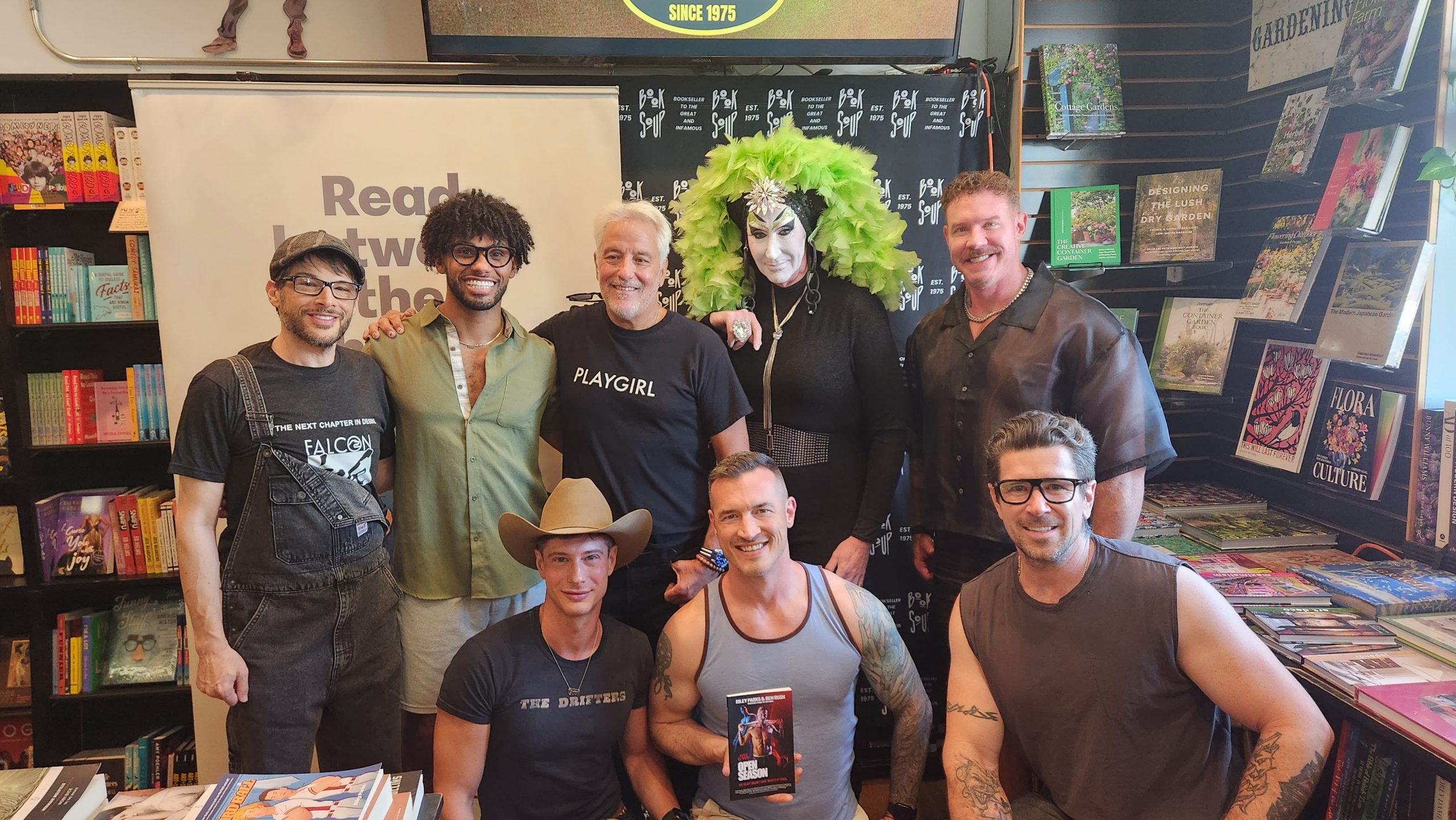
The studio has created a new publishing division, Falcon INK. They celebrated this expansion with the release of their first two novels, Hard Ball and Wild Game: Open Season at Book Soup in West Hollywood on August 29th. The guest list included major players from both behind and in front of the camera, including stars Derek Kage, Beau Butler, Trenton Ducati, Tony Genius, and Eddie Burke. Also present were the studio’s President Tim Valenti, Sister of Perpetual Indulgence and Falcon’s Creative Director, Sister Roma, and writer/director and Co-Chief Content Officer and Chief Creative Marketing Officer, Ben Rush.
The books in question include Hard Ball, which follows two baseball players whose relationship gets way more than heated. Wild Game: Open Season is a prequel to the multiple award-winning film Wild Game, where Kage plays a man desperate for money who enters a dangerous, high-stakes chase. If caught, his captors could do anything they want. Spoiler alert: it’s triple penetration. The book revealed how Kage’s character got to that level of desperation.
This expansion into print media is interesting considering there’s a growing war on queer content in books and adult content. Rigorous age verification laws require viewers to submit a prohibitive amount of personal information to access adult content. Kage is quick to point out, “The written word can be just as intense, just as controversial, if not more provocative than what you see on screen.”
He adds, “The part that bugs me is with age verification, the state could decide this is harmful to minors and make people who want to access it have to show an ID. You have states that are banning books that have LGBTQ+ themes and sexual education in the name of it’s harmful to minors. When you lump it all together, not only is it unconstitutional, you’re making it harder for consenting adults who want to access it.” Then he really hits the nail on the head, exclaiming, “People should be able to read what they want to read and consenting adults should be able to view what they want to view.”
In addition to print media, Falcon| NakedSword is expanding into safe-for-work content with a thriller microdrama, The Last Guest, and has even partnered with an apparel company for their own line of tie-in underwear. Rush was quick to clarify that this is not a shift from their core business model.
Rush shares, “I don’t really see it as a turn away from adult content as much as an expansion of what we can do. We’ve spent years telling stories where sexuality is obviously a major component, but, underneath that, you’re still dealing with character, chemistry, fantasy, romance and humor. Those are the things that make people connect with a story.” The studio has gone out of their way to explore countless genres with films ranging from thrillers and horror to romantic comedies.
Rush adds, “‘Safe-for-work’ content gives us another canvas for that. It allows us to take some of the storytelling instincts we’ve developed and see how far they can go when sex isn’t necessarily the destination.” Now these erotic novels are hardly safe for work but also enter the growing genre of male-on-male sex and romance.
The Heated Rivalry Connection
The runaway success of Heated Rivalry couldn’t be avoided, and Rush was quick to clarify that Falcon INK, while a savvy business move, is not necessarily related to the rise of that hockey romance. In his words, “Their success demonstrates that there’s a huge appetite for queer romance and queer characters, and that the audience extends far beyond what people might traditionally think of as a niche LGBTQIA+ market. But I wouldn’t say we looked at those properties and said, ‘Let’s make our version of that.’ If anything, their success reinforces the idea that queer stories can move between books, television, film, and other media and still find passionate audiences. That’s exciting from a creative perspective.”
Derek Kage adds, “Heterosexual cisgendered women are loving gay stories. I find it fascinating. I also find it a little lucrative. I’ve noticed an uptick in my fan sites: heterosexual women who love watching two men have sex with each other.” He also notes that now cis-female performers are actually enjoying filming more with gay men. HIV concerns really limited male-on-male performers, whether they were gay or straight, but now times clearly have changed.
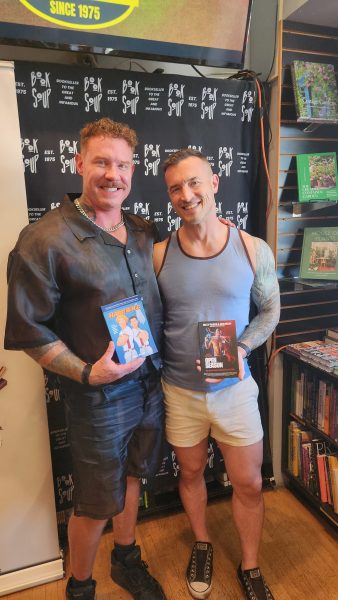
Tim Valenti adds that this demographic is growing. He shares, “Sure. It is a different demographic. It’s much younger, and female. I can honestly say we now know about 12-13% of our membership is female for our hardcore sites.”
While a different demographic, Rush doesn’t believe there’s much of a real difference adding, ” I don’t think the audiences are completely separate. People who consume adult content also read books, watch television, fall in love with characters, and want rich stories. We sometimes talk about “adult audiences” as though that’s their entire identity as consumers, and, obviously, it isn’t. The interesting part is seeing where those audiences overlap.”
Sister Roma was quick to point out the political importance tied to the success of these stories. She adds, “I think that stories that show queer people in romantic situations are very healthy and important, especially right now, because there are real attempts to take away the right to marry, and there’s so much oppression headed towards our community from every angle. It’s important to show that for people with genuine feelings of love and expression like everybody else, to make people know we’ve always been here; we’re not going away.”
The Future
With a budding cinematic universe and cross-platform storytelling, is this the making of a new media empire? Rush jokes, “I’m not sure I’m ready to put ‘media empire’ on my business card. But I do think there’s something exciting about building a creative brand that isn’t restricted to one format.”
He continues, “If we have characters or stories that people connect with, why should they only live in one place? A book can become something on screen, and a character can have a life beyond one project. The goal isn’t expansion just for the sake of expansion. It’s to create things people genuinely want more of. If that ultimately looks like an empire, I suppose there are worse problems to have.”
Both Kage and Eddie Burke opened up about the unique differences between performing their audiobooks. Whether it’s Burke working on his Southern accent or Kage using his teenage closeted history to get into character and even putting himself in the mindset of the female character, it’s clear these are serious actors who take their art seriously.
Kage adds, “We are actually talented performers. Not only are we talented, but we are also educated, and we love what we do. We are authentic in everything we do. If you can put on a performance while taking 3 dicks at once, that is talent.” He jokes, “Meryl could do it. She could do anything.” Jokes aside, Kage confessed to staying in character to deliver some of his more challenging performances, so it’s not surprising this character would live on in print.
As to whether Kage and his fellow co-stars could find some of the same breakthrough success as the stars of other male erotic stories he shares, “If Hollywood or a major television show or production company needed my talents, I’d happily accept. If you need a deep-voiced, muscley dude who has a way with men and women and anyone in between. Call me.”
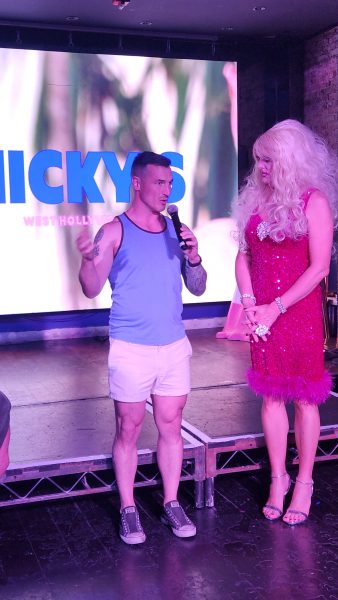
The group ended their night at Micky’s supporting their drag show hosted by Ingenue. They shared Falcon| NakedSword prizes, including free copies of the book. If you’d like to get yours, you can purchase Hard Ball or Wild Game: Open Season as a paperback, digital copy, or audiobook.
a&e features
Defying convention (and physics): ‘Speedball’ Mike Bailey on identity and inclusion in pro-wrestling
All Elite Wrestling’s first non-binary champion talks about early wrestling inspirations, the importance of connecting with fans, and the history (or lack thereof) of queer representation in the squared circle.
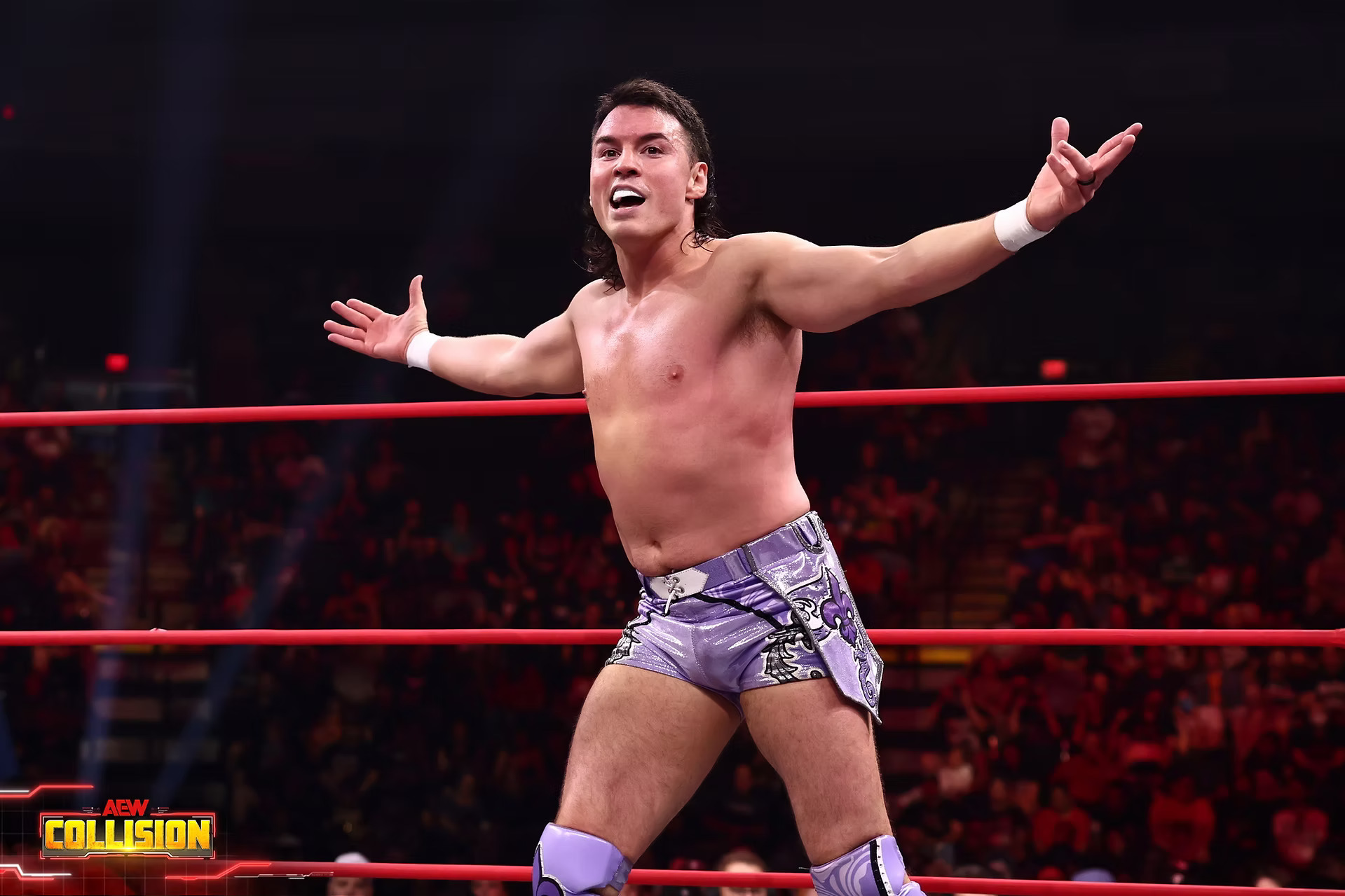
Canadian professional wrestler “Speedball” Mike Bailey may be a regular fixture on national TV as a key member of All Elite Wrestling’s expansive roster, but their path to wrestling stardom is anything but conventional. Nicknamed “Speedball” for his high-velocity, gravity-defying work in the ring, Bailey (who identifies as nonbinary) has spent more than 20 years traveling the globe as a star of the international independent wrestling scene, holding titles in TNA, DDT, and the IWS.
Thanks in large part to a 5-year travel ban incurred in 2016 that prevented him from working in the United States, Bailey’s international career flourished, and after years of globetrotting as a freelancer (and a stint in TNA), Speedball officially signed with AEW in January of 2025. On the road to AEW’s largest annual pay-per-view, AEW: All In, The Blade had the opportunity to talk to Speedball about connecting with fans, representation in wrestling, and how/why the industry can become more inclusive.
Between your YouTube vlogs and your Twitch streams, you’ve cultivated a very deliberate digital presence. What inspired you to start vlogging/streaming, and why is it important for you to maintain those channels now that you’re signed to AEW?
There are a lot of facets to the answer to that question, but the main one is that I believe that in 2026, wrestling is and should be an immersive experience – that’s how it’s going to grow. I think the days of people playing characters that were only able to exist on television in 15-minute weekly increments, because they’re some kind of undead creature that can’t really have a conversation, are not what the wrestling world needs anymore. As is Kayfabe, the whole secrecy behind wrestling. I think these days, if you look at social media, you will see that being open and honest and cultivating an audience that knows you well is the way to go. For professional wrestling, to have the best matches, what I want is an audience who can connect with me and who understands what I’m going through on an emotional level; so that’s one aspect of it.
But there’s a lot more – the reason I started the vlog is pretty much the same reason I started Twitch streaming, which was that during the pandemic, when the world was shut down, I was unable to travel, unable to engage with my audience, unable to see a lot of the friends I’d made around the world of professional wrestling. To try to re-form that connection, I decided I would try to leverage the internet to make up for the fact that I couldn’t be there in person, which is kind of what I’ve had to do my entire career.
If you’re familiar with my story, I was unable to enter the US for five years. During those five years, my focus was on growing my skill set as a professional wrestler, but also my brand, and trying to get as much global recognition as I could. Those five years really highlighted to me the importance of putting yourself out there as much as possible.
Historically, depictions of LGBTQ+ people in professional wrestling have been either negative or non-existent. Could you talk about the importance of AEW not just as an alternative promotion to the mainstream, but as a platform for queer talent?
If you’re familiar with pro wrestling, you’re familiar with its history in this century: where you basically had one promotion that had the monopoly on professional wrestling, and that promotion really was only one person’s vision being put on screen. Over the years, in the early 2010s, social media came about, and it became possible for independent promotions to actually advertise their shows, to build an audience, and to distribute their shows online.
Independent wrestling is intrinsically connected to the audience, right? It’s smaller shows for smaller audiences: if your crowd doesn’t like something, you will find out very, very quickly. So independent wrestling grew to the point that there was a giant hole in the wrestling market between what was presented on TV and what was happening at an independent level, which is so much closer to the audience. Tony Khan saw that gap in the market, and that’s what led him to create AEW. But I think the key here is that in order to be successful and continue to grow, pro wrestling needed to listen to its audience.
It became very, very clear that the homogeneous, uniform professional wrestler that was presented on TV was not representative of the audience who wanted to see professional wrestling anymore. The world is diverse. If people want to see that same diversity reflected in their professional wrestling, there is no reason for it to be reserved for only one kind of person. That is absurd. People want to see queer people. People want to see all kinds of stuff that doesn’t fit the historical mold of what a professional wrestler should be.
Were there any early LGBTQ+ wrestling trailblazers who inspired you?
It’s funny – no, not really, because there kind of weren’t any. But I remember finding a box of Manami Toyota tapes – I think someone had gifted them to my sister when she wanted to be a professional wrestler as well. But I remember watching those tapes of women’s wrestling in Japan, and seeing these women perform in front of a sold-out Tokyo Dome in the early 90s, and getting the sense that “Hmm, I think the way that women are treated on American televised wrestling is ridiculous. Clearly, they’ve drawn a crowd, and they’re able to put on a great show.” Seeing someone like Aja Kong, who is an absolute icon and the exact opposite of what was presented on televised pro wrestling for women at the time, really blew my mind.
Aja Kong is one of the greatest professional wrestlers of all time, and she doesn’t get nearly enough credit, just by getting a ton of credit. But we’re talking about the early 90s here, and this is a mixed-race queer woman who was selling out the Tokyo Dome. Seeing that really opened up possibilities for me. The fact that Aja Kong and Meiko Satomura are routinely ignored in the ‘greatest wrestler of all time’ conversations just shows you how heteronormative pro wrestling historians are, the fact that their careers are largely ignored.
Meiko Satomura, to me, is one of the top five greatest professional wrestlers of all time. Not just because of how good she is in the ring, but because of how her career has transcended decades, what she’s done through her own promotions, and the other wrestlers she’s trained. I think that’s completely incredible, and the fact that they get so little credit is very indicative of how things need to change regarding the way professional wrestling is viewed historically.
As someone who has been wrestling for 20 years, how and when did you know it was the right time to come out publicly?
So I never really ‘came out ’; I never declared anything. In fact, it was quite the opposite. I just rejected the theory of gender, if that makes sense – specifically, by design, there was no declaration. There was just a changing of my vocabulary, the words I used and how I described myself, especially within pro-wrestling, where that kind of thing is very relevant. Baked into the scripts, in the words of pro-wrestlers, there is so much talk of ‘manliness,’ and none of that ever resonated with me. I’m very lucky to have a platform such as pro-wrestling, which is stereotypically hyper-masculine, through which I can show people you don’t have to abide by those standards.
You mentioned the lack of LGBTQ+ wrestling influences you had early in your career – how does it feel to know that the next generation of wrestlers are going to have the likes of Nyla Rose, VENY, and Speedball Mike Bailey to look up to?
I haven’t thought about it too much. I’m glad that I resonate with people, but I feel like there are so many other ways people can resonate with me. Whether it’s non-binary, or trans, or through any other way, what I want people to take away is that you can still succeed if you don’t fit the mold. That is a huge hurdle I think professional wrestling, as an art form and a community, needs to overcome.
I always make extra time for anyone who is part of a queer or any marginalized community, or who otherwise doesn’t fit the mold, to give them advice and help however I can. There needs to be more of a conversation to be had about people who enter the pro wrestling space who have disabilities, and how there is space for those people, and that they belong just as much as anyone else.
a&e features
Are you ready for a ‘Culture Shock’ with Andy Lalwani?
The LA reporter dishes about everything going on with his new podcast

If you’ve been to an event in Los Angeles, then there’s a good chance you’ve had the pleasure of seeing Andy Lalwani’s work firsthand.
The gay reporter has spent almost a decade bouncing around the city’s hottest venues for some of today’s biggest publications. Whether it’s Grindr or Disney — yes, the man has recently done work for both companies — Andy has become known for not only his fantastic carpet interviews, but the engaging social content that he always produces afterward. He offers a simultaneously relaxed yet engaged approach to these moments, with his videos being filled with intriguing conversation from huge stars and a shocking amount of casual laughs.
Pair this constant presence with an engaged social media audience of more than 30,000 followers, and it’s safe to say Andy Lalwani is a true star in LA’s bustling reporting scene. It’s why so many folks across the city were excited when he announced his newest project: the Culture Shock podcast.
“It is so fun to show up to a studio and just have no idea what you’re about to get into,” laughed Lalwani, reminiscing on the past few months since Culture Shock debuted in March 2026. “I want every guest to feel like this is just a great time, to be sitting across from somebody and just getting on. I think the world needs to laugh a little bit more, and that’s what this whole podcast is about.” Culture Shock sees the reporter go from the carpet to the recording studio as he sits down with some of LA’s biggest cultural changemakers. Whether it be musicians like Icona Pop, comedians like Matt Rogers, or even Leland of RuPaul’s Drag Race fame, the podcast has quickly gained an audience who love Andy’s intriguing conversations with each personality.
The host has been overwhelmed with the response from his audience, saying how happy he’s been to see folks enjoying this project — especially because Culture Shock wasn’t created in the best of circumstances. Candidly speaking about what led him to make this show, Andy stated, “I started my podcast when I got laid off from my job.”
“It definitely has a lot of highs and lows when you’re trying to work and break into the [media]…it’s been really hard for LGBT people to be involved in news whatsoever because of the landscape.” It’s an issue that affected thousands of folks in this community, with many queer journalists from big publications — including ones catered to the LGBTQ+ community — being laid off in recent months. But Andy stressed that after years of trying to prove himself to others, it actually felt inspiring to finally get the chance to create something completely unique to him. “Seeing gay people-of-color is hard in the media — behind and in front of the camera — and so being an Indian guy…there’s not a ton of us who do what I do,” he explained. “So once I got laid off, I was like, ‘I just want to own something myself for a change, and not have to report to anyone else.’”
And own it he does, with Andy offering his trademark style of interviewing into each episode of Culture Shock. He was quick to emphasize, though, that the show’s success can’t all be owed to himself. Andy thanked his entire team at Spotify by saying, “Spotify has been really supportive with this endeavor,” describing how they’ve helped him fight through the early nerves of this process. Made up of professionals from around LA, he offered immense gratitude to the many folks in both production and promotion, with the podcast even being featured in the platform’s June spotlight on LGBTQ+ creators.
Lalwani spoke proudly about all that he’s accomplished with Culture Shock, but when asked about the future of the podcast, he calmly stated that he wasn’t sure what would come next — and that was on purpose.
“When you work in media, you think you have it all laid out for you. But for me, if you asked me five years ago where I thought I’d be now: completely different,” he laughed. “But I’m in the prime seat, and I want to keep that going. Maybe expand it even more! I can’t tell you where the next thing is going to be, but it’s…it is just such a joyous, rewarding process to say I’ve taken every skill — production, reporting, on-camera experience — and just like housed it into one. That’s it…it’s just a nice home for myself.”
An earned sense of optimism from a person who’s worked to master the skills audiences hear in every Culture Shock episode. Though while he’s keeping his options open, one thing is for sure: Andy Lalwani is prepared for the many big and bright things that are certainly in his future. And now that he has access to his very own studio at Spotify, he’s excited to ensure audiences listen in on these new adventures every step of the way.
a&e features
Singer Tiffany returns to pop life with new cookbook
The 80s icon gabs about everything from cooking to mall life to Gay Pride
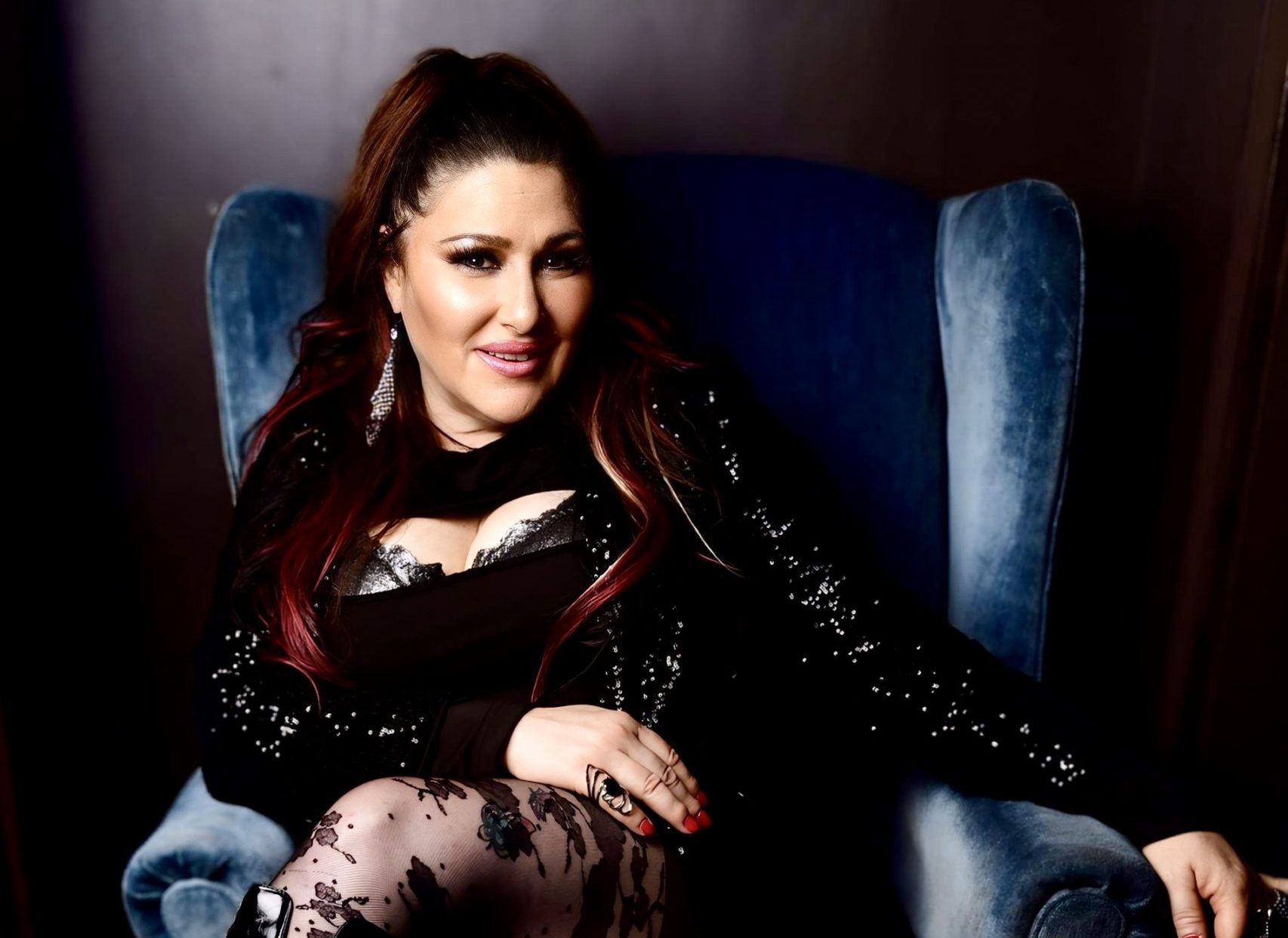
When you think of Tiffany, you might be instantly transported to the 80s and remember the mall girl who made a name for herself with the hit “I Think We’re Alone Now.” Maybe you remember her from her countless reality television appearances or even as Judy Jetson from The Jetsons Movie. She’s really done it all.
If you see her now, she retains her rocker spirit and bubbly energy but also has a brassy mom vibe with big Melissa Schemment from Abbot Elementary energy. She’s done it all, from acting to singing, and her run on the Food Network series Rachael vs. Guy: Celebrity Cook-Off helped ignite an excitement for the kitchen.
Now she’s got a new cookbook, Pop Life: The Ultimate 80s Kitchen Encore, along with a cooking club called Let’s Food with Tiffany. She also continues to perform and is still touring. She took some time from her busy schedule to chat with us about her past, what inspired her new book, and all things mall culture.
Why do you think you have such a big gay following?
I’ve always just tried to be real with my life, the good, the bad, honest. I mean, I love a little bit of glamour, but then I’m also very, very real. I’m very down to earth. Sometimes maybe too down to earth. You’ve just got to live who you are, and I’m a little bit of all of it. I think my gay fan base sees that, like they really allow me to be who I am. And I love that, you know?
Do you have a message for your LGBTQ fans?
I love you guys so much. And thank you for being a part of my world all these years. Thank you for loving my songs. I love the chance to have these meet-and-greets with fans. When people tell me, “Girl, your music means everything to me, it really helped comfort me,” or “It gave me the courage to, or it gave me the strength.” I don’t take it lightly.
What do you like about engaging with your LGBTQ fans?
I love chit-chatting. I love getting all this fashion scoop as well. Sometimes they’re a little too honest, but I really do love performing at Prides. Everybody comes ready to rock. You know, it’s one of the best, best, best audiences because everybody is present and engaging and just ready to have a good time.
Why do you think people resonate so much with your music?
I had a very turbulent childhood; I would often go in my bedroom and play Stevie Nicks
and just pretend I was someplace else, and that wasn’t happening outside my door. And it would soothe me because I was just a kid and my household could get a little crazy. I think some of my songs, even though the pop songs were pop, there was some grit there. Some of the ballads were deep for a young person to be singing them.
Like, what?
Songs like “Could Have Been.” The label didn’t want me to record them. They were like, this is too adult for you. And I was like, “Have you ever seen a 14-year-old in love or heartbroken?” You’re never gonna find anybody else; that’s it. That is the one. And if they break your heart, God forbid, you’re never going to recover, and it’s magnified by a zillion when you’re young.
I really fought to have “Could Have Been” on the album, because it showed I could sing, but I disagreed that it was too adult for me. And, you know, it’s on the album, became number one, and it really is an anthem song for me. It’s my favorite song that I sing.
Do you sing it on tour?
It is the highlight of the show. It’s the one moment we’ve kind of drawn it out a little bit and extended it, so we have the fan moments; everybody sings along. But I think there’s maybe something to the music, and then maybe something to me.
Can you tell me a bit about the progression of your music from then to now?
Learning to stand up for myself, learning to become a songwriter, you know, in the earlier albums I didn’t write and no one really wanted to help encourage that, or develop that. It was happening anyway, so I took some time and just started working with my band members. I’m a big advocate of if one door closes, there’s another door. If you want something, go and get it. And it doesn’t mean that it will happen on a massive level.
Do you have any advice for fans?
If you’re happy with what you’re doing and you feel like you’re growing as a person, and you feel like you’re living what you thought would be the design of your life on any level, that to me is great. It’s great for mental health. It’s great for the spirit. That’s kind of what I’ve done in my life.
Can you tell me about your life now?
I wanted to become a songwriter. I wanted to be a mom. I wanted to move to Nashville and be a hippie dippy doo, you know, and have time off. I live part-time in the UK now. I’m getting really into the culinary world there. I take the train into London; I’ve got my coffee and my dew and all my stuff. But then when I go home to Nashville, I literally kick off my flip-flops, hair in a ponytail, and I’m grounded in the earth. I’m planting stuff. I have an orchard.
When you said my coffee and my dew, did you mean Mountain Dew?
Oh, no, I mean like my sausage rolls or my pasties or whatever else I’m grabbing on the go. I love my M&S, and I always have my cappuccino…it’s called a cup of personality for me. Like, that’s how we start the day.
Can you tell me a bit more about your love of food? Where did that start?
I started traveling when I was so young; I always wanted to go where the locals went. I wanted to shop local. I never took it for granted that I was going to come back to these places because I didn’t know. All of a sudden, I’m in, like, Thailand and India and the UK; I never knew if I was coming back
I was like, I want to go eat where the locals are. So I was always dragging my band because I was so young. I had to have people with me, and I’d be like, it’s adventure time. Let’s go. And I think that’s where, you know, I started to kind of talk to my fans about, “Where’s a good place to eat?” It became a dialogue. And so many people, as you travel the world, are really excited about their food and their music. And they light up when you ask them about it, to be honest with you, so it just became something that I did.
You have a cooking club; how did that start?
During Covid, I had this deep, deep, deep sadness of missing my mom and my grandmother, my dad, and I just started cooking my grandma’s recipes, because it made me happy. I thought, well, I’m gonna show this to my fans, because I think they’re doing the same thing.
So that’s when I started a cooking club, Let’s Food with Tiffany. It was just me in the kitchen hanging out, but talking like this. And it became a weekly thing, and I think it was more than just cooking; it really was a friendship. And once COVID kind of went away
I started traveling again. I just decided I don’t want to give this up.
So after that, I started developing my spice blends: Rockstar Za’atar, Hip Hop Harissa, and Let’s Taco Taco Taco.
I want to do what’s called TIFF takeovers, where I go into restaurants from mom and pop places to high-end places. They’re ticketed events. They get an appetizer, maybe an entree, maybe one of my poptails, don’t know, but whatever I work with the venue on their level. And a Q&A. And then we rock it out. We do a little acoustic show.
Can you tell me about the book?
The cookbook with Chef Alicia [Shevetone]. I met her just as a friend first. A friend connected and said, I think you guys would be girlfriends And sure enough, we were instant girlfriends. And then the creative came. And so many of my records have been like that. So many of my other projects have been like that, where you know you meet people, and you’re like, everybody’s like, oh, you should do something together.
I’m not a chef. I’m a foodie. I’m a newbie, and I think that also makes people feel comfortable. It’s like we’re going on this adventure together; let’s see what we get into. And I literally, that’s, I mean, that’s part of my life in the UK. I am now being exposed to the bigger, broader culinary world, which I love.
I can’t let you go without asking you about malls.
We need fun back. I wish we had the malls back. I’m a big fan of small business myself, and it’s so necessary for people to make different incomes nowadays, and you get those unique, one-of-a-kind pieces in that. But the mall represented gathering. It was a safe place to go. You’d go and pick up something and try something on, and you know, if you had kids, you would drop them off there. They could be in the arcade, the music shop, whatever. It was just a culture.
You walked around; even if you had no money in your pocket, you got dressed up, and you kind of walked around, and you saw other kids from other schools or your school, whatever it was, it was a destination. We don’t have places like that anymore
And it’s very sad, you know, I mean, a lot of the malls are dying all over wherever I go. And, you know, being part of the mall tour was brilliant.
You’re also touring!
I do, so I’m going to Chile, to the Philippines, and then I’m doing Kim Wilde’s The Singles tour in the UK early 2027. Meanwhile, I have the All This Time tour that I’m doing now, which is pure retro. And I have all my pop life parties, so I’m pretty busy right now. You know, just wearing all hats, about to head to New Mexico for a book signing convention, so lots of book signing conventions in my future.
You can read all about Tiffany’s projects, including her tour, on her website. You can also purchase POP LIFE: The Ultimate 80s Kitchen Encore.
10 years later, we still can’t shake Barry Jenkins’ ‘Moonlight’

AIDS Walk Los Angeles set for 42nd year amid growing challenges

Alianza para la Inclusión fortalece la defensa de derechos LGBTQ+ en Centroamérica

The facts about Victory Fund’s investigation and the path forward

In Ga., 2 trans candidates believe voters are ready for them

Renee Good’s family files two federal lawsuits

988 restores crisis services for LGBTQ+ youth

House Democrats urge White House to confront Turkish government over anti-LGBTQ+ crackdown

Lula, Flávio Bolsonaro to face off in second round of Brazilian presidential election

The California Gubernatorial Debate missed getting real
-
 U.S. Federal Courts5 days ago
Renee Good’s family files two federal lawsuits
-
 National5 days ago
988 restores crisis services for LGBTQ+ youth
-
 Turkey5 days ago
House Democrats urge White House to confront Turkish government over anti-LGBTQ+ crackdown
-
 Brazil2 days ago
Lula, Flávio Bolsonaro to face off in second round of Brazilian presidential election
-
 Commentary3 days ago
The California Gubernatorial Debate missed getting real
-
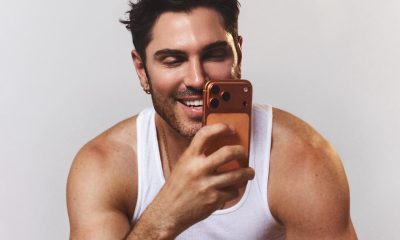
 a&e features3 days ago
From bullying to bravo: Joey Zauzig talks finding yourself while making people feel seen
-
 Brazil2 days ago
Transgender woman elected to Brazilian Chamber of Deputies
-
 Opinions2 days ago
Evan Low is not the leader the Victory Fund needs at this moment
-
 History2 days ago
Preserving the past: Robert Kesten on Stonewall & storytelling; LA Blade joins at the Abbey, Tuesday, October 6th at 6 pm
-
 Books2 days ago
Eliot Glazer’s new book an engaging collection of essays