
News
Creating Change 2019 creates controversy, again


For much of its 31-year history, the National LGBT Task Force’s Creating Change conference has been a mecca for intellects, movement leaders, grassroots activists and allies eager to engage in coalition building. The gathering created a cauldron of ideas, sparking analysis and sometimes messy debate over strategies for fighting institutionalized oppression and ugly anti-LGBT discrimination developing its own organized Religious Right movement in states around the country. And the conferences almost always made news. This year, Creating Change made news again—but not particularly favorably.
In years past, LGBT reporters eagerly pursued thought leaders expressing powerful, political assessments of surviving under siege and their passionate strategies for confronting the struggles ahead.
During the 1993 conference in Raleigh, North Carolina, for instance, radical, Marxist-leaning former director Urvashi Vaid surprised herself by calling for traditional 50-state get-out-the-vote organizing to combat the Christian Coalition. “We must develop a more pro-active and clear political strategy” to “knit together” different efforts, she said, and build a powerful movement to secure a federal equality act and beat back Newt Gingrich’s revolution.
NGLTF executive director Matt Foreman stunned the Creating Change audience in 2008 by calling HIV a “gay disease” and chastising the LGBT community for allowing HIV/AIDS to slip as a priority and spread among people of color through institutionalized racism and lack of access to healthcare. He received only a smattering of applause but the issue was hotly debated by activists once home.
NGLTF executive director Kerry Lobel, who with Lynn Cothren brought Coretta Scott King and Dorothy Height to NGLTF, called Creating Change “the political hothouse of our movement,” the “incubator of countless projects, campaigns, strategies and initiatives that help to bring our movement into the 21st century.”
Lobel later served on the Coastside Jewish Community’s Board of Directors. One wonders how she or Foreman or Vaid would have handled Creating Change 2019, which made LGBT news for a disruption by the Cancel Pinkwashing Coalition and the Task Force’s muted response amid charges by national LGBT Jewish leaders and online commenters that the protest and reaction were anti-Semitic.
On Jan. 24, as the opening plenary was getting underway in Detroit, a handful of activists started chanting “Free, free Palestine!” As they made their way onstage, Creating Change organizer Andy Garcia stepped aside and the lights dimmed. Undeterred, the leader, who identified herself as a Jewish, lesbian, transgender woman, proceeded to slam the Task Force for what she said was a continued “ban on Palestinian content and that has stretched into Jewish and Muslim content at this conference and we won’t stand for that.”
She noted that the Cancel Pinkwashing Coalition submitted seven workshop proposals about Palestine and pinkwashing to Creating Change, all of which were rejected. “Pinkwashing” is a term derived from “whitewashing” applied to LGBT rights. Generally it suggests a marketing or political ploy that makes a product, person, or country appear pro-LGBT while diverting attention or covering up an opposite intent. The term was original coined by Breast Cancer Action in 1992 to expose companies that claimed to support the cause through pink ribbons while actually profiting from the illness, according to Self Magazine.
The Cancel Pinkwashing Coalition wants “robust programing that reflects the Task Force’s so-called commitment to change, dignity and equality,” the Jewish trans lesbian leader said. “We want a conference and a space where radical queer and trans people, radical Jews, radical Muslims, radical Palestinians, radical people from across the globe and around the country can come together and discuss all parts of our liberation. And right now our content is being censored. Our liberation is being silenced and our voices are being shut down because the Task Force is too cowardly to have a conversation on one of the leading social justice issues of our time—Palestinian freedom.”
The leader blamed the ADL—the Anti-Defamation League—for encouraging the Palestine ban “as part of a reaction to protests that took place in 2016.”
That protest in Chicago left an indelible mark on the consciousness of anyone who heard about it. A Wider Bridge, an organization that promotes LGBT equality in Israel, was hosting a reception for Sarah Kala-Meir and Tom Canning from the Jerusalem Open House for Pride and Tolerance when more than 200 yelling people crammed the hallways outside the third floor reception room, terrifying the guests and causing them to flee for fear of violence. The group opposed what they claimed is Israeli pinkwashing to deflect from its policies toward occupied Palestinians—but their message was lost in the storm of fear they created. The Chicago police were called, which lead to a slew of other issues.
After the 2016 controversy, National LGBTQ Task Force Executive Director Rea Carey told the Washington Blade that the Task Force “does not have a policy stance on the Israeli Palestinian conflict….We are not an organization with an international mission.”
But that did not satisfy the Coalition, which protested at Creating Change last year, as well.
“I’m Jewish,” said the Cancel Pinkwashing Coalition leader at the Jan. 24 opening plenary. “I’m here to say that the ADL does not speak for me and the ADL does not speak for queers. In fact, if you look into their history, they have committed acts of severe violence against the queer and trans liberation movement. The ADL spied on – the reason that many of us are here – Queer Nation. And they spied on ACT UP in the ‘80s. Is that an organization that the Task force should have a partnership with – one that pied on ACT UP? No. No. No.”
This attack infuriated LGBT Jewish leaders. In 2012, the ADL, which monitors and educates about hate groups, submitted substantial testimony to support the Matthew Shepard and James Byrd Jr. Hate Crimes Prevention Act and has been actively involved with educating about hate crimes.
But the accusation about ACT UP is true. As reported by the New York Times and others, the San Francisco offices, homes and storage facilities of key ADL members were raided in 1993 as police investigated an illegal spy ring. They uncovered thousands of index cards with names of 12,000 Americans and 950 groups—including the NAACP, ACLU, and ACT UP. That scandal has been lost with time.
But it was the chant at the end of the 15 minutes of seized protest time that unnerved many Jews and non-Jews alike. “Hopefully, one day – from the river to the sea, Palestine will be free.” The group left the stage to a standing ovation.
The phrase “from the river to the sea, Palestine will be free” is generally perceived as a call to eliminate the state of Israel. That alone was enough to set off howls of protest claiming the group called for the murder of Jews—three days before Holocaust Remembrance Day. They also charge the Task Force with anti-Semitism for not stepping in and stopping it.

“We are deeply troubled that an uninvited group of disruptors breached the opening plenary of Creating Change to voice hate speech and slander against the Jewish community and our institutions, without action or consequence from the leadership of the National LGBTQ Task Force,” Rabbi Denise Eger of Congregation Kol Ami in West Hollywood and Tyler Gregory of A Wider Bridge wrote in an open letter to Executive Director Rea Carey demanding an apology.
“The fifteen-minute disruption ended with calls of “from the river to the sea,” an anti-Semitic dog whistle from those wishing to see the Jewish State and its inhabitants disappear.”
“Bruce Voeller, who founded the National Gay Task Force, and the Jews he invited to serve on its early board, such as pioneering activist Frank Kameny, would have been horrified at the present anti-Semitism in the guise of anti-Zionism that has been allowed to take over the Task Force,” historian Lillian Faderman told the Los Angeles Blade. “They would not have felt welcome in this organization that they built. How tragic that this has been allowed to happen. The present leadership has a responsibility to put an end to anti-Semitism in the ranks of the organization and to disassociate from it by apologizing in the name of the Task Force.”
“The National ‘Task Force’ not only needs to apologize, but Non- self loathing Jews need to be put in leadership positions on the board and in Executive positions. Until then, all donations to the task force must stop, and they need to be put on the National anti-Semitic organization list. Right now,” longtime activist Robin Tyler told the Los Angeles Blade.
Carey made a statement from the stage on Jan. 27, which is apparently the only comment she is giving.
“We are aware that some have expressed concerns about protests at Creating Change, including the protest on Thursday regarding Israel and Palestine,” she said. “As we have before, the National LGBTQ Task Force firmly condemns anti-Semitism. We firmly condemn Islamophobia. We firmly condemn attacks on each other’s humanity. The perpetuation of white supremacy is harmful to all. There are a number of misunderstandings and misinformation being thrown around. As Kierra said Thursday night, we want and appreciate all feedback, and part of being in community together means holding each other as we evolve. We are committed to staying in respectful conversation as we move forward towards Creating Change 2020. For your feedback, please send an email to [email protected].”
Few were happy with Carey’s response, fewer still were happy with what the late activist Morris Kight used to call “oppression sickness” that seemed to dominate discussions on the Internet.
Meanwhile, on the ground at Creating Change, TransLatin@ Coalition founder Bamby Salcedo told the Los Angeles Blade, the protest made no waves among the roughly 4,000 attendees. “No one was talking about it,” she said, unlike the huge #TransLivesMatter protest she staged at Creating Change, which not only yielded results but Salcedo was a plenary speaker this year.
Nonetheless, many are questioning Carey’s leadership: why she didn’t see the protest coming and tackle the issue head-on as a matter of importance to the LGBT community—once a trait of NGLTF.
“Anything that happens under my watch is my responsibility, and I take it seriously. I and we are learning and I think we’re going to come up with some creative and concrete recommendations with how we can move forward for the conference, for the organization and for the movement,” Carey told the Washington Blade in Feb. 2016.
What happened to that commitment?
(The Los Angeles Blade is presenting the Open Letter and a transcript of most of the protesters’ remarks as op-eds so readers can be better informed.)





Noticias en Español
Escritora trans venezolana reivindica una fe sin exclusiones ante la visita del papa a Sudamérica
León XIV viajará a Uruguay, Argentina y Perú
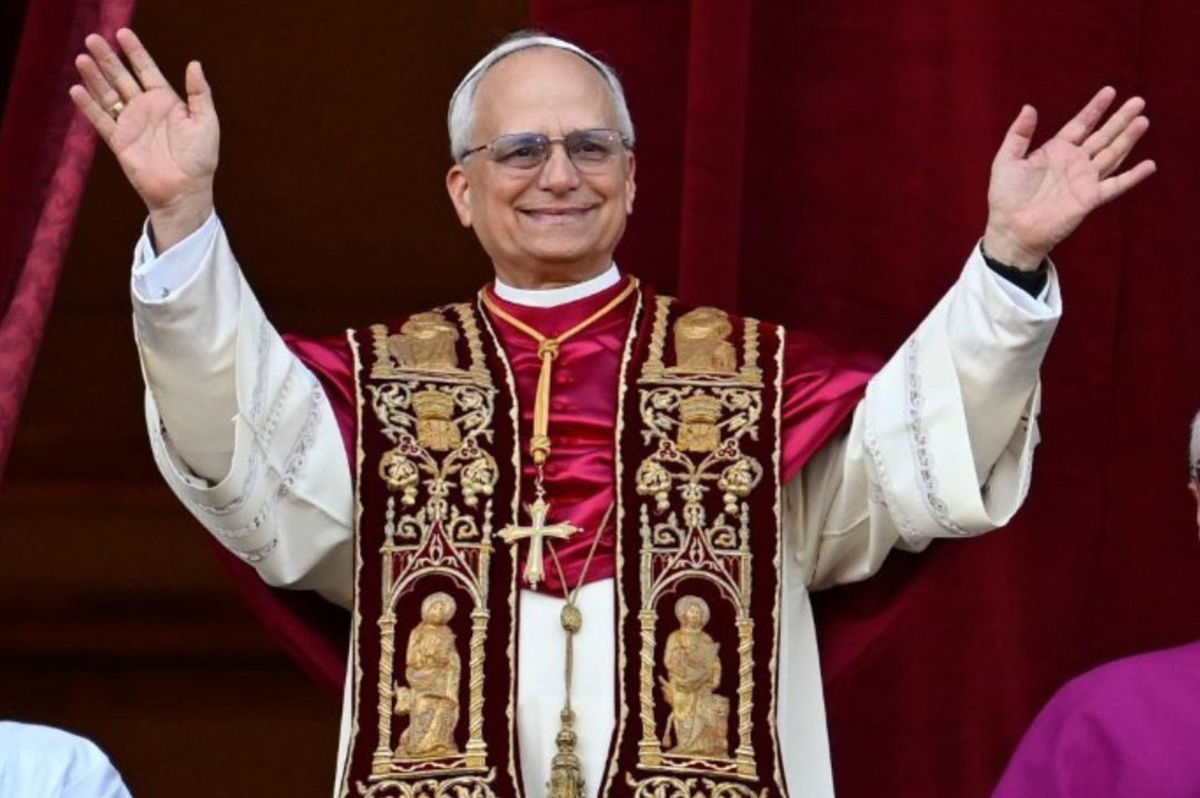
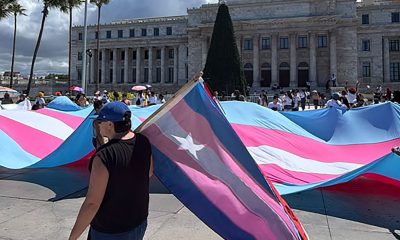
La visita del papa León XIV a Sudamérica, prevista para noviembre, ofrece un contexto para abordar una cuestión que atraviesa el testimonio de la escritora venezolana Marisol Johana Díaz Reyes de Córdova: el lugar de las personas trans en las comunidades de fe.
Radicada en Uruguay, Díaz de Córdova reúne en su libro “Vida Trans: Porque la sociedad nos ha separado hasta de Dios” su experiencia como mujer trans y migrante, su participación política y su relación con la espiritualidad.
La Santa Sede anunció que León XIV visitará Uruguay del 6 al 8 de noviembre de 2026, antes de continuar por Argentina y Perú. El recorrido sudamericano está previsto del 6 al 17 de noviembre.
Ante ese horizonte, la autora reivindica el amor al prójimo y la fraternidad como fundamentos de una convivencia que reconozca la dignidad de las personas trans. Su planteamiento encuentra un antecedente en el mensaje del fallecido papa Francisco a las personas LGBTQ+.
En una respuesta escrita al sacerdote jesuita James Martin, publicada por Vatican News en mayo de 2022, Francisco afirmó: «Dios es Padre y no reniega de ninguno de sus hijos». En el mismo intercambio defendió una Iglesia que convocara a todos sus hijos y rechazó una concepción selectiva de la comunidad eclesial.
Díaz de Córdova relaciona ese mensaje con el mandamiento evangélico de amarse unos a otros. Desde su experiencia personal, sostiene que reconocerse como hermanos e hijos de Dios debe traducirse en respeto hacia quienes han vivido rechazo por su identidad.
Su obra ya ha generado debate público. La presentación de Vida Trans en un ámbito vinculado al Partido Nacional motivó un planteamiento del Consejo de Representatividad Evangélica del Uruguay ante las autoridades partidarias. CBN Nicaragua recogió el episodio en agosto.
La organización evangélica precisó que su preocupación se centraba en el contexto institucional de la actividad y que no cuestionaba el derecho de la autora a escribir, publicar o presentar el libro. Esa distinción permite situar el desacuerdo sin atribuirle una prohibición de la obra.
El recorrido de la escritora ofrece un punto de partida para un reportaje internacional sobre migración, diversidad y pertenencia religiosa. Su testimonio plantea cómo se vive la fe desde una identidad que puede convertirse en motivo de exclusión y qué respuestas encuentran esas experiencias dentro de las comunidades creyentes.
La próxima visita papal aporta el contexto de actualidad. La voz de Díaz de Córdova aporta la dimensión humana: una autora que escribe sobre su relación con Dios y reivindica que el reconocimiento de la dignidad alcance también a las personas trans.
World
LGBTQ+ elected officials, activists around the world welcome U.S. election results
Chris Pappas’s election to the Senate is ‘particularly heartening’
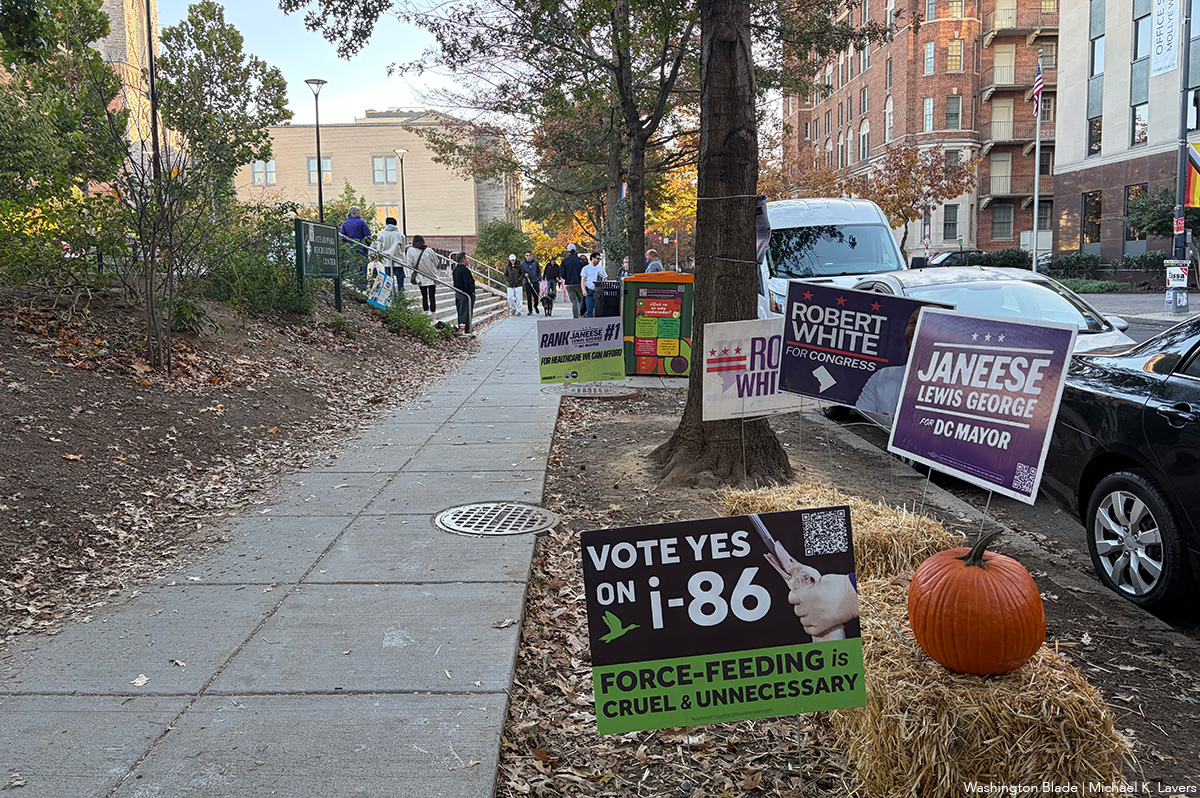
LGBTQ+ elected officials around the world have welcomed the U.S. midterm election results.
New Hampshire Congressman Chris Pappas on Tuesday became the first openly gay man elected to the U.S. Senate. He will join U.S. Sen. Tammy Baldwin (D-Wis.), who in 2012 became the first openly lesbian elected to the U.S. Senate, in the chamber once he takes office in January.
New York Congresswoman-elect Cait Conley, Michigan Congressman-elect Jeremy Moss, California Congresswoman Marni von Wilpert, and Indiana Congressman-elect J.D. Ford are among the 17 LGBTQ+ candidates who ran for federal office this year who won their races. Delaware Congresswoman Sarah McBride, who is the first openly transgender woman elected to Congress, won re-election.
“The U.S. election results remind us of a beautiful truth about democracy: power is borrowed, never owned — and voters occasionally demand it back with interest,” said Pornchai Witayalerdpan, who in 2024 became the first openly gay man elected to the Thai Senate. “Beyond the political shifts, I hope this signals a renewed commitment to accountability, decency, and common sense.”
Witayalerdpan described Pappas’s victory as “particularly heartening.”
“Becoming the first openly gay man elected to the U.S. Senate is historic, but the greater triumph is that his identity is no longer a barrier to his ambition,” said Witayalerdpan. “Another glass ceiling has shattered, and the world is a little brighter for it.”
“I sincerely hope Senator-elect Pappas will champion a bold new chapter of LGBTQ+ equality, help reverse the setbacks of Trump’s second administration, and turn the promise of equal rights into lasting protections for all,” he added.
Alex Greenwich, a gay member of the New South Wales Parliament in Australia, echoed Witayalerdpan.
“The U.S. midterms have filled progressives in Australia with hope,” Greenwich told the Los Angeles Blade. “We are experiencing a rise in the far right ahead of our election season, but the message from the U.S. is clear: if you put forward policies and plans that matter to people, and the reject culture war games, hope will prevail.”
Paolo Rondelli in 2022 became the world’s first openly gay head of state when he became Captain Regent of San Marino. He was his country’s ambassador to the U.S. from 2007-2016.
Rondelli on Thursday told the Blade the elections “mark a major achievement for the queer community and for queer politics — a trend that runs counter to the actions taken over the last two years regarding LGBTQAI+ rights.”
“Queer candidates have shown that it is possible to be effective politicians and to consistently demonstrate one’s own merit,” he said. “Now is not the time to take a single step back; rather, we must show — even more clearly and effectively — what we are capable of achieving to ensure greater rights and well-being for everyone.”
Tamara Adrián in 2015 became the first openly trans person elected to the Venezuelan National Assembly.
She described the election results as “an excellent triumph of diversity and its best form.” Adrián added they are “proof that Americans are not sectarians and exclusionary as the Trump administration has sought to portray.”
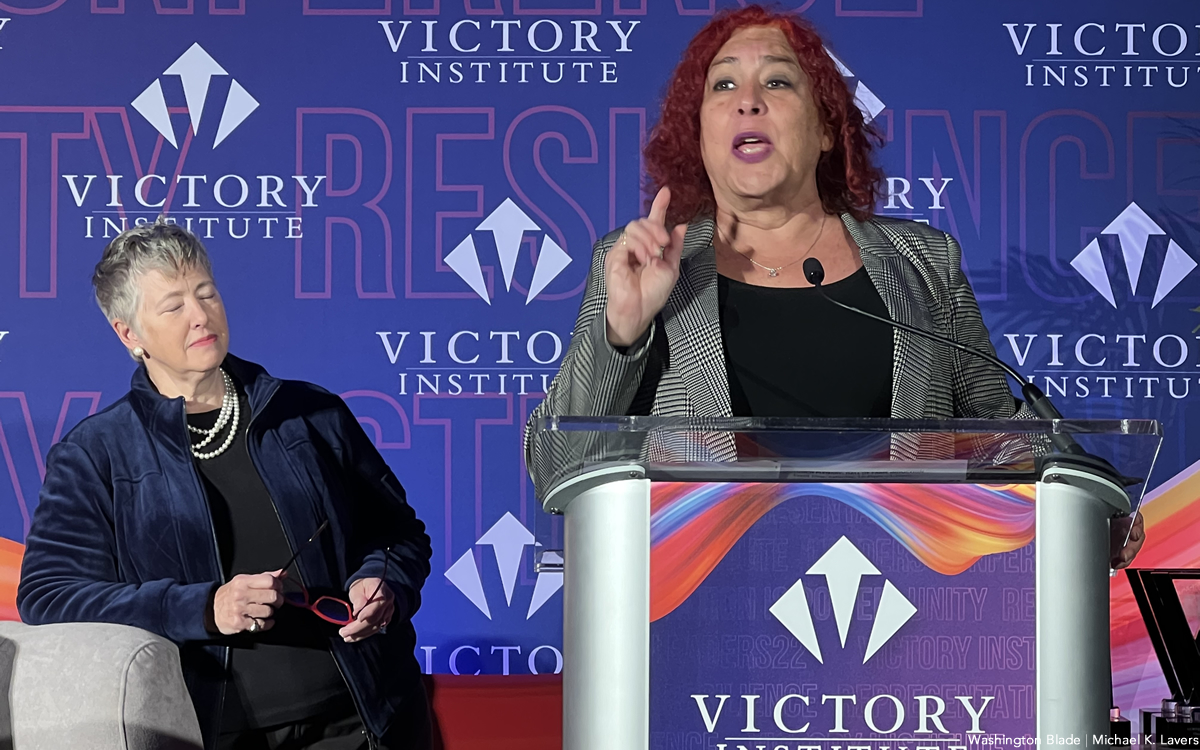
Former Irish Prime Minister Leo Varadkar in 2017 became his country’s first openly gay head of government.
He stepped down in 2020 after his center-right party, Fine Gael, lost parliamentary seats in that year’s general election. Varadkar was once again Ireland’s prime minister from 2022-2024.
Varadkar on Thursday said reaction to the U.S. election results in Europe “has been broadly positive.”
“It’s clear to us that most Americans do not support many of President Trump’s policies whether it’s the war in Iran which has driven up prices here too, trade tariffs, unconditional support for Israel or how far he has gone on immigration particularly the brutality of ICE,” he told the Blade. “There would be a concern that he might now double-down on foreign policy though given his party has lost control of Congress and not in a good way, more conflict than genuine peace initiatives.”
“It’s also been heartening to see a rainbow wave of gay, lesbian, and trans lawmakers getting elected and an understanding that with Democrats in charge of Congress and so many states, the roll back on rights will stall,” added Varadkar.

The global LGBTQ+ and intersex rights movement since the Trump-Vance administration took office in January 2025 has lost more than an estimated $50 million in funding because of foreign aid cuts, the dismantlement of the U.S. Agency for International Development, and other actions.
The Blade has previously reported PEPFAR-funded programs in Kenya and other African countries have been forced to suspend services and even shut down. A report that Outright International released in September notes 90 percent of LGBTQ+ and intersex rights groups around the world have lost funding since the Trump-Vance administration entered the White House.
“Outright International works in more than 80 countries, and governments and movements around the world are watching what the United States does next,” Outright International Executive Director Maria Sjödin told the Blade on Thursday. “Renewed U.S. engagement with the United Nations and a foreign policy that puts human rights into practice would make a difference far beyond U.S. borders. One early test will be whether Congress helps restore funding for HIV prevention and treatment, including for trans people, gay and bisexual men, and others who already face barriers to care.”
Gui Molhallem is the executive director of VoteLGBT (Institute for Full Citizenship), a group that seeks to increase LGBTQ+ and intersex representation in Brazilian politics.
They pointed out to the Blade that Congresswoman-elect Thabatta Pimenta, a trans woman from Rio Grande do Norte state in northeastern Brazil, is among the 35 LGBTQ+ candidates who won their respective races in their country’s Oct. 4 election. Incumbent President Luiz Inácio Lula da Silva defeated Sen. Flávio Bolsonaro in the second round of the Brazilian presidential election that took place on Oct. 25.
Molhallem said the U.S. election results for Brazilians “are a powerful reminder that the far right is not invincible, and that attacking LGBTQ+ people is not necessarily a winning electoral strategy.”
“Just weeks ago, Brazil elected a record 35 LGBTQ+ lawmakers,” they said. “Now, the U.S. has elected a record number of LGBTQ+ members of Congress. Across the Americas, we’re seeing something remarkable: our identities, once seen as political liabilities, are increasingly becoming electoral assets.”
“These victories also show that LGBTQ+ leaders can be unapologetically proud of who they are while building broad political coalitions around issues that affect everyone’s lives,” added Molhallem.
(Washington Blade video by Michael K. Lavers)
All Out Programs Director Mathias Wasik noted groups based in the U.S. for years “have exported anti-LGBT+ laws and talking points to Africa, Eastern Europe and beyond, selling the idea that America had turned against its LGBT+ citizens.”
“These (election) results tell a different story,” Wasik told the Blade. “American voters sent openly LGBT+ people to Congress, including the first openly gay man elected to the Senate. That matters to activists in Ghana, Uganda or Türkiye who are told that hostility toward LGBT+ people is the American way.”
Shadi Amin is the executive director of 6Rang | Iranian LGBT+ Network, an NGO that is incorporated in England and Wales. She told the Blade the U.S. election results are “truly historic.”
“Not only will the balance of power between political parties change, but the people representing Americans are also becoming much more diverse in terms of their backgrounds, sexual orientations, identities, and beliefs,” said Amin. “I think that’s incredibly important.”
Amin specifically celebrated Pappas’s election to the Senate, while adding she “would have loved to see a lesbian elected to such a position too.” (Baldwin has been in the U.S. Senate since 2013.)
“At the end of the day, as an Iranian, what matters most to me is that Americans can see the positive impact of their votes in their everyday lives and feel that their lives are getting better. We’re living through incredibly difficult times, and as an Iranian, I feel that very deeply,” said Amin. “But I also believe that now, more than ever, we need solidarity across borders and nationalities. We need a world where peace and security make it possible for people everywhere to live happy, fulfilling lives.”
News
Byers, Krieger win seats on WeHo City Council; race for third too close to call
John Duran, Kyle Brazeal, and Stephen Post battle for final seat
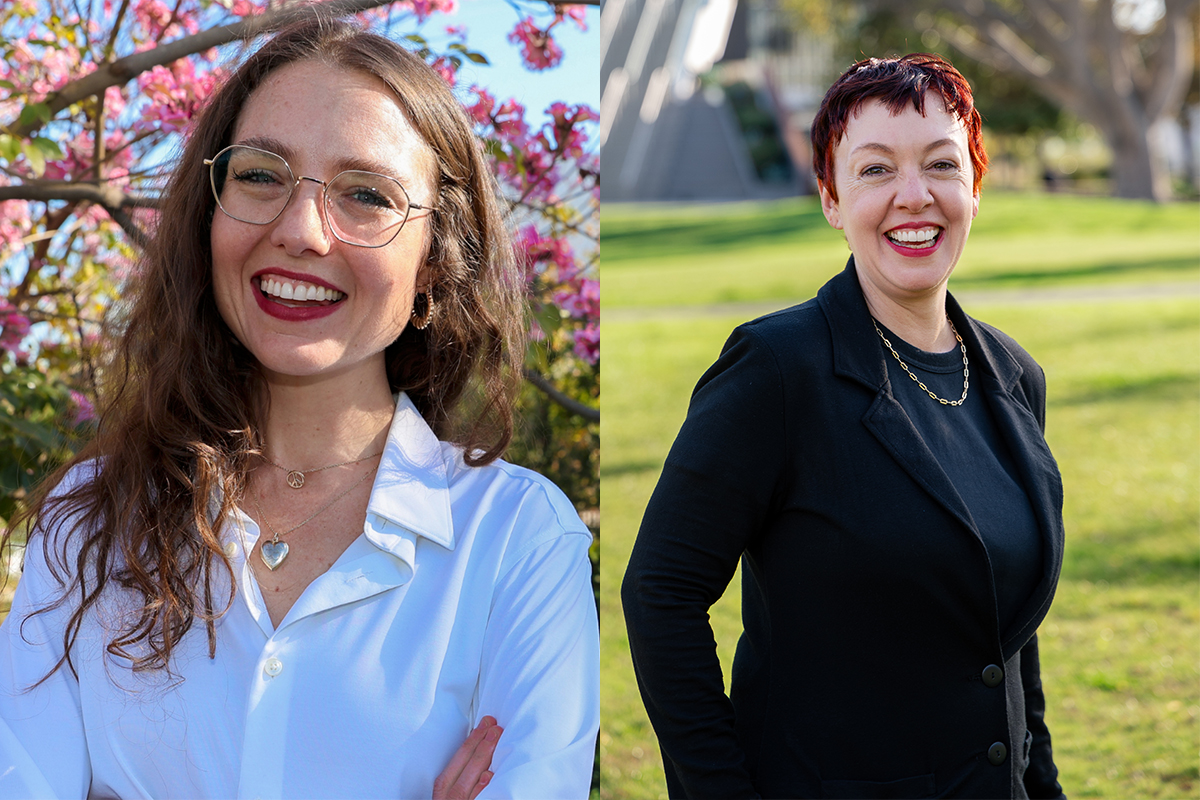
Chelsea Byers and Helen Krieger have secured the first and second spots in the race for West Hollywood City Council. After an eventful campaign season, with 13 candidates running to fill the three seats up for grabs, Byers and Krieger have come out on top. Each holding a wide lead ahead of their challengers, they are all but guaranteed to each win a seat.
However, the race for third has shaped up to be an incredibly close contest among John Duran, Kyle Brazeal, and Stephen Post. Duran currently holds third, Brazeal fourth, and Post fifth, but they are all within 100 votes of each other, meaning their positions could easily swap as more ballots are counted.
The Winners
Byers and Krieger both ran on progressive platforms, with focuses on building more housing, creating biking and transit infrastructure, and opposition to Flock cameras in the city. The two are also both housing advocates. Byers works at the non-profit Welcoming Neighbors Network which aims to end the U.S. housing shortage and Krieger helped build affordable housing in New Orleans after Hurricane Katrina.
They were both backed by the progressive Unite Here! Local 11 union, which represents service worker employees around L.A. The union has become a major influence in West Hollywood elections in recent years, providing resources and support to many progressive candidates.
Byers and Krieger have been friendly with each other on the campaign trail, and with other countywide progressives. Byers even earned a shoutout in L.A. Mayor-elect Nithya Raman’s election night speech. Their campaigns were also supported by former WeHo Mayor and current L.A. County Supervisor Lindsey Horvath.
Byers was the only incumbent running for re-election, with Mayor John Heilman and Council member Lauren Meister term limited. Heilman and Meister supported the campaigns of Duran and Brazeal for Council, who are now battling each other and Post for the third and final seat.
The Race for Third
California counts ballots slowly compared to other states and with the margins between third, fourth, and fifth so narrow, it may be a while before the race can be called conclusively.
Duran and Brazeal’s campaigns focused on public safety, opposition to adding bike lanes on Fountain Avenue, and creating a Transit Oriented Development Alternative Plan in West Hollywood. Both argued that the city’s politics had become too ideological and called for a return to common sense decision making that they claimed was absent in new city leadership.
Duran is a longtime civil rights attorney and West Hollywood politician, serving on the City Council between 2001 and 2020. Duran’s time in elected office ended in scandal as he was accused of multiple accounts of sexual harassment, first in 2016 and then again in 2019. He lost his re-election bid in 2020.
Brazeal is a political newcomer, working in a career in finance before joining the Council race this year. His campaign was rattled by allegations of transphobia in a story reported by the Los Angeles Blade, with a transgender woman accusing him of calling her a slur in 2024.
Post, currently in fifth, is a progressive backed by many of the same organizations as Byers and Krieger, and was the only candidate backed by the L.A. chapter of the Democratic Socialists of America. He made anti-flock policy a cornerstone of his campaign and argued that it compromised WeHo residents’ privacy and the city’s values.
A Majority Voting Bloc
With the incoming Council members, and Erickson’s unsuccessful run for state Senate keeping him in his position, the Council is guaranteed to have at least a three-vote majority to pass progressive policies in line with Krieger and Byer’s campaign promises. This means Flock cameras are most likely coming down and the plan for bike lanes on Fountain Avenue will likely proceed unchanged, regardless of who wins the final seat.
Caleb Kaufman is a California Local News Fellow placed with the Los Angeles Blade. The California Local News Fellowship is a state-funded initiative to support and strengthen local news reporting. Learn more about it at fellowships.journalism.berkeley.edu/cafellows.
California
Nithya Raman wins Los Angeles mayoral election, ousting Karen Bass
Mayor-elect commits to protecting queer Angelenos from Trump attacks
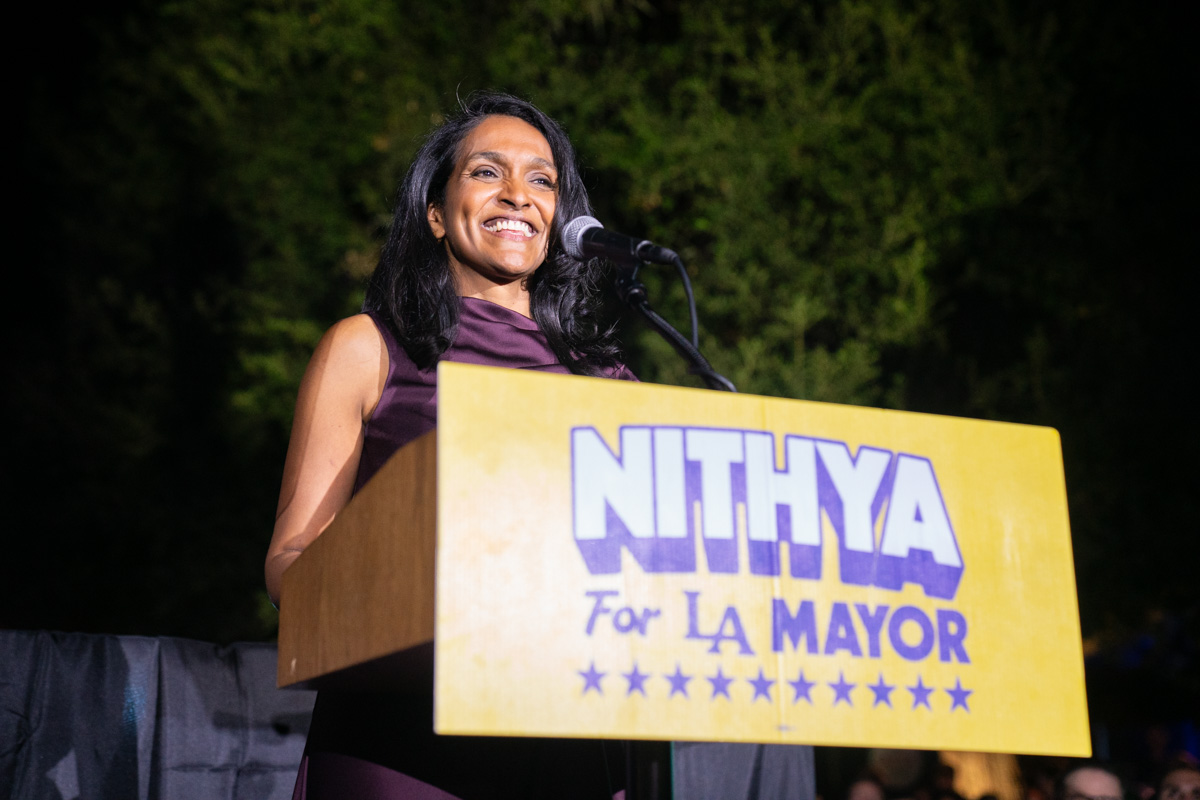
Nithya Raman is the projected winner of the Los Angeles mayor’s race, beating out incumbent Karen Bass in a contentious campaign to lead the second largest city in the nation. Raman has won 52% of the vote with 75% of precincts reporting.
Earlier in the year, City Council member Raman’s chances of pulling off a victory seemed slim. Mayor Bass won handily in the June mayoral primary, and Raman came in a distant second, inching out the bombastic former reality TV star Spencer Pratt to secure a spot in the runoff.
Raman ran on a progressive platform that promised to address chronic issues in Los Angeles, like homelessness, affordability, and lack of housing supply. Raman made the case that the Bass administration had not confronted these challenges effectively and that Los Angeles needed new leadership that could.

A newcomer to politics, Raman first ran for office in 2020 when she won a seat on the Los Angeles City Council, the first time a challenger had defeated an incumbent for a city council seat in nearly two decades. Her election was a shock to the L.A. political establishment and taught Raman how to effectively organize a grassroots campaign, a skill that would be invaluable to her 2026 mayoral victory.
Despite lacking establishment backing, earning no endorsements from her fellow council members, Raman was supported by many progressive organizations and unions, including the L.A. chapter of the Democratic Socialists of America, Unite Here! Local 11, and the Western States Carpenters union. They provided her with thousands of eager canvassing volunteers and organizers. These canvassing efforts helped sway public opinion and introduce Raman to voters who had likely never heard of her.
Homelessness was a particular flashpoint in the election. In April, reporting by the L.A. Times showed 40% of the people who participated in Mayor Bass’s signature anti-homelessness program ended up back on the streets within a year, and overall homelessness levels increased across the city in the last year. Raman pointed to her district’s near 50% decline in unsheltered homelessness between 2025 and 2026 as proof she could confront the issue more effectively. But time will tell if she can translate this success city-wide.
Mayor Bass served a hectic and tumultuous term as the first woman mayor of Los Angeles. In early 2025, she had to deal with the fallout of the Palisades fires, one of the most destructive wildfires the city has ever seen. Only a few months later, Immigration and Customs Enforcement raids shocked immigrant communities around L.A. and subsequent protests shut down the city. In response, President Trump deployed the National Guard to the streets in a move many saw as federal overreach, further inflaming tensions.
These remarkable challenges ingrained anti-incumbent sentiment among some voters who believed Mayor Bass could have done more to help Angelenos in both instances.
Raman spent her campaign painting the mayor as insufficiently proactive in countering the policies of the Trump-Vance administration. Raman has promised to protect L.A.’s queer community from federal actions that could harm them, especially emphasizing her support for the transgender community, which has been the target of numerous attacks from President Trump.
The Mayor-elect said she would pressure Children’s Hospital Los Angeles to reevaluate its ending of gender-affirming care services. The hospital’s center for Transyouth Health closed in 2025 following federal pressure to end trans healthcare for minors, impacting more than 2,000 patients who were receiving care when the closure occurred. Despite federal threats, gender-affirming care remains legal in California.
Speaking with the Blade last month, Raman said she would “reach out to [CHLA’s] board and speak to them about that decision and see how we can push them to do better [for] trans patients,” outreach she said had not happened under the Bass administration.
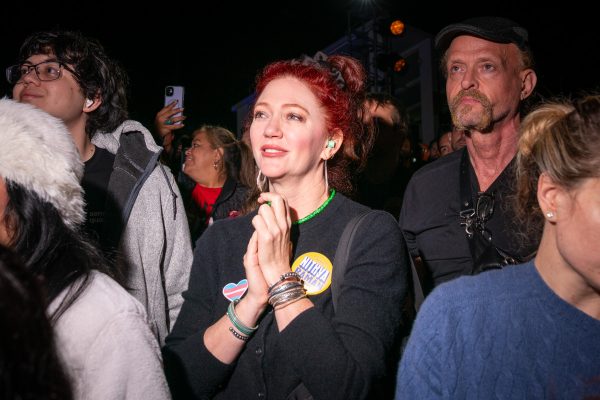
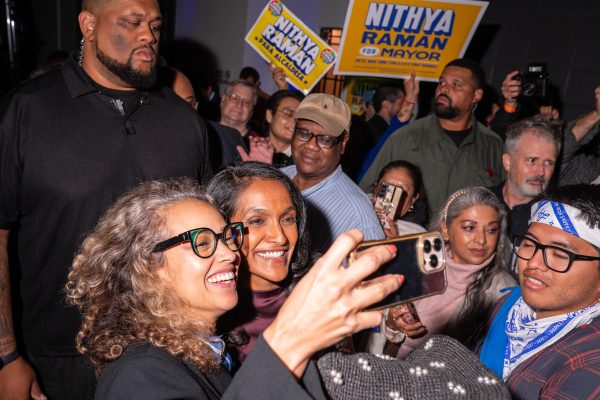
In her election night speech to an energized crowd at the Greek Theater, Raman reiterated her support for the queer community, committing to “show up for our gay and trans siblings,” across Los Angeles.
Caleb Kaufman is a California Local News Fellow placed with the Los Angeles Blade. The California Local News Fellowship is a state-funded initiative to support and strengthen local news reporting. Learn more about it at fellowships.journalism.berkeley.edu/cafellows.
National
Record number of LGBTQ lawmakers elected to Congress in midterms
17 LGBTQ candidates prevail in historic year
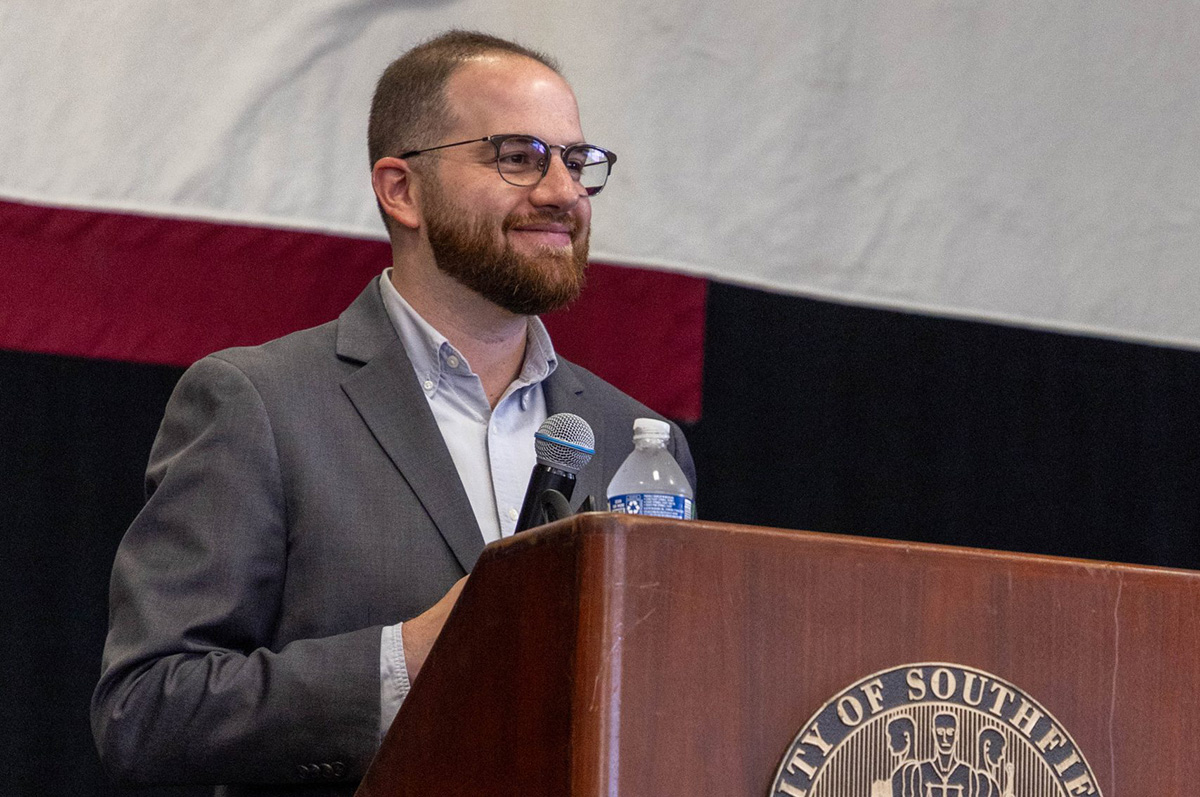
The next Congress will include a record number of LGBTQ+ lawmakers elected to Capitol Hill, with 17 of the 18 LGBTQ+ candidates who ran for federal office securing their seats.
The New Lawmakers
U.S. Senate:
Chris Pappas — New Hampshire
New Hampshire Congressman Chris Pappas has become the first openly gay man elected to the U.S. Senate. Former Republican Sen. John E. Sununu held the Senate seat for the Granite State from 2003 to 2009 but failed to win it back.
Pappas won the Democratic-held battleground state, receiving 56% of the vote to Sununu’s 42%.
Pappas ran his campaign on several issues that proved important during this midterm election cycle, including affordability, reining in corruption across levels of government and protecting LGBTQ rights. He spoke with the Blade last week on his goals for his Senate run while addressing the historic nature of his election.
U.S. House of Representatives:
Cait Conley — NY-17
Cait Conley has defeated incumbent Republican Congressman Mike Lawler in New York’s 17th Congressional District, flipping the Hudson Valley seat for Democrats. Conley, a former Army officer who served six overseas deployments and worked on the National Security Council, campaigned on lowering costs for working families, expanding affordable housing and protecting access to health care.
NBC’s unfinished tally of the votes has Conley leading Lawler 52.2% to 47.7%, with approximately 61% of the vote reported.
There were some problems with malfunctioning voting machines in Westchester County, a largely blue area, that delayed ballot scanning and, consequently, the call for the seat, The Gothamist reported last night. Despite some of the machines not working properly, Lawler conceded the race.
Jeremy Moss — MI-11
Michigan State Sen. Jeremy Moss won election to the U.S. House, defeating Republican Ethan Baker in Michigan’s 11th Congressional District.
Moss won 60.9% of the vote to Baker’s 36.8%, according to election results confirmed by the Associated Press. Moss, who served as president pro tempore of the Michigan Senate and was the state’s first openly gay senator, campaigned on lowering health care costs, addressing affordability, protecting LGBTQ rights and holding the Trump administration accountable.
He will represent Michigan’s 11th Congressional District, a seat currently held by Democrat Haley Stevens, who surprised large swaths of the country by revoking her endorsement of Abdul El-Sayed, after losing the Senate primary.
The Blade interviewed Moss earlier in his campaign, when he emphasized his commitment to the people of Michigan and his determination to stand against Trump and MAGA Republicans in Congress.
JoAnna Mendoza — AZ-06
Marine veteran JoAnna Mendoza is highly likely to defeat Republican incumbent Juan Ciscomani in Arizona’s 6th Congressional District, flipping the highly competitive southern Arizona seat for Democrats.
The New York Times’ results showed Mendoza with 53% of the vote, compared with Ciscomani’s 45%. At the time of publishing, 88% of votes had been accounted for, which is why no outlet had outright declared Mendoza the official winner yet. Most news outlets wait until more of the vote is accounted for.
Mendoza campaigned on lowering costs for working families, creating good-paying jobs, strengthening health care access, protecting veterans’ benefits and addressing border security and immigration. She also emphasized restoring accountability and trust in government.
Marni von Wilpert — CA-48
San Diego City Council member Marni von Wilpert led Republican Jim Desmond in California’s 48th Congressional District, a competitive race for an open seat previously held by retiring Republican Congressman Darrell Issa.
Early results reported by CBS8 show von Wilpert leading Desmond by nearly 20 points, with von Wilpert holding 59.4% to Desmond’s 40.6%. This San Diego seat was among the competitive races Democrats targeted as they sought to expand their House majority.
Von Wilpert campaigned on lowering the cost of living, expanding affordable housing and health care, protecting reproductive freedom and LGBTQ rights, and holding federal immigration officials accountable.
Scott Wiener — CA-11
California State Sen. Scott Wiener is expected to win the open congressional seat in California’s 11th District, succeeding former House Speaker Nancy Pelosi. Wiener faced off against fellow Democrat Connie Chan, a San Francisco supervisor, in the race to represent the heavily Democratic district.
Associated Press results reported by The New York Times showed Wiener leading Chan 55.4% to 44.5%.
Wiener campaigned on expanding LGBTQ rights, protecting transgender Americans, lowering health care and housing costs, and reforming federal immigration enforcement. He also made passing the Equality Act a central part of his campaign platform. However, he faced issues at the beginning of his campaign, particularly surrounding the Palestinian-Israeli war, when the Jewish state senator initially refused to call what was happening a genocide, leading to some fragmented support within the Democratic Party.
J.D. Ford — IN-05
Indiana State Sen. J.D. Ford defeated Republican incumbent Victoria Spartz in Indiana’s 5th Congressional District, flipping the seat for Democrats.
Ford received approximately 51.7% of the vote to Spartz’s 48.3%, according to Associated Press results reported by The New York Times, with nearly all votes counted.
Ford, Indiana’s first openly LGBTQ state legislator, campaigned on lowering health care and housing costs, protecting Medicaid, addressing affordability and holding the federal government accountable. He also supported passing the Equality Act to establish federal LGBTQ nondiscrimination protections.
Janelle Sarauw — U.S. Virgin Islands
Former Virgin Islands Sen. Janelle Sarauw led the race to become the territory’s next delegate to the U.S. House of Representatives, defeating independent candidate Shelley Moorhead.
Unofficial territorial election results showed Sarauw receiving 13,029 votes to Moorhead’s 3,586, representing approximately 76.9% and 21.2% of votes cast for the office, respectively.
Sarauw campaigned on improving health care access, protecting Medicaid funding, lowering prescription drug costs, strengthening veterans’ services and modernizing the Government Employees’ Retirement System (GERS). She also emphasized securing stronger federal representation for the U.S. Virgin Islands.
In a statement on her Facebook page Wednesday morning, Sarauw said her heart was “heart overflowing with gratitude.”
“I love these islands with every fiber of my being, and as I prepare to carry our voices, our stories, our struggles, and our aspirations to Washington, D.C., I do so with a full heart, a humble spirit, and an abiding faith in what we can accomplish together.”
Incumbents
Sarah McBride — DE-AL
Delaware’s incumbent U.S. Representative Sarah McBride was reelected to the U.S. House of Representatives on Tuesday, defeating Republican challenger Joseph Arminio. McBride is the first openly transgender person elected to Congress.
The Associated Press called the race for McBride on election night shortly after polls closed. The New York Times shows her with approximately 64% of the vote, with Arminio holding 35%, with 95% of ballots counted.
Earlier this year, during a forum attended by both candidates, Arminio misgendered McBride multiple times and was subsequently asked to leave.
McBride campaigned on a range of issues, including affordability, health care access, immigration, reproductive health care and workers’ rights.
Earlier this year, the Washington Blade interviewed McBride, who discussed her goals for the future while reflecting on her first year in Congress.
“We need to deliver universal child care, a higher minimum wage, Medicare for all who want it, and millions of new homes. Winning the next election is not the end; we have to continue building toward a durable majority.”
Following the announcement of her win, McBride put out a statement on social media about her campaign’s main messaging in the face of Republicans’ unrelenting attacks on people like her.
“Yesterday, Delaware clearly rejected the politics of hate in favor of a politics of hope,” she wrote on instagram.
Robert Garcia — CA-42
California’s incumbent U.S. Representative Robert Garcia won reelection to another term representing the state’s 42nd Congressional District, defeating Republican challenger Brian Burley.
New York Times/AP election results showed Garcia receiving approximately 60% of the vote to Burley’s 40%.
Garcia, the former mayor of Long Beach, has focused on infrastructure, transportation, education and LGBTQ rights during his time in Congress. In the current Congress, Garcia served as the ranking member of the House Oversight Committee, where he pushed for additional investigations into the Trump-Vance administration, including its handling of the Epstein files. Following Democrats’ victories, Garcia is positioned to take over as chair of the House Oversight Committee, giving him greater authority to investigate the numerous allegations and controversies facing the president.
Becca Balint — VT-AL
Vermont’s incumbent U.S. Rep. Becca Balint won reelection to a third term in Congress, defeating Republican challenger Gerald Malloy.
The Associated Press called the race for Balint on election night. At the time, she had 65% of the Green Mountain State’s vote, compared to Malloy’s 30%.
Balint, a former teacher and Vermont state senator, centered her campaign on affordability, housing, mental health and protecting democracy. She also criticized Trump’s tariffs and the war in Iran, arguing that both were contributing to higher costs for Americans.
Emily Randall — WA-06
Washington’s incumbent U.S. Representative Emily Randall won reelection to represent the state’s 6th Congressional District, defeating Republican challenger Teresa Fox.
The AP and The New York Times called the race for Randall, whose 64% share of the vote put her securely ahead of Fox’s 35% in the Olympic Peninsula, the Kitsap Peninsula and most of the city of Tacoma.
Randall, who previously served in the Washington state Senate, made expanding access to affordable health care a central part of her campaign. She also focused on lowering costs for working families and protecting access to essential services.
Eric Sorensen — IL-17
Illinois’s incumbent U.S. Rep. Eric Sorensen won reelection to a third term in Congress, defeating Republican challenger Dillan Vancil.
The Associated Press called the race for Sorensen with approximately 70% of the vote counted. Sorensen held 60% of the vote.
Sorensen, a former television meteorologist, centered his campaign on lowering costs for working families. His priorities also included protecting health care access, supporting rural communities and addressing the economic challenges facing residents of western Illinois.
Mark Pocan — WI-02
Wisconsin’s incumbent U.S. Rep. Mark Pocan won reelection to another term representing the state’s 2nd Congressional District. Pocan ran unopposed in the general election, securing another term representing the Madison-area district.
Pocan, who has served in Congress since 2013, has focused on health care affordability, workers’ rights and LGBTQ equality. He also serves as co-chair of the Congressional Equality Caucus and is a member of the House Appropriations Committee, where he is expected to hold more leadership power in the new congressional term.
Mark Takano — CA-39
California’s incumbent U.S. Rep. Mark Takano won reelection to another term representing the state’s 39th Congressional District, defeating Republican challenger Steve Manos.
AP election results showed Takano receiving 65.3% of the vote to Manos’s 34.7%.
Takano has made health care and veterans’ issues central to his congressional work. He has also been an advocate for LGBTQ equality and serves as co-chair of the Congressional Equality Caucus.
Ritchie Torres — NY-15
New York’s incumbent U.S. Representative Ritchie Torres won reelection to another term representing the Bronx’s 15th Congressional District.
The New York Times showed Torres receiving 76.89% of the vote, with Republican challenger Stylo Sapaskis receiving 10.64%.
Torres, who previously served on the New York City Council, has centered his congressional work on housing, economic development, education and public safety.
Sharice Davids — KS-03
Kansas incumbent U.S. Rep. Sharice Davids won reelection to another term representing the state’s 3rd Congressional District, defeating Republican challenger Eric Jenkins.
According to New York Times and AP election results, Davids received 59.6% of the vote to Jenkins’ 38.4%.
Davids, a former White House fellow and attorney, centered her campaign on agriculture, lowering costs and expanding access to health care. She has also emphasized supporting Kansas businesses and working families.
National
Democrats take control of Congress in historic rebuke of Donald Trump
‘Voters delivered a resounding message: equality wins’
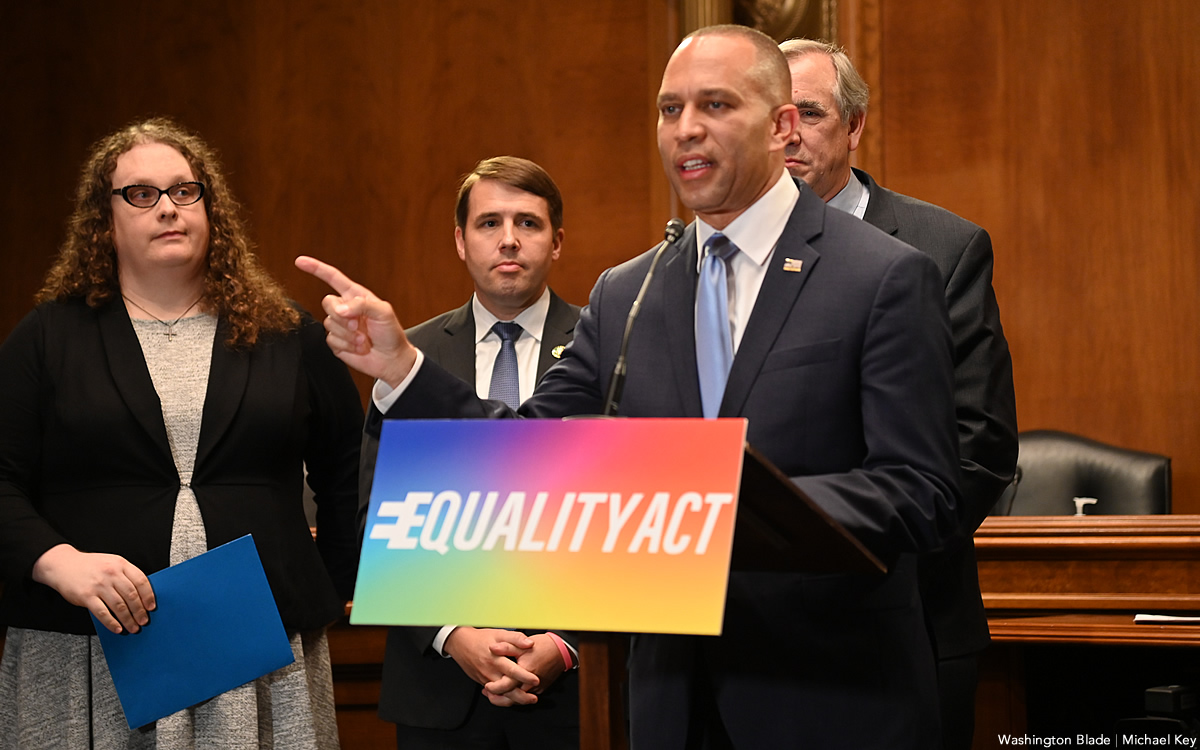
Midterm elections are traditionally viewed as a check on the party in control of the White House. With Republicans holding control of all three branches of government, President Donald Trump was able to advance his agenda with few congressional obstacles.
From getting the United States involved in a war in Iran to imposing tariffs that have increased the cost of everyday goods, Trump has faced mounting criticism over his priorities, including his insistence on pursuing vanity projects in the nation’s capital rather than addressing issues affecting most American voters.
Following the midterm elections, both chambers of Congress will now be controlled by the Democratic Party.
Affordability was a key issue in this year’s midterms. As Americans watched Trump receive a brand-new Air Force One from a foreign government and continue a war that has directly affected everyday costs, particularly gasoline and groceries, voters delivered a devastating and historic rebuke to the president and his party.
Republicans spent $305 million on advertisements, compared with $256 million spent by Democrats, in competitive Senate, House and gubernatorial races between Oct. 23 and 29, according to The Washington Post, which analyzed data from AdImpact, a political advertising tracking firm.
Republican attempts to use LGBTQ issues as culture-war talking points appeared to be less effective in 2026 than they were in 2024.
This year’s advertisements targeting transgender people primarily focused on two policies: transgender athletes’ participation in women’s and girls’ sports and gender-affirming medical care, particularly surgery, for minors.
Despite Republican efforts to make LGBTQ identity a political liability, the midterm elections resulted in a historic number of LGBTQ candidates being elected to federal office.
Chris Pappas, the senator-elect from New Hampshire, will become the first openly gay man elected to the U.S. Senate, joining Sen. Tammy Baldwin (D-Wis.), an out lesbian who has held her seat since 2012. Meanwhile, a record number of LGBTQ representatives have been elected and reelected to the U.S. House. They include Sarah McBride, the first openly transgender member of Congress, who retained Delaware’s seat; JD Ford, who flipped Indiana’s seat; and Cait Conley, who defeated incumbent Mike Lawler.
Following the election results, LGBTQ advocacy groups celebrated Democratic victories and the election of several LGBTQ candidates.
The Human Rights Campaign (HRC), the largest LGBTQ advocacy organization in the United States, issued a statement following Democrats’ securing control of both chambers of Congress.
“Tonight, voters delivered a resounding message: equality wins. After two years of MAGA Republicans waging a culture war, wasting taxpayer dollars attacking LGBTQ+ people, and spending $340 million on anti-trans ads while families suffered, voters have had enough,” said HRC President Kelley Robinson.
“In a historic rebuke, voters didn’t just reject LGBTQ+ hate, they have elected a historic number of LGBTQ+ elected officials. Chris Pappas is the first-ever out gay man elected to the U.S. Senate, and JoAnna Mendoza, Cait Conley, and Jeremy Moss will join Sarah McBride, who won by a huge margin, in the U.S. House — and that’s just the start. Virginia reaffirmed that love is love. Missouri rejected an anti-trans, anti-abortion ballot measure. And we are seeing victories up and down the ballot across the country,” she added. “The message from LGBTQ+ voters could not be any more clear: Our rights are not up for debate, our community will not be a political punching bag, and we are not going anywhere.”
Emily Wagner, a communications official with the Transgender Freedom Alliance, also weighed in on the results, arguing that the relentless anti-transgender advertising Republicans ran across the country failed to deliver the electoral results they sought.
“Massive anti-trans spending failed to prevent important Democratic victories. Republicans spent nearly $400 million on anti-trans ads altogether—and still lost key races to candidates who pushed back,” Wagner said in an email. “These victories reinforce TFA’s research: candidates can answer attacks effectively by speaking confidently about shared values, addressing voters’ concerns, and challenging their opponents’ priorities without abandoning transgender people.”
There were early predictions that a Democratic “blue sprinkle,” or even a modest wave, could serve as a check on Trump’s power by installing Democratic lawmakers in a Congress over which he had previously exercised significant influence. Instead, the results amounted to a blue tsunami.
Democrats won several states Trump carried by double digits in 2024, as voters voiced their disapproval of the president.
Democrats flipped seven previously Republican-held seats, including in Iowa, Kansas, Maine, North Carolina, South Carolina, Ohio and Texas. Some of those states had gone decades without electing a Democratic leader.
The seismic shift in federal power has also prompted changes in Republican leadership. Speaker Mike Johnson (R-La.) told his staff during a phone call Wednesday morning that he will not remain Republican leader in the new Congress, according to four sources on the call cited by NBC News. Republicans are scheduled to hold an internal election to select their candidate for the position next week, on Nov. 10.
With control of the House and expanded oversight powers, more LGBTQ Democrats could also be positioned to take on leadership roles in the new Congress.
Incumbent Congressman Robert Garcia (D-Calif.) is poised to become chair of the House Oversight Committee, giving him greater authority to investigate the Trump-Vance administration, subpoena officials and oversee federal agencies.
Garcia responded to the confirmation of Democratic control with a two-word statement: “Lawyer up.”
Politics
Democrats projected to win Senate majority, opening door to LGBTQ+ legislation
U.S. Sen-elect Chris Pappas (D-N.H.) is gay
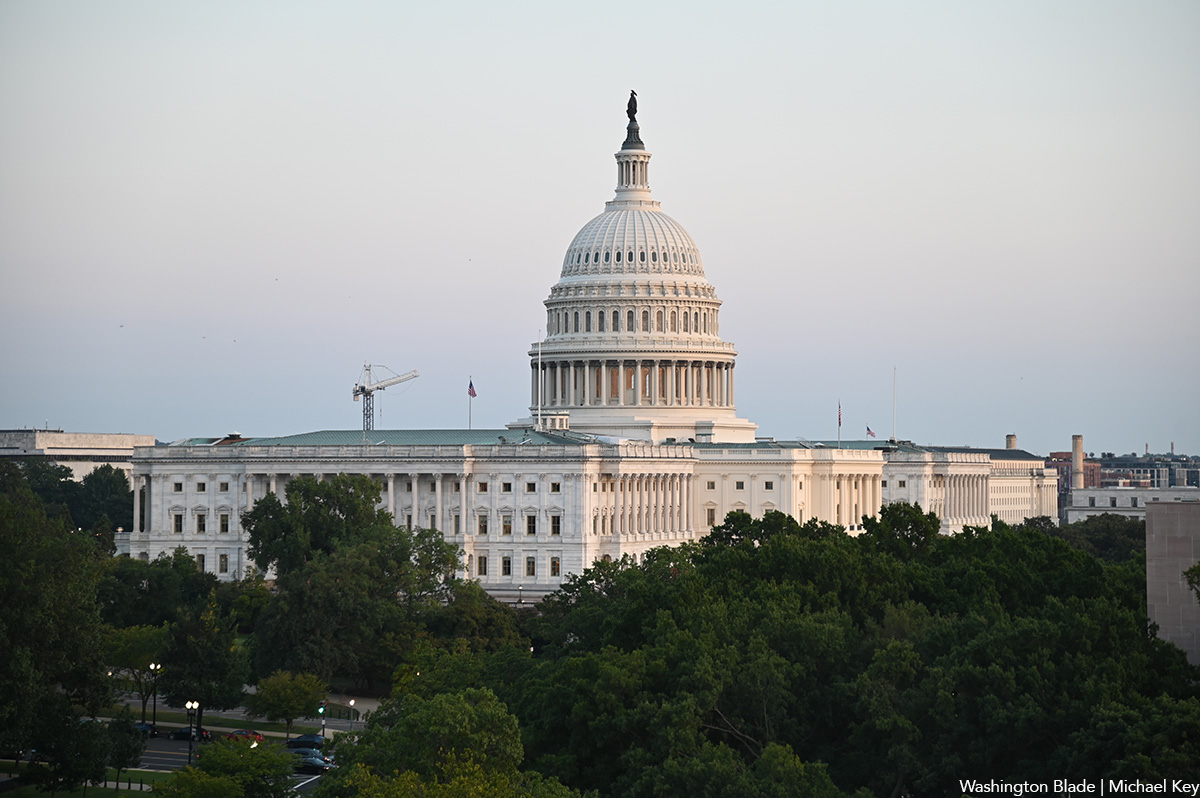
The U.S. Senate has flipped to Democratic control.
Democrats will control of the Senate after flipping the minimum four Republican-held seats, giving the party control of both chambers of Congress and a majority in the legislative branch, according to NBC.
The Senate, the upper legislative body, holds 100 seats, two for every state, and oversees several important functions of the federal government, including confirming judicial and Cabinet appointments.
There will now be two openly LGBTQ+ members of the Senate: freshly elected Chris Pappas of New Hampshire, who is gay, and Tammy Baldwin of Wisconsin, who is a lesbian.
With greater control over federal legislation, Democrats could have an opportunity to advance measures such as the Equality Act, which would expand federal protections against discrimination based on sexual orientation and gender identity.
During the campaign, President Donald Trump repeatedly referred to South Carolina Democratic Senator-elect Annie Andrews using the anti-transgender slur “Tranny Annie,” while emphasizing culture war issues, including trans participation in sports and gender-affirming care.
Democrats, meanwhile, have centered their campaigns on the growing affordability crisis as somatic issues, including the Ukrainian-Russian war, Palestinian-Israeli war, and the war in Iran.
New Hampshire
Chris Pappas elected to U.S. Senate
N.H. Democrat is first openly gay man elected to chamber
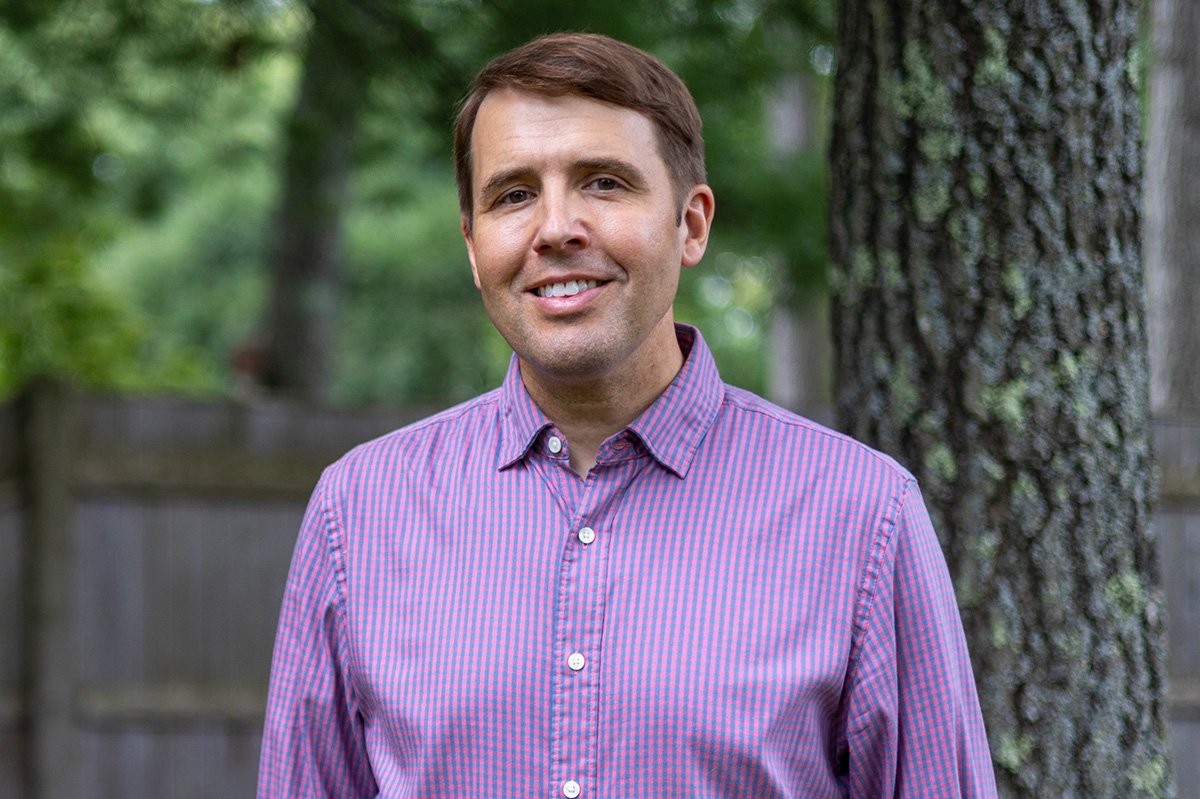
New Hampshire Congressman Chris Pappas on Tuesday became the first openly gay man elected to the U.S. Senate.
The Granite State Democrat defeated Republican John E. Sununu, who represented New Hampshire in the Senate from 2003-2009, by a 56.2-41.9 percent margin. Sununu conceded shortly after the polls closed at 8 p.m. ET.
“I’m really proud of who I am, but [I am] more proud of the fact that New Hampshire embraces people from different walks of life,” Pappas told the Washington Blade during an Oct. 26 interview. “This is a state that fundamentally believes that everyone should be able to be themselves, and we’re stronger when everyone has the same rights and responsibilities.”
Pappas’s husband, Vann Bentley, stood alongside him when he spoke to supporters in Manchester, New Hampshire’s largest city.
Thank you, New Hampshire. https://t.co/AIIfpYj2IS
— Chris Pappas (@ChrisPappasNH) November 4, 2026
Pappas acknowledged him before he hugged him.
“I want to thank the guy next to me, my amazing husband Vann,” said Pappas. “With all the negative attacks and lies, it’s nice to know that love and truth prevailed tonight.”
Tonight is a victory for everyone. https://t.co/hNXkZ5CEy0
— Chris Pappas (@ChrisPappasNH) November 4, 2026
Pappas has represented New Hampshire’s 1st Congressional District in the U.S. House of Representatives since 2019. (Former White House Press Secretary Karoline Leavitt unsuccessfully challenged Pappas in 2022.)
He was a member of New Hampshire Executive Council, which advises the governor, from 2013-2019. Pappas from 2007-2011 was the treasurer of Hillsborough County, which includes Manchester. He was a member of the New Hampshire House of Representatives from 2002-2006.
Pappas graduated from Manchester Central High School in 1998. His family owns the Puritan Backroom, a Manchester restaurant that claims to have invented chicken tenders.
Pappas in January will succeed retiring U.S. Sen. Jeanne Shaheen (D-N.H.).
“The voters of New Hampshire know that Chris Pappas is one of their own, a leader who will work for the Granite State, push back against corruption and champion LGBTQ+ equality,” said Human Rights Campaign President Kelley Robinson on Tuesday. “As the first openly gay man to serve in the U.S. Senate, Chris’s victory isn’t just historic — it’s a sign that progress is possible when we show people who we are and what we fight for. We’re thrilled to continue working with Chris as he heads to the U.S. Senate .”
Robinson in August traveled to New Hampshire and campaigned alongside Pappas.
LGBTQ+ Victory Fund CEO Evan Low in his own statement noted “Granite Staters made history — and sent a message that will be heard far beyond New Hampshire.”
“Chris Pappas earned this win the way he’s earned every one before it: by showing up, listening, and delivering for working families,” he said. “For generations of gay men who were told public life wasn’t for them, seeing Chris take his seat in the U.S. Senate will be proof that the door is open. He will be a fierce champion for every New Hampshire family, and a powerful voice for equality in a chamber that has never had a voice quite like his.”
California
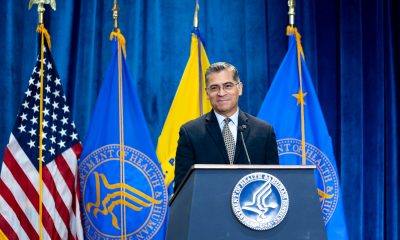
Xavier Becerra wins California governor’s race
Governor-elect has long track record of LGBTQ support

Just minutes after polls closing, Democratic candidate Xavier Becerra was named the projected winner of California’s governor’s race by the Associated Press, beating out the Republican Steve Hilton. Becerra has a long history in elected office, serving as a congressman representing parts of Los Angeles and East LA, then as California Attorney General, and most recently as the Secretary of Health and Human Services under President Joe Biden. He also has a long history of supporting pro-LGBTQ policies.
As a congressman, he voted against the 1996 Defense of Marriage Act, which banned same-sex marriage on the federal level. As California attorney general, he sued the Trump-Pence administration in 2017 over a policy that aimed to ban transgender people from serving in the military. As HHS Secretary, he publicly defended access to gender-affirming care for transgender patients, including for minors, noting that it has been shown to reduce suicidality among transgender youth. This is a major contrast to the current HHS Secretary Robert F. Kennedy Jr., who has since made the agency’s official policy that it “rejects gender ideology and condemns the harms it causes to children.”
In his campaign for governor, Becerra has continued to support gender-affirming care, saying in a statement on X that “as Governor, I will stand firm to secure California’s status as a sanctuary state for trans youth and their families,” and posting an image with the phrase “protect trans youth.”
Becerra’s opponent Steve Hilton made LGBTQ issues a small but loud part of his campaign.
He opposed transgender participation in women’s sports, attending and speaking at a “Save Girl’s Sports” rally that called for a ban on transgender people playing in women’s sports in California. In an interview with the San Francisco Standard, Hilton was asked about his favorite girl’s sport, responding “I don’t follow girl’s sports,” and declined to make any commitments to further women’s competition in sports beyond calling for an end to transgender participation.
Hilton came under further criticism from the LGBTQ community for releasing an innuendo-laced campaign advertisement in October that appeared to show two women in an intimate setting before revealing that one is trying to convince the other to vote for Hilton. Jorge Reyes Salinas, communications director at Equality California, called the ad “a disgusting attempt to exploit lesbian intimacy for political attention” in an interview with the Blade. It was also unpopular among conservatives, with Evangelical Pastor Jack Hibbs stating that the ad was distasteful and that “lesbianism among college girls and some high school girls right now is an actual pandemic of social ill.”
Becerra’s victory in the governor’s race is no surprise in California where registered Democrats outnumber registered Republicans nearly 2:1. The real challenge was making it past the primary election. After former Congressman Eric Swalwell dropped out of the Democratic primary amid allegations of sexual misconduct, Becerra seized on the opportunity and became the frontrunner. He later beat out billionaire Tom Steyer in the June primary to become the Democratic nominee.
In the general election, Becerra ran a quiet campaign for governor, counting on support from the overwhelmingly Democratic California electorate. As a result, Becerra has been sparse on many specific policy commitments on the campaign trail. However, his track record indicates that California’s next governor will likely support pro-LGBTQ policies.
Caleb Kaufman is a California Local News Fellow placed with the Los Angeles Blade. The California Local News Fellowship is a state-funded initiative to support and strengthen local news reporting. Learn more about it at fellowships.journalism.berkeley.edu/cafellows.
Politics
Democrats poised to flip House, opening door for expanded LGBTQ+ leadership
Robert Garcia among potential committee chairs in new Congress
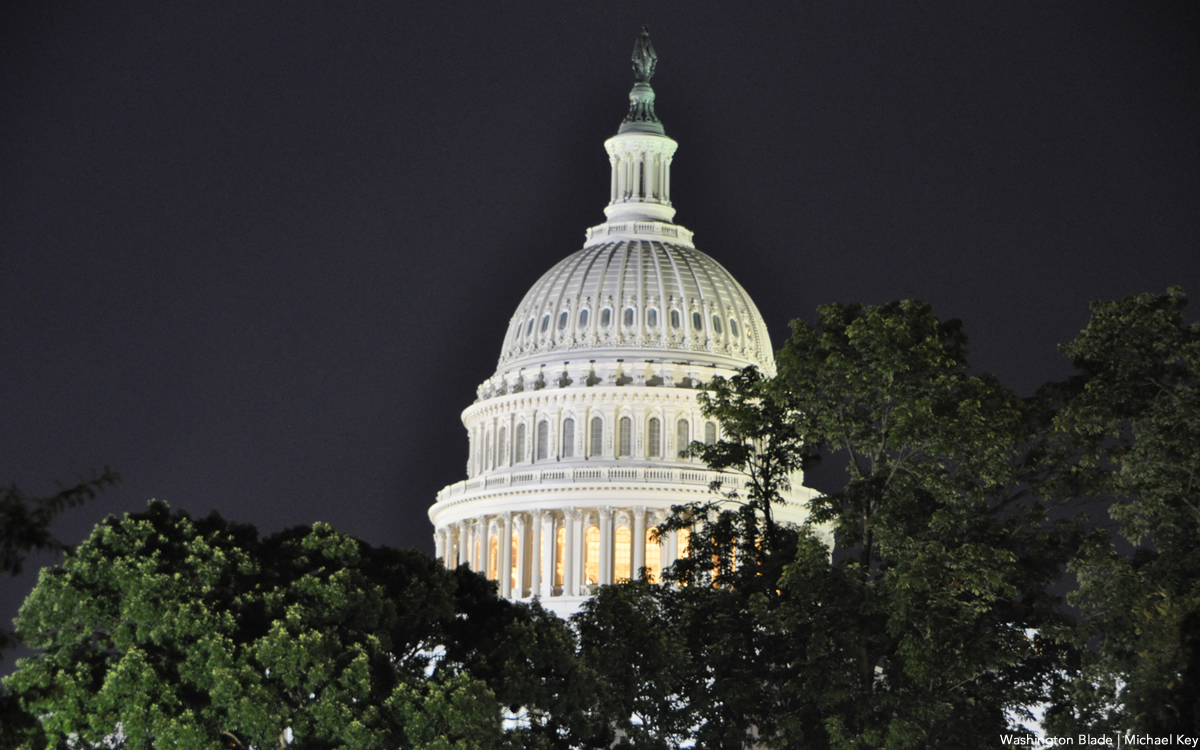
The U.S. House of Representatives is projected to flip to Democratic control.
According to the Associated Press, Democrats are moving toward control of the House after defeating six Republicans in key battleground races.
While several major questions remain about how Democrats will lead beginning in 2027, their control of the chamber will expand their oversight powers, allowing them to pursue efforts to check an executive branch that has operated with little congressional oversight over the past two years.
With control of the House and expanded oversight powers, more LGBTQ Democrats could be positioned to take on leadership roles in the new Congress.
Incumbent Congressman Robert Garcia (D-Calif.) is poised to become chair of the House Oversight Committee, where he would have greater authority to investigate the Trump-Vance administration, subpoena officials and oversee federal agencies.
Garcia sent out a two word statement following the confirmation of the Democratic Party’s control: “Lawyer up.”
U.S. Rep. Mark Pocan (D-Wis.) could gain a leadership position on the House Appropriations Committee, which has authority over government funding. Such a position could allow him to put roadblocks in the way of much of the Republican agenda, including many projects Trump has personally spearheaded while in the Oval Office.
Some political strategists, like those at Newsweek, have said a third Trump impeachment could be on the table. However, convicting President Donald Trump in a Senate trial would require a two-thirds majority, an outcome that remains uncertain.
These midterm elections have been rife with personal attacks, gerrymandering at the behest of Trump, and heightened political tensions across the country. Republicans have campaigned on the idea that voters are effectively voting for Trump, while also focusing heavily on transgender issues. Meanwhile, many Democrats have pushed back by centering their campaigns on the growing affordability crisis as the war with Iran continues.

Escritora trans venezolana reivindica una fe sin exclusiones ante la visita del papa a Sudamérica

LGBTQ+ elected officials, activists around the world welcome U.S. election results

Byers, Krieger win seats on WeHo City Council; race for third too close to call

Nithya Raman wins Los Angeles mayoral election, ousting Karen Bass

Record number of LGBTQ lawmakers elected to Congress in midterms

Are anti-trans campaigns lowering your cost of living?

Australia’s first gay state governor takes office

L.A. LGBT Center used canvassing effort to reframe conversation around trans healthcare

Supreme Court weighs religious exemptions to LGBTQ+ nondiscrimination protections in Colo. preschool case

Xavier Becerra wins California governor’s race
-
 Commentary3 days ago
Are anti-trans campaigns lowering your cost of living?
-
 Australia4 days ago
Australia’s first gay state governor takes office
-
 California3 days ago
L.A. LGBT Center used canvassing effort to reframe conversation around trans healthcare
-
 U.S. Supreme Court3 days ago
Supreme Court weighs religious exemptions to LGBTQ+ nondiscrimination protections in Colo. preschool case
-
 California3 days ago
Xavier Becerra wins California governor’s race
-
 Politics3 days ago
Democrats poised to flip House, opening door for expanded LGBTQ+ leadership
-

 Politics4 days ago
Michigan Senate race puts two sharply different LGBTQ+ records head to head
-

 a&e features4 days ago
It’s time to get ‘Delulu’ with Ryan Lu
-
 New Hampshire3 days ago
Chris Pappas elected to U.S. Senate
-
 Commentary4 days ago
LGBTQ+ History Month reminds us: the future we imagine can become reality