
News
Chawanakee School district settles student yearbook LGBTQ controversy

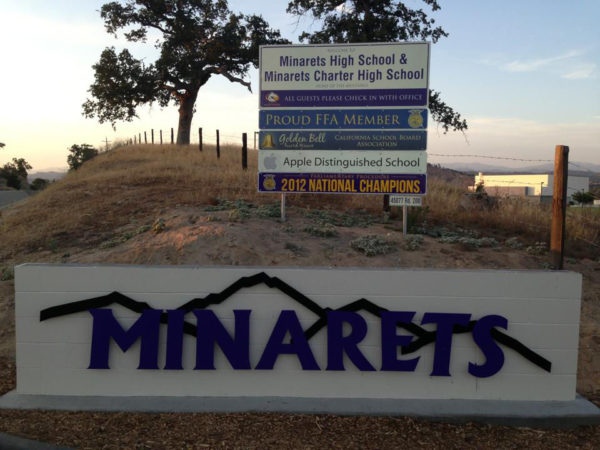 The ACLU Foundation of Northern California reached a settlement agreement with Chawanakee Unified School District Tuesday that calls for new school district-wide policies to protect its LGBTQ students.
The ACLU-NorCal had initially filed the lawsuit this past March 6 in Madera County Superior Court on behalf of two then-Minarets High School seniors, Steven Madrid and Mikayla Garaffa. In courts documents, the ACLU claimed that the Chawanakee Unified School District and Minarets High School in O’Neals, Calif. had violated the free speech rights of Madrid and Garaffa, and that school administrators violated the pair’s right to be free of anti-LGBTQ bias when officials removed their submitted quotes from the yearbook. School officials had who deemed them “political” and “sexual” in nature.
“We are happy that we were able to reach an agreement with the District that reflects the need to reexamine the needs of LGBTQ students in the District and tangible next steps to ensure they get the support needed by staff,” said Abre’ Conner, staff attorney with the ACLU Foundation of Northern California.
“Our clients have been zealous advocates since first notifying the District of their rights to include the yearbook quotes and reaching this settlement is a testament that schools must listen to students and parents when they speak up regarding fair treatment in schools.”
Minarets yearbook adviser Juan Ortiz had justified the decision due to the quotes being “politically divisive,” the Sierra Star newspaper had reported at the time of the lawsuit. Ortiz and Minarets High Principal Daniel Ching are the only two individuals named in the complaint.
“Politically divisive quotes or sayings” are one of the five reasons a quote can be pulled from the yearbook, according to a Jan. 14 email from Ortiz referenced in court documents. “Sexuality can be a divisive topic in school as well as the community. I feel that putting a quote like this would only cause unnecessary issues,” Ortiz said in that same January email.
Under the settlement agreement, the District agreed to ensure that teachers are trained in the current law requiring schools to create a welcoming and inclusive environment for LGBTQ students.
The District also agreed to create an anonymous online complaint system so students can report campus bullying and harassment, train all District staff about the free speech rights of students, review relevant policies to ensure their compliance with state law banning discrimination against LGBTQ students, and add language to the parent-teacher handbook affirming students’ rights to be free from discrimination in school-sponsored activities.

Politics
Democrats projected to win Senate majority, opening door to LGBTQ+ legislation
U.S. Sen-elect Chris Pappas (D-N.H.) is gay
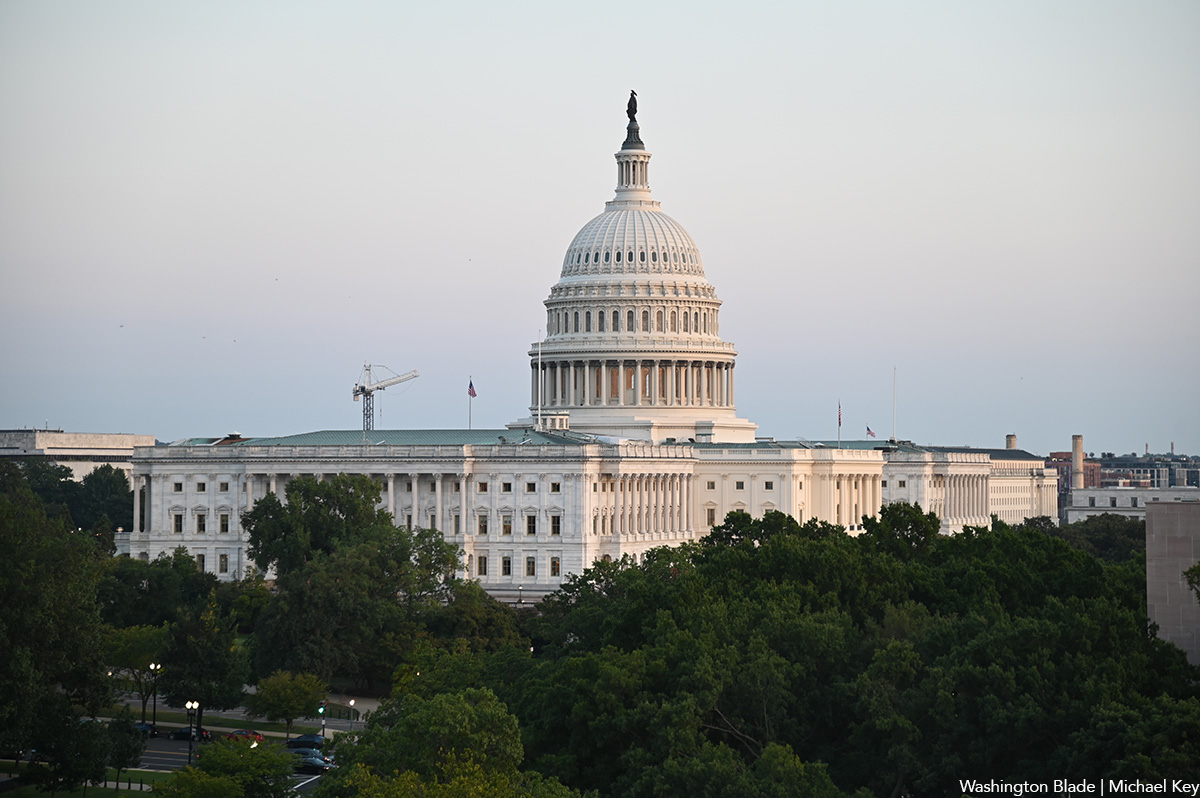
The U.S. Senate has flipped to Democratic control.
Democrats will control of the Senate after flipping the minimum four Republican-held seats, giving the party control of both chambers of Congress and a majority in the legislative branch, according to NBC.
The Senate, the upper legislative body, holds 100 seats, two for every state, and oversees several important functions of the federal government, including confirming judicial and Cabinet appointments.
There will now be two openly LGBTQ+ members of the Senate: freshly elected Chris Pappas of New Hampshire, who is gay, and Tammy Baldwin of Wisconsin, who is a lesbian.
With greater control over federal legislation, Democrats could have an opportunity to advance measures such as the Equality Act, which would expand federal protections against discrimination based on sexual orientation and gender identity.
During the campaign, President Donald Trump repeatedly referred to South Carolina Democratic Senator-elect Annie Andrews using the anti-transgender slur “Tranny Annie,” while emphasizing culture war issues, including trans participation in sports and gender-affirming care.
Democrats, meanwhile, have centered their campaigns on the growing affordability crisis as somatic issues, including the Ukrainian-Russian war, Palestinian-Israeli war, and the war in Iran.
New Hampshire
Chris Pappas elected to U.S. Senate
N.H. Democrat is first openly gay man elected to chamber
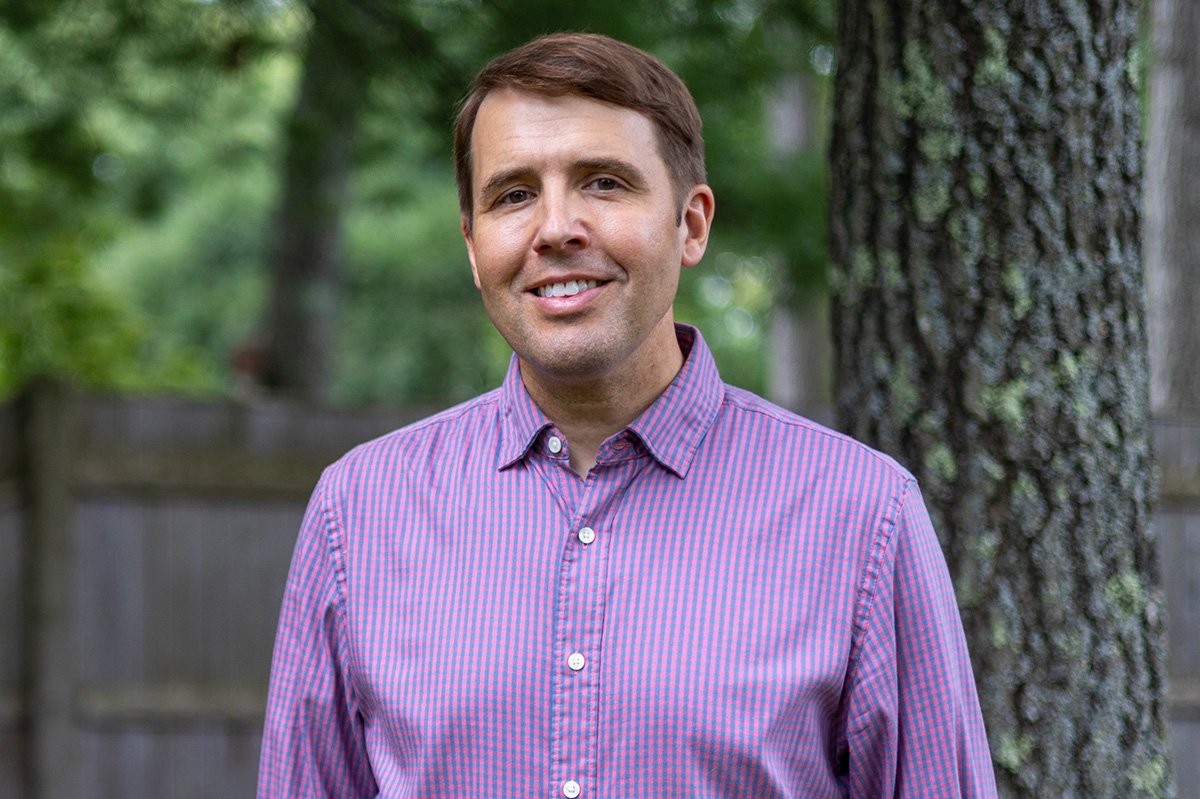
New Hampshire Congressman Chris Pappas on Tuesday became the first openly gay man elected to the U.S. Senate.
The Granite State Democrat defeated Republican John E. Sununu, who represented New Hampshire in the Senate from 2003-2009. Sununu conceded shortly after the polls closed at 8 p.m. ET.
“I’m really proud of who I am, but [I am] more proud of the fact that New Hampshire embraces people from different walks of life,” Pappas told the Washington Blade during an Oct. 26 interview. “This is a state that fundamentally believes that everyone should be able to be themselves, and we’re stronger when everyone has the same rights and responsibilities.”
Pappas’s husband, Vann Bentley, stood alongside him when he spoke to supporters in Manchester, New Hampshire’s largest city.
Thank you, New Hampshire. https://t.co/AIIfpYj2IS
— Chris Pappas (@ChrisPappasNH) November 4, 2026
Pappas in January will succeed retiring U.S. Sen. Jeanne Shaheen (D-N.H.).
“The voters of New Hampshire know that Chris Pappas is one of their own, a leader who will work for the Granite State, push back against corruption and champion LGBTQ+ equality,” said Human Rights Campaign President Kelley Robinson on Tuesday. “As the first openly gay man to serve in the U.S. Senate, Chris’s victory isn’t just historic — it’s a sign that progress is possible when we show people who we are and what we fight for. We’re thrilled to continue working with Chris as he heads to the U.S. Senate .”
LGBTQ+ Victory Fund CEO Evan Low in his own statement noted “Granite Staters made history — and sent a message that will be heard far beyond New Hampshire.”
“Chris Pappas earned this win the way he’s earned every one before it: by showing up, listening, and delivering for working families,” he said. “For generations of gay men who were told public life wasn’t for them, seeing Chris take his seat in the U.S. Senate will be proof that the door is open. He will be a fierce champion for every New Hampshire family, and a powerful voice for equality in a chamber that has never had a voice quite like his.”
California
Xavier Becerra wins California governor’s race
Governor-elect has long track record of LGBTQ support

Just minutes after polls closing, Democratic candidate Xavier Becerra was named the projected winner of California’s governor’s race by the Associated Press, beating out the Republican Steve Hilton. Becerra has a long history in elected office, serving as a congressman representing parts of Los Angeles and East LA, then as California Attorney General, and most recently as the Secretary of Health and Human Services under President Joe Biden. He also has a long history of supporting pro-LGBTQ policies.
As a congressman, he voted against the 1996 Defense of Marriage Act, which banned same-sex marriage on the federal level. As California attorney general, he sued the Trump-Pence administration in 2017 over a policy that aimed to ban transgender people from serving in the military. As HHS Secretary, he publicly defended access to gender-affirming care for transgender patients, including for minors, noting that it has been shown to reduce suicidality among transgender youth. This is a major contrast to the current HHS Secretary Robert F. Kennedy Jr., who has since made the agency’s official policy that it “rejects gender ideology and condemns the harms it causes to children.”
In his campaign for governor, Becerra has continued to support gender-affirming care, saying in a statement on X that “as Governor, I will stand firm to secure California’s status as a sanctuary state for trans youth and their families,” and posting an image with the phrase “protect trans youth.”
Becerra’s opponent Steve Hilton made LGBTQ issues a small but loud part of his campaign.
He opposed transgender participation in women’s sports, attending and speaking at a “Save Girl’s Sports” rally that called for a ban on transgender people playing in women’s sports in California. In an interview with the San Francisco Standard, Hilton was asked about his favorite girl’s sport, responding “I don’t follow girl’s sports,” and declined to make any commitments to further women’s competition in sports beyond calling for an end to transgender participation.
Hilton came under further criticism from the LGBTQ community for releasing an innuendo-laced campaign advertisement in October that appeared to show two women in an intimate setting before revealing that one is trying to convince the other to vote for Hilton. Jorge Reyes Salinas, communications director at Equality California, called the ad “a disgusting attempt to exploit lesbian intimacy for political attention” in an interview with the Blade. It was also unpopular among conservatives, with Evangelical Pastor Jack Hibbs stating that the ad was distasteful and that “lesbianism among college girls and some high school girls right now is an actual pandemic of social ill.”
Becerra’s victory in the governor’s race is no surprise in California where registered Democrats outnumber registered Republicans nearly 2:1. The real challenge was making it past the primary election. After former Congressman Eric Swalwell dropped out of the Democratic primary amid allegations of sexual misconduct, Becerra seized on the opportunity and became the frontrunner. He later beat out billionaire Tom Steyer in the June primary to become the Democratic nominee.
In the general election, Becerra ran a quiet campaign for governor, counting on support from the overwhelmingly Democratic California electorate. As a result, Becerra has been sparse on many specific policy commitments on the campaign trail. However, his track record indicates that California’s next governor will likely support pro-LGBTQ policies.
Caleb Kaufman is a California Local News Fellow placed with the Los Angeles Blade. The California Local News Fellowship is a state-funded initiative to support and strengthen local news reporting. Learn more about it at fellowships.journalism.berkeley.edu/cafellows.
Politics
Democrats poised to flip House, opening door for expanded LGBTQ+ leadership
Robert Garcia among potential committee chairs in new Congress
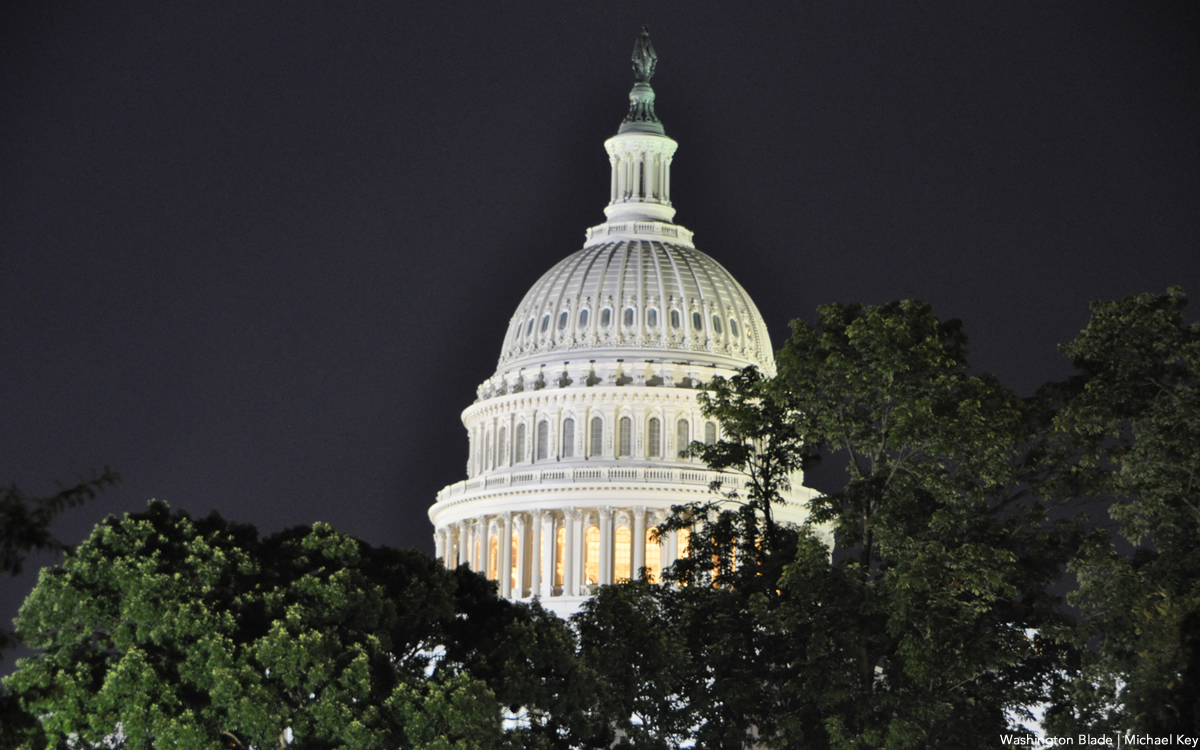
The U.S. House of Representatives is projected to flip to Democratic control.
According to the Associated Press, Democrats are moving toward control of the House after defeating six Republicans in key battleground races.
While several major questions remain about how Democrats will lead beginning in 2027, their control of the chamber will expand their oversight powers, allowing them to pursue efforts to check an executive branch that has operated with little congressional oversight over the past two years.
With control of the House and expanded oversight powers, more LGBTQ Democrats could be positioned to take on leadership roles in the new Congress.
Incumbent Congressman Robert Garcia (D-Calif.) is poised to become chair of the House Oversight Committee, where he would have greater authority to investigate the Trump-Vance administration, subpoena officials and oversee federal agencies.
Garcia sent out a two word statement following the confirmation of the Democratic Party’s control: “Lawyer up.”
U.S. Rep. Mark Pocan (D-Wis.) could gain a leadership position on the House Appropriations Committee, which has authority over government funding. Such a position could allow him to put roadblocks in the way of much of the Republican agenda, including many projects Trump has personally spearheaded while in the Oval Office.
Some political strategists, like those at Newsweek, have said a third Trump impeachment could be on the table. However, convicting President Donald Trump in a Senate trial would require a two-thirds majority, an outcome that remains uncertain.
These midterm elections have been rife with personal attacks, gerrymandering at the behest of Trump, and heightened political tensions across the country. Republicans have campaigned on the idea that voters are effectively voting for Trump, while also focusing heavily on transgender issues. Meanwhile, many Democrats have pushed back by centering their campaigns on the growing affordability crisis as the war with Iran continues.
U.S. Supreme Court
Supreme Court weighs religious exemptions to LGBTQ+ nondiscrimination protections in Colo. preschool case
Ruling expected by June 2027
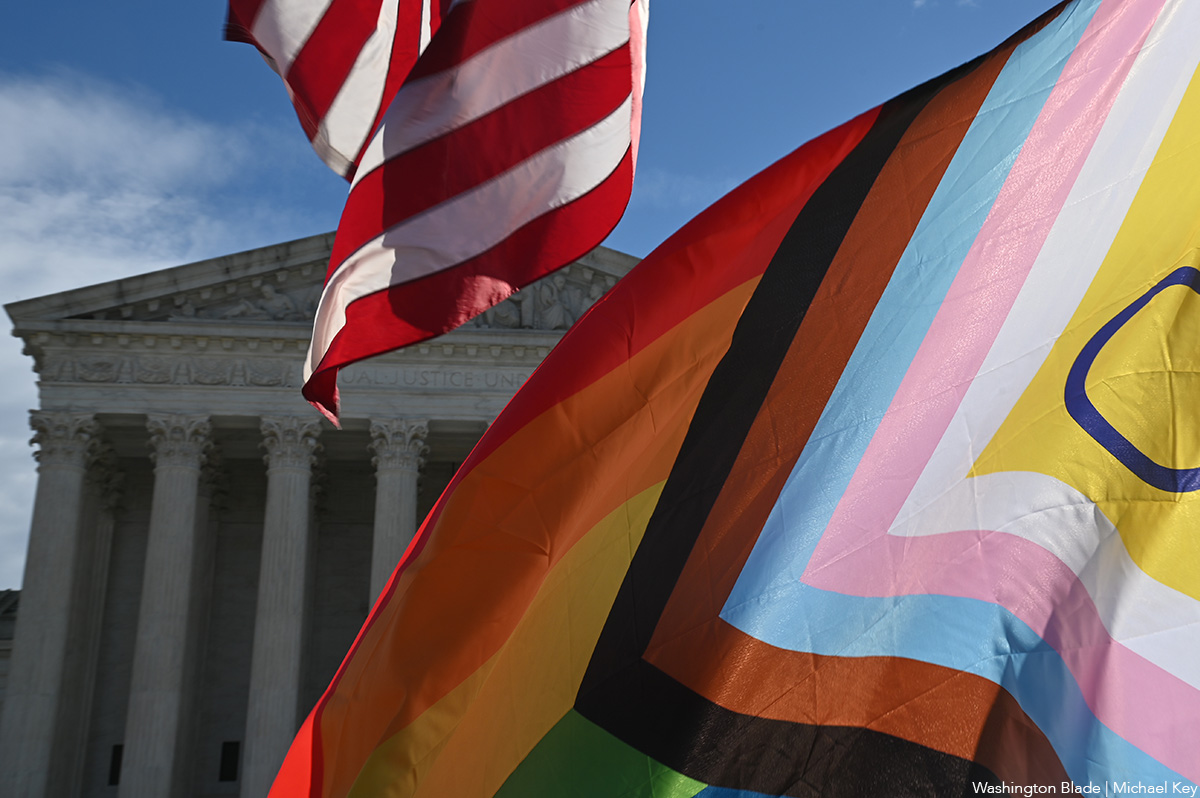
The U.S. Supreme Court heard oral arguments Tuesday in a case examining whether Colorado’s exclusion of religious preschools from a publicly funded education program violates the First Amendment’s guarantee of religious freedom.
In St. Mary Catholic Parish v. Roy, Catholic preschools in Colorado have brought the fight to the nation’s highest court, arguing that their exclusion from the state’s universal preschool program, including its public funding, amounts to religious discrimination that violates their First Amendment rights.
The Catholic schools want to participate in the program and receive public funding while maintaining admissions policies that require families to support Catholic teachings on marriage, sexuality, and gender. Those policies conflict with the program’s equal-opportunity requirements, which prohibit discrimination based on characteristics including sexual orientation and gender identity.
Under the program, Colorado provides 15 hours of preschool per week for eligible children through participating public and private providers. The program allows families to select their preferred preschool, provided the school meets certain requirements, including equal-opportunity standards. The benefit has been valued at approximately $6,000 per child annually, according to attorneys representing the Catholic schools.
The plaintiffs in the case include St. Mary Catholic Parish, St. Bernadette Catholic Parish, the Archdiocese of Denver, and two parents of preschool-aged children. They went to federal court to challenge the state’s policy, arguing that making the Catholic preschools’ participation in the universal preschool program contingent on accepting the equal-opportunity requirements amounts to unlawful religious discrimination.
They argue that the First Amendment requires Colorado to provide a religious exemption to the nondiscrimination requirements so the schools can participate in the program without compromising their religious beliefs.
The schools also argue that Colorado permits certain enrollment preferences for secular purposes while refusing to accommodate their religious admissions policies.
The 10th U.S. Court of Appeals ruled in favor of Colorado in September 2025, upholding the state’s equal-opportunity requirements.
The 10th Circuit acknowledged that the Supreme Court has consistently held that states cannot categorically exclude religious institutions from otherwise available public benefits because of their religious character. However, it determined that Colorado was not explicitly excluding the schools because they were religious institutions. Rather, the schools were ineligible because their admissions policies did not comply with the program’s nondiscrimination requirements.
In the state’s view, these schools can participate in the preschool program provided they abide by the same equal-opportunity requirements imposed on other participating providers. Colorado argued that its restrictions apply to enrollment policies and conduct across the program and are not specifically targeted at religious institutions or religious practices.
The case requires the Supreme Court to consider several previous decisions involving religious freedom and the government’s ability to enforce generally applicable laws.
In 1990, the Supreme Court held in Employment Division v. Smith that neutral, generally applicable laws do not violate the First Amendment’s Free Exercise Clause simply because they place a burden on someone’s religious practices.
The case involved two men who worked at a private drug rehabilitation organization and were fired after ingesting peyote, a hallucinogenic substance, during a religious ceremony of the Native American Church. Oregon subsequently denied them unemployment benefits because their drug use constituted work-related misconduct. The Supreme Court ruled that the state’s denial did not violate their First Amendment rights.
Another ruling relevant to this case is the Supreme Court’s 2020 decision in Espinoza v. Montana Department of Revenue. The court ruled that Montana could not exclude religious schools from a generally available scholarship program solely because of their religious status. The decision held that doing so violated the Constitution’s Free Exercise Clause.
Another significant precedent is Carson v. Makin, in which the Supreme Court ruled in 2022 that Maine could not exclude religious schools from its public tuition-assistance program simply because they provided religious instruction. The state’s requirement that participating private schools be “nonsectarian” violated the First Amendment’s Free Exercise Clause.
The 6-3 decision was opposed by three justices, who argued that the ruling would require taxpayers to fund religious education and undermine the separation between church and state.
The Supreme Court’s decision in St. Mary Catholic Parish v. Roy could further clarify how these precedents apply when states condition public funding on compliance with nondiscrimination requirements.
The court agreed to consider two specific questions: whether Colorado’s treatment of certain secular enrollment preferences undermines the general applicability of its nondiscrimination requirements under Employment Division v. Smith, and whether Carson v. Makin applies when the government does not explicitly exclude religious institutions from public benefits.
The ruling could have implications beyond Colorado’s preschool program, particularly for the ability of state and federal governments to enforce nondiscrimination requirements against religious organizations receiving public funding.
The Supreme Court is expected to issue a decision by the end of June 2027.
LGBTQ+ advocates weigh potential consequences
The Los Angeles Blade spoke with Meg York, chief legal and policy officer of COLAGE, a national nonprofit organization that unites and supports people with LGBTQ+ parents. COLAGE filed an amicus brief in the case. York attended Tuesday’s oral arguments and discussed what she heard from the justices and the potential implications for LGBTQ+ families.
York emphasized that Colorado’s decision to include Catholic schools in its universal preschool program is an important distinction in the case, arguing that the dispute should not be characterized as a simple conflict between religious institutions and the state.
“Colorado explicitly chose to include Catholic schools in its universal pre-K program, so when we talk about the Catholic arguments, I think there’s maybe a false binary there that it’s one versus the other,” she told the Blade during a phone interview. “But in terms of the arguments raised by the petitioners or the respondents, I was listening to see if there was anybody who seemed to be kind of straying from what we typically expect in ideological lines, and I’m not sure that I heard that in this case.”
When asked how she interpreted the justices’ questions and what they could indicate about the eventual outcome, York said she saw some potential for the court to take a narrower approach that considers Colorado’s arguments.
“I do think that there were times at which I felt that some of the justices were potentially more receptive to really taking a more narrow approach to this case and really thinking about the arguments that Colorado was putting forward. I think there were some moments of hope. It’s hard when you’re in an oral argument. You hear some questions, but then there’s a lot of silence, too. It can be difficult to know which way certain folks are leaning or not.”
One of the central legal disputes involves whether Colorado’s equal-opportunity requirements are generally applicable or whether the state makes exceptions that could require it to accommodate religious admissions policies.
York disputed the characterization of the state’s provisions as exemptions, saying Colorado views them as measures intended to advance equal access rather than exceptions to its nondiscrimination requirements.
“I don’t think the state of Colorado was classifying them or framing them as exemptions as much as they were the kind of things that could advance their equal opportunity goals. So, you know, there were no exemptions to the nondiscrimination requirement, none at all. Colorado doesn’t give any exemptions to that. And so when they talk about schools that help serve low-income individuals or individuals with disabilities, those are all in furtherance of the equal opportunities that Colorado seeks to advance.”
The arguments also raised questions about how a ruling could affect nondiscrimination protections beyond the preschool program. Justices Ketanji Brown Jackson and Sonia Sotomayor raised concerns about how religious exemptions could affect laws designed to protect people based on characteristics such as sexual orientation and gender identity.
York pointed to those exchanges as particularly significant, questioning whether a broader interpretation of religious exemptions could subject more nondiscrimination laws to heightened constitutional scrutiny.
“Some of the concerns raised by Justice Jackson and also by Justice Sotomayor were about this idea of when you have protections or when you have a nondiscrimination law to protect people who have protected characteristics, that we’re not really in the business of determining whose belief is a sincerely held religious belief. So does that push everything to strict scrutiny? And I think there were some concerns about that.”
The case also puts two major lines of Supreme Court precedent under scrutiny: Employment Division v. Smith, the 1990 decision involving neutral, generally applicable laws, and Carson v. Makin, the 2022 decision prohibiting states from excluding religious schools from public benefits because of their religious instruction.
York noted that the justices grappled with how those decisions apply to Colorado’s program. She also emphasized that the Supreme Court declined to consider the plaintiffs’ separate request to overturn Employment Division v. Smith.
“In some ways, you have the petitioners who were kind of saying that the Carson line of cases is controlling, but then they were a little mushy in some of the cases being cited in that line of cases. We certainly heard the court grappling with what they consider when they’re considering Employment Division v. Smith. Does Carson make a reply here when you have very different circumstances under which that opinion was issued?”
For York, the case ultimately presents questions about how religious freedom and equal access can coexist, particularly when public funding is involved.
She said COLAGE believes LGBTQ+ families should be protected under nondiscrimination laws without requiring religious institutions to sacrifice their constitutional protections.
“My organization takes the position that religious freedom is something that we all value. Whether you are a specific religion or whether you are not religious, that is part of the freedoms that are guaranteed to us in the Constitution, and that’s something that benefits all of us. To that end, we feel that people with LGBTQ parents should be protected under the law, and that is exactly the heart of these nondiscrimination laws. And at the same time, that doesn’t mean that we need to sacrifice religious liberty or religious freedom to do so.”
York said she believes the case’s ultimate impact will depend heavily on how narrowly or broadly the justices write their decision.
“I don’t think it’s a foregone conclusion that they’re going to rule in favor of St. Mary or in favor of the petitioners, but even if they did, we could get a very narrow ruling that is incredibly specific and limited.”
LGBTQ+ organizations warn of consequences for families
Other LGBTQ+ advocacy organizations also warned that allowing religious preschools to participate in publicly funded programs while maintaining admissions policies that conflict with nondiscrimination requirements could have consequences for families beyond Colorado.
The National Women’s Law Center argued that a ruling in favor of the Catholic schools could undermine equal access to publicly funded education and potentially create a precedent for excluding other families.
“No four-year-old child should be denied preschool placement because their parents are gay or lesbian,” said Brian Dittmeier, director of LGBTQI+ equality at NWLC. “Marriage equality is the law of the land, and the court should not open the door to extreme arguments that seek to chip away at equal rights for same-sex couples. All families deserve access to affordable, high-quality early care and education, which is exactly why Colorado voters mobilized to expand early education access in their state through this universal and incredibly successful program.”
Dittmeier also said Colorado’s faith-based preschools have previously complied with nondiscrimination requirements and warned that allowing exceptions could leave same-sex families with fewer options.
“For years, Colorado’s faith-based preschools have had no trouble complying with nondiscrimination requirements as a common condition of receiving taxpayer funding to support their operations. Allowing discrimination in a state program specifically intended to achieve universal access is counter to Colorado voters’ intent and will leave same-sex families with fewer options to support their children. The same reasoning could later be used to turn away other children, including children of unmarried mothers or children whose parents are divorced. Such an outcome is unacceptable and will exacerbate the child care crisis in this country.”
The Human Rights Campaign similarly argued that public funding should not be used to discriminate against LGBTQ+ families.
“This case is straightforward — schools receiving public funds from a state universal preschool program cannot be allowed to use taxpayer dollars to leave LGBTQ+ families behind,” said HRC President Kelley Robinson. “As the arguments made clear today, Colorado’s non-discrimination requirement ensures no family can be denied a quality education simply for who they are — it is lawful and should be upheld. Exclusion has no place in our educational system.”
Lambda Legal and GLAD Law also filed a friend-of-the-court brief supporting Colorado.
During oral arguments, Colorado Deputy Solicitor General Helen Norton highlighted the practical consequences of allowing publicly funded schools to turn away families based on protected characteristics.
“Families are harmed when they’re turned away from the publicly-funded school that makes their lives work because of their protected class status,” Norton said. “Think of the parent who needs a school that opens at 7:00 A.M. so she can get the bus that takes her to work. Think of the parent who needs a school that will take all three of her kids so she doesn’t have to shuttle them among three different schools… For that parent to be turned away from those schools that make preschool possible for her family because of her protected status harms families and undermines Colorado’s interest.”
Karen Loewy, senior counsel and director of constitutional law practice at Lambda Legal, said religious schools can maintain their own admissions criteria when privately funded but should be required to follow state nondiscrimination laws when accepting taxpayer money.
“When the state pays schools to provide preschool programming, the schoolhouse door must be open to every family. While religious schools can set their own admissions criteria when they are privately funded, every school, religious or secular, that chooses to take taxpayer dollars is barred from discriminating in violation of Colorado law,” Loewy said. “No four-year-old should be turned away from a taxpayer-funded classroom because of who their parents are, including children of LGBTQ parents. Colorado’s requirements simply make sure public money isn’t used to discriminate, and the Constitution has long allowed states to set that condition.”
Archdiocese of Denver responds to concerns of LGBTQ+ discimination
The Blade also reached out to the Archdiocese of Denver for comment on its position in the case, particularly on how the ruling could affect LGBTQ+ families’ access to publicly funded educational programs.
The archdiocese responded by providing statements from some of the families involved in the case, who argued that they were fighting to end discrimination.
Dan and Lisa Sheley, Catholic parents of seven and Becket clients in the case, said, “Universal should mean everyone. Yet Colorado has barred families like ours from its universal preschool program simply because we chose a Catholic education for our children. We pray the Supreme Court will end this discrimination and hold Colorado to its word.”
Nicholas Reaves, senior counsel at Becket and lead attorney for the families and preschools, emphasized past decisions from the Supreme Court that sided with religious groups in disputes over public benefits. He argued that religious schools should not have to abandon their beliefs to receive those benefits.
“Colorado’s Catholics-need-not-apply rules make a mockery of our nation’s laws and commitment to religious freedom,” Reaves said. “The Supreme Court has been crystal clear: Americans don’t have to forfeit their faith to receive public benefits. We are confident that this discrimination won’t stand and that the court will hand Colorado yet another loss.”
California
L.A. LGBT Center used canvassing effort to reframe conversation around trans healthcare
‘Gender affirming care access as part of health care access for all’
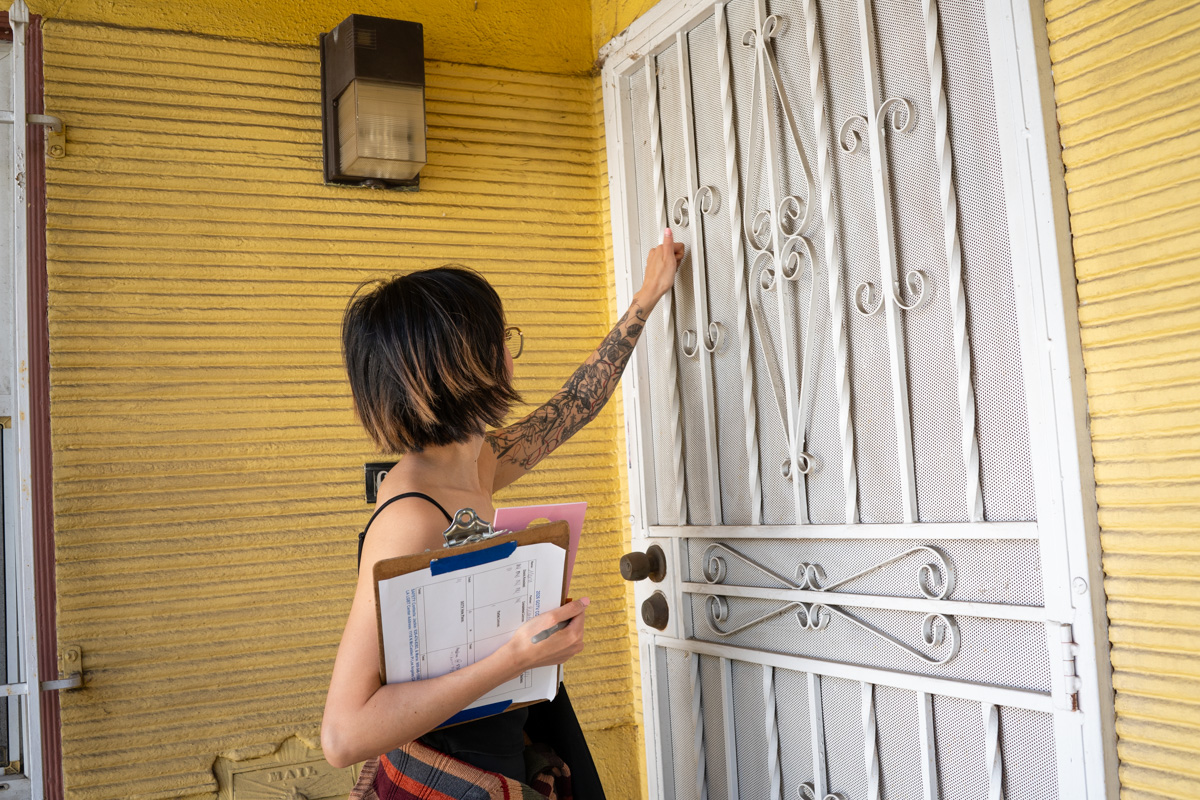
The Los Angeles LGBT Center has seen the impact of fearmongering rhetoric about transgender people firsthand so it set out to change the narrative.
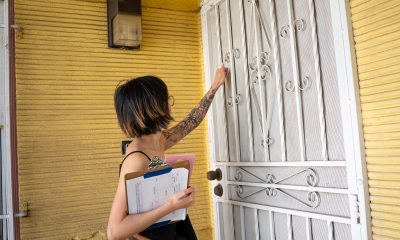
The L.A. LGBT Center this year began a new deep canvassing initiative to combat misconceptions about transgender healthcare. The volunteer canvassers are encouraged not only to share facts and voting information, but also to connect with voters by using personal experiences to frame their political engagement. “The key components of deep canvassing involve getting vulnerable and curious with the voter and exchanging stories to show how political issues are tied to personal real lived experience,” said Maria Do, the community mobilization manager at the L.A. LGBT Center.
The campaign focused on speaking to voters in the San Gabriel Valley, a working class and ethnically diverse area on the far east side of Los Angeles County. The deep canvassing campaign targeted the city of Monterey Park in particular, a neighborhood home to large Chinese, Vietnamese, and Cambodian immigrant populations. The goal was to connect with infrequent voters who may be uninformed or misinformed about LGBTQ issues. They focused mainly on informing voters about gender affirming care and then encouraging them to vote in the upcoming midterm elections.
“There have been a lot of attacks and just a lot of misinformation around gender affirming care,” Do said. This campaign aimed to dispel misconceptions about transgender care and to treat it like any other kind of healthcare. “We’re trying to frame gender affirming care access as part of health care access for all,” Do said.
Deep canvassing
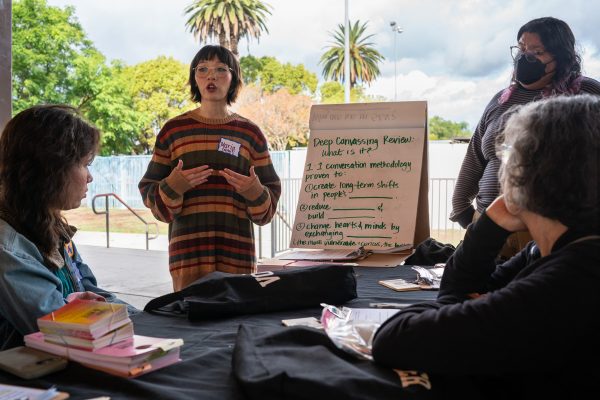
Deep canvassing at the LGBT Center has its origins in the political battle over the 2008 ballot proposition to ban gay marriage in the state of California. After the ballot proposition passed, the center organized volunteers to knock on doors and have conversations with voters who supported it. These conversations surprised advocates.
“Concerns voters had about same-sex marriage weren’t rooted at all in lived experience, but were fed through media misinformation and their own biases,” Do said. This convinced organizers at the LGBT Center that having face-to-face interactions with voters would be the most productive way to combat narratives that dehumanized and politicized queer rights. This same technique is being utilized by the center today to target rising anti-trans sentiment and policy.
Do says that many people are unaware of reduced access to gender affirming care and threats against health systems, patients, and providers from the federal government. Many did not know that Children’s Hospital Los Angeles shut down the largest gender affirming care clinic for trans youth in the country following pressure from the Trump-Vance administration. When canvassers inform people about these challenges, they often get into conversations about a voter’s own struggles with healthcare access.
“They have shared a lot of stories about Medi-Cal access being cut,” Do said. Voters have also expressed concerns over Immigration and Customs Enforcement (ICE) officers in their communities. These similar concerns over healthcare access and federal overreach can help build solidarity across demographic communities. “To share that attacks are also happening on the transgender community has allowed space to sort of see the through line between different efforts to help protect various marginalized communities,” Do said.
What’s on the ballot
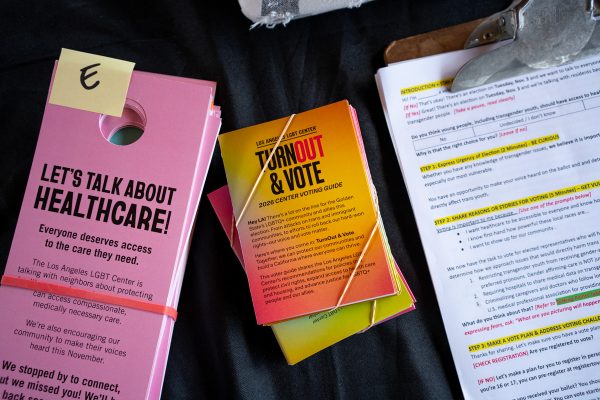
The L.A. LGBT Center is non-partisan and has not officially endorsed any candidates on the ballot. But the organization still views this election as consequential for queer people across the state and decided to weigh in on six of the statewide ballot propositions, emphasizing an opposition to Proposition 44.
The proposition would mandate that community health clinics spend 90% of their annual income on patient care. While proponents of the measure say that it would ensure that clinics are prioritizing services over profits, critics say that its definition of patient care is too narrow, that 90% is an unrealistic goal, and it would end up hurting patients more than helping them.
LGBT Center officials have said that it would harm community clinics around the state, including others that specialize in queer healthcare.
“Community clinics who fall short [of spending 90% of revenue on program expenses]… would face severe penalties, an estimated $1.7 billion in the first year alone. At a time when the federal government is seeking to strip people of healthcare, this measure will lead clinics to close and make matters worse,” the L.A. LGBT Center’s director of advocacy Joey Hernández said in a written statement.
“It isn’t always going to be a win”
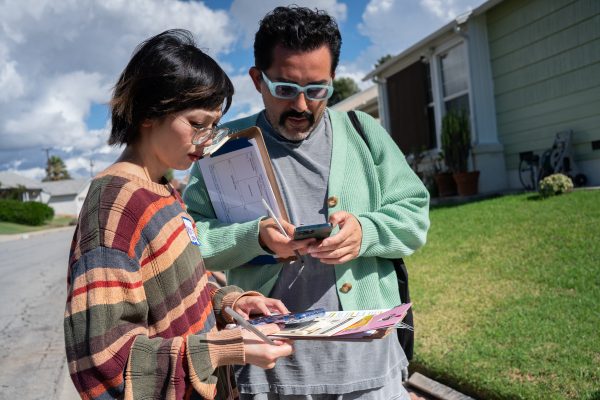
Ricardo Sebastiań has volunteered for two of the deep canvassing actions with the LGBT Center and said it is an effective way to change people’s minds.
“Canvassing is a tried and true tactic for advocacy,” Sebastián said.
They think that a face-to-face conversation with someone can humanize what can otherwise feel like abstract political issues. “Even if you’re meeting somebody who has a different worldview, there is an opportunity there to find middle ground, and that shifts people. You never know the type of impact you’re going to have on somebody when you’re having an open dialogue,” Sebastián said.
Do said that volunteers have spoken with people who had never met a transgender person before and that these conversations around trans healthcare can drastically change these people’s perspectives. “Folks started to see themselves and started to empathize,” when they spoke about transgender healthcare with canvassers with the LGBT Center, Do said.
When out knocking on doors, the most common response for canvassers is, well, nothing. Most of the time, knocks go unanswered and volunteers simply leave behind pamphlets provided by the LGBT Center. And even when canvassers get someone to the door, they can often be preoccupied and dismissive. But this doesn’t discourage volunteers like Sebastián. They feel like the productive conversations they have make it all worth it.
“It isn’t always going to be a win,” Sebastián said. “There’s always going to be somebody who doesn’t want to talk to you or doesn’t care or is very staunch in opposing views. But you can’t let that discourage you from getting to the next door.”
Caleb Kaufman is a California Local News Fellow placed with the Los Angeles Blade. The California Local News Fellowship is a state-funded initiative to support and strengthen local news reporting. Learn more about it at fellowships.journalism.berkeley.edu/cafellows.
Politics
Michigan Senate race puts two sharply different LGBTQ+ records head to head
Abdul El-Sayed challenging U.S. Sen. Mike Rogers (R-Mich.)

Poll workers across the country are pulling out the ballots and “I voted” stickers, bracing for one of the most divisive and consequential midterm elections in modern times.
Few states have drawn as much media attention, fiery rhetoric, and last-minute political shake-ups as Michigan.
Tomorrow, Democratic nominee Abdul El-Sayed will face off against Republican nominee Mike Rogers for the Great Lakes State’s Senate seat.
In a state where LGBTQ+ adults make up nearly 11 percent of the population, it is important to understand where each candidate stands on issues affecting the community.
El-Sayed, a former public health official and politician, has a record of advocacy and healthcare policy experience related to the LGBTQ+ community.
He led Detroit’s Ryan White HIV program and partnered with LGBT Detroit to make public health services more open and affirming for LGBTQ+ residents. Drawing on his public health expertise, he has also committed to restoring federal HIV and PrEP funding gutted by the Trump-Vance administration. He refuses corporate PAC money, has been outspoken in his support for trans rights, and has vowed to be a “lion for LGBTQ+ rights” in the Senate.
Earlier this year, El-Sayed spoke to PrideSource, where he reaffirmed his support for the LGBTQ+ community, specifically the transgender community, which has faced the brunt of political attacks and hateful rhetoric.
“There’s a reason that if I’m asked, I always say that I support trans rights because I believe in all rights,” El-Sayed said. “I want folks to see their own rights in the plight of a trans person who’s being discriminated against.”
He continued, explaining that if he gets elected to the Senate, he will champion LGBTQ+ rights wherever he can.
“I want the community to know that I intend to be a lion for rights. When somebody’s coming for you, I intend to stand in the cut to protect you. We have to answer this broader question — do we want to live in the kind of America where we leave some of us behind, or do we want to live in the kind of America where we understand that government of the people, by the people, and for the people means all the people?
“My job as a public servant is to stand up for folks. It’s what motivated a lot of my efforts in Detroit and Wayne County to make sure that our services were deeply accessible and empowering of LGBTQ+ residents — and it’s why I take the idea of protecting all of our rights so seriously.”
Rogers, meanwhile, last served as a public servant in 2015, when he represented Michigan’s 8th Congressional District. Before entering politics, he worked as a special agent for the FBI from 1989 to 1994. He unsuccessfully ran for Congress again in 2024 and is now seeking a seat in the Senate.
Compared to El-Sayed, Rogers has a lengthy anti-LGBTQ+ record, according to the Human Rights Campaign and GLAAD.
Rogers has called being gay a “lifestyle choice” saying he wouldn’t support his own child if they were gay, has a record of multiple votes against marriage equality, as well as opposition to the repeal of “Don’t Ask, Don’t Tell,” the discriminatory military policy that led to LGBTQ+ service members being discharged for who they are or who they love.
Rogers also voted against the Matthew Shepard and James Byrd Jr. Hate Crimes Prevention Act, which expanded federal hate crime protections to people targeted because of their gender, sexual orientation, gender identity, and disability, alongside existing protections based on race, color, religion, or national origin.
Additionally, he voted against a fully inclusive Violence Against Women Act (VAWA), which sought to ensure survivors received protections and housing regardless of their gender or sexual orientation. He also voted against the Affordable Care Act, which prohibits insurance companies from discriminating against people with pre-existing conditions, including LGBTQ+ patients.
His record has become a point of contention, which saw an unexpected political shake up that has started to dominate coverage.
Just yesterday, U.S. Rep. Haley Stevens, a Michigan Democrat who previously ran against El-Sayed for the party’s Senate nomination, withdrew her endorsement of him and instead endorsed Rogers, surprising her team and members of the Democratic Party.
Jeremy Moss, an LGBTQ+ state lawmaker who is also running for federal office in Michigan that the Blade interviewed earlier this election cycle, condemned Steven’s sudden about face in a statement on Instagram.
“I strongly disagree with Haley Stevens’ decision to endorse Mike Rogers.
Abdul and I have talked about our shared commitment to fighting MAGA extremism, dismantling ICE, and expanding affordable healthcare … But openly cheerleading Mike Rogers is unacceptable. He would be a rubberstamp for Donald Trump, from engaging in voter suppression and election denial, to continuing ICE’s cruel and unlawful operations, to defending disastrous tariffs, to slashing affordable healthcare, and more …
And Rogers, with his abysmal anti-LGBT record, would gleefully confirm Supreme Court justices who will rollback the rights that I have fought hard to protect.”
Despite himself not being a member of the LGBTQ community, HRC has become a vocal supporter of El-Sayed since he emerged as the Democratic nominee.
“I’m proud to have the Human Rights Campaign standing with us in this race,” said El-Sayed. “LGBTQ+ Michiganders deserve leaders who will have their backs when it matters most, not just when it’s politically convenient. That’s the commitment I’ve carried throughout my career in Detroit and Wayne County, and in the United States Senate, I’ll fight to ensure every Michigander can live without discrimination and never have to wonder whether their rights will still be there tomorrow.”
HRC President Kelley Robinson issued a statement today ahead of tomorrow’s election, urging Michigan voters to choose equality over discrimination.
“Mike Rogers voted for a constitutional ban on marriage equality — more than once. He opposed the repeal of Don’t Ask, Don’t Tell. And he’s gone after trans kids. There’s only one pro-equality Senate candidate on the ballot in Michigan: Abdul El-Sayed. And he has HRC’s unequivocal support,” Robinson said in a statement. “We have boots on the ground in Michigan, and we’re seeing this thing through until the end.”
The Los Angeles Blade reached out to Rogers regarding his anti-LGBTQ+ policy record but did not receive a response by the time of publication.
Australia
Australia’s first gay state governor takes office
Thomas Bradley sworn in as Queenland’s premier on Sunday
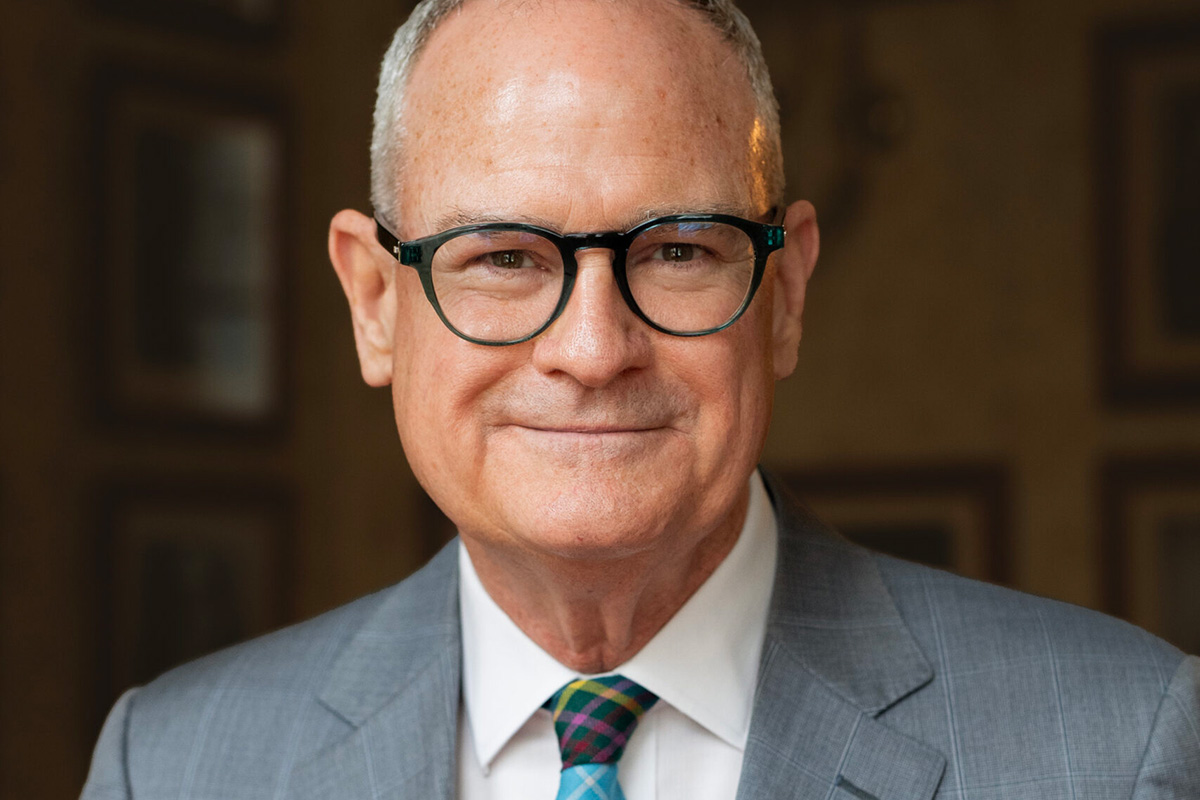
Thomas Bradley on Sunday became Australia’s first openly gay state governor.
Bradley took office as Queensland’s premier at a ceremony that took place at Parliament House in Brisbane, the state’s capital.
The former Court of Appeal judge succeeded Jeannette Young, whose term as governor ended, after King Charles III approved his appointment. (Australia is a member of the Commonwealth.)
The Star Observer, an Australian LGBTQ newspaper, noted Bradley’s partner, Matthew Yoong, attended Sunday’s swearing in ceremony.
“His Excellency has dedicated his life to service in the courts, service in the community, and his new role is the next step in a lifetime of service for this great state,” said Queensland Premier David Crisafulli. “On behalf of the people of Queensland, I congratulate His Excellency and wish him every success as Queensland’s 28th governor.”
Obituary
A gay appreciation of staunch LGBTQ+ ally Patrick Stewart
The late beloved “Star Trek” and “X-Men” star also delighted in playing gay men
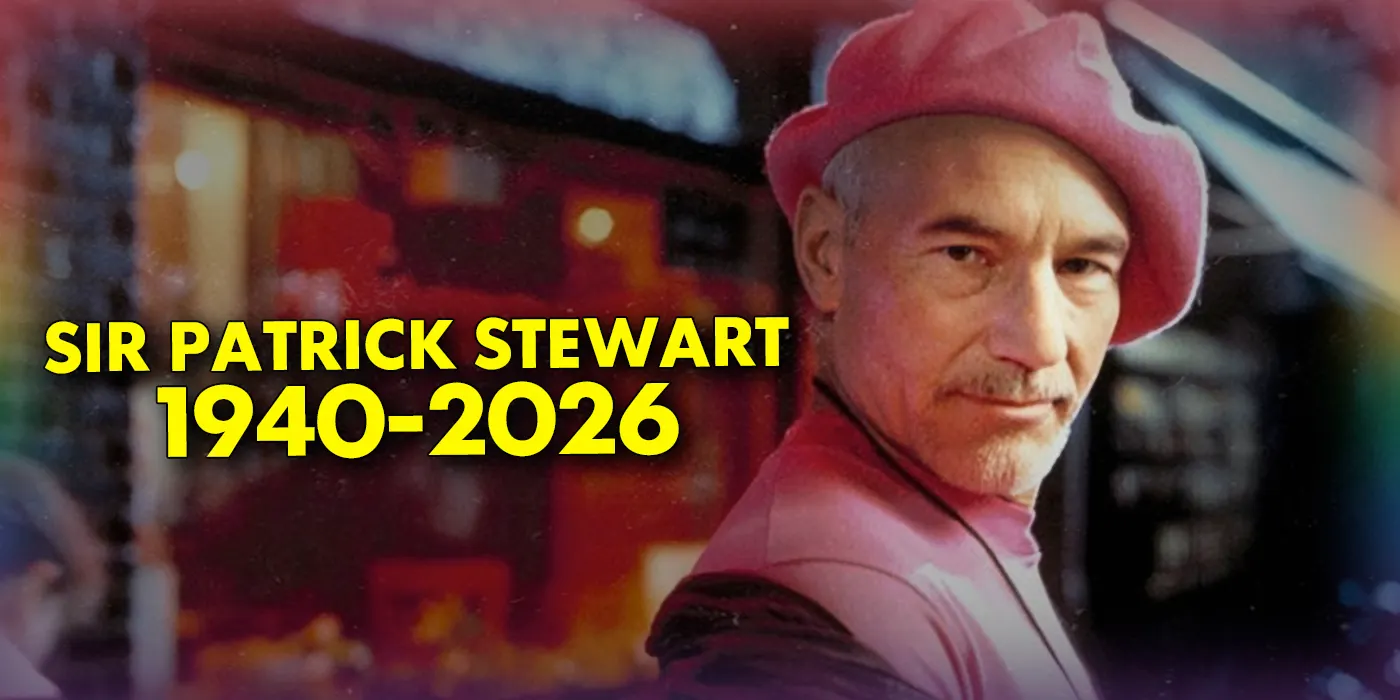
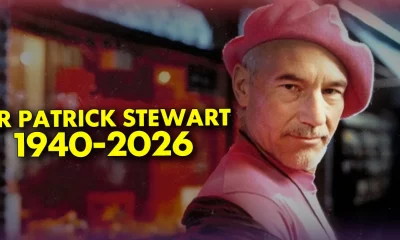
Sir Patrick Stewart – the actor perhaps best known for his stern but empathetic leadership as Captain Jean-Luc Picard, the moral center of the universe in “Star Trek: The Next Generation,” and wheelchair-bound telepath, mutant protector and mentor Professor Charles Francis Xavier, or Professor X, in “The X-Men” – died on Wednesday at age 86 from Alzheimer’s disease and Lewy body dementia.
Glowing tributes have underscored Stewart’s dignity, humor, and delight in the art and craft of acting. But only the day after Stewart’s death have stories surfaced about how Stewart bucked Hollywood homophobia and flaunted his straight love for fellow gay thespian Ian McKellen, including their very public affectionate kisses.
In a long tribute statement on social media, McKellen wrote about Stewart’s pride in being born and bred in Yorkshire, England. “You could hear it in his accented voice and in the stern honesty with which he told you what he thought and felt. Yorkshiremen have no truck with half-truths or avoidance of big issues. He wore his heart on his sleeve, which made him a man to rely on, to admire, and, in my case, love.”
McKellen called his friend “the most respected and beloved actor of his generation on either side of the Atlantic.”

When the “Star Trek” franchise was revived and Stewart introduced the world to Jean-Luc Picard – a role McKellen originally advised him against taking after 40 years at the Royal Shakespeare Company – it was Stewart’s classically trained baritone that first won over skeptical fans. It was the voice of a mythical father beginning a good bedtime story, luring us into the realms of the imagination with each opening of Star Trek: The Next Generation.
“Space: the final frontier,” Stewart’s Picard intoned. “These are the voyages of the starship Enterprise. Its continuing mission: to explore strange new worlds, to seek out new life and new civilizations, to boldly go where no one has gone before.”
Women and girls immediately recognized the changes from the original “Star Trek.” Space was no longer a vast starlit emptiness where “no man has gone before.” Instead, Stewart’s Captain Picard was an empathetic, erudite thinker with a French name and English accent for whom inequality was abhorrent, as Stewart also vehemently believed. If William Shatner’s Captain Kirk was an impetuous cowboy, Picard was a mature, experienced military commander with scruples.
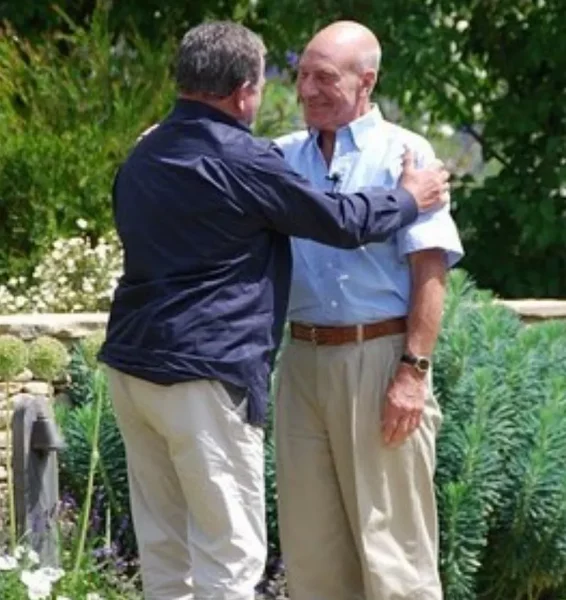
“Captain Picard stood for the best of us, and so did the man who played him,” Shatner wrote in tribute to his friend.
Patrick Stewart also had a refreshing sense of self-deprecation. Imagine how many Sesame Street kids he made less afraid of reading Shakespeare after his rousing Hamlet in “B or Not a B,” which Sesame Street cited in its appreciation of the actor.
Stewart embodied another famous line from “Hamlet” about the purpose of acting: “To hold, as ‘twere, the mirror up to nature, to show virtue her own feature, scorn her own image, and the very age and body of the time his form and pressure.”
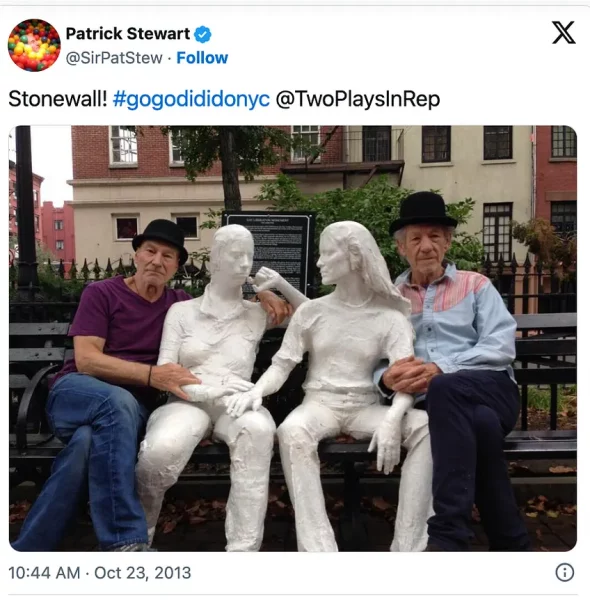
And this Stewart did, especially in league with McKellen as they had fun revealing the depth and humanity of their characters. The pair made Shakespeare and even Samuel Beckett’s “Waiting for Godot” accessible, relevant and at times, funny.
McKellen told ABC News that he broke down in tears after their London run of “Godot” ended in 2009. They reprised “Godot” on Broadway in 2013, playing Harold Pinter’s “No Man’s Land” in repertory as well.
“I recall vividly,” Stewart told Lesley Stahl for a CBS Sunday Morning interview on Oct. 13, 2013. “In fact, it’s on film. I had no idea it was going to come. But the curtain came down on our last performance, and he went into the wings and sat on some stone steps and sobbed, heartbroken that it was over.”
“Yes, I was heartbroken,” McKellen told Stahl. “And then we were going to say goodbye to each other. You were going off to do other things, and I just felt I would never be as happy again.”
They bonded on the set of the first “X-Men” film in 2000, where they played rivals Xavier and Magneto, McKellen told Channel 4 UK News in a 2014 interview with Stewart sitting beside him. McKellen came out publicly in 1988 and felt in tune with the role of Magneto because, as a gay man, he identified with mutants despised by society for being different.
Channel 4 described the interview as “Gandalf and Picard: a bromance made in sci-fi heaven.”
The two became so close that McKellen got an accredited license through the Universal Life Church to officiate Stewart’s third marriage in 2013 to Sunny Ozell in a Mexican restaurant after a performance of “No Man’s Land” in Berkeley, California. Stewart told CBS News it was Ozell’s idea.
The unabashed public display of affection between the straight and gay men generated headlines and lots of social media, including a soon-corrected slip by The Guardian calling Stewart gay. He took it in stride, and after the Poynter Institute noted the Guardian’s gaffe, Stewart weighed in with what The Huffington Post called “an awesome response to being ‘outed’ as gay.”
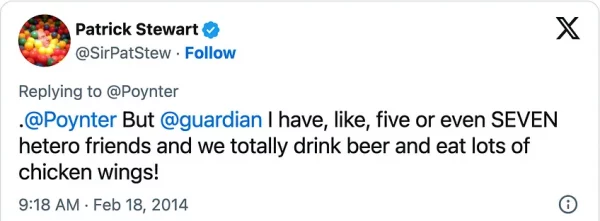
Stewart said he responded in “the only way I could,” by tweeting: “But @guardian I have, like, five or even SEVEN hetero friends and we totally drink beer and eat lots of chicken wings!”
“Quite frankly, I was utterly flattered by that assumption,” Stewart later told The Advocate. “And indeed, the first contact I had was from Ian McKellen, who sent me an email saying, ‘Congratulations!’ And I accepted the congratulations and said, ‘I think this is a very distinctive honor that I’ve been awarded.’”
In The Advocate interview about Stewart’s film Match, Stewart says he wanted to play bisexual Juilliard dance teacher Tobias “Tobi” Powell right after reading the screenplay.
“There are very few roles each year that come along which have this level of detail and complexity, as well as narrative development,” Stewart said. “The depth of satisfaction in mining all that is so intense and is, for me, the primary attraction of this job that I do.”
And Stewart was not interested in mining the character of a flat stereotype.
“When I look back to my early career and early experience, my ease and comfort being in the company of and intimately close with gay and lesbian colleagues and friends was always, for me, the most natural, and I might even say at times appealing aspects of the life I was living,” Stewart told The Advocate.
“I think this is where the theater is such an appealing world, because it embraces everything and always has. So there was never a moment where I made an intellectual choice that I would be a supporter of gay civil rights. It was always a natural and uncomplicated choice,” he continued. “Then later in life, as I got to know well-known activists like Ian McKellen, I was only too happy to join campaigns, march, and support in whatever way I could because it always seemed to me to be something that much too much fuss was being made about.”
And Stewart didn’t shy away from PDA. When Stewart, 74, and his wife showed up at the London premiere of 76-year-old McKellen’s new film, Mr. Holmes, their bromance lit up the press and went viral. They continued to share their love and kiss on red carpets.
“Gay men have played a part in my life as colleagues and friends,” Stewart told Playboy in 2024. “But none so significantly as Ian. I love him, and I’m in love with him. So is my wife, and it’s mutual. I listen to him, I watch what he does — and I don’t mean just acting – how he lives his life is so admirable, selfless, and compassionate. We also have a hell of a lot of fun.”
This is all delightful, of course. But it is perhaps not as monumental as Stewart’s performance in the 1995 romcom film Jeffrey, in which he delivered what pop culture enthusiast Tom Bishop called “a masterclass in playing gay.”
“Based on a hit off-Broadway play, ‘Jeffrey’ was originally released as a movie in summer 1995,” Bishop writes. “With the tagline: ‘Love is an adventure when one of you is sure… and the other is positive,’ it explored the emotional challenge of trying to have sex and relationships at a time when the gay community was ravaged by AIDS.”
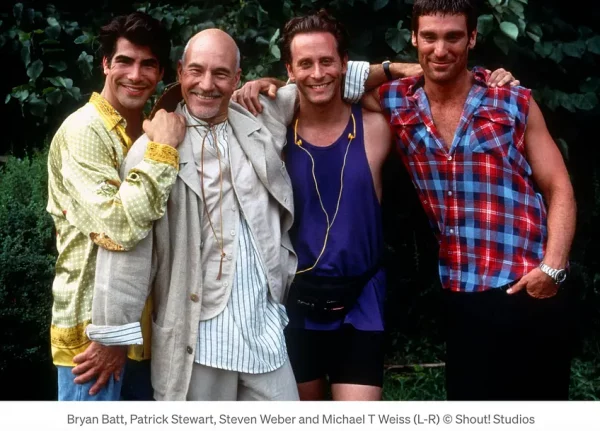
Gay playwright Paul Rudnick, who wrote the play in 1992, explained to The Body in 2021: “The mainstream media was completely ignoring the plague, and, Lord knows, the government was aggressively ignoring the plague, so it was one of the few times when theatre became essential.”
Gay people like Larry Kramer and Tony Kushner wrote their masterpieces “The Normal Heart” and “Angels in America,” respectively. But Rudnick was a comic writer and didn’t know if there was a place for him.
Until he and a friend visited a cranky dear friend dying in the hospital. When they left, they mumbled how – as much as they loved him – they really wanted to slap him! They started “laughing helplessly,” and that prompted the idea for Jeffrey.
“We’d both just come from the bedside of a dying man, and I realized this is where we’re living now. I so appreciated that—especially at that time when there were no treatments available whatsoever, there weren’t even any tests—that a sense of humor and the wit of the gay community was one of the only weapons available, and I really wanted to pay tribute to that,” Rudnick said.
“That’s what I wanted to explore,” he continued, “and that’s how I was able to get to a place of hope. I thought, there’s enough genuine tragedy in the world. There are pockets of joy that people are discovering.”
After seeing the play, Larry Kramer told Rudnick the play “cheered him up and made him want to go on a date.”
Patrick Stewart had just finished filming the final season of Star Trek: The Next Generation and wanted a role very different from Jean-Luc Picard. He rejoiced at playing Jeffrey’s longtime lover, Sterling, a fabulous interior decorator.
Though critics were not kind, Bishop writes, “Nevertheless, the movie was praised for its passion, originality, and wit. This was embodied by Patrick Stewart, whose performance as Sterling received universal acclaim.”
In a 1995 interview about the role, Stewart told the Los Angeles Times: “I had seen the play in Los Angeles, and I was sent the screenplay and was reading it while filming the last few days of the Star Trek movie. I just thought it was so brilliant and ultimately so moving that it felt as if I had no choice but to do it.
“We were filming on top of this finger of rock in the Nevada desert, shooting some violent action sequences with Malcolm McDowell,” Stewart said. “It was 119 in the shade, and I was sitting there reading the script. Well, I completed it and found that I needed both wardrobe and makeup to help me because my face was streaming with tears and the tears dripped off onto my spacesuit.”
The only unease Stewart felt about playing the role “was that I would not be convincing as a gay man with a lover in New York. So I would say to Chris [Ashley, Jeffrey director] and Paul [Rudnick, ‘Jeffrey’s’ writer-producer], who are both gay men, ‘Please tell me if there is any moment at which you think that doesn’t ring true or if I’m using some cliché which would appear to be a shallow approach to what we’re doing.’”
What did Ian McKellen say, “Yorkshiremen have no truck with half-truths or avoidance of big issues.”
Patrick Stewart had a big heart that was open to LGBTQ+ people. And he made people with AIDS, and their lovers and friends, laugh a bit and remember love before death became the final frontier.
For that, as much as for his extraordinary talent, LGBTQ+ people will remember Patrick Stewart with deep affection and appreciation.
This is a cross-post from Karen’s LGBTQ+ Freedom Fighters Substack.
Palm Springs
Here’s your Palm Springs look at the weekend: Oct 30-Nov 1, 2026

I was attempting to find a way to write about the opening of The Eagle bar in Cathedral City, the La Bola Negra film, and the upcoming election in one blog. As I awoke this morning from a night of fitful dreams about this very subject, it hit me:
These are the times that try men’s souls. The quote comes from the opening line of The American Crisis, a series of patriotic pamphlets written during the American Revolutionary War by Thomas Pain in 1776.
First and foremost, our election is just days away and the headlines are hopeful that the democrats may take one or both chambers of Congress. Trump is brooding in the White House, and bizarrely talking about the anatomy of Sen. Jon Husted, whose ass may be hard but his poll numbers are soft.
Those of us who pay attention are biting our nails and hoping that the polls are correct this time. There have been so many odd incidents that the theory of an October surprise seems to have given way to an avalanche of revelations that we have become numb to.
Then there’s the beautifully shot La Bola Negra film that opened in Palm Springs on Thursday night. I’m still in awe of this cinematic masterpiece that is so complicated as to deserve a second viewing — before it comes out on streaming. The film weaves three generations of gay men from the Spanish Civil War to modern day. It takes concentration and you almost need a scorecard to keep track, but it helps to read the synopsis and see the trailer a few times (with some good eye candy included!)
You may remember that Fresh Air’s Tanya Mosley was the keynoter for the Coachella Valley Media Hall of Fame luncheon last year. She interviewed the directors — dueling Javiers — who tell her, “Filmmaking is ‘our weapon against intolerance.’”
Last, but not least, The Eagle Bar opened last evening as VIPs ducked under scaffolding while the finishing touches were still being applied. If you drove by the storied building in Cathedral City over the last number of months, you saw lots of trucks and workmen. It appeared that they weren’t going to hit the mark to be open for Leather Pride.
But Phillip and Jeremy Nalwalker proved everyone wrong and have transformed the space formerly known as the Barracks into a sleek, welcoming space. We’re glad to have them in the Gayborhood and look forward to many of the signature events that were once held at the previous iteration. Their souls were certainly tried by finances and delays. But it was well worth the wait.
So there, all tied up in a nice little blog bow I was able to report on the top things on my mind this weekend.
Brad Fuhr, your K-Gay Desert Guide
Here’s what’s happening in sunny Palm Springs:
Halloween Palm Springs 2026

Downtown costumed revelers gather for Halloween Palm Springs 2026, taking over the Arenas District on Friday, October 30 and Saturday, October 31 from 4–10 pm. This massive two-night street party offers live music, dancing stages, and a VIP Lounge. Friday’s lineup features sets by DJ K-Swift, Meaty Beats by Juan, MODGIRL, and DJ Jeffree. Saturday brings a performance from singer-producer MkX, a costume contest at 7:30 pm, and headline sets by legendary R&B group KLYMAXX. Suggested donations support local charities including DAP Health, Palm Springs Gay Men’s Chorus, Greater Palm Springs Pride, and the LGBTQ+ Community Center. More info
Palm Springs Leather Pride: Valhalla

Leather vikings and valkyries gather for Palm Springs Leather Pride: Valhalla, hosting a community celebration across Palm Springs all weekend. Presented by The Palm Springs Leather Order of the Desert, this multi-day festival highlights kink, fetish, and leather culture with inclusive programming. Festivities include clothing-optional Plunge pool parties at CCBC, BDSM skill labs, pup play, Dark Alley Marketplace, cigar social, BATE party, Eisenhower Health speaker series, and the Mr. Palm Springs Leather 2027 Contest. See our event listing for a detailed schedule: More info
FRI–SUN: Halloween Weekend at Toucans Tiki Lounge

Halloween Weekend at Toucans Tiki Lounge kicks off on Friday, October 30 with “FREAKQNCY,” hosted by Athena Kills and featuring show-stopping drag performances by Aria S Williams and Mayday at 8 pm and 10 pm. On Saturday, October 31, dance the night away at the free 80s vs 90s Halloween Party with a costume contest and beats by MODGIRL. Visiting NYC comedian Jack Sullivan wraps up the fun on Sunday, November 1 at 7 pm and 9 pm with his solo comedy show, “Leather and Loads.” More info
& Juliet

Experience a hilarious and empowering theatrical twist on Shakespeare’s legendary love story with & Juliet at McCallum Theatre from Tuesday–Sunday, October 27–November 1. This Broadway sensation asks what might happen if Juliet chose a second chance at life and romance instead of her tragic ending. Packed with pop icon Max Martin’s chart-topping anthems, including “Since U Been Gone” and “Roar,” the romantic comedy delivers a high-energy stage spectacle full of joy and unforgettable musical moments. More info
La Bola Negra

Acclaimed international cinema arrives onscreen as La Bola Negra premieres at Festival Theaters on Friday, October 30 at 7 pm. Winner of the Toronto International Film Festival People’s Choice Award and Best Director at Cannes, this sweeping drama stars Guitarricadelafuente and Carlos Gonzáles alongside screen icons Penélope Cruz and Glenn Close. Spanning three distinct eras—Republican Spain in 1932, the Spanish Civil War in 1937, and modern Spain in 2017—the narrative traces interconnected lives centered on three young men whose political and emotional choices echo across generations. More info
The B-52s & DEVO: Cosmic De-Evolution Tour

Two iconic new-wave powerhouses join forces for a spectacular Halloween concert when The B-52s & DEVO: Cosmic De-Evolution Tour hits Acrisure Arena on Saturday, October 31 at 7 pm. Featuring special guest DJ Cummerbund providing signature mashups, this art-driven double bill brings legendary hits, theatrical visual production, and retro energy to the desert. More info
Scoop Ice Cream Festival

Sweet treats meet community fundraising as the 2nd Annual Scoop Ice Cream Festival gathers at Palm Springs Downtown Park on Sunday, November 1 from 12–4 pm. Local artisans, gelaterias, and paleta makers from across the Coachella Valley will serve signature frozen creations throughout the afternoon. All proceeds from the annual gathering directly benefit the LGBTQ Center’s Community Food Bank, making it a delicious way to give back to neighbors in need while enjoying top-tier local desserts. More info
The Minutes

A small-town city council meeting turns contentious when a new member questions previous recordkeeping in The Minutes, playing at CV Rep October 28–November 15. Written by Pulitzer Prize winner Tracey Letts, this razor-sharp political satire peels back the polished surface of local democracy to uncover hidden secrets, raw power plays, and chilling truths. Our theatre reviewer Stephen Radosh says “What starts as civic satire evolves into something much deeper and more unsettling, forcing the audience to confront uncomfortable truths about collective memory and national identity.” Read his full review and Get tickets
Dracula: A Comedy of Terrors

Gothic horror meets fast-paced farce in Dracula: A Comedy of Terrors, running at Revolution Stage Company through Sunday, November 1 (special added performance). This gender-bending stage parody blends classic monster lore with Monty Python-esque physical humor. The plot follows a meek British real estate agent who accepts a wealthy new client, only to discover he is an ancient, bloodthirsty vampire. Complications multiply quickly when the creature sets his sights on the agent’s fiancée, forcing three clever women to take charge and halt the bloody mayhem. Our theatre reviewer Stephen Radosh calls the production “A wildly entertaining theatrical experience… a fast-paced, laugh-out-loud comedy.” Read his full review and Get tickets
This Weekend at The Purple Room

On Friday, October 30 and Saturday, October 31, globe-trotting powerhouse Meghan Murphy presents The Big Red Show! with dinner at 6 pm and show at 8 pm, channeling Jessica Rabbit and Bette Midler with belt-busting vocals from Broadway to Beyoncé. Then on Sunday, November 1, celebrated entertainer Michael Holmes hosts The Judy Show! with dinner at 5 pm and show at 7 pm, delivering hilarious camp parodies of Judy Garland alongside Golden Age icons accompanied by Joel Baker on keys. More info
Sordid Lives

Southern eccentricities and family chaos take center stage in Sordid Lives at Palm Canyon Theatre from October 30–November 15. Written by Del Shores, this beloved cult-classic dark comedy follows a colorful Texas clan assembling after the absurdly unexpected death of their family matriarch. As relatives converge, long-held secrets emerge alongside outrageous personalities, sharp hilarity, and heartfelt reflections on acceptance and redemption. More info
Dog & Cat Food Drive

The Dog & Cat Food Drive Benefiting Palm Springs Animal Shelter takes place on Friday, October 30 from 1–3 pm. Hosted in the Community Room at Palm Springs Animal Shelter, neighbors can drop off unopened wet or dry pet food, clean gently used towels, blankets, and monetary donations to help keep shelter animals comfortable, warm, and well-fed. Guests are invited to enjoy light bites, refreshing drinks, and meet adoptable dogs and cats during their visit. More info
Dog Days: Pups & Pumpkins and Howl-O-Ween

Celebrate spooky season at The Living Desert Zoo and Gardens during a festive two-day Halloween lineup. The festivities kick off with the first-ever Halloween edition of Dog Days: Pups & Pumpkins on Friday, October 30 from 9 am–12 pm, where dogs and their humans can trick-or-treat through the grounds and join a 10 am costume parade led by Mayor Max followed by a costume contest. The fun continues as the annual Howl-O-Ween returns on Saturday, October 31 from 9 am–1 pm, offering pop-up surprises, face painting, fall photo ops, keeper connections, and limited-edition animal trading cards alongside 600+ resident animals.
Ladies of Rock Festival

Groundbreaking female rockers take the stage during the Ladies of Rock Festival, performing at The Show at Agua Caliente Casino Resort Spa on Saturday, October 31 from 6–10 pm. Doors open at 5 pm as platinum guitarist Orianthi kicks off the evening, followed by glam metal favorites Vixen and former Runaways lead guitarist Lita Ford. More info
Pride: ’26 Edition

Explore fine art interpretations of the male form at Pride: ’26 Edition, displaying at Rubine Red Gallery from November 1–15. Featuring four interconnected collections by artist Troy Schooneman, the exhibition combines classical references, photography, constructed imagery, and imagined artifacts. Visitors will experience a contemporary lens on fine art nudes that examines memory, identity, and physical aesthetics across centuries of artistic tradition. More info
Burgers, Boys & Brews Sunday BBQ

Wrap up the weekend with a sizzling poolside-style cookout during Burgers, Boys & Brews Sunday BBQ, hosted at The Social Cafe & Lounge on Sunday, November 1 from 2:30–4:30 pm. This all-inclusive Sunday afternoon gathering combines backyard grill favorites with upbeat music and high-energy live male entertainment. Guests can feast on hot-off-the-grill burgers, dogs, and savory sides while sipping bottomless draft beers and bottomless mimosas. Designed as the ultimate social brunch party, the weekly event offers a fun, welcoming atmosphere for friends to eat, drink, and socialize before the new work week begins. More info
Daylight Saving Time Ends

As you enjoy an extra hour of sleep this weekend, don’t forget to turn your clocks back one hour before bed on Saturday night. Daylight Saving Time ends Sunday, November 1 at 2:00 am, meaning brighter mornings and earlier sunsets. It’s also a great reminder to check and replace batteries in smoke and carbon monoxide detectors.
- Dance Ranch / Country Dance Saturdays • Instructor Lise Baadh leads a beginner Two-Step lesson during a lively evening of country-western dancing at Step by Step Dance Studio on Saturday from 7–9:30 pm. Dancers of all skill levels can participate in two-step, waltz, shadow, swing, and line dances throughout the night.
- Unbuttoned: A Boylesque Social Experience • Star performer Michael Silas delivers an intimate boylesque showcase blending dance, personal storytelling, and comedy at The Social Cafe & Lounge on Saturday from 7–8:30 pm.
- Día de los Muertos Celebration • Community members gather to honor ancestral traditions during a festive cultural event at Demuth Community Center on Sunday from 10 am–1 pm. The seasonal gathering features traditional decorations, vibrant music, and family-friendly activities celebrating life and memory.
- Charged Stillness Exhibition • Local artist Tina Roy showcases vivid paintings reflecting the beauty, drama, and delicate ecosystems of the wild desert from through October 29 at Rubine Red Gallery.

Bookmark This: Gay Desert Guide Pride Planner
Getting ready for Palm Springs Pride next week? Our Pride Planner 2026 is your one-stop resource for parade details, stage guides, dining recommendations, weekend schedules, FAQs, and more as Palm Springs celebrates 40 years of Pride. Check it out and start planning!

Preview: Limited-Edition Pride Tees
Next weekend, celebrate Palm Springs Pride and support a meaningful cause with KGAY 103.1’s Threads for Hope fundraiser. Starting Friday, November 6 at 3 pm, stop by the KGAY 103.1 booth on Arenas Road to grab a limited-edition 40th Anniversary Pride T-shirt with a $20 donation, with all proceeds benefiting the Palm Springs AIDS Memorial (while supplies last!). While you’re there, enter to win the Ultimate Palm Springs Getaway Package featuring a two-night stay at Hotel Zoso, Palm Springs Aerial Tramway passes, and $500 in dining and shopping gift cards.

Democrats projected to win Senate majority, opening door to LGBTQ+ legislation

Chris Pappas elected to U.S. Senate

Xavier Becerra wins California governor’s race

Democrats poised to flip House, opening door for expanded LGBTQ+ leadership

Supreme Court weighs religious exemptions to LGBTQ+ nondiscrimination protections in Colo. preschool case

Here’s your Palm Springs look at the weekend: Oct 30-Nov 1, 2026

AFI Fest 2026: Five best queer films to put on your watchlist

A ‘Heaux’-le New Church: Brandon Kyle Goodman brings a queer spiritual experience to the stage

Are anti-trans campaigns lowering your cost of living?

A gay appreciation of staunch LGBTQ+ ally Patrick Stewart
-
 Palm Springs5 days ago
Here’s your Palm Springs look at the weekend: Oct 30-Nov 1, 2026
-
 Movies5 days ago
AFI Fest 2026: Five best queer films to put on your watchlist
-
 a&e features4 days ago
A ‘Heaux’-le New Church: Brandon Kyle Goodman brings a queer spiritual experience to the stage
-
 Commentary20 hours ago
Are anti-trans campaigns lowering your cost of living?
-
 Obituary4 days ago
A gay appreciation of staunch LGBTQ+ ally Patrick Stewart
-

 a&e features3 days ago
How Georgia Oakley brought queer representation into ‘Sense and Sensibility’
-
 Australia2 days ago
Australia’s first gay state governor takes office
-

 a&e features2 days ago
It’s time to get ‘Delulu’ with Ryan Lu
-
 California16 hours ago
L.A. LGBT Center used canvassing effort to reframe conversation around trans healthcare
-

 a&e features4 days ago
Reading comics is fundamental