
Obituary
Kay Lahusen, LGBTQ equality rights pioneer has died at 91
Kay was the first out LGBTQ photo journalist, an author and partner of her beloved Barbara Gittings. They were pioneers in LGBTQ activism
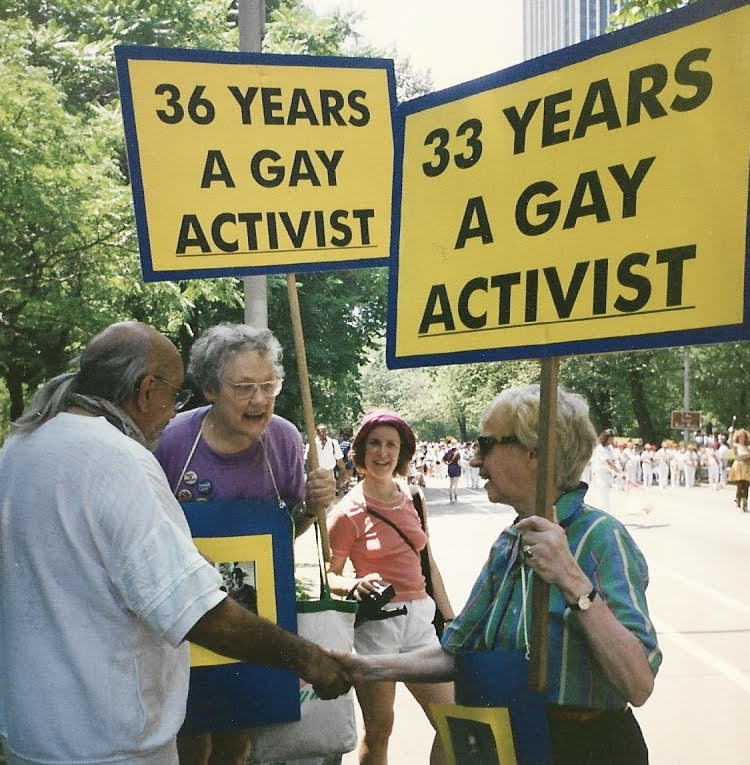
By Mark Segal | PHILADELPHIA, PA – Kay Lahusen, 91, died in gentle hospice care at Chester County Hospital on Wednesday, May 26, 2021, after a brief illness. She was born in Cincinnati in January 1930 and as an infant was adopted and raised by her grandparents. After graduating from Ohio State University, she moved to Boston, where she met her lifelong partner Barbara Gittings at a Daughters of Bilitis picnic in 1961.
Kay and Barbara lived variously in New York, Philadelphia and Wilmington DE. They were gay activists from the early days of the Gay Rights movement in the US, marching openly in picket lines in Washington DC and Philadelphia in the early 1960s. Kay became known as the first openly gay photojournalist. Her photos documenting these and many later activities were printed in various gay publications including Gay (a national weekly) and The Ladder. Her photos are archived in the New York Public Library, which drew upon them for the 2019 book, Love and Resistance; out of the closet into the Stonewall era.
Kay researched and wrote the book Gay Crusaders (1972), which was published under her pseudonym Kay Tobin and with the addition of a male “co-author” (her friend, Randy Wicker) to help with its public acceptance. The original research materials for that book are also archived at the New York Public Library.
Kay and Barbara remained activists throughout their lives. Shortly before Barbara’s death in 2007, they moved to Kendal at Longwood, Kennett Square PA. After Barbara’s death Kay continued to contribute to Gay history, giving many interviews, especially about their work with the American Psychiatric Association and the American Library Association. She collaborated in 2015 with Tracy Baim to produce Barbara Gittings, gay pioneer, a biography of Barbara which used many of Kay’s photos. She decorated her room at Kendal with dozens of photographs, and she would talk about her experiences as a gay activist at the drop of a hat, even regaling the nurses at Chester County Hospital with her story days before her death.
Kay is survived by Trusted Friends: Judith Armstrong of Hockessin DE, John Cunningham of Philadelphia, Ada Bello of Philadelphia, and James Oakes of Secane PA, and by the many, many friends, acquaintances, and admirers — too numerous to name here — who made up her chosen family.
Kay’s remains will rest in the Congressional Cemetery, Washington DC, along with her partner’s in a bench designed to express their love for each other and their dedication to showing that Gay is Good. Due to COVID-19, a public memorial will be postponed. In lieu of flowers, Kay would welcome your contributions to William Way LGBT Community Center, 1315 Spruce St, Philadelphia PA 19107 or to Kennett Area Community Service, P.O.Box 1025, Kennett Square PA 19348 for their local food cupboard.
Condolences may be left at foundsfuneralhome.com.
In December of 2019, the Philadelphia Gay News ran a profile on the 90th birthday celebration of Lahusen. She was asked, So visibility is one of the hallmarks of your life?
In answer she noted; “Oh, absolutely. I enjoyed working on “The Ladder.” I tried to put wonderful women on the covers. That was very important, because before then we only had drawings on covers. We went against the American Psychiatric Association and succeeded in removing homosexuality from the mental illness allegation. I wasn’t at Stonewall, but I certainly admired it. I had a lot to say about it and write about it. I’ve had a terrific life. I think gay couples, getting back to that question, should get involved, and give it all they’ve got. It’s so much fun. Don’t you agree?”
You can read the entire interview here: https://epgn.com/2019/12/27/activist-kay-lahusen-celebrates-90th-birthday/
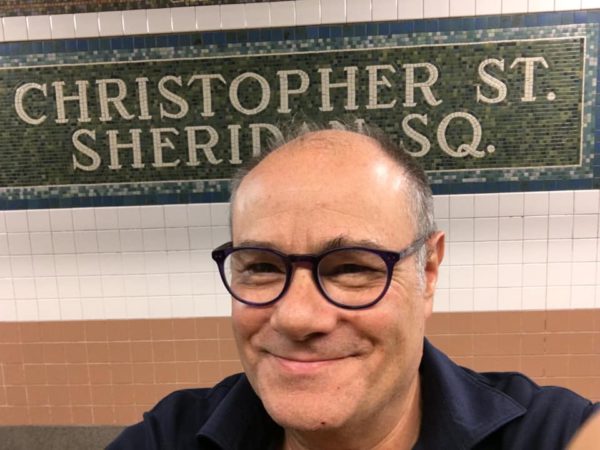
Mark Allan Segal is an American journalist. He participated in the Stonewall riots and was one of the original founders of the Gay Liberation Front where he created its Gay Youth program. He was the founder and former president of the National Gay Newspaper Guild and the founder and publisher of Philadelphia Gay News.




Obituary
Music icon and dear LGBTQ+ friend Dolly Parton remembered
People say, “Oh, you just always seem to be so happy.’ I said, ‘That’s the Botox.’” – music icon Dolly Parton to ABC News in 2019.
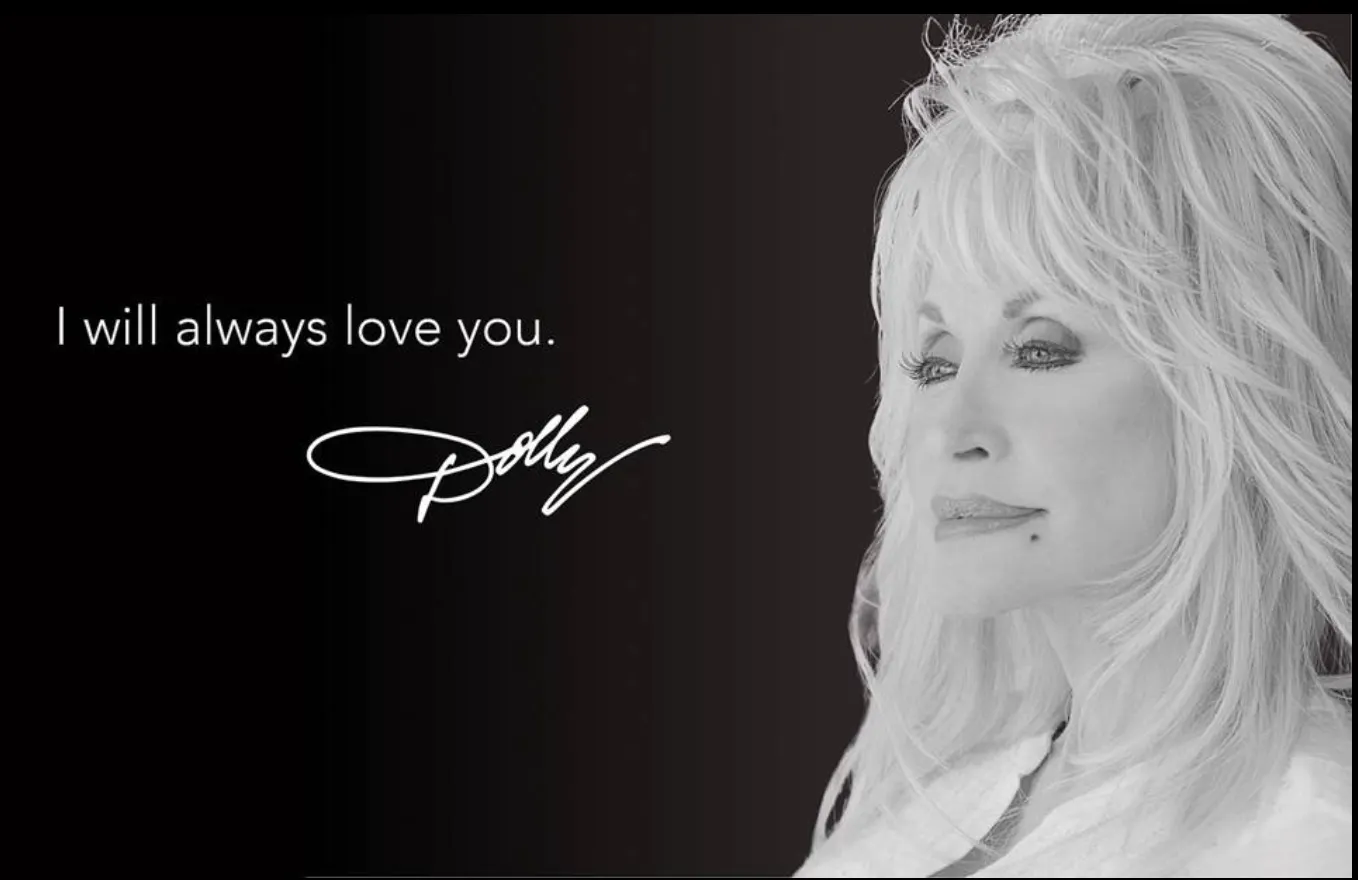
I don’t want to say goodbye.
To be honest, my first impression of music icon Dolly Parton was similar to the scathing look the demur Jane Fonda gave the boss’s secretary in one of my favorite funny feminist films ever, 9 to 5.
Fonda’s aghast up-and-down scrutiny was pure unspoken tisk-tisk condescension toward this bubbly dumb-blond wigged white trash colleague – until she looked down at her own flat chest. For a moment, Fonda suggested a hint of envy, at which we laughed. I felt a sigh of relief at not having to carry around all the weight Dolly Parton’s boobs implied.
Those boobs, those big blond country-Western wigs, and her seemingly irrepressible humor were as much a part of Dolly Parton’s brand as was her incomparable voice and the songs she wrote that moved generations. In 1974, I longed to love someone as much as Dolly loved the person for whom she wrote her goodbye, “I Will Always Love You.”
Surely, someone with that big a heart was bigger than the tight bodice society forced innovative go-getters like Dolly Parton to squeeze into.
In fact, Parton’s difficult backstory of childhood poverty in Sevierville, Tenn., living in a cabin with no running water and 11 siblings – and an ambition infused with a love-your-neighbor Christian upbringing -created a depth of character that used smarts, ingenuity and humor to thwart her stereotype-blinded detractors.
“Well, I graduated [high school] on a Friday night and headed out on a Saturday morning,” Parton told ABC News’ Robin Roberts in an extensive interview in advance of the 2019 CMA Awards. “As I make jokes about it with my matching luggage, those four paper bags from the same grocery store. I thought, well, I can’t be any poorer than I already am, and I’m a girl. I’ll find some boy that’ll take me to Shoney’s… I thought I’m not going to go hungry.”
Like Billie Jean King and other female professionals, Dolly Parton fought hard to get paid what she was worth.
“It’s not all about money,” she said. “I count my blessings more than I count my money, but I need to count my money, too.”
Tough times taught her how to be tough and funny. “Well, I don’t think people can live in this world without going through times like that,” Parton told Roberts. “People always look at me; they always say, ‘Oh, you just always seem to be so happy.’ I said, ‘That’s the Botox.’ No, but seriously, I’m a very sensitive person. I feel everything to the core.”
That’s what makes her famous 1977 interview with ABC’s Barbara Walters so compelling. Walters had become infamous for making her interview subjects cry after asking tough, prying, sometimes rude questions that she said her audience wanted answered.
“You don’t have to look like this; you’re very beautiful. You don’t have to wear the blonde wigs; you don’t have to wear the extreme clothes, right?” Walters asked the brightly dressed Parton.
Parton delivered a master class in grace and class.
“It’s certainly a choice,” Parton replied. “I don’t like to be like everybody else. I’ve often made the statement that I would never stoop so low as to be fashionable. That’s the easiest thing in the world to do.”
Chuckling yet? Parton wanted attention, then she could dazzle them with talent. “Once they got past the shock of the ridiculous way I looked, then they would see there’s parts of me to be appreciated. I’m very real where it counts…and that’s inside,” Dolly Parton told Barbara Walters. “Show business is a money-making joke, and I just always like telling jokes.”
Walters then asked Parton – the beloved star with 19 studio albums and a slew of awards won over a decade in the male-dominated music business: “Do you ever feel like you’re a joke, that people make fun of you?”
Parton was the personification of composure.
“I know they make fun of me. But actually, all these years people have thought the joke was on me, but it’s actually been on the public. I know exactly what I’m doing, and I can change it at any time. I make more jokes about myself than anybody,” Parton said.
“I am sure of myself as a person. I am sure of my talent. I’m sure of my love for life,” Parton said. “And I’m very content. I like the kind of person that I am. So I can afford to piddle around and do-diddle around with make-up and clothes and stuff. Because I am secure with myself.”
Game, set, match to Parton.
In another ABC interview in 2012, Parton expanded on that over-the-top signature style which she adopted after seeing the town trollop.
“There was this woman, we won’t call her names, but she was beautiful,” she told ABC News Nightline. “I had never seen anybody, you know, with the yellow hair all piled up and the red lipstick and the rouge and the high-heeled shoes, and I thought, ‘This is what I want to look like.’”
As the image implies, there were constant rumors that she was secretly involved with any male within inches – as well as a secret lesbian life with her oldest childhood pal, Judy Ogle. She denied the rumor – she was married to Carl Dean for 58 years. He died in March 2025.
Dolly Parton died peacefully on Tuesday, Aug. 25, 2026, at the age of 80 in Nashville after a “brief battle with cancer,” her team wrote in a statement to People.
“Our beloved Dolly Parton spent her life and career bringing joy, laughter, hope, and integrity into everything she touched. Her unmatched generosity reached the lives of countless people whom she would never meet, yet she was always there to offer a helping hand,” they wrote.
“Whether it be the hundreds of millions of books donated through her invaluable Imagination Library or funding research that helped create a lifesaving vaccine used around the world, Dolly’s unconditional love for all people was the guiding force for her lasting impact. After bravely facing a brief battle with cancer, Dolly departed her Earthly life today at the Vanderbilt-Ingram Cancer Center, surrounded by loved ones,” the statement concluded.
The music world is in mourning. And news outlets are overflowing with tributes. Few of them mention us. In fact, one note of criticism for some is a precise example of that “unconditional love for all people” her team talked about.
“The ’80s — a decade she kicked off in grand fashion with the working woman’s anthem ‘9 to 5’ — brought Parton some of her greatest mainstream success, but the climate of the times also conspired to reduce her to a punchline and a caricature: The self-made country-pop queen who had pulled herself up by her bra straps. She played along, as an act of self-preservation, but it is a consolation to know that she lived long enough for her reputation as a songwriter to rise considerably in the 21st century,” Lindsay Zoladz wrote in her “appraisal” of Dolly Parton, who “had the Voice, and Concerns, of an Earth Angel” for the New York Times.
Damn, bitch! Have you never even seen a Dolly Parton drag queen? There’s almost a cottage industry devoted to Dolly. And Dolly knew – and loved it! She even participated in a Dolly Parton drag contest at a gay LA Bar – which she lost!
“They had a bunch of Chers and Dollys that year, so I just over-exaggerated — made my beauty mark bigger, the eyes bigger, the hair bigger, everything,” Parton laughingly told ABC News Nightline. “All these beautiful drag queens had worked for weeks and months getting their clothes. So I just got in the line, and I just walked across, and they just thought I was some little short gay guy… but I got the least applause.”
Dolly Parton lost the Dolly Parton look-alike contest in an LA gay bar! But she hasn’t lost the ineffable connection to her fans – whom she understood, felt, and fought for – including protecting “Gay Day” at Dollywood in Pigeon Forge, Tenn.
“When it first started, there were people giving us threats; I still get threats,” Parton told ABC News. “But like I said, I’m in business. I just don’t feel like I have to explain myself. I love everybody.”
That’s what I saw when Dolly Parton arrived and smiled through an onslaught of paparazzi and gay fanboys at an APLA Commitment to Life event.
Oddly though, as a reporter, my fixation was on Parton’s “date,” her gay manager Sandy Gallin, who seemed to rarely show up publicly with his supposed posse, controversially dubbed the “Velvet Gay Mafia.”
The late gay AIDS advocate Dana Miller, who was on the APLA Board, wrote a piece for In Los Angeles Magazine about the Four Warriors of AIDS fundraising: David Geffen, Barry Diller, Sandy Gallin, and Jeffrey Katzenberg.
“It was the early ’90s, and we were in the second decade of AIDS with absolutely no hope in sight,” Miller wrote. “It was then I discovered the warriors, and it was amazing. Gay and straight, they were the ones who for almost a decade came together in living rooms and storefronts to provide what our government didn’t. My list of warriors is long, yet this is the tale of four particular individuals who, for years, I closely watched working behind the scenes to make a difference in the quality of life of men, women, and children they would never know.”
After Gallin died in 2017 at age 76, columnist Billy Masters wrote a tribute in the Los Angeles Blade that expanded on that theme – and included a section on Dolly Parton, with whom he formed Sandollar Productions in 1985. Sandollar Productions, with Howard Rosenman, produced the 1990 Oscar winning documentary Common Threads: Stories from the Quilt that raised global awareness about AIDS.
“While Gallin’s client list was vast and varied, he especially loved his divas. A special place in his heart was reserved solely for Dolly Parton. The two met after Dolly asked singer Mac Davis who should help with her career. Davis said, ‘You should talk to Sandy Gallin — he’s my manager.’ Sandy had one goal — to make Dolly a mainstream star. The first thing he did was set up a recording session for the song ‘Here You Come Again,’”Masters wrote.
“Dolly was hesitant. She said, ‘A monkey could sing this song and have a hit with it.’ She was very nervous that it would turn off the country market, which she was very loyal to.’ Gallin made a deal with her — if the song wasn’t No. 1 on the pop charts AND the country charts, he’d never get involved in her musical decisions again. Dolly took the deal — and lost,” Masters wrote. “From then on, she and Sandy were inseparable. They considered each other beyond best friends and almost soul mates. ‘My husband didn’t love to travel, and Sandy was gay, and he did,’ said Dolly.”
Dolly Parton also talked about Gallin in an interview with Apple Music Country’s Proud Radio: “Sandy and I just clicked like nobody’s business,” Parton told host Hunter Kelly. “He was like my best gay bud. … We [went to] Studio 54. We’d sit on the couch and watch all the craziness. But we were all involved in the fun of it, and it was great.”
“I really owe him so much,” Parton added.
But, contrary to what Dolly Parton sings in “9 to 5,” it’s not all taking and no giving. Dolly Parton told the KKK that she welcomes gay people to Dollywood. And in 1991, when gay men were dying of AIDS by the thousands, and some Southern Christian leaders said AIDS was God’s punishment for homosexuality, Dolly Parton wrote and sang one of the first country songs to include “gay” and Christianity: “Some are preachers, some are gay… But not a one is turned away when it’s family.”
She later got an Oscar nod for “Travelin’ Thru,” a song for the transgender film “Transamerica.”
In 2023, after her home state of Tennessee passed anti-trans and anti-drag laws, Parton said she knew how deeply it hurt LGBTQ+ people, including in her own family and life, to be attacked for who they are.
“I know and love them all, and I do not judge,” she said. “They cannot help that any more than I can help being Dolly Parton.”
By the end of “9 to 5,” I realized that I had been the judgmental one with stereotype-blinders. I enjoyed learning how to get bold things done while expressing yourself with authentic joy. But unfortunately the theme and song are still applicable today.
Thank you, Dolly Parton.
Obituary
Appreciating literature’s gay genius, Michael Silverblatt
Journalist Karen Ocamb remembers literary guru and host of KCRW’s Bookworm, and his place among LGBTQ legends.
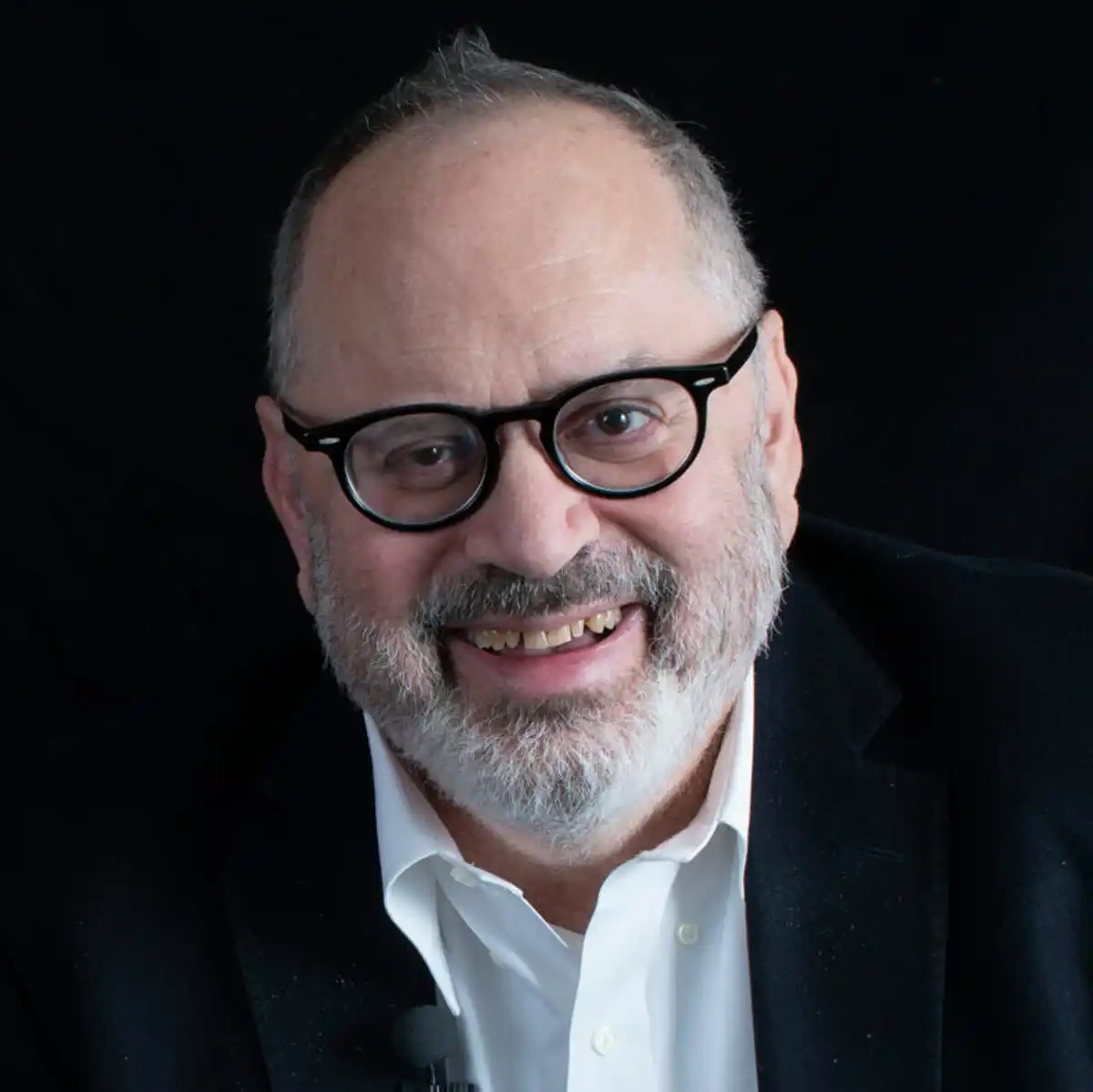
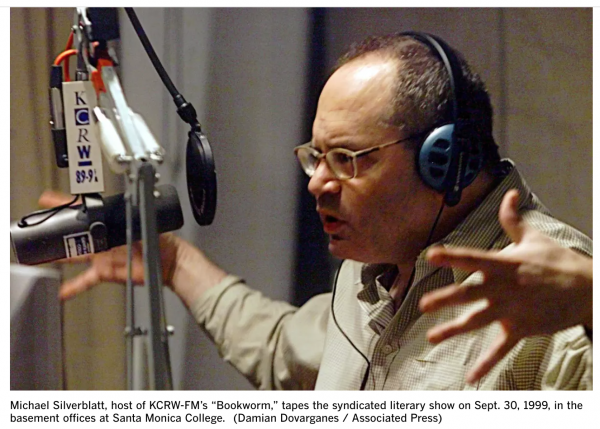
The superlative does not exist to describe Michael Silverblatt’s passion hosting KCRW’s Bookworm, which the New York Times described as a “literary salon of the air.” Michael died from complications of diabetes at his Fairfax district home on Feb. 14, Valentine’s Day. He was 73.
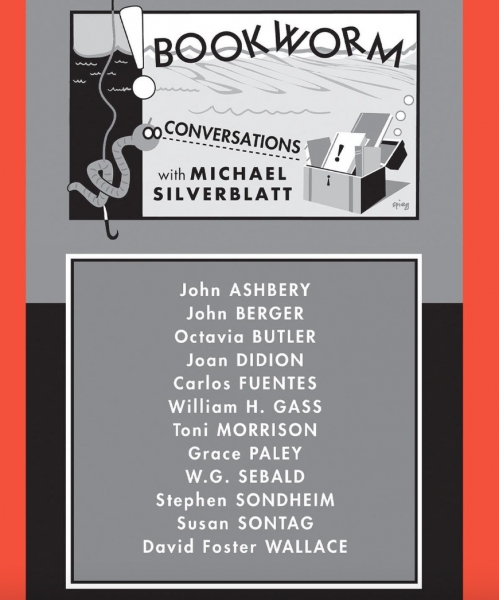
Many, many famous writers and artists have described their appreciation for Michael’s unique, insightful depth of literary knowledge. Norman Mailer called Michael “the best reader in America.” Susan Sontag called him “a national treasure.” Joyce Carol Oates called him “the very Mozart of literary interviewers.”
“Michael was a genius. He could be mesmerizing and always, always, always brilliant,” Alan Howard, Michael’s friend and Bookworm editor for 31 of the show’s 33 years, told the Los Angeles Times. “It’s an extraordinary archive that exists, and I don’t think anyone else has ever created such an archive of intelligent, interesting people being asked about their work.”
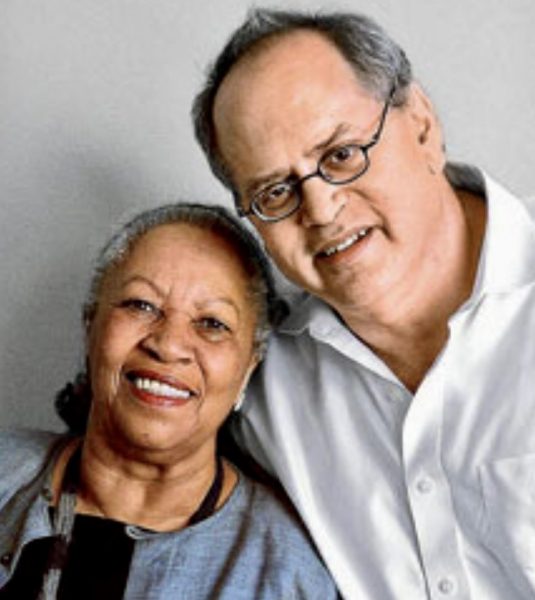
A curious twist of fate landed Michael in what turned out to be his own wonderland, conducting more than 1,600 interviews with brilliant writers and artists such as Joan Didion, Toni Morrison, Susan Sontag, Margaret Atwood, Ann Beattie, Kurt Vonnegut, Salman Rushdie, Gore Vidal, Tom Wolfe, Nobel Prize winner Kazuo Ishiguro, and David Foster Wallace.
Michael was born in Brooklyn, New York, on Aug. 6, 1952, and raised in Queens by parents who were two accountants – children of Russian and Polish immigrants who didn’t quite know what to do with their reclusive, budding gay, Jewish intellect.
“My first crucial book was Alice in Wonderland. My mom used to take me with her to the beauty parlor, and I asked her to get me the big Walt Disney Alice in Wonderland with the colored pictures because it was so pretty and mysterious to me. I remember the Cheshire cat, pink and purple with a heckler’s smile,” Michael told Sarah Fay during an interview at the University of Iowa in 2010. “My mother instead bought me the Lewis Carroll Alice’s Adventures in Wonderland with the black and white Tenniel engravings, and I was very disappointed. She did it not because she had a particular investment in literature but because the Disney was so much more expensive and we were always mindful of our economy.
“And when I finally read it,” he continues, “it took me a good two years—I was absolutely fascinated and perturbed by it, particularly by the section where Alice finds herself in the wood where nothing has a name, and she doesn’t know her own name. The engraving has Alice in the woods with her arms around the neck of a fawn, not strangling the fawn, but embracing it as if for dear life, or as if she doesn’t know if she is a fawn, too. The mystery of reading all of those poems that made less sense if you didn’t know the popular poems they were parodies of made it even stranger. I was absolutely entranced by Alice and Lewis Carroll.”
Through Lewis Carroll’s Symbolic Logic and The Game of Logic, Michael taught himself logic and math. “I developed quite a proficiency for abstract math.”
Intellectual challenges became games when, in junior high, Stephen Sondheim published “Cryptic Crosswords” in New York magazine, and Michael would “enter the words as a knight would move across a chessboard.”
As “[Donald] Barthelme has his Snow White character say in his first novel (1967), I want to hear words I have never heard before. I want the words and sentences to peacock around, to open their plumes,” Michael told Fay. “I have an experience of the book, and it’s as if I have not a flat surface in front of me but rather a beehive around my head. It’s very strange.”
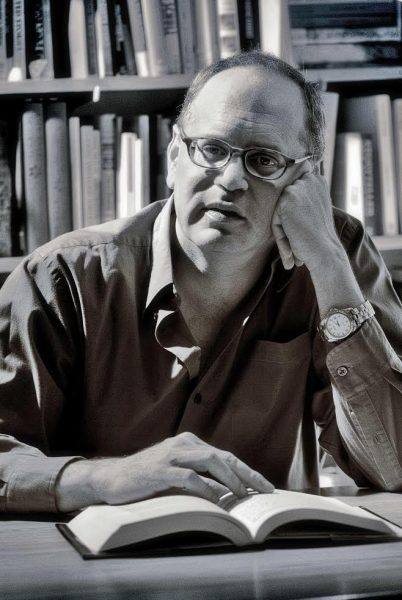
In 1968, after graduating from Bayside High School at age 16, Michael enrolled in SUNY at Buffalo, where authors such as Michel Foucault, John Barth, Donald Barthelme, and J.M. Coetzee were professors. Michael was awkward, shy, and inhibited by a stammer – but he secretly considered the professors friends and spoke with them after class.
During summer vacation, his parents pushed him to be a postal worker with a mail route on the Upper East Side that took him past old bookstores. He subsequently bought the complete works of Charles Dickens while his literary tastes were also expanding to the experimental and avant-garde.
Michael refused to major in business, choosing math as a compromise. But he quickly switched to English, graduating with a BA in 1974. He went for a PhD at Johns Hopkins University but dropped out after a year, paralyzed by writer’s block. “I thought I wanted to be a writer, but that really didn’t turn out to be my gift,” Michael told Kristy Davis for Oprah.com.
After a screenplay he co-wrote received some Hollywood attention, Michael relocated to Los Angeles to pursue his dream of writing scripts and books. But the script wasn’t picked up, and he found himself lost, broke, jobless, and drinking a lot. “At the time,” he told Davis, “I resembled a homeless person who unaccountably had an apartment.”
Michael found a 12 Step program, and his life changed. Friends helped him learn how to take care of himself and found him a job at Freeman & Sutton Public Relations in West Hollywood.
That’s where I met Michael in the mid-80s. Brad Bessey, Michael, and I became the gay troika in that office. I was a fellow 12 Stepper, so Brad and I helped brainiac Michael with living in the real world – like cleaning up crumbs. Showbiz-sharp Brad helped Michael and me with the who’s who in Hollywood. And I learned how to write spin-filled press releases about “causes” like I used to read as a journalist.
“We were odd friends,” Brad remembers about Michael. “Back in the mid-eighties, we met in the glittering churn of celebrity PR. I was young, handsome, brash, and built for the room. Michael, on the other hand, was quieter and a little awkward—as if words lived more comfortably on the page than in the room. I loved his laugh, his intellect, and the way, when I trusted him with my poetry—shared with few—he met it with tenderness: an encouraging question, a precise insight, never once making me feel small. When he landed KCRW’s Bookworm, it felt like a metamorphosis—awkwardness transforming into flight—his brilliance suddenly finding a home, audible at last, lifting literature into the air. And always, that laugh.”
We three broke up in the late 80s: I went to live with Wallis Annenberg in Beverly Hills, intending to write plays; Brad wound up as E!’s Director of Talent & Development where he resurrected Joan Rivers career by putting her on the red carpet; then on to Entertainment Tonight where he encouraged actor Michael Jeter to come out in 1997 as a gay man with HIV/AIDS, and highlighted transgender actor Alexis Arquette.
In 1988, Michael had a famous encounter at dinner in Santa Monica, where he was representing actor Ray Sharkey (Wiseguy). He overheard KCRW’s general manager, Ruth Seymour, talking about Russian poet Osip Mandelstam, a victim of one of Stalin’s purges in the 1930s.
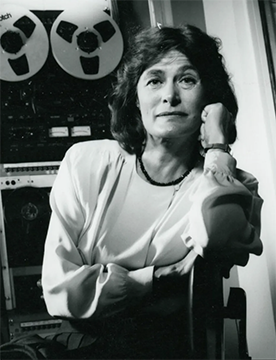
“I had just gotten back from Russia, and we were at this dinner with an actor, a producer, and a director who were talking Hollywood,” Seymour told Lynell George for a 3,596-word LA Times feature on Michael in 1997. “And Michael and I got into this whole discussion about Russian poetry, talking to the exclusion of everyone else. He’s a great raconteur, and so the rest of the world just vanished….So afterward I just turned and asked him: ‘Have you ever thought about doing radio?’”
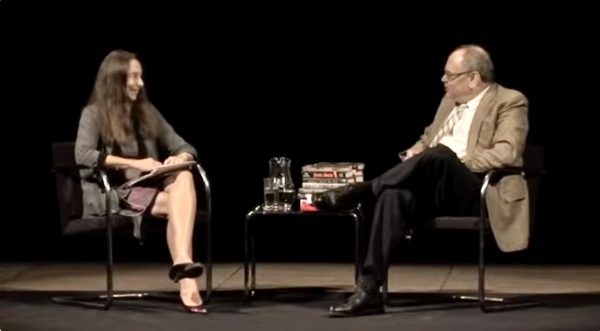
Soon thereafter, Michael started volunteering as host for Bookworm on KCRW, a public radio station on the campus of Santa Monica College. Five years later, thanks to enthusiastic Lannan Foundation support, he was paid, treated like royalty on college campuses and other venues for the special Lannan Foundation “Readings and Conversations” series, and became syndicated nationally.
“The purpose of the show is to help my listeners look through writers’ eyes,” Michael told The New York Times in 1999.“It’s to show them, whether they’re reading or not, how writers re-enchant the world, how they surround us with the miraculous. That’s what books do to me and what I want my show to do, to remind people how odd and special writers’ minds and imaginations are.”
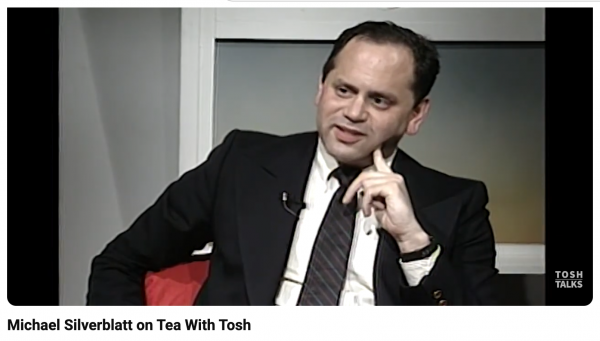
But Michael also cared about public relations, as he shared with his friend Tosh Berman in this 1987 interview. “For people like me, wearing a sports jacket [for PR work] is like the best rebellion of all,” Michael says. “It’s like wearing a clown suit every single day – and enjoying the formality of it, too. The great joy, as William Burrows pointed out, is to feel completely costumed and to be absolutely anonymous.”
“I care about deeply serious writing in America – dance, art. Why should all sorts of less valuable forms be winning attention in the press and the media when the arts languish in need of budgets and government funds,” he says. “This is very important – that we have a government that supports the arts. But it’s more important that we have a culture that supports the arts.”
However, it needs to be created. “I think it is there but very embryonically,” Michael says. “That’s the kind of thing I’m interested in doing – in helping the arts reach their audience and making that audience aware that, like an addiction to drugs – there are those of us who are art addicts – whose lives are changed by the brilliant people who make new things, new forms, new forms of culture.”
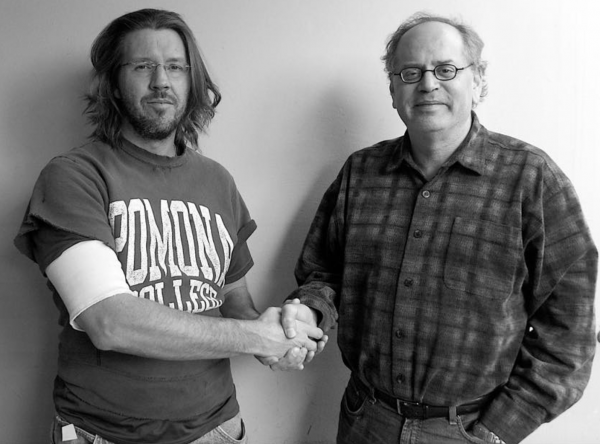
One of Michael’s most famous interviews was with David Foster Wallace in 1996 after the publication of Wallace’s 1078-page ultimate mega-meta novel Infinite Jest. Michael immediately stuns the author by observing that the book was written and structured in fractals. After an awe-struck Wallace agrees and explains, Michael goes deeper.
“[W]e’re entering a world that needs to be made strange before it becomes familiar,” he says. Infinite Jest isn’t difficult “for difficulty’s sake; it seemed like immense difficulty being expended because something important about how difficult it has become to be human needed to be said, and there weren’t other ways to say that.”
Wallace is heard quietly saying, “I feel like I wanna ask you to adopt me.”
Over the years, Michael’s vision becomes clearer. “There are all sorts of other things that you get on radio and television,” he told Oprah.com in 2009, “but I wanted listeners of Bookworm to hear words, ideas, but particularly emotions that don’t get discussed in public, if at all elsewhere. That is to say, for one reason or another, the show is a crusade that’s much larger than the subject of books.”
That includes books by and about LGBTQ+ people. In a 2006 interview, Brokeback Mountain author Annie Proulx shares how Ang Lee’s film Brokeback Mountain reflects her vision that the main romantic characters of Ennis del Mar and Jack Twist are not traditional “cowboys” but poor ranch hands in 1963 rural Wyoming. She’s also annoyed with gay fans who have inundated her with alternative “happy” endings.
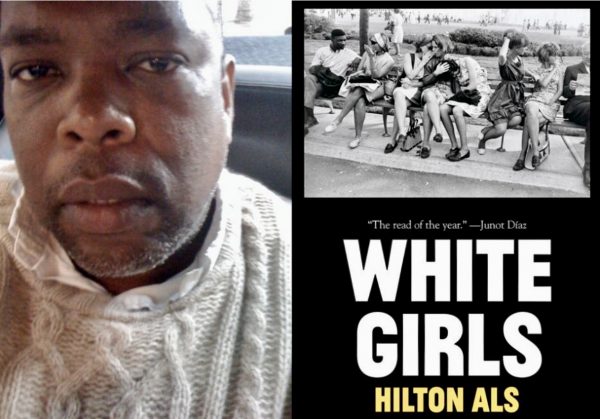
In an introduction to his 2014 interview about Hilton Als’ book, Michael writes: “White Girls (McSweeney’s), his first book in 14 years, is a series of essays that defy easy categorization – in each he takes the risk to say what must be said. Countering books that define ‘blackness’ in the title like Richard Wright’s Black Boy, Als, a black gay male, is interested in making words opaque. He chronicles longing, loss of loved ones, and the establishment of his voice in the New York of the late ’80s and ’90s. He looks back to Richard Pryor and forward to Eminem. His ‘white girls’ are neither necessarily girls nor white. They are Diana Vreeland, Michael Jackson, Truman Capote, and Louise Little. He posits: what if we existed in a world that was not categorizable?’ Wouldn’t we be left with something more humane and complicated?”
Michael is keenly aware of the importance of identity.
“A book about English children in a castle,” he tells the LA Times, “that was the training, when I was young, to imagine a world that didn’t include me. Books and television are our cultural mirrors… and when you look into the mirror, and you don’t see your face, this is possibly a nightmare situation–the act of looking but not finding yourself, or looking and finding yourself where you don’t belong. So until I found books that had a Michael in them, part of me didn’t fully yet exist.”
Finding an image was also startling. “When I learned that there were [such] books–Bernard Malamud, Grace Paley, Henry Roth, that generation of Jewish writers–my first impulse was to resist. ‘This isn’t the castle!’ I was frightened. It was the language I heard around the house. If you’re any kind of minority, to open a book and hear the people around you, your aunts and uncles talking to you . . . that that language should be in a book? I mean, this is an enormous day!”
In 2005, Michael and his team produced a 10-part series entitled Escaping the Cage: Identity, Multiculturalism and Writing, playing off Angelou’s autobiography, I Know Why the Caged Bird Sings about the human desire to make one’s voice heard even when shackled. Michael “inverted the concept: Writers of defined backgrounds — such as ethnicity, gender or sexual orientation — can become imprisoned by it, he believes, an effect of everything from publishers’ marketing strategies to the editing decisions of anthologists,” The Times reported.
“The cage became the cage of ethnicity,” Silverblatt said. “People were being asked to see literature as entirely a matter of identity…. People were not being allowed to be writers. They were being turned into spokespeople.”
Part 6 is devoted to Sexuality and Literary Theory: “James McCourt discusses the emergence of ‘queer identity’ and gives an overview of French literary theories and their influence on multiculturalism–while Camille Paglia explains the destructive nature of such theories. Booker Prize winner Alan Hollinghurst, who writes about the gay experience, reveals that he reads very little popular gay literature. Edmund White explains how he has turned away from the aesthetic and has embraced social realism in his desire to document the AIDS crisis.”
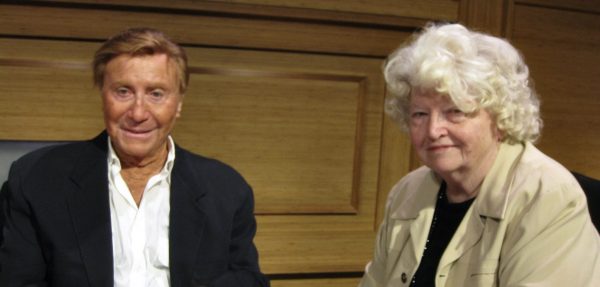
Author John Rechy, famous for the 1963 gay classic City of Night, wrote a letter to Michael agreeing with his premise. Quoting from one of his essays, he writes: “There is a counterattack by the `mainstream’ to consider. One of its main tactics to effect that countering is through the creation of `liberated ghettos’. When book-chains assign labeled sections to `Chicano literature,’ `Gay Literature,’ `Women’s Studies,’ they segregate. So do `mainstream’ publishers who aim minority books only at minorities and who promote such works, if at all, with restricted advertising.” Brad Bessey is now the director of Communications and Talent Relations at Project Angel Food, where he used to volunteer in 1989. And after 46 years as a journalist for the LGBTQ+ community, I am now writing a Substack called LGBTQ+ Freedom Fighters.
And Michael – he found loving friends, deep admiration, and captured his dream. “I’m as fantastical a creature as anything in Oz or in Wonderland,” he told the Cornell University English department in 2010. “I like it if people can say, ‘I never met anyone like him,’ and by that they should mean that it wasn’t an unpleasant experience.”
I never met anyone like him.
This tribute to Michael Silverblatt is cross-posted from Karen Ocamb’s Substack LGBTQ+ Freedom Fighters.
Obituary
Catherine O’Hara, ‘Schitt’s Creek’ star and celebrated queer ally, dies at 71
O’Hara is remembered for memorable comedic roles in ‘Beetlejuice’ and ‘Home Alone’
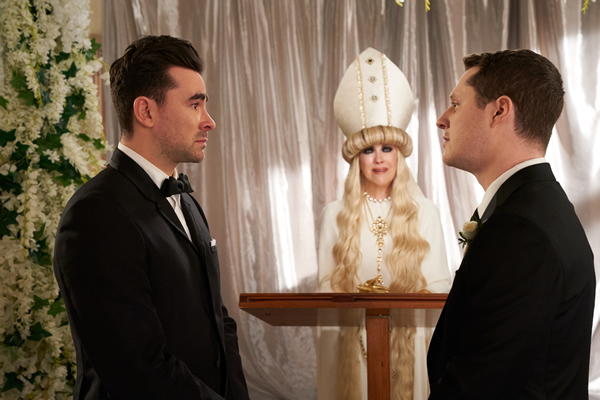
Catherine O’Hara, the varied comedic actor known for memorable roles in Beetlejuice, Schitt’s Creek, and Home Alone, has died at 71 on Friday, Jan. 30, according to multiple reports. No further details about her death were revealed.
O’Hara’s death comes as a shock to Hollywood, as the Emmy award-winning actor has been recently active, with roles in both The Studio and The Last of Us. For her work in those two shows, she received Emmy nominations for outstanding supporting actress in a comedy series and outstanding guest actress in a drama series.
In 2020, O’Hara won the Outstanding Lead Actress in a comedy series award for her work in the celebrated sixth and final season of Schitt’s Creek. She was also known as a queer ally and icon for her theatrical and often campy performances over multiple decades. In Schitt’s Creek, she played Moira Rose, the wig-loving mother of David Rose (played by series creator Dan Levy). David is pansexual, but the characters around him simply accept him for who he is; the show was embraced by the LGBTQ+ community with how naturally David’s sexuality was written and portrayed. That show ran from 2015 to 2020 and helped bring O’Hara and her co-stars into a new phase of their careers.
In a 2019 interview with the Gay Times, O’Hara explained why the show got LGBTQ+ representation right: “Daniel has created a world that he wants to live in, that I want to live in. It’s ridiculous that we live in a world where we don’t know how to respect each other and let each other be. It’s crazy. Other shows should follow suit and present the world and present humans as the best that we can be. It doesn’t mean you can’t laugh, that you can’t be funny in light ways and dark ways. It’s all still possible when you respect and love each other.”
Additional credits include SCTV Network (for which O’Hara won a writing Emmy), Beetlejuice Beetlejuice, Curb Your Enthusiasm, Six Feet Under, Best in Show, Home Alone 2: Lost in New York, and Dick Tracy. O’Hara also lent her voice to The Nightmare Before Christmas, Chicken Little, Monster House, and Elemental. O’Hara was expected to return for Season 2 of The Studio, which started filming earlier this month.
Obituary
Honoring the whole woman: Remembering Wallis Huberta Annenberg
Wallis Annenberg lived her truth in a world that often preferred silence, using quiet resilience to create space for queer lives within powerful institutions.
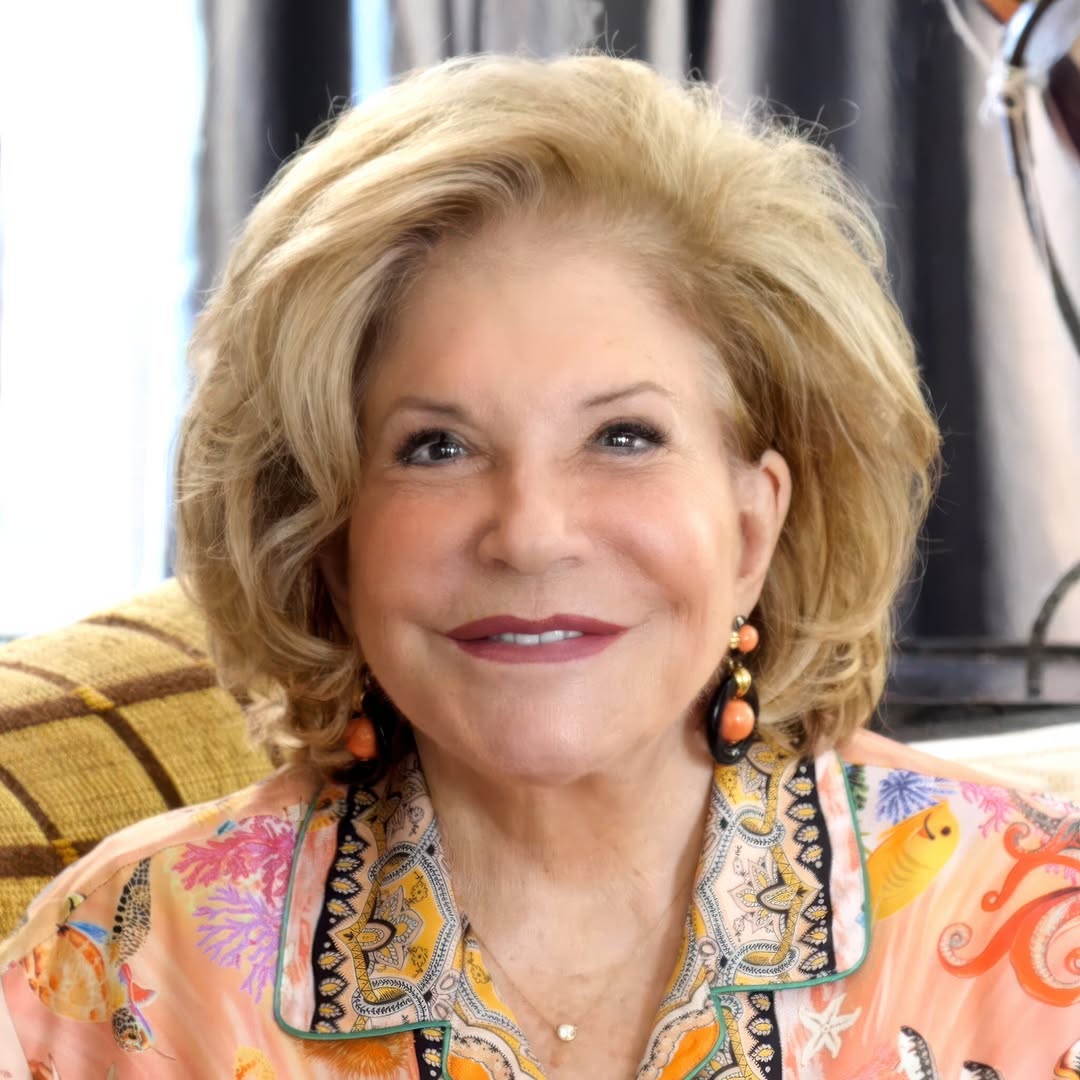
Wallis Annenberg, who passed away shortly after her 86th birthday on July 28th, left behind a legacy that few philanthropists of any era could hope to match. A passionate leader, cultural patron, and unapologetically generous force in Los Angeles, she spent her life championing creativity, compassion, and community. But what often went unsaid, sometimes politely ignored, was that Wallis was also a queer pioneer. In a world that didn’t always make room for women like her, she quietly yet courageously carved out space not just for herself, but for others on the margins, channeling her power and privilege into building a more inclusive world.
Born into one of America’s most influential media families, Wallis Annenberg was raised in Philadelphia with ink practically in her veins. Her father, Walter Annenberg, founded TV Guide and Seventeen, and built a philanthropic legacy as prominent as his publishing empire. After graduating from Pine Manor College in 1959, Wallis dipped a toe into the family business at TV Guide before eventually diving headfirst into the deeper waters of philanthropy. It wasn’t until her father’s death in 2002 that she properly took the reins, steering the Annenberg Foundation into its most impactful era as President and CEO from 2009 until her passing.
Under her leadership, the Foundation funneled a staggering $1.5 billion into a wildly diverse portfolio of causes, from arts and culture to environmental conservation, journalism to gerontology, and yes, even animal overpasses. Her imprint on Los Angeles is practically architectural – the Wallis Annenberg Center for the Performing Arts, GenSpace in Koreatown, PetSpace for animal lovers, the ambitious Wildlife Crossing set to open in 2026, and the science-sparking Annenberg Building at the California Science Center. Her boardroom resume reads like a cultural tour of LA and then some – USC, LACMA, MOCA, the Philharmonic, the Music Center, and Harlem Children’s Zone, to name just a few. In 2022, President Joe Biden awarded her the National Humanities Medal, sealing her place in history as part of the only three-generation family to earn such a distinction, further proof that giving back wasn’t just in the Annenberg bloodline but a full-fledged dynasty.
Most obituaries have captured her vast philanthropic footprint, her roles in the public sphere, and her institutional endowments quite accurately yet have almost entirely glossed over or minimized a central truth: Wallis Annenberg lived as a lesbian woman, and openly supported LGBTQ+ and HIV/AIDS causes with strategically courageous generosity.
To fully and properly honor Wallis is to acknowledge not only her generational wealth and philanthropic vision but also her very much so queer identity: a lesbian woman whose visibility was moderately limited by her time and place yet meaningful when and where it counted. Her sexuality and identity shaped her empathy toward marginalized people.
Ignoring that part of her story perpetuates the ever-constant sanitization of queer public figures, simplifying them into neutered benefactors while erasing the very identity that informed the bulk of their charitable giving. Wallis’s lived experience as a lesbian deserves proper and public acknowledgment not merely as a footnote but as integral to her philanthropy, her community care, and her story – a story layered with courage, complexity, and an undertone of quiet and careful defiance.
Wallis faced addiction head-on, and the recovery journey didn’t just save her – it connected her to journalist Karen Ocamb, who became to Wallis a close companion and confidante. Wallis didn’t shy away from vulnerability and fueled that same vulnerable energy into generosity, building a philanthropic approach shaped by her experience rather than detachment.
Among the many tributes after her passing, it was only Ocamb who celebrated and honored Wallis’ sexuality with clarity and care. In her heartfelt Substack tribute, Ocamb wrote, “Wallis never came out – but she lived out loud, fiercely loving women and channeling her passion into transformative giving.”
Back in 1985, when AIDS was still drenched in stigma and so many people, including health professionals, kept their distance, Wallis stepped forward to co-chair the Commitment to Life dinner. That decision was in no way a headline grab but most certainly was a risk on her part for the time. In a day and age when silence was safest when protecting one’s reputation, Wallis chose to speak out through action. Her courage didn’t need a spotlight. It simply showed up where it mattered most.
Navigating public life came with its own choreography. Wallis maintained what some might call “strategic privacy,” presenting a heteronormative front in certain circles while sharing her life, deeply and authentically, with women in more trusted spaces. It wasn’t about hiding but surviving the era she lived in, and, like so many others, choosing when and how to live freely.
Wallis brought that same intentional care to her philanthropy. While major media celebrated her support for the arts, education, and conservation, far less attention was paid to her contributions to LGBTQ+ elder communities. Initiatives like Gay and Lesbian Elder Housing made a genuine, tangible difference in people’s lives, even if her name wasn’t always highlighted in the coverage.
And through it all, there was Kris Levine—Wallis’s steadfast partner, legally acknowledged near the end of Wallis’s life but largely absent from obituaries. Their relationship, though rarely publicized, was integral. It stood as one more example of how much of Wallis’s real story lived just beneath the surface.
Wallis reshaped what philanthropy could look like. Her leadership turned the Annenberg Foundation toward place-based investments, inclusive community programs, aging and wellness initiatives, and bold infrastructure like GenSpace and the Wallis Center. Her vision made space not just for ideas, but for people too often overlooked. Her presence sent a message, whether spoken or not, that queer women, especially those of her generation, have always helped shape the culture, even when they weren’t given a slot up at the mic.
Wallis Annenberg leaves behind more than just her sprawling physical legacy. She also leaves us with a moral legacy grounded in generosity extended to communities she truly and deeply cared for, in particular the queer community that she was very much so part of. Let us all remember Wallis not only as a philanthropist, but as a queer woman whose identity was at the epicenter of her compassion. Let this tribute stand as an acknowledgment that she was more than her institutions. She was human, nuanced, hidden, and honest. And let it serve as an invitation to future remembrances. I more than dare you to include the truth of sexuality, the courage of love, and the quiet acts of resistance that defined her.
Wallis Annenberg, may your spirit continue to guide all communities – arts, aging, wildlife, and LGBTQ+ – toward a world that you helped shape for the better. Your gifts were vast. Your love was real. And your full story deserves telling.
Obituary
The queer community mourns the loss of trailblazer Jewel Thais-Williams
Founder of Catch One, Thais-Williams became the first Black woman to own an LGBTQ club in the nation.
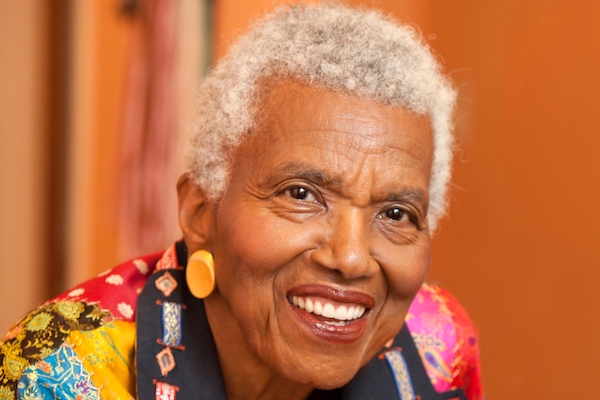
Jewel’s Catch One nightclub, affectionately referred to by locals as “The Catch,” has been a vital part of the queer and Black communities since its opening in 1973. It was one of the first Black discos in the US, and the first major Black queer bar in Los Angeles. At its helm was pioneer Jewel Thais-Williams, the first Black woman to own an LGBTQ club in the nation. Jewel passed away on July 7th, as confirmed by her sister Carol Williams; she was 86 years old.
Thais-Williams was born in Gary, Indiana, and was brought to San Diego after her family members were drafted into the Navy and stationed in San Diego. After high school, she attended UCLA. Seeing the limited possibilities available to Black women, she believed the only way to acquire wealth was to open her own business, and she started a dress shop with her sister.
She came into her sexuality in her mid-twenties and identified as a lesbian. She experienced firsthand the discrimination towards Black folk at gay clubs and purchased the Diana Club in the Arlington Heights district. She renamed it Jewel’s Catch One, and made history. At the time, women couldn’t tend bar unless they owned it.
After proving herself to the nightclub community, Catch One became a thriving safe space for the queer and Black communities. It also became a go-to spot for celebrity performers, with Janet Jackson, Donna Summer, Whitney Houston, Rick James, Madonna, and more.
Thais-Williams wasn’t just a bar owner; she was an activist. During the AIDS epidemic, she made Catch One available for community meetings. She also served on the board of the AIDS Project LA, co-founded the Minority AIDS Project, and co-founded Rue’s House, providing a safe space for women with AIDS and their children.
During her reign at Catch One, she went back to school and got a Master of Science degree in Oriental Medicine from Samra University. This inspired her to open the Village Health Foundation, a non-profit with a mission to educate lower-income communities on nutrition and healthy living.
Thais-Williams served as the Grand Marshal for the 2016 Los Angeles Pride Festival. In 2019, the intersection directly in front of Catch One was renamed as Jewel Thais-Williams Square. There have been two documentaries paying homage to Thais-Williams and her club, Jewel and the Catch, and Jewel’s Catch One. Footage from Jewel and the Catch was used in the opening sequence of season 3 of Amazon’s Transparent.
This last weekend, Los Angeles Blade was present at Catch One as it served as host to some of the tentpole events of Los Angeles Blade Pride. Executive Director Brandon Anthony shared this statement with the Blade:
With the devastating news of the passing of Jewel Thais-Williams, we honor a true icon and pioneer whose legacy shaped the soul of Los Angeles. For over 40+ years, she stood as a beacon for the LGBTQ community. CATCH ONE offered refuge during the AIDS epidemic, creating safe spaces when none existed, and championed Los Angeles Black Pride with unwavering love, support, and commitment. Her light made room for all of us to shine, and her legacy will forever live on through the mission of LA Black Pride.
California State Assembly member Rick Chavez Zbur also shared this statement:
I’m deeply saddened by the passing of Jewel Thais-Williams—an icon, a trailblazer, and a matriarch of Los Angeles’ Black LGBTQ+ community. Through Jewel’s Catch One, she created a haven of joy and resistance, and through her advocacy, she brought healing to communities devastated by HIV/AIDS. While leading EQCA, I was honored to present her with our Community Leadership Award in 2018. Her legacy lives on in every life she touched. She will be missed.
Catch One’s Instagram posted:
A celebration of her life at Catch One is anticipated; details to follow.
Obituary
Nanette Kazaoka, an unlikely AIDS activist, dies at 83
Member of ACT-UP, longtime social justice advocate
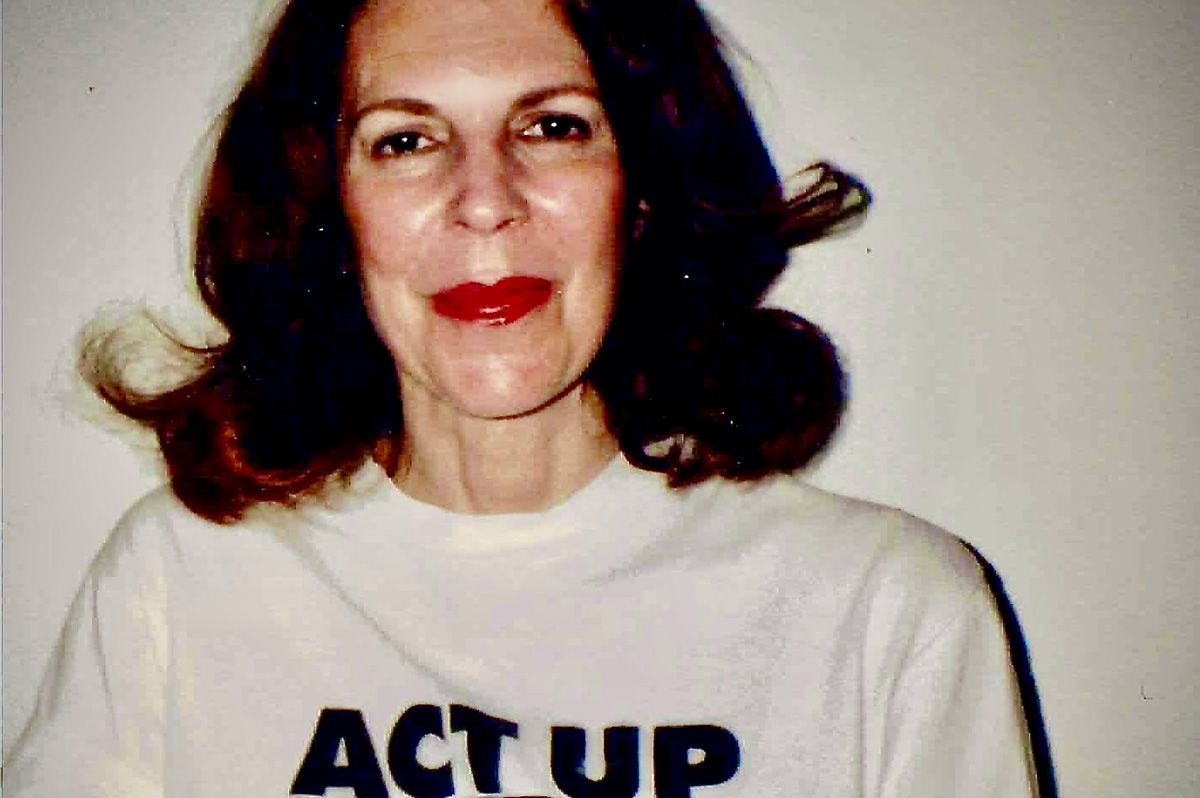
Nanette Kazaoka, a well-known figure in the fight for HIV/AIDS awareness and the rights of marginalized communities, passed away on Oct. 2 at her home in New York City. She was 83. The cause of death was complications from vascular dementia and Alzheimer’s disease, according to a statement from her daughter Kelly Kochendorfer.
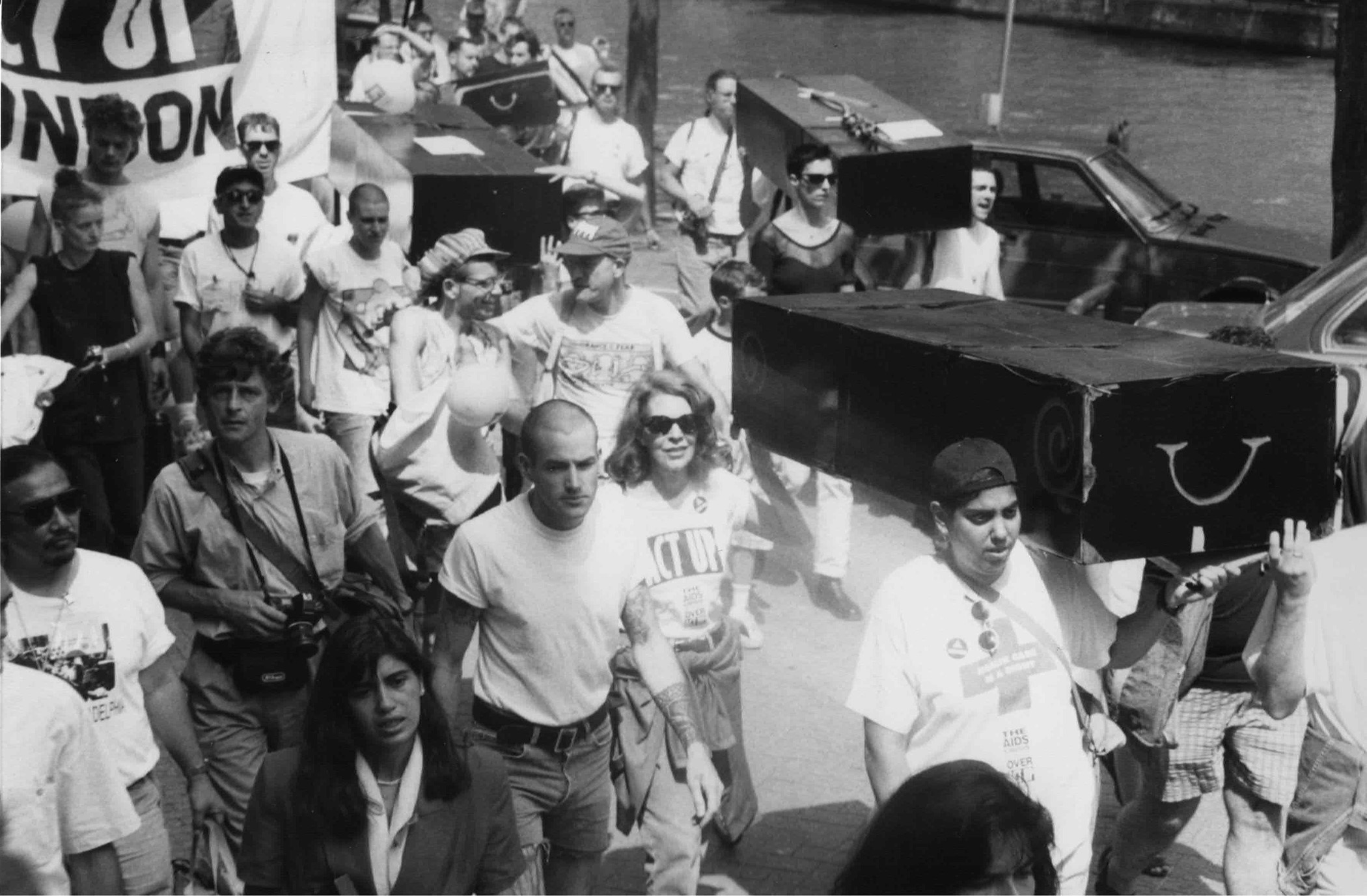
Kazaoka was an advocate for justice, particularly in the early days of the AIDS crisis, when she became a member of the AIDS Coalition to Unleash Power, or ACT-Up. She is perhaps best remembered for her participation in a 2004 protest in front of Madison Square Garden during the Republican National Convention, when she and 11 fellow activists staged a dramatic naked demonstration, demanding debt cancellation for impoverished countries, according to a statement from the family.
“Bush, Stop AIDS. Drop the Debt Now!” they chanted, with slogans stenciled in black paint on their bodies. The bold protest drew national attention and underscored the urgency of global debt relief as a key element in the fight against AIDS.
She was born Nanette Natalina Bottinelli on June 12, 1941, in New York City. Her father, Angelo, worked as a waiter at the St. Regis Hotel, while her mother, Betty McComb, was a part-time burlesque dancer.
She married her first husband, Fred Kochendorfer, in 1963, and they had two children together, Kim Skrobe and Kelly, both of whom survive her.
Kazaoka’s journey to Fire Island marked a transformative period in her life. Kochendorfer wanted to live there, and so they began renting in 1967. Kazaoka then made a bold decision that would shape her future: She left her husband for another man and began living on Fire Island in 1968-1969, with the children attending school in Ocean Beach, according to the family’s statement.
This period coincided with the early days of the gay rights movement, as Fire Island was emerging as a hub for LGBTQ culture. Her experiences during these years contributed to the strong sense of activism and solidarity that would later define her role in ACT-UP and the broader fight for LGBTQ rights.
Kazaoka’s second husband, Katsushiga “Kats” Kazaoka, a Japanese-American psychologist who had been interred during World War II, died of cancer in 1984, pushing her to enter the workforce as a receptionist while studying occupational therapy at Downstate Medical Center. By 1990, she had earned her degree and sought work with AIDS patients.
In 1988, a close friend introduced her to ACT-UP, sparking the start of her full-time dedication to AIDS activism, the family said. Kazaoka became known for her passionate, unrelenting activism, whether protesting at City Hall or challenging anti-LGBTQ policies at St. Luke’s Hospital.
Kazaoka’s activism spanned 35 years, making her a beloved and respected figure within ACT-UP and beyond, the family noted. She was featured in Sarah Schulman’s “Let the Record Show: A Political History of ACT-Up New York, 1987-1993” as well as “Act-Up Oral History, No. 162,” a digital history. She was the cover photo of “Fag Hags, Divas and Moms: The Legacy of Straight Women in the AIDS Community,” and was included in The New York Times T Living Magazine story, “LEGENDS PIONEERS AND SURVIVORS.
Her dedication to science continued even after her passing: She donated her brain to the Mount Sinai NIH Brain and Tissue Repository for research to advance the understanding of the human brain health and disease to help end dementia, the family said.
Along with her daughters, Kazaoka is survived by her son-in-law John Skrobe, granddaughter Stella Skrobe and daughter-in-law Christine Arax, all of New York. She and her third husband, Paul Haskell, divorced in 2000.
Obituary
Honoring the life and legacy of Coya White Hat-Artichoker
Life-long advocate for Indigenous, two-spirit rights died on Dec. 4
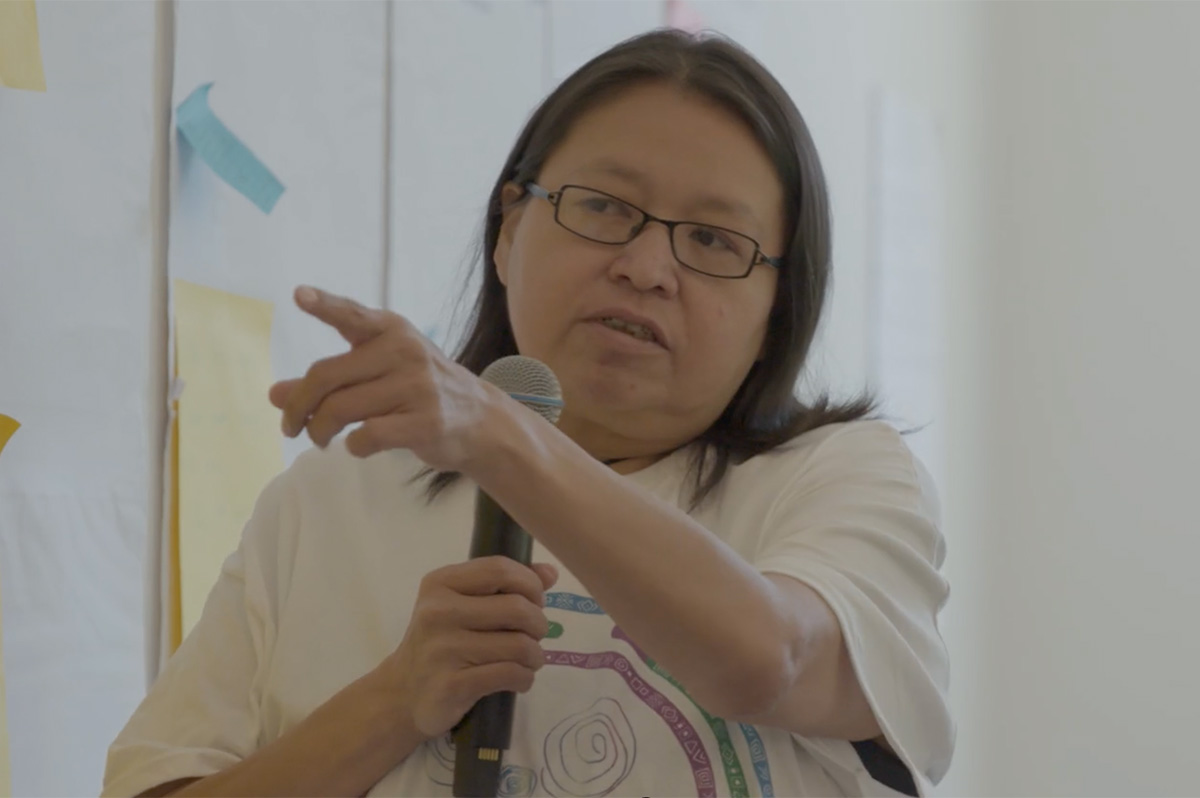
Born and raised on the Rosebud Reservation in South Dakota, Coya was a proud enrolled member of the Sicangu Lakota Oyate or Rosebud Sioux Tribe. From the age of 15, she dedicated her life to advocating for Indigenous and Two Spirit rights, becoming a fierce organizer and a visionary leader in movements for justice. As a founding member of the First Nations Two Spirit Collective, Coya worked tirelessly to uplift Two Spirit youth, support Indigenous reproductive justice, and connect these communities to philanthropic spaces to drive transformative change.
Coya’s advocacy for Indigenous reproductive justice was rooted in a deep understanding of its inseparability from the fight for Indigenous sovereignty. She saw this work as part of a 500-year history of resistance to colonization, weaving together the rights to access abortion, raise children in safe and sustainable environments, steward healthy lands and waters, practice Indigenous cultures, speak ancestral languages, and govern sovereign communities. Recently she served as a board member for SisterSong and the American LGBTQ+ Museum. Coya was a fierce leader who brought dedication and brilliance, impacting gender and reproductive justice efforts around the world.
In 2020, Coya’s visionary leadership brought the world’s first fund dedicated to Indigenous reproductive justice, Building the Fire Fund, into existence. Guided by an Indigenous Advisory Council of women and Two Spirit leaders from across Turtle Island, the fund represents a powerful testament to Coya’s dedication and collaborative spirit. Coya co-authored “Tired of Dancing to Their Song: An Assessment of the Indigenous Women’s Reproductive Justice Funding Landscape” with Zachary Packineau. This seminal report provides a critical roadmap for philanthropy to support and grow the emerging field of Indigenous reproductive justice.
In 2023, Coya brought Building the Fire Fund to Solidaire Network, where we are honored to walk alongside the Advisory Council in advancing this vital work. Coya’s passion, wisdom, and dedication will continue to guide and inspire all of us who were privileged to know her and work beside her.
To honor Coya’s legacy and her vision for the Indigenous reproductive justice movement, we invite you to contribute to the Building the Fire Fund. Your support ensures that her transformative work will continue, lighting the way for generations to come.
Coya White Hat-Artichoker’s life was a powerful testament to resilience, love, and unwavering commitment to justice. While her presence will be deeply missed, her legacy will endure as a beacon of hope and strength for all who carry her vision forward.
Obituary
Gay baseball trailblazer Billy Bean dead at 60
MLB executive was last living former pro player to have come out

He achieved his lifelong dream of becoming a major league baseball player at 23, but Billy Bean gave it all up at 31 because he fell in love with another man. Bean, MLB’s senior vice president for diversity, equity and inclusion, died at home in New York on Tuesday after an 11-month-long battle with acute myeloid leukemia. Major League Baseball announced his death.
Bean was 60, and leaves a husband, Greg Baker.
Bean did not come out publicly until he left the game, in 1999, following an article in the Miami Herald that outed him. That led to even bigger stories in the New York Times and television interviews about being a closeted athlete. He wrote a book, “Going the Other Way.” For decades, Bean was the only living former baseball player to have come out as gay, following Glenn Burke.
Four years ago, Bean recorded an emotional video about coming out and how baseball has changed, titled “Dear Glenn Burke: A Letter from Billy Bean.”
However, the biggest impact Bean had on the game and on all professional sports came in 2014, when he was hired by former Commissioner Bud Selig to be MLB’s first ambassador for inclusion. He spent more than 10 years working for MLB, eventually being promoted to senior vice president.
Bean worked with pro baseball players and their clubs to, in his words, “advance equality for all players, coaches, managers, umpires, employees, and stakeholders throughout baseball to ensure an equitable, inclusive, and supportive workplace for everyone.”
The California native’s athletic career started as a two-time All-American outfielder at Loyola Marymount, then Bean played six seasons of pro ball. He was drafted by the New York Yankees in 1985, but returned to Loyola for his senior year, leading the team to the NCAA Men’s College World Series.
The Detroit Tigers drafted him the following year, and Bean made his debut in 1987 with a four-hit performance that tied a record for a player in his first game. Bean went on to play for the Los Angeles Dodgers, the San Diego Padres, in Japan as well as in the minor leagues.
But he hung up his mitt in 1995, when the lefty outfielder — who at that time was married to a woman — lost his first partner, Sam. He died of HIV-related causes in Bean’s final season. They had fallen in love on a road trip in Miami.
That 1999 Miami Herald article that outed him was a review of the restaurant he co-owned with his partner at that time. He had already told his parents in 1996, but Bean once told the LGBTQ sports site Outsports he still regretted ending his career in the closet.
“If I had only told my parents, I probably would have played two or three more years and understood that I could come out a step at a time, not have to do it in front of a microphone. And I was completely misguided. I had no mentor. I think that’s where the responsibility comes in for people who have lived that experience, and we take for granted that everybody’s adjusted and gets it. I had no one to confide in and that was the biggest mistake of my professional life was to think that if one person knew, everybody knew.
Just having some kind of ally at that time, I think I would have changed and I think I would have played so much better. You can appreciate the degree of despair when you’re hiding something and you’re on the bubble as it is. It just was a really frustrating time for me.”
At MLB, Bean led the charge for baseball teams to hold Pride nights, especially following the COVID-19 pandemic.
“The beginning of Pride month alongside fans returning to our MLB ballparks is tremendously exciting,” Bean told the Los Angeles Blade in June 2021. “The past year has been difficult for everyone, and I am so appreciative that our clubs are able to reach out and support the LGBTQ community in such a positive way.”
The league, baseball teams, his alma mater and LGBTQ advocates and allies posted remembrances and tributes to Bean on social media following news of his passing.
We are deeply saddened by the passing of our friend and colleague Billy Bean, MLB’s Senior VP for Diversity, Equity, & Inclusion and Special Assistant to the Commissioner. Billy, who fought a heroic year-long battle with Acute Myeloid Leukemia, was 60.
Over the last 10 years,… pic.twitter.com/dCfFM6hQlE
— MLB (@MLB) August 6, 2024
We mourn the passing of Billy Bean, a former Dodger and pioneering executive who as MLB’s Senior Vice President for Diversity, Equity & Inclusion truly elevated the culture and spirit of the game he loved. pic.twitter.com/fFykeWFWbi
— Los Angeles Dodgers (@Dodgers) August 6, 2024
We mourn the passing of our friend and former Padre, Billy Bean. He was a great ambassador for equality and inclusion in the game of baseball, and our thoughts are with his loved ones at this very difficult time. pic.twitter.com/D2sFHSVLhO
— San Diego Padres (@Padres) August 6, 2024
The #SFGiants are deeply saddened to learn of the passing of Billy Bean and join the rest of the baseball community in mourning this incredible loss.
We thank Billy for supporting and creating a more inclusive baseball environment and using our collective platform to elevate… https://t.co/tNdMQYCKHk
— SFGiants (@SFGiants) August 6, 2024
We join the entire baseball community in mourning the passing of Billy Bean.
Our hearts go out to the Bean family at this time. 💚💛 https://t.co/6TgKhC5QXp
— Oakland A's (@Athletics) August 6, 2024
The Washington Nationals join Major League Baseball and its Clubs in mourning the passing of Billy Bean.
It was an honor to host him at Nationals Park for our annual Night OUT in 2023, and we thank him for the many contributions he made to our game. pic.twitter.com/8t47tRhhfj
— Washington Nationals (@Nationals) August 6, 2024
The Tigers organization extends its deepest condolences to the family and friends of Billy Bean, who made his Major League debut with the Tigers in 1987 and spent three seasons wearing the Olde English ‘D’. https://t.co/BiB0pKpEbj
— Detroit Tigers (@tigers) August 6, 2024
Billy Bean brought all of his heart to this game. His courage changed baseball for the better, championing inclusivity and belonging.
Thank you for your friendship, energy and inspiration. You made us a better organization. We will miss you. ❤️ https://t.co/blhQNPJ2VO pic.twitter.com/EpBluffmYM
— Red Sox (@RedSox) August 6, 2024
Billy Bean left an indelible mark with his kindness, sincerity and tireless efforts to advance the causes of diversity and inclusion in baseball. The Players Association extends its heartfelt sympathies to his family and friends throughout the game. pic.twitter.com/6KHvcv4ZcR
— MLBPA (@MLBPA) August 6, 2024
The LMU community mourns the passing of Lions baseball legend Billy Bean.
The two-time All-American led the Lions to their sole appearance in the College World Series in 1986.
Bean was inducted into the LMU Hall of Fame in 1992 and will forever be enshrined in Lions lore. pic.twitter.com/QwJbt3Rfhp
— LMU Baseball (@lmulionsBSB) August 6, 2024
I just learned that Billy Bean is now gone on the same day we buried my father. I always loved working with Billy because, former big leaguer that he was, he was committed to finding positive outcomes, ways to win, big or small, for all #LGBTQ athletes. We should all miss him. pic.twitter.com/F3d2EKjAtL
— Christina Kahrl (@ChristinaKahrl) August 6, 2024
It's a sad day for all sports. Baseball Legend Billy Bean, MLB’s Senior VP for Diversity, Equity, and Inclusion and Special Assistant to the Commissioner, has passed away. Billy, who was 60, fought Acute Myeloid Leukemia.
— R.K. Russell (@RKRelentless) August 6, 2024
Heartbroken to hear of Billy’s passing. A kind man with a formidable enthusiasm for creating change. I’m so grateful for all the times our paths crossed over the years. I’ll always cherish the wisdom he so generously shared that helped shape me into the man & advocate I am today. https://t.co/JtSQDKgMh8 pic.twitter.com/MxRjOJRfQX
— Merts (@ConnerMertens) August 6, 2024
Funeral arrangements were not announced as of press time.
Obituary
Out American composer & lyricist Stephen Sondheim dies at 91
Sondheim did not come Out until age 40 & didn’t live with a partner until he was 61 when he was in a relationship with dramatist Peter Jones
ROXBURY, Ct. – The man who was heralded as Broadway and theater’s most revered and influential composer-lyricist of the last half of the 20th century with eight Tony awards alone, Stephen Joshua Sondheim, known for landmark musicals such as “Company,” “West Side Story” and “Sweeney Todd, has died at 91.
Sondheim’s death was announced by his attorney, Rick Pappas. who said that the composer died Friday at his home in Roxbury, Connecticut. The day before Sondheim had celebrated Thanksgiving with a dinner with friends in Roxbury, Pappas added.
Stephen Sondheim, the revered and influential composer-lyricist behind some of Broadway’s most beloved and celebrated shows, has died at 91. https://t.co/LDynQNwHrr
— New York Times Arts (@nytimesarts) November 26, 2021
An online listing of Sondheim’s accolades include nine Tony Awards (including a Lifetime Achievement Tony in 2008), an Academy Award, eight Grammy Awards, a Pulitzer Prize, a Laurence Olivier Award, and in 2015, the Presidential Medal of Freedom bestowed on him by former President Barack Obama.
He has a theatre named for him on both Broadway and the West End in London.
Sondheim has written film music, contributing “Goodbye for Now” for Warren Beatty’s 1981 Reds. He wrote five songs for 1990’s Dick Tracy, including “Sooner or Later (I Always Get My Man)”, sung in the film by Madonna, which won the Academy Award for Best Original Song.
Film adaptations of Sondheim’s work include West Side Story (1961), Gypsy (1962), A Funny Thing Happened on the Way to the Forum (1966), A Little Night Music (1977), Gypsy (1993), Sweeney Todd: The Demon Barber of Fleet Street (2007), Into the Woods (2014), West Side Story (2021), and Merrily We Roll Along (TBA).
Sondheim did not come Out until he was 40 and did not live with a partner until he was 61 when he was in a relationship with dramatist Peter Jones. His current partner, actor-producer Jeff Romley, whom he married in 2017 and he had been living together for over 6 years at the time of the composer’s death.
David LaFontaine, a professor at Massasoit Community College, wrote about Sondheim’s early years and the critical friendship that would end up impacting his life, career, and American Theatre;
“Stephen Joshua Sondheim was born in New York City on March 22, 1930, the only child of affluent parents who divorced when he was ten. He believes he might have succumbed to depression had it not been for a friendship that began in the summer of 1941 with the Hammerstein family, who lived near Sondheim on the bucolic Highland Farm in Bucks County, Pennsylvania.
“Dorothy and Oscar Hammerstein became my surrogate parents during my teen years,” says Sondheim, “and that’s essentially how I became a songwriter, because I wanted to do what Oscar did.” During his four years as a student at the George School, Stevie, as he was then called, often spent entire summers at the Hammerstein farm.”
Oscar Hammerstein II was an American lyricist, theatrical producer, and director in the musical theater for almost 40 years. He won eight Tony Awards and two Academy Awards for Best Original Song. Hammerstein along with his partner composer Richard Rodgers created some of the notable musicals in Broadway history including Oklahoma! (1943), South Pacific (1949), The King and I (1951), and The Sound of Music (1959).
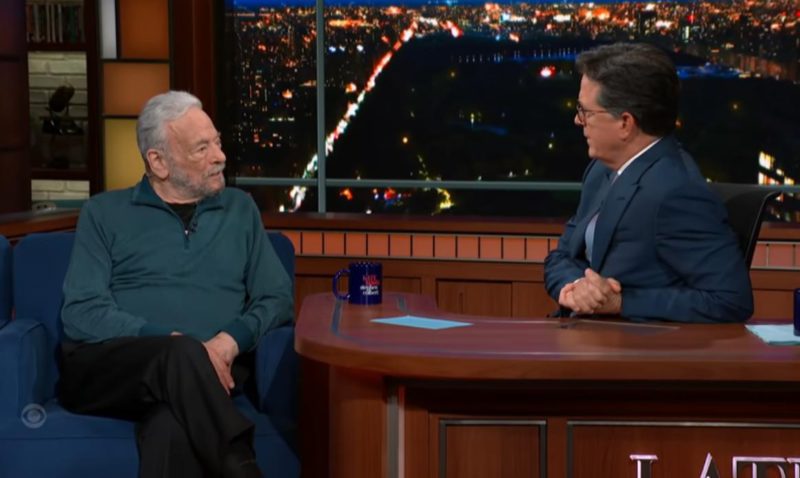
This past September Sondheim was a guest on The Late Show with Stephen Colbert, for a conversation that covers a lot of ground, from “Company” to “West Side Story,” to a new show titled, “Square One.”
Stephen Sondheim Is Still Writing New Works, As “Company” Returns To Broadway
Obituary
First trans mayor, Stu Rasmussen, dies at 73
Rasmussen, who used both he/him and she/her pronouns, became the first trans mayor in the nation’s history
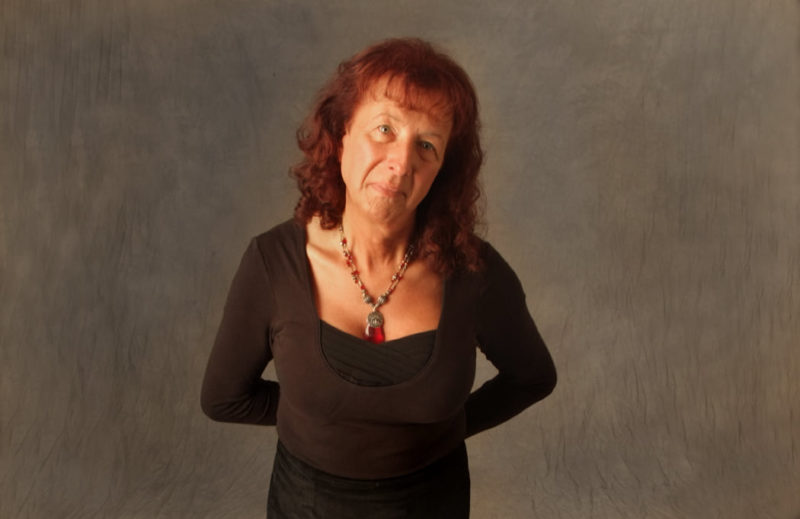
SILVERTON, Or. — Stewart “Stu” Rasmussen, the first trans mayor in the United States, died on November 17 after several weeks under home hospice care battling metastatic prostate cancer. He was 73.
Rasmussen, who used both he/him and she/her pronouns, became the first trans mayor in the nation’s history when he was elected to lead the town of Silverton, Oregon, in 2008, serving until 2014. Before coming out as trans, he served as mayor of the western Oregon town for two terms starting in 1988.
The current mayor of Silverton, Kyle Palmer, took to Facebook to announce the news and offer his condolences.
“Throughout his career as an elected official, Stu advocated for many things on behalf of those who shared his vision for Silverton,” Palmer wrote. “Although citizens can debate their support or lack of support for some of those visions, the time for those conversations has long passed. His volume of service to city government, his role as a longtime downtown business owner, and his impact on the LGBTQ population in Silverton and beyond leaves a huge legacy behind.”
Rasmussen, a self-described “gender anarchist,” leaves behind his partner Victoria Sage, who he began dating in 1974 and married in 2014.
According to Palmer’s Facebook post, Sage noted that “he went bravely into the unknown on his own terms.”
In an email to the Statesman Journal, Sage said that she received many “beautiful and heartwarming” letters from people who said Rasmussen touched their lives.
Born and raised in Silverton, Rasmussen inspired many with his historic 2008 election. His historic 2008 election was covered nationally by People Magazine and Good Morning America. His story was the subject of a stage production in Seattle titled “Stu for Silverton.”
“He set an example for members of our community who needed to see that it was safe to live their lives openly in our community,” said Palmer.
According to Palmer, Westboro Baptist Church, known for anti-LGBTQ+ picketing, protested Rasmussen’s election in 2008. But they were met with a large crowd of Silverton residents — many of them wearing dresses — who supported the mayor, demanding congregation members leave town.
Along with public service, Rasmussen also ran a theater in Silverton for most of his life, “managing to preserve the magic of a small town theater even while showcasing the blockbusters that arrived in the late 70’s and navigating the frustrations of studio restrictions that made it harder and harder to turn a profit,” Palmer noted.
“I’m comforted in the knowledge that he is no longer in pain,” said Palmer.

Step into the ‘Crush House’ with JJ Aussie and Josh Moore

Jeremy Moss looks to bring LGBTQ+ advocacy from Lansing to Capitol Hill

‘There are resources available’: Justin Todd talks LGBTQ addiction treatment and recovery

More than 150 people detained outside Istanbul courthouse

Advocate, Out parent company adds Trump supporter to board, prompting outrage

Indonesia’s top Muslim clerical body proposes criminalizing LGBTQ+ people, advocacy

Fashion icon Bob Mackie dead at 87

The 78th Annual Emmy Awards recapped

L.A. DJs Heidi Lawden and FLABBERGAST call for resistance in ‘Children of the Revolution’

Dozens detained after Turkish authorities raid LGBTQ groups, businesses
-
 India3 days ago
Indonesia’s top Muslim clerical body proposes criminalizing LGBTQ+ people, advocacy
-
 Celebrity News4 days ago
Fashion icon Bob Mackie dead at 87
-
 EMMYS3 days ago
The 78th Annual Emmy Awards recapped
-
 Music & Concerts3 days ago
L.A. DJs Heidi Lawden and FLABBERGAST call for resistance in ‘Children of the Revolution’
-
 Turkey4 days ago
Dozens detained after Turkish authorities raid LGBTQ groups, businesses
-
 California3 days ago
Grand marshals announced for 2026 Greater Palm Springs Pride
-
 Hungary4 days ago
New Hungarian government to scrap anti-LGBTQ+ adoption law
-
 a&e features5 days ago
Cameron Esposito will make you laugh (and cry) on ‘King of Drag’ season 2
-
 Books4 days ago
Dolly Parton biography puts her hardships into context
-
 National3 days ago
Advocate, Out parent company adds Trump supporter to board, prompting outrage