
Politics
Reports indicate George Santos was a drag queen in Brazil
Santos’ alleged financial malfeasance & potential violations of campaign finance laws have triggered investigations
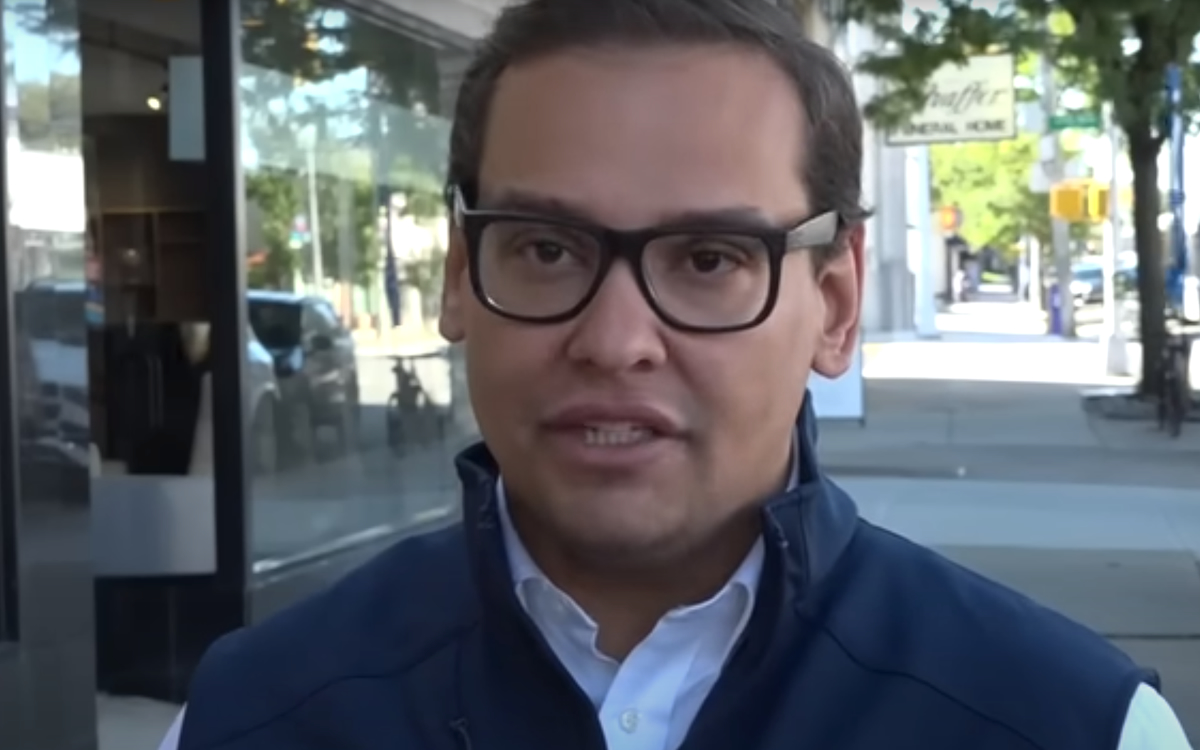
WASHINGTON — Embattled U.S. Rep. George Santos (R-N.Y.) was a drag performer in his native Brazil about 15 years ago, according to a Reuters article published on Wednesday that quoted two former acquaintances.
Despite the online circulation of photos appearing to show the congressman dressed in drag, Santos denied the report on Thursday.
“The most recent obsession from the media claiming that I am a drag queen or ‘performed’ as a drag queen is categorically false,” tweeted the New York Republican. “The media continues to make outrageous claims about my life while I am working to deliver results.”
“I will not be distracted nor fazed by this,” added Santos.
The most recent obsession from the media claiming that I am a drag Queen or “performed” as a drag Queen is categorically false.
— George Santos (@Santos4Congress) January 19, 2023
The media continues to make outrageous claims about my life while I am working to deliver results.
I will not be distracted nor fazed by this.
Bruna Benevides of Associação Nacional de Travestis e Transsexuais (National Association of Travestis and Transsexuals), a Brazilian transgender rights group known by the acronym ANTRA, in a Jan. 1 tweet in response to a New York Times story about Santos said his drag name was Kitara Ravache.
BREAKING: a Brazilian drag performer and others claim George Santos was a drag performer under the name Kitara Ravache. Not confirmed but certainly looks like Santos.
— Kaivan Shroff (@KaivanShroff) January 18, 2023
Important context here that Republican electeds have directed hate and violence towards the drag community. pic.twitter.com/IOvwiHYlUq
Benevides has yet to respond to the Washington Blade’s request for comment. A source in Rio de Janeiro said she had “never heard” that Santos was a drag queen when he lived in Brazil.
Steven Grattan, a Reuters reporter in São Paulo, on Thursday posted to his Twitter page a video that appears to show Santos in drag in the Rio de Janeiro suburb of Niterói.
The drag queen in this video sent to me by an anonymous source appears to be wearing the exact same dress, necklace, and earrings as Kitara Ravache in Brazilian drag queen Eula Rochard’s photos that’s been circulating online, alleging it is U.S Rep. George Santos Santos4Congress pic.twitter.com/0Vr60lRVLf
— Steven Grattan (@sjgrattan) January 19, 2023
Santos has taken a hard-right stance on social issues, keeping company with his most extreme Republican colleagues who have increasingly targeted organizers of all-ages drag events with false accusations that performers are abusing or exploiting children.
In contrast with most House Republicans and the entirety of Republican leadership, these lawmakers have not distanced themselves from Santos amid the scandals that have unfolded over his apparent financial improprieties and compulsive lying about his life, identity, and career.
Several GOP U.S. House members, joined last week by more than a dozen Republican elected officials serving in or near Santos’s 3rd Congressional District in New York, have demanded Santos’s immediate resignation.
The congressman’s alleged financial malfeasance and potential violations of campaign finance laws have triggered investigations by the U.S. Attorney’s Office for the Eastern District of New York, the Nassau County District Attorney’s Office, the U.S. House Ethics Committee, the Federal Election Commission, and the office of New York Attorney General Letitia James, while Brazilian authorities have revived fraud charges that were brought against him in 2008 over a stolen checkbook.
Also on Wednesday, two military veterans told CNN Santos had set up a GoFundMe to help finance lifesaving surgery for their pitt bull and then absconded with the money.
GoFundMe issued a statement to CNN on the company’s decision to remove the fundraiser from its platform:
“When we received a report of an issue with this fundraiser in late 2016, our trust and safety team sought proof of the delivery of funds from the organizer. The organizer failed to respond, which led to the fundraiser being removed and the email associated with that account prohibited from further use on our platform. GoFundMe has a zero tolerance policy for misuse of our platform and cooperates with law enforcement investigations of those accused of wrongdoing.”
The men said Santos stopped responding to their messages requesting access to the crowdsourced funds. They never received the money, and once the dog’s cancer reached an advanced stage they had to panhandle to afford to euthanize her.
Santos denied the report in a statement to CNN.
Michael K. Lavers contributed to this story




White House
Allegations involving Ric Grenell raise questions about pay-for-play in White House
Gay administration official at center of questions involving paid access to Trump

Questions about how high-level political appointees wield their power have long persisted, particularly under the Trump-Vance administration. Now, allegations involving openly gay Special Presidential Envoy for Special Missions Ric Grenell, White House adviser Alina Habba, and her husband, Turkish businessman Turhan Mildon, are making headlines across newsrooms.
The allegations have prompted President Donald Trump to order an investigation into what has become a convoluted mess, raising questions about a potential “pay-for-play” scheme within the White House.
Axios first reported that Habba accused Grenell of directing her husband to send $17.6 million to a Texas defense and security company, with approximately $5.6 million supposedly earmarked for the Kennedy Center. A text message allegedly sent by Grenell to Mildon promised VIP events and access to administration officials, including Trump, in connection with arranging a donation.
“Once the money comes to the company here, I will arrange the donation to Kennedy center, and you’ll be joining the VIP events and get close with the administration, even with POTUS,” the message allegedly sent by Grenell reads, according to Axios.
Habba, a former U.S. attorney for New Jersey, has alleged that the Kennedy Center never received the donation. Grenell, who served as the center’s acting director from February 2025 to March 2026, has denied sending the text message and called the allegations against him false.
According to Axios, Habba raised concerns with Trump on Oct. 9 after money had reportedly been sent to the Texas company but the promised donation to the Kennedy Center had not materialized. One administration official described Habba as “pretty animated” during the discussion and said she exclaimed at one point, “Ric stole the money!”
However, an administration source told Axios that Habba had not gathered all the necessary information before making the accusation.
“[She] didn’t have all her stuff in order. She went in there half-cocked without all the facts yelling about Grenell stealing. And the facts keep changing,” the source told Axiso. “That doesn’t mean Ric is out of the woods. This looks really shady.”
Following Habba’s accusations, Trump called White House Counsel Will Scharf into the Oval Office and asked him to investigate her claims, according to sources cited by Axios.
Trump and Scharf then called Grenell, who denied the allegations and said he would have immediately alerted others if he had known about a $17 million contribution.
“There’s no way this is true. This is crazy,” Grenell told Trump at one point, according to a source briefed on the discussion.
The Kennedy Center reportedly has no record of receiving the alleged $5.6 million contribution. The White House investigation remains ongoing, with officials examining the digital authenticity of the disputed text message.
Grenell has denied soliciting money under false pretenses or receiving any payment from Mildon.
“I’ve never asked for one cent to be sent somewhere else pretending it was for the Kennedy Center, and I’ve never received any payment from him at all,” Grenell said. “Make him give proof to what he is saying, not make these absurd allegations.”
The amount Habba cited has also reportedly changed. She initially claimed the donation intended for the Kennedy Center totaled approximately $17 million, while the amount allegedly designated for the performing arts institution appears to have been $5.6 million.
The allegations come amid broader questions about corruption within the Trump-Vance administration. Vice President JD Vance addressed the issue last week when asked whether he had witnessed anything inside the White House that gave him pause.
“D.C. is a corrupt town,” Vance said. However, he added, “I have not seen a single shred of evidence that [Trump] participates or sanctions in that corruption.”
The Los Angeles Blade reached out to the White House, Habba, and Grenell for comment but did not receive a response before publication.
California
Nithya Raman makes her case for LGBTQ voters in the race for LA Mayor
The mayoral candidate said she would use ‘every tool that the city has to protect trans Angelenos’
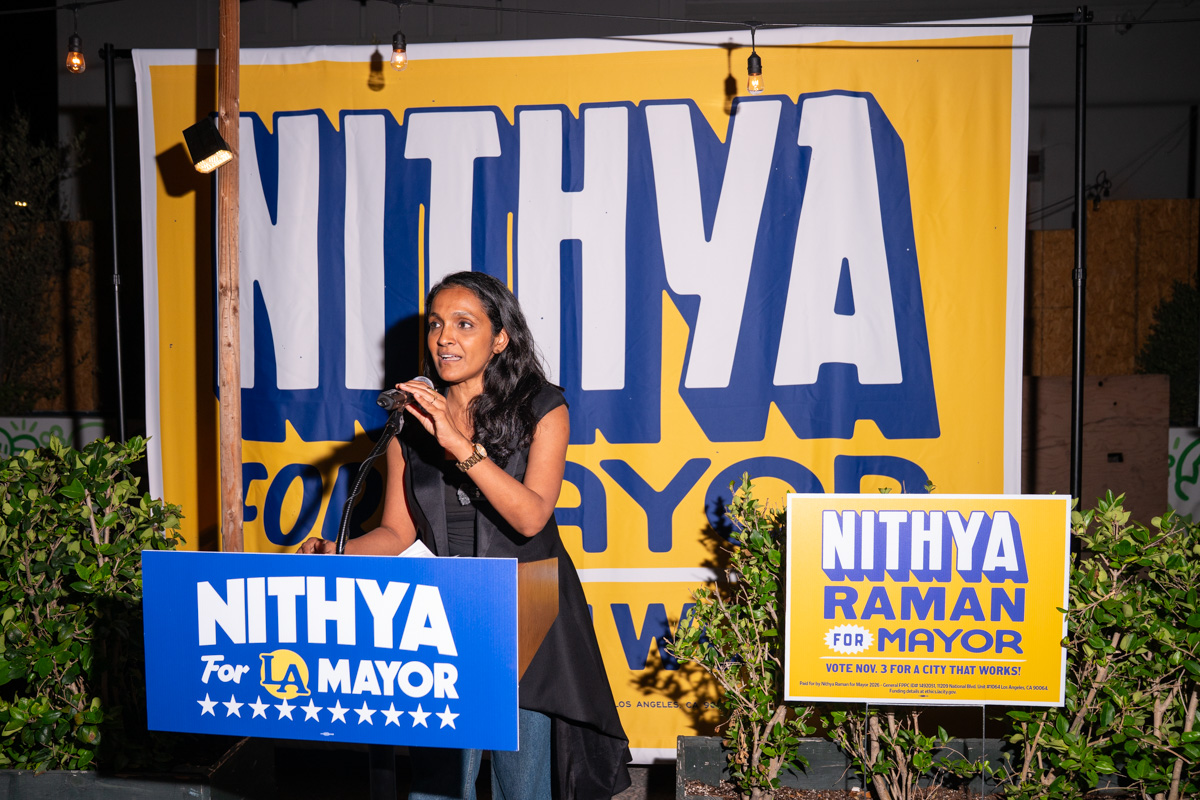
On a cool evening, around a hundred people gathered at the Black Cat’s outdoor seating area in Silverlake. The crowd was full of precisely trimmed mustaches, sleeveless cardigans, and colorful rainbow pins that read “Nithya Raman for Mayor of Los Angeles.”
This was the “Coming out for Nithya” LGBTQ fundraiser for Nithya Raman’s mayoral campaign.
The event which took place on October 8th, was hosted by gay comedian Joel Kim Booster and Pickles the Drag Queen. The pair encouraged the queer audience to support Raman and to donate money to her campaign. The event ended with over $20,000 raised to support Raman according to an organizer of the fundraiser.
Raman is locked in a tight race to become the next mayor of Los Angeles with current incumbent Karen Bass. After coming second in the mayoral primary in August, defeating right-wing provocateur and former reality TV star Spencer Pratt, Raman and Bass advanced to the general election. Since then, current City Councilmember Raman has been steadily gaining in the polls, with most showing her now maintaining a consistent lead over Bass. But the race is far from over, as many of the same polls show a large portion of voters are still undecided. Mayor Bass did not respond to multiple requests to comment on this story.
After an hour of the audience ordering drinks and snacking on appetizers, Raman took the stage. She addressed the audience in an impassioned speech where she invoked the history of the historic Black Cat venue where the event was taking place.
In the early hours of New Year’s Day 1967, undercover police officers raided the gay bar, arresting and beating patrons for kissing people of the same gender as the new year rolled in. The raid left many queer community members badly injured, and others were permanently placed on the sex offender registry. The bar would soon have its liquor license revoked and was forced to close only a few months later.
“Six weeks after the raid, hundreds of people stood right where we are right now on Sunset [Avenue] and peacefully protested,” Raman said in her speech. “In 1967 being seen on that sidewalk could cost you your job, it could cost you your home, it could cost you your family, and they showed up anyways,” she said. “How remarkably brave.”
She then tied the historic oppression of queer people in Los Angeles to contemporary issues, highlighting the Trump-Vance administration’s targeting of transgender people. “Right now, Donald Trump and the people around him are running a coordinated attack on trans people,” she said. Raman remarked on how this targeting of trans people has impacted Los Angeles. “Last year, under pressure from the Federal government, Children’s Hospital Los Angeles shut down the largest clinic for trans youth in the country,” she said, referring to Children’s Hospital Los Angeles’ decision to suspend gender affirming care services.
“As mayor, I will use every tool that the city has to protect trans Angelenos,” Raman said to ecstatic applause from the audience.
After her speech, Raman spoke with the Los Angeles Blade about the specific actions she would take to protect Angelenos from the federal government.
According to Raman, the federal administration is conditioning funding to the city “in ways that undercut some of the values of inclusiveness that we have here,” she said. “Going through the courts is very powerful… I would do more of that. This city has actually not filed as many cases as other cities have.”
Speaking about CHLA’s ending of gender affirming care services, Raman said, “There are other hospitals that have not stepped back from their services as quickly as CHLA did.” If elected as Mayor, Raman said she would “reach out to their board and speak to them about that decision and see how we can push them to do better [for] trans patients,” she said, adding that she doesn’t think “that outreach has happened yet” under Mayor Bass’ administration.
She added that her campaign’s focus on affordability and affordable housing is particularly important for queer people. She said that if elected, she would create “an office of tenant protections” to help renters most vulnerable to being priced out of the city.
“Housing is what makes LA a haven for people,” Raman said. “If you can’t afford to live here, then LA is not a place that is inclusive anymore.”
Caleb Kaufman is a California Local News Fellow placed with the Los Angeles Blade. The California Local News Fellowship is a state-funded initiative to support and strengthen local news reporting. Learn more about it at fellowships.journalism.berkeley.edu/cafellows.
Federal Government
EXCLUSIVE: Democrats seek answers on EEOC settlement affecting LGBTQ+ workers
Bobby Scott and Mark Takano want clarification on anti-discrimination protections

The U.S. Equal Employment Opportunity Commission agreed in August to a settlement with the Christian Employers Alliance that could limit the agency’s ability to pursue certain workplace discrimination claims involving gender identity. Now, Democratic lawmakers are questioning how far the agreement reaches — and whether it could constrain the commission’s enforcement decisions for years to come.
The Los Angeles Blade obtained an early version of a letter from U.S. Reps. Bobby Scott (D-Va.), the ranking member of the House Education and the Workforce Committee, and Mark Takano (D-Calif.), raising concerns about the settlement and its potential implications for workplace protections.
The agreement stems from a lawsuit the CEA filed challenging the Biden-Harris administration’s EEOC guidance on workplace harassment; including protections involving gender identity, pronouns, dress codes, and access to bathrooms and other facilities. The CEA argued that the guidance infringed on its members’ religious rights.
Under the settlement, the EEOC agreed not to pursue certain charges based on gender identity discrimination against the CEA and its member organizations. The agreement also covers future CEA members, provided the alleged conduct occurred while the employer was a member of the organization, raising questions about whether employers could receive protections from agency enforcement by joining the alliance.
Two Democratic congressional aides familiar with the EEOC’s work and workplace protections, who spoke to the Blade on the condition that they remain anonymous, said the agreement could restrict the commission’s ability to pursue discrimination complaints and potentially tie the hands of future administrations.
“They’re sort of swearing not to go after it and not exercising their own discretion, but they’re also purporting to bind future administrations with respect to exercising that discretion,” one aide said.
The aide said the agreement raises constitutional questions about whether the current administration can limit how future administrations exercise the EEOC’s enforcement authority.
In their letter to EEOC Chair Andrea R. Lucas, Scott and Takano question the legal authority for an agreement that they say would prevent future administrations from pursuing certain claims. They cite a 1986 Justice Department legal opinion concerning settlement agreements that constrain the discretion of future administrations and ask Lucas to explain the legal basis for the EEOC’s decision.
The lawmakers also ask whether the commission has entered into similar agreements, whether other federal agencies were consulted and whether the EEOC believes there are limits to its authority to make such commitments.
Scott also criticized the EEOC’s handling of workplace discrimination involving transgender and nonbinary people, arguing that the commission has failed to uphold its responsibilities under federal law.
“Discrimination against transgender and nonbinary people is a serious and ongoing issue. A recent survey found that despite the Bostock decision, 27 percent of transgender people experienced workplace discrimination in the past year. The EEOC was created under Title VII of the Civil Right Act of 1964 and charged with addressing discrimination against workers. Yet, under Chair Lucas’s leadership, the EEOC has abdicated this responsibility under the law when it comes to transgender and nonbinary workers,” said Scott.
The commission’s fiscal year 2026 litigation filings also reflect a shift in its enforcement priorities. The agency’s lawsuits largely tracked its National Enforcement Plan, which emphasizes religious discrimination, alleged anti-American bias, protections for women and purportedly unlawful diversity, equity, and inclusion practices.
The EEOC filed 16 religion-based lawsuits, pursued several cases involving alleged discrimination against majority-group members and continued to bring pregnancy and sex discrimination claims. However, its filings included no lawsuits brought on behalf of LGBTQ+ employees, underscoring questions about how the commission is prioritizing workplace discrimination claims under Lucas’s leadership. The filings suggest the NEP has served as a roadmap for the agency’s litigation decisions, rather than merely a statement of policy priorities.
The letter raises a further concern: whether the agreement could allow employers to obtain protection from certain discrimination claims simply by joining the CEA.
The congressional aides questioned what safeguards would prevent employers from joining the alliance primarily to shield themselves from discrimination claims, rather than because of a genuine commitment to the organization’s stated religious principles.
“What kind of oversight is going to exist to even ensure that these future employers who join […] could just lie, right?” one aide said, questioning whether employers could claim to share the CEA’s beliefs while seeking liability protection.
The aides also raised concerns about the financial incentives the agreement could create for the organization as it recruits new members.
“It’s more than a little gross that this alliance is attracting other employers to join their alliance and making a buck off of workers’ discriminations, you know, complaints not being adjudicated by EEOC,” one aide said.
Scott and Takano are asking the EEOC to explain what requirements employers must meet to qualify for CEA membership and what safeguards will ensure they continue to meet those criteria. They also want to know how the agency will handle complaints involving multiple forms of alleged discrimination when only some fall within the settlement’s terms.
The agreement does not prevent workers from filing complaints with the EEOC, according to the congressional aides. Workers may also retain the ability to pursue private lawsuits. But the aides said employees could lose the commission’s support in cases the settlement prevents it from pursuing.
“They will still have the right to bring private lawsuits, they just won’t have the EEOC in their corner,” one aide said.
The lawmakers are seeking answers about what happens when an employee files a complaint against a CEA-member employer and the employer claims the case is covered by the settlement. They ask how quickly the EEOC would issue a right-to-sue notice in such circumstances and whether workers would be told that the settlement was the reason the agency did not pursue their cases.
The letter also asks whether the EEOC has developed — or plans to develop — notices explaining when an investigation is closed or partially closed because of the agreement.
The aides said the agreement’s precise scope remains unclear, including how it could affect complaints involving conduct beyond the specific issues challenged in the CEA’s lawsuit. They also questioned whether its implications could extend to other forms of sex-based discrimination, such as discrimination based on an employee’s appearance or failure to conform to gender stereotypes.
“The scope of this seems really big. Well, actually, it seems undefined, which is really the scary part,” one aide said.
The lawmakers are also seeking information about the role of EEOC Chief of Staff Shannon Royce, who, according to the letter, was CEA president when the organization filed its lawsuit. They ask whether Royce participated in the settlement process, whether she recused herself and whether the commission will provide records of relevant communications and meetings.
Scott and Takano are requesting quarterly reports on the number of investigations involving the CEA and its members that the EEOC closes because they fall within the settlement’s terms. The aides said the letter is intended to establish a record of the lawmakers’ concerns and signal that they intend to continue scrutinizing the agreement.
One aide warned that the settlement could contribute to a broader chilling effect on LGBTQ+ workers.
“I think this is one more move by this administration to shove people back in the closet,” the aide said.
The Blade contacted the EEOC on Friday seeking comment on the settlement’s implications for workplace protections and responses to the questions raised by Scott and Takano. The EEOC has yet to respond.
California
Trans woman says Kyle Brazeal used anti-trans slur, threw purse at her in 2024
WeHo City Council candidate denies he said ‘tranny’ during argument at Gym Bar
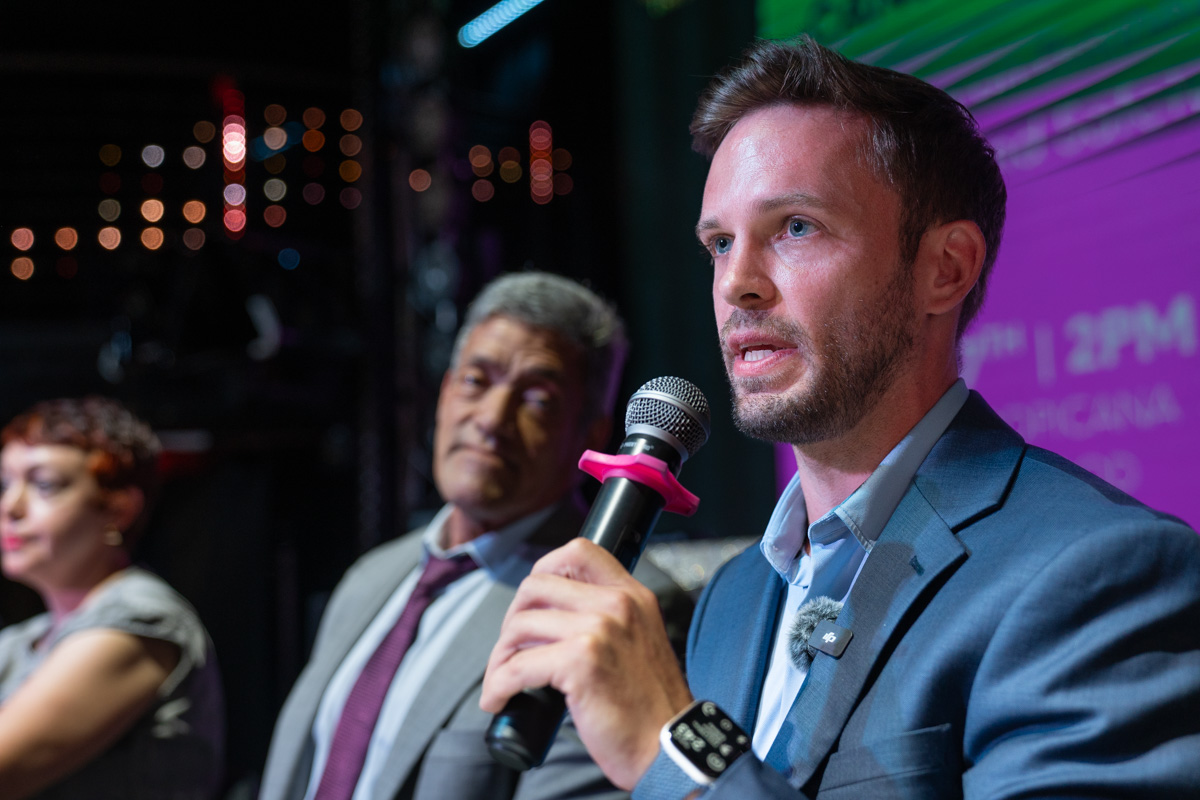
A transgender woman claims that West Hollywood City Council candidate Kyle Brazeal called her a “tranny” and threw a purse at her at Gym Bar in 2024.
The Los Angeles Blade spoke with the alleged victim and two people who say they witnessed Brazeal’s actions that night. The Blade has also obtained timestamped video that places Brazeal at Gym Bar that evening and text messages from the following day describing in detail what allegedly occurred on Sunday, Dec. 29, 2024.
Brazeal said in a written statement that “I categorically deny the allegations.” He added that while he was involved in “a disagreement” at Gym Bar that night, that “this incident is being deliberately misrepresented and weaponized for political purposes in the final weeks of this election.” Addressing the transgender community in West Hollywood, Brazeal said, “I will continue to stand with you as a Council member, just as I did before I was a candidate,” citing his donation to a GoFundMe for gender affirming surgery as evidence of his support.
Upon requesting comment, Brazeal referred the Blade to Rolandos Liatsos, his current campaign treasurer and friend of Brazeal’s who was with him at Gym Bar that evening. Liatsos gave his account of the night and said he never witnessed Brazeal use any slurs or throw the purse.
‘Get out of my way, tranny’
On Dec. 29, 2024, Amber says she went to Gym Bar with a group of friends, including Tommy Craven and Rick Turpin. Amber’s real name is not being used to protect her privacy.
The group arrived at Gym Bar around 5 p.m. The evening started out well. “Just being around friends that night was really good,” Amber said. “There was no problem whatsoever.”
Turpin also recalls having fun. “We were having a good time,” he said. Amber came out as trans a few years earlier and was still adjusting to life as an out transgender woman. “It was nice to see [Amber] embracing her transition and … it seemed like she was feeling herself,” Turpin said.
After chatting with her friends for an hour or so, Amber left to use the bathroom. At the time, Gym Bar had only two single-occupancy restrooms, so there was a line of people waiting to use them. After a few minutes, the line advanced and Amber went into an open restroom.
Soon after entering, Amber said she heard knocking on the bathroom door. She yelled, “Hey, there’s someone in here.” A minute later, the knocking began again. It was a “really rude knock,” Amber said. “So, I felt like I needed to rush through. I felt really uncomfortable.”
For Amber, the situation was especially stressful because of her identity. “I’ve had situations in the past as a trans woman where I have been attacked for using the ‘inappropriate restroom,’” she told the Blade.
Flustered, Amber said she quickly left the bathroom, leaving her purse inside. After exiting, she asked the line of people waiting, “Who was knocking?” she said.
“Me,” she said a man replied while looking down at his phone. He then brushed past her and entered the bathroom while saying, “Get out of my way, tranny,” Amber said. She said she later learned the man’s name was Kyle Brazeal.
Amber was stunned. She had faced transphobia before but not at an LGBTQ bar. Not in West Hollywood.
“I was in a full moment of just frustration, anger,” she said. Amber said she slammed her palm on the bathroom door and stormed off, going back to her friends who were still chatting at their table.
Amber’s friends saw she was upset. “I sat down, and my friends knew something was wrong,” she said. Then Amber told her friends she was called a slur.
“They were, like, wait, what?” she said. “Everybody was in fun-drinking mode, so they didn’t understand what had occurred.”
Amber sat watching the bathroom. As soon as Brazeal exited, she walked over to confront him about what he said.
“What did you call me?” Amber loudly asked him.
At this point, Craven and Turpin heard the yelling coming from the restrooms. The two walked toward the commotion to see what was happening. They saw Amber confronting Brazeal by the door to the bathroom. Craven knew Brazeal beforehand from other community spaces they were both involved with. “I could recognize him right away,” he said. Turpin also said he recognized Brazeal.
Amber said that Brazeal took the purse that she left inside the bathroom and threw it at her, saying, “You left your tranny purse in there.” Craven and Turpin both corroborated Amber’s account of the events, saying that they heard Brazeal use the slur and saw him throw the purse at Amber.
After Brazeal threw the purse and used the anti-trans slur, Amber shoved him and the two got into a shouting match, according to Amber. Craven also recalled seeing “shoving” but did not specify who did what. The two were soon separated by security and staff.
Craven quickly called the owners of Gym Bar, Erik Braverman and Jonathan Cottrell, to inform them of what happened. (Cottrell is also currently running for West Hollywood City Council). Craven had known Cottrell and Braverman for years and considered them friends. The owners then told Gym Bar’s general manager about the incident.
Soon, the general manager spoke with Brazeal and “Kyle was asked to leave the bar,” Craven said. Upon being asked to leave, Brazeal began yelling profanities and “used the word ‘tranny’ toward Amber again,” Craven said. Turpin also recalls Brazeal using the slur as he was asked to leave. “He kept saying ‘tranny,’” according to Turpin.
Video footage taken by Tommy Craven shows Kyle Brazeal outside Gym Bar on Dec. 29, 2024. Craven says the video shows Brazeal after he was asked to leave by security.
The incident left Amber shaken. Afterwards, she sat down with her friends, and Craven and Turpin tried to cheer her up by making jokes about the situation. It didn’t improve her spirits.
“She was jarred; it happened at a bar that she considers a safe space,” Craven said. He described Amber as “a very private person” and said that she was satisfied with how Gym Bar handled the situation and did not file any complaints with law enforcement.
Amber said that time constraints also factored into her decision to not speak to the police. She was living in a housing program with an enforced 10 p.m. curfew, meaning she had to leave the bar soon after the incident occurred to get home in time.
Amber took an Uber to go home and did not see Brazeal again.
‘No throwing of the bag, no hate speech or anti-trans stuff’
But according to Rolandos Liatsos, the incident that evening played out very differently. Liatsos said he went to Gym Bar with Brazeal and a few others to celebrate a friend’s birthday. The two have known each other for more than a decade and are good friends. Liatsos is also Brazeal’s campaign treasurer.
According to Liatsos, after hanging out at the bar, Brazeal went to get in line for the bathroom and was on the phone. Once Brazeal entered the bathroom he saw Amber, whom he had never met before, return to a table with her friends. She seemed very upset.
Brazeal soon exited the restroom, carrying the purse Amber had left. Brazeal walked up to the table and attempted to hand the purse back to Amber but was stopped by her friends who moved to stand between them. Then they started arguing and yelling at each other.
But never at any point did Brazeal throw the purse, according to Liatsos. “There [was] no throwing of the bag, no hate speech or anti-trans stuff,” Liatsos said.
He also claims that he did not see anyone get shoved, or the two parties getting physical in any way. “There was no physical contact,” he said.
After the arguing between Brazeal and Amber’s friends, Gym Bar staff asked Brazeal and his friends to leave. “Good, let’s just go, … let’s defuse the situation,” Liatsos recalled thinking. Soon after, he, Brazeal, and their friends left the bar.
Liatsos later learned from Brazeal that he knocked on the bathroom door as Amber was inside, which he believed upset her. “I see this as a situation escalating from knocking at the door, feeling rushed,” and nothing more, Liatsos said.
He said the claims of transphobic and aggressive behavior were not consistent with what he saw that night and contrary to who he knows Brazeal to be. “I’ve known Kyle for so many years and we’ve been out so many times,” Liatsos said. “I’ve never seen him attacking … any individual.”
Aftermath
The next morning, Dec. 30, Craven sent a text message to a group chat that included Jonathan Cottrell describing what happened and naming the alleged perpetrator as “Kyle (seen in video),” referring to the video that shows Kyle Brazeal outside Gym Bar on Dec. 29.
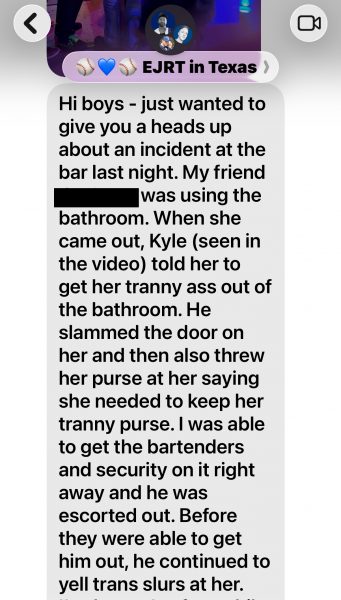
Screenshot of an excerpt of the message sent by Tommy Craven to a group chat with Jonathan Cottrell on Dec, 30, 2024. Identifying details have been redacted.
Braverman and Cottrell told Craven that Brazeal was banned from Gym Bar. However, both Craven and Turpin claim to have seen him at the establishment multiple times after the incident. Cottrell said in a written statement that “it was a temporary ban,” but would not discuss why or when the ban was lifted because Gym Bar “(doesn’t) share internal incident matters.”
This temporary ban is contradictory to a message from Cottrell’s Instagram account that was sent to Amber on Dec. 30, 2024. In it, he states that he would make sure that the “individuals” involved in the incident “don’t ever come back” to Gym Bar.
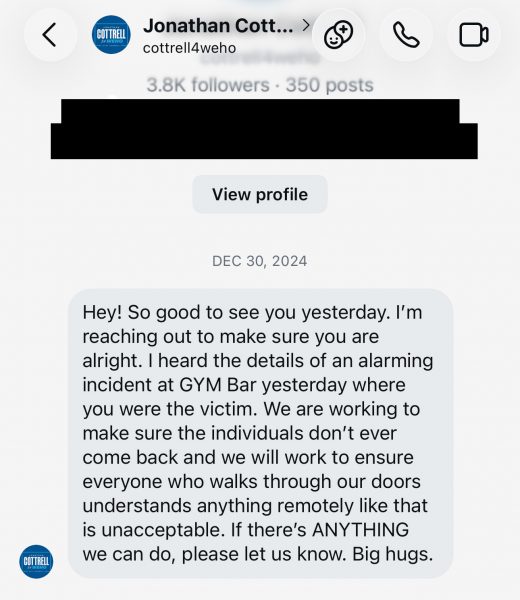
Screenshot of a message sent by Jonathan Cottrell’s Instagram account to Amber’s account on Dec. 30, 2024. Identifying details have been redacted.
The race for City Council
Brazeal announced his candidacy for City Council in April 2026. Craven heard about his campaign in June. “I was aware it was the same person,” he said, immediately recognizing him as the man who allegedly berated his friend a year and a half ago.
Later that month, Craven reached out to Braverman and Cottrell, who had recently announced his own campaign for City Council, to inform them that Brazeal was the same man from the night. “They were definitely surprised by it,” Craven said.
After being made aware that Brazeal was allegedly the same man from the transphobic incident at their bar, the owners did not state anything publicly, following Amber’s wishes. Cottrell has not mentioned anything on the campaign trail even as he and Brazeal have been endorsed by some of the same organizations like Equality California and Sunset West Alliance.
“At the time of the incident, our staff asked the woman involved whether she wanted us to take any further action, and she said she did not,” Cottrell said in a written statement. “This was never our story to tell. Gym Bar has always been a safe space for everyone in our community, and that will never change.”
Craven and Turpin waited to talk publicly about the incident because they wanted to keep their friend’s experience private.
“Ricky and I thought … something [else] would be said to kind of give light to the kind of person that Kyle is without us having to use our friend’s story,” Craven said. “But now because it’s closer to the election [and] stuff has not come to light, I feel the community would be safer knowing.”
Amber did not hear about Brazeal’s candidacy for City Council until last week, when she was informed by friends that a reporter for the Los Angeles Blade was investigating allegations of a transphobic incident involving him. These days, she splits her time between the Los Angeles area and other parts of the country so she has not been following local politics closely. But when she looked up his campaign, she instantly realized that this was the same man from that night. “I saw the face and pictures … and I made the connection,” she said.
“This is something that I need to address,” she added. She said that it can feel “impossible” as a trans woman to call out people who express bigotry without facing “repercussions.” Brazeal’s bid for City Council motivated Amber’s decision to speak publicly about the incident. “He is seeking a position of power in the city,” she said. “He needs to understand that this is stuff that just doesn’t go away.”
Reflecting on the incident, Amber said she’s still shocked and upset. “I was floored that he would use that word in that bar,” she said. By speaking out, she hopes to heal some of the pain caused by Brazeal’s alleged actions and regain her confidence.
“Words do matter and they do hurt and the T-word [used] toward me hurt,” Amber said. “Now I’m trying to use my words to share my story.”
Caleb Kaufman is a California Local News Fellow placed with the Los Angeles Blade. The California Local News Fellowship is a state-funded initiative to support and strengthen local news reporting. Learn more about it at fellowships.journalism.berkeley.edu/cafellows.
Politics
Victory Institute to honor Nancy Pelosi at D.C. conference
San Francisco lawmaker has championed LGBTQ+ rights throughout her career
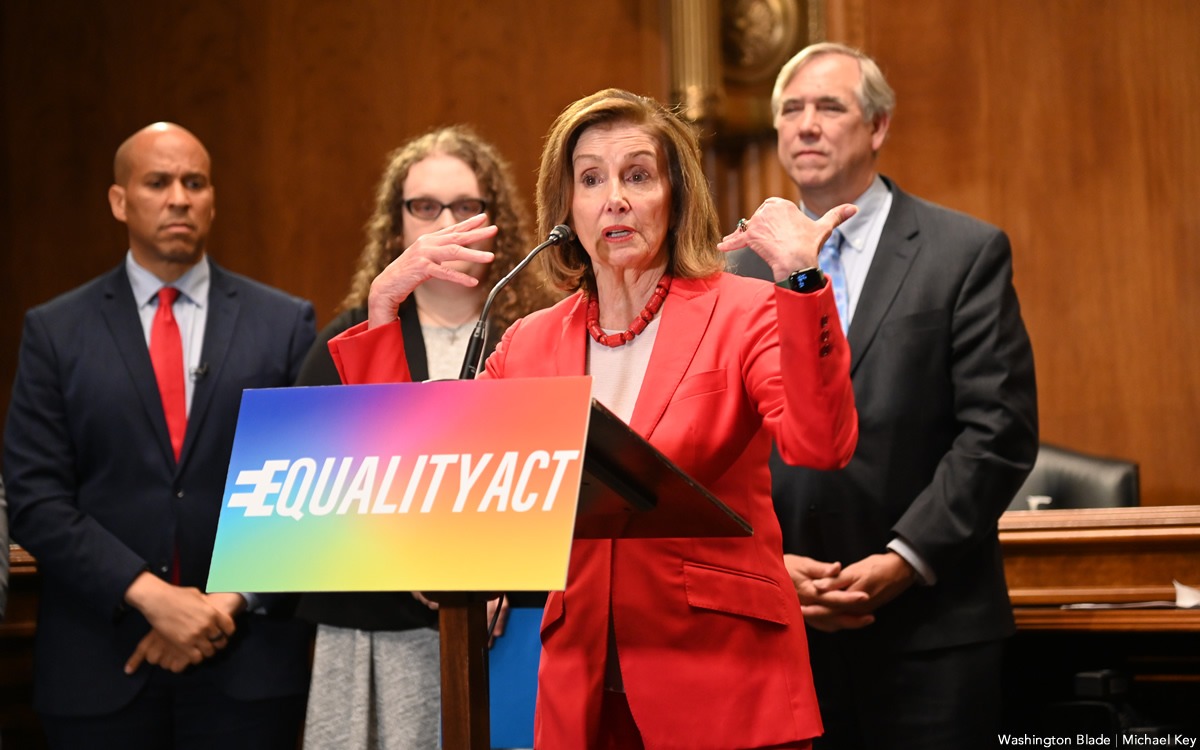
House Speaker Emerita Nancy Pelosi (D-Calif.) will receive the Chris Abele Impact Award at the LGBTQ+ Victory Institute’s 2026 conference in D.C. in December.
The Victory Institute, a national nonprofit that works to get LGBTQ+ elected officials and appointed leaders at every level of government, will honor Pelosi for her work supporting the LGBTQ+ community during her nearly 40 years in public office.
Pelosi has a long history of working with the LGBTQ+ community.
As the representative for San Francisco, a city with a long LGBTQ+ history, she directly pushed legislation to help the LGBTQ+ community.
Pelosi led multiple landmark pieces of LGBTQ+ legislation through Congress, including the repeal of “Don’t Ask, Don’t Tell,” passage of the Matthew Shepard and James Byrd Jr. Hate Crimes Prevention Act, and multiple U.S. House of Representatives approvals of the Equality Act. She also played a central role in congressional efforts to combat HIV/AIDS and oppose restrictions targeting transgender Americans.
The award will be presented during the Victory Institute’s International LGBTQ+ Leaders Conference. This year, it will take place Dec. 3-5 at the JW Marriott in D.C. This will mark the 43rd annual International LGBTQ+ Leaders Conference, which includes three days of networking and skills-building to “strategize the year ahead in our movement for equality.”
During her interview with the Washington Blade earlier this year, Pelosi emphasized that it was the community — specifically, those passionate about fighting for LGBTQ+ acceptance and action — that made her work possible on Capitol Hill.
“Anything that we accomplished, whether it was fighting HIV and AIDS, ending discrimination, passing hate crimes legislation, or ending ‘Don’t Ask, Don’t Tell,’ would never have happened without outside mobilization,” Pelosi told the Blade. “Our inside maneuvering was important, but we couldn’t do our best job without the community. Every chance I get, I thank them for their patriotism because they make democracy function.”
She also touched on the importance of codifying marriage rights for same-sex couples in federal legislation in the event that the issue is take up by the conservative U.S. Supreme Court.
“We passed it in the House again and again,” she said. “The Senate is more difficult because of the procedural hurdles, but we’re not stopping. We’ll stick with it until the job is done.”
Last year, the Victory Institute gave the Chris Abele Impact Award to former President Joe Biden for his outspoken acceptance of the LGBTQ+ community well before it became a mainstream part of the Democratic platform.
Registration for the International LGBTQ+ Leaders Conference is open now on the Victory Institute’s website at victoryinstitute.org/conference.
Politics
Ahead of the midterms, Meta has paid at least 29 anti-LGBTQ+ accounts for their posts
Invite-only Facebook Content Monetization program unveiled in 2024
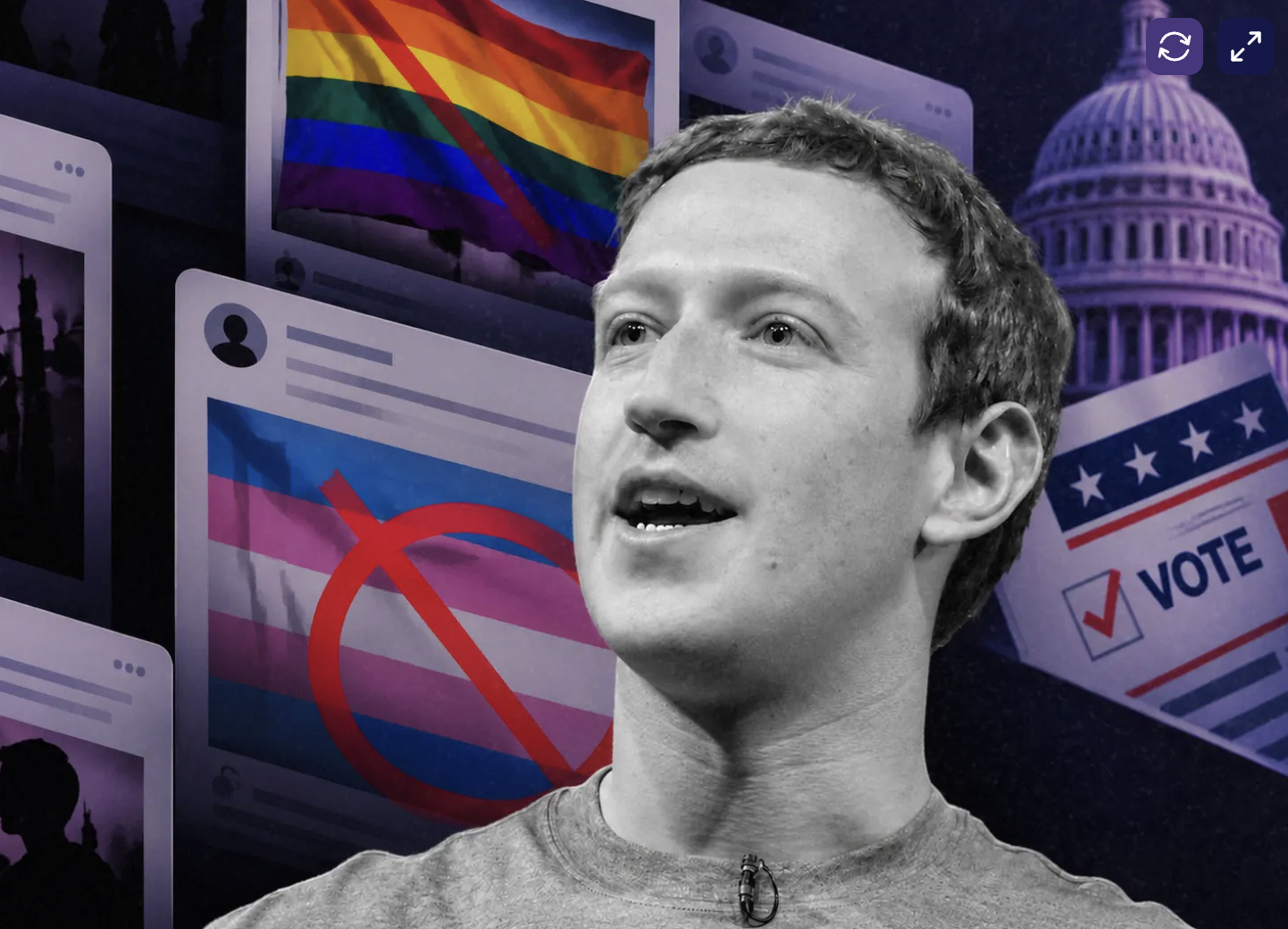
Uncloseted Media published this article on Oct. 14.
This story was reported in partnership with The 19th, a nonprofit newsroom reporting on gender, politics, and policy.
By HOPE PISONI | On Sept. 14, far-right influencer Chaya Raichik, known online as Libs of TikTok, attacked a Washington state high school on Facebook for displaying a Pride flag. “Hey Mercer Island High School, why does your profile photo display a mutilation flag??” she wrote, tagging the school’s account in the post and attaching a photo of the entrance.
A few weeks before, on Aug. 27, neo-Nazi webcomic artist StoneToss posted a strip that used Tim Curry’s death to mock transgender suicide rates. And earlier this month, right-wing political commentator Benny Johnson shared claims that Democrats will “transition your kids while you’re at work” and “hand out gas cards to illegal aliens.”
Meta pays these creators for making posts like these. In 2024, the tech giant unveiled a new invite-only program called Facebook Content Monetization, designed to streamline earnings for creators. Many creators celebrated the move, with some reporting a major increase in their earnings through the program.
However, that program has recently come under scrutiny. In August, the Australian Broadcasting Corporation reported that Meta invited accounts promoting white supremacist and neo-Nazi ideologies.
And after reviewing Meta’s monetization data, Uncloseted Media identified 29 accounts with histories of anti-LGBTQ+ rhetoric that have been invited to the program. These include the three aforementioned accounts as well as podcaster Candace Owens, who has blamed gay men for child abuse in the Catholic church, and Turning Point USA, which has been connected to an assault on a queer Arizona State University professor. Meta did not respond to Uncloseted Media and The 19th’s requests for an interview or for comment.
With the midterm elections looming, some of the accounts Meta pays through the program have been spreading political misinformation. In the first week of October, for example, Benny Johnson made 14 separate Facebook posts connecting the Democratic Party to election fraud.
Courtney Radsch, director of the Center for Media and Digital Governance at Open Markets Institute, says that promoting hateful rhetoric and misinformation like this is especially dangerous during an election season where the increasingly authoritarian Trump-Vance administration, which Meta has courted since its inauguration, has openly discussed attempts to interfere.
“Amplifying and enabling harassment campaigns and centering fringe conspiracy theories through algorithmic curation and monetization opportunities has led to a dissolution of democracy in America,” Radsch told Uncloseted Media and The 19th. “This administration is dismantling democratic oversight and increasing authoritarian control. … You can’t look at your platform policies on monetization without looking at the context in which this is occurring in the U.S. with rising technofascism.”
What is the program?
Meta launched their Facebook Content Monetization program to incentivize more creators to post on Facebook, which has faced an aging user base and competition from newer apps. Those incentives can be substantial — within the program’s first year, content creators who accepted Meta’s invitation to join reported huge increases in their payouts, with some calling it their most lucrative platform. One creator told The Hollywood Reporter that she consistently earned $20,000 to $30,000 per month, while another said his monthly earnings often hit six figures.
While most accounts aren’t big enough to rake in that amount of money, Meta also motivates smaller accounts to join. Starting in 2025, they launched a side program called “breakthrough bonus” that advertises up to $5,000 and an automatic onboarding into Content Monetization for creators from other platforms if they start posting regularly on Facebook.
SK Smigiel, a content creator who posts about LGBTQ+ education and activism under the username justsaysk, joined the program through the breakthrough bonus initiative in April. They say Meta would offer them payouts for completing certain “missions.” For example, Smigiel says they earned $500 a month for posting 10 reels. They say other missions included using trending hashtags and audio or cross-posting to relevant groups. These incentives initially convinced them to post on Facebook due to their poor earnings on Instagram, but they didn’t stick around.
“When I post on Facebook, I don’t even open the post that I’ve made because I already know that … probably 99 percent of the engagement is negative towards me,” Smigiel told Uncloseted Media and The 19th.
Uncloseted Media identified accounts enrolled in the program via data compiled by What To Fix (WTF), a Dutch nonprofit focused on tech accountability. The Meta Monetization Archive is a searchable database of information collected from disclosures released by Meta.
Belén Luna Sanz, policy manager at WTF, says the program represents a broader shift in industry practices. While advertisers once paid content creators directly with companies like Meta taking a cut, platforms now collect all ad revenue and pay creators themselves.
“They’re only paying you royalties depending on how much engagement you are creating on your content,” Sanz told Uncloseted Media and The 19th.
Jason Hong, a professor of computer science at Carnegie Mellon University, says that while inflammatory and misleading content may go against Meta’s policies, both the company and the people posting it are financially incentivized to promote it.
“We know that things that get people really angry get a lot of engagement, we know that disinformation and misinformation … also gets lots of engagement,” Hong told Uncloseted Media and The 19th. “[Meta is] at a fork in the road, and one path is about the morals and ethics and well-being of society and democracy, and on the other path is a really big pile of money.”
‘A reckless rollout’
Since Meta launched the program two years ago, WTF has identified over 18 million accounts in the program. But Sanz says the selection process has been opaque and describes the program’s rollout as “reckless.”
“[The program requires] little to no verification of their identity, there are not enough safeguards and their monetization policies are enforced in a very non-transparent way, so it’s hard to tell whether they are enforcing it properly or not,” Sanz says.
Uncloseted Media found numerous posts that seemingly violate Facebook’s content monetization policies, which state that “content may be subject to reduced or disabled monetization if it depicts or discusses [debated social issues] in a polarizing or inflammatory manner.” Those issues include race, religion, sexual orientation, political affiliation and more.
Libs of TikTok, for example, has called the organizers of an LGBTQ+ pride event “sick sick freaks,” accused pro-LGBTQ+ teachers of wanting to “indoctrinate your children” and decried the “lgbtq groomer cult.” Other posts may violate content monetization policies forbidding “derogatory words” and “hateful conduct,” including Raichik calling “sex assigned at birth” a “retarded term.”
Meta also states that misinformation, which they define as “content that has been rated false by a third-party fact checker,” is “ineligible to monetize,” even though the company ended their third-party fact-checking last year, leaving no clear mechanism to enforce the prohibition.
Meta states that “repeated violations of [content monetization policies] could lead to a temporary or permanent ban on your Page or profile’s ability to use our monetization tools.” However, as of the Monetization Archive’s most recent update on Sept. 15, all of the accounts discussed above are actively enrolled in the program.
The Southern Poverty Law Center has designated several individuals in Meta’s program as extremists. These include Tucker Carlson, who has agreed with claims that gender-affirming care allows adults to “basically molest and abuse children”; James Lindsay and Jack Posobiec, who helped popularize “groomer” rhetoric against LGBTQ+ people; and Alex Jones, whose infamous conspiracy show InfoWars received an invitation prior to its acquisition by The Onion. It also includes Libs of TikTok, which is known for stoking anti-LGBTQ+ harassment — 2024 reports by NBC News and The Washington Post cumulatively found over 80 instances of violent threats against institutions like schools and businesses connected to its posts.
“There does need to be discussion and diversity of opinion allowed in the public sphere,” Radsch says. “However, there is a difference between rational debate and harassment.”
Reports from WTF suggest that Meta doesn’t consistently uphold the program’s other rules either. Despite Meta’s policies stating that “political and government entities are ineligible for monetization,” including “current elected and appointed government officials” and “political parties,” WTF found hundreds enrolled. In addition, Uncloseted Media confirmed membership of at least eight official Republican Party pages, including the Republican Party of Georgia.
A danger to democracy
In recent years, Meta has courted the Trump-Vance administration and its far-right allies, including influencers. Last August, the company hired Robby Starbuck, an anti-DEI campaigner who has promoted conspiracy theories claiming that pesticides turn children gay, as an adviser on preventing “political bias” in their AI systems. And in April, Meta sponsored a party celebrating Isabel Brown, a Daily Wire host who has advocated for people to leave their LGBTQ+ “lifestyles.” Brown and Starbuck are both enrolled in the content monetization program.
Radsch says that being able to control who gets monetized grants Meta significant power over political narratives.
“That can be problematic because it means that they can pick winners and losers, they can pick ideologies, they can discriminate at will, and we have very little way to know whether that’s happening,” Radsch says.
The stakes are high given the upcoming midterms. Misinformation that the 2020 presidential election was rigged inspired the Jan. 6 insurrection. Still, Meta monetizes accounts which spread similar claims. Libs of TikTok has said, “Democrats want to cheat in the elections,” and Johnson responded to reports of new plague cases in Russia by implying that Democrats would use them to rig the election.
“There’s a level of commitment with trying to preserve electoral integrity that needs to be present, especially when there are very delicate elections coming up,” Sanz says. “Disinformation should not be rewarded financially — this is something that even they have in their own policies for monetization.”
What can be done?
Sanz has a “wish list” of new accountability policies that could push back against the anti-LGBTQ+ rhetoric and political disinformation being disseminated through this program. These include labeling monetized accounts and adding mechanisms for users to report monetization policy violations.
Hong adds that platforms should restructure their algorithms and monetization systems to consider factors other than engagement.
“I wish that Facebook would have more kinds of metrics, like societal or individual well-being,” Hong says. “These are kinds of things that would be far better for society, but it is a corporation and this is what they’re trying to do because this is the mandate from the top.”
While Meta is protected from many forms of legal action in the U.S., there may be a path to legal accountability in other jurisdictions. In 2022, the European Union passed the Digital Services Act (DSA), which, among other provisions, requires large online platforms like Facebook to mitigate the potential harms of content disseminated on their platforms. WTF filed a complaint against Meta in European courts last month arguing that by monetizing 11 accounts sanctioned by the E.U. for alleged involvement in pro-Russia propaganda campaigns, the company failed to meet the DSA’s risk mitigation obligations.
Perhaps most importantly, Sanz emphasizes that social media monetization needs more public attention.
“Creator monetization is a very ill-explored area,” she says. “Although there is a good amount of legislation here in the E.U. that gives us a playground to try to incorporate much more responsibility when it comes to monetization, I do think that globally this needs to be the case.”
Jones and Raichik did not respond to requests for comment.
Politics
JD Vance takes swipe at James Talarico’s sexuality during Texas rally
Homophobic joke made during Ken Paxton event
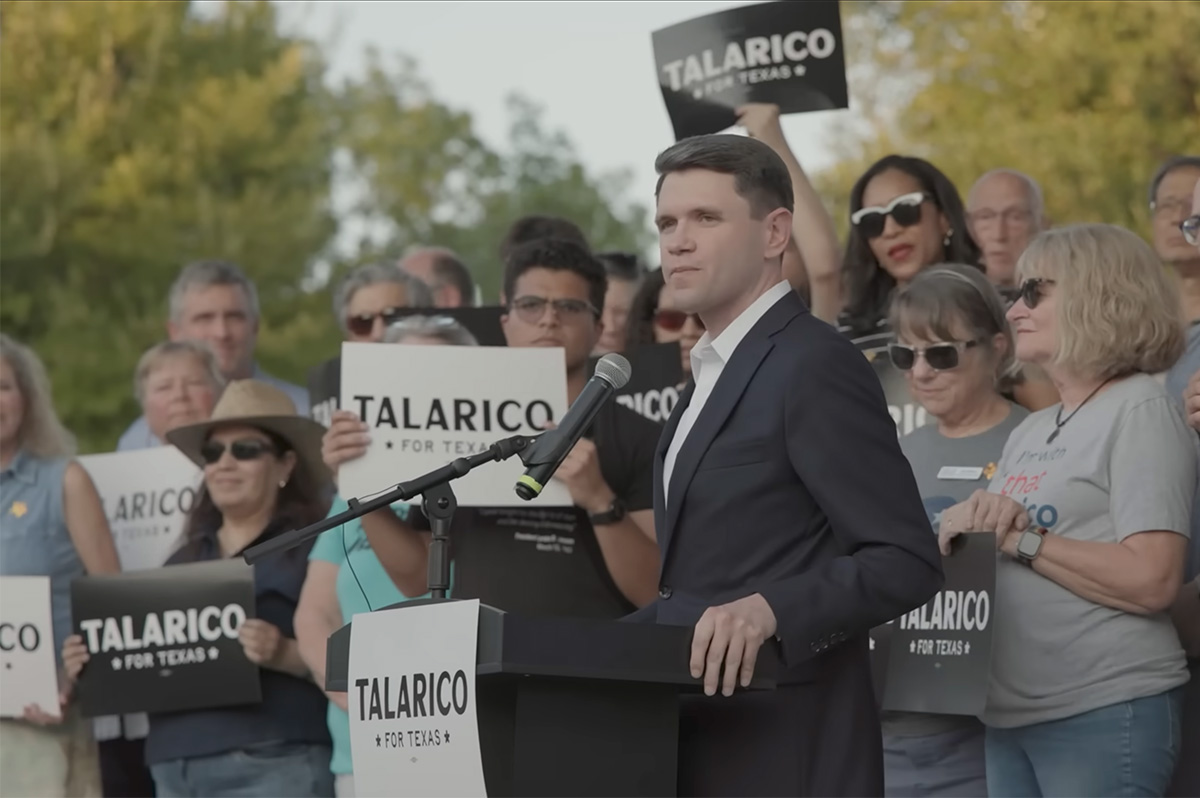
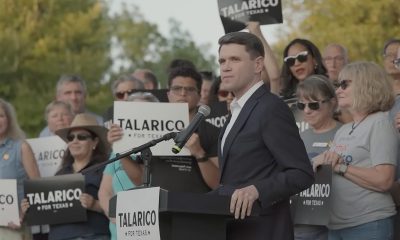
Vice President JD Vance joked that Texas Democratic Senate candidate James Talarico is gay on Tuesday.
While campaigning for Ken Paxton, the Republican Senate candidate and current Texas attorney general, Vance made a joke that seemed to call into question Talarico’s sexuality during a stop in Tyler, Texas.
According to a video uploaded by C-SPAN, Vance responded to a man in the crowd who shouted, “I love you,” at the vice president.
“I love you, too, sir. In a totally platonic way, to be clear. I’m the vice president, not James Talarico,” Vance joked while standing in front of Air Force Two during the rally.
The joke has received negative press coverage and sparked backlash online against the second-in-command at a time when Republicans are struggling to win seats that, months earlier, were widely imagined to be all but entirely theirs.
Talarico, who confirmed he is in a long-term relationship of four years with Brianna Menard, a woman who served as his chief of staff during his time as a Texas state representative, has been an outspoken supporter of LGBTQ+ rights in the Lone Star State, often drawing criticism from right-wing personalities.
Billy Binion, a reporter for Reason, called out the homophobic joke made by the vice president on X, saying, “I remain amazed and mystified that some of the most powerful people in the world think ‘James Talarico seems gay!!’ is a compelling critique. It’s so desperate and small.”
Directly under a repost of the video, another person posted an old, widely circulated image of Vance in drag wearing a long blond wig, with the caption, “For the record James Talarico has never done this.” The post now has more than 62,000 views and more than 3,000 likes.
The comment is also drawing criticism of Vance over his past anti-LGBTQ+ actions while in the U.S. Senate. During his two years as a senator prior to Trump’s selection of him as vice president, Vance opposed the Respect for Marriage Act, which codified marriage rights for same-sex couples in federal law. He also co-authored the Protect Children’s Innocence Act, which would have made providing gender-affirming care to minors a felony punishable by up to 15 years in prison.
Vance has also advocated for banning transgender troops from the military, which has become a defining characteristic of the current administration’s efforts to curb diversity and inclusion in the U.S. armed forces.
Additionally, Vance repeatedly referred to opponents of those actions as “groomers,” including in an April 2022 post on X.
“I’ll stop calling people ‘groomers’ when they stop freaking out about bills that prevent the sexualization of my children,” he wrote at the time.
These actions and the vice president’s homophobic rhetoric contrast with Talarico’s official stance on LGBTQ+ issues. Talarico has been a vocal supporter of LGBTQ+ rights but is facing recent criticism for backtracking on his support for trans girls and women participating in sports.
Under the “Freedom, Family, and Faith” section of his campaign website, Talarico states that one of his goals is to “protect the legality of gay marriage and defend our LGBTQ+ neighbors from government overreach.”
Paxton’s website, on the other hand, directly calls for Texans to vote for him so he can “defeat the radical transgender movement that’s desperate to put men in girls’ sports and woke indoctrination in our classrooms.”
The Los Angeles Blade reached out to the White House, Talarico’s press office, and Paxton’s office for comment on the story but had not heard back by publication time.
Congress
Annie Andrews denounces trans athletes after Trump targets her
President used anti-trans slur to describe SC Senate candidate

Days after President Donald Trump called Annie Andrews, the cisgender Democratic nominee for South Carolina’s U.S. Senate seat, an anti-transgender slur on social media, Andrews came out against transgender girls and women participating in sports.
Trump called Andrews a “trannie” on Truth Social while attempting to garner support for her opponent, U.S. Sen. Darline Graham (R-S.C.), the incumbent seeking reelection in South Carolina.
After the president’s use of the slur was widely reported, the incident provided an opportunity for Andrews to explain her position on the ongoing trans debate that has shaped political discourse in the 2020s, despite trans people making up only 1 percent of the U.S. population, according to the Williams Institute.
She used the opportunity to denounce trans rights and pointed out that, as a physician, she had never performed gender-affirming surgery on minors.
“I want you to hear me loud and clear: I don’t support biological men playing women’s sports, and I don’t support and haven’t ever performed gender surgery for minors,” Andrews said in a political ad.
Despite these recent developments, Andrews has previously voiced support for trans South Carolinians. In 2022, she posted on her X account, criticizing the Save Women’s Sports Act, which was signed into law by Republican Gov. Henry McMaster and restricts trans girls from participating on girls’ sports teams.
“This is shameful legislation that does nothing to protect or support women or children in SC. In fact, it is actively harmful. I will always support trans youth,” Andrews wrote in after the legislation passed.
The Los Angeles Blade reached out to Andrew’s campaign about the comments, and asked if she supports trans rights but did not receive a response.
Politics
On Republican Long Island, gay Democrat Chris Gallant bets on public service over politics
Congressional candidate recently spoke with the Blade
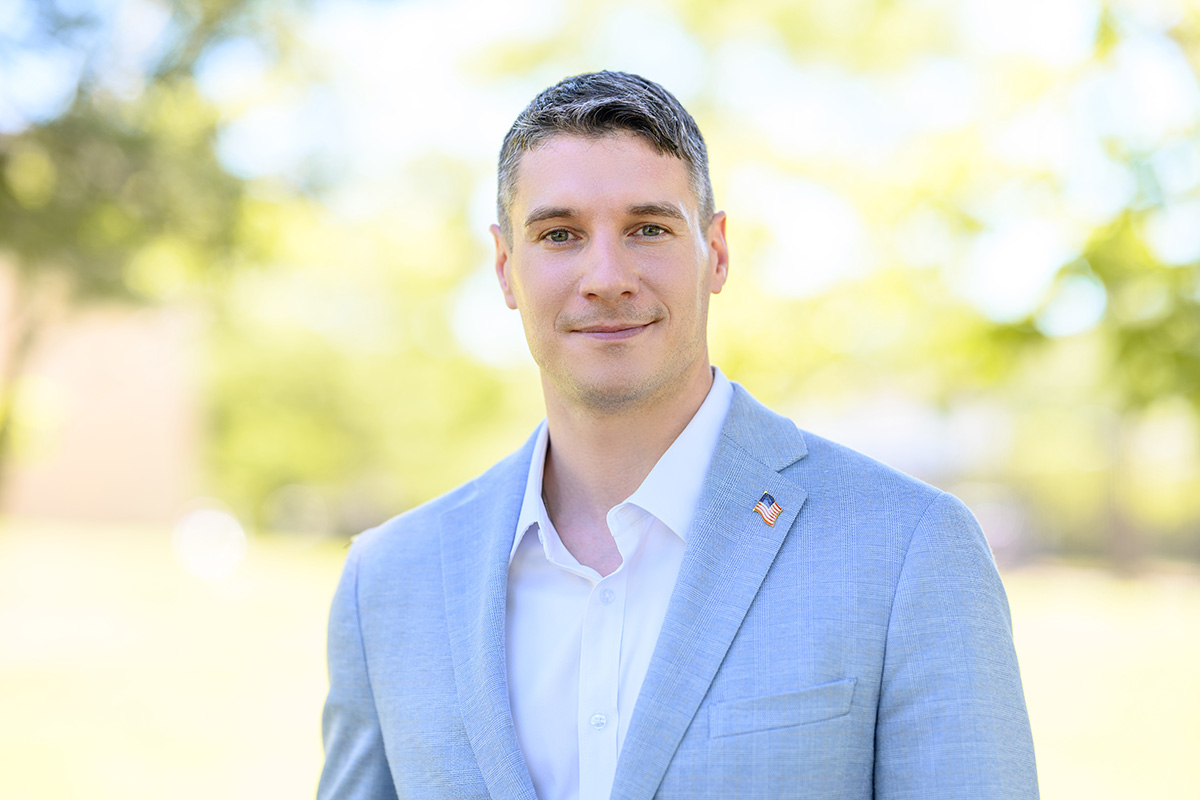
New York’s Long Island, which is just 50 miles from the Stonewall Inn, is a reliably red enclave where President Donald Trump won easily in 2024.
Chris Gallant, an openly gay Democrat running for New York’s 1st Congressional District, which includes Nassau and Suffolk Counties, is trying to capitalize on what he sees as growing frustration with the Republican Party and its ability to deliver for everyday Americans.
The Los Angeles Blade sat down with Gallant to discuss his move from civil servant to the fight for public office, how he has been personally impacted by the changes from the Trump administration, and the recent release of photos from his past that have brought the national spotlight his way.
Gallant has a long record of public service that, on paper, would make him an unconventional but compelling candidate for a heavily Republican district. His résumé includes New York Army National Guard service that began when he was 17, multiple overseas deployments, including multiple tours in Kuwait, work as an FAA air traffic controller, union leadership and service as a volunteer firefighter.
That record of service is central to how Gallant describes himself — particularly as he navigates the unusual combination of being an openly gay candidate, a military veteran, and a Democrat running in a district where Republicans have historically held the advantage.
“My fiancé and I both serve in the military and we built our relationship through trust, timing, and a lot of miles between us,” his campaign website says, highlighting the idea of family values that has become a central part of winning the area. “I’ve been openly gay in the military since just after ‘Don’t Ask, Don’t Tell’ ended, and I’ve learned to speak plainly, hold the line, and back up what I say. I’ve also learned how to listen — and how to bring people with very different views to the table and actually make progress.”
Gallant said that record, rather than his sexual orientation, is what should define his candidacy.
“I think who I am as a person is an asset,” he told the Blade when asked if his sexuality has played any role in his decision to run. “I’m not running because I’m gay. I’m running, and,’Oh, I’m gay.’ It’s part of my identity. It’s just a part of who I am. But it’s not necessarily on the table because that shouldn’t make a difference on how I’m going to respond in Congress or how I’m going to run into a burning building. I don’t think those things necessarily matter so much.”
For Gallant, the campaign is ultimately about something broader than identity politics. He said he is running because he wants to restore Americans’ confidence in a government that he says has become less about its people and more about the wealthy leaders in charge.
“I’ve always said that part of the reason why I am running for Congress is because I want to restore faith in our government,” he said. “We’re all drastically exhausted with what’s going on in this world, and particularly with Donald Trump being in office, [his] type of politics, and the way he works, essentially. When Biden got into office after Trump won, it was like the release of a pressure cooker… the pressure cooker is just even worse now this second time around.”
He also explained that his experience working inside the federal government has shaped how he believes Washington should approach its problems. Gallant pointed specifically to the Trump administration’s efforts to reduce the size of government and the role of the Department of Government Efficiency (DOGE), arguing that cutting government spending should not mean indiscriminate cuts.
“I understand that we as a nation need to save money, or at least fix the budget or balance it. We are getting further and further in debt … The budget is always a huge issue and something that we definitely 100% need to fix. But we need to do it with experts and, you know, attack these issues with a scalpel, not a chainsaw.”
The chainsaw Gallant mentioned is a clear reference to controversial Trump supporter Elon Musk, who announced he would be heading the highly politicized DOGE agency, where he, the first-ever trillionaire, brandished a shiny chainsaw symbolic of them cutting government spending with no regard for the impact on everyday Americans.
That philosophy, of scalpel over chainsaw, is also part of Gallant’s argument to voters who may be more accustomed to voting Republican. He does not present himself as a traditional politician, but rather as someone whose career outside politics could be an asset in Congress.
“I’m not a politician. This is my first foray into politics, and I think that’s what our politics need. We need fresh new faces, not career politicians. Someone who has brand new ideas, not tainted by politics. So I would say, give me the opportunity to prove myself, because, you know, until I actually get there and I can actually do a job, we won’t know.”
Gallant also shared signs that the political landscape on Long Island may be shifting. He pointed to gains Democrats made across the district last November and said economic concerns could further erode Republican support.
“Last November, in this district we [Democrats] gained 13 and 14 points across the district..And this district lost by 10 points last year. So even just in one year, you can tell that there’s a difference.”
The swapping of support from the Republican side to Democratic reflects the real concern voters have about the economy — impacted by the war in Iran, tariffs, and growing inflation.
“People are feeling it here in their pockets. The cost of living here on Long Island is already high, and things are just getting worse. There’s a lot of promises that were made with this administration that weren’t kept.”
Gallant said that frustration has directly translated into support from some voters who previously backed Trump.
“I know a lot of people who have voted for Donald Trump that have my lawn sign on their front lawn today. If that’s the change that they’re looking for, I’m going to provide it.”
But Gallant’s campaign has been complicated by a very different kind of political issue: the publication of photos from his past that have become a national story.
The photos, which include pictures of Gallant wearing various fetish gear for Mr. S Leather — including a harness and a collar — were shared with the New York Post.
Gallant has consistently rejected the idea that he should be ashamed of the images or that they undermine his qualifications for public office since their Sept. 13 publication. Instead, he has argued that his record of service should be considered alongside a private chapter of his life from 15 years ago.
“I mean, look, I’m totally not ashamed of who I am as a person. Those pictures were taken in my private life. I can still run into a burning building faster than most people. I can still fly a helicopter. And those are from 15 years ago, right? I built an entire life based around my commitment to the military and the Army National Guard.”
Rather than allowing the controversy to define him, Gallant said he hopes it can become part of a broader conversation about privacy and the consequences of living in a digital age — and indicated that this sort of scenario would become something semi-regular for those who grew up with technology.
“The reality is that we live in a digital age.This is what our generation is going to be stuck with. I laugh all the time because this is the reason why Congress and the Senate are about to die in their chairs. They didn’t have cameras and pictures and photos like that.”
“If I have to be the person to wave the banner now to fight and advocate for not only our community but anybody that could be put in this situation, that realizes now that we’re living in a digital age and this is what the future is going to be. It’s, you know, everything’s left online now.”
That argument extends beyond his own campaign. Gallant said he worries that the prospect of having a digital footprint scrutinized could discourage highly qualified and passionate potential public servants from seeking office.
“I understand that getting into public life means that the rest of your life becomes public. I get it, I do. But I also feel bad because there’s a lot of good people out there wanting to do a job in the public world, and they’re just afraid of what their digital footprint might have on them or might — what might exist because we’ve done things when we’re 12 or 15, or 20, or 30, or whatever.”
“I think living in this digital world, I would love to advocate for people to say, ‘How do we prevent some of these things from coming out into the public view so people can still maintain some kind of a private life?’”
For an openly gay candidate, the issue also carries a particular significance. Gallant said his experience has made him more interested in advocating for other LGBTQ+ people who may hesitate to enter public life because of what could eventually surface online.
His own LGBTQ+ policy priorities are relatively focused. He said adding further protections for same-sex marriage in federal law would be one of the issues he would want to pursue if elected, particularly as questions about the Supreme Court’s future approach to marriage equality continue to loom.
“My partner, who’s my fiancé, is currently deployed. We got engaged before he left in December because if the question came up to the Supreme Court — whether gay marriage was going to be a thing — we had to question whether, when he got back from deployment after Christmas this year, whether we were actually going to be able to legally get married.”
“I mean, these are questions that shouldn’t even be questions anymore. So if we can put something like [codifying same-sex marriage] into law, where it’s just not a Supreme Court decision and it can get overturned, like Roe v. Wade, then let’s do it.”
Gallant’s opponent, Rep. Nick LaLota (R-N.Y.), is the two-term incumbent and has a mixed record on LGBTQ+ rights. LaLota has been vocal in his opposition to overturning Obergefell v. Hodges, the Supreme Court case that established the constitutional right to same-sex marriage, but he has also been outspoken in his opposition to transgender rights. He co-sponsored and voted for H.R. 28, the Protection of Women and Girls in Sports Act, which would restrict participation in women’s sports based on sex assigned at birth rather than gender identity.
Gallant, on the other hand, has few official positions on LGBTQ+ issues but assured the Blade that, if elected, he would become “an advocate, particularly for the LGBTQ community.”
He also said he believes same-sex marriage should be codified into law and that nondiscrimination protections should be expanded. “I would definitely be pushing no discrimination against anyone for any reason — and that should not have any place in any workplace — especially on the federal government level.”
For Gallant, however, LGBTQ+ rights are only one part of a broader platform centered on public service, affordability and restoring trust in government.
He repeatedly returned to the idea that a member of Congress should be accessible to the people they represent — something he believes his experience holding town halls and working directly with members of his community demonstrates.
“I always find that a record of service and showing up every day at work and in our communities is what’s going to be key and important. And I think that’s what a representative needs to do. As a representative you’re supposed to represent and work with the people that elect you to office. And so that’s what I’m going to make sure I start today.”
Current prediction markets give LaLota a significant advantage over his challenger, with the incumbent holding an 81 percent chance of winning compared with Gallant’s 19 percent.
California
‘A disgusting attempt to exploit lesbian intimacy for political attention’: suggestive Steve Hilton ad draws criticism
Steve Hilton’s newest ad aimed at liberal voters flops with LGBTQ advocates and conservatives, but for different reasons

Two women sit on a bed, a Pride flag hanging behind them. One is nervous; the other tells her to be calm and that she’ll do “all the work.” The music swells. The two hold hands and — fill out a ballot voting for Steve Hilton?
This is the new advertisement from the Hilton Gubernatorial campaign that is drawing rebuke from both sides of the aisle, but for very different reasons.
Jorge Reyes Salinas, the communications director at Equality California, said the ad was an insult to the queer community. “This ad is a disgusting attempt to exploit lesbian intimacy for political attention,” he said. The advertisement plays on media tropes that Salinas says “reduce lesbian and bisexual women… to sexual entertainment,” rather than showing them as well-rounded characters. “Any group of the LGBTQ+ community deserves the same dignity and respect as everyone else,” he said.
The ad is truly hyper-sexualized. It ends with one woman telling the other, “Now lick it.” The two pause and stare before she reveals an envelope to send the ballot, and large text pops up saying, “Just try it!”
Salinas characterized the ad as a desperate attempt to get attention from a candidate who is trailing far behind in the polls in heavily Democratic California. The Democratic Candidate Xavier Becerra, who is endorsed by Equality California, holds a 25-point lead over Hilton according to recent polling by the UC Berkeley Institute of Governmental Studies.
Conservatives have also criticized the ad. Influential evangelical Pastor Jack Hibbs thought the ad was distasteful and said, “lesbianism among college girls and some high school girls that right now is an actual pandemic of social ill.” Republican AG candidate Michael Gates said it undermines “the sanctity of the relationship between parents and their children.” This criticism is rather confusing because although the ad features two relatively young women, they both appear to be adults, not minors.
“The comments from Pastor Jack Hibbs should be criticized because there is nothing wrong with two women being attracted to each other,” Salinas said. “We’re calling out the ad’s stereotypes, while also rejecting the homophobia in the response to it … by other Republicans.”
The backlash from Hilton’s own party and supporters shows that an advertisement full of queer innuendo was ill-considered, considering the national GOP’s attacks on LGBTQ people in recent years. Hilton himself has been campaigning against transgender girls and women competing in school sports and using locker rooms that correspond with their gender identity. This context might be why Hilton’s political base responded to the ad just as poorly as the liberal voters he was attempting to court.
Hilton says the ad is part of a new series rolling out before Election Day, showing stereotypical California liberal archetypes voting for Hilton. He claims these ads are authentically filmed with real actors, as opposed to being A.I. generated, like many of his previous ads. One other advertisement has been released so far by the campaign showing a man at a spiritual retreat also being swayed to vote for Hilton, although it is notably absent of sexual innuendo.
Caleb Kaufman is a California Local News Fellow placed with the Los Angeles Blade. The California Local News Fellowship is a state-funded initiative to support and strengthen local news reporting. Learn more about it at fellowships.journalism.berkeley.edu/cafellows.

Lula defeats Flávio Bolsonaro in second round of Brazilian presidential election

LGBTQ+ pioneer Rev. Troy Perry to young people: ‘Don’t be afraid’

With exquisite 4K restoration, ‘The Devils’ finally gets its due

Drag queens go from Send Noodz straight to the polls
Immunology gave HIV survivors the chance to grow old, Proposition 38 is the next step

Here’s your Palm Springs look at the weekend: Oct 23 – 25, 2026

New Zealand High Court strikes down puberty blocker ban

Allegations involving Ric Grenell raise questions about pay-for-play in White House

A Parvesh perspective: Actor Parvesh Cheena talks his roles in ‘Wives’

Latin queer and trans history along the U.S.- Mexico border on display at UC Riverside event
-
 Palm Springs4 days ago
Here’s your Palm Springs look at the weekend: Oct 23 – 25, 2026
-
 New Zealand5 days ago
New Zealand High Court strikes down puberty blocker ban
-
 White House5 days ago
Allegations involving Ric Grenell raise questions about pay-for-play in White House
-
 a&e features5 days ago
A Parvesh perspective: Actor Parvesh Cheena talks his roles in ‘Wives’
-
 Transgender4 days ago
Latin queer and trans history along the U.S.- Mexico border on display at UC Riverside event
-
 opinions4 days ago
Common Sense Isn’t Political
-

 Theater4 days ago
‘WOOF’ worthy: Christopher Schellenger shares the unique challenges of playing a dog
-
Commentary3 days ago
Immunology gave HIV survivors the chance to grow old, Proposition 38 is the next step
-
 Features2 days ago
LGBTQ+ pioneer Rev. Troy Perry to young people: ‘Don’t be afraid’
-
 Movies2 days ago
With exquisite 4K restoration, ‘The Devils’ finally gets its due