
Congress
Rep. David Cicilline to resign from Congress to lead nonprofit
Cicilline became the fourth openly gay member of Congress and is one of the most powerful voices on LGBTQ matters in the House
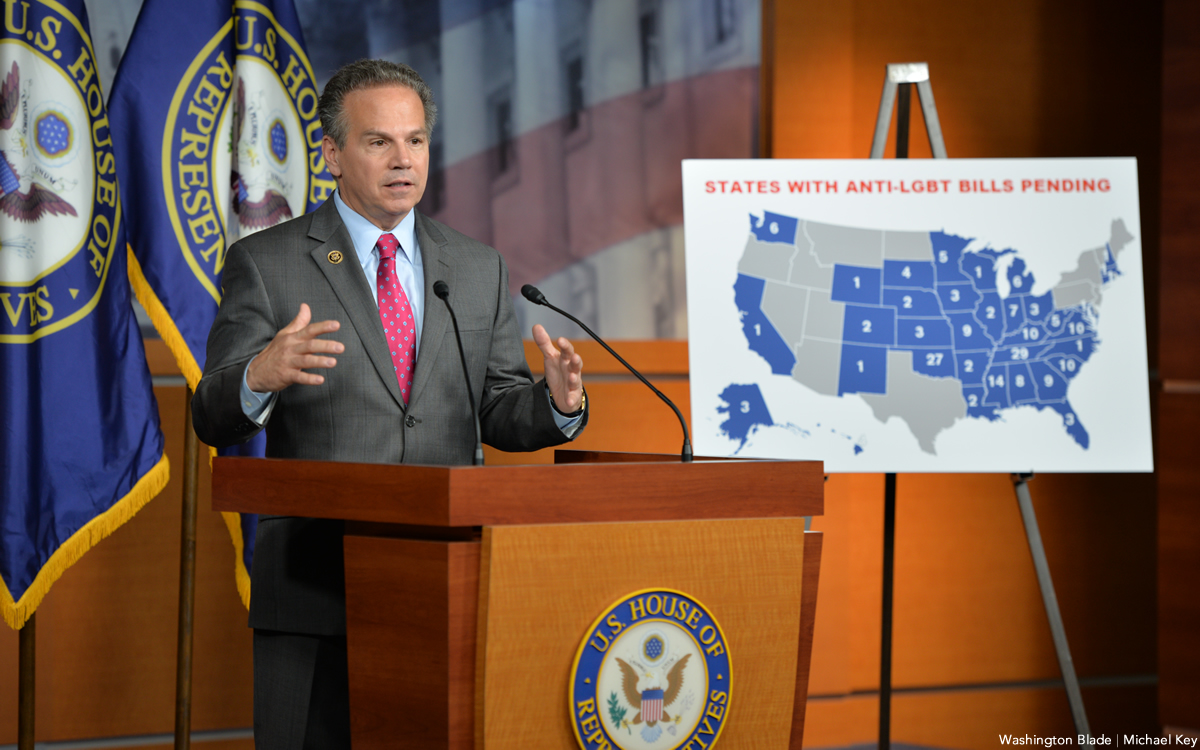
WASHINGTON – U.S. Rep. David Cicilline (D-R.I.) will step down from Congress on June 1 to become CEO of the Rhode Island Foundation, the largest nonprofit in the state, the congressman announced on Tuesday.
The move bookends 28 years in public service for Cicilline, who was elected to Rhode Island’s House of Representatives in 1995 before becoming mayor of Providence — making history as the first openly gay mayor of a state capital — in 2003, and then representing Rhode Island’s 1st Congressional District in the U.S. House of Representatives since 2010.
The 61-year-old’s announcement likely came as a surprise to many in Washington: Cicilline, now serving his seventh term, was favored to continue winning reelection for his seat in Congress, where he has distinguished himself to such an extent that he is often described as one of his party’s rising stars.
A member of House Democratic leadership who was elected to chair the Democratic Policy and Communications Committee from 2019-2021, Cicilline serves as a senior member of the powerful House Foreign Affairs and the House Judiciary Committees and was distinguished as one of the nine Democrats selected in 2021 by then-Speaker Nancy Pelosi (D-Calif.) to manage the chamber’s second impeachment of former President Donald Trump.
In Rhode Island, Cicilline’s departure will trigger an off-year special election for his replacement. While it is unclear when the state’s Gov., Dan McKee (D), will schedule the ballot, two lawmakers have announced plans to explore whether to run: State Sen. Meghan Kallman, a progressive Democrat, and Central Falls Mayor Maria Rivera.
“For more than a decade, the people of Rhode Island entrusted me with a sacred duty to represent them in Congress, and it is a responsibility I put my heart and soul into every day to make life better for the residents and families of our state,” Cicilline said in a statement.
“The chance to lead the Rhode Island Foundation was unexpected, but it is an extraordinary opportunity to have an even more direct and meaningful impact on the lives of residents of our state.”
The Rhode Island Foundation is one of the state’s biggest philanthropic organizations. With an endowment exceeding $1.3 billion, the group funds a variety of initiatives addressing issues like housing shortages and opioid addiction, often in coordination with the state government. Last week, the foundation announced plans to distribute nearly $110,000 to support Black community services.
“The same energy and commitment I brought to elected office, I will now bring as CEO of the Rhode Island Foundation,” Cicilline said in his statement, “advancing their mission to ensure all Rhode Islanders can achieve economic security, access quality, affordable healthcare, and attain the education and training that will set them on a path to prosperity.”
Dr. G. Alan Kurose, chair of the foundation’s board of directors, said in a statement: “Congressman Cicilline’s career-long fight for equity and equality at the local, national and international level, and his deep relationships within Rhode Island’s communities of color are two of the many factors that led us to this decision.”
A champion for LGBTQ and other progressive causes
Cicilline, a longtime member of the House Progressive and Congressional Equality Caucuses, became the fourth openly gay member of Congress with his first election and has since been one of the most powerful voices on LGBTQ matters before the legislature.
“Congressman Cicilline is a tireless champion for the LGBTQI+ community,” Equality Caucus Chair Rep. Mark Pocan (D-Wis.) said in a statement Tuesday. “Our community has greatly benefited from his leadership, including his work as the lead sponsor of the Equality Act, and the victories he has secured on our behalf,” he said.
Cicilline first introduced the Equality Act in 2011 and would subsequently reintroduce the bill in 2015, 2017 and 2019 — when it was finally passed by the House but languished in the then-Republican controlled U.S. Senate.
The legislation, which remains a major priority for Congressional Democrats and LGBTQ groups, would expand nondiscrimination protections in the 1964 Civil Rights Act to include discrimination based on sexual orientation and gender identity in areas from housing and employment to credit and jury service.
Pocan’s statement on Cicilline’s plans to step down also addressed the congressman’s work on behalf of the Equality Caucus.
“David represents his district honorably,” Pocan said. “He is a mentor to many of our LGBTQI+ co-chairs and has become a close friend and colleague of mine during our time in Congress.”
Kelley Robinson, president of the Human Rights Campaign, the country’s largest LGBTQ advocacy group, wrote in a statement issued Tuesday that “Representative Cicilline will end his time in Congress with an unparalleled track record of advancing LGBTQ+ rights in our nation.”
Robinson noted the congressman “has been a driving force in introducing and rallying support for the desperately needed Equality Act” as well as for the Respect for Marriage Act — a landmark bill signed into law at the end of last year that protects same-sex and interracial couples in the event that the U.S. Supreme Court should revoke or weaken their constitutional rights to marry.
LGBTQ Victory Fund & Institute President and former Houston Mayor Annise Parker, who was also among the first openly-LGBTQ mayors of a major American city, said in a statement that Cicilline “has consistently gone to bat for pro-LGBTQ legislation, stood up against homophobic and transphobic policies and passed laws to make our country more equitable for all.”
“From speeches on the House floor to conversations with colleagues behind closed doors, David changed the hearts and minds of folks on both sides of the aisle – and our entire community is better because of it,” Parker said, adding that the congressman “will go down as one of the most groundbreaking LGBTQ leaders in American history.”
Other legislation impacting LGBTQ Americans that was supported by Cicilline includes a bill that he co-sponsored in 2011 to repeal the Defense of Marriage Act, the Clinton-era law banning same-sex marriage, and another that he co-sponsored in 2018, the Gay and Trans Panic Defense Prohibition Act, which would prohibit courts that are adjudicating the assaults or murders of LGBTQ people from accepting, as mitigating or exculpatory factors, a defendant’s claim that he was driven to violence by unwanted sexual advances from the victim.
Cicilline also used his platform to draw attention to non-legislative matters impacting the LGBTQ community, particularly during the Trump administration, during which time the congressman became vocal advocate for LGBTQ migrants in the custody of U.S. Immigration and Customs Enforcement and a vocal critic of the State Department’s decision to deny or revoke diplomatic visas that were issued to unmarried same-sex partners of foreign diplomats.
Cicilline has also advocated for other causes and legislation championed by progressive Democrats including: strengthening gun control laws, an issue for which in 2016 he organized a 26-hour sit-in with House members including the late-U.S. Rep. John Lewis (D-Ga.), in support of reproductive freedom, including the right to safe and legal abortions.
A major voice in consumer rights, economic policy and foreign affairs
Last year, Roll Call proclaimed that Cicilline “got Congress to care about antitrust again,” having motivated U.S. lawmakers, including through his role as chair of the Judiciary Committee’s subcommittee on antitrust, to meet the moment amid the one-in-a-generation sea change in competition policy that began to take shape a few years ago.
No other U.S. lawmaker, with the possible exception of U.S. Sen. Amy Klobuchar (D-Minn.), who chairs the Senate Judiciary Committee’s subcommittee on antitrust and authored a book on the subject in 2021, has exerted more influence over Congress’ efforts to strengthen enforcement of the antitrust laws.
Cicilline and other advocates for antitrust reform argue that with more vigorous enforcement, the government can better moderate the outsize power and influence exerted by the dominant tech platform companies while providing relief for American consumers who suffer higher prices for goods and poorer quality for services as a result of the government’s failure to challenge anticompetitive mergers — a gun-shy approach that has persisted since the 1980s.
Last week, Cicilline challenged the exercise of economic power that harms the integrity of America’s democratic elections, introducing legislation with U.S. Sen. Sheldon Whitehouse (D-R.I.) that would impose additional disclosure requirements for corporations, labor organizations, and super PACs to fight the flow of dark money into politics.
“Great economic power should not translate into outsized political power,” he said.
On the Foreign Affairs Committee, Cicilline was an influential voice on matters that tend to attract comparably more controversy, such as America’s military footprint overseas. The congressman pushed back against the Obama administration’s proposal for intervention in Syria in 2013, and against Trump’s meeting with Kim Jong-Un in 2018, warning that it would elevate the standing of North Korea’s supreme leader in the international community.


Congress
Jeremy Moss looks to bring LGBTQ+ advocacy from Lansing to Capitol Hill
Congressional candidate would represent Detroit suburbs if elected
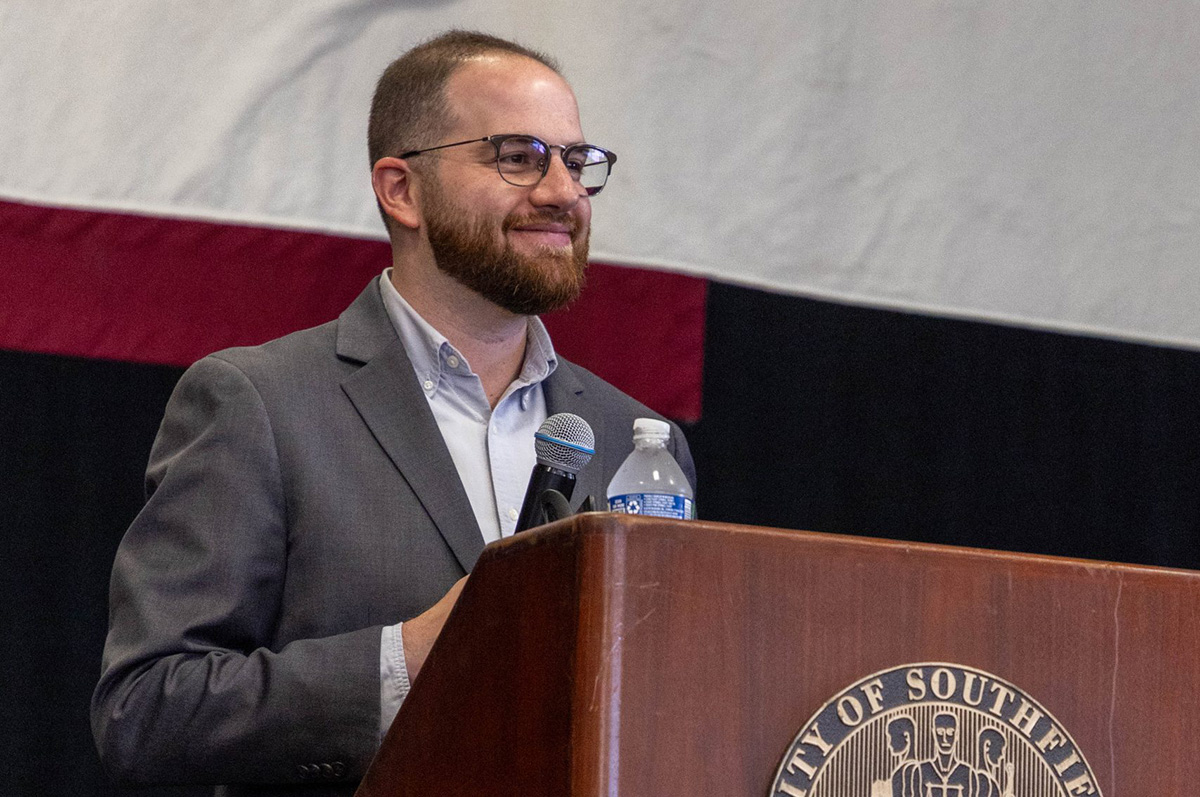
With fall comes swapping out T-shirts for sweaters, raking leaves and, of course, elections. The summer’s primaries have narrowed the playing field in a slew of races, but the big ones — the actual races for seats in federal and local elections — are still to come.
Jeremy Moss is one of those people running for a congressional seat in Michigan. Despite his young age, Moss has quickly learned the ropes of politics in the state, already serving terms in the Great Lakes State’s House of Representatives and Senate.
Moss sat down with the Los Angeles Blade to discuss his history in Michigan politics, his experience as an openly LGBTQ+ legislator and his vision for a better America as he looks toward Congress.
He currently represents Michigan’s 7th Senate District, but now he is setting his sights beyond Lansing toward Capitol Hill to represent Michigan’s 11th Congressional District, which includes Detroit’s northern suburbs.
Moss earned his bachelor’s degree in journalism from Michigan State University, where just a few years later he made history as the first openly gay person elected to the Michigan Senate and the first to serve as its president pro tempore.
His political experience stretches across multiple offices.
Moss worked in the offices of Southfield Mayor Brenda Lawrence, who also served in the U.S. House of Representatives, and State Rep. Paul Condino.
Moss, at age 25, was elected to the Southfield City Council in 2011, becoming the youngest member elected in the body’s history. He then switched over to the state legislature, representing Michigan’s 35th House of Representatives District in the Michigan House of Representatives from 2014-2018, becoming the second openly gay member elected to the Michigan legislature.
He then moved from Michigan’s House to its Senate in 2018, elected to represent the 11th Michigan Senate District and becoming the Assistant Democratic Leader. Moss started his second term in the Michigan Senate in 2023, this time representing District 7.
He currently has a long list of priorities listed on his campaign website, many of which have become standard for Democrats running across the country, with a particular focus on minimizing — and cleaning up — issues that the Republican-controlled federal government has created under President Donald Trump.
Those goals include lowering healthcare costs, tackling the cost of living crisis, holding U.S. Immigration and Customs Enforcement accountable and fixing the broken immigration system, restoring national voting rights, protecting rights — with a particular focus on abortion access and LGBTQ+ rights — combating corruption in politics, preventing gun violence and strengthening gun safety, empowering Michigan workers, and preserving the environment.
Why Moss is running for Congress
When asked why he wants to run for Congress, Moss pointed to his lengthy resume in state leadership, with a clear voice arguing that if he can do it in Lansing, he can get it done in Washington.
“I’ve served 12 years in the legislature and have ascended into leadership as president pro tem of the Senate,” Moss explained to the Blade. “We flipped our state legislative chamber to a Democratic majority for the first time in 40 years in 2022, and we passed some big, generational-changing, consequential Democratic wins that had languished for a generation, but had improved people’s lives in our state.
“We’ve passed the first gun safety laws in a generation that are saving lives. We protected the right to vote amidst attacks from Donald Trump and other conspiracies. We pushed forward and finally put LGBTQ rights in our state civil rights law. We provided free school meals and lunches for all public school children in the state of Michigan.
“The problems from Washington, D.C., aren’t getting less severe over time,” he continued. “They’re getting more severe. So this district unexpectedly opened up due to a series of retirements and it was just a great opportunity for me to continue to advocate for big change that we’ve already achieved here in the state legislature.”
“I’m a product of this district. I grew up here. I’ve represented a bulk of the district already in the state legislature, and I knew that I was going to earn grassroots support to be able to wage this campaign. We sought it out, we earned it, including some premier endorsements from Gov. (Gretchen) Whitmer, among many others, and were highly successful in the primary because we were in tune to the needs of this district.”
Moss has been endorsed by a slew of Democratic leaders and organizations, including, as he pointed out, by Whitmer.
Other endorsements include former Gov. Jim Blanchard, Secretary of State Jocelyn Benson, Attorney General Dana Nessel, the Equality PAC, the Human Rights Campaign, the Unity Fund, and the LGBTQ+ Victory Fund.
His political identity and the Democratic Party
Moss described himself as being “on the liberal end of the spectrum,” but argued that the Democratic Party’s internal divisions should not be the central focus.
“I’m certainly on the liberal end of the spectrum, but I don’t even think it necessarily has to be this progressive versus establishment fight that we’ve seen play out,” Moss said when asked about various elements of in-party disagreements. “It has to be between action and, and inaction, fighters versus folders.”
He said that distinction between action and inaction is central to how he would approach Washington.
“At this moment, I think we need to demonstrate that we are ready to take on Donald Trump and MAGA chaos with boldness and effectiveness. I’ve been saying all along our campaign trail, we can no longer be the party that shows up to the knife fight carrying a pie chart, and so I think we have to be showing that we have spine and we have punch, and we’re really ready to be tough fighters for, for Michiganders and the American people.”
“We can’t walk on eggshells anymore. We can’t pull our punches,” he added. “We can’t fear that we’re offending someone, you know, one way or another with how we act. People are expecting a bold party to take on MAGA, and I think that’s exactly what the Democratic Party needs.”
Becoming an LGBTQ+ legislator
Moss also reminisced with the Blade about his first run for elected office — at a time when Michigan had no openly LGBTQ+ members serving in the state legislature — and how that experience became deeply connected to his identity and his approach to LGBTQ+ politics.
In 2014, Michigan was in the pre-marriage equality era, and the state had no openly LGBTQ+ members serving in the legislature.
“12 years ago in 2014 — this was pre-marriage, the pre-marriage equality era — we had zero people from our community serving in the legislature, and still they were talking about us.
“The big topic then in Michigan was whether or not to expand our civil rights law to include LGBTQ protections, so that people from our community would no longer face discrimination in housing and employment. And they were talking about us regardless of whether or not we were at the table.”
Moss eventually helped lead the effort to expand Michigan’s civil rights protections to include LGBTQ+ people, a measure that passed with bipartisan support.
He said his experience as an openly gay lawmaker allowed him to make the case for LGBTQ+ protections in terms that extended beyond LGBTQ+ issues.
“One thing I definitely aligned with Gov. Whitmer at the time was making the case that discrimination was not only morally wrong, but it was bad for business,” he said. “By not having these protections for our LGBTQ neighbors and family members and friends and community members, we were actually holding back our economy. We were essentially allowing people to be kicked out of Michigan as consumers and workers, because of who they are and how they identified.”
That led to various efforts — including committee hearings and meetings with advocates, businesses and the public — that helped make Michigan what the Movement Advancement Project deems the 16th most LGBTQ+-friendly state, solidly above other states due to its robust LGBTQ+-related legislation.
“I wanted to meet everybody where they were, including those who may have not been involved with or engaged with the LGBTQ community as legislators, but understood that we couldn’t sustain the economic impact of discriminating against our community,” Moss said. “And as I’ve said all along, discrimination is bad for business. That’s something I think helped broaden the vote and earn some bipartisan support for it.”
Representation and LGBTQ+ youth
For Moss, the importance of LGBTQ+ representation also comes from his own experience growing up.
“I think about when I was younger, when I was 18 years old. It was in 2004, and, you know, there are certain things that really shaped me in that time … Michigan had a ballot proposal that passed to have the strictest language banning marriage equality in our state constitution. We didn’t even allow civil unions in that language in our constitution to exist, and there were scandal-plagued LGBTQ politicians.”
“It was the same year that Jim McGreevey was forced to resign as he came out,” he said. “So it really was a signal to me that, you know, you don’t have a future. Not just you don’t have a future in politics; you might not even have a future. Period, and it was pretty defining for me.”
Despite those fears, Moss continued to pursue public office.
“And you can’t be what you can’t see, and so to be able to break the barriers at the state level and at this congressional level, I think is a signal to anybody who is struggling with wondering where their place is?”
“I think that visibility is incredibly important, and it’s something that I needed when I was much younger, and it’s something that I’ve been honored to be able to provide for the, for the next generation of emerging leaders.”
His LGBTQ+ priorities in Congress
When asked what LGBTQ+ issues he would prioritize in Congress, Moss emphasized the importance of growing the number of LGBTQ+ lawmakers while also expanding federal nondiscrimination protections.
“To have a caucus in the legislature has made all the difference because you can, you know, run these issues across the field. You can have somebody take on marriage. You can have somebody take on trans rights. You can have somebody take on LGBTQ youth. You can have somebody take on discrimination protections.”
He sees much of the work he wants to get done on Capitol Hill as a direct follow-up to his work in Lansing — most importantly, the passage of the Equality Act. The legislation has been debated in some form for more than 50 years at the federal level, with the goal of protecting LGBTQ+ people from discrimination under federal law.
“I think the Equality Act is incredibly important. That’s kind of the, the counterpart to what we’ve done in the state legislature, ensuring discrimination protections for the LGBTQ community,” he said.
“I think housing and, and workplace discrimination is, is everything, you know, to protect our community so that they can have a safe place to call home and earn a living … That’s incredibly important across the board. And I would really want to take a leading role in telling the story of how we were able to do it in Michigan after 50 years since this act was first written — and finally finished the job federally to ensure their federal protections in, in, in, in employment and housing.”
LGBTQ+ political organizations and Congress
Moss said the LGBTQ+ political organizations that have supported his political career from its early stages have helped him along the way.
“Obviously, I’ve been affiliated with Victory Fund since I first ran for office, and they were early endorsers, but Equality PAC, which is the political arm of the LGBTQ caucus in Congress, has been an incredible part of my support system. From day one they helped me out.
“I’ve been getting to know a lot of the members of Congress who are LGBTQ, really over the last year of this campaign. So I’m eager to join them. I’m eager to be one of the players on the field here to be able to advocate and advance our issues.”
Voting rights
Voting rights are another major focus for Moss, an issue he said dates back to his experience during the 2004 campaign over marriage equality.
“Something I’m very passionate about is voting rights, and it really does go back to that 2004 campaign where it was very evident that elections can determine your future.
“Elections can determine what rights you do have and don’t have, and so I’ve been very laser focused on increasing access to the ballot box, making sure our democracy remains whole and accessible.”
He explained how Trump’s recent attacks on voting legitimacy and mail-in voting have only made his desire to help that much stronger.
“We went through a real trial of that in 2020 with, with Michigan’s presidential election, with Donald Trump and Rudy Giuliani — as he jetted into Michigan and tried to overturn our valid and accurate election results. We were kind of the spotlight of the nation in that stop this deal movement that led to Jan. 6.”
That, according to Moss, spurred direct action on his end.
“I took the helm as chair of the Senate Elections Committee, and we wrote the law to implement pieces of that ballot proposal, including drafting the law that implemented nine days of early voting here in Michigan, increased access to absentee ballot. We further secured our canvassing and certifications so that nobody could jet in with an alternative slate of electors and send them to Congress on Jan. 6.”
“So I’ve been on the front lines in Michigan on defending our election systems and strengthening protections for both voters to access the ballot box and protections against those who want to overturn our election results.”
Those issues are still present today, he explained.
“He’s pushing for suppressive tactics like the Save Act. The Supreme Court has eroded the federal Voting Rights Act,” Moss said. “I want to really get into Congress as an election expert, we have a Michigan story to tell. I wrote a lot of that story, and, and I think the most urgent thing that we could pass is the John Lewis Voting Rights Act to make sure that there’s no pocket of discrimination anywhere in our country, and that people have the ability to exercise their constitutionally guaranteed right to vote.”
What he would do differently in Washington
Moss also shared that he believes Democrats should communicate differently in Washington, with an emphasis on getting things done.
“Yeah, again, we’ve, we’ve seen politics evolve in this Trump era, and I think that Democrats need to communicate differently.
“He talks so brazenly, and how proud he is that he’s renamed the Gulf of Mexico or Lake Ontario. I put that in the stupid category.
“He’s also done things in the harmful category that he boasts about, like cutting Medicaid and cutting SNAP. And of course, he’s doing things in the dangerous category, but proud of it, like trying to overturn our elections or suppressing the vote.
“What we’re doing is both popular and good for people, whether it’s growing our economy from the middle class outward, whether it’s lowering costs, whether it’s making healthcare more affordable, whether it’s strengthening the core functions of our democracy, we have to be talking about it with the same gusto and confidence that MAGA talks about their agenda.
“I think this is a party that needs more spine and more punch, and really meet this moment because I think that’s what people are looking for, and that’s really what I think a new generation will bring into this next Congress.”
Congress
Chris Pappas wins NH Democratic Senate primary
Gay congressman running to succeed retiring U.S. Sen. Jeanne Shaheen

New Hampshire Congressman Chris Pappas on Tuesday won the Democratic primary in the race to succeed retiring U.S. Sen. Jeanne Shaheen (D-N.H.) in the U.S. Senate.
Pappas defeated Karishma Manzur, who was his primary challenger, by a 61.8-36.1 percent margin.
The gay congressman will face off against former U.S. Sen. John E. Sununu, who defeated former U.S. Sen. Scott Brown in the Republican primary.
“Tonight’s victory sends a clear message that voters are looking for leaders who will fight for their rights, their freedoms, and to be treated with dignity and respect,” said Human Rights Campaign President Kelley Robinson in a statement.
She campaigned for Pappas in Manchester, New Hampshire’s largest city, on Aug. 30.
“Chris Pappas has delivered results, stood up for equality, and showed up for the people he serves,” said Robinson in her statement. “HRC was proud to mobilize Equality Voters across New Hampshire to help power this win. We don’t have a second to waste between now and November. We look forward to continuing our work with Rep. Pappas as he drives toward victory in November so he can help return a pro-equality majority to the United States Senate.”
A poll the University of New Hampshire Survey Center released on Aug. 26 showed Sununu ahead of Pappas by a 45-43 percent margin if they were to face off in the general election. The margin of error is +/-2.1 percent.
Pappas would become the first openly gay man elected to the U.S. Senate if he were to win in November.
Congress
Everton Blair makes history as first openly gay congressman from Ga.
Former Gwinnett County Board of Education member to serve remainder of David Scott’s term
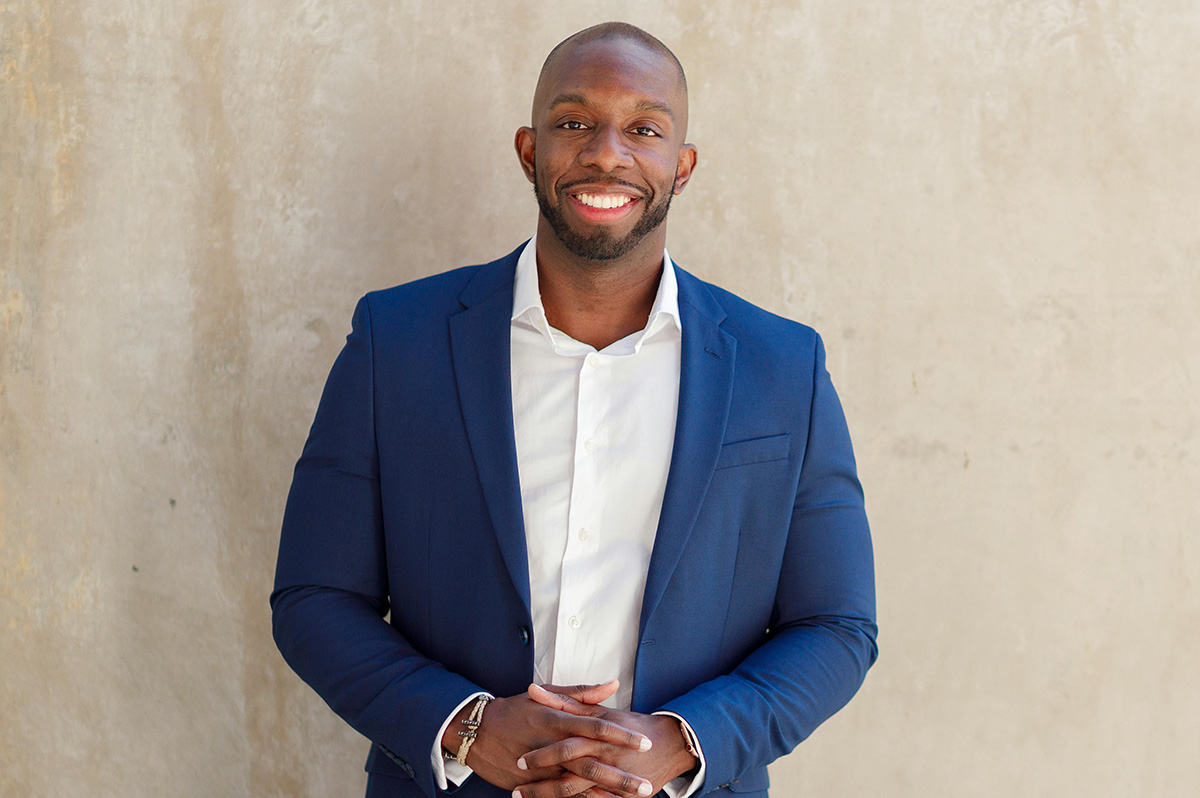
Georgia made history last week when Everton Blair, Jr., was sworn into the U.S. House of Representatives, becoming the state’s first openly LGBTQ+ member of Congress and the latest LGBTQ+ addition to the chamber.
Blair, who represents Georgia’s 13th Congressional District, was sworn in on Sept. 1 after winning a special election to fill the vacancy left by the late-Congressman David Scott. Blair defeated Marcye Scott, the late congressman’s daughter, in the Aug. 25 runoff, winning 53.2 percent of the vote to Scott’s 46.8 percent.
He will serve the remainder of Scott’s term through Jan. 3, 2027. Blair is not running in the November general election for a full term.
Blair brings a progressive platform to Congress.
The 34 year-old supports Medicare for All, a Green New Deal, raising the minimum wage, and universal gun background checks. His campaign platform also included positions on LGBTQ+ rights, reproductive freedom, workers’ rights, climate, and gun violence.
Since joining the House, Blair has joined the Congressional Black Caucus and Congressional Progressive Caucus. He is also a co-chair of the Congressional Equality Caucus.
Before joining the House, Blair served on the Gwinnett County Board of Education, where he became the first Black member and youngest-ever member elected to the board, as well as its first openly gay member. He was later unanimously selected as chair.
Blair also served as a fellow in President Barack Obama’s White House Initiative on Educational Excellence that focused on improving academic outcomes and expanding opportunities for minority students.
The son of Jamaican immigrants, Blair was born and raised in Georgia’s 13th Congressional District. He earned a bachelor’s degree in applied mathematics from Harvard University, a master’s degree in policy, organization, and leadership from Stanford University, and a Doctor of Education Leadership degree from Harvard.
Blair’s campaign received endorsements from a number of organizations, including the LGBTQ+ Victory Fund and progressive Democratic groups such as Future Democrats.
The Equality PAC, a political action committee dedicated to electing openly LGBTQ+ candidates to office, celebrated Blair’s victory and provided a statement to the Los Angeles Blade about the historic nature of his election.
“This is a historic election for Georgia, the South, and our entire country,” Equality PAC said in an email. “Everton Blair brings a strong record of public service and a deep commitment to making government work for working families.”
The group said Blair would “fight to lower costs, expand access to quality health care, create economic opportunity, and ensure every community has a voice in Washington.”
“At the same time, Everton understands the importance of standing up for equality and defending the rights and freedoms of LGBTQ Americans and every community facing discrimination,” Equality PAC said. “His historic election as Georgia’s first openly LGBTQ Member of Congress and the first openly LGBTQ man elected from the South is a powerful reminder of how far our country has come — and how much work remains.”
Equality PAC said it was “proud to welcome Everton to the House” and looked forward to working with him.
Congress
Markey’s primary win deemed success for LGBTQ+ activists
Mass. lawmaker champions transgender rights
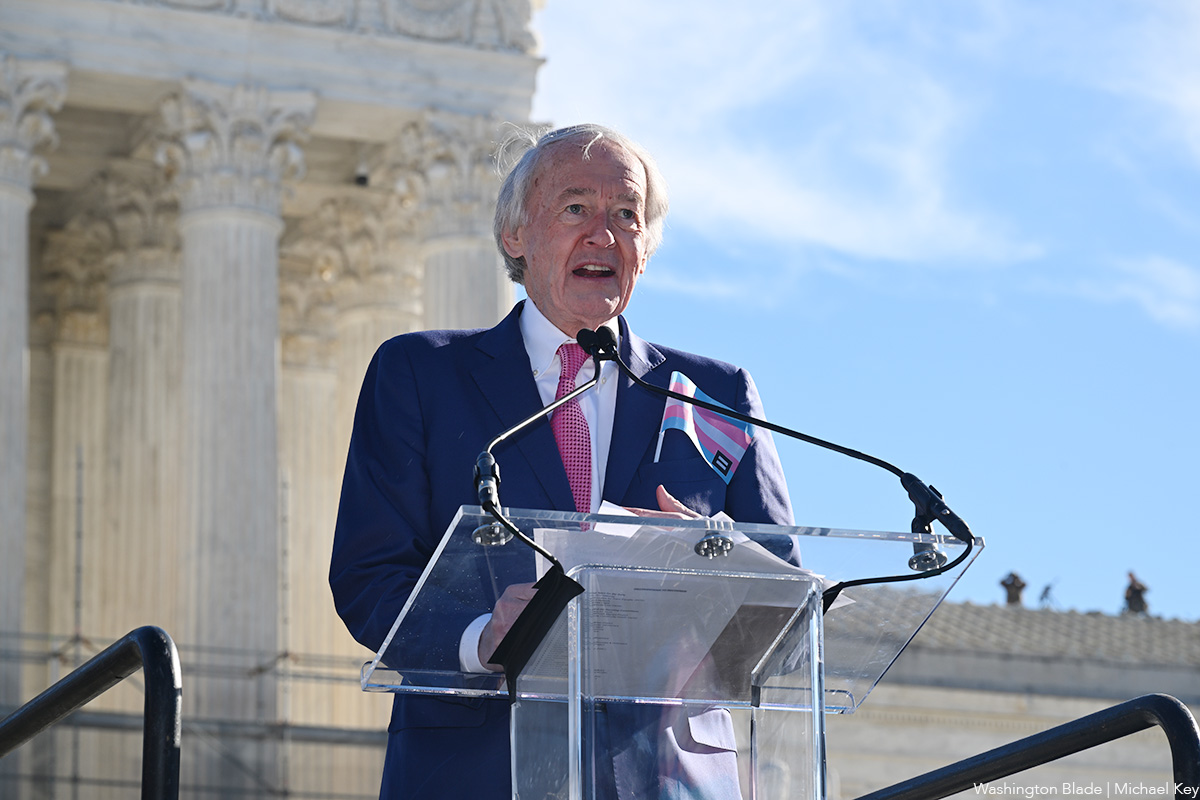
U.S. Sen. Ed Markey (D-Mass.) clinched the Democratic seat for his reelection campaign in Massachusetts’s primary election on Tuesday.
Markey won the deep-blue state with 64.8 percent of the vote, according to NBC News, triumphing over Marine Corps combat veteran and Congressman Seth Moulton, who received 35.2 percent of the vote.
Massachusetts’s primary election, which determined which Democratic candidate will head to the polls to face off against the Republican challenger in November, is being considered a victory for LGBTQ+-inclusive policy, as well as for a divisive pro-transgender rights candidate — both things Markey has become an outspoken champion of.
Markey has experience at multiple levels of government, from the state level, where he served three terms in the state House of Representatives, to his federal tenure, including 20 terms in the U.S. House of Representatives and is now serving his second term as a senator. He has become a fixture of a changing Democratic Party in one of the most consistently blue places in the U.S.
This primary — and much of the national discussion surrounding the Senate seat — focused a lot of campaigning power on fighting the growing sentiment, led mostly by Republicans, that the frustration many Americans feel lends itself to an anti-establishment and anti-incumbent attitude.
Markey ran his campaign using his past as a reflection of his commitment to constantly putting his best foot forward for Bay Staters — particularly with apprehension for issues younger and more progressive democrats have been righting for — including Green New Deal and “Medicare for All” while Moulton — who was also elected to federal office prior to this run — campaigned on being younger than Markey, arguing that he was not the same type of established politician.
Moulton also faced backlash for negative comments about trans athletes, sparking criticism for those who did want younger candidate but want for trans rights to be protected.
Markey’s track record of supporting the LGBTQ+ community is one of the most clear in federal politics, one that has garnered a “100 percent lifetime voting record” on the Human Rights Campaign’s PAC politician review scorecard.
That list of Markey’s actions includes being a cosponsor of the Equality Act, driving landmark legislation to ensure federal protections for LGBTQ+ Americans, and being one of the most vocal proponents for trans rights in the federal government — specifically in multiple appropriations bills and in the National Defense Authorization Act. He was also the lead sponsor of the Transgender Health Care Access Act and the Transgender Bill of Rights resolution.
Markey first introduced the Transgender Bill of Rights in the Senate in 2023, where it ultimately failed to be brought to law. He reintroduced the legislation this year once again. This was a direct response to the attitude pushed by many conservatives after 2021, when the push to minimize trans rights started to become a key part of their cause and has been constantly propped up by the Trump-Vance administration.
“Massachusetts needs a senator who stands up and fights back, a senator who never forgets who they are fighting for,” Markey said during his victory speech. “That has been the mission of my life, and it always will be.”
Following the calling of the primary, a slew of LGBTQ+ organizations rallied behind Markey, many pushing his past as an asset that puts his money where his mouth is through advocating for legislation specifically protecting the LGBTQ+ community.
Tyler Hack, the executive director of the Christopher Street Project, an organization dedicated to pushing for legal protections for trans americans, released a statement following Markey’s win. Hack argued that putting forward such a staunchly pro-trans candidate is a win for the community, especially after endorsing him earlier this year.
“Tonight, anti-trans politics lost. Massachusetts rejected the idea that attacking transgender people is a shortcut to political power. Voters chose a different path: one where equality is not negotiable, cruelty is not courage, and transgender people do not have to disappear for Democrats to succeed.”
The Human Rights Campaign also endorsed him as a candidate earlier this year and issued a statement via its president, Kelley Robinson.
“Ed Markey has spent decades fighting for LGBTQ+ equality, for working people, and for a more livable world,” Robinson said. “He knows why equality matters. He’s stood with us no matter what. We were proud to endorse him this year, and when a pro-equality majority takes back the Senate this fall, we will continue to count on him as a champion for our community.”
Markey is running for reelection against Republican John Deaton in November, where he is expected to win.
Congress
HRC president campaigns for Chris Pappas in NH
Gay congressman running to succeed retiring U.S. Sen. Jeanne Shaheen

Human Rights Campaign President Kelley Robinson on Sunday campaigned for U.S. Rep. Chris Pappas (D-N.H.) in New Hampshire.
Robinson traveled to Manchester, the state’s largest city, nine days before the Sept. 8 primary that will determine who will vie for retiring U.S. Sen. Jeanne Shaheen (D-N.H.)’s seat.
We’re hitting the pavement across New Hampshire to fight for a freer, fairer future for everyone.
Glad to have Human Rights Campaign President @KelleyJRobinson join us for a canvass launch in Manchester today. pic.twitter.com/XWCEaQxy4o
— Chris Pappas (@ChrisPappasNH) August 30, 2026
Former U.S. Sen. John E. Sununu, who represented New Hampshire in the U.S. Senate from 2003-2009, will face off against former U.S. Sen. Scott Brown, who represented Massachusetts in the U.S. Senate from 2010-2013, in the Republican primary.
Karishma Manzur is among the Democrats challenging Pappas.
A poll the University of New Hampshire Survey Center released on Aug. 26 shows Sununu is ahead of Brown. The same survey shows Pappas ahead of Manzur and his other Democratic challengers.
The UNH Survey Center poll shows Sununu ahead of Pappas by a 45-43 percent margin if they were to face off in the general election. The margin of error is +/-2.1 percent.
Pappas would become the first openly gay man elected to the U.S. Senate if he were to win in November.
Congress
House blocks effort to codify transgender servicemember ban into law
Lawmakers approved two anti-trans NDAA amendments

The U.S. House of Representatives on Tuesday rejected an amendment to the National Defense Authorization Act that would have codified a ban transgender servicemembers in the military.
The bipartisan vote was 212-217.
The NDAA is for the 2027 fiscal year and sets policies for the Defense Department programs and activities and the national security programs of the Department of Energy.
U.S. Rep. Lauren Boebert (R-Colo.) proposed the amendment on July 21. It stated that all personnel are required to serve in accordance with their biological sex, citing military readiness and discipline.
Human Rights Campaign Senior Director of Government Affairs Jennifer Pike Bailey stated that she is grateful for the bipartisan vote that rejected President Donald Trump and Defense Secretary Pete Hegseth’s “dangerous and discriminatory policy that has kicked brave transgender servicemembers out of the military and weakened our national security.”
“Everyone who meets the same rigorous standards should be able to serve their country. We should honor that patriotism, particularly in this moment where we are witnessing brave servicemembers making the ultimate sacrifice for our country, instead of ending their careers and politicizing their existence. We’re grateful that a permanent extension of this ban failed, and we will keep fighting to reverse this senseless policy,” Bailey said.
Mark Takano, chair of the Congressional Equality Caucus, stated that he and his members put in countless hours of work to kill the amendment.
“When Americans know they or their families are going to be targeted by or not supported by the military, that leads them to avoid signing up to serve or staying in the service — making it harder to keep the ranks of the armed services full and our nation safe. My colleagues in the Equality Caucus and I will continue working to prevent these attacks on our servicemembers and their families from becoming law,” Takano said.
According to the Congressional Equality Caucus, two other bills could potentially be passed that would also target the transgender community, both of which were proposed by U.S. Rep. Nancy Mace (R-S.C.).
The first was a bill that would have prohibited gender-related medical care under TRICARE and to prevent TRICARE from covering certain gender-related medical procedures and treatments, which was approved in a vote of 219-208.
The second was a bill that would have prohibited male participation in female sports at DoDEA schools. DoDEA schools are Department of Defense Dependents Schools, which is a network of primary and secondary schools.
The amendment was approved in a vote of 221-203.
Congress
Lindsey Graham has passed away. Do LGBTQ+ people have a right to celebrate his death?
SC senator opposed marriage equality, despite speculation over sexual orientation.

Uncloseted Media published this article on July 16.
By SPENCER MACNAUGHTON | On Sunday, the office of Lindsey Graham reported that the Republican senator and Trump ally from South Carolina died “from a brief and sudden illness.” The office said that the preliminary cause of death was a rupture of his aorta due to a hardening of his arteries.
Since then, many folks in the LGBTQ+ community, including a large number of Uncloseted followers, have — for better or worse — celebrated the senator’s death. When we posted the news on our Instagram page on Sunday, our followers commented:
- “Maybe he rest in hell”—this one got 194 likes.
- “She made sure to wait until Pride was over.”
- “And just like that the world is a better place.”
These responses are fueled by allegations that the senator lived as a closeted gay man while supporting policies that would roll back LGBTQ+ rights. In 2006, he voted in support of a constitutional amendment that would have restricted marriage to only being between one man and one woman. After gay marriage became legal across the U.S. in 2015, he said “I am a proud defender of traditional marriage.” And in 2022, he told CNN he would oppose the Respect for Marriage Act and later reiterated that states should decide the issue of marriage.
Outside the Washington rumor mill, there wasn’t much evidence that Graham could be gay until 2020, when adult video performer Sean Harding wrote on Twitter that “There is a homophobic republican senator who is no better than Trump who keeps passing legislation that is damaging to the lgbt and minority communities. Every sex worker I know has been hired by this man. Wondering if enough of us spoke out if that could get him out of office?”
Harding followed up with another post, writing “If you’d be willing to stand with me against LG please let me know,” and, “So far I have two individuals who would be willing to go public and support my claims. Anyone else?”
A few days later, another anonymous sex worker came forward and made similar allegations.
But after that, there was silence, with some believing these sex workers were slapped with non-disclosure agreements (NDAs). And while at least one lawyer took to Twitter saying that he’d “be more than happy to read the NDAs and look for loopholes. For free!” nobody else came forward.
That is until earlier this week, when author Jesse James Rose posted to her Instagram that Graham had paid her for sex work prior to her gender transition. Rose wrote that “Most of you know him as the homophobic senator from South Carolina but to me he will always be the man who paid a twinky pre-transition college student a fat stack of cash to do unspeakable things to him in a hotel room while he wore red lingerie.”
This dynamic has created a complicated question for LGBTQ+ people: Is it appropriate to posthumously celebrate the death of a man who railed against our community and used his position of power to make our lives less equitable and less safe? Is it even more fair to criticize him if he was living a secret queer life?
Or should we go high and give his track record on LGBTQ+ issues a positive spin now that he’s no longer with us?
In a time where social media feels like a breeding ground for angertainment, I’ll admit that the immediacy of the response to his death at first felt intense.
At the same time, I knew I didn’t want to send thoughts or prayers to a man who tried to rip my rights away.
If the alleged NDAs that Graham handed his sex workers were legitimate, they likely evaporated after his death. So now really may be the first time people can speak their truth and offer an accurate window into the absurd hypocrisy between Graham’s public and private life.
For that, I think it’s fair game to speak candidly about the story he may have worked hard to muzzle while he was here.
Congress
Who might replace Lindsey Graham? The contenders and their LGBTQ+ records
Long-time SC senator died suddenly on Saturday
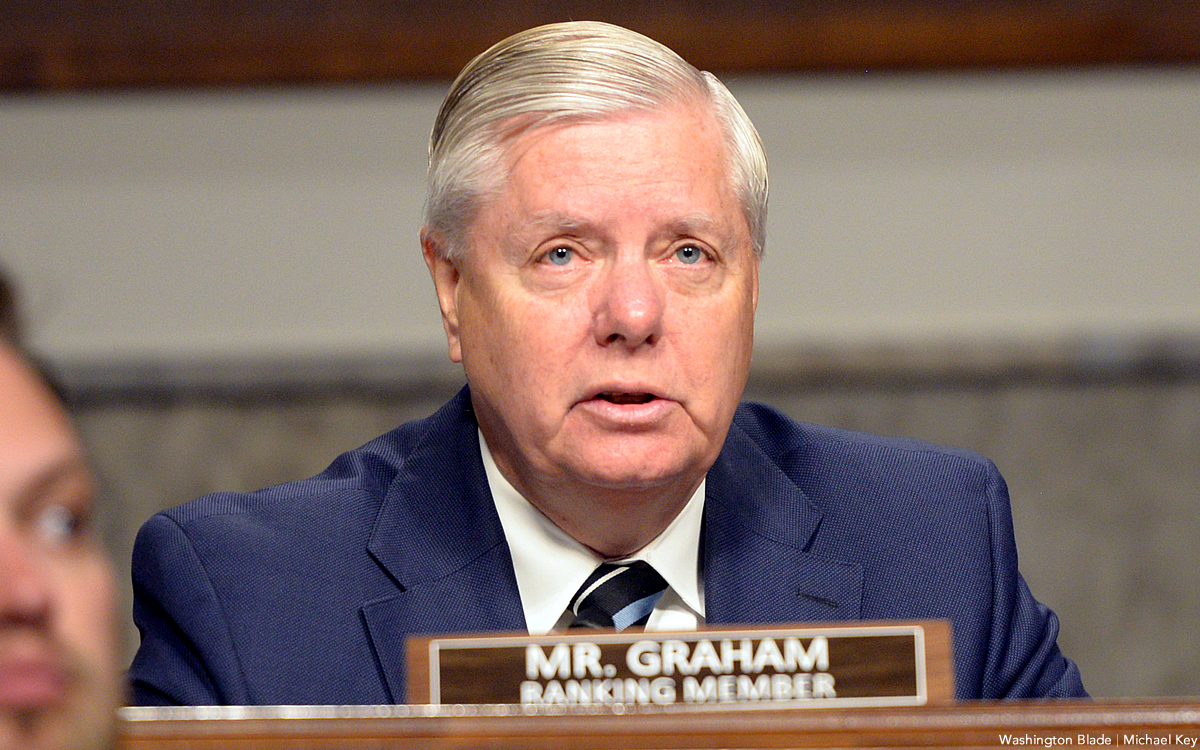
Republican U.S. Sen. Lindsey Graham (R-S.C.) has died, and what he has left behind is a power vacuum for his U.S. Senate seat — and within the Republican Party.
The South Carolina senator had been a major part of Republican politics up until his Saturday death at his home in Washington, reportedly of an aortic dissection related to arteriosclerotic cardiovascular disease.
Graham has been a fixture in government at both the state and federal level. He began his political career in the South Carolina House of Representatives in 1992, representing the Palmetto State’s 2nd District before eventually moving to the federal government.
He moved up to Capitol Hill after his 1994 run for the U.S. House of Representatives. In 2003 he stepped across the rotunda to the Senate in 2003 following the retirement of longtime U.S. Sen. Strom Thurmond.
He consistently opposed LGBTQ+ rights while alive.
He voted against the 2022 Respect for Marriage Act, saying the decision should be left up to state governments, and the 2013 Employment Non-Discrimination Act, and opposed the repeal of Don’t Ask, Don’t Tell.
With Graham’s sudden passing, the Republican Party is scrambling to find a replacement who can advance both its goals and those of the president as Republicans’ supermajority in the federal government begins to shrink.
Among those reportedly in the running is Treasury Secretary Scott Bessent, the highest-ranking openly LGBTQ+ federal official in American history and fifth in the presidential line of succession.
Bessent, a South Carolina native, was formerly a supporter of the Democratic Party and donated to several Democratic presidential candidates before switching parties in 2017 following Trump’s election in 2016. He later donated $1 million to Trump’s 2017 presidential inaugural committee.
On Sunday, Bessent was also fielding calls from people asking him to run, according to a person familiar with the communications. A person close to Bessent told Politico that he is not interested in the seat, saying he is happy in his role as Treasury secretary, a position he has long wanted.
The Los Angeles Blade reached out to the Treasury Department for comment, but did not receive a response by publication time.
One of the most anticipated and widely discussed names for the vacant Senate seat is Lt. Gov. Pamela Evette.
Evette is a staunch supporter of President Donald Trump and has gone as far as criticizing Republicans for not supporting the conspiracy theory that the 2020 presidential election was stolen. Trump also endorsed her gubernatorial campaign, though she ultimately lost to her now-boss, Gov. Henry McMaster.
McMaster has a long history of opposing LGBTQ+ rights.
During an October 2022 gubernatorial debate, McMaster said that if the U.S. Supreme Court overturned Obergefell v. Hodges, he would enforce South Carolina’s preexisting law banning same-sex marriage. In 2022, he also signed legislation requiring student athletes from elementary school through college to compete on teams corresponding to the sex listed on their birth certificates.
Other names reportedly being considered include U.S. Rep. Nancy Mace (R-S.C.), who has had a contentious relationship with LGBTQ+ issues during her time in Congress. She began as a supporter of LGBTQ+ rights, becoming one of the few Republicans to publicly support the Respect for Marriage Act, before making a complete about-face as transgender issues became a central part of the Republican Party’s political strategy.
As part of that strategy, Mace introduced a resolution to ban trans women from using female restrooms in the U.S. Capitol, a move she acknowledged was in direct response to the election of U.S. Rep. Sarah McBride (D-Del.), the first out trans person elected to Congress.
In a November 2024 post on X, Mace wrote: “We support gay marriage, and voted for the Respect for Marriage Act twice. However, if you think protecting women is discrimination, you are the problem. We don’t care if you’re trans, if you have balls we don’t want you in the women’s bathroom.”
Two other names being floated are U.S. Rep. Russell Fry, who represents South Carolina’s 7th Congressional District, and U.S. Rep. Ralph Norman, who represents the state’s 5th Congressional District.
Trump recommended Graham’s sister, Darline Graham, should serve as the state’s temporary senator in a post on Truth Social on Monday.
“This would be a fabulous tribute to Lindsey, who loved her dearly!” Trump wrote on his social network.
The scramble comes as Republicans hold increasingly narrow majorities over Democrats in both the Senate and House, potentially complicating efforts to advance Trump’s agenda. That agenda includes continuing the war in Iran, securing Todd Blanche’s confirmation as attorney general, and adding $350 billion in defense spending to the SAVE America Act — a controversial proposal deemed a “Jim Crow 2.0” among voting rights advocates.
McMaster is expected to announce Graham’s interim replacement on Monday at 4 p.m. ET.
Congress
Lindsey Graham dies at 71
Republican SC senator passed away ‘from a brief and sudden illness’ on Saturday
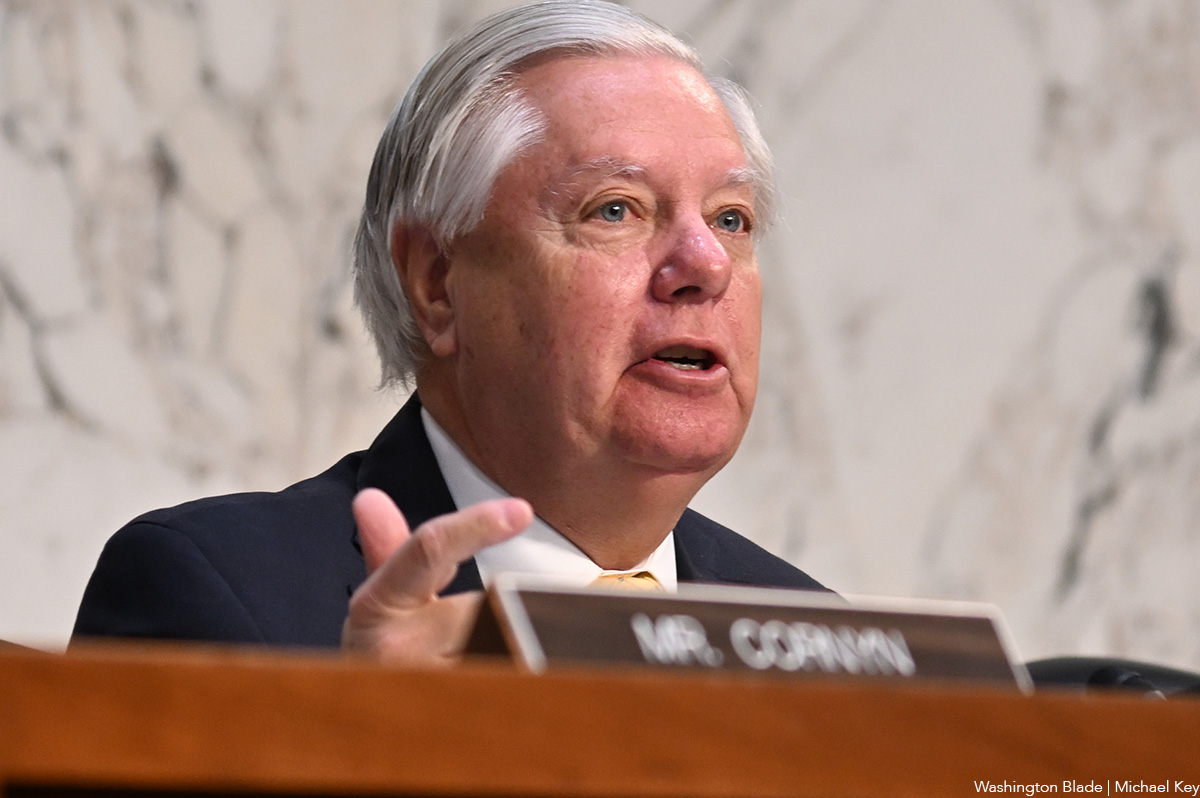
U.S. Sen. Lindsey Graham (R-S.C.) died suddenly on Saturday.
The South Carolina Republican’s office in a statement said Graham, 71, “passed away from a brief and sudden illness.” The Washington Post reported first responders responded to Graham’s Washington home on Saturday and transported him to a local hospital.
Graham had been in the U.S. Senate since 2002.
The close Trump ally was running for re-election. Graham died a day after he returned to the U.S. from Ukraine.
Speculation over Graham’s sexual orientation persisted during his tenure.
The Los Angeles Blade will update this story.
Congress
EXCLUSIVE: Pressley rips State Department over LGBTQ+ rights rollbacks abroad
Massachusetts Democrat sent letter to Marco Rubio on Tuesday
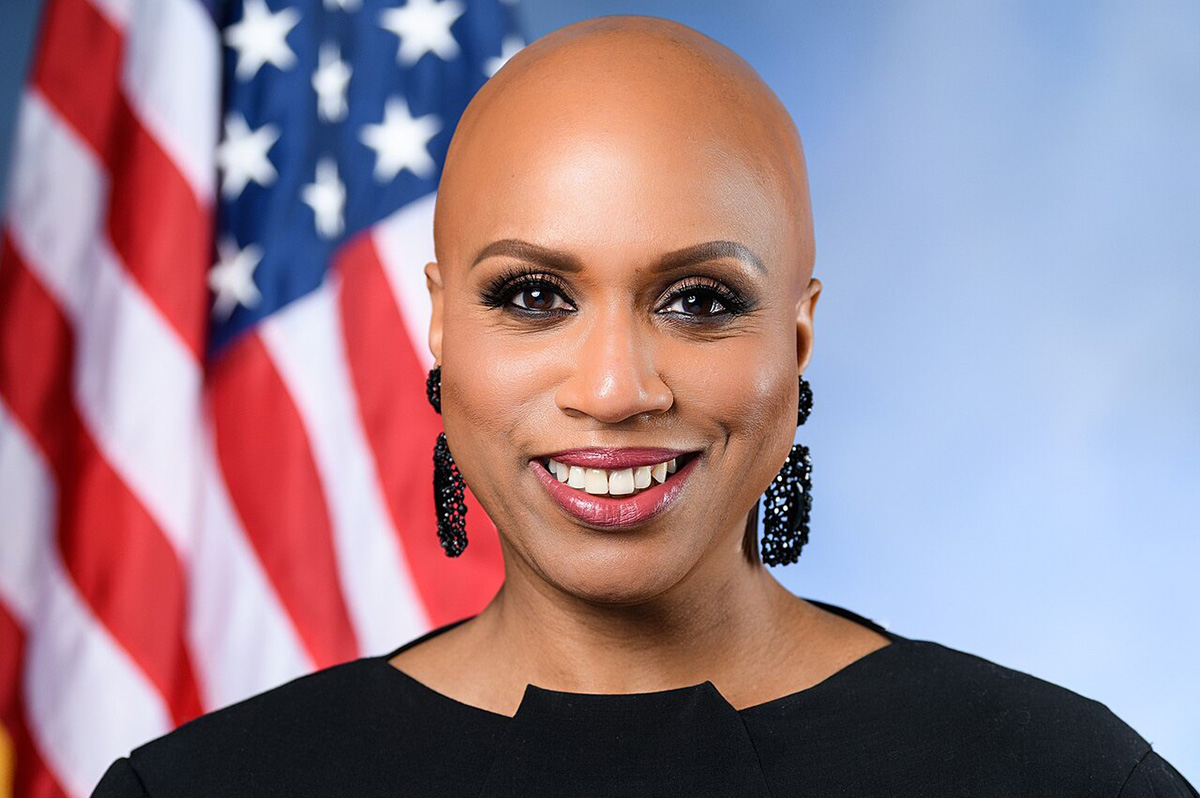
Massachusetts Congresswoman Ayanna Pressley sent a letter to Secretary of State Marco Rubio urging the Trump-Vance administration to take urgent action to defend LGBTQ+ people across the globe; including in countries that are violating international human rights protections for LGBTQ+ individuals, putting at risk the safety of civilians and U.S. citizens working, living, and traveling abroad.
The letter, which the Los Angeles Blade got an exclusive preview of prior to it’s sending, criticizes the Trump-Vance administration’s foreign policy direction at the State Department, arguing that it has moved to roll back LGBTQ+ protections that have long been part of the U.S.’s global human rights posture.
“Criminalizing LGBTQI+ individuals undermines democracy globally, as well as U.S. national security. Thus, we urge the State Department to take adequate measures to speak out against this criminalization and protect U.S. citizens abroad, including your staff, who may be detained or harmed under such laws, policies, and practices,” Pressley, a Democrat who represents roughly three-fourths of Boston and much of the city’s suburbs, said. “U.S. civilians, diplomatic personnel, military members, and nonprofit workers on the ground providing health care and disaster support will be affected and have their safety threatened if the U.S. does not take action. Even U.S. citizens perceived as being part of the LGBTQI+ community and traveling or living in those countries may be used as bargaining chips. This is a serious U.S. national security concern.”
In the letter, Pressley underscores what she describes as a global escalation in criminalization and violence against LGBTQ+ people, noting that one-third of countries still criminalize consensual same-sex sexual relationships and that 12 countries impose the death penalty. She argues that these conditions make LGBTQ+ travelers, diplomats, and aid workers particularly vulnerable, and calls on the State Department to reassert U.S. leadership in defending human rights abroad.
“Every person deserves to live authentically, yet several countries are violating international human rights laws that protect LGBTQI+ individuals,” she said. “One-third of countries around the world criminalize same-sex consensual acts between adults, and 12 countries allow LGBTQI+ people to be executed for being themselves.”
She also invokes the U.S. has played in promoting democratic values internationally, arguing that LGBTQ+ rights should remain central to that mission.
“Historically, the United States has played a critical diplomatic role in promoting democracy and freedom for all individuals, including LGBTQI+ persons. The U.S. should be a world leader promoting human rights domestically and globally.”
In a separate statement included in the letter, Pressley emphasized both the moral and national security implications of the issue, warning that rising anti-LGBTQ+ laws abroad are endangering lives and require a coordinated U.S. response.
“Every person deserves to show up as their true, authentic selves here in the United States and in countries across the globe — and that includes our LGBTQI+ community members,” she said.
“However, we are witnessing a deeply concerning rise in human rights violations and criminalization of LGBTQI+ individuals in other countries, endangering the lives of civilians and U.S. citizens. It is incumbent upon the United States to protect our LGBTQI+ siblings at home and abroad not only for our national security but for the safety and freedom of LGBTQI+ people everywhere.”
The letter goes on to press the State Department for concrete action, including a public reaffirmation of U.S. commitments to LGBTQ+ human rights, the restoration of LGBTQ+ analysis in annual country reports, and clearer guidance for Americans traveling abroad. It also seeks clarity on whether the department is tracking cases of U.S. citizens detained or harmed under anti-LGBTQ+ laws and what proactive steps are being taken to warn and protect LGBTQ+ travelers.
While she is not a member of the Foreign Affairs Committee, Pressley remains highly active in international affairs and global policy.
While the letter focuses on current policy, it also lands in the broader context of Secretary of State Marco Rubio’s long record on LGBTQ+ issues. Rubio, a former senator from Florida, has consistently opposed same-sex marriage, calling the federal Respect for Marriage Act, which he voted against, a “stupid waste of time.” He has also expressed support for efforts to overturn Obergefell v. Hodges, the U.S. Supreme Court decision that legalized same-sex marriage nationwide.
During his time in the U.S. Senate and as a Florida political leader, Rubio has a long anti-LGBTQ+ track record. He defended state policies that LGBTQ+ advocates say target queer and transgender people, including Florida’s Parental Rights in Education law — commonly known by critics as “Don’t Say Gay” or “Don’t Say Trans” — which restricts classroom discussion of sexual orientation and gender identity.
He has also drawn criticism for his voting record, including a 0/100 score from the Human Rights Campaign’s Congressional Scorecard, reflecting opposition to expanding federal civil rights protections for LGBTQ+ people and for opposing adoption rights for same-sex couples.
Now serving as secretary of state, Rubio has overseen changes at the State Department that LGBTQ+ advocates say have reduced visibility and protections for transgender people, including the removal of trans-specific references from parts of the department’s public-facing materials and travel guidance. He has also been linked to broader restructuring efforts involving U.S. foreign assistance programs, including the U.S. Agency for International Development, which has historically supported global HIV prevention and LGBTQ+ rights initiatives in regions such as sub-Saharan Africa, Central Asia, and Latin America.
Those cuts and shifts, critics argue, have weakened programs like PEPFAR — credited with saving millions of lives worldwide — and reduced U.S. support for LGBTQ+ communities facing persecution abroad. The program is credited with saving at least 25 million lives.
Pressley’s own record stands in contrast, with a 100/100 on HRC’s Congressional Scorecard and a long history of legislative and advocacy work centered on LGBTQ+ equality. In recent years, she has secured federal funding for The Pryde, an affordable housing development for LGBTQ+ seniors in Boston, and has repeatedly pushed for expanded civil rights protections, including support for the Equality Act and the Equal Rights Amendment.
She has also advanced policy efforts aimed at LGBTQ+ survivors of violence, trans, and nonbinary individuals navigating credit and legal systems, and broader protections under housing and civil rights law — framing her work as part of a sustained effort to ensure LGBTQ+ people are included in federal policy at every level.


Trump uses anti-trans slur against Democratic Senate candidate

Michael Kearns has died six days before his planned return to the Celebration Theatre

‘A disgusting attempt to exploit lesbian intimacy for political attention’: suggestive Steve Hilton ad draws criticism

Bessent says Trump chose him for his qualifications, not his sexuality

10 years later, we still can’t shake Barry Jenkins’ ‘Moonlight’

Lula, Flávio Bolsonaro to face off in second round of Brazilian presidential election

The California Gubernatorial Debate missed getting real

Transgender woman elected to Brazilian Chamber of Deputies

From bullying to bravo: Joey Zauzig talks finding yourself while making people feel seen

Evan Low is not the leader the Victory Fund needs at this moment
-
 Brazil3 days ago
Lula, Flávio Bolsonaro to face off in second round of Brazilian presidential election
-
 Commentary4 days ago
The California Gubernatorial Debate missed getting real
-
 Brazil3 days ago
Transgender woman elected to Brazilian Chamber of Deputies
-
 a&e features4 days ago
From bullying to bravo: Joey Zauzig talks finding yourself while making people feel seen
-
 Opinions3 days ago
Evan Low is not the leader the Victory Fund needs at this moment
-

 History3 days ago
Preserving the past: Robert Kesten on Stonewall & storytelling; LA Blade joins at the Abbey, Tuesday, October 6th at 6 pm
-

 opinions2 days ago
The facts about Victory Fund’s investigation and the path forward
-

 Books4 days ago
Eliot Glazer’s new book an engaging collection of essays
-

 Television4 days ago
Engrossing ‘Tip Toe’ delivers tension and an ominous warning
-

 Georgia2 days ago
In Ga., 2 trans candidates believe voters are ready for them