
a&e features
Renowned historian Martin Duberman reflects on a full life in ‘Reaching Ninety’
New memoir looks back at Stonewall, efforts to ‘cure’ homosexuality
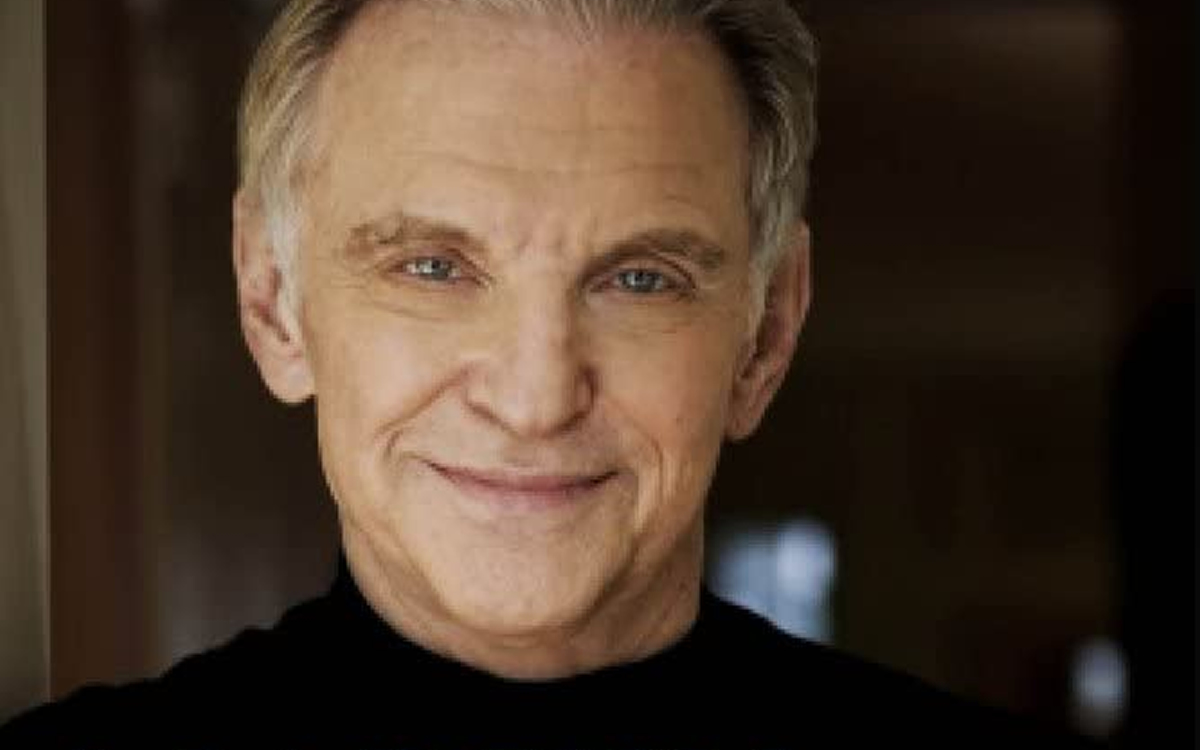
Renowned queer historian, playwright, author and LGBTQ activist Martin Duberman, 93, began writing stories when he was four. “They still exist,” Duberman, Distinguished Professor of History Emeritus at City University of New York (CUNY), told the Blade in a telephone interview. “They’re with my papers at the New York Public Library.”
Duberman doesn’t understand what drove him to create. “I’d write these moralistic tales,” he said, “hand-sewn inside covers. About how Alice learned to do what her mother told her to do.”
Duberman who has written some two dozen books as well as plays, hasn’t stopped writing.
Name most anything or anyone and he’s written about it: from the Stonewall Uprising to actor and civil rights activist Paul Robeson. His memoir “Cures” recounts how mental health professionals tried to “cure” him of his “homosexuality.”
When he was 70, he wrote “Haymarket,” a novel set in 1886 in Chicago during protests by labor activists.
His newest book “Reaching Ninety,” is a memoir. In it, Duberman recalls the people, events and work of his life – from coming out to his student years – to his relationships to his beloved puppy Emma (named after iconic feminist and anarchist icon Emma Goldman) to aging.

In “Reaching Ninety,” Duberman quotes the dictum “aging is not for sissies.” But, “The trouble is that I am one,” he adds, “It’s part of my cultural heritage.” There’s a thread running through his work, Duberman, who founded CLAGS: CUNY’s Center for LGBTQ Studies, the first university-based LGBTQ research center in the United States, said. “I’ve been trying to reinvent historical writing.”
It’s essential if you’re an historian and you’re presenting an account of past events, to remain true to the known evidence, Duberman said. “But you have to be clear,” he added, “the evidence that has come down to us is partial and skewed.”
At the beginning of his career as an historian, Duberman wrote with a more traditional view of history: that history could be known and chronicled objectively. As if the historian’s background had no impact on how they wrote history.
Duberman’s early work was well-received. His 1961 biography “Charles Francis Adams, 1807-1886″ won the prestigious Bancroft Prize.
But, as he matured personally and professionally, Duberman began to question the pretense of objectivity. He came to see that subjectivity is an essential part of writing history.
“The historian – with their own background – in their own time – is always present in the history they write,” said Duberman, who earned his Ph.D. from Harvard University in 1957.
Historians must adhere to the evidence, Duberman emphasized. “But, they need to decide to come clean about who they are even, in part, to write in the first person. To explain their reaction to evidence.”Historians’ reactions to the evidence they uncover about the past could impact how they write history, he noted.
Historians don’t always know the full extent of how their backgrounds contribute to their interpretations of history. But they should take it for granted that at least some of their eras and views are present, Duberman said.
“To me, the choice comes down to how explicit I should be,” he said, “and how am I going to make it known.”
This was a new way of thinking and writing about history. Take Duberman’s 1972 book “Black Mountain: an Exploration in Community.” In the 20th century, Black Mountain College was a community for artists. But it was, as per the times, homophobic. A faculty member of Black Mountain was arrested for having sex in a car with a minor, Duberman writes in “Reaching Ninety.” He was let off with a suspended sentence. He became an “instant pariah,” resigned immediately and no one from the community at the college offered any help, Duberman writes.
When writing his Black Mountain book, Duberman felt compelled to come out as gay. To be, as an historian, transparent about how his biography impacted his view of history.
“It’s hard to think well of a place that could cooperate as fully as Black Mountain did in an individual’s self-destruction,” Duberman wrote in his Black Mountain book about how the college treated the gay teacher, “indeed to have assumed it as foreclosed.”
“But perhaps I exaggerate, a function of my own indignation as a homosexual, a potential victim,” he added.
In 1972, when the book was published, Duberman’s coming out in his reaction to an incident in the history of Black Mountain College received mixed reviews.
He was denounced in historical journals. “The New York Times reviewer dismissed my coming out as a vaguely unclean bit of business,” Duberman writes in “Reaching Ninety.”
“Other people were well-disposed toward the book,” Duberman said, “they were academics, not historians.”
Historians are a conservative group of people, Duberman said. “They devote their lives to preserving — underline it — the past,” he said, “They’re not likely to be interested in any combined format that merges the past with the present.”
Duberman doesn’t have a clue as to what got him hooked on history. “It was inescapably an unconscious decision,” he said. “I was torn between literature and wanting to be a writer. To find out more about the past and how come we’re at the point of time that we are.”
When Duberman was a freshman at Yale University, the man who taught his history class was only five years older than he. “At his very first class we took to each other,” Duberman said, “and became friendly. He became a role model for me.”
“He just died at 99,” Duberman added, “we never talked openly about homosexuality. But I got the strong impression that he, too, was gay.”
Duberman, who was born in New York, wasn’t out in college or graduate school. Though, he checked out the two gay bars in Boston when he was at Harvard.
Coming out wasn’t an option for people in Duberman’s generation who came of age in the 1940s and 1950s. You could be arrested, expelled from school, kicked out of your apartment or fired from your job if you were open about who you were. People warned him “against coming out to any degree,” Duberman said.
Duberman and his older sister were raised in a secular Jewish household. His father, as a young man, escaped from working in a beet plantation in Russia to Germany and then to New York. His mother went to high school at night while working as a secretary.
From childhood on, Duberman was bitten by a love of theater. He went to theater camp and performed in high school plays.
As a student at the (then) boys prep school Horace Mann, he played female as well as male roles. One night, his friend Bob’s girlfriend noticed that Duberman was the “actress” who portrayed a “stewardess” in a play that evening, Duberman recalls in “Reaching Ninety.” “‘But you can’t be,’ she gasped, ‘you have such beautiful legs!’” Duberman remembers her telling him.
Duberman, a polymath, would grow up to become a privileged insider while remaining an observant, critical outsider.
His many honors include: the Vernon Rice/Drama Desk Award, three Lambda Literary Awards, a special award from the National Academy of Arts and Letters for his contributions to literature and the 2007 lifetime achievement award from the American Historical Association. He’s been a Pulitzer Prize and National Book Award finalist.
He and his life-partner, Eli, a psychoanalyst, have just celebrated their 35th anniversary. He’s revered for his pioneering work in queer history.
Yet, even though he’s white, cisgender, and privileged, Duberman hasn’t ever been complacent or content. He still remembers how horrified he was back in the 1960s when he taught at Princeton. “I taught about slavery,” Duberman said, “I was thunderstruck! The white, privileged undergrads were on the verge of defending slavery.”
“It shocked me,” he said, “I shouldn’t have been surprised. But I was.”
The more he taught, the more discontented Duberman got with, what he saw, as the authoritarian system of education at universities. “I didn’t see the teacher as an authority figure,” he said, “but as a fellow learner.”
Though he had tenure, Duberman resigned from Princeton because of this. Also, he dared to move from Princeton to New York. “Then, people at Princeton thought: How could you leave the loveliest town in the world,” Duberman said.
Duberman deplores Trump and anti-queer right-wingers. But he also has been a long-term critic of the LGBTQ rights movement. Queers should be less concerned about marriage equality and more concerned about issues of race, class, and economic justice, he believes.
“There’s resistance to Trump’s lies,” Duberman said, “and it’s appearing in the mainstream – in The New Yorker – even The New York Times.”
The electorate is the greatest roadblock to social change, Duberman said. “The LGBTQ community, like a lot of the country, is conservative,” he added.
Duberman isn’t feeling terribly optimistic at this moment. But, “I keep hoping that one of the upcoming generations will turn out to be different,” he said.
The Blade may receive commissions from qualifying purchases made via this post.




a&e features
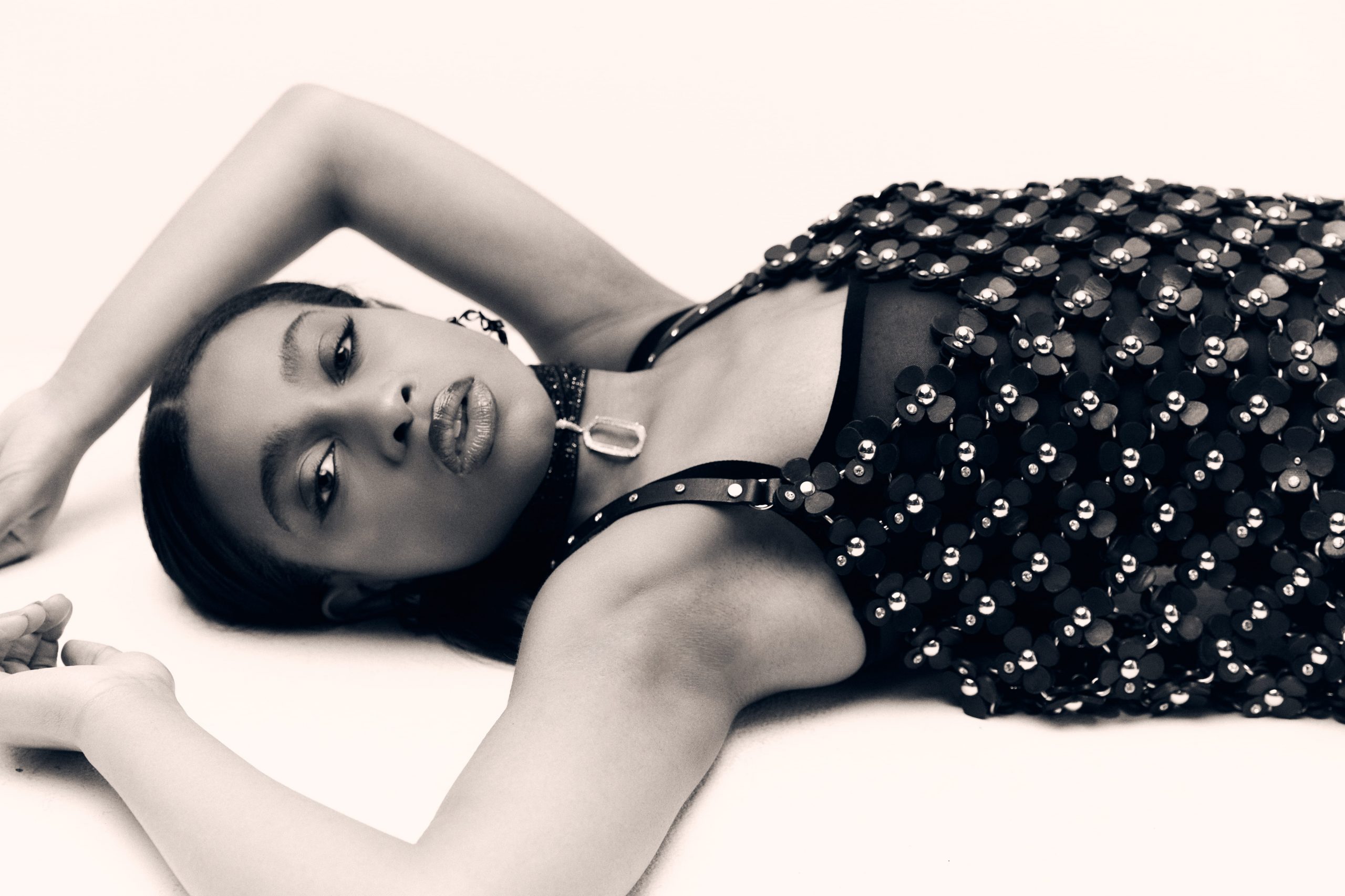
Taylor Tookes wants you to be your own beauty standard
This queer model wants her fans to be larger than life — even if they’re only 5’1”
There’s a certain truth when it comes to the fashion industry: it’s absolutely brutal.
It’s undeniable how much fashion drives culture; from the clothes folks wear to the influencers taking over social media, this endlessly complex business determines so much of your average person’s day-to-day life. With this being such a gargantuan industry, it’s no wonder why it’s so difficult to be a successful model — especially if you’re marginalized! While recent years have seen a welcome increase in LGBTQ+ models, models of color, and models who don’t fall into your typical beauty standards, it’s still immensely difficult for someone who’s ‘different’ to make it in fashion today.
Which is what makes Taylor Tookes so unique.
Standing at a proud 5’1”, this queer woman of color has spent the past few years dominating fashion in a way most models could only dream of. From making history as the first “short” model in New York Fashion Week to recently being named Glamour Bulgaria’s Woman of the Year, her accolades haven’t stopped rolling in since she began modeling a decade ago. But despite this, she detailed how much rejection she still faces today, with so many people (in and outside of the industry) using her identities to discredit her many years of hard work. It’s a constant negativity that can easily get someone down, but for Tookes, she just has one thing to say: “I really don’t care.”
“What really made me want to pursue [modeling] as a career was rejection, and hearing the word ‘no’ a lot,” Taylor explained. “I thought it was the dumbest thing ever!” She detailed the countless rejection letters she received early in her career, with a majority of them blaming their dismissal on the model’s height. “There’s a side of [this] industry that embraces all of my identities, but there’s also that side that’s like, ‘You shouldn’t be here. Why are you here? You’re too short. You’re too this. You’re too that!’” These questions are ones that Taylor has heard from the first few days of her career up until now, with many still questioning her role even after appearing in numerous legendary magazines. But Tookes doesn’t let this negativity get her down! She is constantly optimistic and embraces a positive outlook…one that anyone who’s been online has seen before.
Since childhood, most people who’ve consumed any aspect of American media have encountered the mantra of ‘’You’re beautiful just the way you are.” It’s an uplifting message that can be indescribably hard to follow; it’s easy to say “love yourself no matter what” when you aren’t bombarded by oppressive beauty standards or the stress of a 9-5 job. Even more, for queer people, it can be so difficult to focus on how amazing you think you are when there are so many others trying to convince you otherwise. Because of this, our communities have been at the forefront of calling out ‘toxic positivity’ and its unhealthy effects on influencers who haven’t known strife, chiding others for not being as effortlessly confident as they are.
With Taylor’s nonstop ambition and optimism, it can be easy for people to dismiss her mentality as this distinctly cheery brand of unrealistic. But anyone who actually speaks with the model understands that this confidence didn’t come easy — it’s one she’s fought to have in spite of the countless people who told her she shouldn’t.
Throughout the conversation, Taylor spoke about the many years when any one of her identities excluded her from the spaces that taller, straight models could access easily. Yet she described these moments not with sadness, but with verve. “It doesn’t really affect me in any negative way. I would say it falls under the ballpark of rejection for me, which just pushes me to keep going.” She is not someone who had this career handed to her. Taylor has proven herself as a hard-working person who faces adversity every day online, but recognizes that it all comes from people who don’t matter because they aren’t her.
“You kind of just have to remove your perception of yourself from other people’s perception of you…because really, the only perception that matters is your own. What you think of you is the only [opinion] that matters.” It’s a mantra that would sound hollow from a person who hadn’t faced hardship before, but that gains power coming from Taylor. But she knows that this hard-fought mentality isn’t easy for everyone to, which is why she fights for her communities both on and off the runway. “Representation is really important [to me]….to see someone like yourself in the industry out there like you. So you can have the mentality of, ‘Hey, if they can do it, I can do it too.’” Along with breaking barriers, recent years have seen Tookes begin advocating for fresh faces in not only fashion, but media as a whole. She and fellow model Victoria Pousada recently began The Starter’s Block, an organization dedicated to amplifying indie projects and helping independent talent like they once were to find their place in the film industry.
As the conversation came to an end, Taylor Tookes emphasized that she may be one of the first short, queer women of color to conquer fashion — but she won’t be the last. She urged anyone with her identities to join her on the covers of magazines, to be brave and try while remembering that rejection is just fuel in the fight to follow your dream. And for those who may not want to walk a runway but just want to feel beautiful in a world constantly telling them they’re not, Taylor advises them to say what she tells herself whenever she feels down.
“I just remind myself: Don’t listen to them. You’re that girl…I remind myself of who I am, why I’m here, and what my mission is. [I just need] my own validation — and no one else’s. It all depends on me.”
a&e features
Revry Co-Founder Damian Pelliccione on why we need ‘King of Drag’
The co-creator of this hit series speaks about its impact — and what fans can expect from season two!
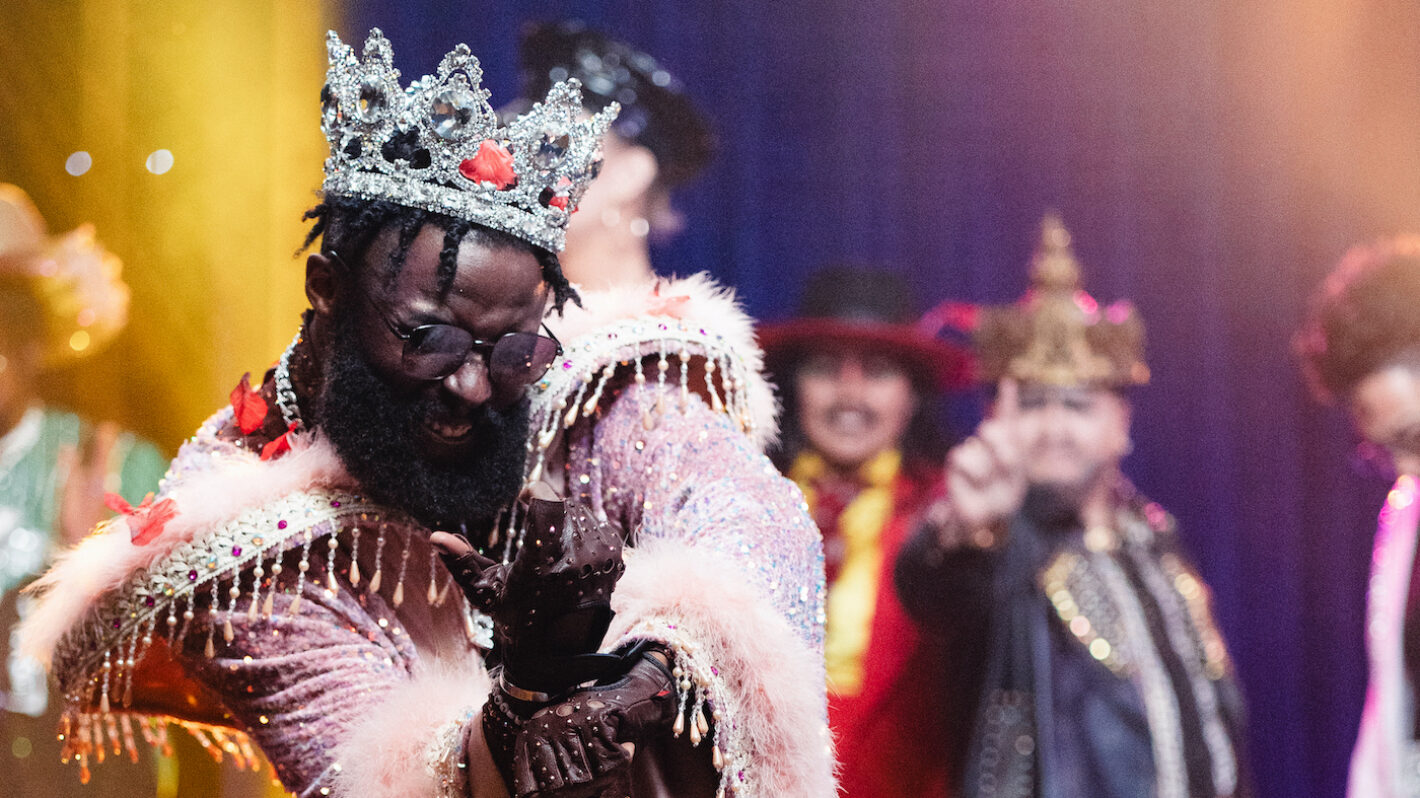
King of Drag, the only drag king competition show on TV, activated the LGBTQ+ community with a big bang, and it’s clear why. Despite an increase in drag-centric media, this was the first series deliberately focusing on spotlighting these kinds of artists. Even a year after its premiere, fans are still raving about the show, with season one delivering a level of kingly charisma nobody could’ve expected — making it all the more exciting when it was announced that King of Drag was officially casting for season two!
As co-founder of Revry — the LGBTQ+ streaming service that hosts King of Drag — and co-creator of this hit competition show, Damian Pelliccione understands the power that media has on its audiences. It’s why they work every day to create LGBTQ+ content anyone can enjoy, and it’s why they fought to get King of Drag televised and ensure it was a space where kings could finally be celebrated. Sitting down with the Los Angeles Blade to discuss the series’ season two announcement and what it’s meant to be a part of such a trailblazing franchise, they started this interview by making one thing very clear: “We’ve always been fully invested in casting and promoting Drag Kings on our shows.”
The co-founder spoke about how representing marginalized identities has always been an integral part of Revry’s mission. “We’ve always been very inclusive in our casting to make sure that we [work with] kings just as much as we work with Queens.” It’s a sentiment that, unfortunately, most other drag-centric series don’t share. RuPaul’s Drag Race, especially, has been criticized for refusing to cast anyone who wouldn’t fall under the umbrella of ‘queen.’ And while subversive programs like The Boulet Brothers’ Dragula do allow drag kings to compete, the show typically only allows one or two each season, meaning that there’s only a short time to discuss the boundless intricacies that exist in this art form.
This means that while drag king representation exists, it’s only been a trickle amidst the wave of awareness that drag queens have received in recent years. This phenomenon never sat right with Damian and their Revry team — so they decided to do something about it.
After years of searching for sponsors to get the show made, King of Drag officially premiered in June 2025 to widespread acclaim. Fans were instantly taken by the bombastic competition; while its format is similar to many other series’, the hilarious judging panel (led by the amazing Murray Hill) and jaw-dropping challenges were endlessly zany while also perfect avenues for contestants to show their immense talent. Almost growing emotional, Pelliccione recounted the widespread support the series received after its first few episodes, saying, “[Viewers] come forward to say, ‘Thank you for creating something that is not just about fighting or cattiness.’ It’s an elimination show, but you could see the authenticity in the heart of these kings…you could see their struggles, and [what it took] to create their art.” They fondly described the love this project hasn’t stopped receiving since it first came out — but they also detailed the rampant hatred that has come along with it.
It shouldn’t be forgotten that King of Drag was produced and aired early into the current presidential term, with the early months of 2025 seeing a level of anti-trans and homophobic rhetoric filling the U.S. in a way many viewers had never seen before. Damian recalled how, in the face of this hatred, their team understood that audiences needed King of Drag now more than ever. “It’s somewhat an act of defiance having a show like King of Drag — and having a network like Revry [altogether],” they said, filled with pride. “You can’t stop progress, and we’ve already come so far as a society (at least, I hope we have), so going back does not seem realistic. And I think that we’re seeing resistance now to our sitting government, and hopefully this carries into our midterm elections!”
A resistance that was buoyed by King of Drag, with each episode introducing viewers to nonstop drag excellence and thoughtful conversations on what it means to be a queer artist today. This, combined with the wild challenges — ranging from queer quiz shows to boy band performances — turned the initial installment into a raucously prideful experience for everyone watching. For almost a year now, fans have applauded all that the show was able to accomplish, and Damian assures these viewers that there’s even more coming in season two.
“Some of the biggest things we’re really excited about in this season are [not only] a few returning challenges, but we are [also] really bringing on a whole new level of celebrity guest judges,” raved the excited co-creator. “We’re really tailoring our [judges] so that they could be a kind of mentor or advisor. [Helping] build something that the king can use for their future career!” It was this point especially that Damian emphasized as the heart of King of Drag, recognizing that while having your time in the spotlight is amazing, bills still need to be paid when the cameras are shut off. “I want kings who come off our show booked and blessed. What else can we do as a network just to help support those careers?’”
With the interview coming to an end, Damian was asked the question that thousands of drag kings are currently thinking: how can I get cast? Typically, producers answer this style of inquiry with vague advice about uniqueness and skill — but not Damian. Still wanting only the best for their contestants, they plainly stated, “My one word of advice: this is not a side hustle.”
“The purpose of being on the show is to create a career for you…We want people who are really serious about the art form and have their own specific take on what it is to be a drag king. We want your authenticity, and we want to see that this is a career path for you. We [want to know] that this is something that you’re ready to take to the next level.”
An ambitious yet thoroughly uplifting goal for the many kings currently getting their applications together. And with that advice, the creator made one thing very clear: King of Drag exists not only to spotlight drag kings, but to bring them and their art form to the forefront of queer entertainment. It’s a revolutionary undertaking that viewers can watch unfold in each scene, and if a drag king feels ready to join in and become a part of this mission, Damian invites them to gather up their best drag and apply for season two today.
King of Drag season 1 is streaming on Revry
a&e features
‘Pee-wee as Himself’ and ‘Lurker’ directors on how queer audiences have reacted to their Spirit Award-winning films
“It’s been revelatory for young people,” Matt Wolf said of telling Paul Reubens’ coming out story

This year’s Film Independent Spirit Awards winners told wide-ranging stories of everything from Paul Reubens’ posthumous coming out in Pee-wee as Himself to a fictional homoerotic relationship that forms between an artist and his biggest fan in Lurker.
With such a diverse group of winners, these filmmakers reflected on how queer people and young audiences have responded to their work.
“I’ve talked to people whose kids have seen the film, and young kids don’t understand what the closet is,” Pee-wee as Himself director Matt Wolf told The Blade backstage. “As a younger, gay filmmaker, I felt like I could help him do that on his own terms. It was a big deal for Paul. It’s interesting to hear from people’s kids who don’t understand the struggle.”
Wolf continued: “It’s been revelatory for young people in that sense, but also I’m hearing from people that their kids are now watching Pee-wee’s Playhouse, and that they love it. And you never know, does this thing look old? Does it feel outdated? [His films are] so otherworldly, and I don’t think young people register it as being from any time.”
Lurker director Alex Russell (who previously wrote on Beef and The Bear) nabbed awards for best first screenplay and best first feature, and Théodore Pellerin and Archie Madekwe were nominated for their performances. Russell’s win is a testament to Film Independent’s legacy of embracing new generations of filmmakers and storytellers.
While accepting the award for best first screenplay, Russell recognized the creatives who took a chance on him, saying: “I want to thank everyone who was willing to look stupid and put even just a sliver of themselves on the line to legitimize all these new filmmakers here tonight, who, without you, would still be aspiring to make their first movie.”
Backstage, The Blade asked the breakthrough filmmaker about how queer people have responded to the film’s thorny take on male relationships.
“I don’t know if the queer community has reacted to me personally. There’s an interesting discussion in what Matthew and Olivier’s relationship is all about … and where they stand on the spectrum,” Russell said. “I want people to think about that, I want people to think about the ambiguity of that. That being said, if the queer community wants to talk to me about it, I’m here!”
Pee-wee as Himself is available to stream on HBO Max, while Lurker is on MUBI.
a&e features
Liveplay series ‘Gladlands’ finds hope in the unlikeliest of places
The cast of ‘Dimension 20’s’ latest season discusses bringing chaos and community to their many loyal fans.
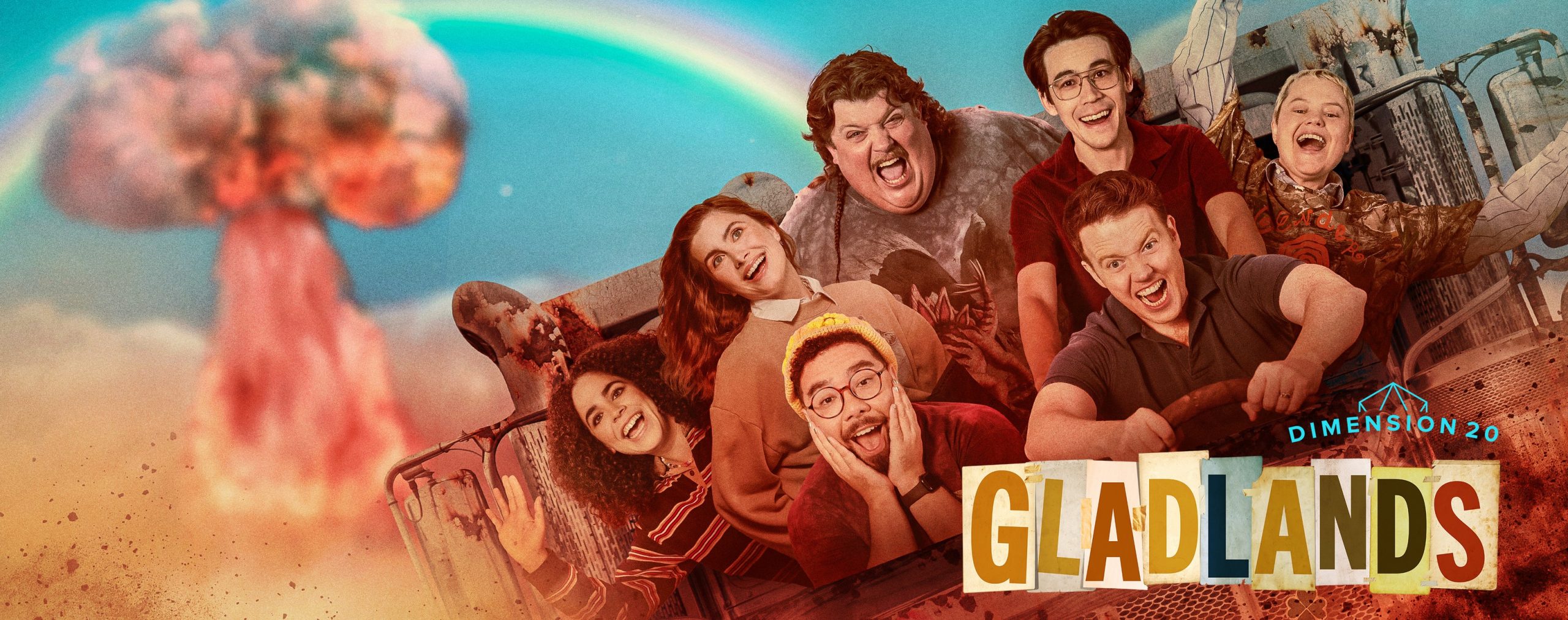
Sometimes, it takes everything falling apart for us to remember that community is what holds us together.
It’s a lesson that many people have learned in recent months. Amidst the ongoing attacks against LGBTQ+ and immigrant populations, folks across the country have come to realize just how important community is to each of our daily lives.
Now more than ever, marginalized communities need to remember that oppressors have always used grief to further disenfranchise the people they’re attacking. And that, as laughable as it seems at times, the best response to others’ hatred is to love one another; to foster strength and joy amongst our own groups to ensure we have the fortitude necessary in the ongoing fight against bigotry. Many projects have tried to remind folks of this message…and one just so happens to be a tabletop roleplaying game (TTRPG) set in a post-apocalyptic — and so, so queer — wasteland.
Gladlands is the latest season of Dimension 20, a renowned TTRPG liveplay series that sees groups of LA-based performers tackle some chaotic new narrative every season. The show’s newest installment takes place in a barren wasteland, with all cities and symbols of civilization reduced to rubble after a multi-year ecological crisis (which just so happens to resemble the one we’re currently fighting right now). The cast, which features a majority LGBTQ+ group of LA-based comedians, plays a team of folks trying to help as many people in this hellscape as possible, reminding every survivor they come across that it’s easiest to get through the hard times when we’re in them together.
The cast of Gladlands sat down with the LA Blade to discuss this poignant message and how it feels to deliver it when folks need it most. They speak about their roles in the series, their personal lives as local artists in Los Angeles, and how it’s fun pieces of media like this that can get folks through the toughest times. They raved about this complex project and what they hope it will bring to everyone who watches, with each player emphasizing Gladlands’ core message: you are not alone.
As strange as it may seem to people not in the community, it’s not uncommon for role-playing games like Gladlands to touch on issues real people struggle with every day. “It really is transformative,” said Oscar Montoya, who plays the fierce Drag Queen librarian ‘Poppy Persona’ on the season. “There’s a little bit of your soul that goes into every character that you play…and there’s so much self-realization that comes when you play TTRPG that you [may not] even recognize!” It’s a sentiment that fellow player Kimia Behpoornia, who plays the skateboarding cockroach-human hybrid ‘Tess Tube5,’ echoed, stating, “[These games] help people feel so validated.”
The cast reiterated how it’s these sessions of fantasy that often allow people to grow in very real ways. That’s why they believed it was the perfect platform to spread the message of love threaded throughout Gladlands, a season that sees their group of apocalyptic advocates — members of the legendary ‘Carer-Van’ — drive across an endless desert in search of anyone who needs help. An eclectic group of humans and mutants, each episode sees them work hard to see the good in their fellow person and flex their many skills to assist those in need.
“It’s really nice that this season is here [during a time] when it really resonates,” Kimia went on. “But it’s kind of the simplest idea [ever] to want to help your community!” Vic Michaelis, whose plague mask-wearing character ‘Hugi’ is the apocalypse’s only mortician, stressed that the show’s message is one that everyone needs to remember right now. “We’re living during a time [when] community is very important…but there’s no way [when we were filming] that we would’ve known the season would come out at a time like this. But [we are] watching people dig down right now and go, ‘We are taking care of our community.’” They reminded everyone watching that this kind of communal care is not only inspiring, but also threatening, saying, “That strikes fear amongst people in power. There is success in coming together to protect your community, [which I think] reflects the themes of Gladlands.”
“Trying to stay glad is, in itself, a form of resistance,” Agreed Jacob Wysocki, who portrays the warm and cuddly caretaker KoKoMo. He detailed how, through their characters, each player hoped to offer viewers models of the many behaviors that allow real communities to flourish. On that in particular, he gave credit to the season’s dungeon master, Brennan Lee Mulligan, saying, “He built this world because he looked at the [real] world we’re in and [asked], ‘Does it take a fully post-apocalyptic world to get to a space where community [comes] first?’”
“Baby — we live in the post-apocalyptic times right now!” Said Montoya, whose time as a Los Angeles activist has given him special insight into how this city’s communities have been struggling. “[But] I think the important thing to realize is that we create our own Gladlands…the message of community coming together to combat adversity is so paramount, especially right now. To have a collection of people you can lean on and say, ‘We don’t like this. We don’t stand for this. Let’s create something together.”
Each cast member agreed that, while a lovely sentiment, the messages broadcast through their show are easier said than done. But they each emphasized that you don’t need to be part of a roving band of super-powered caretakers to do good — and that no matter what, this kind of work should never be done in solitude. “[Remember] you’re not in it alone,” emphasized Montoya, as the interviews came to an end. “You are a part of a community that can enact change. And know: they’re trying to take that away from us. They’re trying to make us feel smaller and less than. [But] you have to recognize that we have the power…especially when it feels so overwhelming. Because it is then that you have people who have your back, who will continue to have your back [no matter what].”
An uplifting message of community, wrapped up in a chaotic season of jaw-dropping dice rolls and truly wild character arcs. Gladlands showcases that, sometimes, the most important lessons come in the most surprising packages. And, with each of these performers at the helm, it highlights the core message of this series as a whole: you’re never alone in the fight for community. And true freedom starts with being there for your neighbors, making sure that you all have what you need for whatever may come next.
a&e features
Tello Films: Celebrating 19 years of lesbian storytelling
Tello Films proves that, after 19 years, independent lesbian filmmaking is as necessary as ever.
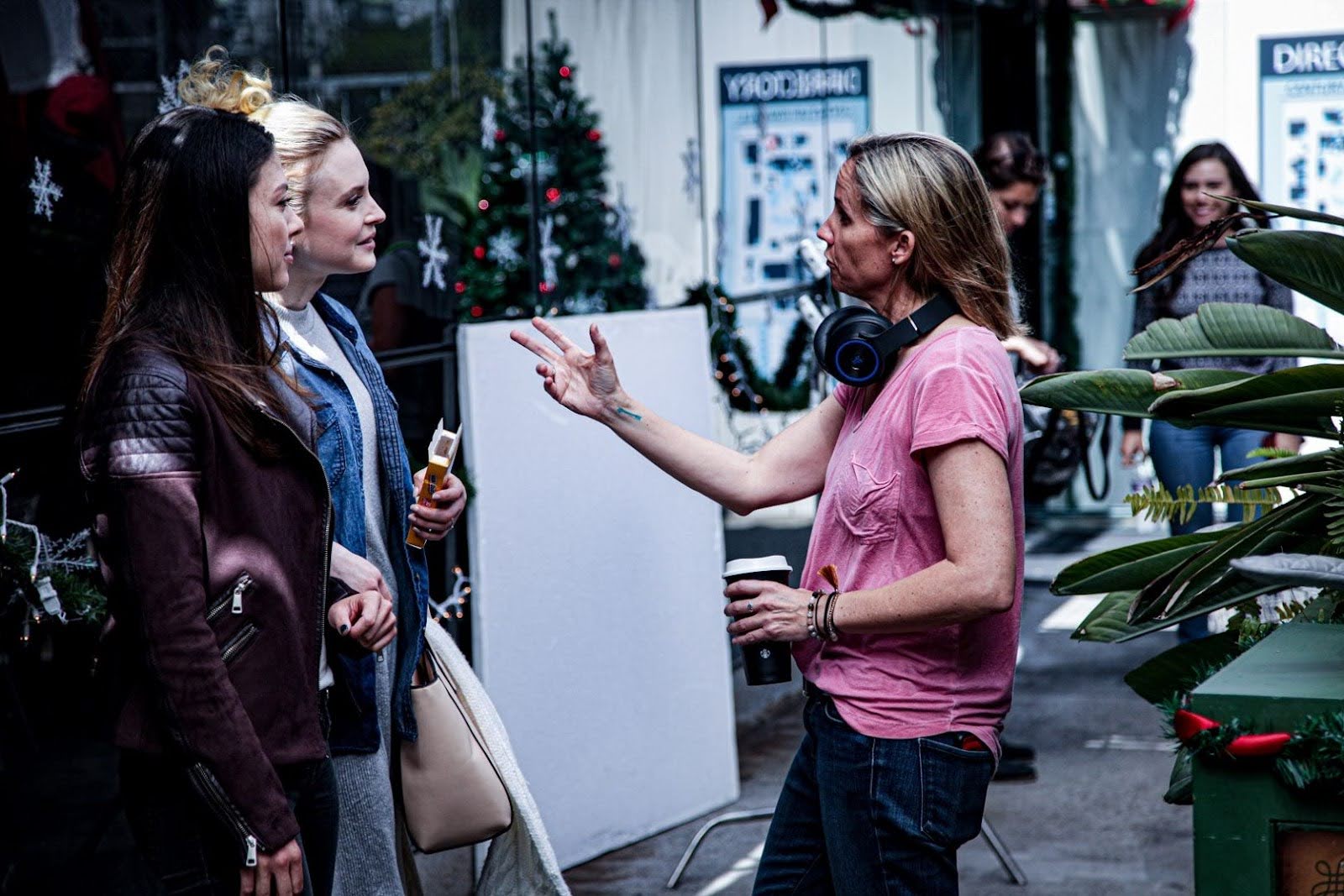
In an era where LGBTQ representation in movies has hit a three-year low, Tello Films proves that, after 19 years, independent lesbian filmmaking is as necessary as ever. According to Sarah Kate Ellis, the CEO and President of GLAAD, “Nearly ⅓ of non-LGBTQ Americans say that LGBTQ inclusive films have changed their perception of our community… It is imperative that networks and streamers do not back down.”
Meanwhile, the lesbian streaming service Tello Films celebrated its 19th birthday on February 6th. Says founder Christin Baker, “When I started it 19 years ago, I thought at some point maybe we wouldn’t be necessary, […] I really do feel like representation saves lives…it’s still important for us to be around.” Often referred to as the “Lesbian Netflix”, the Nashville-based production company has a primary focus on lesbian and sapphic stories for the past 19 years and thankfully, is just getting started.
Tello Films was far ahead of its time. For those of you who didn’t live through or don’t remember, 2007 was a different time. Apple debuted the first iPhone, Barack Obama declared his run for the presidency, and the phrase “that’s so gay!” was prevalent as ever (at least at my high school). “We didn’t have marriage equality at that time. Civil unions were kind of starting here and there -the crazy thing (is that) ‘Don’t Ask Don’t Tell’ was still in effect.” Baker recalls, “There were still so many rights we didn’t have in 2007 when we started it, and we are still fighting for it.”
Tello Films’ beginnings were just the start of the lesbian legacy. Said Christin, “I never thought Tello would or could ever be my full-time job.” With the URL TelloFilms.com registered on February 6, 2007, the platform was an internet-based streaming company with all its movies formatted small to appease a 2007-era browser. While Netflix was only just beginning to offer streaming services, launching any streaming service in 2007 was bold; to launch a streaming service entirely devoted to lesbian and sapphic stories was revolutionary. “I want to make lesbian stories.. I want to see things that represent me.”
In the past 19 years, Baker shares her career-defining moment came from the recently deceased Nancylee Myatt, showrunner for South of Nowhere. “We made a short-form series called Cowgirl Up. I felt like I put my big girl pants on. Nancylee was a huge mentor, and I was like, ‘Oh, I can do this. I can do this, and I can figure it out.’”
Tello went on to receive their first primetime Emmy nomination with Mindy Sterling of Austin Powers fame for Outstanding Actress in a Short Form Comedy or Drama Series. “We got two daytime Emmy nominations for two actresses, Liz Vassey and Carolyn Radere […], then in 2018 we made our first lesbian Christmas movie,, Season of Love and that really kind of started us down the path, and I think we’re probably most well known for, which is our lesbian holiday rom-coms.”

We now live in the era of Chappell Roan, Doechii, Heated Rivalry, and so many more queer artists and pieces of media in the mainstream’s consciousness. The last several years in pop culture have proven that queer art and artists matter, not just as a salve to a society that still struggles to accept us, but to the mass audiences who continue to resonate with it.
Queer media is being devoured by folks outside of the LGBTQ community. “I think it (Heated Rivalry) shocked so many people (because) it was powerful and compelling […] I wasn’t that surprised because I remember Brokeback Mountain being very much in that same vein; it was just cowboys instead of hockey players.” Authenticity and overcoming adversity are not just tenets of good storytelling; they are also ever-present themes within the lives of any queer you know.
As Christin sees it, the success of Heated Rivalry isn’t just rooted in its unabashed sexual themes, it has a very universal “lesbian” approach to its storytelling “There’s a ton of longing, and missing, and having a crush and not knowing if it’s reciprocated, […] there’s a lot that you tap into just on a human level that Heated Rivalry really touched on.”
Themes that are at the forefront of the sapphic stories Tello has mastered telling. “We still don’t have enough LGBTQ holiday Christmas movies out there each year. Some people wouldn’t look at a Hallmark movie or Christmas rom-com as substantive, but I really do feel like representation saves lives.”
For so many in the LGBTQ community, representation isn’t theoretical- it’s personal. I know for myself, in the throes of a messy divorce, one of the only things that brought me comfort was the sapphic films on Tello. It was so difficult to find lighthearted queer stories. I recall searching through every streaming service as they were slowly but surely eliminating the LGBTQ sections from their apps, as well as those queer characters and shows. But not Tello; I was able to find comfort and ease through a tough time in my personal life. “It’s such comfort, especially if you’ve gone through something that’s tough and your regular daily life is stressful, you need an escape to something that you know is not going to cause more anxiety.”
Having accessible ways to both tell and consume sapphic stories is tantamount to this moment in time. Independent filmmaking has the power to make sure authentic stories are heard. Being an independent voice as well as being able to support smaller budget stories that definitely wouldn’t get picked up, or even recognized or seen in mainstream, Christin and Tello Films are uplifting not just lesbian and sapphic stories, but lesbian and sapphic artists as well.
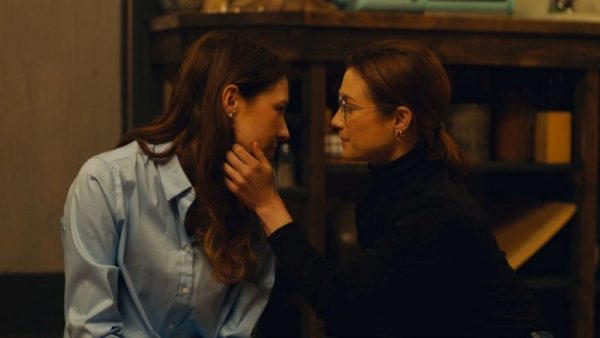
As for the future of lesbian filmmaking, it’s no secret that Hollywood is drowning, leaving a void for people like Christin and Tello Films to fill. Said Baker in light of the shrinkage in Hollywood and what that means for Tello Films, “We will get even more creative and tell even more stories, because we can’t be stopped.”
Encouraged by her fiancée, Stacey Lee Powell, Christin wants the world to know that Tello Films isn’t just a business, it’s personal. “I see Tello as an extension of me.” Says Baker, “In doing that, I hope that people see that Tello isn’t some corporate entity, I hope they see that it is someone who cares deeply. I’ve been doing this for 19 years, and every day I wake up trying to figure out how to tell our stories and how to serve our community.” Nineteen years later, Tello Films remains what it has always been: not a nameless, faceless corporation, but an extension of a storyteller’s dream to build a safe space for her community.
Check out TelloFilms.com
a&e features
From ‘So Random’ to sexy theater: LA’s very own Mathew Scott Montgomery
This former Disney star breaks down their new play, ‘Foursome,’ and the security of performance.
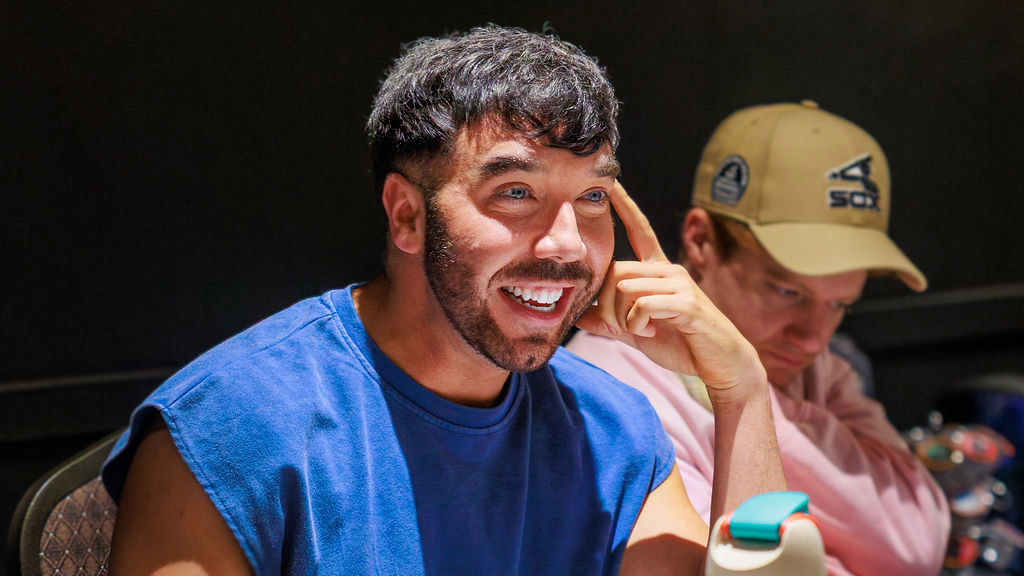
Even in a Los Angeles filled with experimental theater, few projects have been as brazenly sexual as the IAMA and Celebration’s Foursome. Following a quartet of queer friends as they embark on a weekend getaway, this play watches as they uncover the secrets (and attractions) that have always lurked in the shadows of their longtime friendships. Filled with niche community references, heartfelt vulnerability, and some of the spiciest live sex scenes audiences will ever see, Foursome is proving itself as an innovative look into queer sexuality — and none of it would have been possible without The Disney Channel.
Matthew Scott Montgomery began his career on Disney with one goal: pull focus. He quickly found out that he was a tad too good at this; in his conversation with the LA Blade, he detailed the many times his early onscreen performances were cut down because he was considered ‘too distracting.’ From starring as an extra in Zendaya’s Shake It Up to leading the SNL-style So Random!, his childhood career saw Montgomery flexing the bombastic personality he still carries today. And while the goal of this interview was to speak with the performer about Foursome and his time with Disney, the first few minutes were spent discussing an equally important portion of the man’s life: the Hilary Duff concert he’d seen at The Wiltern the night before.
“[I’d] spent all day in rehearsals with three of the best queer actors in the world, and [then I left] to go to a Hilary Duff concert in LA with my boyfriend, as a gift from [Demi Lovato],” raved Matthew. “I burst into tears because it hit me: none of this would’ve happened if I hadn’t come out…I wish I could go back to ten-year-old me back in North Carolina and [tell him], ‘One day, you’re going to leave your gay play rehearsal, [meet up] with your boyfriend, and go to a Hilary Duff concert. And everything is going to be okay.”
Matthew remembered this little kid from a conservative hometown who dreamt of nothing more than boyfriends and Lizzie Maguire in concert. He explained that his area of North Carolina didn’t allow for any level of dramatics from young boys — something that definitely didn’t mesh with this gay child who felt safest when he was onstage.
“When I was a kid, I used to record episodes of Will and Grace [on the VCR], write down the dialogue, then go into my room and run the scenes [when everyone was asleep]…I’ve always identified as an artist, and I was desperate to perform,” said Matthew, reminiscing on his early days as an artist. “I think the safest place in the world is on stage or in front of a camera, because you know exactly what you’re going to say. You know what your lines are, which mark you’re gonna hit…everyone is watching you, and you’re being perceived, and it feels so safe. I get nervous off camera, because then you don’t have a map of what’s happening.”
Performance has always served as both a passion and a safety for the actor, with Montgomery laughing at the many years he spent acting out his favorite shows in the sanctity of his childhood bedroom. Luckily, he eventually took these skills to a giant stage most kids could only dream of: The Disney Channel.
After years of hearing the terrible experiences of so many child actors, it’s heartening to learn how validating Montgomery’s early time on TV was. He told stories of Disney gigs and fun hangouts with queer stars like Haley Kiyoko and Demi Lovato, people who he still considers close friends today. “We would talk about our queerness and how to navigate it,” he said, showing love to the tight-knit network that these closeted children created for one another. It was because of their support that he had the courage to come out in his early 20s, with this new self-acceptance allowing Matthew to take on openly queer projects and even begin writing his own — cue Foursome, his latest creation and certainly the sexiest one yet.
Foursome sees the actor as Noah, a young man whose weekend at a cabin with three friends turns into a night of revelry as loosened inhibitions lead to shocking confessions. On why he created a project centered on modern sexuality, he explained, “I think there’s a really beautiful thing about the queer community where we can love each other through different evolutions of our friendships…this play is really about celebrating that freeness, and having a very frank discussion about what it means to be a queer person in a relationship in the modern day.”
The project douses this exploration into contemporary sexuality with so much pop symbolism that it’ll be relatable for any LGBTQ+ person watching. From the pop songs our main cast sing to the community-based slang they throw at one another, the writer wanted to instantly clue queer watchers into the fact that this was made for them by one of their own. And it’s that, he stressed, that is the goal of not only Foursome, but his entire career: making other people feel seen.
“What’s most important to me is queer joy,” Matthew stated, as the conversation came to an end. “Showing queer people having a good time…I think that can be a radical thing, especially with the way the world is right now. We’re going to be gay, and we’re going to be fun, and [our goal] is to have you join us in that fun.” He promises that Foursome will be a summation of his decades-long career of making people laugh, combining his uniquely gut-busting brand of humor with an earnest discussion around how our communities form relationships outside of heteronormative ideals. He invites everyone to come see Foursome and, in its nonstop joy, hopes that by creating this kind of inclusive art piece for viewers, he’ll be imparting onto them some of the security he’s always felt onstage.
And when asked if he had any final enticements for potential watchers, Montgomery adorned the smile that he’s worn since his Disney days and stated, “Well, we do say that the title, Foursome, is a promise — and we absolutely deliver.”
Foursome will have its world premiere with IAMA Theatre Company, produced in association with Celebration Theatre. Performances are at the Atwater Village Theatre, 3269 Casitas Avenue, Los Angeles, and plays now through March 23. Tickets ($30-$45) are available at iamatheatre.com
a&e features
Angel McCoughtry, “Renaissance Woman”
Angel McCoughtry is a professional athlete. A two-time gold medalist, 5-time WNBA all-star, philanthropist, and now filmmaker.
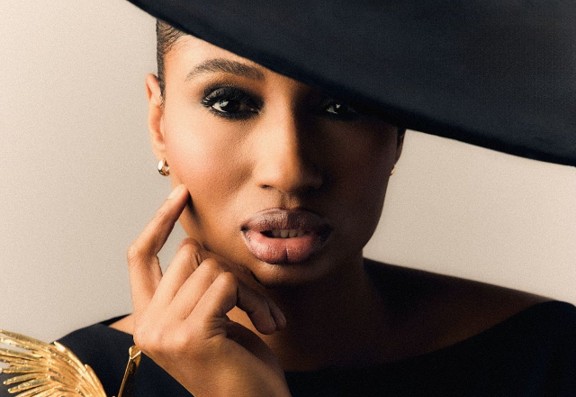
“Renaissance Woman” is a term fit for a queen. Heavy is the head that wears the crown, but we’re in luck because Angel McCoughtry is a professional athlete. A two-time gold medalist, 5-time WNBA all-star, philanthropist, and now filmmaker, Angel has built career(s) defined by reinvention and an insistence on excellence at every turn.
Her move to take charge behind the camera comes at a time that feels anything but divine. In a time where stories like Heated Rivalry bring the heat (pun intended) one moment, while nearly half of all queer characters and stories are vanishing from TV the next, McCoughtry’s leadership behind the camera signals something hopeful: A refusal to let anyone or any story get left behind.
A WNBA legend, McCoughtry played ten years without pause, splitting her time between the W and overseas leagues. In college, she led the Big East Conference in scoring, rebounds, and steals, obliterating records, even the ones she herself set. The number one draft pick and Rookie of the year in ‘09, McCoughtry quickly became one of the best players the W has ever seen. Though she never officially retired, Angel hasn’t played in the W since 2022, when she was sidelined for an injury that she has since healed. (Ya hear that WNBA? Our girl is ready to come back!)
Being forced to step away from the game brought about a reckoning that is all too familiar to elite athletes everywhere: “Who are you when your body won’t let you perform?” Through detangling this identity crisis, McCoughtry found a new appreciation for storytelling, the stories we tell ourselves as well as the stories we tell the world. Angel’s innovative storytelling and directing style are inspired by basketball, as she likens herself to the Dawn Staley of film, adding, “When you allow your players to be free, they can play at their highest level, and that’s what I allow my actors to do.”
Inspired by her grandmother’s stories of playing ball in a time when women were not allowed to cross half court and had to wear skirts, Angel wants to empower resilient perspectives. “I can’t keep their stories hidden,” She says, “The women who paved the way.” Laser focused on bringing scripted sports films to the mainstream, McCoughtry says, “I’m looking for stories that resonate with the people, and I want to be the one to bridge the gap and bring women’s sports scripted content to the forefront.”
Through McCoughtry Entertainment, Angel wants to bring women’s sports to the forefront as well as genre-driven films, particularly sports-thrillers led by women. Her short film Bygones is now available to stream on Prime Video, with more projects in the barrel. Her feature-length directorial debut, Bolted, is on deck as her next project. I personally would love to see the gay women’s version of Heated Rivalry in McCoughtry’s hands, who says, “There’s a realness to it,” about the show, “That happens often, and it’s not talked about [..] that’s all over women’s sports.”
“I am obsessed with stories about overcoming adversity,” says McCoughtry, an apt throughline in Angel’s work that reflects the spirit of creativity and athleticism.
a&e features
Alexander Skarsgård describes ‘Pillion’ in 3 words: lube, sweat, leather
Highly anticipated film a refreshingly loving look at Dom-sub life
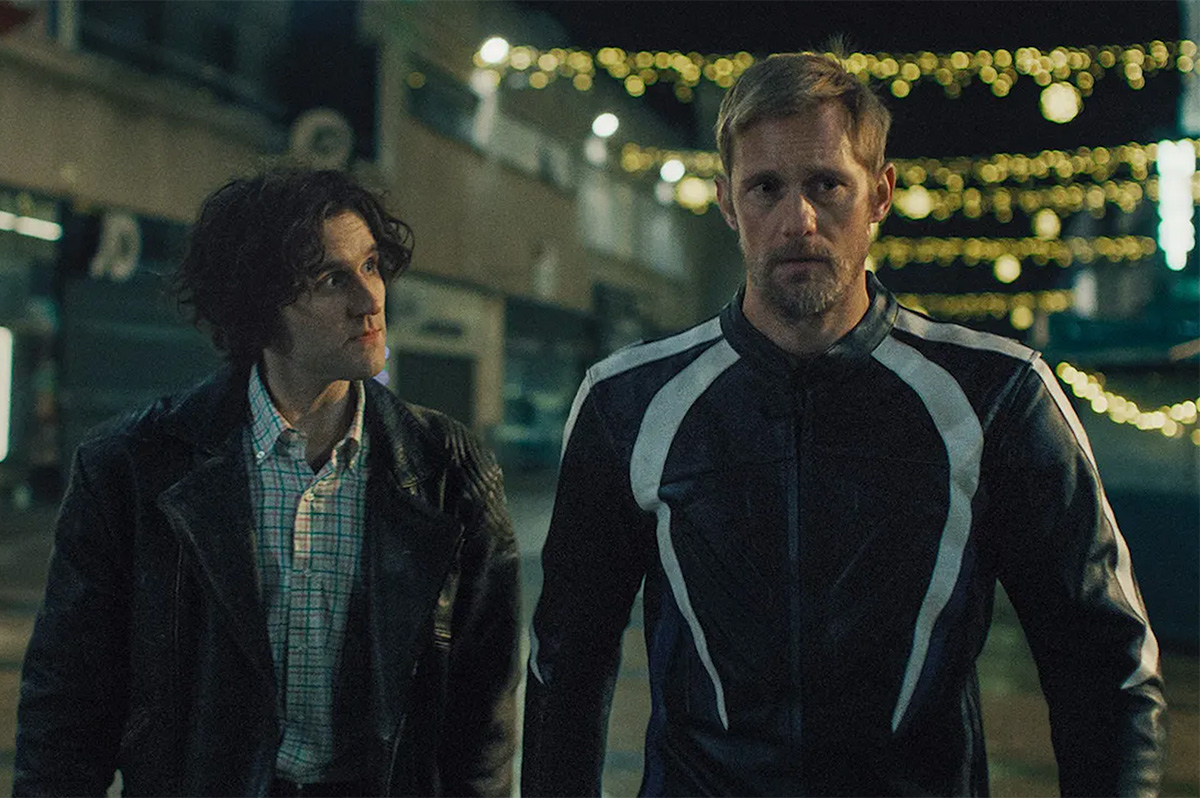
Whether you’ve seen him in popular HBO series like “True Blood,” “Succession,” and “Big Little Lies,” the dynamic Swedish actor Alexander Skarsgård has that smoldering gaze that immediately draws viewers in.
Following in the footsteps of his father Stellan, (who just won the Golden Globe for “Sentimental Value”) the Golden Globe, Emmy, and SAG winner Skarsgård continues to be an actor who is fearless in the roles he takes on.
That courageousness is evident in Skarsgård’s latest film, the BDSM black comedy “Pillion,”which he also executive produces. He plays Ray, the handsome, hyper-dominant leader of a gay bike gang. The film was written and directed by Harry Lighton, and is based on the 2020 novel “Box Hill,” by Adam Mars-Jones.
“This was a small film by a first time filmmaker and it wasn’t financed when I read it,” Skarsgård told journalists at a recent awards news conference. “And I felt that, if I could help in any small way of getting it financed, I wanted to, because I thought it was such an incredible screenplay and I believe in Harry Lighton so much as a filmmaker. And it felt tonally unlike anything I’d ever read. It was such an exciting, surprising read.”
Skarsgård was blown away by the quality of the unconventional script. “When I heard BDSM relationship, biker culture, I expected something very different. I didn’t expect it to have so much sweetness and tenderness and awkwardness.”
For the sex scenes and nudity with co-star, Harry Melling — who excels in his portrayal as Ray’s submissive Colin — Skarsgård talked very early on with Lighton about how he wanted to shoot those scenes, and why they were in the film.
“I often find sex scenes quite boring in movies because a lot of the tension is in the drama leading up to two people hooking up, or several people hooking up, as in our movie. But what I really enjoyed about these scenes — they are all pivotal moments in Colin’s journey and his development. It’s the first time he gets a blowjob. It’s the first time he has sex. It’s the first time he has an orgasm. And these are pivotal moments for him, so they mean a lot. And that made those scenes impactful and important.”
Skarsgård was happy that Lighton’s script didn’t have gratuitous scenes that shock for the sake of just shocking. “I really appreciated that because I find that when this subculture is portrayed, it’s often dangerous and crazy and wild and something like transgressive.”
He continued: “I really love that Harry wanted it to feel real. It can be sexy and intense, but also quite loving and sweet. And you can have an orgy in the woods, rub up against a Sunday roast with the family. And that kind of feels real.”
One of the obstacles Skarsgård had to work with was Ray’s emotionally distant personality.
“Ray is so enigmatic throughout the film and you obviously never find out anything about him, his past. He doesn’t reveal much. He doesn’t expose himself. And that was a challenge to try to make the character interesting, because that could easily feel quite flat…That was something that I thought quite a lot about in pre production…there are no big dramatic shifts in his arc.”
For the film, Lighton consulted the GMBCC, the UK’s largest LGBT+ biker club, attending their annual meetup at which 80 riders were present.
“Working with these guys was extraordinary and it brought so much texture and richness to the film to have them present,” said Skarsgård. “They were incredibly sweet and guiding with us — I can’t imagine making this movie without them. I’d go on a road trip with them anytime.”
Added Skarsgård: “To sum up ‘Pillion’ in three words: lube, sweat, and leather. I hope people will connect with Colin and his journey, and come to understand the nuance and complexity of his bond with Ray.”
This year is shaping up to be a busy one for Skarsgård. “Pillion” premieres in select cities on Feb. 6 and then moves into wide release on Feb. 20. After that for Skarsgård is a role in queer ally Charli XCX’s mockumentary, “The Moment,” which premieres at the Sundance Film Festival. HIs sci-fi comedy series, Apple TV’s “Murderbot,” which he also executive produces, will begin filming its second season. And this weekend, he hosts “Saturday Night Live.”
a&e features
“I just kept showing up”: Broadway veteran Marc Shaiman reflects on musical success stories
In his new memoir, Marc Shaiman reflects on his dream job composing music for ‘Mary Poppins Returns’ and the “nightmare” experience that was working on the show ‘Smash’
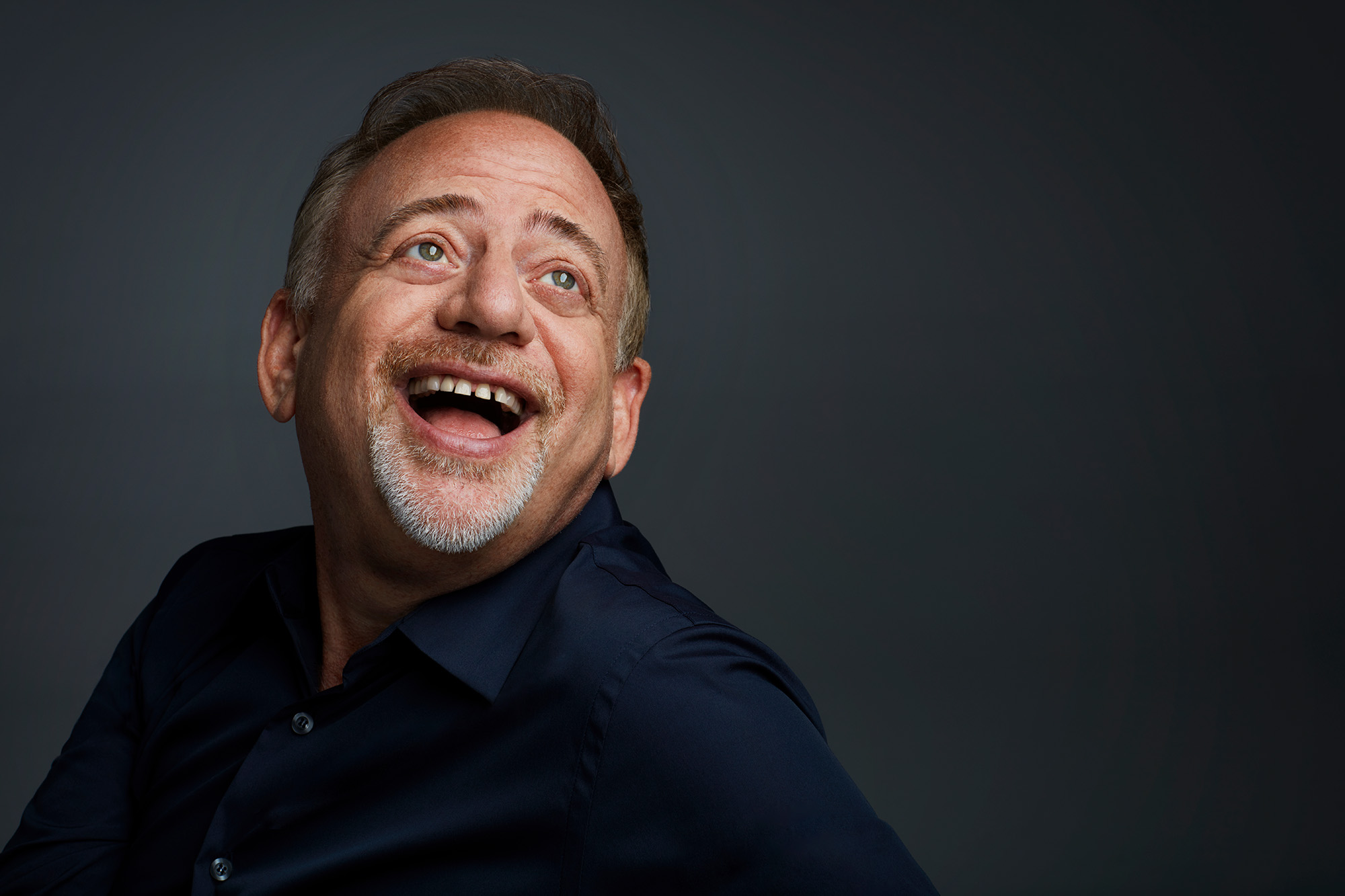
If you haven’t heard the name Marc Shaiman, you’ve most likely heard his music or lyrics in one of your favorite Broadway shows or movies released in the past 50 years. From composing the Broadway scores for Hairspray and Catch Me if You Can to most recently working on Only Murders in the Building, Hocus Focus 2, and Mary Poppins Returns, the openly queer artist has had a versatile career — one that keeps him just an Oscar away from EGOT status.
The one thing the award-winning composer, lyricist, and writer credits with launching his successful career? Showing up, time and time again. Eventually, he lucked out in finding himself at the right place at the right time, meeting industry figures like Rob Reiner, Billy Crystal, and Bette Midler, who were immediately impressed with his musical instincts on the piano.
“Put my picture under the dictionary definition for being in the right place at the right time,” Shaiman says. “What I often try to say to students is, ‘Show up. Say yes to everything.’ Because you never know who is in the back of the theater that you had no idea was going to be there. Or even when you audition and don’t get the part. My book is an endless example of dreams coming true, and a lot of these came true just because I showed up. I raised my hand. I had the chutzpah!”
Recalling one example from his memoir, titled Never Mind the Happy: Showbiz Stories from a Sore Winner ( just hit bookshelves on January 27th), Shaiman says he heard Midler was only hiring Los Angeles-based artists for her world tour. At the young age of 20, the New York-based Shaiman took a chance and bought the cheapest flight he could find from JFK. Once landing in L.A., he called up Midler and simply asked: “Where’s rehearsal?”
“Would I do that nowadays? I don’t know,” Shaiman admits. “But when you’re young and you’re fearless … I was just obsessed, I guess you could say. Maybe I was a stalker! Luckily, I was a stalker who had the goods to be able to co-create with her and live up to my wanting to be around.”
On the occasion of Never Mind the Happy’s official release, The Blade had the opportunity to chat with Shaiman about his decades-spanning career. He recalls the sexual freedom of his community theater days, the first time he heard someone gleefully yell profanities during a late screening of The Rocky Horror Picture Show, and why the late Rob Reiner was instrumental to both his career and his lasting marriage to Louis Mirabal. This interview has been edited and condensed.
Naturally, a good place to start would be your book, Never Mind the Happy. What prompted you to want to tell the story of your life at this point in your career?
I had a couple of years where, if there was an anniversary of a movie or a Broadway show I co- created, I’d write about it online. People were always saying to me, “Oh my God, you should write a book!” But I see them say that to everybody. Someone says, “Oh, today my kitten knocked over the tea kettle -” “You should write a book with these hysterical stories.” So I just took it with a grain of salt when people would say that to me. But then I was listening to Julia Louis-Dreyfus’ podcast, and Jane Fonda was on talking about her memoir — not that I’m comparing myself to a career like Jane Fonda’s — but she felt it was time to take a life review. That really stuck in my head. At the time, I was sulking or moping about something that had not gone as well as I wished. And I guess I kind of thought, “Let me look back at all these things that I have done.” Because I have done a lot. I’m just weeks short of my 50th year in show business, despite how youthful I look! I just sat down and started writing before anyone asked, as far as an actual publisher.
I started writing as a way to try to remind myself of the joyous, wonderful things that have happened, and for me not to always be so caught up on what didn’t go right. I’ve been telling some of these stories over the years, and it was really fun to sit down and not just be at a dinner party telling a story. There’s something about the written word and really figuring out the best way to tell the story and how to get across a certain person’s voice. I really enjoyed the writing. It was the editing that was the hard part!
You recall experiences that made you fall in love with the world of theater and music, from the days you would skip class to go see a show or work in regional productions. What was it like returning to those early memories?
Wonderful. My few years of doing community theater included productions that were all kids, and many productions with adults, where I was this freaky little 12-year-old who could play show business piano beyond my years. It was just bizarre! Every time a director would introduce me to another cast of adults, they’d be like, “Are you kidding?” I’d go to the piano, and I would sightread the overture to Funny Girl, and everybody said, “Oh, OK!” Those were just joyous, wonderful years, making the kind of friends that are literally still my friends. You’re discovering musical theatre, you’re discovering new friends who have the same likes and dreams, and discovering sex. Oh my god! I lost my virginity at the opening night of Jesus Christ Superstar, so I’m all for community theater!
What do you recall from your early experiences watching Broadway shows? Did that open everything up for you?
I don’t remember seeing Fiddler on the Roof when I was a kid, but I remember being really enthralled with this one woman’s picture in the souvenir folio — the smile on her face as she’s looking up in the pictures or looking to her father for approval. I always remember zooming in on her and being fascinated by this woman’s face: turns out it was Bette Midler. So my love for Bette Midler began even before I heard her solo records.
Pippin and The Wiz were the first Broadway musicals I saw as a young teenager who had started working in community theater and really wanted to be a part of it. I still remember Pippin with Ben Vereen and all those hands. At the time, I thought getting a seat in the front row was really cool — I’ve learned since that it only hurts your neck, but I remember sitting in the front row at The Wiz as Stephanie Mills sang Home. Oh my god, I can still see it right now. And then I saw Bette Midler in concert, finally, after idolizing her and being a crazed fan who did nothing but listen to her records, dreaming that someday I’d get to play for her. And it all came true even before I turned 18 years old. I just happened to be in the right place at the right time, and met one of her backup singers and became their musical director. I was brought to a Bette Midler rehearsal. I still hadn’t even turned 18, she heard me play and said, “Stick around.” And I’ve stuck around close to 55 years! She’s going to interview me in L.A. at the Academy Museum. Would I have ever thought that Bette Midler would say yes to sitting with me, interviewing me about my life and career?
That’s amazing. Has she had a chance to read the book yet?
She read it. We just talked yesterday, and she wants to ask the right questions at the event. And she even said to me, “Marc, I wasn’t even aware of all that you’ve done.” We’ve been great friends for all these years, but sometimes months or almost years go by where you’re not completely in touch.
In the book, you describe moving between New York and Los Angeles, especially when you started working more in film. As a queer artist, what was your experience finding LGBTQ+ community between the two coasts?
As far as gayness, they’re equally gay! I guess New York tilts a little more. I came to New York in 1976, so during the ‘70s in New York, anything goes! That was the height of sexual freedom and expression, then the ‘80s brought the hideousness of AIDS. For a long time, part of being gay was the endless death that I was surrounded by — losing just about every friend and colleague. My god, when I first started living in L.A., coming out there to work with Bette in the ‘80s, almost every single person I met died by the mid ‘90s. Everyone, everyone was gone. That was unfortunately a huge part of my life, and anyone my age can relate to that. God bless everyone not my age that will hopefully never ever have to experience anything close to the devastation of a funeral every week. Even to say it now, it’s hard to imagine or believe that happened.
But you know, I’m in show business, so there are gay people everywhere and happily so. I’m lucky that I grew up without any kind of shame about that, or a feeling that I needed to hide it. Although I didn’t come out to my parents. It wasn’t until I finally told my mom one day that I had been to yet another funeral, as I was sharing with her about AIDS. That was when she finally said, “Scott is more than your roommate, isn’t he?” And I was like, “Yes.” Why did I pretend? I never pretended anywhere else, and I never pretended about anything else. But I still grew up in a time when – well, I mean, I’m not naive, I know it’s still a time now where a lot of people can’t come out to their family or parents — but I certainly came out a time long before there were people coming out on TikTok for the whole world to see. It was a bit more of a private thing, but I was always happily gay. And dare I say, as I even say in the book, when my libido took off at around 15, and all the other 15 and 16-year-olds were around me, I was the pied piper!
In the spirit of being at the right place at the right time, you almost accidentally became part of The Rocky Horror Show and the immersive, theatrical performances that emerged in those midnight screenings.
We actually started that, which, once again, is hard for me to believe. I went to New York with my friend from community theater, Sal, and we walked by the Waverly Theatre. He said, “Oh, I heard that this movie just opened, I hear it’s really outrageous.” We got in line and really hit it off with these other guys and gals. We went to see it and loved it and said, “Let’s come back tomorrow night!” These strangers that we just met came back too. When Susan Sarandon (who played Janet) holds a newspaper over her head in the rain, Louis Farese is the first person to yell out anything. He yelled, “Buy an umbrella, you cheap bitch!” The audience exploded in laughter. Sal and I were big hams and were like, “We’ve gotta get a laugh. We’ve got to figure out something to say and get a laugh like this!”
You started working in film through your collaborations with director Rob Reiner, who recently passed. What was it like stepping into scoring and making that leap with films like Misery and When Harry Met Sally…?
I was lucky enough, by Billy Crystal introducing me to Rob Reiner, to get the job doing the music for When Harry Met Sally…. But that was arranging existing songs, arranging and orchestrating with Rob. I worked on Beaches (starring Bette Midler) at the same time, and that was the same thing — arranging songs, orchestrating them, co-producing the recordings. Suddenly, I had these two hugely successful soundtrack records I had co-produced, but I had never written a film score or done a student film. Since I was a kid, I had a little theme for when my cat walked across the room. If somebody walked into the room at a party, I would play something funny as they walked in.
Rob had an inkling and called me, “Hey buddy, you want to score my next movie, Misery, a psychological thriller?” I was wondering why he thought I could do that. I had just gotten an agent as I moved to L.A., and even my agent said to Rob, “What makes you think Marc can write a film score?” Rob simply said, “Talent is talent.” That became my agent’s mantra as he got me one job after another, and Rob’s faith in me was just an overwhelming, life-changing thing. He became so important to me, and someone I’ll be thankful for as a colleague and even more so as a friend. For the rest of my life, I’ll be thanking him for that.
He was a true advocate for the LGBTQ+ community, fighting against California’s Proposition 8 same-sex marriage ban by co-founding the American Foundation for Equal Rights in 2009.
Very likely, I wouldn’t be married if it weren’t for Rob and Michelle Reiner. They were intensely a part of the fight to get to the Supreme Court. They were a part of that in all ways — financially, fighting, and showing up vocally. So, besides everything else, I’m the most happily married man on the face of the earth. And I can thank Rob and Michelle for that.
That’s beautiful. As we look back on your career, you’ve worked on everything from Broadway musicals like Hairspray to more recent revivals/sequels like Mary Poppins Returns, which you describe in your book as your dream job. What do you make of how the landscape for these filmed musical adaptations has evolved? It seems like studios are now more apprehensive about promoting them as actual musicals.
Isn’t it crazy? Even after Wicked making billions of dollars, I bet with the next movie musical, they’ll still pretend like it’s not a musical. Even Wicked had commercials where they didn’t sing! It’s so schizophrenic. There’s clearly an audience for them and yet the studios are so afraid. I don’t know. Can you explain it?
I don’t know if I can.
I mean, Mamma Mia! Hairspray the movie was very successful, but did they show singing for the commercials for Hairspray? I don’t remember, but I don’t think they did.
In the book, you mention Cole Escola and other queer artists who are doing exciting things today. Are there any particular actors or recent films and shows that you’ve been impressed by?
Well, god knows Heated Rivalry. My god, what’s going on with that? It’s just so fantastic watching these videos of the straight podcasters crying at episode five. Of course, I watched it for the sexiness of it all, but then I got caught up in it. I cried my fucking eyes out at that episode when he calls his lover down to the rink. I was just like those guys watching those reaction videos.
It shows how schizophrenic this world is. There are so many mean people full of hatred, yet there are also many people full of love who are open to a show like that. It’s phenomenal. I don’t know what’s going to become of this world, but I’m happy I got to live the life I’ve gotten to live. I hope we’re not entering a world where our worst fears are all coming true. This may sound superficial, but even something like Heated Rivalry — I don’t think that’s superficial. It shows there are large numbers of people who get it.
How do you feel as you’re getting ready to share this book and your stories with the world?
It’s not just about me tooting my own horn, though I’d be a hypocrite to say that I’m not to a certain level. It’s also about showing people — if you want to do something, just go out and fucking do it. Just keep at it. I wanted to quit a million times but I didn’t, and just like people told me, something did happen because I just kept showing up.
Never Mind the Happy: Showbiz Stories from a Sore Winner is now available wherever books are sold
a&e features
Everyone should be a little more like Van Goth
The winner of Canada’s Drag Race season 6 breaks down her historic win and why you should embrace the shade.
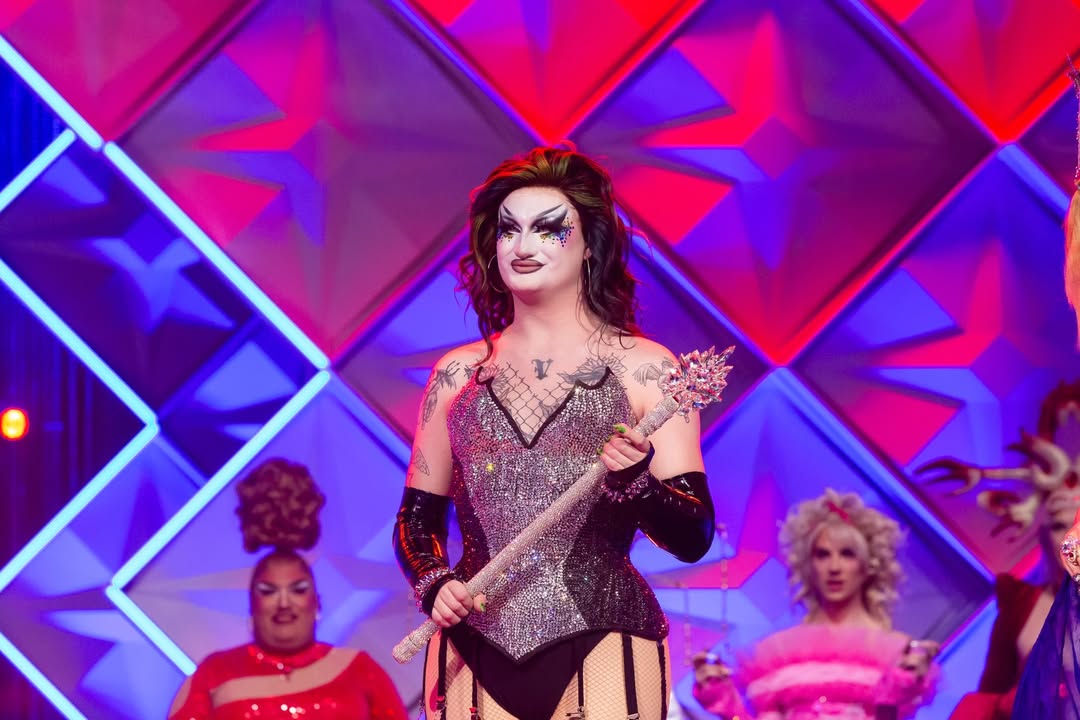
Canada’s Drag Race fans rejoice: a new Queen of the North has officially been inducted into the hall of fame! After one of its wildest seasons ever, RuPaul’s Drag Race’s Canadian spinoff has officially named Van Goth, Toronto’s resident punk rock princess, as ‘Canada’s Next Drag Superstar’.
While every winner has a unique path to the crown, Van’s was a tad more chaotic than most. The performer not only made history by winning four challenges — more than anyone else in the show’s history — but was called out multiple times for alleged backstabbing and shady behavior. Yet despite these call-outs, this Queen soldiered on, using every moment onscreen to say exactly what she was thinking and eventually fight her way to the series’ $100,000 grand prize.
Canada’s newest winner spoke with the Los Angeles Blade about what it means to win one of television’s biggest awards today. Digging into her many iconic moments on the show, Van Goth spoke about how proud she was to showcase her art and why she doesn’t regret any of her ‘shady’ moments — and why queer artists everywhere could benefit from being a little more shady themselves!
“Going onto RuPaul’s Drag Race, you need a goal to hold onto,” said Van Goth, when discussing the mindset that got her to Canada’s Drag Race finale. “Winning is a bad goal — because most people lose Drag Race. That’s just the tea! My goal was that when I left [the show], you could not think about season six or the best to ever do it without [thinking of] me. And I accomplished that even before I got the crown.” It would be hard for anyone to disagree; Goth instantly caught viewers’ attention with the punk style she brought to the show’s mainstage. A mixture of riot aesthetics and classic elegance — her name is an homage to Van Gogh, after all — every turn on the runway brought a new, jaw-dropping look for viewers to fall in love with. And not only were the outfits immaculate to look at, but many held a purpose, with Van using some of her outfits and performances to bring attention to those living with HIV (she herself is undetectable).
Her advocacy and outfits were enough to grab viewers’ attention, but those weren’t the only reasons fans quickly grew intrigued by Van Goth. When she wasn’t securing wins and turning looks, the performer just couldn’t seem to stop causing drama behind the scenes.
“I didn’t make the rules for the competition. They were laid out for me, and I used them,” clarified Goth, when discussing how she’s been labelled a ‘backstabber.’ The moniker comes from the prevalence of alliances that appeared on this season, with Van breaking a majority of the ones she was a part of. With Canada’s Drag Race featuring a unique rule that allows winning queens to save bottom queens from elimination (the illustrious ‘golden beaver’), Goth had promised multiple people that, if given the chance, she’d spare them from elimination. But despite these promises, Van always knew she’d only make decisions that helped her get to the win.
“I came from a competitive sports background — I played rugby for 12 years!” She explained. “So, it was easy to tap back into that [cutthroat] mindset for this competition.” A cutthroat mindset that earned her ire from many other queens, with Sam Star publicly calling out Van Goth and claiming it was because of her betrayal that her Drag Race dreams were ruined. Goth assured that she has a great relationship now with Star and every other queen on this installment. But when asked whether she regrets any of these choices, the winner clarified, “Something that I love about my run on the show was that I was really honest, but I also was really firm in my position.”
“If someone came at me and said something that I didn’t agree with, I pushed back on it. And I really hope that artists around the world see that and know that they have a voice and it’s powerful, and they can use it.” Van Goth encourages people to see the deeper meanings of the ‘dramatic’ scenes she had on the show, to recognize them as moments where a queer person refused to stay silent and always went after what was best for them. She continued, “[If you] don’t agree with something, [you] should speak out and stand up for it! There’s so much power in what you say…[and] I feel like moving forward as queer artists, especially in this day and age, we have to really stand up for our own and what we do, and push back against the world. And still find a way to create art that gives people hope and entertainment during these dark times.”
As the interview came to an end, Van Goth shared what she hoped people learned from her time on the season. It’s easy (and admittedly enjoyable) to focus on her drama, but the performer’s mission as reigning Queen of the North is to inspire others to act as defiantly confident as she is. “I [plan to] travel, continuing to lift up local communities and continue to give people hope. To inspire artists to live their dreams, and really go for it.”
Van appears content with the knowledge that some people may not care about this goal. That many avid fans will instead focus on her alleged slights, on how she apparently ruined their favorite competitor’s chance at the crown. In regard to that point, especially, Van had one thing to say.
“They should try harder next time…and then, maybe, they would win.”

Taylor Tookes wants you to be your own beauty standard

Appreciating literature’s gay genius, Michael Silverblatt

For queer youth, LGBTQ+ scholarships affirm their visibility and sense of possibility

Moving doc ‘Come See Me’ is more than Oscar worthy

The social side of self-pleasure: Artist Jason Wimberly presents his newest book of photography, HOMOSOCIAL

2026 Best of LGBTQ LA Finalist Voting

Where medicine meets dignity: Be Well Medical Group founder Isaac Berlin is here and queer to serve the community

Queer, trans AAPI joy shone at this year’s Golden Dragon Parade

US Embassy in Mexico issues shelter in place order for Puerto Vallarta

When optics matter more than harm: BAFTA, BBC, and editing solidarity while letting slurs slide on through
-
 Arts & Entertainment3 days ago
2026 Best of LGBTQ LA Finalist Voting
-
 Health4 days ago
Where medicine meets dignity: Be Well Medical Group founder Isaac Berlin is here and queer to serve the community
-
 Out & About4 days ago
Queer, trans AAPI joy shone at this year’s Golden Dragon Parade
-
 Mexico5 days ago
US Embassy in Mexico issues shelter in place order for Puerto Vallarta
-
 Commentary3 days ago
When optics matter more than harm: BAFTA, BBC, and editing solidarity while letting slurs slide on through
-

 California3 days ago
Experts discuss pathways forward as anti-trans violence continues to rise
-

 Autos4 days ago
Going for gold: Ford Bronco Sport vs. Toyota RAV4
-
 a&e features3 days ago
Revry Co-Founder Damian Pelliccione on why we need ‘King of Drag’
-
 Books3 days ago
New book profiles LGBTQ+ Ukrainians, documents war experiences
-
 Books2 days ago
The social side of self-pleasure: Artist Jason Wimberly presents his newest book of photography, HOMOSOCIAL