
Sports
Out lesbian basketball star Candace Parker tells fans: ‘I’m retiring’
After winning three championships with LA Sparks, Chicago Sky & Las Vegas Aces over 16 seasons, Parker says she’s not returning to the game
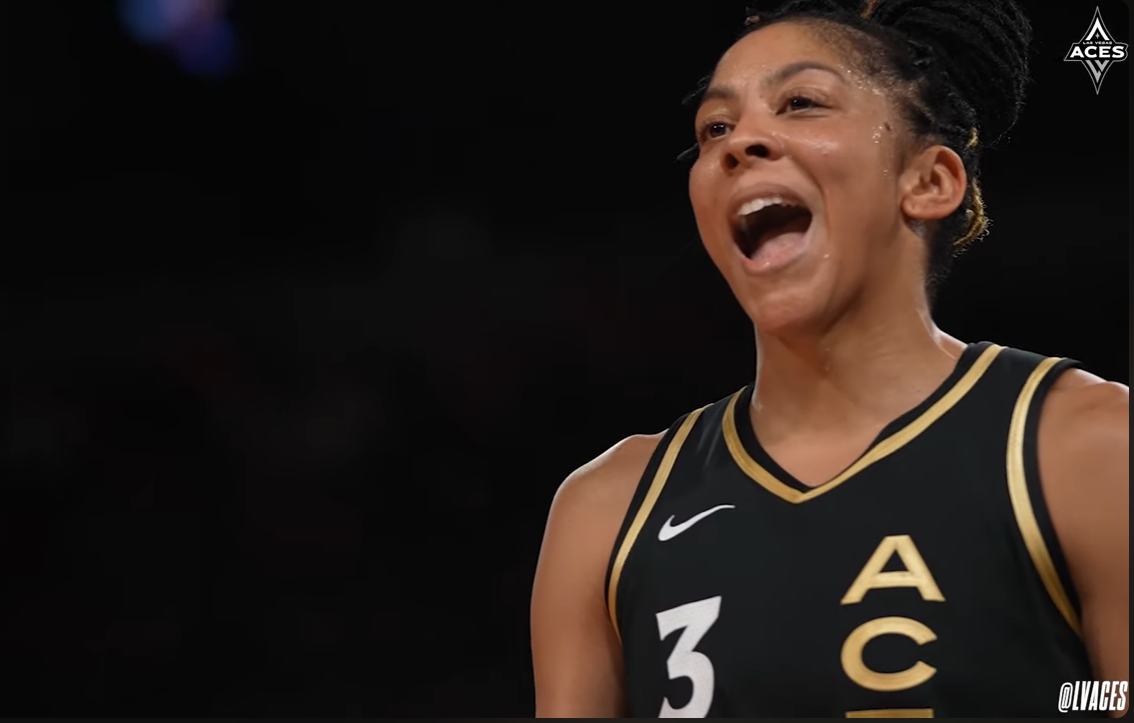
LAS VEGAS — Just three months ago, it seemed as if three-time WNBA champion and two-time Olympic gold medalist Candace Parker would play one more season with the Las Vegas Aces. But this week, the married mom of two — with a third child due this month — announced on Instagram that she has played her last game as a professional basketball player.
“I promised I’d never cheat the game & that I’d leave it in a better place than I came into it. The competitor in me always wants 1 more, but it’s time,” Parker wrote. “My HEART & body knew, but I needed to give my mind time to accept it. I always wanted to walk off the court with no parade or tour, just privately with the ones I love. What now was to be my last game, I walked off the court with my daughter. I ended the journey just as I started it, with her.”
That was July 2023. Parker then underwent surgery for a foot injury that caused her to miss the second half of the 2023 season — her tenth surgery in her stellar 16-year career with the WNBA. And it was the outcome of that surgery that Parker says prompted her to decide to not return to the hardwood. “This offseason hasn’t been fun on a foot that isn’t cooperating,” she wrote, adding that she can’t continue “playing in pain.”
“It’s no fun hearing ‘she isn’t the same’ when I know why,” said Parker in her post. “It’s no fun accepting the fact you need surgery AGAIN.”
Parker has two nicknames: “Ace,” which seemed most appropriate in her time with the Aces, and “Can do,” a play on her first name and short for “can do anything,” which pretty much sums up her post-retirement plans.
“This is the beginning…I’m attacking business, private equity, ownership (I will own both a NBA & WNBA team), broadcasting, production, boardrooms, beach volleyball, dominoes (sorry babe it’s going to get more real) with the same intensity & focus I did basketball.”
But all that is In addition to expecting a baby this month with her wife and former teammate Anna Petrakova. Parker made it clear that “being a wife & mom still remains priority #1.”
Parker hadn’t publicly acknowledged she and Petrakova had married in 2019 until their second wedding anniversary in December 2021, which is also when she revealed to the world via a post on Instagram they were expecting their first child together. Airr Larry Petrakov Parker was born in February 2022. Parker’s oldest, Lailaa Nicole Williams, was born in 2009 when she was with the Sparks, during her first marriage.
The couple announced Petrakova was expecting in a post on their fourth wedding anniversary last December.
Parker, 38, is the only player in WNBA history to have been part of three championship teams. In January 2023, she left the Chicago Sky for Vegas after two years back in her native Illinois. The 6’4 forward/center was a legendary member of the Lady Vols who went on to play for the Los Angeles Sparks for 13 seasons, winning her first WNBA championship.
Related:
Sports
‘Come Out for the Games’ gets Los Angeles excited for the 2028 Olympics
Pride House LA’s new series spotlights LGBTQ+ athletic culture
Los Angeles’ LGBTQ+ population is very excited for the upcoming 2028 Olympic Games — and that’s not just because of all the eligible athletes who’ll be arriving in our city.
No, it’s because of the international sense of community that every Olympics brings. Each version of this historic event sees thousands of LGBTQ+ fans arrive in a city to uplift the many out athletes competing. Especially during a time when queer athletes are being attacked across the U.S., locals are excited to be a part of this tradition and watch international challengers show off their physical prowess (and their pride) in the upcoming Games.
So excited, in fact, that many groups are already prepping for the massive festivities that the 2028 Olympics will bring. But when it comes to celebrating this historic moment for Los Angeles, not many organizations are doing more than Pride House LA and their ongoing ‘Come Out for the Games’ art series.
An initiative by the Out Athlete Fund, Pride House LA was created to uplift the many LGBTQ+ individuals and organizations participating in the upcoming Olympics. And they already have a massive amount planned for the actual event; CEO Michael Ferrera teased more than two weeks of activities when the Games actually commence. But to prepare for that, he and his team have launched ‘Come Out for the Games,’ which sees different artists use their own distinct styles to honor LGBTQ+ events and venues from across the city. The series is co-produced by the James Polkinghome Cultural Foundation (JOCF), and the Post and Pulse Collection.
“Our goals at Pride House LA are to provide a truly inclusive space for our community, [to] celebrate the more than 300 out LGBTQ+ athletes expected to participate in the LA 2028 Olympic Games,” said Ferrera. “With ‘Come Out for the Games, ’ [we hope] to reach every part of the LGBTQ+ community, both in terms of identity and geography.”
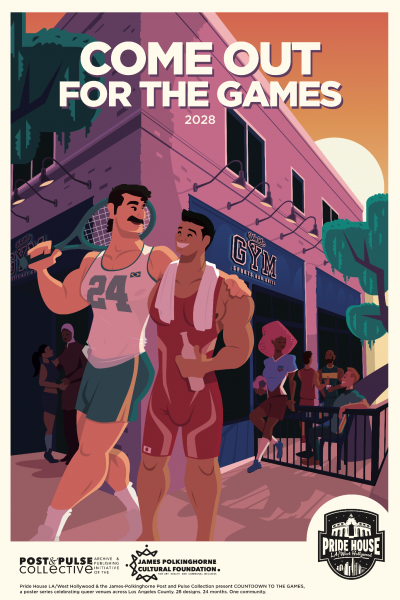
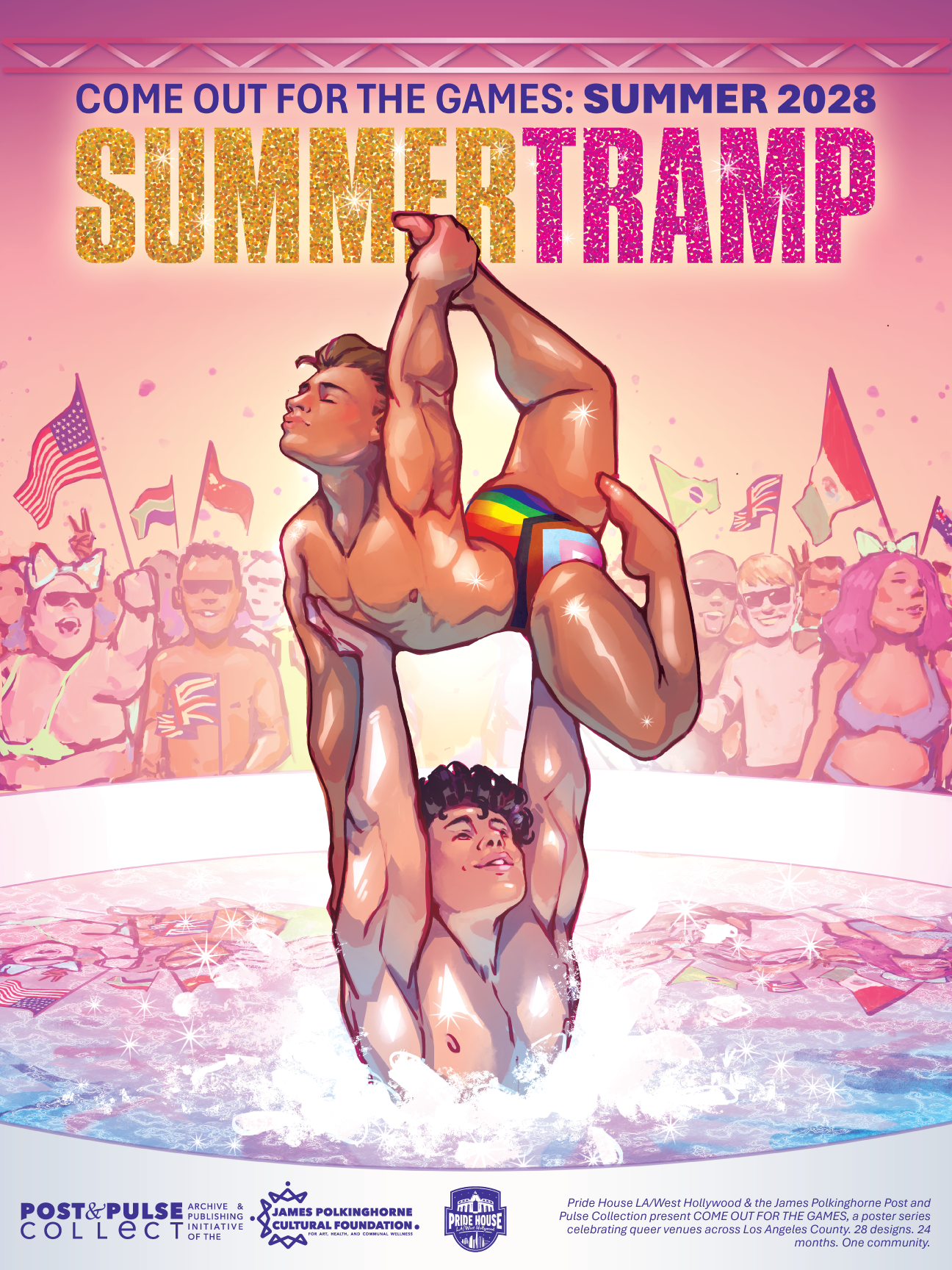
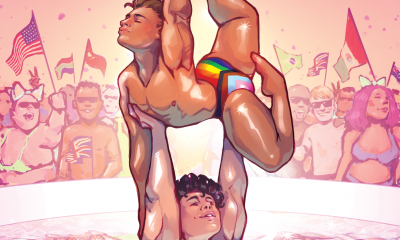
This series brings out the wondrous elements inherent to many of these queer celebrations, often while coloring them with some Olympics-themed flair. Timo Reese styles WeHo’s well-known Gym Bar like a retro magazine ad filled with actual athletes, and Jason Ooi portrays the annual event SummerTramp with a pair of (rainbow-speedo-clad) swimmers performing wild tricks in front of a raving crowd. With each poster, Pride House LA not only hopes to get people amped up for the Olympics, but really centers the vibrancy that exists at each of these queer gatherings.
It’s something that the series’ artists worked hard to embody with their pieces, with Ooi saying, “My final piece is meant to feel silly, campy, and a little over the top — but there’s also a critique underneath it all about how strict ideas around gender and identity have shaped sports, like the Olympics, for a long time. I wanted the work to show the importance of visibility and inclusion, and maybe start a conversation around that.” Matt Utsunomiya, whose poster depicts the famous bar Precinct DTLA as a rainbow prism of dancing queer folks, had a similar goal, explaining, “Precinct is such a vibrant and energetic venue. I wanted that color and light to literally burst out of the venue itself, to illuminate the night around it…within that kaleidoscopic silhouette, I included portraits of diverse athletes that symbolize not only the Olympic Games, but the queer community itself.”
These posters are a great reminder of how our local culture always has and will continue to shape LA in the lead-up to the 2028 Olympics — something that many people across the country want you to forget. Because even with two years before the Games, bigots nationwide are criticizing LA as a host city due to its queer history, with these people preparing to harass any athlete who would dare to participate while being openly LGBTQ+.
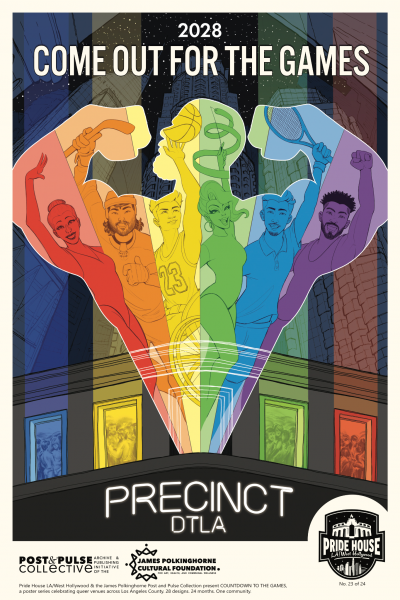
It’s an unfortunate fact about the upcoming Olympics, but it’s one that ‘Come Out for the Games’ fights against with every piece. Each reminds us that whether it is now or during the actual games, there will always be people fighting this hatred and cheering on every LGBTQ+ competitor. This is the core of the entire project, with Ferrera stressing, “This series gives us an opportunity to introduce visitors to the richness and transformative history of the LGBTQ+ community in Los Angeles… to plant a flag in the middle of this once-in-a-lifetime event and declare that we are a vital part of the sports world. That we are passionate fans, too, and that our athletes deserve to compete openly and on a level playing field.”
As stated earlier, this series is only a part of the many things Pride House LA has planned for the 2028 Olympic Games. But ‘Come Out for the Games’ is a pretty great precursor. One that offers a genuine look into the colorful, inherent ferocity of LA’s LGBTQ+ community, a group ready to fight against hatred and cheer on all of the LGBTQ+ athletes they cannot wait to see compete.
Sports
Where to stay in LA for the 2026 World Cup: Area guide
Eight matches at SoFi, one sprawling city. Here’s which LA neighborhood to base yourself in for World Cup 2026, from Inglewood to the coast.
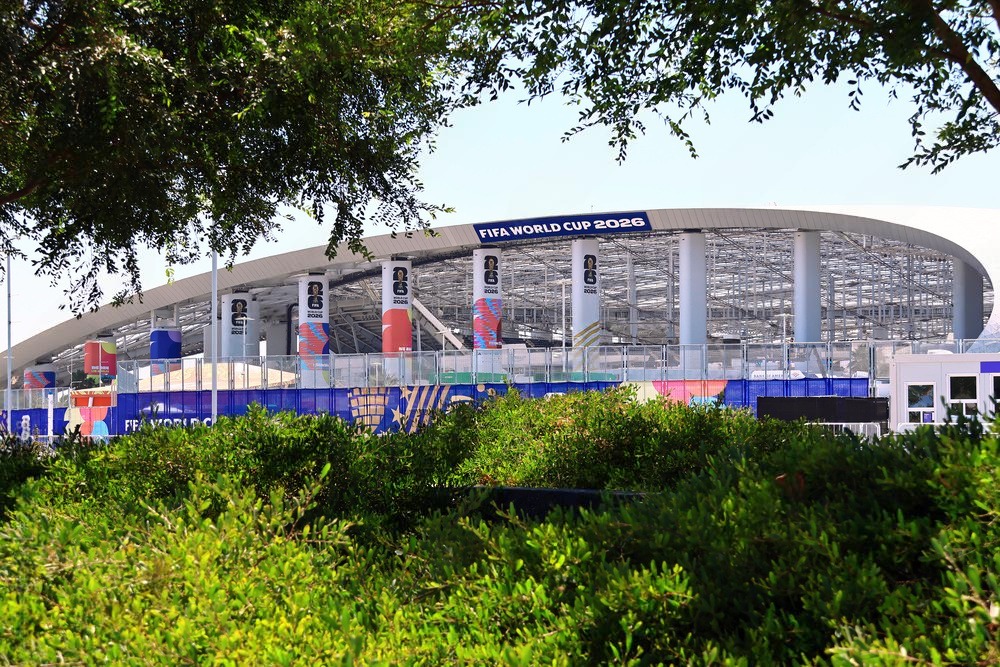
The world has arrived in Los Angeles. For the first time in over three decades, the FIFA World Cup is back in Southern California, and SoFi Stadium in Inglewood, officially rebranded “Los Angeles Stadium” for the tournament, is hosting eight of the biggest matches on the planet, including the USA’s home opener and the only quarterfinal being played on U.S. soil.
If you’re flying in for the games (or just want to be in the middle of the action), the single most important decision you’ll make isn’t which match to attend. It’s where you stay. Los Angeles is enormous, traffic is a genuine sport of its own, and the neighborhood you pick will shape your entire trip, from how long you sit in the car to whether you’re walking to a rooftop watch party or a beach bonfire after the final whistle.
Here’s an honest, neighborhood-by-neighborhood breakdown of where to base yourself for World Cup 2026.
First, Know Where the Matches Are
All of LA’s World Cup matches are at SoFi Stadium in Inglewood, roughly three miles from LAX and about 25 minutes from Downtown without traffic (and considerably more with it). The Metro K Line runs near the stadium and operates late on match nights, which matters more than you’d think, since stadium parking can run upward of $250 on game days, and rideshare surge pricing after a sellout crowd of 70,000 is brutal.
The takeaway: you don’t need to sleep next to the stadium, but you do want to be somewhere with a sane route to Inglewood. Let that guide everything below.
The Best Neighborhoods to Stay In
Here are the 6 best neighborhoods to choose from in Los Angeles when visiting the world’s top sporting event.
1. Inglewood and the South Bay
Closest to the Action
This is as close as it gets. Walk to the match or take a five-minute ride, sleep in on game day, and you’re back at the airport in no time when it’s all over. The area has rebuilt itself around the stadium these past few years, and you can feel the buzz on match days.
Be honest about the trade, though. This isn’t the palm-tree, rooftop-bar version of LA that ends up on postcards. Dining and nightlife run thinner here than in the flashier parts of town, and the well-placed rooms are the first to disappear. If Inglewood is your pick, stop reading and go book it. The USA games, in particular, are going fast.
2. Downtown LA
The Transit and Watch-Party Hub
DTLA is your answer if you’d rather not touch a car all week. It sits at the center of the Metro map, with rail heading toward Inglewood, and it’s stacked with bars and restaurants within walking distance of wherever you end up. There’s also a real fan-festival scene downtown across the tournament’s 39 days, so even the matches you didn’t get tickets to still feel like an event. You’ll find a crowd, a screen, and plenty of noise.
3. West Hollywood
Nightlife and the City’s Most Welcoming Energy
If your nights matter as much as your match days, stay in WeHo. It’s the engine of LA nightlife and the long-standing heart of the city’s LGBTQ+ community, and during a World Cup summer, the streets carry a celebratory hum that’s hard to fake anywhere else.
This is also where the tournament and the community overlap most directly, such as Pride House LA/WeHo set up in the neighborhood for the opening weekend, turning it into a gathering point for queer soccer fans. You’re a short hop from Beverly Hills and the Sunset Strip, and the run out to Inglewood is very doable. People come here to keep the night going long past the final whistle, and the neighborhood obliges.
4. Beverly Hills and Mid-City
Central, Polished, and Convenient
Can’t decide? Plant yourself in the middle. The stretch through Beverly Hills, Mid-City, and the Miracle Mile leaves you roughly the same distance from the stadium, the beach, the bars, and the airport, which is a rare thing in a city this spread out. It’s leafy and polished, the restaurants are excellent, and getting to the Westside or Inglewood is no drama. Families and groups who want an easy life tend to end up around here.
5. Santa Monica and Venice
Beach Days Between Matches
Staying a full week and want it to feel like an actual vacation? Go to the coast. Mornings smell like the ocean, the days move more slowly, and there’s a pier and miles of bike path waiting between matches. The catch is obvious: you’re as far from Inglewood as this guide gets. Build in real time on match days, and lean on the train or a car you’ve booked ahead rather than gambling on rideshare.
6. Culver City and Playa Vista
The Quiet, Close-In Pick
Quietly, one of the best picks on this list. Tucked between the Westside and Inglewood, both put you close to the stadium without Inglewood’s all-business feel, and the food scene punches above its weight. If you want proximity but you also want to like the neighborhood you’re sleeping in, look here.
Hotels vs. a Private Villa in LA: Which Makes Sense for You?
For two people on a quick trip, a well-placed hotel is the obvious, painless call. But World Cup travel tends to come in groups. Friends are coordinating flights out of three different airports. A family bringing the grandparents. A crew of eight splitting the bill down the middle. That’s where the math shifts.
The moment you’re reserving three or four hotel rooms, the numbers start favoring a whole house. Same money, sometimes less, and you get a kitchen, a living room to pile into for the games you’re only watching on TV, and a pool to fall into afterward. For longer stays spanning multiple match dates, the value gap widens further.
For a standard stay, the usual suspects do the job well. Platforms like Airbnb and Vrbo are full of practical, mid-range homes across the city, and they’re the easy default for fans who just need a comfortable base and a place to sleep between games. But there’s been a clear rise in demand at the top end of the market for travelers who want privacy, dedicated service, and a home that feels like a destination in its own right rather than a budget compromise. World Cup summer, with its influx of international visitors and high-profile guests, is accelerating exactly that shift.
That’s the tier where a curated specialist like Villoura makes the difference, and it’s worth looking at luxury villa rentals in Los Angeles, which offer multi-bedroom homes across exactly the neighborhoods worth staying in, Beverly Hills, West Hollywood, Santa Monica, and beyond, with concierge service, private chefs, and the kind of space that turns a tournament trip into a proper basecamp. For a group splitting a four- or five-bedroom villa, it can be the most comfortable and most economical way to do the World Cup right.
Booking Tips for World Cup 2026
- Book as far ahead as you can. The highest-demand windows surround the USA matches (June 12 and June 25) and the July 10 quarterfinal. Rooms and rentals near the stadium go first.
- Pick your base around transit, not just price. A cheaper room an hour from a Metro line can cost you more in time and rideshare than a smarter, better-connected stay.
- Plan match-day logistics in advance. Stadium parking is expensive and limited; the Metro K Line is your friend, and it runs late on game nights.
- Pad your schedule. LA traffic is real. Give yourself a generous buffer when getting to Inglewood, especially for evening kickoffs.
- Match the neighborhood to your trip. Closest (Inglewood), most transit-friendly (DTLA), most fun after dark (West Hollywood), most central (Beverly Hills/Mid-City), most relaxing (the coast).
LA’s World Cup Match Schedule at a Glance
SoFi Stadium / Los Angeles Stadium hosts eight matches:
- June 12 — USA vs. Paraguay (USA home opener)
- June 15 — Iran vs. New Zealand
- June 18 — Switzerland vs. Bosnia and Herzegovina
- June 21 — Belgium vs. Iran
- June 25 — USA vs. Turkey
- June 28 — Round of 32
- July 2 — Round of 32
- July 10 — Quarterfinal (the only one in the United States)
The Bottom Line
There’s no single “best” place to stay in Los Angeles for the World Cup 2026, but there’s the best place for your trip. Stay in Inglewood if proximity to the pitch is everything. Stay in Downtown if you want to ride the rails and experience the watch-party energy. Stay in West Hollywood for the nightlife, the coast for the slow mornings, or the central corridor if you want a bit of all of it. And if you’re rolling in with a crew, a private villa might be the smartest call of all.
Wherever you land, you’ve picked a remarkable summer to be in Los Angeles. The world is here, so go enjoy it.
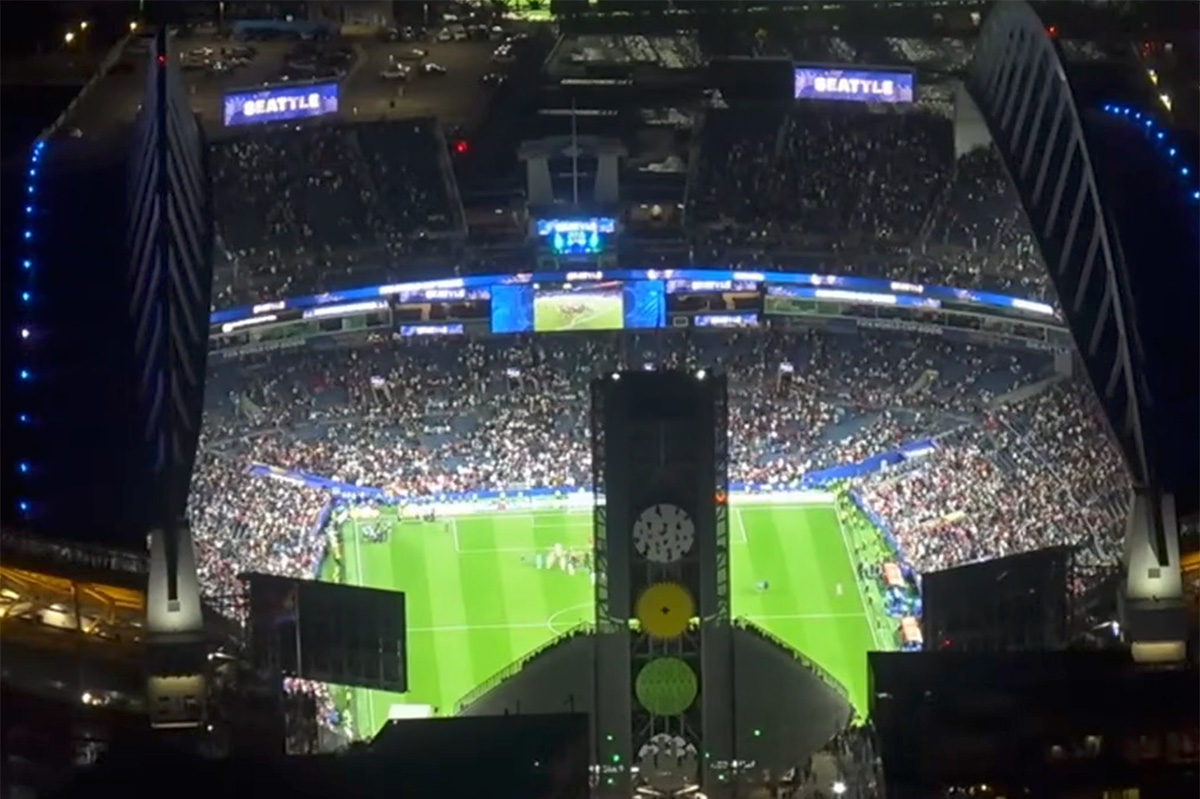
Iran and Egypt on Friday faced off during the World Cup’s “Pride Match” in Seattle.
Iran is among the handful of countries in which consensual same-sex sexual relations remain punishable by death. Discrimination and persecution based on sexual orientation and gender identity is commonplace in Egypt.
Friday’s match coincided with Pride weekend in Seattle. The Egyptian Football Association and the Football Federation Islamic Republic of Iran both objected to playing in the “Pride Match.”
Egypt and Iran tied 1-1.
FIFA, for its part, allowed Pride flags inside the stadium during the match.
“The FIFA World Cup 2026 is an inclusive event that welcomes people from all backgrounds,” a FIFA spokesperson told the Los Angeles Blade in a statement. “Fans of all sexual orientations and gender identities are welcome at matches and events. General statements of human rights, including rainbow flags and other flags representing sexual orientation and gender identity, are permitted under the FIFA World Cup 2026™ Stadium Code of Conduct and may be displayed inside stadiums provided they are used in a manner consistent with the code.”
Human Rights Watch welcomed FIFA’s decision to allow Pride flags inside the stadium. Outright International, a global LGBTQ+ and intersex rights group, distributed Pride flags in Seattle on Friday, which was Pride Match Day.
“Visibility matters,” said Outright International Executive Director Maria Sjödin. “Pride is now being celebrated in more than 100 countries, including this weekend in Seattle. For many LGBTIQ people, seeing a Pride flag in public is a reminder that they are not alone, and that their rights and dignity are recognized.”
FIFA President Gianni Infantino earlier this year told Die Weltwoche, a Swiss magazine, that “there will be no ‘Pride Match’ at the (FIFA) World Cup.”
“There will be a FIFA World Cup match in Seattle, and on the same day, events organized by external organizations will be taking place in the city,” said Infantino. “But that has nothing to do with the match itself.”
Peter Tatchell, a long-time LGBTQ+ activist from the U.K. who is director of the Peter Tatchell Foundation, was among those who traveled to Seattle for Friday’s match. Tatchell accused FIFA of not vetting World Cup teams — specifically Iran, Egypt, Saudi Arabia, Ghana, Senegal, Qatar, Tunisia, Morocco, Iraq, Uzbekistan, and Algeria — over whether they would allow gay players.
“FIFA is protecting LGBT+ visibility in the stands while failing to protect LGBT+ players on the pitch,” said Tatchell.
Sports
Pride House LA/Weho takes over West Hollywood to celebrate World Cup this weekend
Pride House LA/WeHo debuts during the opening weekend of the 2026 World Cup from June 11 to 14 at Beaches Tropicana in West Hollywood.
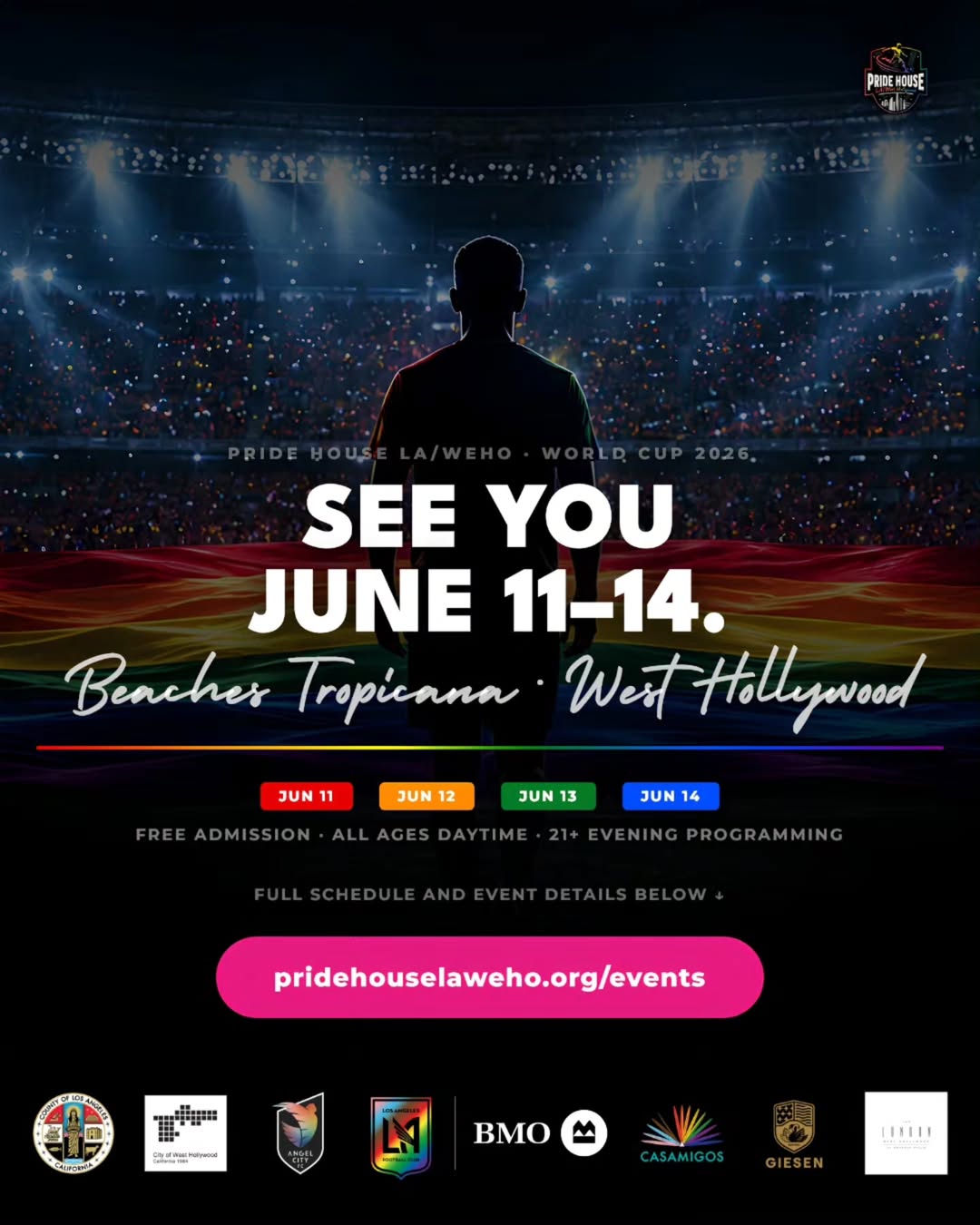
Four days, four themes, and a community that has been waiting a long time for a space like this. It’s part of a network of independent Pride Houses across the host cities, and the first one ever in LA, hosted at Beaches Tropicana.
Tickets are free, RSVP here.
Here’s the full schedule:
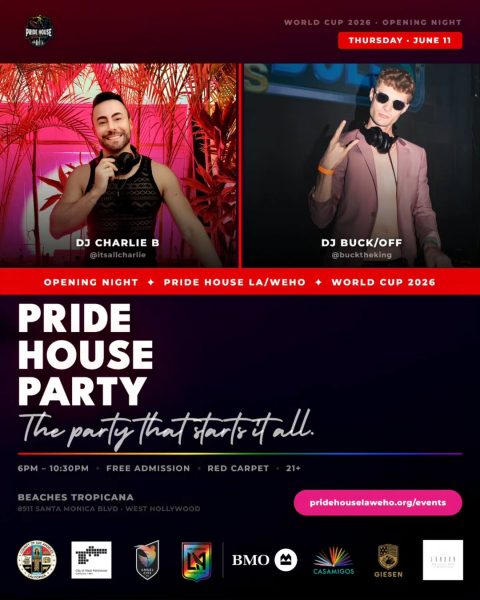
Thursday, June 11
Welcome to Pride House
Welcome to Pride House Party
6PM to 10PM
Pride House finally arrives in West Hollywood, kicking off the opening night of the 2026 World Games with music, drinks, and a celebration of West Hollywood and the LGBTQ+ sports community we’ve been building toward for years. DJ Charlie B opens the night, a red carpet welcomes guests, and remarks come from City Councilmembers and special guests. DJ Buck/Off keeps it going through close. The party that starts it all.
| 6PM to 8PM DJ Charlie B spins, guests arrive, red carpet, VIP access in back bar and right mezzanine |
| 8PM to 8:20PM Welcome remarks from elected officials, athletes, and special guests |
| 8:20PM to 10:30PM DJ Buck/Off keeps the party going through close |
Friday, June 12
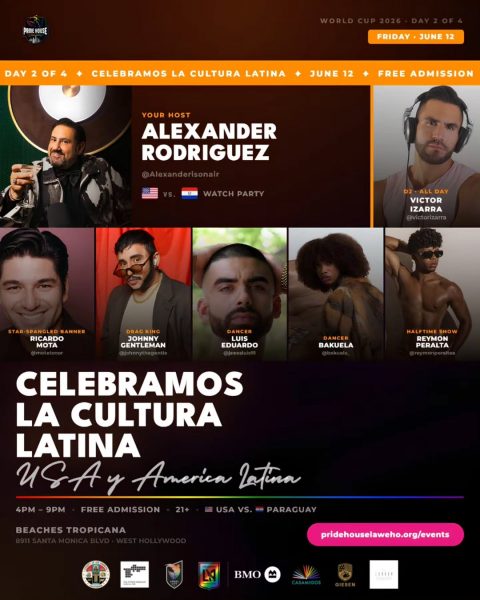
Celebramos La Cultura Latina
USA y América Latina
4PM to 9PM
A full afternoon and evening honoring Latin culture as the US Men’s National Team opens their World Games Group stage against Paraguay. Singer Ricardo Mota performs a special Spanish rendition of the Star-Spangled Banner just before kickoff. Match broadcast, Latin DJ sets, go-gos, performances, and speakers throughout, with DJ Victor Izarra spinning beats all event long. LA Blade publisher Alexander Rodriguez will serve as the evening’s emcee.
| 4PM to 9PM DJ Victor Izarra spinning beats all event long, between matches, performances, and speakers |
| 4PM to 5:50PM Welcome, music, and brief speakers |
| 5:50PM to 6PM Star-Spangled Banner in Spanish by Ricardo Mota |
| 6PM to 7PM USA v Paraguay broadcast, first half |
| 7PM to 7:15PM Halftime entertainment |
| 7:15PM to 8:15PM USA v Paraguay broadcast, second half |
| 8:15PM to 8:30PM Closing performance |
Saturday, June 13
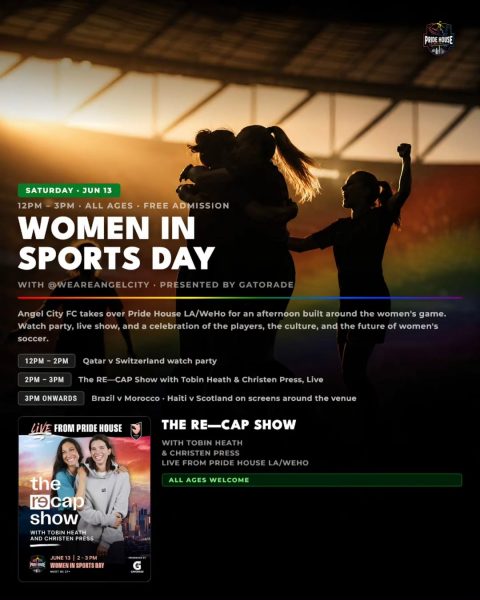
Women in Sports Day with Angel City FC
The RE—CAP Show with Tobin Heath and Christen Press Live
12PM to 3PM
Angel City FC takes over Pride House for an afternoon built around the women’s game. We start with a Qatar v Switzerland watch party, then move into The RE—CAP Show with Tobin Heath and Christen Press Live, celebrating the players, the culture, and the future of women’s soccer. General Admission tickets available.
| 12PM to 2:30PM Qatar v Switzerland watch party |
| 2PM to 3PM The RE—CAP Show with Tobin Heath and Christen Press Live |
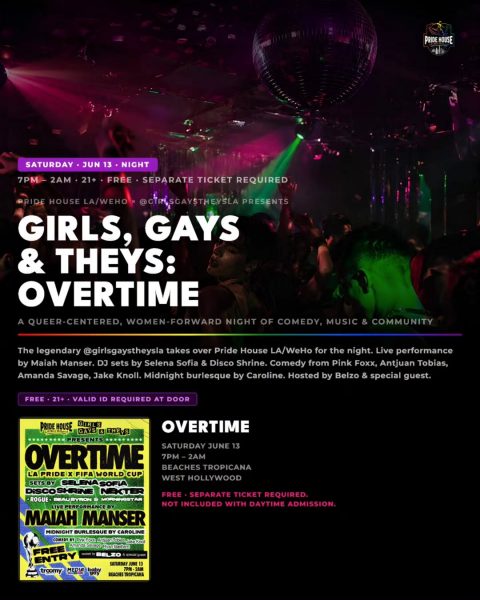
7PM to 2AM
The legendary Girls, Gays & Theys take over Pride House for the night with OVERTIME, their queer-centered, women-forward cultural event anchored in comedy, music, and community. A hybrid experience that blends live entertainment with nightlife. Headlined by Maiah Manser, with special guest DJ sets by SELENA SOFIA and DISCO SHRINE. Comedy from Pink Foxx, Antjuan Tobias, Amanda Savage, Jake Knoll, and a special guest you won’t want to miss. The kind of crowd that makes a night unforgettable.
| Heads up: Girls, Gays & Theys: OVERTIME is a separate ticket.Not included with any Pride House admission, including Saturday daytime tickets. Grab tickets through Eventbrite. |
Sunday, June 14
Pride in the Game
Out in the Game, with LAFC
3PM to 5PM
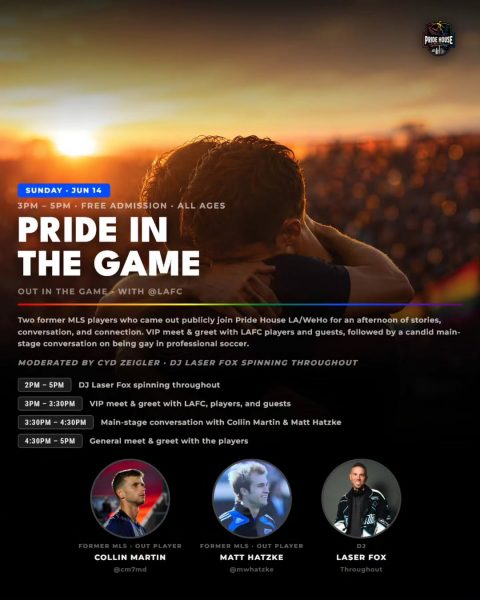
Two former MLS players who have come out publicly join us for an afternoon of stories, conversation, and connection. The afternoon opens with a VIP meet & greet alongside LAFC players and guests, followed by a candid main-stage conversation moderated by Cyd Zeigler on being gay in professional soccer. Joining us: Collin Martin, one of only two MLS players to come out while still playing, and Matt Hatzke, who was drafted by the LA Galaxy and played for the San Jose Earthquakes. A general meet-and-greet with fans closes the program, with DJ Laser Fox spinning throughout. A rare gathering, and a meaningful one.
| 2PM to 5PM DJ Laser Fox spinning throughout our program |
| 2PM to 3PM Arrivals |
| 3PM to 3:30PM VIP meet & greet with LAFC, players, and guests |
| 3:30PM to 4:30PM Main-stage conversation with the MLS players, moderated by Cyd Zeigler |
| 4:30PM to 5PM General meet-and-greet with the MLS players |
5PM to 8PM
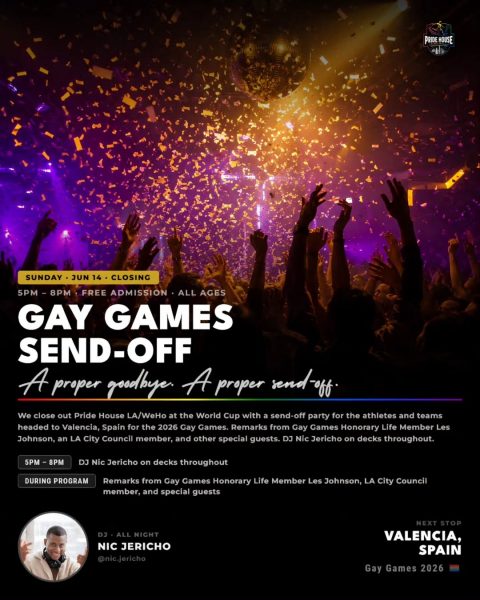
We close out Pride House LA/WeHo at the 2026 World Games with a sendoff party for the athletes and teams headed to Valencia, Spain, for the 2026 Gay Games. DJ Nic Jericho on decks, with remarks from Gay Games Honorary Life Member Les Johnson, an LA City Council member, and other special guests. A proper goodbye, and a proper send-off.
| 5PM to 8PM DJ Nic Jericho on decks throughout |
| During program Remarks from Gay Games Honorary Life Member Les Johnson, an LA City Council member, and other special guests |
Follow along on @pridehouselaweho for updates.
See you there! LA Blade will be on the scene!
Sports
Jason Collins dies at 47
First openly gay man to actively play for major sports team battled brain cancer
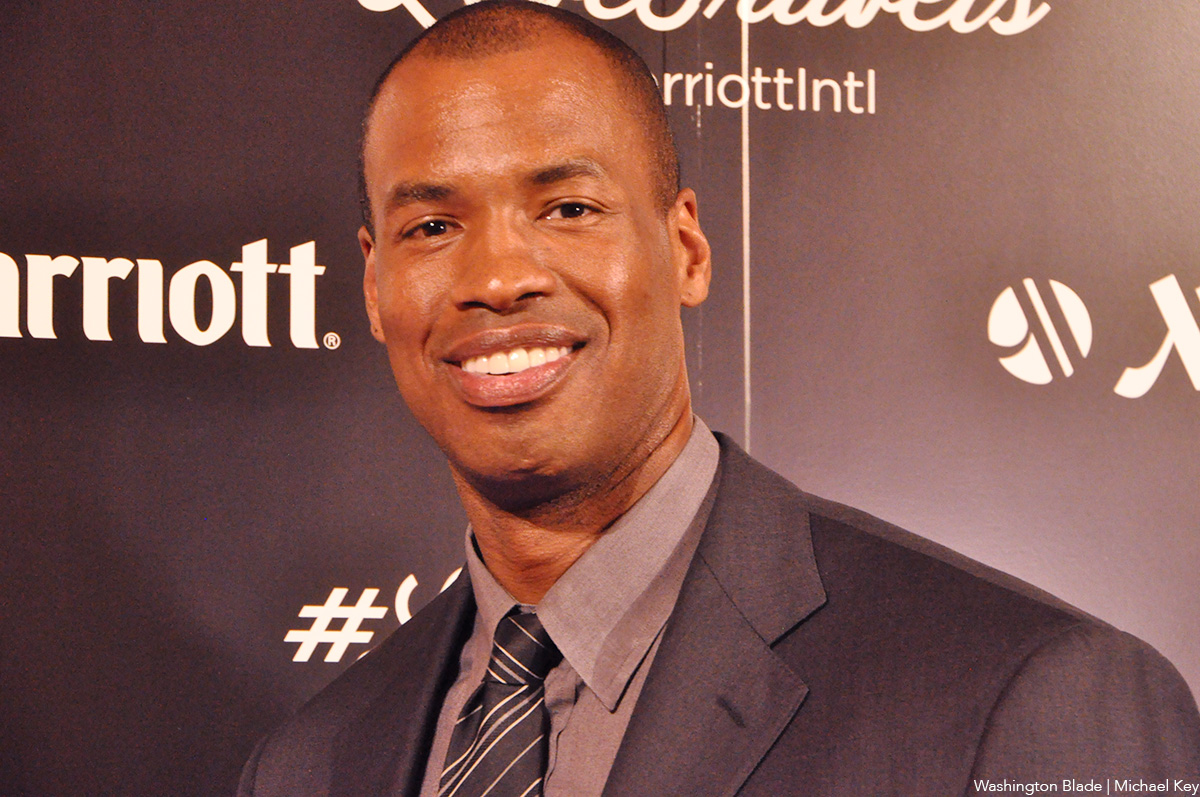
Jason Collins, the first openly gay man to actively play for a major professional sports team, died on Tuesday after a battle with brain cancer. He was 47.
The California native had briefly played for the Washington Wizards in 2013 before coming out in a Sports Illustrated op-ed.
Collins in 2014 became the first openly gay man to play in a game for a major American professional sports league when he played 11 minutes during a Brooklyn Nets game. He wore jersey number 98 in honor of Matthew Shepard, a gay college student murdered outside of Laramie, Wyo., in 1998.
Collins told the Washington Blade in 2014 that his life was “exponentially better” since he came out. Collins the same year retired from the National Basketball Association after 13 seasons.
Collins married his husband, Brunson Green, in May 2025.
The NBA last September announced Collins had begun treatment for a brain tumor. Collins on Dec. 11, 2025, announced he had Stage 4 glioblastoma.
“We are heartbroken to share that Jason Collins, our beloved husband, son, brother and uncle, has died after a valiant fight with glioblastoma,” said Collins’s family in a statement the NBA released. “Jason changed lives in unexpected ways and was an inspiration to all who knew him and to those who admired him from afar. We are grateful for the outpouring of love and prayers over the past eight months and for the exceptional medical care Jason received from his doctors and nurses. Our family will miss him dearly.”
NBA Commissioner Adam Silver said Collins’s “impact and influence extended far beyond basketball as he helped make the NBA, WNBA, and larger sports community more inclusive and welcoming for future generations.”
“He exemplified outstanding leadership and professionalism throughout his 13-year NBA career and in his dedicated work as an NBA Cares Ambassador,” said Silver. “Jason will be remembered not only for breaking barriers, but also for the kindness and humanity that defined his life and touched so many others.”
“To call Jason Collins a groundbreaking figure for our community is simply inadequate. We truly lost a giant today,” added Human Rights Campaign President Kelley Robinson in a statement. “He came out as gay — while still playing — at a time when men’s athletes simply did not do that. But as he powerfully demonstrated in his final years in the league and his post-NBA career, stepping forward as he did boldly changed the conversation.”
“He was and will always be a legend for the LGBTQ+ community, and we are heartbroken to hear of his passing at the young age of 47,” she said. “Our hearts go out to his family and loved ones. We will keep fighting on in his honor until the day everyone can be who they are on their terms.”
Sports
New IOC policy bans trans women from Olympics
New regulation to be in effect at 2028 summer games in Los Angeles
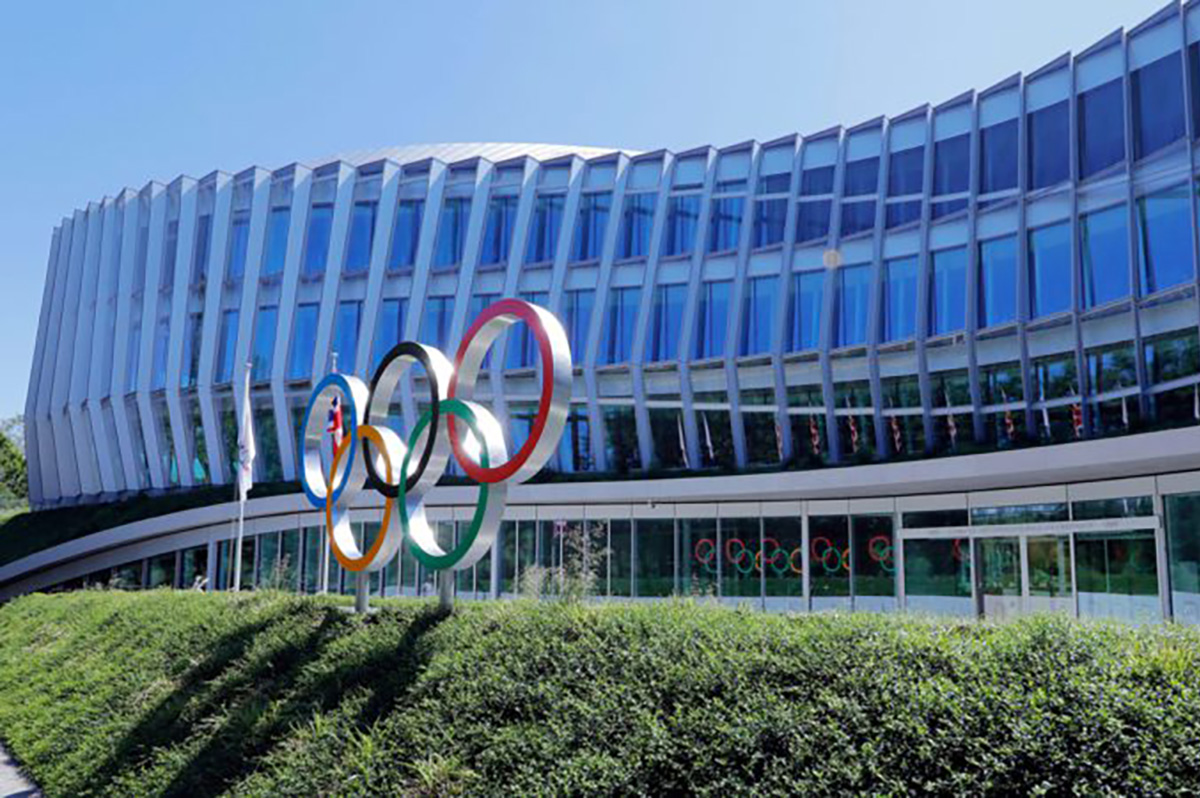
The International Olympic Committee on Thursday announced it will not allow transgender women from competing in female events at the Olympics.
“For all disciplines on the Sports Program of an IOC event, including individual and team sports, eligibility for any Female Category is limited to biological females,” reads the new policy.
The policy states “eligibility for the Female Category is to be determined in the first instance by SRY Gene screening to detect the absence or presence of the SRY Gene.”
“On the basis of the scientific evidence, the IOC considers that the SRY (sex-determining Region Y) Gene is fixed throughout life and represents highly accurate evidence that an athlete has experienced or will experience male sex development,” it reads. “Furthermore, the IOC considers that SRY Gene screening via saliva, cheek swab or blood sample is unintrusive compared to other possible methods. Athletes who screen negative for the SRY gene permanently satisfy this policy’s eligibility criteria for competition in the Female Category.”
The policy states the test “will be a once-in-a-lifetime test” unless “there is reason to believe a negative reading is in error.”
The new regulation will be in place for the 2028 Summer Olympics in Los Angeles.
“I understand that this a very sensitive topic,” said IOC President Kirsty Coventry on Thursday in a video. “As a former athlete, I passionately believe in the rights of all Olympians to take part in fair competition.”
“The policy that we have announced is based on science and it has been led by medical experts with the best interests of athletes at its heart. The scientific evidence is very clear: male chromosomes give performance advances in sport that rely on strength, power, or endurance,” she added. “At the Olympic Games, even the smallest margins can be the difference between victory and defeat. So, it is absolutely clear that it would not be fair for biological males to compete in the female category. In addition, in some sports it would simply not be safe.”
(Video courtesy of the IOC)
Laurel Hubbard, a weightlifter from New Zealand, in 2021 became the first trans woman to compete at the Olympics.
Imane Khelif, an Algerian boxer, won a gold medal at the 2024 Summer Olympics in Paris. Khelif later sued JK Rowling and Elon Musk for cyberstalking after they questioned her gender identity.
Ellis Lundholm, a mogul skier from Sweden, this year became the first openly trans athlete to compete in any Winter Olympics when he participated in Milan Cortina Winter Olympics in Italy.
President Donald Trump in February 2025 issued an executive order that bans trans women and girls from female sports teams in the U.S.
The U.S. Olympic and Paralympic Committee last July banned trans women from competing in female sporting events. Republican lawmakers have demanded the IOC ban trans athletes from women’s athletic competitions.
“I’m grateful the Olympics finally embraced the common sense policy that women’s sports are for women, not for men,” said U.S. Sen. Tom Cotton (R-Ark.) on X.
An IOC spokesperson on Thursday referred the Washington Blade to the press release that announced the new policy.
Sports
Pride House LA/West Hollywood announces partnership with Angel City Football Club
The local women’s soccer team hopes to bolster Pride House LA/WeHo’s vision of queer inclusivity in sports.
Pride House LA/West Hollywood, an organization that creates safe spaces for out athletes and allies, announced yesterday that it will partner with Angel City Football Club (FC), L.A.’s National Women’s Soccer League team.
Formed in 2020, Angel City FC has made its stance on queer rights clear. They collaborate with Girls Play Los Angeles, a countywide program that creates low-cost soccer programming for young girls and gender expansive youth. Accessibility and LGBTQ+ representation are not afterthoughts, and they will continue to advocate for queer representation in sports as a sponsor of Pride House LA/West Hollywood.
This new partnership merges the growing power of these two organizations’ work in highlighting queer athletes and their stories. Angel City FC will provide financial backing for Pride House LA/West Hollywood’s upcoming 2026 World Cup Weekend in June, which will include a Women in Sports Day to shine a light on women and their continued leadership in queer movements.
“We are so excited to partner with Angel City Football Club, an organization that furthers our mission of increasing visibility and inclusion for Out Athletes and LGBTQ+ fans as part of their DNA,” wrote Pride House LA/West Hollywood CEO Michael Ferrera to the Blade. “With female athletes leading the way out of the closet, this is a perfect partnership for us.”
The organizations will uplift queer joy, representation, and unity in upcoming joint community engagement efforts, which include the aforementioned World Cup Weekend as well as Angel City’s Pride-themed match night on July 26.
The partnership marks progress for vocal allyship and defining action when it comes to protecting queer safety in sports. There is still time before Pride House LA/West Hollywood’s ambitious and historic takeover of West Hollywood Park for the 2028 Summer Olympic Games. Who else will join in and explicitly declare their support for queer athletes?
For more information, visit the social pages of Pride House LA/West Hollywood and Angel City Football Club.
Kristie Song is a California Local News Fellow placed with the Los Angeles Blade. The California Local News Fellowship is a state-funded initiative to support and strengthen local news reporting. Learn more about it at fellowships.journalism.berkeley.edu/cafellows.
Italy
Olympics Pride House ‘really important for the community’
Italy lags behind other European countries in terms of LGBTQ rights
The four Italian advocacy groups behind the Milan Cortina Winter Olympics’ Pride House hope to use the games to highlight the lack of LGBTQ+ rights in their country.
Arcigay, CIG Arcigay Milano, Milano Pride, and Pride Sport Milano organized the Pride House that is located in Milan’s MEET Digital Culture Center. The Los Angeles Blade on Feb. 5 interviewed Pride House Project Manager Joseph Naklé.
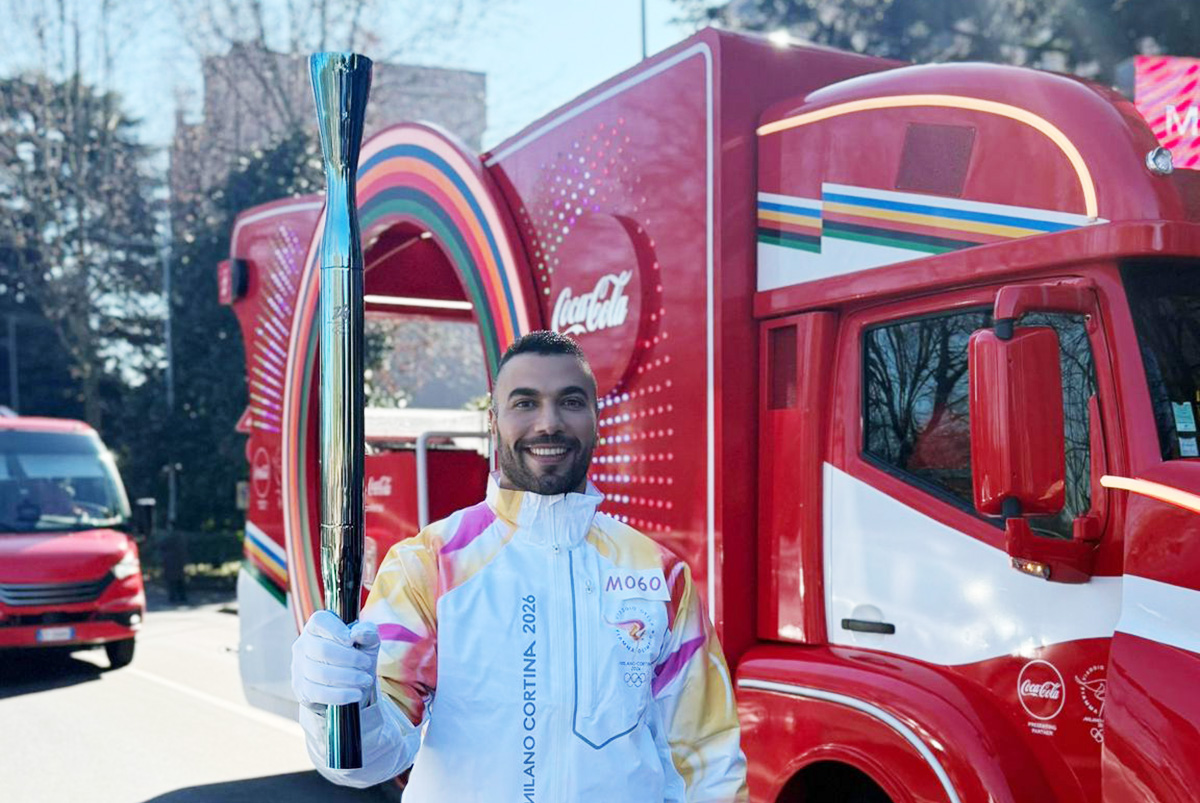
Naklé in 2020 founded Peacox Basket Milano, Italy’s only LGBTQ+ basketball team. He also carried the Olympic torch through Milan shortly before he spoke with the Blade. (“Heated Rivalry” stars Hudson Williams and Connor Storrie last month participated in the torch relay in Feltre, a town in Italy’s Veneto region.)
Naklé said the promotion of LGBTQ+ rights in Italy is “actually our main objective.”
ILGA-Europe in its Rainbow Map 2025 notes same-sex couples lack full marriage rights in Italy, and the country’s hate crimes law does not include sexual orientation or gender identity. Italy does ban discrimination based on sexual orientation in employment, but the country’s nondiscrimination laws do not include gender identity.
ILGA-Europe has made the following recommendations “in order to improve the legal and policy situation of LGBTI people in Italy.”
• Marriage equality for same-sex couples
• Depathologization of trans identities
• Automatic co-parent recognition available for all couples
“We are not really known to be the most openly LGBT-friendly country,” Naklé told the Blade. “That’s why it (Pride House) was really important for the community.”
“We want to use the Olympic games — because there is a big media attention — and we want to use this media attention to raise the voice,” he added.
Naklé noted Pride House will host “talks and roundtables every night” during the games that will focus on a variety of topics that include transgender and nonbinary people in sports and AI. Another will focus on what Naklé described to the Blade as “the importance of political movements now to fight for our rights, especially in places such as Italy or the U.S. where we are going backwards, and not forwards.”
Seven LGBTQ+ Olympians — Italian swimmer Alex Di Giorgio, Canadian ice dancers Paul Poirier and Kaitlyn Weaver, Canadian figure skater Eric Radford, Spanish figure skater Javier Raya, Scottish ice dancer Lewis Gibson, and Irish field hockey and cricket player Nikki Symmons — are scheduled to participate in Pride House’s Out and Proud event on Feb. 14.
Pride House Los Angeles – West Hollywood representatives are expected to speak at Pride House on Feb. 21.
The event will include a screening of Mariano Furlani’s documentary about Pride House and LGBTQ+ inclusion in sports. The MiX International LGBTQ+ Film and Queer Culture Festival will screen later this year in Milan. Pride House Los Angeles – West Hollywood is also planning to show the film during the 2028 Summer Olympics.
Naklé also noted Pride House has launched an initiative that allows LGBTQ+ sports teams to partner with teams whose members are either migrants from African and Islamic countries or people with disabilities.
“The objective is to show that sports is the bridge between these communities,” he said.
Bisexual US skier wins gold
Naklé spoke with the Blade a day before the games opened. The Milan Cortina Winter Olympics will close on Feb. 22.
More than 40 openly LGBTQ+ athletes are competing in the games.
Breezy Johnson, an American alpine skier who identifies as bisexual, on Sunday won a gold medal in the women’s downhill. Amber Glenn, who identifies as bisexual and pansexual, on the same day helped the U.S. win a gold medal in team figure skating.
Glenn said she received threats on social media after she told reporters during a pre-Olympics press conference that LGBTQ+ Americans are having a “hard time” with the Trump-Vance administration in the White House. The Associated Press notes Glenn wore a Pride pin on her jacket during Sunday’s medal ceremony.
“I was disappointed because I’ve never had so many people wish me harm before, just for being me and speaking about being decent — human rights and decency,” said Glenn, according to the AP. “So that was really disappointing, and I do think it kind of lowered that excitement for this.”
Puerto Rico
Bad Bunny shares Super Bowl stage with Ricky Martin, Lady Gaga
Puerto Rican activist celebrates half time show
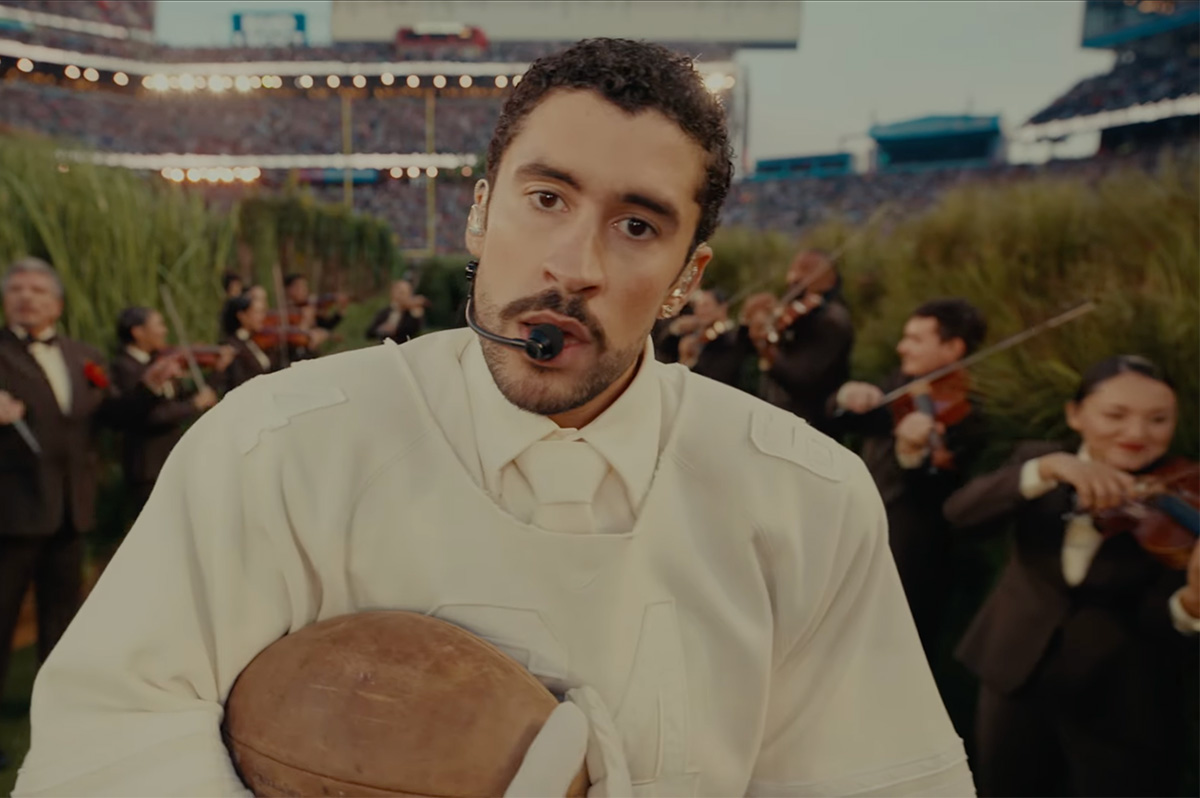
Bad Bunny on Sunday shared the stage with Ricky Martin and Lady Gaga at the Super Bowl halftime show in Santa Clara, Calif.
Martin came out as gay in 2010. Gaga, who headlined the 2017 Super Bowl halftime show, is bisexual. Bad Bunny has championed LGBTQ+ rights in his native Puerto Rico and elsewhere.
“Not only was a sophisticated political statement, but it was a celebration of who we are as Puerto Ricans,” Pedro Julio Serrano, president of the LGBTQ+ Federation of Puerto Rico, told the Washington Blade on Monday. “That includes us as LGBTQ+ people by including a ground-breaking superstar and legend, Ricky Martin singing an anti-colonial anthem and showcasing Young Miko, an up-and-coming star at La Casita. And, of course, having queer icon Lady Gaga sing salsa was the cherry on the top.”
La Casita is a house that Bad Bunny included in his residency in San Juan, the Puerto Rican capital, last year. He recreated it during the halftime show.
“His performance brought us together as Puerto Ricans, as Latin Americans, as Americans (from the Americas) and as human beings,” said Serrano. “He embraced his own words by showcasing, through his performance, that the ‘only thing more powerful than hate is love.’”
Sports
Michael Ferrera is paving a path of safety and liberation for queer athletes
The Blade interviewed the C.E.O. of Out Athlete Fund, which has sponsored six out athletes competing in the 2026 Winter Olympics and is creating the first U.S. Olympic Pride House in 2028.
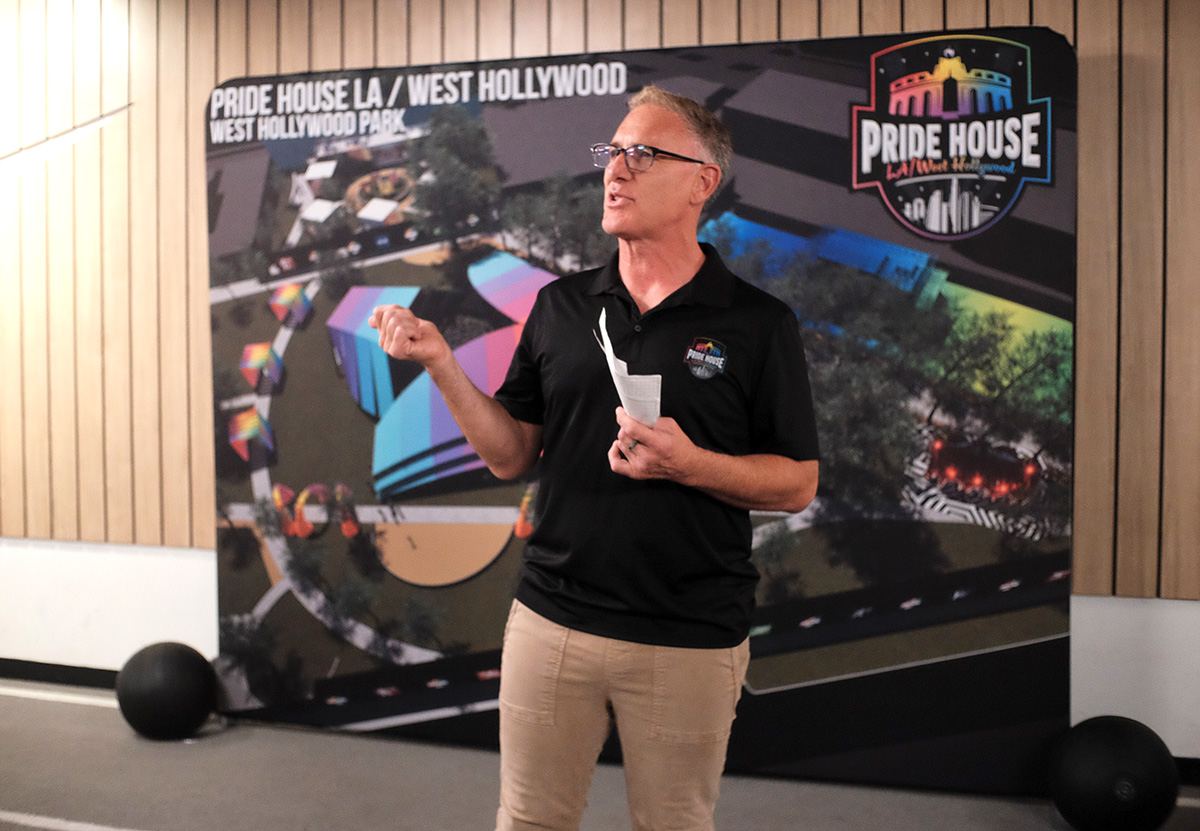
Michael Ferrera was 10 when he first watched U.S. figure skating duo Tai Babilonia and Randy Gardner cascade like currents across the ice, their arms forming delicate shapes in sync as they jumped, spun, and dominated national and world competitions in the late 1970’s.
As a young closeted kid, Ferrera’s admiration for the skaters and the sport was a source of comfort: a place where he could see men embody the nuances of gender. “I saw this mixture of masculinity and grace and expression, and that they were fully themselves as men,” Ferrera told the Blade.
Today, after decades of LGBTQ+ non profit work and leadership in Los Angeles, Ferrera is directing his passion for advocacy and queer affirmation towards that initial childhood love: sports. He leads Out Athlete Fund, an organization that supports and uplifts queer athletes, championing their visibility in public arenas. Recently, Out Athlete Fund announced its sponsorship of six U.S. athletes competing at the 2026 Milano Cortina Winter Olympics and Paralympics, which began today.
Out Athlete Fund is also producing Pride House L.A./West Hollywood, their most ambitious undertaking yet. With over $1 million in funding support from L.A. County and the City of West Hollywood, the organization will take over West Hollywood Park for the 2026 FIFA World Cup and the 2028 Summer Olympics and Paralympics.
Pride House L.A./West Hollywood will be the first-ever U.S. LGBTQ+ hospitality house for the Olympic Games, joining a burgeoning fight for queer representation in professional sports.
The first Pride House was created in 2010 during the Winter Olympics in Vancouver, forming a foundation that Ferrera hopes to build upon. “We’re trying to lift the movement [and] create a through line,” Ferrera said, who is weaving stronger connective roots between the various Pride Houses that come before him, and the ones that will follow.
The Los Angeles Blade and Washington Blade announced today that it will serve as the exclusive queer media sponsor for Pride House, and will cover the organization’s plans, interview queer athletes, and report on upcoming events.
We sat down with Ferrera for the first of these exclusive interviews. In this conversation, Ferrera tells us about the growth of Out Athlete Fund, what people can expect from Pride House L.A./West Hollywood at the FIFA World Cup and the 2028 Olympics, as well as the importance of LGBTQ+ safety, representation, and celebration in professional sports.
How did your journey with Out Athlete Fund begin?
This [opportunity] with Out Athlete Fund came out of the pandemic. That was a tough time. L.A. Pride got shut down in 2020. For those of us in the nonprofit world, there weren’t new jobs. That became quite a journey, trying to consult and be creative about how to get through that time.
And then, when [lockdown] was over, my friend Erik Braverman, who’s also on the board for Out Athlete Fund, came to me and said, “Michael, there’s this great thing going on. My friend Cyd Ziegler from OutSports and Les Johnson from Gay Games are involved. I think you should meet them, because they need somebody to run their nonprofit, and you have that experience.”
He knew that I love sports. I was born into a Boston, New England family, and you don’t have any choice. So I met Cyd, [who] really is one of the preeminent voices in this world of out athletes, and it just seemed like a good fit. Honestly, the first two years, working with Out Athlete Fund, we didn’t have money to pay staff. Everybody was volunteering, including me.
We’re really excited because we haven’t been doing this very long. Our first real event was last year. At the end of the summer, we [screened] A League of Their Own at the Autry Museum. [For today’s] Milan opening ceremony watch party, we have almost 600 RSVP’s.
We’re focused on our visibility mission and raising money to support athletes. We have six at Milan. When we started the year, our goal was to sponsor two, so this is growing so fast. I’m just so excited.
When it comes to the Winter Games in Milan, they’re happening under a government that is similar to ours in its anti-LGBTQ+ attitudes. How does that affect your mission of supporting athletes on world stages in places that aren’t accepting of their queerness?
Our sponsorship of these athletes is much more than just writing them a check. It’s letting them know that they have a community behind them. That’s really what Pride House does. It’s bringing together fans and allies so that these athletes feel like they have a community. And the fans know that there are people like them who are excelling in these sports and don’t have the artificial ceilings that are placed upon them.
Now I think there’s 44, at the moment, out athletes at Milan, and that’s a record for the Winter Olympics. That’s so important: that they know that they have the support of fans in their community, financially, emotionally, in a country that is right now pretty hostile to them, and to have Pride House there.
So that’s what we’ve got to do. We have to stake a claim, right? And with Pride House L.A./West Hollywood, we want to do that here. We’ll be the first Olympics Pride House in the United States, and we want to grow that [and send the message]: We are here. Our athletes are here. We’ve got their backs. You should, too. I think that’s how we make slow change.
What will be unique about Pride House L.A. and what will programming look like?
We want to [translate] the power of Los Angeles. We have the entertainment community here. We have a lot of business here, and it’s an exciting city, and it’s got a lot of flash.
When we take over West Hollywood Park, we will have the whole park. We have 17 days, 12 hours a day to program things. We’ll have a concert stage. We’ve had meetings in the last couple of weeks about A-list celebrities who will come and do a tribute concert to athletes. And we’ll have a smaller stage too that’ll have community performances, meet and greets with athletes. [There will be] panel discussions inside an exhibition hall, where there’ll be a million TV screens so that people can watch every single competition that’s going on.
[There will also be] big screens outside and on the concert stage. We’re going to have Paralympic sports exhibitions, a history museum about our athletes, where a lot of art will be involved. We’ll have a restaurant. We’ll have food trucks. We’ll have bars. Almost everything will be free of charge to the public. Competitions are expensive to go to — now, you can come watch with your community and have fun.
We’re still figuring it all out, because our imaginations are the only things that limit what we can do in all those days and with all those hours: everything from a gay employee group having an afternoon together, to having the youth at the Laurel Foundation come for a camp day, to a seniors day.
I want my community to be up front. I want them to see Pride House reflect them, because if it doesn’t reflect them, it doesn’t reflect all the athletes that are potentially out there too. So that’s a big part of the job. It’s making sure this community has a voice and has the opportunity to contribute and help us make it the best it can be.
There’s so much community activation in the works. What can athletes expect at the hospitality house?
One of my proudest things that we’ve established for Pride House L.A./West Hollywood is that we’re going to have a dedicated athlete area. We’ll have shuttles that go between UCLA, where the Olympic athlete village will be, and this second athlete village. This is already sanctioned by the Athlete Relations Director for LA 28.
[Queer athletes will] know that there’s a space that they can go to outside of the [general] athlete village, outside of the politics and the limitations that are there. They can come to this place that’s really for them, and they’ll have their own entrance. The dream of that is that if an athlete comes from Egypt or Iran or Russia — some place where they feel like they can’t be themselves, [where] laws are against them — they can come here and see what experiences they can have being in a place that’s safe and inclusive and celebratory.
That feels liberatory. Pride House can offer, even for a moment, a space where queer people can live openly as themselves when they might have to conceal themselves in the places they spend most of their time in.
When I worked at the LA LGBT Center, we had a program with Chinese activists. [They] came to the Center and were able to go through all the departments, learn about the different kinds of services, how they were provided, how we raised money, how we worked within the community, and [try to figure out how] to tailor the knowledge that we were providing to the reality that they had.
On the ground, they were getting called into the police station [for] trying to show LGBTQ+ films at a film festival. You couldn’t really say it was a film festival. You had to say it was an HIV/AIDS prevention thing, and they got found out.
I became friends with these Chinese activists, and that’s when I say: having a conversation with another human being, [it’s] not [about] the borders and the politics. You’re just two humans facing different circumstances, [questioning]: How can we make it better for each other?
How do those borders show up in sports?
What I hope is that people understand: sports is one of the last bastions of historical hostility toward our community. There are a lot of stereotypes that people still speak about every day, just to keep those walls up and those ceilings up. If you can introduce us and start to normalize that, and have more visibility, and have more athletes feeling safe and supported, it has the power to change in an incredible way. So many people get exposed to these [larger] issues because they’re exposed to sports.
It’s really powerful. Sports crosses lines: it crosses racial lines, cultural lines, national lines. The power of the Olympics is that athletes come from countries all over the world, and when you’re with somebody [in person], there’s no border there. There are the borders of maybe language or human borders, but there’s no ICE. There’s no hostility or laws or whatever coming between you. There’s just this incredible opportunity to speak to each other as two human beings and get to know each other without all of that stuff getting in the way.
In April, Out Athlete Fund plans to host a 25th annual anniversary screening of Greg Berlanti’s West Hollywood-centered film Broken Hearts Club. The organization will also host four days of festivities at Beaches Tropicana WeHo for the 2026 FIFA World Cup. The Blade will continue to provide exclusive updates on these events, as well as the six Winter Games athletes sponsored by the organization.
Kristie Song is a California Local News Fellow placed with the Los Angeles Blade. The California Local News Fellowship is a state-funded initiative to support and strengthen local news reporting. Learn more about it at fellowships.journalism.berkeley.edu/cafellows.

Making waves in the desert: How Brad Fuhr and KGAY keep the Coachella Valley connected

From ‘La Bola Negra’ to ‘Coward,’ here are this award season’s must-watch queer films

‘Male Aesthetic’ challenges conventional tropes of masculinity through dance at Nickerson-Rossi Dance Company

Key Midterm Election races as SoCal joins No Kings ‘Vote Early’ rallies on Saturday

Here’s your Palm Springs look at the weekend: Oct 16-18, 2026

Trans woman says Kyle Brazeal used anti-trans slur, threw purse at her in 2024

Hungarian lawmakers approve bill to remove anti-LGBTQ+ provisions from ‘child protection’ law

JD Vance takes swipe at James Talarico’s sexuality during Texas rally

‘Come Out for the Games’ gets Los Angeles excited for the 2028 Olympics

Ahead of the midterms, Meta has paid at least 29 anti-LGBTQ+ accounts for their posts
-
 California3 days ago
Trans woman says Kyle Brazeal used anti-trans slur, threw purse at her in 2024
-
 Hungary5 days ago
Hungarian lawmakers approve bill to remove anti-LGBTQ+ provisions from ‘child protection’ law
-
 Politics5 days ago
JD Vance takes swipe at James Talarico’s sexuality during Texas rally
-
 Sports5 days ago
‘Come Out for the Games’ gets Los Angeles excited for the 2028 Olympics
-
 Politics5 days ago
Ahead of the midterms, Meta has paid at least 29 anti-LGBTQ+ accounts for their posts
-
 Politics4 days ago
Victory Institute to honor Nancy Pelosi at D.C. conference
-
 Features4 days ago
Lu Corporan on designing the darkroom
-
 Palm Springs3 days ago
Here’s your Palm Springs look at the weekend: Oct 16-18, 2026
-

 a&e features3 days ago
How Orville Peck healed his inner child through ‘Street Fighter (2026)’
-
 Palm Springs18 hours ago
Making waves in the desert: How Brad Fuhr and KGAY keep the Coachella Valley connected