
a&e features
William Shatner’s message for LGBTQ fans: ‘Keep on queerin’
World’s largest Star Trek convention features cosplay, queer stars
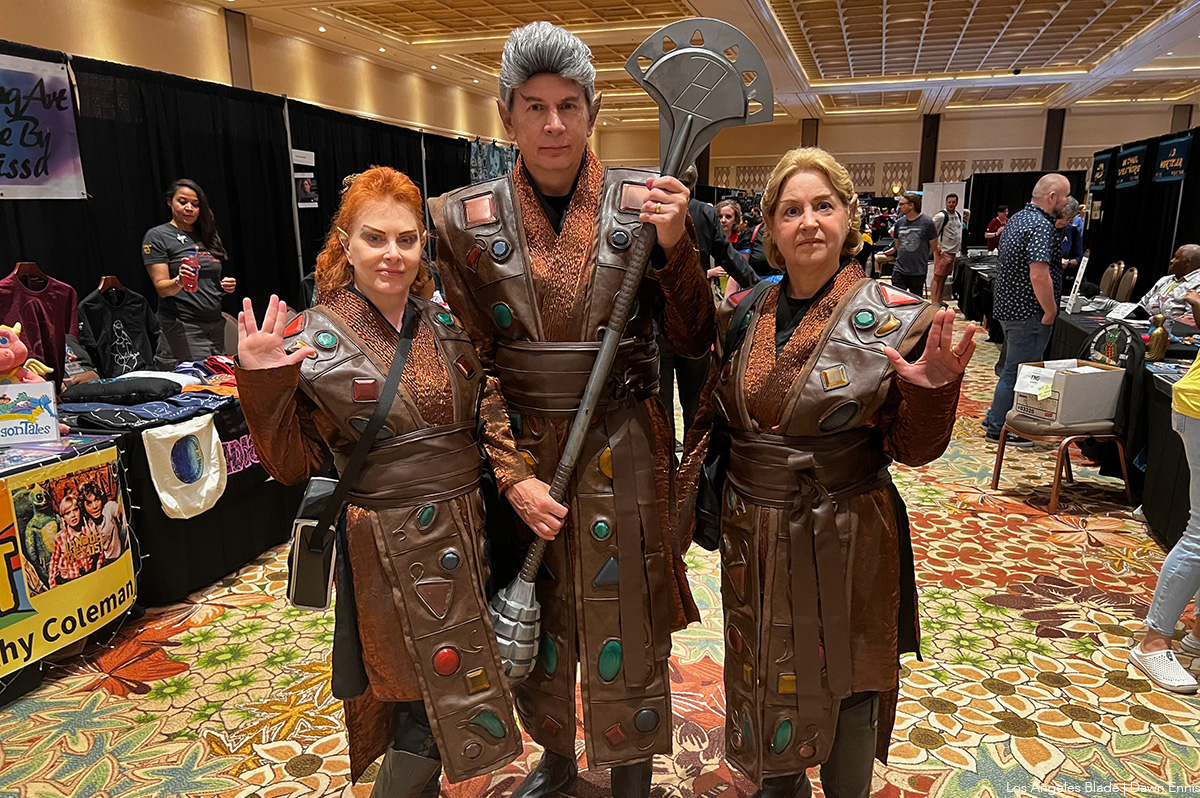
LAS VEGAS — STLV, the annual Star Trek Las Vegas convention — hosted by Creation Entertainment — this month brought together fans of all ages, abilities, and affections for the many incarnations of the 59-year-old science fiction franchise, from the original TV series to new streaming shows and online games.
Boldly going among them were dozens, if not hundreds, of LGBTQ Trekkies and Trekkers alike, living the ideal that predates DEI by more than 50 years: An anagram that Trek creator Gene Roddenberry devised as the basis of Vulcan philosophy (as well as an early merchandising opportunity).
I.D.I.C.
“‘Infinite Diversity In Infinite Combinations,’” TrekCulture podcaster Seán Ferrick told the Los Angeles Blade. “This is the type of community that is tailor-made for embracing,” said Ferrick, who identifies as pansexual. “The truth is a lot of the world doesn’t do that.”
Ferrick traveled from Wexford County, Ireland, to attend what he called “the biggest Star Trek convention of the year on the planet,” and to judge a cosplay competition.
“They might be wearing Vulcan ears or they might have Ferengi teeth or something, but this is a tailor-made community about spreading love and joy,” he said. “So, when I walk into something like this, what I see is, for a large part, the world as it should be. There is hope out there. I stand at something like this and I see nothing but hope.”
This was the first Star Trek convention this reporter has attended since 1978, and some things have not changed. There was a huge amount of Trek-related merchandise for sale, from tribbles to jewelry and model spaceships. Actor and first-time author Nana Visitor of Star Trek: Deep Space Nine sold out copies of her groundbreaking book about the women in front of the camera and behind the scenes of the franchise, Open a Channel: A Woman’s Trek. And the only people who stood out in the crowd of thousands were the ones not wearing a costume. Three fans put together amazing Vulcan outfits that will appear in an episode that has not even streamed yet, just based on what they saw in a trailer. Some folks even dressed up their dogs.
David’s homemade Starfleet uniform resembles a miniskirt but is called a skant. Male actors as well as women wore them on Star Trek: The Next Generation, and he was hardly the only man wearing one at STLV.
“There is nowhere else I would probably walk around in a dress,” he said. “I came last year for the first time and this was the most comfortable I’ve felt.” That was especially true, given that on this day, the temperature reached a high of 109 degrees in Las Vegas.
David is a gay man from Sheffield in Northern England who said he used to call Los Angeles home. He described his skant as “Pride for Star Trek” and was gratified by the reception of other convention-goers to his cosplay.
“There’s just no judgment. No matter whether someone’s costume looks really homemade, whether it’s really professional, everyone still appreciates that you’re part of the fandom.”
Peeved at Paramount
Judgment, however, was on the minds of some stars who identify as LGBTQ. They talked with the Los Angeles Blade about their fears that Skydance’s purchase of Paramount, the company that produces Star Trek, would change the franchise’s legendary embrace of diversity, to further appease the Trump administration as it works to eliminate DEI.
“We only have to look at the parent network of this series alone, where Star Trek lives now, where they have bent the knee in order to sell this studio to a right-wing, Trump-loving owner,” said out gay actor Wilson Cruz, who played one of the first out gay characters in the franchise in Star Trek: Discovery and was a trailblazer when he played Rickie Vasquez on My So-Called Life. Cruz was blunt in his criticism of the Paramount sale to Skydance.
“Shari Redstone had no problem selling out the entire company and everyone who works there, and all of the people who have been on screen representing people of color, the LGBTQ community,” said Cruz. “She has completely turned her back in order to keep her family richer than they ever need to be.”
Cruz is also worried for queer representation in the current era, and not just on Trek.
“I think in this moment in history, it means a lot more to me now than it even meant eight months ago, which it meant a lot to me then, but given the fact that we’re going to start seeing less and less of us on TV, we’re being erased,” he said. “And because we are being erased, because we are being shamed again, it’s really important to celebrate the success of the representation that we have had, to remind people why it’s important for people to be able to see themselves, to have their lives mirrored back at them, to inspire them through our stories, that that kind of storytelling has value and relevance and has even more relevance today.”
In between signing autographs, Cruz voiced gratitude for the fans who say his portrayals reflected their lived experiences.
“I’m incredibly moved every time somebody comes by, whether they’re talking about Rickie Vasquez or Hugh Culber, that I’ve been able to give people a voice and a story that they can identify with that makes them feel like they belong, in a moment where there’s so little of that.”
“I’m very fortunate to be part of two major things,” said Cruz’s Discovery costar, out gay actor Anthony Rapp. “Rent and Star Trek have these profound communities of fans around them. I say ‘fan.’ I mean, it’s not a word that I have any animosity toward. But it doesn’t quite speak to the level of connection to these pieces of art.”
As for the deal Cruz railed against, Rapp said it was “too upsetting to engage too much.”
“I’m on a little bit of a media brown-out because of having two toddlers. I’m certainly aware that Colbert was canceled, which is very upsetting. I heard Wilson mention something about Trump getting them to agree on a certain kind of media coverage,” he said, referring to the installation of an ombudsman, “who will receive and evaluate any complaints of bias or other concerns” at CBS News, according to The Hollywood Reporter. “I mean, that’s insane.”
Out actors Cruz and Rapp, who appeared on Star Trek: Discovery from 2017 until 2024, were among the more than 100 actors and creative types on hand who gained fame thanks to Trek and other sci-fi projects. They joined iconic fan favorites William Shatner, Scott Bakula, Kate Mulgrew, Jeri Ryan and Edward James Olmos — all of whom played captains of various fictional starships — in meeting their fans, face to face, for a price.
Those fans, dressed in every conceivable and even inconceivable cosplay creations, stood for hours in long lines for a signed autograph and to pose for photos with their heroes. They packed ballrooms to hear behind-the-scenes stories at a wide variety of panel discussions and presentations. The best seats cost $1,400, with photos and autographs costing anywhere from $25 to $300 apiece.
Meeting the Captain
This reporter was next in line to ask Shatner a question at his one and only appearance on stage, as he rhapsodized at length about nature, the planet, and beyond.
“We all belong to each other, and all of us belong to the rest of existence, the world, the universe,” said Shatner. “We are linked chemically and electronically with the word ‘quantum’ attached to it. ‘Quantum’ is the study of the small particles called atoms. We should all never forget the awesomeness, the incredible forces that we have no idea about that work everywhere in the universe. It also suggests that we are caretakers of our earth and we must, without question, care for the water, the air, the earth.”
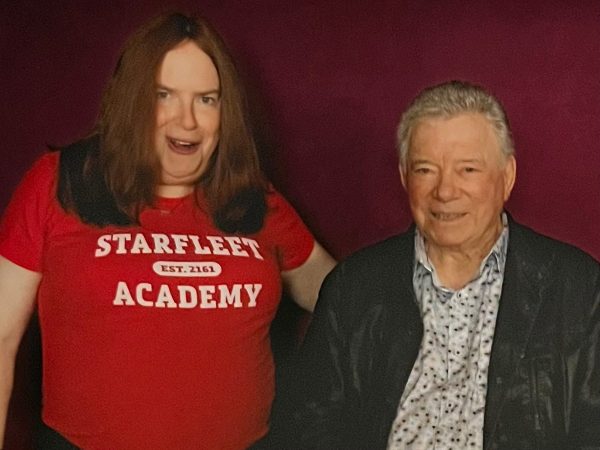
It was at that point that the 94-year-old actor decided to end his hour-long talk, 10 minutes early. So, unable to ask him a question, I joined a queue with hundreds of attendees, who paid to have a moment with the original Captain James T. Kirk. There he was, seated on a chair at the end of the queue, as a fast-moving assembly line of fans stood by him for a very quickly posed photograph, and swiftly moved along.
I had literally just enough time to utter one sentence, and so I asked him, “What message do you have for queer Trek fans?”
“Keep on queerin’!” said Shatner, with a smile captured in a photograph.
That was a welcome message for two groups that celebrated their marginalized status in society: The Lambda Quadrant and the SyFy Sistas.
Tamia, the SyFy Sistas podcast host, spoke at their panel about how in the past, there was backlash directed at Black fans, at “people that look like us and didn’t want us in the room,” she said. “That’s not what Star Trek is about. But I think it’s changing.”
“Many, many people come up to us at the table and say that historically they have not felt comfortable expressing their full and true selves, even here in the fandom,” said Ursa Wright of the Lambda Quadrant, a group dedicated to promoting queer representation in fandom. “We are the one table in the whole place with big rainbows everywhere. So, people, for a long time, they come up and they tell us they did not actually feel safe. Like, they can wear their Star Trek outfit, but nothing overtly expresses that they would be gay, or whatever it is, because they still didn’t feel comfortable, because no one else was in the space doing the thing. Which, in our year of the Lord, how are we still there, where people feel that?”
Boldly LGBTQ
The Blade asked queer fans what Star Trek means to them.
“Accepting everyone,” said Sarah from Southern California. “Everybody is who they are.”
“Being free,” said Rachel from Nebraska. “To express anything and everything.”
“Togetherness,” added David who hails from Nova Scotia.
Boyfriends Anthony and Ryan said “acceptance” and “tolerance.”
“Star Trek is what this world needs to strive for,” said Tom Noe of Pleasanton, Calif., a straight ally whose partner is pansexual. “Acceptance of all races, sexualities, regardless of what they are.”
“It is a different way of looking at the world, and I appreciate that,” said Jess from Upstate New York. She was wearing a T-shirt emblazoned with a rainbow and the face of an omnisexual alien character from Star Trek: Deep Space Nine, and the words, “Friend of Garak.” When asked why she chose to wear that top, Jess said, “Because I’m gay.”
“Sounds Gay, I’m In,” was the message on a shirt worn by a gay fan from New Jersey who asked to be identified as Sandra. “Because here is the only place I feel safe to be out. I’m not out with my family or my co-workers,” she said. “Star Trek makes me feel like there is hope that eventually I can live free. But I don’t know how it’s going to happen in the next couple of years.”
“Let’s just say I have not been able to go to the entire convention without seeing a Trump hat,” said Kyla, an out transgender nonbinary fan who was visiting Las Vegas from just outside Sacramento. They said didn’t feel comfortable using the casino hotel’s strictly binary restrooms without an escort. “But I have felt more safe here than I have on the strip,” she conceded.
“We have nonbinary characters. We have same-sex characters and relationships, and we need more of that,” said a pansexual fan who goes by the nickname Hoops. “As the kids would say, Star Trek is very woke. Like, it just means you have a heart and, like, compassion,” she said.
“There’s so much hate and so much bigotry and homophobia and transphobia. All of that,” said Hoops. “We’re just here to care about other people. And we just want to love other people. And why do you care who someone’s in love with or who someone takes care of? Or how they identify? What they’re wearing? If they’re wearing a skirt or pants? Does it really matter what path they’re taking? And in Star Trek, nobody cares about any of that.”
TrekTech
STLV also offered fans a chance to explore strange new immersive tech that allows them to virtually tour the Starship Enterprise, created by OTOY and The Roddenberry Archive.
“We think about this stuff a lot,” said OTOY CEO Jules Urbach about LGBTQ+ representation in his digital exploration of the franchise, which started with the first film in 1979 and only grew after he became childhood friends with Roddenberry’s son, Rod, 40 years ago. “It’s really part of representing everything. And that’s a big part of Star Trek.”
OTOY’s latest short film reunites two iconic characters using “digital masks:” Kirk visits Spock’s deathbed in “765874: Unification,” with actors Sam Witwer and Lawrence Selleck in the roles originated by William Shatner and the late Leonard Nimoy, respectively.
“This is pretty magical,” Urbach told the Blade. “We’re really happy with how it turned out and how people interpreted it.”
At star-studded panels, fans watched that short film and also learned of new shows in the pipeline and potential new movies. Next month, Paramount debuts a new audio drama podcast that tells the untold story of arch villain Khan Noonien Singh’s life in exile, featuring the voices of Naveen Andrews, best known for his role in Lost, and of gay icon George Takei, among others.
“It’s never far from the minds of the people creating these shows that how important representation is, how vital it is,” Kirsten Beyer, executive producer of Star Trek: Khan and a nine-year veteran Trek producer and writer, told the Los Angeles Blade in a phone interview following the convention. “And never, ever more so than now.”
Queer Stars, Allies
During a panel discussion with her out queer costar Jess Bush, Celia Rose Gooding of Star Trek: Strange New Worlds told the Blade she’s hoping to see more LGBTQ representation in the show, now in its third season streaming on Paramount+.
“As a queer person, I would love to see more of it,” said Gooding, who plays Uhura and is preparing to film the fifth and final season starting next month. “I can neither confirm nor deny what we’re going to get because we haven’t seen a single script yet. But I think for so many reasons, it’s important for marginalized group to see themselves in the future.”
“I’m a Greenwich Villager, so the LGBTQ world is my world, and it’s our world,” said Michelle Hurd, who played Raffi on Star Trek: Picard. In the series finale, written and directed by showrunner and LGBTQ ally Terry Matalas, Raffi is portrayed as the bisexual first officer who had a relationship with her bisexual captain, Seven of Nine, played by actress Jeri Ryan. “We’ve been here, we haven’t gone, we’re not going anywhere, and we’re going to be here until the end of time. And art is the way that we can convey those sort of stories. I hope that we continue to tell those stories more and I hope that this world continues to open its eyes, its arms, its hearts to the fact that love is love is love is love.”
Out gay actor and author Jonathan Del Arco — who played a Borg who became an individual named Hugh in both Picard and originally on The Next Generation — chose the convention to launch his children’s book about the search for belonging, identity and acceptance, Freddy the Alien. He told the Blade it was inspired by both his own childhood and his Trek career, and about the timing as immigration raids are in the news.
“It’s a really important time to make kids feel included, and it’s tough,” said Del Arco, who attended the convention with his husband, Kyle Fritz. “We live in Los Angeles, and you can’t help but be surrounded by the immigrant experience, so you don’t even need the book to have that conversation. It’s happening all around,” he said.
In a panel discussion, Del Arco revealed that although nothing was written about Hugh’s orientation, he chose to play him as having fallen in love with Evan Evagora’s character, Elnor,
“I decided when I found out I was getting killed, and I had this young man on the ship, I figured it would be kind of cool if Hugh had found love for the first time, only to die. And he did.”
Andrew Robinson played a Cardassian named Garak on Deep Space Nine and confirmed to the Blade he “always” considered his character was something other than heterosexual, such as an omnisexual, even though his orientation was never revealed in the series. However, in 2024, he played Garak once more, in an episode of the animated series Star Trek: Lower Decks, created by LGBTQ+ ally Mike McMahan. This time his character was in a same-sex relationship with Dr. Julian Bashir, played by Alexander Siddig.
“I’ve never played an alien before,” said Robinson. “And one of the things that occurred to me was, there are certain hang-ups that they don’t have that we have. And one of them was the whole thing about sexual identity.”
Terry Farrell, who played Jadzia Dax on Deep Space Nine, spoke about a 1995 episode, “Rejoined,” in which her character had a romantic relationship with another woman. Some Southern TV stations, primarily in the so-called “Bible Belt,” refused to air that episode. Many transgender fans have embraced Dax as someone who shares their experience of living in more than one gender, and “Rejoined” featured the first same-sex kiss in Trek.
“What I was most proud of was, in that episode, nobody talked about the fact that we were both women,” said Farrell. “I have goosebumps right now. Love is love. It doesn’t matter what package you come in. If that’s your one life, enjoy it, be you. It’s such a struggle in our culture to just be yourself. And clearly it can be dangerous to be yourself. And that’s horrifying to me.”
For the most part, this was an inclusive and entertaining event for one and all, especially for the many attendees who used wheelchairs and scooters to travel around the incredibly large convention space, which was located a considerable distance from the main casino hotel. But it’s only fair to point out that there were some issues, such as the lack of all-gender bathrooms.
Observers also noted that although this 23rd convention organized by Creation Entertainment was expanded to five days for the first time, it was not as well attended as 2024’s event. That’s in line with a trend that reports say has hit Las Vegas hard this summer, with tourism down 11 percent from a year ago. A spokesperson for Creation did not respond to an email request for comment on attendance.
The Blade also asked for comment on what were described later as “inadvertent” slights to the one and only Black woman to appear on a panel of Star Trek writers at the convention on the evening of Saturday, Aug. 9.
Once the four men and two men were introduced, the host — “Inglorious Treksperts” podcaster Mark A. Altman — had to be reminded that he had not invited Star Trek: Strange New Worlds story editor and episode writer Onitra Johnson to join them; she was still backstage, waiting. After finally being introduced, she was seated at the end of the stage next to legendary out gay screenwriter and author David Gerrold, who three times answered questions intended for Johnson. The third time, members of the audience interrupted him, shouting, “Let her speak!” which prompted Altman to blame “bad acoustics” in the ballroom.
While fellow Treksperts podcaster Daren Dochterman called these repeated slights “inadvertent” in a face to face conversation with the Blade on Aug. 10, neither he nor Altman, nor Creation, officially responded to messages from the Blade seeking comment.




a&e features
Meet your local musician: Ross Alan
The non-binary artist and Best of LA Award Nominee spills some tea
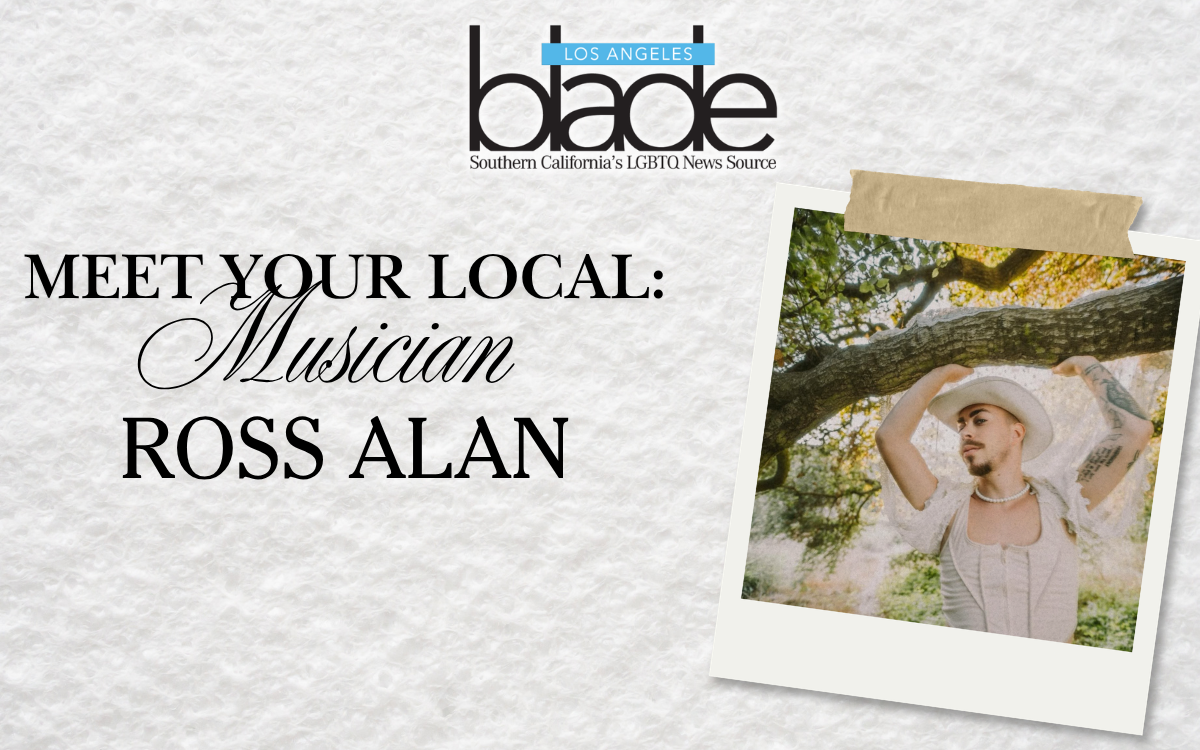
You don’t have to look far to support your local non-binary musician. Meet Ross Alan, who you’ve probably seen around town. They can easily be recognized by their stunning eyes, genteel demeanor, and killer fashion sense.
They’ve performed and sold out in venues nationwide, from Pete’s Candy Store in New York City and Davenport’s in Chicago to iconic Los Angeles stages like Hotel Café, The Viper Room, the Hard Rock Cafe Hollywood, and Whisky a Go Go. This year, they were nominated for an LA Blade Best of LA Award.
Alan is building toward their next chapter: a bold country-disco fusion project slated for 2026. They took some time to enlighten us about the spirit behind the rocker and give us a little insight and inside tea.
How did you get into music?
One day, as a kid, I sat down and watched Sister Act 2. There is a scene when Ryan Toby’s character hits his high note in their rendition of “Oh Happy Day,” and something changed in my soul and body. It was like all the atoms I’m made of woke up.
Now I’ve been making music for 15 years. To have such a specific and voracious moment like that. I knew, so young, that music was what I wanted to do. There was no surprise on my end that this is where I ended up. I mean, I can queue up the memory of me doing the choreography to “Oops I Did It Again” at my uncle’s wedding at the age of 10 or singing in our family garage while my stepdad worked on cars. Art is in my blood.
How long have you been performing?
I’ve been performing as Ross Alan for the last 6 years. I was performing before that under a different artist name for a decade, but I’ve toured domestically a good bit in the last 3 years or so. I am so excited to be getting all this new music from my upcoming record out and really getting the chance to shine on stage with it. Performing is where I feel the most secure in what I’m doing as an artist.
What do you love about music/live performance in LA?
Well, LA is home now. I’ve lived in the Midwest and the South, and I spent years living in New York and Chicago. But performing in Los Angeles always feels safe because this is like my actual home. It feels like I can take bigger risks out in the bars, it feels like I can try new things, and still be embraced by my peers. I think everyone here is chasing their dream, knowing that everyone is straddling their own form of bravery in the pursuit of their goals. There is a vulnerability we all share, and that makes the art so much better.
What do you love about Los Angeles/West Hollywood?
I’ve been in Los Angeles now for 5 years, and there is not a day that goes by that I don’t still smile on my commute. And from stupid stuff, right? Like palm trees lining a street, or a really gorgeous sunset backlit by the Hollywood neon horizon. I’m such a romantic, it makes sense that I’m a songwriter. There is just not a day that goes by that I don’t meet someone doing something cool or planning something amazing. My community is so sensational, and the environment of this city breeds serenity, innovation, and a level of togetherness I’ve never felt anywhere else.
What brought you to LA?
Music! Fame! Hot people! Warmth!
No, honestly. I hate being cold, and moving here from Chicago was like the deepest exhale I’ve ever had in my life. I’ve wanted to live in Los Angeles since I was a kid – and not in a way that I understood. Like I knew I needed to be here, but I didn’t know why. And 30 years later, here we are, and I was right. Sometimes you just know where you’re meant to be, but you don’t know when. So sometimes you gotta just ride the ride.
What is your passion?
I think a younger version of me would have said music or art or something plain. But I’m approaching 35. I think my passion is creation for the intention of being perceived and being understood.
I think we all pursue our own alleyways of work, relationships, and expression in order to be understood. Not necessarily from outside parties, but even on our own. I pursue a deeper understanding of myself, my music, and my purpose every day. I love that in a world filled with any and every resource known to man, we can use those tools to be seen and validated in our experiences. Those moments of realizing you aren’t alone are vital in my eyes, to know someone else hears you. I’m very passionate about making sure everyone feels heard and that empathy isn’t a lost art.
What’s a weird thing you learned about life from performing?
My mantra for every performance is “It might be the last night, but it is only one night.” You have to treat it like you will never get on the stage again. Leave everything up there: your sweat, your vulnerability, your art. It could be the last time you ever get to show people who you are and what’s important to you. But it is also only one night.
So if I flub with a lyric, or miss a step or mark – it’s okay. That’s the nature of live performance and being on a stage in front of an audience. I’m human, so mistakes are bound to happen. And it’s not letting those tiny slips get to you. Because I’m a perfectionist, I want every moment to go off as I planned it. But that’s not reality. So you really have to go in saying, “It might be the last night, but it is only one night.” Go hard, but be gentle.
Favorite spot in Los Angeles?
I have a few! Love a classic Griffith Observatory hike. I go to Los Globos in Silverlake pretty regularly for queer line dancing with Stud Country. The best breakfast burrito is Wake N’ Late in Hollywood. I swear by that place. I’ll walk the floral district in DTLA for any number of incredible blooms, and that is definitely a soul lift. Rustic Coffee in Santa Monica has the best sandwich in the world. You walk up to the airstream, order the chicken caprese – you’re so welcome. And lastly, I’d say the Hollywood Farmers Market on any given Sunday. Live music, talented local vendors, and fresh produce. Absolutely.
How has Los Angeles changed you?
It has made me more patient. It’s made me work harder. It makes me more and more queer every day. What a paradise.
What piece of advice would you give to your younger self?
You know who you are. Don’t let others scare you away from being exactly that. It’s your superpower.
If you could make one wish for Los Angeles, what would it be?
I could say so many things. Fortified infrastructure, improved disaster relief, mandatory driving classes, better systems of support for the unhoused population, removal of ICE in every fucking capacity, increased public transit availability, financial aid to small local businesses and the arts. I love this city. I want it to thrive.
What do you want for the queer community?
Above all, honestly? Safety. For my trans siblings, for my non-binary siblings. For our youth. For those in our community who don’t feel safe in their own homes. It’s been said so many times, but none of us are free until all of us are. So what are we doing about it? Being queer is not a luxury; it’s a privilege.
I don’t want us to have to battle forever – but the battle is not done. It’s so obvious that the battle isn’t over, and it really hurts seeing that so many people think that just because we got marriage equality and because I can wear a skirt in Los Angeles. I need those who have privilege to use it against the forces that wish us harm. Protect our community.
I’m talking to allies too. Because as Bad Bunny coined at the super bowl, “the only thing more powerful than hate is love”. And love is what the queer community is made of.
What do you look for in a person?
As I’ve gotten older, the bar has never been lower, but it’s also never been more serious. I look for prowess with communication. I look for independence and stability. I look for baseline physical attraction, and I look for a good sense of humor. The rest? It really doesn’t matter. I love so many different types of people, and the only real thing that matters is chemistry. The rest will work itself out if it is supposed to.
Celebrity crush?
I have so many. Laith Ashley, Justice Smith, Sophia Bush, Rachel McAdams, and Danny Ramirez. The list is long!
What is your favorite thing to do in your downtime?
Watch scary movies and rhinestone stage costumes for myself.
a&e features
Melvin Robert will perform homecoming solo at Gay Men’s Chorus of LA’s Spring concert
The Blade sat down with the entertainment host to discuss how music has brought him closer to his family, queerness and artistic core.
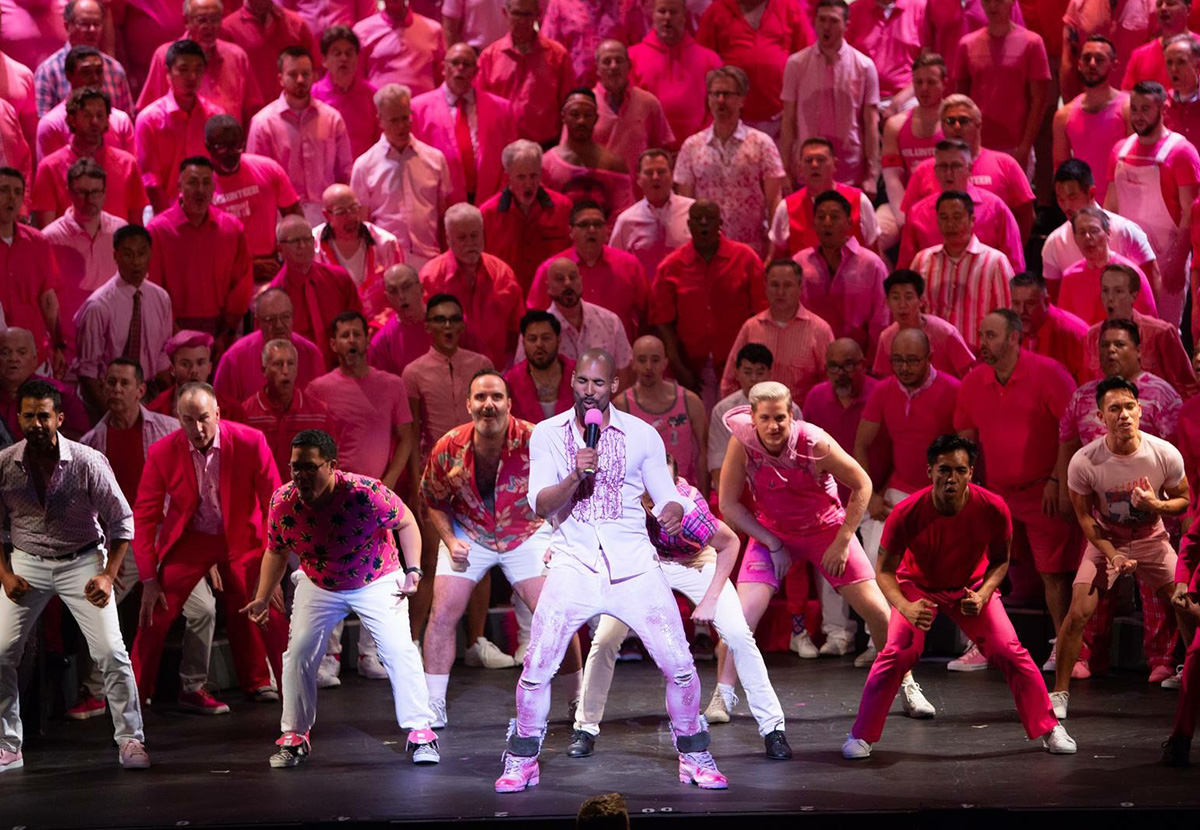
In 2013, Melvin Robert stepped into the parking lot of his old elementary school. He observed the playground equipment he hadn’t touched in 20 years, and rounded the corner until he reached a set of stairs that would lead to the auditorium. He was here to attend his first rehearsal as part of the Gay Men’s Chorus of Los Angeles (GMCLA).
Untethered and unsituated, Robert wanted community. At his best friend Trinity’s urging, he found himself now with one foot in the past, and one inching towards a new future.
Taking a few hesitant steps forward, he sees it. A wayside trash can: not, but might as well have been, the same trash can he was thrown into as a child, the first time he was called a gay slur. He felt anxiety knot his stomach, building in his throat. “I [thought] about that little boy,” Robert told the Blade. “I put my hand over my heart and said, ‘We’re good.’ Because, on the other side of the trash can, was the most beautiful group.”
Robert found the community he’d always wanted, and the voice within himself that he had buried out of shame. In the chorus, a sea of 300, Robert met people who would provide him with love, support, and encouragement that was a plentiful stream. He would also sing, for the first time in his life, without fear — the fear that had dampened and smothered his joy for so long.
On Mar. 21 and 22, Robert will return as a guest soloist for GMCLA’s upcoming Spring concert, “AND THE BEAT GOES ON.” A celebration of gospel, R&B, and Motown, the concert will transport guests through the expansive and transformative sonic fabric of Black American music and history.
Robert performed his last concert for GMCLA in 2018, after which he began his rocketing rise in entertainment journalism. A self-starter in the field, Robert is now an Emmy-winning broadcast host and currently serves as entertainment anchor for KTLA 5.
The Blade sat down with Robert to discuss his lifelong relationship to music, his return to GMCLA and his dreams as an artist.
Music has shaped your life from a young age. What were those early listening experiences like, and how does it continue to change and influence you?
I have a very eclectic taste in music. I attribute that to my dad. Growing up, [on] many mornings, my younger brother, Eric, and I would wake up to the sound of my dad. He would open the door to our room, and he’d go sit in a chair and play the saxophone. That’s how he would wake us up in the morning. [On the way to] school, my dad would play — some days it’d be Steely Dan, and some days it’d be Bob, Tupac Shakur, and Stevie Wonder. My dad had this really eclectic taste in music that inspired me.
And I always loved musical theater. I used to love going to the theater as a kid, to the Ahmanson and the Pantages. I wanted to be in a big buxom Broadway show. My grandma Vera loved Nat King Cole and Ray Charles and Fats Domino, and was from New Orleans. So I grew up with a lot of that Zydeco music playing throughout the house, and jazz, and that really influenced me as a person.
Music has been there for me when I really needed it. When I was first coming out, I remember listening to Yolanda Adams’ “Open My Heart,” and I would play that while driving around. It was my prayer when I was trying to figure out my identity and my sexuality — knowing I was gay but being really afraid and being like: God, please, help me get through this [at] 16 or 17.
Music is transformational, and it is a healing balm. I believe so much in the power of music. I believe so much in the power of musical theater and Broadway. I believe that theater is a temple: [we’re] together for that one moment in time, [in a] sanctuary to learn, heal, and be transformed.
What does it feel like to return to GMCLA for this Spring concert?
I’m so excited to be back with my brothers in song, [and] I’m humbled at the invitation to return. It’s very much a homecoming to be with everybody, and when they told me what I was going to be singing, it was so meaningful and impactful to me. One of the songs I’m going to sing is Ray Charles’ “Georgia on My Mind.” It was such a wink from my grandmother, Vera, because she would listen to that song. I have such fond memories of being in the kitchen or other rooms in her house and hearing that song.
Music is a big connection to memory. Sometimes you hear the first couple notes of a song, and you just go somewhere mentally: whether it takes you back to a moment of sadness or joy or heartbreak or pain, or maybe where you were when you first heard it, or you hear a new song, and you just stop, because the lyrics are so powerful and the melody is touching to you. Music is so important and necessary. It’s medicine.
Do you still have dreams of being on Broadway, and how does that fuel you?
Those dreams have never left me. I haven’t given up on it. I think in the last couple of years, I paused on that because I just didn’t have the time to devote myself to anything other than being a host. I’m really humbled by all of it. Within that, I love to sing and dance. It’s still very much a part of who I am. I think in my core, I am an artist. It’s what sets my soul on fire, and it’s what makes me feel the most blissful, the most at peace, and the most at ease.
We spoke about the concept of “homecoming” and the cycles of returning to who you are. What would you say to your younger self, who you saw again at that first rehearsal?
That people love you, even when you think people are not thinking of you, or people are not holding you in their hearts. I know that that’s your story that you want to tell yourself, [but] you’re more meaningful and impactful to people than you realize. It’s not always easy to believe in yourself, yet you must continue journeying forward and continue the work that you’re doing to believe in yourself. As hard as it is, you have to keep pushing, and you have to keep going, and you have to continue to have faith in who you are and the intent behind why you do what you do.
“AND THE BEAT GOES ON” will be performed on Mar. 21 and 22. Tickets and information can be found here.
Kristie Song is a California Local News Fellow placed with the Los Angeles Blade. The California Local News Fellowship is a state-funded initiative to support and strengthen local news reporting. Learn more about it at fellowships.journalism.berkeley.edu/cafellows.
a&e features
Quick chat: Katya Zamolodchikova works with Grindr to answer ‘Who’s the A**hole?’
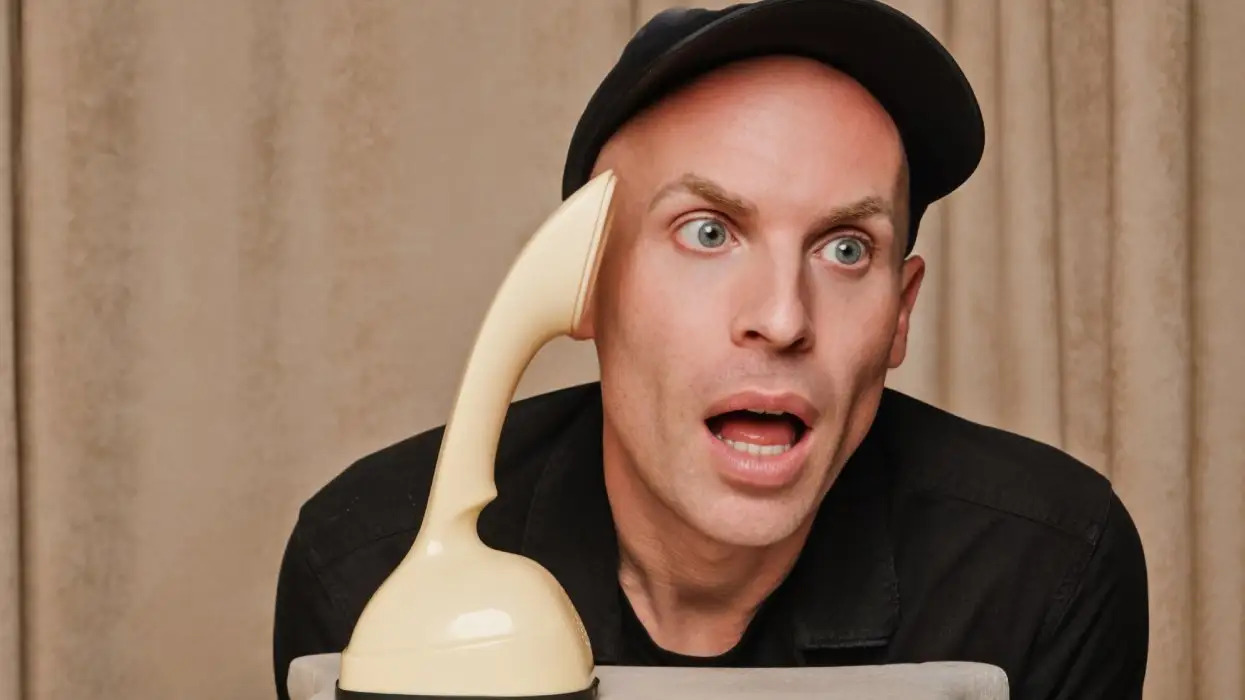
Katya Zamolodchikova has been a breakout star since their tenure on RuPaul’s Drag Race. With Trixie Mattel, they’ve created a veritable media empire with multiple YouTube series, live shows, tons of brand awareness, and podcasts. Katya steps away from their frequent collaborator to unite with everyone’s favorite frenemy, Grindr, on an interview podcast, “Who’s The Asshole?”
She brings her offbeat sense of humor, irreverent mind, and a new hairpiece to interview some of the hottest people of the moment. This season features Jinkx Monsoon, Jeremy Scott, everyone’s favorite transvestigator Luscious Massacr, Peaches, Pat Regan, and The Traitors star Colton Underwood.
This marks the fourth season of this podcast, which has a distinctly different vibe from The Bald & The Beautiful in the same way Monet XChange plays off Bob the Drag Queen, but is a consummate professional interviewer on Monet Talks. Katya breaks from playing off her straight man, Trixie, and instead partners with Grindr. It’s the perfect combination for a sexy, unhinged podcast with some of your favorite queer celebrities dishing about life, sex, and app culture.
Katya took time for quick chat and gave us a brain dump of her hottest thoughts about everything from Heated Rivalry to hooking up.
Edge: What do you love about this podcast?
Katya: I love getting to talk to wildly different people about sexual ethics, social mores, and really dissect our behaviors and patterns around sexuality.
E: What is your take on the Heated Rivalry phenomenon?
K: I love it. I love them. I love gay sex and I can’t wait for season 2.
What does dating look like in a post-Heated Rivalry world?
Probably just fucking on a Zamboni. I think that’s the vibe.
Any thoughts on Pillion?
I think it’s very important. I think it’s essential. In a way, it’s even required. (I haven’t seen it yet.)
What is the state of Drag? Drag Race?
Drag is, has always been, and will always continue to be corny, so we must do everything in our power to be as cunty as possible. Drag Race is franchising all over the globe, and I think it’s amazing.
Has “representation” sanitized queer expression?
I don’t think so. You should see some of my queer friends and the way they express themselves! Nothing sanitary there!
Who benefits from “respectable” drag?
Restaurant and nightclub owners. Less blood and feces to clean up.
How have the apps changed queer culture?
They have changed our culture in so many ways. For introverts and shy folk, apps are such a boon! I was afraid to talk to anyone up to age 30. I would have to give a big, warm thank you to Grindr for helping facilitate my year of sexual discovery.
Hot takes on dating? Polyamory? open relationships?
It’s always much simpler than people think. Do you like him? Do you? You should be able to answer that question in 2 seconds. Does he like you? You should answer that in 3 seconds. The rest is just trial and error and hopefully a lot of moaning and groaning (on the hockey rink only, of course).
Katya has six episodes of this season of “Who’s The Asshole?” premiering each Thursday on YouTube and your favorite podcast apps.
a&e features
‘Another Gay Sequel: Gays Gone Wild!’ and ‘Swan Song’ director Todd Stephens recalls the bygone era of raunchy 2000s comedies
The outrageous and campy ‘Another Gay Sequel: Gays Gone Wild!’ is back nearly 20 years later
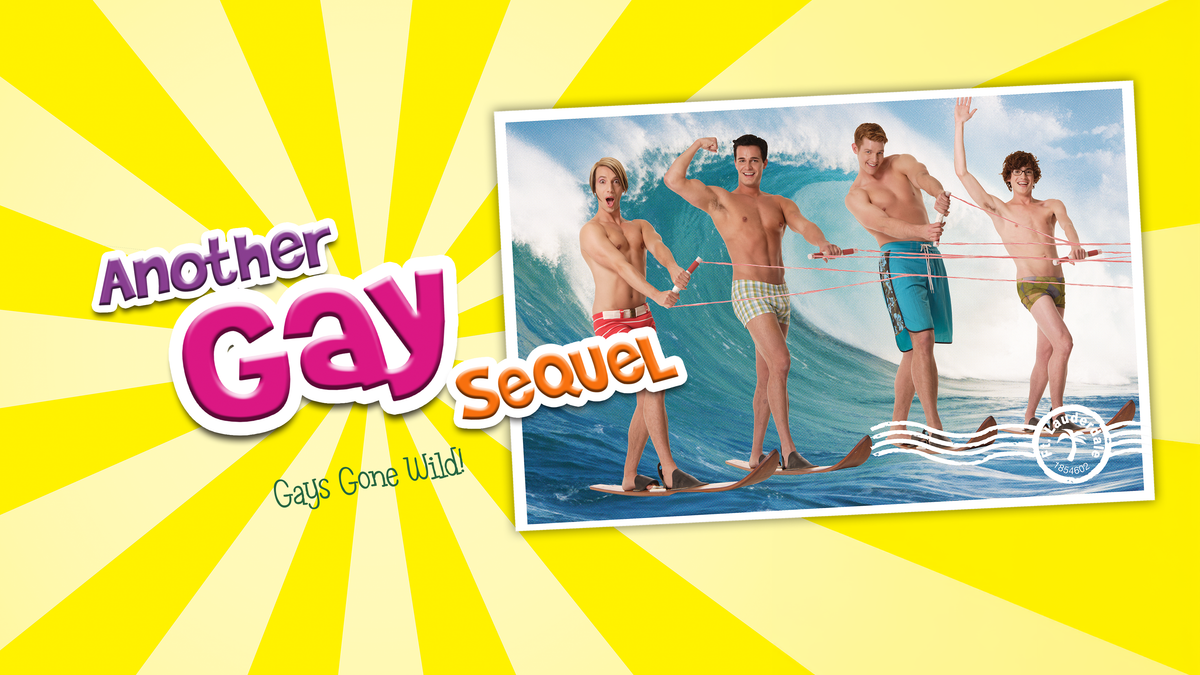
Todd Stephens, director of both the outrageous Another Gay Movie (which turns 20 this year!) and Another Gay Sequel: Gays Gone Wild!, knows all too well that the era of early 2000s comedies like Wet Hot American Summer and Not Another Teen Movie has largely come and gone.
But with the theatrical re-release of his 2008 cult classic Another Gay Sequel, which features memorable cameos from RuPaul, Perez Hilton, Scott Thompson and the late Colton Ford, Stephens is hopeful that his 2000s comedies will find new audiences and “make people laugh” in our increasingly “crazy, dark” world.
“Nobody’s really making these kinds of raunchy, irreverent satires [anymore]. I mean, people are afraid. Comedians and filmmakers are afraid of being cancelled if they cross the line, which sometimes we do when we’re making crazy comedies,” Stephens says. “There are things about Another Gay Sequel that I would never do now. I wish I could go back and change. But it takes a lot of guts to make a politically incorrect film, and I think that’s why people still appreciate seeing that.”
Shot on location in Florida, Another Gay Sequel follows four young men (played by Jake Mosser, Jonah Blechman, Jimmy Clabots, and Aaron Michael Davies) who spend their spring break vacation in Fort Lauderdale — the goal, of course, to hook up with as many men as possible. What ensues must be seen to be believed, as Stephens’ comedy harkens back to pre-Grindr and pre-Instagram hookup culture.
“I made films primarily for the queer community so we could laugh at ourselves. Up until that time, mid to early 2000s queer content was so serious — coming out films where the queer characters were agonizing about who they were,” Stephens says, while foregrounding that he made his own coming out movie with 1998’s Edge of Seventeen. “I wanted to do something different and set it in a world where they were already out loud and proud. Being queer was not the conflict. They just wanted to get laid like every other young guy!”
While Another Gay Movie grossed nearly $800,000 worldwide and has continued to reach queer audiences, Stephens admits he faced more challenges when coming back for the sequel two years later. He says, “The sequel was not as well-received as the original. I think that’s generally the case with sequels. The other challenge with Another Gay Sequel is that I was originally going to make it with the cast of the first movie, and unfortunately, right before we started shooting, two of the guys decided not to come back.”
Stephens continues, “I didn’t speak to them for years, but now, over the years, we’re all friends again. Actually, we just had dinner a couple of weeks ago and even batted around ideas for doing a part three of the trilogy. So who knows!”
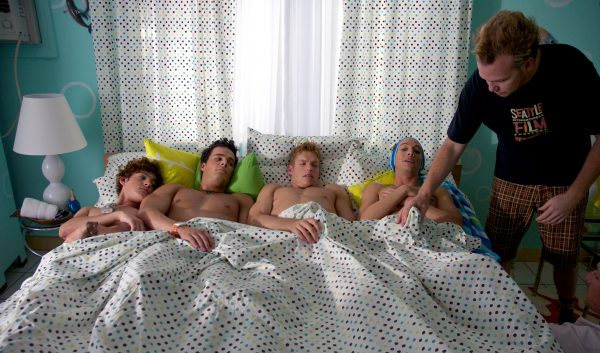
In the indie film scene, Stephens is known for his more understated character dramas. Most recently, Stephens wrote, directed, and produced Swan Song as the final film in his “Ohio Trilogy,” which also features 1998’s Edge of Seventeen and 2001’s Gypsy 83. The 2021 release starred the late Udo Kier as hairdresser Pat Pitsenbarger, based on the queer inspiration that Stephens looked up to growing up in Ohio.
“When Udo opened the door to his house and introduced me to his dog, whose name was Liza Minnelli, I was like, ‘There’s another whole side of Udo that the world hasn’t really seen.’ He was, honestly, probably the best actor I’ve ever worked with in my life. Every day watching him on set was like a masterclass in acting,” Stephens says. “It’s a big loss, but Udo had a legendary career, so he left a lot of amazing work behind for us to check out.”
Recalling both his experiences working with the late Kier and Ford, and the importance of younger queer people connecting with the icons that came before them, Stephens says: “When I was growing up, the small town gay bar was where I met people from other generations. They told me stories and passed on queer culture. There was this intergenerational conversation that happened because we were gathering as a community. That is, sadly, something more challenging these days.”
He concludes, “The five queer resorts we shot at in Another Gay Sequel, for example, are all gone. The physical gay world is becoming extinct, and that’s something we have to work harder at to learn from our elders — the ones who paved the way for us. It’s more challenging, but we just have to work a little harder to connect with everybody. Get off our damn phones and go be with our people!”
Another Gay Sequel: Gays Gone Wild! is currently streaming on all major platforms.
a&e features
35 years after ‘Truth or Dare,’ Slam is still dancing
Salim Gauwloos on Madonna, HIV, and why he almost didn’t audition for Blond Ambition Tour
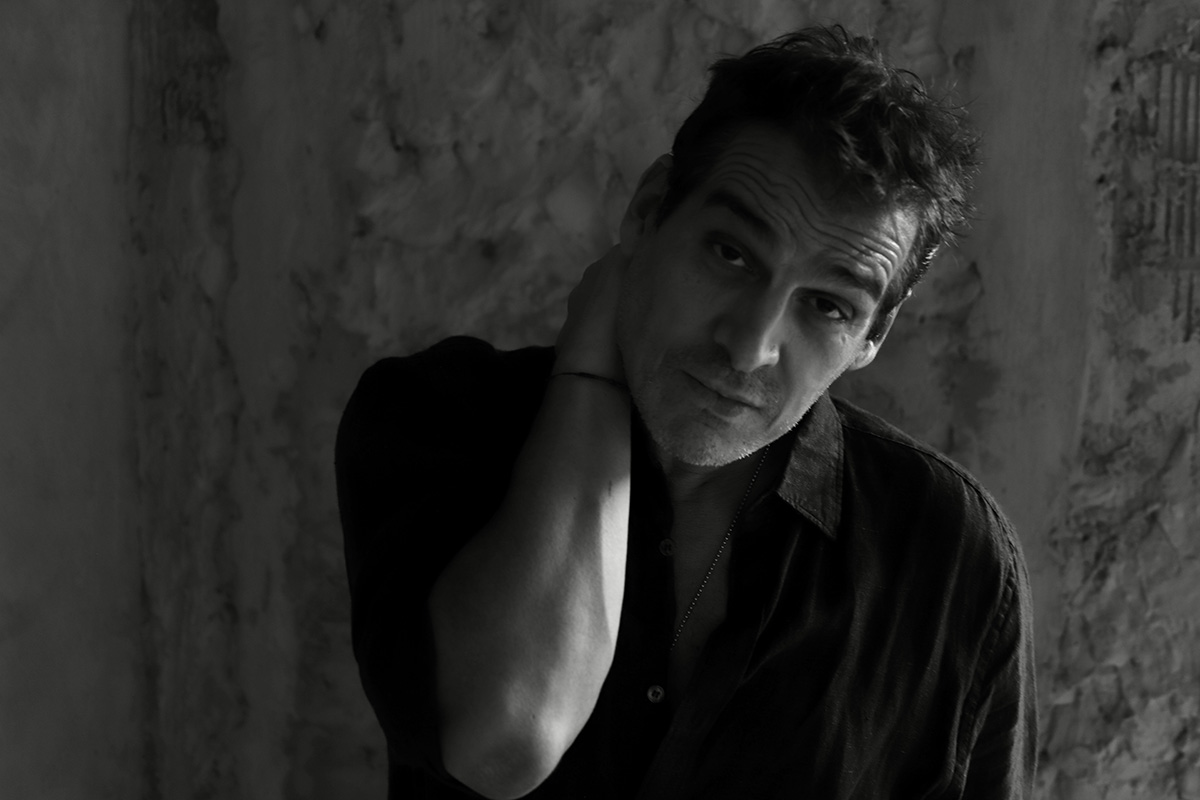
Most gay men of a certain age remember “the kiss.”
It was the moment Madonna’s dancers Salim Gauwloos and Gabriel Trupin locked lips in the hit 1991 documentary film “Truth or Dare,” which is celebrating its 35th anniversary this spring.
The kiss was hot, but what made it groundbreaking is that it appeared in a mainstream Hollywood movie that screened in suburban multiplexes across the country. This wasn’t an obscure art house film. The movie, and tour on which it was based, received months of breathless media attention all over the world for bold expressions of female empowerment and queer visibility. Madonna was threatened with arrest in Toronto for simulating masturbation on stage and Pope John Paul II urged Catholics to boycott the show, triggering a media firestorm.
“Truth or Dare” was billed as a behind-the-scenes documentary of the tour, but it quickly became clear that the real star of the show wasn’t Madonna, but rather her colorful troupe of seven backup dancers, six of whom identified as gay: Kevin Stea, Carlton Wilborn, Luis Xtravaganza Camacho, Jose Gutierez Xtravaganza, Gauwloos, and Trupin; Oliver Crumes III identifies as straight.
We saw them party and march in the New York City Pride parade. They were unabashedly queer at a dangerous time — before protease inhibitors began to stem the AIDS plague and before most celebrities and politicians embraced the gay community in any real way. Being out in 1991 carried major risks to career and reputation.
Enter Gauwloos, one of those brave dancers who vogued his way into the hearts of countless gay men entranced by his handsome looks, his stage presence, and dance skills.
Gauwloos — known then and now as “Slam”— sat down with the Blade to talk Madonna, the lasting impact of “Truth or Dare,” the public disclosure of his HIV status, and plans for a new book on his life.
His story is fascinating — from growing up in Europe to dancing in New York to landing the gig of a lifetime with Madonna. He performed on that tour while secretly HIV positive and went without medical treatment for 10 years because he was living in the United States as an undocumented immigrant. Not even Madonna knew of his HIV status. Two other dancers on the tour were also HIV positive but no one talked about it. Ironically, Madonna was singing “Express Yourself” and advocating for condom use during her concerts yet backstage three of her dancers were secretly positive.
“A lot of people were dying so I wasn’t going to tell Madonna I had HIV,” said Slam, now 57. “And the others didn’t either. It wasn’t the moment to do it. She used to make speeches about Keith Haring and AIDS and I thought it’s going to be me next.”
Gabriel Trupin died of AIDS in 1995. Slam was diagnosed at age 18 in 1987, a frightening time when a positive test result often meant a death sentence. He booked the “Blond Ambition Tour” at age 21 after moving to New York. His friends encouraged him to audition but Slam resisted because he wasn’t a big Madonna fan.
“It was crazy, everyone wanted that job,” he said, “but I wanted to dance with Janet Jackson and Paula Abdul.” He listened to his friends and shortly after the audition, Slam received a call from Madonna herself inviting him to join the tour.
“We all wanted to be stars but not even Madonna knew how big that tour would become. The way it was choreographed and directed, the stars aligned. … It never looks dated even today.”
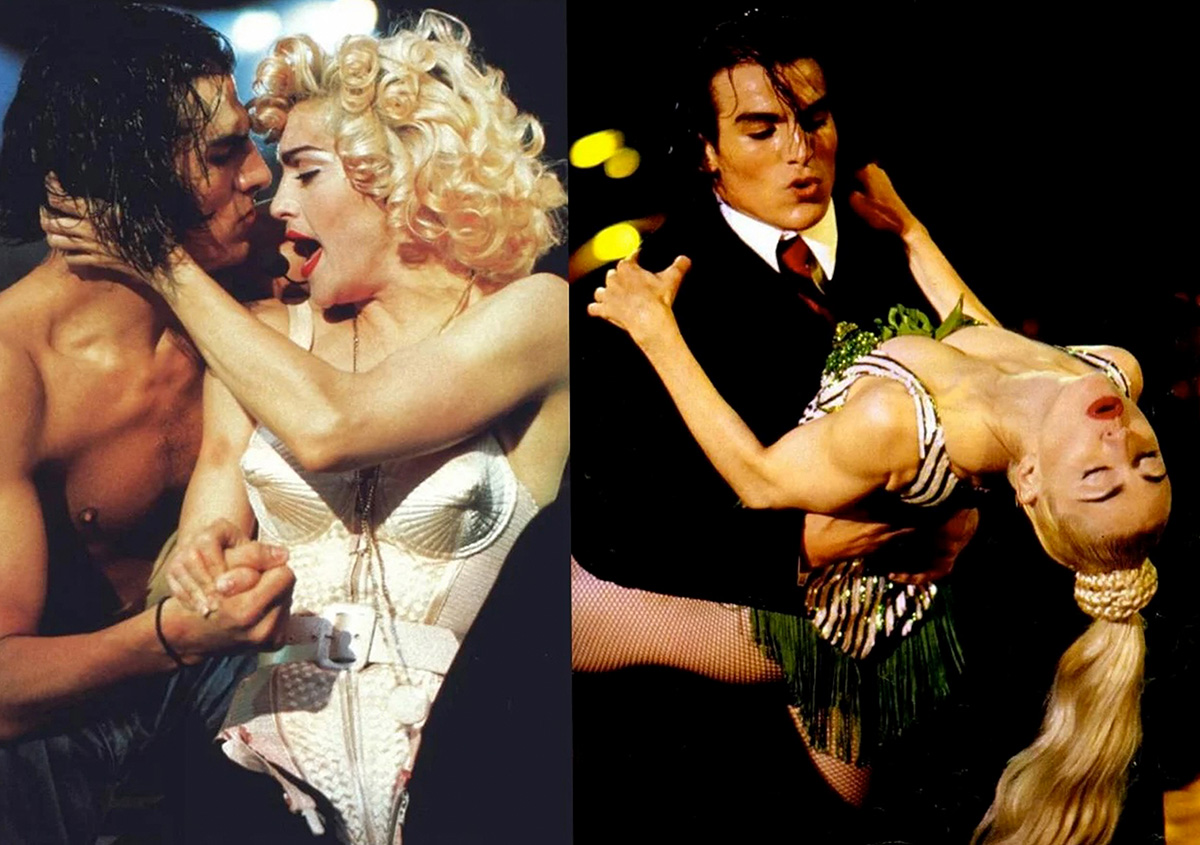
The world tour kicked off in Japan in April 1990 then moved to the United States and Europe, stirring controversy wherever it went. There was the iconic cone bra; the aforementioned simulated masturbation during “Like a Virgin”; and religious imagery that offended many Catholic groups and the Vatican.
And the controversy didn’t end with the tour. Cameras were rolling throughout the tour for what Slam thought would be a “video memory” for Madonna. But as the tour unfolded, director Alek Keshishian reportedly became more interested in what was happening behind the scenes so plans for mere tour footage were expanded into a full documentary.
“We were young and partying and didn’t really know what was going on,” Slam said. “You live in this celebrity bubble and you sign a paper – I don’t even know what I signed.”
In 1992, Kevin, Oliver, and Gabriel sued Madonna for invasion of privacy and fraud claiming she used some footage without their consent. They claim they were told nothing would be included in the film that they didn’t want to be seen. In one specific incident, Gabriel alleged that he told producers he didn’t want the scene of him kissing Slam to be in the film as he wasn’t fully out.
“Gabriel was forcibly outed,” in the movie, Kevin said in a 2016 interview.
Slam did not join his colleagues in the lawsuit.
“I couldn’t sue because I was illegal but I wasn’t ever going to sue,” Slam said. “I’m not a suing kind of person. But good for them, they fought for it and won. A lot of people don’t have the balls to sue Madonna.” The suit was settled two years later for an undisclosed sum.
“We were all conflicted about the kiss,” he said with a laugh. “The kiss, oh my God, my boyfriend is going to kill me! Belgian stress!”
Beyond worrying about his boyfriend’s reaction, Slam had concerns about the impact of being openly gay on his modeling career.
“In 1990, you couldn’t get high fashion campaigns as an openly gay model,” he said. “I was worried about that. I couldn’t get a campaign because I was gay. My agency told me to say I was straight and it was just a game.”
In 2016, pegged to the 25th anniversary of “Truth or Dare,” the surviving six dancers filmed a documentary about their lives post-Madonna titled “Strike A Pose.” In it, Slam publicly revealed his HIV status for the first time in an emotional scene with his former colleagues.
“I found the strength to tell the world I have HIV,” he recalls. “I was scared but I felt brave. The outcome and messages were beautiful. After I saw ‘Strike A Pose,’ I knew we gave people hope. And not just for gay people.”
He was infected in 1987 but didn’t get treated until 1997. After the tour ended, he said he went into a depression and his agency dropped him.
“I was partying too much after the tour,” he recalls. “I made a decision to live as an illegal alien.” In 1997, Slam collapsed and was rushed to the hospital with pneumonia.
“They started treating me and thank God the new HIV drugs were out, the cocktails, it took me a couple months to get better.”
Madonna didn’t participate in “Strike A Pose” and Slam said he hasn’t seen or spoken to her since the end of the tour. He said he had no idea of the impact “Truth or Dare” would have.
“You look at this movie in 1991 and you don’t think it’s going to be such a big thing and 35 years later it’s still helping people,” he said. “It was helpful for people who felt alone at that time. It was such an important documentary.
“I don’t think younger gay people realize how important Madonna was to gay and queer visibility — she was a big part of it. We showed the world it’s OK to be gay and that was the great message of this movie.”
He noted that, decades later, many of his friends have transgender kids and that queer culture is represented in much of mainstream pop culture.
“It’s amazing how far we’ve come,” he said. “I know we’ll always be marginalized but we have come so far. I’m really proud of our community. The current nightmare will be over and I do believe that things will get better.”
Referencing President Trump’s attacks on the LGBTQ community and crackdown on immigration, Slam described the situation in the U.S. today as “sad.”
“Everything is such a mess,” he said. “Some of these people have lived here 30-40 years and they take you out of your home. I can’t even imagine. It breaks my heart. When I was illegal it was a different story.”
Slam met his husband, Facundo Gabba, who’s from Argentina, in 2000, and he helped him get a legal case together to win citizenship. He filed a case in 2001 and was told there was a 99 percent chance he wouldn’t be permitted to stay in the United States because they weren’t allowing HIV-positive immigrants to remain in the country. But he got his green card anyway in 2005 and became a U.S. citizen in 2012.
Today, Slam and Gabba live in Brooklyn, though they travel a lot because “I can’t take the cold.” The couple married in Argentina in 2010 and in the U.S. in 2016.
Slam is still dancing and working as a choreographer. He’s teaching at a contemporary dance festival in Vienna in July and even offers online lessons via Salimdans.com.
As a longtime HIV survivor, Slam is dedicated to a healthful lifestyle.
“You have to keep moving; when you move you stay healthy,” he says. “Dance heals everything. I do yoga, I eat healthy and clean as possible. I don’t watch much TV … I try to stay healthy and positive. If I absorb all of the negativity I would be sick.”
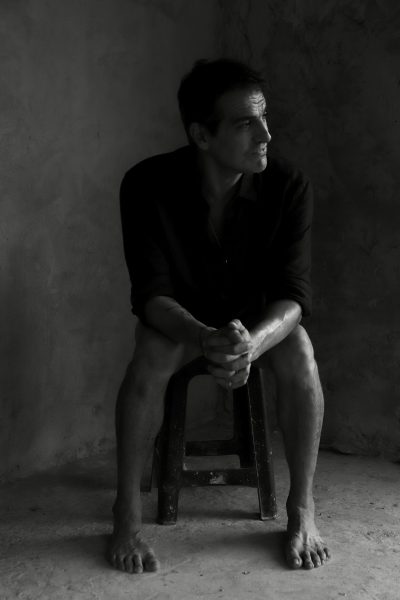
In addition to his ongoing work in dance and choreography, Slam is in the early stages of writing a book about his extraordinary life and pioneering career.
“I always knew I had a book inside of me. I want to talk about my HIV status. I know I can inspire more people. I want to tell even more secrets in the book; secrets are a poison so I want to tell everything.”
Among those secrets, he notes, is a desire to write about his strict Muslim father and the years he spent as an undocumented immigrant in America.
“Those are the things I want to talk about, the struggles. It’s a love story, hope and resilience. I know it will help people.”
As for his friends from the tour, Slam says he remains in contact with Gabriel’s mother and José Xtravaganza is his best friend. Baltimore’s Center Stage theater is currently developing a new musical about Xtravaganza’s life. And Slam said he occasionally talks to Oliver, though “he still can’t pronounce Sandra Bernhard’s name.”
At the end of our interview, Slam indulged a round a rapid fire questions:
• Favorite song to perform in the “Blond Ambition” tour? “Express Yourself.”
• Aside from Madonna, who was your favorite artist you worked with? Toni Braxton in “Aida” on Broadway.
• Favorite Madonna song? “Live to Tell”
• Favorite Madonna video? “Bedtime Stories”
• What’s more stressful: performing in a concert or performing on the VMAs? “Both, because we always had to be perfect.”
• Did you go to Madonna’s recent “Celebration” tour? “I didn’t see the show but I saw clips online.”
• What do you remember most about performing “Vogue” at the VMAs? “It was nerve-racking for them to flip those fans.”
• When was the last time you vogued? “I teach classes so a couple weeks ago.”
a&e features
Amy Madigan finds herself on the cusp of Oscar glory. Can she overcome the historic bias against horror performances?
How history and stats make this year’s supporting actress race the toughest to call
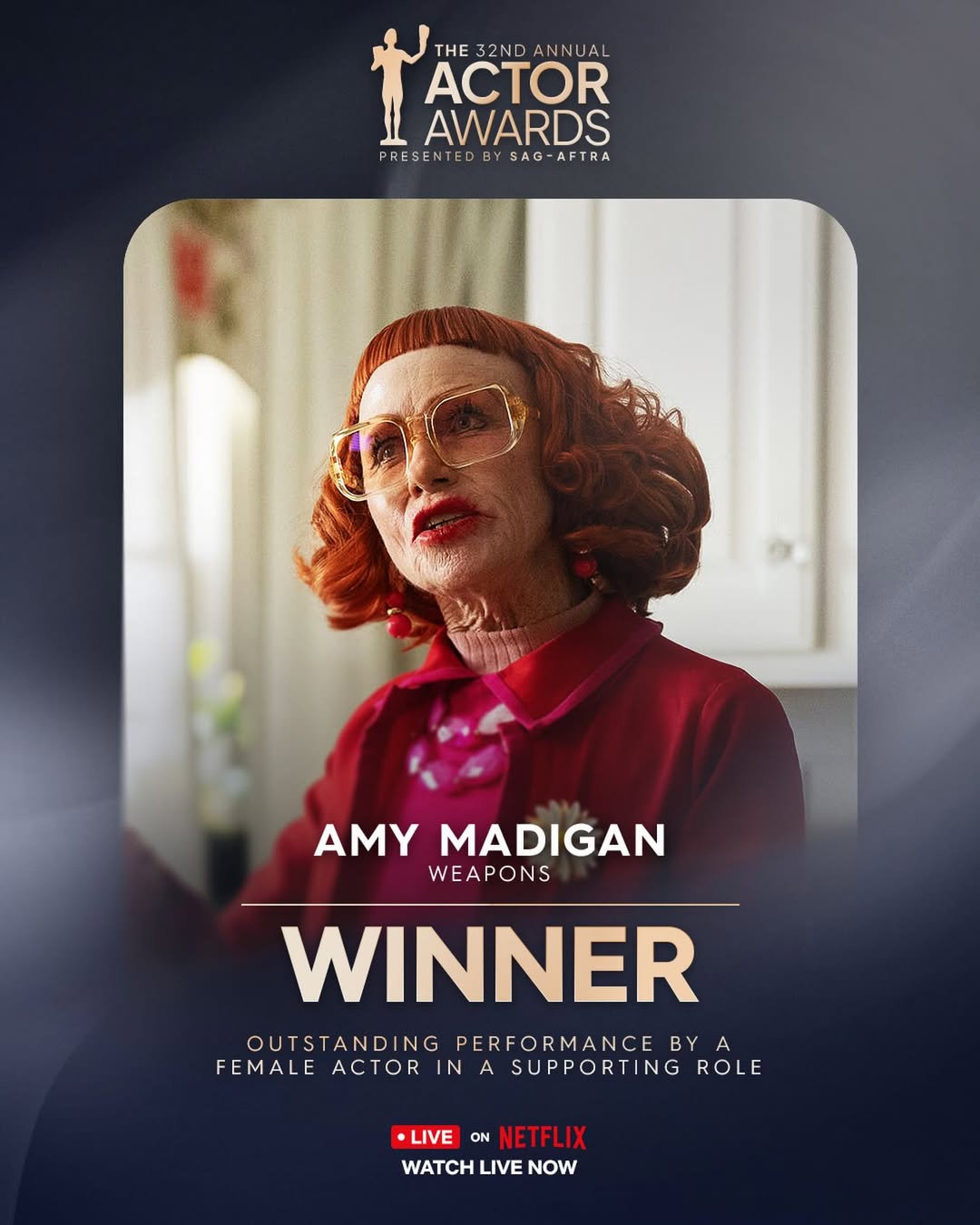
One of the biggest headlines out of last night’s Actor Awards (formerly known as the SAG Awards) was Amy Madigan winning best supporting actress for her work in Zach Cregger’s hit horror comedy Weapons.
As she stepped on stage during the last major televised ceremony of the season — a crucial platform as Oscar voting continues through Thursday, March 5 — Madigan charmed her fellow actors and peers, shouting out fellow Weapons actors Julia Garner, Alden Ehrenreich, and Austin Abrams and remarking on how “actors love other actors.” In a moment where she would’ve been completely justified to simply relish in personal victory after working at her craft for 45 years, Madigan turned the spotlight on the collaborators who made her remarkable transformation as Aunt Gladys possible.
As she finds herself on the cusp of Oscar glory, Madigan is also on the cusp of breaking through the Academy of Motion Pictures Arts and Sciences’ historic bias against horror performances (remember Toni Collette in Hereditary and Florence Pugh in Midsommar?) But it’s that same bias that could keep the Field of Dreams actor from going all the way.
Last year, best actress frontrunner and The Substance star Demi Moore lost the Oscar to Mikey Madison in the best picture winner, Anora. Moore won major awards at the Critics Choice, Golden Globes, and Actor Awards, while Madison won at the BAFTAs and Spirit Awards. The Substance certainly tested Oscar voters more with its ultra-shocking body horror, but Madigan’s trajectory with Weapons hasn’t been too far off from Moore’s — she’s a veteran actor finally getting her dues for an out-there horror performance in an even more out-there film. You could argue Madigan has the most identifiable career narrative of the season, and she gave one hell of a memorable performance that instantly went viral.
She’s been here before; in a fitting full-circle moment, Madigan received her first and, to date, only other Oscar nomination exactly 40 years ago for 1985’s Twice in a Lifetime, an indie drama starring Gene Hackman, Ellen Burstyn, and Ann-Margret (Madigan was the sole nominee for that film). The Oscar-winning group that Madigan hopes to join come March 15 is comprised of Jodie Foster and Anthony Hopkins for The Silence of the Lambs, Kathy Bates for Misery, Fredric March for Dr. Jekyll and Mr. Hyde, and Ruth Gordon for Rosemary’s Baby. A small group, but mighty company for the lucky actor who joins it next.
Madigan’s trajectory has already been compared to Gordon and Rosemary’s Baby, and rightly so — Gordon won the supporting actress Oscar in 1969 on her second acting nomination, while box office hit Rosemary’s Baby was only nominated for one other award (best adapted screenplay). Weapons was an undeniable summer sleeper hit, grossing $269 million worldwide and earning a coveted nomination from the Producers Guild of America, yet Madigan was the only part of the film to be Oscar-nominated. Her two main competitors, which include BAFTA winner Wunmi Mosaku for Sinners and Golden Globe winner Teyana Taylor for One Battle After Another, have the benefit of being in best picture frontrunners with 16 and 13 nominations apiece. Those films also have top-of-the-line visibility from distributor Warner Bros. Pictures.
With the uncertain state of the supporting actress race so far, Madigan has history going both for and against her; the past six Actor Award winners for supporting actress, most recently Zoe Saldaña for Emilia Pérez and Da’Vine Joy Randolph for The Holdovers, all went on to win the Oscar. But those six actors were in films with multiple Oscar nominations, including best picture, and four of the six swept all the major precursors. Notably, the last time the Actor Awards mismatched with the Oscar supporting actress winner was in 2019, when Emily Blunt won for A Quiet Place (she wasn’t even nominated for the Oscar!)
As the sole rep of her film in a fractured category, Madigan has more odds stacked against her. One could also argue, though, that Madigan being the sole nominee of her film means all the campaigning has been able to strategically focus on getting her the win. Whether she prevails at the Oscars or not, she’s certainly had a blast on the campaign trail, enjoying the likes of Oscar winner Sally Field and Emmy winner Hannah Einbinder hosting Weapons screenings, tastemaker events, and Q&As over the past several months.
Madigan’s performance as Aunt Gladys has resonated with horror fans for skillfully playing the character’s terrifying turn from chatty neighbor to demonic hair-splitting killer, while the LGBTQ+ community has embraced her entire look and ethos. Aunt Gladys costumes could, predictably, be seen everywhere on Halloween, and she’s become an unstoppable inspiration for drag artists and performers. In a recent interview with Turner Classic Movies, Madigan even noted Bette Davis and What Ever Happened to Baby Jane? as a major inspiration for Aunt Gladys’ makeup and look.
Madigan told Rough Draft Atlanta in November, “I think in that realm – as someone who was bullied a lot as a kid – whenever you see characters like Gladys being proudly themselves and loud and open, there is something that resonates [with] the queer community and everybody, because that is what people want – the courage to be themselves.”
Madigan was in good company last night, with Sinners aiming to continue making history for horror cinema after its record-breaking 16 Oscar nominations. At the Actor Awards, Michael B. Jordan won best actor and the film’s ensemble took the top award, while Mosaku won best supporting actress at the BAFTAs. Jacob Elordi, who won best supporting actor at the Critics Choice Awards for Frankenstein, is nominated at the Oscars as well.
Not all these actors are odds-on favorites to win their respective categories, but 2025 horror performances have already broken through with Academy voters in the nomination stage. It wasn’t too long ago when millions of people watched Weapons in a crowded theater and discovered Madigan’s transformative talent for the first time, with some immediately writing her off from the Oscar race based on historical precedent. It’s only fitting that Aunt Gladys and the chameleon actor who brought her to life continue to prove us wrong.
a&e features
Taylor Tookes wants you to be your own beauty standard
This queer model wants her fans to be larger than life — even if they’re only 5’1”
There’s a certain truth when it comes to the fashion industry: it’s absolutely brutal.
It’s undeniable how much fashion drives culture; from the clothes folks wear to the influencers taking over social media, this endlessly complex business determines so much of your average person’s day-to-day life. With this being such a gargantuan industry, it’s no wonder why it’s so difficult to be a successful model — especially if you’re marginalized! While recent years have seen a welcome increase in LGBTQ+ models, models of color, and models who don’t fall into your typical beauty standards, it’s still immensely difficult for someone who’s ‘different’ to make it in fashion today.
Which is what makes Taylor Tookes so unique.
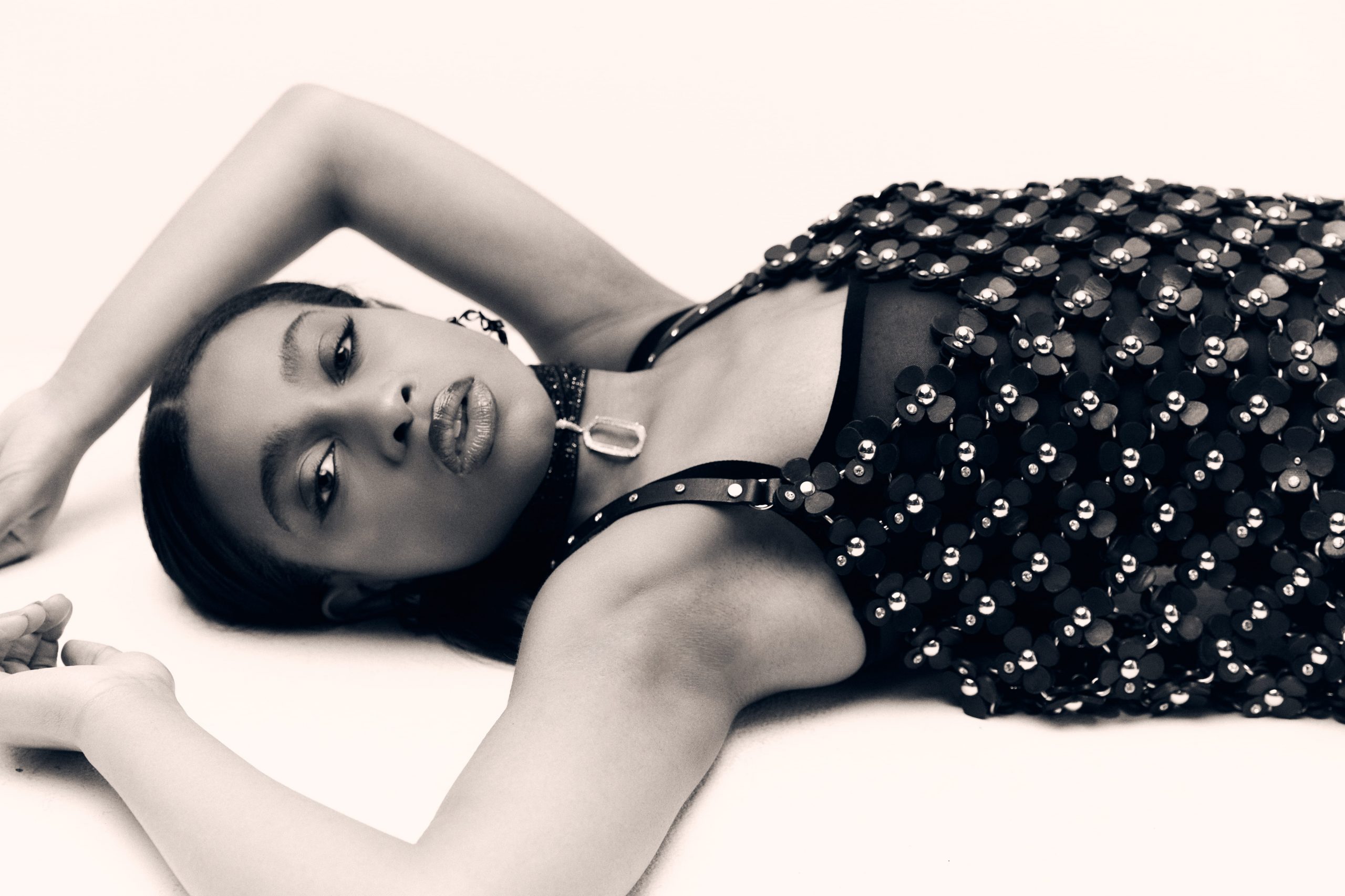
Standing at a proud 5’1”, this queer woman of color has spent the past few years dominating fashion in a way most models could only dream of. From making history as the first “short” model in New York Fashion Week to recently being named Glamour Bulgaria’s Woman of the Year, her accolades haven’t stopped rolling in since she began modeling a decade ago. But despite this, she detailed how much rejection she still faces today, with so many people (in and outside of the industry) using her identities to discredit her many years of hard work. It’s a constant negativity that can easily get someone down, but for Tookes, she just has one thing to say: “I really don’t care.”
“What really made me want to pursue [modeling] as a career was rejection, and hearing the word ‘no’ a lot,” Taylor explained. “I thought it was the dumbest thing ever!” She detailed the countless rejection letters she received early in her career, with a majority of them blaming their dismissal on the model’s height. “There’s a side of [this] industry that embraces all of my identities, but there’s also that side that’s like, ‘You shouldn’t be here. Why are you here? You’re too short. You’re too this. You’re too that!’” These questions are ones that Taylor has heard from the first few days of her career up until now, with many still questioning her role even after appearing in numerous legendary magazines. But Tookes doesn’t let this negativity get her down! She is constantly optimistic and embraces a positive outlook…one that anyone who’s been online has seen before.
Since childhood, most people who’ve consumed any aspect of American media have encountered the mantra of ‘’You’re beautiful just the way you are.” It’s an uplifting message that can be indescribably hard to follow; it’s easy to say “love yourself no matter what” when you aren’t bombarded by oppressive beauty standards or the stress of a 9-5 job. Even more, for queer people, it can be so difficult to focus on how amazing you think you are when there are so many others trying to convince you otherwise. Because of this, our communities have been at the forefront of calling out ‘toxic positivity’ and its unhealthy effects on influencers who haven’t known strife, chiding others for not being as effortlessly confident as they are.
With Taylor’s nonstop ambition and optimism, it can be easy for people to dismiss her mentality as this distinctly cheery brand of unrealistic. But anyone who actually speaks with the model understands that this confidence didn’t come easy — it’s one she’s fought to have in spite of the countless people who told her she shouldn’t.
Throughout the conversation, Taylor spoke about the many years when any one of her identities excluded her from the spaces that taller, straight models could access easily. Yet she described these moments not with sadness, but with verve. “It doesn’t really affect me in any negative way. I would say it falls under the ballpark of rejection for me, which just pushes me to keep going.” She is not someone who had this career handed to her. Taylor has proven herself as a hard-working person who faces adversity every day online, but recognizes that it all comes from people who don’t matter because they aren’t her.
“You kind of just have to remove your perception of yourself from other people’s perception of you…because really, the only perception that matters is your own. What you think of you is the only [opinion] that matters.” It’s a mantra that would sound hollow from a person who hadn’t faced hardship before, but that gains power coming from Taylor. But she knows that this hard-fought mentality isn’t easy for everyone to, which is why she fights for her communities both on and off the runway. “Representation is really important [to me]….to see someone like yourself in the industry out there like you. So you can have the mentality of, ‘Hey, if they can do it, I can do it too.’” Along with breaking barriers, recent years have seen Tookes begin advocating for fresh faces in not only fashion, but media as a whole. She and fellow model Victoria Pousada recently began The Starter’s Block, an organization dedicated to amplifying indie projects and helping independent talent like they once were to find their place in the film industry.
As the conversation came to an end, Taylor Tookes emphasized that she may be one of the first short, queer women of color to conquer fashion — but she won’t be the last. She urged anyone with her identities to join her on the covers of magazines, to be brave and try while remembering that rejection is just fuel in the fight to follow your dream. And for those who may not want to walk a runway but just want to feel beautiful in a world constantly telling them they’re not, Taylor advises them to say what she tells herself whenever she feels down.
“I just remind myself: Don’t listen to them. You’re that girl…I remind myself of who I am, why I’m here, and what my mission is. [I just need] my own validation — and no one else’s. It all depends on me.”
a&e features
Revry Co-Founder Damian Pelliccione on why we need ‘King of Drag’
The co-creator of this hit series speaks about its impact — and what fans can expect from season two!
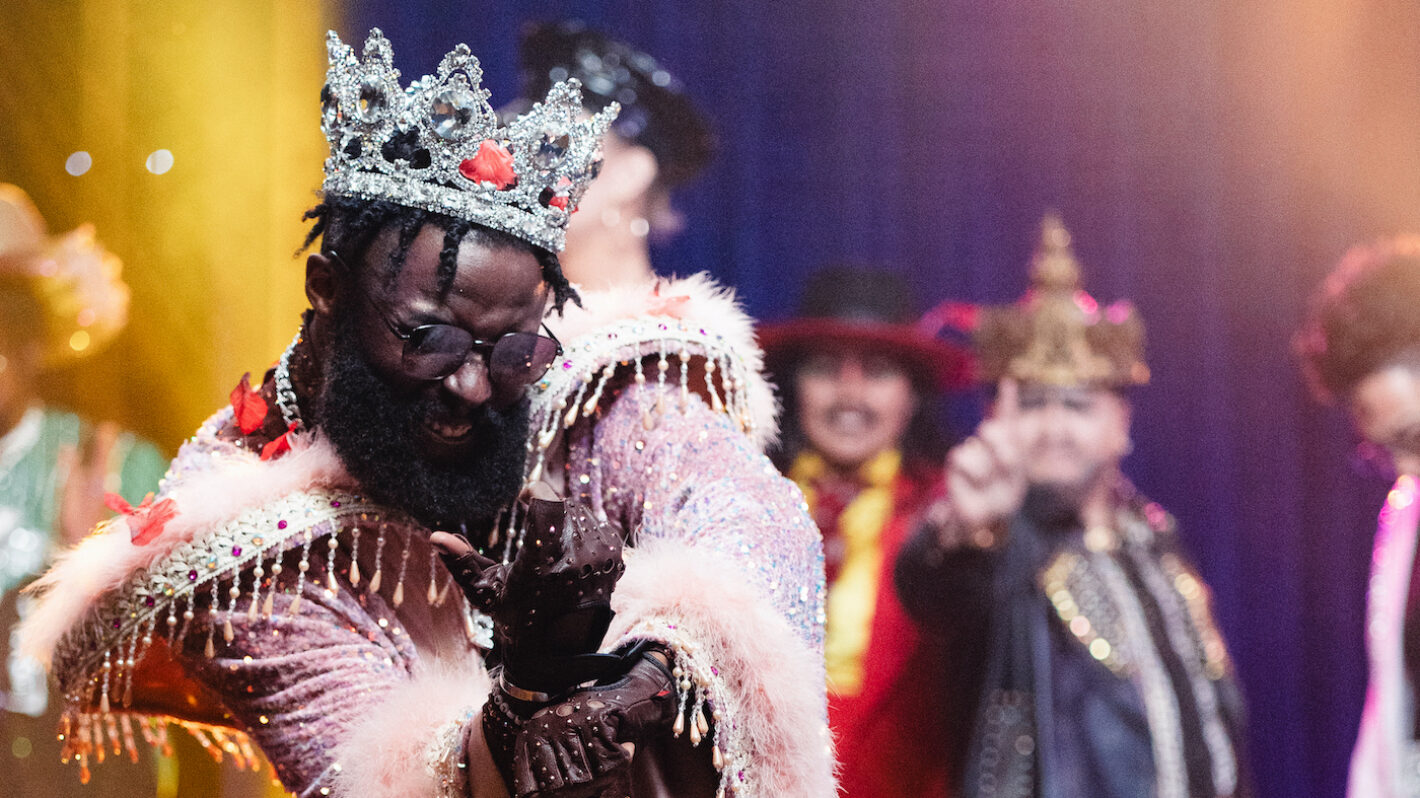
King of Drag, the only drag king competition show on TV, activated the LGBTQ+ community with a big bang, and it’s clear why. Despite an increase in drag-centric media, this was the first series deliberately focusing on spotlighting these kinds of artists. Even a year after its premiere, fans are still raving about the show, with season one delivering a level of kingly charisma nobody could’ve expected — making it all the more exciting when it was announced that King of Drag was officially casting for season two!
As co-founder of Revry — the LGBTQ+ streaming service that hosts King of Drag — and co-creator of this hit competition show, Damian Pelliccione understands the power that media has on its audiences. It’s why they work every day to create LGBTQ+ content anyone can enjoy, and it’s why they fought to get King of Drag televised and ensure it was a space where kings could finally be celebrated. Sitting down with the Los Angeles Blade to discuss the series’ season two announcement and what it’s meant to be a part of such a trailblazing franchise, they started this interview by making one thing very clear: “We’ve always been fully invested in casting and promoting Drag Kings on our shows.”
The co-founder spoke about how representing marginalized identities has always been an integral part of Revry’s mission. “We’ve always been very inclusive in our casting to make sure that we [work with] kings just as much as we work with Queens.” It’s a sentiment that, unfortunately, most other drag-centric series don’t share. RuPaul’s Drag Race, especially, has been criticized for refusing to cast anyone who wouldn’t fall under the umbrella of ‘queen.’ And while subversive programs like The Boulet Brothers’ Dragula do allow drag kings to compete, the show typically only allows one or two each season, meaning that there’s only a short time to discuss the boundless intricacies that exist in this art form.
This means that while drag king representation exists, it’s only been a trickle amidst the wave of awareness that drag queens have received in recent years. This phenomenon never sat right with Damian and their Revry team — so they decided to do something about it.
After years of searching for sponsors to get the show made, King of Drag officially premiered in June 2025 to widespread acclaim. Fans were instantly taken by the bombastic competition; while its format is similar to many other series’, the hilarious judging panel (led by the amazing Murray Hill) and jaw-dropping challenges were endlessly zany while also perfect avenues for contestants to show their immense talent. Almost growing emotional, Pelliccione recounted the widespread support the series received after its first few episodes, saying, “[Viewers] come forward to say, ‘Thank you for creating something that is not just about fighting or cattiness.’ It’s an elimination show, but you could see the authenticity in the heart of these kings…you could see their struggles, and [what it took] to create their art.” They fondly described the love this project hasn’t stopped receiving since it first came out — but they also detailed the rampant hatred that has come along with it.
It shouldn’t be forgotten that King of Drag was produced and aired early into the current presidential term, with the early months of 2025 seeing a level of anti-trans and homophobic rhetoric filling the U.S. in a way many viewers had never seen before. Damian recalled how, in the face of this hatred, their team understood that audiences needed King of Drag now more than ever. “It’s somewhat an act of defiance having a show like King of Drag — and having a network like Revry [altogether],” they said, filled with pride. “You can’t stop progress, and we’ve already come so far as a society (at least, I hope we have), so going back does not seem realistic. And I think that we’re seeing resistance now to our sitting government, and hopefully this carries into our midterm elections!”
A resistance that was buoyed by King of Drag, with each episode introducing viewers to nonstop drag excellence and thoughtful conversations on what it means to be a queer artist today. This, combined with the wild challenges — ranging from queer quiz shows to boy band performances — turned the initial installment into a raucously prideful experience for everyone watching. For almost a year now, fans have applauded all that the show was able to accomplish, and Damian assures these viewers that there’s even more coming in season two.
“Some of the biggest things we’re really excited about in this season are [not only] a few returning challenges, but we are [also] really bringing on a whole new level of celebrity guest judges,” raved the excited co-creator. “We’re really tailoring our [judges] so that they could be a kind of mentor or advisor. [Helping] build something that the king can use for their future career!” It was this point especially that Damian emphasized as the heart of King of Drag, recognizing that while having your time in the spotlight is amazing, bills still need to be paid when the cameras are shut off. “I want kings who come off our show booked and blessed. What else can we do as a network just to help support those careers?’”
With the interview coming to an end, Damian was asked the question that thousands of drag kings are currently thinking: how can I get cast? Typically, producers answer this style of inquiry with vague advice about uniqueness and skill — but not Damian. Still wanting only the best for their contestants, they plainly stated, “My one word of advice: this is not a side hustle.”
“The purpose of being on the show is to create a career for you…We want people who are really serious about the art form and have their own specific take on what it is to be a drag king. We want your authenticity, and we want to see that this is a career path for you. We [want to know] that this is something that you’re ready to take to the next level.”
An ambitious yet thoroughly uplifting goal for the many kings currently getting their applications together. And with that advice, the creator made one thing very clear: King of Drag exists not only to spotlight drag kings, but to bring them and their art form to the forefront of queer entertainment. It’s a revolutionary undertaking that viewers can watch unfold in each scene, and if a drag king feels ready to join in and become a part of this mission, Damian invites them to gather up their best drag and apply for season two today.
King of Drag season 1 is streaming on Revry
a&e features
‘Pee-wee as Himself’ and ‘Lurker’ directors on how queer audiences have reacted to their Spirit Award-winning films
“It’s been revelatory for young people,” Matt Wolf said of telling Paul Reubens’ coming out story

This year’s Film Independent Spirit Awards winners told wide-ranging stories of everything from Paul Reubens’ posthumous coming out in Pee-wee as Himself to a fictional homoerotic relationship that forms between an artist and his biggest fan in Lurker.
With such a diverse group of winners, these filmmakers reflected on how queer people and young audiences have responded to their work.
“I’ve talked to people whose kids have seen the film, and young kids don’t understand what the closet is,” Pee-wee as Himself director Matt Wolf told The Blade backstage. “As a younger, gay filmmaker, I felt like I could help him do that on his own terms. It was a big deal for Paul. It’s interesting to hear from people’s kids who don’t understand the struggle.”
Wolf continued: “It’s been revelatory for young people in that sense, but also I’m hearing from people that their kids are now watching Pee-wee’s Playhouse, and that they love it. And you never know, does this thing look old? Does it feel outdated? [His films are] so otherworldly, and I don’t think young people register it as being from any time.”
Lurker director Alex Russell (who previously wrote on Beef and The Bear) nabbed awards for best first screenplay and best first feature, and Théodore Pellerin and Archie Madekwe were nominated for their performances. Russell’s win is a testament to Film Independent’s legacy of embracing new generations of filmmakers and storytellers.
While accepting the award for best first screenplay, Russell recognized the creatives who took a chance on him, saying: “I want to thank everyone who was willing to look stupid and put even just a sliver of themselves on the line to legitimize all these new filmmakers here tonight, who, without you, would still be aspiring to make their first movie.”
Backstage, The Blade asked the breakthrough filmmaker about how queer people have responded to the film’s thorny take on male relationships.
“I don’t know if the queer community has reacted to me personally. There’s an interesting discussion in what Matthew and Olivier’s relationship is all about … and where they stand on the spectrum,” Russell said. “I want people to think about that, I want people to think about the ambiguity of that. That being said, if the queer community wants to talk to me about it, I’m here!”
Pee-wee as Himself is available to stream on HBO Max, while Lurker is on MUBI.
a&e features
Liveplay series ‘Gladlands’ finds hope in the unlikeliest of places
The cast of ‘Dimension 20’s’ latest season discusses bringing chaos and community to their many loyal fans.
Sometimes, it takes everything falling apart for us to remember that community is what holds us together.
It’s a lesson that many people have learned in recent months. Amidst the ongoing attacks against LGBTQ+ and immigrant populations, folks across the country have come to realize just how important community is to each of our daily lives.
Now more than ever, marginalized communities need to remember that oppressors have always used grief to further disenfranchise the people they’re attacking. And that, as laughable as it seems at times, the best response to others’ hatred is to love one another; to foster strength and joy amongst our own groups to ensure we have the fortitude necessary in the ongoing fight against bigotry. Many projects have tried to remind folks of this message…and one just so happens to be a tabletop roleplaying game (TTRPG) set in a post-apocalyptic — and so, so queer — wasteland.
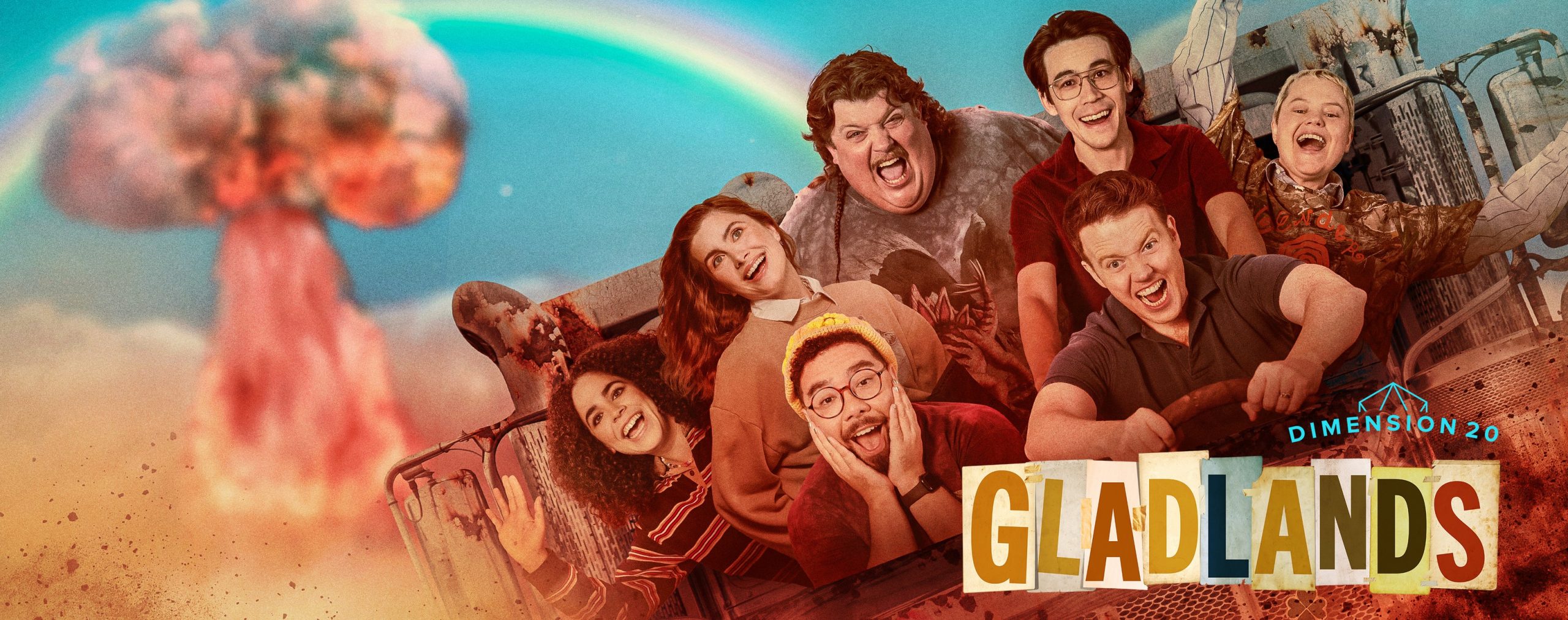
Gladlands is the latest season of Dimension 20, a renowned TTRPG liveplay series that sees groups of LA-based performers tackle some chaotic new narrative every season. The show’s newest installment takes place in a barren wasteland, with all cities and symbols of civilization reduced to rubble after a multi-year ecological crisis (which just so happens to resemble the one we’re currently fighting right now). The cast, which features a majority LGBTQ+ group of LA-based comedians, plays a team of folks trying to help as many people in this hellscape as possible, reminding every survivor they come across that it’s easiest to get through the hard times when we’re in them together.
The cast of Gladlands sat down with the LA Blade to discuss this poignant message and how it feels to deliver it when folks need it most. They speak about their roles in the series, their personal lives as local artists in Los Angeles, and how it’s fun pieces of media like this that can get folks through the toughest times. They raved about this complex project and what they hope it will bring to everyone who watches, with each player emphasizing Gladlands’ core message: you are not alone.
As strange as it may seem to people not in the community, it’s not uncommon for role-playing games like Gladlands to touch on issues real people struggle with every day. “It really is transformative,” said Oscar Montoya, who plays the fierce Drag Queen librarian ‘Poppy Persona’ on the season. “There’s a little bit of your soul that goes into every character that you play…and there’s so much self-realization that comes when you play TTRPG that you [may not] even recognize!” It’s a sentiment that fellow player Kimia Behpoornia, who plays the skateboarding cockroach-human hybrid ‘Tess Tube5,’ echoed, stating, “[These games] help people feel so validated.”
The cast reiterated how it’s these sessions of fantasy that often allow people to grow in very real ways. That’s why they believed it was the perfect platform to spread the message of love threaded throughout Gladlands, a season that sees their group of apocalyptic advocates — members of the legendary ‘Carer-Van’ — drive across an endless desert in search of anyone who needs help. An eclectic group of humans and mutants, each episode sees them work hard to see the good in their fellow person and flex their many skills to assist those in need.
“It’s really nice that this season is here [during a time] when it really resonates,” Kimia went on. “But it’s kind of the simplest idea [ever] to want to help your community!” Vic Michaelis, whose plague mask-wearing character ‘Hugi’ is the apocalypse’s only mortician, stressed that the show’s message is one that everyone needs to remember right now. “We’re living during a time [when] community is very important…but there’s no way [when we were filming] that we would’ve known the season would come out at a time like this. But [we are] watching people dig down right now and go, ‘We are taking care of our community.’” They reminded everyone watching that this kind of communal care is not only inspiring, but also threatening, saying, “That strikes fear amongst people in power. There is success in coming together to protect your community, [which I think] reflects the themes of Gladlands.”
“Trying to stay glad is, in itself, a form of resistance,” Agreed Jacob Wysocki, who portrays the warm and cuddly caretaker KoKoMo. He detailed how, through their characters, each player hoped to offer viewers models of the many behaviors that allow real communities to flourish. On that in particular, he gave credit to the season’s dungeon master, Brennan Lee Mulligan, saying, “He built this world because he looked at the [real] world we’re in and [asked], ‘Does it take a fully post-apocalyptic world to get to a space where community [comes] first?’”
“Baby — we live in the post-apocalyptic times right now!” Said Montoya, whose time as a Los Angeles activist has given him special insight into how this city’s communities have been struggling. “[But] I think the important thing to realize is that we create our own Gladlands…the message of community coming together to combat adversity is so paramount, especially right now. To have a collection of people you can lean on and say, ‘We don’t like this. We don’t stand for this. Let’s create something together.”
Each cast member agreed that, while a lovely sentiment, the messages broadcast through their show are easier said than done. But they each emphasized that you don’t need to be part of a roving band of super-powered caretakers to do good — and that no matter what, this kind of work should never be done in solitude. “[Remember] you’re not in it alone,” emphasized Montoya, as the interviews came to an end. “You are a part of a community that can enact change. And know: they’re trying to take that away from us. They’re trying to make us feel smaller and less than. [But] you have to recognize that we have the power…especially when it feels so overwhelming. Because it is then that you have people who have your back, who will continue to have your back [no matter what].”
An uplifting message of community, wrapped up in a chaotic season of jaw-dropping dice rolls and truly wild character arcs. Gladlands showcases that, sometimes, the most important lessons come in the most surprising packages. And, with each of these performers at the helm, it highlights the core message of this series as a whole: you’re never alone in the fight for community. And true freedom starts with being there for your neighbors, making sure that you all have what you need for whatever may come next.

Meet your local musician: Ross Alan

Longtime AIDS/LifeCycle rider Gary Boston raises $13k for new Center Ride Out

As No Kings momentum shifts to midterm elections, beware of expectation traps

Pam Bondi ousted as attorney general

The house that gay Key West built: 50 years of Island House Key West

Supreme Court rules against Colo. law banning conversion therapy for minors
Longtime AIDS/LifeCycle rider Gary Boston raises $13k for new Center Ride Out
Pam Bondi ousted as attorney general
The house that gay Key West built: 50 years of Island House Key West

April encourages us to be practical and stay close to home, according to Intuitive Shana’s April tarot reading
-
U.S. Supreme Court5 days ago
Supreme Court rules against Colo. law banning conversion therapy for minors
-
 Features2 days ago
Longtime AIDS/LifeCycle rider Gary Boston raises $13k for new Center Ride Out
-
 White House2 days ago
Pam Bondi ousted as attorney general
-
 Travel2 days ago
The house that gay Key West built: 50 years of Island House Key West
-
 Tarot Readings and Astrology4 days ago
April encourages us to be practical and stay close to home, according to Intuitive Shana’s April tarot reading
-
 Movies3 days ago
Trans-driven ‘Serpent’s Skin’ delivers campy sapphic horror
-
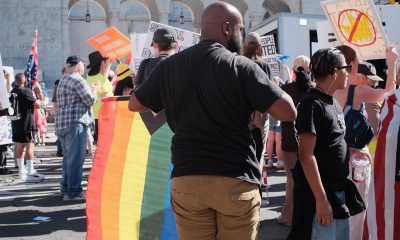 Commentary2 days ago
As No Kings momentum shifts to midterm elections, beware of expectation traps
-
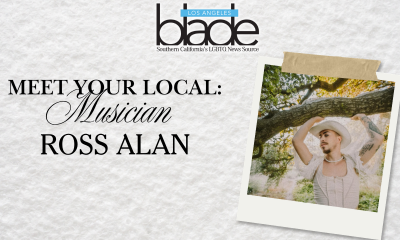 a&e features10 hours ago
Meet your local musician: Ross Alan