
Commentary
The importance of prostate cancer screening: my story
My diagnosis reconfirms my commitment — as an activist, a journalist and a radio host — to fight for access to health care for everyone.
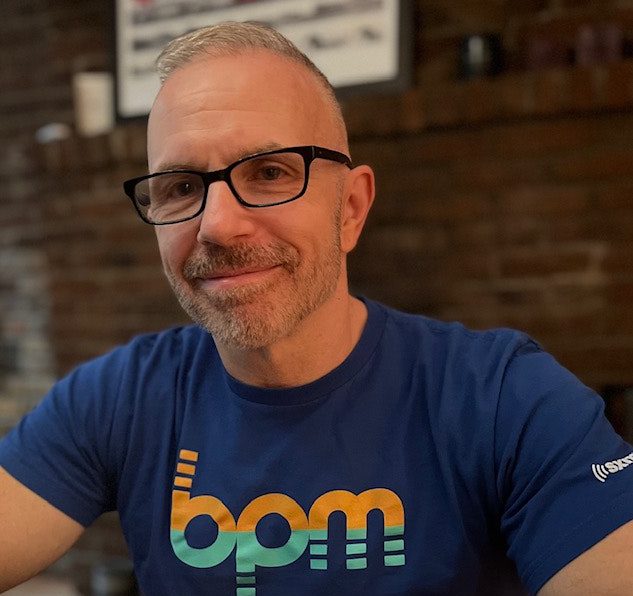
By Michelangelo Signorile | NEW YORK – I was recently diagnosed with prostate cancer. And I’m going to be fine.
Fortunately, it’s localized, and it’s been detected early — so early that I don’t require treatment right now beyond what is called active surveillance, which means monitoring how fast, or how slowly, it grows. If and when I do require further treatment there are options and it is curable.
All of that said, I can’t tell you that the past few weeks have not been a bit excruciating.
Waiting two weeks for biopsy results is living in a cesspool of anxiety. Finding out the news that you have cancer is a gut punch, particularly before you know many of the details. But learning all the facts is key to feeling in control of the situation.
I want to explain what happened so that maybe it can help other people, particularly with regard to the vital importance of early detection.
Back in February, I went for my annual physical and it turned out my levels of PSA — prostate-specific antigen — were slightly-elevated. For those who don’t know, this is a number determined via a routine blood test. I had no symptoms of prostate cancer. No physical exam showed anything out of the ordinary. Even a sonogram was normal.
Sometimes PSA levels in the blood can spike a little bit from working out a lot, and particularly from riding a bike. And some people just have higher levels at a given point, or develop PSA levels that bounce up and down. I could have been in those categories.
So, my doctors and I waited six months and did another PSA test. The number was slightly more elevated.
Only 25% of people with slightly elevated PSA levels, but no symptoms or indications via a digital rectal exam, turn out to have prostate cancer. There are other less serious health issues — such as a urinary tract infection — that can cause the number to be elevated.
The next step should have been an MRI. But my insurance company wouldn’t pay for it because nothing else beyond my slightly-elevated PSA levels indicated prostate cancer. In other words, I didn’t appear sick enough to find out how sick I was. This is another reason why health insurance is a disaster. In case you needed another reason.
So I had a biopsy. It wasn’t that bad, actually. Fifteen to 20 minutes in the urologists’s office, and done. Local anesthesia and some valium. Slight discomfort but no real pain.
Then the wait. And then the phone call from my urologist, after which my heart sank.
But I felt almost 100% better after my husband David and I went into the office, where my urologist explained it was found early and showed us precisely where it was limited to in the prostate. Finally, he said he fully anticipated a CT scan and a whole-body bone scan would show it had not spread beyond the prostate. (Both scans, performed a week later during a full day in a hospital, confirmed his belief.) My friend Joe had advised me to record the meeting with the doctor because I would be so overwhelmed I’d forget just about everything. My mother thought that was such smart advice, and she was right.
Active surveillance — basically, monitoring the PSA numbers via a blood test every few months — is actually now considered a treatment. If and when I require or would like further treatment, there are choices, different options with excellent outcomes. I have time to research them and weigh them, and get other opinions.
Having that ability can in large part be attributed to early detection.
“Friends” star James Michael Tyler, who famously played Gunther, tragically died this week due to prostate cancer at the age of 59. Tyler appears to have a had a much more aggressive form of prostate cancer. But early detection still would have made a difference. The cancer had already spread to his bones by 2018 when he had his very first PSA test, which showed staggeringly high levels of PSA in his blood. Tyler said he should have “listened to my wonderful wife” and gotten tested sooner:
I would have gone in earlier, and it would have been, hopefully, caught earlier. The next time you go in for just a basic exam or your yearly check-up, please ask your doctor for a PSA test. Caught early, 99 percent treatable.
So I want to take this opportunity to urge everyone who has a prostate and isn’t getting PSA-tested to speak with your doctor about regularly getting a PSA test. I’ve now learned that some doctors advocate regular screening when patients turn 40 while other doctors don’t test at all, even among older patients, unless a patient requests it.
The Prostate Cancer Foundation recommends screening beginning at 40 if you are Black, or have a family history of prostate cancer. And beginning at 45 for everyone else. The American Cancer Society says screening should begin at 50, and at 45 if you’re Black, or there is a family history. The U.S. Preventive Services Task Force recommends talking to your doctor about screening beginning at 55 (and only screening until age 69).
These differences in recommendations have caused confusion. They stem, for the most part, from concerns among medical professionals about too many unnecessary biopsies and over-treatment. So, if your doctor hasn’t already decided to regularly screen you (and I’m thankful that mine did) you have to make the decision for yourself and ask about it. It’s just a blood test. It can’t hurt you. But it can save your life.
You should also be getting a routine digital rectal exam (DRE), which takes just a minute. Some doctors don’t perform it. Some patients don’t like to have it done. Get over it. Sometimes PSA levels will reveal a problem while a DRE doesn’t show it (as in my case). But in other instances a DRE will indicate an issue that a PSA test doesn’t reveal.
Let me repeat: I had —and still have — no symptoms. I feel great, and am in otherwise excellent physical condition. I’m very active and workout at the gym or run outside just about every day. I’ve been vegetarian for over 30 years. So don’t think you’re too healthy, or that you’d feel ill or would have some other indications.
I’m sure many of you have been down this road, or are on it now, and will have a lot to add. I’m grateful for your thoughts and experiences. Certainly queer people of my generation lived through the early HIV epidemic and empowered ourselves, learning that information is power. My experience as an AIDS activist has taught me a lot and I’m confident it’s prepared me for this.
I’ve already come to realize, for example, how straight men and gay men, as well as transgender women, are faced with uniquely different sets of challenges when it comes to prostate cancer treatments, possible side effects affecting sexual health and other issues. And you can guess which group the medical field is often more geared toward focusing on.
I consider myself very lucky. I benefited from early detection. I live in a city with the best doctors and medical technology in the world. And I have comparatively good health insurance, headaches and ridiculousness notwithstanding.
It means very little to tell people to get PSA-tested if they are uninsured and don’t have adequate medical care. And that is the case for millions of Americans. My diagnosis reconfirms my commitment — as an activist, a journalist and a radio host — to fight for access to health care for everyone.
*******************
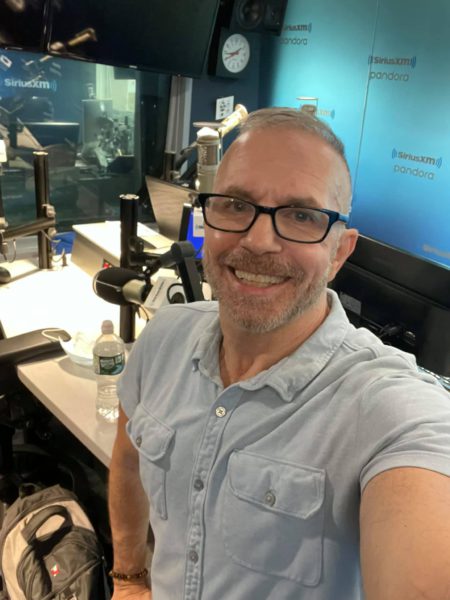
Michelangelo Signorile is an American journalist, author and talk radio host. His radio program is aired each weekday across the United States and Canada on Sirius XM Radio and globally online.
Signorile is noted for his various books and articles on gay and lesbian politics and is an outspoken supporter of LGBTQ+ rights. He became a gay activist in 1988, after attending a meeting of the grass roots protest group, ACT UP, in New York. Signorile rose to national prominence as a columnist and writer for OutWeek magazine where he ‘outed’ closeted public figures who were working against the LGBTQ+ community.
Signorile was inducted into the National Lesbian and Gay Journalists Association LGBT Journalist Hall of Fame in 2011.
********************
The preceding article was previously published at The Signorile Report and is republished by permission.



No. But Republican candidates and their allies have spent more than $280 million on anti-transgender television advertising this election cycle, according to AdImpact data cited by the Human Rights Campaign.
While families are trying to cover rent, groceries and medical bills, Donald Trump and Republicans keep asking voters to focus on transgender people. These attacks will not lower your rent. They will not bring down the price of groceries, make child care more affordable or help you see a doctor.
These campaigns are counting on voters’ unfamiliarity with transgender people. They use lies to turn that unfamiliarity into fear. At an October rally, Trump falsely claimed that schools were sending children to hospitals for transition-related surgery without their parents’ approval. When CNN asked for evidence, the White House could not provide a single example. Parents deserve accurate information about their children’s schools, not fabricated stories that give them something else to fear. The candidates benefiting from these attacks still owe voters an explanation of how they will make their lives more affordable.
Wealthy donors are helping finance the effort. Recent reporting traced Elon Musk’s funding through the Senate Leadership Fund to the Texas PAC supporting Republican Ken Paxton. Musk’s America PAC has also launched ads targeting transgender people in Senate races across the country.
Republican candidates and the billionaires backing them should have to answer the same question: How does making life harder for transgender people make it better for everyone else?
Here in California, we should be asking that question, too. Our state’s reputation for protecting LGBTQ+ rights has not stopped politicians from trying to turn transgender young people into political targets.
Sonja Shaw, who is running to become California’s superintendent of public instruction, helped craft a Chino Valley school policy requiring staff to notify parents when students requested a different name or pronouns. For students who are not safe coming out at home, forced disclosure can expose them to rejection, abuse or the loss of housing. It can also make them afraid to confide in a teacher or counselor when they need help. Shaw is now seeking a statewide position responsible for protecting and supporting those same students.
Assemblymember Leticia Castillo introduced legislation last year that would allow parents to remove their children from any school lesson, presentation or assembly referencing “transgender concepts.” Her proposal reached beyond sex education, singling out discussion of transgender people across the school day.
Equality California believes transgender young people deserve the same opportunities as their classmates to learn, make friends and grow up without elected officials treating them as a threat. Their parents deserve to focus on raising their children without wondering whether the next election will put their family’s health care or safety at risk.
These families are also paying rent, buying groceries and trying to find affordable health care. Transgender people are working shifts, caring for relatives and deciding which expenses can wait until the next paycheck.
That is what gets lost when campaigns draw a line between transgender people and “everyday Americans.” Transgender people are everyday Americans. They deserve answers about the cost of living, too.
These attacks are more than a distraction. They ask voters to accept that the government can single out a group of people and limit their freedom because doing so is politically popular. You do not have to be transgender, or personally know someone who is, to recognize the danger in that principle. People’s basic rights should not depend on whether a campaign can turn their neighbors against them.
That is why protecting transgender people’s rights belongs alongside the everyday concerns candidates should address. A family needs both affordable health care and the freedom to seek that care without being targeted by politicians. A student needs both a well-funded school and the opportunity to participate fully in it.
If a candidate says they want to protect children, ask what they will do to make sure children have stable housing, good schools and access to care. If they say they stand with working families, ask how their proposals will help those families cover their bills.
Before you cast your ballot, consider what candidates are asking you to fear and what they are actually promising to fix.
Attacking transgender people will not lower your rent. The politicians spending millions to get your attention should have a better answer for what will.
Tony Hoang is executive director of Equality California, the nation’s largest statewide LGBTQ+ civil rights organization.
Commentary
LGBTQ+ History Month reminds us: the future we imagine can become reality
Movement leaders, Lambda Legal call for new LGBTQ+ Bill of Rights
Recently, I was chatting with an 11-year-old girl about a movie character who carried a secret about herself that was so terrifying she worried that the people who loved her most would reject her for it if they learned her truth.
As we talked, I mentioned that some people see the character’s story as a metaphor for being LGBTQ. The girl asked, “why wouldn’t people want the people who love them to know that they’re LGBTQ?”
What struck me was how bewildered she was. I shared that coming out has historically been frightening for many LGBTQ+ people who feared rejection. While keeping one’s own status as part-demon from one’s demon-hunting best friends was easy for her to wrap her mind around, the idea that a queer person might feel the same way was truly news to her. The idea simply didn’t fit her view of the world.
That 11 year-old is my daughter. She has grown up with two mothers who have been legally married since before she was born, and she has lots of LGBTQ+ youth and adults in her life. Being LGBTQ+ is not something she sees as different. She has never known a time when our family lacked legal recognition or the acceptance of our neighbors or schoolmates. To her, equality is not an aspiration, but an everyday expectation. And at the same time that too many youth do not have that safety, I know there are thousands of young people across the United States growing up with that same expectation of dignity, equality, inclusion, and respect.
As we honor LGBTQ+ History Month this October, that conversation reminded me how profoundly the world can change in a single generation, and how much is possible when we dream of and work toward that future.
In 1968, LGBTQ+ advocates adopted what they called then the “Homosexual Bill of Rights,” demanding an end to criminalization, immigrants’ rights, government and military service, and employment equity. While many Americans viewed those goals as unthinkably distant or difficult, many were achieved over the decades. Sodomy laws were struck down thanks to Lambda Legal’s Lawrence v. Texas case. “Don’t Ask Don’t Tell” was passed and then repealed. Employment protections for LGBTQ+ expanded. Marriage equality became the law of the land. What once sounded impossible became reality.
That’s a testament to what our movement has achieved in more than half a century. But marriage was never the finish line. It was a milestone. Today, millions of LGBTQ+ people still face barriers to health care, discrimination in schools and workplaces, threats to their families, and efforts to exclude them from public life. In particular, transgender and nonbinary people continue to face coordinated attacks from every level of government. And people living with HIV still confront stigma and inequities that should never have existed — and should not continue to exist today.
Our work to achieve full equality remains unfinished.
That is why it’s time for a New LGBTQ+ Bill of Rights as part of our long-term vision of equality and belonging for our community. Inspired by the visionaries of 1968, this New Bill of Rights asks a simple but powerful question: What kind of society do we want LGBTQ+ people to live in 25, 50, or even 100 years from now?
We are centering five priorities: health, education, opportunity, family, and democracy. We envision quality health care for all LGBTQ+ people and everyone living with HIV; school communities that allow every student to thrive; genuine economic opportunity; a culture of belonging for LGBTQ+ families; and a vibrant democracy that fully represents all of us.
Some might think that those aspirations are too ambitious. They might be — but no more so than was the Homosexual Bill of Rights in 1968. History has shown us that today’s impossible can become tomorrow’s new normal. Culture changes hearts and minds, and people change laws. Over time, with empathy and humanity, what once seemed radical becomes the law of the land.
My daughter’s reaction is proof of that change. The fact is that many young people today find anti-LGBTQ+ discrimination unacceptable because generations of advocates challenged injustice and expanded what was possible.
When we create a society where everyone has the freedom to live openly, safely and authentically, we all rise. The original 1968 Bill of Rights challenged America to imagine something better. Fifty years later, it’s our turn to chart a new vision for our country. One that doesn’t just fight today’s attacks but proactively reimagines the future.
One day, I hope that when future generations hear stories about discrimination against LGBTQ+ people they respond exactly the way my daughter did: with incredulity. I hope they look back on unequal access to health care, housing, and education as a regrettable chapter of the past. I hope they see the relentless attacks on transgender youth of this era as a transparently desperate attempt to hold on to a culture war that was already lost. Our movement won’t stop working until that day comes.
That will be how we know we have won. It’s going to be golden.
Cathryn Oakley is deputy legal director for policy at Lambda Legal.
Commentary
Judges: Our frontline troops fighting corruption, defending democracy
Trump is trying to meddle in California elections

Donald Trump’s reign of corruption is out in the open and out of control. The watchdog group Defiance.org just produced a short documentary, “Corruptionland,” documenting $377 billion in corruption allegations. Out California Congressmember Robert Garcia, the top Democrat on the House Oversight Committee, concurs with the criticism of the unbridled profiteering.
“There is no doubt in my mind that Americans are living through an unprecedented level of government corruption,” Garcia wrote for MS NOW. “When Democrats win back the House in November, we will have the power to hold corruption to account and pass bills that will rebuild our system and make life better for all Americans.”
Though Democrats seem increasingly likely to win the majority of seats in the House of Representatives in the Nov. 3 elections, victory is in no way assured, given the persistence of Donald Trump’s unconstitutional meddling in the midterms—including in California.
“We are in the middle of a constitutional crisis,” Democracy Docket founder Marc Elias repeatedly says about the federal Department of Justice being weaponized to undermine fair and free elections. The latest is the Trump administration’s “extraordinary request to stop California from counting thousands of mail ballots, one day after a federal appeals court [U.S. District Judge David O. Carter] rejected the Department of Justice’s attempt to bypass him and obtain emergency relief directly.” The DOJ is fighting over “more than 20,000 California voters whom federal officials claim may be noncitizens,” Democracy Docket reports.
Though anti-corruption activists and defenders of the rule of law often applaud the ethical judges who uphold the constitution in the face of blistering and often violent attacks and harassment, the same energy is not usually given to educating the voting public on the backgrounds of judges seeking election to a seat that might be on the front lines of defending democracy.
Selecting judges can be one of the most mystifying things put before voters, aside from the bounty of dreadful California ballot propositions. The first thing to know is that federal judges are appointed by presidents and face confirmation by the U.S. Senate. They can be removed involuntarily only through the congressional impeachment process. A state judge rules on matters regarding state, regional, and local laws, but state judge positions are often considered a stepping stone to a federal judgeship.
This year, California voters are asked whether two state Supreme Court justices should be retained. Sixty-two appellate judges, divided among six districts, are up for retention votes as well.
Supreme Court justices and appellate court judges are appointed by the governor and confirmed by the Commission on Judicial Appointments, but voters can decide whether they can continue in office.
Superior Court judges in each county are elected by popular vote for six-year terms and stand for reelection when the term is up if they wish to continue. This year there are only seven contested Superior Court elections, in three counties—Los Angeles, Fresno, and Riverside—and no incumbents are running. These elections are nonpartisan, though a candidate’s leanings can be construed by looking at their endorsers.
The California Supreme Court justices up for retention this year are Kelli M. Evans, a Black woman who is the first out lesbian on the court, and Joshua Groban, a straight white man. Evans was appointed by Gov. Gavin Newsom in 2022, and Groban (no relation to the singer) by Gov. Jerry Brown in 2018.
Evans was previously an Alameda County Superior Court judge. She has also been an aide to Newsom, special assistant to the California Attorney General, a lawyer in the U.S. Department of Justice’s civil rights division, associate director of the American Civil Liberties Union (ACLU) of Northern California, and a member of the court-appointed monitoring team for the Oakland and Cleveland police departments. She has received numerous awards over the course of her career. Groban was previously a senior adviser to Gov. Brown and an attorney in private practice.
The Los Angeles County Bar Association recommends voting to retain both justices, as well as the appellate judges up for retention. “The justices up for retention in this election all have a demonstrated record of fitness and competence for their positions and none have had disciplinary issues with the Commission on Judicial Performance,” says a press release from the association.
State Supreme Court justices and appellate court judges don’t campaign for retention, the L.A. County Bar Association notes. “The only promise they can make voters is to decide appeals impartially and according to the law, without fear or favor toward any individual or group,” the press release explains. “Voters should vote ‘yes’ unless they believe a particular justice has demonstrated unfitness to continue serving.”
Not all county bar associations make endorsements, and while several California counties have LGBTQ+ bar associations, not all of them endorse either.
“County bar associations tend to be neutral unless someone is extremely unqualified,” gay attorney John Duran told LGBTQ+ Freedom Fighters. He is campaigning to return to the WeHo City Council, where he formerly served for years, including as mayor.
The Southern California affiliate of Americans for Democratic Action, a progressive organization founded by Eleanor Roosevelt, has endorsed both Evans and Groban for retention, while not weighing in on the appellate court judges. It cites their experience as public defenders, something not all judges have.
The San Francisco Chronicle’s editorial board has endorsed both of the Supreme Court justices for retention, as well as the judges in the appellate courts for the First and Sixth Districts, both in Northern California. It notes the lack of disciplinary action against them or other red flags.
Duran said he generally votes to retain these justices and judges unless he’s seen signs of homophobia, transphobia, or other prejudices from them, and he hasn’t seen any with this year’s slate. For advice, he suggests finding an attorney in your county who is a member of the LGBTQ+ community and getting their take on judges.
For the contested Superior Court seats in Los Angeles County, Duran has made endorsements, which he always shares on social media. For Superior Court Office 64, he chooses Maria Ghobadi over Rhonda Haymon; for Office 65, Anna Slotky Reitano over Justin Clayton; for Office 87, David DeJute over Anthony Bayne; and for Office 131, Donna Tryfman over David Ross. All his endorsees are people he knows, he said, and his view of them was the same as that of a trusted friend, Democratic political consultant Crystal Litz.
The Los Angeles County Democratic Party has endorsed Ghobadi, Clayton, and DeJute, without making an endorsement in the Office 31 race. The L.A. County Bar Association did not endorse, but it rates six of the eight candidates as qualified, with two, Ghobadi and Bayne, rated as well qualified.
In Riverside County, the nonpartisan race for Seat 10 on the Superior Court has displayed a partisan divide, notes local newspaper The Press Enterprise. Prominent Democrats, including gay Congressman Mark Takano, are lining up behind Andrea Garcia, currently a deputy public defender in nearby San Bernardino County. Republicans, such as Riverside County Sheriff Chad Bianco, favor Michelle Paradise, a former prosecutor. Bianco, by the way, has had legal trouble because of his seizure of more than 650,000 ballots cast in last year’s special election over Proposition 50, redrawing California’s congressional districts, supposedly to investigate fraud.
In Fresno County, Jeff Hammerschmidt, who has been both a prosecutor and a defense attorney, and Jose L. Salazar, a public defender, are vying for Superior Court Office 7. The Fresno Stonewall Democrats, Fresno County Democratic Party, and the Working Families Party’s Voting Group are all recommending Salazar. So are labor leader Dolores Huerta, State Assemblymember Joaquin Arambula, and Fresno City Councilmember Miguel Arias, The Fresno Bee reports. Mayor Jerry Dyer, Sheriff John Zanoni, and retired Sheriff Margaret Mims have endorsed Hammerschmidt.
For Office 6, the race is between Ashley S. Paulson and Steven R. Ueltzen, both of whom have worked in the local district attorney’s office. Paulson’s endorsers include Mayor Jerry Dyer, the Fresno Police Officers Association, the Fresno Deputy Sheriffs Association, and the Valley Young Republicans, according to The Fresno Bee. Ueltzen, known for prosecuting DUI cases, is endorsed by the Fresno County Prosecutors Association, the Clovis Police Officers Association, Fresno County Superior Court Judge Brian Alvarez, and Debra Gerard Miller, a former chief deputy district attorney, among others.
If you want more information to help you make up your mind on judges, here are some resources. Trellis, a website covering courts, has a voter guide that provides background, ratings, rulings, and trial court records for all justices and judges up for retention or election, promised to be “in plain English.”
The Los Angeles Times has a guide for each Superior Court race in L.A. County: Office 64, Office 65, Office 87, and Office 131. The Times says its guides highlight “candidate experience, priorities, and Los Angeles County Bar Assn. ratings to help voters navigate opaque judicial contests.”
And finally – though we don’t get to vote on federal judges, when they’re under attack, it’s good to be informed, speak out, and let your members of Congress know how you feel.
One who’s been targeted by Trump and his supporters is U.S. District Judge Ana C. Reyes in the District of Columbia, a lesbian who’s presiding over the case challenging the transgender military ban. Trump has called her “a crazed lunatic,” among other slurs. She recently revealed she’s received death threats because of another case, involving Trump’s planned changes to the East Potomac Golf Links. The Justice Department has said she should recuse herself from the case, alleging she has “open hostility” toward the administration.
Reyes discussed the death threats toward the end of a hearing on the golf course case last week. “This is where we are,” she said, according to The Washington Post. “A federal judge is getting death threats over a golf course. I really don’t think that’s what the founders envisioned.”
A nonpartisan organization called Speak Up for Justice is fighting the attacks on judges, the media, and others. Founded by L.A. trial lawyer Paul Kiesel, it’s dedicated to defending judicial independence and safety through statements and by holding monthly virtual forums.
Karen Ocamb contributed to this story.
This is a cross-post from Karen’s LGBTQ+ Freedom Fighters Substack.
Commentary
Immunology gave HIV survivors the chance to grow old, Proposition 38 is the next step
The Wall Las Memorias has joined Equality California and more than 60 patient advocacy, medical and research organizations in supporting California’s Proposition 38, the Immunology Medical Research & Cures Initiative.
By Richard Zaldivar, Founder and Executive Director of The Wall Las Memorias in Los Angeles and co-chair of the Cedars-Sinai Cancer Community Advisory Board
My best friend told me he was HIV-positive nearly 40 years ago. What I remember most is his face. He was scared, and in those years, there was almost nothing I could say to make that fear go away.
I decided I had to do something. That decision eventually became The Wall Las Memorias, an AIDS monument in the Lincoln Heights area of Los Angeles that bears more than 1,600 names.
Those names hold enormous grief. But the wall also represents hope because the story of that community and of medical research did not end there. Scientific breakthroughs, including antiretroviral therapy, transformed HIV from what was once widely considered a death sentence into a manageable chronic condition for millions of people.
I have seen what medical research can mean in human terms: more time with loved ones, and more lives that do not end too soon.
That’s why The Wall Las Memorias has joined Equality California and more than 60 patient advocacy, medical and research organizations in supporting California’s Proposition 38, the Immunology Medical Research & Cures Initiative.
Prop 38 provides $8.4 billion in vitally needed funding for immunology research to help prevent and cure debilitating diseases.
Many of my friends with HIV are now growing older — a future we once feared they would never have. In fact, today more than half of Americans living with diagnosed HIV are 50 or older. Immunology research helped scientists understand how HIV damages the immune system, contributing to advances in treatment. Those advances have allowed people with HIV to live longer, plan for retirement and enjoy grandchildren.
Immunology research is now producing treatments that use the body’s own immune system to help some patients with certain cancers to achieve long-term remission. But the promise of immunology doesn’t end there.
Prop 38 gives scientists the sustained resources to build on advances already changing cancer care and investigate how immune-based treatments could help people facing Alzheimer’s, Parkinson’s, ALS, diabetes, lupus, and other diseases.
For patients, success could mean more effective treatments, greater independence, and ultimately cures. For caregivers, it could mean fewer years watching someone they love lose pieces of their life to a cruel disease. And for California, it means becoming a national leader, supporting nonprofit research institutions here at home while ensuring that the public shares in the benefits of the discoveries its investment makes possible.
For the LGBTQ+ community, that potential is personal. By 2030, roughly seven million LGBTQ+ Americans will be over 50. For many of us, our chosen families are now growing older together, facing the same diagnoses at the same time. Every treatment that keeps someone independent for another decade is a decade they get to spend with the people they love.
Over the past three decades, The Wall Las Memorias project 30 years ago, The Wall Las Memorias has expanded into a health and wellness organization serving Latino, LGBTQ+, and underserved families across Los Angeles County. Every one of them deserves to see what this research can do in their lifetime, and every one of them deserves to be able to afford it when it arrives. Many who walk into The Wall Las Memorias for free HIV testing, PrEP navigation, or mental health support have been putting off care because they’re working two jobs or caring for a parent or partner.
If the next generation of treatments is going to reach them, the research has to be funded with them in mind. That’s why I appreciate that any treatment or cure developed under Prop 38 must be offered to Californians at a discount of 20 percent below the national average. Funding will go only to California nonprofit universities and research institutions, not for-profit drug companies. It also caps state administrative costs at two percent, requires independent financial audits, and makes all spending public.
And the timing is urgent. Federal research funding cuts are slowing clinical trials at California institutions at a moment when this science has momentum. Our community knows what it means to wait on science, and Prop 38 means California can lead the nation at the quick pace we need.
The measure is designed to pay for itself, with ten percent of licensing proceeds from successful immunotherapies funded by Prop 38 returning to the state to offset the cost of the bond. After the bond is repaid, proceeds will continue to fund immunology research in perpetuity.
I still visit the monument often. And when I stand at that wall and read the names, I think about the conversation with my friend that started it all. And I think about how much medical research has changed the lives of people in my community.
I want the next generation of LGBTQ+ Californians to inherit cures instead of names on granite. Please vote Yes on Proposition 38 this November.
Commentary
Those dreadful ballot propositions are important
A guide to the midterm initiatives and a brief LGBTQ+ historical context for inspiration
As in most elections, Californians’ heads are spinning over the many ballot measures they’re being asked to vote on this year. We’re offering some guidance on the various measures, but first, a little history to underscore why propositions should not be dismissed as less important than candidates.
California has put more ballot measures before voters than any other state since the process began in 1912, a year after the state constitution was amended to allow the passage of legislation or constitutional amendments by popular vote.
The process was intended to promote direct democracy, taking power out of the hands of corporations and other special interests. However, now it’s driven by big money, as backers of various measures usually have to pay signature collectors to assure there are enough valid signatures to get a question on the ballot—this year, the number needed was almost 900,000. Then there’s the advertising to urge a yes or no vote.
Some ballot propositions specifically targeting the LGBTQ+ community have been hugely impactful. In 1978, for instance, two years after homosexuality was decriminalized in California, voters were asked to bar gays and lesbians (the term LGBTQ+ hadn’t come into use), plus anyone who publicly supported gay and lesbian rights, from teaching in the state’s public schools. That was Proposition 6, popularly known as the Briggs Initiative, for its original sponsor, Republican State Sen. John Briggs of Orange County.
Nationally renowned politico David Mixner, who had just headed Los Angeles Mayor Tom Bradley’s reelection campaign, came out, joined the gay political action committee MECLA, and helped form the statewide No on Prop 6 campaign. It was chaired by attorney Diane Abbitt in the South and San Francisco Supervisor candidate Harvey Milk in the North with help from Sally Miller Gearhart and Cleve Jones. Mixner and partner Peter Scott served as campaign managers, with “lavender menace” lesbian feminist Ivy Bottini and Torie Osborn hired to organize in SoCal. Jeanne Córdova, a second-wave feminist, was media director.
Straight politicians also chimed in against the measure, including Democrats such as L.A. City Councilmember Zev Yaroslavsky, who debated Briggs up and down the state, arguing the initiative would also result in the firing of straight educators who supported gay rights. Gov. Jerry Brown and President Jimmy Carter, and even some Republicans, such as former President Gerald Ford and, amazingly, future President Ronald Reagan, also promoted No on Prop 6.
The Briggs Initiative was overwhelmingly defeated on Nov. 7, 1978, by a vote of 58.4 percent to 41.6 percent. Twenty days later, Harvey Milk and San Francisco Mayor George Moscone were assassinated.
Then came the AIDS epidemic. In 1986, right-wing extremist Lyndon LaRouche launched Prop 64, an initiative calling for mandatory HIV/AIDS testing and quarantining of HIV-positive people in internment camps. Michael Weinstein, his best friend Chris Brownlie, and Brownlie’s partner Phill Wilson started the Stop AIDS Quarantine Committee to oppose the horrific and unsuccessful initiative. The energy behind that protest resulted in the founding of the AIDS Hospice Foundation, the Chris Brownlie Hospice, and subsequently, the AIDS Healthcare Foundation, now a nonprofit with a $3 billion budget serving three million patients in 50 countries.
The outcome of the presidential election between Vice President Al Gore and Texas Gov. George W. Bush wasn’t the only political explosion in 2000. California voters approved Proposition 22, which defined marriage as solely the union between a man and a woman and forbade recognition of same-sex marriages from out of state.
It was known as the Knight Initiative for its original sponsor, Republican State Sen. William “Pete” Knight, who had a gay son and a gay brother. Knight said homosexuality shouldn’t “be accepted as normal.” No state allowed same-sex couples to marry at the time, and the federal government had enacted the Defense of Marriage Act (DOMA) in 1996, denying federal recognition to same-sex marriages and allowing states to deny recognition to those performed in any other state.
The California Supreme Court overturned Proposition 22 in May 2008, finding it violated the state constitution, so thereafter, same-sex couples could marry—for a few months. Anti–marriage equality activists weren’t satisfied, so in November 2008, they put Proposition 8 before voters, asking them to amend the state constitution to ban same-sex marriage. It passed.
A court challenge ensued, and a federal judge, Vaughn Walker, ruled in 2010 that Proposition 8 violated the U.S. Constitution. An appeals court upheld his ruling in 2012, but the matter was then appealed to the U.S. Supreme Court. The appeal didn’t come from state officials, who refused to defend the measure, but instead from right-wing activists, including the Alliance Defending Freedom.
On June 26, 2013, the U.S. Supreme Court ruled that those anti-gay activists didn’t have legal standing to defend Proposition 8, so Walker’s ruling held, and California had marriage equality again. That was the same day the high court struck down the main part of DOMA, the denial of federal recognition.
Other notable California ballot measures include Proposition 13, limiting property taxes, which passed in 1978 and is still in effect, and Proposition 187, passed in 1994, seeking to deny undocumented immigrants public K-12 and higher education, non-emergency health care, and social services. It was challenged in court and eventually voided in a settlement.
Now here’s a look at this year’s 14 statewide ballot measures and what the two major parties, LGBTQ+ groups, and others have to say about them. Not all of these entities have taken a stand on every proposition; if one isn’t listed, the party or organization hasn’t weighed in. Also, if you don’t want to take any of these folks’ word about the propositions, CalMatters offers quizzes to help you figure out where you stand.
Proposition 1 would empower the state to sell $11.25 billion worth of bonds to fund affordable housing. Equality California supports it, as do Los Angeles County’s Stonewall Democratic Club, San Francisco’s Harvey Milk LGBTQ Democratic Club, the California Democratic Party, and the state’s three American Civil Liberties Union (ACLU) affiliates: Southern California, Northern California, and San Diego and Imperial Counties.
Proposition 2 would amend the California constitution to let the state put up to 20 percent of general fund tax revenue into its reserves, known as the “rainy day fund.” The current limit is 10 percent. Endorsed by Equality California, the Harvey Milk LGBTQ Democratic Club, and the California Democratic Party. Opposed by the California Republican Party.
Proposition 3 would keep income taxes for high earners in the current range of 10.3 percent to 12.3 percent permanently. The tax rates were set to expire in 2031. The taxes fund public schools, community colleges, and public health care, and the proposition is sponsored by the California Teachers Association. Endorsed by Equality California, Stonewall Democratic Club, Harvey Milk LGBTQ Democratic Club, all three ACLU affiliates, and the California Democratic Party. Opposed by the California Republican Party.
Proposition 4 would let state and local governments set up public campaign funds for candidates, something that has been banned for the state and most municipalities since 1988. Endorsed by the Stonewall Democratic Club, Harvey Milk LGBTQ Democratic Club, all three ACLU affiliates, and the California Democratic Party. Opposed by the California Republican Party.
Proposition 5 would amend the California Constitution to change the recall process. Currently, if a public official is recalled, voters choose the official’s replacement at the same time. This would establish a separate election to choose the replacement, and the recalled official would be eligible to run. Endorsed by the Stonewall Democratic Club, Harvey Milk LGBTQ Democratic Club, and the California Democratic Party. Opposed by the California Republican Party.
Proposition 37 would allow the state’s Housing Finance Authority to borrow up to $25 billion from private lenders to help individuals and families buy newly built houses and condominiums. The money would cover much of the down payment, and homebuyers would make payments to the private lenders. Endorsed by the California Democratic Party.
Proposition 38 would allow the state to issue $8.4 billion in bonds to fund research into treatments for cancer, heart disease, Alzheimer’s, and other diseases that can be treated with immunotherapy. The research would be done primarily by the California Institute for Immunology and Immunotherapy (CIII), which is affiliated with the University of California; other public universities and nonprofit organizations would do some of the research as well. Drugs created through this research would be available to Californians at a 20 percent discount, while 10 percent of the revenue from the drugs would go back to the state.
The proposition’s proponents say it would help make up for federal cuts to medical research funding, but opponents question whether the recently established CIII is ready to do the work and would like to see the funding spread out further, CalMatters reports. Gary Michelson, a billionaire, is the institute’s chief funder and the proposition’s sponsor. However, it’s endorsed by Equality California, Harvey Milk LGBTQ Democratic Club, and both the Democratic and Republican parties.
Proposition 39 is one of the most controversial on the ballot. It would require Californians to show a government-issued identification document when voting. Also, election officials would have to verify that all registered voters are U.S. citizens. This plays into the Trumpian idea that non-citizen voting is widespread, which it is not. The state already requires people to provide an ID and Social Security number when registering to vote, but not at polling places.
One of its major proponents is California Assemblymember Carl DeMaio, a pro-Trump gay Republican. He has tried to portray the proposition as bipartisan, but recent polling shows 80 percent of Democrats in the state opposed to it and 92 percent of Republicans in favor. It’s opposed by Equality California, Harvey Milk LGBTQ Democratic Club, Stonewall Democratic Club, all three ACLU affiliates, and the California Democratic Party. Endorsed by the California Republican Party.
Proposition 40, dubbed the “billionaire tax,” is likewise controversial. Californians with a net worth of more than $1 billion would have to pay a one-time 5 percent tax on their assets, mostly to fund health care, with some money for food assistance and education. The legislature could make changes to it, but only by a two-thirds vote.
Democratic gubernatorial nominee Xavier Becerra opposes it; he has called it “sketchy policy” that won’t provide a reliable revenue source. Republican nominee Steve Hilton also opposes it, as does the current governor, term-limited Gavin Newsom, who’s voiced concerns that the wealthy will leave the state, therefore reducing tax revenue in the long term. Newsom has floated the idea of a national wealth tax instead.
Equality California opposes it, but the Stonewall Democratic Club and the Harvey Milk LGBTQ Democratic Club have endorsed it, as has the California Democratic Party. Not surprisingly, the state’s Republican Party opposes it.
Proposition 41 was put on the ballot by opponents of the billionaire tax. This would have the state auditor review special tax propositions before they go on the ballot, therefore making it harder to pass measures like the billionaire tax. If it garners more votes than Proposition 40, the latter would be voided, even if it passes.
The Stonewall Democratic Club, the Harvey Milk LGBTQ Democratic Club, the ACLU affiliates, and the California Democratic Party oppose it. The California Republican Party has endorsed it.
Proposition 42 is another attempt to block the billionaire tax and to prevent similar measures from being enacted. It would prohibit new taxes “on the mere ownership of assets such as investment accounts, business interests and personal property—assets that are typically only taxed when they are sold or generate income,” CalMatters explains.
As with Proposition 41, if it gets more votes than Proposition 40, the latter wouldn’t go into effect even if passed. It’s opposed by the Stonewall Democratic Club, the Harvey Milk LGBTQ Democratic Club, the ACLU affiliates, and the California Democratic Party. The California Republican Party has endorsed it.
Proposition 43 is another anti-tax measure, but it doesn’t target the billionaire tax. Instead, it would require a two-thirds vote to pass local special tax measures initiated by citizens instead of the current simple majority. “The two-thirds threshold already applies to taxes proposed by local governments but not by individuals,” CalMatters notes.
Equality California, the Stonewall Democratic Club, the Harvey Milk LGBTQ Democratic Club, the ACLU chapters, and the California Democratic Party oppose it. The California Republican Party supports it.
Proposition 44 would mandate that clinics serving low-income people spend 90 percent of their yearly revenue on patient care. The state could fine clinics that don’t do so. Service Employees International Union-United Healthcare Workers West is the sponsor.
Equality California, the Stonewall Democratic Club, and the California Democratic Party oppose it; the latter says it could shut down hundreds of community health centers. The state’s Republican Party also opposes it.
Proposition 45 would speed up reviews of the environmental impact of certain construction projects, such as roads, bridges, schools, and housing, and efforts to prevent wildfires and expand broadband access. It’s supported by business groups and opposed by environmentalists. The L.A. and San Diego ACLU affiliates oppose it, along with the California Democratic Party and the Harvey Milk LGBTQ Democratic Club. The California Republican Party supports it.
Some of the groups covered here have also taken stands on local ballot measures. Check them out: Equality California; Stonewall Democratic Club; Harvey Milk LGBTQ Democratic Club; ACLU of Southern California; and ACLU of Northern California.
The California Secretary of State and Ballotpedia list all local ballot measures in California.
Karen Ocamb contributed to this story.
This is a cross-post from Karen’s LGBTQ+ Freedom Fighters Substack.
Commentary
Key Midterm Election races as SoCal joins No Kings ‘Vote Early’ rallies on Saturday
Don’t vote blind: Here’s what you need to know about the Midterm candidates

As the midterms approach and No Kings rallies are scheduled across the nation on Saturday, Oct. 17, Republicans are in trouble, even in states once considered safely red. Meanwhile, there are some hotly contested elections in blue states, some of them pitting Democrat against Democrat in California.
Maine’s nominees for U.S. Senate, incumbent Republican Susan Collins and Democratic challenger Troy Jackson, had a heated debate Tuesday night. Collins, in her fifth term, has positioned herself as a moderate, but has come under fire for voting with Donald Trump too often, including her vote to confirm Brett Kavanaugh to the Supreme Court.
Collins is pro-choice and said Kavanaugh had assured her that he considered Roe v. Wade, the ruling making abortion legal nationwide, to be settled law. However, Kavanaugh voted with the court’s other conservatives to overturn Roe in the Dobbs v. Jackson Women’s Health Organization decision in 2022, allowing states to ban abortion. Kavanaugh had also been accused of sexual assault.
“When Roe v. Wade fell because of Susan Collins’s vote to put Brett Kavanaugh on the Supreme Court, Troy Jackson got to work protecting abortion rights in Maine, helping pass some of the strongest protections in the country,” Jackson campaign spokesperson Maggie Amjad said in September.
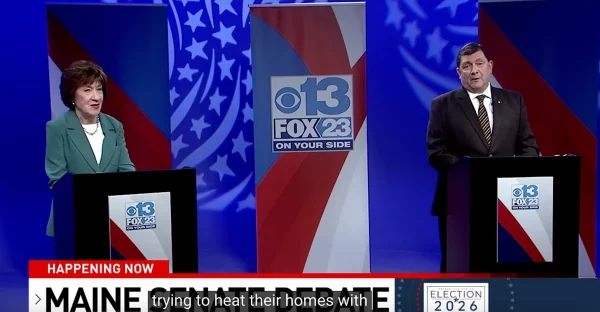
In the debate, Jackson said Collins had not done enough to stop the war in Iran or prevent cuts to federal health care programs. “Senator Collins wants credit for her power,” Jackson said. “I believe you have to be responsible for what you do with it.”
Recent polls put Jackson slightly ahead of Collins. A Jackson win would be a step toward Democrats gaining a Senate majority.
Another flippable Senate seat is in Alaska, with former U.S. Rep. Mary Peltola, a Democrat, challenging incumbent Republican Dan Sullivan. During what The Hill called a “fiery final debate” Thursday, Sullivan brought up reports of Peltola verbally abusing her staff during her campaign and when she was in Congress. Four staffers told The New York Times that she had used an antigay slur, and some also said she used an outdated and offensive term for developmentally delayed people. During the debate, Peltola called the claims “unfounded.”
As far as their records on LGBTQ+ rights go, Peltola had a high but not perfect score on the Human Rights Campaign’s Congressional Scorecard for her sole term in the U.S. House: 70 out of 100. Sullivan, who is in his second term in the Senate, has mostly low scores, including some zeroes.
Yet another possible Democratic Senate gain is in the deep red state of Texas. The Republican nominee is the virulently anti-LGBTQ+ Ken Paxton, currently the Texas attorney general; he beat incumbent John Cornyn in the primary. Democrat James Talarico, who has served in the Texas legislature, is running neck and neck with him. Recently, Talarico was off the campaign trail for several days. He said he was sick with the flu, while right-wing media and influencers claimed he was in a mental hospital in Ohio. Talarico said that was not true and that he had never been in Ohio, and hospital officials said he was never a patient there.
LGBTQ+ activists have been concerned about some Democrats walking back support for transgender rights, including Talarico. During The Texas Tribune Festival in September, Tribune editor-in-chief Matthew Watkins asked Talarico about his statement that “I will oppose trans athletes playing in girls’ sports if it risks safety or fairness,” and how it squared with Talarico’s vote against a trans sports ban in the state legislature.
“The reason I opposed that bill is because it was a blanket statewide ban without any appreciation for nuance,” Talarico told Watkins. He added, “I supported an amendment to that bill to allow local officials—education officials, local sports officials—to decide on an athlete-by-athlete, sport-by-sport basis, if there’s safety and fairness. That has always been my North Star, and it’s gonna continue to be my North Star.”
“Talarico still pledges to support a national ban on surgical interventions that help transgender youth, which may include top surgery or hormone implants,” according to S. Baum, a contributor to trans journalist Erin Reed’s Erin in the Morning on Substack. “Nonetheless, his opponents still flooded the airwaves with attack ads claiming he ‘voted to spend our tax dollars on sex change surgeries for kids’—a common rhetorical device used by Republicans to stir controversy over the lawful, safe, and provision of individualized, evidence-based care for transgender people.” Genital surgery on minors, by the way, is extremely rare.
Reed has called out several other Democrats for taking anti-trans positions, including Amy Acton, running for governor of Ohio; Ohio congresswoman Marcy Kaptur; Iowa’s nominees for U.S. senator and governor, Josh Turek and Rob Sand, respectively; and Peltola. Most of their comments have focused on sports or surgery, while Peltola voted for 2024’s National Defense Authorization Act, which banned gender-affirming care for minors under the military’s health insurance plan.
In a later column, Reed noted that Annie Andrews, the Democrat running for U.S. Senate from South Carolina, released an ad “calling transgender women ‘biological men’ and announcing her opposition to transgender participation in women’s sports. She also says she does not support ‘gender surgery for minors’ and would not overturn the felony youth [hormone replacement therapy] and puberty blocker ban in South Carolina.” Andrews is up against Republican incumbent Darline Graham, who was appointed by Donald Trump to succeed her late brother, Lindsey Graham.
Ohio U.S. Senate candidate Sherrod Brown, trying to reclaim his old seat, was one of the Dems Reed called out in her earlier article, as in 2024 he put out an ad saying he would not “let transgender biological men participate in women’s sports.” But more recently, trans and nonbinary journalists have praised Brown for diverting the debate with Republicans away from trans rights.
Brown released an ad in October that “serves as a masterclass in defusing anti-trans political attacks—without ceding ground to transphobic rhetoric in the process,” Baum wrote on Reed’s Substack. “The tactic: Call out the right’s lies and deception. Then, call out their hypocrisy. No misgendering, fear-mongering, or feeding into anti-trans stereotypes was necessary to reframe the conversation around ‘protecting children’—a common right-wing battle cry and dog whistle—to focus on actual issues of protecting kids from predators. In this case, that meant calling out Brown’s opponent’s ties to child sex trafficker Jeffrey Epstein.”
The ad pointed out that “detransition” activist Soren Aldaco’s claim that she received gender-affirming surgery as a child was a lie. Aldaco, who has been featured in ads for Brown’s opponent, Sen. Jon Husted, was a legal adult when she had the surgery, and it wasn’t in Ohio, but Texas. The ad also noted that Husted voted against the release of the Epstein files and that he’d received “$116,000 from associates of Jeffrey Epstein—10 times more than any other senator.”
Brown’s ad may be “a sign that Democrats who had previously deployed anti-trans tropes in their ads are finally changing their tune,” Baum wrote.
Democratic candidates for U.S. House from Montana and Iowa, Sam Forstag and Christina Bohannan, respectively, also have refused to throw trans people “under the bus” in response to attacks, as Reed put it. Democratic Michigan U.S. Senate candidate Abdul El-Sayed has said the decision to have gender-affirming care should be between the person and their medical team.
And Gov. Andy Beshear of Kentucky, a popular Democrat in a Republican-dominated state, recently spoke about his vetoes of anti-trans legislation (overridden, unfortunately). He told Jake Tapper of CNN, “We don’t throw anybody under the bus. That is not the party that we are. We start as a party of compassion and empathy. And I tell you what, if we want to ruin sports, put the government in charge of them.” Beshear is not up for reelection this year, but he’s been mentioned as a potential 2028 presidential candidate.
It’s important to note that Democrats’ retreats on trans rights haven’t stopped the Republican attacks, Jorge Reyes Salinas, communications director for Equality California, said in an interview with LGBTQ+ Freedom Fighters. He praised the Dems who’ve refused to back down, including Beshear and Michigan Gov. Gretchen Whitmer, also not running for reelection, as she’s term-limited.
Reyes Salinas said he thinks the Republicans’ anti-trans ads are backfiring. Polls indicate that more than 40 percent of Republican voters oppose restrictions on health care, he said. Also, Republicans are attacking trans people while ignoring the economic problems facing many Americans.
“People want to vote for the candidates who are going to help them with their current problems,” he said. “Spending all this money against trans youth…is only separating people from what they need.” But “voters are catching on,” he added.
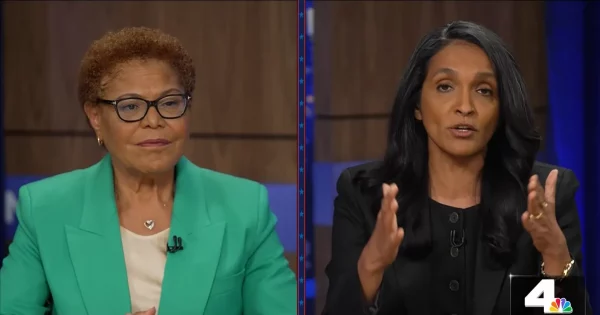
California is poised to stay a pro-equality state, Reyes Salinas said, and Equality California has endorsed Democratic candidates for all state offices and many for Congress. It has not made an endorsement in the hard-fought Los Angeles mayoral race between incumbent Karen Bass and fellow Democrat Nithya Raman, a City Council member who’s endorsed by the Democratic Socialists of America. In California, the top two vote recipients in the primary advance to the general election, regardless of party. Equality California generally focuses on openly LGBTQ+ candidates in local races, Reyes Salinas said.
For the U.S. House, it has endorsed incumbent out officeholders Mark Takano and Robert Garcia, along with three LGBTQ+ newcomers and numerous allies.
Among the newcomers: Scott Wiener, a California state senator, is running for the U.S. House seat in San Francisco, vacated by Nancy Pelosi, who’s retiring. However, Pelosi has endorsed San Francisco Supervisor Connie Chan over Wiener. Chan, also a Democrat, is considered more progressive than Wiener. Wiener announced his campaign without Pelosi’s “formal blessing,” according to The San Francisco Standard, and they had already had their differences, so that may explain their rift.
Bisexual woman Tessa Lynn Hodge, a Democrat, is in an uphill battle against incumbent Republican Jay Obernolte in California’s conservative 23rd Congressional District, which covers much of the desert area east of Los Angeles but not the LGBTQ+ haven of Palm Springs.
That city is in the newly redrawn 48th Congressional District, where another bi woman, Democrat Marni von Wilpert, has a better chance of flipping a seat. She has surged ahead of Republican Jim Desmond in the polls. They’re vying for the seat being vacated by anti-LGBTQ+ Republican Darrell Issa. Equality California is holding “Marni-mentum” phone banks on Thursdays leading up to the election; find more info here.
“There really is a lot of opportunity in California,” Reyes Salinas said.
Equality California is holding its Los Angeles Equality Awards this Saturday, October 17, at the Fairmont Century Plaza. They are honoring Assemblymember Rick Chavez Zbur, former EQCA executive director, and entrepreneur Tristan Schukraft, who owns The Abbey in West Hollywood.

Please attend your local No Kings – Vote Early Rallies.
Here are some of the SoCal locations, via LAist:
- Burbank: 10 a.m. to noon at Abraham Lincoln Park
- Culver City: 11 a.m. to 12:30 p.m. at Culver City Hall
- Downtown LA: 1 to 5 p.m. at Gloria Molina Grand Park
- Fontana: 10 a.m. to 3 p.m. at Seville Park
- Huntington Beach: 10 a.m. to 1 p.m. at Huntington Beach Pier
- Irvine: 3. to 5 p.m. at Trabuco Center
- Pasadena: 11 a.m. to 1 p.m. at Colorado Boulevard and Fair Oaks Avenue
- Riverside: 11 a.m. to 1 p.m. at Market Street and University Avenue
- Santa Clarita: 9 a.m. to noon at Valencia Boulevard and McBean Parkway
- Torrance: 11 a.m. to 1 p.m. at Torrance City Hall
- Whittier: 12:30 to 2 p.m. at Whittier City Hall
This is a cross-post from Karen’s LGBTQ+ Freedom Fighters Substack.
Opinions
Evan Low is not the leader the Victory Fund needs at this moment
The board must recognize what is at stake and act before org’s legacy is lost
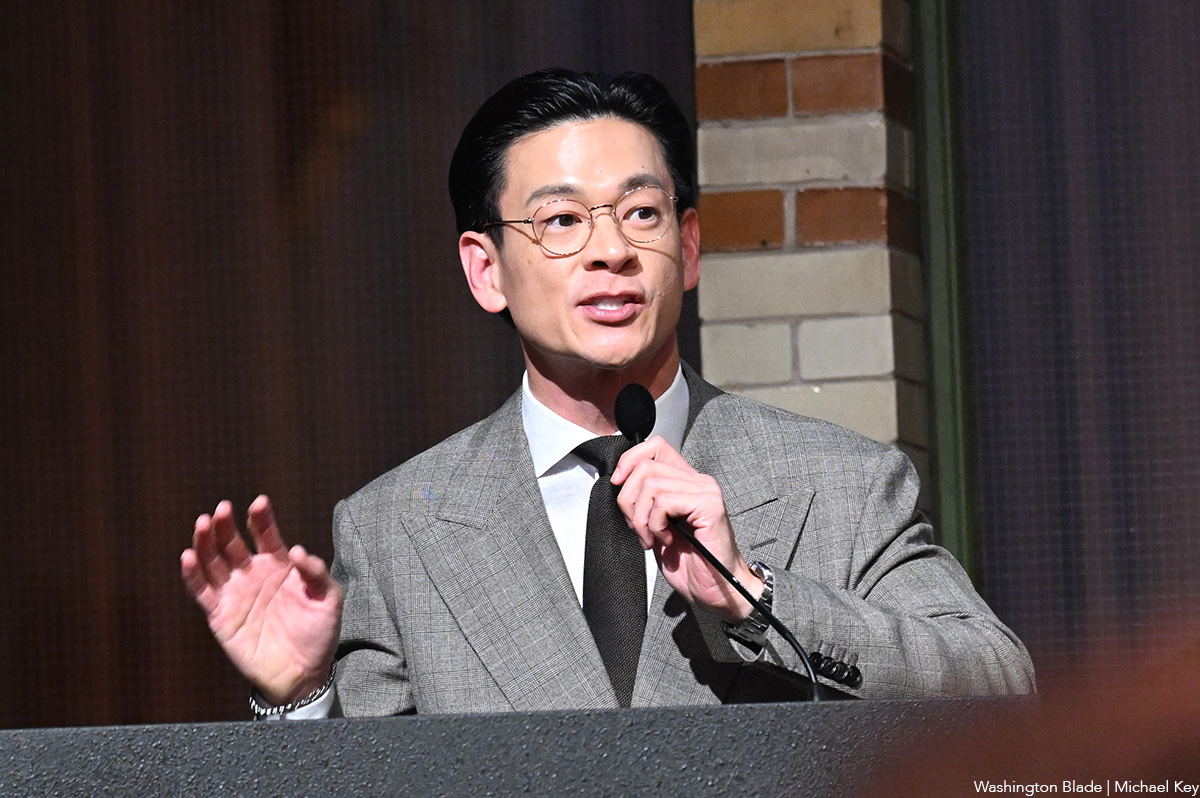
As co-founder and the first executive director of the Victory Fund and Victory Institute, I find the ongoing turmoil between a dozen or more employees and the organization’s new president, Evan Low, deeply distressing—particularly during such a critical election year.
The Victory Fund’s mission has always been clear and important: to elect and support qualified LGBTQ candidates for public office and, in doing so, secure a “seat at the table” from which LGBTQ issues can be advanced. That mission is too important to let internal turmoil diminish it.
I applaud the employees for going public with their concerns. When harassment allegations and other serious complaints threaten to derail an organization that was once so effective, where else are employees supposed to turn? The board of directors has a legal and fiduciary responsibility to the organization and to its donors. Once it received complaints of this magnitude, the board should have undertaken an independent investigation to determine the facts and assess the seriousness of the allegations.
I do not know Mr. Low, nor have I ever met him. Given my role as a founder, former executive director, and major donor, I found that somewhat remarkable. I was also surprised by the organization’s lack of contact with me at any level—whether to seek my financial support, ask for help with fundraising, or simply seek the perspective of someone involved in building the organization from its earliest days.
When Mr. Low was hired, members of the press contacted me about reports concerning his involvement in previous election-law matters. I declined to comment beyond saying that the board had hired an outside search firm to conduct the search and that I was in no position to assess any issues in Mr. Low’s past.
In hindsight, however, I have come to believe that Mr. Low is not the leader the Victory Fund needs at this particular moment. Ultimately, though, this is a matter for the board of directors to resolve. The board has an obligation to act decisively and independently before this internal conflict further damages an organization whose stature, effectiveness, and reputation were built over decades. The work of the founding board, subsequent boards of directors, and former leaders David Mixner, Brian Bond, Chuck Wolfe, and Annise Parker should not be so easily undone.
The Victory Fund once commanded the admiration, confidence, and financial support of countless people—including me. I hope the board recognizes what is at stake and acts before that legacy is lost.
William Waybourn is co-founder and the first executive director of the Victory Fund and Victory Institute.
Commentary
The California Gubernatorial Debate missed getting real
Meanwhile, outgoing Gov. Newsom signs TransLatin@ Coalition healthcare bill

Lackluster. Boring. Unfortunate. The night before California started distributing mail-in ballots in the critical Nov. 3 midterm elections, CNN hosted a debate between gubernatorial candidates Democrat Xavier Becerra and Republican Steve Hilton that looked like two typecast actors in beat-up bumper cars trying to gin up publicity for a lackluster B-movie.
At a time when voters are angry and hungry for authenticity, the debate felt too staged, too stale, and overly rehearsed. The moderators asked expected questions about the cost of living, housing, homelessness, immigration, and AI against the backdrop of the real question: who can best stand up to Donald Trump?
And the candidates dodged specifics. For instance, Hilton proudly touted his “10 New Cities” approach to affordable housing. He wants individual counties to bid on hosting the construction of new master-planned communities and essentially find ways around resistance to new development from local residents and local governments.
Becerra would take a more predictable course, cutting red tape, reducing administrative and bureaucratic obstacles to getting construction permits, and filing lawsuits against cities that refused to approve new housing.
“No locality should have the right to try to stop all of our people in California from having the housing they need,” Becerra said.
That begs so many questions: how is housing being defined here and for whom – for sale, for rent, or shelters as group homes? Must gated communities be open to those they previously restricted based on race, ethnicity, or gender?
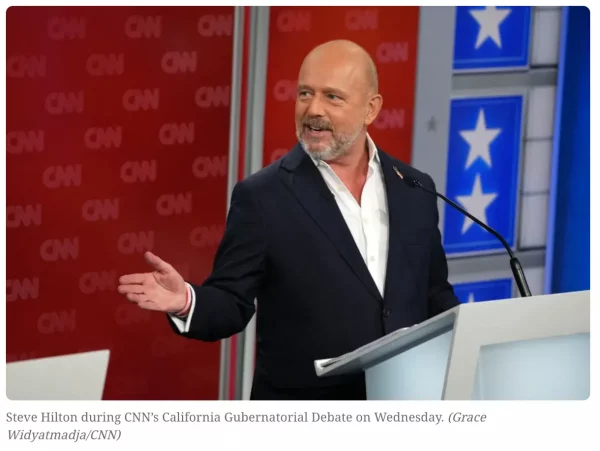
Hilton said he would cut funding for high-speed rail and homelessness nonprofits and reduce state government departments’ budgets by 5% to get his needed funding, per cbs8.com.
Becerra noted that Trump has already blocked federal funding for local homelessness agencies. Would Hilton go after that money? Would he be willing to comply with Trump/Project 2025’s anti-DEI policy to get funding and fast-track other federal assistance?
Becerra has a double-digit lead over Hilton and was given kudos by post-debate commentators for just showing up. But Becerra is also aware of the need not to disrespect the voters by shrugging off the event, as if he has the race locked up. As the old Yankee baseball legend Yogi Berra used to say, “It ain’t over until it’s over.”
A new poll from The Associated Press-NORC Center for Public Affairs Research finds that only 17% of U.S. adults approve of Trump’s handling of the cost of living and 26% approve of Trump’s handling of the economy overall. A sizable majority, 65%, blame high costs on Trump’s tariffs and his war with Iran.
But there was no sense of urgency from either candidate about the importance of this election or in getting out the vote.
With Trump again threatening to impose the Insurgency Act, Democrats are working to stretch the margins of victory to stop cold any discussion about rigged elections.
But neither candidate was asked about that nor how they would handle a local version of the Jan. 6 storming of the Capitol to prevent certification of the vote results.
Nor were they asked how they would react if Trump federalized the National Guard and ordered the military to join ICE in “protecting” polling places and ferreting out anyone without multiple pieces of identification that match their birth certificate.
What can Becerra and Hilton do now to demonstrate the kind of leadership they would bring to the governor’s office in Sacramento?
This is not an idle question.
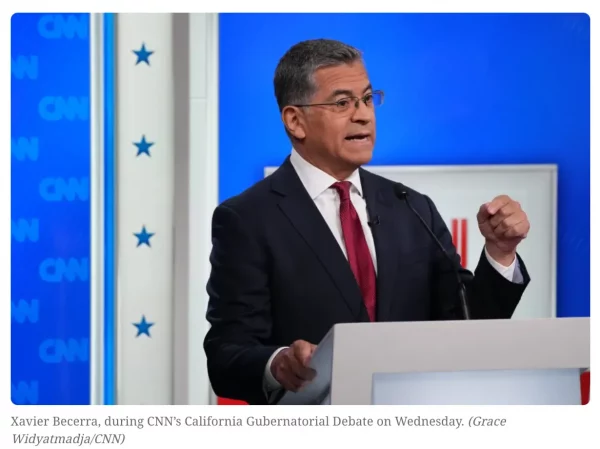
The usually mild-mannered Xavier Becerra – who expressed his displeasure with Hilton’s inaccurate stories by smirking or rolling his eyes – turned to his opponent in what felt like both a real and rehearsed moment of candor and, after noting that Hilton, too, is an immigrant, called out Hilton’s acceptance of Trump’s endorsement, immigration raids and mass deportation campaign.
“You seem to welcome immigrants who look like you, but deport immigrants who look like me,” Becerra said in a breath-stopping moment. Hilton, a former adviser to British Prime Minister David Cameron, apparently had praised the deportation campaign as “perfect” last January on Fox News. He seemed taken aback by Becerra’s comment, which he called “disgraceful.” He then dodged questions about California’s sanctuary state law, which requires law enforcement to limit cooperation with immigration officials. Would he direct California officers to assist in Trump’s ICE campaign?
Hilton wanted to “turn down the temperature” on that debate.
Hilton kept pitching for voters to choose something “different” to change California and fix the mess created by Democrats. Does he fancy himself a more petit Arnold Schwarzenegger, whose triumphant victory in the recall of Gov. Gray Davis made the actor a Republican hero?
Steve Hilton is no Arnold Schwarzenegger.
“You’re going to end up with Trump results if you follow Steve Hilton’s plans,” Becerra said, talking about the Republican’s idea to eliminate income taxes for middle-class Californians that also includes a tax cut for rich Californians.
Hilton countered by blaming long Democratic one-party rule for causing and not fixing the state’s economic troubles.
“All you ever say is ‘Trump, Trump, Trump. And that’s nothing but an insult to every Californian who is desperate for something to change in this state,” Hilton said.
“Trump, Trump, Trump,” the former state attorney general mumbled back.
To gays fond of “The Brady Bunch,” the exchange sounded a little like the infamous whine, “Marcia, Marcia, Marcia!”
But Hilton had a point when noting that Democrats have been “in charge” as the film and TV industry has crumbled with production and jobs moving to other states and countries.
Becerra said he would “fight for Hollywood,” which he awkwardly followed up with dressed-up words for “Hollywood.” It wasn’t enough; it wasn’t cute, and it didn’t work. Losing Hollywood is a big fucking deal.
Becerra might also want to talk to Attorney General Rob Bonta, Superintendent Tony Thurmond, and watch the documentary “Mom’s Club” to understand what’s happening with California schools. It’s taken many, many years, but the religious-right culture wars are winning in the county school board system.
In fact, Sonja Shaw, a Moms for Liberty-endorsed candidate on the conservative Chino Valley Unified School Board, is using the fake “parental rights” messaging to top the polls for California State Superintendent of Public Instruction against San Diego Unified School Board President Richard Barrera.
But there is also good news on the culture war front. According to journalist Erin Reed of the popular Erin in the Morning Substack, a new poll from The 19th and YouGov “finds that more Americans oppose bans on transgender youth care than support them, with the gap narrowing even among Republicans, and that the public now says Republicans talk about transgender issues too much just as often as it says Democrats do, a notable finding given that previous polling had the public faulting Democrats more.”
“Gender-affirming care for transgender minors includes any kind of care designed to support and affirm their gender identity, including therapy, consultations with doctors, hormones or puberty blockers, other medication, and, rarely, surgery. Do you favor or oppose lawmakers banning or restricting gender-affirming care for transgender minors?” the question asks.
“In response, 45% say they oppose lawmakers banning gender-affirming care for trans youth, while only 38% say they support such bans; 17% are not sure. The finding is notable as election-year advertising ramps up around healthcare for transgender youth, and it comes in the wake of severe attacks on that care by the Trump administration,” the poll reports.
Reed adds: “The people running the ads seem to know” about the turn in support. “In a memo to Republican candidates on messaging for the 2026 elections, the American Principles Project, one of the chief architects of anti-trans advertising, states that pressing such attacks ‘may not be sufficient’ for Republicans to win the midterms. That reading is consistent with the generic ballot, where Democrats continue to surge ahead, with multiple polls released in recent weeks showing them leading by double digits.”
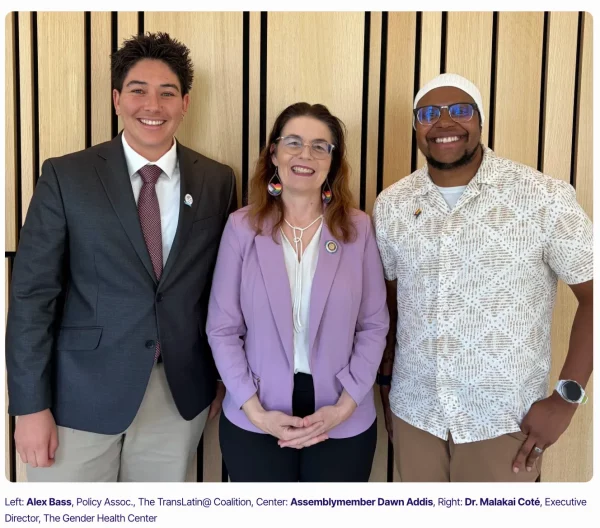
LGBTQ+ Californians continue to press forward. On Wed. Sept. 30, outgoing Gov. Gavin Newsom signed AB 1876, authored by Assemblymember Dawn Addis and sponsored by The TransLatin@ Coalition. The Fair Care for All Act, “strengthens California law against discrimination in health care coverage. For transgender, gender-expansive, and intersex communities, these protections matter at a time when federal safeguards remain vulnerable to change,” the press release reads.
“AB 1876 mandates that if an insurance provider covers a prescribed service for one patient population, then they would cover that same service for all patient populations who need that same care. As law, this prohibits discriminatory categorical exclusions for gender-affirming care or denial of services based on gender identity.”
If elected governor, it is likely that Becerra would proudly uphold and defend this new law. He has long supported LGBTQ+ people.
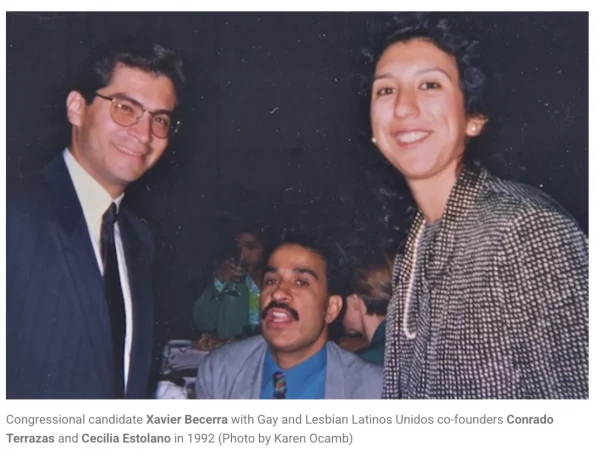
“I’ve always looked at things from the perspective of someone who remembers my dad’s stories where, simply because he was from Mexican heritage, he couldn’t walk into restaurants because of the signs that said ‘no dogs or Mexicans allowed.’ When I ran [for the California Assembly] in 1990,” then-California Attorney General Becerra told me in a 2018 interview, “I ran for office to be able to fight against discrimination.”
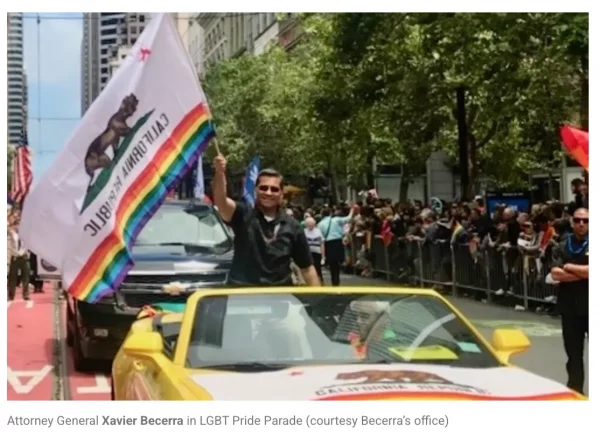
He’s also been on the front line when fighting Trump in the legal milieu.
“It’s chilling to watch Congress abandon its role to put a check on Donald Trump’s excesses,” Becerra told me for a Los Angeles Blade phone interview. “I have no hope for Donald Trump. And I think he’s proven himself repeatedly who he is and what he’ll do. When you have someone who’s that much of a rogue and that dangerous a player, you expect the other branches of government to stand up.”
In every respect, Trump is endangering the health, the security, the economic well-being of the people of the country,” Becerra said. “It’s been a long time since we thought we were this close to having someone press the button that could end up starting some nuclear conflict. But given how erratic Donald Trump is—you just never know what he’s going to come up with next.
“I think that’s probably as bad as it gets when you get to the point of a nuclear conflict. But the fact that we would even talk about that or believe that could be possible for irrational reasons—it makes you just wonder where are the checks and balances that would make sure that one irrational person could not topple the longest living democracy in history.”
Checkout the CalMatters 2026 Midterms Voter Guide. And VOTE!
This is a cross-post from Karen’s LGBTQ+ Freedom Fighters Substack.
Commentary
Trump to the people: F**k the free press

One of the biggest problems for Donald Trump, the petulant transactional president, is that the best of the American free press won’t go along with his constant demands for unearned praise. So on Friday, Trump announced on Truth Social that CNN, MS NOW, and Politico were all banned from the White House, “effective immediately,” because of “fake news” and “dishonest reporting.”
When asked during an afternoon press conference in the Oval Office why he was imposing the ban, Trump – the New Yorker who used to court the city’s notorious tabloids– said: “It’s sick. I mean, there’s something wrong with a country that can allow people to write purposely negative stories. Now, if they want to write them, that’s fine. But I don’t have to let them into my — into the people’s house.”
On Saturday morning, reporters from those media outlets showing up for duty were denied access to the White House campus and were stripped of their press passes. CNN, MS NOW, and Politico all issued statements of protest about Trump’s clear violation of the First Amendment, vowed solidarity, and pledged continued coverage despite being denied access – just as Sec. of Defense Pete Hegseth receives blistering coverage from reporters outside the Pentagon over incompetence in waging the war in Iran and plans to integrate AI into military systems.
For all the many, many scary reasons this incident is a very big deal, one that has received less focus is that apparently no one knows why Trump has critically upped the ante in his ongoing poker game with the press now. Is he just issuing orders without any advice, consent, or guardrails?
“Some White House staffers, including members of the press shop, were caught off guard by the announcement. A source familiar with the matter said those staffers were left scrambling to learn more details,” CNN reported.
Lack of a clear reason also bothered Politico Playbook, which “called sources in and around the administration to find out why — after months of low approval ratings for the president and his signature issues — now?”
They learned that “many senior staff were surprised by the directive, which happened while Chief of Staff Susie Wiles was out of town, and weren’t aware it was coming until they saw the post, according to three people close to the White House with knowledge of conversations in the West Wing.”
Then on Friday, “the press shop was blindsided and unsure of how to respond, with one aide simply pointing back to Trump’s Truth Social post.”
Importantly, Politico reported, “They’re taking it seriously. ‘It’s real and permanent as far as POTUS is concerned,’ the person said.” More outlets – such as the New York Times and the Washington Post – to follow.
The BBC also speculated about the reasons for the ban now.
“The president’s frustration at the media, however, came after a week of setbacks in which major institutions handed him a series of losses across his agenda,” the British Broadcasting Corporation reported.
“First, the Supreme Court blocked his plan to restrict mail-in voting ahead of the midterms. This prompted Trump to lash out at the court’s justices, including those he had appointed. ‘These are not the people I interviewed to serve on the United States Supreme Court,’ he said.”
The BBC also noted that, in addition to record-low approval ratings for his second term, the Federal Reserve just rejected his pressure and raised interest rates. And a judge ordered his administration “to give 30 days’ notice before making any changes to the Kennedy Center arts venue in Washington DC after the president warned it could be ‘ripped down.’”
Along with most other media outlets, the BBC also noted that “The First Amendment to the US Constitution forbids Congress from ‘abridging’ the freedom of the press. It is language that courts have long interpreted as preventing the government from discriminating against the media based on the content of their coverage.”
Facing political headwinds going into the midterms, might Trump’s restriction of access to “friendly” press have the trickle-down impact of delivering his message to people who consumer their news from local and smaller media outlets?
But in a report on the White House Correspondents Association dinner, I included a section that points to a more sinister reason – journalists are the “enemy of the people” so trust no one else but Trump.
“Whether it’s reporting on credible truth-tellers calling out a world leader incompetently prosecuting a mindless war or a specialty journalist clearing up snarky disinformation that leads to harassment of minority individuals, press freedom – upheld by the First Amendment – is as precious as water and clean air to the survival of a democratic body.
But what happens when the fog of war is intentionally generated by the government ethical journalists are tasked to cover it in their public service to the people?
As legendary CBS News journalist Marvin Kalb noted in his 2018 book Enemy of the People: Trump’s War on the Press, the New McCarthyism, and the Threat to American Democracy, it was the current President who started the war with his dangerous assertions that the news media is “fake news” and “Fake News is Truly the ENEMY OF THE PEOPLE!”
“Shortly after assuming office in January 2017, President Donald Trump accused the press of being an ‘enemy of the American people,” reads a Harvard Kennedy School Abstract for Kalb’s book.
“Twentieth-century dictators—notably, Stalin, Hitler, and Mao—had all denounced their critics, especially the press, as ‘enemies of the people.’ Their goal was to delegitimize the work of the press as ‘fake news’ and create confusion in the public mind about what’s real and what isn’t; what can be trusted and what can’t be. That, it seems, is also Trump’s goal.”
This is a cross-post from Karen’s LGBTQ+ Freedom Fighters Substack.
Commentary
Gratitude is sexy: When the gays are paying your straight bills, consider paying them some respect
Hetero OF performer Jake Andrich is “not particularly” concerned with showing support for his widely gay male fan base, and, well, there’s a lot to unpack here

What I am about to say will come as a shocker to some and bring a heavy sigh to many more. There are some things money can’t buy. Integrity, gratitude, and a goddam clue, just to name a few. In a recent livestream, hetero-identifying Canadian OnlyFans performer Jake Andrich, who has garnered a sizable gay following on the platform, was asked if he supported the LGBTQ+ community. His response? “Not in particular.” Phenomenal PR, bro.
While Andrich may be 100% comfortable with benefiting from his fanbase of gooning gays, he’s clearly less than compelled to support the very community behind his success. If a straight dude can build a highly lucrative career providing gay men with material for their spank banks, what does the relationship between a performer and the subscribers paying their bills look like?
Now, before anyone gets their brogurt-stained briefs in a bunch, let’s be clear about one thing. No one is entitled to someone else’s sexuality, political views, or values. No one should ever feel pressured into performing some identity that they don’t identify with or be made to feel uncomfortable. That said, gratitude is not an identity.
A unique phenomenon can happen when a person spends their life receiving social rewards while never having to think too hard about the systems in place that have made these rewards possible for them. It is often that when cultural visibility, acceptance, and desirability are a given, they are often processed in the mind not as privileges but as natural order. When this occurs, attention is processed as validation which, in turn, becomes entitlement.
When the folks who supply this attention are folks of marginalized groups, the disconnect is more than significant. Said performer experiences queer desire as an economic gain. What they don’t experience is the discrimination and social consequences that accompany one’s queerness in society. To folks like Andrich, their queer audience is a considerable convenience while never being a commitment.
For many folks, lust is undeniably efficient at overriding less savory aspects of a person. The mammalian brain’s reward system has a way of filing pleasurable things as important things. Arousal can quite often narrow one’s attention while making them more concerned with obtaining the reward than contemplating where or who it is coming from. Add a layer of the good ol’ parasocial attachment, and now the provider of this reward is perceived not as a grad student on the other side of the country with great abs, nine inches, and a heap of student loans, but as your secret lover. All of this neuropsychology can make it super easy to compartmentalize certain info.
Cognitive dissonance makes a guest appearance when our desires and our values clash. The mind will often find ways to minimize discomfort when pleasure is involved. We may rationalize by telling ourselves that it’s not that big of a deal-breaker, or they didn’t mean what they said, or I’m subscribing for his body, not his values.
Although I am not arguing that we should start conducting moral deep dives on everyone we see on screen, I do believe that it’s worth looking into when pleasure consistently outweighs principle. Not too long ago, I wrote a piece on Nicki Minaj’s MAGA coming out, and her Barbz were swift to come to her defense. This made it crystal clear how easily a fanbase can allow its admiration for a coked-up pop diva to eclipse her recent getting on her knees for an administration directly attacking the rights of LGBTQ+ Barbz and non-Barbz alike. Too often, fantasy feels so much better than principle.
Let’s be real about the thirst-fueled economics at play here. The LGBTQ+ community has always had to seek out representation where they can find it. Long before the Pedro Pascals and Janelle Monaes, a random shirtless model could easily fuel an entire erotic ecosystem for a not-so-out male appreciator of men. Fast forward, and what were once xxx mags hidden in that box at the back of the closet are now fanpage subscriptions. Thank you, internet. Progress.
And of course, there’s nothing wrong with patronizing the page of some random former varsity bro from Idaho who realized he can pay rent and then some by selling wank videos and foot pics. On the flip side, there’s absolutely nothing wrong with selling wank vids and foot pics. Make that coin. But when one’s business model relies on a particular marginalized community’s consumption while dismissing said community with a “not so particular” approach in support, it is not going to fly with pretty much anyone with self-respect.
There are plenty of hetero-identifying men who get it right. Our furry-chested Daniel Radcliffe, who fuels many gay folks’ fantasies of wizard-on-wizard action, has always shown love and support for the LGBTQ+ community, particularly the T (F U, JK R). Fellow furry-chested Mark Ruffalo has also consistently lent his voice to the rights of the LGBTQ+ community and many others. Radcliffe, Ruffalo, and so many more men like these two are a testament to the fact that one doesn’t have to identify as queer to show respect and support for their queer fanbase. And, let’s be honest, nothing’s hotter than giving a sh*t.
You don’t have to be a part of a community in order to see its value. I repeat: YOU DON’T HAVE TO BE A PART OF A COMMUNITY IN ORDER TO SEE ITS VALUE. Straight guys, you don’t need to go full-on queer activist and advocate. A little solidarity, however, goes a long way. Gratitude, and the lack of it, do not go unseen.
So Andrich doesn’t particularly support the gays. That’s cool. In turn, the gays can decide whether or not they’d like to keep supporting him financially. Let that bit of capitalism rest on your palate for a moment and tell me how it tastes.
Honestly, take it or leave it. I personally think so many things are not worth our time or our energy. Full disclosure, I didn’t know who this guy was before receiving this assignment, and I’m sure I will soon forget him after submitting it. Integrity is sexy, in my humble opinion.

Dewayne Perkins doesn’t need anyone’s permission

Are anti-trans campaigns lowering your cost of living?

Michigan Senate race puts two sharply different LGBTQ+ records head to head

Australia’s first gay state governor takes office

Remembering a gay Revolutionary War hero amid today’s political battles

Here’s your Palm Springs look at the weekend: Oct 30-Nov 1, 2026

Trick or treat! Is it ICE?

Remembering Dolores Huerta, AHF’s Michael Weinstein on his friend and upcoming midterms

‘Wicker’ delivers a delicious dish of macabre irony

AFI Fest 2026: Five best queer films to put on your watchlist
-
 Palm Springs4 days ago
Here’s your Palm Springs look at the weekend: Oct 30-Nov 1, 2026
-
 Investigations5 days ago
Trick or treat! Is it ICE?
-
 Obituary5 days ago
Remembering Dolores Huerta, AHF’s Michael Weinstein on his friend and upcoming midterms
-
 Movies5 days ago
‘Wicker’ delivers a delicious dish of macabre irony
-
 Movies4 days ago
AFI Fest 2026: Five best queer films to put on your watchlist
-

 Features5 days ago
The Rumpus, under new ownership by writer wives Roxane Gay and Debbie Millman, aims to expand storytelling options
-

 Arts & Entertainment5 days ago
Patrick Stewart, actor and life-long LGBTQ ally, has died at 86
-
 a&e features4 days ago
A ‘Heaux’-le New Church: Brandon Kyle Goodman brings a queer spiritual experience to the stage
-
 Obituary3 days ago
A gay appreciation of staunch LGBTQ+ ally Patrick Stewart
-

 a&e features3 days ago
Reading comics is fundamental