Features
From the GOP to West Hollywood: How one young political advocate found his voice
Joshua Marin-Mora champions LGBTQ+ rights. For years, he worked in spaces that shunned them.
El Que dirán. What would they say?
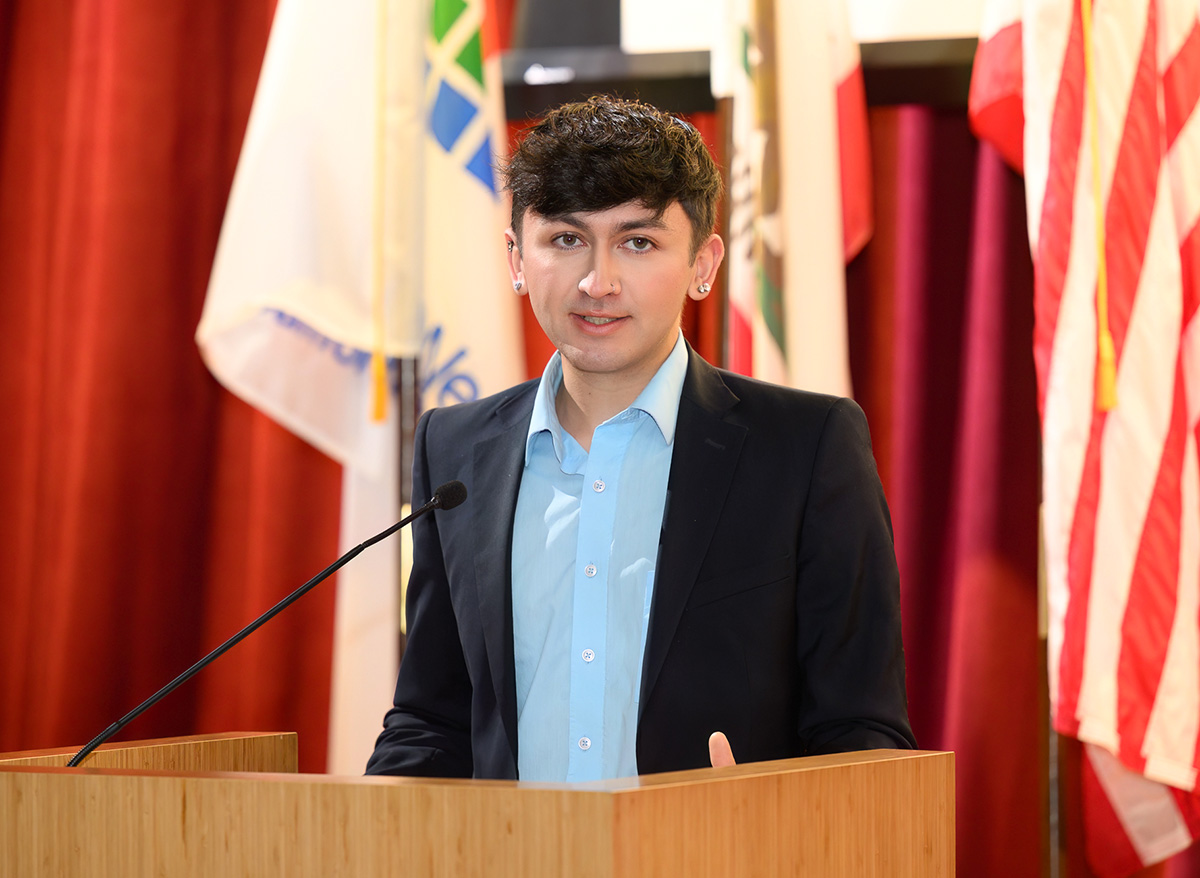
These words emanated through Joshua Marin-Mora’s mind as a child, serving as a backdrop for a personal shame that would steep in his body and mind for years. At 14, he was the golden child: he soared academically. He shone on stage in theatre productions. He attended church with his parents, who had instilled in him a deep sense of faith.
Internally, he was struggling. He had discovered at this point that he was attracted to men. “I didn’t really know what that meant, but I knew it was bad…It was crushing. I found myself in an extremely dark and scary place. Honestly, I did not know if I would make it out of it,” Marin-Mora told the Blade.
Bright and eager, he felt his successes shadowed by this self-knowledge: this part of himself he couldn’t share with anyone else. “The Church tells me I’m supposed to marry a woman and have children. My family wants grandkids,” said Marin-Mora. “It was an inconvenience for me. It was an inconvenience for the people around me. I wanted it gone…I really thought that I could be over with it, and I really thought that God would take it away. I prayed about this.”
At 15, he discovered a new sense of purpose: one that allowed him to throw himself into public service that felt meaningful and nourishing — and one that allowed him to continue to hide his queer identity. He attended his first city council meeting in Reno, his childhood home, and witnessed for the first time conversations between residents and local legislators. He experienced people bringing their grievances to the table and saw the ways that city council members tried to form solutions.
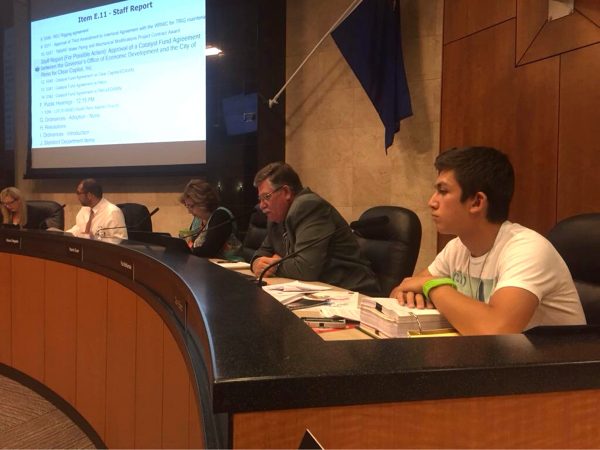
Soon after, he was elected to the youth city council, where he actively took part in community events like food, clothing, and supply drives while learning the ins and outs of local government. “I was on cloud nine,” Marin-Mora said. He actively served in the council throughout high school, and by the time it came for college, a path presented itself: one that would have him wading deeply into conservative political spaces for years to come.
“I’d basically been put into the GOP lane…it made sense for me at the time. I didn’t want people thinking I was gay. ‘Let me go for the anti-gay party’,” Marin-Mora explained. “The loud parts of conservatism in the Catholic Church seemed to fit just right with what that political party was doing.”
While studying international politics at Georgetown University, he continued to develop a deep love for politics and figuring out how “the system” worked. In his junior year, the COVID-19 pandemic began, and, like many other LGBTQ+ folks during the following period of isolation, he was beginning to engage more with queer media as he contended with the shame he had grown to hold around being gay.
In this conversation with the Blade, Marin-Mora discussed the breaking point that led to his coming out, the viral online backlash he faced for being out in politics, and his journey of queer self-acceptance and transformation that led him to sell all his things, move to California, and abandon his previous work to fight for queer liberty.
When was the first time you opened up to someone about being gay, and what led up to that moment?
It was the second half of my junior year [in college]. I go home, and I’m watching the show Love, Victor. The lead was a gay Latino kid who had to navigate what it meant to be that. I still haven’t ever related so much to a story on television. I saw me, and the floodgates just broke open. My whole life flashed before my eyes because I actually gave myself permission to even entertain the idea, which was radical at the time for me.
I thought about the priest who discouraged me from going to Pride. I thought about El Que dirán. What would the family say? I [had] been doing all this professional work for the GOP. Could this derail that? But at the end of it, I was just so touched. I went to my best friends. We went to the National Mall. And I remember thinking, “Look, you have to buckle up.” Because the way I saw it: once you say it, there is no going back.
I never felt such a weight off my shoulders, and I underestimated how ready I actually was to do this. Within the next couple of days, I’m getting my ears pierced. I’m dyeing my hair. I was on top of the world, and nothing else mattered to me. I had my support system. They cared [for] and loved me — my chosen family. And that was what mattered. You know what I believed? Maybe this could work. Maybe I can carve out a place for me…But life got real, and then there came the point when it was time to wake up.
What do you mean by that?
I worked on a very high-profile campaign [for Virginia governor Glenn Youngkin] right out of college. And while I was on the campaign, I went to my first Pride. It was so amazing. I went with my support system. But I was at a campaign stop in rural Virginia, and my phone blew up.
I had posted a photo of myself at Pride in a skirt. It felt like the right thing for me to do at the time. I loved it. I have no regrets, but there were a lot of people who didn’t like that. It became this entire thing. I was reading the nastiest comments online. My photo is getting blasted everywhere, and my blood went cold because I was afraid. I don’t know how big this was going to get. And this is a high-profile campaign — this was one of two special elections in the entire country that the whole nation is watching.
After the shock had settled down, I remember feeling angry. I was mad at myself, and I was mad because I wasn’t surprised. By this point, the GOP had already started this ugly culture war that had taken place that was gaining traction around the country. They were smearing trans people. They were enacting policies to out LGBTQ+ students. They were cracking down on schools and banning books. I’m ashamed to admit that I looked away and that it took me getting burned to realize sort of the extent of truly what was happening. I had to grapple with myself.
I thought there could still be a place [for me]. Now I’m wondering: Is politics even for me? Can I even handle this anymore? I moved to Colorado…I couldn’t even imagine starting from zero, every connection I’d made, all the experiences that I gained, to just start over. It was nerve-wracking. So I worked on moderate campaigns, and I ended up finding that the culture war wasn’t going away. Mass shootings were still happening. This is 2022, by the way. Roe v. Wade was overturned. Only Democrats were talking about health care reform and actually doing something about it.
My role was to listen to the other side on these campaigns, and…I realized that my views, my values — they were just pulling me in a whole different direction. So now I’m experiencing an identity crisis, the voice that I thought I had found…I didn’t know where that was anymore.
In 2023, I’m living in Denver, and by a miracle, I worked for my first Democratic campaign. It didn’t last long, but it felt better. It felt right. But by that point in my life…I really didn’t think that I’d done enough. I [kept] looking at everything happening nationwide. I’m not the kid getting outed. I’m not the trans person whose dignity is being stripped away. It’s all ramping up even further, and I had played some role in all. I felt terrible. I felt awful. I didn’t know who I was. And so I realized, I couldn’t stay in Colorado. I was desperate for a fresh start.
So [in the] summer [of] 2023, I sold what I could. I had no job lined up because the other campaign had just ended, and I came and I moved to LA.
How did you make it work?
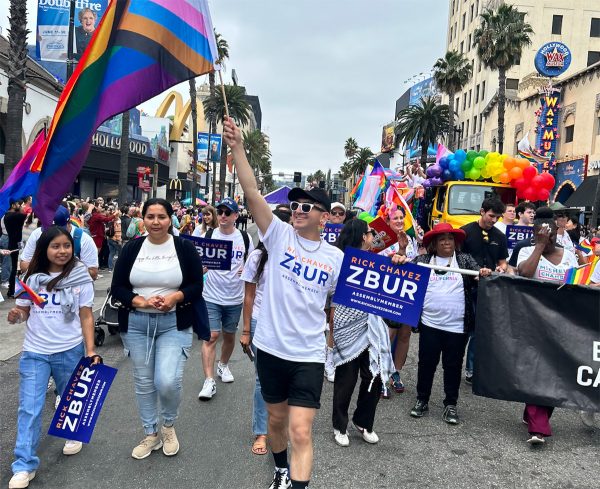
I was directing traffic at SoFi stadium. I was helping out with check-in and giving out bobble heads at Dodger Stadium. I was like, I’m gonna make it work. This is the dream. Then, a couple of months later, I saw that my assemblymember was hiring, and Rick Chavez Zbur literally gave me the shot of a lifetime, and it changed everything.
How has this experience working with Assemblymember Zbur been pivotal for you?
Being gay had been the source of so much pain for me up until this point, and I was able to flip that whole thing on its head…Growing up, I was very cognizant of the tightrope that I was on. I knew in my truest, deepest self, that if I veered too much off the tightrope, I had to do everything to correct.
I am [now] working for a gay elected official who is unabashedly a champion for progressive points. I am working out of one of the gay meccas in the world, West Hollywood. I didn’t feel like I was on that tightrope anymore. I had actually found my voice. In addition to that, going to this idea of penance, now I get to be on the front lines and fight for all those people that had been further marginalized.
I was thinking about this little kid in me that had it really hard. [He’s] a community leader who had been on the front lines. He lived through the AIDS crisis. He led Equality California. He saw that I was trying to come home. He gave me that chance, and I will always be grateful for that.
I go home, I go to sleep at night proud of what I’d done that day. I’m back in the community, just like I’d always wanted to be. I’m helping people. I’m trying to make their lives even a little bit better, just like that lifeline that has really driven me throughout my entire life.
Can you tell me more about your belief in the political system? How do you empower yourself and others to keep going, especially when faith in that system can be really difficult for queer people and other marginalized communities?
Decisions are being made every day that will impact our livelihoods and will impact our futures. And if we don’t get involved, if we don’t fight — if you’re not at the table, you’re on the menu. I personally feel like there is so much at stake that it takes all of us. We’re all on the same ship, one way or another, and that’s why I believe in the system.
Losing faith in the system is exactly what they want. They don’t want us involved. They don’t want us making noise. They want to run the whole thing. When you realize that, when you wake up to that, when you think about your neighbors, when you think about your communities, I’ve experienced how easy it is to look away or not care until you’re at the end of the brunt. It changes your whole worldview.
No system is perfect. I remember that city council meeting that I went to: all those neighbors who were coming up to speak and ask for change. They were the ones the decision makers were listening to. And if the decision makers aren’t making the right changes, then you try to become the decision maker. It’s very easy to get overwhelmed and over consumed, but I think about the bigger picture. What can I do? What part can I play?
Follow Joshua on IG: @Joshua_MarinMora

Features
An activist says he’ll stand for trans rights, even if he’s standing alone
Colin Campbell, a volunteer for Trans Youth LA, is determined to show Children’s Hospital its decision to reverse course on trans care won’t be taken quietly
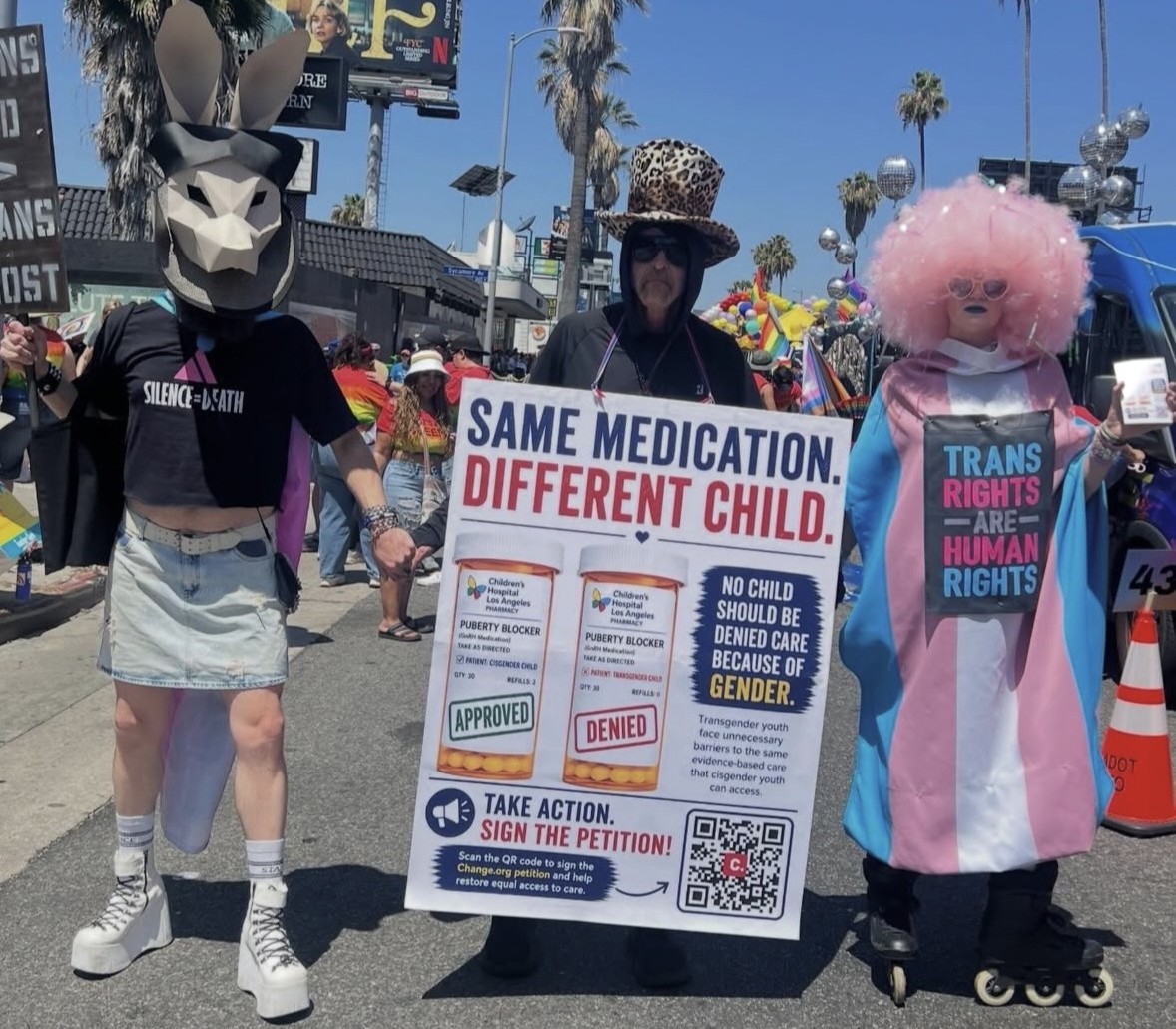
Wearing a flag saying “protect trans kids” and waving a large transgender flag, Colin Campbell stands with a handful of other protestors outside of Children’s Hospital of Los Angeles every Thursday.
In June 2025, the hospital announced it would stop its gender affirming services for transgender youth and young adults. Leadership cited major budget cut threats and federal investigation probes from Donald Trump’s administration for its decision. By the end of July 2025, its Center for Transyouth Health and Development closed.
“Across the country, bills all over are targeting transgender people from health care and access to participation in public life,” Campbell said. “This fascist administration is trying to erase trans people. Restrictions on gender-affirming care put lives at risk, especially for young people and families with limited resources.”
For the last year, Campbell has led the protest charge against the hospital’s decision.
“We’re the longest ongoing weekly street protest for trans kids in the United States, and probably the world,” Campbell said. “This is the civil rights issue of our time.”
Campbell has been to almost every weekly protest since Feb. 20, 2025, as a volunteer for Protect Trans Youth LA. Protect Trans Youth LA is a group of care providers and community members aiming to protect gender affirming care and the safety of trans youth.
“The reason why I admire trans people so much is because they challenge the strict behavioral expectations placed on everyone, and they allow everyone more freedom,” Campbell said.
Rain or shine, at least one person is always protesting outside the hospital each Thursday night at 6 p.m.
”Sometimes it’s just me; sometimes it’s four other people,” Campbell said. “A month or two ago, there were 40 people. It really depends on how much we get the word out there, but we always make sure there’s someone.”
Campbell isn’t new to activism and its importance. He first got involved in activism as a member of ACT UP in 1987 because the government was ignoring victims of the AIDS crisis.
“We fought because we had no choice but to,” he said of his youth activism. “We were dying.”
He felt called to action when he saw Kamala Harris lose the 2024 election and when he saw the immediate attempts to limit trans rights after Trump took office.
He said trans people need allies now more than ever.
“There’s fear in the community, and all the trans kids and trans adults that were marching with us early on in this fight have gone underground,” Campbell said. “They’re afraid because there is danger in our simple protesting.”
Previously, there have been incidents where people jumped out of their cars to harass protestors, physical assaults have happened multiple times, and slurs were commonly yelled early on. Campbell was almost run over by a truck.
“I also think it’s very important that the LGBTQ+ community becomes more united on this issue,” Campbell said. “I’m not a trans person; I’m a cis white gay male, but I’m looking to see more of the letters of the LGBTQ+ involved in this.”
“The time for our community to be fighting for trans rights, and especially trans children, is now,” he added.
During Pride Month, Protect Trans Youth LA launched a petition on Change.org, urging the Children’s Hospital of Los Angeles to continue providing evidence-based care to children.
The petition is addressed to Paul S. Viviano, president and chief executive officer, and is titled “No Child Should Be Denied Care Because of Gender.”
As of July 3, over 200 people have signed, verified by Change.org.
“Week after week, our message has remained consistent: Children deserve healthcare decisions guided by patients, families, and medical professionals—not politics,” a portion of the petition says. “Behind every policy decision is a child, a family, and a future.”
The demands the petition lists include restoring access to gender-affirming care for trans youth, restoring services the hospital’s Center for Transyouth Health and Development used to provide, and reaffirming its commitment to providing healthcare “free from discrimination.”
“This petition is not about politics,” a portion of the petition said. “It is about fairness. It is about equal treatment.”
All Pride Month, Campbell has hit the usual Pride circuit to get signatures on this matter. At Weho Pride, Campbell handed out nearly 5,000 postcards and 1,000 stickers.
Campbell’s activism was highlighted at this year’s Venice Pride. He was honored with the Bill Rosendahl Pioneer of the Year Award for his “tireless advocacy on behalf of transgender youth.”
He was also presented with a certificate of recognition on behalf of the City of Los Angeles and the 11th Council District for his “extraordinary advocacy, leadership, and unwavering commitment to equality.”
“Your efforts have sparked important public dialogue, mobilized thousands of supporters, reaffirmed the values of dignity, fairness, and inclusion that strengthen our communities,” a portion of the certificate said. “The City of Los Angeles proudly recognizes your contributions to advancing equality and protecting the rights and well-being of LGBTQ+ youth.”
Features
Pride and possibility: Dr. Laurie Stephens on neurodiversity, Pride, and self-acceptance
Research reveals an undeniable connection between autism and LGBTQ+ identities, and it may challenge what many folks think they know about both communities
As discussions around identity and self-understanding continue to evolve, research has shown us an important connection between the autistic and LGBTQ+ communities. Studies consistently provide empirical evidence that autistic people are significantly more likely to identify as transgender, nonbinary, bisexual, asexual, or otherwise part of the LGBTQIA+ spectrum. Yet despite the data, public awareness of this intersection is still limited, often overshadowed by antiquated assumptions about autism and a lack of knowledge about how neurodiversity and identity development can intersect. As Pride Month honors the power of authenticity, these conversations have never been more appropriately timed.
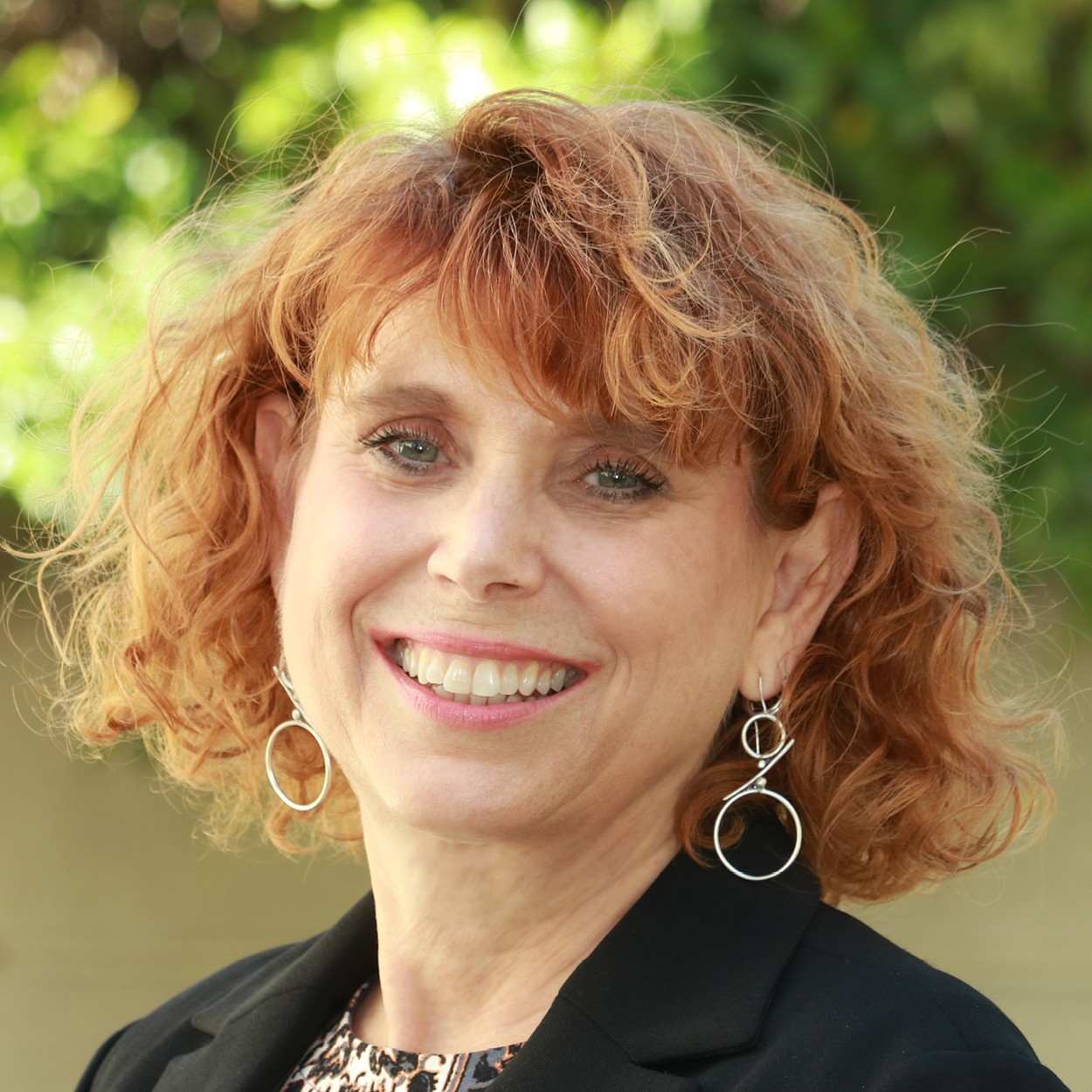
Dr. Laurie Stephens, Director of Autism Studies at Help Group, has spent more than three decades working in the mental health field and has become an esteemed voice on the experiences of neurodiverse LGBTQ+ folks. In our conversation, Stephens shares what current research tells us about the overlap between autism and LGBTQ+ identities, the unique challenges faced by those navigating both communities, and the importance of affirming support, self-acceptance, and authentic living. Drawing on both research and lived experiences shared by clients, Stephens provides us with insights into resilience, advocacy, and the progress being made toward a more inclusive understanding of human diversity.
Many folks may likely be hearing about the overlap between the autistic and LGBTQ+ communities for the first time. What has data shown and why do you think this relationship is not well known to the general public?
There is fairly strong evidence that autistic people are substantially more likely than the general population to identify as LGBTQIA+, and researchers have identified increased overlap specifically with transgender, bisexual, nonbinary and asexual identities. In short, studies generally report that autistic people are 2–3× more likely to identify as LGBTQIA+ overall and 3–6× more likely to report gender diversity or transgender identity.
I feel the overlap may not be well-known to the general population due to misperceptions that conceptualize autistic people as socially interested, emotionally unattached and lacking desire for relationships and/or sexual encounters. In addition, the research on the intersectionality of autism and LGBTQIA+ identities is still new, and it can often take many years (up to 10) for research to spill over and be accepted by the general population.
Research has told us that autistic people are more likely to identify as trans, nonbinary, and gender-diverse. They are also more likely to identify as lesbian, gay, bisexual, asexual, or otherwise outside traditional heterosexual norms. What do you think this can tell us about identity development and self-understanding?
I think what the research and the lived experience voices tell us is not that autism “causes” LGBTQIA+ identities, but that the overlap reveals something important about how identity develops when social conformity exerts less influence over a person. A common finding in autism research is that autistic people tend to be less guided by implicit social norms. They often learn social rules intellectually rather than automatically absorbing them, and often have a strong sense of ethics. This can create difficulties in some contexts, but it may also produce a different relationship to identity.
It may show us that autistic people are more authentic in their identity development, as they are not always as constrained by social norms or expectations. They may feel freer and at ease with not fitting in or being a part of the “establishment.”
When someone is both neurodivergent and LGBTQ+, what unique challenges can occur that may not be fully understood by either community individually?
It is important to consider the research on dual (or multiple) minority status when considering the challenges faced by autistic/neurodivergent LGBTQIA+ folks. We know from this research that multiple identities are not the sum of each identity. Rather, they are multiplicative in many ways. For example, an autistic person attempting to navigate LGBTQIA+ spaces may find a lack of consideration of sensory needs, physical and emotional overwhelm, differing communication styles, or the functionality of “stimming.” Likewise, in some autism spaces, there may be an inherent assumption of heterosexuality or lack of sexual/relationship interest, and thus no acknowledgement or discussion of SOGIE (sexual orientation, gender identity, and expression) may even take place. Clients have also said that they don’t feel fully understood or validated in solely autistic-focused or solely LGBTQIA+-focused environments.
Further, both identities have a long history of masking who they are, and when one identifies as both autistic and LGBTQIA+, I often find that one of these identities gets masked for longer than when one has a singular identity. Research has been clear on the significant mental health challenges that come from masking, including an increase in depression, self-harm, suicidal thoughts/behaviors, anxiety, and eating disorders.
Another challenge I have found with many of my autistic transgender clients is that sensory factors can play an often unrecognized (and unstudied) role in gender identity and expressions. Sensory processing issues can influence clothing preferences (cannot tolerate wearing pants, discomfort in tight clothing), body awareness (posture, sitting positions), hair styles (cannot tolerate the feel of hair on neck, can’t handle tightness on hair such as wearing a headband or hair tie), and physical intimacy (cannot handle the feeling of skin on skin). This can lead to autistic transgender folks experiencing increased gender dysphoria as it becomes intertwined with sensory needs/preferences in complicated ways.
From your perspective, are there parallels between the experiences of coming out as queer and receiving an autism diagnosis later in life?
There are some clear parallels here. One is that both identities have been historically marginalized; thus, the fear of coming out is real for both autistic and LGBTQIA+ folks, particularly within our current socio-political landscape. Both populations have likely spent a long time feeling different and being unsure of their identities; both go through a long questioning process. With the autistic community, it may be challenging or overwhelming to seek out diagnostic confirmation of your feelings of being autistic, which can delay the coming out process.
But, on the contrary, coming out/getting the diagnosis often confirms feelings of otherness and difference that autistic and LGBTQIA folks experience. These identities can provide a framework from which they can both understand themselves better and to not feel isolated or alone. For both identities, coming out can be the start of acceptance, of themselves and by their broader communities.
In your experience, what does affirming support actually look like when it works well?
In my experience as a therapist, affirming support works best when the person’s identity isn’t necessarily the focus of therapy or discussions. It shows up through acknowledging and accepting the person as who they say they are and not questioning their identity. It’s adapting to their individual needs and goals, rather than assuming that being autistic or LGBTQIA+ alone is the driving mechanism behind their challenges or why they are seeking therapy to begin with.
For example, with one of my transgender clients, her gender identity is rarely the focus of therapy, as it is in and of itself not the underlying cause of her challenges. Affirming support is best realized when the message the client (or person) receives is that we accept who they say they are, and we acknowledge that they are the expert in their identity and their own lived experience.
Many people report feeling unheard or misunderstood within healthcare systems. What are some of the more significant gaps that still exist when it comes to serving neurodiverse LGBTQ+ folks?
The biggest gap is the lack of awareness of the intersectionality of neurodiversity and LGBTQIA+ identities. Too often, one identity or the other may be ignored or downplayed, such as telling an LGBTQIA+ person that they don’t “look autistic.” Further, many health care providers are not trained to work with intersecting identities and thus may feel ill-equipped to work with an autistic LGBTQIA+ person. A provider trained in working with the LGBTQIA+ community may not understand the communication styles of an autistic person, for example. As noted above, there is also a fallacious belief among people who lack experience with the autistic community that autistic people are not emotionally or romantically interested in other people, which often leads to downplaying the person’s questioning of their gender or sexuality.
The single most important change that should happen, in my opinion, is that everyone who works with the autistic population should undergo training in LGBTQIA+ identities, and those who serve the LGBTQIA+ community should also receive training in working with the neurodiverse/autistic community.
The conversation around autism has evolved in recent years, moving from awareness toward acceptance and, in turn, inclusion. Do you see this evolution reflected in LGBTQ+ advocacy?
I think there are some parallels here, as LGBTQIA+ advocacy’s early focus was also on becoming “visible” (awareness) and has moved toward acceptance (we belong). Both advocacy movements have a strong focus on reducing stigma associated with autism and LGBTQIA+ identities. Both have worked toward creating safe environments within the broader community. I think both advocacy movements have also challenged the “social norm” and worked toward others accepting differences as part of the human condition.
Mental health concerns like anxiety, depression, and social isolation can be elevated among both autistic and LGBTQ+ populations. What protections have you seen make a positive impact on mental health?
Extrapolating from research done several years ago by the Trevor Project, the biggest protective factor is having at least one supportive/affirming person in your life. Beyond this, I feel that mental health services that are truly affirming and focus on authenticity over masking are the most helpful. Finding a community is also key. Self-belief and embracing one’s identities are also important protective factors. Accepting yourself in the same way as you accept others (like radical self-compassion) can be extremely helpful. And for some, getting involved with advocacy organizations can help folks feel like they have some agency in how others treat or view them, what rights they have/are entitled to, and providing the lived experience voices needed to allow those from outside the community to begin to understand, affirm, and accept.
What have the neurodiverse LGBTQ+ folks that you’ve worked with taught you about resilience and self-acceptance?
My neurodiverse LGBTQIA+ clients have taught me that to be truly authentic one needs to fully accept themselves and stop taking in societal negativity. Being different isn’t a bad thing and our diversity is what makes humans so interesting. I’ve discovered that self-acceptance is contagious, in that I’ve actually become more accepting and open regarding my own neurodivergence. I’ve seen the high levels of resilience that neurodiverse LGBTQIA+ folks have, particularly in our current political landscape, where autistic and LGBTQIA identities are at times denigrated, yet advocacy and lived experience voices are at their strongest.
As Pride Month celebrates visibility, what does visibility mean for people who have historically felt unseen by both the neurodiverse and LGBTQ+ communities?
To me, events like Pride Month and Autism Acceptance Month give a voice to those who are often not listened to. Feeling like you have some agency in how the world sees you or thinks about you is a powerful tool that I think is often overlooked, and Pride and Autism Awareness months offer these opportunities. Visibility allows the unheard and unseen to speak up, to share their experiences, and to also find their own community. It’s a validation that you are not alone, that you are valid as a person, that you are loved, and that you are accepted.
What gives you hope? Are you seeing real progress in how society understands and supports people living at this intersection of these particular identities?
What gives me hope is the current focus on lived-experience voices and the increased acceptance of a social model of disability over a medical model. The fact that many communities are open to accommodating differences, such as using gender neutral language or offering gender neutral bathrooms, or providing sensory-friendly events, means that progress is happening. There is still a long way to go, but in my 30+ years in the field of mental health, I have been able to see how much of society is open to learning more about autistic, LGBTQIA+, or neurodiverse identities and accepting people for who they are. With young people now being exposed to so many different identities, it allows others to see they aren’t alone and that it is OK to be out and proud.
Another thing that resonates with me is seeing how many more people are identifying and embracing their intersectionalities. Every year at LA Pride events, there are more young folks who come into our Kaleidoscope booth. They proudly and openly identify as autistic and LGBTQIA+, and often are accompanied by supportive parents, families, or friends. Seeing an increase in pride in both identities is what keeps me so invested in the work I do.
Many people spend years, or sometimes decades, of their lives feeling different without fully understanding why. For someone reading this interview who may be questioning their own identity, neurodivergence, or sense of belonging, what would you most want them to hear this Pride Month?
I would want people who may be questioning to know that they are not alone and that the path to self-discovery is not something that needs to be rushed. Sometimes our identities unfold over time, or even change, and that’s OK. I want people to know that neurodiversity has had a positive impact in our world, as most of our discoveries, inventions, art, and creativity came about because people think differently, act differently, process information differently, and experience the world differently. This is to be embraced, rather than seen as a negative. And discovering who you are, be that autistic, neurodiverse, LGBTQIA+, is not closing the door on anything; rather, it opens the door to authenticity, self-understanding and ultimately, self-acceptance.
Check out Helpgroup.org for more information
Features
School of Sexuality Project nonprofit hits the Pride parade circuit to normalize queer sexuality
This all-ages group aims to provide comprehensive sex education in a comedic and impactful way
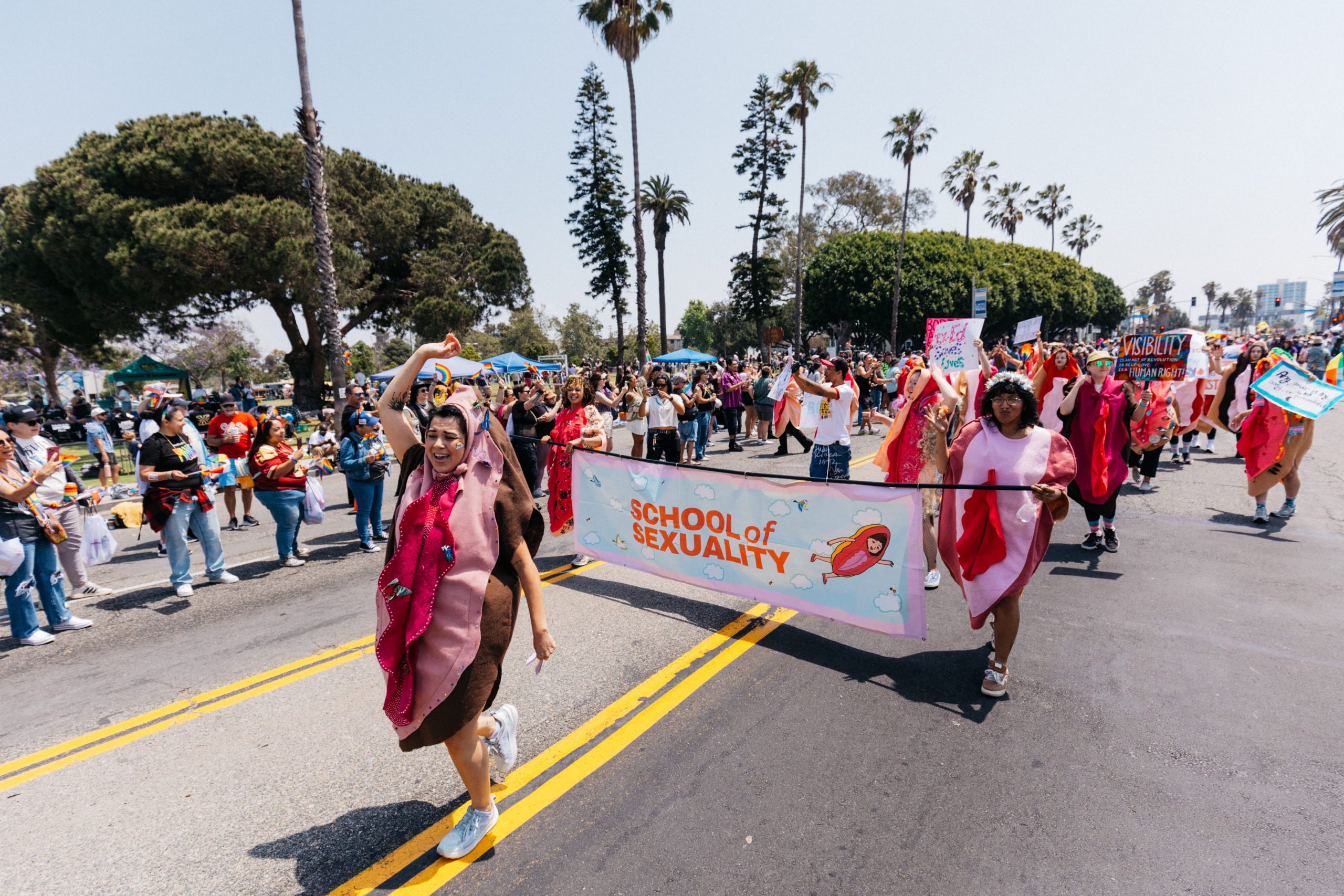
Bridgett Khoury founded the School of Sexuality Project, a nonprofit, in 2020. The vision was about destigmatizing conversations around body, pleasure, identity, and relationships. Taking a fun, inclusive, and trauma-informed approach has been top of the priority list.
“We believe that using art and humor makes difficult conversations more approachable, relatable, and human,” Khoury said. “Our goal is to kind of blend humor, art, storytelling, and intersectional perspectives in all of our programming to create engaging and meaningful learning experiences.”
Most of that is done through hilarious-looking, larger-than-life genitalia costumes, like the vagina ones worn by participants of all ages at the recent Long Beach Pride Parade in May. Other costumes include penises and condoms.
“We use theatrical humor and hands-on art activities as tools for education and connection,” she said.
Their ethos is that “comprehensive sex education is every individual’s right,” according to the website.
The project is regularly at pride events, as well as local queer events.
“We make sure that we are talking about all parts of identity, sexuality and different bodies,” Khoury said. “It’s important to highlight queer sexuality in sex ed because queer folks cannot live authentically, openly in public as themselves and in their relationships. Until everyone can do that, we need to be having honest and open conversations with young folks.”
The group regularly hosts age-appropriate sex education talks for K-12 and is “proudly gender-expansive and inclusive of all students,” according to its website.
The School of Sexuality Project partnered with Long Beach Pride to host and produce Teen Pride in 2025, though Khoury did say the groups parted ways before planning the event for this year, citing that the two “aren’t fully aligned on our approaches” and decided to host their own event later this summer.
The School of Sexuality Project will be hosting a “Vulva Gala” on August 15 at the First Congregational Church of Long Beach. The community-centered celebration will feature art and education, live music, interactive panels, and its signature vulva costume fashion show.
It is an event that will aim to “challenge stigma and center joy,” Khoury said.
The project recently got a lot of pushback online from parents about a pride event that they hosted with the Queer Mercado at an East Los Angeles high school, through a partnership with the Los Angeles Unified School District. An LGBTQ+ history game was available for students to play, and a guest speaker, Dr. Homie, talked about his experience as a queer veteran. The event also featured a drag performer.
“We’re extremely queer about the way that we approach sex education,” Khoury said. “The event was really simple and had a resource fair.”
Parents were upset that there was no notice or school permission slip that needed to be signed, according to a FOX 11 article. The event was completely optional, and doors were open to all, allowing students to choose to come in or leave at any time, Khoury said.
“A parent saw a video of our drag performer dancing and ended up sharing it with a far-right influencer who describes himself as a ‘fighter of gender ideology,’ so I guess you can imagine the kind of attention that that brought,” Khoury said.
Beyond fueling online backlash, some parents went to the superintendent about it.
“Ultimately, it fizzled out, but the reality is, situations like this are super common for us because of the work that we do,” Khoury said. “There’s so much information and misunderstanding around bodies and identity and sexuality, and that ultimately fuels hate.”
Khoury said that if anything, the backlash is further proof of why more events and education like the project is needed.
“As you know, queer communities are under attack, both through rhetoric and policy,” Khoury said. “It’s becoming more and more difficult for people to live openly and authentically without the fear of being harmed due to all the misinformation that is being spread, so it’s really important that we’re creating safe spaces to discuss sexuality.”
“We need a lot more spaces where young people can learn, feel seen, and engage with community in a positive and supportive way,” she added.
To learn more about the project, visit www.theschoolofsexualityproject.org.
Features
Building belonging: Kathleen Rawson on Pride, policy, and public space in Hollywood
President of the Hollywood Partnership Kathleen Rawson is reenvisioning Hollywood’s streets into a proactive experiment in safety, Pride, and who gets to belong in public space.
While most folks take one look at Hollywood and see a world of silver screens and shattered dreams, Kathleen Rawson sees hope and the responsibility of any good guest, “to leave this neighborhood better than I found it.” Rawson has spent decades thinking about what makes a public space feel alive and genuinely shared by the communities that comprise it. From Santa Monica’s Third Street Promenade to the evolving chaos and potential of Hollywood Boulevard, she’s built a career out of asking a deceptively simple question: how do you make a city feel like it actually belongs to the people walking through it?
In our interview, Rawson moves easily between the practical and the personal – street safety and Pride celebrations, economic development and chosen family, public policy and pop-up Ferris wheels. She talks about building spaces where queer community isn’t an afterthought but an essential part of their design, and about the long, imperfect work of centralizing visibility and belonging. In her telling, urban transformation is personal, political, and constantly in motion.
Can you share with our readers what first drew you to placemaking and public-space management? What lessons from those early experiences still guide your leadership today?
I first became involved in civic leadership in Santa Monica through the Convention and Visitors Bureau, which worked to represent both the hospitality community and the city. That was my first real exposure to civic work.
For me, it was always important to represent a destination, not just a company. I came from the hotel industry, and nearly 30 years ago, I took on the role of leading Downtown Santa Monica. I’m now in my 30th year of this work. At the time, the thinking was that Santa Monica and the Third Street Promenade had already been built, and the main job was simply marketing them. But it quickly became clear that it was much more complex than that.
I became deeply committed to making public spaces accessible to everyone, regardless of who they are or where they are in life. I wanted people to experience a sense of shared community and common good in those spaces, whether they were shopping, eating, going to a movie, walking their dog, or meeting neighbors.
That idea of public space has been my focus for three decades, first in Santa Monica and now in Hollywood. Hollywood brings even more challenges and opportunities. There’s a lot to do, but the possibilities are significant, and we’re focused on making the neighborhood better.
You’re currently leading the Hollywood Partnership. What experiences there most directly inform how you serve the LGBTQ community?
Before leaving Santa Monica, we created the city’s first public Pride celebration. It didn’t exist before, and we designed it to be family-focused and inclusive. West Hollywood had long been the center of Pride, and while it’s a powerful and joyful event, we saw an opportunity for something more broadly accessible in Santa Monica.
When I came to Hollywood in 2022, LA Pride was returning there, where it originally began. I wasn’t deeply involved in the internal politics, but I immediately saw an opportunity to expand beyond the parade itself.
At the time, Christopher Street West was producing concerts at Los Angeles State Historic Park, but I believed there should also be a free, public space where everyone could participate. That became Pride Village.
It was built as an open gathering space after the parade, with artisans, local businesses, community groups, entertainment, and activities for all ages. We even added a Ferris wheel, along with stages, performances, and a wide range of programming. We raised funds, built it with strong City Council support, and launched it successfully.
After a couple of years, Christopher Street West took over Pride Village, which I’m glad about. We still support parts of it, but they now largely run it.
What I’m most proud of is that it created a truly open Pride experience in Hollywood. Last year, it drew people from 97 ZIP codes and about 147,000 attendees, with an average stay of three and a half hours. People came, stayed, engaged with the community, supported local businesses, and that sense of shared space is the real success.
As a queer woman, a mother, and a leader, how have your identities shaped the way you navigate a landscape that is often misogynistic, patriarchal, and unequal?
This is a great question. We have to work harder. We have to be more articulate. We have to be prepared at all times. We have to be family people and professionals simultaneously, and it’s not always easy to keep your footing on both sides of that divide. Men definitely have it easier.
Maybe the next generation will be different. Even our son, who recently turned 22, is keenly aware that life is easier for him than it is for his mothers or his sister. That awareness is something we worked hard to instill, and I think it’s part of how meaningful change happens.
Our kids grew up in a household that was always ready for a protest. We joked that we were “protest-ready.” We always had cardboard, paint, and supplies available because civic engagement was simply part of family life.
A lot of the answer comes down to engagement and involvement, both at work and at home. Our philosophy has always been infiltration. As long as you’re at the table, you have a voice. One piece of advice I often share is that you don’t have to earn a seat at the table. You already have one. All you have to do is sit down. Once you’re there, your words matter. Use them with kindness and integrity. Respect follows from that.
There will always be people who disrespect you. I encounter that every day, and I’m sure you do too. Everybody does. But we’re better than that, so we don’t sink to that level.
You mentioned raising a son who is very aware of his privilege. How do you build that awareness without creating defensiveness? A lot of people see any acknowledgment of privilege as an accusation because it forces them to recognize that certain advantages may come at others’ expense. How did you have those conversations with your son, and what can our readers learn from that?
That’s a good question. The simplest answer is that we raised him that way. It wasn’t a single conversation or a lightbulb moment. It was just part of how we lived. We live on the Westside of Los Angeles, and while we’ve worked very hard, our son also grew up around significant wealth and privilege, which made those realities more visible to him. We focused on values and everyday choices, things like not sending a limo for six-year-olds to birthday parties.
I also remember the unrest in May 2020, when many businesses in downtown Santa Monica were looted. During that time, a board member, who had inherited property through family and had no children, told me, “I’m not privileged, I’ve earned everything I have.” It really stayed with me.
I think a lot of it comes down to reflection rather than defensiveness. You’re unlikely to convince someone who rejects the idea of privilege that they have it, so I focus on where progress is actually possible. That applies in politics, too. I work with elected officials across the spectrum, whether or not I agree with them. Once they’re in office, you either spend all your time fighting or you look for common ground and get things done.
I don’t necessarily believe in “meeting people where they are,” but I do believe in finding shared ground and building from there. Both of our children are politically aware, and because my work is so local, I try to emphasize that real impact comes from your own neighborhood, focusing on progress and community where you are.
How do public spaces like Hollywood Boulevard help foster a sense of belonging, particularly for queer people who may have been pushed out of traditional family structures?
That’s a two-part question. First, it’s about creating a safe and welcoming environment for everyone—whether someone is visiting, working, or running a business, the neighborhood should feel clean, safe, and hospitable. We run a 24/7 dispatch center, and last year we handled more than 420,000 interactions that didn’t require police or fire response. If someone is experiencing a mental health crisis, for example, they see trained ambassadors, not law enforcement, who are there to help.
There are moments that stay with you, like a young person sitting outside the LGBTQ Center after hours, in crisis. Our team stayed with them until medical professionals arrived and accompanied them through the process. In another case, a runaway teenager asked for help getting home, and our ambassadors were able to assist her directly. That’s a big part of the work: providing a safety net and connecting people to services like My Friend’s Place, which supports many young LGBTQ people who’ve left unsafe home environments.
We also do ongoing outreach: checking in on people, offering water, and trying to connect them with support. Those kinds of interactions happen hundreds of thousands of times a year and are focused on quality-of-life needs that fall outside traditional police response. Our homeless population has declined 49 percent year over year, which is encouraging, though many of the most complex cases remain. The goal is simple: make Hollywood more hospitable and supportive for everyone, including the LGBTQ community.
You mentioned homelessness being down 49 percent. How does that work? What role does the Hollywood Partnership play in addressing homelessness, which remains such a major issue in Los Angeles and throughout California?
The Hollywood Partnership isn’t a policy organization. We don’t create homelessness policy. Our role is to provide services beyond what the city offers. The reduction in homelessness is largely due to Mayor Karen Bass’s Inside Safe initiative and the work of Councilmember Hugo Soto-Martínez. We support those efforts.
When an encampment is moved into housing through Inside Safe, our role is often cleanup and restoration. We remove debris, power-wash sidewalks, clear graffiti, and return public spaces to community use. One interesting aspect of Inside Safe is that once an area has been addressed, the city remains committed to keeping it clear. People know outreach workers will return, and in some cases, that helps connect additional individuals with housing.
I’m also vice chair of Hollywood 4WRD, a coalition of businesses, nonprofits, and service providers focused on homelessness. Through that work, we collaborate closely with the city, county, and service organizations throughout Hollywood.
You’re also working to bring historic vacant buildings back into use. Can you tell me about that?
Hollywood Boulevard has many beautiful historic buildings from the 1920s, but a lot of them are currently vacant. There are several reasons for this. Some owners have held properties for generations, others face costly seismic retrofit requirements, and California’s Proposition 13 keeps property taxes low, which reduces pressure to activate unused space.
We’ve been working with Councilmember Soto-Martínez on a proposed sign district to create better incentives. Instead of relying on penalties like a vacancy tax, the idea is to allow digital signage that can generate significant revenue for property owners, under strict conditions. Those conditions would require the signage to respect historic architecture, include public art, and dedicate a portion of revenue back to the community. Importantly, the ground floor must also be active with a real public-facing use: retail, cultural space, or something that contributes to street life.
If owners don’t want to manage it themselves, they can lease the space to us for a nominal fee so we can activate it. The goal is to create a cycle where investment attracts more investment, and more vibrant streets help drive broader revitalization.
You’re no stranger to organizing public events. How do you use these events to invite queer people back into the Los Angeles landscape and create a stronger sense of belonging?
Events create vitality. We intentionally place them in areas that need energy rather than places that are already thriving. One example is the EDM concerts we now host on Hollywood Boulevard. They bring thousands of people into the neighborhood. Events like that create what we call social surveillance; people who might otherwise engage in disruptive behavior tend to move elsewhere when public spaces are active and well-used.
These events also support our nonprofit work. The organizers contribute funding that we reinvest directly into the neighborhood through projects like Pride Village, public improvements, and community programming.
Some people thought I was crazy when I proposed hosting a rave on Hollywood Boulevard. But I believed it was good economic development, and the results proved that. During our first major event, hotels across Hollywood were essentially sold out. That’s a strong sign that an event is benefiting the local economy.
Last question. Looking ahead, what’s your main goal for the Hollywood Partnership over the next few months and years?
I want to leave this neighborhood better than I found it. Leadership is difficult, especially when you’re trying to change systems that have existed for decades. Someone once told me, “People hate two things: the way things are and change.” There’s a lot of truth in that.
My goal is to help Hollywood reclaim its vitality. The neighborhood still has incredible name recognition and cultural significance, but we haven’t invested enough in its future. I’d like to create an economic development corporation focused entirely on our two-square-mile district, attracting businesses, helping small operators succeed, improving storefronts, and making investment easier.
I also want to create more public spaces, including portions of Hollywood Boulevard that can function as plazas for community gatherings and events. We have very little park space in Hollywood. Not long ago, some of our parks had effectively been lost to unsafe conditions. Working with the council office, we’ve helped reclaim those spaces so families and children can use them again.
Those are the structural changes I want to make. I have a few working years left, and my goal is to leave Hollywood stronger, healthier, and moving in the right direction.
Features
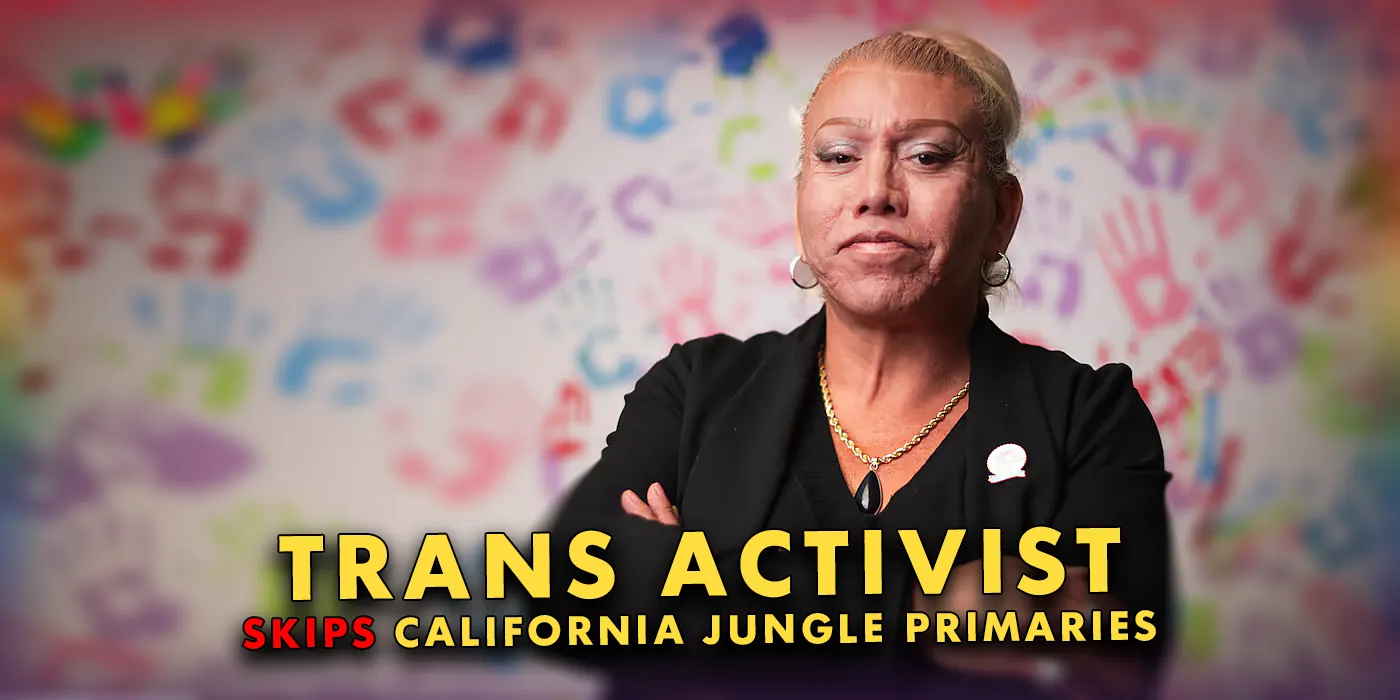
TransLatin@ Coalition founder Bamby Salcedo skips California’s jungle primaries
The trans activist “letting the dogs fight for the bone.”
Two years ago, TransLatin@ Coalition Founder and CEO Bamby Salcedo joined sister leaders Queen Chela Demuir, executive director of the Unique Women’s Coalition, and Queen Victoria Ortega, president of FLUX International, in opening the nation’s first general election Vote Center within The Connie Norman Transgender Empowerment Center (CONOTEC) to make voting specifically more safe and accessible for trans and other marginalized voters in Los Angeles County.
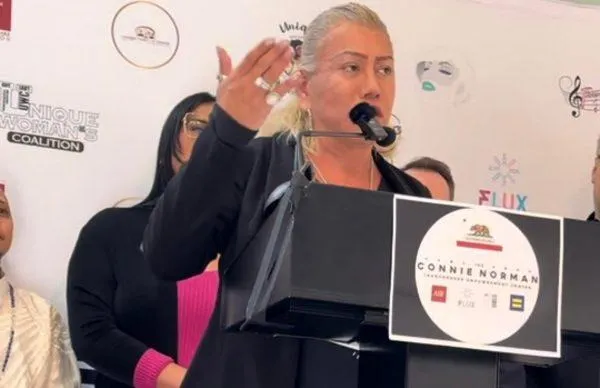
“My sisters at CONOTEC have done a great service to our community by securing this Vote Center. We all look forward to casting our vote in our community and appreciate the support as we work towards equality for all,” Salcedo said at the opening on Nov. 1, 2024.
Salcedo is a longtime strong advocate for voting, even appearing on the Trans Rock the Vote cover of the LA Blade on Nov. 1, 2018, with her dear friend, Maria Roman (now Maria Roman Taylorson).
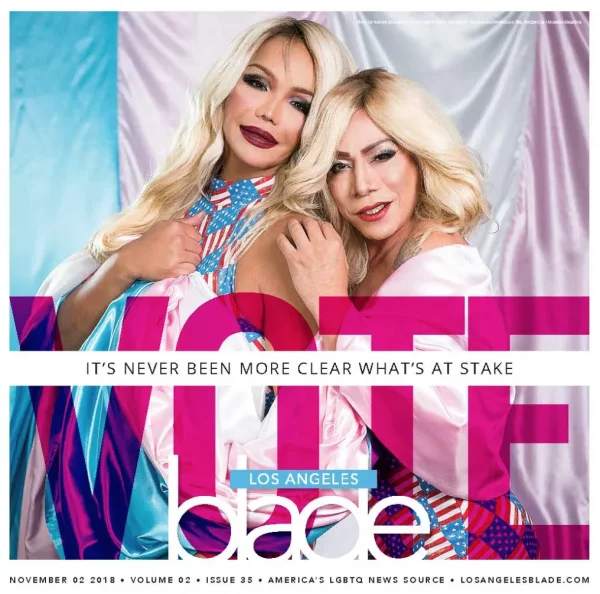
The need for action that year was trumpeted in the Oct. 21, 2018, New York Times headline: “’ Transgender’ Could be Defined Out of Existence Under Trump Administration.”
“It’s important that our community understands the importance of this election. Please vote! Understand that we must put people into office who understand what needs to be done for us to get to a better place in our society,” Salcedo told the LA Blade. “We need people in office who will do the things that need to be done, who work for our people, who are unapologetic, and will not conform to corporations that marginalize all of us. Vote! Claim your power!”
LGBTQ+ voters did turn out – helping Democrats retake the House of Representatives. Election Day exit polling from CNN, NBC News, and the Wall Street Journal in those congressional mid-term elections revealed 6 percent of the voting bloc identified as LGBT. “Once we know what the total voters are, that is likely to be around 7 million voters identified as LGBT,” Human Rights Campaign Chad Griffin told the Washington Blade. “What’s important to note: That means 6 percent of the electorate identified to a stranger, in most cases in a swing state, that they were LGBT. That is a powerful voting bloc, and that is an increase in turnout of LGBT voters from 2016.”
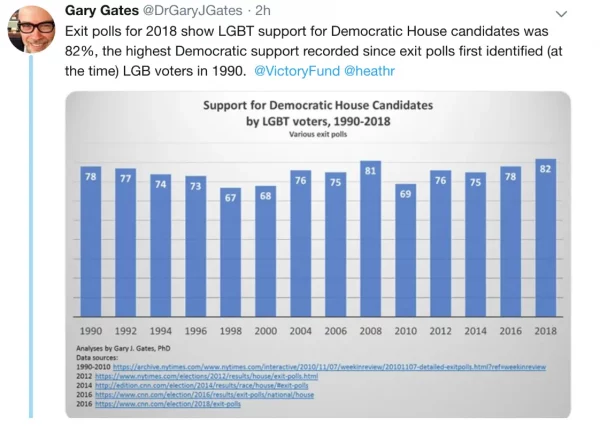
“Decreased social stigma likely explains recent increases in the portion of the population identifying as LGBT,” said Dr. Gary Gates, retired gay demographer at the Williams Institute at the UCLA School of Law. “Further, LGBT voters may feel particularly under threat from a Trump administration that has shown open hostility toward the transgender population and has made several attempts to minimize the visibility of LGBT populations in federal data sources. This could explain increases in LGBT voter engagement and willingness to support Democrats.”
But LGBTQ+ immigrants seeking asylum or just a better life can’t vote – yet.
This is personal for Salcedo. She immigrated to America after surviving a poor childhood with a working single mother and an abusive stepfather in Guadalajara, Mexico, where she juggled school, crime, gangs, drugs, and LGBT friends. Here, she survived as a sex worker while struggling with homelessness and a crystal meth addiction. She also fended off violent homophobia and transphobia in ICE detention as one of many LGBTQ+ immigrants and undocumented individuals who didn’t have the money to post bail.
“The broader LGBT movement doesn’t really understand the issues, needs, and policies of LGBT immigrants and undocumented individuals,” Salcedo told me in 2017. “We’re not powerful monetarily. We have to keep tapping our own community when many of us are struggling ourselves to meet our own basic needs.”
Salcedo got clean and sober, and because of her own experiences – with mentoring from Maria Roman – she started working as an HIV prevention and education teacher at Bienestar for mostly non-English-speaking Latina transgender sex workers. She studied, put herself through college, and worked for eight years running Children’s Hospital Los Angeles’ then-innovative transgender youth program.
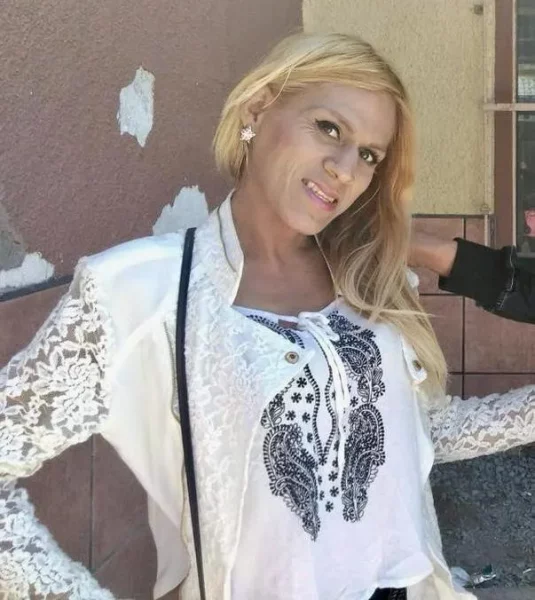
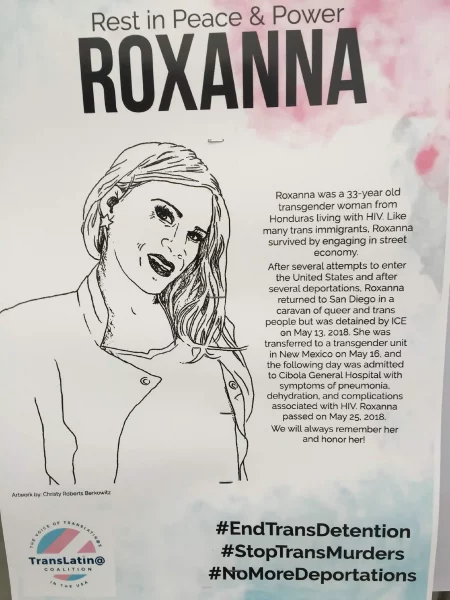
Salcedo became a “good troublemaker,” organizing traffic-stopping protests and calling news conferences to demand attention to unacknowledged murders of trans women of color like Viccky Gutierrez, the blatantly discriminatory kidnapping of immigrants thrown into ICE detention without due process, as happened with Alejandra, and the blatant disregard for health issues leading to death as happened to asylum-seeker Roxana, who died of AIDS in ICE custody.
“The LGBT and immigrant communities need to understand that queer immigrants are being criminalized and arrested and put in detention for who we are,” Salcedo told me in 2017 – a time when people still sometimes cared.
Salcedo left the Children’s Hospital in 2009 to create and run the TransLatin@ Coalition. She organized disruptive protests at major events such as Creating Change and AIDS Conferences that were so effective, she was invited back as a guest panelist or featured speaker. She’s been invited to the White House several times and asked to speak before Congress, including on the Equal Rights Amendment as a board member for the ERA Coalition.
With a Master’s Degree in Mexican and Latin@ Studies from California State University, Los Angeles, Salcedo has developed policies and programs that focus on violence prevention, health and wellness, housing and homelessness, and research studies such as TransVisible: Transgender Latina Immigrants in U.S. Society and the Trans Policy Agenda 2024.
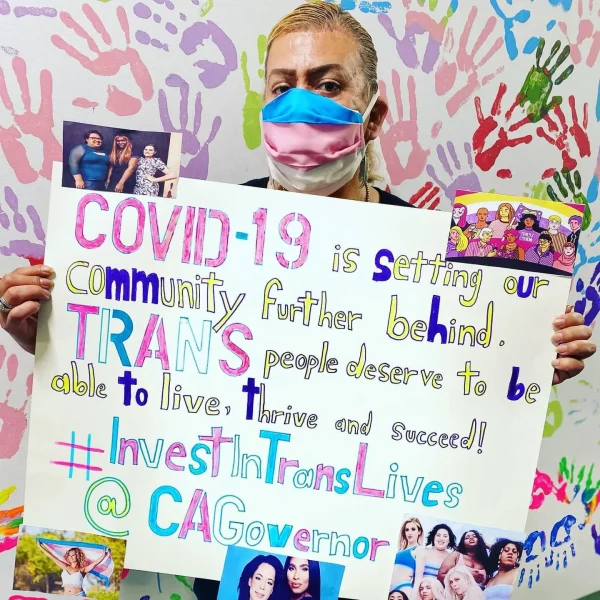
TransLatin@ Coalition has grown – despite serious death threats and the COVID shut down – and Salcedo even broke ground on a new facility on April 16. The Trans Wellness and Empowerment Center at 5314 Sunset Boulevard is expected to open in late 2027.
Cheered on that day by chants of “sí se puede,” an emotional Bamby Salcedo said: “Even when we thought we couldn’t get off the streets, back in the ’80s, when there was no support, no help for any of us, we could only dream, but this place is now a reality.”

Also, a reality is the rightward trend of the Democratic Party, with political consultants telling candidates to stay away from “identity politics” and trans issues. Now, the TransLatin@ Coalition is being attacked by members of Congress for working with immigrants.
“They’re calling us a radical organization,” Salcedo told the Washington Blade last August. “They’re spreading lies, saying we’re using government funding to abolish ICE and the police and to provide abortion access. We do believe in those things, but the funding we receive is used to serve our people.”
Salcedo succeeded in passing fiscal bills in the State Legislature. But federal funding is gone. “Our work has been defunded,” Salcedo said. “The private sector is pulling back. Philanthropy is scared. Even the same corporations that fund us during Pride are investing in our opposition the rest of the year. It’s hypocrisy.”
People need to step up. “We have the strategy. We’re doing the work. But we need resources — and we need real solidarity, not just statements.”
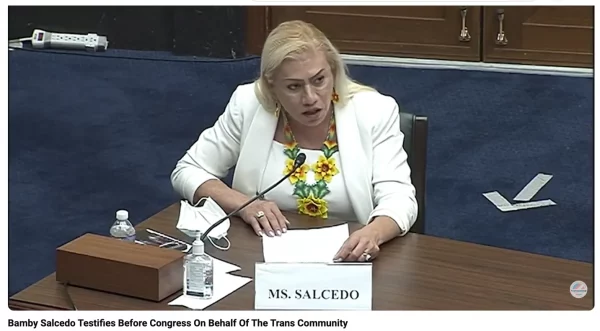
Last year, Salcedo made a conscious decision to focus locally because of a migration of trans people from other states who need support.
“That’s why, for us, it’s not just about passing legislation,” Salcedo said. “We want to ensure that there is legislation coupled with resources, with something tangible that our community can benefit from.”
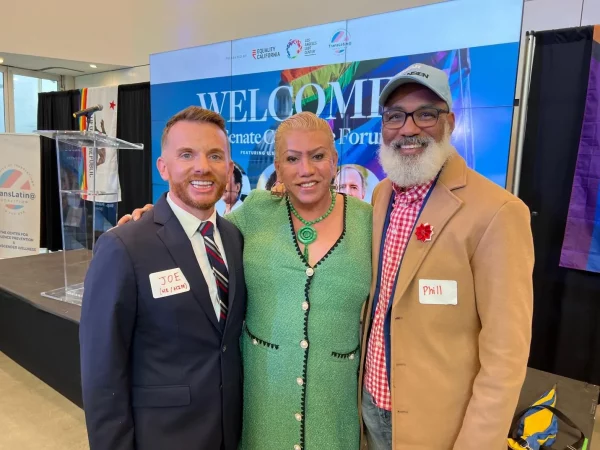
Which leads to the June 2 jungle primaries and the tight races for governor and LA City Mayor.
“So, to be completely honest,…it’s kind of a mess right now.” Salcedo has decided to wait for the midterms. “I’m letting the dogs fight for the bone,” she said.
But there’s more to it. “The Democratic Party is moving more to the right because it’s winnable. And so, what that means is that people will go with this rhetoric…trying to convince more conservative people – because they want for those people to vote for them…But that also means that it could potentially reverse some of the gains that we have gotten as a people, as a community,” Salcedo said.
“That’s why, for this election, June 2nd, I’m just staying quiet until we see what happens after,” she continued. “They’re forgetting the people who are the ones who put them in office, right?… And in some ways, they’re also being traitors. The very people who they said, when they’re campaigning, that they are going to fight for.”
Check out Karen’s Zoom conversation where Bamby Salcedo shares more thoughts on creating a Victory Fund-style program for trans folks, as well as comments on Pride Month and the 45th Anniversary of the first CDC report on AIDS.
This is a cross-post from Karen Ocamb’s LGBTQ+ Freedom Fighters Substack.
Features
Still marching: Rev. Troy Perry and the ongoing fight for liberation
As “Steps to Liberation” transforms Founders MCC into a commemorative rainbow monument, Rev. Troy Perry reflects on the beginning of Pride and the ongoing power of radical representation
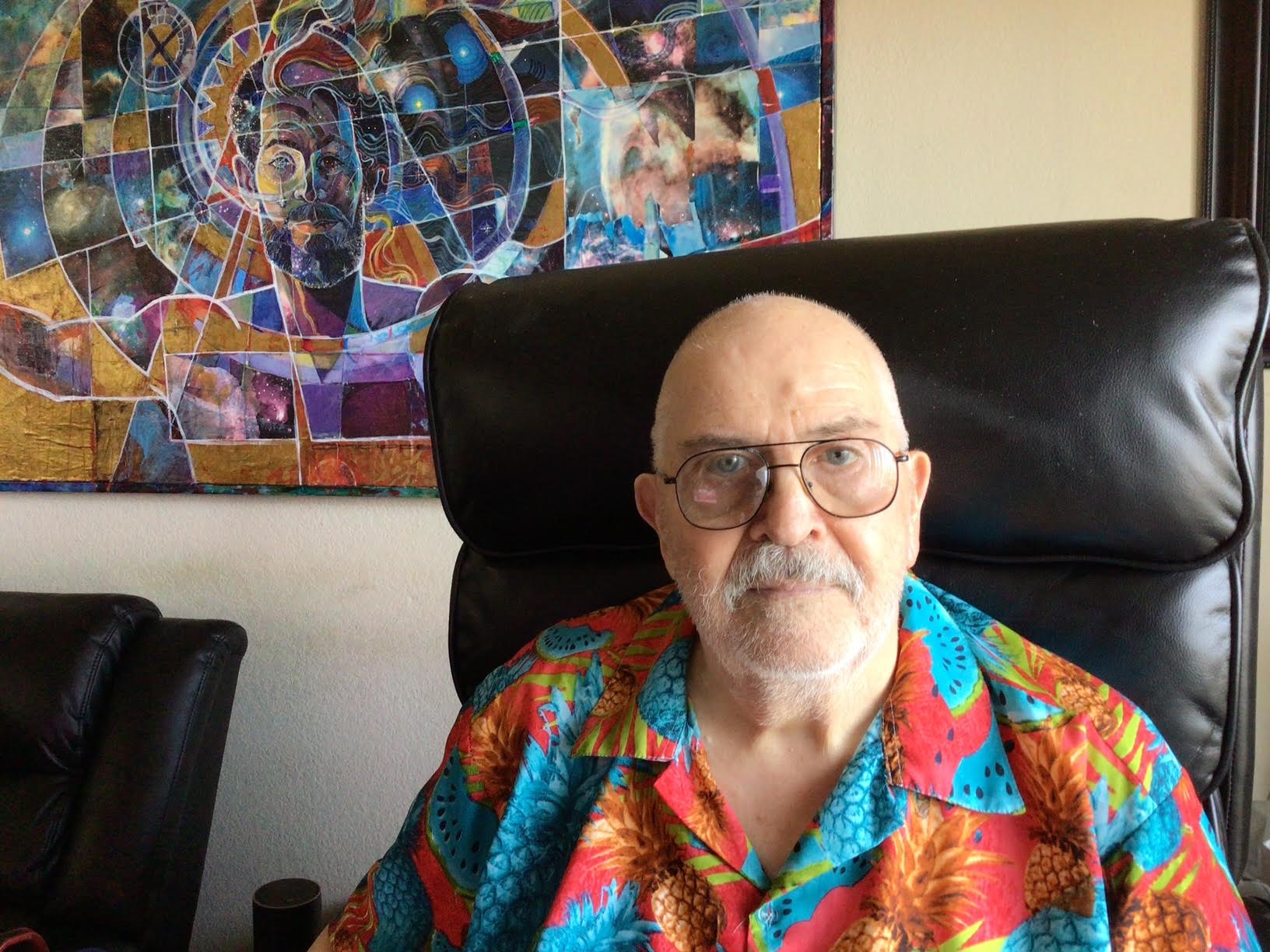
Long before tone-deaf Target swag and rainbow-scented hashtags lit up the very queer month of June, Rev. Troy Perry was helping the LGBTQ+ community create space where it did not yet exist, and he did so with little more than faith and perseverance. This Pride season, as communities around the world fight once again with rising attacks on LGBTQ+ rights and democratic freedoms, Perry returns to the movement he helped build for a conversation rooted not only in history but in survival. The unveiling of Steps to Liberation at Founders Metropolitan Community Church serves as an uplifting reminder that Pride is not just a parade but also serves as a commitment to continue to advocate for our community.
Joined by original rainbow flag co-creator Lynn Segerblom, Perry looks back on the legacy of the first Pride marches, the spiritual and political power of real representation, and why the rainbow flag still matters nearly fifty years after its creation. As Founders MCC transforms its front steps into a vibrant rainbow pathway, the symbolism feels especially timely – freedom is not a destination, it’s something communities continuously build together, step by step. In our interview, Perry speaks candidly on activism, faith, and his continued belief that even in difficult times, hope remains an unwavering act of resistance.
You’ve been at the forefront of LGBTQ+ history for decades. What does this moment, unveiling Steps to Liberation, mean for you? You’ve often spoken about visibility as an act of courage. Why is that still not only true but also essential today?
I will be 86 years old in another month. Not in the best of health and in a wheelchair, but still a LGBTQ+ activist at heart. I tell my husband, Phillip De Blieck, that I never thought I would live this long. He and I will be celebrating our 41st anniversary this year.
In the early days of our struggle for our liberation, I used to cut up and tell people there’s just nothing like a good demonstration to get my heart pumping. This is what I feel as we dedicate the Steps of Liberation! Another symbol of our freedom. We’re here, we’re queer, and we’re gonna fight to our last breath, to win all the rights that the colors on the steps represent.
When you think back to organizing the first Pride march in Los Angeles, what emotions or memories visit you?
Having the guts to follow through on our vow to hold a pride parade, no matter what! We did follow through and sued the city of Los Angeles for the right to hold that parade. We won! Thank God for the ACLU. The next thing I thought was, my God, look at all the people who have come out to be in the parade, and to watch it. I was also thankful that no one was hurt that day, and the pride I had of being a part of that demonstration.
How does this new installation reflect the spirit of those early days of activism?
The steps of liberation tell all who see it that we are still here and not afraid after 56 years have passed since our first pride parade.
The theme of IDAHOBIT 2026 is “The Heart of Democracy.” In your view, how has the LGBTQ+ movement played its part in influencing our country’s democracy?
I think that most of us have played by the rules and use the cards dealt to us to make a difference in our democracy here in the USA. The LGBTQ+ community has changed so much in 56 years. Today, members of our community are serving in every political office in our country. We have gay and bisexual city council members, lesbian governors, and trans state legislators. We have a gay man who has run for president of the United States. The heart of democracy is a right given to all of us to work to change our country so that all of us are treated the same. Nothing more, nothing less!
You’ve often spoken about visibility as an act of courage. Why is that still not only true but also essential today?
I tell groups of young LGBTQ+ people to be yourself. Flaunt it! Coming out of the closet is the best thing you can do. Whether you come out fast or slow, just come out. If you are going to do it, now is the time. I am so proud of young people who are using the Internet, TikTok, and YouTube to make a difference for us. Your siblings are looking for you!
What do you hope someone feels the first time they walk up the Rainbow Steps?
God, does this feel good! Why didn’t I do this a long time ago?
How has faith intersected with activism in your life?
This is my testimony. Most of my relatives would tell you that I have been deeply spiritual all my life. I have had the opportunity to live a very interesting life. I started preaching when I was 13 years old. I was licensed to preach in the Southern Baptist church at age 15. I married heterosexually at age 18. I started pastoring my first church at age 19. I am the father of two children. I am a Vietnam-era veteran. I was divorced at age 26 and founded Metropolitan Community Church at age 28. I have been slapped in the face, spat on, had some people try to murder me, and cursed by some throughout my life, all because I dare call myself a clergyman as a gay man. Has it been worth it? Absolutely. I would not change my life for anything. I try to always keep my faith intact.
In moments when progress feels uncertain or under threat, what keeps your hopes up?
I have my husband, Phillip, and friends that I can talk to. I also have a favorite scripture that keeps me going: though God slay me, I will trust in God. Job 13:15
How do you see younger folks carrying forward the legacy you helped build?
Don’t give up the fight. Organize, organize, organize!
The launch of Flag50 looks ahead to the 50th anniversary of the rainbow flag. What do you think folks should be reflecting on as that milestone approaches?
I love the pride flag! It gives us hope that there can be a tomorrow. I love the colors and what they represent. Hopefully, we will be able to teach this in our schools one day, along with the American flag and how each of those colors is meant to give us dignity, as well as hope.
How do art and public installations like this one shape cultural change in ways that perhaps policy can’t?
Laws are important because they protect us, but art touches the heart first. A public installation like the Steps of Liberation tells our story without anyone having to say a word. A young person can walk up those steps and realize they are not alone. Families can see our colors and remember that LGBTQ+ people are part of every community in America. Art creates visibility, and visibility changes hearts and minds. Sometimes culture changes before politics catches up. I believe symbols matter. The rainbow flag matters. These steps matter. They remind us that liberation is not just something you read about in history books. It is something we continue to live every day.
What threats facing our LGBTQ+ community today concern you more than others?
I worry when people try to erase us, especially our transgender brothers and sisters and LGBTQ+ young people. I have lived long enough to know that fear and hatred can grow when people stop seeing each other as human beings. We cannot go backward. I also worry when people become discouraged and think their voice no longer matters. That is exactly when we must organize, vote, speak out, and stand together. We have survived attacks before, and we will survive them again, but only if we refuse to be silent. Silence has never protected our community. Courage and love have.
What does it mean to you to take that next step, and how would you advise our readers to take it?
Every generation has its own next step to take. For some, it means coming out. For others, it means speaking up when someone is being mistreated. It may mean marching, voting, creating art, serving your community, or simply learning to love yourself exactly as God made you. The important thing is not to stand still. Keep moving forward. Keep believing that change is possible. I have spent my whole life taking one step after another with people who dreamed of a better world. My advice is simple: do not wait for someone else to do the work. Take the next step yourself, and bring somebody with you.
Features
Sam Asghari talks allyship and his new MISTR partnership
The reality star breaks down his new role as the healthcare service’s newest ambassador.
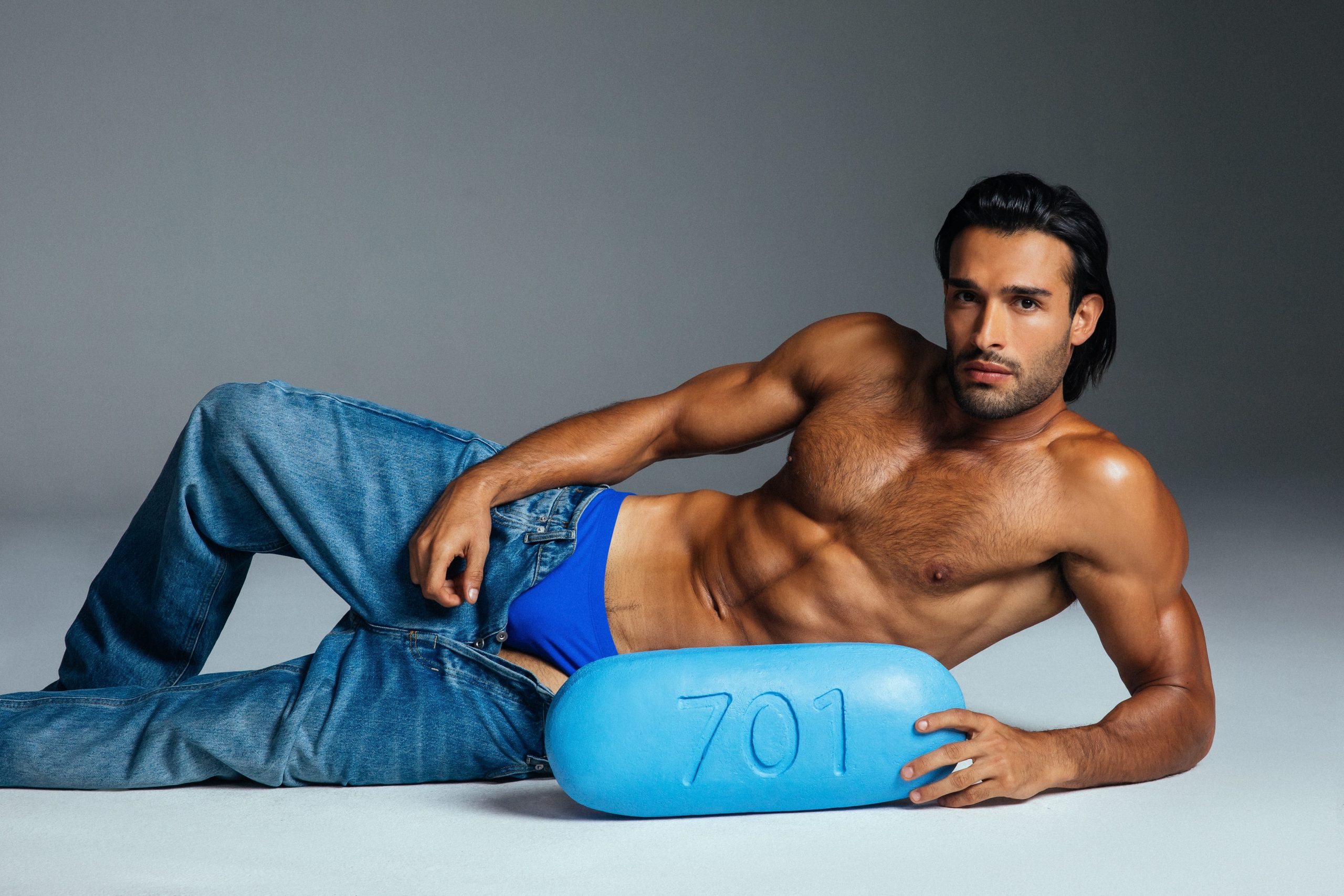
When people think of Sam Asghari, they often think about his TV career, his long history as a model, or even his love life — but not enough know just how much of an advocate this professional really is.
Many first met Asghari through his time on reality TV; the man earned acclaim for his hilariously soft-spoken tenure on season three of The Traitors. This came after many years as a model — as well as former husband to a certain pop star — with the reality series showing that he could stun as much onscreen as he could on a runway. Yet even though recent years have seen thousands of fans fall in love with Asghari’s quiet charm, far too many of these new supporters still don’t realize how important LGBTQ+ advocacy is to Sam today.
Asghari has spent recent years speaking out against queer discrimination in both the United States and his home country of Iran. Yet while he’s never been shy about his support, there hasn’t yet been an opportunity to really use his platform to fight for this community on a larger level. Well, luckily for us all, Asghari’s newest (and possibly sexiest) project will give him the chance to do just that, as Sam was just announced as the newest ambassador for the United States’ largest provider of free online PrEP, MISTR.
“It’s an honor and a pleasure to kick off this allyship with such a great company making such a huge impact!” raved Asghari, as he sat down with the Los Angeles Blade to discuss this new partnership. The interview took place in West Hollywood’s The Abbey, a club that’s become a second home to Sam in recent years; the model was seen at almost every one of the many events that MISTR hosted at the club in 2025. “My best friends, my mentors, and everybody that I adore that make me who I am — [they all] just happen to be [LGBTQ+]! [But] where I come from…people within this community don’t get to say it outright.”
Sam spoke about witnessing queer discrimination early on in his life through the treatment of these communities in Iran, describing, “They have to hide away…they [get punished] just for being themselves.” It’s a prejudice that he has unfortunately seen grow across the U.S. in recent years, which is what made him realize that he needed to do more for these groups who’ve helped him become who he is today. “I feel a huge responsibility on my shoulders to not only represent [them], but be the voice of [those facing discrimination] when I can.”
This is why he was thrilled to be the newest addition to the MISTR family, a brand that queer Angelinos will know well; plastered around the city — but especially in West Hollywood — are ads for the service, each ad featuring muscular men in speedos preaching about the importance of PrEP and long-term HIV care. The company has perfected this versatile form of marketing, not only catching people’s attention with the fun on display but underlying it with a serious mission of revolutionizing queer healthcare. It’s proven itself as both a serious provider of health services and a constant stream of scintillating fun — meaning it was just the right opportunity for Sam Asghari.
“MISTR does such a great job as creating not only awareness, but providing the tools for everybody to have PrEP…they’re trying to raise awareness in the biggest ways possible,” Asghari explained, when discussing what drew him to the company in the first place. “I needed it more than they needed me,” he joked. “Not only do I [get] to have a good time, [but] I also get to make this world a better place.”
It’s a collaboration that fans are already loving; the first images of Sam donning MISTR’s iconic blue Speedo were met with acclaim from thousands of LGBTQ+ users online earlier this week. While definitely entertaining on a superficial level, the deeper aspects of these initial photos speak to the style of advocacy that Sam Asghari has spent his entire life building. He is willing to literally bare it all to raise awareness of important issues affecting queer folks around the globe. And while the collaboration does focus around him, he’s pursuing it knowing that his role as an ally means that unaware portions of his usual audience will suddenly get to learn about the vital resources MISTR offers today. “This campaign is going to be something extremely sexy, and it’s going to open a lot of eyes in a good way. So be ready.”
This is the perfect time for Sam Asghari to use the massive amount of thirst his fans have for him to educate them on the importance of queer healthcare. It’s why he was so honored and thrilled to be named MISTR’s newest ambassador. And it’s why, through his new campaign, Sam Asghari may just help this company uplift more people in need than it ever has before.
Features
From above our heads to underneath our steps: Lynn Segerblom’s ongoing journey of Pride through public art
Lynn Segerblom, the co-creator of the rainbow flag, shares how one rooftop sewing project in 1978 San Francisco became one of the most recognized and revered queer beacons in the world.
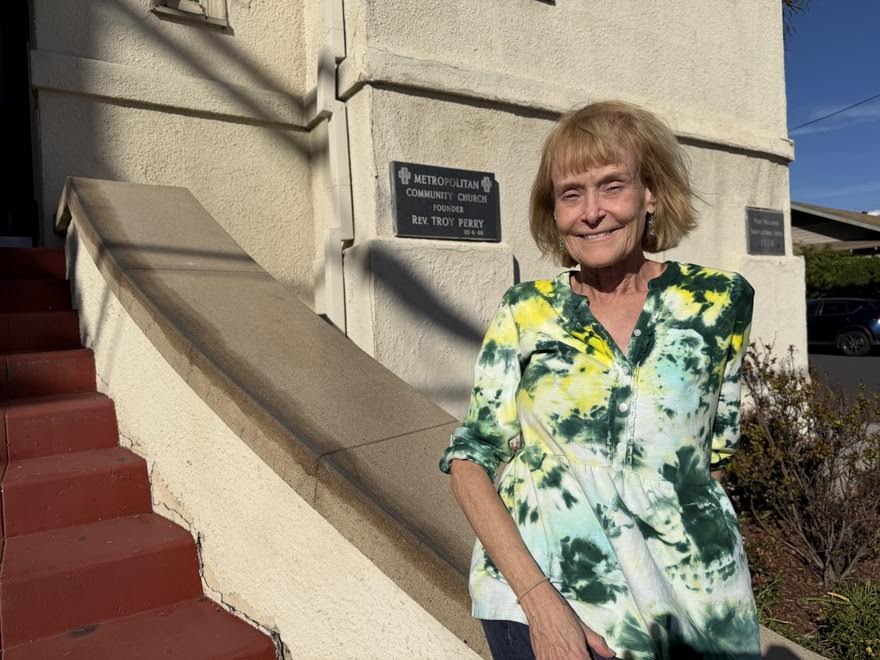
Ages before the rainbow flag became an internationally acknowledged symbol of LGBTQ pride and joy, Lynn Segerblom was already living in the fullest spectrum of colors. Formerly known in 1970s San Francisco as “Fairy Argyle Rainbow,” the artist and self-described lover of color therapy was hand-dyeing fabrics on rooftops, sewing giant panels of muslin, and unknowingly helping to create one of the most widely recognized emblems in queer modern history. Now, nearly five decades later, Segerblom is still channeling that same spirit, this time through Steps to Liberation, a permanent rainbow staircase installation at Founders Metropolitan Community Church (MCC) in Los Angeles.
In our interview, Segerblom dishes on the chaotic creation of the original 1978 rainbow flags, the exhilaration of watching them fly over San Francisco’s UN Plaza for the very first time, and why public art is so essential now more than ever, at a moment rife with division and political tensions. Equal parts whimsical, wise, and authentic, Segerblom speaks about rainbows being so much more than mere symbols. They have the power to also act as experiences meant to be immersed in and shared as a community.
You helped create one of the most recognizable symbols in the world, the rainbow flag, in 1978. What inspired you, and what did that moment feel like for you?
I was working at the Gay Community Center at 330 Grove Street in San Francisco. I rented a small room there where I did dyeing and sewing because that was how I made a living. Some people in the office asked if I wanted to help create decorations for the 1978 Pride parade, which was only the second parade in San Francisco at the time. They said there would be flag poles available and asked if I thought I could make flags. I said yes because I had made smaller flags before for another project.
A meeting was arranged with Gilbert Baker, James McNamara, and me to discuss ideas for the flags, but I was the only one who showed up. At the time, my name was Fairy Argyle Rainbow, and everyone knew me as “Rainbow.” I was already deeply involved with color healing, tie dye, batik, and making colorful clothing and art. So I said, “Let’s make rainbow flags.” It just felt natural to me.
We planned two giant rainbow flags for the UN Plaza flag poles, which were about 80 feet tall, along with smaller rainbow flags around the reflecting pool. The idea of the rainbow was already part of who I was.
You were already using the name “Rainbow” before the flag existed. Where did that come from?
I loved rainbows and color long before the flag project. Since junior high and high school, I had been teaching myself tie dye, batik, sewing, and painting fabrics. I loved bright colors, soothing colors, and deep colors. A friend in the theater company I worked with started calling me “Fairy,” like the fairies in old folklore, and “Argyle” came from her last name. “Rainbow” came from my love of creating rainbows in my artwork. I even had a driver’s license that said Fairy Argyle Rainbow on it. In the 1970s, that was possible.
What was the actual process of making the original flags like?
It was a massive undertaking. We were working with huge amounts of white cotton muslin that had to be dyed by hand. Every piece had to be washed, dried, ironed, measured, pinned, cut, and sewn. We brought sewing machines, ironing boards, scissors, and all our tools into the community center.
At first, we realized the project was far bigger than we expected. I started dyeing fabric on the rooftop of 330 Grove using giant trash cans and the fire hose because it was too messy to do inside. Helpers would carry the soaking wet fabric down to laundromats, wash and dry it, and bring it back.
As far as sewing, it was mostly James McNamara, Gilbert Baker, and me doing the work. James really knew how to sew and taught Gilbert a lot. We had volunteers helping with errands and ironing, but the actual construction of the giant flags was difficult work.
What did it feel like seeing the flags raised for the first time?
It was such a relief. We had been afraid we would not finish on time. Once we started, we realized how enormous the project really was. Each completed flag took three people to carry because they were so heavy.
When we finally saw them flying at UN Plaza, especially in the San Francisco wind, it was incredible. Those huge pieces of fabric were soaring in the sunlight. I was mostly relieved that they worked and that they fit the flag poles correctly. We had put so much effort into them.
Did you ever imagine the rainbow flag would become a worldwide symbol?
No, not at all. We were focused on making something beautiful for the Pride parade. At that time, the parade was still very grassroots. There was no big stage or production. We simply wanted to create something meaningful and uplifting.
I never imagined it would become an international symbol. Gilbert was a very good promoter, but at the time, I was simply focused on creating the design and making the flags happen.
Your new “Steps to Liberation” project transforms the rainbow flag into something people can physically walk through. You said the steps feel like the flag coming to life. What do you mean by that?
The design for the steps is beautiful. The staircase leading into the church will be painted in rainbow colors, and the church doors will be painted indigo, which feels grounded and strong. It really does feel like the flag coming to life because people can physically move through it.
A flag waves above you, but these steps allow people to literally walk into the colors and experience them. That feels powerful to me.
How does “Steps to Liberation” reinterpret the rainbow flag for a new generation?
Today, people are generally much more comfortable expressing who they are openly. Decades ago, many LGBTQ people felt forced to stay hidden. Now, more people can say openly who they are and live authentically, even though there are still places in the world where that is dangerous.
The rainbow steps represent openness, visibility, and acceptance. They invite people to physically experience those ideas instead of just seeing them from a distance.
You have a background as a muralist and public artist. Why is public art so important?
Public art allows people to physically connect with something. They can see it, touch it, walk through it, and experience it directly. Art is not just visual. It can also affect people emotionally and spiritually.
Color especially has a strong effect on people. If you see a garden full of colorful flowers, most people feel moved by it. Rainbow colors can create joy and healing in a similar way.
What do you hope people feel as they walk up the rainbow steps?
I hope they feel inspired. I hope they feel accepted and uplifted. Founders MCC has been welcoming people for nearly 60 years, and these steps reflect that spirit of openness and community. People can come there with family or friends and feel that they belong.
The original rainbow flag emerged during a very different cultural moment in the late 1970s. What has changed since then?
There was a lot of cultural and political upheaval in the late 1970s. LGBTQ people were still struggling heavily for visibility and acceptance. Today, many more people feel able to live openly. That progress matters. At the same time, there are still challenges, and we still need visibility and community support.
How do you see art contributing to activism today?
Art allows people to express feelings, emotions, and imagination in ways that others can connect with. People can experience it visually, emotionally, or spiritually. Art gives people a way to participate and feel connected.
When the rainbow flags were flying in the wind in San Francisco, it created an emotional experience. Public art still has that power today.
The “Flag50” initiative will lead toward the 50th anniversary of the rainbow flag in 2028. What excites you most about that project?
I am amazed that it has already been nearly 50 years since we created those original flags. It brings me joy to see rainbow flags around the world because they represent equality and people coming together. I also hope the history is remembered accurately and that the people who helped create the original flags receive recognition for their work.
What responsibility do artists have when working with symbols that hold deep cultural meaning?
Artists should treat those symbols with care and respect. People need inspiration, and art can provide that. Art has always been part of human culture across the world. People should also feel encouraged to create their own art and express themselves.
How do you balance honoring the past while still evolving the message for today?
The message is still very simple: be yourself and accept others. We are all human beings. We may have different backgrounds, beliefs, or identities, but we can still respect each other. Art helps communicate that in ways that people can feel emotionally.
At a time when LGBTQ rights still face challenges, how can creativity strengthen resilience and resistance?
By creating things. By making art, music, performances, or projects that express who people are. Creativity reminds people they are not alone. When artists come together around a shared project, there is a strong sense of community and connection.
Looking ahead to the 50th anniversary of the rainbow flag, what do you hope the world understands more clearly by then?
I hope people learn to be more accepting of one another. The most important thing is living a good life and helping others do the same. And I also hope the true history of the flag and the people who created it are remembered accurately.
Features
From the Boy Scouts to West Hollywood: Len Lanzi on identity, resilience, and reinvention
A successful Boy Scout executive, a Supreme Court controversy, and the public outing that rerouted the trajectory of one man’s life
Before he became a prominent civic and business leader in West Hollywood, Len Lanzi was a simple kid from a blue-collar Italian American family in Rhode Island, balancing Boy Scouts, church, school, and a swelling sense that life could contain several different paths at the same time.
Years before conversations around LGBTQ+ inclusion became part of the mainstream narrative, Lanzi was intentionally creating a career inside one of America’s most traditional institutions, eventually rising through the ranks of the Boy Scouts of America while also navigating life as a gay man in a time when being open and honest could cost him everything. What resulted would put him at the center of one of the country’s most consequential cultural happenings surrounding discrimination and institutional power.
In our conversation, Lanzi shares the journey that took him from New England to California, from mental health work to nonprofit leadership, and ultimately into the national spotlight after being fired by the Boy Scouts in the wake of the organization’s landmark Supreme Court case on gay membership. With honesty and a touch of well-timed humor, Lanzi speaks about resilience, public scrutiny, and the complicated dynamics of acceptance and stigma. And he does this all while also offering insight into the experiences that continue to impact his work today as the new president and CEO of the West Hollywood Chamber of Commerce.
I’d love to start from your early days and childhood. What was it like for you growing up, and what sparked your interest from a young age?
I grew up in a blue-collar Italian American family in Rhode Island and was very involved in the Boy Scouts, church, and school activities. I attended the University of Rochester, where I became active in fraternity leadership and Navy ROTC. After college, I moved to San Diego in 1985 to escape New England winters and initially worked in a psychiatric hospital, which gave me a strong understanding of mental health and addiction issues that still informs my work today.
In 1987, I joined the Boy Scouts professionally. As an Eagle Scout, it felt like a natural career path, and I spent years working my way through the organization. During that time, I also came out as gay in my early twenties and met my partner, who I’ve now been with for 36 years. We later moved to San Francisco, which was the first place I truly felt accepted as a gay man, before my work with the Scouts eventually took us to Santa Barbara.
In 2000, during the Boy Scouts Supreme Court case over gay membership, I was publicly outed while serving as a Scout Executive. Shortly after acknowledging publicly that I was gay, I was asked to resign. It was an incredibly difficult experience that reshaped my life and perspective on advocacy, leadership, and community.
After leaving the Scouts, I rebuilt my career through nonprofit leadership, fundraising, startup and venture capital work, and eventually chamber leadership. Those experiences gave me a deep understanding of business challenges, organizational change, and the importance of compassionate leadership, all of which I bring to my role today at the West Hollywood Chamber of Commerce.
There’s a theme of being able to navigate tumultuous times that also offers you this perspective of how to address changing needs. In your experience so far in West Hollywood, specifically, how have you seen those needs change in the community and from businesses? How are you trying to address that today?
West Hollywood is a very small but highly engaged city, and that creates both strengths and challenges. One of the biggest issues right now is the rising cost of doing business, especially for restaurants and hospitality businesses. Policies intended to improve wages and affordability have also increased operating costs dramatically, particularly after COVID changed business models for many restaurants.
The city is trying to address these issues through grant programs and support initiatives, which I think is a positive first step. But I also believe long-term solutions require collaboration with surrounding communities and a careful look at unintended consequences. My role at the Chamber is to advocate for businesses in a constructive way while helping policymakers understand the realities business owners are facing.
Do you feel like the city’s responses are adequate to address that rising tension?
I think the city’s intentions are good, and they recognize the challenges businesses are facing. But policy changes are difficult to reverse once they’re implemented. My approach is less about blame and more about finding common goals and practical solutions that create a win for both businesses and the community.
What was it like to come into the role at WeHo’s Chamber of Commerce and assess the legacy left for you? What did you feel about the state of it?
I came into a healthy chamber that already served its members well, but I also saw opportunities to modernize and expand services. The way people work and run businesses has changed dramatically, especially with remote work and home-based businesses. Part of my focus is figuring out how the Chamber can better support those evolving needs while continuing to advocate for local businesses in a collaborative, non-adversarial way.
What you’re saying about political involvement, that muddying the waters, reminds me of what you dealt with earlier on at the Boy Scouts — of being forced, in a way, by people to speak out or to rebel when you didn’t want to do that. Do you see similarities in your personal life, and has the attitude that you have towards that changed over the years?
I do see similarities. My experiences taught me that confrontation alone rarely creates lasting change. I’ve learned that compassion, transparency, and empathy are far more effective than treating everything as a battle. That philosophy shapes both my leadership style and how I approach advocacy today.
Did you ever in that moment regret having dealt with the situation the way you did?
No. I have no regrets. I would handle it the same way again.
What was that process of rebuilding your life like after that? Because you were part of that for so long and you also grew up with the Boy Scouts.
One thing that helped me was getting into therapy immediately while everything was happening. My background in mental health made me understand the importance of focusing on the future instead of getting stuck in the past. That mindset really transformed how I approached rebuilding my life and career.
There’s also something you mentioned earlier about when you moved to the Bay Area, it was the first time that you felt really accepted, or that you could live as yourself. And when thinking about cities that are healthy ecosystems for queer people, does West Hollywood give you a similar feeling as the Bay Area did when you were initially there?
Absolutely. In some ways, even more so. West Hollywood feels very personal and community-driven. I don’t feel judged here because of my sexual orientation. I’m just Len. My relationship is simply one part of my life, not the thing that defines me.
I know we were talking about leading the chamber into responsible advocacy. Does LGBTQ+ advocacy flow into that mission as well?
Of course. LGBTQ+ advocacy is naturally connected to this community and its business landscape. I want to ensure we continue moving forward on equality and inclusion, not backward. At the same time, I believe meaningful progress comes from dialogue, empathy, and helping people better understand each other.
What is your approach to changing people’s minds? Is it through just sitting down with people, one on one and talking to them, or is it through other means for you?
I think it’s mostly through actions and how you treat people. I’ve found that responding with empathy and compassion is far more persuasive than being combative. People are more willing to listen when they feel respected and understood.
At this point in life and in your career, what does transformation in this next process or future look like for you and for your vision of the Chamber and West Hollywood?
I’m still figuring that out. But I do believe organizations have to evolve if they want different results. My background in startups taught me the value of trying new things quickly, learning from failure, and adapting. I’d like to bring that mindset to the Chamber while also building trust with businesses, city leaders, and the community.
Personally, what are the sorts of things that are keeping you afloat or keeping you active and interested outside of your chamber role?
Community service is a huge part of my life. I’m involved with Rotary International, Meals on Wheels West, and Pride Republic, the LGBTQ supporters group for LAFC. I’m also active in my neighborhood association. I’ve always believed in giving back and helping build stronger communities.
Did you feel like your relationship to the gay community changed after that incident? Was it harder for you to find friendships or find community?
It definitely created some distrust that stayed with me for a long time. But being part of the West Hollywood community has helped heal some of that over the years.
Do you feel like the gay community asking you to come out and denounce the Boy Scouts was sacrificial?
At the end of the day, it got me fired but didn’t really change the outcome for anyone else. That experience reinforced my belief that confrontation without a path toward mutual understanding rarely leads to meaningful progress. I’ve always believed in finding common ground and creating situations where everyone can move forward together.
Features
The John Duran and Mark Morris wedding reflects the arc of LGBTQ+ History
When is a kiss more than just a kiss? When it’s been ‘Forged in Fire’
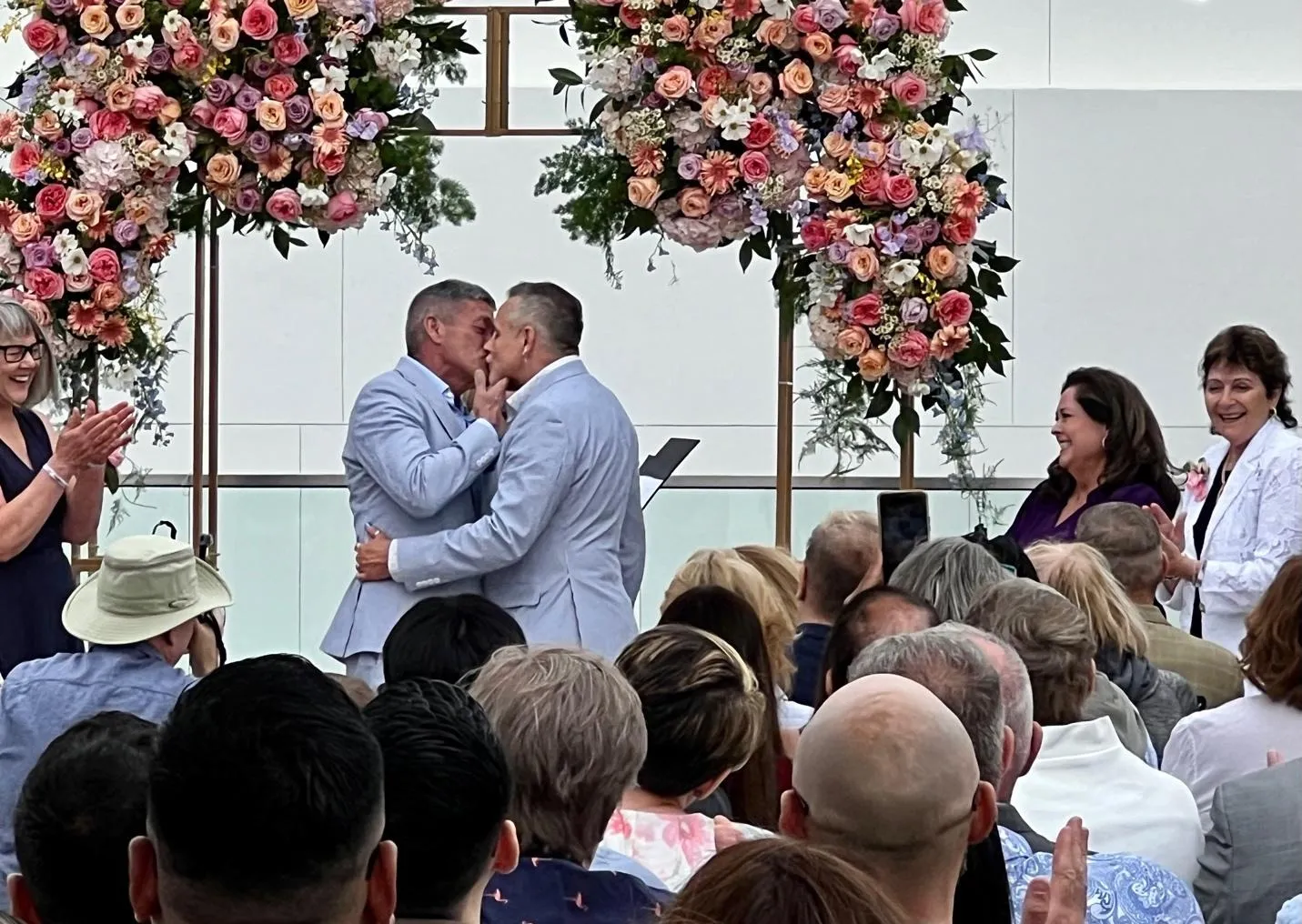
May is a magical month, memorable in the march to marriage equality. On May 3, civil rights and defense attorney John Duran and Mark Morris, his partner of 27 years, were married in West Hollywood before family and forever friends. The wedding was officiated by Duran’s first legal and political mentor, attorney Diane Abbitt, an image that softly represented an arc of defiant LGBTQ+ love through California history from MECLA to LIFE AIDS Lobby to ANGLE to EQCA.
The couple wed on the anniversary of the day they first met – May 3, 1999.
But why get married now – after all Duran has done to help win marriage equality?
“I think one of the most painful lessons that we learned around HIV and AIDS and around Karen Thompson and Sharon Kowalski’s story was that our relationships without legal protections would be really painful if a partner is sick, hospitalized, or dies. And we learned those very painful lessons and realized that equality of marriage was gonna be the remedy that we would seek long term,” Duran said during a recent Zoom interview.
Karen Thompson’s fight for legal guardianship after her partner, Sharon Kowalski, became incapacitated in a Nov. 1983 traffic collision in Minnesota dragged on for years. Despite having exchanged rings and named each other in insurance policies, the couple’s relationship was not recognized by Kowalski’s family, and Thompson was denied visitation rights.
‘’There is no other case that approaches this one in symbolic importance,” Tom Stoddard, executive director of the Lambda Legal Defense and Education Fund, told the New York Times in Aug. 1988, on the eve of Kowalski’s 32d birthday. The Minnesota Court of Appeals eventually ruled in Thompson’s favor on December 17, 1991, apparently the first appeals court to recognize a lesbian or gay partner’s rights as equivalent to a heterosexually-married spouse.
Personally, Duran always looked at marriage as political, something for other people. He didn’t need government or religion to certify his love for Morris, a State employee at the DMV. But a year ago, when he and Morris mused about a quick Vegas wedding, Abbitt and her wife Bernadette Abbruzze said, “Absolutely not, we’re having a wedding.” Duran had officiated their nuptials in 2017.
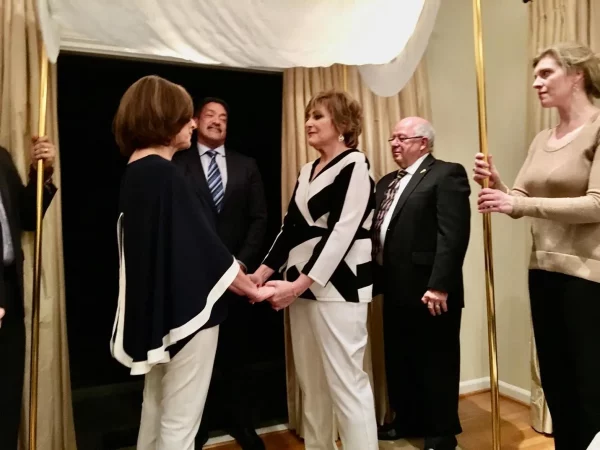
“This is something that we fought for and darn it, John, I’m glad you’re gonna finally make use of it for yourself,” longtime Orange County friend Pat Callahan told Duran.
That the once unimaginable is now normal doesn’t mean it’s unassailable. After Trump’s Supreme Court scuttled women’s reproductive rights and eviscerated the Voting Rights Act, ending marriage equality is next on the Project 2025 agenda. Before that history is erased, here’s a look at the Duran-Morris nuptials through the lens of that long fight for love.
California has a history of creating change, originating the Mattachine Society, the Daughters of Bilitis, and ONE Magazine during the Lavender Scare in the 1950s, for instance. However, in a terrible irony, the Black Cat pushback in Silver Lake and the pivotal Stonewall uprising in New York’s Greenwich Village on June 28, 1969, sent many back into the closet, fearing police arrests at bar raids.
“There was a lot of shame. People were terrified of losing their jobs. A lot of them were teachers and professional people,” Abbitt said in 2019.
Diane Abbitt came out in 1973 as a divorced mother for whom freedom was costly. She went to law school at night so she could keep custody of her two sons, as did her partner, Roberta Bennett. Founders of LA NOW’s Lesbian and Sexuality Task Force, they testified before the California Legislature in favor of a bill to decriminalize homosexuality, sponsored by Assembly member Willie Brown and State Senate leader George Moscone. Gov. Jerry Brown signed the bill on May 12, 1975.
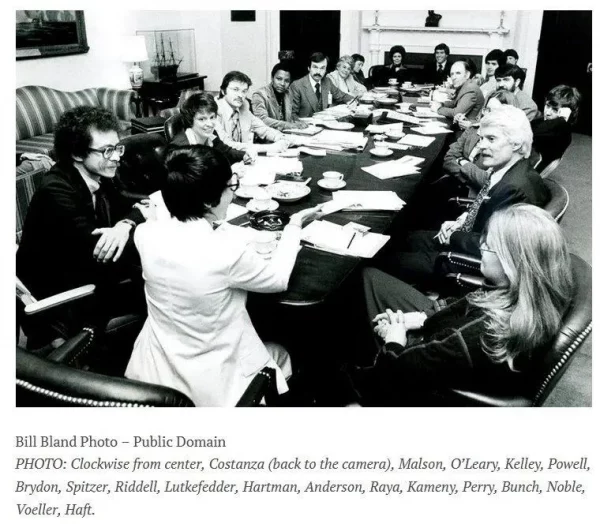
By 1977, LGBTQ+ people and allies started advocating for gay rights as human rights. California ally and Assembly member Art Agnos started pushing for a gay rights job bill, AB 1, at every opening legislative session. Nationally, lesbian feminist Jean O’Leary of the National Gay Task Force strategized with her closeted lover Midge Costanza, President Jimmy Carter’s Public Liaison, to hold an historic meeting of 14 gay and lesbian activists (including MCC Founder Rev. Troy Perry) in the White House on March 26.
Meanwhile, orange juice shill Anita Bryant and the Rev. Jerry Falwell and his new Moral Majority ignited the homophobic Religious Right “Save Our Children” fuse that overturned a sexual orientation-protection ordinance in Dade County, Florida, and inspired the anti-gay Briggs Initiative/ Proposition 6 in California.
Gay people were scared. After the progressive promises of Gay Liberation and Lesbian Feminism, Prop 6 proposed to ban gays, lesbians, and their straight allies from teaching and working in public schools.
Political consultant Peter Scott, who co-founded the closeted gay professionals group Orion with attorney Stephen Lachs, devised a response: they changed their name to Metropolitan Elections Committee of Los Angeles (MECLA), becoming the nation’s first gay political action committee, invited lesbians to join, and reached out to influencers. Abbitt, a prodigious fundraiser, was elected MECLA’s first female board co-chair. Their mission,” Abbitt said later, “was legal protections and full equality, including a seat at the legislative table, for gay people.”
Nationally renowned politico David Mixner, who had just headed LA Mayor Tom Bradley’s reelection campaign, came out, joined MECLA and helped form the No on Prop 6 campaign. Chaired by Abbitt in the South and San Francisco Supervisor candidate Harvey Milk in the North, Mixner and Scott served as campaign managers with “lavender menace” lesbian feminist Ivy Bottini and Torie Osborn hired to organize in SoCal. Jeanne Córdova, a second-wave feminist, was the media director.
The Briggs Initiative was overwhelmingly defeated on Nov. 7, 1978. Twenty days later, Harvey Milk and San Francisco Mayor George Moscone were assassinated.
After Abbitt was admitted to the State Bar in 1979, she and Bennett formed Abbitt & Bennett, a law firm in which Bennett focused on family law and Abbitt specialized in business law and estate planning, including helping same-sex couples secure inheritance rights.
MECLA became so prominent by 1979, Gov. Jerry Brown gave the keynote speech at a roast for businessman and “Democratic heavyweight” Sheldon Andelson; Lily Tomlin emceed, and President Carter’s mother Lillian attended.
But same sex relationships eluded official legal recognition. San Francisco Mayor Dianne Feinstein vetoed the nation’s first domestic partnership ordinance in 1982. Three years later, galvanized by the AIDS crisis, the new City of West Hollywood created the nation’s first domestic partnership registry.
Meanwhile, anti-gay sentiment worsened with Ronald Reagan’s presidency, and in 1986, rabid right-winger Lyndon LaRouche sponsored a ballot initiative to quarantine people with AIDS. Abbitt co-chaired the “No on 64” campaign with Harry Britt and resoundingly defeated the proposition.
Abbitt went on to co-found or sit on the boards of AIDS Project Los Angeles, the Human Rights Campaign Fund, and the post-MECLA Book Club, which evolved into Access Now for Gay and Lesbian Equality (ANGLE). After Feinstein refused to say the words “gay and lesbian” while campaigning to be California’s Governor in 1990, she and ANGLE friends founded the Gay & Lesbian Victory Fund to elect more LGBTQ+ people. She also fought for marriage equality through Evan Wolfson’s Freedom to Marry and Equality California, headed by attorney Geoff Kors.
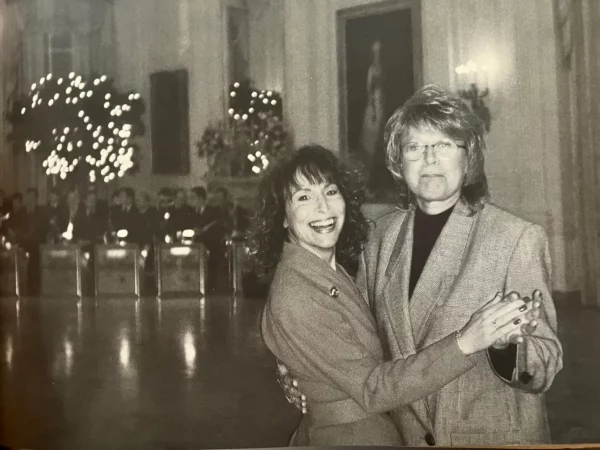
Abbitt and Bennett split in 1995, not long after becoming the first lesbian couple to waltz around the East Room ballroom in the White House on Jan. 5, 1994. In 1997, Abbitt met Abbruzze, owner of the green fuel-efficiency company Envirolution. They married 20 years later in 2017.
Abbitt met John Duran in 1983 when he was still working at Disneyland, in law school at Western State University in Orange County and called her for a job. He clerked for Abbitt & Bennett for six months in 1984.
Everything changed for Duran in 1985 when his best friend Scott Fleener suddenly died of “HIV disease.” “Scott was the first person I knew who died,” Duran told The LA Weekly in Nov. 2004. “I was robbed of the chance to say goodbye, and at his memorial service I had one of those ‘As God Is My Witness’ moments when I vowed to find a cure for this disease.”
When the Prop 64 AIDS quarantine initiative hit the California ballot in 1986, Duran went to Pat Callahan, co-chair of the Elections Committee of the County of Orange (ECCO), and asked to be put to work.
“That was the start of my political career,” Duran told the LA Weekly. “It completely overturned my sense of the way the world should work… Everything changed.”
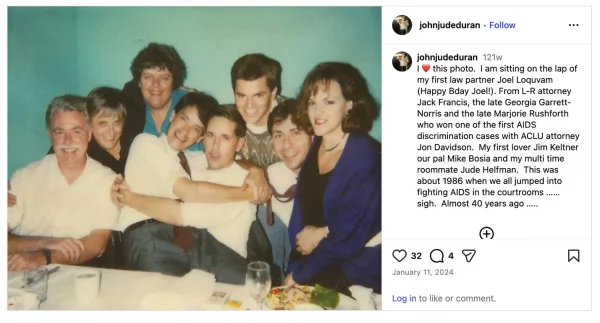
Duran clerked with Joel Loquvam for Marjorie Rushforth and Georgia Garrett-Norris (1985-1986) in their Santa Ana law firm. He passed the bar in 1987 and started a new law firm in Anaheim with Loquvam and Tom Kendricks in 1988.
It was hard. The Ronald Reagan-pumped OC world was dominated by right-wing political extremists and Religious Right evangelicals, spurred on by Rep. Robert “B-1 Bob” Dornan (R-Santa Ana) and Rep. William Dannemeyer (R-Fullerton), author of Shadow in the Land: Homosexuality in America. In 1989, Dannemeyer’s obsessive fixation with homosexuals – intensified by the AIDS crisis – prompted him to read the sexually graphic statement “What Homosexuals Do” into the Congressional Record (see pages 69-73 in the June 29, 1989 Congressional Record).
Dannemeyer’s wingman was rabidly anti-gay Rev. Lou Sheldon, founder of the Traditional Values Coalition, who could quickly muster threatening “Christian warriors” stewed in the Biblical belief that God allowed them to kill homosexuals.
Janet Avery, President of Orange County Cultural Pride, hired Duran to secure the Pride festival permit she obtained from the city. Sheldon had organized hundreds of protesters to demand that the permit be revoked.
“The whole thought of the First Amendment being dictated by a religious leader is . . . repugnant,” Duran told the LA Times before the July 17 City Council meeting.
Mayor Dan Young seemed sympathetic to Sheldon’s demand. But after Duran’s rousing speech, City Attorney Ed Cooper said that OCCP “has a constitutional right of free speech and assembly, which the [city parks] director is bound to observe.”
After the council vote, Duran was suddenly rushed by Sheldon and his Christian storm troopers who placed their hands over his head and screamed, “OUT, SATAN! OUT!” Guards rushed to pull Duran to safety and escorted him out of the building.
The first Orange County Gay Pride Festival was held Sept. 9-10 in Centennial Regional Park, marred by clashes with Sheldon’s protesters. Nonetheless, Duran wrote on his Facebook page commemorating Avery’s July 2018 passing, “the First Amendment ruled the day.”
Duran later discovered his law office had a swastika and the initials WAR – White Aryan Resistance – carved into it. Black scorch marks on his back porch looked as if someone had tried to set it on fire.
But political work called. After the NO on Prop 64 campaign in 1986, roughly 200 HIV/AIDS bills were introduced in Sacramento. The next year, Duran joined LIFE AIDS Lobby, a new coalition of 102 organizations from across California that “had to find a common table to hash out policy and stand united. And that’s what we ended up doing,” Duran said later.
They met with legislative leaders and their deputies, such as AIDS expert Stan Hadden. When Hadden died of AIDS at age 35, advocates carried a gigantic rainbow flag through the streets of Sacramento after his funeral.
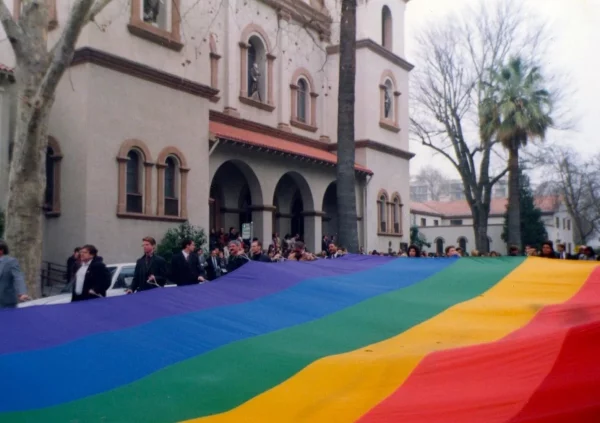
Though only 27-28 years old, Duran was elected statewide co-chair because he was HIV-negative and the elder statesmen were sick and dying. “We all realized, no matter what our political differences or our great diversity or gender or race or anything else — it didn’t really matter, we were all in the fight for our lives, and we were there to do what was best for the common good,” he told the WeHo AIDS Monument project.
In 1990, Duran and his partner Jim Keltner moved to West Hollywood. He was already involved in WeHo politics after helping local attorney Chris Fairchild get his client, fired gay sheriff’s deputy Bruce Boland, reinstated. He then joined Mixner, Abbitt, and others in founding ANGLE to scrutinize and contribute to state and federal electoral candidates. He met Arkansas Gov. Bill Clinton during an ANGLE interview on Sept. 29, 1991, who they endorsed and helped to elect President.
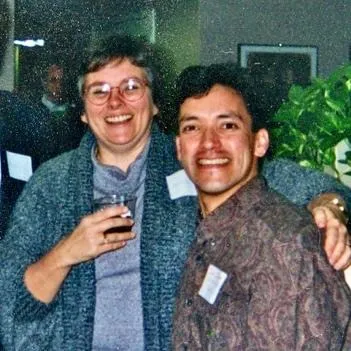
That was the same day California Gov. Pete Wilson vetoed the “Gay Rights Bill,” AB 101, that Duran, his co-chair Ken Jones, and their LIFE Lobby team had worked to craft and pass with executive director Laurie McBride. Wilson’s betrayal of his promise to sign AB 101 resulted in two weeks of protest.
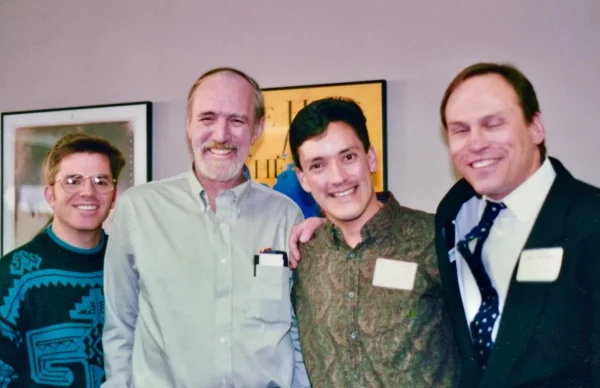
The veto of AB 101 also prompted LIFE Lobby to run gay and lesbian candidates in Democratic primaries. Duran ran against Assemblymember Burt Margolin in West Hollywood and lost. However, Councilmember Sal Guarriello and his wife Rita encouraged him to run for West Hollywood City Council “someday.” Duran eventually joined the WeHo City Council in 2001.
“I was forged in fire,” Duran later told the LA Weekly.
In 1996, Duran got sober, and a miracle triple-drug AIDS cocktail had staunched the dying. In 1998, after eight years of State Republican majority rule, voters elected moderate Democrat Gray Davis as Governor, with Sheila James Kuehl already a star as the first out gay person serving in the legislature. LIFE Lobby’s funding dried up, and the organization folded.
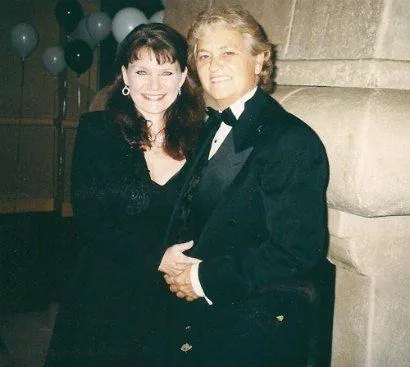
San Francisco-based politicos responded, creating the California Alliance for Pride and Equality (CAPE) in 1999 with Jean Harris as executive director. CAPE helped pass Assemblymember Carole Migden’s AB 25 domestic partner registry bill and Kuehl’s AB 537, the first statewide LGBT-inclusive anti-bullying law.
But America changed again in 2000. The US Supreme Court seemed to award Republican born-again Christian George W. Bush the presidency over Democratic Vice President Al Gore, injecting questions about election integrity into the national political consciousness. On Sept. 11, 2001, the World Trade Towers fell, and the Pentagon was severely damaged in coordinated Al-Qaida terrorist attacks. Defying history, Republicans won both the House and Senate in the midterms.
Harris left CAPE in 2003. Geoff Kors, a lawyer recruited by Harris to serve on CAPE’s Board of Directors, stepped in as interim executive director. With little money, virtually no staff but a hard-working Board, Kors worked 24/7 to expand the Board to 14, recruiting Abbitt and Duran, develop a strategy, and change the name to Equality California (EQCA).
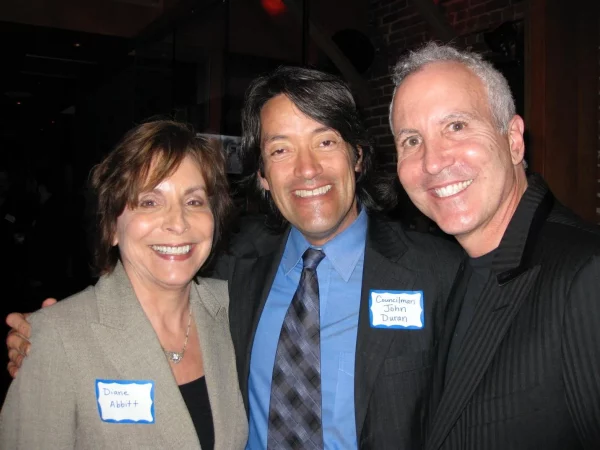
Kors was no pedestrian politico. A graduate of Stanford Law School, he’d been Director of several ACLU of Illinois Gay and Lesbian Rights/AIDS projects, and in 1990, he helped lead the nation’s first successful campaign to pass a ballot measure to grant same-sex couples domestic partner rights. In 1996, as a legal adviser to San Francisco Supervisor Bevan Dufty, Kors originated the groundbreaking and successful Equal Benefits Ordinance, alerting companies and corporations that to do business with San Francisco, they must provide equal benefits to same-sex partners.
Kors developed coalition partnerships and strategies with the ACLU, Lambda Legal, and the National Center for Lesbian Rights. This led to out lesbian Assemblymember Jackie Goldberg’s 2003 comprehensive AB 205, giving same-sex couples virtually all the rights and responsibilities of marriage. Gov. Davis signed the bill on Sept. 19, 2003, effective on Jan. 1, 2005.
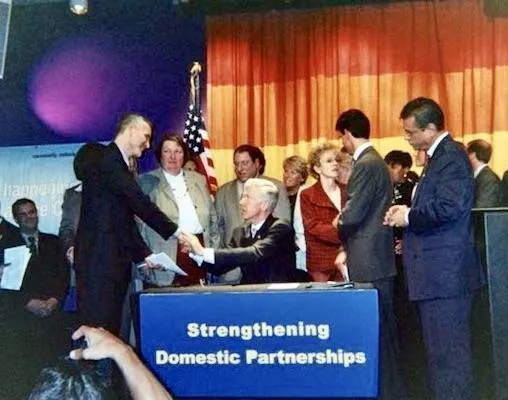
In 2004, the Massachusetts Supreme Court’s Goodridge decision prompted San Francisco Mayor Gavin Newsom to conspire with staff and NCLR’s Kate Kendell to bring a constitutional challenge by officiating a surprise marriage of lesbian icons Phyllis Lyon and Del Martin on February 12, Valentine’s Day.
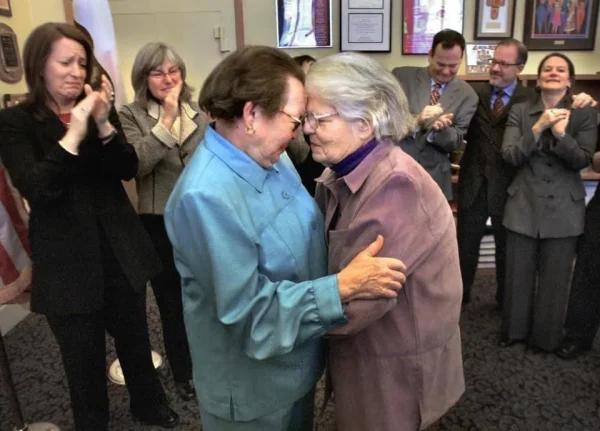
Newsom ordered city officials to issue marriage licenses to approximately 4,000 same-sex couples who stood in line at city hall to grasp their dream.
Meanwhile, out gay Assemblymember Mark Leno introduced his first marriage bill, AB 1967, The California Marriage License Non-Discrimination Act, co-sponsored by the LGBT Caucus and EQCA, that would “define marriages in California as a civil contract between two persons, allowing same sex couples access to the same rights and responsibilities of marriage as heterosexual couples in the state.” It stalled in committee.
In June, the California Judicial Council ordered that six active marriage cases be consolidated into one case for trial, becoming In re Marriage Cases. Separately, on August 12, the California Supreme Court ruled that Newsom did not have the authority to issue marriage licenses to same-sex couples and declared those 4,000 licenses invalid.
“Del is eighty-three years old, and I am seventy-nine,” said Phyllis Lyon. “After being together for more than fifty years, it is a terrible blow to have the rights and protections of marriage taken away from us. At our age, we do not have the luxury of time.”
“One very real consequence of the Court’s action is that if one of the women were to die before the other, the surviving partner would have no right to social security or pension benefits and no protection against losing their family home,” the ACLU noted.
Worried that evangelical voters would stay home without a reaction, Karl Rove and Bush’s re-election team generated successful constitutional amendment initiatives in 11 states barring same-sex marriages.
The next year, the California Legislature passed Leno’s AB 849, which was then vetoed by Republican Gov. Arnold Schwarzenegger.
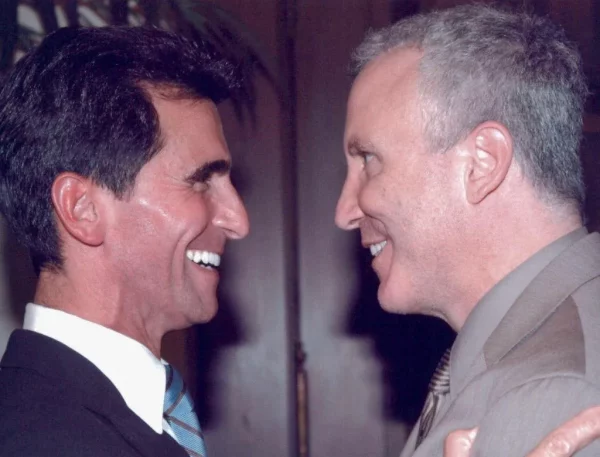
Meanwhile, In re Marriage Cases trudged along until May 15, 2008, when the California Supreme Court issued a 4-3 ruling with Chief Justice Ronald M. George that marriage equality is “the fundamental constitutional right to form a family relationship.”
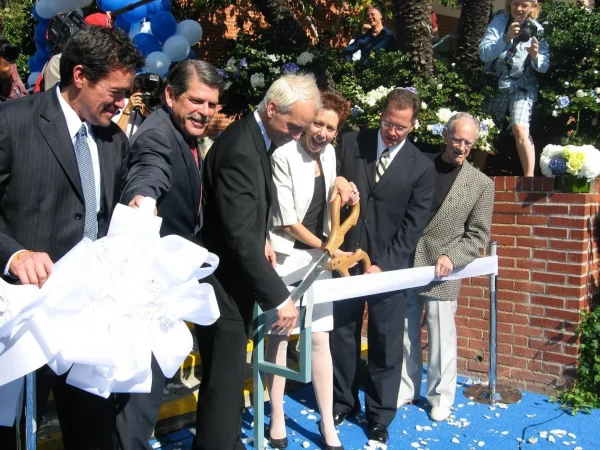
West Hollywood started issuing marriage licenses and performing weddings in West Hollywood Park on June 17, 2008.
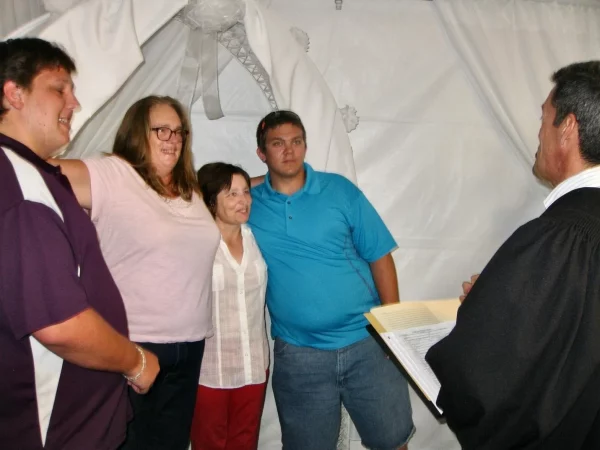
For one couple, marriage was urgent. The lesbian-in-charge and her two sons had driven for hours with her partner living on borrowed time. The ill wife died five months later, just as voters overturned marriage equality through Prop 8 in Nov. 2008.
Five years later, on June 26, 2013, the Supreme Court overturned Prop 8 in Hollingsworth v. Perry and ruled against part of the Defense of Marriage Act (DOMA) in United States v. Windsor.
Geoff Kors didn’t wait for Obergefell v. Hodges on on June 26, 2015. He married his love James Williamson in 2014.
Kors left EQCA in 2011, have passed more than 70 pieces of LGBTQ legislation. In 2015, he was elected to the Palm Springs City Council, including serving as Mayor. He left in 2022. Meanwhile, Williamson shone brightly as an elected member of the Palm Springs School Board.
On May 3, Geoff and James, Diane and Bernadette welcomed John and Mark into their tribe of aging LGBTQ+ pioneers whose love was forged by fire.
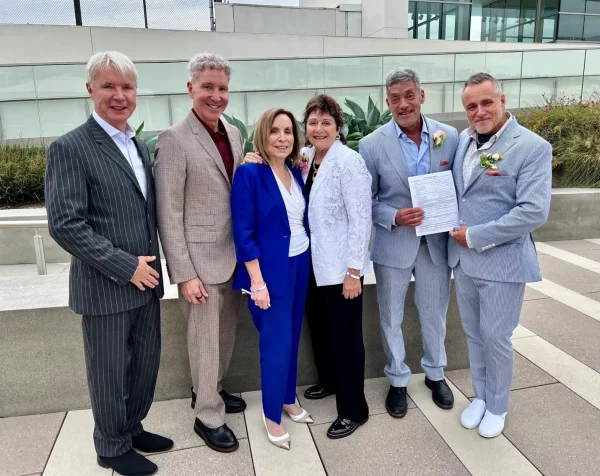
Check out Karen Ocamb’s video chat with John Duran.
This is a cross-post from Karen’s LGBTQ+ Freedom Fighters Substack.

Are we cruising or creepy?

The Queer Film Collective makes your favorite movies possible

Gay Fla. Democrat Elijah Manley sees opportunity in Trump’s second term

Egyptian authorities refuse to allow gay cruise to dock in country

‘She’s the He’ brings gender-bending twist to teen comedy genre

Madonna roundup: Reviews, sales, and love for ‘Danceteria’

Three overlooked court rulings limited White House anti-trans policies

Weho’s Prince Joshua tells all in his new album, ‘Prince of the BLVD’

SunCienega Success Lab launches to empower local entrepreneurs with free resources

Queer media dominates the 2026 Emmy nominations
-
 National5 days ago
Madonna roundup: Reviews, sales, and love for ‘Danceteria’
-
 U.S. Federal Courts5 days ago
Three overlooked court rulings limited White House anti-trans policies
-
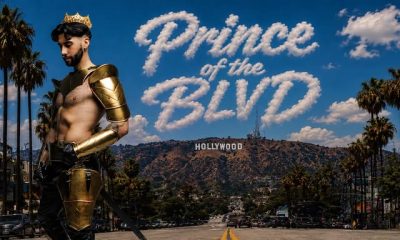 Music & Concerts4 days ago
Weho’s Prince Joshua tells all in his new album, ‘Prince of the BLVD’
-
 Business5 days ago
SunCienega Success Lab launches to empower local entrepreneurs with free resources
-
 EMMYS3 days ago
Queer media dominates the 2026 Emmy nominations
-
 Celebrity News5 days ago
Silky Nutmeg Ganache talks sex and dating, gender, politics, weight loss journey
-
 The Netherlands4 days ago
Dutch prime minister scheduled to open World Pride human rights conference
-
 Egypt3 days ago
Egyptian authorities refuse to allow gay cruise to dock in country
-
 Politics4 days ago
Is America on the brink of a makeover?
-
 Pennsylvania4 days ago
Philadelphia murder suspect remains at large