Philippines
Filipino HIV/AIDS group questions US, Philippines health agreement
Country’s epidemic disproportionately impacts MSM, trans people
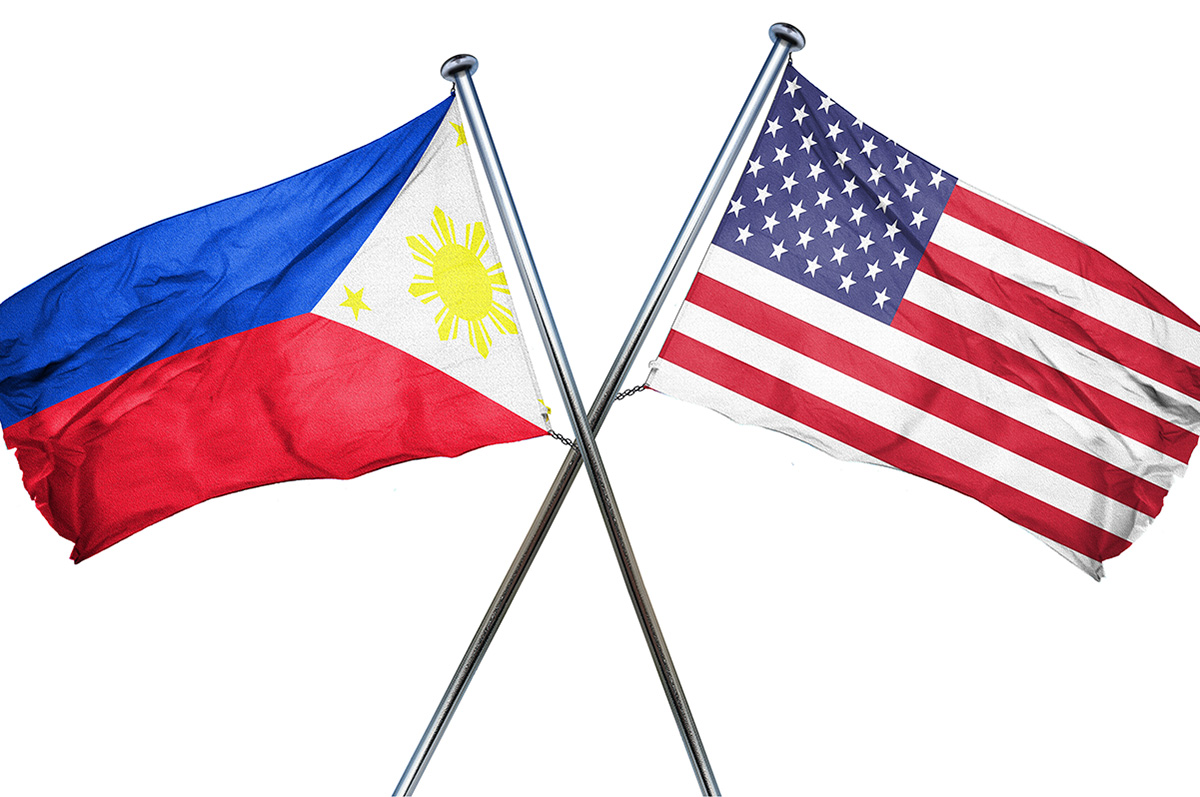
A new health agreement between the U.S. and the Philippines has raised questions among HIV/AIDS service providers.
A joint declaration signed by the U.S. and the Philippines on April 7 sets out a plan for closer health cooperation, aimed at transitioning the Philippines toward greater autonomy and “self-reliance” in its health systems, according to a State Department statement released.
In practice, “self-reliance” in health systems refers to a country’s ability to fund, manage, and deliver care without heavy dependence on external donors. In the Philippines, programs serving LGBTQ+ people — particularly those focused on HIV prevention, testing and treatment — have relied in part on international funding and technical support, including from the U.S., according to UNAIDS.
The Philippine Department of Health has led the national response to the pandemic.
The joint declaration of intent was signed under the Trump-Vance administration’s “America First Global Health Strategy.” The State Department said the agreement would involve co-funding of mutually agreed global health objectives under bilateral health cooperation between the U.S. and the Philippines in the near future.
The declaration also outlines areas of cooperation beyond financing: workforce development, health information systems, and emergency preparedness. The State Department said the framework is intended to strengthen coordination between U.S. and Philippine institutions while supporting the Philippines’ capacity to manage public health challenges independently over time. The statement does not specifically address LGBTQ+ health.
Similar agreements in other regions have drawn scrutiny from LGBTQ+ advocacy groups.
In Africa, community organizations have warned that a shift from donor-funded, community-led health programs to government-to-government frameworks could affect access for marginalized populations, including LGBTQ+ people. The Washington Blade found that such changes may reduce reliance on specialized clinics that have historically provided stigma-free care, raising concerns about discrimination, privacy, and continuity of services.
Desi Andrew Ching, president of HIV & AIDS Support House in the Philippines, said the partnership presents a significant opportunity, but added that, like any large-scale international agreement, its success for the LGBTQ+ community will depend on how it is implemented on the ground.
“On one hand, it’s a positive move. Increased cooperation on health systems can lead to better technical support and potentially more resources for HIV/AIDS prevention and mental health — areas that deeply impact our community,” Ching told the Blade. “If the government and civil society work closely together, we could see some real progress.”
Ching said community concerns often center on where those resources ultimately go. Ching added there is a risk funds could remain within “usual” government-aligned channels or traditional implementers that may not have the trust or reach of grassroots LGBTQ+ organizations.
The Philippines is facing one of the fastest-growing HIV epidemics in the Asia-Pacific region, with UNAIDS statistics indicating new infections increased by about 543 percent between 2010 and 2023.
The epidemic is concentrated among key populations, particularly men who have sex with men and transgender women who account for a vast majority of new infections. A 2023 analysis found that key populations represented about 92 percent of new HIV cases in the country, underscoring the disproportionate impact on LGBTQ+ communities. At the same time, stigma, limited access to testing and gaps in healthcare delivery continue to shape outcomes for these groups.
Ching said that for the partnership to be effective, support would need to be closely targeted to reach those most at risk, including individuals who often avoid government facilities because of stigma and fear of judgment.
“If the partnership prioritizes ‘community-led’ monitoring and direct support to local organizations, it will be a game-changer. If it stays at the top tier of administration, we might just see the same results as before,” Ching said.
Community-led organizations have been central to the Philippines’ HIV response, particularly in reaching LGBTQ+ populations often underserved by formal healthcare systems. UNAIDS notes groups such as LoveYourself have expanded testing and treatment access through community-based clinics and online outreach, including during the COVID-19 pandemic, when movement restrictions limited access to government facilities.
“To be honest, in these high-level agreements, ‘guarantees’ are hard to come by on paper. The real safeguards lie in the mechanics of implementation,” said Ching. “From the community’s perspective, we believe the best way to prevent services from being diluted is through direct involvement in the planning phase. We would like to see the funding groups and government stakeholders sitting at the same table as the community to game out the specific work plans. It should not be a top-down approach; it needs to be co-designed.”
Ching said oversight would be a critical layer of protection, adding that a dedicated point of contact, such as a U.S Agency for International Development technical lead or a similar monitor, would be needed to track how funds are used.
USAID officially shut down on July 1, 2025, after the Trump-Vance administration dismantled it.
Ching added community-led monitoring would also be necessary in addition to government oversight. He said safety and trust cannot be guaranteed by policy alone but must be built through experience, noting that community-led organizations have consistently reached the most marginalized populations.
“Safety and trust aren’t things you can just write into a policy; they have to be built through experience,” Ching said, adding that community-based sites are often seen as more accessible and safer because they are “for us, by us.”
He said the partnership should direct substantial support to grassroots organizations that have demonstrated an ability to overcome stigma, while strengthening coordination with government clinics. The most effective approach, he added, would combine government infrastructure with community-led delivery, allowing trusted local groups to serve as the primary point of access.
’We want a seat at the table’
According to a report by the World Health Organization on the Philippines, prevention efforts account for only about 6 percent of total HIV spending, despite a sharp rise in cases. The report said the gap has been compounded by a recent pause in U.S. funding, which has delayed the development and implementation of prevention programs and community-led responses.
Asked whether community-led LGBTQ+ organizations would be funded and included in implementation or sidelined under a government-led approach, Ching said that remained the central question for the community, adding that no detailed plan has yet been made public.
“But we have to be realistic about the politics — both within the government and even within civil society — that can sometimes slow things down,” said Ching. “A good baseline to look at is the UNAIDS 30-80-60 targets. These milestones are specifically designed to put community-led responses at the center of the HIV fight. If we’re being honest, as a country, we are still finding our footing in meeting those specific targets. There is a very real risk of being sidelined if the execution defaults to a standard ‘government-only’ approach.”
The UNAIDS set global targets to guide the HIV response, most notably the “95-95-95” goals for 2025.
The framework calls for 95 percent of people living with HIV to know their status, 95 percent of those diagnosed to receive sustained treatment and 95 percent of those on treatment to achieve viral suppression. The targets were designed to reduce transmission and improve health outcomes, while also highlighting gaps in access to testing, treatment, and prevention services.
“We view this new partnership with the U.S. as a chance to course-correct. If the intention is to end AIDS as a public health threat, the data shows it simply cannot be done without the community in the driver’s seat for service delivery,” said Ching. “Our hope is that the implementation isn’t just government-led, but government-enabled. We want a seat at the table not just for the sake of being there, but to ensure the resources are actually hitting the ground where they matter most. We’re looking for a partnership that honors those 2025 milestones by making community-led organizations formal, funded partners in this roadmap.”


Philippines
Philippines Supreme Court rules same-sex couples can co-own property
Advocacy group celebrated landmark decision
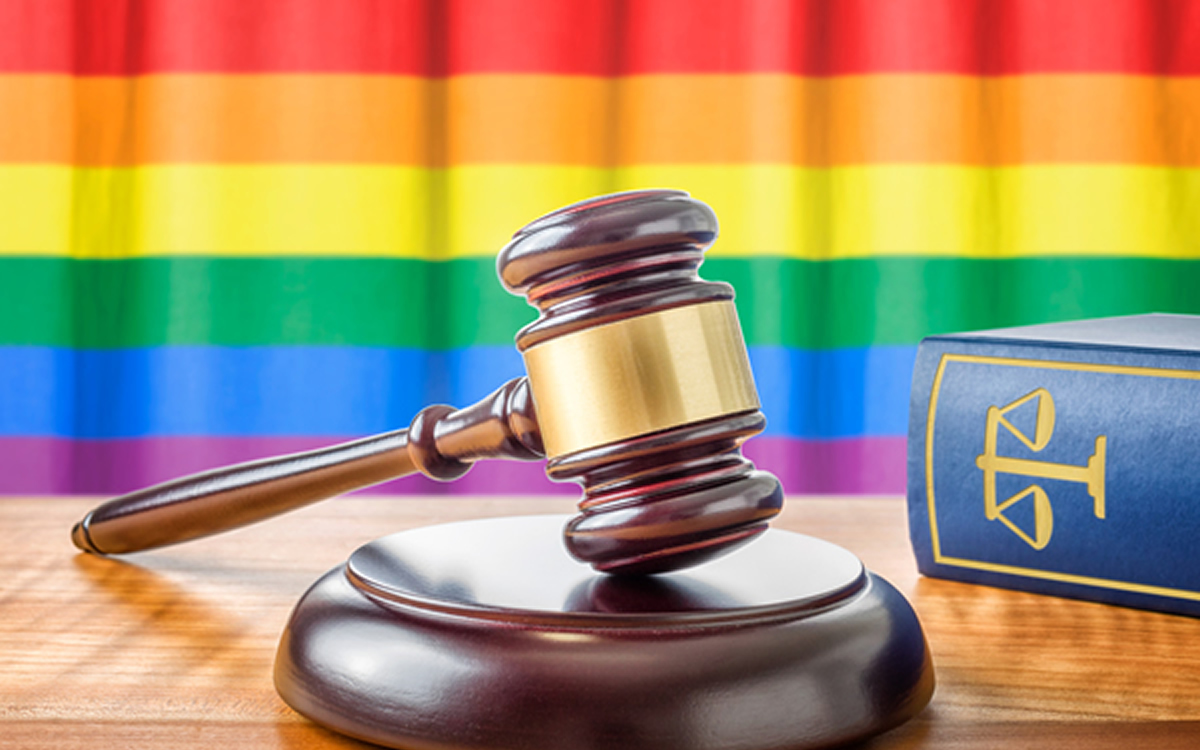
The Philippines Supreme Court in a landmark ruling said same-sex couples can co-own property under the country’s Family Code.
The Philippine News Agency on Tuesday notes the court issued its ruling in the case of two women who bought a house in Quezon City, a suburb of Manila, the Filipino capital, before they broke up.
The two women, according to the Philippine News Agency, “agreed to sell the property” after they ended their relationship, “and the registered owner — the respondent — signed a document acknowledging that the other partner paid for half of the purchase and renovations.” The Philippine News Agency notes “the registered owner” later “refused to sell the property and withdrew her earlier acknowledgment of co-ownership, prompting the other partner to file a complaint.”
A Regional Trial Court and the Philippines Court of Appeals ruled against the plaintiff.
The Supreme Court in a 14-page ruling it issued on Feb. 5 overturned the decisions. The Supreme Court published its decision on Tuesday.
“Considering that there is co-ownership between petitioner and respondent, then each co-owner may demand at any time the partition of the thing owned in common, insofar as her share is concerned,” said the Supreme Court in its ruling, according to the Philippine News Agency. “Having rightful interest over the subject property, petitioner has the right to demand the division of the subject property.”
The predominantly Catholic country’s Family Code defines marriage as “a special contract of permanent union between a man and a woman entered into in accordance with law for the establishment of conjugal and family life.” It also states in Article 148 that “in cases of cohabitation” outside of marriage, “only the properties acquired by both of the parties through their actual joint contribution of money, property, or industry shall be owned by them in common in proportion to their respective contributions.”
“In the absence of proof to the contrary, their contributions and corresponding shares are presumed to be equal,” it reads.
The BBC reported the Supreme Court ruling states this provision “applies to all forms of co-habitation,” regardless of the couple’s gender. A Supreme Court press release indicates the decision notes lawmakers and the Filipino government “must address same-sex couples’ rights, as courts alone cannot resolve all related policy concerns.”
“This court does not have the monopoly to assure the freedom and rights of homosexual couples,” it reads. “With the political, moral, and cultural questions that surround the issue concerning the rights of same-sex couples, political departments, especially the Congress must be involved to quest for solutions, which balance interests while maintaining fealty to fundamental freedoms.”
LGBT Pilipinas, a Filipino advocacy group, welcomed the ruling.
“This ruling marks a monumental step forward in the legal recognition of LGBTQ+ families and relationships in the country,” it said in a statement.
LGBT Pilipinas added the ruling “lays a crucial legal foundation for broader recognition of same-sex relationships and strengthens the push for comprehensive anti-discrimination protections.”
“This is a win not only for the LGBTQ+ community, but for fairness and justice in Philippine society as a whole,” said the group.

ICE arrests Milo Yiannopoulos in New Orleans

San Francisco, long a queer safe haven, remains competitive for homebuyers

For LGBTQ youth starting with nothing, Pride House in Florida offers help

Building a very queer future: StartOut’s Michael Meo on LGBTQ+ entrepreneurship

Here’s Your Palm Springs Weekend: Aug 28th – 20th, 2026 by LA Blade x Gay Desert Guide

Two awesome, affordable rides

Proposed Indian foreign funding law overhaul could further pressure LGBTQ+ groups

Celebrating 40 years of ‘Being Alive’

REACH LA: Where community, culture, and liberation kiki

When home becomes a journey: migration, memory, and the African diaspora
-
 Autos5 days ago
Two awesome, affordable rides
-
 India5 days ago
Proposed Indian foreign funding law overhaul could further pressure LGBTQ+ groups
-
 Features4 days ago
Celebrating 40 years of ‘Being Alive’
-
 Features4 days ago
REACH LA: Where community, culture, and liberation kiki
-
 Commentary4 days ago
When home becomes a journey: migration, memory, and the African diaspora
-

 Canada4 days ago
Monument to LGBTQ+ Canadians officially unveiled
-

 Events3 days ago
Get ‘Gritty In Pink’ this Thursday, August 27
-

 Movies16 hours ago
‘Teenage Sex and Death’ has never been more entertaining
-

 National3 days ago
New data shows record-high LGBTQ+ population amid Trump attacks
-

 Netherlands19 hours ago
Trans, nonbinary Americans find refuge in the Netherlands