
Politics
Anti-trans ballot measures pass in four states, setting up new legal battles
Sarah McBride after the election said Democrats cannot abandon transgender people
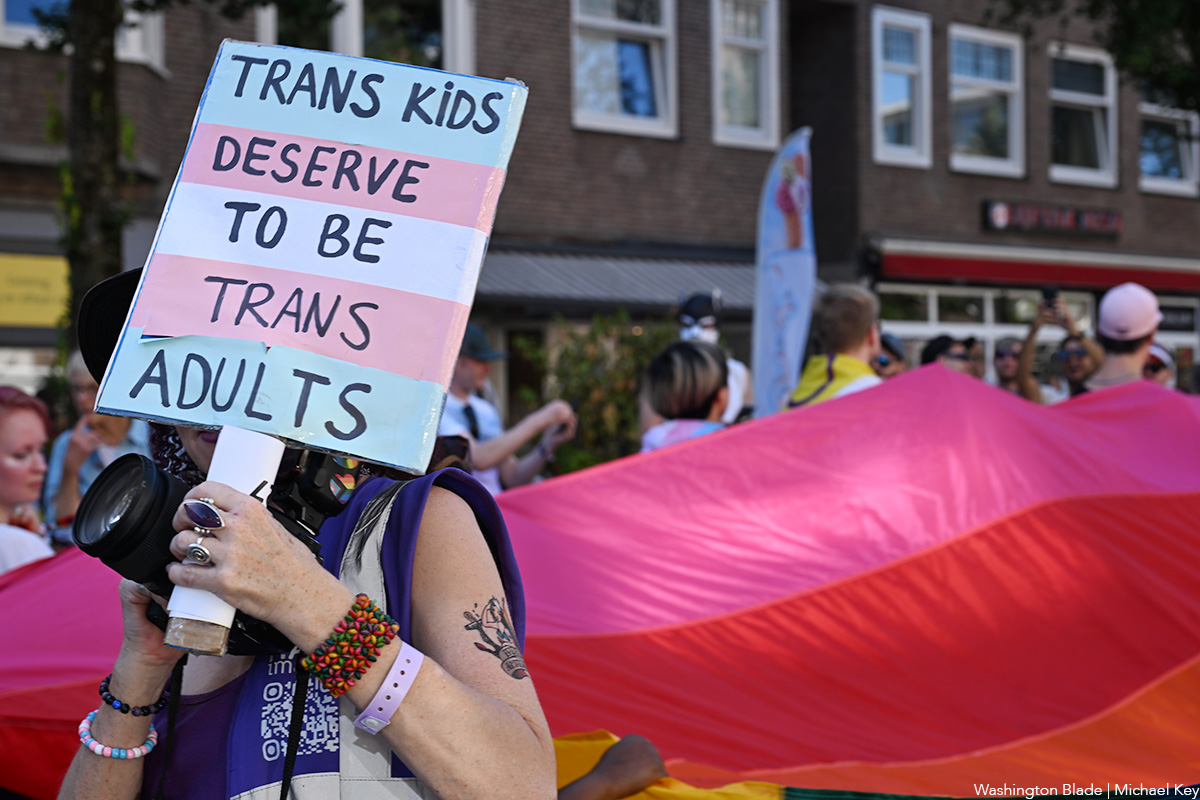
Five states across the country had ballot initiatives targeting transgender people and seeking to restrict their rights in some form, from bathroom restrictions to limitations on access to school sports.
Arizona, Colorado, Missouri, Nebraska, and Washington all considered measures targeting transgender people during the 2026 election.
Missouri’s anti-trans ballot initiative failed; while voters in Arizona, Colorado, Nebraska, and Washington approved their respective measures.
Arizona
In Arizona, voters passed Proposition 318, also known as the Protect Girls’ Sports in Arizona Act, with approximately 58.7 percent of the vote. The proposition, which was placed on the ballot by the state’s Republican-controlled Legislature, expands the state’s existing Sports Participation Ban, passed in 2022, which restricts trans girls from competing on public school girls’ sports teams.
The amendment further restricts athletic participation based on biological sex and addresses access to restrooms, locker rooms, and changing areas in public schools.
Arizona also has a surgery ban in place that prohibits physicians from providing “irreversible gender reassignment surgery” to minors under the age of 18. The state also excludes “gender reassignment surgeries” from Medicaid coverage.
Joel Edman, a spokesman for Progress Arizona, a local advocacy group, criticized the measure following its passage, warning of the broader consequences it could have for trans people and girls in general.
“The negative impacts this will have, not only on trying to bully and shame transgender people of all ages back into closets, into the shadows, but also to enforce a stereotype of what girls are supposed to look and dress and act like,” Edman told the AZ Mirror. “The real risk that this measure poses is having all girls potentially scrutinized for being too tall, or too strong, or too good at whatever sport they want to play with their friends.”
Colorado
In Colorado, voters approved two anti-trans propositions, both targeting trans youth.
Proposition 134 requires public schools and colleges to designate sports teams according to students’ sex, while restricting trans athletes from participating on teams that align with their gender identity. The Associated Press called the race, with support for trans restrictions at 52 percent of the vote.
Proposition 135, which prohibits health care professionals from knowingly performing any surgery on a minor “for the purpose of altering biological sex characteristics,” also passed, receiving 51.92 percent of the vote.
Bruce Parker, executive director of Rocky Mountain Equality, described the results as a setback for transgender youth, their families and the state’s broader LGBTQ+ community.
“Today is a bad day for Colorado. While we certainly have some good news from the results, including the rejection of Amendment 81, our fundamental commitment to privacy and freedom has been undermined by the passage Propositions 134 and 135, two misleading and discriminatory ballot measures. This is devastating for a lot of kids, families, and communities.
“The impact of these measures on Colorado families is real. Right now, parents are wondering what this means for their children’s healthcare. Students are wondering if they’ll be allowed back on their teams or what they might have to do to be allowed to play. To those kids and families I want to say: you are not alone, and we are not going anywhere.”
Parker continued, saying the language of the measures was intentionally vague, creating a chilling effect for those unsure whether they were violating the law. He argued that this would lead more people to err on the side of caution and preemptively act in ways that align with the legislation, regardless of whether those actions are actually illegal under the new measures.
“Props 134 and 135 were written broadly and vaguely on purpose. They leave basic questions unanswered about who enforces them, how decisions get made, and what safeguards exist. That ambiguity is what the proponents want. They want for there to be gray areas where the policies could potentially reach even farther into our private lives.
He also added that, while they lost the final tally, the close race indicated that many people in the state genuinely care about protecting trans youth, making the issue more of a fight than conservatives had made it out to be.
“More than a million Coloradans voted against these harmful measures. The vote was close, and we are so grateful for every person who made calls, knocked doors, and voted. Now the newly elected Colorado legislators have an opportunity to negate the damage these policies will cause, and we expect them to step up.
“To every transgender kid and family, we’ve got your back. This is your home too. This vote doesn’t change that,” Parker finished with.
Mardi Moore, chief executive officer of Rocky Mountain Equality Action Fund, similarly criticized the measures, arguing that voters had been misled into supporting policies that would disproportionately affect trans youth and their families.
“While we elected many pro-equality candidates and defeated a measure targeting our immigrant neighbors, voters were misled into accepting policies that unnecessarily and unfairly target trans youth and their families,” Moore said. “Supporting the hateful priorities in Project 2025, these poorly written measures will cause confusion and harm for real kids, families, schools, and doctors. We will continue to fight for every person’s freedom and privacy, and we will work with newly elected lawmakers to mitigate the harm these policies can do to Colorado kids.”
Missouri
Missouri, one of the most consistently Republican states on the list, was the only state to reject its anti-trans ballot measure, with 55.42 percent of Missourians voting “No.”
Voters in the Show Me State rejected Amendment 3, a legislatively referred constitutional amendment that attempted to enshrine a ban on gender-affirming care for minors in the state constitution, alongside abortion restrictions.
LGBTQ+ advocates in the state attributed the outcome to grassroots organizing that emphasized the right to live free from discrimination, rather than the expansive and often dangerous rhetoric anti-trans politicians have been injecting into this race and others across the country.
PROMO Communications Director Robert Fischer said the organization views the result as part of a longer-term effort to build political support for trans Missourians.
“Our goal is to build a pro-trans majority in Missouri, which means that the majority of voters in Missouri would reject any candidate, law, or ballot initiative that tries to discriminate against trans Missourians,” Fischer said. “We understand that this would be a 5-10 year goal, which is why our deep canvassing work is about power building. We set out to have 10,000 completed conversations with voters across the state and we are proud to say that we exceeded that number, hitting over 13,000 by Election Day.”
“We’ve seen the beginnings of people’s hearts and minds shift in Missouri as we talk to voters. There are so many people in each of our regions that simply are eager to talk with a trans person — to hear more from them and learn more about them. Our deep canvassing program started in 2024 and it will continue after this year’s election.”
Fischer also said he believes the outcome reflects a broader national shift in how voters view political attacks targeting trans people.
“Nationally,” Fischer added, “I think you’ll see Missouri is on pace with the rest of the country in that voters are tired of politicians using trans people as political fodder.”
Nebraska
Voters in Nebraska approved Initiative 442, the Fairness for Girls constitutional amendment. The proposal received 67.81 percent of the vote, the highest level of support among the anti-trans ballot measures considered during this election cycle.
The measure bars students assigned male at birth from participating in sports designated for girls and women, enshrining sex-based athletic eligibility requirements in the state’s constitution.
OutNebraska, an advocacy organization for LGBTQ+ people in the state, was a vocal opponent of the measure. Although the policy had already been enacted through state law, the ballot initiative made it part of the state constitution, making it more difficult to change or challenge.
The organization previously described the measure as causing “real damage” to trans children.
“The ‘Fairness for Girls’ initiative is not a grassroots effort to protect girls’ sports. It has received the majority of its funding, more than $3 million, from a dark money nonprofit,” Nia Patterson, the organization’s communications manager, posted in June. “It is designed to permanently embed into Nebraska’s constitution a policy that was already passed as regular law, specifically making it harder to change or challenge that law.”
“Transgender students are not a threat to girls’ sports,” Patterson added. “They are kids who want to play. OutNebraska knows that Nebraska is for all of us. That includes every young person who wants to be part of their school community.”
Washington
Washington voters approved Initiative 638 with more than 55 percent of the vote, barring students assigned male at birth from participating in girls’ K-12 sports. The measure also requires all girls — both cisgender and trans — to verify their sex before joining a girls’ team, while boys face no similar requirement. Verification can be based on reproductive anatomy, genetic makeup, or normal endogenously produced testosterone levels.
The vote marks a reversal of nearly two decades of state policy allowing trans students to participate in sports consistent with their gender identity.
Despite the measure’s passage, LGBTQ+ and educational organizations swiftly moved to challenge its legality in court.
The American Civil Liberties Union of Washington and Pacifica Law Group filed a lawsuit seeking to block the measure. On Nov. 9, a second coalition of parents and educators filed a separate challenge, arguing that the initiative discriminates against trans girls and violates several provisions of the state constitution.
The plaintiffs include TransFamilies, a nonprofit supporting families with trans and gender-diverse children; the Washington Education Association, which represents more than 90,000 educators; and parents of students who play girls’ sports. TransFamilies and the parents are represented by the ACLU of Washington and Legal Voice, while the educators’ union is represented by Pacifica Law Group.
The lawsuit argues that the sex-verification requirements violate students’ privacy rights under Article I, Section 7, and the state’s Equal Rights Amendment by subjecting girls, but not boys, to additional scrutiny. It also cites Article IX’s guarantee of equal access to education and argues that the initiative improperly amends the Washington Law Against Discrimination and other state laws protecting trans people.
The coalition will seek emergency relief to prevent the measure from taking effect Dec. 3.
TransFamilies founder Aidan Key, who helped lead efforts to establish Washington’s inclusive school sports policy in 2007, said the state had spent two decades embracing trans and gender-diverse student-athletes.
“It has been my great privilege over the last two decades to see communities throughout Washington embrace trans and gender-diverse student-athletes in their schools,” Key said. “When people are provided accurate information, have their questions or concerns addressed, and understand why participation —for trans children and everyone else — matters, they gain clarity and confidence that inclusion, not division, makes us all stronger.”
“Washington educators are committed to fair and welcoming schools where all students can thrive,” said Washington Education Association President Janie White. “This new requirement is in direct conflict with the state’s paramount duty to educate our children without discrimination.”
“Sports give young people a place to make friends and be part of a team, but Initiative 638 seeks to deny transgender girls those opportunities,” said Adrien Leavitt, staff attorney for the ACLU of Washington. “Washington has long had strong protections against discrimination. We will fight to stop this law from taking effect and prevent this needless attack on youth in our state.”
“Think about what this law actually does: it creates an invasive surveillance process that could traumatize young girls across Washington — all in the name of discriminating against trans people,” said Legal Voice Managing Director Julia Marks. “Legal Voice has been fighting for equal access to athletics for all girls since our first case 50 years ago, and we’re not about to go backward in Washington.”
The broader political fight over trans rights
Despite the passage of several significant anti-trans ballot measures across the country, candidates who were targeted by anti-trans political advertisements won their races in Ohio, Texas, Michigan, and Alabama. Georgia and Wisconsin also elected their first trans or nonbinary state lawmakers.
The results highlight the increasingly prominent role trans rights have played in the culture-war politics of the Trump era. Hundreds of millions of dollars were spent on anti-trans political advertisements in elections across the country, as Republicans increasingly weaponized trans identity and made it a central part of their party platform.
However, the strategy came as voters continued to prioritize issues such as affordability and corruption, potentially benefiting their Democratic counterparts and contributing to one of the bluest retaliatory swings of the political pendulum in recent memory.
Lambda Legal Deputy Legal Director for Policy Cathryn Oakley argued that the election demonstrated the limits of using trans people as political targets.
“We already have learned a fundamental truth from the outcome of this election — throwing transgender and nonbinary people under the bus failed to accomplish the objectives of people who invested hundreds of millions of dollars into trying to turn us against each other,” Oakley said. “In Virginia, voters cleared antiquated, discriminatory language out of their constitution and affirmed that marriage equality is here to stay. In Missouri, voters rejected efforts to take healthcare decision making away from Missourians and give it to lawmakers instead. We are hopeful that when all the ballots are counted in Colorado and Washington, that voters in those states will have turned down measures that would have subjected girls to invasive inspections, taken health care decisions away from families and doctors, and stripped protections from students who confide in trusted adults at school.”
Oakley also emphasized the impact the political climate has had on trans and nonbinary young people, particularly those targeted by political campaigns.
“Our hearts go out to the transgender and nonbinary young people all across the country who have been subjected to these relentless, cynical attacks for no reason other than disapproval and misunderstanding of who they are. Lambda Legal sees you and will continue to fight for you, as we will continue to fight in places like Arizona and Nebraska, where the fight against discriminatory ballot measures was hard-fought but didn’t prevail. The truth is, these ballot measures aren’t about us — they are about the need of some people to divide Americans and turn us against one another,” Oakley continued.
“We will never accept that. Lambda Legal will keep fighting through impact litigation, advocacy and public education. The time of scapegoating our communities for cheap political gains is over.”
McBride: Democrats cannot abandon trans people
U.S. Rep. Sarah McBride (D-Del.), the nation’s first openly trans member of Congress who just won reelection for her seat, pushed back against the idea that Democrats need to abandon trans people politically to win elections during a call with the Human Rights Campaign on Tuesday night. She argued that the party’s electoral gains were not built by sacrificing vulnerable communities.
“The majority was not built by throwing vulnerable people under the bus. This majority was built by people of principle, by candidates who have defended their voters and their constituents, all of them, regardless of their sexual orientation and gender identity.”
McBride also argued that voters were increasingly rejecting anti-trans political attacks, particularly when those attacks came at the expense of addressing more immediate concerns.
“Anti-trans politics was a flop this election; they were a flop in 2025. The American people are tired of a politics of cruelty that does nothing to lower costs or address corruption throughout our society. They want serious leaders who bring us together and focus on the issues that keep them up at night.”
Her own reelection, she said, was another indication that trans identity was not an electoral liability for candidates willing to defend LGBTQ+ people.
“I’m proud that at a time when Republicans seemingly made every single issue in some form or fashion about trans issues, that voters in my state returned the nation’s first out transgender member of Congress to office, with the largest number of votes of any candidate on the statewide ballot this year.”
Advocates warn of the lasting impact on trans youth
While the election results offered some victories for LGBTQ+ advocates, organizations working with trans youth warned that the passage of ballot initiatives in four states would have consequences extending well beyond Election Day.
Rodrigo Heng-Lehtinen, senior vice president of public engagement campaigns at the Trevor Project, said the election should serve as a warning to politicians who continue to use trans young people as political targets.
“If there is one takeaway from the 2026 midterms, it’s that politicians must stop attacking transgender young people in hopes of political gain. With ballot initiatives in five states and hundreds of millions of dollars in anti-transgender attack ads, the 2026 U.S. midterm elections were a historic showing for anti-trans political forces. In many races all across the U.S., voters rejected anti-transgender political rhetoric and, instead, cast their votes based on the issues that mattered most to them.
“However, it is important to underscore that multiple states advanced ballot measures that restrict the rights of transgender young people. The Trevor Project’s peer-reviewed research found that transgender and nonbinary youth living in states where anti-transgender state laws were enacted reported up to a 72 percent increase in past-year suicide attempts.
“No matter your personal politics, or who you voted for, it’s important to recognize that the hostile political environment takes a toll on transgender youth mental health that lasts long after elections end. Transgender and nonbinary youth face disproportionate rates of suicide risk not because of who they are, but because of how they are mistreated and stigmatized.
“Across every state and every political party, leaders should let these young people and their families live their lives – not attack them further to score political points. Transgender people are people. Transgender kids are kids. And they deserve to grow up in a country that respects and supports them, just like all kids do.”
The Trevor Project’s 2025 U.S. National Survey on the Mental Health of LGBTQ+ Young People further illustrates the toll the political climate has taken on trans and nonbinary youth. The survey found that 40 percent of trans and nonbinary young people seriously considered attempting suicide in the past year.
It also found that 94 percent said recent LGBTQ+-related policies, laws and debates caused them stress or anxiety, while 86 percent said those developments made them feel unsafe. Additionally, 38 percent said they or their families had considered moving to another state because of those policies.
HRC President Kelley Robinson similarly warned that, despite the election results, LGBTQ+ rights remain vulnerable to political and legal challenges.
“The last couple of years have taught us as a community how fragile our rights are. Right now, too many of our rights are hanging on by a single Supreme Court case.”
Robinson pointed to the 30 states that still have same-sex marriage bans on their books and warned that employment discrimination protections could also be at risk if the U.S. Supreme Court overturns Bostock v. Clayton County.
She said the political fight over trans rights is far from over, arguing that opponents will continue to use LGBTQ+ people as political targets rather than address the issues affecting Americans.
“We’ve made it through the battle, but we’re not at the end of this war. I think that we will continue to see our opposition try to weaponize queer and trans lives for only political gain because they do not have answers or solutions to the problems and the crisis that is facing most Americans every single day.”
Robinson also described the consequences of the anti-trans political advertising campaign, particularly how it has shaped public perceptions of trans people and the challenges they face.
“One of the repercussions of these ads is that people are starting to see the cruelty that is happening for trans people, the levels of violence that they’re experiencing, the challenges in getting healthcare, the challenges and bullying that kids are facing in schools, sometimes at the hands of adults.”
Polling data also suggested a disconnect between the political emphasis on trans issues and voters’ priorities.
Anna Greenberg, a senior partner at GQR, an advisory firm that conducted polling on voter attitudes toward anti-trans measures, said 65 percent of people surveyed wanted to hear less about trans issues, the highest figure among the issues included in the polling.
“What I think comes out of this survey is what we experienced in real time, in those campaigns … [is that] the actual ads made had no impact on the races that we were working in,” Greenberg said during the HRC post-election call.
She also explained that the anti-transr rhetoric that appeared to have worked in 2024 to help reelect President Donald Trump is no longer proving effective. If anything, it is beginning to alienate some of the less fringe members of the Republican Party.
“Voters think the GOP’s obsession with trans people is a little strange,” Greenberg added. “We asked this question. We said, “Do you agree or disagree with: ‘Republicans’ obsession with transgender people and children is strange and over the top.’ 58 percent of people agreed with that statement.”
She also explained during the call that only 3 percent of Republican voters mentioned trans issues when asked why they voted Republican.
Pentagon
Articles of impeachment filed against Hegseth
Anti-LGBTQ+ defense secretary remains defiant

Defense Secretary Pete Hegseth is facing an impending impeachment vote as U.S. Rep. Thomas Massie (R-Ky.) on Monday filed articles of impeachment.
The grounds for impeachment center on Hegseth’s handling of the Iran war, namely his disregard for congressional War Powers resolutions, along with other issues, including allegations of war crimes committed by the military in other regions of the world at Hegseth’s behest.
“By engaging in hostilities in Iran for more than 90 days without congressional authorization, Secretary Hegseth is breaking the law and must be held accountable,” Massie said.
“I’m doing this because it’s the right thing to do,” he added after discussing the articles with reporters.
According to the BBC, when asked by reporters about the impending resolution earlier Monday, Hegseth said: “We’re not worried about that,” adding that he would hold a news conference Tuesday morning “on that very topic.”
Impeaching a Cabinet secretary would be an extremely rare move for Congress, particularly given that Republicans maintain control of the House until the end of the current term in January of next year. No Cabinet member has ever been successfully impeached in U.S. history.
Under current House Speaker Mike Johnson (R-La.)’s leadership, Massie told reporters that he remains unsure whether the measure will secure enough Republican votes, assuming all Democrats support his articles of impeachment.
Currently, there are 218 Republicans and 214 Democrats in the U.S. House of Representatives.
The U.S. Senate requires a two-thirds vote to convict, a threshold that would be difficult to reach during the current congressional term.
Hegseth has been an adamant opponent of LGBTQ+ rights, both within the military and in broader civilian life. He has a military background, beginning his service in the Minnesota Army National Guard, where he served at Guantanamo Bay Naval Base in Cuba and was deployed to Iraq and Afghanistan.
After his stint in the military, Hegseth became a prominent far-right political pundit on Fox News.
Prior to his appointment to the Pentagon, where he was confirmed only after a deciding vote by Vice President JD Vance; Hegseth faced allegations of sexual misconduct, financial mismanagement, and excessive drinking.
Since taking one of the highest-ranking positions in the U.S. military, Hegseth has been at the center of a series of controversies and questionable policy decisions, including a leaked government group chat on Signal; alleged war crimes related to U.S. military strikes on alleged drug traffickers in the Caribbean Sea; unconstitutionally promoting Christianity within the military; using unmarked military planes for boat strikes; questions surrounding the use of force and rules of engagement in the 2026 Iran war; an unprecedented purge of admirals and generals; mandating testosterone screening for military personnel; and broadly removing military members with a history of gender dysphoria.
In September 2025, Hegseth directed military leaders at Marine Corps Base Quantico to dismantle Diversity, Equity, and Inclusion (DEI) offices, identity months, and LGBTQ+ programs across the department, framing the shift as a return to a “warrior ethos.”
Many of his anti-LGBTQ+ policies come as a direct result of President Donald Trump’s 2025 executive order, “Prioritizing Military Excellence and Readiness” which bars transgender people, both current and future military personnel, from being affiliated with the Pentagon.
The impeachment effort comes days after Republicans suffered stunning losses in the midterm elections, with control of Congress set to return to Democrats. The results also mark a turning point for the Trump-Vance administration as Trump enters the “lame duck” period of his presidency, with two years remaining in his term and seemingly little support from a Democratic-controlled Congress beginning Jan. 3, 2027.
Johnson will have two days to either bring the articles to a vote, or vote to refer it to committee or to set it aside for future congressional leadership to deal with.
The Los Angeles Blade reached out to Johnson’s office and to SPARTA (Servicemembers, Partners, and Allies for Respect and Tolerance for All), a trans servicemember advocacy group, about the impending articles of impeachment for Hegseth, but did not receive a response by publication time.
This story will be updated as new details become available.
California
Stephen Post wins final seat on WeHo City Council
Edges past Duran, Brazeal to join Byers, Krieger
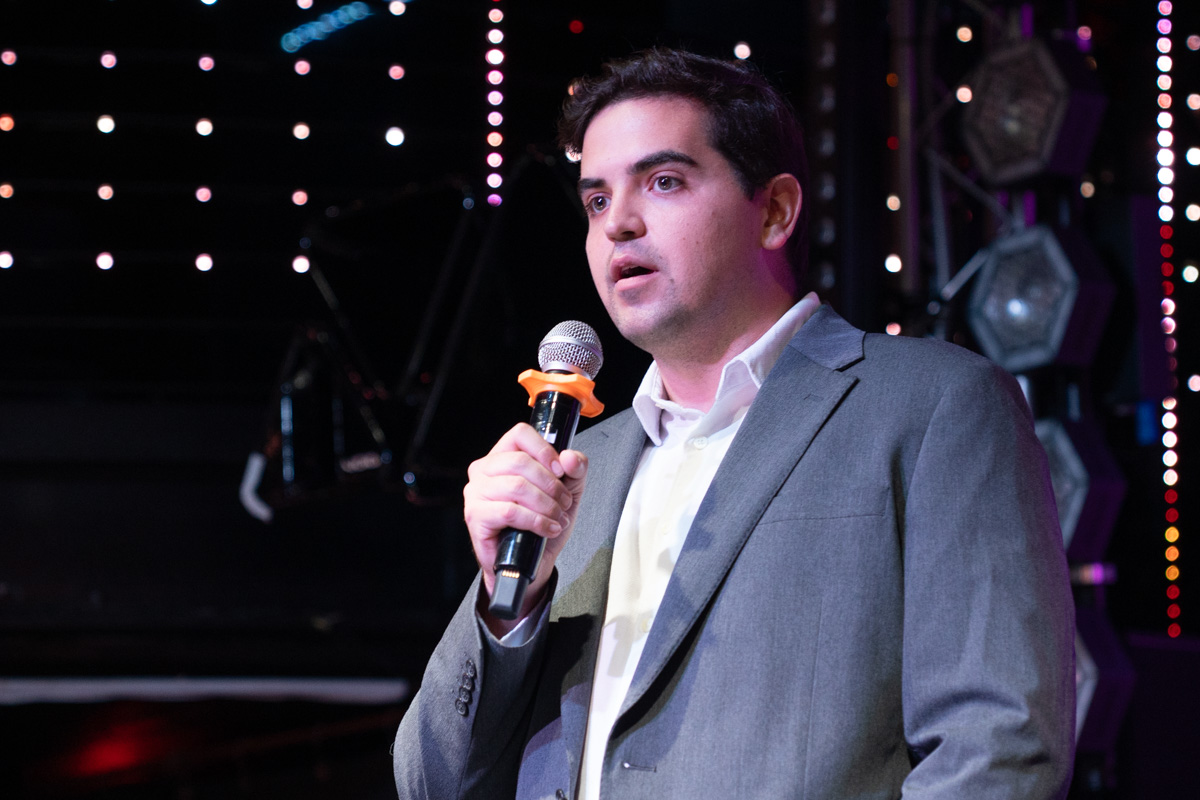
Stephen Post has won the final seat on the West Hollywood City Council, joining Chelsea Byers and Helen Krieger as the winners of this election cycle. Post beat out candidates John Duran and Kyle Brazeal in the tight race for third. While ballots are still being counted, Post leads fourth place Duran by nearly 500 votes and his lead has been growing with each new vote count. Duran conceded to Post on Saturday morning.
In Los Angeles County, younger and more progressive voters tend to cast their ballots closer to Election Day, meaning they often get counted later. This is what caused Post’s seeming comeback victory, although this is more a factor of California’s slow ballot counting process.
Post ran a progressive campaign, focusing on an aggressive opposition to Flock cameras, which he said posed serious privacy concerns for WeHo residents, amounting to mass surveillance. He also supported the plan for bike lanes on Fountain Avenue and building more housing in WeHo, including in large apartment buildings. Post was the only candidate endorsed by the Los Angeles chapter of the Democratic Socialists of America, whose members vigorously canvassed for him and helped him reach voters.
Post is a newcomer to politics as City Council will be his first time in elected office. He works as a business improvement district manager and previously was a non-profit advocate for criminal justice reform.
These election results illustrate a progressive sweep of the Council, with Byers and Krieger supporting many of the same policies as Post. All winning candidates were endorsed by the Unite Here! Local 11 union, which has become a powerful player in Los Angeles campaigns, as they also backed the successful campaign of Mayor-elect Nithya Raman. More moderate candidates like Duran, Brazeal, and Larry Block all placed in fourth, fifth, and sixth place respectively.
With Council member John Erickson staying on the Council after losing his state Senate election to Brian Goldsmith, progressives will have a 4-1 majority meaning they will be able to pass their agenda with relative ease. Vice Mayor Danny Hang is more moderate but has often collaborated with Erickson and Byers on a case-by-case basis.
The voters have spoken and a progressive agenda is coming to West Hollywood. Younger and first time candidates have won out over experienced WeHo political figures.
Caleb Kaufman is a California Local News Fellow placed with the Los Angeles Blade. The California Local News Fellowship is a state-funded initiative to support and strengthen local news reporting. Learn more about it at fellowships.journalism.berkeley.edu/cafellows.
White House
Stephen Miller, key architect of anti-LGBTQ+ policies, named White House chief of staff
Susie Wiles resigned after Democrats made gains in midterms
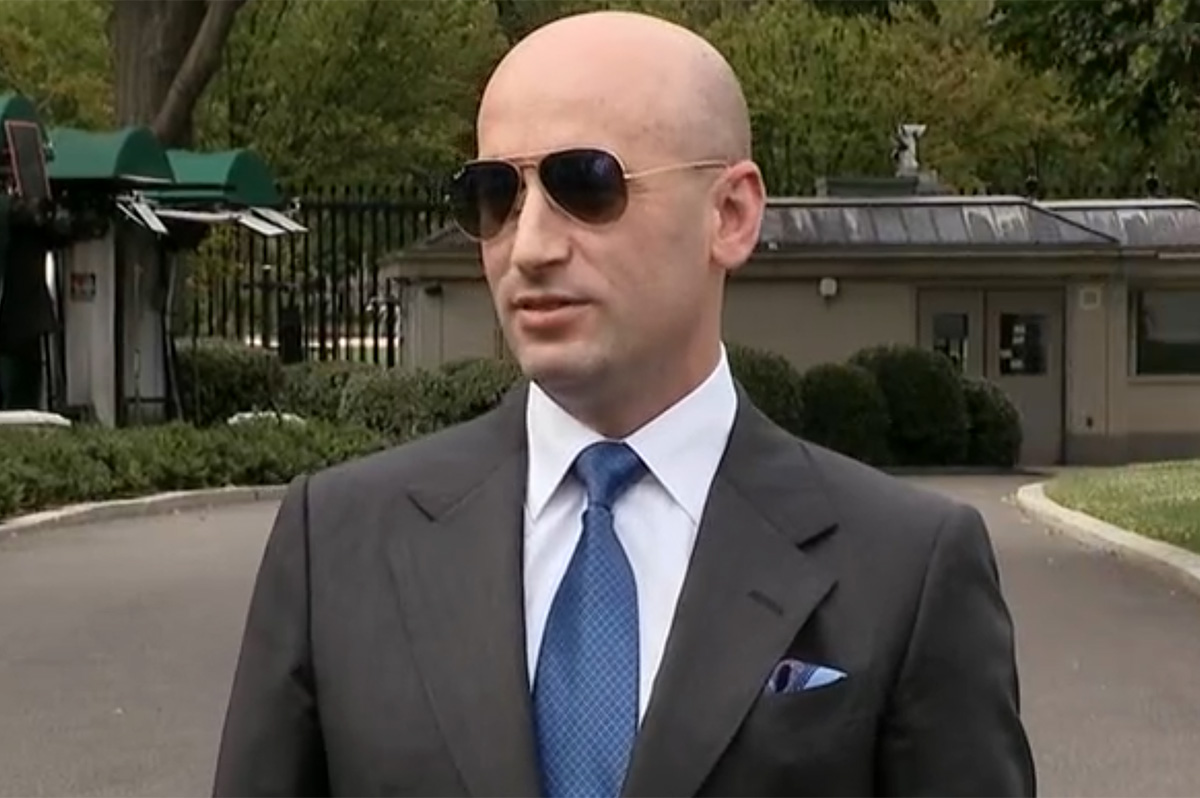
President Donald Trump has ousted Susie Wiles as his chief of staff, announcing that Stephen Miller, the current deputy chief of staff, will take her place on Monday.
Trump posted the message to his social media site Truth Social on Friday afternoon, informing the public of the change in leadership following the Republican Party’s devastating losses in Tuesday night’s midterm elections.
“I am pleased to announce that Mr. Stephen Miller, the current deputy chief of staff of the Trump administration, and one of my most trusted advisors, will become the chief of staff starting Monday, Nov. 9, 2026,” Trump posted. “Susie Wiles, who has done an outstanding job, will be moving over to the Trump Political Operation. I want to thank her for her service as chief of staff — She has done a great job!”
Miller, who has a long history of being closely intertwined with the 47th president, was a key voice in both of Trump’s presidential campaigns and served as one of his closest advisers. Prior to his tenure as deputy chief of staff, he served as a Homeland Security adviser beginning in 2025 and previously worked as a senior adviser and director of speechwriting during Trump’s first administration.
One of his biggest policy pushes while serving as Homeland Security adviser was the forced separation of migrant children from their parents or guardians, a policy that has led the Southern Poverty Law Center to consider him an extremist.
Miller founded the conservative legal organization America First Legal in 2021, which has acted as one of the strongest legal arms of the conservative movement in targeting LGBTQ+ rights and inclusive policies, including diversity, equity, and inclusion (DEI) initiatives, across the country.
America First Legal has worked with the Trump-Vance administration to target federal civil rights protections in K-12 schools and universities, including those related to transgender-inclusive policies.
He is expected to continue pushing anti-inclusive measures while serving as the president’s right-hand man.
Shortly after the White House announcement, openly gay U.S. Rep. Robert Garcia (D-Calif.), the ranking member of the House Oversight Committee, posted a statement on social media warning Miller and other administration officials that, following the change of power in January, they will face investigations by the committee, with the possibility of charges being brought against them for “unconstitutional” actions taken while Republicans held power.
“Just days after the American people rejected his corrupt and lawless presidency, Donald Trump is doubling down. Stephen Miller is the architect of the unconstitutional ICE raids that have terrorized our communities and kidnapped and killed American citizens and immigrant families,” Garcia posted on Instagram.
“Oversight Democrats will continue to investigate Miller for his misconduct, and we will fight against his hateful policies in Congress and the courts. Stephen Miller should lawyer up.”
The Los Angeles Blade reached out to the White House press office regarding the change in leadership and whether Miller would continue to push anti-LGBTQ+ policies while serving as the highest-ranking aide to the president and was directed to a X post made by White House Direct of Communications Steven Cheung.
“Stephen Miller is a Trump OG, someone who has been with the President since the very beginning. There is no bigger advocate for the Trump agenda than Stephen, and he will help the administration deliver on monumental victories for the rest of this historic second term,” Cheung wrote.
News
Byers, Krieger win seats on WeHo City Council; race for third too close to call
John Duran, Kyle Brazeal, and Stephen Post battle for final seat

Chelsea Byers and Helen Krieger have secured the first and second spots in the race for West Hollywood City Council. After an eventful campaign season, with 13 candidates running to fill the three seats up for grabs, Byers and Krieger have come out on top. Each holding a wide lead ahead of their challengers, they are all but guaranteed to each win a seat.
However, the race for third has shaped up to be an incredibly close contest among John Duran, Kyle Brazeal, and Stephen Post. Duran currently holds third, Brazeal fourth, and Post fifth, but they are all within 100 votes of each other, meaning their positions could easily swap as more ballots are counted.
The Winners
Byers and Krieger both ran on progressive platforms, with focuses on building more housing, creating biking and transit infrastructure, and opposition to Flock cameras in the city. The two are also both housing advocates. Byers works at the non-profit Welcoming Neighbors Network which aims to end the U.S. housing shortage and Krieger helped build affordable housing in New Orleans after Hurricane Katrina.
They were both backed by the progressive Unite Here! Local 11 union, which represents service worker employees around L.A. The union has become a major influence in West Hollywood elections in recent years, providing resources and support to many progressive candidates.
Byers and Krieger have been friendly with each other on the campaign trail, and with other countywide progressives. Byers even earned a shoutout in L.A. Mayor-elect Nithya Raman’s election night speech. Their campaigns were also supported by former WeHo Mayor and current L.A. County Supervisor Lindsey Horvath.
Byers was the only incumbent running for re-election, with Mayor John Heilman and Council member Lauren Meister term limited. Heilman and Meister supported the campaigns of Duran and Brazeal for Council, who are now battling each other and Post for the third and final seat.
The Race for Third
California counts ballots slowly compared to other states and with the margins between third, fourth, and fifth so narrow, it may be a while before the race can be called conclusively.
Duran and Brazeal’s campaigns focused on public safety, opposition to adding bike lanes on Fountain Avenue, and creating a Transit Oriented Development Alternative Plan in West Hollywood. Both argued that the city’s politics had become too ideological and called for a return to common sense decision making that they claimed was absent in new city leadership.
Duran is a longtime civil rights attorney and West Hollywood politician, serving on the City Council between 2001 and 2020. Duran’s time in elected office ended in scandal as he was accused of multiple accounts of sexual harassment, first in 2016 and then again in 2019. He lost his re-election bid in 2020.
Brazeal is a political newcomer, working in a career in finance before joining the Council race this year. His campaign was rattled by allegations of transphobia in a story reported by the Los Angeles Blade, with a transgender woman accusing him of calling her a slur in 2024.
Post, currently in fifth, is a progressive backed by many of the same organizations as Byers and Krieger, and was the only candidate backed by the L.A. chapter of the Democratic Socialists of America. He made anti-flock policy a cornerstone of his campaign and argued that it compromised WeHo residents’ privacy and the city’s values.
A Majority Voting Bloc
With the incoming Council members, and Erickson’s unsuccessful run for state Senate keeping him in his position, the Council is guaranteed to have at least a three-vote majority to pass progressive policies in line with Krieger and Byer’s campaign promises. This means Flock cameras are most likely coming down and the plan for bike lanes on Fountain Avenue will likely proceed unchanged, regardless of who wins the final seat.
Caleb Kaufman is a California Local News Fellow placed with the Los Angeles Blade. The California Local News Fellowship is a state-funded initiative to support and strengthen local news reporting. Learn more about it at fellowships.journalism.berkeley.edu/cafellows.
California
Nithya Raman wins Los Angeles mayoral election, ousting Karen Bass
Mayor-elect commits to protecting queer Angelenos from Trump attacks
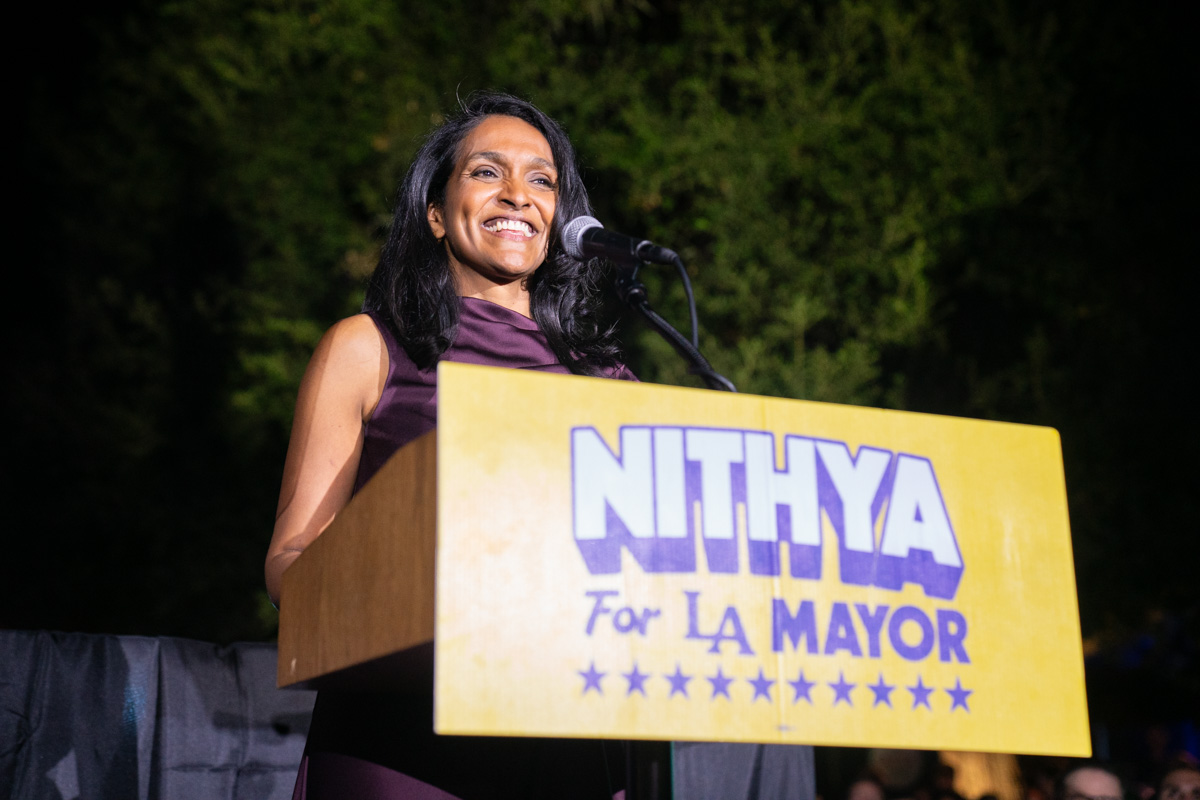
Nithya Raman is the projected winner of the Los Angeles mayor’s race, beating out incumbent Karen Bass in a contentious campaign to lead the second largest city in the nation. Raman has won 52% of the vote with 75% of precincts reporting.
Earlier in the year, City Council member Raman’s chances of pulling off a victory seemed slim. Mayor Bass won handily in the June mayoral primary, and Raman came in a distant second, inching out the bombastic former reality TV star Spencer Pratt to secure a spot in the runoff.
Raman ran on a progressive platform that promised to address chronic issues in Los Angeles, like homelessness, affordability, and lack of housing supply. Raman made the case that the Bass administration had not confronted these challenges effectively and that Los Angeles needed new leadership that could.

A newcomer to politics, Raman first ran for office in 2020 when she won a seat on the Los Angeles City Council, the first time a challenger had defeated an incumbent for a city council seat in nearly two decades. Her election was a shock to the L.A. political establishment and taught Raman how to effectively organize a grassroots campaign, a skill that would be invaluable to her 2026 mayoral victory.
Despite lacking establishment backing, earning no endorsements from her fellow council members, Raman was supported by many progressive organizations and unions, including the L.A. chapter of the Democratic Socialists of America, Unite Here! Local 11, and the Western States Carpenters union. They provided her with thousands of eager canvassing volunteers and organizers. These canvassing efforts helped sway public opinion and introduce Raman to voters who had likely never heard of her.
Homelessness was a particular flashpoint in the election. In April, reporting by the L.A. Times showed 40% of the people who participated in Mayor Bass’s signature anti-homelessness program ended up back on the streets within a year, and overall homelessness levels increased across the city in the last year. Raman pointed to her district’s near 50% decline in unsheltered homelessness between 2025 and 2026 as proof she could confront the issue more effectively. But time will tell if she can translate this success city-wide.
Mayor Bass served a hectic and tumultuous term as the first woman mayor of Los Angeles. In early 2025, she had to deal with the fallout of the Palisades fires, one of the most destructive wildfires the city has ever seen. Only a few months later, Immigration and Customs Enforcement raids shocked immigrant communities around L.A. and subsequent protests shut down the city. In response, President Trump deployed the National Guard to the streets in a move many saw as federal overreach, further inflaming tensions.
These remarkable challenges ingrained anti-incumbent sentiment among some voters who believed Mayor Bass could have done more to help Angelenos in both instances.
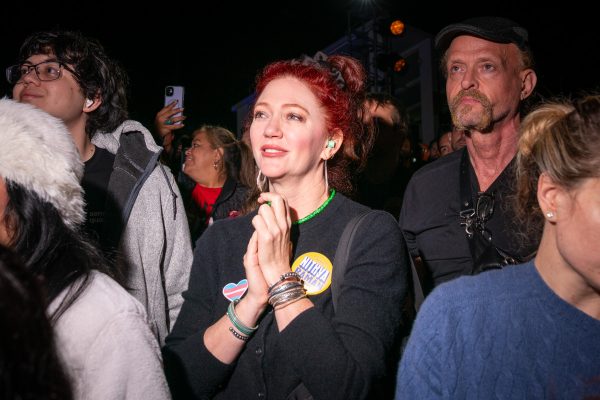
Raman spent her campaign painting the mayor as insufficiently proactive in countering the policies of the Trump-Vance administration. Raman has promised to protect L.A.’s queer community from federal actions that could harm them, especially emphasizing her support for the transgender community, which has been the target of numerous attacks from President Trump.
The Mayor-elect said she would pressure Children’s Hospital Los Angeles to reevaluate its ending of gender-affirming care services. The hospital’s center for Transyouth Health closed in 2025 following federal pressure to end trans healthcare for minors, impacting more than 2,000 patients who were receiving care when the closure occurred. Despite federal threats, gender-affirming care remains legal in California.
Speaking with the Blade last month, Raman said she would “reach out to [CHLA’s] board and speak to them about that decision and see how we can push them to do better [for] trans patients,” outreach she said had not happened under the Bass administration.
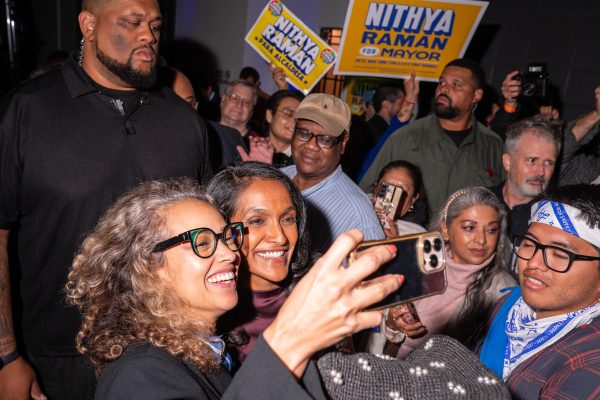
In her election night speech to an energized crowd at the Greek Theater, Raman reiterated her support for the queer community, committing to “show up for our gay and trans siblings,” across Los Angeles.
Caleb Kaufman is a California Local News Fellow placed with the Los Angeles Blade. The California Local News Fellowship is a state-funded initiative to support and strengthen local news reporting. Learn more about it at fellowships.journalism.berkeley.edu/cafellows.
Politics
Democrats projected to win Senate majority, opening door to LGBTQ+ legislation
U.S. Sen-elect Chris Pappas (D-N.H.) is gay

The U.S. Senate has flipped to Democratic control.
Democrats will control of the Senate after flipping the minimum four Republican-held seats, giving the party control of both chambers of Congress and a majority in the legislative branch, according to NBC.
The Senate, the upper legislative body, holds 100 seats, two for every state, and oversees several important functions of the federal government, including confirming judicial and Cabinet appointments.
There will now be two openly LGBTQ+ members of the Senate: freshly elected Chris Pappas of New Hampshire, who is gay, and Tammy Baldwin of Wisconsin, who is a lesbian.
With greater control over federal legislation, Democrats could have an opportunity to advance measures such as the Equality Act, which would expand federal protections against discrimination based on sexual orientation and gender identity.
During the campaign, President Donald Trump repeatedly referred to South Carolina Democratic Senator-elect Annie Andrews using the anti-transgender slur “Tranny Annie,” while emphasizing culture war issues, including trans participation in sports and gender-affirming care.
Democrats, meanwhile, have centered their campaigns on the growing affordability crisis as somatic issues, including the Ukrainian-Russian war, Palestinian-Israeli war, and the war in Iran.
California
Xavier Becerra wins California governor’s race
Governor-elect has long track record of LGBTQ support

Just minutes after polls closing, Democratic candidate Xavier Becerra was named the projected winner of California’s governor’s race by the Associated Press, beating out the Republican Steve Hilton. Becerra has a long history in elected office, serving as a congressman representing parts of Los Angeles and East LA, then as California Attorney General, and most recently as the Secretary of Health and Human Services under President Joe Biden. He also has a long history of supporting pro-LGBTQ policies.
As a congressman, he voted against the 1996 Defense of Marriage Act, which banned same-sex marriage on the federal level. As California attorney general, he sued the Trump-Pence administration in 2017 over a policy that aimed to ban transgender people from serving in the military. As HHS Secretary, he publicly defended access to gender-affirming care for transgender patients, including for minors, noting that it has been shown to reduce suicidality among transgender youth. This is a major contrast to the current HHS Secretary Robert F. Kennedy Jr., who has since made the agency’s official policy that it “rejects gender ideology and condemns the harms it causes to children.”
In his campaign for governor, Becerra has continued to support gender-affirming care, saying in a statement on X that “as Governor, I will stand firm to secure California’s status as a sanctuary state for trans youth and their families,” and posting an image with the phrase “protect trans youth.”
Becerra’s opponent Steve Hilton made LGBTQ issues a small but loud part of his campaign.
He opposed transgender participation in women’s sports, attending and speaking at a “Save Girl’s Sports” rally that called for a ban on transgender people playing in women’s sports in California. In an interview with the San Francisco Standard, Hilton was asked about his favorite girl’s sport, responding “I don’t follow girl’s sports,” and declined to make any commitments to further women’s competition in sports beyond calling for an end to transgender participation.
Hilton came under further criticism from the LGBTQ community for releasing an innuendo-laced campaign advertisement in October that appeared to show two women in an intimate setting before revealing that one is trying to convince the other to vote for Hilton. Jorge Reyes Salinas, communications director at Equality California, called the ad “a disgusting attempt to exploit lesbian intimacy for political attention” in an interview with the Blade. It was also unpopular among conservatives, with Evangelical Pastor Jack Hibbs stating that the ad was distasteful and that “lesbianism among college girls and some high school girls right now is an actual pandemic of social ill.”
Becerra’s victory in the governor’s race is no surprise in California where registered Democrats outnumber registered Republicans nearly 2:1. The real challenge was making it past the primary election. After former Congressman Eric Swalwell dropped out of the Democratic primary amid allegations of sexual misconduct, Becerra seized on the opportunity and became the frontrunner. He later beat out billionaire Tom Steyer in the June primary to become the Democratic nominee.
In the general election, Becerra ran a quiet campaign for governor, counting on support from the overwhelmingly Democratic California electorate. As a result, Becerra has been sparse on many specific policy commitments on the campaign trail. However, his track record indicates that California’s next governor will likely support pro-LGBTQ policies.
Caleb Kaufman is a California Local News Fellow placed with the Los Angeles Blade. The California Local News Fellowship is a state-funded initiative to support and strengthen local news reporting. Learn more about it at fellowships.journalism.berkeley.edu/cafellows.
Politics
Democrats poised to flip House, opening door for expanded LGBTQ+ leadership
Robert Garcia among potential committee chairs in new Congress
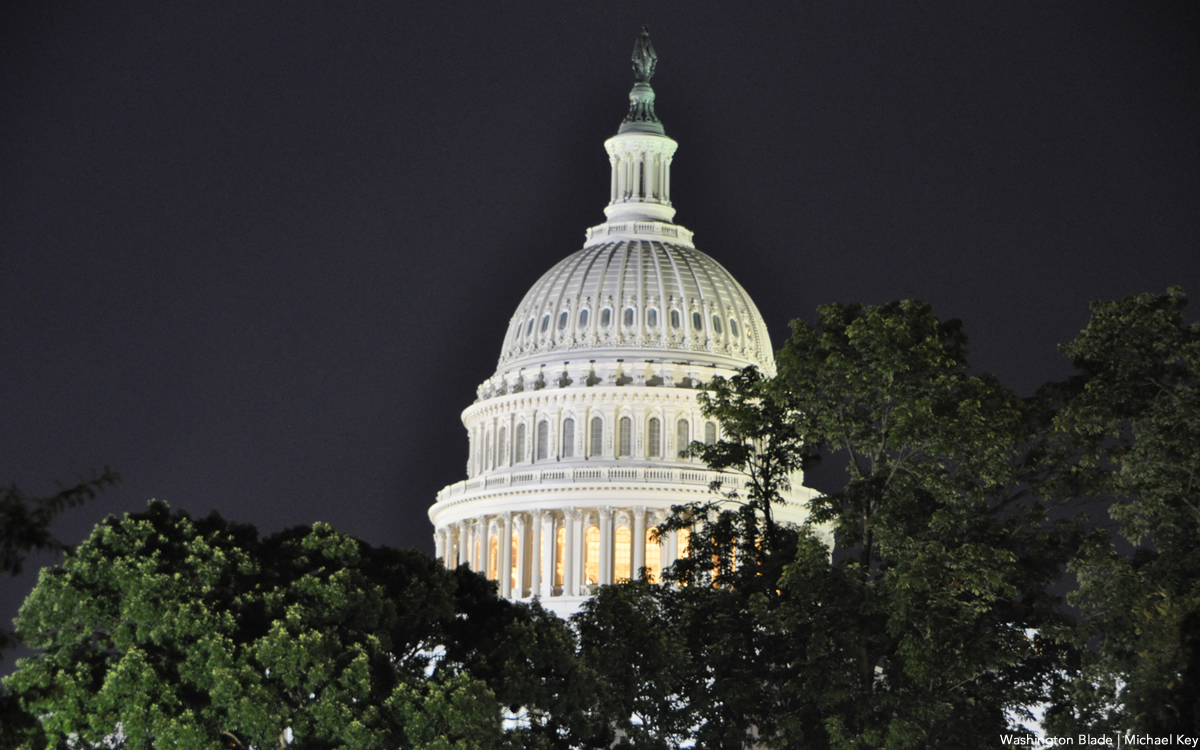
The U.S. House of Representatives is projected to flip to Democratic control.
According to the Associated Press, Democrats are moving toward control of the House after defeating six Republicans in key battleground races.
While several major questions remain about how Democrats will lead beginning in 2027, their control of the chamber will expand their oversight powers, allowing them to pursue efforts to check an executive branch that has operated with little congressional oversight over the past two years.
With control of the House and expanded oversight powers, more LGBTQ Democrats could be positioned to take on leadership roles in the new Congress.
Incumbent Congressman Robert Garcia (D-Calif.) is poised to become chair of the House Oversight Committee, where he would have greater authority to investigate the Trump-Vance administration, subpoena officials and oversee federal agencies.
Garcia sent out a two word statement following the confirmation of the Democratic Party’s control: “Lawyer up.”
U.S. Rep. Mark Pocan (D-Wis.) could gain a leadership position on the House Appropriations Committee, which has authority over government funding. Such a position could allow him to put roadblocks in the way of much of the Republican agenda, including many projects Trump has personally spearheaded while in the Oval Office.
Some political strategists, like those at Newsweek, have said a third Trump impeachment could be on the table. However, convicting President Donald Trump in a Senate trial would require a two-thirds majority, an outcome that remains uncertain.
These midterm elections have been rife with personal attacks, gerrymandering at the behest of Trump, and heightened political tensions across the country. Republicans have campaigned on the idea that voters are effectively voting for Trump, while also focusing heavily on transgender issues. Meanwhile, many Democrats have pushed back by centering their campaigns on the growing affordability crisis as the war with Iran continues.
California
L.A. LGBT Center used canvassing effort to reframe conversation around trans healthcare
‘Gender affirming care access as part of health care access for all’
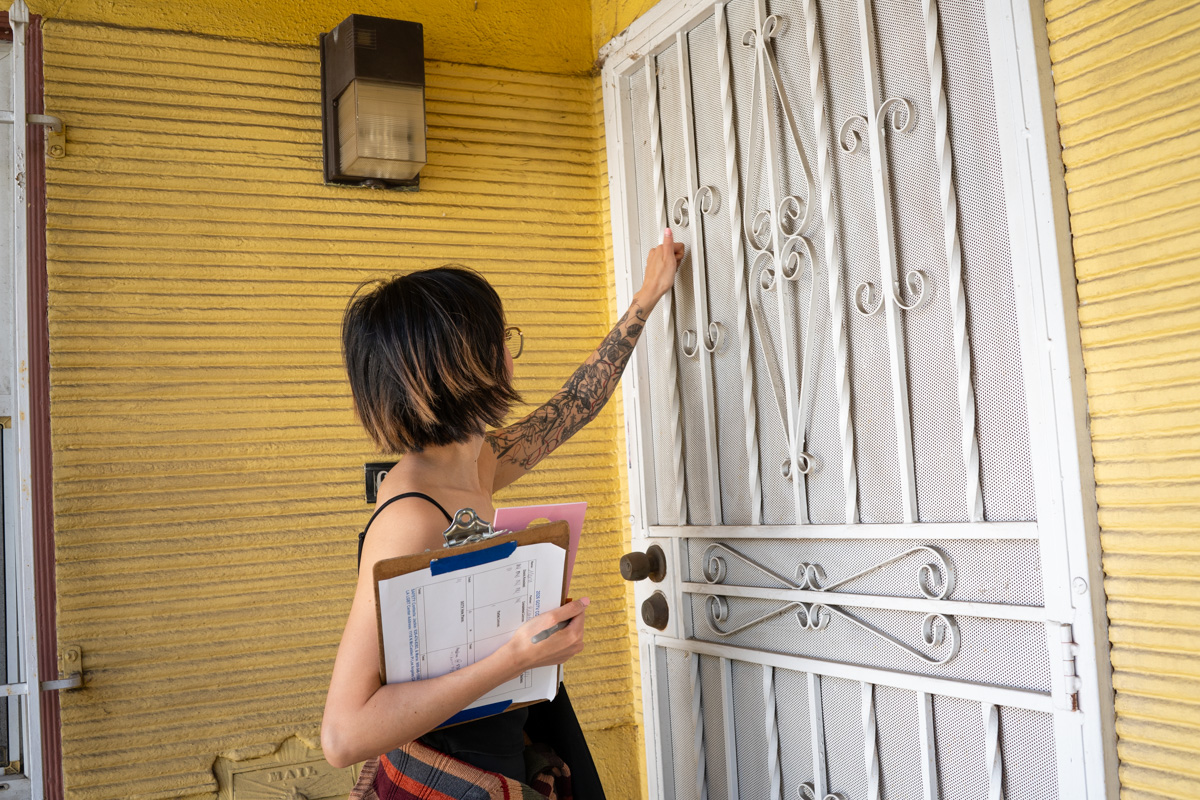
The Los Angeles LGBT Center has seen the impact of fearmongering rhetoric about transgender people firsthand so it set out to change the narrative.
The L.A. LGBT Center this year began a new deep canvassing initiative to combat misconceptions about transgender healthcare. The volunteer canvassers are encouraged not only to share facts and voting information, but also to connect with voters by using personal experiences to frame their political engagement. “The key components of deep canvassing involve getting vulnerable and curious with the voter and exchanging stories to show how political issues are tied to personal real lived experience,” said Maria Do, the community mobilization manager at the L.A. LGBT Center.
The campaign focused on speaking to voters in the San Gabriel Valley, a working class and ethnically diverse area on the far east side of Los Angeles County. The deep canvassing campaign targeted the city of Monterey Park in particular, a neighborhood home to large Chinese, Vietnamese, and Cambodian immigrant populations. The goal was to connect with infrequent voters who may be uninformed or misinformed about LGBTQ issues. They focused mainly on informing voters about gender affirming care and then encouraging them to vote in the upcoming midterm elections.
“There have been a lot of attacks and just a lot of misinformation around gender affirming care,” Do said. This campaign aimed to dispel misconceptions about transgender care and to treat it like any other kind of healthcare. “We’re trying to frame gender affirming care access as part of health care access for all,” Do said.
Deep canvassing
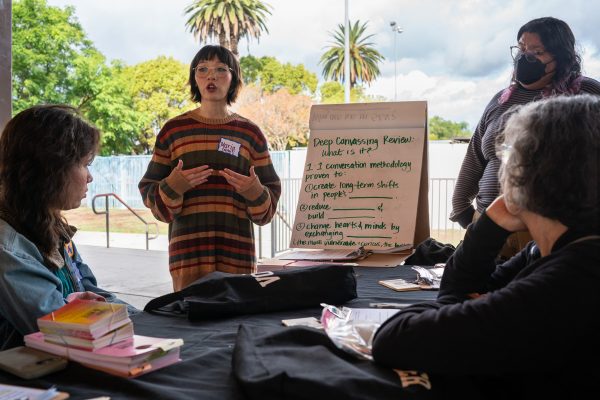
Deep canvassing at the LGBT Center has its origins in the political battle over the 2008 ballot proposition to ban gay marriage in the state of California. After the ballot proposition passed, the center organized volunteers to knock on doors and have conversations with voters who supported it. These conversations surprised advocates.
“Concerns voters had about same-sex marriage weren’t rooted at all in lived experience, but were fed through media misinformation and their own biases,” Do said. This convinced organizers at the LGBT Center that having face-to-face interactions with voters would be the most productive way to combat narratives that dehumanized and politicized queer rights. This same technique is being utilized by the center today to target rising anti-trans sentiment and policy.
Do says that many people are unaware of reduced access to gender affirming care and threats against health systems, patients, and providers from the federal government. Many did not know that Children’s Hospital Los Angeles shut down the largest gender affirming care clinic for trans youth in the country following pressure from the Trump-Vance administration. When canvassers inform people about these challenges, they often get into conversations about a voter’s own struggles with healthcare access.
“They have shared a lot of stories about Medi-Cal access being cut,” Do said. Voters have also expressed concerns over Immigration and Customs Enforcement (ICE) officers in their communities. These similar concerns over healthcare access and federal overreach can help build solidarity across demographic communities. “To share that attacks are also happening on the transgender community has allowed space to sort of see the through line between different efforts to help protect various marginalized communities,” Do said.
What’s on the ballot
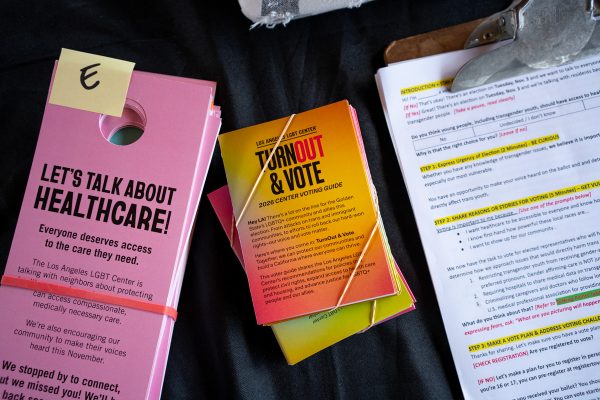
The L.A. LGBT Center is non-partisan and has not officially endorsed any candidates on the ballot. But the organization still views this election as consequential for queer people across the state and decided to weigh in on six of the statewide ballot propositions, emphasizing an opposition to Proposition 44.
The proposition would mandate that community health clinics spend 90% of their annual income on patient care. While proponents of the measure say that it would ensure that clinics are prioritizing services over profits, critics say that its definition of patient care is too narrow, that 90% is an unrealistic goal, and it would end up hurting patients more than helping them.
LGBT Center officials have said that it would harm community clinics around the state, including others that specialize in queer healthcare.
“Community clinics who fall short [of spending 90% of revenue on program expenses]… would face severe penalties, an estimated $1.7 billion in the first year alone. At a time when the federal government is seeking to strip people of healthcare, this measure will lead clinics to close and make matters worse,” the L.A. LGBT Center’s director of advocacy Joey Hernández said in a written statement.
“It isn’t always going to be a win”

Ricardo Sebastiań has volunteered for two of the deep canvassing actions with the LGBT Center and said it is an effective way to change people’s minds.
“Canvassing is a tried and true tactic for advocacy,” Sebastián said.
They think that a face-to-face conversation with someone can humanize what can otherwise feel like abstract political issues. “Even if you’re meeting somebody who has a different worldview, there is an opportunity there to find middle ground, and that shifts people. You never know the type of impact you’re going to have on somebody when you’re having an open dialogue,” Sebastián said.
Do said that volunteers have spoken with people who had never met a transgender person before and that these conversations around trans healthcare can drastically change these people’s perspectives. “Folks started to see themselves and started to empathize,” when they spoke about transgender healthcare with canvassers with the LGBT Center, Do said.
When out knocking on doors, the most common response for canvassers is, well, nothing. Most of the time, knocks go unanswered and volunteers simply leave behind pamphlets provided by the LGBT Center. And even when canvassers get someone to the door, they can often be preoccupied and dismissive. But this doesn’t discourage volunteers like Sebastián. They feel like the productive conversations they have make it all worth it.
“It isn’t always going to be a win,” Sebastián said. “There’s always going to be somebody who doesn’t want to talk to you or doesn’t care or is very staunch in opposing views. But you can’t let that discourage you from getting to the next door.”
Caleb Kaufman is a California Local News Fellow placed with the Los Angeles Blade. The California Local News Fellowship is a state-funded initiative to support and strengthen local news reporting. Learn more about it at fellowships.journalism.berkeley.edu/cafellows.
Politics
Michigan Senate race puts two sharply different LGBTQ+ records head to head
Abdul El-Sayed challenging U.S. Sen. Mike Rogers (R-Mich.)

Poll workers across the country are pulling out the ballots and “I voted” stickers, bracing for one of the most divisive and consequential midterm elections in modern times.
Few states have drawn as much media attention, fiery rhetoric, and last-minute political shake-ups as Michigan.
Tomorrow, Democratic nominee Abdul El-Sayed will face off against Republican nominee Mike Rogers for the Great Lakes State’s Senate seat.
In a state where LGBTQ+ adults make up nearly 11 percent of the population, it is important to understand where each candidate stands on issues affecting the community.
El-Sayed, a former public health official and politician, has a record of advocacy and healthcare policy experience related to the LGBTQ+ community.
He led Detroit’s Ryan White HIV program and partnered with LGBT Detroit to make public health services more open and affirming for LGBTQ+ residents. Drawing on his public health expertise, he has also committed to restoring federal HIV and PrEP funding gutted by the Trump-Vance administration. He refuses corporate PAC money, has been outspoken in his support for trans rights, and has vowed to be a “lion for LGBTQ+ rights” in the Senate.
Earlier this year, El-Sayed spoke to PrideSource, where he reaffirmed his support for the LGBTQ+ community, specifically the transgender community, which has faced the brunt of political attacks and hateful rhetoric.
“There’s a reason that if I’m asked, I always say that I support trans rights because I believe in all rights,” El-Sayed said. “I want folks to see their own rights in the plight of a trans person who’s being discriminated against.”
He continued, explaining that if he gets elected to the Senate, he will champion LGBTQ+ rights wherever he can.
“I want the community to know that I intend to be a lion for rights. When somebody’s coming for you, I intend to stand in the cut to protect you. We have to answer this broader question — do we want to live in the kind of America where we leave some of us behind, or do we want to live in the kind of America where we understand that government of the people, by the people, and for the people means all the people?
“My job as a public servant is to stand up for folks. It’s what motivated a lot of my efforts in Detroit and Wayne County to make sure that our services were deeply accessible and empowering of LGBTQ+ residents — and it’s why I take the idea of protecting all of our rights so seriously.”
Rogers, meanwhile, last served as a public servant in 2015, when he represented Michigan’s 8th Congressional District. Before entering politics, he worked as a special agent for the FBI from 1989 to 1994. He unsuccessfully ran for Congress again in 2024 and is now seeking a seat in the Senate.
Compared to El-Sayed, Rogers has a lengthy anti-LGBTQ+ record, according to the Human Rights Campaign and GLAAD.
Rogers has called being gay a “lifestyle choice” saying he wouldn’t support his own child if they were gay, has a record of multiple votes against marriage equality, as well as opposition to the repeal of “Don’t Ask, Don’t Tell,” the discriminatory military policy that led to LGBTQ+ service members being discharged for who they are or who they love.
Rogers also voted against the Matthew Shepard and James Byrd Jr. Hate Crimes Prevention Act, which expanded federal hate crime protections to people targeted because of their gender, sexual orientation, gender identity, and disability, alongside existing protections based on race, color, religion, or national origin.
Additionally, he voted against a fully inclusive Violence Against Women Act (VAWA), which sought to ensure survivors received protections and housing regardless of their gender or sexual orientation. He also voted against the Affordable Care Act, which prohibits insurance companies from discriminating against people with pre-existing conditions, including LGBTQ+ patients.
His record has become a point of contention, which saw an unexpected political shake up that has started to dominate coverage.
Just yesterday, U.S. Rep. Haley Stevens, a Michigan Democrat who previously ran against El-Sayed for the party’s Senate nomination, withdrew her endorsement of him and instead endorsed Rogers, surprising her team and members of the Democratic Party.
Jeremy Moss, an LGBTQ+ state lawmaker who is also running for federal office in Michigan that the Blade interviewed earlier this election cycle, condemned Steven’s sudden about face in a statement on Instagram.
“I strongly disagree with Haley Stevens’ decision to endorse Mike Rogers.
Abdul and I have talked about our shared commitment to fighting MAGA extremism, dismantling ICE, and expanding affordable healthcare … But openly cheerleading Mike Rogers is unacceptable. He would be a rubberstamp for Donald Trump, from engaging in voter suppression and election denial, to continuing ICE’s cruel and unlawful operations, to defending disastrous tariffs, to slashing affordable healthcare, and more …
And Rogers, with his abysmal anti-LGBT record, would gleefully confirm Supreme Court justices who will rollback the rights that I have fought hard to protect.”
Despite himself not being a member of the LGBTQ community, HRC has become a vocal supporter of El-Sayed since he emerged as the Democratic nominee.
“I’m proud to have the Human Rights Campaign standing with us in this race,” said El-Sayed. “LGBTQ+ Michiganders deserve leaders who will have their backs when it matters most, not just when it’s politically convenient. That’s the commitment I’ve carried throughout my career in Detroit and Wayne County, and in the United States Senate, I’ll fight to ensure every Michigander can live without discrimination and never have to wonder whether their rights will still be there tomorrow.”
HRC President Kelley Robinson issued a statement today ahead of tomorrow’s election, urging Michigan voters to choose equality over discrimination.
“Mike Rogers voted for a constitutional ban on marriage equality — more than once. He opposed the repeal of Don’t Ask, Don’t Tell. And he’s gone after trans kids. There’s only one pro-equality Senate candidate on the ballot in Michigan: Abdul El-Sayed. And he has HRC’s unequivocal support,” Robinson said in a statement. “We have boots on the ground in Michigan, and we’re seeing this thing through until the end.”
The Los Angeles Blade reached out to Rogers regarding his anti-LGBTQ+ policy record but did not receive a response by the time of publication.

Anti-trans ballot measures pass in four states, setting up new legal battles

British appellate court strikes down Trinidad and Tobago sodomy law

Queerness in Islam: a history the media often ignores

Articles of impeachment filed against Hegseth

Stephen Post wins final seat on WeHo City Council

LGBTQ+ elected officials, activists around the world welcome U.S. election results

Escritora trans venezolana reivindica una fe sin exclusiones ante la visita del papa a Sudamérica

Stephen Miller, key architect of anti-LGBTQ+ policies, named White House chief of staff
Stephen Post wins final seat on WeHo City Council

Epic ‘La bola negra’ delivers powerful romance for the ages
-
 World5 days ago
LGBTQ+ elected officials, activists around the world welcome U.S. election results
-
 Noticias en Español4 days ago
Escritora trans venezolana reivindica una fe sin exclusiones ante la visita del papa a Sudamérica
-
 White House4 days ago
Stephen Miller, key architect of anti-LGBTQ+ policies, named White House chief of staff
-
 California1 day ago
Stephen Post wins final seat on WeHo City Council
-
 Movies2 days ago
Epic ‘La bola negra’ delivers powerful romance for the ages
-

 Botswana1 day ago
Botswana’s marriage equality case and the politics of family values
-
 Pentagon20 hours ago
Articles of impeachment filed against Hegseth
-
 Opinions10 hours ago
Queerness in Islam: a history the media often ignores
-
 Trinidad and Tobago5 hours ago
British appellate court strikes down Trinidad and Tobago sodomy law