
Arts & Entertainment
Caitlyn Jenner says Trump has set trans community back ’20 years’
the former Olympian’s allegiance to Trump has been up and down
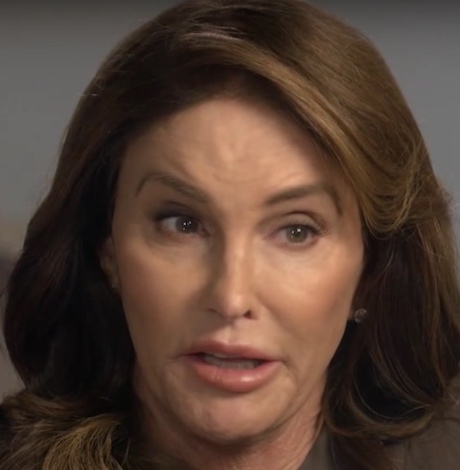
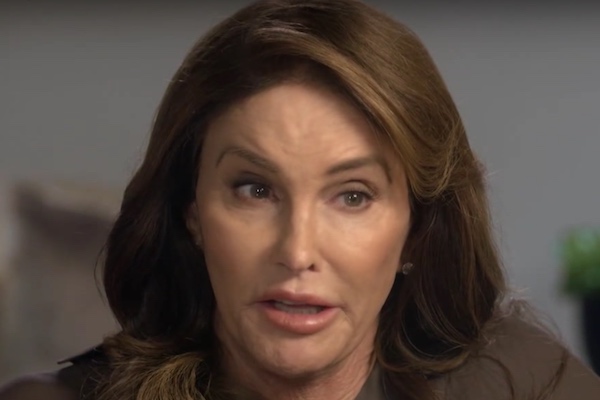
Caitlyn Jenner (Screenshot courtesy of YouTube)
Caitlyn Jenner believes President Donald Trump’s administration is the “worst ever” for the transgender community.
While appearing at the Champions of Jewish Values International Awards Gala in New York on Thursday, Jenner criticized the Trump administration for its stance on transgender issues.
“As far as trans issues, this administration has been the worst ever,” the former Olympian told Newsweek.
“They’ve set our community back 20 years, easily,” Jenner added. “It’s going to be hard to change, but we’ve been through these types of things before and we’ll continue to fight it.”
Jenner’s allegiance to Trump has wavered since she first admitted to voting for him in the 2016 presidential election.
After the Trump administration removed protections for transgender students to use the restroom that aligns with their gender identity, Jenner spoke out against Trump.
“Well @realDonaldTrump, from one Republican to another, this is a disaster. You made a promise to protect the LGBTQ community. Call me,” Jenner tweeted last year.
Well @realDonaldTrump, from one Republican to another, this is a disaster. You made a promise to protect the LGBTQ community. Call me. pic.twitter.com/XwYe0LNUOq
— Caitlyn Jenner (@Caitlyn_Jenner) February 24, 2017
Later that year, Jenner claimed that her loyalties were “with my community and not with the Republican party, and not with Donald Trump.”
In July of last year, Jenner said that her “allegiance is not” with Trump after he announced his transgender military ban. However, a few weeks later Jenner was spotted wearing a “Make America Great Again” hat. She later apologized for wearing the hat and promised not to do it again.
Jenner told Newsweek that while she is still in touch with members of the Republican party she has not been to see Trump.
“I did come back to the inauguration to meet people,” Jenner says. “And out of that I have built some very nice and good relationships with the Republican Party, but I have not been back to see Trump.”



a&e features
Veteran Broadway actor Laura Benanti bares all in her new show ‘Nobody Cares’
Fresh from a run at The Wallis in Beverly Hills, she brings the show to South Coast Repertory in Costa Mesa from October 8-11.
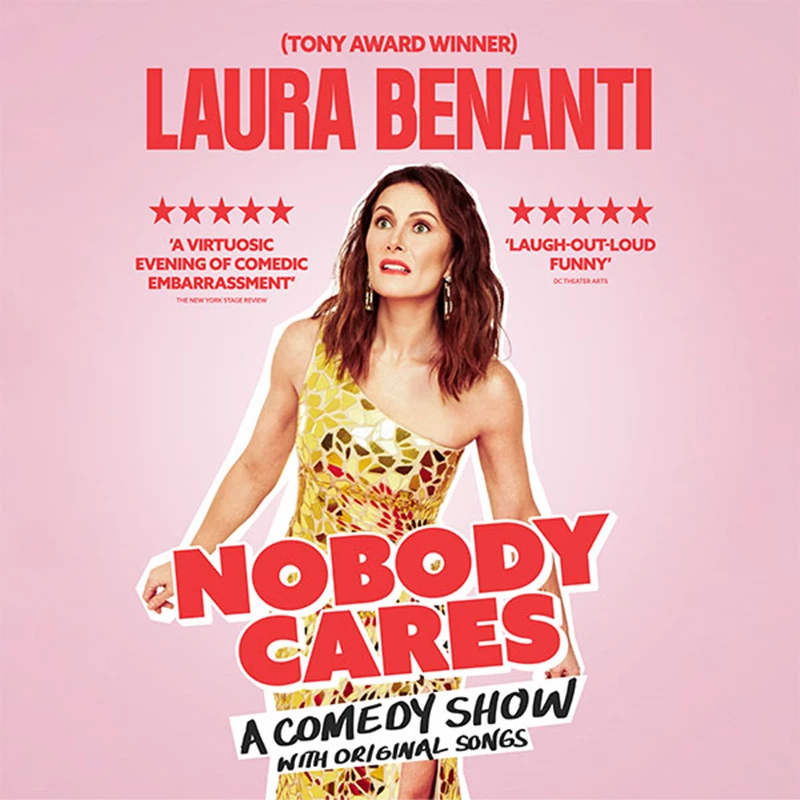
One might expect when Laura Benanti comes to town that they are in store for a feast of recognizable standards from the veteran of ten Broadway shows, as well as having a strong presence in television and film. Her new show, Nobody Cares, is not that show. Written by Benanti in collaboration with songwriting partner Todd Almond and Director Annie Tippe, this show is a surprising, personal, and hilarious take on what it is to be a 40-something woman in today’s world. It takes on subjects from motherhood to aging to relationships and perimenopause. Fresh from a run at The Wallis in Beverly Hills, she brings the show to South Coast Repertory in Costa Mesa from October 8-11.
My first exposure to Laura Benanti, the person, was on The Broadway Cruise in 2023. Unbeknownst to the audience for her featured performance on the poolside stage was that Benanti was in the middle of a miscarriage. When I asked her about that experience, she shared something important she has learned from life. “Not that I’m trying to win here, but that was my fourth miscarriage! I could have done what I did in the past and spent my time alone and sad. Instead, I wanted to do the thing I love with my audience and feel that joy of performing for and with them.” That authenticity is what she brings to this show that is so revealing and personal. The result is connection and “laughter of recognition.” In other words, she invites the audience in to laugh with her and inspires them to laugh at their own similar life experiences.
What inspired you to write Nobody Cares?
I had done ten Broadway shows and was always cast as the ingenue. Finally, I decided that the only way I was going to get a role written for me was to do it myself. What’s interesting is that when I started writing the show, in my mind, I was like, what are you doing? Nobody cares. This is so narcissistic! Then, I would read parts of it to my girlfriends, and they were like, “I do care about this, and that’s because I care about you.” And then, ironically, I was having a conversation with my 4-year-old. I was telling her something that was important to me, and I felt like I was imparting my wisdom. She stopped me and went, “Mommy, nobody cares.” I thought, she’s right, actually. All of the things I used to worry about – am I pretty enough? Am I thin enough? Am I successful enough? Nobody cares!
So, maybe it really isn’t a show about not caring, but caring about the right things?
I think it’s that, you know, I talk about going from a people pleaser to a recovering ingenue. Starting out in this business so young (she first starred in The Sound of Music at the age of 18), I started to inadvertently live out my characters in real life. I took on this persona of never upsetting anybody, being what people wanted me to be, especially men. I got caught in a trap of not living my own life, becoming whatever another person wants me to be. It’s taken a long time to unravel that.
Has there been a specific experience that helped the unraveling?
Being a parent. My children put the nail in the coffin for needing everybody to like me all the time. They’ll never like me all the time, and it can’t be their job to like me all the time. It’s my job to not need them to. I had to develop an internal fortitude. I tell some really out-there stories, very private stories that used to hold shame for me. In telling them, it takes that shame away. What I hope is that it involves people enough to release their own.
Is there a particular moment in the show that you still say, “OMG, I can’t believe I’m actually telling them this?
There is definitely one song where it’s hit or miss. I tell a story about when I was 21. A man proposed to me, and he would not take no for an answer. He just kept at it. And because I’m such a people pleaser, I didn’t have the heart to say, “Listen, I don’t love you.” I didn’t want to hurt his feelings…so I told him I had cancer…and that I didn’t want him to have to see me like that. It’s a song called “Marry Me,” and either you’re on board and you love it, or you hate me.
You have explicitly described the show as a love letter to women of all ages, mothers, and your “beloved gay men.” As you know, gay men have a long history of embracing glamorous, funny, complicated, and authentic women. What is it about you and your particular brand of comedy and performance that attracts your beloved gay men to you?
I think that’s true, and I love it. I believe it’s my sense of otherness that I have always felt since I was 11 years old. My main interests were Murder, She Wrote, the music of Steven Sondheim, and the 1944 psychological thriller Gaslight. I was so on the outs! I was so not cool. And, please know that I am in no way comparing this to the challenges of coming out. That is not the correlation. I always say I was born like a 45-year-old gay man in a little girl’s body. I just wanted to sit in a well-knit room and listen to good music and watch movies. So I think there’s a similar sense of culture. My Uncle Bob was an incredible drag queen named Wanda May Wanaburger and one of the founders of the Gay Men’s Chorus in Washington, DC. I grew up with him. Actually, the last time I ever saw him, we were singing together on stage at the Kennedy Center. I was playing Maria (Von Trapp from The Sound of Music), and he played the Mother Abbess. It was so great to have that moment with him before we lost him suddenly. I worshipped him. I grew up under his wing…or wigs, as it were! I think on some level I share the recovering people-pleaser identity with gay men. So many of us can’t change it until we have the courage to do so. I always knew, on some level, that people-pleasing was a survival strategy, not some altruistic trait.
You have spoken about women and the influence they have in your life.
Yes, when I turned 30, I met some truly wonderful women who are some of my dearest friends to this day. They just moved through the world in such a different way than me. I just started mirroring them. I started thinking, “What would Sara do? What would Kelly do? What would Celia do?” Then, I would sort of act accordingly. It became a freedom. I also had them loving and supporting me and cheering for me. That was really the beginning of a big shift in me. Having my children was the second phase of that.
How do you feel now that you’re touring the show you’ve written after becoming frustrated with waiting for other people to write a role for you?
It’s been extremely empowering in that I get to use my own words. I’ve written for a very long time, and I’ve written comedy for a while for a lot of award shows. I would write my own monologue and bits and even the sort of Broadway cabaret shows that I would tour. I would have someone who didn’t want to be there come up to me afterwards and say they really like the stand-up part. That’s when I realized that’s what I was doing, and it was ok. It didn’t make me a fraud to pursue that. And this level of authenticity that I want to bring forward, this level of connection with the audience, it’s really become my favorite thing I do. I’ll always love playing characters, but this is a real departure for me.
Do you believe that your queer fans have helped teach you about being able to be who you are and be this person you’ve become?
Yeah, because my road is so much easier than theirs, and they do it. I think about that with my uncle. He lived. He was in a long-term relationship with a black man in Washington, D.C., in the 80s. It was not a time to be gay. I think about him all the time when I’m like, it’s so hard to be a woman. I just so admire the people I know in the LGBTQIA+ community. And right now, it feels like we’re sort of going back in time. You know, to see joy, to see a Pride Parade, to see people, even if they are afraid, walking and talking and being themselves, and trans people, having the courage to live their truth. I am so inspired by that. If they can find joy, I can find joy.
Tickets for Nobody Cares are available at SCR.org.
a&e features
Actor Christian Tyler Dorey is a Jack of all trades
The young actor shines in South Coast Repertory’s ‘Into the Woods’
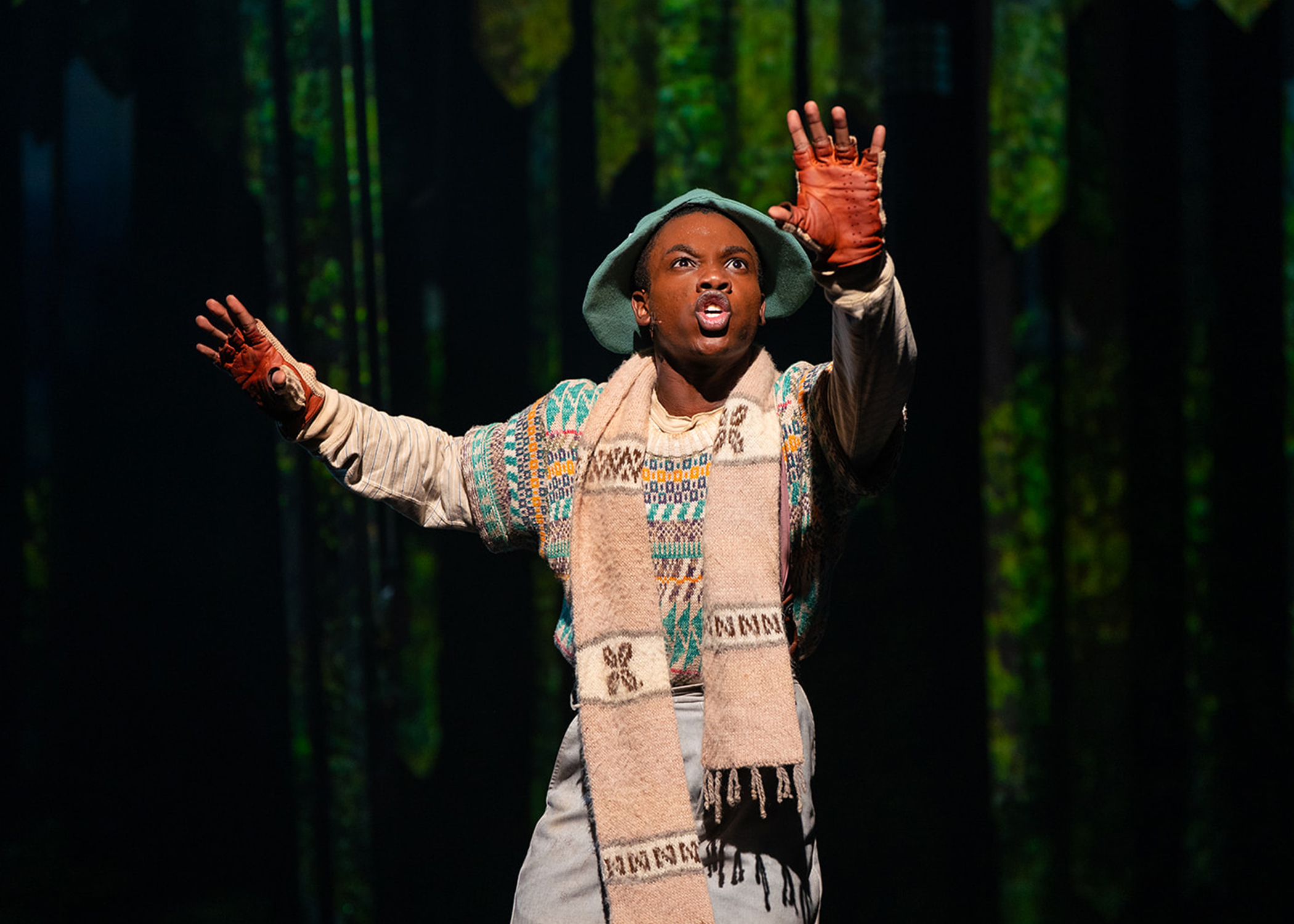
Every musical theater actor has certain roles they’d love to play; Christian Tyler Dorey is no different. He’s starred in recent musicals like Sister Act, Beautiful: The Carole King Musical, and The Wedding Singer. He’s also starred in classics like Cabaret and Les Misérables, and he played Teen Angel in Grease.
To celebrate the 40th Anniversary of the musical Into the Woods, South Coast Repertory has a fresh version of the show with Dorey starring as Jack. It’s already received rave reviews, with Dorey being described as a “showstopper” and a grounded performance making him Reel.com’s “the most believable person in this fantastical world.”
Dorey took some time to chat with the Blade about this experience, his experiences in LA, and his dreams for his career.
How does it feel to play Jack in Into the Woods?
It is truly a dream come true to get to play Jack at this moment in my life. It has been a huge dream role for me since I was first exposed to the score after seeing Rob Marshall’s film in 2014. I immediately became obsessed with Sondheim’s lyrics and score, and I then turned to the original Broadway cast album. It was full of even more information that the film left out. It was some of the most gorgeous orchestrations and lyrics I’d ever heard in my life. I was moved to tears by Bernadette Peters singing “Children Will Listen.” Safe to say, I was obsessed.
What makes this rendition of Into the Woods different?
This production of Into the Woods is unlike any production I’ve ever been a part of. From the cast’s performances to the set, lighting, costumes, and sound design, there are so many elements that make this rendition of Sondheim’s classic one to remember.
At the heart of it is the incredible direction by Peter Rothstein, whose expertise with the material played a huge part in the specificity of the choices found throughout the production. The carnival concept is brought to life beautifully through Adam Koch’s expressive set design, as well as the gorgeous costumes designed by Danielle Nieves. The projection and lighting design help bring a mythical essence to so many moments in the show, thanks to Greg Emetaz and Lonnie Alcaraz. The crisp, booming sound design by the brilliant Noel Nichols ensures that audiences don’t miss a syllable of the show’s incredibly complex score.
This score is unlike anything else in musical theatre in terms of its difficulty, and the brilliant music direction of Wiley DeWeese is a huge reason we’re all able to navigate it. His music direction is unlike any I’ve experienced for this show. His ear for Sondheim is so incredibly keen, and it allows him to make clear, motivated choices with us as an ensemble, as well as with our incredible 11-piece orchestra, who conquers this behemoth of a score masterfully. There is so much artistry happening in every department of this production, and I feel incredibly lucky to be surrounded by so many people who are bringing such specificity, imagination, and care to this show.
How would you describe your version of Jack?
I would describe my version of Jack as optimistic, impulsive, carefree, and warm. This role has been a huge dream role for me since I was first exposed to the musical. Jack being raised by a single mother and living in a world that forces him to grow up before he truly feels ready are both things I can relate to in my personal life. I think those similarities have fueled a lot of what I bring to him onstage.
“Giants in the Sky” is a beast unlike any other. I’ve been singing it in my room since I was in middle school, and it STILL feels like a feat getting through it every night. It’s truly a challenge in enunciation, timing, and range. But the beauty lies in the challenges written into the score, which make it just as rewarding as it is difficult. I feel like it adds to the stakes present in the show at that moment for Jack and allows me to really activate his childlike optimism.
You’re playing Jack, and you’ve played Teen Angel in Grease. How does it feel to bring audiences a POC version of these beloved characters?
It really is such an honor to get to breathe new life into these characters. Getting to show audiences that art is full of possibility is truly something that fuels my art. I’m very grateful that I’ve been able to work with such great directors who are able to look at the heart of the work rather than just what’s on the surface. I’m hopeful that I’ll get to play even more roles like this and open the eyes and hearts of even more audiences.
How did you get into musical theater?
I was first exposed to musicals at a very young age. I was able to see Dreamgirls at the Ahmanson in 2010 when I was seven, and it played a huge part in me falling in love with musical theatre. My middle school years also played a huge part in growing my love for the art form. I was always listening to new cast albums to grow my knowledge, and I had an incredible theatre teacher who taught me so much about what it meant to be a theatre artist.
I was lucky enough to participate in Broadway Dreams Foundation’s LA Intensive from 2015–2023, starting in sixth grade, and I was able to fall even deeper in love with the discipline and beauty of the stage. I’ve had the theatre bug ever since.
How does it feel to be in Los Angeles?
I was blessed to have grown up here! I grew up in Studio City, lived in Hollywood during my middle school years while attending Le Conte Middle School, and then attended CSArts in the San Gabriel Valley. I felt like I wanted a change of pace after living in California all my life, so I really only applied to schools outside of California so I could gain some life experience elsewhere.
I then attended Texas State University’s Musical Theatre Program under the direction of Kaitlin Hopkins. THIS is really where I was able to come into my own as an artist. I learned so much from my time in San Marcos. Both about myself and what it means to truly be a great artist in every aspect present in musical theatre. I then moved back to LA and have gotten to work at 5-Star Theatricals, the gorgeous Wagon Wheel Theatre in Warsaw, Indiana, the incredible Tuacahn Amphitheatre in Utah, and now the beautiful South Coast Repertory.
What’s your favorite thing to do in Los Angeles?
One of my favorite things to do in LA since I was in elementary school is to spend an afternoon or evening at The Grove. Getting to walk under the stars with the beautiful music, gorgeous fountains, and all the lights is something I never get tired of. Grabbing a bite at The Cheesecake Factory and then ending the night with a great movie- nothing beats it in my mind.
What are some of your dream roles?
I have so many of them! I’ve always wanted to play Tobias in Sweeney Todd, Hedwig in Hedwig And The Angry Inch, the Leading Player in Pippin, Cornelius in Hello Dolly, Man 1 in Songs for a New World, Youth in Passing Strange, and Éponine in Les Misérables!
What were your inspirations growing up?
My mother was a huge inspiration for me growing up. As the youngest of four, she was the only one who left home immediately to follow her dreams. She has always been my number 1 supporter. Whenever I said I wanted to do something, she did everything in her power to make sure I was set up for success.
The minute I said I wanted to start acting, she found the best acting classes and teachers for me so I could become immersed in the discipline required to do it at a high caliber. My mother is my everything, and I think that’s partly why playing Jack has always been such a dream for me. We both are the only children of single mothers, and there is a bond that comes from those circumstances that is unlike anything else. My vocal heroes growing up were the likes of Audra McDonald, Whitney Houston, Patti LuPone, Luther Vandross, Barbara Streisand, and Stevie Wonder.
What are your goals for your career?
As an LA native, film has always had such a special place in my heart. I have always loved the beauty of film and television and the life that can be created on a screen. I would love to be a part of a film or television ensemble.
Is there anything from LGBTQ culture that you’re currently obsessed with?
Queer culture always has something to be obsessed with! Right now, I’m especially obsessed with the creativity and community within it. There’s always something new to discover, whether it’s a new artist, a new drag queen, music, fashion, or just some ridiculous piece of queer internet culture that makes me laugh. I’ve recently been rewatching episodes of Ryan Murphy’s Pose, partly to relive the incredible performances in the show. But mainly to remind myself that my dreams are obtainable by hard work, perseverance, and ferocity.
You can find Dorey on Instagram and see Into the Woods at South Coast Repertory now through October 18th. You can purchase tickets at the theater’s website.
Movies
10 years later, we still can’t shake Barry Jenkins’ ‘Moonlight’
This past weekend, Barry Jenkins’ landmark queer film Moonlight returned to theaters with a remastered 4K edition to celebrate ten years. And it’s a film that hasn’t lost any of its staying power.
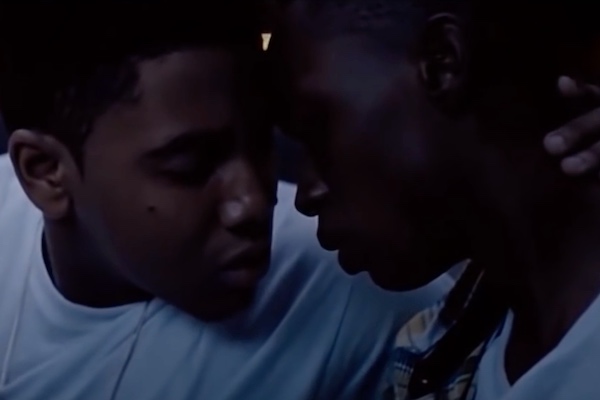
It all started back at the Telluride Film Festival, where Moonlight had its world premiere in 2016, kicking off a successful awards season run. It instantly became the year’s critical darling, and it wound up winning three Academy Awards, including Best Picture, Best Adapted Screenplay (for Jenkins), and Best Supporting Actor (for Mahershala Ali).
But there’s a world where an independently made film like Moonlight, featuring an all-Black cast with mostly unknown actors, and a story exploring how queerness intersects with toxic masculinity and race, gets easily overlooked. The fact that the film won Best Picture on Hollywood’s biggest stage not only cemented its place in film history, but helped the story reach more Black and queer people.
Adapted from Tarell Alvin McCraney’s unproduced, autobiographical play In Moonlight Black Boys Look Blue, Jenkins follows a boy named Chiron, introduced to the audience as Little, over the course of three pivotal moments in his upbringing. Set in Miami, the film tracks Chiron’s days as an outcast struggling to make it through elementary school, to his first sexual encounter with another boy, to his adult days making a living as a drug dealer. Chiron suffocates while living with his abusive, drug-addicted mother (Naomie Harris) and eventually finds refuge and safety in the home of surrogate parents Juan (Ali) and Teresa (Janelle Monáe) as he struggles to reckon with his queerness.
Jenkins’ images instantly became iconic: Juan holding Little in the ocean, a moment reminiscent of a young boy’s baptism; Chiron resting his head on Kevin’s (André Holland) shoulder as the two reconcile their love for one another; Little looking back at the audience as the waves crash.
The film mainly features locals from Miami. One of the smartest choices Jenkins and his casting director, Yesi Ramirez, made when shaping out Chiron’s journey was casting three different actors (Alex Hibbert, Ashton Sanders and Trevante Rhodes) to play the character as he physically comes of age. Jenkins deliberately never had the three actors meet despite portraying the same character — quite the atypical approach to casting.
“I wanted [that decision] to be a comment on the way of the world we live in, and how society has this effect on these young men who grow up in a community like the one depicted in the film,” Jenkins said in a Creative Screenwriting interview in February 2017. “To me, the best way to show that was to illustrate this change in the character, and what happens to the people who are playing him at each stage.”
In the decade since Moonlight’s release, dozens of filmmakers cite Jenkins as one of their biggest influences, including Joe Talbot (The Last Black Man in San Francisco). And you can see his film’s footprints all over Nickel Boys, If I Go Will They Miss Me and Waves, all films that use evocative imagery to tell grounded, Black-led stories.
To date, Moonlight remains the lowest-budget film to ever win Best Picture, made for a mere $1.5 million dollars. It was also the first film that A24, the indie distributor that was still building a name for itself back in 2016, fully financed and produced itself. Moonlight went on to gross over $60 million at the global box office, largely thanks to the Oscars platform.
In our current political and media landscape under the Trump administration, Moonlight has the potential to save even more lives. In the early days depicted in Chiron’s upbringing, he is taught to live with shame, to keep his head down at school. It’s all about survival. But by the end of the film, Chiron reconnects with Kevin and finds himself remembering all the emotions he felt after being touched by a man for the first time. It’s a small step, a small embrace, but a crucial one for Chiron to start coming to terms with himself.
Jenkins still gets emotional when watching scenes back from the film now. Speaking with Vanity Fair at this year’s Telluride Film Festival, where Moonlight screened for its 10th anniversary, Jenkins admitted he was a “crying mess” when revisiting the last 15 minutes of the film earlier in the year.
“Maybe over the next few months I’ll get some more understanding of it, but I think it was just how meaningful it was that we created this thing,” Jenkins said. “It’s not about the film itself, but just how meaningful it was that we actually did it.
In the decade since Moonlight’s release, Jenkins went on to direct another acclaimed film, If Beale Street Could Talk, and recently made Mufasa: The Lion King. He’s set to return to his more independent roots with Be My Baby starring Zendaya, which will also be distributed by A24, and an Alvin Ailey biopic. The Oscar winner continues to mentor emerging filmmakers and writers through the Sundance Labs, visiting colleges around the country to teach what he learned from making his breakout film.
Now that Moonlight is back in theaters, it’s the perfect opportunity for queer and Black people to experience this tender, intimate, nuanced film on the big screen. It’s a modern classic with the potential to continue making people feel seen and embraced for every aspect of their identity.
Television
Engrossing ‘Tip Toe’ delivers tension and an ominous warning
A chilling reminder that violent homophobia is on the rise
Whenever a new project comes from queer Welsh screenwriter and producer Russell T Davies – who created the original “Queer As Folk” in 1999 before spearheading the revival of the classic BBC sci-fi series “Dr. Who” as head writer and showrunner in the mid-2000s – it generally leaps to the top of every queer “must watch” list, and with good reason.
A genuinely versatile creative force who can move easily between genres without losing the core of humanity that keeps us engaged, he’s particularly known for his unequivocal, unsentimental, and always fearlessly candid narratives about queer life, set within a social context that’s barely tolerant, at best. He has a knack for capturing both the transient beauty and persistent hardships that seem to define our beleaguered community. His most recent such endeavor, 2021’s “It’s a Sin,” took us back to the harrowing years of the AIDS epidemic, following a group of gay young Londoners as the disease – and the societal homophobia that surrounded it – wreaked its merciless havoc, even as they began to break free from their closets and embrace their queer identities; and while it may have broken our hearts, it was also somehow empowering, a tale that reminded us not just of what we lost, but of what we have survived.
His latest miniseries, however, takes place in the here and now, and it offers a markedly bleaker assessment of the state of things.
“Tip Toe,” which appeared on the UK’s Channel 4 last summer, debuts on U.S. screens via the Starz streaming service on Oct. 2, and it lets us know from its first few minutes that things are not going to end well; that’s not a spoiler – it’s a warning, because if you’re looking for a happy ending, you’re not going to find it here.
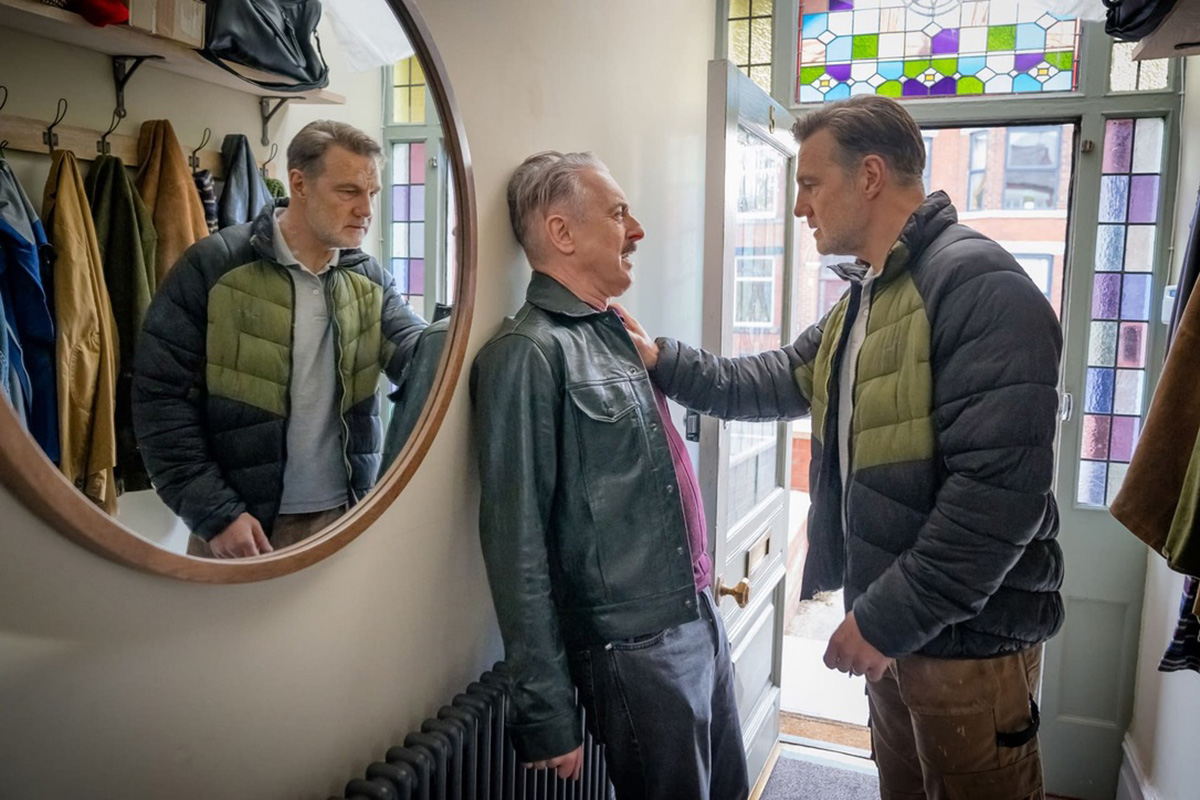
A tale of resurgent and emboldened homophobia in a modern-day Britain where open hate for the queer community has surged at an alarming rate, it’s the story of two men whose intertwining destinies feel almost like a tragic accident of fate. Leo (Alan Cumming) is a Gen-X AIDS survivor who has become a beloved figure in Manchester’s queer community, the owner of a popular gay bar that has always been a safe space for the queer, trans, and questioning souls who are struggling toward self-acceptance; his next-door neighbor, Clive (David Morrissey), is a working-class electrician with a floundering marriage and two sons who live secret lives he knows nothing about. He’s an old-school “macho man” whose ingrained misogyny and homophobia have grown increasingly unfiltered with the rise of online “culture war” rhetoric; and while there’s a kind of forced “neighborly” friendship between himself and Leo, there’s also a clear-cut line of judgement – on both sides – that gives their interactions a sense of barely concealed hostility.
When Leo is locked out of his apartment after a messy hook-up gone wrong, Clive comes to his rescue, but uses the opportunity to impose himself on Leo’s privacy. He levies the situation into an opportunity for work – an electrical revamp of Leo’s bar, where he makes no secret of his disdain for the queer “lifestyle” – and the tension between them continues to build despite Leo’s best efforts at being polite. The escalation reaches a boiling point when the secrets and lies in his own household lead Clive to suspect Leo of being a sexual predator, turning their precarious relationship into a minefield of hostility and inevitably pushing both men into a confrontation that will end in a shocking act of violence.
It might go without saying that “Tip Toe” is not the kind of show most of us would watch “for fun.” Russell’s script starts the relationship between its two antagonists at the threshold between a simmer and a boil, and shows us the outcome before either of them has even said a word, so it’s mostly impossible to avoid the sense of dread that hangs over everything that comes after. This is not a weakness; instead, aided by Peter Hoar’s masterful direction, it gives the show’s five episodes a slow build of tension that keeps us watching with morbid fascination, like the scene of a horrible road accident we’re forced to drive past in slow motion. We’re allowed to feel some hope along the way – after all, we’ve only had a glimpse of what is to happen, and there are other characters with storylines in which we can become invested along the way – but it’s a kind of grim hope, and it perfectly captures the fearful cultural zeitgeist-of-the-moment that the series is ultimately about.
The characters, too, are richly drawn and layered enough to avoid a simplistic “good guy/bad guy” dynamic. Clive is a brute – arrogant, uncivil, and forcefully antagonistic with a hair trigger that responds to anything or anyone that doesn’t meet his approval – but there’s enough broken humanity underneath all that to allow us to see a glimmer of potential for redemption. Likewise, Leo is mostly good-natured and likable, but he has an arrogance of his own, as well as some bitter resentments (most of them related to his ex-husband Curtis played by Charlie Condou), who left him for a woman), which – more than occasionally – surface to provide him with some ugly moments.
There are others, too; Melba (Paul Rhys), Leo’s gender-bending longtime bestie, who sees the growing danger in the world around them and voices it with the resigned stoicism of a reluctant Cassandra; Steph (Elizabeth Barrington), Leo’s straight friend who is not afraid to let him know when he’s too full of himself; Saul (Joseph Evans), Clive’s 20-something son who has evolved a more tolerant and easy-going outlook than his father, and teenaged George (Jackson Connor), Clive’s other son, whose struggles with his own identity take him on a roller-coaster ride of conflicted emotions; Marie (Pookie Quesnel), the wife who despises Clive but is unable to escape her unhappy existence with him; and Zee (Iz Hekseth), Leo’s employee who is trying to choose a name for herself after coming out as trans – along with a variety of other young, queer supporting players who have found refuge at the bar. All of them are written with depth and nuance, even those who remain more or less in the background, and brought to life through excellent, measured performances.
It is, however, Cumming and Morrissey who give the show its irresistible pull, their complex, bristling characters endowed with a palpable authenticity that makes us forget they are merely actors playing roles. They fully inhabit these two thorny men, creating a dynamic between them that feels like a force of nature, and it’s they who provide the terrible power that keeps us from looking away, no matter how much we might occasionally want to.
That’s a good thing, because “Tip Toe” is less a television event than it is a grim reminder that being “out” may no longer be as safe as we were finally beginning to think it was – and just because the alarm bell is coming from the UK, that doesn’t mean we shouldn’t heed its warning on our side of the Atlantic, too.
Books
Eliot Glazer’s new book an engaging collection of essays
From growing up gay to turning down ‘Queer Eye’
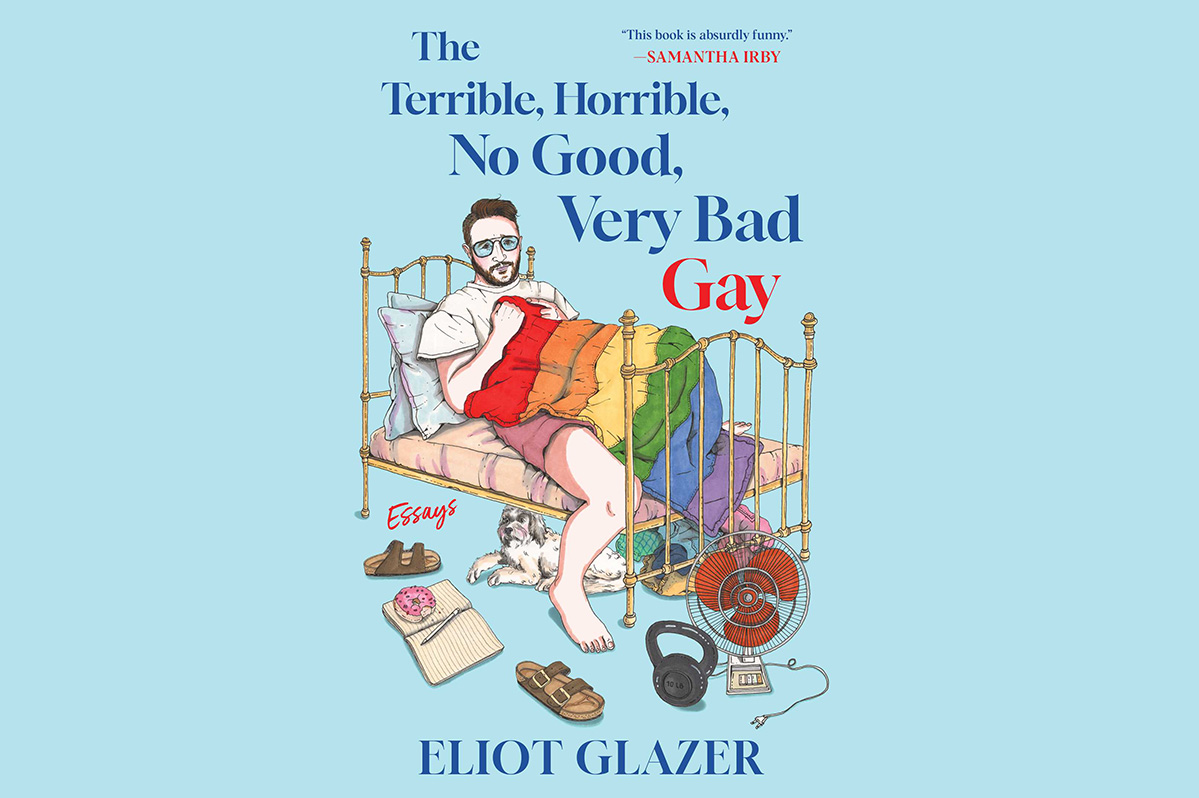
“The Terrible, Horrible, No Good, Very Bad Gay: Essays”
By Eliot Glazer
c.2026, Gallery Books
$28.99/240 pages
You try and you try.
Once, twice, you go back at that thorny issue, the dream you have, the punchline that’s not hitting quite right. Sometimes, time is all you need to make it better, or a new approach, or a second look. And then there are days when you actually get things right, as in “The Terrible, Horrible, No Good, Very Bad Gay” by Eliot Glazer, and it’s all good.

Throughout his life, Eliot Glazer has made mistakes. And it’s OK, everybody trips and falls now and then. In his case, though, he’s perfectly willing to document his failures, foibles, and whoopsies in this book.
He writes of his mother, Sandi, “a Queens-born balabosta” who wouldn’t tolerate laziness in herself or Glazer. He found work as soon as he was legally able to do so, and he had many jobs throughout high school. He was a gardener, ice cream scooper, camp counselor, golf caddy, chocolatier, telemarketer, and video store clerk. The one that fit him best, however, was working at Talbots, a department store for older women, where he found his people.
Even with all those jobs, he was a theater kid in his time off, little though it was. Back then, he was just a boy growing up on Long Island but swagger was important, so swagger he did. He still appreciates a good Broadway show, even the silliest ones.
Glazer says that he had just recently come out when gayness exploded on TV with “Will & Grace” and “Queer Eye for the Straight Guy,” with which he was obsessed. It helped him feel not othered, he says. Producers of the reboot asked him to be a second-generation Eye, but Glazer turned them down, though he thinks he’d have been good at it.
The show helped him with love of décor. His unexpected advisory skills came naturally, through age and wisdom and learning that wild partying isn’t really so much fun.
As for finding love, well, that’s a long, boy-meets-boy-meets-boy story…
So you’re looking for something to easily pick up and put down, something that speaks to your inner impatience? You’ll find that in “The Terrible, Horrible, No Good, Very Bad Gay,” a book that’s practically meant for you to skip around and you don’t have to read everything.
Essays can be like that, which is nice, even refreshing. Author Eliot Glazer is entertaining enough to make things work, engaging enough to keep it moving, and funny enough to make you want more of what he has to say. He’s open with his life and, despite his fame, his writing isn’t lofty; you can expect stories that’ll make you snort and ones with spice, but also some surprisingly tender moments that soften this book in a way that’s just right.
Readers who want a quick, mostly light book to finish will find something appealing in this collection of essays. If you don’t mind a bit of non-linearity and you need a laugh, “The Terrible, Horrible, No Good, Very Bad Gay.” is worth a try.
The Blade may receive commissions from qualifying purchases made via this post.
a&e features
From bullying to bravo: Joey Zauzig talks finding yourself while making people feel seen
Joey Zauzig went from being bullied for being gay to becoming “the internet’s best friend,” and now he’s sharing with us a glimpse into the life lessons and self-love that got him there
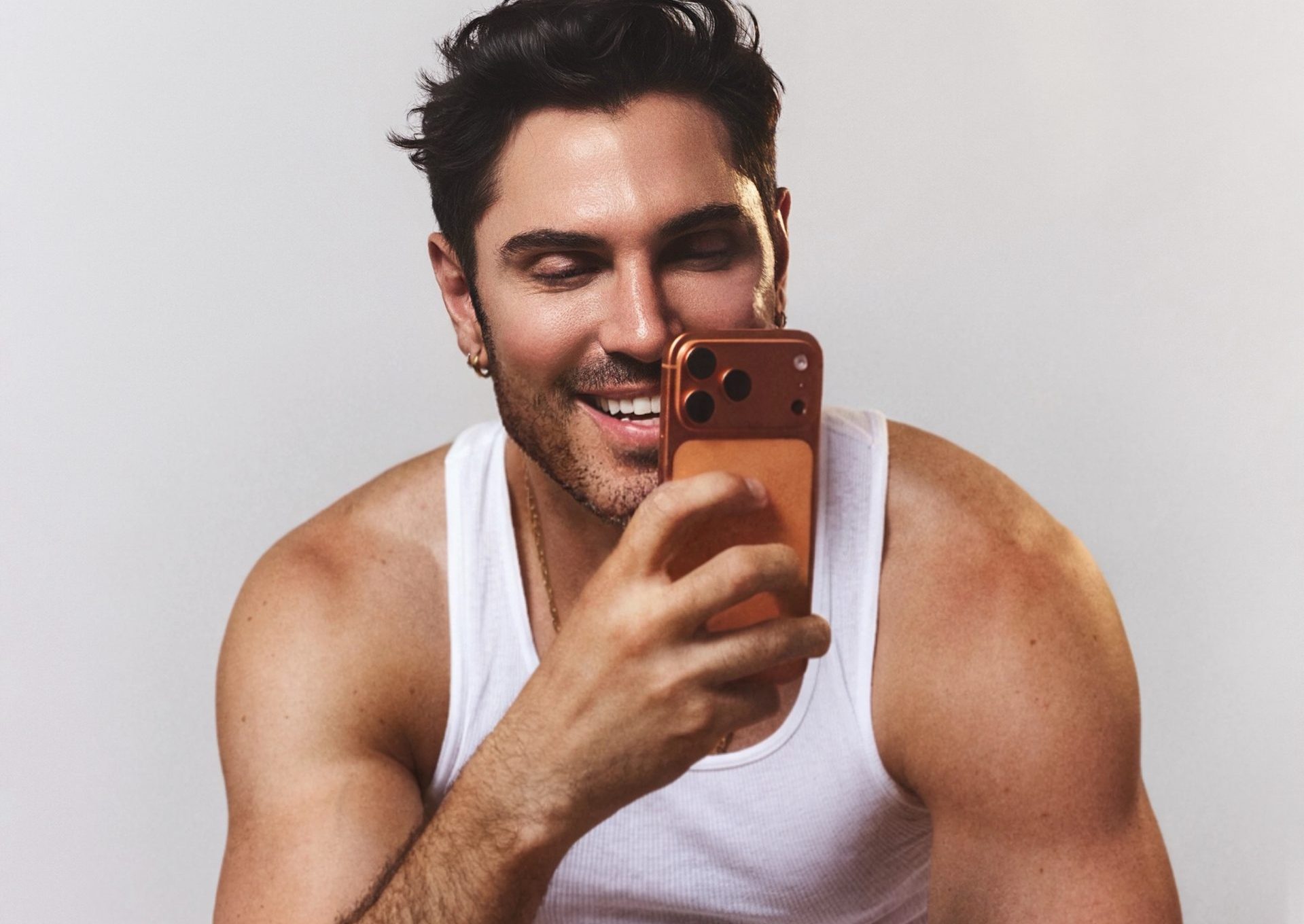
In his career, Joey Zauzig has built a unique space in our online community. Self-branded as “the internet’s best friend,” a title that stuck after an appearance on Good Morning America, Zauzig has created a digital place where humor, food, fashion, and advice all come together. Whether he’s encouraging someone to leave a relationship that no longer serves them, sharing a skinty recipe, or making his audience giggle, Joey has a way of keeping folks engaged. At the core of it all is the idea that showing up as yourself and making others feel less alone can be impactful.
Having experienced bullying for being gay before he was ready to come out, Zauzig understands what it means to search for acceptance and not find it when you need it most. Rather than allowing those experiences to own him, he has transformed them into a commitment to creating the kind of supportive space he wished he had growing up. In our conversation, Zauzig reflects on finding purpose through his platform while staying authentic and continuing to evolve. He also shares his love of food, his dream collab (you’ll have to read to find out), and what folks can look forward to as he takes his next big step with Bravo.
What does that title “the internet’s best friend” mean to you personally, and how did it come about?
It was coined when I was on Good Morning America a few years back and it just stuck. I love giving advice and being a virtual shoulder to lean on for my audience. I hope that people feel like I am a safe space for them when they come to my page and make them feel good and that I’m a friend they can rely on to be there for them.
You were bullied for being gay before you were ready to come out. In hindsight, how did these experiences impact the person and creator that you’ve become?
Those were some really tough periods in my life, but looking back, they shaped so much of who I am today. Going through that helped me develop a stronger sense of who I was and taught me the importance of accepting myself, even when it feels like the world isn’t ready to. I also didn’t have someone I felt I could look up to or turn to during those years. Because of that, I’ve always wanted to create the kind of space I wish I’d had growing up, where people feel safe, supported, and accepted exactly as they are. If sharing my experiences helps even one person feel a little less alone, then those difficult moments have found a greater purpose.
Instead of allowing those painful experiences to overtake your narrative, you’ve built a platform centered on positivity and empowerment. Was there a specific moment when you realized your story could help other folks?
I wouldn’t say there was one moment in time, but overall, as I went through these times, I found myself always wanting to make people feel good and smile. I have been so fortunate to have a platform where I’m able to give that to people, and I can’t wait for it to grow into something even bigger.
What’s the biggest responsibility that comes with being someone that thousands of people genuinely turn to for support?
I think the biggest responsibility has been being intentional with the content I make and finding a balance between putting out content that resonates with people and staying true to myself. I don’t want people to follow me because they think I have life figured out. I want them to feel like they’re hanging out with a friend who’s figuring it out too.
What’s the most meaningful message you’ve ever received from someone whose life was changed by one of your videos?
I receive messages every day, and it truly is the most meaningful part of what I do and makes it worth it. Those messages remind me that content is about so much more than entertainment. You never really know what’s happening on the other side of the screen, and it’s incredible to think that something as simple as making someone laugh, sharing a meal, or being honest about your own experiences can make another person feel seen.
You often encourage people to leave unhealthy relationships and believe in themselves. What’s one piece of advice you wish someone had given you when you were a wee one?
I wish someone had told me that the way people treat you is never a measure of your worth. When you’re young, it’s so easy to think that being rejected, judged, or made to feel like you’re “too much” or “not enough” means there’s something wrong with you. It took me a long time to realize that other people’s opinions are usually a reflection of where they are, not who you are. The right people will never require you to shrink to be loved. They’ll celebrate who you already are.
How do you protect your own mental health while constantly giving emotional support to others online?
I’ve learned that I can’t be there for everyone if I’m not taking care of myself first. I try to set healthy boundaries, spend time with the people I love, and remember that social media isn’t real life. I care deeply about the messages people send me, but I’ve also accepted that I can’t solve every problem. The best thing I can do is show up authentically, offer encouragement, and remind people, including myself, that it’s okay to ask for help and protect your own peace.
Your Skinty recipes have developed a fan base of their own. Where did that idea come from, and what makes a recipe Skinty?
Skinty came from me wanting to enjoy the foods I love while making them the healthiest version possible. I’ve never believed that eating well has to mean giving up the meals you’re craving. To me, a recipe is “Skinty” when it feels balanced. It’s satisfying, packed with flavor, made with better-for-you ingredients where it makes sense, and still feels indulgent enough that you actually want to make it again. That’s always been the goal: healthy without feeling restrictive.
Your content blends humor, fashion, dating, wellness, and food. How do you stay creative while producing content that feels green and not yet seen every day?
I think the biggest thing is that I create from my actual life instead of chasing trends. If something makes me laugh, inspires me, or feels like a conversation I’d have with my friends, that’s usually where the best content comes from. I also don’t put pressure on myself to reinvent the internet every day. I just try to tell familiar stories in my own way. If it feels authentic to me, it’ll feel fresh because no one else has my perspective.
You’ve covered plenty of viral food trends. What’s your humble opinion on folks queuing up for the latest candy-coated culinary creation sweeping TikTok?
I honestly love that food brings people together. If standing in line for the latest viral dessert or trying a crazy new food trend makes someone happy, I’m all for it.
I think the best meals are usually the ones you keep coming back to, not just the ones getting millions of views. I’ll always try the viral spot, but I’m just as excited to find those hidden gems that deserve the same attention. At the end of the day, if it tastes good, brings people together, and creates a fun memory, that’s what really matters.
Social media has blurred the line between creators and their audiences. What’s your take on parasocial relationships, and how do you balance being authentic without feeling like you owe followers access to every part of your life?
I think it’s a really interesting balance. I’m incredibly grateful that people feel connected to me; that’s honestly one of the best parts of what I do. If someone feels like they’re catching up with a friend when they watch my videos, I’ve done my job. At the same time, I’ve learned that authenticity doesn’t mean sharing everything. Some parts of my life are just for me, my family, and the people closest to me. I think it’s possible to be open, honest, and genuine while still having healthy boundaries. The goal has never been to let people into every part of my life. It’s to make people feel seen, entertained, and connected without losing myself in the process.
If you could collab with any celebrity chef or food personality, who would you be stepping into the kitchen with?
Without a doubt, Martha Stewart. She’s an absolute icon. I feel like we’d be the perfect duo; she’d be teaching me the proper way to do everything, and I’d be over there trying to convince her to make a Skinty version of one of her legendary recipes. If I could leave with one hosting tip, one recipe, and maybe an invite to Thanksgiving, I’d consider it a successful day.
Without giving away any surprises of course, what can your followers expect from you over the next year that they haven’t seen before?
Lots of exciting things are coming. You can expect to see me on Bravo, which I’m incredibly excited about. Beyond that, I’m continuing to expand my brand and platform.
Travel
‘(Out) On the Road’ revels and reveals the joys of queer travel
Author Lindsey Danis’s new book empowers LGBTQ people to travel more
When you think of LGBTQ travel, you may think of hard-bodied gays off to Mykonos or Ibiza or queer family unit in some Disney World ad. However, many queer people are traveling. According to travel writer Lindsey Danis, “LGBTQ+ Americans are more than twice as likely as the general population to have valid passports. LGBTQ+ travel market is valued at over $320 billion.”
That being said, all queer people face many of the same concerns when navigating new, potentially homophobic, cultures and environments. Financial feasibility can also keep some LGBTQ people from even considering international expeditions or restorative getaways. Danis hopes to change that with her new book, (Out) On the Road. She confesses, “The main reason I wrote my book is to move the conversation on LGBTQ travel beyond what’s scary and bring in joy.”
“The mindset work is really transformative for queer and trans people who want to travel more but either feel like they can’t afford it or the world isn’t safe for them.” Danis shares. (Out) On the Road collects stories of various queer travelers and invaluable advice to help the wayward queer traveler, whether it’s your first time or you just want some fresh insight into traveling today.
While the growing conservatism sweeping the globe may affect how safe some queer people might feel when traveling, we still deserve the chance to get all the deep benefits of inspiration, joy, and cultural experiences that come with traveling. Part of fighting conservatism is prioritizing and sharing queer joy, which is what Danis highlights with her book.
In Danis’s words, “Queer people operate with a joy deficit, in bodies that carry heightened sensitivity to potential threats. So allowing ourselves to feel more joy and carving out time/space for joy in all its forms is revitalizing for us.” She continues, “Traveling to queer-friendly places is especially important now, given the ongoing erasure of LGBTQ+ rights in many states. Getting out of an unsupportive place and going somewhere, even for a few days, where they can be themselves, is tremendously freeing and empowering. We can embody who we want to be.”
“When I lived in San Francisco, and I’d go to the Castro,” Danish confesses, “I’d always see these starry-eyed gay couples walking around holding hands, and I could tell from their emotion that this was something they did not do back home, that they were quietly careful not to touch in public, but here on vacation they could be themselves.” That moment served as inspiration for the book, she continues, “Ever since, this has stayed with me as a tangible reminder of what queer joy in action looks and feels like, and how important it is to have places we can access that.”
Danis highlights the importance of traveling to better be oneself, adding, “For queer people who aren’t able to be open in their daily lives or who live in unsupportive places, travel offers them an escape and a chance to be themselves, which is healing on so many levels. I’m thinking of the scene in Will & Harper [Will Ferrell’s documentary with trans writer Harper Steele] where Harper is talking about the house she bought in the Eastern Sierras specifically so she could have one place in the world she could be herself.” She continues, “How she first thought she could only be herself behind closed doors, but slowly built the courage to be herself in daily life, and learned to advocate for herself, too, such a lovely model of strength.”
What are some of the valuable experiences in traveling that Danis has found for herself? She shares, “Traveling inspires me. Having new experiences and seeing new things gives me energy; it feeds me, and it inspires me creatively as well. Travel also builds skills and confidence, whether that’s learning a new language or confidently navigating (my weakness).”
She admits, “I caught the travel bug early, after a trip to Egypt and Israel with my YMCA summer camp. It was my first time outside the US, and to be able to see these ancient cultural relics that I’d read about in my history book come alive in front of my eyes, to be in the ancient temples and tombs and riding camels in the desert was incredible.”
While the inspiration of the book is nuanced, the genesis of the book was fairly straightforward. Danis shares, “There was very little information by and for queer travelers, and most of what existed was for cis gay men; I didn’t see myself in that for multiple reasons.” She adds, “Most of the information out there doesn’t even break down the kinds of challenges we can experience at all. Often it takes a cis gay traveler as the/stand-in for the community as a whole. In other words, putting the most privileged part of the queer community as a stand-in for everyone else with less privilege.”
Danis was able to fill that gap by specifically focusing on the LGBTQ community at large, also incorporating the unique travel needs and experiences of queer women and non-binary people: “I thought of this book as all the information I wished I had when I first started traveling – the things I never would’ve known to Google because it would never have occurred to me I needed to.”
Like many LGBTQ people, Danis had an employment history that didn’t always afford her the chance to travel. She shares, “For years I worked multiple jobs that didn’t have any benefits, including vacation days or sick days. I lived paycheck to paycheck, and the idea of taking a vacation was laughable. The norm in the culinary industry where I worked was that when you were ready for a break, you would just quit your job, travel, and get a new one when you came back.” After some time, Danis switched careers and became a writer specializing in food and travel.
Her previous financial limitations helped define who she wanted to include when she wrote this book. She confesses, “While I am now self-employed with the freedom and flexibility to travel, it was a priority to me to speak to the economic realities that keep so many queer and trans folks from feeling like they can afford a vacation, and to redefine what vacation can look like instead of the glossy fantasy splashed all over social media.”
Many of these stories explore different inspirational queer experiences with travel. Danis shares, “In (Out) On the Road, I share the story of an extreme budget traveler who bicycled across the US with a budget of $300. They used Couchsurfing apps, tent camped, and stayed for free in churches and other places. Most people are not going to travel like that truly, but I love this story because it shows that frugal travel is possible when you have the right mindset.”
“(Out) On the Road is full of inspiring examples like that of queer people breaking through limitations or finding greater self-acceptance because of the space that opens up when traveling, and getting a break from daily lives.” Danis adds. So what are some of her favorite stories profiled? “A white female vanlifer, raised in a conservative religious family, who had a lesbian awakening and built the courage to come out, and now is happily partnered. And a South Asian gay man who found freedom from the rigid body ideals in gay culture while exploring Berlin’s nudist scenes, and was able to bring that mindset shift home with him.”
In writing and researching this book, Danis did find some surprises: “I imagined cis gay men had more freedom and were less worried than women, nonbinary and trans people, but this wasn’t always the case. I spoke with 2 gay travel couples; even though they tend to have more privilege and be less at risk moving through the world, their concerns were very similar to mine.”
She adds, “Another surprise, talking to Aisha Shaibu-Lenoir about LGBT travel to Africa, people in the West tend to think of Africa as being dangerous or unwelcoming (or a single country rather than a continent), and while that’s true for some African countries, there are growing pockets of hospitality.” She adds, “I was excited to learn about the work she is doing to educate African hospitality professionals about the queer community, teach them what they need to know to be inclusive and welcoming, and it made me hopeful.”
At its core, (Out) On the Road is a self-love letter inspiring queer people to travel and feel more joy by exploring the world. Danis adds, ” Joy is seeing what’s possible for us, rewriting limiting beliefs, visiting places that are more freeing than where we live – participating in the world as our full selves, without having to hide.” She concludes with an inspirational message, “I like to think of travel as a way to reclaim our power and pleasure – we forget that we have power in where and how we spend our money, but we do.”
(Out) On the Road is available where all books are sold. You can find out more about Lindsey Danis on her website.
Bars & Parties
Lesbian Bar Project co-founder: purity politics could destroy our remaining spaces
Last Ditch’s decision to lift its mask requirement for one night a week has sparked intra-queer controversy
Uncloseted Media published this story on Sept. 29
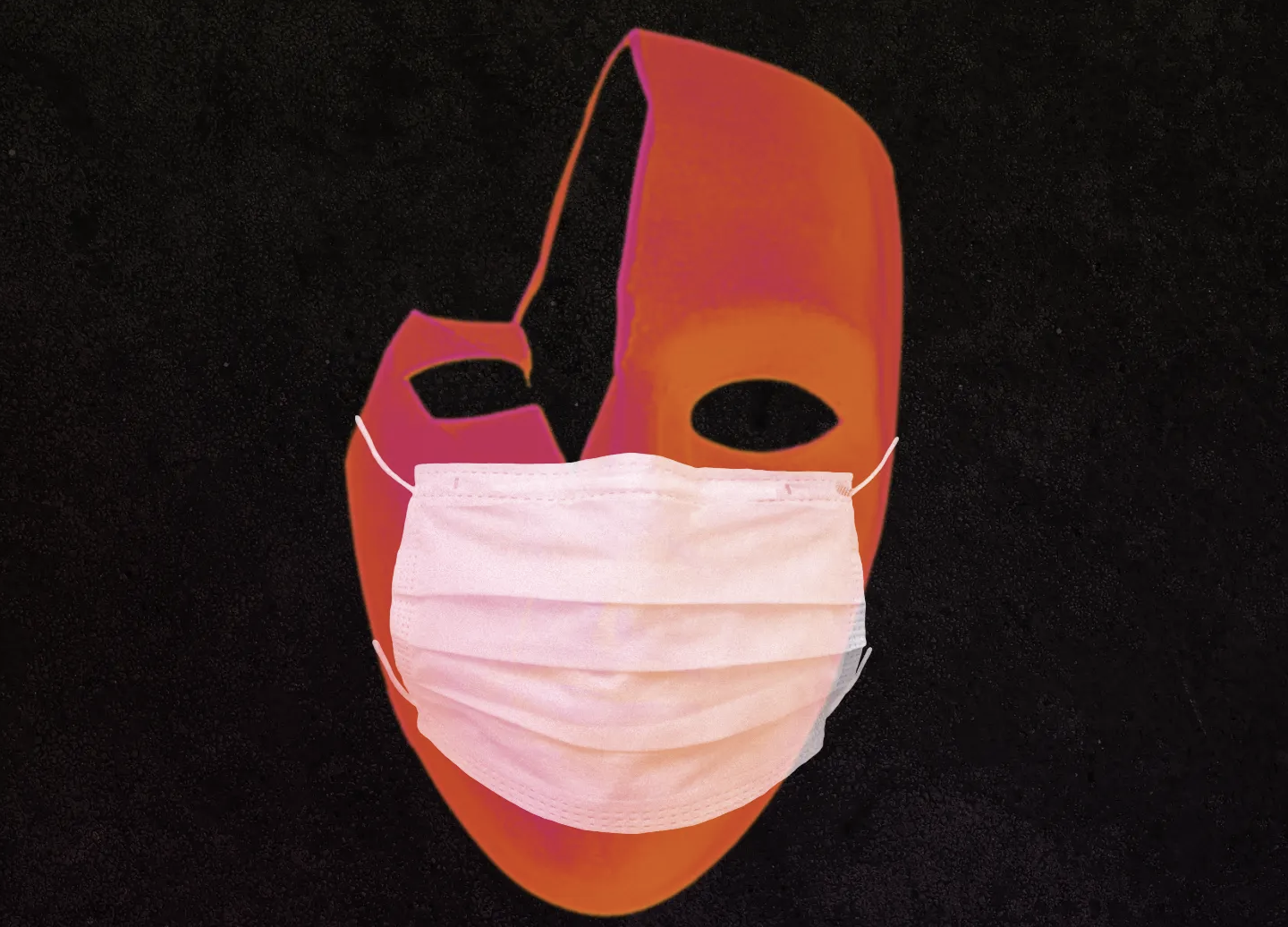
By ERICA ROSE and THE LESBIAN BAR PROJECT | As a professional lesbian and Massachusetts native, I’ve recently been asked by a lot of folks what I think about the saga unfolding at Last Ditch. The now-viral story, first reported by the Boston Globe, centers on a Western Massachusetts lesbian bar that lifted its mask requirement for one night a week to help drum up business.
The decision ignited an intra-queer controversy that has been feasted on by media outlets across the political spectrum — from the New York Post to LGBTQ Nation — and is even reportedly being eyed for a Hollywood adaptation. Apparently nothing is more entertaining than a bunch of lesbians and queers fighting with each other over KN-95s.
What has been lost in all of the chatter and media coverage is the very real possibility that Last Ditch, which just opened in April 2025, will have to close its doors. The venue’s one remaining founder, Jackie Matellian, revealed in a community Zoom meeting that she’s working four jobs, is now solely responsible for the bar’s $50,000 business loan and is struggling to keep up with the bills. So as we laugh about the controversy’s similarity to a “Portlandia” skit and how one of the bar’s founders left to enroll in clown school, we forget that yet another lesbian bar is facing an existential crisis — and this time the call is coming from inside the house.
In 2020, my friend Elina Street and I created The Lesbian Bar Project, an Emmy-, Webby- and GLAAD Media Award-winning docuseries and initiative that tells the stories of lesbian queer bars around the world. We were moved to act because at the time there were only an estimated 16 lesbian bars in the United States, and the pandemic threatened to bring that number down even further.
There are now more sapphic bars than there were just before the pandemic — about 36 of them in total — but this is down from approximately 200 in 1980. Maybe that doesn’t mean much to you, but for the millions of sapphics living in the U.S., this number is calamitous.
As the world laughs at lesbians and sapphics, I want to take a second and tell you what I feel when I walk into one of these bars, which are all unique and irreplaceable in their own way: I feel seen.
Sometimes I think Cubbyhole in New York City’s West Village neighborhood knew I was gay before I did. When I walked in there for the first time, before I was even out, I was transfixed by the colorful array of tchotchkes hanging from the ceiling and how the women standing next to me were completely unafraid to express their desire for one another. I knew the minute I was ready to come out, I had a home. I also felt the joy of a new couple falling in love at Seattle’s Wildrose, the quiet confidence of a short king lining up her shot at the pool table at Ginger’s in Brooklyn and the kick of cayenne pepper in Julie Mabry’s crawfish at Houston’s Pearl Bar.
Lesbian bars don’t just serve lesbians; they serve queer folks across the spectrum, including bisexual, pansexual and trans people. As Elina and I traveled across the U.S. and Europe and to parts of Latin America to document the bar owners, staff and patrons that make up the ecosystems of these spaces, we also became uniquely acquainted with the factors that threaten their existence: gentrification, wage gaps, sexism, environmental disasters, gun violence, rising insurance premiums and political administrations working to annihilate queer people and their families.
Lesbian bar owners, like all leaders and entrepreneurs, are imperfect. There have been significant issues over the years at lesbian bars: employee harassment, racism, lack of accessibility, sexual assault and transphobia. All bar owners should be held accountable and should listen to their communities to evolve into safer and more equitable spaces. I also acknowledge my privilege: I am able-bodied, white, cis and from a family system that loves me for who I am. Not everyone has that.
Queer people, especially trans and bisexual people, are suffering from disproportionately high levels of depression, and our mental health system isn’t equipped to support them. Immunocompromised people and long COVID are real, and many of my friends are suffering to this day. The people with the least safety net are often the ones for whom a bar closing costs the most. And yet, as we’re seeing with Last Ditch, the queer community often lashes out at each other. It’s also the mainstream media taking the internal conflict and making a mockery out of it, distracting from the real possibility that this bar could close due to financial pressures. A bar that many people loved and needed is facing extinction. Perhaps it’s safer to dissent with one another than with the larger forces trying to eradicate us, but in doing so, we risk destroying the few spaces we have left.
Due to the constraints of purity politics — some in good faith, some not so much — lesbian bar owners, almost all of whom are queer women themselves, are forced to be everything for everyone, similarly to how women are forced to be everything for everyone. By asking these bars to uphold impossible standards — standards very few other third spaces are asked to consider — we all end up losing.
I want to move as a community toward dialogue, compassionate dissent and collaboration to make our spaces better with the goal of keeping them OPEN and thriving, rather than destroying them from the inside with expectations that are arguably unattainable.
While I have your attention — for this fleeting second of the news cycle — may I urge us to spearhead a way to keep these small businesses afloat without attacking our own community along the way? Bar owners are left with an impasse: They want to be community-centered, but they also have to make money to keep their doors open. Sometimes they might make business decisions that don’t work for everyone — and that’s partly because different patrons have different priorities and want different things — but these owners deserve the opportunity for productive dialogue. We have to work with them and with each other to keep our spaces open, to keep them growing.
Lesbian bars raised me into the queer woman I am today. One thing I think about as I reflect on the six years of work we’ve done to document these spaces is that shared, unspoken language I have with a stranger the moment we both walk into one of these bars: the nod, the ease, the not having to explain ourselves. I don’t want to lose that, and neither should you.
Gaming
Free slot tournaments are the casino game Californians can play online right now
California runs the largest tribal casino market in the country, with more than seventy properties generating over nine billion dollars a year, plus licensed card rooms, the state lottery, and a racing calendar that still fills Santa Anita and Del Mar. What it has not had, until the rules were settled this year, is a clear answer on which casino-style games are fine to play from a phone in Los Angeles. As of 2026, that answer exists, and it points to one format.
Free slot tournaments, where entrants spin with contest credits and compete for a place on a leaderboard, fall outside what California law prohibits online. No stake, no payout, nothing to redeem: the two elements the law targets are absent, so the format sits outside the prohibition rather than being expressly permitted by it. For a reader who enjoys slots at Pechanga or Yaamava’ and wants that competitive edge at home, this is the format built for the state’s rules.
What AB 831 Changed for California Players
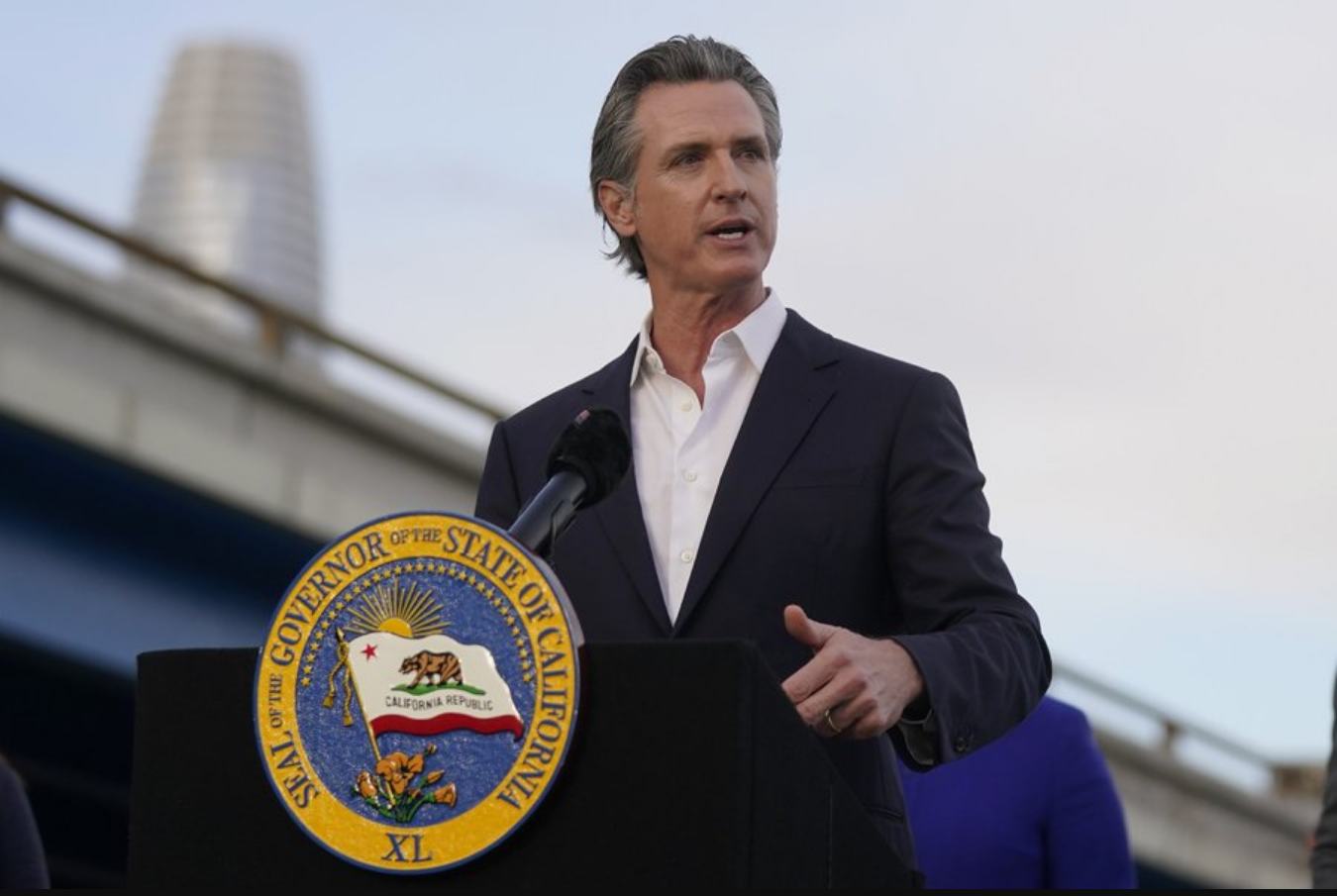
Assembly Bill 831, signed by Governor Newsom on 11 October 2025 and in force since 1 January, settled the online question. The bill defines a prohibited online sweepstakes game by its dual-currency structure, one coin for play and a second that converts to cash, and then adds a sentence that matters more to a casual player than the rest of the statute: the paragraph does not make unlawful a game that does not award cash prizes or cash equivalents.
That is where free tournaments sit. The best free online slot tournaments give every entrant a fixed number of spins, convert each result into points under a published scoring rule, and rank the field over a day or a week. There is one currency; it exists only inside the contest, and the reward is a standing on the board or free spins on the site itself. Every element of that format sits outside the prohibition the Legislature drew, which is why it has moved from a side feature on operator sites to the main event for California players.
A Regulated Real-Money Market Is Being Built Toward 2028
Real-money online casino, online poker and mobile sports betting have never been offered in California, and the path to them runs through the state’s tribes, who hold gaming exclusivity under their compacts. The California Nations Indian Gaming Association has set November 2028 as the target for a unified tribal initiative covering retail and online sports betting, a timetable the association has publicly supported. The 2022 experience, when tribal and commercial campaigns ran competing measures, is the reason the tribes are building one proposal this time rather than rushing a second attempt.
This November’s ballot is a busy one, and the political stakes heading into the midterms are real for readers of this paper, but gaming is not on it by design. In the meantime, the in-person market carries on at full strength, and the online side has a format that needs no ballot, no compact, and no license to enjoy. Free tournaments of this kind fall outside what current law prohibits, and the 2028 timetable gives the state two full seasons to get the larger framework right.
The Prize Table Tells You Everything About Whether a Tournament Fits California
Because the law turns on cash equivalents, the one thing worth checking before entering any tournament is what the winner receives. Contests that award leaderboard standing, badges or free spins on the site are the California version. Formats offered in other states sometimes pair free entry with a deposit option or pay cash to the top finishers, and those are a different product built for a different rulebook. A quick read of the prize table settles it, and a well-run tournament site puts that information on the entry page rather than in the terms.
The full text of AB 831 is short and worth ten minutes if a site’s terms are unclear. For a Californian who enjoys slots, the practical picture in 2026 is a strong in-person scene, a regulated online market taking shape for 2028, and a free tournament format available today that turns a favorite game into a competition with other players across the country. Help for problem gambling is available around the clock at 1-800-GAMBLER.
a&e features
The trans Handy Ma’am helps where it matters most – at home
Mercury Stardust teaches DIY to empower vulnerable renters and homeowners
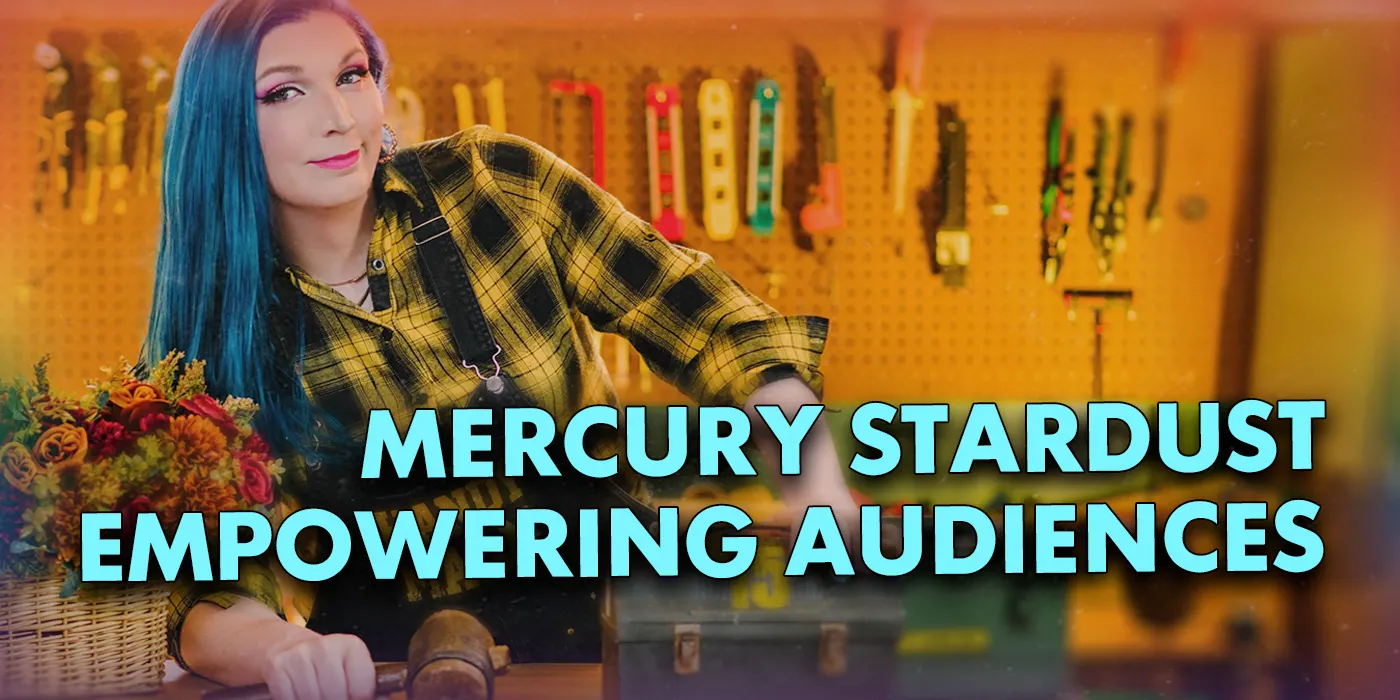
With the midterms fast approaching and Donald Trump’s malignant whimsy dictating the American agenda, many of us feel unsafe as scraps of hard economic and political news randomly swirl around our lives like debris in the swelling tornado outside Dorothy’s Wizard of Oz window. What’s happening? Will I get hit? Who can I trust to help me?
But all may not be what it seems. As America faces a reckoning with Trumpism and Trump’s cratering approval ratings, new leaders are emerging, standing in the breach to help reclaim our common humanity.
Anti-trans political spots blight the airwaves, for instance, driven by Elon Musk’s America PAC, “which has dropped $100 million on anti-transgender ads targeting Democrats,” trans columnist Erin Reed writes in her Erin in the Morning Substack.
The ads are proving largely ineffective. “Anti-trans ads may scare Democratic candidates, but among the general public, polls consistently show that voters rank transgender issues among the lowest-priority issues they care about and vote on, with less than 1% of respondents naming ‘wokeness/transgender issues’ as a top issue,” Reed notes.
However, by saturating the airwaves, trans people are constantly bombarded by “hateful messaging” that also hits unsuspecting viewers.
“They paint transgender people as predatory and disgusting to a national audience in a cheap attempt to win votes, and every viewing raises the temperature of the hate and abuse directed at a community that is already a target,” Reeds writes.
While trans people make conscious existential choices every day, many also live fulfilling lives and seek to be of service in unexpected ways and places.
Take the purple state of Wisconsin. Out lesbian Sen. Tammy Baldwin has won 17 general election races since 1986. Out trans candidate Dina Nina Martinez-Rutherford recently won her Democratic primary for a State Assembly seat representing the 76th District in Madison. And TikTok star and New York Times best-selling author Mercury Stardust, an expert in home repair, also lives in Madison with her trans spouse.
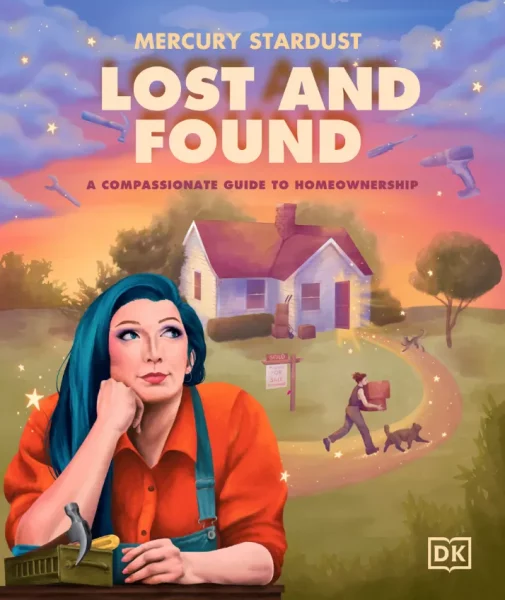
“I was a burlesque and drag entertainer, and I was also a maintenance technician for a property management company and for various companies in tropical Madison, Wisconsin,” Stardust says during an interview while on a book tour for her second book, Lost and Found, A Compassionate Guide to Home Repair.
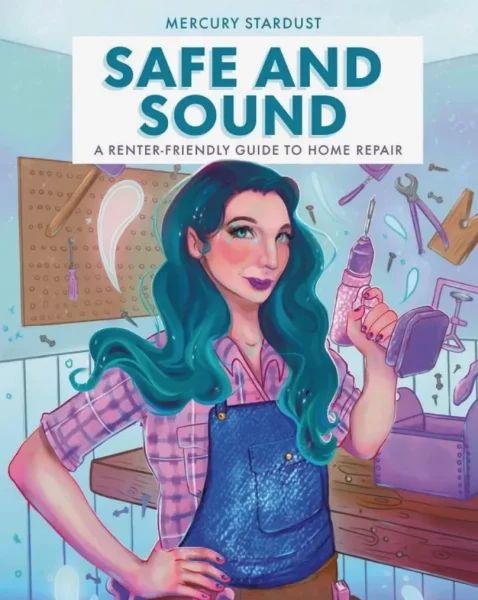
She became well known on the internet for helping strangers learn how to fix their pipes and drywall, helping a lot of renters – which led to her first book, Safe and Sound: A Renter-Friendly Guide to Home Repair.
Stardust now lives in a home in Madison with her “wonderful spouse, Mouse ZZ” to whom she has been married for 10 years. ZZ (Ari) was also born and raised in Wisconsin, went to Cleveland, Ohio, for their undergraduate college degree, and returned home to get their master’s degree at UW-Madison.
“My trans journey is a fairly small part of my entire journey as a content creator, but I have kind of been really public about me raising money for gender-affirming care and helping other trans people access gender-affirming care” through Point of Pride, Stardust says.
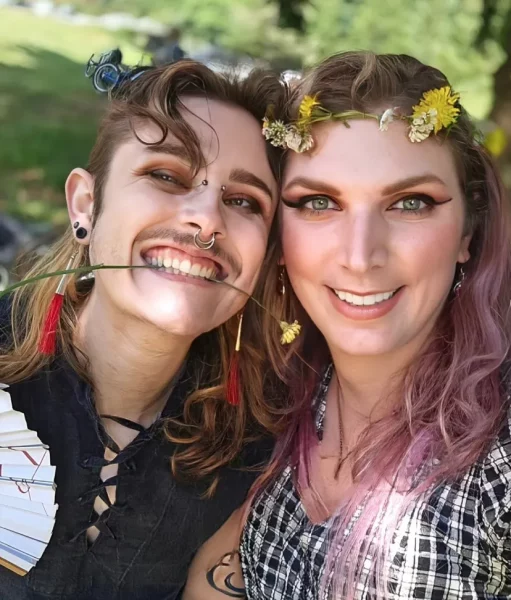
The couple came out together a few months after they were married. “We’ve kind of been living that trans T-4-T life ever since.”
Stardust grew up on a rural family farm with lots of cows. She acknowledges that Wisconsin has a strong sense of conservatism and is also “very pro-union, very pro progressive.”
“The whole motto of Wisconsin is ‘forward,’” she says. “It’s a purple state for a reason.”
A burlesque performer for 15 years, she founded the Wisconsin Burlesque Association.
By running “the only weekly drag and burlesque show (Five Star Tease) in all of Wisconsin for five years,” she says, “I was able to find out who I was. And we built a really strong, like-minded community that made it comfortable and safe to be able to come out as who we were.”
They built community by showing up.
“I think that people have an idea of rural America as if it’s only a certain demographic,” Stardust says. “But a lot of people and I grew up queer in rural Wisconsin, in rural places of the world. It doesn’t necessarily have to be where, ‘Oh, wow! I should be afraid to come out because I’m the one of only a million,’ right? That isn’t really the reality, right? There are a lot of people who are queer in those places, and all you have to do in order to make those communities is show up.”
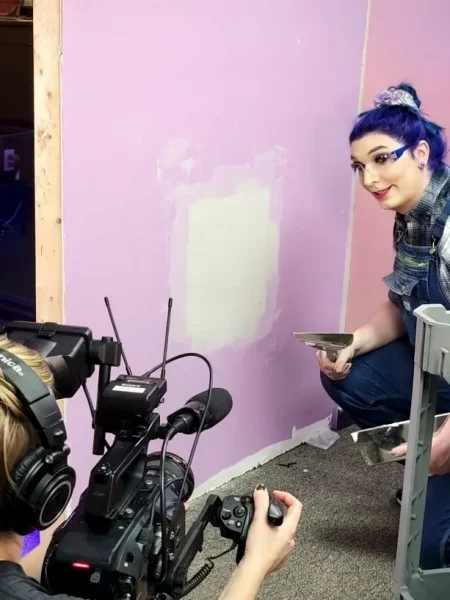
And with confidence, you get to show up as all of who you are. “It’s like being a maintenance technician in those spaces, you know? And there is no joke there. It’s like, this is a real aspect of who I am,” Stardust says, “where I’m gonna show up as who I am and just live my life the way that anyone would, because I’m just a human being. There’s nothing necessarily uniquely special about that. It’s just the fact that I’m also a trans person who happens to be really good at maintenance and is also very good at educating people” on DIY home repairs.
But Mercury Stardust’s big laugh and positive attitude, teaching DIY as The Trans Handy Ma’am, is also quietly empowering, building confidence for vulnerable people that they can fix something and not have to rely on a landlord or strangers. And if the need for maintenance is greater than their capabilities, learning how to pick professional help is important, too.
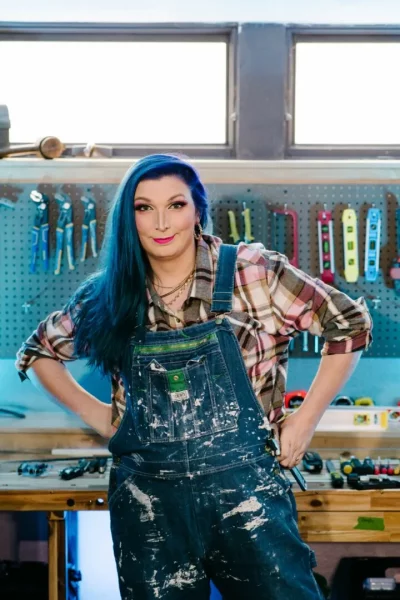
Practicing self-confidence and showing up safely can also be developed as skills to help build community at this dangerously precarious time when more and more tornadoes, real and imagined, increasingly swirl around us.
The tornadoes are a shared common problem that supersedes petty divisiveness while at the same time elevating and listening to the intersectional experience of those hit the hardest.
Here are some scraps of hard news swirling around in today’s tornadoes, issues we all have to deal with now and whenever Trump crashes.
In the last two years, the Trump administration’s enforcement of Project 2025 has resulted in trans people receiving greater hostile visibility and political scapegoating, in addition to shared cold, hard healthcare issues, food insecurity, housing insecurity, and high home heating and gasoline prices.
Right now, it’s hard to know who’s telling the truth and who’s offering credible ideas and solutions.
Since his first term, Donald Trump’s Orwellian version of truth as “alternative facts” has poisoned the well of discourse and promoted cruelty and division. Journalists were finally forced to call him a liar, question his mental stability and acuity, and peg him as a wannabe dictator.
“We do now live in a country that has an authoritarian leader in charge. We have a consolidating dictatorship in our country,” out MSNBC anchor Rachel Maddow said Monday night, Aug. 4, 2025. “The question is no longer how to prepare for this risk or how to try to avert it, but rather how to fight it now that it is here and in effect.”
Just over a year later, Trump banned broadcast TV press pool coverage from the White House campus while his Justice Department essentially lied for him in court proceedings. Trump launched his own authoritarian-like Trump TV programing to try to control the narrative. On Sept. 24, a Trump-appointed judge issued a temporary restraining order requiring the restoration of press passes.
But with the specific issue of pool coverage still unresolved, the Oval Office meeting between Trump and China’s dictator Xi Jinping was covered by Chinese state media but not covered live by US cameras, with BBC reporters noting, “we’re not sure exactly what they spoke about.” Reminder: at a two-hour private meeting with Russian dictator Vladimir Putin in 2018, Trump told the press that he believed Putin over US Intelligence.
Vice President JD Vance’s announcement of the administration’s intention to remove 760,000 Affordable Care Act enrollees from public healthcare exchanges adds to the five million people who dropped their ACA insurance after Trump and the Republican Congress let premium prices skyrocket. “Give us another chance — or, give us another couple of years to continue to work on the amazing things that we’ve been doing for the past two years,” Vance said on the All In podcast.
Meanwhile, more than 4 million people lost access to critical food aid between last July and April — many of whom are children – because of cuts to the Supplemental Nutrition Assistance Program (SNAP/food stamps), which the White House called “bloated.” More cuts are expected by the end of 2026, NPR reported last month.
Meanwhile, more than 160,000 pounds of raw meat with fake USDA inspection labels were recalled on Sept. 24; the CDC reports that as of September 17, 2026, 3,471 confirmed* measles cases were reported in the United States in 2026; and university scientists think outbreaks of infectious diseases like Ebola, hantavirus, bird flu and COVID-19 are on the rise.
And as Trump’s war of choice in Iran expands throughout the Middle East, home heating oil and gas and diesel prices continue to climb. An estimated 4 million to 5 million households use heating oil for homes during the winter, according to the U.S. Energy Information Administration. Massachusetts is already reporting that for the week of Sept. 21, 2026, the average retail price for heating oil hit $6.15 per gallon. That’s a 74.7% jump compared to last year, or a $6,000 bill compared to previous years of maybe a $3,500 or $4,000 bill.
And what’s going to happen when the nor’easter storms hit the East Coast? California Gov. Gavin Newsom has already declared a state of emergency to prepare for being the epicenter for a predicted “historically intense El Niño,” according to a news release from the governor’s office. There’s a 75% chance this super storm will become the strongest since 1950, according to the latest reliable forecast.
While Trump is bored with the war and calls the affordability crisis a hoax, community grassroots organizations such as Indivisible help produce No Kings protests nationwide, and individuals like Mercury Stardust help empower people to show up as who they are where they live.
Maybe they will also show up and share common ground over a common issue and create a new kind of real equality-based intersectional democracy, a more perfect union, in the process.
This is a cross-post from Karen’s LGBTQ+ Freedom Fighters Substack.

Zaya Wade to be honored by LA LGBT Center with Model of Pride award

Carolyn Weathers: From mild-mannered to kick-ass lesbian activist in the L.A. gay liberation front

Veteran Broadway actor Laura Benanti bares all in her new show ‘Nobody Cares’

Here’s your Palm Springs look at the weekend: Oct 9-11, 2026

ICC unseals arrest warrants for Taliban officials accused of persecuting LGBTQ+ people, women

Transgender woman elected to Brazilian Chamber of Deputies

Preserving the past: Robert Kesten on Stonewall & storytelling; LA Blade joins at the Abbey, Tuesday, October 6th at 6 pm

Evan Low is not the leader the Victory Fund needs at this moment

AIDS Walk Los Angeles set for 42nd year amid growing challenges
10 years later, we still can’t shake Barry Jenkins’ ‘Moonlight’
-
 Brazil5 days ago
Transgender woman elected to Brazilian Chamber of Deputies
-
 History5 days ago
Preserving the past: Robert Kesten on Stonewall & storytelling; LA Blade joins at the Abbey, Tuesday, October 6th at 6 pm
-
 Opinions5 days ago
Evan Low is not the leader the Victory Fund needs at this moment
-
 AIDS and HIV4 days ago
AIDS Walk Los Angeles set for 42nd year amid growing challenges
-
Movies4 days ago
10 years later, we still can’t shake Barry Jenkins’ ‘Moonlight’
-
 opinions4 days ago
The facts about Victory Fund’s investigation and the path forward
-
 Georgia4 days ago
In Ga., 2 trans candidates believe voters are ready for them
-

 California3 days ago
‘A disgusting attempt to exploit lesbian intimacy for political attention’: suggestive Steve Hilton ad draws criticism
-
 Obituary3 days ago
Michael Kearns has died six days before his planned return to the Celebration Theatre
-

 Federal Government3 days ago
Bessent says Trump chose him for his qualifications, not his sexuality