
National
‘Remembering Nicole’ on Women’s Equality Day
Highlighting domestic violence as inequality through Nicole Brown Simpson

Sunday, Aug. 26, is Women’s Equality Day, a day when Americans recognize the adoption of the 19th Amendment to the U.S. Constitution in 1920 giving women the right to vote. It was a hard-won victory, with women like Susan B. Anthony leading the suffragette movement, which started in 1888 with a proposed Constitutional Amendment to grant the right to vote and hold office to women spinsters and widows.
Despite the great strides made over the past century toward full equality for women, there is still much work to be done, underscored by the Women’s March after Donald Trump’s election—with a Washington DC crowd larger than his Inauguration. As evidence emerges that presidential candidate Hillary Clinton—winner of the popular vote in 2016—may remain underrepresented in politics and almost all other career fields with salaries still less than men for the same job—and constitutional reproductive rights are under increasing threat, making the “women’s vote” even more important in the November midterm elections.
The City of West Hollywood is holding its free annual commemoration of Women’s Equality Day from 2:00-5:30pm in Council Chambers at West Hollywood Park. They will be screening the documentary Seeing Allred, about the work of civil rights attorney Gloria Allred, followed by a panel discussion with guest speakers. (RSVP to (323) 848-6823 or whwomensequalityday2018.eventbrite.com)
As Allred fans know, she is currently representing a number of #MeToo movement survivors of sexual harassment and abuse. Also depicted in the film is her representation of Brown Family and specifically, Denise Brown, sister of Nicole Brown Simpson, victim of domestic violence at the hands of her then-husband, OJ Simpson. Though Simpson was not convicted of her murder and the murder of Nicole’s friend Ron Goldman in the criminal trial, he was found “responsible” for their deaths in a subsequent civil trial.
“Things are really bad between OJ and I, and he’s going to kill me, and he’s going to get away with it,” Kris Jenner, matriarch of the Kardashian clan, told Dateline NBC in 2014 about what her friend Nicole Brown Simpson said just weeks before she was murdered. “She knew exactly what was going to happen to her.”
Just as the AIDS death of matinee idol Rock Hudson shocked the world into an awareness of HIV/AIDS, the murder of Nicole Brown Simpson, the Westside beauty who seemed to live a charmed life, shocked America into an awareness of domestic violence, a crisis among same-sex couples, as well as straight couples.
“At that point in time, we were still struggling to get people to understand what domestic violence was,” Rita Smith, who has been the Executive Director of the National Coalition Against Domestic Violence since just before the 1994 murders, told Time Magazine. “And now that term, domestic violence, is something that most people understand. It’s not something that was universally known prior to those murders.”
But just like Rock Hudson, Nicole Brown Simpson is in danger of being lost to history. Emmy-award winning filmmaker Renee Sotile and Mary Jo Godges are determined to not let that happen. They have produced a strong 4-minute music video—“I Remember Nicole”—which will have its official premier at the WeHo Women’s Equality Day on Sunday. The original song features American Idol performer Hollie Cavanagh and Melodye Perry (niece of music legend Darlene Love).
“The song was inspired by Nicole Brown Simpson,” says Sotile. “Her name is a metaphor for domestic violence and 2019 marks the 25th anniversary of Nicole’s death. She was murdered just 7 miles west of West Hollywood.”
The mission of the music video, Sotile says, is “to empower women, to give hope, to raise awareness on intimate partner violence. ‘I Remember Nicole’ is a CALL to ACTION through song.”
Follow “I Remember Nicole” on Facebook.





National
Record number of LGBTQ lawmakers elected to Congress in midterms
17 LGBTQ candidates prevail in historic year
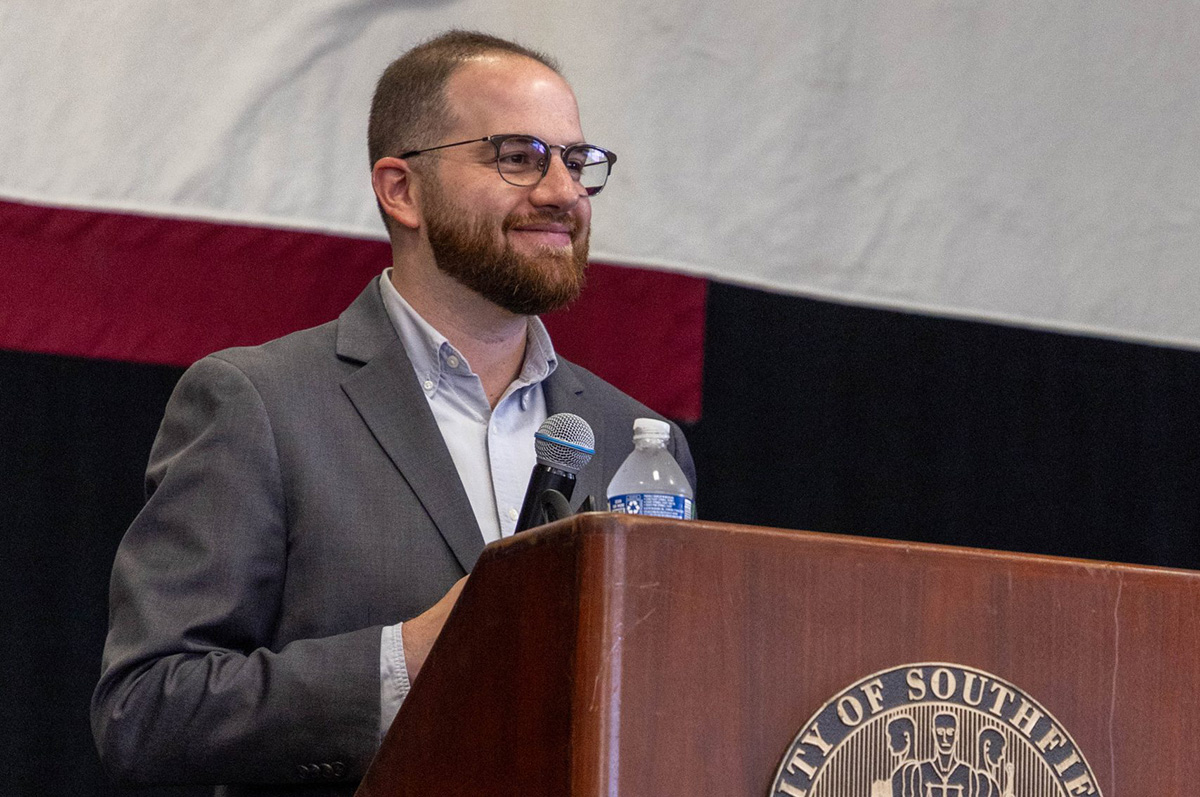
The next Congress will include a record number of LGBTQ+ lawmakers elected to Capitol Hill, with 17 of the 18 LGBTQ+ candidates who ran for federal office securing their seats.
The New Lawmakers
U.S. Senate:
Chris Pappas — New Hampshire
New Hampshire Congressman Chris Pappas has become the first openly gay man elected to the U.S. Senate. Former Republican Sen. John E. Sununu held the Senate seat for the Granite State from 2003 to 2009 but failed to win it back.
Pappas won the Democratic-held battleground state, receiving 56% of the vote to Sununu’s 42%.
Pappas ran his campaign on several issues that proved important during this midterm election cycle, including affordability, reining in corruption across levels of government and protecting LGBTQ rights. He spoke with the Blade last week on his goals for his Senate run while addressing the historic nature of his election.
U.S. House of Representatives:
Cait Conley — NY-17
Cait Conley has defeated incumbent Republican Congressman Mike Lawler in New York’s 17th Congressional District, flipping the Hudson Valley seat for Democrats. Conley, a former Army officer who served six overseas deployments and worked on the National Security Council, campaigned on lowering costs for working families, expanding affordable housing and protecting access to health care.
NBC’s unfinished tally of the votes has Conley leading Lawler 52.2% to 47.7%, with approximately 61% of the vote reported.
There were some problems with malfunctioning voting machines in Westchester County, a largely blue area, that delayed ballot scanning and, consequently, the call for the seat, The Gothamist reported last night. Despite some of the machines not working properly, Lawler conceded the race.
Jeremy Moss — MI-11
Michigan State Sen. Jeremy Moss won election to the U.S. House, defeating Republican Ethan Baker in Michigan’s 11th Congressional District.
Moss won 60.9% of the vote to Baker’s 36.8%, according to election results confirmed by the Associated Press. Moss, who served as president pro tempore of the Michigan Senate and was the state’s first openly gay senator, campaigned on lowering health care costs, addressing affordability, protecting LGBTQ rights and holding the Trump administration accountable.
He will represent Michigan’s 11th Congressional District, a seat currently held by Democrat Haley Stevens, who surprised large swaths of the country by revoking her endorsement of Abdul El-Sayed, after losing the Senate primary.
The Blade interviewed Moss earlier in his campaign, when he emphasized his commitment to the people of Michigan and his determination to stand against Trump and MAGA Republicans in Congress.
JoAnna Mendoza — AZ-06
Marine veteran JoAnna Mendoza is highly likely to defeat Republican incumbent Juan Ciscomani in Arizona’s 6th Congressional District, flipping the highly competitive southern Arizona seat for Democrats.
The New York Times’ results showed Mendoza with 53% of the vote, compared with Ciscomani’s 45%. At the time of publishing, 88% of votes had been accounted for, which is why no outlet had outright declared Mendoza the official winner yet. Most news outlets wait until more of the vote is accounted for.
Mendoza campaigned on lowering costs for working families, creating good-paying jobs, strengthening health care access, protecting veterans’ benefits and addressing border security and immigration. She also emphasized restoring accountability and trust in government.
Marni von Wilpert — CA-48
San Diego City Council member Marni von Wilpert led Republican Jim Desmond in California’s 48th Congressional District, a competitive race for an open seat previously held by retiring Republican Congressman Darrell Issa.
Early results reported by CBS8 show von Wilpert leading Desmond by nearly 20 points, with von Wilpert holding 59.4% to Desmond’s 40.6%. This San Diego seat was among the competitive races Democrats targeted as they sought to expand their House majority.
Von Wilpert campaigned on lowering the cost of living, expanding affordable housing and health care, protecting reproductive freedom and LGBTQ rights, and holding federal immigration officials accountable.
Scott Wiener — CA-11
California State Sen. Scott Wiener is expected to win the open congressional seat in California’s 11th District, succeeding former House Speaker Nancy Pelosi. Wiener faced off against fellow Democrat Connie Chan, a San Francisco supervisor, in the race to represent the heavily Democratic district.
Associated Press results reported by The New York Times showed Wiener leading Chan 55.4% to 44.5%.
Wiener campaigned on expanding LGBTQ rights, protecting transgender Americans, lowering health care and housing costs, and reforming federal immigration enforcement. He also made passing the Equality Act a central part of his campaign platform. However, he faced issues at the beginning of his campaign, particularly surrounding the Palestinian-Israeli war, when the Jewish state senator initially refused to call what was happening a genocide, leading to some fragmented support within the Democratic Party.
J.D. Ford — IN-05
Indiana State Sen. J.D. Ford defeated Republican incumbent Victoria Spartz in Indiana’s 5th Congressional District, flipping the seat for Democrats.
Ford received approximately 51.7% of the vote to Spartz’s 48.3%, according to Associated Press results reported by The New York Times, with nearly all votes counted.
Ford, Indiana’s first openly LGBTQ state legislator, campaigned on lowering health care and housing costs, protecting Medicaid, addressing affordability and holding the federal government accountable. He also supported passing the Equality Act to establish federal LGBTQ nondiscrimination protections.
Janelle Sarauw — U.S. Virgin Islands
Former Virgin Islands Sen. Janelle Sarauw led the race to become the territory’s next delegate to the U.S. House of Representatives, defeating independent candidate Shelley Moorhead.
Unofficial territorial election results showed Sarauw receiving 13,029 votes to Moorhead’s 3,586, representing approximately 76.9% and 21.2% of votes cast for the office, respectively.
Sarauw campaigned on improving health care access, protecting Medicaid funding, lowering prescription drug costs, strengthening veterans’ services and modernizing the Government Employees’ Retirement System (GERS). She also emphasized securing stronger federal representation for the U.S. Virgin Islands.
In a statement on her Facebook page Wednesday morning, Sarauw said her heart was “heart overflowing with gratitude.”
“I love these islands with every fiber of my being, and as I prepare to carry our voices, our stories, our struggles, and our aspirations to Washington, D.C., I do so with a full heart, a humble spirit, and an abiding faith in what we can accomplish together.”
Incumbents
Sarah McBride — DE-AL
Delaware’s incumbent U.S. Representative Sarah McBride was reelected to the U.S. House of Representatives on Tuesday, defeating Republican challenger Joseph Arminio. McBride is the first openly transgender person elected to Congress.
The Associated Press called the race for McBride on election night shortly after polls closed. The New York Times shows her with approximately 64% of the vote, with Arminio holding 35%, with 95% of ballots counted.
Earlier this year, during a forum attended by both candidates, Arminio misgendered McBride multiple times and was subsequently asked to leave.
McBride campaigned on a range of issues, including affordability, health care access, immigration, reproductive health care and workers’ rights.
Earlier this year, the Washington Blade interviewed McBride, who discussed her goals for the future while reflecting on her first year in Congress.
“We need to deliver universal child care, a higher minimum wage, Medicare for all who want it, and millions of new homes. Winning the next election is not the end; we have to continue building toward a durable majority.”
Following the announcement of her win, McBride put out a statement on social media about her campaign’s main messaging in the face of Republicans’ unrelenting attacks on people like her.
“Yesterday, Delaware clearly rejected the politics of hate in favor of a politics of hope,” she wrote on instagram.
Robert Garcia — CA-42
California’s incumbent U.S. Representative Robert Garcia won reelection to another term representing the state’s 42nd Congressional District, defeating Republican challenger Brian Burley.
New York Times/AP election results showed Garcia receiving approximately 60% of the vote to Burley’s 40%.
Garcia, the former mayor of Long Beach, has focused on infrastructure, transportation, education and LGBTQ rights during his time in Congress. In the current Congress, Garcia served as the ranking member of the House Oversight Committee, where he pushed for additional investigations into the Trump-Vance administration, including its handling of the Epstein files. Following Democrats’ victories, Garcia is positioned to take over as chair of the House Oversight Committee, giving him greater authority to investigate the numerous allegations and controversies facing the president.
Becca Balint — VT-AL
Vermont’s incumbent U.S. Rep. Becca Balint won reelection to a third term in Congress, defeating Republican challenger Gerald Malloy.
The Associated Press called the race for Balint on election night. At the time, she had 65% of the Green Mountain State’s vote, compared to Malloy’s 30%.
Balint, a former teacher and Vermont state senator, centered her campaign on affordability, housing, mental health and protecting democracy. She also criticized Trump’s tariffs and the war in Iran, arguing that both were contributing to higher costs for Americans.
Emily Randall — WA-06
Washington’s incumbent U.S. Representative Emily Randall won reelection to represent the state’s 6th Congressional District, defeating Republican challenger Teresa Fox.
The AP and The New York Times called the race for Randall, whose 64% share of the vote put her securely ahead of Fox’s 35% in the Olympic Peninsula, the Kitsap Peninsula and most of the city of Tacoma.
Randall, who previously served in the Washington state Senate, made expanding access to affordable health care a central part of her campaign. She also focused on lowering costs for working families and protecting access to essential services.
Eric Sorensen — IL-17
Illinois’s incumbent U.S. Rep. Eric Sorensen won reelection to a third term in Congress, defeating Republican challenger Dillan Vancil.
The Associated Press called the race for Sorensen with approximately 70% of the vote counted. Sorensen held 60% of the vote.
Sorensen, a former television meteorologist, centered his campaign on lowering costs for working families. His priorities also included protecting health care access, supporting rural communities and addressing the economic challenges facing residents of western Illinois.
Mark Pocan — WI-02
Wisconsin’s incumbent U.S. Rep. Mark Pocan won reelection to another term representing the state’s 2nd Congressional District. Pocan ran unopposed in the general election, securing another term representing the Madison-area district.
Pocan, who has served in Congress since 2013, has focused on health care affordability, workers’ rights and LGBTQ equality. He also serves as co-chair of the Congressional Equality Caucus and is a member of the House Appropriations Committee, where he is expected to hold more leadership power in the new congressional term.
Mark Takano — CA-39
California’s incumbent U.S. Rep. Mark Takano won reelection to another term representing the state’s 39th Congressional District, defeating Republican challenger Steve Manos.
AP election results showed Takano receiving 65.3% of the vote to Manos’s 34.7%.
Takano has made health care and veterans’ issues central to his congressional work. He has also been an advocate for LGBTQ equality and serves as co-chair of the Congressional Equality Caucus.
Ritchie Torres — NY-15
New York’s incumbent U.S. Representative Ritchie Torres won reelection to another term representing the Bronx’s 15th Congressional District.
The New York Times showed Torres receiving 76.89% of the vote, with Republican challenger Stylo Sapaskis receiving 10.64%.
Torres, who previously served on the New York City Council, has centered his congressional work on housing, economic development, education and public safety.
Sharice Davids — KS-03
Kansas incumbent U.S. Rep. Sharice Davids won reelection to another term representing the state’s 3rd Congressional District, defeating Republican challenger Eric Jenkins.
According to New York Times and AP election results, Davids received 59.6% of the vote to Jenkins’ 38.4%.
Davids, a former White House fellow and attorney, centered her campaign on agriculture, lowering costs and expanding access to health care. She has also emphasized supporting Kansas businesses and working families.
National
Democrats take control of Congress in historic rebuke of Donald Trump
‘Voters delivered a resounding message: equality wins’
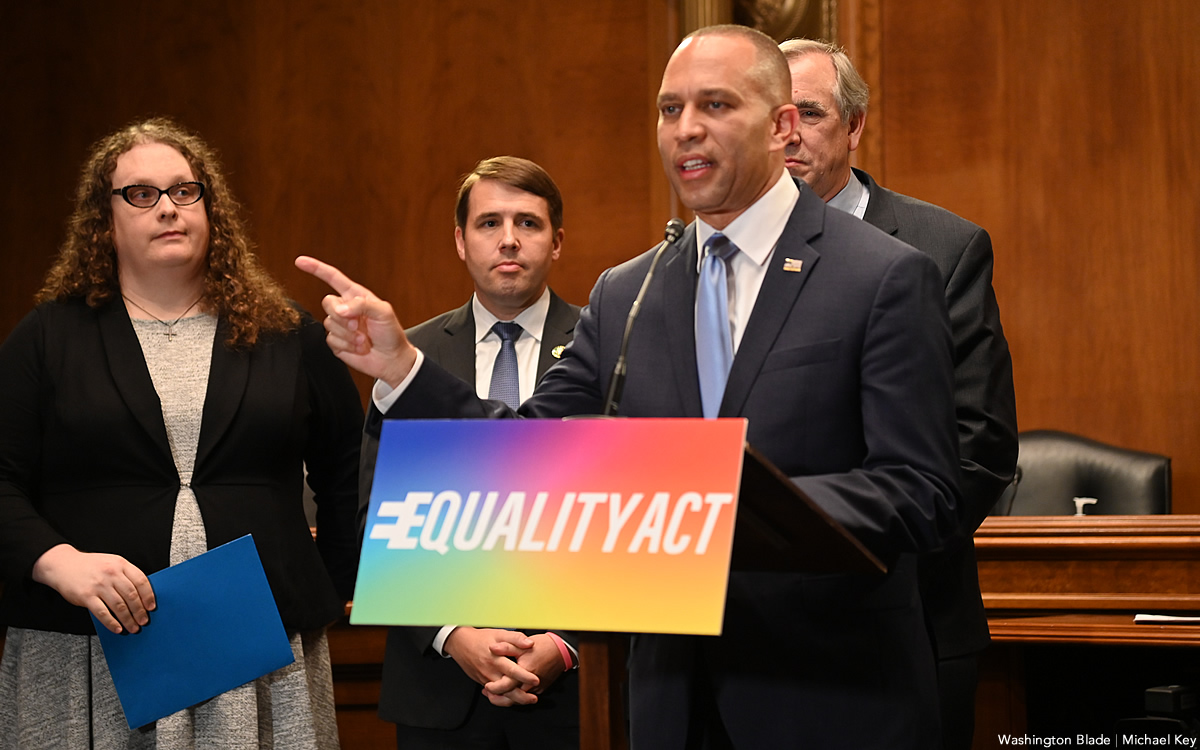
Midterm elections are traditionally viewed as a check on the party in control of the White House. With Republicans holding control of all three branches of government, President Donald Trump was able to advance his agenda with few congressional obstacles.
From getting the United States involved in a war in Iran to imposing tariffs that have increased the cost of everyday goods, Trump has faced mounting criticism over his priorities, including his insistence on pursuing vanity projects in the nation’s capital rather than addressing issues affecting most American voters.
Following the midterm elections, both chambers of Congress will now be controlled by the Democratic Party.
Affordability was a key issue in this year’s midterms. As Americans watched Trump receive a brand-new Air Force One from a foreign government and continue a war that has directly affected everyday costs, particularly gasoline and groceries, voters delivered a devastating and historic rebuke to the president and his party.
Republicans spent $305 million on advertisements, compared with $256 million spent by Democrats, in competitive Senate, House and gubernatorial races between Oct. 23 and 29, according to The Washington Post, which analyzed data from AdImpact, a political advertising tracking firm.
Republican attempts to use LGBTQ issues as culture-war talking points appeared to be less effective in 2026 than they were in 2024.
This year’s advertisements targeting transgender people primarily focused on two policies: transgender athletes’ participation in women’s and girls’ sports and gender-affirming medical care, particularly surgery, for minors.
Despite Republican efforts to make LGBTQ identity a political liability, the midterm elections resulted in a historic number of LGBTQ candidates being elected to federal office.
Chris Pappas, the senator-elect from New Hampshire, will become the first openly gay man elected to the U.S. Senate, joining Sen. Tammy Baldwin (D-Wis.), an out lesbian who has held her seat since 2012. Meanwhile, a record number of LGBTQ representatives have been elected and reelected to the U.S. House. They include Sarah McBride, the first openly transgender member of Congress, who retained Delaware’s seat; JD Ford, who flipped Indiana’s seat; and Cait Conley, who defeated incumbent Mike Lawler.
Following the election results, LGBTQ advocacy groups celebrated Democratic victories and the election of several LGBTQ candidates.
The Human Rights Campaign (HRC), the largest LGBTQ advocacy organization in the United States, issued a statement following Democrats’ securing control of both chambers of Congress.
“Tonight, voters delivered a resounding message: equality wins. After two years of MAGA Republicans waging a culture war, wasting taxpayer dollars attacking LGBTQ+ people, and spending $340 million on anti-trans ads while families suffered, voters have had enough,” said HRC President Kelley Robinson.
“In a historic rebuke, voters didn’t just reject LGBTQ+ hate, they have elected a historic number of LGBTQ+ elected officials. Chris Pappas is the first-ever out gay man elected to the U.S. Senate, and JoAnna Mendoza, Cait Conley, and Jeremy Moss will join Sarah McBride, who won by a huge margin, in the U.S. House — and that’s just the start. Virginia reaffirmed that love is love. Missouri rejected an anti-trans, anti-abortion ballot measure. And we are seeing victories up and down the ballot across the country,” she added. “The message from LGBTQ+ voters could not be any more clear: Our rights are not up for debate, our community will not be a political punching bag, and we are not going anywhere.”
Emily Wagner, a communications official with the Transgender Freedom Alliance, also weighed in on the results, arguing that the relentless anti-transgender advertising Republicans ran across the country failed to deliver the electoral results they sought.
“Massive anti-trans spending failed to prevent important Democratic victories. Republicans spent nearly $400 million on anti-trans ads altogether—and still lost key races to candidates who pushed back,” Wagner said in an email. “These victories reinforce TFA’s research: candidates can answer attacks effectively by speaking confidently about shared values, addressing voters’ concerns, and challenging their opponents’ priorities without abandoning transgender people.”
There were early predictions that a Democratic “blue sprinkle,” or even a modest wave, could serve as a check on Trump’s power by installing Democratic lawmakers in a Congress over which he had previously exercised significant influence. Instead, the results amounted to a blue tsunami.
Democrats won several states Trump carried by double digits in 2024, as voters voiced their disapproval of the president.
Democrats flipped seven previously Republican-held seats, including in Iowa, Kansas, Maine, North Carolina, South Carolina, Ohio and Texas. Some of those states had gone decades without electing a Democratic leader.
The seismic shift in federal power has also prompted changes in Republican leadership. Speaker Mike Johnson (R-La.) told his staff during a phone call Wednesday morning that he will not remain Republican leader in the new Congress, according to four sources on the call cited by NBC News. Republicans are scheduled to hold an internal election to select their candidate for the position next week, on Nov. 10.
With control of the House and expanded oversight powers, more LGBTQ Democrats could also be positioned to take on leadership roles in the new Congress.
Incumbent Congressman Robert Garcia (D-Calif.) is poised to become chair of the House Oversight Committee, giving him greater authority to investigate the Trump-Vance administration, subpoena officials and oversee federal agencies.
Garcia responded to the confirmation of Democratic control with a two-word statement: “Lawyer up.”
New Hampshire
Chris Pappas elected to U.S. Senate
N.H. Democrat is first openly gay man elected to chamber
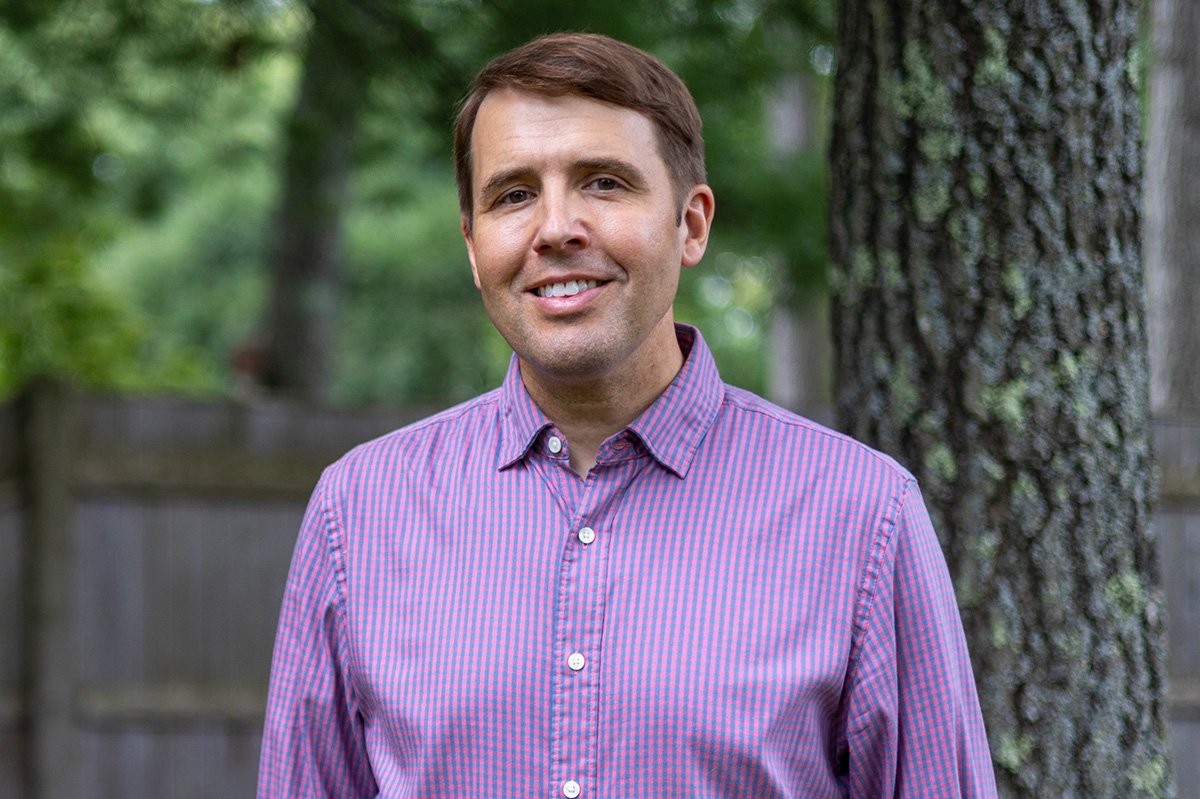
New Hampshire Congressman Chris Pappas on Tuesday became the first openly gay man elected to the U.S. Senate.
The Granite State Democrat defeated Republican John E. Sununu, who represented New Hampshire in the Senate from 2003-2009, by a 56.2-41.9 percent margin. Sununu conceded shortly after the polls closed at 8 p.m. ET.
“I’m really proud of who I am, but [I am] more proud of the fact that New Hampshire embraces people from different walks of life,” Pappas told the Washington Blade during an Oct. 26 interview. “This is a state that fundamentally believes that everyone should be able to be themselves, and we’re stronger when everyone has the same rights and responsibilities.”
Pappas’s husband, Vann Bentley, stood alongside him when he spoke to supporters in Manchester, New Hampshire’s largest city.
Thank you, New Hampshire. https://t.co/AIIfpYj2IS
— Chris Pappas (@ChrisPappasNH) November 4, 2026
Pappas acknowledged him before he hugged him.
“I want to thank the guy next to me, my amazing husband Vann,” said Pappas. “With all the negative attacks and lies, it’s nice to know that love and truth prevailed tonight.”
Tonight is a victory for everyone. https://t.co/hNXkZ5CEy0
— Chris Pappas (@ChrisPappasNH) November 4, 2026
Pappas has represented New Hampshire’s 1st Congressional District in the U.S. House of Representatives since 2019. (Former White House Press Secretary Karoline Leavitt unsuccessfully challenged Pappas in 2022.)
He was a member of New Hampshire Executive Council, which advises the governor, from 2013-2019. Pappas from 2007-2011 was the treasurer of Hillsborough County, which includes Manchester. He was a member of the New Hampshire House of Representatives from 2002-2006.
Pappas graduated from Manchester Central High School in 1998. His family owns the Puritan Backroom, a Manchester restaurant that claims to have invented chicken tenders.
Pappas in January will succeed retiring U.S. Sen. Jeanne Shaheen (D-N.H.).
“The voters of New Hampshire know that Chris Pappas is one of their own, a leader who will work for the Granite State, push back against corruption and champion LGBTQ+ equality,” said Human Rights Campaign President Kelley Robinson on Tuesday. “As the first openly gay man to serve in the U.S. Senate, Chris’s victory isn’t just historic — it’s a sign that progress is possible when we show people who we are and what we fight for. We’re thrilled to continue working with Chris as he heads to the U.S. Senate .”
Robinson in August traveled to New Hampshire and campaigned alongside Pappas.
LGBTQ+ Victory Fund CEO Evan Low in his own statement noted “Granite Staters made history — and sent a message that will be heard far beyond New Hampshire.”
“Chris Pappas earned this win the way he’s earned every one before it: by showing up, listening, and delivering for working families,” he said. “For generations of gay men who were told public life wasn’t for them, seeing Chris take his seat in the U.S. Senate will be proof that the door is open. He will be a fierce champion for every New Hampshire family, and a powerful voice for equality in a chamber that has never had a voice quite like his.”
U.S. Supreme Court
Supreme Court weighs religious exemptions to LGBTQ+ nondiscrimination protections in Colo. preschool case
Ruling expected by June 2027
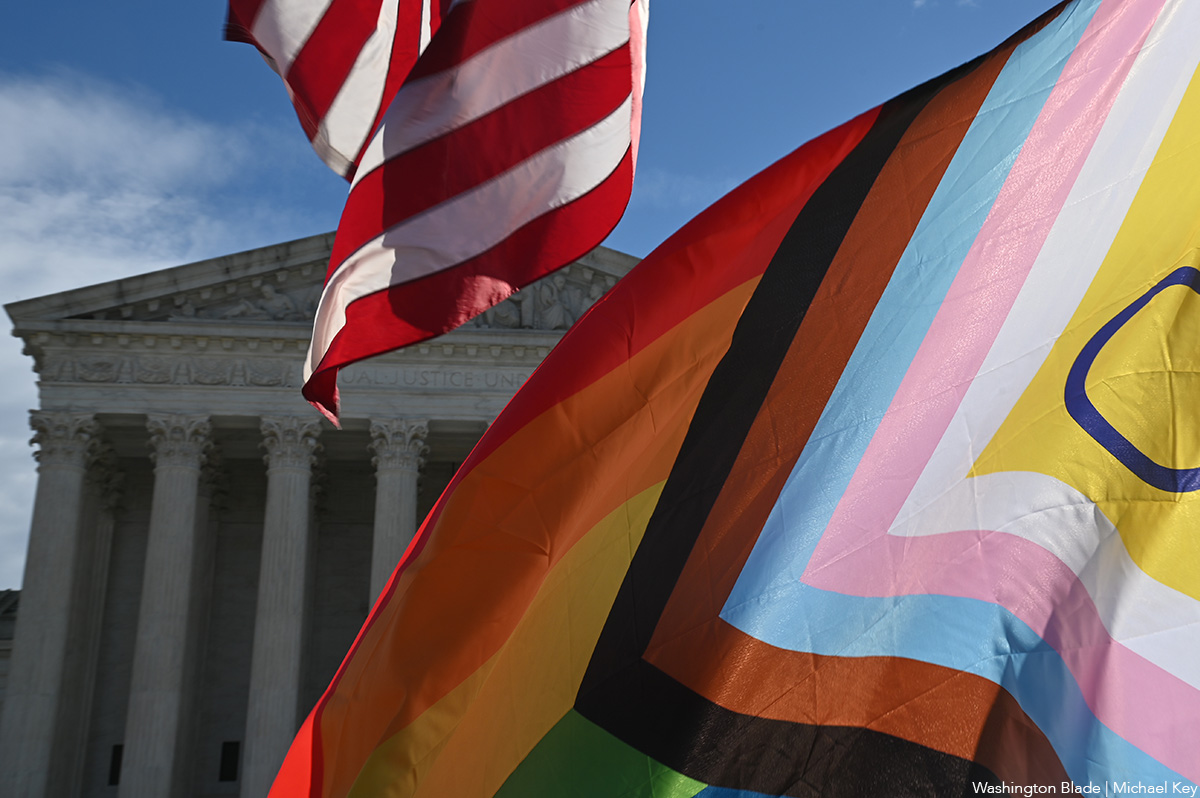
The U.S. Supreme Court heard oral arguments Tuesday in a case examining whether Colorado’s exclusion of religious preschools from a publicly funded education program violates the First Amendment’s guarantee of religious freedom.
In St. Mary Catholic Parish v. Roy, Catholic preschools in Colorado have brought the fight to the nation’s highest court, arguing that their exclusion from the state’s universal preschool program, including its public funding, amounts to religious discrimination that violates their First Amendment rights.
The Catholic schools want to participate in the program and receive public funding while maintaining admissions policies that require families to support Catholic teachings on marriage, sexuality, and gender. Those policies conflict with the program’s equal-opportunity requirements, which prohibit discrimination based on characteristics including sexual orientation and gender identity.
Under the program, Colorado provides 15 hours of preschool per week for eligible children through participating public and private providers. The program allows families to select their preferred preschool, provided the school meets certain requirements, including equal-opportunity standards. The benefit has been valued at approximately $6,000 per child annually, according to attorneys representing the Catholic schools.
The plaintiffs in the case include St. Mary Catholic Parish, St. Bernadette Catholic Parish, the Archdiocese of Denver, and two parents of preschool-aged children. They went to federal court to challenge the state’s policy, arguing that making the Catholic preschools’ participation in the universal preschool program contingent on accepting the equal-opportunity requirements amounts to unlawful religious discrimination.
They argue that the First Amendment requires Colorado to provide a religious exemption to the nondiscrimination requirements so the schools can participate in the program without compromising their religious beliefs.
The schools also argue that Colorado permits certain enrollment preferences for secular purposes while refusing to accommodate their religious admissions policies.
The 10th U.S. Court of Appeals ruled in favor of Colorado in September 2025, upholding the state’s equal-opportunity requirements.
The 10th Circuit acknowledged that the Supreme Court has consistently held that states cannot categorically exclude religious institutions from otherwise available public benefits because of their religious character. However, it determined that Colorado was not explicitly excluding the schools because they were religious institutions. Rather, the schools were ineligible because their admissions policies did not comply with the program’s nondiscrimination requirements.
In the state’s view, these schools can participate in the preschool program provided they abide by the same equal-opportunity requirements imposed on other participating providers. Colorado argued that its restrictions apply to enrollment policies and conduct across the program and are not specifically targeted at religious institutions or religious practices.
The case requires the Supreme Court to consider several previous decisions involving religious freedom and the government’s ability to enforce generally applicable laws.
In 1990, the Supreme Court held in Employment Division v. Smith that neutral, generally applicable laws do not violate the First Amendment’s Free Exercise Clause simply because they place a burden on someone’s religious practices.
The case involved two men who worked at a private drug rehabilitation organization and were fired after ingesting peyote, a hallucinogenic substance, during a religious ceremony of the Native American Church. Oregon subsequently denied them unemployment benefits because their drug use constituted work-related misconduct. The Supreme Court ruled that the state’s denial did not violate their First Amendment rights.
Another ruling relevant to this case is the Supreme Court’s 2020 decision in Espinoza v. Montana Department of Revenue. The court ruled that Montana could not exclude religious schools from a generally available scholarship program solely because of their religious status. The decision held that doing so violated the Constitution’s Free Exercise Clause.
Another significant precedent is Carson v. Makin, in which the Supreme Court ruled in 2022 that Maine could not exclude religious schools from its public tuition-assistance program simply because they provided religious instruction. The state’s requirement that participating private schools be “nonsectarian” violated the First Amendment’s Free Exercise Clause.
The 6-3 decision was opposed by three justices, who argued that the ruling would require taxpayers to fund religious education and undermine the separation between church and state.
The Supreme Court’s decision in St. Mary Catholic Parish v. Roy could further clarify how these precedents apply when states condition public funding on compliance with nondiscrimination requirements.
The court agreed to consider two specific questions: whether Colorado’s treatment of certain secular enrollment preferences undermines the general applicability of its nondiscrimination requirements under Employment Division v. Smith, and whether Carson v. Makin applies when the government does not explicitly exclude religious institutions from public benefits.
The ruling could have implications beyond Colorado’s preschool program, particularly for the ability of state and federal governments to enforce nondiscrimination requirements against religious organizations receiving public funding.
The Supreme Court is expected to issue a decision by the end of June 2027.
LGBTQ+ advocates weigh potential consequences
The Los Angeles Blade spoke with Meg York, chief legal and policy officer of COLAGE, a national nonprofit organization that unites and supports people with LGBTQ+ parents. COLAGE filed an amicus brief in the case. York attended Tuesday’s oral arguments and discussed what she heard from the justices and the potential implications for LGBTQ+ families.
York emphasized that Colorado’s decision to include Catholic schools in its universal preschool program is an important distinction in the case, arguing that the dispute should not be characterized as a simple conflict between religious institutions and the state.
“Colorado explicitly chose to include Catholic schools in its universal pre-K program, so when we talk about the Catholic arguments, I think there’s maybe a false binary there that it’s one versus the other,” she told the Blade during a phone interview. “But in terms of the arguments raised by the petitioners or the respondents, I was listening to see if there was anybody who seemed to be kind of straying from what we typically expect in ideological lines, and I’m not sure that I heard that in this case.”
When asked how she interpreted the justices’ questions and what they could indicate about the eventual outcome, York said she saw some potential for the court to take a narrower approach that considers Colorado’s arguments.
“I do think that there were times at which I felt that some of the justices were potentially more receptive to really taking a more narrow approach to this case and really thinking about the arguments that Colorado was putting forward. I think there were some moments of hope. It’s hard when you’re in an oral argument. You hear some questions, but then there’s a lot of silence, too. It can be difficult to know which way certain folks are leaning or not.”
One of the central legal disputes involves whether Colorado’s equal-opportunity requirements are generally applicable or whether the state makes exceptions that could require it to accommodate religious admissions policies.
York disputed the characterization of the state’s provisions as exemptions, saying Colorado views them as measures intended to advance equal access rather than exceptions to its nondiscrimination requirements.
“I don’t think the state of Colorado was classifying them or framing them as exemptions as much as they were the kind of things that could advance their equal opportunity goals. So, you know, there were no exemptions to the nondiscrimination requirement, none at all. Colorado doesn’t give any exemptions to that. And so when they talk about schools that help serve low-income individuals or individuals with disabilities, those are all in furtherance of the equal opportunities that Colorado seeks to advance.”
The arguments also raised questions about how a ruling could affect nondiscrimination protections beyond the preschool program. Justices Ketanji Brown Jackson and Sonia Sotomayor raised concerns about how religious exemptions could affect laws designed to protect people based on characteristics such as sexual orientation and gender identity.
York pointed to those exchanges as particularly significant, questioning whether a broader interpretation of religious exemptions could subject more nondiscrimination laws to heightened constitutional scrutiny.
“Some of the concerns raised by Justice Jackson and also by Justice Sotomayor were about this idea of when you have protections or when you have a nondiscrimination law to protect people who have protected characteristics, that we’re not really in the business of determining whose belief is a sincerely held religious belief. So does that push everything to strict scrutiny? And I think there were some concerns about that.”
The case also puts two major lines of Supreme Court precedent under scrutiny: Employment Division v. Smith, the 1990 decision involving neutral, generally applicable laws, and Carson v. Makin, the 2022 decision prohibiting states from excluding religious schools from public benefits because of their religious instruction.
York noted that the justices grappled with how those decisions apply to Colorado’s program. She also emphasized that the Supreme Court declined to consider the plaintiffs’ separate request to overturn Employment Division v. Smith.
“In some ways, you have the petitioners who were kind of saying that the Carson line of cases is controlling, but then they were a little mushy in some of the cases being cited in that line of cases. We certainly heard the court grappling with what they consider when they’re considering Employment Division v. Smith. Does Carson make a reply here when you have very different circumstances under which that opinion was issued?”
For York, the case ultimately presents questions about how religious freedom and equal access can coexist, particularly when public funding is involved.
She said COLAGE believes LGBTQ+ families should be protected under nondiscrimination laws without requiring religious institutions to sacrifice their constitutional protections.
“My organization takes the position that religious freedom is something that we all value. Whether you are a specific religion or whether you are not religious, that is part of the freedoms that are guaranteed to us in the Constitution, and that’s something that benefits all of us. To that end, we feel that people with LGBTQ parents should be protected under the law, and that is exactly the heart of these nondiscrimination laws. And at the same time, that doesn’t mean that we need to sacrifice religious liberty or religious freedom to do so.”
York said she believes the case’s ultimate impact will depend heavily on how narrowly or broadly the justices write their decision.
“I don’t think it’s a foregone conclusion that they’re going to rule in favor of St. Mary or in favor of the petitioners, but even if they did, we could get a very narrow ruling that is incredibly specific and limited.”
LGBTQ+ organizations warn of consequences for families
Other LGBTQ+ advocacy organizations also warned that allowing religious preschools to participate in publicly funded programs while maintaining admissions policies that conflict with nondiscrimination requirements could have consequences for families beyond Colorado.
The National Women’s Law Center argued that a ruling in favor of the Catholic schools could undermine equal access to publicly funded education and potentially create a precedent for excluding other families.
“No four-year-old child should be denied preschool placement because their parents are gay or lesbian,” said Brian Dittmeier, director of LGBTQI+ equality at NWLC. “Marriage equality is the law of the land, and the court should not open the door to extreme arguments that seek to chip away at equal rights for same-sex couples. All families deserve access to affordable, high-quality early care and education, which is exactly why Colorado voters mobilized to expand early education access in their state through this universal and incredibly successful program.”
Dittmeier also said Colorado’s faith-based preschools have previously complied with nondiscrimination requirements and warned that allowing exceptions could leave same-sex families with fewer options.
“For years, Colorado’s faith-based preschools have had no trouble complying with nondiscrimination requirements as a common condition of receiving taxpayer funding to support their operations. Allowing discrimination in a state program specifically intended to achieve universal access is counter to Colorado voters’ intent and will leave same-sex families with fewer options to support their children. The same reasoning could later be used to turn away other children, including children of unmarried mothers or children whose parents are divorced. Such an outcome is unacceptable and will exacerbate the child care crisis in this country.”
The Human Rights Campaign similarly argued that public funding should not be used to discriminate against LGBTQ+ families.
“This case is straightforward — schools receiving public funds from a state universal preschool program cannot be allowed to use taxpayer dollars to leave LGBTQ+ families behind,” said HRC President Kelley Robinson. “As the arguments made clear today, Colorado’s non-discrimination requirement ensures no family can be denied a quality education simply for who they are — it is lawful and should be upheld. Exclusion has no place in our educational system.”
Lambda Legal and GLAD Law also filed a friend-of-the-court brief supporting Colorado.
During oral arguments, Colorado Deputy Solicitor General Helen Norton highlighted the practical consequences of allowing publicly funded schools to turn away families based on protected characteristics.
“Families are harmed when they’re turned away from the publicly-funded school that makes their lives work because of their protected class status,” Norton said. “Think of the parent who needs a school that opens at 7:00 A.M. so she can get the bus that takes her to work. Think of the parent who needs a school that will take all three of her kids so she doesn’t have to shuttle them among three different schools… For that parent to be turned away from those schools that make preschool possible for her family because of her protected status harms families and undermines Colorado’s interest.”
Karen Loewy, senior counsel and director of constitutional law practice at Lambda Legal, said religious schools can maintain their own admissions criteria when privately funded but should be required to follow state nondiscrimination laws when accepting taxpayer money.
“When the state pays schools to provide preschool programming, the schoolhouse door must be open to every family. While religious schools can set their own admissions criteria when they are privately funded, every school, religious or secular, that chooses to take taxpayer dollars is barred from discriminating in violation of Colorado law,” Loewy said. “No four-year-old should be turned away from a taxpayer-funded classroom because of who their parents are, including children of LGBTQ parents. Colorado’s requirements simply make sure public money isn’t used to discriminate, and the Constitution has long allowed states to set that condition.”
Archdiocese of Denver responds to concerns of LGBTQ+ discimination
The Blade also reached out to the Archdiocese of Denver for comment on its position in the case, particularly on how the ruling could affect LGBTQ+ families’ access to publicly funded educational programs.
The archdiocese responded by providing statements from some of the families involved in the case, who argued that they were fighting to end discrimination.
Dan and Lisa Sheley, Catholic parents of seven and Becket clients in the case, said, “Universal should mean everyone. Yet Colorado has barred families like ours from its universal preschool program simply because we chose a Catholic education for our children. We pray the Supreme Court will end this discrimination and hold Colorado to its word.”
Nicholas Reaves, senior counsel at Becket and lead attorney for the families and preschools, emphasized past decisions from the Supreme Court that sided with religious groups in disputes over public benefits. He argued that religious schools should not have to abandon their beliefs to receive those benefits.
“Colorado’s Catholics-need-not-apply rules make a mockery of our nation’s laws and commitment to religious freedom,” Reaves said. “The Supreme Court has been crystal clear: Americans don’t have to forfeit their faith to receive public benefits. We are confident that this discrimination won’t stand and that the court will hand Colorado yet another loss.”
U.S. Supreme Court
Supreme Court blocks White House anti-trans prison policy
Justices side with trans inmates who challenged Trump-Vance administration directive
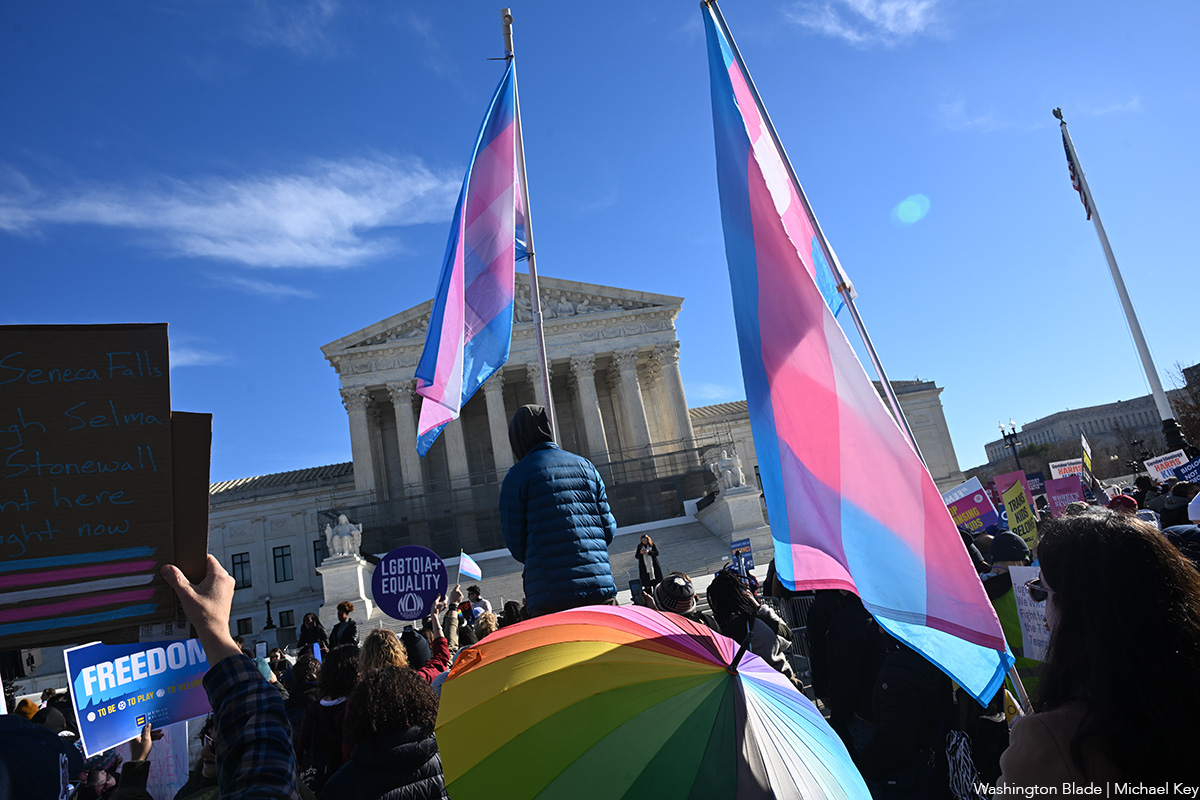
The U.S. Supreme Court has blocked a Trump-Vance administration policy that would have ended gender-affirming care for prisoners.
On Wednesday, the justices rejected an emergency application filed by the administration that would have allowed the Bureau of Prisons to restrict gender-affirming care for transgender inmates in federal prisons.
Three prisoners, Alishea Kingdom, Jas Kapule and Solo Nichols, have said they had been receiving hormone therapy for years as inmates and challenged the sudden policy change. They argued that the abrupt change to decades of policy would end treatment for nearly 1,000 people in custody. The assertion of security concerns within prisons, the American Civil Liberties Union told the Supreme Court, was odd “given that BOP has not pointed to a single security incident relating to its provision of this treatment over the past 30 years.”
According to the application, President Donald Trump’s order called on the Bureau of Prisons to revise its medical care policies so that federal funds aren’t spent “for the purpose of conforming an inmate’s appearance to that of the opposite sex.”
Two justices, Samuel Alito and Clarence Thomas, would have allowed the policy to be enforced but ultimately did not join the majority, marking a rare judicial win for trans people at the nation’s highest court.
This decision is in line with other anti-trans actions taken by the White House regarding inmate rights. In May, the Washington Blade first reported on letters from congressional Democrats condemning changes to official BOP policy regarding trans inmates to bring it in line with Trump’s Executive Order 14168, titled “Defending Women from Gender Ideology Extremism and Restoring Biological Truth to the Federal Government.”
The policy would require BOP staff to “refer to individuals by their legal name or pronouns corresponding to their biological sex,” ban the use of funds for any “items that align with transgender ideology,” and suspend clothing accommodations, pat-search accommodations, and support programs offered to trans individuals.
The BOP responded to the Blade’s request for additional information about its policy change, but BOP spokesperson Donald Murphy said the updated policy is “rooted in medical guidance” and “data-driven decision making,” despite the guidance running counter to what most doctors who specialize in trans health care would recommend.
In June, the court upheld state bans on trans athletes participating in women’s and girls’ sports. A year earlier, the court upheld state laws banning gender-transition treatments for trans youth.
The court has also allowed Trump to implement a ban on trans people serving in the military.
Human Rights Campaign President Kelley Robinson sent a statement to the Blade following the court’s decision.
“Today, trans people in federal prisons can keep getting the care they need. Denying access to critical medical care for incarcerated people simply because they are trans is discriminatory, cruel and flies in the face of our Eighth Amendment protections,” Robinson said via email. “Trump and MAGA extremists are obsessed with targeting our community and undermining access to essential healthcare, defying the recommendations of every major medical association in the country. This decision protects incarcerated trans people from the administration’s attempt to steamroll over constitutional rights for now, but the fight to uphold the dignity and respect our community deserves is far from over.”
The Blade reached out to the White House for a response on the Supreme Court’s ruling but did not hear back by publication time.
Texas
How anti-trans backlash to James Talarico spread like wildfire
Texas Democrat is challenging state Attorney General Ken Paxton

Uncloseted Media published this story on Oct. 21.
This story was reported in partnership with The 19th, a nonprofit newsroom reporting on gender, politics and policy.
By HOPE PISONI | Texas’s Senate race has become one of the most-watched elections of the year. MAGA Republican nominee Ken Paxton pulled off a rare primary defeat against a well-established 24-year incumbent, while challenger James Talarico has been polling well enough to ignite hopes of electing a Democrat to represent Texas in the Senate for the first time since 1993.
This election could have a major impact on issues like education and healthcare prices, which rank as Texas voters’ top priorities. But an outsized amount of coverage of the race has centered instead on transgender people. Paxton’s campaign and its supporters have run several AI-generated ads attacking Talarico’s pro-trans positions. That focus has shaped reporting on the race, both by right-wing media like Fox News and in mainstream outlets like The Washington Post, with many describing Talarico’s stances on trans issues as a liability. Talarico himself has walked back some of his positions in response to controversy, expressing support for some restrictions on trans athletes and rescinding a promise to co-sponsor the pro-LGBTQ+ Equality Act.
This outsized focus didn’t come out of nowhere — on March 3, when Talarico was declared the winner of the Democratic primary, there was a stunning increase in traffic on X related to his takes on trans issues.
In the three days leading up to his primary win, Uncloseted Media and The 19th could only find four posts about Talarico’s take on trans issues. But in just over 24 hours after Talarico won the primary, the newsrooms identified nearly 200 posts. Most of this was driven by three viral videos that were initially posted and amplified by GOP-affiliated politicians and strategists before being circulated by right-wing influencers, media personalities and activists. The spike shows how an army of accounts work together to amplify attacks that can shape the political debate in key races — and perpetuate harmful rhetoric.
“It is a match made in heaven, the business model of social media and people pushing hate,” Sarah Oates, a professor of communications at the University of Maryland, told Uncloseted Media and The 19th. “Because the social media companies know that these are the things that engage people.”
So how did the proliferation of this narrative happen? The following is a play-by-play of how the videos and their accompanying narrative spread in the 26 hours after Talarico’s primary win. The timeline is accompanied by analysis from experts in political communications and strategy.
What are people saying, and where did it come from?
Five minutes after election analyst Dave Wasserman calls the primary for Talarico, Republican Rep. Brandon Gill of Texas posts a clip from a 2021 debate in the Texas legislature where Talarico says that “God is nonbinary.” This is one of two clips which suddenly go viral despite having existed for years — the other, which comes from a 2021 hearing where Talarico says that there are “six really common biological sexes,” is posted by Gill the next morning to a similarly large reach. Talarico has since walked back both statements.
As Gill’s post spreads, the replies are increasingly filled with animus. In one reply, Lynn Conrad writes that “this false prophet speaks with a forked tongue and will lead many from the truth.”
Prior to Talarico’s win, these clips had gotten a small amount of media coverage and appeared in an attack ad by Terry Virts, one of Talarico’s primary opponents. However, Republicans seemingly waited to boost them further until after the primary. Matthew Sheffield, political analyst and a former right-wing political consultant, says this strategy is common.
“Sometimes candidates will decline to reveal [opposition research] that they have for other-party candidates until the general election,” Sheffield told Uncloseted Media and The 19th. “When that’s done, it’s usually because they perceive that the other-party candidate would be severely damaged by the disclosure and they actually want that person to win their party’s nomination.”
Eight minutes after Gill’s first post, the same clip is posted by Greg Price, a political consultant who held a leading role in President Donald Trump’s 2024 campaign and worked at the White House in 2025. Within the next hour, accounts with direct connections to the Republican Party and the Trump administration post the clip and spread anti-trans talking points. This includes the National Republican Senate Committee; their regional press secretary and senior adviser; and Steve Guest, Texas Sen. Ted Cruz’s former communications adviser, who posted the clip and wrote: “James Talarico is a radical trans activist who weaponizes Christianity to push a far-left agenda to mutilate children.” Overall, 12.1 percent of the posts we analyzed came from such accounts.
At least 23 other accounts go on to post Gill and Price’s version of the clips, helping their message go viral. The posts above are also reposted by accounts with millions of followers, including conservative writers Dinesh D’Souza and Ann Coulter, fundamentalist Christian radio host Jenna Ellis and an account called End Wokeness.
About an hour later, Andrew Kolvet, a spokesperson for Turning Point USA and the co-host of The Charlie Kirk Show, posts the “God is nonbinary” clip while calling Talarico a “beta male white boy” and a “compliant little lap dog.” Right-wing media figures are quick to jump on these talking points, with 18.7 percent of all the posts we analyzed coming from them.
Sheffield says that right-wing outlets scour the internet for stories that could “forward their narratives.”
“They do this not just with trans issues, they do this all the time with anyone who puts an argument forward that is helpful to them, and I personally experienced this myself,” says Sheffield, who entered into politics after his small anonymous right-wing website was covered by far-right heavyweights Rush Limbaugh and Bill O’Reilly mere days after its launch.
As the nonbinary video spreads like wildfire overnight, a new clip drops around 8 a.m. the morning after. This clip, which shows a sermon in which Talarico says that “our trans community needs abortion care too,” is the only one we analyzed which hadn’t surfaced prior to the Democratic primary. It’s first posted by ATX data, an anonymous account that bills itself as providing “conservative news and public policy covering local Austin and Texas issues.” While the account has less than 6,000 followers, the clip is picked up quickly: Fox News anchor Will Cain posts it within an hour and Kolvet and Price do so within two, allowing it to rack up over one million views.
Sheffield says that while Democratic leaders tend to prefer to establish rhetoric and positions in-house, Republican leaders more frequently look to grassroots supporters for talking points.
“That’s what this was an example of — they found something that seemed effective to conservatives, so they started picking it up and using it,” Sheffield says.
As lunchtime approaches, influencers and political commentators, who make up 18.1% of the posts analyzed, begin boosting the clips. Accounts with millions of followers, including Libs of TikTok, End Wokeness and podcast host Matt Walsh, help them go viral. The three aforementioned accounts rack up a combined 1.26 million views on their posts about Talarico.
Ashley St. Clair, the mother of a child with Elon Musk and a former MAGA influencer who has since left the right-wing online ecosystem and has spoken out about its “very coordinated” nature, says influencers are incentivized to repost right-wing talking points with momentum on social media because they can make bank from ad revenue, brand deals and practices like paid retweets.
“I worked with [Libs of TikTok], and that’s a business where she makes money hand over fist from this type of content,” St. Clair told Uncloseted Media and The 19th. “It’s become an obsession where she spends all day scouring the dark corners of the internet to make a minority seem like the rule.”
Libs of TikTok did not respond to a request for comment.
Between 10 p.m. on March 3 and 11 a.m. on March 4, Uncloseted Media and The 19th identified 48 posts about Talarico that use similar anti-trans talking points, including 26 separate posts of the three clips that would amass millions of combined views. In contrast, we identified zero pro-trans posts about Talarico in the same time period. Oates finds this sharp turn in the discussion suspicious.
“When you see a shift in a discourse on a particular platform that’s quite abrupt and moves from one side to another and then stifles all dissent, that’s generally gonna be inauthentic,” she says. “That’s generally gonna be led by people who are pushing propaganda or political messaging. … It’s not reflective of general public opinion on the issue.”
This perspective reflects statements by St. Clair. She told the Washington Post that she joined large group chats where influencers would receive “marching orders” from the Trump administration and congressional Republicans. She also shared direct messages with The Post that showed White House staffers asking her to boost talking points and Republican strategists offering her money to amplify posts. Based on Uncloseted Media and The 19th’s findings, she says it’s likely that the anti-trans attacks against Talarico were coordinated in this way.
“I’d be willing to bet there was money put behind it in a paid campaign, because this is how MAGA operates,” St. Clair says. “Most people don’t understand that a lot of these MAGA influencers have access to a dashboard through certain companies where they can just log on and see any campaign that they can sign on to … and all they have to do is push out messaging, which means they don’t have to disclose that they’re paid.”
Sheffield says that many right-wing actors have such closely aligned interests that they don’t need to work together to act in concert.
“Probably most of it is not intentional when you see something go big,” Sheffield says. “They all have a movement mentality on the right, so when they see something that looks effective, then they’re gonna repeat it.”
As the morning progresses, the same talking points are adapted to French, Portuguese and Spanish, the last of which 28.5 percent of Texans speak at home. Like in English, they’re primarily spread by right-wing actors, including political strategist Emmanuel Rincon, who has nearly 620,000 followers on X and is the first to post the sermon clip to a Spanish-speaking audience. By the end of the day, the Spanish news media had also picked up the story.
One especially viral post comes from Collin Rugg, co-owner of the right-wing news site Trending Politics. Rugg stitches together a video that includes numerous clips of Talarico speaking on different topics, including the three trans-focused clips. In his post, he incorrectly says that Talarico claimed there were six genders rather than “biological sexes,” a misquote later repeated in an article by the Daily Caller, Fox News anchor John Roberts, and later Trump.
Matthias Kettemann, a professor of internet law at the University of Innsbruck in Austria, says that social media optimized for engagement allows misinformation to spread easily.
“Untrue information is usually more emotionally charged, and therefore there is a prima facie advantage,” Kettemann told Uncloseted Media and The 19th.
Shortly after noon, these posts begin moving outside of X and social media. The Charlie Kirk Show, broadcast on the streaming and cable channel Real America’s Voice, airs the nonbinary and six sexes clips. Later in the day, anti-trans talking points about Talarico make it onto Newsmax’s “The Big Take,” “Ed Henry: The Briefing,” and “The Pulse” as well as Fox News’ “The Will Cain Show.” By 8:30 p.m., “Jesse Watters Primetime,” which is the second most-watched cable news show in America, discusses Talarico’s stances on trans issues to an audience of roughly 4 million.
Shortly after the clips air on The Charlie Kirk Show, the conservative print media starts picking them up. At 12:35 p.m., the Washington Examiner publishes an article titled “FLASHBACK: James Talarico said there are six sexes while opposing ban on men in women’s sports.” Later in the afternoon, the Daily Caller, the Daily Signal, The Gateway Pundit, and Voz all post articles about the clips, with three of them citing X posts from earlier in the day.
Howard Polskin, president and founder of TheRighting, a website that tracks and analyzes right-wing media, says that right-wing social media and traditional media narratives tend to support each other.
“It’s a virtuous cycle,” Polskin told Uncloseted Media and The 19th. “If something gets written about in an extremist right-wing website, it might be posted on social media, then more social media outlets will pick that up and it might go viral.”
Matt Whitlock, a former senior adviser to the National Republican Senate Committee and the current senior vice president at CRC advisers, a PR firm known for serving conservative organizations, plays a key role in getting these anti-trans talking points on TV. He is the first one to introduce them on Fox News and Newsmax.
“The problem for [Talarico] is he’s created so much incredible ad content already that if you look at [X] today, it is flooded with clips of [him] saying absolutely insane things,” Whitlock told the host of The Big Take on Newsmax.
Whitlock uses the fact that social media is “flooded” with clips of Talarico advocating for trans rights to legitimize his claims that Talarico is an unviable candidate, despite the fact that right-wing operatives like himself are the main ones responsible for the spread of those clips. Oates says this reflects a common strategy in propaganda campaigns.
“Social media has the opportunity to spread more outrage more widely and more freely, but it’s not as influential as mainstream media,” Oates says. “What’s worrying is when what’s going on on social media starts to shape discourse in the more influential mainstream media. … ‘The people are saying’ is a classic propaganda gambit.”
Whitlock did not respond to a request for comment.
What to make of this
All told, we tracked 182 anti-trans posts attacking Talarico on X in the 26 hours after he won the primary. Sixty-three included or referenced the nonbinary clip, 50 referenced the sermon clip and 35 referenced the sexes clip. Between these posts and the citations in the right-wing media, the talking points targeting Talarico’s pro-trans positions likely reached over 10 million people.
In the leadup to the midterms, some Democrats have walked back their positions on trans rights — candidates have come out against gender-affirming care for minors and trans inclusion in bathrooms or sports, with one Ohio representative running an ad opposing “gender ideology” in schools.
Oates says that the manufactured nature of this spread indicates that these anti-trans positions do not accurately reflect the feelings of the voter base. A recent poll of American adults by The 19th and YouGov found that 37 percent of respondents think that both Democrats and Republicans talk about trans issues too much, and trans issues ranked the lowest in terms of importance among respondents to a September CNN poll.
“It’s understandable that some politicians would limit what they say about trans rights, but I think it’s misguided,” Oates says.
Despite how successful these social media tactics can be for Republicans, Democrats rarely follow suit. Oates attributes this to the fact that Democratic narratives tend to be more factual and less inflammatory, making them less suited to virality. Kettemann adds that research has found that right-leaning people tend to be slightly more susceptible to online misinformation.
“There have been few examples of campaigns like you’ve described coming from the left,” he says. “One of the reasons is that people from the left, by and large, are more technologically savvy and don’t fall into the trap of this kind of messaging.”
These tactics endanger trans people
The spread of these posts endangers trans people. The spike in anti-trans rhetoric in the 2020s has increased rates of poor mental health and suicidality among trans people and incited violence against the community. Oates says X’s algorithm rewards hateful content, especially since Elon Musk removed several guardrails for content moderation, including replacing the site’s independent fact-checkers with a volunteer-based community note system.
Social media platforms have increasingly come under fire for the harmful consequences of their engagement-focused algorithms. In the U.S., legal accountability for tech platforms can be difficult to achieve due to laws protecting them from being liable for content on their websites. But in their current state, Oates says that social media platforms like X are not healthy for democracy.
“By participating [on X], you’re not participating in real civic discourse, you’re being used as a commodity by a social media company that not only doesn’t have your best interests at heart but is deliberately trying to inculcate hatred.”
Oates believes that moving beyond the midterms, we will see one of two paths in American politics: “One in which political power is defined by … campaign[ing] on fear,” and another where “people decide … to embrace news and information that’s actually based in reality.”
Additional data reporting by Andrew Norris.
Puerto Rico
Annual National Trans Visibility March takes place in Puerto Rico
Participants highlighted anti-trans laws in U.S. commonwealth
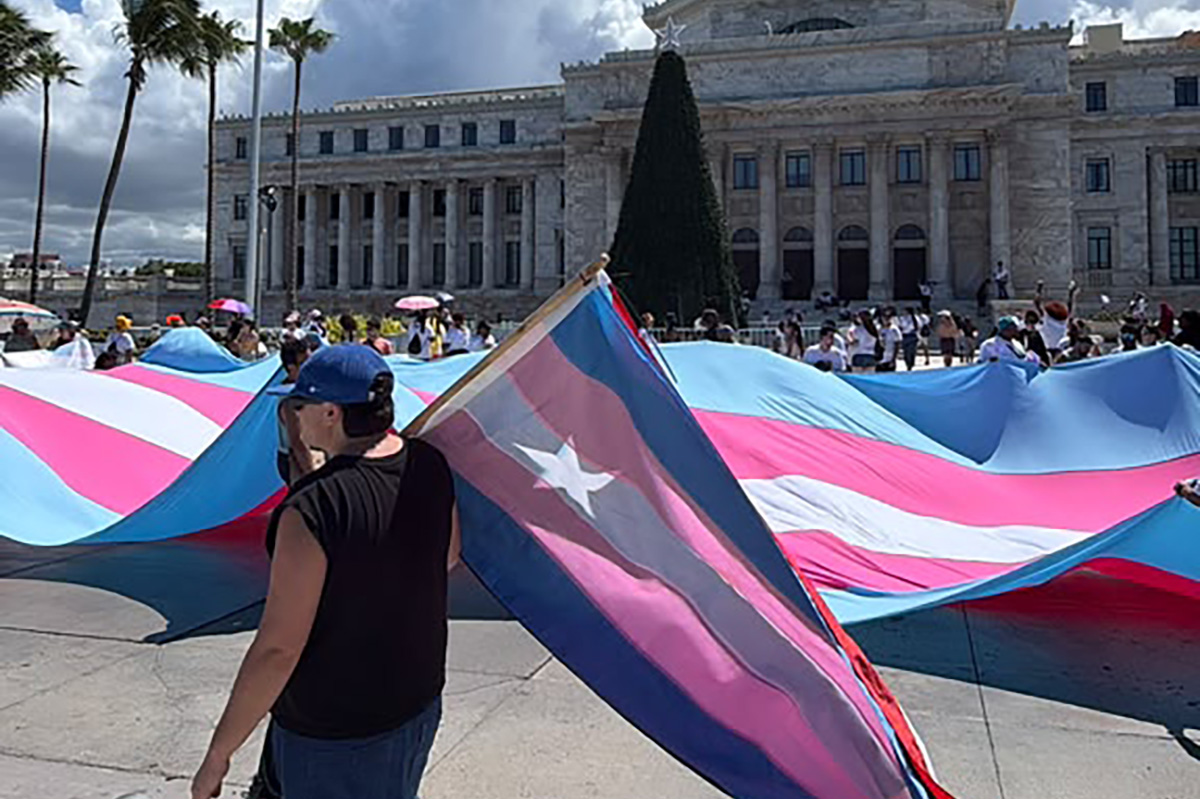
The annual National Trans Visibility March took place in Puerto Rico on Saturday.
The march ended at the Puerto Rican Capitol in San Juan, the U.S. commonwealth’s capital and largest city. Samy Nemir Olivares, a member of the Puerto Rico LGBTQ+ Federation’s board of directors who also works for Lambda Legal, is among those who spoke.
The march took place at the end of a three-day conference that took place in San Juan. Participants included:
• Ana Irma Rivera-Lassen, the first openly LGBTQ+ person elected to the Puerto Rican Senate
• Mila Hellfyre, a trans Puerto Rican activist
• Maru Rosa Hernández, a nonbinary plaintiff in Lambda Legal’s lawsuit that challenges the Puerto Rican government’s refusal to issue birth certificates with an “X” gender marker
• Peter Manuel Shepard Rivas, a Puerto Rican HIV/AIDS activist
• Lambda Legal Senior Counsel and Health Care Strategist Omar González-Pagán
Waves Ahead, Puerto Rico’s largest LGBTQ+ organization, is among the groups that sponsored the National Trans Visibility March and conference. Other sponsors included the TransLatin@ Coalition, the True Self Foundation, the Transgender Law Center, Advocates for Trans Equality, Human Rights Campaign, Gilead, the Georgetown University Law Center’s O’Neill Institute for National and Global Health Law, GLAAD, and the Hispanic Federation.
“Now it’s more important than ever to unite as an LGBTQ+ movement alongside our allies to protect the progress we have made in achieving trans and queer rights as both the federal and local governments attempt to erase and criminalize our identities,” said Olivares. “The president insists that trans identities don’t exist, yet they continue to attack our rights and existence through the laws.”
“But we are here, we are not going to be silenced or erased,” added Olivares. “As (with) any other Americans, trans and queer people deserve equal access to healthcare, housing, and nondiscrimination at the workplace and government services.”
Olivares in their comments noted the Puerto Rican government “has betrayed and undermined the LGBTQ community by signing into law more than” half a dozen anti-LGBTQ+ laws.
True Self Foundation Executive Director Miguel Vázquez-Rivera during a Congressional Hispanic Caucus briefing earlier this year noted these include a ban on gender-affirming healthcare for anyone under 21. Vázquez-Rivera also highlighted Law 26-2026, which prohibits the University of Puerto Rico and other “government facilities” from installing “mixed or gender-neutral multi-occupancy restrooms.”
Puerto Rico Gov. Jenniffer González, a Republican who is a member of the pro-statehood New Progressive Party, signed these laws after she took office in January 2025. González, who supports President Donald Trump, was Puerto Rico’s resident commissioner in the U.S. House of Representatives before she became governor.
Olivares told the Los Angeles Blade that National Trans Visibility March organizers decided to hold the annual event in Puerto Rico as a way to highlight the fact the commonwealth has “the most severe anti-trans legislation in the U.S.” and to stand in solidarity with local activists.
The first National Trans Visibility March took place in D.C. in 2019. Next year’s National Trans Visibility March is scheduled to take place in Atlanta.
South Carolina
Trump uses anti-trans slur against Democratic Senate candidate
President mocked Annie Andrews
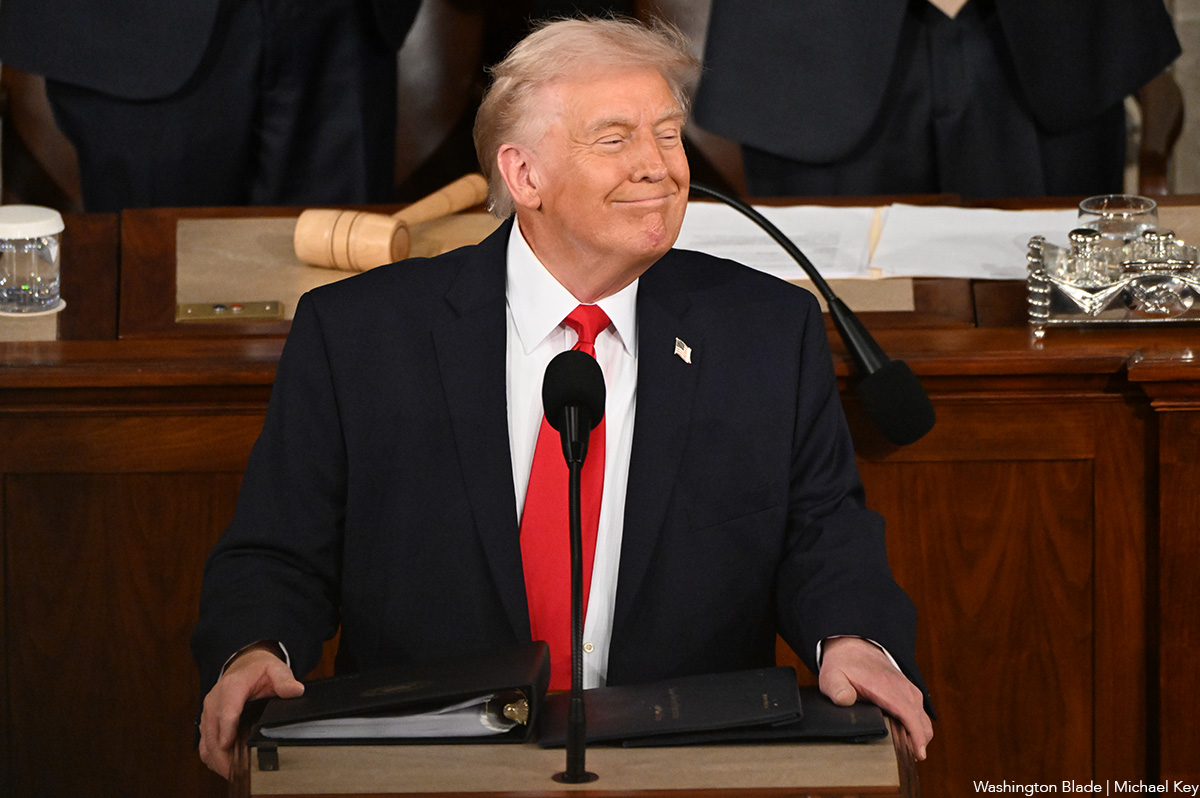
President Donald Trump used an anti-trans slur against Democratic South Carolina Senate candidate Annie Andrews on Monday as he sought to rally support for Republicans in the state’s Senate race.
In a post on Truth Social, Trump attacked Andrews three times, referring to her as “trannie” while promoting U.S. Sen. Darline Graham (R-S.C.)’s campaign.
Andrews is running against Graham for a Senate seat in the solidly Republican state.
Earlier this year, Graham was specially appointed to the seat following the death of her brother, Lindsey Graham, who represented South Carolina in the Senate from 2003 to 2026.
Andrews, the Democratic nominee from the state, is a pediatrician that lives in Charleston with her three children. She told NBC News that she will “work with anyone to put South Carolina first.”
“As a mom and a pediatrician, I’m in this race to fight for my patients, my three kids, and South Carolina,” Andrews said, adding that “lowering costs and making life better for families across our state is going to take all of us working together.”
Andrews used the attention from the president’s attack to emphasize what she described as a focus on policy issues rather than the culture wars that have dominated much of the political debate.
“If you care more about your bills than the politics in Washington, this campaign is for you,” she added.
Trump’s remarks have drawn criticism from leaders on both sides of the aisle.
Senate Minority Leader Chuck Schumer (D-N.Y.) condemned Trump’s words Monday night on social media, calling his attacks on Andrews “despicable.”
“Annie Andrews is a mom and pediatrician who’s always put her community first — and she’s exactly who South Carolina needs representing them in the Senate,” Schumer said on X.
Former South Carolina Gov. David Beasley, a Republican, also criticized the president’s attack on Andrews, urging voters to “reject politics based on division and hate.”
“This is abhorrent. Elections don’t have to be about cruelty and lies. South Carolina deserves better,” Beasley wrote Monday night on X.
South Carolina has not elected a Democratic senator in nearly three decades.
Andrews’s campaign website does not mention her positions on LGBTQ+ issues.
The Los Angeles Blade reached out to Andrews’s campaign for comment on Trump’s attack and her positions on transgender rights but did not hear back by time of publication.
Georgia
In Ga., 2 trans candidates believe voters are ready for them
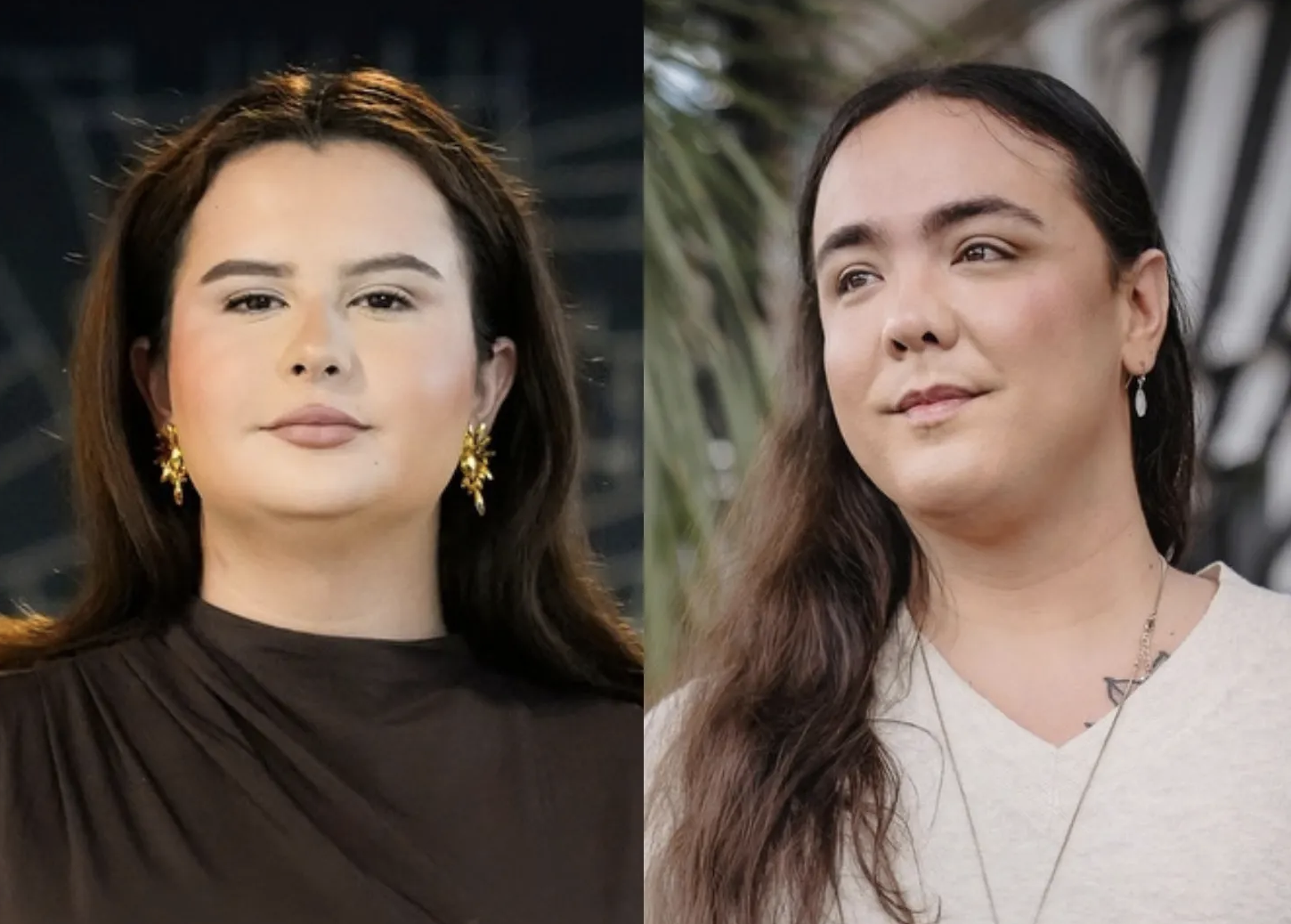
Bentley Hudgins, Bella Bautista running for state House of Representatives
Uncloseted Media published this story on Oct. 6.
This story was reported in partnership with The 19th, a nonprofit newsroom reporting on gender, politics and policy.
By ORION RUMMLER | Bentley Hudgins is a 33-year-old democratic socialist who spent the past three years advocating for LGBTQ+ rights in the Georgia statehouse.
Bella Bautista is 10 years younger, the first transgender woman to win a legislative primary in Georgia and head of a nonprofit distributing supplies to at-risk young adults.
Both are running for a spot in the Georgia House of Representatives, part of a cohort of Democrats who hope to shrink or end Republicans’ hold on the chamber. Both would make history as the first trans members of the body. Neither wants to discuss identity politics or pronouns — they want to talk about data centers, the price of groceries and healthcare.
But their districts are very different: Hudgins is running in a liberal stronghold in Atlanta with no serious Republican opposition and is all but certain to win in November. Bautista’s district is rural and deeply conservative; it hasn’t elected a Democratic state representative since 1996, and she’s the first to run for this seat since 2010. But Hudgins’s and Bautista’s bets are the same: Voters are looking for someone to fight for them. In Hudgins and Bautista’s view, something in the country is broken and no one else will fix it. So they stepped up.
“People around here just hate the government, and that’s why I’m running,” Bautista told Uncloseted Media and The 19th. “People have lost faith in the system as a whole.”
Hudgins’ mind is on the big picture: getting as many Democrats, especially progressives, in the statehouse as possible. Without that, they believe the future — especially for LGBTQ+ people and immigrants — isn’t certain.
“At the end of the day, we have to have the numbers,” Hudgins told Uncloseted Media and The 19th.
A deep red district in rural Ga.
In the hourlong drive from Atlanta to Cartersville, where Bautista grew up, suburbs fade away and the land expands into RV lots, farms, and houses on the edge of the woods. Bautista launched her campaign in this small town, at Noble & Main Coffee Co., across the street from a butcher shop that offers deer processing.
“It’s one of those hidden gems,” she says. “They’re friendly toward Democrats.”
It’s also not in the statehouse district she wants to represent. She’s running for office in the more rural side of the county, an area that’s about 80 percent white, mostly older and mostly conservative. And it’s been a challenge. Most people here vote Republican. Her opponent, the GOP incumbent Mitchell Scoggins, has not run against anyone since he first won a special election in 2018.
Lack of change is what spurred Bautista to run. And it’s not just Scoggins sailing unopposed to reelection every two years. Bartow County is one of a small handful of counties in Georgia with only one commissioner, who single-handedly decides the fate of everything from data center construction to new roads. The current commissioner has held the position for 14 years.
The issues facing her hometown can’t be left to one man, Bautista says. She wants to pass legislation for locals to vote on a board of commissioners, regulate Flock cameras, shield locals from data center pollution, conserve farmland and expand rural mental healthcare. She thinks these stances will appeal to voters who may otherwise vote Republican. But it’s still an uphill battle — and a lonely one.
“This is not a story about pride. It’s not a story about visibility,” she says. “It’s a story about challenges, difficulty. I don’t want to be the fucking first to do it, but I have no choice but to be the first.”
But Bautista says she’s struggling. This campaign has cost her privacy and peace, which doesn’t impact just her: She lives in her family home as the primary caretaker for her mom.
In May, during the primaries, someone came to her house twice, she says: once to put up a sign supporting President Donald Trump next to her own campaign sign in the front yard, and later to take down her sign.
“I literally live in the middle of nowhere,” she says. “That sent chills down my back, because I’m like, OK, that means someone physically went to my home, got out of their car, went up the hill, put up a Trump sign.”
Her neighbors, who she’s known her whole life and are Trump voters, assured her that they weren’t involved. But that fear hasn’t left her. Since then, more signs have gone missing: A few weeks after we met, hundreds of her campaign signs were taken down across the district. Those cost money to replace — money the campaign doesn’t have.
As a trans Latina, she belongs in Bartow County just as much as anyone else, she says. This is the only home she’s known. But campaigning in this district feels like being thrown into the ocean, she says. Online, people mock her and misgender her. It hurts. Often, they’re the same people she’s fighting for.
At one point during an interview at Noble & Main Coffee Co., Bautista started crying. Keeping her head above water means she doesn’t often take time to think about why she’s doing this.
“You’re just having to swim, swim, swim, swim and you never get any chance to look back and think, oh my gosh, why am I doing this, what does this mean to other people?”
Dramatically different districts
Hudgins launched their campaign at Joe’s Coffeehouse in East Atlanta Village, roughly 50 miles from Bautista’s district. This place, a local indie fixture, holds personal history for them: When they became homeless in 2017, it became a refuge as they couchsurfed and lived in their car. It took a year to find stable housing.
This neighborhood is where they got back on their feet after being kicked out of their apartment, something they know is common for queer people in the U.S., as well as in their own circles.
“Most of the queer electeds that I’m really close with are people who have experienced homelessness,” they say. “It just goes to show how prevalent this is for queer Southerners.”
And, years later, this same neighborhood is where they fell back in love with politics.
Being here makes Hudgins think about how the city is changing as people get priced out. Gay bars are closing and, as a former drag performer, they know of only three places still putting on shows. It’s all getting too expensive. Midtown isn’t the bustling queer neighborhood it used to be, they say, but the queers are still here: They’re just moving further into DeKalb County, East Point and southeast Atlanta, all in search of affordability.
That’s part of the problem. Hudgins sees solutions, though: raising the state minimum wage to $20 an hour or creating a state earned income tax credit to give money to lower-income families. Previous Democrat-sponsored bills to enact those policies have been blocked in the statehouse, and it’s those stalemates that are driving voters to push for something different, Hudgins says. Decades of Republican control have left people disillusioned.
“People’s political will and spirit has kind of been chipped away at,” they say. “Life can be better.”
The first time Hudgins ran for this seat in 2022, they were 28 and single, and the pandemic was still fresh. The previous year, Atlanta spa shootings targeting Asian women had taken place, and “Cop City,” the massive training ground for local police in DeKalb County, was formally proposed amid national protests against police brutality. Joe Biden was president, and from where Hudgins sat, the Democratic establishment was clamping down on progressive dissent.
They were angry — but that anger didn’t resonate with voters, they say.
“It was such a more agitated time in a lot of different ways, and this strong leftist point of view wasn’t as appreciated,” they say. “At that time, I was also angry. I was mad. And I think it came through.”
Their opener in their 2022 race was, “To be frank, I’m tired of my friends dying,” they say. They had lost friends to police violence, addiction, hunger and mental illness. One of their friends was left permanently disabled from a hate crime, they say. Hudgins had begun to get severe cluster headaches and was managing that while running their first campaign.
After losing that race, they reassessed if they wanted to do politics at all. They were broken-hearted, they say. A friend helped them get a job at a Laotian pop-up restaurant in East Atlanta Village, only a short walk from Joe’s Coffeehouse. But what they thought would be an escape from politics became a reeducation in why it mattered, they say. Surrounded by other Asian Americans, they learned about U.S. bombing campaigns in Laos and connected with their new friends’ working-class struggles.
“I really got to understand more about how my Southeast Asian neighbors and friends have experienced American identity,” they say.
If elected, Hudgins would be Georgia’s first Japanese American lawmaker. To them, it feels like that usually gets left out of their story as people instead focus on their gender identity.
They weren’t planning on running for office this year. Their wedding is in November. Until recently, they were lobbying against anti-LGBTQ+ bills as Georgia state director for Human Rights Campaign, a major LGBTQ+ advocacy group. But Saira Draper, who beat Hudgins in 2022 to represent House District 90, is running for the state Senate. That left the House seat open. And it left the door open for Hudgins to run again.
When three other Democrat contenders dropped out in the primary, Hudgins became the front-runner. Their opponent, Samantha Boston, received only about 500 votes in the Republican primary. Hudgins got over 7,000 in the Democratic contest.
Fearless advocates
On a muggy September night, Hudgins and Bautista were in full glam at the College Park Woman’s Club in Atlanta, gathered alongside activists, volunteers and political candidates at a fundraising gala for LGBTQ+ youth.
At her table, Bautista prepared to present a “fearless youth advocate” award to state Rep. Akbar Ali, sworn in last year at 21 as the youngest lawmaker in Georgia. Bautista won this same award last year for the work she does at her nonprofit, which primarily supports transgender and immigrant young adults. Seated with Ali and friends running for office in Bartow County, she read over her notes.
Democrats in the room buzzed with the possibility of reshaping the statehouse, and with nerves that Republicans’ now abandoned redistricting effort will resurface.
On stage, Bautista looked to a different future — one where trans visibility in politics is not a rarity in Georgia.
“To all my transsexual girls in the building, just know that I’m fighting for you, and that in two years it’s going to be one of y’all,” she said. “It’s going to be one of y’all running for governor. It’s going to be one of y’all running for state senator. It’s going to be one of y’all running for commissioner.”
But she knows that history recognizes the victors, people who make it past the finish line, regardless of how much work they put into the race.
“I stand before you in the middle of history, not on the other side of it,” she said on stage. “I keep going not because the water is calm, but because someone on the other side is waiting for proof that a person like them survived it.”
Hudgins watched from the front of the room. They sat next to Sam Park, the Georgia House minority whip, a longtime mentor.
“I’m incredibly proud of Bella’s leadership and her courage for stepping up,” Park told Uncloseted Media and The 19th in an interview a few days later. “Bella is giving her voters, her fellow neighbors, an option, a real choice to say enough is enough.”
Rural Democrats are craving someone willing to fight for them, says Courtney Bruder, chair of the Democratic committee of Cherokee County, where Bautista’s district also touches. But complacency has gotten in the way, she says.
“It’s been difficult to try to get someone to be willing to fight for a seat that’s going to be hard,” she told Uncloseted Media and The 19th. “It’s been a slow change to get Democrats in this area to run.”
Bautista hasn’t felt supported by the Georgia Democrats, she says. She has allies in the statehouse and in others running for office, but she still feels like the subliminal message from the party is that she just isn’t electable. She feels like she isn’t taken seriously because she’s not white, doesn’t have wealthy donors and isn’t running in a safe district for Democrats.
Democrats in leadership say she’s changed the game, though, and see her candidacy as a sign of a changing tide in Georgia.
A blue wave may be brewing in the Peach State. Georgia saw record-breaking engagement in the primaries, and an NBC analysis found that Democrats turned out in unusually high numbers across the state. But in Bartow County, where Bautista lives, Democrats make up just one-third of the vote in the gubernatorial primary, according to data from the Georgia Secretary of State’s elections office.
Bautista is positioning herself as an anti-establishment candidate first, and a Democrat second, to appeal to people who aren’t engaged in politics, she says.
It may not be enough to win. But for the past 16 years in this district, no one was willing to step into the ring at all. She still sees victory in that, and in the ways her campaign has gotten neighbors to care about what’s happening in their backyard.
‘I’m going to be who I am’
If elected, Hudgins would become the state’s first nonbinary lawmaker. But they don’t care if voters understand their gender or use the correct pronouns; they just want voters to understand the issues.
“I realized if I led with my identity, it would distract people from understanding what I had to say,” Hudgins says.
One moment in particular on the campaign trail, at Israel Missionary Baptist Church in April, changed their perspective on this.
“The deacon lays his hands on me. He’s like, ‘God, help her, help this person, help him, just help them be victorious.’ I wanted to laugh, but then I was really touched. This guy I’ve never met before … was just trying to be respectful,” they say.
If they win, a whole new set of challenges awaits them at the Georgia statehouse. The dress code is gendered; men must wear a coat and tie, while women are allowed a more nebulous “dignified dress.” But it’s not just the clothes; they would be joining an institution built around a gender binary they don’t adhere to.
Lawmakers are used to referring to each other as “Mr.,” “Mrs.” or “Miss,” per the rules. Although there are more formal options that could allow for a loophole, those are gendered too — members may identify each other by the district “he or she” represents or by the city of “his or her” residence. The bathroom is its own ordeal: if there is a gender-neutral bathroom, Hudgins has yet to find it. As a gender nonconforming person, if Hudgins takes office, they would be walking into a system designed to exclude them. And there are fines associated with breaking these rules.
They are still weighing how to respond to it. They want to be taken seriously as a legislator and build relationships that move bills, but if they don’t stand up for themselves, it sends a poor message, they say.
“I have a pesky knack for maintaining who I am regardless of what the rules say,” they say with a laugh. “If we have a Democratic majority, we can change the rules. If there is a Republican majority, I’m going to be who I am and I’m going to dress how I think is appropriate. And their problems, we’ll address them as well.”
National
988 restores crisis services for LGBTQ+ youth
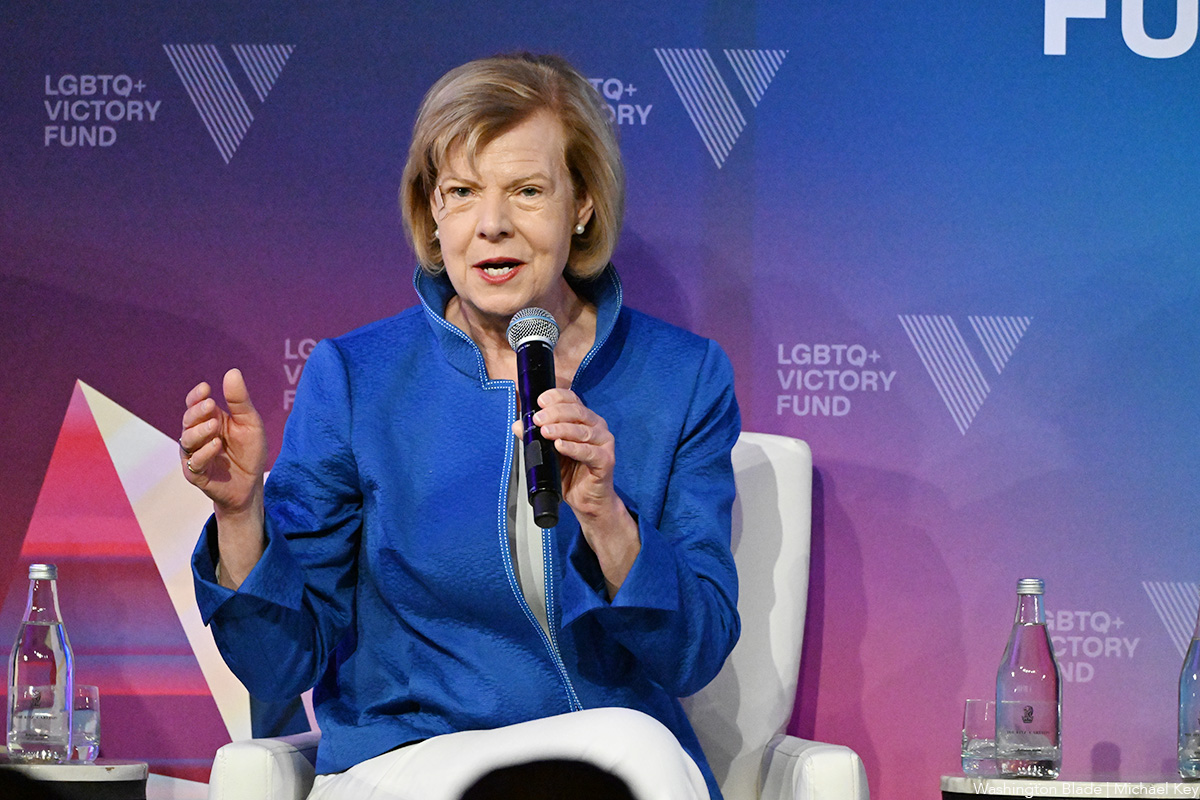
The lifesaving 988 call-in number to help people experiencing mental health crises or suicidal thoughts has once again restored its specialized services for LGBTQ+ youth.
The lifeline, which used to have the option to “press 3” to be directly sent to specialized services for LGBTQ+ youth facing mental health crises or suicidal thoughts, was returned on Wednesday following an over-year-long battle with the Trump-Vance administration, which removed the service in May 2025.
The Press 3 option rolled out as a pilot program in 2022 through a government contract with the Trevor Project, a suicide prevention and crisis intervention organization for LGBTQ+ people.
Then, in June 2025, the federal government announced that the lifeline would be eliminated within a month. By July 2025, 988 Lifeline’s “Press 3” services were terminated.
Openly gay U.S. Sen. Tammy Baldwin (D-Wis.) helped lead Congress in reversing the removal of the lifesaving resource from American phones. As a member of the Senatw Labor-HHS Appropriations Subcommittee, she started the process of securing $535 million for 988 — a $15 million increase — as well as dedicated funding for LGBTQ+ youth specialized services.
Then, in September 2025, Baldwin, along with U.S. Sen. Lisa Murkowski (R-Alaska), introduced bipartisan legislation in the Senate, the 988 LGBTQ+ Youth Access Act, to codify the 988 Lifeline’s specialized services for LGBTQ+ young people.
At the same time, U.S. Rep Raja Krishnamoorthi (D-Ill.) introduced the legislation in the House of Representatives alongside U.S. Reps. Michael Lawler (R-N.Y.) Sharice Davids (D-Kan.) Brian Fitzpatrick (R-Pa.) and Seth Moulton (D-Mass.)
The Senate passed Baldwin’s bipartisan funding bill in January 2026, funding the Department of Health and Human Services with explicit language mandating the return of 988’s LGBTQ+ youth specialized services.
In February 2026, Congress passed legislation mandating that the previously eliminated “Press 3” specialized services be restored and funded with $33,100,000 — but it was unclear if the Press 3 option would still be allowed under current executive orders, namely Executive Order 14168, or “Defending Women From Gender Ideology Extremism and Restoring Biological Truth to the Federal Government.”
Despite the securing of federal funding for the Press 3 resource, the battle to get the 988 LGBTQ+ Youth Access Act through Congress is ongoing — and would provide codafied protection from this removal ever happening again.
According to data on the Trevor Project’s website, LGBTQ+ young people are more than four times as likely to attempt suicide than their peers.
Baldwin’s office touts the immense help the lifeline provides to LGBTQ+ people in their moments of greatest need. The press release on the reinstatement of Press 3 highlighted the continued demand for the service:
“The volume of calls, texts, and chats 15 percent higher than a year earlier and nearly 50 percent higher than two years ago. Since the lifeline launched, it has received over 27 million contacts, including over 18 million calls, 4 million texts, and 3 million chats.”
Advocates for LGBTQ+ rights and mental health awareness have agreed with the increasing numbers and hailed the return as a win for everyone.
“Suicide and mental health struggles touch every community across our state, and that’s why creating the 988 crisis lifeline to make sure help is there for everyone is one of my proudest accomplishments,” said Baldwin said in a statement. “But, last year, the Trump administration decided to make these real struggles a political football and ripped away the specialized line that helped LGBTQ children. This was a deliberate choice. The Trump administration chose to put children’s lives on the line to score some political points.”
“I’ve fought tooth and nail to restore this lifesaving resource. When I realized the Trump administration was not going to do it on their own, I wrote it into federal law to require them to restore the Press 3 option,” the Wisconsin senator said. “This lifesaving resource never should have gone away in the first place, but I am glad the lifesaving support Press 3 provides is once again there for people who need it.”
“I’m proud that we secured the funding to restore this lifesaving LGBTQ+ crisis line and successfully pressured the Trump administration to bring the program back,” Krishnamoorthi said. “When an LGBTQ+ young person reaches out for help in a moment of crisis, they deserve to reach a counselor trained to understand and support them. This program should never have been taken away, and now we need to make sure it stays available for every young person who needs it. I’m grateful to the Trevor Project, NAMI Chicago, Equality Illinois, the American Foundation for Suicide Prevention, and all the advocates and young people who worked alongside us to bring these services back.”
Jaymes Black, CEO of The Trevor Project who works with the SAMHSA, in their press three operations celebrated the return of the resource.
“We are grateful to see that the 988 Suicide & Crisis Lifeline’s ‘Press 3’ specialized services for LGBTQ+ youth have been restored. Resuming this national resource will be critical in addressing the public health crisis of suicide among LGBTQ+ young people, and supporting the estimated more than 1.8 million LGBTQ+ youth who seriously consider attempting suicide in the U.S. each year,” Black said via a statement. “We are thankful for the large coalition of bipartisan lawmakers, mental health advocates, allies, and supporters who fought tirelessly for this restoration. We will monitor the launch and usage of these important services to ensure all LGBTQ+ youth are supported with clinically best standards.”
If you or someone you know needs mental health resources and support, please call, text, or chat with the 988 Suicide & Crisis Lifeline or visit 988lifeline.org for 24/7 access to free and confidential services. Trans Lifeline, designed for transgender or gender-nonconforming people, can be reached at (877) 565-8860. The lifeline also provides resources to help with other crises, such as domestic violence situations. The Trevor Project Lifeline, for LGBTQ+ youth (ages 24 and younger), can be reached at (866) 488-7386. Users can also access chat services at TheTrevorProject.org/Help or text START to 678678.

Record number of LGBTQ lawmakers elected to Congress in midterms

Democrats take control of Congress in historic rebuke of Donald Trump

Democrats projected to win Senate majority, opening door to LGBTQ+ legislation

Chris Pappas elected to U.S. Senate

Xavier Becerra wins California governor’s race

A ‘Heaux’-le New Church: Brandon Kyle Goodman brings a queer spiritual experience to the stage

Are anti-trans campaigns lowering your cost of living?

A gay appreciation of staunch LGBTQ+ ally Patrick Stewart

Australia’s first gay state governor takes office

L.A. LGBT Center used canvassing effort to reframe conversation around trans healthcare
-
 a&e features5 days ago
A ‘Heaux’-le New Church: Brandon Kyle Goodman brings a queer spiritual experience to the stage
-
 Commentary1 day ago
Are anti-trans campaigns lowering your cost of living?
-
 Obituary4 days ago
A gay appreciation of staunch LGBTQ+ ally Patrick Stewart
-
 Australia2 days ago
Australia’s first gay state governor takes office
-
 California1 day ago
L.A. LGBT Center used canvassing effort to reframe conversation around trans healthcare
-

 a&e features3 days ago
How Georgia Oakley brought queer representation into ‘Sense and Sensibility’
-

 a&e features4 days ago
Reading comics is fundamental
-
 Politics17 hours ago
Democrats poised to flip House, opening door for expanded LGBTQ+ leadership
-

 a&e features2 days ago
It’s time to get ‘Delulu’ with Ryan Lu
-

 Commentary2 days ago
LGBTQ+ History Month reminds us: the future we imagine can become reality