
National
Stonewall gives middle finger to oppressive heterosexist ‘normalcy’
Fight against the APA was just as profound
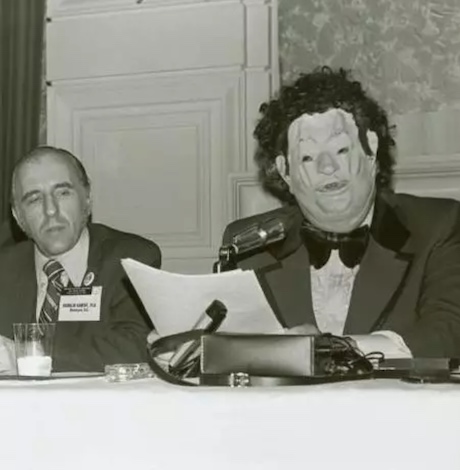
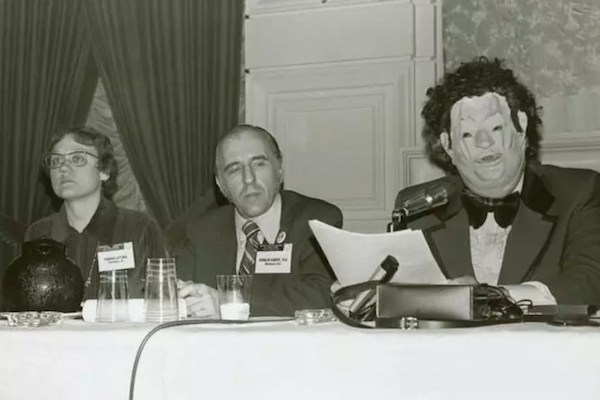
Barbara Gittings, Frank Kameny, and John Fryer as ‘Dr. H. Anonymous’ at the APA meeting in 1972. (Photo courtesy Wikipedia)
In the Trump era, the massive LGBT parades in New York City and elsewhere on June 28, the 50th anniversary of the Stonewall Rebellion, commemorate more than an annual Pride event: they symbolize an LGBT people intent on joyfully countering white male-dominated heterosexism and the tentacles of hatred it inspires. This counter-culture moment in many ways mirrors the counter-culture movement of the 1960s and early 1970s where hope for full equality and the spirit of freedom and democracy clashed with oppressive hard-core conservatism.
Stonewall was a line of demarcation between passive acceptance and courageous self-empowerment in a culture war that is not yet won.
Violent raids on gay bars were routine until Stonewall, as the Washington Post reported in their review of Howard Mann’s book “Behind the Screen: How Gays and Lesbians Shaped Hollywood, 1910-1969.” “The imposition of the notorious Production Code, for example, was accompanied by a crackdown on ‘pansy’ clubs in Los Angeles and elsewhere — all part of a reaction to the liberalization of the raucously roaring ’20s.”
Outside of dark hideouts and clandestine hookups, LGBT people survived by hiding in the closet, passing as straight. Those who couldn’t hide or got caught were often scandalized, humiliated, beaten or killed without repercussions.
Gays like Howard Efland, a nurse who checked into the SRO Dover Hotel in downtown LA on March 9, 1969—roughly four months before Stonewall—hoping to meet someone in those otherwise free-wheeling pre-bathhouse days of the 1960s. But the LAPD didn’t just bust the “faggot” on a trumped-up charge—they dragged him naked by the feet down a flight of stairs where they savagely beat him in front of horrified witnesses as he screamed for help. When he died shortly thereafter, they told his parents he suffered a heart attack. The Coroner called his death an “excusable homicide.”
The LA Advocate found out and reported the murder, prompting the Rev. Troy Perry and gay troublemaker Morris Kight to organize a march and rally at the site. But no one was ever held accountable.
Protest rallies had become common in the 1960s as more people joined civil rights marches and students protested the war in Vietnam. But the 1968 assassinations of Robert F. Kennedy and Rev. Martin Luther King, along with the televised brutality of the Chicago police during the Democratic National Convention, led the country to split asunder debating politics, ethics and morality.
But Stonewall in 1969 and the less celebrated earlier LGBT rebellions against police in Los Angeles at the Cooper Do-Nuts in 1959, Compton’s Cafeteria in 1966, the Black Cat Tavern on Feb. 11, 1967 and at Lee Glaze’s The Patch in Aug. 1968 were significant for another reason, as well. They symbolized an arbitrarily constructed minority fighting back against the prevailing definition of homosexuality as an icky moral perversion worthy of degradation, condemnation—and as the Bible suggests, death.
As a result of the acceptance and promotion of that longstanding belief by society, the state, religion and families, in 1952, the American Psychiatric Association listed homosexuality as a mental disorder and a “sexual deviation” in its Diagnostic and Statistical Manual (DSM) during the height of the McCarthy era witch hunts.
Many LGBT individuals internalized that hate-based definition of homosexuality as a sin, a crime and a sick perversion, leading to suicide, profound shame, secrecy, and agonizing isolation.
“It took many years of vomiting up all the filth I’d been taught about myself, and half-believed, before I was able to walk in the earth as though I had a right to be here,” gay author James Baldwin once wrote.
“Cures” for homosexuality included lobotomies, electroshock aversion therapy, and chemical castration among other tortures—as well as the perennial “conversion” or “reparative” therapy, still thriving in many states today.
Not all LGBT people were cowed by the danger, however. Edythe Eyde (aka Lisa Ben) started the first known lesbian newsletter Vice Versa in 1947 during off time as a secretary for RKO Pictures. Harry Hay and a few others founded the Mattachine Society and ONE Inc, which published ONE Magazine, in LA in the early 1950s when poet Allen Ginsberg’s “Howl” was all the rage. San Francisco drag queen and Army vet Jose Sarria ran for political office in 1961, before founding the Imperial Court System. Del Martin and Phyllis Lyon founded the Daughters of Bilitis in San Francisco in 1955, also publishing The Ladder for lesbians.
But most of the early organizations were clandestine since being discovered to be a homosexual led to instant unemployment, loss of family and friends and a myriad of other personal horrors, including depression, anxiety and other emotional and mental illnesses. Gradually activists such as Frank Kameny and Barbara Gittings from the Washington DC chapter of the Mattachine Society publicly protested, promoting the argument that “Gay is Good.”
“The problems of the homosexual stem from discrimination by the heterosexual majority and are much more likely to be employment problems than emotional problems,” Kameny wrote in a letter to Playboy in 1969 in response to a story about “therapeutic methods” for treating gay men, according to the New York Review of Books. Doctors “would be of greater service to the harassed homosexual minority,” Kameny concluded, “if they ceased to reinforce the negative value judgments of society and, instead, adopted a positive approach in which therapy for a homosexual would consist of instilling in him a sense of confident self-acceptance so he could say with pride, ‘Gay is good.’”
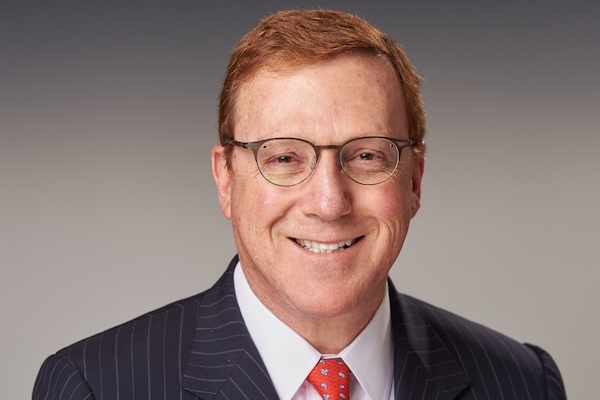
APA CEO Dr. Saul Levin (Photo courtesy APA)
Indeed, Dr. Saul Levin, the out gay CEO of the APA, tells the Los Angeles Blade, “LGBTQ folk have always been stereotyped and in some ways derided. There was a stigma to it.” But “as mental illness became more part of the medicalization,” some psychiatrists began to question the data-less assumptions about homosexuality, including Professor Sigmund Freud, a neurologist and psychiatrist.
“A mother bought her son and said that there was something wrong with him. And that’s when [Freud] began to really look at a sort of homosexuality,” Levin says. “In some of his writing, he did not think that this was a mental illness, per se—that in some ways it was a sexual variant. I’m paraphrasing his words….But by the 1970s, it became very clear that some asked why was it a mental illness? Show us that we had a different problem or a mental illness compared to someone who has depression or anxiety.”
That questioning led to an APA panel in 1972 with Kameny and Gittings and a masked “Dr. H. Anonymous,” the only gay psychiatrist who agreed to participate.
“Yes, we are sick—we are sick of your manipulation and exploitation of us,” Kameny said. He demanded that “homosexuality be removed permanently from the psychiatric list of diseases” and called for “treatment of the oppressing society instead of the attempted treatment of us, the oppressed homosexual.”
But, says Levin, it was “Dr. H. Anonymous” who really got them thinking.
“John Fryer, a psychiatrist out of the University of Pennsylvania in Philadelphia, was a gay man who realized at that time he could lose his job, he could lose this apartment,” who came forward, says Levin. “The gay community was very much beginning to come out of the closet but it was also a time where we were highly discriminated against by legislation. And he eventually said to the APA that it was time for them to either take homosexuality out of the DSM, or they need to show the data of why it’s a mental illness. And the APA leaders at the time heard him, and within a year they had decided that there actually was not data so they took it out of the DSM,” in the 1973 publication.
“Today, we know that it’s not a mental illness. We are just a variant in who we love and who we want, and who we are inside,” Levin says. “And obviously, sometimes whether you’re straight or gay or lesbian or bisexual or transgender, there may be parts of you that, because of some of the discrimination you may have had when you were younger, that’s the issue that has to be addressed as part of a good mental health, healthcare checkup….The bottom line is that it is a natural variant of the human being and, it does not need curing,” a position the APA continues to strongly advocate.
Though less colorful and public than the Stonewall Rebellion, the fight against the APA’s designation of homosexuality was also a significant resistance to the oppressive heterosexual construct of “normalcy.”
It is also the subject of the upcoming documentary “Cured.”
“We were drawn to this story because it’s such a pivotal but largely unknown moment in LGBT history,” Cured Co-Director Patrick Sammon tells the Los Angeles Blade. “In fact, following the Stonewall rebellion of 1969, the campaign that resulted in the American Psychiatric Association’s 1973 decision to remove homosexuality from its manual of mental illnesses marked the first major step on the path to equality for LGBT Americans.”
“At a time when every lesbian and gay man, no matter how well-adjusted, was automatically considered sick and in need of a cure, the diverse group of activists who took on the APA found the courage to stand up and tell the world that they — not psychiatrists — were the experts on their own lives,” says Bennett Singer, co-director of “Cured.” “Their tactics and strategy offer crucial lessons about how to create and sustain social change, even in the face of seemingly insurmountable opposition. And their insistence on speaking truth to power can inspire and guide every LGBTQ American — as well as our allies — who wants to ensure that hard-won progress toward equality is not rolled back.”




National
Long-time DignityUSA executive director announces retirement
Marianne Duddy-Burke has been with LGBTQ+ Catholic group for decades
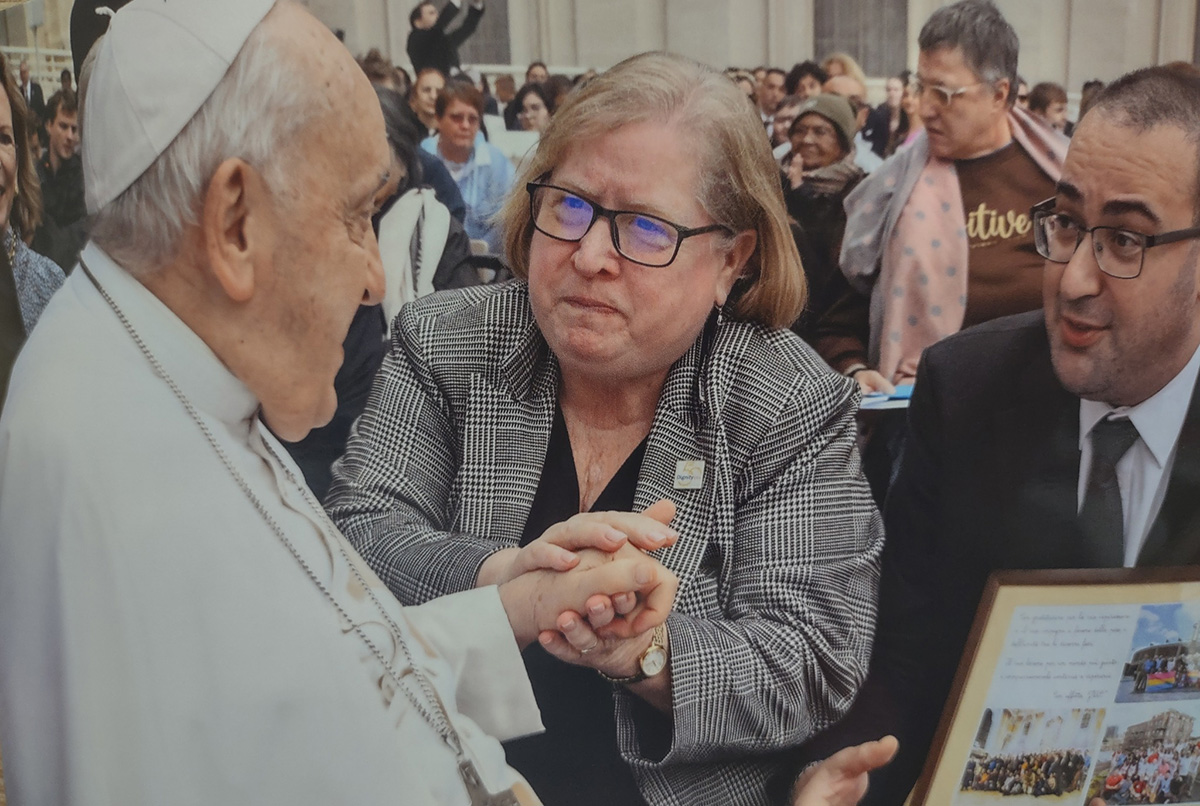
The executive director of the world’s oldest LGBTQ+ Catholic organization has announced she will retire once her successor has been chosen.
Marianne Duddy-Burke has been with DignityUSA for more than four decades. She has been the group’s executive director since 2007.
DignityUSA announced Duddy-Burke’s retirement on Sept. 17.
Duddy-Burke during her tenure has urged the Vatican to do more to welcome LGBTQ+ Catholics. She has also, among other things, championed marriage equality and advised the State Department on LGBTQ+-specific issues. (The Trump-Vance administration’s decision to freeze nearly all U.S. foreign aid shortly after it took office in January 2025 has had a devastating impact on the global LGBTQ+ and intersex rights movement and efforts to fight HIV/AIDS around the world. A report that Outright International released earlier this month notes 90 percent of LGBTQ+ and intersex rights groups around the world have lost funding since 2025.)
Duddy-Burke met with Pope Francis in 2023.
She traveled to Rome in 2025 for the papal conclave to choose the Argentine-born pope’s successor. Pope Leo XIV, who was born in Chicago, succeeded Francis.
DignityUSA in the press release that announced Duddy-Burke’s retirement notes she expressed “particular appreciation to people who spoke honestly about the reality of being a queer Catholic or family member.”
“I have been inspired every day by your stories and have done my best to lift them up,” said Duddy-Burke. “It is your lives, your faith, your struggles, your hopes that I have strived to reflect in my work, and doing this has been a great honor.”
DignityUSA President Meli Barber praised Duddy-Burke.
“It is almost impossible to sum up the scope and depth of Marianne’s achievements and contributions to DignityUSA over her more than four decades of service,” said Barber. “Under her wisdom and leadership, DignityUSA has only grown in stature as an advocate for LGBTQIA+ Catholics and as a visionary thought leader for LGBTQIA+ ministry and spirituality.
“Marianne has been more than an extremely able executive director,” added Barber. “Her care for and ministry to chapters, her deep personal relationships with countless Dignity members, her connections to LGBTQIA+ Catholics around the world, the relationships she has built with other progressive Catholic organizations, her skill as a public representative, the respect with which she is universally regarded, and her tireless devotion to service all leave an indelible mark. It is not an exaggeration to say that she has shaped not only Dignity but a generation of LGBTQIA+ Catholics.”
Barber said DignityUSA will “soon begin a search for a new executive director.” Barber added Duddy-Burke “will assist with the transition.”
Congress
Jeremy Moss looks to bring LGBTQ+ advocacy from Lansing to Capitol Hill
Congressional candidate would represent Detroit suburbs if elected
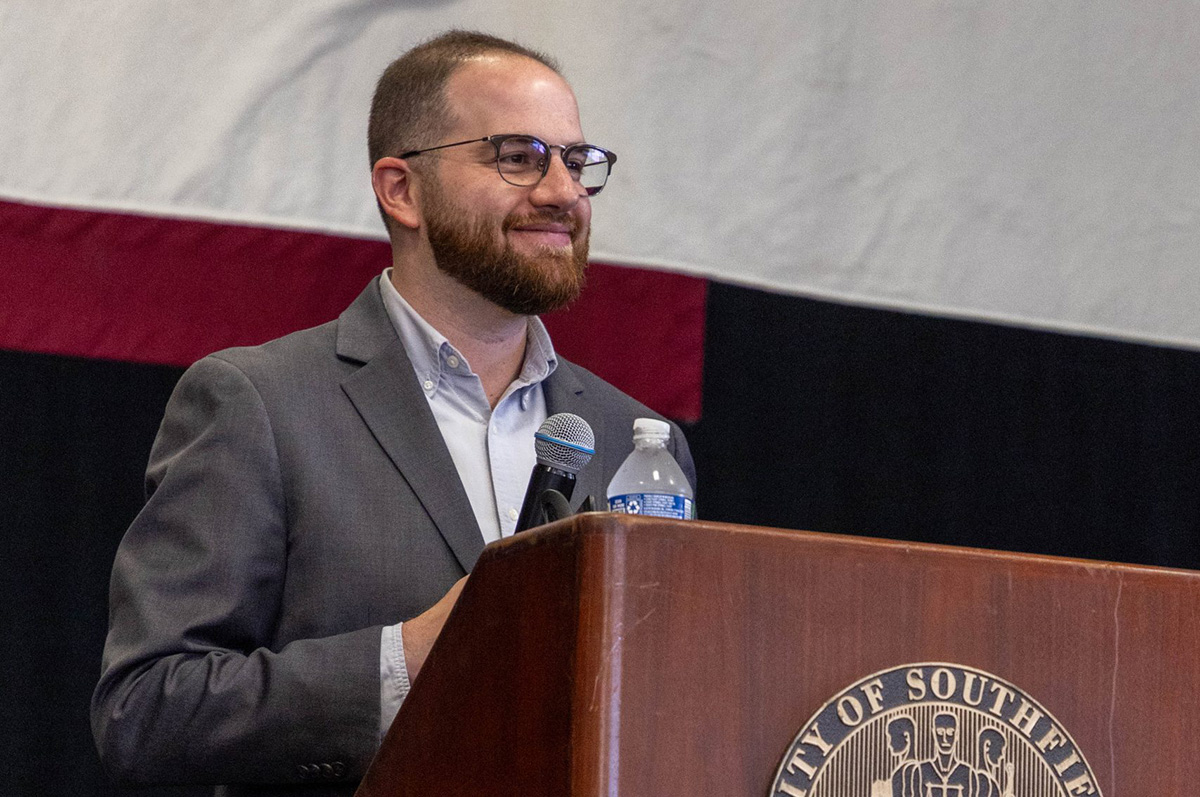
With fall comes swapping out T-shirts for sweaters, raking leaves and, of course, elections. The summer’s primaries have narrowed the playing field in a slew of races, but the big ones — the actual races for seats in federal and local elections — are still to come.
Jeremy Moss is one of those people running for a congressional seat in Michigan. Despite his young age, Moss has quickly learned the ropes of politics in the state, already serving terms in the Great Lakes State’s House of Representatives and Senate.
Moss sat down with the Los Angeles Blade to discuss his history in Michigan politics, his experience as an openly LGBTQ+ legislator and his vision for a better America as he looks toward Congress.
He currently represents Michigan’s 7th Senate District, but now he is setting his sights beyond Lansing toward Capitol Hill to represent Michigan’s 11th Congressional District, which includes Detroit’s northern suburbs.
Moss earned his bachelor’s degree in journalism from Michigan State University, where just a few years later he made history as the first openly gay person elected to the Michigan Senate and the first to serve as its president pro tempore.
His political experience stretches across multiple offices.
Moss worked in the offices of Southfield Mayor Brenda Lawrence, who also served in the U.S. House of Representatives, and State Rep. Paul Condino.
Moss, at age 25, was elected to the Southfield City Council in 2011, becoming the youngest member elected in the body’s history. He then switched over to the state legislature, representing Michigan’s 35th House of Representatives District in the Michigan House of Representatives from 2014-2018, becoming the second openly gay member elected to the Michigan legislature.
He then moved from Michigan’s House to its Senate in 2018, elected to represent the 11th Michigan Senate District and becoming the Assistant Democratic Leader. Moss started his second term in the Michigan Senate in 2023, this time representing District 7.
He currently has a long list of priorities listed on his campaign website, many of which have become standard for Democrats running across the country, with a particular focus on minimizing — and cleaning up — issues that the Republican-controlled federal government has created under President Donald Trump.
Those goals include lowering healthcare costs, tackling the cost of living crisis, holding U.S. Immigration and Customs Enforcement accountable and fixing the broken immigration system, restoring national voting rights, protecting rights — with a particular focus on abortion access and LGBTQ+ rights — combating corruption in politics, preventing gun violence and strengthening gun safety, empowering Michigan workers, and preserving the environment.
Why Moss is running for Congress
When asked why he wants to run for Congress, Moss pointed to his lengthy resume in state leadership, with a clear voice arguing that if he can do it in Lansing, he can get it done in Washington.
“I’ve served 12 years in the legislature and have ascended into leadership as president pro tem of the Senate,” Moss explained to the Blade. “We flipped our state legislative chamber to a Democratic majority for the first time in 40 years in 2022, and we passed some big, generational-changing, consequential Democratic wins that had languished for a generation, but had improved people’s lives in our state.
“We’ve passed the first gun safety laws in a generation that are saving lives. We protected the right to vote amidst attacks from Donald Trump and other conspiracies. We pushed forward and finally put LGBTQ rights in our state civil rights law. We provided free school meals and lunches for all public school children in the state of Michigan.
“The problems from Washington, D.C., aren’t getting less severe over time,” he continued. “They’re getting more severe. So this district unexpectedly opened up due to a series of retirements and it was just a great opportunity for me to continue to advocate for big change that we’ve already achieved here in the state legislature.”
“I’m a product of this district. I grew up here. I’ve represented a bulk of the district already in the state legislature, and I knew that I was going to earn grassroots support to be able to wage this campaign. We sought it out, we earned it, including some premier endorsements from Gov. (Gretchen) Whitmer, among many others, and were highly successful in the primary because we were in tune to the needs of this district.”
Moss has been endorsed by a slew of Democratic leaders and organizations, including, as he pointed out, by Whitmer.
Other endorsements include former Gov. Jim Blanchard, Secretary of State Jocelyn Benson, Attorney General Dana Nessel, the Equality PAC, the Human Rights Campaign, the Unity Fund, and the LGBTQ+ Victory Fund.
His political identity and the Democratic Party
Moss described himself as being “on the liberal end of the spectrum,” but argued that the Democratic Party’s internal divisions should not be the central focus.
“I’m certainly on the liberal end of the spectrum, but I don’t even think it necessarily has to be this progressive versus establishment fight that we’ve seen play out,” Moss said when asked about various elements of in-party disagreements. “It has to be between action and, and inaction, fighters versus folders.”
He said that distinction between action and inaction is central to how he would approach Washington.
“At this moment, I think we need to demonstrate that we are ready to take on Donald Trump and MAGA chaos with boldness and effectiveness. I’ve been saying all along our campaign trail, we can no longer be the party that shows up to the knife fight carrying a pie chart, and so I think we have to be showing that we have spine and we have punch, and we’re really ready to be tough fighters for, for Michiganders and the American people.”
“We can’t walk on eggshells anymore. We can’t pull our punches,” he added. “We can’t fear that we’re offending someone, you know, one way or another with how we act. People are expecting a bold party to take on MAGA, and I think that’s exactly what the Democratic Party needs.”
Becoming an LGBTQ+ legislator
Moss also reminisced with the Blade about his first run for elected office — at a time when Michigan had no openly LGBTQ+ members serving in the state legislature — and how that experience became deeply connected to his identity and his approach to LGBTQ+ politics.
In 2014, Michigan was in the pre-marriage equality era, and the state had no openly LGBTQ+ members serving in the legislature.
“12 years ago in 2014 — this was pre-marriage, the pre-marriage equality era — we had zero people from our community serving in the legislature, and still they were talking about us.
“The big topic then in Michigan was whether or not to expand our civil rights law to include LGBTQ protections, so that people from our community would no longer face discrimination in housing and employment. And they were talking about us regardless of whether or not we were at the table.”
Moss eventually helped lead the effort to expand Michigan’s civil rights protections to include LGBTQ+ people, a measure that passed with bipartisan support.
He said his experience as an openly gay lawmaker allowed him to make the case for LGBTQ+ protections in terms that extended beyond LGBTQ+ issues.
“One thing I definitely aligned with Gov. Whitmer at the time was making the case that discrimination was not only morally wrong, but it was bad for business,” he said. “By not having these protections for our LGBTQ neighbors and family members and friends and community members, we were actually holding back our economy. We were essentially allowing people to be kicked out of Michigan as consumers and workers, because of who they are and how they identified.”
That led to various efforts — including committee hearings and meetings with advocates, businesses and the public — that helped make Michigan what the Movement Advancement Project deems the 16th most LGBTQ+-friendly state, solidly above other states due to its robust LGBTQ+-related legislation.
“I wanted to meet everybody where they were, including those who may have not been involved with or engaged with the LGBTQ community as legislators, but understood that we couldn’t sustain the economic impact of discriminating against our community,” Moss said. “And as I’ve said all along, discrimination is bad for business. That’s something I think helped broaden the vote and earn some bipartisan support for it.”
Representation and LGBTQ+ youth
For Moss, the importance of LGBTQ+ representation also comes from his own experience growing up.
“I think about when I was younger, when I was 18 years old. It was in 2004, and, you know, there are certain things that really shaped me in that time … Michigan had a ballot proposal that passed to have the strictest language banning marriage equality in our state constitution. We didn’t even allow civil unions in that language in our constitution to exist, and there were scandal-plagued LGBTQ politicians.”
“It was the same year that Jim McGreevey was forced to resign as he came out,” he said. “So it really was a signal to me that, you know, you don’t have a future. Not just you don’t have a future in politics; you might not even have a future. Period, and it was pretty defining for me.”
Despite those fears, Moss continued to pursue public office.
“And you can’t be what you can’t see, and so to be able to break the barriers at the state level and at this congressional level, I think is a signal to anybody who is struggling with wondering where their place is?”
“I think that visibility is incredibly important, and it’s something that I needed when I was much younger, and it’s something that I’ve been honored to be able to provide for the, for the next generation of emerging leaders.”
His LGBTQ+ priorities in Congress
When asked what LGBTQ+ issues he would prioritize in Congress, Moss emphasized the importance of growing the number of LGBTQ+ lawmakers while also expanding federal nondiscrimination protections.
“To have a caucus in the legislature has made all the difference because you can, you know, run these issues across the field. You can have somebody take on marriage. You can have somebody take on trans rights. You can have somebody take on LGBTQ youth. You can have somebody take on discrimination protections.”
He sees much of the work he wants to get done on Capitol Hill as a direct follow-up to his work in Lansing — most importantly, the passage of the Equality Act. The legislation has been debated in some form for more than 50 years at the federal level, with the goal of protecting LGBTQ+ people from discrimination under federal law.
“I think the Equality Act is incredibly important. That’s kind of the, the counterpart to what we’ve done in the state legislature, ensuring discrimination protections for the LGBTQ community,” he said.
“I think housing and, and workplace discrimination is, is everything, you know, to protect our community so that they can have a safe place to call home and earn a living … That’s incredibly important across the board. And I would really want to take a leading role in telling the story of how we were able to do it in Michigan after 50 years since this act was first written — and finally finished the job federally to ensure their federal protections in, in, in, in employment and housing.”
LGBTQ+ political organizations and Congress
Moss said the LGBTQ+ political organizations that have supported his political career from its early stages have helped him along the way.
“Obviously, I’ve been affiliated with Victory Fund since I first ran for office, and they were early endorsers, but Equality PAC, which is the political arm of the LGBTQ caucus in Congress, has been an incredible part of my support system. From day one they helped me out.
“I’ve been getting to know a lot of the members of Congress who are LGBTQ, really over the last year of this campaign. So I’m eager to join them. I’m eager to be one of the players on the field here to be able to advocate and advance our issues.”
Voting rights
Voting rights are another major focus for Moss, an issue he said dates back to his experience during the 2004 campaign over marriage equality.
“Something I’m very passionate about is voting rights, and it really does go back to that 2004 campaign where it was very evident that elections can determine your future.
“Elections can determine what rights you do have and don’t have, and so I’ve been very laser focused on increasing access to the ballot box, making sure our democracy remains whole and accessible.”
He explained how Trump’s recent attacks on voting legitimacy and mail-in voting have only made his desire to help that much stronger.
“We went through a real trial of that in 2020 with, with Michigan’s presidential election, with Donald Trump and Rudy Giuliani — as he jetted into Michigan and tried to overturn our valid and accurate election results. We were kind of the spotlight of the nation in that stop this deal movement that led to Jan. 6.”
That, according to Moss, spurred direct action on his end.
“I took the helm as chair of the Senate Elections Committee, and we wrote the law to implement pieces of that ballot proposal, including drafting the law that implemented nine days of early voting here in Michigan, increased access to absentee ballot. We further secured our canvassing and certifications so that nobody could jet in with an alternative slate of electors and send them to Congress on Jan. 6.”
“So I’ve been on the front lines in Michigan on defending our election systems and strengthening protections for both voters to access the ballot box and protections against those who want to overturn our election results.”
Those issues are still present today, he explained.
“He’s pushing for suppressive tactics like the Save Act. The Supreme Court has eroded the federal Voting Rights Act,” Moss said. “I want to really get into Congress as an election expert, we have a Michigan story to tell. I wrote a lot of that story, and, and I think the most urgent thing that we could pass is the John Lewis Voting Rights Act to make sure that there’s no pocket of discrimination anywhere in our country, and that people have the ability to exercise their constitutionally guaranteed right to vote.”
What he would do differently in Washington
Moss also shared that he believes Democrats should communicate differently in Washington, with an emphasis on getting things done.
“Yeah, again, we’ve, we’ve seen politics evolve in this Trump era, and I think that Democrats need to communicate differently.
“He talks so brazenly, and how proud he is that he’s renamed the Gulf of Mexico or Lake Ontario. I put that in the stupid category.
“He’s also done things in the harmful category that he boasts about, like cutting Medicaid and cutting SNAP. And of course, he’s doing things in the dangerous category, but proud of it, like trying to overturn our elections or suppressing the vote.
“What we’re doing is both popular and good for people, whether it’s growing our economy from the middle class outward, whether it’s lowering costs, whether it’s making healthcare more affordable, whether it’s strengthening the core functions of our democracy, we have to be talking about it with the same gusto and confidence that MAGA talks about their agenda.
“I think this is a party that needs more spine and more punch, and really meet this moment because I think that’s what people are looking for, and that’s really what I think a new generation will bring into this next Congress.”
National
Advocate, Out parent company adds Trump supporter to board, prompting outrage
Online backlash against EqualPride grows
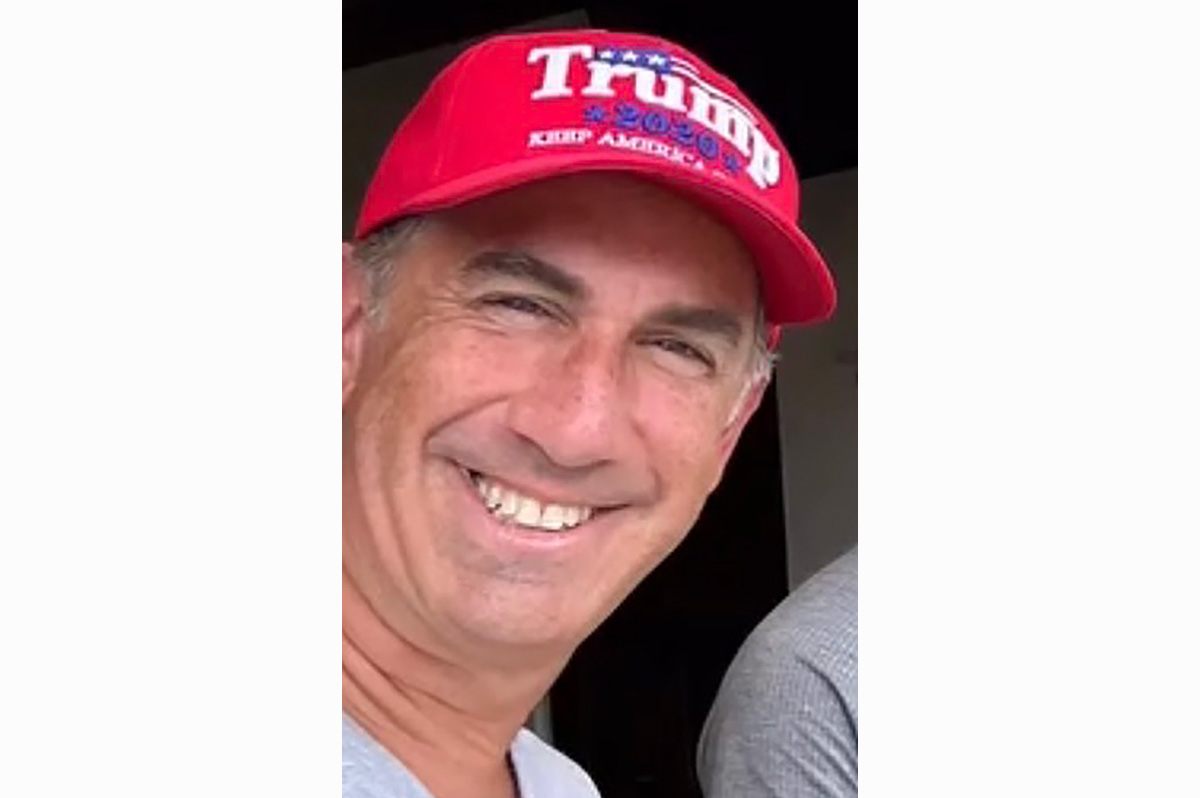
(UPDATE: Since this story was posted, EqualPride announced that Jay Katari has resigned from the board as of Tuesday afternoon. “I have decided to step down from the Board of Directors of equalpride,” Katari said in a statement shared by EqualPride CEO Mark Berryhill. “My intention was simply to volunteer my time and experience to support the incredible team and the important work they do for the LGBTQ+ community.”)
EqualPride, a prominent LGBTQ+ media company that owns the Advocate and Out magazines, has added a Trump supporter to its board of directors.
Jay Katari, an entrepreneur and investor who now serves as EqualPride’s “Strategic Advisor, Growth & Innovation,” also sits on its official leadership team.
EqualPride’s website describes his role as “focused on helping the company expand its reach, strengthen its commercial partnerships, and develop new sources of recurring revenue.”
This change in leadership has caused an outcry of concern from LGBTQ+ media consumers, people working at the outlets published under EqualPride, and LGBTQ+ advocates who seem unsure of how a Trump supporter will fare on the board of one of the most important LGBTQ+ media organizations in the country.
The story was first reported by Kevin Ortega-Rojas, a freelance writer and podcaster who specializes in covering social issues. His resume includes a number of connections to the world of LGBTQ+ media — particularly under EqualPride — including being a former rapid response reporter for GLAAD and host of “The Advocate Weekly,” a queer news podcast produced by The Advocate magazine.
Earlier this year, EqualPride laid off staff across its existing publications, including senior editors and writers. That move, followed by the addition of a Trump supporter to its board, has created concern among LGBTQ+ consumers.
According to his Instagram, Katari is married to a woman and still has posts showing him wearing Trump MAGA-branded merchandise. He also follows members of the Trump family, including President Donald Trump, his sons Donald Trump Jr. and Eric Trump, Lara Trump, and his daughter Ivanka Trump. He also follows an account with the username donaldtrump.hq titled “Donald Trump Fans.”
This apparent endorsement of Trump and MAGA politics, which includes restricting the rights of transgender people as well as rolling back protections for LGBTQ+ people more broadly, seems to be in direct conflict with EqualPride’s mission statement.
“Our mission is to provide content of inspiration, hope, community, equality and love through our platforms that reach a vast majority of the American LGBTQ+ audience every month and increasingly women and people of color,” a statement on EqualPride’s website from 2023 said. “We are a diverse community of storytellers, innovators, and influencers who believe in giving a voice to all people!”
The Los Angeles Blade reached out to Christopher Wiggins, the politics and news editor at EqualPride, but was directed to the already publicly available joint statement made by editors of the largest publications represented by EqualPride.
In the Instagram post, the editorial teams of The Advocate, Out, Them, PRIDE.com, Out Traveler and Plus all co-signed the statement, assuring readers that Katari being on the board has not — so far — impacted any of their reporting and implying EqualPride needs to expand on what Katari’s role will be for the organization.
“Our editors became aware of concerning reports this morning that Jay Katari — one of the board members of our parent company, equalpride — may have espoused beliefs that are antithetical to the mission of our brands, per a new article from journalist Kevin Ortega-Rojas.
“The editorial teams only recently learned of Katari’s expanding role and had no information about his background or past political statements prior to this week.
“Please know that Katari’s position has not influenced our reporting.
“In an initial meeting today, we urged management to provide further clarification about Katarı and hıs role at equalpride, and are awaiting information.
As queer and trans journalists, we are committed to independent reporting that serves the LGBTQ+ community — and to getting answers on this critical matter.”
Nearly 200 comments were made online under a joint post made by multiple EqualPride publication accounts, including Them, The Advocate, and Out.
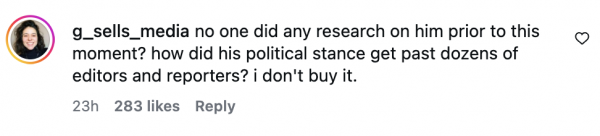
Gisselle Palomera, a Future of Queer Media fellow for The Advocate and former local news reporter at the Blade, commented under the post, questioning how much leadership actually knew about Katari.
“No one did any research on him prior to this moment? How did his political stance get past dozens of editors and reporters? I don’t buy it,” they said in the now most liked Instagram comment under the announcement, with 283 likes.
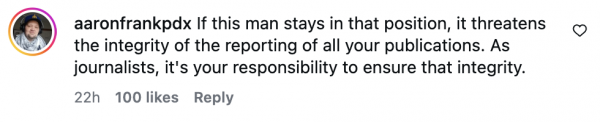
Another Instagram user, Aaron Frank Duncanson, who goes by the username aaronfrankpdx, pointed out how the situation looks and expressed fears for the future if Katari stays on the board.
“If this man stays in that position, it threatens the integrity of the reporting of all your publications,” Duncanson wrote. “As journalists, it’s your responsibility to ensure that integrity.”
The Blade reached out to Katari, and to Tony Morrison of Morrison Media Group— who is working with EqualPride, according to Wiggins— but did not hear back in time for publication.
EqualPride CEO Mark Berryhill issued a statement after Katari resigned.
“I want to clarify Jay Katari’s involvement with equalpride, which was limited to business growth, revenues and the company’s long-term sustainability,” said Berryhill. “Under our investment agreements, our lead investor group held the right to appoint two board members without separate votes or approval by the CEO or management. Jay joined the board through that process. Going forward, the investor group has provided me with the right to appoint future board members.”
Berryhill then noted Katari’s decision to resign and referred to his statement.
“Our focus now is on strengthening our brands, and continuing to support the stories of our LGBTQ community,” added Berryhill.
National
Multi-billion-dollar 9/11 Victim Compensation Fund to continue until 2090
Eligibility for same-sex partner survivors remains unclear

As part of its commemoration of the 25th anniversary of the 9/11 terrorist attacks, the September 11th Victim Compensation Fund, a federally operated program, released information during the past week showing it has awarded more than $18 billion to over 77,000 9/11 victims and their families since 2011.
Officials with what’s now referred to as the VCF point out that it was created to provide compensation to individuals or to a court-approved personal representative of a deceased individual who were present at one of the three sites where the hijacked jetliners crashed.
Among those supported under the program are thousands of rescue workers, clean-up crews, and residents living near the World Trade Center Twin Towers destruction site who became ill, many of whom later died, by being exposed to the toxic fumes created by the fire and falling debris.
“Twenty-five years since that day, the September 11th Victim Compensation Fund has served tens of thousands of victims and their families, and we continue to receive over 750 new claims each month — a clear indication of the ongoing importance of our mission,” said Allison Turkel, VCF’s leader, who holds the title of Special Master.
In a Sept. 2 briefing for the news media in advance of the 9/11 anniversary commemoration, Turkel pointed out that the VCF operation was upgraded and expanded by separate laws passed by Congress in 2011 and 2019, with the 2019 law signed by President Trump providing full funding to “pay all eligible claims and extended the filing deadline to Oct. 1, 2090.”
LGBTQ advocacy organizations in New York and nationwide have reported that during the time shortly after the 9/11 attacks same-sex surviving partners of 9/11 victims learned they were ineligible for compensation benefits because their same-sex relationships were not legally recognized.
Nicole Nava, a VCF spokesperson, told the Washington Blade she would inquire into whether same-sex couple surviving partners were being supported under the VCF program in more recent years.
She said under long established VCF procedures, all applicants for benefit claims regarding a deceased person, whether same-sex or opposite sex, must be appointed as a Personal Representative of the deceased person by a state court. For D.C. residents, the probate division of the D.C. Superior Court appoints a Personal Representative.
“Claims for deceased victims (regardless of the cause of death) may be submitted only by the Personal Representative,” a statement on the VCF website says. “Each state has laws that define the process for appointment of the Personal Representative and the specific authority granted to that Personal Representative,” it says.
The Washington Blade couldn’t immediately determine the criteria for being approved as a Personal Representative by the D.C. Superior Court and various state courts, including whether a same-sex survivor partner would be eligible for such an appointment.
A spokesperson for the District of Columbia LGBTQ+ Bar Association, which includes many local attorneys who specialize in a wide range of specialized legal issues, couldn’t immediately be reached to find out if one or more of their members might be able to determine the same-sex partner eligibility for Personal Representative status.
In her news media briefing, VCF Special Master Turkel said detailed information about how best to file a claim for 9/11 victim compensation is available on the VCF website.
“Twenty-five years since the events of September 11th , 2001, we know it has become increasingly challenging for claimants to find documents needed to prove their presence at an eligible location, which is one of the key requirements to be eligible for compensation,” she said.
She was referring to the requirement that 9/11 surviving victims seeking a claim for support for injuries or illnesses related to the 9/11 attacks must prove they were present at the World Trade Center site, the Pentagon site, or the Shanksville, Pa. site where the hijacked jetliners crashed. Those requirements are separate from the less clearly defined criteria for same-sex couple victim survivor eligibility.
“Our team is committed to ensuring no claimant feels lost or overwhelmed when submitting a claim,” Turkel said at the briefing. “We have a great helpline with real live people who can answer or refer any questions that come in,” she added. “They engage in over 4,000 calls a month on average. We encourage folks to call 1-855-1555 with any questions.”
The VCF website, wh
Indiana
Ind. prosecutor declines to press charges over false Buttigieg child welfare complaint
Former Biden-Harris Cabinet member declined to comment on decision

An Indiana prosecutor has declined to file criminal charges against a woman who made a false child welfare complaint against Pete Buttigieg.
Buttigieg, the former transportation secretary in the Biden-Harris administration, was accused in June of posing a threat to his children via an anonymous call to police that resulted in him being temporarily separated from his four-year-old twins.
Marshall County Prosecuting Attorney E. Nelson Chipman Jr. opted not to pursue charges against the Alabama woman who filed the false child welfare claim against the Democratic political figure while she was in Marshall County.
According to ABC 57, the television station in South Bend that published a letter from Michigan State Police to Indiana State Police, the 50-year-old woman, identified only as TJ of Alabama, was responsible for the “brief and intrusive investigation” into Buttigieg and his family.
In the letter to Indiana State Police, Michigan State Police described TJ’s documented alcoholism and other chemical dependencies, as well as hallucinations and delusional thinking. The prosecutor also noted that TJ has self-identified as God and claims to hear voices only she can hear.
The letter from Michigan State Police to Indiana State Police states:
“Your investigation reveals that TJ, 50 years old, has a documented history of alcohol abuse and has experienced numerous treatment facilities and programs for alcoholism and other chemical dependency over the years. Further, TJ has a long history of mental illness, manifested by hallucinations and delusional thinking which includes frequently responding to voices only she hears and grandiose ideation including self-identifying as God. She frequently reports she has enjoyed an evening meal with Barack and Michele Obama.
TJ is from Alabama. During her relatively short stay here, TJ was able to generate three separate police encounters that resulted in reports, one of which resulted in TJ’s arrest for domestic battery. I note her BAC in that case was reported at .323. I also note one of the three early reports was based upon TJ’s claim of herself being a victim of sexual abuse at the age of 3 by her mother some 47 years prior. Her explanation for such a delayed report was incoherent.
As you found out, TJ returned to Alabama and took up residence in a treatment facility only to be soon evicted for a rule violation. She currently resides in a half-way house near Alabama, with very limited mental health treatment options available. I note TJ’s abusive and harassing attitude has resulted in restricting only somewhat her access to a telephone, and that she continues to have access to computers at the facility. Obviously she may still have the ability to file additional complaints. No doubt a regrettable situation.
In light of the totality of circumstances, I am unable to conclude that TJ is capable of forming the requisite intent to support a criminal conviction for this offense. Accordingly, this office will not be filing a criminal case in this matter.
Thank you, as always, for a thorough investigation and cogent report.
Stay safe.
Best regards,
E. Nelson Chipman, Jr.
Marshall County Prosecuting Attorney”
When the situation first arose in June, Buttigieg opened up about the experience via his Substack, where he described the situation as one of the worst things that has ever happened to his family — one that resulted in him being separated from his twins, Joseph August “Gus” and Penelope Rose, for their safety.
“The caller said that he had spoken to a woman who claimed to have met me at a conference several years ago in Alabama, where she said I told her that I had committed unspeakable violent crimes, and the caller believed my children were still at risk,” Buttigieg wrote in a post he titled “A Terrible Thing Happened to My Family.” “I am a reasonable man. I try to keep as calm and low-key as possible. But I cannot describe the mix of rage and sadness that I feel at the idea that someone brought our children into this.”
A Buttigieg spokesman declined to comment on the prosecutor’s decision not to pursue charges, but did tell the Washington Post in a statement: “This has been a painful and infuriating situation for the family. They are in touch with Michigan authorities, seeking answers and accountability for what happened.”
In response to the story Buttigieg shared on his Substack, Kelley Robinson, president of the Human Rights Campaign, released the following statement:
“I know how I would feel if someone tried to come between me and my kids. This is truly bottom-of-the-barrel stuff. It takes an awful, hateful person to question someone’s fitness as a parent just because of who they are, who they love, or in Sec. Buttigieg’s case, perhaps even who he speaks out against politically. We’re thinking of Pete, Chasten, and their whole family in this moment — and we aren’t resting until all LGBTQ+ families have the kind of safety and justice every one of us deserves.”
The Los Angeles Blade reached out to Michigan State Police after the story initially broke to ask if any disciplinary action would be imposed on the woman who made the false report, but was told to file a FOIA request to view the full report. After filing a FOIA request, the Blade was denied access to any additional information.
National
Remembering the LGBTQ heroes of 9/11 terrorist attacks
25 years later, ‘the heartbreak remains strong’

Many in the LGBTQ community in the D.C. area and throughout the country were expected to join friends, co-workers, and family members this week in commemorating the 25th anniversary of the Sept. 11, 2001, terrorist attacks on the New York World Trade Center’s Twin Towers and on the Pentagon just outside D.C. as well as the jetliner hijacking that ended in a fatal crash in an open field in Shanksville, Pa.
A total of 2,996 people died in the 9/11 attacks, including 19 terrorists who hijacked four jetliners whose passengers included Americans and citizens of many other countries.
Activists involved with local and national LGBTQ advocacy organizations recall witnessing a coming together of LGBTQ people and their co-workers, neighbors, and family members to support one another during a time of unimaginable horror and grief.
Among those who lost their lives in the 9/11 terrorist attacks was American Airlines co-pilot David Charlebois, an out gay man and member of the Gay Pilots Association, who was on American Airlines Flight 77, which the terrorists crashed into the Pentagon.

Also among the terrorist victims in the 9/11 attacks was gay public relations executive and rugby enthusiast Mark Bingham of San Francisco, who was among several passengers of the hijacked United Airlines jet who reportedly stormed the cockpit to regain control of the jetliner before one of the hijackers crashed the jet into the countryside in rural Pennsylvania.
The jet had taken off from Newark, N.J. with its destination being San Francisco. Investigators learned the hijackers turned the plane around and were heading to Washington, D.C., with plans to crash it into the White House or the U.S. Capitol.
The passengers, including Bingham, who stormed the cockpit and were among the 44 passengers and crew who lost their lives in the crash are credited by investigators and family members and friends with saving the lives of hundreds of others if the hijackers succeeded in crashing into the White House or Capitol.
Among the other LGBTQ people known to have lost their lives in the 9/11 attacks was Father Mychal Judge, 68, a gay Franciscan priest who served as a Catholic chaplain for the New York City Fire Department. According to the National Catholic Reporter, Judge rushed to the scene of the World Trade Center shortly before the Twin Towers collapsed. He was fatally struck by debris falling from the south tower while giving last rites to a fallen firefighter, the Catholic publication reported.
“He was a decent, wonderful human being,” said New York gay journalist Andy Humm, who had interviewed Judge for LGBTQ-related stories prior to the 9/11 attacks. “I saw him at many demonstrations for gay and AIDS causes, showing up in his Franciscan monk’s cassock,” Humm told the Washington Blade five years ago at the time of the 9/11 20th anniversary. “And he was equally beloved by the fire department, there at every major fire tragedy in the city, lending moral support to firefighters,” Humm said.
Francis DeBernardo, executive director of New Ways Ministries, a Maryland-based LGBTQ Catholic group that advocates for LGBTQ supportive policies within the church, reported five years ago that his group was supporting an effort to call on the Catholic Church to officially recognize Fr. Judge as a saint by canonizing him. But DeBernardo told the Blade this week that those efforts failed to obtain the needed support from various Catholic entities, including the Franciscan Order of Friars Minors, of which Judge was affiliated, ending efforts to canonize Judge as a saint.
DeBernardo has written a book about Judge’s life and legacy published in 2023 called “Mychal Judge:Take Me Where You Want Me to Go.”
Among the other widely reported LGBTQ victims of the 9/11 terrorist attacks were a gay couple from California, Daniel Brandhorst and Ronald Gamboa, and their adopted son, David, who were among those who died aboard the United Airlines flight that crashed in Pennsylvania. The Los Angeles Times reported that Brandhorst, an attorney, and Gamboa, the manager of a Santa Monica Gap store, had adopted three-year-old David when he was an infant.
For many LGBTQ residents of New York and the D.C. area, the suffering over the loss of loved ones, including same-sex partners, was heightened a short time later when they learned they were initially ineligible for local and federal programs aimed at providing financial assistance to survivors of the 9/11 attack victims because same-sex couples were not legally recognized.
At the urging of LGBTQ rights organizations, state and local officials in the New York and the D.C. area took steps to address the initial denial of financial support for surviving same-sex partners In programs under their control. Officials with a massive federal aid program for 9/11 survivors, however, said they did not have legal authority to authorize payments to same-sex partners.
The officials, in the administration of then-President George W. Bush, said the best they could do would be to leave it up to local authorities to determine whether state probate laws would recognize a same-sex partner as a family member for eligibility in the federal aid program for 9/11 survivors, many of whom lived in states outside the New York and D.C. area.
A spokesperson for the September 11th Victim Compensation Fund, a federally funded program established to compensate for physical harm or death caused by the 9/11 terrorist attacks, including support for surviving family members, didn’t immediately respond this week to a request by the Blade for information on whether same-sex surviving partners were being supported under that program.
The program, which remains in effect, is operated by the U.S. Department of Justice.
Events commemorating the 25th anniversary of the 9/11 attacks were scheduled to take place this week at memorial sites honoring the 9/11 victims located outside the Pentagon in Arlington, Va., at the site of the World Trade Center Twin Towers in New York City, and the site of the jetliner crash in Shanksville, Pa., which is operated by the U.S. National Park Service.
The U.S. Congress in 2017 and 2021 approved separate bills signed by President Donald Trump during his first term in office and President Joe Biden creating the Global War on Terrorism Memorial and its construction, to be built on the National Mall in Washington, D.C. that’s scheduled to be completed in 2028.
The memorial, to be located near the Lincoln Memorial and Vietnam Veterans Memorial close to 23rd Street and Constitution Avenue, N.W., is intended to honor people who served and were lost in the wars and counterterrorism operations that followed the 9/11 attacks, including U.S. military operations in Iraq and Afghanistan.
Longtime LGBTQ rights advocate Jay Fisette, who at the time of the 9/11 attacks held the elected position of chair of the Arlington County Board, which serves as the county’s governing body, was among the Arlington officials that came to the Pentagon’s grounds in Arlington to oversee efforts by firefighters to rescue Pentagon workers on the day of the attack.
At an Oct. 7, 2001, 9/11 Day of Remembrance and Appreciation ceremony held in Arlington, Fisette expressed the views of many in the community in response to the 9/11 attacks.
“Tonight, our community gather as a family,” he told the gathering. “We gather in sorrow and in disbelief, in remembrance and appreciation,” he said. “But we come here, too, with resolve and pride. We come together as Arlingtonians who love our country, as Americans who love our country,” he said.
“Our enemies may hurt our bodies and destroy our buildings, but they will never defeat our determination to make this a world of peace and a community in which our children grow up safe and secure,” Fissette said.
Although some of the same-sex partners of those killed in the 9/11 attacks faced obstacles in obtaining financial support through the federal 9/11 relief program, Tom Hay, the surviving partner of 14 years of American Airlines pilot David Charlebois was treated with respect and honor by American Airlines officials and colleagues at Charlebois’s funeral mass at D.C.’s St. Matthew Cathedral.
More than a dozen uniformed company pilots and flight attendants attended the mass. And a press release issued by American Airlines mentioned Charlebois’s relationship with Hay and told how Hay stood with Charlebois when Charlebois advocated for equal rights for LGBTQ people in the airline industry through his involvement with the National Gay Pilots Association.
“David was an early member of the NGPA,” the American Airlines statement said. “His contribution helped ensure ongoing progress toward fairness and solidarity.”
Activists in New York have said the 9/11 attacks drew attention to the need for legal protections for same-sex couples, including the need for recognition of same-sex marriage, which the U.S. Supreme Court legalized nationwide in its landmark ruling in 2015.
But LGBTQ advocates in New York pointed to the difficulties LGBTQ surviving partners faced when desperately seeking to find out if a partner had survived at the site of the World Trade Center attack where the Red Cross and other emergency relief agencies set up a station near the site of the attack.
“Literally, gay people had to go there, turn around, go back home, and get some paperwork that spouses didn’t have to get to prove a relationship existed,” said Ryan Levi, who at the time served as executive director of the New York LGBTQ advocacy group Empire State Pride Agenda.
“You were nervous and scared and sad and then you had to go through that,” Levi told the Blade in 2011 at the time of the 10-year anniversary of the 9/11 attacks. “And worse yet, other people turned them away, even with the paperwork, saying sorry you’re not a family according to our guidelines.”
Activists said New York City and New York State officials quickly recognized the inequities faced by same-sex partner survivors and took steps to change polices and laws to correct the situation. Among other things, New York’s then-Gov. George Pataki (R) issued an executive order in October 2001 that included surviving partners of gay and lesbian victims of the World Trade Center attacks in receiving full spousal benefits from the state’s Crime Victims Board.
In a separate development, the LGBTQ litigation group Lambda Legal, ESPA, the Human Rights Campaign, and other LGBTQ advocacy groups created the September 11 Gay & Lesbian Family Fund to provide some support to surviving same-sex partners who were ineligible for help from the federal relief fund program.
“The terrorist attack on September 11th is a tragedy that touched every American, impacting people and families from all walks of life,” Jonathan Lovitz, the Human Rights Campaign’s Senior Vice President for Campaigns and Communications told the Blade in a statement this week.
“As in all moments in American history, LGBTQ+ Americans were there, and feel the impact of this day,” he said. “As we remember the lives lost 25 years later, the heartbreak remains strong and the work to ensure that every person can live safe from violence in this country continues.”
Congress
Chris Pappas wins NH Democratic Senate primary
Gay congressman running to succeed retiring U.S. Sen. Jeanne Shaheen
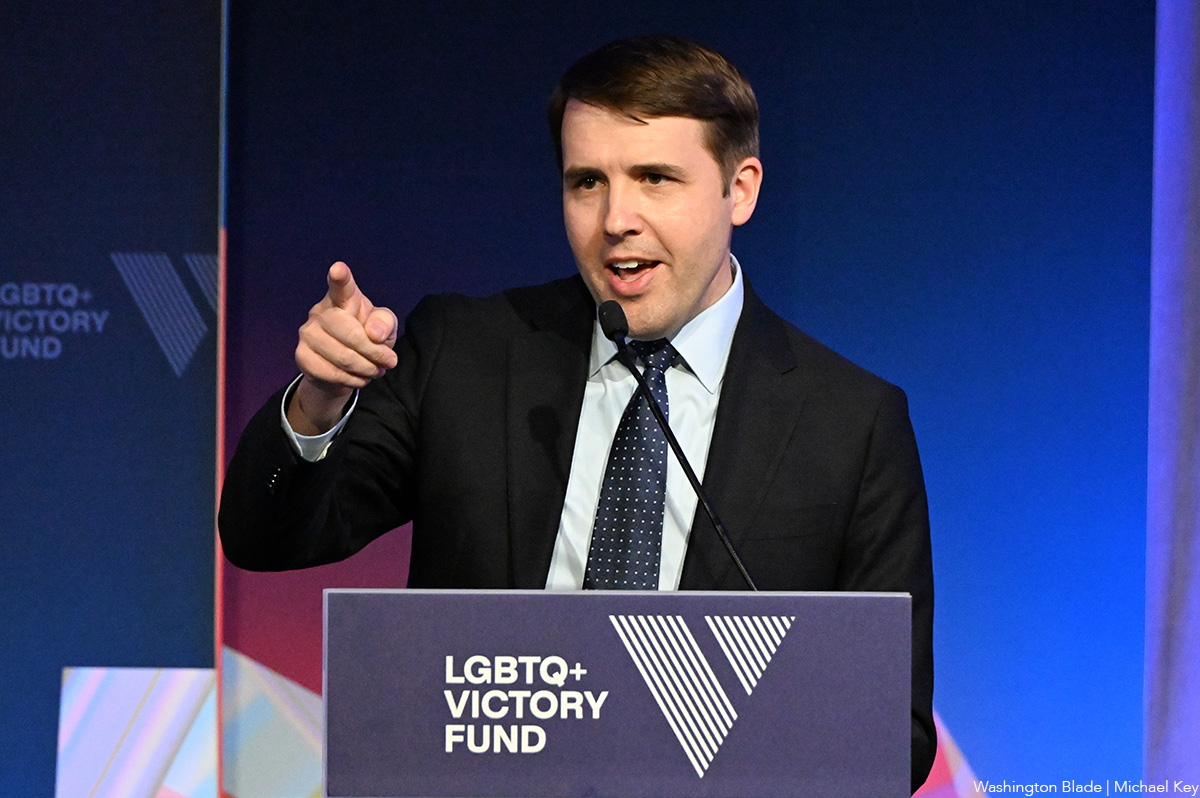
New Hampshire Congressman Chris Pappas on Tuesday won the Democratic primary in the race to succeed retiring U.S. Sen. Jeanne Shaheen (D-N.H.) in the U.S. Senate.
Pappas defeated Karishma Manzur, who was his primary challenger, by a 61.8-36.1 percent margin.
The gay congressman will face off against former U.S. Sen. John E. Sununu, who defeated former U.S. Sen. Scott Brown in the Republican primary.
“Tonight’s victory sends a clear message that voters are looking for leaders who will fight for their rights, their freedoms, and to be treated with dignity and respect,” said Human Rights Campaign President Kelley Robinson in a statement.
She campaigned for Pappas in Manchester, New Hampshire’s largest city, on Aug. 30.
“Chris Pappas has delivered results, stood up for equality, and showed up for the people he serves,” said Robinson in her statement. “HRC was proud to mobilize Equality Voters across New Hampshire to help power this win. We don’t have a second to waste between now and November. We look forward to continuing our work with Rep. Pappas as he drives toward victory in November so he can help return a pro-equality majority to the United States Senate.”
A poll the University of New Hampshire Survey Center released on Aug. 26 showed Sununu ahead of Pappas by a 45-43 percent margin if they were to face off in the general election. The margin of error is +/-2.1 percent.
Pappas would become the first openly gay man elected to the U.S. Senate if he were to win in November.
Congress
Everton Blair makes history as first openly gay congressman from Ga.
Former Gwinnett County Board of Education member to serve remainder of David Scott’s term
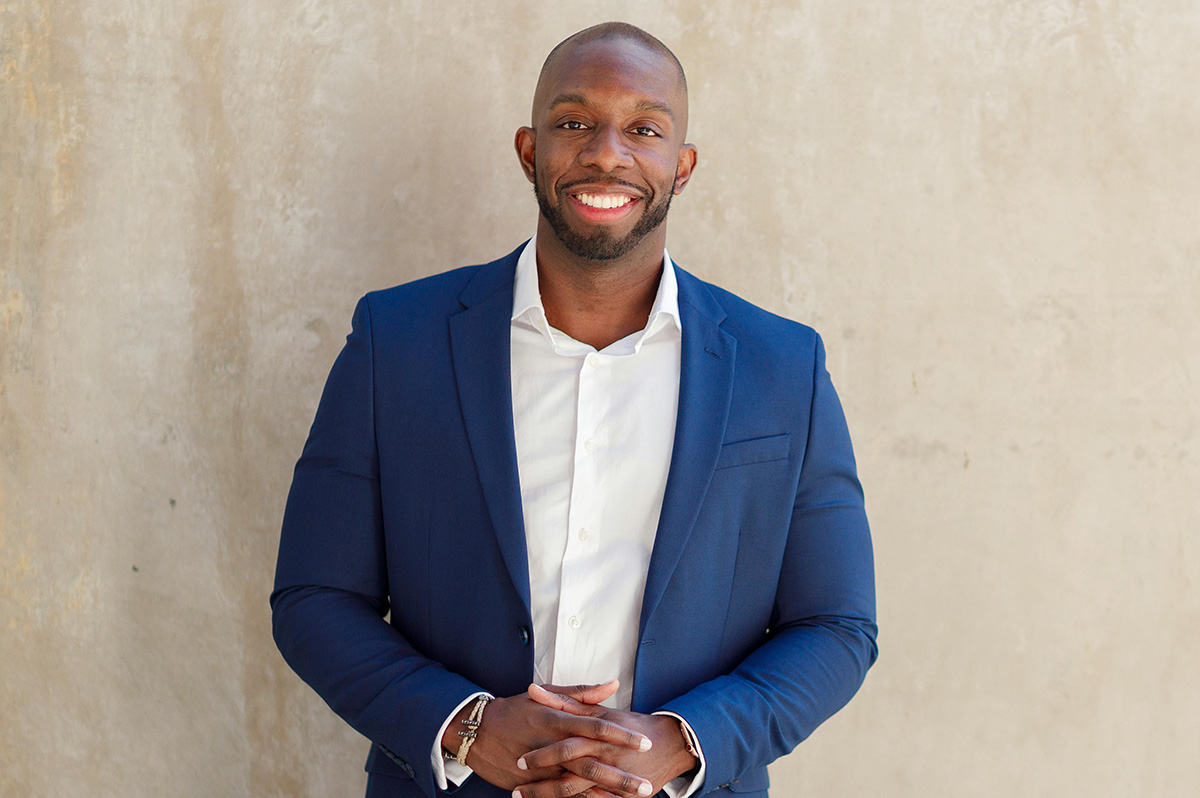
Georgia made history last week when Everton Blair, Jr., was sworn into the U.S. House of Representatives, becoming the state’s first openly LGBTQ+ member of Congress and the latest LGBTQ+ addition to the chamber.
Blair, who represents Georgia’s 13th Congressional District, was sworn in on Sept. 1 after winning a special election to fill the vacancy left by the late-Congressman David Scott. Blair defeated Marcye Scott, the late congressman’s daughter, in the Aug. 25 runoff, winning 53.2 percent of the vote to Scott’s 46.8 percent.
He will serve the remainder of Scott’s term through Jan. 3, 2027. Blair is not running in the November general election for a full term.
Blair brings a progressive platform to Congress.
The 34 year-old supports Medicare for All, a Green New Deal, raising the minimum wage, and universal gun background checks. His campaign platform also included positions on LGBTQ+ rights, reproductive freedom, workers’ rights, climate, and gun violence.
Since joining the House, Blair has joined the Congressional Black Caucus and Congressional Progressive Caucus. He is also a co-chair of the Congressional Equality Caucus.
Before joining the House, Blair served on the Gwinnett County Board of Education, where he became the first Black member and youngest-ever member elected to the board, as well as its first openly gay member. He was later unanimously selected as chair.
Blair also served as a fellow in President Barack Obama’s White House Initiative on Educational Excellence that focused on improving academic outcomes and expanding opportunities for minority students.
The son of Jamaican immigrants, Blair was born and raised in Georgia’s 13th Congressional District. He earned a bachelor’s degree in applied mathematics from Harvard University, a master’s degree in policy, organization, and leadership from Stanford University, and a Doctor of Education Leadership degree from Harvard.
Blair’s campaign received endorsements from a number of organizations, including the LGBTQ+ Victory Fund and progressive Democratic groups such as Future Democrats.
The Equality PAC, a political action committee dedicated to electing openly LGBTQ+ candidates to office, celebrated Blair’s victory and provided a statement to the Los Angeles Blade about the historic nature of his election.
“This is a historic election for Georgia, the South, and our entire country,” Equality PAC said in an email. “Everton Blair brings a strong record of public service and a deep commitment to making government work for working families.”
The group said Blair would “fight to lower costs, expand access to quality health care, create economic opportunity, and ensure every community has a voice in Washington.”
“At the same time, Everton understands the importance of standing up for equality and defending the rights and freedoms of LGBTQ Americans and every community facing discrimination,” Equality PAC said. “His historic election as Georgia’s first openly LGBTQ Member of Congress and the first openly LGBTQ man elected from the South is a powerful reminder of how far our country has come — and how much work remains.”
Equality PAC said it was “proud to welcome Everton to the House” and looked forward to working with him.
Arizona
Shooting outside gay bar in Ariz. leaves three dead
Tucson police investigating double murder-suicide has hate crime
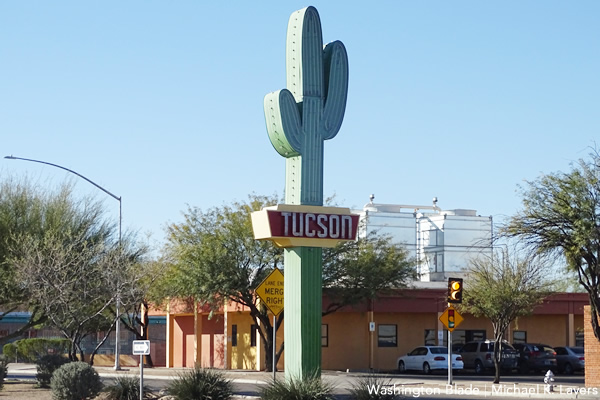
Three people were fatally shot outside a gay bar in Tucson, Ariz., early Monday morning, about a mile from the city’s nightlife district.
Police have said the shooting, which took place in the parking lot of Venture-N bar at 1239 N. 6th Ave., was likely a hate crime and a double murder-suicide following a verbal altercation.
The suspect, Ousman Ceesay, allegedly shot Vincent Anthony Siqueiros and Cameron Davis Capara while they were outside the club around 12:30 a.m. Monday.
Reports show Capara and Siqueiros were pronounced dead at the scene. Ceesay died after being taken to a local hospital with gunshot wounds.
Police have also said that Ceesay was carrying a list of LGBTQ+ businesses at the time of the shooting.
Arizona Public Media has said police are investigating the case as a hate crime because the suspect was carrying a note containing the names of multiple LGBTQ+-associated businesses.
“I am deeply saddened that another senseless loss of life has happened in our community,” Tucson Police Chief Monica Prieto said in a statement. “Bias-based crimes are especially heinous and have no place in our community.”
According to Prieto, there is no imminent threat to the community, and the Tucson Police Department is working to provide extra protection to various LGBTQ+ businesses across town.
Congresswoman Adelita Grijalva, who represents the area, issued a statement condemning the act of violence, which appears to have been at least in part motivated by homophobia.
“I am disgusted and deeply saddened to learn of a targeted act of hate and the cold-blooded murder of two members of our LGBTQIA+ community, Vincent Siqueiros and Cameron Capara, at the Venture-N bar in Tucson last night. This horrific attack is a painful reminder that even in welcoming communities like Tucson, hate and violence against the LGBTQIA+ community still exist.”
“When that hate is combined with easy access to firearms, the consequences can be deadly. I am sick and tired of Congress refusing to lift a finger to protect our communities while, every day, dozens of people are shot and killed across the country. It does not have to be this way. The House of Representatives is returning to session this week, and our first action should be passing common-sense gun safety reforms that we know can save lives.”
Other federal lawmakers also condemned the shooting.
The Congressional Equality Caucus, which is made up of federal legislators advancing LGBTQ interests, issued a statement after news broke.
“Our hearts are with the friends and loved ones of the victims of this devastating attack outside a Tucson gay bar and with the Tucson LGBTQI+ community,” it said on X. “No one should fear violence because of who they are — and we’re going to continue fighting to build a world where no one does.”
The Human Rights Campaign, the largest LGBTQ+ organization in the country, released a statement following the shooting.
“We are heartbroken by the loss of Vincent Anthony Siqueiros and Cameron Davis Capara and our hearts are with their families, loved ones, and the entire Tucson LGBTQ+ community. Once again, we are reminded that gun violence robs people of their lives, destroys families, and devastates communities.”
A candlelight vigil honoring the victims is planned for Sept. 2 at 6:30 p.m. at Catalina Park in North Tucson.
Congress
HRC president campaigns for Chris Pappas in NH
Gay congressman running to succeed retiring U.S. Sen. Jeanne Shaheen
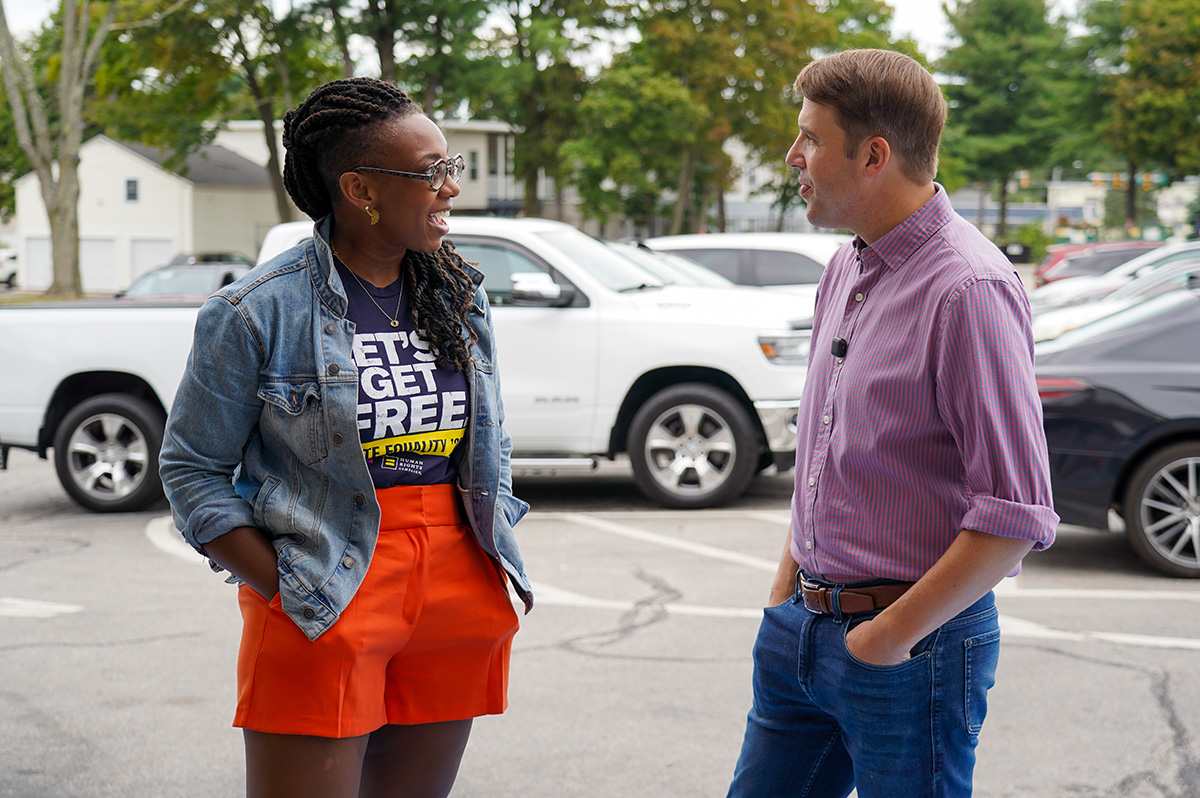
Human Rights Campaign President Kelley Robinson on Sunday campaigned for U.S. Rep. Chris Pappas (D-N.H.) in New Hampshire.
Robinson traveled to Manchester, the state’s largest city, nine days before the Sept. 8 primary that will determine who will vie for retiring U.S. Sen. Jeanne Shaheen (D-N.H.)’s seat.
We’re hitting the pavement across New Hampshire to fight for a freer, fairer future for everyone.
Glad to have Human Rights Campaign President @KelleyJRobinson join us for a canvass launch in Manchester today. pic.twitter.com/XWCEaQxy4o
— Chris Pappas (@ChrisPappasNH) August 30, 2026
Former U.S. Sen. John E. Sununu, who represented New Hampshire in the U.S. Senate from 2003-2009, will face off against former U.S. Sen. Scott Brown, who represented Massachusetts in the U.S. Senate from 2010-2013, in the Republican primary.
Karishma Manzur is among the Democrats challenging Pappas.
A poll the University of New Hampshire Survey Center released on Aug. 26 shows Sununu is ahead of Brown. The same survey shows Pappas ahead of Manzur and his other Democratic challengers.
The UNH Survey Center poll shows Sununu ahead of Pappas by a 45-43 percent margin if they were to face off in the general election. The margin of error is +/-2.1 percent.
Pappas would become the first openly gay man elected to the U.S. Senate if he were to win in November.

Long-time DignityUSA executive director announces retirement

Actor Ben Ubiñas is a whole different ‘Creed’

‘Scorch Marks’: Brandon Shypkowski and Chris Salvatore play out post-apocalyptic ex drama in new horror film

From the desk of Equality California: the latest political news for CA and beyond as we head into the midterms

LA Blade was on the scene celebrating television’s biggest stars and luxury brands

Jeremy Moss looks to bring LGBTQ+ advocacy from Lansing to Capitol Hill

Step into the ‘Crush House’ with JJ Aussie and Josh Moore

Here’s your Palm Springs look at the weekend: Sep 18-20, 2026

Ross Alan gives permission for queer joy with new album, ‘Audible Serotonin’
LA Blade was on the scene celebrating television’s biggest stars and luxury brands
-
 Congress4 days ago
Jeremy Moss looks to bring LGBTQ+ advocacy from Lansing to Capitol Hill
-
 Television4 days ago
Step into the ‘Crush House’ with JJ Aussie and Josh Moore
-
 Palm Springs3 days ago
Here’s your Palm Springs look at the weekend: Sep 18-20, 2026
-
 Music & Concerts3 days ago
Ross Alan gives permission for queer joy with new album, ‘Audible Serotonin’
-
 EMMYS2 days ago
LA Blade was on the scene celebrating television’s biggest stars and luxury brands
-

 Commentary2 days ago
Gratitude is sexy: When the gays are paying your straight bills, consider paying them some respect
-

 Events3 days ago
When pageantry meets purpose: Patrick Rush brings us Best in Drag Show
-
 a&e features2 days ago
Are you ready to ‘Rock Out’ with Dustin Lance Black?
-
 Politics1 day ago
From the desk of Equality California: the latest political news for CA and beyond as we head into the midterms
-
 Movies1 day ago
‘Scorch Marks’: Brandon Shypkowski and Chris Salvatore play out post-apocalyptic ex drama in new horror film