
Film
Where’s My Roy Cohn? or The Return of The Repressed
Donald Trump’s master teacher in the dark arts of deception gets a close up
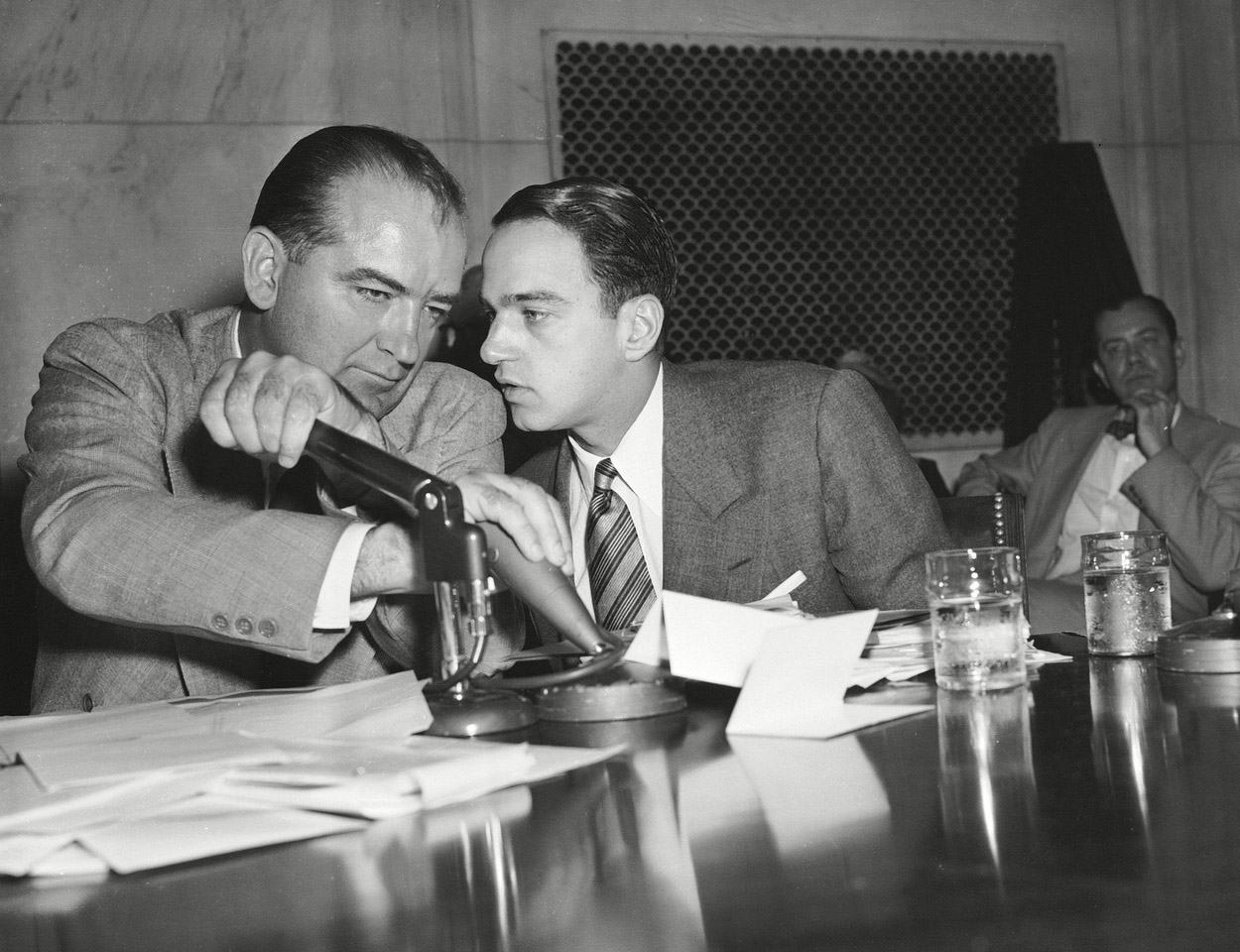
A still from Where’s My Roy Cohn? by Matt Tyrnauer, an official selection of U.S. Documentary Competition at the 2019 Sundance Film Festival. Courtesy of Sundance Institute | photo by Ap/REX/Shuttersock
All photos are copyrighted and may be used by press only for the purpose of news or editorial coverage of Sundance Institute programs. Photos must be accompanied by a credit to the photographer and/or ‘Courtesy of Sundance Institute.’ Unauthorized use, alteration, reproduction or sale of logos and/or photos is strictly prohibited
One of the greatest villains of the 20th Century, Roy Marcus Cohn (1927-1986) is fixed in popular memory thanks to Tony Kushner’s epic drama “Angels in Ameirca” which depicts the final days of the political operative, Mafia lawyer and all-purpose “fixer” for the rich and infamous as he died of AIDS. Actors as noteworthy as Al Pacineo and Nathan Lane have played Roy on stage and screen.
But as Matt Tynauer’s new documentary “Where’s My Ry Cohn?” reveals no one played Roy as well as Roy himself.
Assembled with great care from extant footage of Cohn and his cronies and new interview — an especially interesting one being with an ex-boyfriend of Cohn’s who found him fun,’ this is a startlingly in-depth study of a closeted gay man, who lived wild and freewhen the closet was the rule,
He had, however, no intention of extending the freedom he made for himself to others. In fact, quite the contrary.
Cohn worked long and hard at making things worse for other gays, most memorably with the help of his equally closeted front man Senator Joseph McCarthy.
Together they launched what has come to be known as the “Lavender Scare” — a reign of terror that stretched across the nation from Washington D. C. to Broadway, Hollywood and anywhere else the LGBT might find shelter. Being the mastermind of this jihad, Cohn is the model for self-hating gays who persist even in this post- “Stonewall’ and post-“Obergefell” era persist. And though Cohn, Tynauer shows how this self-loathing operates when it’s working at full throttle.
Tynauer whose films include “Valentino: The Last Emperor” and “Scotty and the Secret History of Hollywood” discovered Roy Cohn via the making of his last documentary “Studio 54.”
Cohn was the lawyer for that fabled “Celebrity” mosh-pit. He was there constantly to hang out with the swells and have sex with the waiters, busboys and high-end hustlers who were its featured attraction for the rich and closeted.
There was however little he could do for its tax-avoiding owners Steve Rubell and Ian Schrager, for by the time they came to grief Cohn’s fortunes had fallen so low he was being disbarred.
Cohn first made a name for himself as the U.S. Department of Justice prosecutor in the espionage trial of Julius and Ethel Rosenberg — American Communists who supposedly “Gave The Bomb to the Russians.” as the New York tabloid press would have it.
As Tynauer shows what Julius Rosenberg and his brother-in-law David Greenglass were dealing with were minor bits of information the Russians had. For cooperating with Cohn, Greenglass was given a stretch in prison.
He died in 2014.
One of the highlights of the film are heretofore unseen shots of demonstrators in the streets of New York protesting the Rosenberg execution and sobbing and falling apart on hearing it has taken place. Ethel Rosenberg simply typed the notes her husband gave her.
But Cohn was intent on not simply linking her to her husband and brother’s crime but going so far as to claim she was the mastermind. Cohn was obsessed with the notion of killing ma Jewish mother — and with Ethel Rosenberg he got his way.
Tynauer’s film shows Roy declaring on camera that he would have loved to have pulled the switch that executed Ethel himself. Outside of Adolf Eichmann’s trial, I daresay nothing this individually monstrous has been seen on screen before.
Without making too fine a point of it Tynauer suggests what may have been behind Roy’s rage at Ethel was his own mother. As the ilm shows Dora Marcus was widely referred to as the “ugliest woman in New York”
Her marriage to New York State Supreme Court Justice Robert E. Cohn was an “arrangement’ in which the wealthy Dora virtually”bought” him to become a “Sadie Sadie Married Lady” (as the song from “Funny Girl” put it) and have a child.
Roy was the apple of his mother’s eye. But he was a rotten apple to core thanks to no small degree from her efforts to “fix” his nose in a botched operation resulting in a large hideous scar across it. Cohn’s own attempts at augmenting his looks with plastic surgery were equally egregious. But power and “clout” can often trump beauty, and hide potential scandal.
Cohn made quite a spectacle of himself when he and his then-boyfriend, hotel chain heir G. David Schine (as handsome as Cohn was ugly) began their affair.
In 1952 Schine published a six-page anti-communist pamphlet called Definition of Communism,and had a copy placed in every room of his family’s chain of hotels. Brought to Cohn’s attention the pamphlet and its author became central to his life as they began a tour of U.S. Military bases in Europe to distribute it and hold forth on the dangers of “Communist Infiltration.”
This tour became so well-known that William Burroughs satirized it in “Naked Lunch” with Cohn and Schine portrayed as “Mr. Bradley and Mr. Martin.” Gore Vidal, who needless to say was onto the whole thing opined that in Washington “We used to sing ‘Come Cohn or Come Schine.’ ”
What happened after this wasn’t made into a musical — though Jerry Herman would do well to take a crack at it. For Cohn’s efforts to have the U.S.Military grant his boyfriend special treatment resulted in what became known as “The Army-McCarthy Hearings” — the first major liveTV spectacle.
Cohn had McCarthy “investigate” the U.S. military for “Communist subversive ,” but came a cropper in the most spectacular way. Trying to show Schne’s importance he offered as “evidence” a cropped photo of the private standing near some high ranking officers.
When the Army’s:lawyer Joseph Welch showed the photo this cropped one came from (in which Schine was a bystander of no importance) McCarthy hemmed, hawed and professed ignorance as to how this could have happened.
“Well who do you think did this,” Wech asked,” a pixie?” McCarthy then declared no knowledge of what a pixie might be. “Well it has been my impression that pixie is a close relative of a fairy,” said Welch — in the “diss” of all-time, nailing Cohn as McCarthy’s “pixie.” McCarthy’s reign was almost instantly over. Coh however continued.
As a Mafia lawyer he was responsible for overseeing the mob’s swankiest 50’s era club “The Latin Quarter” and its boss Loy Walters. Lou’s daughter was Barbara Walters. The telejournalist, now retired and reportedly in ill health, passed on speaking to Tynauer.
But for many years she was Roy Cohn’s “beard” and even, the film notes, harbored hope of one day of marrying him. That was not to be.
But in a last burst of notoriousness Cohn came to the aid of New York real estate shark named Donald Trump, helping him reach a “settlement” when the inveterate racist was charged with discrimination in refusing to rent his properties to African-Americans.
Cohn helped smooth the way for the man who is now President of the United States.
But Trump being Trump he dropped Roy Cohn when he learned of the latter’s AIDS diagnosis.
The film’s title comes from Trump the importance of always having a Roy Cohn like advisor in his life remains, and he may well have found one in Stephen Miller. Miller doesn’t figure in Tynauer’s film on Roy Cohn. But he’s a prime candidate for a Tynauer epic of his own.
Meanwhile, we have this film to offer enlightenment and a quasey sort of “entertainment.” For while Roy Cohn couldn’t make ugliness beautiful he did manage to make it unforgettable.


Film
‘AIDS DIVA’ screening honors Connie Norman’s legacy
The documentary screening at CASA 0101 honors the ACT UP icon, whose fight for transgender rights and AIDS activism remains relevant today

A free community screening of AIDS Diva: The Legend of Connie Norman will take place Thursday, June 4, at CASA 0101 in Boyle Heights, honoring the life and legacy of one of Los Angeles’ most powerful transgender AIDS activists.
The evening begins with a 7 p.m. reception and community space, followed by a 7:30 p.m. screening of the documentary with Spanish subtitles. At 8:30 p.m., filmmaker Dante Alencastre will join moderator ChiChi for a post-screening conversation about Norman’s life, activism, and continued relevance.
Connie Norman, often called the “AIDS Diva,” was a defining voice in ACT UP/LA and a fierce advocate for transgender people, people living with HIV/AIDS, and communities abandoned by political institutions during the height of the crisis. Through public access television, radio, protest, writing, and community organizing, she challenged silence with humor, fury, and an unmistakable sense of moral clarity. In fact, my own grandmother knew Connie Norman during her time in ACT UP.
Alencastre said what first drew him to Norman’s story was “the force of her voice and the urgency of her truth.”
“Connie Norman wasn’t just an activist,” Alencastre told the Blade, “She was fearless, funny, deeply compassionate, and uncompromising in the way she confronted stigma, hypocrisy, and silence during one of the most devastating periods of the AIDS crisis.”

For Alencastre, Norman’s story felt especially urgent because it sits at the intersection of multiple histories that have too often been pushed to the margins: transgender history, AIDS activism, and LGBTQ+ resistance in Los Angeles.
“She was often ahead of her time, articulating through her own personal experiences ideas around gender fluidity, solidarity, and structural inequity long before those conversations entered the mainstream,” Alencastre said.
The documentary, which won the Best Film Audience Award at the 23rd Thessaloniki International G.L.A.D. Film Festival and was an Official Selection at Outfest 2021, combines newly discovered archival footage with reflections from all kinds of individuals – from activists and scholars to community members who knew Norman or continue to be influenced by her work.
Alencastre described the archival process as both meaningful and challenging, defining it as “detective work,” with materials “scattered across personal collections, old tape archives, community organizations, and private hands.” Much of the footage had not been seen for decades.
“What made it extraordinary was that every discovery felt like Connie speaking directly back into the present,” Alencastre explained, “Finding footage of her on her cable show, speaking at protests, or delivering one of her fearless, funny, and deeply incisive commentaries was electrifying.”
That archival presence gives the film much of its pathos. Norman does not appear as an antiquated historical subject being remembered by others; she is seen as a living voice, speaking to our contemporary moment. Her speeches, interviews, and media appearances reveal a figure who understood that the AIDS crisis was a product of government negligence and stigmatization.
Alencastre said he wants audiences to walk away with the idea that Norman is not just an activist but a strategist.
“Connie understood that real change required coalition-building across communities that didn’t always naturally align,” he told the Blade. “She moved between worlds – ACT UP/LA, trans advocacy, queer spiritual communities, media spaces, and policy arenas – and she was constantly challenging people to think beyond narrow identity politics toward something more expansive and collective.”
That message feels especially urgent, as LGBTQ+ communities face renewed attacks across the country, including attacks on healthcare, drag performance, and overall visibility. Norman’s activism, Alencastre explains, speaks directly to the present because many of the struggles she confronted remain unfinished: “She was fighting against systems that treated certain lives as disposable.”
The screening will be held at CASA 0101, a community arts space in Boyle Heights founded to uplift local stories, artists, and cultural work. The venue’s intimate, mission-driven setting makes it a necessary home for an evening centered on queer history and resistance.
“CASA 0101 is absolutely the right place to feature this amazing film because it’s one of the few spaces in Boyle Heights that welcomes art, community, and activism,” ChiChi told the Blade, “AIDS DIVA is a story about standing up for what is right and fighting for marginalized people, something that is reflected by CASA 0101 and Boyle Heights.”
ChiChi said Norman’s legacy is especially urgent as transgender, gender-expansive, and intersex people continue to face political attacks and marginalization. “We are deserving of a dignified life, we are deserving of community, we are deserving of being seen,” ChiChi explains, “As attacks against our community and anti-trans legislation continue to rise, Connie’s legacy of honesty, community advocacy, and coalition-building is a guiding light for how we resist, organize, and fight back.”
Moderating the conversation after the film, ChiChi added, is an honor. But it also carries the weight of responsibility. “As the Co‑Chair of the Transgender Caucus for the Commission on HIV for Los Angeles County and a Commissioner for the City of Los Angeles Health Commission, I carry this work with grace, intention, and a deep understanding of what it means to hold space for our communities,” ChiChi said. “More than anything, I want to honor her by creating a space where people feel seen, held, and inspired to carry forward the work she began.”
For Alencastre, the most meaningful response to the film has come not from awards, but from audiences who stay after screenings to share stories and connect Norman’s activism to the present.
‘If there’s one takeaway audiences seem to leave with, it’s that Connie’s story reminds us that activism is not abstract. It is personal, messy, courageous, and deeply communal. Seeing people connect to that has been incredibly rewarding.”
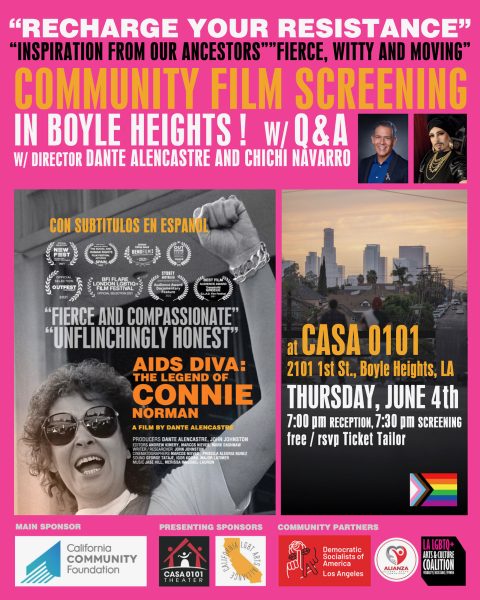
The event is free, with admission available through RSVP. Community partners may also table at the event, with limited spots available. The evening is supported by the California Community Foundation, California LGBT Arts Alliance, and CASA 0101.
More information about the film is available at aidsdivaconnie.com. RSVP at: https://www.tickettailor.com/events/californialgbtartsalliance/2218901
Film
Revolutionary lesbian film “Rafiki” secures victory in fight against censorship in Kenya
Wanuri Kahiu’s 2018 lesbian film “Rafiki” was banned in Kenya eight years ago. A recent ruling could change that.
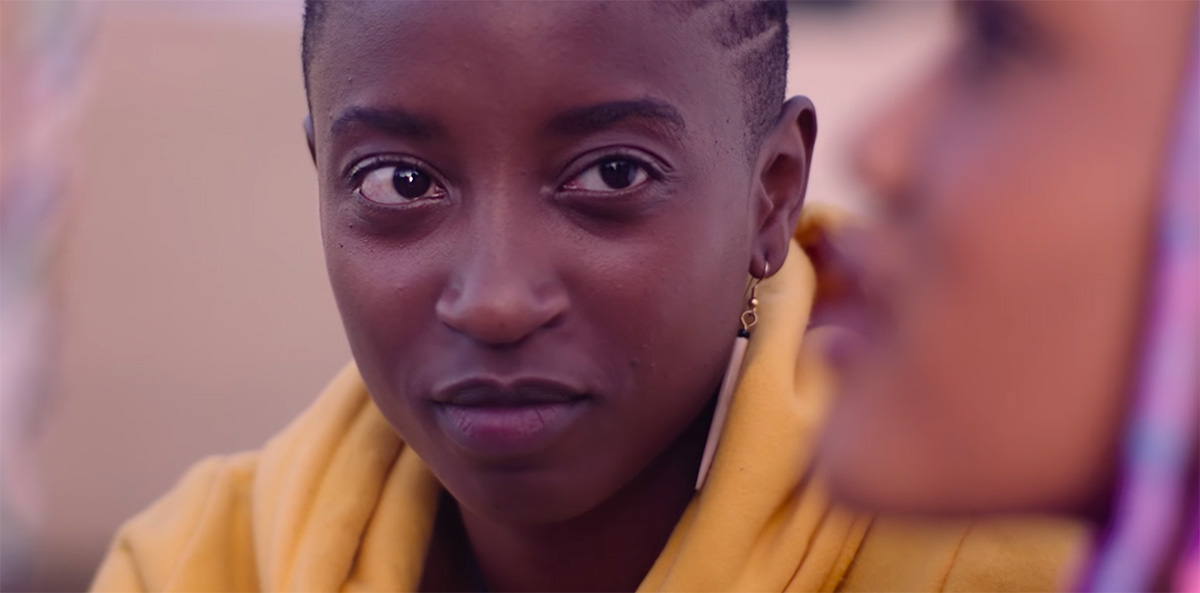
In the 2018 film Rafiki, protagonists Kena and Ziki share long looks that brim with yearning. Their desire for one another exists most palpably in these silent pauses, where the outside world and the violence that awaits them are inconsequential. For these few, still beats, nothing can hurt or stop them from loving each other.
Director Wanuri Kahiu’s film illustrates the quiet, joyous, queer love story between two characters torn apart by circumstance. Their fathers are political opponents in a local election, and their surroundings affirm, again and again, that being queer is wrong, immoral, and “demonic.” Set in Nairobi, Kenya, where queer sex and love are illegal, Rafiki asks: How does love blossom in soil bent on destroying it?
Just as the film’s antagonists surveil, shame, and forbid Kena and Ziki’s relationship from developing, external forces tried to stop Rafiki from being screened and distributed in Kenya.
Eight years ago, the Kenya Film Classification Board (KFCB) banned the film for its “overt promotion of lesbianism” after Kahiu refused to edit its ending. While Rafiki received acclaim at prestigious international events like the Cannes Film Festival, queer Kenyans could only access the film through what people outside the country were saying about it.
Kahiu then sued the Kenyan government, stating the film had to be screened in the country in order to be considered for that year’s Academy Awards ceremony. The ban was temporarily lifted for a week in September 2018, when large crowds packed screenings in Nairobi, celebrating the beautiful addition to queer Kenyan cinema.
Now, Rafiki has secured another victory. On January 23, Kenya’s Court of Appeal ruled that the provisions KFCB used to ban the film were unconstitutional and went against the country’s protections around freedom of expression. In a statement posted online, Kahiu acknowledged the “powerful” impact of this decision.
“8 years ago my film RAFIKI was banned in Kenya because it told a love story about 2 women,” Kahiu wrote. “The ruling is bigger than one film. It’s for filmmakers, artists, musicians, anyone who uses words, ideas or images. It’s for Kenyans who voted and fought for our 2010 Constitution. This is because OUR ideas are not crimes.”
The Court of Appeal’s decision means that Kahiu can appeal and seek a review of KFCB’s ban, which could allow the film to receive an age-appropriate classification and thus be screened in the country. This legal win is a step forward in resisting queer suppression and artistic censorship in Kenya, where directors like Kahiu are revitalizing the film space with diverse, vibrant stories.
Rafiki, or “friend” in Swahili, is a gorgeous portrait of how love revitalizes a person’s understanding of themself and the world around them. “I wish we could go somewhere we could be real,” Kena says to a dream-like illusion of Ziki: whose rainbow tresses, electric pink fingertips and unabashed smile offered a comfort and happiness that transmute the dreariness of living in the shadow of what everyone wants them to be.
Through the experience of loving Ziki, and being loved in return, Kena begins to grasp how to feel “real” against the very concrete constraints of life. For many queer people, seeking romance is a journey often relegated to the sidelines for safety, as one teeters shame and acceptability, obligation and freedom, love and duty. Rafiki offers a sapling of hope in the face of this realistic dilemma, as it unfurls the innocence and healing joy of queer love.
Kristie Song is a California Local News Fellow placed with the Los Angeles Blade. The California Local News Fellowship is a state-funded initiative to support and strengthen local news reporting. Learn more about it at fellowships.journalism.berkeley.edu/cafellows.
Film
‘All The Walls Came Down’ gives a voice for the Altadena fire survivors
This documentary shows the struggles this community faced during this tragedy — and the hardships they’re still experiencing more than a year later.
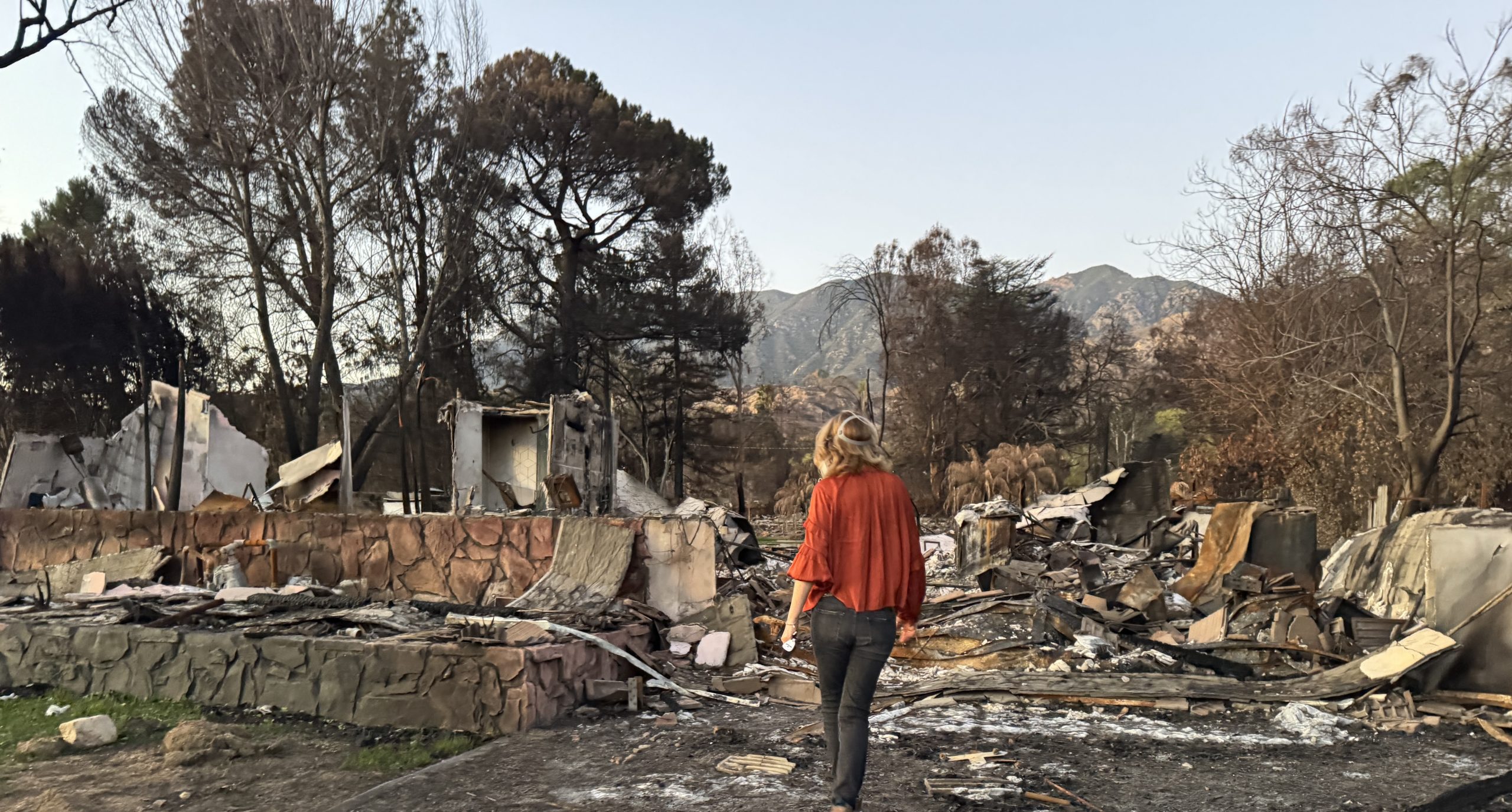
Few moments in California history are as horrific as the fires that ravaged LA County in 2025. Angelinos watched as huge swaths of our communities were burned, with the skies growing dark with ash and the news offering stories of thousands losing their homes (and, for some, their lives). It was a devastating moment that is still felt more than a year later, with the mainstream media then and now documenting its massive impact — yet almost always ignoring the community that arguably suffered from these fires the most.
In Ondi Timoner’s documentary All The Walls Came Down, viewers learn about the uniquely horrific experience of Altadena residents during these fires. Through the words of the short’s star, local activist Heavenly Hughes, they hear about the indescribable loss these fires inflicted on this community and how mishandled response systems have left many of them still suffering today. Hughes and Timoner spoke with the LA Blade about this documentary and all that it represents for the people of Altadena, hoping that it will not only finally tell these individuals’ stories, but bring them the justice they’re still hoping for so many months later.
“People have never even heard of Altadena,” said Timoner, an award-winning documentarian who previously lived in the area with her wife and son, as she discussed how most mainstream news only discussed the Palisades and Malibu when covering these fires. “The mainstream media is missing the opportunity to save the fabric of [an area] with the second highest rate of Black home ownership in the country — and [instead], they’re allowing predators to come in!” Of course, she doesn’t disregard the pain of the people from these other areas. But it’s undeniable that Altadena was left behind in the conversation about these fires’ impact and how survivors can be supported. This was why the filmmaker decided to make All the Walls Came Down, a free-to-watch documentary-short that sees her and Hughes document the widespread grief that this natural disaster inflicted on this small community. From walking through the charred remains of Timoner’s own home to interviewing people who barely escaped with their lives, the project offers a humanistic side of this tragedy that too many news stations have failed to capture.
A longtime community organizer, Hughes and her advocacy organization, My Tribe Rise, work daily connecting Altadena survivors with the life-saving resources they need. She described the history of this community, detailing how it grew over decades into a haven for so many Black and Brown Angelinos. “The Black community in Altadena was established due to redlining, [a process] where Black people are put in areas that don’t get much support. We built Altadena into a diamond, into this beautiful place.”
It’s an inspiring story tracing back to the early days of this city, making it all the more horrific to hear as the documentary details just how much it was scorched by the fires — a massive burning that many from the area believe could have, at least in part, been prevented.
“They already wanted us out of Altadena. So when the fire happened, it felt like we were being forced out — like this was a place [people] wanted anyway, so they weren’t trying to protect us and preserve the area like they should’ve been.” In the documentary, Hughes backs up these suspicions with harrowing facts; documentation reveals that after the LA fire departments were informed that Altadena had been burning for several days with no help, no fire trucks were directed towards them, with all available resources being granted to Malibu and Palisades. It’s a lack of institutional support that has only continued in the aftermath, and when asked how so many people managed to survive with this aid, Hughes emphasized, “It was us that saved us. It was community members calling one another…it was community members going house to house, literally dragging people out of their homes. It was us as a community.”
It’s this sense of community that grants a shocking amount of joyful scenes in the documentary. Moments where neighbors come together on camera, bolstering one another as they mourn their homes and fighting to ensure the most vulnerable among them have the services they need. It’s awe-inspiring to watch these individuals come together, but it’s also a reminder of the massive struggles they all still face in the fight to reclaim their lives.
“22,000 people were displaced in Altadena,” said Hughes. “And the records say that about 61% of these survivors are going to be unhoused in the next month or two.” She goes on to explain not only the massive price gouging these survivors have faced on housing in the past year, but how insurances have been thoroughly exhausted (when companies aren’t dropping these folks altogether), and other leasing subsidies have stopped offering aid. Throughout the documentary, viewers are shown the ugly realities of this lack of support, with countless people being forced to either squish together in insufficient housing or undersell the land their homes once stood upon to predatory buyers.
Along with being informative, All The Walls Came Down makes audiences feel something they may not expect: motivated. Because, yes, the documentary shows the many ways Altadeneans have suffered from this immense tragedy. But it also highlights how they continue to fight, ensuring that these fires don’t steal anything else away from a group who’ve already lost so much. Along with advising people to watch the short to learn more, when asked how people can help today, Hughes said, “Do community building. Sign our petition to have Southern California Edison pay $200,00 now to homeowners and survivors of these fires so they won’t have to sell their homes. Because, right now, the predators are out, trying to buy up land…and our community should not and will not be sold to the highest bidder.” This documentary shines a light on something that so many individuals — especially those who witnessed it firsthand in Los Angeles — may believe they already know everything about. Yet through All The Wall Came Down, Timoner and Hughes reveal an aspect of this moment in history that is not only ignored, but is still actively happening today. It’s an integral piece of this reality that far more people need to be aware of. And, with the work Hughes is doing every day and Timoner’s mission to make people aware of what’s going on, it may be just what the community of Altadena needs to get the justice they finally deserve.
Arts & Entertainment
Lady Tacos brings famous tacos de canasta to Hola Mexico Film Festival
“¡Tacos, los tacos de canasta, taaacooos!”
This echoed at the screening of “Transmexico” on Thursday at the Hola Mexico Film Festival.
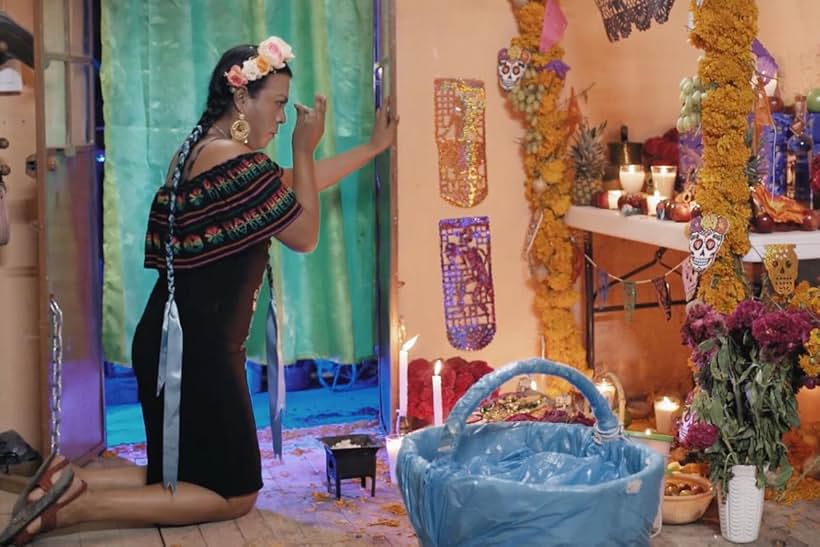
It’s also the sound many people in Mexico City hear and recognize as Lady Marven, better known as Lady Tacos de Canasta.
She is one of three trans women featured in the documentary “Transmexico,” whose story brings joyous laughter and tears to the audience at HMFF.
Earlier this year, the film won the Audience Choice Award at the Santa Barbara Film Festival.
The documentary features the stories of three trans women throughout Mexico. It explores their experiences with transition, social acceptance and access to health care within a culture and government that upholds impunity for crimes against women and gender-nonconforming people.
Director Claudia Sanchez approaches the themes of social stigma, discrimination and death with care and compassion as she frames the narrative around the true and lived experiences of the documentary’s subjects.
“I was a witness of the abuse and bullying that trans women suffer through the first trans woman I ever met when I was around 5 or 6 years old,” Sanchez told the audience at the Q&A. “I decided to make a documentary that would highlight the beauty of the trans [femme] community because I didn’t think it was fair that the entire community is usually labeled negatively.”
“It’s important that we can do this and show people that we are here and we are present, and that there are other titles and labels – like lawyer, mother, queen – that represent us,” Lady Tacos said in Spanish. “Today, we want to claim titles and labels that impress the world and have impact on the world and that show what we are truly made of, and what we are capable of.”
Lady Tacos made a red carpet appearance at HMFF, joining Sanchez and others on a panel for a Q&A following the screening.
She spoke about how proud she felt experiencing this journey and seeing herself on screen sharing her story.
Lady Tacos – who identifies as muxe, a third gender in Mexican culture – went viral on social media after she was recorded being harassed and misgendered by the police force in Mexico. They took her basket and repeatedly called her “sir” and “mister” as they forced her to stop selling tacos on the street. She angrily yelled back and made it known that she clearly doesn’t identify as a male, motioning to her dress and trenzas, or braids.
Since then, she has become a well-known and respected internet celebrity to the people of Mexico City and has been able to open her own brick-and-mortar restaurant with the support of her family and many members of the LGBTQ+ community in CDMX.
The film also features trans activist Kenya Cuevas Fuentes. Fuentes shared her story of being a former sex worker who started at age 9. By 10 years old, she had been incarcerated, and by her teen years, she contracted HIV.
As an adult, Fuentes witnessed the murder of her good friend, Paola Buenrostro. This experience shaped Fuentes and turned her to activism because she knew Buenrostro would never get the justice she deserved and her killer would continue to walk free.
In 2016, transfemicide was officially recognized as a crime in Mexico City following Buenrostro’s death and activism by Fuentes.
“TransMexico” highlights the accomplishments and strides for justice that Fuentes has brought to Buenrostro’s case.
Felicia Garza’s story is also featured in the documentary, showing a more hopeful side of the transition journey.
She shares her struggle with not only coming to terms with her identity – and being willing to lose everything in the process – but also how her story offers insight on how family members struggle and learn to embrace their family members’ new identity.
“You have to be willing to lose everything, and if you’re not prepared for that, don’t do it,” Garza said in the documentary.
Following the Q&A, guests lined up outside the theater for complimentary tacos de canasta.
The film festival screened the documentary on Thursday night at Regal Theatres at L.A. Live and will continue making rounds at upcoming film festivals.
Film
‘Queer Diaspora,’ a new film series at the Philosophical Research Society
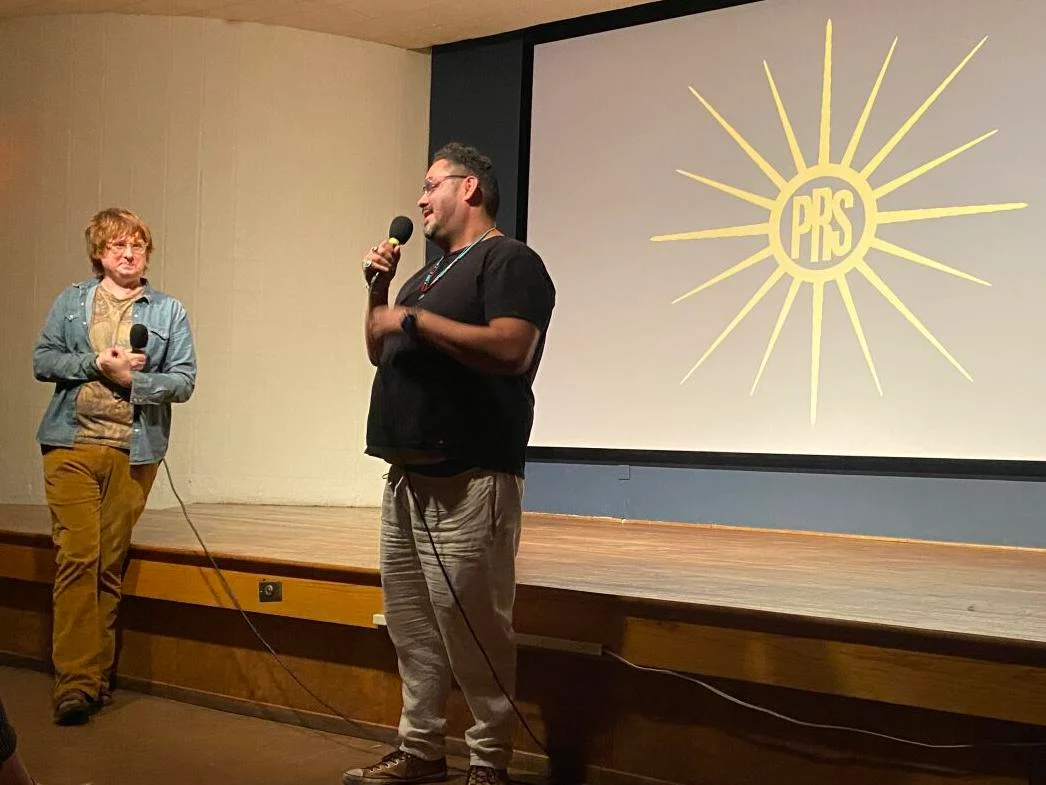
On August 14, the Philosophical Research Society (PRS) hosted a screening of 1996’s “The Celluloid Closet” directed by Rob Epstein and Jefferey Friedman. The second part of their tri-monthly event was held in Los Feliz, created and hosted by queer Latino director Gregorio Davila, which intends to show audiences the rich history, culture and artistry of the LGBTQ+ community through screenings, live performances and exhibitions.
Based on the 1981 book by Vito Russo, the groundbreaking documentary made waves by gathering footage from over a hundred films depicting the history of roles gay men and lesbians have had over time in Hollywood.
Tom Hanks, Whoopi Goldberg and Harvey Fierstein are just some actors, writers and commentators who treat audiences to funny and insightful stories in the documentary. Along with highlighting the issues of how cinema viewed sexuality, the film spans from the cruel stereotypes and how the public demonized the queer community during the AIDS outbreak to when filmmakers finally became more accepting of the community in recent years.
Before the screening began, Davila took to the front of the auditorium and asked the audience if anyone had not seen the documentary — the majority raising their hands. Davila revealed to the audience that he also shared a similar experience when he first heard about the film during its initial release in the late ‘90s.
Having just moved up to Seattle from California, Davila found out about the film during a conversation with a guy he met at a park. The next day, he went to the Broadway Cinema, a local theater, and was blown away about the amount of queer history featured, so much that he decided to watch the film two more times that same week.
“I had no idea about any of this, and it made me more comfortable to deal with coming out as a gay person, and then as a queer Latino” said Davila.
This film is what eventually peaked Davila’s interest to start making documentaries himself, his first being called “Bent Fest 2001,” which captures a five-day music festival in Seattle that featured an all queer band line-up such as Gossip, The Butchies, Traci + The Plastics and The Chromatics.
His first feature-length documentary “L.A.: A Queer History” captured the rich history of the LGBTQ+ community in Los Angeles, leading to multiple film festival awards. Davila’s latest feature-length documentary “UNIDAD: Gay & Lesbian Latinos Unidos” tells the story about the first queer Latino organization in the country that formed in Los Angeles in 1981.
Both feature-length documentaries can be found streaming on PBS.
CALÓ News spoke to Davila about how this series came to be and about his documentary work.
Davila recalled PRS reached out last year to ask for permission to screen one of his films, this led to other discussions about doing more screenings of Davila’s other works and other LGBTQ+ content.
He then pitched to PRS about doing an ongoing LGBTQ+ series that would occur every two to three months, “My idea was to not only screen films, but maybe have performances, maybe gay queer comics, you know, anything that’s sort of, encompasses what the queer diaspora is,” said Davila.
Part of PRS’s initiative was bringing on Davila for this on-going series as part of an effort in having queer content on their calendar year-round. His work highlighting Los Angeles’s queer history was something important to PRS. This falls in line with Manly Palmer Hall’s ideals of knowledge that should not be gatekept. He founded PRS in 1934.
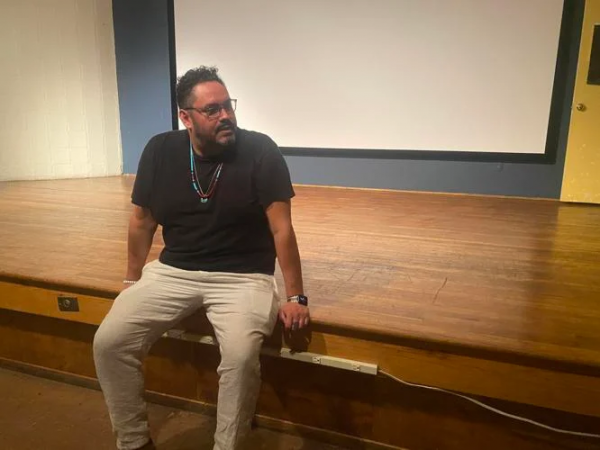

“There’s a certain tokenism thing where you’re just like, ‘Oh, just program something in Pride and then let’s move on.’ And we obviously don’t want that. (PRS) tries to be very conscious of having queer content on our calendar,” said Alex McDonald, a programmer at PRS.
Their kick-off event took place back in May with a screening of Jenny Livingston’s “PARIS IS BURNING,” a documentary based on New York City’s African American and Latinx Harlem drag ball scene during the 1980s. The series also hosted an after-party in the PRS courtyard, along with vendors from Queer Mercado, the first permanent Queer family marketplace in East Los Angeles.
Outside of this series, McDonald told CALÓ News that PRS is trying to build a community and stressed the importance of creating a home that screens queer content regularly, with the goal of having a safe space for audiences to be exposed to these films that they might not otherwise regularly.
Coming up next in the“Queer Diaspora” series will be a screening “Scream, Queen! My Nightmare on Elm Street” based on actor Mark Patton’s experience of starring in “A Nightmare on Elm Street 2: Freddy’s Revenge” while being a closeted gay man. The two-day event takes place in October with more details to come, according to McDonald.
To get more information about future events, audiences can go to the official PRS website.
Arts & Entertainment
Netflix’s ‘Outstanding’ Documentary Reveals Queer Comedy Icons’ Impact on LGBTQ+ Rights
How Queer Comics Broke Barriers & Sparked a Comedy Revolution
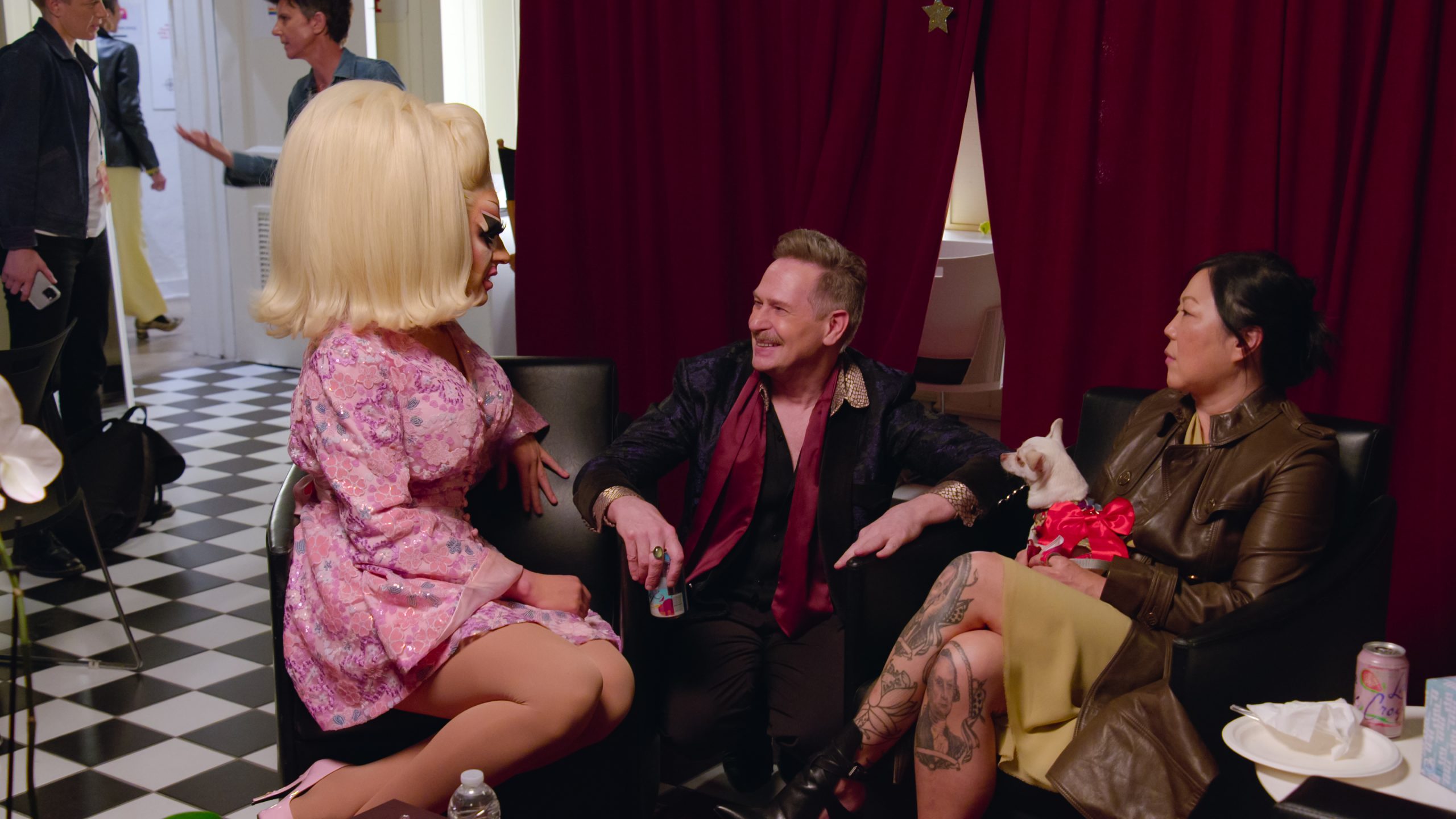
A Landmark in LGBTQ+ Entertainment
To say that the world of stand-up comedy has a long history of homophobia would be putting it mildly. Netflix’s new documentary “Outstanding: A Comedy Revolution” takes viewers on a journey through this complex history, highlighting both progress and ongoing challenges.
From Taboo to Triumph
Any queer person who has lived long enough to remember when Sandra Bernhard openly flirted with Madonna on “Late Night With David Letterman” — a deliciously transgressive pop culture moment remembered fondly in “Outstanding” — can also certainly recall the horrific anti-queer bigotry spouted by comics during the same era, just to get a laugh.
Filmmaker Page Hurwitz captures these moments, offering younger viewers a stark look at the past and a celebration of queer progress in entertainment. The film, shot over two years ago at “Stand Out,” a landmark performance at LA’s Greek Theatre, is now streaming on Netflix.
A Star-Studded Celebration
“Outstanding” features an impressive lineup of LGBTQ+ comedy icons, including Lily Tomlin, Sandra Bernhard, Wanda Sykes, Eddie Izzard, Rosie O’Donnell, Margaret Cho, Fortune Feimster, Todd Glass, Hannah Gadsby, Scott Thompson, Judy Gold, Bob The Drag Queen, and Joel Kim Booster. These performers have been instrumental in forging a new comedy landscape where queer comics can authentically share their experiences.
While the film celebrates progress, it also acknowledges ongoing challenges, calling out figures like Dave Chappelle for perpetuating harmful attitudes. However, the focus remains on the empowerment of queer voices in comedy.
More Than Just Laughs: A Cultural Shift
“Outstanding” is not merely a record of performances. It’s a sweeping look at the history of queer repression in American entertainment culture and the impact of LGBTQ+ comedians in changing societal attitudes. The documentary gives members of the queer community a chance to feel seen and represented.
Hurwitz builds her chronicle by letting the comics tell their own stories. Extensive interviews feature stars, commentators, writers, and scholars recalling their experiences growing up queer and seeing how LGBTQ+ people were portrayed in mainstream culture. These narratives are supplemented with clips from television and film, news footage, and performance excerpts that provide context for the rise of queer-centric comedy.
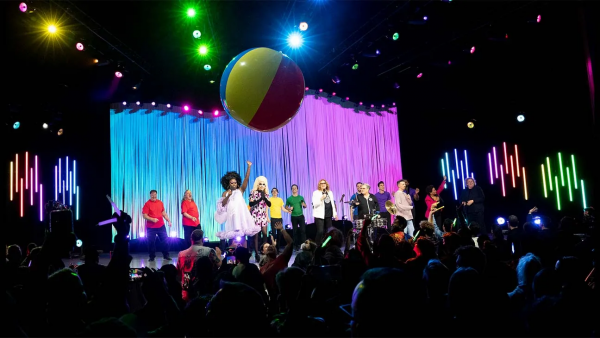
‘Outstanding: A Comedy Revolution’ TRIBECA FILM FESTIVAL
From Coded Characters to Out and Proud
The film traces the evolution of LGBTQ+ representation in comedy:
- Pre-Stonewall era: Coded characters like Paul Lynde, Charles Nelson Reilly, and Rip Taylor
- 1970s: Comedians like Lily Tomlin, Robin Tyler, and Pat Harrison pushing boundaries
- AIDS era: Activist comedians like Sandra Bernhard, Scott Thompson, and Margaret Cho using humor to combat backlash
- Modern day: A diverse generation including Eddie Izzard, Wanda Sykes, Hannah Gadsby, Bob the Drag Queen, and Joel Kim Booster
Spotlight on Unsung Heroes
“Outstanding” elevates lesser-known trailblazers, particularly Robin Tyler. After becoming the first queer comic to come out publicly on national television in 1978, Tyler faced career setbacks but became a pivotal figure in LGBTQ+ rights activism.
Tyler organized and produced the first three national marches on Washington for LGBTQ+ rights, including the 1987 “mock wedding” of hundreds of queer couples — the largest act of civil disobedience by queer protesters in U.S. history. Her legacy as a queer activist warrior was firmly cemented when, alongside partner Diane Olsen, she filed the first lawsuit against California for the right to be married, leading to a seven-year legal battle that helped pave the way for nationwide marriage equality.
The Power of Visibility
Speaking to the Los Angeles Blade, Tyler reflected on her journey: “The best thing that happened to us is that we didn’t get picked up, because then we could go and be free. It takes your life away, having to live a lie. We gained our freedom and lost nothing.”
This sentiment encapsulates the documentary’s central message: without being visible, we are powerless — which is why the forces against us are so fixated on erasing us from view.
A Celebration of Community and Progress
“Outstanding” not only makes us laugh but also showcases the camaraderie among these comedic revolutionaries. United by their refusal to stay “inside the lines” drawn by a bullying profession or an intolerant culture, these performers have achieved a shared victory that extends beyond individual success to the entire queer community.
The palpable sense of camaraderie among these comedic revolutionaries — for, true to its title, Hurwitz’s documentary makes it clear that they were and are exactly that — helps to underscore the feeling that their biggest victory is a shared one, which eclipses their individual success and extends to the entire queer community.
Why “Outstanding” Matters
This Netflix documentary is more than just entertainment; it’s a vital piece of LGBTQ+ history. By illuminating the inside forces of queer comedy across the years, it offers both a celebration of progress and a reminder of the ongoing fight for equality.
A Must-Watch for Pride and Beyond
“Outstanding: A Comedy Revolution” is essential viewing for Pride Month and anyone interested in the intersection of comedy, LGBTQ+ rights, and cultural change.
It’s a testament to the power of laughter in driving social progress and a victory lap for the entire queer community. It feels like our victory lap, too.
Film
Los Angeles Times Short Docs: “Stud Country”
The Los Angeles Times Short Docs program celebrates filmmaking with a West Coast perspective presenting undiscovered stories
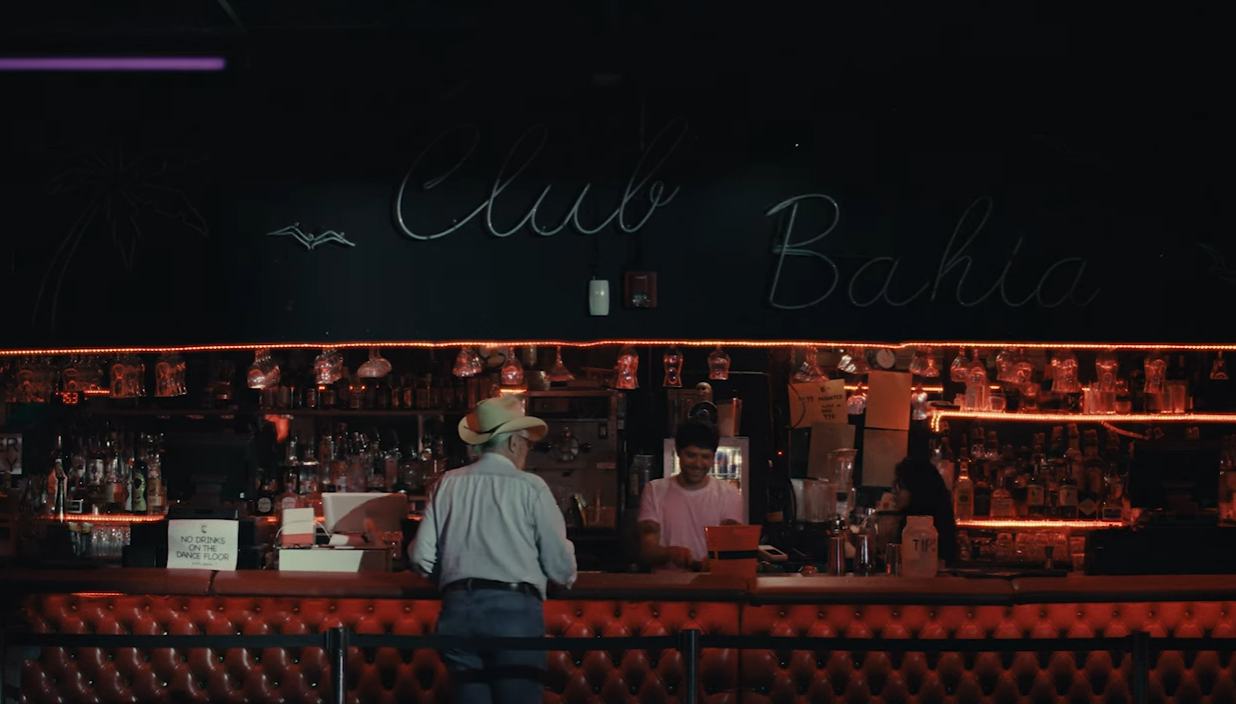
(Los Angeles Times) | LOS ANGELES – The Los Angeles Times released “Stud Country,” a short documentary about a Los Angeles-based queer country western line dancing event that was created to preserve the city’s little known 50+ year queer line dancing tradition. Despite its success and fiercely committed community, the event is set to lose its venue due to gentrification.
Directed by Lina Abascal and Alexandra Kern, the film is part of the L.A. Times Short Docs program.
Short Docs celebrates filmmaking with a West Coast perspective. We seek bold voices who break with convention and present undiscovered stories that challenge, move and inspire audiences.
Watch more Short Docs here: (Link)
WATCH:
Film
Oscar nominations: the good, the bad, and the predictable
This year’s Oscar ballot is more notable for its snubs than for its inclusions, and that doesn’t just apply to the LGBTQ+ community
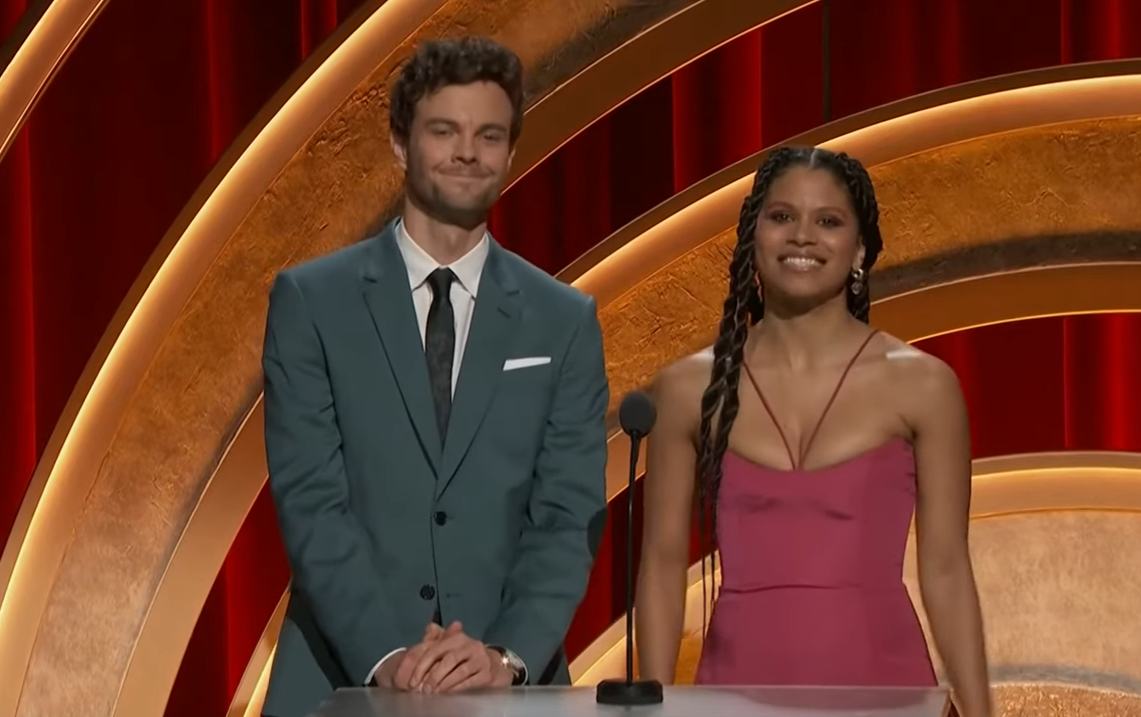
BEVERLY HILLS, Calif. – 2023 was a very queer year at the movies, but you might not be able to tell that from looking at the nominations for the 96th Annual Academy Awards (aka the Oscars), which were announced early on Tuesday morning at the Motion Picture Academy’s Samuel Goldwyn Theater in Beverly Hills.
It’s true there were a few significant nods included for queer actors and/or actors in queer roles, as well as for films which included queer characters or subject matter and/or the creatives behind them, and we don’t want to seem unappreciative of that progress, even if we suspect it might be due to the Academy’s new guideline that a film must meet at least two out of four standards of representation and inclusion to qualify for nomination, implemented this year for the first time; even so, it’s hard not to feel a bit like an afterthought when so many queer movies, performers and creators that stood out among the year’s crop of releases – many of which scored recognition from multiple other awards bodies – have been left out of the lineup.
Indeed, it can almost be said that this year’s Oscar ballot is more notable for its snubs than for its inclusions, and that doesn’t just apply to the LGBTQ+ community.
The most egregious omission, in fact, is also the most predictable: the failure of Academy voters to nominate Greta Gerwig as Best Director for her industry-shaking efforts at the helm of “Barbie,” a film which managed to jump start the big screen’s box office by bringing audiences back to theaters in droves and sent more shock waves resonating through our culture than all the year’s other movies combined.
Though the movie – which earned eight nominations in total, including acting nods for supporting players Ryan Gosling and America Ferrera – made the cut for Best Picture, and Gerwig was nominated in the Best Adapted Screenplay category (alongside partner and now-husband Noah Baumbach), her name is glaringly absent from the list of contenders.
Add to this the equally perplexing snub of Margot Robbie – who was also an Executive Producer of the film – as Best Leading Actress, and it’s difficult not to see an unspoken reprimand being delivered to two strong women for daring to shake up the industry’s status quo by building a blockbuster movie hit around an unapologetically feminist core.
Still, with its eight nods, “Barbie” – which topped our list of the Best Queer-centric Films of 2023 – made a strong showing, though other of the year’s biggest titles received more. “Oppenheimer,” Christopher Nolan’s existential epic about the creator of the atomic bomb, unsurprisingly led the pack with 13, followed by Yorgos Lanthimos’ “Poor Things” with 11 and Martin Scorsese’s “Killers of the Flower Moon” with 10. Each of these four films are competing as Best Picture – and all have a strong chance at the trophy, though “Oppenheimer” is shaping up to be a sweeping juggernaut for the season.
Also nominated in the category are Bradley Cooper’s Bernstein biopic “Maestro” and Cord Jefferson’s late-season under-the-radar satire “American Fiction,” both of which include significant queer narratives in their storylines.
Expanding on the “good news” from the Oscars announcement, the Best Actor category includes a nomination for out gay actor Colman Domingo for his star turn as the titular out gay Civil Rights hero in “Rustin,” as well as for Cooper’s performance as the bisexual Bernstein in “Maestro.” The rest of the field is made up of Cillian Murphy (“Oppenheimer”), Paul Giamatti (“The Holdovers”), and Jeffrey Wright (“American Fiction”).
Notably absent from the race is out Irish actor Andrew Scott, who was considered a strong front runner for his leading turn in out British filmmaker Andrew Haigh’s “All of Us Strangers.”
For Best Leading Actress, a nomination went to queer ally Annette Benning for playing the title role in “Nyad,” as well as to Carey Mulligan for her portrayal of Bernstein’s loyal wife in “Maestro.”
Additionally, Lily Gladstone made history by becoming the first Indigenous American to be nominated in the category for “Killers of the Flower Moon,” though she has stated in interviews that she identifies as “middle-gender”.
Rounding out the race are Sandra Hüller (“Anatomy of a Fall”) and Emma Stone (“Poor Things”); at this point, it’s probably too early to predict the winners – there are a lot of politics involved in the final stretch before the big night – but, in this category, it’s hard to imagine anyone but Stone taking the prize.
In the supporting categories, iconic out actress Jodie Foster scored for her role as the title character’s trainer and BFF in “Nyad,” and Danielle Brooks made the cut for her show-stealing performance in the queer-inclusive musical “The Color Purple”). Their competition comes from Ferrera, Emily Blunt (“Oppenheimer”), and Joyce Da’Vine Randolph (“The Holdovers”).
On the Supporting Actor side, Sterling K. Brown was nominated for playing the lead character’s recently-out gay brother in “American Fiction,” while Gosling’s masculinity-skewing performance was “Kenough” to score him a nod for “Barbie.”
The other contenders are Robert DeNiro (“Killers of the Flower Moon”), Rober Downey, Jr. (“Oppenheimer”), and Mark Ruffalo (“Poor Thiings”); look to Downey as the probable winner, but Ruffalo’s against-type turn could pull off an upset.
It would be easy to go down the list and point out all the films and people that were unexpectedly passed over for this finals round in Hollywood’s Awards Sweepstakes – the most obvious, apart from Gerwig and Robbie, are Leonardo DiCaprio’s lead performance in “Killers of the Flower Moon”), but we can’t avoid mentioning the shutout of overtly queer standout movies like “All of Us Strangers” or “Saltburn” (from filmmaker Emerald Fennell, also part of the cadre of female power players behind “Barbie”), which failed to score nods in any category despite multiple nominations and wins from other awards bodies.
Yet, looking to the positive, despite the disappointment of so many surprise omissions, there are some strong steps forward represented for the queer community in this year’s nominations, with both Domingo and Foster standing within reach of becoming the first openly queer actor to win an Oscar for playing an openly queer character.
As noted above, Gladstone could also become the first Indigenous American to win a Leading Actress trophy, and though it wouldn’t be a first, a win for either “Maestro” or “American Fiction” would add another film with strong queer storylines to the list of Oscar’s Best Pictures.
Another milestone worth mentioning: with his nomination as Best Director for “Killers of the Flower Moon,” Martin Scorcese has become the living filmmaker with the most Oscar nominations (10), and second only to William Wyler (12) for the most of all time.
That may not be a “queer” record, but it’s definitely a cool one.
For a complete list of the nominations, visit the Oscar website.
Film
Civil rights pioneer Bayard Rustin ‘was denied’ his place in history
DGA Award and five-time Tony Award winner George C. Wolfe directed the film from a script written by Julian Breece and Dustin Lance Black
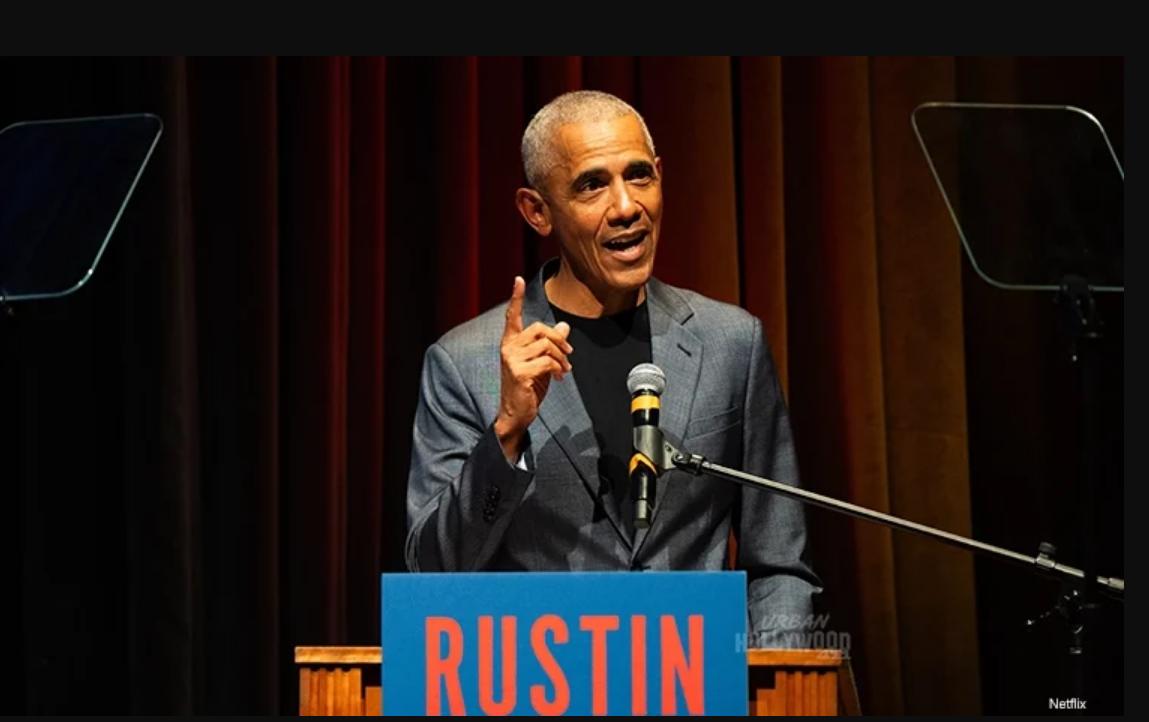
By Anita Bennett | WASHINGTON – Bayard Rustin was a key figure in the Civil Rights Movement, yet he “was denied” the credit he deserved because he was gay, former President Barack Obama recently said.
Obama made the comment at a screening of the Netflix film Rustin on Nov. 10, at the inaugural HBCU First Look Film Festival — celebrating Black filmmakers and creatives.
Rustin opened the festival during a special event at the National Museum of African American History and Culture in Washington, D.C.
Related Story: ‘Rustin’ Trailer – Colman Domingo Ignores Threats to End Fight for Civil Rights

After being introduced by former first lady Michelle Obama, the 44th president recalled his personal connection to the Civil Rights leader and said he deserved better than being snubbed by historians.
“In 2013, I had the honor of awarding Bayard Rustin the Presidential Medal of Freedom,” Obama told the audience. “For those of you who may not be aware, this is the highest civilian honor that can be conferred for people who have helped to shape our country and move it to a more perfect union.”
Rustin was the architect of the 1963 March on Washington.
The Pennsylvania native rallied people from all walks of life and pressed Rev. Martin Luther King Jr. to take part in the march. Yet Rustin was largely forgotten by historians after his death in 1987.
“It is hard to overstate Bayard Rustin’s influence on the Civil Rights Movement,” Obama said.
“He was a pioneer of freedom riders to desegregate interstate bus travel. He went on a bus in 1942 and got arrested for not sitting in the back, 20 years before the publicized freedom rides took place. That’s how far ahead he was of his time,” he added.
Obama noted that some Americans still benefit from Rustin’s work.
“This is one of the seminal figures that changed the course of American history. Without him, I might not have been president,” he said.
“For decades, Bayard Rustin was denied his rightful place in history,” Obama continued. “The main reason was because back in the ’40s and ’50s he was openly gay.”

The critically acclaimed biopic on Rustin’s life stars Emmy Award-winning actor Colman Domingo.
The cast also includes Chris Rock, Glynn Turman, Aml Ameen, Gus Halper, CCH Pounder, Da’Vine Joy Randolph, Johnny Ramey, Michael Potts, Lilli Kay, and Jordan-Amanda Hall, with Jeffrey Wright and Audra McDonald.
DGA Award and five-time Tony Award winner George C. Wolfe directed the film from a script written by Julian Breece and Dustin Lance Black.
The Obamas are executive producers on the film through their Higher Ground productions. The movie is produced by Academy Award winner Bruce Cohen, Higher Ground’s Tonia Davis and George C. Wolfe.
Rustin begins streaming on Netflix Nov. 17. Watch the video of Obama’s speech below:
******************************************************************************************

Anita Bennett, spent years covering entertainment as an editor at The Wrap and the Los Angeles Daily News, and as a Hollywood correspondent for television network, Black News Channel (BNC). Anita is a graduate of Howard University in Washington, D.C. and lived in Europe as a Fulbright Scholar.
******************************************************************************************
The preceding piece was previously published by Urban Hollywood 411 and is republished with permission.
Urban Hollywood 411 is a destination for the latest news in urban entertainment, including industry analysis and interviews with news-makers from the film, television and media worlds. The site was founded in 2018 by award-winning journalist Anita Bennett.
Film
Some of 2023’s most hotly anticipated queer films come to AFI Fest
Bradley Cooper’s Maestro & Andrew Haigh’s All of Us Strangers lead the LGBTQ+ themed lineup at the Hollywood-based festival

LOS ANGELES – L.A.’s most prestigious film festival returns to Hollywood’s TCL Chinese Theatres next week with a potent cinematic slate from across the world that will once again kick the movie industry’s awards season into high gear.
Running for a heady five days from October 25 to 29, AFI Fest will this year present more than 140 titles, including the official Best International Feature Oscar submissions from a whopping 20 countries. In addition to three red carpet premieres on Hollywood Boulevard, the festival will also include special screenings of a number of presumed awards contenders, including The Bikeriders (starring Austin Butler and Tom Hardy as motorcycle club honchos in ’60s Chicago).

AFI Fest launches this year with the October 25 red carpet world premiere of Leave the World Behind, the apocalyptic thriller from writer and director Sam Esmail (Mr. Robot) starring Julia Roberts and Ethan Hawke as a couple who rent a luxury home for a weekend with their kids, only for the bliss to be interrupted by the appearance of a man (Moonlight’s Mahershala Ali) and his daughter Ruth (Myha’la) who claim to be the home’s owners, bearing news of an impending global cyberattack that will end the world as we know it.
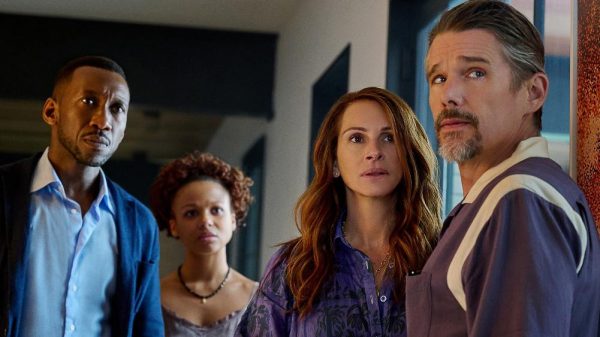
Closing the festival on October 29 will be the red carpet Los Angeles premiere of Maestro, starring Bradley Cooper as composer and conductor Leonard Bernstein and Carey Mulligan as his wife, actress Felicia Montealegre. Cooper also directed the film, his follow-up on that front to 2018’s A Star is Born. Early reviews have praised the film for its complex depiction of Bernstein’s happy marriage to a woman despite his strong and active same-gender attraction, and Oscars oddsmakers have already put Cooper in contention for both Best Actor and Best Director.

The other very buzzy LGBTQ+ title gracing this year’s AFI Fest is Andrew Haigh’s All of Us Strangers, starring Andrew Scott as a Londoner who meets and falls for a mysterious neighbor (last year’s Best Actor Oscar nominee Paul Mescal), spawning vivid memories of his long-deceased parents (played by Claire Foy and Jamie Bell). Haigh is widely revered in the queer cinema world for directing 2011’s Weekend, one of the most highly regarded gay movies of all time. On the Oscar front, Haigh and virtually his entire All of Us Strangers cast seem to be in the running as possible contenders. The film screens on October 28, to be followed by a Q&A with Haigh.
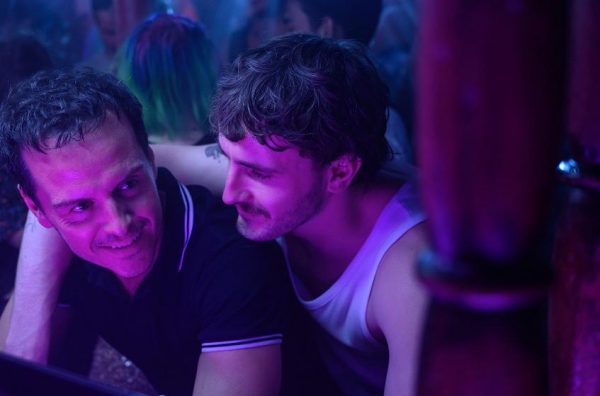
Another queer AFI Fest film that’s already grabbed a lot of praise at festivals around the world this year comes from France: Orlando, My Political Biography. Using Virginia Woolf’s 100-year-old novel Orlando: A Biography as a springboard, director Paul B. Preciado gathers 26 trans and non-binary people aged 8 to 70 to recite, reenact, and challenge Woolf’s celebrated text. Each embodies the character of Orlando while sharing stories about their lives and relationships to the novel. The innovative film, which took the Teddy Award for Best Documentary at this year’s Berlin International Film Festival, screens on October 27.
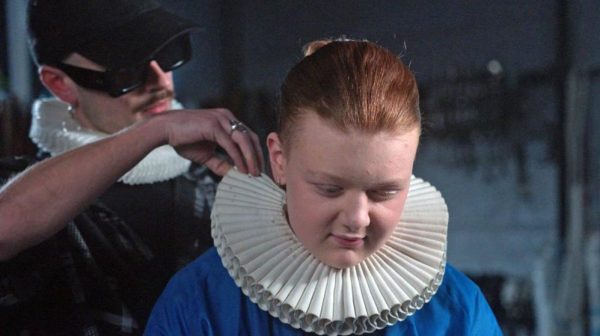
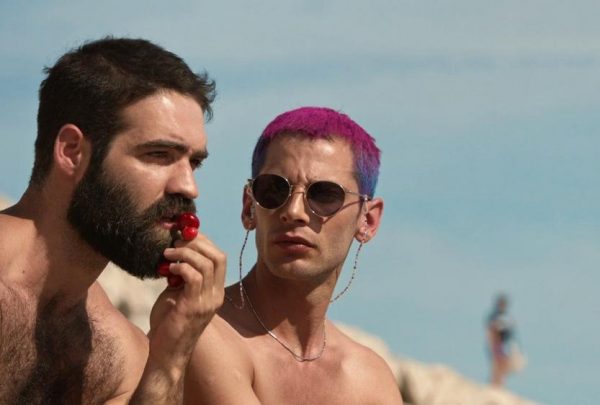
Also defying normal structural expectations is the Greek comedy The Summer with Carmen, focusing on a film within a film as conceived by best friends Demos and Nikitas at Athens’ queer nude beach. Mining the exploits of a previous crazy summer for material, the two concoct a romantic comedy script for Nikitas’ feature directing debut. The Summer with Carmen will screen on both October 26 and 29, with a conversation with director Zacharias Mavroeidis following the latter screening.
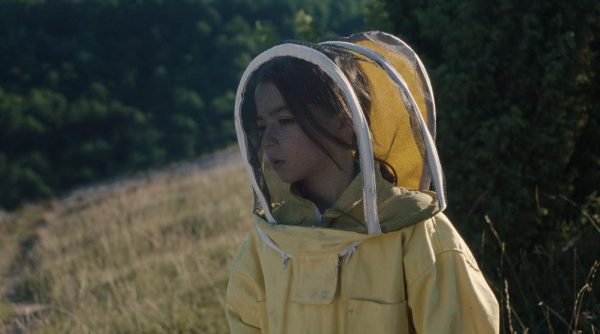
From Spain comes the sensitive 20,000 Species of Bees, which explores an eight-year-old’s gender identity crisis during an uncertain summer family vacation in a sleepy Basque village. As lead character Coco, newcomer Sofía Otero received the Silver Bear for Best Leading Performance at the Berlin Film Festival earlier this year. The film screens on October 29.
While not specifically LGBTQ+-themed, two feature-length documentaries include lesbian subjects: Going Varsity in Mariachi, which follows the various members of a high school mariachi team in southern Texas, two of whom happened to be in a girl couple; and Smoke Sauna Sisterhood, which focuses on a group of women, some lesbian, who periodically gather for sauna and sisterhood in a forest in southern Estonia.

This year’s guest artistic director at AFI Fest is Barbie director Greta Gerwig, who’s chosen five film classics to be part of the festival. Two of these are queer favorites: the 1979 Bob Fosse biopic All That Jazz, and Pee-wee’s Big Adventure, which actually had its world premiere at the Chinese Theatre in 1985.
As usual, a good number of the excellent short films screening at AFI Fest also have queer themes. From Belgium comes Beyond the Sea, about the last performance of an aging drag queen, while Skin (winner of the Academy of Motion Picture Arts and Sciences’ Student Academy Award in the Alternative/Experimental category) follows a woman’s transformation as she sheds her skin to reveal her true identity; both screen on October 26 as part of Shorts Program: Live Action 1.
The next day on October 27, Shorts Program: Documentary 1 will include Merman, which focuses on nurse, leather enthusiast, and civil rights advocate Andre Chambers; and Alpha Kings, which reveals the homoerotic world of a group of young cam guys in suburban Texas. Also on October 27, Conservatory Showcase 5 will include Some Kind of Paradise, which follows a Grindr match in small-town Arkansas between a local and an actor who’s come there to shoot a film.
For more info about AFI Fest 2023 and to book tickets, go to fest.afi.com.

HRC president campaigns for Chris Pappas in NH

Fitness for beginners: The start of a new journey

Poland begins to legally recognize same-sex marriages from other countries

From the desk of Equality California: End of August top political news for California’s LGBTQ

We watched them, then we lost them: Why the passing of rising pornstar Christian Styles, iconic country singer Dolly Parton, and legendary performer Tim Curry hit home hard

Trans, nonbinary Americans find refuge in the Netherlands

‘Teenage Sex and Death’ has never been more entertaining

Here’s Your Palm Springs Weekend: Aug 28th – 20th, 2026 by LA Blade x Gay Desert Guide

Milo Yiannopoulos deported to UK

Realidad LGBTQ+ en Honduras: fuga o muerte
-
 Netherlands4 days ago
Trans, nonbinary Americans find refuge in the Netherlands
-
 Movies4 days ago
‘Teenage Sex and Death’ has never been more entertaining
-
 Palm Springs4 days ago
Here’s Your Palm Springs Weekend: Aug 28th – 20th, 2026 by LA Blade x Gay Desert Guide
-
 National3 days ago
Milo Yiannopoulos deported to UK
-
 Honduras4 days ago
Realidad LGBTQ+ en Honduras: fuga o muerte
-

 Florida4 days ago
For LGBTQ youth starting with nothing, Pride House in Florida offers help
-

 Features4 days ago
Building a very queer future: StartOut’s Michael Meo on LGBTQ+ entrepreneurship
-

 a&e features3 days ago
Are you ready for a ‘Culture Shock’ with Andy Lalwani?
-
 EMMYS3 days ago
‘Jokes with Joysauce’ brings queer AAPI comedy to the Emmys
-

 California4 days ago
San Francisco, long a queer safe haven, remains competitive for homebuyers