
a&e features
In diverse slate of winners, Oscar is the biggest loser
We knew the Academy Awards were going to be different this year.
Forced by Covid to reimagine its traditional presentation format, the movie industry’s most prestigious awards show convened not at Hollywood’s Dolby Theatre — at least, not for most of it — and opted instead to broadcast the ceremony from the relative intimacy of Los Angeles’ historic Union Station, where a small audience of nominees, presenters and guests gathered under “live set” safety protocols while other participants connected from various remote hook-ups across the world. Instead of auditorium seating, tables; instead of an orchestra, Questlove.
In addition, show producers Steven Soderbergh, Jesse Collins, and Stacy Sher chose to shoot the event cinematically, employing the tricks and techniques of film to transform the evening from the stodgy affair so many of us love to hate into something resembling a movie. As promised during the week ahead of the broadcast, the show was going to tell a “story.”
It was a gamble that didn’t pay off.
Things started out promisingly enough, it must be said, with an opening tracking shot that followed host Regina King from the bright L.A. sunshine into the cool darkness of Union Station. The motion, the music, and most of all King’s commanding presence, gave us the sense that something big was about to happen.
Then, early in her opening comments to the audience, King brought substance to the weight by commenting that “if things had gone differently in Minneapolis this week, I might’ve traded in my heels for marching boots” — reminding us (as if it were needed) of the national focus on Black justice that hung alongside Oscar’s long-lamented struggle with diversity like a shadow over the evening. The central theme of this Oscar “movie,” it seemed, had been firmly established.
For awhile, it seemed to be working. The evening’s first winners were Emerald Fennell for Best Original Screenplay, for “Promising Young Woman,” and Florian Zeller for Best Adapted Screenplay, for “The Father,” appearing to set a tone for the ceremony in which recognition would be spread around to all — something very much in tune with the presumed subplot of the “story” we were being told, in which Oscar would redeem itself from the #OscarsSoWhite associations of its past and prove itself to be a champion for fair and equal diversity, after all.
Soon after, Daniel Kaluuya took the award for Best Supporting Actor – no surprise there, as his performance as slain Black Panther leader Fred Hampton in “Judas and the Black Messiah” had won the equivalent prize from every other major film awards so far — firmly establishing the “redemption” theme by celebrating the powerful work of a Black actor in a true-life story that addressed the corruption and tragedy of systemic racism in America.
A pair of awards for “Ma Rainey’s Black Bottom” (Best Makeup and Styling, Best Costume Design), as well as a win for the police-violence-themed “Two Distant Strangers” as Best Live-Action Short, reinforced it even further. Better still, a shout-out to trans acceptance from “Ma Rainey” stylist Mia Neal in her speech, and a plea from “Strangers” writer/director Travon Free for audiences not to be “indifferent to our pain” in his, lent a powerful sense of earnestness that made the whole thing feel authentic.
Maybe this year, Oscar was finally getting it right.
Unfortunately, the Oscar “story,” in its effort to be inclusive, allowed all the winners to talk until they were done. In other words, Questlove did not start playing anyone off when they had used up their time, and the ambitious “movie” of the Oscars soon began lose any momentum it had built.
This is not to say that the winners don’t deserve their time in the spotlight, or that some of the things that were said were not worthy of being heard; but anyone in show business should know the importance of keeping your audience interested, and the Academy Awards have such a long history of running ponderously overtime that it seems some kind of middle ground might have been reached.
There were other familiar complaints, too. The annual “in memoriam” segment inevitably left out some important names (Ann Reinking, Jessica Walter, “Glee” star Naya Rivera, and former Oscar nominee songwriter Adam Schlesinger, to name just a few), and there was an awkward segment in which Questlove played “Oscar trivia” with audience members, who were asked to identify movie songs that did NOT win the Academy Award.
The latter situation was almost saved by nominee Glenn Close, who did an “impromptu” rendition of “Da Butt” that was as goofily charming as it was obviously pre-planned.
As the show wore on, the cinematic conceit chosen to revitalize the proceedings became mostly irrelevant in the face of Oscar’s usual baggage. Further, the absence of any performances of the year’s nominated songs, typically a favorite feature of fans at home, meant there was little respite from the dullness, which was made all the more apparent by the increasingly bored faces of the onscreen audience.
The omission may have been due to the difficult logistics of additional Covid protocols, but surely pre-taped performances might have helped to perk things up. For the record, Best Original Song went to “Fight For You,” from “Judas and the Black Messiah.”
Along the way, there were noteworthy wins. The much-loved Pixar-Disney film “Soul” took the award for Best Animated Feature, as well as winning Best Original Score for composers Trent Reznor, Atticus Ross, and Jon Batiste.
The virally popular “My Octopus Teacher” won for Best Documentary Feature; David Fincher’s black-and-white old-Hollywood homage “Mank” took the prizes for Best Production Design and Best Cinematography, continuing the trend of spreading out the wealth among the front-running contenders.
In presenting Best Film Editing to “The Sound of Metal,” still-hunky Hollywood curmudgeon Harrison Ford gave an amusing nod to “Blade Runner,” the revered 1982 sci-fi film in which he starred, by reading the scathingly negative studio notes from a pre-release screening; and Best Supporting Actress went to veteran performer Yuh-Jung Youn for her work in “Minari,” making her only the second woman of Asian heritage to win the award (the first was Miyoshi Umeki for 1957’s “Sayanora”) — and making Close, who was nominated for her role in “Hillbilly Elegy,” tied with Peter O’Toole as the actor with the most nods without a single win.
By the time we reached the presentation of the four top prizes, there was little left of whatever enthusiasm had been drummed up by the opening segment of the show. Chloe Zhao’s expected win as Best Director, for “Nomadland,” making her the first Asian-American woman (and only the second woman, period) to receive the award, was an appreciated high point for her enthusiastic gratitude alone, but at this point, things had become pretty much business as usual, despite the grand designs and cinematic flourishes of the producers.
Then, the big twist came. Best Picture, always the final award of the evening, was being announced before the Lead Acting awards. What was happening? Was the Oscar “movie” about to give us a surprise ending?
The winner, “Nomadland,” had been favored, and star Frances McDormand helped to make the moment a highlight with a “wolf” howl (dedicated to sound mixer Michael “Wolf” Snyder, who passed away last month) when she joined the film’s other producers at the podium, but surely neither of those things warranted switching the order.
Perhaps a clue to what was really happening could be found in the choice of presenter – Hollywood icon Rita Moreno, still fabulous at 89, whose Best Supporting Actress win for 1961’s “West Side Story” happened to have made her the first Hispanic woman to win an Oscar. Was this reminder of diversity from the Academy’s past a sign that the “redemption” theme was about to pay off?
It suddenly became obvious. The Oscar “movie” was leading up to an emotional finale, a big and uplifting triumph that would not only be a celebration of diversity, but a tribute to a gifted young man whose talents had been taken away from us too soon.
The story of Oscar’s redemption would culminate in the posthumous awarding of the Best Actor prize to Chadwick Boseman, whose nominated performance in “Ma Rainey’s Black Bottom” was the last work he completed before losing his private battle with colon cancer and passing away at 43 last August. That would definitely be a “wow” finish.
Best Actress came first, accompanied by some suspense due to being one of the few categories without a clear front-runner. McDormand took the statue for “Nomadland,” joining a small handful of other performers as a three-time-winner and preventing “Ma Rainey” star Viola Davis from becoming the first Black actress to win twice.
Her speech was refreshingly short and humble, a tribute to the joy of “the work” which included a quote from Shakespeare’s “Macbeth” (“My voice is in my sword”) – a play considered by actors worldwide to be “cursed,” which in retrospect casts an interesting light on what happened next.
To present the final award, last year’s Best Actor winner Joaquin Phoenix (looking exceptionally uncomfortable) came to the mike and, after a feeble joke about his reputation for method acting, read off the five nominees before opening the envelope to bring about the now much-anticipated denouement.
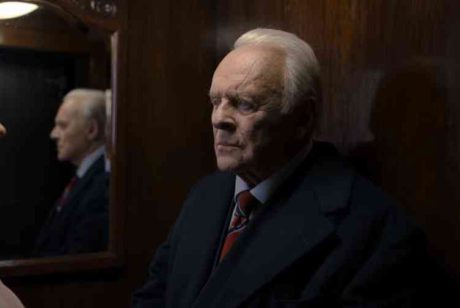
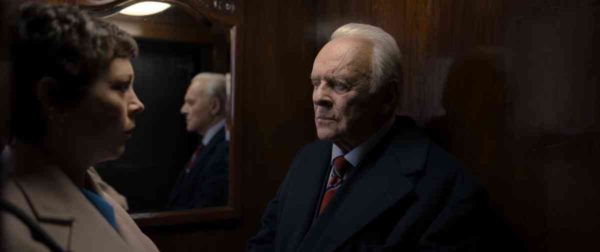
“And the Oscar goes to… Anthony Hopkins, ‘The Father.’”
It wasn’t quite “fade to black, roll credits” after that, but it might as well have been.
There was no uplifting finale, no redemption of the Academy as a reward for its show of diversity. There was only another in a long-running series of gaffes (remember the “La La Land” vs. “Moonlight” debacle from just a few years back?) that have made the Oscar show’s tendency to mess things up a running joke.
This one, however, was possibly the worst. In an arrogant attempt to shape a narrative out of real life events that hadn’t even happened yet, the Academy seems to have chosen to manipulate its audience into an emotional reaction — one that would have bolstered its own reputation and perhaps made up for some of its former perceived missteps — while exhibiting a cynical overconfidence in its own ability to predict the sentiments of its voters.
As a result, its “wow” finish turned into an abrupt and uncomfortable faux pas, diminishing both Hopkins’ victory for a career-topping performance (which, at 83, makes him the oldest acting winner in Oscar history) and Boseman’s searingly powerful work by obscuring their accomplishments behind a colossal fuck-up born of its own hubris.
It’s worth noting that a plan was (reportedly) in place in the supposedly “unlikely” event that Hopkins would win, in which “Father” co-star Colman – known for her disarming grace and humor in awards situations – would have accepted the award in his absence.
As reported by The Guardian, Phoenix forgot to call her to the stage, resulting in the dull thud that was the end of the 93rd Academy Awards. Regardless, the Academy has only itself to blame. In its eagerness to tell the story it wanted to tell about itself, it appears to have forgotten that you have to know the ending first.
Ironically, when removed from all the drama, the list of winners does represent one of the most diverse and inclusive slates in Oscar history. It’s not enough, but it’s a start.
On that note, as a final observation, the LGBTQ community, despite recent strides in being acknowledged by Oscar, went largely unacknowledged at this year’s ceremony, with queer front-runners like “Two of Us” (a French contender for Best International Feature) and David France’s devastating “Welcome to Chechnya” (shortlisted for Best Documentary Feature) having been shut out of the nominations and no significant queer content among most of the nominated films.
Apart from Neal’s aforementioned invocation of trans acceptance as part of a possible future in which the recognition of all women for their achievements would be “normal,” the only other time we came up was during Tyler Perry’s acceptance speech for the Jean Hersholt Humanitarian Award.
Perry, whose highly popular films are frequently criticized for embracing borderline homophobic and transphobic humor and perpetuating problematic tropes about gender and sexuality, gave a speech calling for people to “refuse to hate” anyone “because they are Mexican, or because they are Black or White, or LBGTQ” or “because they are a police officer” or “because they are Asian.”
Apart from the conflation of being a police officer (a choice) with being an LGBTQ person or a person of color (not a choice), the fact that he mixed up the “B” and the “G” is a clear indicator that, while he may refuse to hate us, he’s not exactly a committed ally, either.
If the LGBTQ angle seems like a footnote to the story, that’s because it is. Once more, the queer community is left feeling like an uninvited guest by the Academy.
If Oscar wants its story to be about diversity, it’s clear that next year’s “story” needs some better writers.
a&e features
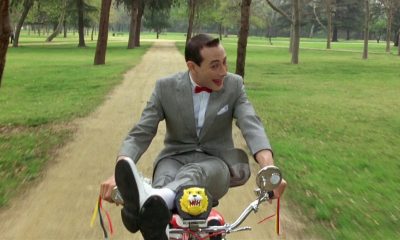
The 40th anniversary of ‘Pee-wee’s Playhouse’ was a celebration of weird, queer art
This star-studded evening commemorated the impact this kids’ show continues to have today.
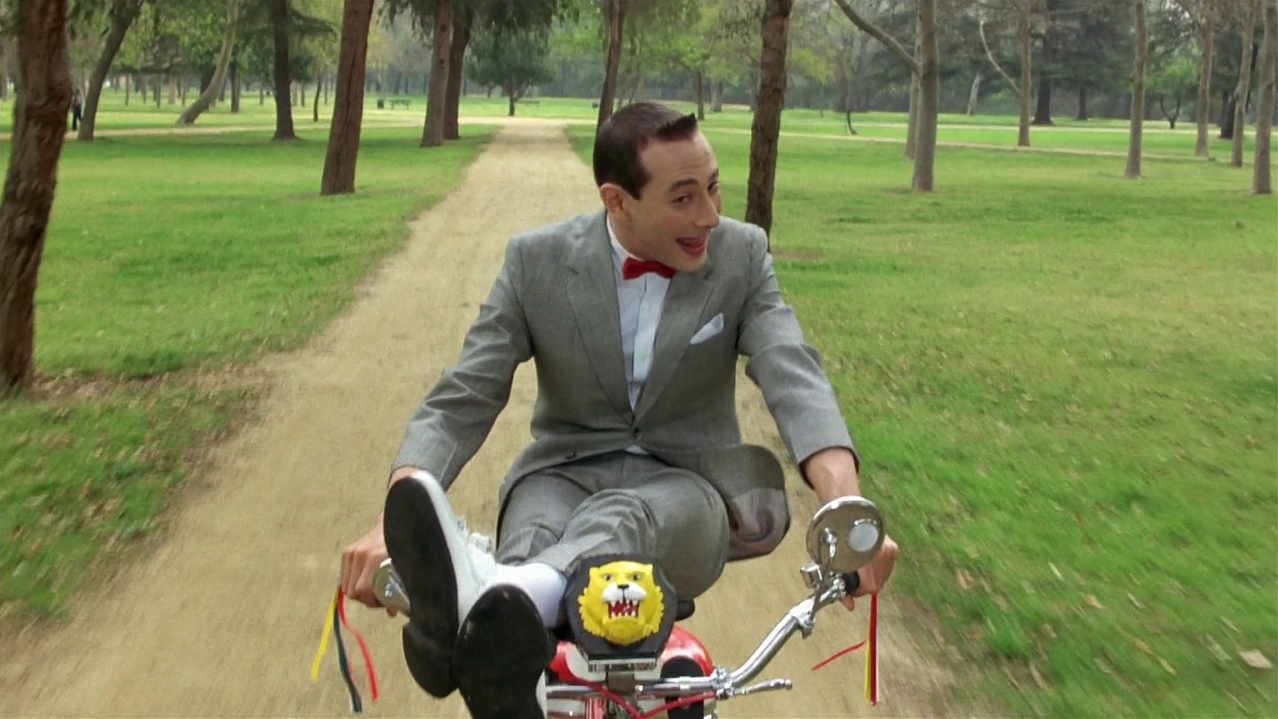
There is only one ‘magic’ word to describe The 40th Anniversary of Pee-wee’s Playhouse: fantastic.
Hosted at the Greek Theater as part of Netflix is a Joke, the streaming service’s yearly comedy festival, this event commemorated four decades of this pivotal program influencing modern artists. The evening was a variety show packed with a jaw-dropping lineup of stars; whether it be musical acts like The B-52s and Devo, or comedians like Patton Oswalt and Cheri Oteri, more than a dozen celebrities came out to show how much this series means to them. It featured memorabilia from the original set, clips from unaired episodes, and tributes to the many performers who made the show so unforgettable for millions of children then and now. And, in keeping with Pee-wee’s Playhouse traditions, the 40th Anniversary even got its own magic word for attendees to scream about whenever it was uttered: fantastic.
Above all else, The 40th Anniversary Of Pee-wee’s Playhouse honored how this show continues to influence artists today. It was a monumental series that encouraged everyone watching to go after what they truly wanted in life, no matter how ‘weird’ those dreams may be. And for LGBTQ+ watchers especially, it gave thousands of young viewers the confidence they needed to be their most authentic, absolutely oddest selves, even after the TV was turned off.
“Listen, no matter who you are, there was someone in puppet land to make you feel safe,” said Bob the Drag Queen, as the RuPaul’s Drag Race season eight winner stepped onto the 40th Anniversary stage. She was, of course, referring to the setting that Pee-wee’s Playhouse inhabited, a home filled with countless puppets (often personified pieces of furniture, animals, and the occasional dummy) and people who went on wild adventures with Pee-wee. Every watcher had their favorite character, but Bob came onstage ready to honor one beauty in particular: Miss Yvonne.
A dolled-up queen who always boasted about her looks, the Drag Queen spoke about how uplifting Miss Yvonne was for her young audience. “We often talk about how beautiful Miss Yvonne is, but I feel like we don’t often talk enough about how inspirational Miss Yvonne truly is!” Bob explained. “We live in a world that is constantly telling people to shrink themselves, to doubt themselves, to be humble, to wait for permission — and Miss Yvonne did the opposite of all of that! She decided who she was…and maybe [that’s something to learn from, because sometimes becoming who you are starts with believing it before anyone else does.”
It’s a message of self-acceptance that resonated throughout Pee-wee’s Playhouse; Pee-wee encouraged children to be their strangest, realest selves…by always being his strangest, realest self. He played with gender expression and constantly criticized cultural norms, with many episodes telling children that their voices matter (no matter what the adults around them say). For queer viewers, this was a monumental lesson in ignoring anyone who tells you you’re ‘wrong.’ Through Pee-wee’s Playhouse, they not only got to see someone who shirked cultural norms, but were finally told that it was okay to be different than how society told them to be.
Pee-wee’s message of self-love is what spurred many artists onto the successful careers they have today. And for Julio Torres and Patti Harrison, this allowed them to create the anarchic artistry that audiences were lucky to see at the 40th Anniversary.
It’s hard to characterize Julio Torres’ set, largely because the Problemista and Fantasmas star spent most of it desperately reaching for a can of Diet Coke mounted on a pole above his head. Dressed in a bedazzled suit once-worn by Pee-wee himself, the late Paul Reubens, Torres barely spoke about the show this event was commemorating. He instead lamented about the indignity of his situation (being deprived of Diet Coke) and how he yearned for the ease of youth (when he always had Diet Coke). Yet while he barely Pee-wee’s Playhouse, Torres’ irreverent humor — and the way he plays with surrealism and color schemes in every project — illustrates how much Pee-wee’s Playhouse continues to influence his current work.
One of the 40th Anniversary’s true highlights was Patti Harrison, who spent her first minutes onstage monologuing about her difficult childhood and the impact Pee-Wee’s Playhouse had on her younger self. “I’m really honored to be here,” she timidly began. “I truly feel like I owe so much of what I get to do now and who I am today to artists like Paul Rubens and Pee Wee’s Playhouse, and getting to have that growing up…I feel very fortunate.”
Harrison then went on to describe the horrors of her childhood, the abuse she endured from bullies, and the nonstop torture she faced daily…before cleverly using the secret word to make the entire Greek Theater shout with glee at her traumatic storytelling.
After this, Patti reverted to the hilariously vulgar comedy she’s known for, but the performer never stopped crediting Pee-wee’s Playhouse for inspiring countless queer performers to pursue their art today. Between screaming about her mother’s body and poop jokes she reminded the audience that many LGBTQ+ artists wouldn’t have gone after their dreams if not for the lessons taught by this show. She ended her time onstage with a perfect summary of everything this event represented, shouting at everyone in attendance: “Stay freaky, stay weird, and long live Pee-wee!”
This was the true message of The 40th Anniversary Of Pee-wee’s Playhouse and the series it was created to celebrate. The event not only showcased memorabilia and memories from the show — though that was certainly a wonderful aspect of it — but offered a long list of performers whose careers testify the impact Pee-wee’s Playhouse had on everyone lucky enough to watch it. Through this anniversary, the queer community is reminded of how our culture was shaped by the unbridled, chaotic joy that Pee-wee’s Playhouse embodied in every episode.
And with over 40 years of inspiring artists, there is only one word that truly describes the legacy of Pee-wee’s Playhouse that LGBTQ+ people can still learn from today: great.
Just kidding. Fantastic.
a&e features
On ‘The Pitt,’ Amielynn Abellera brings the Filipino healthcare representation she wishes she had growing up
Abellera reflects on Nurse Perlah’s journey on HBO Max’s hit show
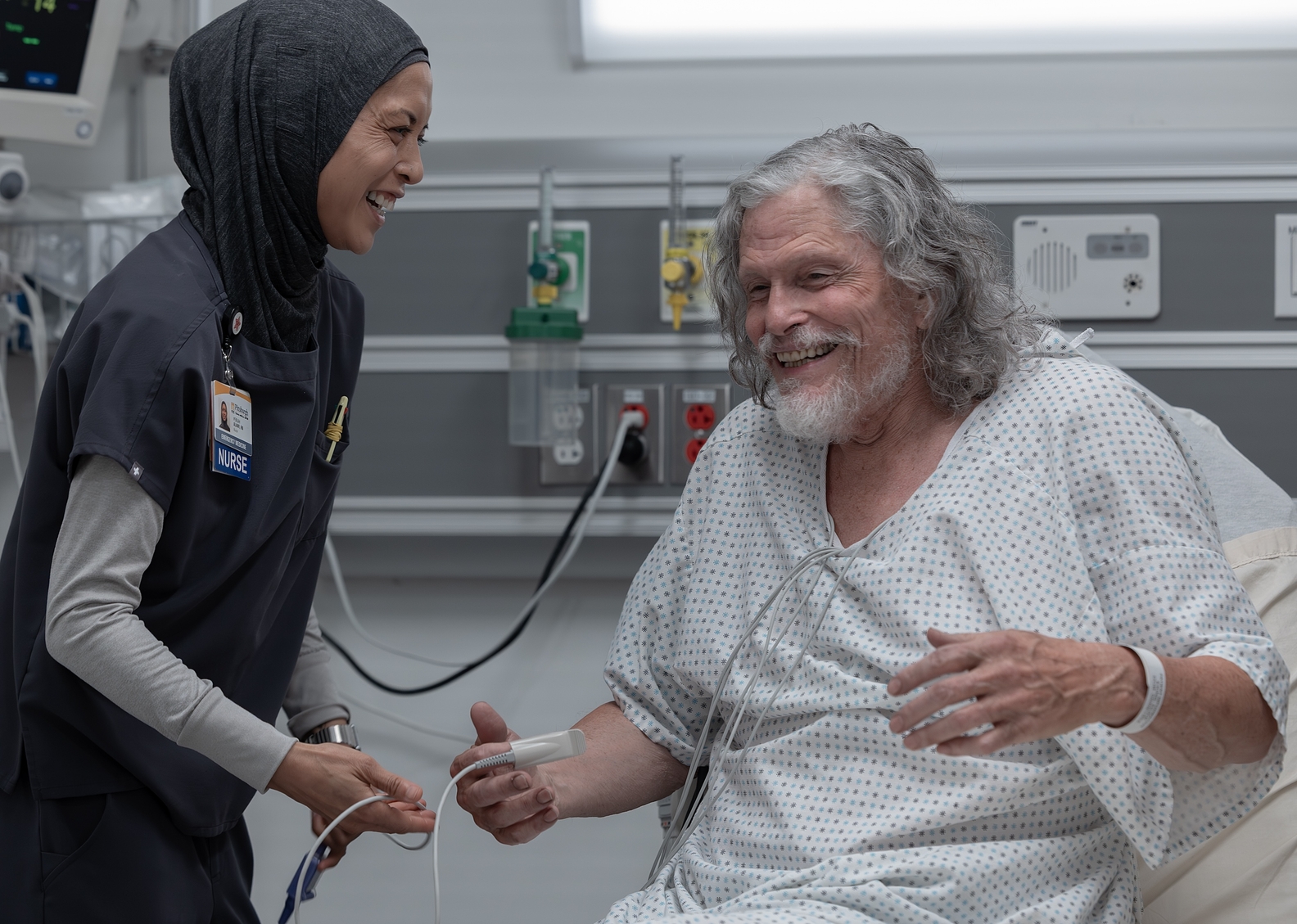
Amielynn Abellera grew up with a nurse practitioner mother and a doctor father, so perhaps she was always destined to appear in a show like The Pitt. Looking at popular media as a Filipino child, though, she never saw “authentic representation” when watching shows about healthcare workers.
“If I did have representation, I would have been more curious and more celebratory, and want to investigate more and ask [my parents] questions,” she tells The Blade. “It’s never too late, and now that there is representation, it’s really making waves across the Filipino and Filipino-American community to initiate conversations.”
Acting on HBO Max’s The Pitt, as she has since the very first episode, carries a deeper meaning for Abellera, who plays the steady and empathetic Nurse Perlah. The second season once again follows a full 15-hour shift in the ER, this time taking place on the Fourth of July.
Abellera reflects on Perlah’s journey: “As a nurse, she is really good at her job, she’s really calm and composed and confident. She knows how to protect herself in such a challenging career. That has been part of how she’s able to get through it. In this season, on this particular day, she hits some challenges, and we start to see a little bit of that armor crack — just a tiny bit.”
It’s been a breakthrough role for Abellera, who previously appeared in episodes of The Cleaning Lady, Bosch: Legacy, and NCIS. The unique filming style of The Pitt, where every episode is synchronized with one hour in the hospital, has given Abellera a new experience altogether: “It feels very sporadic, very panicked, and very immediate.”
“It does feel like I’m waking up at five in the morning, starting a shift, and doing a 12-hour day. Sometimes, the reality mixed with the not-reality and the pretend can sort of meld together,” she says, while adding with a laugh, “I’m not a nurse, I’m nowhere near anything being a healthcare worker, of course, but sometimes you end up thinking, ‘I can actually put an IV in!’”
As she looks back on the season at large, one episode that stands out to her is Episode 3 (titled 9:00 A.M.), which incorporated the 2018 Tree of Life synagogue shooting that took place in Pittsburgh, where the show is also located. In a poignant moment, a Jewish patient named Yana (played by Irina Dubova) connects with Perlah, who wears a hijab.
“Quite honestly, I didn’t know so much about the shooting until we started working,” she says. “I really loved how simple the scene was, in terms of it being two people just connecting and caring for each other in that moment, and also acknowledging this bigger thing. It took both Yana and Perlah by surprise — the feelings that came up for them. I remember even filming it; it took both of us by surprise.”
When I ask about bringing both Filipino and queer representation to the show, Abellera says “I know I sound like a broken record. But I’m so proud, and it’s such an honor to be able to represent the Filipino community as healthcare workers. It’s such a big part of Filipino history and my personal history.”
On the show, she’s also found solidarity with Isa Briones and Kristin Villanueva. “Something I like about the three of us is we’re three different dimensions of Filipino,” she says.
Beyond the community she’s cultivated with her cast on-set, The Pitt has been celebrated across the entire industry, most recently winning the ensemble in a drama series prize at the Actor Awards and, of course, the Emmy award for best drama series. The Actor Award recognition was especially notable since it brought the main cast together on stage. With Season 3 already in the works, one can only imagine how many more awards the show will nab.
“I don’t think anybody knew that we were so hungry for this type of going back to how television used to be,” Abellera says, noting the 15-episode order for Season 2. “It’s taken all demographics by surprise.”
a&e features
From Glenn Close to Carol Burnett: How this year’s TCM Classic Film Festival highlighted female icons
The festival was a true celebration of both past and present, and how female icons have shaped so many different generations
As the ever-fashionable Glenn Close walked out in front of the TCL Chinese Theatre sporting a pair of circular shades, sitting down in a chair to block out the sun from her view, she looked a lot like Norma Desmond, the character she brought new dimensions to while starring in Sunset Boulevard on Broadway.
Unlike the famous character she played that lost touch with reality decades after finding success as an actor, Close is one of the rare actors to continue finding success decades after achieving stardom. The eight-time Oscar nominee, who landed her first nomination back in 1983 for The World According to Garp, was surrounded by her family, including her granddaughter, and a very well-behaved white dog that accompanied her on stage. Many of her close collaborators were also in attendance, including Melissa McCarthy and Hunger Games: Sunrise on the Reaping director Frances Lawrence.
The crowd, which included select press and TCM passholders, hung on Close’s words as she reflected on the kind of career most aspiring actors dream of. This was the kind of event the TCM Classic Film Festival does best — not just the yearly Hand & Footprint Ceremony where stars get their hands and feet imprinted by the TCL Chinese Theatre, but the daily programming that connects passionate film fans with the female icons they grew up watching and idolizing. It was a true celebration of both past and present. Where else can classic movie fans not only see an icon like Close receive their dues, but share that moment with the actor’s loved ones?
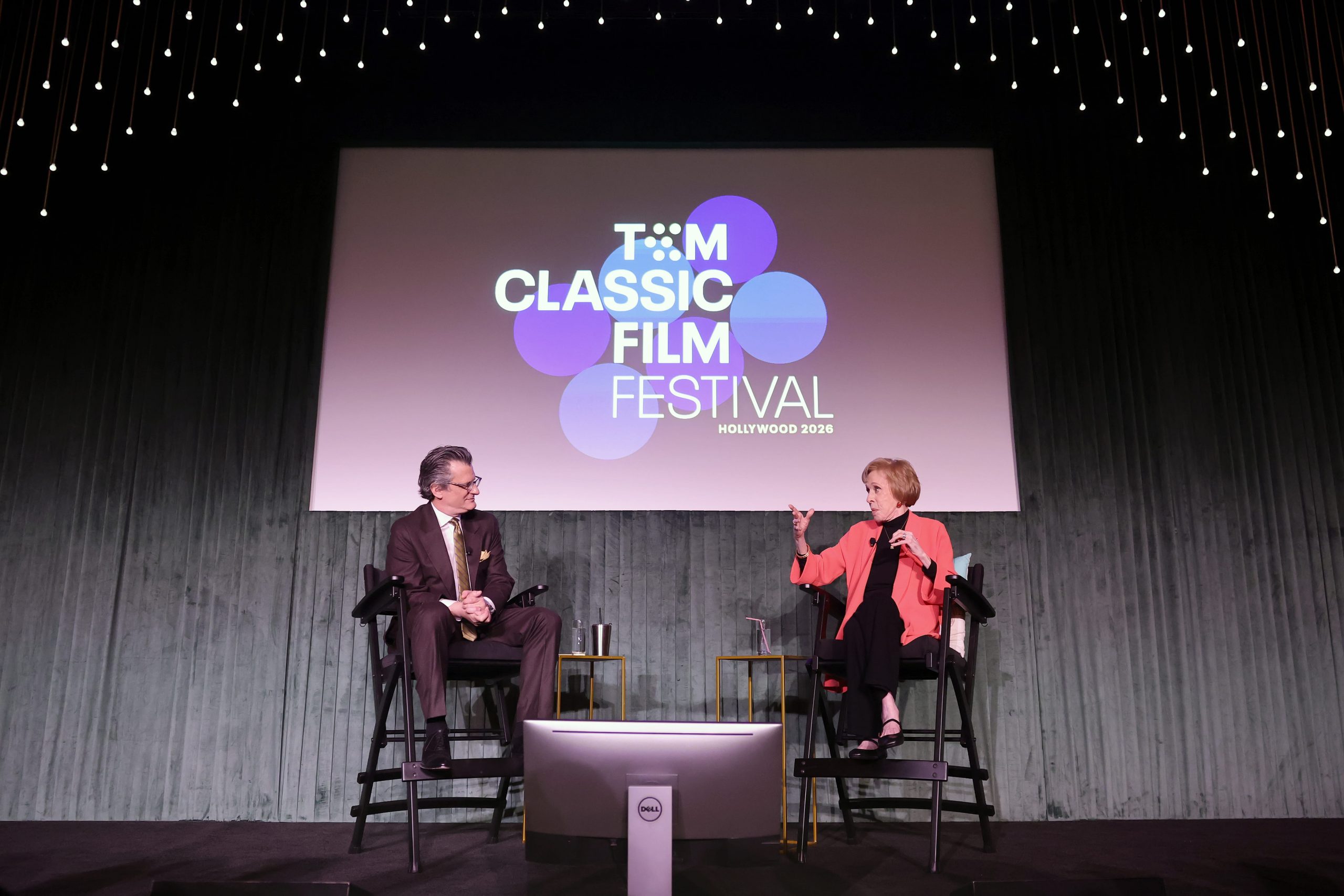
Close’s ceremony was just the beginning of the action. The festival also gave attendees the chance to hear Carol Burnett and Barbara Hershey speak in dedicated one-hour Q&As; Faye Dunaway, Laura Dern, Sharon Stone, Julia Sweeney, Lorna Luft and Lesley Ann Warren all presented different screenings throughout the four-day festival in Los Angeles (read The Blade’s coverage of Warren’s talk before Victor/Victoria here), while Close herself presented a screening of 1988’s Dangerous Liaisons.
The line just to get into Burnett’s conversation was the longest I saw at this year’s festival, quite literally spiraling around the lobby of the historic Roosevelt Hotel to the point where people couldn’t locate where it even ended. The crowd immediately took to their knees once Burnett walked into the room. In a conversation with TCM host Ben Mankiewicz, the seven-time Emmy winner looked back on the origins of her TV career and the women who mentored her.
Burnett would go on to make history as the first woman to host a variety show with The Carol Burnett Show, which ran on CBS from 1967 to 1978. One of the most surprising bits of her conversation was her freeing experience working with studio executives.
“When we got our show, [William S. Paley] said to us, ‘You’re the artist, I’m the businessman. You do what I do, I’ll do what I do. Go do your thing. If it’s not working, I’ll be in touch,’” Burnett recalled. “We never had a sponsor bothering us, or the network bothering us,” adding that the writers’ room was free of outside influence. In today’s media landscape, such a story is unheard of.
Beyond these incredible stories shared by beloved actors, the festival was also an opportunity for different generations to connect through their shared love of film. As a young queer person myself, I’ve noticed how TCM can sometimes be unfairly labeled as a network solely for older people. While the festival’s attendees certainly skew older, the wide variety of female stars drew in multiple different generations; from the women who grew up on Burnett’s variety show in the ‘60s and the ‘70s, to today’s young audiences — mainly gay men! — who fell in love with Laura Dern through more recent hits like Big Little Lies and Marriage Story.
That’s part of what makes the festival so wonderful: the opportunity to connect with all different kinds of people while waiting in line for screenings and panels, and reflecting on how everyone came across a piece of media at a different point in their life. As a queer person, many of these actors resonate with me in a completely different way than they might for older women who grew up seeing a female comedian like Burnett pave the way for more representation.
The opportunity to see living legends in person hits even harder after the recent passing of Catherine O’Hara, Diane Keaton, and Rob Reiner. This theme of crossing generations and passing the baton down couldn’t have been made clearer than the way Mankiewicz chose to close his conversation with Burnett, who reminisced on how I Love Lucy star Lucille Ball became a crucial mentor and friend before her death in 1989.
“I’m listening to you with Amy Poehler and the way she talked about you … the way Tina Fey feels about you,” Mankiewicz said. “To that generation of these brilliantly funny women — and plenty of men, too — you’re Lucille.”
It was impossible to leave that room without thinking about Burnett’s signature line: “I’m so glad we had this time together.”
a&e features
Lesley Ann Warren thought ‘Victor/Victoria’ would end her career; then came queer icon status
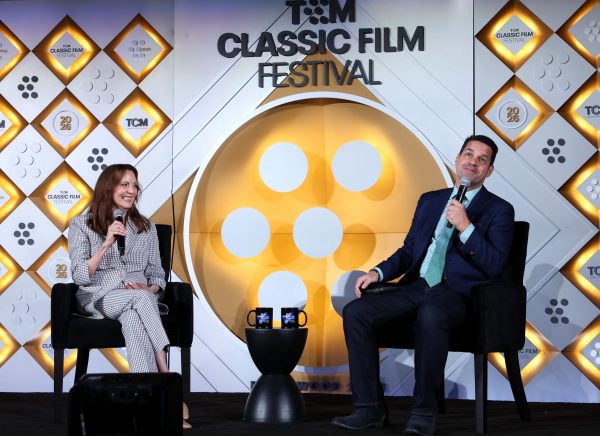
At the TCM Classic Film Festival, Warren helped introduce a screening of the 1982 camp classic
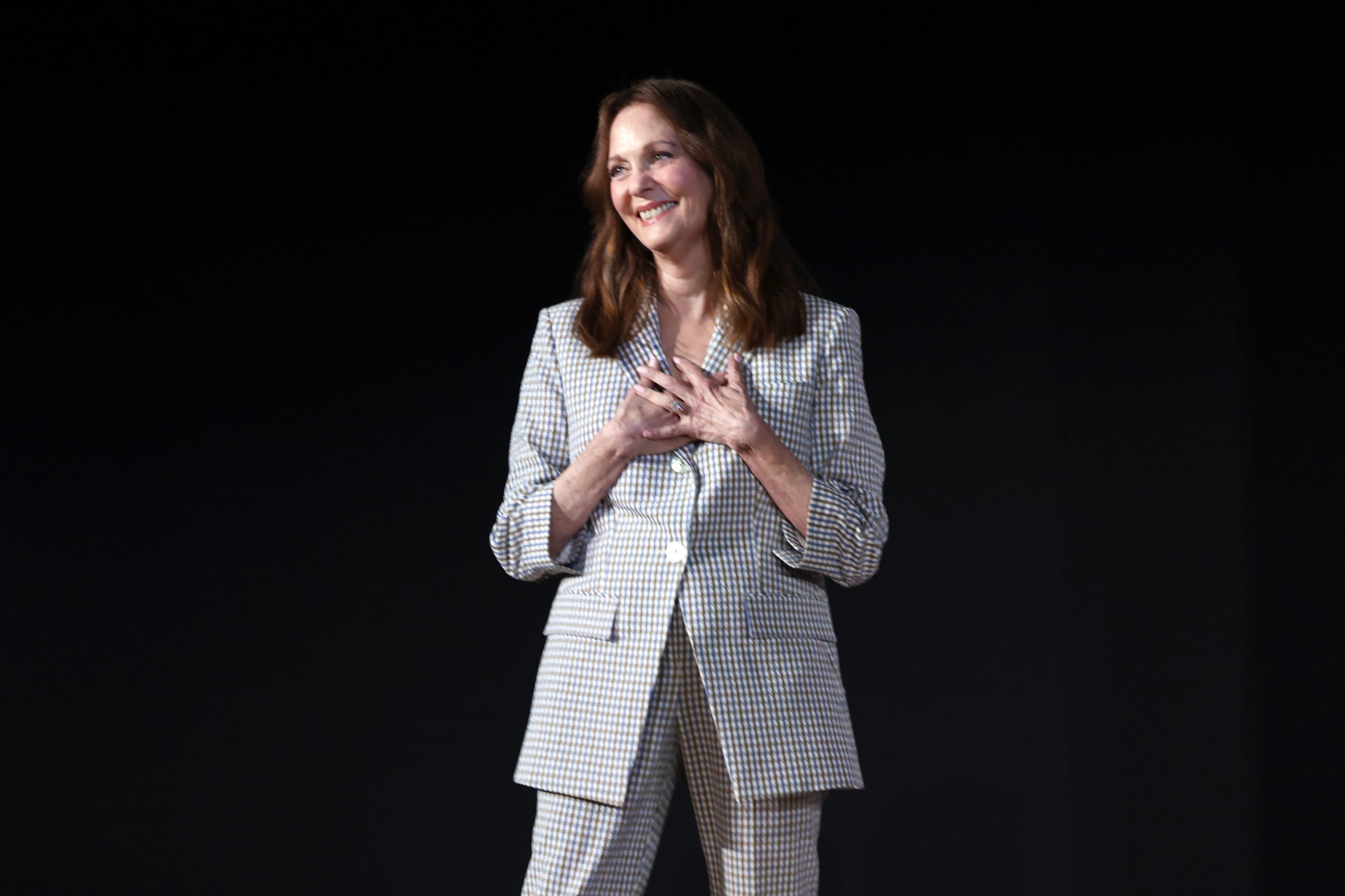
When Lesley Ann Warren first watched a cut of the campy musical comedy Victor/Victoria, in which she plays Norma Cassidy, the extravagant showgirl known for shouting “Pookie!”, she thought she’d never land a part again.
“I was so shocked to see myself that way, and I went home, and I cried, for a long time, I thought my career is over. It’s just over!” Warren said before a packed Saturday, May 2 screening of Victor/Victoria at the TCM Classic Film Festival in Hollywood, California, moderated by TCM’s Dave Karger. “So I never thought about [an Oscar nomination].”
Directed by Blake Edwards (Breakfast at Tiffany’s), the film stars Julie Andrews as Victoria Grant, a down-on-her-luck performer who meets an older gay man (played by Robert Preston) and winds up posing as a man impersonating a woman on stage. As her artistic career takes off, though, so does her romantic one, as the insecure gangster King Marchand (played by James Garner), who starts off in a relationship with Norma, begins wondering if his attraction to Victoria (or Victor, as she’s known to the outside world) makes him gay. Following the 1982 film, Victor/Victoria was adapted into a 1995 Broadway musical; Andrews was the only part of the production to be Tony-nominated (she famously declined the recognition.)
In 1983, Warren would go on to receive an Oscar nomination in the supporting actress category; Andrews and Preston also earned acting nominations, and the film was recognized for adapted screenplay, production design, and costume design, even winning for its music. Warren’s nomination was surprising because the Academy rarely values comedic, over-the-top performances.
“I honestly didn’t even keep track. I knew that MGM was doing this incredible campaign for me, but I wasn’t a part of it because I was working [on A Night in Heaven], and different times,” Warren recalls, explaining she found out about the nomination after producer Joel Silver called her early in the morning. “It was an out-of-body experience. They had to stop filming that day — all these outlets like Entertainment Tonight flew in to see my reaction … It was thrilling.”
Even more so than the Academy’s recognition in 1983, Warren’s status as a queer icon who resonates deeply with LGBTQ+ audiences has stuck with her, mainly for her work in Victor/Victoria, Cinderella, and, of course, cult favorite Clue. When asked about what that status means to her, Warren expressed strong enthusiasm for her queer fans.
“I wouldn’t say it’s a surprise, I’m thrilled because I love them,” Warren said. “Especially Clue and Victor/Victoria, there’s such larger-than-life women in a way, and that’s really part of the appeal. But I was telling you backstage, I have gotten incredible responses from many people, but two specific people who happen to be brilliant directors.”
Warren said she heard this feedback from openly queer filmmakers Rob Marshall, who went on to direct Chicago and Into the Woods, and Lee Daniels, who helmed The Butler and Precious. “The pain that Cinderella went through and the ostracizing, [Daniels] felt as a child,” she recalled. “He said he used to sit in the corner of his bedroom and sing ‘In My Own Little Corner,’ and it gave him comfort.”
It didn’t take Warren nabbing the Oscar nomination, or the queer community’s love and admiration, for her to come around on her performance in Victor/Victoria, though: everything clicked at the film’s premiere. “I heard and saw the reaction of the people in the flesh, in the moment, and I thought, ‘Oh, I’m going to be OK!’”
Based on the contagious, uproarious laughter that could be heard across the entire TCL Chinese Theatre on Saturday night, Warren’s campy-as-hell performance in Victor/Victoria continues to steal the show nearly 45 years later.
a&e features
Meet your local go-go dancer: Steven Dehler
Dancer, certified trainer, and star performer, ready to impart his fitness wisdom to LA Blade readers
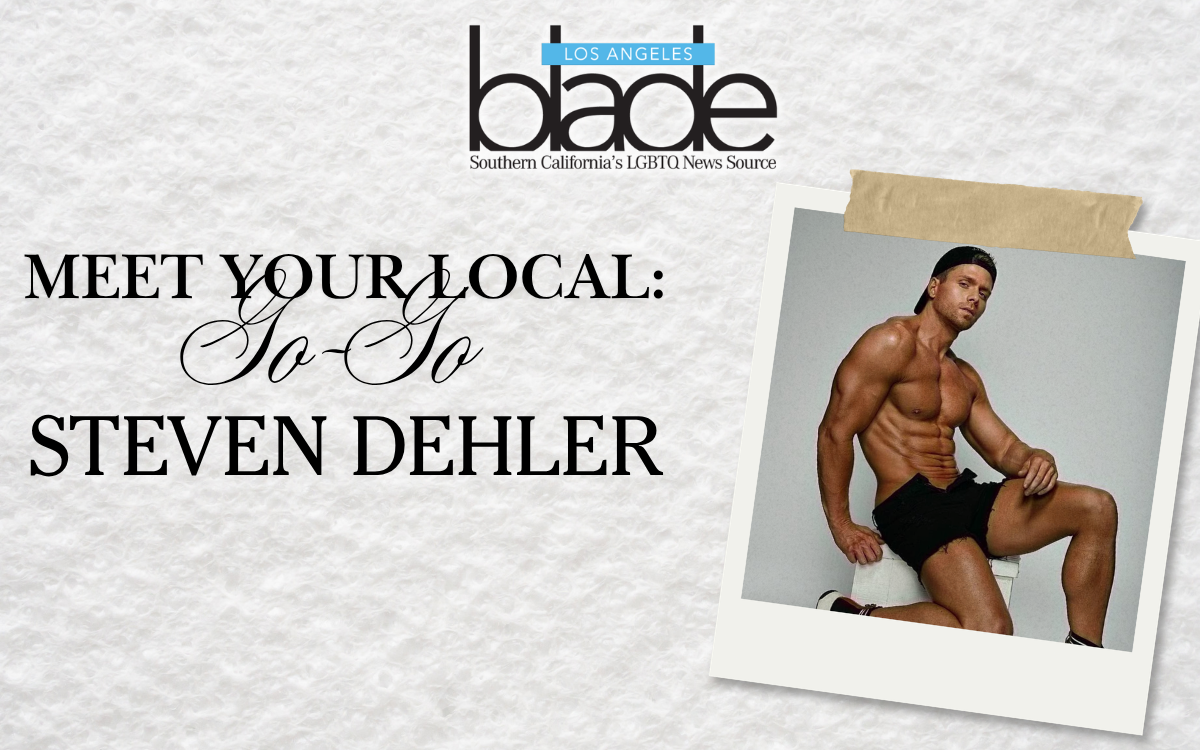
Go-go dancers offer a spicy jolt to nightlife. Their hot bodies and high-energy dancing inspire and titillate us, helping to make every night extra special. Steven Dehler has not only done that for the last decade in West Hollywood and Palm Springs, but he’s brought this same energy to the world of dance, fitness, and modeling.
You may have seen him at The Abbey or Beaches Tropicana, and he was even crowned this year’s Go-Go of the Year at the Los Angeles Blade’s Best of LA awards show. He’s an accomplished model for various fitness and underwear brands, as well as starring in fashion, editorials, print, runway, and appearing on romance novel covers.
Beyond the go-go box, he’s an accomplished musician and pianist. He has performed on stage for Voss Events burlesque shows, and you can see him on stage in Beauty of Burlesque at the historic Old Globe Theatre in Downtown LA. He’s worked in film and television, appearing on Ellen, Jimmy Kimmel Live!, and Will & Grace.
He also co-hosts the podcast, On the Rocks, with the Blade’s own Alexander Rodriguez. He’s set to formally join the LA Blade family offering his physical prowess and fitness know-how to LA Blade readers in an upcoming Health and Fitness column for the Blade.
He took some time out to share his history, hot takes, and thoughts from both on and offstage for a look behind the g-string and into his life.
How long have you been performing?
I’ve been dancing for about thirteen years.
How did you get into go-go dancing?
I was already working in the clubs doing bottle service and wasn’t making particularly good money. The person I was dating at the time go-go danced,, and I saw how much money he was making and how much fun he was having so I started dancing with him.
What do you do besides dancing?
What don’t I do? Haha, God, I dip my feet in everything I can, and I’m discovering new ponds constantly. I’m a classically trained pianist, so I always try to incorporate that into my life. In the last few years, I’ve gotten into burlesque, which has been so gratifying, especially learning choreography. I’m not a trained dancer, and I’m pushing 40, so I’m getting into something at an age most dancers are retiring. I cohost a popular podcast called On the Rocks. And besides that, I’ve modeled for 20 years and acted as well.
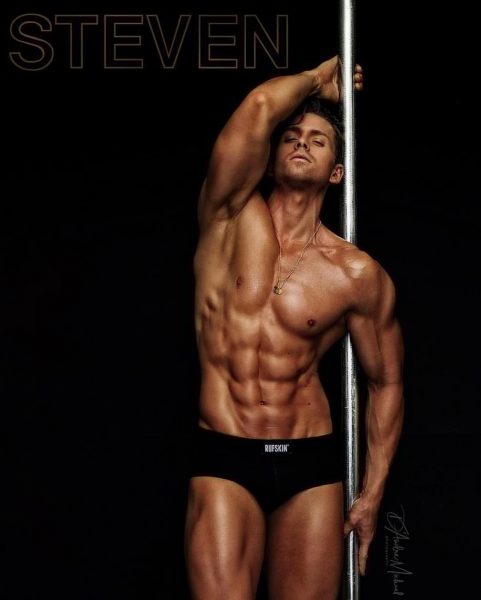
What do you love about gogo dancing? And nightlife in LA?
I just love to dance. And as someone who’s introverted, I never thought I’d be on stage in my underwear entertaining people. But here I am!
What do you think has changed about nightlife?
That’s a heavy question. So much has changed about nightlife. I’d say the 2010s were really the renaissance of nightlife, and that’s when I appeared on the scene. Since COVID and changes in dynamics with alcohol and Gen Z, nightlife is struggling. Clubs and bars are closing left and right, and many are hemorrhaging money. It’s depressing seeing all the empty businesses in West Hollywood. It’s not good nowadays in LA compared to a decade ago.
What do you love about Los Angeles?
I love LA. I was born in Simi Valley, so I’ve been LA-adjacent since birth. It’s rare for locals to stick around,, haha. This town is really difficult, but it’s full of such amazing people. If you’re true to yourself you’ll find your people here. I’m always meeting new and beautiful people.
What brought you to LA, specifically?
I always thought I’d do great things in LA, and I’m not satisfied until I achieve them.
What is your passion?
Piano is my absolute passion. Music is always evolving, and there are always things for me to learn. I just recently learned a piece from a video game (my other passion) called “Expedition 33.” I’m a big gamer, so I play Super Mario music, Zelda, and Final Fantasy. Y’all do not realize how talented the musicians are who create the soundtracks to these games.
What’s an interesting thing you learned about life from dancing?
I don’t think I realized how socially awkward the general public is. I’ve had people come up to me and just not speak when they wanted to. I experience so many awkward moments with people, but we make them fun and normal, and I think people appreciate that we dancers make them feel okay about who they are.
Favorite spot in Los Angeles?
I love Malibu. El Matador is my favorite spot ever. It’s gorgeous and secluded. I’ve done many photo shoots there.
How has Los Angeles changed you?
Los Angeles has made me more confident. You have to be sure of yourself here. It really can suck you in and spit you out, and if you don’t have a strong sense of self then it can devour you. It’s strengthened me in ways I didn’t think I needed. Never jaded though! Take the lessons and rise above them! ,
What piece of advice would you give to your younger self?
I’d tell my younger self to work out my legs more LOL. I played soccer for 14 years, so when I started dancing, I was really top-heavy. I only worked out my upper body, and I did a disservice to myself by not working on my legs.
If you could make one wish for Los Angeles what would it be?
My one wish for Los Angeles would be to get rid of the smog!
What do you want for the queer community?
I want the queer community to come together more. This whole LGB without the T is so disgusting to me, and becoming more prevalent. There are a lot of people in our community who are just uneducated about the fact that our trans brothers and sisters are being targeted across the globe. We’ve got to be better about protecting them.
What do you look for in a person?
I look for humor. If we can laugh every day, then I’m happy.
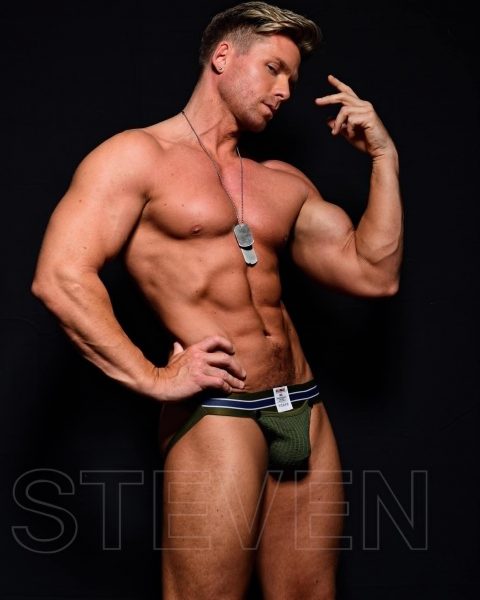
Celebrity crush?
Honestly, I’m not crushing on any celebrities right now. Bored.
What is your favorite thing to do in your downtime?
My favorite thing is playing video games. I’m such a huge gay-mer. My dad introduced me to games when I was like five, playing the original DOOM.
What are your goals for the future?
My goal for the future is to continue to do what I love. It’s not easy. What you want to do doesn’t necessarily provide you a living, but you gotta do what you love in some aspect. So as long as I’m still doing what I love, I’ll be happy.
Are you excited about your new column with the LA Blade?
Absolutely! I’ve been working out for 20 years, and I’m a certified trainer and bodybuilding specialist, so I’m very excited to share my knowledge and advice with readers.
Keep an eye out for Dehler around town and in the pages of the Blade very soon. Follow him on Instagram and listen to him on the On the Rocks Podcast every week.
a&e features
The strange, surreal and sensual underground cinema of Quentin Lee
Lee celebrates 30 years of crafting indie, queer Asian American flicks with a local screening series starting May 1.
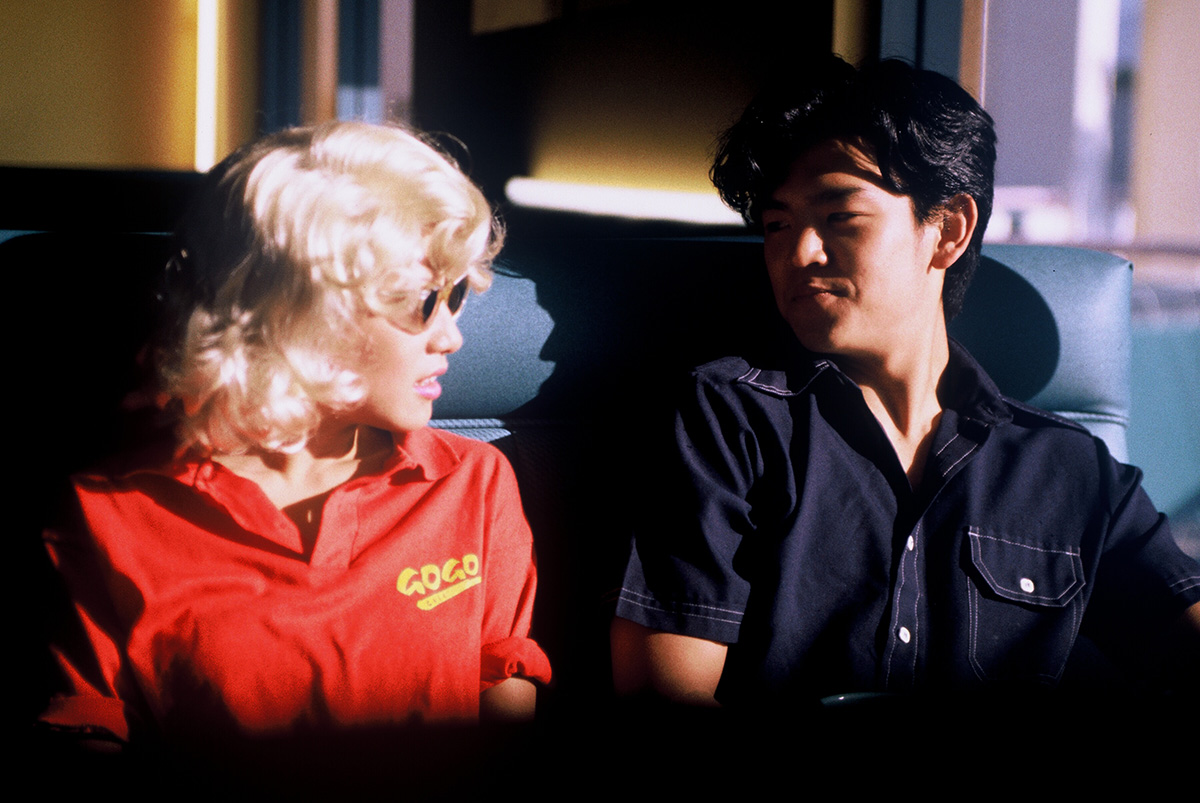
In Quentin Lee’s spirited feature film debut, Shopping for Fangs, viewers are shown shards of stories: pieces of narratives that are spliced and, sometimes, hastily shoved together in a way that inspires whiplash, excitement, and unnerving anticipation. We are thrown into a San Gabriel Valley of the late ‘90s and shown its darker underbelly: an image that betrays its tranquil real-life reputation.
This is not the San Gabriel Valley I grew up in (but perhaps wish I did). It’s an uncanny, noir version of it that draws inspiration from reality and remixes it with style through Lee’s risque, imaginative lens.
Shopping for Fangs starts at the scene of a crime, where a man has pinned a woman against a wall in the dark. Suddenly, another figure appears, dressed in a sparkly champagne dress, a curly blonde Marilyn Monroe-esque wig, and sunglasses that, we will soon discover, are permanently fixed onto her face. She draws a gun at the man, threatening to “blow his face off,” and her fragment of the film’s story begins.
The 1997 feature weaves together the lives of several Asian American characters and explores their queerness, their yearning to belong, and the ways that these angsts transform into physical and mental affliction. Phil, a bored and indifferent office worker, begins to grow hair at a rapid rate and act out in all-consuming aggression. His storyline, written by the film’s co-director, Justin Lin of Fast & Furious fame, is a werewolf tale that digs into stereotypes around Asian American masculinity and rejects them with energetic rebellion.
Shopping for Fangs marks the beginning of a 30-year legacy for Lee: one in which he has continually explored what it means to be queer, Asian American, and to navigate stigma, racial identities, and sexual longing in an increasingly tech-centered world through the 90s and early 2000s. His films are beasts of their own: hybridizing person and monster, desire and animosity, reality and fantasy to create poignant stories where his untethered characters break from their molds, transform, and find their own forms of catharsis.
Beginning on Friday, May 1, Lee’s films will be screened in a special retrospective at the Laemmle Royal in Los Angeles. The opening night features a viewing of Shopping for Fangs and a Q&A with Lee and Lin.
To celebrate and understand Lee’s journey, the Blade sat down with him to discuss his early years making movies and how his art has helped him understand his own identity more.
What films intrigued you when you were young, before you started making movies?
I grew up as a teenager watching a lot of horror films, and then I became really into Brian De Palma and Hitchcock genre thrillers. I remember I was maybe 15 in Hong Kong, and I picked up this Premiere magazine right before we were leaving for Canada. Brian De Palma had all the storyboards of Casualties of War laid out, and I said, ‘Oh my god, this is the kind of filmmaker I want to become.’
I graduated from UC Berkeley, and [there] I started dabbling in experimental filmmaking. So I’d say, as a filmmaker, I really started off with experimental video, video art, and things like that. [Then], I applied to UCLA Film School and didn’t get in. I thought: I’m not going to wait for UCLA before I start making movies. So I made my first short film called “To Ride a Cow.” I did it with my friend, my then-boyfriend, and also with my best girl friend.
Then, I was traveling to film festivals with my little short film…I think it was ‘93. It was really a fun year that I got to learn a lot more about storytelling, literature, and literary theory at the same time. I remember I was really young. “To Ride a Cow” won the best student film award at the New England Film Festival. I drove from Yale to Boston for that screening. And the programmer was saying something like: ‘Well, all you need to do is just go to the film festivals and talk to some people, and you’ll be making your next film.’ And the next thing, [I’m here] like, 30 years later. [Laughs]
Your first feature, Shopping for Fangs, has been described as the cinematic lovechild of David Lynch and Wong Kar-wai. In the story, every character is fragmented, and the narrative explores their deep isolation, misbelonging, or unfulfilled desire. What was it like for you to create these characters, and did they reflect underlying themes that you wanted to explore as a young filmmaker?
I realized further down the line, all my films are about someone trying to look for a connection to the world, but they’re not really sure how. And that very much is how, emotionally, I’ve felt most of my life, even till today. I was an immigrant from Hong Kong, moved to Canada, and then moved to America, came out as being queer, and then also found this new kind of Asian American identity.
In the beginning, I wasn’t even sure I was going to stay in America, so I didn’t completely identify with being Asian American. And then eventually, after I graduated, I thought: You know what? That’s actually a really good identity. Shopping for Fangs is about that. It’s about all these really fragmented characters, whether it’s Phil or Katherine or the husband, and even Clarence, who is this queer Singaporean student trying to get a VISA. That’s kind of me. John Cho didn’t know he was playing me. It’s about them finding a place to belong. That became a throughline for most of my movies.
[Before making Shopping for Fangs], I had put a collection of my short films together, and I premiered them as a feature at the Vancouver International Film Festival. I was coming back in [the winter] of ‘95, and I was really good friends with Justin. I said: ‘Why don’t we make a feature together? You can write a story. I can write [one]. It’s like Chungking Express!’ We spent Christmas writing together. He wrote the story about the werewolf, the Asian American guy.
I wrote this thing about…I was really obsessed with going to Monterey Park and the Alhambra, San Gabriel Valley area. And I thought: Okay, I want to write something about that. I was also into Hitchcock influences, so, in the end, I came up with the story of Katherine, and we mashed them together. Then, I applied for a Canada Council for the Arts grant, and they wrote: ‘Here’s $50,000. Go make the movie.’ Then, we made it. We started in the summer of ‘96, and I knew that I had to start a company. I started Margin Films to be the entity that produced it.
I didn’t have a status. I wasn’t American, wasn’t even a resident, so I thought: Well, I guess the only entity I could start is a C-corporation — because I needed to make Shopping for Fangs.
It was such a moment to watch Shopping for Fangs and be like: Oh, I grew up going to this plaza in the San Gabriel Valley, and now I see it as a centerpiece of a film. You imbue it with mystery, and it, in turn, imbues your film with more mystery as well. About finding connection, how did that ethos evolve in the making of your later films like Ethan Mao and The People I’ve Slept With? Visually, they’re more stripped down. Was that intentional?
Ethan Mao was about this kid who just came out, and he’s trying to figure out where he really belongs. He runs away from home. In “The People I’ve Slept With,” the main character is semi-inspired by the actress in it. At some point, I was listening to David Lynch, [and he said]: ‘Every story has a different way to do it.’ So, there really is no one way to make a movie. Every movie, what I actually do is try to find out: ‘What is this? How should I approach the aesthetics,’ and with Ethan Mao, I’m playing a lot.
Because of my experimental background, I wanted everything in the house to be like a Greek drama, shot in 35 millimeter film. Everything outside the house, I wanted to be digital video. And the digital video was transferred to film. That became the aesthetics for Ethan Mao and his world. And then with The People I’ve Slept With, it was the beginning of digital film technology, and it was the first time I made a decent-budgeted film with a digital camera. It was very exciting and, at the same time, I was nervous. It’s interesting and reminds me of how technology changes as our culture also changes.
With this upcoming screening series, what do you hope to impart on queer Asian American people who might be seeing your films for the first time?
I hope to have a new generation of audiences take a look at Shopping for Fangs. When it came out, people were like: ‘What is this? It’s not even Asian American. The characters are Asian, but there’s nothing about Asian American identity.’ It was very annoying to hear that, because obviously me and Justin were thinking: ‘We have all this ideology, all these things in it.’ Eventually, years later, more writing on it [has come out], so people started to understand: It actually is about identity.
A message that I want to [tell] new generations of diverse, queer, and all combinations of different audiences, is that they should go out and experiment. Each of my films is very different, and I think people should just go out and make things, and not have to worry so much about what they should be making. They should be making what they want to make. I started my journey doing exactly that, so I guess I’m pretty happy about it.
Kristie Song is a California Local News Fellow placed with the Los Angeles Blade. The California Local News Fellowship is a state-funded initiative to support and strengthen local news reporting. Learn more about it at fellowships.journalism.berkeley.edu/cafellows.
a&e features
Catherine McCafferty is ‘Pretty Gay’
The viral comedian and talk show host discusses building an online community for her queer fans.
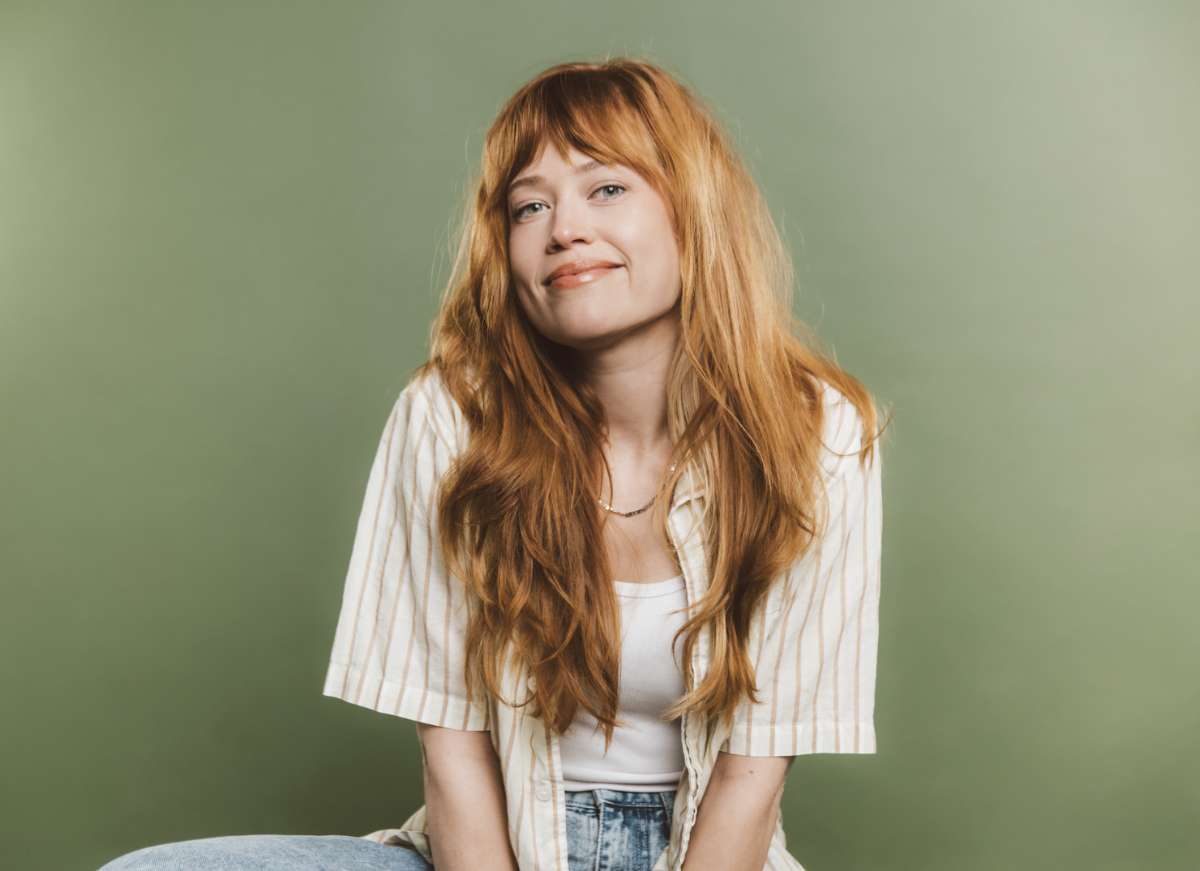
If you’re queer and have used social media in recent years, odds are you’ve seen (and cackled at) a clip of the LA-based performer, Catherine McCafferty.
The comedian first gained attention through clips from her web series, Pretty Gay. A hybrid interview and dating show, it features our host chatting with LGBTQ+ celebrities while running them through the chaotic activities she has planned for their faux-date. It’s the embodiment of the cringe-humor McCafferty has perfected over the years, a humor she recently took international through her comedy special, (Not) That Bad, and that she continues to share online as Pretty Gay enters its fourth season on Patreon.
McCafferty perfectly maneuvers the chaos of cringe-comedy while still facilitating intriguing conversations of what queerness looks like for her ‘dates’ today. She sat down with the LA Blade to talk not only about Pretty Gay but how she developed this unique sense of humor, with the host beginning the conversation by explaining, “I was a little bit of a haunted child.”
“I had a deep sadness since I was born, and I still have that. But I do think that goes hand-in-hand with being a silly goose and being a comedian!” Catherine exclaimed, as the jovial host candidly described her lifelong struggles with mental health. She detailed her past with the lightness that fans know her for, speaking about growing up in Chicago and the compulsory heterosexuality that held her back from coming out until adulthood. It’s an issue that many face today; mainstream society dictates that heterosexuality is the only ‘right’ way to live, with girls especially being told that the only path to true happiness is one that ends with marrying a man. “I used to say that I was going to marry a man and watch him die, and then I would have a second life where I dated women!” Said McCafferty, discussing how she struggled to unlearn these toxic beliefs before coming out in her 20s. “When you’re holding on to something [like that] for so long, and then the dam breaks, it’s like… that [freedom] is just so abundant.”
It was through this self-discovery that McCafferty finally gained the confidence to begin her career as a standup in Chicago’s historic comedy scene. This was when she started considering what she wanted her comedy to be, content that would not only carry her trademark sardonic wit, but would have the LGBTQ+ community laughing right along with her.
Finally, she settled on making a series that would address a glaring issue millions of LGBTQ+ people struggle with today: being terrible at dating.
“I didn’t know how to go on gay dates, so [Pretty Gay] is kind of selfish,” joked Catherine as she described the early days of her web series. “We started like two years ago, and it’s really blown up. I feel so grateful!” Each episode follows Catherine as she goes on a date with an LGBTQ+ guest — usually a sapphic, non-male performer — with the subject trying to keep up with the host’s many segments. These range from trying out cheesy pick-up lines, to defending Catherine from imaginary spiders, to even calling the host’s real mother and asking for her blessing on their nonexistent relationship! This has proven to be an endlessly entertaining format, with Pretty Gay releasing on Patreon to a huge community of over 16,000 online fans.
“I feel so grateful for my Patreon community,” said the host as she raved about how much she loved her many supporters. “We’ve built a community where people are talking [with each other]…[having] a community of people who feel safe with me, it just feels so wild. It’s so cool.”
But it’s not just the format the has led to Pretty Gay’s widespread popularity. While the series is stacked with impressive guests and comical moments, what really makes it such a stand-out is how it spotlights the parts of our queer community that most programs (including LGBTQ+ ones) won’t.
“Whenever you are part of a marginalized group, people are going to look at you as a monolith,” McCafferty explained. “It hurts young people who are just watching Heated Rivalry and Hunting Wives — I love that representation, but it’s very specific.” It’s a glaring issue that too many people ignore today; most mainstream queer characters are either cisgender, white, or conventionally attractive, with a majority being a mixture of all three. While these ‘digestible’ instances of queerness may have been vital when the media refused to acknowledge this community existed, modern viewers are long past these early days of inclusion. Yet it’s still rare to see queer people from marginalized backgrounds get the spotlight, meaning members of those intersections still suffer rampant ignorance despite an increased awareness of the LGBTQ+ community.
It’s an issue that McCafferty and her team are committed to fighting against, with the host explaining, “When we are casting a season, we cast a wide net, because there are really funny people who live in all different kinds of bodies, and they should have a platform!” It’s a representation that has led to stars like Cameron Esposito, Yazmin Monet Watkins, Vivian Wilson, and countless others featuring on Pretty Gay to discuss their experiences of being a queer person today. These are impactful discussions, but also immensely funny ones, with McCafferty emphasizing, “We want to have real conversations, but we also want to laugh! Like, [queer people] get to be dumb too — it’s not all just like crying, coming out, and not being accepted. Some of it is just running around a table, chasing each other, and just being silly.”
Through humor, Catherine makes her guests and viewers relax, offering a welcoming, all-inclusive respite to everyone watching the shenanigans on display. It’s this happiness-centric approach that allows for both important knowledge and joyful escapism, with McCafferty stressing, “My primary goal with Pretty Gay [is] to really just platform queer joy…that’s the space that I inhabit in my community and also in my comedy.”
And this platform is only growing, with each episode of Pretty Gay bringing more fans into McCafferty’s strange yet heartwarming world of bad first dates. As the show enters its fourth season, the host remains focused on offering the vital representation our community needs while still showing queer people as the full — and often very goofy — humans that we are.
Through Pretty Gay, Catherine McCafferty creates an online community of acceptance and unabashed joy that viewers can’t help but fall in love with. And if you ever want to join that community, Catherine is ready to welcome you in today — as long as you go on a date with her first, of course.
a&e features
Meet your local musician: Ross Alan
The non-binary artist and Best of LA Award Nominee spills some tea
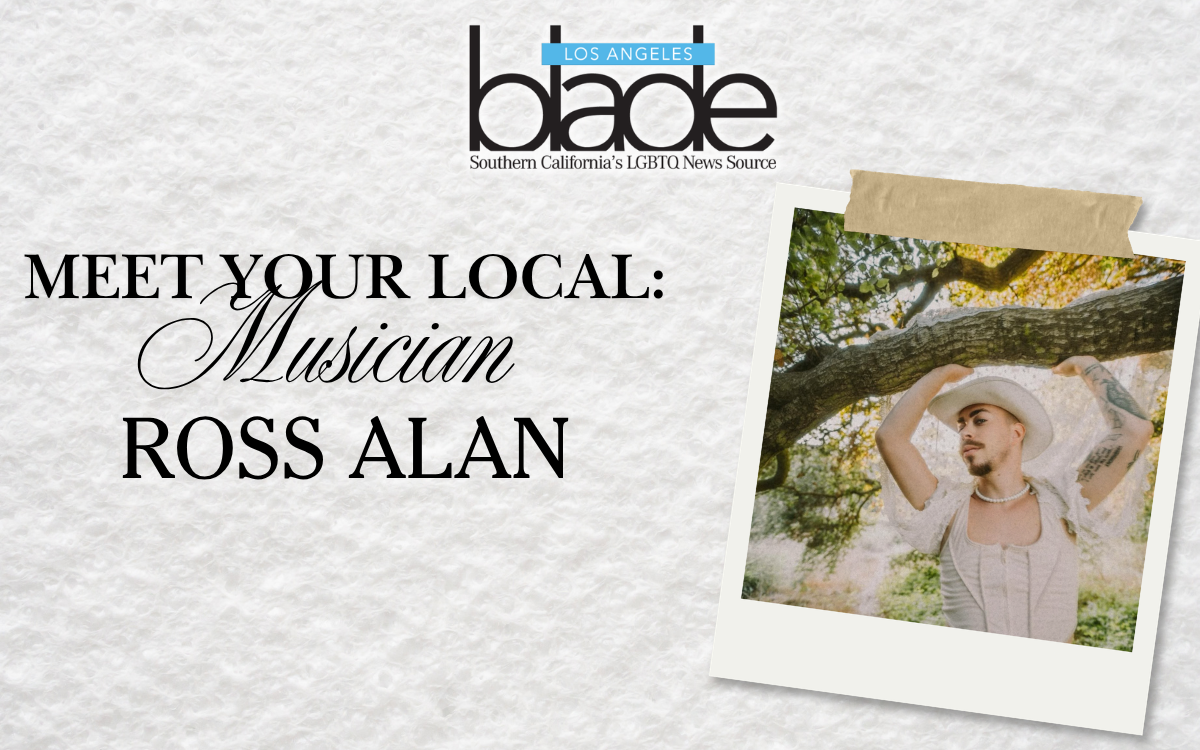
You don’t have to look far to support your local non-binary musician. Meet Ross Alan, who you’ve probably seen around town. They can easily be recognized by their stunning eyes, genteel demeanor, and killer fashion sense.
They’ve performed and sold out in venues nationwide, from Pete’s Candy Store in New York City and Davenport’s in Chicago to iconic Los Angeles stages like Hotel Café, The Viper Room, the Hard Rock Cafe Hollywood, and Whisky a Go Go. This year, they were nominated for an LA Blade Best of LA Award.
Alan is building toward their next chapter: a bold country-disco fusion project slated for 2026. They took some time to enlighten us about the spirit behind the rocker and give us a little insight and inside tea.
How did you get into music?
One day, as a kid, I sat down and watched Sister Act 2. There is a scene when Ryan Toby’s character hits his high note in their rendition of “Oh Happy Day,” and something changed in my soul and body. It was like all the atoms I’m made of woke up.
Now I’ve been making music for 15 years. To have such a specific and voracious moment like that. I knew, so young, that music was what I wanted to do. There was no surprise on my end that this is where I ended up. I mean, I can queue up the memory of me doing the choreography to “Oops I Did It Again” at my uncle’s wedding at the age of 10 or singing in our family garage while my stepdad worked on cars. Art is in my blood.
How long have you been performing?
I’ve been performing as Ross Alan for the last 6 years. I was performing before that under a different artist name for a decade, but I’ve toured domestically a good bit in the last 3 years or so. I am so excited to be getting all this new music from my upcoming record out and really getting the chance to shine on stage with it. Performing is where I feel the most secure in what I’m doing as an artist.
What do you love about music/live performance in LA?
Well, LA is home now. I’ve lived in the Midwest and the South, and I spent years living in New York and Chicago. But performing in Los Angeles always feels safe because this is like my actual home. It feels like I can take bigger risks out in the bars, it feels like I can try new things, and still be embraced by my peers. I think everyone here is chasing their dream, knowing that everyone is straddling their own form of bravery in the pursuit of their goals. There is a vulnerability we all share, and that makes the art so much better.
What do you love about Los Angeles/West Hollywood?
I’ve been in Los Angeles now for 5 years, and there is not a day that goes by that I don’t still smile on my commute. And from stupid stuff, right? Like palm trees lining a street, or a really gorgeous sunset backlit by the Hollywood neon horizon. I’m such a romantic, it makes sense that I’m a songwriter. There is just not a day that goes by that I don’t meet someone doing something cool or planning something amazing. My community is so sensational, and the environment of this city breeds serenity, innovation, and a level of togetherness I’ve never felt anywhere else.
What brought you to LA?
Music! Fame! Hot people! Warmth!
No, honestly. I hate being cold, and moving here from Chicago was like the deepest exhale I’ve ever had in my life. I’ve wanted to live in Los Angeles since I was a kid – and not in a way that I understood. Like I knew I needed to be here, but I didn’t know why. And 30 years later, here we are, and I was right. Sometimes you just know where you’re meant to be, but you don’t know when. So sometimes you gotta just ride the ride.
What is your passion?
I think a younger version of me would have said music or art or something plain. But I’m approaching 35. I think my passion is creation for the intention of being perceived and being understood.
I think we all pursue our own alleyways of work, relationships, and expression in order to be understood. Not necessarily from outside parties, but even on our own. I pursue a deeper understanding of myself, my music, and my purpose every day. I love that in a world filled with any and every resource known to man, we can use those tools to be seen and validated in our experiences. Those moments of realizing you aren’t alone are vital in my eyes, to know someone else hears you. I’m very passionate about making sure everyone feels heard and that empathy isn’t a lost art.
What’s a weird thing you learned about life from performing?
My mantra for every performance is “It might be the last night, but it is only one night.” You have to treat it like you will never get on the stage again. Leave everything up there: your sweat, your vulnerability, your art. It could be the last time you ever get to show people who you are and what’s important to you. But it is also only one night.
So if I flub with a lyric, or miss a step or mark – it’s okay. That’s the nature of live performance and being on a stage in front of an audience. I’m human, so mistakes are bound to happen. And it’s not letting those tiny slips get to you. Because I’m a perfectionist, I want every moment to go off as I planned it. But that’s not reality. So you really have to go in saying, “It might be the last night, but it is only one night.” Go hard, but be gentle.
Favorite spot in Los Angeles?
I have a few! Love a classic Griffith Observatory hike. I go to Los Globos in Silverlake pretty regularly for queer line dancing with Stud Country. The best breakfast burrito is Wake N’ Late in Hollywood. I swear by that place. I’ll walk the floral district in DTLA for any number of incredible blooms, and that is definitely a soul lift. Rustic Coffee in Santa Monica has the best sandwich in the world. You walk up to the airstream, order the chicken caprese – you’re so welcome. And lastly, I’d say the Hollywood Farmers Market on any given Sunday. Live music, talented local vendors, and fresh produce. Absolutely.
How has Los Angeles changed you?
It has made me more patient. It’s made me work harder. It makes me more and more queer every day. What a paradise.
What piece of advice would you give to your younger self?
You know who you are. Don’t let others scare you away from being exactly that. It’s your superpower.
If you could make one wish for Los Angeles, what would it be?
I could say so many things. Fortified infrastructure, improved disaster relief, mandatory driving classes, better systems of support for the unhoused population, removal of ICE in every fucking capacity, increased public transit availability, financial aid to small local businesses and the arts. I love this city. I want it to thrive.
What do you want for the queer community?
Above all, honestly? Safety. For my trans siblings, for my non-binary siblings. For our youth. For those in our community who don’t feel safe in their own homes. It’s been said so many times, but none of us are free until all of us are. So what are we doing about it? Being queer is not a luxury; it’s a privilege.
I don’t want us to have to battle forever – but the battle is not done. It’s so obvious that the battle isn’t over, and it really hurts seeing that so many people think that just because we got marriage equality and because I can wear a skirt in Los Angeles. I need those who have privilege to use it against the forces that wish us harm. Protect our community.
I’m talking to allies too. Because as Bad Bunny coined at the super bowl, “the only thing more powerful than hate is love”. And love is what the queer community is made of.
What do you look for in a person?
As I’ve gotten older, the bar has never been lower, but it’s also never been more serious. I look for prowess with communication. I look for independence and stability. I look for baseline physical attraction, and I look for a good sense of humor. The rest? It really doesn’t matter. I love so many different types of people, and the only real thing that matters is chemistry. The rest will work itself out if it is supposed to.
Celebrity crush?
I have so many. Laith Ashley, Justice Smith, Sophia Bush, Rachel McAdams, and Danny Ramirez. The list is long!
What is your favorite thing to do in your downtime?
Watch scary movies and rhinestone stage costumes for myself.
a&e features
Melvin Robert will perform homecoming solo at Gay Men’s Chorus of LA’s Spring concert
The Blade sat down with the entertainment host to discuss how music has brought him closer to his family, queerness and artistic core.
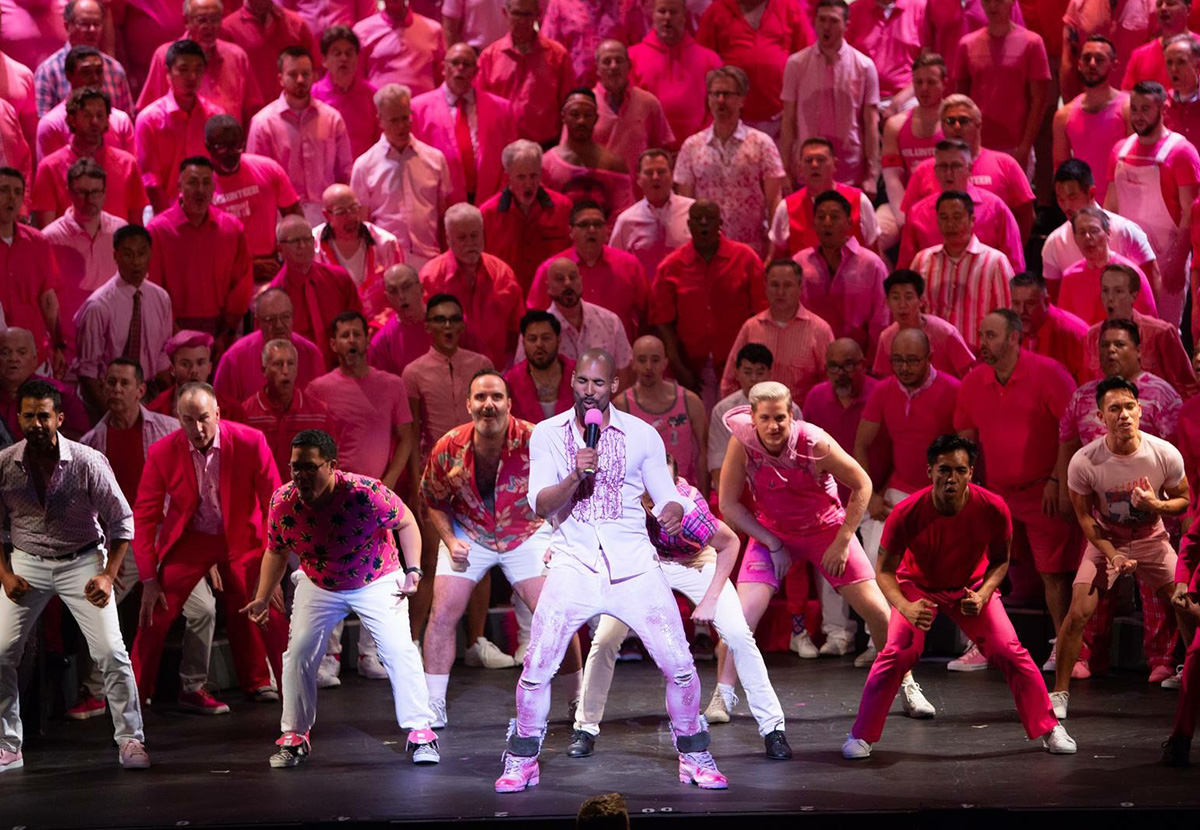
In 2013, Melvin Robert stepped into the parking lot of his old elementary school. He observed the playground equipment he hadn’t touched in 20 years, and rounded the corner until he reached a set of stairs that would lead to the auditorium. He was here to attend his first rehearsal as part of the Gay Men’s Chorus of Los Angeles (GMCLA).
Untethered and unsituated, Robert wanted community. At his best friend Trinity’s urging, he found himself now with one foot in the past, and one inching towards a new future.
Taking a few hesitant steps forward, he sees it. A wayside trash can: not, but might as well have been, the same trash can he was thrown into as a child, the first time he was called a gay slur. He felt anxiety knot his stomach, building in his throat. “I [thought] about that little boy,” Robert told the Blade. “I put my hand over my heart and said, ‘We’re good.’ Because, on the other side of the trash can, was the most beautiful group.”
Robert found the community he’d always wanted, and the voice within himself that he had buried out of shame. In the chorus, a sea of 300, Robert met people who would provide him with love, support, and encouragement that was a plentiful stream. He would also sing, for the first time in his life, without fear — the fear that had dampened and smothered his joy for so long.
On Mar. 21 and 22, Robert will return as a guest soloist for GMCLA’s upcoming Spring concert, “AND THE BEAT GOES ON.” A celebration of gospel, R&B, and Motown, the concert will transport guests through the expansive and transformative sonic fabric of Black American music and history.
Robert performed his last concert for GMCLA in 2018, after which he began his rocketing rise in entertainment journalism. A self-starter in the field, Robert is now an Emmy-winning broadcast host and currently serves as entertainment anchor for KTLA 5.
The Blade sat down with Robert to discuss his lifelong relationship to music, his return to GMCLA and his dreams as an artist.
Music has shaped your life from a young age. What were those early listening experiences like, and how does it continue to change and influence you?
I have a very eclectic taste in music. I attribute that to my dad. Growing up, [on] many mornings, my younger brother, Eric, and I would wake up to the sound of my dad. He would open the door to our room, and he’d go sit in a chair and play the saxophone. That’s how he would wake us up in the morning. [On the way to] school, my dad would play — some days it’d be Steely Dan, and some days it’d be Bob, Tupac Shakur, and Stevie Wonder. My dad had this really eclectic taste in music that inspired me.
And I always loved musical theater. I used to love going to the theater as a kid, to the Ahmanson and the Pantages. I wanted to be in a big buxom Broadway show. My grandma Vera loved Nat King Cole and Ray Charles and Fats Domino, and was from New Orleans. So I grew up with a lot of that Zydeco music playing throughout the house, and jazz, and that really influenced me as a person.
Music has been there for me when I really needed it. When I was first coming out, I remember listening to Yolanda Adams’ “Open My Heart,” and I would play that while driving around. It was my prayer when I was trying to figure out my identity and my sexuality — knowing I was gay but being really afraid and being like: God, please, help me get through this [at] 16 or 17.
Music is transformational, and it is a healing balm. I believe so much in the power of music. I believe so much in the power of musical theater and Broadway. I believe that theater is a temple: [we’re] together for that one moment in time, [in a] sanctuary to learn, heal, and be transformed.
What does it feel like to return to GMCLA for this Spring concert?
I’m so excited to be back with my brothers in song, [and] I’m humbled at the invitation to return. It’s very much a homecoming to be with everybody, and when they told me what I was going to be singing, it was so meaningful and impactful to me. One of the songs I’m going to sing is Ray Charles’ “Georgia on My Mind.” It was such a wink from my grandmother, Vera, because she would listen to that song. I have such fond memories of being in the kitchen or other rooms in her house and hearing that song.
Music is a big connection to memory. Sometimes you hear the first couple notes of a song, and you just go somewhere mentally: whether it takes you back to a moment of sadness or joy or heartbreak or pain, or maybe where you were when you first heard it, or you hear a new song, and you just stop, because the lyrics are so powerful and the melody is touching to you. Music is so important and necessary. It’s medicine.
Do you still have dreams of being on Broadway, and how does that fuel you?
Those dreams have never left me. I haven’t given up on it. I think in the last couple of years, I paused on that because I just didn’t have the time to devote myself to anything other than being a host. I’m really humbled by all of it. Within that, I love to sing and dance. It’s still very much a part of who I am. I think in my core, I am an artist. It’s what sets my soul on fire, and it’s what makes me feel the most blissful, the most at peace, and the most at ease.
We spoke about the concept of “homecoming” and the cycles of returning to who you are. What would you say to your younger self, who you saw again at that first rehearsal?
That people love you, even when you think people are not thinking of you, or people are not holding you in their hearts. I know that that’s your story that you want to tell yourself, [but] you’re more meaningful and impactful to people than you realize. It’s not always easy to believe in yourself, yet you must continue journeying forward and continue the work that you’re doing to believe in yourself. As hard as it is, you have to keep pushing, and you have to keep going, and you have to continue to have faith in who you are and the intent behind why you do what you do.
“AND THE BEAT GOES ON” will be performed on Mar. 21 and 22. Tickets and information can be found here.
Kristie Song is a California Local News Fellow placed with the Los Angeles Blade. The California Local News Fellowship is a state-funded initiative to support and strengthen local news reporting. Learn more about it at fellowships.journalism.berkeley.edu/cafellows.
a&e features
Quick chat: Katya Zamolodchikova works with Grindr to answer ‘Who’s the A**hole?’
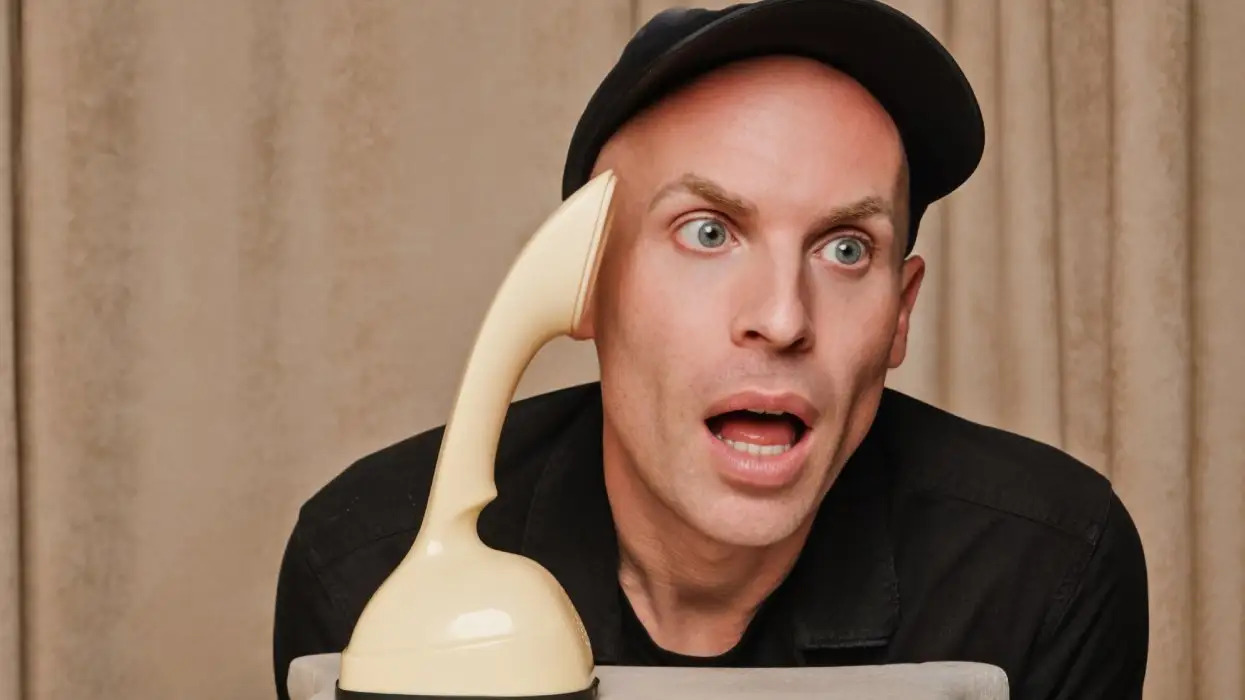
Katya Zamolodchikova has been a breakout star since their tenure on RuPaul’s Drag Race. With Trixie Mattel, they’ve created a veritable media empire with multiple YouTube series, live shows, tons of brand awareness, and podcasts. Katya steps away from their frequent collaborator to unite with everyone’s favorite frenemy, Grindr, on an interview podcast, “Who’s The Asshole?”
She brings her offbeat sense of humor, irreverent mind, and a new hairpiece to interview some of the hottest people of the moment. This season features Jinkx Monsoon, Jeremy Scott, everyone’s favorite transvestigator Luscious Massacr, Peaches, Pat Regan, and The Traitors star Colton Underwood.
This marks the fourth season of this podcast, which has a distinctly different vibe from The Bald & The Beautiful in the same way Monet XChange plays off Bob the Drag Queen, but is a consummate professional interviewer on Monet Talks. Katya breaks from playing off her straight man, Trixie, and instead partners with Grindr. It’s the perfect combination for a sexy, unhinged podcast with some of your favorite queer celebrities dishing about life, sex, and app culture.
Katya took time for quick chat and gave us a brain dump of her hottest thoughts about everything from Heated Rivalry to hooking up.
Edge: What do you love about this podcast?
Katya: I love getting to talk to wildly different people about sexual ethics, social mores, and really dissect our behaviors and patterns around sexuality.
E: What is your take on the Heated Rivalry phenomenon?
K: I love it. I love them. I love gay sex and I can’t wait for season 2.
What does dating look like in a post-Heated Rivalry world?
Probably just fucking on a Zamboni. I think that’s the vibe.
Any thoughts on Pillion?
I think it’s very important. I think it’s essential. In a way, it’s even required. (I haven’t seen it yet.)
What is the state of Drag? Drag Race?
Drag is, has always been, and will always continue to be corny, so we must do everything in our power to be as cunty as possible. Drag Race is franchising all over the globe, and I think it’s amazing.
Has “representation” sanitized queer expression?
I don’t think so. You should see some of my queer friends and the way they express themselves! Nothing sanitary there!
Who benefits from “respectable” drag?
Restaurant and nightclub owners. Less blood and feces to clean up.
How have the apps changed queer culture?
They have changed our culture in so many ways. For introverts and shy folk, apps are such a boon! I was afraid to talk to anyone up to age 30. I would have to give a big, warm thank you to Grindr for helping facilitate my year of sexual discovery.
Hot takes on dating? Polyamory? open relationships?
It’s always much simpler than people think. Do you like him? Do you? You should be able to answer that question in 2 seconds. Does he like you? You should answer that in 3 seconds. The rest is just trial and error and hopefully a lot of moaning and groaning (on the hockey rink only, of course).
Katya has six episodes of this season of “Who’s The Asshole?” premiering each Thursday on YouTube and your favorite podcast apps.

Intersex lives, constitutional freedom, and the dangerous future of Ghana’s Human Sexual Rights and Family Values Bill

BREAKING NEWS: Barney Frank dies at 86

Texas Children’s Hospital reaches $10 million settlement with DOJ over gender-affirming care

Anti-LGBTQ+ commentator Tyler O’Neil to testify in Southern Poverty Law Center probe

Cuba marks IDAHOBiT amid heightened tensions with U.S.

Long Beach Pride canceled hours before start time, the community reacts

LGBTQ+ Angelenos need to vote in June – and choose ‘Yes’ on Measure ER

From the Boy Scouts to West Hollywood: Len Lanzi on identity, resilience, and reinvention
Texas Children’s Hospital reaches $10 million settlement with DOJ over gender-affirming care
Cuba marks IDAHOBiT amid heightened tensions with U.S.
-
 Long Beach4 days ago
Long Beach Pride canceled hours before start time, the community reacts
-
 Commentary5 days ago
LGBTQ+ Angelenos need to vote in June – and choose ‘Yes’ on Measure ER
-
 Features5 days ago
From the Boy Scouts to West Hollywood: Len Lanzi on identity, resilience, and reinvention
-
 Federal Government1 day ago
Texas Children’s Hospital reaches $10 million settlement with DOJ over gender-affirming care
-
 Cuba2 days ago
Cuba marks IDAHOBiT amid heightened tensions with U.S.
-

 AIDS and HIV2 days ago
SB 1023 takes aim at the invisible insurance barriers to HIV prevention
-
 a&e features2 days ago
The 40th anniversary of ‘Pee-wee’s Playhouse’ was a celebration of weird, queer art
-
 Congress1 day ago
Anti-LGBTQ+ commentator Tyler O’Neil to testify in Southern Poverty Law Center probe
-
 Ghana1 hour ago
Intersex lives, constitutional freedom, and the dangerous future of Ghana’s Human Sexual Rights and Family Values Bill
-
 National1 hour ago
BREAKING NEWS: Barney Frank dies at 86