
Health
Cornell University study on impact of discrimination on LGBTQ of color
Around 25% of LGBTQ youth have attempted suicide, but the rates are starkly higher for LGBTQ youth of color than their white counterparts
ITHACA, NY. – Cornell University’s What We Know Project in conjunction with a coalition of leading LGBTQ rights groups last month published a comprehensive curation of data on studies that chart the intersection of anti-LGBTQ and racial discrimination.
The findings found that discrimination inflicts profoundly greater harm on LGBTQ people of color in a wide range of areas, including grossly disproportionate rates of: experiencing discrimination over the past year, poorer mental and physical health, greater economic insecurity, and attempts to die by suicide.
In addition, LGBTQ people of color are more likely than white LGBTQ people to live in states without protections against discrimination and that state anti-LGBTQ laws harm LGBTQ people.
“This research brief makes clear the tangible harms that discrimination inflicts on LGBTQ people of color, and the urgent need for public policy that reflects what the research tells us about how we can reduce those harms,” said Dr. Nathaniel Frank, the study’s author.
Highlights of the research brief’s findings include:
LGBTQ people are more likely than non-LGBTQ people to be people of color, and Black LGBTQ Americans are disproportionately likely to live in states without protections against discrimination. For example, 42% of LGBT people are people of color compared to 32% of non-LGBT people and the majority of Black LGBT Americans live in the South (51.4%, more than twice the share of any other region), where most states lack anti-discrimination protections.
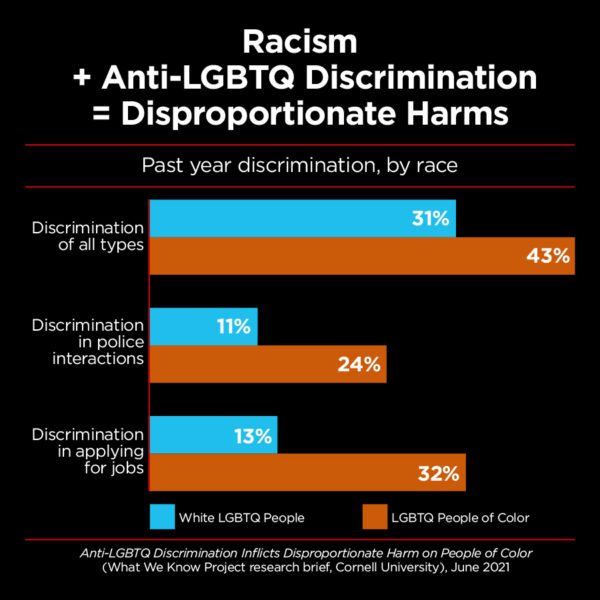
LGBTQ people of color face higher odds of discrimination than both non-LGBTQ individuals and LGBTQ white people. For example, LGBTQ people of color are more than twice as likely to experience anti-LGBTQ discrimination (slurs or other verbal abuse) when applying for jobs than white LGBTQ individuals (32% vs. 13%). LGBTQ people of color are more than twice as likely as white LGBTQ people to experience anti-LGBTQ discrimination when interacting with the police (24% vs. 11%).
Black LGBT Americans are more likely to experience economic insecurity than Black non-LGBT Americans. For example, the majority of Black LGBT people (56%) live in low-income households (below 200% of the federal poverty level) compared to 49% of Black non-LGBT Americans, and Black LGBT adults are also more likely to experience food insecurity than Black non-LGBT adults (37% compared to 27%).
Hundreds of studies conclude that experiencing anti-LGBTQ discrimination increases the risks of poor mental and physical health, including depression, anxiety, suicidality, PTSD, substance use, and psychological distress.
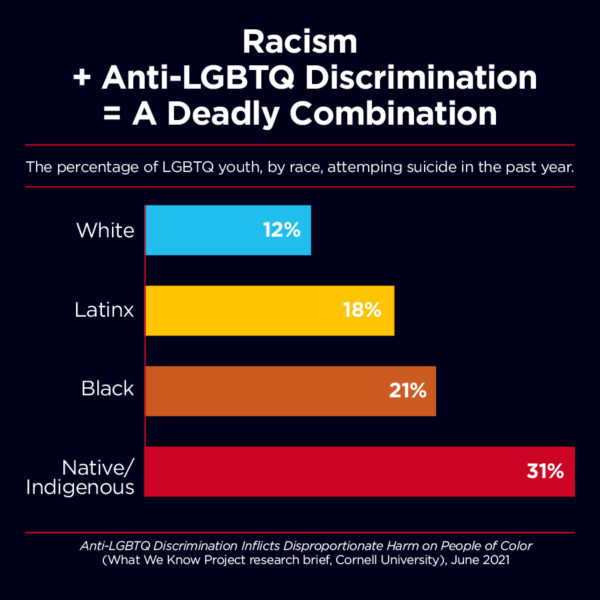
LGBTQ people of color face disproportionate odds of suicidality, which is linked to discrimination. For example, while 12% of white LGBTQ youth attempted suicide, the rate is 31% for LGBTQ Native/Indigenous youth, 21% for LGBTQ Black youth, and 18% of LGBTQ Latinx youth.
While supportive laws, family, and peers lower the risk of poor health outcomes for LGBTQ people of color, anti-LGBTQ state laws inflict tangible harm on sexual minority populations. For example, states with “denial of service” laws that give license to discriminate against LGBT residents between 2014 and 2016 were linked with a 46% increase in LGBT mental distress. Black LGBTQ youth who reported high levels of support from at least one person, or who had access to an LGBTQ-affirming space, reported attempting suicide at lower rates than those who lacked such support (16% vs. 24%).

Supportive laws, family, and peers lower the risk of poor health outcomes for LGBTQ people of color.
• Suicide attempts by LGBT youth dropped by 7 percent in states that legalized same-sex marriage.22
• The corollary is that anti-LGBTQ state laws inflict tangible harm on sexual minority populations. States with “denial of service” laws that give license to discriminate against LGBT residents were linked with a 46% increase in LGBT mental distress.23
• Black LGBTQ youth who reported high levels of support from at least one person, or who had access to an LGBTQ-affirming space, reported attempting suicide at lower rates than those who lacked such support (16% vs. 24%). Those with high levels of family support had rates of past-year attempted suicide nearly one third as high as those who lacked such support (22% vs. 8%).24
• Protective measures that have been found to help reduce anxiety, depression, and suicidality among LGBTQ youth include: Establishing inclusive practices and anti-discrimination policies; peer, community, and family support, including dedicated school groups; access to affirmative mental health and social services; societal confrontation of attitudes and norms that exacerbate minority stress; and practitioner training and interventions designed to disrupt negative coping responses and build resilience.
Experiencing discrimination is associated with greater odds of harm to psychological and economic well-being, which is reflected in data on disparities for LGBTQ people of color.
• Hundreds of studies conclude that experiencing anti-LGBTQ discrimination increases the risks of poor mental and physical health, including depression, anxiety, suicidality, PTSD, substance use, and psychological distress.
• LGBT people of color have work-place experiences that are more negative than those of white LGBT employees, reporting that their success and work-life balance are fostered less extensively, they have less transparent evaluations, and they are respected less by supervisors.
• Among LGBTQ people surveyed, 51% of Black respondents say discrimination harms their ability to be hired, compared with 33% of white respondents; 41% say it has an impact on their ability to retain employment, compared with 31% of white respondents; 77% of Black respondents report that discrimination impacts their psychological well-being, a rate nearly 50% higher than the total LGBTQ survey population.
• While racial discrimination on its own is not associated with mental health disorders, the combination of racial discrimination with gender and/or sexual orientation discrimination is significantly associated with increased odds of a past-year mental health disorder.
LGBTQ people of color face disproportionate odds of suicidality, which is linked to discrimination.
• Around 25% of LGBTQ youth of all races have attempted suicide, but the rates are starkly higher for LGBTQ youth of color than their white counterparts: While 12% of white LGBTQ youth have attempted suicide, the rate is 31% for LGBTQ Native/Indigenous youth, 21% for LGBTQ Black youth, and 18% for LGBTQ Latinx youth.
• In a 95%-non-white LGBT sample, those who report experiencing anti-LGBT victimization (such as bullying and harassment) are 2.5 times more likely to report a past-year suicide attempt compared to those who do not report victimization.
• Black LGBTQ youth who experience anti-LGBTQ discrimination face twice the rate of past year suicide attempts compared to youth who do not (27% vs. 12%). Black LGBTQ youth who experience race-based discrimination also face higher odds of attempting suicide than those who do not (20% vs. 14%).
• Black LGB adults are over 40% more likely to have made a serious suicide attempt in their lifetime than white LGB adults.
• Latinx and Native American/Pacific Islander LGBT youth are 50% more likely to attempt suicide than white LGBT youth. Latinx LGBT girls are nearly twice as likely to attempt suicide than white LGBT youth.
• LGBTQ students who experience discrimination “based on multiple social identities” report more use of deliberate self-harm compared to LGBTQ students who experience racial discrimination alone or who do not experience significant discrimination of any kind.
Reflecting on the study’s findings, key executives from participating LGBTQ Advocacy groups weighed in:
“These painful figures highlight an indisputable link between discrimination, economic security, mental and physical health. People with multiple stigmatized, marginalized social and political identities, particularly Black LGBTQ+/Same Gender Loving people, bear a disproportionate amount of the weight illustrated by the data in this study. Statutory equality for LGBTQ+ people nationwide is a necessary foundation to remove the gaps in existing civil rights laws if we are to ever live up to our country’s founding promises of life, liberty, and the pursuit of happiness for all,” said David Johns, Executive Director, National Black Justice Coalition.
The majority of Black LGBTQ people live in the South, with nearly half (44%) of all Black women couples raising children. Even today, most of these states still do not protect LGBTQ people from discrimination and have overtly discriminatory laws on their books. It is no wonder the disparities are so profound and it is a testament to the strength and resilience of our people that they are doing as well as they are. For our community and for our children it’s time for federal action!” said Kierra Johnson, Executive Director, National LGBTQ Task Force.
“This important brief only further solidifies what we have known for a very long time—the combination of racism and anti-LGBTQ discrimination has serious and long-lasting effects for the health and well-being of LGBTQ people of color. This research highlights why federal non-discrimination protections are overdue and vital to protecting the most some of the most underrepresented and vulnerable members of our community. Federal anti-discrimination protections are absolutely necessary in protecting and supporting all LGBTQ people, and this is especially true for LGBTQ people of color,” said Imani Rupert-Gordon, Executive Director, National Center for Lesbian Rights.
“Study after study shows that nondiscrimination protections improve economic opportunities, public safety, and physical and mental well-being of LGBTQ people. It is well past time for the essential protections available only in some of our states and cities to be extended to all LGBTQ Americans, especially LGBTQ people of color, who are disproportionately burdened by the lack of protections, ” said Kasey Suffredini, CEO and National Campaign Director, Freedom for All Americans.


Commentary
Those dreadful ballot propositions are important
A guide to the midterm initiatives and a brief LGBTQ+ historical context for inspiration
As in most elections, Californians’ heads are spinning over the many ballot measures they’re being asked to vote on this year. We’re offering some guidance on the various measures, but first, a little history to underscore why propositions should not be dismissed as less important than candidates.
California has put more ballot measures before voters than any other state since the process began in 1912, a year after the state constitution was amended to allow the passage of legislation or constitutional amendments by popular vote.
The process was intended to promote direct democracy, taking power out of the hands of corporations and other special interests. However, now it’s driven by big money, as backers of various measures usually have to pay signature collectors to assure there are enough valid signatures to get a question on the ballot—this year, the number needed was almost 900,000. Then there’s the advertising to urge a yes or no vote.
Some ballot propositions specifically targeting the LGBTQ+ community have been hugely impactful. In 1978, for instance, two years after homosexuality was decriminalized in California, voters were asked to bar gays and lesbians (the term LGBTQ+ hadn’t come into use), plus anyone who publicly supported gay and lesbian rights, from teaching in the state’s public schools. That was Proposition 6, popularly known as the Briggs Initiative, for its original sponsor, Republican State Sen. John Briggs of Orange County.
Nationally renowned politico David Mixner, who had just headed Los Angeles Mayor Tom Bradley’s reelection campaign, came out, joined the gay political action committee MECLA, and helped form the statewide No on Prop 6 campaign. It was chaired by attorney Diane Abbitt in the South and San Francisco Supervisor candidate Harvey Milk in the North with help from Sally Miller Gearhart and Cleve Jones. Mixner and partner Peter Scott served as campaign managers, with “lavender menace” lesbian feminist Ivy Bottini and Torie Osborn hired to organize in SoCal. Jeanne Córdova, a second-wave feminist, was media director.
Straight politicians also chimed in against the measure, including Democrats such as L.A. City Councilmember Zev Yaroslavsky, who debated Briggs up and down the state, arguing the initiative would also result in the firing of straight educators who supported gay rights. Gov. Jerry Brown and President Jimmy Carter, and even some Republicans, such as former President Gerald Ford and, amazingly, future President Ronald Reagan, also promoted No on Prop 6.
The Briggs Initiative was overwhelmingly defeated on Nov. 7, 1978, by a vote of 58.4 percent to 41.6 percent. Twenty days later, Harvey Milk and San Francisco Mayor George Moscone were assassinated.
Then came the AIDS epidemic. In 1986, right-wing extremist Lyndon LaRouche launched Prop 64, an initiative calling for mandatory HIV/AIDS testing and quarantining of HIV-positive people in internment camps. Michael Weinstein, his best friend Chris Brownlie, and Brownlie’s partner Phill Wilson started the Stop AIDS Quarantine Committee to oppose the horrific and unsuccessful initiative. The energy behind that protest resulted in the founding of the AIDS Hospice Foundation, the Chris Brownlie Hospice, and subsequently, the AIDS Healthcare Foundation, now a nonprofit with a $3 billion budget serving three million patients in 50 countries.
The outcome of the presidential election between Vice President Al Gore and Texas Gov. George W. Bush wasn’t the only political explosion in 2000. California voters approved Proposition 22, which defined marriage as solely the union between a man and a woman and forbade recognition of same-sex marriages from out of state.
It was known as the Knight Initiative for its original sponsor, Republican State Sen. William “Pete” Knight, who had a gay son and a gay brother. Knight said homosexuality shouldn’t “be accepted as normal.” No state allowed same-sex couples to marry at the time, and the federal government had enacted the Defense of Marriage Act (DOMA) in 1996, denying federal recognition to same-sex marriages and allowing states to deny recognition to those performed in any other state.
The California Supreme Court overturned Proposition 22 in May 2008, finding it violated the state constitution, so thereafter, same-sex couples could marry—for a few months. Anti–marriage equality activists weren’t satisfied, so in November 2008, they put Proposition 8 before voters, asking them to amend the state constitution to ban same-sex marriage. It passed.
A court challenge ensued, and a federal judge, Vaughn Walker, ruled in 2010 that Proposition 8 violated the U.S. Constitution. An appeals court upheld his ruling in 2012, but the matter was then appealed to the U.S. Supreme Court. The appeal didn’t come from state officials, who refused to defend the measure, but instead from right-wing activists, including the Alliance Defending Freedom.
On June 26, 2013, the U.S. Supreme Court ruled that those anti-gay activists didn’t have legal standing to defend Proposition 8, so Walker’s ruling held, and California had marriage equality again. That was the same day the high court struck down the main part of DOMA, the denial of federal recognition.
Other notable California ballot measures include Proposition 13, limiting property taxes, which passed in 1978 and is still in effect, and Proposition 187, passed in 1994, seeking to deny undocumented immigrants public K-12 and higher education, non-emergency health care, and social services. It was challenged in court and eventually voided in a settlement.
Now here’s a look at this year’s 14 statewide ballot measures and what the two major parties, LGBTQ+ groups, and others have to say about them. Not all of these entities have taken a stand on every proposition; if one isn’t listed, the party or organization hasn’t weighed in. Also, if you don’t want to take any of these folks’ word about the propositions, CalMatters offers quizzes to help you figure out where you stand.
Proposition 1 would empower the state to sell $11.25 billion worth of bonds to fund affordable housing. Equality California supports it, as do Los Angeles County’s Stonewall Democratic Club, San Francisco’s Harvey Milk LGBTQ Democratic Club, the California Democratic Party, and the state’s three American Civil Liberties Union (ACLU) affiliates: Southern California, Northern California, and San Diego and Imperial Counties.
Proposition 2 would amend the California constitution to let the state put up to 20 percent of general fund tax revenue into its reserves, known as the “rainy day fund.” The current limit is 10 percent. Endorsed by Equality California, the Harvey Milk LGBTQ Democratic Club, and the California Democratic Party. Opposed by the California Republican Party.
Proposition 3 would keep income taxes for high earners in the current range of 10.3 percent to 12.3 percent permanently. The tax rates were set to expire in 2031. The taxes fund public schools, community colleges, and public health care, and the proposition is sponsored by the California Teachers Association. Endorsed by Equality California, Stonewall Democratic Club, Harvey Milk LGBTQ Democratic Club, all three ACLU affiliates, and the California Democratic Party. Opposed by the California Republican Party.
Proposition 4 would let state and local governments set up public campaign funds for candidates, something that has been banned for the state and most municipalities since 1988. Endorsed by the Stonewall Democratic Club, Harvey Milk LGBTQ Democratic Club, all three ACLU affiliates, and the California Democratic Party. Opposed by the California Republican Party.
Proposition 5 would amend the California Constitution to change the recall process. Currently, if a public official is recalled, voters choose the official’s replacement at the same time. This would establish a separate election to choose the replacement, and the recalled official would be eligible to run. Endorsed by the Stonewall Democratic Club, Harvey Milk LGBTQ Democratic Club, and the California Democratic Party. Opposed by the California Republican Party.
Proposition 37 would allow the state’s Housing Finance Authority to borrow up to $25 billion from private lenders to help individuals and families buy newly built houses and condominiums. The money would cover much of the down payment, and homebuyers would make payments to the private lenders. Endorsed by the California Democratic Party.
Proposition 38 would allow the state to issue $8.4 billion in bonds to fund research into treatments for cancer, heart disease, Alzheimer’s, and other diseases that can be treated with immunotherapy. The research would be done primarily by the California Institute for Immunology and Immunotherapy (CIII), which is affiliated with the University of California; other public universities and nonprofit organizations would do some of the research as well. Drugs created through this research would be available to Californians at a 20 percent discount, while 10 percent of the revenue from the drugs would go back to the state.
The proposition’s proponents say it would help make up for federal cuts to medical research funding, but opponents question whether the recently established CIII is ready to do the work and would like to see the funding spread out further, CalMatters reports. Gary Michelson, a billionaire, is the institute’s chief funder and the proposition’s sponsor. However, it’s endorsed by Equality California, Harvey Milk LGBTQ Democratic Club, and both the Democratic and Republican parties.
Proposition 39 is one of the most controversial on the ballot. It would require Californians to show a government-issued identification document when voting. Also, election officials would have to verify that all registered voters are U.S. citizens. This plays into the Trumpian idea that non-citizen voting is widespread, which it is not. The state already requires people to provide an ID and Social Security number when registering to vote, but not at polling places.
One of its major proponents is California Assemblymember Carl DeMaio, a pro-Trump gay Republican. He has tried to portray the proposition as bipartisan, but recent polling shows 80 percent of Democrats in the state opposed to it and 92 percent of Republicans in favor. It’s opposed by Equality California, Harvey Milk LGBTQ Democratic Club, Stonewall Democratic Club, all three ACLU affiliates, and the California Democratic Party. Endorsed by the California Republican Party.
Proposition 40, dubbed the “billionaire tax,” is likewise controversial. Californians with a net worth of more than $1 billion would have to pay a one-time 5 percent tax on their assets, mostly to fund health care, with some money for food assistance and education. The legislature could make changes to it, but only by a two-thirds vote.
Democratic gubernatorial nominee Xavier Becerra opposes it; he has called it “sketchy policy” that won’t provide a reliable revenue source. Republican nominee Steve Hilton also opposes it, as does the current governor, term-limited Gavin Newsom, who’s voiced concerns that the wealthy will leave the state, therefore reducing tax revenue in the long term. Newsom has floated the idea of a national wealth tax instead.
Equality California opposes it, but the Stonewall Democratic Club and the Harvey Milk LGBTQ Democratic Club have endorsed it, as has the California Democratic Party. Not surprisingly, the state’s Republican Party opposes it.
Proposition 41 was put on the ballot by opponents of the billionaire tax. This would have the state auditor review special tax propositions before they go on the ballot, therefore making it harder to pass measures like the billionaire tax. If it garners more votes than Proposition 40, the latter would be voided, even if it passes.
The Stonewall Democratic Club, the Harvey Milk LGBTQ Democratic Club, the ACLU affiliates, and the California Democratic Party oppose it. The California Republican Party has endorsed it.
Proposition 42 is another attempt to block the billionaire tax and to prevent similar measures from being enacted. It would prohibit new taxes “on the mere ownership of assets such as investment accounts, business interests and personal property—assets that are typically only taxed when they are sold or generate income,” CalMatters explains.
As with Proposition 41, if it gets more votes than Proposition 40, the latter wouldn’t go into effect even if passed. It’s opposed by the Stonewall Democratic Club, the Harvey Milk LGBTQ Democratic Club, the ACLU affiliates, and the California Democratic Party. The California Republican Party has endorsed it.
Proposition 43 is another anti-tax measure, but it doesn’t target the billionaire tax. Instead, it would require a two-thirds vote to pass local special tax measures initiated by citizens instead of the current simple majority. “The two-thirds threshold already applies to taxes proposed by local governments but not by individuals,” CalMatters notes.
Equality California, the Stonewall Democratic Club, the Harvey Milk LGBTQ Democratic Club, the ACLU chapters, and the California Democratic Party oppose it. The California Republican Party supports it.
Proposition 44 would mandate that clinics serving low-income people spend 90 percent of their yearly revenue on patient care. The state could fine clinics that don’t do so. Service Employees International Union-United Healthcare Workers West is the sponsor.
Equality California, the Stonewall Democratic Club, and the California Democratic Party oppose it; the latter says it could shut down hundreds of community health centers. The state’s Republican Party also opposes it.
Proposition 45 would speed up reviews of the environmental impact of certain construction projects, such as roads, bridges, schools, and housing, and efforts to prevent wildfires and expand broadband access. It’s supported by business groups and opposed by environmentalists. The L.A. and San Diego ACLU affiliates oppose it, along with the California Democratic Party and the Harvey Milk LGBTQ Democratic Club. The California Republican Party supports it.
Some of the groups covered here have also taken stands on local ballot measures. Check them out: Equality California; Stonewall Democratic Club; Harvey Milk LGBTQ Democratic Club; ACLU of Southern California; and ACLU of Northern California.
The California Secretary of State and Ballotpedia list all local ballot measures in California.
Karen Ocamb contributed to this story.
This is a cross-post from Karen’s LGBTQ+ Freedom Fighters Substack.
AIDS and HIV
AIDS Walk Los Angeles takes to the streets in West Hollywood while raising money for HIV/AIDS Care
The annual fundraising event was attended by thousands and raised over $850,000

Hundreds of yellow shirts and thousands of people took over the streets of West Hollywood during AIDS Walk Los Angeles on Sunday, October 18th. Organized by APLA Health, the event raised over $850,000 for HIV/AIDS healthcare and prevention. Oakwood School raised the most money of any organization, with over $62,000 in donations.
Before the march began, participants gathered at West Hollywood Park, where speakers addressed the crowd from a large main stage. City officials and celebrity guests spoke before the march began, including Mayor John Heilman, County Supervisor Lindsay Horvath, comedian Joel Kim Booster, and singer David Archuleta.
CEO of APLA Health, Craig E. Thompson, took the stage and addressed the state of HIV and AIDS care in America. He spoke about the first AIDS Walk LA in 1985, which began when there was a “federal administration that stayed silent when thousands of our friends, partners, and neighbors were dying.” “We’ve been there before, and here we are again,” he said, referring to the federal cuts to HIV prevention programs, Medicaid, and more. According to Thompson, Medicare provides more healthcare to more people living with HIV than any other provider.
But despite these federal cuts, Thompson was hopeful for the future of HIV care, drawing on lessons learned early on in the epidemic by the original AIDS activists. “We didn’t wait for permission,” he said. “We showed up, we raised our voices, we walked, and we protected our community.”
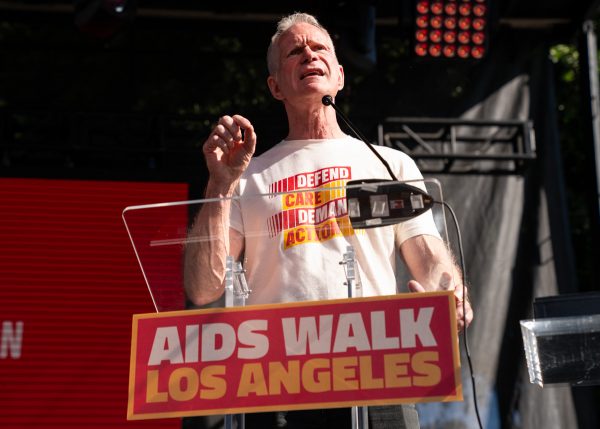
APLA Health CEO Craig E. Thompson speaks at AIDS Walk Los Angeles in West Hollywood Park on Sunday, October 18th, 2026.
Actress Michaela Jaé Rodriguez was honored with the first-ever Voice of Visibility Award for her work fighting stigma around HIV and AIDS. Known for her Golden Globe-winning performance as Blanca Evangelista in Pose, Rodriguez told the crowd that those living with HIV “are not statistics.”
“We are not disposable. Instead we’re daughters. We’re mothers. We’re sisters. We’re brothers. We’re fathers. We’re artists. We’re creators. We’re actors. We’re award winners,” she said to a roaring audience.
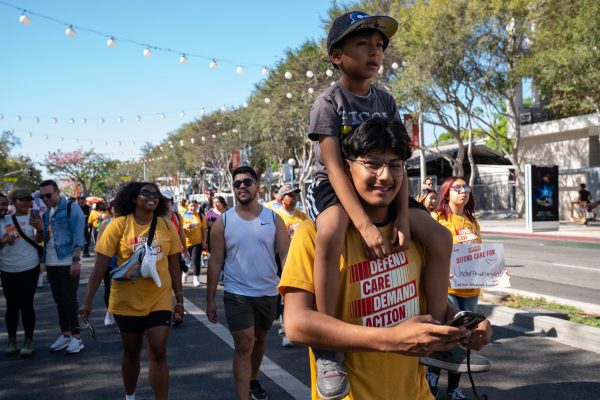
People walk down Santa Monica Boulevard during AIDS Walk Los Angeles on Sunday, October 18th, 2026.
The mood was joyful as the walk began. Many people carried signs with the names of loved ones living with HIV. Multiple musical groups performed, including a drumline, a pep band, and a mariachi group. People laughed, cheered, and danced as they strutted up and down Santa Monica Boulevard.
As the walk looped back to West Hollywood Park, people sat around talking with friends and community members. I walked past the lines for free ice cream and flu shots and wandered over to the AIDS Monument, which opened recently in 2025. Designed by artist Daniel Tobin, the monument is unlike most others. It is abstract, made up of tall and narrow metal poles and marble blocks.
A young tour guide in a baseball cap and chic sunglasses was giving a tour of the monument to a group of about five people. The guide’s name was Jude Schoenfeld, the Director of Public Programs for One Institute. Schoenfeld spoke, and the group walked through the metal beams emerging from the ground. At first, the poles were spread out organically like trees in a forest, but as the group wandered further, they unified into an organized grid towards the far end of the monument. This is where they stopped.
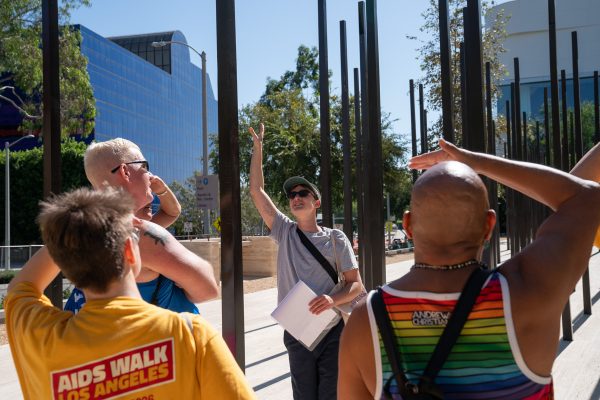
Jude Schoenfeld gives a tour at STORIES: The AIDS Monument after AIDS Walk Los Angeles in West Hollywood Park on Sunday, October 18th, 2026.
Quotes from the gay poets Gil Cuadros and Essex Hemphill were inscribed on a bronze plaque. Schoenfeld read them and remarked on how the artists died so young from complications with AIDS, both passing away in their late thirties. An older member of the tour group interjected, saying that living that long actually felt old for gay men at the time. “No one from that era that was gay expected to live beyond forty. We thought we were all gonna die of AIDS,” he said. “So thirties, that’s a whole life. We lost everybody when they were in their twenties.”
After the tour ended, I asked Schoenfeld what it’s like to give tours to people who lived through the early years of the AIDS epidemic, when you could lose a friend in a few months with hardly any warning. “Oftentimes, it’s emotional for people to be here,” they told me. “The great aspect of the tours is that they become a conversation and a place for folks to share memories.”
“People who’ve been in Los Angeles and West Hollywood for decades have just such a rich understanding of the history here. I’ve learned so much from just talking to folks who come on the tours,” Schoenfeld told me.
As we stood next to the monument with music blasting and kids playing a few hundred feet away, Schoenfeld told me about why they think it’s so important to learn the history of AIDS activism. “It’s never been more important,” they told me. “Especially as we’re seeing threats all around from different institutions that want to take funding away and want to take these resources that we’ve spent so long building.”
“I think this is a really important juncture in history,” they said. “We want this to be a site of continued activism.”
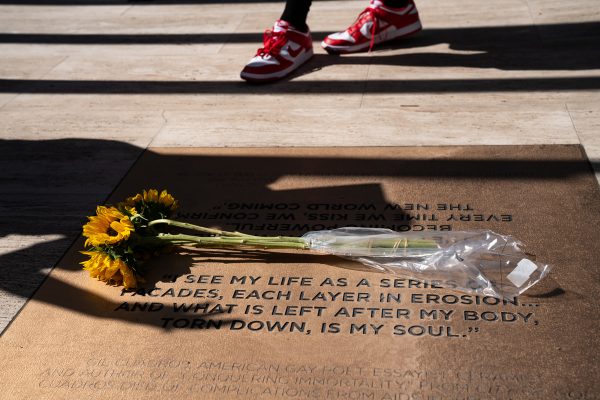
Flowers are laid on a plaque at STORIES: The AIDS Monument in West Hollywood Park on Sunday, October 18th, 2026.
Commentary
Key Midterm Election races as SoCal joins No Kings ‘Vote Early’ rallies on Saturday
Don’t vote blind: Here’s what you need to know about the Midterm candidates
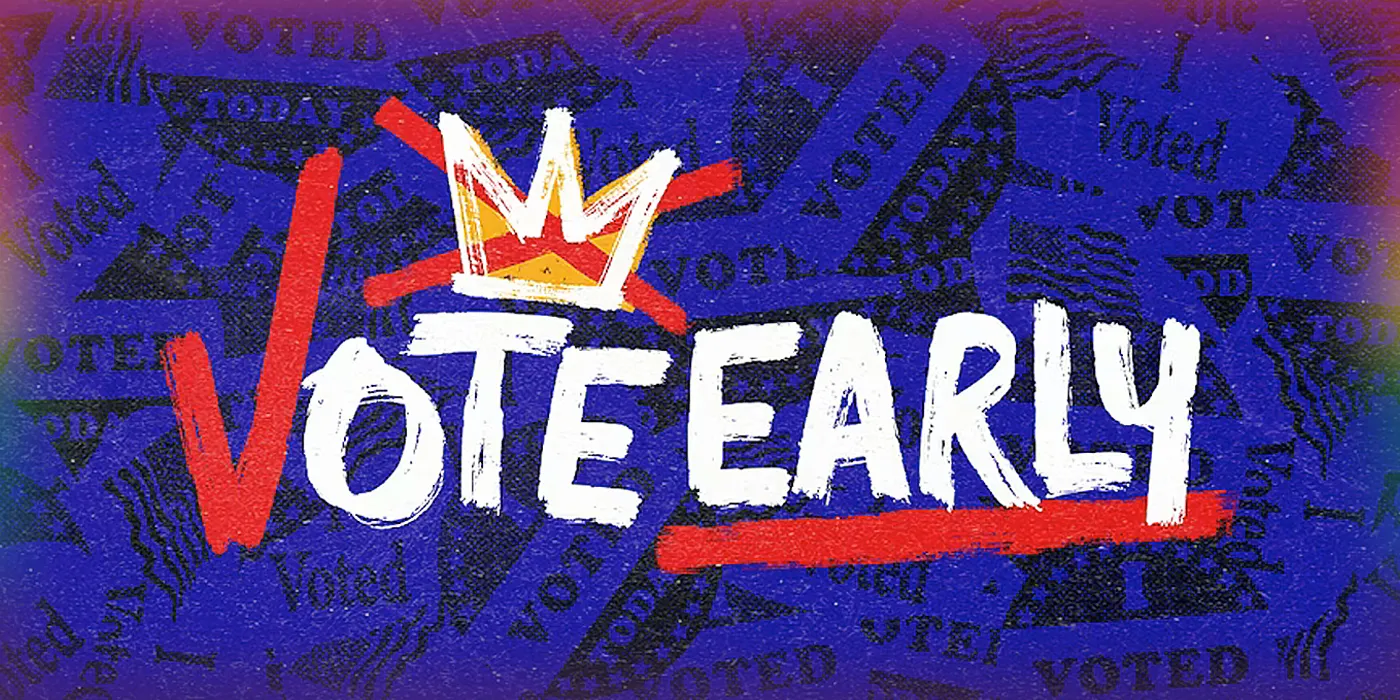
As the midterms approach and No Kings rallies are scheduled across the nation on Saturday, Oct. 17, Republicans are in trouble, even in states once considered safely red. Meanwhile, there are some hotly contested elections in blue states, some of them pitting Democrat against Democrat in California.
Maine’s nominees for U.S. Senate, incumbent Republican Susan Collins and Democratic challenger Troy Jackson, had a heated debate Tuesday night. Collins, in her fifth term, has positioned herself as a moderate, but has come under fire for voting with Donald Trump too often, including her vote to confirm Brett Kavanaugh to the Supreme Court.
Collins is pro-choice and said Kavanaugh had assured her that he considered Roe v. Wade, the ruling making abortion legal nationwide, to be settled law. However, Kavanaugh voted with the court’s other conservatives to overturn Roe in the Dobbs v. Jackson Women’s Health Organization decision in 2022, allowing states to ban abortion. Kavanaugh had also been accused of sexual assault.
“When Roe v. Wade fell because of Susan Collins’s vote to put Brett Kavanaugh on the Supreme Court, Troy Jackson got to work protecting abortion rights in Maine, helping pass some of the strongest protections in the country,” Jackson campaign spokesperson Maggie Amjad said in September.
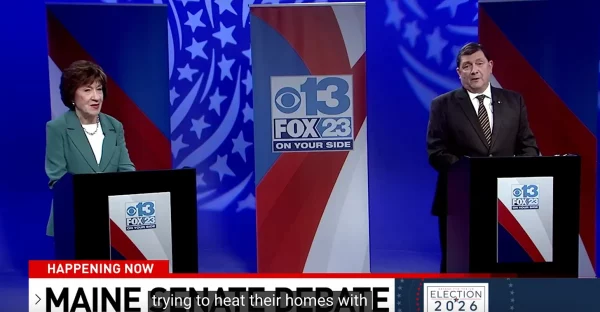
In the debate, Jackson said Collins had not done enough to stop the war in Iran or prevent cuts to federal health care programs. “Senator Collins wants credit for her power,” Jackson said. “I believe you have to be responsible for what you do with it.”
Recent polls put Jackson slightly ahead of Collins. A Jackson win would be a step toward Democrats gaining a Senate majority.
Another flippable Senate seat is in Alaska, with former U.S. Rep. Mary Peltola, a Democrat, challenging incumbent Republican Dan Sullivan. During what The Hill called a “fiery final debate” Thursday, Sullivan brought up reports of Peltola verbally abusing her staff during her campaign and when she was in Congress. Four staffers told The New York Times that she had used an antigay slur, and some also said she used an outdated and offensive term for developmentally delayed people. During the debate, Peltola called the claims “unfounded.”
As far as their records on LGBTQ+ rights go, Peltola had a high but not perfect score on the Human Rights Campaign’s Congressional Scorecard for her sole term in the U.S. House: 70 out of 100. Sullivan, who is in his second term in the Senate, has mostly low scores, including some zeroes.
Yet another possible Democratic Senate gain is in the deep red state of Texas. The Republican nominee is the virulently anti-LGBTQ+ Ken Paxton, currently the Texas attorney general; he beat incumbent John Cornyn in the primary. Democrat James Talarico, who has served in the Texas legislature, is running neck and neck with him. Recently, Talarico was off the campaign trail for several days. He said he was sick with the flu, while right-wing media and influencers claimed he was in a mental hospital in Ohio. Talarico said that was not true and that he had never been in Ohio, and hospital officials said he was never a patient there.
LGBTQ+ activists have been concerned about some Democrats walking back support for transgender rights, including Talarico. During The Texas Tribune Festival in September, Tribune editor-in-chief Matthew Watkins asked Talarico about his statement that “I will oppose trans athletes playing in girls’ sports if it risks safety or fairness,” and how it squared with Talarico’s vote against a trans sports ban in the state legislature.
“The reason I opposed that bill is because it was a blanket statewide ban without any appreciation for nuance,” Talarico told Watkins. He added, “I supported an amendment to that bill to allow local officials—education officials, local sports officials—to decide on an athlete-by-athlete, sport-by-sport basis, if there’s safety and fairness. That has always been my North Star, and it’s gonna continue to be my North Star.”
“Talarico still pledges to support a national ban on surgical interventions that help transgender youth, which may include top surgery or hormone implants,” according to S. Baum, a contributor to trans journalist Erin Reed’s Erin in the Morning on Substack. “Nonetheless, his opponents still flooded the airwaves with attack ads claiming he ‘voted to spend our tax dollars on sex change surgeries for kids’—a common rhetorical device used by Republicans to stir controversy over the lawful, safe, and provision of individualized, evidence-based care for transgender people.” Genital surgery on minors, by the way, is extremely rare.
Reed has called out several other Democrats for taking anti-trans positions, including Amy Acton, running for governor of Ohio; Ohio congresswoman Marcy Kaptur; Iowa’s nominees for U.S. senator and governor, Josh Turek and Rob Sand, respectively; and Peltola. Most of their comments have focused on sports or surgery, while Peltola voted for 2024’s National Defense Authorization Act, which banned gender-affirming care for minors under the military’s health insurance plan.
In a later column, Reed noted that Annie Andrews, the Democrat running for U.S. Senate from South Carolina, released an ad “calling transgender women ‘biological men’ and announcing her opposition to transgender participation in women’s sports. She also says she does not support ‘gender surgery for minors’ and would not overturn the felony youth [hormone replacement therapy] and puberty blocker ban in South Carolina.” Andrews is up against Republican incumbent Darline Graham, who was appointed by Donald Trump to succeed her late brother, Lindsey Graham.
Ohio U.S. Senate candidate Sherrod Brown, trying to reclaim his old seat, was one of the Dems Reed called out in her earlier article, as in 2024 he put out an ad saying he would not “let transgender biological men participate in women’s sports.” But more recently, trans and nonbinary journalists have praised Brown for diverting the debate with Republicans away from trans rights.
Brown released an ad in October that “serves as a masterclass in defusing anti-trans political attacks—without ceding ground to transphobic rhetoric in the process,” Baum wrote on Reed’s Substack. “The tactic: Call out the right’s lies and deception. Then, call out their hypocrisy. No misgendering, fear-mongering, or feeding into anti-trans stereotypes was necessary to reframe the conversation around ‘protecting children’—a common right-wing battle cry and dog whistle—to focus on actual issues of protecting kids from predators. In this case, that meant calling out Brown’s opponent’s ties to child sex trafficker Jeffrey Epstein.”
The ad pointed out that “detransition” activist Soren Aldaco’s claim that she received gender-affirming surgery as a child was a lie. Aldaco, who has been featured in ads for Brown’s opponent, Sen. Jon Husted, was a legal adult when she had the surgery, and it wasn’t in Ohio, but Texas. The ad also noted that Husted voted against the release of the Epstein files and that he’d received “$116,000 from associates of Jeffrey Epstein—10 times more than any other senator.”
Brown’s ad may be “a sign that Democrats who had previously deployed anti-trans tropes in their ads are finally changing their tune,” Baum wrote.
Democratic candidates for U.S. House from Montana and Iowa, Sam Forstag and Christina Bohannan, respectively, also have refused to throw trans people “under the bus” in response to attacks, as Reed put it. Democratic Michigan U.S. Senate candidate Abdul El-Sayed has said the decision to have gender-affirming care should be between the person and their medical team.
And Gov. Andy Beshear of Kentucky, a popular Democrat in a Republican-dominated state, recently spoke about his vetoes of anti-trans legislation (overridden, unfortunately). He told Jake Tapper of CNN, “We don’t throw anybody under the bus. That is not the party that we are. We start as a party of compassion and empathy. And I tell you what, if we want to ruin sports, put the government in charge of them.” Beshear is not up for reelection this year, but he’s been mentioned as a potential 2028 presidential candidate.
It’s important to note that Democrats’ retreats on trans rights haven’t stopped the Republican attacks, Jorge Reyes Salinas, communications director for Equality California, said in an interview with LGBTQ+ Freedom Fighters. He praised the Dems who’ve refused to back down, including Beshear and Michigan Gov. Gretchen Whitmer, also not running for reelection, as she’s term-limited.
Reyes Salinas said he thinks the Republicans’ anti-trans ads are backfiring. Polls indicate that more than 40 percent of Republican voters oppose restrictions on health care, he said. Also, Republicans are attacking trans people while ignoring the economic problems facing many Americans.
“People want to vote for the candidates who are going to help them with their current problems,” he said. “Spending all this money against trans youth…is only separating people from what they need.” But “voters are catching on,” he added.
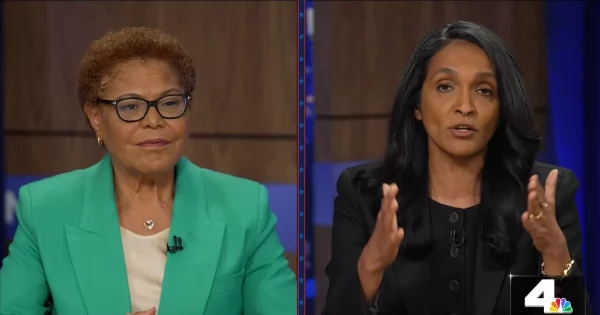
California is poised to stay a pro-equality state, Reyes Salinas said, and Equality California has endorsed Democratic candidates for all state offices and many for Congress. It has not made an endorsement in the hard-fought Los Angeles mayoral race between incumbent Karen Bass and fellow Democrat Nithya Raman, a City Council member who’s endorsed by the Democratic Socialists of America. In California, the top two vote recipients in the primary advance to the general election, regardless of party. Equality California generally focuses on openly LGBTQ+ candidates in local races, Reyes Salinas said.
For the U.S. House, it has endorsed incumbent out officeholders Mark Takano and Robert Garcia, along with three LGBTQ+ newcomers and numerous allies.
Among the newcomers: Scott Wiener, a California state senator, is running for the U.S. House seat in San Francisco, vacated by Nancy Pelosi, who’s retiring. However, Pelosi has endorsed San Francisco Supervisor Connie Chan over Wiener. Chan, also a Democrat, is considered more progressive than Wiener. Wiener announced his campaign without Pelosi’s “formal blessing,” according to The San Francisco Standard, and they had already had their differences, so that may explain their rift.
Bisexual woman Tessa Lynn Hodge, a Democrat, is in an uphill battle against incumbent Republican Jay Obernolte in California’s conservative 23rd Congressional District, which covers much of the desert area east of Los Angeles but not the LGBTQ+ haven of Palm Springs.
That city is in the newly redrawn 48th Congressional District, where another bi woman, Democrat Marni von Wilpert, has a better chance of flipping a seat. She has surged ahead of Republican Jim Desmond in the polls. They’re vying for the seat being vacated by anti-LGBTQ+ Republican Darrell Issa. Equality California is holding “Marni-mentum” phone banks on Thursdays leading up to the election; find more info here.
“There really is a lot of opportunity in California,” Reyes Salinas said.
Equality California is holding its Los Angeles Equality Awards this Saturday, October 17, at the Fairmont Century Plaza. They are honoring Assemblymember Rick Chavez Zbur, former EQCA executive director, and entrepreneur Tristan Schukraft, who owns The Abbey in West Hollywood.
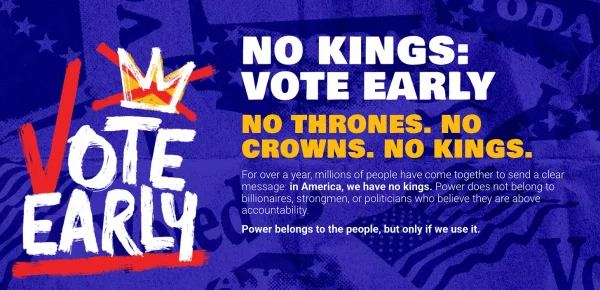
Please attend your local No Kings – Vote Early Rallies.
Here are some of the SoCal locations, via LAist:
- Burbank: 10 a.m. to noon at Abraham Lincoln Park
- Culver City: 11 a.m. to 12:30 p.m. at Culver City Hall
- Downtown LA: 1 to 5 p.m. at Gloria Molina Grand Park
- Fontana: 10 a.m. to 3 p.m. at Seville Park
- Huntington Beach: 10 a.m. to 1 p.m. at Huntington Beach Pier
- Irvine: 3. to 5 p.m. at Trabuco Center
- Pasadena: 11 a.m. to 1 p.m. at Colorado Boulevard and Fair Oaks Avenue
- Riverside: 11 a.m. to 1 p.m. at Market Street and University Avenue
- Santa Clarita: 9 a.m. to noon at Valencia Boulevard and McBean Parkway
- Torrance: 11 a.m. to 1 p.m. at Torrance City Hall
- Whittier: 12:30 to 2 p.m. at Whittier City Hall
This is a cross-post from Karen’s LGBTQ+ Freedom Fighters Substack.
LGBTQ+ Youth Mental Health
Zaya Wade to be honored by LA LGBT Center with Model of Pride award
Model and queer advocate Zaya Wade will receive the Los Angeles LGBT Center’s Model of Pride Award on October 10th.
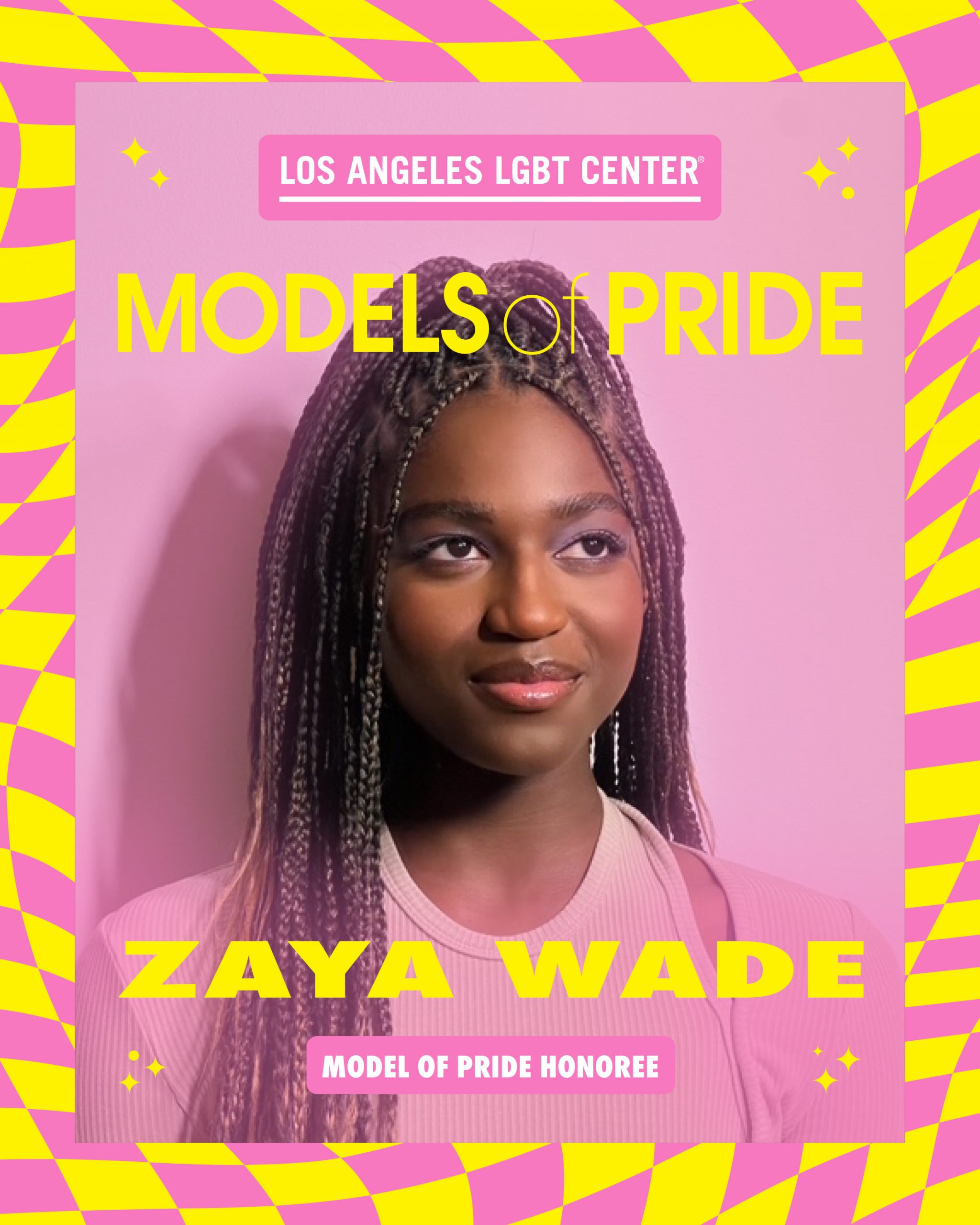
Model and queer advocate Zaya Wade will receive the Los Angeles LGBT Center’s Model of Pride Award on October 10th during the award ceremony, which will take place during the LGBT Center’s 34th annual Models of Pride event. Models of Pride, as detailed on their website, is “the world’s largest free event for LGBTQ+ youth & allies 24 and younger.” The event features workshops, speakers, and panelists with programming specialized around young queer people.
“It’s very nerve-racking. It’s also a little surreal,” said Wade about being given the award. Wade said she never set out to be an advocate and that her passion for speaking up for queer rights comes from a very personal place. “I guess a large part of what has been considered as my advocacy for our community has really been me just trying to figure out who I am,” she said.
Wade gained global notoriety when she was 12 years old after she publicly came out as transgender. The daughter of basketball superstar Dwayne Wade, her transition sparked public discussion about trans youth, familial support, and LGBTQ acceptance. She has since gone on to have a successful modeling career, working for brands like Miu Miu and Puma, and has started her own queer youth advocacy group, Translatable.
Wade is aware that her public coming out story and her family’s supportive actions have been inspiring to many in the queer community, but insists she’s always just been trying to do what felt authentic. “I’ve just been growing up in the public eye, and it’s managed to have such a wonderful impact on so many people’s lives. But it wasn’t super intentional,” she said. “I think a lot of what really resonates with people is just those moments with family and being able to see the result of a loving family in an accepting household.”
Wade credits much of her success to her family’s support and considers them role models in her own life. “I’ve been able to see my father succeed… in spaces that people didn’t think he should succeed in or didn’t expect him to,” she said. “For him to kind of break down those barriers that society wanted to put up… that was something that I carried with me knowing I was queer. I think that was my main inspiration as a child growing up.”
Queer kids around the nation are dealing with additional hardship because of federal policies that target them, especially trans youth. These impacts came to Los Angeles last year when Children’s Hospital Los Angeles indefinitely suspended its gender affirming care services, citing threats from the Trump-Vance administration to pull funding from the hospital if the practice continued. Despite the hospital’s closure of its gender clinic, gender affirming care for minors remains legal and is practiced at other health systems in the state.
Wade felt the impact of this policy firsthand, as she had been receiving gender affirming care from CHLA for years. “They were so amazing and had so many lovely doctors that I got to personally work with,” Wade said. “I remember that very, very devastating day when CHLA stopped their gender affirming services. I was impacted by it. A lot of people I know were impacted by it. And it really hurt the community. It put a dent in us.”
But despite these challenges, Wade feels more inspired than ever to speak out for the queer community. “You’re definitely not alone,” she said, addressing queer youth. “I’ve been able to see the wonderful work that so many members of our community do to protect us.”
“A trait that I think our community excels in is perseverance,” Wade said. “That’s what we’re all here for. We’re here for each other. We’re here for the younger generations and those who come after us.”
The Los Angeles LGBT Center’s Models of Pride event will take place Saturday, October 10th from 11 am to 4 pm.
Caleb Kaufman is a California Local News Fellow placed with the Los Angeles Blade. The California Local News Fellowship is a state-funded initiative to support and strengthen local news reporting. Learn more about it at fellowships.journalism.berkeley.edu/cafellows.
AIDS and HIV
AIDS Walk Los Angeles set for 42nd year amid growing challenges
APLA Health CEO Craig E. Thompson talks with the Blade about how the fight against HIV/AIDS continues
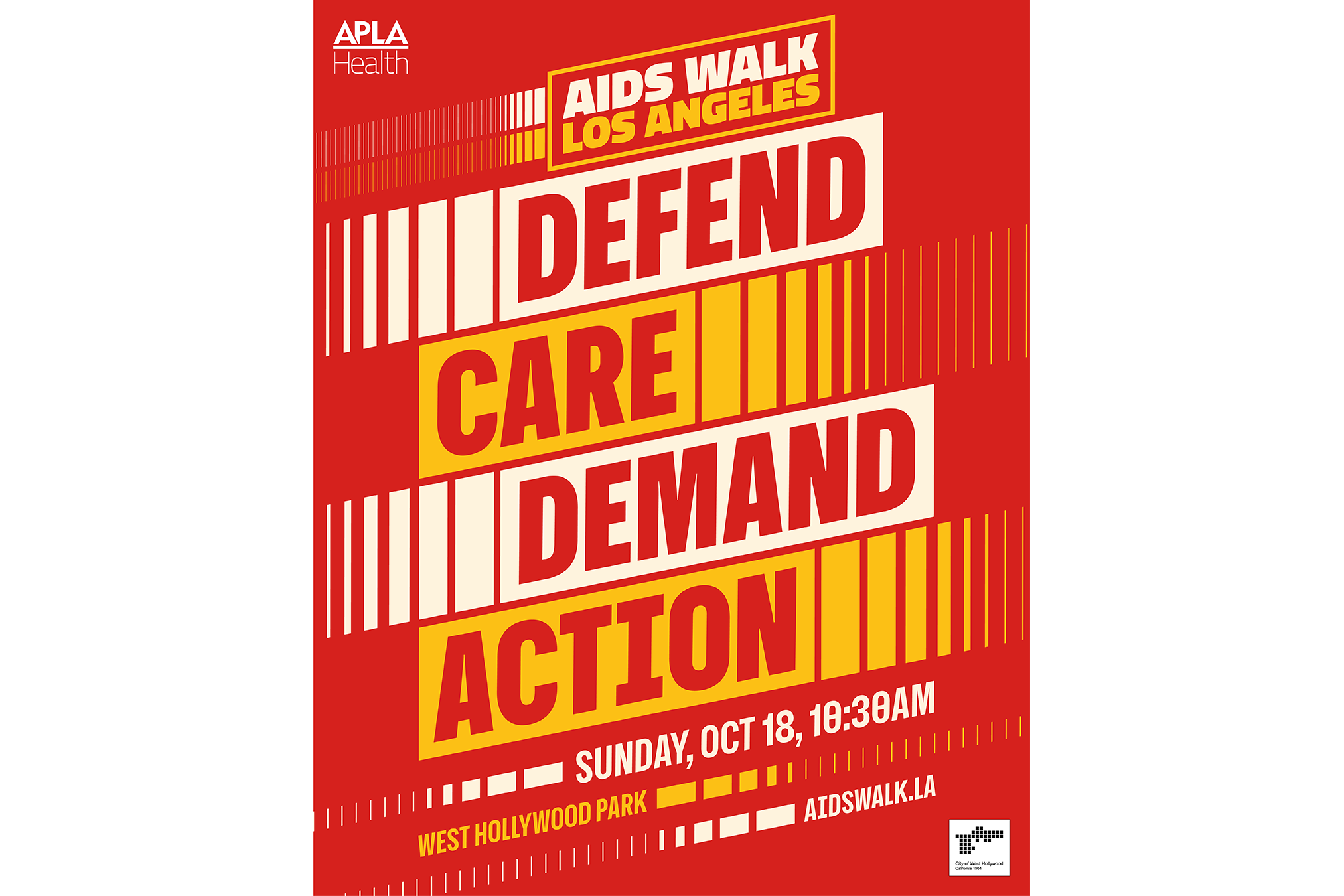
The 42nd annual AIDS Walk Los Angeles will take place on Sunday, October 18th at West Hollywood Park. Participants are set to march a two-mile loop around West Hollywood and hear speeches from organizers and HIV/AIDS advocates.
The Los Angeles Blade spoke with Craig E. Thompson, CEO of APLA Health, the event’s organizer, about the continued importance of the fundraising event and the challenges facing AIDS research, healthcare, and advocacy.
“The idea that HIV is over is the most dangerous myth out there,” Thompson said in a written statement. According to Thompson, increased options for HIV treatment and prevention have created a public perception that AIDS is no longer a pressing issue and have led to a decrease in participation and fundraising at AIDS Walk LA. “HIV fundraisers across the country are seeing this decline,” he said.
But recent federal cuts and policy changes have created new obstacles to ending the HIV and AIDS epidemic. Congress has proposed cuts that would strip away nearly one billion dollars in HIV funding, mainly impacting prevention and outreach. And earlier this year, the Trump-Vance administration ended nearly 100 community organizations’ HIV-prevention grants, opting instead to direct the money to state and local health departments.
These funding cuts have been felt by APLA Health, which last year was one of the California HIV prevention groups impacted by a 20 million dollar funding freeze. The freeze was eventually overturned, but Thompson still fears future cuts from the federal administration. “Over the past year we took cuts to our food pantry program, PrEP navigation, housing, and more,” he said. “Thanks to relentless advocacy and partners at the state and county who stepped up, much of that funding has been restored,” adding, “but restored is not the same as safe.”
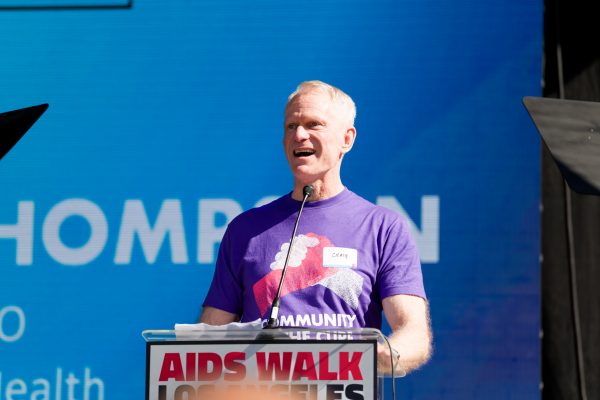
Craig E. Thompson speaks at AIDS Walk Los Angeles 2025. (Photo courtesy of Craig Allyn)
Thompson fears that continued divestment from HIV healthcare and prevention could harm vulnerable communities. “The burden once again lands on the shoulders of those with the least power and the least access to care,” he said. “New infections fall hardest on people of color, transgender women, and those in low-income communities. Every one of those diagnoses could have been prevented.”
Non-HIV-specific federal policies also pose harm to APLA Health’s clients, the biggest of which is cuts and decreased eligibility for Medi-Cal, the state’s Medicaid program. “Medi-Cal is how a huge share of our patients get care, and the federal cuts will hit hard,” Thompson said. “California is covering much of the cost through next summer, … but a patch is not a plan,” he added. And a new policy starting in 2027 will mean that some Medi-Cal recipients will soon have to recertify their coverage twice a year instead of once. “That’s a mountain of paperwork,” Thompson said. “It’s a way of quietly cutting people off without having to say it out loud.”
Despite these current challenges, Thompson sees this year’s AIDS Walk LA as an effective way to help those living with HIV and AIDS at a time when they need support the most. “Funds raised by AIDS Walk LA stay in Los Angeles County and pay for wraparound HIV care and prevention,” he said. This includes funding medical care, PrEP prevention, housing, food pantries, and more. “These programs form the safety net that keeps our community healthy, and the Walk helps hold it together,” Thompson said. Last year, the walk raised over a million dollars for APLA Health to fund its services.
“Fighting back works.” Thompson said. “Come angry, come joyful, come exactly as you are. We’ll celebrate our progress and turn that energy into action. Then [we’ll] carry it to the polls 16 days later.”
Registration for the walk is still open.
Caleb Kaufman is a California Local News Fellow placed with the Los Angeles Blade. The California Local News Fellowship is a state-funded initiative to support and strengthen local news reporting. Learn more about it at fellowships.journalism.berkeley.edu/cafellows.
Opinions
Evan Low is not the leader the Victory Fund needs at this moment
The board must recognize what is at stake and act before org’s legacy is lost
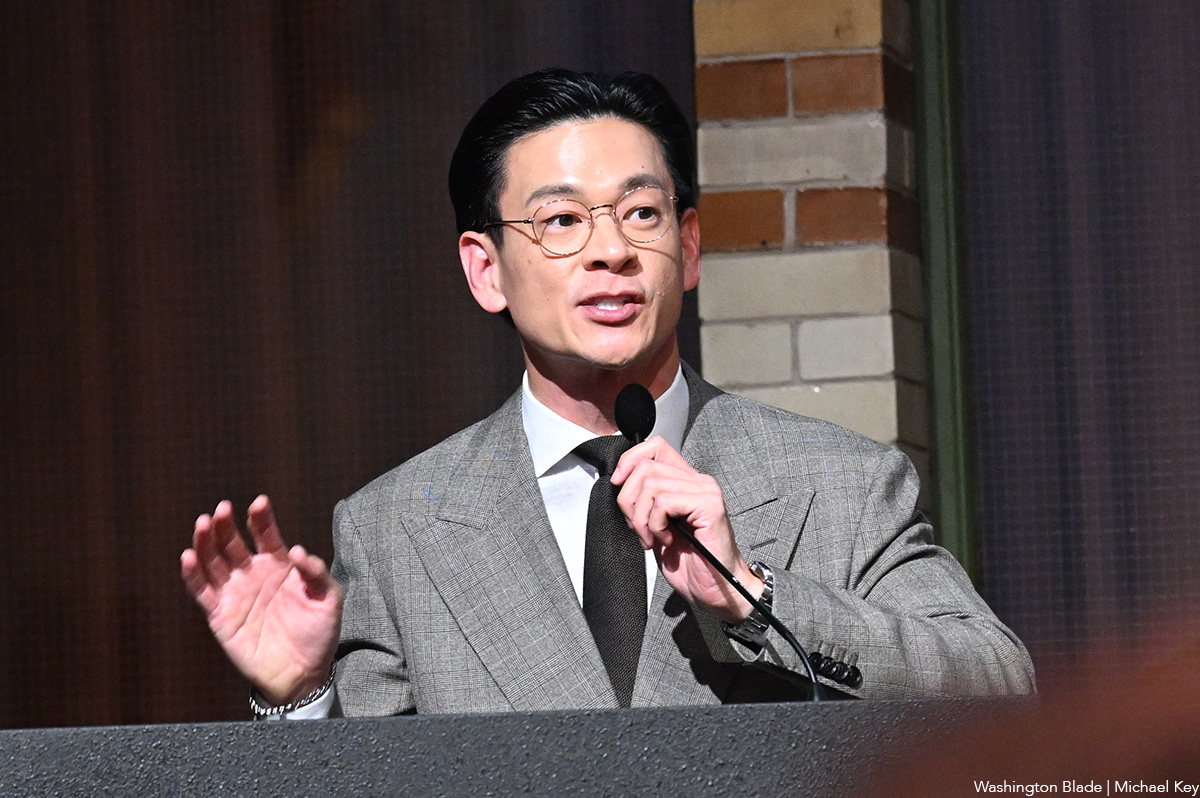
As co-founder and the first executive director of the Victory Fund and Victory Institute, I find the ongoing turmoil between a dozen or more employees and the organization’s new president, Evan Low, deeply distressing—particularly during such a critical election year.
The Victory Fund’s mission has always been clear and important: to elect and support qualified LGBTQ candidates for public office and, in doing so, secure a “seat at the table” from which LGBTQ issues can be advanced. That mission is too important to let internal turmoil diminish it.
I applaud the employees for going public with their concerns. When harassment allegations and other serious complaints threaten to derail an organization that was once so effective, where else are employees supposed to turn? The board of directors has a legal and fiduciary responsibility to the organization and to its donors. Once it received complaints of this magnitude, the board should have undertaken an independent investigation to determine the facts and assess the seriousness of the allegations.
I do not know Mr. Low, nor have I ever met him. Given my role as a founder, former executive director, and major donor, I found that somewhat remarkable. I was also surprised by the organization’s lack of contact with me at any level—whether to seek my financial support, ask for help with fundraising, or simply seek the perspective of someone involved in building the organization from its earliest days.
When Mr. Low was hired, members of the press contacted me about reports concerning his involvement in previous election-law matters. I declined to comment beyond saying that the board had hired an outside search firm to conduct the search and that I was in no position to assess any issues in Mr. Low’s past.
In hindsight, however, I have come to believe that Mr. Low is not the leader the Victory Fund needs at this particular moment. Ultimately, though, this is a matter for the board of directors to resolve. The board has an obligation to act decisively and independently before this internal conflict further damages an organization whose stature, effectiveness, and reputation were built over decades. The work of the founding board, subsequent boards of directors, and former leaders David Mixner, Brian Bond, Chuck Wolfe, and Annise Parker should not be so easily undone.
The Victory Fund once commanded the admiration, confidence, and financial support of countless people—including me. I hope the board recognizes what is at stake and acts before that legacy is lost.
William Waybourn is co-founder and the first executive director of the Victory Fund and Victory Institute.
Commentary
The California Gubernatorial Debate missed getting real
Meanwhile, outgoing Gov. Newsom signs TransLatin@ Coalition healthcare bill

Lackluster. Boring. Unfortunate. The night before California started distributing mail-in ballots in the critical Nov. 3 midterm elections, CNN hosted a debate between gubernatorial candidates Democrat Xavier Becerra and Republican Steve Hilton that looked like two typecast actors in beat-up bumper cars trying to gin up publicity for a lackluster B-movie.
At a time when voters are angry and hungry for authenticity, the debate felt too staged, too stale, and overly rehearsed. The moderators asked expected questions about the cost of living, housing, homelessness, immigration, and AI against the backdrop of the real question: who can best stand up to Donald Trump?
And the candidates dodged specifics. For instance, Hilton proudly touted his “10 New Cities” approach to affordable housing. He wants individual counties to bid on hosting the construction of new master-planned communities and essentially find ways around resistance to new development from local residents and local governments.
Becerra would take a more predictable course, cutting red tape, reducing administrative and bureaucratic obstacles to getting construction permits, and filing lawsuits against cities that refused to approve new housing.
“No locality should have the right to try to stop all of our people in California from having the housing they need,” Becerra said.
That begs so many questions: how is housing being defined here and for whom – for sale, for rent, or shelters as group homes? Must gated communities be open to those they previously restricted based on race, ethnicity, or gender?
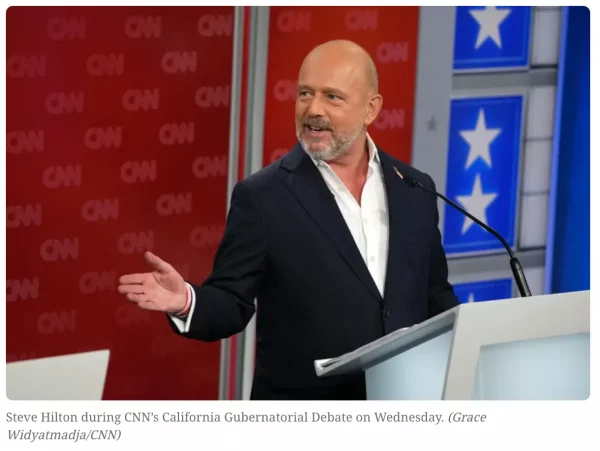
Hilton said he would cut funding for high-speed rail and homelessness nonprofits and reduce state government departments’ budgets by 5% to get his needed funding, per cbs8.com.
Becerra noted that Trump has already blocked federal funding for local homelessness agencies. Would Hilton go after that money? Would he be willing to comply with Trump/Project 2025’s anti-DEI policy to get funding and fast-track other federal assistance?
Becerra has a double-digit lead over Hilton and was given kudos by post-debate commentators for just showing up. But Becerra is also aware of the need not to disrespect the voters by shrugging off the event, as if he has the race locked up. As the old Yankee baseball legend Yogi Berra used to say, “It ain’t over until it’s over.”
A new poll from The Associated Press-NORC Center for Public Affairs Research finds that only 17% of U.S. adults approve of Trump’s handling of the cost of living and 26% approve of Trump’s handling of the economy overall. A sizable majority, 65%, blame high costs on Trump’s tariffs and his war with Iran.
But there was no sense of urgency from either candidate about the importance of this election or in getting out the vote.
With Trump again threatening to impose the Insurgency Act, Democrats are working to stretch the margins of victory to stop cold any discussion about rigged elections.
But neither candidate was asked about that nor how they would handle a local version of the Jan. 6 storming of the Capitol to prevent certification of the vote results.
Nor were they asked how they would react if Trump federalized the National Guard and ordered the military to join ICE in “protecting” polling places and ferreting out anyone without multiple pieces of identification that match their birth certificate.
What can Becerra and Hilton do now to demonstrate the kind of leadership they would bring to the governor’s office in Sacramento?
This is not an idle question.
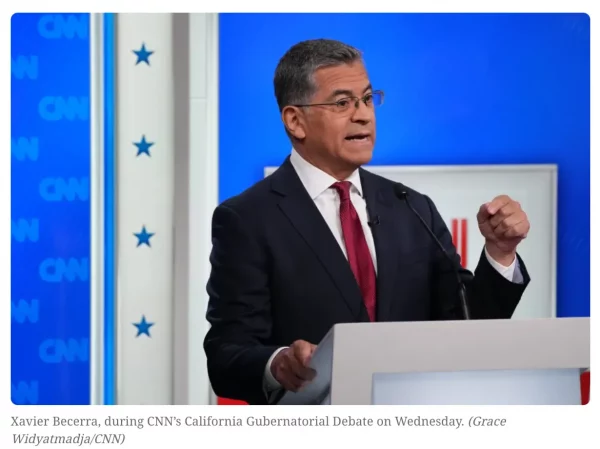
The usually mild-mannered Xavier Becerra – who expressed his displeasure with Hilton’s inaccurate stories by smirking or rolling his eyes – turned to his opponent in what felt like both a real and rehearsed moment of candor and, after noting that Hilton, too, is an immigrant, called out Hilton’s acceptance of Trump’s endorsement, immigration raids and mass deportation campaign.
“You seem to welcome immigrants who look like you, but deport immigrants who look like me,” Becerra said in a breath-stopping moment. Hilton, a former adviser to British Prime Minister David Cameron, apparently had praised the deportation campaign as “perfect” last January on Fox News. He seemed taken aback by Becerra’s comment, which he called “disgraceful.” He then dodged questions about California’s sanctuary state law, which requires law enforcement to limit cooperation with immigration officials. Would he direct California officers to assist in Trump’s ICE campaign?
Hilton wanted to “turn down the temperature” on that debate.
Hilton kept pitching for voters to choose something “different” to change California and fix the mess created by Democrats. Does he fancy himself a more petit Arnold Schwarzenegger, whose triumphant victory in the recall of Gov. Gray Davis made the actor a Republican hero?
Steve Hilton is no Arnold Schwarzenegger.
“You’re going to end up with Trump results if you follow Steve Hilton’s plans,” Becerra said, talking about the Republican’s idea to eliminate income taxes for middle-class Californians that also includes a tax cut for rich Californians.
Hilton countered by blaming long Democratic one-party rule for causing and not fixing the state’s economic troubles.
“All you ever say is ‘Trump, Trump, Trump. And that’s nothing but an insult to every Californian who is desperate for something to change in this state,” Hilton said.
“Trump, Trump, Trump,” the former state attorney general mumbled back.
To gays fond of “The Brady Bunch,” the exchange sounded a little like the infamous whine, “Marcia, Marcia, Marcia!”
But Hilton had a point when noting that Democrats have been “in charge” as the film and TV industry has crumbled with production and jobs moving to other states and countries.
Becerra said he would “fight for Hollywood,” which he awkwardly followed up with dressed-up words for “Hollywood.” It wasn’t enough; it wasn’t cute, and it didn’t work. Losing Hollywood is a big fucking deal.
Becerra might also want to talk to Attorney General Rob Bonta, Superintendent Tony Thurmond, and watch the documentary “Mom’s Club” to understand what’s happening with California schools. It’s taken many, many years, but the religious-right culture wars are winning in the county school board system.
In fact, Sonja Shaw, a Moms for Liberty-endorsed candidate on the conservative Chino Valley Unified School Board, is using the fake “parental rights” messaging to top the polls for California State Superintendent of Public Instruction against San Diego Unified School Board President Richard Barrera.
But there is also good news on the culture war front. According to journalist Erin Reed of the popular Erin in the Morning Substack, a new poll from The 19th and YouGov “finds that more Americans oppose bans on transgender youth care than support them, with the gap narrowing even among Republicans, and that the public now says Republicans talk about transgender issues too much just as often as it says Democrats do, a notable finding given that previous polling had the public faulting Democrats more.”
“Gender-affirming care for transgender minors includes any kind of care designed to support and affirm their gender identity, including therapy, consultations with doctors, hormones or puberty blockers, other medication, and, rarely, surgery. Do you favor or oppose lawmakers banning or restricting gender-affirming care for transgender minors?” the question asks.
“In response, 45% say they oppose lawmakers banning gender-affirming care for trans youth, while only 38% say they support such bans; 17% are not sure. The finding is notable as election-year advertising ramps up around healthcare for transgender youth, and it comes in the wake of severe attacks on that care by the Trump administration,” the poll reports.
Reed adds: “The people running the ads seem to know” about the turn in support. “In a memo to Republican candidates on messaging for the 2026 elections, the American Principles Project, one of the chief architects of anti-trans advertising, states that pressing such attacks ‘may not be sufficient’ for Republicans to win the midterms. That reading is consistent with the generic ballot, where Democrats continue to surge ahead, with multiple polls released in recent weeks showing them leading by double digits.”
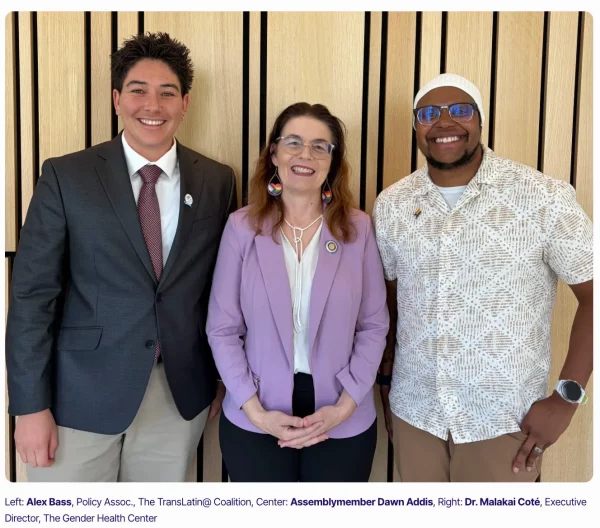
LGBTQ+ Californians continue to press forward. On Wed. Sept. 30, outgoing Gov. Gavin Newsom signed AB 1876, authored by Assemblymember Dawn Addis and sponsored by The TransLatin@ Coalition. The Fair Care for All Act, “strengthens California law against discrimination in health care coverage. For transgender, gender-expansive, and intersex communities, these protections matter at a time when federal safeguards remain vulnerable to change,” the press release reads.
“AB 1876 mandates that if an insurance provider covers a prescribed service for one patient population, then they would cover that same service for all patient populations who need that same care. As law, this prohibits discriminatory categorical exclusions for gender-affirming care or denial of services based on gender identity.”
If elected governor, it is likely that Becerra would proudly uphold and defend this new law. He has long supported LGBTQ+ people.
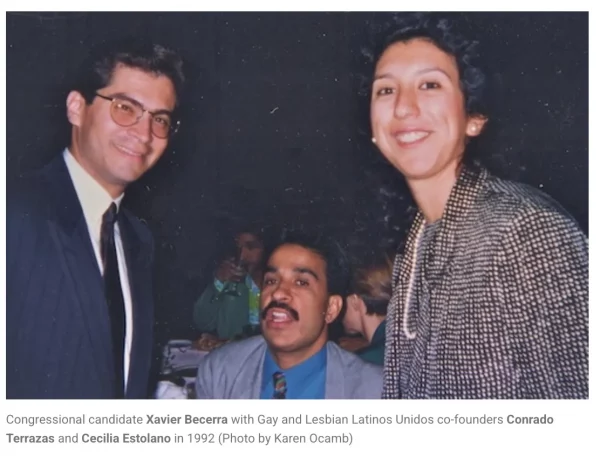
“I’ve always looked at things from the perspective of someone who remembers my dad’s stories where, simply because he was from Mexican heritage, he couldn’t walk into restaurants because of the signs that said ‘no dogs or Mexicans allowed.’ When I ran [for the California Assembly] in 1990,” then-California Attorney General Becerra told me in a 2018 interview, “I ran for office to be able to fight against discrimination.”
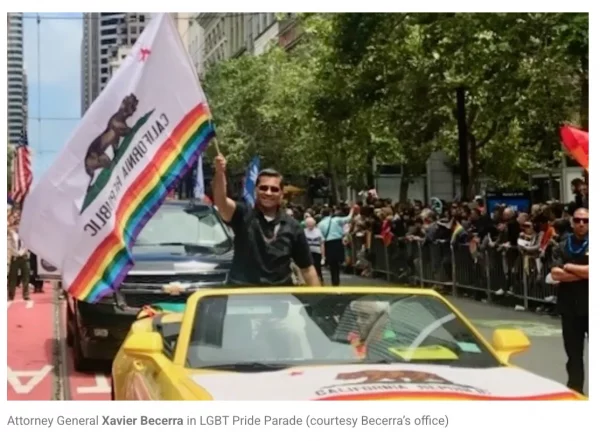
He’s also been on the front line when fighting Trump in the legal milieu.
“It’s chilling to watch Congress abandon its role to put a check on Donald Trump’s excesses,” Becerra told me for a Los Angeles Blade phone interview. “I have no hope for Donald Trump. And I think he’s proven himself repeatedly who he is and what he’ll do. When you have someone who’s that much of a rogue and that dangerous a player, you expect the other branches of government to stand up.”
In every respect, Trump is endangering the health, the security, the economic well-being of the people of the country,” Becerra said. “It’s been a long time since we thought we were this close to having someone press the button that could end up starting some nuclear conflict. But given how erratic Donald Trump is—you just never know what he’s going to come up with next.
“I think that’s probably as bad as it gets when you get to the point of a nuclear conflict. But the fact that we would even talk about that or believe that could be possible for irrational reasons—it makes you just wonder where are the checks and balances that would make sure that one irrational person could not topple the longest living democracy in history.”
Checkout the CalMatters 2026 Midterms Voter Guide. And VOTE!
This is a cross-post from Karen’s LGBTQ+ Freedom Fighters Substack.
AIDS and HIV
Science takes the runway: HIV Unwrapped at NYFW
At this year’s New York Fashion Week, HIV Unwrapped has put science on the runway, calling attention to today’s breakthrough treatments, the U=U message, and the HIV/AIDS epidemic that forever changed New York’s art and cultural scene
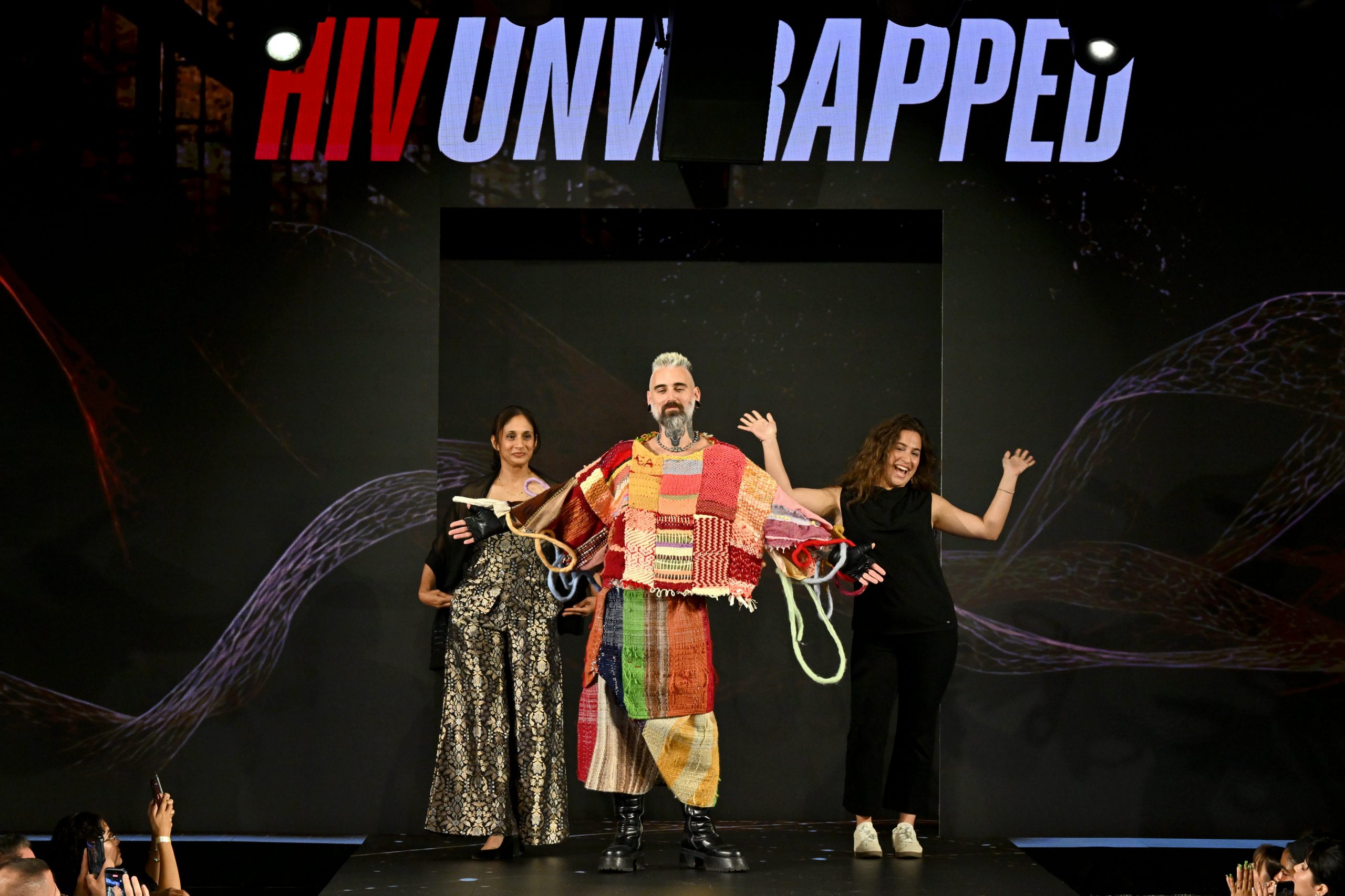
Fashion has always been one step forward, and this past NYC Fashion Week at Sony Hall, the runway brought with it science, history, and activism in addition to this season’s hottest hemline. It also came with a reminder that HIV is quite a different story than it was four decades ago.
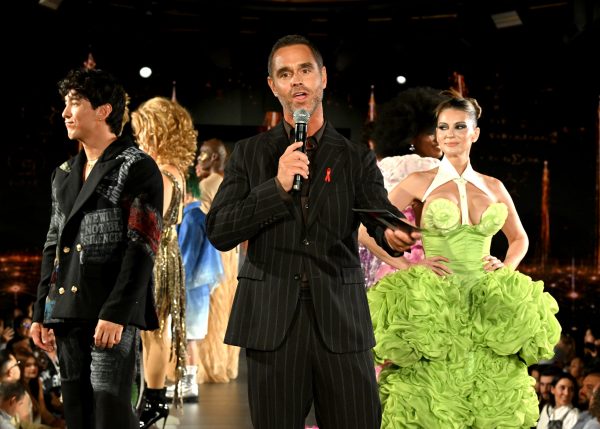
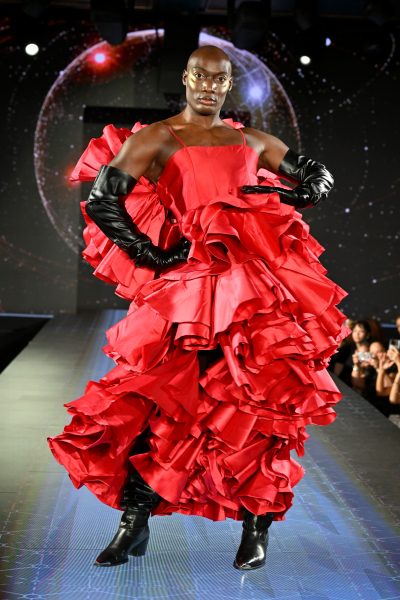
For the second U.S. edition of HIV Unwrapped, +Life returned to New York Fashion Week with an intentionally unconventional accessory – one of HIV’s leading scientists. In collaboration with the Council of Fashion Designers of America (CFDA), with support from Gilead Sciences and in partnership with ASHM, the event beautifully brought together designers, advocates, performers, and researchers in an effort to turn HIV into a conversation people would not just acknowledge but actually discuss. As one of the event’s organizers said, “HIV Unwrapped started with this slightly crazy idea that fashion could make people stop and pay attention to HIV in a completely different way.”
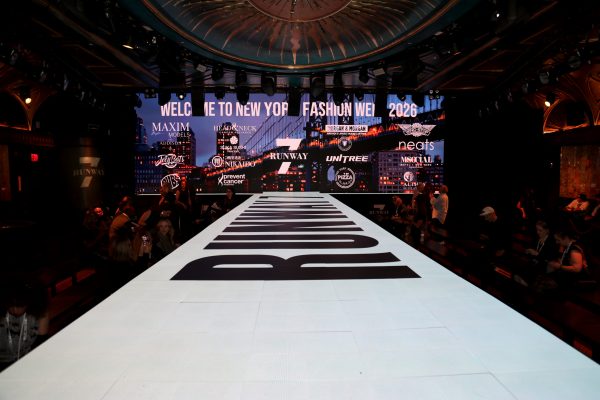
The evening paired up up-and-coming Parsons School of Design student artists with HIV experts including Demetre Daskalakis, Allison Agwu and LaRon Nelson. Models including Lionel Moise, Shia Ho and Michael Macneal helped turn molecular science and resilience into runway-ready looks. Special guests included the likes of CFDA CEO Steven Kolb, Peppermint, Javier Muñoz, Susanne Bartsch, and alice + olivia President Deanna Berkeley.
Underneath the couture pulsed a very real story that New York knows particularly well. The city was at the epicenter of the AIDS epidemic. In 1981, New York disease detectives began to track the burgeoning crisis, and by the mid-1980s HIV/AIDS was decimating queer communities across NYC. AIDS deaths in New York eventually peaked at 7,102 in 1994. And New York artists did anything but sit quietly and spectate.
Like many other places around the world at the time, the AIDS epidemic transformed NYC’s cultural landscape, especially its downtown art, theater, music, and nightlife spheres. Artists were not simply documenting the epidemic. They were organizing, protesting, fundraising, and creating work designed to force the politicians as well as the general public to acknowledge it.
ACT UP, created in New York in 1987, became a pivotal force. Groups like Gran Fury used graphic design in their activism, covering the streets with posters and visual campaigns. The Met describes Gran Fury as ACT UP’s “unofficial propaganda ministry,” with its work helping push AIDS past the gallery and directly into public space.
The art world itself was losing people. Artists like David Wojnarowicz and Keith Haring confronted the epidemic through their artwork, while institutions and artists grappled with the pressing question of what art could do in the face of widespread death. Gregg Bordowitz morphed his own practice in response to the crisis, documenting protests and the lives of folks living with and dying from HIV/AIDS.
That history makes the premise of HIV Unwrapped unquestionably resonant. Fashion, like all activist art, is a language of visibility, and visibility is significant because one of the most considerable changes in HIV has happened not on a runway but in science itself.
The treatments available during the worst times of the epidemic were difficult, toxic, and largely inaccessible to so many in need of it. AZT became the first approved antiretroviral drug in 1987, soon followed by increasingly effective combinations of medicines. By the middle of the ‘90s, highly active antiretroviral therapy changed HIV treatment and contributed to a significant decline in AIDS deaths across the country. Fast forward to today, HIV treatment is able to suppress the virus to undetectable levels.
According to the CDC, folks living with HIV who take treatment as prescribed and maintain an undetectable viral load have zero risk of transmitting HIV sexually. The U=U campaign, created by the Prevention Access Campaign in 2016, changed a scientific finding into a community-led global movement and provided a powerful antidote to stigma.
This distinction is important. The history of HIV is also a story about fear, misinformation, and stigma just as much as it is about a devastating virus. Science has significantly advanced, and the public’s understanding has often fallen behind. And this is where HIV Unwrapped steps forward.
“For me, HIV Unwrapped has always been about getting HIV out of the usual spaces and putting it somewhere people don’t expect to find it,” the event’s organizers explained. “If someone comes for the fashion, loves what they see and walks away thinking about HIV differently, even just a little, then that’s the whole point.”
What a poetically poignant proposition it is to put scientists on the runway, put the designers in conversation with the scientists, sprinkle in a dozen of so talented models, performers and activists, turn up the lights, and see if culture can help science garner the attention it very appropriately deserves. HIV has already changed medicine and activism. It’s high time we change the conversation around it as well.
AIDS and HIV
Turning grief into advocacy: Debbie Allen shares on loss, love, and the power of speaking out
After losing an entire generation of friends and colleagues to the epidemic, Debbie Allen dedicates her life and platform to HIV advocacy, pushing the public to go beyond the virus to see the person behind it.
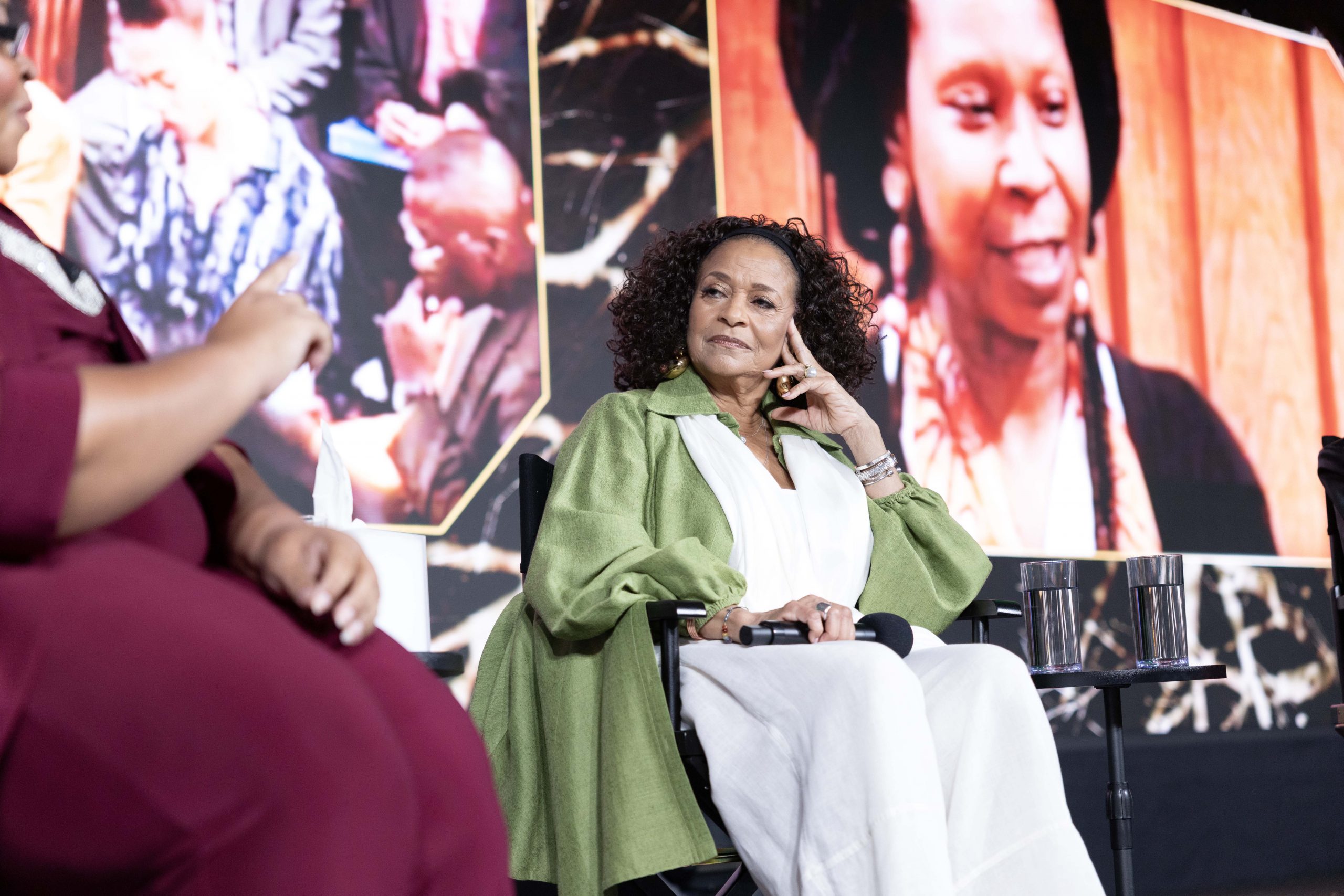
For somebody like Debbie Allen, HIV advocacy lies at the heart of their life and career. In the 1980s, at a time when HIV/AIDS devastated the performing arts community, Allen witnessed friends, performers, directors, and choreographers alike disappear. This experience turned her personal grief into a decades-long commitment to advocacy. From directing a landmark A Different World episode about HIV at a time when even just saying the word on television could make networks sweat, to continuing her work today, Allen has continuously utilized the biggest stage available to her to ensure that the conversation stays alive.
Now the conversation has changed from four decades ago, yet Allen believes it still needs to get louder. Medical advances have transformed HIV from the crisis it was into a manageable condition for many folks. Yet stigma, social challenges, and the significant need for mental, emotional, and community support still persist. In our conversation, Allen opens up about the losses that influenced her activism, the power of media and the arts to change public perceptions, and why “whole health” means looking beyond the virus to the full human person living with it. Her message is simple and solid – no one should have to navigate HIV alone.
You have stood alongside the HIV community for four decades, and counting. When you look back to the start of that journey, what first got you involved and what has kept you connected and dedicated for all of this time?
My fight against HIV began in the ‘80s, when the epidemic devastated the performing arts community, and I lost my entire world—my friends, dancers, directors, and choreographers. That profound grief fueled my mission to use my voice for advocacy—from directing the groundbreaking HIV episode on A Different World to fight stigma to standing on stages today to continue to raise awareness.
This is a mission that continues to stay near and dear to my heart so that all people impacted by HIV—whether they are living with HIV or supporting someone living with HIV—have the resources and support they deserve.
How have those experiences with your own personal losses due to HIV impacted the way you understand the virus?
If we look back to 40 years ago, HIV impacted an entire generation. We experienced incredible loss and heartache that I will never forget. This experience made me realize how vulnerable we are as humans and how much support we truly need in our healthcare journeys. And while incredible progress has been made, I also understand so much more needs to be done—from combating stigma, providing additional resources, and ensuring ongoing support for people who are living with HIV today.
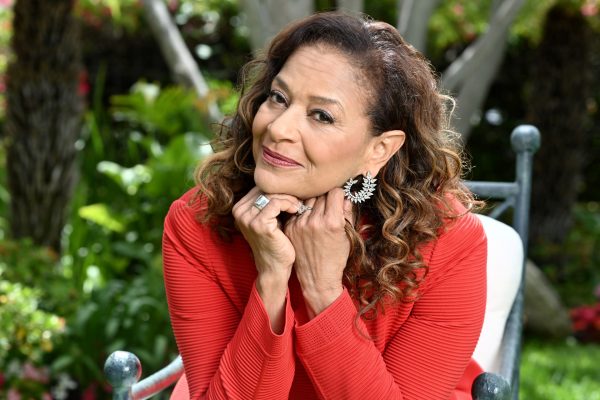
You’ve built an extraordinary career as a dancer, choreographer, director, producer, actor, educator, and advocate. How has each part of your career influenced the others? What have you learned about leadership from working with artists and performers?
Being a dancer, choreographer, director, producer, actor, and educator has helped shape the person I am today. Each experience has inspired another. What unifies each role is my ability to lead and learn from everyone I’m working with. It’s also these opportunities that have afforded me an incredible platform for my advocacy efforts. I strive to bring leadership approaches from my various stages—in a very literal sense—to a national stage as I support a variety of initiatives, such as HIV awareness.
The medical landscape around HIV has evolved dramatically since you first began your advocacy. What is one thing you wish younger folks understood about what the first years of the epidemic were really like?
Thanks to medical advancements, we can now look at so much more than HIV status and this is a tremendous step forward. As someone who has always believed in the power of mind, body, and spirit, I want today’s generation to understand that people living with HIV need integrated support for their mental, emotional, physical, and social well-being because all these elements are deeply connected.
We need to broaden the discussion around HIV management, and that’s why I’m proud to work with Merck on Your Hive of Whole Health, which addresses factors such as managing one’s mental wellness, co-occurring conditions, social drivers, and other life challenges.
Your Hive of Whole Health is built around the idea that health doesn’t happen in isolation. What does “whole health” mean to you in your own life?
Health doesn’t happen in isolation. People living with HIV need comprehensive support systems around them—whether that’s family, chosen family, neighbors, community or religious leaders, or care team members; they are a part of the whole health journey.
To me, whole health means looking beyond the virus to truly understand the unique challenges that people face so they have the full support they need. Having supported loved ones on their health journeys and managing my own well-being, I know that comprehensive support is key.
That’s the beauty of Your Hive of Whole Health. In fact, the idea behind the program is simple. Just as a hive depends on the strength of many bees working together, people living with HIV often rely on a network of support that includes healthcare providers, advocates, family, friends, and peers. Your Hive of Whole Health provides tools and resources to help individuals build and strengthen those connections.
For someone living with HIV, what kinds of support beyond medical treatment do you think can make the most significant difference in their lives?
As people are living longer with HIV and managing additional health conditions, like high blood pressure, high cholesterol, and diabetes, having the right support system in place can play an increasingly important role.
Understanding these other conditions, as well as navigating social challenges and other life challenges such as not having access to affordable or healthy food, not having support from family or friends, struggling with stable housing, or facing misconceptions about HIV is critical. It’s awareness, understanding, and a “Hive” of support that can make a difference.
People can go to HiveofWholeHealth.com to learn more, access resources, and build their own Hive.
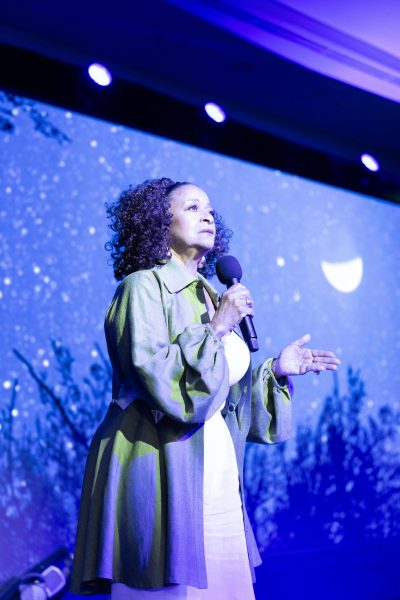
Many folks tend to talk about the HIV epidemic as if it is something of the past. What do you think we risk losing when we stop talking about HIV and the people whose lives have been affected by it?
This journey began for all of us in a time of intense fear, isolation, and crisis. As I reflect back to the early ‘90s, it was an honor to create the first network television show on A Different World to address the epidemic at a time when people were afraid to even say the word. The network and advertisers were very hesitant about talking about HIV on TV in this way at that time. It really hadn’t been done before. But I stood my ground and pushed forward. As a result, we were able to bring the epidemic into living rooms, confronting fear, stigma, and misinformation. It changed the conversation, especially in Black communities, where the impact was deeply felt. It also spotlighted how HIV impacted women, which was not formally recognized by health agencies until years later.
Today, we can truly celebrate the united and unbreakable spirit of 45 years of the HIV movement and champion a new era of whole health. But there is still so much more to be done. We must continue shining a light on issues that matter most. We must spotlight these across all forms of entertainment, media, and digital storytelling to drive awareness, understanding, and support. That’s why programs like Merck’s Your Hive of Whole Health are so important – we keep the community and their needs at the center and provide much-needed support.
If nothing else, what is one message you’d like for our readers to take away from this interview?
I want people living with HIV and the community around them to know they are not alone. There’s a whole community of support—a Hive—that can help them on their journeys with HIV.
Go to HiveofWholeHealth.com to learn more about the emotional, physical, social, and mental aspects of living with HIV. Build that Hive around you because whole health is better together.
Commentary
Trump to the people: F**k the free press

One of the biggest problems for Donald Trump, the petulant transactional president, is that the best of the American free press won’t go along with his constant demands for unearned praise. So on Friday, Trump announced on Truth Social that CNN, MS NOW, and Politico were all banned from the White House, “effective immediately,” because of “fake news” and “dishonest reporting.”
When asked during an afternoon press conference in the Oval Office why he was imposing the ban, Trump – the New Yorker who used to court the city’s notorious tabloids– said: “It’s sick. I mean, there’s something wrong with a country that can allow people to write purposely negative stories. Now, if they want to write them, that’s fine. But I don’t have to let them into my — into the people’s house.”
On Saturday morning, reporters from those media outlets showing up for duty were denied access to the White House campus and were stripped of their press passes. CNN, MS NOW, and Politico all issued statements of protest about Trump’s clear violation of the First Amendment, vowed solidarity, and pledged continued coverage despite being denied access – just as Sec. of Defense Pete Hegseth receives blistering coverage from reporters outside the Pentagon over incompetence in waging the war in Iran and plans to integrate AI into military systems.
For all the many, many scary reasons this incident is a very big deal, one that has received less focus is that apparently no one knows why Trump has critically upped the ante in his ongoing poker game with the press now. Is he just issuing orders without any advice, consent, or guardrails?
“Some White House staffers, including members of the press shop, were caught off guard by the announcement. A source familiar with the matter said those staffers were left scrambling to learn more details,” CNN reported.
Lack of a clear reason also bothered Politico Playbook, which “called sources in and around the administration to find out why — after months of low approval ratings for the president and his signature issues — now?”
They learned that “many senior staff were surprised by the directive, which happened while Chief of Staff Susie Wiles was out of town, and weren’t aware it was coming until they saw the post, according to three people close to the White House with knowledge of conversations in the West Wing.”
Then on Friday, “the press shop was blindsided and unsure of how to respond, with one aide simply pointing back to Trump’s Truth Social post.”
Importantly, Politico reported, “They’re taking it seriously. ‘It’s real and permanent as far as POTUS is concerned,’ the person said.” More outlets – such as the New York Times and the Washington Post – to follow.
The BBC also speculated about the reasons for the ban now.
“The president’s frustration at the media, however, came after a week of setbacks in which major institutions handed him a series of losses across his agenda,” the British Broadcasting Corporation reported.
“First, the Supreme Court blocked his plan to restrict mail-in voting ahead of the midterms. This prompted Trump to lash out at the court’s justices, including those he had appointed. ‘These are not the people I interviewed to serve on the United States Supreme Court,’ he said.”
The BBC also noted that, in addition to record-low approval ratings for his second term, the Federal Reserve just rejected his pressure and raised interest rates. And a judge ordered his administration “to give 30 days’ notice before making any changes to the Kennedy Center arts venue in Washington DC after the president warned it could be ‘ripped down.’”
Along with most other media outlets, the BBC also noted that “The First Amendment to the US Constitution forbids Congress from ‘abridging’ the freedom of the press. It is language that courts have long interpreted as preventing the government from discriminating against the media based on the content of their coverage.”
Facing political headwinds going into the midterms, might Trump’s restriction of access to “friendly” press have the trickle-down impact of delivering his message to people who consumer their news from local and smaller media outlets?
But in a report on the White House Correspondents Association dinner, I included a section that points to a more sinister reason – journalists are the “enemy of the people” so trust no one else but Trump.
“Whether it’s reporting on credible truth-tellers calling out a world leader incompetently prosecuting a mindless war or a specialty journalist clearing up snarky disinformation that leads to harassment of minority individuals, press freedom – upheld by the First Amendment – is as precious as water and clean air to the survival of a democratic body.
But what happens when the fog of war is intentionally generated by the government ethical journalists are tasked to cover it in their public service to the people?
As legendary CBS News journalist Marvin Kalb noted in his 2018 book Enemy of the People: Trump’s War on the Press, the New McCarthyism, and the Threat to American Democracy, it was the current President who started the war with his dangerous assertions that the news media is “fake news” and “Fake News is Truly the ENEMY OF THE PEOPLE!”
“Shortly after assuming office in January 2017, President Donald Trump accused the press of being an ‘enemy of the American people,” reads a Harvard Kennedy School Abstract for Kalb’s book.
“Twentieth-century dictators—notably, Stalin, Hitler, and Mao—had all denounced their critics, especially the press, as ‘enemies of the people.’ Their goal was to delegitimize the work of the press as ‘fake news’ and create confusion in the public mind about what’s real and what isn’t; what can be trusted and what can’t be. That, it seems, is also Trump’s goal.”
This is a cross-post from Karen’s LGBTQ+ Freedom Fighters Substack.

Actor Kal Penn on the real lesson of ‘Trust Me, I’m a Doctor’

40 years later, AFI Fest continues to offer a robust selection of queer and international films

Supreme Court blocks White House anti-trans prison policy

How anti-trans backlash to James Talarico spread like wildfire

Those dreadful ballot propositions are important

Making waves in the desert: How Brad Fuhr and KGAY keep the Coachella Valley connected

Meet the voice of Palm Springs: an interview with KGAY 103.1’s John Taylor

From ‘La Bola Negra’ to ‘Coward,’ here are this award season’s must-watch queer films

Fortune Feimster has always taken representation through comedy seriously

Key Midterm Election races as SoCal joins No Kings ‘Vote Early’ rallies on Saturday
-
 Palm Springs3 days ago
Making waves in the desert: How Brad Fuhr and KGAY keep the Coachella Valley connected
-
 Palm Springs2 days ago
Meet the voice of Palm Springs: an interview with KGAY 103.1’s John Taylor
-
 Movies3 days ago
From ‘La Bola Negra’ to ‘Coward,’ here are this award season’s must-watch queer films
-
 a&e features2 days ago
Fortune Feimster has always taken representation through comedy seriously
-
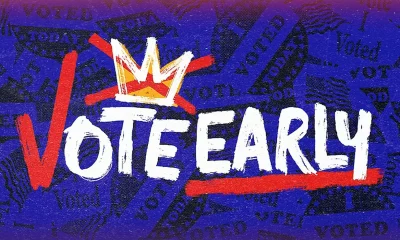 Commentary4 days ago
Key Midterm Election races as SoCal joins No Kings ‘Vote Early’ rallies on Saturday
-
 Dance4 days ago
‘Male Aesthetic’ challenges conventional tropes of masculinity through dance at Nickerson-Rossi Dance Company
-
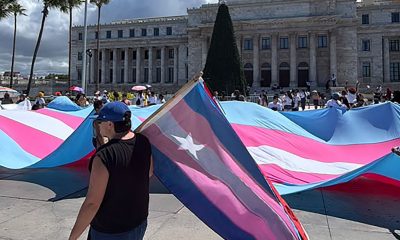
 Puerto Rico2 days ago
Annual National Trans Visibility March takes place in Puerto Rico
-
 Brazil1 day ago
VIDEO: Interview with executive director of VoteLGBT (Institute for Full Citizenship) in Brazil
-

 Palm Springs2 days ago
A quick visitor’s guide to Palm Springs before the winter
-

 AIDS and HIV2 days ago
AIDS Walk Los Angeles takes to the streets in West Hollywood while raising money for HIV/AIDS Care