
Asia
LGBT Rights Advocacy China shuts down, faced government censorship
“There may still be many uncertainties in the future, but we look forward to the day when clouds have dispersed & we can see blue sky again”
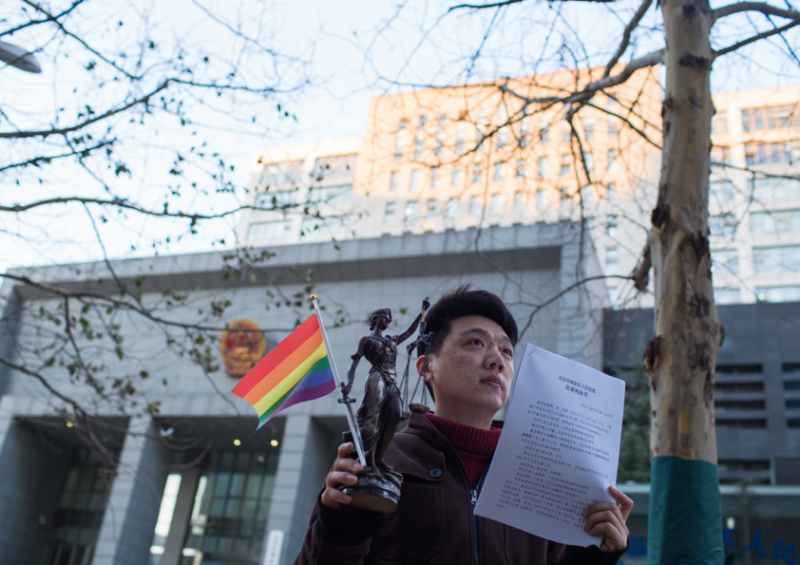
GUANGZHOU, Guangdong Province, China – A prominent LGBTQ+ equality rights legal advocacy group has indefinitely suspended operations Friday. LGBT Rights Advocacy China, co-founded by Peng Yanzi and AQiang in the city of Guangzhou in 2013, the group focused its efforts on securing legal rights for LGBTQ individuals through strategic lawsuits in China’s legal system.
After the announcing that it was suspending its advocacy work on China’s two leading social media platforms of Weibo and WeChat, as well as halting all legal activity around the country, the group communicated via WeChat: “We are grateful for all your companionship and support over the years. Please accept our sincere apologies for any inconvenience caused.
“There may still be many uncertainties in the future, but we look forward to the day when the clouds have dispersed and we can see the blue sky again”.
The group advocated for same-sex marriage and fought workplace discrimination by helping individuals sue their former employers. In one high profile case that brought global attention in 2014, Peng Yanzi went undercover to a facility that claimed it could “treat” homosexuality with electroshock therapy. He sued the company and won the Associated Press reported.
In 2020, the group helped an LGBTQ+ activist identified only as Xixi, who at the time was a university student in Guangzhou, sue an academic publisher for describing homosexuality as a “psychological disorder” in a widely available textbook the South China Post reported. The court ultimately ruled in the publisher’s favour.
A person familiar with the situation who lives in China and speaking with the Blade after requesting anonymity, pointed to this past year’s crackdown by the national government in Beijing targeting online LGBTQ+ student groups, LGBTQ+ support and advocacy groups, as well as several leading LGBTQ+ Chinese activists. ” LGBT Rights Advocacy China faced censorship by the government and having its voice stilled on social media,” they said.
In July, the Cyberspace Administration of China (CAC) ( Chinese: 国家互联网信息办公室) permanently disabled and deleted dozens of LGBTQ student organizations WeChat accounts ( Chinese: 请在电脑浏览器上访问) across China.
The accounts, which were primarily managed by students, advocate LGBTQ and gender equality, and providing support to LGBTQ students on university and college campuses.
The pages of those accounts now display the message: “According to internet regulations, we have screened all content and suspended this account.” The names of the accounts have been changed to “Unnamed.”
The censorship sparked immediate outrage by some LGBTQ groups while others fearful of escalation remained silent. Two of the groups affected issued separate media statements posted to the Chinese social media platform Sina Weibo ( Chinese: 新浪微博).
“Our activities will not stop due to the closure. On the contrary, we hope to use this opportunity to start again with a continued focus on gender and society, and to embrace courage and love,” Fudan University’s Zhihe Society Fudan University’s Zhihe Society said.
Tsinghua University’s Wudaokou Purple said that although it was “frustrated” that its “years of hard work” had been “burned” at one go, it has only made them closer. The schools are rated as two of China’s top universities and colleges.
A human rights activist from Hong Kong who spoke on the condition of remaining anonymous, pointed out that in recent years the government has moved towards becoming more intolerant and homophobic towards LGBTQ people.
Acceptance of LGBTQ individuals in China has varied historically. In modern China, homosexuality is neither a crime nor officially regarded as an illness in China. For decades, the legal status of consensual same-sex activity between men was ambiguous- although at one point consensual sexual acts between people of the same sex were banned under a law on hooliganism in 1979 with punishments ranging from imprisonment to execution. That was cleared up in the revised criminal code of 1997 as China moved to decriminalize homosexuality.
In 2001, the Chinese Society of Psychiatry removed homosexuality from its list of mental disorders. This is consistent with the consensus of global medical associations that homosexuality is not a medical condition. But same-sex marriage is still illegal and the topic remains taboo socially.
Chinese government officials increasingly push the narrative that LGBTQ+ culture is an imported “Western” idea, while expressing concern that the country’s big tech platforms are spreading subversive views and ideas that could upend traditional ideas of gender.
In September, in an action promulgated by the government of President and General Secretary of the Chinese Communist Party Xi Jinping this week, China’s National Radio and Television Administration (NRTA) ( Chinese: 国家广播电视总局) ordered broadcasters to “resolutely put an end to sissy men and other abnormal esthetics.”
In the directive, the NRTA used the term “Niang pao (Chinese: 娘炮)” which means “girlie guns” — more commonly translated as “sissy” an offensive description of effeminate men. The directive is seen as taking direct aim at the idols of the Chinese music industry who tend to be in their late teens to mid twenties, are thin, and dress in what could be loosely deemed an androgynously ambiguous manner.
This latest move is seen by some China-watchers as another in a decades long battle by Beijing to combat Western influences on the younger generations of Chinese.
Conservatives in Chinese society and government charge that young Chinese youth are turning into ‘soft boys,’ reflecting concern that the Chinese pop stars who have embraced the pop-culture phenomenon in part due to the influence of the South Korean pop music and all-encompassing genre known as K-Pop, are failing to encourage China’s young men to be masculine enough.
In some government circles the source told the Blade its seen as overtly homosexual and targeting young Chinese males. One area that has raised the ire of officials is video games.
In September rules that took effect that limits anyone under 18 to three hours per week of online games and prohibits play on school days.
Game developers already were required to submit new titles for government approval before they could be released. Officials have called on them to add nationalistic themes, the AP reported.
“There is a tendency in China for some people to relate homosexuality and LGBT people to Western lifestyles or capitalistic, bourgeois decadence, so this was in line with a moral panic,” said Hongwei Bao, an associate professor of media studies at the University of Nottingham and specialist in queer politics in China.
“Especially now, there’s tension between China-West relations, so there is likely to be a heightened sense of nationalism which sees LGBT issues, feminist issues, as Western, as unfit for China.”
India
Indonesia’s top Muslim clerical body proposes criminalizing LGBTQ+ people, advocacy
Proposal underscores increased pressure against community
Indonesia’s top Muslim clerical body has proposed replacing the term “LGBT” with “LGSP,” grouping lesbian and gay people with sodomy and sexual abuse, as it prepares a proposed law that would criminalize conduct and advocacy it consideres prohibited.
Asrorun Niam Sholeh, head of the Indonesian Ulema Council’s Fatwa Commission, announced the proposal in Jakarta in late July, saying the council was preparing an academic paper and draft bill to submit to the government and MPs
The council in August also warned men against wearing women’s clothing during Independence Day festivities, despite a long-standing tradition in some Indonesian communities of men dressing in dresses and hijabs to play football as part of the annual celebrations. In a statement issued Aug. 7, the Fatwa Commission said such cross-dressing was “haram,” or forbidden under Islamic law, and linked the practice to what it described as a covert campaign by the “Lesbian, Gay, Sodomy and Obscenity (or LGSP) movement.
Indonesia on Aug. 17 marks its 1945 declaration of independence from the Netherlands with flag ceremonies, neighborhood gatherings, and a lively tradition of community competitions known as “lomba tujuhbelasan.” Children and adults take part in games ranging from sack races and cracker-eating contests to tug-of-war and “panjat pinang” — teams climb a greased pole to reach prizes at the top. Some communities also hold football matches in sarongs or “daster,” a loose-fitting house dress traditionally associated with women, turning the celebrations into an occasion for communal play and laughter.
The pressure extends beyond religious authorities.
In a report published in July, Human Rights Watch said attacks against LGBTQ+ university students had escalated during June’s Pride Month, while at least 10 public universities had recently adopted discriminatory regulations and curbed student media coverage and social media discussions about gender and sexual diversity. The rights group said the measures undermine freedom of expression and academic freedom.
Reacting to Pride Month celebrations, the Ulema Council called for “sexual deviation” to carry criminal penalties heavier than those for adultery and said it was preparing a draft law to criminalize LGBTQ+ conduct and campaigning.
President Prabowo Subianto in October 2025 signed Presidential Regulation No. 111 of 2025, which sets Indonesia’s General National Defense Policy for 2025–2029 and classifies the spread of LGBTQ+ culture as a non-military threat to the state. The provision places it among other perceived threats that include terrorism, radicalism, separatism, and the spread of prohibited ideologies.
The regulation drew public attention in July after Indonesian media reported on the provision, prompting Amnesty International Indonesia Executive Director Usman Hamid to warn that it could institutionalize discrimination against LGBTQ+ people.
“Amnesty International Indonesia unequivocally condemns these attacks and intimidation by both state and non-state actors based on perceived sexual orientation or gender identity,” said Amnesty International Indonesia. “We urgently call upon the Indonesian government to repeal this regulation and uphold its constitutional mandates and the international human rights treaties it has ratified.”
Indonesia on Jan. 2 began enforcing a new national criminal code, replacing the Dutch-era penal code that had governed the country for more than eight decades.
MPs had approved the 345-page code in December 2022 after years of debate and public protests over provisions concerning morality, religion, and individual rights. Among its new provisions is Article 411, which makes sexual intercourse outside marriage a criminal offense punishable by up to one year in prison.
Article 412 makes living together as husband and wife outside a legally recognized marriage punishable by up to six months in prison. The offenses can be prosecuted only after a complaint by a spouse, parent or child, but rights groups have warned that the provisions can disproportionately affect same-sex couples, whose relationships are not legally recognized in Indonesia.
Purba Widnyana, chairman of GAYa Nusantara, an Indonesian LGBTQ+ rights organization, told the Los Angeles Blade that the situation for LGBTQ+ people in Indonesia has become increasingly worrying.
Widnyana told the Blade that the concern extends beyond increasing violence, pointing to stronger anti-LGBTQ+ sentiment in public spaces, on social media and within educational institutions, as well as in politics, including Presidential Regulation No. 111 of 2025.
“The impact is not always in the form of physical violence. Many LGBT+ people, especially trans women, that mostly work in entertainment or other informal jobs, beginning to lose job opportunities because they are considered to pose a ‘risk’ to the event organizers,” Widnyana said. “There are also concerns that the rising stigma and fear could deter people from accessing health services, including HIV test and STI, due to the fear that their identity or sexual orientation might be revealed.”
Widnyana said the changing environment has placed an additional burden on LGBTQ+ organizations; making spaces for gatherings, educational activities, and public information campaigns increasingly sensitive.
“We are constantly in alert mode,” he said, adding that since the previous wave of anti-LGBTQ+ sentiment in 2016, organizations have developed security and risk-mitigation plans before holding events. Previously, he said, the primary concerns were physical attacks, raids and threats that could force venues to cancel events. Now, organizations also have to account for online attacks, including WhatsApp hijacking and social media account hacking, as well as the possibility of an event or organization being targeted after going viral.
“It’s been limiting our movements,” he said.
Asked about the proposed LGSP framework and its decision to replace the term LGBTQ+ with a classification combining sexual orientation with sexual conduct, Widnyana said the council was conflating fundamentally different concepts.
“I really don’t know where to begin. They are definitely confused by mixing identities, in this case sexual orientation, with sexual behavior and actions that are understood as violations or offenses, that are sodomy and sexual indecencies,” he said.
Widnyana said the change should not be viewed as merely a change in terminology.
“The change shifts how Indonesians understand or perceive LGBT+ issues, moving from identities, rights and existence to behavior, morality, and criminality,” he told the Blade. “We also see it in the context of narrative that has been for so long evolving that frames LGBT+ as the ‘product of the West’ or ‘Western propaganda’,” he said. “In this framework, LGSP can be interpreted as their effort in rejecting how LGBT+ people define themselves and changing it with a category that is defined by those who oppose the existence of LGBT+ people.”
Widnyana also pointed to Indonesia’s long history of diverse gender identities and expressions, citing traditions such as the “bissu,” “calalai,” “calabai,” and “waria,” as well as artistic traditions in which men perform female characters. He cautioned against imposing modern LGBTQ+ categories on those traditions, but said gender and sexual diversity are not foreign to Indonesian history.
Widnyana said his main concern was the lack of clarity around terms such as “campaigning,” “promoting,” and “spreading LGBT+ culture,” which he said could be interpreted broadly enough to affect legitimate work in education, health care, human rights, and community services. He cited HIV and sexual health information, legal assistance for victims of violence, discrimination research, training on sexual orientation, gender identity and expression, and sex characteristics, and academic discussion as examples. Widnyana also questioned whether a gay man publicly saying he is gay and demanding to live safely, or a transgender woman speaking about discrimination she has experienced, could be deemed “campaigning” or “spreading LGBT+ culture.” Such legislation, he warned, could turn existing social stigma into a tool for systematically limiting the lives, expression, services and LGBTQ+ organizations.
“For me, the situation is becoming more difficult. And I think we need to look beyond just what the law says. Because sometimes, when we talk about Indonesia, people say, ‘Well, being LGBTQ+ is not generally criminalized under the national criminal law,’” said Arisdo, outreach representative of Pelangi Nusantara, an LGBTQ+ community group in Indonesia advocating for love, equality, and the right to live with dignity. “technically, that’s an important distinction. But that’s not really what people on the ground are experiencing. What we’re seeing is more pressure. More harassment. More public shaming. More people being targeted simply because they are perceived to be LGBTQ+.”
Arisdo told the Blade that transgender women are facing escalating violence, citing Pelangi Nusantara’s documentation of 10 attacks in Bogor between March and July 2026 involving 45 victim-survivors. He said the emergence of “Boti Hunter” groups was particularly alarming, reflecting a shift from anti-LGBTQ+ rhetoric toward actively targeting people. He added that fear of being outed or attacked prevents many victims from reporting violence, while doxxing and online harassment are increasingly forcing LGBTQ+ organizations to limit their visibility.
India
Proposed Indian foreign funding law overhaul could further pressure LGBTQ+ groups
Measure introduced in Parliament earlier this year
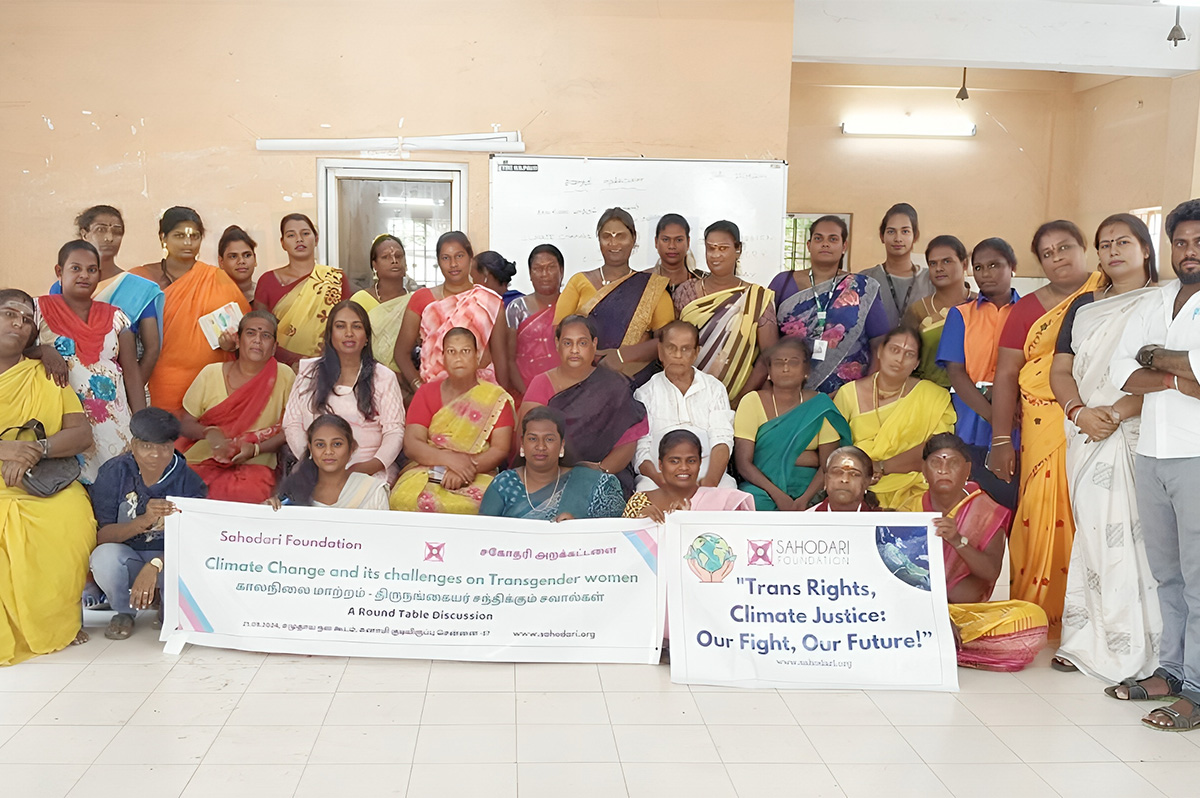
India’s proposed overhaul of its foreign funding law could put LGBTQ+ organizations that depend on overseas donations under new pressure.
Introduced in the Lok Sabha, the lower house of Parliament, on March 25, the Foreign Contribution (Regulation) Amendment Bill, 2026, or FCRA, would give a government-designated authority control over foreign funds, and assets when an organization loses or surrenders its registration.
The Foreign Contribution (Regulation) Amendment Bill returned to the spotlight this month as the Indian government prepared to seek its passage during Parliament’s Monsoon Session; drawing fierce opposition from political parties, civil society groups and religious organizations.
The government says the bill is intended to address gaps in the management of foreign funds and assets when an organization’s FCRA registration is cancelled, surrendered, or expires. The Foreign Contribution (Regulation) Amendment Bill, 2026, would create a Designated Authority to oversee the vesting, supervision, management, and disposal of foreign contributions and assets when an organization’s FCRA registration is cancelled, surrendered , or ceases. If a vested asset is a place of worship, the authority would be required to preserve its religious character. The FCRA would also reduce the maximum prison term for violating the law from five years to one year.
The changes could also make it difficult for organizations to leave the FCRA regime without surrendering assets created with foreign funds. Under the bill, an organization would have to keep renewing its FCRA certificate to retain those assets. FCRA rules also impose spending requirements on organizations seeking to maintain their certificates.
The bill may also create a distinction between assets created by organizations with FCRA registration and those created through the separate prior-permission route.
More significantly, neither the existing law nor the bill provides an appeal mechanism when the central government refuses to renew an FCRA certificate. They also do not expressly require the organization to be given an opportunity to be heard before renewal is denied. Under the proposed framework, such a denial could trigger the vesting of the organization’s foreign-funded assets in the Designated Authority.
The bill would also widen the circle of people who could face consequences for an organization’s FCRA violations.
Its definition of “key functionary” extends beyond directors and office bearers to trustees, governing-body members, managing-committee members and others responsible for an organization’s affairs. Those functionaries could be held liable for offenses committed by the organization, unless they can show that they were unaware of the violation or had exercised due diligence to prevent it. The FCRA bill would also impose restrictions on dealing with foreign-funded assets during a suspension and leave several important operational details — including timelines and procedures for managing and returning assets — to rules that have yet to be prescribed.
Parliament on Aug 12 moved to refer the FCRA bill to a parliamentary committee for further scrutiny and wider consultations.
Minister of State for Home Nityanand Rai moved the motion in the Lok Sabha, to refer the bill to a committee comprising 21 members of the lower house and 10 members of the Rajya Sabha, Parliament’s upper house.
The Rajya Sabha subsequently approved the nomination of its 10 members to the committee. The panel is expected to submit its report by the last day of the first week of Parliament’s Winter Session.
The proposed changes could have significant implications for LGBTQ+ organizations that rely on the FCRA framework to receive foreign contributions. (The global LGBTQ+ and intersex rights movement since the Trump-Vance administration took office in 2025 has lost nearly $50 million in U.S. funding because of foreign aid cuts. One source with whom the Los Angeles Blade spoke described the funding loss as a “catastrophe” for the global movement.)
While the government does not appear to have published an easily accessible, consolidated list of LGBTQ+ organizations receiving such funding, FCRA registration records and organizations’ financial disclosures indicate that foreign contributions have supported LGBTQ+ rights, healthcare, and community services in India.
K.C. Venugopal, general secretary of the opposition Indian National Congress, told reporters his party and other opposition parties would strongly protest the legislation if it were introduced in Parliament. He said the bill was aimed at targeting minorities and NGOs and vowed that the opposition would oppose its passage.
Venugopal called the proposed legislation “unconstitutional and anti-people.”
“If the Central Government thinks they can cook up and introduce the Foreign Contribution (Regulation) Amendment Bill within these two or three days, they should keep that wish to themselves,” he told reporters in Alappuzha, Kerala, on Aug. 9.
“Three provisions worry LGBTQ+ organizations like ours most directly,” said Souvik Saha, founder of People for Change and Jamshedpur Queer Circle. “First, the 2026 bill would let a government-appointed ‘Designated Authority’ take control of an organization’s foreign-funded assets— bank balances, equipments, sometimes even property— the moment its FCRA registration is cancelled, surrendered, or simply not renewed, and this happens through an administrative process, without prior judicial adjudication. For a small community organization, that means losing everything we have built — case files, shelter infrastructure, helpline equipment — almost overnight, with no court hearing first.”
Saha told the Blade the revised FCRA Rules announced in June introduced a minimum spending threshold: organizations must spend at least $10,449 in foreign contributions over two financial years or risk cancellation and non-renewal of their registration.
“This specifically penalizes small and grassroots groups that deliberately keep their foreign funding modest — which describes most LGBTQ organizations in India, including ours,” said Saha. “We are not running core-scale budgets; we are running helplines, safe spaces, and district-level outreach on modest grants.”
Saha told the Blade that the ban on sub-granting, carried over from the 2020 amendment, means larger, well-established rights organizations cannot pass foreign funds to smaller, unregistered LGBTQ+ collectives that could not obtain FCRA registration themselves. He said rights groups have long described the restriction as a near “death knell” for hundreds of small nongovernmental organizations that work collaboratively with larger organizations, adding that LGBTQ+ groups outside major metropolitan areas depend heavily on such funding arrangements.
“Domestic funding for LGBTQ work in India is still thin, CSR (Corporate Social Responsibility) money avoids us because we are seen as ‘controversial,’ and most Indian foundations would not touch gender-identity programming,” Saha said. “So foreign funding is not a convenience for organizations working with the transgender and LGBTQ community, it is often always funding.”
Netherlands
Thailand’s first openly gay senator attends World Pride in Amsterdam
Blade sat down with Pornchai Witayalerdpan on Aug. 7
Editor’s note: International News Editor Michael K. Lavers and Photo Editor Michael Key were on assignment in the Netherlands from July 28-Aug. 10.
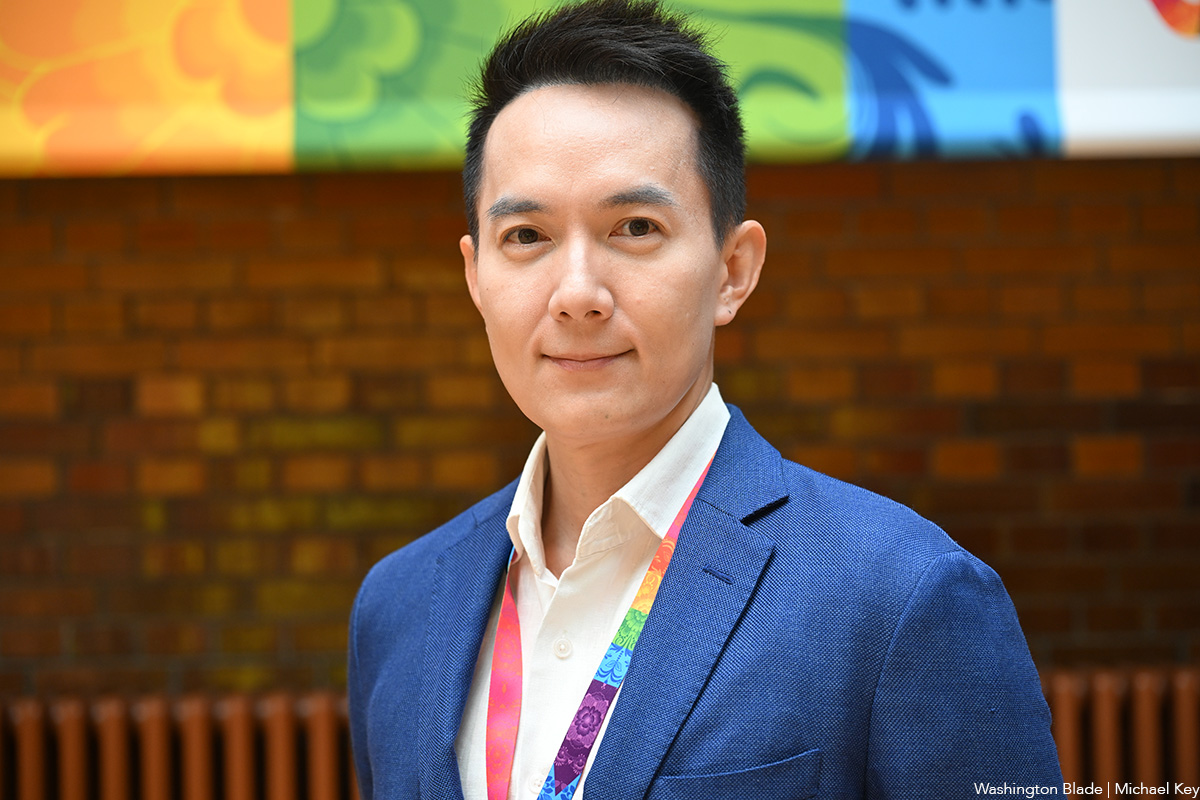
AMSTERDAM — The first openly gay man elected to the Thai Senate says the law that extended marriage rights to same-sex couples in Thailand has positively impacted his country’s global image.
“It totally changed how the world perceived Thailand,” Sen. Pornchai Witayalerdpan told the Los Angeles Blade on Aug. 7 during an interview at the World Pride Human Rights Conference in Amsterdam.
Thailand on Jan. 23, 2025, became the first country in Southeast Asia to allow same-sex couples to legally marry.
The marriage equality bill received final legislative approval in June 2024 when the Senate approved it by a 152-130 vote margin. King Maha Vajiralongkorn signed it a few months later. Then-Prime Minister Prime Minister Paetongtarn Shinawatra is among those who supported the law.
Witayalerdpan was a freelance interpreter before he took office in July 2024.
The independent senator noted Thailand’s marriage equality movement began to gain traction with a lawsuit that the Foundation for Sexual Orientation and Gender Identity Rights and Justice, a Thai advocacy group, filed.
The Constitutional Court in 2021 upheld a law that defined marriage as between a man and a woman. MP Tunyawaj Kamolwongwat of the Move Forward Party later introduced the marriage equality bill that became law.
“It was a coalition of efforts between the civil society organizations, the LGBTQ organizations, and also the Pride movement in Thailand,” Witayalerdpan told the Blade.
Taiwan in 2019 became the first country in Asia to extend marriage rights to same-sex couples.
The Nepalese Supreme Court in June issued a landmark ruling that ordered the country’s government to guarantee full marriage rights to same-sex couples.
The Japanese Supreme Court in March said it will consider six marriage equality lawsuits that have been filed in the country. The Indian Supreme Court in 2023 ruled against marriage rights for same-sex couples. South Korea is among the other Asian countries in which marriage equality efforts are gaining momentum.
Witayalerdpan said Thailand’s marriage equality law could have a direct impact in Japan, which is the only G7 country that does not legally recognize same-sex couples.
“It’s been nothing but a positive effect (in Thailand) after the same-sex marriage law (took effect),” he said.
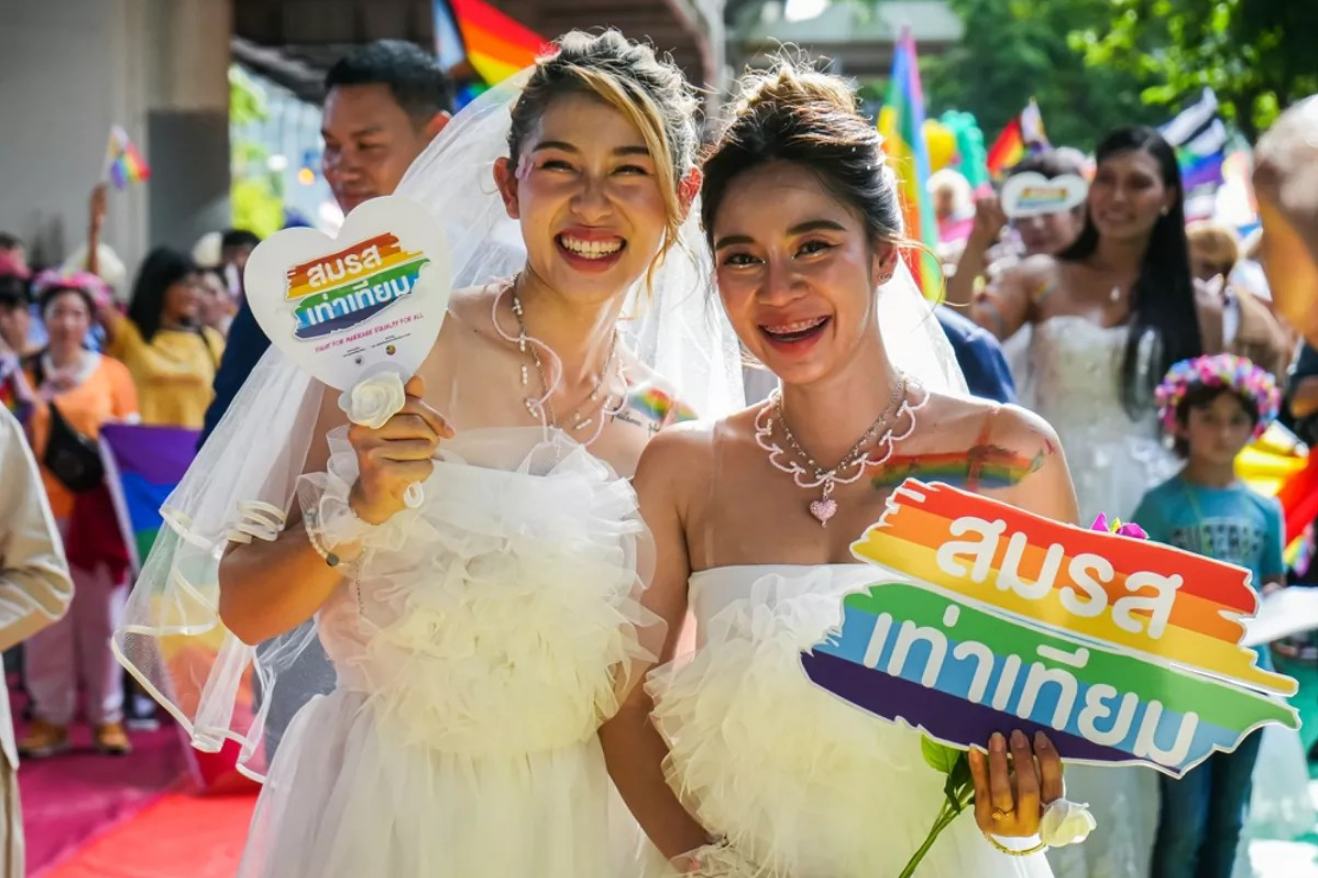
InterPride, the organization that coordinates World Pride events, has announced Bangkok and Barcelona, Spain, are the two finalists to host the biennial event in 2030. (World Pride took place in D.C. in 2025.)
Witayalerdpan told the Blade that World Pride in Bangkok would further improve Thailand’s global image. He also said his fellow lawmakers, in turn, should pass LGBTQ+ rights bills — including proposals that would allow transgender people to legally change their name and gender and enable same-sex couples to have children via surrogates from in vitro fertilization. Witayalerdpan noted the most important bill to him is one that would strengthen Thailand’s LGBTQ+-inclusive nondiscrimination law that took effect in 2015.
Impact of US funding cuts has ‘been very hard’
Witayalerdpan also offered advice to activists in the U.S. and elsewhere around the world.
“Keep on pushing forward,” he told the Blade. “I know that it’s hard for activists in Thailand as well.”
Witayalerdpan acknowledged the loss of U.S. government funding since the Trump-Vance administration took office — which has forced advocacy groups in Asia and elsewhere around the world to close — has “been very hard.” Witayalerdpan noted the global LGBTQ+ and intersex rights movement in response to these cuts has turned to the European Union, the U.K., Canada, and the Netherlands to help fill the gap.
“It’s very good that these countries are providing more funds to the activists in Asia than before because of the Trump situation,” he told the Blade. “It can increase their soft power as well.”
Witayalerdpan said American activists should “wish for a positive result in the mid-term elections.”
“Then there is some resistance,” he added.
Witayalerdpan specifically highlighted efforts to fight against the Trump-Vance administration’s efforts to restrict gender-affirming healthcare.
A federal court in Massachusetts on Aug. 15 struck down a key provision of a U.S. Department of Health and Human Service rule that would have limited access to gender-affirming care under the Affordable Care Act. Maryland and California are two of the 21 states that sued the Trump-Vance administration over the issue.
“You have to show more resistance … to show that we are still here and we will push back when we can,” said Witayalerdpan.
Taiwan
Taiwan’s government has failed to update process to change gender markers on ID documents
Interior Ministry’s 2008 directive remains in place
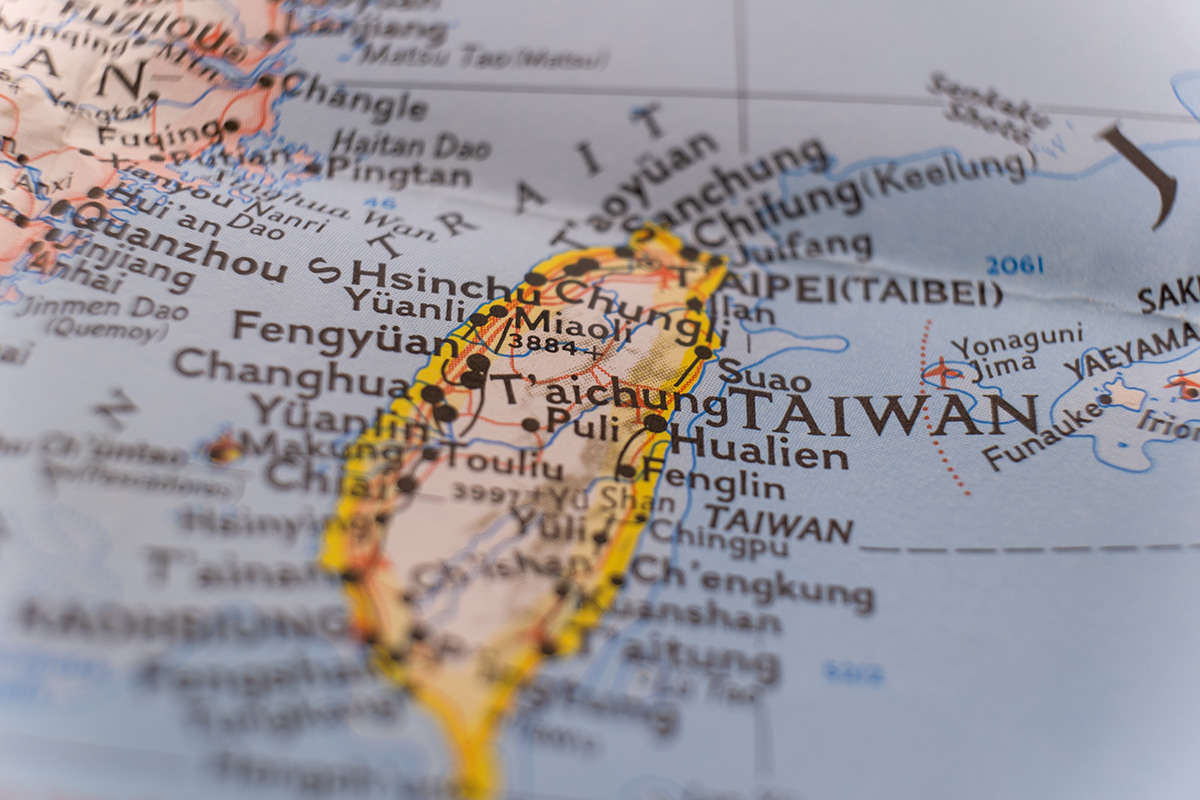
More than four years after Taiwan began formally studying legislation to overhaul its legal gender recognition system, and despite repeated recommendations from international human rights experts, the government has yet to introduce a bill that would replace decades-old administrative rules governing how transgender people can change the gender marker on official documents.
On May 15, an independent international review committee examining Taiwan’s implementation of the International Covenant on Civil and Political Rights and the International Covenant on Economic, Social and Cultural Rights urged the government to enact legislation governing legal gender recognition. The committee said Taiwan’s continued reliance on an administrative order, despite a 2023 Supreme Administrative Court ruling that mandatory gender-affirming surgery violates constitutional rights, has created legal uncertainty for transgender people, administrative authorities and judges.
In Taiwan, legal gender recognition has long been governed by a 2008 Interior Ministry administrative directive rather than legislation.
Under the directive, applicants seeking to change the gender marker on their national identification documents are generally required to provide diagnoses of gender dysphoria from two psychiatrists and proof that they have undergone gender-affirming surgery. For trans men, this typically involves the removal of the breasts, uterus, and ovaries, while trans women generally must undergo the removal of the penis and testicles. Because these requirements are established through an administrative directive rather than a law enacted by the legislature, trans rights activists and human rights organizations have argued they violate human rights.
Although Taiwanese courts have increasingly allowed trans people to change the gender marker on their official documents without undergoing gender-affirming surgery, the Interior Ministry’s 2008 directive requiring surgery remains in force. As a result, Taiwan’s administrative rules and judicial decisions are no longer fully aligned.
In a landmark ruling in May 2024, the Taipei High Administrative Court ordered a household registration office to approve a trans man’s application to change the gender marker on his household registration without requiring gender-affirming surgery. The court held that the Interior Ministry’s 2008 administrative directive, which requires applicants to submit proof of surgery, cannot be treated as an absolute prerequisite for legal gender recognition. Instead, it found that the applicant had provided sufficient medical evidence of a stable and long-standing gender identity and that denying the application solely because he had not undergone surgery was unlawful.
The Executive Yuan began work on legislation in April 2020, when it decided to commission an academic study examining international legal gender recognition systems rather than immediately drafting a law.
The government subsequently commissioned Shih Hsin University to prepare a report reviewing foreign legal models and developing legislative recommendations, including a bill. Since 2022, the Executive Yuan has held a series of inter-agency meetings involving multiple ministries to consider the study’s recommendations and legislation governing legal gender recognition, though no bill has yet been enacted.
In September 2023, Taiwan’s Supreme Administrative Court set aside a lower court ruling that had upheld the Interior Ministry’s refusal to change a trans person’s legal gender without proof of surgery and ordered the case to be reheard.
The court held that the ministry’s 2008 administrative directive requiring surgery could not be treated as the controlling legal standard because it lacked a clear statutory basis and implicated constitutional protections, including bodily autonomy and personality rights. Rather than treating surgery as an automatic prerequisite, the court instructed the lower court to determine whether the applicant had established a stable gender identity based on the evidence presented.
“From our perspective, the primary goal should be lowering the barriers to legal gender recognition, particularly by abolishing the mandatory surgery requirement,” the Taiwan Tongzhi (LGBTQ+) Hotline Association, a nonprofit LGBTQ+ advocacy and support organization founded in 1998, said in an email to the Los Angeles Blade.
The Taiwan Tongzhi (LGBTQ+) Hotline Association said several factors have stalled progress toward comprehensive legislation.
The organization told the Blade the complexity of the issue and the lack of constructive dialogue are among the primary obstacles. It said legal gender recognition requires extensive discussion, with views differing even within the trans community itself. The Taiwan Tongzhi (LGBTQ+) Hotline Association added that opinions also vary widely within the legislature and across Taiwanese society, while effective channels for dialogue remain lacking.
The Taiwan Tongzhi (LGBTQ+) Hotline Association also attributed the lack of progress to what it described as a lack of political will and an over reliance on “social consensus.”
According to the organization, the executive branch lacks the political momentum to advance legal gender recognition reforms. The Taiwan Tongzhi (LGBTQ+) Hotline Association said the Interior Ministry and other relevant agencies have often adopted a passive approach in the face of opposition from conservative groups, delaying progress by arguing that there is no social consensus or that further discussion is needed.
The Taiwan Tongzhi (LGBTQ+) Hotline Association also said progress has been hindered by what it described as a backlash following the legalization of same-sex marriage. According to the organization, groups opposed to gender equality and trans rights, including some conservative religious and anti-trans organizations, shifted their focus to trans issues after marriage equality became law. The Taiwan Tongzhi (LGBTQ+) Hotline Association said these groups have promoted fear-based narratives, including concerns about safety in public restrooms, leading many politicians to view trans rights as a politically risky issue and reducing momentum for legislative action.
“The existing system makes changing one’s legal gender marker extremely difficult. Forced surgical removal of reproductive organs imposes a heavy financial burden since it must be paid out-of-pocket, and not every trans person can afford, desires, or is medically advised to undergo organ removal,” the Taiwan Tongzhi (LGBTQ+) Hotline Association said. “Additionally, requiring psychiatric evaluations is problematic because specialized medical resources are scarce and concentrated in major cities. These obstacles severely impact transgender individuals in their daily lives.”
The Taiwan Tongzhi (LGBTQ+) Hotline Association said the continued reliance on an administrative directive rather than legislation has created systemic uncertainty for trans people. The organization said the absence of a statutory framework allows executive agencies to alter requirements without legislative oversight, leaving trans people uncertain whether future policies will become more restrictive or more permissive. The Taiwan Tongzhi (LGBTQ+) Hotline Association added that while several trans people have secured favorable court rulings since 2023, those decisions apply only to the individual cases before the courts and do not guarantee similar outcomes for others. The group also said pursuing litigation requires significant time, financial resources, and emotional investment, making it an inaccessible path for many trans people seeking legal recognition.
The Executive Yuan and the Interior Ministry did not respond to the Blade’s requests for comment.
India
Expected India Supreme Court ruling could shape future LGBTQ+ rights cases
Decision to determine whether courts can use constitutional morality doctrine
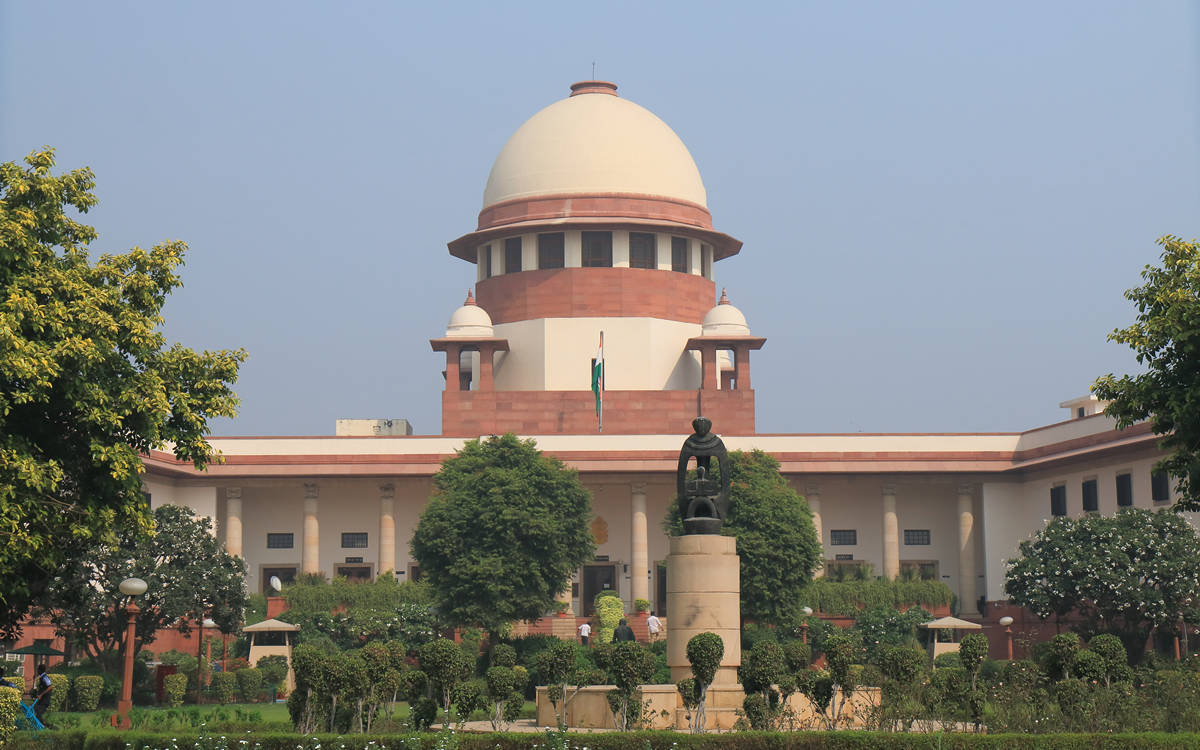
India’s Supreme Court is expected to issue a closely watched constitutional ruling that could shape the future of LGBTQ+ rights litigation.
The decision will determine whether courts can continue to rely on the doctrine of constitutional morality, a principle that has underpinned several landmark rights decisions. During hearings in April, the Indian government urged the Supreme Court to reject the doctrine, arguing that it has no basis in the Constitution and should not guide judicial decision-making.
For years, the Supreme Court has relied on the constitutional morality doctrine to treat the Constitution as a living document: one whose enduring promises of justice, liberty, equality, and fraternity must be applied to the realities of a changing society rather than remain frozen in the era in which it was written.
The Indian government in April asked the Supreme Court to revisit the constitutional reasoning behind two landmark judgments: one that struck down the country’s adultery law and another that decriminalized consensual same-sex relations, arguing that both relied on a subjective invocation of constitutional morality and should no longer be treated as good law.
Arguing before a 9-judge bench considering constitutional questions referred from the Supreme Court’s 2018 Sabarimala temple case, which allowed women of menstruating age to enter one of Hinduism’s holiest shrines after a centuries-old ban, Solicitor General Tushar Mehta, India’s second-highest law officer, argued that “constitutional morality” has no textual basis in the Constitution and is instead a judicially evolved concept that is vague and indeterminate.
Mehta said the government did not oppose the Supreme Court’s decision to strike down Section 497 of the Indian penal code, which criminalized adultery, if it was based on Article 14 of the Constitution, which guarantees equality before the law and equal protection of the laws. Instead, he argued that the court should not have relied on what he described as the “vague and subjective” doctrine of constitutional morality to reach its conclusion.
Mehta told the Supreme Court that its 2018 Navtej Singh Johar v. Union of India ruling that decriminalized consensual same-sex relations wrongly equated “morality” with majoritarian or mob morality while relying on constitutional morality as the basis for its reasoning.
To support his argument against relying on constitutional morality, Mehta quoted extensively from then-Justice Antonin Scalia’s dissent in the U.S. Supreme Court’s 2003 decision in Lawrence v. Texas.
Scalia argued that courts should not import foreign legal trends or allow evolving social values to drive constitutional interpretation, contending that judges must remain neutral arbiters rather than participants in broader cultural debates.
Referring to the Supreme Court’s landmark decisions in Navtej Singh Johar and Joseph Shine, Mehta questioned whether the judgments reflected the constitutional vision of India’s founding generation.
“If these judgments, Navtej Johar, Joseph Shine, etc., were to be read by Dr. Ambedkar or Kanhaiyalal Munshi or Alladi Krishnaswamy Iyer, I do not know whether they would be surprised, shocked or they would say that this is what we wanted. I believe, they did not want this to happen,” he told the bench.
“A new trend starts, which is Naz Foundation v. Government of NCT of Delhi,” Mehta said. “This is the judgment of Delhi High Court which was ultimately affirmed in Navtej Johar, sodomy … ‘In our scheme of things, constitutional morality must outweigh the argument of public morality, even if it be the majoritarian view.’ In case of a country governed by democratic principles, the view which is always majoritarian will prevail. When it is question of testing a law, it is always the majority which passes the law. How can you define morality based on this?”
The Naz Foundation case marked the beginning of a landmark constitutional challenge to Section 377 of the Indian penal code, a colonial-era provision that criminalized consensual same-sex relations between adults as “against the order of nature.” The public interest litigation, filed in 2001 by the Naz Foundation, an NGO working on HIV/AIDS and sexual health, argued that the law violated fundamental rights guaranteed under the Constitution.
In 2009, the Delhi High Court ruled in the organization’s favor, holding that Section 377 violated the rights to equality under Article 14, protection against discrimination under Article 15, and life and personal liberty under Article 21 of the Constitution.
The Delhi High Court’s ruling was short-lived.
In 2013, the Supreme Court, in Suresh Kumar Koushal v. Naz Foundation overturned the decision, recriminalizing homosexuality under Section 377.
The court held that the law affected only a “minuscule fraction” of the population and said it was for Parliament — not the judiciary — to decide whether the provision should remain on the statute books. Five years later, the Supreme Court’s Constitutional Bench in Navtej Singh Johar, unanimously overruled its 2013 judgment, holding that Section 377 was unconstitutional. The decision marked the culmination of the Naz Foundation’s long legal challenge to the colonial-era provision.
Anish Gawande, the first openly gay person to serve as a national spokesperson for a major political party in India, the Nationalist Congress Party (Sharadchandra Pawar), told the Los Angeles Blade that the doctrine of constitutional morality, which he said underpinned not only Navtej Singh Johar but also forms one of the foundational principles of India’s constitutional jurisprudence, is “an incredibly important concept.”
“It provides a moral backbone to the document in a way that prevents any amendments to the Constitution from being out into place that would violate the very ethos upon which the Constitution was framed,” Gawande said. “Constitutional morality is an incredibly important antidote to societal morality. It’s been what has allowed us to clamp down on things like dowry. It’s been something that has allowed us to bar even regressive religious practices that might go against human dignity. It’s also been an incredibly important framework that has allowed for the advancement of LGBTQ rights in opposition to arguments made by practitioners and leaders of various religious denominations about the societal immorality of queerness.”
“The most critical part of constitutional morality, which is a doctrine that has been put in place by the courts, is that it is a very effective bulwark against majoritarianism and the unilateral diktat of the executive over the judiciary and, in some ways, also the legislature,” he added.
Gawande said those factors make constitutional morality “an incredibly important concept” in Indian constitutional jurisprudence.
If the Supreme Court were ultimately to narrow or reject the doctrine, he said, judgments that have relied on constitutional morality, including the landmark Navtej Singh Johar ruling could come under renewed scrutiny. He added, however, that he did not believe the Supreme Court would take that step because it would run contrary to its own institutional interests.
Gawande said the government has advanced several reasons for challenging the doctrine of constitutional morality. One of them, he said, is that the solicitor general has opposed the doctrine in cases involving religious issues, arguing that courts should not rely on it in constitutional adjudication.
“The downward repercussions of this, however, could extend to LGBTQ rights and to the rights of all sorts of persecuted minorities in the future,” he said.
“The second thing is that, in principle, the section 377 judgment, of course, rests upon constitutional morality, but it is also resting upon so many other fundamental rights, including the right to privacy that Puttuswamy upheld before the Navtej Singh Johar verdict,” Gawande added. “In Navtej, the right to privacy was also cited as an incredibly important condition upon which the decriminalization of ‘carnal intercourse against the order of nature’ could be permitted. In many ways, the fact that Section 377 does not exist on the statute books at all in the present updated penal codes, Bharatiya Nyaya Sanhita and Bharatiya Nagarik Suraksha Sanhita, provides some respite. The entry of Section 377, at least immediately after a reading down of constitutional morality, is not imminent yet. However, it opens the door for a new Section 377 to be introduced and the judicial mechanism available to counter that new section 377, if it were to be introduced, to be reduced significantly.”
Ankit Bhupatani, an LGBTQ+ activist, said he does not believe the Supreme Court’s reconsideration of constitutional morality would lead to the recriminalization of consensual same-sex sexual relations.
He argued the 2018 Navtej Singh Johar decision rests on multiple constitutional principles beyond constitutional morality, but warned that weakening the doctrine could make it more difficult to secure future LGBTQ+ rights through the courts.
“If we have to take an informed guess on why the government does not like the concept of constitutional morality, it is because it wants a narrower field of judicial review and an elected legislature restored as the primary author of social policy,” Bhupatani said. “But we have already seen parliament’s ability to make laws related to LGBT rights, and it does not give optimism.”
“The only practical way forward for LGBT rights in India is the judiciary,” he added. “But if the government’s argument is accepted by the Supreme Court, it means the next gay Indian who walks into a court for marriage, for adoption, for inheritance, or for a job they were fired from, finds it more difficult to secure these rights from the only institution from which we could hope for a positive outcome.”
Bhupatani said the decriminalization of consensual same-sex sexual relations would probably survive because the Navtej Singh Johar judgment also rests on the constitutional principles of privacy and equality. However, he warned that weakening the doctrine of constitutional morality could stall broader progress for LGBTQ+ rights.
“The community keeps the floor and loses the staircase,” he said. “Nobody is criminalized, but nobody moves up.”
“The clever thing about this is that it lets the government have it both ways. To its so-called base, who think that making the law, especially on social issues, is the work of elected parliamentarians and not judges,” said Bhupatani. “It signals that the 2018 verdict was a judicial overreach that ought never to have happened. To everyone else, truthfully, that it never asked to recriminalize anyone. Both messages, one filing.”
Bhupatani said the implications of the government’s position extend beyond LGBTQ+ rights, arguing that asking the Supreme Court to treat the reasoning in Navtej Singh Johar as “not good law” raises broader questions about India’s commitment to constitutional rights. He said such a move could also affect how India’s constitutional democracy is perceived internationally.
Asia
LGBTQ+ rights gains in Asia come through courts, not legislatures
Marriage equality lawsuits filed in Japan
In recent years, some of Asia’s most significant legal developments involving LGBTQ+ rights have unfolded not in parliamentary chambers but in courtrooms. From marriage equality lawsuits in Japan to litigation over same-sex spousal benefits in South Korea and constitutional challenges in countries including India and Nepal, courts across the region have increasingly been asked to decide questions that lawmakers have yet to resolve. The trend raises a broader question: Why has constitutional litigation become a recurring pathway for LGBTQ+ people seeking legal recognition in parts of Asia?
The pattern has unfolded over nearly two decades.
In 2007, Nepal’s Supreme Court issued one of Asia’s earliest landmark rulings recognizing the rights of sexual and gender minorities, directing the government to end discriminatory laws and examine legal recognition for same-sex couples. A decade later, Taiwan’s Constitutional Court ruled that denying same-sex couples the right to marry violated the constitution, paving the way for the region’s first marriage equality law. In India, the Supreme Court recognized transgender people as a third gender in 2014 before striking down a colonial-era ban on consensual same-sex relations four years later.
The pattern continued across Asia.
Japan’s courts repeatedly questioned the exclusion of same-sex couples from marriage. The rulings intensified pressure for legal reform. Parliament, however, has yet to act.
South Korea’s judiciary expanded legal protections for same-sex couples. It recognized spousal health insurance benefits. A recent district court also awarded damages after a same-sex relationship ended. The ruling added momentum to the country’s marriage equality movement.
China’s courts took a different path.
Landmark constitutional rulings never emerged. Still, litigation prompted the Supreme People’s Court to acknowledge anti-LGBTQ+ discrimination. The developments reflected courts’ growing role in LGBTQ+ rights disputes.
The Philippines added another dimension.
Marriage equality remains unresolved, yet the Supreme Court recently recognized property rights for some same-sex couples. The ruling stopped short of recognizing marriage. Still, it acknowledged legal protections for LGBTQ+ relationships. The decision reflected another way courts have shaped LGBTQ+ rights across Asia.
Constitutional courts occupy a distinct place in democratic systems. Legislatures enact laws. They also respond to political priorities and public opinion. Constitutional courts serve a different function. They decide whether laws or government actions comply with constitutional guarantees. They resolve legal disputes brought before them. Their role is not to measure a policy’s popularity. It is to determine whether it is constitutionally valid. That distinction has placed constitutional courts at the center of many of Asia’s most consequential LGBTQ+ rights disputes.
Nepal offers an early example.
In 2007, LGBTQ+ activists turned to the Supreme Court through a public interest petition. They argued that discriminatory laws and government practices violated constitutional guarantees of equality. They also sought legal recognition for gender and sexual minorities. The government urged the court to dismiss the petition. It argued existing laws already protected all citizens. It also said the claims relied on assumptions rather than specific instances of discrimination. The court disagreed. It held that sexual orientation and gender identity are natural variations of human identity. It directed the government to eliminate discriminatory laws and policies. The ruling also ordered a study on legal recognition for same-sex couples, laying the foundation for future reforms.
“Since it is the absolute jurisdiction of the legislature to decide as to what type of law should be made and amended on a particular issue, and as this matter does not fall under the jurisdiction of this office, therefore, there does not seem any pertinent reason and valid ground to make this Office a respondent,” said Office of Prime Minister and Council of Ministers in its 2007 affidavit. “Let the writ petition be dismissed on the ground that the unconcerned office is being made as an opposite party in the case.”
In India, a prominent leader of the ruling Bharatiya Janata Party, Subramanian Swamy, described homosexuality as a “genetic disorder” in 2015. He also wrote on social media that it was a “genetic handicap,” reflecting the political discourse surrounding LGBTQ+ rights before the Supreme Court’s landmark ruling in 2018.
The Supreme Court’s landmark 2018 ruling decriminalized consensual same-sex relations. The decision did not end the debate. Soon afterward, the Rashtriya Swayamsevak Sangh, a right wing, Hindu nationalist volunteer and paramilitary organization, an ideological parent of the ruling Bharatiya Janata Party, said it did not consider same-sex relationships a crime. It added, however, that it did not support such relationships.
After the Supreme Court’s landmark 2018 ruling, Arun Kumar, a senior Rashtriya Swayamsevak Sangh leader, told the media that same-sex relationships and marriage were neither “natural” nor “desirable.”
During the 2023 marriage equality hearings, the Indian government repeatedly argued that the issue belonged before Parliament, not the judiciary. Solicitor General Tushar Mehta told the Constitution Bench that the case involved a “very complex subject” with “profound social impact” and that “all the questions in this case must be left to the Parliament.” He argued that recognizing same-sex marriage through judicial interpretation would require rewriting the Special Marriage Act and could have unintended consequences across multiple laws. During the hearings, Mehta also questioned how existing marriage laws would operate for same-sex couples, asking, “Who will be the wife in a lesbian relationship?”
The Los Angeles Blade covered these arguments as the hearings unfolded.
Three years have passed since the Supreme Court declined to recognize same-sex marriage, holding that creating such a legal framework was a matter for Parliament. Marriage equality, however, remains unrecognized in India. Parliament has not enacted legislation extending civil marriage to same-sex couples. The legal position has remained unchanged since the court’s 2023 ruling.
Similar tensions have surfaced elsewhere in Asia.
In Japan, a growing number of courts have questioned the constitutionality of denying marriage to same-sex couples, even as Parliament has yet to amend the law. In South Korea, courts have steadily expanded legal protections for same-sex couples, while the government has argued that recognizing same-sex marriage is up to lawmakers. In the Philippines, marriage equality and civil partnership bills have repeatedly failed to secure congressional approval amid religious and political opposition. The legislative stalemate has prompted advocates to pursue constitutional litigation before the Supreme Court.
Indonesia presents a different picture.
Rather than debating legal recognition, much of the political discourse has focused on restricting LGBTQ+ rights. In a landmark 2017 case, however, rights groups successfully opposed a petition that sought to criminalize all consensual same-sex relations nationwide. The Constitutional Court rejected the petition, ruling that creating new criminal offences was a matter for Parliament, not the judiciary.
Nepal
Nepalese Supreme Court issues landmark marriage equality ruling
Same-sex couples since 2023 allowed to marry under ‘temporary registration system’
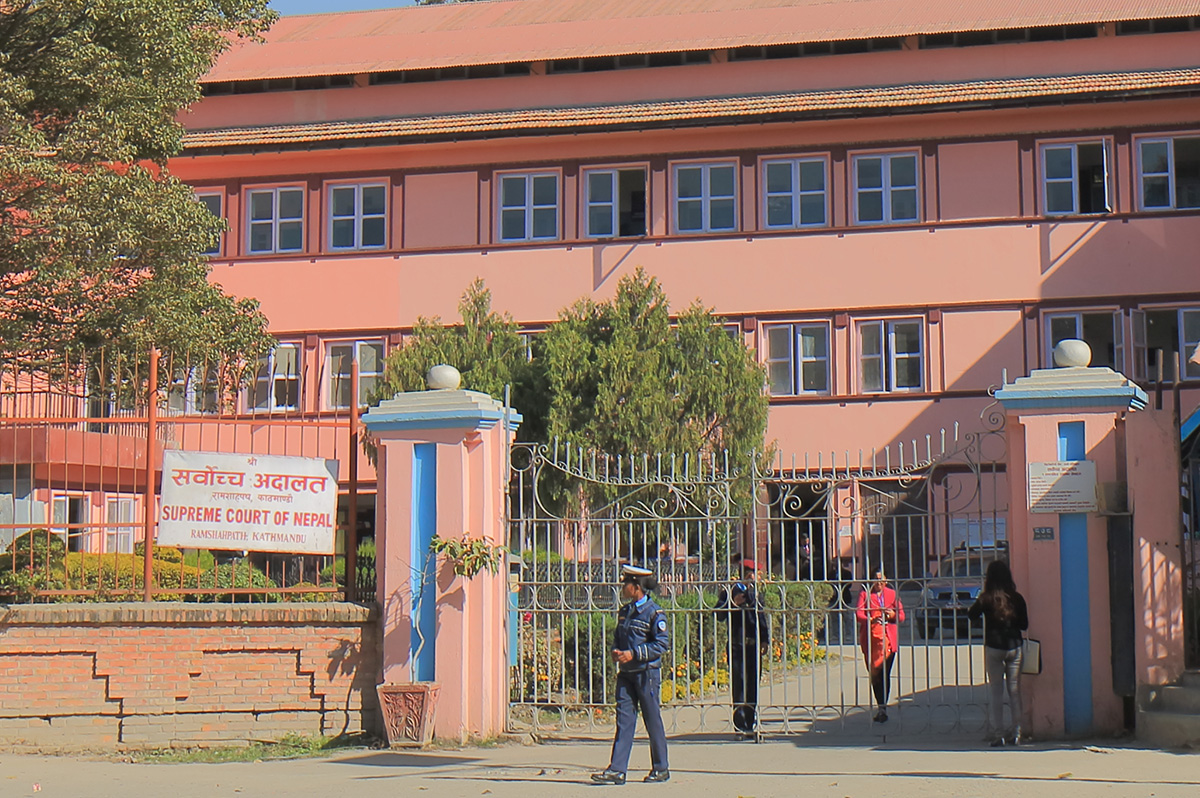
The Nepalese Supreme Court on June 18 ruled the country must extend full marriage rights to same-sex couples.
The Supreme Court in 2023 ordered the country’s government to allow same-sex couples to temporarily register their marriages, but this recognition did not guarantee full marriage rights to gays and lesbians.
“Since the Supreme Court’s landmark 2023 decision, dozens of same-sex couples have legally married in Nepal under a temporary registration system,” said the Blue Diamond Society, a Nepalese LGBTQ+ advocacy group, in a June 19 press release. “However, the lack of national legislation has created uncertainty and fear for couples who want to register their marriage.”
“Many couples have been denied marriage licenses by local clerks who claim there is no national law instructing them to register marriages of same-sex couples,” further noted the Blue Diamond Society. “Other couples have been forced to file legal cases and endure costly legal battles simply to register their marriage. And even among couples who have registered their marriages, there is concern that their marriages may not be respected when it comes to adoption, inheritance, and other important protections they need to care for their families.”
Thailand and Taiwan are among the countries that have extended full marriage rights to same-sex couples.
The Japanese Supreme Court in March said it will consider six marriage equality lawsuits. The South Korean marriage equality movement in recent years has gained momentum with several court rulings that recognized same-sex relationships.
The Blue Diamond Society in its press release notes the June 18 decision is the fourth time the Supreme Court has ruled in favor of marriage equality.
“Today is a day of celebration for LGBTQIA+ people and families across Nepal,” said Blue Diamond Society Executive Director Manisha Dhakal. “The Supreme Court has once again affirmed that same-sex couples deserve the same dignity, respect, and legal protections as any other couple.”
“We are grateful for the court’s continued leadership,” added Dhakal. “With a newly elected government more committed than ever to equality, now is the time to complete this important work by updating Nepal’s civil code and ensuring marriage equality is fully and clearly protected in law.”
Dhakal in the press release said the Blue Diamond Society “looks forward to working constructively with the government of Nepal, lawmakers, and civil society partners to ensure the court’s vision of equality is fully realized.”
“The Supreme Court has spoken clearly,” Dhakal said. “The government has expressed its support for equality. We are encouraged by that commitment and urge Parliament to act swiftly so that every LGBTQIA+ couple in Nepal can access marriage with certainty, dignity, and respect. Nepal has already taken a historic step. Now it is time to finish the job.”
South Korea
South Korea marriage equality movement gaining momentum
Seoul court on June 5 ruled same-sex couple deserved legal protection

On Oct. 30, 2025, a same-sex couple in South Korea filed a petition with the country’s human rights commission after a public institution denied marriage leave to one of the men and later reduced his pay and performance bonus for taking time off for their wedding ceremony. The commission last month completed its investigation and continues to consider the case.
The petition comes as South Korea’s same-sex couples have won a series of legal victories in recent years, even though the country does not extend marriage rights to them. Courts have increasingly been asked to decide whether existing laws and workplace policies can extend equal treatment to LGBTQ+ people, often in the absence of legislative change.
The employer’s policy granted marriage leave, but it did not define marriage or specify who could claim the benefit. After the employee submitted a wedding invitation and requested a brief leave for a ceremony with his same-sex partner, the institution denied the request and treated his absence as unauthorized.
The South Korean Supreme Court ruled on July 18, 2024, that denying dependent health insurance benefits to same-sex couples while extending them to opposite-sex couples amounted to discriminatory treatment. The court said the unequal treatment infringed on human dignity and the right to pursue happiness.
South Korea’s marriage equality movement has evolved gradually, moving from social taboo and legal nonrecognition toward greater public visibility and limited judicial victories.
In 2004, a same-sex couple unsuccessfully sought a division of assets under a de facto marriage. Nearly a decade later, filmmaker Kim Jho Gwang-soo and his partner, Kim Seung-hwan, applied to register their marriage, but South Korean courts rejected their bid, as well as subsequent attempts by same-sex couples to gain legal recognition.
In February 2023, the Seoul High Court ruled that the National Health Insurance Service must extend dependent health insurance benefits to same-sex partners, marking a landmark legal victory for LGBTQ+ couples. The Supreme Court’s 2024 decision made it final.
Under South Korean law, a de facto marriage generally refers to a couple who live together and hold themselves out as married without formally registering their union. While such relationships may receive limited legal recognition in certain circumstances, a marriage is not legally recognized unless it satisfies legal requirements and is registered with the government.
In a ruling made public on June 5, a Seoul court found a same-sex couple had built a life partnership similar to a common-law marriage and deserved legal protection. The court ordered a third party whose affair led to the relationship’s breakdown to pay 10 million won ($6,611.59) in damages.
The court, however, said existing law did not allow it to recognize the relationship as a common-law marriage, underscoring the legal limits that same-sex couples continue to face.
“There is no evidence that the plaintiff and the former partner held a wedding ceremony or revealed their relationship to acquaintances outside their families,” said the court. “From September 2019, when they shared their finances, or at the latest from June 2023, when they lived with the plaintiff’s family and received engagement rings from the plaintiff’s parents and were recognized as a couple, they shared an emotional, physical and financial relationship with a mutual intent to marry, forming a life partnership similar to a common-law marriage.”
On May 31, 2024, South Korean lawmakers introduced the country’s first marriage equality bill. Former Justice Party member Jang Hye-yeong proposed the legislation that 12 lawmakers from across the political spectrum co-sponsored. and co-sponsored by 12 lawmakers from across the political spectrum. The legislation failed later.
While consensual same-sex relations are not criminalized in South Korea, marriage equality remains unrecognized. Reports suggest many LGBTQ+ people continue to live with limited public visibility.
Recent opinion surveys suggest public support for marriage equality in South Korea has declined.
A 2025 Hankook Research poll found that 31 percent of respondents supported extending marriage rights to same-sex couples, down from 36 percent in 2021. A separate Gallup Korea survey found that 34 percent backed marriage equality while 58 percent opposed it, reversing gains in public support and returning attitudes to levels seen nearly a decade ago.
The report attributed the decline in support to South Korea’s broader social and political climate.
Activists told the publication that far-right mobilization, heightened political tensions, and growing online radicalization among some young men had likely contributed to the shift. They also argued politicians routinely cite a lack of public consensus to delay measures such as the Life Partnership Act and the Marriage Equality Act, describing the argument as an excuse for inaction.
Kiyong Shim, an activist with Chingusai, a Korean gay rights group, told the Los Angeles Blade that the marriage leave dispute illustrates the challenges same-sex couples continue to face in South Korea. Shim said the country’s Civil Act contains no provision that explicitly prohibits same-sex marriage, but that marriage registrations by same-sex couples are refused as a matter of administrative practice.
“Because their relationships have no legal standing, exclusion arises in nearly every area of daily life: marriage leave, family allowances, medical decision-making, inheritance, housing, and more,” said Shim.
He said the marriage equality movement is advancing along two tracks: one is public campaigning, lectures, workshops, and community networking centred on the Marriage for All Korea campaign and the second is through litigation. Fourteen same-sex couples are now plaintiffs in various lawsuits that have been before South Korean courts since 2024.
Shim told the Blade that change is also beginning to take root in South Korea’s judiciary, pointing to the Supreme Court’s July 2024 ruling that recognized dependent health insurance benefits for same-sex partners.
“Those holding political responsibility — in the legislature, the executive, and beyond — continue to turn away from the rights of LGBTQ+ people,” said Shim. “LGBTQ+ individuals remain exposed to discrimination and hatred in everyday life, and many live by painfully concealing who they are. This is precisely why the campaigning cannot stop, and why the work of organizing must continue.”
Shim told the Blade that public opinion is moving in a more favorable direction, albeit gradually. He said attitudes toward homosexuality, sexual minorities, and marriage equality have steadily become more accepting.
“The problem lies in politics,” said Shim. “In Korea, the forces driving anti-homosexuality sentiment are largely conservative Protestant church groups, and these church groups are deeply entangled with politicians in the ruling Democratic Party. As a result, even within the ruling party, this issue is difficult to address. So we are in an asymmetric situation: the judiciary and public opinion are moving forward, while the very political actors charged with legislation and administration remain stationary.”
Taiwan, Nepal, and Thailand have extended marriage rights to same-sex couples. Shim told the Blade there is a growing sense that South Korea is falling behind.
“Society’s perceptions shift most deeply when the fact that LGBTQ+ people are right beside us becomes a natural part of daily life, but this cannot be left to those individuals alone,” he said. “The conditions that make coming out possible must be built by allies together with the community — building workplaces, schools, families, and neighborhoods where discrimination and hatred need not be feared.”
“What Korea needs right now is exactly this kind of broad, everyday solidarity,” added Shim. “Change in the law and change in daily life have to move together, and that is why the work of campaigning and organizing must not stop. There are already many same-sex couples in Korea living as families, caring for one another. The question is not whether they exist — it is when the state will finally recognize this reality in law.”
China
China’s top court acknowledges anti-LGBTQ+ discrimination
Postgraduate student petitioned for legal clarification
China’s Supreme People’s Court on May 8 issued a rare response to a petition involving LGBTQ+ discrimination.
In a surprising response; it discussed sexual orientation, gender identity, and gender expression. The response also mentioned workplace discrimination, public humiliation, and school bullying, language considered uncommon from China’s legal system.
The response stemmed from a proposal submitted by a postgraduate student in Qingdao through China’s xinfang petition system on March 25, urging the court to establish clearer judicial standards against discrimination based on sexual orientation and gender identity. Six weeks later, the Supreme People’s Court Research Office issued a written reply.
The Research Office is an internal legal and policy body within the Supreme People’s Court. It studies legal issues, drafts judicial guidance, and responds to legal inquiries submitted through official channels. Its responses do not carry the same legal weight as a judicial interpretation or court ruling.
“The opinions and suggestions you raised are of great value,” reads a translated version of the Supreme People’s Court Research Office response. “In order to thoroughly implement the Constitution, Civil Code, Employment Promotion Law and other legal provisions, and effectively protect citizens’ personality rights from infringement, the Supreme People’s Court has guided local courts at all levels to handle a number of related cases, and through typical cases and other forms has clarified adjudication rules.”
The response stated that courts may determine public insults, defamation and, discriminatory conduct targeting sexual orientation, gender identity and gender expression as infringement of personality rights. It also said employers treating individuals differently in hiring, employment, transfer or dismissal based on those characteristics could face employment discrimination claims. Schools could also bear legal responsibility for improper discipline or bullying involving students based on sexual orientation, gender identity and gender expression, according to the response.
“It’s not a systematic change from the authorities recognizing LGBTQ rights,” said Renn Hao, an LGBTQ+ activist in China. “However, it’s an informal statement from the Supreme Court. According to a scholar researching LGBTQ legal cases in China, courts are recognizing more cases involving LGBTQ discrimination and same-sex partners through their verdicts.”
China decriminalized consensual same-sex sexual relations in 1997 and removed homosexuality from the country’s list of mental disorders four years later. Chinese law, however, does not recognize same-sex relationships.
Public advocacy involving LGBTQ+ issues also remains tightly controlled. Authorities in recent years have continued restricting community organizing, public events, and online expression involving sexual minorities.
Discussions involving LGBTQ+ issues are also frequently censored on Chinese social media platforms.
Activists and advocacy groups say Chinese authorities in recent years have removed online content, shut down LGBTQ+ student group accounts and restricted public discussion involving sexual minority issues. After the Supreme People’s Court response began circulating online, related posts and articles were also removed from some Chinese platforms.
“It may still be too early to fully assess the long-term impact, as this development has only just happened and the situation is still unfolding,” said Xiaogang Wei, a Beijing-based LGBTQ+ rights activist, filmmaker, and founder of the China Rainbow Collective Foundation. “Although the reply is not legally binding, it represents a rare form of institutional acknowledgment of SOGIE-related discrimination in China. For Chinese LGBTQ people and advocates, this could become a meaningful reference point for future legal advocacy, public communication, and community awareness.”
Wei said the rapid removal of related posts and articles limited the development’s broader public impact and underscored how fragile LGBTQ+ visibility remains in China.
“This is why we believe it is important to continue sharing verified information and ensuring that this development is not erased from public understanding,” Wei said.
Chinese courts in recent years have also heard a number of LGBTQ+-related employment discrimination cases, despite the absence of explicit nationwide protections based on sexual orientation or gender identity. In one notable case, the Supreme People’s Court in 2018 formally recognized “equal employment rights disputes” as a legal cause of action, allowing some discrimination-related cases to proceed through the courts.
Chinese courts have previously handled several LGBTQ+-related disputes involving employment discrimination, custody, and so-called conversion therapy. In 2024, a Beijing court drew attention after recognizing visitation rights for a child involving a same sex couple, a decision activists described as a milestone for LGBTQ+ families in China.
India
Iran war causes condom shortage in India
Trade disruptions have strained petrochemicals, lubricant supplies

About 80 days into the U.S.-Iran war, while much of the world struggles with oil supplies, India is confronting a different crisis: a widening condom shortage. Health activists warn the supply disruption could worsen HIV/AIDS risks in the world’s most populous country.
Disruptions in maritime trade through the Strait of Hormuz have strained supplies of petrochemicals and industrial lubricants used in condom manufacturing. The crisis has increased production costs across the sector and pushed retail prices sharply higher.
India’s condom manufacturing industry is valued at nearly $1 billion.
Production depends heavily on silicone oil and ammonia. Silicone oil, a key lubricant used in manufacturing, is in short supply. Ammonia, which stabilizes raw latex, is expected to see price increases of 40-50 percent. Rising packaging costs have added further pressure. Some manufacturers and retailers have reported condom prices increasing by as much as 50 percent.
India is home to an estimated 2.5 million people living with HIV, the world’s second-largest population of HIV-positive people, according to a 2024 report. The Health Ministry’s India HIV Estimation 2025 technical report said 5.4 percent of HIV cases in 2024-2025 were linked to transmission between men who have sex with men.
In 2024, India recorded an estimated 64,470 new HIV infections and 32,160 AIDS-related deaths nationwide. The figures marked declines of 48.69 percent and 81.42 percent, respectively, compared with 2010.
Ankit Bhuptani, an LGBTQ+ activist in India, told the Los Angeles Blade that the country has made significant progress in reducing HIV infections over the past two decades. But, he said, that progress depended heavily on affordable condoms, targeted outreach programs and on-the-ground work by NGOs serving MSM and transgender people.
“Pull one thread and the whole thing loosens. What worries me about this particular shortage is that it arrives at exactly the moment when India’s LGBTQ community was beginning to access healthcare more openly after the Section 377 reading down,” said Bhuptani. “Young queer Indians in tier-two cities were just starting to trust government health systems enough to engage with them. A price spike that prices them out, or a shortage that sends them to substandard alternatives, could set that trust back by years.”
The Indian Supreme Court in 2018 struck down Section 377, a colonial-era law that criminalized consensual same-sex sexual relations.
In March, the Commerce and Industry Ministry acknowledged the difficulties faced by Indian exporters due to disruptions caused by the war in West Asia and launched a roughly $51.5 million Resilience and Logistics Intervention for Export Facilitation, or RELIEF, program. It provides credit insurance support for exporters whose shipments have been stranded because of the conflict.
“Price elasticity in sexual health products is brutal. When a condom pack goes from 20 rupees to 40, usage drops. It’s that simple,” said Bhuptani. “And when usage drops in populations with higher baseline HIV exposure, you don’t see the consequences for two or three years. Then the numbers arrive and everyone acts surprised.”
The situation has been further aggravated by the structure of India’s condom market, which operates on a high-volume, low-margin model designed to keep products affordable for a population of more than 1.4 billion people. Industry analysts say that model is now under growing pressure from rising raw material and shipping costs.
Reports in Indian media said supply constraints and price volatility involving PVC foil, aluminium foil, and packaging materials have disrupted production and complicated order fulfilment across parts of the condom manufacturing sector.
“Supply chain vulnerability assessments almost never include sexual health commodities. They should. India imports roughly 86 percent of its anhydrous ammonia from West Asian countries including Saudi Arabia, Qatar, and Oman, with that ammonia being essential for stabilizing the natural rubber latex used in domestic condom production,” said Bhuptani. “That is a documented strategic dependency that was never flagged as a risk. The Iran war converted it from a latent vulnerability into an active supply shock in a matter of weeks.”
The National AIDS Control Organization, or NACO, which oversees India’s HIV/AIDS programs, during the 2026-2027 fiscal year received an allocation of about $249 million, up from roughly $238 million the previous year. By comparison, the U.S. approved a $6 billion funding package in 2026 for global HIV/AIDS programs, according to the United Nations.
“The gay and trans community in India report high perceived HIV risk and adopted PrEP through non-profit and private channels, with cost and access remaining consistent concerns,” said Bhuptani. “The community organizations managing that risk perception are now operating in a tighter supply environment while simultaneously absorbing the downstream effects of USAID funding cuts. Health workers seeing increased anxiety among community members are observing the predictable consequence of removing redundancy from a system that had very little to begin with.”
The Blade reached out to Indian condom manufacturer Manforce several times, but the company declined to comment.
Harish Iyer, an LGBTQ+ and equal rights activist in India, told the Blade that this is the time when the government needs to step in. Condoms, Iyer said, are not about pleasure, but about life.
“Not just in terms of HIV, it is also a source of contraception in a nation which is heavily populated. So, if there is a crisis in the condom industry, it has an adverse effect on the LGBTQ community,” said Iyer. “And eventually it has a compounding effect on the economy as well. Because if the cases of HIV wrecks to rise, if the population was to explode, it is going to have a straining effect on the economy as well. So, I think it is time that the government steps in, and condoms should be recorded as a necessity commodity rather than making it feel like any kind of commodity that some (privileged people) can afford.”
Iyer told the Blade that the government should provide condoms free of cost.
He pointed to the Nirodh Scheme, India’s long-running family planning and safe sex program launched by the government in 1968. Condoms, Iyer said, are a necessity, not a luxury product. He urged the government to classify them as essential items and either remove the Goods and Services Tax or reduce it to a minimum.
The Nirodh Scheme was launched by the Health and Family Welfare Ministry to promote contraception and prevent the spread of sexually transmitted infections, including HIV, through the nationwide distribution of subsidized and free condoms.

10 years later, we still can’t shake Barry Jenkins’ ‘Moonlight’

AIDS Walk Los Angeles set for 42nd year amid growing challenges

Alianza para la Inclusión fortalece la defensa de derechos LGBTQ+ en Centroamérica

The facts about Victory Fund’s investigation and the path forward

In Ga., 2 trans candidates believe voters are ready for them

Renee Good’s family files two federal lawsuits

988 restores crisis services for LGBTQ+ youth

House Democrats urge White House to confront Turkish government over anti-LGBTQ+ crackdown

Lula, Flávio Bolsonaro to face off in second round of Brazilian presidential election

The California Gubernatorial Debate missed getting real
-
 U.S. Federal Courts5 days ago
Renee Good’s family files two federal lawsuits
-
 National5 days ago
988 restores crisis services for LGBTQ+ youth
-
 Turkey5 days ago
House Democrats urge White House to confront Turkish government over anti-LGBTQ+ crackdown
-
 Brazil2 days ago
Lula, Flávio Bolsonaro to face off in second round of Brazilian presidential election
-
 Commentary3 days ago
The California Gubernatorial Debate missed getting real
-

 a&e features3 days ago
From bullying to bravo: Joey Zauzig talks finding yourself while making people feel seen
-

 Brazil2 days ago
Transgender woman elected to Brazilian Chamber of Deputies
-
 Opinions2 days ago
Evan Low is not the leader the Victory Fund needs at this moment
-

 History2 days ago
Preserving the past: Robert Kesten on Stonewall & storytelling; LA Blade joins at the Abbey, Tuesday, October 6th at 6 pm
-

 Books2 days ago
Eliot Glazer’s new book an engaging collection of essays