
White House
Biden signs omnibus, reauthorizes VAWA with LGBTQ+ program
The controversial Hyde Amendment, which bars federal funding from covering most abortions, also made its way into the omnibus deal
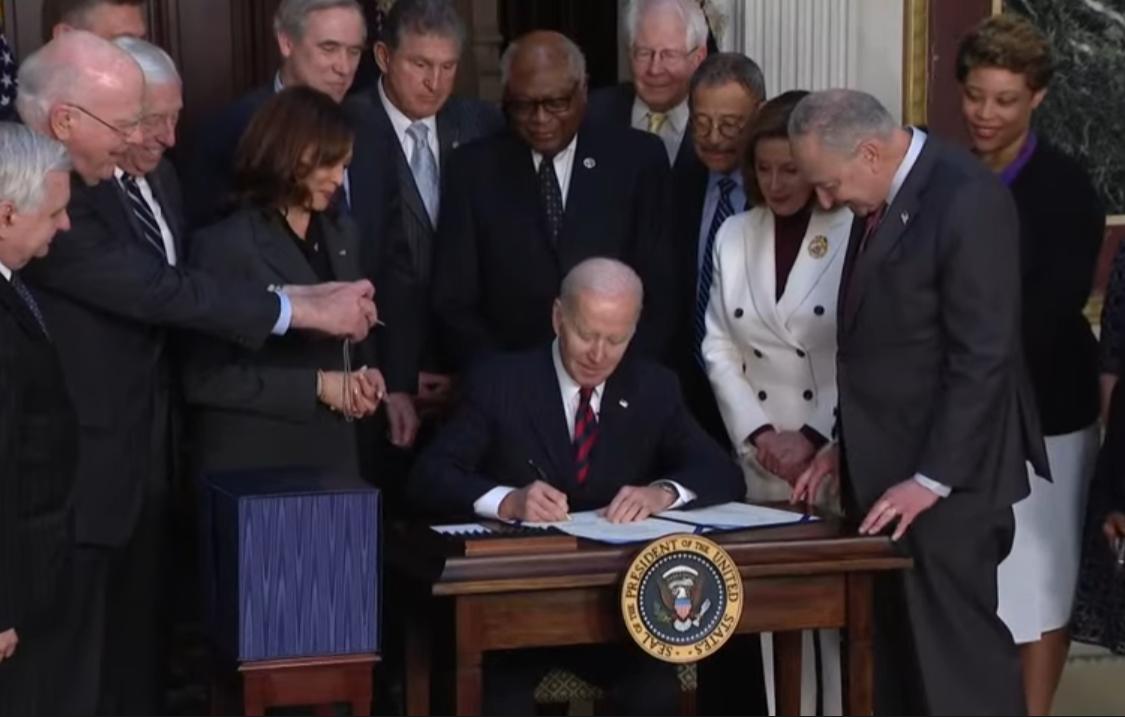
WASHINGTON – By signing the $1.5 trillion omnibus spending package Tuesday, President Joe Biden reauthorized the Violence Against Women Act (VAWA), which will, among other things, create the first grant program dedicated to LGBTQ+ domestic violence and sexual assault survivors.
“Today we’re again showing the American people that as a country we can come together, as Democrats and Republicans and independents, and do big things — that our democracy can deliver,” Biden said at the White House.
The VAWA, which expired in 2019 due to partisan disputes, provides resources to victims of domestic violence and sexual abuse. The act was a top priority for Biden, who championed the legislation when it was first enacted in 1994.
In a joint statement last Wednesday, House Speaker Nancy Pelosi (D-Ca.) and Senate Majority Leader Charles Schumer (D-Ny.) announced the inclusion of the VAWA in the larger omnibus bill, which will keep the federal government funded until September.
“Finally, this historic legislation will carry major bipartisan legislation that has been in the making for years,” they said. “The Violence Against Women Act, expired for too many years, will finally be reauthorized.”
Last month, a bipartisan group of lawmakers – led by Sen. Lisa Murkowski (R-Ak.) – announced they reached an agreement on the reauthorization of the VAWA. The legislation gained national attention, as actress Angelina Jolie worked with Congresspeople to promote the effort.
The reauthorization will create a grant program dedicated to expanding and developing initiatives specifically for LGBTQ+ domestic violence and sexual assault survivors, which Liz Seaton, policy director for the National LGBTQ Task Force, said was a first of its kind in an emailed statement to the Blade. The group’s sister organization, the National LGBTQ Task Force Action Fund, participated in a working group on bill language.
The reauthorization will also expand resources to other marginalized groups, like Native Americans.
“VAWA’s Tribal provisions will restore justice for Native communities and provide tools to keep Native families safe,” said Sen. Brian Schatz (D-Hi.), who worked with Murkowski to draft the tribal title of the reauthorization, in a statement.
Biden’s signature on the spending package marked the first time in nearly a decade that the VAWA was updated, something advocates pushed for – saying it was necessary to meet the needs of the people the bill was supposed to protect.
The controversial Hyde Amendment, which bars federal funding from covering most abortions, also made its way into the omnibus deal.
Seaton called it “unjust” and warned that it undermines “reproductive justice and the bodily integrity of women and LGBTQ folx.”
“This is especially true for especially Black and Brown people, people dependent for their health and survival on federal monies, and people living in poverty,” she told the Blade in an emailed statement.
The spending package, which includes further military and humanitarian assistance to Ukraine, passed Congress Thursday.
Liz Seaton, Policy Director, National LGBTQ Task Force full statement:
“The National LGBTQ Task Force announces that the bipartisan omnibus spending package President Biden signed today contains reauthorization of the landmark Violence Against Women Act. From 2013 to 2019 when VAWA expired, it has prohibited discrimination based on sex, sexual orientation and gender identity by those providing help to victims. While it does so much more, this Act creates the first grant program dedicated to expanding and developing initiatives specifically for LGBTQ domestic violence and sexual assault survivors. Our sister organization, the National LGBTQ Task Force Action Fund, participated in a working group on bill language and advocated for its passage.”
“We must note that the omnibus package includes the unjust Hyde Amendment. It bars federal funding to cover most abortions, undermining reproductive justice and the bodily integrity of women and LGBTQ folx. This is especially true for especially Black and Brown people, people dependent for their health and survival on federal monies, and people living in poverty,” Seaton added.
“Passage of the Violence Against Women Act Reauthorization Act of 2022 will help ensure even more resources and services are available to LGBTQ survivors of intimate partner violence and sexual violence,” said Beverly Tillery, Executive Director of the New York City Anti-Violence Project, which coordinates NCAVP.
“This legislation has the strongest-ever provisions to benefit LGBTQ survivors. While the LGBTQ community continues to experience a barrage of anti-trans and anti-LGBTQ attacks across the nation, VAWA provides a brief moment of hope that we can and will continue to make important advancements for our community. This victory is the result of a strong coalition of advocates who have been willing to fight with and for the most marginalized communities in our country.”
“LGBTQ survivors of domestic and sexual violence deserve dignity and respect, especially when they are seeking critical services that can help them recover from violent situations,” said the Los Angeles LGBT Center’s Chief Impact Officer and NCAVP Policy Representative Terra Russell-Slavin.
“The reauthorization of VAWA, with the first-ever standalone grant program for LGBTQ survivors, sends a much-needed national message of support to LGBTQ survivors when our community is under attack in statehouses across the country. The Center is proud to have worked with NCAVP to help champion these efforts.”
********************
Biden signs into law the ‘Consolidated Appropriations Act, 2022’ — 3/15/22:
********************
FULL TEXT: Remarks by President Biden at Signing of H.R. 2471, “Consolidated Appropriations Act, 2022”
THE PRESIDENT: Thank you. Please — please, sit down.
Well, thank you, not only for being here but for what you did.
I want to thank the — Vice President Harris and the congressional leaders who are here today.
You know, in a moment, I’m going to sign this bipartisan government funding bill. But with this bill, we’re going to send a message to the American people — a strong message — that Democrats and Republicans can actually come together and get something done — right, Nance? — and to fulfill our most basic responsibilities: to keep the government open and running for the American people, serving the American people, investing in your communities and investing in the American people, and doing it in a fiscally responsible way.
This bill also includes historic funding — $13.6 billion — to address Russia’s invasion of Ukraine and the impact on surrounding countries. (Applause.)
Thank you.
Putin’s aggression against Ukraine has united people all across America, united our two parties in Congress, and united freedom-loving world. And this — and it’s an act with urgency and resolve that we’re doing right now that you’ve provided me the ability to — to do.
I want to thank the congressional leadership for working so quickly to — to make sure we have the resources we need — economic, humanitarian, and security — to continue our forceful response to this crisis.
We’ve already committed more than 1 billion 200 million dollars in security assistance to the people of Ukraine just over the past year. And I — I know all of you know that; it’s preaching to the choir here.
But we’ve been providing anti-armor — taking out tanks — air — anti-air capabilities directly — directly to the Ukrainian forces. And we’re also facilitating significant shipments of security assistance from our Allied partners to Ukraine.
With this — with this new security funding and the drawdown authorities in this bill, we’re remo- — we’re moving urgently to further augment the support to the brave people of Ukraine as they defend their country.
And I’ll have much more to say about this tomorrow — about exactly what we’re doing in Ukraine.
We’re also going to be better positioned to provide for the rapidly growing humanitarian needs of the Ukrainian people.
This war has turned nearly 3 million Ukrainians into refugees, with numbers growing every single day. And that’s on top of the 12 million people who require humanitarian assistance inside of Ukraine.
The United States is helping to lead the global humanitarian response with our partners in Europe and well beyond Europe.
In just the past few weeks, we provided nearly $293 million in humanitarian assistance to people in Ukraine and in neighboring countries.
Our experts are on the ground in Poland and in neighboring countries, where the Vice President just came back from, to make real-time assessments of a rapidly evolving crisis, to get urgently needed humanitarian supplies to the people in need now.
We’re airlifting emergency relief supplies into staging positions in the region — supplies like high-thermal blankets, water treatment equipment — so that they can be shipped into Ukraine.
We’re providing essentials like soap and laundry detergent — simple-sounding things — to refugees who fled with literally nothing but the clothing on their backs.
We’re working with partners to supply access to safe drinking water and to food rations to the people affected by this conflict.
With U.S. support, the World Food Programme has already purchased 20,000 metric tons of food to address the growing needs of individuals affected by this conflict.
It’s exceedingly difficult to get supplies into Ukraine while the Russian onslaught continues. But we’re managing to get supplies into Ukraine regularly thanks to the bravery of so many frontline workers who are still at their post. And we are supporting food assistance at refugee reception centers in frontline countries like Moldova.
With billions more included in this bill for new humanitarian assistance, we’re going to be able to quickly ramp up our response and help alleviate the suffering that Putin’s war is causing the Ukrainian people in the region.
This bill also provides necessary economic support for Ukraine and Ukraine’s neighbors that are impacted by this war — things like loan guarantees, direct financial support, including — including to address the needs like energy and cybersecurity.
This bill is also going to help face our — our challenges here at home. It sends a clear message to the American people that we’re investing in safety, health, and the future of Americans.
Let me just mention a couple of highlights, starting with community safety. We know what works to make our communities safer, and that’s investing in prevention and community police officers so that they can walk the streets, know the neighborhoods, and who can help restore trust and safety in the communities.
The answer is not to abandon our streets or to choose between safety and equal justice. It’s in funding — it’s in this funding bill, which we make sure we do both.
This budget invests in funding for agencies like the FBI and U.S. Marshals and the Drug Enforcement Agency, but it also includes funding for COPS programs to increase community policing and the ability of the Alcohol, Tobacco, and Firearms tackle — to tackle gun crime. And it funds entirely new community violence intervention programs just at the Department of Justice.
Community violence interruption programs are programs where trusted community members work directly with the people who are most likely to commit or become victims of gun crimes. I had a chance to meet with those leaders in one of the programs in New York City not long ago. I saw the difference they were making every day.
We know these programs can dramatically reduce violence, and we’re going to fund a lot more of them.
This bill also includes grants for state and local law enforcement and crime prevention programs. We’re talking about drug treatment programs, school violence prevention programs, programs where people who might end up in prison and instead get mandatory mental healthcare that they need. Part of the saf- — before any crime was committed.
Part of the safety is the ability to feel safe in gender-based — from gender-based violence. I wrote a Violence Against Women Act with many in this room years ago — 28 years ago — to provide protection against domestic violence, stalking, sexual assault, and to support survivors and help them find a way out of those abusive situations they were locked into because they had no means to leave, with support for race cri- — rape crip- — crisis centers, as well as housing and legal assistance.
The law has saved lives, and that’s helped women rebuild their lives and make children a heck of a lot safer.
Today, with this bill, we reauthorize and strengthen the Violence Against Women Act. For example — (applause).
For example, we’re doing more to help survivor — survivors in rural areas and in underserved communities. Tribal courts will now be able to exercise jurisdiction over non-Native perpetrators of sexual assault and sex trafficking. And we’re providing more support for legal services and for law enforcement to get the training they need to help handle the trauma survivors are experiencing.
Now, I’ll have more to say about the Violence Against Women Act tomorrow as well.
And we’re going to be able to fund significant areas of common ground in this bill, especially in areas that I — that I called in my State of the Union address a “Unity Agenda” — the things that we can accomplish together, Democrats and Republicans.
Two elements of that agenda are, one, beat the opioid epidemic and, two, take on the challenges of mental health, which have been exacerbated because of the COVID problem.
This bill supports opioid response grants that are funding that we provide to states to support opioid prevent — opioid prevention, treatment, and recovery services.
We also included funding for states in support of mental health services, as well as additional funding for children’s mental health services, which has increased exponentially.
I’ve also called for increasing Pell grants to make colleges more affordable, and that is: Anyone making less than $50,000 a year, they’re eligible for a Pell grant. This bill delivers increasing the maximum Pell grant by $400, which will make a difference in a lot of lives.
Now, I would like to add a word about another investment this bill makes, one that I expect will pay dividends for hope, healing, and for our economy for generations to come. And it’s called ARPA-H — Advanced Research Project Agencies of Health. This will be a new kind of entity, an engine for innovation, a place where we’ll do high-risk, high-reward research that can drive unprecedented progress in biomedicine.
It’s based on DARPA, the Defense Department’s Advanced Research Project Agency, that has led to breakthroughs in technologies that protect our national security, like the Internet, GPS, and so much more.
ARPA-H will have a singular purpose: to drive breakthroughs to prevent, detect, and treat diseases including cancer, Alzheimer’s, and diabetes, and other diseases.
And, by the way, we’re providing that we can — and we’re proving that we can invest in the American people in a fiscally responsible way.
Last year, the deficit dropped for the first time since 2015. It fell by $360 billion last year. And this year, it’s on track to drop by more than $1 trillion. After four years in a row of increasing deficits before I took office, we’re now on a track to see the largest-ever decline in the deficit in American history. (Applause.)
So let me close with this: Today, we’re again showing the American people that, as a country, we can come together as Democrats, Republicans, and independents and do big things; that our democracy can deliver — can deliver — and outperform autocracies; and that there’s nothing we can’t do when we do it together as the United States of America.
So I’d like to now invite up my Budget Director, Shalanda Young, and all the members of the Congress here today while we sign this bipartisan government funding bill.
Thank you all very much. (Applause.)
Speaker, there you go. Now, I know we usually hand out pens to everyone who’s done this, but you’re all going to get a pen, but we didn’t have 18 — 15 pens up here. (Laughter.) So I’m going to make sure you get it when we finish.
SENATOR LEAHY: I wanted to make sure that my signature was legible.
THE PRESIDENT: Well, it is (inaudible).
SPEAKER PELOSI: See how faint mine is and how dark his is.
THE PRESIDENT: Yeah, I know. I tell you what, Nancy — (laughs) — anyway. I’m going to give it a shot here, okay?
(The bill is signed.) (Applause.)
LEADER SCHUMER: All right.
THE PRESIDENT: Thank you.
LEADER SCHUMER: Give the pen to Shalanda. Shalanda, you get it.
THE PRESIDENT: There you go.
MS. YOUNG: Thank you, sir. (Applause.)


White House
Trump-Vance administration’s LGBTQ+ brain drain: what you need to know
Several high profile figures have left government since January 2025

Uncloseted Media published this article on Aug. 21.
By SPENCER MACNAUGHTON and HOPE PISONI | Since President Donald Trump regained office in January 2025, he and his administration have waged an all-out war against the LGBTQ+ community.
This has led queer Americans to move to other countries at unprecedented rates — Rainbow Railroad, a Canadian nonprofit that supports LGBTQ+ asylum seekers, reported receiving a huge increase in inquiries from the U.S. last year.
The same pattern is playing out within the government. And it’s leading to a brain drain of competent queer employees and allies who are either resigning or being fired, often because of their LGBTQ+ identity or their belief that queer people deserve basic human rights.
Here are six examples of federal workers who had a messy exit from Trump 2.0:
Demetre Daskalakis
- WHAT HE DID: Dr. Daskalakis is one of the foremost LGBTQ+ health professionals in the U.S. Under Trump’s first term, he was appointed director of the Division of HIV/AIDS Prevention at the Centers for Disease Control and Prevention. Under Biden, he also served as the deputy response coordinator for mpox at the White House.
- WHAT HAPPENED: While he continued a lot of this work under Trump 2.0, he didn’t last long. In August 2025, he resigned from the CDC, writing in his resignation letter that he was “unable to serve in an environment that treats CDC as a tool to generate policies and materials that do not reflect scientific reality and are designed to hurt rather than to improve the public’s health.”
- BOTTOM LINE: I recently interviewed Daskalakis, where he told me that leadership from RFK Jr.’s Health and Human Services Department justified HIV cuts by saying the virus is “just too woke.”
Julia Curlee
- WHAT SHE DID: Julia Curlee worked in intelligence for nearly two decades between the CIA and the National Security Council. Earlier this week, she wrote an article in The Atlantic explaining how she had served as Mike Pence’s daily briefer and the NSC’s director for intelligence programs. During Trump 1.0, she briefed the president on Air Force One.
- WHAT HAPPENED: Curlee told CNN this week that in Trump’s second term, her treatment by the federal government transformed. She was no longer allowed to use the women’s bathroom on federal property and had to leave her workplace to relieve herself. Her passport was also reissued to read “male,” which led to complications when traveling abroad. In March 2025, less than 70 days into Trump’s second term, Curlee says she received a call while at a rib joint in Virginia with her family informing her that her White House tour was over and that they couldn’t tell her why. She continued to work for the CIA for some months, but she later resigned.
- BOTTOM LINE: Curlee wrote that moments after she learned she was fired from the White House, she saw a post from right-wing political activist Laura Loomer that read “A transgender, Biden holdover who hates President Trump is still working in the NSC intel office. I’m told there are several NSC staffers who have complained that this trans Biden holdover hasn’t been fired yet, but nothing is being done about it.”
Marc Seawright
- WHAT HE DID: Marc Seawright worked for more than eight years at the U.S. Equal Employment Opportunity Commission. Most recently, he served as the EEOC’s director of information governance and strategy, where he oversaw tech policy to help combat workplace harassment and discrimination.
- WHAT HAPPENED: During Trump 2.0, Seawright was ordered to develop technology that would erase any mention of LGBTQ identities from EEOC outreach materials. “[My expertise] was being leveraged to perpetuate discrimination against people like me,” he told the Associated Press. In that article, Seawright and other transgender and gender nonconforming federal employees described their “fear, grief, frustration, and distress working for the federal government at a time when it rejects them — often with no clear path for recourse or support.”
- BOTTOM LINE: Seawright quit in June, citing a hostile work environment. “It became overwhelming. It felt insurmountable,” he told the AP. He has now hired lawyers at Katz Banks Kumin and has filed a discrimination complaint.
David Maltinsky
- WHAT HE DID: Until 2025, Maltinsky worked for more than 16 years at the FBI as an intelligence specialist. In 2025, he was training to become a special agent, but three weeks ahead of graduation, he was fired.
- WHAT HAPPENED: On Oct. 1, he was delivered a letter from FBI Director Kash Patel informing him that he was being fired for an “inappropriate display of political signage.” The signage in question, according to Maltinsky, was a Pride flag displayed in his work station at a previous post in Los Angeles. The flag had been given to him by the FBI’s LA Field Office, and Maltinsky says he had been told by multiple supervisors that displaying it would not be a violation.
- BOTTOM LINE: Maltinsky is currently suing the FBI and the Department of Justice, arguing that his firing constituted unlawful discrimination.
Mary Brinkmeyer
- WHAT SHE DID: Brinkmeyer had been working as a psychologist for the Department of Veterans Affairs since 2008. She held multiple leadership roles, including the LGBTQ+ veteran care coordinator at the Hampton VA Medical Center. She established the first military support group for trans servicemembers and was awarded Navy Psychology Civilian Psychologist of the Year in 2016.
- WHAT HAPPENED: Following an early Trump executive order directing the federal government to purge any practices promoting “gender ideology,” Brinkmeyer says staff at her workplace were told to remove all LGBTQ+-affirming materials from both public and private areas, as well as to identify “anything in medical records, training materials, or patient resources that could be considered ‘gender ideology.’” When she refused to comply and confronted her supervisor, she says her concerns were dismissed.
- BOTTOM LINE: Brinkmeyer resigned in February 2025, stating that she “didn’t want to be complicit in something that I knew was wrong.”
Amy Paris
- WHAT SHE DID: Paris was the second-highest ranking trans woman in the federal government, serving as a deputy digital services lead in the HHS Department, where she oversaw the safety of organ donations. Prior to that, she worked in a number of tech-related roles across the federal government since the Bush administration. She helped create cross-agency spending trackers, streamlined unemployment insurance during the pandemic and implemented trans-inclusive policies like gender-neutral passports.
- WHAT HAPPENED: Paris was fired as part of a string of mass layoffs across the federal government in February 2025. While the HHS did not publicly comment on why she was fired, Paris says she was told it was because of her performance, despite the fact that she got a 4.75 out of five on her last performance review and was praised for her work by multiple Biden administration officials.
- BOTTOM LINE: Paris told the 19th she suspected her firing was politically motivated, saying the Trump administration is “trying to sow discord and disrupt confidence in the workings of the federal government.”
White House
White House targets gender-affirming care funding, states fight back
Attorneys general from Calif., and elsewhere are fighting directives
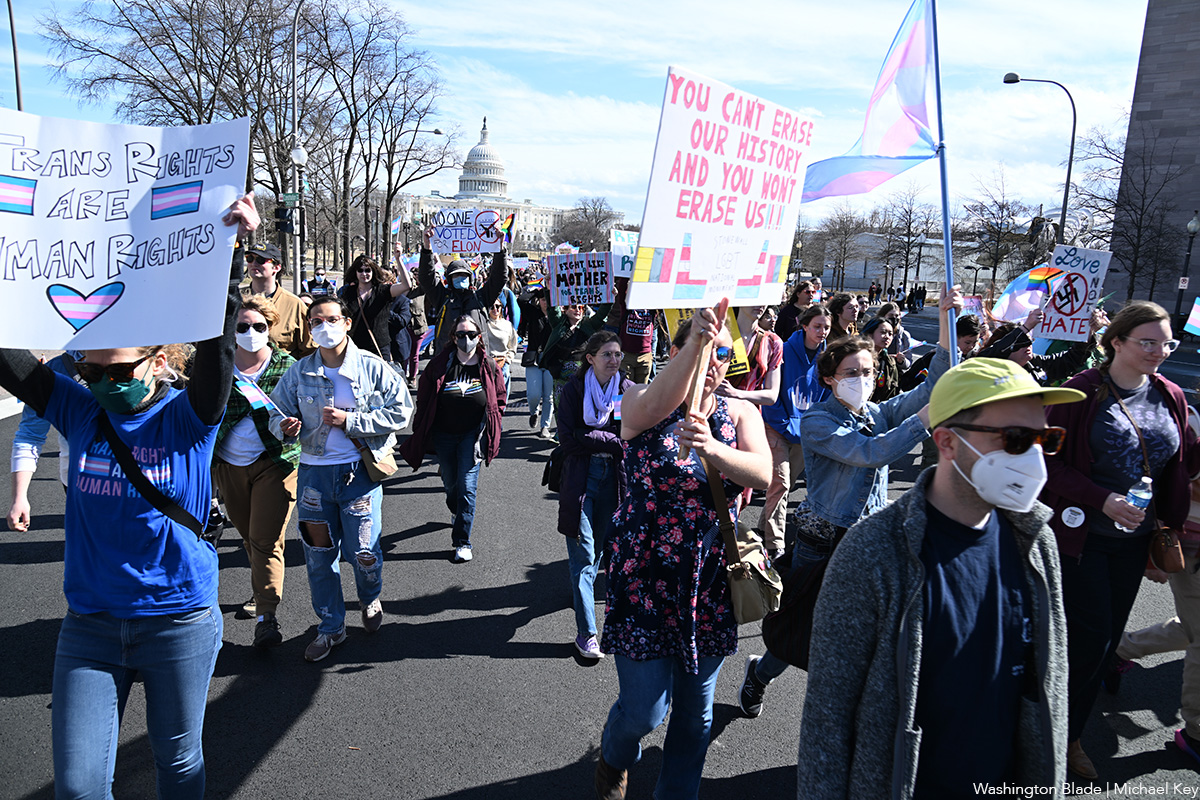
The Centers for Medicare and Medicaid Services announced last week that federal funding could no longer be used to pay for gender-affirming care through Medicaid or the Children’s Health Insurance Program.
The rule prohibits federal Medicaid dollars from covering puberty blockers, hormone therapy, and rare instances of surgery for enrollees under the age of 18 in the Medicaid program and under the age of 19 in CHIP. It does not prohibit coverage of counseling or psychotherapy as part of gender-affirming care.
The decision to restrict what healthcare is covered by federal dollars is part of a longer, more aggressive stance the Trump-Vance administration is taking toward LGBTQ+ healthcare.
Since taking the White House back for his second term, Trump has signed three executive orders that directly target transgender Americans. They include Executive Order 14168, “Defending Women From Gender Ideology Extremism and Restoring Biological Truth to the Federal Government” that requires the federal government to recognize only a person’s sex at birth, not their gender identity; Executive Order 14183, “Prioritizing Military Excellence and Readiness,” which attempts to remove transgender service members from the military and prevent them from enrolling; and an executive order that helped spur this change by restricting gender-affirming care.
The administration’s choice to villainize gender-affirming care, despite it being considered a best medical practice recommended by nearly every major medical group for gender dysphoria or gender incongruence, including the American Medical Association, American Academy of Pediatrics, and American Psychological Association, comes as KFF, a source for health policy research and polling data, estimates about 130,000 young trans people with Medicaid or CHIP coverage could be impacted by the policy.
“Today, we are ending federal taxpayer funding for sex-rejecting procedures on children,” U.S. Department of Health and Human Services Secretary Robert F. Kennedy, Jr., said last week when announcing the change. “These interventions carry serious risks and can cause irreversible harm. The federal government will no longer use Medicaid and CHIP dollars to fund procedures that fail to meet the evidentiary standard our children deserve.”
“Children deserve our protection, not experimental interventions that pose serious risks and convey no proven benefits,” said CMS Administrator Mehmet Oz. “By cutting off federal funds for these sex-rejecting procedures, we’re following the science, saving taxpayer dollars, and, most importantly, protecting children from potentially irreversible harm so they can truly flourish.”
The administration’s push is having a chilling effect on state healthcare legislation — more states now prohibit gender-affirming care than ever before. States with gender-affirming care restrictions jumped from four in 2023 to 27 states today.
The funding change has been met with fierce pushback from LGBTQ+ advocates, health experts, and government officials across the country before the rule goes into effect.
Some of the first actions against this policy began in July 2025.
Twenty-one states have attempted to restrict this effort in some fashion from going through as the White House intends. They include Arizona, California, Colorado, Connecticut, Delaware, Illinois, Maryland, Massachusetts, Maine, Michigan, Minnesota, Nevada, New Mexico, New Jersey, New York, Oregon, Rhode Island, Vermont, Washington, and Wisconsin, as well as Pennsylvania Gov. Josh Shapiro on behalf of his state.
The coalition of attorneys general filed lawsuits challenging nine separate provisions of the final rule, arguing that they would make it harder for consumers to get coverage through the ACA, increase costs for states, and weaken key ACA protections.
The U.S. District Court for the District of Massachusetts on Aug. 15 struck down a key provision of a Trump-Vance administration final rule that would have excluded coverage of certain types of gender-affirming care as essential health benefits under the Affordable Care Act. Essential health benefits are subject to the ACA’s financial protections, including limits on out-of-pocket costs.
“Everyone deserves access to health coverage,” said California Attorney General Rob Bonta. “The Trump administration tried to exclude gender-affirming care from qualifying as an essential health benefit. We fought back, and the court’s ruling means this care can — and in many states must — qualify for the ACA’s financial protections, ensuring transgender people have an equal opportunity to benefit from the ACA.”
“The Trump administration tried to make essential care unaffordable for transgender Marylanders by stripping it out of the ACA’s cost protections,” said Maryland Attorney General Anthony Brown. “We fought to keep that care covered, and we won. My Office will always defend Marylanders’ right to the care they need.”
The final rule at issue — the “Marketplace Integrity and Affordability” rule — was proposed by the Trump-Vance administration in March 2025, purportedly to “curb ACA enrollment fraud” and reduce federal spending on subsidies that help consumers afford ACA coverage. Among other changes, the rule would have removed certain types of gender-affirming care from the ACA’s 10 essential health benefit categories.
“This president would rather target young people than lower costs or expand access to health care. It is reprehensible that our federal government is intent on hurting and isolating the adolescents it is supposed to protect. I will use every tool at my disposal to fight this proposal and protect transgender Americans and their families,” said New York Attorney General Letitia James in December after the policy was announced.
In addition to state government resistance to the change, multiple LGBTQ+ advocates have committed to protecting the right to healthcare for LGBTQ+ children.
Rocky Mountain Equality CEO Mardi Moore affirmed those in Colorado would continue to help people most at risk if the change goes through.
“First, to the families impacted by this news: you will not be cut off immediately. The rule takes effect Oct. 13, 2026, and providers can continue to bill Medicaid and CHIP for youth already receiving gender-affirming care for up to six months after that. Rocky Mountain Equality is here, and we can help you understand your options to continue your child’s care.
“This is discrimination dressed up as rule-making. Government healthcare policy should expand what people can access, not strip away care that families and doctors have already determined is medically necessary,” Moore added. “We’ve seen this pattern before with other kinds of essential care, and it rarely stops with just one restriction. Any effort to ban or limit care opens the door for more restrictions on more kinds of care.”
The Human Rights Campaign, the largest LGBTQ+ lobbying group in the U.S., issued multiple statements following the announcement, and has filed a similar lawsuit against the federal government for prohibiting gender-affirming care to federal employees using federal health plans.
HRC President Kelley Robinson said taking a hard stance against what the administration is presenting as a win for the American people that will ultimately restrict healthcare options for thousands of Americans.
“Every young person is entitled to the health care that they, their parents, and their medical providers agree that they need, without politicians interfering with these important and highly personal decisions. And yet, rather than working to make healthcare more affordable and accessible, the Trump administration continues to obsess over the healthcare needs of trans youth, this time by cutting off health insurance coverage for those who rely on Medicaid and CHIP to access that care,” Robinson said. “The Trump administration is terrorizing trans youth and their families with these kinds of actions, and it has to stop.”
White House
White House counterterrorism strategy targets ‘anti-American, radically pro-transgender’ groups
Administration released document last week
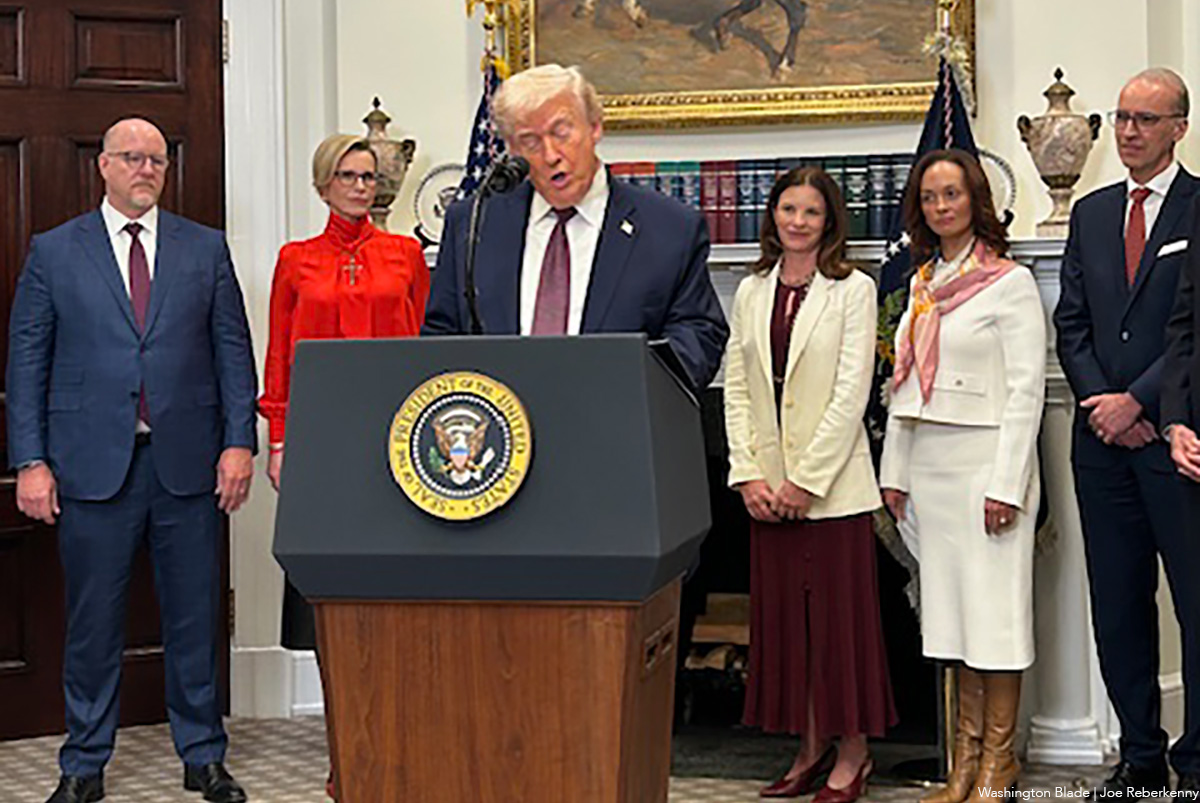
The White House released the “United States Counterterrorism Strategy” last week, introducing enforcement priorities that include references to people with “extreme transgender ideologies.”
The document is the first executive branch counterterrorism strategy released since former President Joe Biden’s 2021 “National Strategy for Countering Domestic Terrorism,” which largely focused on threats tied to domestic extremism and the Jan. 6 Capitol attack. The Trump-Vance administration’s new strategy instead centers heavily on cartels, Islamist organizations, and what it describes as “violent left-wing extremists.”
The report identifies three primary categories of terror threats facing the U.S.: “Narcoterrorists and Transnational Gangs,” “Legacy Islamist Terrorists,” and “Violent Left-Wing Extremists, including Anarchists and Anti-Fascists.” The strategy repeatedly frames those groups as existential threats to the U.S. and outlines a more aggressive, militarized counterterrorism posture.
The introduction to the report closes with a warning from President Donald Trump referencing counterterrorism operations carried out during his second administration: “We will find you and we will kill you.”
In the section outlining the administration’s counterterrorism priorities, the document argues that federal intelligence, and law enforcement agencies under prior administrations focused on the wrong threats while overlooking violence committed by left-wing extremists. The strategy specifically references transgender ideology while discussing political violence.
“As real threats were ignored or underplayed, Americans have witnessed the politically motivated killings of Christians and conservatives committed by violent left-wing extremists, including the assassination of Charlie Kirk by a radical who espoused extreme transgender ideologies.”
Claims tying a trans person to Kirk’s killing have been disputed, however, and multiple news outlets later retracted or corrected early reports that identified the shooter as trans.
The report later expands on that argument, saying the administration will prioritize targeting “violent secular political groups” it describes as anti-American and “radically pro-transgender.”
“In addition to cartels and Islamist terror groups, our national CT activities will also prioritize the rapid identification and neutralization of violent secular political groups whose ideology is anti-American, radically pro-transgender, and anarchist.”
The rhetoric mirrors claims frequently made by Trump allies and conservative commentators linking trans people and left-wing activism to political violence. However, data compiled by researchers and organizations tracking mass shootings does not support the idea that trans people are responsible for a significant share of such attacks.
Factcheck.org says rhetoric from Trump and several far-right political pundits contradicts available data, noting that the percentage of mass shootings committed by trans people is “exceedingly small.”
Despite the lack of evidence supporting generalized claims about trans people, the president’s son Donald Trump, Jr., told Fox News in September 2025 that he could not “name a mass shooting in the last year or two in America that wasn’t committed by, you know, a transgender lunatic.”
Factcheck.org also found that even if cases involving shooters with unclear gender identities were included in statistics about trans mass shooters, the number would still account for only a fraction of a percent.
Mark Bryant, founding executive director of the Gun Violence Archive, said the number of trans mass shooters could be as high as eight, but would still account for less than 0.1 percent of mass shootings over the last 12 years, according to GVA data. He added that the figure would remain below 0.2 percent even when examining incidents from 2018 to the present.
Beyond domestic extremism, the strategy frames the administration’s broader counterterrorism agenda through the lens of “America First” foreign policy and renewed U.S. dominance in the Western Hemisphere. The report repeatedly references the Monroe Doctrine, the nearly 200-year-old policy warning European powers against interference in the Americas.
“After years of neglect, the United States will reassert and enforce the Monroe Doctrine to restore American preeminence in the Western Hemisphere, and to protect our homeland” Trump said in the report.
The document also breaks down counterterrorism priorities by region, including the Middle East, where it argues the U.S. is “no longer as dependent” on the region because of increased domestic energy production.
“Our growing domestic energy production means the Middle East is no longer as central to America’s stability, yet threats from this region remain, and our counterterrorism goals continue to be specific and rooted in realistic threat analysis.”
The statement comes amid rising gas prices tied in part to instability surrounding the war involving Iran, with fuel costs reaching some of their highest levels since 2022. According to AAA, the national average price for gasoline climbed to $4.52 per gallon as the national average rose “$.25 for a second straight week.“
White House
From red carpet to chaos: A first-person narrative of the WHCD shooting
The Blade’s WH correspondent Joe Reberkenny recounts his night at the WHCD after a shooter attempted to gain entry.

It started as any White House Correspondents’ Dinner is supposed to go—I assume. I’ve never been to one before this, but based on other events I’ve attended at the Hilton, including an HRC gala, it all seemed fairly normal.
There was a lot of traffic. Police had blocked off streets encompassing a large portion of Adams Morgan—particularly around the hotel. The president was making his first appearance after boycotting the event during his first term, so there was a sense of anticipation. It took me about 45 minutes to go just under a mile from my apartment to about three blocks from the hotel in my Uber. I waited until the last possible second before I felt like I was going to be late—6:30—to get out of the car, because it was raining and I was wearing my green tux.
I walked up to a group of people checking tickets at the base of the hotel. They seemed to just be glancing at the tiny, index-card-sized tickets rather than conducting any kind of full security screening outside. As I walked from that first checkpoint to the drive-around drop-off area, I joined what was essentially one long line for the red carpet. It eventually split into people who wanted photos and those who didn’t—but again, there was no real need to show anything beyond that small ticket upon entering, and even that wasn’t being checked closely.
A light went off in my head; I felt that, given the speed at which security was checking tickets, they couldn’t fully see the foil logo and tiny table numbers from that distance. I remember thinking that if I had a similarly sized piece of paper, I could have gotten through up to that point.
I also noticed there was no real security checkpoint or metal detectors upon initially entering the hotel grounds—unlike what I had seen at the HRC gala the year before.
I waited about 35 minutes in line in the car drop-off area—without cars, since it had been repurposed to corral press and their guests before entering the building and heading onto the red carpet. I took my photo, then went up the escalator to meet my date, Jacob Bernard from Democracy Forward. They wouldn’t let him onto the red carpet without his ticket, so I gave him his, which I had been holding. He was already inside the venue despite not having his ticket on him and had been at one of the pre-parties.
That also struck me as odd—that you could access a pre-dinner party without a ticket or going through any visible security.
After I found him, we took a photo together at a step-and-repeat past the main red carpet area around 7:45. Oddly enough, a group of my friends—gays who I regularly see on the dance floors of the gay bars of Washington, who work in various government and media-adjacent fields—found me, and we took pictures together. None were White House correspondents or held a “hard pass” to the White House (security credentials that allow entry into the White House complex).
Another light went off in my head that indicated party crashers probably shouldn’t be getting inside to an event that is supposed to be one of the most secure rooms in the country.
After the photos, I could see groups of people being moved from pre-party spaces in various meeting rooms on other floors and directed toward the main floor where the red carpet had been.
My guest and I went back up to the main floor and walked through a small security checkpoint that included only a handful of metal detectors. From there, I went down the stairs from the lobby into the International Ballroom, where we took our seats at Table 200. I talked to a few people I knew—very traditional pre-event chit-chat. The vibes felt good. It was my first time attending, and I was genuinely excited.
Around 8:15, the Marine Corps Band played and “Commandant’s Four” color guard presented the flags. We were then told to take our seats.
They introduced the head table—the president, first lady, vice president, and members of the White House Correspondents’ Association board. Weijia Jiang, senior White House correspondent for CBS News and president of the WHCA, gave a brief speech, essentially saying we would eat first and then move into the main program, which was supposed to feature mentalist Oz Pearlman.
At this point my table, 200 which included members of the Wall Street Journal, the Blade, and a European outlet all started eating. About 15 minutes later, Washington Hilton staff began clearing plates and preparing to bring out the next course.
As they cleared the plates, I heard four loud bangs.
I saw hotel employees immediately start ducking. They seemed to understand the gravity of the situation much faster than most attendees, including myself. At first, it sounded like a tray might have fallen over (but I later found out that wasn’t the case).
After about 30 seconds of watching some people duck, others look around in confusion, and some continue eating and drinking, I got down. I kneeled with my chair in front of me as a kind of barrier. Being at Table 200, I felt somewhat removed from where the actual incident occurred.
Then I saw the president being whisked away quickly by Secret Service, along with the first lady and others at the head table.
My reporter instincts kicked in. I grabbed my phone and started filming. I saw SWAT team members rush into the ballroom and onto the stage, clearing the area. I captured a video of people looking around, confused about what had just happened.
A few minutes later, the room was told by the WHCA president to hold on—that they would provide more information and guidance on what would happen next. There was some indication that they might try to continue the event despite what had occurred.
Everyone started frantically checking X to see if any major outlets were reporting. I was receiving texts from family, friends, and colleagues about the rapidly unfolding situation.
I walked to the bathroom—twice, technically. I couldn’t find it initially because it was hidden behind black curtains. (Later, those curtains were removed, and the men’s room was in clearer view.)
During the first walk to the bathroom, I called my editor to tell him what was happening. He instructed me to start sending copy to another editor, who would get it online. The ballroom had almost no service—it’s in the basement of a 12-story hotel—so it was a challenge. I utilized SMS fallback (since iMessage wasn’t working) to send updates.
I returned to the table, where people were still hovering—calling editors, scrolling, texting, sending photos and copy. I was already drafting my story and sending it in chunks, adding details as I gathered more information.
I walked my guest toward the bathroom again, which was on the opposite side of the ballroom from our table, so I had to cross what felt like a sea of journalists, PR officials, guests, and others on their phones, talking and scrolling. My guest pointed out that the press pool was being held in an alcove away from the ballroom doors and escalator exit—not in the ballroom with everyone else.
“Alive” by the Bee Gees was playing over the speakers in the bathroom, which felt a little too on the nose.
On my way out, I heard someone speaking over a microphone and rushed to the ballroom entrance. WHCA President Weijia Jiang was speaking. She announced that the event was over and the space was being evacuated.
She also said that President Trump would hold a press conference at the White House in about 25 minutes.
That’s when I knew it was a race against the clock.
I called my editor a second time to update him and asked if I should head to the briefing (knowing the answer would be yes). He confirmed.
Then the crowd began to move. People grabbed purses, bottles—some left belongings behind. Even though it was technically becoming a crime scene, no one was actively forcing us out. It felt more like a collective understanding: It was time to go.
I texted my guest: “OK, I have to go to the White House. I’m so sorry to leave you.”
I made my way with the sea of people toward the one exit we were allowed to use and zipped between women in fancy gowns and men looking like penguins.
I put on my hard press pass, opened the Capital Bikeshare app, reserved the closest e-bike, and headed out.
I walked up Columbia Road to 20th and Wyoming, grabbed the bike, and rode down Wyoming, then 18th, cut over to U Street, and went straight down 16th to the White House. That ride was exhilarating. I also filmed an Instagram Reel updating my followers on what was going on. I could see tourists and D.C. residents alike looking at me from their cars and the sidewalk, obviously confused as to why a man dressed in a tux had hopped on a bike.
I got off the bike where 16th Street meets Lafayette Square and darted toward the first White House security checkpoint, where they were verifying press credentials. Luckily, I had mine. After that, it turned into a mad dash. Everyone who made it through started moving quickly.
The sound of heels on what I think was cobblestone—or maybe brick—sticks with me. My own shoes were clacking as I ran toward the White House alongside other journalists in heels and dress shoes.
At the Secret Service checkpoint, there was a separate line for hard pass holders. Having my hard pass let me skip much of the impeccably dressed line of journalists who didn’t think to bring their hard pass with them.
It was probably the most exquisitely dressed press crowd I’ve ever seen—tuxedos, gowns, full makeup. It felt like something out of “The Hunger Games.”
I went through security, put my belongings through the metal detector, entered my code, grabbed my things, and ran to the briefing room.
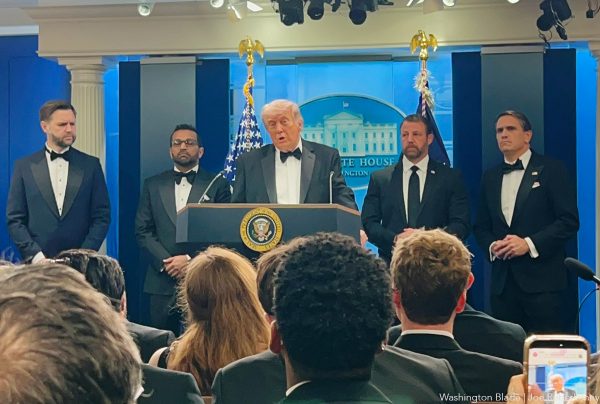
White House
Grindr to host first-ever White House Correspondents’ Dinner party
App’s head of global government affairs a long-time GOP-aligned lobbyist

Gay dating and hookup app Grindr will host its first-ever White House Correspondents’ Weekend party on April 24.
The event is scheduled for the night before the White House Correspondents’ Dinner, an annual gathering meant to celebrate the First Amendment, honor journalism, and raise money for scholarships.
The White House Correspondents’ Dinner is organized by the White House Correspondents’ Association, a group of journalists who regularly cover the president and the administration.
An invitation obtained by the Washington Blade’s Joe Reberkenny and Michael K. Lavers reads:
“We’d be thrilled to have you join us at Grindr’s inaugural White House Correspondents’ Dinner Weekend Party, a Friday evening gathering to bring together policymakers, journalists, and LGBTQ community leaders as we toast the First Amendment.”
The Blade requested an interview with Joe Hack, Grindr’s head of global government affairs, but was unable to reach him via phone or Zoom. He did, however, provide a statement shared with other outlets, offering limited explanation for why the company decided 2026 was the year for the app to host this event.
“Grindr represents a global community with real stakes in Washington. The issues being debated here — HIV funding, digital privacy, LGBTQ+ human rights — are daily life for our community. Nobody does connections like Grindr, and WHCD weekend is the most iconic place in the country to make them. We figured it was time to host.”
Hack said the company has been “well received” by lawmakers in both parties and has found “common ground” on issues such as HIV funding and keeping minors off the app. He credited longstanding relationships in Washington and what he described as Grindr’s “respectful” approach to lobbying.
Hack, a longtime Republican-aligned lobbyist, previously worked for several GOP lawmakers, including U.S. Sens. Deb Fischer (R-Neb.), Jon Kyl (R-Ariz.), George Voinovich (R-Ohio), Bill Frist (R-Tenn.), and U.S. Rep. Randy Forbes (R-Va.).
According to congressional disclosure forms compiled by OpenSecrets, Grindr spent $1.3 million on lobbying in 2025— more than Tinder and Hinge’s parent company Match Group.
“This is going to be elevated Grindr,” Hack told TheWrap when describing the invite-only party that has already generated buzz on social media. “This isn’t going to be a bunch of shirtless men walking around. This is going to be very elevated, elegant, but still us.”
He also pointed to the company’s work on HIV-related initiatives, including efforts to maintain federal funding for healthcare partners that distribute HIV self-testing kits through the app.
The event comes at a particularly notable moment for an LGBTQ-focused connection platform to enter the Washington social circuit at a high-profile political weekend, as LGBTQ rights remain under constant attack from conservative lawmakers, particularly around transgender healthcare, sports participation, and public accommodations.
Iran
LGBTQ+ groups condemn Trump’s threat to destroy Iranian civilization
Ceasefire announced less than two hours before Tuesday deadline
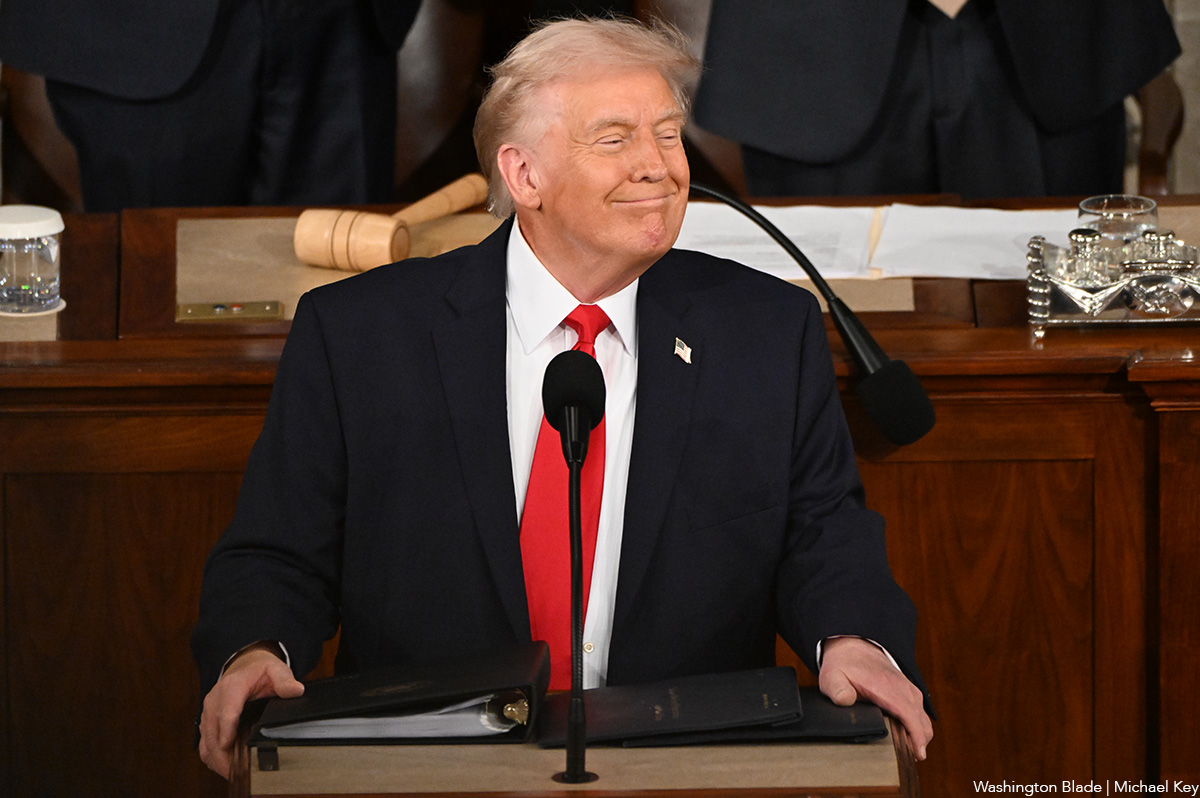
The Council for Global Equality is among the groups that condemned President Donald Trump on Tuesday over his latest threats against Iran.
Trump in a Truth Social post said “a whole civilization will die tonight” if Tehran did not reach an agreement with the U.S. by 8 p.m. ET (5 p.m. PT) on Tuesday.
Iran is among the handful of countries in which consensual same-sex sexual relations remain punishable by death.
Israel and the U.S. on Feb. 28 launched airstrikes against Iran.
One of them killed Supreme Leader Ayatollah Ali Khamenei. Iran in response launched missiles and drones against Israel and other countries that include Kuwait, Bahrain, Qatar, the United Arab Emirates, Jordan, Saudi Arabia, Azerbaijan, and Cyprus.
Gas prices in the U.S. and around the world continue to increase because the war has essentially closed the Strait of Hormuz, a strategic waterway that connects the Persian Gulf and the Gulf of Oman through which roughly 20 percent of the world’s crude oil passes.
Trump less than 90 minutes before his deadline announced a two-week ceasefire with Iran that Pakistan helped broker.
“We the undersigned human rights, humanitarian, civil liberties, faith-based and environmental organizations, think tanks and experts are deeply alarmed by President Trump’s threat regarding Iran that ‘a whole civilization will die tonight’ if his demands are not met. Such language describes a grave atrocity if carried out,” reads the statement that the Council for Global Equality more than 200 other organizations and human rights experts signed. “A threat to wipe out ‘a whole civilization’ may amount to a threat of genocide. Genocide is a crime defined by the Genocide Convention and by the Rome Statute of the International Criminal Court as committing one or more of several acts ‘with intent to destroy in whole or in part a national, racial or religious groups as such.'”
The statement states “the law is clear that civilians must not be targeted, and they must also be protected from indiscriminate or disproportionate attacks.”
“Strikes on civilian infrastructure — such as the recent attack on a bridge and the attacks President Trump is repeatedly threatening to carry out to destroy power plants — have devastating consequences for the civilian population and environment,” it reads.
“We urge all parties to respect international law,” adds the statement. “Those responsible for atrocities, including crimes against humanity and war crimes, can and must be held accountable.”
The Alliance for Diplomacy and Justice, Amnesty International USA, Human Rights Watch, the American Civil Liberties Union, the NAACP, MADRE, and the Robert and Ethel Kennedy Human Rights Center are among the other groups that signed the letter.
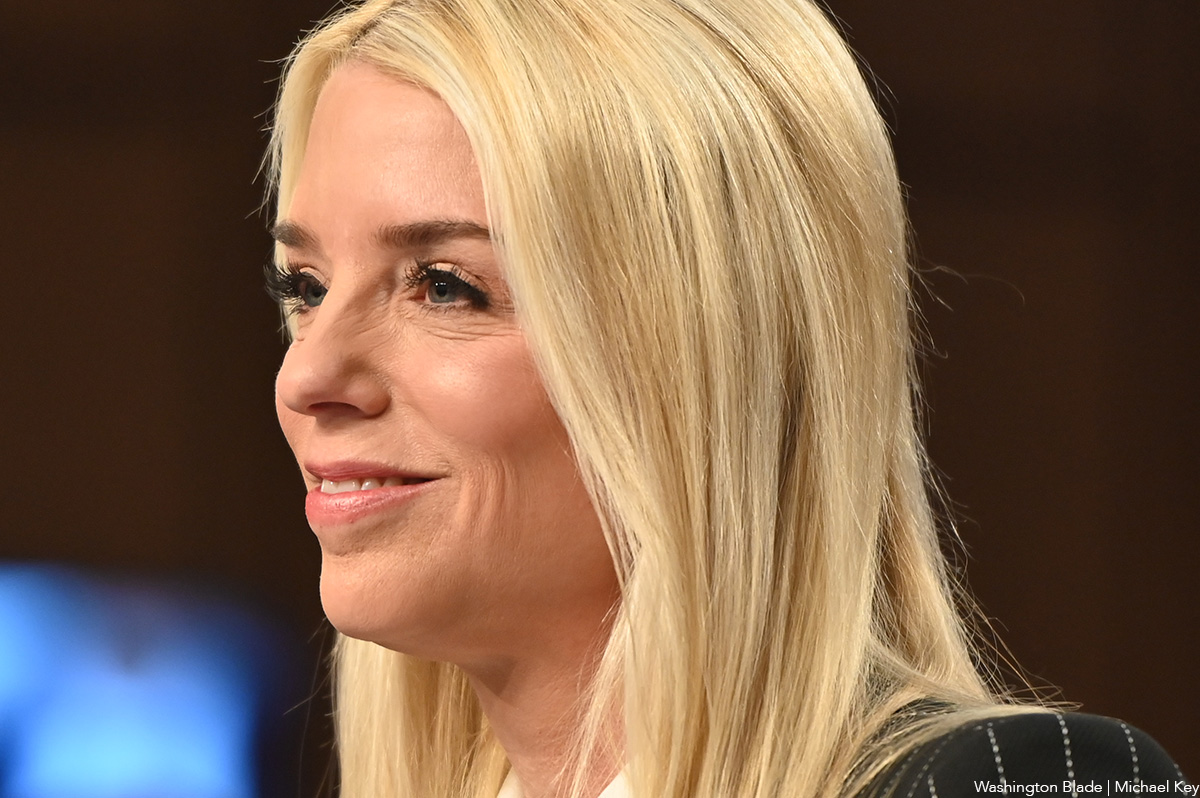
President Donald Trump removed Attorney General Pam Bondi from her post Thursday, following growing criticism over how she and the Department of Justice handled a range of issues, including matters related to sex offender and Trump ally Jeffrey Epstein.
Trump announced Bondi’s removal on Truth Social, where he also said Todd Blanche will serve as acting head of the Justice Department.
“Pam Bondi is a great American patriot and a loyal friend, who faithfully served as my attorney general over the past year,” Trump wrote on the platform. “Pam did a tremendous job overseeing a massive crackdown on crime across our country, with murders plummeting to their lowest level since 1900.”
Trump was seen as recently as Wednesday with the now-former attorney general at a Supreme Court hearing on citizenship.
The decision contrasts with Trump’s previous public praise of Bondi, the 87th U.S. attorney general and former 37th attorney general of Florida, who served in that role from 2011-2019 before joining the Trump-Vance administration. He has frequently lauded her loyalty and said he speaks with her often. Bondi was also one of president’s defense lawyers during his first impeachment trial.
Privately, however, Trump had grown frustrated that Bondi was not “moving quickly enough” to prosecute critics and political adversaries he wanted to face criminal charges, according to multiple sources. The New York Times reported that her inability to charge former FBI Director James B. Comey and New York Attorney General Letitia James with any crimes is a large factor in the president’s choice to fire her from the government’s primary law enforcement agency.
The move comes as Trump has sought to minimize public turmoil within his administration, avoiding the perception of a revolving-door Cabinet that defined his first term.
Lee Zeldin, a former Republican congressman from New York who unsuccessfully ran for governor, has emerged as a leading contender to lead the Justice Department. He has been one of Trump’s most reliable allies.
“He’s our secret weapon,” Trump said of Zeldin in February during a White House event promoting the coal industry, adding, “He’s getting those approvals done in record-setting time.”
Bondi has also growing faced scrutiny from Congress.
The House Oversight Committee recently subpoenaed her to testify about the department’s handling of certain files, where she declined to answer key questions during a contentious House Judiciary Committee hearing in February.
The Tampa native has a long history of opposing LGBTQ+ rights through her roles in government. As Florida attorney general, she fought against the legalization of same-sex marriage, arguing it would cause “serious public harm,” pushing forward a legal battle that cost taxpayers nearly half a million dollars. She also asked the Florida Supreme Court to overturn a lower court ruling that found the state’s same-sex marriage ban unconstitutional.
More recently, Bondi established a “Title IX Special Investigations Team” within the Justice Department focused on restricting transgender women and girls from participating in women’s and girls’ sports teams and accessing facilities aligned with their gender identity. She also told Children’s Hospital of Philadelphia to turn over the medical records of anyone under 19 who received gender-affirming care.
Her removal follows Trump’s decision last month to oust another controversial female Cabinet figure, Kristi Noem.

U.S. Citizenship and Immigration Services on Monday announced it will ensure “male aliens seeking immigration benefits aren’t coming to the U.S. to participate in women’s sports.”
The announcement notes USCIS “has clarified eligibility for certain visa categories: O-1A aliens of extraordinary ability, E11 aliens of extraordinary ability, E21 aliens of exceptional ability, and for national interest waivers (NIWs), to guarantee an even playing field for all women’s athletics in the United States.” The new policy comes roughly six months after President Donald Trump issued an executive order that bans transgender women and girls from female sports teams in the U.S.
“Men do not belong in women’s sports. USCIS is closing the loophole for foreign male athletes whose only chance at winning elite sports is to change their gender identity and leverage their biological advantages against women,” said USCIS spokesperson Matthew Tragesser. “It’s a matter of safety, fairness, respect, and truth that only female athletes receive a visa to come to the U.S. to participate in women’s sports.”
“The Trump administration is standing up for the silent majority who’ve long been victims of leftist policies that defy common sense,” added Tragesser.
USCIS in April announced it will only recognize “two biological sexes, male and female.” Trump shortly after he took office for a second time on Jan. 20 signed the “Defending Women from Gender Ideology Extremism and Restoring Biological Truth to the Federal Government” executive order.
The 2028 Summer Olympics will take place in Los Angeles.
The U.S. Olympic and Paralympic Committee last month banned trans women from competing in women’s sporting events.
The Guardian earlier this year reported the State Department ordered consular officials “to deny visas to transgender athletes attempting to come to the U.S. for sports competitions, and to issue permanent visa bans against those who are deemed to misrepresent their birth sex on visa applications.”
Germany and Denmark are among the countries that have issued travel advisory for trans and nonbinary people who are planning to visit the U.S. The warnings specifically note the Trump-Vance administration has banned the State Department from issuing passports with “X” gender markers.
“This policy update clarifies that USCIS considers the fact that a male athlete has been competing against women as a negative factor in determining whether the alien is among the small percentage at the very top of the field,” reads the USCIS announcement. “USCIS does not consider a male athlete who has gained acclaim in men’s sports and seeks to compete in women’s sports in the United States to be seeking to continue work in his area of extraordinary ability; male athletes seeking to enter the country to compete in women’s sports do not substantially benefit the United States; and it is not in the national interest to the United States to waive the job offer and, thus, the labor certification requirement for male athletes whose proposed endeavor is to compete in women’s sports.”
The new USCIS guidance takes effect immediately.
White House
DOJ launches investigation into Calif. trans student-athlete policy
State AG vows to defend Golden State laws
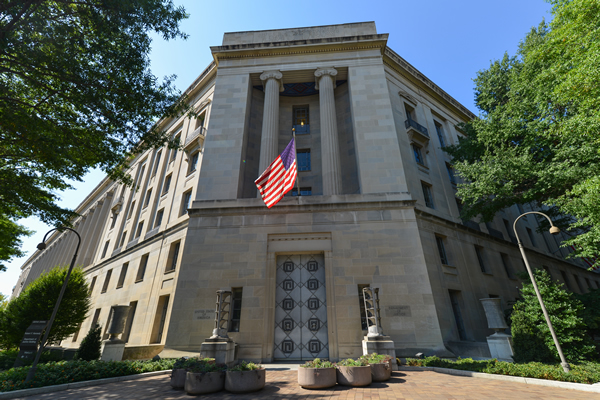
One day after President Donald Trump threatened to strip California of “large scale federal funding” over its policy on transgender student-athletes, his Justice Department announced it is investigating the state for potentially violating Title IX.
“The investigation is to determine whether California, its senior legal, educational, and athletic organizations, and the school district are engaging in a pattern or practice of discrimination on the basis of sex,” the DOJ said in a statement.
The DOJ said it notified State Attorney General Rob Bonta, State Superintendent of Public Instruction Tony Thurmond, the Jurupa Unified School District, and the California Interscholastic Federation of its investigation.
AB Hernandez, 16, is an out trans female student-athlete at Jurupa Valley High School who qualified for this weekend’s state track and field championship. As the Los Angeles Blade reported earlier this week, the CIF announced a change in the rules at the finals to accommodate girls who were displaced by Hernandez, including giving medals to cisgender competitors who earn a podium spot should Hernandez place ahead of them.
“We remain committed to defending and upholding California laws and all additional laws which ensure the rights of students, including transgender students, to be free from discrimination and harassment,” said Bonta in a statement. “We will continue to closely monitor the Trump administration’s actions in this space.”
As KTLA reported, California is one of 22 states that allow trans student-athletes to participate in sports consistent with their gender identity. Former Gov. Jerry Brown signed that policy into law in 2013.
The DOJ announced it is also now supporting a federal lawsuit targeting Bonta and the state Department of Education, claiming that California law and CIF policy discriminate against cisgender girls by allowing trans female athletes to compete according to their gender identity.
The lawsuit was filed by a conservative law group, Advocates for Faith and Freedom, representing the families of two girls at Martin Luther King High School in Riverside. Their suit claims the school’s cross-country team dropped one athlete from her varsity spot in favor of a trans athlete and that school administrators compared their “Save Girls Sports” T-shirts to swastikas.
Officials in Washington also weighed-in, referring to trans girls and women as “males.”
“Title IX exists to protect women and girls in education,” said Assistant U.S. Attorney General for Civil Rights Harmeet K. Dhillon. “It is perverse to allow males to compete against girls, invade their private spaces, and take their trophies.”
“The law is clear: Discrimination on the basis of sex is illegal and immoral,” said U.S. Attorney Bill Essayli. “My office and the rest of the Department of Justice will work tirelessly to protect girls’ sports and stop anyone — public officials included — from violating women’s civil rights.”
According to Gov. Gavin Newsom’s office, out of the 5.8 million students in California’s K-12 public school system, the number of active trans student-athletes is estimated to be in the single digits.
Politics
Trump bars trans women and girls from sports
The administration reversed course on the Biden-Harris policy on Title IX

President Donald Trump on Wednesday issued another executive order taking aim at the transgender community, this time focusing on eligibility for sports participation.
In a signing ceremony for “Keeping Men Out of Women’s Sports” in the East Room of the White House, the president proclaimed “With this executive order, the war on women’s sports is over.”
Despite the insistence by Trump and Republicans that trans women and girls have a biological advantage in sports over cisgender women and girls, the research has been inconclusive, at best.
A study in the peer reviewed Sports Medicine journal found “no direct or consistent research” pointing to this conclusion. A different review in 2023 found that post-pubertal differences are “reduced, if not erased, over time by gender affirming hormone therapy.”
Other critics of efforts to exclude trans student athletes have pointed to the small number of people who are impacted. Charlie Baker, president of the National Collegiate Athletic Association, testified last year that fewer than 10 of the NCAA’s 522,000+ student athletes identify as trans.
The Trump-Vance administration has reversed course from the Biden-Harris administration’s policy on Title IX rules barring sex-based discrimination.
“If you’re going to have women’s sports, if you’re going to provide opportunities for women, then they have to be equally safe, equally fair, and equally private opportunities, and so that means that you’re going to preserve women’s sports for women,” a White House official said prior to the issuance of the order.
Former President Joe Biden’s Title IX rules, which went into effect last year, clarified that pursuant to the U.S. Supreme Court’s ruling in Bostock v. Clayton County (2020), sex-based discrimination includes that which is based on the victim’s sexual orientation or gender identity.
The White House official indicated that the administration will consider additional guidance, regulations, and interpretations of Title IX, as well as exploring options to handle noncompliance by threatening federal funding for schools and education programs.
White House Press Secretary Karoline Leavitt told reporters that Trump “does expect the Olympic Committee and the NCAA to no longer allow men to compete in women’s sports.”
One of the first legislative moves by the new Congress last month was House Republicans’ passage of the “Protection of Women and Girls in Sports Act,” which would ban trans women and girls from participating in competitive athletics.
The bill is now before the U.S. Senate, where Republicans have a three-seat majority but would need 60 votes to overcome the filibuster.

Diane Anderson-Minshall’s coming out evolution as a mixed white/Indigenous American, bisexual, lesbian, queer, married to a trans man

Annie Andrews denounces trans athletes after Trump targets her

On Republican Long Island, gay Democrat Chris Gallant bets on public service over politics

Through the blaze: Author Deborah Samuel talks about survival, healing, and ‘Grace Through Fire’

Report: LGBTQ+ exclusion costs Japanese economy billions a year

Actor Christian Tyler Dorey is a Jack of all trades

ICC unseals arrest warrants for Taliban officials accused of persecuting LGBTQ+ people, women

Here’s your Palm Springs look at the weekend: Oct 9-11, 2026

Carolyn Weathers: From mild-mannered to kick-ass lesbian activist in the L.A. gay liberation front

The new “chosen family”: Suzanne Bangis on building a family through third-party reproduction
-
 a&e features4 days ago
Actor Christian Tyler Dorey is a Jack of all trades
-
 Afghanistan3 days ago
ICC unseals arrest warrants for Taliban officials accused of persecuting LGBTQ+ people, women
-
 Palm Springs3 days ago
Here’s your Palm Springs look at the weekend: Oct 9-11, 2026
-
 Features3 days ago
Carolyn Weathers: From mild-mannered to kick-ass lesbian activist in the L.A. gay liberation front
-
 Family4 days ago
The new “chosen family”: Suzanne Bangis on building a family through third-party reproduction
-

 a&e features3 days ago
Veteran Broadway actor Laura Benanti bares all in her new show ‘Nobody Cares’
-

 LGBTQ+ Youth Mental Health3 days ago
Zaya Wade to be honored by LA LGBT Center with Model of Pride award
-
 Japan7 hours ago
Report: LGBTQ+ exclusion costs Japanese economy billions a year
-
 Books5 hours ago
Through the blaze: Author Deborah Samuel talks about survival, healing, and ‘Grace Through Fire’
-
 Politics4 hours ago
On Republican Long Island, gay Democrat Chris Gallant bets on public service over politics