
Theater
The spirit of Sondheim enchants sparkling ‘Into the Woods’
For those who love that kind of thing there is no joy quite like watching or for that matter, merely listening to a Sondheim musical
Though the late Stephen Sondheim is now regarded as part of the highest pantheon of Broadway Musical icons, he had a surprisingly small number of hits. His longest running show was his first as both lyricist and composer, “A Funny Thing Happened on the Way to the Forum,” which closed in 1964 after 964 performances, and even his most successful shows across the next five decades had comparatively short runs.
The reason, of course, is that Sondheim simply isn’t for everyone; his musicals were edgy, challenging, looking to push the boundaries of storytelling in musical theatre; his songs were as dense with layers of meaning as they were with his precocious wit, and not a word or note was wasted. For those who love that kind of thing, there is no joy quite like that to be found watching – or for that matter, merely listening to – a Sondheim musical; for those who don’t, it can feel a little too much like doing homework instead of spending an evening at the theatre.
Even if that sounds like you, “Into the Woods” – the late composer’s classic musical now playing in a revival production at the Ahmanson – might stand a chance of winning you over. The show itself, which originated in a 1986 production showcasing Bernadette Peters, reimagines a handful of (mostly) well-known fairy tales to explore what happens “after the happily ever after”; it also features some of Sondheim’s most “audience friendly” music, framing the cleverness and insight of his lyrics with the kind of “hummable melodies” he was often accused of omitting from his work, and that, coupled with the easy familiarity of the subject matter, makes it arguably the most accessible show in his canon.
The aesthetically stripped-down staging now at the Ahmanson was first mounted as part of the New York City Center’s “Encores” series before transferring for a Broadway run in June of 2022 – where it earned not only enthusiastic critical acclaim but six Tony nominations, to boot. Judging from what we saw at the Ahmanson, it’s easy to understand why.
Forsaking an elaborate scenic design in favor of a highly stylized, fairy-tale-suggestive setting in which the orchestra occupies most of the upstage area, songs and scenes are played out with almost as much left to the imagination as if the show were one of the “staged concert” renderings of Broadway musicals that have become popular within the last decade or so; yet in spite (or perhaps, because) of its emphasis on what is to be gained from the material rather than on the Grimm-Brothers-gone-camp trappings of story’s deceptively cute, gimmicky concept, it manages to deliver all the stealthy resonance of Sondheim’s words and music while still preserving the tongue-in-cheek charm of its reimagined fairy tales with crystal clarity.
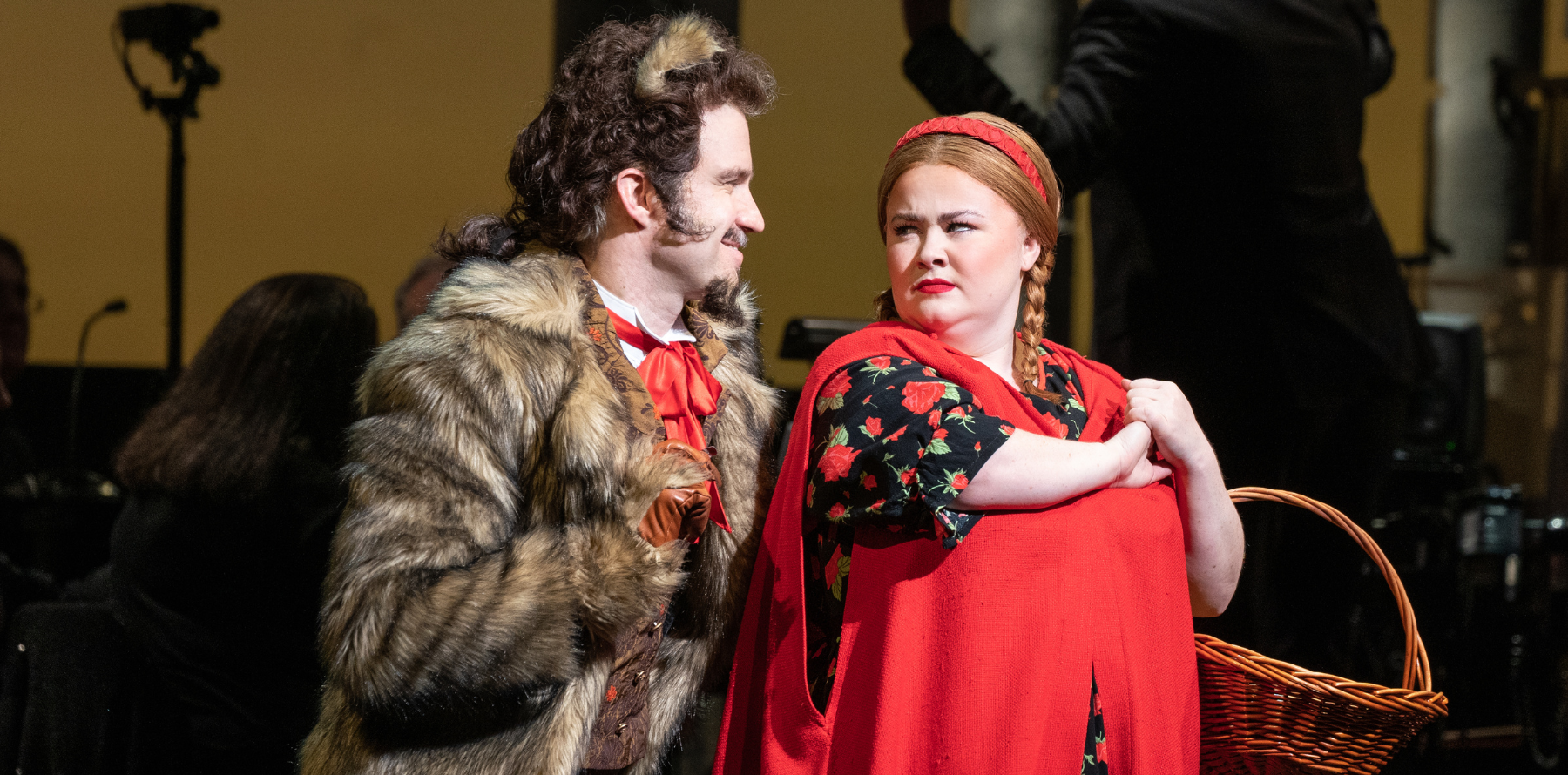
We won’t spoil the fun for those unfamiliar with the show (and who haven’t seen the lukewarm movie version); suffice to say that it merges together some tales you know – Cinderella (Diane Phelan), Little Red Ridinghood (Katy Geraghty), Jack (Cole Thompson) and the Beanstalk, and others – and intertwines them with one you don’t, in which a childless baker (Sebastian Arcelus) and his wife (Stephanie J. Block) make a deal with the witch next door (Montego Glover) to gather ingredients for a mysterious potion in exchange for her granting their wish for a baby. In James Lapine’s astute, sharply honed script, these old tales are infused with adult perspective, diving deeper than their simplistic cautionary messages to explore a few of the more nuanced and subtle dangers that await us “in the woods,” even as these somewhat fractured fables wind their way toward the happy endings we expect.
It doesn’t stop there, though. Act Two picks up where things left off, as the consequences of all the characters’ choices come back not only to disrupt their newfound happiness, but to turn their whole magic kingdom into a disaster zone. It’s here where Sondheim and Lapine hit us closest to the heart, sweeping aside the generational “wisdom” of the original tales to reveal a moral more suited to a modern age, in which the traditional bonds of kinship are often forged with the families we choose rather than the ones we were born with – and in which the stories we tell, to our children and to ourselves, may well matter more than they ever have.
Along the way, there is lots of comedy – of course, how can one resist poking fun at the conventions of fairy tales? – and even more music, including now-classic songs like “Children Will Listen” and “No One Is Alone”, the latter of which became an anthem of hope and comfort during the AIDS era that was in full bloom when the show originally debuted.
Thanks to concise staging and guidance from director Lear deBessonet, a uniformly superb cast (many of whom are continuing in their Broadway roles), and a perfectly balanced sound mix that brings out all the detail of the scoring while keeping every word spoken or sung onstage completely audible, it provides the “brainy” fun we associate with Sondheim – but it’s also gleefully entertaining. It captures all the cheeky humor of the show’s absurdist conceit, even enhancing it with surreal design touches – most notably the use of onstage puppeteers to bestow life upon (among other things) a flock of friendly birds and “Milky White,” the decrepit cow who becomes an audience favorite from her first appearance – yet remains grounded enough to ensure that the emotional punch of the second half feels not only sincere, but earned.
Standout moments are plentiful, but some of the high points include “I Know Things Now,” as sung by Geraghty, whose steamroller interpretation of Little Red overall garners plenty of audience chuckles; “Giants in the Sky,” delivered by Thompson’s endearingly daft Jack; “It Takes Two,” which warms the mood though the easy chemistry of real-life-married-couple Arcelus and Block; “Last Midnight,” in which Glover gives the Witch she’s made completely her own a showstopping final exit from the stage. Mention must inevitably made of Gavin Creel, whose double turn as both the Wolf and Cinderella’s Prince gives him a scene-stealing chance to show off his multiple talents, as well as Phelan’s down-to-earth Cinderella, whose every-girl approach brings a refreshingly contemporary perspective into the forefront. A final nod should go to veteran actor David Patrick Kelly, a delight as the narrator with more of a connection to the story than it seems.
These are just the most prominent players among a cast with no weak links; the complete ensemble as a whole is more than enough reason to recommend “Into the Woods,” on the strength of combined talent alone.
There’s so much more to be appreciated, though – there aren’t many musicals that can deliver giddy hilarity, heartbreaking tragedy, and unexpected epiphanies that jolt us into recognition, all without losing their warm and friendly charm – so don’t miss your chance to see this one while it’s still here.
Even if you’re not a Sondheim fan, it will be one of the highlights of your summer.



Theater
‘Good Guy with a Gun’ turns bad politics into a great musical
Co-creator Micah O’Konis breaks down their darkly hilarious political musical

Most people — especially in 2026 — would agree that politics are far too serious to be joked about. Micah O’Konis, co-creator of the NRA-centered musical dark comedy, Good Guy with a Gun, is not one of those people.
It’s clear in every one of this new musical’s songs; Good Guy with a Gun is set in the starkly divided world we’re currently living in, with viewers being introduced to diehard conservative Ron (Chris Sullivan) and his daughter, the passionate liberal Jenna (Kimiko Glenn). NRA lobbyist Ron wants nothing more than to turn Jenna and every other ‘bleeding heart’ over to his political side — and, luckily (for him at least), he finds something that lets him do just that: a magic gun that turns anyone he shoots into a DEI-hating conservative.
It’s an endlessly catchy journey filled with as much dark humor as it is astute critiques of modern politics. That’s because Good Guy with a Gun is driven by personal experience, with the creative team researching the devastating impact of American gun laws and O’Konis non-binary identity meaning they’ve experienced unique brands of nastiness from all sides of the political spectrum.
Through music and jaw-dropping hilarity, Micah critiques the utter ridiculousness that American politics has largely become. They do so while somehow humanizing both sides of this political divide, all while Good Guy with a Gun makes one thing very clear: it doesn’t matter what political party you are. If your priority isn’t doing the real work of taking care of those in need, then you’re doing something wrong.
“I think there’s a power in making a joke,” said O’Konis, when describing what led to their melodious takedown of modern politics. “You’re complicating things for people, and you’re showing them that it’s not just one thing. Yes, gun violence is an incredibly serious matter. But there are also serious things that are just so ridiculous that they’re worth laughing at.” That issue in particular is one that O’Konis and their writing partner, Philip Labes, know well; the duo had the idea for Good Guy with a Gun after Labes was held up at gunpoint on his way home. Roommates at the time, Micah was the first one to see the disheveled musician after the incident, who, amidst rambling about his experience, shared an idea: they should make a musical about the NRA.
And thus, Good Guy with a Gun was born, with this project being in development for more than a decade before its official premiere on August 14th, 2026. The years of effort show in each song, with this polished album featuring some of Broadway’s biggest voices like Yvette Nicole Brown, Rebecca Naomi Jones, Anthony Rapp, and more.
“I think the reason why we were able to get such an amazing cast is because this message really resonates with people,” Micah explained. “The show — while it started off just talking about guns — is so much more now. We’re talking about this generational and political divide in America, and we’re using guns as our way into that.”
Good Guy with a Gun never shirks the realities of how gun violence has deeply hurt the American populace, with Micah explaining how they and the entire creative team worked hard to respect the thousands of people who’ve been hurt by mass shootings. Micah became well-versed in the political actions that make these atrocities possible, learning about the NRA’s flawed beginnings and how its push for guns coupled with discrimination against LGBTQ+, immigrant, and most other marginalized communities. This flawed mindset is analyzed throughout the musical, with songs like ‘N-R-Amen’ showing how the fight against equality has become a national spectacle with millions of rapt audience members.
Yet amidst this criticism, Good Guy with a Gun does something that may surprise (and infuriate) listeners: it humanizes Ron, a character meant to represent how hardcore conservatives think today. “We’re by no means excusing his beliefs,” stressed O’Konis. “We just wanted to make something that we know from experience resonates with people, and we’re willing to take on the risks that are associated with that.”
Because Good Guy with a Gun not only showcases how the far-right have gilded the political degradation of underserved communities, but it also calls out many liberals for focusing more on correcting others than actually doing the work necessary for societal equity. On that point especially, Micah said, “It’s impossible to get a perfect score in being progressive…I think progressives like myself will do better by lifting up people who are getting a ‘B plus’ [in political correctness] rather than just dunking on people who are getting a C.”
With the humorous allegory of a ‘magic conservative gun,’ Good Guy with a Gun spotlights how, no matter the party, anyone who thinks ripping away someone’s autonomy is okay as long as it makes them right is thoroughly wrong. And in exploring the countless people who think just like that today, this musical both humanizes these folks and calls out how this foolish arrogance has turned American politics into the laughably defunct system it is today.
“It’s about empathy,” explained O’Konis when discussing the central message of the show. “And that empathy is a practice. It’s something that you have to work at. You can’t get it with a click of a switch or pull of a trigger. You have to do the work to have conversations and understand where people are coming from.”
Good Guy with a Gun recognizes that it’s easier to see people on a different side of the political spectrum as inhuman — and why nobody, no matter their party, should do that. It doesn’t excuse the pain politics has caused; while the show does call out liberals, it does spotlight that shallow commitment to equality is far different than conservative calls for the oppression of diverse communities. But the show urges listeners to empathize with those who oppose them and use that understanding to help them learn what it means to truly keep their loved ones safe.
Through lyrical humor, Good Guy with a Gun delivers a message of radical empathy. One that it hopes viewers will carry long after the last song has ended, and that could lead to a political system that truly fights for the good of us all.
Good Guy with a Gun streams August 14th.
Theater
‘Mamma Mia!’ brings found family — and sequins — to the Ahmanson
The cast of this hit musical promises to start Summer in the queerest way imaginable!
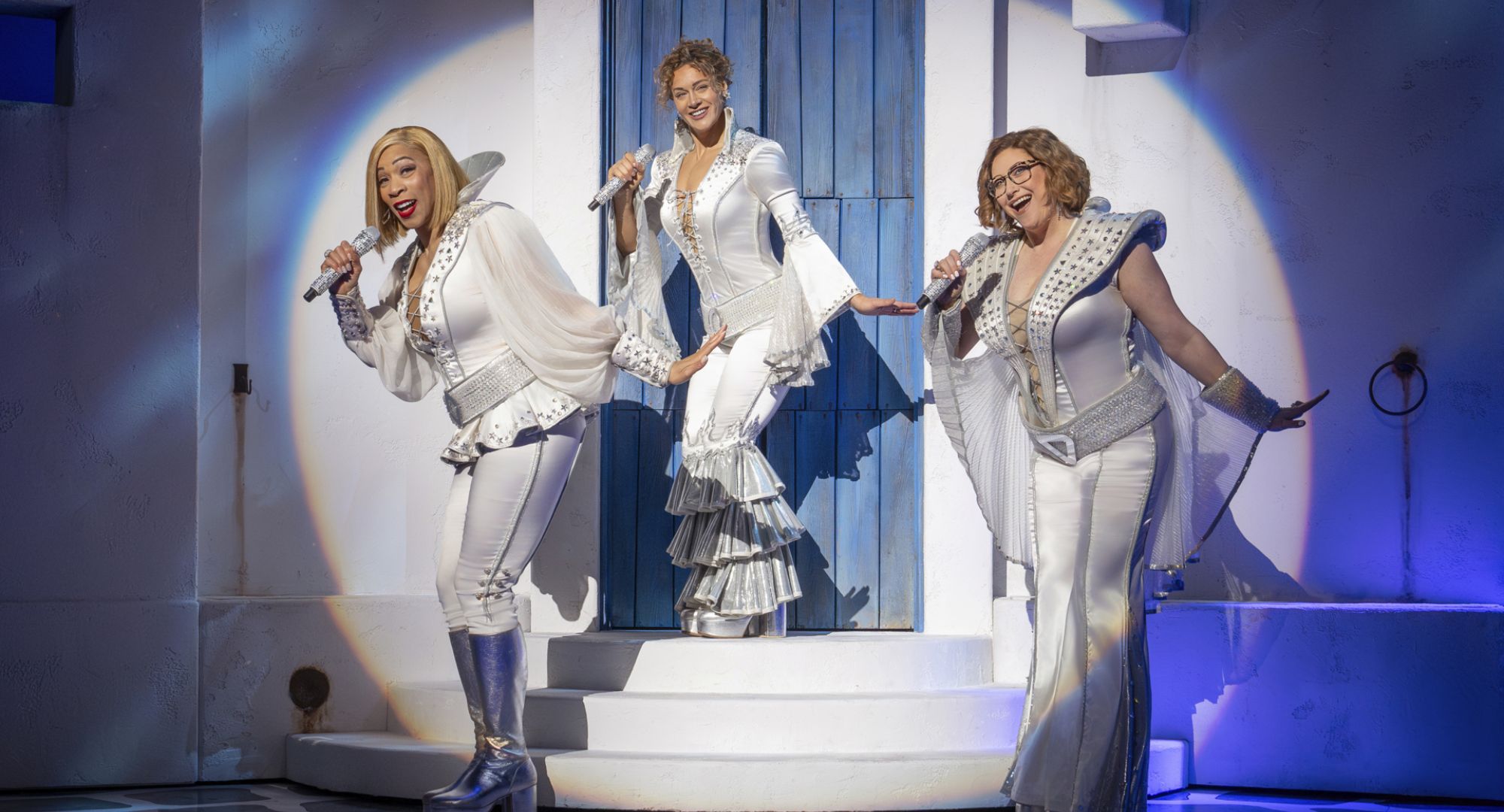
It is no secret that the queer community has a deep love for musicals in general. And some musicals just have that deeper love from the queer community. Mamma Mia!, now celebrating its 25th anniversary, is one of those musicals.
And that’s not just because of the fierce women and sequin outfits.
Mamma Mia! follows mother-daughter duo Donna and Rosie as they prepare for the latter’s upcoming nuptials. The story sees them struggle with planning while Donna argues with Rosie about being too young to get married…just before three men arrive on their island home, each with an equal chance of being Rosie’s biological father. This chaotic situation is set to the blissful sounds of ABBA’s greatest hits, with the pair and their many close friends using the legendary (and super queer) group’s music to express their innermost feelings. A lesson on self-discovery and building community — all while being your absolutely fiercest self — Mamma Mia has astounded audiences for almost three decades with its uplifting story.
And, to the delight of queer fans all across LA, Center Theater Group is ending its current season with a production of the show that is promising to be its glitziest, gayest version yet!
The Los Angeles Blade got the chance to speak with two of the musical’s overwhelmingly queer cast: Carly Sakolove, who plays the rough-and-tumble Rosie, and Victor Wallace, who plays Donna’s love interest, Sam. The duo was thrilled to be launching Mamma Mia! during Pride month, raving about being a part of such a beloved piece of theater and how excited they were to introduce it to a whole new batch of viewers. Sakolove and Wallace teased a show that any LGBTQ+ theater fan can fall in love with — not just because of the jaw-dropping vocals, but the heartwarming message of found family at the heart of Mamma Mia!
“Gay men just love seeing iconic women onstage,” laughed Sakolove when discussing why she thinks the musical is such a queer fan-favorite. “It does center around a straight wedding…but there are sequins, there’s women belting, and there’s female empowerment — all things that are attractive to the queer community.” Wallace agreed, understanding why some folks may be confused at queer fans’ love for the show; most classic versions of Mamma Mia! are completely centered around straight couples, with only one scene offering any queer representation. He explained that LGBTQ+ fans love it for everything that Sakolove described, but also for the deeper themes present throughout, aspects of the narrative that can be easily overlooked behind the jaw-dropping musical numbers.
“I think [Mamma Mia] really is about finding your joy in life,” she said. “I think it’s about who you choose to love, and who you decide to keep around you as your found family.”
“It’s a story about a girl who’s trying to find her identity by finding her father, but in that process, we see so many relationships that aren’t just blood,” Sakolove continued. “We see that blood doesn’t necessarily make family.” It’s a part of the story she would know better than most; Rosie acts as a true sister to Donna, with their lifelong friendship emphasizing Mamma Mia’s core theme of finding family in people you might not be related to. “So much of [Mamma Mia!] is that relationships come in all different forms, and I think that is something that really rings true for us as queer people.”
This pair and the many other queer members of their cast stressed how essential it is to have musicals like Mamma Mia! — not just because of its nonstop fun, but because it offers a sense of community that so many in the audience may be looking for. The show not only exemplifies the concept of found family but also teaches that the most fulfilling thing a person can do is love those they’ve chosen to be around. It’s a lesson that so many queer people can benefit from, and this cast is honored to bring it to thousands of people in each show, with Sakolove describing, “You see people that are there with their friends or their family members, and they just leave loving them extra hard…we are the luckiest people in the world that get to just go have fun on stage and affect people in such a positive way.”
While these two spent much of their interview talking about the impact this story has and how proud they are to deliver it, they emphasized that, above all else, Mamma Mia! offers a nonstop sense of fun for everyone in attendance! They were especially honored to be ending Center Theater Group’s current season with this production — and they promised to blow everyone away with just how much they have in store.
“If we’re ending the season, then [CTG] is going out with a bang,” Wallace assured everyone reading. “Because [Mamma Mia!] is such a fun, joyous, much-needed night of theater. It’s a reminder of how great life can be when you’re around your friends — when you’re around your family — so it’ll be a good way to end the season, for sure.”
A lofty promise, yet one that these two stars made wholeheartedly. But Carly Sakolove and Victor Wallace humbly assured their fans that the utter joy of this production can’t just be owed to them or any of their other cast.
Because when you have a musical like Mamma Mia!, one that shows the unadulterated joy of creating a found family and loving your neighbor with all your heart, it’s impossible not to leave the theater smiling.
That, plus all the sequins, of course.
‘Mamma Mia!’ plays at the Ahmanson Theater from June 23 – July 19, 2026. You can buy your tickets here.
Theater
Trans voices take center stage at EPIC Players LA: Visibility, safety, and art in a time of crisis
As trans, neurodivergent actors in Los Angeles, we’ve found something life-changing in the most unexpected place: a theater company that makes space for us to survive and thrive.
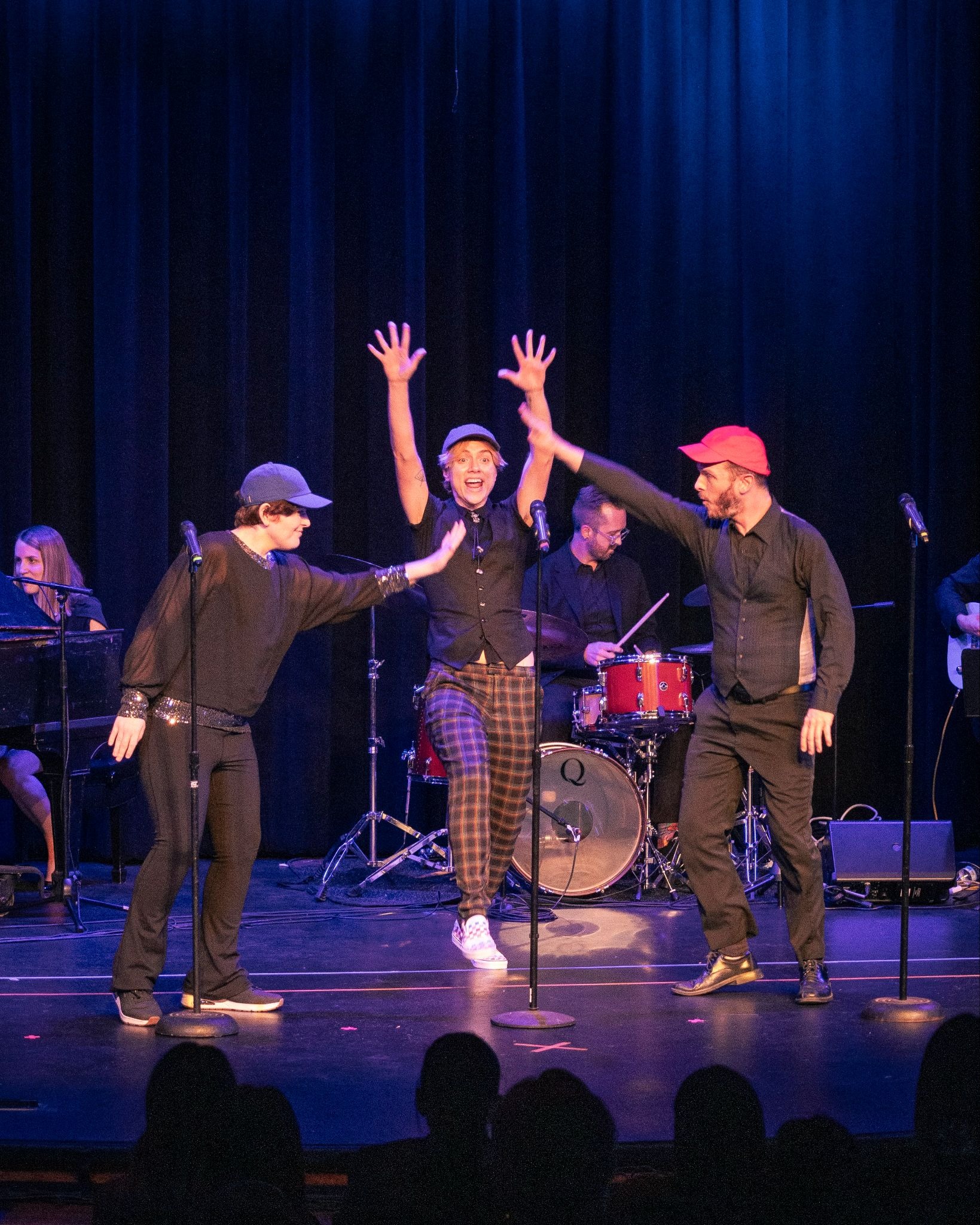
By Bowe Avery and Jack Lea
In a time when anti-trans legislation and hurtful rhetoric dominate the headlines, we believe that telling our stories isn’t something radical; it’s necessary. As trans, neurodivergent actors in Los Angeles, we’ve found something life-changing in the most unexpected place: a theater company that makes space for us to survive and thrive.
We’re actors, storytellers, and trans men living in Los Angeles. We’re also autistic. The space we’ve found is EPIC Players LA, a nonprofit theater company that puts neurodivergent and disabled performers at the center. It’s a place where we can show up fully as artists, as trans people, as ourselves. That shouldn’t be rare, but it is.
EPIC was founded in 2016 in New York and expanded to Los Angeles in 2023. In both cities, it provides career training, performance opportunities, and community. The difference is that it does so with the understanding that disability and queerness aren’t obstacles to be overcome; they’re part of what makes us powerful artists.
Getting to this point wasn’t easy. Jack was misdiagnosed with bipolar disorder before receiving an autism diagnosis as an adult. That discovery was life-changing because it offered clarity and revealed how much energy had been spent hiding. Learning about “masking,” the unconscious pressure autistic people feel to suppress their natural behaviors, opened the door to deeper questions about gender. When you stop performing for the world, what’s left? In Jack’s case, that question led to the realization that he was a trans man.
Coming out brought relief and clarity, but it also came with new challenges, especially for performers. Transitioning as performers meant relearning our instruments – our voices. Testosterone doesn’t just change your body; it transforms how we sound. Suddenly, the tools we had honed for years needed recalibration. In most performance spaces, that might be career-ending. At EPIC, it became part of our training. We weren’t left behind.
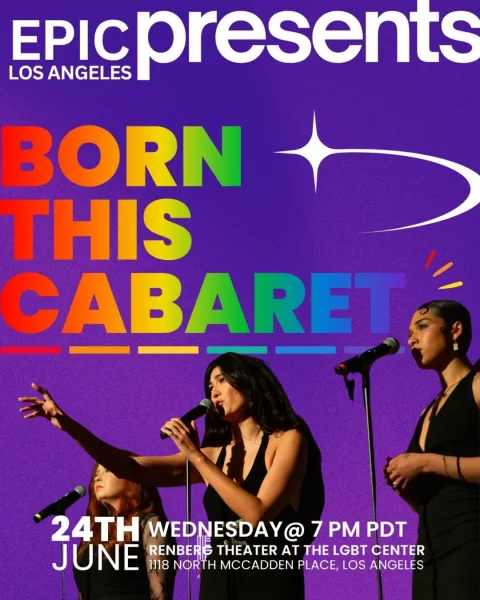
We were connected with a trans voice coach. We practiced with other trans performers. And when we got on stage for our first cabaret and sang a Backstreet Boys number, our voices raw and reshaped, our identities affirmed, it wasn’t just performance. It was a reclamation.
The support at EPIC goes far beyond the stage. When one of us was let go from a job for reasons tied to gender identity, this community showed up immediately. That kind of support shouldn’t feel rare, but it does. Too often, we’ve had to choose between being seen for our identities or being supported as artists. At EPIC, we don’t have to choose.
It’s also one of the only places where we’re not “the odd ones out.” Autism and trans identity intersect in ways that are rarely discussed. A major study out of Cambridge found that trans people are three to six times more likely to be autistic than the general population. That overlap is sometimes used against us as another excuse to question our identities. But we see it differently. Our neurodivergence gives us the tools to question norms, to resist social scripts, and to explore who we really are. It’s not a barrier to truth. It’s often the thing that helps us find it.
That’s why we speak up. Because the stakes are high.
Right now, trans people across the country are being targeted by legislation and misinformation. And all the while, funding for the arts, the very tools we use to speak truth, is drying up. That’s why places like EPIC matter so deeply. It’s a place where we’ve learned to breathe, speak, and perform again. It’s where we’ve met mentors, advocates, and friends. It’s enabling us to choose creation over erasure.
And this isn’t just about us. It’s about the next generation of trans artists who are watching what’s happening and wondering if they’ll have a place in the world. We want them to know that they will and that we’re building it now.
This Pride Month, remember something: trans people are not a political talking point or a threat. We are performers, writers, and so much more. We are your neighbors. We are artists, and we have stories to tell. We are a part of the future of art.
Visibility matters. Safety matters. Art matters.
For more information, visit Epicplayersnyc.org/epic-la
Theater
‘DRAGGED’ pulls relationship drama into the spotlight
Premiering during Pride month, Harrison Alec and Godoy’s new play turns a drag show into an unexpected night of comedy, heartbreak, monogamy, and messy communication.
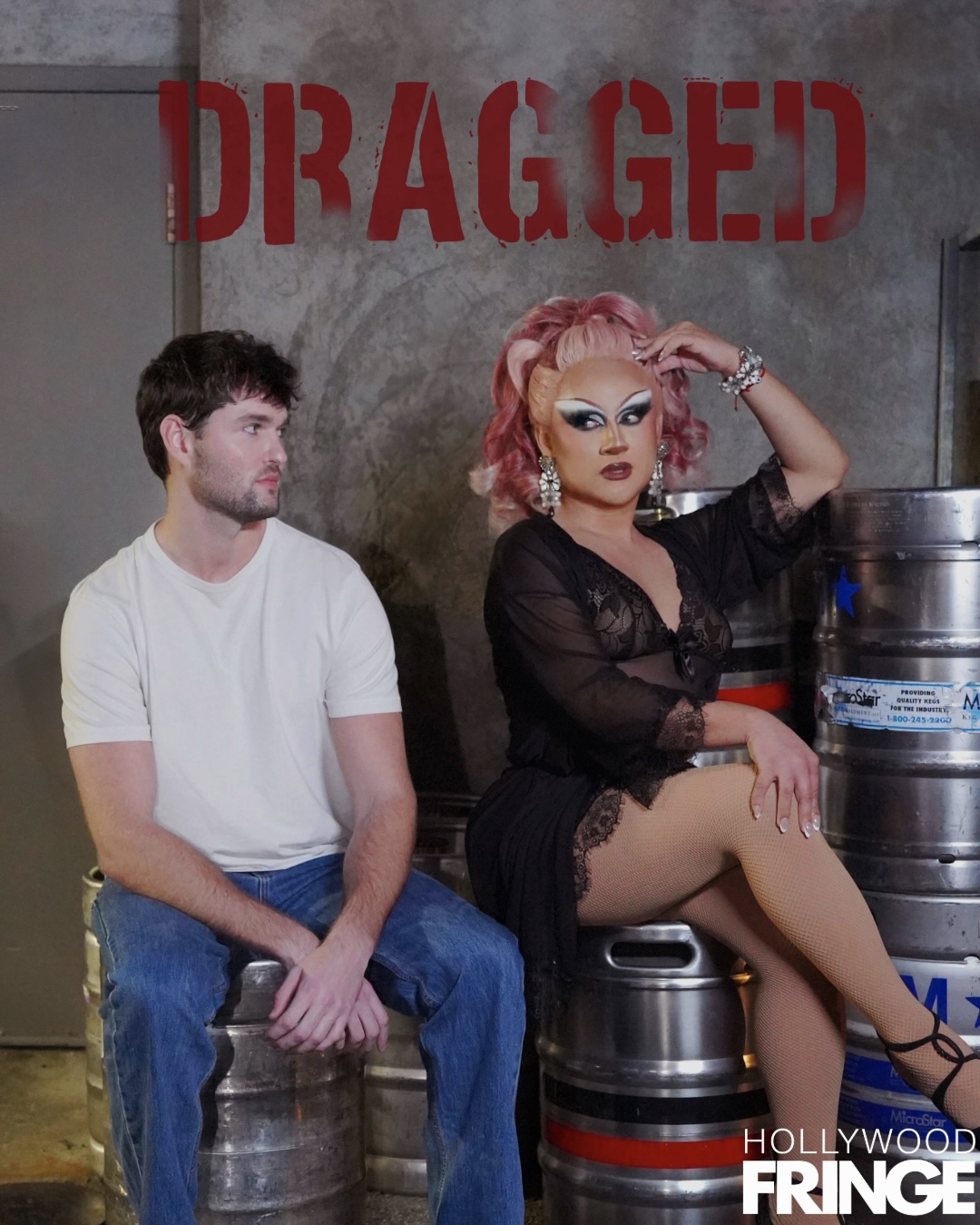
What begins as a drag show quickly becomes something far more unpredictable in DRAGGED, a new LGBTQ+ play premiering this June at the Hollywood Fringe Festival.
Written by and starring Harrison Alec alongside drag performer Godoy, DRAGGED opens inside the fictional drag show of Alana Regrets, where audiences are pulled into an interactive experience. DRAGGED moves between spectacle and intimacy, comedy and discomfort.
For Alec, the project came from a desire to create something both immediate and vibrant.
“DRAGGED really came from an urge to finally make something tangible,” Alec told the Blade. “As a writer, it can sometimes feel frustrating to spend months writing scripts that only a handful of people ever read before they disappear into a folder somewhere, so creating something physical felt incredibly important to me.”
The idea began as a short film, but Alec said the story did not fully click until he realized it needed the live energy of an audience. After spending months attending Godoy’s weekly drag bingo, he became interested in the way drag performers naturally blur the line between performer and audience.
“Watching drag performers interact with crowds every week made me realize the audience couldn’t just watch the story; they had to feel part of it,” Alec said. “Drag already breaks the fourth wall naturally, so once I leaned into that, the whole show clicked.”
That interactive structure is what makes DRAGGED unique. “I think there’s something really interesting about how public pressure can force honesty out of people faster than private conversations ever could,” Alec said. “A drag show felt like the perfect pressure cooker for that.”
Godoy put it more simply: “If you tell a drag queen something, they will tell everyone. It’s the perfect setup for DRAGGED.”
As Alana Regrets, Godoy plays a character shaped by sharp humor, confidence, and emotional contradiction. Alec said he did not want Alana to become a stereotypical “wise mentor” figure. Instead, she is just as messy as the people she confronts.
“She’s funny and confident onstage, but offstage she’s just as messy and lost as everyone else in the show,” Alec said. “A lot of her humor comes from self-protection.”
Godoy said Alana’s performance style draws from beloved drag icons including Bianca Del Rio, Jackie Beat, Sherry Vine, and Alyssa Edwards, citing “their charming and striking personality mixed with quick wit and humor.”
While DRAGGED openly leans into comedy and secondhand embarrassment, it also asks serious questions about queer relationships. Alec’s intention is to highlight the gray areas around monogamy and communication. “What are we lying to ourselves about in relationships? Are we performing versions of what we think our partner wants? Are people actually communicating honestly with each other?” Alec told the Blade.
But DRAGGED is not trying to offer a single answer about what relationships should look like. Alec explained that he wanted the play to leave audiences questioning their beliefs, not walking away with an easy moral lesson: “I wanted audiences to leave debating who was actually right, because I don’t think the answer is completely clear.”
For Godoy, that balance between comedy and emotional confrontation is already built into the script. “The acting comes naturally because it’s written to do so,” Godoy told the Blade.
Premiering during Pride Month, DRAGGED celebrates the chaos and emotional honesty of queer life without polishing it into respectability.
“I love that the play celebrates the joy of queer nightlife while also allowing the characters to be messy and flawed,” Alec said. “That feels much more honest to me than trying to present an overly polished version of the queer experience.” For Alec, that mix of comedy and vulnerability reflects the typical rhythm of queer nightlife itself: “Who hasn’t started a night laughing at a drag show, made best friends with strangers in the bathroom, and then ended the night crying on the curb outside the club?”
For Godoy, the timing could not be more fitting: “IT’S PRIDE!! I can’t think of a better time to premiere it!” Godoy told the Blade.
For audiences deciding what to see at Fringe, Alec offers an invitation that is difficult to refuse: “Come for the interactive drag performance, stay for the secondhand embarrassment gluing you to your seat, and leave arguing about who the hell was actually in the wrong.”
DRAGGED plays June 14, 20, 22, and 23 at The Cat’s Crawl as part of the Hollywood Fringe Festival. Tickets are available through the Hollywood Fringe website.
Theater
Healing through humor: Ben Fisher’s ‘BALL BOY’ steps up to the plate
At the Hollywood Fringe Festival, Fisher’s comedy show uses baseball, grief, and family to turn the language of sports into one of reclamation.
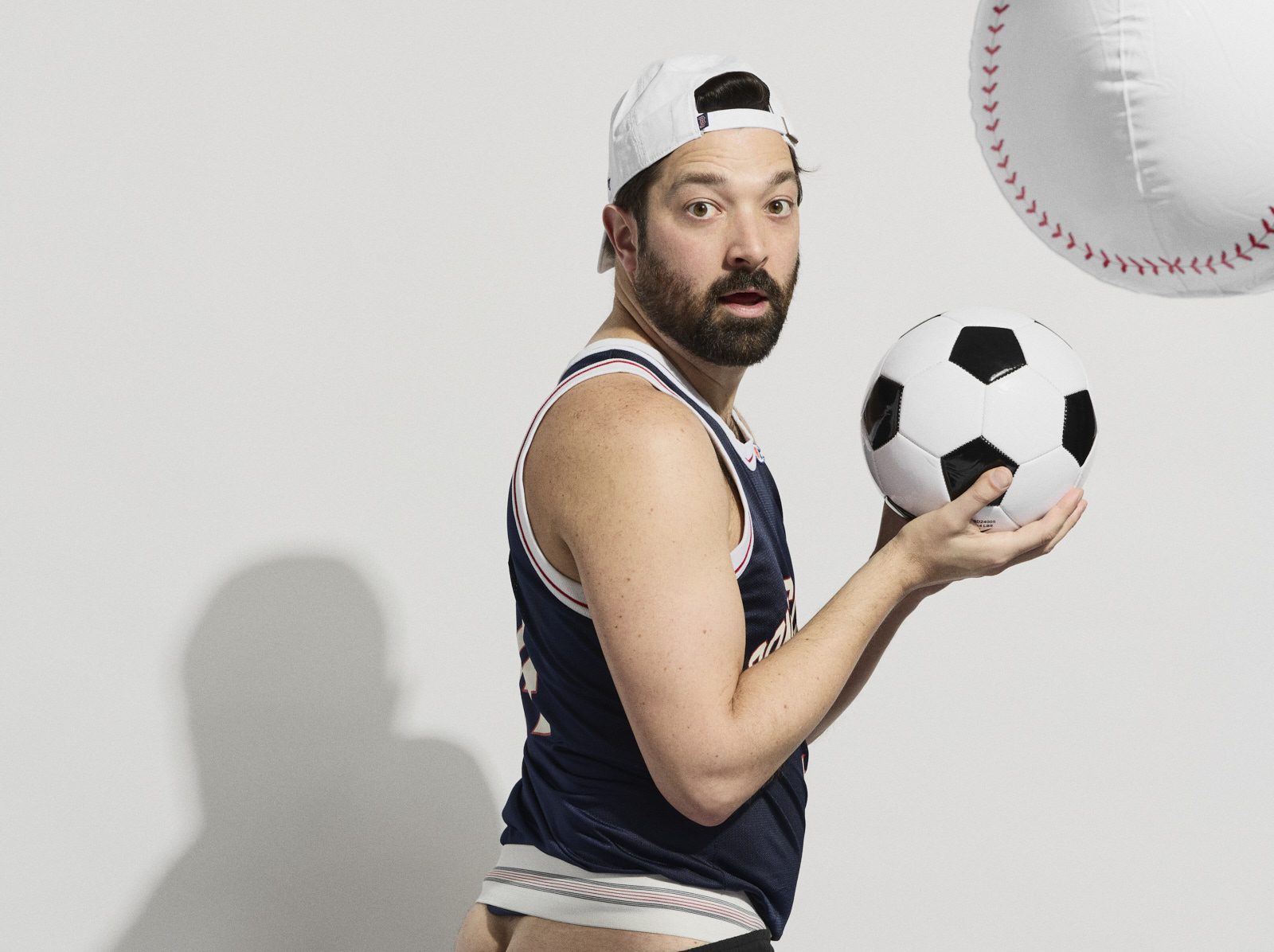
Ben Fisher’s BALL BOY begins with a familiar tension: loving something that did not always love you back. For Fisher, that something is sports – the dominant language of his childhood, his family, and his relationship to masculinity. He was surrounded by team spirit, even as he found himself ‘playing for the other team.’
The comedy show, which comes to the Los Angeles LGBT Center as part of the Hollywood Fringe Festival, uses baseball to explore what LGBTQ+ people inherit from sports culture and what they have to reimagine for themselves. It will run for five performances throughout June at the Los Angeles LGBT Center’s Davidson/Valentini Theatre, 1125 North McCadden Place, Los Angeles, CA 90038.
“I’d say the show is at its heart a comedic excavation,” Fisher tells the Blade. “It’s my attempt to understand and unpack parts of my experience as a gay person growing up in a culture and family dominated by men, and learning or adjusting to how I can fit in, survive, [and] find my place.” Given his proximity to sports, Fisher explains that sports serve as the perfect metaphor for understanding his situation today, especially after having lost his father, and unpacking the complicated feelings with their relationship.
For Fisher, sports were not just on the television in the background. They were family infrastructure. His parents were varsity athletes, his siblings and cousins played, and his father coached, umpired, refereed, and sat on local sports boards. “It was just a ton of balls in the air,” Fisher humorously tells the Blade, “and there I was, a little gay kid amidst all of this sport just trying to find my way.” Though he sought to find enjoyment in sports, he mainly found enjoyment in other activities: “I loved being in plays and musicals, and pretending I was a mermaid, and gardening.”
This show resonates with many, as it carries with it the theme of queer acceptance. “I did a lot of grueling and bargaining with myself growing up,” Fisher explains, “and a lot of trying to appease these men around me, to try to make them comfortable by shrinking myself or trying to be something I thought they wanted me to be.”
These feelings become further complicated when dealing with a parent. The show carries the weight of Fisher’s father, who passed away. “Sports were so his world, and I’m looking for ways to stay connected and honor him while also holding myself and healing from the unintentional damage that he perpetuated onto me,” Fisher says. Fisher is not claiming that every man in his family is toxic, by any means, nor is he blaming his father. Rather, he is giving shape to something many LGBTQ+ people know intimately: the feeling of being measured against a standard one was never able to meet.
Still, BALL BOY is comedy first. And it is this contrast that gives BALL BOY much of its comic charge. Fisher is not rejecting sports so much as reclaiming the field, and in doing so, he uses the arena as a place where childhood discomfort, family grief, and humorous storylines fill each base. Fisher describes humor as the way he processes pain and grief. “It’s always been the way I process things,” he says, “through humor, finding the levity in hard situations … it’s always gotten me through, or helped me make sense.”
He also brings music into the work, including a song called “Little Gay Boy,” written with Camille Harris. Fisher calls it “a reparenting love letter” to his “little gay child self” that has allowed him to heal through humor. Fisher’s show brings together grief, healing, humor, and, somehow, a guitar – and it works.
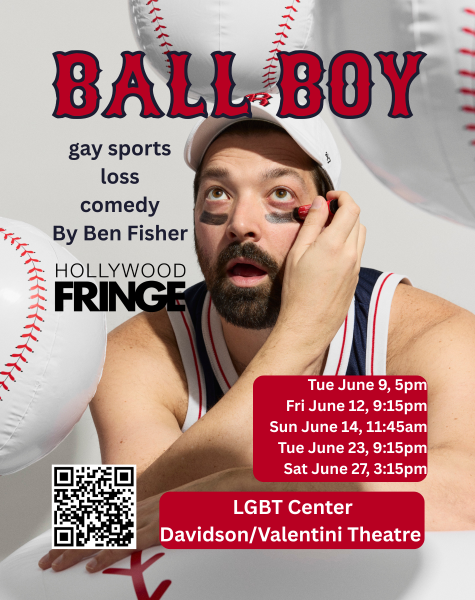
Bringing the show to the LGBT Center during Pride Month feels especially meaningful. “I’m just grateful for the opportunity,” Fisher says. For this show, he plans to put everything on the stage. And if he is “swinging and missing,” he hopes it is “at least a base hit.”
After an hour of jokes, grief, sports, and self-reclamation, Fisher hopes audiences leave laughing – but also feeling less alone. “I hope people will feel laughter and joy and feel connected and empowered to step up to their own plate and take a swing.” The result is less a rejection of the game than a rewriting of the entire playbook.
Where: Los Angeles LGBT Center – Davidson/Valentini Theatre – 1125 North McCadden Place, Los Angeles, CA 90038When: 5 performances throughout June (Tuesday, June 9th at 5pm; Friday, June 12 at 9:15pm; Sunday, June 14th at 11:45am; Tuesday, June 23 at 9:15pm; Saturday June 27th at 3:15pm)
Theater
In ‘A Man Called Mommy,’ Noadiah Eckman delivers queer joy across the aisle
The 40-minute solo performance consists of Eckman, two chairs, and a deeply personal story about transition, family, and loving across political divides.
For Noadiah Eckman, the problem begins with a line that is both comic and devastating: “My mom voted for Trump.”
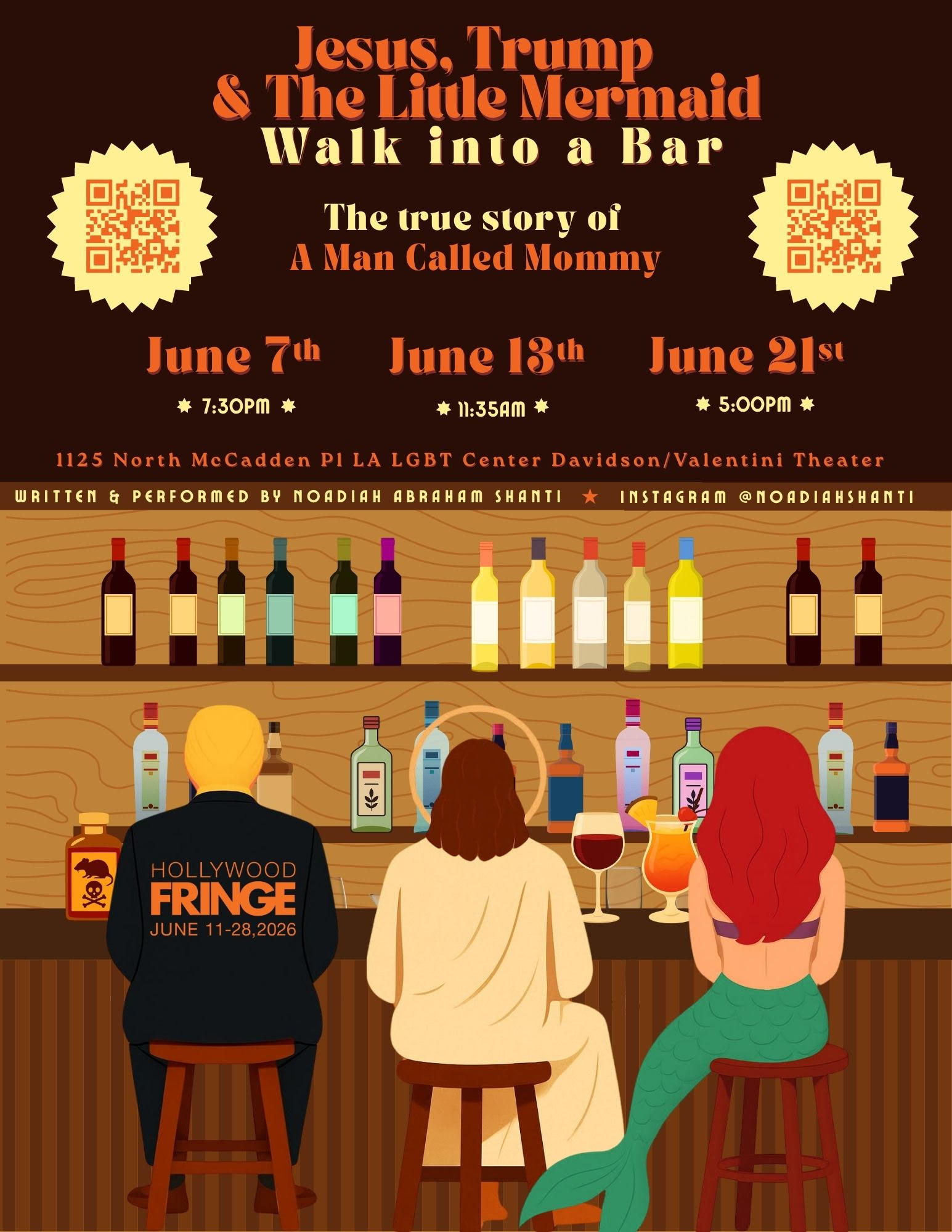
That sentence opens Jesus, Trump & The Little Mermaid Walk into a Bar: The True Story of A Man Called Mommy, a 40-minute one-man show written and performed by Noadiah and coming to the Hollywood Fringe Festival in June. The show, performed at the Los Angeles LGBT Center’s Davidson/Valentini Theater, tells the story of Eckman’s transition, his relationship with his Fox News-watching mother, and the difficult praxis of loving family members whose politics can feel hostile to one’s own existence.
“It is personal,” Eckman told the Blade. “It’s about my family.”
But A Man Called Mommy is not simply a trauma narrative. Eckman describes the show as a fast-paced, comedic, and transformative story about pushing past binaries: red vs. blue, straight vs. gay, us vs. them. The show asks what it means to love someone without pretending the conflict does not exist.
“It’s secretly queer and spiritual,” he explained. “The bait [of the show] is how to love your enemy.”
Eckman transitioned later in life, shortly after the 2016 election. At the time, his children were 10 and 8. When he told them he was taking testosterone, their reaction was almost casual.
“They looked up from their Harry Potter books, and they were like, ‘Okay,’” he told the Blade. Eckman added that his children told him, “But we’re not calling you dad.”
The title A Man Called Mommy came from that moment. His girlfriend at the time responded, “I love that I’m dating a man called Mommy.” What began as a joke became a way to hold the complexity of his identity, his parenting, and his family.
At its center, the show explores the complicated relationship between a parent and child. “My transition was into manhood, and her transition was from life to death,” he said. “They’re going together.” The emotional material is heavy, but Eckman insists the show is fun.
He does not want the audience to feel trapped inside an open wound – a wound that many individuals in the LGBTQ+ community feel deeply. Instead, he wants the community to feel guided through something difficult and return to joy.
“I think the key for good art is that it comes from a healed place,” Eckman told the Blade. “I like to feel like I’m taking the audience somewhere.”
For Eckman, that “somewhere” is not a political agreement. In one scene, he watches Fox News with his mother. The point is not that she switches political parties. Rather, the point is that Eckman and his mother find peace within the noise.
“I love her out of it,” he said to the Blade. “It doesn’t mean she has to change her vote. But we get to a place of love and connection that’s very deep.”
As a Gen X person, Eckman sees his work as part of a longer lineage of survival, humor, and resistance. He points to the AIDS crisis, ACT UP, Reagan-era silence, marriage equality, and the younger generations now facing their own set of problems.
“I definitely think Gen Z’s gonna save us,” he said optimistically. “They’ve got the smarts to do it. They just need a little insight from Gen X.”
His show reaches beyond his own transition. Eckman is a trans man, his son is gay, and his children are Black. For him, the story is about the intersections of all identity categories – but without turning anyone into a main enemy.
“Everybody’s a little good and a little bad,” he explained. “There are no villains. There are no heroes. Everybody’s both.”
Performed with just Eckman and two chairs, A Man Called Mommy is intimate but also part of a larger body of solo performance work. Eckman said the show is a newer piece in a cohort of works he has been developing since 2018 from different sections of his memoir, A Man Called Mommy. Those include It’s Cat O’Clock Somewhere, about how he ended up with 30 cats; Home Wrecker Inc., about trying to break the habit of dating married women; and Home for the Holidays, about healing the past, future, and present at once. He also credits solo performance teachers Ann Randolph, Josh Townshend, and Martha Rynberg with helping shape the work.
For audiences, Eckman hopes the show offers more than 40 minutes of joy. He wants people to leave feeling that another way of living with one another is still possible.
“They’re going to have fun,” he said. “They’re going to see their life in a new way. They’re going to feel a sense of joy at the possibilities of truly loving everyone, and also truly loving ourselves.”Jesus, Trump & The Little Mermaid Walk into a Bar: The True Story of A Man Called Mommy runs June 7 at 7:30 p.m., June 13 at 11:35 a.m., and June 21 at 5 p.m. at the Los Angeles LGBT Center’s Davidson/Valentini Theater, 1125 N. McCadden Place.
Theater
‘Monster Party’ invites you inside the belly of a queer theatrical beast
Opening April 16th at the Rita House, the interactive production blends camp with history
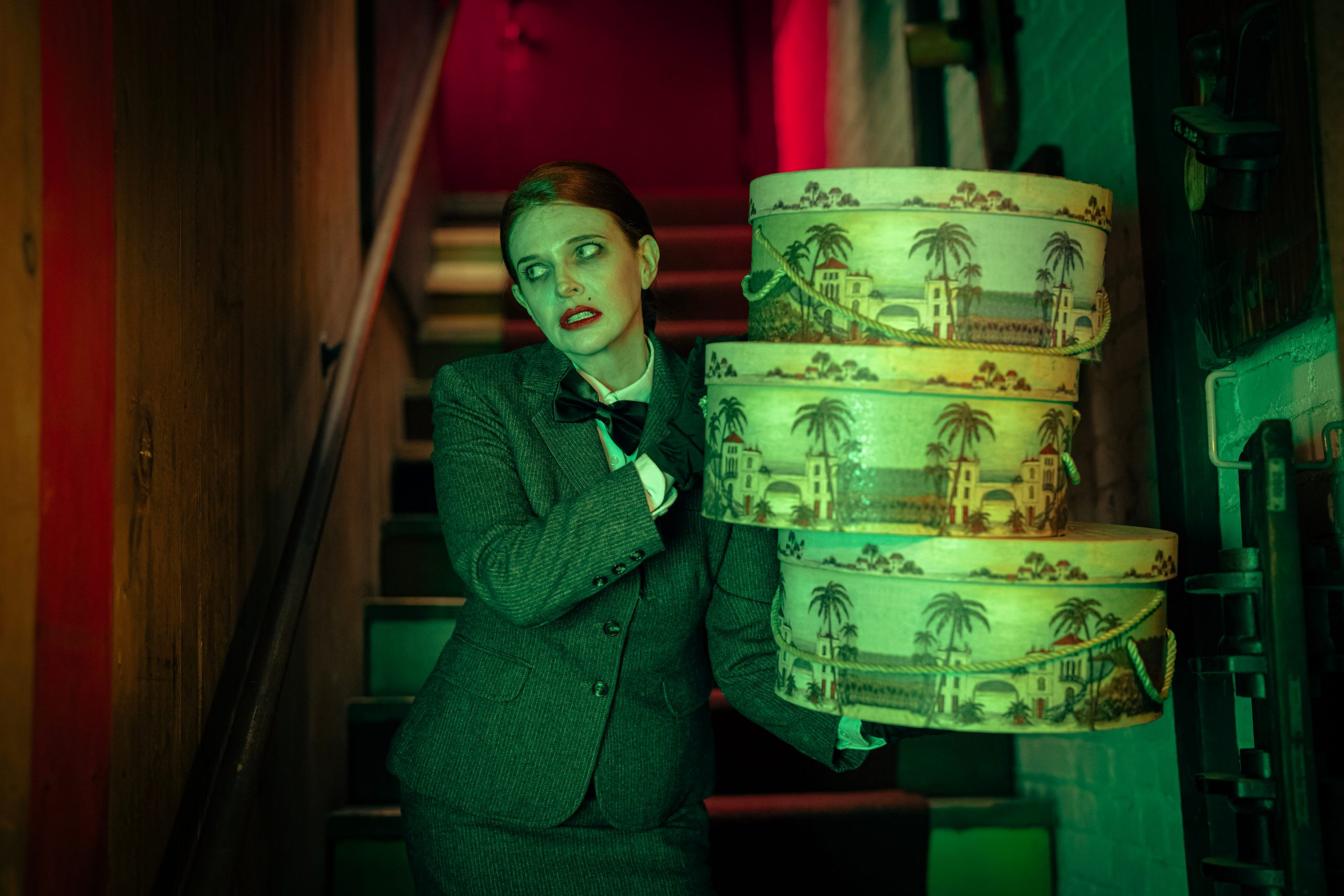
Some have argued that immersive theater is a dying art form – but Monster Party makes a compelling case for its revival. Open April 16-25 at Rita House, this surrealist, LGBTQ+ production is provocative in all the right ways, blending cocktail party decadence with historical reckoning to create a work that can only be defined as ‘campy melodrama.’ Rather than observing from a distance, audience members become active participants in the unfolding narrative.
Audience members wander through the home of The Baroness, a mysterious socialite at the center of it all. Over the course of 2.5 hours, guests are encouraged to mingle, gossip, and interact with performers – gradually weaving themselves into the story. What sets Monster Party apart is that the narrative isn’t simply delivered in a scripted, linear way; instead, it is produced through fragments of conversation, overheard exchanges, and the hazy (often drunken) banter that fills the room.
While Monster Party initially reads as playful chaos – cocktails, games, and audience interaction – something significant unfolds beneath the surface. The story that takes shape draws from a largely under-discussed chapter of American LGBTQ+ history: the Lavender Scare. Set in a stylized version of 1950s Washington, D.C., the show layers supernatural elements onto the real-world persecution of LGBTQ+ government employees, who were outed and fired under the pretense of national security threats.
By revisiting this history, the show feels seemingly relevant, offering audiences a lens through which to reconsider past injustices alongside today’s rising anti-LGBTQ+ sentiment. In Monster Party, the paranoia of that era is transformed into something grotesque and theatrical; it is necessary, immersive storytelling that brings awareness to the broader political world.
But this is not a historical reenactment. Instead, creator Matt Dorado leans into surrealism and camp, using heightened aesthetics to explore the institutional panic of the 1950s. Dorado, who has spent over a decade crafting immersive nightlife and theatrical experiences in Los Angeles, is no stranger to blending spectacle with storytelling. His previous works, including the Drunken Devil series and the grisly dining experience To Live and Di(n)e in L.A., established him as a creator capable of turning unconventional spaces into immersive worlds. With Monster Party, he brings that expertise into a prominent political and historical frame.
Writer, director, and producer Matt Dorado said Monster Party is “very near and dear to my heart,” adding that he has been creating the project since October 2024. He described the show as both “schlocky melodrama” and “gonzo entertainment,” while explaining that its themes have become “strikingly more relevant” amid “violent political upheaval, unfounded moral panic, and deep division.” Dorado said he hopes the piece will challenge audiences “in new and unexpected ways” while remaining a “lurid, campy immersive” experience.
Choosing Rita House as the venue only heightens the effect. The historic Spanish Colonial building provides an ideal backdrop for a story about hidden histories and performative identities. Its intimate rooms and architectural layout allow the production to unfold in multiple directions at once, encouraging audiences to tell their own stories in the process.
Importantly, Monster Party is designed to meet audiences wherever they are. Whether you’re a seasoned immersive theater enthusiast or entirely new to the form, the experience remains inviting, accessible, and thoroughly engaging. And true to its title, the production raises a central question: who – or what – is the monster at the party? Is monstrosity something imposed by society, or something individuals come to embody themselves? These questions don’t arrive with easy answers, but instead are examined through participation, drawing audiences deeper into the show’s world.
With limited capacity and a strong emphasis on creativity, curiosity, and surrendering to the experience, Monster Party stands out as one of the more distinctive theatrical offerings in Los Angeles this spring. Tickets are available at: monsterpartyshow.com
Theater
Speak ‘English’: Pooya Mohseni on reclaiming language and self
In this interview, Pooya Mohseni reflects on her return to English, Sanaz Toossi’s Pulitzer Prize-winning play, a powerful exploration of language, identity, and the Iranian diaspora
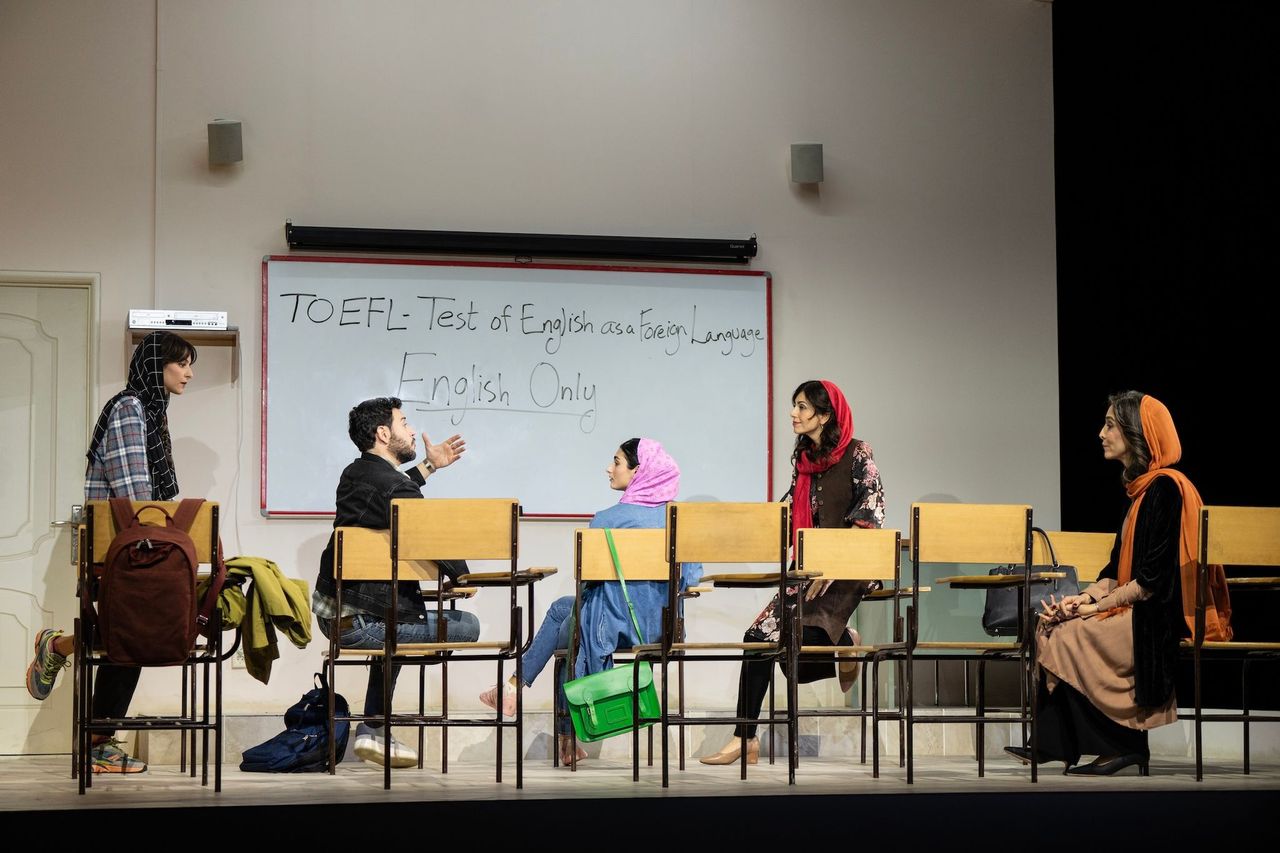
In the world of theatre, few works authentically convey the complexity of lived experience quite like Sanaz Toossi’s English does. The play provides its audiences with five unique voices, each one shaped by migration, memory, and the often quiet and always personal negotiations of identity. English invites us into this world, where language takes on the dual roles of both a bridge and a barrier, where storytelling has borders to spotlight the shared humanity that exists beneath our differences. The play also upholds a deep reverence for Iranian culture, its resilience, and its elegance. This culture is properly portrayed not as a tired trope but as a collection of personal histories and emotional truths.
Equally significant is the space English creates for much-needed representation of the authentic varietal. In amplifying trans voices alongside those of the Iranian diaspora, English challenges narrow narratives and insists on a broader and more inclusive idea of belonging brought vividly to life by Pooya Mohseni in her portrayal of “Roya.” Our interview with Mohseni reflects that same soul. Ultimately, English dares us to consider not just how we speak, but how we listen.
English has been described as a “quietly powerful” meditation on language and identity. What drew you back to the role of Roya for this production?
I’ve loved this play since I read it 8 years ago, and through its growth and its many productions that I’ve been a part of, that love has grown and deepened. Roya, specifically, is very special to me, as I see my grandmother and my mom in her, and her strength and class are for the books, so naturally, when I was asked to join the production at The Wallis, there was only one answer.
You originated the role of Roya on Broadway. How has your relationship to the character evolved since then?
As I said earlier, Roya is very special and somewhat personal to me, as I see the strength and struggles of the women I grew up around in her. But what Roya has done for me is push me and guide me to understand those women on a deeper level. That journey has allowed me to understand the women in my family better and grow as a human. I also would like to add that Roya herself as grown, as we, the artists, have grown and evolved, and her strength, her vulnerability and her resolve have become more clear and specific and the character that is being seen at The Wallis is a more evolved and clear version of the character, which I’m very proud and grateful to get to share with our west coast audiences.
The play uses a fascinating linguistic device where Farsi is performed in American accents and English in Iranian accents. How did you approach that as an actor?
At first, it’s tricky, because as soon as you say a sentence in the wrong accent, you would think “no, that was Farsi!” or “did I say it right?” But in this production, our relationships with the text and the characters are so intimate that we don’t have to think about it because it’s become second nature to us. It comes down to clarity of thought and intention, and when you know what the character is trying to communicate, the accent, the right accent, follows.
Roya is navigating both personal and cultural transitions. What aspects of her journey resonate most deeply with you?
I’m an immigrant. I’m the daughter of an immigrant. My grandparents had other children who migrated. This distance, both culturally and geographically, is something I’ve been around since I was a child. I’ve heard the laments, I’ve seen the heartbreaks, and I’ve also seen the determination to keep hope alive. In short, I’ve grown up in a household, like many Iranian households, that either had a Roya or had different people who were parts of Roya, which has always been the force pushing me to make sure that my portrayal of Roya is done with love and authenticity.
How does English speak to the Iranian diaspora, particularly in a city like Los Angeles with such a large Iranian American population?
I believe the success and popularity of English has been in its specificity, which has also made it universal, for Iranians and beyond. Having shared it with many audiences before Los Angeles, I think people, specifically the Iranian diaspora, will see some of their own experiences and struggles in English and hopefully feel some validation that there is this award-winning, universally recognised play which honors their lives, their hardships, and their culture.
Playwright Sanaz Toossi has said the work is also a way to “scream” against the vilification of Middle Easterners. How do you feel this message lands with audiences today?
First: Sanaz is the Queen, and she’s my sister, and I love her with all my soul. Second: The circumstances that propelled Sanaz to write this play are still not only prevalent but have intensified and are even more center stage in 2026. I wholeheartedly believe that English is even more relevant now and will continue to be in the decades to come.
Despite its heavy themes, the play is also quite humorous at times. How do you balance humor with its more undeniable emotional undercurrents?
English is a sublime dramedy in its simplicity, in my opinion. The humor lies in its honesty, riding along the struggles and the heavier moments and thoughts that are expressed. Some people have called it a “comedy with a heart,” but I see it as a drama that also embraces the humor of everyday life and human struggles that we all face. When the balance is struck, the play flows beautifully like a wave that moves and exposes different wonders on a shore.
The play has been widely acclaimed since its 2022 debut. Why do you think it continues to resonate so strongly with its audiences today?
English is honest. It’s not flowery or preachy, and in its truth, through the experiences of its characters, it has connected with the critics and the audiences through all its productions. Audiences are smart, and they don’t like to be pandered to, and I believe that is why different audiences, across generations and backgrounds, have found something in our play that speaks to something personal in their lives. I think that will continue for many years to come.
As an Iranian American and a transgender artist, how do your identities inform the roles you choose and the stories you tell?
As Eve Ensler mentioned in the Vagina Monologues, being transgender is very similar to being an immigrant, because you’re treated, most of the time, like you don’t belong. I was treated that way at school when I was in Iran, and I was treated that way when I moved to New York, and in 2026, as an Iranian American who is also trans, all parts of my identity are under attack. I’ve never been asked to play the person next door, and while that has cut down on the number of things I’m given the opportunity to do, it has also freed me to be me: sassy, unique, and aware of the experiences that differ from mine. I was forced to find MY way because no other way was open to me. I love getting to play outsiders or characters who are outspoken, because I’ve had decades of training. So, having lived my life as me, I choose characters and projects which have heart, grit, and that I feel add something of value to the world, even if it’s just a laugh.
You’ve been open about your experiences with trauma and survival. How has storytelling served as a tool for healing in your life?
If you think about therapy, it’s basically storytelling. It has definitely been that way for me. Especially if the story has some personal connection, either to the Iranian side of me or the trans part of my identity. I’ve been fortunate to have worked on great stories that ring true to some part of me, and through finding the essence of the character, I have found my way through my own heart and soul. It feels strange to say that thousands of people have been witnesses to my therapy through the years, but it is kind of true, and I like to think it’s been not just therapeutic for me, but more like group therapy, shared between the viewers and me.
You’re also a writer and filmmaker. How do those creative outlets influence your acting process?
Being a writer and having been involved in making a couple of films has definitely widened my horizon as an actor. I now know more about what happens in other aspects of a production, so I think it makes me a more aware actor, who also has so much more respect for what it takes to create a story and turn that into a final product, and all the steps that need to be taken for a film to happen.
What do you hope audiences take away from English after leaving the theater?
I hope it reinvigorates their love for theater and what that can be. I hope it makes them think about themselves and others with more love and grace. Maybe, they feel seen by the play, or maybe, just maybe, English helps them see others who have different experiences or sound and look different from them, with more love and curiosity, rather than fear and disdain.
Looking at the future, what kinds of stories or roles are you most excited to explore next?
I love playing matriarchs because I think I have that in me, and more mature roles have so much potential and depth. I hope to continue to play unique and interesting, maybe even really dark characters. I’m not the first person to want to play juicy roles, but having already covered my journey to this moment, I hope to keep going through the path of finding new types of characters to explore: mothers, bosses, villains, and maybe even love interests. But above all, I want to play parts that are written with love and care and house multitudes, instead of tokens and shallow, flat objects of either fetishization or pity. I keep working towards that and will take roles, hopefully, that make me grateful to be a storyteller.
English runs at the Wallis Apr 4, 2026 – Apr 26, 2026
Theater
Aura Mayari discusses the glamorous fascism of ‘Here Lies Love’
The ‘RuPaul’s Drag Race’ alumna discusses her role in the show and what it can teach us about our current political climate.
Watching a good musical can be transcendental.
As the more theater-inclined members of the queer community can attest, watching a musical that makes you feel something is a legitimately unforgettable experience. These are productions that feature not only amazing music but resonant themes, drawing on core aspects of the human experience to make viewers feel connected with the artistry taking place onstage. Modern audiences are lucky to have many inventive musicals that they can connect with — but few are as unfortunately relevant as David Byrne’s Here Lies Love.
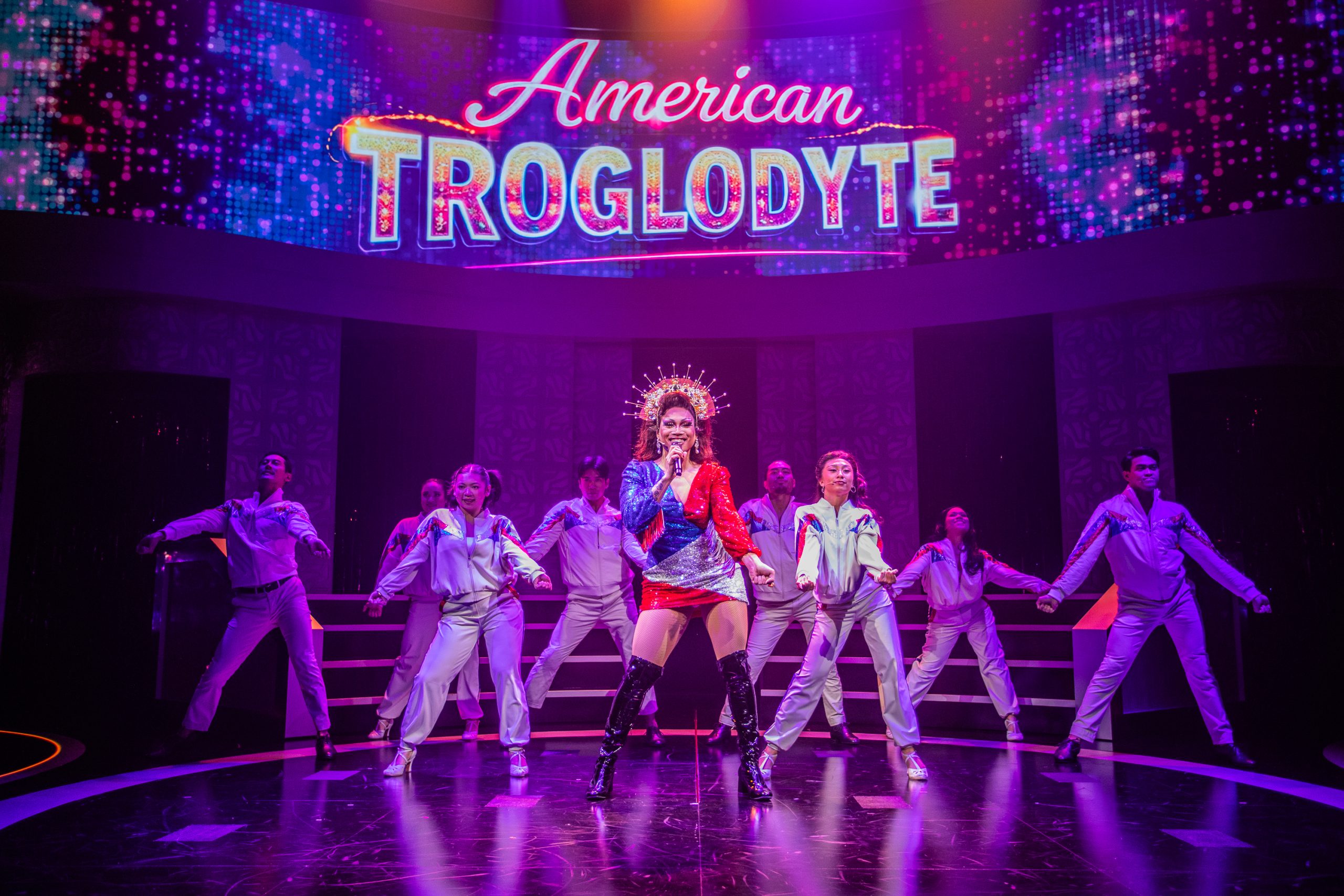
First premiering off-Broadway in 2013, Here Lies Love documents the glamorously haunting rise of Imelda Marcos, who, with her husband, served as the Philippines’ dictator for decades in the late 1900s. The story uses pop music to document her steady descent into fascism, with its dazzling images reflecting how Marcos used her trademark style as a cover for mistreating millions of citizens she was meant to serve.
In recent years, as the Philippines and the U.S. struggle with fascism, viewers have recognized the production’s political importance, with its themes of fighting oppression becoming more important than ever before. It’s why so many fans were thrilled when it was announced Here Lies Love was coming to LA in what was promised to be the queerest version of the show yet — meaning it was perfect for RuPaul’s Drag Race alumna, Aura Mayari.
“What really caught my attention was the Filipino-ness of this story,” said Mayari, as she sat down with the LA Blade to discuss her role in the show. “In my drag, I really love to intertwine my culture into what I do. And so when I was told that it’s a Filipino story and it’s going to be an all-Filipino cast, I was all in!”
It’s an aspect of the performer’s art that fans know well; Aura first made waves on RuPaul’s Drag Race season 15 as one of that cast’s best dancers (and self-titled ‘trade’ of the season). While on the series, she proudly discussed her experience as a queer Filipino, with the years since seeing Mayari bring her intersectional drag to countless clubs across the country. It made her a perfect fit for a show that merges Filipino culture with visually stunning effects, with the LA iteration creating a new role just for the queen: Imeldific, a drag version of Imelda Marcos who narrates the story to a group of club goers.
Aura spoke about what a personal honor it was to originate this role, explaining, “I moved to the United States [from the Philippines] when I was 11…and I wanted to be American so bad. I didn’t want to stand out, and I wanted to avoid being bullied. I didn’t want to be seen as someone who was an immigrant until after college, when I met a lot of my Filipino friends that I’m still friends with today.” It’s a pride that she was honored to bring into Here Lies Love, and it only grew once she encountered a cast who understood and loved the intersectional identities she showed through her drag. “They embraced my queerness and what I could bring to the table. And I think a lot of what I’ve learned through my Drag Race experience, I was able to use and [help] inspire my cast members to make something as magical as this show is.”
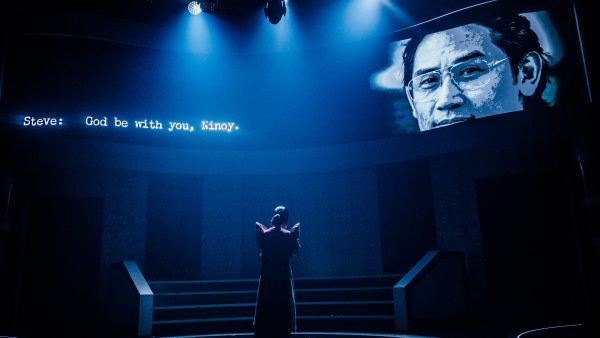
The performer stressed how being a part of this ensemble truly felt like being at home. “We get to eat a lot of Filipino food — people bring in a lot of Filipino snacks, and a lot of Filipino egg rolls!” Aura laughed, describing her experience on set. “Every day, being in the show…it’s so special to me. I’ve never, ever thought to be a part of a project that celebrates Filipino culture and that dives into the history that a lot of people don’t know about. I have learned so much about my own history from this show.”
It’s a history that, unfortunately, we are seeing repeated across the world today.
Since the 2024 election, U.S. citizens have seen numerous attempts by this administration to strip away the freedoms of marginalized communities. And in the Philippines, for many months in 2025, thousands of citizens fought against widespread government corruption through protests extremely similar to the ones that toppled the Marcos regime. It’s a deeply disheartening experience to watch Here Lies Love and realize that not only have the issues portrayed in the show not gone away, in some cases, they’ve also worsened. Aura recognized this fact, but she reminded everyone watching: Here Lies Love’s story doesn’t end with corruption.
“History repeats itself. And it’s really important to know and understand that history — and to fight the erasure of our stories.”
She emphasized how Imelda Marcos is not the only character in this show, that the audience gets to meet many of the real advocates who never stopped fighting against their country’s authoritarianism and eventually toppled their gorgeous dictator. “[Here Lies Love] really reminds us how quickly power can shift and how propaganda can influence people…[it shows] that people have fought things like this in the past, and [their fighting] has worked.” On what these stories are meant to teach the audience, Mayari continued, “I think [the lesson] is: if you do believe in something, anything can change. You just really have got to be aware, and you have to teach yourself [to fight back].” It’s an inspiring message that so many need to hear right now, and that Aura Mayari is delighted to share through her performance as Imeldific eight times a week.
As the interview came to a close, Aura realized that in the span of thirty minutes she’d discussed Here Lies Love’s queerness, innovative storytelling, and political pertinence — and she’d barely scratched the surface of all that this production contains! Recognizing that she would need many hours to speak about everything she’s experienced during her time with the show, Aura summed up her feelings by saying, “It’s so special to me. I’ve never, ever thought to be a part of a project that celebrates Filipino culture and that dives into the history that a lot of people don’t know about. And I have learned so much about [myself and] my history from this show.”
It’s a truly deserved experience for an artist who’s dedicated her career to uplifting her communities. And, for the many people who get to watch Aura perform in Here Lies Love at the Mark Taper Forum in Los Angeles, the show is a good reminder that, yes, the issues we’re facing today have all happened before. But those people fought back, and they won.
So that means we can too.
Here Lies Love is playing at the Mark Taper Forum in Los Angeles from February 11 to April 5, 2026.
Theater
‘Incitation to the Dance’ asks what happens to love when a younger man cuts in
This dark, sexy comedy, premiering at Theatre West, looks at lust and aging in gay romance.
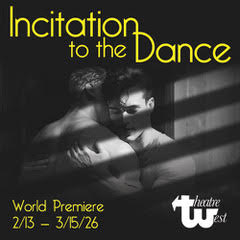
“It takes two to tango. What happens when a third cuts in?” That’s the provocative tagline of the latest dark comedy from writer/director Michael Van Duzer, Incitation to the Dance, running at Theatre West from Feb 13 to Mar 15.
The play follows an older gay couple – Malcolm is a disabled film historian who teaches a course on queer representation in film noir, while his partner Asher is a depressed and out-of-work dance instructor.
Their relationship is thrown off course when Finn, a younger dancer, stripper, and escort, crashes into their lives, exposing desires, regrets, and jealousies that had long been buried.
Van Duzer, as an older gay man with a disability himself, says he was inspired to write the show because of the relative lack of stories about older gay couples on stage and screen. Incitation provided an opportunity to explore the unique circumstances and challenges facing older queer couples.
“The fact that it’s gay men makes it somewhat different. Because of their age, getting actually legally married was not something that was available to them at the beginning of their actual relationship. Malcolm had been married to a woman at one point,” Van Duzer says.
Age and sex play out across multiple dimensions of the drama, with Malcolm jealous of the bond Asher and Finn share over dance, while Asher resents Finn’s status as an up-and-comer while he’s at the twilight of his career.
“They have several layers of rivalry that they explore throughout the play,” Van Duzer says. “They do dance with each other in these stylized dance sequences, eventually dancing out their fury.”
Van Duzer says his play’s use of heightened language and highly stylized dance sequences will intrigue audiences.
“The second dance is a tango Apache, which is a style that was done in the 20s and 30s that came from France and included slapping, hair-pulling, dragging people around, and tearing their shirts open.”
The show got its start nine years ago as part of Theatre West’s writing program as a short play presented as part of the company’s “West Fest,” and Van Duzer has been developing it since.
“The response from the audience was very good, and I saw that there was more to mine in these characters now, maybe because I’m older. I don’t know, maybe because I was no longer in a relationship,” Van Duzer admits.
As he developed the show into a full-length piece, Van Duzer brought more dance elements into it, which naturally also brought to the fore the characters’ relationships to aging and disability.
“Malcolm is reticent to discuss it in any detail, but while his Cane doesn’t slow him down, it is always there. With all of the dance, with his appreciation of it, with him being on stage not dancing, there is this natural chasm that one sees, and I think that the audience will actually relate to that much more deeply than they would to a long monologue about what happened.”
For Van Duzer, who has lived with rheumatoid arthritis all his life and had eight surgeries to treat it, it was less important to tell a tale about Malcolm’s disability than to just see it represented in how it affects his relationship.
“I don’t feel it’s a part of this story to offer explanations, but to just see the difference in not only able-bodied people but people who are dancer-athletes.”
The rawness of the sexuality and dialogue in the show presented some difficulties in casting, Van Duzor says, as some actors were reluctant to take on the piece.
Longtime collaborator David Mingrino has played Asher since the show’s earliest workshops, but Van Duzor tapped stage and screen veteran Michael Gabiano to play Malcolm, and rising star Casey Alcoser as Finn.
“They all have a terrific sense of humor and a couple of them have tried out lines that I absolutely said, ‘Hey, that’s funnier than what I wrote, so let’s go with it,’” Van Duzer says.
That humor helps carry the themes of the play, which Van Duzer says is about understanding how a relationship evolves over time.
“I want audiences to have a better understanding of what happens to a relationship, what really is important in the end.
“People can be very happy as a single person. But if your choice is to be with somebody and really work on that relationship and make it a lasting ‘til-death-do-us-part relationship, I want to share with people that, with a little kindness, with a little humor, with a little attention all at the right time, you can make this thing happen and you can still be your own person pursuing your interests.”
For Theatre West, this play also makes queer history for this long-running venue. Producer Dina Morrone shares with the Blade, “I am thrilled to be a part of this production because Michael Van Duzer’s play is the very first MainStage play/production at Theatre West in its 64-year history that presents a story about an older gay couple. In mainstream theatre, it is not common to see a story with gay characters, let alone an older gay couple featured. In this day and age, it is vital that everyone is represented on our theatrical stages. We need to show that, although it is a gay story, it is a universal one, and that, in the end, we can all relate. We are all one. One love.”
Incitation to the Dance plays at Theatre West, 3333 Cahuenga Blvd, Los Angeles, Feb 13-Mar 15, Fri-Sat 8 pm, Sun 2 pm. Tickets at theatrewest.org.

Cameron Esposito will make you laugh (and cry) on ‘King of Drag’ season 2

Why 9/11 is so personal

‘Thelma and Louise’ remains landmark of unspoken queer rebellion

Here’s your Palm Springs look at the weekend: Sep 11-13, 2026

25 years after 9/11, Windows on the World workers join one another in solidarity

Grindr settles UK lawsuit over claims it shared users’ personal information

Report: 90 percent of LGBTQ+ groups around the world have lost funding since 2025

Multi-billion-dollar 9/11 Victim Compensation Fund to continue until 2090

Remembering the LGBTQ heroes of 9/11 terrorist attacks

Ind. prosecutor declines to press charges over false Buttigieg child welfare complaint
-
 United Kingdom5 days ago
Grindr settles UK lawsuit over claims it shared users’ personal information
-
 World4 days ago
Report: 90 percent of LGBTQ+ groups around the world have lost funding since 2025
-
 National3 days ago
Multi-billion-dollar 9/11 Victim Compensation Fund to continue until 2090
-
 National4 days ago
Remembering the LGBTQ heroes of 9/11 terrorist attacks
-
 Indiana3 days ago
Ind. prosecutor declines to press charges over false Buttigieg child welfare complaint
-

 Features3 days ago
Caleb Kaufman joins the Los Angeles Blade through the California Local News Fellowship
-
 Features2 days ago
25 years after 9/11, Windows on the World workers join one another in solidarity
-
 Palm Springs2 days ago
Here’s your Palm Springs look at the weekend: Sep 11-13, 2026
-
 Movies2 days ago
‘Thelma and Louise’ remains landmark of unspoken queer rebellion
-
 Commentary1 day ago
Why 9/11 is so personal