
Miscellaneous
Latin America elections challenges, opportunities for LGBTQ people
Activists throughout the region agree the elections offer a crucial opportunity to advance the inclusion and protection of LGBTQ+ rights
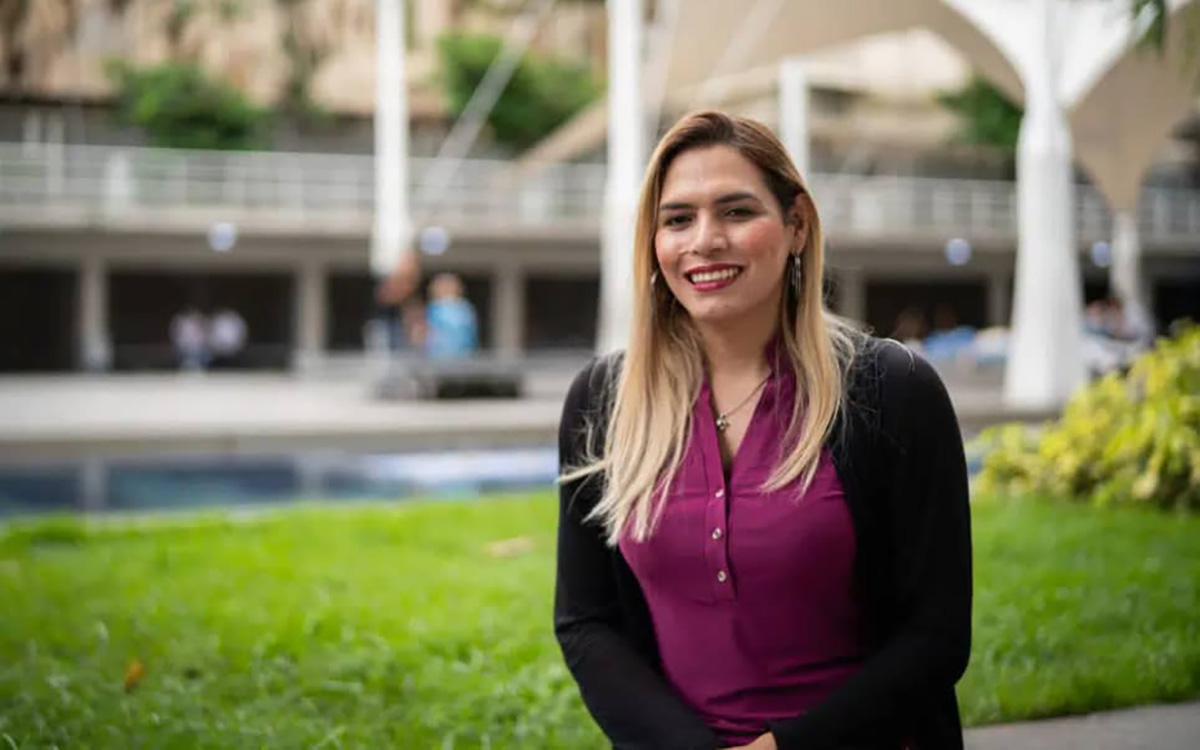
By Esteban Rioseco | CARACAS, Venezuela – Activists throughout the region agree the elections offer a crucial opportunity to advance the inclusion and protection of the rights of their community amid far-right advances.
Venezuela’s presidential election will take place on July 28, while Brazil’s municipal elections will happen on Oct. 6. Regional and municipal elections will take place in Chile on Oct. 27. Uruguay’s congressional elections are slated to occur on the same day.
María José Cumplido, executive director of Fundación Iguales in Chile, emphasized the importance of having LGBTQ representation in politics.
“It is fundamental because LGBTQ+ people tend to support laws or public policies aimed at protecting the community,” Cumplido told the Washington Blade. “In that sense, it is important that the voices of these people are heard because, obviously, they know the reality more closely and many times they have lived it.”
Cumplido noted “LGBTQ+ representation has grown notoriously in recent years, so much so that today there is an LGBTQ+ caucus in Congress.”
“That is good news,” said Cumplido.
Ignacia Oyarzún, president of Organizado Trans Diversidades (Organizing Trans Diversities or OTD), also from Chile, highlighted the observation and registration work the Trans Voting Observatory of Latin America and the Caribbean has done. Oyarzún also noted the promotion of transgender candidates as a way to combat misinformation a promote respect for the community’s political rights.
“We monitor the situation of the political rights of our communities in the region and establish guidelines through which we encourage respect for the right to elect representatives and to be elected,” said Oyarzún. “We also maintain initiatives that have to do with the dissemination of trans candidacies and news that go against the disinformation established through false news that have begun to circulate through the various social and political media.”
Collette Spinetti, president of the Colectivo Trans del Uruguay, pointed out the challenges faced by LGBTQ people in politics, especially trans people.
“The biggest challenge is to achieve trustworthiness especially towards gender-dissident people in their ability to be able to hold public office,” said Spinetti.
“In Uruguay politics is still quite macho, especially in the so-called traditional and right-wing parties where there is no political representation of members of the LGBTIQ+ community,” Spinetti further explained. “On the left, although there is, thanks to internal work, female representation, there is still a lack of work.”
“In this sense the scarce LGBTIQ+ representation is present through gay men,” added Spinetti. “There is still no representation of publicly lesbian people and only one representation in the interior of the country of a trans woman.”
In Brazil, Keila Simpson, president of Associaçao Nacional de Travestis e Transexuais (National Association of Travestis and Transsexuals or ANTRA), highlighted the diversity of LGBTQ representation in the country’s politics. Simpson nevertheless recognized the importance of mandates that go beyond identity and address a wide range of issues that benefit the entire community.
“The challenges for LGBTQIA people when it comes to applying for positions in Brazil are many,” she said. “The first one is the way Brazilian society sees this stigmatized and completely stereotyped population. If we think about the trans population, this violence is even greater, since in addition to being smaller in number, the discrimination is even greater because this population is commonly associated with eroticism and hypersexualization of their bodies, and these are the main problems these people face. they are associated when they run for prominent positions or leaders, even in the partisan political arena.”
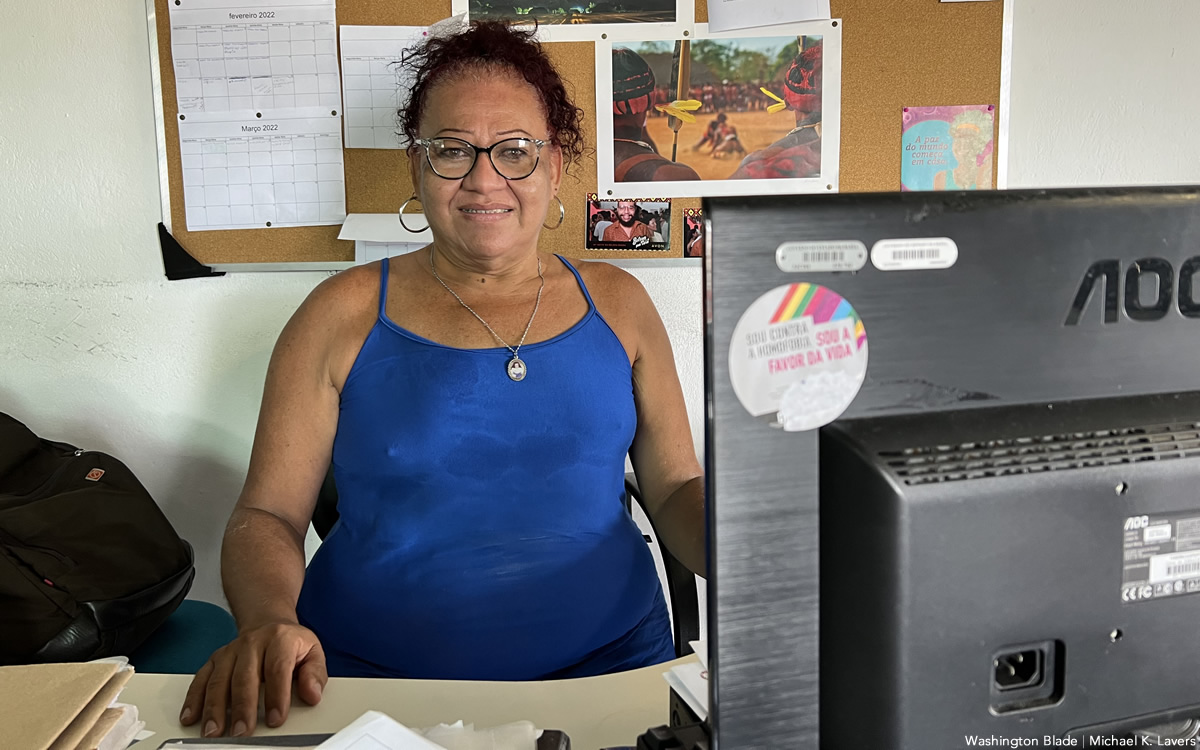
In Venezuela, Richelle Briceño, a trans woman and former congressional candidate, on the other hand, lamented the lack of presidential candidacies that explicitly defend LGBTQ rights. She noted the country still faces fundamental challenges that prevent a serious debate on these issues.
“There are candidates who have expressed themselves against non-discrimination, but that’s as far as it goes,” Briceño recounted. “There are no specific candidates that I can tell you who even handle what the definition of the word queer is and how it is understood, let’s say, within LGBTQ+ activism.”
Briceño said María Corina Machado, an opposition leader who President Nicolás Maduro’s government has barred from running for office, has “come out in favor of issues such as equal civil marriage and the issue of recognition of trans identities.” Briceño noted to the Blade that Edmundo González Urrutia, who is running as her surrogate, did not meet with LGBTQ activists until last week.
“These activists exposed their points of view, however, the current candidate leading the polls has not made a public statement regarding his position or what his position will be on the issues of LGBT rights in Venezuela,” said Briceño.
Briceño further stressed that Venezuela “is still in a cave.”
“Here the country is in the basics, the country is in not losing electricity, in having water and in seeing how people eat daily,” she said. “The political and economic crisis that we have lived through for two decades, and with more depth in the last decade, has not allowed for a serious debate on the issues of the 21st century, including the rights of sexual diversity populations or the LGBT population and women”.
José Rodríguez, a Venezuelan psychologist who, like many of his compatriots had to leave his country, said that “as a young Venezuelan exiled in Chile for eight years, today I feel the tranquility of living in a society where a governmental interest in the welfare of my community is appreciated, expressed by a legal framework that although it could be better; compared to the overwhelming setbacks that have occurred in recent weeks in neighboring countries and the constant lethargy of Venezuela in terms of advancing the LGBTQIA+ agenda, is deeply painful and worrying.”
******************************************************************************************
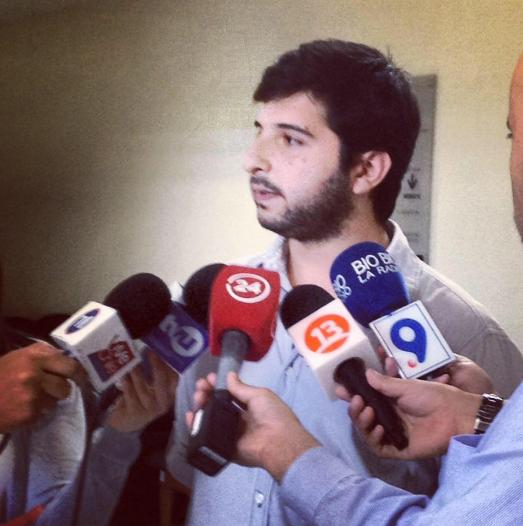
Esteban Rioseco is a Chilean digital communicator, LGBT rights activist and politician. He was spokesperson and executive president of the Homosexual Integration and Liberation Movement (Movilh). He is currently a Latin American correspondent for the Washington Blade.
On Oct. 22, 2015, together with Vicente Medel, he celebrated the first gay civil union in Chile in the province of Concepción.
a&e features
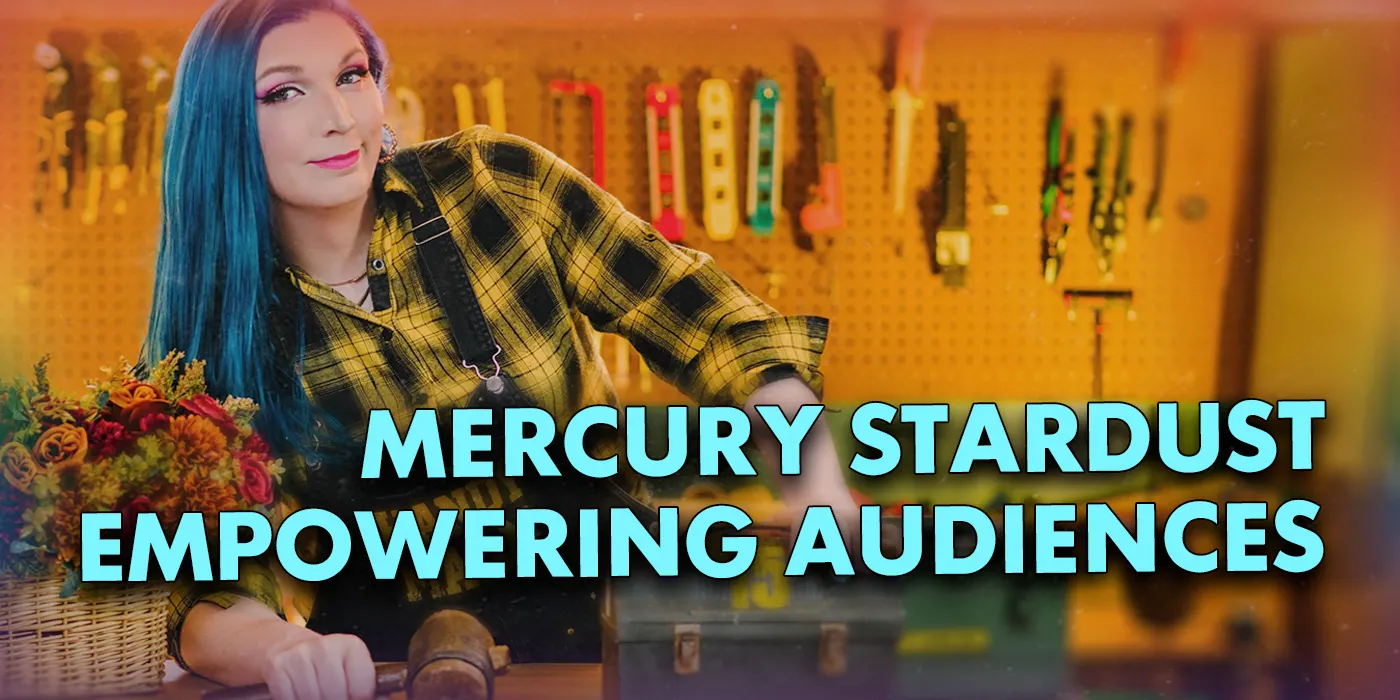
The trans Handy Ma’am helps where it matters most – at home
Mercury Stardust teaches DIY to empower vulnerable renters and homeowners
With the midterms fast approaching and Donald Trump’s malignant whimsy dictating the American agenda, many of us feel unsafe as scraps of hard economic and political news randomly swirl around our lives like debris in the swelling tornado outside Dorothy’s Wizard of Oz window. What’s happening? Will I get hit? Who can I trust to help me?
But all may not be what it seems. As America faces a reckoning with Trumpism and Trump’s cratering approval ratings, new leaders are emerging, standing in the breach to help reclaim our common humanity.
Anti-trans political spots blight the airwaves, for instance, driven by Elon Musk’s America PAC, “which has dropped $100 million on anti-transgender ads targeting Democrats,” trans columnist Erin Reed writes in her Erin in the Morning Substack.
The ads are proving largely ineffective. “Anti-trans ads may scare Democratic candidates, but among the general public, polls consistently show that voters rank transgender issues among the lowest-priority issues they care about and vote on, with less than 1% of respondents naming ‘wokeness/transgender issues’ as a top issue,” Reed notes.
However, by saturating the airwaves, trans people are constantly bombarded by “hateful messaging” that also hits unsuspecting viewers.
“They paint transgender people as predatory and disgusting to a national audience in a cheap attempt to win votes, and every viewing raises the temperature of the hate and abuse directed at a community that is already a target,” Reeds writes.
While trans people make conscious existential choices every day, many also live fulfilling lives and seek to be of service in unexpected ways and places.
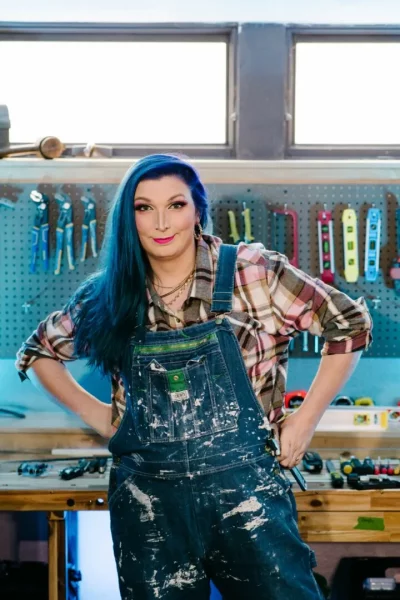
Take the purple state of Wisconsin. Out lesbian Sen. Tammy Baldwin has won 17 general election races since 1986. Out trans candidate Dina Nina Martinez-Rutherford recently won her Democratic primary for a State Assembly seat representing the 76th District in Madison. And TikTok star and New York Times best-selling author Mercury Stardust, an expert in home repair, also lives in Madison with her trans spouse.
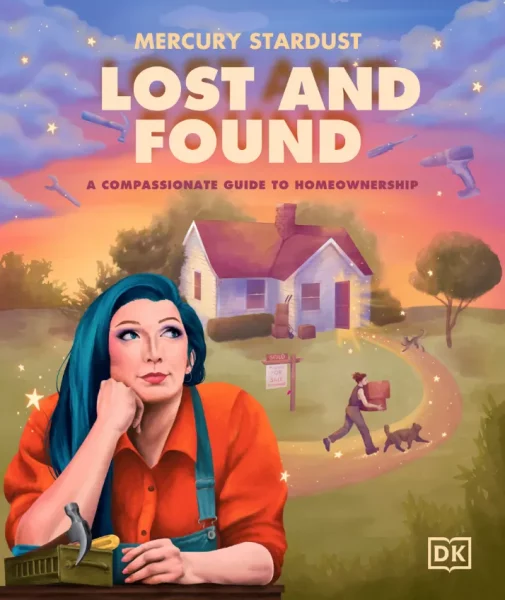
“I was a burlesque and drag entertainer, and I was also a maintenance technician for a property management company and for various companies in tropical Madison, Wisconsin,” Stardust says during an interview while on a book tour for her second book, Lost and Found, A Compassionate Guide to Home Repair.
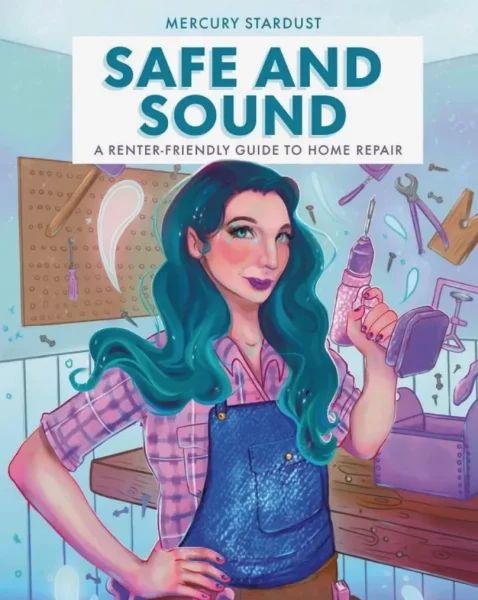
She became well known on the internet for helping strangers learn how to fix their pipes and drywall, helping a lot of renters – which led to her first book, Safe and Sound: A Renter-Friendly Guide to Home Repair.
Stardust now lives in a home in Madison with her “wonderful spouse, Mouse ZZ” to whom she has been married for 10 years. ZZ (Ari) was also born and raised in Wisconsin, went to Cleveland, Ohio, for their undergraduate college degree, and returned home to get their master’s degree at UW-Madison.
“My trans journey is a fairly small part of my entire journey as a content creator, but I have kind of been really public about me raising money for gender-affirming care and helping other trans people access gender-affirming care” through Point of Pride, Stardust says.
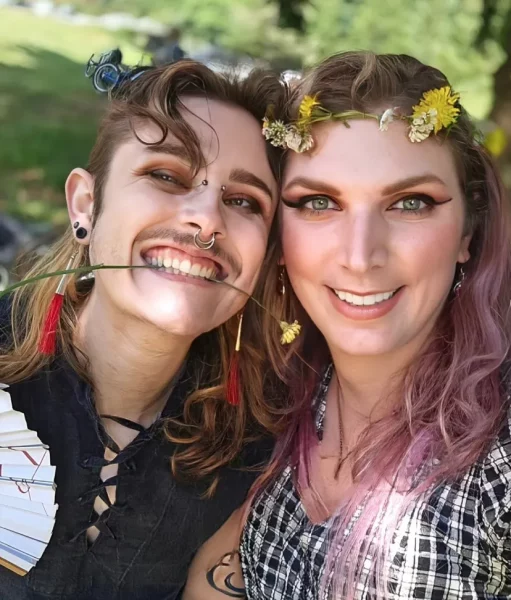
The couple came out together a few months after they were married. “We’ve kind of been living that trans T-4-T life ever since.”
Stardust grew up on a rural family farm with lots of cows. She acknowledges that Wisconsin has a strong sense of conservatism and is also “very pro-union, very pro progressive.”
“The whole motto of Wisconsin is ‘forward,’” she says. “It’s a purple state for a reason.”
A burlesque performer for 15 years, she founded the Wisconsin Burlesque Association.
By running “the only weekly drag and burlesque show (Five Star Tease) in all of Wisconsin for five years,” she says, “I was able to find out who I was. And we built a really strong, like-minded community that made it comfortable and safe to be able to come out as who we were.”
They built community by showing up.
“I think that people have an idea of rural America as if it’s only a certain demographic,” Stardust says. “But a lot of people and I grew up queer in rural Wisconsin, in rural places of the world. It doesn’t necessarily have to be where, ‘Oh, wow! I should be afraid to come out because I’m the one of only a million,’ right? That isn’t really the reality, right? There are a lot of people who are queer in those places, and all you have to do in order to make those communities is show up.”
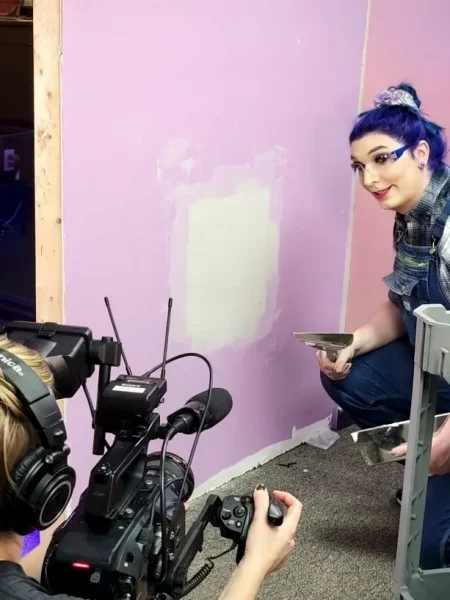
And with confidence, you get to show up as all of who you are. “It’s like being a maintenance technician in those spaces, you know? And there is no joke there. It’s like, this is a real aspect of who I am,” Stardust says, “where I’m gonna show up as who I am and just live my life the way that anyone would, because I’m just a human being. There’s nothing necessarily uniquely special about that. It’s just the fact that I’m also a trans person who happens to be really good at maintenance and is also very good at educating people” on DIY home repairs.
But Mercury Stardust’s big laugh and positive attitude, teaching DIY as The Trans Handy Ma’am, is also quietly empowering, building confidence for vulnerable people that they can fix something and not have to rely on a landlord or strangers. And if the need for maintenance is greater than their capabilities, learning how to pick professional help is important, too.
Practicing self-confidence and showing up safely can also be developed as skills to help build community at this dangerously precarious time when more and more tornadoes, real and imagined, increasingly swirl around us.
The tornadoes are a shared common problem that supersedes petty divisiveness while at the same time elevating and listening to the intersectional experience of those hit the hardest.
Here are some scraps of hard news swirling around in today’s tornadoes, issues we all have to deal with now and whenever Trump crashes.
In the last two years, the Trump administration’s enforcement of Project 2025 has resulted in trans people receiving greater hostile visibility and political scapegoating, in addition to shared cold, hard healthcare issues, food insecurity, housing insecurity, and high home heating and gasoline prices.
Right now, it’s hard to know who’s telling the truth and who’s offering credible ideas and solutions.
Since his first term, Donald Trump’s Orwellian version of truth as “alternative facts” has poisoned the well of discourse and promoted cruelty and division. Journalists were finally forced to call him a liar, question his mental stability and acuity, and peg him as a wannabe dictator.
“We do now live in a country that has an authoritarian leader in charge. We have a consolidating dictatorship in our country,” out MSNBC anchor Rachel Maddow said Monday night, Aug. 4, 2025. “The question is no longer how to prepare for this risk or how to try to avert it, but rather how to fight it now that it is here and in effect.”
Just over a year later, Trump banned broadcast TV press pool coverage from the White House campus while his Justice Department essentially lied for him in court proceedings. Trump launched his own authoritarian-like Trump TV programing to try to control the narrative. On Sept. 24, a Trump-appointed judge issued a temporary restraining order requiring the restoration of press passes.
But with the specific issue of pool coverage still unresolved, the Oval Office meeting between Trump and China’s dictator Xi Jinping was covered by Chinese state media but not covered live by US cameras, with BBC reporters noting, “we’re not sure exactly what they spoke about.” Reminder: at a two-hour private meeting with Russian dictator Vladimir Putin in 2018, Trump told the press that he believed Putin over US Intelligence.
Vice President JD Vance’s announcement of the administration’s intention to remove 760,000 Affordable Care Act enrollees from public healthcare exchanges adds to the five million people who dropped their ACA insurance after Trump and the Republican Congress let premium prices skyrocket. “Give us another chance — or, give us another couple of years to continue to work on the amazing things that we’ve been doing for the past two years,” Vance said on the All In podcast.
Meanwhile, more than 4 million people lost access to critical food aid between last July and April — many of whom are children – because of cuts to the Supplemental Nutrition Assistance Program (SNAP/food stamps), which the White House called “bloated.” More cuts are expected by the end of 2026, NPR reported last month.
Meanwhile, more than 160,000 pounds of raw meat with fake USDA inspection labels were recalled on Sept. 24; the CDC reports that as of September 17, 2026, 3,471 confirmed* measles cases were reported in the United States in 2026; and university scientists think outbreaks of infectious diseases like Ebola, hantavirus, bird flu and COVID-19 are on the rise.
And as Trump’s war of choice in Iran expands throughout the Middle East, home heating oil and gas and diesel prices continue to climb. An estimated 4 million to 5 million households use heating oil for homes during the winter, according to the U.S. Energy Information Administration. Massachusetts is already reporting that for the week of Sept. 21, 2026, the average retail price for heating oil hit $6.15 per gallon. That’s a 74.7% jump compared to last year, or a $6,000 bill compared to previous years of maybe a $3,500 or $4,000 bill.
And what’s going to happen when the nor’easter storms hit the East Coast? California Gov. Gavin Newsom has already declared a state of emergency to prepare for being the epicenter for a predicted “historically intense El Niño,” according to a news release from the governor’s office. There’s a 75% chance this super storm will become the strongest since 1950, according to the latest reliable forecast.
While Trump is bored with the war and calls the affordability crisis a hoax, community grassroots organizations such as Indivisible help produce No Kings protests nationwide, and individuals like Mercury Stardust help empower people to show up as who they are where they live.
Maybe they will also show up and share common ground over a common issue and create a new kind of real equality-based intersectional democracy, a more perfect union, in the process.
This is a cross-post from Karen’s LGBTQ+ Freedom Fighters Substack.
a&e features
Falcon| NakedSword launches new publishing division, Falcon INK
The gay adult studio publishes two erotic novels
While there’s been an overall movement against LGBTQ people in politics, media, and print, there’s also been a huge gay male erotica boom. Not just Heated Rivalry, but Heartstopper and Red, White and Royal Blue have revealed a huge hunger for erotic male love stories across multiple forms of media. Those books not only found huge fanbases, but drove wildly successful adaptations and launched stars like Connor Storrie and Joe Locke. Ready to enter this landscape is the popular adult film studio, Falcon| NakedSword.
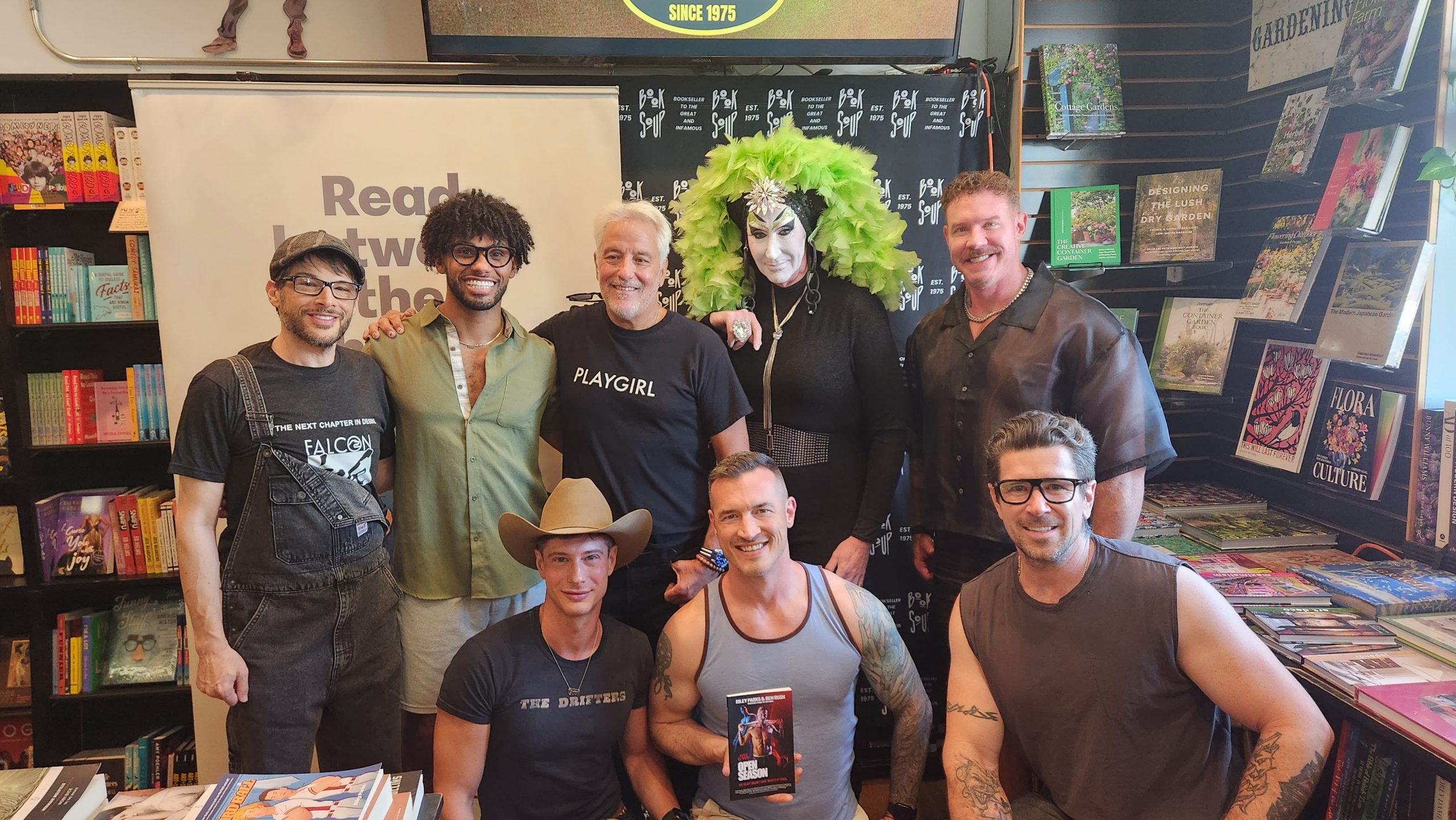
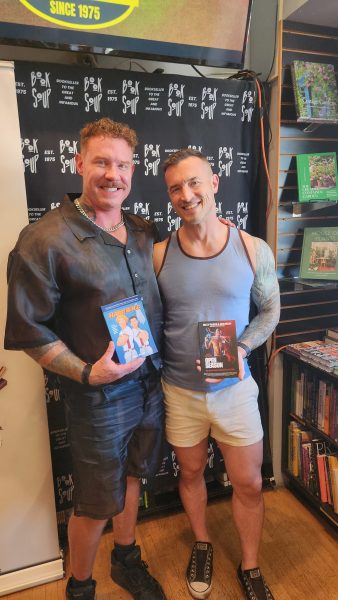
The studio has created a new publishing division, Falcon INK. They celebrated this expansion with the release of their first two novels, Hard Ball and Wild Game: Open Season at Book Soup in West Hollywood on August 29th. The guest list included major players from both behind and in front of the camera, including stars Derek Kage, Beau Butler, Trenton Ducati, Tony Genius, and Eddie Burke. Also present were the studio’s President Tim Valenti, Sister of Perpetual Indulgence and Falcon’s Creative Director, Sister Roma, and writer/director and Co-Chief Content Officer and Chief Creative Marketing Officer, Ben Rush.
The books in question include Hard Ball, which follows two baseball players whose relationship gets way more than heated. Wild Game: Open Season is a prequel to the multiple award-winning film Wild Game, where Kage plays a man desperate for money who enters a dangerous, high-stakes chase. If caught, his captors could do anything they want. Spoiler alert: it’s triple penetration. The book revealed how Kage’s character got to that level of desperation.
This expansion into print media is interesting considering there’s a growing war on queer content in books and adult content. Rigorous age verification laws require viewers to submit a prohibitive amount of personal information to access adult content. Kage is quick to point out, “The written word can be just as intense, just as controversial, if not more provocative than what you see on screen.”
He adds, “The part that bugs me is with age verification, the state could decide this is harmful to minors and make people who want to access it have to show an ID. You have states that are banning books that have LGBTQ+ themes and sexual education in the name of it’s harmful to minors. When you lump it all together, not only is it unconstitutional, you’re making it harder for consenting adults who want to access it.” Then he really hits the nail on the head, exclaiming, “People should be able to read what they want to read and consenting adults should be able to view what they want to view.”
In addition to print media, Falcon| NakedSword is expanding into safe-for-work content with a thriller microdrama, The Last Guest, and has even partnered with an apparel company for their own line of tie-in underwear. Rush was quick to clarify that this is not a shift from their core business model.
Rush shares, “I don’t really see it as a turn away from adult content as much as an expansion of what we can do. We’ve spent years telling stories where sexuality is obviously a major component, but, underneath that, you’re still dealing with character, chemistry, fantasy, romance and humor. Those are the things that make people connect with a story.” The studio has gone out of their way to explore countless genres with films ranging from thrillers and horror to romantic comedies.
Rush adds, “‘Safe-for-work’ content gives us another canvas for that. It allows us to take some of the storytelling instincts we’ve developed and see how far they can go when sex isn’t necessarily the destination.” Now these erotic novels are hardly safe for work but also enter the growing genre of male-on-male sex and romance.
The Heated Rivalry Connection
The runaway success of Heated Rivalry couldn’t be avoided, and Rush was quick to clarify that Falcon INK, while a savvy business move, is not necessarily related to the rise of that hockey romance. In his words, “Their success demonstrates that there’s a huge appetite for queer romance and queer characters, and that the audience extends far beyond what people might traditionally think of as a niche LGBTQIA+ market. But I wouldn’t say we looked at those properties and said, ‘Let’s make our version of that.’ If anything, their success reinforces the idea that queer stories can move between books, television, film, and other media and still find passionate audiences. That’s exciting from a creative perspective.”
Derek Kage adds, “Heterosexual cisgendered women are loving gay stories. I find it fascinating. I also find it a little lucrative. I’ve noticed an uptick in my fan sites: heterosexual women who love watching two men have sex with each other.” He also notes that now cis-female performers are actually enjoying filming more with gay men. HIV concerns really limited male-on-male performers, whether they were gay or straight, but now times clearly have changed.
Tim Valenti adds that this demographic is growing. He shares, “Sure. It is a different demographic. It’s much younger, and female. I can honestly say we now know about 12-13% of our membership is female for our hardcore sites.”
While a different demographic, Rush doesn’t believe there’s much of a real difference adding, ” I don’t think the audiences are completely separate. People who consume adult content also read books, watch television, fall in love with characters, and want rich stories. We sometimes talk about “adult audiences” as though that’s their entire identity as consumers, and, obviously, it isn’t. The interesting part is seeing where those audiences overlap.”
Sister Roma was quick to point out the political importance tied to the success of these stories. She adds, “I think that stories that show queer people in romantic situations are very healthy and important, especially right now, because there are real attempts to take away the right to marry, and there’s so much oppression headed towards our community from every angle. It’s important to show that for people with genuine feelings of love and expression like everybody else, to make people know we’ve always been here; we’re not going away.”
The Future
With a budding cinematic universe and cross-platform storytelling, is this the making of a new media empire? Rush jokes, “I’m not sure I’m ready to put ‘media empire’ on my business card. But I do think there’s something exciting about building a creative brand that isn’t restricted to one format.”
He continues, “If we have characters or stories that people connect with, why should they only live in one place? A book can become something on screen, and a character can have a life beyond one project. The goal isn’t expansion just for the sake of expansion. It’s to create things people genuinely want more of. If that ultimately looks like an empire, I suppose there are worse problems to have.”
Both Kage and Eddie Burke opened up about the unique differences between performing their audiobooks. Whether it’s Burke working on his Southern accent or Kage using his teenage closeted history to get into character and even putting himself in the mindset of the female character, it’s clear these are serious actors who take their art seriously.
Kage adds, “We are actually talented performers. Not only are we talented, but we are also educated, and we love what we do. We are authentic in everything we do. If you can put on a performance while taking 3 dicks at once, that is talent.” He jokes, “Meryl could do it. She could do anything.” Jokes aside, Kage confessed to staying in character to deliver some of his more challenging performances, so it’s not surprising this character would live on in print.
As to whether Kage and his fellow co-stars could find some of the same breakthrough success as the stars of other male erotic stories he shares, “If Hollywood or a major television show or production company needed my talents, I’d happily accept. If you need a deep-voiced, muscley dude who has a way with men and women and anyone in between. Call me.”
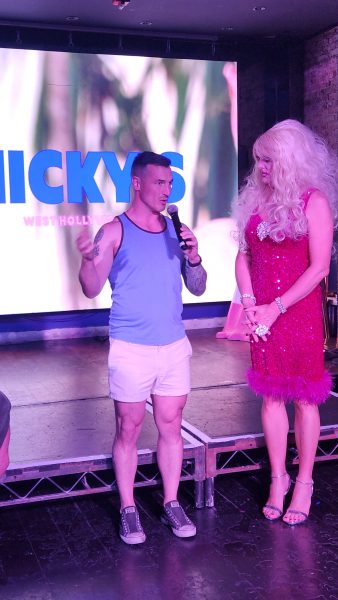
The group ended their night at Micky’s supporting their drag show hosted by Ingenue. They shared Falcon| NakedSword prizes, including free copies of the book. If you’d like to get yours, you can purchase Hard Ball or Wild Game: Open Season as a paperback, digital copy, or audiobook.
a&e features
Are you ready for a ‘Culture Shock’ with Andy Lalwani?
The LA reporter dishes about everything going on with his new podcast

If you’ve been to an event in Los Angeles, then there’s a good chance you’ve had the pleasure of seeing Andy Lalwani’s work firsthand.
The gay reporter has spent almost a decade bouncing around the city’s hottest venues for some of today’s biggest publications. Whether it’s Grindr or Disney — yes, the man has recently done work for both companies — Andy has become known for not only his fantastic carpet interviews, but the engaging social content that he always produces afterward. He offers a simultaneously relaxed yet engaged approach to these moments, with his videos being filled with intriguing conversation from huge stars and a shocking amount of casual laughs.
Pair this constant presence with an engaged social media audience of more than 30,000 followers, and it’s safe to say Andy Lalwani is a true star in LA’s bustling reporting scene. It’s why so many folks across the city were excited when he announced his newest project: the Culture Shock podcast.
“It is so fun to show up to a studio and just have no idea what you’re about to get into,” laughed Lalwani, reminiscing on the past few months since Culture Shock debuted in March 2026. “I want every guest to feel like this is just a great time, to be sitting across from somebody and just getting on. I think the world needs to laugh a little bit more, and that’s what this whole podcast is about.” Culture Shock sees the reporter go from the carpet to the recording studio as he sits down with some of LA’s biggest cultural changemakers. Whether it be musicians like Icona Pop, comedians like Matt Rogers, or even Leland of RuPaul’s Drag Race fame, the podcast has quickly gained an audience who love Andy’s intriguing conversations with each personality.
The host has been overwhelmed with the response from his audience, saying how happy he’s been to see folks enjoying this project — especially because Culture Shock wasn’t created in the best of circumstances. Candidly speaking about what led him to make this show, Andy stated, “I started my podcast when I got laid off from my job.”
“It definitely has a lot of highs and lows when you’re trying to work and break into the [media]…it’s been really hard for LGBT people to be involved in news whatsoever because of the landscape.” It’s an issue that affected thousands of folks in this community, with many queer journalists from big publications — including ones catered to the LGBTQ+ community — being laid off in recent months. But Andy stressed that after years of trying to prove himself to others, it actually felt inspiring to finally get the chance to create something completely unique to him. “Seeing gay people-of-color is hard in the media — behind and in front of the camera — and so being an Indian guy…there’s not a ton of us who do what I do,” he explained. “So once I got laid off, I was like, ‘I just want to own something myself for a change, and not have to report to anyone else.’”
And own it he does, with Andy offering his trademark style of interviewing into each episode of Culture Shock. He was quick to emphasize, though, that the show’s success can’t all be owed to himself. Andy thanked his entire team at Spotify by saying, “Spotify has been really supportive with this endeavor,” describing how they’ve helped him fight through the early nerves of this process. Made up of professionals from around LA, he offered immense gratitude to the many folks in both production and promotion, with the podcast even being featured in the platform’s June spotlight on LGBTQ+ creators.
Lalwani spoke proudly about all that he’s accomplished with Culture Shock, but when asked about the future of the podcast, he calmly stated that he wasn’t sure what would come next — and that was on purpose.
“When you work in media, you think you have it all laid out for you. But for me, if you asked me five years ago where I thought I’d be now: completely different,” he laughed. “But I’m in the prime seat, and I want to keep that going. Maybe expand it even more! I can’t tell you where the next thing is going to be, but it’s…it is just such a joyous, rewarding process to say I’ve taken every skill — production, reporting, on-camera experience — and just like housed it into one. That’s it…it’s just a nice home for myself.”
An earned sense of optimism from a person who’s worked to master the skills audiences hear in every Culture Shock episode. Though while he’s keeping his options open, one thing is for sure: Andy Lalwani is prepared for the many big and bright things that are certainly in his future. And now that he has access to his very own studio at Spotify, he’s excited to ensure audiences listen in on these new adventures every step of the way.
Miscellaneous
Kick It California aims to address queer men disproportionately impacted by smoking
One man’s lifelong commitment to anti-smoking advocacy
As a youth, Bob Gordon urged his mom to quit smoking, worried she’d die because of it. Decades later, Gordon has remained passionate about his crusade for smoke-free living.
Gordon lost three relatives to smoking, including his favorite cousin Richard. But Gordon first got into his anti-smoking activism after having to be subjected to a smoking work environment.
He was so impacted by the constant smoky office that he went to City Hall and gave testimony to the County Board of Supervisors, who were considering a workplace smoke-free ordinance at the time.
From then on, Gordon worked on various tobacco control policies, with a focus on reducing smoking within his LGBTQ+ community. He served as the project director of the California LGBT Tobacco Education Partnership, which was funded through California’s Tobacco Prevention Program.
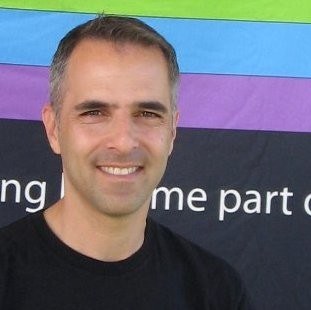
He volunteered with the American Cancer Society and the American Cancer Society Cancer Action Network. He was also co-chair of the San Francisco Tobacco Free Coalition for seven years.
“I just think big tobacco would put nicotine in the air and the water if they could,” Gordon said.
Gordon also regularly speaks as an anti-tobacco advocate for Kick It California as a volunteer. Kick It California is a program that helps people quit tobacco use and smoking through free one-on-one coaching. The program has major funding provided by the California Department of Public Health and First 5 California, according to its website.
Part of the Kick It campaign is acknowledging how LGBTQ+ communities and communities of color are disproportionately impacted by tobacco marketing and long-term use.
LGBTQ+ students had a “significantly higher prevalence of any tobacco, vape, cigarette, and cannabis use in comparison to non-LGBTQ+ students,” according to a 2024 study by the California Tobacco Prevention Program. The study also found that LGBTQ+ youth had a “significantly higher” rate of starting to smoke by the age of 13, compared to non-LGBTQ+ youth.
Queer adults typically smoke more than non-queer people overall, according to LGBT Minus Tobacco, a program also funded by the California Tobacco Prevention Program.
Gordon has long been fascinated by tobacco marketing and has seen firsthand and also through archival resources how marketing has targeted LGBTQ+ people over the decades. As an avid reader of queer magazines and books, Gordon remembers when smoking ads started to creep into LGBTQ+ media.
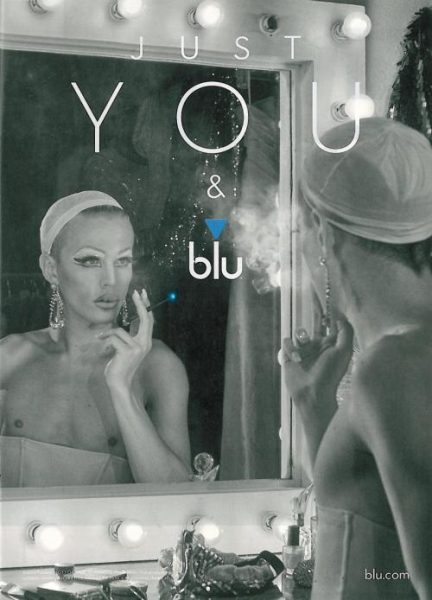
“Seeing tobacco ads work its way into those glossy (LGBTQ+) national magazines, I was noticing alcohol and tobacco seem like peanut butter and jelly for our community,” Gordon said. “Why weren’t healthy things advertised to us? Why weren’t non-addictive things advertised to us?”
“It was a specific attempt to realize that our queer community was smoking at higher rates and capitalize on our loyalty, if you will, to these products,” he added.
Gordon even started collecting ads that appeared in the Bay Area Reporter and Frontiers.
Most egregious to Gordon was when he started to see smoking ads and booths at Pride events, a time that is for “celebration and recognizing our history and our health and longevity, hopefully.” He’s seen a few electronic smoking brands pop up at Pride events in Florida and other states.
One example he remembers is Camel having a full-page newspaper ad about Pride where they did a twist on the word Pride, and basically listed 10 queer bars where you could go pick up your Camel paraphernalia.
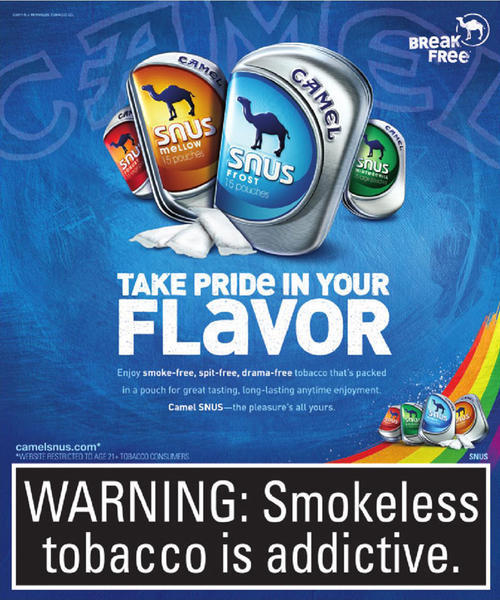
“This was a concerted effort to get the queer community to either try the brands or continue to use those brands and really hang on to us forever,” Gordon said. “And of course, people of color within the queer community are doubly and sometimes triply targeted by big tobacco.”
While bans have led to reduced smoking rates over the last twenty years, flavored tobacco use did not decline among Black adults as it did for white adults, despite California’s ban on flavored tobacco.
White adults had a larger decline in smoking rates as well, according to a study on the National Library of Medicine website that examined trends in smoking and flavored tobacco use in California from 2003–2023.
“These findings suggest that Black populations in California may have been left behind by tobacco control progress, especially regarding flavored products,” the study conclusion said.
The conclusion attributes this disparity to the “targeted marketing by the tobacco industry, the role of flavors in increasing dependence, and reduced access to cessation resources in Black communities.”
Gordon said it’s important that LGBTQ+ people who are interested in quitting smoking don’t feel individually blamed for being overrepresented among this data.
“We get blamed for enough; there’s enough stigma and guilt and shame in our community; we don’t need any more of that,” Gordon said. “It’s not all on us; the tobacco industry has totally capitalized on making us feel wanted.”
“In these terrible times where there’s so much anti-trans legislation, for example, and so many things happening, we don’t need any more discrimination. We don’t need any more heartache,” Gordon added. “We need to stand together against big tobacco.”
For those who are interested in quitting smoking now or in the future, he said Kick It California follows a stop smoking program most hospitals use. The five D’s of this are: delay, distract, drink water, deep breaths, discuss.
“A lot of people don’t realize that if you just wait three or four minutes, there’s a really good chance that the craving will subside,” Gordon said. “So if you can just hold off a little bit as you’re cutting down or trying to quit, that’s a useful tool. Drinking water, something with the hand and mouth, is really helpful instead of an electronic smoking device.”
He encourages those trying to stop or reduce smoking to look for alternative ways of making your brain feel good.
“When people really want to make a change, when they really believe they can and have resources, they can do it,” he said. “It’s difficult, but many people have quit. Don’t give up.”
For resources and more information, visit www.kickitca.org.
Features
A throuple of questions for the 3Dudes1Life Creative guys
Imagine meeting the loves of your life and turning it into a career?
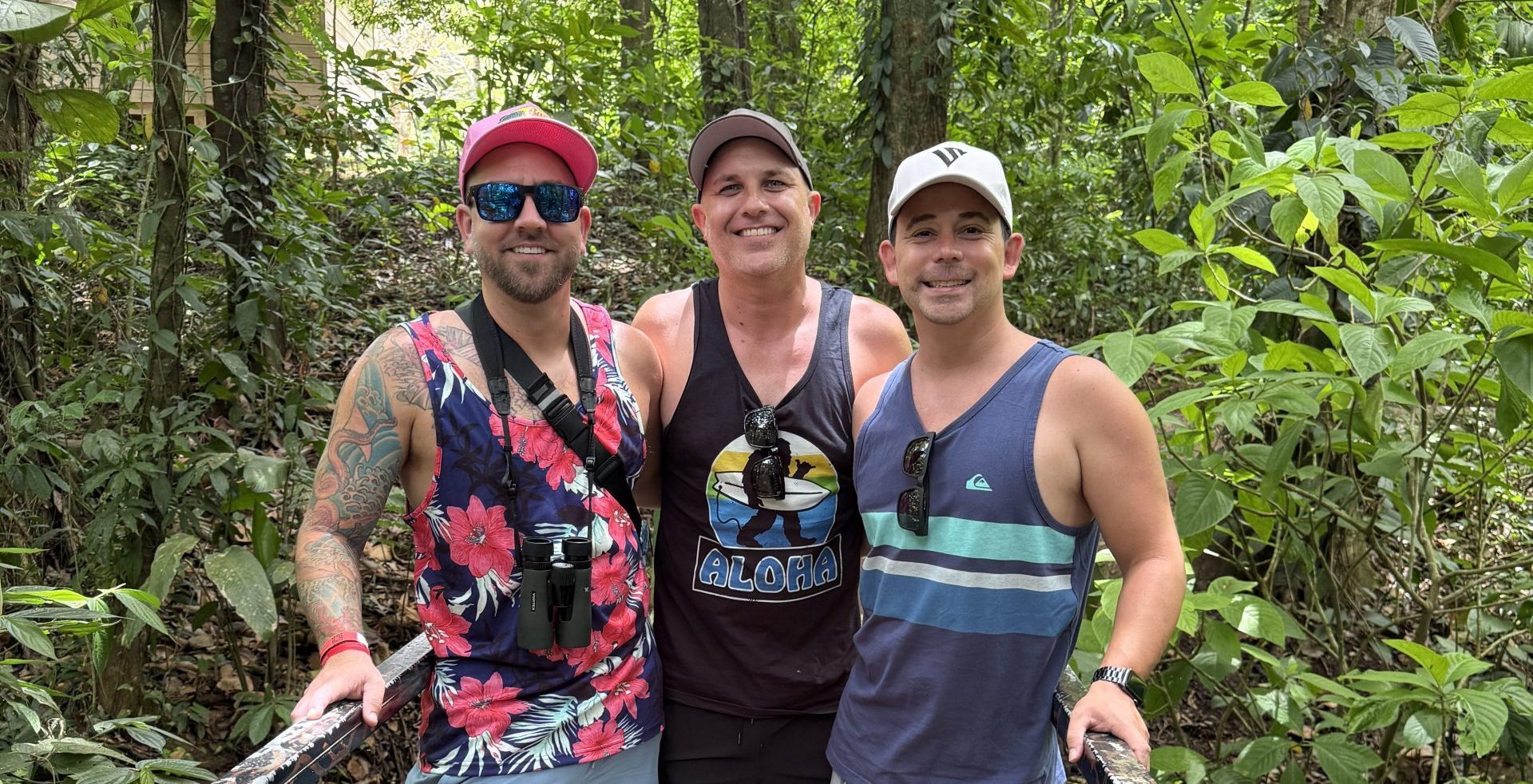
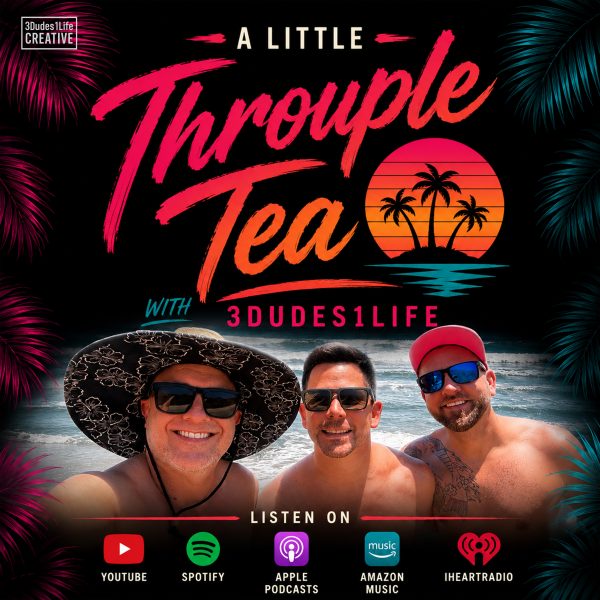
In addition to the growing list of sexualities, we’re expanding how we look at our relationships. Whether you’re monogamous, open, or living in a pansexual polycule, love is love. Daniel, Will, and Caleb, the hosts of the A Little Throuple Tea podcast, have invited the world into their unique relationship to show them the ins and outs of throuple life.
This tell-all podcast is one part of 3Dudes1Life Creative, which also includes a romantic memoir series, Tres Amigos, Una Vida, and a budding lifestyle brand that’s destigmatizing living and loving in a threesome.
You’ve got Will, the HBIC with the clipboard and mastermind behind creating this whole enterprise. You’ve got Caleb, the grounded, pragmatic one with a dry sense of humor. Then there’s Daniel, the creative who brings humor, creativity, and spirituality into the mix.
The guys took some time to share their origin story and how they make it all work. They are also quick to dispel any fantastical fixations and morbid misconceptions about their romance. They’re direct, plainspoken, and most importantly grounded in a relationship they’ve built that works for them.
So how did you all meet?
Will: I moved to Southern California from South Dakota in 2006 for college and met Caleb later that year before going out to Rich’s one night. He was in the Navy, and our friends set us up. We have been together ever since.
In 2010, we met Daniel through nightlife and started a friendship. We actually tried the “throuple” thing back in 2011, but it didn’t last long. We continued our friendship after that, but in 2016, after a trip to the Dominican Republic, our second attempt at a throuple began. Since then, we have been together for over a decade, enjoying this wild ride called life.
Caleb: I came from a small city in West Texas, Lubbock. I was 20 at the time, renting a cheap hotel in downtown, and drinking with shipmates was the usual. After seeing places like Australia, Hong Kong, Japan, Dubai, and Malaysia, I had a shipmate tell me about her friend who was single. By the time we got back to port, her single friend was no longer single, but they did introduce me to Will.
He tried to seduce me by introducing himself in just a towel, which worked. After going out that night, we started to hang out every weekend. And then soon after that, I was moving in with him, and the rest is history.
Daniel was an avid bar goer who spent at least 6 nights a week bar hopping. Will, being the hip-hop DJ that he is, would draw Daniel and his friends to his dance floor. Soon after, they started talking on Facebook and a friendship blossomed. One night, when Will was DJing, Daniel and his friends, of course, came out to dance. I came out later that night, and when I went to go say hi to Will, he told me that Daniel was there and pointed him out on the dance floor.
The night was mostly a blur after that from shots, drinks, Daniel backing it up on me, and ending with some greasy food. I’m pretty sure they all crashed at our place that night cause pretty much every weekend after that, Daniel and his friends were crashing at our place.
Daniel: We all met in Hillcrest while Will was DJing back in 2010. I had always known who Will was from the local scene, but our actual introduction happened when he sent me a Facebook message offering to get me into the bar for free. That night, I met both Will and Caleb, and the rest is history.
What do you feel is the biggest misconception about being in a throuple?
Daniel: The biggest misconception is that a throuple is all about sex. In reality, our relationship is like any other. We have conversations, challenges, ups and downs, quality time together, and yes, intimacy too. It’s all about balance.
Caleb: I think that the biggest misconception is that because we are a polyamorous relationship, we are open in our relationship. Now, yes, Will and I weren’t open per-say but we did have some hot, heated times, and we always played together. I think if we didn’t have some occasional fun together, the idea of being a throuple would have been out of the question. But as soon as we became an official throuple, we closed the door and are monogamous now.
Will: That someone must be a “homewrecker” or that the original couple must not have been happy together. It’s almost as if people think adding a third person will somehow fix a struggling relationship. For us, the evolution from friendship to partners happened naturally. Adding a third personality and dynamic to a relationship doesn’t fix problems—if anything, it requires a lot more communication, trust, and work to make it successful.
Another misconception is that it’s just a phase. Maybe for some people it is, but for us it definitely isn’t. We’ve built a life together, and in the end, it has made all three of us better men.
What inspired the podcast?
Caleb: This is a Will question, lol. After having a great success with an LGBTQ+ day at state and county fairs called “Out at the Fair”, current political views quickly turned what was a successful, family-friendly LGBTQ+ day into the “red-headed stepchild” no one wanted.
So Will did what any CEO would do; he pivoted! He saw how popular “Out at the Fair” was, along with a few side hustles; we had an Etsy that was gaining traction, and for some reason people wanted to know who we were. So he started a blog. Then the blog very quickly became the podcast.
Will: We have been told for years that we should record our life and share our story. Over the last year, I experienced some major changes in our business, and it gave us the opportunity to pivot in a new direction.
Instead of dwelling on things we couldn’t control, we decided to turn that frustration and uncertainty into a creative project. That’s how the podcast was born. It became a way for us to share our experiences, our relationship, and the ups and downs of life with the world.
When we first got together, there really weren’t many examples of long-term throuples living normal lives. We wanted people to see that our life isn’t all that different from anyone else’s. We work, pay bills, argue about dinner, take care of our dogs, and try to build a future together.
At the end of the day, it’s really just three guys talking about life, love, chaos, and everything in between—and people seem to connect with that.
Daniel: The inspiration mainly came from our Instagram page. We get a lot of questions about how our relationship works, where we’re from, and how we met. With the following we built on Instagram, Will had the idea of starting a podcast and sharing more of our lives through conversations on a mic and camera. The podcast gives people a chance to hear answers to their questions while also seeing our authentic personalities, how we communicate, and how much we tease each other. It’s been a lot of fun to create.
Do you think anyone could be in a throuple, or do you feel you’re uniquely suited for each other?
Will: I don’t think being in a throuple is for everyone, and that’s okay. We can tell by some of the reactions, facial expressions, and comments we receive that it isn’t something everyone understands or would want for themselves.
But for the people it does work for, it can be amazing—and really, that’s all that matters. At the end of the day, every relationship is unique. Ours just happens to have three people instead of two.
Daniel: I think anyone could be in a throuple if the connection, communication, and mutual respect are there. That said, I’ve had many people tell me they couldn’t do it because they’d be too jealous or wouldn’t want to share their partner. I understand that feeling. In my experience, jealousy often shows up when someone doesn’t feel secure, equal, or heard. Communication is what helps navigate those feelings. When everyone feels valued and understood, a throuple can be an incredibly loving and supportive relationship.
Caleb: No, I don’t think a throuple is for everyone. They are not for the weak-hearted. And I feel like you have to be emotionally mature. I say that because, like all relationships, jealousy can play a huge role, especially when there are more than 2 people in a relationship.
What do you think is the secret to your relationship success?
Daniel: I call it the “triangle of support.” We’re able to balance each other and lean on one another. If a misunderstanding or disagreement happens, the third person can often provide perspective and help us better understand each other. I also think our success comes from the fact that we were friends first. We know each other deeply, understand how each person communicates, and genuinely enjoy spending time together.
Will: Communication. I know most would say, ‘Well, duh,’ but when you add a third personality, family, career, schedule, and life into the mix, communication becomes even more important. If you aren’t talking about everything and anything, it’s easy for someone to feel left out or not included. Honestly, our group chat is ridiculous, but it’s also one of the reasons we thrive. We stay connected throughout the day, work through issues as they come up, and make sure everyone feels heard. It may sound simple, but consistent communication has been the foundation of our relationship’s success.
Caleb: I guess really there’s nothing different than a traditional relationship. We try to make a monthly date night, we take vacations together, we give each other our space when we need it and support each other when it’s too hard to stand. And of course we try to keep it spicy in the bedroom. It is easier to spice things up when you have 2 ‘joysticks’ to play with.
What would you say is the most important aspect of your relationship?
Daniel: Communication and the ability to be silly together. We joke with each other constantly, and that keeps life fun. Being able to laugh together makes even stressful situations feel a little lighter.
Will: The most important aspect of our relationship is knowing that none of us ever has to face life alone. No matter how bad the day is or how difficult a situation becomes, there is always someone there to lean on. We call it our “triangle of support.” When one of us is struggling, the other two are there to help carry the load. At the end of the day, knowing you are loved, supported, and never alone is a pretty powerful thing.
Caleb: Us 3 are all totally different personalities! I think that’s why we work so great together. Otherwise life would just be too boring.
Check out their 3Dudes1Life app to access their podcast, their book, and more!
And look for more of these guys on the Los Angeles Blade. Part 2 of our interview with them, answering relationship questions, is on the way, and we will be sharing the latest episodes of their podcast right here!
Miscellaneous
Against all odds, and then some: Stephen Muhwezi on courage, community, and starting over
After surviving persecution in Uganda, rebuilding his life in America, and losing nearly everything again, Stephen Muhwezi explains why he still believes hope is humanity’s greatest act of resistance
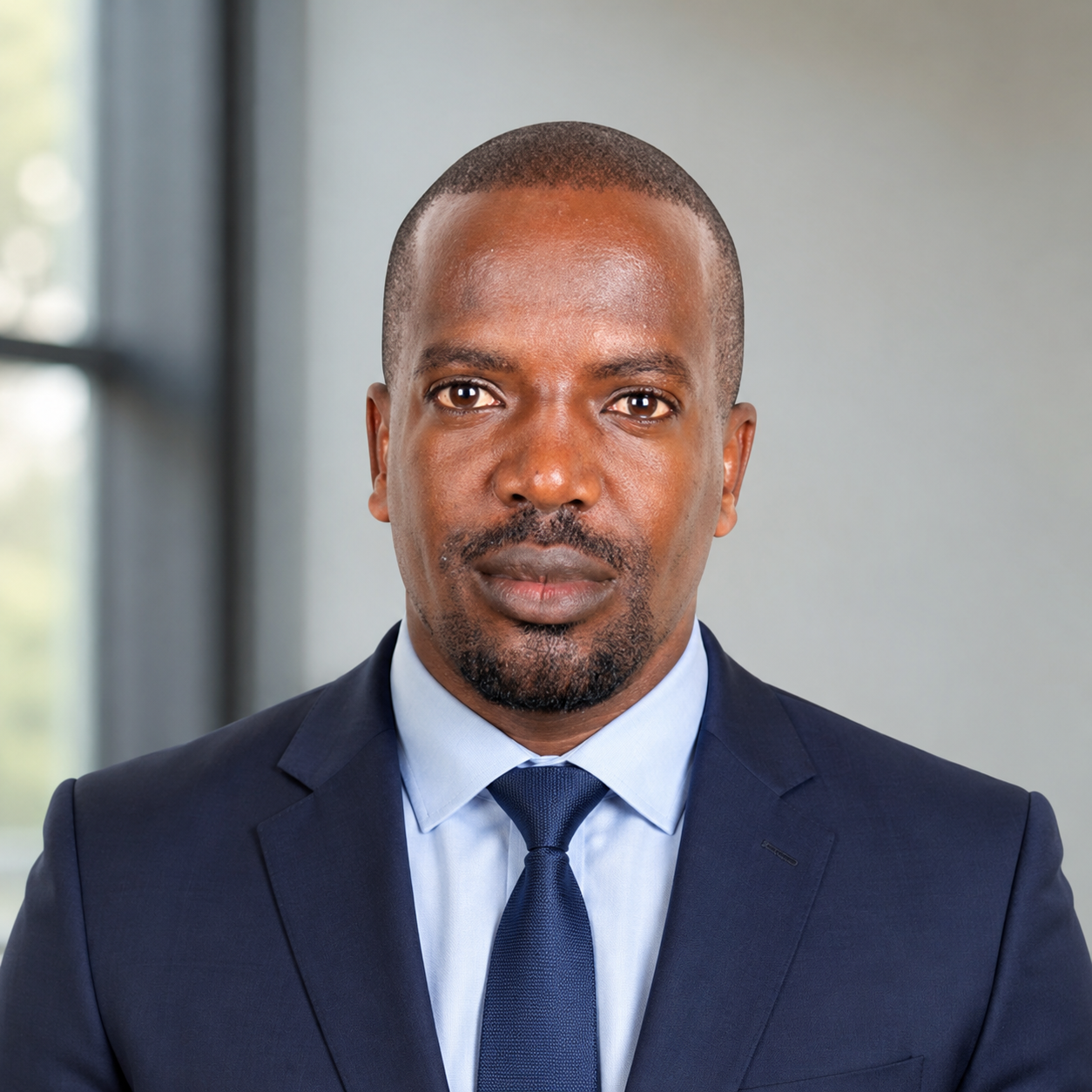
Some people collect job titles. Stephen Muhwezi seems to collect meaningful challenges and rises to them. Public health advocate, human rights defender, community builder, and reluctant refugee, his résumé reads like a masterclass in refusing to allow circumstances to have the final word. From Uganda to Los Angeles, Muhwezi has spent his life proving that courage is about showing up no matter what stands in your way, often with little more than hope, determination, and an uncanny ability to build community wherever he lands.
As the founder of one of western Uganda’s first LGBTQ+ organizations, Muhwezi helped create spaces where people could access healthcare, dignity, and belonging in the face of extraordinary hostility. Today, after surviving persecution, forced displacement, and the challenge of starting over on a new continent, he continues to champion the simple but radical idea that everyone deserves to live authentically and with hope. In our conversation with him, Muhwezi reflects on the people, moments, and lessons that shaped his journey, and why, even after everything, he still believes the most powerful force for change is community.
Can you share a bit about your experiences in your youth that shaped who you are today and what first inspired you to dedicate your life to advocating for LGBTQ+ people, despite knowing the personal risks involved?
Leadership is not measured by the absence of hardship. It is measured by what you choose to build despite it. My story did not begin with persecution. It began with purpose. For many years, I worked under the pseudonym Dismus Kevin Aine, not because I wanted to hide who I was, but because visibility carried extraordinary risks. Today, I proudly use my legal name, Stephen Muhwezi. That change represents the freedom to live authentically and continue serving others openly.
I was the youngest of nine children, raised in rural Uganda. After losing my parents at a young age, my older brothers and sisters sacrificed their own dreams so that mine could continue. They taught me my first lessons in leadership through responsibility, compassion, and love.
My childhood was filled with dancing, family meals, and church. Church gave me my first sense of community, but as I came to understand my identity, it also became a place where I no longer felt I belonged. That experience strengthened my belief that every person deserves dignity, compassion, and acceptance.
Growing up in rural Uganda also exposed me to the realities of healthcare inequality. Long walks to distant clinics taught me that where someone is born should never determine whether they have access to healthcare, opportunity, or hope. These experiences led me to study science, then public health, and ultimately to dedicate my life to serving communities too often left behind.
You founded one of the first LGBTQ+ organizations in rural Western Uganda. What needs did you see that others weren’t addressing?
In 2010, I founded Rainbow Health Foundation Uganda to create something many believed was impossible: a place where LGBTQ+ people could access healthcare, support, and community outside the capital. Rainbow was never simply an office. It was a home.
With only three volunteers, we built a welcoming space offering HIV education, health workshops, rights education, psychosocial support, livelihood programs, and community gatherings. People traveled from across Uganda because they knew they would be treated with dignity.
I believed leadership meant serving alongside others—whether facilitating workshops, welcoming visitors, or cleaning the office after everyone had gone home. People trusted Rainbow because we built it together.
For me, this work was never only about advocacy. In Uganda, public health and human rights were inseparable. When fear kept people from seeking healthcare, protecting dignity became part of protecting health.
Your work focused on HIV prevention, healthcare access, and community support. Can you share a moment that reminded you why this work mattered so deeply?
One of my happiest memories was our annual Transgender Visibility celebration. People arrived carrying clothes they could not safely wear in public. Friends helped one another get ready, laughter filled the rooms, and for a few precious hours they were free to be themselves.
Before going home, many changed back. But for those few hours, Rainbow had given them something no law could take away: the freedom to exist without fear.
When Uganda’s anti-LGBTQ+ crackdown intensified, your life changed dramatically. What was going through your mind as you realized you were no longer safe?
As Rainbow grew, so did the attention surrounding our work. Then everything changed.
I was publicly outed on the front page of a national tabloid. Almost overnight, fear became part of everyday life. A ringing phone could mean another summons from investigators. A knock at the office door could mean a police raid.
Every journey home ended with the same quiet question: Will I make it home safely today?
Our offices were raided. I was repeatedly questioned. Harassment and threats became routine.
But the greatest concern was never my own safety. Every attempt to intimidate Rainbow threatened the people who depended on it for healthcare, support, and hope.
Working alongside human rights organizations, I documented violations affecting LGBTQ+ communities across western Uganda, helping ensure their experiences became part of Uganda’s national Human Rights Violations Report. Those years taught me a lesson I still carry with me:
Leaving your home meant leaving behind your community, your work, and the life you had built. What was the hardest part about starting over in Los Angeles?
In 2017, I visited the United States through the International Visitor Leadership Program, joining emerging leaders from across Africa. As we visited universities, nonprofits, and government institutions, one thing stood out: organizations preserved their history and celebrated the people who built them. It made me wonder how many community leaders across Africa devote their lives to service without their stories ever being told. Looking back, I think that realization planted the seed for sharing my own.
The greatest lesson, however, came from my fellow delegates. Although we came from different countries, we shared a common purpose: building healthier, stronger, and more inclusive communities.
After surviving persecution and displacement, did the LA wildfire ever make you question whether you could keep going? What helped you find your perseverance again?
In 2014, a woman named Roberta reached out after learning about Rainbow Health Foundation. A simple message became a lasting friendship. Years later, when I arrived in Los Angeles, she welcomed me into her home. Then the Palisades wildfire destroyed it. She lost the place she loved, while I lost many of the few belongings I had managed to bring from Uganda. Even while rebuilding her own life, she never stopped encouraging mine. Her friendship reminded me that rebuilding is rarely something we do alone. Sometimes the greatest act of leadership is believing in someone before they are fully able to believe in themselves.
After spending so many years advocating for others in Uganda, what has it been like to be on the receiving end of support through the Tiyya Foundation?
For much of my career, I was the person connecting others with services and helping communities navigate difficult circumstances. Receiving support myself was unfamiliar.
When I arrived in the United States, I realized that rebuilding requires a different kind of courage: the willingness to accept help.
Through Tiyya, I found more than practical assistance. I found a community that understands rebuilding is about more than employment or housing. It is about learning new systems, rebuilding confidence, and finding a sense of belonging. That experience reminded me that strength lies not only in giving support, but also in allowing yourself to receive it.
How has that experience influenced the way you think about community and this new chapter in your life?
It reinforced something I have believed for many years: no one rebuilds alone. Whether through Rainbow Health Foundation, colleagues in public health, friendships across continents, or organizations like Tiyya, every meaningful chapter of my life has been shaped by people who believed in one another.
Today, I hope to continue that cycle by using my own experiences to help others beginning again. To me, community is people walking alongside one another, making the journey a little less lonely and a little more hopeful.
Being granted asylum represents so much more than a legal status. How has it changed your life?
Being granted asylum gave me safety, stability, and the freedom to begin rebuilding my life.
What surprised me most was that starting over involved much more than finding a place to live. It meant learning unfamiliar systems, translating years of professional experience into a new context, and living with uncertainty about what comes next.
That uncertainty has been one of the greatest challenges. But I have learned that purpose does not disappear simply because certainty does. I may not always know where the road is leading, but I know why I continue walking it.
You’re now pursuing a career in public health and nonprofit leadership. How has your lived experience shaped the kind of leader you hope to become?
Today I work as a professional caregiver while preparing for the next chapter of my career. Although it may seem different from my work in Uganda, it is rooted in the same values: dignity, compassion, and service.
I am also completing a Project Management Certificate through Calbright College while preparing for the CAPM certification. Studying project management has helped me recognize that many of the skills I developed building Rainbow Health Foundation – planning, partnerships, budgeting, implementation, and evaluation—are the same principles I practiced throughout my career.
My commitment to public health also took me to Sweden, where I earned a Master’s degree in Global Health at the University of Gothenburg. One classroom discussion remains especially meaningful. As classmates debated how laws influence health, I found myself thinking about people I had known in Uganda – individuals who delayed HIV testing or avoided healthcare because of fear and discrimination.
When I shared those experiences, I wasn’t speaking from theory. I was speaking from lived experience. That moment reinforced something I still believe today: evidence tells us what is happening, but lived experience helps us understand why it matters.
Looking ahead, I hope to continue working where public health, healthcare administration, nonprofit leadership, and project management intersect. My purpose remains the same: to strengthen systems, build partnerships, and help create healthier, more dignified communities.
How do you see the connection between healthcare, human rights, and dignity for LGBTQ+ communities around the world?
Healthcare, human rights, and dignity are inseparable. When people fear discrimination because of who they are, they are less likely to seek care, trust health systems, or participate in prevention programs. Protecting dignity is therefore a public health intervention. This has never been only about LGBTQ+ communities. It is about building societies where healthcare is guided by compassion, evidence, and respect for every person’s humanity.
As someone who has lived through persecution and displacement, what message would you share with other refugees rebuilding their lives?
Leaving Uganda was never the life I imagined. But I have learned that uncertainty and purpose can exist together. I am still building. I am still learning. Still becoming. The future is not something we wait to find. It is something we continue to build.
What has surprised you most about rebuilding your life in Los Angeles?
The support I found. Organizations like Tiyya reminded me that rebuilding is not only about employment or housing. It is about belonging. Their Economic Advancement program has helped me prepare for employment and build a foundation for the future. More importantly, it reminded me that every new beginning is easier when someone walks beside you.
If you could sit down with lawmakers or people who question the importance of LGBTQ+ protections, what would you want them to understand?
I would ask them to see people before politics. Behind every law are people trying to care for their families, contribute to their communities, and live healthy lives. Laws influence whether people feel safe seeking healthcare, reporting violence, or simply existing openly.
I would encourage policymakers to listen not only to experts, but also to the lived experiences of the people their decisions affect.
You’ve survived persecution, forced displacement, and natural disaster, yet you continue to advocate for others. What do you hope readers take away from your story?
If I am fortunate enough to reach my eighties, I hope I will not be remembered for what I survived. I hope I will be remembered for what I helped build. Because if my life has taught me anything, it is this: Leadership is not measured by the absence of hardship. It is measured by what you choose to build despite it.
For more information, head to Tiyya.org.
Film
‘AIDS DIVA’ screening honors Connie Norman’s legacy
The documentary screening at CASA 0101 honors the ACT UP icon, whose fight for transgender rights and AIDS activism remains relevant today

A free community screening of AIDS Diva: The Legend of Connie Norman will take place Thursday, June 4, at CASA 0101 in Boyle Heights, honoring the life and legacy of one of Los Angeles’ most powerful transgender AIDS activists.
The evening begins with a 7 p.m. reception and community space, followed by a 7:30 p.m. screening of the documentary with Spanish subtitles. At 8:30 p.m., filmmaker Dante Alencastre will join moderator ChiChi for a post-screening conversation about Norman’s life, activism, and continued relevance.
Connie Norman, often called the “AIDS Diva,” was a defining voice in ACT UP/LA and a fierce advocate for transgender people, people living with HIV/AIDS, and communities abandoned by political institutions during the height of the crisis. Through public access television, radio, protest, writing, and community organizing, she challenged silence with humor, fury, and an unmistakable sense of moral clarity. In fact, my own grandmother knew Connie Norman during her time in ACT UP.
Alencastre said what first drew him to Norman’s story was “the force of her voice and the urgency of her truth.”
“Connie Norman wasn’t just an activist,” Alencastre told the Blade, “She was fearless, funny, deeply compassionate, and uncompromising in the way she confronted stigma, hypocrisy, and silence during one of the most devastating periods of the AIDS crisis.”

For Alencastre, Norman’s story felt especially urgent because it sits at the intersection of multiple histories that have too often been pushed to the margins: transgender history, AIDS activism, and LGBTQ+ resistance in Los Angeles.
“She was often ahead of her time, articulating through her own personal experiences ideas around gender fluidity, solidarity, and structural inequity long before those conversations entered the mainstream,” Alencastre said.
The documentary, which won the Best Film Audience Award at the 23rd Thessaloniki International G.L.A.D. Film Festival and was an Official Selection at Outfest 2021, combines newly discovered archival footage with reflections from all kinds of individuals – from activists and scholars to community members who knew Norman or continue to be influenced by her work.
Alencastre described the archival process as both meaningful and challenging, defining it as “detective work,” with materials “scattered across personal collections, old tape archives, community organizations, and private hands.” Much of the footage had not been seen for decades.
“What made it extraordinary was that every discovery felt like Connie speaking directly back into the present,” Alencastre explained, “Finding footage of her on her cable show, speaking at protests, or delivering one of her fearless, funny, and deeply incisive commentaries was electrifying.”
That archival presence gives the film much of its pathos. Norman does not appear as an antiquated historical subject being remembered by others; she is seen as a living voice, speaking to our contemporary moment. Her speeches, interviews, and media appearances reveal a figure who understood that the AIDS crisis was a product of government negligence and stigmatization.
Alencastre said he wants audiences to walk away with the idea that Norman is not just an activist but a strategist.
“Connie understood that real change required coalition-building across communities that didn’t always naturally align,” he told the Blade. “She moved between worlds – ACT UP/LA, trans advocacy, queer spiritual communities, media spaces, and policy arenas – and she was constantly challenging people to think beyond narrow identity politics toward something more expansive and collective.”
That message feels especially urgent, as LGBTQ+ communities face renewed attacks across the country, including attacks on healthcare, drag performance, and overall visibility. Norman’s activism, Alencastre explains, speaks directly to the present because many of the struggles she confronted remain unfinished: “She was fighting against systems that treated certain lives as disposable.”
The screening will be held at CASA 0101, a community arts space in Boyle Heights founded to uplift local stories, artists, and cultural work. The venue’s intimate, mission-driven setting makes it a necessary home for an evening centered on queer history and resistance.
“CASA 0101 is absolutely the right place to feature this amazing film because it’s one of the few spaces in Boyle Heights that welcomes art, community, and activism,” ChiChi told the Blade, “AIDS DIVA is a story about standing up for what is right and fighting for marginalized people, something that is reflected by CASA 0101 and Boyle Heights.”
ChiChi said Norman’s legacy is especially urgent as transgender, gender-expansive, and intersex people continue to face political attacks and marginalization. “We are deserving of a dignified life, we are deserving of community, we are deserving of being seen,” ChiChi explains, “As attacks against our community and anti-trans legislation continue to rise, Connie’s legacy of honesty, community advocacy, and coalition-building is a guiding light for how we resist, organize, and fight back.”
Moderating the conversation after the film, ChiChi added, is an honor. But it also carries the weight of responsibility. “As the Co‑Chair of the Transgender Caucus for the Commission on HIV for Los Angeles County and a Commissioner for the City of Los Angeles Health Commission, I carry this work with grace, intention, and a deep understanding of what it means to hold space for our communities,” ChiChi said. “More than anything, I want to honor her by creating a space where people feel seen, held, and inspired to carry forward the work she began.”
For Alencastre, the most meaningful response to the film has come not from awards, but from audiences who stay after screenings to share stories and connect Norman’s activism to the present.
‘If there’s one takeaway audiences seem to leave with, it’s that Connie’s story reminds us that activism is not abstract. It is personal, messy, courageous, and deeply communal. Seeing people connect to that has been incredibly rewarding.”
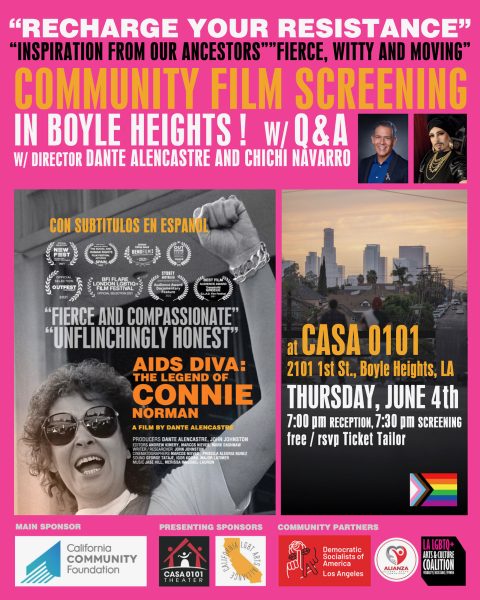
The event is free, with admission available through RSVP. Community partners may also table at the event, with limited spots available. The evening is supported by the California Community Foundation, California LGBT Arts Alliance, and CASA 0101.
More information about the film is available at aidsdivaconnie.com. RSVP at: https://www.tickettailor.com/events/californialgbtartsalliance/2218901
Dining
Intentional hospitality: How Ivo Cooper is redefining the dining experience at M Grill
From immigrant beginnings to national recognition, the M Grill general manager brings a sense of belonging to dining
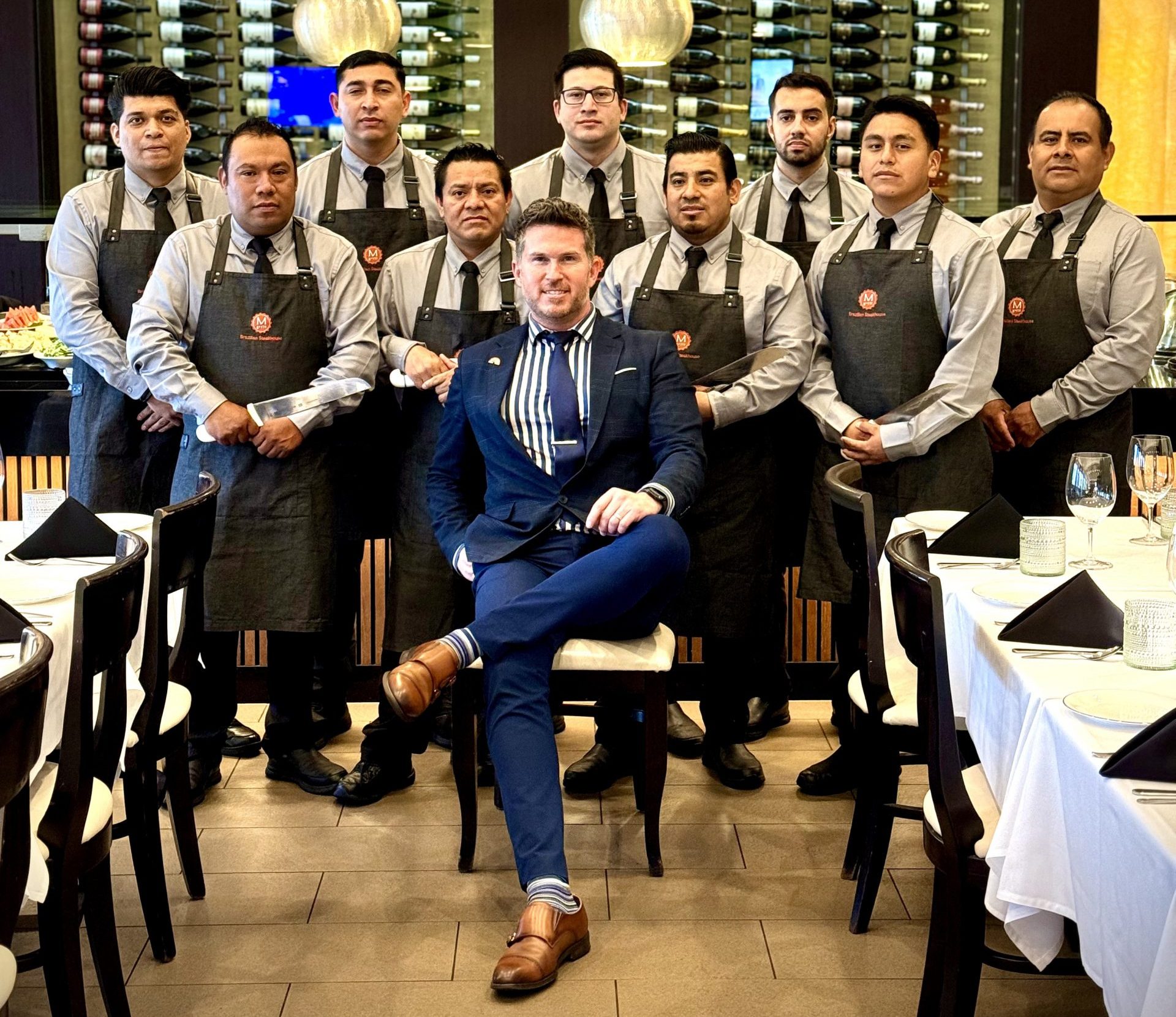
At M Grill, a Brazilian steakhouse in Los Angeles, hospitality is not just a service – it’s a philosophy. For General Manager Ivo Cooper, that philosophy is rooted in lived experience, shaped by immigration, identity, and a belief in human connection alongside food.
As an immigrant, Cooper built his life and career from the ground up. “Coming to the U.S. at 18 and building a life from scratch shaped everything about the way I lead,” Cooper tells the Blade, “I had to grow up quickly, support myself, adapt to a new culture, and learn how to earn trust in unfamiliar environments. That gave me discipline, resilience, and a real appreciation for opportunity.”
That early mix of uncertainty and determination continues to shape Cooper’s leadership. Rather than simply managing operations, he approaches his role as a mentor, investing in others in the service industry as a way to elevate it as a whole. He tells the Blade, “I have walked that road myself, and part of what drives me now is the desire to make it a little easier for the next generation. I love sharing knowledge, experience, and perspective with people who want to grow.” At its core, his approach is about making people feel seen – whether they’re working in the restaurant or sitting down to dine.
Good hospitality is often overlooked – either assumed as a given or insufficiently examined for what sets it apart from excellence. Cooper, however, understands hospitality as an art form. His philosophy is simple, humble, and, of course, quotable: “Hospitality, at its best, makes people feel comfortable, seen, and welcome.” Making people feel comfortable and seen is deeply personal to Cooper. As an openly gay, married man, Cooper understands both the privilege of acceptance and the reality that not everyone shares it. He explains, “Being gay is not the only thing that defines me, but it is part of who I am, and I’m grateful that I’ve been surrounded by love and acceptance. I also know that is not the reality for everyone. There are still many LGBTQ+ people … who are afraid to fully be themselves…”
His personal life reflects the same layered identity. His husband, also an immigrant, brings another dimension to Cooper’s experience. “[My husband] is a Canadian from Pakistan and comes from a Muslim family, so our life together reflects a lot of the complexity many people are feeling right now,” Cooper tells the Blade, also explaining that “The majority of our team are immigrants as well, and I want them to know they are valued not only for the work they do, but for who they are.” Whether it’s Cooper himself, his family, or those he works with, there is a clear sense of belonging that defines his approach.
Cooper’s philosophy has even reached a national audience. In a recent feature with the Try Guys – one of the most widely watched food and culture platforms online, founded by former BuzzFeed creators – M Grill was highlighted not only for its food, but for its approach to hospitality. During the episode, the group notices something unusual: the salad bar has no labels. Naturally, they ask Cooper why, to which Cooper responds: “That choice reflects a much bigger philosophy for us. By not relying on labels, we create an opening for conversation. Guests ask questions, our team guides them, and the experience becomes more personal.” For Cooper, hospitality is not about minimizing friction, but about creating intentional moments of interaction.
For Cooper, all of this is what he defines as “intentional hospitality” – a philosophy that demands consistency and care at every level. “To me, intentional hospitality means excellence is not accidental. It has to be built into every part of the experience,” Cooper says. M Grill is exactly that space for Cooper’s intentional hospitality to take way, with excellence, and detail. Each day, Cooper pays attention to the minute details that shape how customers feel: everything from pacing to language is taken into account.
In an increasingly automated world, Cooper believes those interactions matter more than ever. He explains, “Human interaction matters even more now because so much of life is becoming automated and screen-based.” Although AI is seemingly replacing all facets of life, what Cooper finds integral to food service is human interaction: “In hospitality, that human element is everything.”
Even as the hospitality industry faces ongoing challenges – from the pandemic to rising costs and the emergence of AI – Cooper remains focused on what matters most: the guest experience. Rather than succumbing to apathy, he tells the Blade, “The last few years have made me even more focused on what actually matters.” And, for Cooper, what truly matters is the people walking through the door.
Ultimately, Cooper’s message is one of belonging. “I would tell [young LGBTQ+ professionals and immigrants] that they belong, even if the world around them sometimes makes them question that.”
He leaves the readers with an important, final remark: “If there is a young LGBTQ+ person reading this who feels uncertain, isolated, or afraid of not being accepted, I hope they know there is space for them … They can build a meaningful life, a successful career, and a real sense of belonging without hiding who they are.”
Miscellaneous
At the Los Angeles Trans and Non-Binary Film Festival, movies are magic
Host and Director Joey Haley discuss how this festival is making the movie industry more open to all.
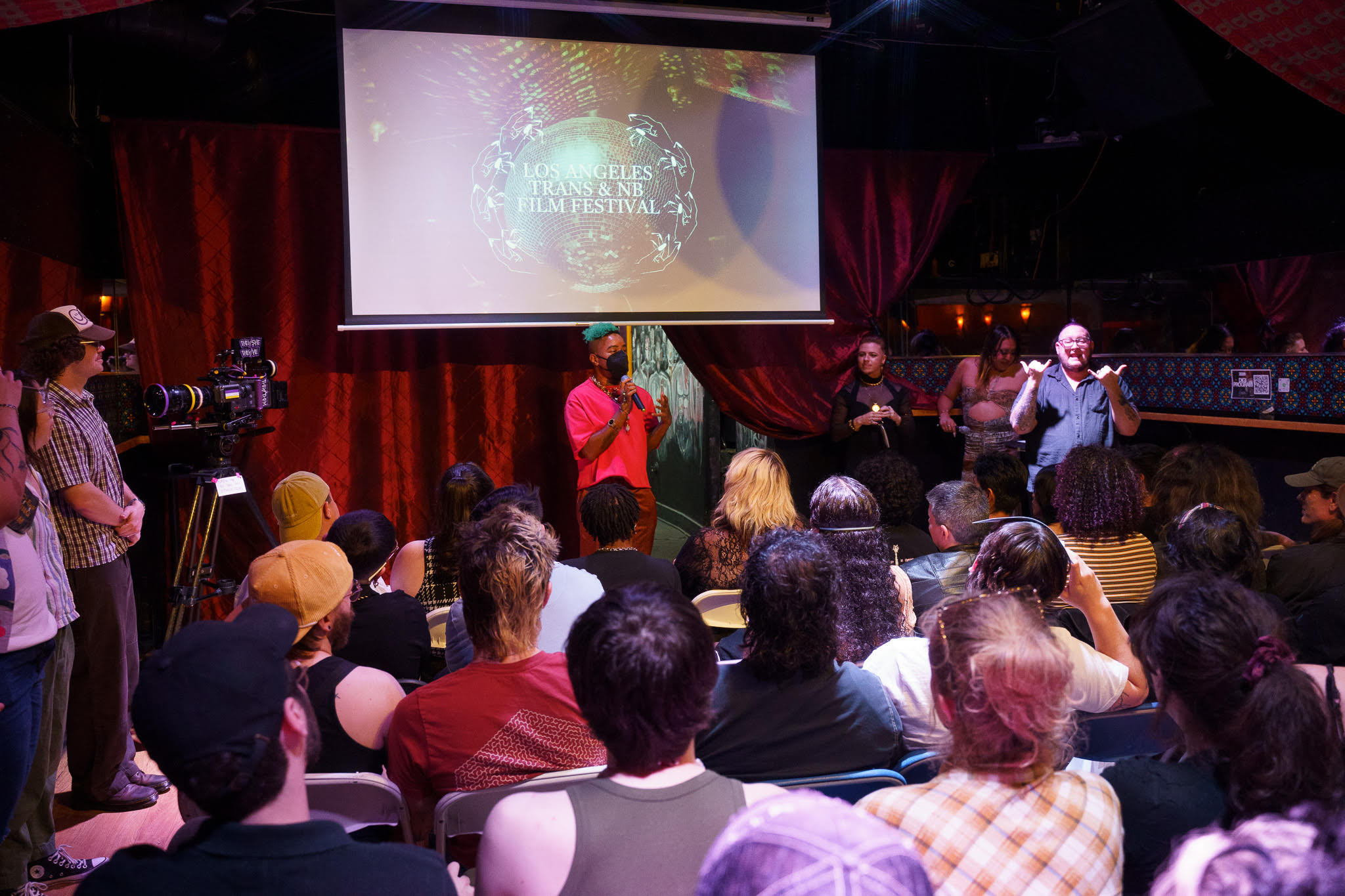
We have all been impacted by at least one film. Whether it’s a hilarious comedy, a jaw-dropping horror, or a plot so sorrowful that just the thought of it brings viewers to tears, movies have long offered LGBTQ+ audiences the truths they’re too often denied in reality. They also have the potential to shape these folks’ lives on a macro scale; studies show a direct correlation between positive representation of queerness in film and wider acceptance of these communities in the real world. During a time when LGBTQ+ people are being constantly attacked, it’s more important than ever for these folks to find movies that uplift and respect them. But with the endless stream of hateful rhetoric groups are currently facing, it can be hard to find films like these — luckily for us all, the Los Angeles Trans and NB Film Festival exists today.
The only LA-based festival focused on spotlighting movies made by transgender and nonbinary creatives, in only two years, this festival has quickly become one of this city’s most celebrated nights of film. It’s become a true haven for queer creators and fans alike, and none of it would be possible without the festival’s host and director, Joey Haley.
A filmmaker himself, Haley knows how difficult it is to get your average movie made and distributed — and how exponentially harder it is to do that while being openly queer. During his conversation with the LA Blade, he spoke of his many years trying to ‘make it’ in Los Angeles and how vital it was to find other queer creatives, saying, “It’s like building any type of network that supports you, it takes a lot of time and a lot of trust.” It’s a network of other directors that, in 2025, decided that even if studios were denying their movies distribution, that didn’t mean these projects didn’t deserve to be seen. Joey spearheaded a ‘movie night’ made up of all of their films, with his search for a small venue to host the event eventually growing into the established festival he now hosts today. He recalled the moment of stepping back and looking at all his work, at the hundreds of people now clamoring to attend a night originally made just for his friends, and thinking, “[Well], I guess I’m running a trans film festival!”
“The LA Trans and Non-Binary Film Festival is a community-oriented space [meant] to uplift not just trans filmmakers around the world, but trans organizations, vendors, and people,” he explained. “[It’s a] very specific platform to showcase these alternative, embodied perspectives.” Spawning from the accidental event in 2025, 2026 saw the festival grow in both size and impact; it completely packed the well-known Silverlake club Akbar and sold out of tickets within days of release.
In just two years, the event has already inspired so many, which is even more impressive when supporters learn that it was conceived during this presidential administration’s first round of anti-trans attacks.
Haley remembered the visceral bigotry that this festival was born around, detailing, “It was [when] the first anti-trans scapegoating articles were coming out, and so I was reaching out to sponsors, being like, ‘Oh, you’re absolutely going to retract as soon as you get this email’…it was getting to a point where I was like, no, [maybe this can’t happen].” But he luckily found support from businesses all around the city, with these organizations putting their faith in this completely new project because they recognized how badly LGBTQ+ Angelinos needed it. “I ended up talking to one of the Akbar owners, and I was like, ‘Yeah, this is something I’m trying to work on. We don’t have a theater. There’s no budget, there’s no backing, there’s no sponsors, there’s no brands, there’s no audience other than me and my friends.’ And [despite that] he was like, ‘No, come do this event here. We need this.’”
It was this support that made Joey realize that the festival couldn’t just be one night of movie watching. It had to contribute to this industry as a whole, helping to make sure that outside of this event, trans and nonbinary filmmakers could still access the resources they need to have their stories told. “The doors are way faster to close in your face,” he recalled, discussing the struggles of being a queer filmmaker today. “Being able to find a contact in this industry, [to get] streaming and distribution across the board…it’s the hardest thing!”
Knowing these struggles firsthand and armed with the popularity of its first showing, this year’s LA Trans and NB Film Festival saw Joey partner with Red Coral Universe and Big Lettuce Entertainment to not only amplify the event but give its participants vital connections within this industry. These are important relationships for any burgeoning filmmaker to have, and Joey hopes that they will make other distributors realize just how valuable queer content is today. On granting this group of creatives these tools, Haley said, “Being able to provide that for filmmakers…it’s truly incredible.”
Joey was tight-lipped about what he had planned for the 2027 version of the LA Trans and NB Film Festival — but he did promise that there would absolutely be one for future audiences to look forward to. “Definitely we’ll be bringing in a lot more like community organizations and trans vendors…and a couple [of other big] things I’m going to keep under wraps,” the director teased. “There are a lot of things I’m excited for, and [all I’ll say is]: we’re going to need a bigger boat.”
Throughout the discussion, Haley spoke with the same jubilant enthusiasm that has come to define the LA Trans and NB Film Festival. While too often the only trans stories we see are either deceitful hate speech or discrimination-driven anguish, the director’s festival reminds attendees that this community is still finding success. They are still creating and finding joy with one another, and making it clear that no amount of flawed hatred should ever stop a queer artist from putting out their narrative for others to see.
The festival balances this triumph with the vital work of making the film industry more accessible to trans and nonbinary filmmakers worldwide. Its mission is encapsulated best in Joey’s own words, as the filmmaker reminded supporters of why the LA Trans and NB Film Festival needs to exist: “This festival…it makes it easier to find trans folks in film. It’s a tiny community — but oh, is it mighty.”
Commentary
LA Metro should approve the San Vicente-Fairfax route for the K Line Northern Extension without delay
As Angelenos wait, Metro is gearing up for another monumental decision about one of its next major projects coming to Los Angeles—one that may be even more transformative for how our region moves.
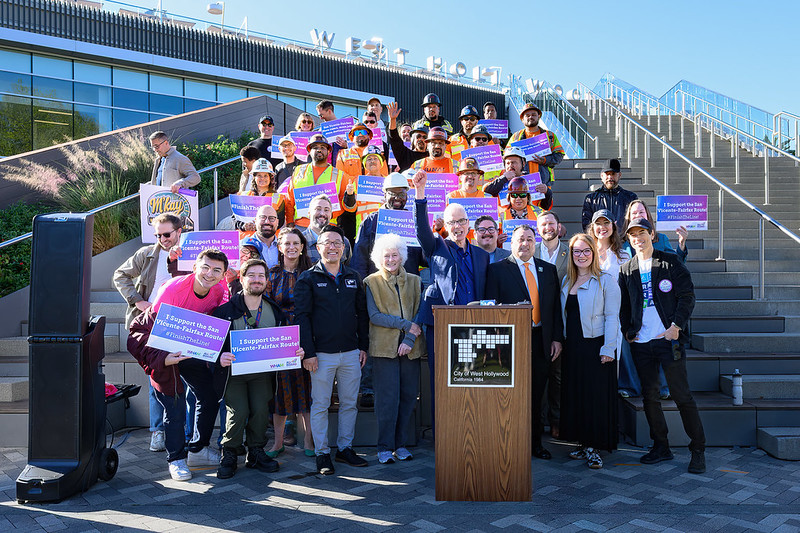
By: West Hollywood Mayor John Heilman, West Hollywood Councilmember Chelsea Lee Byers, and Congresswoman Laura Friedman
After a decade of construction, Metro’s D Line extension along Wilshire is about to open. Fast, efficient, and affordable rail service will whisk Angelenos to iconic destinations, making life better not just for visitors, but also for residents and commuters, too. As Angelenos wait, Metro is gearing up for another monumental decision about one of its next major projects coming to Los Angeles—one that may be even more transformative for how our region moves.
Metro is deciding between three routes for the K Line Northern Extension. The best option is the San Vicente-Fairfax route, which will connect the Hollywood Bowl, West Hollywood, Cedars-Sinai Medical Center, the Beverly Center, the Grove and Farmer’s Market, the Crenshaw District, Leimert Park, the South Bay, and LAX all on one line. This new north-south line also links up to the D and E Lines, allowing for easy transfers to UCLA, Santa Monica, Koreatown, and Downtown LA. All of this will take cars off the road, easing congestion and freeing up parking spaces.
Metro’s Board of Directors will vote on this project on March 18th and 26th, and their own staff recommends the San Vicente-Fairfax route because it will move the most riders and connect them to all the major destinations and job centers in this area. Metro should approve it without delay. On the day it opens, this new extension will be one of the busiest rail lines in the country, because it will serve so many people who currently don’t have access to reliable rapid transit.
Imagine getting to the Grove, WeHo’s Rainbow District, and the Hollywood Bowl—without all the traffic. The San Vicente-Fairfax route is the one choice to serve all these destinations. These are places that residents, commuters, and visitors all want to reach. Every time Metro has asked the public, the answer has been clear: overwhelming support to build this route and build it faster. The most recent comment period was no different.
The West Hollywood City Council has already proposed an approach to deliver part of the investment needed to make this plan a reality without raising anyone’s taxes. City analysis showed that an Enhanced Infrastructure Financing District (EIFD) in West Hollywood could generate more than $2 billion over 75 years, with the potential for a similar contribution from the County. This would be an unprecedented commitment from a local City, and a first in Southern California for a project of this size, but it also only makes sense if most WeHo residents are directly served by the San Vicente-Fairfax route. It is this unprecedented local investment that makes a project like the K Line Northern Extension possible in our lifetimes.
We’re excited about what this project will mean for our neighborhoods, but it will be transformational for much more than just West Hollywood and residents living directly along the new line. It will give more people more affordable options to move around the region and open up new mobility options for seniors and students.
Like the Regional Connector-linked Metro lines downtown, the K Line Northern Extension will provide a new north-south connection linking Metro’s east-west B, C, D, and E Lines with the new K line and the upcoming LAX people mover. Today, Metro’s rail network radiates out from downtown, forcing riders to travel out of their way to transfer or skip transit altogether. The K Line Northern Extension will change that by connecting Metro’s east-west rail lines and allowing riders to travel across the city without detouring through downtown. Traveling from the South Bay or the Valley to work in Century City or Westwood? This line will make high-quality transit a viable option for countless trips like those, ensuring that transit is more realistic for everyone.
The San Vicente-Fairfax route will link communities from Torrance to North Hollywood to job centers like Cedars-Sinai and Hollywood and put over 125,000 jobs within a short walk of new stations. Access like that is unprecedented—and it shows in Metro’s ridership estimates: The San Vicente Fairfax route will likely serve 100,000 daily trips—making it one of the busiest light rail lines in the entire country. This route will also better connect communities along the existing K Line to jobs and services they already rely on, as well as more of the opportunities and resources that might currently be out of reach.
With more riders, more jobs, more destinations, more opportunity, and a clearer path towards implementation, the choice is simple: the San Vicente-Fairfax route for Metro’s K Line Northern Extension. Let’s finish the line!

Latin queer and trans history along the U.S.- Mexico border on display at UC Riverside event

A Parvesh perspective: Actor Parvesh Cheena talks his roles in ‘Wives’

Allegations involving Ric Grenell raise questions about pay-for-play in White House

New Zealand High Court strikes down puberty blocker ban

Actor Kal Penn on the real lesson of ‘Trust Me, I’m a Doctor’

Making waves in the desert: How Brad Fuhr and KGAY keep the Coachella Valley connected

Meet the voice of Palm Springs: an interview with KGAY 103.1’s John Taylor

From ‘La Bola Negra’ to ‘Coward,’ here are this award season’s must-watch queer films

Fortune Feimster has always taken representation through comedy seriously

EXCLUSIVE: Democrats seek answers on EEOC settlement affecting LGBTQ+ workers
-
 Palm Springs4 days ago
Making waves in the desert: How Brad Fuhr and KGAY keep the Coachella Valley connected
-
 Palm Springs3 days ago
Meet the voice of Palm Springs: an interview with KGAY 103.1’s John Taylor
-
 Movies4 days ago
From ‘La Bola Negra’ to ‘Coward,’ here are this award season’s must-watch queer films
-
 a&e features3 days ago
Fortune Feimster has always taken representation through comedy seriously
-
 Federal Government2 days ago
EXCLUSIVE: Democrats seek answers on EEOC settlement affecting LGBTQ+ workers
-
 Brazil2 days ago
VIDEO: Interview with executive director of VoteLGBT (Institute for Full Citizenship) in Brazil
-
 Palm Springs3 days ago
A quick visitor’s guide to Palm Springs before the winter
-

 Television3 days ago
New ‘Carrie’ attempts to reinvent a classic for new generation
-
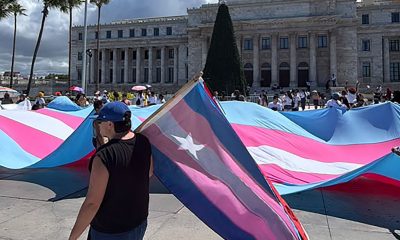
 Puerto Rico3 days ago
Annual National Trans Visibility March takes place in Puerto Rico
-
 AIDS and HIV3 days ago
AIDS Walk Los Angeles takes to the streets in West Hollywood while raising money for HIV/AIDS Care