
Health
LGBTQ Los Angeles prepares for potential mpox outbreak
Deadlier strain in Africa sparks global concerns, local health officials remain vigilant

The World Health Organization Wednesday again declared mpox, formerly known as monkeypox, a global health emergency.
In summer 2022, mpox reached the U.S. Thousands of recorded cases left people quarantined with minimal guidance as the medical world worked to understand the virus.
It was the first health crisis litmus test following the COVID-19 pandemic.
A swift vaccination effort mitigated public concern, though it was a slow start. Vaccine was quickly and sufficiently made available on the East Coast though far less vaccine was made available on the West Coast.
The vaccination efforts were successful, however, and the number of cases dropped quickly.
Now, a deadlier mpox strain, known as Clade 1b, has emerged.
It has in recent weeks killed more than 500 people in Africa. And with an alarming 4 percent mortality rate that means infection rates are extreme.
On Aug. 15, Sweden reported the first case outside of Africa.
Though the Los Angeles County Department of Public Health says the new mpox strain has not yet been detected in the U.S, there is grave concern.
“Cases of the more virulent clade I mpox cases have not been detected in Los Angeles County or anywhere in the United States,” it said in a statement. “However, if health care providers encounter a patient with mpox-like symptoms who has recently traveled to affected countries in Africa, they should contact Public Health to arrange for clade-specific testing at the public health lab. This will help us identify any clade I cases in Los Angeles County if they arise.”
The less severe Clade II mpox was responsible for the 2022 outbreak. According to the Los Angeles County Department of Public Health, mpox is “spread through close contact with body fluids, sores, shared bedding or clothing or respiratory droplets.” Sexual contact is an effective means of transmission. The most noticeable symptoms are pimples or blisters on the face, body and genitals. This is often accompanied by fever, chills, headaches, muscle aches or swelling of the lymph nodes.
“With the recent declaration of mpox as a global health emergency and reports of the more virulent Clade subtype outside Africa, there is a clear risk of such outbreaks reaching the U.S.,” said Jake Collins, a physician assistant who works with a large LGBTQ clinic in Los Angeles. “This is concerning especially since this Clade 1b subtype is linked to more severe illness and higher mortality. Among my patients, I’ve seen an increase in mpox cases this year compared to last, even among vaccinated individuals, but these cases have been mostly mild with no deaths or hospitalizations.”
One Los Angeles resident, who asked to remain anonymous, described his 2022 bout with mpox as “one of the most painful experiences” he’d ever had.
“[It] came with so much shame and guilt – self-hatred,” he said. “So, it definitely does scare me, but it also makes me more aware that last round I didn’t think it could happen to me, so I wasn’t smart or careful [or] educated on it because it was so new. I think there is always fear for something like this to hit our community again, because in general we can be risky in sexual practices, so I think we just need to be very cautious as a community and be mindful [in] taking care of our sexual health.”
Since August 2022, the federal Administration for Strategic Preparedness and Response has procured and distributed more than 1 million vials of the JYNNEOS vaccine across the U.S., agency spokesperson Spencer Pretecrum told reporters in an email.
But 75 percent of at-risk populations in the U.S. not fully vaccinated against mpox, according to a Centers for Disease Control and Prevention report.
People who got their first shot of the mpox vaccine but who did not return for their second dose, are at risk.
Full protection requires both doses.
During the height of the 2022 mpox epidemic, health professionals advised caution in sexual practices. A two-dose vaccine, however, was quickly distributed, and fears died down.
“I received two vaccines when mpox was initially spreading back in 2022, so I’m hoping guidance comes out soon as to the effectiveness of these vaccines against the current strain,” West Hollywood resident Gabe Perkins said. “I am worried but not enough to change my behaviors or social activities unless I hear otherwise. The queer community came together to get vaccines quickly and early which I think helped prevent the previous outbreak from becoming too widespread, so I’m hoping it remains that way.”
While the LGBTQ community was the epicenter of the previous outbreak, so far the strain in Africa, which appears to be more contagious, has not concentrated on a single demographic. It affects both adults and children. How it spreads beyond the cases so far identified is yet to be seen.
“Any outbreak freaks me out,” West Hollywood nightlife employee Eric Evans said. He added that while he thinks the fear will rise “when it gets closer to home,” he doubts it will reach the level of panic in 2022. “Kind of like when COVID rose again recently, but the reaction from people wasn’t as extreme.”
Evans also said he believed the LGBTQ community, in general, vaccinates at a higher rate than the general population.
“Hearing about the mpox outbreak in Africa and now Europe makes me even more grateful for the response of the LGBTQ community — specifically gay men — who when faced with this disease here in the U.S. immediately got vaccinated, modified our sexual behaviors for a few weeks and essentially nipped it in the bud,” nonprofit consultant and LGBTQ activist Adam Crowley said. “It’s still a threat to the unvaccinated anywhere, but our community knew how to protect ourselves. Community health is so important, and it’s our responsibility to get vaccinated. We can be a model of how to address a public health issue. I don’t live in fear, but I think it’s important to be aware and to understand how we can prevent outbreaks.”
To protect against mpox, health officials advised limiting physical contact and sexual partners, as well as wearing masks, washing hands and other prevention methods similar to COVID-19. The CDC recommends the JYNNEOS vaccine for at-risk populations.
“Getting the two-dose vaccine series remains the best way to reduce the severity of infections and curb the spread of mpox, even with the Clade 1b subtype,” Collins said. “At this time, a booster isn’t being recommended, but I have been informing my patients to continue checking for updated recommendations from trusted organizations like CDC and WHO.”
“Currently, the existing monkeypox vaccines have shown efficacy against multiple strains of the virus,” said Michael Dube, national medical director of AIDS Health Foundation’s Public Health Division. “At this time, there is no recommendation for re-vaccination for those who have already completed their series. However, we urge anyone who has not been fully vaccinated and is at higher risk to strongly consider doing so, following public health guidelines … As more information becomes available about this strain, we will better understand any new transmission dynamics. For now, general precautions like good hygiene and avoiding close contact with infected individuals remain essential.”
For up-to-date information, visit who.int/health-topics/mpox.


Commentary
LA Metro should approve the San Vicente-Fairfax route for the K Line Northern Extension without delay
As Angelenos wait, Metro is gearing up for another monumental decision about one of its next major projects coming to Los Angeles—one that may be even more transformative for how our region moves.
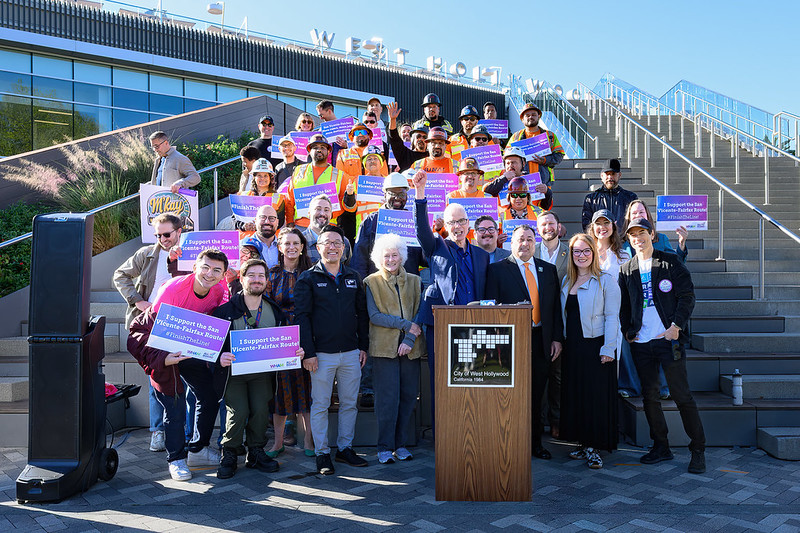
By: West Hollywood Mayor John Heilman, West Hollywood Councilmember Chelsea Lee Byers, and Congresswoman Laura Friedman
After a decade of construction, Metro’s D Line extension along Wilshire is about to open. Fast, efficient, and affordable rail service will whisk Angelenos to iconic destinations, making life better not just for visitors, but also for residents and commuters, too. As Angelenos wait, Metro is gearing up for another monumental decision about one of its next major projects coming to Los Angeles—one that may be even more transformative for how our region moves.
Metro is deciding between three routes for the K Line Northern Extension. The best option is the San Vicente-Fairfax route, which will connect the Hollywood Bowl, West Hollywood, Cedars-Sinai Medical Center, the Beverly Center, the Grove and Farmer’s Market, the Crenshaw District, Leimert Park, the South Bay, and LAX all on one line. This new north-south line also links up to the D and E Lines, allowing for easy transfers to UCLA, Santa Monica, Koreatown, and Downtown LA. All of this will take cars off the road, easing congestion and freeing up parking spaces.
Metro’s Board of Directors will vote on this project on March 18th and 26th, and their own staff recommends the San Vicente-Fairfax route because it will move the most riders and connect them to all the major destinations and job centers in this area. Metro should approve it without delay. On the day it opens, this new extension will be one of the busiest rail lines in the country, because it will serve so many people who currently don’t have access to reliable rapid transit.
Imagine getting to the Grove, WeHo’s Rainbow District, and the Hollywood Bowl—without all the traffic. The San Vicente-Fairfax route is the one choice to serve all these destinations. These are places that residents, commuters, and visitors all want to reach. Every time Metro has asked the public, the answer has been clear: overwhelming support to build this route and build it faster. The most recent comment period was no different.
The West Hollywood City Council has already proposed an approach to deliver part of the investment needed to make this plan a reality without raising anyone’s taxes. City analysis showed that an Enhanced Infrastructure Financing District (EIFD) in West Hollywood could generate more than $2 billion over 75 years, with the potential for a similar contribution from the County. This would be an unprecedented commitment from a local City, and a first in Southern California for a project of this size, but it also only makes sense if most WeHo residents are directly served by the San Vicente-Fairfax route. It is this unprecedented local investment that makes a project like the K Line Northern Extension possible in our lifetimes.
We’re excited about what this project will mean for our neighborhoods, but it will be transformational for much more than just West Hollywood and residents living directly along the new line. It will give more people more affordable options to move around the region and open up new mobility options for seniors and students.
Like the Regional Connector-linked Metro lines downtown, the K Line Northern Extension will provide a new north-south connection linking Metro’s east-west B, C, D, and E Lines with the new K line and the upcoming LAX people mover. Today, Metro’s rail network radiates out from downtown, forcing riders to travel out of their way to transfer or skip transit altogether. The K Line Northern Extension will change that by connecting Metro’s east-west rail lines and allowing riders to travel across the city without detouring through downtown. Traveling from the South Bay or the Valley to work in Century City or Westwood? This line will make high-quality transit a viable option for countless trips like those, ensuring that transit is more realistic for everyone.
The San Vicente-Fairfax route will link communities from Torrance to North Hollywood to job centers like Cedars-Sinai and Hollywood and put over 125,000 jobs within a short walk of new stations. Access like that is unprecedented—and it shows in Metro’s ridership estimates: The San Vicente Fairfax route will likely serve 100,000 daily trips—making it one of the busiest light rail lines in the entire country. This route will also better connect communities along the existing K Line to jobs and services they already rely on, as well as more of the opportunities and resources that might currently be out of reach.
With more riders, more jobs, more destinations, more opportunity, and a clearer path towards implementation, the choice is simple: the San Vicente-Fairfax route for Metro’s K Line Northern Extension. Let’s finish the line!
COMMENTARY
Who gets to vote? The SAVE Act and what it means for LGBTQ Americans
The real issue with the SAVE Act is not simply what the law says. It is how it will function in practice — and who will bear the burden.
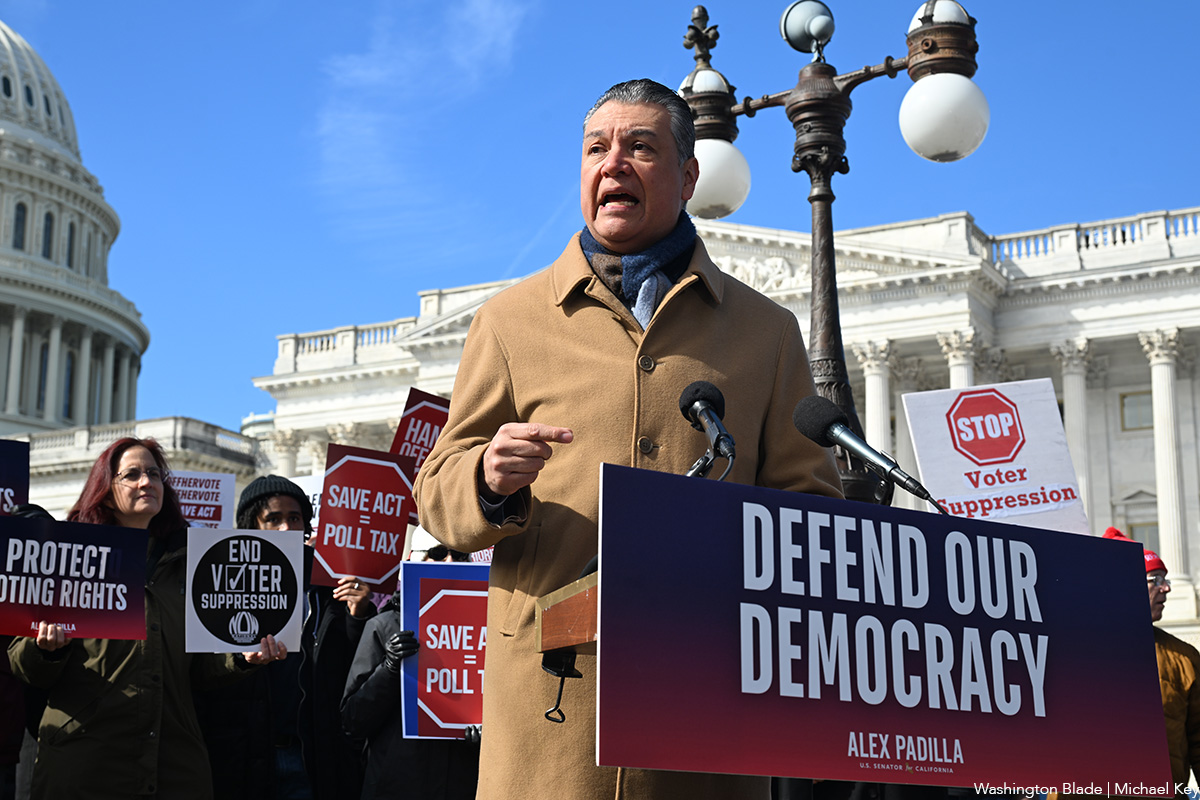
At its core, democracy depends on a simple premise: if you are eligible to vote, you should be able to do so. The right to vote in the United States has never been just about who is legally eligible. It has always been about who can realistically access the ballot.
The proposed Safeguard American Voter Eligibility (SAVE) Act puts that premise at risk — and for LGBTQ Americans, particularly transgender and nonbinary individuals, the threat is direct and concrete.
The SAVE Act would require Americans to provide documentary proof of U.S. citizenship — such as a passport or birth certificate — when registering to vote in federal elections. Supporters argue this is a necessary step to protect election integrity.
But the real issue is not simply what the law says. It is how it will function in practice — and who will bear the burden.
Under current federal law, eligible voters can register by attesting to their citizenship under penalty of perjury. The SAVE Act would replace that system with a documentation requirement.
That may sound like a technical adjustment. It is not.
It represents a fundamental shift — from a system where the government verifies eligibility, to one where individuals must produce specific documents to prove it. And not all voters are equally positioned to meet that requirement.
For transgender Americans, identity documents are often not consistent across systems. A person may have legally changed their name but not updated all records. Their birth certificate may not reflect their current identity. Their passport, driver’s license, and Social Security record may not fully align.
Updating these documents is not always straightforward. In some states, it requires navigating complex legal processes. In others, it may be restricted altogether.
None of this changes a person’s eligibility to vote. But under the SAVE Act, it could determine whether they are able to register — and whether their registration is accepted. This is not a hypothetical concern. It reflects the everyday reality of navigating identity systems that were not designed with LGBTQ people in mind.
Supporters of the SAVE Act emphasize that the law applies equally to everyone. Formally, that is true. But equal rules do not guarantee equal access.
For voters with straightforward documentation, the requirement may be manageable. For those whose records are inconsistent or difficult to obtain, it creates additional hurdles — delays, rejections, and uncertainty. That is how neutral policy produces unequal outcomes. And in the context of voting, those outcomes matter.
The SAVE Act may not result in voters being turned away in large numbers on Election Day. That is not how these systems typically work. The risk is more subtle — and more systemic. Registration applications get delayed or rejected. Confusion about what documentation is required discourages people from trying. Voters give up rather than navigate a bureaucratic maze. For LGBTQ Americans, a system where friction can become total exclusion.
For LGBTQ Americans already navigating barriers in healthcare, housing, employment, and basic legal recognition, this is one more arena where that friction compounds. Over time, that erosion of participation weakens the democratic process itself.
Election security is a legitimate concern. Policy should be grounded in evidence, not self-serving conspiracy theories. Federal law already prohibits noncitizens from voting, and there is no credible evidence of widespread noncitizen voting in federal elections. Existing safeguards — verification systems, database checks, and legal penalties — already address that risk.
The SAVE Act proposes a sweeping change to address a problem without evidence. In doing so, it risks disenfranchising large numbers of LGBTQ Americans, as well as women, Black, Indigenous, and people of color, low-income Americans, and young voters — the communities that have historically faced the greatest barriers at the ballot box.
For LGBTQ Americans, the SAVE Act is not just about election policy. It is about whether systems account for lived reality — or ignore it. The right to vote should not depend on whether your paperwork is perfectly aligned across multiple bureaucracies. It should depend on whether you are eligible.
That is the standard a functioning democracy should meet. And then it should make the act of voting as easy as possible for all eligible Americans.
The SAVE Act does none of that. Because the question it answers is not how we make elections more secure. It is, in practice, how we keep Americans from voting.
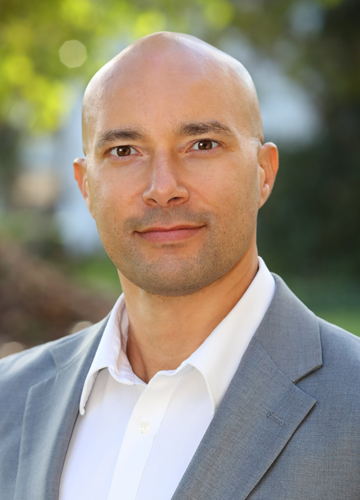
Edward Campbell is a Los Angeles-based attorney, LGBTQ advocate, and civil rights activist with extensive experience in affordable housing finance and preservation. He has worked on housing policy at the federal, state, and local levels and is a longtime advocate for racial equity and democratic institutions
Commentary
The harms of our leaders do not erase our movements and voices
The Blade sits with the exposed harms of late labor champion Cesar Chavez, and how collective reckoning cannot sacrifice victim testimonies.
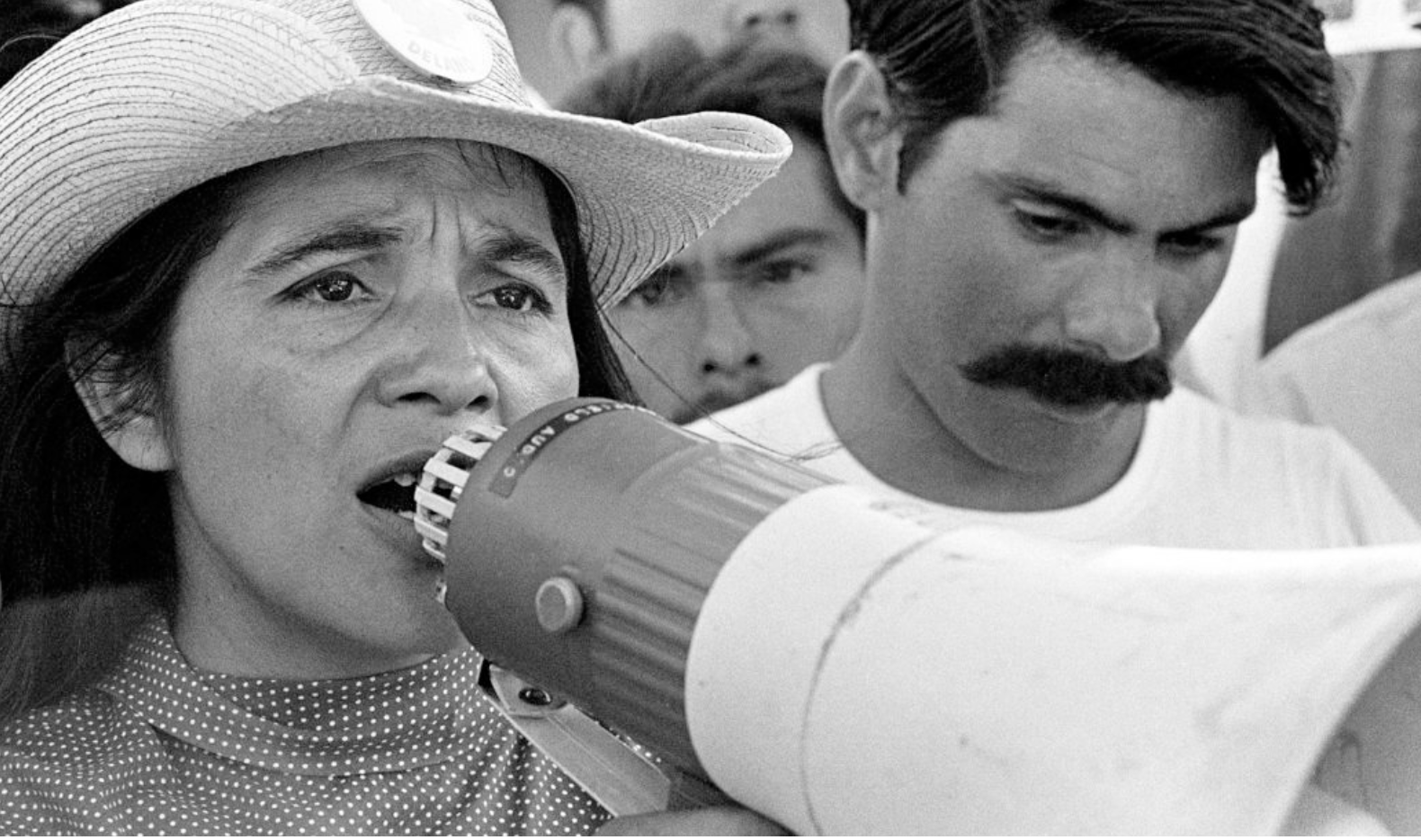
Last Wednesday, a major New York Times investigation exposed damning sexual abuse allegations against the late Cesar Chavez: an emblem of Chicano farm workers’ liberation in the 1960s. For decades, Chavez’s activism sang loudly from textbook pages, from large-scale murals and street signs across the country. Every March, his legacy was doubly hailed. He was woven into the American fabric of resistance, one championed by Black and brown workers and advocates.
Then, the testimonies arrived. Two major witnesses, Ana Murguia and Debra Rojas, explained to the Times that they were 13 and 12, respectively, when Chavez began to sexually abuse them from around 1972 to 1977. “I wanted to die,” Murguia told the Times, who confessed that she had tried to end her life multiple times as a result of her trauma from the continued abuse.
The Times investigation also included the shocking account of beloved labor leader, Dolores Huerta, who co-founded the National Farm Workers Association alongside Chavez and fellow activist Gilder Padilla. The piece touched upon two instances of coercive manipulation and rape, both of which led to pregnancies Huerta bore in secret — children that she later arranged to be raised by other families.
“I had experienced abuse and sexual violence before, and I convinced myself these were incidents that I had to endure alone and in secret,” part of Huerta’s own statement reads, which provides more context about her testimony to the Times. Huerta turns 96 on April 10th and held onto these secrets for 60 years. “I believed that exposing the truth would have hurt the farmworker movement I have spent my entire life fighting for,” she wrote.
Online, people denounced Chavez and demanded that his name and face be removed from statues and signs that decorated their local parks and libraries. These were painful, pervasive reminders of his now-soiled imprint. Local leaders promised their swift action in following through on this outcry, with Los Angeles Mayor Karen Bass signing a countywide proclamation that renamed Chavez’s national holiday “Farmworkers Day.”
Queer advocates have issued statements in solidarity with Huerta and the other survivors. In a social media post published by the San Diego LGBT Community Center, staff wrote about the ripples of fear and shame that take hold of marginalized community members when they try to reclaim their power — especially when the people they are holding accountable for abuse and harm come from notable changemakers in their own communities.
These calls for accountability do not diminish the efforts of the broader movements. “They remind us that movements are never built by one person alone,” the community center’s statement reads. “The farmworkers labor movement was built by countless individuals, many of them women and undocumented immigrants, whose organizing and resilience form its true foundation…Holding leaders accountable is how we protect every worker and every vulnerable person who the movement was always meant to serve.”
Harm can be perpetuated systemically, by forces like imperialism, as well as by the powerful within our own fights for freedom and empowerment. What holds true is that our movements do not rest solely on the efforts of one glorified leader — they are made possible by the persistent efforts of many. The farmworkers movement was brought to fruition and amplified by women like Huerta, as well as the efforts of Filipino organizers like Larry Itliong, who championed the defining Delano grape strike that uplifted and encouraged fellow farmworkers like Chavez to join in on.
Behind one venerated voice are the understated stories of several others. And what rests at this core is what the Center calls an “impossible” choice survivors of abuse face when “justice and community survival collide.” Movements for liberation are always at threat of destabilization by greater government forces: any crack in the foundation can be utilized as a dismissal of the movement as a whole. But against these narratives of fear and disempowerment, it becomes clearer and clearer that we can hold multiple truths at once.
We must believe victims who speak of their abuse: the reckoning we collectively take part in afterward cannot come at their expense or ability to heal and survive. What comes from this investigation and greater social reckoning is not the destruction of the labor movement, but of the carefully conceived and heroic portrait we’ve come to paint of Chavez’s visage within. His contributions to workers’ and farmers’ rights are irrefutable — and so is his harm.
If we discourage survivors from telling their truths in order to make precious our most visible voices, we defeat one of the pillars of why we fight at all: to strengthen our individual and combined ability to shape autonomous and shared futures that guarantee equity, freedom, and justice for every person.
Kristie Song is a California Local News Fellow placed with the Los Angeles Blade. The California Local News Fellowship is a state-funded initiative to support and strengthen local news reporting. Learn more about it at fellowships.journalism.berkeley.edu/cafellows.
Health
Families file lawsuit against Rady Children’s Health, citing discrimination against trans youth
Four minors and their families are fighting on behalf of thousands at risk of losing gender-affirming care at Rady Children’s Health.
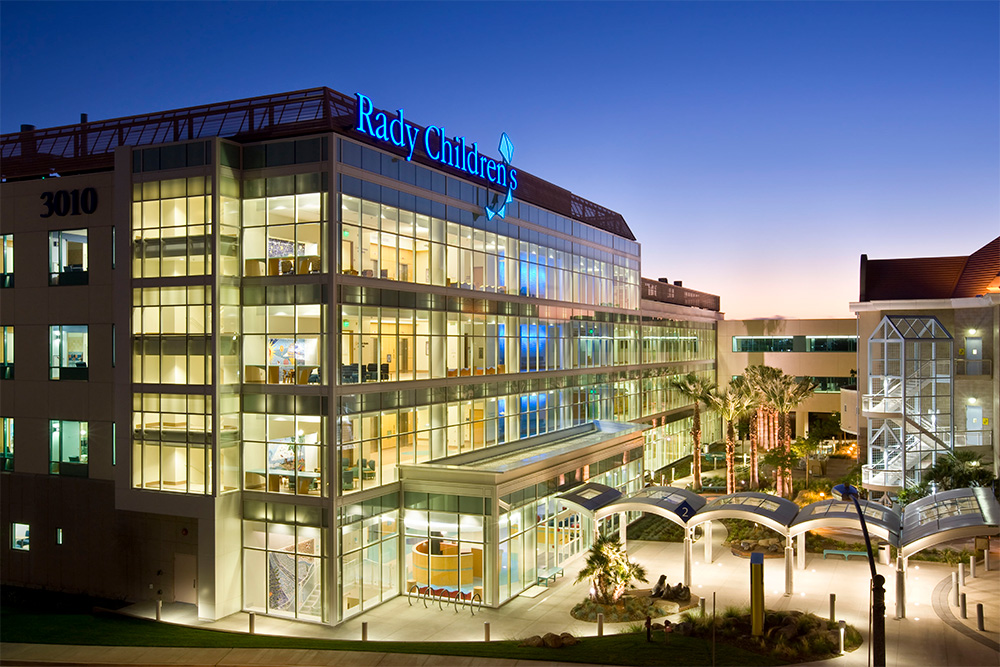
For nearly 15 years, Rady Children’s Health, a major pediatric healthcare system that includes the Children’s Hospital of Orange County (CHOC) and Rady Children’s Hospital San Diego, has been a primary provider of gender-affirming care for transgender youth under 19 years old in the Orange and San Diego Counties.
On Jan. 20, patients received this message in their online portals: “Due to recent federal actions, we will no longer be able to provide gender-affirming medications and procedures.” Gender-affirming care and services were to be halted shortly after, on Feb. 6. This would strand nearly 1,900 transgender youth receiving essential and necessary care at the two hospitals.
10 days later, California Attorney General Rob Bonta, who in 2024 approved the merger of Rady Children’s Hospital and CHOC on the condition that they would continue to provide specialty services like gender-affirming care, sued Rady Children’s Health. In the press release, Bonta stated that, under the conditions of the merger, Rady was required to obtain his approval before reducing or eliminating gender affirming care.
They had violated the terms of their merger and thus, the law. A temporary restraining order was granted, and Rady Children’s Health was ordered to continue providing gender-affirming care to their trans and gender expansive youth patients. However, the Blade learned yesterday that the order is only in effect until April 27.
Families are fighting back to make sure the care their trans and gender expansive children receive will continue, and for good. On Thursday morning, Western Center on Law & Poverty, the Impact Fund, and the National Center for LGBTQ Rights (NCLR) announced that they had filed a new lawsuit on behalf of four families against Rady Children’s Health — explicitly citing the health system’s unlawful discrimination against transgender people.
“By singling out transgender patients,” the complaint reads, “and terminating their medically necessary care without consent or concern for their physical and mental health, Defendants have discriminated against Plaintiffs on the basis of their sex, gender identity, and disability in violation of the Unruh Civil Rights Act and Government Code section 11135.”
The four plaintiffs represented in the case are all minors who have been receiving gender-affirming care at Rady Children’s Hospital. They are seeking, beyond damages paid for civil code violations and losses suffered as a result of “unlawful conduct,” that Rady Children’s Health be prohibited from eliminating or reducing its gender-affirming care services. It would be required to continue providing the same level of care that it had prior to Jan. 20 to the plaintiffs and its nearly 2,000 other trans and gender expansive youth patients.
One of the plaintiffs, named “Plaintiff B.B.” in the suit, is a minor who began receiving gender-affirming care at Rady Children’s Hospital in 2025. They had been diagnosed with gender dysphoria and were experiencing serious mental health issues. The current potential, impending interruption to their care has been distressing, and their family members have faced difficulties in getting them an appointment — even after Bonta’s temporary restraining order was set into place.
This makes the timing of the lawsuit even more urgent and pressing. A harrowing picture is being painted: what is the alternative to care, and what does the unfolding of this reality present?
In a 2024 study conducted by The Trevor Project, a prominent LGBTQ+ suicide prevention organization, researchers found that the rise in anti-transgender laws from 2018 to 2022 could be correlated to a 72% increase in suicide attempts among trans and gender expansive youth.
As trans and gender expansive youth are continually refused the care that allows them to inhabit bodies that affirm their identities, what happens in the interim? How long will they have to wait? How do they cope with increased violence and rhetoric that targets and undermines their existence?
Rady Children’s Health’s initial decision to cut gender-affirming care came in the midst of a domino-like movement of hospitals caving under federal pressure nationwide. Last December, the U.S. Department of Health and Human Services (HHS) announced a series of proposed actions that included withholding federal funding from hospitals that provided gender-affirming care to youth patients.
This was to, as the HHS press release stated, “carry out” President Trump’s executive order to end “sex-rejecting procedures on children.”
The directive has had wide-sweeping effects. Last August, NBC News reported that at least 21 hospitals had ended or restricted gender-affirming care for trans and gender expansive youth. That number has almost doubled since, advocates estimate. LGBTQ+ organizations are calling attention to this worrying development, mobilizing in ways to defend the most vulnerable in their communities: transgender and gender expansive folks.
“At this particular moment — with federal executive orders attacking transgender people across nearly every domain of life, with hundreds of anti-transgender state bills, and with a Supreme Court that has already signaled hostility — the cumulative weight on transgender young people and their families is severe,” Shannon Minter, NCLR’s legal director, wrote to the Blade. “Calling out discrimination is not just legally important; it is a form of bearing witness to what this community is experiencing and affirming that it is wrong.”
Now that the lawsuit has been filed, Rady Children’s Hospital will respond to the complaint, and the case will move through the court system, NCLR senior staff attorney Amy Whelan explained to the Blade. If successful, the lawsuit could become a paradigm for change for states with anti-discrimination laws similar to California’s. The victory would also invoke an important sentiment: people will resist, again and again, the erasure of trans people.
“In a moment when transgender young people are being told in every direction that they can be excluded and ignored, a lawsuit that invokes California’s anti-discrimination framework sends an unambiguous message,” Minter wrote. “The law sees you, protects you, and stands with you.”
Kristie Song is a California Local News Fellow placed with the Los Angeles Blade. The California Local News Fellowship is a state-funded initiative to support and strengthen local news reporting. Learn more about it at fellowships.journalism.berkeley.edu/cafellows.
LGBTQ+ Youth Mental Health
LGBTQ+ youth mental health bill makes progress despite anti-trans advocacy
At Tuesday’s state health committee hearing, opposers tried — and failed — to stop AB 1540 from moving forward.
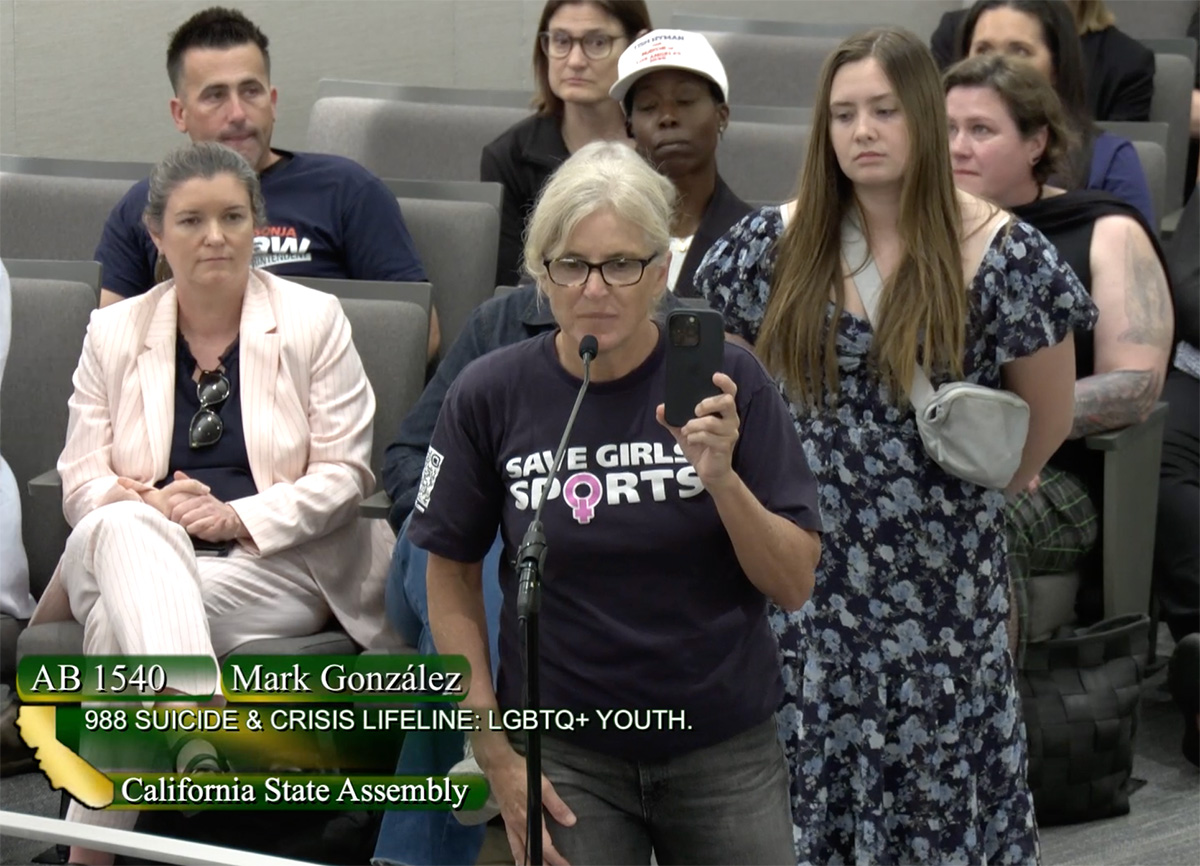
On Mar. 17, the California State Assembly Health Committee’s hearing began with contentious discussion around AB 1540, a bill that calls for the restoration of the national 988 Suicide and Crisis Lifeline’s “Press 3” option for young LGBTQ+ people.
The federal administration shut down “Press 3” last July. For nearly three years, LGBTQ+ suicide prevention organizations like The Trevor Project were contracted to field calls from “Press 3” and provide culturally-responsive counseling and crisis services. In its stint, “Press 3” received over 1.5 million contacts from young queer folks: a population that faces disproportionately higher rates of suicidality, depression, and other mental health issues.
Since December, Los Angeles-based Assemblymember Mark González has been leading efforts to revitalize “Press 3” statewide and strengthen pathways and protections that support queer youth against growing tides of anti-LGBTQ+ hate and violence.
Announced in January, González’s AB 1540 would require California’s Office of Emergency Services (OES) and its Health and Human Services Agency to, respectively, restore “Press 3” phone and chat services and provide adequate funding for suicide prevention contractors and statewide 988 call centers to maintain “Press 3.”
The bill is now making its way through various state committees for a chance to reach the governor’s desk. But the path ahead has already been met with ample resistance.
Who is opposing AB 1540, and what are they arguing?
While 18 community members representing organizations like Equality California, Planned Parenthood Affiliates of California, California Commission on the Status of Women and Girls, Sacramento LGBT Community Center, San Francisco AIDS Foundation, and the TransLatin@ Coalition voiced their support for AB 1540, there was just as much fire and pushback from the other side.
Jonni Skinner and Erin Friday presented testimonies in opposition to the bill. Each, respectively, spoke on behalf of Californians United for Sex-Based Evidence in Policy and Law (CAUSE) and Our Duty USA. Both organizations have stated that they are against “gender ideology” and advocate for trans-exclusionary beliefs.
Skinner recounted his experience growing up as a young gay boy, and claimed that he was put on puberty blockers and estrogen as a teenager. Struggling with bullying, isolation, and self-hate, he explained that he called The Trevor Project in a state of crisis and at the encouragement of “LGBT influencers online.” Skinner said that, initially, The Trevor Project’s staff were “very nice [and] very affirming.” But as he discussed the details of his medical care and depression, he claims the staff hung up on him.
“AB 1540 would route kids like me, kids in crisis, directly to organizations like the Trevor Project, an organization that believes children can be born wrong: an organization that doesn’t want to hear about the harms of so-called gender affirming care,” said Skinner. “I know what it is to be a gay kid reaching out in the dark for someone to help…That kid deserves to be told the truth, not an ideology. Don’t send the next kid to the people who abandoned me.”
Friday also targeted The Trevor Project in her statement. “[It] is not a suicide prevention organization. Its main focus is to target minors, promote secret social transitions, and provide chat rooms open to users, ages 13 to 24, with no age verification.” She claimed at the hearing that she was able to join a “polyamory club” and an “age regression club,” and witnessed adults pretending to be children to exploit the youth. “This bill is another vehicle for the author’s favorite fetish nonprofit. If the goal is truly suicide prevention, then 998 suffices and does so without incorporating sexual or fetish content,” she concluded.
23 community members echoed this opposition, and represented a number of anti-trans groups like LGB Alliance, LGB Courage Coalition, California Family Council, The Women’s Liberation Front, Women Are Real, and Democrats For An Informed Approach to Gender.
During this portion of the hearing, people who are not main witnesses are only allowed to state their stance on the bill. Still, an attendee got one line out: “I strongly urge you not to support this bill, because a girl can’t become a boy and a boy can’t become a girl.”
It’s “simple”: AB 1540 is about LGBTQ+ youth mental health, period.
Anti-trans advocates were quick to muddle the hearing’s focus — a bill meant to restore access to mental health services for queer youth — into a debate over trans people and their legitimacy. González redirected the conversation to its core, addressing the issue at hand. “Let’s be clear what this bill is actually about. Very simple: a phone call. That’s it,” González said.
“A young person alone in their room, staring at the ceiling at two in the morning, wondering if anybody in the world understands them enough to keep them alive just for one more day or one more hour. When they finally find the courage to reach out, we should make sure that someone on the other end of that line knows how to help them, has the training and the skill set to keep that individual alive. That’s the bill — not ideology, not politics — just the basic responsibility to keep our children alive.”
Assemblymember LaShae Sharp-Collins spoke in support of the bill, stating that AB 1540 ensures “equity, justice, and accountability” for young queer people. “No bureaucratic hesitation, no debate over resources, and no outdated system can take precedence over the lives of all of our young people,” Sharp-Collins said. “This bill is a statement that California refuses to leave its most vulnerable youth behind — that the LGBTQ+ youth truly matter and the state will take decisive action to actually protect them.”
After two rounds of voting, Assemblymembers Mia Bonta, Dawn Addis, Cecilia M. Aguiar-Curry, Patrick J. Ahrens, Jessica M. Caloza, Juan Carrillo, Dr. Darshana R. Patel, Chris Rogers, Pilar Schiavo, LaShae Sharp-Collins and Catherine Stefani voted in support of González. Assemblymember Phillip Chen abstained from voting, and members Natasha Johnson, Joe Patterson, and Kate Sanchez voted in opposition.
The bill has passed the health committee and will enter its next hearing at the Committee on Communications and Conveyance in April.
On Tuesday’s tumultuous process, González wrote to the Blade that it was a reminder of the “hate and vitriol” LGBTQ+ people, especially queer youth, continue to face. “Behind all the noise are real kids; kids who are listening, who are hurting, and who are asking a simple question: Do I belong? AB 1540 answers the call. We see you. We hear you. You are valid. And yes, you are loved…There are still voices out there that would rather deny these young people support than acknowledge their humanity…Together, we’re going to keep fighting for equity, for dignity, and for every young person who deserves a chance to be here tomorrow.”
Kristie Song is a California Local News Fellow placed with the Los Angeles Blade. The California Local News Fellowship is a state-funded initiative to support and strengthen local news reporting. Learn more about it at fellowships.journalism.berkeley.edu/cafellows.
Commentary
Where are our leaders? Remembering David Mixner
Karen Ocamb’s latest commentary raises a question everyone’s thinking but no one’s asking out loud: WHERE are our leaders?
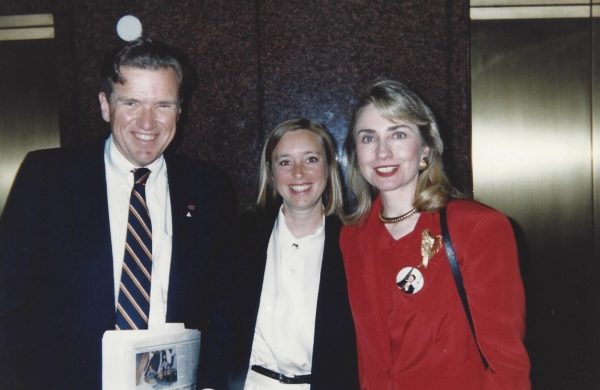
I can see it with my mind’s eye. March 11. David Mixner clicks on the New York Times site and sees the headline: “U.S. at Fault in Strike on School in Iran, Preliminary Inquiry Says.” America initiated an unexplained, unprovoked, undeclared war on Iran that killed at least 168 children and 14 teachers with a deadly Tomahawk missile on Feb. 28, the first day of what has become an expanded holy war in the Middle East. Terrorist attacks on the homeland are an increasing possibility.
Mixner – a patriot and a Gandhi-influenced pacifist – is furious to the point of tears. He calls some friends, fraught with the need to “do something.” His friends agree – then one asks: “But what should we do? It’s terrible – but it’s not gay.”
“But it’s human!” Mixner roars back. “When did we lose our humanity?”
This didn’t happen, of course. March 11 is the second anniversary of David Mixner’s death, and I’m so infuriated by the deafening lack of leadership, I imagine Mixner pulling a loud alarm to roust LGBTQ+ people into action.
Where are our leaders? We’ve long known that LGBTQ+ people are at the top of the Project 2025 hit list for erasure. “The path back to national unity is to decisively win the culture wars,” Republican candidate Donald Trump told the Heritage Foundation.
We know that White Supremacists and Christian nationalists hate us. “SPLC reports that in 2024, the number of anti-LGBTQ+ groups increased by about 13% from the previous year. These hate groups “opportunistically exploit division to advance a political agenda and, in this case, it’s still informed by that false notion of LGBTQ people being dangerous to society,” says R. G. Craven, senior research analyst with the Southern Poverty Law Center.
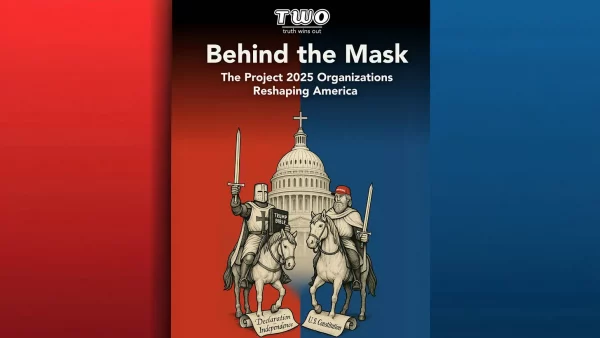
Wayne Besen, Founder and Executive Director of Truth Wins Out, produced Behind the Mask: The Project 2025 Organizations Reshaping America, Volume I, to expose the 114 organizations listed on Project 2025’s Advisory Board. These people are dedicated to creating an authoritarian theocracy that will outlast Trump and the Iran War.
Why isn’t the Human Rights Campaign campaigning against this every day? LGBTQ+ people are hungry to “do something.” Why aren’t HRC, the Task Force, Equality Federation, and state organizations holding emergency meetings with community input to figure something out? During the AIDS crisis, Torie Osborn organized Leadership Summits that brought leaders together to strategize – many of whom also attended grassroots Creating Change events – until the Israeli-Palestinian conflict scared people away.
Where’s GLAAD? If they’re exposing misinformation, I’m not aware of it. They could revive local chapters, deputize LGBTQ+ people to be media watchdogs and do Zoom forums. They could create a free central online LGBTQ+ newsroom like Towleroad with links to reliable national, state and local news, podcasts, and Substacks so we can find out what the hell is going on.
There are 13 out members of the 119th Congress, which I learned through Google. Californians know Rep. Robert Garcia because he rose through local politics. Now he’s on TV pressing for accountability in the Trump-Jeffrey Epstein scandal. In his opposition to DHS and ICE, he sometimes mentions that he’s a gay immigrant. Rep. Angie Craig was out and pissed off after an ICE agent killed lesbian mother Renee Good, 37, who was protesting ICE’s deportation of her Minneapolis neighbors. And trans Rep. Sarah McBride has been gracefully representing her constituents and the hopes of trans people everywhere while fending off attacks from within the Chamber.
Why doesn’t the Congressional Equality Caucus hold regular Zoom town halls to give us updates, answer questions, and test out messaging with We the LGBTQ+ People?
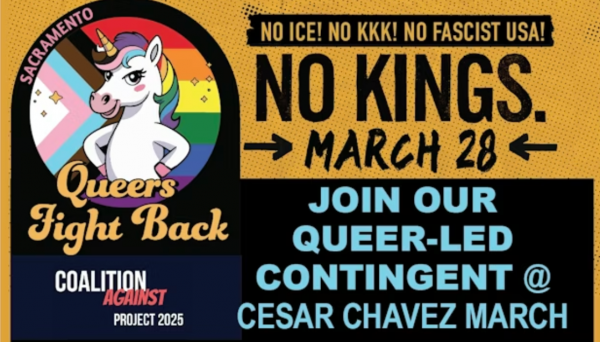
And while we’re proudly protesting Trump, ICE, and the Iran War through Indivisible and No Kings (here’s the link to the No Kings march in LA on March 28) – remember our state and local primary races are heating up – so watch for folks who ARE showing up as leaders.
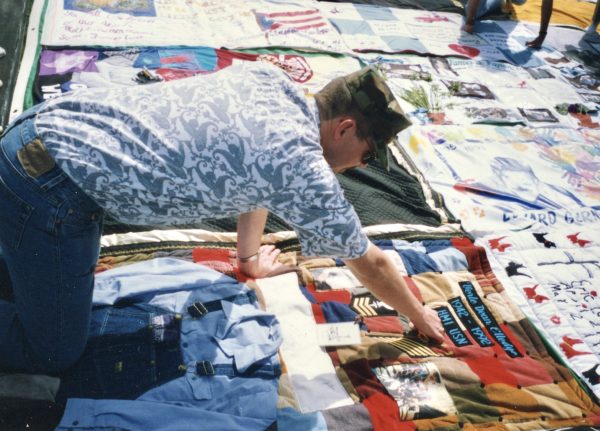
Such as Cleve Jones, founder of the Names Project AIDS Memorial Quilt, who advocated online for gay ICE deportation victim, Venezuelan asylum seeker Andry Romero. Now Cleve is working on an important new endeavor, reasserting that “healthcare is a right” as a midterm election issue. (See his Facebook page for more.)
That’s the thing about leadership. You don’t have to be rich or famous or a graduate from some elite school. Get inspired by something that grabs your heart and compels you to “do something.” Then share with others, organize, test things out to see what works and what doesn’t – and don’t give up. Remember your purpose.
And remember that leaders emerged in the post-World War II era when homosexuality was considered sick, perverted, and illegal.
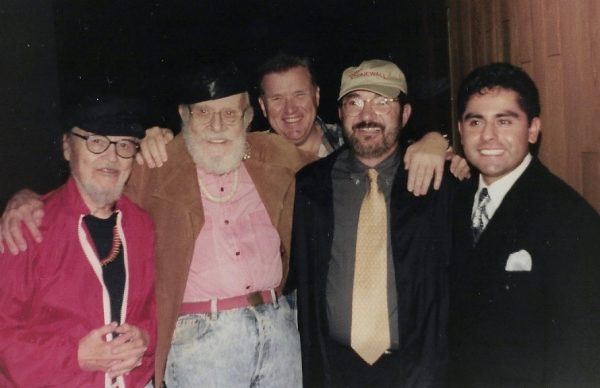
Harry Hay imagined the Mattachine Society in 1948 and founded it in 1950 during the Lavender Scare period when Sen. Joseph McCarthy orchestrated witch hunts leading the House Un-American Activities Committee.
“It was obvious McCarthy was setting up the pattern for a new scapegoat, and it was going to be us – gays. We had to organize, we had to move, we had to get started,” Harry Hay told Jonathan Ned Katz for his book Gay American History: Lesbians and Gay Men in the U.S.A. (1976).
It was a crime to be gay in America, but Harry and others acted anyway. Where are our leaders now?
We don’t need perfect people. David Mixner was far from perfect. But he learned to draw from personal experience to tell and connect our real-life stories to social, political, and economic issues.
Mixner grew up shamefully closeted in rural Salem County, southern New Jersey – known as “little Dixie,” Mixner wrote in his memoir Stranger Among Friends. Segregation “was a given,” and when a “queer” died by suicide, his parents felt sorry for the teen’s parents, who had to bear that shame.
When Mixner heard Rev. Martin Luther King Jr’s call to fight injustice and watched on TV as firehoses and dogs were turned on young people in Birmingham, Alabama, the high school junior declared he was going to join their fight for freedom. Mixner and his father fought; his father hit him repeatedly and told him to “get that bullshit out of your head.”
But Mixner was a believer. When King “railed against injustice, I knew he understood the pain of being different. By working for the liberation of blacks, I intuitively knew I was fighting for my own liberation.”
Mixner had another epiphany in 1966. After reading a news story about Tempe’s garbage workers striking for the right to form a union, the buzzcut Arizona college student joined the picket line. Hector, a 50-year-old worker with a worn face and Zapata-like mustache, asked him, “Why are you here?” Mixner said he wanted to show support.
“What do you know about us? About my life – what it is like to live as we do, about fears for my family,” Hector said.
Hector’s story about his life stunned Mixner, who promised to help. It became “the first organizing project I would be responsible for from start to finish.”
The on-campus rally was small until several dozen menacing police showed up. Suddenly, students poured out of class to join the protest. Bullhorn in hand, Mixner dropped his notes and spoke from the heart about the poverty, fear, and injustice Hector and his hungry children faced every day.
“Bolstered by the crowd, I felt of value and needed,” Mixner wrote in his memoir. “The students discovered there was a whole world they had never even noticed before, and the workers found out that others cared about their plight.” Eventually, the workers got their union.
Mixner went on to become a leader in the anti-Vietnam War movement (where he met Bill Clinton), a respected political strategist, and a leader in the LGBTQ+ and AIDS movements.
He learned that political and electoral representation matters. After running LA Mayor Tom Bradley’s successful 1977 reelection campaign, Mixner came out and joined the new Municipal Elections Committee of Los Angeles (MECLA), a political action committee of political professionals and checkbook activists focused on gay rights (1977-1991).
Political relationships opened up in 1975 when the Consenting Adults Act decriminalized homosexuality in California. The bill was championed by San Francisco allies George Moscone and Willie Brown and signed into law by Gov. Jerry Brown, who was close with mega MECLA fundraiser Sheldon Adelson.
MECLA secured passage LA’s city ordinance banning discrimination based on sexual orientation. But the Religious Right turned political in 1977 and in 1978, Mixner led the fight – with San Francisco stars like Harvey Milk – to defeat Proposition 6, California’s version of anti-gay Anita Bryant’s “Save Our Children” campaign.
In 1986, extremist Lyndon LaRouche put Proposition 64 on the ballot – an Initiative that would have quarantined people with AIDS in concentration camps. Everyone did what they could to fight back. On the Eastside, AIDS activists Michael Weinstein and Chris Brownly worked with nurses and doctors to form the Stop AIDS Quarantine Committee – producing rallies and PSAs.
On the Westside, Mixner served as campaign consultant for a statewide coalition fiercely paddling upstream. The lesson from Prop 6 was the need for both volunteer-driven, grassroots mobilization and paid professional campaigners. So “Stop LaRouche” worked alongside “No on 64.”
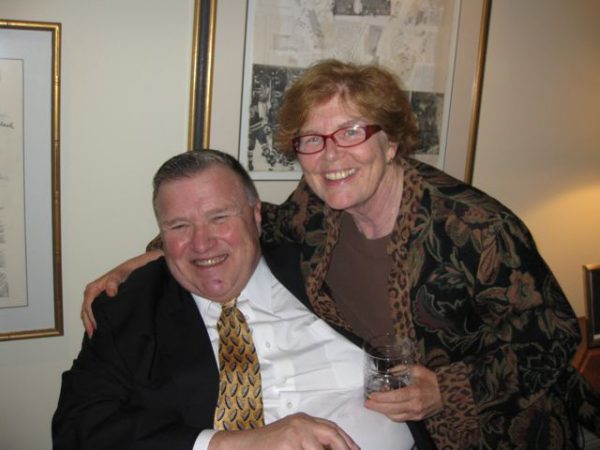
“We were tightly coordinated,” says “No on 64” SoCal Campaign Coordinator Torie Osborn. “ AIDS phobia was so widespread that at the start of the campaign, no mainstream liberal groups – except the docs and nurses — were with us, except the Southern California ACLU chapter, and a few random Hollywood straight types, like Paul Newman. But we mobilized like crazy.”
In four months, their bi-partisan campaign raised over $2 million – 90% from the LGBTQ+ community. They defeated Prop 64 with 71% of the vote.
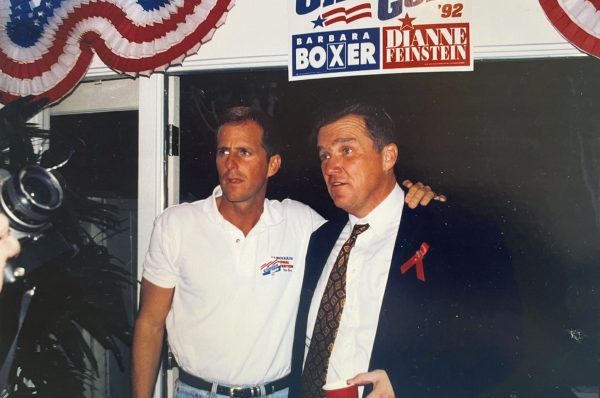
In the early 1990s, MECLA morphed into ANGLE (Access Now for Gay & Lesbian Equality) to focus on LGBTQ+ representation, as well as political action. In 1991, Mixner, Scott Hitt and others founded the Gay & Lesbian Victory Fund to support vetted out LGBTQ+ candidates. After Clinton won in 1992, Mixner launched the Political Appointments Program to nominate LGBTQ candidates for the Clinton administration. Clinton also lifted the ban on security clearances for gay officials.
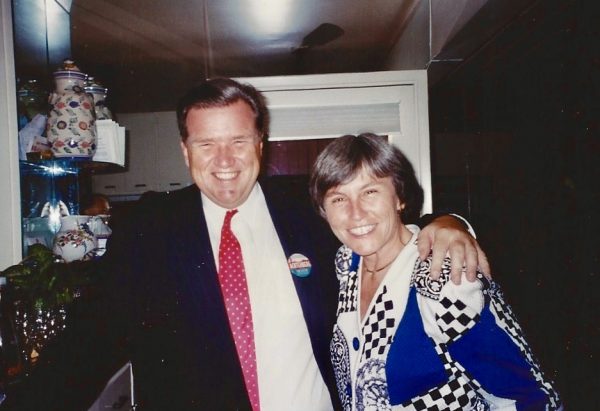
“David Mixner loved the promise of our country, and he pushed those in power to do what is morally right. Thanks in large part to my friend David’s political prowess and strategic focus I became our nation’s first open LGBTQ+ presidential appointee to win confirmation by the U.S. Senate,” says Roberta Achtenberg, former Assistant Secretary of Housing and Urban Development (1993-1995).
Mixner encountered resistance when he advocated for lifting the ban on gays and lesbians serving in the military. But remember the humanity: the military is the nation’s largest employer, offering poor, rural gays an opportunity to get out of abuse and poverty.
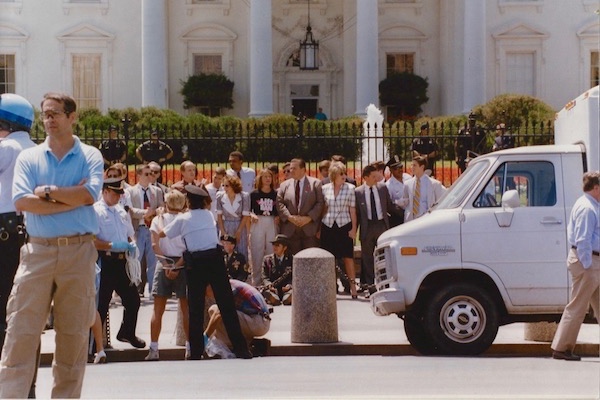
Mixner felt deeply betrayed when Clinton issued the discriminatory Don’t Ask, Don’t Tell (DADT) policy. After all, Mixner and ANGLE raised $3.1 million gay dollars and supported Clinton when scandals left the presidential candidate on political life support. When Mixner protested DADT at the White House gate, Democrats made his clients disappear.
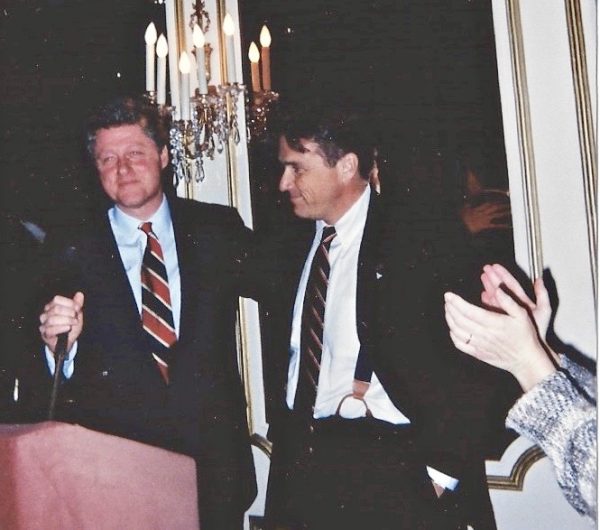
But Mixner kept networking – giving attorney and Vietnam-era Marine Capt. Tom Carpenter’s name to attorney and Servicemembers Legal Defense Network co-director Michelle Benecke. Carpenter got so involved that he became SLDN’s board chair.
David Mixner lost to Covid issues two years ago. But his legacy of leadership lives on.
“David was our national leader,” says Torie Osborn. “Mixner was a great thinker and orator — our MLK Jr. He cared about women’s and other progressive issues. I always relied on him to connect the dots and to be the ‘big picture’ guy…and inevitably he was!”
Mixner’s friend and mentee Jeremy Bernard, who became the first gay Social Secretary in President Obama’s White House, says Mixner was shocked by “how so many in his own community reacted with anger or as if he was being disloyal” over DADT. “
“This was something he really had not foreseen,” says Jeremy. David’s substantial consulting business was virtually ruined due to the White House reaction, specifically Rahm Emmanuel. One client told Mixner that they simply could not ignore Rahm’s wrath.
Mixner would struggle for years to make a living. Stranger Among Friends helped pay the bills. “But he never regretted speaking out, and time would prove him to be on the right side of history. However, few of those that loudly and harshly criticized him would ever admit that or give him any credit.”
“In 1989, David was the moving force to create ANGLE,” says attorney, politico, and longtime gay/AIDS activist John Duran. “We had suffered the deaths of tens of thousands of our people to AIDS under Reagan/Bush neglect….We elected a new President. An AIDS commission was created, chaired by ANGLE member the late Dr. Scott Hitt, and protease inhibitors were on the market three years later. Yes, ACT UP protests in the streets were essential. But there was monumental work being done with money, politics, and power.”
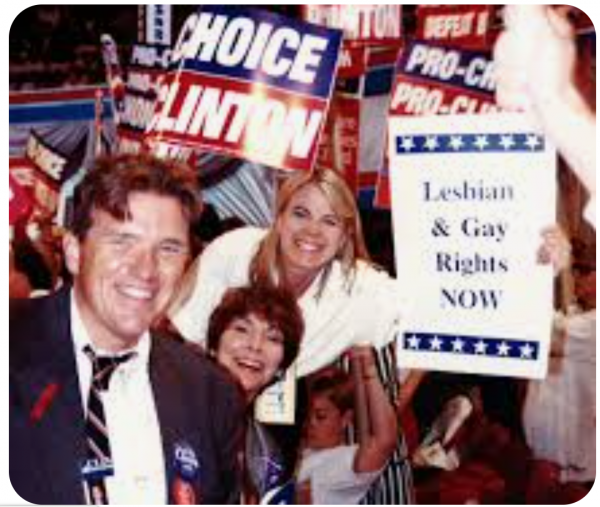
Like Mixner, attorney and lesbian pioneer Diane Abbitt sees the big picture about Iran. “Mixner would have been outraged at the senseless ‘collateral damage,’ the death of Americans, the death of innocent Iranian children, parents, families, the destruction of a way of life for so many, and the loss of innocence of everyone, both directly and indirectly, effected by this senseless war,” Abbitt says. “How much must people suffer? What has happened to our humanity? Where is the moral compass that should guide all people, but especially the president of the United States?”
Devastation is upon us. Where are our leaders?
Steven Guy is working with the David Mixner Memorial Fund and the Ali Forney Center to produce a film about Mixner’s activism. To support the film, reach out to Deb Brown at the Ali Forney Center at [email protected].
Karen Ocamb’s commentary is cross-posted from her Substack LGBTQ+ Freedom Fighters.
Commentary
Have we forgotten how to read?
Has the queer community misplaced the power of sassy banter?
There’s a reading challenge on every episode of RuPaul’s Drag Race, and it’s not surprising that their quality is dropping faster than Tyra Banks’s hot ice cream sales. In part, the way we look at reading has changed. It’s become conflated with many of the roast challenges by people who don’t know the difference. It seems like many queer people think a wig or a feminine affectation gives you a visa to say shitty things. Have we lost the art of reading?
The playful, sometimes shady teasing between queer people has always existed. The term reading was popularized by the documentary Paris Is Burning. But like with many things that have gone through the RuPaul’s Drag Race industrial complex, some things can get lost in translation. It seems like there’s a generation that doesn’t know the difference between reading, bullying, shitty comments, shade, and roasting.
We were introduced to the concept of reading when famous queer icon and mummy enthusiast, Dorian Corey, said in the aforementioned documentary, “You get in a smart crack, and everyone laughs and kikis because you found a flaw and exaggerated it, then you’ve got a good read going.” This is in part because, at that time, generationally, queer people had to learn to use their words defensively.
Speaking for myself, I honed my verbal skills on the playground. Amid the litany of faggot and AIDS jokes, I had to find a way to defend myself. I had to shift the focus from myself back on my would-be attackers. This is the common story for queer people of a certain age. We had no other recourse than to use humor to deflect tension, avoid violence, and assert authority.
Corey goes on to point out, “If I’m a black queen, and you’re a black queen, we can’t call each other black queens… That’s not a read, that is just a fact. So we talk about your ridiculous shape, your saggy face, your tacky clothes.” Now this is where things get a bit dicey. For a while, reading became a love language. It became common practice to tease other gay men as a form of love language.
Throughout queer media, from The Boys in the Band to Noah’s Arc to Queer as Folk, humor is a tool to avoid uncomfortable conversations. The general mentality was that if you have sore or tender spots, they make you vulnerable, and by teasing you, it helps make you stronger. This is thanks to a generation that brought us, “I’ll give you something to cry about.”
A lot has changed since then. I remember my friends who were 10 years older than me loved making shady jokes, and me never liking it. Knowing what it was like to be bullied, I just didn’t enjoy that in my free time. In a post-cancel culture world, we are a lot more mindful of our words.
And yet, there is a case where reading is necessary. As men in a patriarchy where emotions are not able to be freely expressed, let alone talked about, we can’t always handle open discussion.
Reading allows us to say the quiet part out loud. Does your friend have a drug problem, a shitty attitude, or a stank face? Are they a mooch, or do they date the wrong guys? Subtle jokes let us graze these deeper issues with a bit of humor and use the subtle art of teasing to let this person know that something is a problem.
Part of where it falls flat is that the reads must be funny. With a successful read, the subject of the read gets the subtext because everyone is laughing. What got lost in translation, likely to an audience who may not have faced the same bullying or verbal self-defense, is the idea that reading means saying mean-spirited, shitty things.
If something is just mean and hurtful with no ounce of humor, truth, or good intention, it’s not a read, it’s a shitty comment. People also confuse reading with roasting. Roasting has its own formula and history. In a roast, someone submits themselves to be mocked, often for charity or a special occasion. You say something so offensive and outlandish to show love for the person you’re roasting. You don’t just make offensive roasting jokes on strangers without consent. That’s just bullying.
The craftsmanship of reading is finding the line. The art form is in softening the delivery. It’s about packaging the message in a way that deflects the intensity but lets the message land. It’s about being a bit subversive, sarcastic, irreverent, but playful, to talk about the things no one is talking about.
Reading for filth is when you essentially read someone like a book and tell them something that’s so obvious they’re a bit silly for not getting it. Living in a country where the average citizen has a 5th-grade reading level, we are so emotionally overwhelmed on any given day and can barely hold attention, let alone entertain a joke. We need reading now more than ever.
As queer folks, we have a unique vantage point as outsiders to realize, intuit, and notice things other people do not. Using some humor and wordplay to let us all laugh at it. Finding levity ensures that the person you’re reading gets to learn and grow rather than feel like shit about something they can’t control. Reading may be fundamental, but skill and reverence are fundamental to reading.
Christian Cintron is a jack-of-all-trades and master of fun. He’s a writer, comedian, actor, and spiritualist. He created Stand Up 4 Your Power, a program that teaches self-empowerment through stand-up comedy.
Commentary
Why Trump’s ‘Call to Duty’ Christian crusade against Iran matters in California’s gubernatorial race
Will Democrats throw LGBTQ+ voters under the bus?

Welcome to the jungle! California’s electoral system puts the top two winning candidates in the nonpartisan June 2 primary into an expensive slugfest to replace termed-out Democratic Governor Gavin Newsom in November. As of the March 6 filing deadline, at least 10 candidates will be on the ballot, with the New York Times on March 8 posting ten political polls from Dec. 2025 to Feb. 20 showing two well-funded MAGA Republicans topping the large swath of vote-splitting Democrats.
“Yes, Republicans have a chance in California governor’s race,” reads a Los Angeles Times headline.
But with a constant barrage of news, distractions from the Trump-Epstein files scandal, and politicking with Prop 50 redistricting forcing local Republicans like anti-LGBTQ+ Rep. Darrell Issa to not seek reelection, many overwhelmed prospective voters rely on the myth that California is a deeply blue Democratic state forever.
But that depends on turnout. During the horrific second wave of AIDS from 1990-1998, California was politically dominated by the elitist rich and Bible-thumping, knuckle-dragging, radically anti-gay religious right Christians – the heirs of whom now hustle to bless Donald Trump whenever they are summoned.

Today, LGBTQ+ Californians face a heartbreakingly huge problem. While grateful for past support from the Democratic gubernatorial candidates, this is a new amoral era of Trumpism with a Project 2025 administration of white supremacists and Christian nationalists determined to kill the Civil Rights Act and Voting Rights Act and all things LGBTQ+. And Republicans have millions to gaslight voters into believing slick campaigns of lies that could result in a run-off between Republicans Steve Hilton, a Fox News contributor, and Riverside County Sheriff Chad Bianco.
Democrats are not handling this well. Congressional Democrats stand up for their history-making trans colleague Rep. Sarah McBride and laud out Rep. Robert Garcia of Long Beach as Ranking Member of the House Oversight Committee and leader on the Epstein investigations.
But more Democrats are listening to messaging from David Axelrod, James Carville, and David Plouffe, “urging Democrats to act a little more like Republicans on so-called ‘identity and cultural issues,’” as a trans journalist wrote in The Advocate last October. While their report “rarely defines which ‘cultural issues’ it means, the few times it does make it clear: queer and transgender people stand to lose the most if this vision of the Democratic Party takes hold.”
So it was uncomfortably noticeable how oddly old-fashioned several candidates seemed at the Equality California and LA LGBT Center Gubernatorial Candidate Forum on March 2. They touted experience that may no longer be applicable to agencies and systems broken by DOGE and Trump’s manic White Christian National administration.
To be sure, these principled candidates have taken heat for us. But so did Gov. Gavin Newsom when he defied the Democratic Party to advocate for marriage equality. Recently, he threw us under the bus.
“From the prism of purely politics, there’s no doubt that the Democratic party needs to be – dare I say – more culturally normal,” Newsom said in response to CNN about what Democrats need to do to win elections.
Let that sink in. “Identity politics” is at the core of every civil rights movement – an understanding that took decades of work for the California Democratic Party to grasp. Identity politics provides a specific context for the inequality and unfairness vulnerable people and communities experience in everyday life.
Affordability? “Food deserts” are found largely in urban neighborhoods, not Beverly Hills. And if you’re a single Black or Brown woman with kids whose queer appearance or DEI-laden application is a barrier to employment and housing – how are you supposed to take care of your family?
“Culturally normal” is code for whatever powerful white, straight men determine it is. Do queer women of color even qualify as “welfare queens?” Check the Williams Institute to see how it’s worse for trans folk.
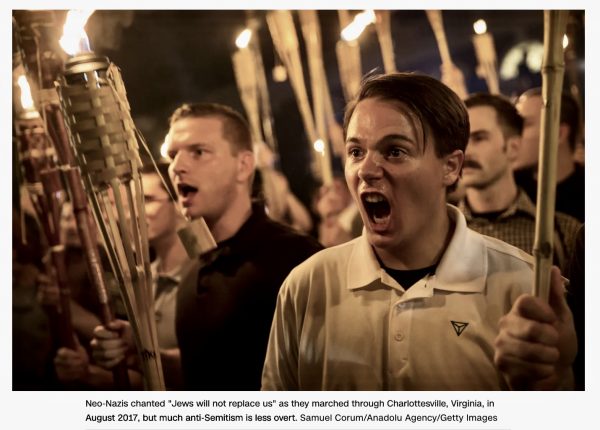
But remember: White Christian nationalists have their “culturally normal” identity politics, too. That’s why angry white men with tiki torches screamed “Jews will not replace us!” at a 2017 rally where a Confederate statue was toppled.
“DEI” was not mentioned once during the forum, though each candidate rebuked Newsom’s comment. (Please watch the complete KNBC4 video of the forum for views and nuances.) Former California State Controller Betty Yee suggested they were looking for an excuse to explain why Kamala Harris lost the Nov. 2024 election. The LGBTQ community was thrown under the bus because “we weren’t speaking to the issues that everyday people are experiencing.”

And here’s the problem. Many political Democrats still see intersectional LGBTQ+ people as an issue – but we’re everyday people, too. Ask the wife, friends, and family of Minnesota lesbian mom of three, Renee Good, 37, a US citizen murdered by ICE while protesting Trump’s mass immigration deportation policy. Shortly after her killing, DHS Sec. Kristi Noem called her a “domestic terrorist” – a lie for which she still has not apologized to Good’s family.
To paraphrase abolitionist leader Sojourner Truth: Ain’t we everyday people, too?

California’s LGBTQ+ Gubernatorial Forum with Equality California and Los Angeles LGBT Center / Screenshot from Telemundo
Yee knows. “Our LGBTQ+ community and our transgender siblings are a part of the fabric of California. And I speak from this as a woman of color, as a woman of Chinese American descent, where we have been a target in the past,” Lee said at the forum, adding that “being inclusive and supportive of all of our communities…is the hallmark of California.”
Because LGBTQ+ people are not “culturally normal” enough to be politically useful, we are being erased by the Democrats just as racist candidate Donald Trump promised to do for his Project 2025 backers: “The path back to national unity is to decisively win the culture wars.”
But here’s the rub: Yee ranks between 2%-5% in the polls, with Rep. Eric Swalwell, former Rep. Katie Porter, and progressive billionaire Tom Steyer jockeying for the lead.
Former California Attorney General and US Secretary of Health and Human Services Xavier Becerra, California State Superintendent of Public Instruction Tony Thurmond, and former L.A. mayor and Speaker of the California State Assembly Antonio Villaraigosa make up about 30% of the surveyed voters. At some point, if these lower polling candidates don’t realistically see a path to victory, they need to ask themselves: Ask not what California can do for you – but what you can do for California.
After all, we remember Ralph Nader as a self-obsessed 2000 election spoiler, not as the founder of the nation’s consumer rights movement.
Another problem with candidates seeing LGBTQ+ people as an inconvenient issue and not a constituency is that, other than Eric Swawell, there seemed to be no real understanding of the impact of the Iran War on us as real Californians.
All the candidates were asked a version of this question: Given the number of military bases here in California, active duty, reserves, and National Guard. And LA having the largest population of Iranians outside the country, “this war affects so many people here in California. As governor, would you prioritize speaking out on foreign policy?”
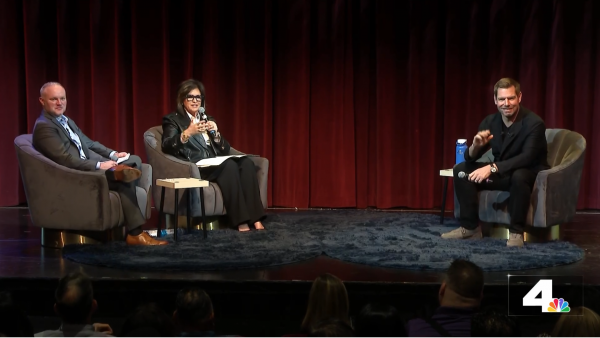
“Well, first, for this room, we have to acknowledge that in Iran, most of us would not be accepted and some of us would not be alive,” Swalwell said. “And the Iranian diaspora is some of the biggest dreamers in California because they dream of a place where women can drive freely and dress the way they want to dress, and everyone can vote openly. So, I understand why they would celebrate a brutal dictator no longer being around. However, I also understand that we have a long history of going into the Middle East without a plan, trying to change a regime and always, always failing and losing a lot of American soldiers along the way.”
“On the Middle East and Iran, [Trump] doesn’t even have a concept of a plan,” Swalwell said.
We’ve had our freedom rattled before. The 53rd Primetime Emmy Awards were cancelled twice after the Sept. 11, 2001, Taliban terrorist attacks on the World Trade Center and the Pentagon. Then, on Nov. 4, 2001, after a reassuring opening by former CBS Evening News anchor Walter Cronkite, out comedienne Ellen DeGeneres reset the nation’s mood.
“I felt it was important for me to be here tonight because our leaders have told us to get back to our jobs,” she said. “I’m in a unique position as host, because think about it. What would bug the Taliban more than seeing a gay woman in a suit surrounded by Jews?”
That may have been one of the last times the nation exploded in unified laughter. After that came numbness, fear, distrust, and “the seeds for today’s thicket of misinformation,” according to a Poynter Institute Politifact report. “The attacks and their aftermath also helped reshape, and in some ways turbocharge, the misinformation and conspiracy theory industry — encouraging people to turn to the internet for answers.”

Some of the resulting distrust was well-deserved: the National Security Agency knew about the 9/11 attacks before they happened. “We know now that our inability to detect and prevent the Sept. 11 attacks was an intelligence failure of unprecedented magnitude,” Sen. Richard Shelby (R-Ala.) said after the 2002 release of a joint House-Senate inquiry report.
Eighteen years later, in 2020, I reported on Trump’s first threat of war after he ordered the drone strike assassination of Iranian bad guy Gen. Qassim Soleimani – something even the Israelis had declined to do, fearing unpredictable and uncontrollable retaliation. Trump stepped back from the brink, but people were unnerved.
“It feels to me that the [Iranian Islamic] mullahs have been strengthened in this situation more than anything, which is not good for the people of Iran who want to be free of this oppressive regime,” said West Hollywood-based Iranian-American lesbian attorney Sepi Shyne.
With nearly 800 US military bases around the world, between 60,000 and 70,000 US troops stationed throughout the Middle East, and their families – including ours – waited for reaction to Soleimani’s assassination.
“Many of our military families are expressing a real sense of tiredness, dread, and sadness over the latest developments in the Middle East,” said Stephen L. Peters II, a Marine veteran and Director of Communications and Marketing for Modern Military Association of America.
Jessica Stern, executive director of OutRight Action International, issued a warning: “In times of war, majorities scapegoat minorities, and the result is increased verbal and physical hatred toward those of us who are LGBTIQ, women, people of color, immigrants, or members of religious or ethnic minorities.”
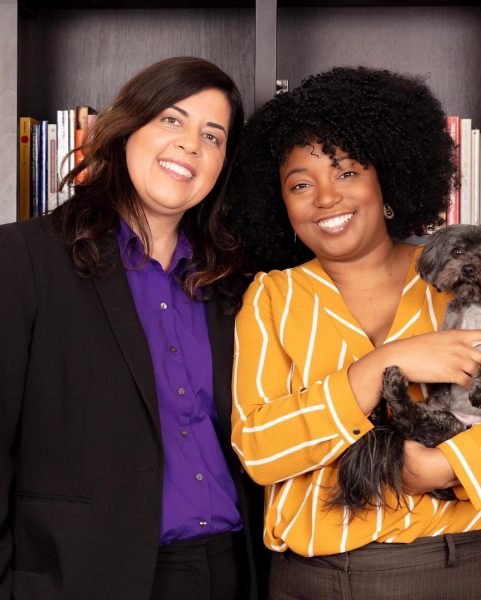
Shyne, who later became the first out Iranian-American Mayor of West Hollywood, also noted that “people now in Iran are becoming united against a common enemy, which is now the Trump administration.”
This Iran War, Operation Epic Fury, started on Feb. 28, 2026, with Israel’s surprise Blue Sparrow ballistic missile attack that killed Ayatollah Khamenei and his top deputies, a blast so significant that debris was found in western Iraq.
The next day, after an Islamic radical shot up an Austin bar, Homeland Security issued a warning: “Although a large-scale physical attack is unlikely, Iran and its proxies probably pose a persistent threat of targeted attacks in the Homeland, and will almost certainly escalate retaliatory actions — or calls to action,” as well as attacking US targets in the Middle East.
The DHS warning put LA city officials on alert, but with “no intelligence” of any terror threat ahead of Sunday’s March 8 event, 27,000 runners shared a historic race as American Nathan Martin edged Kenya’s Michael Kimani Kamau by 00.01 seconds – the closest finish in L.A. Marathon history.
The Marathon was scheduled early to avoid conflict with the Academy Awards on March 15 in Hollywood.
But who’s minding the intelligence? Trump thankfully fired DHS Sec. Kristi Noem, but he wants to replace her with a sycophantic loyalist.
And just days before the launch of the Iran War, FBI Director Kash Patel fired “a dozen agents and staff members from a counterintelligence unit [CI-12] tasked with monitoring threats from Iran,” including “tracking foreign spies operating on US soil,” CNN reported March 3.
On Saturday, March 7, Trump said Iran “will be hit very hard” today, with new areas of the country under consideration for “complete destruction and certain death.” NBC News reported that Trump may put boots on the ground after lawmakers declined to restrict his war powers. And there still appears to be no evacuation plans as the war expands.
Tehran, meanwhile, is looking for new US assets to strike in response, a senior Iranian official told CNN.
Is the Port of Long Beach safe? Is someone checking to see whether the daily $1 billion Iran War price tag is accurate? Is the war really supposed to level out surging gas prices and higher food prices, even with a February jobs report showing 92,000 lost jobs, projecting a recession?

Trump promised to lower costs and avoid war. But power-hungry Trump has demanded an “unconditional surrender” by Iran and told Reuters he must play a role in selecting the country’s new leader, which hasn’t happened.

Meanwhile, Secretary of Defense Pete Hegseth, the former Fox News host who’s now the powerful Christian National in charge of the Pentagon, acts like a horny teenage gamer boasting about his cool “Call of Duty” kills.
“We’re playing for keeps. Our warfighters have maximum authorities granted personally by the president and yours truly,” The New Republic reported. “Our rules of engagement are bold, precise, and designed to unleash American power, not shackle it. This was never meant to be a fair fight, and it is not a fair fight. We are punching them while they’re down, which is exactly how it should be.” He “proudly crowed” about “no politically correct wars.”
Apparently, “end-times” Christian commanders at military posts are equally excited.
“A combat-unit commander told non-commissioned officers at a briefing Monday that the Iran war is part of God’s plan and that President Donald Trump was ‘anointed by Jesus to light the signal fire in Iran to cause Armageddon and mark his return to Earth,’ according to a complaint by a non-commissioned officer,” independent journalist Jonathan Larsen reported on his Substack.
In the first 72 hours of the war, the Military Religious Freedom Foundation (MRFF) received more than 110 similar complaints from more than 40 different units across at least 30 military installations, Larson reported.
“The United States is waging a religious war. This is, at least, how dozens of fanatical U.S. military commanders understand President Donald Trump’s illegal assault on Iran: a messianic battle to bring about Jesus Christ’s return,” The Intercept reported March 5.
California has the nation’s largest military population, with over 157,000 active-duty personnel and more than 800,000 veterans; 44 military installations; contributes over $90 billion annually to the California economy, and provides over 700,000 jobs.
Have any of the gubernatorial candidates talked with military leaders in the state or DHS, or the FBI? Since both Christian nationals and the Islamic Republic hate gays, guess who gets to be the first fodder in a ground war? And with Trump and Hegseth’s childish antipathy toward California, guess who’ll get called up first? So, who do you want fighting back against that?
As journalist Mehdi Hasan writes in his piece “A Holy War Against Iran?” – “Remember: once messianic leaders start insisting that God is on their side in battle, making peace becomes almost impossible.”
What happens to everyday people, then?
This essay is cross-posted from Karen Ocamb’s Substack, LGBTQ+ Freedom Fighters.
Commentary
The fad of family estrangement: Ending connections in order to honor the ones that truly sustain us
As estrangement rises as one of the top words in pop-psychology discourse, the volume is also turning up on the debate of whether it is a genuine move of self-care or a license to be a self-victimizing, superficial narcissist.
If you’ve thumbed through socials over the holidays, you’ve likely been witness to obstinate aunties or mordant memes about family dinner politics. Somewhere during this doomscroll from hell, between the pumpkin spiced piety and eat, pray, trauma-dump narratives, rises a not-so-new yet trending topic: family estrangement. Cue the collective clutching of pearls.
For many non-queer (FKA “straight”) folks, this concept has a glisteningly new sense of significance. From therapeutic spheres to social platforms, family estrangement is no stranger to the current collective zeitgeist. Hell, even billi-illi-illionaire Oprah Winfrey spent an entire episode on the topic. Across many conversations there exists some debate on whether the “no contact” approach is just an excuse to ghost on family time or procrastinate on confronting difficult conversations with not-so-like-minded family members. But what rings true for so many of our beloved queer community is that estrangement from bloodkin is nothing new. It has been a thing for decades and then some, not some trending debate over seasonally appropriate hor d’oeuvres.
Before we all start believing that family estrangement was recently invented by the same folks who brought us matcha scented pooperie and self-diagnosed neurodivergence, let’s look into what this term actually means, why it’s not always an act of narcissism, and how, for so many, it can be a long-overdue act of self-preservation.
Family estrangement can sound to some like a diagnosis or pathology, but it simply refers to a breakdown in emotional closeness between family members, sometimes to the extent of no contact. And it’s nothing new. What is new is its visibility as a topic of public discussion. This visibility comes with both empathy and judgment.
Estrangement is by no means rare. Research shows that about one in four American adults reports being estranged from at least one family member. According to sociologist Karl Pillemer’s national survey, roughly 27% of U.S. adults have cut off contact with a family member, translating to millions of people dealing with emotional or physical separation from family members of origin. Another YouGov poll found that 38% of adults are currently estranged from someone in their family, including siblings (24%), parents (16%), children (10%), and even grandparents (9%). So, yes, it’s a discussion not to shy away from.
Though estrangement is in no way beholden to queer folks, extensive research tells us that roughly half of LGBTQ+ adults report being estranged from their family of origin, which is significantly higher than the general population. This happens because when one’s identity is the source of familial rejection, one can either try to “fix” an unfixable situation or create new structures of acceptance and belonging. We queer folk have been nothing short of pioneers at the latter, finding our own chosen families that show us compassion in place of judgement.
For most of the queer community, estrangement isn’t a trending form of self-care. It’s self-preservation and, unfortunately for many, a matter of safety. Parents and family members who refuse to accept one’s sexuality or gender identity can fuel environments where safety, emotional, physical, or otherwise, is no longer present.
When mental health professionals talk about estrangement, they tend not to downplay it as some trending aura-cleansing enema. They describe it as a shift in dynamics with the goal of safety and protection. It isn’t about punishing parents or anyone else. It’s doing what one needs to do to protect their well-being.
And this can leave many with those lingering voices in their heads (metaphor) telling us that we should be thankful, should be more forgiving, be present despite our cores telling us not to. But when you take a step back and look at it from an outside perspective, we can also see that holding gratitude does not necessitate harm. Forgiving does not translate to or go hand in hand with forgetting. Being present for your own needs takes precedence over forcing yourself to be present for others. Not all others deserve it.
Now, let’s not slip into looking at this as an all-or-nothing scenario. It’s more often than not a disservice to yourself to see things in black or white. In reality, the path looks different for everyone. Like most things, it is a spectrum that everyone needs to navigate for themselves while taking into consideration the boundaries that protect their own mental health. Opting for complete silence is not always the best fit and is by no means the only option one has.
For an arguably lucky few, reinitiating conversations after time apart and mutual effort eventually presents itself as an option. Estrangement doesn’t have to be permanent. Reengagement won’t necessarily occur overnight and will take some effort and recalibrating, not to mention, caution.
Like *ssholes, everybody has opinions that more often than not stink. There is a growing number of folks who argue that estrangement is a trend birthed from selfishness. The irony here is that the more people protest, the more evident it is that it is ingrained in our society to respect and honor our blood ties unconditionally. We are told to honor our parents and elders without asking whether they deserve it. We have been force-fed the “family first” narrative even when that same narrative has invited harm into our lives. F*ck that.
If we are to discuss estrangement as a trend, let us at least be specific. The trend isn’t people walking away from families. The trend is people beginning to publicly acknowledge that it happened, as opposed to keeping things hush-hush. It’s about damn time we as a society shake off the taboo and open the conversation.
Family estrangement is not about shunning love. Rather, it is recognizing when it has been overshadowed and rendered dormant by judgement and rejection. Stepping away from the hate and the damage it leaves in its path is no easy feat and sometimes requires tapping into our reserves of bravery but will leave you that much more resilient. It will also leave you with more time and energy than can be spent on the folks in our lives who truly deserve it. When the old definition of “family” is no longer working for you, make your own path and your own peace.
Commentary
LA28: Where is your moral compass?
As Los Angeles prepares to host the world in 2028, the eyes of the world are upon us.
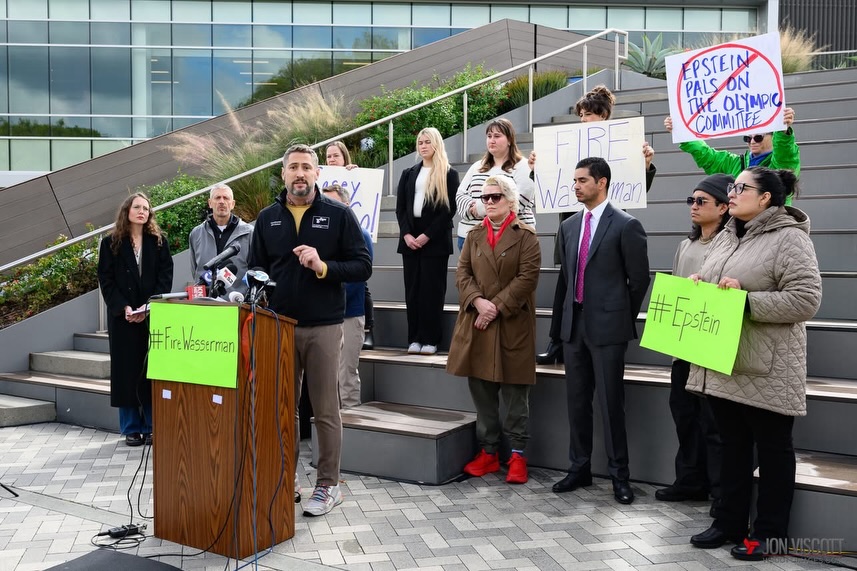
By West Hollywood Councilmember John M. Erickson
The recent decision by the LA28 board to publicly back Chair Casey Wasserman, despite his unequivocal connection to the Epstein files, raises serious questions about who we are as a region and what we value.
As the The Los Angeles Times reported this week, the LA28 organizing committee reaffirmed its support for Wasserman after his name appeared in documents associated with Jeffrey Epstein. According to the reporting, Wasserman has denied any wrongdoing, and LA28 leadership has characterized the matter as resolved from their perspective.
While it is important to point out that no criminal charges have been filed against Wasserman, there is no formal finding of wrongdoing. But that is hardly the point.
The leadership of a global institution like the Olympics requires more than the absence of charges. It requires moral clarity, public trust, and an acute awareness of how decisions resonate with survivors of abuse and exploitation.
Jeffrey Epstein was a convicted sex offender whose crimes represent one of the most horrific trafficking and abuse scandals in modern history. For survivors, the pain is not abstract or historical. It is ongoing. Institutions that appear dismissive of legitimate public concern risk compounding that harm.
The Los Angeles Times made clear that the LA 28 board has chosen to stand firmly behind Wasserman. That is its prerogative. But when an organization tasked with hosting the Olympic Games closes ranks so quickly, it raises a larger question. What standard of accountability are we applying? If Wasserman weren’t rich and politically connected, would he get the same type of protection? The answer is clearly NO. But because of his social and political position, he is given a pass while the survivors of Epstein and his friends’ unconscionable actions against women and girls are swept under the rug.
If LA28 is serious about supporting survivors, and it has repeatedly stated that it is, then it must act like it. Acting like it means understanding that even associations or appearances connected to a known sex offender require extraordinary transparency and humility. It means recognizing that the bar for leading the Olympic Games is not simply the absence of an indictment, but unimpeachable credibility.
This is not about presuming guilt. It is about recognizing responsibility. It is about questioning Wasserman’s moral compass.
The Olympic and Paralympic Games are not merely a sporting spectacle. And they are bigger than any one individual. They are about integrity, excellence, and respect. Those values are not symbolic. They must be embodied by those at the very top.
For that reason, I am introducing a resolution alongside my colleague Councilmember Chelsea Byers at our Monday, March 2 City Council meeting, formally denouncing Casey Wasserman’s continued involvement as Chair of LA28 and as an ambassador for Los Angeles while this controversy remains unresolved in the public mind. West Hollywood will be the first city in the nation to call for his removal and to urge LA28 to issue an unequivocal apology to survivors who may feel retraumatized or dismissed by the organization’s response.
I applaud Mayor Karen Bass for calling on Wasserman to resign. While she does not have the power to remove him—only LA 28 does—it will take a collective effort of other cities and civic leaders to take action. Every one of us must ask ourselves: are we serious about standing with survivors, and if so, every one of us must act. Public trust is fragile. The Olympic Games demand the highest ethical standards from their leadership. Anything less undermines not only the credibility of LA28 but the values the Games are supposed to represent.
Los Angeles has time to get this right. The world is watching. Times up for Wasserman.
John Erickson is a Councilmember and Former Mayor of the City of West Hollywood and a candidate for California State Senate District 24.

Pam Bondi ousted as attorney general

The house that gay Key West built: 50 years of Island House Key West

Trans-driven ‘Serpent’s Skin’ delivers campy sapphic horror

April encourages us to be practical and stay close to home, according to Intuitive Shana’s April tarot reading
Supreme Court rules against Colo. law banning conversion therapy for minors

At the Los Angeles Trans and Non-Binary Film Festival, movies are magic

TGI-centered play “Lovely Bouquet of Flowers” blooms against anti-trans hate
Supreme Court rules against Colo. law banning conversion therapy for minors

The Oscar-losing performance that’s too good to miss
April encourages us to be practical and stay close to home, according to Intuitive Shana’s April tarot reading
-
 Miscellaneous4 days ago
At the Los Angeles Trans and Non-Binary Film Festival, movies are magic
-
 Events3 days ago
TGI-centered play “Lovely Bouquet of Flowers” blooms against anti-trans hate
-
U.S. Supreme Court2 days ago
Supreme Court rules against Colo. law banning conversion therapy for minors
-
 Movies4 days ago
The Oscar-losing performance that’s too good to miss
-
 Tarot Readings and Astrology1 day ago
April encourages us to be practical and stay close to home, according to Intuitive Shana’s April tarot reading
-
 Movies8 hours ago
Trans-driven ‘Serpent’s Skin’ delivers campy sapphic horror
-
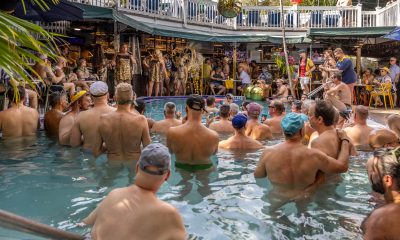 Travel57 minutes ago
The house that gay Key West built: 50 years of Island House Key West
-
 White House22 minutes ago
Pam Bondi ousted as attorney general