
Arts & Entertainment
Goldie Hawn, Amy Schumer promise to ‘fight to the death’ for LGBT community
the actresses star in upcoming film ‘Snatched’
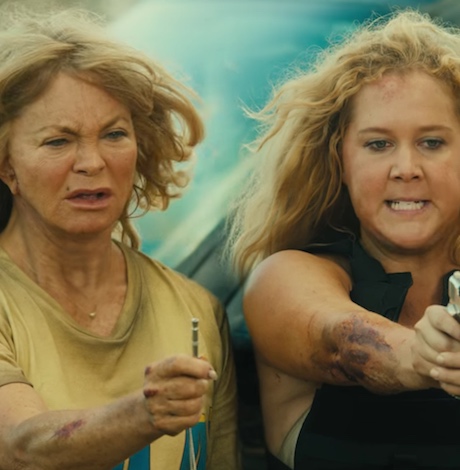
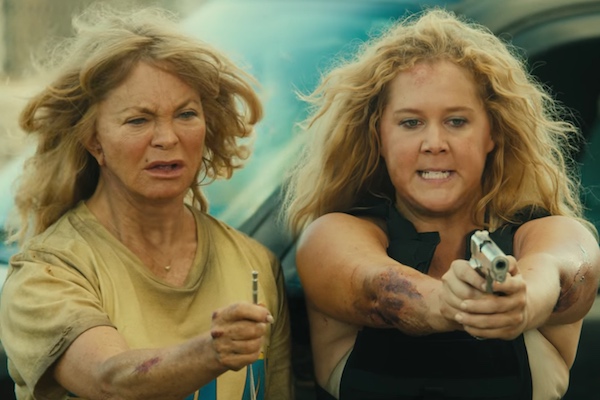
(Goldie Hawn and Amy Schumer in ‘Snatched.’ Screenshot via YouTube.)
Goldie Hawn and Amy Schumer are passionate about being allies to the LGBT community.
Hawn, 71, and Schumer, 35, spoke to PrideSource about their commitment to LGBT issues while promoting their upcoming mother-daughter comedy, “Snatched.”
When asked why standing up for the LGBT community was important to them, Schumer says she “couldn’t remember a time I didn’t.”
“We’re both people who will stand up to the death for our gay friends and gay people and what’s going on in Chechnya and the fear of the what will happen in the coming years. We’ll be there to fight alongside our gay friends,” Schumer told PrideSource.
For Hawn being an ally is a “human story.”
“Being an ally for LGBT people and an ally for all people, transgender or whatever – to me, that’s a human story. I feel there are injustices in the world that I’ll stand up for, and I think that it’s important to realize that the world is filled with these kinds of issues,” Hawn told PrideSource. “Love is something in the heart and in the mind, so why would you chastise anyone for that? And this is something that I feel very strongly about.”
Hawn also recounted how she served the gay community during the HIV/AIDS crisis.
“When we went through the AIDS period, it was a very scary time, and I would go visit guys and I’d get in bed with them just to be there with them,” Hawn says.
“Snatched” is Hawn’s first film role since “The Banger Sisters” in 2002. It hits theaters May 12.

a&e features
Exposing the realities of influencer culture with Bran Flakezz
This LA-based creator uses his massive fanbase to create a better industry for all
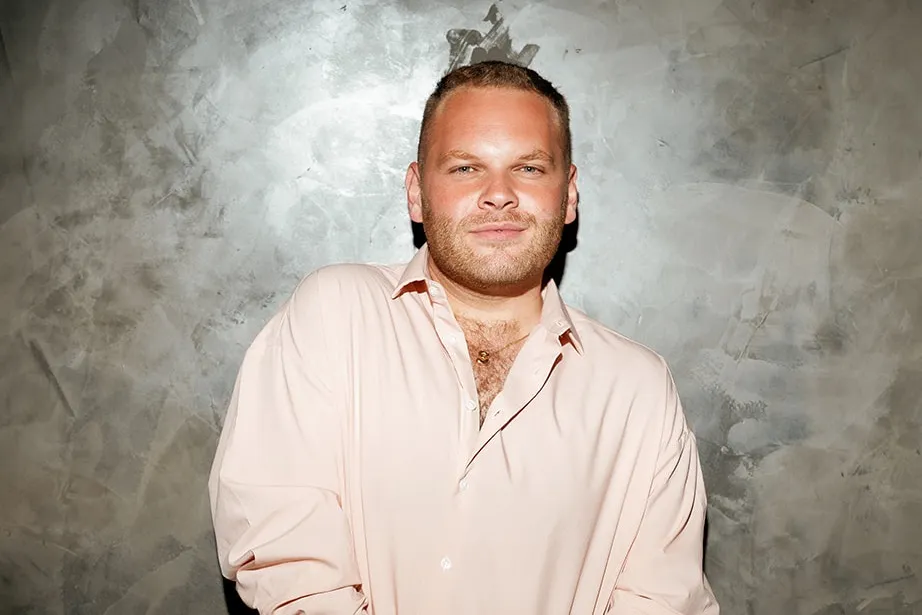
Being an influencer seems like the easiest job in the world…to the people who aren’t actually doing it.
It’s a belief that has been completely debunked in recent years, especially for diverse creators; biased algorithms have made it hard for LGBTQ+ and people-of-color to gain fame online. And even if you didn’t have strings of code fighting against your success, many creators have spoken about the tireless aspects of this job that online audiences rarely get to see. The eighteen-hour work days, the predatory brand partnerships, and the immense mental stress that comes from relying on others’ opinion of you to make rent that month.
For a majority of the successful folks we see online today, their onscreen joy is built on years of hard work and tireless determination. It’s a part of this industry that doesn’t get enough spotlight, and it’s one that Bran Flakezz is committed to showing his many followers every single day.
When he sat down with the Los Angeles Blade, Bran wanted to make one thing very clear: he absolutely loves his job. He detailed his early career after graduating with a degree in fashion merchandising — shoutout Elle Woods — where he went through the gamut of internships, part-time work, and official positions with various large brands. It was working with these jobs’ social media teams that he learned the ins and outs of online fame, skills that proved vital in 2021 when he decided to quit his role and commit to creating content full-time.
“It just feels so great to be in control, to have creative freedom and make my own goals,” said Bran when describing the many things he loves about his career. “Being my own boss is incredible — making my own schedule, and building a team around me of people that contribute to my success.” It’s a love that shows in his content; Bran first gained attention online by offering an unfiltered look into his daily (and often very chaotic) life as a gay man. It’s why his many fans — more than 1.5 million across TikTok and Instagram — feel like they know the LA-based creator, with each new follower learning about everything from Bran’s obsession with Bratz dolls to his thoughts on the latest season of Big Brother.
Bran has happily welcomed audiences into his wild life over the past few years. But though the man’s main goal is always to bring joy through his content, he also knows it’s important to educate users about the issues he and his fellow creators face today. He does this mainly through TikTok; Flakezz regularly posts videos speaking about things like the intensity of his daily work schedule and how much money people can actually make posting online (it’s a lot less than you’d think). “I never want to sound ungrateful for any of this,” Bran emphasized. “But there are prices to all of it.”
“We’re told that people’s opinions of you are not your business — but when you’re creating a business around people enjoying your content, people’s opinions of you literally become your business!” He stressed. “Your brain is always spinning [with tasks] and you have to stay consistent on all platforms, especially now more than ever, when there’s just so much saturation and competition.” It’s why Bran works so tirelessly across his many social channels and always offers a wide array of content — because he knows that in this fast-paced influencer economy, one day of rest could undo months of hard work.
Funnily enough, Flakezz did clarify that the homophobic comments he constantly receives don’t bother him much, saying, “Everything that you can say to me online, I heard the 6th grade bullies say to me on the recess yard.” But while he can easily tune out the internet trolls, his experience with large brand partnerships — one of the key ways influencers make money — has shown him how this industry still grapples with homophobia. “Sometimes I’ll see campaigns for brands, and I’ll feel like, ‘Oh, was I a token? Was I selected because they needed me to cross off on their list that they got one gay creator?’ There’s been opportunities I say no to, and I see another gay creator get the opportunity — so they were completely profiling us as LGBT influencers.”
While it is amazing that brands want to spotlight LGBTQ+ creators, Bran shows how this kind of ‘we only need one to look woke’ mentality both limits opportunities for queer influencers and reduces them to nothing more than their sexual or gender identity. This reveals how shallow this type of inclusivity truly is, and why creators like Bran are fighting to remedy this mindset so that brands create ample chances for diverse influencers who respect who they truly are.
Fans have been overwhelmingly supportive of Bran’s openness around these topics, appreciating his transparency in an industry often built on misinformation. Flakezz has been immensely grateful in turn, explaining, “I never wanted to come across as ungrateful or complaining about such a privileged life that I get to live, but…I really wanted to approach the conversation in a way of education. Because I know so many people out there want to do this career — and it’s an amazing career — but here are some of the things that people don’t always tell you.”
Through his feed, Bran offers a welcoming mix of queer humor and informed knowledge, helping his followers unwind after a long day while ensuring that they leave each scroll session with more knowledge than they had before. It’s an uplifting approach that helps improve the influencer industry for all. And it’s one that Bran Flakezz hopes to embody throughout the rest of what is shaping up to be his very bright, very long career.
Arts & Entertainment
Horror genre has evolved into space to explore queer identity
Forbidden love among topics explored
Spooky season is here, making it a fantastic time to talk about queerness and horror. More precisely, it’s a chance to explore how the horror genre emerged and transformed our perspective on queer identity.
Horror is far more political than most people realize.
Personally, if sci-fi was the genre that helped me understand what it feels like to be different, it was horror that truly allowed me to explore queer relationships and queer rage.
Let’s dive into how horror as a book genre has evolved — moving from portraying queer and transgender identities as monstrous threats to becoming a space where queer people can process our own fears, rage, sexuality, and trauma: from the deeply queer undercurrents of vampire fiction to the liberating “monstrosity” of trans rage.
The ‘monstrosity’ of transness
It’s 2026, so let’s begin with the elephant in the room — or rather, the biggest conservative scapegoat in our community (thanks for actual political monsters). But trigger warning: trauma crawls to the surface like a monster breaking through.
Imagine two scenes:
Fifteen-year-old me, a trans teenager who didn’t yet know they were trans, was reading Thomas Harris’s “The Silence of the Lambs” (1988) for the first time (yes, for me it was first the book, then the movie.) I “encountered” Buffalo Bill, a serial killer who used human skin to make a female costume because he wanted to be a woman. How did I feel? Cringed out, humiliated, and even more determined to hide. And I wasn’t yet permitted myself to think that I’m trans, but I felt terrible without knowing why. It was one more message from mass culture: if you think you belong to a gender different from the one assigned to you at birth, you are a “psycho.” The intersection of ableism and transphobia is striking in stories like this. People with mental illnesses, who in real life are much more often victims than aggressors, are portrayed as dangerous to society, while transness is presented as a mental illness.
Now imagine an adult me, a couple of years after coming out as trans, reading Andrew Joseph White’s young adult horror novel “Hell Follows with Us” (2022). It portrayed actual monsters and a trans boy, Benji, turned into a monster by his cultist family. I felt joy and sympathy for Benji, who stood up against the apocalyptic cult that destroyed humanity, despite his parents raising him to destroy what was left of the human race. His trans rage and rebellion felt justified, and the main character never felt like a pathetic freak.
This is the main difference between classical portrayals of trans people in horror and the changes made by trans authors and creators reclaiming the genre.
When Harris wrote “The Silence of the Lambs” and Jonathan Demme directed the movie (1991), the story made it clear that Buffalo Bill was not a “real” trans person and that real trans people were harmless. But this raises an important question: how can we decide who is a “real” trans person and who isn’t if someone’s gender identity differs from the one assigned to them at birth? The trope of an aggressive, perverse person who “wants to be a woman” has existed throughout modern fiction, with the “Psycho” (1960) movie being another famous example, that stigmatizes cross-dressing and gender non-conformity and, by association, trans women.
Aggressive trans characters and trans characters in serial-killer fiction have every right to exist. White’s young adult horror novel “You’re No Better” (2026), which is coming out this October, features a trans autistic boy trying to prove that he is nothing like his famous serial-killer father. There is also the transgender novel “Manhunt” (2022), featuring two trans women, Beth and Fran, who survive by hunting men transformed into monsters.
Honestly, I’m currently querying a vampire novel with a trans teenager who runs from his transphobic MAGA family and has literally become a monster, so it would be hypocritical of me to object to controversial or monstrous trans characters. They can be violent — but not because they are trans. They can be driven to become monsters by society, but not because of their supposed “perversion.”
Trans horror written by trans and trans-friendly authors can help process rage and alienation. Many trans horror authors reclaim the label of “monstrosity” without turning their characters into caricatures, perverted villains, or pathetic creatures, as often happened in more classical, cis-hetero normative horror.
Queer romance and forbidden love
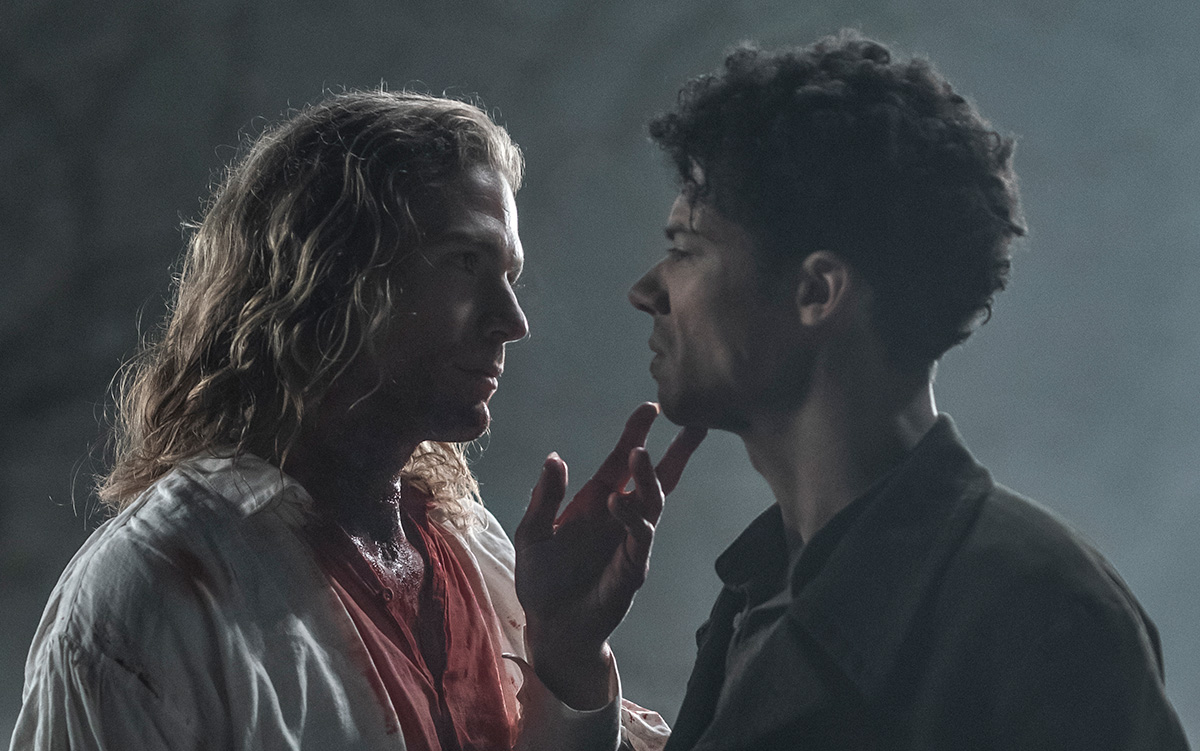
For me, “The Vampire Chronicles” by Anne Rice was my first introduction to non-judgmental, queer-centered fiction as a teenager. As Rice famously observed, all her vampires are bisexual, and it was remarkably brave to publish books in the 1970s and 1980s where queer families, desire, and drama were simply part of the plot without any silly sensationalism. The 1994 film adaptation of “Interview with the Vampire” was the movie through which many people I knew who weren’t into queer stories first saw these dynamics onscreen. And the new AMC’s “Interview with the Vampire” (2022-current) TV series is, in my opinion, one of the best representations of messy queer relationships between traumatized people, addressing family trauma and the intersection of race and queerness. I recommend it even more than “reality-based” shows such as “Heated Rivalry” or “Queer as Folk.”
Gothic literature has always had a queer undercurrent. From Lord Byron’s homoerotic image of the undead to the lesbian desire of “Carmilla” and the obsessive relationships surrounding “Dracula” (book published in 1897), vampires have long been associated with forbidden desire, sexuality, and relationships outside social norms. “Carmilla,” published in 1872 by Joseph Sheridan Le Fanu, still resonates with the lesbian community today. “Carmilla” is unapologetically queer, declaring romantic passion for the human woman Laura without hiding her desires. Of course, “Carmilla” is literally a monster — but how else could an author write a forbidden queer love story in 1872?
New retellings of “Dracula” and “Carmilla” have become even more increasingly queer. Kat Dunn’s “The Hungerstone” (2025) is a sapphic story about feminine agency and the relationship between Carmilla and Lenore, a bisexual British woman in Industrial-era Sheffield, framed around sapphic emancipation and forbidden love. “Dracula” has also inspired plenty of retellings, most notably S. T. Gibson’s “A Dowry of Blood” (2021) — an explicitly polyamorous, bisexual retelling told from the perspective of one of his brides. It explores abuse and the importance of breaking codependency in queer relationships — a topic underrepresented in more “serious” fiction.
Vampires have also become a cross-cultural way to speak about queerness. For example, Dawn Chen’s “A Vampire in Beijing” that will be published in 2027, offers a sapphic story about the modern Chinese queer community and its unique struggles.
Together against the monsters
Another major trope in queer horror is queer people, especially queer youth, fighting monsters together. Those monsters may be supernatural, as in “The Dark We Know” (2024) by Wen-Yi Lee or “This Raging Sea” (2025) by De Elizabeth, where groups of bisexual, queer kids fight side-by-side with an old evil. Ultimately, these external threats represent a conservative society, oppressive stereotypes, and real-world mental health struggles.
Although horror historically mostly exploited queerness for sensationalism — harming real-world queer people in the process — today it has transformed into one of the most effective spaces to explore queer identity and trauma in our own language.
Books
Through the blaze: Author Deborah Samuel talks about survival, healing, and ‘Grace Through Fire’
In her latest book, Deborah Samuel shares her trauma, family tragedy, healing, and her well-earned resilience
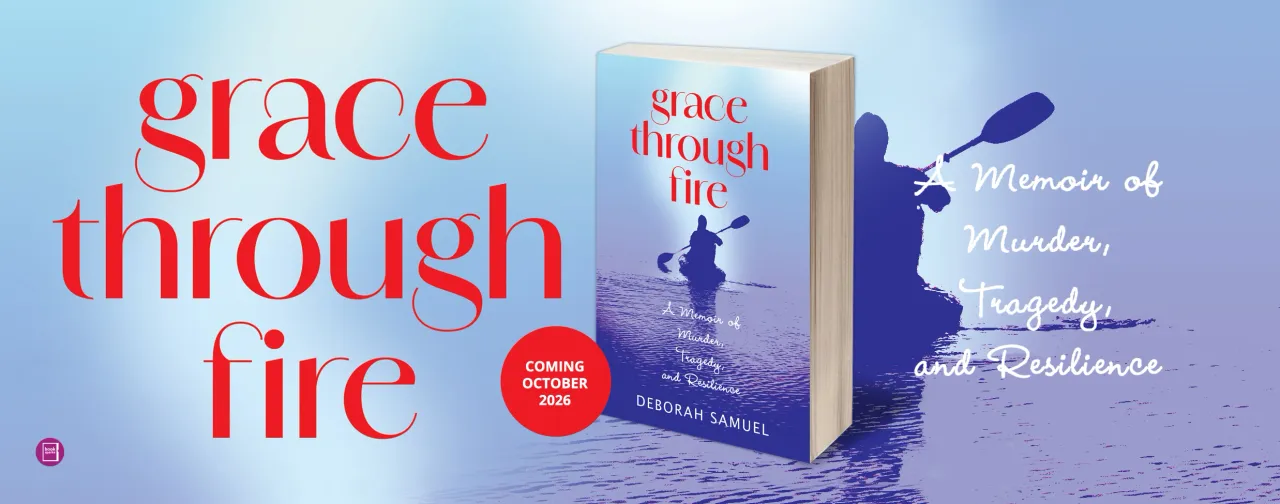
There are some stories that are harder to share, not because they are difficult to recall but because we recall them all too well. In Grace Through Fire, author Deborah Samuel revisits one of the more painful times in her life: the horrific murder of her father at the hands of her mother nearly 18 years ago, and the uninvited media attention that ensued. Her book is more than just recounting a deep tragedy. It is an insightful look into what happens in one’s life after the media buzz fades and we are forced to continue writing our own stories.
Pulling from years of journaling and reflection, Samuel recounts these chapters of her past with active honesty while examining her own choices, battles, and growth. What surfaces is a story of trauma, resilience, love, and the refusal to allow the absolute worst moments from our pasts to determine the trajectory of our ongoing stories. In our interview, Samuel talks about why she now felt ready to share her story, how confronting it also allowed for healing, and what she’d hope readers might take away from her journey.
Your new memoir, Grace Through Fire, starts off with a significantly difficult family crisis involving your mother and father and the media attention that ensued. What felt right about sharing this story now?
We are approaching the 18th anniversary of my father’s murder by my mother, and I finally felt it was time.
It took me many years to be ready to tell this story. There is no way I could have written this book ten years ago. About three years ago, I began thinking seriously about documenting my life as it actually happened—not only because I didn’t want to forget what happened, but because I wanted to acknowledge that I survived it and made it to the other side.
More importantly, I began to believe my story might help someone else look at their own life through a wider lens. Life has many seasons and many chapters. One or two terrible chapters do not have to determine how the rest of your story is written.
I had hundreds and hundreds of pages of journals, so when I began reconstructing scenes, conversations, and experiences, so much of it was there—including the painful details. Going back through those journals was difficult, but they allowed me to tell the story honestly.
What led you to understanding your story as one involving trauma, love, and perseverance, and how did the creation of this project play in your healing process?
The most powerful moment came when I recorded the audiobook and had to read the entire memoir aloud. Hearing myself speak those words made me realize, without a shadow of a doubt, how much personal work I had done.
I could see that I had made a conscious choice not to remain a victim—not to become bitter or allow the terrible things that happened to define the rest of my life.
I am proud that I told the story authentically. I did not leave out the ugly parts, including the parts about myself. I had to look honestly at my own decisions, failures, growth, and responsibility.
Writing Grace Through Fire made me stronger because I stopped running from the story and faced it. I can now look back at that woman with compassion while also recognizing how far I have come.
Your relationship with your wife, Susan, is a significant part of your story. What role did this partnership—and her love—play in the navigation of caregiving while dealing with your own family crisis?
This is one of the most complicated and painful parts of my story.
I never wanted to leave Susan. At one time, I believed I would stay with her for the rest of my life. But circumstances beyond either of our control changed our lives dramatically, and eventually I had to accept that what we had was broken beyond my ability to repair it.
Leaving was not about a lack of love. It was about survival.
I reached a point where I understood I couldn’t fix everything that had happened, and I couldn’t save everyone I loved. The only person I could finally take responsibility for saving was myself.
I believe deeply that if I had stayed, I would not be here today. That realization was devastating, but it ultimately gave me permission to choose life.
So many who have yet to experience it often see caregiving as a noble act of love when, in reality, it often involves feelings of resentment, fear, and financial strain. What do you wish more folks understood about the less glamorous realities of caregiving?
Caregiving is incredibly complex. We often romanticize it as a beautiful, selfless expression of love—and it can be—but there is another side we don’t talk about enough.
It can exhaust you mentally, spiritually, physically, emotionally, and financially. You can love someone deeply and still feel angry, resentful, frightened, trapped, or completely depleted. Those feelings do not mean the love isn’t real.
My memoir goes deeply into this because I lived it. Caregiving affected virtually every part of my life. There were moments of tenderness and extraordinary love, but there were also moments when I lost myself.
I hope we can have more honest conversations about what caregiving actually asks of people—and recognize that caregivers need care, too.
How did your experience growing up in Arkansas influence your comprehension of “womanhood,” and, eventually, what it means to exist as a queer woman?
Growing up in the South and later becoming a gay teacher presented challenges that are difficult to explain unless you lived through that period.
I was teaching before many of the legal protections and social changes LGBTQ+ people have today, and I learned very quickly that my marriage and family were not always going to be treated the same as everyone else’s.
In the memoir, I describe what happened when my spouse became critically injured while we were living in a state that did not recognize our marriage. My employer also did not recognize my marriage, and after 14 years of service, I was initially denied the sick leave I needed to care for my spouse and had to take leave without pay.
Eventually, I went before the school board and challenged the policy. The district ultimately changed it, but it became a very public and stressful fight during an already devastating period of my life.
Those experiences profoundly shaped my understanding of womanhood, equality, marriage, and what it means to stand up for your family when the institutions around you do not yet recognize it.
What does it mean to you to share a queer Southern story? Are there some complexities about Southern life that you hope to impart on your readers?
This is a complicated question because the South is complicated. I have tremendous love for Arkansas. I spent much of my life there, built a career there, and still have people there whom I love deeply. Northwest Arkansas has also changed enormously over the past 20 years.
At the same time, growing up gay in the South was incredibly challenging. Sometimes, simply being myself came with consequences, both personally and professionally.
For years, I dreamed about living in California and experiencing a life where I could feel more open and less guarded. Even today, when I return to Arkansas with my wife, there are moments when I am conscious of whether it feels safe to hold her hand walking down the street. That awareness never completely leaves you.
I hope my story shows both sides—the affection I have for where I came from and the reality of what it was like to grow up gay there during a very different time.
How has your own personal definition of “family” changed or evolved over your life as you moved through these experiences?
My definition of family has expanded tremendously.
I remain very close to my sister, Laura, in Arkansas, but I have also created completely new roots in Santa Barbara with my wife, Kelsey. I converted to Judaism, found a spiritual home, and began building what I consider a chosen family of friends, colleagues, and people who share our core values.
When everything fell apart in my forties, I did not have that kind of spiritual community around me. I have often wondered whether things might have felt different if I had had a spiritual family to lean on. Finding that in California has been incredibly meaningful.
At 58, I am also much more intentional about the people I allow into my life. My wife and I have a small circle of wonderful friends. We value relationships that are healthy, sober, supportive, and aligned with the way we want to live. Age gives you the opportunity to make some choices more wisely. I certainly have.
One key component of your book is generational trauma. When did you first recognize patterns within your own family that extended beyond the individual, and what was it like to confront or unpack these patterns for you?
Generational trauma takes a long time to recognize because when you are living inside a family system, so much of what happens simply feels normal. You often do not understand the patterns until you have enough distance to look back and ask, “Where did this begin?” That became an important part of my healing.
I became deeply interested in understanding trauma and how experiences can remain buried within us long after the events themselves are over. I have worked with professionals who helped me address PTSD, long-buried trauma, unconscious guilt, and patterns I did not realize were still influencing my life.
I have also spent considerable time studying personal growth and changing the way I think about my future. The biggest revelation was realizing that understanding where your patterns came from doesn’t mean you have to keep them. You can honor what happened, forgive where you can, and still decide the cycle ends with you.
Your journey also involves sobriety. How did entering sobriety impact the way that you processed the past? Did it allow you to envision a different version of your future?
Sobriety changed everything because, for the first time, I could see my life clearly enough to make some very difficult decisions.
Wine had begun ruining my life. I was a high-functioning alcoholic, and drinking allowed me to postpone confronting things that were simply too painful to face. When I became sober, I could no longer hide from myself.
Sobriety also changed some of my relationships. I lost friends along the way because not everyone understood or fit into the life I was trying to build. That was painful, but I eventually came to understand that everyone has their own journey.
I can look back now with gratitude for the good years and good memories without believing that every person or every habit from my past has to accompany me into my future.
I forgave myself. I forgave others. And I gave myself permission to begin a new chapter. I allowed myself an adult timeout for two years when I first moved to CA and truly composted the best parts of me to plant the garden I wanted to grow in. Healthy and strong!
You eventually found yourself aboard a boat in Santa Barbara. What does this move from the South to the California coast mean for you personally?
I dreamed about living on a boat in Santa Barbara Harbor for 25 years.
For nearly 20 years, I kept a photograph of myself in a red kayak on my desk at work. Whenever life became incredibly difficult, I looked at that picture and imagined another life. I visualized what it might feel like to someday live on the water.
Four years ago, I finally made that dream real.
Today, my wife and I live aboard a 1973 Grand Banks yacht in Santa Barbara Harbor with our black cat. I absolutely love the lifestyle.
There is something incredibly peaceful about sleeping on a boat every night. For me, the ocean’s movement feels almost like being held. The water brings me a sense of harmony, safety, and peace that is hard to describe.
Every morning, I sit on the stern with my coffee and say my prayers of gratitude. I look around and think about everything it took to get here. I am proud of how far I have come.
For me, that boat represents much more than a place to live. It represents a second chance at life and love—and the realization of a dream I held onto during some of my darkest years.
After reading Grace Through Fire, what is one thing, if nothing else, that you hope stays with your readers as they navigate their own lives, wherever or whoever they may be?
May the journey begin within you. I have written those words again and again because they capture what I hope readers ultimately take away from Grace Through Fire.
My story is my story. Readers will have completely different circumstances, losses, wounds, and dreams. I don’t expect anyone to follow my path.
I hope that somewhere in these pages, a reader finds one small nugget of inspiration that makes them look inward and ask, “What is possible for me now?”
You cannot rewrite the chapters that have already happened. But you can decide what you want to do with the pages that remain. That journey begins within you.
Books
In ‘The Lost Brontë,’ a complicated lie can lead to danger
New book features sweetly romantic girl-meets-girl twist
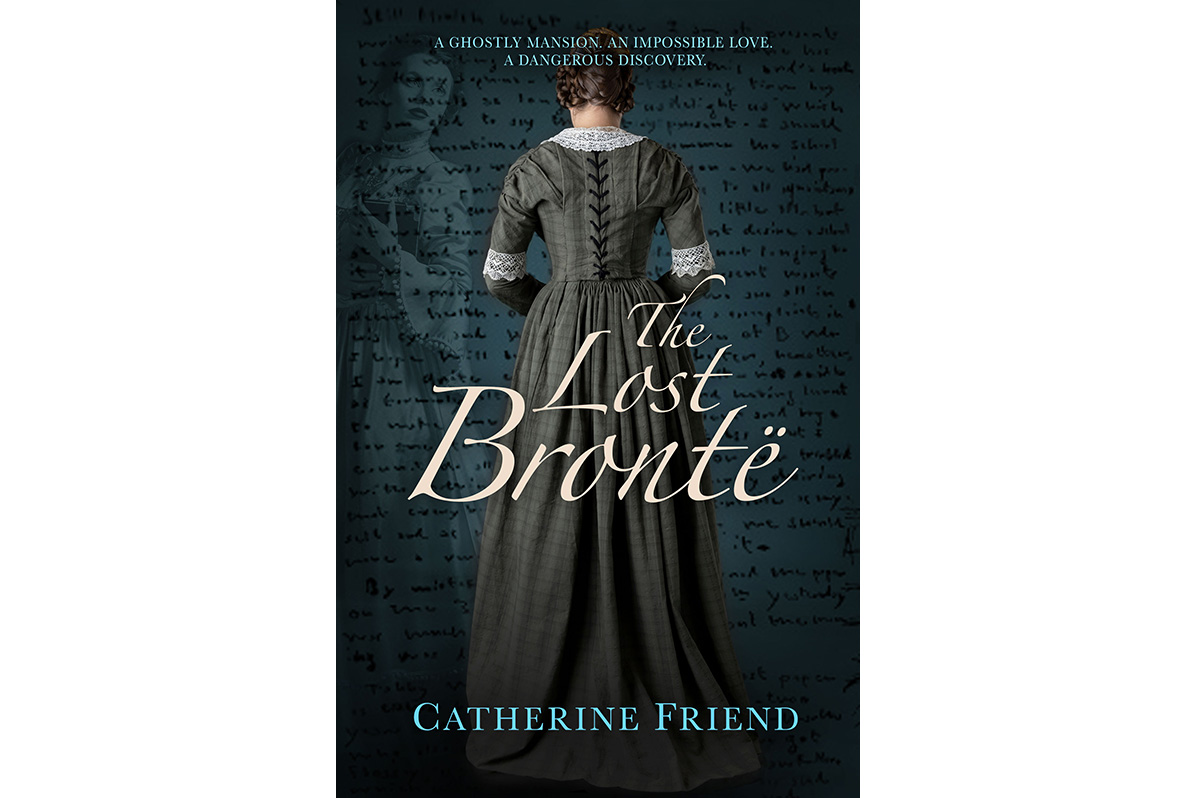
‘The Lost Brontë’
By Catherine Friend
c.2026, Bywater Books
$22.95/335 pages
Mom always said to tell the truth.
One lie leads to another and another and you have to remember them all until pretty soon, you’re caught. Fibs are hard, mistruths are messy, even little white social lies can destroy trust. Worst of all, as in the new novel, “The Lost Brontë” by Catherine Friend, a complicated lie can lead to danger.

Though Lilianne Loxley was very young when she lost her parents, she understood that her uncle didn’t really want her. As time passed, though, Lily made herself useful to Uncle, writing and signing letters for him and she became a good companion, helping him with his collection of Brontë memorabilia. Uncle was a keen enthusiast.
She had no idea that his obsession was out of control and he was deeply in arrears. The day Lily learned of his debt was the day she learned that he’d agreed to send her to his debtor’s home to work off the money owed.
It was so sudden. One minute, Lily was at Loxley House, happy and loved by Uncle’s staff … and five hours later, she was at Crag Thorn Manor, home of Lord Bexton, who informed her that she’d be working on his ledgers – work that seemed routine, but Lily tackled it.
Uncle always did say she was headstrong.
But would headstrong be enough to survive, when she was restricted from most of the Manor, when she was forced to dine with Brexton and his slimy friend, or – the worst! – when Brexton told Lily that her next task was to forge a letter from Emily Brontë? And then an entire manuscript?
Lily struggled to do what was right. She had to get Uncle out of debt but this last order horrified her. Did she dare refuse Brexton’s orders and commit a crime? It was unthinkable!
The only brightness in the whole situation was Wren, the ladies’ maid assigned to Lily’s room. Wren was adorable with freckles and the sweetest smile. But with everything else happening at Crag Thorn Manner, could Lily act upon her feelings?
This time of year, you may come to crave dark, spooky stories, and “The Last Brontë” fits those needs perfectly with its Gothic deliciousness. Think: Daphne du Maurier-type, stormy-night squirms with a dangerously chaste, sweetly romantic girl-meets-girl twist for fun.
If it’s been awhile since you’ve read a Gothic novel, you’re in for a nice reminder of why you love them here. You can almost tick off the must-haves: a novel like this is nothing without a foreboding stone manor with damp walls; stone steps to a dank basement; a mysterious portrait; and a nearby bog, and author Catherine Friend gives readers every one of them. You’d be disappointed if there was no ghost, wouldn’t you? Ha. You can practically feel the cold blow through the attic, right? Yeah, it’s that kind of book.
If you’re a fan of the Brontës, you’ll like this novel. If you love Gothic mysteries or Victorian romances, ditto. “The Lost Brontë” is good, no lie.
The Blade may receive commissions from qualifying purchases made via this post.
a&e features
LA writer/director gets a little ‘Psycho Baby’
Charlotte Kennett discusses the wild success of her short film and shares on the state of queer people in entertainment
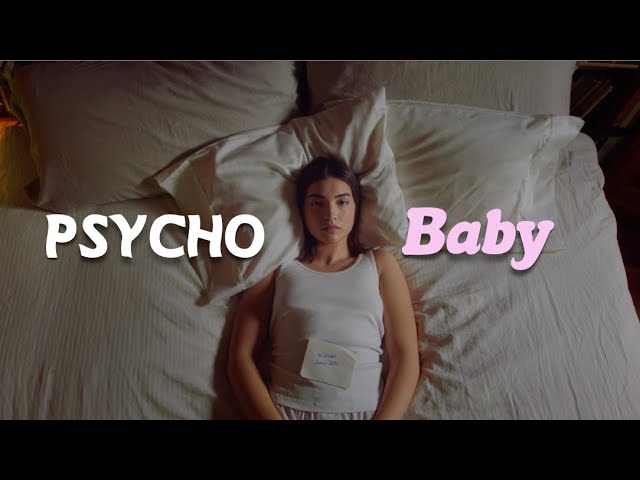
YouTube has created its own style of content, whether it’s “get ready with me” videos, scene compilations of your favorite shows, or simple to-camera essays. And yet, one major milestone remains: reaching one million views. Writer/Director Charlotte Kennett has done just that with her original film Psycho Baby.
Her dark comedy short explores the extreme side of lesbian relationship drama. Kennett managed to organically reach 1 million views in 2 years, which is no small feat. In 2025, she also participated in Amy Aniobi’s TRIBE Writers’ Fellowship. She also continues to work on the front lines of an unprecedented Hollywood, most recently working as a writer’s assistant, then director’s assistant on A Place in Hell, starring Michelle Williams and Daisy Edgar-Jones.
She took some time to chat with The Blade about her film and its success while also discussing the state of the industry for both queer content and queer creators. Her humor and passion for creativity shine through, and you can see how she’s a very distinct queer voice in entertainment.
Congrats on reaching 1 million views on YouTube. How does it feel to reach that with scripted long-form content vs. a sketch or standard “YouTube” content?
I’m incredibly honored that my film found its people. It’s both comforting and validating to know that other people care about longform content. I’m not interested in cutting the fat on anything. Those are the juiciest bits. We’re living in a time of bite-sized everything, from Ozempic to how short can you make this reel? The story decides the length it wants to be, and if you’re lucky, an audience finds it. Are you reading this at 2x speed?
How would you describe Psycho Baby?
Psycho Baby is an intimate, character-driven dark comedy where a love addict falls for a psychopath. Is it a recipe for disaster? I think we already know.
Any secrets to your success?
Send nudes to the algo Gods.
Manifest in the bath.
Buy lottery tickets.
Actually, I think it’s something simpler: Never stop talking about the things you create, even when everyone else is ready to move on. You know the writing advice: kill your darlings? That’s only true at a script level, but once they’re realized, you must love your darlings FOREVER. Also, never stop creating. Not everything performs well; that’s okay. If even one person watches your work, that’s a win. Success is defined on your own terms.
What was your process for writing and directing Psycho Baby?
Long before I wrote the script for Psycho Baby, I had visions of the opening scene in my mind. I saw a girl laying on a bed with a letter on her chest. A letter that would test her and render her powerless in some way. I spent a lot of time thinking about the characters and my own romantic experiences as a queer person.
So much of the process of Psycho Baby was allowing the idea to marinate in my head. And I’ve found that to be true for me on almost all of my projects: I don’t force an idea to come through before it’s ready. A year had passed by the time I finally sat down to write the script, but when I did, it just poured out. The short is pretty much word-for-word how I wrote the first draft, which is wild to think about.
Psycho Baby was initially inspired by a break-up. In processing with friends, I kept hearing other people calling their exes psycho an awful lot. I found the need for humans to villainize a person they once loved quite interesting. In truth, the snapping point- when the switch flips and someone has decided they can’t be with you anymore is quite jarring. I put on an ugly fedora and started to Nancy Drew my own feelings. When sapphic relationships end: who’s the crazy one? The core of Psycho Baby asks this question. Is it possible it’s both of them?
It was cathartic to interrogate my own flaws alongside those of past partners. Sadie and Andra are the end result of my exploring queer grief and heartbreak from the heightened lens of a psychopath and love addict; two people destined to fail. Once I had the script written, we were off to the races. Everything else was fast and furious. I’m really proud of what we created together.
What do you think of the state of the entertainment industry in LA right now?
I’m in active denial and have to remain delulu and think everything is fine. It’s been sad. Everyone has lost so much. Like most, I can only speak to my experience. It’s been hard to admit that the industry has changed, a lot more doors are closed, and we don’t know if they’ll ever open again.
We’ve lost so many great storytellers. I mourn that more than anything. I think about all the stories we’ve lost, the ones that went with them when they left. Someone had the next great classic on their laptop. That haunts me. The industry is trying to recover, but it’s like an injury that refuses to heal. Everyone still here is my hero.
How do you navigate that as a queer creator?
I’ve accepted that this is, and will continue to be, a hard and arduous journey. I’ve fallen in love with all aspects of the process. There’s inherent value and growth in winning and losing.
Mindset is everything. You must believe that your stories matter and that there is room for you in what feels like an overcrowded industry. I know deep down in my soul that LGBTQ+ media saves lives. Shows like Heartstopper. Positive queer representation in the media has the power to reach across the aisle and connect people.
I navigate the entertainment industry as a queer creator with the same relentlessness as AT&T Fiber sales reps: I’m showing up at your door at all hours, in a flashy vest, with the same damn offer.
What are some things you’re working on?
This past year, I’ve been working on a feature that I hope will be my debut. My manager is taking it out soon, so stay tuned and pray for me. Outside of writing specs and samples and hoping a showrunner will pluck me out of obscurity, I’m also actively developing a slate of queer narrative shows for my YouTube channel Sleep Late.
Traditional Hollywood opportunities and pipelines have all but evaporated, so I’m making lemonade out of sewer water. I’m not waiting for permission to create. I think creators have to take some of their power back and greenlight their own ideas. I’m excited to grow my audience on YouTube and dethrone Mr. Beast. Hollywood might be burning, but I’m an old-growth Redwood tree. This is all I’ve ever known… and I’m not going anywhere.
What do you think is lacking in stories of female queer love?
First, I want to echo the culture and say we need more stories that end on a good note. People get off on queer pain, and I get it; I’m a masochist too, but let’s listen to the corporate gays and unlock queer joy.
What’s really lacking is diversity. Like, I’ve seen two white women prancing around in the English countryside and exchanging long, silent looks across ballrooms enough times now. I’d like to see more sapphic BIPOC representation on-screen. I need another Hedda immediately.
What is your list of definitive queer movies or shows that you think should be required viewing?
The Handmaiden. Brokeback Mountain. Disobedience. Bound. The L Word. Orphan Black. Heated Rivalry. Everything Sucks!
What advice would you have for a queer young person trying to make it into the industry now in Los Angeles?
Find your people. Look out for expanders: people who invite you into the room, laugh at your jokes, connect you with others. Stay away from people who make you feel weird; if it happens once, it’s gonna happen again. Not everyone is going to like you or your voice, and that’s okay.
Rejection is redirection. Make things regardless of resources and release them into the world; people still love their ugly children, don’t they? Do it again and again. Continue to refine your craft with your friends and community. Also, just because you’re young doesn’t mean you can’t lead. You’re a leader the day you decide to be the connective tissue between people and projects. And the cardinal rule: always uplift other creatives and invite them into the room.
What is your dream project or collab?
This question lit up too many parts of my brain. In truth, my dream project or collaboration could come in so many forms. I’ll cross Genre River any chance I get. Check out the sci-fi rock banks, then wade over to rom-com island, get chased off by an Indiana Jones type who wants the girl, and getaway with stoner chicks floating the river in tubes.
I fell in love with storytelling because of big, immersive films, so naturally I want to make movies that feel all-consuming: movies that make people feel really seen, that people want to watch over and over again. Down the line, it would be meaningful to take a stab at some of my favorite IP, to work on the stories that made me a dreamer and a storyteller in the first place.
But right now, my dream is to work with passionate creatives that make me laugh. People who need to tell stories to survive. A dream collaboration is one where I’ve brought creatives from all walks of life together to tell a story only we could in partnership with one another.
What are your biggest inspirations?
I’m inspired by truth-tellers and people who are willing to say the things everyone else is afraid to say. Activists like Greta Thunberg inspire me, but so do survivors, my community, and the people I meet every day. I’m especially inspired by neurodivergent and queer people and the ways we move through a world that wasn’t necessarily built with us in mind.
I’m inspired by radically honest people, even when it’s uncomfortable or dangerous. People who are strange, resilient, uncompromising, deeply themselves. I’m inspired by risk takers and troublemakers. Those are also the kinds of people I want to uplift and make stories about. I’m a filmmaker who enjoys boundary-pushing work and unconventional characters who question the systems we live in. I’m inspired by everyday people who demand better for our world.
You can learn more about Charlotte’s work on her website or YouTube channel and follow her and her production company on Instagram( @charkenni @motherfever)
Movies
Essential queer horror classics for Halloween
‘Bride of Frankenstein,’ Bowie in ‘The Hunger,’ and more
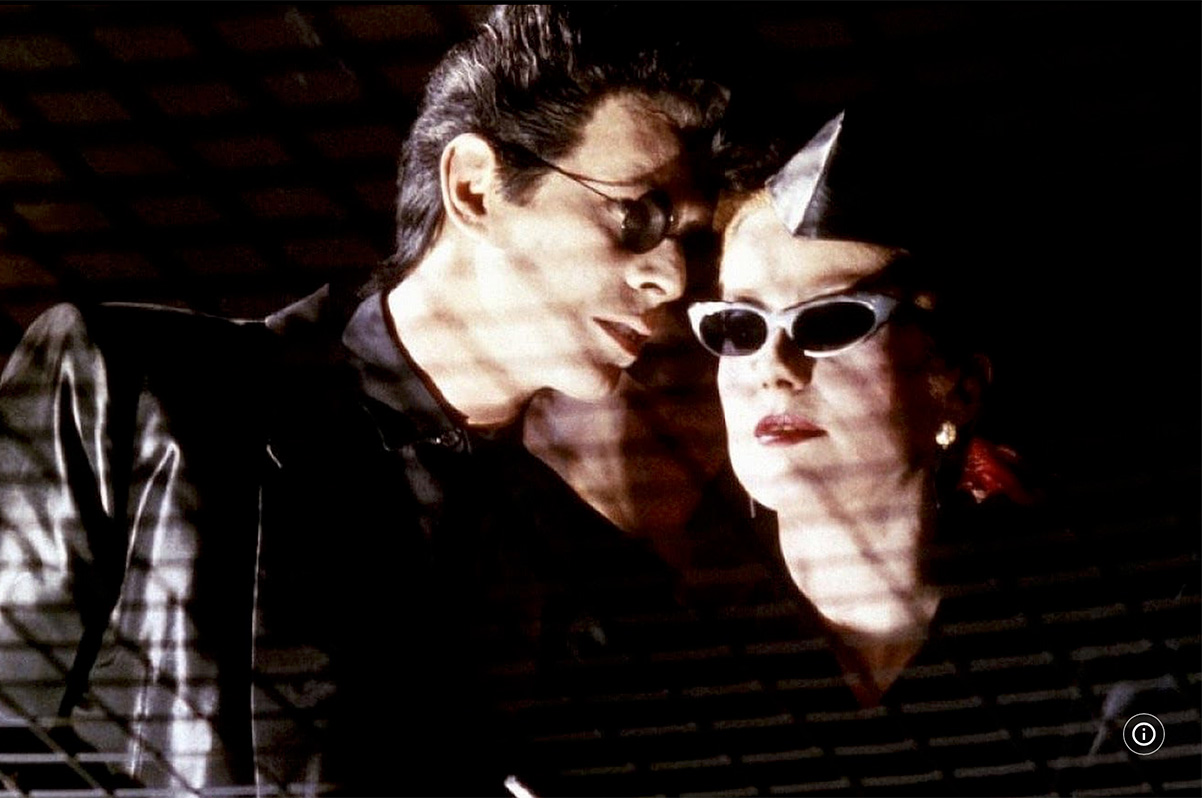
Sure, this spooky season has blessed us with a lot of new horror on TV and at the movies, but when it comes to Halloween, you can never have too much horror to watch. With that in mind, we’ve put together a list of celebrated queer chillers that queer horror fans may know about but might not have seen, especially if you’re part of a younger generation of movie buffs looking to expand your experience with the genre beyond the contemporary crop that has turned the early 2000s into a renaissance of horror cinema.
Bride of Frankenstein (1935)
Yes, we know subtextualized queerness in horror feels like a cop-out in this day and age, but in the early days of Hollywood, it was the only way to sneak it past the censors – and that’s exactly what English expat director James Whale did as a defining force behind the success of Universal Studios’s classic horror “franchise” of the 1930s. More-or-less openly gay with a background in theater, he put those sensibilities to good use on film, and reached his queer pinnacle with “Bride of Frankenstein,” a sequel that expanded on the original with a wicked sense of humor and a “lavender” touch that was obvious to anyone who was in the know.
Skewering “monster movie” tropes and satirizing the conventional mentality of all those angry villagers, Whale also delivered a story of two men – Doctors Frankenstein and Pretorius (Colin Clive and Ernest Thesiger, respectively) – whose clandestine efforts to create a mate for Boris Karloff’s lonely monster read like a gay couple drawn together by “unnatural” obsessions. Thesiger’s unapologetically queer persona would likely dominate the entire film if not for Elsa Lanchester’s turn as the hissing, electrified title character, but the film’s true greatness lies in transforming Karloff’s “monster” into a full-fledged tragic hero, a primal avatar for “otherness” that emerges as the most sympathetic figure on the screen; and while it might not be that “scary” by modern standards, as one of the most boldly transgressive films of the Hollywood “golden era” it still packs a wickedly savage punch.
The Haunting (1963)
Based on Shirley Jackson’s novel of the same name and helmed by veteran director Robert Wise in the wake of his Oscar-winning screen adaptation of “West Side Story,” “The Haunting” is a film that looms large in the history of queer representation in American cinema, simply for the fact that it included an openly lesbian character during a time when anything beyond a subtle implication of non-heterosexual alignment was still very much considered taboo.
The character in question is a psychic named Theodora (Claire Bloom), one of a group of individuals invited by a paranormal researcher (Richard Johnson) to investigate an old New England house, which is reputed to be haunted in the wake of a long string of tragedies that have befallen the family that owns it. Although she’s something of a thorny personality, she’s framed as neither villain not victim, but her presence provides queer overtones that impact the rest of the story, particularly through the growing psychological agitation of its painfully repressed central character (Julie Harris) and the history of the house itself.
A classic “old, dark house” ghost story that deliberately avoids depicting anything definitively supernatural, it focuses instead on psychological tension and the power of suggestion to ramp up scares, which it does quite effectively, utilizing innovative camera and sound techniques to suggest, but never reveal, the dark forces that drive the story. Audiences of the time wanted more concrete thrills, so it was not a major hit; nevertheless, it has been consistently ranked as one of the best horror films of all time – and while it might not offer the blood-curdling terror modern viewers expect, its moody sense of dread and doom is enough to keep you on edge for the duration.
The Hunger (1983)
It’s hard to think of a horror film as openly sexy as this classic from director Tony Scott, which turns Whitley Streiber’s book about an ancient vampire (Catherine Deneuve) in modern New York, who grooms a scientist (Susan Sarandon) to be her new sexual companion for the ages as the old one (David Bowie) begins to rapidly age and decline. Dripping with 1980s cool (it opens with Bauhaus singing “Bela Lugosi’s Dead” in a nightclub) and leaning hard into the open eroticism of a more sexually permissive era, it doesn’t hide its sapphic supernatural love story in the subtext; instead, it gives us one of the steamiest love scenes between two women ever put on film. Critics of the time praised it for its style and its mood, but lamented what they perceived as an ultimately shallow story – but in retrospect, its pervading air of melancholy doom despite the glamorous elegance of its presentation serves as a fitting reminder that an eternal life of meaningless beauty and pleasure might not be as great an idea as we think it is.
Stranger by the Lake (2013)
French filmmaker Alan Giraudie delivers one of the sexiest – and scariest – gay thrillers – of all time – in this tale of a young man (Pierre Deladonchamps) who frequents a lakeside nude beach, which is a popular hook-up spot despite a recent series of unsolved killings in the area. He becomes infatuated with an attractive man (Christophe Paou) he meets there and they connect; later, he witnesses an incident that makes him suspect his new flame might be the murderer – but that doesn’t stop him from continuing to pursue their relationship, despite an increasing likelihood that he might end up as the next victim. It’s an obvious essay on the power of lust to pull us into danger, but it doesn’t moralize; instead it entices us deeper with scenes of graphic un-simulated sex and sparks nostalgic fantasies of a pre-Grindr era when the threat of encountering a serial killer was never enough to keep us away from our favorite cruising spot. Transgressive? Yes, and also terrifying.
We’re All Going to the World’s Fair (2021)
If you’re a horror fan in 2026, it’s likely you’ve already seen trans filmmaker Jane Schoenbrun’s critically lauded “I Saw the TV Glow,” as well as “Teenage Sex and Death and Camp Miasma,” which has emerged as one of the year’s most acclaimed movies so far. You might not, however, be familiar with their first feature film, in which a teenage girl (Anna Cobb), living an isolated life with an abusive single father, finds escape and connection on the internet; she participates in a “viral challenge” that requires her to post a video of herself performing a ritual chant, and then follow up with updates documenting the transformation she goes through as a result. Inspired by Schoenbrun’s own experience navigating the online world while struggling with gender dysphoria and other issues around their identity, it’s an unsettling and disorienting ride that keeps us wondering what will happen next – but the real horror comes from its observations about the way living our lives online can transform us all.
a&e features
Veteran Broadway actor Laura Benanti bares all in her new show ‘Nobody Cares’
Fresh from a run at The Wallis in Beverly Hills, she brings the show to South Coast Repertory in Costa Mesa from October 8-11.
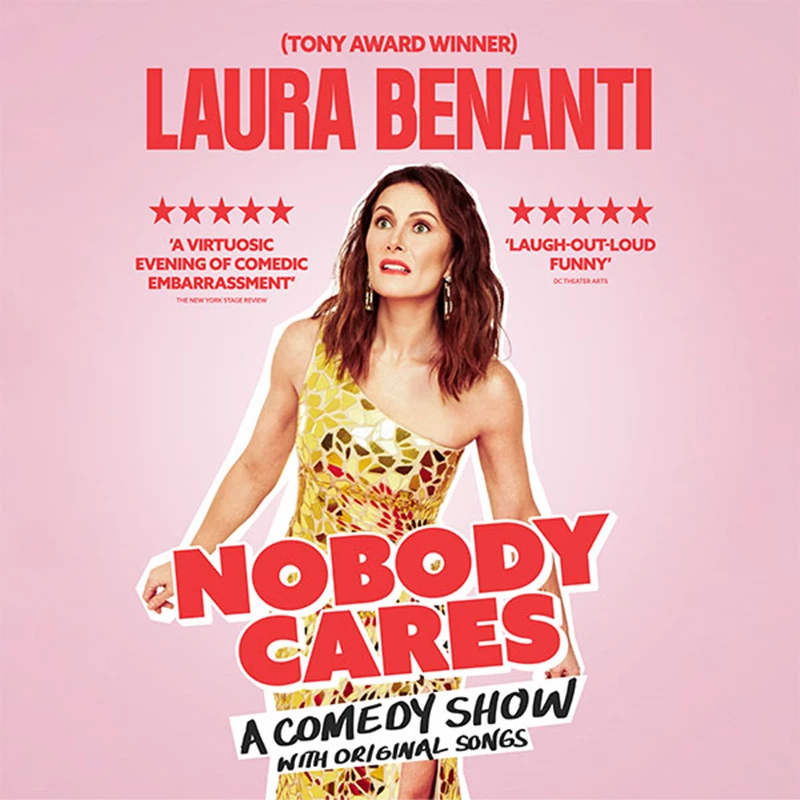
One might expect when Laura Benanti comes to town that they are in store for a feast of recognizable standards from the veteran of ten Broadway shows, as well as having a strong presence in television and film. Her new show, Nobody Cares, is not that show. Written by Benanti in collaboration with songwriting partner Todd Almond and Director Annie Tippe, this show is a surprising, personal, and hilarious take on what it is to be a 40-something woman in today’s world. It takes on subjects from motherhood to aging to relationships and perimenopause. Fresh from a run at The Wallis in Beverly Hills, she brings the show to South Coast Repertory in Costa Mesa from October 8-11.
My first exposure to Laura Benanti, the person, was on The Broadway Cruise in 2023. Unbeknownst to the audience for her featured performance on the poolside stage was that Benanti was in the middle of a miscarriage. When I asked her about that experience, she shared something important she has learned from life. “Not that I’m trying to win here, but that was my fourth miscarriage! I could have done what I did in the past and spent my time alone and sad. Instead, I wanted to do the thing I love with my audience and feel that joy of performing for and with them.” That authenticity is what she brings to this show that is so revealing and personal. The result is connection and “laughter of recognition.” In other words, she invites the audience in to laugh with her and inspires them to laugh at their own similar life experiences.
What inspired you to write Nobody Cares?
I had done ten Broadway shows and was always cast as the ingenue. Finally, I decided that the only way I was going to get a role written for me was to do it myself. What’s interesting is that when I started writing the show, in my mind, I was like, what are you doing? Nobody cares. This is so narcissistic! Then, I would read parts of it to my girlfriends, and they were like, “I do care about this, and that’s because I care about you.” And then, ironically, I was having a conversation with my 4-year-old. I was telling her something that was important to me, and I felt like I was imparting my wisdom. She stopped me and went, “Mommy, nobody cares.” I thought, she’s right, actually. All of the things I used to worry about – am I pretty enough? Am I thin enough? Am I successful enough? Nobody cares!
So, maybe it really isn’t a show about not caring, but caring about the right things?
I think it’s that, you know, I talk about going from a people pleaser to a recovering ingenue. Starting out in this business so young (she first starred in The Sound of Music at the age of 18), I started to inadvertently live out my characters in real life. I took on this persona of never upsetting anybody, being what people wanted me to be, especially men. I got caught in a trap of not living my own life, becoming whatever another person wants me to be. It’s taken a long time to unravel that.
Has there been a specific experience that helped the unraveling?
Being a parent. My children put the nail in the coffin for needing everybody to like me all the time. They’ll never like me all the time, and it can’t be their job to like me all the time. It’s my job to not need them to. I had to develop an internal fortitude. I tell some really out-there stories, very private stories that used to hold shame for me. In telling them, it takes that shame away. What I hope is that it involves people enough to release their own.
Is there a particular moment in the show that you still say, “OMG, I can’t believe I’m actually telling them this?
There is definitely one song where it’s hit or miss. I tell a story about when I was 21. A man proposed to me, and he would not take no for an answer. He just kept at it. And because I’m such a people pleaser, I didn’t have the heart to say, “Listen, I don’t love you.” I didn’t want to hurt his feelings…so I told him I had cancer…and that I didn’t want him to have to see me like that. It’s a song called “Marry Me,” and either you’re on board and you love it, or you hate me.
You have explicitly described the show as a love letter to women of all ages, mothers, and your “beloved gay men.” As you know, gay men have a long history of embracing glamorous, funny, complicated, and authentic women. What is it about you and your particular brand of comedy and performance that attracts your beloved gay men to you?
I think that’s true, and I love it. I believe it’s my sense of otherness that I have always felt since I was 11 years old. My main interests were Murder, She Wrote, the music of Steven Sondheim, and the 1944 psychological thriller Gaslight. I was so on the outs! I was so not cool. And, please know that I am in no way comparing this to the challenges of coming out. That is not the correlation. I always say I was born like a 45-year-old gay man in a little girl’s body. I just wanted to sit in a well-knit room and listen to good music and watch movies. So I think there’s a similar sense of culture. My Uncle Bob was an incredible drag queen named Wanda May Wanaburger and one of the founders of the Gay Men’s Chorus in Washington, DC. I grew up with him. Actually, the last time I ever saw him, we were singing together on stage at the Kennedy Center. I was playing Maria (Von Trapp from The Sound of Music), and he played the Mother Abbess. It was so great to have that moment with him before we lost him suddenly. I worshipped him. I grew up under his wing…or wigs, as it were! I think on some level I share the recovering people-pleaser identity with gay men. So many of us can’t change it until we have the courage to do so. I always knew, on some level, that people-pleasing was a survival strategy, not some altruistic trait.
You have spoken about women and the influence they have in your life.
Yes, when I turned 30, I met some truly wonderful women who are some of my dearest friends to this day. They just moved through the world in such a different way than me. I just started mirroring them. I started thinking, “What would Sara do? What would Kelly do? What would Celia do?” Then, I would sort of act accordingly. It became a freedom. I also had them loving and supporting me and cheering for me. That was really the beginning of a big shift in me. Having my children was the second phase of that.
How do you feel now that you’re touring the show you’ve written after becoming frustrated with waiting for other people to write a role for you?
It’s been extremely empowering in that I get to use my own words. I’ve written for a very long time, and I’ve written comedy for a while for a lot of award shows. I would write my own monologue and bits and even the sort of Broadway cabaret shows that I would tour. I would have someone who didn’t want to be there come up to me afterwards and say they really like the stand-up part. That’s when I realized that’s what I was doing, and it was ok. It didn’t make me a fraud to pursue that. And this level of authenticity that I want to bring forward, this level of connection with the audience, it’s really become my favorite thing I do. I’ll always love playing characters, but this is a real departure for me.
Do you believe that your queer fans have helped teach you about being able to be who you are and be this person you’ve become?
Yeah, because my road is so much easier than theirs, and they do it. I think about that with my uncle. He lived. He was in a long-term relationship with a black man in Washington, D.C., in the 80s. It was not a time to be gay. I think about him all the time when I’m like, it’s so hard to be a woman. I just so admire the people I know in the LGBTQIA+ community. And right now, it feels like we’re sort of going back in time. You know, to see joy, to see a Pride Parade, to see people, even if they are afraid, walking and talking and being themselves, and trans people, having the courage to live their truth. I am so inspired by that. If they can find joy, I can find joy.
Tickets for Nobody Cares are available at SCR.org.
a&e features
Actor Christian Tyler Dorey is a Jack of all trades
The young actor shines in South Coast Repertory’s ‘Into the Woods’
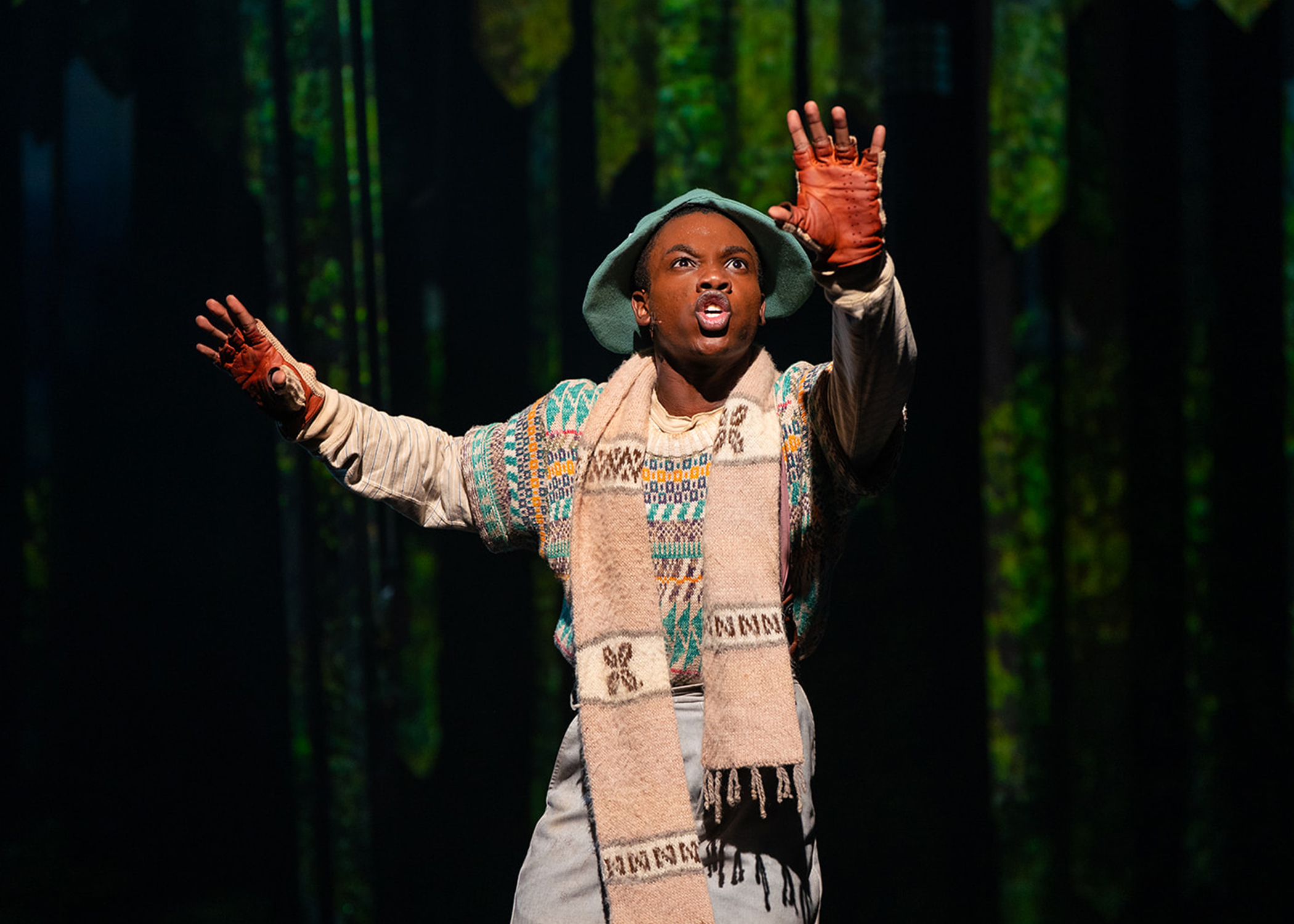
Every musical theater actor has certain roles they’d love to play; Christian Tyler Dorey is no different. He’s starred in recent musicals like Sister Act, Beautiful: The Carole King Musical, and The Wedding Singer. He’s also starred in classics like Cabaret and Les Misérables, and he played Teen Angel in Grease.
To celebrate the 40th Anniversary of the musical Into the Woods, South Coast Repertory has a fresh version of the show with Dorey starring as Jack. It’s already received rave reviews, with Dorey being described as a “showstopper” and a grounded performance making him Reel.com’s “the most believable person in this fantastical world.”
Dorey took some time to chat with the Blade about this experience, his experiences in LA, and his dreams for his career.
How does it feel to play Jack in Into the Woods?
It is truly a dream come true to get to play Jack at this moment in my life. It has been a huge dream role for me since I was first exposed to the score after seeing Rob Marshall’s film in 2014. I immediately became obsessed with Sondheim’s lyrics and score, and I then turned to the original Broadway cast album. It was full of even more information that the film left out. It was some of the most gorgeous orchestrations and lyrics I’d ever heard in my life. I was moved to tears by Bernadette Peters singing “Children Will Listen.” Safe to say, I was obsessed.
What makes this rendition of Into the Woods different?
This production of Into the Woods is unlike any production I’ve ever been a part of. From the cast’s performances to the set, lighting, costumes, and sound design, there are so many elements that make this rendition of Sondheim’s classic one to remember.
At the heart of it is the incredible direction by Peter Rothstein, whose expertise with the material played a huge part in the specificity of the choices found throughout the production. The carnival concept is brought to life beautifully through Adam Koch’s expressive set design, as well as the gorgeous costumes designed by Danielle Nieves. The projection and lighting design help bring a mythical essence to so many moments in the show, thanks to Greg Emetaz and Lonnie Alcaraz. The crisp, booming sound design by the brilliant Noel Nichols ensures that audiences don’t miss a syllable of the show’s incredibly complex score.
This score is unlike anything else in musical theatre in terms of its difficulty, and the brilliant music direction of Wiley DeWeese is a huge reason we’re all able to navigate it. His music direction is unlike any I’ve experienced for this show. His ear for Sondheim is so incredibly keen, and it allows him to make clear, motivated choices with us as an ensemble, as well as with our incredible 11-piece orchestra, who conquers this behemoth of a score masterfully. There is so much artistry happening in every department of this production, and I feel incredibly lucky to be surrounded by so many people who are bringing such specificity, imagination, and care to this show.
How would you describe your version of Jack?
I would describe my version of Jack as optimistic, impulsive, carefree, and warm. This role has been a huge dream role for me since I was first exposed to the musical. Jack being raised by a single mother and living in a world that forces him to grow up before he truly feels ready are both things I can relate to in my personal life. I think those similarities have fueled a lot of what I bring to him onstage.
“Giants in the Sky” is a beast unlike any other. I’ve been singing it in my room since I was in middle school, and it STILL feels like a feat getting through it every night. It’s truly a challenge in enunciation, timing, and range. But the beauty lies in the challenges written into the score, which make it just as rewarding as it is difficult. I feel like it adds to the stakes present in the show at that moment for Jack and allows me to really activate his childlike optimism.
You’re playing Jack, and you’ve played Teen Angel in Grease. How does it feel to bring audiences a POC version of these beloved characters?
It really is such an honor to get to breathe new life into these characters. Getting to show audiences that art is full of possibility is truly something that fuels my art. I’m very grateful that I’ve been able to work with such great directors who are able to look at the heart of the work rather than just what’s on the surface. I’m hopeful that I’ll get to play even more roles like this and open the eyes and hearts of even more audiences.
How did you get into musical theater?
I was first exposed to musicals at a very young age. I was able to see Dreamgirls at the Ahmanson in 2010 when I was seven, and it played a huge part in me falling in love with musical theatre. My middle school years also played a huge part in growing my love for the art form. I was always listening to new cast albums to grow my knowledge, and I had an incredible theatre teacher who taught me so much about what it meant to be a theatre artist.
I was lucky enough to participate in Broadway Dreams Foundation’s LA Intensive from 2015–2023, starting in sixth grade, and I was able to fall even deeper in love with the discipline and beauty of the stage. I’ve had the theatre bug ever since.
How does it feel to be in Los Angeles?
I was blessed to have grown up here! I grew up in Studio City, lived in Hollywood during my middle school years while attending Le Conte Middle School, and then attended CSArts in the San Gabriel Valley. I felt like I wanted a change of pace after living in California all my life, so I really only applied to schools outside of California so I could gain some life experience elsewhere.
I then attended Texas State University’s Musical Theatre Program under the direction of Kaitlin Hopkins. THIS is really where I was able to come into my own as an artist. I learned so much from my time in San Marcos. Both about myself and what it means to truly be a great artist in every aspect present in musical theatre. I then moved back to LA and have gotten to work at 5-Star Theatricals, the gorgeous Wagon Wheel Theatre in Warsaw, Indiana, the incredible Tuacahn Amphitheatre in Utah, and now the beautiful South Coast Repertory.
What’s your favorite thing to do in Los Angeles?
One of my favorite things to do in LA since I was in elementary school is to spend an afternoon or evening at The Grove. Getting to walk under the stars with the beautiful music, gorgeous fountains, and all the lights is something I never get tired of. Grabbing a bite at The Cheesecake Factory and then ending the night with a great movie- nothing beats it in my mind.
What are some of your dream roles?
I have so many of them! I’ve always wanted to play Tobias in Sweeney Todd, Hedwig in Hedwig And The Angry Inch, the Leading Player in Pippin, Cornelius in Hello Dolly, Man 1 in Songs for a New World, Youth in Passing Strange, and Éponine in Les Misérables!
What were your inspirations growing up?
My mother was a huge inspiration for me growing up. As the youngest of four, she was the only one who left home immediately to follow her dreams. She has always been my number 1 supporter. Whenever I said I wanted to do something, she did everything in her power to make sure I was set up for success.
The minute I said I wanted to start acting, she found the best acting classes and teachers for me so I could become immersed in the discipline required to do it at a high caliber. My mother is my everything, and I think that’s partly why playing Jack has always been such a dream for me. We both are the only children of single mothers, and there is a bond that comes from those circumstances that is unlike anything else. My vocal heroes growing up were the likes of Audra McDonald, Whitney Houston, Patti LuPone, Luther Vandross, Barbara Streisand, and Stevie Wonder.
What are your goals for your career?
As an LA native, film has always had such a special place in my heart. I have always loved the beauty of film and television and the life that can be created on a screen. I would love to be a part of a film or television ensemble.
Is there anything from LGBTQ culture that you’re currently obsessed with?
Queer culture always has something to be obsessed with! Right now, I’m especially obsessed with the creativity and community within it. There’s always something new to discover, whether it’s a new artist, a new drag queen, music, fashion, or just some ridiculous piece of queer internet culture that makes me laugh. I’ve recently been rewatching episodes of Ryan Murphy’s Pose, partly to relive the incredible performances in the show. But mainly to remind myself that my dreams are obtainable by hard work, perseverance, and ferocity.
You can find Dorey on Instagram and see Into the Woods at South Coast Repertory now through October 18th. You can purchase tickets at the theater’s website.
Movies
10 years later, we still can’t shake Barry Jenkins’ ‘Moonlight’
This past weekend, Barry Jenkins’ landmark queer film Moonlight returned to theaters with a remastered 4K edition to celebrate ten years. And it’s a film that hasn’t lost any of its staying power.
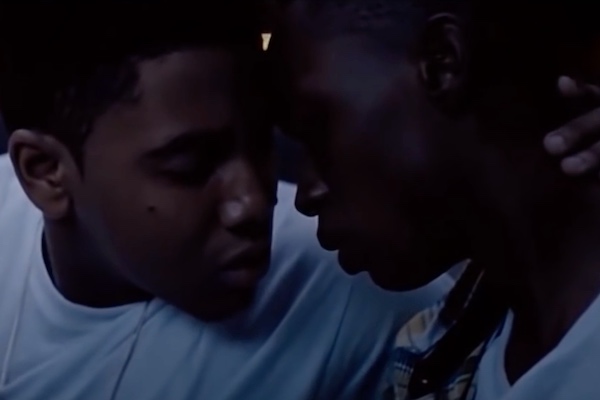
It all started back at the Telluride Film Festival, where Moonlight had its world premiere in 2016, kicking off a successful awards season run. It instantly became the year’s critical darling, and it wound up winning three Academy Awards, including Best Picture, Best Adapted Screenplay (for Jenkins), and Best Supporting Actor (for Mahershala Ali).
But there’s a world where an independently made film like Moonlight, featuring an all-Black cast with mostly unknown actors, and a story exploring how queerness intersects with toxic masculinity and race, gets easily overlooked. The fact that the film won Best Picture on Hollywood’s biggest stage not only cemented its place in film history, but helped the story reach more Black and queer people.
Adapted from Tarell Alvin McCraney’s unproduced, autobiographical play In Moonlight Black Boys Look Blue, Jenkins follows a boy named Chiron, introduced to the audience as Little, over the course of three pivotal moments in his upbringing. Set in Miami, the film tracks Chiron’s days as an outcast struggling to make it through elementary school, to his first sexual encounter with another boy, to his adult days making a living as a drug dealer. Chiron suffocates while living with his abusive, drug-addicted mother (Naomie Harris) and eventually finds refuge and safety in the home of surrogate parents Juan (Ali) and Teresa (Janelle Monáe) as he struggles to reckon with his queerness.
Jenkins’ images instantly became iconic: Juan holding Little in the ocean, a moment reminiscent of a young boy’s baptism; Chiron resting his head on Kevin’s (André Holland) shoulder as the two reconcile their love for one another; Little looking back at the audience as the waves crash.
The film mainly features locals from Miami. One of the smartest choices Jenkins and his casting director, Yesi Ramirez, made when shaping out Chiron’s journey was casting three different actors (Alex Hibbert, Ashton Sanders and Trevante Rhodes) to play the character as he physically comes of age. Jenkins deliberately never had the three actors meet despite portraying the same character — quite the atypical approach to casting.
“I wanted [that decision] to be a comment on the way of the world we live in, and how society has this effect on these young men who grow up in a community like the one depicted in the film,” Jenkins said in a Creative Screenwriting interview in February 2017. “To me, the best way to show that was to illustrate this change in the character, and what happens to the people who are playing him at each stage.”
In the decade since Moonlight’s release, dozens of filmmakers cite Jenkins as one of their biggest influences, including Joe Talbot (The Last Black Man in San Francisco). And you can see his film’s footprints all over Nickel Boys, If I Go Will They Miss Me and Waves, all films that use evocative imagery to tell grounded, Black-led stories.
To date, Moonlight remains the lowest-budget film to ever win Best Picture, made for a mere $1.5 million dollars. It was also the first film that A24, the indie distributor that was still building a name for itself back in 2016, fully financed and produced itself. Moonlight went on to gross over $60 million at the global box office, largely thanks to the Oscars platform.
In our current political and media landscape under the Trump administration, Moonlight has the potential to save even more lives. In the early days depicted in Chiron’s upbringing, he is taught to live with shame, to keep his head down at school. It’s all about survival. But by the end of the film, Chiron reconnects with Kevin and finds himself remembering all the emotions he felt after being touched by a man for the first time. It’s a small step, a small embrace, but a crucial one for Chiron to start coming to terms with himself.
Jenkins still gets emotional when watching scenes back from the film now. Speaking with Vanity Fair at this year’s Telluride Film Festival, where Moonlight screened for its 10th anniversary, Jenkins admitted he was a “crying mess” when revisiting the last 15 minutes of the film earlier in the year.
“Maybe over the next few months I’ll get some more understanding of it, but I think it was just how meaningful it was that we created this thing,” Jenkins said. “It’s not about the film itself, but just how meaningful it was that we actually did it.
In the decade since Moonlight’s release, Jenkins went on to direct another acclaimed film, If Beale Street Could Talk, and recently made Mufasa: The Lion King. He’s set to return to his more independent roots with Be My Baby starring Zendaya, which will also be distributed by A24, and an Alvin Ailey biopic. The Oscar winner continues to mentor emerging filmmakers and writers through the Sundance Labs, visiting colleges around the country to teach what he learned from making his breakout film.
Now that Moonlight is back in theaters, it’s the perfect opportunity for queer and Black people to experience this tender, intimate, nuanced film on the big screen. It’s a modern classic with the potential to continue making people feel seen and embraced for every aspect of their identity.
Television
Engrossing ‘Tip Toe’ delivers tension and an ominous warning
A chilling reminder that violent homophobia is on the rise
Whenever a new project comes from queer Welsh screenwriter and producer Russell T Davies – who created the original “Queer As Folk” in 1999 before spearheading the revival of the classic BBC sci-fi series “Dr. Who” as head writer and showrunner in the mid-2000s – it generally leaps to the top of every queer “must watch” list, and with good reason.
A genuinely versatile creative force who can move easily between genres without losing the core of humanity that keeps us engaged, he’s particularly known for his unequivocal, unsentimental, and always fearlessly candid narratives about queer life, set within a social context that’s barely tolerant, at best. He has a knack for capturing both the transient beauty and persistent hardships that seem to define our beleaguered community. His most recent such endeavor, 2021’s “It’s a Sin,” took us back to the harrowing years of the AIDS epidemic, following a group of gay young Londoners as the disease – and the societal homophobia that surrounded it – wreaked its merciless havoc, even as they began to break free from their closets and embrace their queer identities; and while it may have broken our hearts, it was also somehow empowering, a tale that reminded us not just of what we lost, but of what we have survived.
His latest miniseries, however, takes place in the here and now, and it offers a markedly bleaker assessment of the state of things.
“Tip Toe,” which appeared on the UK’s Channel 4 last summer, debuts on U.S. screens via the Starz streaming service on Oct. 2, and it lets us know from its first few minutes that things are not going to end well; that’s not a spoiler – it’s a warning, because if you’re looking for a happy ending, you’re not going to find it here.
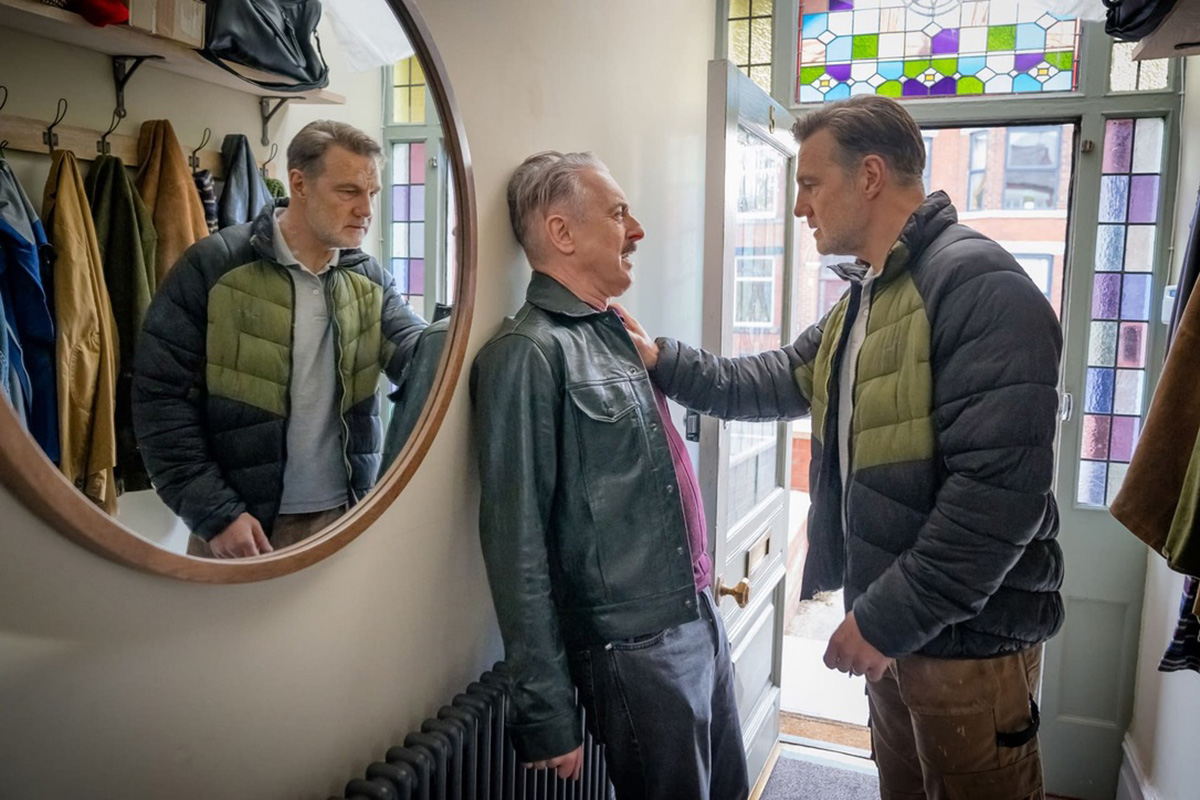
A tale of resurgent and emboldened homophobia in a modern-day Britain where open hate for the queer community has surged at an alarming rate, it’s the story of two men whose intertwining destinies feel almost like a tragic accident of fate. Leo (Alan Cumming) is a Gen-X AIDS survivor who has become a beloved figure in Manchester’s queer community, the owner of a popular gay bar that has always been a safe space for the queer, trans, and questioning souls who are struggling toward self-acceptance; his next-door neighbor, Clive (David Morrissey), is a working-class electrician with a floundering marriage and two sons who live secret lives he knows nothing about. He’s an old-school “macho man” whose ingrained misogyny and homophobia have grown increasingly unfiltered with the rise of online “culture war” rhetoric; and while there’s a kind of forced “neighborly” friendship between himself and Leo, there’s also a clear-cut line of judgement – on both sides – that gives their interactions a sense of barely concealed hostility.
When Leo is locked out of his apartment after a messy hook-up gone wrong, Clive comes to his rescue, but uses the opportunity to impose himself on Leo’s privacy. He levies the situation into an opportunity for work – an electrical revamp of Leo’s bar, where he makes no secret of his disdain for the queer “lifestyle” – and the tension between them continues to build despite Leo’s best efforts at being polite. The escalation reaches a boiling point when the secrets and lies in his own household lead Clive to suspect Leo of being a sexual predator, turning their precarious relationship into a minefield of hostility and inevitably pushing both men into a confrontation that will end in a shocking act of violence.
It might go without saying that “Tip Toe” is not the kind of show most of us would watch “for fun.” Russell’s script starts the relationship between its two antagonists at the threshold between a simmer and a boil, and shows us the outcome before either of them has even said a word, so it’s mostly impossible to avoid the sense of dread that hangs over everything that comes after. This is not a weakness; instead, aided by Peter Hoar’s masterful direction, it gives the show’s five episodes a slow build of tension that keeps us watching with morbid fascination, like the scene of a horrible road accident we’re forced to drive past in slow motion. We’re allowed to feel some hope along the way – after all, we’ve only had a glimpse of what is to happen, and there are other characters with storylines in which we can become invested along the way – but it’s a kind of grim hope, and it perfectly captures the fearful cultural zeitgeist-of-the-moment that the series is ultimately about.
The characters, too, are richly drawn and layered enough to avoid a simplistic “good guy/bad guy” dynamic. Clive is a brute – arrogant, uncivil, and forcefully antagonistic with a hair trigger that responds to anything or anyone that doesn’t meet his approval – but there’s enough broken humanity underneath all that to allow us to see a glimmer of potential for redemption. Likewise, Leo is mostly good-natured and likable, but he has an arrogance of his own, as well as some bitter resentments (most of them related to his ex-husband Curtis played by Charlie Condou), who left him for a woman), which – more than occasionally – surface to provide him with some ugly moments.
There are others, too; Melba (Paul Rhys), Leo’s gender-bending longtime bestie, who sees the growing danger in the world around them and voices it with the resigned stoicism of a reluctant Cassandra; Steph (Elizabeth Barrington), Leo’s straight friend who is not afraid to let him know when he’s too full of himself; Saul (Joseph Evans), Clive’s 20-something son who has evolved a more tolerant and easy-going outlook than his father, and teenaged George (Jackson Connor), Clive’s other son, whose struggles with his own identity take him on a roller-coaster ride of conflicted emotions; Marie (Pookie Quesnel), the wife who despises Clive but is unable to escape her unhappy existence with him; and Zee (Iz Hekseth), Leo’s employee who is trying to choose a name for herself after coming out as trans – along with a variety of other young, queer supporting players who have found refuge at the bar. All of them are written with depth and nuance, even those who remain more or less in the background, and brought to life through excellent, measured performances.
It is, however, Cumming and Morrissey who give the show its irresistible pull, their complex, bristling characters endowed with a palpable authenticity that makes us forget they are merely actors playing roles. They fully inhabit these two thorny men, creating a dynamic between them that feels like a force of nature, and it’s they who provide the terrible power that keeps us from looking away, no matter how much we might occasionally want to.
That’s a good thing, because “Tip Toe” is less a television event than it is a grim reminder that being “out” may no longer be as safe as we were finally beginning to think it was – and just because the alarm bell is coming from the UK, that doesn’t mean we shouldn’t heed its warning on our side of the Atlantic, too.

Exposing the realities of influencer culture with Bran Flakezz

‘Governments that attack LGBTQ+ rights learn from each other’

Horror genre has evolved into space to explore queer identity

Diane Anderson-Minshall’s coming out evolution as a mixed white/Indigenous American, bisexual, lesbian, queer, married to a trans man

Annie Andrews denounces trans athletes after Trump targets her

Carolyn Weathers: From mild-mannered to kick-ass lesbian activist in the L.A. gay liberation front

ICC unseals arrest warrants for Taliban officials accused of persecuting LGBTQ+ people, women

Here’s your Palm Springs look at the weekend: Oct 9-11, 2026

Veteran Broadway actor Laura Benanti bares all in her new show ‘Nobody Cares’

Zaya Wade to be honored by LA LGBT Center with Model of Pride award
-
 Features4 days ago
Carolyn Weathers: From mild-mannered to kick-ass lesbian activist in the L.A. gay liberation front
-
 Afghanistan4 days ago
ICC unseals arrest warrants for Taliban officials accused of persecuting LGBTQ+ people, women
-
 Palm Springs4 days ago
Here’s your Palm Springs look at the weekend: Oct 9-11, 2026
-
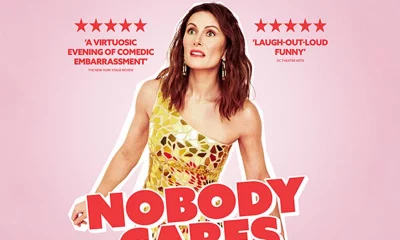 a&e features4 days ago
Veteran Broadway actor Laura Benanti bares all in her new show ‘Nobody Cares’
-
 LGBTQ+ Youth Mental Health4 days ago
Zaya Wade to be honored by LA LGBT Center with Model of Pride award
-

 Japan1 day ago
Report: LGBTQ+ exclusion costs Japanese economy billions a year
-

 Politics1 day ago
On Republican Long Island, gay Democrat Chris Gallant bets on public service over politics
-
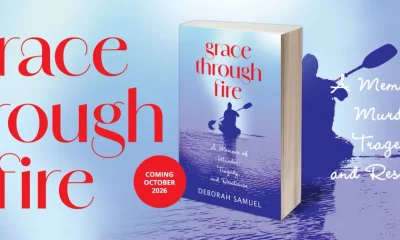
 Books1 day ago
Through the blaze: Author Deborah Samuel talks about survival, healing, and ‘Grace Through Fire’
-
 Congress1 day ago
Annie Andrews denounces trans athletes after Trump targets her
-
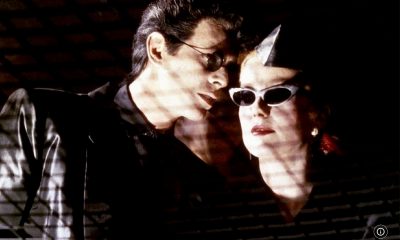
 Movies3 days ago
Essential queer horror classics for Halloween