
News
What’s next after the Democratic House victory?
Bisexual Katie Hill wins over anti-LGBT Rep. Steve Knight
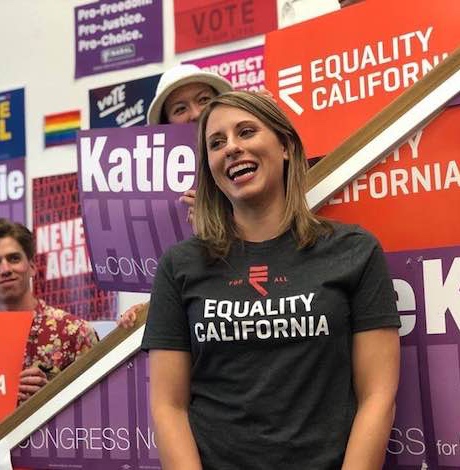
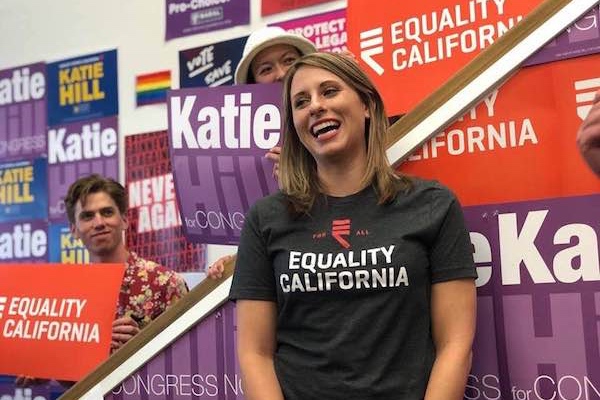
Katie Hill (Photo courtesy Equality California)
LGBT ally Steve Schmidt, the former Republican strategist turned political pundit, repeatedly cautions that President Donald Trump, whom he calls the “greatest demagogue” in US history, is inciting a “cold civil war.”
“Trump has stoked a cold civil war in this country. His rallies brim with menace and he has labeled journalists as enemies of the people,” Schmidt tweeted after a lone-wolf mass mail-bomb assassination attempt against Trump’s Democratic hit list was uncovered. “That someone would seek to kill their political enemies is not aberrational but rather the inevitable consequence of Trumps [sic] incitement.”
That was when Republicans held the White House, the Senate, the House and the majority on the US Supreme Court and the administration had no qualms in publicly rolling back protections for LGBT people. In fact, after the New York Times announced that “Transgender Could be Defined Out of Existence Under Trump,” the LGBT community and many allies responded with outrage, becoming deeply invested in winning back the House of Representatives during the Nov. 6 midterm elections, while realizing that the Senate may stay in Republican hands.
Despite hard work and millions of dollars—the Human Rights Campaign alone invested $26 million in a massive grassroots campaign deploying 150 HRC staff to more than 70 congressional, targeted senate and key statewide races across 23 states—the dreamed- about massive big blue wave didn’t materialize and many of the progressive leaders that LGBT and ally supporters hoped would win big to stick it to Donald Trump either lost or were artificially deprived of winning.
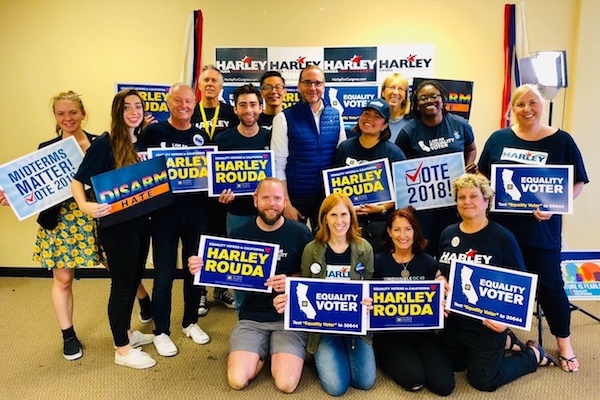
HRC President Chad Griffin with Harley Rouda volunteers (Photo courtesy HRC)
There were big wins, however—including out bisexual Katie Hill, 31, who won in California’s 25th District against longtime anti-LGBT Rep. Steve Knight in Northern Los Angeles County and part of Ventura. Hill was leading by roughly 5,500 votes, or 52.2 percent just past noon on Wednesday—and Knight decided to concede. “The voters have spoken and they want a new congressman — or a congresswoman, for this district,” Knight told KCBSTV. “We wish her the best.”
She’ll need it. At a Nov. 7 news conference in the East Room of the White House, Trump took a victory lap for personally having staved off the Democrat’s Big Blue Wave and weirdly praised House Leader Nancy Pelosi, who is expected to take back the gavel as House Speaker, promising to work with her on “a beautiful bipartisan-type situation.” He’s promised bipartisanship before—then bailed, most notably with California senior Sen. Dianne Feinstein, who was just handily re-elected, on the issue of gun violence.
But Trump also threw down the gauntlet, promising to assume a “Game of Thrones”-like “warlike posture” if the House dares investigate him or his administration.
“They can play that game, but we can play it better, because we have a thing called the United States Senate,” Trump said, referring to the Republican Senate which just gained two seats but is actually a separate branch of government run by Majority Leader Mitch McConnell. “I could see it being extremely good for me politically because I think I’m better at that game than they are, actually, but we’ll find out.”
For her part, Pelosi told Democrats at their victory party that the House would focus on “restoring the Constitution’s checks and balances to the Trump administration,” as opposed to immediately following up on LGBT fan favorite Rep. Maxine Water’s repeated calls for Trump’s impeachment.
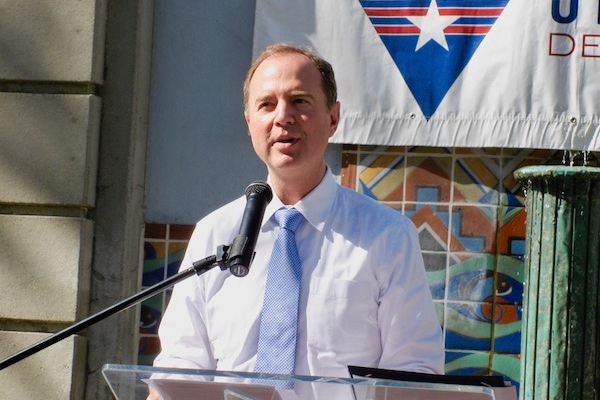
Adam Schiff (Photo by Karen Ocamb)
LGBT ally Rep. Adam Schiff of Los Angeles, meanwhile, must most feel the burden of the sane free world on his shoulders as he considers assuming the chair of the House Intelligence Committee. He told his supporters at a Burbank restaurant on Election Night, that the era of one-party rule is over. It’s a message he’s been pushing while campaigning for others.
“We’ve had a Congress completely unwilling to do its job, to be a co-equal branch of government, unwilling to push back against the basic indecency of this person in the Oval Office,” Schiff at a rally for Katie Hill, the Los Angeles Times reported. “And it is this combination of unethical president and a cowardly, rubber-stamp Congress that has our republic trembling, and why so much rides on our ability to flip the House.”
Now flipped, Schiff is expected to investigate Trump’s finances, Trump’s campaign and the administration’s possible links to Russia, intentionally ignored by his Republican counterpart, California Rep. Devin Nunes, who was also just re-elected after a briefly close race.
“As long as Donald Trump is the president, it will be a poisonous atmosphere because he’s all about division. Nonetheless, we need to do our best in Congress to get the people’s business done. We need to show that we are more than just being about being opposed to him. We are not going to abuse our power the way the Republicans did. We are going to be responsible and tenacious in pursuit of our policy,” Schiff said.
House Republicans have trouble brewing in-house, according to The Hill. With Speaker Paul Ryan retiring, the race is on to become the next leader of the House GOP. California Rep. Kevin McCarthy, often seen glued to Trump, has been widely expected to assume the mantle of House minority leader. But shortly after Democrats had re-taken control, far right conservative Rep. Jim Jordan of Ohio announced that he intends to challenge McCarthy.
“In 2016, the American people elected Republicans to come here and change this town. I think the president is doing just that, but I don’t think they see the same intensity from folks in Congress, folks in the House of Representatives,” Jordan told Hill TV. “Have we replaced ObamaCare yet? Have we secured the border yet? Have we reformed welfare yet? No.”
Jordan promised rigorous debate with the Democrats, as opposed to a possible bipartisanship approach Trump mentioned in his remarks. “Now that we’re in the minority, that’s about all what we can do is debate, but fight hard in the debate for the principles, for the things that we know the American people sent us here to do in 2016. Show them that we deserve to be back in power in 2020,” he said.
One of those fights is expected to be with the Justice Department over special counsel Robert Mueller’s investigation into what US intelligence agencies have called interference by Russian operatives in the 2016 election. Trump calls the investigation a “witch hunt.” Jordan, co-founder of the proudly anti-LGBT disruptive conservative House Freedom Caucus, will no doubt engage his Freedom Caucus co-founder, Rep. Mark Meadows of North Carolina. Meadows has introduced articles of impeachment against Deputy Attorney General Rod Rosenstein, who has been overseeing the Mueller probe since Attorney General Jeff Sessions recused himself.
All of this came before Sessions resigned Wednesday—at Trump’s request. Trump has often slammed Sessions since the recusal, suggesting he would fire the Attorney General—the first member of Congress to endorse Trump—right after the midterms. Promise made, promise kept.
Schiff and the Democratic House leadership can now shift their thinking to the multitude of possible clashes that may come in the approaching lame duck session of Congress.
Another check on Trump’s power will surely come from the 113 newly elected women, including 28 first-time House members, many who ran inspired by the resistance movement such as Democratic activist Alexandria Ocasio-Cortez, 29, of New York, the youngest member of Congress, now Hill, 31, and Sharice Davids, a lesbian Kansas Democrat and member of the Ho-Chunk Nation..
Both the Human Rights Campaign and Equality California raised massive amounts of money and inspired and organized thousands of volunteers. They targeted California races to not only flip the House to Democrats but also ensure solid pro-equality victories up and down the ballot in California.
“CNN’s exit polling had LGBT voters at 6 percent of the turnout and voting 82 percent for Democrats / 17 percent for Republicans. Re turnout: with 113 million voters overall, that’s roughly 6.8 million LGBT voters that turned out nationally. Since mail ballots are still being counted, it looks like LGBT voter turnout was at or above the turnout recorded in 2016 exits (7 million). While exit polling can be fickle, it’s impressive that LGBTQ turnout in the midterms matched a presidential cycle,” Olivia Alair Dalton, HRC’s Sr. Vice President of Communications & Marketing, told the Los Angeles Blade.
We do not yet know the percentage of turnout from the LGBT community in California or Los Angeles. However, gauging by the levels of enthusiasm in each of the campaigns, social media and just walking down the street in West Hollywood, the engagement was very high. Not enough, however, to pass AIDS Healthcare Foundation’s Prop 10, which would have returned rent control regulation to municipalities instead of developers and landlords.
What will happen now, after the perceived losses in such key progressive races such as Beto O’Rourke in Texas to Republican Sen. Ted Cruz, and Andrew Gillum and Stacy Abrams running to be the first African American governors of Florida and Georgia, respectively? It is unclear if those races will be subject to recount or will face a legal challenge because of voting irregularities—but the immediate reaction has been one of deep disappointment in the progressive community, even with the historic “rainbow wave” and election of so many women.
“While the outcome of yesterday’s midterm elections did not result in securing a safer and more just future for all, it did go a long way toward that goal,” said National Center for Lesbian Rights (NCLR) Executive Director Kate Kendell in a statement. “More young people and women showed up to vote and more women and LGBTQ candidates won. We may yet save our nation and repair a U.S. Constitution in tatters.
“At NCLR we will do our part, fighting in court and engaging these elected officials to demand that our community, especially the most vulnerable, are free to live their lives fully, safely and with full dignity,” she concluded.
In statewide elections, the view was a bit more optimistic. Longtime LGBT ally Lt. Gov. Gavin Newsom, best known for helping start the nationwide opposition to then-President George W. Bush’s push for a federal constitutional amendment to ban same sex marriage, handily won his race to replace longtime ally Gov. Jerry Brown as California’s next governor. Equality California-endorsed candidate Eleni Kounalakis won a spirited race to become the next lieutenant governor.
Less clear, is whether openly gay California Sen. Ricardo Lara won his race against Republican-turned-independent Steve Poizner for Insurance Commissioner. Poizner was a high hope for Republicans who don’t much like Trump but like old fashion Republican policies, which Poizner espoused through coded campaign commercials. Lara seemed to rely less on earned media than on other means to reach voters, especially reaching out to the under-media-served Latino community.
While Poizner used to be Insurance Commissioner, he has not be visible for years. Lara, in the meantime, has not only been visible as a State Senator, but has taken on issues such as protecting undocumented immigrants, including LGBT people seeking asylum, and opposing efforts to bring back so-called “conversion therapy. Lara told the Los Angeles Blade that he would, in fact, look at such efforts as “consumer fraud” under his jurisdiction, if elected Insurance Commissioner. If his election is certified, Lara will make history as California’s first openly LGBT statewide official. As of Wednesday morning, he was leading by more than 105,000 votes.
“With millions of ballots left to be counted across the state, it is already clear that Californians sent a clear message to Washington, rejecting the politics of fear and division, and electing leaders who will work to unite us and fight for full equality,” Equality California Executive Director Rick Zbur said. “The LGBTQ community has much to celebrate this 9Wednesday/Nov. 70) morning — with openly LGBTQ and pro-equality candidates making history across the country last night, a new pro-equality majority in the U.S. House of Representatives and a historic number of women elected to the House, too. We congratulate and look forward to working with Governor-elect Gavin Newsom, Lieutenant Governor-elect Eleni Kounalakis and pro-equality leaders in the Legislature and new Congress to continue making progress toward a world that is healthy, just and fully equal for all LGBTQ people.”
Equality California, the nation’s largest statewide LGBTQ civil rights organization, took these midterms seriously, campaigning as if this was a presidential election. The organization ran a $650,000 voter engagement and get-out-the vote program that included a direct mail campaign reaching approximately 740,000 voters — including targeted mail supporting Lara and Assemblymember Tony Thurmond’s campaign for Superintendent of Public Instruction. He appears to be losing to an even better-funded campaign by charter schools enthusiast, Marshall Tucker.
Equality California also vigorously supported eight pro-equality candidates for the California Legislature and pushed out robo-calls to approximately 520,000 voters supporting Lara, nine pro-equality Congressional candidates, 14 pro-equality state legislative candidates and 12 openly LGBT local candidates.
Right now, HRC and Equality California-supported candidates Harley Rouda (CA-48) and Mike Levin (CA-49) lead their anti-LGBT opponents by slim margins, with the races still too close to call. The other pro-equality Congressional candidates the LGBT worked hard to elect—Josh Harder (CA-10), Gil Cisneros (CA-39) and Katie Porter (CA-45)—are currently trailing their anti-LGBT opponents but the numbers can easily change as the thousands of vote-by-mail and provisional ballots are counted in each race in the next week or two.
Equality California says that they partnered with NextGen America and the California Labor Federation to target the Hill, Cisneros, Porter and Rouda campaigns in what have been considered new swing districts. They knocked on 7,200 doors and contacted more than 123,000 voters through live phone calls and peer-to-peer text messaging, EQCA says in a press release.
“Other priority races for Equality California included the contest to become California’s next Superintendent of Public Instruction and the effort to reelect Legislative LGBT Caucus Member Assemblymember Sabrina Cervantes,” EQCA says. “Equality California-endorsed candidate Assemblymember Tony Thurmond currently trails Marshall Tuck by a slim margin in the Superintendent’s race, while Cervantes leads her challenger Bill Essayli by three votes. Equality California also strongly supported openly LGBTQ legislative candidates Joy Silver (SD-28), Jovanka Beckles (AD-15) and Sunday Gover (AD-77), who ran strong races and are currently trailing their opponents in races too close to call.”
One heart-breaking loss is that of Ammar Campa-Najjar to indicted Republican Rep. Duncan Hunter Jr. in Orange County’s 50th District. While the race seemed like a long shot from the beginning, there were moments when he broke through and actually ran neck-and-neck, ahead or within the margin of error. History may look back and question whether Trump’s angry, fearful and inaccurate closing argument at campaign rallies about the supposed caravan of diseased and crime-filled immigrants (mostly women and children) who want to “invade” the southern border might have had an impact, as well as Hunter’s disgusting racist and unethical campaign ads implying Campa-Najjar, a devout Christian, was a foreign terrorist. As of Nov. 7, Hunter has 54.33 percent of the vote to Campa-Najjar’s 45.67 percent.
“The days of attacking LGBTQ people for political gain are over, and the American people will not stand for lawmakers who try to drum up votes by trafficking in hate,” said HRC President Chad Griffin. “Thanks to millions of Americans who stood up and fought back, we have succeeded in restoring a sane, pro-equality majority to the House and placing a check on this administration’s hateful agenda.”


White House
Allegations involving Ric Grenell raise questions about pay-for-play in White House
Gay administration official at center of questions involving paid access to Trump

Questions about how high-level political appointees wield their power have long persisted, particularly under the Trump-Vance administration. Now, allegations involving openly gay Special Presidential Envoy for Special Missions Ric Grenell, White House adviser Alina Habba, and her husband, Turkish businessman Turhan Mildon, are making headlines across newsrooms.
The allegations have prompted President Donald Trump to order an investigation into what has become a convoluted mess, raising questions about a potential “pay-for-play” scheme within the White House.
Axios first reported that Habba accused Grenell of directing her husband to send $17.6 million to a Texas defense and security company, with approximately $5.6 million supposedly earmarked for the Kennedy Center. A text message allegedly sent by Grenell to Mildon promised VIP events and access to administration officials, including Trump, in connection with arranging a donation.
“Once the money comes to the company here, I will arrange the donation to Kennedy center, and you’ll be joining the VIP events and get close with the administration, even with POTUS,” the message allegedly sent by Grenell reads, according to Axios.
Habba, a former U.S. attorney for New Jersey, has alleged that the Kennedy Center never received the donation. Grenell, who served as the center’s acting director from February 2025 to March 2026, has denied sending the text message and called the allegations against him false.
According to Axios, Habba raised concerns with Trump on Oct. 9 after money had reportedly been sent to the Texas company but the promised donation to the Kennedy Center had not materialized. One administration official described Habba as “pretty animated” during the discussion and said she exclaimed at one point, “Ric stole the money!”
However, an administration source told Axios that Habba had not gathered all the necessary information before making the accusation.
“[She] didn’t have all her stuff in order. She went in there half-cocked without all the facts yelling about Grenell stealing. And the facts keep changing,” the source told Axiso. “That doesn’t mean Ric is out of the woods. This looks really shady.”
Following Habba’s accusations, Trump called White House Counsel Will Scharf into the Oval Office and asked him to investigate her claims, according to sources cited by Axios.
Trump and Scharf then called Grenell, who denied the allegations and said he would have immediately alerted others if he had known about a $17 million contribution.
“There’s no way this is true. This is crazy,” Grenell told Trump at one point, according to a source briefed on the discussion.
The Kennedy Center reportedly has no record of receiving the alleged $5.6 million contribution. The White House investigation remains ongoing, with officials examining the digital authenticity of the disputed text message.
Grenell has denied soliciting money under false pretenses or receiving any payment from Mildon.
“I’ve never asked for one cent to be sent somewhere else pretending it was for the Kennedy Center, and I’ve never received any payment from him at all,” Grenell said. “Make him give proof to what he is saying, not make these absurd allegations.”
The amount Habba cited has also reportedly changed. She initially claimed the donation intended for the Kennedy Center totaled approximately $17 million, while the amount allegedly designated for the performing arts institution appears to have been $5.6 million.
The allegations come amid broader questions about corruption within the Trump-Vance administration. Vice President JD Vance addressed the issue last week when asked whether he had witnessed anything inside the White House that gave him pause.
“D.C. is a corrupt town,” Vance said. However, he added, “I have not seen a single shred of evidence that [Trump] participates or sanctions in that corruption.”
The Los Angeles Blade reached out to the White House, Habba, and Grenell for comment but did not receive a response before publication.
New Zealand
New Zealand High Court strikes down puberty blocker ban
Transgender advocacy group challenged government’s 2025 regulations

New Zealand’s High Court on Wednesday struck down regulations that banned new puberty blocker prescriptions for minors.
The Professional Association for Transgender Health Aotearoa Inc. challenged the Health Ministry over the regulations it adopted in 2025.
“The applicant successfully bought a claim for a breach of an obligation to consult under s 105 of the Medicines Act 1981 (Medicines Act),” says a press release that announced Justice Dale La Hood’s ruling. “The applicant was also successful in their claim that the minister unlawfully discriminated against young people with gender incongruence or gender dysphoria on the round of disability contrary to s 19 of the New Zealand Bill of Rights Act 1990 (Bill of Rights). The applicant’s claims that the minister abdicated his decision-making power to Cabinet and acted for an improper purpose were unsuccessful.”
“The court declined to separately determine the applicant’s claims that the minister made material mistakes of fact or that he reached an irrational decision,” added the press release. “The court also declined to determine whether there was discrimination on the basis of sex or whether the decision breached ss 8, 9 and 10 of the Bill of Rights.”
The Professional Association for Transgender Health Aotearoa welcomed the ruling.
“As clinicians, we see clearly the benefits of puberty blockers and the significant impact they have on the lives of young transgender people,” said Elizabeth McElrea, a doctor who is the advocacy group’s vice president, in a press release. “Decisions about this healthcare are best made by patients and their doctors. The removal of this regulation is crucial and puts that decision back in the consult room.”
“This judgment means that as clinicians we can continue to prescribe GnRH agonists in line with best practice and without fear of retribution for doing the right thing,” added McElrea.
U.S. Supreme Court
Supreme Court blocks White House anti-trans prison policy
Justices side with trans inmates who challenged Trump-Vance administration directive
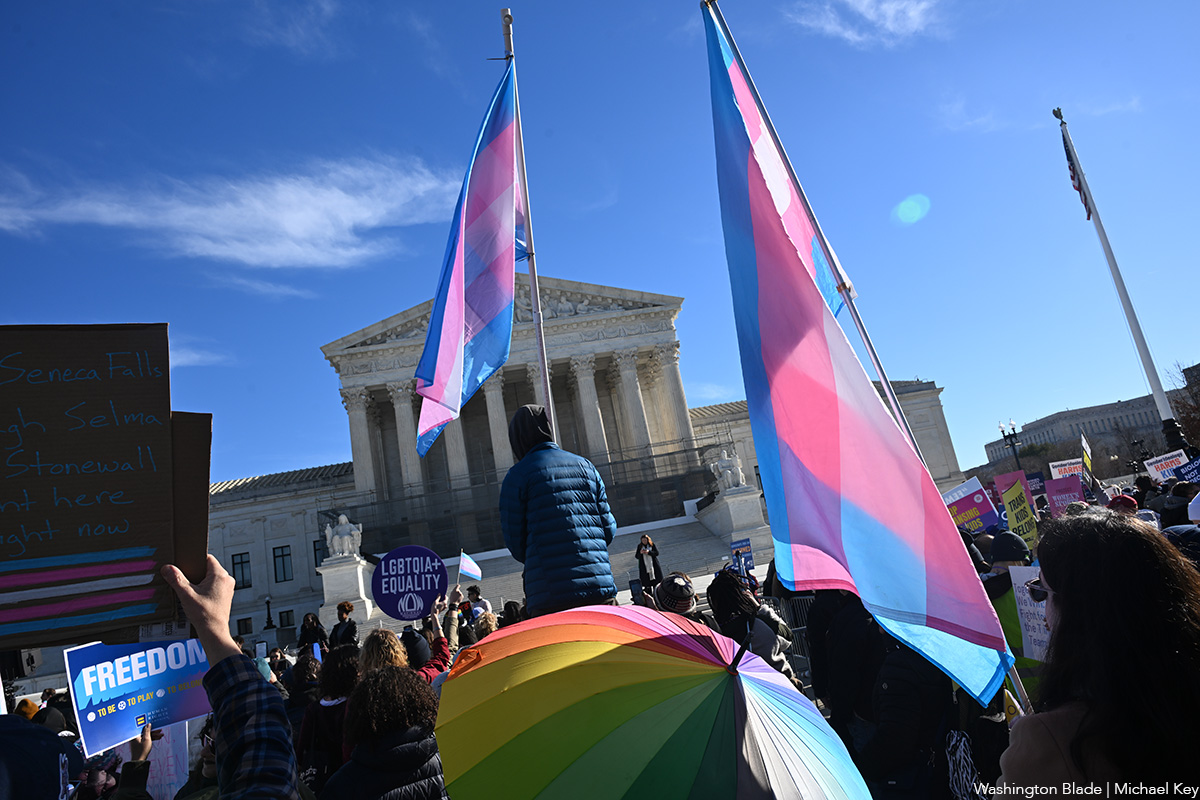
The U.S. Supreme Court has blocked a Trump-Vance administration policy that would have ended gender-affirming care for prisoners.
On Wednesday, the justices rejected an emergency application filed by the administration that would have allowed the Bureau of Prisons to restrict gender-affirming care for transgender inmates in federal prisons.
Three prisoners, Alishea Kingdom, Jas Kapule and Solo Nichols, have said they had been receiving hormone therapy for years as inmates and challenged the sudden policy change. They argued that the abrupt change to decades of policy would end treatment for nearly 1,000 people in custody. The assertion of security concerns within prisons, the American Civil Liberties Union told the Supreme Court, was odd “given that BOP has not pointed to a single security incident relating to its provision of this treatment over the past 30 years.”
According to the application, President Donald Trump’s order called on the Bureau of Prisons to revise its medical care policies so that federal funds aren’t spent “for the purpose of conforming an inmate’s appearance to that of the opposite sex.”
Two justices, Samuel Alito and Clarence Thomas, would have allowed the policy to be enforced but ultimately did not join the majority, marking a rare judicial win for trans people at the nation’s highest court.
This decision is in line with other anti-trans actions taken by the White House regarding inmate rights. In May, the Washington Blade first reported on letters from congressional Democrats condemning changes to official BOP policy regarding trans inmates to bring it in line with Trump’s Executive Order 14168, titled “Defending Women from Gender Ideology Extremism and Restoring Biological Truth to the Federal Government.”
The policy would require BOP staff to “refer to individuals by their legal name or pronouns corresponding to their biological sex,” ban the use of funds for any “items that align with transgender ideology,” and suspend clothing accommodations, pat-search accommodations, and support programs offered to trans individuals.
The BOP responded to the Blade’s request for additional information about its policy change, but BOP spokesperson Donald Murphy said the updated policy is “rooted in medical guidance” and “data-driven decision making,” despite the guidance running counter to what most doctors who specialize in trans health care would recommend.
In June, the court upheld state bans on trans athletes participating in women’s and girls’ sports. A year earlier, the court upheld state laws banning gender-transition treatments for trans youth.
The court has also allowed Trump to implement a ban on trans people serving in the military.
Human Rights Campaign President Kelley Robinson sent a statement to the Blade following the court’s decision.
“Today, trans people in federal prisons can keep getting the care they need. Denying access to critical medical care for incarcerated people simply because they are trans is discriminatory, cruel and flies in the face of our Eighth Amendment protections,” Robinson said via email. “Trump and MAGA extremists are obsessed with targeting our community and undermining access to essential healthcare, defying the recommendations of every major medical association in the country. This decision protects incarcerated trans people from the administration’s attempt to steamroll over constitutional rights for now, but the fight to uphold the dignity and respect our community deserves is far from over.”
The Blade reached out to the White House for a response on the Supreme Court’s ruling but did not hear back by publication time.
Texas
How anti-trans backlash to James Talarico spread like wildfire
Texas Democrat is challenging state Attorney General Ken Paxton
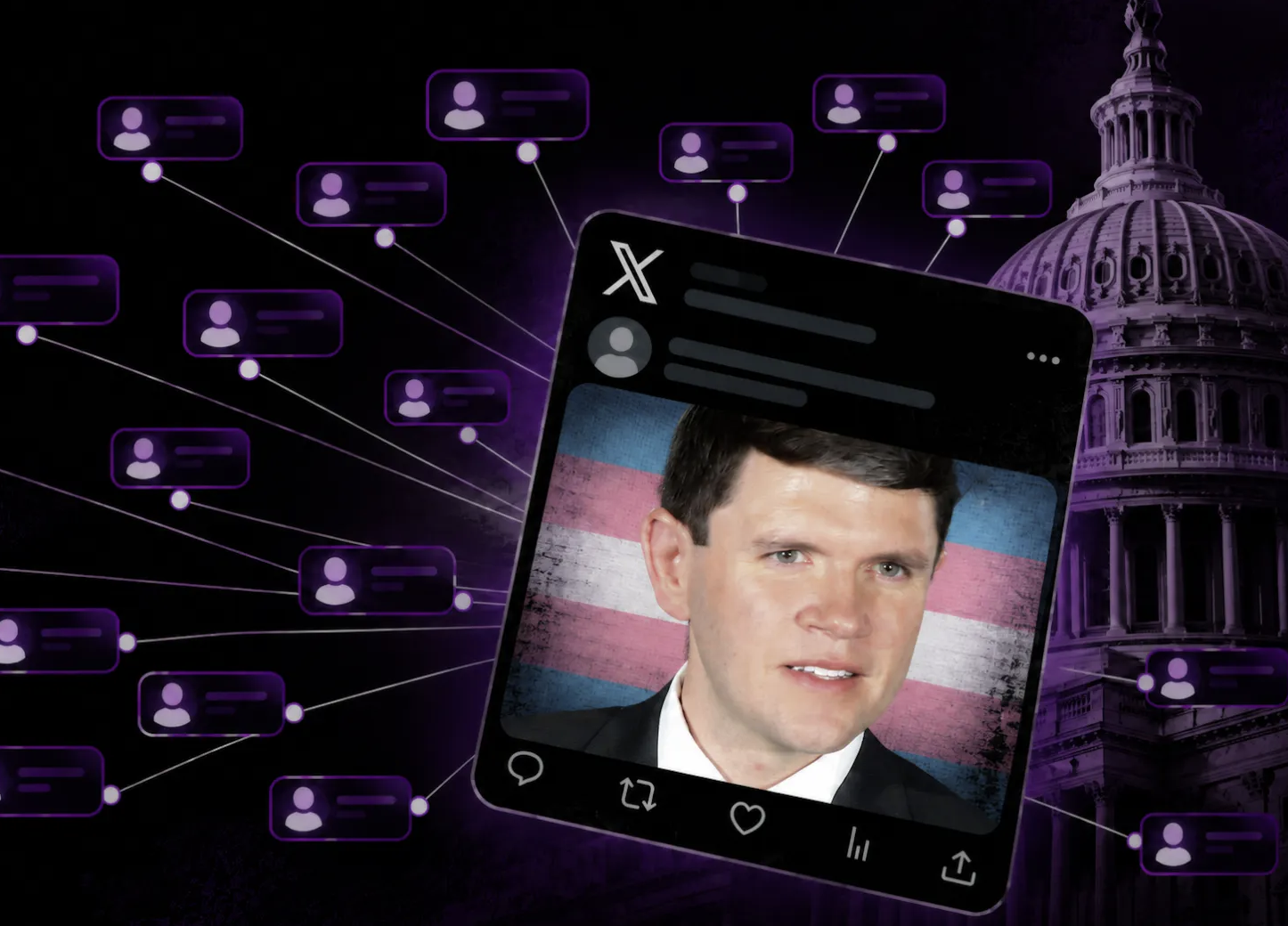
Uncloseted Media published this story on Oct. 21.
This story was reported in partnership with The 19th, a nonprofit newsroom reporting on gender, politics and policy.
By HOPE PISONI | Texas’s Senate race has become one of the most-watched elections of the year. MAGA Republican nominee Ken Paxton pulled off a rare primary defeat against a well-established 24-year incumbent, while challenger James Talarico has been polling well enough to ignite hopes of electing a Democrat to represent Texas in the Senate for the first time since 1993.
This election could have a major impact on issues like education and healthcare prices, which rank as Texas voters’ top priorities. But an outsized amount of coverage of the race has centered instead on transgender people. Paxton’s campaign and its supporters have run several AI-generated ads attacking Talarico’s pro-trans positions. That focus has shaped reporting on the race, both by right-wing media like Fox News and in mainstream outlets like The Washington Post, with many describing Talarico’s stances on trans issues as a liability. Talarico himself has walked back some of his positions in response to controversy, expressing support for some restrictions on trans athletes and rescinding a promise to co-sponsor the pro-LGBTQ+ Equality Act.
This outsized focus didn’t come out of nowhere — on March 3, when Talarico was declared the winner of the Democratic primary, there was a stunning increase in traffic on X related to his takes on trans issues.
In the three days leading up to his primary win, Uncloseted Media and The 19th could only find four posts about Talarico’s take on trans issues. But in just over 24 hours after Talarico won the primary, the newsrooms identified nearly 200 posts. Most of this was driven by three viral videos that were initially posted and amplified by GOP-affiliated politicians and strategists before being circulated by right-wing influencers, media personalities and activists. The spike shows how an army of accounts work together to amplify attacks that can shape the political debate in key races — and perpetuate harmful rhetoric.
“It is a match made in heaven, the business model of social media and people pushing hate,” Sarah Oates, a professor of communications at the University of Maryland, told Uncloseted Media and The 19th. “Because the social media companies know that these are the things that engage people.”
So how did the proliferation of this narrative happen? The following is a play-by-play of how the videos and their accompanying narrative spread in the 26 hours after Talarico’s primary win. The timeline is accompanied by analysis from experts in political communications and strategy.
What are people saying, and where did it come from?
Five minutes after election analyst Dave Wasserman calls the primary for Talarico, Republican Rep. Brandon Gill of Texas posts a clip from a 2021 debate in the Texas legislature where Talarico says that “God is nonbinary.” This is one of two clips which suddenly go viral despite having existed for years — the other, which comes from a 2021 hearing where Talarico says that there are “six really common biological sexes,” is posted by Gill the next morning to a similarly large reach. Talarico has since walked back both statements.
As Gill’s post spreads, the replies are increasingly filled with animus. In one reply, Lynn Conrad writes that “this false prophet speaks with a forked tongue and will lead many from the truth.”
Prior to Talarico’s win, these clips had gotten a small amount of media coverage and appeared in an attack ad by Terry Virts, one of Talarico’s primary opponents. However, Republicans seemingly waited to boost them further until after the primary. Matthew Sheffield, political analyst and a former right-wing political consultant, says this strategy is common.
“Sometimes candidates will decline to reveal [opposition research] that they have for other-party candidates until the general election,” Sheffield told Uncloseted Media and The 19th. “When that’s done, it’s usually because they perceive that the other-party candidate would be severely damaged by the disclosure and they actually want that person to win their party’s nomination.”
Eight minutes after Gill’s first post, the same clip is posted by Greg Price, a political consultant who held a leading role in President Donald Trump’s 2024 campaign and worked at the White House in 2025. Within the next hour, accounts with direct connections to the Republican Party and the Trump administration post the clip and spread anti-trans talking points. This includes the National Republican Senate Committee; their regional press secretary and senior adviser; and Steve Guest, Texas Sen. Ted Cruz’s former communications adviser, who posted the clip and wrote: “James Talarico is a radical trans activist who weaponizes Christianity to push a far-left agenda to mutilate children.” Overall, 12.1 percent of the posts we analyzed came from such accounts.
At least 23 other accounts go on to post Gill and Price’s version of the clips, helping their message go viral. The posts above are also reposted by accounts with millions of followers, including conservative writers Dinesh D’Souza and Ann Coulter, fundamentalist Christian radio host Jenna Ellis and an account called End Wokeness.
About an hour later, Andrew Kolvet, a spokesperson for Turning Point USA and the co-host of The Charlie Kirk Show, posts the “God is nonbinary” clip while calling Talarico a “beta male white boy” and a “compliant little lap dog.” Right-wing media figures are quick to jump on these talking points, with 18.7 percent of all the posts we analyzed coming from them.
Sheffield says that right-wing outlets scour the internet for stories that could “forward their narratives.”
“They do this not just with trans issues, they do this all the time with anyone who puts an argument forward that is helpful to them, and I personally experienced this myself,” says Sheffield, who entered into politics after his small anonymous right-wing website was covered by far-right heavyweights Rush Limbaugh and Bill O’Reilly mere days after its launch.
As the nonbinary video spreads like wildfire overnight, a new clip drops around 8 a.m. the morning after. This clip, which shows a sermon in which Talarico says that “our trans community needs abortion care too,” is the only one we analyzed which hadn’t surfaced prior to the Democratic primary. It’s first posted by ATX data, an anonymous account that bills itself as providing “conservative news and public policy covering local Austin and Texas issues.” While the account has less than 6,000 followers, the clip is picked up quickly: Fox News anchor Will Cain posts it within an hour and Kolvet and Price do so within two, allowing it to rack up over one million views.
Sheffield says that while Democratic leaders tend to prefer to establish rhetoric and positions in-house, Republican leaders more frequently look to grassroots supporters for talking points.
“That’s what this was an example of — they found something that seemed effective to conservatives, so they started picking it up and using it,” Sheffield says.
As lunchtime approaches, influencers and political commentators, who make up 18.1% of the posts analyzed, begin boosting the clips. Accounts with millions of followers, including Libs of TikTok, End Wokeness and podcast host Matt Walsh, help them go viral. The three aforementioned accounts rack up a combined 1.26 million views on their posts about Talarico.
Ashley St. Clair, the mother of a child with Elon Musk and a former MAGA influencer who has since left the right-wing online ecosystem and has spoken out about its “very coordinated” nature, says influencers are incentivized to repost right-wing talking points with momentum on social media because they can make bank from ad revenue, brand deals and practices like paid retweets.
“I worked with [Libs of TikTok], and that’s a business where she makes money hand over fist from this type of content,” St. Clair told Uncloseted Media and The 19th. “It’s become an obsession where she spends all day scouring the dark corners of the internet to make a minority seem like the rule.”
Libs of TikTok did not respond to a request for comment.
Between 10 p.m. on March 3 and 11 a.m. on March 4, Uncloseted Media and The 19th identified 48 posts about Talarico that use similar anti-trans talking points, including 26 separate posts of the three clips that would amass millions of combined views. In contrast, we identified zero pro-trans posts about Talarico in the same time period. Oates finds this sharp turn in the discussion suspicious.
“When you see a shift in a discourse on a particular platform that’s quite abrupt and moves from one side to another and then stifles all dissent, that’s generally gonna be inauthentic,” she says. “That’s generally gonna be led by people who are pushing propaganda or political messaging. … It’s not reflective of general public opinion on the issue.”
This perspective reflects statements by St. Clair. She told the Washington Post that she joined large group chats where influencers would receive “marching orders” from the Trump administration and congressional Republicans. She also shared direct messages with The Post that showed White House staffers asking her to boost talking points and Republican strategists offering her money to amplify posts. Based on Uncloseted Media and The 19th’s findings, she says it’s likely that the anti-trans attacks against Talarico were coordinated in this way.
“I’d be willing to bet there was money put behind it in a paid campaign, because this is how MAGA operates,” St. Clair says. “Most people don’t understand that a lot of these MAGA influencers have access to a dashboard through certain companies where they can just log on and see any campaign that they can sign on to … and all they have to do is push out messaging, which means they don’t have to disclose that they’re paid.”
Sheffield says that many right-wing actors have such closely aligned interests that they don’t need to work together to act in concert.
“Probably most of it is not intentional when you see something go big,” Sheffield says. “They all have a movement mentality on the right, so when they see something that looks effective, then they’re gonna repeat it.”
As the morning progresses, the same talking points are adapted to French, Portuguese and Spanish, the last of which 28.5 percent of Texans speak at home. Like in English, they’re primarily spread by right-wing actors, including political strategist Emmanuel Rincon, who has nearly 620,000 followers on X and is the first to post the sermon clip to a Spanish-speaking audience. By the end of the day, the Spanish news media had also picked up the story.
One especially viral post comes from Collin Rugg, co-owner of the right-wing news site Trending Politics. Rugg stitches together a video that includes numerous clips of Talarico speaking on different topics, including the three trans-focused clips. In his post, he incorrectly says that Talarico claimed there were six genders rather than “biological sexes,” a misquote later repeated in an article by the Daily Caller, Fox News anchor John Roberts, and later Trump.
Matthias Kettemann, a professor of internet law at the University of Innsbruck in Austria, says that social media optimized for engagement allows misinformation to spread easily.
“Untrue information is usually more emotionally charged, and therefore there is a prima facie advantage,” Kettemann told Uncloseted Media and The 19th.
Shortly after noon, these posts begin moving outside of X and social media. The Charlie Kirk Show, broadcast on the streaming and cable channel Real America’s Voice, airs the nonbinary and six sexes clips. Later in the day, anti-trans talking points about Talarico make it onto Newsmax’s “The Big Take,” “Ed Henry: The Briefing,” and “The Pulse” as well as Fox News’ “The Will Cain Show.” By 8:30 p.m., “Jesse Watters Primetime,” which is the second most-watched cable news show in America, discusses Talarico’s stances on trans issues to an audience of roughly 4 million.
Shortly after the clips air on The Charlie Kirk Show, the conservative print media starts picking them up. At 12:35 p.m., the Washington Examiner publishes an article titled “FLASHBACK: James Talarico said there are six sexes while opposing ban on men in women’s sports.” Later in the afternoon, the Daily Caller, the Daily Signal, The Gateway Pundit, and Voz all post articles about the clips, with three of them citing X posts from earlier in the day.
Howard Polskin, president and founder of TheRighting, a website that tracks and analyzes right-wing media, says that right-wing social media and traditional media narratives tend to support each other.
“It’s a virtuous cycle,” Polskin told Uncloseted Media and The 19th. “If something gets written about in an extremist right-wing website, it might be posted on social media, then more social media outlets will pick that up and it might go viral.”
Matt Whitlock, a former senior adviser to the National Republican Senate Committee and the current senior vice president at CRC advisers, a PR firm known for serving conservative organizations, plays a key role in getting these anti-trans talking points on TV. He is the first one to introduce them on Fox News and Newsmax.
“The problem for [Talarico] is he’s created so much incredible ad content already that if you look at [X] today, it is flooded with clips of [him] saying absolutely insane things,” Whitlock told the host of The Big Take on Newsmax.
Whitlock uses the fact that social media is “flooded” with clips of Talarico advocating for trans rights to legitimize his claims that Talarico is an unviable candidate, despite the fact that right-wing operatives like himself are the main ones responsible for the spread of those clips. Oates says this reflects a common strategy in propaganda campaigns.
“Social media has the opportunity to spread more outrage more widely and more freely, but it’s not as influential as mainstream media,” Oates says. “What’s worrying is when what’s going on on social media starts to shape discourse in the more influential mainstream media. … ‘The people are saying’ is a classic propaganda gambit.”
Whitlock did not respond to a request for comment.
What to make of this
All told, we tracked 182 anti-trans posts attacking Talarico on X in the 26 hours after he won the primary. Sixty-three included or referenced the nonbinary clip, 50 referenced the sermon clip and 35 referenced the sexes clip. Between these posts and the citations in the right-wing media, the talking points targeting Talarico’s pro-trans positions likely reached over 10 million people.
In the leadup to the midterms, some Democrats have walked back their positions on trans rights — candidates have come out against gender-affirming care for minors and trans inclusion in bathrooms or sports, with one Ohio representative running an ad opposing “gender ideology” in schools.
Oates says that the manufactured nature of this spread indicates that these anti-trans positions do not accurately reflect the feelings of the voter base. A recent poll of American adults by The 19th and YouGov found that 37 percent of respondents think that both Democrats and Republicans talk about trans issues too much, and trans issues ranked the lowest in terms of importance among respondents to a September CNN poll.
“It’s understandable that some politicians would limit what they say about trans rights, but I think it’s misguided,” Oates says.
Despite how successful these social media tactics can be for Republicans, Democrats rarely follow suit. Oates attributes this to the fact that Democratic narratives tend to be more factual and less inflammatory, making them less suited to virality. Kettemann adds that research has found that right-leaning people tend to be slightly more susceptible to online misinformation.
“There have been few examples of campaigns like you’ve described coming from the left,” he says. “One of the reasons is that people from the left, by and large, are more technologically savvy and don’t fall into the trap of this kind of messaging.”
These tactics endanger trans people
The spread of these posts endangers trans people. The spike in anti-trans rhetoric in the 2020s has increased rates of poor mental health and suicidality among trans people and incited violence against the community. Oates says X’s algorithm rewards hateful content, especially since Elon Musk removed several guardrails for content moderation, including replacing the site’s independent fact-checkers with a volunteer-based community note system.
Social media platforms have increasingly come under fire for the harmful consequences of their engagement-focused algorithms. In the U.S., legal accountability for tech platforms can be difficult to achieve due to laws protecting them from being liable for content on their websites. But in their current state, Oates says that social media platforms like X are not healthy for democracy.
“By participating [on X], you’re not participating in real civic discourse, you’re being used as a commodity by a social media company that not only doesn’t have your best interests at heart but is deliberately trying to inculcate hatred.”
Oates believes that moving beyond the midterms, we will see one of two paths in American politics: “One in which political power is defined by … campaign[ing] on fear,” and another where “people decide … to embrace news and information that’s actually based in reality.”
Additional data reporting by Andrew Norris.
California
Nithya Raman makes her case for LGBTQ voters in the race for LA Mayor
The mayoral candidate said she would use ‘every tool that the city has to protect trans Angelenos’
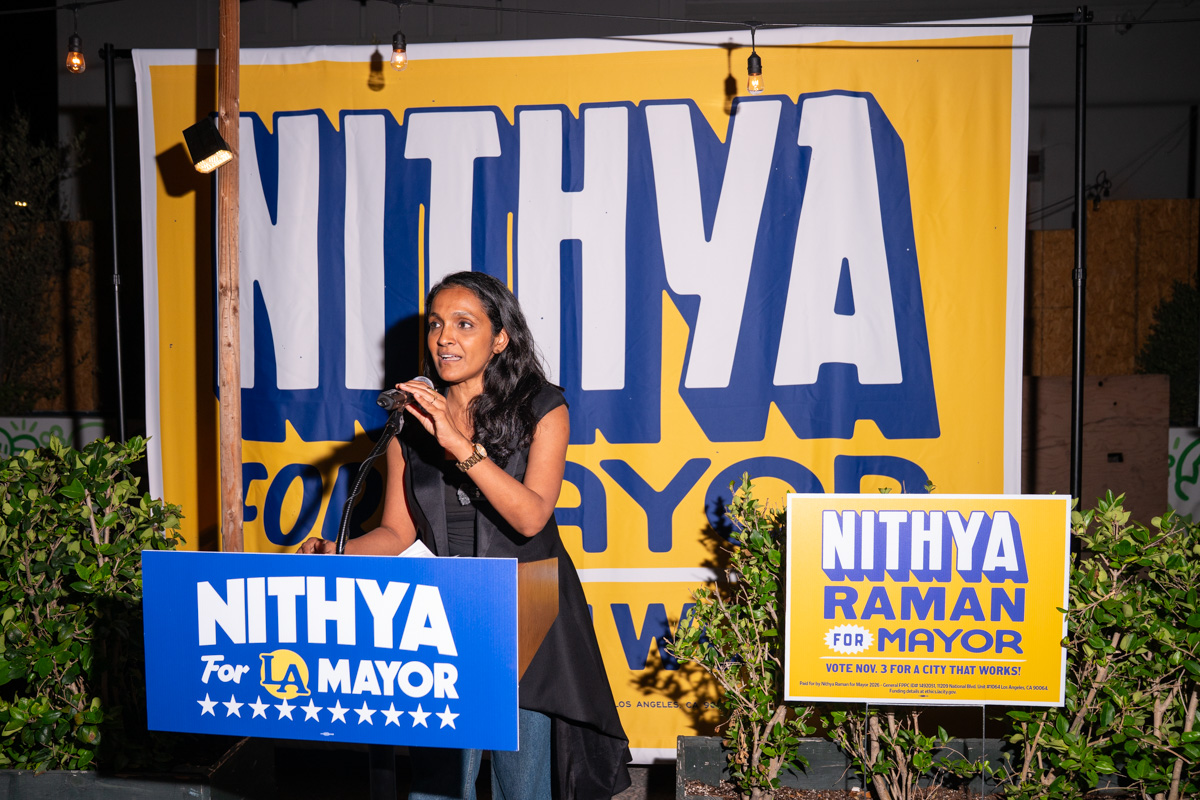
On a cool evening, around a hundred people gathered at the Black Cat’s outdoor seating area in Silverlake. The crowd was full of precisely trimmed mustaches, sleeveless cardigans, and colorful rainbow pins that read “Nithya Raman for Mayor of Los Angeles.”
This was the “Coming out for Nithya” LGBTQ fundraiser for Nithya Raman’s mayoral campaign.
The event which took place on October 8th, was hosted by gay comedian Joel Kim Booster and Pickles the Drag Queen. The pair encouraged the queer audience to support Raman and to donate money to her campaign. The event ended with over $20,000 raised to support Raman according to an organizer of the fundraiser.
Raman is locked in a tight race to become the next mayor of Los Angeles with current incumbent Karen Bass. After coming second in the mayoral primary in August, defeating right-wing provocateur and former reality TV star Spencer Pratt, Raman and Bass advanced to the general election. Since then, current City Councilmember Raman has been steadily gaining in the polls, with most showing her now maintaining a consistent lead over Bass. But the race is far from over, as many of the same polls show a large portion of voters are still undecided. Mayor Bass did not respond to multiple requests to comment on this story.
After an hour of the audience ordering drinks and snacking on appetizers, Raman took the stage. She addressed the audience in an impassioned speech where she invoked the history of the historic Black Cat venue where the event was taking place.
In the early hours of New Year’s Day 1967, undercover police officers raided the gay bar, arresting and beating patrons for kissing people of the same gender as the new year rolled in. The raid left many queer community members badly injured, and others were permanently placed on the sex offender registry. The bar would soon have its liquor license revoked and was forced to close only a few months later.
“Six weeks after the raid, hundreds of people stood right where we are right now on Sunset [Avenue] and peacefully protested,” Raman said in her speech. “In 1967 being seen on that sidewalk could cost you your job, it could cost you your home, it could cost you your family, and they showed up anyways,” she said. “How remarkably brave.”
She then tied the historic oppression of queer people in Los Angeles to contemporary issues, highlighting the Trump-Vance administration’s targeting of transgender people. “Right now, Donald Trump and the people around him are running a coordinated attack on trans people,” she said. Raman remarked on how this targeting of trans people has impacted Los Angeles. “Last year, under pressure from the Federal government, Children’s Hospital Los Angeles shut down the largest clinic for trans youth in the country,” she said, referring to Children’s Hospital Los Angeles’ decision to suspend gender affirming care services.
“As mayor, I will use every tool that the city has to protect trans Angelenos,” Raman said to ecstatic applause from the audience.
After her speech, Raman spoke with the Los Angeles Blade about the specific actions she would take to protect Angelenos from the federal government.
According to Raman, the federal administration is conditioning funding to the city “in ways that undercut some of the values of inclusiveness that we have here,” she said. “Going through the courts is very powerful… I would do more of that. This city has actually not filed as many cases as other cities have.”
Speaking about CHLA’s ending of gender affirming care services, Raman said, “There are other hospitals that have not stepped back from their services as quickly as CHLA did.” If elected as Mayor, Raman said she would “reach out to their board and speak to them about that decision and see how we can push them to do better [for] trans patients,” she said, adding that she doesn’t think “that outreach has happened yet” under Mayor Bass’ administration.
She added that her campaign’s focus on affordability and affordable housing is particularly important for queer people. She said that if elected, she would create “an office of tenant protections” to help renters most vulnerable to being priced out of the city.
“Housing is what makes LA a haven for people,” Raman said. “If you can’t afford to live here, then LA is not a place that is inclusive anymore.”
Caleb Kaufman is a California Local News Fellow placed with the Los Angeles Blade. The California Local News Fellowship is a state-funded initiative to support and strengthen local news reporting. Learn more about it at fellowships.journalism.berkeley.edu/cafellows.
Federal Government
EXCLUSIVE: Democrats seek answers on EEOC settlement affecting LGBTQ+ workers
Bobby Scott and Mark Takano want clarification on anti-discrimination protections

The U.S. Equal Employment Opportunity Commission agreed in August to a settlement with the Christian Employers Alliance that could limit the agency’s ability to pursue certain workplace discrimination claims involving gender identity. Now, Democratic lawmakers are questioning how far the agreement reaches — and whether it could constrain the commission’s enforcement decisions for years to come.
The Los Angeles Blade obtained an early version of a letter from U.S. Reps. Bobby Scott (D-Va.), the ranking member of the House Education and the Workforce Committee, and Mark Takano (D-Calif.), raising concerns about the settlement and its potential implications for workplace protections.
The agreement stems from a lawsuit the CEA filed challenging the Biden-Harris administration’s EEOC guidance on workplace harassment; including protections involving gender identity, pronouns, dress codes, and access to bathrooms and other facilities. The CEA argued that the guidance infringed on its members’ religious rights.
Under the settlement, the EEOC agreed not to pursue certain charges based on gender identity discrimination against the CEA and its member organizations. The agreement also covers future CEA members, provided the alleged conduct occurred while the employer was a member of the organization, raising questions about whether employers could receive protections from agency enforcement by joining the alliance.
Two Democratic congressional aides familiar with the EEOC’s work and workplace protections, who spoke to the Blade on the condition that they remain anonymous, said the agreement could restrict the commission’s ability to pursue discrimination complaints and potentially tie the hands of future administrations.
“They’re sort of swearing not to go after it and not exercising their own discretion, but they’re also purporting to bind future administrations with respect to exercising that discretion,” one aide said.
The aide said the agreement raises constitutional questions about whether the current administration can limit how future administrations exercise the EEOC’s enforcement authority.
In their letter to EEOC Chair Andrea R. Lucas, Scott and Takano question the legal authority for an agreement that they say would prevent future administrations from pursuing certain claims. They cite a 1986 Justice Department legal opinion concerning settlement agreements that constrain the discretion of future administrations and ask Lucas to explain the legal basis for the EEOC’s decision.
The lawmakers also ask whether the commission has entered into similar agreements, whether other federal agencies were consulted and whether the EEOC believes there are limits to its authority to make such commitments.
Scott also criticized the EEOC’s handling of workplace discrimination involving transgender and nonbinary people, arguing that the commission has failed to uphold its responsibilities under federal law.
“Discrimination against transgender and nonbinary people is a serious and ongoing issue. A recent survey found that despite the Bostock decision, 27 percent of transgender people experienced workplace discrimination in the past year. The EEOC was created under Title VII of the Civil Right Act of 1964 and charged with addressing discrimination against workers. Yet, under Chair Lucas’s leadership, the EEOC has abdicated this responsibility under the law when it comes to transgender and nonbinary workers,” said Scott.
The commission’s fiscal year 2026 litigation filings also reflect a shift in its enforcement priorities. The agency’s lawsuits largely tracked its National Enforcement Plan, which emphasizes religious discrimination, alleged anti-American bias, protections for women and purportedly unlawful diversity, equity, and inclusion practices.
The EEOC filed 16 religion-based lawsuits, pursued several cases involving alleged discrimination against majority-group members and continued to bring pregnancy and sex discrimination claims. However, its filings included no lawsuits brought on behalf of LGBTQ+ employees, underscoring questions about how the commission is prioritizing workplace discrimination claims under Lucas’s leadership. The filings suggest the NEP has served as a roadmap for the agency’s litigation decisions, rather than merely a statement of policy priorities.
The letter raises a further concern: whether the agreement could allow employers to obtain protection from certain discrimination claims simply by joining the CEA.
The congressional aides questioned what safeguards would prevent employers from joining the alliance primarily to shield themselves from discrimination claims, rather than because of a genuine commitment to the organization’s stated religious principles.
“What kind of oversight is going to exist to even ensure that these future employers who join […] could just lie, right?” one aide said, questioning whether employers could claim to share the CEA’s beliefs while seeking liability protection.
The aides also raised concerns about the financial incentives the agreement could create for the organization as it recruits new members.
“It’s more than a little gross that this alliance is attracting other employers to join their alliance and making a buck off of workers’ discriminations, you know, complaints not being adjudicated by EEOC,” one aide said.
Scott and Takano are asking the EEOC to explain what requirements employers must meet to qualify for CEA membership and what safeguards will ensure they continue to meet those criteria. They also want to know how the agency will handle complaints involving multiple forms of alleged discrimination when only some fall within the settlement’s terms.
The agreement does not prevent workers from filing complaints with the EEOC, according to the congressional aides. Workers may also retain the ability to pursue private lawsuits. But the aides said employees could lose the commission’s support in cases the settlement prevents it from pursuing.
“They will still have the right to bring private lawsuits, they just won’t have the EEOC in their corner,” one aide said.
The lawmakers are seeking answers about what happens when an employee files a complaint against a CEA-member employer and the employer claims the case is covered by the settlement. They ask how quickly the EEOC would issue a right-to-sue notice in such circumstances and whether workers would be told that the settlement was the reason the agency did not pursue their cases.
The letter also asks whether the EEOC has developed — or plans to develop — notices explaining when an investigation is closed or partially closed because of the agreement.
The aides said the agreement’s precise scope remains unclear, including how it could affect complaints involving conduct beyond the specific issues challenged in the CEA’s lawsuit. They also questioned whether its implications could extend to other forms of sex-based discrimination, such as discrimination based on an employee’s appearance or failure to conform to gender stereotypes.
“The scope of this seems really big. Well, actually, it seems undefined, which is really the scary part,” one aide said.
The lawmakers are also seeking information about the role of EEOC Chief of Staff Shannon Royce, who, according to the letter, was CEA president when the organization filed its lawsuit. They ask whether Royce participated in the settlement process, whether she recused herself and whether the commission will provide records of relevant communications and meetings.
Scott and Takano are requesting quarterly reports on the number of investigations involving the CEA and its members that the EEOC closes because they fall within the settlement’s terms. The aides said the letter is intended to establish a record of the lawmakers’ concerns and signal that they intend to continue scrutinizing the agreement.
One aide warned that the settlement could contribute to a broader chilling effect on LGBTQ+ workers.
“I think this is one more move by this administration to shove people back in the closet,” the aide said.
The Blade contacted the EEOC on Friday seeking comment on the settlement’s implications for workplace protections and responses to the questions raised by Scott and Takano. The EEOC has yet to respond.
Brazil
VIDEO: Interview with executive director of VoteLGBT (Institute for Full Citizenship) in Brazil
Second round of presidential election taking place on Sunday
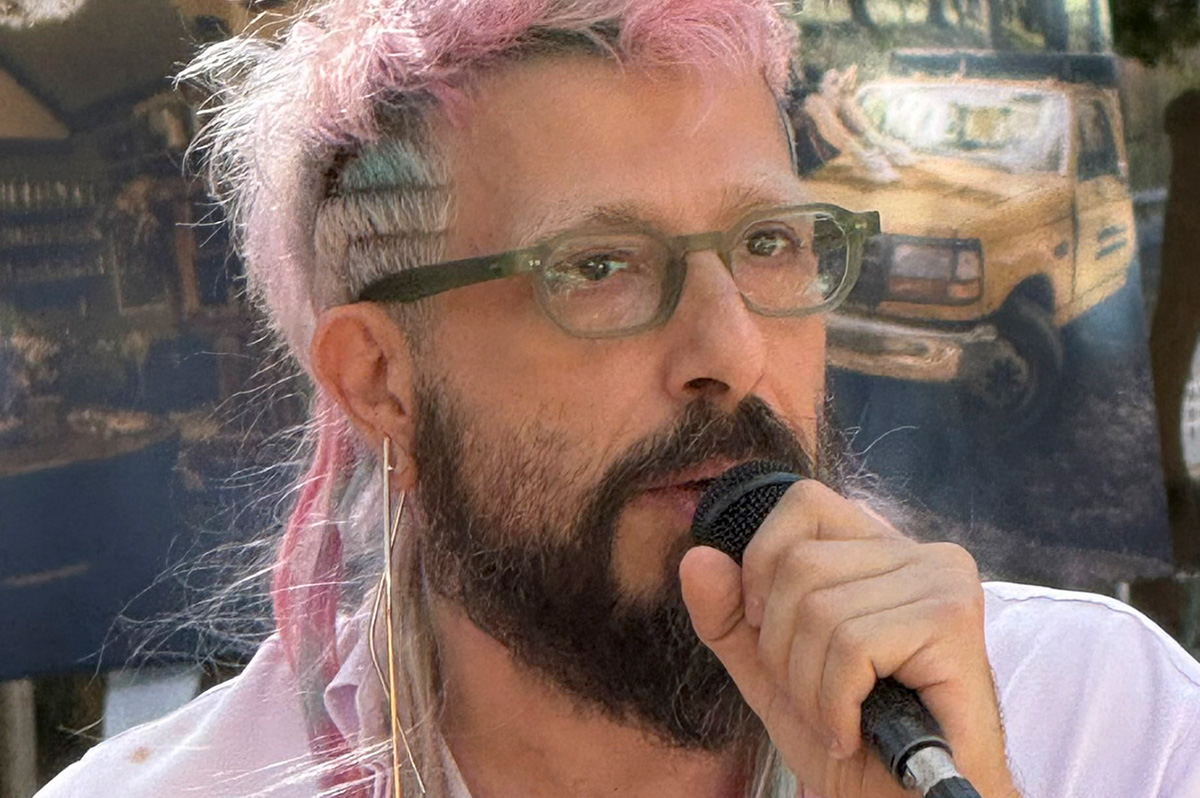
The Los Angeles Blade on Monday spoke with Gui Molhallem, the executive director of VoteLGBT (Institute for Full Citizenship), a group that seeks to increase LGBTQ+ and intersex representation in Brazilian politics.
Molhallem pointed out 35 LGBTQ+ candidates won their respective races in the Oct. 4 election. They include Natal Municipal Councilwoman Thabatta Pimenta, a member of the Green Party who became the first transgender woman from northeast Brazil elected to represent Rio Grande do Norte state in the country’s Chamber of Deputies.
Congresswoman Erika Hilton, a travesti member of the leftist Socialism and Liberty (PSOL) party on Oct. 4 won re-election with nearly 1.6 million votes, the most any female member of Congress has received in Brazilian history. Guilherme Cortes, a bisexual PSOL member from São Paulo state, and Rick Azevedo, a gay PSOL member from Rio de Janeiro state, are among the candidates who won their respective Chamber of Deputies races.

Samanda de Lula, a lesbian member of the leftist Workers’ Party, will represent Rio Grande do Norte in the Brazilian Senate.
Molhallem pointed out there will be 14 openly LGBTQ+ members of Congress once the candidates who won their races on Oct. 4 take office in February. This number is the highest of any country in the Americas.
President Luiz Inácio Lula da Silva will face off against Sen. Flávio Bolsonaro in the second round of the presidential election on Sunday after neither man received at least 50 percent of the vote on Oct. 4.

Lula, who leads the Workers’ Party, in 2022 defeated Bolsonaro’s father, then-President Jair Bolsonaro, in that year’s presidential election.
The Brazilian Supreme Court last year sentenced Jair Bolsonaro — who repeatedly targeted LGBTQ+ Brazilians and other groups while in office — to more than 27 years in prison for his role in an attempted coup that saw thousands of his supporters storm the Congress, presidential palace, and the Supreme Court itself on Jan. 8, 2023. Jair Bolsonaro is currently serving his sentence at his home in Brasília, the country’s capital, because of his poor health.
His son has pledged to pardon him if he becomes the country’s next president.
(Video by Michael K. Lavers for the Washington Blade)
AIDS and HIV
AIDS Walk Los Angeles takes to the streets in West Hollywood while raising money for HIV/AIDS Care
The annual fundraising event was attended by thousands and raised over $850,000

Hundreds of yellow shirts and thousands of people took over the streets of West Hollywood during AIDS Walk Los Angeles on Sunday, October 18th. Organized by APLA Health, the event raised over $850,000 for HIV/AIDS healthcare and prevention. Oakwood School raised the most money of any organization, with over $62,000 in donations.
Before the march began, participants gathered at West Hollywood Park, where speakers addressed the crowd from a large main stage. City officials and celebrity guests spoke before the march began, including Mayor John Heilman, County Supervisor Lindsay Horvath, comedian Joel Kim Booster, and singer David Archuleta.
CEO of APLA Health, Craig E. Thompson, took the stage and addressed the state of HIV and AIDS care in America. He spoke about the first AIDS Walk LA in 1985, which began when there was a “federal administration that stayed silent when thousands of our friends, partners, and neighbors were dying.” “We’ve been there before, and here we are again,” he said, referring to the federal cuts to HIV prevention programs, Medicaid, and more. According to Thompson, Medicare provides more healthcare to more people living with HIV than any other provider.
But despite these federal cuts, Thompson was hopeful for the future of HIV care, drawing on lessons learned early on in the epidemic by the original AIDS activists. “We didn’t wait for permission,” he said. “We showed up, we raised our voices, we walked, and we protected our community.”
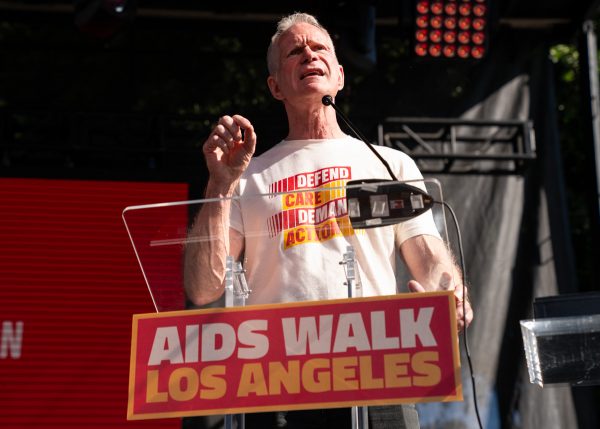
APLA Health CEO Craig E. Thompson speaks at AIDS Walk Los Angeles in West Hollywood Park on Sunday, October 18th, 2026.
Actress Michaela Jaé Rodriguez was honored with the first-ever Voice of Visibility Award for her work fighting stigma around HIV and AIDS. Known for her Golden Globe-winning performance as Blanca Evangelista in Pose, Rodriguez told the crowd that those living with HIV “are not statistics.”
“We are not disposable. Instead we’re daughters. We’re mothers. We’re sisters. We’re brothers. We’re fathers. We’re artists. We’re creators. We’re actors. We’re award winners,” she said to a roaring audience.
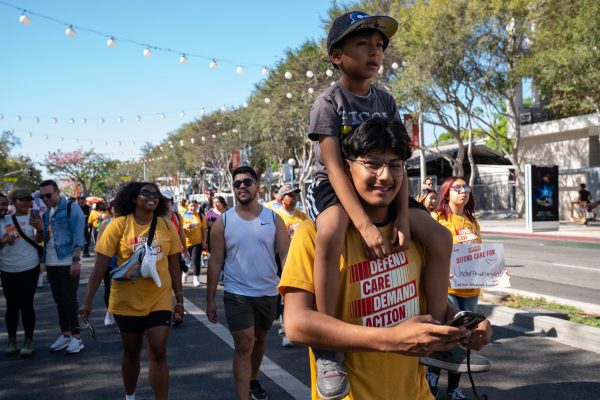
People walk down Santa Monica Boulevard during AIDS Walk Los Angeles on Sunday, October 18th, 2026.
The mood was joyful as the walk began. Many people carried signs with the names of loved ones living with HIV. Multiple musical groups performed, including a drumline, a pep band, and a mariachi group. People laughed, cheered, and danced as they strutted up and down Santa Monica Boulevard.
As the walk looped back to West Hollywood Park, people sat around talking with friends and community members. I walked past the lines for free ice cream and flu shots and wandered over to the AIDS Monument, which opened recently in 2025. Designed by artist Daniel Tobin, the monument is unlike most others. It is abstract, made up of tall and narrow metal poles and marble blocks.
A young tour guide in a baseball cap and chic sunglasses was giving a tour of the monument to a group of about five people. The guide’s name was Jude Schoenfeld, the Director of Public Programs for One Institute. Schoenfeld spoke, and the group walked through the metal beams emerging from the ground. At first, the poles were spread out organically like trees in a forest, but as the group wandered further, they unified into an organized grid towards the far end of the monument. This is where they stopped.
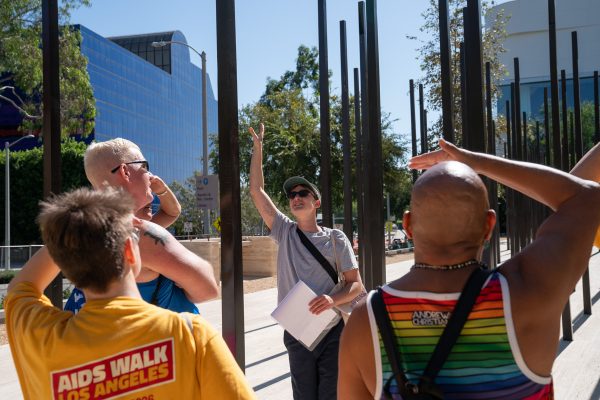
Jude Schoenfeld gives a tour at STORIES: The AIDS Monument after AIDS Walk Los Angeles in West Hollywood Park on Sunday, October 18th, 2026.
Quotes from the gay poets Gil Cuadros and Essex Hemphill were inscribed on a bronze plaque. Schoenfeld read them and remarked on how the artists died so young from complications with AIDS, both passing away in their late thirties. An older member of the tour group interjected, saying that living that long actually felt old for gay men at the time. “No one from that era that was gay expected to live beyond forty. We thought we were all gonna die of AIDS,” he said. “So thirties, that’s a whole life. We lost everybody when they were in their twenties.”
After the tour ended, I asked Schoenfeld what it’s like to give tours to people who lived through the early years of the AIDS epidemic, when you could lose a friend in a few months with hardly any warning. “Oftentimes, it’s emotional for people to be here,” they told me. “The great aspect of the tours is that they become a conversation and a place for folks to share memories.”
“People who’ve been in Los Angeles and West Hollywood for decades have just such a rich understanding of the history here. I’ve learned so much from just talking to folks who come on the tours,” Schoenfeld told me.
As we stood next to the monument with music blasting and kids playing a few hundred feet away, Schoenfeld told me about why they think it’s so important to learn the history of AIDS activism. “It’s never been more important,” they told me. “Especially as we’re seeing threats all around from different institutions that want to take funding away and want to take these resources that we’ve spent so long building.”
“I think this is a really important juncture in history,” they said. “We want this to be a site of continued activism.”
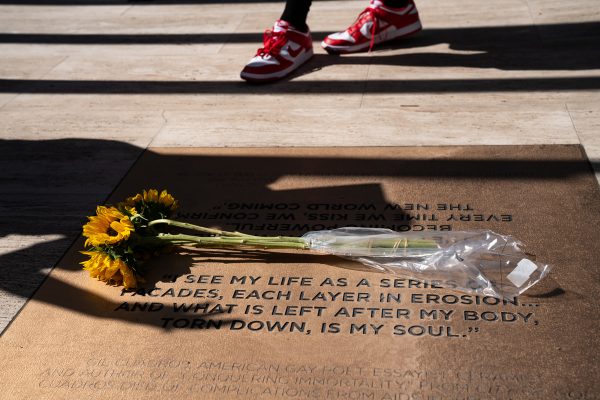
Flowers are laid on a plaque at STORIES: The AIDS Monument in West Hollywood Park on Sunday, October 18th, 2026.
Puerto Rico
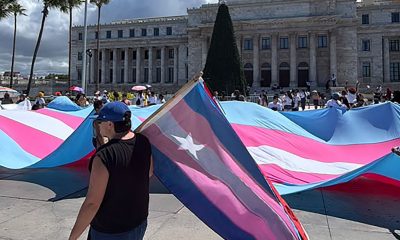
Annual National Trans Visibility March takes place in Puerto Rico
Participants highlighted anti-trans laws in U.S. commonwealth
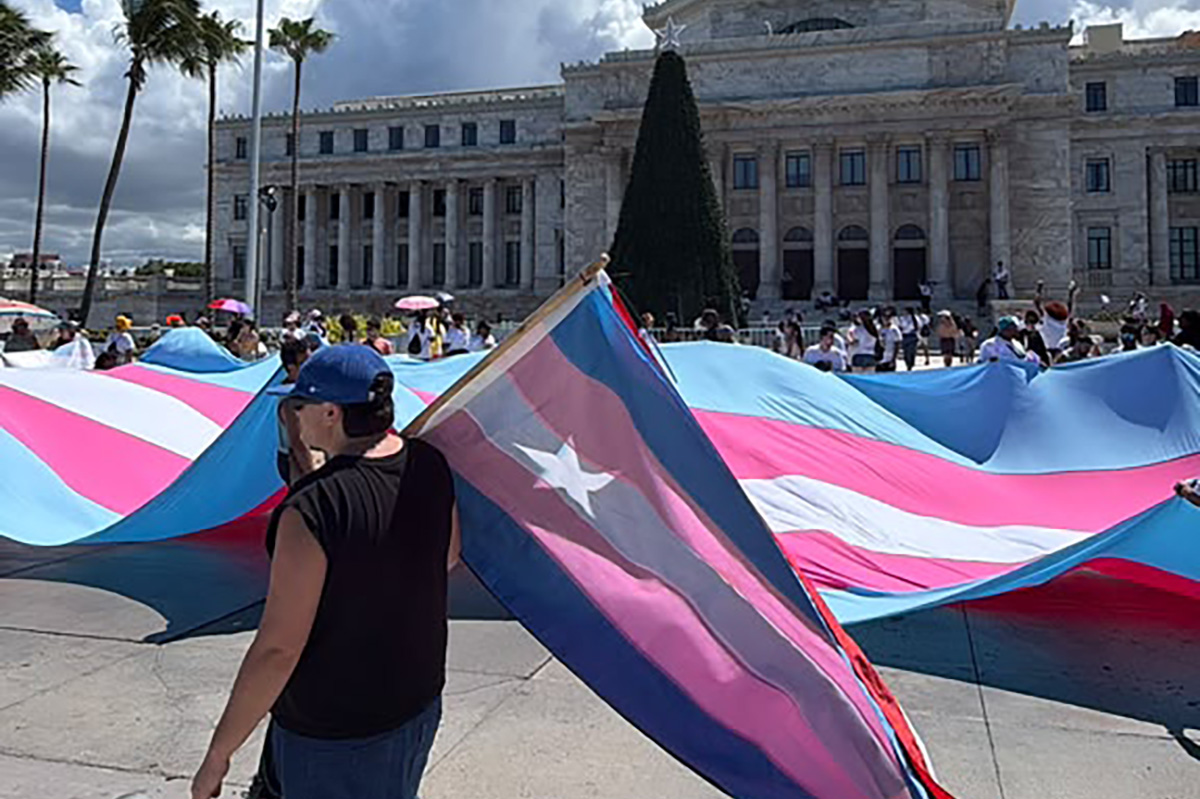
The annual National Trans Visibility March took place in Puerto Rico on Saturday.
The march ended at the Puerto Rican Capitol in San Juan, the U.S. commonwealth’s capital and largest city. Samy Nemir Olivares, a member of the Puerto Rico LGBTQ+ Federation’s board of directors who also works for Lambda Legal, is among those who spoke.
The march took place at the end of a three-day conference that took place in San Juan. Participants included:
• Ana Irma Rivera-Lassen, the first openly LGBTQ+ person elected to the Puerto Rican Senate
• Mila Hellfyre, a trans Puerto Rican activist
• Maru Rosa Hernández, a nonbinary plaintiff in Lambda Legal’s lawsuit that challenges the Puerto Rican government’s refusal to issue birth certificates with an “X” gender marker
• Peter Manuel Shepard Rivas, a Puerto Rican HIV/AIDS activist
• Lambda Legal Senior Counsel and Health Care Strategist Omar González-Pagán
Waves Ahead, Puerto Rico’s largest LGBTQ+ organization, is among the groups that sponsored the National Trans Visibility March and conference. Other sponsors included the TransLatin@ Coalition, the True Self Foundation, the Transgender Law Center, Advocates for Trans Equality, Human Rights Campaign, Gilead, the Georgetown University Law Center’s O’Neill Institute for National and Global Health Law, GLAAD, and the Hispanic Federation.
“Now it’s more important than ever to unite as an LGBTQ+ movement alongside our allies to protect the progress we have made in achieving trans and queer rights as both the federal and local governments attempt to erase and criminalize our identities,” said Olivares. “The president insists that trans identities don’t exist, yet they continue to attack our rights and existence through the laws.”
“But we are here, we are not going to be silenced or erased,” added Olivares. “As (with) any other Americans, trans and queer people deserve equal access to healthcare, housing, and nondiscrimination at the workplace and government services.”
Olivares in their comments noted the Puerto Rican government “has betrayed and undermined the LGBTQ community by signing into law more than” half a dozen anti-LGBTQ+ laws.
True Self Foundation Executive Director Miguel Vázquez-Rivera during a Congressional Hispanic Caucus briefing earlier this year noted these include a ban on gender-affirming healthcare for anyone under 21. Vázquez-Rivera also highlighted Law 26-2026, which prohibits the University of Puerto Rico and other “government facilities” from installing “mixed or gender-neutral multi-occupancy restrooms.”
Puerto Rico Gov. Jenniffer González, a Republican who is a member of the pro-statehood New Progressive Party, signed these laws after she took office in January 2025. González, who supports President Donald Trump, was Puerto Rico’s resident commissioner in the U.S. House of Representatives before she became governor.
Olivares told the Los Angeles Blade that National Trans Visibility March organizers decided to hold the annual event in Puerto Rico as a way to highlight the fact the commonwealth has “the most severe anti-trans legislation in the U.S.” and to stand in solidarity with local activists.
The first National Trans Visibility March took place in D.C. in 2019. Next year’s National Trans Visibility March is scheduled to take place in Atlanta.
Palm Springs
A quick visitor’s guide to Palm Springs before the winter
Traveler Ed Walks shares his Palm Springs highlights to check out this fall

by Ed Walsh
Palm Springs is gearing up for a busy fall highlighted by the 40th anniversary of Pride planned for the weekend of Nov. 6-8th. The Pride festival on Saturday, Nov. 7 is free and the Pride parade steps off on Sunday, Nov. 8. If you can get there early, the Pride block party will be on Arenas road starting at 3 p.m. on Friday, Nov. 6.
Before Pride, women took center stage with The Dinah, which ran this year from Weds, Sept. 30 to Sun., Oct. 4. The Dinah 2026 included headliner Hayley Kiyoko, alongside Da Brat, Sasha Keable, and The Aces.
Leather Pride kicks off the weekend before Pride, Thurs. Oct. 29- Sun., Nov.1. Leather will overlap with Halloween this year. Arenas Road will host its annual Halloween block party on Saturday, Oct. 31, 4 p.m. to 10 p.m.
The desert rewards those who can brave the heat in September with the Greater Palm Springs Spa Month. Check out the Greater Palm Springs Website (visitgreaterpalmsprings.com) for the deals. If you have never been to Desert Hot Springs, spa month is a good time to relax in mineral water for which the city is named. Azure Palm Hot Springs Resort & Day Spa Oasis is one of the best with indoor and outdoor mineral baths and famous pebble-lined stream “reflexology” walkway giving you a foot massage and soak.

Another good day trip outside Palm Springs city limits is Indio. Its downtown is undergoing a major resurgence, highlighted by its new City Hall and library. Indio unveiled a public art installation last summer in the heart of downtown. The 65- and 75-foot colorful robot-like sculptures called “The Messengers” were first displayed at the Coachella music festival in 2023 and are now permanently on display in Indio. Be sure to check out “The Place.” It is an indoor collective of local, independent, and inspiring artists. Two of those artists are Indio native Adolfo Vasquez and his husband, former LA resident Vincent Sandoval. They run the Chicano Candle company, which includes a candle bar where you can put together a unique scent that inspires you.

Palm Springs has two new queer landmarks put up over the past year. In October, a 65-foot Pride flagpole was installed at the corner of Arenas Road at Indian Canyon Drive, across from the Arenas District. Also in October 2025, the 8-foot-tall multicolored Pride Monument was unveiled at Frances Stevens Park at 500 N. Palm Canyon Drive, about a 15-minute walk from Arenas Road.

The Greater Palm Springs area has more gay resorts than any other place on the planet. Palm Springs offers 10 gay male resorts in city limits and neighboring Cathedral City has the largest resort in the area, Cathedral City Boys Club (CCBC). Sadly, Palm Springs’ only downtown gay resort, Canyon Club Hotel, closed in December and is being converted into a mainstream property.
All the gay resorts are clothing optional. Most provide free continental breakfast and some throw in a free lunch. The fabulous Santiago resort has the largest pool of any of the gay resorts and like its sister resorts, Twin Palms and Descanso, has a 24-hour free canteen where guests can help themselves to snacks and beverages. All three properties offer a free lunch and are known for pampering guests.
The Triangle Inn is kitty-corner from Santiago and is an historic property in the mid-century modern motif for which Palm Springs is known. It has a well-deserved loyal following.
The other gay resorts are in the Warm Sands neighborhood and include Palm Springs first gay resort, El MIrasol Villas, Casa Oliver, Desert Paradise, Vista Grande, Hacienda Palm Springs and InnDulge. CCBC, Desert Paradise Resort and Casa Oliver are the only gay resorts that offer day passes.
The space occupied by the legendary Barracks bar in Cathedral City will soon be reborn as the Cathedral City Eagle. Major construction has been underway at the property for months and it is scheduled to be open some time in October. Although the address is on E Palm Canyon Drive, it is a little hard to find even with GPS, because it is set back off the street behind the Arco station.

The other two gay bars in Cathedral City are One Eleven, Roost and Runway, which is part of CCBC. The nightlife on Arenas Road has remained stable and on the north end of town, Toucans Tiki Lounge is going strong on Thursdays through Sundays.
If you can get to Palm Springs by October 18, be sure to check out the exhibit “A Queer Arcana” at the Palm Springs Art Museum. The exhibit explores queer art and culture in the 20th and 21st centuries. The museum is free on Thursdays 5 p.m. to 8 p.m. You can combine it with a visit to the Palm Springs Village Fest street fair on Palm Canyon Drive that runs 7 p.m. to 10 p.m.
No visit to Palm Springs would be complete without a visit to the Palm Springs Aerial Tramway. The summit has great hiking trails where you can comfortably hike even in the summer with temperatures as much as 40 degrees cooler than the city.
The Palm Springs restaurant scene doesn’t disappoint. Boozehounds, on the north end of town, across from Toucans, is one of the more unique restaurants in town. They welcome dogs on the expansive patio, and the huge restaurant feels spacious even during the busiest times of the year. Be sure to try the pastrami sandwich.
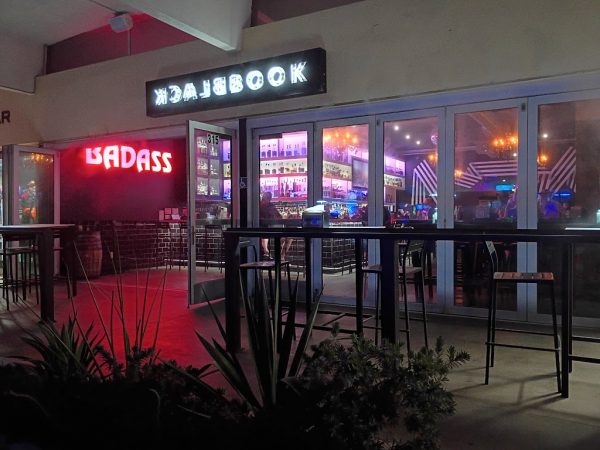
The other PS mainstays are the fab Trio, the upscale but down-to-earth Eight4Nine, and in the heart of downtown, Lulu’s, Pinocchio’s and the weekend drag brunches at Oscars, which is also famous for its Sunday Tea Dance. If you are looking for a late night bite, check out BlackBook on Arenas Road for casual gourmet bar food.
For a uniquely queer overall tour of Palm Springs, check out Drag & Fly Tours, which features stadium-style sideways seating on a bus. A drag queen shows off highlights and history of the city. Red Jeep Tours is another great option if you want to explore the desert’s natural beauty.
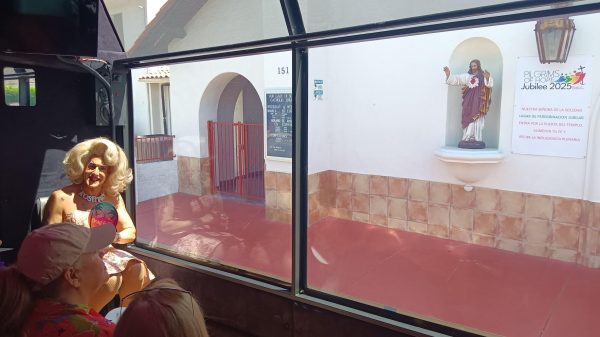
If you want to avoid crowds and enjoy lower hotel prices, summer through October is a good time to visit. It’s also slower in the desert in the weeks just after Thanksgiving. Crowds pick up in Christmas week through New Years and then things usually slow down in January until around Valentines Day.
For more information, the Greater Palm Springs official Web site is https://www.visitgreaterpalmsprings.com/

Latin queer and trans history along the U.S.- Mexico border on display at UC Riverside event

A Parvesh perspective: Actor Parvesh Cheena talks his roles in ‘Wives’

Allegations involving Ric Grenell raise questions about pay-for-play in White House

New Zealand High Court strikes down puberty blocker ban

Actor Kal Penn on the real lesson of ‘Trust Me, I’m a Doctor’

Making waves in the desert: How Brad Fuhr and KGAY keep the Coachella Valley connected

Meet the voice of Palm Springs: an interview with KGAY 103.1’s John Taylor

Fortune Feimster has always taken representation through comedy seriously

From ‘La Bola Negra’ to ‘Coward,’ here are this award season’s must-watch queer films

EXCLUSIVE: Democrats seek answers on EEOC settlement affecting LGBTQ+ workers
-
 Palm Springs5 days ago
Making waves in the desert: How Brad Fuhr and KGAY keep the Coachella Valley connected
-
 Palm Springs4 days ago
Meet the voice of Palm Springs: an interview with KGAY 103.1’s John Taylor
-
 a&e features4 days ago
Fortune Feimster has always taken representation through comedy seriously
-
 Movies5 days ago
From ‘La Bola Negra’ to ‘Coward,’ here are this award season’s must-watch queer films
-
 Federal Government3 days ago
EXCLUSIVE: Democrats seek answers on EEOC settlement affecting LGBTQ+ workers
-

 Brazil3 days ago
VIDEO: Interview with executive director of VoteLGBT (Institute for Full Citizenship) in Brazil
-

 Palm Springs4 days ago
A quick visitor’s guide to Palm Springs before the winter
-

 Television4 days ago
New ‘Carrie’ attempts to reinvent a classic for new generation
-
 Puerto Rico4 days ago
Annual National Trans Visibility March takes place in Puerto Rico
-

 AIDS and HIV4 days ago
AIDS Walk Los Angeles takes to the streets in West Hollywood while raising money for HIV/AIDS Care