West Hollywood
West Hollywood in brief- City government in action this week
Moving Image Media Art Program, One Institute’s Circa: LGBTQ+ Histories Festival, AIDS Walk Los Angeles, and more
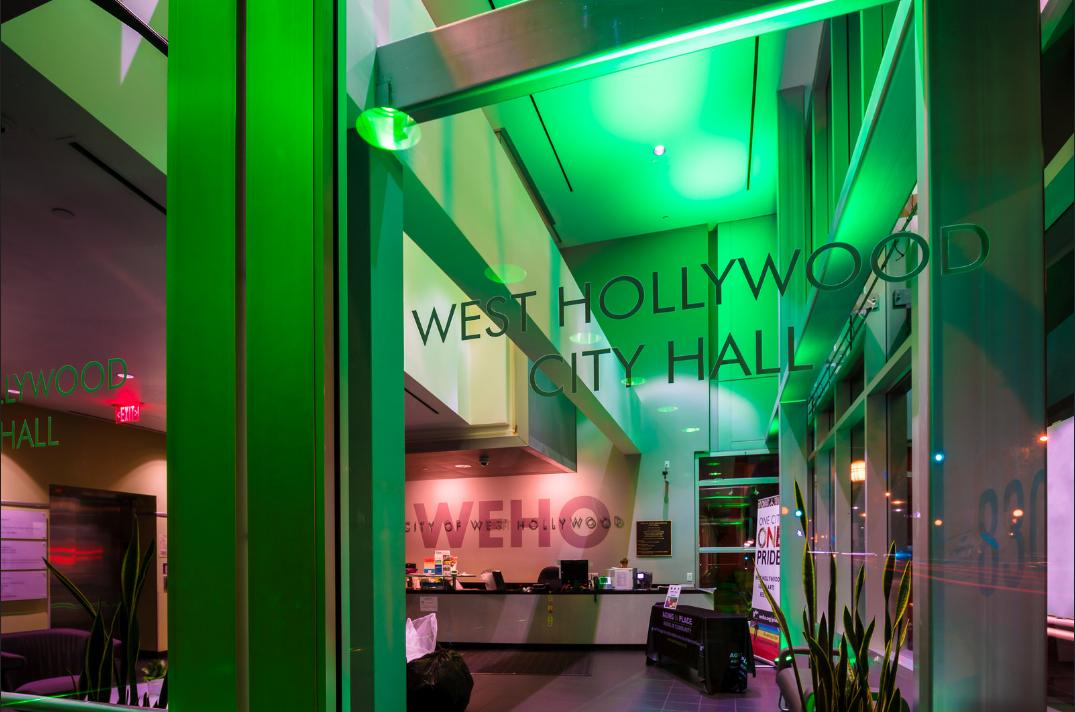
Meet City’s New Community Development Director, Nick Maricich, & Executive Team
WEST HOLLYWOOD – The City of West Hollywood will host three in-person community meetings for residents and businesses to meet the City’s new Community Development Director, Nick Maricich, and the City’s Executive Team. Community Meetings are free to attend and open to the public; no advance RSVP is required. Meetings will provide an opportunity for community members to share ideas and provide feedback about all City departments and services, especially the Community Development Department. Meetings will take place, as follows:
- On Tuesday, September 26, 2023 at 6 p.m. a Business-Focused Community Meeting will take place at West Hollywood City Hall in the Community Meeting Room, located at 8300 Santa Monica Boulevard.
- On Wednesday, September 27, 2023 at 1 p.m. a General Community Meeting will take place at the West Hollywood Aquatic & Recreation Center in the La Cienega Room, located at 8750 El Tovar Place.
- On Wednesday, September 27, 2023 at 6 p.m., a Resident-Focused Community Meeting will take place at West Hollywood Library Community Meeting Room, located at 625 N. San Vicente Boulevard.
The City of West Hollywood’s new Community Development Director Nick Maricich has a successful history of furthering successful urban planning in the Los Angeles region. In his most recent role, Maricich served as Principal City Planner overseeing functions of the Citywide Policy Planning Division for the City of Los Angeles. He also served for five years as the Director of Planning Policy and Development for former City of Los Angeles Mayor Eric Garcetti. He brings a wealth of experience in working with diverse Los Angeles neighborhoods in the areas of community planning and historic preservation. He obtained his bachelor’s degree in Geography with a minor in City and Regional Planning from the University of California, Berkeley and holds a master’s degree in Urban Planning from the University of California, Los Angeles.
The City of West Hollywood’s Community Development Department is responsible for managing the City’s urban environment and creating a livable community that balances the needs of residents, businesses, property owners and visitors. There are three divisions within the City’s Community Development Department that assist in creating and implementing the community’s vision: Current and Historic Preservation Planning; Long Range Planning; and Building and Safety. For additional information about the City’s Community Development Department, please visit www.weho.org/city-government/city-departments/community-development-department.
For more information about the meeting, please contact Christine Safriet, Assistant to the City Manager, at (323) 848-6467 or at [email protected].
For people who are Deaf or hard of hearing, please call TTY (323) 848-6496.
Neighborhood Conversations in September to Discuss Laurel House & Park Renovation
The City of West Hollywood invites community members to attend the fourth and fifth Neighborhood Conversations about the renovation of Laurel House and Park. The Neighborhood Conversations will be led by the architecture consultant team from Page & Turnbull in partnership with consultants Kimberli Meyer and Sara Daleiden who are guiding the development of the Artist Residency Program for the cultural resource. The meetings will offer an opportunity to preview initial designs and provide feedback on the architectural plan development for Laurel House and Park Artist Residency Program.
On Tuesday, September 26, 2023 there will be an in-person Neighborhood Conversation from 6 p.m. to 7:30 p.m. at the Plummer Park Community Center, located at 7377 Santa Monica Boulevard in Rooms 5 and 6. Drop-in; no RSVP is necessary. On Wednesday, September 27, 2023 there will be a virtual Neighborhood Conversation session from 1 p.m. to 2 p.m. via Zoom. Register in advance for this virtual meeting using the Zoom platform.
The City-owned real property at 1343 N. Laurel Avenue, known as Laurel House and Park, consists of a 30,000-square-foot lot, a 7,177-square-foot former single-family dwelling, and an unattached accessory structure that is approximately 2,379 square feet and consists of a chauffer’s cottage and garages. The original portions of the structures were built in 1917. The conversion of the original single-family residence into four apartment units and the southerly four-car garage addition were completed in 1941. The property was designated as a Local Cultural Resource by the City of West Hollywood in 1994.
In 2010, the West Hollywood City Council directed staff to develop a plan to open the grounds at 1343 N. Laurel Avenue as open space on a temporary/interim basis for public use. From 2013-2014, the City conducted an extensive community visioning process for the Laurel property. The community expressed support for several potential uses during the visioning process and prioritized several factors, including: access to more community gathering spaces; activation as an Arts and Cultural Center; maintenance and/or enhancements of the property’s use for peacefulness and beauty; preservation of the house and gardens, but activation through new features and programming; and, continued use for dog walking.
In 2018, the West Hollywood City Council received a report forwarded by the Arts and Cultural Affairs Commission focusing on Artist-in-Residence programs, including consideration of the use of 1343 N. Laurel Avenue as a potential Artist-in-Residence site. This recommendation was forwarded to the Council Subcommittee for further review and consideration. In October 2022, in a feasibility study update, the City Council confirmed that the site should be used for arts and culture programs and it directed staff to issue a Request for Proposals (RFP) for a qualified architectural design firm to continue the programming and design process. Page & Turnbull was awarded the architectural contract to begin schematic design development for the Laurel House and Park.
For additional information, please contact Alicen Bartle, City of West Hollywood Project Development Administrator, at (323) 848-6323 or at [email protected].
For people who are Deaf or hard of hearing please call TTY (323) 848-6496.
City of West Hollywood Presents Artists and Icons Featuring Tim Sullivan
The City of West Hollywood’s Artists and Icons series will host a film screening of the short documentary, Relighting Candles: The Tim Sullivan Story, followed by a conversation and Q&A with advocate, activist, and candlemaker Tim Sullivan moderated by director, producer, choreographer, and author Adam Shankman.
The event will take place on Wednesday, October 4, 2023 at 7 p.m. at the City of West Hollywood’s Council Chambers/Public Meeting Room, located at 625 N. San Vicente Boulevard. The event is free, but seating is limited. RSVP is requested via Eventbrite. Parking validation for the adjacent five-story West Hollywood Park structure will be available at the event (parking is limited to availability).
Tim Sullivan is a true West Hollywood hero. Ever since opening his candle shop in West Hollywood 25 years ago, Tim has employed people experiencing homelessness as well as newly sober people each December holiday season to help pour the thousands of candles ordered each year. Tim has been sober since 1981 and has never lost the spark to serve his community.
Relighting Candles: The Tim Sullivan Story is a short documentary by Zeberiah Newman and Michiel Thomas and executive-produced by Ben Falcone and Melissa McCarthy that chronicles the 82-year-old Sullivan’s inspiring journey from alcoholism to sobriety to employing unhoused and newly sober members of his community at Timothy Jay Candles.
The West Hollywood Artists & Icons series is a periodic event organized by the City of West Hollywood’s Arts Division that celebrates the lives and work of West Hollywood residents and artists who present their work in the City, and who have made significant contributions to local, national, or global culture. The series has previously focused on many local artists and icons including Lou Adler, Barbara Bain, Bette Davis & Mae West, Frances Taylor Davis, Dan Guerrero, and Michael McMillen.
For additional information about the Artists & Icons Series, please visit www.weho.org/community/arts-and-culture/about/west-hollywood-artists-icons.
For more information, please contact Joy Tribble, the City of West Hollywood’s Arts Specialist, at (323) 848-6360 or at [email protected].
For people who are Deaf or hard of hearing, please call TTY (323) 848-6496.
City Presents How To Hack Birth Control Screening and Q&A
The City of West Hollywood and its Women’s Advisory Board will present a free community screening of the award-winning digital series How to Hack Birth Control followed by a Q&A with the director and cast members and moderated by the City’s Mayor Pro Tempore John M. Erickson. The event will also include a reception, giveaways, and health information.
The event will take place on Saturday, September 23, 2023, at 4 p.m. at the City of West Hollywood’s Council Chambers/Public Meeting Room, located at 625 N. San Vicente Boulevard. The event is free, but seating is limited. RSVP is requested via Eventbrite. Parking validation for the adjacent five-story West Hollywood Park structure will be available at the event (parking is limited to availability, alternative transportation is encouraged).
Directed and written by Sassy Mohen, How to Hack Birth Control is a digital comedy series about navigating and taking charge in today’s contraception universe, starring Garrison Oliver Gross, Lauren Elizabeth Harris, Aisha Renee Holden, Jackie R. Jacobson, Brooke Ashley Rose Johnson, Micaela Martinez, Xanthe Paige, Spring Inés Peña, Cynthia San Luis, and Dash Kennedy Williams.
Told through the sharp wit and perky charm of the narrator Ruth, How to Hack Birth Control takes a run at a hit list of ‘not supposed to talk about,’ scenarios. How do you get the morning after pill quickly and for free? Where can you hide your birth control? How do you get your doctor to listen to you? All of the things women want to know but are taught to be too afraid to ask. How to Hack Birth Control has been an official selection at more than 60 film festivals, including the Nashville Film Festival, the Geena Davis’ Bentonville Film Festival, NewFilmmakers LA, and Harlem International Film Festival, and has won 21 awards.
For more information, please contact Larissa Fooks, the City of West Hollywood’s Community Programs Coordinator, at (323) 848-6413 or at [email protected].
For people who are Deaf or hard of hearing, please call TTY (323) 848-6496.
City of West Hollywood Recognizes September as National Recovery Month and Invites Community to the Van Ness Recovery House Carnival Celebration
The City of West Hollywood recognizes September as National Recovery Month, which started in 1989 and is a national observance held every September to educate Americans that substance use treatment and mental health services can enable those with a mental and/or substance use disorder to live a healthy and rewarding life. Recovery month aims to increase public awareness surrounding mental health and addiction recovery and celebrate the gains made by those in recovery. Recovery Month has adopted the theme of Every Person. Every Family. Every Community. as its permanent tagline.
The observance of National Recovery Month reinforces the City of West Hollywood’s commitment to providing social services, health education, and information to community members in-need and to improve quality of life. The City contracts with several agencies to provide substance abuse, recovery, and health and mental health services. In addition to the City’s work with contracted agencies, the City works to educate and raise awareness about the dangers of substance use.
On August 31, 2023, the City joined the recovery community in recognizing Overdose Awareness Day, a global event held annually to remember and memorialize the lives lost to drug overdoses and to promote awareness about the importance of overdose prevention. West Hollywood City Hall was lit in purple, the color of recognition for Overdose Awareness Day, and also participated by sharing #OverdoseAwarenessDay messaging in @wehocity social media.
The City of West Hollywood invites the community to attend the Van Ness Recovery House Carnival Celebration on Saturday, September 30, 2023, from 1 p.m. to 7 p.m., at Plummer Park’s Fiesta Hall and Great Lawn, located at 7377 Santa Monica Boulevard. In celebration of the Van Ness Recovery House’s 50th Anniversary, the ‘Carnival’ is being brought to the community to highlight the organization’s 50 years of work and service, and to recognize September as National Recovery Month. The Carnival is free and open to the community and will include food, games, and entertainment.
The Van Ness Recovery House is a nonprofit organization whose mission is to meet the critical and expanding needs of the LGBTQ+ community through whole person care and integrated services that target drug and alcohol addiction, mental health concerns, and sexual health in a socially supportive environment. The 20-bed residential treatment facility opened in 1973 and was one of the first facilities to welcome people with HIV and AIDS into residential addiction recovery treatment.
Since its inception, the Recovery House has served thousands of individuals struggling with substance related disorders. The City contracted with the Van Ness Recover House beginning in 1992 and has referred thousands of community members and residents to the agency to receive services.
“The City of West Hollywood has made it an ongoing priority to address recovery services by providing funding for programming at a variety of agencies and by educating the public about substance use,” said City of West Hollywood Mayor Pro Tempore John M. Erickson. “Congratulations to the Van Ness Recovery House for 50 years of amazing work and service to the community.”
As part of its commitment to recovery services, the City of West Hollywood is working on next steps in the renovation of the historic Log Cabin building, which houses the West Hollywood Recovery Center (WHRC) on N. Robertson Boulevard. In late June 2023, the California State Legislature approved AB 102 Budget Act of 2023, which contains $1.15 million in appropriated funding to support the Log Cabin renovation project. On Monday, July 10, 2023, Governor Gavin Newsom signed AB 102 into law.
More information about the Log Cabin is posted here: www.weho.org/Home/Components/News/News/10917/23.
The City of West Hollywood’s Human Services Division publishes a Substance Abuse Services Guide featuring information about addiction and recovery resources: www.weho.org/services/human-services/substance-abuse-addiction-recovery.
For more information about the City’s addiction and recovery resources, please contact the City of West Hollywood’s Human Services Division at (323) 848-6510. For people who are Deaf or hard of hearing, please call TTY (323) 848-6496.
For additional information about the Van Ness Recovery House’s Carnival Celebration, please contact Jasmine Duckworth, City of West Hollywood Community Programs Coordinator, at (323) 848-6559 or at [email protected].
For people who are Deaf or hard of hearing, please call TTY (323) 848-6496.
AIDS Walk Los Angeles to Take Place in City of West Hollywood on Sunday, October 15
The 38th annual AIDS Walk Los Angeles returns to West Hollywood Park, located at 647 N. San Vicente Boulevard, on Sunday, October 15, 2023 beginning at 10 a.m.
Due to the AIDS Walk, there will be limited street and lane closures in West Hollywood. Drivers should expect delays and plan accordingly.
Street closures will occur as follows on Sunday, October 15, 2023:
- N. San Vicente Boulevard between Santa Monica Boulevard and Melrose Avenue: 5 a.m. to 5 p.m.
- Santa Monica Boulevard between N. Doheny Drive and N. La Cienega Boulevard: 7 a.m. to 3 p.m.
Lane closures will occur as follows on Sunday, October 15, 2023:
- Southbound lane at the intersection of N. La Cienega Boulevard and Santa Monica Boulevard: 7 a.m. to 3 p.m.
- Both southbound lanes at the intersection of N. Doheny Drive and Santa Monica Boulevard: 7 a.m. to 3 p.m.
- Both northbound lanes at the intersection of N. Doheny Drive and Santa Monica Boulevard: 7 a.m. to 3 p.m.
- Westbound lane on Melrose Avenue between N. Robertson Boulevard and N. Doheny Drive will be limited to local access. (Vehicles will not be allowed to enter the intersection at N. Doheny Drive and Santa Monica Boulevard.)
- N. Doheny Drive from Rangely Avenue to Melrose Avenue – (North side traffic will be diverted east on Melrose Avenue): 7 a.m. to 3 p.m.
- N. Doheny Drive from Carmelita Avenue to Santa Monica Boulevard – (South side traffic will be diverted West on Sunset Boulevard): 7 a.m. to 3 p.m.
West Hollywood Park impacts will occur as follows on Saturday, October 14, 2023 and Sunday, October 15, 2023:
- Basketball courts will be closed on Saturday, October 14 and Sunday October 15.
- Dog parks will remain open on Saturday, October 14 with access via alternate gates.
- Dog parks will be closed on Sunday, October 15 between 6 a.m. and 2 p.m.
- Dog park gates will reopen on Sunday, October 15 at 2 p.m. with access via alternate gates.
To avoid traffic and parking delays, event participants are encouraged to use alternative modes of transportation such as ride sharing services or Metro. Some public parking structures/lots will offer a limited amount of parking at the following locations for a fee on Sunday, as follows (please note that some locations are not immediately adjacent to West Hollywood Park):
- Kings Road Parking Structure, 8383 Santa Monica Boulevard
- La Jolla/Havenhurst Lot, 1043 La Jolla Avenue (metered)
- Orange Grove Lot, 1114 N. Orange Grove Avenue
- Spaulding Lot, 7718 Santa Monica Boulevard
- Queens Lot, 8459 Sunset Boulevard
- Sunset Lot, 8775 Sunset Boulevard
- West Hollywood Park Five-Story Structure, 647 N. San Vicente Boulevard, enter from N. Robertson Boulevard/El Tovar Place (due to the N. San Vicente Boulevard closure).
AIDS Walk Los Angeles participants can hop on one of several Los Angeles County Metropolitan Transportation Authority (Metro) bus lines that connect to the City of West Hollywood, including: 4, 10, 30/330, 105, 212/312, 217, and 218. More information regarding lines is available at www.metro.net and Metro will post service advisories at www.metro.net/service/advisories.
AIDS Walk Los Angeles is the world’s first walk to fight HIV and AIDS and benefits APLA Health, which provides world-class LGBTQ+ empowering healthcare, HIV specialty care, food, housing, and other essential support services. 38 years ago, a group of fed-up activists, patients, advocates, and friends put their soles on the line to shake the government into action during the AIDS crisis.
Since that first Walk in 1985, hundreds of thousands of walkers and their supporters have raised more than $94 million to combat HIV and AIDS. These funds are a vital lifeline that sustains APLA Health’s programs and services benefiting more than 18,000 individuals living in Los Angeles County, which continues to have the second largest number of people living with HIV in the country.To register for AIDS Walk Los Angeles and for more information, please visit www.aidswalkla.org.
For more information, contact APLA Health by email at [email protected] or by phone/text at (213) 201-9255.
City of West Hollywood will Co-Sponsor the One Institute’s Circa: LGBTQ+ Histories Festival
The City of West Hollywood is a proud co-sponsor of the One Institute’s Circa: LGBTQ+ Histories Festival. The month-long festival will feature 70 programs throughout October beginning on Sunday, October 1, 2023 and ending on Tuesday, October 31, 2023. As part of the festival, 12 programs will be located in West Hollywood. Visit www.circafestival.org to view the schedule of events and to purchase tickets.
Circa’s unprecedented lineup honors LGBTQ+ History Month through thought-provoking exhibitions, readings, performances, panel conversations, and more, showcasing the trailblazing history and cultural contributions of the LGBTQ+ community. Festival programs spotlight the bold artistic talent of more than 200 community presenters representing every part of Los Angeles’ thriving arts and cultural landscape, from leading actors, writers, thinkers, filmmakers, and cultural organizations.
Circa 2023 will open on Sunday, October 1, 2023 with the ONE Magazine at Seventy exhibition. This will highlight the story of triumph and courage surrounding ONE Magazine, the first nationally distributed LGBTQ+ magazine in the United States. Organized by One Institute, curated by One Archives at the USC Libraries, and co-presented with the Los Angeles LGBT Center, the event will start at 3 p.m. at the Los Angeles LGBT Center’s Village at Ed Gould Plaza, located at 1125 N. McCadden Place in Los Angeles.
Events in West Hollywood will begin on Wednesday, October 4, 2023 at 7:30 p.m. with Stories of Sex Work at The Mic at Micky’s, located at 8857 Santa Monica Boulevard. Other events in West Hollywood will include panel discussions, pop-up exhibits, lectures, and various workshops occurring throughout the month. More information and tickets for all events happening in West Hollywood can be found at West Hollywood – Circa (circafestival.org).
Participating organizations include the ACLU of Southern California, Celebration Theatre, Gender Justice LA, the Getty Research Institute, the Goethe-Institute, Lambda Literary, Museum of Neon Art, William Grant Still Arts Center, Williams Institute, and more. Program participants include groundbreaking actor Michael Kearns, Making Gay History podcaster and author Eric Marcus, Lambda Literary Awards winner Abdi Nazemian, pioneering cleric and activist Reverend Troy Perry, trailblazing photographer body artist Sheree Rose, cultural anthropologist Dr. Gayle Rubin, TransLatin@ Coalition founder Bamby Salcedo, founder of the Black AIDS Institute Phill Wilson, artist Dorian Wood, young artist and activist Mars Wright criminal defense attorney and civil rights activist Mia Yamamoto, and many more.
Founded in 1952, One Institute is the oldest active LGBTQ+ organization in the country, dedicated to telling LGBTQ+ history and stories through education, arts, and social justice programs. One Institute serves as the independent community partner that supports ONE National Gay & Lesbian Archives at the University of Southern California (USC) Libraries, the largest repository of Lesbian, Gay, Bisexual, Transgender, Queer (LGBTQ) materials in the world. One Institute’s mission is to elevate queer and trans histories and embrace emerging stories through collaborative education, arts, and cultural programs. Moreover, ONE Institute envisions a world motivated by social movements of the past to take action toward queer and trans liberation.
In addition to the festival, an exhibition in celebration of One Magazine’s 70th Anniversary will debut on Sunday, October 1, 2023 at the Los Angeles LGBT Center’s Advocate & Gochis Galleries and Courtyard. Exhibition materials will highlight iconic artifacts from ONE Magazine’s history such as the October 1954 issue that became the focal point of the landmark Supreme Court case ONE, Inc. v. Olesen, which was the first in U.S. history to rule in favor of LGBTQ+ freedom of speech and expression.
The curatorial and educational choices made by One Institute are guided by a commitment to social equity and justice. One Institute engages with the complexity of LGBTQ+ history and representation through highlighting the intersectional narratives of Black, Indigenous, people of color (BIPOC), women, gender-nonconforming and transgender people, people of various abilities, youth, and elders across all socio-economic classes.
To learn more about the One Institute, please visit www.oneinstitute.org.
West Hollywood Presents Go Tell It on the Mountain (Adapted 2023) by Artist Ray Anthony Barrett and Silent Homeless Lamp (2023) by Artist Iván Navarro
The City of West Hollywood proudly presents the next exhibitions in the Moving Image Media Art (MIMA) program. Go Tell It on the Mountain (Adapted 2023), a short film from artist Ray Anthony Barrett, will make its worldwide debut on the Streamlined Arbor billboard located at 9157 Sunset Boulevard, and will air at the top of every hour for 10½ minutes. Silent Homeless Lamp (2023), a short film from artist Iván Navarro, will make its debut at the Invisible Frame billboard located at 8743 Sunset Boulevard, and will air at the top of every hour, and 30-minutes past every hour for approximately five minutes. Both works will be on exhibition from Sunday, October 1, 2023, through Wednesday, January 31, 2024.
MIMA is an ongoing exhibition series of moving image media artworks on multiple digital billboards at various locations along Sunset Boulevard. The goals of the MIMA program are to foster cultural equity, expand accessibility, inspire communication, and enhance the human experience of the Sunset Strip.
Go Tell It on the Mountain (Adapted 2023) is Artist Ray Anthony Barrett’s months-long expedition across the majestic vistas of the western United States. An artist, writer, photographer, and chef, Barrett’s Homeric odyssey coalesced as his restaurant was scheduled to open the day California went into the COVID-19 lockdown. Go Tell It on the Mountain (Adapted 2023) is a Black man’s existential journey to erase the erasure of Colonialism, to reclaim agency around food security, and to reconcile his complex relationship with the land to which his history and existence are so inextricably linked.
Ray Anthony Barrett is a multidisciplinary artist whose practice encompasses filmmaking, photography, sculpture, and writing. He has presented his soul food popup Cinqué in collaboration with The Underground Museum, approaching the culinary project as an artistic undertaking. Barrett exhibited at the 2010 Dakar Biennial and has been profiled in the Los Angeles Times. He earned a BA from the University of Missouri in 2003 and an MFA from Pacific Northwest College of Art in 2011. Barrett lives and works in Los Angeles.
Iván Navarro uses the quotidian of the things we take for granted to illustrate how difficult it is to address a problem to which we are so willfully blind. As Navarro searches for an outlet, his fluorescent-bulb shopping cart (an ode to Dan Flavin on wheels) strolling through an affluent neighborhood, doesn’t receive a single glance. With Silent Homeless Lamp (2023), Navarro uses what has become the universal symbol of transience – a shopping cart – to allegorize our collective complicity and the draining of resources that it requires to address something that, if seen, could have been prevented. Navarro’s cart persists, lit with a blinding white glow. A beacon of hope, a lamp, to light the way for all.
Iván Navarro graduated with a BFA from PUC University of Chile, Santiago, in 1995 and has been living and working in New York since 1997. In 2021, Navarro held his retrospective exhibition PLANETARIUM in Paris, a collaboration between Centre Quartre and Gallerie Templon. Navarro’s solo exhibitions have been on view worldwide, including Brussels, New York, Paris, Santiago, and Seoul. Navarro’s group exhibitions have also been held around the world, including in New York, New Zealand, San Francisco, and Santiago.
The Moving Image Media Art Program (MIMA) is a City of West Hollywood exhibition series administered by the City’s Arts Division as part of its Art on the Outside Program and is presented with the City’s Sunset Arts and Advertising Program. MIMA offers artists the opportunity, and the funding, to create immediate, and ambitious works of art that engage with the unique visual landscape of the Sunset Strip.
MIMA enables artists to occupy, contest, and play with the definition and uses of public space and manifest moments of connection and spectacle. Artists exhibited in the program are selected from the MIMA Prequalified List, a rolling, open-call for moving image media artists, curators, and non-profit arts organizations, with applications reviewed bi-annually by the City of West Hollywood’s Arts and Cultural Affairs Commission, in May and November. The MIMA Prequalified List includes a diverse list of artists of all career levels; from emerging to internationally recognized. https://go.weho.org/mima
The City of West Hollywood’s Arts Division delivers a broad array of arts programs including Art on the Outside (temporary public art), Arts Grants, City Poet Laureate, Drag Laureate, Free Theatre in the Parks, Human Rights Speaker Series, Library Exhibits, WeHo Pride Arts Festival, Summer Sounds + Winter Sounds, Urban Art (permanent public art), and WeHo Reads. For more information about City of West Hollywood arts programming, please visit www.weho.org/arts.
For more information about MIMA contact Rebecca Ehemann, City of West Hollywood Arts Manager at [email protected] or at (323) 848-6846.
For people who are Deaf or hard of hearing please call TTY (323) 848-6496.
************************************************************************************
For up-to-date information about City of West Hollywood news and events, follow @wehocity on social media, sign-up for news updates at www.weho.org/email, and visit the City’s calendar of meetings and events at www.weho.org/calendar.
West Hollywood City Hall is open for walk-in services at public counters or by appointment by visiting www.weho.org/appointments. City Hall services are accessible by phone at (323) 848-6400 and via website at www.weho.org.
Receive text updates by texting “WeHo” to (323) 848-5000.



AIDS and HIV
AIDS Walk Los Angeles takes to the streets in West Hollywood while raising money for HIV/AIDS Care
The annual fundraising event was attended by thousands and raised over $850,000
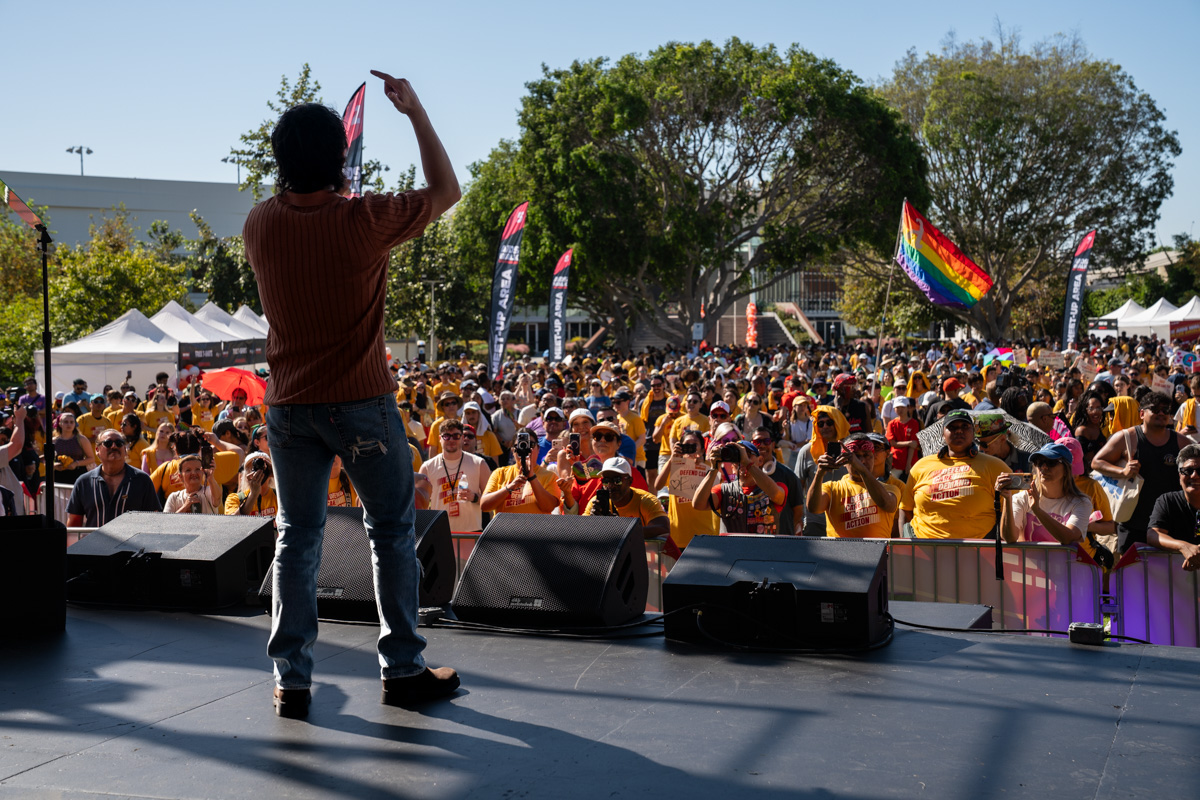
Hundreds of yellow shirts and thousands of people took over the streets of West Hollywood during AIDS Walk Los Angeles on Sunday, October 18th. Organized by APLA Health, the event raised over $850,000 for HIV/AIDS healthcare and prevention. Oakwood School raised the most money of any organization, with over $62,000 in donations.
Before the march began, participants gathered at West Hollywood Park, where speakers addressed the crowd from a large main stage. City officials and celebrity guests spoke before the march began, including Mayor John Heilman, County Supervisor Lindsay Horvath, comedian Joel Kim Booster, and singer David Archuleta.
CEO of APLA Health, Craig E. Thompson, took the stage and addressed the state of HIV and AIDS care in America. He spoke about the first AIDS Walk LA in 1985, which began when there was a “federal administration that stayed silent when thousands of our friends, partners, and neighbors were dying.” “We’ve been there before, and here we are again,” he said, referring to the federal cuts to HIV prevention programs, Medicaid, and more. According to Thompson, Medicare provides more healthcare to more people living with HIV than any other provider.
But despite these federal cuts, Thompson was hopeful for the future of HIV care, drawing on lessons learned early on in the epidemic by the original AIDS activists. “We didn’t wait for permission,” he said. “We showed up, we raised our voices, we walked, and we protected our community.”
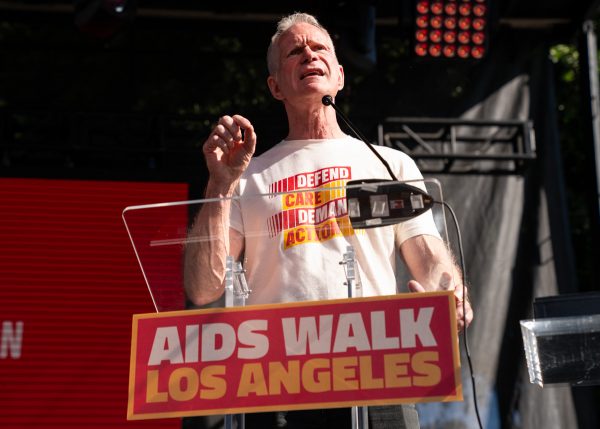
APLA Health CEO Craig E. Thompson speaks at AIDS Walk Los Angeles in West Hollywood Park on Sunday, October 18th, 2026.
Actress Michaela Jaé Rodriguez was honored with the first-ever Voice of Visibility Award for her work fighting stigma around HIV and AIDS. Known for her Golden Globe-winning performance as Blanca Evangelista in Pose, Rodriguez told the crowd that those living with HIV “are not statistics.”
“We are not disposable. Instead we’re daughters. We’re mothers. We’re sisters. We’re brothers. We’re fathers. We’re artists. We’re creators. We’re actors. We’re award winners,” she said to a roaring audience.
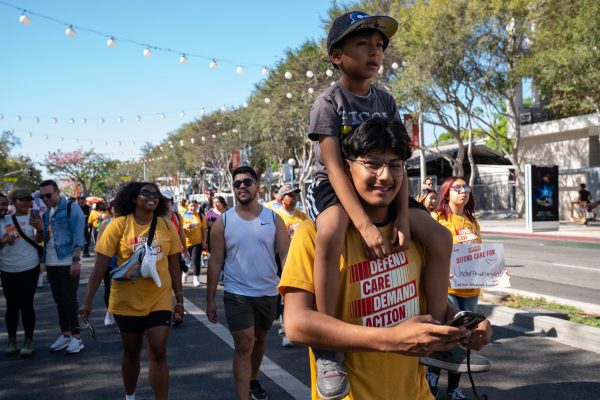
People walk down Santa Monica Boulevard during AIDS Walk Los Angeles on Sunday, October 18th, 2026.
The mood was joyful as the walk began. Many people carried signs with the names of loved ones living with HIV. Multiple musical groups performed, including a drumline, a pep band, and a mariachi group. People laughed, cheered, and danced as they strutted up and down Santa Monica Boulevard.
As the walk looped back to West Hollywood Park, people sat around talking with friends and community members. I walked past the lines for free ice cream and flu shots and wandered over to the AIDS Monument, which opened recently in 2025. Designed by artist Daniel Tobin, the monument is unlike most others. It is abstract, made up of tall and narrow metal poles and marble blocks.
A young tour guide in a baseball cap and chic sunglasses was giving a tour of the monument to a group of about five people. The guide’s name was Jude Schoenfeld, the Director of Public Programs for One Institute. Schoenfeld spoke, and the group walked through the metal beams emerging from the ground. At first, the poles were spread out organically like trees in a forest, but as the group wandered further, they unified into an organized grid towards the far end of the monument. This is where they stopped.
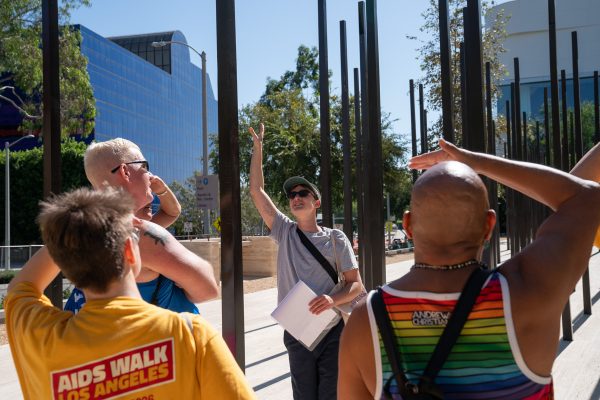
Jude Schoenfeld gives a tour at STORIES: The AIDS Monument after AIDS Walk Los Angeles in West Hollywood Park on Sunday, October 18th, 2026.
Quotes from the gay poets Gil Cuadros and Essex Hemphill were inscribed on a bronze plaque. Schoenfeld read them and remarked on how the artists died so young from complications with AIDS, both passing away in their late thirties. An older member of the tour group interjected, saying that living that long actually felt old for gay men at the time. “No one from that era that was gay expected to live beyond forty. We thought we were all gonna die of AIDS,” he said. “So thirties, that’s a whole life. We lost everybody when they were in their twenties.”
After the tour ended, I asked Schoenfeld what it’s like to give tours to people who lived through the early years of the AIDS epidemic, when you could lose a friend in a few months with hardly any warning. “Oftentimes, it’s emotional for people to be here,” they told me. “The great aspect of the tours is that they become a conversation and a place for folks to share memories.”
“People who’ve been in Los Angeles and West Hollywood for decades have just such a rich understanding of the history here. I’ve learned so much from just talking to folks who come on the tours,” Schoenfeld told me.
As we stood next to the monument with music blasting and kids playing a few hundred feet away, Schoenfeld told me about why they think it’s so important to learn the history of AIDS activism. “It’s never been more important,” they told me. “Especially as we’re seeing threats all around from different institutions that want to take funding away and want to take these resources that we’ve spent so long building.”
“I think this is a really important juncture in history,” they said. “We want this to be a site of continued activism.”
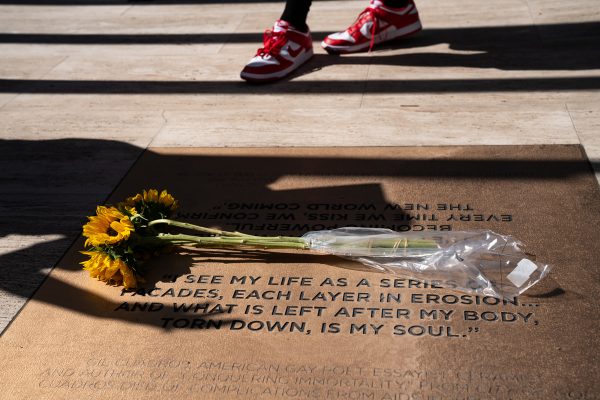
Flowers are laid on a plaque at STORIES: The AIDS Monument in West Hollywood Park on Sunday, October 18th, 2026.
California
Trans woman says Kyle Brazeal used anti-trans slur, threw purse at her in 2024
WeHo City Council candidate denies he said ‘tranny’ during argument at Gym Bar
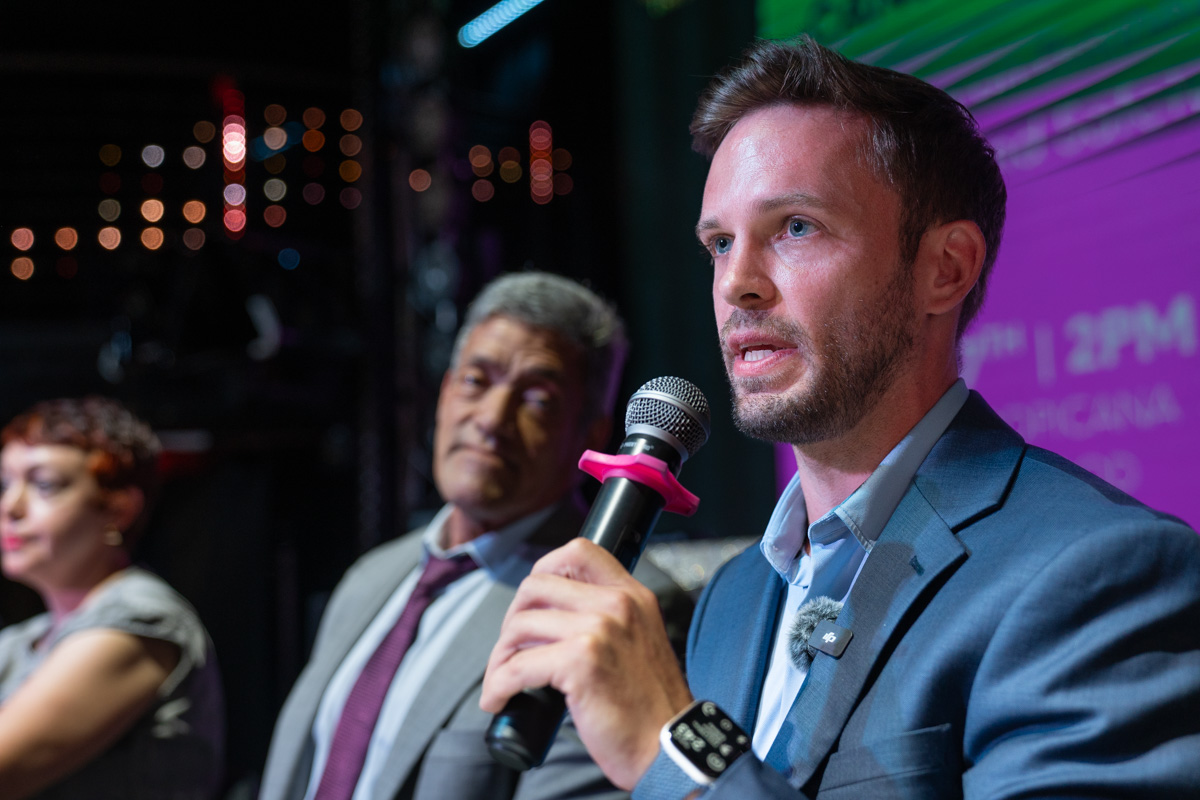
A transgender woman claims that West Hollywood City Council candidate Kyle Brazeal called her a “tranny” and threw a purse at her at Gym Bar in 2024.
The Los Angeles Blade spoke with the alleged victim and two people who say they witnessed Brazeal’s actions that night. The Blade has also obtained timestamped video that places Brazeal at Gym Bar that evening and text messages from the following day describing in detail what allegedly occurred on Sunday, Dec. 29, 2024.
Brazeal said in a written statement that “I categorically deny the allegations.” He added that while he was involved in “a disagreement” at Gym Bar that night, that “this incident is being deliberately misrepresented and weaponized for political purposes in the final weeks of this election.” Addressing the transgender community in West Hollywood, Brazeal said, “I will continue to stand with you as a Council member, just as I did before I was a candidate,” citing his donation to a GoFundMe for gender affirming surgery as evidence of his support.
Upon requesting comment, Brazeal referred the Blade to Rolandos Liatsos, his current campaign treasurer and friend of Brazeal’s who was with him at Gym Bar that evening. Liatsos gave his account of the night and said he never witnessed Brazeal use any slurs or throw the purse.
‘Get out of my way, tranny’
On Dec. 29, 2024, Amber says she went to Gym Bar with a group of friends, including Tommy Craven and Rick Turpin. Amber’s real name is not being used to protect her privacy.
The group arrived at Gym Bar around 5 p.m. The evening started out well. “Just being around friends that night was really good,” Amber said. “There was no problem whatsoever.”
Turpin also recalls having fun. “We were having a good time,” he said. Amber came out as trans a few years earlier and was still adjusting to life as an out transgender woman. “It was nice to see [Amber] embracing her transition and … it seemed like she was feeling herself,” Turpin said.
After chatting with her friends for an hour or so, Amber left to use the bathroom. At the time, Gym Bar had only two single-occupancy restrooms, so there was a line of people waiting to use them. After a few minutes, the line advanced and Amber went into an open restroom.
Soon after entering, Amber said she heard knocking on the bathroom door. She yelled, “Hey, there’s someone in here.” A minute later, the knocking began again. It was a “really rude knock,” Amber said. “So, I felt like I needed to rush through. I felt really uncomfortable.”
For Amber, the situation was especially stressful because of her identity. “I’ve had situations in the past as a trans woman where I have been attacked for using the ‘inappropriate restroom,’” she told the Blade.
Flustered, Amber said she quickly left the bathroom, leaving her purse inside. After exiting, she asked the line of people waiting, “Who was knocking?” she said.
“Me,” she said a man replied while looking down at his phone. He then brushed past her and entered the bathroom while saying, “Get out of my way, tranny,” Amber said. She said she later learned the man’s name was Kyle Brazeal.
Amber was stunned. She had faced transphobia before but not at an LGBTQ bar. Not in West Hollywood.
“I was in a full moment of just frustration, anger,” she said. Amber said she slammed her palm on the bathroom door and stormed off, going back to her friends who were still chatting at their table.
Amber’s friends saw she was upset. “I sat down, and my friends knew something was wrong,” she said. Then Amber told her friends she was called a slur.
“They were, like, wait, what?” she said. “Everybody was in fun-drinking mode, so they didn’t understand what had occurred.”
Amber sat watching the bathroom. As soon as Brazeal exited, she walked over to confront him about what he said.
“What did you call me?” Amber loudly asked him.
At this point, Craven and Turpin heard the yelling coming from the restrooms. The two walked toward the commotion to see what was happening. They saw Amber confronting Brazeal by the door to the bathroom. Craven knew Brazeal beforehand from other community spaces they were both involved with. “I could recognize him right away,” he said. Turpin also said he recognized Brazeal.
Amber said that Brazeal took the purse that she left inside the bathroom and threw it at her, saying, “You left your tranny purse in there.” Craven and Turpin both corroborated Amber’s account of the events, saying that they heard Brazeal use the slur and saw him throw the purse at Amber.
After Brazeal threw the purse and used the anti-trans slur, Amber shoved him and the two got into a shouting match, according to Amber. Craven also recalled seeing “shoving” but did not specify who did what. The two were soon separated by security and staff.
Craven quickly called the owners of Gym Bar, Erik Braverman and Jonathan Cottrell, to inform them of what happened. (Cottrell is also currently running for West Hollywood City Council). Craven had known Cottrell and Braverman for years and considered them friends. The owners then told Gym Bar’s general manager about the incident.
Soon, the general manager spoke with Brazeal and “Kyle was asked to leave the bar,” Craven said. Upon being asked to leave, Brazeal began yelling profanities and “used the word ‘tranny’ toward Amber again,” Craven said. Turpin also recalls Brazeal using the slur as he was asked to leave. “He kept saying ‘tranny,’” according to Turpin.
Video footage taken by Tommy Craven shows Kyle Brazeal outside Gym Bar on Dec. 29, 2024. Craven says the video shows Brazeal after he was asked to leave by security.
The incident left Amber shaken. Afterwards, she sat down with her friends, and Craven and Turpin tried to cheer her up by making jokes about the situation. It didn’t improve her spirits.
“She was jarred; it happened at a bar that she considers a safe space,” Craven said. He described Amber as “a very private person” and said that she was satisfied with how Gym Bar handled the situation and did not file any complaints with law enforcement.
Amber said that time constraints also factored into her decision to not speak to the police. She was living in a housing program with an enforced 10 p.m. curfew, meaning she had to leave the bar soon after the incident occurred to get home in time.
Amber took an Uber to go home and did not see Brazeal again.
‘No throwing of the bag, no hate speech or anti-trans stuff’
But according to Rolandos Liatsos, the incident that evening played out very differently. Liatsos said he went to Gym Bar with Brazeal and a few others to celebrate a friend’s birthday. The two have known each other for more than a decade and are good friends. Liatsos is also Brazeal’s campaign treasurer.
According to Liatsos, after hanging out at the bar, Brazeal went to get in line for the bathroom and was on the phone. Once Brazeal entered the bathroom he saw Amber, whom he had never met before, return to a table with her friends. She seemed very upset.
Brazeal soon exited the restroom, carrying the purse Amber had left. Brazeal walked up to the table and attempted to hand the purse back to Amber but was stopped by her friends who moved to stand between them. Then they started arguing and yelling at each other.
But never at any point did Brazeal throw the purse, according to Liatsos. “There [was] no throwing of the bag, no hate speech or anti-trans stuff,” Liatsos said.
He also claims that he did not see anyone get shoved, or the two parties getting physical in any way. “There was no physical contact,” he said.
After the arguing between Brazeal and Amber’s friends, Gym Bar staff asked Brazeal and his friends to leave. “Good, let’s just go, … let’s defuse the situation,” Liatsos recalled thinking. Soon after, he, Brazeal, and their friends left the bar.
Liatsos later learned from Brazeal that he knocked on the bathroom door as Amber was inside, which he believed upset her. “I see this as a situation escalating from knocking at the door, feeling rushed,” and nothing more, Liatsos said.
He said the claims of transphobic and aggressive behavior were not consistent with what he saw that night and contrary to who he knows Brazeal to be. “I’ve known Kyle for so many years and we’ve been out so many times,” Liatsos said. “I’ve never seen him attacking … any individual.”
Aftermath
The next morning, Dec. 30, Craven sent a text message to a group chat that included Jonathan Cottrell describing what happened and naming the alleged perpetrator as “Kyle (seen in video),” referring to the video that shows Kyle Brazeal outside Gym Bar on Dec. 29.
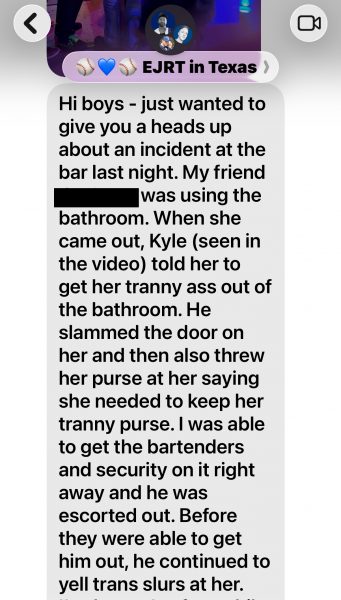
Screenshot of an excerpt of the message sent by Tommy Craven to a group chat with Jonathan Cottrell on Dec, 30, 2024. Identifying details have been redacted.
Braverman and Cottrell told Craven that Brazeal was banned from Gym Bar. However, both Craven and Turpin claim to have seen him at the establishment multiple times after the incident. Cottrell said in a written statement that “it was a temporary ban,” but would not discuss why or when the ban was lifted because Gym Bar “(doesn’t) share internal incident matters.”
This temporary ban is contradictory to a message from Cottrell’s Instagram account that was sent to Amber on Dec. 30, 2024. In it, he states that he would make sure that the “individuals” involved in the incident “don’t ever come back” to Gym Bar.
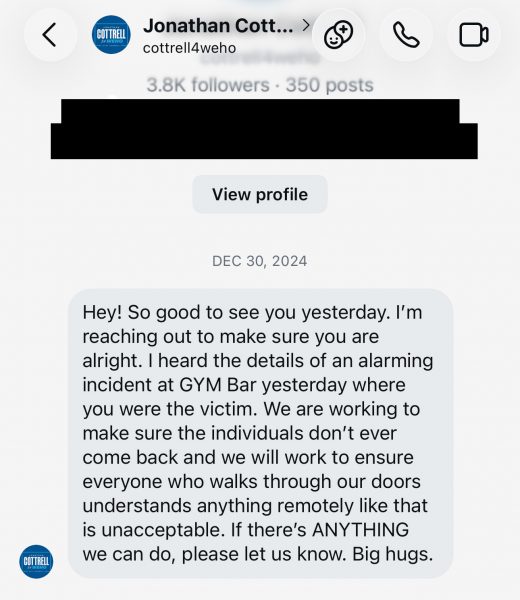
Screenshot of a message sent by Jonathan Cottrell’s Instagram account to Amber’s account on Dec. 30, 2024. Identifying details have been redacted.
The race for City Council
Brazeal announced his candidacy for City Council in April 2026. Craven heard about his campaign in June. “I was aware it was the same person,” he said, immediately recognizing him as the man who allegedly berated his friend a year and a half ago.
Later that month, Craven reached out to Braverman and Cottrell, who had recently announced his own campaign for City Council, to inform them that Brazeal was the same man from the night. “They were definitely surprised by it,” Craven said.
After being made aware that Brazeal was allegedly the same man from the transphobic incident at their bar, the owners did not state anything publicly, following Amber’s wishes. Cottrell has not mentioned anything on the campaign trail even as he and Brazeal have been endorsed by some of the same organizations like Equality California and Sunset West Alliance.
“At the time of the incident, our staff asked the woman involved whether she wanted us to take any further action, and she said she did not,” Cottrell said in a written statement. “This was never our story to tell. Gym Bar has always been a safe space for everyone in our community, and that will never change.”
Craven and Turpin waited to talk publicly about the incident because they wanted to keep their friend’s experience private.
“Ricky and I thought … something [else] would be said to kind of give light to the kind of person that Kyle is without us having to use our friend’s story,” Craven said. “But now because it’s closer to the election [and] stuff has not come to light, I feel the community would be safer knowing.”
Amber did not hear about Brazeal’s candidacy for City Council until last week, when she was informed by friends that a reporter for the Los Angeles Blade was investigating allegations of a transphobic incident involving him. These days, she splits her time between the Los Angeles area and other parts of the country so she has not been following local politics closely. But when she looked up his campaign, she instantly realized that this was the same man from that night. “I saw the face and pictures … and I made the connection,” she said.
“This is something that I need to address,” she added. She said that it can feel “impossible” as a trans woman to call out people who express bigotry without facing “repercussions.” Brazeal’s bid for City Council motivated Amber’s decision to speak publicly about the incident. “He is seeking a position of power in the city,” she said. “He needs to understand that this is stuff that just doesn’t go away.”
Reflecting on the incident, Amber said she’s still shocked and upset. “I was floored that he would use that word in that bar,” she said. By speaking out, she hopes to heal some of the pain caused by Brazeal’s alleged actions and regain her confidence.
“Words do matter and they do hurt and the T-word [used] toward me hurt,” Amber said. “Now I’m trying to use my words to share my story.”
Caleb Kaufman is a California Local News Fellow placed with the Los Angeles Blade. The California Local News Fellowship is a state-funded initiative to support and strengthen local news reporting. Learn more about it at fellowships.journalism.berkeley.edu/cafellows.
AIDS and HIV
AIDS Walk Los Angeles set for 42nd year amid growing challenges
APLA Health CEO Craig E. Thompson talks with the Blade about how the fight against HIV/AIDS continues
The 42nd annual AIDS Walk Los Angeles will take place on Sunday, October 18th at West Hollywood Park. Participants are set to march a two-mile loop around West Hollywood and hear speeches from organizers and HIV/AIDS advocates.
The Los Angeles Blade spoke with Craig E. Thompson, CEO of APLA Health, the event’s organizer, about the continued importance of the fundraising event and the challenges facing AIDS research, healthcare, and advocacy.
“The idea that HIV is over is the most dangerous myth out there,” Thompson said in a written statement. According to Thompson, increased options for HIV treatment and prevention have created a public perception that AIDS is no longer a pressing issue and have led to a decrease in participation and fundraising at AIDS Walk LA. “HIV fundraisers across the country are seeing this decline,” he said.
But recent federal cuts and policy changes have created new obstacles to ending the HIV and AIDS epidemic. Congress has proposed cuts that would strip away nearly one billion dollars in HIV funding, mainly impacting prevention and outreach. And earlier this year, the Trump-Vance administration ended nearly 100 community organizations’ HIV-prevention grants, opting instead to direct the money to state and local health departments.
These funding cuts have been felt by APLA Health, which last year was one of the California HIV prevention groups impacted by a 20 million dollar funding freeze. The freeze was eventually overturned, but Thompson still fears future cuts from the federal administration. “Over the past year we took cuts to our food pantry program, PrEP navigation, housing, and more,” he said. “Thanks to relentless advocacy and partners at the state and county who stepped up, much of that funding has been restored,” adding, “but restored is not the same as safe.”
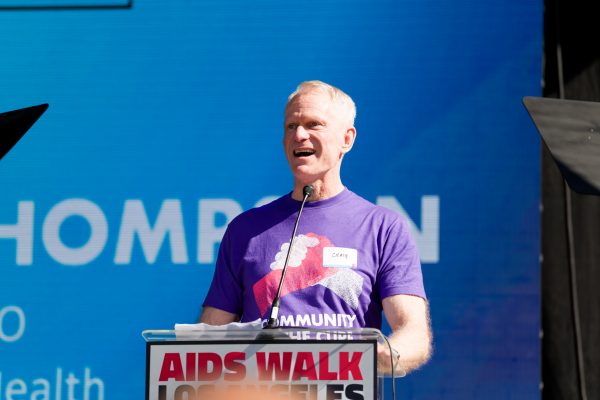
Craig E. Thompson speaks at AIDS Walk Los Angeles 2025. (Photo courtesy of Craig Allyn)
Thompson fears that continued divestment from HIV healthcare and prevention could harm vulnerable communities. “The burden once again lands on the shoulders of those with the least power and the least access to care,” he said. “New infections fall hardest on people of color, transgender women, and those in low-income communities. Every one of those diagnoses could have been prevented.”
Non-HIV-specific federal policies also pose harm to APLA Health’s clients, the biggest of which is cuts and decreased eligibility for Medi-Cal, the state’s Medicaid program. “Medi-Cal is how a huge share of our patients get care, and the federal cuts will hit hard,” Thompson said. “California is covering much of the cost through next summer, … but a patch is not a plan,” he added. And a new policy starting in 2027 will mean that some Medi-Cal recipients will soon have to recertify their coverage twice a year instead of once. “That’s a mountain of paperwork,” Thompson said. “It’s a way of quietly cutting people off without having to say it out loud.”
Despite these current challenges, Thompson sees this year’s AIDS Walk LA as an effective way to help those living with HIV and AIDS at a time when they need support the most. “Funds raised by AIDS Walk LA stay in Los Angeles County and pay for wraparound HIV care and prevention,” he said. This includes funding medical care, PrEP prevention, housing, food pantries, and more. “These programs form the safety net that keeps our community healthy, and the Walk helps hold it together,” Thompson said. Last year, the walk raised over a million dollars for APLA Health to fund its services.
“Fighting back works.” Thompson said. “Come angry, come joyful, come exactly as you are. We’ll celebrate our progress and turn that energy into action. Then [we’ll] carry it to the polls 16 days later.”
Registration for the walk is still open.
Caleb Kaufman is a California Local News Fellow placed with the Los Angeles Blade. The California Local News Fellowship is a state-funded initiative to support and strengthen local news reporting. Learn more about it at fellowships.journalism.berkeley.edu/cafellows.
West Hollywood
We asked WeHo City Council candidates your most pressing questions
See what City Council candidates have to say about the most important issues this election cycle
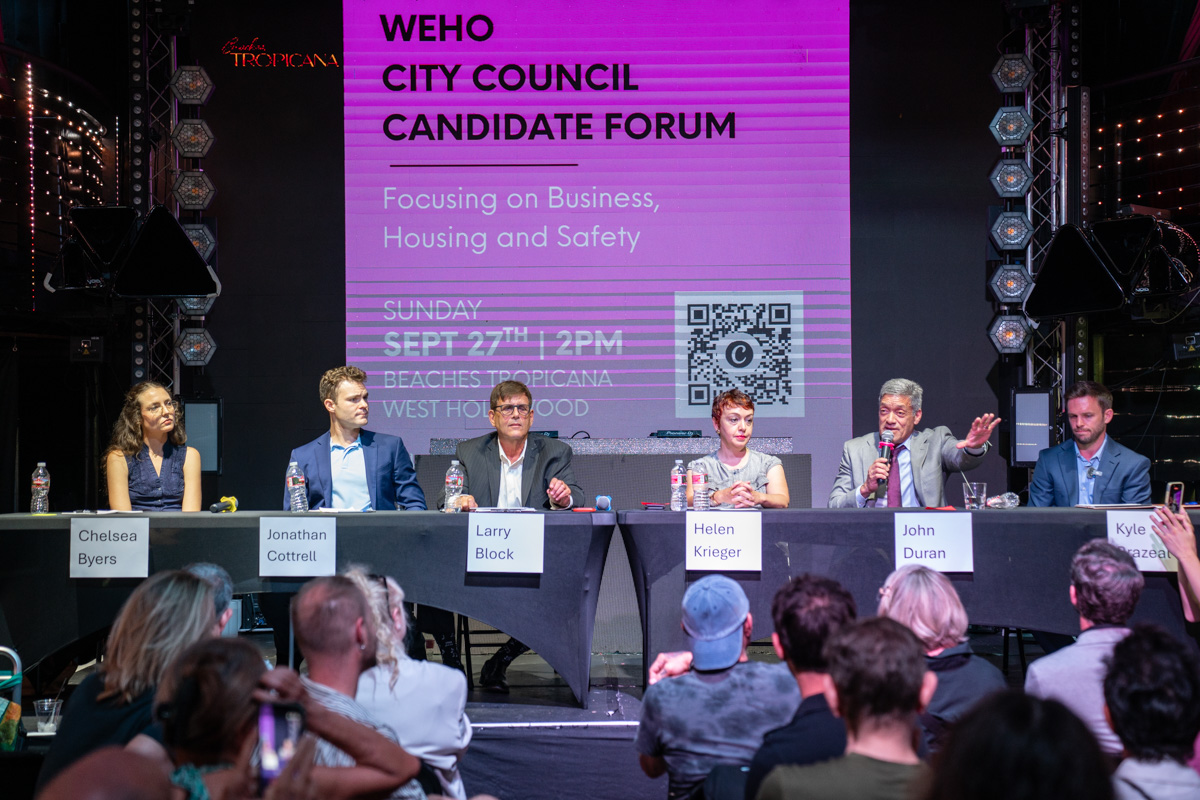
West Hollywood voters will soon be heading to the polls to elect 3 of its 5 city council members. A whopping 14 candidates are running for the open seats, and the elected 3 will go on to address issues like housing development, Flock camera contracts, and managing the city’s high cost of living. With so many candidates, keeping track of everyone’s views on policy is no easy task. So, the Los Angeles Blade sent a questionnaire to every candidate running for city council that addressed the most important issues of this election cycle.
Out of the 14 candidates, 12 responded to our questionnaire in time for publication. Tom Demille and Tatyana “Tanya” Tsikanovsky did not respond in time for publication.
Candidate profiles are listed in the order the candidates will appear on the ballot.
Candidate Profiles:
Helen Krieger
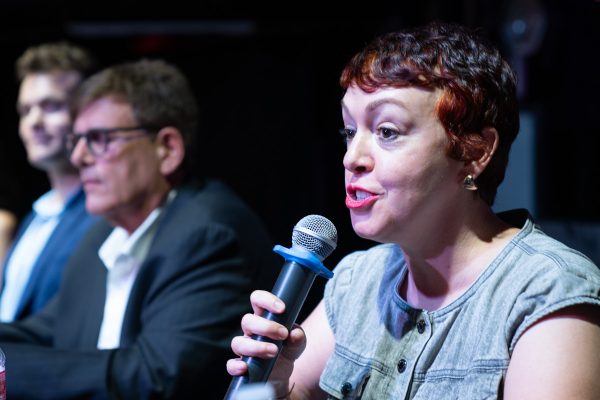
Has lived in West Hollywood for 10 years.
Occupation: Screenwriter and housing advocate
Endorsements: LA County Democratic Party, Equality CA, Stonewall Democratic Club, Firefighters Local 1014, LA Federation of Labor, Streets for All, California Working Families Party, Lindsey P. Horvath, Abbe Land, John Erickson and more
Other candidates Helen will vote for: Chelsea Byers
Policy
Do you support renewing West Hollywood’s contract with Flock Safety? No.
“We need to end the contract and physically take down the cameras. They’re a huge invasion of privacy.”
Do you support a bike lane or sidewalk extension on Fountain Avenue? Yes.
“I support widening the sidewalks to make them ADA accessible, and I support building a bike lane as part of that project to finally connect the Eastside to our micromobility infrastructure.”
Do you support creating a TODAP (Transit Oriented Development Alternative Plan) for West Hollywood? Maybe.
“I’m supportive of creating our own plan as long as it practically allows for at least as much housing as SB-79, and I would want SB-79 to remain in place until that TODAP is agreed upon, voted on, and approved by SCAG.”
Do you support renewing West Hollywood’s contract with Allied Universal to continue running the security ambassador program? No.
“Allied Universal is an ongoing vendor for ICE, and WeHo has a policy of not working with ICE vendors. But I like the ambassador program in general.”
Do you support a vacancy tax on empty storefront properties? No.
“In most commercial leases the tenant has to pay the taxes, so this would just make rent more unaffordable for small businesses. I do understand where the desire for a vacancy tax comes from – we want all our storefronts to be busy and activated – but this is the wrong answer.”
Do you support adding more digital billboards to Sunset Boulevard? Yes.
“I’m in favor of converting some existing static billboards on Sunset to digital billboards in a thoughtful way. And I would support adding more digital billboards, while being careful of oversaturation. These pay for many city services, and they also can pay for pedestrian improvements that we need on Sunset.”
Why are you running for City Council?
“I’m running because I love West Hollywood – I love how walkable it is, I love our parks, I love how gay it is. But the cost of living has continued to go up, and now, with average asking rents over $4000 for a one-bedroom and $6000 for a two-bedroom, we’re in danger of losing what makes us special. I’m running to create more housing, including affordable housing, safer streets, and thriving local businesses.”
What are your policy priorities?
“Housing is my biggest priority. West Hollywood (like much of the country) hasn’t been building enough housing, so demand has built up. In the 40 years since we became a city, we’ve built 70 percent fewer homes than the 40 years before we were a city, even as the population of the US has gone up 50 percent. We need to once again be the city that’s not afraid to build housing while also protecting existing tenants and strengthening tenants’ rights. Safe streets — WeHo has inherited a lot of bad street designs from the 60s when we were unincorporated LA County. I want to focus on designing complete streets with multimodal transportation options and ADA accessible sidewalks. Thriving local businesses — our businesses are part of what makes us so unique, so I want to unleash our creative entrepreneurship by streamlining the permitting process. One easy way we can do this – make it easier to film in WeHo. We’re currently the hardest city in all of LA County for film and TV production, which means we’re missing out on the tens of millions of dollars and hundreds of union jobs.”
How will you address the high cost of living in West Hollywood?
“I believe the main reason for the high cost of living in West Hollywood is housing. This is most people’s biggest cost, and about 20 percent of renters pay half their income just on rent alone. By building more housing, we can ease this burden on people’s wallets. We need to build more housing of all types – market-rate housing with affordable or rent-stabilized set-asides, 100 percent affordable housing, and also “missing middle” housing for people who make too much to qualify for affordable housing, but not enough to afford market rates.”
Kody Christiansen
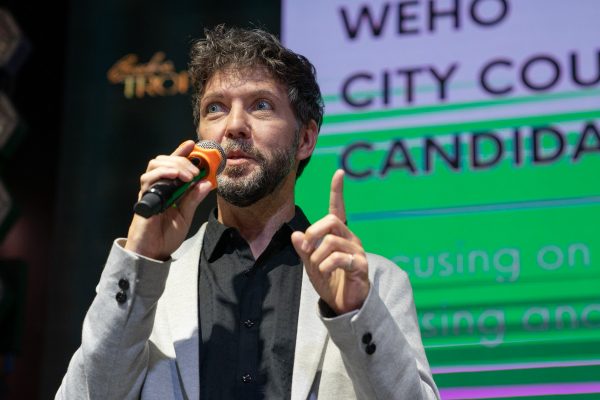
Has lived in West Hollywood for 21 years.
Occupation: Sales associate at an LGBTQIA+ owned small business, author, and actor
Endorsements: The Bayou, Greenwich Pizzeria, Karina’s Cleaners, Mail Service Center, Joshua Baum, and Cosmo: the Queen of Melrose
Other candidates Kody will vote for: Declined to answer
Policy
Do you support renewing West Hollywood’s contract with Flock Safety? Maybe.
“I would consider a pause until we have clear reports on how our own sheriff’s deputies have used the system, and would consider renewal only with strict, ongoing oversight, verifiable privacy protections, and immediate reporting of outside access requests. If safeguards fail, the agreement is violated even once, or our data is used to support federal immigration enforcement, I would support ending the contract immediately.”
Do you support a bike lane or sidewalk extension on Fountain Avenue? Yes, sidewalks.
“I support wider, ADA-compliant sidewalks and immediate safety improvements on Fountain, including better lighting, safer crossings, and traffic calming, but I oppose the current bike lane plan that removes parking and traffic lanes. Accessibility should come first, and we need to think bigger than ‘this plan or nothing,’ including bike lanes on corridors like Santa Monica Boulevard that connect people to the places they want to go.”
Do you support creating a TODAP (Transit Oriented Development Alternative Plan) for West Hollywood? Yes.
“Yes, I strongly support a TODAP that allows us to plan for housing while protecting existing renters and historic neighborhoods and directing growth toward appropriate commercial corridors. I call my approach SIMBY BWAP: ‘Sure In My Backyard, But With A Plan.’”
Do you support renewing West Hollywood’s contract with Allied Universal to continue running the security ambassador program? Maybe.
“Before supporting renewal, I would review other providers and compare their training, capabilities, cost, and results. Residents deserve a program equipped to provide meaningful assistance beyond simply making calls, with clear responsibilities and effective coordination with our sheriff’s deputies.”
Do you support a vacancy tax on empty storefront properties? Maybe.
“My first approach would be incentives and direct relationships with building owners to connect vacant spaces with businesses, temporary uses, and community activity. But I would not rule out a carefully targeted vacancy tax for larger property owners who leave storefronts empty for years while our neighborhoods bear the consequences.”
Do you support adding more digital billboards to Sunset Boulevard? No.
“The Sunset Strip has a character worth protecting, and adding more digital billboards is not the direction I want for our city.”
Why are you running for City Council?
“West Hollywood gave me the freedom to find myself when I moved here in 2005. I’m running because I want that same promise of belonging to remain possible for others. My journey has taken me from experiencing homelessness on the Sunset Strip to earning degrees from NYU, Harvard, and Cambridge, and now studying public administration at USC (which I consider job training for the seat I intend to take on our next council). As an East Side renter, small business employee, and someone who has both needed help and helped others, I bring lived experience and policy training to decisions that affect real lives. I want residents to feel heard at City Hall, and I’ll back that up with weekly office hours, independent judgment, and a commitment to serving the full four years.”
What are your policy priorities?
“My priorities are housing people can afford, practical solutions to homelessness, safe and accessible streets, thriving small businesses, and a City Hall that listens. Having experienced homelessness and later worked at the Harvard Square Homeless Shelter as a student volunteer, I am uniquely qualified to help connect people with housing and the mental health care, recovery support, identification, and ongoing services they need. My proposals include a locally designed housing plan, a legacy business program, a West Hollywood animal shelter, and a community ideas fund that gives neighborhoods a direct say in public spending. I also support responsible sheriff staffing, accessible sidewalks, and accountability for every public dollar, because compassion and a safe, well-run city belong together.”
How will you address the high cost of living in West Hollywood?
“I live in a rent-stabilized apartment and work in a small business, so affordability is personal to me. [If elected,] I would defend rent-stabilized housing and tenant protections while supporting more affordable housing along appropriate commercial corridors through a thoughtful, locally designed plan. Through my proposed legacy business program and efforts to bring vacant storefronts back to life, I would help strengthen neighborhood businesses that provide jobs and everyday services. We need to support workers and small businesses together, with decisions grounded in current information and an honest understanding of what it costs to live and work here.”
Jonathan Cottrell
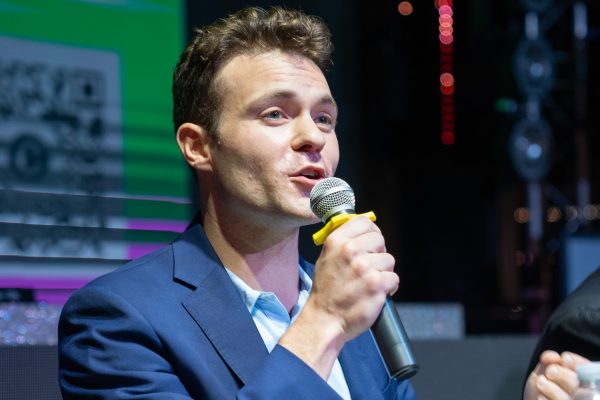
Has lived in West Hollywood for 7 years.
Occupation: Owner of GYM Bar WeHo, software engineer at ESPN
Endorsements: Los Angeles County Democratic Party, John Heilman, Danny Hang, Ben Allen, Rick Chavez Zbur, Nikki Perez, Freddy Puza, Jeff Prang, Teamsters Joint Council 42, Laborers Local 300, and more
Other candidates Jonathan will vote for: Declined to answer
Policy
Do you support renewing West Hollywood’s contract with Flock Safety? No.
“No.”
Do you support a bike lane or sidewalk extension on Fountain Avenue? Yes.
“Phase 1 is already approved. My commitment for Phase 2 is to follow the Plummer Park revisioning model where we brought meaningful community input to the table and made sure the process is transparent, with a competitive bid process, and brings the best minds towards solving the issues our community is facing.”
Do you support creating a TODAP (Transit Oriented Development Alternative Plan) for West Hollywood? Yes.
“The housing is coming either way under state law, and I’d rather West Hollywood target building where the infrastructure can already support it on day one. As an engineer by trade, I believe smart planning is how we get to more housing that meets the need faster. This is not about slowing it down, but coordinating and planning the rollout.”
Do you support renewing West Hollywood’s contract with Allied Universal to continue running the security ambassador program? Yes.
“I would support renewing it. However, I would like to see more training and more coordination among the different safety and human services agencies that we have. We need to make sure the community is not confused about who to call, and that service and response times are unaffected. We must increase our investment in our sheriff’s station as well.”
Do you support a vacancy tax on empty storefront properties? No.
“Vacant storefronts are a common issue I’m hearing from community members. However, I caution us to make sure we understand the root causes before enacting any sort of penalty. For example: we are seeing commercial property rates fall in many areas, and certain property owners giving 2 years free to tenants. I believe a vacancy tax would not solve the issue we are facing with commercial storefronts. We need to tackle the actual problems that are making it tough to do business in West Hollywood. ”
Do you support adding more digital billboards to Sunset Boulevard? Maybe.
“When contemplating any expansion to our digital billboards program, we must absolutely do the homework of getting community input and impact studies, particularly for those impacted directly by the billboards. Without specific details of plans and impact studies, I do not feel it would be responsible to comment.”
Why are you running for City Council?
“When I first came to West Hollywood, I was 24 years old, and I instantly felt that I was home. I found love here, built a life here, and now my husband Erik and I are raising our newborn son, Matheo, in the city we love (although he unfortunately can’t vote for his dad yet). I own and operate GYM Bar, a sports bar and community gathering spot where people walk in alone and find their community, which is exactly what this city did for me. With two pioneers retiring from the City Council, our city is at a major inflection point, and I’m running to preserve what we love about West Hollywood, work on the problems we have, and position our city for the future. I’m a software engineer by trade, so I love big ideas, and I take big swings at finding solutions, and I believe we should be bold about where we’re going while being thoughtful and strategic about how we get there.”
What are your policy priorities?
“Community safety: we should measure safety by whether residents actually feel it, which means trained personnel where they’re needed most, permanent night shifts, making the entertainment policing team permanent, and real coordination between deputies, security ambassadors, businesses, and residents. Housing and affordability: strengthen rent stabilization and tenant protections, expand quality affordable housing where the infrastructure can support it, and distinguish neighborhood property owners from the corporations and outside speculators pushing longtime residents out. Economic opportunity: City Hall should treat entrepreneurs and local businesses as partners, not case numbers, with streamlined permits, a one-stop business concierge, and amazing public service. Public office is a public trust: present a budget residents can understand, and measure the results of public programs, not simply how much money was spent.”
How will you address the high cost of living in West Hollywood?
“We have to address the cost of living from multiple directions: rent, groceries, transportation, and basic services. I support stronger rent stabilization via lowering rent increase caps, protections for seniors and disabled tenants, building public and community-owned housing, and using every available tool to create more permanently affordable homes. We should also support small businesses and local workers, reduce transportation costs by investing in walking, biking, and transit, and use the City’s purchasing power and policy tools to help make everyday necessities more affordable, like a publicly subsidized grocery store. The goal should be an affordable West Hollywood where people who work here can actually afford to live here.”
Stephen Post
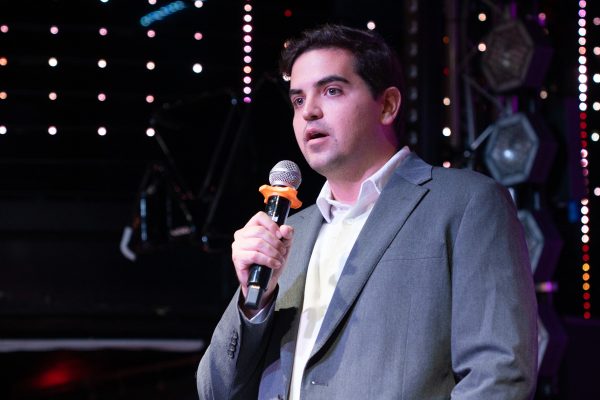
Has lived in West Hollywood for 5 years.
Occupation: Nonprofit leader and business improvement district manager
Endorsements: Stonewall Democratic Club, Democratic Socialists of America-Los Angeles, Los Angeles County Young Democrats, Sunrise Movement LA, Streets for All, Bubba Fish, Kenneth Mejia, Eunisses Hernandez, UNITE HERE! Local 11, Los Angeles County Public Defenders Union Local 148, and more
Other candidates Stephen will vote for: Chelsea Byers, Helen Krieger
Policy
Do you support renewing West Hollywood’s contract with Flock Safety? No.
“I would end the Flock contract as soon as legally and practically possible and would not allow the current pilot to be renewed for any surveillance technology including the drone and real time watch cameras. Public safety should be proactive and care-first, not built around a digital, reactive surveillance system that can disproportionately impact immigrants, LGBTQ+ people, and other vulnerable communities.”
Do you support a bike lane or sidewalk extension on Fountain Avenue? Yes.
“I support completing the Fountain Avenue safety improvements, including protected space for cyclists and wider, ADA-accessible sidewalks, while making sure the project is designed around the needs of residents and the surrounding community. Streets For All specifically endorsed my campaign in part because of my support for safe, multimodal improvements on Fountain and my experience managing community engagement similar public street safety projects.”
Do you support creating a TODAP (Transit Oriented Development Alternative Plan) for West Hollywood? No.
“I do not support creating a TODAP that would allow transit-oriented development to become a backdoor for slowing housing production, weakening West Hollywood’s tenant protections, or subverting local planning priorities already laid out through our Zoning Improvement Program (ZIP). We should build more housing, especially affordable and public housing, while using state housing tools strategically and preserving strong renters’ rights.”
Do you support renewing West Hollywood’s contract with Allied Universal to continue running the security ambassador program? No.
“Similar to Flock, I would want to end the contract sooner rather than renew it, particularly given Allied Universal’s ownership of G4S and ongoing contracts with ICE and DHS for services including the electronic monitoring of people in immigration enforcement proceedings. I support the security ambassador program under a different vendor, but West Hollywood should not be financially supporting a security company that profits from immigration enforcement and surveillance.”
Do you support a vacancy tax on empty storefront properties? Yes.
“As a business improvement district manager, I know long-term vacant storefronts hurt our commercial corridors and can make neighborhoods feel less safe and less vibrant. I support exploring a vacancy tax or similar policy that creates an incentive for property owners to put empty commercial spaces back into productive use, rather than use them as tax write-offs.”
Do you support adding more digital billboards to Sunset Boulevard? Yes.
“There is already a vibrant streetscape that the billboards have created. These projects would be evaluated on a case-by-case basis, and I would approve projects where there is a clear public benefit to West Hollywood. Any proposal should preserve the character and safety of Sunset Boulevard and deliver meaningful funding resources.”
Why are you running for City Council?
“I’m a renter, nonprofit advocate, and business improvement district manager who has spent my career bringing people together to advance justice and strengthen communities. As Vice Chair of the Public Safety Commission, and through my prior work helping craft the WeHo 2040 Strategic Plan, I have dedicated myself to listening to local residents to guide the next fifteen years of our city’s future. I’m running because I believe West Hollywood should continue setting the standard for what bold, progressive local government can accomplish. WeHo can’t wait for stronger renter protections, more affordable housing, safer and cleaner streets, and a City Hall that is transparent, accountable, and responsive to residents. Our city was built by LGBTQ+ and tenants’ rights advocates who fought to be heard, refused to remain invisible, and I’m ready to build on that legacy and fight for a West Hollywood where everyone can thrive.”
What are your policy priorities?
“My top priorities center on keeping West Hollywood affordable, establishing a care-first and proactive approach to public safety, and fostering a transparent, accountable local government. I would work toward capping rent increases so renters are closer to spending 30% of their income on housing by 2030, advocate for stronger tenant protections, and to help residents thrive without being overburdened by everyday costs of living. To ensure safety, we must fully fund human services, expand emergency mental health response systems, and focus on homelessness and violence prevention rather than depending on reactive Flock and drone surveillance. Lastly, I will bring deep community engagement and participatory budgeting to City Hall, empowering neighbors to directly influence how municipal resources serve our community. It is time we bring the next generation of leadership to WeHo.”
How will you address the high cost of living in West Hollywood?
“West Hollywood cannot remain a place where people who work here are unable to afford living here. I would strengthen tenant protections and expand affordable and community-owned housing to prevent displacement. We also need to address the other costs that make it harder to live here by supporting local workers and small businesses, expanding transit and safer alternatives to driving, and investing in human services that address the root causes of safety and housing instability. I would also pursue new affordable housing funding and partnerships with nonprofit housing providers while making sure new development prioritizes affordability rather than simply increasing property values. Ultimately, making WeHo more affordable means building a city where renters, working people, seniors, immigrants, and LGBTQ+ residents can afford not just to visit or work here, but to stay.”
Joel Zaldivar
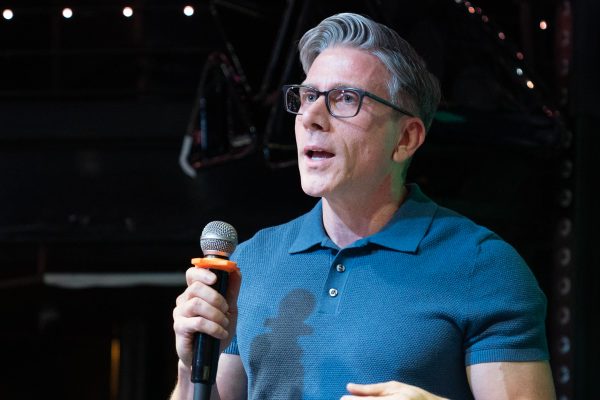
Has lived in West Hollywood for 11 years.
Occupation: Owner of OPVS
Endorsements: Rogerio Carvalheiro (West Hollywood Planning Commissioner)
Other candidates Joel will vote for: Declined to answer
Policy
Do you support renewing West Hollywood’s contract with Flock Safety? No.
“I do not support renewing the contract due to safety and privacy concerns from the community.”
Do you support a bike lane or sidewalk extension on Fountain Avenue? No.
“I do not support the Fountain Ave project as currently proposed.”
Do you support creating a TODAP (Transit Oriented Development Alternative Plan) for West Hollywood? Yes.
“I am 100% in favor of the city taking charge and creating its own TODAP.”
Do you support renewing West Hollywood’s contract with Allied Universal to continue running the security ambassador program? No.
“I do not support renewing West Hollywood’s contract with Allied Universal due to their inconsistent security measures. I would seek a new provider that meets the demands of our city. To be clear, I would only not renew them upon having secured another provider, as we are currently not permitted to increase our Sheriff’s in West Hollywood due to an LA County hiring freeze.”
Do you support a vacancy tax on empty storefront properties? Yes.
“I support a vacancy tax on storefront properties only if it’s tied through the business licensing division. Otherwise, the tax will be passed on from the building owner to the tenant, bypassing its original intent to place added pressure on Landlords to lease their properties below their asking.”
Do you support adding more digital billboards to Sunset Boulevard? Maybe.
“I would only support this measure if a majority of residents within a specificized distance of its placement, agreed to the measure.”
Why are you running for City Council?
“In addition to being a resident, I’m also a father and small business owner here in the city. I am heavily invested in our community and in its long-term success. We need a Council Member who is above bickering and grandstanding and ready to take matters into their hands and get things done, one policy initiative at a time.”
What are your policy priorities?
“I support overhauling the business task force to help small business owners negotiate as well and renew existing leases that don’t financially imperialize their business model and force them to raise prices on WeHo residents. We should revamp our parking department to work for residents instead of finding ways to penalize and tax them. Finally, City Hall, should triple down on safety for our residents, our communities and our city guests. We cannot grow as a city unless people feel safe to put down their roots here.”
How will you address the high cost of living in West Hollywood?
“By tasking our newly overhauled business department to “act as a developer” and intentionally seek out business opportunities that we, as a city, can leverage and entice developers to build affordable housing for our city. We need to be a proactive player in how, when, and where housing is built.”
Kevin Ligon
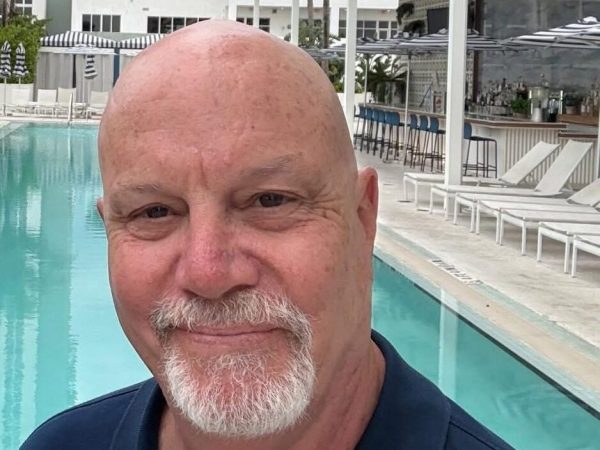
Has lived in West Hollywood for 16 years.
Occupation: Retired civil servant at the Veterans Health Administration
Endorsements: N/A
Other candidates Kevin will vote for: Declined to answer
Policy
Do you support renewing West Hollywood’s contract with Flock Safety? No.
“Currently, I’m not in support of renewing the flock safety contract in its current state. There are too many issues with the system. I believe that West Hollywood citizens and their privacy take priority.”
Do you support a bike lane or sidewalk extension on Fountain Avenue? Yes, sidewalks.
“Fountain Avenue needs wider sidewalks for safety reasons. I believe there are also alternatives to the approved plan that would be safer for all concerned. A review of systems from other cities where safety and traffic have found better solutions is in order.”
Do you support creating a TODAP (Transit Oriented Development Alternative Plan) for West Hollywood? Yes.
“Yes, I would support a TODAP for West Hollywood.”
Do you support renewing West Hollywood’s contract with Allied Universal to continue running the security ambassador program? Maybe.
“The Allied universal contract has only been in place since August 25, 2025. I find that they have been much more attentive to our homeless population and our citizens than the previous contract. I’m not aware of current issues with that contract or their current service.”
Do you support a vacancy tax on empty storefront properties? Maybe.
“I’m not sure that a vacancy tax is going to actually address the problem itself. Storefronts are staying closed much longer because the owners have the financial resources to wait out any drop in rental value. Another possibility might be to remove options where landlords can take tax write-offs for unoccupied properties based on current rental value. We definitely need to have a carrot-and-stick approach to getting new, and particularly small, businesses into our storefronts.”
Do you support adding more digital billboards to Sunset Boulevard? Maybe.
“I live just off Sunset Boulevard, and I was definitely affected when the Pendry Hotel, now the Sun Rose, installed its passive video wall facing east on Sunset. I’m not against digital billboards per se, but I do believe that residents come first.”
Why are you running for City Council?
“I’m running for city Council due to my experiences with a new owner of my particular apartment building not following guidelines set by the city. This caused us to form a tenant association during Covid. Since then, I realize there’s a need for rent stabilization, rent control, consistency, and maintaining protected status for vulnerable renters in West Hollywood.”
What are your policy priorities?
“My priorities are focused on community through renter and landlord communication, be it residential or commercial, supporting small businesses in our community, and ensuring that our town remains one of the finest examples of a walkable culture in California.”
How will you address the high cost of living in West Hollywood?
[The candidate did not respond to this question].
John Duran
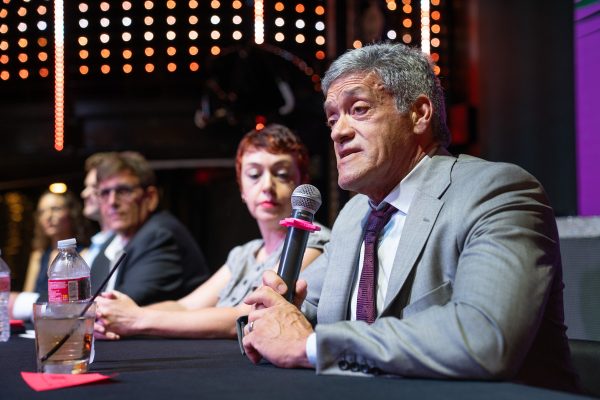
Has lived in West Hollywood for 36 years.
Occupation: Civil rights attorney
Endorsements: Association for Los Angeles Deputy Sheriffs, LA County Firefighters, the West Hollywood Municipal Employees Union, Ben Allen, John Heilman, Lauren Meister, and Steve Martin
Other candidates John will vote for: Declined to answer
Policy
Do you support renewing West Hollywood’s contract with Flock Safety? Yes.
“I would support renewing the city’s contract with Flock provided that privacy and usage safeguards were in place.”
Do you support a bike lane or sidewalk extension on Fountain Avenue? Maybe.
“I do not support the removal of traffic lanes on Fountain Avenue. I do support bike lanes where they make sense in other parts of the city. I do support sidewalk extensions where they are warranted.”
Do you support creating a TODAP (Transit Oriented Development Alternative Plan) for West Hollywood? Yes.
“I do support a TODAP for West Hollywood.”
Do you support renewing West Hollywood’s contract with Allied Universal to continue running the security ambassador program? No.
“I have serious reservations about renewing the security ambassador program. I would more likely support adding additional deputy sheriffs on foot patrol and in the entertainment districts.”
Do you support a vacancy tax on empty storefront properties? No.
“I do not support a vacancy tax on empty storefronts. They do not work as intended when the tax is passed onto commercial tenants in triple net leases.”
Do you support adding more digital billboards to Sunset Boulevard? Maybe.
“I approved the initial Sunset Strip billboard program but do find the current proposals to be excessive.”
Why are you running for City Council?
“I am running for City Council because there needs to be one seasoned voice in the room. I served on the council for 20 years and bring years of experience that will be helpful to the deliberations.”
What are your policy priorities?
“My policy priorities are keeping local control on land use decisions to prevent over-development, public safety and economic development on commercial corridors.”
How will you address the high cost of living in West Hollywood?
“West Hollywood is a very desirable place to be. There are legal limits on what we can do to address the high cost of living within a capitalistic system. We can continue to strengthen our rent stabilization ordinance for tenants in existing rent controlled apartments and approve new developments with inclusionary housing units reserved for low and middle class income households.”
Larry Block
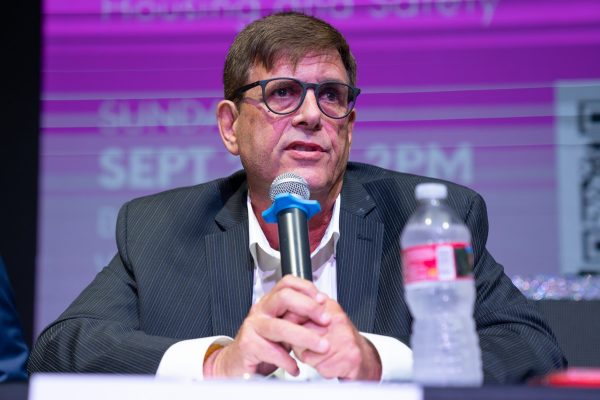
Has lived in West Hollywood for 40 years.
Occupation: Owner of BlockParty WeHo, publisher of WEHOonline
Endorsements: Association for Los Angeles Deputy Sheriffs, Greater Los Angeles Realtor Association
Other candidates Larry will vote for: Declined to answer
Policy
Do you support renewing West Hollywood’s contract with Flock Safety? No.
“I’ve changed my mind on this topic after a loud backlash. Instead we should opt into an Axon or Motorola system that we buy and control the data. I was Pro-Flock, but if a council member is going to listen to the voices of the people, then clearly they have spoken. We can do better. We can never be a beacon of hope for a transgender kid seeking medical treatment from a red state if their information has any chance of being shared. We can own our own data.”
Do you support a bike lane or sidewalk extension on Fountain Avenue? Yes, sidewalks.
“I support safe sidewalks on Fountain. I do not support the false sense of safety of 120 driveways intersecting a bike lane. We can have connectivity if we get on the same page with
our neighboring cities and not have a patchwork of bike lanes that do not connect – be it Fountain, Santa Monica Blvd, or Beverly.”
Do you support creating a TODAP (Transit Oriented Development Alternative Plan) for West Hollywood? Yes.
“100% support a TODAP and cannot be done soon enough. There is so much at stake.”
Do you support renewing West Hollywood’s contract with Allied Universal to continue running the security ambassador program? Yes.
“At this point it’s hard to recruit new Sheriffs and Allied has been an improvement over the previous Block by Block ambassadors.”
Do you support a vacancy tax on empty storefront properties? No.
“Commercial leases are 5, 10, 20 years in duration. Most leases are triple-net, meaning the tenant pays the expenses. A vacancy tax penalizes the other tenants. Residential leases are gross leases, tenant pays and the landlord picks up the expenses. So my question is would any resident want to pay extra because the space next to them was empty? People who want a vacancy tax do not understand a commercial lease.”
Do you support adding more digital billboards to Sunset Boulevard? Yes.
“Of course there will be some new billboards, but on a case by case basis. We need to maximize the benefits of our Sunset arts and billboard program without cannibalizing our precious assets. Sunset needs to remain vibrant and exciting without becoming chaotic and unsafe.”
Why are you running for City Council?
“I’m running for the city council because it’s becoming harder and harder to enjoy the dream of West Hollywood. The community is changing, and I’d like a seat at the table to help us craft policy that keeps the dream alive and restore West Hollywood as a beacon of hope. I’m the oldest guy in the race with a lifetime of experience to share, and I enjoy fixing things, building things and solving people’s problems.”
What are your policy priorities?
“Public Safety is my top priority. Residents need to be able to feel safe to walk their dogs at night. Entrepreneurs need to be able to imagine a new business without a homeless person in front of the for-lease sign. We can’t build a community with the rash of public safety issues we have been facing. Protecting seniors and those with disabilities is another top priority. We have to keep the promise of WeHo.”
How will you address the high cost of living in West Hollywood?
“West Hollywood has the highest rents, the highest cost of labor, and the highest sales tax. The cost of labor and the highest sales tax, which will be 11%, were voted on by the city council. As a councilmember, we can’t lower the rents or the price of gas, but we can run a smart city and offer residents a free parking pass at city garages and other benefits to residency in West Hollywood.”
Kyle Brazeal
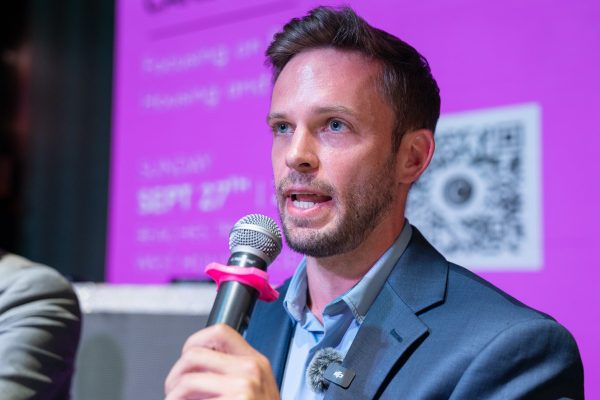
Has lived in West Hollywood for 11 years.
Occupation: Finance
Endorsements: West Hollywood/Beverly Hills Democratic Club, Equality California, HONOR PAC, Association for Los Angeles Deputy Sheriffs, Greater Los Angeles Realtors Association, Democrats for the Protection of Animals, John Heilman, Lauren Meister, and Rick Chavez Zbur
Other candidates Kyle will vote for: Declined to answer
Policy
Do you support renewing West Hollywood’s contract with Flock Safety? Maybe.
“A contract with significant public safety and privacy implications requires meaningful public input and trust. Before moving forward, public town halls with residents, sheriff’s representatives, city staff, and privacy advocates should examine safeguards against misuse and inappropriate data access, storage, and sharing so our approach protects both community safety and privacy.”
Do you support a bike lane or sidewalk extension on Fountain Avenue? Yes, sidewalks.
“The priority on Fountain Avenue should be extending sidewalks to become ADA-compliant and safe for pedestrians. Rather than eliminating hundreds of parking spaces to place a bike lane on a road carrying 35,000 cars a day, I would prioritize an east-west bike path on a calmer, safer street, like Willoughby, to enhance cyclist safety while preserving mobility and parking for our residents.”
Do you support creating a TODAP (Transit Oriented Development Alternative Plan) for West Hollywood? Yes.
“A TODAP protects residents’ ability to shape development, guided by the careful, neighborhood-specific analysis led by our city staff. By law, a TODAP produces the same housing capacity, but it allows our community to shape it in a thoughtful way that strengthens protections for our rent-stabilized housing and considers our unique emergency access needs, commercial activity, transit options, and infrastructure capacity.”
Do you support renewing West Hollywood’s contract with Allied Universal to continue running the security ambassador program? No.
“I would not support renewing the contract in its current form because the program has not demonstrated improvements in public safety and homelessness that justify spending more than $5 million annually. I support a tiered public safety structure that includes unarmed responders, but their value must be measured through meaningful results beyond the volume of calls and contacts.”
Do you support a vacancy tax on empty storefront properties? Yes.
“I support a limited commercial vacancy tax that discourages landlords from holding storefronts empty while protecting small property owners making good-faith efforts to find tenants. Revenue from the tax should help new businesses fund tenant improvements, pairing accountability for prolonged vacancies with practical assistance to help fill empty storefronts and bring those spaces back to life.”
Do you support adding more digital billboards to Sunset Boulevard? Maybe.
“Billboards can generate revenue for city services, but the city allowed an overproliferation of large, animated signs and granted exceptions to standards meant to protect residents. I would oppose new billboards that worsen light intrusion or otherwise erode quality of life in surrounding neighborhoods.”
Why are you running for City Council?
“I believe residents deserve a real voice in shaping the local decisions that impact their daily lives. I saw a Council majority that dismisses resident concerns to prioritize the preferred projects of outside entities with significant political or financial interests in our city. Residents are left living with the consequences while elected officials secure the relationships and donors needed to advance their political careers. While other candidates relied on developers and outside interests to fund their campaigns, I built a campaign funded by and accountable to West Hollywood residents so we can elect City Councilmembers focused on protecting residents from displacement while fighting for the high quality of life they deserve.”
What are your policy priorities?
“My priorities are housing stability, public safety, and a strong local economy, guided by a City Hall that listens before acting and is accountable for results. We should preserve rent-stabilized homes, protect renters against displacement, and create new housing with dedicated affordability through planning shaped by residents and city staff to protect neighborhood livability. Public safety policies should deliver measurable improvements in neighborhood safety, homelessness, and traffic collision prevention. By streamlining bureaucracy and supporting sensible, balanced policies for local businesses, we can create a safe, inviting city where residents can remain in their homes and enjoy the vibrant business corridors that bring West Hollywood to life.”
How will you address the high cost of living in West Hollywood?
“City Hall should help make life more affordable by avoiding unnecessary fees and regulations that increase costs for residents and local businesses. I would revisit local sales taxes and evaluate opportunities to reduce that burden through disciplined spending while protecting essential services. Preserving rent-stabilized homes and enforcing protections against harassment and displacement can help residents maintain predictable housing costs as other expenses rise. We must also maintain a dependable safety net, ensuring people struggling to make ends meet can access food assistance, healthcare, housing support, and services that help them remain in our community.”
Chelsea Byers
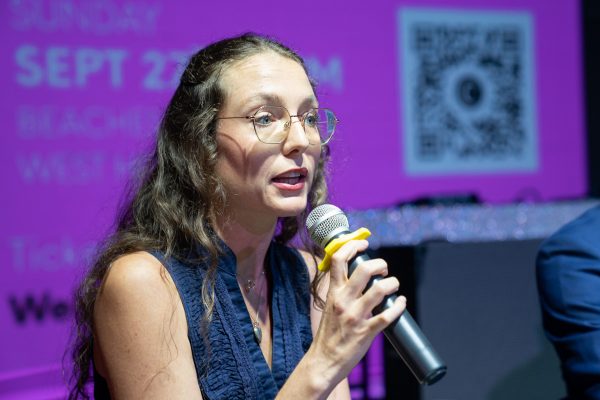
Has lived in West Hollywood for 6 years.
Occupation: Incumbent Councilmember, policy director at housing affordability advocacy organization
Endorsements: Los Angeles County Democratic Party, the California Working Families Party, the Sierra Club, Streets for All, Laura Friedman, Lindsey Horvath, Jeff Prang, LA County Federation of Labor, LA/OC Building and Construction Trades Council, LA County Firefighters Local 1014, and more
Other candidates Chelsea will vote for: Declined to answer
Policy
Do you support renewing West Hollywood’s contract with Flock Safety? No.
“I have been the leading voice on City Council against Flock since the time it was brought to Council as part of a broader surveillance expansion and continue to advocate against the use of this product in our City.”
Do you support a bike lane or sidewalk extension on Fountain Avenue? Yes.
“I ran in 2022 as a supporter of the Fountain Avenue streetscape project, and I continue to support it today. Fountain should be a neighborhood street where people, particularly children, those with disabilities, and the elderly, feel safe walking, biking, and crossing the street, and we should work quickly to improve the safety, expand the sidewalks, and beautify the street.”
Do you support creating a TODAP (Transit Oriented Development Alternative Plan) for West Hollywood? No.
“With the K-Line Northern Extension coming to the City in the years ahead, I support creating more transit-oriented housing, which is made possible under the recently approved state law SB79. We should treat the housing affordability crisis we are facing like the emergency it is and work to build the housing our community needs in the years ahead.”
Do you support renewing West Hollywood’s contract with Allied Universal to continue running the security ambassador program? Maybe.
“I support the security ambassador program and unarmed responders in general. However, upon learning that Allied Universal has ties to DHS and ICE activity, it feels incredibly important that we revisit options and ensure we are investing our public dollars into companies that reflect our values and promote the safety of all residents and visitors.”
Do you support a vacancy tax on empty storefront properties? No.
“A thriving commercial corridor is an essential backbone of our city, and we should be addressing the barriers that can leave commercial spaces vacant, including the ways in which the City itself can create unnecessary obstacles for businesses trying to open and succeed. This would include clearing roadblocks for new businesses trying to open, cutting the time and costs to open businesses, and better coordinating the countywide agencies like electric and fire, who can often slow down opening. ”
Do you support adding more digital billboards to Sunset Boulevard? Yes.
“Sunset’s digital billboard program was established to generate much-needed revenue to fund the City’s basic services and deliver the supportive care our community relies on — everything from sidewalk maintenance to our social service programs for renters and adults aging in place — the investments in our City’s future depend on ensuring this program’s success.”
Why are you running for City Council?
“My commitment to the work of improving our City and advancing care in our communities is deeply personal. My family could not afford health care despite the long days my dad worked in construction, and like so many families, we lost our home during the 2008 financial crisis. That experience has shaped the issues I prioritize on West Hollywood’s City Council. Challenges facing working families today require real action. Renters are being squeezed by the cost of housing. Wages are not keeping up with the cost of living. Women, queer people, and immigrants are under constant attack by this administration. West Hollywood is a community that has the opportunity and the means to lead with compassion, courage, and urgency. Our city must continue to be a model for what it looks like to protect vulnerable people, address the climate crisis, and make government work for those who need it most.”
What are your policy priorities?
“In my time in office, I have been working to implement West Hollywood’s Housing Element and the 116 strategies outlined in that plan to unlock greater affordable housing capacity locally, alongside the ongoing work to bring the Metro K Line Northern Extension into West Hollywood. From there, West Hollywood’s broken network of bicycle lanes needs ongoing support, and we must have a mobility-minded leader moving this infrastructure work forward in the City. As a third priority policy area, West Hollywood’s Climate Action Plan outlines ambitious policy goals, many of which stand to be undermined or challenged by special interests in our City. Building modernization and energy efficiency standards are critical ways the City can mitigate our carbon output, and furthering and reinforcing these policies with programs and financing to support the mandatory changes is going to be a major part of the City’s future work.”
How will you address the high cost of living in West Hollywood?
“Affordability is the defining issue facing families in my city as well as many families across LA County. West Hollywood is a city of renters, and too many of our residents are rent-burdened, paying more each month just to stay in the community they call home. West Hollywood has a responsibility to build more housing at every income level, protect tenants, and plan for growth in a way that reflects our values. We need to continue to lead on policies that make it easier and more affordable to build the housing our community needs and for businesses to get started and open. We can also continue investing in our social service programs that support people aging in place and expand this programming to support more families through child care resources. Every city has a role to play in tackling the affordability crisis, and West Hollywood can show it is possible to grow while staying true to who we are: a city that protects renters, supports working people, welcomes LGBTQ+ residents and seniors, and believes everyone deserves a safe, stable, and affordable place to live.”
Alden “Marlon” Gobel
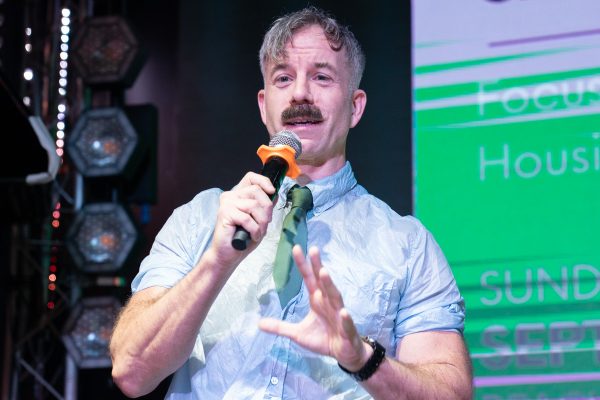
Has lived in West Hollywood for 5 years.
Occupation: Fashion designer and creative director
Endorsements: N/A
Other candidates Marlon will vote for: Chelsea Byers
Policy
Do you support renewing West Hollywood’s contract with Flock Safety? No.
“I do not feel that overreaching mass surveillance is ever a good idea. There are other ways to get the police the information they need without using the Flock camera system and Flock owning the aggregate data.”
Do you support a bike lane or sidewalk extension on Fountain Avenue? Yes.
“With gasoline prices reaching $6.50 per gallon here in LA, it is getting nearly unaffordable to fill a car’s tank. That means the way people commute and move through West Hollywood is going to change, and that’s not going to be car-focused, so we need to be prepared for that with robust mobility systems like bike lanes, transit, and great sidewalks.”
Do you support creating a TODAP (Transit Oriented Development Alternative Plan) for West Hollywood? Maybe.
“I am in favor of the need for West Hollywood to be in control of the development process, and we can look to Beverly Hills as an example of how to successfully implement the SB 79’s requirements. We need affordable housing, but we need a plan for development that addresses the needs of residents and business owners.”
Do you support renewing West Hollywood’s contract with Allied Universal to continue running the security ambassador program? Maybe.
“I think the security ambassadors bring a much-needed level of padding and connection between everyday residents/guests and the police department while relieving pressure on our sheriffs. But information is still pending from Allied on how connected they are with ICE and Homeland Security. That information will determine our future working with them.”
Do you support a vacancy tax on empty storefront properties? Maybe.
“It is something to explore. It’s important to make it easier for young emerging businesses to move into West Hollywood without landlords waiting for cash-cow corporations to fill up their spaces.”
Do you support adding more digital billboards to Sunset Boulevard? Yes.
“These things must be tastefully done and created with consideration of the surroundings. I don’t want Sunset Boulevard to become a Times Square replica chaotic orgy of light pollution.”
Why are you running for City Council?
“West Hollywood thrives on bold vision, authentic expression, and collaborative leadership. I have spent my career turning ambitious ideas into reality by balancing artistic execution with rigorous operational strategy. When I launched my eponymous brand, MARLON GOBEL, it demanded absolute strategic precision—skills that translated into immediate global partnerships with historic institutions like Bergdorf Goodman, Swarovski, and the Fashion Institute of Technology. Over a twelve-year career, my work has been recognized by The New York Times and trusted by legendary creative icons because I deliver on bold ideas, resilience, and unique innovation. West Hollywood deserves leadership that understands how to manage complex operations while preserving our distinct, rebellious, and authentic spirit. I will bring fiscal discipline, project management expertise, and an unwavering dedication to making our community a vibrant, sustainable, and forward-thinking destination for residents and creators alike.”
What are your policy priorities?
“1. Affordable Housing
2. A Freedom of Living Standard (anti-surveillance, self-expression, non-discrimination)
3. Compassionate Public Safety”
How will you address the high cost of living in West Hollywood?
“I feel like my answer was covered in my response [to the first long form question].”
Chukwudubem “Chiedu” Egbuniwe
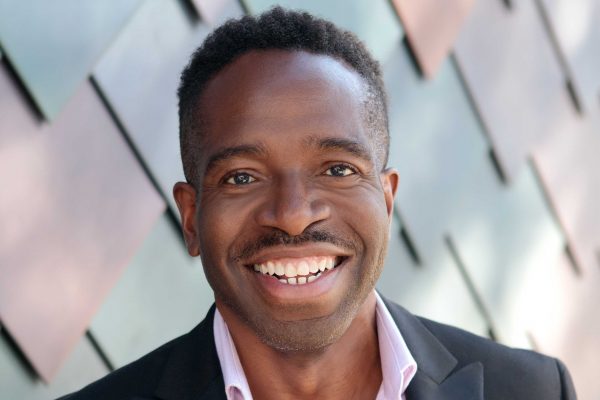
Has lived in West Hollywood for 22 years.
Occupation: IT professional and consultant
Endorsements: N/A
Other candidates Chiedu will vote for: Declined to Answer
Policy
Do you support renewing West Hollywood’s contract with Flock Safety? No.
“After years of working directly with data security and privacy issues as an IT Manager, it is critical that our data is with trustworthy vendors.”
Do you support a bike lane or sidewalk extension on Fountain Avenue? Yes.
“Yes, but I would adjust the timeline to after the Olympics in 2028, re-order the phases of the project, and greatly expand accessibility to e-Bikes in preparation.”
Do you support creating a TODAP (Transit Oriented Development Alternative Plan) for West Hollywood? Yes.
“Yes, most definitely. The TODAP is central to my priorities.”
Do you support renewing West Hollywood’s contract with Allied Universal to continue running the security ambassador program? Maybe.
“I would renew a short-term contract, revise our needs with a focus on more highly trained security staff, and offer Allied (and other vendors) a chance to provide a bid for more highly trained staff.”
Do you support a vacancy tax on empty storefront properties? Not answered.
[The candidate did not respond to this question.]
Do you support adding more digital billboards to Sunset Boulevard? Not answered.
[The candidate did not respond to this question.]
Why are you running for City Council?
“The city needs people who listen to residents and business owners: someone who can bring people together. As an IT professional and through my work with the city, I bring decades of strategic, big picture thinking and consensus building. I’ve served this city for over two decades, working on the WeHo40big-pictureconsensus-building Action Team, as a panelist on the Arts Grants, the Pride Arts Grants, and as a commissioner on the LGBTQ+ Commission. It’s time for me to deepen my service to my community.”
What are your policy priorities?
“Housing accessibility, small business support, and sensible safety. Rezoning for mixed-use development is central to my platform. In accordance with SB79, I propose a TODAP, focusing development along commercial corridors like Santa Monica, with small businesses on the first floors and residences on higher floors. We would see more foot traffic and greater safety around these small businesses, and less dependency on driving for services. I would also expand foot patrols by law enforcement and security ambassadors.”
How will you address the high cost of living in West Hollywood?
“We need sensible development and strict enforcement of affordable housing percentages for new development. We have to follow state law SB79, but with a TODAP we can restrict development to commercial corridors and preserve the character of our neighborhood streets. With new high-density mixed-use developments on commercial corridors, similar to the Trader Joe’s development near Plummer Park, we have an opportunity to add affordable housing units and foot traffic to support businesses in these spaces.”
LA County will start sending out mail-in ballots on October 5th; early voting will begin on October 20th, and election day is November 3rd.
Caleb Kaufman is a California Local News Fellow placed with the Los Angeles Blade. The California Local News Fellowship is a state-funded initiative to support and strengthen local news reporting. Learn more about it at fellowships.journalism.berkeley.edu/cafellows.
West Hollywood
The City of West Hollywood celebrates 100 years of Route 66
WeHo commemorates the queer possibility that this route represents
What is the true significance of Route 66?
Aside from some hit songs and the Disney movie Cars, many Angelinos may not see the value of this road beyond its exceptional length. It’s often forgotten that for thousands of people throughout American history — especially queer people — Route 66 offered a way forward. A way to leave behind their drab day-to-day and follow their dreams, with this highway carrying them across the country into a whole new world of unchecked possibility. And as Route 66 eventually takes travelers into the heart of West Hollywood by means of Santa Monica Boulevard, it served as a path to freedom for people who saw the city as a place where they could truly be themselves.
Whether it’s folks from the 1950s searching for community or it’s Chappell Roan longing for her ‘Pink Pony Club,’ Route 66 has a long queer legacy of carrying hopeful LGBTQ+ people to the Pride that this city promises us all. It represents a beautiful history of LGBTQ+ exploration, one that will be celebrated in full force on Sunday, August 16, 2026 at the West Hollywood Route 66 Centennial Celebration.
Hosted at Plummer Park, the Centennial provides a celebration of ‘travel, connection, and cultural exchange’ through a whole day of family-friendly activities. It’s only one of the countless festivals happening across the country for this landmark anniversary. But while there may be other celebrations, WeHo stands out by using this historic date to honor what this world-famous route has meant to LGBTQ+ travelers across history. According to Rebecca Ehemann, City of West Hollywood Arts Manager, “People still see West Hollywood as a place where creativity, community, and reinvention thrive – the same things that brought travelers west on Route 66 for generations.”
“It’s a reminder that the spirit of travel and possibility is still alive,” Rebecca continued, describing why the city decided to host such a big celebration. “It’s a simple, bold way to mark the neighborhood and to visually celebrate how central the LGBTQ community is to the city…and [how] people from across the country continue to find their way to West Hollywood with that same sense of hope and excitement.” It’s a vibrancy that Rebecca and her team hope to spotlight through the event, though one aspect intends to really showcase how intertwined Route 66 is with this city’s queer history: the art.
Along with transforming a portion of Santa Monica Boulevard into a colorful corridor filled with the work of LA-based artists, the City will also be unveiling a special Route 66 sign that captures the significance this route has had for WeHo residents past and present. It’s currently being crafted by local artist Sküt, who explained, “This project is my way of giving something back while celebrating West Hollywood’s legacy as a trailblazing city, a sanctuary for the LGBTQ+ community, and an important destination along Historic Route 66.”
Known for combining bursting colors with modern technology, Sküt promises a reimagining of the Route 66 sign people know, with this new piece being unveiled at the midpoint of the Centennial Celebration. While the artist has remixed this classic signage through their work before, they’re promising something totally new with this piece, saying, “Up close, the design reveals subtle details that add depth, along with thoughtful color references that honor our community’s progress.”
“Route 66 is woven into Weho’s history, even if many people don’t immediately make that connection,” Sküt emphasized. “What better way to celebrate its journey from Chicago to the Pacific than by marking this milestone with public art that reflects West Hollywood’s singular identity.” It’s a sentiment that Rebecca wholeheartedly agreed with, affirming, “Through the new Route 66-themed artwork commissions, custom “WeHo 66” signage, car show, Charles Phoenix event, and the Summer Sounds concert, we’re honoring both the nostalgia of the road and the creative spirit that defines West Hollywood.”
The Route 66 Centennial Celebrations spotlight this vital piece of queer history that not enough people recognize today. For people across the country, this route represents the path towards Pride that they cannot wait to embark on.
And even though it looks very different today than when it was made 100 years ago, Route 66 has always served as a way for travellers to chase their dreams. This is especially true for the queer explorers who traversed it throughout history, and in 2026, we honor them and the road they used at the Route 66 Centennial Celebration.
The Route 66 Centennial Celebration is a free event that takes place on Sunday, August 16, 2026, from 10 a.m. to 2 p.m. at Plummer Park, located at 7377 Santa Monica Boulevard, with the City of West Hollywood’s end-of-season Summer Sounds free outdoor concert series following afterward from 4 p.m. to 6:30 p.m.
West Hollywood
West Hollywood flooded, LADWP and the City respond
The Sunset Strip rocked by a water main break
When you think of ruckus on the Sunset Strip at 5 am, maybe it’s some unruly band having a late night after playing at the Viper Room or the Whisky a Go Go. Instead, local residents were met with a cacophony of helicopters around 5 and 6 am this morning. The reason: a water main burst at the crowded intersection of Sunset Blvd and Holloway Drive.
Los Angeles Department of Water and Power (LADWP), after addressing the flood damage, has located the rupture of a 36-inch LADWP steel main. There are traffic closures on Sunset Blvd. between Larabee Street and LaCienega Blvd, as well as nearby streets for public safety because the pavement is literally shattered under the water pressure.
LADWP has confirmed that no water service interruptions are anticipated for residents or businesses, and water in the City of West Hollywood is clean and safe to drink. It’s likely traffic may be a recurring issue as the city works to repair a major intersection in the heart of the West Hollywood/Sunset Strip area.
West Hollywood Mayor John Heilman says, “We are grateful that no injuries have been reported as a result of this significant water main break. We are working closely with the Los Angeles Department of Water and Power, the Los Angeles County Sheriff’s Department, and our regional partners to respond to this incident as quickly and safely as possible.”
West Hollywood is making quick work of it and offering periodic updates at:
https://www.weho.org/Home/Components/News/News/12208/23
Heilman continues, “I want to thank our Public Works, Community Safety, and Parking teams, along with all first responders, for their swift and coordinated efforts. We know these road closures and traffic impacts are disruptive, and we appreciate everyone’s patience as crews work to stabilize the area, assess the damage, and begin repairs.”
Traffic remains heavy; be sure to plan accordingly if navigating through West Hollywood.
Residents, property owners, tenants, and business owners who have experienced property damage or other losses related to the water main break may submit a claim directly to LADWP. Details: www.LADWP.com/claims
West Hollywood
Lesbian cinema, from the archives and beyond, lead this short film festival
This Saturday, the June L. Mazer Lesbian Archives celebrates Lesbian Visibility Week with archival and contemporary sapphic shorts.
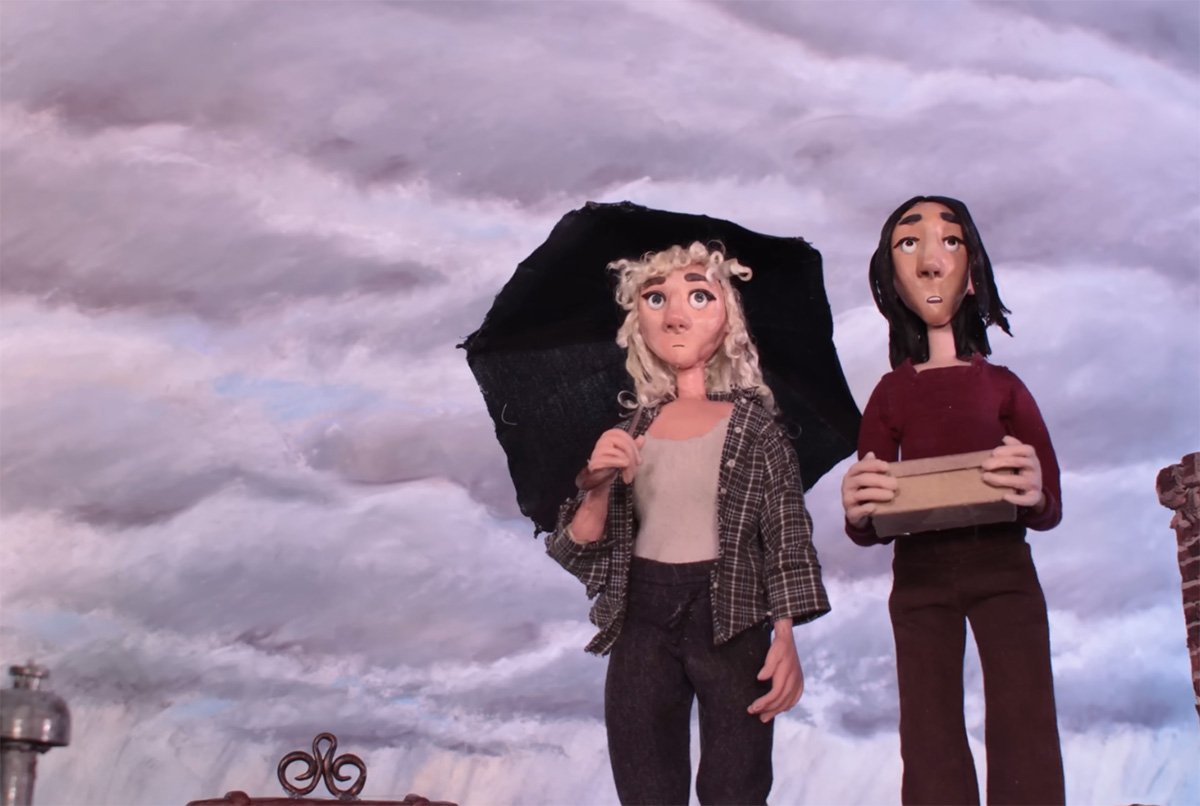
At the June L. Mazer Lesbian Archives in West Hollywood, Alisha Graefe and Kymn Goldstein are rummaging through a treasure trove of unknown lesbian films. Large, neon orange bins sit at their feet, filled to the brim with VHS tapes donated by queer filmmaker Rosser Goodman, who in the late 90s and early 2000s programmed the underground lesbian screening series “Film Fatale.”
Her monthly event provided a safe haven and experimental ground for lesbian film in L.A., shining light on new voices, stories, and perspectives that explored the nuances of living life as a queer woman.
This Saturday, April 25, Graefe and Goldstein are paying homage to Goodman’s legacy with a cinema-centered event of their own: a short film festival that brings together an eclectic, curated mix of archival works and newly submitted pieces from emerging lesbian filmmakers around the world. These works, accompanied by panel discussions, will screen all day in three different blocks at the Pacific Design Center’s Silver Screen Theater.
Like “Film Fatale,” this festival is not just a showcase of resonant, timely art: it’s an opportunity for queer people to intentionally gather, reflect on their history, joy, and resilience, and to soak in spaces that celebrate them.
“The archives are full of history, but every single day we make history,” Goldstein, who is the archive’s executive director, told the Blade. “This festival is an act of creating history. [We’re] bringing people together to celebrate Lesbian Visibility Week and to watch these films. [And] you know what, every week is Lesbian Visibility Week at the archive.”
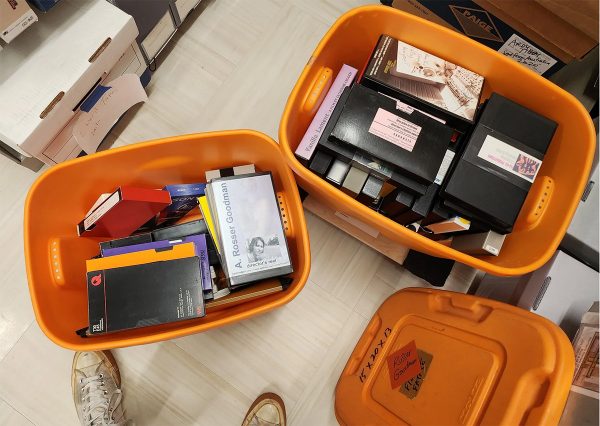
When they were first planning out the film festival together, Goldstein and Graefe — who serves as the Mazer’s full-time archivist — sifted through Goodman’s collection, letting the sounds of static, VCR clicking, and tape-scrubbing fill the room. One of the films they watched, and which will screen at Saturday’s festival, is Goodman’s own 14-minute short, “Life’s a Butch!”: a silent comedy about a woman’s antics to impress her new femme crush with clumsy, masc charm.
It was made over 25 years ago, but its tenderness and whimsy are still palpable today. This, and the other films in the festival, speak to both singular and universal emotions and experiences lesbian, queer, and sapphic people have experienced and will continue to experience across time and space.
This interconnectedness in films, communities, and shared memories between past and present excites Goldstein. “The stories of coming out, of crushes, of losing love…[They] are the same topics and subjects that come up today, especially the political things we’re going through. There’s a continuity across all of it.”
And where there’s continuity, there are clues and maps that pinpoint paths of resistance, dialogue, and survival. When people see their lives, or the lives of others in their communities, reflected on screen and in narratives they can interact with, they are able to draw upon history to craft their own ways forward.
The film festival also offers local community members an entryway into the archive, a longstanding community space that houses journals, photographs, books, films, letters — all tangible materials that people are encouraged to touch and engage with, whether it’s to further their research, spark ideas, or simply be more intimately in conversation with the past.
“There are tons and tons of stories,” Goldstein said, who is focused on maintaining and growing the archive’s collection of ephemera and other personal materials from the community. “It’s living, breathing history in a variety of forms, all hidden in different-sized boxes that you just have to open to see what’s inside.”
To support and learn more about the archive’s upcoming film festival, collections, and other events, visit their website.
Kristie Song is a California Local News Fellow placed with the Los Angeles Blade. The California Local News Fellowship is a state-funded initiative to support and strengthen local news reporting. Learn more about it at fellowships.journalism.berkeley.edu/cafellows.
West Hollywood
John Heilman and Danny Hang will serve as WeHo’s new Mayor and Vice Mayor
Last night, community members and local officials gathered to celebrate new leadership and bid a warm farewell to outgoing Mayor Chelsea Byers.
On Jan. 12, West Hollywood residents packed the City’s chambers at 6 p.m. to honor the work of outgoing mayor Chelsea Byers and witness councilmembers John Heilman and Danny Hang take their oath of office as they respectively assume their roles as Mayor and Vice Mayor for 2026.
In her last address as Mayor, Byers spoke about the optimism she holds onto in these unsteady times. To her, West Hollywood is a unique City: one that has become a model for what can be possible in an unjust society. “It’s us against the world. It’s West Hollywood on the stage,” Byers said. “It’s our story to tell, and every single person here contributes in such great ways to that.”
Byers was awarded a plaque on behalf of West Hollywood council members for her outspoken commitment to LGBTQ+ rights, economic justice, housing affordability, and policies that emphasize equity and inclusivity in West Hollywood.
Her leadership remains a bright, guiding light for Mayor Heilman, who was part of West Hollywood’s first city council after the independent city was incorporated in 1984. The spirit of that initial group remains today: queer, progressive, and led for and by the people. Yesterday’s ceremony marked the beginning of Heilman’s ninth time serving as Mayor, as well as his last year on the city council due to term limits.
Now, he leads side-by-side with a self-proclaimed “newcomer,” Danny Hang.
From the 626 to the Westside: Hang’s roots and journey
Hang was born in Monterey Park, a city in the San Gabriel Valley. The region is known for its diverse communities and AAPI-rich culture and history, and Hang recounted to the Blade the deep sense of belonging and comfort he felt growing up there. “I could go to a restaurant, speak Vietnamese or Chinese,” Hang said. “There are people who look like me out there. It is my home away from home.”
After college, he worked at the Social Security Administration, where he helped retirees, disabled people, and those impacted by loss file for Supplemental Security Income (SSI). The work was fulfilling, and he loved feeling that he had a tangible impact on others’ lives: that he could help residents grappling with difficult bureaucratic processes.
This passion grabbed the attention of L.A. County Supervisor Lindsey Horvath, who tapped Hang into serving on West Hollywood’s Disabilities Advisory Board in 2017. Hang eagerly accepted the role, having always been drawn to the vibrant, queer cultural hub. “WeHo was always the land of the unicorn: the land of magic,’ Hang told the Blade. “[This] was a town where I could be open, by myself, and find other people who were also LGBTQ+.”
After serving on the City’s Disabilities Advisory Board and, subsequently, the county’s Business License Commission, Hang noticed a lack of AAPI representation in local leadership. “There aren’t many AAPI people at all in West Hollywood. After I was on the commission, [I thought]: Hey, I think I want to run for city council,” Hang told the Blade.
Creating more inclusive leadership in WeHo
In 2024, Hang was elected to West Hollywood’s city council, becoming the first AAPI councilmember in the City’s 40 year legacy. “I want to see people who look like me in local government, because I want this community to be reflective of the modern-day people who live here. We’re a diverse community, and there’s no reason why we shouldn’t have people of color on the council, as well as more people of color appointed to our boards and commissions.”
Last night, local officials offered encouragement, support, and affirmation to Hang after he took his oath of office. “You’re already making history and certainly making waves across, not just your home region of the San Gabriel Valley, but certainly in California,” said Monterey Park councilmember Henry Lo.
Afterwards, Hang addressed the room, thanking residents, fellow council members and his family. “Standing here as the first AAPI elected to the West Hollywood City Council is deeply meaningful, and I couldn’t have done it without my parents. [They’re] right here in the front row,” Hang said. “My dad was a union worker, who showed me why standing up for workers matters. And my mom worked in a small business, owning a little nail salon in South Pasadena. She taught me what it means to care for others and to keep the community going.”
The year ahead: Heilman calls for residents to unite
Afterwards, Mayor Heilman spoke at length about the upcoming transitional year, the urgency of the current political climate, and ways that community members can step up to support each other. In his last term, he has set his eye on revitalizing the Sunset Strip, stabilizing rent and increasing housing affordability as well as examining the safety of the City’s foundational buildings, including the library and fire station.
He concluded his speech by making an unwavering stance on the “appalling” state of the federal government, stating that every West Hollywood resident must step up together in the face of ongoing federal attacks on the rights of LGBTQ+ people, specifically transgender people, as well as immigrants and other marginalized community members.
“This is a direct attack on our residents. It’s a direct attack on all of us,” Heilman said. “Now is not the time to hide. We need you…Ask what you can do to help people in the community,” he said, galvanizing residents to volunteer for the City’s various social services, nonprofits like Hollywood Food Coalition and Ascencia.
This call for unity and communal bravery echoes Byers’ belief in the courage of the people of West Hollywood. “41 years ago, a group of people defined what government could be,” Byers said. “We’re living the wildest dreams of people decades ago…and we get to be a bridge for that hope for the future. In such a critical moment, it’s truly our responsibility.”
Kristie Song is a California Local News Fellow placed with the Los Angeles Blade. The California Local News Fellowship is a state-funded initiative to support and strengthen local news reporting. Learn more about it at fellowships.journalism.berkeley.edu/cafellows.
West Hollywood
Administration refused to honor World AIDS Day; residents gathered with defiance, grief and love
Yesterday, members of the APLA Health Writers Group read moving stories to a large group of locals gathered at the AIDS monument.
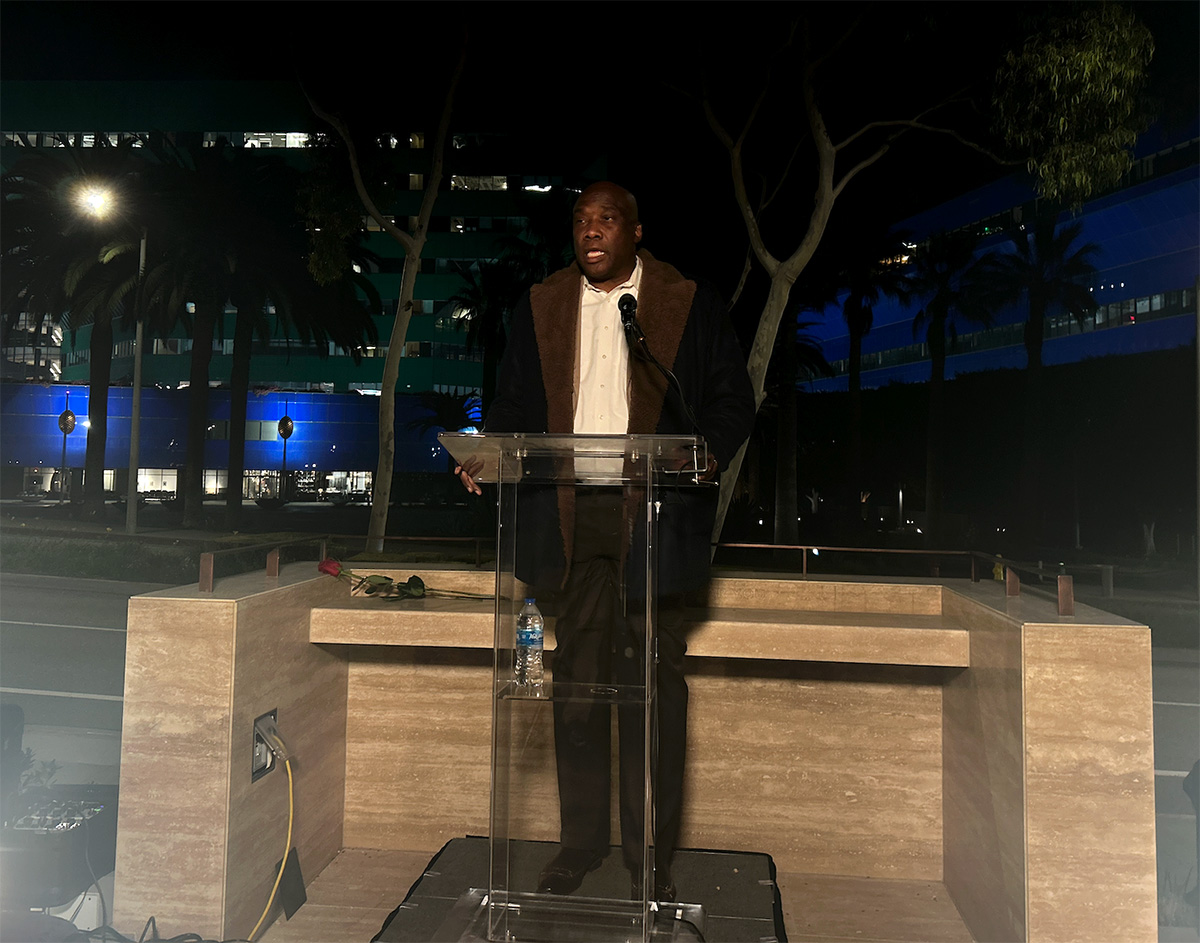
On Monday, the federal administration did not honor World AIDS Day, for the first time since the international awareness day was created in 1988. In addition to significant funding cuts to organizations focusing on HIV preventative treatment and care, the government’s halting of this commemoration perpetuates a dismissive system of inaction against LGBTQ+ people.
And yet, over 50 community members filled the empty spaces of West Hollywood’s AIDS monument yesterday evening, waiting in the night chill as city officials delivered impassioned statements and writers from APLA Health read personal pieces that centered a grief and love for those lost to the epidemic.
Before the readings began last night, West Hollywood vice mayor John Heilman asked for residents to join him in a righteous rage against administrative apathy. “I want to ask us all to reflect for just a moment about all of the people we lost…I want us to reflect and get angry,” said Heilman. “We have a fucking president who won’t even recognize World AIDS Day.”
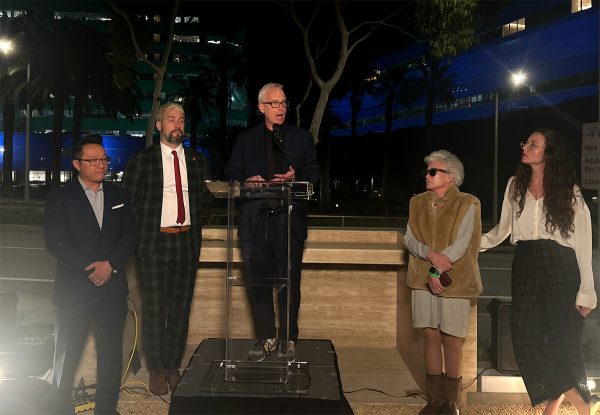
Irwin Rappaport, board chair for STORIES: the AIDS monument, echoed this immense disappointment. “Many of us here tonight lived through the 1980s, so we know what that’s like,” Rappaport said. “We also know that because of that neglect, because of that lack of caring from the federal government, we have to care for one another — and we know how to do that. When we don’t have recognition from others, we know how important it is to preserve our own history, to tell our own stories.”
Through heavy silence, five writers from APLA Health’s writers group stood tall before a podium and shared intimate writings they created about the epidemic and its personal impact on them. The collective was established in 1989 to provide an inclusive, expressive space for HIV-positive writers and allies to work on their writing and learn how to share their stories.
Writer Brian Sonia Wallace, who served as West Hollywood’s poet laureate from 2020 to 2023, has been working with the writers group for the last four years to help them hone and refine their narrative voices as they share their heaviest grief and the depths of their love for the people they lost to HIV and AIDS.
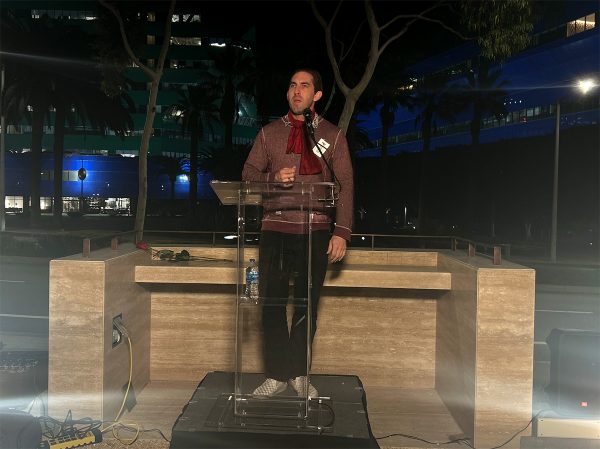
Hank Henderson, one of these writers, read from a diary entry from November 29, 1991. His voice, clear and strong, wavered as he shared about the death of his dear friend Richard. In a piece filled with lush, rich detail, painted clearly with a strong and loving voice, Henderson recounted a memory with Richard during the latter’s last years.
“The Santa Barbara sky is clear blue forever today…Yesterday came and went like a half-remembered dream between snooze alarms,” Henderson recited. “Last year, we walked to the beach. We spent hours there, played frisbee ourselves, brought the dog. Richard even yelled out 30-minute tanning turnover alarms. Yesterday, he took tiny, labored steps back to the car, used my shoulder to keep himself from falling over. Nobody said anything. We just pretend it’s normal.”
Another writer, Austin Nation, shared the story of being told he was HIV-positive at 26 years old. As a young nurse, he remembered the shock of seeing “young, beautiful men” arriving at the hospital covered in “purple, blotchy sores.” When he received his own test results, a paralyzing terror washed over his body. An incredulity followed the fear: why was this happening to him? “I got this thing for what?” Nation spoke. ”For having fun? For making love? And now it’s gonna cost me my life?”
But as he stood before the crowd, now 63 years old, he was met with applause and joy as he stated and repeated: “I’m still here. I’m still here.” The writers, in their grief and loss, have come to a place where they are able to share these stories, empowered and held. “In a world that writes off people with stories like mine,” Nation said. “It’s a hell of a good day to be alive.”
Kristie Song is a California Local News Fellow placed with the Los Angeles Blade. The California Local News Fellowship is a state-funded initiative to support and strengthen local news reporting. Learn more about it at fellowships.journalism.berkeley.edu/cafellows.
West Hollywood
West Hollywood kicks off community-focused programming for World AIDS Day
Since 1988, queer communities have come together on Dec. 1st to honor siblings and allies lost to the AIDS epidemic.
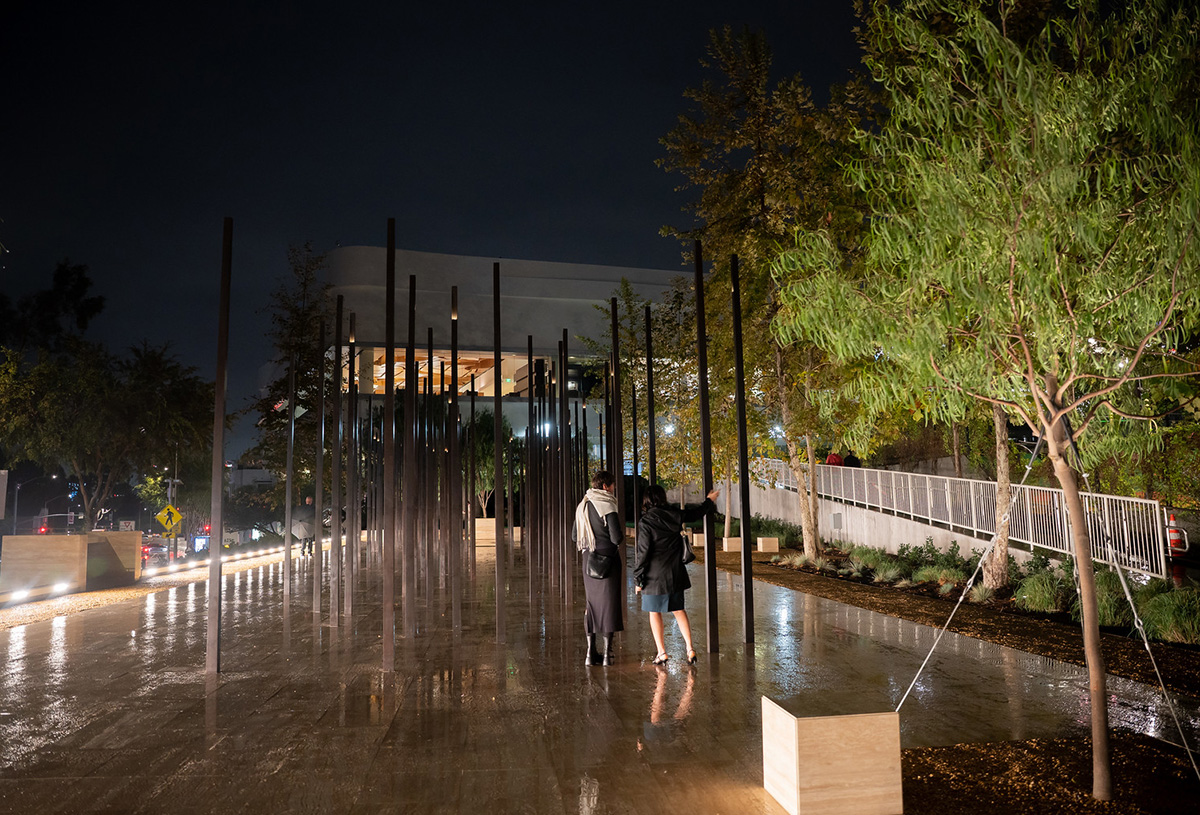
Since 1988, LGBTQ+ communities have come together on Dec. 1st to commemorate queer siblings and allies lost to the AIDS epidemic. This year’s World AIDS Day follows the theme “Overcoming disruption, transforming the AIDS response” and highlights the substantial funding cuts to research, health services, and community initiatives that have prioritized the safety of people with HIV and AIDS. The theme challenges people to think about “radical” ways to organize together and ensure that those who are impacted are able to access the care, treatment, and awareness that they need.
Beginning today, the City of West Hollywood is kicking off programming to recognize the historical transformation that local queer communities experienced during the AIDS epidemic. A panel from the AIDS Memorial Quilt will be available for viewing at the City’s Council Chambers at 625 N. San Vicente Boulevard through Monday, Dec. 15th.
Known as the largest community arts project in history, the Quilt is a powerful memorialization of loved ones who died during the epidemic. Each panel of the Quilt contains a story of remembrance, immortalizing a life cut short during the crisis. The project currently contains over 50,000 panels dedicated to over 110,000 people, all woven together in a 54-ton tapestry piece.
If you’re visiting the panel today, there will be an additional gathering opportunity tonight at the West Hollywood Park for STORIES: the AIDS Monument. From 5:30 to 8:30 p.m., members from the HIV-positive writers collective APLA Health Writers Group will present intimate readings that reflect on their experiences. Community members will be allowed time to wander through the monument and also preview the new Herb Ritts: Allies & Icons exhibition at ONE Gallery after the program. The art show includes striking black and white portraits of activists who stood in alliance with those most impacted during the AIDS epidemic.
Additionally, fresh flowers will be placed on the bronze plaques that line the City’s AIDS Memorial Walk. During the AIDS epidemic, West Hollywood was at the center of a rampant grief and loss that juxtaposed vibrant programming and efforts that boosted healing and fought against stigma and violence. It continues to be a vibrant space that houses various organizations and memorial spots that continue to uphold the revolutionary history and advocacy work that has continued since the epidemic’s beginnings.
Today, West Hollywood is in the process of executing its HIV Zero Strategic Plan, an initiative that began in 2015. Its goals include: expanding healthcare access for people living with HIV and AIDS, reducing the rate of infections, lessening health disparities and inequities for those impacted, and slowing the disease’s progress from advancing to AIDS.
According to West Hollywood mayor Chelsea Byers at a recent Cityhood event, the initiative carries forth the City’s “bold vision” and commitment to ensuring marginalized community members living with HIV do not face the life-threatening discrimination and health barriers that their elders experienced.
To learn more about the City’s programming, read here.
Kristie Song is a California Local News Fellow placed with the Los Angeles Blade. The California Local News Fellowship is a state-funded initiative to support and strengthen local news reporting. Learn more about it at fellowships.journalism.berkeley.edu/cafellows.

Latin queer and trans history along the U.S.- Mexico border on display at UC Riverside event

A Parvesh perspective: Actor Parvesh Cheena talks his roles in ‘Wives’

Allegations involving Ric Grenell raise questions about pay-for-play in White House

New Zealand High Court strikes down puberty blocker ban

Actor Kal Penn on the real lesson of ‘Trust Me, I’m a Doctor’

Making waves in the desert: How Brad Fuhr and KGAY keep the Coachella Valley connected

Meet the voice of Palm Springs: an interview with KGAY 103.1’s John Taylor

Fortune Feimster has always taken representation through comedy seriously

EXCLUSIVE: Democrats seek answers on EEOC settlement affecting LGBTQ+ workers

From ‘La Bola Negra’ to ‘Coward,’ here are this award season’s must-watch queer films
-
 Palm Springs5 days ago
Making waves in the desert: How Brad Fuhr and KGAY keep the Coachella Valley connected
-
 Palm Springs4 days ago
Meet the voice of Palm Springs: an interview with KGAY 103.1’s John Taylor
-
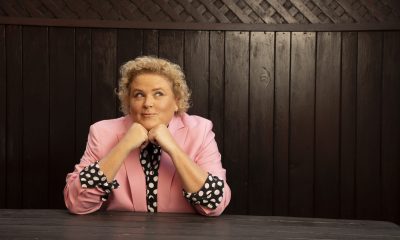 a&e features4 days ago
Fortune Feimster has always taken representation through comedy seriously
-
 Federal Government3 days ago
EXCLUSIVE: Democrats seek answers on EEOC settlement affecting LGBTQ+ workers
-
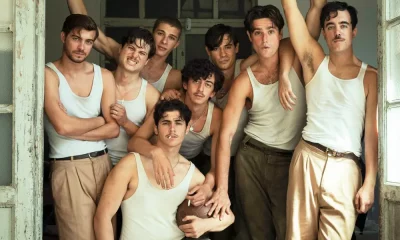 Movies5 days ago
From ‘La Bola Negra’ to ‘Coward,’ here are this award season’s must-watch queer films
-
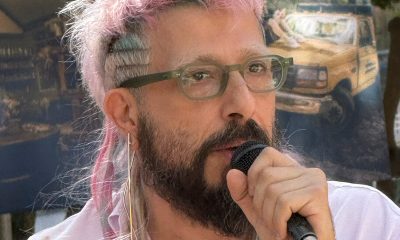
 Brazil3 days ago
VIDEO: Interview with executive director of VoteLGBT (Institute for Full Citizenship) in Brazil
-
 Palm Springs4 days ago
A quick visitor’s guide to Palm Springs before the winter
-

 Television4 days ago
New ‘Carrie’ attempts to reinvent a classic for new generation
-
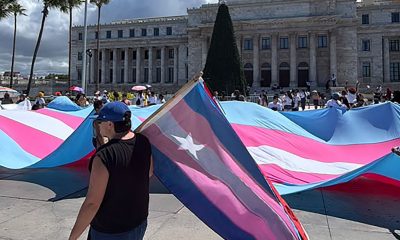
 Puerto Rico4 days ago
Annual National Trans Visibility March takes place in Puerto Rico
-
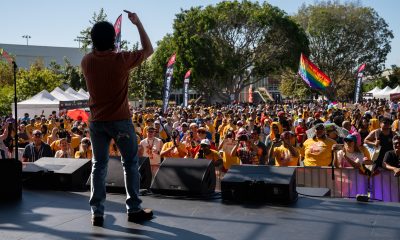
 AIDS and HIV4 days ago
AIDS Walk Los Angeles takes to the streets in West Hollywood while raising money for HIV/AIDS Care